New :




A Crackup at the Race Riots
by Harmony Korine
1998, English
Softcover, 176 pages, 23 x 14 cm
1st Edition, Out of print title / used / good
$85.00 - In stock -
First edition.
"There is no place for plot, linear narrative, character development, or scene setting in Harmony Korine's audacious and original first novel, A Crackup at the Race Riots. The twenty-three-year-old filmmaker has created a bold work of fiction, a montage that takes literary convention and explodes it in a sequence of half-remembered scenes, suicide notes, dialogue fragments, movie ideas, rumors, and jokes. Korine's eye and ear are exquisitely tuned to the absurd, to the hypocrisy and hilarity that comprise our national obsessions with death, dirt, poverty, celebrity, religion, and gossip. He captures the fragmented moments of a life observed through the demented lens of media, TV, and teen obsession. The reinvented wheel of Korine's darkly bizarre imagination, A Crackup at the Race Riots is the ultimate postmodern novel-funny, offensive, depraved, and sad."
"The new heir, the man, the sweet edge of the future."—Jim Carroll, author of The Basketball Diaries
"I was struck from the very beginning that there is a totally independent & new voice in writing. I believe that [he] is a great talent as a writer."—Werner Herzog
HARMONY KORINE is the self-educated twenty-three-year-old who wrote the screenplay for the controversial film Kids. His directorial debut, Gummo, received the 1997 Venice Film Critics' Award and the Rotterdam Film Festival Critics' Award. Korine was raised in the carnival and currently resides in West Virginia.
Good copy with wear to extremities, Tightly bound, no spine creases.


Leonor Fini
Peinture
1980, French
Hardcover (w. dust jacket), 179 pages, 30.5 x 30.5 cm
1st Edition, Out of print title / used / fine
$150.00 - Out of stock
The most extensive monograph on the work of Argentine artist Leonor Fini (1918-1996), published in 1980 by Clairefontaine, Lausanne. With text by Constantin Jelenski, this over-sized hardcover volume is profusely illustrated throughout with Fini's incredible paintings, along with portraits, a list of exhibitions and bibliography.
Leonor Fini (1907–1996), an Argentine painter, designer, illustrator, and author, known for her depictions of powerful women, is considered one of the most important women artists of the twentieth century and also one of the most misunderstood.
Fini had no formal artistic training. Born in Buenos Aires, she travelled extensively from a young age, living in Milan and then moving to Paris in 1931-32 where she was considered part of a pre-war generation of Parisian artists, becoming acquainted with Carlo Carrà and Giorgio de Chirico, who inspired much of her work, and also Paul Éluard, Max Ernst, Georges Bataille, Henri Cartier-Bresson, Picasso, Salvador Dalí, and André Pieyre de Mandiargues. She had her first one person show in Paris when she was twenty-five at a gallery directed by Christian Dior. Her work caught on fast and was included in the pivotal and groundbreaking Fantastic Art, Dada and Surrealism exhibition at the MOMA in 1936 while at the same time she had her first New York exhibition at the avant-garde Julien Levy Galley. Surrealist artists in France came to know her as important in the movement. She is mentioned in most comprehensive works about surrealism, although she did not consider herself a surrealist, nor a part of any particular artistic movement. Fini preferred to stake her own claim on modernism with a vision that owes more to the farthest shores of her imagination than to any affiliation with art trends, schools or movements. The originality of her art as well as her intelligence, famous wit and charisma accorded her celebrity status in the Paris art world and beyond beginning in the late thirties. Her panache and glamour, once they found a place in the collective imagination of the time, turned her into a much-publicized fashion and feminist icon. Always controversial, with as many detractors as admirers, she lived and painted consummately on her own terms.
In Paris in 1939 she curated the inaugural exhibition of her friend Leo Castelli’s first gallery (of surrealist furniture) and shortly thereafter, just before the German occupation, she traveled with André and a new lover to Arcachon in the southwest of France to begin waiting out the war. She remained there for almost a year with Salvador and Gala Dali before moving to Monte Carlo where she met the young Italian diplomat, Stanislao Lepri who became one of the great and enduring loves of her life. As the war intensified she moved with Stanislao to Rome where she lived, worked and formed close friendships with Anna Magnani, Luchino Visconti and other leading figures of world of art and letters. After the Liberation of Paris in 1946 she returned there to live and work for the remainder of her life, exhibiting extensively around the world.
The predominant themes in Leonor Fini’s art are sexual tensions, mysteries and games. One of her favored subjects is the interplay between the dominant female and the passive male, and in many of her most powerful works the female takes the form of the sphinx to which she felt a strong identification. She was also a renowned portraitist, and among her subjects were such friends as writers André Pieyre de Mandiargues, Jean Genet, Klaus Mann (son of Thomas), such actresses as Anna Magnani and Suzanne Flon, ballerina Margot Fonteyn, film director Luchino Visconti and artists Meret Oppenheim and Leonora Carrington.
Her genius for stage and screen design is evident in her numerous ground breaking theater decors with their elaborate conception, costumes and phantasmagorical masks. She designed for the Paris Opera, George Balanchine’s ballet Palais de Crystal, and choreographer Roland Petit’s company Ballets de Paris, for Maria Callas at the La Scala theater in Milan, as well as over seventy productions at theaters in Paris between 1946 and 1969. She had a unique talent for film design and created costumes for Fellini's 8 ½ as well as for Renato Castellani's Romeo and Juliet and John Huston’s A Walk with Love and Death.
In the 1970s, she wrote three novels, Rogomelec, Moumour, Contes pour enfants velu and Oneiropompe. Her friends included Jean Cocteau, Giorgio de Chirico, and Alberto Moravia, Fabrizio Clerici and most of the other artists and writers inhabiting or visiting Paris. She illustrated many works by the great authors and poets, including Edgar Allan Poe, Charles Baudelaire and Shakespeare, as well as texts by new writers. She was very generous with her illustrations and donated many drawings to writers to help them get published. She is, perhaps, best known for her graphic illustrations for Histoire d'O.
The provocative and much-publicized life of Leonor Fini was pure theater. Her story is that of a hard-won struggle to forge her life as a woman artist in a man’s world and to invent herself on her own terms. It is the story of a woman possessing exceptional independence, a highly original vision and great personal magnetism who lived passionately through her art and friendships and in the process became a feminist role model.
Fine copy in Near Fine dust jacket.


Rita Ackerman
Works 1993—1996
1997, Japanese / English
Hardcover (w. dust jacket), 70 pages, 26 x 21 cm
1st Edition, Out of print title / used / very good
$120.00 - Out of stock
The incredible first monograph that doubles as an artist's book of work by Hungarian New York-based artist Rita Ackerman spanning the years 1993—1996, edited and designed by Makoto Ohrui from Fiction Inc., published by Rockin' On in 1997 and only available in Japan. Long out-of-print, this numbered hardcover volume, with illustrated vellum dust jacket, is illustrated profusely with seventy of Ackerman's drawings, paintings and collages throughout in colour and b/w with many fold-outs and notebook scans, accompanied by essays.
New York City based artist Rita Ackerman was born in Budapest in 1968. She studied at the University of Fine Arts in Budapest and The New York Studio School of Drawing, Painting and Sculpture from the years of 1989 to 1992. Ackermann invented images that became instant sensations, perturbing young girls that are now part of the universe of global imagery. Her drawings and paintings between 1993-95 depict compositions of adolescent female figures of clonelike multiples engaging in various self-destructive and hazardous activities. Her early works with their ambiguous presence serve as bridges between high and low culture, just as the myths and folk tales which often serve as merits to Ackermann's compositions. Later, Ackerman would abandon the figure, erasing the very matter of her own work, in a complex layering of visual language oscillating between abstraction and figuration into a subconscious unfolding of form—concealed deeply in the abstraction of the omnipresence.
First edition, VG copy in VG dust jacket.
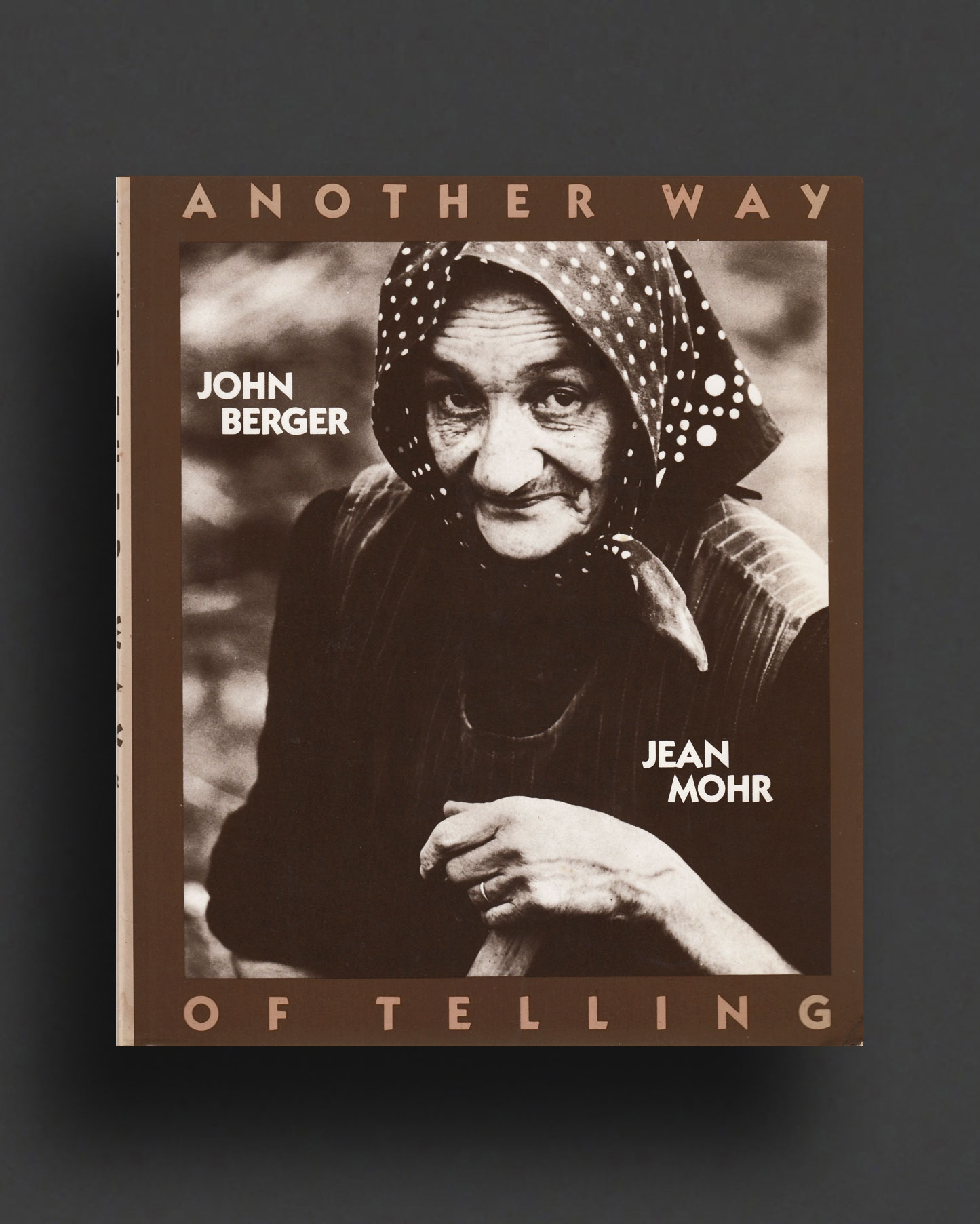
John Berger / Jean Mohr
Another Way of Telling
1982, English
Softcover, 300 pages, 20 x 17 cm
1st Edition, Out of print title / used / very good
$25.00 - In stock -
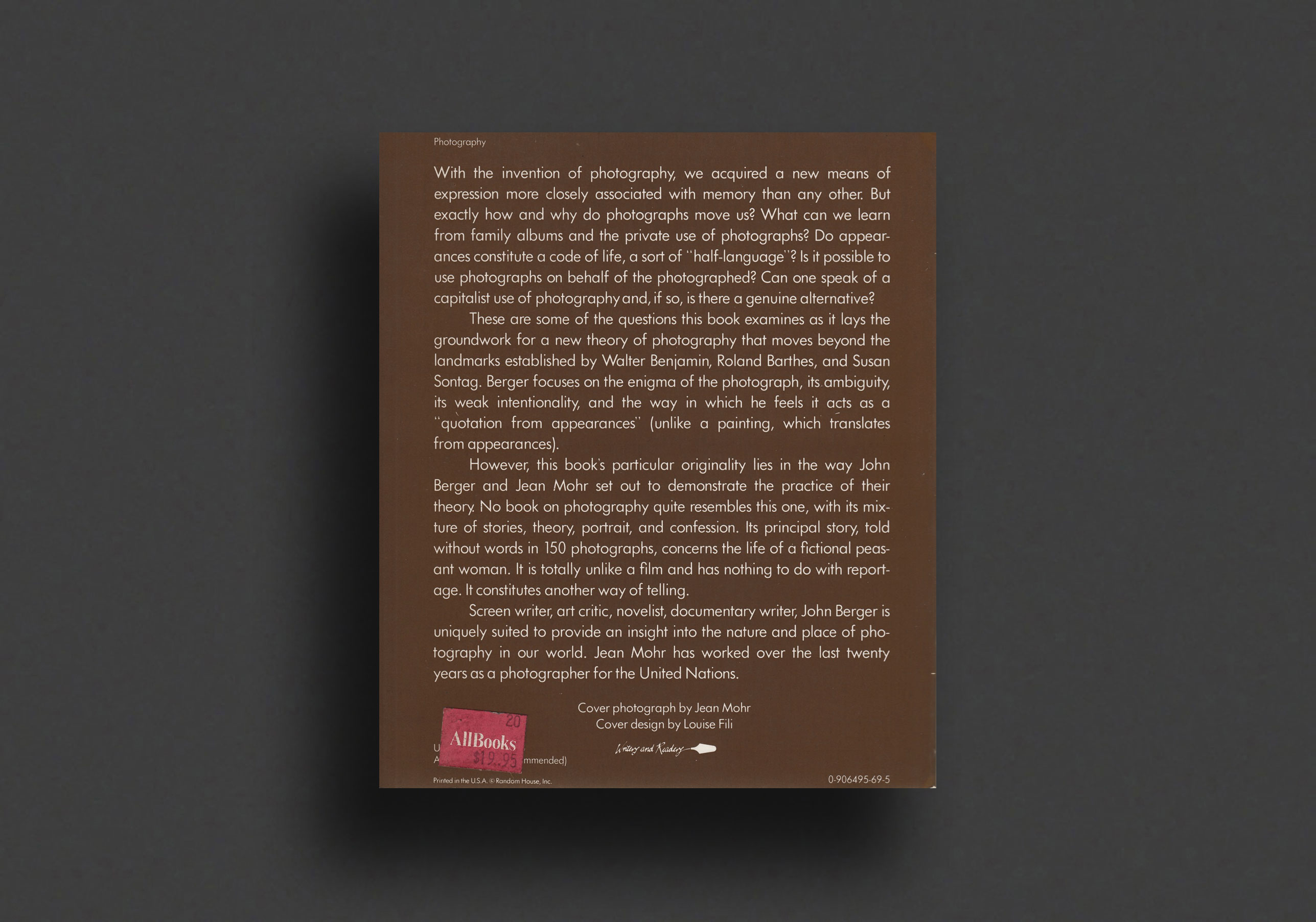
With the invention of photography, we acquired a new means of expression more closely associated with memory than any other. But exactly how and why do photographs move us? What can we learn from family albums and the private use of photographs? Do appearances constitute a code of life, a sort of "half-language"? Is it possible to use photographs on behalf of the photographed? Can one speak of a capitalist use of photography and, if so, is there a genuine alternative?
These are some of the questions this book examines as it lays the groundwork for a new theory of photography that moves beyond the landmarks established by Walter Benjamin, Roland Barthes, and Susan Sontag. Berger focuses on the enigma of the photograph, its ambiguity, its weak intentionality, and the way in which he feels it acts as a
"quotation from appearances" (unlike a painting, which translates from appearances).
However, this book's particular originality lies in the way John Berger and Jean Mohr set out to demonstrate the practice of their theory. No book on photography quite resembles this one, with its mixture of stories, theory, portrait, and confession. Its principal story, told without words in 150 photographs, concerns the life of a fictional peasant woman. It is totally unlike a film and has nothing to do with report-age. It constitutes another way of telling.
Screen writer, art critic, novelist, documentary writer, John Berger is uniquely suited to provide an insight into the nature and place of photography in our world. Jean Mohr has worked over the last twenty years as a photographer for the United Nations.
VG copy light wear to extremities, light creasing to spine.
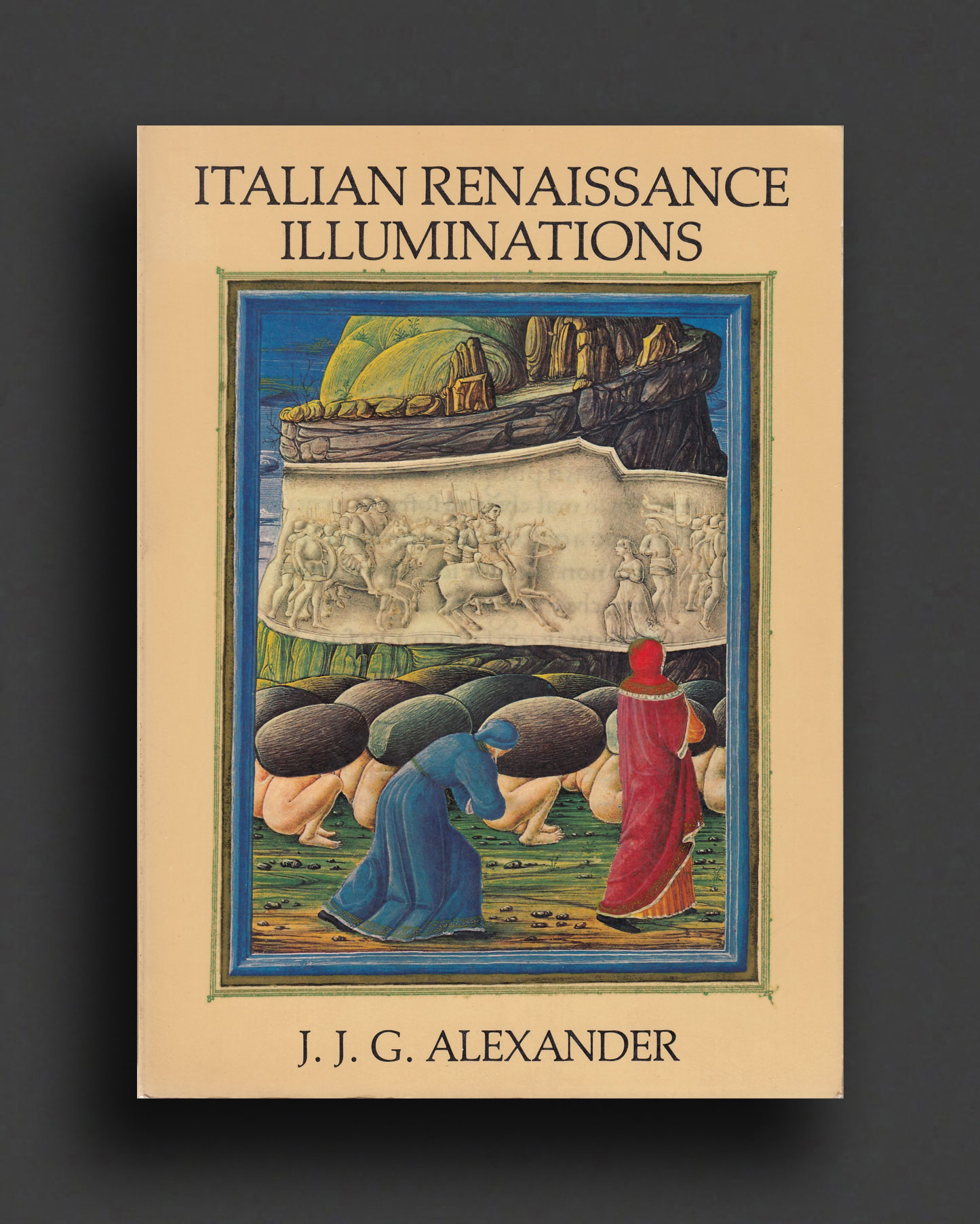
Italian Renaissance Illuminations
J. J. G. Alexander
1977, English
Softcover, 118 pages, 28 x 20.5 cm
1st Edition, Out of print title / used / good
$15.00 - In stock -
First 1977 edition.
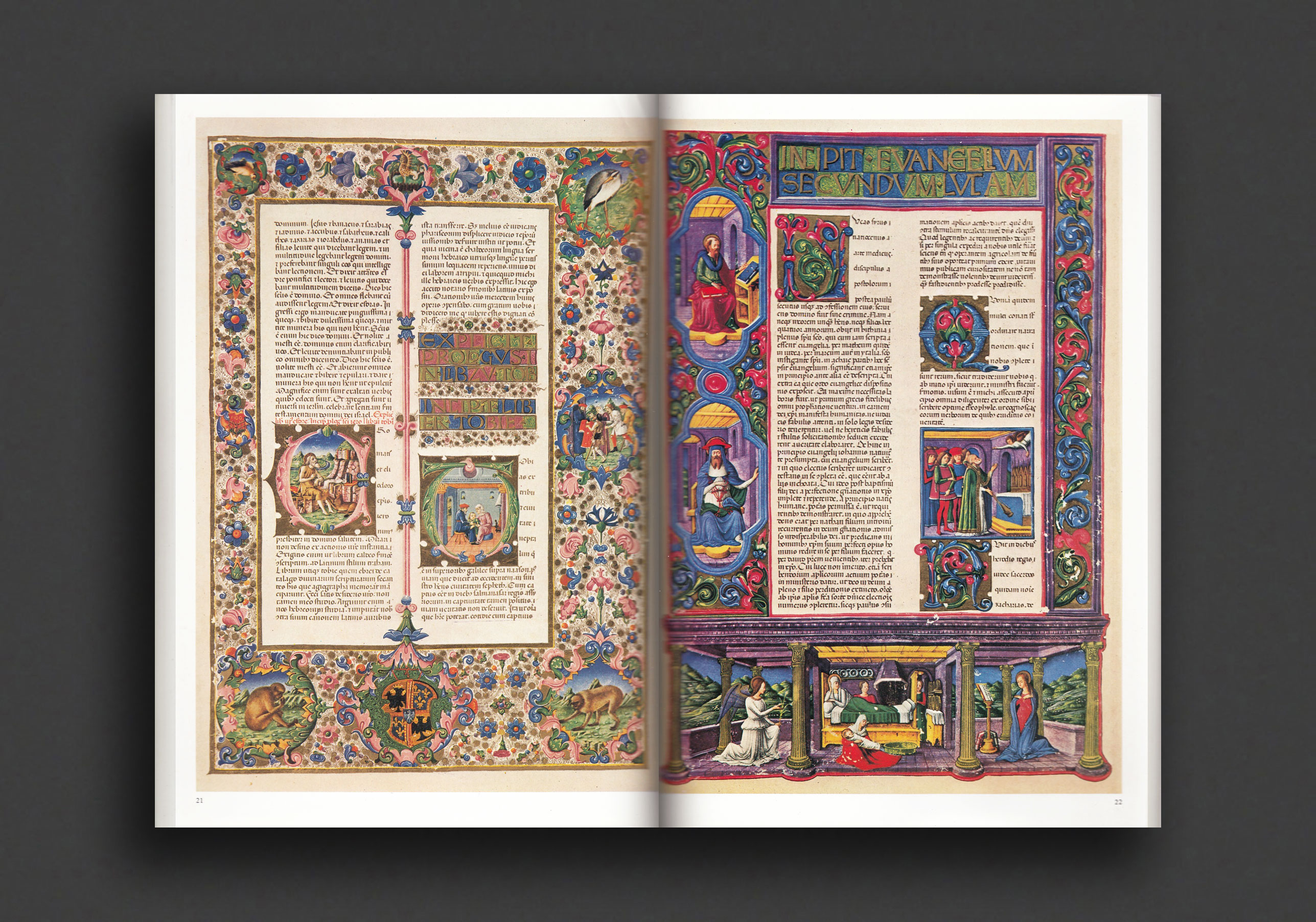
"The ancient art of book illumination was transformed by the intellectual, spiritual and artistic rebirth of Europe and by the revival of classical influence in Italy which occurred in the early part of the fifteenth century. There were new patrons, new artists, and a new style. The Medici of Florence, the Visconti of Milan and the Gonzaga of Mantua all collected extensive libraries. No longer was the art of book illumination confined to the monasteries. Giulio Clovio (whom Vasari called "the Michelangelo in miniature of our day"), Lorenzo Monaco and Mantegna enriched this vital art form from their metropolitan workshops. A number of fresco painters, Fra Angelico and Pisanello among them, also executed miniatures. In the hands of these craftsmen, the unreal creatures of the Middle Ages became men and women of flesh and blood. From the surviving manuscripts of the period,
J. J. G. Alexander has selected the masterpieces of Renaissance illumination and has provided the Introduction and Commentaries on the individual folios reproduced in Italian Renaissance Illuminations.
Good copy with substantial knock to top-left corner, light general wear.
Committing Photography
by Su Braden
1983, English
Softcover, 122 pages, 24.5 x 17.5 cm
1st Edition, Out of print title / used / very good
$20.00 - In stock -
First 1983 edition.
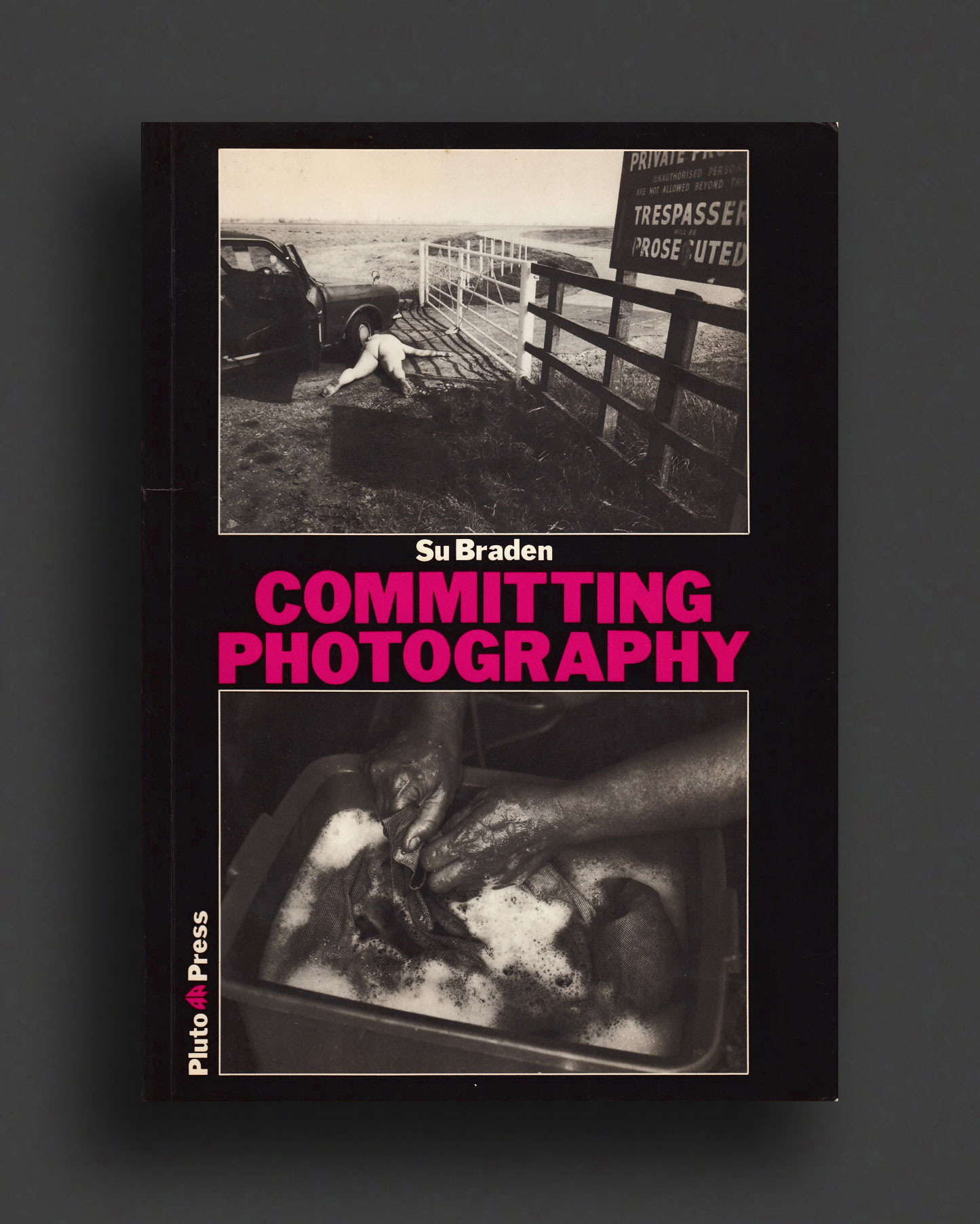
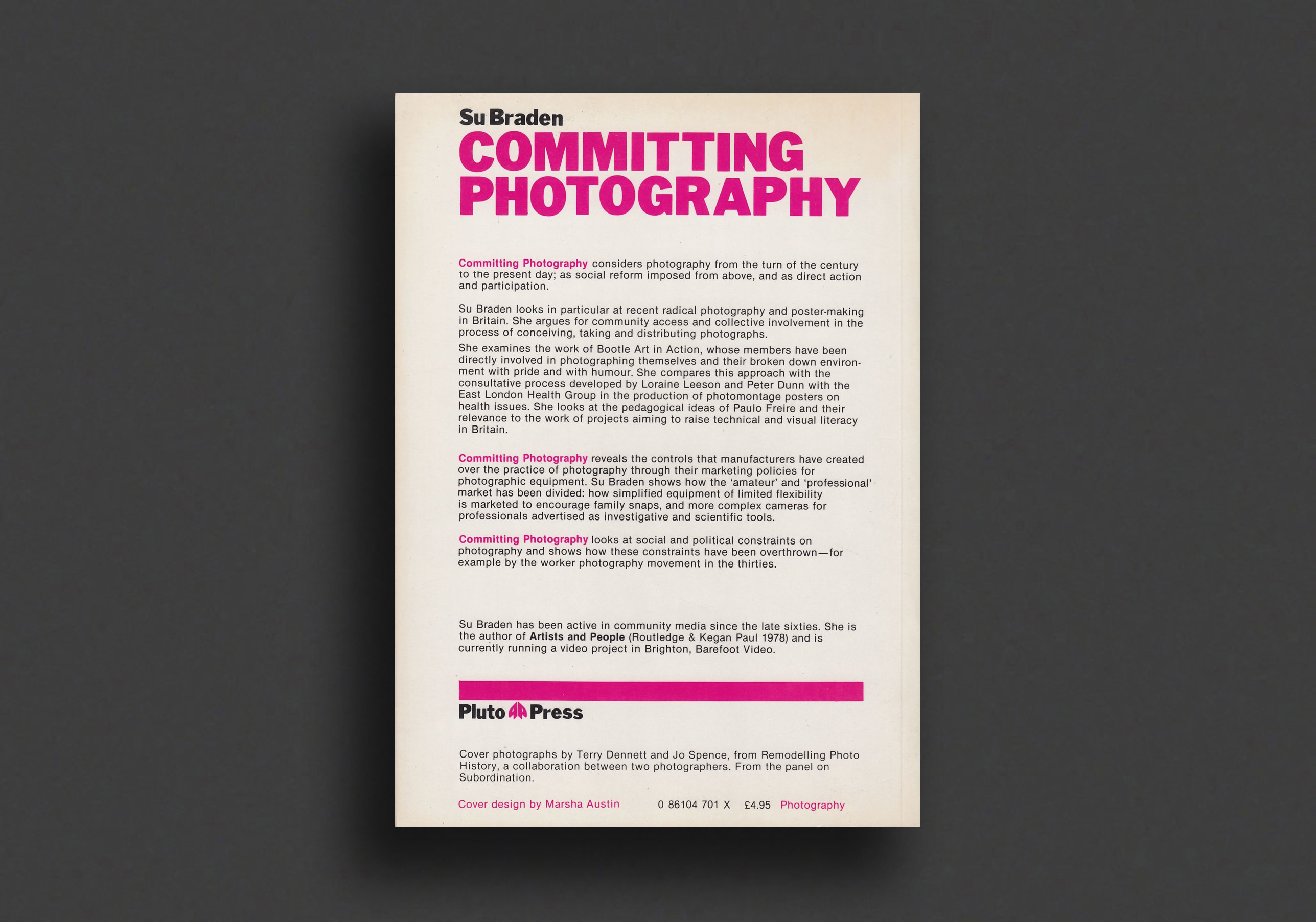
"Committing Photography considers photography from the turn of the century to the present day; as social reform imposed from above, and as direct action and participation. Su Braden looks in particular at recent radical photography and poster-making in Britain. She argues for community access and collective involvement in the process of conceiving, taking and distributing photographs.
She examines the work of Bootle Art in Action, whose members have been directly involved in photographing themselves and their broken down environment with pride and with humour. She compares this approach with the consultative process developed by Loraine Leeson and Peter Dunn with the East London Health Group in the production of photomontage posters on health issues. She looks at the pedagogical ideas of Paulo Freire and their relevance to the work of projects aiming to raise technical and visual literacy in Britain.
Committing Photography reveals the controls that manufacturers have created over the practice of photography through their marketing policies for photographic equipment. Su Braden shows how the 'amateur' and 'professional' market has been divided: how simplified equipment of limited flexibility is marketed to encourage family snaps, and more complex cameras for professionals advertised as investigative and scientific tools.
Committing Photography looks at social and political constraints on photography and shows how these constraints have been overthrown —for example by the worker photography movement in the thirties."
Su Braden has been active in community media since the late sixties. She is the author of Artists and People (Routledge & Kegan Paul 1978) and is currently running a video project in Brighton, Barefoot Video.
VG copy, monor wear to extremities.

Buying Love
Ten Photographers View Prostitution
1987, German
Softcover, 136 pages, 28 x 24.5 cm
1st Edition, Out of print title / used / very good
$65.00 - In stock -
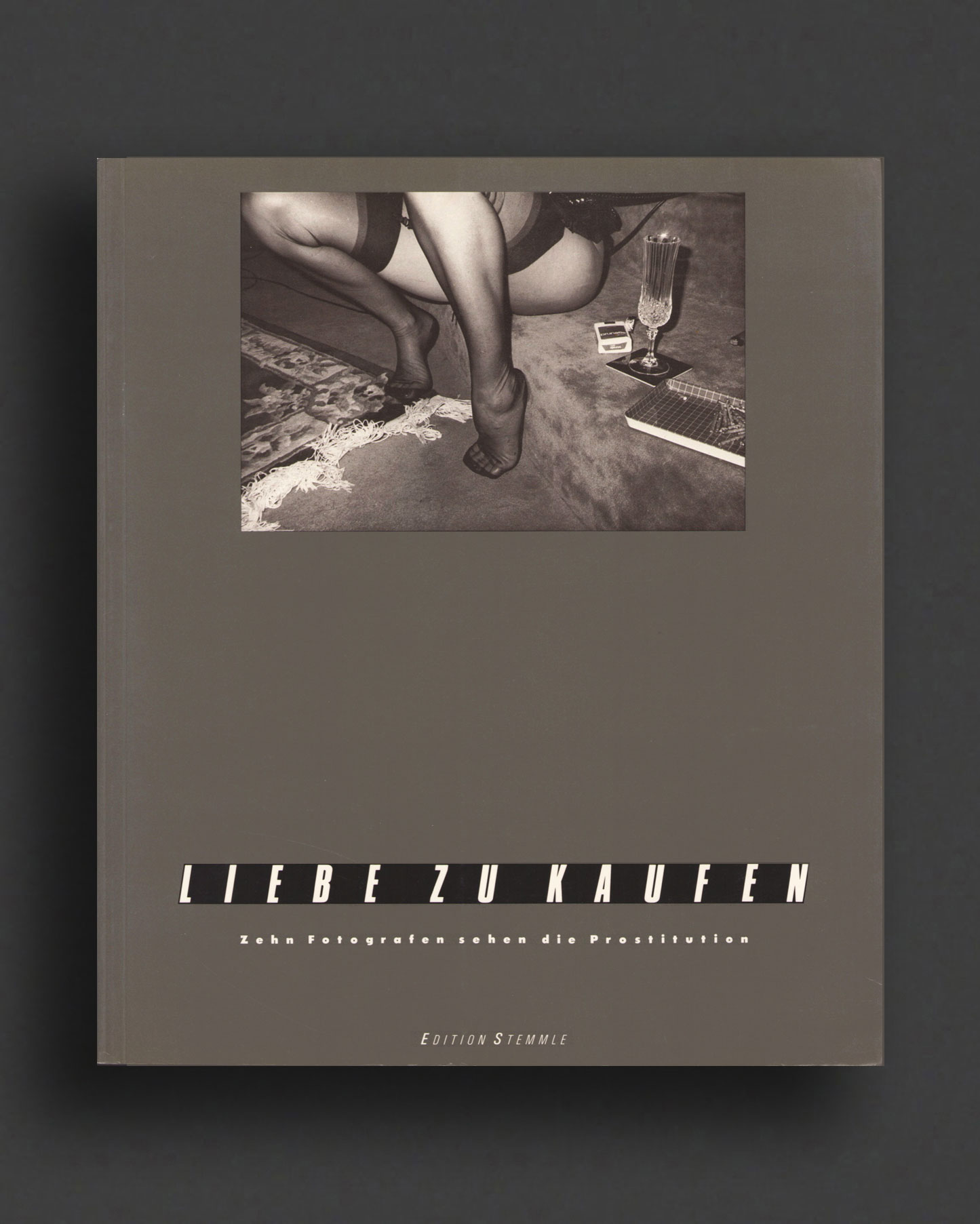
First 1987 edition of Buying Love or Love for Sale, "Liebe Zu Kaufen," published in this edition only, only in Germany. Wonderful collection of photographic folios by three female and seven male photographers documenting the world of prostitution. Features the work of Jérôme De Perlinghi, Jean-Jacques Dicker, Michael von Graffenried, Roswitha Hecke, Barbara Kramp, Vivienne Maricevic, Urs Marty, Andrzej Tyszko, Alberto Venzago, Christian Vogt.
"Prostitution, not only the oldest profession, but also one that has always fascinated photographers. This book shows how this subject is approached and "seen" by these various photographers, and what personal motivations and experiences lie behind their photographic work."
Edited by Volker Wachs with an essay by Markus Imboden.
Very Good copy with some wear to extremities.


Aquirax Uno
Masquerade
1982, Japanese
Softcover (w. dust jacket and plastic sleeve), 126 pages, 33 x 25 cm
1st Edition, Out of print title / used / very good
$140.00 - Out of stock
Published in 1982 and long out-of-print, Masquerade is one of the finest artist books of Japanese illustrator and graphic artist Aquirax Uno. Lavishly illustrated and elaborately designed and directed by the artist himself, this beautiful album collects Uno's most stunning fantastical illustration and painting throughout the 1960s—1980s, alongside texts and photography of Uno in his atelier. Masquerade collates a cross-section of Uno's graphic work spanning his entire career, his iconic and innovative print, book, and theatre works, including many new, unpublished works and illustrations printed in large format across many full-colour fold-outs — a wonderful way to capture his decadent, provocative, stream of consciousness line work in intimate detail. Highly recommended!
Aquirax Uno, also known as Akira Uno (b. 1934) is a Japanese graphic artist, illustrator and painter who was very influential in the 1960s and 1970s. His incredibly unique work is characterized by fantastic visuals, capricious and sensuous line flow, flamboyant (and occasionally grotesque) eroticism, and frequent use of collage and psychedelic bright colours. Uno was prominently involved with the Japanese underground art of the 1960s–1970s, and is particularly notable for his frequent collaborations with Shuji Terayama and his experimental theater Tenjo Sajiki.
Aquirax Uno, also known as Akira Uno (b. 1934) is a Japanese graphic artist, illustrator and painter who was very influential in the 1960s–1970s. His incredibly unique work is characterized by fantastic visuals, capricious and sensuous line flow, flamboyant (and occasionally grotesque) eroticism, and frequent use of collage and psychedelic bright colours. Uno was prominently involved with the Japanese underground art of the 1960s–1970s, and is particularly notable for his frequent collaborations with Shuji Terayama and his experimental theater Tenjo Sajiki.
Good copy with heavy foxing to cover edges and end pages, original publisher's textured plastic protector sleeve with usual slight shrinkage from age, edge wear. Sample images only.
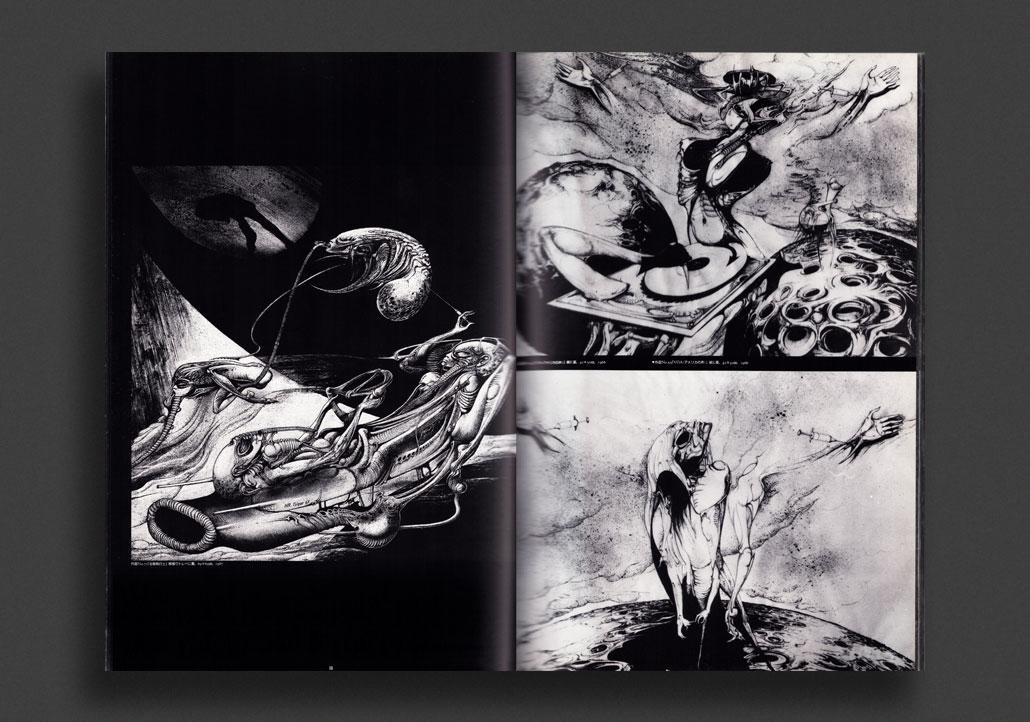
H. R. Giger
Biomechanics
1989, Japanese
Softcover (w. dust jacket + ephemera), 96 pages, 42.5 x 30.5 cm
1st Edition, Out of print title / used / very good
$200.00 - In stock -
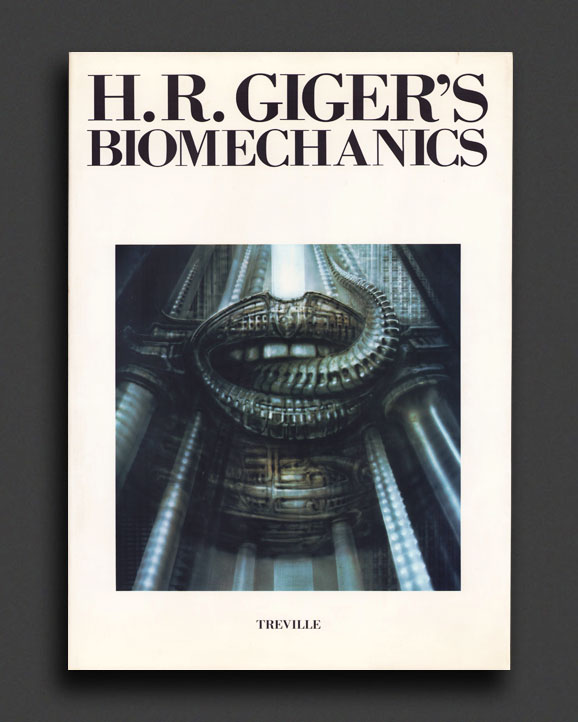
Rare first 1989 Japanese edition of H. R. Giger's Biomechanics. In his classic series of oversized and visually immersive early art volumes, this book comprises a retrospective showcase, from 1964—88, of Giger's work, designed by and with running commentary by Giger himself, with over 200 drawings, paintings, and sculptures, and including concept art for the film Poltergeist II, and design paintings for Emerson, Lake, and Palmer albums, his lost film work and early cartoons. With a foreword by legendary Science Fiction author and longtime Giger fan Harlan Ellison, who dubs him "our latter-day Hieronymus Bosch."
Note: the Japanese editions of these books often had better reproductions from the original plates than the German and English language editions.
Includes Treville publisher ephemera inserted as issued, including an illustrated advert for Giger poster editions, etc.
Very Good in Very Good dust jacket. Excellent, well-preserved copy.
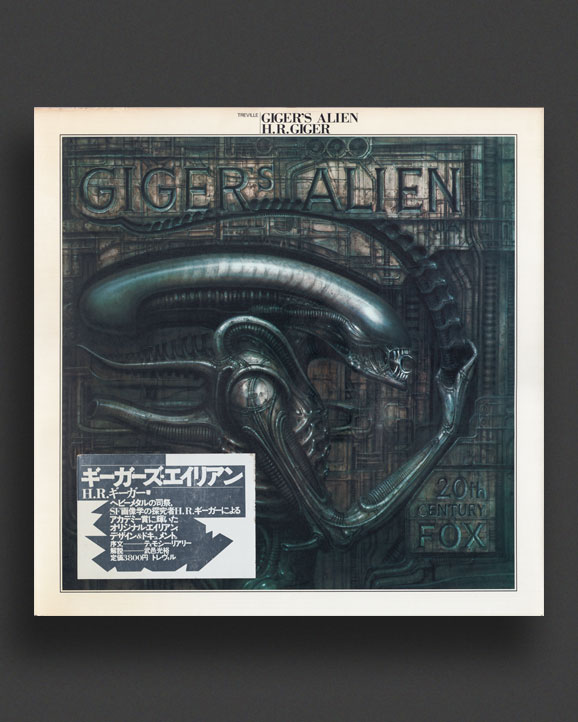
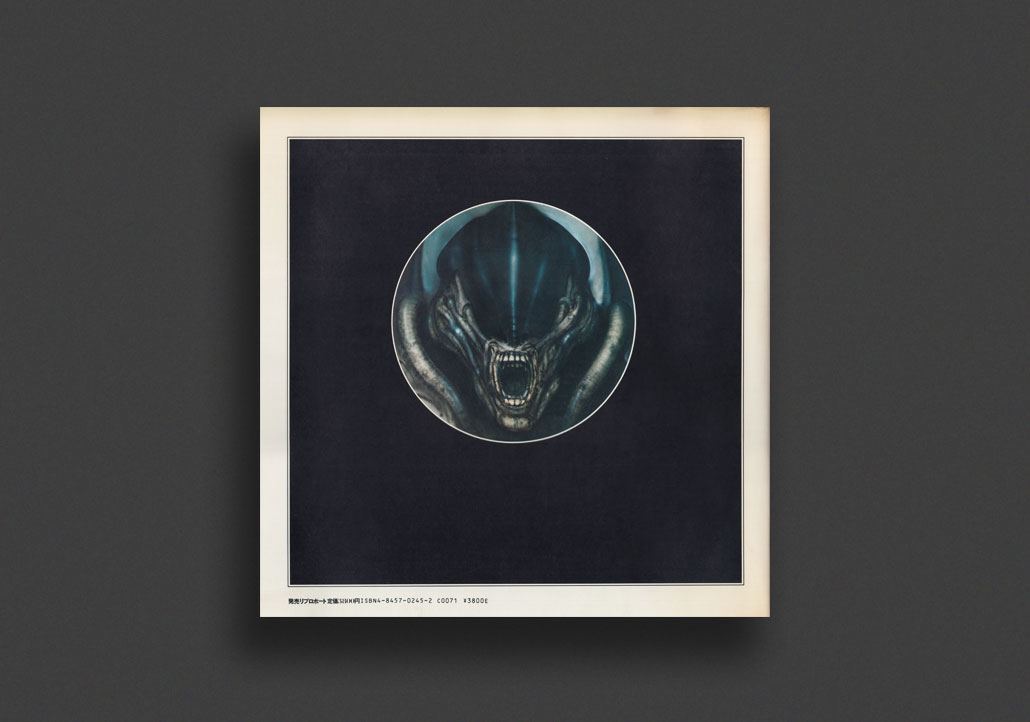
Giger's Alien
1986, Japanese
Softcover, 76 pages, 29.7 x 29.7 cm
Out of print title / used / very good
$90.00 - In stock -
Japanese 1986 edition of the classic "Giger's Alien", a visually stunning and wonderfully insightful book for any fan of the art of H.R. Giger, Ridley Scott and Dan O'Bannon's Alien film or in the production of science-fiction/horror/special effects in any way. A must.
"Giger's Alien provides a complete record of the months and months of painstaking work that resulted in two hours of terrifying celluloid. Sketches, original paintings, photographs of scenery and the Alien under construction and scenes from the film are linked by Giger's detailed diary of his thoughts and actions at the time".
Very Good copy in original dust jacket of this title. Only light wear, beautifully preserved.
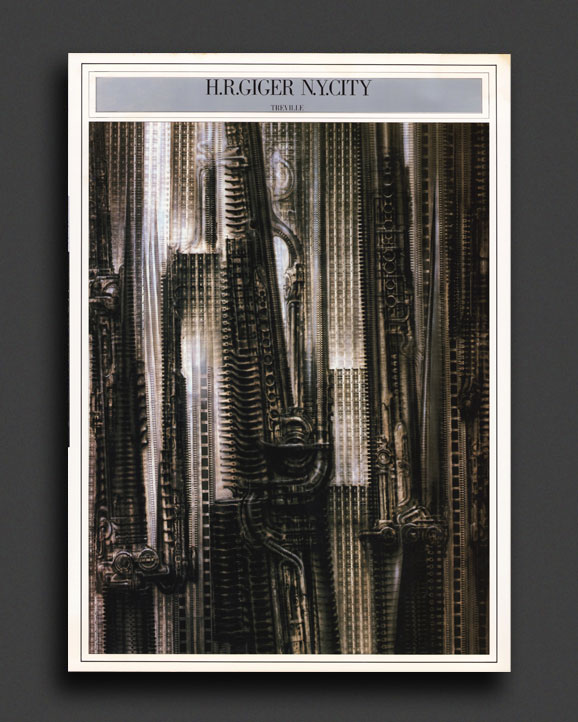
H. R. Giger
N.Y. CITY
1981 / 1988, English / Japanese
Softcover (w. dust jacket + Japanese booklet), 48 pages, 40 x 28 cm
1st Edition, Out of print title / used / good
$140.00 - In stock -
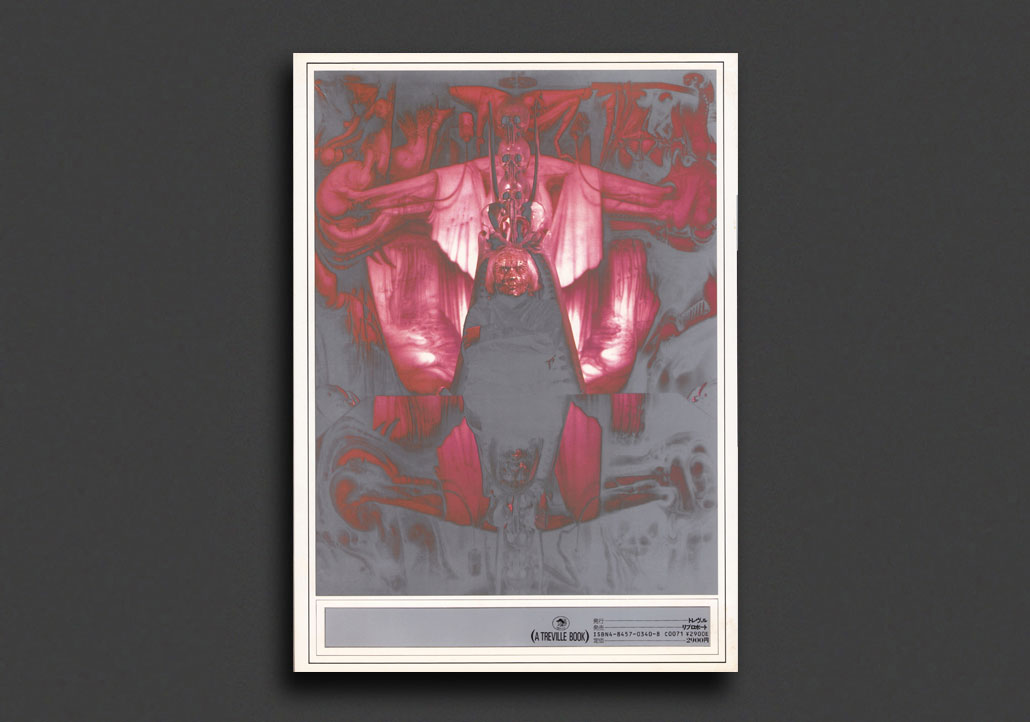
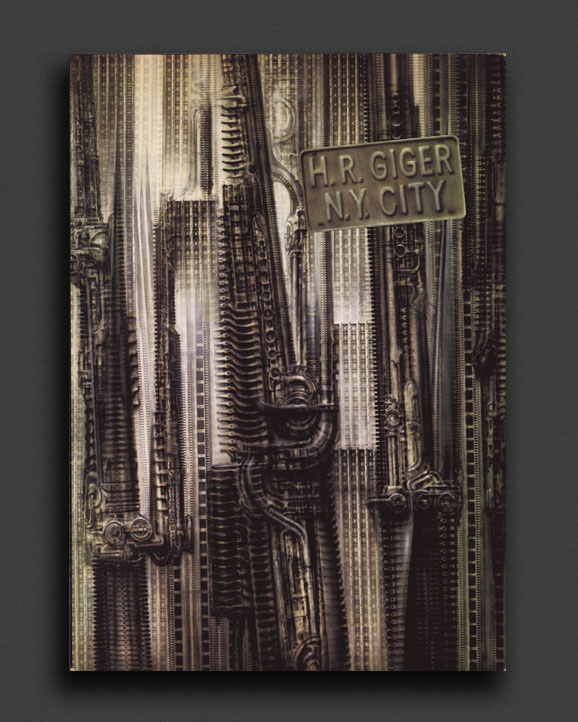
1988 Japanese re-edition by Treville of the original out-of-print 1981 Charles Tuttle edition (entirely in English language). This IS actually just the 1981 edition wrapped in a new glossy dust jacket and re-issued in 1988 with an insert booklet designed by Treville to translate all the book's English texts to Japanese for the first time. Two editions in one, you also have the beautifully produced over-sized 1981 book by H. R. Giger. Foreword by Timothy Leary.
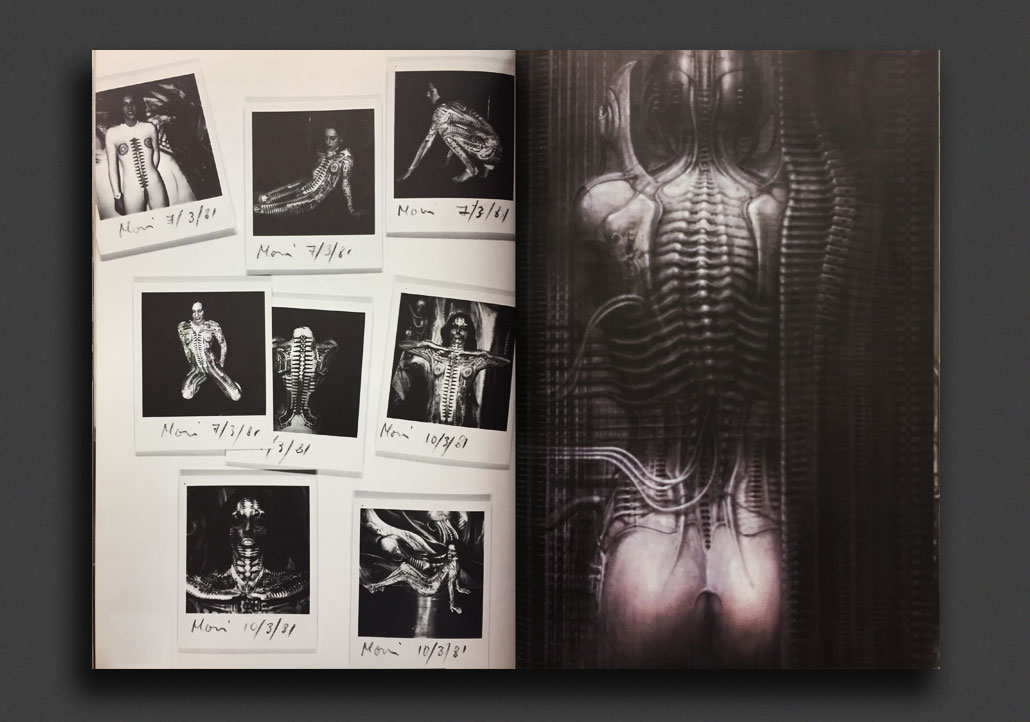
In 1981, a year after being awarded the Oscar for Best Achievement for Visual Effects for Alien, the book H.R. GIGER N.Y. CITY was published. This series of post Alien works, the result of an intense period of non-stop painting, literally day and night, were inspired by Giger's trip to New York City and a template which his colleague Cornelius de Fries, brought back from one of his excursions into the electronic industry. The stencil was actually a sheet of scrap metal from which electrical components had been punched out. Alongside these incredible works are drawings, articles, press clippings, posters and polaroids from Giger's time in New York City.
Fantastic Swiss surrealist painter, sculptor and set designer Hans Rudolf “Ruedi” Giger was born in 1940, the son of a chemist. He spoke of a father who viewed art as a "breadless profession", and strongly encouraged his son to enter into pharmaceutics. Despite this, in 1962, he moved to Zürich, where he studied Architecture and industrial design at the School of Applied Arts until 1970. Giger's style and thematic execution have been hugely influential. His design for the Alien was inspired by his painting Necronom IV and earned him an Oscar in 1980. His books of paintings, particularly Necronomicon and Necronomicon II (1985) and the frequent appearance of his art in Omni magazine continued his rise to international prominence. Giger is also well known for artwork on several music recording albums. His most distinctive stylistic innovation is that of a representation of human bodies and machines in a cold, interconnected relationship, he described as "biomechanical". His paintings often display fetishistic sexual imagery. His main influences were painters Ernst Fuchs and Salvador Dalí. He was also a personal friend of Timothy Leary. Giger suffered from night terrors and his paintings are all to some extent inspired by his experiences with that particular sleep disorder, making his first paintings as a means of art therapy. In 1998 Giger acquired the Château St. Germain in Gruyères, Switzerland, and it now houses the H. R. Giger Museum, a permanent repository of his work.
VG—Good copy, VG dust jacket, fine booklet insert. Book itself has foxing to preliminaries, light wear/tanning, otherwise a tight copy.


Rei Kawakubo and Comme des Garçons
by Deyan Sudjic
1991, Japanese
Hardcover (w. dust jacket and obi-strip), 160 pages, 21 x 20.9 cm
1st Edition, Out of print title / used / fine
$260.00 - Out of stock
First Japanese hardcover edition of the first in-depth study of Comme des Garçons and its elusive creator, Rei Kawakubo, that remains to this day an absolute and unparalleled reference. London Design Museum director and editor/writer (Blueprint, Domus) Deyan Sudjic takes a rare and invaluable look into the early years of Comme des Garçons, a fashion label that since the debut Paris Fashion show in 1981 has gripped the imagination of the fashion-buying public and press as well as becoming a major figure in the transformation of modern Japan. Heavily illustrated in colour and b/w with examples of many rarely seen photographs of the CdG collections and campaigns, store designs, Kawakubo's furniture collection, ephemera and publications (including the history of the famous "Six" magazine, and much more, the book is broken up into detailed chapters: "Starting from Zero", "The Making of a Collection", "Building an Empire", "Red is Black", "Fashion is Design", along with a bibliography and chronology. With photographs by Peter Lindbergh, Arthur Elgort, Bruce Weber, Paolo Roversi, Hans Feurer, and many more, this beautiful volume remains the most the desirable and thorough overview of the CdG universe ever published. Japanese edition, Japanese texts.
Fine copy with same dust jacket and original publisher's obi-strip, preserved in a mylar wrap. One of the nicest copies we've seen.
Comme des Garçons
1981—1986
1986, Japanese
Hardcover (cloth-bound), 152 pages, 36.5 x 29 cm
1st Edition, Out of print title / used / good
$400.00 - In stock -
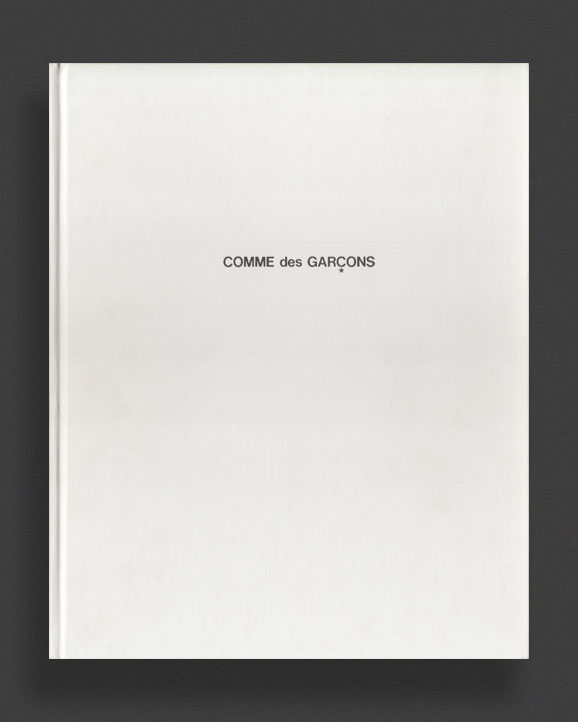
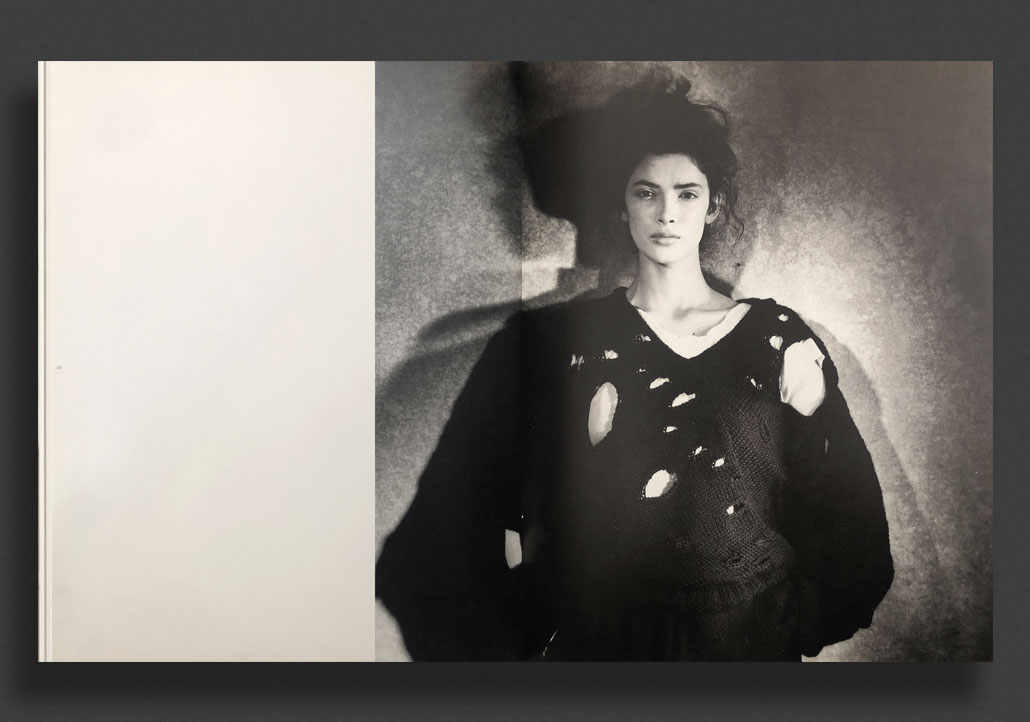
One of the most beautiful and sought after fashion photo-books ever published. First 1986 hardcover edition of Comme des Garçons 1981—1986. A document of early 1980s Comme through the iconic images of Arthur Elgort, Hans Feurer, Eddy Kohli, Peter Lindbergh, Steven Meisel, Paolo Roversi, Oliviero Toscani, and Bruce Weber.
Since the inception of Japanese fashion label Comme des Garçons in 1969, founder Rei Kawakubo applied a particular aesthetic to every aspect of Comme des Garçons, extending her vision to the company's packaging, furniture, interior design, graphic design, and publishing, including a selection of some of the fashion world's most visually compelling and challenging books and printed materials.
This wonderful and very iconic collection of photographs presents Rei Kawakubo's groundbreaking, innovative designs from an exciting period of Comme des Garçons history, between 1981 and 1986, as photographed by some of the most important fashion photographers of our time, including Arthur Elgort, Hans Feurer, Eddy Kohli, Peter Lindbergh, Steven Meisel, Paolo Roversi, Oliviero Toscani, and Bruce Weber, among others.
This gorgeous and rare clothbound volume perfectly captures a very important and exciting moment in the history of fashion, and is considered one of the most-collectable and prized fashion photo-books to come out of the 1980s.
Good copy without slipcase. This would be a Very Good copy but the only notable damage is a section of the hardcover edges on the open side has become frayed with friction. This only effects the overhang of the hardboards, which have done their job in protecting the entire book content, which remains undamaged. Otherwise only light wear. A heavily discounted copy for this one area of damage. Please contact if you wish for specific photographs.


Comme des Garçons
1981—1986
1986, Japanese
Hardcover (cloth-bound in slip-case), 152 pages, 36.5 x 29 cm
1st Edition, Out of print title / used / very good
$850.00 - In stock -
One of the most beautiful and sought after fashion photo-books ever published. First 1986 hardcover, slipcased edition of Comme des Garçons 1981—1986. A document of early 1980s Comme through the iconic images of Arthur Elgort, Hans Feurer, Eddy Kohli, Peter Lindbergh, Steven Meisel, Paolo Roversi, Oliviero Toscani, and Bruce Weber.
Since the inception of Japanese fashion label Comme des Garçons in 1969, founder Rei Kawakubo applied a particular aesthetic to every aspect of Comme des Garçons, extending her vision to the company's packaging, furniture, interior design, graphic design, and publishing, including a selection of some of the fashion world's most visually compelling and challenging books and printed materials.
This wonderful and very iconic collection of photographs presents Rei Kawakubo's groundbreaking, innovative designs from an exciting period of Comme des Garçons history, between 1981 and 1986, as photographed by some of the most important fashion photographers of our time, including Arthur Elgort, Hans Feurer, Eddy Kohli, Peter Lindbergh, Steven Meisel, Paolo Roversi, Oliviero Toscani, and Bruce Weber, among others.
This gorgeous and rare clothbound volume, housed in original printed cardboard slip-case, perfectly captures a very important and exciting moment in the history of fashion, and is considered one of the most-collectable and prized fashion photo-books to come out of the 1980s.
Very Good-Fine copy preserved in Very Good cardboard slipcase with only light tanning / light wear.

Joe's First Issue
Joe McKenna
1992, English
Softcover, 128 unbound pages, 41 x 29.5 cm
1st Edition, Out of print title / used / average
$200.00 - In stock -
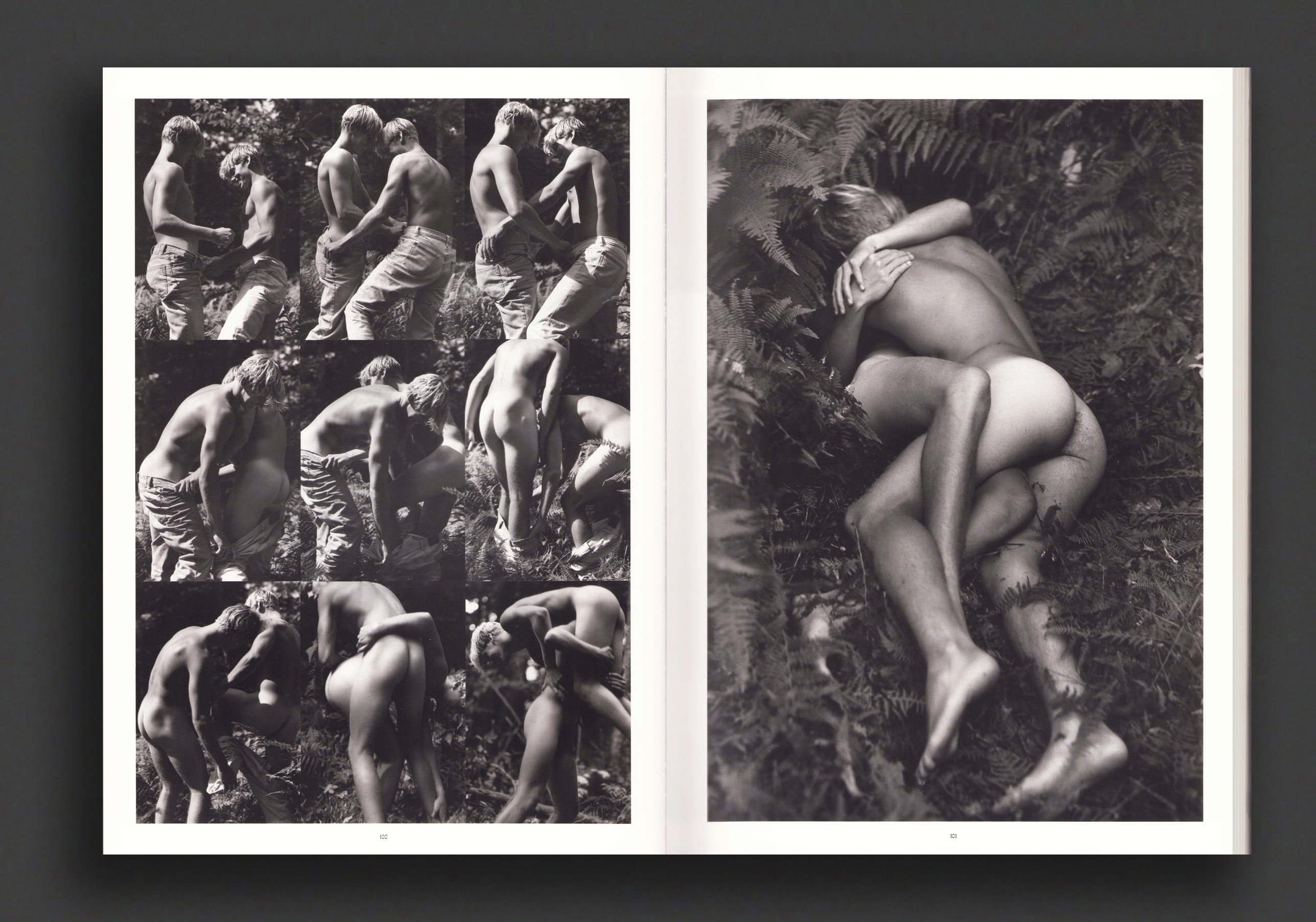
The first issue of one of the most sought after fashion publications of the 1990s, the impeccably produced, over-sized, unbound cult fashion folio magazine produced by stylist Joe McKenna and privately issued in 1992. Photographs by Bruce Weber, Peter Lindbergh, Ellen von Unwerth, Steven Meisel, Paolo Roversi, George Platt Lynes, and more. Design by Sam Shahid. Joe's was created at the height of the super-model era and a time in fashion of great artistic sophistication. A bold integration of art and fashion, the publication's success lies in the freedom that McKenna gave to the photographers and writers, away from the constraints of commercial publications. The magazine was funded by the ads, placed by designer friends of McKenna with no strings attached. A second issue only was published in 1998. Only two issues were ever made.
Articles include an illustrated discussion of the work of Parisian Maison Alaïa, Donald Windham on Tennessee Williams and Montgomery Clift with photos by George Platt Lynes and Karl Bissinger, Jean Paul Goude on Vanessa Paradis, with photographs by Paolo Roversi, Anna Sui on muse Wallis Franken, photographed by Steven Meisel and studies of Dirk Bogarde and artist Paul Cadmus.
The magazine ends with the controversial homo-erotic images of identical twins in Bruce Weber's photo-story 'The Last Days of Summer'. WARNING: This copy is priced to reflect the fact that this important section has been meticulously hand-censored wherever a penis is concerned due to it being copy imported into Tokyo in 1992 under strict print regulations. Sadly, this effects three Weber photographs, and one Paul Cadmus photograph.
Average-Good copy due to wear to cover boards and Japanese censorship outlined above. All other contents perfect.
Keito Joh
The Complete Etchings of Keito Joh
1981, Japanese
Softcover (w. dust jacket + obi), 22.5 x 18.4 cm
1st Edition, Out of print title / used / very good
$80.00 - In stock -
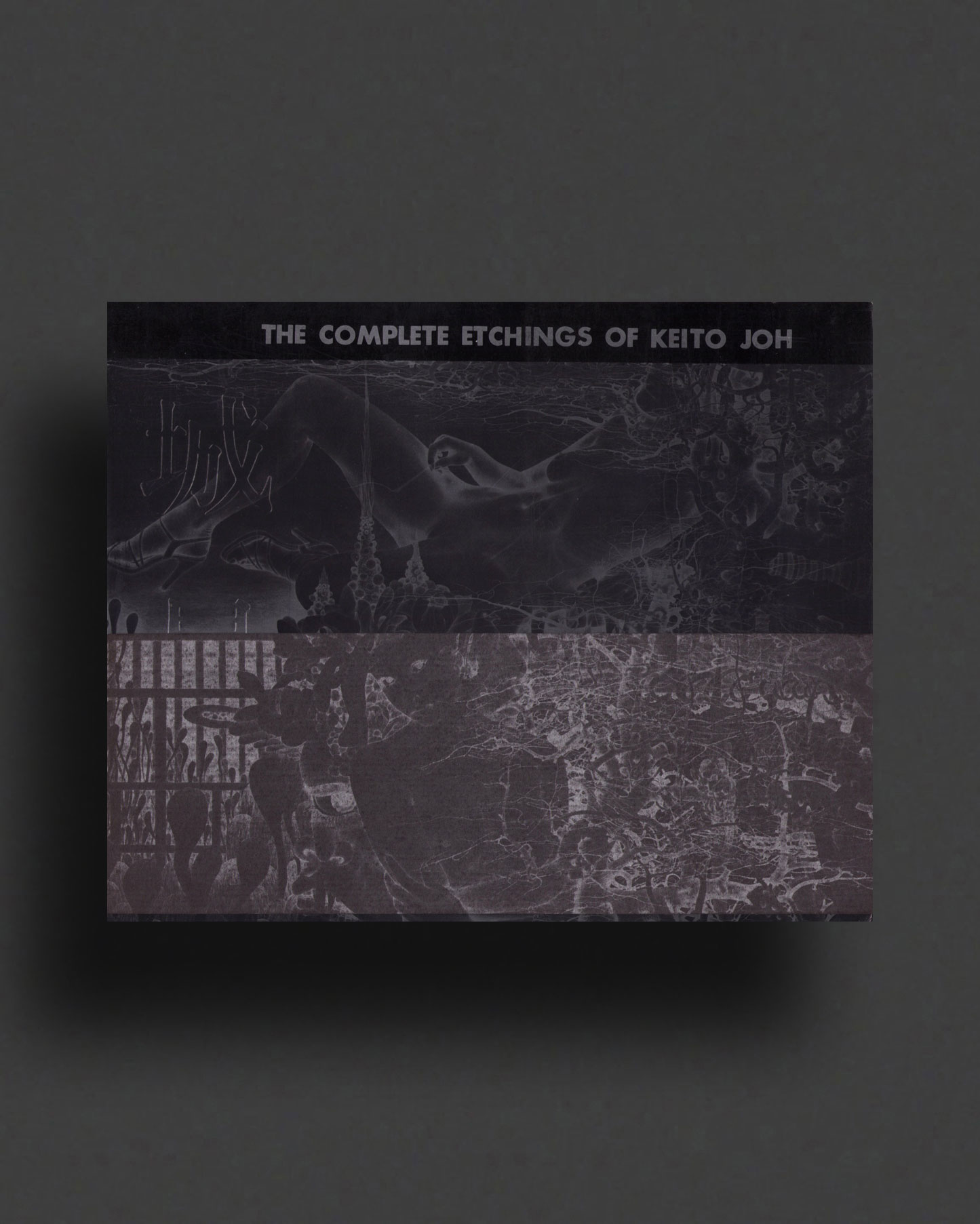
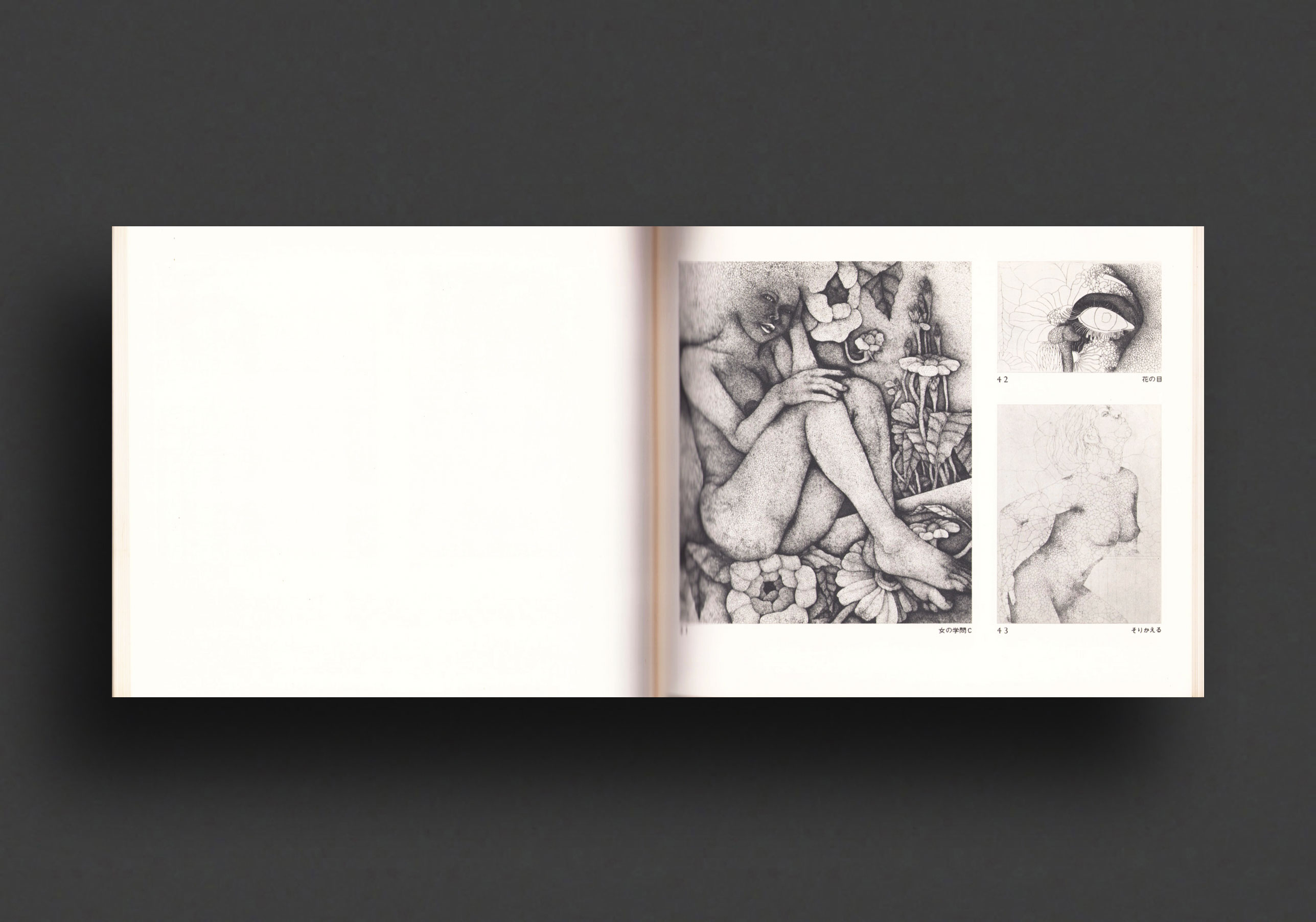
First 1981 edition of The Complete Etchings of Keito Joh between 1974—1981, featuring over 100 copperplate works of Japanese artist Keito Joh, whose prolific output throughout the 1970s—1980s depicts sensual naked figures, grotesque, fantastic plants and metaphysical landscapes composed of fine mesh-like lines, similar to porcelain cracks, that are inspired by the veins in leaves. "My childhood friend is nature", says Joh, born in 1946 in Aichi prefecture (Honshu island), whose delicate, organic line-work tames the inner vision of a wild beast. Keito Joh had a troubled youth, but loved music and painting, and during his high school years met painter Masaharu Kondo, who became his mentor and set him on his artistic path. Kondo's vibrant surrealistic abstractions, sharing the expressive intensity of artists such as Friedensreich Hundertwasser and Tarō Okamoto, influenced the work of Joh, but the youths extremely intimate, delicate threads unify his wild thickets of naked metamorphosing flesh and flora in a matrix of interlocking line, giving his work a distinct quality.
Keito Joh began his career in the 1970s with solo exhibitions and quickly gained international recognition, notably winning a grand prize at an artists' exhibition in Genoa, Italy, in 1972. A master of engraving and etching, training under Yo Kanno, like many erotic artists he collaborated with Japanese poets and literary figures to illustrate their works with erotic and expressive prints. Joh's idiosyncratic, sensuous, and psychedelic erotica gained a serious following in the 1970s, and became very well known in Japan, but today he is almost completely unknown in the West.
VG copy in VG DJ w. VG obi.
Hans Bellmer
Oeuvre Gravé
1969, French
Hardcover (cloth bound), 106 pages, 21 x 21 cm
1st Edition, Out of print title / used / good
$120.00 - Out of stock
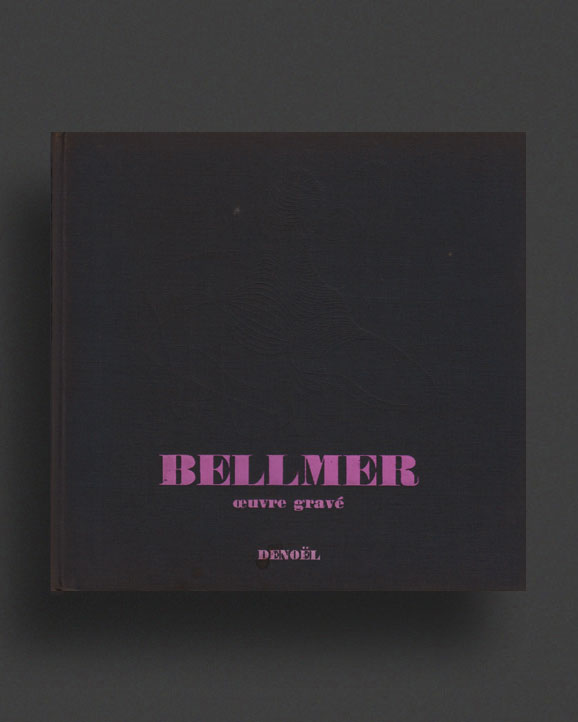
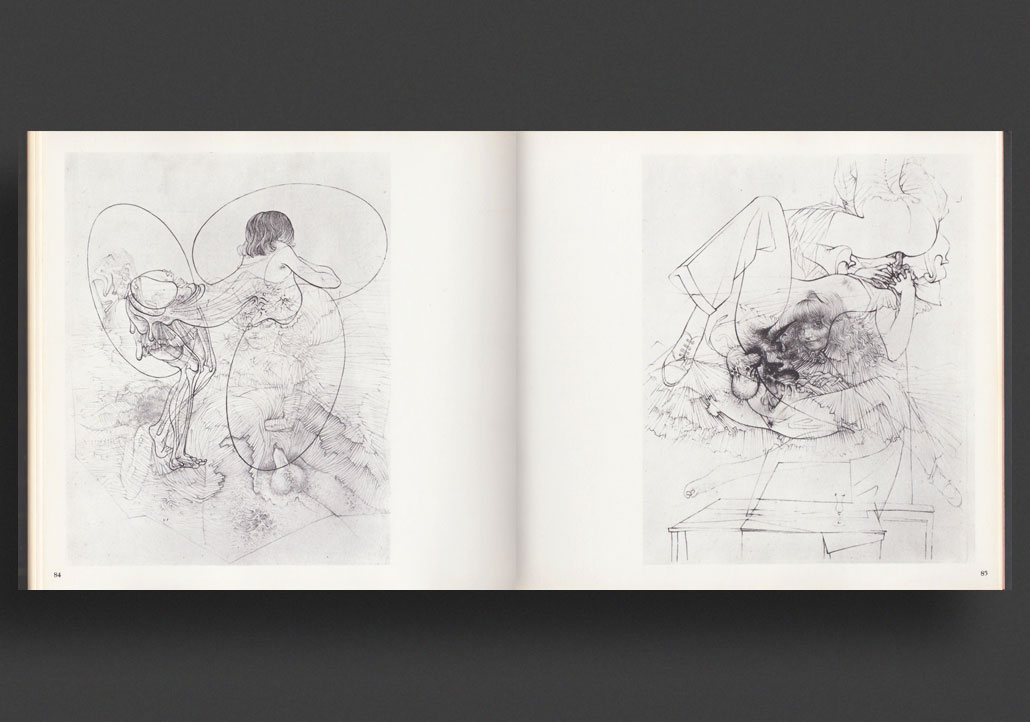
First Edition of the catalogue raisonné of the engraved work of German Surrealist Hans Bellmer, published in 1969 by Éditions Denoël, Paris. Wrapped in the publisher's debossed black covers featuring Bellmer's Céphalopode of 1965, this handsome volume opens with "Morale of Engraving", a four page introduction by author Andre Pieyre De Mandiargues (in French). The rest of the book is made up of 141 reproduced engraved works of Bellmer, including his exquisite works complimenting Georges Bataille, Marquis de Sade, Joyce Mansour, Louis Aragon, Charles Baudelaire, and others, followed by a 7 page catalogue raisonné index, including work title, date, process and technique, dimensions, printing justifications, editors and other details. An essential title in any Bellmer collection and important reference.
Very Good copy, tanning and some marks to board/page edges with age.
Arthropods: New Design Futures
by Jim Burns
1972, English
Softcover, 168 pages, 29.5 x 21 cm
1st Edition, Out of print title / used / good
$65.00 - In stock -
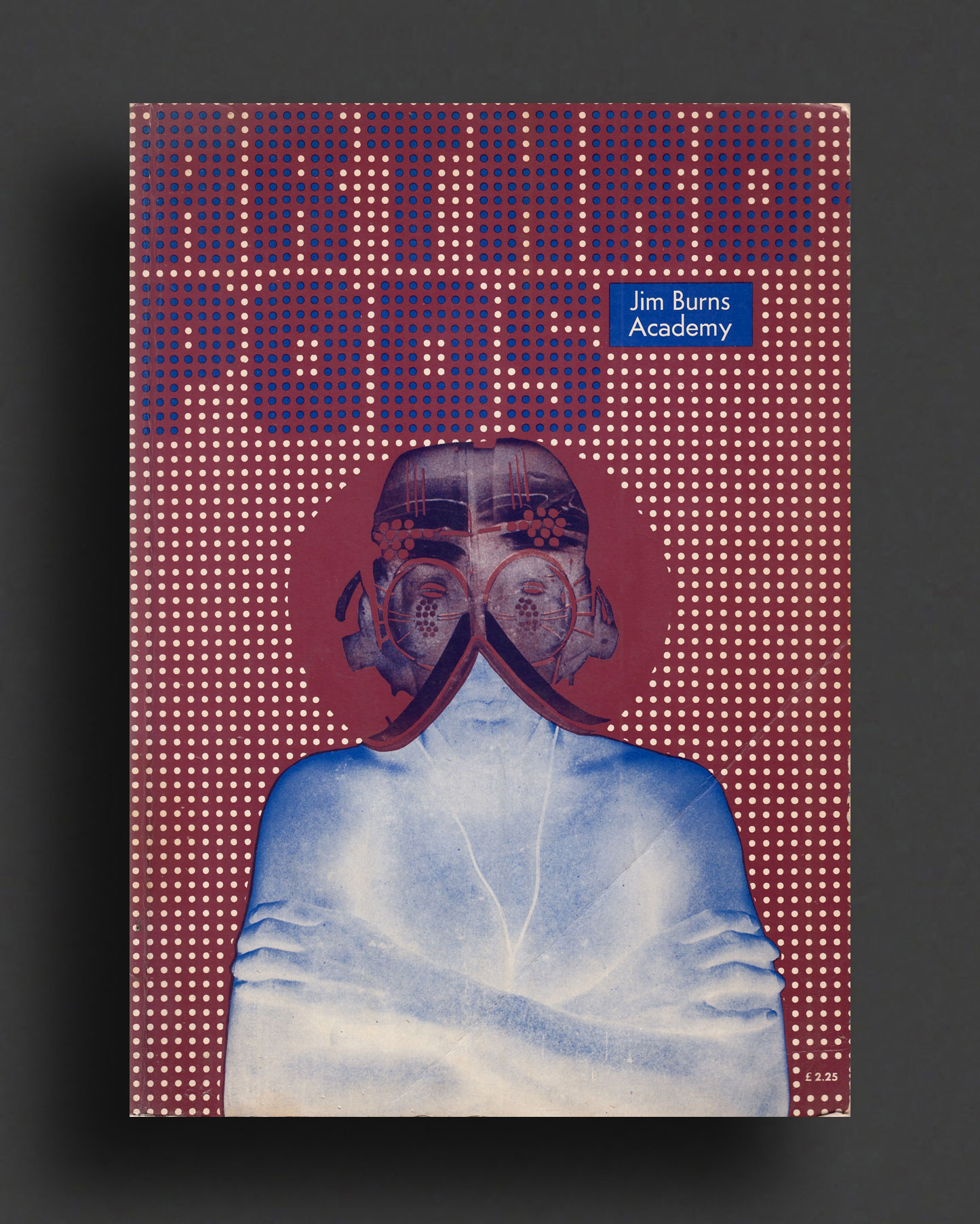
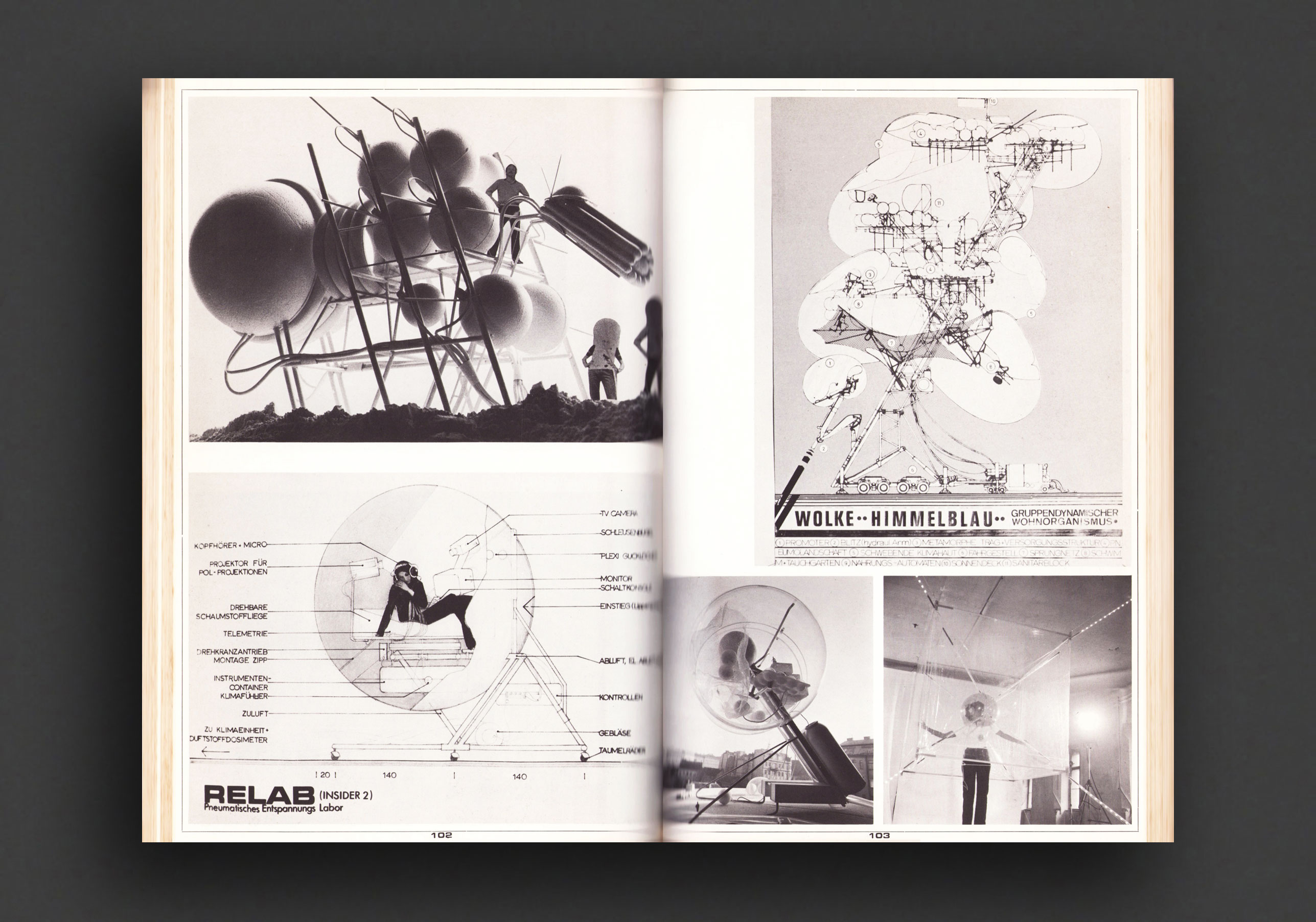
First 1972 softcover edition of the first major international survey of "Arthropods", an experimental artistic phenomenon born out of the happenings of the 1960's to encompass many ventures into radical environmental design. A survey of more than thirty international experimental architecture groups, artists, and designers, including portfolios on, among others, Superstudio, 9999, Experiments in Art et Technology, Ant Farm, Archizoom, Haus-Rucker-Co, God et Co, Cedric Price, PULSA, and Experiments in Environment (Anna and Lawrence Halprin). The author was a member of the environmental design and planning firm of Lawrence Halprin et Associates, and a former editor of Progressive Architecture.
"England's Archigram group proposes sensitizing the service network of a city to respond instantly to new situations by computer; Superstudio of Florence is into a series of investigations dealing with the impact of manmade buildings on the landscape that involves the creation of giant continuous monuments straddling the horizon; Missing Link Productions of Vienna has devised soft, amorphous "Children's Clouds" to hang between buildings in crowded cities, interconnecting the children of many families in a kid's play-community high above the traffic; Edward Suzuki of South Bend, Indiana, proposes an air-inflated system of plastic units to make a cheap, expandable, foldable, floatable, mobile home; in "Apparitions on the Ponte Vecchio," an environmental happening by 9999 of Florence, people's perception of an ancient monument was transformed for a brief period by projected Op-art slides and supergraphics.
Jim Burns has metaphorically termed these and many other flourishing groups of environmental designers "Arthropods" (invertebrate animals with articulate, segmented bodies and limbs) in order to reflect their flexibility, adaptability, and unique capacity for individual creativity within a cooperative venture. No longer affecting the old-fashioned elitist practice of designing exclusively for aloof corporate, governmental, or institutional clients on isolated building plots, these young designers and planners are trying to be responsive to the needs of people and to enhance the positive physical and social connections that make human habitations human. Their startling creations provide dynamic approaches at all levels of life-from sleeping and recreation to urban planning and ecological conservation.
In ARTHROPODS, Burns investigates the achievements and goals of more than thirty international groups and shows in an informed, sympathetic text, with a wealth of illustrations, how they intend to ameliorate man's lot in an increasingly desensitized atmosphere and put him in creative control of his environment.
Jim Burns is a member of the environmental design and planning firm of Lawrence Halprin & Associates, where he concentrates on people's participation in planning processes. He also conducts an interdisciplinary information network with Nilo Lindgren and George Novotny, and leads workshops in participatory processes at the School of Art and Architecture, Cooper Union, New York. Articles and presentations of work by him have appeared in Progressive Architecture (where he was formerly Senior Editor); Design & Environment; The Drama Review; Source; Crafts Horizons; New York Times; San Francisco Chronicle; and a new volume in the Vision + Value series of Gyorgy Kepes. He has been involved in staging exhibits and events for the American Federation of Arts, Museum of Contemporary Crafts, and New York Parks, Recreation, and Cultural.
Good—Very Good copy with light wear to extremities, light creasing to covers.


Nightbreed (Clive Barker)
Japanese film booklet 1990
1990, Japanese
Softcover (staple-bound), 24 pages, 29.5 x 21 cm
1st Edition, Out of print title / used / fine
$35.00 - Out of stock
Wonderful, scarce Japanese souvenir photo booklet for Clive Barker's Nightbreed, a 1990 American dark fantasy horror film written and directed by Clive Barker, based on his 1988 novella Cabal, starring Craig Sheffer, Anne Bobby, David Cronenberg, Charles Haid, Hugh Quarshie, and Doug Bradley. The film follows an unstable mental patient named Aaron Boone who is falsely led to believe by his doctor that he is a serial killer, taking refuge in an abandoned cemetery called Midian among a tribe of monsters and outcasts known as the "Nightbreed" who hide from humanity. A flop upon release, the film has become a cult hit from the height of horror fantasy film-making. Heavily illustrated throughout with glossy colour and b/w stills from the film, alongside texts in Japanese about the film, cast, and production information.
Fine copy.
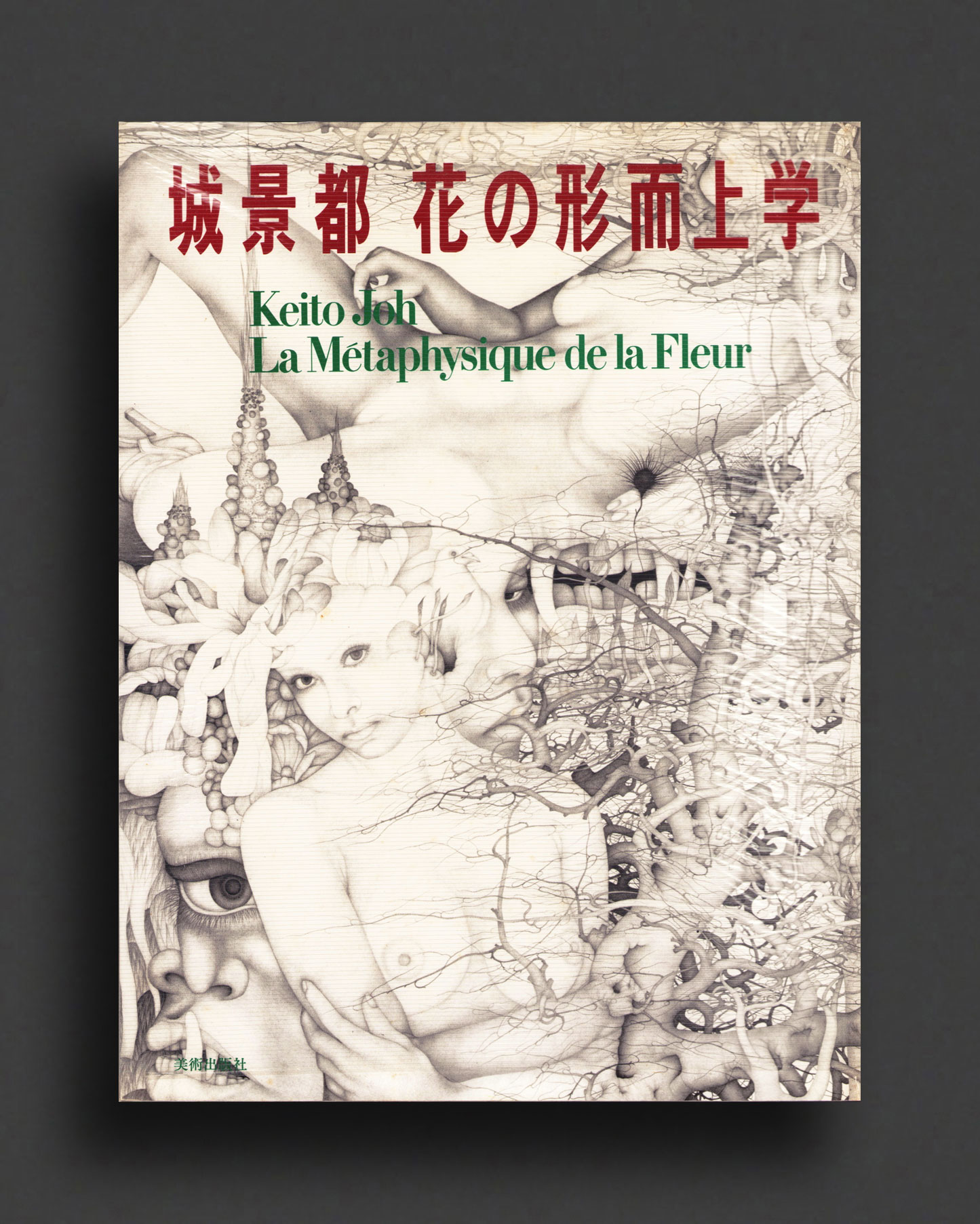
Keito Joh
La Métaphysique de la Fleur
1984, Japanese
Softcover (w. dust jacket), 128 pages, 33 x 25 cm
1st Edition, Out of print title / used / very good
$70.00 - Out of stock
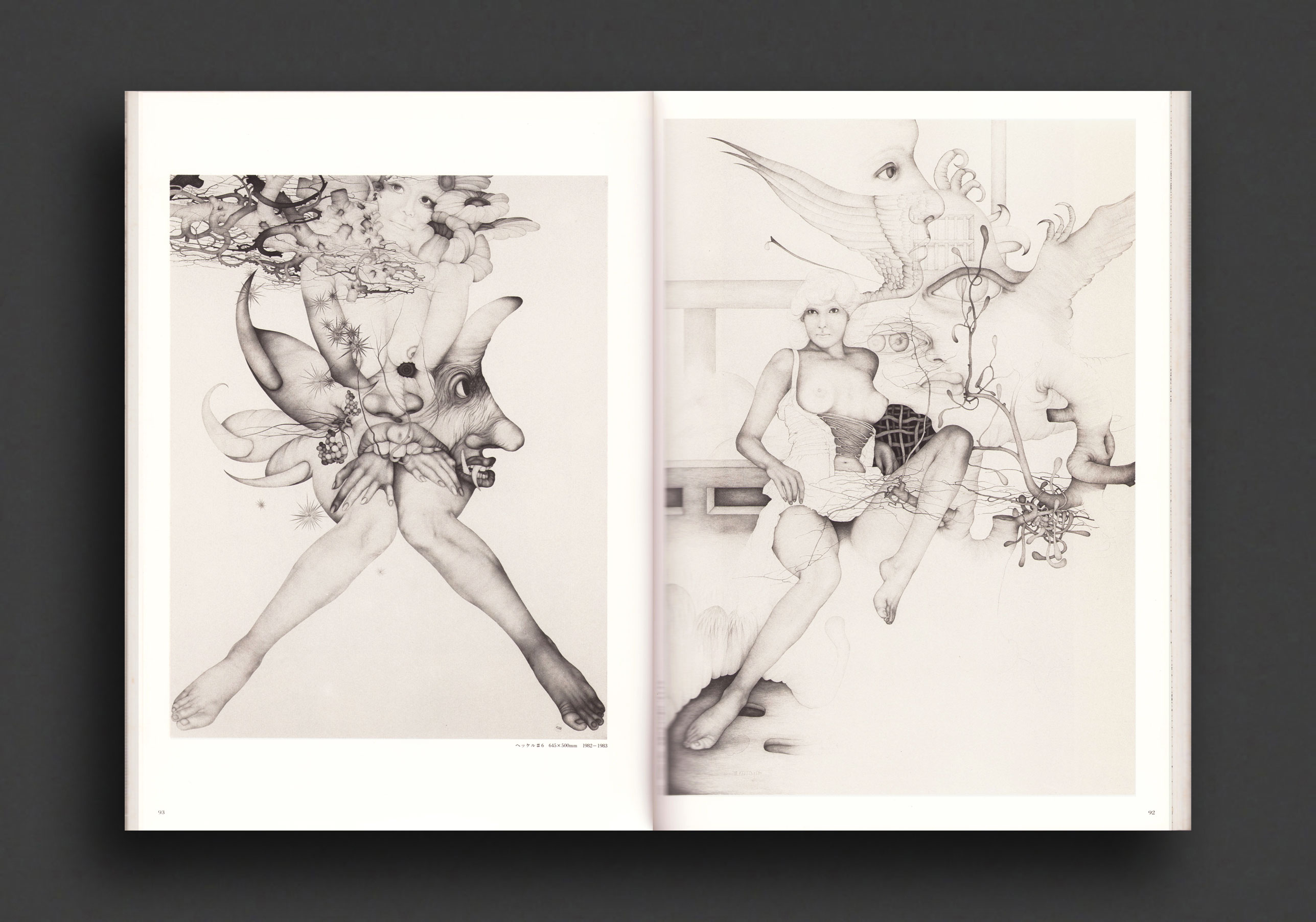
First 1984 edition of this major collection of the flourishing illustrated eros of Japanese artist Keito Joh, whose prolific output throughout the 1970s—1980s depicts sensual naked figures, grotesque, fantastic plants and metaphysical landscapes composed of fine mesh-like lines, similar to porcelain cracks, that are inspired by the veins in leaves. "My childhood friend is nature", says Joh, born in 1946 in Aichi prefecture (Honshu island), whose delicate, organic line-work tames the inner vision of a wild beast. Keito Joh had a troubled youth, but loved music and painting, and during his high school years met painter Masaharu Kondo, who became his mentor and set him on his artistic path. Kondo's vibrant surrealistic abstractions, sharing the expressive intensity of artists such as Friedensreich Hundertwasser and Tarō Okamoto, influenced the work of Joh, but the youths extremely intimate, delicate threads unify his wild thickets of naked metamorphosing flesh and flora in a matrix of interlocking line, giving his work a distinct quality.
Keito Joh began his career in the 1970s with solo exhibitions and quickly gained international recognition, notably winning a grand prize at an artists' exhibition in Genoa, Italy, in 1972. A master of engraving and etching, training under Yo Kanno, like many erotic artists he collaborated with Japanese poets and literary figures to illustrate their works with erotic and expressive prints. Joh's idiosyncratic, sensuous, and psychedelic erotica gained a serious following in the 1970s, and became very well known in Japan, but today he is almost completely unknown in the West.
This over-sized, lavishly illustrated (in colour and monochrome) volume reproduces an abundance of his prints, drawings and paintings, alongside essays, and a profusely photographically illustrated biography tracing his career.
VG copy in original publisher's vinyl dust jacket (w. the usual age shrinkage of this type of Japanese dust jacket).
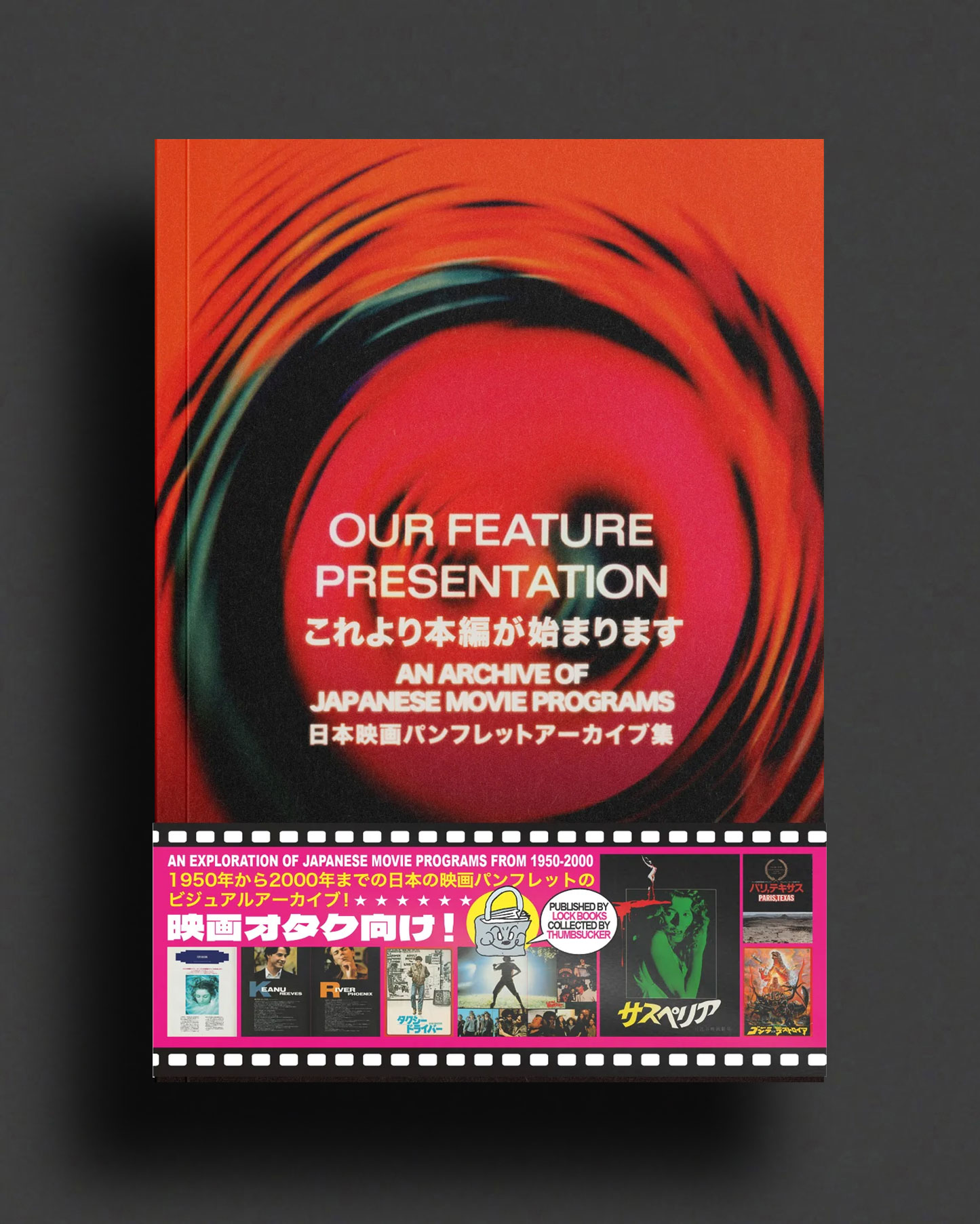
Our Feature Presentation: An Archive of Japanese Movie Programs
2025, English / Japanese
Softcover (w. obi), 488 pages, 21 x 14.8 cm
$95.00 - In stock -
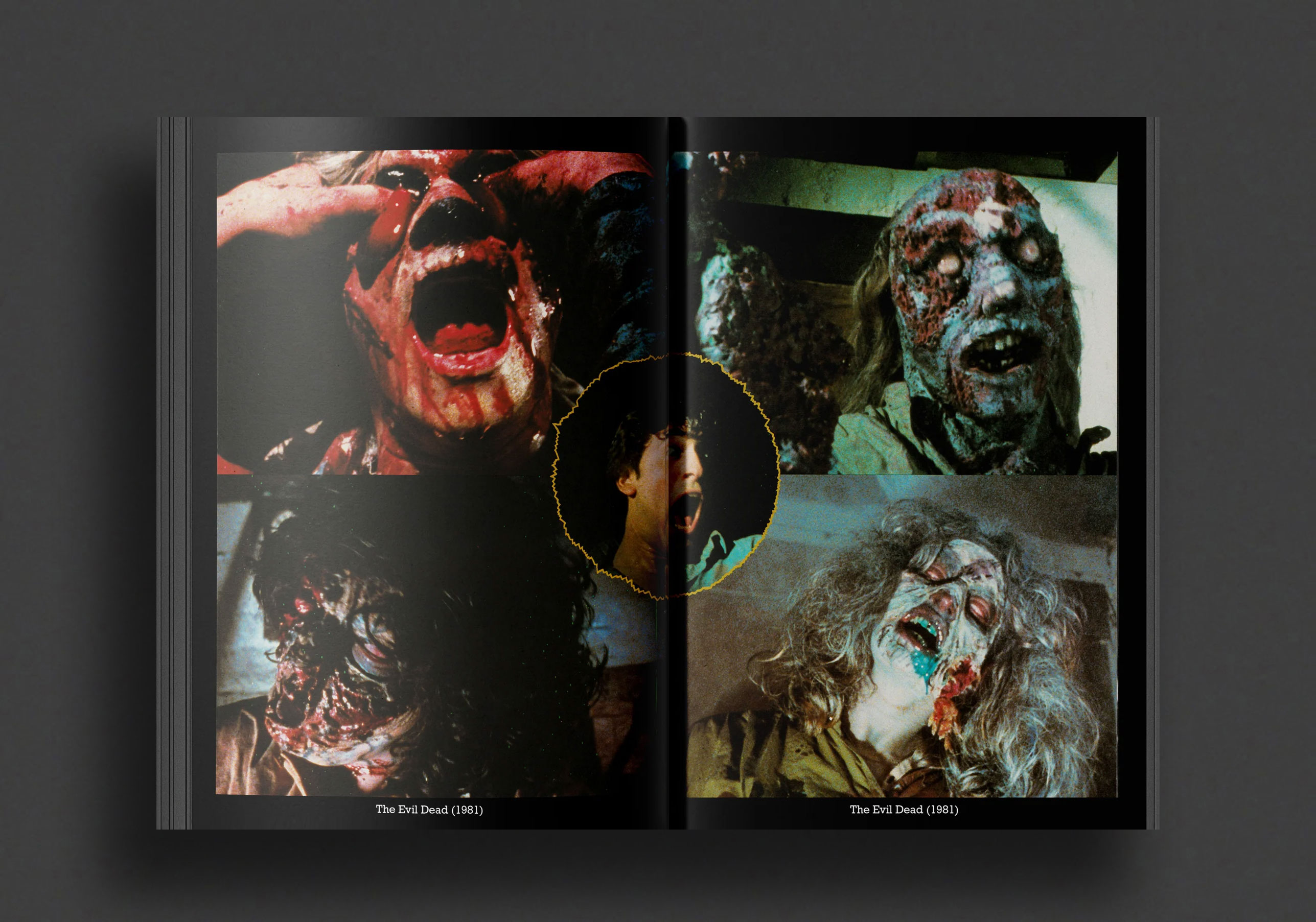
Our Feature Presentation curates an assortment of pages scanned from over 70 vintage Japanese cinema pamphlets, known as 映画パンフレット (Eiga panfuretto) ranging from 1950-2000.
Sold during a film’s run, these pamphlets typically included interviews with the cast and director, production notes, behind-the-scenes details and film stills. During the boom of Japanese cinema and imported Hollywood films in the 1950s, such programs became standard for most major releases and collectible items among cinephiles.
Ranging from Bresson to Fulci, The Evil Dead to The Virgin Suicides, each page highlights the unique and vibrant design of these pamphlets, showcasing rare film stills and production imagery.
Moomin : The Art and The Story
2019, Japanese
Hardcover (cloth), 312 pages, 195 x 130 cm
1st Edition, Out of print title / as new
$120.00 - In stock -
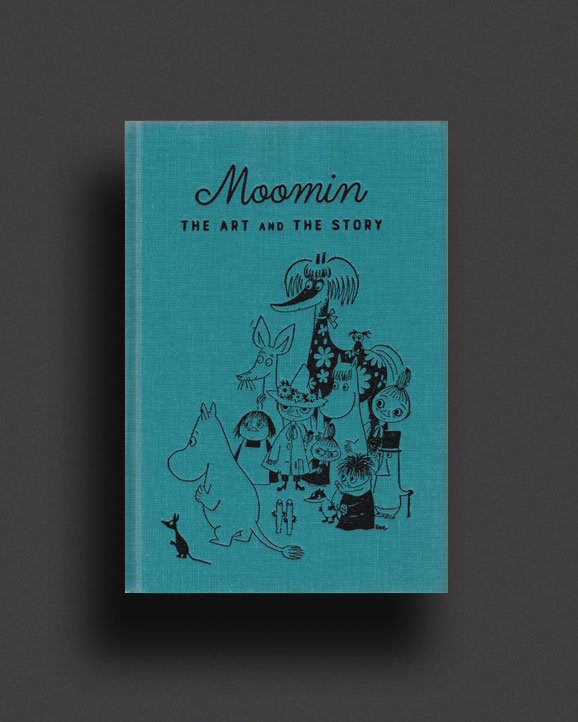
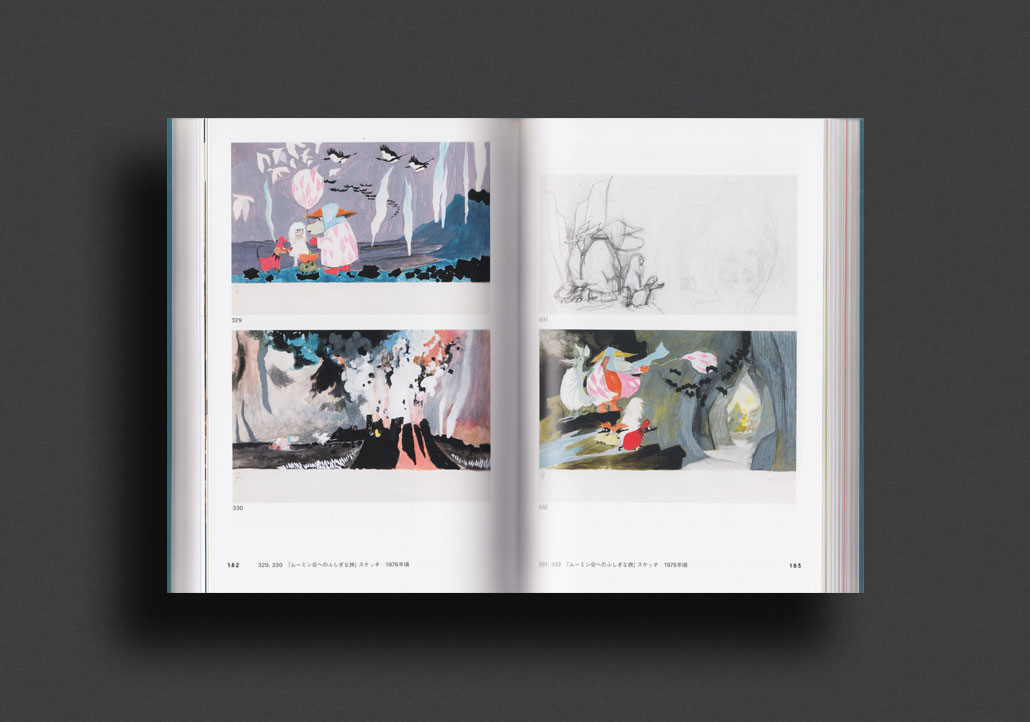
Stunning hardcover catalogue published on the occasion of the largest traveling Moomin exhibition ever staged, Moomin: The Art and The Story, Japan, 2019. Beautifully designed by the exhibition designer Yuria Oshima, this comprehensive book delves into the world of Tove Marika Jansson's Moomins in such detail that only a Japanese book could. Made in collaboration with the Moomin Museum in Tampere, who loaned 500 works for the exhibition, almost every exhibited item is captured here in in print across various paper stocks, including a miniature inlayed facsimile of the marvellous Trollvinter, first published in 1957. There is so much material captured in this book that has not been previously published, including countless original sketches and illustrations, paintings, first-edition Moomin books, all the original Moomin dolls, products and animations, commercial Moomin work, personal photographs of Jansson and much more, all thoroughly indexed. 2019 also marked the 100th Anniversary of diplomatic relations between Japan and Finland, Tove Jansson’s native country. Jansson visited Japan twice, in 1971 and 1990, each time making social and professional connections, sketches, and photographs. She also passionately collected the prints of 19th Century woodcut masters like Hiroshige, Hokusai and many more, which are captured here alongside her own artwork, drawing out the obvious influence, and admiration Jansson had for Japanese art. Also includes her Japanese hotel drawings, correspondences and photographs of her visits. An invaluable and inspiring resource for any Moomin fan.
Tove Marika Jansson (1914 – 2001) was a Swedish-speaking Finnish author, novelist, painter, illustrator and comic strip author. Brought up by artistic parents, Jansson studied art from 1930 to 1938 in Stockholm, Helsinki and Paris. Her first solo art exhibition was in 1943. She continued to work as an artist and a writer for the rest of her life, and it was with the creation of her much-loved Moomin characters that she become known around the world. Jansson wrote the Moomin books for children, starting in 1945 with The Moomins and the Great Flood. Her books became international classics translated to 35 languages. For her work as a children's writer she received the Hans Christian Andersen Medal in 1966.
As New.
Stone (Sandy Harbutt)
Japanese film booklet 1978
1978, Japanese
Softcover (staple-bound), 16 pages, 29.5 x 21 cm
1st Edition, Out of print title / used / very good
$90.00 - In stock -
"Get with Stone, Take the Trip!"
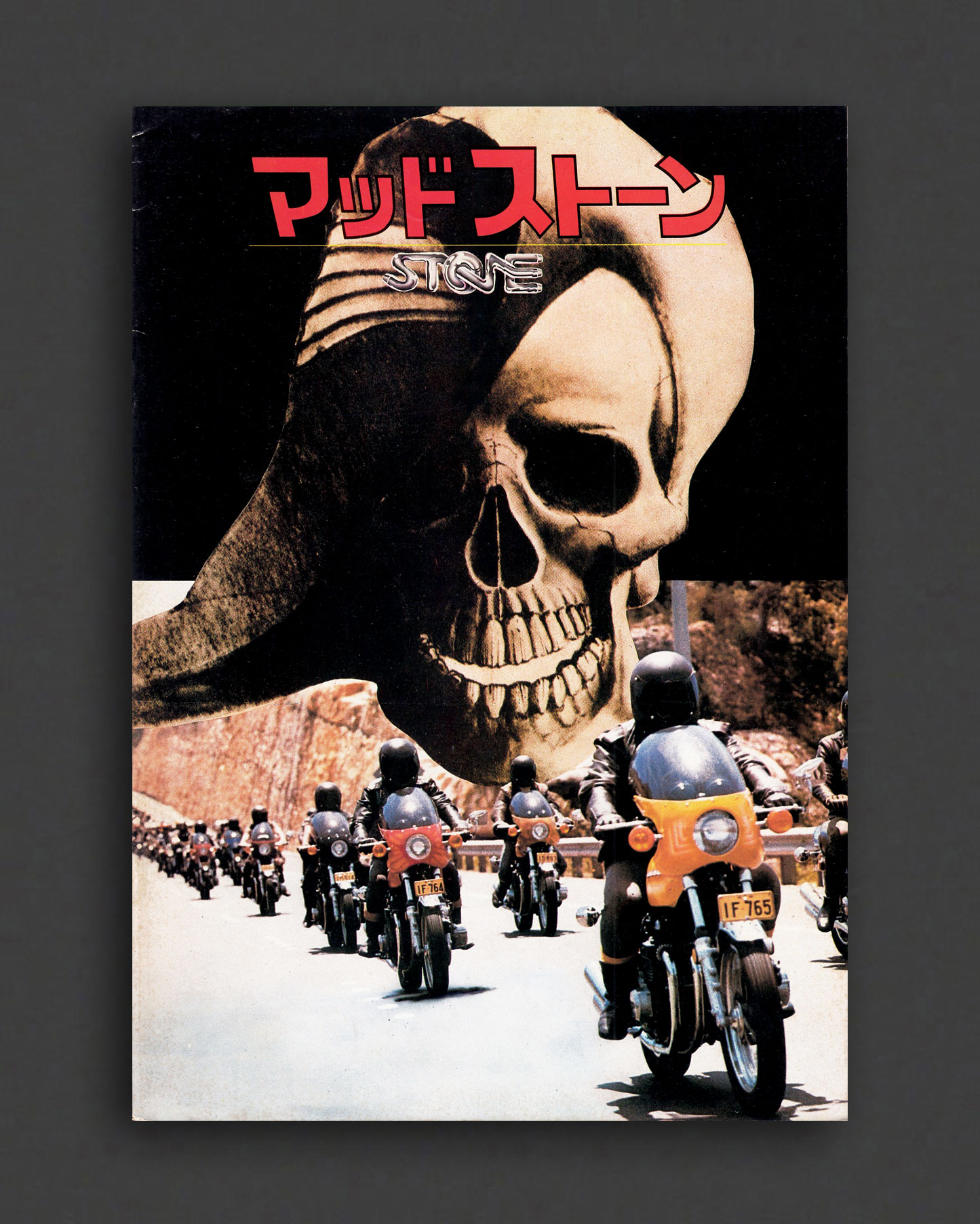
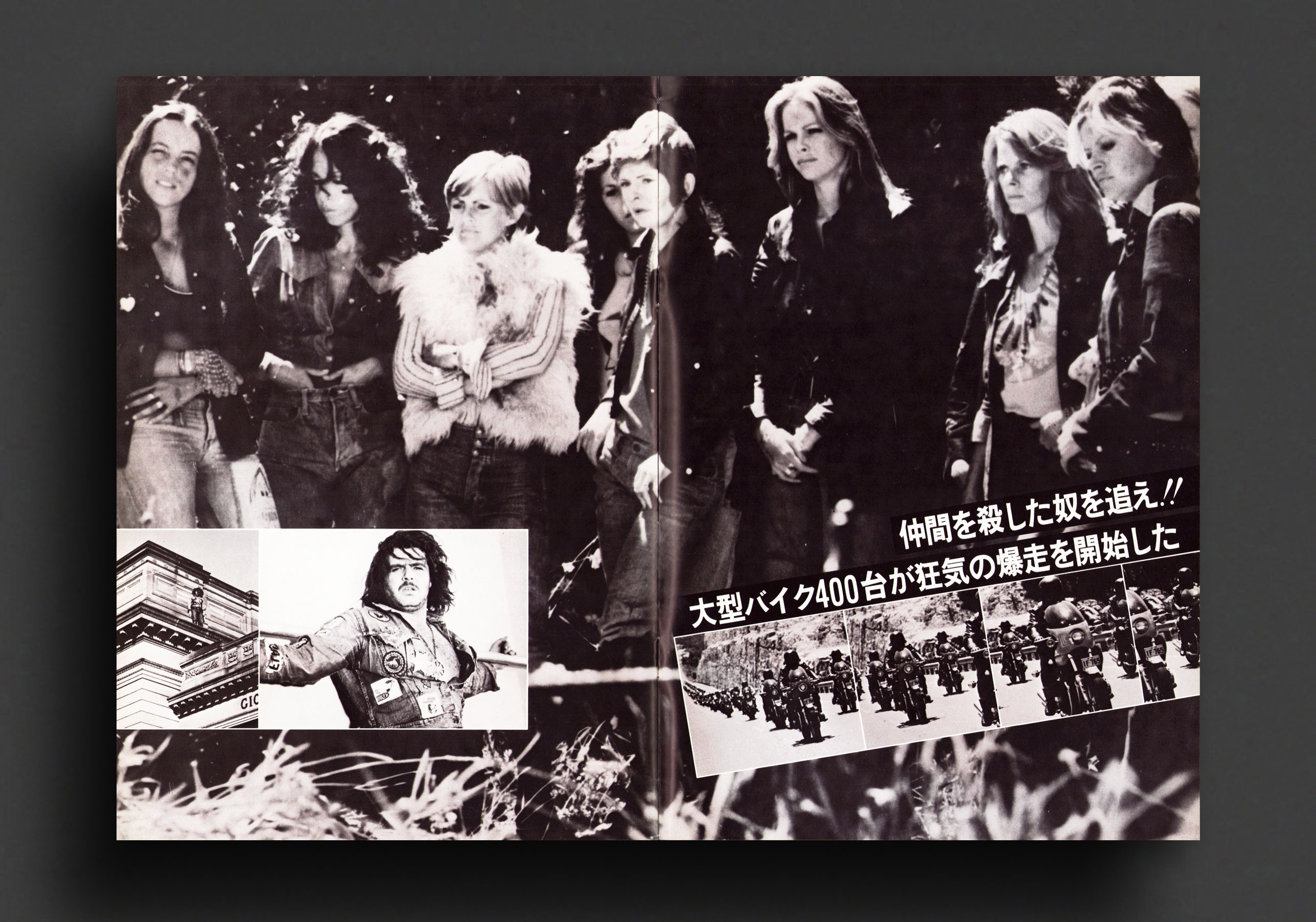
Very rarely seen 1978 Japanese souvenir photo booklet for 1974 Australian outlaw biker film cult classic Stone, written, directed and produced by Sandy Harbutt. "Five years before MAD MAX, producer/director/co-writer/star Sandy Harbutt – in his first and only feature film – ignited Australia’s exploitation explosion, launched a global censorship battle and delivered what may still be the best biker movie in history: When an undercover cop (Ken Shorter of SUNDAY TOO FAR AWAY) infiltrates an outlaw motorcycle gang (led by Harbutt), he’ll straddle 7000 RPM of screaming steel for a full-throttle hell ride through sex, violence, and Down Under vengeance. Hugh Keays-Byrne (Immortan Joe in MAD MAX: FURY ROAD), Helen Morse (PICNIC AT HANGING ROCK), Roger Ward, Vincent Gil and Reg Evans of MAD MAX fame, and members of the Sydney Hells Angels co-star in the “ass-kicking bite of entertainment that delivers on every level” (DVD Drive-In)"—Severin
Heavily illustrated throughout with glossy colour and b/w stills from the film, alongside texts in Japanese about the film, cast and production information.
Very Good copy with light wear.


Mad Max (George Miller)
1979, Japanese
Softcover (staple-bound), 20 pages, 29.5 x 21 cm
1st Edition, Out of print title / used / very good
$15.00 - Out of stock
Japanese souvenir photo booklet for George Miller's Mad Max, a 1979 Australian dystopian action film produced by Byron Kennedy. Mel Gibson stars as "Mad" Max Rockatansky, a police officer turned vigilante in a near-future Australia in the midst of societal collapse. Joanne Samuel, Hugh Keays-Byrne, Steve Bisley, Tim Burns, and Roger Ward also star. The award-winning, though polarizing upon release, film helped open up the global market to Australian New Wave films and has become an international cult classic, giving rise to three sequels: Mad Max 2 (1981), Beyond Thunderdome (1985), and Fury Road (2015). Heavily illustrated throughout with glossy colour and b/w stills from the film, poster designs, alongside texts in Japanese about the film, cast, and production information.
Very Good copy.
