World Food Books' programme is largely produced on Kulin Nation land. We acknowledge the Wurundjeri people of the Kulin Nation as the first and continuing custodians of this land, and pay respect to their Elders past, present, and emerging.
World Food Books is an arts and special interests bookshop in Naarm / Melbourne. Founded in 2010, World Food Books is devoted to the presentation of a rotating, hand-selection of international art, design, literary and counterculture publications with an emphasis on the anti-traditional, the experimental, the avant-garde, the heretic, the marginal.
Presenting new titles alongside rare and out-of-print books, catalogues and journals spanning the fields of modern and contemporary art, design, photography, illustration, film, literature, poetry, cultural theory, philosophy, sexuality, popular and underground culture in its many radical forms, World Food Books wishes to encourage adventurous, thoughtful and open-minded reading, looking, writing, and exchange of publishing and ideas, both current and historical.
As well as our bookshop, located in Melbourne's historical Nicholas Building, all of our inventory is available internationally via our online mail-order service.
World Food Books semi-regularly co-ordinates "Occasions", a programme of exhibits and events at the bookshop and in partnership with other hosts (such as museums and art galleries) that develop out of the activities, relationships and content of the bookshop itself.
World Food Books
The Nicholas Building
37 Swanston Street
Room 5, Level 6
Melbourne 3000
Australia
SHOP HOURS:
Thu–Fri 12–6, Sat 12–5
WEB-SHOP OPEN 24/7
World Food Books
Postal Address:
PO Box 435
Flinders Lane
Victoria 8009
Australia
Art
Theory / Essay
Architecture / Interior
Graphic Design / Typography
Photography
Fashion
Eros
LGBTQ+
Fiction / Poetry
Weird / Speculative / Science Fiction / Horror
Transgressive / Visceral / Abject
Symbolism / Decadence / Fin de siècle
Film / Video
Painting
Sculpture / Installation
Performance / Dance / Theater
Drawing
Sound / Music
Curatorial
Group Shows / Collections
Periodicals
Out-of-print / Rare
Posters / Ephemera / Discs
Signed Books
World Food Books Gift Voucher
World Food Book Bag
Australian Art
Australian Fiction
Australian Science Fiction / Speculative Fiction
Australian Poetry
Australian Photography
Japanese Photography
Conceptual Art
Minimal Art
Dada
'Pataphysics / Oulipo
Fluxus
Concrete Poetry
Pop Art
Surrealism
Arte Povera
Arte Informale / Haute Pâte / Tachism
Nouveau Réalisme / Zero / Kinetic
Situationism / Lettrism
Collage / Mail Art / Xerox Art
Art Brut / Folk / Visionary / Fantastic
Illustration / Graphic Art / Bandes Dessinées
Furniture
Italian Radical Design / Postmodernism
Textiles
Ceramics / Glass
Counterculture
Protest / Revolt
Philosophy
Psychoanalysis
Anthropology
Anarchism
Socialism / Anarchism / Communism / Capitalism
Literary Theory / Semiotics / Language
Feminism / Women's Studies
Gender Studies / Sexuality
Anthropology
Fetishism / BDSM
Drugs / Psychedelia
Crime / Violence
Animal Rights / Veganism
Occult / Esoterica
Ecology / Earth / Alternative Living
Whole Earth / Crafts
All prices in AUD (Australian dollars)
Pick-Ups
Pick-up orders can be collected in our bookshop during opening hours after order date. Please collect any Pick-up orders within 2 weeks of ordering as we have limited storage space. Orders will be released back into stock if not collected within this time. No refunds can be made for pick-ups left un-collected. If you cannot make it in to the bookshop in this time-frame, please choose postage option.
Return Policy
All sales are final. We do accept returns (for refund or exchange) for items received in error. All our orders are packed with special care using heavy-duty padding and cardboard book-mailers or bubble mailers (for smaller books), using reinforcement where required. We cannot take responsibility for any lost, stolen or damaged parcels.
Insurance
Should you wish to insure your package, please email us directly after placing your order and we can organise this at a small extra expense. Although all standard/express tracked packages are very safe and dependable, we cannot take responsibility for any lost, stolen or damaged parcels. We recommend insurance on valuable orders.
Interested in selling your old books, catalogues, journals, magazines, comics, fanzines, ephemera? We are always looking for interesting, unusual and out-of-print books to buy. We only buy books in our fields of interest and specialty, and that we feel we can resell.
We base these prices on desirability, market value, in-print prices, condition and our current stock levels. We offer cash, store credit, and can take stock on consignment. All
about 25% of the price we expect to get when we sell them, or 30% in store credit. We base these prices on desirability, market value, in-print prices, condition and our current stock levels.
Sell your books any day of the week. You can drop them off and return later. If you have a lot of books, we can visit your Sydney home.
We buy books that we feel we can resell. We offer about 25 % of the price we expect to get when we sell them, or 30% in store credit. We base these prices on desirability, market value, in-print prices, condition and our current stock levels.
Philadelphia Wireman
03 August - 01 September, 2018
World Food Books is proud to announce our next Occasion, the first presentation of sculptures by Philadelphia Wireman in Australia.
The Philadelphia Wireman sculptures were found abandoned in an alley off Philadelphia’s South Street on trash night in 1982. Their discovery in a rapidly-changing neighbourhood undergoing extensive renovation, compounded with the failure of all attempts to locate the artist, suggests that the works may have been discarded after the maker’s death. Dubbed the "Philadelphia Wireman" during the first exhibition of this work, in 1985, the maker’s name, age, ethnicity, and even gender remain uncertain. The entire collection totals approximately 1200 pieces, all intricately bound together with tightly-wound heavy-gauge wire (along with a few small, abstract marker drawings, reminiscent both of Mark Tobey and J.B. Murry). The dense construction of the work, despite a modest range of scale and materials, is singularly obsessive and disciplined in design: a wire armature or exoskeleton firmly binds a bricolage of found objects including plastic, glass, food packaging, umbrella parts, tape, rubber, batteries, pens, leather, reflectors, nuts and bolts, nails, foil, coins, toys, watches, eyeglasses, tools, and jewellery.
Heavy with associations—anthropomorphic, zoomorphic, and socio-cultural responses to wrapped detritus—the totemic sculptures by Philadelphia Wireman have been discussed in the context of work created to fulfil the shamanistic needs of alternative religions in American culture. Curators, collectors, and critics have variously compared certain pieces to sculpture from Classical antiquity, Native American medicine bundles, African-American memory jugs, and African fetish objects. Reflecting the artist’s prolific and incredibly focused scavenging impulse, and despite—or perhaps enhanced by—their anonymity, these enigmatic objects function as urban artefacts and arbiters of power, though their origin and purpose is unknown. Philadelphia Wireman, whatever their identity, possessed an astonishing ability to isolate and communicate the concepts of power and energy through the selection and transformation of ordinary materials. Over the course of the past two decades, this collection has come to be regarded as an important discovery in the field of self-taught art and vernacular art.
Presented in collaboration with Fleisher-Ollman Gallery, Philadelphia, and Robert Heald, Wellington.
Susan Te Kahurangi King
02 February - 10 March, 2018
Susan Te Kahurangi King (24 February 1951 - ) has been a confident and prolific artist since she was a young child, drawing with readily available materials - pencils, ballpoint pens and felt-tip markers, on whatever paper is at hand. Between the ages of four and six Susan slowly ceased verbal communication. Her grandparents William and Myrtle Murphy had developed a special bond with Susan so they took on caring responsibilities for extended periods. Myrtle began informally archiving her work, carefully collecting and storing the drawings and compiling scrapbooks. No drawing was insignificant; every scrap of paper was kept. The King family are now the custodians of a vast collection containing over 7000 individual works, from tiny scraps of paper through to 5 meter long rolls.
The scrapbooks and diaries reveal Myrtle to be a woman of great patience and compassion, seeking to understand a child who was not always behaving as expected. She encouraged Susan to be observant, to explore her environment and absorb all the sights and sounds. Myrtle would show Susan’s drawings to friends and people in her community that she had dealings with, such as shopkeepers and postal workers, but this was not simply a case of a grandmother’s bias. She recognised that Susan had developed a sophisticated and unique visual language and sincerely believed that her art deserved serious attention.
This was an unorthodox attitude for the time. To provide some context, Jean Dubuffet coined the term Art Brut in 1945 to describe work created by self-taught artists – specifically residents of psychiatric institutions and those he considered to be visionaries or eccentrics. In 1972 Roger Cardinal extended this concept by adopting the term Outsider Art to describe work made by non-academically trained artists operating outside of mainstream art networks through choice or circumstance. Susan was born in Te Aroha, New Zealand in 1951, far from the artistic hubs of Paris and London that Dubuffet and Cardinal operated in. That Myrtle fêted Susan as a self-taught artist who deserved to be taken seriously shows how progressive her attitudes were.
Susan’s parents Doug and Dawn were also progressive. Over the years they had consulted numerous health practitioners about Susan’s condition, as the medical establishment could not provide an explanation as to why she had lapsed into silence. Dawn educated herself in the field of homeopathy and went on to treat all twelve of her children using these principles – basing prescriptions on her observations of their physical, mental and emotional state.
Doug was a linguist with an interest in philosophy who devoted what little spare time he had to studying Maori language and culture. To some extent their willingness to explore the fringes of the mainstream made them outsiders too but it was their commitment to living with integrity and their respect for individuality that ensured Susan’s creativity was always encouraged.
Even though Susan’s family supported her artistic pursuits, some staff in schools and hospitals saw it as an impediment to her assimilation into the community and discouraged it in a variety of ways. Her family was not always aware of this and therefore did not fully understand why Susan stopped drawing in the early 1990s. However, rather than dwell on the challenges that Susan faced in pursuit of her artistic practice, they prefer to highlight her achievements. In 2008 Susan began drawing again in earnest, after an almost 20 year interruption, and her work is now shown in galleries around the world.
Susan grew up without television and has been heavily influenced by the comics she read as a child. She is absolutely fearless in the appropriation of recognizable characters, such as Donald Duck and Mickey Mouse, in her work. She twists their limbs, contorts their faces, compresses them together, blends them into complex patterned backgrounds - always imbuing them with an incredible energy. Although Susan often used pop culture characters in her work they are not naive or childlike. These are drawings by a brilliant self-taught artist who has been creating exceptional work for decades without an audience in mind.
Mladen Stilinović
"Various Works 1986 - 1999"
02 February 16 - September 10, 2016
Various works 1986 - 1999, from two houses, from the collections of John Nixon, Sue Cramer, Kerrie Poliness, Peter Haffenden and Phoebe Haffenden.
Including: Geometry of Cakes (various shelves), 1993; Poor People’s Law (black and white plate), 1993; White Absence (glasses, ruler, set square, silver spoon, silver ladel with skin photograph and wooden cubes), 1990-1996; Exploitation of the Dead (grey and red star painting, wooden painting, black spoon with red table, red plate), 1984-1990; Money and Zeros (zero tie, paintings made for friends in Australia (Sue, John, Kerrie), numbers painting), 1991-1992; Words - Slogans (various t-shirts) - “they talk about the death of art...help! someone is trying to kill me”, “my sweet little lamb”, “work is a disease - Karl Marx”; Various artist books, catalogues, monographs, videos; Poster from exhibition Insulting Anarchy; "Circular" Croatian - Australian edition; Artist book by Vlado Martek (Dostoyevsky); more.
Thanks to Mladen Stilinović and Branka Stipančić.
Jonathan Walker
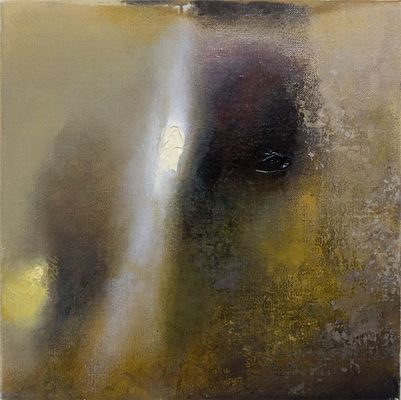
Always Will Need To Wear Winter Shirt Blue + Ochre Small Check Pattern
21 August - 21 September, 2015
Untitled
I am not a great reader of poetry but I always return to the work of Melbourne poet, Vincent Buckley (1925- 1988). Perhaps I find his most tantalising piece to be not a finished poem but a fragment left on a scrap of paper discovered on his desk after the poet’s death.
The poetry gathers like oil
In the word-core, and spreads
It has its music meet,
Its music is in movement.
This fragment is more the shell left behind from a volatile thought than a finished poem. I find the last two lines honest but awkward whereas the first two lines work like an arrow. Most likely he could not find a resolution so it was left. Still, in its present form, it remains an eloquent testimony to the ultimate failure of a medium to express mobile thought and sensation, in Buckley’s case, through verbal language. It’s an important matter because this is something all artists have to deal with regardless of the medium.
I have never written a poem, however, I am forever copying fragments from books on paper scraps in a vain effort to fix certain notions in my head. At first, they function as bookmarks that are sometimes returned to when I open the book. But before long, as they accumulate, they fall out littering the table interspersed with A4 photocopies, bills, books and medications.
To return to Buckley’s fragment, the first two lines very much evoke how I paint nowadays. As you age, detail diminishes and patches of light become more luminous and float. I feel the most honest way of dealing with this is by smearing the oil paint on the canvas with the fingers and working close-up, blind. Only if the patches coalesce into an approaching image can the work gain a life.
-
Jonathan Walker was born in Melbourne, Australia and brought up on a dairy farm in Gippsland. In the 1970’s he studied painting at RMIT and won the Harold Wright Scholarship to the British Museum, London. During the 1980’s he exhibited at Pinacotheca Gallery, Richmond and had work shown at the NGV and Heidi City Art Gallery. Over the same period he designed the cover for the “Epigenesi” LP by Giancarlo Toniutti, Italy and conducted a mail exchange work with Achim Wollscheid, Germany. The work with artists through the post resulted in an article published in the bicentenary issue of Art and Australia 1988. He showed in artist run spaces such as WestSpace in the 90’s and 2000’s, and until 2012, taught painting at Victoria University, which is where we (Colleen Ahern and Lisa Radford) as organisers of the exhibition, among many others, had the privilege of being his student.
Walker’s knowledge was imparted to students through the careful selection of music, literature, and artists found in books that he himself had ordered for the library. Walker’s strategy was the generosity of sharing his vast knowledge with references specific to each student and their context.
Walker’s paintings share a similar focus and intimacy.
This exhibition presents a small selection of recent paintings alongside a publication that includes Walker’s writing. Observational and analytical, Walker’s work is a type of material notation — the time of day, colour and how it is blended, the both specific and fleeting location of a reflection on lino or the question of whether a chair leg should be included in a painting.
Please join us on Friday August 21 between 6-8pm to celebrate the opening of the exhibition.
Curated by Colleen Ahern and Lisa Radford.
B. Wurtz
Curated by Nic Tammens
March 26 - April 4, 2015
B.Wurtz works from a basement studio in his home on Manhattan’s Lower East Side.
This local fact is attested to by the plastic shopping bags and newsprint circulars that appear in his work. As formal objects, they don’t make loud claims about their origins but nonetheless transmit street addresses and places of business from the bottom of this long thin island. Like plenty of artists, Wurtz is affected by what is local and what is consumed. His work is underpinned by this ethic. It often speaks from a neighborhood or reads like the contents of a hamper:
“BLACK PLUMS $1.29 lb.”
“Food Bazaar”
“USDA Whole Pork Shoulder Picnic 99c lb.”
“RITE AID Pharmacy, with us it’s personal.”
“H. Brickman & Sons.”
“Sweet Yams 59c lb."
Most of the work in this exhibition was made while the artist was in residence at Dieu Donne, a workshop dedicated to paper craft in Midtown. Here Wurtz fabricated assemblages with paper and objects that are relatively lightweight, with the intention that they would be easily transportable to Australia. This consideration isn’t absolute in Wurtz’s work, but was prescriptive for making the current exhibition light and cheap. Packed in two boxes, these works were sent from a USPS post office on the Lower East Side and delivered to North Melbourne by Australia Post.
Wurtz appears courtesy of Metro Pictures, New York.
Thanks to Rob Halverson, Joshua Petherick, Sari de Mallory, Matt Hinkley, Helen Johnson, Fayen d'Evie, Ask Kilmartin, Lisa Radon, Ellena Savage, Yale Union, and "Elizabeth".
John Nixon
"Archive"
December 15 - January 20, 2014
The presentation of John Nixon's archive offered a rare showcase of this extensive collection of the artist's own publications, catalogues, posters, ephemera, editions and more, from the mid 1980s onwards, alongside a selection of his artworks.
Organized by John Nixon, Joshua Petherick and Matt Hinkley.
<a href=http://wfb.public-office.info/artist/john-nixon>All titles by John Nixon
"Habitat"
at Minerva, Sydney (organised by Joshua Petherick and Matt Hinkley)
November 15 - December 20, 2014
Lupo Borgonovo, Janet Burchill & Jennifer McCamley,
Lewis Fidock, HR Giger, Piero Gilardi, Veit Laurent Kurz,
Cinzia Ruggeri, Michael E. Smith, Lucie Stahl, Daniel Weil, Wols
Press Release:
“...It contained seven objects. The slender fluted bone, surely formed for flight, surely from the wing of some large bird. Three archaic circuitboards, faced with mazes of gold. A smooth white sphere of baked clay. An age-blackened fragment of lace. A fingerlength segment of what she assumed was bone from a human wrist, grayish white, inset smoothly with the silicon shaft of a small instrument that must once have ridden flush with the surface of the skin - but the thing’s face was seared and blackened.”
William Gibson, “Count Zero”, 1986
"Autumn Projects Archive"
Curated by Liza Vasiliou
March 6 - March 15, 2014
World Food Books, in conjunction with the Virgin Australia Melbourne Fashion Festival 2014, presented the Autumn Projects archive, consisting of a selection of early examples in Australian fashion with a particular interest in collecting designers and labels from the period beginning in the 1980’s, who significantly influenced the discourse of Australian Fashion.
Curated by Liza Vasiliou, the exhibition provided a unique opportunity to view pieces by designers Anthea Crawford, Barbara Vandenberg, Geoff Liddell and labels CR Australia, Covers, Jag along with early experimental collage pieces by Prue Acton and Sally Browne’s ‘Fragments’ collection, suspended throughout the functioning World Food Books shop in Melbourne.
H.B. Peace
presented by CENTRE FOR STYLE
November 14, 2013
"Hey Blinky, you say chic, I say same"
Anon 2013
H.B. Peace is a clothing collaboration between great friends Blake Barns and Hugh Egan Westland. Their pieces explore the divergences between 'character’ and ‘personality’ in garments....etc
Special Thanks to Joshua Petherick and Matt Hinkley of WFB and Gillian Mears
and a Very Special Thank you to Audrey Thomas Hayes for her shoe collaboration.
Janet Burchill & Jennifer McCamley
"Aesthetic Suicide"
May 10 - June 8, 2013
The first of our occasional exhibitions in the World Food Books office/shop space in Melbourne, "Aesthetic Suicide" presented a body of new and older works together by artists Janet Burchill & Jennifer McCamley, including videos, prints, a wall work, and publications.
During shop open hours videos played every hour, on the hour.
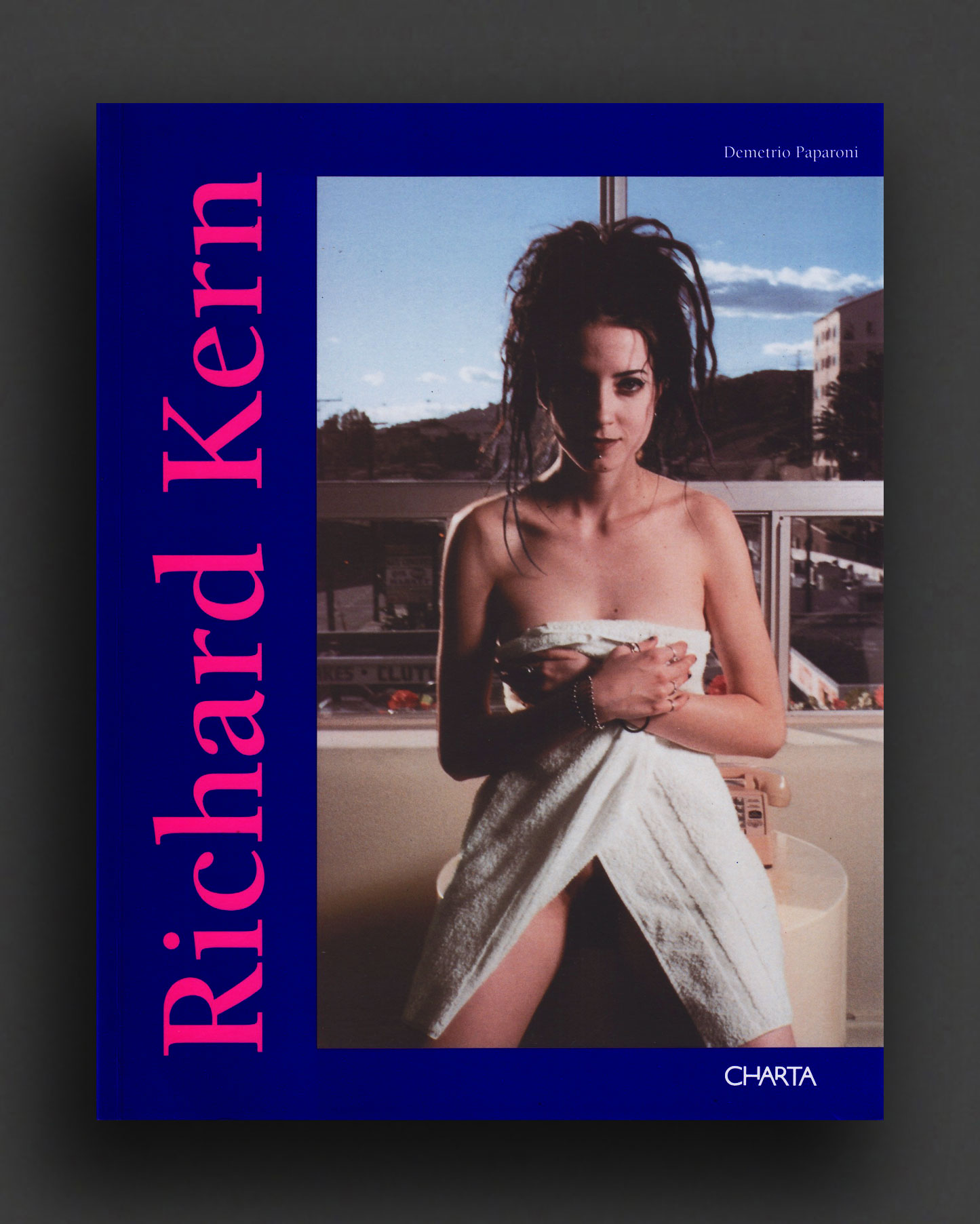
1999, English
Softcover, 72 pages, 27 x 21 cm
1st Edition, Out of print title / used / fine
Published by
Charta / Milan
$60.00 - Out of stock
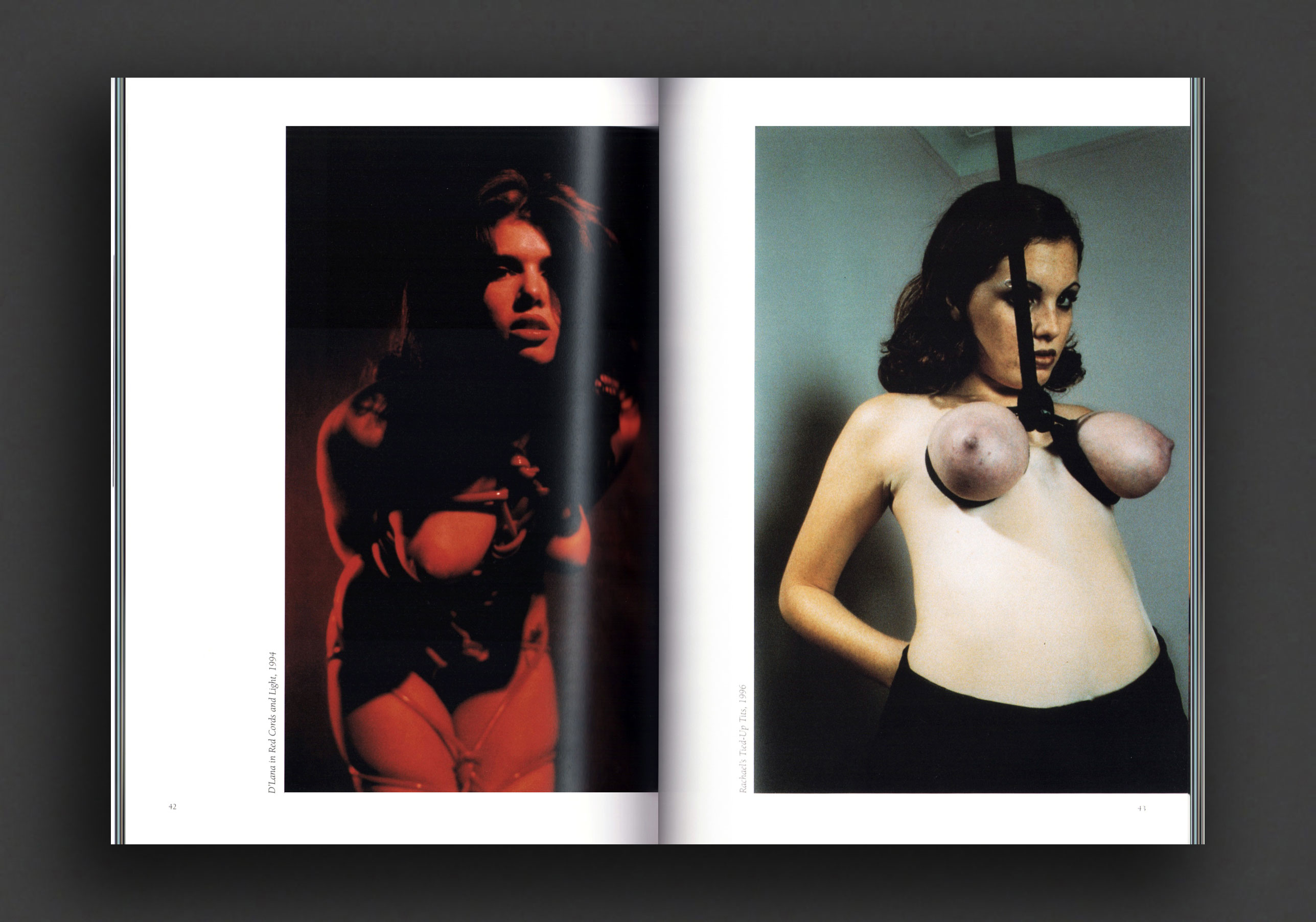
First 1998 edition of this catalogue of Richard Kern's photography, published on the occasion of his Italian exhibition "Guns, Girls and Candles", Galeria Reali, Brescia, Itay, 1998. A lavish full-colour early photo book by Kern, collecting his work to date. Texts by Nella Reali and Demetrio Paparoni in bi-lingual English and Italian.
"The spectacle of Richard Kern's legendary filmmaking and photography incites many reactions, but rarely is indifference among them. His imagery's characteristic blitzkrieg of subversive eroticism, porno kitsch, punk sensibility and aggressive femininity has won admirers of the so-called grunge aesthetic. This book has images of Kern's recent work, which stands at the intersection of fashion, sex and politics. The critical text by Paparoni explores the relationship between some of Kern's subjects and famous images from pre-war art history."
Very Good-Near Fine copy.
2006, Japanese / French
Hardcover (w. slipcase), 26.5 x 19 cm
1st Edition, Out of print title / used / very good
Published by
Seirin Kogeisha / Tokyo
$330.00 - In stock -
Now very rare out-of-print collection "1970, Toshio Saeki" by the Japanese master of Ero guro, published in 2006 by Seirin Kogeisha. Published in this hardcover, slipcased, numbered edition of 2000 copies, "1970, Toshio Saeki" reproduces a fine selection of colour and b/w works of the erotic bizarre, accompanied by captions and postface by Saeki himself, in Japanese and French.
Toshio Saeki (1945—2019) was an illusive Japanese illustrator and painter, and icon of 1970s Tokyo counterculture, known for combining Japanese folklore, Yōkai spirits and elements of Western art with his own sophisticated aesthetics to create a unique, sensational world of eros, dark humour, and horror. Given the title “Erotic Engineer” by Timothy Leary, Saeki's provocative art broke all sexual taboos, questioned Japanese ideology and traditional views on love, desire and gender roles. Saeki’s surgically-precise graphic work is closely related to the Japanese cultural phenomenon ‘Erotic, Grotesque, Nonsense’ (ero, guro, nansensu).
“Toshio Saeki conjures death with a pen”—Shūji Terayama, 1969.
Very Good copy in VG slipcase.
2024, English
Hardcover, 120 pages, 28 x 21 cm
Published by
Infinity Land Press / London
$85.00 $65.00 - In stock -
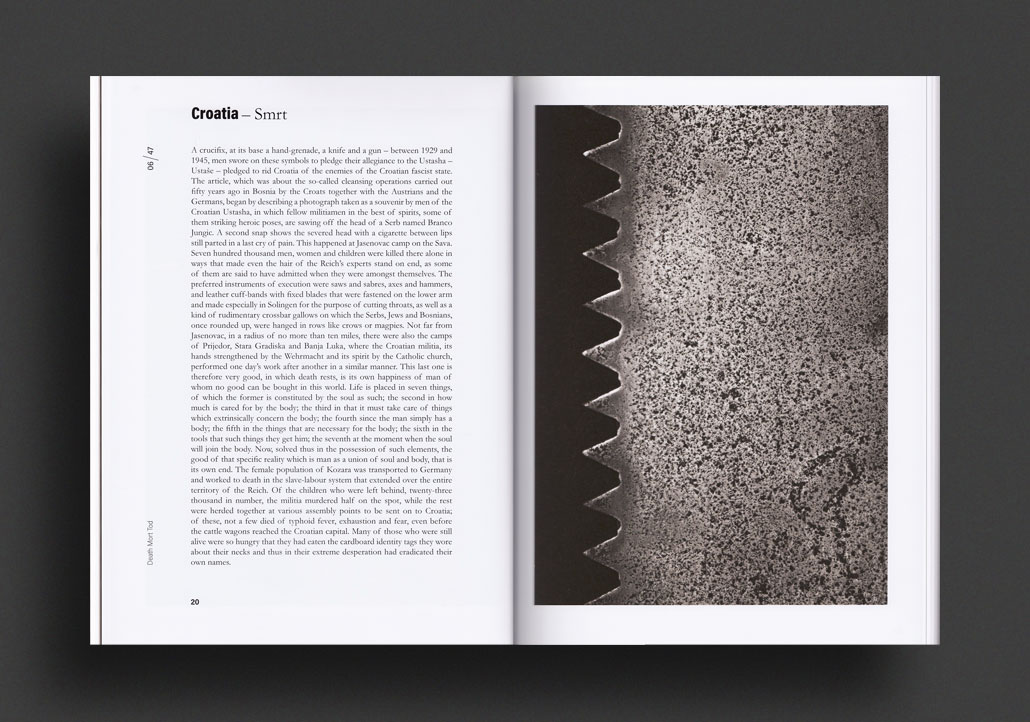
Collaborationists Steve Finbow and Karolina Urbaniak's Death Mort Tod uses fiction, non-fiction, appropriation, cut-ups, and a series of over fifty unsettling illustrations to tour the dark sites of Europe with its millennia of genocides, mass murders, serial killings and suicides. A country-to-country death trip, a necro-travel guide, a Baedeker of bereavement, incorporating myth, folklore, maps, reportage, photographs, recordings, illustrations and poetry. Discover a continent’s thanatic history within a textual and visual reliquary – A European Book of the Dead.
Text by Steve Finbow
Images by Karolina Urbaniak
Foreword by Eugene Thacker
Afterword by Brad Feuerhelm
"Death Mort Tod is a beautiful, haunting, moving and unsettling seance of texts and images, sometimes whispering, sometimes screaming, but always, already, never more urgent and necessary than now, Now, NOW."—David Peace
There is my death, and there is the death of another. There is the death of the individual, living being, and there is the death of others, of many others, of entire populations, entire peoples, of the embalmed multitudes that form the ramified, forensic architectures of human history. There are living beings, huddled together in temporary assemblages of meaningful organization (the polis), and there are the tombs, the mausoleums, the cemeteries, the archives of the dead that themselves form an entire city, a necropolis. There is my death, a human being. There is the death of the species, the strange event of extinction that leaves not even a final member of the species to bear witness to its own end.—From the foreword by Eugene Thacker
How Europeans craft an image of their decline as an entity of ends is beyond simple framing. It exists in the psyche, in the unsolicited desire to cache the ‘phoenix syndrome’ of its impoverished state into a catalogue of possible and triumphant if short reincarnations. Beaten, chained, whipped and scourged, the fluidity of Europe through centuries of shifting empires, gallivanting atrocities and unbridled warfare has created a European that needs to be hammered like the ploughshare of existence into a gleaming sword and then beaten back into a ploughshare ad infinitum. Without defeat, manifest dissection would not be possible. The cycle continues and the image that Europe caters to itself is ultimately that of failure, decline and inevitable collective death and rebirth and death and rebirth and Frankenstein’s monster and zombie preternaturalia.—From the afterword by Brad Feuerhelm
Steve Finbow’s fiction includes Balzac of the Badlands (Future Fiction London, 2009), Tougher Than Anything in the Animal Kingdom (Grievous Jones Press, 2011), Nothing Matters (Snubnose Press, 2012) and Down Among the Dead (Fahrenheit 13, 2014). His biography of Allen Ginsberg in Reaktion’s Critical Lives series was published in 2011. His other works include Grave Desire: A Cultural History of Necrophilia (Zero Books, 2014) and Notes from the Sick Room (Repeater Books, 2017). The Mindshaft will be published by Amphetamine Sulphate in 2019. He lives in Langres, France.
Karolina Urbaniak is a photographer, multimedia producer and co-founder of Infinity Land Press. Urbaniak’s published work includes To Putrefaction (M.Bladh, K.Urbaniak, 2014), Altered Balance – A Tribute to Coil (J.Reed, K.Urbaniak 2014/15), The Void Ratio (S.Levene, K.Urbaniak, 2015), Artaud 1937 Apocalypse (S.Barber, K.Urbaniak, 2018). Her recent multimedia projects include the soundtrack for Darkleaks - The Ripper Genome (J. Reed, M.Bladh, 2017) and the audio/visual installation On The New Revelations of Being (M.Bladh, K.Urbaniak 2018) inspired by the work of Antonin Artaud. She lives and works in London.
Eugene Thacker is the author of several books, including In The Dust of This Planet (Zero Books, 2011) and Infinite Resignation (Repeater Books, 2018).
1996, English
Softcover, 14 x 21.5 cm
1st Edition, Out of print title / used / very good
Published by
Creation Books / London
Velvet Publications / London
$30.00 - Out of stock
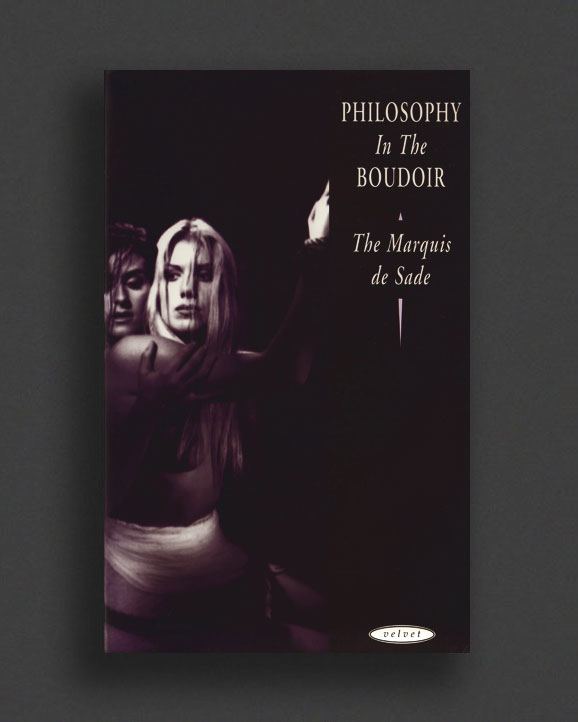
Out-of-print English edition of the erotic masterpiece Philosophy in the Bedroom (La philosophie dans le boudoir), a 1795 book by the Marquis de Sade written in the form of a dramatic dialogue. Though initially considered a work of pornography, the book has come to be considered a socio-political drama and perhaps the most representative of the Marquis de Sade's work and philosophy on religion and morality.
DISCIPLINE
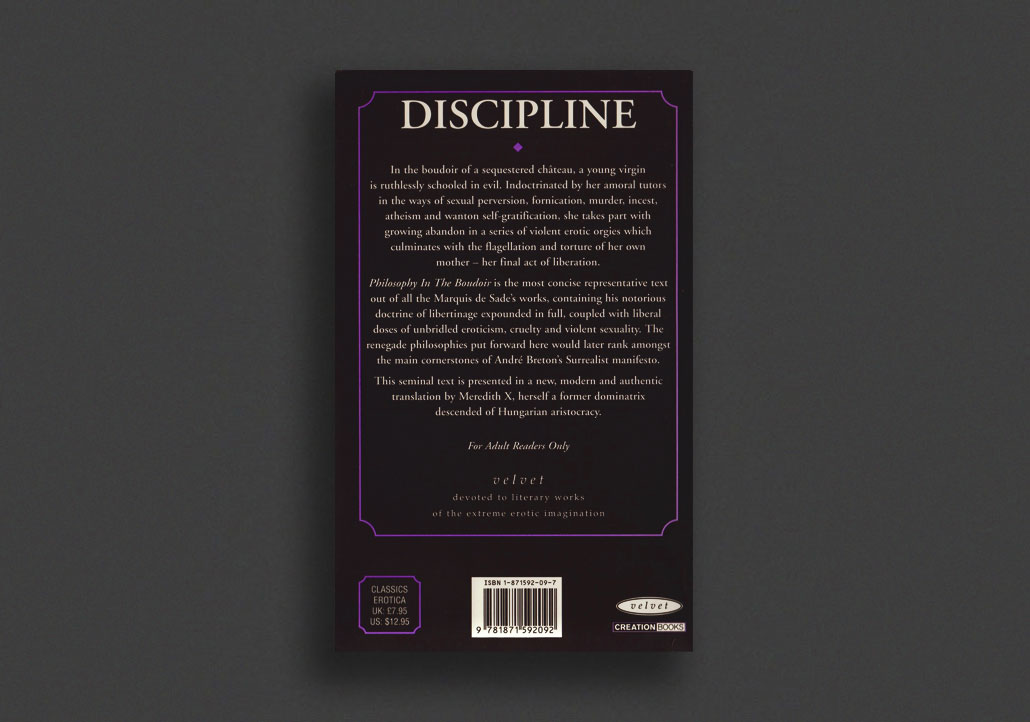
In the boudoir of a sequestered château, a young virgin is ruthlessly schooled in evil. Indoctrinated by her amoral tutors in the ways of sexual perversion, fornication, murder, incest, atheism and wanton self-gratification, she takes part with growing abandon in a series of violent erotic orgies which culminates with the flagellation and torture of her own mother - her final act of liberation.
Philosophy In The Boudoir is the most concise representative text out of all the Marquis de Sade's works, containing his notorious doctrine of libertinage expounded in full, coupled with liberal doses of unbridled eroticism, cruelty and violent sexuality. The renegade philosophies put forward here would later rank amongst the main cornerstones of André Breton's Surrealist manifesto.
This seminal text is presented in a new, modern and authentic translation by Meredith X, herself a former dominatrix descended of Hungarian aristocracy.
The Marquis de Sade (1740 - 1814) was a self-proclaimed libertine. His doctrine of libertinage as expounded in "Philosophy in the Boudoir" - his masterpiece - now reads like a blueprint for those manifestos drawn up will over a century later by Andre Breton; indeed "Philosophy in the Boudoir" has often been regarded as being amongst the first Surrealist texts - the others also being works by De Sade. In the course of this book - erotic, comical, and terrifyingly bleak in turn - he contrives to heap scorn on Christianity, God, and the Church, religion in general, history, marriage and the nuclear family, morality, all love other than sexual love, faith, hope and charity, parenthood, vaginal sex; i.e. all forms of humanity and virtue. At the same time, he advocates atheism, murder and reflexive crimes, torture, cruelty, abortion, all kind of sexual perversion, incest, adultery, self-abuse, ad infinitum; his sexually violent visions mark him as a precursor of modern psychology.
The modern imagination starts here.
VG copy with light wear.
2025, English
Hardcover (w. dust cover), 224 pages, 28 x 20 cm
Published by
Timeless Editions / Paris
$75.00 - Out of stock
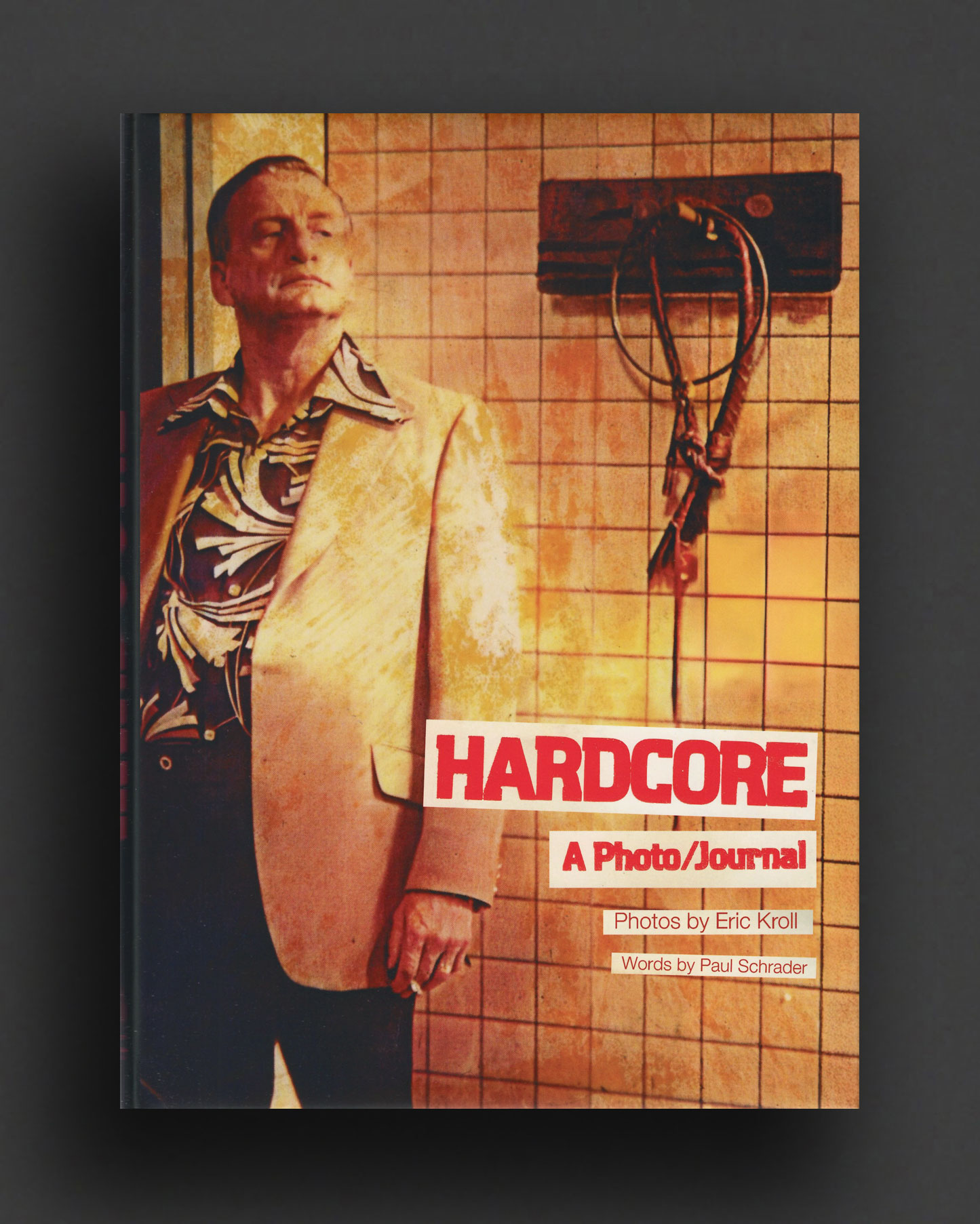
A striking new photobook by Eric Kroll, featuring rare and intimate photographs taken during the shooting of Paul Schrader's cult 1979 film—and much more beyond.
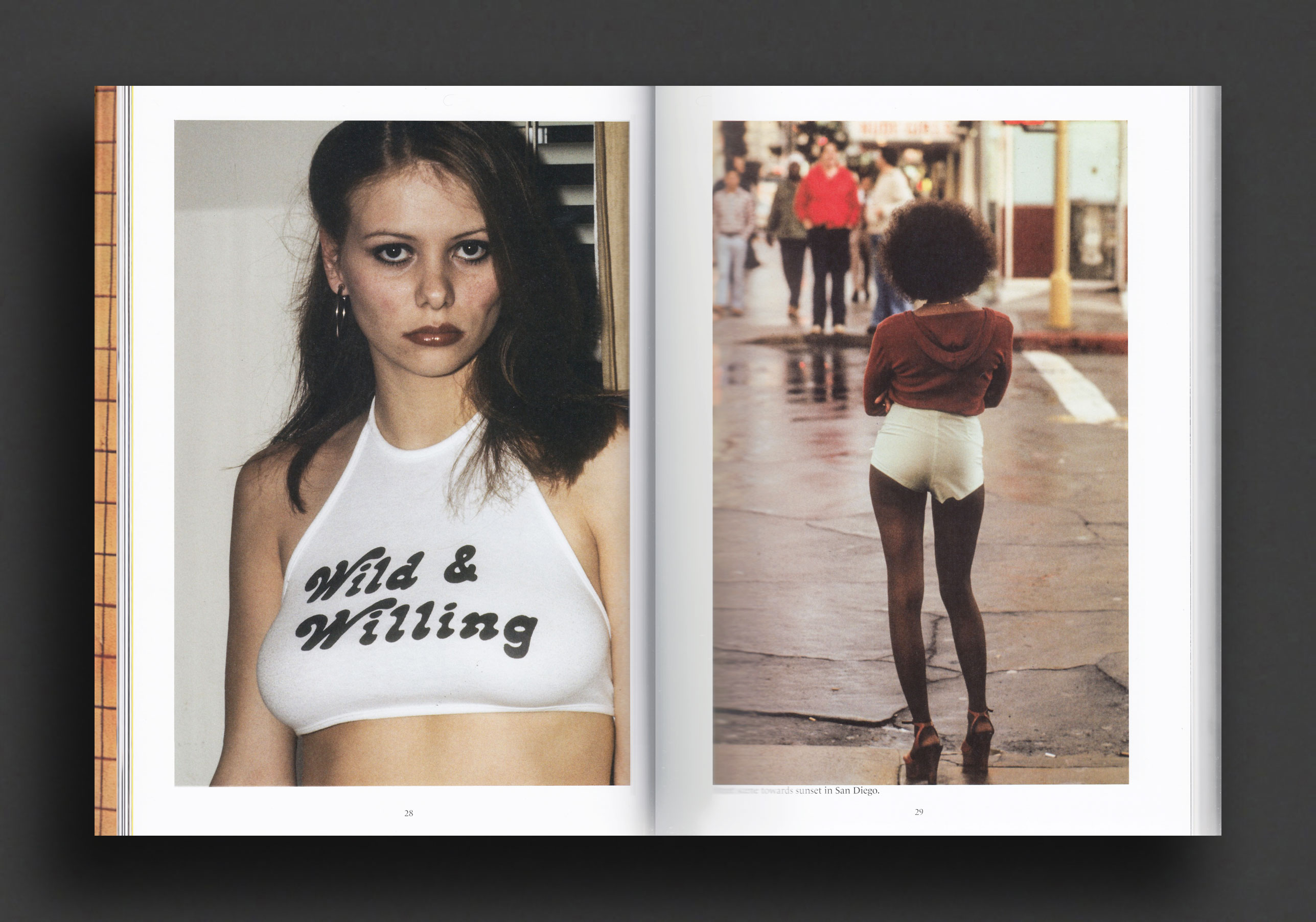
This book takes you deep into the world behind the camera: the set, the atmosphere, and the many individuals—technicians, casting director, actors and non-actors alike—who accompanied or inspired Kroll throughout the shoot.
More than a simple behind-the-scenes document, Hardcore also includes the photographer's own reflections, commentary and a recent interview he conducted with adult film actress Serena.
The book is also accompanied by a foreword from Paul Schrader and a rare text he penned in 1978 for a publishing project about the film that was never completed.
Together, these elements reveal a deeply personal and unexpectedly intimate perspective on the film and on the porn film industry at the end of the 1970s.
Eric Kroll (born 1946) is an American photojournalist, photographer famous for his fetish work, erotica historian, and book editor.
Paul Schrader (born 1946 in Grand Rapids, Michigan) is an American screenwriter (Taxi Driver, Raging Bull...) and director (American Gigolo, Mishima, First Reformed...). He has collaborated with Sydney Pollack, Martin Scorsese, Brian De Palma, Steven Spielberg and others.
Photographs by Eric Kroll.
Texts by Paul Schrader.
1998, English
Softcover, 208 pages, 25.5 x 17.8 cm
Published by
University of Minnesota Press / Minnesota
$59.00 - In stock -
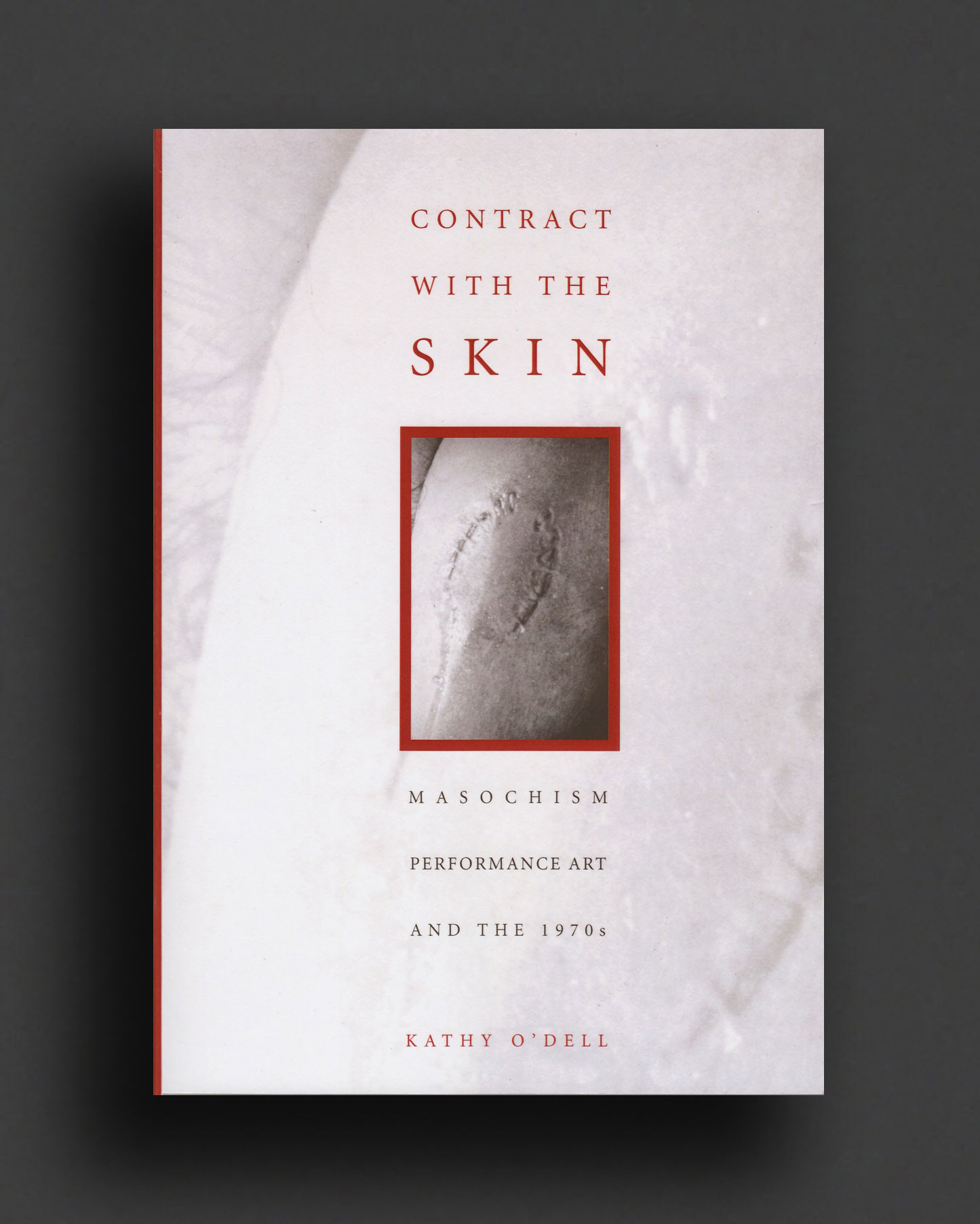
Places masochistic performance within a social and historical context.
Having yourself shot. Putting out fires with your bare hands and feet. Biting your own body and photographing the marks. Sewing your own mouth shut. These seemingly aberrant acts were committed by performance artists during the 1970s. Why would anyone do these things? What do these kinds of masochistic performances tell us about the social and historical context in which they occurred? Fascinating and accessibly written, Contract with the Skin addresses such questions through a reconsideration of these acts in relation to psychoanalytic and legal concepts of masochism.
O’Dell argues that the growth of masochistic performance during the 1970s must be seen in the context of society’s response to the Vietnam War and contemporaneous changes in theories of contract. She contends that the dynamic that exists between audience and performer during these masochistic acts relates to tensions resulting from ruptures in the social contract. Indeed, as the war in Vietnam waned, so did masochistic performance, only to reemerge in the 1980s in relation to the “war on AIDS” and the censorious “culture wars.”
Focusing on 1970s performance artists Vito Acconci, Chris Burden, Gina Pane, and collaborators Marina Marina Abramović/Ulay as well as those with similar sensibilities from the late 1980s onward (Bob Flanagan, David Wojnarowicz, Simon Leung, Catherine Opie, Ron Athey, Lutz Bacher, and Robby Garfinkel), O’Dell provides photographic documentation of performances and quotations from interviews with many of the artists. Throughout, O’Dell asks what we can do about the institutionalized forms of masochism for which these performances are metaphors.
Contract with the Skin is a provocative guide to this little-studied area, and offers new ways of thinking about performance art and artistic production.
2015, English
Softcover, 264 pages, 16.5 x 23 cm
1st Edition, Out of print title / as new
Published by
A.R.T. Press / New York
$100.00 - In stock -
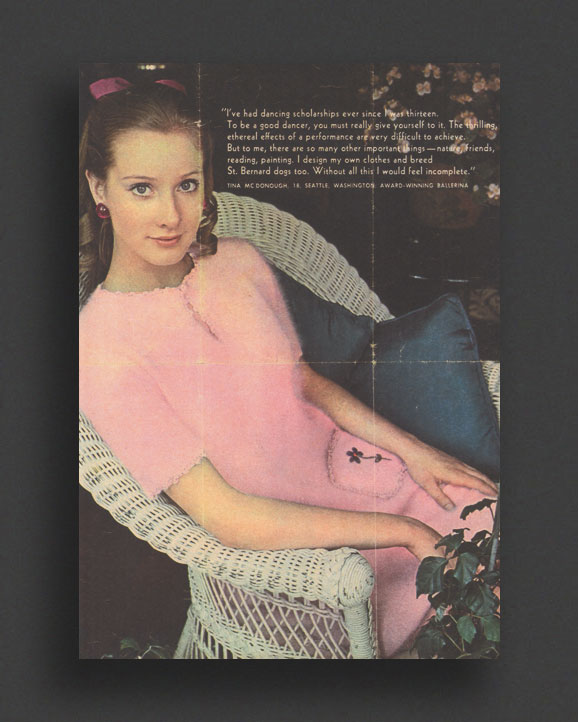
Now out-of-print, the book Double Bind pivots around an extensive conversation between artist Leigh Ledare and art historian Rhea Anastas concerning Ledare’s project of the same name. As an installation, Double Bind puts in play a series of overlaying comparative structures: over one thousand photographs of the artist’s ex-wife (half taken by Ledare, the other half by her current husband, according to a script conceived by Ledare) and an ample collection of printed mass media. Through a critical and wide-ranging dialog, Ledare and Anastas probe the complexities of the viewing experience of the work and the consequences of its provocations. Ordered according to six sections, the conversation addresses key concepts and methodologies that structure the work: viewing, systemic conditions, enactment, installation and mass media, genealogy, and affect. Taken by Ledare exclusively for this book, installation views of the New York exhibition (Mitchell-Innes & Nash, 2014) foreground the subjective experience of the work and anchor the coauthors’ testing of models of aesthetic and social critique within an ethics of actually looking. The dialogue also appears with an introduction by Anastas, a preface by Ledare, and a chronology of Double Bind exhibitions and publications to date.
“Ledare’s Double Bind project examines social process of habitual enactment, such as what it means “to be a wife,” emotional and material terms of exchange, thresholds of public and private imagination, gender normativity and symbolic boundaries of relationships—all through the lens of a camera. Ledare suggests a kind of unraveling of these habituations and carries this logic over to his discussion of the work with Rhea Anastas. Here, Double Bind functions not simply as an object of analysis but instead as a rubric through which the two extend the work itself through a dialectic of articulation and dis-articulation. In line with the radical (and often suppressed) premises of conceptual art, here Ledare and Anastas challenge and override conventional distinctions between artwork, viewer, artist, critic and art historian. In this way this book serves as a vital part of Double Bind’s progressive unfolding.” – John Miller, artist and critic
As New—Near Fine.
2012, English
Softcover, 144 pages, 29.3 x 20.8 cm
1st Edition, Out of print title / as new
Published by
Mousse / Milan
$180.00 - In stock -
Out-of-print first edition of the first major book survey of American artist Leigh Ledare, edited by Elena Filipovic, with texts by Elena Filipovic and Nicolas Guagnini, and an interview with Leigh Ledare by David Joselit.
American artist Leigh Ledare uses photography, archival material and text to explore human agency, social relationships, taboos and the photographic, in equal turns. Formally trained in photography, this erstwhile assistant of Larry Clark has, in a relatively short time, developed a body of work that is coherent, complex, biting in its intelligence and decidedly provocative. Emphasizing the central role that others—mother, family members, ex-lover, collectors, anonymous patrons, etc.—play in his work, and the slippage of authorship and agency that he often deliberately gives them, the artist has entitled his first institutional solo exhibition organized by WIELS Contemporary Art Centre, Brussels, and the catalogue that accompanies it: Leigh Ledare, et al. The richly illustrated full-colour publication, including two newly commissioned essays and an interview with the artist, features examples from nearly all his photographic series to date, as well as stills of video works, text-based pieces, and a number of newly produced pieces never shown before.
As New, still sealed copy.
1972, Japanese
Softcover, 250 pages, 21 x 14.8 cm
1st Edition, Out of print title / used / very good
Published by
Misaki Shobo / Tokyo
$70.00 - In stock -
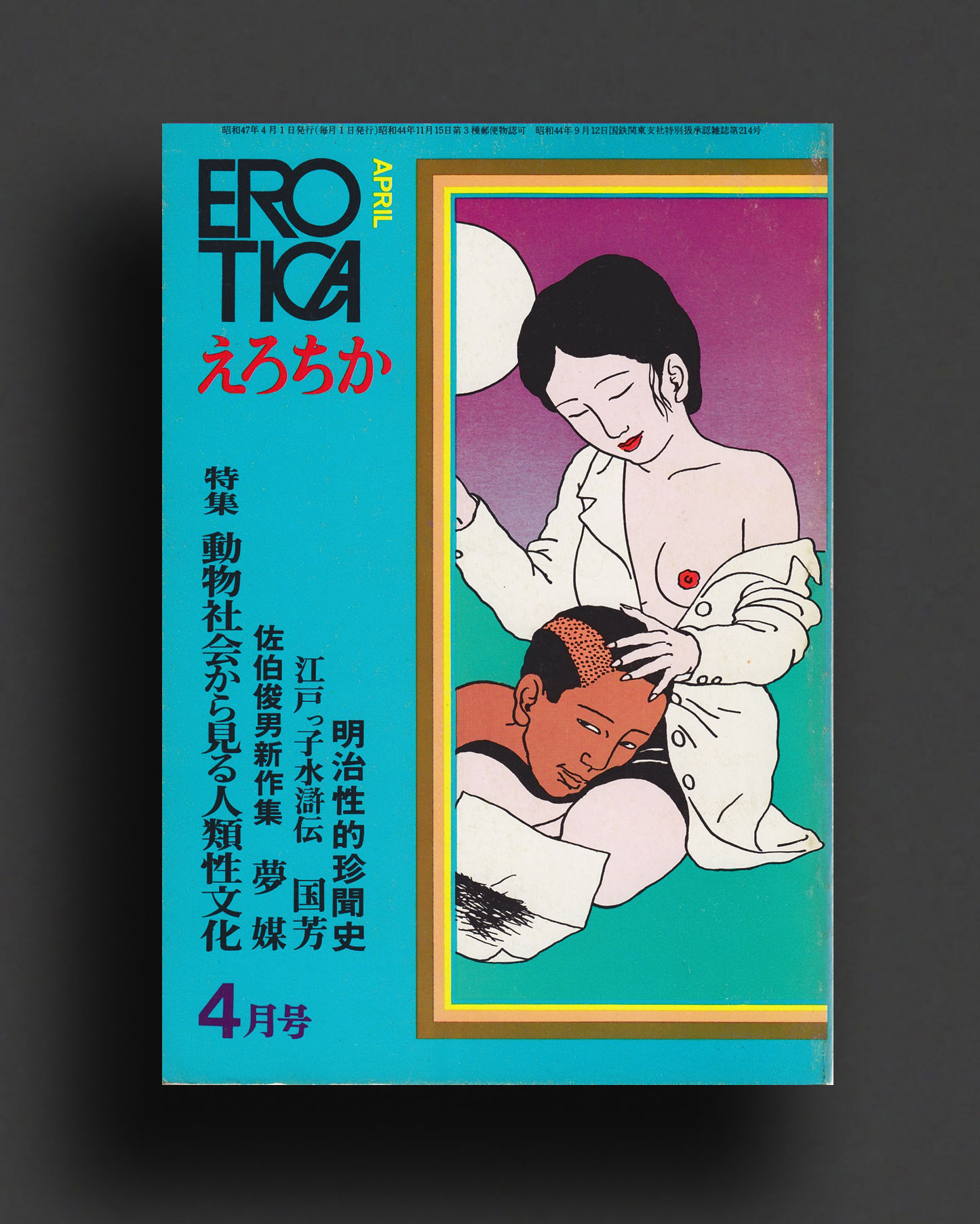
Erotica April 1972, Japan's erotic magazine for bibliophiles, published in the 1960s—1970s by Misaki Bookstore. Each issue densely packed with illustrations, articles, news, and feature stories around the universe of Eros from around the world during a time of great sexual revolution. Covering all manner of sexual customs and subject matter from the arts and literature, film and manga, philosophy and radical politics, Erotica was Japan's leading erotic academic journal, featuring, amongst it's heavy historical and contemporary papers, the cutting-edge of Japanese and international erotic artists, from Hans Bellmer to Toshio Saeki.
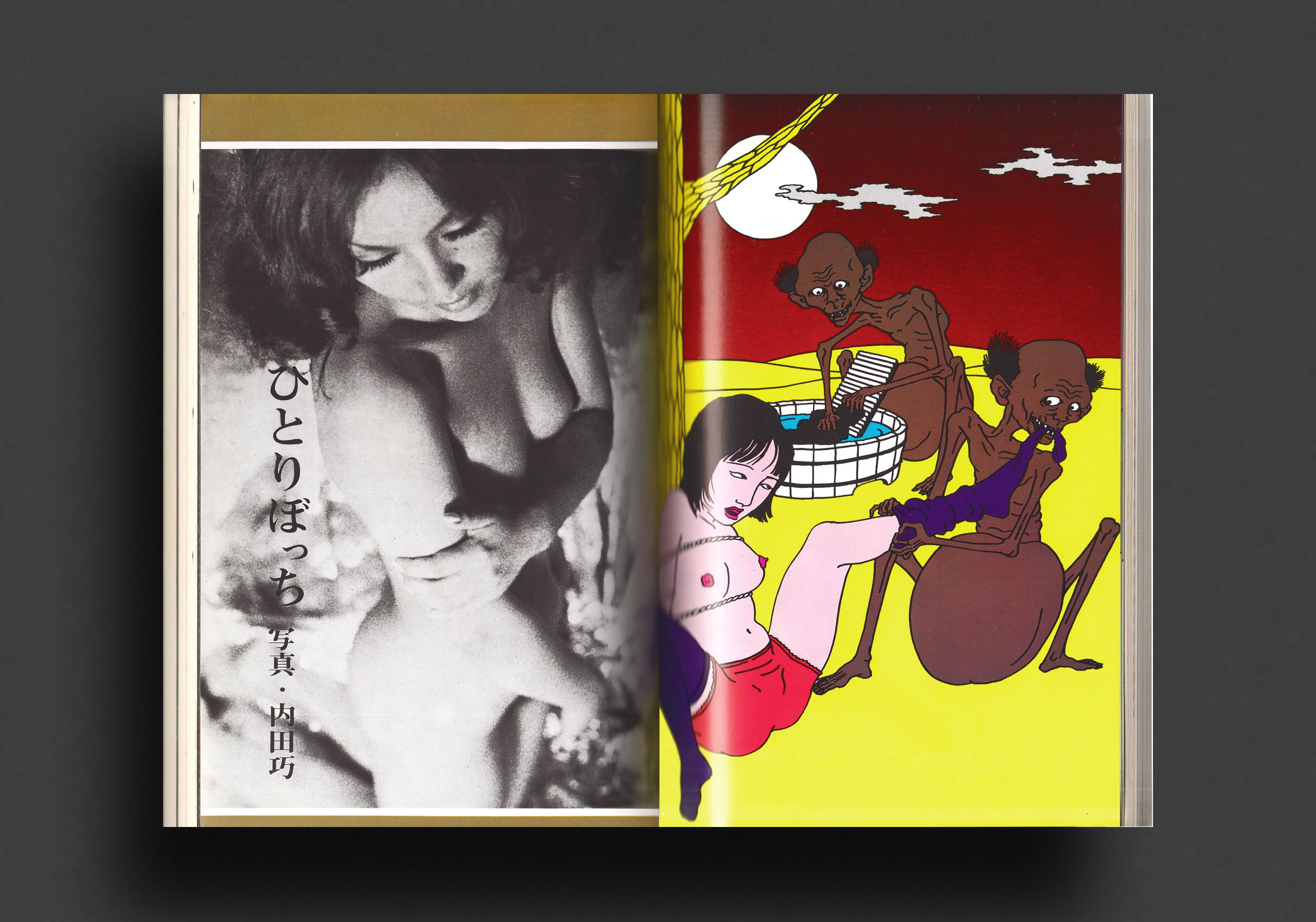
Erotica April 1972 features the artwork of Toshio Saeki, Kyozo Hayashi, Koaku Yukio, Kaname Ozuma, "Alone" by Japanese photographer Takumi Uchida, Meiji sexual history, erotica by poet and painter Mitsuharu Kaneko, European erotic cinema, and much more.
Very Good copy, light wear.
1970, Japanese
Softcover, 250 pages, 21 x 14.8 cm
1st Edition, Out of print title / used / very good
Published by
Misaki Shobo / Tokyo
$70.00 - In stock -
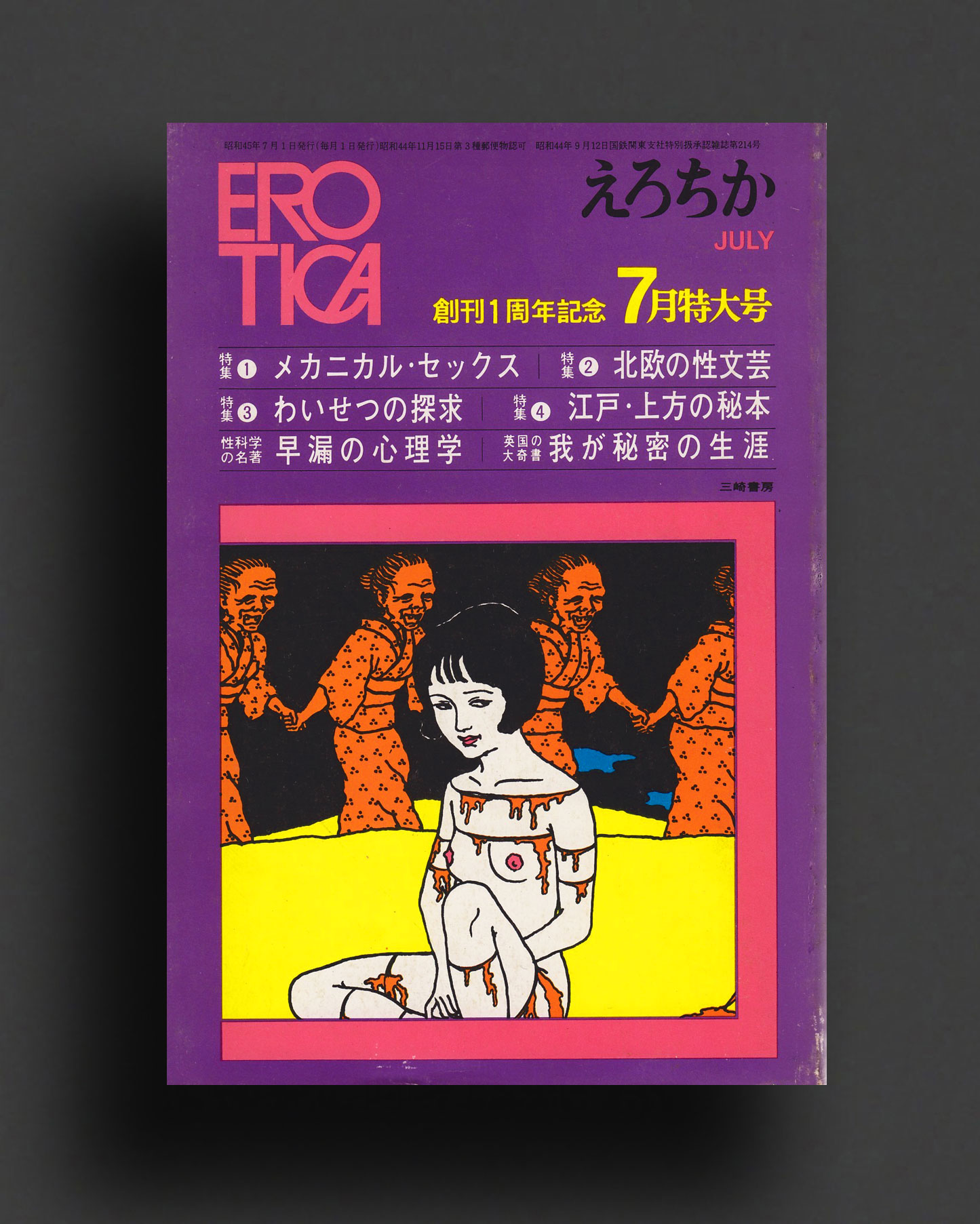
Erotica July 1970, Japan's erotic magazine for bibliophiles, published in the 1960s—1970s by Misaki Bookstore. Each issue densely packed with illustrations, articles, news, and feature stories around the universe of Eros from around the world during a time of great sexual revolution. Covering all manner of sexual customs and subject matter from the arts and literature, film and manga, philosophy and radical politics, Erotica was Japan's leading erotic academic journal, featuring, amongst it's heavy historical and contemporary papers, the cutting-edge of Japanese and international erotic artists, from Hans Bellmer to Toshio Saeki.
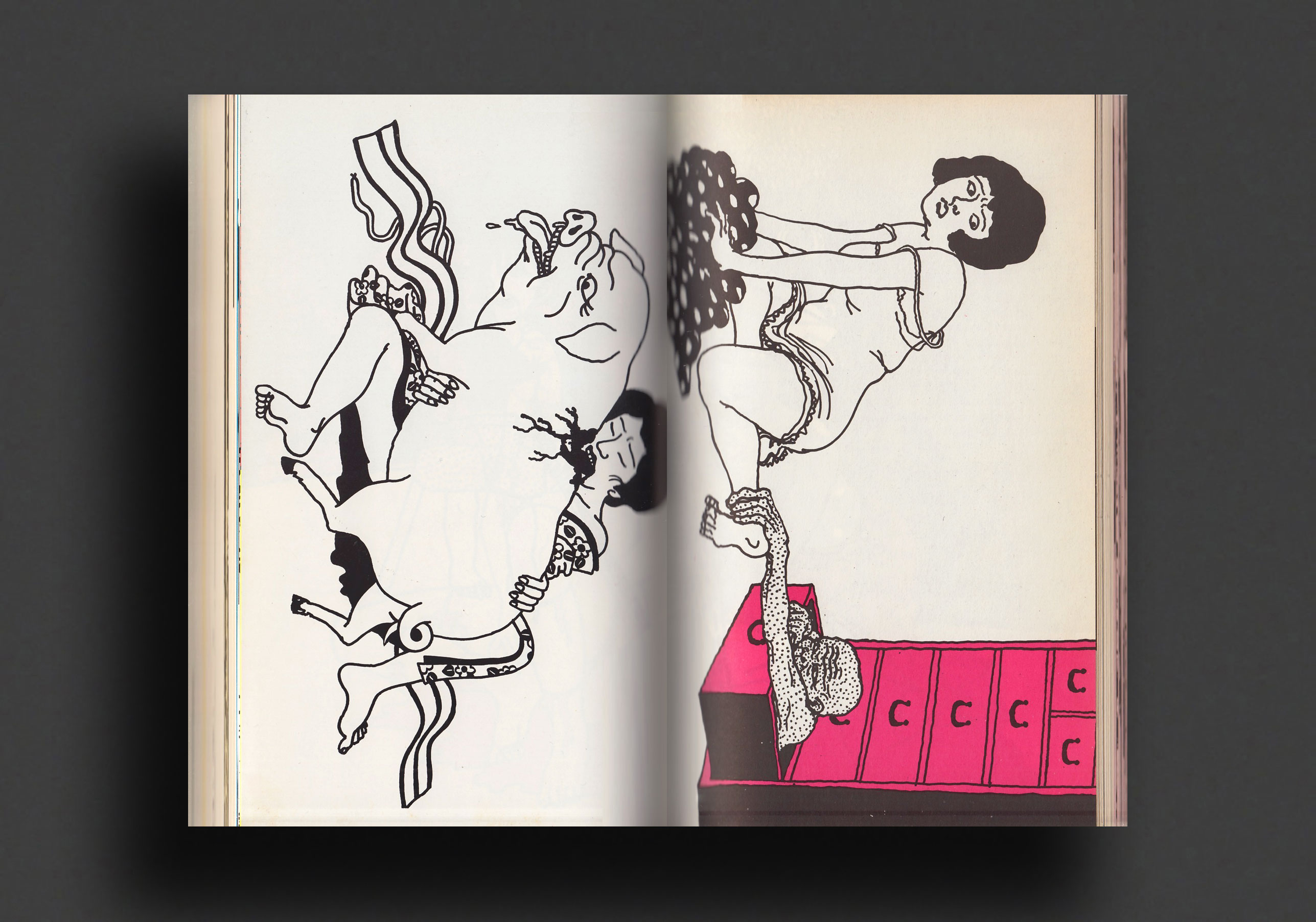
Erotica July 1970 features the artwork of Toshio Saeki, Haruo Shinozaki, Masayuki Kitamura, Tomoe Shibaoka, "Pornology" by Japanese photographer Toyohiko Yasui, Swedish erotica, European erotic cinema, Pleasure Machines/Mechanical Sex featuring artworks by Tomi Ungerer and science fiction with illustrations by Yasutaka Tsutsui, the psychology of premajure ejaculation, and much more.
Very Good copy, light wear.
1970, Japanese
Softcover, 250 pages, 21 x 14.8 cm
1st Edition, Out of print title / used / very good
Published by
Misaki Shobo / Tokyo
$50.00 - In stock -
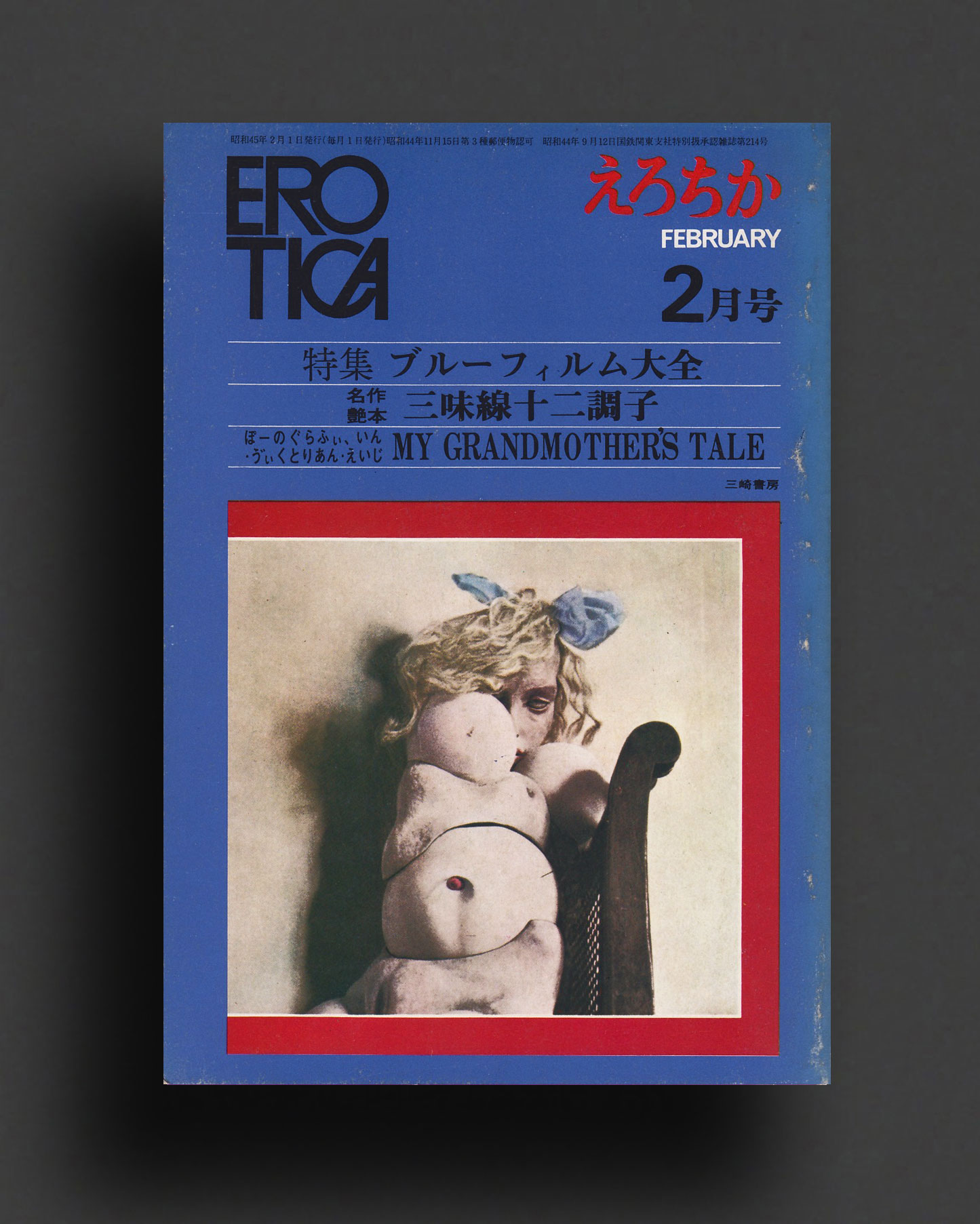
Erotica February 1970, Japan's erotic magazine for bibliophiles, published in the 1960s—1970s by Misaki Bookstore. Each issue densely packed with illustrations, articles, news, and feature stories around the universe of Eros from around the world during a time of great sexual revolution. Covering all manner of sexual customs and subject matter from the arts and literature, film and manga, philosophy and radical politics, Erotica was Japan's leading erotic academic journal, featuring, amongst it's heavy historical and contemporary papers, the cutting-edge of Japanese and international erotic artists, from Hans Bellmer to Toshio Saeki.
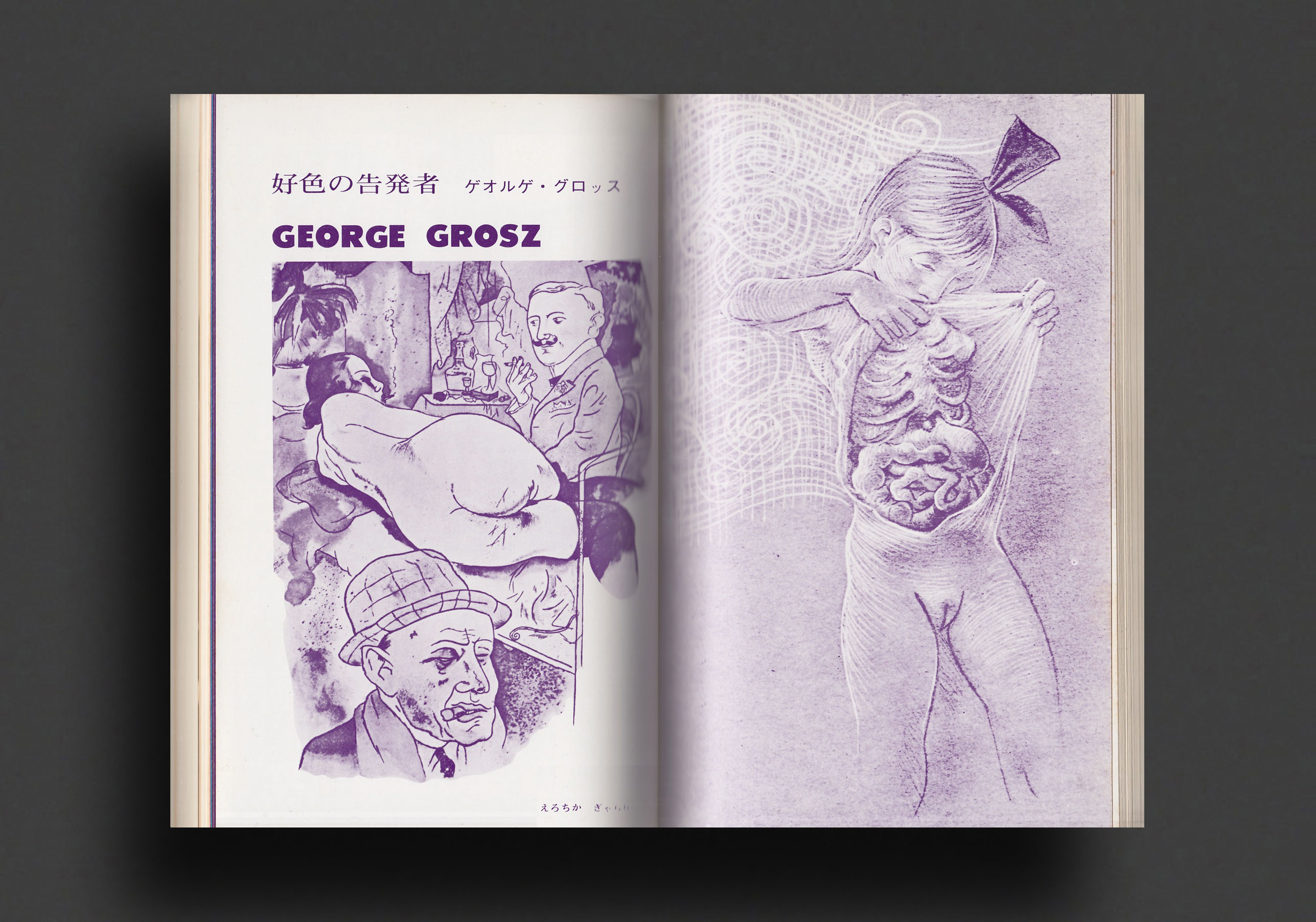
Erotica February 1970 features the artwork of Hans Bellmer, Aoi Fujimoto, George Grosz, and Haruo Shinozaki, amongst many others, a "blue film encyclopedia", European erotic film, the Temptation of Saint Anthony in the visual arts, and much more.
Very Good copy, light wear.
1971, Japanese
Softcover (staple-bound), 160 pages, 21.5 x 15 cm
1st Edition, Out of print title / used / good
Published by
Lemon Inc. / Tokyo
$70.00 - Out of stock
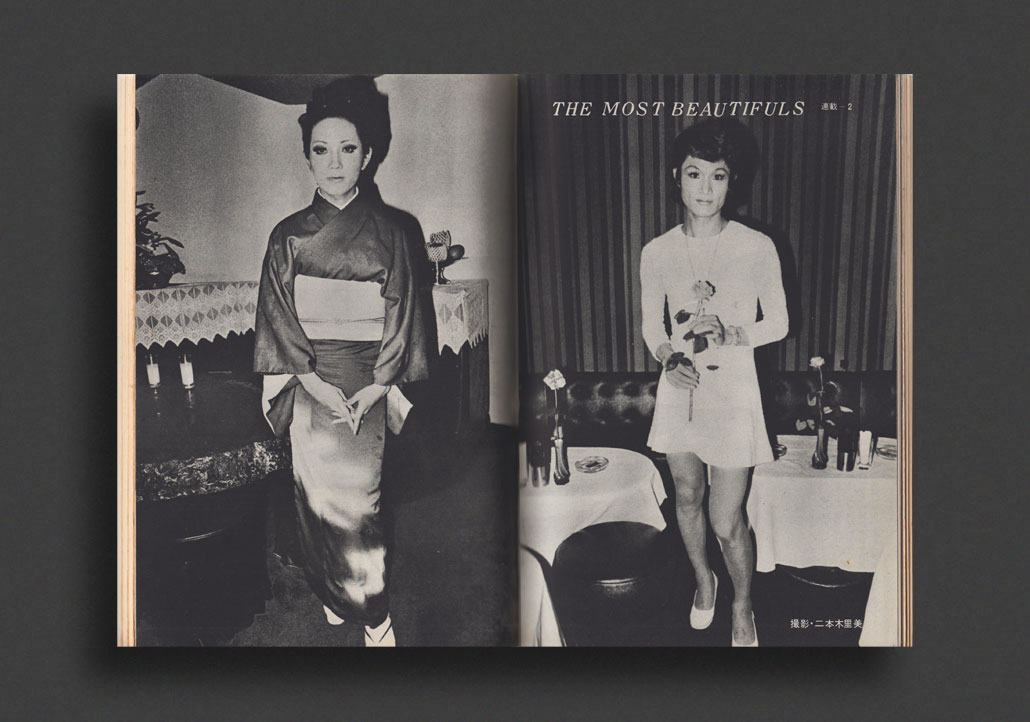
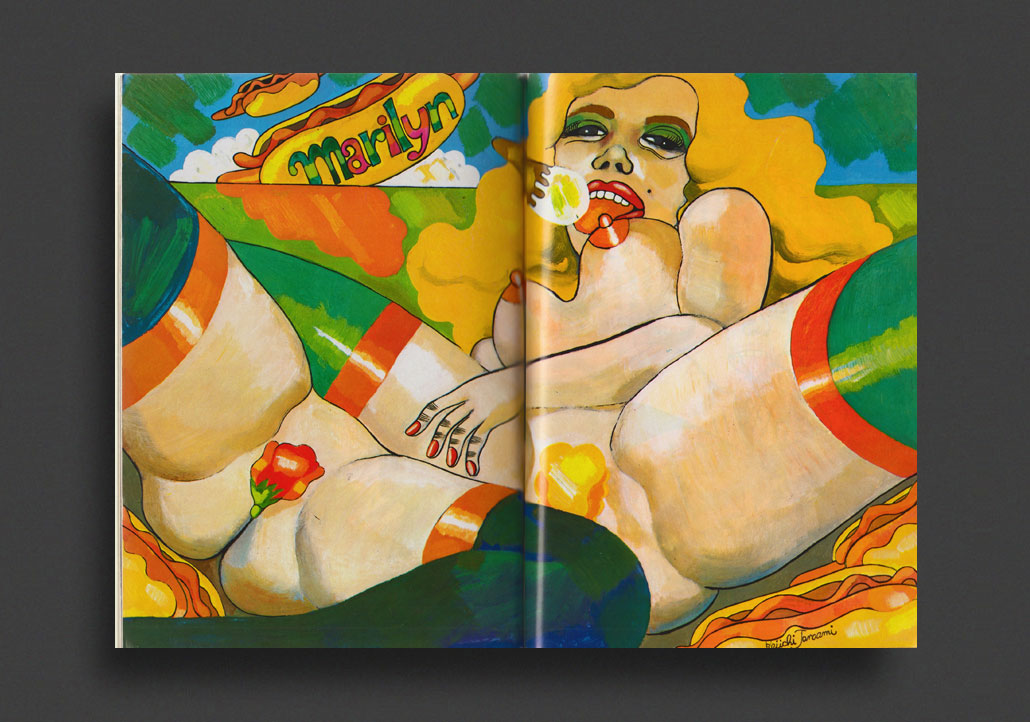
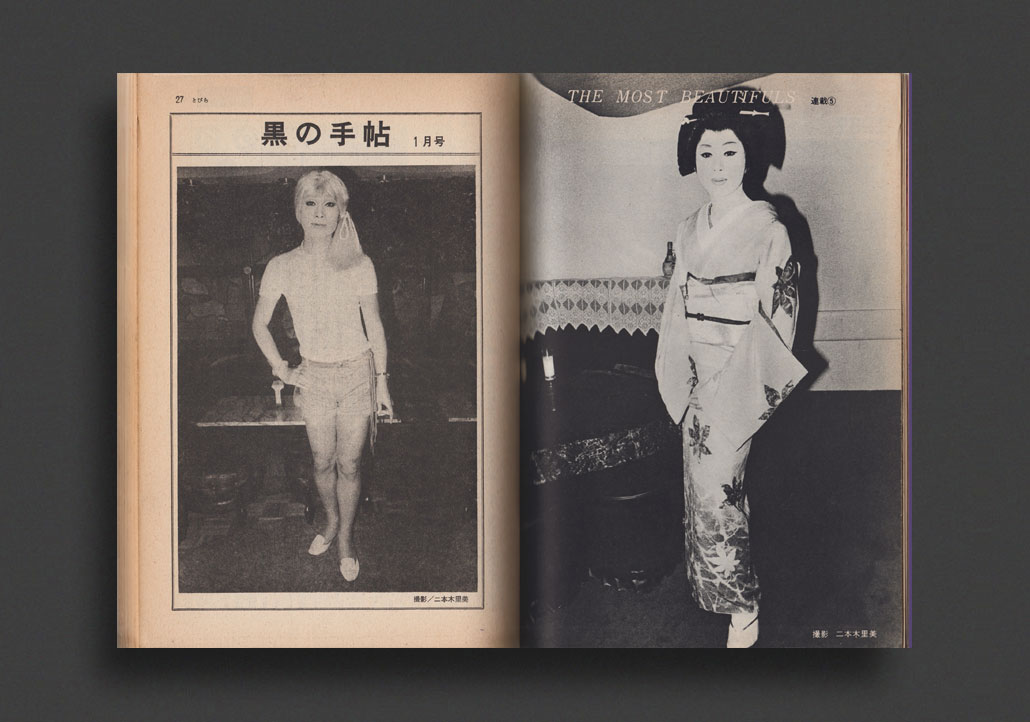
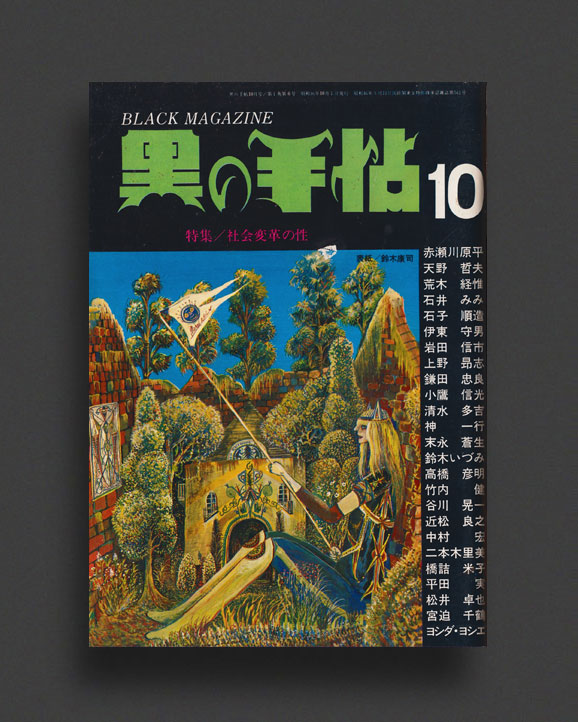
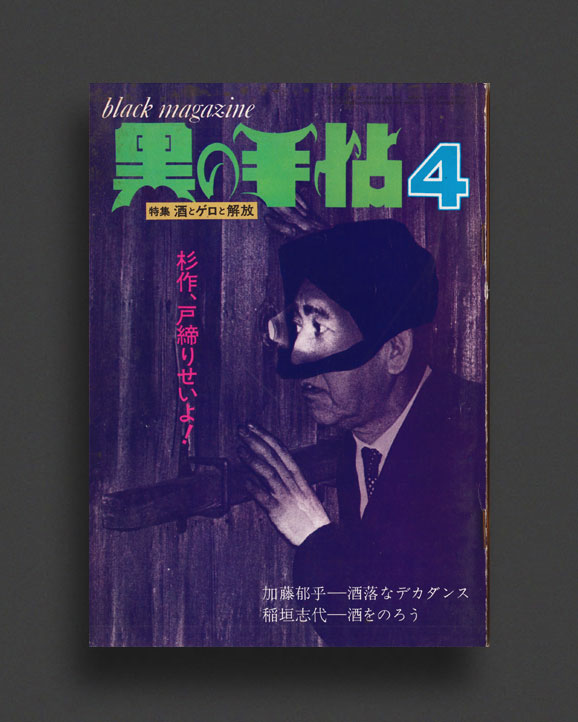
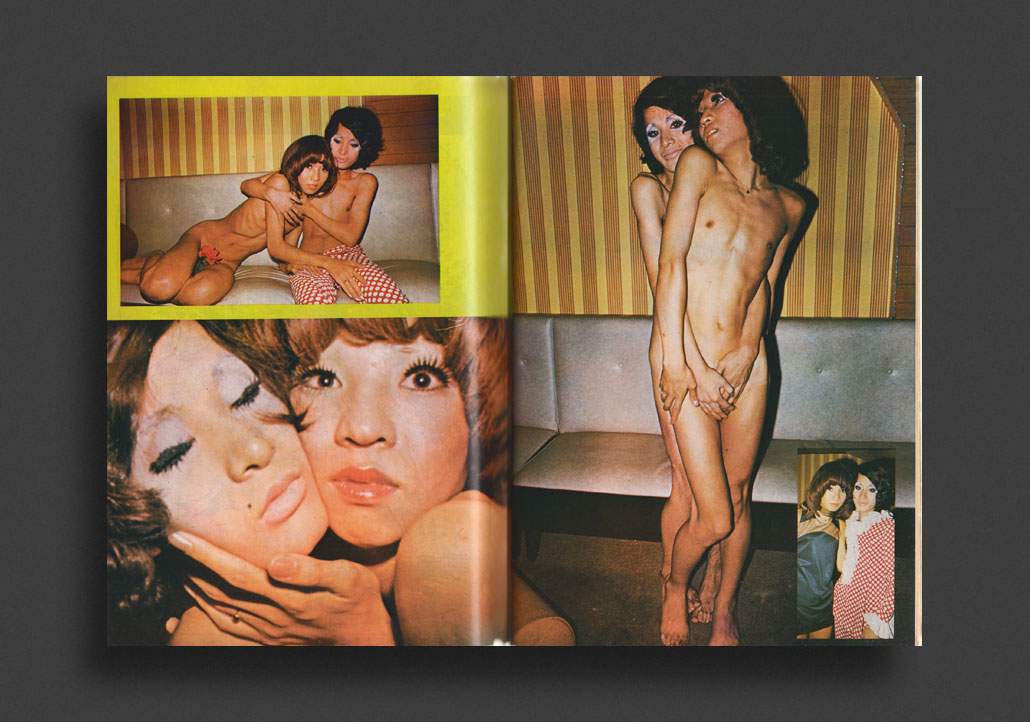
Rare first May 1971 (w. Ken Katayama cover) issue of legendary Japanese underground arts periodical, Black Magazine (or Black Notebook), a taboo-shattering vehicle of the 1970s subculture in Tokyo. A magazine like no-other, each issue, "a paradise of 1970's heretical culture", was a who's who of non-conformity, introducing a new wave of illustrators, painters, doll-makers and photographers, "taboo" sexuality and fetish culture, avant-garde comics, sadistic literature, radical criticism, queer poetry, activism, black humour, underground film and theatre, and all manner of transgressive, esoteric and erotic material, new and historical. Black Magazine featured the work of Yukio Mishima, Toshio Saeki, Izumi Suzuki, Simon Yotsuya, Shūji Terayama, Ken Katayama, Nobuyoshi Araki, Genpei Akasegawa, Keiichi Tanaami, Kikuji Yamashita, Aoi Fujimoto, Tadanori Yokoo, Hiroshi Nakamura, and so many others. It was also where Japanese photographer Satomi Nihongi's Tokyo Transgender photographs were first printed. Black Magazine was heavy with queer and trans content, and Nihongi's "The Most Beautifuls" was a regular photo-feature in its pages. A lot of great things started in the pages of this unique magazine. A highly recommended publication!
This scarce first issue with incredible cover by Japanese illustrator Ken Katayama, features work/contributions by author Izumi Suzuki, film director Michio Okabe, artist Genpei Akasegawa, critic Junzo Ishiko, author Boris Vian, film director Eiichi Uchida, film critic Jin'ichi Uekusa, manga artist Shotaro Ishinomori, author Mieko Kanai, music critic Masaaki Hiraoka, artist Koichi Tanigawa, manga artist Shigeru Sugiura, graphic designer Mad Amano, doll artist Shimon Yotsuya, illustrator G. Akechi, art critic Junzo Ishiko, art critic Yoshida Yoshie, film director Toshio Matsumoto, graphic artist Keiichi Tanaami, author Koji Suzuki, artist Toshio Saeki, manga artist Shigeru Mizuki, manga artist Mori Masaki, manga artist Mitsuhiko Yoshida, artist Tsunehisa Kimura, playwright Jūrō Kara, and many more.
1971, Japanese
Softcover (staple-bound), 160 pages, 21.5 x 15 cm
1st Edition, Out of print title / used / good
Published by
Lemon Inc. / Tokyo
$65.00 - In stock -
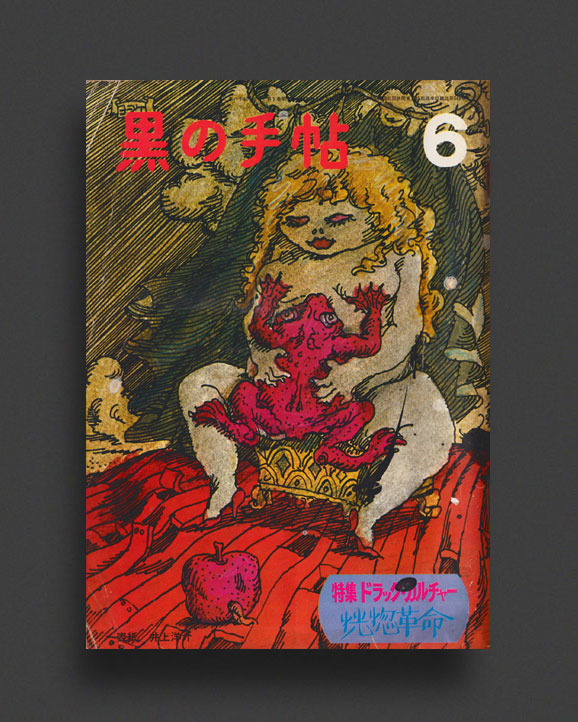
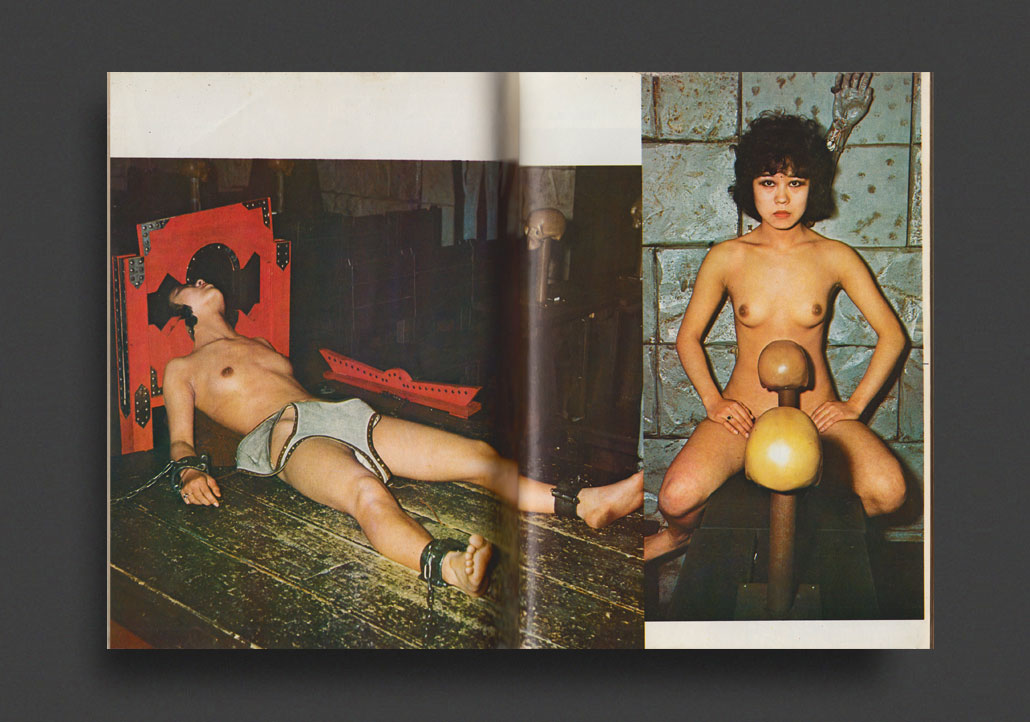
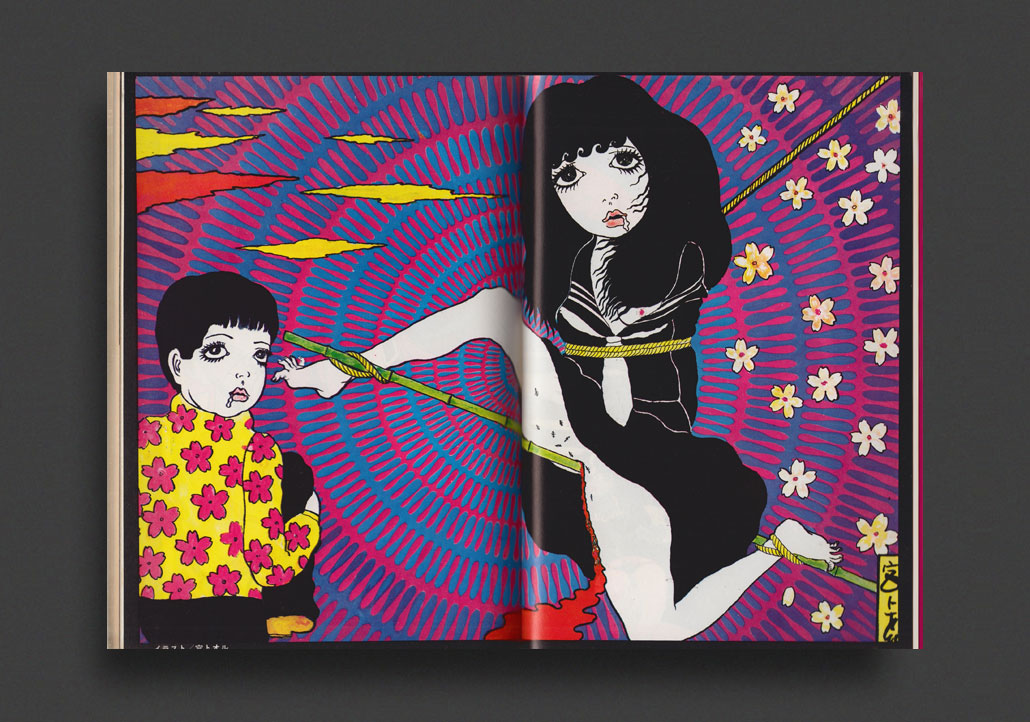
June 1971 issue of legendary Japanese underground arts periodical, Black Magazine (or Black Notebook), a taboo-shattering vehicle of the 1970s subculture in Tokyo. A magazine like no-other, each issue, "a paradise of 1970's heretical culture", was a who's who of non-conformity, introducing a new wave of illustrators, painters, doll-makers and photographers, "taboo" sexuality and fetish culture, avant-garde comics, sadistic literature, radical criticism, queer poetry, activism, black humour, underground film and theatre, and all manner of transgressive, esoteric and erotic material, new and historical. Black Magazine featured the work of Yukio Mishima, Toshio Saeki, Izumi Suzuki, Simon Yotsuya, Shūji Terayama, Ken Katayama, Nobuyoshi Araki, Genpei Akasegawa, Keiichi Tanaami, Kikuji Yamashita, Aoi Fujimoto, Tadanori Yokoo, Hiroshi Nakamura, and so many others. It was also where Japanese photographer Satomi Nihongi's Tokyo Transgender photographs were first printed. Black Magazine was heavy with queer and trans content, and Nihongi's "The Most Beautifuls" was a regular photo-feature in its pages. A lot of great things started in the pages of this unique magazine. A highly recommended publication!
1971, Japanese
Softcover (staple-bound), 156 pages, 21.5 x 15 cm
1st Edition, Out of print title / used / very good
Published by
Lemon Inc. / Tokyo
$50.00 - In stock -
August 1971 (w. Hiroshi Nakamura cover) issue of legendary Japanese underground arts periodical, Black Magazine (or Black Notebook), a taboo-shattering vehicle of the 1970s subculture in Tokyo. A magazine like no-other, each issue, "a paradise of 1970's heretical culture", was a who's who of non-conformity, introducing a new wave of illustrators, painters, doll-makers and photographers, "taboo" sexuality and fetish culture, avant-garde comics, sadistic literature, radical criticism, queer poetry, activism, black humour, underground film and theatre, and all manner of transgressive, esoteric and erotic material, new and historical. Black Magazine featured the work of Yukio Mishima, Toshio Saeki, Izumi Suzuki, Simon Yotsuya, Shūji Terayama, Ken Katayama, Nobuyoshi Araki, Genpei Akasegawa, Keiichi Tanaami, Kikuji Yamashita, Aoi Fujimoto, Tadanori Yokoo, Hiroshi Nakamura, and so many others. It was also where Japanese photographer Satomi Nihongi's Tokyo Transgender photographs were first printed. Black Magazine was heavy with queer and trans content, and Nihongi's "The Most Beautifuls" was a regular photo-feature in its pages. A lot of great things started in the pages of this unique magazine. A highly recommended publication!
1971, Japanese
Softcover (staple-bound), 156 pages, 21.5 x 15 cm
Published by
Lemon Inc. / Tokyo
$50.00 - In stock -
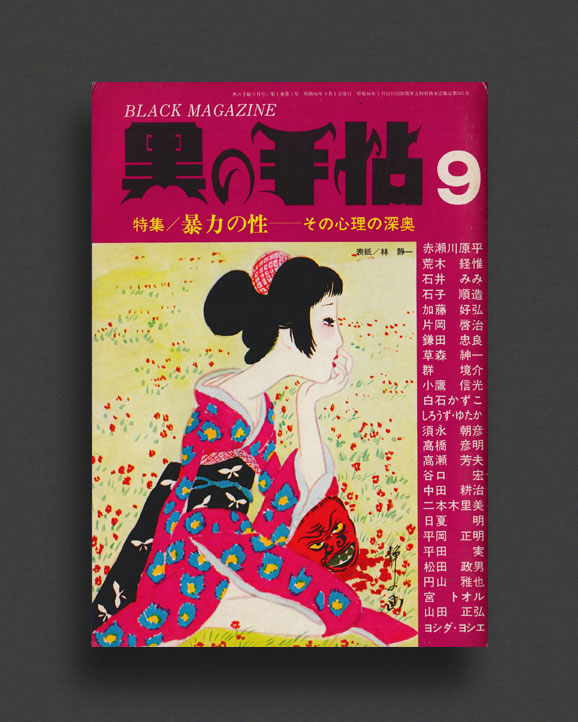
September 1971 (w. Seiichi Hayashi cover) issue of legendary Japanese underground arts periodical, Black Magazine (or Black Notebook), a taboo-shattering vehicle of the 1970s subculture in Tokyo. A magazine like no-other, each issue, "a paradise of 1970's heretical culture", was a who's who of non-conformity, introducing a new wave of illustrators, painters, doll-makers and photographers, "taboo" sexuality and fetish culture, avant-garde comics, sadistic literature, radical criticism, queer poetry, activism, black humour, underground film and theatre, and all manner of transgressive, esoteric and erotic material, new and historical. Black Magazine featured the work of Yukio Mishima, Toshio Saeki, Izumi Suzuki, Simon Yotsuya, Shūji Terayama, Ken Katayama, Nobuyoshi Araki, Genpei Akasegawa, Keiichi Tanaami, Kikuji Yamashita, Aoi Fujimoto, Tadanori Yokoo, Hiroshi Nakamura, and so many others. It was also where Japanese photographer Satomi Nihongi's Tokyo Transgender photographs were first printed. Black Magazine was heavy with queer and trans content, and Nihongi's "The Most Beautifuls" was a regular photo-feature in its pages. A lot of great things started in the pages of this unique magazine. A highly recommended publication!
1971, Japanese
Softcover (staple-bound), 156 pages, 21.5 x 15 cm
1st Edition, Out of print title / used / very good
Published by
Lemon Inc. / Tokyo
$65.00 - In stock -
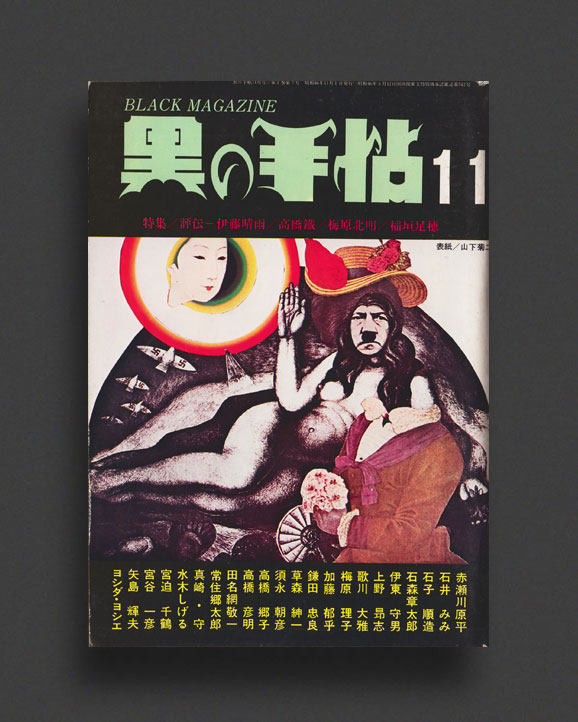
November 1971 (w. Kikuji Yamashita cover) issue of legendary Japanese underground arts periodical, Black Magazine (or Black Notebook), a taboo-shattering vehicle of the 1970s subculture in Tokyo. A magazine like no-other, each issue, "a paradise of 1970's heretical culture", was a who's who of non-conformity, introducing a new wave of illustrators, painters, doll-makers and photographers, "taboo" sexuality and fetish culture, avant-garde comics, sadistic literature, radical criticism, queer poetry, activism, black humour, underground film and theatre, and all manner of transgressive, esoteric and erotic material, new and historical. Black Magazine featured the work of Yukio Mishima, Toshio Saeki, Izumi Suzuki, Simon Yotsuya, Shūji Terayama, Ken Katayama, Nobuyoshi Araki, Genpei Akasegawa, Keiichi Tanaami, Kikuji Yamashita, Aoi Fujimoto, Tadanori Yokoo, Hiroshi Nakamura, and so many others. It was also where Japanese photographer Satomi Nihongi's Tokyo Transgender photographs were first printed. Black Magazine was heavy with queer and trans content, and Nihongi's "The Most Beautifuls" was a regular photo-feature in its pages. A lot of great things started in the pages of this unique magazine. A highly recommended publication!
1971, Japanese
Softcover (staple-bound), 156 pages, 21.5 x 15 cm
1st Edition, Out of print title / used / very good
Published by
Lemon Inc. / Tokyo
$50.00 - In stock -
January 1971 issue of legendary Japanese underground arts periodical, Black Magazine (or Black Notebook), a taboo-shattering vehicle of the 1970s subculture in Tokyo. A magazine like no-other, each issue, "a paradise of 1970's heretical culture", was a who's who of non-conformity, introducing a new wave of illustrators, painters, doll-makers and photographers, "taboo" sexuality and fetish culture, avant-garde comics, sadistic literature, radical criticism, queer poetry, activism, black humour, underground film and theatre, and all manner of transgressive, esoteric and erotic material, new and historical. Black Magazine featured the work of Yukio Mishima, Toshio Saeki, Izumi Suzuki, Simon Yotsuya, Shūji Terayama, Ken Katayama, Nobuyoshi Araki, Genpei Akasegawa, Keiichi Tanaami, Kikuji Yamashita, Aoi Fujimoto, Tadanori Yokoo, Hiroshi Nakamura, and so many others. It was also where Japanese photographer Satomi Nihongi's Tokyo Transgender photographs were first printed. Black Magazine was heavy with queer and trans content, and Nihongi's "The Most Beautifuls" was a regular photo-feature in its pages. A lot of great things started in the pages of this unique magazine. A highly recommended publication!
1971, Japanese
Softcover (staple-bound), 156 pages, 21.5 x 15 cm
1st Edition, Out of print title / used / good
Published by
Lemon Inc. / Tokyo
$50.00 - In stock -
October 1971 issue of legendary Japanese underground arts periodical, Black Magazine (or Black Notebook), a taboo-shattering vehicle of the 1970s subculture in Tokyo. A magazine like no-other, each issue, "a paradise of 1970's heretical culture", was a who's who of non-conformity, introducing a new wave of illustrators, painters, doll-makers and photographers, "taboo" sexuality and fetish culture, avant-garde comics, sadistic literature, radical criticism, queer poetry, activism, black humour, underground film and theatre, and all manner of transgressive, esoteric and erotic material, new and historical. Black Magazine featured the work of Yukio Mishima, Toshio Saeki, Izumi Suzuki, Simon Yotsuya, Shūji Terayama, Ken Katayama, Nobuyoshi Araki, Genpei Akasegawa, Keiichi Tanaami, Kikuji Yamashita, Aoi Fujimoto, Tadanori Yokoo, Hiroshi Nakamura, and so many others. It was also where Japanese photographer Satomi Nihongi's Tokyo Transgender photographs were first printed. Black Magazine was heavy with queer and trans content, and Nihongi's "The Most Beautifuls" was a regular photo-feature in its pages. A lot of great things started in the pages of this unique magazine. A highly recommended publication!
1971, Japanese
Softcover (staple-bound), 156 pages, 21.5 x 15 cm
1st Edition, Out of print title / used / very good
Published by
Lemon Inc. / Tokyo
$45.00 - In stock -
April 1971 issue of legendary Japanese underground arts periodical, Black Magazine (or Black Notebook), a taboo-shattering vehicle of the 1970s subculture in Tokyo. A magazine like no-other, each issue, "a paradise of 1970's heretical culture", was a who's who of non-conformity, introducing a new wave of illustrators, painters, doll-makers and photographers, "taboo" sexuality and fetish culture, avant-garde comics, sadistic literature, radical criticism, queer poetry, activism, black humour, underground film and theatre, and all manner of transgressive, esoteric and erotic material, new and historical. Black Magazine featured the work of Yukio Mishima, Toshio Saeki, Izumi Suzuki, Simon Yotsuya, Shūji Terayama, Ken Katayama, Nobuyoshi Araki, Genpei Akasegawa, Keiichi Tanaami, Kikuji Yamashita, Aoi Fujimoto, Tadanori Yokoo, Hiroshi Nakamura, and so many others. It was also where Japanese photographer Satomi Nihongi's Tokyo Transgender photographs were first printed. Black Magazine was heavy with queer and trans content, and Nihongi's "The Most Beautifuls" was a regular photo-feature in its pages. A lot of great things started in the pages of this unique magazine. A highly recommended publication!
1985—1997, Japanese
6 softcover books (w. dust jackets), 200 pages ea., 18.5 x 13 cm
1st Edition, Out of print title / used / very good
Published by
World Comics / Japan
$300.00 $250.00 - In stock -
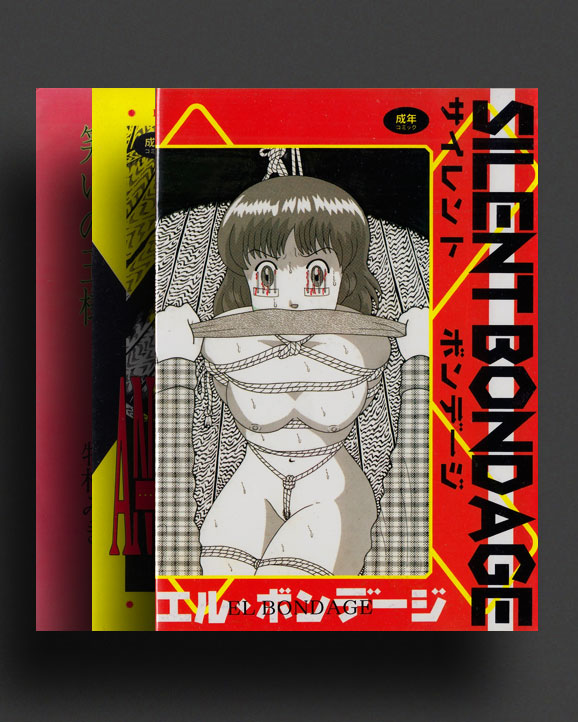
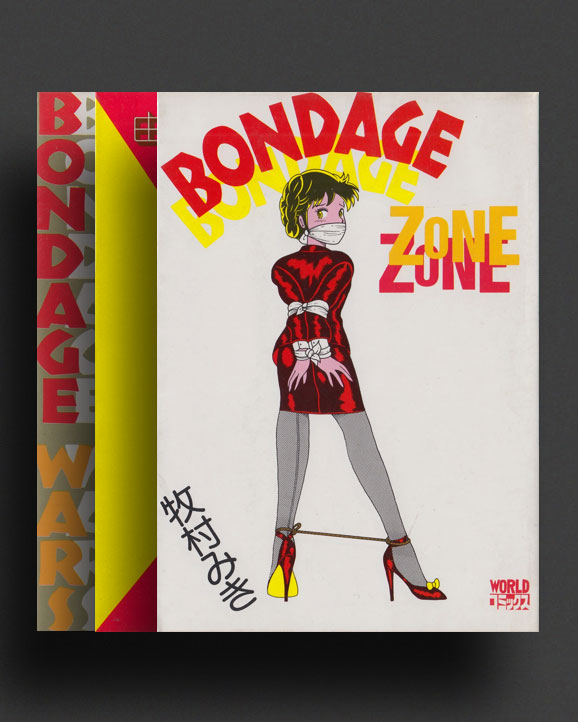
Rare lot of six early hentai manga books by underground Japanese erotic illustrator "El Bondage" (Miki Makimura), published by World Comics in Japan. An incredible collection of this little known in the West doujinshi master of the 1980s and forerunner to Kondom and his Bondage Fairies, featuring a huge collection of his best stories and galleries of truely demented, obsessively ink-rendered, sadomasochistic cartoon fantasies in his wild graphic technique. Worlds of endless woodgrain, rope and rubber, nobody is safe from El Bondage's madness and wicked sense of humour. There are even galleries of everyone's favourite manga and anime icons of the 1980's gagged and bound as you've never seen them before! A romp of total indecency and perverse imagination. Published by the same imprint as Bondage Fairies, each book is packed with maniac drawings, around 200 pages long, with original colour dust jackets. Lot includes: Bondage Zone (1985); Bondage Wars (1986); Yuri's Last Moments (1986); Another Bondage (1986); King of Laughter (1986); Silent Bondage (1997).
All VG—Near Fine copies, light tanning.
1975, English
Softcover (staple-bound), 28 pages, 20.5 x 14 cm
1st Edition, Out of print title / used / good
Published by
Rosslyn News / Studio City
$65.00 - In stock -
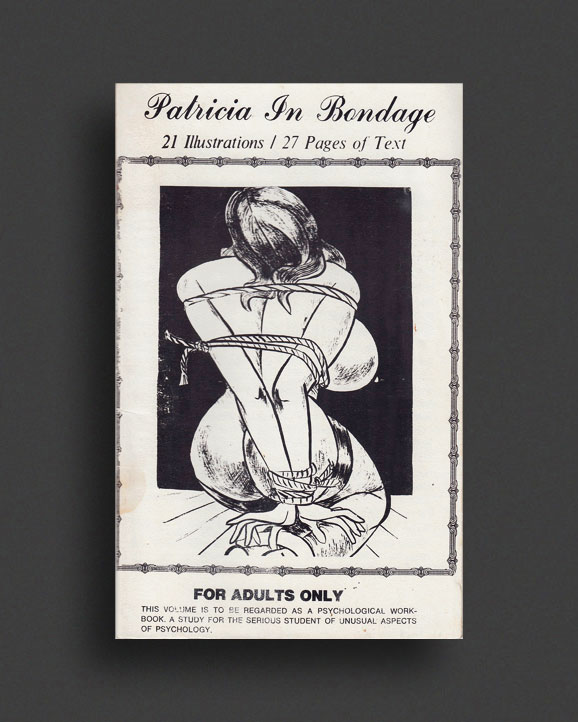
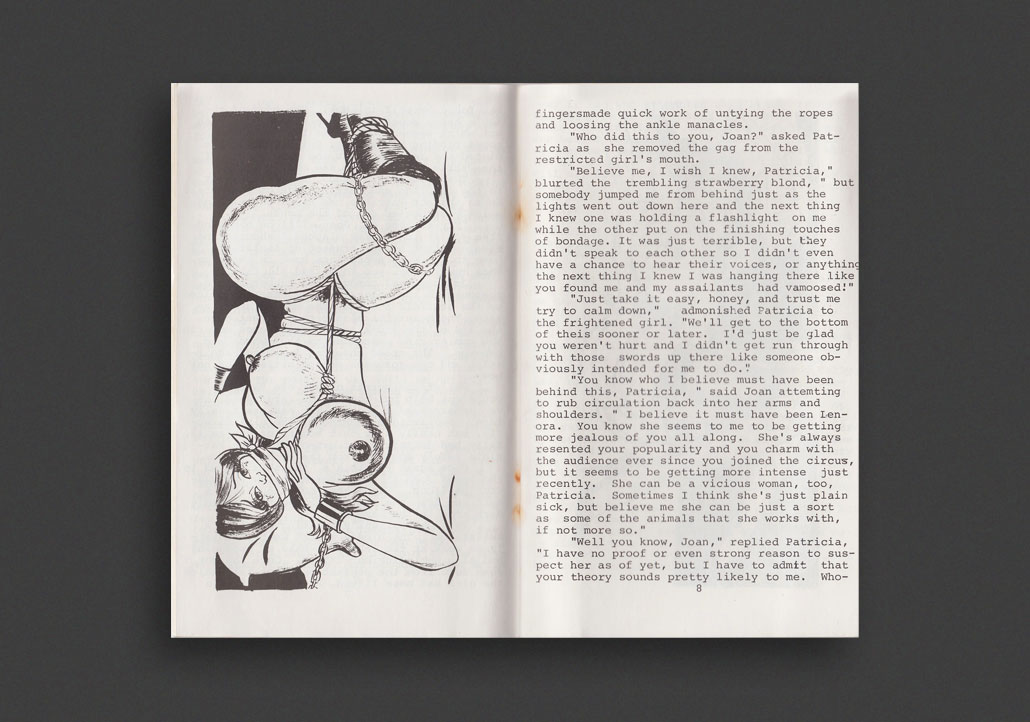
Rare copy of "Patricia in Bondage", a 1975 illustrated story by Jack Owen, featuring 21 b/w female bondage ink illustrations, published by Rosslyn News Studio City. Includes illustrated backcover and (photo) advertisement for Rosslyn feature films (femdom). "This volume is to be regarded as a psychological workbook. A study for the serious student of unusual aspects of psychology".
Good copy with some wear, buckling, some moisture staining to spine, rusted staples.
1976, English
Softcover (staple-bound), unpaginated, 22 x 14 cm
1st Edition, Out of print title / used / very good
Published by
Tao Productions / Hollywood
$140.00 $100.00 - In stock -
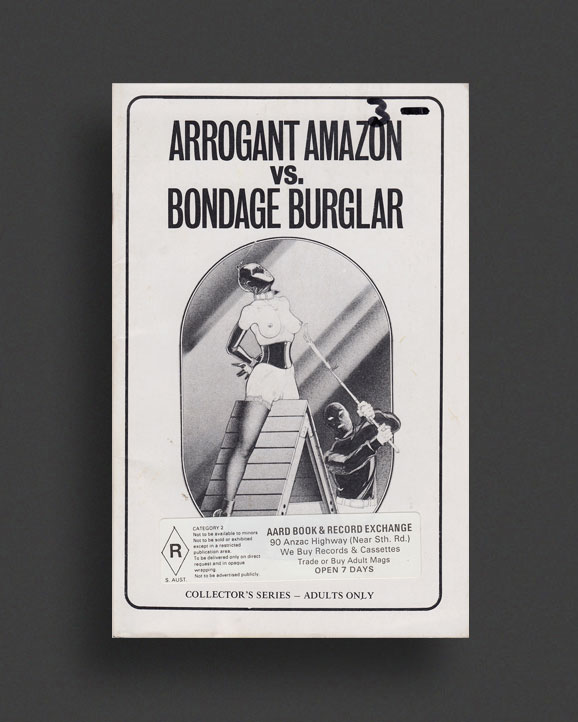
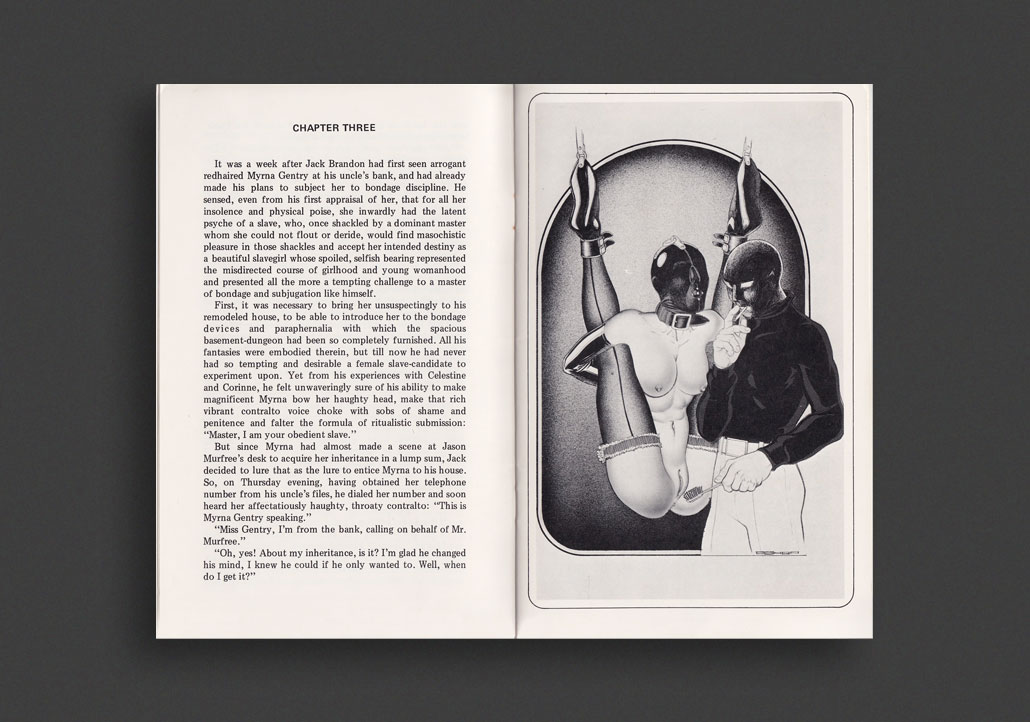
Very rare copy of Arrogant Amazon vs. Bondage Burgler, one of legendary American bondage artist Robert Bishop's early illustrated story books of sadomasochism and bondage, published in 1976 by Tao Productions, Inc. in Hollywood. Quite possibly also written by Bishop, Arrogant Amazon vs. Bondage Burgler likely pre-dates his famous Fanni Hall stories, and features wonderful, nicely reproduced full-page examples of his iconic bondage artwork with soft airbrush gradients and exquisite details throughout, exclusive to this story. Includes illustrated advertisements for mail-order bondage films and other publications.
Robert K. Bishop (1945–1991) was a bondage artist and photographer from Michigan whose inventive artworks, rendered in pencil, ink and airbrush, featured heavily in the publications of House of Milan and Centurian Publications during the 1970's—1980s. He produced many cover illustrations for bondage novels by F. E. Campbell, as well as illustrating his own series of stories describing the misadventures of the character "Fanni Hall". His work was very influential to a generation of fetish illustrators and has become collectible within the sub-culture. Bishop died by suicide in 1991, at the age of 46.
Very Good copy. only light wear/age to staples. Former adult bookshop markings to cover (restriction sticker and price).
2025, English
Softcover (staple bound), 48 pages, 20 x 14.8 cm
Published by
Ex Film / Melbourne
$10.00 - Out of stock
Two brothers and their separate lives connected via blood and insanity across 30 years. Severed genitalia at Flinders Street Station, cannibalism, COVID conspiracy theories and sabotage of the New Zealand power grid.
Another in this series of tracts from Ex Film documenting the public eye of tabloid news and the narrative it conveys. Isolated from the surrounding visual noise of the original newspaper presentation, these publications offer a new perspective on strange, historical stories often forgotten by the public media lens but in this particular case, a recent polarising event connected to a forgotten memory.
2006, English
Softcover, 272 pages, 27.1 x 21.4 cm
Published by
Hayward Gallery Publishing / London
$75.00 - In stock -
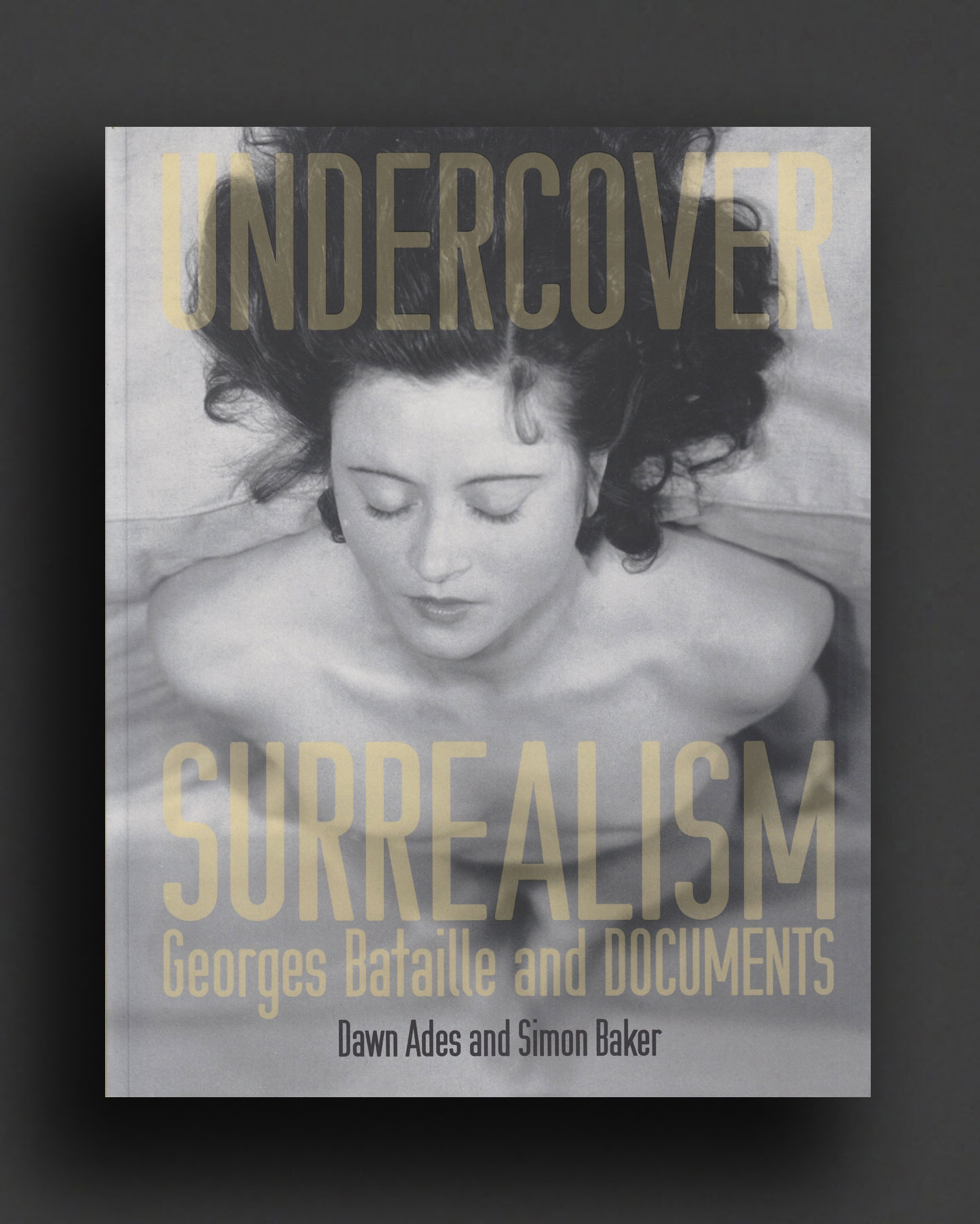
An exploration of the unsettling collisions of art and culture in Georges Bataille's revolutionary journal and a new consideration of twentieth-century masterpieces by Picasso, Miro, Dali, and others against the canvas of their renegade times.
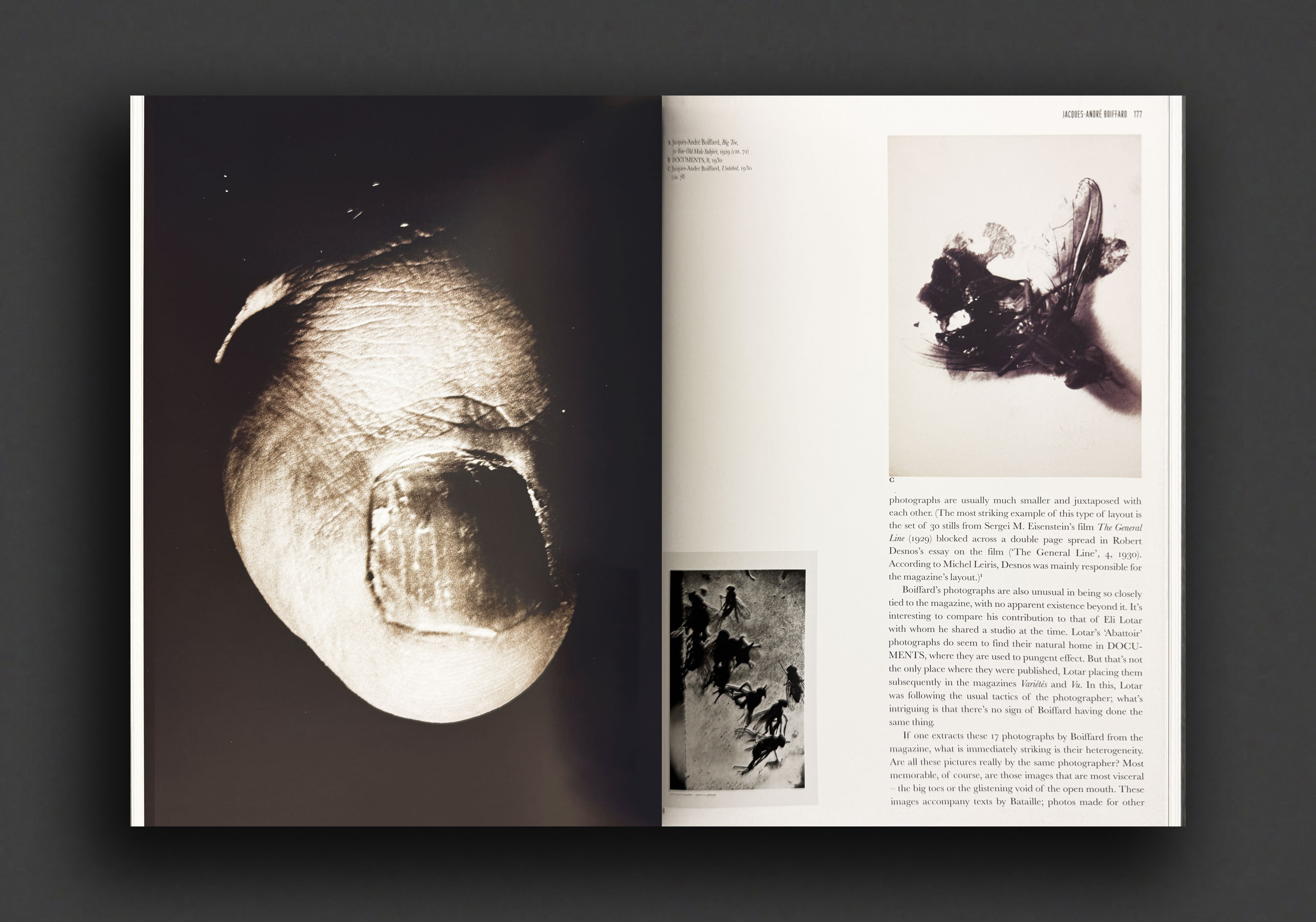
In the Paris art world of the 1920s, Georges Bataille and his journal DOCUMENTS represented a dissident branch of surrealism. Bataille—poet, philosopher, writer, and self-styled "enemy within" surrealism—used DOCUMENTS to put art into violent confrontation with popular culture, ethnography, film, and archaeology. Undercover Surrealism, taking the visual richness of DOCUMENTS as its starting point, recovers the explosive and vital intellectual context of works by Picasso, Miro, Dali, Giacometti, and others in 1920s Paris.
Profusely illustrated (featuring 180 colour images) and filled with valuable English translations of original French texts from DOCUMENTS accompanied by essays and shorter descriptive texts, Undercover Surrealism recreates and recontextualizes Bataille's still unsettling approach to culture. Putting Picasso's Three Dancers back into its original context of sex, sacrifice, and violence, for example, then juxtaposing it with images of gang wars, tribal masks, voodoo ritual, Hollywood musicals, and jazz, makes the urgency and excitement of Bataille's radical ideas startlingly vivid to a twenty-first-century reader.