World Food Books' programme is largely produced on Kulin Nation land. We acknowledge the Wurundjeri people of the Kulin Nation as the first and continuing custodians of this land, and pay respect to their Elders past, present, and emerging.
World Food Books is an arts and special interests bookshop in Naarm / Melbourne. Founded in 2010, World Food Books is devoted to the presentation of a rotating, hand-selection of international art, design, literary and counterculture publications with an emphasis on the anti-traditional, the experimental, the avant-garde, the heretic, the marginal.
Presenting new titles alongside rare and out-of-print books, catalogues and journals spanning the fields of modern and contemporary art, design, photography, illustration, film, literature, poetry, cultural theory, philosophy, sexuality, popular and underground culture in its many radical forms, World Food Books wishes to encourage adventurous, thoughtful and open-minded reading, looking, writing, and exchange of publishing and ideas, both current and historical.
As well as our bookshop, located in Melbourne's historical Nicholas Building, all of our inventory is available internationally via our online mail-order service.
World Food Books semi-regularly co-ordinates "Occasions", a programme of exhibits and events at the bookshop and in partnership with other hosts (such as museums and art galleries) that develop out of the activities, relationships and content of the bookshop itself.
World Food Books
The Nicholas Building
37 Swanston Street
Room 5, Level 6
Melbourne 3000
Australia
SHOP HOURS:
THU–SAT 12–6
WEB-SHOP OPEN 24/7
World Food Books
Postal Address:
PO Box 435
Flinders Lane
Victoria 8009
Australia
Art
Theory / Essay
Architecture / Interior
Graphic Design / Typography
Photography
Fashion
Eros
LGBTQ+
Fiction / Poetry
Weird / Speculative / Science Fiction / Horror
Transgressive / Visceral / Abject
Symbolism / Decadence / Fin de siècle
Film / Video
Painting
Sculpture / Installation
Performance / Dance / Theater
Drawing
Sound / Music
Curatorial
Group Shows / Collections
Periodicals
Out-of-print / Rare
Posters / Ephemera / Discs
Signed Books
World Food Books Gift Voucher
World Food Book Bag
Australian Art
Australian Fiction
Australian Science Fiction / Speculative Fiction
Australian Poetry
Australian Photography
Japanese Photography
Conceptual Art
Minimal Art
Dada
'Pataphysics / Oulipo
Fluxus
Concrete Poetry
Pop Art
Surrealism
Arte Povera
Arte Informale / Haute Pâte / Tachism
Nouveau Réalisme / Zero / Kinetic
Situationism / Lettrism
Collage / Mail Art / Xerox Art
Art Brut / Folk / Visionary / Fantastic
Illustration / Graphic Art / Bandes Dessinées
Furniture
Italian Radical Design / Postmodernism
Textiles
Ceramics / Glass
Counterculture
Protest / Revolt
Philosophy
Psychoanalysis
Anthropology
Anarchism
Socialism / Anarchism / Communism / Capitalism
Literary Theory / Semiotics / Language
Feminism / Women's Studies
Gender Studies / Sexuality
Anthropology
Fetishism / BDSM
Drugs / Psychedelia
Crime / Violence
Animal Rights / Veganism
Occult / Esoterica
Ecology / Earth / Alternative Living
Whole Earth / Crafts
All prices in AUD (Australian dollars)
Pick-Ups
Pick-up orders can be collected in our bookshop during opening hours after order date. Please collect any Pick-up orders within 2 weeks of ordering as we have limited storage space. Orders will be released back into stock if not collected within this time. No refunds can be made for pick-ups left un-collected. If you cannot make it in to the bookshop in this time-frame, please choose postage option.
Return Policy
All sales are final. We do accept returns (for refund or exchange) for items received in error. All our orders are packed with special care using heavy-duty padding and cardboard book-mailers or bubble mailers (for smaller books), using reinforcement where required. We cannot take responsibility for any lost, stolen or damaged parcels.
Insurance
Should you wish to insure your package, please email us directly after placing your order and we can organise this at a small extra expense. Although all standard/express tracked packages are very safe and dependable, we cannot take responsibility for any lost, stolen or damaged parcels. We recommend insurance on valuable orders.
Interested in selling your old books, catalogues, journals, magazines, comics, fanzines, ephemera? We are always looking for interesting, unusual and out-of-print books to buy. We only buy books in our fields of interest and specialty, and that we feel we can resell.
We base these prices on desirability, market value, in-print prices, condition and our current stock levels. We offer cash, store credit, and can take stock on consignment. All
about 25% of the price we expect to get when we sell them, or 30% in store credit. We base these prices on desirability, market value, in-print prices, condition and our current stock levels.
Sell your books any day of the week. You can drop them off and return later. If you have a lot of books, we can visit your Sydney home.
We buy books that we feel we can resell. We offer about 25 % of the price we expect to get when we sell them, or 30% in store credit. We base these prices on desirability, market value, in-print prices, condition and our current stock levels.
Philadelphia Wireman
03 August - 01 September, 2018
World Food Books is proud to announce our next Occasion, the first presentation of sculptures by Philadelphia Wireman in Australia.
The Philadelphia Wireman sculptures were found abandoned in an alley off Philadelphia’s South Street on trash night in 1982. Their discovery in a rapidly-changing neighbourhood undergoing extensive renovation, compounded with the failure of all attempts to locate the artist, suggests that the works may have been discarded after the maker’s death. Dubbed the "Philadelphia Wireman" during the first exhibition of this work, in 1985, the maker’s name, age, ethnicity, and even gender remain uncertain. The entire collection totals approximately 1200 pieces, all intricately bound together with tightly-wound heavy-gauge wire (along with a few small, abstract marker drawings, reminiscent both of Mark Tobey and J.B. Murry). The dense construction of the work, despite a modest range of scale and materials, is singularly obsessive and disciplined in design: a wire armature or exoskeleton firmly binds a bricolage of found objects including plastic, glass, food packaging, umbrella parts, tape, rubber, batteries, pens, leather, reflectors, nuts and bolts, nails, foil, coins, toys, watches, eyeglasses, tools, and jewellery.
Heavy with associations—anthropomorphic, zoomorphic, and socio-cultural responses to wrapped detritus—the totemic sculptures by Philadelphia Wireman have been discussed in the context of work created to fulfil the shamanistic needs of alternative religions in American culture. Curators, collectors, and critics have variously compared certain pieces to sculpture from Classical antiquity, Native American medicine bundles, African-American memory jugs, and African fetish objects. Reflecting the artist’s prolific and incredibly focused scavenging impulse, and despite—or perhaps enhanced by—their anonymity, these enigmatic objects function as urban artefacts and arbiters of power, though their origin and purpose is unknown. Philadelphia Wireman, whatever their identity, possessed an astonishing ability to isolate and communicate the concepts of power and energy through the selection and transformation of ordinary materials. Over the course of the past two decades, this collection has come to be regarded as an important discovery in the field of self-taught art and vernacular art.
Presented in collaboration with Fleisher-Ollman Gallery, Philadelphia, and Robert Heald, Wellington.
Susan Te Kahurangi King
02 February - 10 March, 2018
Susan Te Kahurangi King (24 February 1951 - ) has been a confident and prolific artist since she was a young child, drawing with readily available materials - pencils, ballpoint pens and felt-tip markers, on whatever paper is at hand. Between the ages of four and six Susan slowly ceased verbal communication. Her grandparents William and Myrtle Murphy had developed a special bond with Susan so they took on caring responsibilities for extended periods. Myrtle began informally archiving her work, carefully collecting and storing the drawings and compiling scrapbooks. No drawing was insignificant; every scrap of paper was kept. The King family are now the custodians of a vast collection containing over 7000 individual works, from tiny scraps of paper through to 5 meter long rolls.
The scrapbooks and diaries reveal Myrtle to be a woman of great patience and compassion, seeking to understand a child who was not always behaving as expected. She encouraged Susan to be observant, to explore her environment and absorb all the sights and sounds. Myrtle would show Susan’s drawings to friends and people in her community that she had dealings with, such as shopkeepers and postal workers, but this was not simply a case of a grandmother’s bias. She recognised that Susan had developed a sophisticated and unique visual language and sincerely believed that her art deserved serious attention.
This was an unorthodox attitude for the time. To provide some context, Jean Dubuffet coined the term Art Brut in 1945 to describe work created by self-taught artists – specifically residents of psychiatric institutions and those he considered to be visionaries or eccentrics. In 1972 Roger Cardinal extended this concept by adopting the term Outsider Art to describe work made by non-academically trained artists operating outside of mainstream art networks through choice or circumstance. Susan was born in Te Aroha, New Zealand in 1951, far from the artistic hubs of Paris and London that Dubuffet and Cardinal operated in. That Myrtle fêted Susan as a self-taught artist who deserved to be taken seriously shows how progressive her attitudes were.
Susan’s parents Doug and Dawn were also progressive. Over the years they had consulted numerous health practitioners about Susan’s condition, as the medical establishment could not provide an explanation as to why she had lapsed into silence. Dawn educated herself in the field of homeopathy and went on to treat all twelve of her children using these principles – basing prescriptions on her observations of their physical, mental and emotional state.
Doug was a linguist with an interest in philosophy who devoted what little spare time he had to studying Maori language and culture. To some extent their willingness to explore the fringes of the mainstream made them outsiders too but it was their commitment to living with integrity and their respect for individuality that ensured Susan’s creativity was always encouraged.
Even though Susan’s family supported her artistic pursuits, some staff in schools and hospitals saw it as an impediment to her assimilation into the community and discouraged it in a variety of ways. Her family was not always aware of this and therefore did not fully understand why Susan stopped drawing in the early 1990s. However, rather than dwell on the challenges that Susan faced in pursuit of her artistic practice, they prefer to highlight her achievements. In 2008 Susan began drawing again in earnest, after an almost 20 year interruption, and her work is now shown in galleries around the world.
Susan grew up without television and has been heavily influenced by the comics she read as a child. She is absolutely fearless in the appropriation of recognizable characters, such as Donald Duck and Mickey Mouse, in her work. She twists their limbs, contorts their faces, compresses them together, blends them into complex patterned backgrounds - always imbuing them with an incredible energy. Although Susan often used pop culture characters in her work they are not naive or childlike. These are drawings by a brilliant self-taught artist who has been creating exceptional work for decades without an audience in mind.
Mladen Stilinović
"Various Works 1986 - 1999"
02 February 16 - September 10, 2016
Various works 1986 - 1999, from two houses, from the collections of John Nixon, Sue Cramer, Kerrie Poliness, Peter Haffenden and Phoebe Haffenden.
Including: Geometry of Cakes (various shelves), 1993; Poor People’s Law (black and white plate), 1993; White Absence (glasses, ruler, set square, silver spoon, silver ladel with skin photograph and wooden cubes), 1990-1996; Exploitation of the Dead (grey and red star painting, wooden painting, black spoon with red table, red plate), 1984-1990; Money and Zeros (zero tie, paintings made for friends in Australia (Sue, John, Kerrie), numbers painting), 1991-1992; Words - Slogans (various t-shirts) - “they talk about the death of art...help! someone is trying to kill me”, “my sweet little lamb”, “work is a disease - Karl Marx”; Various artist books, catalogues, monographs, videos; Poster from exhibition Insulting Anarchy; "Circular" Croatian - Australian edition; Artist book by Vlado Martek (Dostoyevsky); more.
Thanks to Mladen Stilinović and Branka Stipančić.
Jonathan Walker
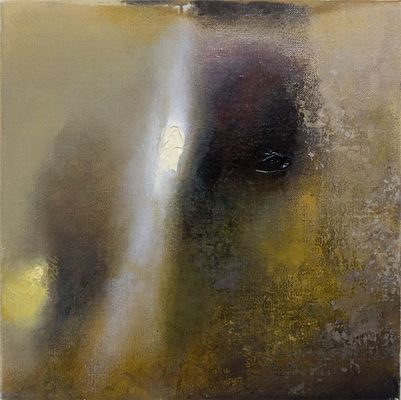
Always Will Need To Wear Winter Shirt Blue + Ochre Small Check Pattern
21 August - 21 September, 2015
Untitled
I am not a great reader of poetry but I always return to the work of Melbourne poet, Vincent Buckley (1925- 1988). Perhaps I find his most tantalising piece to be not a finished poem but a fragment left on a scrap of paper discovered on his desk after the poet’s death.
The poetry gathers like oil
In the word-core, and spreads
It has its music meet,
Its music is in movement.
This fragment is more the shell left behind from a volatile thought than a finished poem. I find the last two lines honest but awkward whereas the first two lines work like an arrow. Most likely he could not find a resolution so it was left. Still, in its present form, it remains an eloquent testimony to the ultimate failure of a medium to express mobile thought and sensation, in Buckley’s case, through verbal language. It’s an important matter because this is something all artists have to deal with regardless of the medium.
I have never written a poem, however, I am forever copying fragments from books on paper scraps in a vain effort to fix certain notions in my head. At first, they function as bookmarks that are sometimes returned to when I open the book. But before long, as they accumulate, they fall out littering the table interspersed with A4 photocopies, bills, books and medications.
To return to Buckley’s fragment, the first two lines very much evoke how I paint nowadays. As you age, detail diminishes and patches of light become more luminous and float. I feel the most honest way of dealing with this is by smearing the oil paint on the canvas with the fingers and working close-up, blind. Only if the patches coalesce into an approaching image can the work gain a life.
-
Jonathan Walker was born in Melbourne, Australia and brought up on a dairy farm in Gippsland. In the 1970’s he studied painting at RMIT and won the Harold Wright Scholarship to the British Museum, London. During the 1980’s he exhibited at Pinacotheca Gallery, Richmond and had work shown at the NGV and Heidi City Art Gallery. Over the same period he designed the cover for the “Epigenesi” LP by Giancarlo Toniutti, Italy and conducted a mail exchange work with Achim Wollscheid, Germany. The work with artists through the post resulted in an article published in the bicentenary issue of Art and Australia 1988. He showed in artist run spaces such as WestSpace in the 90’s and 2000’s, and until 2012, taught painting at Victoria University, which is where we (Colleen Ahern and Lisa Radford) as organisers of the exhibition, among many others, had the privilege of being his student.
Walker’s knowledge was imparted to students through the careful selection of music, literature, and artists found in books that he himself had ordered for the library. Walker’s strategy was the generosity of sharing his vast knowledge with references specific to each student and their context.
Walker’s paintings share a similar focus and intimacy.
This exhibition presents a small selection of recent paintings alongside a publication that includes Walker’s writing. Observational and analytical, Walker’s work is a type of material notation — the time of day, colour and how it is blended, the both specific and fleeting location of a reflection on lino or the question of whether a chair leg should be included in a painting.
Please join us on Friday August 21 between 6-8pm to celebrate the opening of the exhibition.
Curated by Colleen Ahern and Lisa Radford.
B. Wurtz
Curated by Nic Tammens
March 26 - April 4, 2015
B.Wurtz works from a basement studio in his home on Manhattan’s Lower East Side.
This local fact is attested to by the plastic shopping bags and newsprint circulars that appear in his work. As formal objects, they don’t make loud claims about their origins but nonetheless transmit street addresses and places of business from the bottom of this long thin island. Like plenty of artists, Wurtz is affected by what is local and what is consumed. His work is underpinned by this ethic. It often speaks from a neighborhood or reads like the contents of a hamper:
“BLACK PLUMS $1.29 lb.”
“Food Bazaar”
“USDA Whole Pork Shoulder Picnic 99c lb.”
“RITE AID Pharmacy, with us it’s personal.”
“H. Brickman & Sons.”
“Sweet Yams 59c lb."
Most of the work in this exhibition was made while the artist was in residence at Dieu Donne, a workshop dedicated to paper craft in Midtown. Here Wurtz fabricated assemblages with paper and objects that are relatively lightweight, with the intention that they would be easily transportable to Australia. This consideration isn’t absolute in Wurtz’s work, but was prescriptive for making the current exhibition light and cheap. Packed in two boxes, these works were sent from a USPS post office on the Lower East Side and delivered to North Melbourne by Australia Post.
Wurtz appears courtesy of Metro Pictures, New York.
Thanks to Rob Halverson, Joshua Petherick, Sari de Mallory, Matt Hinkley, Helen Johnson, Fayen d'Evie, Ask Kilmartin, Lisa Radon, Ellena Savage, Yale Union, and "Elizabeth".
John Nixon
"Archive"
December 15 - January 20, 2014
The presentation of John Nixon's archive offered a rare showcase of this extensive collection of the artist's own publications, catalogues, posters, ephemera, editions and more, from the mid 1980s onwards, alongside a selection of his artworks.
Organized by John Nixon, Joshua Petherick and Matt Hinkley.
"Habitat"
at Minerva, Sydney (organised by Joshua Petherick and Matt Hinkley)
November 15 - December 20, 2014
Lupo Borgonovo, Janet Burchill & Jennifer McCamley,
Lewis Fidock, HR Giger, Piero Gilardi, Veit Laurent Kurz,
Cinzia Ruggeri, Michael E. Smith, Lucie Stahl, Daniel Weil, Wols
Press Release:
“...It contained seven objects. The slender fluted bone, surely formed for flight, surely from the wing of some large bird. Three archaic circuitboards, faced with mazes of gold. A smooth white sphere of baked clay. An age-blackened fragment of lace. A fingerlength segment of what she assumed was bone from a human wrist, grayish white, inset smoothly with the silicon shaft of a small instrument that must once have ridden flush with the surface of the skin - but the thing’s face was seared and blackened.”
William Gibson, “Count Zero”, 1986
"Autumn Projects Archive"
Curated by Liza Vasiliou
March 6 - March 15, 2014
World Food Books, in conjunction with the Virgin Australia Melbourne Fashion Festival 2014, presented the Autumn Projects archive, consisting of a selection of early examples in Australian fashion with a particular interest in collecting designers and labels from the period beginning in the 1980’s, who significantly influenced the discourse of Australian Fashion.
Curated by Liza Vasiliou, the exhibition provided a unique opportunity to view pieces by designers Anthea Crawford, Barbara Vandenberg, Geoff Liddell and labels CR Australia, Covers, Jag along with early experimental collage pieces by Prue Acton and Sally Browne’s ‘Fragments’ collection, suspended throughout the functioning World Food Books shop in Melbourne.
H.B. Peace
presented by CENTRE FOR STYLE
November 14, 2013
"Hey Blinky, you say chic, I say same"
Anon 2013
H.B. Peace is a clothing collaboration between great friends Blake Barns and Hugh Egan Westland. Their pieces explore the divergences between 'character’ and ‘personality’ in garments....etc
Special Thanks to Joshua Petherick and Matt Hinkley of WFB and Gillian Mears
and a Very Special Thank you to Audrey Thomas Hayes for her shoe collaboration.
Janet Burchill & Jennifer McCamley
"Aesthetic Suicide"
May 10 - June 8, 2013
The first of our occasional exhibitions in the World Food Books office/shop space in Melbourne, "Aesthetic Suicide" presented a body of new and older works together by artists Janet Burchill & Jennifer McCamley, including videos, prints, a wall work, and publications.
During shop open hours videos played every hour, on the hour.
2025, English
Hardcover (w. dust jacket and obi), 184 pages, 30 x 23 cm
Published by
Apartamento / Barcelona
$140.00 - In stock -
Between 1999 and 2006, before fast fashion and social media changed the world forever, Kyoichi Tsuzuki published 87 instalments of his Happy Victims series in the fashion magazine Ryuko Tsushin. In cramped quarters across Tokyo, these anonymous disciples joyously detailed the ritual and the sacrifice of their brand-name obsessions. A Buddhist monk with a Comme des Garçons shopping habit, an Alexander McQueen collector listening to neighbours through paper-thin walls—photographed at home, their collections before them, Kyoichi’s anti-heroes exist in parallel to the fashion universe of fame, fantasy, and glamour. Happy Victims was first published in book form in 2008. Long out of print, this edition follows Apartamento’s reissue of Kyoichi’s earlier seminal work, Tokyo Style. The new hardcover design comes with an updated foreword by the author, Japanese photographer Kyoichi Tsuzuki, and an introduction by Isabella Burley of Climax Books.
While the cover and belly band have been completely reworked, in collaboration with designer Han Gao, the book’s interior maintains a simple, documental format: one happy victim per spread, Kyoichi’s photos supplemented by a short commentary on the individual and his or her daily schedule. Not typically members of the leisure class, the goths, Lolitas, and stringent Margiela fans must also go to work and find time to care for their clothes.
About Kyoichi Tsuzuki
A Tokyo native, Kyoichi Tsuzuki is an award-winning photographer and a former editor at such iconic publications as Popeye and Brutus. He received the 1996 Ihei Kimura Award for his first photography exhibition, Roadside Japan, and has since shown work at the White Cube Gallery, London, MUDAM Luxembourg, Galerie Da-End, and more. Kyoichi is also the author of Tokyo Style, a cult classic reissued by Apartamento in 2024.
About Isabella Burley
Isabella Burley founded Climax Books in London in 2020 as a home for rare editions, adding a New York outpost in 2024. At 17, she started on the shop floor of Dover Street Market with Comme des Garçons, then later served as editor-in-chief for Dazed & Confused from 2015 to 2021. Additional appointments include Helmut Lang and Acne Studios.
1978, English
Softcover (staple-bound), 68 pages, 28 x 21 cm
1st Edition, Out of print title / used / good
Published by
Feminist / Tokyo
$45.00 - In stock -
Fourth 1978 (English-language) issue of "Feminist", a rare and important record of the women's liberation movement in Japan in the the 1970s and document of the cross-currents of international female theorists, artists, poets, authors, and activists in the women's movement. This special "East and West" issue addresses the different pathways that the women's movement must travel throughout Asia and in the western countries. "A source of information and forum for Japanese women, (Feminist) has had from its inception an international perspective." This first fully English-language edition opens the discourse around the Asian feminist movement to western readers, including many articles on the place of Japanese Women in society, and Feminist developments in Korea, Thailand, the Philippines, Burma (Myanmar), Indonesia, and Malaysia. With a cover feature/interview on legendary Japanese art director, costume designer, and graphic designer Eiko Ishioka (known for her production and costume designs for Grace Jones, Paul Schrader, Francis Ford Coppola, Björk, etc., shot by photographer Michiko Matsumoto, this issue, edited by Japanese critic, American literature researcher, and poet, Ikuko Atsumi (who also co-edited "Burning Hearts: Women Poets of Japan" with Kenneth Rexroth, The Seabury Press/New Directions, 1977), with Diane L. Simpson, features contributions from Australian filmmaker Solrun Hoaas, women's rights activist/journalist Yayori Matsui (noted for her work to raise awareness of sex slaves and sex tourism in post-war Asia), photographer Michiko Matsumoto, Japanese linguist Sachiko Ide, author Utsumi Aiko, poet Morgan Gibson, acclaimed Japanese-English translator and historian of the women's movement in Japan Nancy Andrew, critic Chizuko Ikegami, and many others.
"Images of women that arise from sexist ideologies are everywhere tied to an individual cultural milieu. In the Western tradition, woman is simultaneously virgin and seductress, both adored and condemned by men. In the Japanese tradition, she is the man's mother goddess, who nurtures and protects. Under the Confucian ethic in Korea she is defined only in relation to her father, husband and son and in Indonesia she is constrained by the Islamic view that sees her mainly as the bearer of the next generation. Whatever their form, such androcentric views deny women both autonomy and dignity while providing a rationale for social and economic subjugation.
In working to transform these distorted images and ideals, the women's movement in different countries will likely not take the same path. In Japan the enormous influence exerted by the media in promoting the traditional image of women requires that feminists direct considerable effort toward creating a social climate in which the independent women can be viewed positively. At the same time they want to correct the misinterpretations about themselves that pervade Japanese literature, films, and art. While women in the West now seek to create a women's culture, Japanese women seek to revive the women's culture that has always been an important, if sometimes un-recognized, source of their civilization."
Good—VG copy with age/wear to cover extremities, some foxing/staining.
2006, English
Softcover, 204 pages, 23 x 29 cm
1st Edition, Out of print title / used / very good
Published by
A Magazine / Antwerp
The Flanders Fashion Institute / Antwerp
$250.00 - Out of stock
“We make noise not clothes.”
Rare copy of the fourth instalment of Belgium's A Magazine, published in 2006 and now one of the most sought after of the series. This volume was guest-curated by Jun Takahashi of UNDERCOVER, and contains contributions on or by Rei Kawakubo + Comme Des Garcons, Maison Martin Margiela, Terry Jones, Simon Marsden, Olivier Saillard, Hermes, Paolo Roversi, Mark Borthwick, Jan Svankmajer, Terry Richardson, and many, many more. An incredible, visually-packed volume that presents UNDERCOVER behind the scenes, including clothing, scrapbooks, art projects, furniture, collages, sculptures, samples, interviews, texts...
Designed by Paul Boudens.
"A Magazine is a biannual publication, exploring the creative sphere of a selected designer in each issue. We invite a guest curator - an international fashion designer, group or house - to develop innovative, personalized content that expresses their aesthetic and cultural values. Each issue celebrates this designer's ethos: their people, their passion, their stories, emotions, fascinations, spontaneity and authenticity".
Very Good copy with moderate wear to edges/corners, front cover.
2006, English / Chinese
Hardcover (w. dust-jacket, poster, threaded art pocket w. prints), 194 pages, 18 x 23.5 cm
1st Edition, Out of print title / used / very good
Published by
Cream / Hong Kong
$290.00 - Out of stock
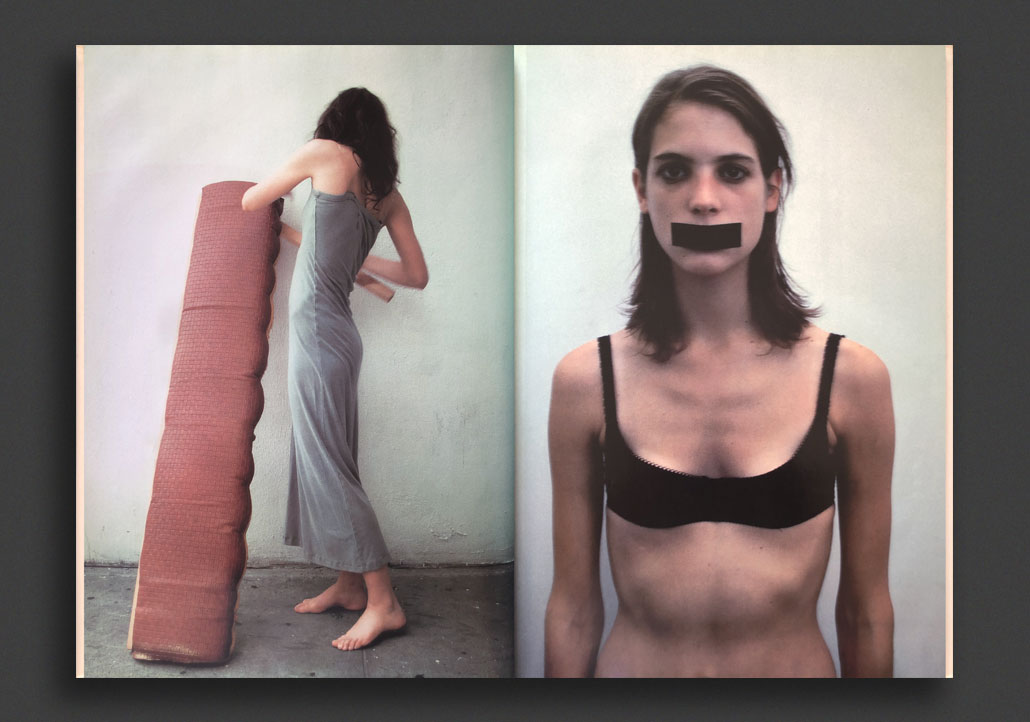
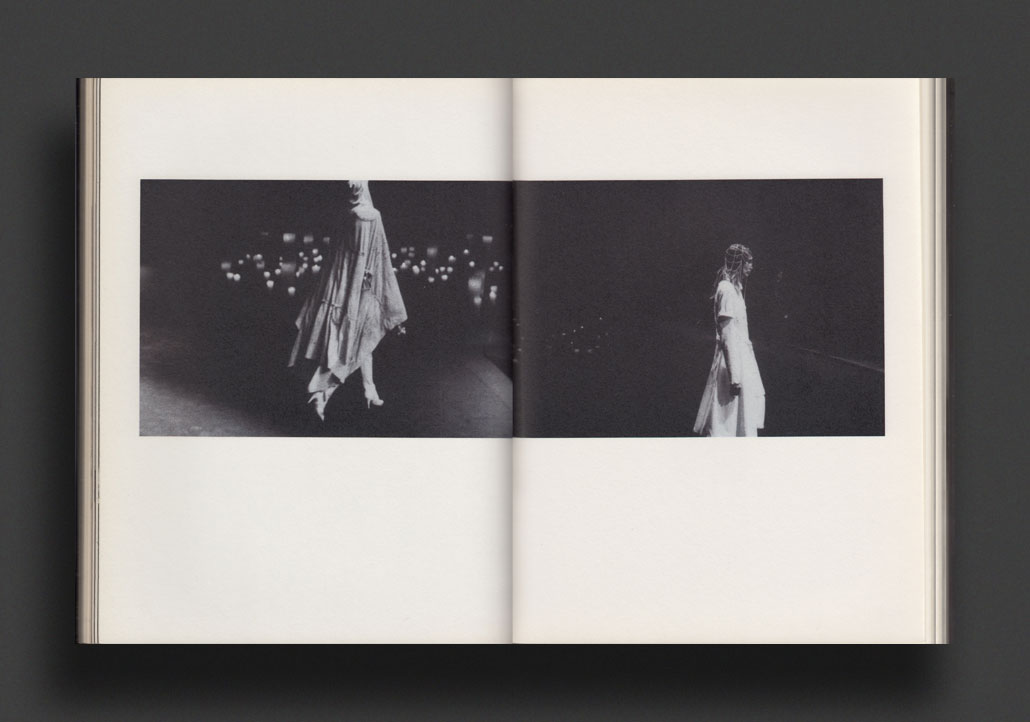
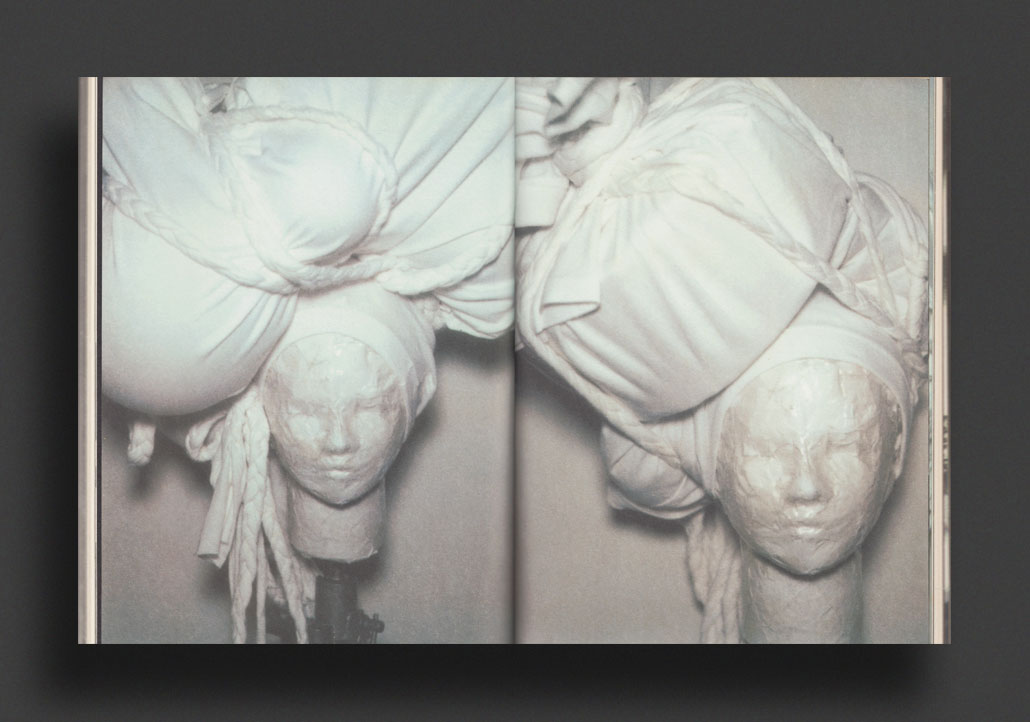
First edition of the best Undercover book, published in 2006 by Hong Kong-based high-end publisher Cream, who also published the incredible Margiela Special issue two years later. This super special volume (Cream #4) is dedicated entirely to Japanese avant-garde designer Jun Takahashi and his label Undercover. Wrapped in gold debossed, black velvet-bound hardcovers with reversible illustrated dust-jacket and gilded page edging, this stunning book contains Takahashi's drawings and graphics for Spring/Summer Undercover collection, interviews, photographs, Undercover Summer 2006 Paris Runway documentation, fittings, studio photographs, and various source material by Takahashi at the height of his game. Includes a chapter documenting the wonderful headpieces created by Katsuya Kamo for Undercover, an inserted Undercover poster, plus a thread-sealed paper case enclosed that features artworks by Japanese artist and Undercover collaborator Madsaki. Texts in English with a Chinese translation laid in (verso of poster). Designed by Silly Thing and edited closely with Jun Takahashi.
Very Good most complete copy.
1981, English
Softcover, 116 pages, 28 x 21 cm
1st Edition, Out of print title / used / very good
Published by
PARCO / Tokyo
$60.00 - In stock -
Like no other magazine - Super Art Gocoo was the wild late 1970s—1980s art journal from art director Ryōichi Enomoto and published by the mighty Parco gallery, imprint and department-store-like-no-other in Tokyo. With a cover by Harumi Yamaguchi, this bumper issue from 1981 is also largely dedicated to "Harumi Eros" — the work of legendary Japanese airbrush queen Harumi Yamaguchi and her "Gals". Not only does it feature a heavily illustrated behind-the-scenes with Yamaguchi it also visits the studio of fellow-airbrush master Pater Sato in his New York New Wave period. There is also lots of work by the great graphic artist Tadanori Yokoo, a feature on legendary French underground magazine Façade (1976—1983), a story on American dancer/choreographer/composer/Steve Reich collaborator Laura Dean, the photography of Hiroshi Yamazaki, graphic designer Kiyoshi Awazu, graphic designer Yutaka Sugita, a discussion between Japanese pop artists Akiko Yano and Nanako Sato, Tokyo Designers Space Report, plus articles, reviews, reports on art, dance, film, fashion, music, magazines, books.... The Face, Terry Riley, etc. Parco were instrumental in exhibiting, publishing and promoting Japanese and international graphic artists and new pop culture in this period, and these journals create a wonderful time-capsule at the height of that incredible time.
Very Good - Fine copy.
1995, English
Softcover, 144 pages, 28 x 21 cm
1st Edition, Out of print title / used / good
Published by
Pavilion Books / London
$65.00 - Out of stock
In 1995, the year that this book was published, Kate Moss celebrated her 21st birthday and seventh year working as a model. The photographs were personally selected by Moss, her favourite photographs from her portfolio, tracing Kate's career from its early days through to her iconic status in the nineties, and feature the work of many of the most notable fashion photographers of the period, including amongst others: Corinne Day, Patrick Demarchelier, Sante D’Orazio, Arthur Elgort, Steven Klein, Nick Knight, Mark Le Bon, Petr Lindbergh, Steven Meisel, Helmut Newton, Paolo Roversi, David Sims, Mario Sorrenti, Juergen Teller, Ellen Von Unwerth, and Albert Watson.
Foreword by Liz Tilberis, Editor-in-Chief of Harper's Bazaar. Introduction by Kate Moss. Design by Phil Bicker. Cover by Corinne Day.
Good—VG copy with some moderate cover creasing.
1992, English / Japanese
Softcover, 36 pages, 22 x 29 cm
1st Edition, Out of print title / used / very good
Published by
Street Editorial Office / Tokyo
$70.00 - In stock -
1992 issue of the iconic STREET magazine from Japan. No. 42 "Street Fashion in Paris : November 1992". Every issue is entirely full-bleed pages of photographs by legendary Japanese street style photographer Shoichi Aoki. For this autumn Paris issue, Aoki turns his camera to the city's effortlessly stylish crowds, documenting the layered, elegant, and distinctive looks found throughout the fashion capital. Aoki's Street (and later also Fruits) are essential style goldmines, creating valuable photographic documents of the times like no other magazine.
Very Good (light wear)
1993, English / Japanese
Softcover, 36 pages, 22 x 29 cm
1st Edition, Out of print title / used / very good
Published by
Street Editorial Office / Tokyo
$65.00 - In stock -
1993 issue of the iconic STREET magazine from Japan. No. 46 "Street Fashion at Paris Pret-a-Porter Collection : May 1993". Every issue is entirely full-bleed pages of photographs by legendary Japanese street style photographer Shoichi Aoki. For this Paris fashion week issue, Aoki directs his attention to the crowds surrounding the Pret-à-Porter shows, capturing the refined, eclectic, and often trend-defining looks of designers, editors, and attendees. Aoki's Street (and later also Fruits) are essential style goldmines, creating valuable photographic documents of the times like no other magazine.
Very Good (light wear)
1993, English / Japanese
Softcover, 36 pages, 22 x 29 cm
1st Edition, Out of print title / used / very good
Published by
Street Editorial Office / Tokyo
$75.00 - Out of stock
1993 issue of the iconic STREET magazine from Japan. No. 44 "Street Fashion at Vivienne Westwood : March 1993". Every issue is entirely full-bleed pages of photographs by legendary Japanese street style photographer Shoichi Aoki. For this special designer-focused edition, Aoki turns his lens to the scene surrounding Vivienne Westwood’s world, documenting the eclectic and theatrical fashion of the crowds that gathered around her shows and orbit. Aoki's Street (and later also Fruits) are essential style goldmines, creating valuable photographic documents of the times like no other magazine.
Very Good (light wear)
1995, English / Japanese
Softcover, 36 pages, 22 x 29 cm
1st Edition, Out of print title / used / very good
Published by
Street Editorial Office / Tokyo
$65.00 - In stock -
1995 issue of the iconic STREET magazine from Japan. No. 78 "STREET FASHION AT PARIS PRET-A-PORTER COLLECTIONS : JANUARY 1995".
Every issue is entirely full-bleed pages of photographs by legendary Japanese street style photographer Shoichi Aoki. For this, one of the special fashion week issues, instead of photographing the world's major fashion events on the runway, Aoki is celebrated for turning his camera to the crowds, documenting the incredible outfits of the people in the audience and surrounds, amongst which are many familiar designers, models, editors, musicians, artists... Aoki's Street (and later also Fruits) are essential style goldmines, creating valuable photographic documents of the times like no other magazine.
Good-Very Good (light wear)
1996, English / Japanese
Softcover, 36 pages, 22 x 29 cm
1st Edition, Out of print title / used / good
Published by
Street Editorial Office / Tokyo
$40.00 - In stock -
1996 issue of the iconic STREET magazine from Japan. No. 84 "STREET FASHION IN LONDON, JULY 1996". Every issue is entirely full-bleed pages of photographs by legendary Japanese street style photographer Shoichi Aoki. For this, one of the special fashion week issues, instead of photographing the world's major fashion events on the runway, Aoki is celebrated for turning his camera to the crowds, documenting the incredible outfits of the people in the audience and surrounds, amongst which are many familiar designers, models, editors, musicians, artists... Aoki's Street (and later also Fruits) are essential style goldmines, creating valuable photographic documents of the times like no other magazine.
Good copy with fold to cover corner, light wear.
1994, English / Japanese
Softcover, 36 pages, 22 x 29 cm
1st Edition, Out of print title / used / good
Published by
Street Editorial Office / Tokyo
$70.00 - In stock -
1994 issue of the iconic STREET magazine from Japan. No. 62 "STREET FASHION AT VIVIENNE WESTWOOD COLLECTION, BERLIN : SEPTEMBER 1994".
Every issue is entirely full-bleed pages of photographs by legendary Japanese street style photographer Shoichi Aoki. For this, one of the special fashion week issues, instead of photographing the world's major fashion events on the runway, Aoki is celebrated for turning his camera to the crowds, documenting the incredible outfits of the people in the audience and surrounds, amongst which are many familiar designers, models, editors, musicians, artists... Aoki's Street (and later also Fruits) are essential style goldmines, creating valuable photographic documents of the times like no other magazine.
Good copy with some cover damage to f. cover, light wear.
1989, English / Japanese
Softcover, 36 pages, 22 x 29 cm
1st Edition, Out of print title / used / very good
Published by
Street Editorial Office / Tokyo
$60.00 - In stock -
1989 issue of the iconic STREET magazine from Japan. No. 23 "Street Fashion in London : September 1989". Every issue is entirely full-bleed pages of photographs by legendary Japanese street style photographer Shoichi Aoki. For this early and now-historic London issue, Aoki captures the bold, raw, and expressive looks that defined the late-80s street scene, documenting the city’s subcultures and style innovators at a formative moment. Aoki's Street (and later also Fruits) are essential style goldmines, creating valuable photographic documents of the times like no other magazine.
Very Good (light wear)
1992, English / Japanese
Softcover, 36 pages, 22 x 29 cm
1st Edition, Out of print title / used / very good
Published by
Street Editorial Office / Tokyo
$65.00 - In stock -
1992 issue of the iconic STREET magazine from Japan. No. 37 "Street Fashion at London Collection : October 1991". Every issue is entirely full-bleed pages of photographs by legendary Japanese street style photographer Shoichi Aoki. For this early London Collection issue, Aoki turns his attention to the bustling scenes surrounding the shows, documenting the inventive, unexpected, and trend-setting outfits of attendees and insiders. Aoki's Street (and later also Fruits) are essential style goldmines, creating valuable photographic documents of the times like no other magazine.
Very Good (light wear)
1992, English / Japanese
Softcover, 36 pages, 22 x 29 cm
1st Edition, Out of print title / used / very good
Published by
Street Editorial Office / Tokyo
$70.00 - In stock -
1992 issue of the iconic STREET magazine from Japan. No. 39 "Street Fashion in Paris : May 1992". Every issue is entirely full-bleed pages of photographs by legendary Japanese street style photographer Shoichi Aoki. For this spring Paris issue, Aoki captures the vibrant, expressive, and unmistakably Parisian looks of the crowds circulating around the fashion scene, offering a vivid snapshot of early-90s street style. Aoki's Street (and later also Fruits) are essential style goldmines, creating valuable photographic documents of the times like no other magazine.
Very Good (light wear)
1992, English / Japanese
Softcover, 36 pages, 22 x 29 cm
1st Edition, Out of print title / used / very good
Published by
Street Editorial Office / Tokyo
$50.00 - In stock -
1992 issue of the iconic STREET magazine from Japan. No. 43 "Street Fashion in London : January 1992". Every issue is entirely full-bleed pages of photographs by legendary Japanese street style photographer Shoichi Aoki. For this winter London issue, Aoki captures the layered, personal, and often experimental looks found in the city's streets, focusing on the people who shaped its distinct early-90s fashion identity. Aoki's Street (and later also Fruits) are essential style goldmines, creating valuable photographic documents of the times like no other magazine.
Very Good (light wear)
1992, English / Japanese
Softcover, 36 pages, 22 x 29 cm
Published by
Street Editorial Office / Tokyo
$50.00 - In stock -
1992 issue of the iconic STREET magazine from Japan. No. 38 "Street Fashion London : March 1992". Every issue is entirely full-bleed pages of photographs by legendary Japanese street style photographer Shoichi Aoki. For this early London issue, Aoki turns his camera to the streets to document the raw, inventive style of the city's youth, creatives, and fashion insiders during a pivotal moment in London's cultural evolution. Aoki's Street (and later also Fruits) are essential style goldmines, creating valuable photographic documents of the times like no other magazine.
Very Good (light wear)
1993, English / Japanese
Softcover, 36 pages, 22 x 29 cm
1st Edition, Out of print title / used / very good
Published by
Street Editorial Office / Tokyo
$75.00 - In stock -
1993 issue of the iconic STREET magazine from Japan. No. 48 "Street Fashion at Jean-Paul Gaultier : July 1993". Every issue is entirely full-bleed pages of photographs by legendary Japanese street style photographer Shoichi Aoki. For this special issue centered on Jean-Paul Gaultier, Aoki focuses on the expressive, avant-garde looks of attendees and insiders surrounding the designer’s world, capturing the creative energy pulsing outside the runway. Aoki's Street (and later also Fruits) are essential style goldmines, creating valuable photographic documents of the times like no other magazine.
Very Good (light wear)
1993, English / Japanese
Softcover, 36 pages, 22 x 29 cm
1st Edition, Out of print title / used / very good
Published by
Street Editorial Office / Tokyo
$60.00 - In stock -
1993 issue of the iconic STREET magazine from Japan. No. 47 "Street Fashion in London : June 1993". Every issue is entirely full-bleed pages of photographs by legendary Japanese street style photographer Shoichi Aoki. For this vibrant London-focused issue, Aoki once again turns his camera to the crowds rather than the catwalks, capturing the expressive style of the city’s editors, artists, musicians, and fashion insiders as only he could. Aoki's Street (and later also Fruits) are essential style goldmines, creating valuable photographic documents of the times like no other magazine.
Very Good (light wear)
1993, English / Japanese
Softcover, 36 pages, 22 x 29 cm
1st Edition, Out of print title / used / very good
Published by
Street Editorial Office / Tokyo
$50.00 - Out of stock
1993 issue of the iconic STREET magazine from Japan. No. 45 "Street Fashion in Paris : April 1993". Every issue is entirely full-bleed pages of photographs by legendary Japanese street style photographer Shoichi Aoki. For this, one of the special city-focused issues, instead of photographing the world's major fashion events on the runway, Aoki is celebrated for turning his camera to the crowds, documenting the incredible outfits of the people in the audience and surrounds, amongst which are many familiar designers, models, editors, musicians, artists... Aoki's Street (and later also Fruits) are essential style goldmines, creating valuable photographic documents of the times like no other magazine.
Very Good (light wear)
2000, English
Softcover, 500 pages, 21.5 x 15.7 cm
1st Edition, Out of print title / used / very good
Published by
Purple Institute / Paris
$240.00 - In stock -
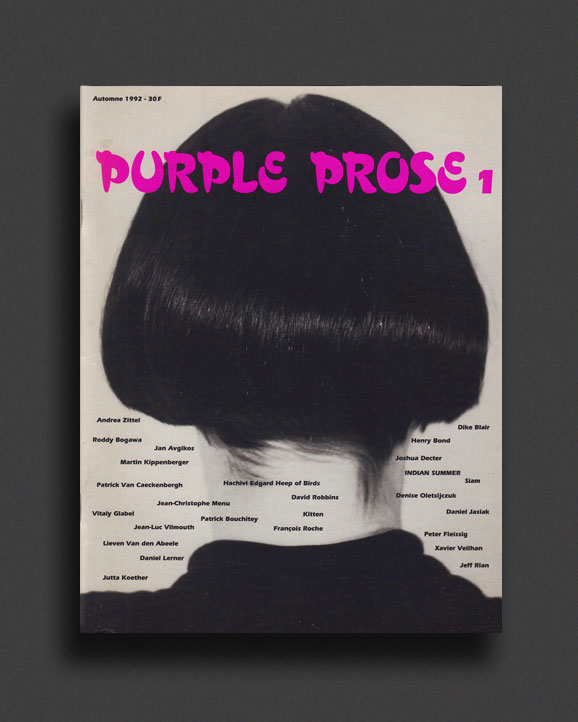
A rare early issue of the iconic Purple magazine, edited by Elein Fleiss and Olivier Zahm, this wonderful early edition features: Susan Cianciolo, Raf Simons, Jack Goldstein, Terry Richardson, Anders Edstrom, Chloe Sevigny, Wolfgang Tillmans, Martin Margiela, Rosemarie Trockel, Dominique Gonzalez-Foerster, General Idea, Mark Borthwick, Lewis Baltz, Lars Bang Larsen, Wolfgang Tillmans, Dominique Gonzalez-Foerster, Comme des Garçons, Michelle Grabner, Bless, Yohji Yamamoto, Dike Blair, Bernhard Willhelm, Gilles Deleuze, Karl Holmqvist, David Grubbs, Glenn O'Brian, Hans Ulrich Obrist, Bob Nickas, Sergio Guillen, Camille Vivier, Tan Lin, Olivier Zahm, Armin Linke, Amy Yao, Elein Fleiss, Henry Roy, Torbjorn Rodland, Chikashi Suzuki, Michael Smith, Lionel Bovier, Amy Sillman, Cerith Wyn Evans, Daniel Pflumm, Allen Rupperberg, Blake Rayne, Stephen Prina, Sture Johannesson, Franz Ackermann, Adrea Zittel, Jeremy Deller, Miu Miu, Dorothee Perret, Gaspard Yurkievich, Stanley Brouwn, Vija Celmins, Bas Jan Ader, Richard Prince, Tim Griffin, and so many more. One of the best issues!
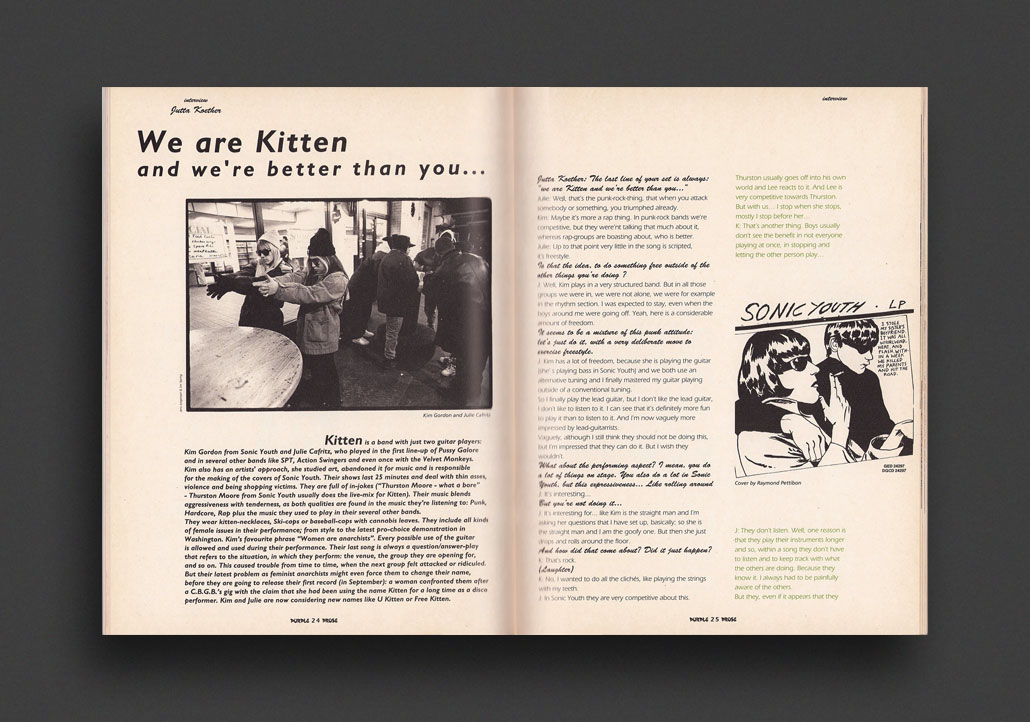
In 1992, Elein Fleiss and Olivier Zahm started the magazine Purple Prose as a reaction against the superficial glamour of the 1980s; much as a part of the global counterculture at the time, inspired by magazines like Interview, Ray Gun, Nova, and Helmut Newton's Illustrated, but with the aesthetics of what usually is referred to as anti-fashion. Based on their personal interests and views; Purple was, and in a sense still is, made much in the same spirit of the fanzine. Started "without any means, and without any experience, because we wanted to make a magazine that was radically different. We wanted to support the artists around us that no one else supported, much less talked about."—Olivier Zahm. The magazine became associated with the "realism" of the new fashion photography of the 1990s, with names like Juergen Teller, Terry Richardson, Wolfgang Tillmans, Mark Borthwick, Corinne Day, and Mario Sorrenti. Soon after the birth of Purple Prose, Zahm and Fleiss created spin-off publications such as les cahiers purple, Purple Sexe, Purple Fiction, and of course, Purple Fashion, in which Zahm aimed at fusing together his two worlds, fashion and art. Now one of the most iconic and influential fashion magazines in history.
Very Good copy. Copy from the library of OMA (Office for Metropolitan Architecture)! OMA was founded in 1975 by Dutch architect Rem Koolhaas and Greek architect Elia Zenghelis, along with Madelon Vriesendorp and Zoe Zenghelis. Sticker to spine and sticker to front cover (re-movable, but let on due to noteworthiness)
2004, English
Softcover, 432 pages, 27.5 x 21 cm
1st Edition, Out of print title / used / very good
Published by
Purple Institute / Paris
$200.00 - In stock -
"ANIMALISTIC, ARROGANT, BLOODY, BIZARRE, CRUEL"
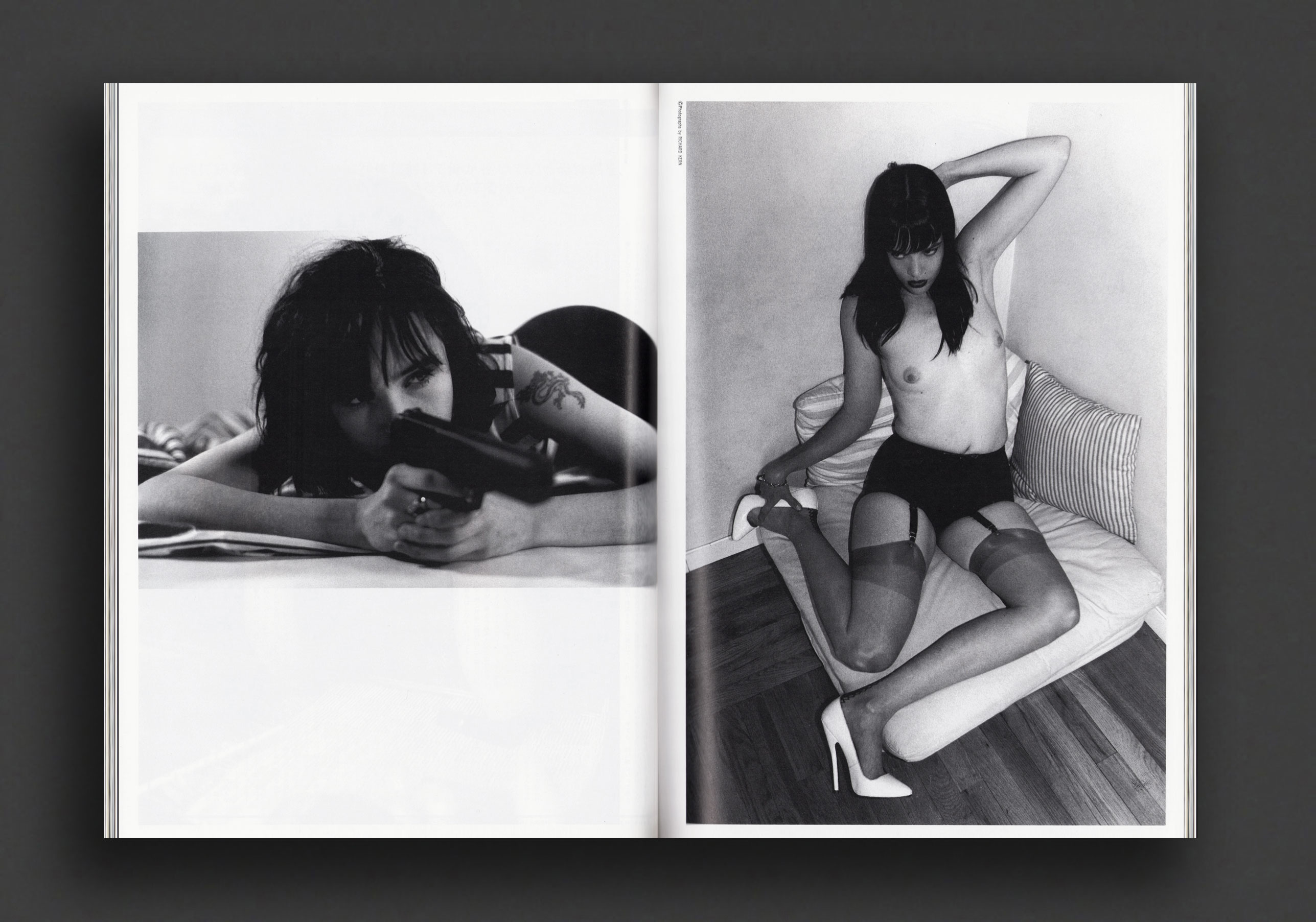
A very rare copy of the second issue of Purple Fashion wirth Angelina Lindvall in Balenciaga by Juergen Teller on the cover. Edited by Olivier Zahm, featuring Richard Prince, Mark Borthwick, Corinne Day, Juergen Teller, Imitation of Christ, Camille Vivier, Gus Van Sant, Anders Edström, Dominique Gonzales Foerster, Jeff Rian, Rita Ackermann, Heinz Peter Knes, Terry Richardson, Dike Blair, Elizabeth Peyton, Susan Cianciolo, Kim Gordon, Hermés, Giasco Bertoli, Junya Watanabe, Matthieu Orléan, Richard Kern, Maison Martin Margiela, Anuschka Blommers, François Laruelle, Niels Schumm, Comme des Garçons, Slavoj Zizek, Balenciaga, Maurizio Cattelan, Bless, Andrea Zittel, Gordon Matta-Clark, Thomas Hirschorn, Geoffrey Cruickshank-Hagenbuckle, Annette Aurell, Masafumi Sanai, Katja Rahlwes, Bettina Komenda, Mike Kelley, John Galliano, Kirsten Owen, Helmut Lang, Lutz, Issey Miyake, Rick Owens, Ann Demeuelemeester, Vava Ribeiro, Jean Leclercq, Maria Cornejo, Martine Sitbon, Cosmic Wonder, Justine Kurland, Wendy and Jim, John Armelder, Tim Griffin, Martynka Wawrzyniak, Ola Rindal, Yan Céh, David Armstrong, Fabien Baron, Lewis Baltz, Takashi Homma, Drew Jarett, Anne-Sofie Back, Marc Upson, Bettina Komenda, Alain Séchas, Gary Indiana, Justine Kurland, Christopher Wool, and many more... Art directed by Christophe Brunnquell.
In 1992, Elein Fleiss and Olivier Zahm started the magazine Purple Prose as a reaction against the superficial glamour of the 1980s; much as a part of the global counterculture at the time, inspired by magazines like Interview, Ray Gun, Nova, and Helmut Newton's Illustrated, but with the aesthetics of what usually is referred to as anti-fashion. Based on their personal interests and views; Purple was, and in a sense still is, made much in the same spirit of the fanzine. Started "without any means, and without any experience, because we wanted to make a magazine that was radically different. We wanted to support the artists around us that no one else supported, much less talked about."—Olivier Zahm. The magazine became associated with the "realism" of the new fashion photography of the 1990s, with names like Juergen Teller, Terry Richardson, Wolfgang Tillmans, Mark Borthwick, Corinne Day, and Mario Sorrenti. Soon after the birth of Purple Prose, Zahm and Fleiss created spin-off publications such as les cahiers purple, Purple Sexe, Purple Fiction, and of course, Purple Fashion, in which Zahm aimed at fusing together his two worlds, fashion and art. Now one of the most iconic and influential fashion magazines in history.
Very Good copy.
2025, Japanese
Softcover, 336 pages, 21 x 14.5 cm
Published by
PARCO / Tokyo
$100.00 - In stock -
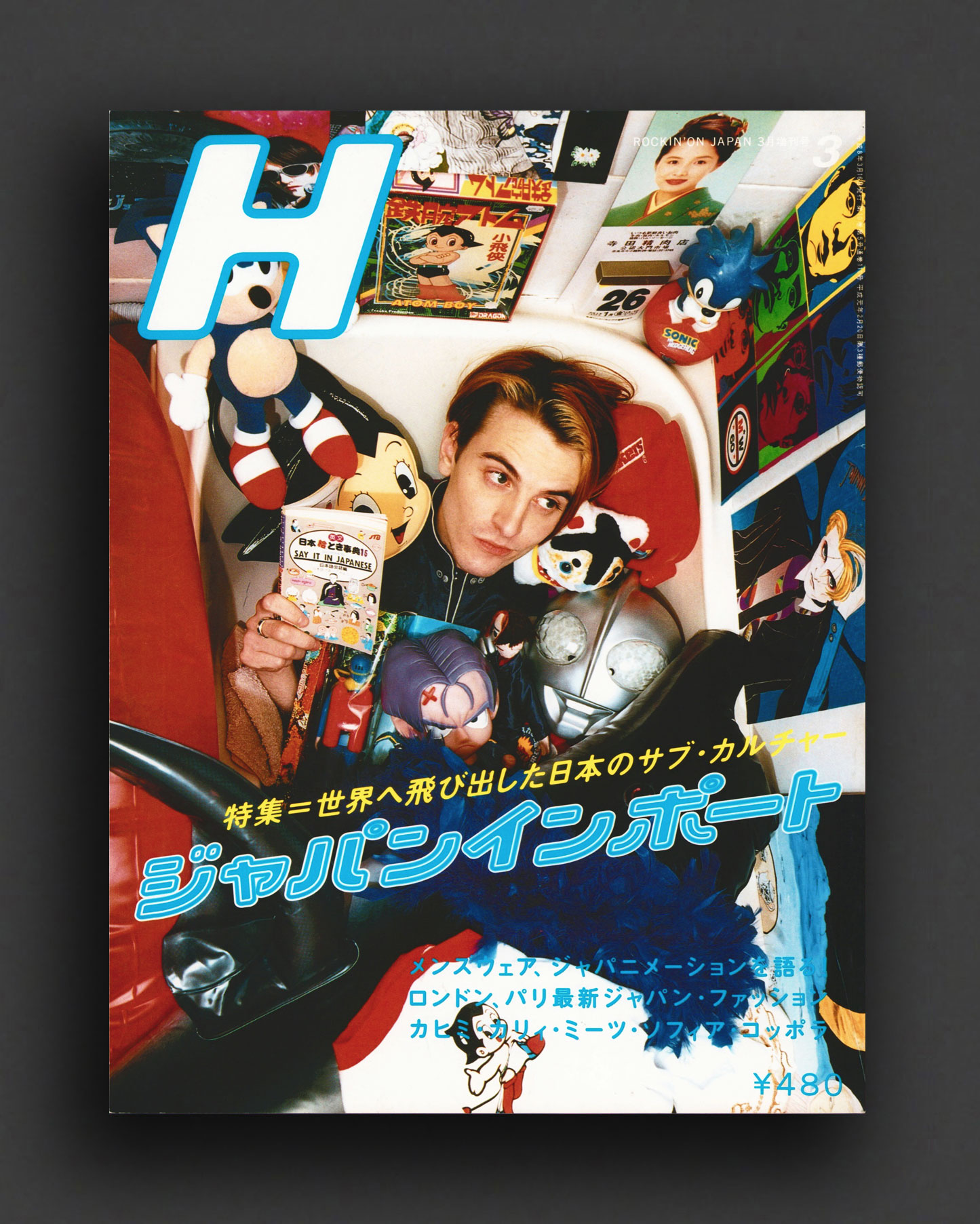
The definitive visual scrapbook of the Japanese cult brand "Hysteric Glamour", tracing its history from creation in 1984 to today, a leader in the Japanese fashion and cultural scenes, designed by founder Nobuhiko Kitamura and published by Parco on the brand's 40th anniversary.
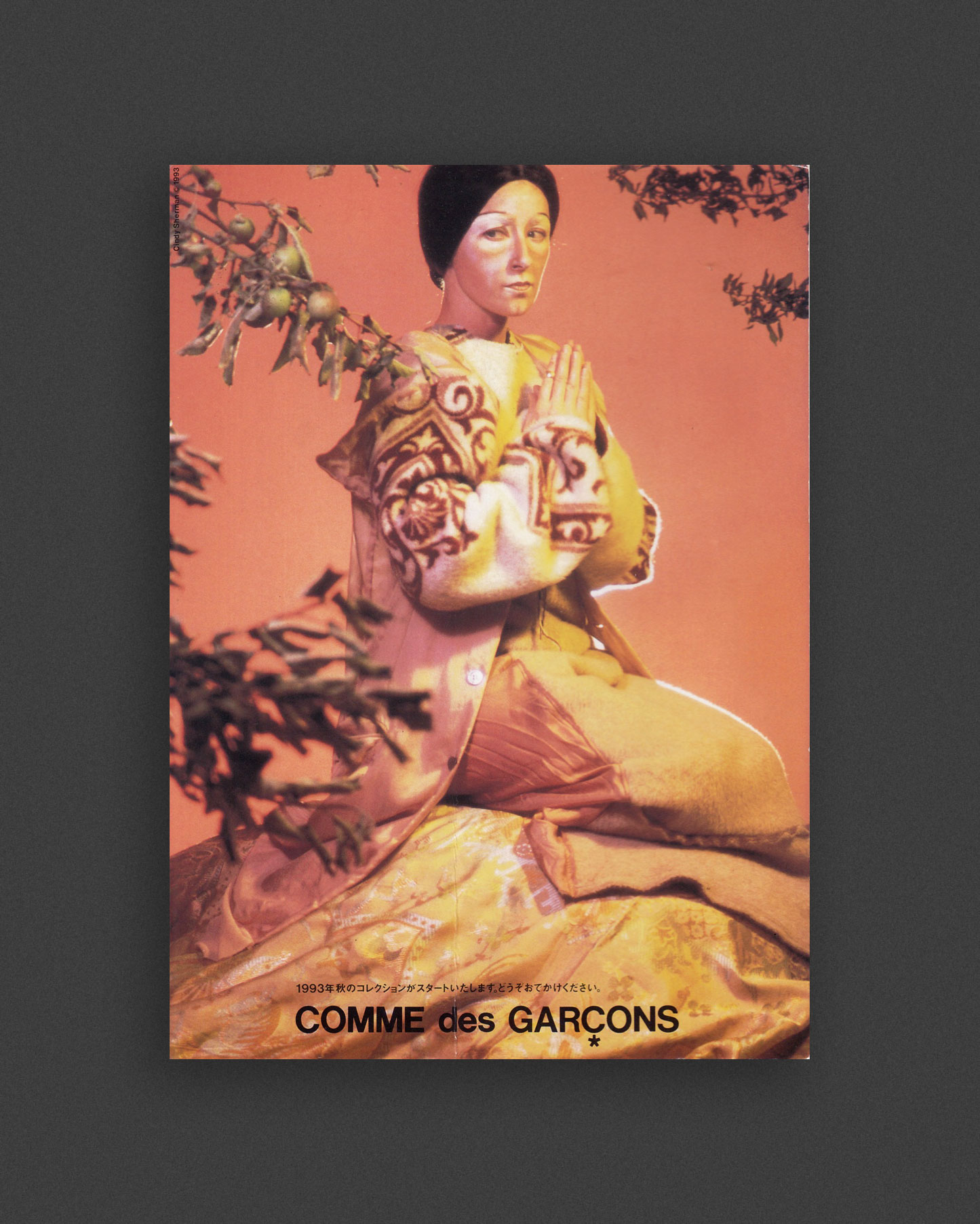
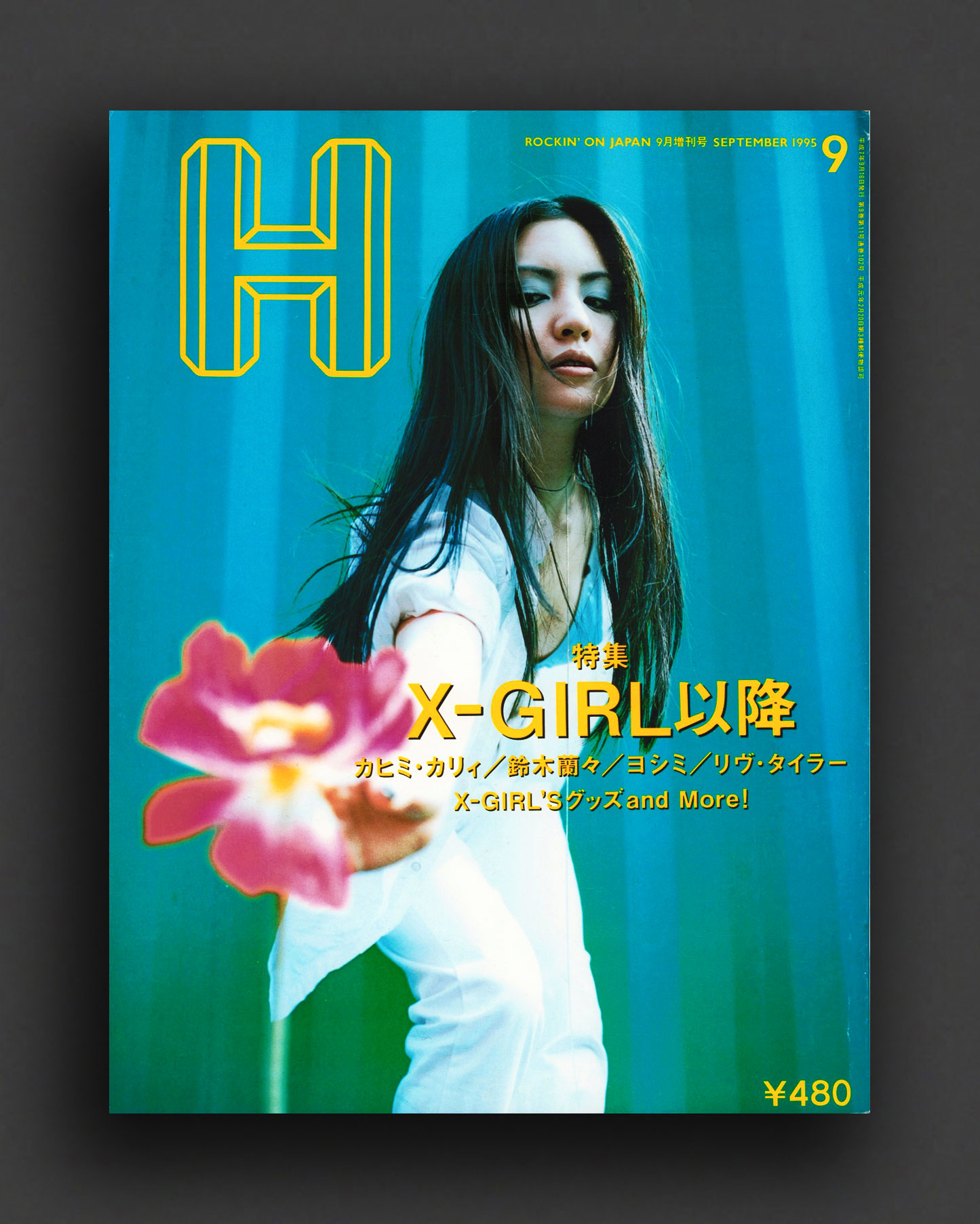
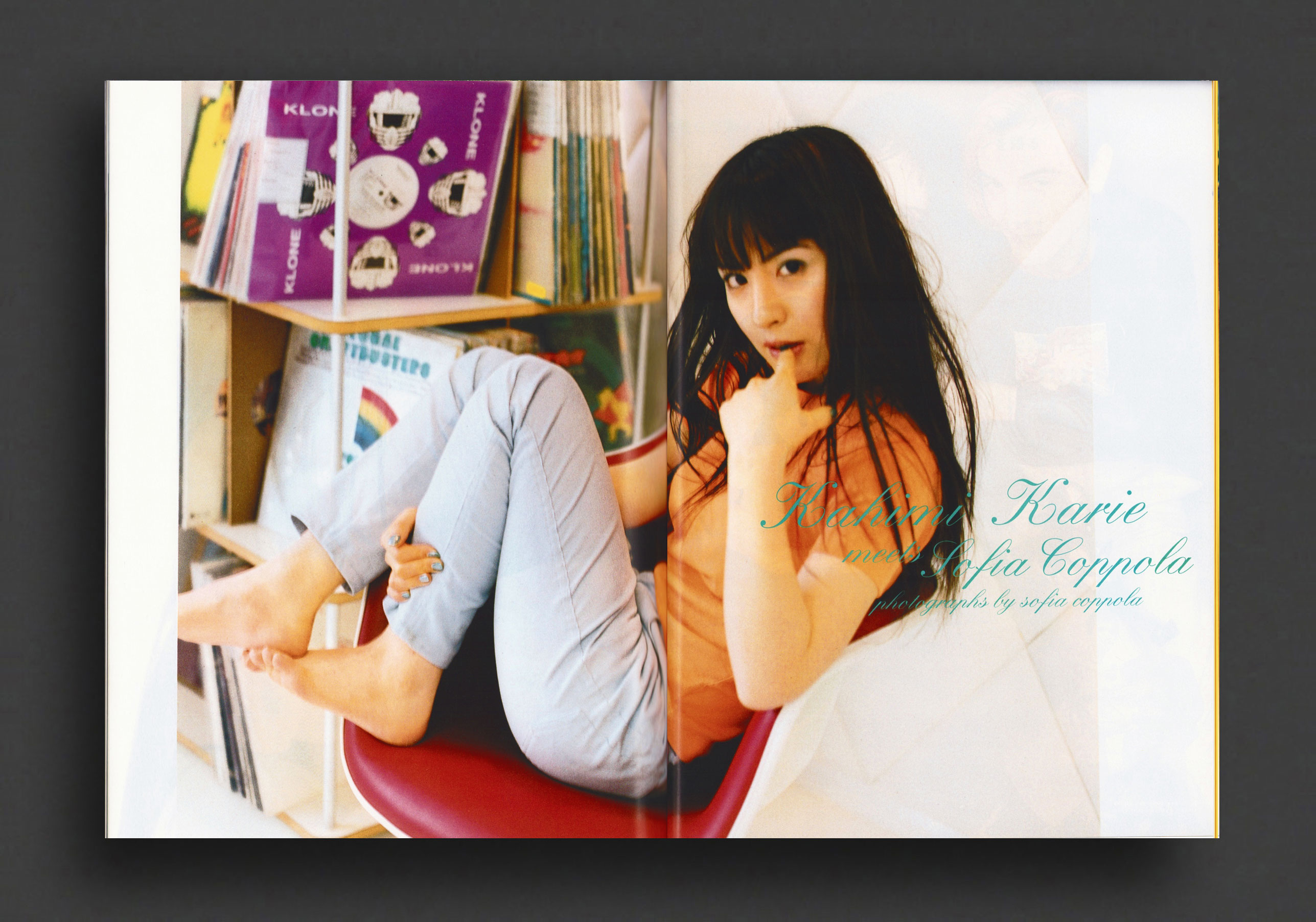
Based on American casual wear, Hysteric Glamour was created by artist Nobuhiko Kitamura in 1984. With a suggestive Warhol-esque logo of a banana and two oranges, Hysteric Glamour represented a crossover of pop culture, music, art, subculture and vintage sensitivity, with a unique and very contemporary world view. The Hysteric aesthetic was heavy with themes around 1960s mass media mod and pop, as well as comic books, pornography, psychedelia, bondage, acid, glam... Like 1970s Fiorucci for 1990s Harajuku. The brand has captivated youth culture from all over the world, regularly featuring the work of pop artists, illustrators, music icons and photographers with visuals adorning T-shirts, denim, jackets, accessories to books and exhibitions. Beginning with an early collaboration with Sonic Youth, they've worked with Richard Kern, Daidō Moriyama, Jennifer Herrema / Royal Trux, Iggy Pop, Frank Kozik, Ed Templeton, yokodoll, Hajime Sorayama, Nirvana, The Cramps, Sofia Coppola, Courtney Love, Terry Richardson, Masahisa Fukase, Patti Smith, Cindy Sherman, Nobuyoshi Araki, Glenn Ligon, Primal Scream, Niagara / Destroy All Monsters, Andy Warhol, and many more.
This book collects the archive materials created by Hysteric Glamour over 40 years, including rare items from the late 1980s to the 1990s. In addition, we introduce a wide variety of creations such as music, graphic design, advertising, photography, art books and more with a chaotic visual like scrapbooking. This is a must have for Hysteric Glamour fans, designed by Nobuhiko Kitamura to include precious images published for the first time that cannot be seen on the internet.
1976, English
Softcover (staple-bound), 21 x 15 cm
1st Edition, Out of print title / used / good
Published by
Atomage / London
$140.00 - In stock -
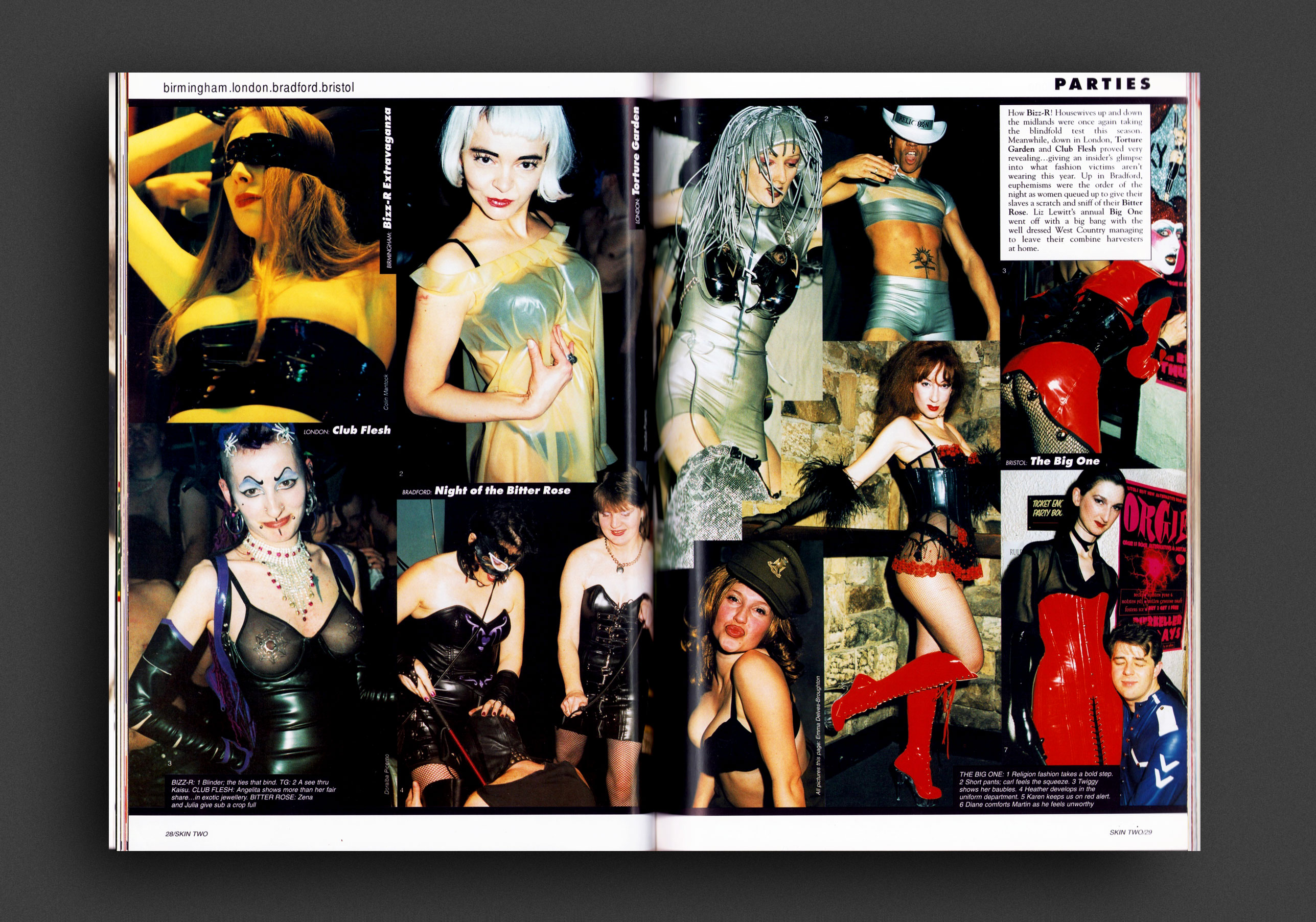
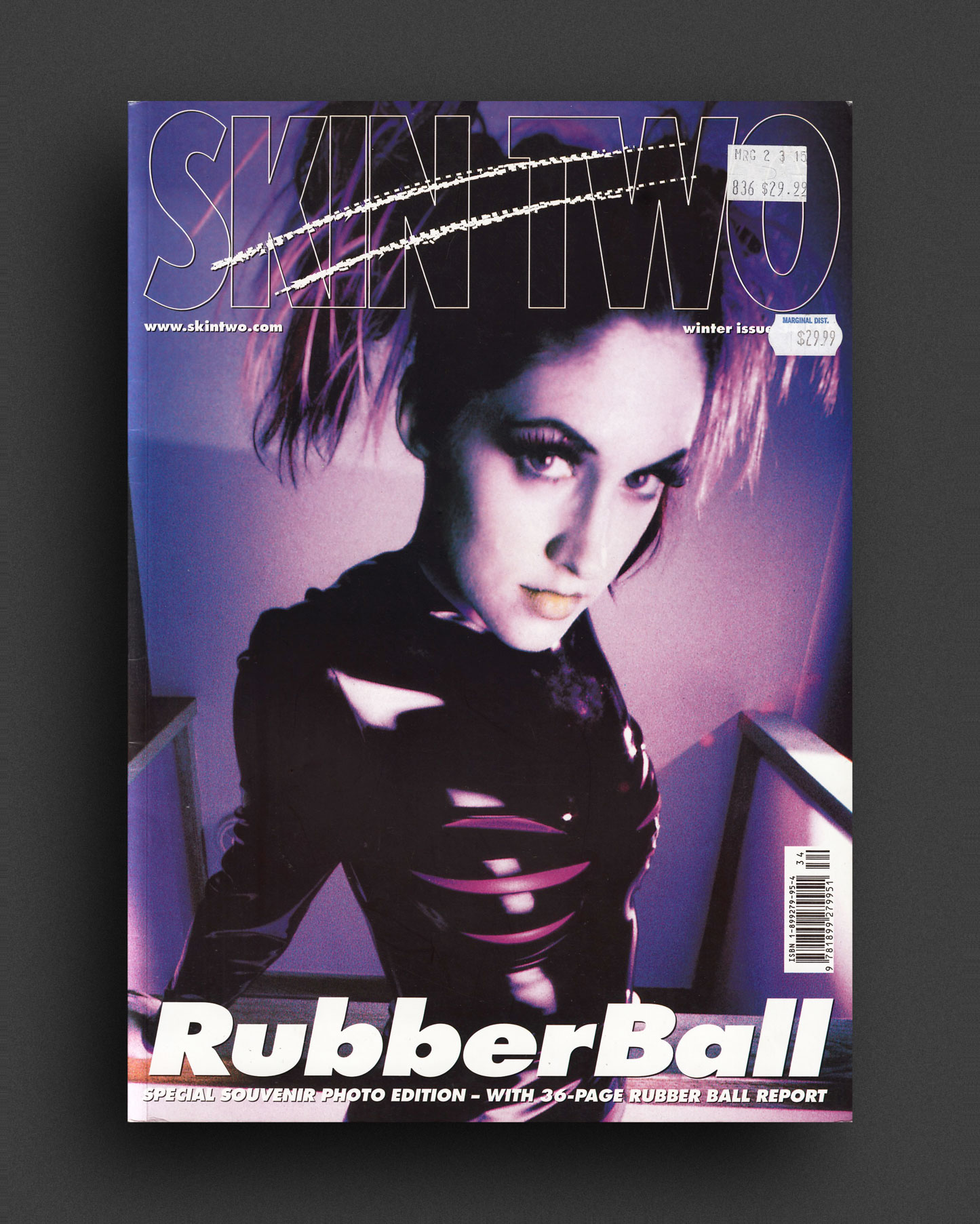
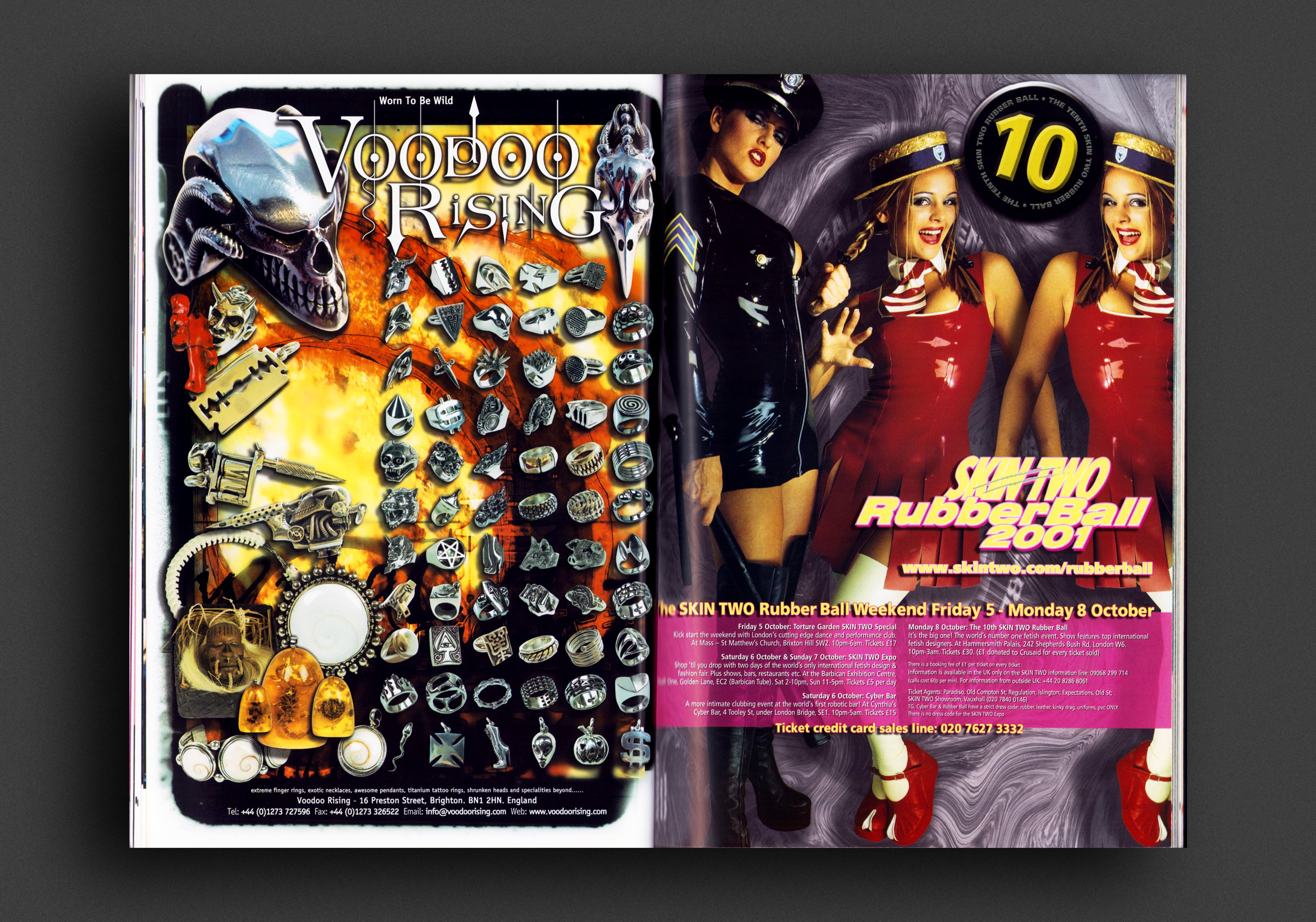
Premiere 1976 issue of AtomAge Supplement, the bondage arm of the now legendary private subscription magazine AtomAge. Born amidst the London counterculture of the early 1970s, Atomage became known for its bold exploration of fetishistic fashion subcultures, a place where the magazine's editor, a former RAF pilot turned experimental fetish designer, John Sutcliffe (1913–1987), encouraged by his friend and collaborator Helen Henley, could showcase his innovative designs and create a platform for fetishists to connect. Devoted to rubberists, leather lovers, and bondage enthusiasts, AtomAge has earned an enduring place in Britain’s subcultural imagination. By the mid-1970s, AtomAge had outgrown its original format. Demand was rising, but so too was controversy. Some readers objected to the increasing inclusion of bondage material. In 1976, Sutcliffe responded by moving bondage content into a separate supplement, leaving the main magazine to focus more squarely on clothing and lifestyle, making sure to reflect the rapidly evolving trends and tastes within the underground fetish and fashion scenes. These supplements were exclusive, offering additional content to subscribers who had the option to purchase them alongside regular issues. They are filled with Bondage and fetish photographs and artwork, reader's contributions, stories, catalogues for bondage equipment and book materials, and all manner of SM content, from dominatrixes to pneumatic enclosures.
Good—VG copy with light creasing to covers, light tanning/wear.