World Food Books' programme is largely produced on Kulin Nation land. We acknowledge the Wurundjeri people of the Kulin Nation as the first and continuing custodians of this land, and pay respect to their Elders past, present, and emerging.
World Food Books is an arts and special interests bookshop in Naarm / Melbourne. Founded in 2010, World Food Books is devoted to the presentation of a rotating, hand-selection of international art, design, literary and counterculture publications with an emphasis on the anti-traditional, the experimental, the avant-garde, the heretic, the marginal.
Presenting new titles alongside rare and out-of-print books, catalogues and journals spanning the fields of modern and contemporary art, design, photography, illustration, film, literature, poetry, cultural theory, philosophy, sexuality, popular and underground culture in its many radical forms, World Food Books wishes to encourage adventurous, thoughtful and open-minded reading, looking, writing, and exchange of publishing and ideas, both current and historical.
As well as our bookshop, located in Melbourne's historical Nicholas Building, all of our inventory is available internationally via our online mail-order service.
World Food Books semi-regularly co-ordinates "Occasions", a programme of exhibits and events at the bookshop and in partnership with other hosts (such as museums and art galleries) that develop out of the activities, relationships and content of the bookshop itself.
World Food Books
The Nicholas Building
37 Swanston Street
Room 5, Level 6
Melbourne 3000
Australia
SHOP HOURS:
Thu–Sat 11–5
WEB-SHOP OPEN 24/7
World Food Books
Postal Address:
PO Box 435
Flinders Lane
Victoria 8009
Australia
Art
Theory / Essay
Architecture / Interior
Graphic Design / Typography
Photography
Fashion
Eros
LGBTQ+
Fiction / Poetry
Weird / Speculative / Science Fiction / Horror
Transgressive / Visceral / Abject
Symbolism / Decadence / Fin de siècle
Film / Video
Painting
Sculpture / Installation
Performance / Dance / Theater
Drawing
Sound / Music
Curatorial
Group Shows / Collections
Periodicals
Out-of-print / Rare
Posters / Ephemera / Discs
Signed Books
World Food Books Gift Voucher
World Food Book Bag
Australian Art
Australian Fiction
Australian Science Fiction / Speculative Fiction
Australian Poetry
Australian Photography
Japanese Photography
Conceptual Art
Minimal Art
Dada
'Pataphysics / Oulipo
Fluxus
Concrete Poetry
Pop Art
Surrealism
Arte Povera
Arte Informale / Haute Pâte / Tachism
Nouveau Réalisme / Zero / Kinetic
Situationism / Lettrism
Collage / Mail Art / Xerox Art
Art Brut / Folk / Visionary / Fantastic
Illustration / Graphic Art / Bandes Dessinées
Furniture
Italian Radical Design / Postmodernism
Textiles
Ceramics / Glass
Counterculture
Protest / Revolt
Philosophy
Psychoanalysis
Anthropology
Anarchism
Socialism / Anarchism / Communism / Capitalism
Literary Theory / Semiotics / Language
Feminism / Women's Studies
Gender Studies / Sexuality
Anthropology
Fetishism / BDSM
Drugs / Psychedelia
Crime / Violence
Animal Rights / Veganism
Occult / Esoterica
Ecology / Earth / Alternative Living
Whole Earth / Crafts
All prices in AUD (Australian dollars)
Pick-Ups
Pick-up orders can be collected in our bookshop during opening hours after order date. Please collect any Pick-up orders within 2 weeks of ordering as we have limited storage space. Orders will be released back into stock if not collected within this time. No refunds can be made for pick-ups left un-collected. If you cannot make it in to the bookshop in this time-frame, please choose postage option.
Return Policy
All sales are final. We do accept returns (for refund or exchange) for items received in error. All our orders are packed with special care using heavy-duty padding and cardboard book-mailers or bubble mailers (for smaller books), using reinforcement where required. We cannot take responsibility for any lost, stolen or damaged parcels.
Insurance
Should you wish to insure your package, please email us directly after placing your order and we can organise this at a small extra expense. Although all standard/express tracked packages are very safe and dependable, we cannot take responsibility for any lost, stolen or damaged parcels. We recommend insurance on valuable orders.
Interested in selling your old books, catalogues, journals, magazines, comics, fanzines, ephemera? We are always looking for interesting, unusual and out-of-print books to buy. We only buy books in our fields of interest and specialty, and that we feel we can resell.
We base these prices on desirability, market value, in-print prices, condition and our current stock levels. We offer cash, store credit, and can take stock on consignment. All
about 25% of the price we expect to get when we sell them, or 30% in store credit. We base these prices on desirability, market value, in-print prices, condition and our current stock levels.
Sell your books any day of the week. You can drop them off and return later. If you have a lot of books, we can visit your Sydney home.
We buy books that we feel we can resell. We offer about 25 % of the price we expect to get when we sell them, or 30% in store credit. We base these prices on desirability, market value, in-print prices, condition and our current stock levels.
Philadelphia Wireman
03 August - 01 September, 2018
World Food Books is proud to announce our next Occasion, the first presentation of sculptures by Philadelphia Wireman in Australia.
The Philadelphia Wireman sculptures were found abandoned in an alley off Philadelphia’s South Street on trash night in 1982. Their discovery in a rapidly-changing neighbourhood undergoing extensive renovation, compounded with the failure of all attempts to locate the artist, suggests that the works may have been discarded after the maker’s death. Dubbed the "Philadelphia Wireman" during the first exhibition of this work, in 1985, the maker’s name, age, ethnicity, and even gender remain uncertain. The entire collection totals approximately 1200 pieces, all intricately bound together with tightly-wound heavy-gauge wire (along with a few small, abstract marker drawings, reminiscent both of Mark Tobey and J.B. Murry). The dense construction of the work, despite a modest range of scale and materials, is singularly obsessive and disciplined in design: a wire armature or exoskeleton firmly binds a bricolage of found objects including plastic, glass, food packaging, umbrella parts, tape, rubber, batteries, pens, leather, reflectors, nuts and bolts, nails, foil, coins, toys, watches, eyeglasses, tools, and jewellery.
Heavy with associations—anthropomorphic, zoomorphic, and socio-cultural responses to wrapped detritus—the totemic sculptures by Philadelphia Wireman have been discussed in the context of work created to fulfil the shamanistic needs of alternative religions in American culture. Curators, collectors, and critics have variously compared certain pieces to sculpture from Classical antiquity, Native American medicine bundles, African-American memory jugs, and African fetish objects. Reflecting the artist’s prolific and incredibly focused scavenging impulse, and despite—or perhaps enhanced by—their anonymity, these enigmatic objects function as urban artefacts and arbiters of power, though their origin and purpose is unknown. Philadelphia Wireman, whatever their identity, possessed an astonishing ability to isolate and communicate the concepts of power and energy through the selection and transformation of ordinary materials. Over the course of the past two decades, this collection has come to be regarded as an important discovery in the field of self-taught art and vernacular art.
Presented in collaboration with Fleisher-Ollman Gallery, Philadelphia, and Robert Heald, Wellington.
Susan Te Kahurangi King
02 February - 10 March, 2018
Susan Te Kahurangi King (24 February 1951 - ) has been a confident and prolific artist since she was a young child, drawing with readily available materials - pencils, ballpoint pens and felt-tip markers, on whatever paper is at hand. Between the ages of four and six Susan slowly ceased verbal communication. Her grandparents William and Myrtle Murphy had developed a special bond with Susan so they took on caring responsibilities for extended periods. Myrtle began informally archiving her work, carefully collecting and storing the drawings and compiling scrapbooks. No drawing was insignificant; every scrap of paper was kept. The King family are now the custodians of a vast collection containing over 7000 individual works, from tiny scraps of paper through to 5 meter long rolls.
The scrapbooks and diaries reveal Myrtle to be a woman of great patience and compassion, seeking to understand a child who was not always behaving as expected. She encouraged Susan to be observant, to explore her environment and absorb all the sights and sounds. Myrtle would show Susan’s drawings to friends and people in her community that she had dealings with, such as shopkeepers and postal workers, but this was not simply a case of a grandmother’s bias. She recognised that Susan had developed a sophisticated and unique visual language and sincerely believed that her art deserved serious attention.
This was an unorthodox attitude for the time. To provide some context, Jean Dubuffet coined the term Art Brut in 1945 to describe work created by self-taught artists – specifically residents of psychiatric institutions and those he considered to be visionaries or eccentrics. In 1972 Roger Cardinal extended this concept by adopting the term Outsider Art to describe work made by non-academically trained artists operating outside of mainstream art networks through choice or circumstance. Susan was born in Te Aroha, New Zealand in 1951, far from the artistic hubs of Paris and London that Dubuffet and Cardinal operated in. That Myrtle fêted Susan as a self-taught artist who deserved to be taken seriously shows how progressive her attitudes were.
Susan’s parents Doug and Dawn were also progressive. Over the years they had consulted numerous health practitioners about Susan’s condition, as the medical establishment could not provide an explanation as to why she had lapsed into silence. Dawn educated herself in the field of homeopathy and went on to treat all twelve of her children using these principles – basing prescriptions on her observations of their physical, mental and emotional state.
Doug was a linguist with an interest in philosophy who devoted what little spare time he had to studying Maori language and culture. To some extent their willingness to explore the fringes of the mainstream made them outsiders too but it was their commitment to living with integrity and their respect for individuality that ensured Susan’s creativity was always encouraged.
Even though Susan’s family supported her artistic pursuits, some staff in schools and hospitals saw it as an impediment to her assimilation into the community and discouraged it in a variety of ways. Her family was not always aware of this and therefore did not fully understand why Susan stopped drawing in the early 1990s. However, rather than dwell on the challenges that Susan faced in pursuit of her artistic practice, they prefer to highlight her achievements. In 2008 Susan began drawing again in earnest, after an almost 20 year interruption, and her work is now shown in galleries around the world.
Susan grew up without television and has been heavily influenced by the comics she read as a child. She is absolutely fearless in the appropriation of recognizable characters, such as Donald Duck and Mickey Mouse, in her work. She twists their limbs, contorts their faces, compresses them together, blends them into complex patterned backgrounds - always imbuing them with an incredible energy. Although Susan often used pop culture characters in her work they are not naive or childlike. These are drawings by a brilliant self-taught artist who has been creating exceptional work for decades without an audience in mind.
Mladen Stilinović
"Various Works 1986 - 1999"
02 February 16 - September 10, 2016
Various works 1986 - 1999, from two houses, from the collections of John Nixon, Sue Cramer, Kerrie Poliness, Peter Haffenden and Phoebe Haffenden.
Including: Geometry of Cakes (various shelves), 1993; Poor People’s Law (black and white plate), 1993; White Absence (glasses, ruler, set square, silver spoon, silver ladel with skin photograph and wooden cubes), 1990-1996; Exploitation of the Dead (grey and red star painting, wooden painting, black spoon with red table, red plate), 1984-1990; Money and Zeros (zero tie, paintings made for friends in Australia (Sue, John, Kerrie), numbers painting), 1991-1992; Words - Slogans (various t-shirts) - “they talk about the death of art...help! someone is trying to kill me”, “my sweet little lamb”, “work is a disease - Karl Marx”; Various artist books, catalogues, monographs, videos; Poster from exhibition Insulting Anarchy; "Circular" Croatian - Australian edition; Artist book by Vlado Martek (Dostoyevsky); more.
Thanks to Mladen Stilinović and Branka Stipančić.
Jonathan Walker
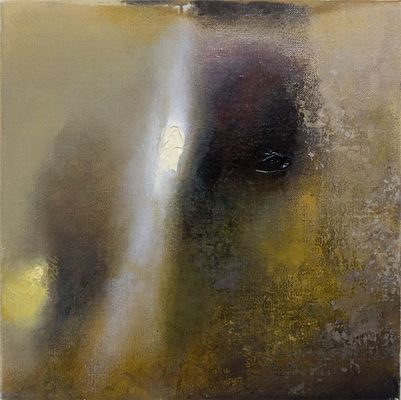
Always Will Need To Wear Winter Shirt Blue + Ochre Small Check Pattern
21 August - 21 September, 2015
Untitled
I am not a great reader of poetry but I always return to the work of Melbourne poet, Vincent Buckley (1925- 1988). Perhaps I find his most tantalising piece to be not a finished poem but a fragment left on a scrap of paper discovered on his desk after the poet’s death.
The poetry gathers like oil
In the word-core, and spreads
It has its music meet,
Its music is in movement.
This fragment is more the shell left behind from a volatile thought than a finished poem. I find the last two lines honest but awkward whereas the first two lines work like an arrow. Most likely he could not find a resolution so it was left. Still, in its present form, it remains an eloquent testimony to the ultimate failure of a medium to express mobile thought and sensation, in Buckley’s case, through verbal language. It’s an important matter because this is something all artists have to deal with regardless of the medium.
I have never written a poem, however, I am forever copying fragments from books on paper scraps in a vain effort to fix certain notions in my head. At first, they function as bookmarks that are sometimes returned to when I open the book. But before long, as they accumulate, they fall out littering the table interspersed with A4 photocopies, bills, books and medications.
To return to Buckley’s fragment, the first two lines very much evoke how I paint nowadays. As you age, detail diminishes and patches of light become more luminous and float. I feel the most honest way of dealing with this is by smearing the oil paint on the canvas with the fingers and working close-up, blind. Only if the patches coalesce into an approaching image can the work gain a life.
-
Jonathan Walker was born in Melbourne, Australia and brought up on a dairy farm in Gippsland. In the 1970’s he studied painting at RMIT and won the Harold Wright Scholarship to the British Museum, London. During the 1980’s he exhibited at Pinacotheca Gallery, Richmond and had work shown at the NGV and Heidi City Art Gallery. Over the same period he designed the cover for the “Epigenesi” LP by Giancarlo Toniutti, Italy and conducted a mail exchange work with Achim Wollscheid, Germany. The work with artists through the post resulted in an article published in the bicentenary issue of Art and Australia 1988. He showed in artist run spaces such as WestSpace in the 90’s and 2000’s, and until 2012, taught painting at Victoria University, which is where we (Colleen Ahern and Lisa Radford) as organisers of the exhibition, among many others, had the privilege of being his student.
Walker’s knowledge was imparted to students through the careful selection of music, literature, and artists found in books that he himself had ordered for the library. Walker’s strategy was the generosity of sharing his vast knowledge with references specific to each student and their context.
Walker’s paintings share a similar focus and intimacy.
This exhibition presents a small selection of recent paintings alongside a publication that includes Walker’s writing. Observational and analytical, Walker’s work is a type of material notation — the time of day, colour and how it is blended, the both specific and fleeting location of a reflection on lino or the question of whether a chair leg should be included in a painting.
Please join us on Friday August 21 between 6-8pm to celebrate the opening of the exhibition.
Curated by Colleen Ahern and Lisa Radford.
B. Wurtz
Curated by Nic Tammens
March 26 - April 4, 2015
B.Wurtz works from a basement studio in his home on Manhattan’s Lower East Side.
This local fact is attested to by the plastic shopping bags and newsprint circulars that appear in his work. As formal objects, they don’t make loud claims about their origins but nonetheless transmit street addresses and places of business from the bottom of this long thin island. Like plenty of artists, Wurtz is affected by what is local and what is consumed. His work is underpinned by this ethic. It often speaks from a neighborhood or reads like the contents of a hamper:
“BLACK PLUMS $1.29 lb.”
“Food Bazaar”
“USDA Whole Pork Shoulder Picnic 99c lb.”
“RITE AID Pharmacy, with us it’s personal.”
“H. Brickman & Sons.”
“Sweet Yams 59c lb."
Most of the work in this exhibition was made while the artist was in residence at Dieu Donne, a workshop dedicated to paper craft in Midtown. Here Wurtz fabricated assemblages with paper and objects that are relatively lightweight, with the intention that they would be easily transportable to Australia. This consideration isn’t absolute in Wurtz’s work, but was prescriptive for making the current exhibition light and cheap. Packed in two boxes, these works were sent from a USPS post office on the Lower East Side and delivered to North Melbourne by Australia Post.
Wurtz appears courtesy of Metro Pictures, New York.
Thanks to Rob Halverson, Joshua Petherick, Sari de Mallory, Matt Hinkley, Helen Johnson, Fayen d'Evie, Ask Kilmartin, Lisa Radon, Ellena Savage, Yale Union, and "Elizabeth".
John Nixon
"Archive"
December 15 - January 20, 2014
The presentation of John Nixon's archive offered a rare showcase of this extensive collection of the artist's own publications, catalogues, posters, ephemera, editions and more, from the mid 1980s onwards, alongside a selection of his artworks.
Organized by John Nixon, Joshua Petherick and Matt Hinkley.
<a href=http://wfb.public-office.info/artist/john-nixon>All titles by John Nixon
"Habitat"
at Minerva, Sydney (organised by Joshua Petherick and Matt Hinkley)
November 15 - December 20, 2014
Lupo Borgonovo, Janet Burchill & Jennifer McCamley,
Lewis Fidock, HR Giger, Piero Gilardi, Veit Laurent Kurz,
Cinzia Ruggeri, Michael E. Smith, Lucie Stahl, Daniel Weil, Wols
Press Release:
“...It contained seven objects. The slender fluted bone, surely formed for flight, surely from the wing of some large bird. Three archaic circuitboards, faced with mazes of gold. A smooth white sphere of baked clay. An age-blackened fragment of lace. A fingerlength segment of what she assumed was bone from a human wrist, grayish white, inset smoothly with the silicon shaft of a small instrument that must once have ridden flush with the surface of the skin - but the thing’s face was seared and blackened.”
William Gibson, “Count Zero”, 1986
"Autumn Projects Archive"
Curated by Liza Vasiliou
March 6 - March 15, 2014
World Food Books, in conjunction with the Virgin Australia Melbourne Fashion Festival 2014, presented the Autumn Projects archive, consisting of a selection of early examples in Australian fashion with a particular interest in collecting designers and labels from the period beginning in the 1980’s, who significantly influenced the discourse of Australian Fashion.
Curated by Liza Vasiliou, the exhibition provided a unique opportunity to view pieces by designers Anthea Crawford, Barbara Vandenberg, Geoff Liddell and labels CR Australia, Covers, Jag along with early experimental collage pieces by Prue Acton and Sally Browne’s ‘Fragments’ collection, suspended throughout the functioning World Food Books shop in Melbourne.
H.B. Peace
presented by CENTRE FOR STYLE
November 14, 2013
"Hey Blinky, you say chic, I say same"
Anon 2013
H.B. Peace is a clothing collaboration between great friends Blake Barns and Hugh Egan Westland. Their pieces explore the divergences between 'character’ and ‘personality’ in garments....etc
Special Thanks to Joshua Petherick and Matt Hinkley of WFB and Gillian Mears
and a Very Special Thank you to Audrey Thomas Hayes for her shoe collaboration.
Janet Burchill & Jennifer McCamley
"Aesthetic Suicide"
May 10 - June 8, 2013
The first of our occasional exhibitions in the World Food Books office/shop space in Melbourne, "Aesthetic Suicide" presented a body of new and older works together by artists Janet Burchill & Jennifer McCamley, including videos, prints, a wall work, and publications.
During shop open hours videos played every hour, on the hour.
1999, English
Softcover, 280 pages, 23.2 x 16.6 cm
1st Edition, Out of print title / used / very good
Published by
University of California Press / Berkley
$35.00 - In stock -
Tyrus Miller breaks new ground in this study of early twentieth-century literary and artistic culture. Whereas modernism studies have generally concentrated on the vital early phases of the modernist revolt, Miller focuses on the turbulent later years of the 1920s and 1930s, tracking the dissolution of modernism in the interwar years.
In the post-World War I reconstruction and the worldwide crisis that followed, Miller argues, new technological media and the social forces of mass politics opened fault lines in individual and collective experience, undermining the cultural bases of the modernist movement. He shows how late modernists attempted to discover ways of occupying this new and often dangerous cultural space. In doing so they laid bare the ruin of the modernist aesthetic at the same time as they transcended its limits.
In his wide-ranging theoretical and historical discussion, Miller relates developments in literary culture to tendencies in the visual arts, cultural and political criticism, mass culture, and social history. He excavates Wyndham Lewis's hidden borrowings from Al Jolson's The Jazz Singer; situates Djuna Barnes between the imagery of haute couture and the intellectualism of Duchamp; uncovers Beckett's affinities with Giacometti's surrealist sculptures and the Bolshevik clowns Bim-Bom; and considers Mina Loy as both visionary writer and designer of decorative lampshades. Miller's lively and engaging readings of culture in this turbulent period reveal its surprising anticipation of our own postmodernity.
VG copy, first ed.
1990, English
Hardcover (w. dust jacket), 250 pages, 23.5 x 16 cm
1st Edition, Out of print title / used / very good
Published by
Columbia University Press / New York
$65.00 - In stock -
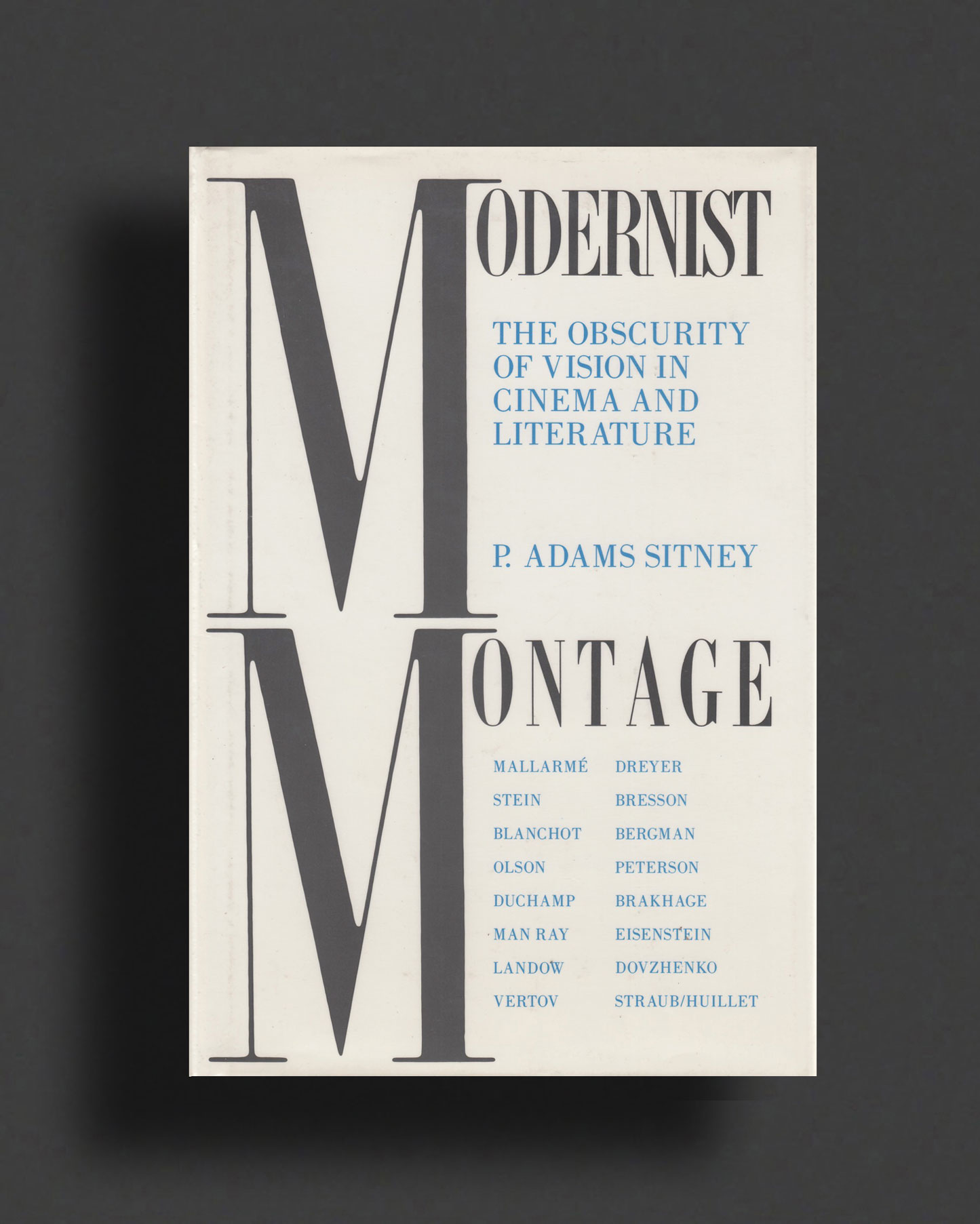
First 1990 hardcover edition.
In this highly original and provocative investigation of modernism and the cinema, P. Adams Sitney argues that both the act of vision and the centrality of visual experience are problematized in literary modernism. Sitney explores this idea through readings of sometimes neglected texts by Maurice Blanchot, Charles Olson, and Gertrude Stein. Following the principles that emerge from these readings as well as discussions of those authors' theories of vision, Sitney traces a history of modernism in cinema, providing compelling readings of a range of classic films made between 1925 and 1980 by such hilmmakers as Carl Dreyer, Robert Bresson, Ingmar Bergman, and Stan Brakhage.
Modernist Montage: The Obscurity of Vision in Cinema and Literature is unusual in its range of filmic reference, in its bold handling of the interrelationship of film and literature, and in Sitney's unconventional idea of literary modernism which he uses to define filmic modernism. This book confirms P. Adams Sitney as one of the most important, controversial and unique voices in film criticism today.
"P. Adams Sitney's Modernist Montage: The Obscurity of Vision in Cinema and Literature is one of the most provocative and challenging texts I have read about cinema in some time. It is unique in many respects. The range of his survey of filmmakers is extraordinary, quite unlike any book on cinema that comes to mind.
To his readings of many difficult but superb films, films central to the tradition of cinematic modernism, he brings an erudition and scope of reference unmatched by any other writer about cinema I know."—Stuart Liebman, Queens College and the Graduate Center, City University of New York
"A rich and complex text... at once an exacting scrutiny of a very select body of work and a very ambitious attempt to characterize the artistic practices of the varied creators of that work in a singularly provocative manner.... Mr. Sitney's interdisciplinary approach is not only in step with many new attempts to examine film within larger cultural and artistic contexts, it also argues most convincingly for the inter-relatedness of film and literature, and of the continuities of aesthetic and rhetorical expression."—Tony Pipolo, the Graduate Center, City University of New York
VG/VG in mylar wrap.
2022, English
Hardcover (w. dust jacket in hard cloth-covered slipcase w. softcover supplement), 252 pages, 34 x 25 cm
Published by
Hauser & Wirth / Zurich
$190.00 - In stock -
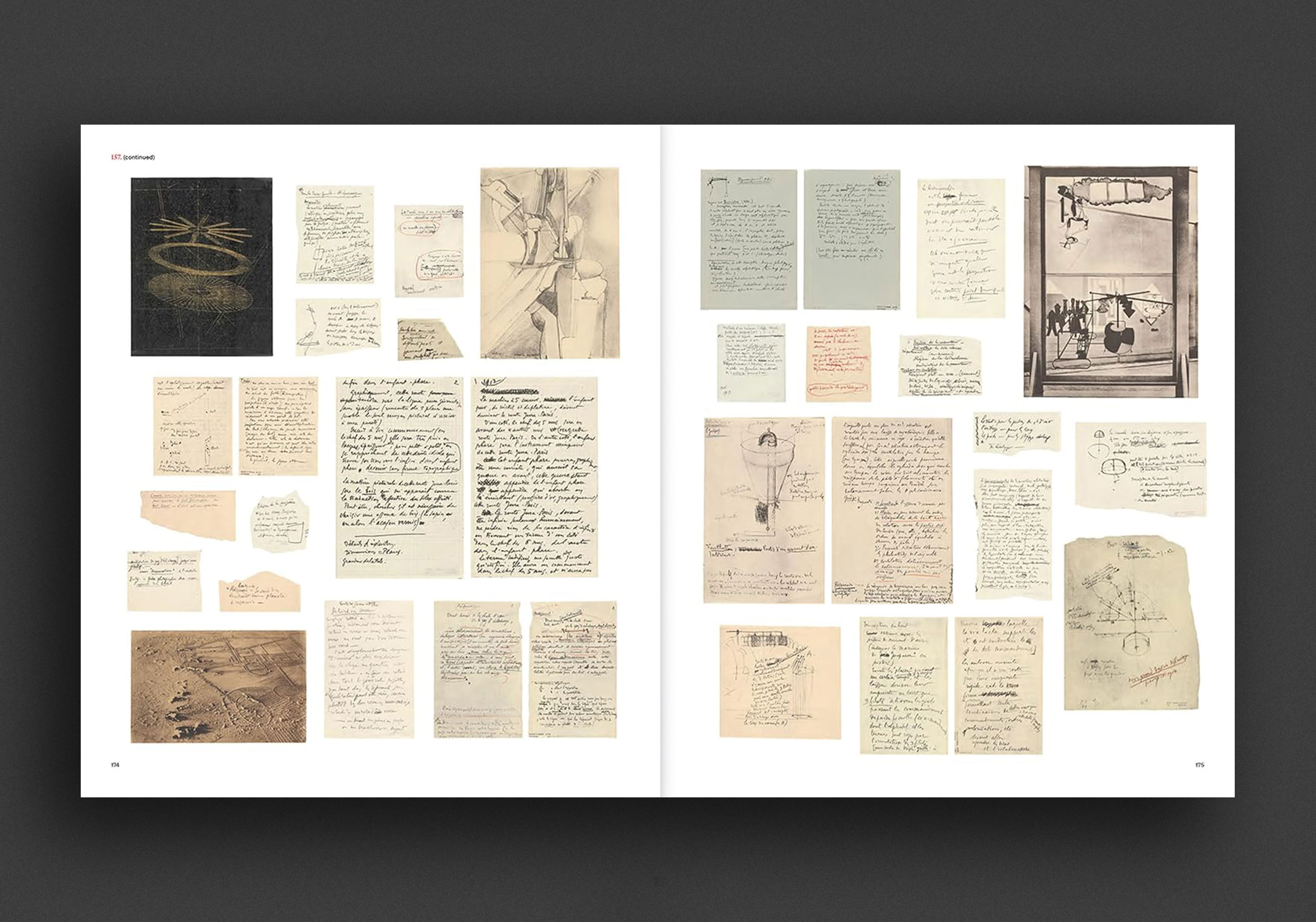
Duchamp’s historic 1959 catalogue raisonné-cum-artist's book now back in print in a facsimile English edition. ‘Marcel Duchamp’ became the go-to book on the artist for many decades following its publication in late 1959, when exclusive grand-deluxe and deluxe editions in French, along with trade editions in French and English, were simultaneously released. While Trianon Press’s French trade edition was reprinted numerous times, the Grove Press English edition languished out of print for the better part of two generations—until now, with Hauser & Wirth Publishers’ fully authorized facsimile re-edition.
By Robert Lebel. Edited by Jean-Jacques Lebel and Association Marcel Duchamp. Foreword by Harald Falckenberg. Introduction by Michaela Unterdörfer. Text by Marcel Duchamp, André Breton, Henri-Pierre Roché, Jean-Jacques Lebel, Man Ray, Michael Taylor.
Marcel Duchamp, the artist’s first legendary monograph and draft catalogue raisonné, was written by art historian and novelist Robert Lebel and published in French in 1959; later that same year, it was translated into English by George Heard Hamilton for Grove Press. The book was a cooperation between Lebel and Duchamp, and beyond Lebel’s extensive writing and bibliography, additional chapters were authored by Duchamp, H.P. Roché and André Breton. The coupling of these texts with diverse archival photographs and an illustrated compendium of Duchamp’s artworks delivered a complex and personal rendering of the artist’s life and inner circle. For the first time since its release more than 60 years ago, this landmark publication is back in circulation with Hauser & Wirth Publishers’ meticulous facsimile of the English edition, reflecting everything from its hand-tipped images to its recto-verso dust jacket appearing as close to the original as possible.
Fully authorized by artist Jean-Jacques Lebel—Robert Lebel’s son—and the Association Marcel Duchamp, the facsimile is accompanied by a supplement volume of essays and archival material that tells the story of Duchamp and Lebel’s close collaboration, and, as contributor Michael Taylor writes, how the original publication signified a "sea change in the artist’s receptivity to critical interpretation." The supplement includes texts by both Robert and Jean-Jacques Lebel and a newly discovered note by Man Ray, among a bevy of photographs from the Lebel and Duchamp archives, extending the story presented in the 1959 edition.
Robert Lebel’s analysis of Duchamp’s oeuvre remains fresh to this day, as does the book’s design, which was personally supervised by the artist. Hauser & Wirth Publishers reanimated Marcel Duchamp with the curatorial-design firm fluid, who recast the original typefaces as digital fonts, positioning each letter and image exactly as it was in the original. To achieve a near-exact facsimile, fluid consulted with paper conservators and printers to recreate the book with modern materials that match those available in 1959. This precise production quality assures that today’s readers will experience this historic book as Marcel Duchamp and Robert Lebel intended.
1973 / 1989, English
Hardcover (w. dust jacket), 360 pages, 38.5 x 22 cm
Out of print title / used / good
Published by
Prestel / Munich
$35.00 - In stock -
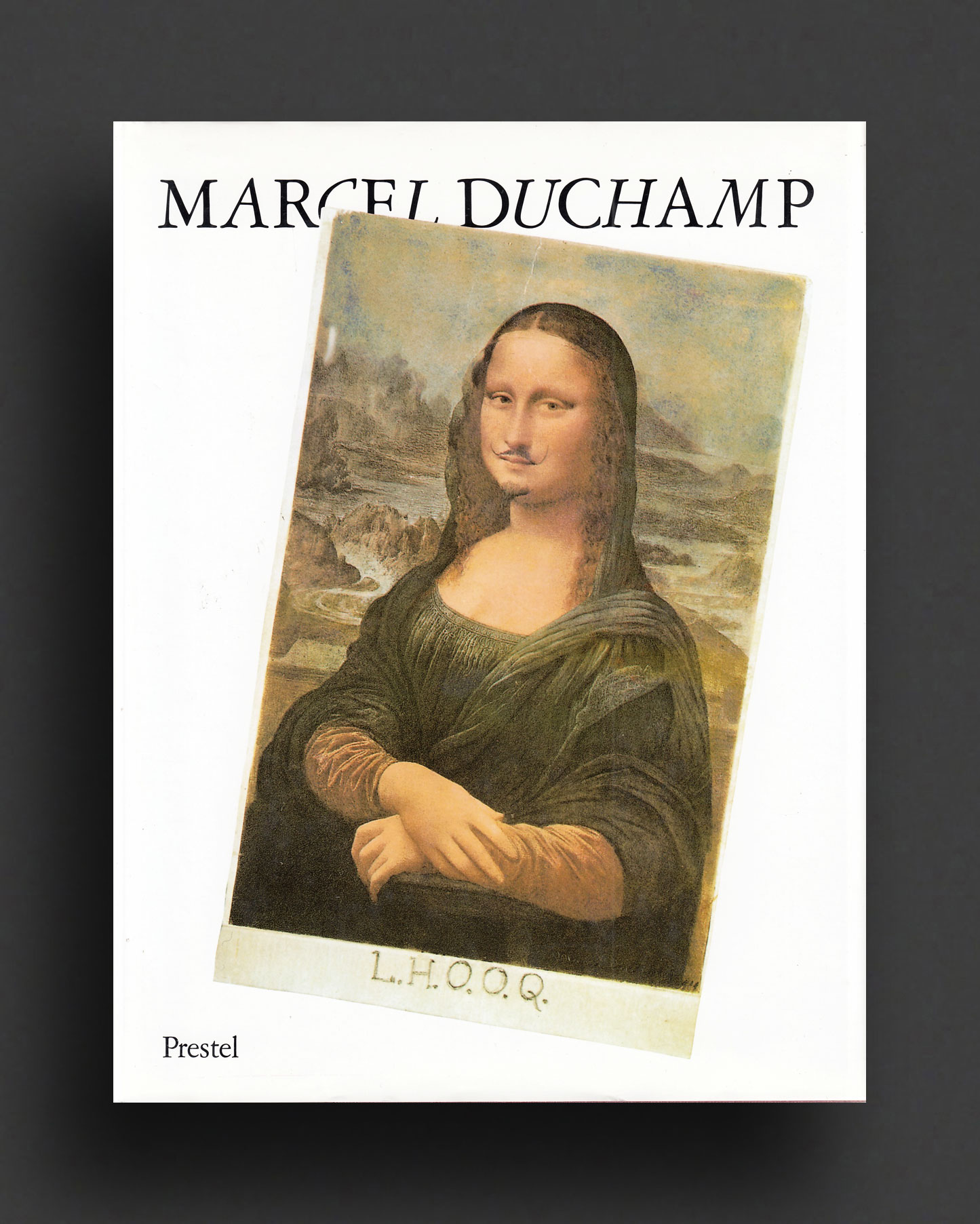
1989 hardcover re-print of this seminal monograph on Marcel Duchamp, first published ib 1973.
"Marcel Duchamp has changed the history of modern art.
His impact on the twentieth century is rivalled only by that of Matisse and Picasso, and no other figure has so directly influenced recent art forms.
Nude Descending a Staircase (1912), The Bride Stripped Bare by Her Bachelors, Even (1915-23), and the Readymades are acknowledged landmarks in the art of our century, but reference to them only hints at the scope of Duchamp's œuvre. He took up a succession of projects after his much-publicized precocious retirement from "art," and upon his death in 1968 it was revealed that he had been secretly at work for twenty years on a major piece, the naturalistic assemblage entitled Etant donnés (1946-66). As the culmination of his artistic activity, the work allows us to see his total achievement in a new light.
This book, besides presenting a documented photographic survey of Duchamp's works, offers ten original essays by eminent scholars and critics. The essays cover Duchamp's explorations in the areas of language, poetry, the machine, alchemy, and the epistemology of art; on a more personallevel, they treat the milieux and the friendships that shaped his character, the life style to which he adhered, and the influence his example has exerted. Passages from his lectures are included in the book, as well as comments and tributes by more than fifty colleagues, friends, and interested observers. Documentary illustrations, a chronology, and a bibliography complete the volume.
First published in 1973 to immediate acclaim, this monograph continues to be a definitive book on Duchamp.
Lavishly illustrated, it documents his entire career."
ANNE D'HARNONCOURT is Director of the Philadelphia Museum of Art.
KYNASTON McSHINE is Senior Curator of Painting and Sculpture at The Museum of Modern Art, New York.
Good copy. Would be NF/NF but one section of back cover edge dust jacket and board are worn back, the book and jacket are otherwise NF and nicely preserved. Now all under mylar wrap.
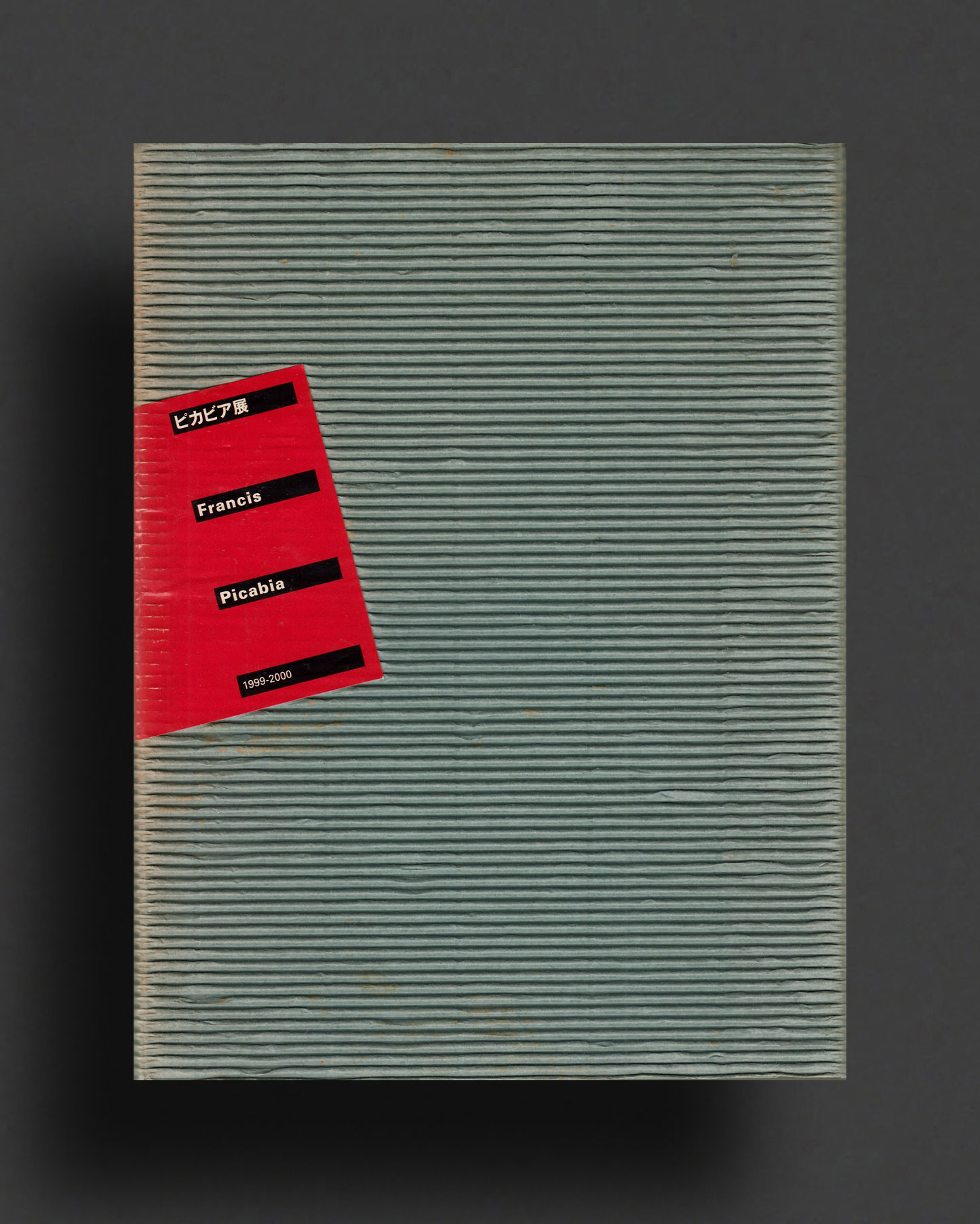
1999, English / French / Japanese
Softcover (2 Vols in curregated cardboard slip-case), 226 + 120 pages, 18 x 25 cm
1st Edition, Out of print title / used / very good
Published by
APT International / Tokyo
Isetan Museum of Art / Tokyo
$160.00 - In stock -
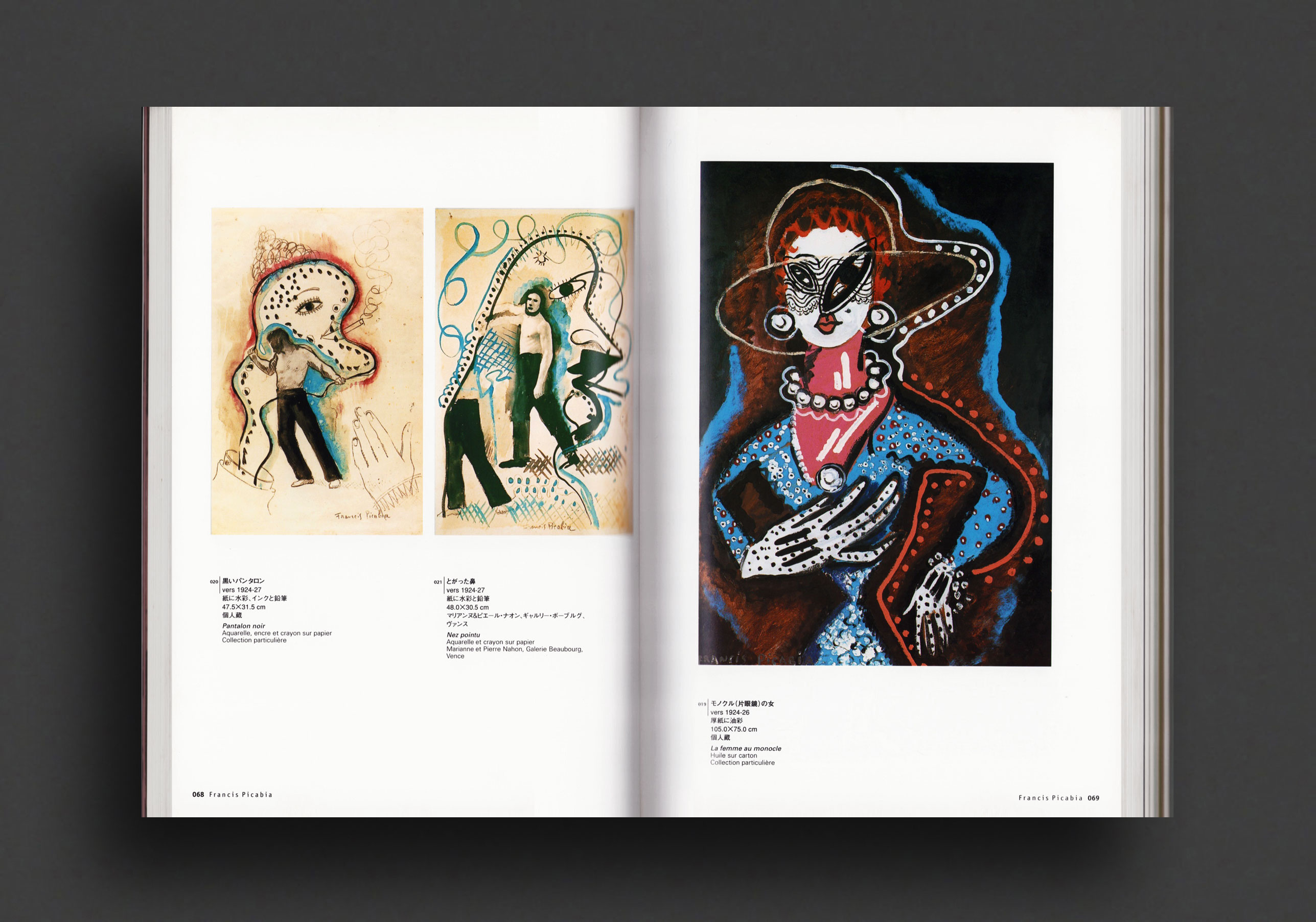
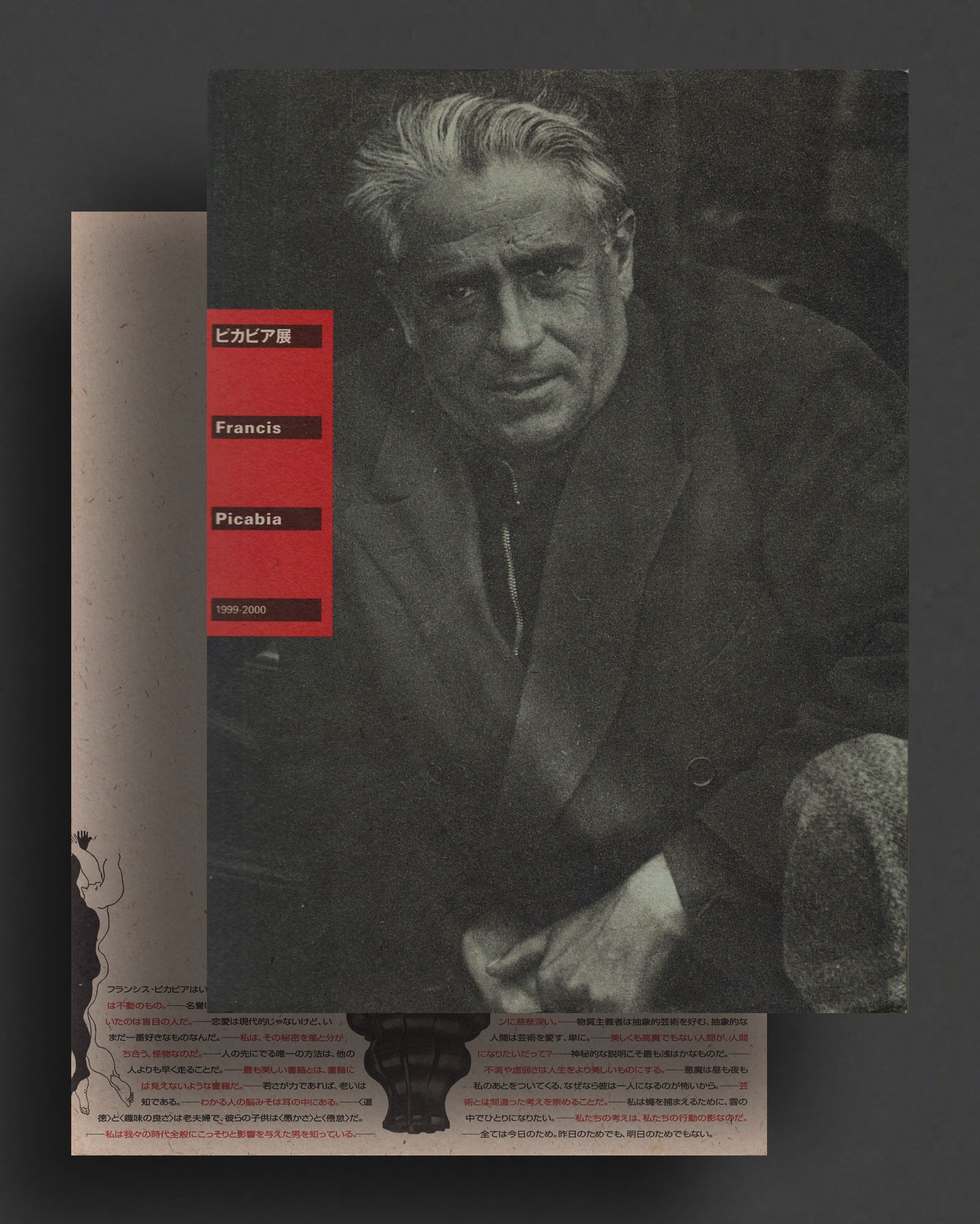
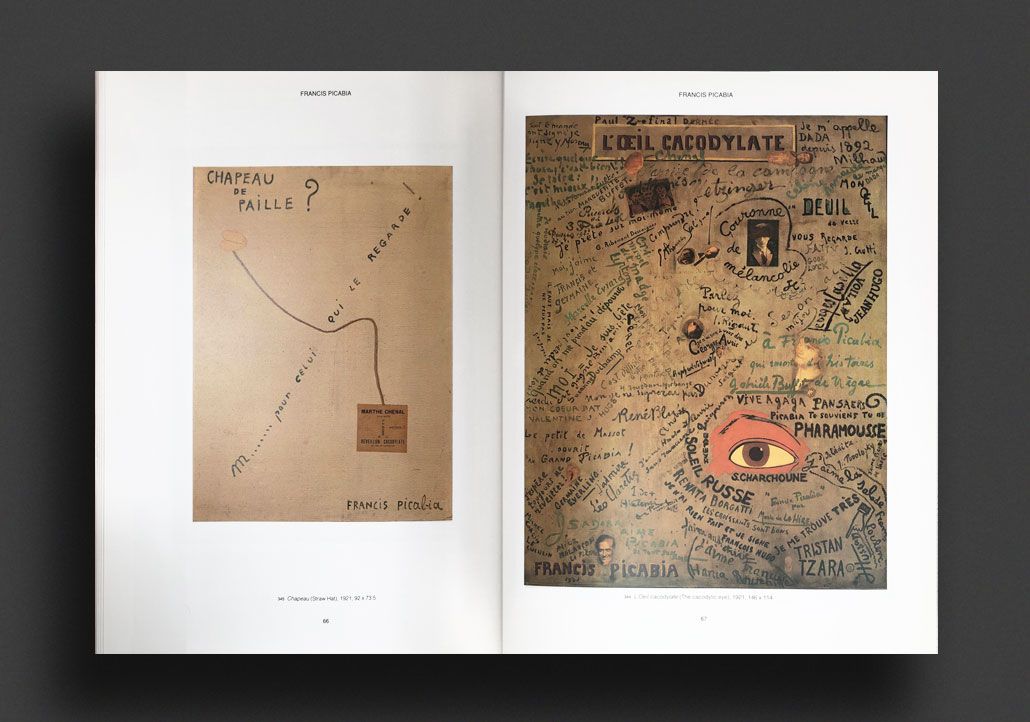
First Edition of this long out-of-print, comprehensive, beautifully produced Japanese two-volume publication on the life and work of the great French avant-garde painter, poet and typographist, Francis Picabia.
Published by APT International in 1999 for a major Japanese travelling exhibition on Francis Picabia, starting at the Isetan Museum of Art in Tokyo in 1999, then to Fukushima and Osaka throughout 1999-2000.
Two Volumes bound in french-fold wraps, both housed in protective corrugated cardboard slip-case with scarlet label wrapped around spine. Slipcase itself is now protected under plastic sleeve.
First volume (226 page) forms a comprehensive retrospective of Picabia's life and prolific and defying work across painting, drawing, printing, poetry and film. Extensive colour and b&w reproductions of a vast collection of his painting, illustration and publishing projects are presented alongside a folio of his poems and drawings, plus photo documentation of his studio and private/social life. Also includes a biography and bibliography, as well as an insightful conversation between Olga Picabia (Francis Picabia's widow), Pierre Calté (director of Comité Picabia), Hans Ulrich Obrist (independent curator) and Stefan Banz (independent curator), about Picabia's life (text in English and Japanese). Introductory essays in Japanese and French by Beverley Calte and Arnauld Pierre.
Second volume (120 pages) "391" is a very special book made up of collated facsimiles of the 19 issues of Picabia's famous Dada periodical, "391", dating 1917-1924. 391 first appeared in January 1917 in Barcelona, published and edited by Picabia, assisted in assembling by Olga Sacharoff, a Georgian emigre residing in Barcelona. The title of the magazine derives from Alfred Stieglitz's New York periodical 291 (to which Picabia had contributed), and bore no relation to its contents. Despite Picabia's renown as an artist, it was mostly literary in content, with a wide-ranging aggressive tone, possibly influenced by Alfred Jarry and Apollinaire. There were contributions by two men new to Dada: Man Ray and Marcel Duchamp. However 391 remained essentially the expression of the inventive, energetic and wealthy Picabia, who stated of it: "Every page must explode, whether through seriousness, profundity, turbulence, nausea, the new, the eternal, annihilating nonsense, enthusiasm for principles, or the way it is printed. Art must be unaesthetic in the extreme, useless and impossible to justify."
Francis Picabia (22 January 1879 – 30 November 1953) was a French avant-garde painter, poet and typographist. After experimenting with Impressionism and pointillism, Picabia became associated with Cubism. His highly abstract planar compositions were colourful and rich in contrasts. He was one of the early major figures of the Dada movement in the United States and in France. His was later briefly associated with Surrealism, but would soon turn his back on the art establishment.
Very Good copy in Good slipcase that has discoloured with sun-tanning to spine, corregation has some wear. Books VG both.
1991, English
Softcover, 118 pages, 21 x 14.5 cm
Out of print title / used / very good
Published by
AK Press / Edinburgh
$50.00 - Out of stock
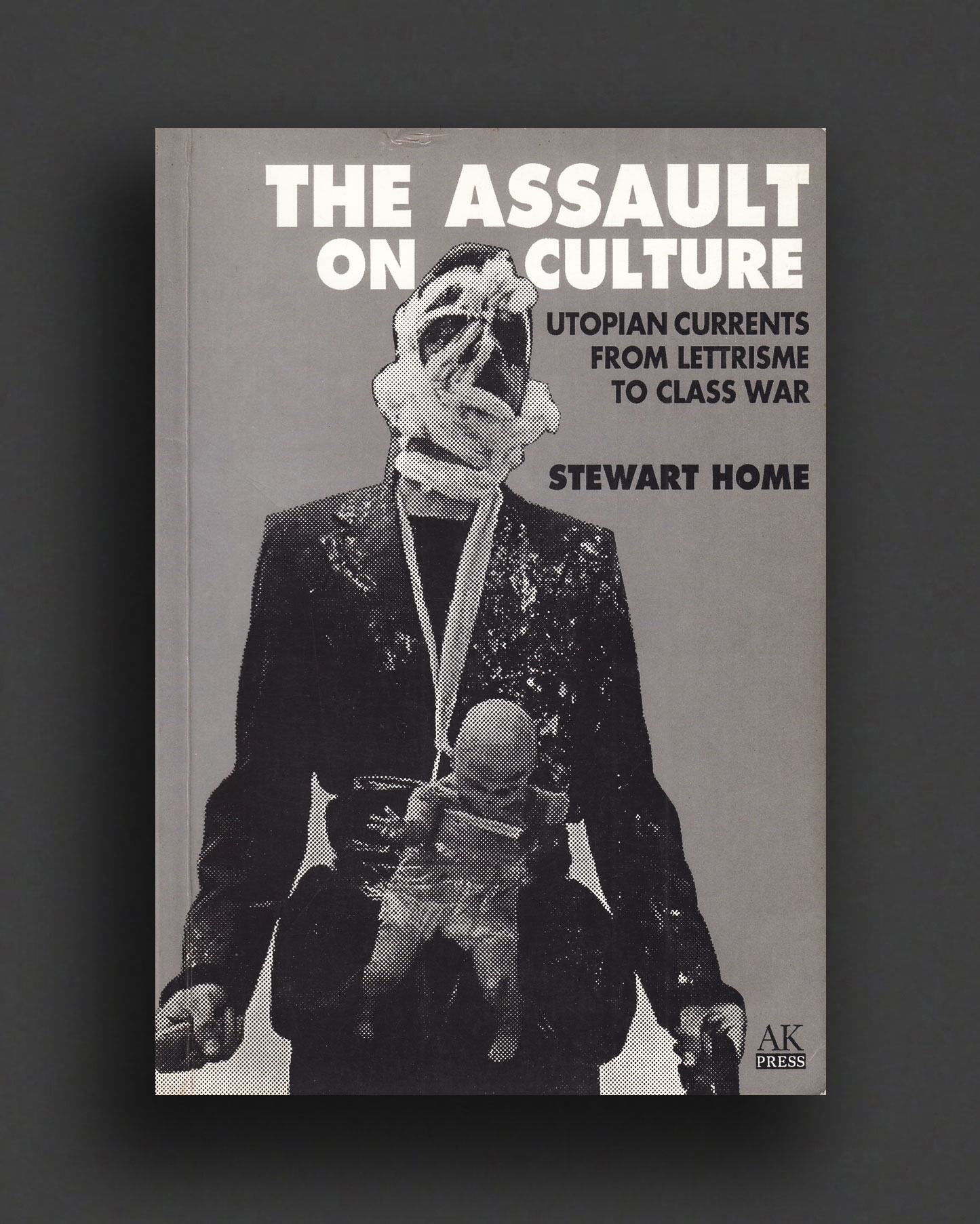
First AK Press 1991 edition of Stewart Home's THE ASSAULT ON CULTURE: UTOPIAN CURRENTS FROM LETTRISM TO CLASS WAR, first published in 1988 by Aporia Press and Unpopular Books. Chapters: Cobra, The Lettriste Movement, The Lettriste International (1952-57), The College Of Pataphysics, Nuclear Art and the International Movement for an Imaginist Bauhaus, From the "First World Congress of Liberated Artists" to the foundation of the Situationist International, The Situationist International in its heroic phase (1957-62)., On the theoretical poverty of the Specto-Situationists and the legitimate status of the Second International, The decline and fall of the Specto-Situationist critique, The origins of Fluxus and the movement in its 'heroic' period, The rise of the depoliticized Fluxus aesthetic, Gustav Metzger and Auto-Destructive Art, Dutch Provos, Kommune 1, Motherfuckers, Yippies and White Panthers, Mail Art, Beyond Mail Art, Punk, Neoism, Class War, plus bibliography.
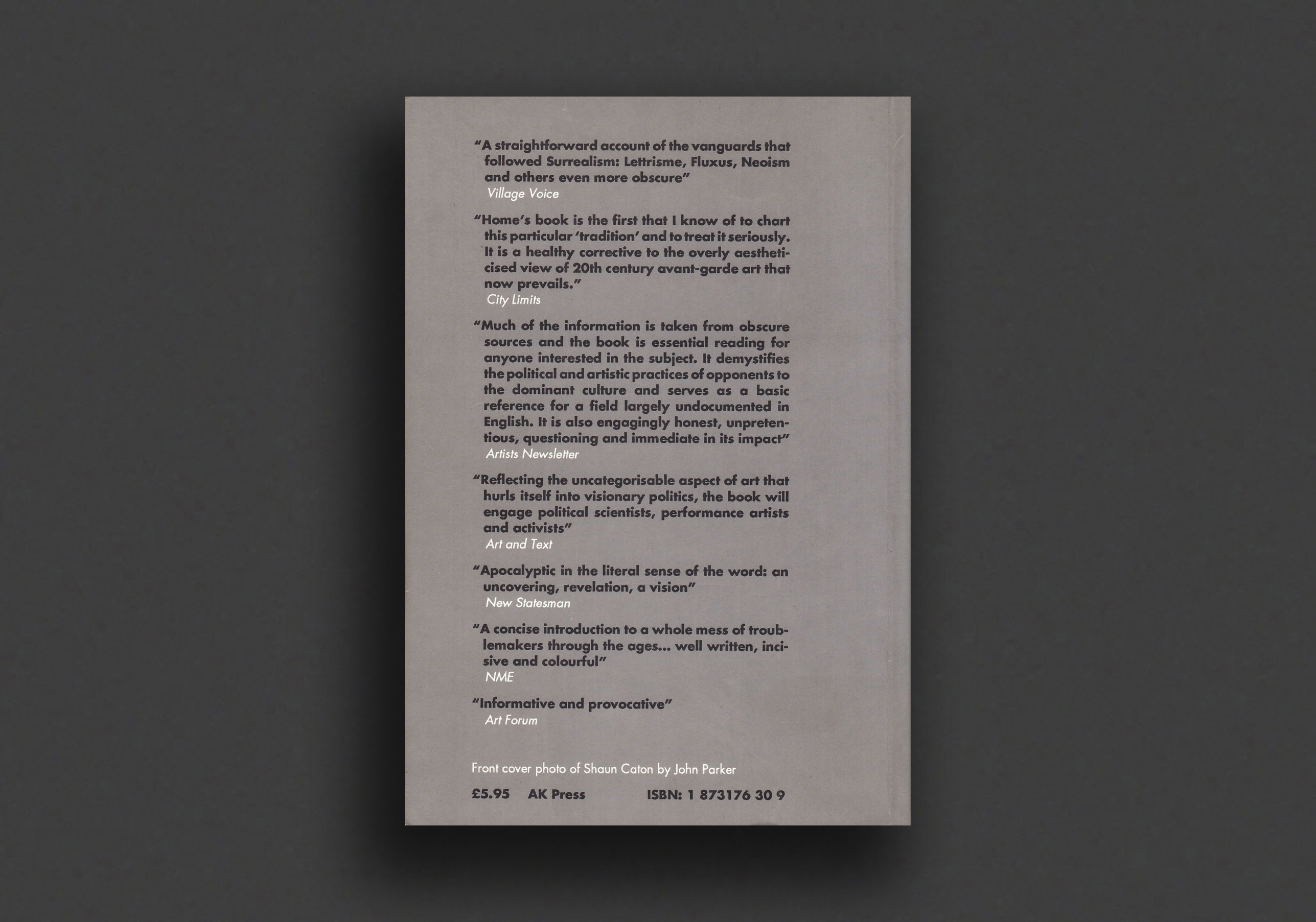
*A straightforward account of the vanguards that followed Surrealism: Lettrisme, Fluxus, Neoism and others even more obscure"—Village Voice
"Home's book is the first that I know of to chart this particular 'tradition' and to treat it seriously.
It is a healthy corrective to the overly aestheti-cised view of 20th century avant-garde art that now prevails."—City Limits
"Much of the information is taken from obscure sources and the book is essential reading for anyone interested in the subject. It demystifies the political and artistic practices of opponents to the dominant culture and serves as a basic reference for a field largely undocumented in English. It is also engagingly honest, unpreten-tious, questioning and immediate in its impact"—Artists Newsletter
"Reflecting the uncategorisable aspect of art that hurls itself into visionary politics, the book will engage political scientists, performance artists and activists"—Art and Text
"Apocalyptic in the literal sense of the word: an uncovering, revelation, a vision"—New Statesman
"A concise introduction to a whole mess of troublemakers through the ages... well written, incisive and colourful"—NME
"Informative and provocative"—Art Forum
Very Good copy.
2025, English
Hardcover, 392 pages, 29.5 x 25 cm
$150.00 - In stock -
Marcel Duchamp’s first retrospective in 1963, curated by the youthful and energetic curator Walter Hopps, was a singular moment in twentieth-century art history. This chronicle of its conception and execution reveals an ascendant cultural history of Los Angeles in the early 1960s. A reawakening to Duchamp’s impact on contemporary thought was on full display first in California—accompanied by a remarkable cast of artists, curators, critics, gallerists, and collectors, including Larry Bell, Billy Al Bengston, Ed Bereal, Wallace Berman, George Brecht, William N. Copley, Sam Francis, Joe Goode, Richard Hamilton, Dennis Hopper, Robert Irwin, Ed Kienholz, Alison Knowles, Gerard Malanga, Marisol, Patty Mucha, Claes Oldenburg, Richard Pettibone, Ed Ruscha, Andy Warhol, and Robert Watts. With detailed installation diagrams and reproductions of every art object displayed published here for the first time, Duchamp in California shows why the exhibition is revered as an exemplar of curatorial practice for its compelling design and critical acclaim.
By Don Quaintance
1980, English
Hardcover (w. dust jacket), 228 pages, 25 x 23 cm
1st Edition, Out of print title / used / very good
Published by
Barron's / Woodbury
$65.00 - In stock -
First US hardcover edition of this major retrospective look at Man Ray's photographic career, edited by Janus, profusely illustrated with a photograph per page, a full catalogue with English texts about the works, introduction essay by Janus, documents and texts translated to English by a who's who of Man Ray's world, Desnos, Picabia, Tzara, Breton, Gallotti, Hugnet, Eluard, Pierre Mac Orlan, and many more.
"The innovative eye of Man Ray explored the outer limits of photography with profound brilliance, wit and originality, transcending the medium as no photographer has done before or since. More than any other figure, he freed photography from the bonds of equipment and literal-minded technique. Often he would shed his camera altogether, as in the creation of his boldly abstract "rayographs" — compositions made by placing various objects directly on light-sensitive paper.
A member of that remarkable generation of artists and writers who found refuge in Paris between the two World Wars, Man Ray was an American (his real name remains unknown to this day), a founder of the radical Dada movement, and an important influence in the development of Surrealism. The artists who. associated with Man Ray, artists whose faces reappear as portraits in this retrospective al-bum, constitute a veritable Who's Who of Modernism: Pablo Picasso, Gertrude Stein, James Joyce, Arnold Schoenberg, Henri Matisse, Le Corbusier, Henry Miller, Salvador Dali.
This exciting and definitive collection of photo-graphs, approved by Man Ray during his final illness, includes a broad selection of critical essays by some of his eminent contemporaries — among them André Breton, Tristan Tzara, Marcel Duchamp, and Francis Picabia. The noted critic Janus, who edited this volume and supplied the detailed commentaries on each work, introduces the photographs with a provocative view of Man Ray as liberator. A generous sampling of Man Ray's own writings is included as well. But the core of this long-awaited book is the chronologically-arranged selection of 160 Man Ray photographs: the stylized, almost abstract portraits and nudes, the startling and brilliant rayographs, the experimental "solarizations" and clichés verrés.
To know Man Ray is to know the modern era. He was the epitome of the avant-garde spirit, "the experimenter par excellence." As Janus observes in the introductory essay, Man Ray is "a fixed point for understanding our century in all its profundity."
G—VG in G—VG dust jacket. Some foxing to initial pages, dustiness, light wear to dust jacket extremities, preserved under mylar wrap.
1986, English
Softcover, 319 pages, 175 x 229 mm
1st Edition, Out of print title / used / very good
Published by
The MIT Press / Massachusetts
$45.00 - Out of stock
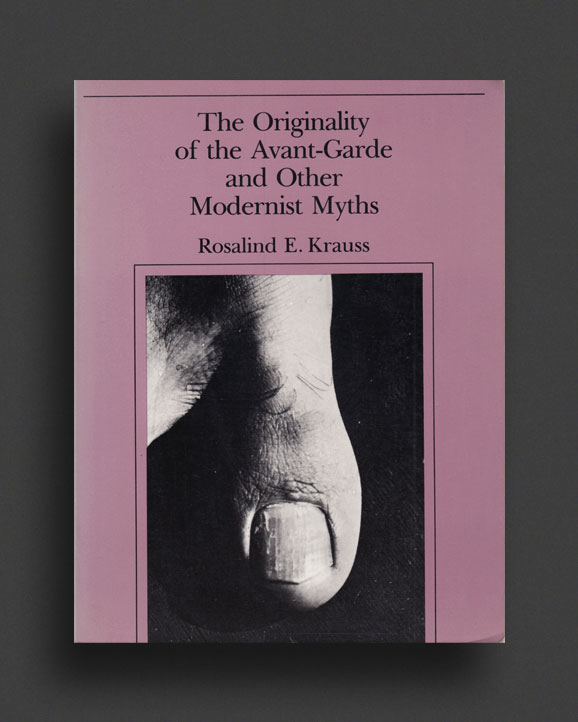
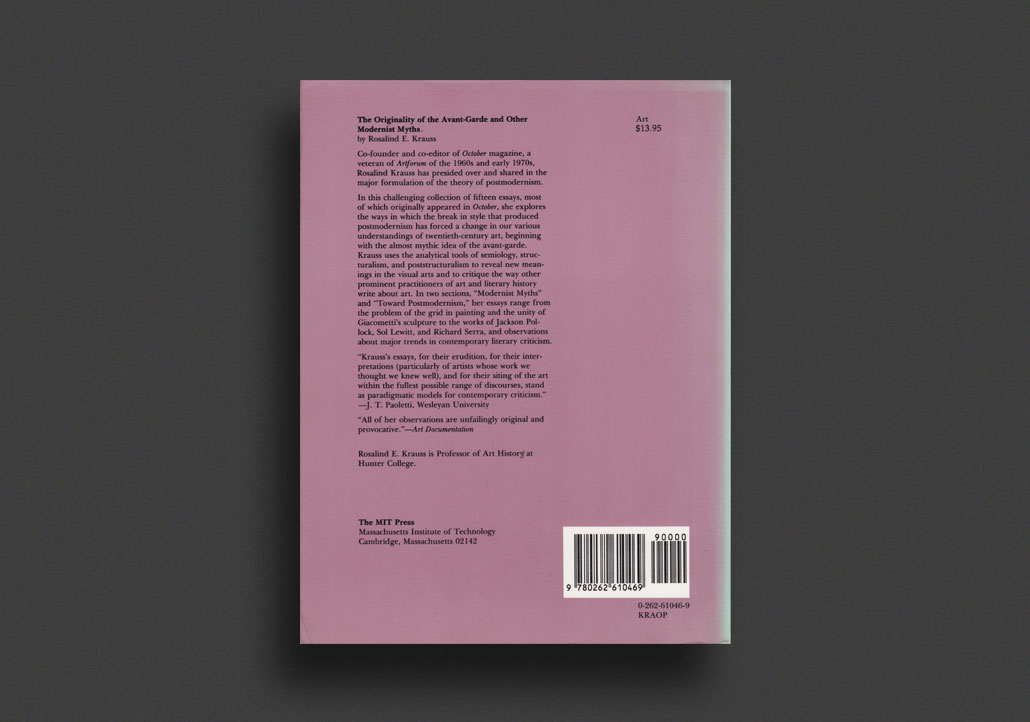
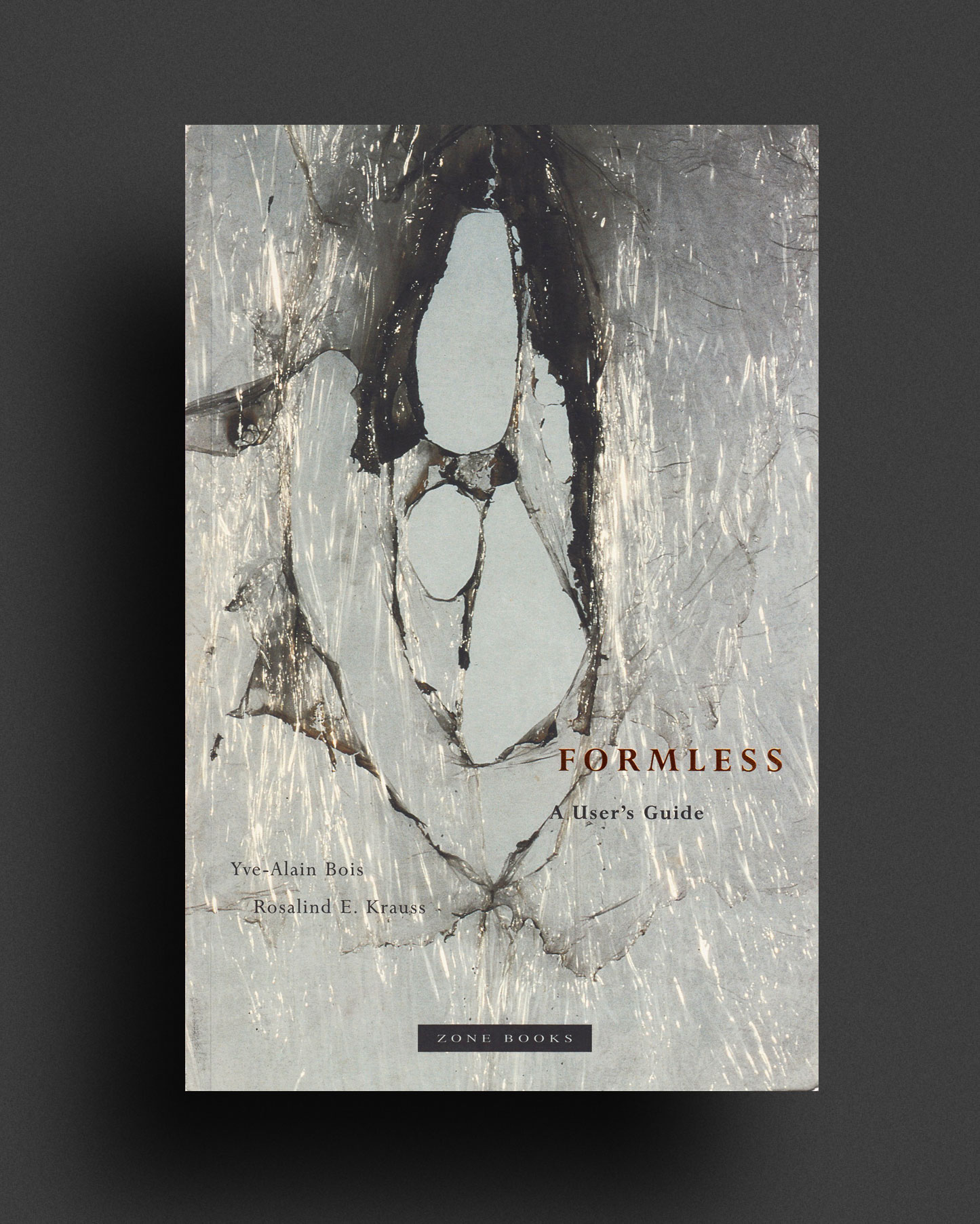
Co-founder and co-editor of October magazine, a veteran of Artforum of the 1960s and early 1970s, Rosalind Krauss has presided over and shared in the major formulation of the theory of postmodernism. In this challenging collection of fifteen essays, most of which originally appeared in October, she explores the ways in which the break in style that produced postmodernism has forced a change in our various understandings of twentieth-century art, beginning with the almost mythic idea of the avant-garde. Krauss uses the analytical tools of semiology, structuralism, and poststructuralism to reveal new meanings in the visual arts and to critique the way other prominent practitioners of art and literary history write about art. In two sections, "Modernist Myths" and "Toward Postmodernism," her essays range from the problem of the grid in painting and the unity of Giacometti's sculpture to the works of Jackson Pollock, Sol Lewitt, and Richard Serra, and observations about major trends in contemporary literary criticism.
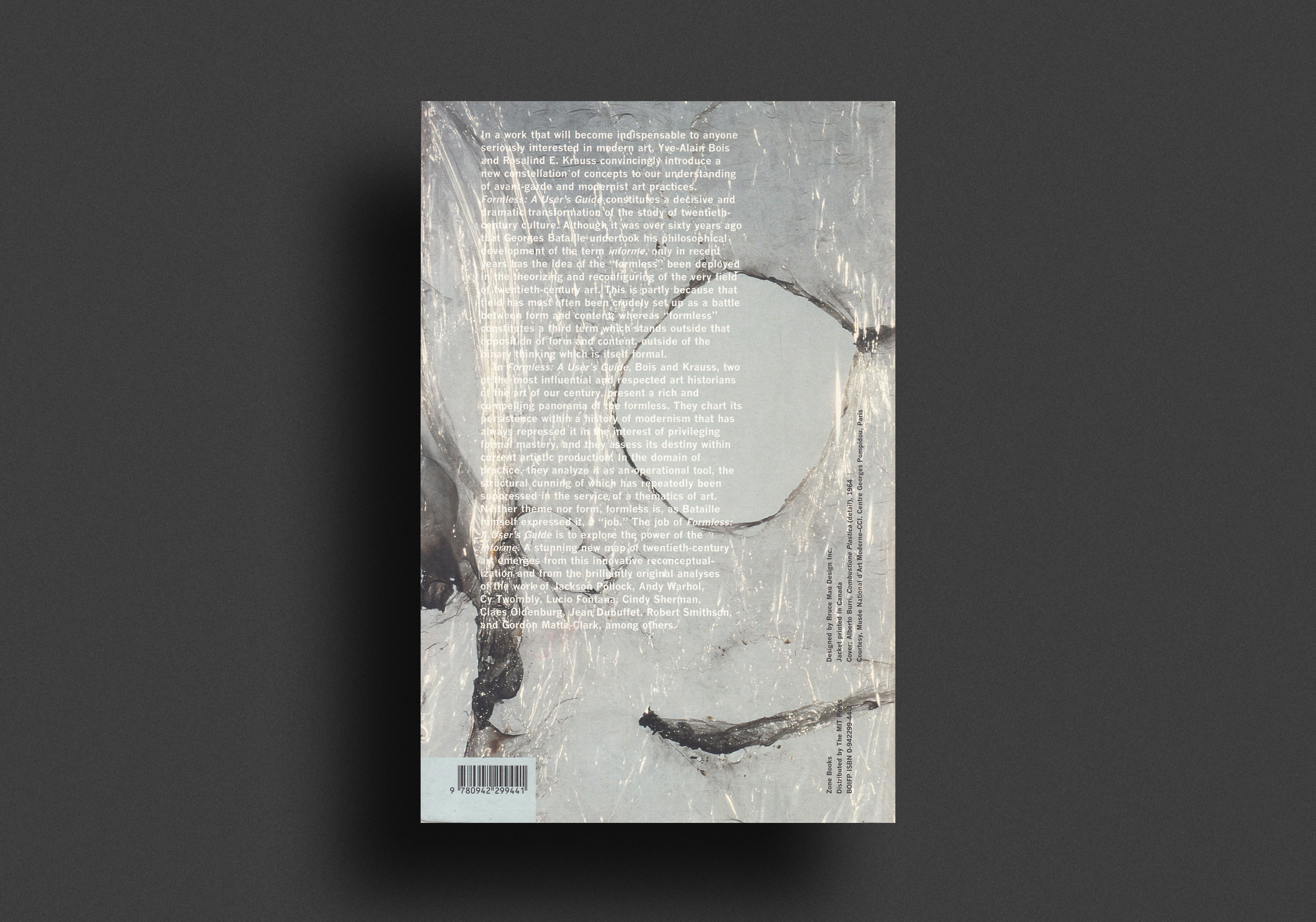
Rosalind E. Krauss, University Professor at Columbia University and an editor and cofounder of October magazine, is the author of The Originality of the Avant-Garde and Other Modernist Myths (1985), The Optical Unconscious (1993), The Picasso Papers (1999), and Bachelors (1999), all published by the MIT Press, and coauthor (with Yve-Alain Bois) of Formless: A User's Guide (Zone Books, 1997).
"All of her observations are unfailingly original and provocative."—Art Documentation
Very Good copy of original 1986 edition, 1993 printing.
1974, English
Hardcover (w. dust jacket), 216 pages, 21 x 16 cm
1st Edition, Out of print title / used / very good
Published by
Thames and Hudson / London
$30.00 - Out of stock
First HC Edition.
Environments and Happenings by painter and poet Adrian Henri, published by Thames & Hudson in 1974, forms one of the first mainstream book surveys to trace the phenomenon of environmental/performative/total living artworks that became prevalent in the 1960s/70s. This historical study is profusely illustrated in colour and b/w with many international works from Fluxus to Zero to Dolle Mina to Nouveau Réalisme to Provo to Gutai to The Situationists and much more. Includes the works of Joseph Beuys, Clarence Schmidt, Ray Johnson, Öyvind Fahlström, Paul Thek, Yves Klein, Allan Kaprow, Hans Haacke, Kurt Schwitters, Marcel Duchamp, Guerllia Art Action Group, Daniel Spoerri, Wolf Vostell, Gustav Metzger, Peter Kuttner, Jackson Pollock, Alison Knowles, Dick Higgins, Robert Morris, Situationist International, Ferdinand Kriwet, Klaus Rinke, Duane Hanson, A-Yo, Meret Oppenheim, Space Structure Workshop, Ferdinand Cheval, Dolle Mina (Mad Mina), Robert Smithson, Jeff Nuttall, Stefan Wewerka, Christo, Dennis Oppenheim, Vladimir Tatlin, Provo, Barry Flanagan, Andy Warhol, Meredith Monk, Atsuko Tanaka, Kazuo Shiraga, Ed Keinholz, Yayoi Kusama, Piero Gilardi, Niki de Saint-Phalle, Jean Tinguely, Claes Oldenburg, Les Levine, James Rosenquist, Red Grooms, Tom Wesselmann, George Segal, Eduardo Paolozzi, and many many more. Includes reproductions of performance scripts, partial chronology, etc.
Very Good copy in Good DJ some light wear, price-clipping to inner.
1980, German
Hardcover (w. dust jacket), 384 pages, 22 x 21 cm
1st Edition, Out of print title / used / very good
Published by
Rogner & Bernhard / Münich
$30.00 - Out of stock
First 1980 German language hardcover edition of 'Man Ray - The Rigour of Imagination', a wonderful monographic study on Man Ray by Italian art historian, writer, curator and friend of Man Ray, Arturo Schwarz. This book, an intimate survey of Man Ray's life and works first issued in 1977, was made in close collaboration with Man Ray until his death in 1976 and was the first to reveal Man Ray's real name, Emmanuel Radnitzky. Profusely illustrated in colour and monochrome with Man Ray's diverse breadth of paintings, drawings, photography, film, sculptural objects, publications, editions, exhibition and studio documentation, as well as personal photography.
Arturo Schwarz (1924 – 2021) was an Italian scholar, art historian, poet, writer, lecturer, art consultant and curator of international art exhibitions. He lived in Milan, where he amassed a large collection of Dada and Surrealist art, including many works by personal friends such as Marcel Duchamp, André Breton, Man Ray, and Jean Arp.
"Painter, creator of poetic objects, photographer, writer, filmmaker: Man Ray, born in Philadelphia in 1890, decisively shaped the cultural history of the 20th century with his genius. For the first time, this book, on which the artist actively collaborated until his death in 1976, presents and documents all aspects of his life and work.
Throughout his life, Man Ray performed pioneering work in all media; in all areas of the visual arts, photography, and film, he tirelessly searched for new means of expression that questioned everything established, usual, and taken for granted. His childlike curiosity, creative desire, and wit, which persisted well into old age, allowed him to take the most surprising paths and perform the most bewildering twists and turns. He transformed photography into art and placed it on a par with painting by "painting" his rayographs, photographs taken without a camera, or, in 1917, by being the first to create "paintings" with an airbrush, whose soft shading transferred the effects of photography to the canvas. He translated word games into optical puzzles and vice versa; he used objects and assemblages to develop highly idiosyncratic photographs; he set his inventions or rediscoveries in the field of photography in motion in the most fascinating examples of Dadaist and Surrealist film. Many of his works anticipate modern developments in art by decades.
Exhibitions of the European avant-garde around 1910 (Armory Show, Gallery 291 by Alfred Stieglitz, among others) had torn the young Man Ray from the academic waters of American art. As early as 1915/16, he placed himself at the forefront of the American avant-garde with Marcel Duchamp and Francis Picabia, who had fled into exile in America before the World War, and was present at the birth of New York Dada. The European Dadaists and Surrealists in Paris welcomed him into their midst with open arms in 1921 [...]"—from the jacket blurb
Very Good copy in VG dust jacket.
1975, English
Hardcover (w. dust jacket), 208 pages, 24 x 16 cm
1st Edition, Out of print title / used / very good
Published by
New York Graphic Society / Boston
$30.00 - Out of stock
First hardcover edition of the first major English-language monographic study on the brilliant Man Ray, by close friend Roland Penrose, published by the New York Graphic Society in Boston, 1975.
Since before World War I, Man Ray has stood at the center of European and American modernismas a painter, conjurer of magical and poetic objects, inventor, and photographer. Few contemporary artists have played such a vital role in the creation of imaginative visual realities.
Although Man Ray was born in America, he has lived most of his adult life in France, and as a result, he is generally thought of as a European artist, especially since he was a central figure in the Surrealist movement. He is, however, an essential precursor of contemporary American art.
Man Ray has always been a pioneering artist: in combining photography and painting, something later taken up by such artists as Rauschenberg and Warhol; in his creation of enigmatic and mysterious, humorous and unpretentious surrealist objects; in anticipating Abstract Expressionism with his "drip" paintings; in manipulating scale, echoed today in the work of Oldenburg; in his "wrapped objects," done a half century before Christo's works.
The influence of Man Ray continues to increase. Its most important aspects transcend individual paintings, objects, or photographs. Its virtue lies not only in the new techniques he has mastered but also in his subtle and disturbing probes into the very nature of life and in the directness and surprise of his inventions. His genius is a kind of liberating poetry he instills into the heart of artistic activity.
Roland Penrose has been a close friend of the artist for almost fifty years. This is the first major monograph ever published on Man Ray, and for it Penrose has created an absorbing narrative about the life of his friend, about his work and about his steady presence at the flash point of twentieth-century contemporary art. As the organizer of the International Surrealist Exhibition in London, in 1936, where Man Ray's work was shown in England for the first time, and as a Surrealist painter himself, Roland Penrose writes from a unique vantage point of the work and life of a modern genius.
Good—VG copy, with Good—VG dust jacket.
1982/1992, Japanese
Softcover, 192 pages, 21 x 14.5 cm
Out of print title / used / very good
Published by
Atelier Peyotl / Tokyo
$60.00 - Out of stock
"Corpse" Special Feature Issue of cult Japanese underground magazine Yaso, first published in 1982, then re-printed in 1992, edited by Yuichi Konno and Atelier Peyotl (publishers of Night Vision/Yaso/Peyotl/Wave/Silvester Club...). Heavily illustrated with texts in Japanese that look at the theme of death and the dead in the arts, literature, occultism, ancient sciences, philosophy, mythology, poetry, film, crime, and much more. Features John Duncan, Tetsumi Kudo, Cosey Fanni Tutti, Masahisa Fukase, Franz Kafka, Johann Wolfgang von Goethe, Guillaume Apollinaire, Joe Potts (LAFMS), Takashi Ishii, Rudolf II — Holy Roman Emperor, Akinari Ueda, Marcel Duchamp, Chris Burden, Paul Celan, Alain Resnais, Gilyak Amagasaki, Shusaku Arakawa, Pieter Bruegel the Elder, Shuji Terayama, Andy Warhol, Charles Manson, Brian Wilson, Kyoko Endoh, Princess Yongtai, Salvador Dalí, Ono no Komachi, Kiyoshi Kasai, Caravaggio, Throbbing Gristle, Takizawa Bakin, Leno and Rosemary LaBianca, Manson Family, Fyodor Dostoevsky, Wu Zetian, Genesis P-Orridge, Yusuke Nakahara, Ranpo Lagrange, Mitsusada Fukasaku, Nakai Hideo, Richard Wagner, and many more.
Very Good copy.
1975, English
Softcover, 208 pages, 24 x 16 cm
1st Edition, Out of print title / used / good
Published by
New York Graphic Society / Boston
$25.00 - Out of stock
First major English-language monographic study on the brilliant Man Ray, by close friend Roland Penrose, published by the New York Graphic Society in Boston, 1975.
Since before World War I, Man Ray has stood at the center of European and American modernismas a painter, conjurer of magical and poetic objects, inventor, and photographer. Few contemporary artists have played such a vital role in the creation of imaginative visual realities.
Although Man Ray was born in America, he has lived most of his adult life in France, and as a result, he is generally thought of as a European artist, especially since he was a central figure in the Surrealist movement. He is, however, an essential precursor of contemporary American art.
Man Ray has always been a pioneering artist: in combining photography and painting, something later taken up by such artists as Rauschenberg and Warhol; in his creation of enigmatic and mysterious, humorous and unpretentious surrealist objects; in anticipating Abstract Expressionism with his "drip" paintings; in manipulating scale, echoed today in the work of Oldenburg; in his "wrapped objects," done a half century before Christo's works.
The influence of Man Ray continues to increase. Its most important aspects transcend individual paintings, objects, or photographs. Its virtue lies not only in the new techniques he has mastered but also in his subtle and disturbing probes into the very nature of life and in the directness and surprise of his inventions. His genius is a kind of liberating poetry he instills into the heart of artistic activity.
Roland Penrose has been a close friend of the artist for almost fifty years. This is the first major monograph ever published on Man Ray, and for it Penrose has created an absorbing narrative about the life of his friend, about his work and about his steady presence at the flash point of twentieth-century contemporary art. As the organizer of the International Surrealist Exhibition in London, in 1936, where Man Ray's work was shown in England for the first time, and as a Surrealist painter himself, Roland Penrose writes from a unique vantage point of the work and life of a modern genius.
Good—VG copy, with general light wear/toning/marking with age.
1985, German
Hardcover, 184 pages, 27.5 x 21.5 cm
1st Edition, Out of print title / used / good
Published by
Kölnischer Kunstverein / Köln
$45.00 - In stock -
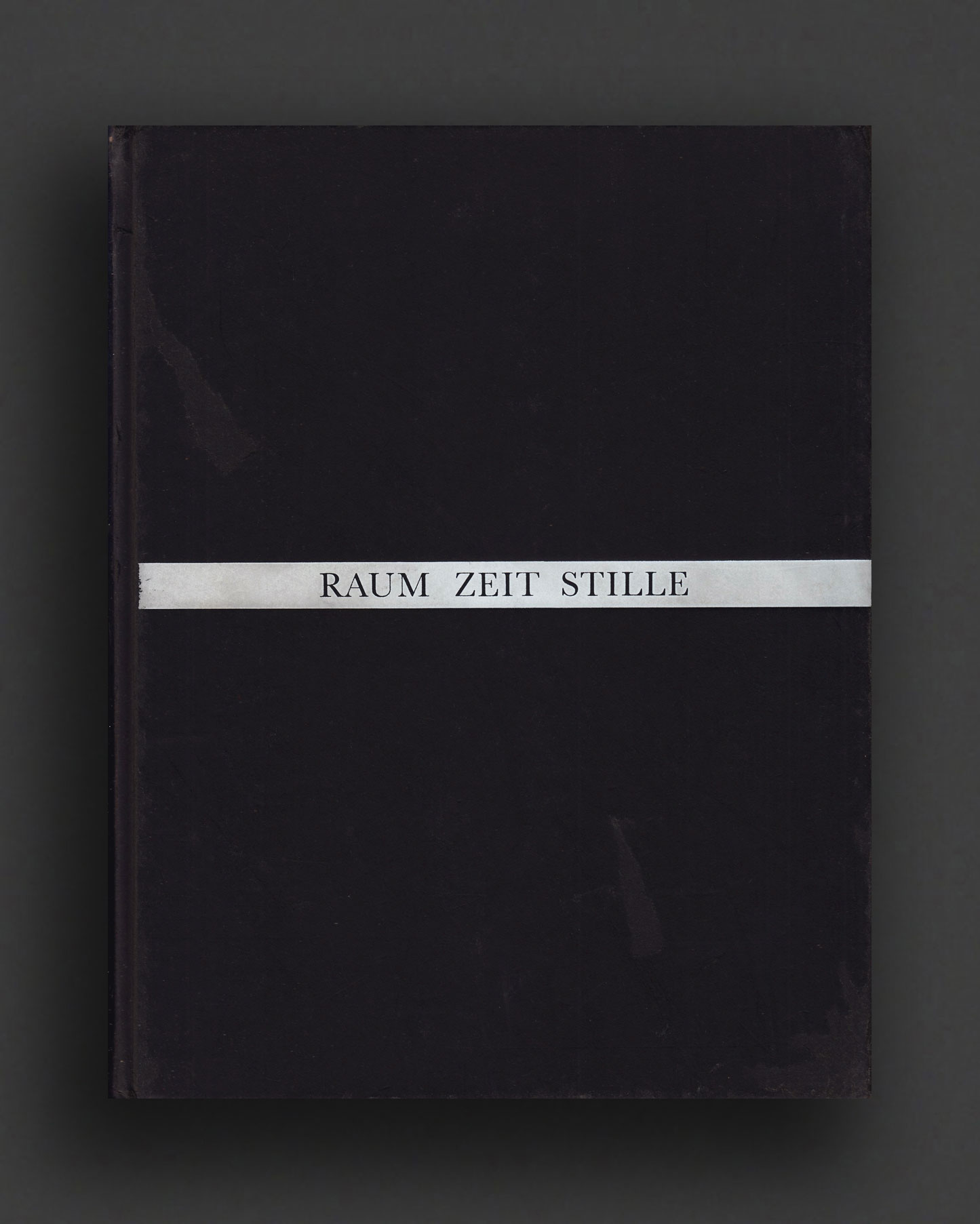
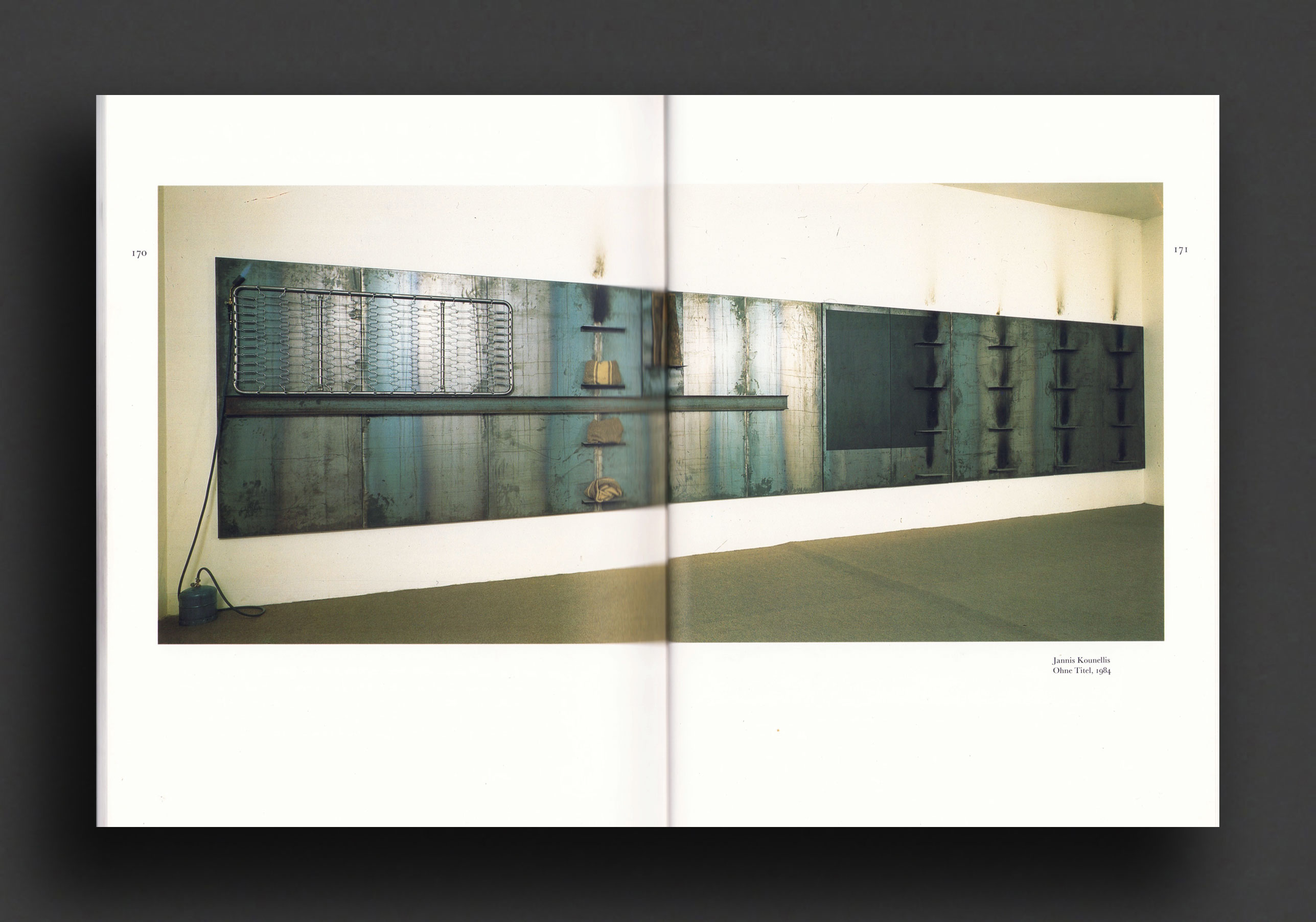
Lovely 1985 hardcover catalogue published on the occasion of the exhibition of the same name at the Kölnischer Kunstverein, March 23—June 2, 1985, curated by German art historian and curator Wulf Herzogenrath, featuring Josef Albers, Joseph Beuys, John Cage, Carl Gustav Carus, Marcel Duchamp, Jannis Kounellis, René Magritte, Kasimir Malevich, La Monte Young / Marian Zazeela, Barnett Newman, Nam June Paik, Arnulf Rainer, Odilon Redon, Mark Rothko, Reiner Ruthenbeck, and Georges Seurat. Heavily illustrated in colour and b/w with accompanying texts in German.
Good copy with some rubbing/flaking to silkscreened carbon black hardcovers, otherwise Very Good throughout. Previous owner's name to title page (that of Melbourne artist Bernhard Sachs).
1976, English
Softcover, 112 pages, 28 x 20.5 cm
Out of print title / used / good
Published by
Thames and Hudson / London
$25.00 - Out of stock
Photomontage—the manipulated photograph—is as old as photography itself. Yet it was only with the chaotic, explosive impact of World War I that photomontage became an art form. The term was coined by the anti-art, anti-bourgeois Berlin Dadaists, whose members included John Heartfield, Hannah Hoch, Raoul Hausmann, and George Grosz. By breaking up images and using odd juxtapositions of fragmented photographs and other materialsthe stuff of today's and yesterday's news-they created a bold new art of agitation for posters, book jackets, magazine covers, and stage sets. The idea of photomontage was as revolutionary as its it emphasized the links between politics and the technological age to expose the disorder of bourgeois society.What started as an inflammatory political joke soon became a conscious artistic technique. The use of bizarre images to render reality enigmatic was seized upon by the successors of Dadaism, the Surrealists. Artists such as Max Ernst, Moholy-Nagy, and Man Ray combined images of poetic power to form hallucinatory landscapes, pursuing a systematic derangement of the senses to express the internal chaos of the individual as well as the external chaos of the world.
Patterned with 174 visually startling and intellectually exciting monochromes, Dawn Ades's book follows the fascinating evolution of photomontage, revealing different realities that disrupt our perceptions of the traditional world.
Average-Good copy. Ex-owner's name to title page. Overall Very Good copy but with some markings to block edge and on a couple of pages from a past studio life.
1981, English
Softcover, 320 pages, 15.5 x 23.5 cm
1st Edition, Out of print title / used / very good
Published by
The MIT Press / Massachusetts
$45.00 - Out of stock
First 1981 edition of Passages in Modern Sculpture, Rosalind E. Krauss classic study of major works by important sculptors since Rodin in the light of different approaches to general sculptural issues to reveal the logical progressions from nineteenth-century figurative works to the conceptual work of the present.
"...Krauss's book is undoubtedly the best treatment of its subject yet written. As a textbook, it ought to raise the level of discourse in art history classes, for it is the meaning, not the chronology, of sculpture since Rodin that is the book's central concern. Krauss avoids the conventional plodding survey and divides the book into a sequence of 'case studies' that permit sustained attention to specific works and artists. In so doing, she attempts to trace a 'tradition' to stand behind that portion of American sculpture of the past 15 years which she espouses critically."—Art in America
"Distinguished art historian and critic Rosalind Krauss analyzes with exceptional clarity and insight the major works that have led 20th century sculpture from the traditional and figurative to the revolutionary conceptual art of the 1970s—an art which has developed a new 'syntax' that discards 'narrative' for instantaneous impact and boldly breaks new ground. Beginning with a penetrating study of Rodin's modernity in rejecting 'narrative' in his 'The Gates of Hell,' she moves successively through detailed examinations of futurism, constructivism, Duchamps' 'readymades,' Brancusi, David Smith's 'Tanktotem,' sculptural realism, and the introduction of light, motion, and theatrical elements into sculpture by Picabia, Calder, Oldenburg, and others right up to younger sculptors like Carl Andre, Blochner, and others [including Robert Morris, Don Judd, Richard Serra, Sol Le Witt, Robert Smithson, and Michael Heizer]. As critic and theorist, Krauss makes demands that will challenge even the most sophisticated."—Publishers Weekly
Rosalind E. Krauss, editor and cofounder of October magazine, is University Professor at Columbia University. She is the author of The Originality of the Avant-Garde and Other Modernist Myths, The Optical Unconscious, Bachelors, and Perpetual Inventory, all published by the MIT Press.
Good—Very Good copy with general light wear.
1977, English
Hardcover (w. dust jacket), 308 pages, 24 x 16 cm
1st UK Edition, Out of print title / used / very good
Published by
Thames and Hudson / London
$65.00 - In stock -
First 1977 hardcover edition of Passages in Modern Sculpture, Rosalind E. Krauss classic study of major works by important sculptors since Rodin in the light of different approaches to general sculptural issues to reveal the logical progressions from nineteenth-century figurative works to the conceptual work of the present.
"...Krauss's book is undoubtedly the best treatment of its subject yet written. As a textbook, it ought to raise the level of discourse in art history classes, for it is the meaning, not the chronology, of sculpture since Rodin that is the book's central concern. Krauss avoids the conventional plodding survey and divides the book into a sequence of 'case studies' that permit sustained attention to specific works and artists. In so doing, she attempts to trace a 'tradition' to stand behind that portion of American sculpture of the past 15 years which she espouses critically."—Art in America
"Distinguished art historian and critic Rosalind Krauss analyzes with exceptional clarity and insight the major works that have led 20th century sculpture from the traditional and figurative to the revolutionary conceptual art of the 1970s—an art which has developed a new 'syntax' that discards 'narrative' for instantaneous impact and boldly breaks new ground. Beginning with a penetrating study of Rodin's modernity in rejecting 'narrative' in his 'The Gates of Hell,' she moves successively through detailed examinations of futurism, constructivism, Duchamps' 'readymades,' Brancusi, David Smith's 'Tanktotem,' sculptural realism, and the introduction of light, motion, and theatrical elements into sculpture by Picabia, Calder, Oldenburg, and others right up to younger sculptors like Carl Andre, Blochner, and others [including Robert Morris, Don Judd, Richard Serra, Sol Le Witt, Robert Smithson, and Michael Heizer]. As critic and theorist, Krauss makes demands that will challenge even the most sophisticated."—Publishers Weekly
Rosalind E. Krauss, editor and cofounder of October magazine, is University Professor at Columbia University. She is the author of The Originality of the Avant-Garde and Other Modernist Myths, The Optical Unconscious, Bachelors, and Perpetual Inventory, all published by the MIT Press.
Very Good in VG dust jacket designed by Krauss with interior architect Alan Buchsbaum!
2024, English
Softcover, 328 pages, 21 x 28 cm
Published by
Spector Books / Leipzig
$110.00 - In stock -
The book Archive of Dreams is published in conjunction with the exhibition of the same name that will open the Archiv der Avantgarden. Marking the hundredth anniversary of the first surrealist manifesto and the founding of the Bureau of Surrealist Research in Paris in 1924, the volume is dedicated to the surrealist movement as well as the networks it engendered and the artistic stimuli it provided in the twentieth century. The idea was for the Bureau to collect dream testimonies in whatever form, not only to preserve and analyse them but also to give active expression to them in artistic processes. The publication shows how the practices of the avantgardes blurred the boundaries between dream and reality, between the traditional, passive notion of the archive and the idea of active, innovative artistic experiment — and thus ultimately also between the past, the present, and possible futures.
Works and documents from the period before, during, and after the Second World War shed light on the working methods of international artists and the global network they were involved in. They are complemented by diverse reflections on global protest movements and the traumas of war, thus connecting, too, to everyday experiences in a Europe beset by warfare.
1996, English
Softcover, 328 pages, 18 x 22.2 cm
1st Edition, Out of print title / used / very good
Published by
The MIT Press / Massachusetts
$55.00 - Out of stock
First 1996 edition printing, not the contemporary digital re-print.
In The Return of the Real Hal Foster discusses the development of art and theory since 1960, and reorders the relation between prewar and postwar avant-gardes. Opposed to the assumption that contemporary art is somehow belated, he argues that the avant-garde returns to us from the future, repositioned by innovative practice in the present. And he poses this retroactive model of art and theory against the reactionary undoing of progressive culture that is pervasive today. After the models of art-as-text in the 1970s and art-as-simulacrum in the 1980s, Foster suggests that we are now witness to a return to the real -- to art and theory grounded in the materiality of actual bodies and social sites. If The Return of the Real begins with a new narrative of the historical avant-garde, it concludes with an original reading of this contemporary situation -- and what it portends for future practices of art and theory, culture and politics.
Includes the work of David Hammons, Robert Gober, Mike Kelley, Marcel Duchamp, Alexander Rodchenko, Vladimir Tatlin, Dan Flavin, Carl Andre, Jasper Johns, Daniel Buren, Marcel Broodthaers, Michael Asher, Hans Haacke, Fred Wilson, Silvia Kolbowski, Larry Bell, Sol Lewitt, Richard Serra, Eva Hesse, Donald Judd, Tony Smith, Robert Morris, Robert Smithson, Jeff Koons, Haim Steinbach, Peter Halley, Ashley Bickerton, Ross Bleckner, Barbara Kruger, Sherrie Levine, Vito Acconci, Bruce Nauman, Gordon Matta-Clark, Frank Stella, Robert Rauschenberg, Andy Warhol, Allan McCollum, Gerhard Richter, Richard Estes, Richard Prince, Cindy Sherman, Kiki Smith, John Miller, Zoe Leonard, Gran Fury, Renée Green, Dan Graham, Martha Rosler, Allan Sekula, Mary Kelly, Silvia Kolbowski, Lothar Baumgarten, Fred Wilson, Jimmie Durham, and many more.
Very Good copy, light tanning to edges, ex-owner's name to title page.
2013, English
Hardcover (w. dust jacket), 376 pages, 16.5 x 22.9 cm
Published by
Yale University Press / New Haven
$120.00 - In stock -
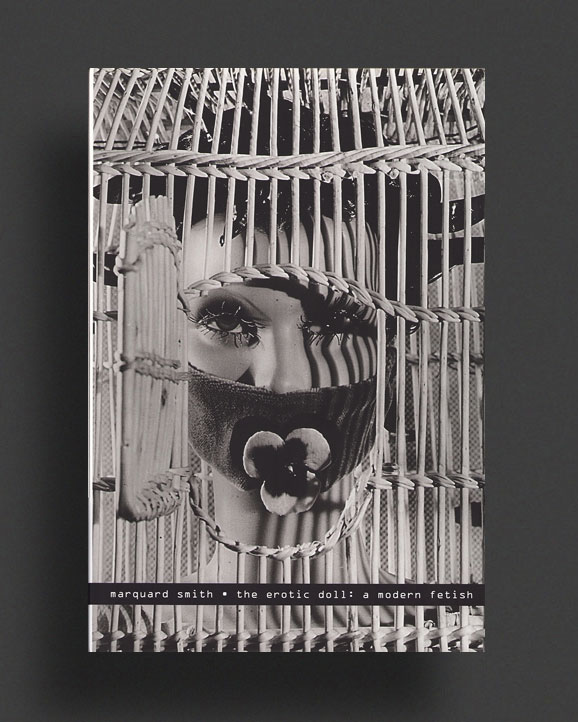
ince the 19th century, dolls have served as toys but also as objects of obsession, love, and lust. That century witnessed the emergence of the term "heterosexual" and of modern concepts of fetishism, perversity, and animism. Their convergence, and the demands of a growing consumer society resulted in a proliferation of waxworks, shop-window dummies, and customized love dolls, which also began to appear in art. Oskar Kokoschka commissioned a life-sized doll of his former lover Alma Mahler; Hans Bellmer crafted poupées; and Marcel Duchamp fabricated a nude figure in his environmental tableau Etant donnés. The Erotic Doll is the first book to explore men's complex relationships with such inanimate forms from historical, theoretical, and phenomenological perspectives. Challenging our commonsense grasp of the relations between persons and things, Marquard Smith examines these erotically charged human figures by interweaving art history, visual culture, gender, and sexuality studies with the medical humanities, offering startling insights into heterosexual masculinity and its discontents.
‘Ladies and gents, welcome to the museum of the erotic doll. Step right up and feast your eyes on modern man’s curious contraptions. If the saucy blow-up doll makes you squeamish, brace yourself for the Dutch Wife (a sailor’s delight!), lubricating robot ladies, surrealist brides stripped bare, state-of-the-art RealDolls, and the iDollators who love them. Marquard Smith is the curator of this collection of men's dolls, rendered in a lavishly illustrated volume.’—Laura Frost, Times Higher Education
'This book is platypus-like, unclassifiable.'—Marina Warner, London Review of Books
“[An] intriguing book . . . Smith teases out the history of these sex objects to provide a thorough genealogy of today’s erotic mannequins.”—Shelly Ronen, Public Books
1974, English
Softcover, 335 pages, 22.5 x 16 cm
1st Edition, Out of print title / used / very good
Published by
Random House / New York
$85.00 - Out of stock
The first edition of Amos Vogel's seminal book, Film as a Subversive Art, one of the greatest books on cinema, published in 1974. Reprinted in 2005 by D.A.P./C.T. Editions, that edition also quickly went out of print and this landmark book has not been available since. According to Vogel--founder of Cinema 16, North America's legendary film society--the book details the "accelerating worldwide trend toward a more liberated cinema, in which subjects and forms hitherto considered unthinkable or forbidden are boldly explored."
So ahead of his time was Vogel that the ideas that he penned some 30 years ago for this classic volume are still relevant today. Accompanied by over 300 rare film stills, Film as a Subversive Art analyzes how aesthetic, sexual and ideological subversives use one of the most powerful art forms of our day to exchange or manipulate our conscious and unconscious, demystify visual taboos, destroy dated cinematic forms, and undermine existing value systems and institutions. This subversion of form, as well as of content, is placed within the context of the contemporary world view of science, philosophy, and modern art, and is illuminated by a detailed examination of over 500 films, including many banned, rarely seen, or never released works.
Includes Luis Buñuel, Dusan Makavejev, Luis Buñuel, Stan Brakhage, Bruce Connor, Roman Polanski, Vera Chytilova, Alfred Hitchcock, Carolee Schneemann, Peter Watkins, Tony Conrad, Jonas Mekas, Andrei Tarkovsky, Marcel Duchamp, Robert Bresson, Luchino Visconti, Chris Marker, Federico Fellini, Rainer Werner Fassbinder, Kate Millett, John Cassavettes, Shuji Terayama, William Klein, Russ Meyers, Louis Malle, Woody Allen, Yoko Ono, Michelangelo Antonioni, Agnes Varda, Walerian Borowczyk, Andy Warhol, Ingmar Bergman, Jacques Rivette, Sergei M. Eisenstein, Ingmar Bergman, Lindsay Anderson, Roberto Rossellini, Marguerite Duras, Charlie Chaplin, Paul Morrissey, Joseph Losey, Otto Muehl, Hans Richter, Fritz Lang, Jean Genet, Kenneth Anger, Maya Deren, Jean-Luc Godard, Frans Zwartjes, Arrabal, Jack Smith, Stan Vanderbeek, Werner Herzog, Morgan Fisher, Jean Renior, Michael Snow, Robert Frank, Jan Svankmajer, Sam Peckinpah, Paul Sharits, Akira Kurosawa, Yoko Ono, Orson Welles, Frederick Wiseman, Ken Jacobs, Martin Scorcese, Jean Cocteau, Manuel Octavio Gomez, Stanley Kubrick, Norman McLaren, Albert Maysles and David Maysles, to name only a few of the hundreds of film-makers whose works are featured in this essential film book.
VG copy, single crease to front cover edge, not other real damages, well preserved throughout. Image only a sample.
1988, English
Hardcover (w. dust jacket), 348 pages, 29.5 x 24.5 cm
1st Edition, Out of print title / used / fine
Published by
Abbeville Press / New York
National Museum of American Art / Washington
$180.00 - In stock -
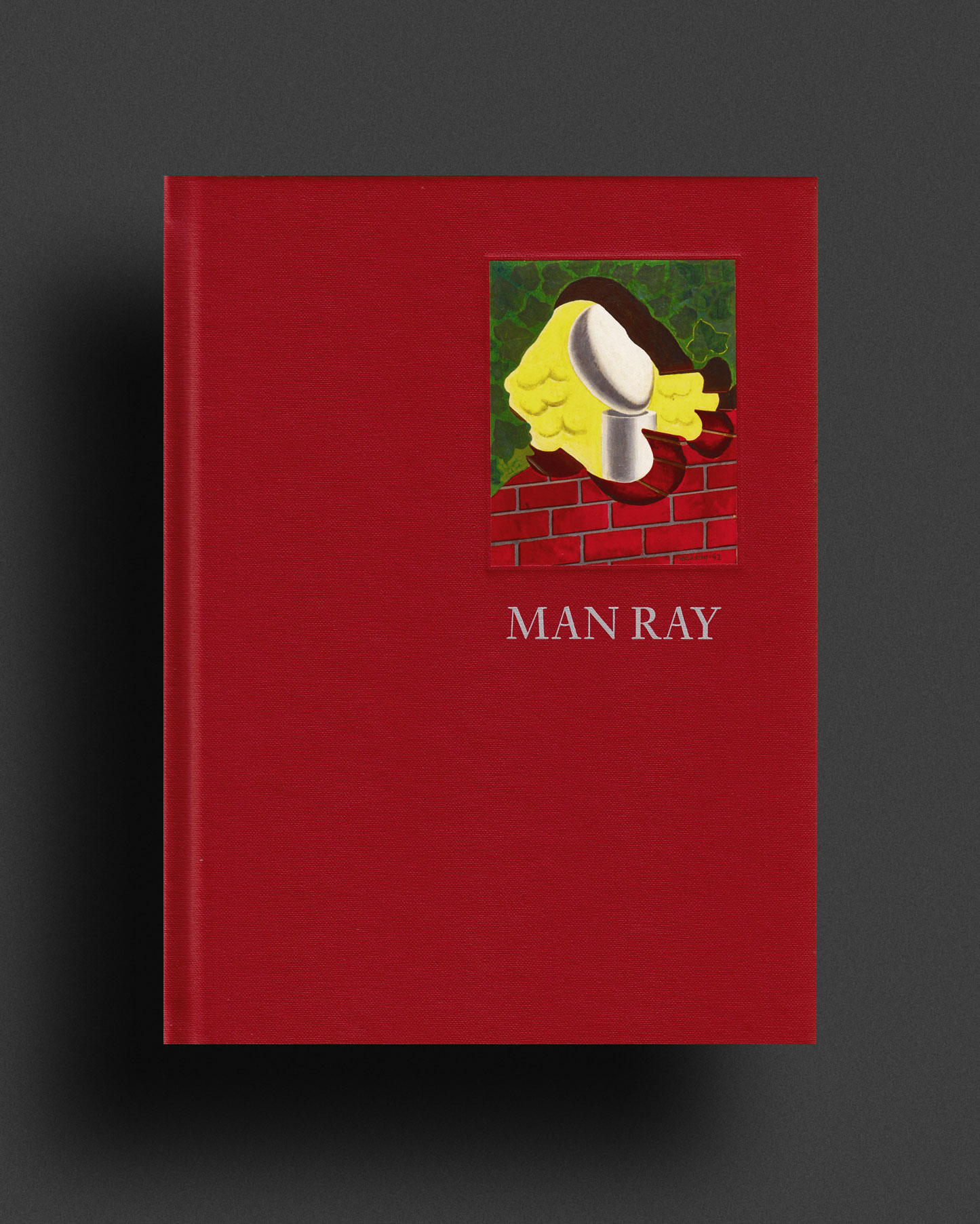
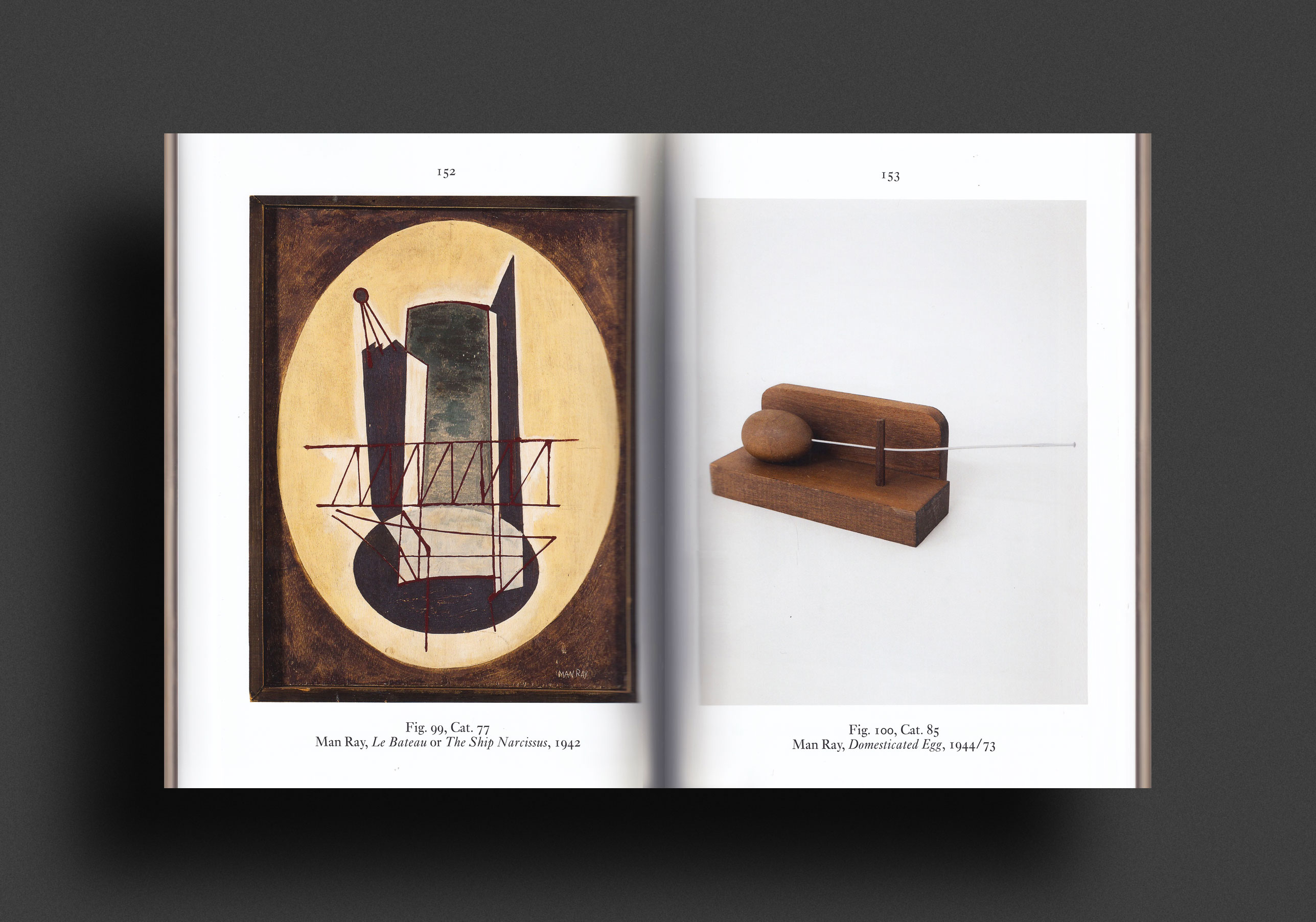
First 1988 hardcover edition of "Perpetual Motif: The Art of Man Ray", the most extensive retrospective of Man Ray's art ever published in the English language, re-printed many times.
Amid the exuberant chaos of the Paris art scene between the world wars, among the jarring factions of Dadaists, Surrealists, Futurists, and miscellaneous others, Philadelphia-born Man Ray was universally admired yet - it seemed - stubbornly mysterious. Although he looms large in today's standard art histories as a figure of unmistakable importance, few people have seen more than a selection of his remarkable photographs or a handful of his enigmatic "objects". Indeed, surprisingly little is known about this extraordinary and innovative creator of paintings, collages, drawings, films, aesthetic theory, and autobiography - as well as photographs and objects.
"Perpetual Motif: The Art of Man Ray" was acclaimed as "the first major book on this mysterious and eclectic artist and his work" (The Bloomsbury Review). It not only examines all aspects of the artist's production in all its forms, but also discusses Man Ray's multifarious connections with the artistic and political radicals of pre-World War I New York, the underground avant-garde as well as the haute monde of Paris between the wars, and the emigre society of Hollywood after World War 11.
Illustrated with nearly 300 of the artist's works in full colour and duotone (many published for the first time)"Perpetual Motif" brings together a host of authors who have distinguished themselves as specialists in the many fields of Man Ray's endeavours. Each has contributed an enlightening essay on one of the many facets in the career of this multifaceted artist.
Features an introduction by Merry Foresta and essays by Francis Naumann, Billy Kluver and Julie Martin, Elizabeth Hutton Turner, Sandra S. Phillips, Stephen C. Foster, and Roger Shattuck.
VG—NF copy in VG—NF dust jacket.
1979, German
Softcover, 419 pages, 28 x 22 cm
1st Edition, Out of print title / used / very good
Published by
Kunsthaus Zürich / Zürich
Bentelli Verlag / Bern
$90.00 $60.00 - In stock -
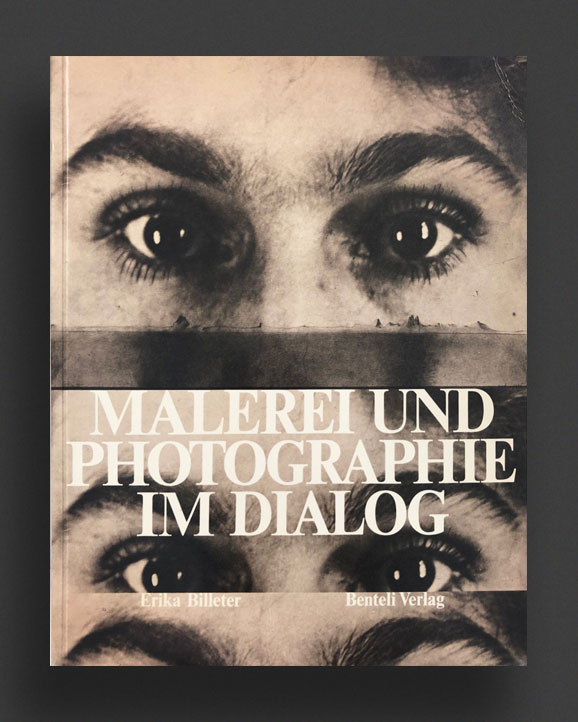
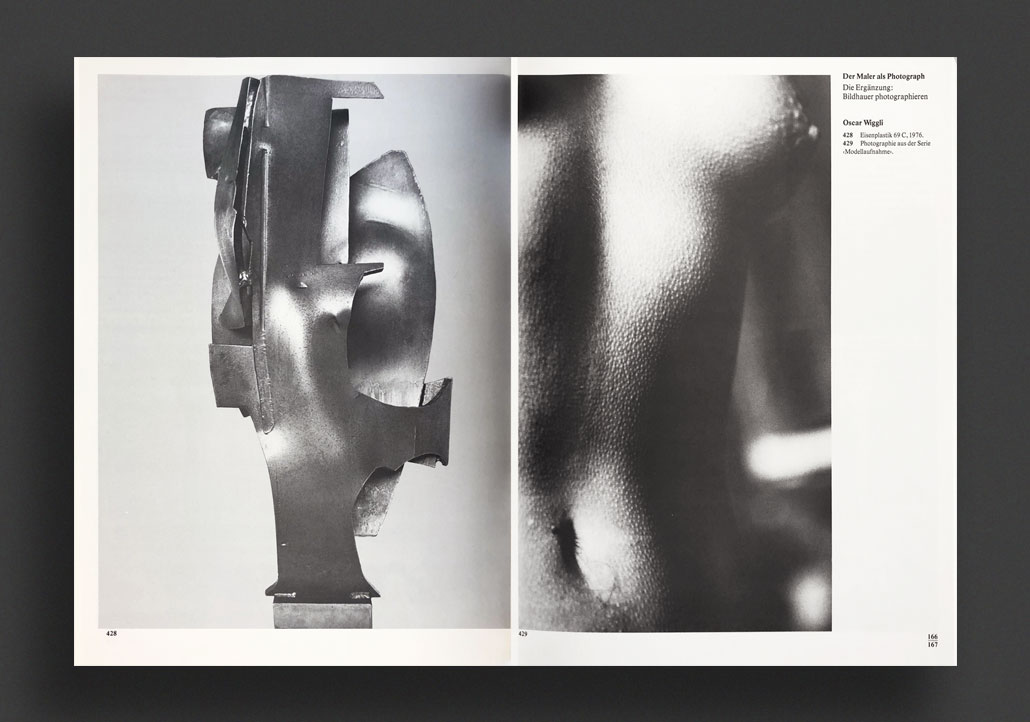
Wonderful over-sized catalogue published on the occasion of the exhibition Malerei und Photographie im Dialog / Painting and Photography in Dialogue, Kunsthaus Zürich, May 13 to July 24, 1977. Profusely illustrated, this heavy volume documents this historical survey of the relationship between photography and painting from 1840 to the present (late 1970s); with a full catalogue of works, artists' biographies, bibliography. Edited by Erika Billeter with texts throughout by art historian Josef A. Schmoll. Includes the work of Edvard Munch, Urs Lüthi, Wols, Vito Acconci, John Baldessari, Eadweard Muybridge, Hannah Höch, Raoul Hausmann, Hans-Peter Feldmann, Oskar Schlemmer, Francis Bacon, Hilla and Bernd Becher, Les Levine, Constant Puyo, Clarence Hudson White, Jan Groover, Jochen Gerz, Duane Michels, Mario Merz, Giulio Paolini, Ruth Francken, Theo Von Doesburg, Kurt Schwitters, Ferdinand Hodler, Herbert Bayer, Marcel Duchamp, Gertrude Käsebier, Edward Steichen, Alighiero Boetti, Klaus Rinke, Giuseppe Penone, Pierre Bonnard, Paul Klee, Gerhard Richter, Monika Baumgartl, Yves Klein, Wolf Vostell, Heinrich Kühn, Georges Mathieu, Peter Roehr, Sarkis, Jiro Takamatsu, Michael Heizer, Umberto Boccioni, Hans Bellmer, William Wegman, Raoul Ubac, Margrit Jäggli, André Kertész, Jiri Kolar, Kasimir Malevich, Henri de Toulouse-Lautrec, Dennis Oppenheim, Christian Boltanski, Dan Graham, Jan Dibbets, Jürgen Klauke, Bruce Nauman, Jean Tinguely, Vettor Pisani, Max Ernst, Joseph Cornell, Allen Kaprow, Arnulf Rainer, Mieczyslaw Berman, Jim Dine, George Brecht, Man Ray, Paul Wunderlich, Karin Székessy, Tom Wesselmann, Chuck Close, Eugène Delacroix, Duane Hanson, Heinrich Zille, Félix Vallotton, Carl Durheim, Gilbert and George, Joseph Beuys, Thomas Eakins, Robert Rauschenberg, Édouard Vuillard, Carlo Carrà, Alphonse Mucha, Les Krims, Albert Steiner, Giorgio de Chirico, Keiji Uematsu, Ernst Ludwig Kirchner, Heinrich Zille, Franco Fontana, Richard Long, Ben Shahn, Edmund Kesting, László Moholy-Nagy, Anton Stankowski, Paul Nash, Rene Magritte, Paul T. Frankl, John Heartfield, El Lissitzky, Georges Hugnet, Gordon Matta-Clark....
Very Good copy, crease to top cover corner.