World Food Books' programme is largely produced on Kulin Nation land. We acknowledge the Wurundjeri people of the Kulin Nation as the first and continuing custodians of this land, and pay respect to their Elders past, present, and emerging.
World Food Books is an arts and special interests bookshop in Naarm / Melbourne. Founded in 2010, World Food Books is devoted to the presentation of a rotating, hand-selection of international art, design, literary and counterculture publications with an emphasis on the anti-traditional, the experimental, the avant-garde, the heretic, the marginal.
Presenting new titles alongside rare and out-of-print books, catalogues and journals spanning the fields of modern and contemporary art, design, photography, illustration, film, literature, poetry, cultural theory, philosophy, sexuality, popular and underground culture in its many radical forms, World Food Books wishes to encourage adventurous, thoughtful and open-minded reading, looking, writing, and exchange of publishing and ideas, both current and historical.
As well as our bookshop, located in Melbourne's historical Nicholas Building, all of our inventory is available internationally via our online mail-order service.
World Food Books semi-regularly co-ordinates "Occasions", a programme of exhibits and events at the bookshop and in partnership with other hosts (such as museums and art galleries) that develop out of the activities, relationships and content of the bookshop itself.
World Food Books
The Nicholas Building
37 Swanston Street
Room 5, Level 6
Melbourne 3000
Australia
SHOP HOURS:
Thu–Fri 12–6
Sat 12–5
WEB-SHOP OPEN 24/7
World Food Books
Postal Address:
37 Swanston Street
Room 5, Level 6
Melbourne 3000
Australia
Art
Theory / Essay
Architecture / Interior
Graphic Design / Typography
Photography
Fashion
Eros
LGBTQ+
Fiction / Poetry
Weird / Speculative / Science Fiction / Horror
Transgressive / Visceral / Abject
Symbolism / Decadence / Fin de siècle
Film / Video
Painting
Sculpture / Installation
Performance / Dance / Theater
Drawing
Sound / Music
Curatorial
Group Shows / Collections
Periodicals
Out-of-print / Rare
Posters / Ephemera / Discs
Signed Books
World Food Books Gift Voucher
World Food Book Bag
Australian Art
Australian Fiction
Australian Science Fiction / Speculative Fiction
Australian Poetry
Australian Photography
Japanese Photography
Conceptual Art
Minimal Art
Dada
'Pataphysics / Oulipo
Fluxus
Concrete Poetry
Pop Art
Surrealism
Arte Povera
Arte Informale / Haute Pâte / Tachism
Nouveau Réalisme / Zero / Kinetic
Situationism / Lettrism
Collage / Mail Art / Xerox Art
Art Brut / Folk / Visionary / Fantastic
Illustration / Graphic Art / Bandes Dessinées
Furniture
Italian Radical Design / Postmodernism
Textiles
Ceramics / Glass
Counterculture
Protest / Revolt
Philosophy
Psychoanalysis
Anthropology
Anarchism
Socialism / Anarchism / Communism / Capitalism
Literary Theory / Semiotics / Language
Feminism / Women's Studies
Gender Studies / Sexuality
Anthropology
Fetishism / BDSM
Drugs / Psychedelia
Crime / Violence
Animal Rights / Veganism
Occult / Esoterica
Ecology / Earth / Alternative Living
Whole Earth / Crafts
All prices in AUD (Australian dollars)
Pick-Ups
Pick-up orders can be collected in our bookshop during opening hours after order date. Please collect any Pick-up orders within 2 weeks of ordering as we have limited storage space. Orders will be released back into stock if not collected within this time. No refunds can be made for pick-ups left un-collected. If you cannot make it in to the bookshop in this time-frame, please choose postage option.
Return Policy
All sales are final. We do accept returns (for refund or exchange) for items received in error. All our orders are packed with special care using heavy-duty padding and cardboard book-mailers or bubble mailers (for smaller books), using reinforcement where required. We cannot take responsibility for any lost, stolen or damaged parcels.
Insurance
Should you wish to insure your package, please email us directly after placing your order and we can organise this at a small extra expense. Although all standard/express tracked packages are very safe and dependable, we cannot take responsibility for any lost, stolen or damaged parcels. We recommend insurance on valuable orders.
Interested in selling your old books, catalogues, journals, magazines, comics, fanzines, ephemera? We are always looking for interesting, unusual and out-of-print books to buy. We only buy books in our fields of interest and specialty, and that we feel we can resell.
We base these prices on desirability, market value, in-print prices, condition and our current stock levels. We offer cash, store credit, and can take stock on consignment. All
about 25% of the price we expect to get when we sell them, or 30% in store credit. We base these prices on desirability, market value, in-print prices, condition and our current stock levels.
Sell your books any day of the week. You can drop them off and return later. If you have a lot of books, we can visit your Sydney home.
We buy books that we feel we can resell. We offer about 25 % of the price we expect to get when we sell them, or 30% in store credit. We base these prices on desirability, market value, in-print prices, condition and our current stock levels.
Philadelphia Wireman
03 August - 01 September, 2018
World Food Books is proud to announce our next Occasion, the first presentation of sculptures by Philadelphia Wireman in Australia.
The Philadelphia Wireman sculptures were found abandoned in an alley off Philadelphia’s South Street on trash night in 1982. Their discovery in a rapidly-changing neighbourhood undergoing extensive renovation, compounded with the failure of all attempts to locate the artist, suggests that the works may have been discarded after the maker’s death. Dubbed the "Philadelphia Wireman" during the first exhibition of this work, in 1985, the maker’s name, age, ethnicity, and even gender remain uncertain. The entire collection totals approximately 1200 pieces, all intricately bound together with tightly-wound heavy-gauge wire (along with a few small, abstract marker drawings, reminiscent both of Mark Tobey and J.B. Murry). The dense construction of the work, despite a modest range of scale and materials, is singularly obsessive and disciplined in design: a wire armature or exoskeleton firmly binds a bricolage of found objects including plastic, glass, food packaging, umbrella parts, tape, rubber, batteries, pens, leather, reflectors, nuts and bolts, nails, foil, coins, toys, watches, eyeglasses, tools, and jewellery.
Heavy with associations—anthropomorphic, zoomorphic, and socio-cultural responses to wrapped detritus—the totemic sculptures by Philadelphia Wireman have been discussed in the context of work created to fulfil the shamanistic needs of alternative religions in American culture. Curators, collectors, and critics have variously compared certain pieces to sculpture from Classical antiquity, Native American medicine bundles, African-American memory jugs, and African fetish objects. Reflecting the artist’s prolific and incredibly focused scavenging impulse, and despite—or perhaps enhanced by—their anonymity, these enigmatic objects function as urban artefacts and arbiters of power, though their origin and purpose is unknown. Philadelphia Wireman, whatever their identity, possessed an astonishing ability to isolate and communicate the concepts of power and energy through the selection and transformation of ordinary materials. Over the course of the past two decades, this collection has come to be regarded as an important discovery in the field of self-taught art and vernacular art.
Presented in collaboration with Fleisher-Ollman Gallery, Philadelphia, and Robert Heald, Wellington.
Susan Te Kahurangi King
02 February - 10 March, 2018
Susan Te Kahurangi King (24 February 1951 - ) has been a confident and prolific artist since she was a young child, drawing with readily available materials - pencils, ballpoint pens and felt-tip markers, on whatever paper is at hand. Between the ages of four and six Susan slowly ceased verbal communication. Her grandparents William and Myrtle Murphy had developed a special bond with Susan so they took on caring responsibilities for extended periods. Myrtle began informally archiving her work, carefully collecting and storing the drawings and compiling scrapbooks. No drawing was insignificant; every scrap of paper was kept. The King family are now the custodians of a vast collection containing over 7000 individual works, from tiny scraps of paper through to 5 meter long rolls.
The scrapbooks and diaries reveal Myrtle to be a woman of great patience and compassion, seeking to understand a child who was not always behaving as expected. She encouraged Susan to be observant, to explore her environment and absorb all the sights and sounds. Myrtle would show Susan’s drawings to friends and people in her community that she had dealings with, such as shopkeepers and postal workers, but this was not simply a case of a grandmother’s bias. She recognised that Susan had developed a sophisticated and unique visual language and sincerely believed that her art deserved serious attention.
This was an unorthodox attitude for the time. To provide some context, Jean Dubuffet coined the term Art Brut in 1945 to describe work created by self-taught artists – specifically residents of psychiatric institutions and those he considered to be visionaries or eccentrics. In 1972 Roger Cardinal extended this concept by adopting the term Outsider Art to describe work made by non-academically trained artists operating outside of mainstream art networks through choice or circumstance. Susan was born in Te Aroha, New Zealand in 1951, far from the artistic hubs of Paris and London that Dubuffet and Cardinal operated in. That Myrtle fêted Susan as a self-taught artist who deserved to be taken seriously shows how progressive her attitudes were.
Susan’s parents Doug and Dawn were also progressive. Over the years they had consulted numerous health practitioners about Susan’s condition, as the medical establishment could not provide an explanation as to why she had lapsed into silence. Dawn educated herself in the field of homeopathy and went on to treat all twelve of her children using these principles – basing prescriptions on her observations of their physical, mental and emotional state.
Doug was a linguist with an interest in philosophy who devoted what little spare time he had to studying Maori language and culture. To some extent their willingness to explore the fringes of the mainstream made them outsiders too but it was their commitment to living with integrity and their respect for individuality that ensured Susan’s creativity was always encouraged.
Even though Susan’s family supported her artistic pursuits, some staff in schools and hospitals saw it as an impediment to her assimilation into the community and discouraged it in a variety of ways. Her family was not always aware of this and therefore did not fully understand why Susan stopped drawing in the early 1990s. However, rather than dwell on the challenges that Susan faced in pursuit of her artistic practice, they prefer to highlight her achievements. In 2008 Susan began drawing again in earnest, after an almost 20 year interruption, and her work is now shown in galleries around the world.
Susan grew up without television and has been heavily influenced by the comics she read as a child. She is absolutely fearless in the appropriation of recognizable characters, such as Donald Duck and Mickey Mouse, in her work. She twists their limbs, contorts their faces, compresses them together, blends them into complex patterned backgrounds - always imbuing them with an incredible energy. Although Susan often used pop culture characters in her work they are not naive or childlike. These are drawings by a brilliant self-taught artist who has been creating exceptional work for decades without an audience in mind.
Mladen Stilinović
"Various Works 1986 - 1999"
02 February 16 - September 10, 2016
Various works 1986 - 1999, from two houses, from the collections of John Nixon, Sue Cramer, Kerrie Poliness, Peter Haffenden and Phoebe Haffenden.
Including: Geometry of Cakes (various shelves), 1993; Poor People’s Law (black and white plate), 1993; White Absence (glasses, ruler, set square, silver spoon, silver ladel with skin photograph and wooden cubes), 1990-1996; Exploitation of the Dead (grey and red star painting, wooden painting, black spoon with red table, red plate), 1984-1990; Money and Zeros (zero tie, paintings made for friends in Australia (Sue, John, Kerrie), numbers painting), 1991-1992; Words - Slogans (various t-shirts) - “they talk about the death of art...help! someone is trying to kill me”, “my sweet little lamb”, “work is a disease - Karl Marx”; Various artist books, catalogues, monographs, videos; Poster from exhibition Insulting Anarchy; "Circular" Croatian - Australian edition; Artist book by Vlado Martek (Dostoyevsky); more.
Thanks to Mladen Stilinović and Branka Stipančić.
Jonathan Walker
Always Will Need To Wear Winter Shirt Blue + Ochre Small Check Pattern
21 August - 21 September, 2015
Untitled
I am not a great reader of poetry but I always return to the work of Melbourne poet, Vincent Buckley (1925- 1988). Perhaps I find his most tantalising piece to be not a finished poem but a fragment left on a scrap of paper discovered on his desk after the poet’s death.
The poetry gathers like oil
In the word-core, and spreads
It has its music meet,
Its music is in movement.
This fragment is more the shell left behind from a volatile thought than a finished poem. I find the last two lines honest but awkward whereas the first two lines work like an arrow. Most likely he could not find a resolution so it was left. Still, in its present form, it remains an eloquent testimony to the ultimate failure of a medium to express mobile thought and sensation, in Buckley’s case, through verbal language. It’s an important matter because this is something all artists have to deal with regardless of the medium.
I have never written a poem, however, I am forever copying fragments from books on paper scraps in a vain effort to fix certain notions in my head. At first, they function as bookmarks that are sometimes returned to when I open the book. But before long, as they accumulate, they fall out littering the table interspersed with A4 photocopies, bills, books and medications.
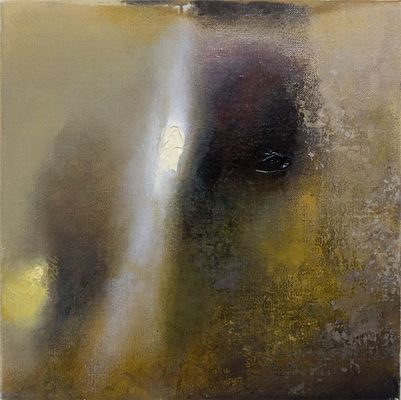
To return to Buckley’s fragment, the first two lines very much evoke how I paint nowadays. As you age, detail diminishes and patches of light become more luminous and float. I feel the most honest way of dealing with this is by smearing the oil paint on the canvas with the fingers and working close-up, blind. Only if the patches coalesce into an approaching image can the work gain a life.
-
Jonathan Walker was born in Melbourne, Australia and brought up on a dairy farm in Gippsland. In the 1970’s he studied painting at RMIT and won the Harold Wright Scholarship to the British Museum, London. During the 1980’s he exhibited at Pinacotheca Gallery, Richmond and had work shown at the NGV and Heidi City Art Gallery. Over the same period he designed the cover for the “Epigenesi” LP by Giancarlo Toniutti, Italy and conducted a mail exchange work with Achim Wollscheid, Germany. The work with artists through the post resulted in an article published in the bicentenary issue of Art and Australia 1988. He showed in artist run spaces such as WestSpace in the 90’s and 2000’s, and until 2012, taught painting at Victoria University, which is where we (Colleen Ahern and Lisa Radford) as organisers of the exhibition, among many others, had the privilege of being his student.
Walker’s knowledge was imparted to students through the careful selection of music, literature, and artists found in books that he himself had ordered for the library. Walker’s strategy was the generosity of sharing his vast knowledge with references specific to each student and their context.
Walker’s paintings share a similar focus and intimacy.
This exhibition presents a small selection of recent paintings alongside a publication that includes Walker’s writing. Observational and analytical, Walker’s work is a type of material notation — the time of day, colour and how it is blended, the both specific and fleeting location of a reflection on lino or the question of whether a chair leg should be included in a painting.
Please join us on Friday August 21 between 6-8pm to celebrate the opening of the exhibition.
Curated by Colleen Ahern and Lisa Radford.
B. Wurtz
Curated by Nic Tammens
March 26 - April 4, 2015
B.Wurtz works from a basement studio in his home on Manhattan’s Lower East Side.
This local fact is attested to by the plastic shopping bags and newsprint circulars that appear in his work. As formal objects, they don’t make loud claims about their origins but nonetheless transmit street addresses and places of business from the bottom of this long thin island. Like plenty of artists, Wurtz is affected by what is local and what is consumed. His work is underpinned by this ethic. It often speaks from a neighborhood or reads like the contents of a hamper:
“BLACK PLUMS $1.29 lb.”
“Food Bazaar”
“USDA Whole Pork Shoulder Picnic 99c lb.”
“RITE AID Pharmacy, with us it’s personal.”
“H. Brickman & Sons.”
“Sweet Yams 59c lb."
Most of the work in this exhibition was made while the artist was in residence at Dieu Donne, a workshop dedicated to paper craft in Midtown. Here Wurtz fabricated assemblages with paper and objects that are relatively lightweight, with the intention that they would be easily transportable to Australia. This consideration isn’t absolute in Wurtz’s work, but was prescriptive for making the current exhibition light and cheap. Packed in two boxes, these works were sent from a USPS post office on the Lower East Side and delivered to North Melbourne by Australia Post.
Wurtz appears courtesy of Metro Pictures, New York.
Thanks to Rob Halverson, Joshua Petherick, Sari de Mallory, Matt Hinkley, Helen Johnson, Fayen d'Evie, Ask Kilmartin, Lisa Radon, Ellena Savage, Yale Union, and "Elizabeth".
John Nixon
"Archive"
December 15 - January 20, 2014
The presentation of John Nixon's archive offered a rare showcase of this extensive collection of the artist's own publications, catalogues, posters, ephemera, editions and more, from the mid 1980s onwards, alongside a selection of his artworks.
Organized by John Nixon, Joshua Petherick and Matt Hinkley.
<a href=http://wfb.public-office.info/artist/john-nixon>All titles by John Nixon
"Habitat"
at Minerva, Sydney (organised by Joshua Petherick and Matt Hinkley)
November 15 - December 20, 2014
Lupo Borgonovo, Janet Burchill & Jennifer McCamley,
Lewis Fidock, HR Giger, Piero Gilardi, Veit Laurent Kurz,
Cinzia Ruggeri, Michael E. Smith, Lucie Stahl, Daniel Weil, Wols
Press Release:
“...It contained seven objects. The slender fluted bone, surely formed for flight, surely from the wing of some large bird. Three archaic circuitboards, faced with mazes of gold. A smooth white sphere of baked clay. An age-blackened fragment of lace. A fingerlength segment of what she assumed was bone from a human wrist, grayish white, inset smoothly with the silicon shaft of a small instrument that must once have ridden flush with the surface of the skin - but the thing’s face was seared and blackened.”
William Gibson, “Count Zero”, 1986
"Autumn Projects Archive"
Curated by Liza Vasiliou
March 6 - March 15, 2014
World Food Books, in conjunction with the Virgin Australia Melbourne Fashion Festival 2014, presented the Autumn Projects archive, consisting of a selection of early examples in Australian fashion with a particular interest in collecting designers and labels from the period beginning in the 1980’s, who significantly influenced the discourse of Australian Fashion.
Curated by Liza Vasiliou, the exhibition provided a unique opportunity to view pieces by designers Anthea Crawford, Barbara Vandenberg, Geoff Liddell and labels CR Australia, Covers, Jag along with early experimental collage pieces by Prue Acton and Sally Browne’s ‘Fragments’ collection, suspended throughout the functioning World Food Books shop in Melbourne.
H.B. Peace
presented by CENTRE FOR STYLE
November 14, 2013
"Hey Blinky, you say chic, I say same"
Anon 2013
H.B. Peace is a clothing collaboration between great friends Blake Barns and Hugh Egan Westland. Their pieces explore the divergences between 'character’ and ‘personality’ in garments....etc
Special Thanks to Joshua Petherick and Matt Hinkley of WFB and Gillian Mears
and a Very Special Thank you to Audrey Thomas Hayes for her shoe collaboration.
Janet Burchill & Jennifer McCamley
"Aesthetic Suicide"
May 10 - June 8, 2013
The first of our occasional exhibitions in the World Food Books office/shop space in Melbourne, "Aesthetic Suicide" presented a body of new and older works together by artists Janet Burchill & Jennifer McCamley, including videos, prints, a wall work, and publications.
During shop open hours videos played every hour, on the hour.
2004, English
Softcover, 224 pages, 22.6 x 15.3 cm
Published by
Zone Books / New York
$60.00 - In stock -
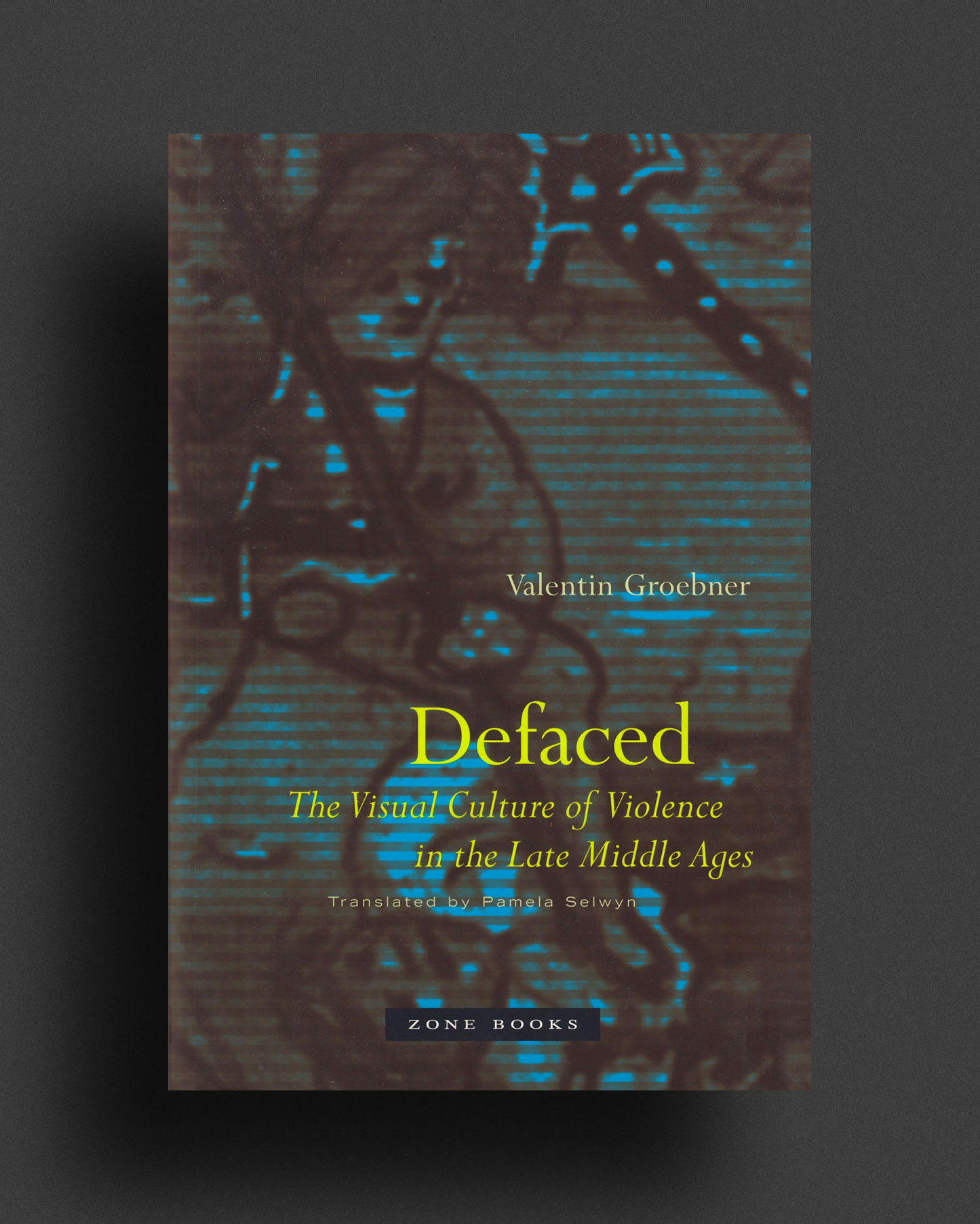
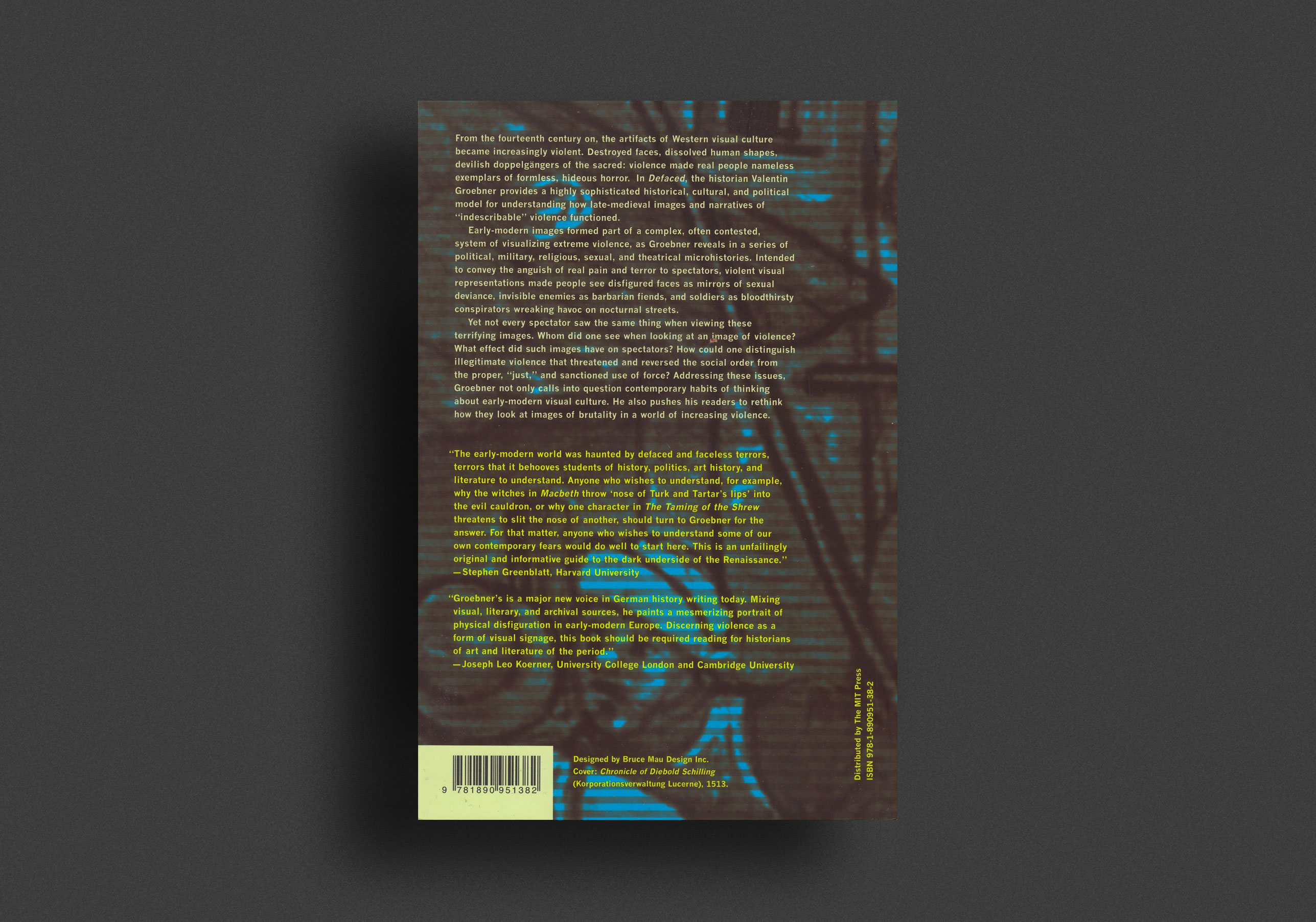
From the fourteenth century on, the artifacts of Western visual culture became increasingly violent. Destroyed faces, dissolved human shapes, devilish doppelgängers of the sacred: violence made real people nameless exemplars of formless, hideous horror. In Defaced, the historian Valentin Groebner provides a highly sophisticated historical, cultural, and political model for understanding how late-medieval images and narratives of “indescribable” violence functioned.
Early modern images formed part of a complex, often contested, system of visualizing extreme violence, as Groebner reveals in a series of political, military, religious, sexual, and theatrical microhistories. Intended to convey the anguish of real pain and terror to spectators, violent visual representations made people see disfigured faces as mirrors of sexual deviance, invisible enemies as barbarian fiends, and soldiers as bloodthirsty conspirators wreaking havoc on nocturnal streets.
“Should be required reading for historians of art and literature of the period.” –Joseph Leo Koerner
Yet not every spectator saw the same thing when viewing these terrifying images. Whom did one see when looking at an image of violence? What effect did such images have on spectators? How could one distinguish illegitimate violence that threatened and reversed the social order from the proper, “just,” and sanctioned use of force? Addressing these issues, Groebner not only calls into question contemporary habits of thinking about early modern visual culture; he also pushes his readers to rethink how they look at images of brutality in a world of increasing violence.
“Defaced is an enjoyable book—and another worthwhile publication from Zone, which has done so much to revise our understanding of medieval bodies.” —CAA Reviews
“Groebner’s is a major new voice in German history writing today. Mixing visual, literary, and archival sources, he paints a mesmerizing portrait of physical disfiguration in early-modern Europe. . . . This book should be required reading for historians of art and literature of the period.” —Joseph Leo Koerner, Harvard University
1997, English
Softcover, 306 pages, 28 x 18.5 cm
1st Edition, Out of print title / used / very good
Published by
Zone Books / New York
$160.00 - Out of stock
Long out–of–print.
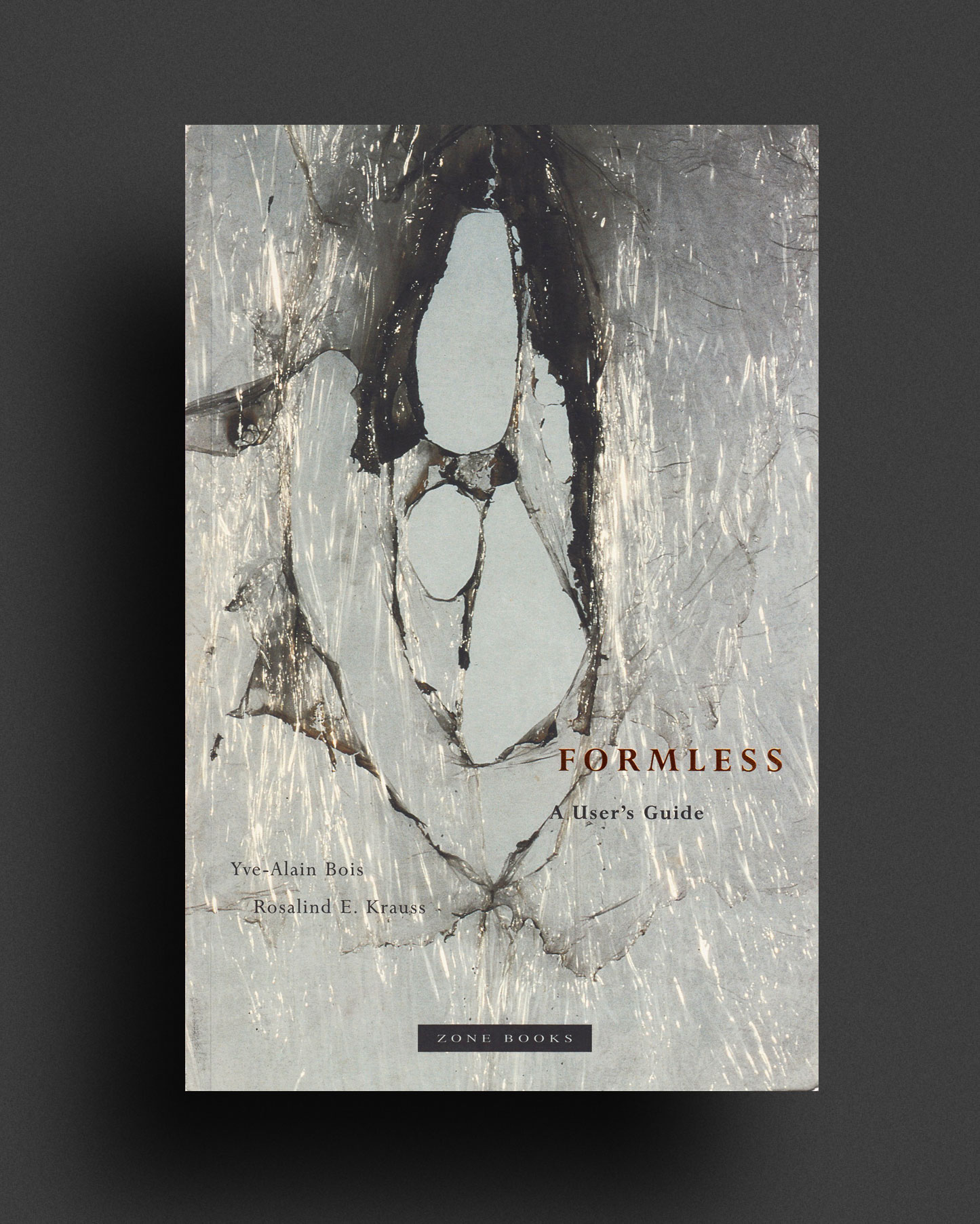
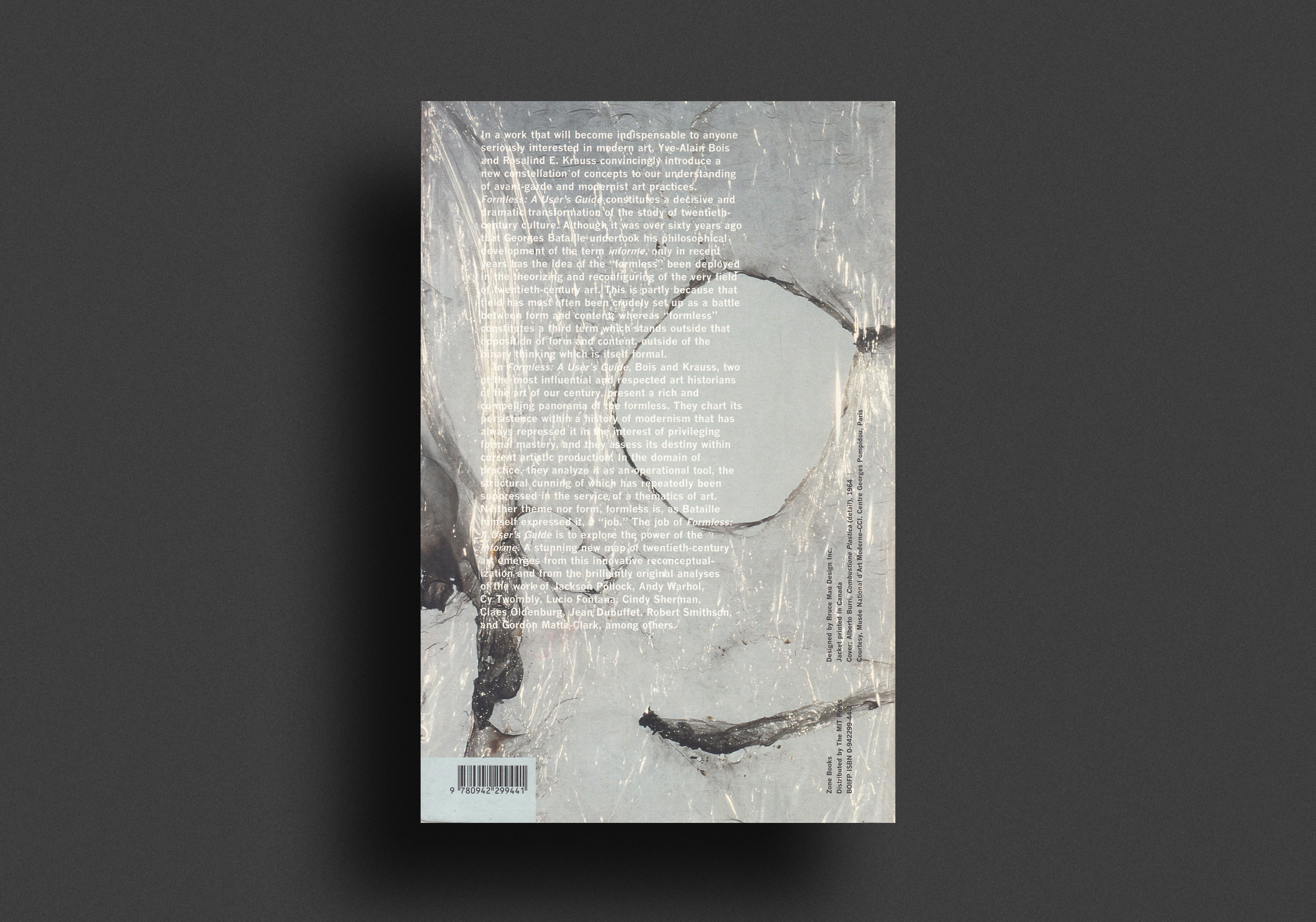
"In a work that will become indispensable to anyone seriously interested in modern art, Yve-Alain Bois and Rosalind Krauss convincingly introduce a new constellation of concepts to our understanding of avant-garde and modernist art practices. Formless: A User’s Guide constitutes a decisive and dramatic transformation of the study of twentieth-century culture. Although it has been over sixty years since Georges Bataille undertook his philosophical development of the term informe, only in recent years has the idea of the “formless” been deployed in theorizing and reconfiguring the very field of twentieth-century art. This is partly because that field has most often been crudely set up as a battle between form and content, whereas “formless” constitutes a third term that stands outside the opposition of form and content, outside the binary thinking that is itself formal. In Formless: A User’s Guide, Bois and Krauss, two of the most influential and respected art historians of our time, present a rich and compelling panorama of the formless. They map out its persistence within a history of modernism that has always repressed it in the interest of privileging formal mastery, and they assess its destiny within current artistic production. In the domain of practice, they analyze it as an operational tool, the structural cunning of which has repeatedly been suppressed in the service of a thematics of art. Neither theme nor form, formless is, as Bataille himself expressed it, a “job.” The job of Formless: A User’s Guide is to explore the power of the informe. A stunning new map of twentieth-century art emerges from this innovative reconceptualization and from the brilliantly original analyses of the work of Lucio Fontana, Lygia Clark, Cy Twombly, Mike Kelley, Cindy Sherman, Claes Oldenburg, Jean Dubuffet, Robert Smithson, Jackson Pollock, Andy Warhol, and Gordon Matta-Clark, among others."
Very Good copy. First 1997 Ed. 2nd 1999 print.
2024, English
Softcover, 480 pages, 23 x 15.4 cm
Published by
Zone Books / New York
$49.00 - In stock -
Translated by Nicholas Huckle
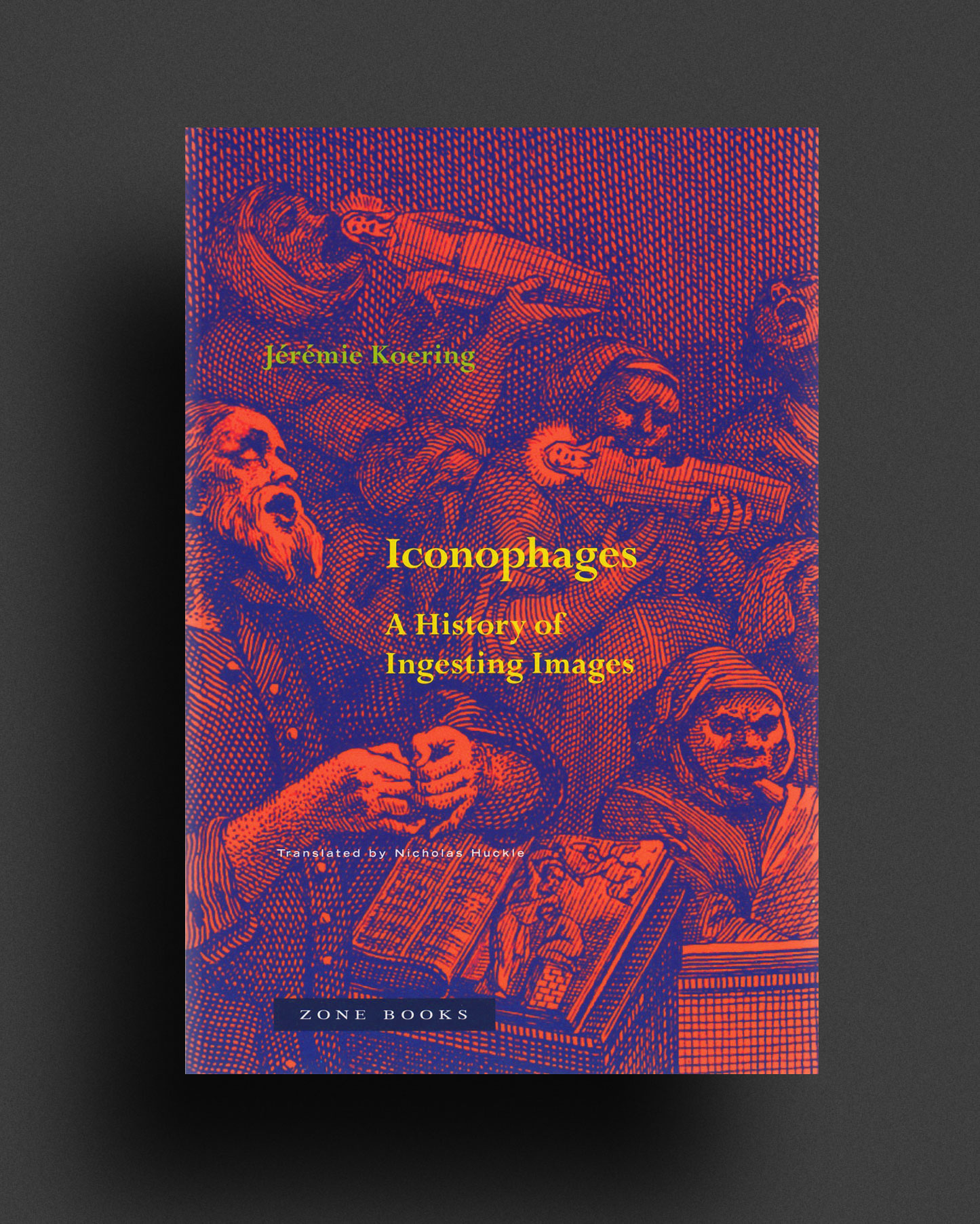
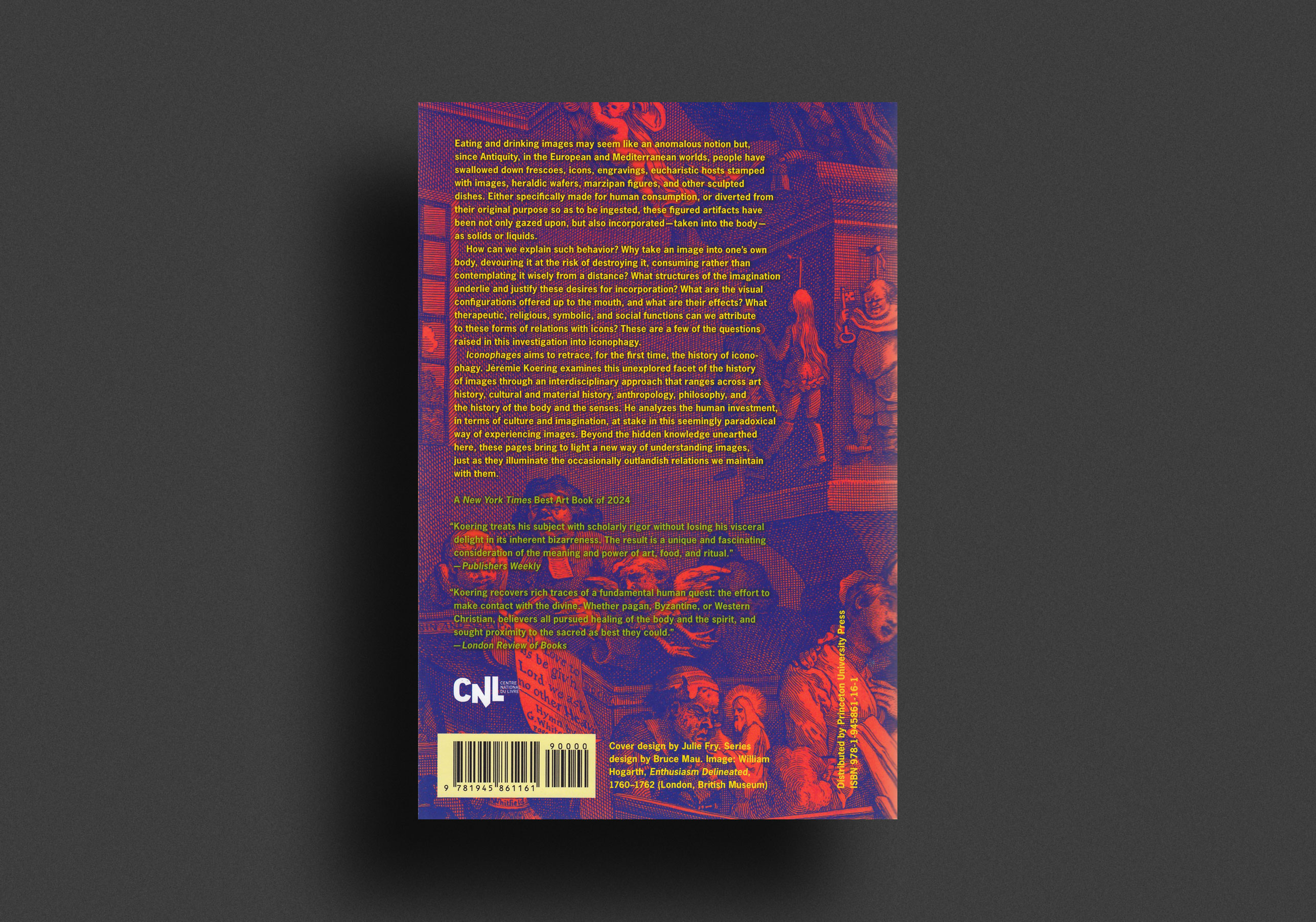
Eating and drinking images may seem like an anomalous notion but, since antiquity, in the European and Mediterranean worlds, people have swallowed down frescoes, icons, engravings, eucharistic hosts stamped with images, heraldic wafers, marzipan figures, and other sculpted dishes. Either specifically made for human consumption or diverted from their original purpose so as to be ingested, these figured artifacts have been not only gazed upon but also incorporated—taken into the body—as solids or liquids.
How can we explain such behavior? Why take an image into one’s own body, devouring it at the risk of destroying it, consuming rather than contemplating it wisely from a distance? What structures of the imagination underlie and justify these desires for incorporation? What are the visual configurations offered up to the mouth, and what are their effects? What therapeutic, religious, symbolic, and social functions can we attribute to these forms of relations with icons? These are a few of the questions raised in this investigation into iconophagy.
Iconophages aims to retrace, for the first time, the history of iconophagy. Jérémie Koering examines this unexplored facet of the history of images through an interdisciplinary approach that ranges across art history, cultural and material history, anthropology, philosophy, and the history of the body and the senses. He analyzes the human investment, in terms of culture and imagination, at stake in this seemingly paradoxical way of experiencing images. Beyond the hidden knowledge unearthed here, these pages bring to light a new way of understanding images, just as they illuminate the occasionally outlandish relations we maintain with them.
“Brilliantly written, this groundbreaking study combines the vividness of historical case studies with the lucidity of philosophical reflection… Iconophages makes a fundamental contribution to a comprehensive anthropology of the image.” —Peter Geimer
“This long-awaited transhistorical study of iconophagy is remarkable for its scope. With eloquence and erudition, Koering marshals an astonishing array of materials often seen as archaic, marginal, or primitive to demonstrate the ubiquity of image ingestion within the western tradition. Taking us far beyond the default ocularcentrism of art history, Iconophages engages current concerns with embodiment and materiality in a study with significant implications for the consumption and conception of images in and before modernity.” — Finbarr Barry Flood, Director of Silsila: Center for Material Histories and William R. Kenan Jr. Professor of the Humanities, New York University
“Iconophages is a tremendously entertaining book, an exploration of a permeable boundary that has developed between recent art history, anthropology, and religious studies, permitting histories that can encompass living images: images that speak, ‘operate,’ kill, and eat. After an opening look at Egyptian and Greek practices, Koering goes on a tour of edible images in Europe. He considers representations of Saint Catherine drinking blood (‘the best of sauces’ according to a sixteenth-century source) directly from Christ’s wounds, the unappetizing Sicilian pastries called ossa dei morti (‘bones of the dead’), the idea of drinking the Virgin’s milk, and iron presses for figured Eucharistic wafers.” — James Elkins, Chair of the Department of Art History, Theory, and Criticism, School of the Art Institute of Chicago
“Iconophages invites us to take a new and different look at the objects of art history. Far beyond our common understanding of images as primarily visual phenomena, Koering reveals a fascinating practice of touching, tasting, and ingesting images – from magical practices to modern art, from the sacred to the profane, from the natural to the supranatural world. Brilliantly written, this groundbreaking study combines the vividness of historical case studies with the lucidity of philosophical reflection. By opening up hitherto little-known aesthetic, religious, and cultural dimensions of visual artifacts, Iconophages makes a fundamental contribution to a comprehensive anthropology of the image.” — Peter Geimer, Director, German Center for Art History, Paris
2025, English
Softcover, 208 pages, 22.86 x 15.24 cm
Published by
Zone Books / New York
$45.00 - In stock -
Translated by Olivia Custer
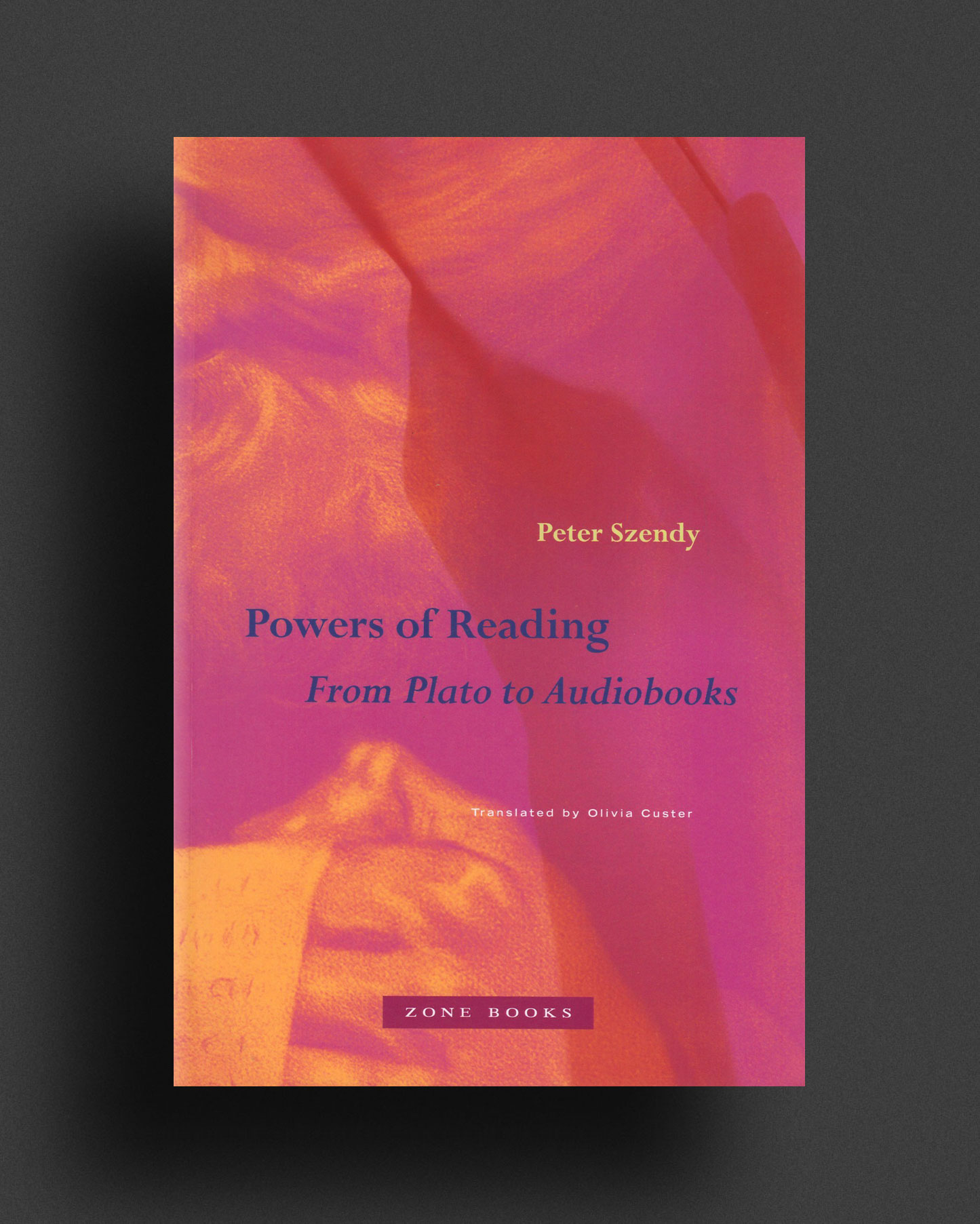
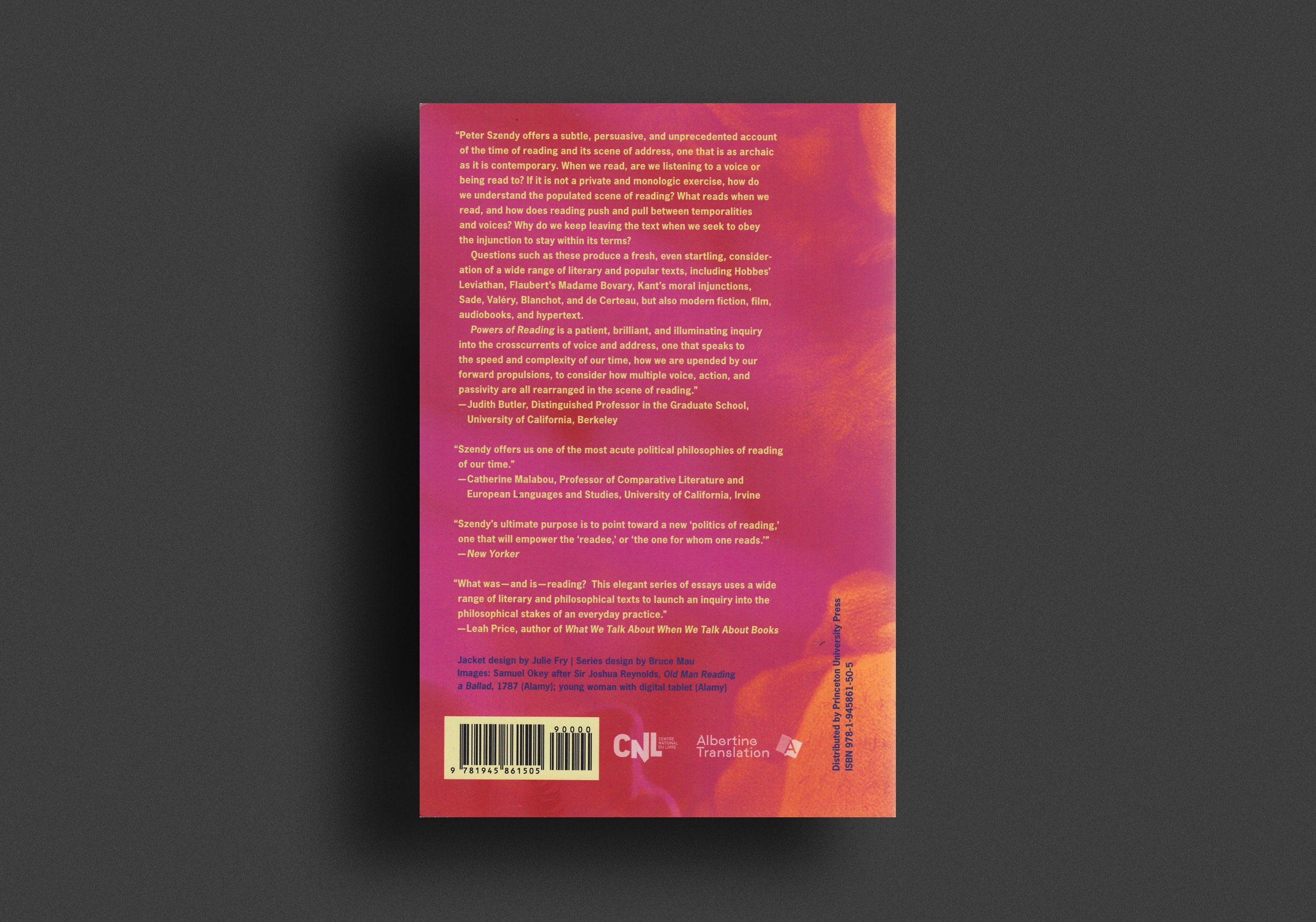
“Peter Szendy offers a subtle, persuasive, and unprecedented account of the time of reading and its scene of address, one that is as archaic as it is contemporary. When we read, are we listening to a voice or being read to? If it is not a private and monologic exercise, how do we understand the populated scene of reading? What reads when we read, and how does reading push and pull between temporalities and voices? Why do we keep leaving the text when we seek to obey the injunction to stay within its terms?
Questions such as these produce a fresh, even startling, consideration of a wide range of literary and popular texts, including Hobbes’ Leviathan, Flaubert’s Madame Bovary, Kant’s moral injunctions, Sade, Valéry, Blanchot, and de Certeau, but also modern fiction, film, audiobooks, and hypertext. The power of reading turns out to belong to its surprising engagement with time and direction: the deliberate reader stays close but strays, tries to fill in the gaps but gets pushed back by a countercurrent. The key to the text is sought ‘outside’ only to be led back to the text and its failure to deliver a final answer. Equally at odds with older versions of literary formalism that insist on the self-referentiality of the text as well as contextualists who scour an external social order to discover the truth of the text, Szendy approaches that very conflict as an oscillation constitutive of reading itself. Paradoxically, reading is sustained precisely by what interrupts its teleological flow.
The result is a comic, profound, and timely reconceptualization of reading which rushes forward only to find itself pushed back into the heart of the text, which discovers that this incessant breaking from the text, this headlong rushing ahead to the world outside the text is a sequence of overreach, delay, and return that forms the ragged rhythm of reading itself. Powers of Reading is a patient, brilliant, and illuminating inquiry into the crosscurrents of voice and address, one that speaks to the speed and complexity of our time, how we are upended by our forward propulsions, to consider how multiple voice, action, and passivity are all rearranged in the scene of reading.”— Judith Butler, Distinguished Professor in the Graduate School, University of California, Berkeley
“Szendy offers us one of the most acute political philosophies of reading of our time.” —Catherine Malabou
“What was—and is—reading? Ranging from a playful analysis of what it feels like to be read to, to an erudite account of judicial systems that alternately censor books and condemn readers to read them, to a revelatory reconstruction of the role of the slave in Plato’s dialogues, this elegant series of essays uses a wide range of literary and philosophical texts to launch an inquiry into the philosophical stakes of an everyday practice.” — Leah Price, Henry Rutgers Distinguished Professor, Rutgers University
“Szendy offers us one of the most acute political philosophies of reading of our time. Reading inverts the Hegelian dialectical process of freedom, to the extent that there exists, in each reader, a slave who commands and a master who obeys. Literacy coincides with the birth of an inner voice that, even if whispering and always on the verge of disappearing, forces us to decipher, making it impossible to say what we didn’t know. From Plato to Sade, from neurology to hermeneutics, the law of reading appears as what it is: the inescapable burden of responsibility.” — Catherine Malabou, Professor of Comparative Literature and European Languages and Studies, University of California, Irvine
2007, English
Softcover, 176 pages, 22.86 x 15.2 cm
Published by
Zone Books / New York
$45.00 - In stock -
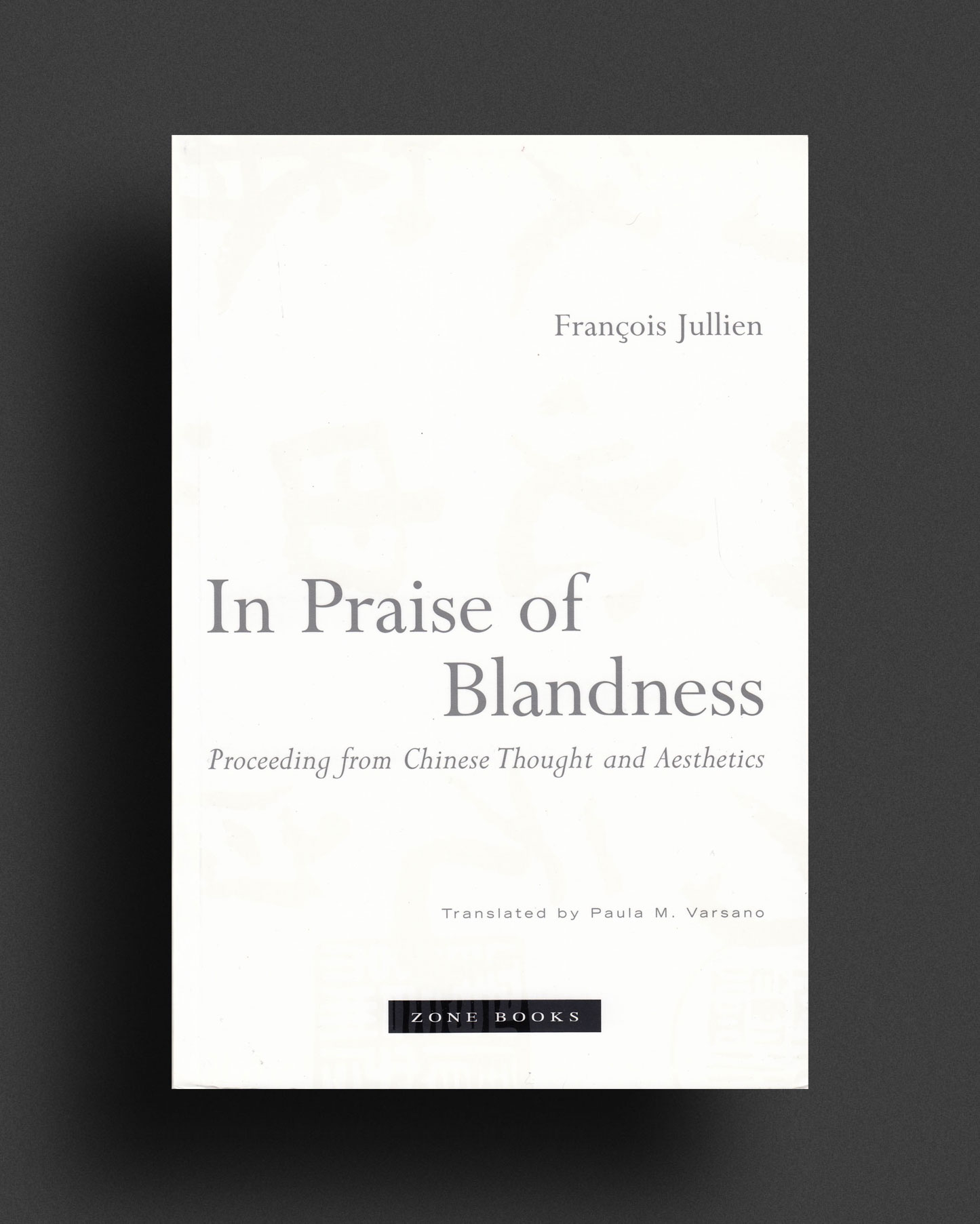
Translated by Paula M. Varsano
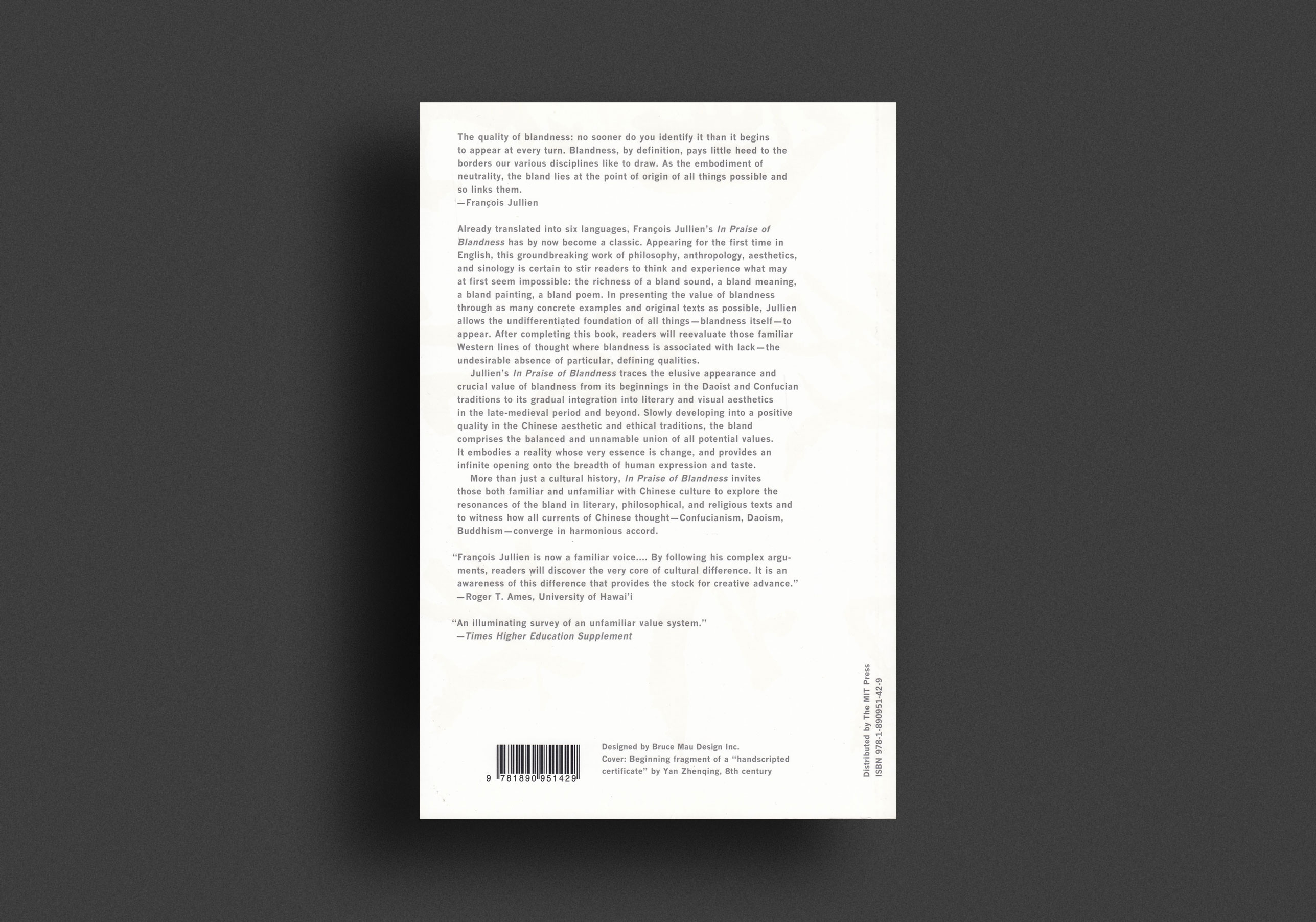
The quality of blandness: no sooner do you identify it then it begins to appear at every turn. Blandness, by definition, pays little heed to the borders our various disciplines like to draw. As the embodiment of neutrality, the bland lies at the point of origin of all things possible and so links them. — François Jullien
Already translated into six languages, François Jullien’s In Praise of Blandness has by now become a classic. Appearing for the first time in English, this groundbreaking work of philosophy, anthropology, aesthetics, and sinology is certain to stir readers to think and experience what may at first seem impossible: the richness of a bland sound, a bland meaning, a bland painting, a bland poem. In presenting the value of blandness through as many concrete examples and original texts as possible, Jullien allows the undifferentiated foundation of all things — blandness itself — to appear. After completing this book, readers will reevaluate those familiar Western lines of thought where blandness is associated with lack — the undesirable absence of particular, defining qualities.
“A profoundly nuanced and sophisticated reading.” –Roger T. Ames
Jullien’s In Praise of Blandness traces the elusive appearance and crucial value of blandness from its beginnings in the Daoist and Confucian traditions to its gradual integration into literary and visual aesthetics in the late medieval period and beyond. Slowly developing into a positive quality in the Chinese aesthetic and ethical traditions, the bland comprises the balanced and unnamable union of all potential values. It embodies a reality whose very essence is change, and provides an infinite opening onto the breadth of human expression and taste.
Chosen as one of the best books of 2004 by the Village Voice. Finalist for the French–American Translation Prize.
“François Jullien is now a familiar voice. And in In Praise of Blandness he carries on philosophizing. In all his work, Jullien’s point of departure is that a worldview is sedimented into the syntax and semantics of our natural languages. Jullien uses a profoundly nuanced and sophisticated reading of Chinese texts to challenge our own common-sense cosmological assumptions. By following his complex arguments, readers will discover the very core of cultural difference. It is an awareness of this difference that provides the stock for creative advance.” — Roger T. Ames, University of Hawai’i
2026, English
Softcover, 280 pages, 22.86 x 15.24 cm
Published by
Zone Books / New York
$50.00 - In stock -
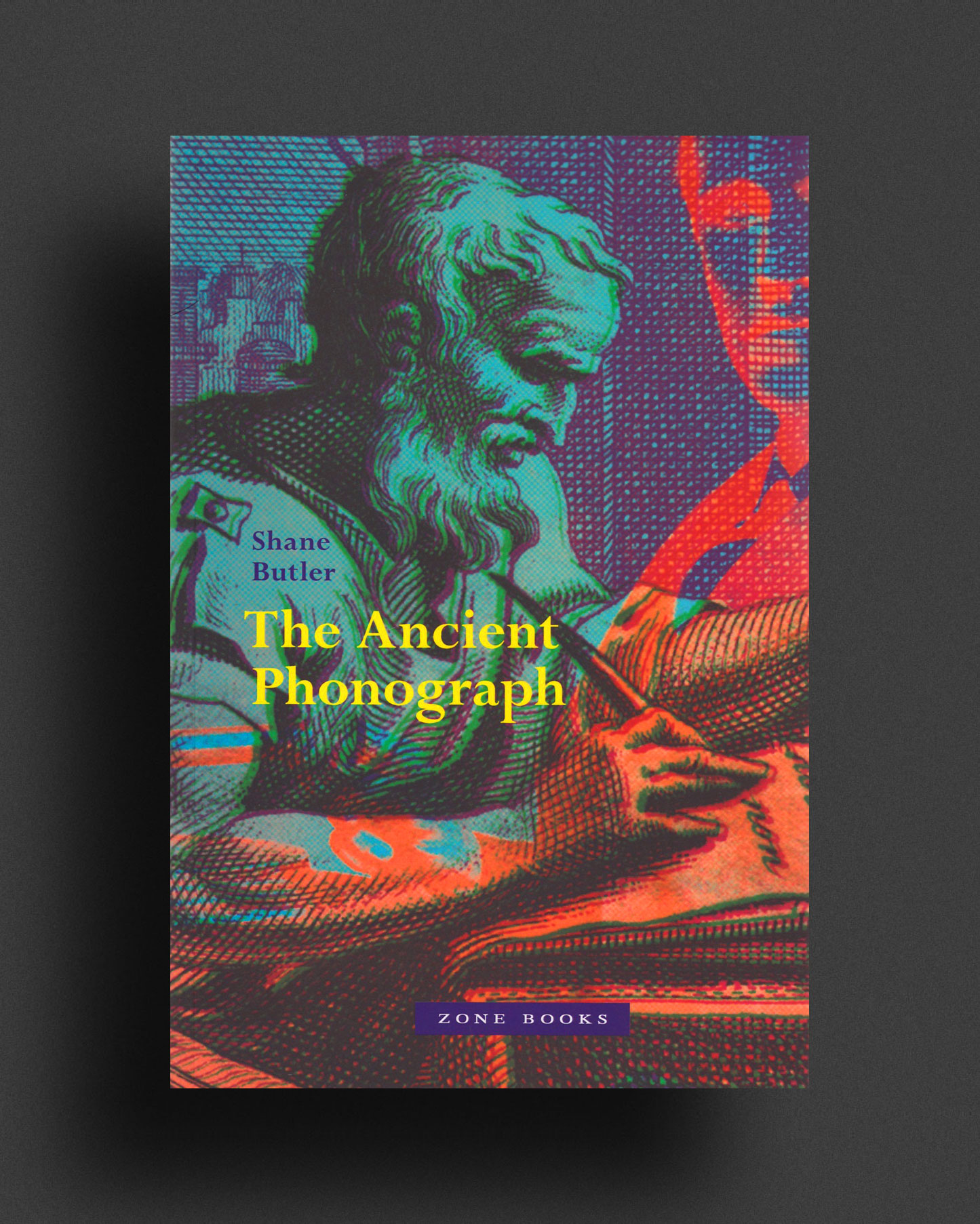
A groundbreaking exploration of voice in literature, oratory, and song, finally available in paperback.
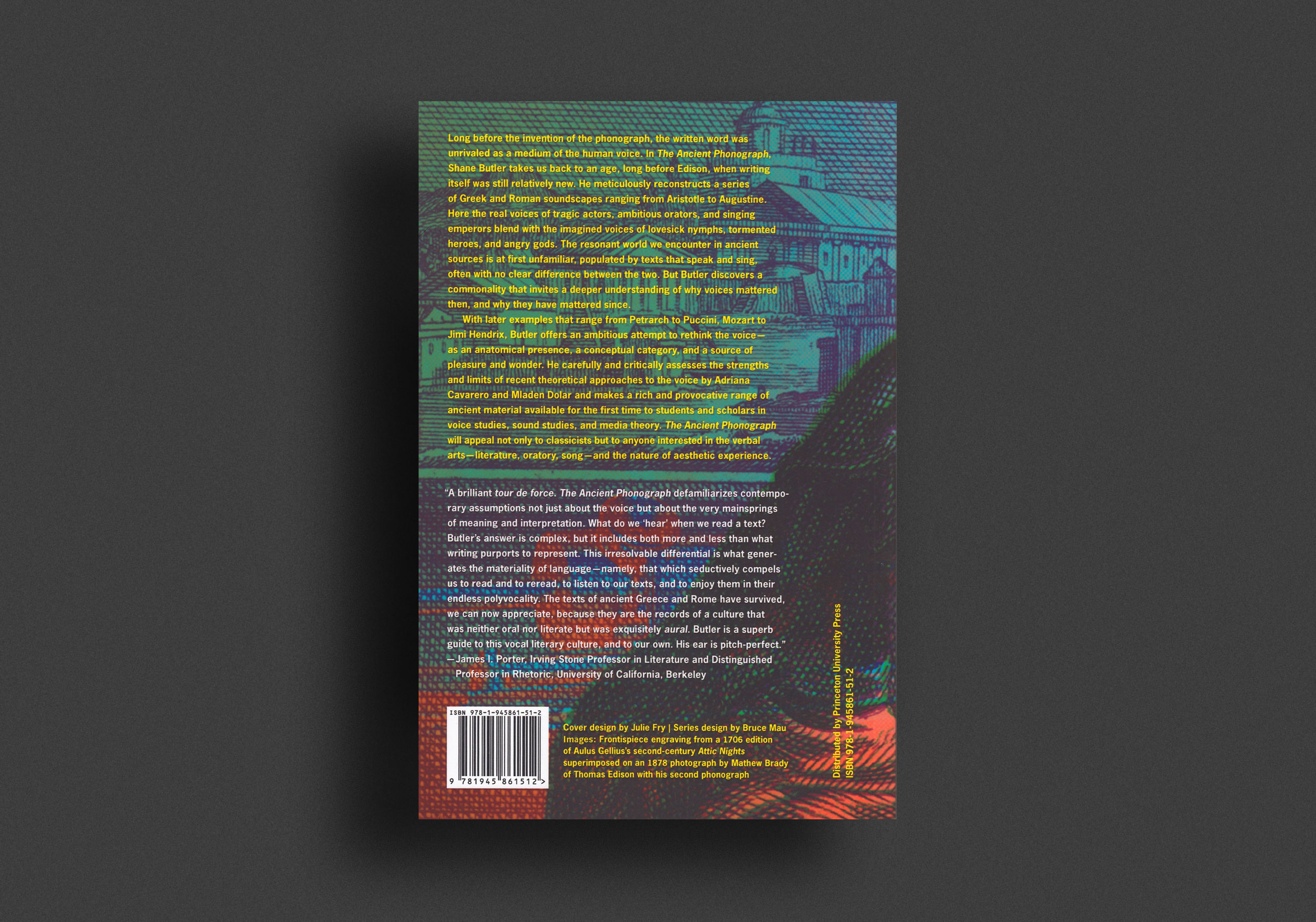
Long before the invention of the phonograph, the written word was unrivaled as a medium of the human voice. In The Ancient Phonograph, Shane Butler takes us back to an age, long before Edison, when writing itself was still relatively new. He meticulously reconstructs a series of Greek and Roman soundscapes ranging from Aristotle to Augustine.
Here the real voices of tragic actors, ambitious orators, and singing emperors blend with the imagined voices of lovesick nymphs, tormented heroes, and angry gods. The resonant world we encounter in ancient sources is at first unfamiliar, populated by texts that speak and sing, often with no clear difference between the two. But Butler discovers a commonality that invites a deeper understanding of why voices mattered then, and why they have mattered since.
“That rare academic work that is delightful to read.”— Johanna Drucker
With later examples that range from Petrarch to Puccini, Mozart to Jimi Hendrix, Butler offers an ambitious attempt to rethink the voice — as an anatomical presence, a conceptual category, and a source of pleasure and wonder. He carefully and critically assesses the strengths and limits of recent theoretical approaches to the voice by Adriana Cavarero and Mladen Dolar and makes a rich and provocative range of ancient material available for the first time to students and scholars in voice studies, sound studies, and media theory. The Ancient Phonograph will appeal not only to classicists but to anyone interested in the verbal arts — literature, oratory, song — and the nature of aesthetic experience.
“A brilliant tour de force. The Ancient Phonograph defamiliarizes contemporary assumptions not just about the voice but about the very mainsprings of meaning and interpretation. What do we ‘hear’ when we read a text? Butler’s answer is complex, but it includes both more and less than what writing purports to represent. This irresolvable differential is what generates the materiality of language — namely, that which seductively compels us to read and to reread, to listen to our texts, and to enjoy them in their endless polyvocality. The texts of ancient Greece and Rome have survived, we can now appreciate, because they are the records of a culture that was neither oral nor literate but was exquisitely aural. Butler is a superb guide to this vocal literary culture, and to our own. His ear is pitch-perfect.” — James I. Porter, Chancellor’s Professor, University of California, Berkeley
“Shane Butler’s The Ancient Phonograph is that rare academic work that is delightful to read. Putting his scholarship at the service of a series of critical readings of classical texts he knows exceptionally well, Butler has brought into focus a crucial argument about the importance of ‘voice’ in classical literature — while also offering readers unfamiliar with that corpus an introduction to some of the field’s ‘greatest hits.’ Butler’s book should find an audience beyond scholars of classics, among those working in critical theory, textual studies, media studies, and the emerging field of media archaeology.” — Johanna Drucker, Breslauer Professor of Bibliographical Studies, University of California, Los Angeles
“The Ancient Phonograph is a highly original, ambitious, and deftly realized book. Taking on some of the most established and widespread post-structuralist concepts of the voice, language, presence, and the real, Butler advances a new theory about literature as a ‘phonograph,’ in the literal (Greek) sense of a writing of the voice. The book’s feat is to revitalize a range of contemporary conversations across the theoretical humanities by coaxing voices from ancient texts that have long been seen as the necessarily abbreviated scripts of once-vibrant, now lost performance cultures and far from relevant to media studies, primarily fixated on the modern and the postmodern. Butler pulls it off beautifully. The Ancient Phonograph maps exciting new ground for thinking about a text’s embodied resonances.” — Brooke A. Holmes, Professor of Classics, Princeton University
2009, English
Softcover, 216 pages, 15.2 x 22.9 cm
Published by
Zone Books / New York
$56.00 - In stock -
The Cradle of Humanity: Prehistoric Art and Culture collects essays and lectures by Georges Bataille spanning 30 years of research in anthropology, comparative religion, aesthetics, and philosophy. These were neither idle nor idyllic years; the discovery of Lascaux in 1940 coincides with the bloodiest war in history—with new machines of death, Auschwitz, and Hiroshima. Bataille's reflections on the possible origins of humanity coincide with the intensified threat of its possible extinction.
For Bataille, prehistory is universal history; it is the history of a human community prior to its fall into separation, into nations and races. The art of prehistory offers the earliest traces of nascent yet fully human consciousness—of consciousness not yet fully separated from natural flora and fauna, or from the energetic forces of the universe. A play of identities, the art of prehistory is the art of a consciousness struggling against itself, of a human spirit struggling against brute animal physicality. Prehistory is the cradle of humanity, the birth of tragedy.
Bataille reaches beyond disciplinary specializations to imagine a moment when thought was universal. Bataille's work provides a model for interdisciplinary inquiry in our own day, a universal imagination and thought for our own potential community. The Cradle of Humanity: Prehistoric Art and Culture speaks to philosophers and historians of thought, to anthropologists interested in the history of their discipline and in new methodologies, to theologians and religious comparatists interested in the origins and nature of man's encounter with the sacred, and to art historians and aestheticians grappling with the place of prehistory in the canons of art.
1998, English
Softcover, 512 pages, 28 x 18.5 cm
Published by
Zone Books / New York
$70.00 - In stock -
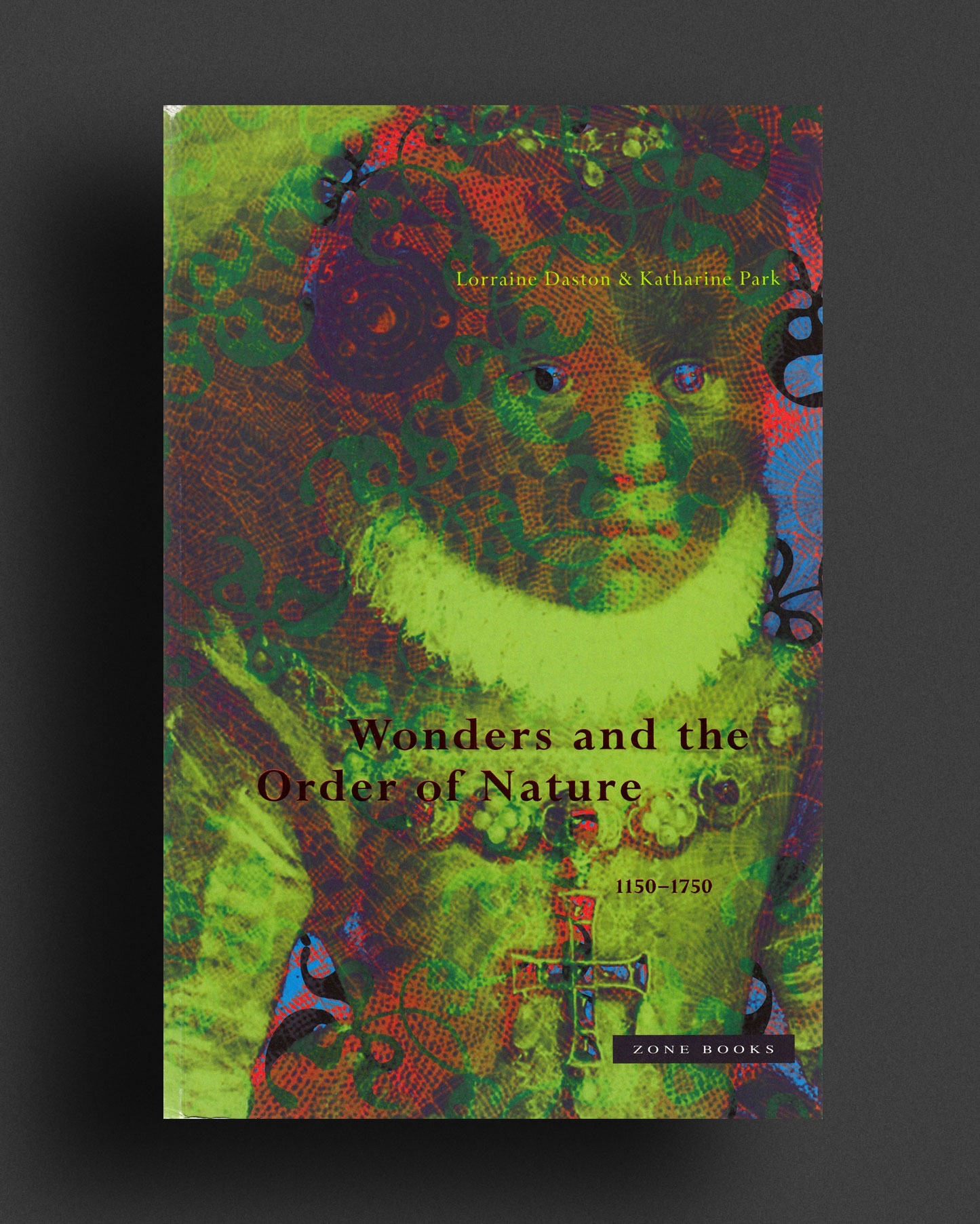
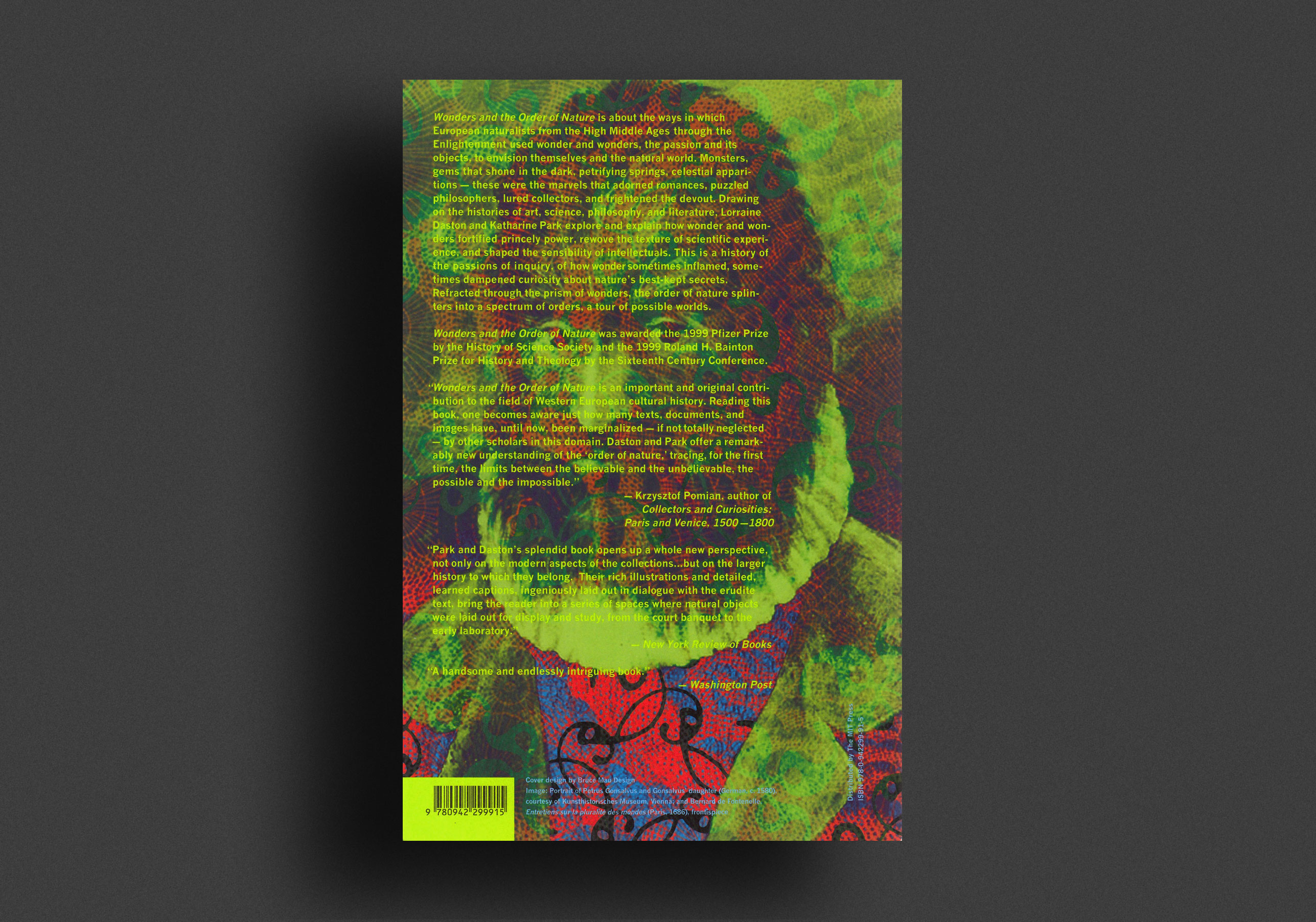
Wonders and the Order of Nature is about the ways in which European naturalists from the High Middle Ages through the Enlightenment used wonder and wonders, the passion and its objects, to envision themselves and the natural world. Monsters, gems that shone in the dark, petrifying springs, celestial apparitions — these were the marvels that adorned romances, puzzled philosophers, lured collectors, and frightened the devout.
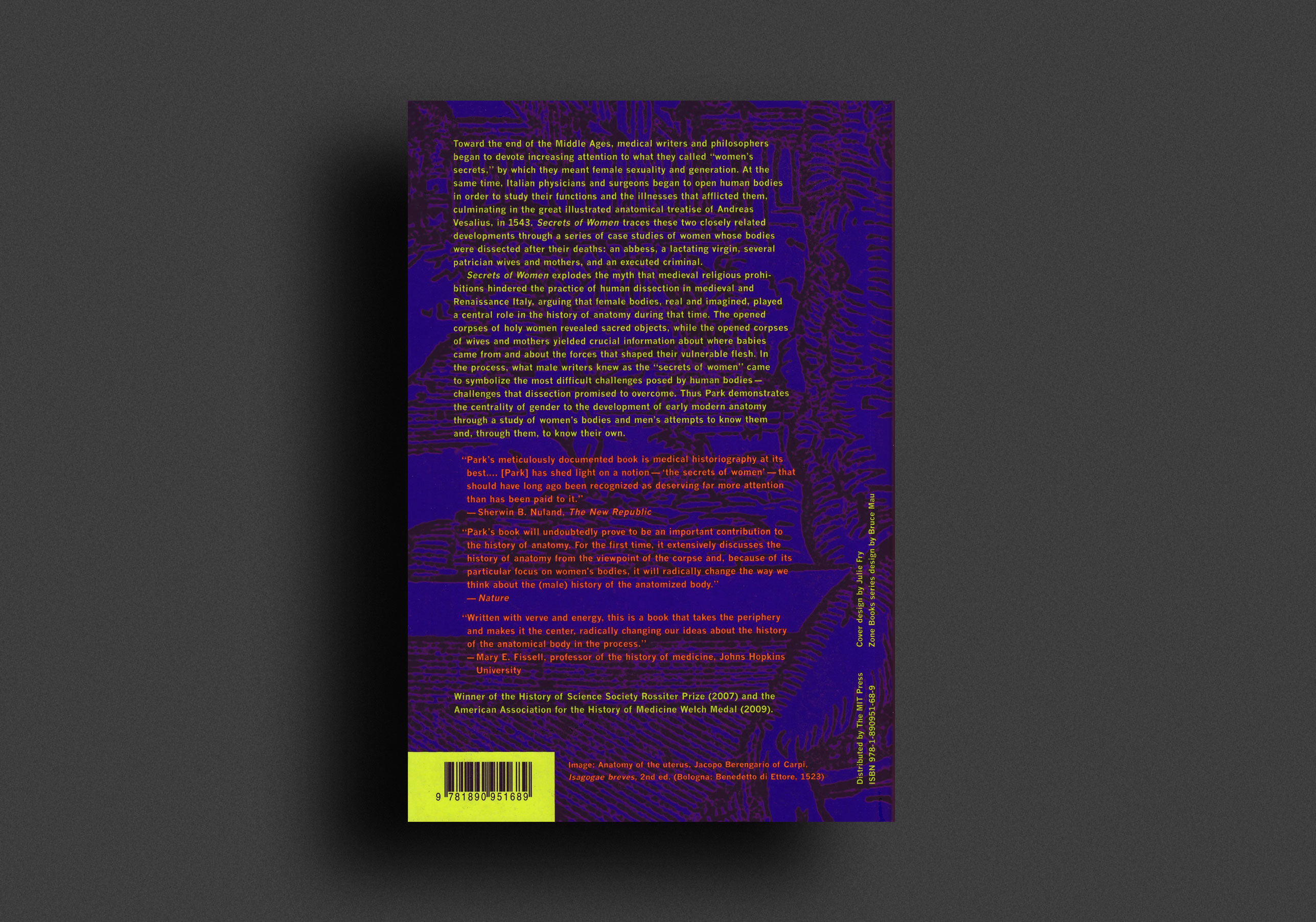
Drawing on the histories of art, science, philosophy, and literature, Lorraine Daston and Katharine Park explore and explain how wonder and wonders fortified princely power, rewove the texture of scientific experience, and shaped the sensibility of intellectuals. This is a history of the passions of inquiry, of how wonder sometimes inflamed, sometimes dampened curiosity about nature’s best-kept secrets. Refracted through the prism of wonders, the order of nature splinters into a spectrum of orders, a tour of possible worlds.
Wonders and the Order of Nature was awarded the 1999 Pfizer Prize by the History of Science Society and the 1999 Roland H. Bainton Prize for History and Theology by the Sixteenth Century Conference.
“A handsome and endlessly intriguing book.” –Washington Post
“Park and Daston’s splendid book opens up a whole new perspective, not only on the modern aspects of the collections … but on the larger history to which they belong. Their rich illustrations and detailed, learned captions, ingeniously laid out in dialogue with the erudite text, bring the reader into a series of spaces where natural objects were laid out for display and study, from the court banquet to the early laboratory.” — New York Review of Books
“A handsome and endlessly intriguing book.” —Washington Post
1998, English
Softcover (w. dust jacket), 1096 pages, 22 x 14 cm
Published by
Zone Books / New York
$79.00 - Out of stock
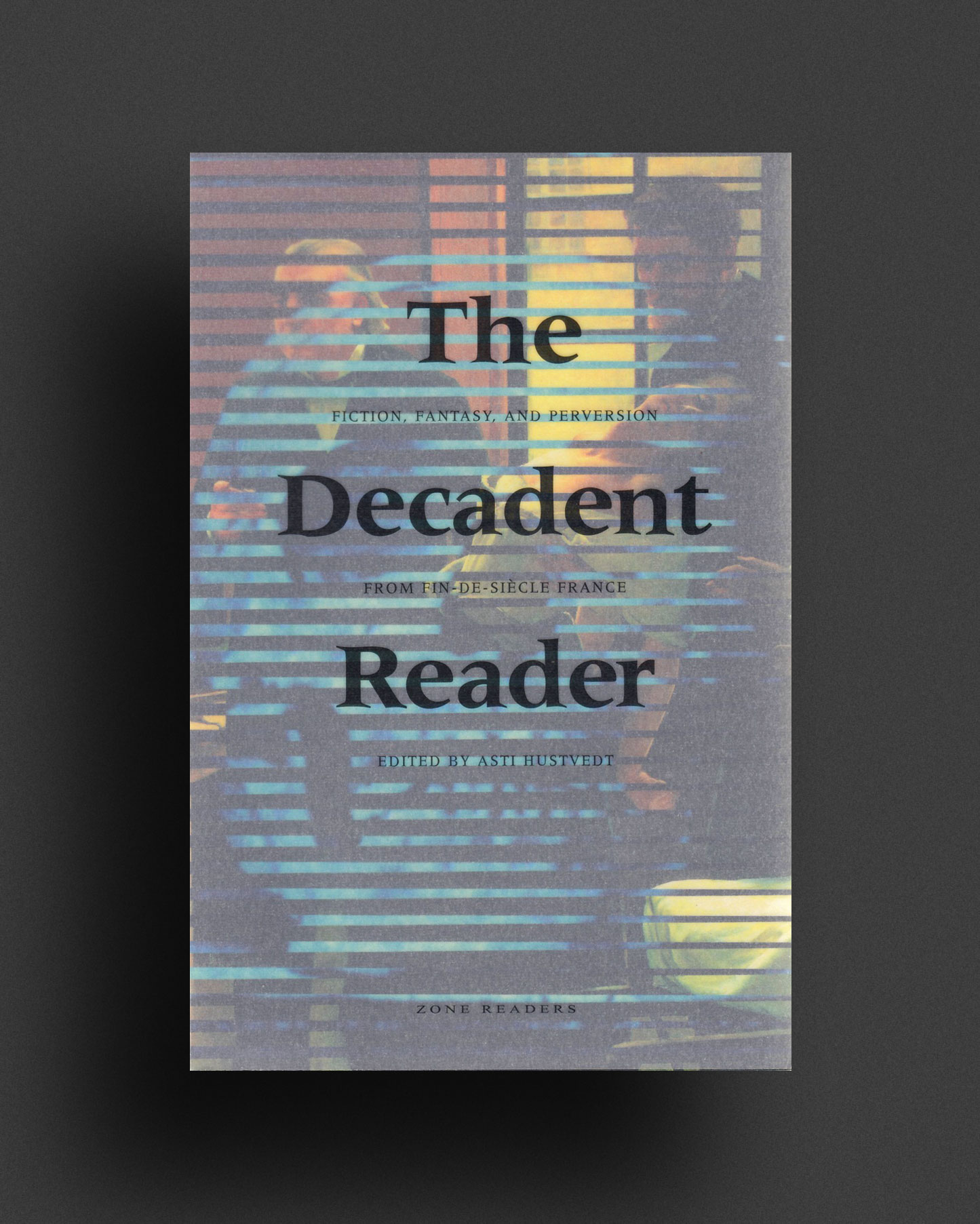
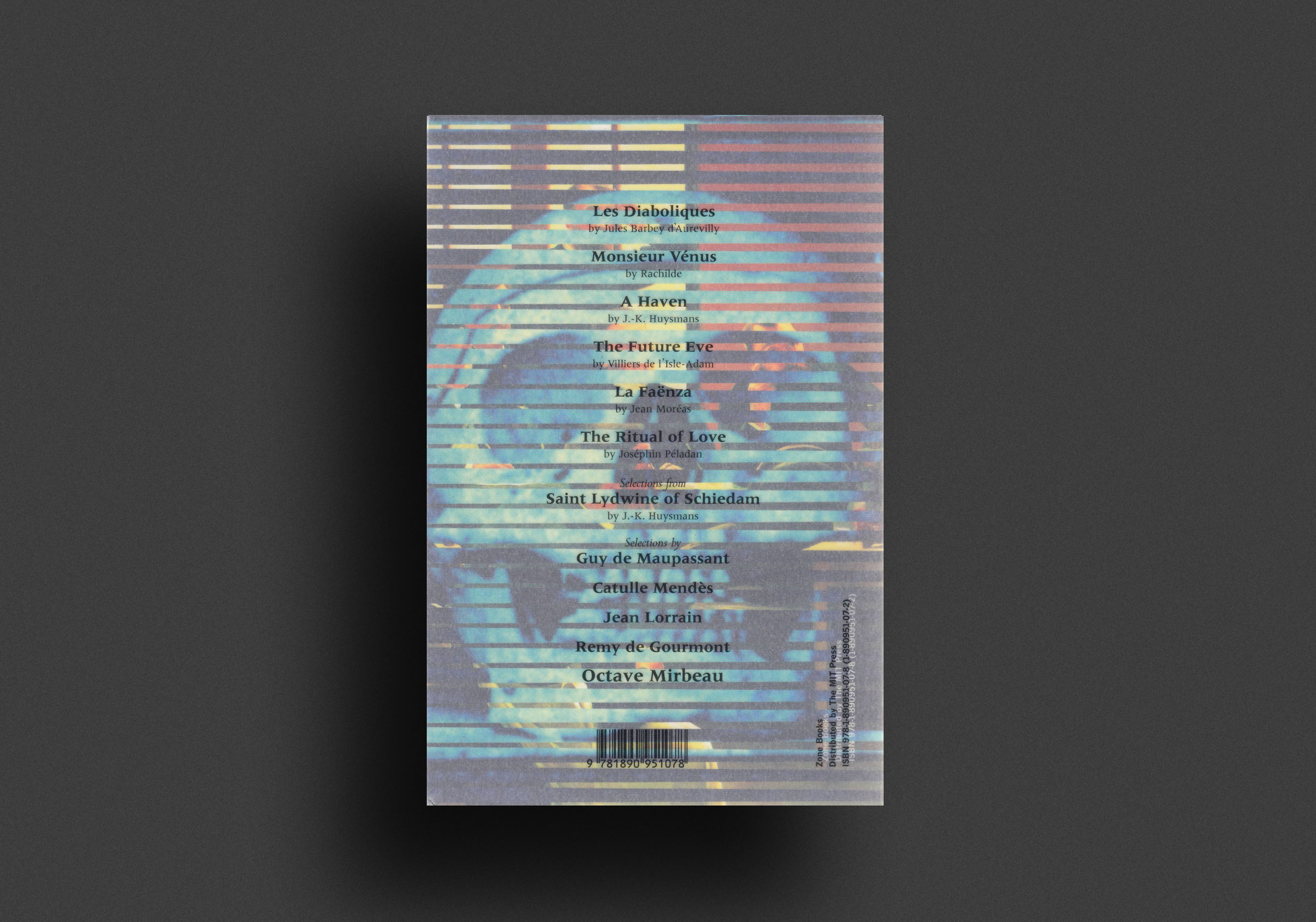
In fin-de-siècle France, progress and material prosperity coincided with widespread alarm about disease and decay. The obsessions of our own culture at the end of the millennium resonated in a striking manner with those of the last fin de siècle: crime, pollution, sexually transmitted disease, gender confusion, moral depravity, alcoholism, and tobacco and drug use were topics of constant popular discussion in both epochs. The Decadent Reader is a collection of novels and stories from fin-de-siècle France that celebrate decline, aestheticize decay, and take pleasure in perversity. By embracing the marginal, the unhealthy, and the deviant, these writers attacked bourgeois life, which they perceived as the chief enemy of art. Barbey d’Aurevilly, J.K. Huysmans, Jean Lorrain, Guy de Maupassant, Villiers de l’Isle-Adam, Catulle Mendès, Rachilde, Jean Moréas, Octave Mirbeau, Joséphin Peladan, and Remy de Gourmont looted the riches of their culture for their own purposes. From an age of medicine they borrowed its occult mysteries rather than its positivism. In its social Darwinism, they found their monsters: sadists, murderers, transvestites, fetishists, prostitutes, nymphomaniacs, and hysterics. And they reveled in them, completely upending the conventions of romance and sentimentality. The Decadent Reader, which includes novels and stories that have never before appeared in English, as well as reappraisals of work that the reader may already be familiar with, offers a compelling portrait of fin-de-siècle France.
2004, English
Softcover, 504 pages, 23 x 15.4 cm
Published by
Zone Books / New York
$65.00 - In stock -
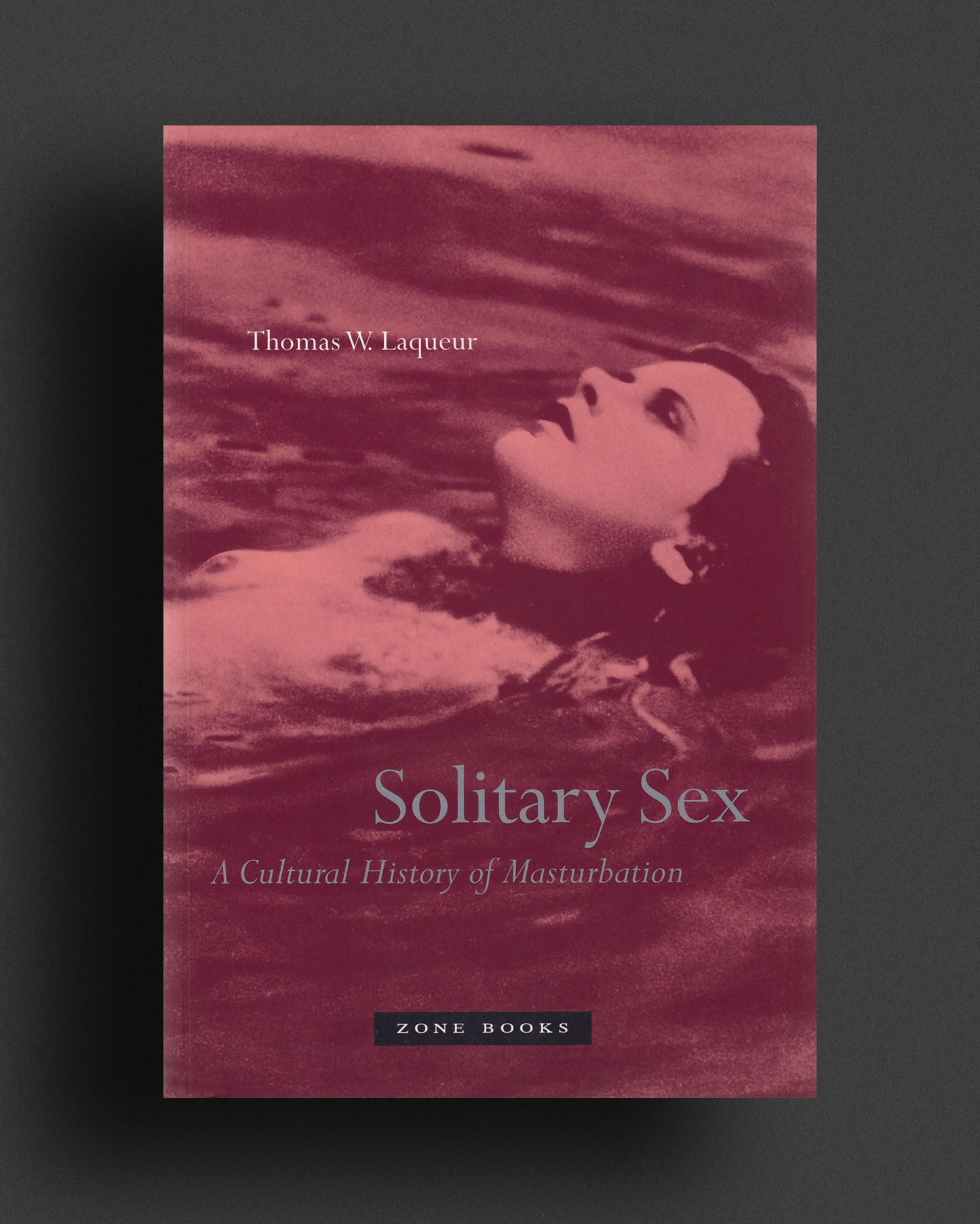
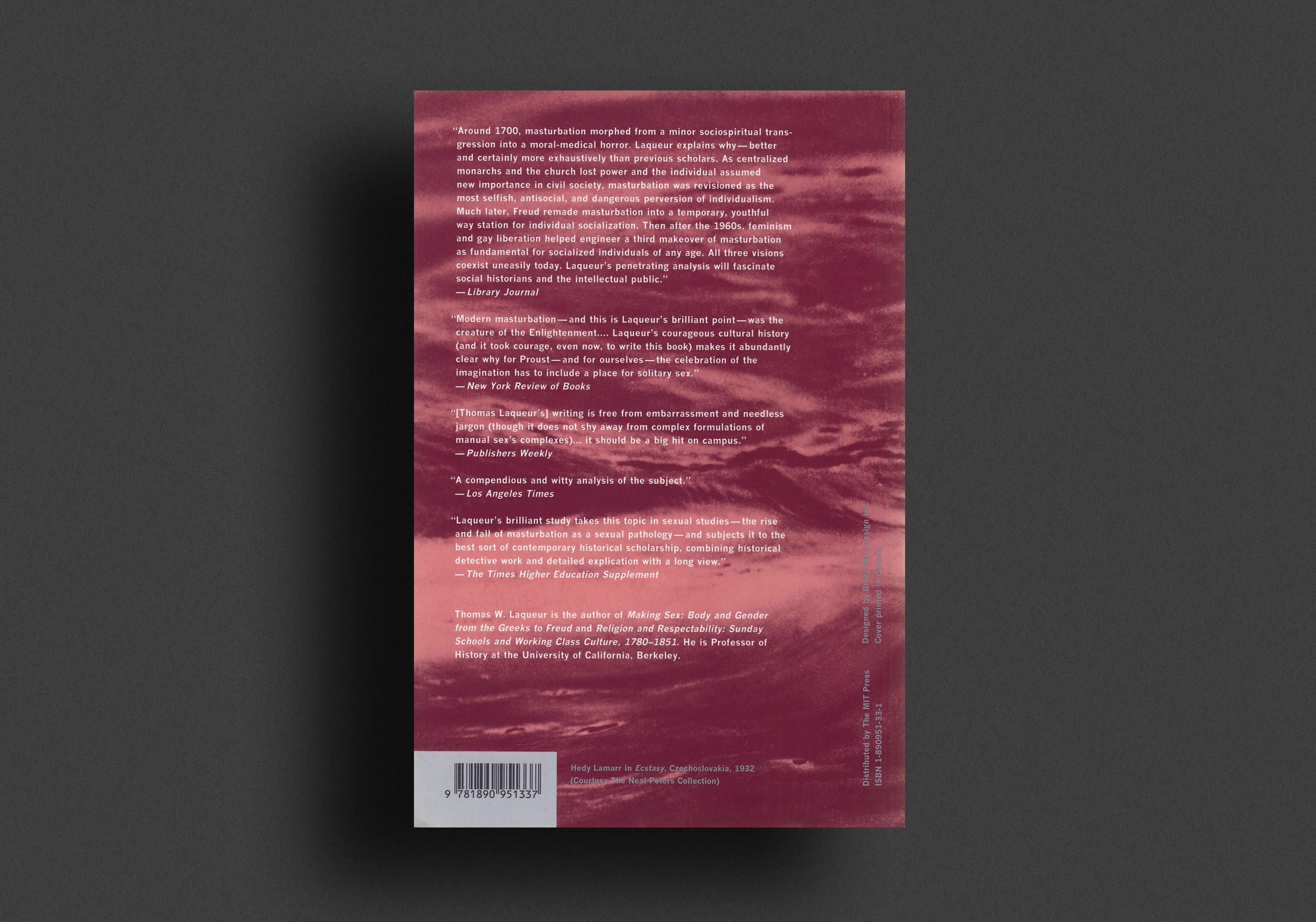
This is the first cultural history of the world’s most common sexual practice: masturbation. At a time when almost any victimless practice has its public advocates and almost every sexual act is front-page news, the easiest and least harmful one is embarrassing, discomforting, and genuinely radical when openly acknowledged. But this has not always been the case. The ancient world cared little about masturbation: it was of no great concern in Jewish and Christian teaching about sexuality. In fact, as Thomas Laqueur dramatically shows, solitary sex as an important medical and moral issue can be dated with a precision rare in cultural history: the solitary vice, self-pollution, or self-abuse came into being around 1712. A creature of the Enlightenment, masturbation at first worried not conservatives — for whom it had long been but one among many sins of the flesh — but rather the progressives who welcomed sexual pleasure but struggled to create an ethics of self-government. The first truly democratic sexuality, masturbation was of ethical interest to both men and women, young and old.
Solitary Sex explains how and why this humble and once obscure means of sexual gratification became the evil twin of the great virtues of modern commercial society: individual moral autonomy and privacy, creativity and the imagination, abundance, and desire. It shows how a moral problem became a medical one, how some of the most famous doctors of the eighteenth and nineteenth centuries were convinced that solitary pleasures killed or maimed. In the early twentieth century, Freud and his successors transformed this tradition: masturbation defined a stage in human development, the foundational sexuality that culture transformed for its own purposes. And, finally, in the late twentieth century, masturbation became for some a key element in the struggle for sexual, personal, and even artistic liberation. Working with material from the prehistory of solitary sex in the Bible to third-wave feminism, conceptual artists, and the World Wide Web, historian Thomas Laqueur uses medical and philosophical texts, as well as diaries, autobiographies, and pornography to tell the story of what has become the last taboo.
“A compendious and witty analysis of the subject.” –Los Angeles Times
“Modern masturbation — and this is Laqueur’s brilliant point — was the creature of the Enlightenment… .Laqueur’s courageous cultural history (and it took courage, even now, to write this book) makes it abundantly clear why for Proust — and for ourselves — the celebration of the imagination has to include a place for solitary sex.” —New York Review of Books
“Around 1700, masturbation morphed from a minor sociospiritual transgression into a moral-medical horror. Laqueur explains why — better and certainly more exhaustively than previous scholars. As centralized monarchs and the church lost power and the individual assumed new importance in civil society, masturbation was revisioned as the most selfish, antisocial, and dangerous perversion of individualism. Much later, Freud remade masturbation into a temporary, youthful way station for individual socialization. Then after the 1960s, feminism and gay liberation helped engineer a third makeover of masturbation as fundamental for socialized individuals of any age. All three visions coexist uneasily today. Laqueur’s penetrating analysis will fascinate social historians and the intellectual public.” —Library Journal
“An irrefutably seminal book … [written] in an elegant, almost mesmerizing prose.” —Times Literary Supplement
“Laqueur’s brilliant study takes this topic in sexual studies … and subjects it to the best sort of contemporary historical scholarship.” — The Times Higher Education Supplement
2006, English
Softcover, 512 pages, 23 x 15.4 cm
Published by
Zone Books / New York
$60.00 - In stock -
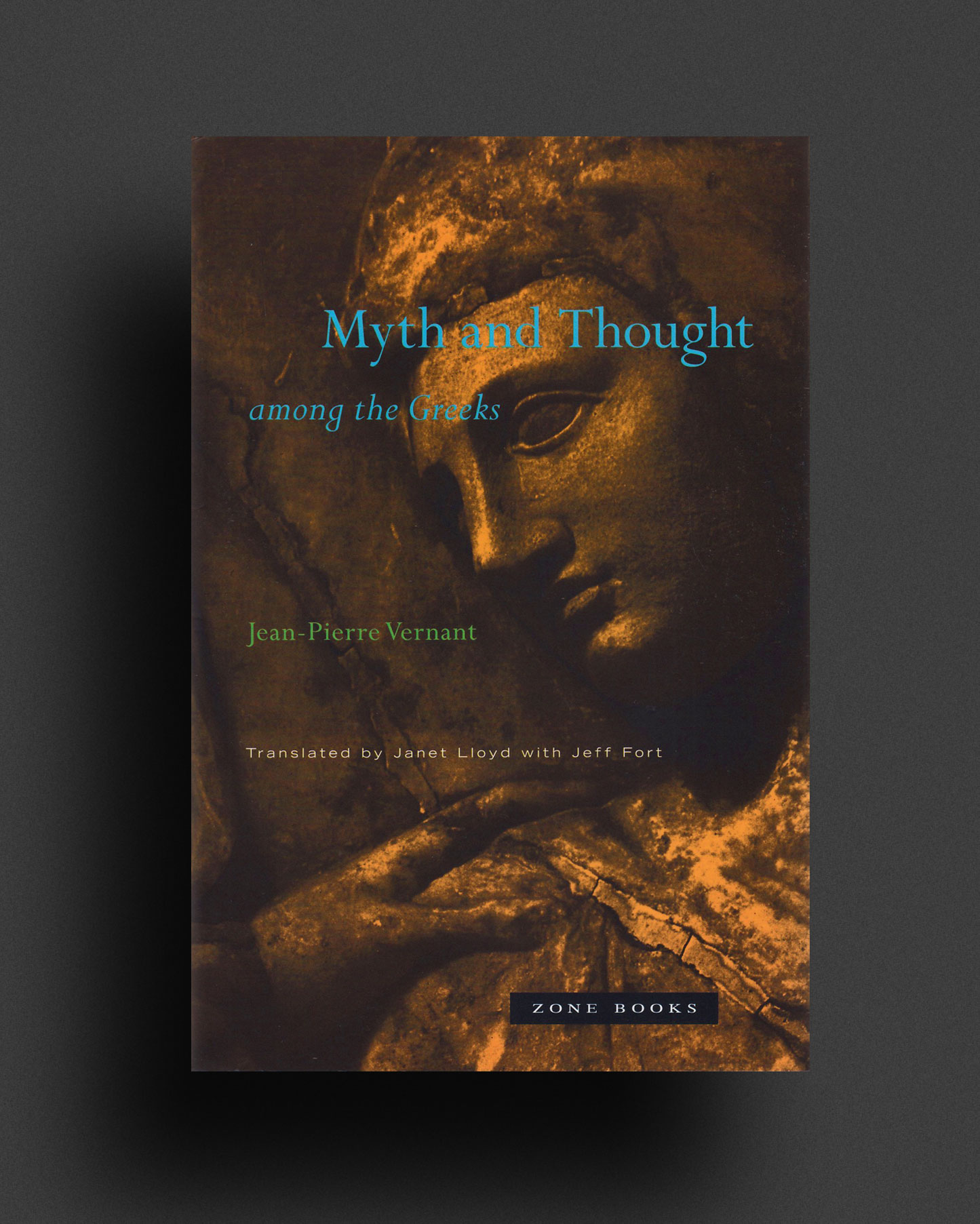
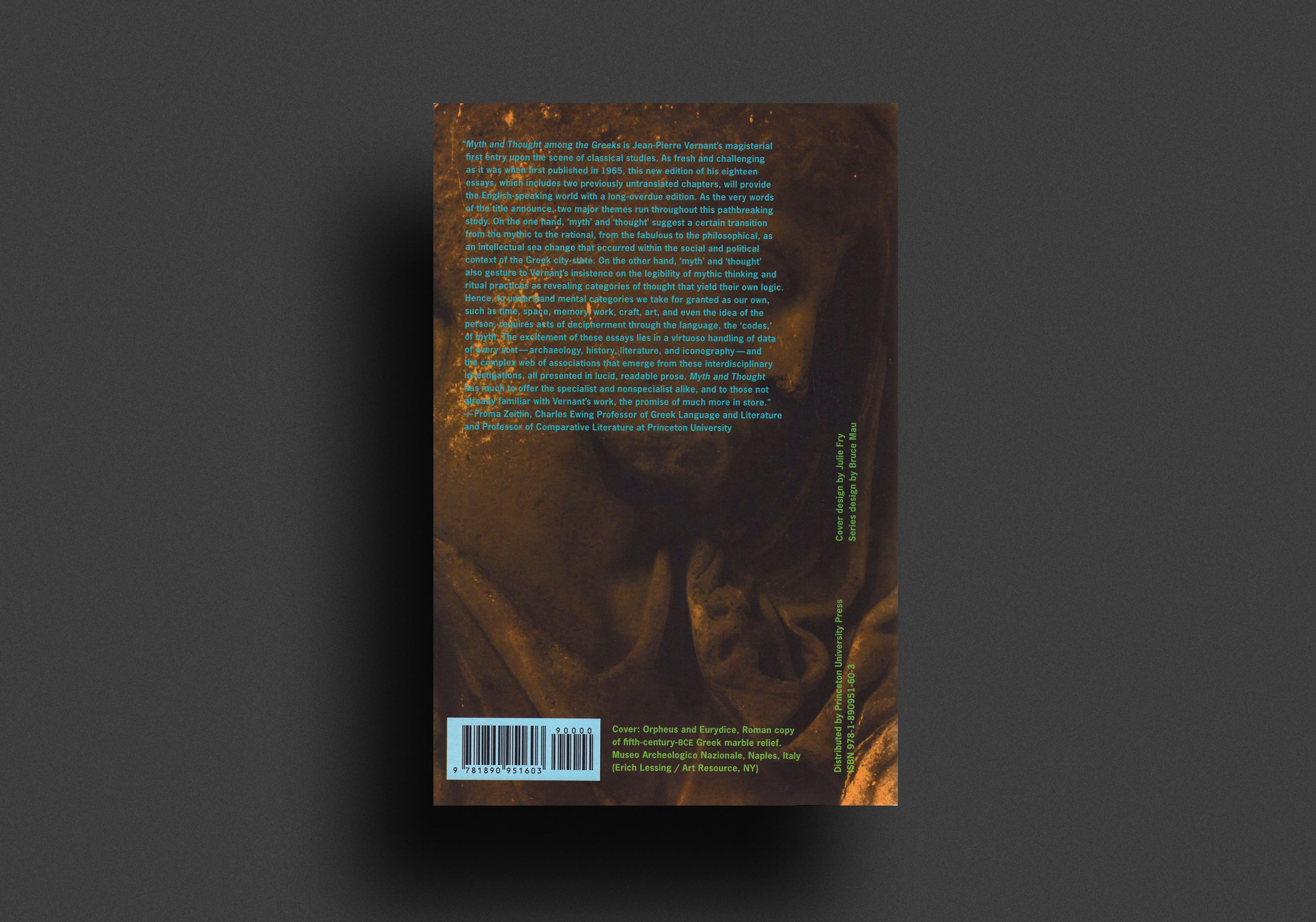
A classic work that rereads questions of muthos and logos in multifaceted contexts.
Translated by Janet Lloyd, Jeff Fort
“Myth and Thought among the Greeks is Jean-Pierre Vernant’s magisterial first entry upon the scene of classical studies. As fresh and challenging as it was when first published in 1965, this new edition of his eighteen essays, which includes two previously untranslated chapters, will provide the English-speaking world with a long-overdue edition. As the very words of the title announce, two major themes run throughout this pathbreaking study. On the one hand, ‘myth’ and ‘thought’ suggest a certain transition from the mythic to the rational, from the fabulous to the philosophical, as an intellectual sea change that occurred within the social and political context of the Greek city-state. On the other hand, ‘myth’ and ‘thought’ also gesture to Vernant’s insistence on the legibility of mythic thinking and ritual practices as revealing categories of thought that yield their own logic. Hence, to understand mental categories we take for granted as our own, such as time, space, memory, work, craft, art, and even the idea of the person, requires acts of decipherment through the language, the ‘codes,’ of myth. The excitement of these essays lies in a virtuoso handling of data of every sort — archaeology, history, literature, and iconography — and the complex web of associations that emerge from these interdisciplinary investigations, all presented in lucid, readable prose. Myth and Thought has much to offer the specialist and nonspecialist alike, and to those not already familiar with Vernant’s work, the promise of much more in store.”— Froma Zeitlin, Charles Ewing Professor of Greek Language and Literature and Professor of Comparative Literature at Princeton University
1991, English
Softcover, 200 pages, 23 x 15.4 cm
Published by
Zone Books / New York
$55.00 - In stock -
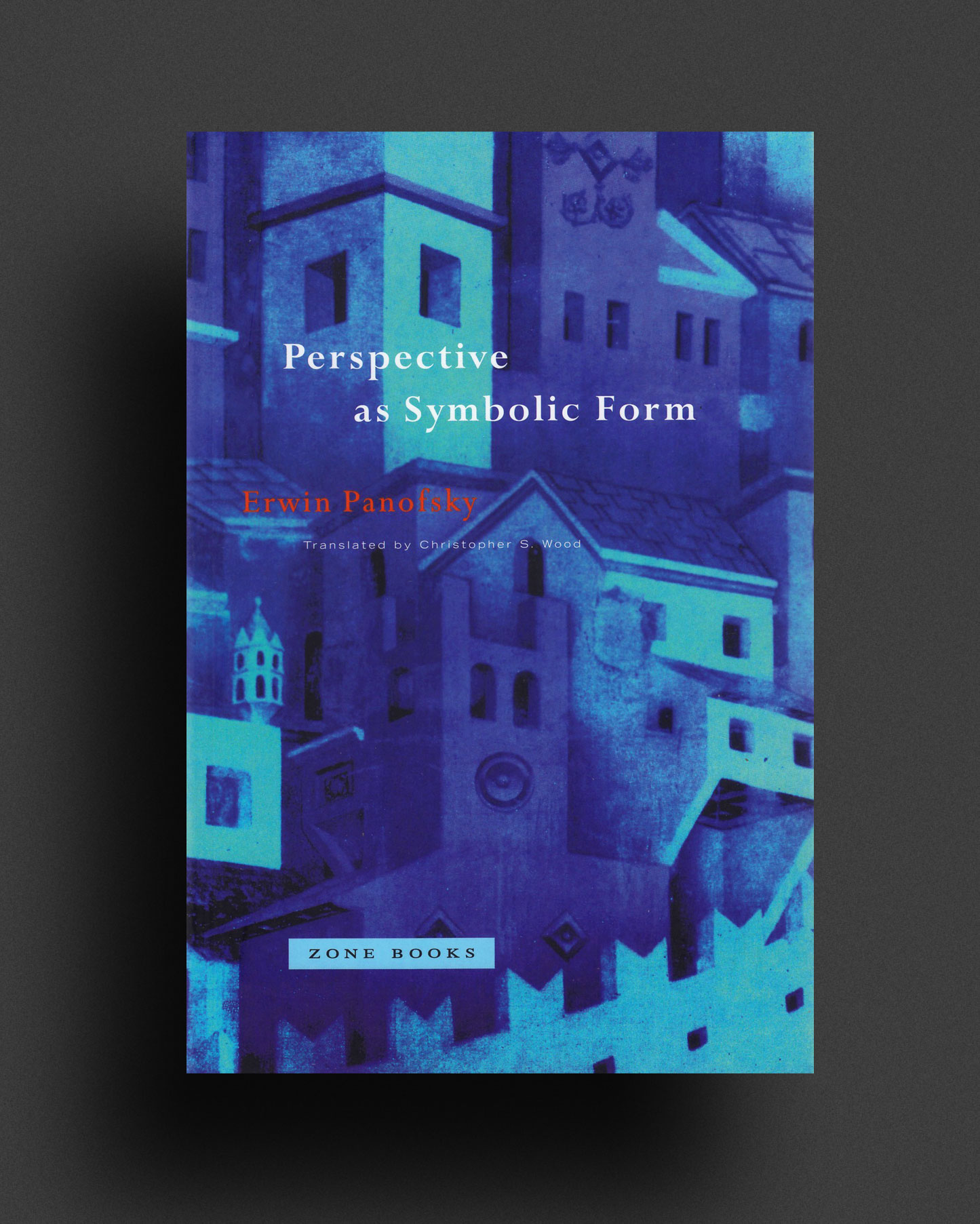
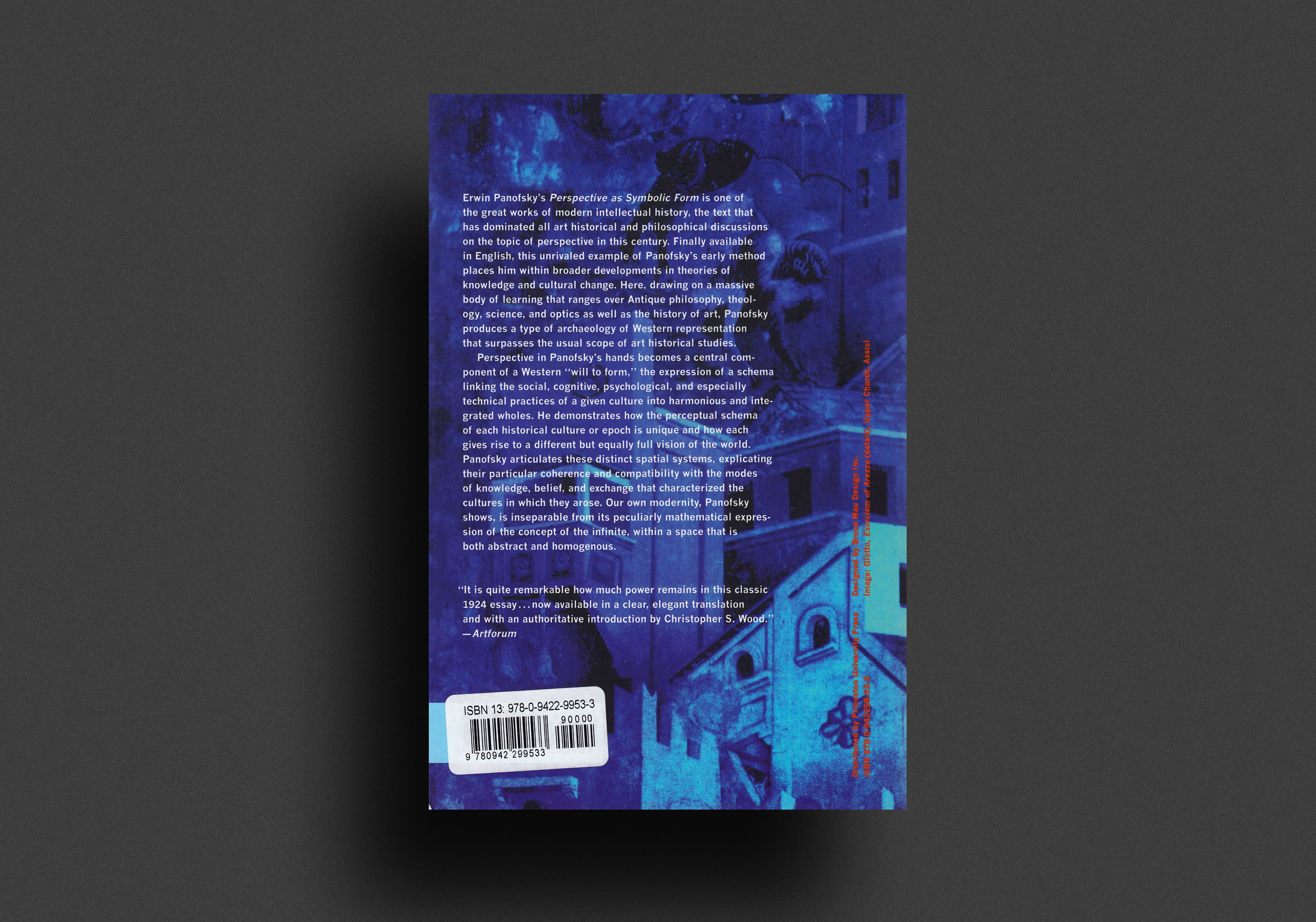
Erwin Panofsky’s Perspective as Symbolic Form is one of the great works of modern intellectual history, the legendary text that has dominated all art-historical and philosophical discussions on the topic of perspective in this century. Finally available in English, this unrivaled example of Panofsky’s early method places him within broader developments in theories of knowledge and cultural change.
Here, drawing on a massive body of learning that ranges over ancient philosophy, theology, science, and optics as well as the history of art, Panofsky produces a type of “archaeology” of Western representation that far surpasses the usual scope of art historical studies.
Perspective in Panofsky’s hands becomes a central component of a Western “will to form,” the expression of a schema linking the social, cognitive, psychological, and especially technical practices of a given culture into harmonious and integrated wholes. He demonstrates how the perceptual schema of each historical culture or epoch is unique and how each gives rise to a different but equally full vision of the world.
Panofsky articulates these distinct spatial systems, explicating their particular coherence and compatibility with the modes of knowledge, belief, and exchange that characterized the cultures in which they arose. Our own modernity, Panofsky shows, is inseparable from its peculiarly mathematical expression of the concept of the infinite, within a space that is both continuous and homogenous.
“It is quite remarkable how much power remains in this classic 1924 essay … now available in a clear, elegant translation and with an authoritative introduction by Christopher S. Wood.” —Artforum
1989 / 1990, English
Softcover, 480 pages, 23.5 x 18.4 cm
1st Edition, Out of print title / used / very good
Published by
Zone Books / New York
$45.00 - Out of stock
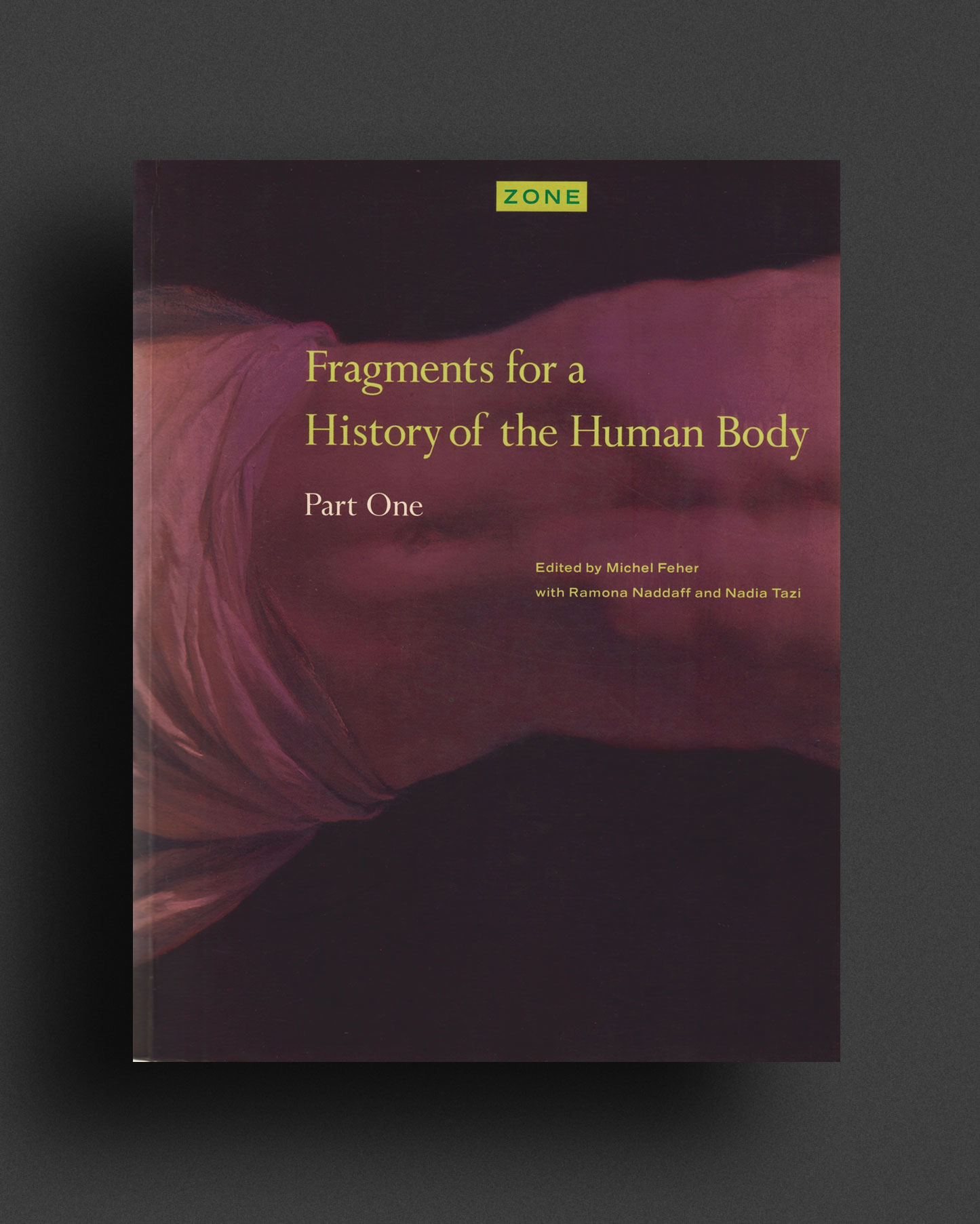
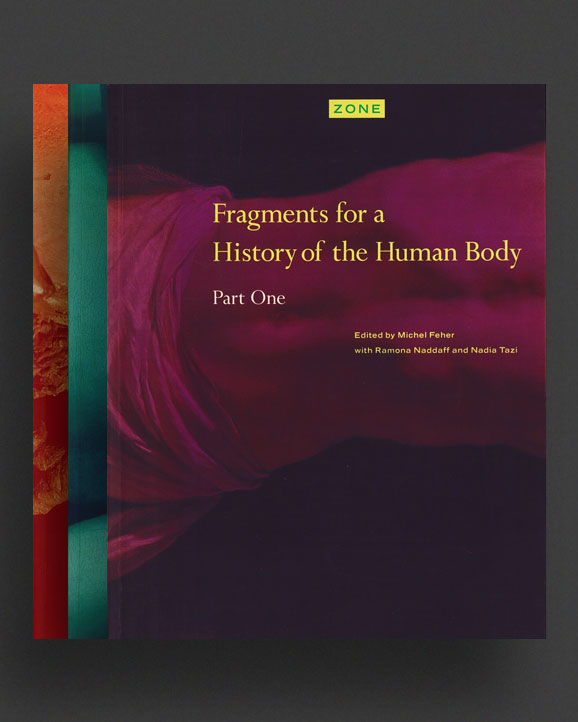
Part one of Fragments for a History of the Human Body, published in 1989 by Zone Books, a tremendous 3 volume publication, long out-of-print. The forty-eight essays and photographic dossiers in these three volumes examine the history of the human body as a field where life and thought intersect. They show how different cultures at different times have entwined physical capacities and mental mechanisms in order to construct a body adapted to moral ideas or social circumstances — the body of a charismatic citizen or a visionary monk, a mirror image of the world or a reflection of the spirit.
Each volume emphasizes a particular perspective. Part 1 explores the human body’s relationship to the divine, to the bestial, and to the machines that imitate or simulate it. Part 2 covers the junctures between the body’s “outside” and “inside” by studying the manifestations — or production — of the soul and the expression of the emotions and, on another level, by examining the speculations inspired by cenesthesia, pain, and death. Part 3 brings into play the classical opposition between organ and function by showing how organs or bodily substances can be used to justify or challenge the way human societies function and, conversely, how political and social functions tend to make the bodies of the persons filling them the organs of a larger body — the social body or the universe as a whole.
Among the contributors to Fragments for a History of the Human Body are Mark Elvin, Catherine Gallagher, Françoise Héritier-Augé, Julia Kristeva, William R. LaFleur, Thomas W. Laqueur, Jacques Le Goff, Nicole Loraux, Mario Perniola, Hillel Schwartz, Jean Starobinski, Jean-Pierre Vernant, and Caroline Walker Bynum.
“ZONE is unequivocally the most innovative, informative, and intellectually stimulating journal I have ever encountered…It belongs in all but the smallest personal, public, and academic collections.” —Library Journal
VG copy of 2nd 1990 print, tanning to spine with light creasing.
1989, English
Softcover, 552 pages, 23.5 x 18.4 cm
1st Edition, Out of print title / used / very good
Published by
Zone Books / New York
$45.00 - Out of stock
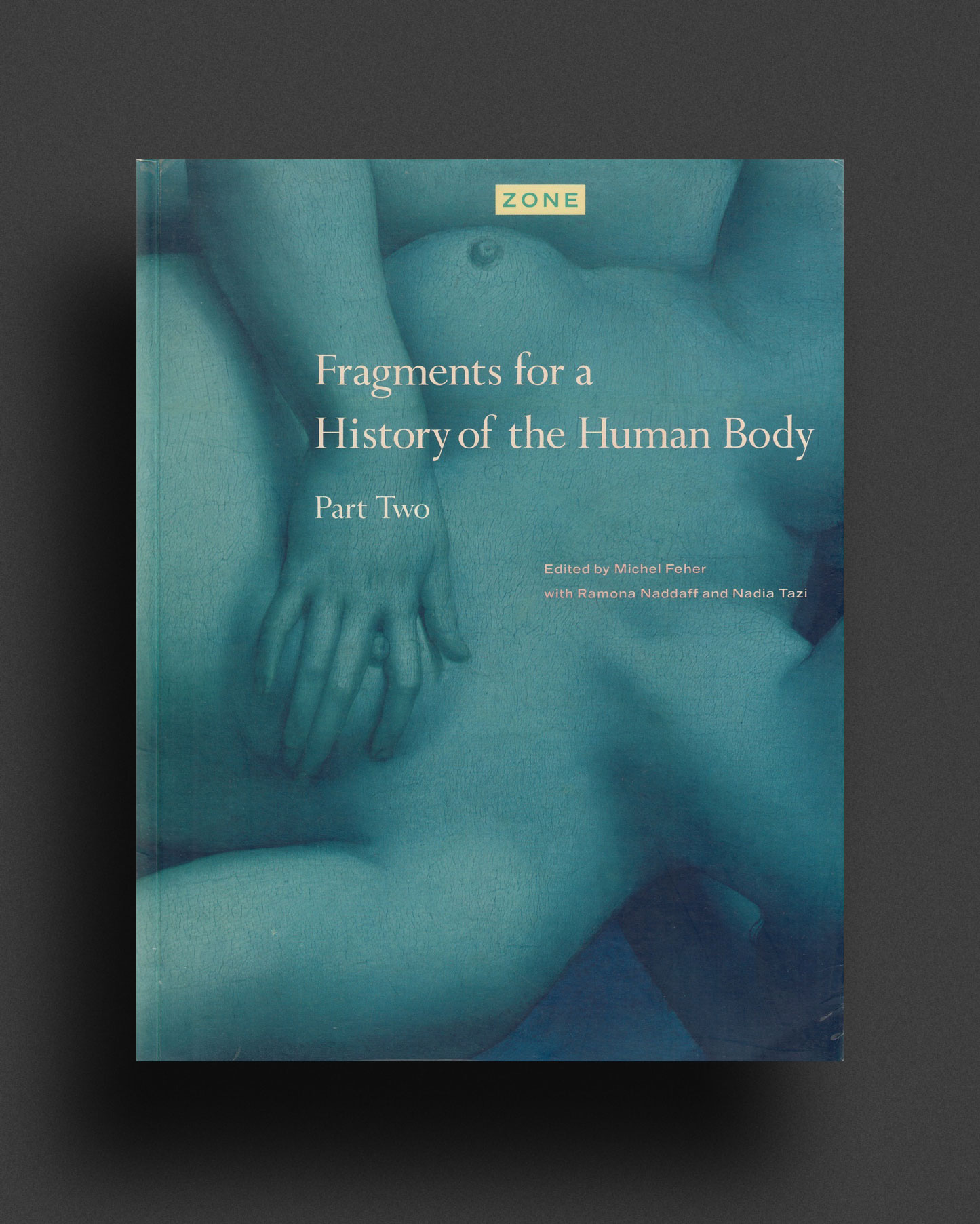
Part two of Fragments for a History of the Human Body, published in 1989 by Zone Books, a tremendous 3 volume publication, long out-of-print. The forty-eight essays and photographic dossiers in these three volumes examine the history of the human body as a field where life and thought intersect. They show how different cultures at different times have entwined physical capacities and mental mechanisms in order to construct a body adapted to moral ideas or social circumstances — the body of a charismatic citizen or a visionary monk, a mirror image of the world or a reflection of the spirit.
Each volume emphasizes a particular perspective. Part 1 explores the human body’s relationship to the divine, to the bestial, and to the machines that imitate or simulate it. Part 2 covers the junctures between the body’s “outside” and “inside” by studying the manifestations — or production — of the soul and the expression of the emotions and, on another level, by examining the speculations inspired by cenesthesia, pain, and death. Part 3 brings into play the classical opposition between organ and function by showing how organs or bodily substances can be used to justify or challenge the way human societies function and, conversely, how political and social functions tend to make the bodies of the persons filling them the organs of a larger body — the social body or the universe as a whole.
Among the contributors to Fragments for a History of the Human Body are Mark Elvin, Catherine Gallagher, Françoise Héritier-Augé, Julia Kristeva, William R. LaFleur, Thomas W. Laqueur, Jacques Le Goff, Nicole Loraux, Mario Perniola, Hillel Schwartz, Jean Starobinski, Jean-Pierre Vernant, and Caroline Walker Bynum.
“ZONE is unequivocally the most innovative, informative, and intellectually stimulating journal I have ever encountered…It belongs in all but the smallest personal, public, and academic collections.” —Library Journal
VG copy of 1st 1989 print, light spine creasing, light wear to board edges, small knock to bottom back cover, tanning to block edge.
2026, English
Hardcover (dust jacket), 450 pages, 22.8 x 15.2 cm
Published by
Zone Books / New York
$65.00 - In stock -
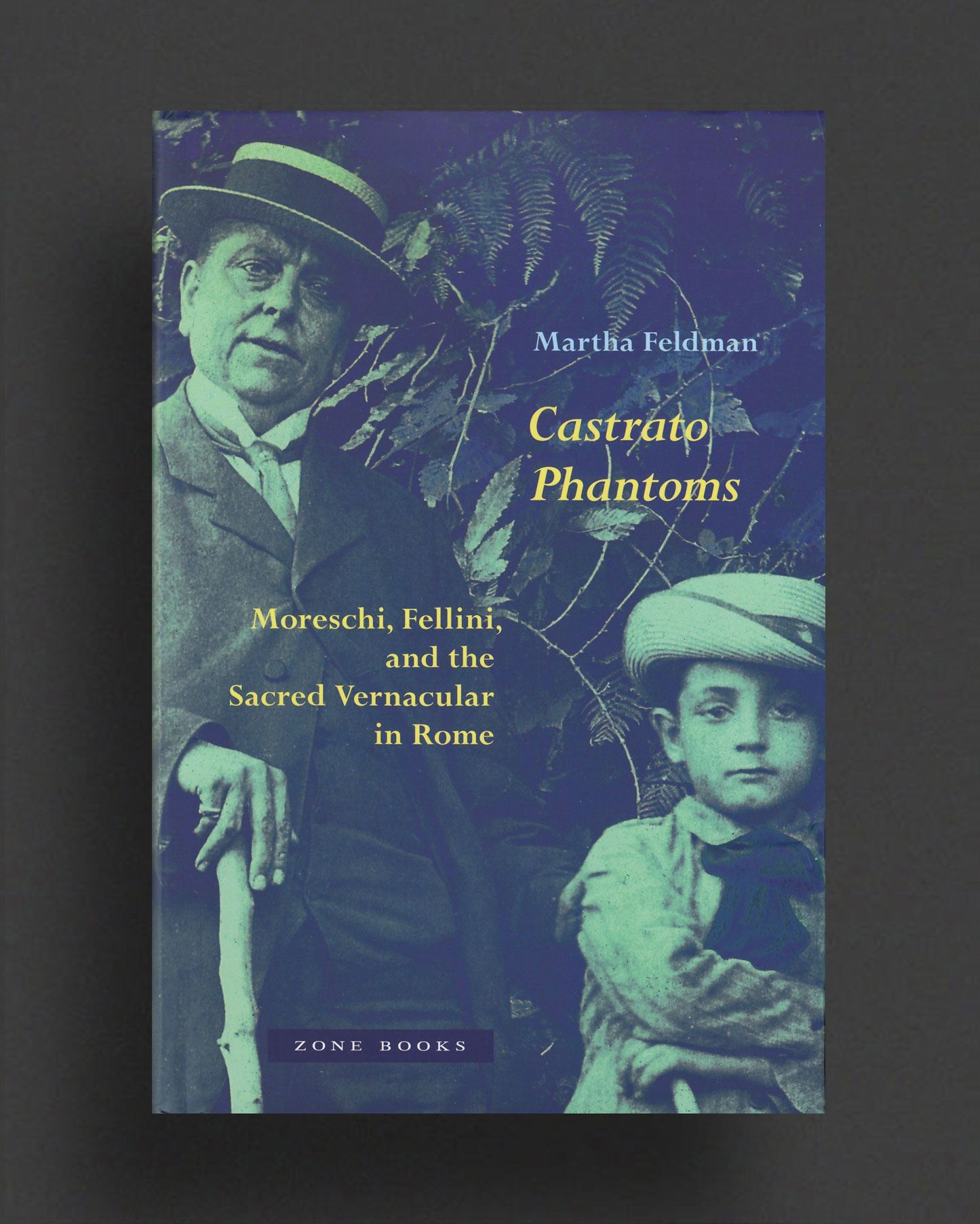
A new mapping of castrato afterlives in modern Rome
Around 1830, opera houses stopped using castrati, and Rome and the Vatican became home to their glorious singing, engineered by surgery and intensive vocal training. Castrati were long mired in secrecy, obfuscations, and lies about their origin and conditions, not least the last of them, Alessandro Moreschi. Musicologist Martha Feldman declines to accept these deep-seated mysteries and concealments. After a decade and more of digging through archives and family histories comes her exciting transdisciplinary and quasi-cinematic account of Moreschi, whose recordings preserve the only sonic trace of a solo castrato.
Yet Moreschi's story extends far beyond him. It opens up intrigues, politics, and histories of the Vatican, everyday histories of nineteenth- and twentieth-century Rome, the world of Roman opera, the city's unique melange of sacred and vernacular tropes, and representations of Rome by iconic film director Federico Fellini. Moreschi and Fellini turn out to have been related by marriage, but also to share synergies grounded in Rome's persistent inclination to vernacularize the sacred. Far from telling of one anomalous figure, Feldman's gripping history convinces readers that Moreschi, like Fellini, can be read as an improbable index of Roman consciousness, both during his own life and well beyond.
2025, English
Hardcover (w. dust jacket), 408 pages, 23.5 x 15.9 cm
Published by
Zone Books / New York
$65.00 - Out of stock
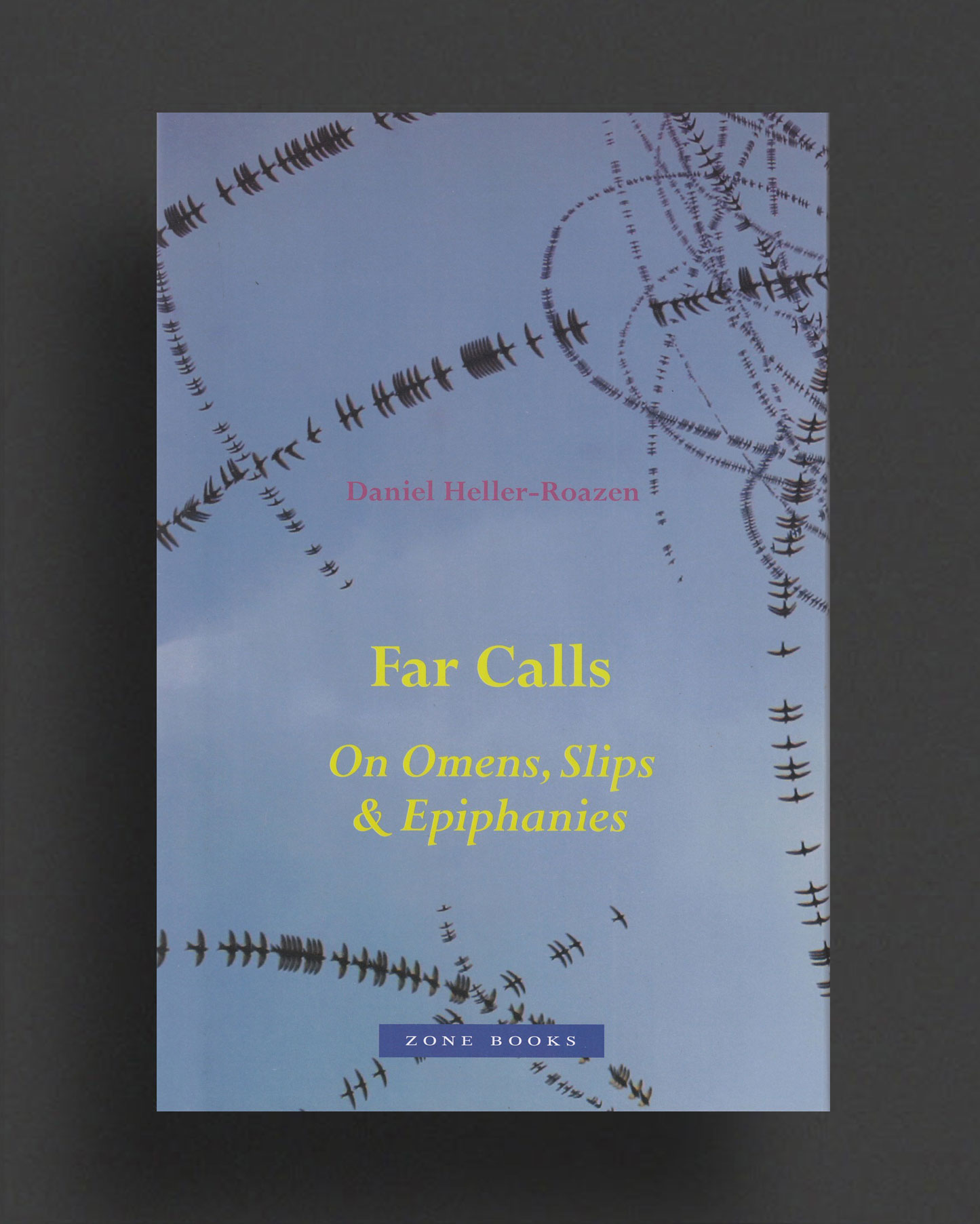
When words are not heard but overheard, when phrases are perceived in bits and pieces, and when speakers, failing to do as they intend, state things that they never meant to say, the saying, in its unsteady relation to understanding, becomes an event. That event has long been studied by a disparate company of interpreters: prophets, priests, and rabbis, poets and philosophers, linguists, psychiatrists and psychoanalysts, novelists and filmmakers. All have suggested that in the contingencies of discourse, there are precious indications to be gleaned, for which special techniques are required. In Far Calls, Daniel Heller-Roazen reconstructs such arts of detection, interweaving ancient, medieval, and modern examples. From the rituals of the ancient Greeks, Jews, and Romans to Freud and Lacan, from Augustine’s catching of a salvific scrap of speech to the inspiration that Breton and Yeats, Proust and Joyce, drew from profane cries and transmissions, Far Calls explores the powers of sonorous coincidence and the varieties of reading that it incites.
“A captivating journey through centuries of Western culture and beyond, with the help of extraordinary erudition.”—Maurizio Bettini
“Far Calls culls a remarkable trove of glints and inklings, omens and names, echoes, auguries, and fleeting indications of a powerfully resonant counter-sublime. Daniel Heller-Roazen is a masterful interpreter of literary interstices, openings in language that take us into an endangered place of wisdom’s alternative beginnings. This is a steeply beautiful book, stunning for its insight, erudition, and range, and—above all—for its powers of vision and audition.”— Peter Cole, author of Draw Me After: Poems
“The brilliance of this book is that it brings to the surface one of those mysterious properties of utterance that we can’t quite locate. It’s the enigmatic communication that emerges from chance, from darkness, from inadvertence, from a child’s babble, from the gods, where more is meant than was said or known. We travel through Mesopotamia, catch our breath as Scipio and Napoleon portentously stumble, and linger with Joyce’s epiphanies and Heidegger’s ‘call of conscience’, all the while observing our human inability to control the way the heavens speak to us and indulging our unstoppable desire to keep overhearing their fragmentary messages in the hope that we will.”— Ardis Butterfield, Marie Borroff Professor of English and Professor of French and Music, Yale University
“Far Calls weaves a fascinating thread of thought from antiquity up to modernity. What a wonderful surprise to discover that Augustine, Alfonso el Sabio, Leibniz, Poe, Breton, Freud, Proust, even Heidegger attributed the power to communicate important ‘truths’ to what ancient divinatory wisdom called kledōn or omen: that is, the hidden meaning of words uttered with a completely different communicative intention. A captivating journey through centuries of Western culture and beyond, with the help of extraordinary erudition put in the service of a lucid and compact construction.”— Maurizio Bettini, Professor Emeritus of Classical Philology, Director of the Center for Anthropology and the Classics, University of Siena
Daniel Heller-Roazen is the Arthur W. Marks 1919 Professor of Comparative Literature at Princeton University. His is the author, most recently, of Absentees: On Variously Missing Persons; No One's Ways: An Essay on Infinite Naming, Dark Tongues: The Art of Rogues and Riddlers, and The Fifth Hammer: Pythagoras and the Disharmony of the World.
2008, English
Softcover, 489 pages, 15.3 x 22.8 cm
Published by
Zone Books / New York
$58.00 - Out of stock
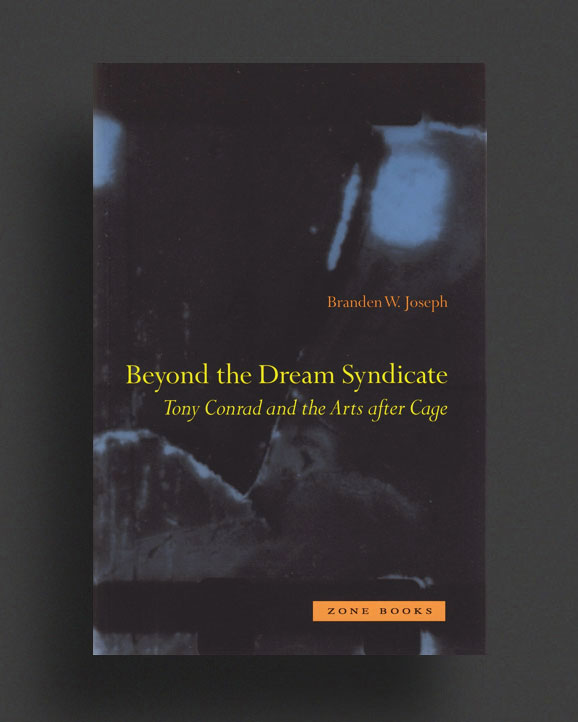
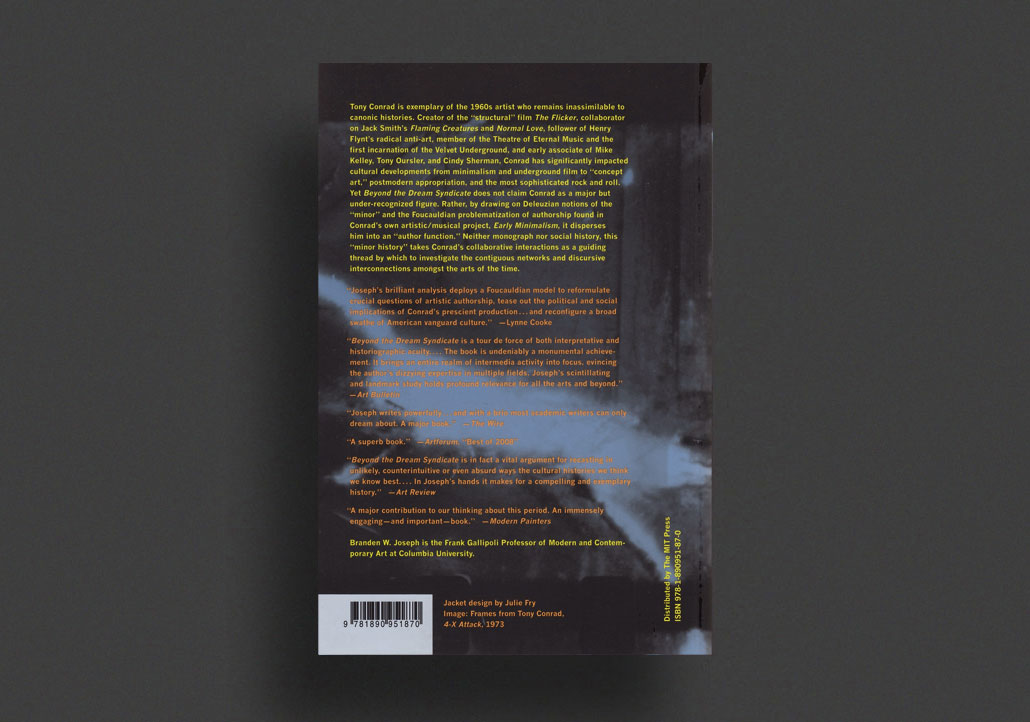
Tony Conrad is exemplary of the 1960s artist who remains inassimilable to canonic histories. Creator of the “structural” film, The Flicker, collaborator on Jack Smith’s Flaming Creatures and Normal Love, follower of Henry Flynt’s radical anti-art, member of the Theatre of Eternal Music and the first incarnation of The Velvet Underground, and early associate of Mike Kelley, Tony Oursler, and Cindy Sherman, Conrad has significantly impacted cultural developments from minimalism to underground film, “concept art,” postmodern appropriation, and the most sophisticated rock and roll. Yet Beyond the Dream Syndicate does not claim Conrad as a major but under-recognized figure.
Rather, by drawing on Deleuzian notions of the “minor” and the Foucauldian problematization of authorship found in Conrad’s own artistic/musical project, Early Minimalism, it disperses him into an “author function.” Neither monograph nor social history, the book takes Conrad’s collaborative interactions as a guiding thread by which to investigate the contiguous networks and discursive interconnections amongst the arts of the time.
“A tour de force of both interpretative and historiographic acuity.”—Art Bulletin
1991, English
Softcover, 296 pages, 15.3 x 22.8 cm
Published by
Zone Books / New York
$44.00 - Out of stock
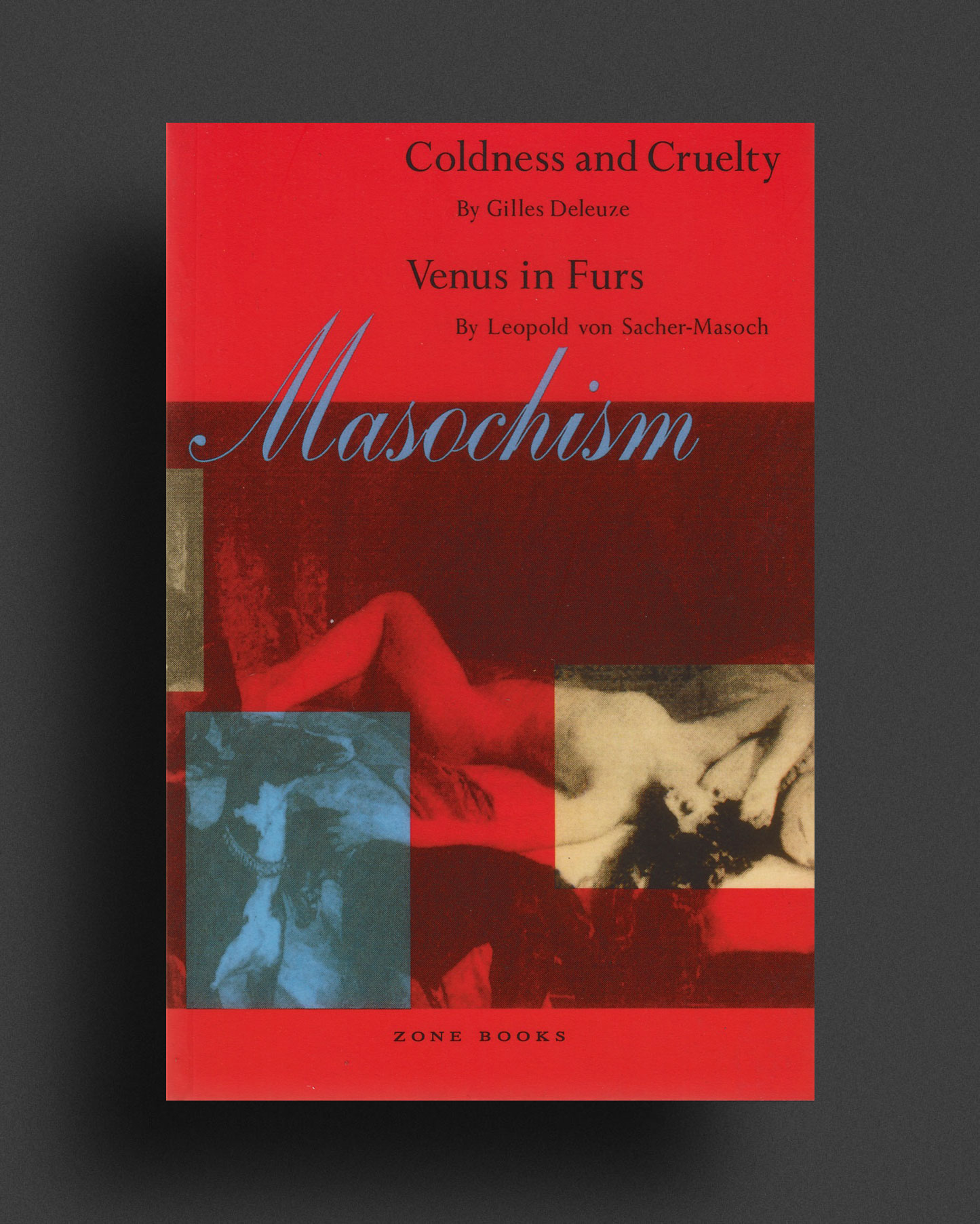
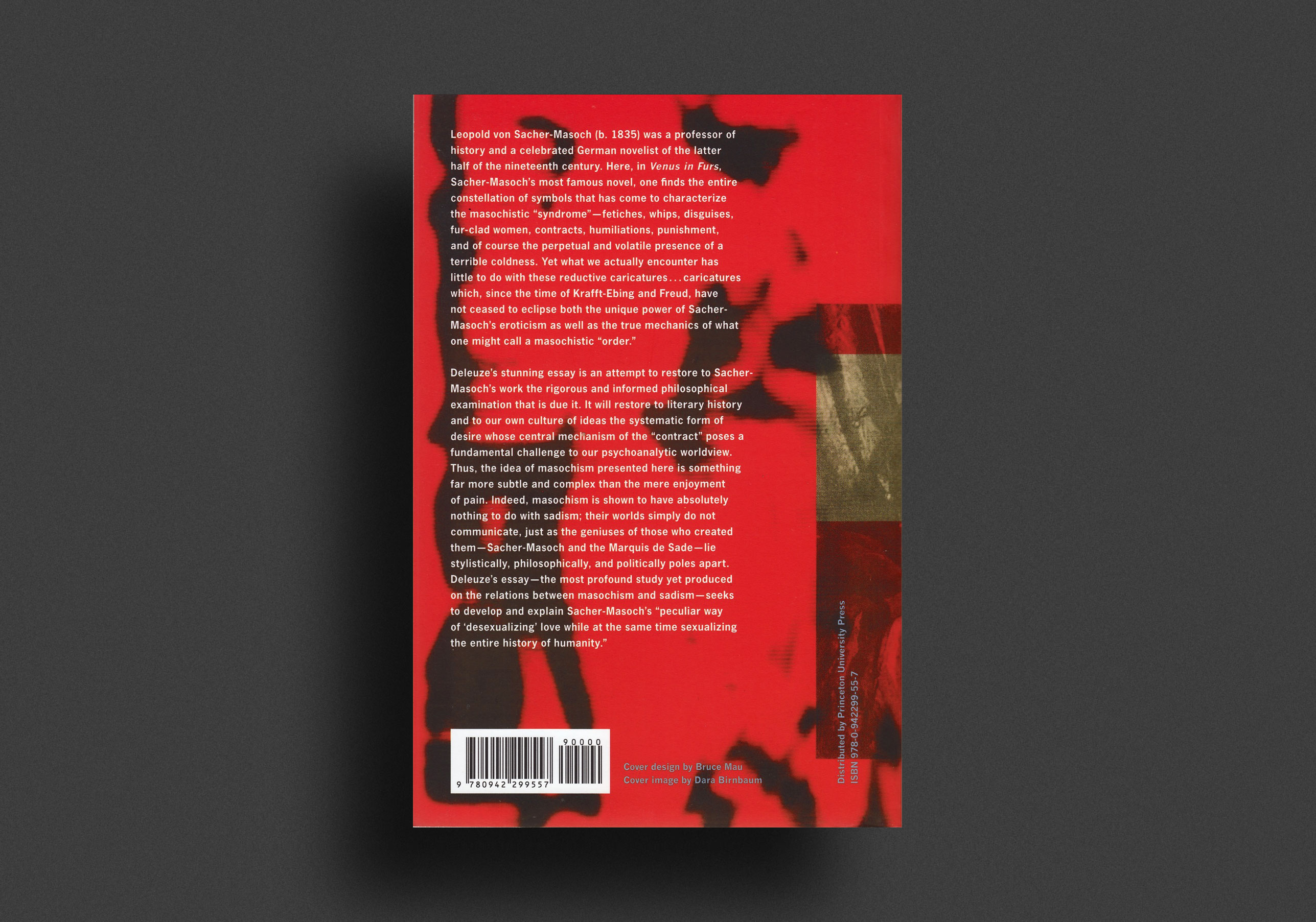
In his stunning essay Coldness and Cruelty Gilles Deleuze provides a rigorous and informed philosophical examination of the work of late nineteenth-century German novelist Leopold von Sacher-Masoch. Deleuze's essay, certainly the most profound study yet produced on the relations between sadism and masochism, seeks to develop and explain Masoch's "peculiar way of 'desexualizing' love while at the same time sexualizing the entire history of humanity." He shows that masochism is something far more subtle and complex than the enjoyment of pain, that masochism has nothing to do with sadism: their worlds do not communicate, just as the genius of those who created them -- Masoch and Sade -- lie stylistically, philosophically, and politically poles apart.
Venus in Furs, the most famous of Masoch's novels, belongs to an unfinished cycle of works that Masoch entitled The Heritage of Cain. The cycle was to treat a series of themes, including love, war, and death. The present work is about love. Although the entire constellation of symbols that has come to characterize the masochistic syndrome can be found here -- fetishes, whips, disguises, fur-clad women, contracts, humiliations, punishment, and always the volatile presence of a terrible coldness -- these received associations do not eclipse the truly singular and surprising power of Masoch's eroticism.
2023, English
Hardcover (w. dust jacket), 264 pages, 22.8 x 15.2 cm
Published by
Zone Books / New York
$56.00 - Out of stock
Essays on media systems and contemporary art by a leading theorist of modern visual culture.
Tricks of the Light brings together essays by critic and art historian Jonathan Crary, internationally known for his groundbreaking and widely admired studies of modern Western visual culture. This collection features a compelling selection of Crary's responses to modern and contemporary art and to the transformations of twentieth-century media systems and urban/technological environments. These wide-ranging and provocative texts explore the work of painters, performance artists, writers, architects, and photographers, including Allan Kaprow, Eleanor Antin, Ed Ruscha, John Berger, Bridget Riley, J.G. Ballard, Rem Koolhaas, Gretchen Bender, Dennis Oppenheim, Paul Virilio, Robert Irwin, and Uta Barth. There are also reflections on filmmakers Fritz Lang, Stanley Kubrick, Jean-Luc-Godard, David Cronenberg, and others. The book is enhanced by several expansive essays on the unstable status of television, both amid its beginnings in the 1930s and then during its assimilation into new assemblages and networks in the 1980s and 90s. These assess its many-sided role in the reshaping of subjectivity, temporality, and the operation of power. Like all of Crary's work, his writing here is grounded in the acuteness of his engagement with perceptual artifacts of many kinds and in his nuanced reading of historical processes and their cultural reverberations.
1989, English
3 Vols. softcovers, 500 + 560 + 584 pages, 23.5 x 18.5 cm
1st Edition, Out of print title / used / very good
Published by
Zone Books / New York
$140.00 - Out of stock
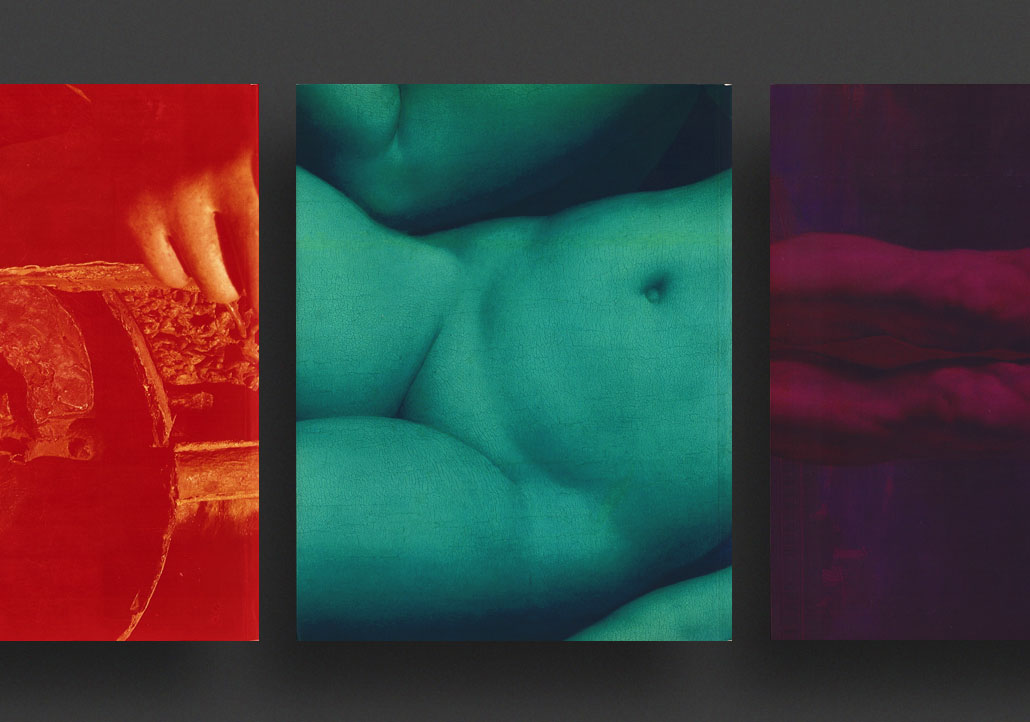
Complete set (3 volumes) of ZONE : Fragments for a History of the Human Body, published in 1989 by Zone Books, and all long out-of-print. The forty-eight essays and photographic dossiers in these three volumes examine the history of the human body as a field where life and thought intersect. They show how different cultures at different times have entwined physical capacities and mental mechanisms in order to construct a body adapted to moral ideas or social circumstances — the body of a charismatic citizen or a visionary monk, a mirror image of the world or a reflection of the spirit.
Each volume emphasizes a particular perspective. Part 1 explores the human body’s relationship to the divine, to the bestial, and to the machines that imitate or simulate it. Part 2 covers the junctures between the body’s “outside” and “inside” by studying the manifestations — or production — of the soul and the expression of the emotions and, on another level, by examining the speculations inspired by cenesthesia, pain, and death. Part 3 brings into play the classical opposition between organ and function by showing how organs or bodily substances can be used to justify or challenge the way human societies function and, conversely, how political and social functions tend to make the bodies of the persons filling them the organs of a larger body — the social body or the universe as a whole.
Among the contributors to Fragments for a History of the Human Body are Mark Elvin, Catherine Gallagher, Françoise Héritier-Augé, Julia Kristeva, William R. LaFleur, Thomas W. Laqueur, Jacques Le Goff, Nicole Loraux, Mario Perniola, Hillel Schwartz, Jean Starobinski, Jean-Pierre Vernant, and Caroline Walker Bynum.
“ZONE is unequivocally the most innovative, informative, and intellectually stimulating journal I have ever encountered…It belongs in all but the smallest personal, public, and academic collections.” —Library Journal
Very Good copies all, only light wear, light page tanning. All first editions, second printings.
1991, English
Softcover, 200 pages, 15.2 x 22.9 cm
Published by
Zone Books / New York
$54.00 - Out of stock
Most Anglo-American readers know Bataille as a novelist. The Accursed Share provides an excellent introduction to Bataille the philosopher. Here he uses his unique economic theory as the basis for an incisive inquiry into the very nature of civilization. Unlike conventional economic models based on notions of scarcity, Bataille's theory develops the concept of excess: a civilization, he argues, reveals its order most clearly in the treatment of its surplus energy. The result is a brilliant blend of ethics, aesthetics, and cultural anthropology that challenges both mainstream economics and ethnology.
Georges Bataille (1897-1962) was a French writer, essayist, and philosopher whose works include The Story of the Eye, The Blue of Noon, The Accursed Share, and Theory of Religion.
A serious book of political economy that also claims 'the sexual act is in time what the tiger is in space.'... The Accursed Share is a brilliant product of [Bataille's] loony-tunes coupling of critical genres: pseudo/antisurrealist manifestos, leftist political treatises, erotics, Hegel 'n' Nietzsche studies, mysticism, anthropology, and sun worship. - Erik Davis, The Voice Literary Supplement
1993, English
Softcover, 464 pages, 15.3 x 22.7 cm
Published by
Zone Books / New York
$69.00 - In stock -
The three volumes of The Accursed Share address what Georges Bataille sees as the paradox of utility: namely, if being useful means serving a further end, then the ultimate end of utility can only be uselessness. The first volume of The Accursed Share, the only one published before Bataille's death, treated this paradox in economic terms, showing that "it is not necessity but its contrary, luxury, that presents living matter and mankind with their fundamental problems." This Zone edition includes in a single volume a reconstruction, based on the versions published in Bataille's posthumous collected works, of his intended continuation of The Accursed Share.
In the second and third volumes, The History of Eroticism and Sovereignty, Bataille explores the same paradox of utility, respectively from an anthropological and an ethical perspective. He first analyzes the fears and fascination, the prohibitions and the transgressions attached to the realm of eroticism as so many expressions of the "uselessness" of erotic life. It is just this expenditure of excess energy that demarcates the realm of human autonomy, of independence relative to "useful" ends. The study of eroticism therefore leads naturally to the examination of human sovereignty, in which Bataille defines the sovereign individual as one who consumes and does not labor, creating a life beyond the realm of utility.
Georges Bataille (1897-1962) was a French writer, essayist, and philosopher whose works include The Story of the Eye, The Blue of Noon, The Accursed Share, and Theory of Religion.
1991, English
Hardcover (w. dust jacket), 288 pages, 22.8 x 15.2 cm
1st Edition, Out of print title / used / very good
Published by
Zone Books / New York
$65.00 - Out of stock
“Since the end of the last century,” Walter Benjamin wrote, “philosophy has made a series of attempts to lay hold of the ‘true’ experience as opposed to the kind that manifests itself in the standardized, denatured life of the civilized masses. It is customary to classify these efforts under the heading of a philosophy of life. Towering above this literature is Henri Bergson’s early monumental work Matter and Memory.”
Along with Husserl’s Ideas and Heidegger’s Being and Time, Bergson’s work represents one of the great twentieth-century investigations into perception and memory, movement and time, matter and mind. Arguably Bergson’s most significant book, Matter and Memory is essential to an understanding of his philosophy and its legacy.
“It would greatly distort Bergson to minimize the amazing description of perceived being given in Matter and Memory. Never before had anyone thus described the brute being of the perceived world. In unveiling it along with nascent duration, Bergson rediscovers in the heart of man a pre-Socratic and ‘prehuman’ sense of the world.”—Maurice Merleau-Ponty
"Matter and Memory was the diagnosis of a crisis in psychology. Movement, as physical reality in the external world, and the image, as psychic reality in consciousness, could no longer be opposed. The Bergsonian discovery of a movement-image, and more profoundly, of a time-image, still retains such richness today that it is not certain that all its consequences have been drawn."—Gilles Deleuze
"Since the end of the Last century, philosophy has made a series of attempts to lay hold of the 'true' experience as opposed to the kind that manifests itself in the standardized, denatured life of the civilized masses. It is customary to classify these efforts under the heading of a philosophy of life. Towering above this literature is Bergson's early monumental work, Matter and Memory."—Walter Benjamin
Translated by N.M. Paul, W.S.
Henri Bergson (1859-1941) was awarded the Nobel Prize in 1927. His works include Time and Free Will, An Introduction to Metaphysics, Creative Evolution, and The Creative Mind.
2020, English
Hardcover (w. dust jacket), 456 pages, 27.9 x 18.4 cm
1st Edition, Out of print title / used / very good
Published by
Zone Books / New York
$80.00 - Out of stock
Out-of-print first hardcover edition.
In this widely anticipated book, two leading contemporary art historians present a stunning reconsideration of the problem of time in the Renaissance. With intellectual brilliance, Alexander Nagel and Christopher S. Wood reexamine the meanings, uses, and effects of chronologies, models of temporality, and notions of originality and repetition in Renaissance images and artifacts.
Anachronic Renaissance reveals a web of paths traveled by works and artists, a landscape obscured by art history's disciplinary compulsion to anchor its data securely in time. The buildings, paintings, drawings, prints, sculptures, and medals addressed in this book were shaped by concerns about authenticity, about reference to prestigious origins and precedents, and about the implications of transposition from one medium to another. Byzantine icons taken to be early Christian antiquities, the acheiropoeton or image made without hands, the activities of spoliation and citation, differing approaches to art restoration, legends about movable buildings, and forgeries and pastiches: all of these emerge as basic conceptual structures of Renaissance art. The authors show how the complex and layered temporalities of images offered a counterpoint to the linear chronologies that increasingly structured commerce, politics, travel, and everyday life in the fourteenth and fifteenth centuries.
While a work of art does bear witness to the moment of its fabrication, Nagel and Wood argue that it is equally important to understand its temporal instability: how it points away from that moment, backward to a remote ancestral origin, to a prior artifact or image, even to an origin outside of time, in divinity. The authors conclude with an analysis of Roman episodes and projects of the decades around 1500, culminating in Raphael's Stanza della Segnatura. This book is not the story about the Renaissance, nor is it just a story. It imagines the infrastructure of many possible stories. Clearly, Anachronic Renaissance will be essential reading for historians of Western art and all those concerned with the historiography of material culture.
"Anachronic Renaissance is a book so rich, challenging, and stimulating that every critique runs the risk of appearing as nitpicking.... In its intellectual ambitions...[it] seeks to reconceptualize nothing less than the idea of Renaissance art, north and south of the Alps. It is a fascinating, learned, and honest invitation to discussion, a must not only for Renaissance scholars."—CAA Reviews
Very Good copy with light edge wear to DJ.