World Food Books' programme is largely produced on Kulin Nation land. We acknowledge the Wurundjeri people of the Kulin Nation as the first and continuing custodians of this land, and pay respect to their Elders past, present, and emerging.
World Food Books is an arts and special interests bookshop in Naarm / Melbourne. Founded in 2010, World Food Books is devoted to the presentation of a rotating, hand-selection of international art, design, literary and counterculture publications with an emphasis on the anti-traditional, the experimental, the avant-garde, the heretic, the marginal.
Presenting new titles alongside rare and out-of-print books, catalogues and journals spanning the fields of modern and contemporary art, design, photography, illustration, film, literature, poetry, cultural theory, philosophy, sexuality, popular and underground culture in its many radical forms, World Food Books wishes to encourage adventurous, thoughtful and open-minded reading, looking, writing, and exchange of publishing and ideas, both current and historical.
As well as our bookshop, located in Melbourne's historical Nicholas Building, all of our inventory is available internationally via our online mail-order service.
World Food Books semi-regularly co-ordinates "Occasions", a programme of exhibits and events at the bookshop and in partnership with other hosts (such as museums and art galleries) that develop out of the activities, relationships and content of the bookshop itself.
World Food Books
The Nicholas Building
37 Swanston Street
Room 5, Level 6
Melbourne 3000
Australia
SHOP HOURS:
Thu–Sat 11–5
WEB-SHOP OPEN 24/7
World Food Books
Postal Address:
PO Box 435
Flinders Lane
Victoria 8009
Australia
Art
Theory / Essay
Architecture / Interior
Graphic Design / Typography
Photography
Fashion
Eros
LGBTQ+
Fiction / Poetry
Weird / Speculative / Science Fiction / Horror
Transgressive / Visceral / Abject
Symbolism / Decadence / Fin de siècle
Film / Video
Painting
Sculpture / Installation
Performance / Dance / Theater
Drawing
Sound / Music
Curatorial
Group Shows / Collections
Periodicals
Out-of-print / Rare
Posters / Ephemera / Discs
Signed Books
World Food Books Gift Voucher
World Food Book Bag
Australian Art
Australian Fiction
Australian Science Fiction / Speculative Fiction
Australian Poetry
Australian Photography
Japanese Photography
Conceptual Art
Minimal Art
Dada
'Pataphysics / Oulipo
Fluxus
Concrete Poetry
Pop Art
Surrealism
Arte Povera
Arte Informale / Haute Pâte / Tachism
Nouveau Réalisme / Zero / Kinetic
Situationism / Lettrism
Collage / Mail Art / Xerox Art
Art Brut / Folk / Visionary / Fantastic
Illustration / Graphic Art / Bandes Dessinées
Furniture
Italian Radical Design / Postmodernism
Textiles
Ceramics / Glass
Counterculture
Protest / Revolt
Philosophy
Psychoanalysis
Anthropology
Anarchism
Socialism / Anarchism / Communism / Capitalism
Literary Theory / Semiotics / Language
Feminism / Women's Studies
Gender Studies / Sexuality
Anthropology
Fetishism / BDSM
Drugs / Psychedelia
Crime / Violence
Animal Rights / Veganism
Occult / Esoterica
Ecology / Earth / Alternative Living
Whole Earth / Crafts
All prices in AUD (Australian dollars)
Pick-Ups
Pick-up orders can be collected in our bookshop during opening hours after order date. Please collect any Pick-up orders within 2 weeks of ordering as we have limited storage space. Orders will be released back into stock if not collected within this time. No refunds can be made for pick-ups left un-collected. If you cannot make it in to the bookshop in this time-frame, please choose postage option.
Return Policy
All sales are final. We do accept returns (for refund or exchange) for items received in error. All our orders are packed with special care using heavy-duty padding and cardboard book-mailers or bubble mailers (for smaller books), using reinforcement where required. We cannot take responsibility for any lost, stolen or damaged parcels.
Insurance
Should you wish to insure your package, please email us directly after placing your order and we can organise this at a small extra expense. Although all standard/express tracked packages are very safe and dependable, we cannot take responsibility for any lost, stolen or damaged parcels. We recommend insurance on valuable orders.
Interested in selling your old books, catalogues, journals, magazines, comics, fanzines, ephemera? We are always looking for interesting, unusual and out-of-print books to buy. We only buy books in our fields of interest and specialty, and that we feel we can resell.
We base these prices on desirability, market value, in-print prices, condition and our current stock levels. We offer cash, store credit, and can take stock on consignment. All
about 25% of the price we expect to get when we sell them, or 30% in store credit. We base these prices on desirability, market value, in-print prices, condition and our current stock levels.
Sell your books any day of the week. You can drop them off and return later. If you have a lot of books, we can visit your Sydney home.
We buy books that we feel we can resell. We offer about 25 % of the price we expect to get when we sell them, or 30% in store credit. We base these prices on desirability, market value, in-print prices, condition and our current stock levels.
Philadelphia Wireman
03 August - 01 September, 2018
World Food Books is proud to announce our next Occasion, the first presentation of sculptures by Philadelphia Wireman in Australia.
The Philadelphia Wireman sculptures were found abandoned in an alley off Philadelphia’s South Street on trash night in 1982. Their discovery in a rapidly-changing neighbourhood undergoing extensive renovation, compounded with the failure of all attempts to locate the artist, suggests that the works may have been discarded after the maker’s death. Dubbed the "Philadelphia Wireman" during the first exhibition of this work, in 1985, the maker’s name, age, ethnicity, and even gender remain uncertain. The entire collection totals approximately 1200 pieces, all intricately bound together with tightly-wound heavy-gauge wire (along with a few small, abstract marker drawings, reminiscent both of Mark Tobey and J.B. Murry). The dense construction of the work, despite a modest range of scale and materials, is singularly obsessive and disciplined in design: a wire armature or exoskeleton firmly binds a bricolage of found objects including plastic, glass, food packaging, umbrella parts, tape, rubber, batteries, pens, leather, reflectors, nuts and bolts, nails, foil, coins, toys, watches, eyeglasses, tools, and jewellery.
Heavy with associations—anthropomorphic, zoomorphic, and socio-cultural responses to wrapped detritus—the totemic sculptures by Philadelphia Wireman have been discussed in the context of work created to fulfil the shamanistic needs of alternative religions in American culture. Curators, collectors, and critics have variously compared certain pieces to sculpture from Classical antiquity, Native American medicine bundles, African-American memory jugs, and African fetish objects. Reflecting the artist’s prolific and incredibly focused scavenging impulse, and despite—or perhaps enhanced by—their anonymity, these enigmatic objects function as urban artefacts and arbiters of power, though their origin and purpose is unknown. Philadelphia Wireman, whatever their identity, possessed an astonishing ability to isolate and communicate the concepts of power and energy through the selection and transformation of ordinary materials. Over the course of the past two decades, this collection has come to be regarded as an important discovery in the field of self-taught art and vernacular art.
Presented in collaboration with Fleisher-Ollman Gallery, Philadelphia, and Robert Heald, Wellington.
Susan Te Kahurangi King
02 February - 10 March, 2018
Susan Te Kahurangi King (24 February 1951 - ) has been a confident and prolific artist since she was a young child, drawing with readily available materials - pencils, ballpoint pens and felt-tip markers, on whatever paper is at hand. Between the ages of four and six Susan slowly ceased verbal communication. Her grandparents William and Myrtle Murphy had developed a special bond with Susan so they took on caring responsibilities for extended periods. Myrtle began informally archiving her work, carefully collecting and storing the drawings and compiling scrapbooks. No drawing was insignificant; every scrap of paper was kept. The King family are now the custodians of a vast collection containing over 7000 individual works, from tiny scraps of paper through to 5 meter long rolls.
The scrapbooks and diaries reveal Myrtle to be a woman of great patience and compassion, seeking to understand a child who was not always behaving as expected. She encouraged Susan to be observant, to explore her environment and absorb all the sights and sounds. Myrtle would show Susan’s drawings to friends and people in her community that she had dealings with, such as shopkeepers and postal workers, but this was not simply a case of a grandmother’s bias. She recognised that Susan had developed a sophisticated and unique visual language and sincerely believed that her art deserved serious attention.
This was an unorthodox attitude for the time. To provide some context, Jean Dubuffet coined the term Art Brut in 1945 to describe work created by self-taught artists – specifically residents of psychiatric institutions and those he considered to be visionaries or eccentrics. In 1972 Roger Cardinal extended this concept by adopting the term Outsider Art to describe work made by non-academically trained artists operating outside of mainstream art networks through choice or circumstance. Susan was born in Te Aroha, New Zealand in 1951, far from the artistic hubs of Paris and London that Dubuffet and Cardinal operated in. That Myrtle fêted Susan as a self-taught artist who deserved to be taken seriously shows how progressive her attitudes were.
Susan’s parents Doug and Dawn were also progressive. Over the years they had consulted numerous health practitioners about Susan’s condition, as the medical establishment could not provide an explanation as to why she had lapsed into silence. Dawn educated herself in the field of homeopathy and went on to treat all twelve of her children using these principles – basing prescriptions on her observations of their physical, mental and emotional state.
Doug was a linguist with an interest in philosophy who devoted what little spare time he had to studying Maori language and culture. To some extent their willingness to explore the fringes of the mainstream made them outsiders too but it was their commitment to living with integrity and their respect for individuality that ensured Susan’s creativity was always encouraged.
Even though Susan’s family supported her artistic pursuits, some staff in schools and hospitals saw it as an impediment to her assimilation into the community and discouraged it in a variety of ways. Her family was not always aware of this and therefore did not fully understand why Susan stopped drawing in the early 1990s. However, rather than dwell on the challenges that Susan faced in pursuit of her artistic practice, they prefer to highlight her achievements. In 2008 Susan began drawing again in earnest, after an almost 20 year interruption, and her work is now shown in galleries around the world.
Susan grew up without television and has been heavily influenced by the comics she read as a child. She is absolutely fearless in the appropriation of recognizable characters, such as Donald Duck and Mickey Mouse, in her work. She twists their limbs, contorts their faces, compresses them together, blends them into complex patterned backgrounds - always imbuing them with an incredible energy. Although Susan often used pop culture characters in her work they are not naive or childlike. These are drawings by a brilliant self-taught artist who has been creating exceptional work for decades without an audience in mind.
Mladen Stilinović
"Various Works 1986 - 1999"
02 February 16 - September 10, 2016
Various works 1986 - 1999, from two houses, from the collections of John Nixon, Sue Cramer, Kerrie Poliness, Peter Haffenden and Phoebe Haffenden.
Including: Geometry of Cakes (various shelves), 1993; Poor People’s Law (black and white plate), 1993; White Absence (glasses, ruler, set square, silver spoon, silver ladel with skin photograph and wooden cubes), 1990-1996; Exploitation of the Dead (grey and red star painting, wooden painting, black spoon with red table, red plate), 1984-1990; Money and Zeros (zero tie, paintings made for friends in Australia (Sue, John, Kerrie), numbers painting), 1991-1992; Words - Slogans (various t-shirts) - “they talk about the death of art...help! someone is trying to kill me”, “my sweet little lamb”, “work is a disease - Karl Marx”; Various artist books, catalogues, monographs, videos; Poster from exhibition Insulting Anarchy; "Circular" Croatian - Australian edition; Artist book by Vlado Martek (Dostoyevsky); more.
Thanks to Mladen Stilinović and Branka Stipančić.
Jonathan Walker
Always Will Need To Wear Winter Shirt Blue + Ochre Small Check Pattern
21 August - 21 September, 2015
Untitled
I am not a great reader of poetry but I always return to the work of Melbourne poet, Vincent Buckley (1925- 1988). Perhaps I find his most tantalising piece to be not a finished poem but a fragment left on a scrap of paper discovered on his desk after the poet’s death.
The poetry gathers like oil
In the word-core, and spreads
It has its music meet,
Its music is in movement.
This fragment is more the shell left behind from a volatile thought than a finished poem. I find the last two lines honest but awkward whereas the first two lines work like an arrow. Most likely he could not find a resolution so it was left. Still, in its present form, it remains an eloquent testimony to the ultimate failure of a medium to express mobile thought and sensation, in Buckley’s case, through verbal language. It’s an important matter because this is something all artists have to deal with regardless of the medium.
I have never written a poem, however, I am forever copying fragments from books on paper scraps in a vain effort to fix certain notions in my head. At first, they function as bookmarks that are sometimes returned to when I open the book. But before long, as they accumulate, they fall out littering the table interspersed with A4 photocopies, bills, books and medications.
To return to Buckley’s fragment, the first two lines very much evoke how I paint nowadays. As you age, detail diminishes and patches of light become more luminous and float. I feel the most honest way of dealing with this is by smearing the oil paint on the canvas with the fingers and working close-up, blind. Only if the patches coalesce into an approaching image can the work gain a life.
-
Jonathan Walker was born in Melbourne, Australia and brought up on a dairy farm in Gippsland. In the 1970’s he studied painting at RMIT and won the Harold Wright Scholarship to the British Museum, London. During the 1980’s he exhibited at Pinacotheca Gallery, Richmond and had work shown at the NGV and Heidi City Art Gallery. Over the same period he designed the cover for the “Epigenesi” LP by Giancarlo Toniutti, Italy and conducted a mail exchange work with Achim Wollscheid, Germany. The work with artists through the post resulted in an article published in the bicentenary issue of Art and Australia 1988. He showed in artist run spaces such as WestSpace in the 90’s and 2000’s, and until 2012, taught painting at Victoria University, which is where we (Colleen Ahern and Lisa Radford) as organisers of the exhibition, among many others, had the privilege of being his student.
Walker’s knowledge was imparted to students through the careful selection of music, literature, and artists found in books that he himself had ordered for the library. Walker’s strategy was the generosity of sharing his vast knowledge with references specific to each student and their context.
Walker’s paintings share a similar focus and intimacy.
This exhibition presents a small selection of recent paintings alongside a publication that includes Walker’s writing. Observational and analytical, Walker’s work is a type of material notation — the time of day, colour and how it is blended, the both specific and fleeting location of a reflection on lino or the question of whether a chair leg should be included in a painting.
Please join us on Friday August 21 between 6-8pm to celebrate the opening of the exhibition.
Curated by Colleen Ahern and Lisa Radford.
B. Wurtz
Curated by Nic Tammens
March 26 - April 4, 2015
B.Wurtz works from a basement studio in his home on Manhattan’s Lower East Side.
This local fact is attested to by the plastic shopping bags and newsprint circulars that appear in his work. As formal objects, they don’t make loud claims about their origins but nonetheless transmit street addresses and places of business from the bottom of this long thin island. Like plenty of artists, Wurtz is affected by what is local and what is consumed. His work is underpinned by this ethic. It often speaks from a neighborhood or reads like the contents of a hamper:
“BLACK PLUMS $1.29 lb.”
“Food Bazaar”
“USDA Whole Pork Shoulder Picnic 99c lb.”
“RITE AID Pharmacy, with us it’s personal.”
“H. Brickman & Sons.”
“Sweet Yams 59c lb."
Most of the work in this exhibition was made while the artist was in residence at Dieu Donne, a workshop dedicated to paper craft in Midtown. Here Wurtz fabricated assemblages with paper and objects that are relatively lightweight, with the intention that they would be easily transportable to Australia. This consideration isn’t absolute in Wurtz’s work, but was prescriptive for making the current exhibition light and cheap. Packed in two boxes, these works were sent from a USPS post office on the Lower East Side and delivered to North Melbourne by Australia Post.
Wurtz appears courtesy of Metro Pictures, New York.
Thanks to Rob Halverson, Joshua Petherick, Sari de Mallory, Matt Hinkley, Helen Johnson, Fayen d'Evie, Ask Kilmartin, Lisa Radon, Ellena Savage, Yale Union, and "Elizabeth".
John Nixon
"Archive"
December 15 - January 20, 2014
The presentation of John Nixon's archive offered a rare showcase of this extensive collection of the artist's own publications, catalogues, posters, ephemera, editions and more, from the mid 1980s onwards, alongside a selection of his artworks.
Organized by John Nixon, Joshua Petherick and Matt Hinkley.
"Habitat"
at Minerva, Sydney (organised by Joshua Petherick and Matt Hinkley)
November 15 - December 20, 2014
Lupo Borgonovo, Janet Burchill & Jennifer McCamley,
Lewis Fidock, HR Giger, Piero Gilardi, Veit Laurent Kurz,
Cinzia Ruggeri, Michael E. Smith, Lucie Stahl, Daniel Weil, Wols
Press Release:
“...It contained seven objects. The slender fluted bone, surely formed for flight, surely from the wing of some large bird. Three archaic circuitboards, faced with mazes of gold. A smooth white sphere of baked clay. An age-blackened fragment of lace. A fingerlength segment of what she assumed was bone from a human wrist, grayish white, inset smoothly with the silicon shaft of a small instrument that must once have ridden flush with the surface of the skin - but the thing’s face was seared and blackened.”
William Gibson, “Count Zero”, 1986
"Autumn Projects Archive"
Curated by Liza Vasiliou
March 6 - March 15, 2014
World Food Books, in conjunction with the Virgin Australia Melbourne Fashion Festival 2014, presented the Autumn Projects archive, consisting of a selection of early examples in Australian fashion with a particular interest in collecting designers and labels from the period beginning in the 1980’s, who significantly influenced the discourse of Australian Fashion.
Curated by Liza Vasiliou, the exhibition provided a unique opportunity to view pieces by designers Anthea Crawford, Barbara Vandenberg, Geoff Liddell and labels CR Australia, Covers, Jag along with early experimental collage pieces by Prue Acton and Sally Browne’s ‘Fragments’ collection, suspended throughout the functioning World Food Books shop in Melbourne.
H.B. Peace
presented by CENTRE FOR STYLE
November 14, 2013
"Hey Blinky, you say chic, I say same"
Anon 2013
H.B. Peace is a clothing collaboration between great friends Blake Barns and Hugh Egan Westland. Their pieces explore the divergences between 'character’ and ‘personality’ in garments....etc
Special Thanks to Joshua Petherick and Matt Hinkley of WFB and Gillian Mears
and a Very Special Thank you to Audrey Thomas Hayes for her shoe collaboration.
Janet Burchill & Jennifer McCamley
"Aesthetic Suicide"
May 10 - June 8, 2013
The first of our occasional exhibitions in the World Food Books office/shop space in Melbourne, "Aesthetic Suicide" presented a body of new and older works together by artists Janet Burchill & Jennifer McCamley, including videos, prints, a wall work, and publications.
During shop open hours videos played every hour, on the hour.
1989, Japanese
Softcover (w. dust jacket and original plastic wrap), 80 pages, 22.8 x 16.3 cm
1st Edition, Out of print title / used / very good
Published by
Gakutokan / Japan
$90.00 - Out of stock
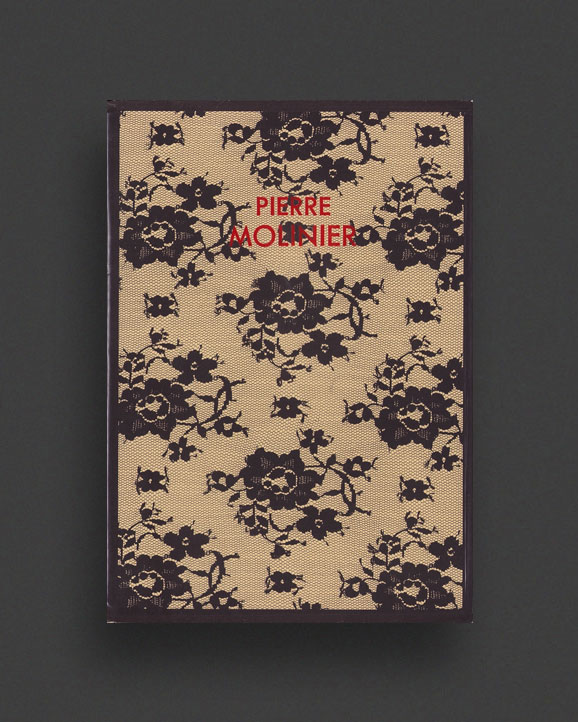
First edition of The World of Pierre Molinier, published in 1989 in Japan. An exquisite book of Molinier's fetishistic gender-bending paintings, photomontages, and drawings, fittingly wrapped in "stocking" dust jacket, with texts by André Breton, translated from French to Japanese by Kosaku Ikuta, imagery from "Molinier" (1966) film by Raymond Borde, beautifully designed and printed in Japan where Molinier's artworks had a particular resonance.
Pierre Molinier (1900—1976) was a French painter, photographer and a forerunner of gender performance art and Body Art (Art corporel). Molinier spent much of his artistic life working in isolation in Bordeaux, exiled from local and national art scenes. Born in Agen, nothing had predestined Molinier to a life as an artist. Self-taught, from a working-class background, he followed in his father’s footsteps and started out as a house painter. He got married and had two children. Tired of his infidelities and provocative behaviour, his wife left their marital home an in 1950 and Molinier begun photographing himself seriously, staging his own death and erecting a fake gravestone proudly declaring himself ‘a man without morals’. He was thrown out of the Bordeaux Salon des Indépendants as early as 1951 amidst controversy over his orgiastic painting of the same year, Le Grand Combat. Stirring up an obsessive correspondence with the anarchic poet-founder of Surrealism, André Breton, Molinier was soon integrated into the Surrealist group with a solo exhibition at Breton’s Paris gallery in 1956. Molinier’s anti-moral project appealed to the group’s interest in repressed desires, fetishism, and the transgression of bourgeois morals. In 1959, he exhibited at the Exposition International du Surrealism in Paris. From the mid-1960s Molinier chronicled the exploration of his subconscious transsexual desires in "Cent Photographies Erotiques": graphically detailed images of pain and pleasure. Cut-up, reassembled, and manipulated, Molinier painstakingly created elaborate and sensual photomontages in which he assumed the roles of dominatrix and succuba previously taken by the women of his paintings. Either alone with doll-like mannequins or with female models such as German sadomasochist Hanel Koeck, Molinier, who considered himself fundamentally androgynous, appears as a transvestite, employing his body and that of his acquaintances to create visions of hybrid identity, where stockinged multi-limbed, multi-sexed beings imitate pagan figures, Hindu gods, and Masonic symbols, in a rejection of a Christian tradition which he argued, had repressed androgyny. Designed to shock, Molinier’s artwork represented a very intimate disclosure about his own sexual ambiguity, inviting the viewer to bring to the images his or her own response of excitement or disgust. The degree of his artistic perversity and blasphemous tendencies was deemed too much for the French cultural elite, and the man Breton dubbed the “magician of erotic art” was shunned from the art world. Molinier did not participate in the 1965 International Surrealist Exhibition. For the last 11 years of his life Molinier played out his own most profound moments in the 'theatre' of his Bordeaux 'boudoir – atelier'. He committed suicide in 1976, shooting himself with a pistol, something he had foreshadowed in his artwork, time and again. Essentially a leg fetishist, but also considering himself as a shaman, facetious and provocative, anti-bourgeois and anti-religious, Molinier enjoyed transgressing gender identification : his outstanding photographs greatly influenced the European and North American Body Art in the 1970s and continue to fascinate artists today.
Very Good copy in original plastic jacket.
1961, English
Hardcover (w. dust jacket), 90 pages, 28 x 24 cm
1st Edition, Out of print title / used / very good
Published by
Bodley Head / London
$300.00 - In stock -
Rare first hardcover 1961 edition of this very important book of nude photography by British photographer Bill Brandt, published by Bodley Head, London, with a preface by Lawrence Durrell and an introduction by Chapman Mortimer. Fascinating Braque, Picasso, Dubuffet, Henry Moore, Edward Steichen, Eikoh Hosoe, Kishin Shinoyama, to name but a few, and having a profound influence on nude photography hence-forth, Brandt's nudes are as powerful and beautiful now as they were fifty years ago.
"These startling images rewrote the language of nude photography ... Brandt's approach was primarily formal, but his own sensibilities, combined with photography's tendency to overwhelm form's purity with life's impurities, ensured that his nudes are as interesting for their psychological undertones as for the wealth of unexpected forms he conjured. He did so with a camera that was devoid of a practicable viewing mechanism [a shutterless old Kodak he found in a secondhand shop] and thus reduced him, in effect, to working by blind instinct. ... At close range, his ancient camera yields a Venusian giantism, where sometimes sharply defined, sometimes blurred mountains of flesh loom over the artist/observer." (The Photobook A History Volume I, Parr & Badger)
Bill Brandt, best known for his photographs of London, his landscapes and portraits of celebrities, publishes here, for the first time, a selection of nudes, a subject which has obsessed him since 1945. Brandt used an old wooden camera with a wide angle lens for most of the pictures. Instead of making the camera register what he saw, he let himself be guided by the lens and made use of its acute distortion and unrealistically steep perspective. Thus the camera produced new anatomical images and shapes which his eyes had never observed. The lens helped him 'to get rid of the accepted image and to view his subjects without the cellophane-wrapping of conventional sight'. Chronologically arranged, the photographs record the transition from an early romantic style to more radical themes, ending with the pure form of extreme close-ups, taken on the beaches of East Sussex, Normandy and the Mediterranean. The pictures have fascinated Braque, Picasso, Dubuffet, Henry Moore and Edward Steichen, and had a profound influence on nude photography hence-forth.
Good—Very Good ex-libris copy w. associated markings not affecting content pages. Good dust jacket with light wear and repaired tear, preserved under mylar.
1985, Japanese
Hardcover slipcase w. 130 page hardcover book + folder of 8 photographic prints, 37 x 26 cm
1st Edition, Out of print title / used / fine
Published by
Nippon Geijutsu Shuppan (NGS) / Japan
$160.00 - Out of stock
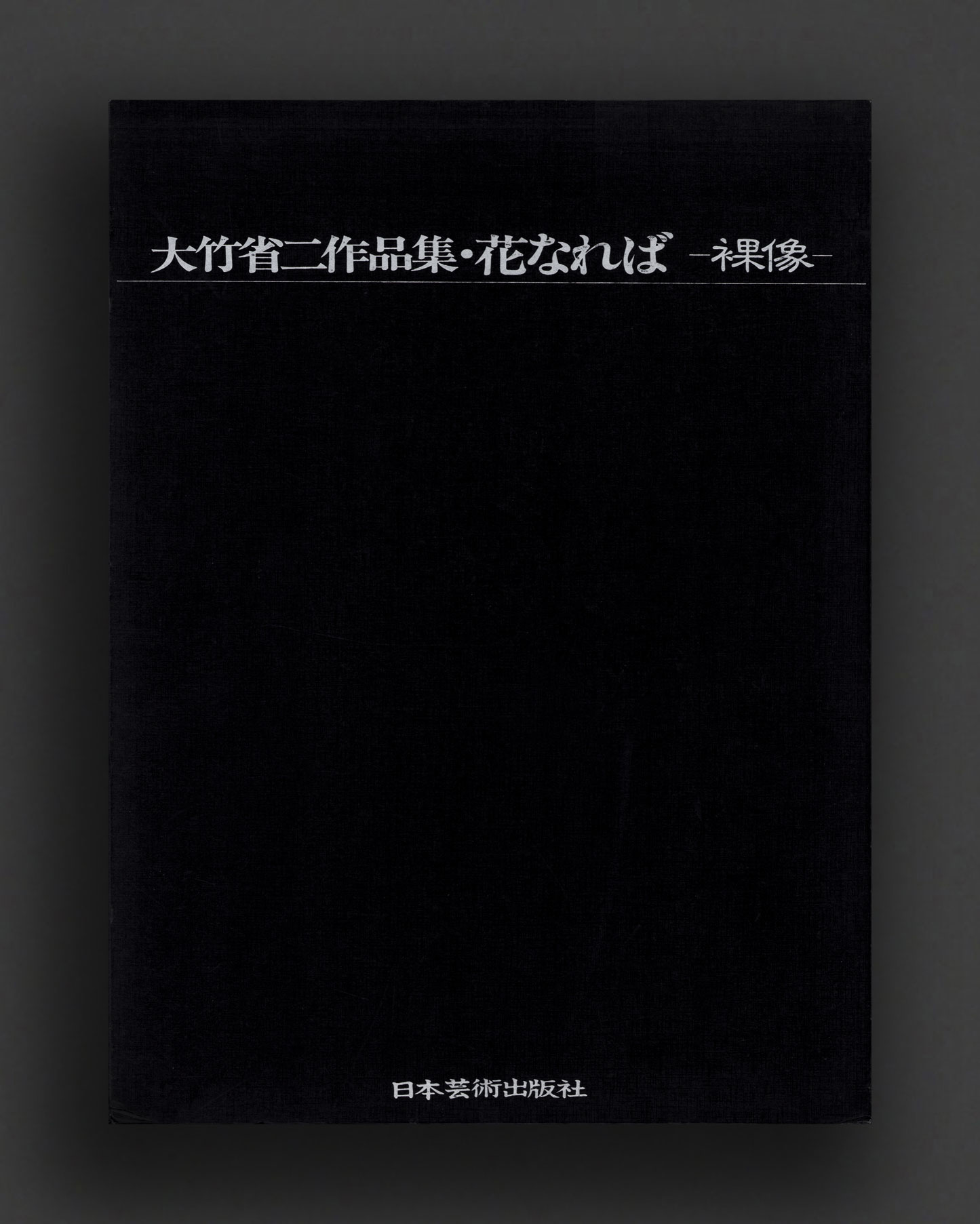
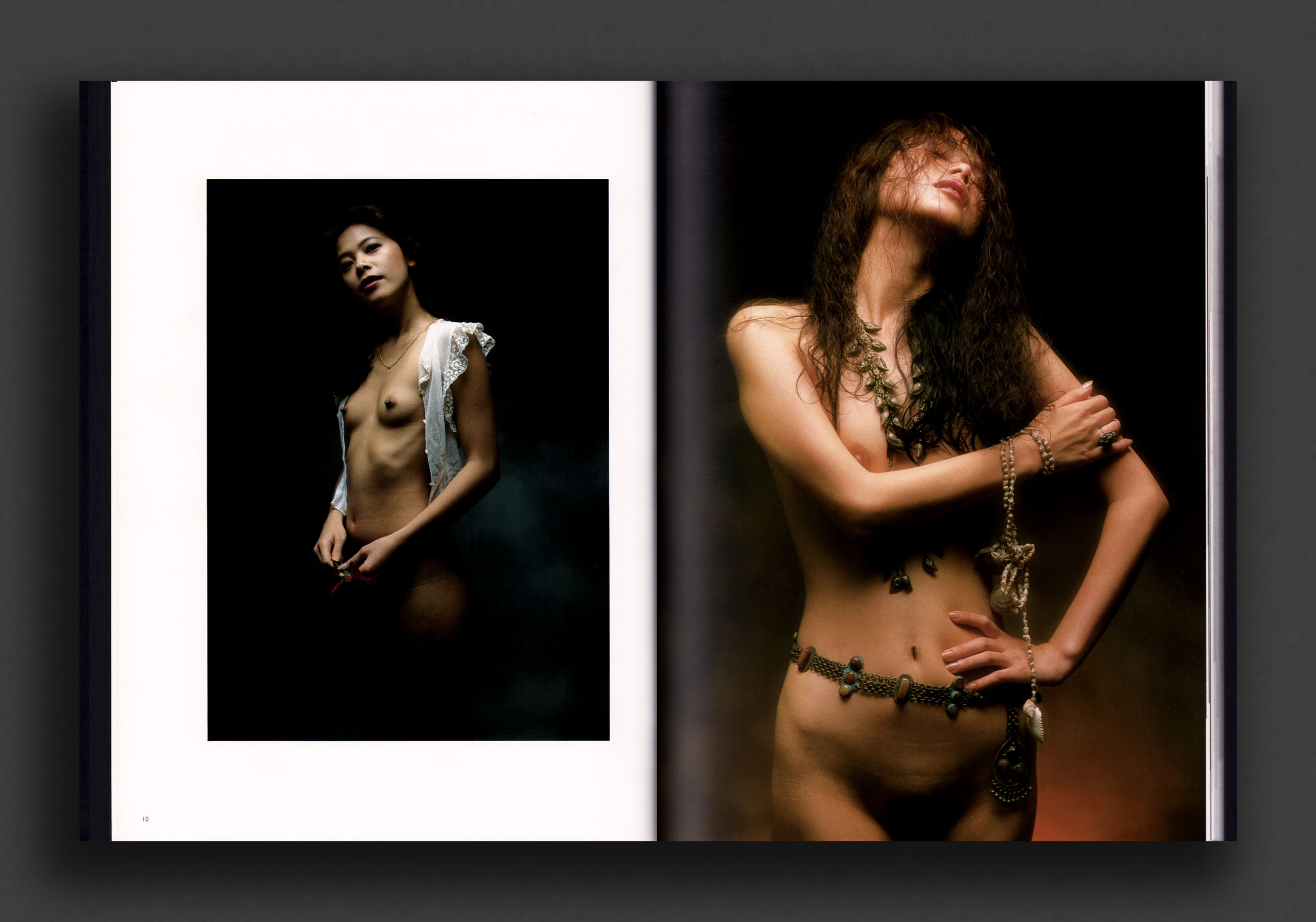
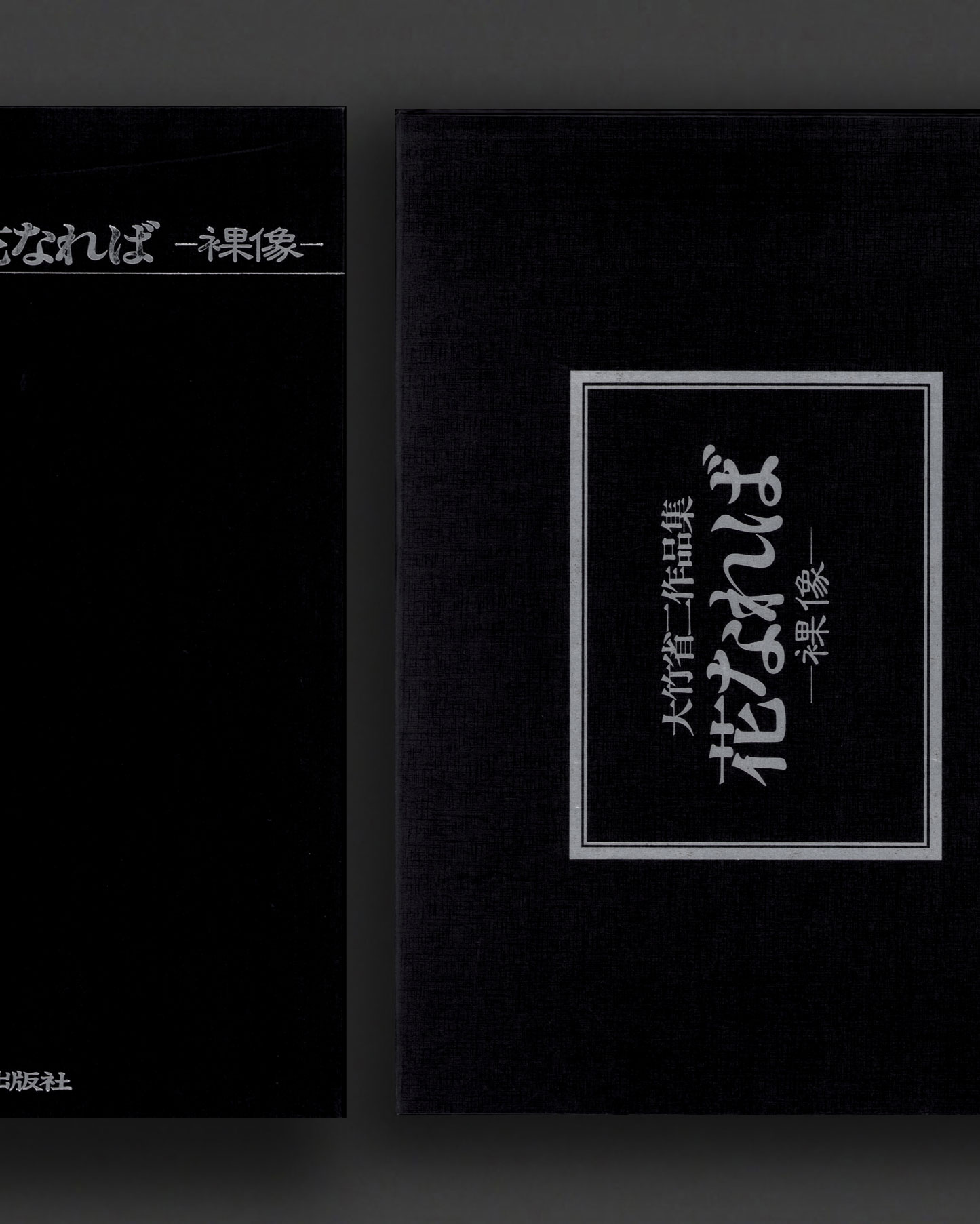
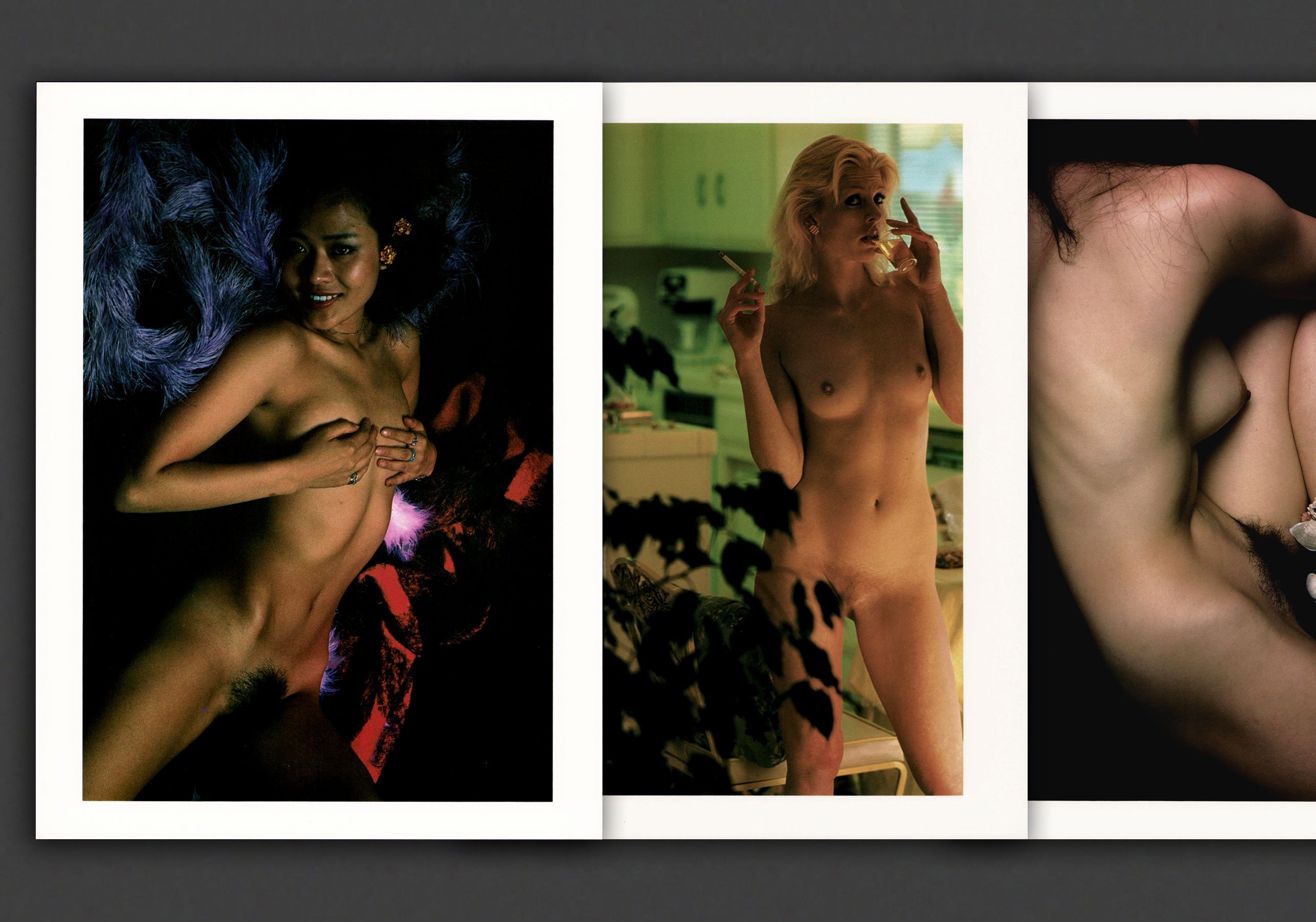
Lavish 1985 boxed edition by Japanese photographer Shoji Otake (1920—2015). Black cloth slipcase housing black cloth hardcover volume of Otake's erotic photography of female nudes spanning his career, plus an additional black cloth folder housing 8 photographic colour prints (34 x 25.5 cm) by Otake, perfectly reserved and protected by Japanese tissue paper, plus publisher's mail-order catalogue inserted. A most complete and deluxe edition issued to private members by Japanese erotic photography specialist publishers NGS (Nihon Geijutsu Shuppansha). Otake is also well-known for his book collections Janet (1974), Family Nude (1977), and many others.
Near Fine copy all round very well preserved.
198?, Japanese
Box with folio containing 12 photo-litho prints + introduction, 38 x 27.5 cm
1st Edition, Out of print title / used / very good
Published by
Artman Club / Tokyo
Nippon Geijutsu Shuppan (NGS) / Japan
$160.00 - Out of stock
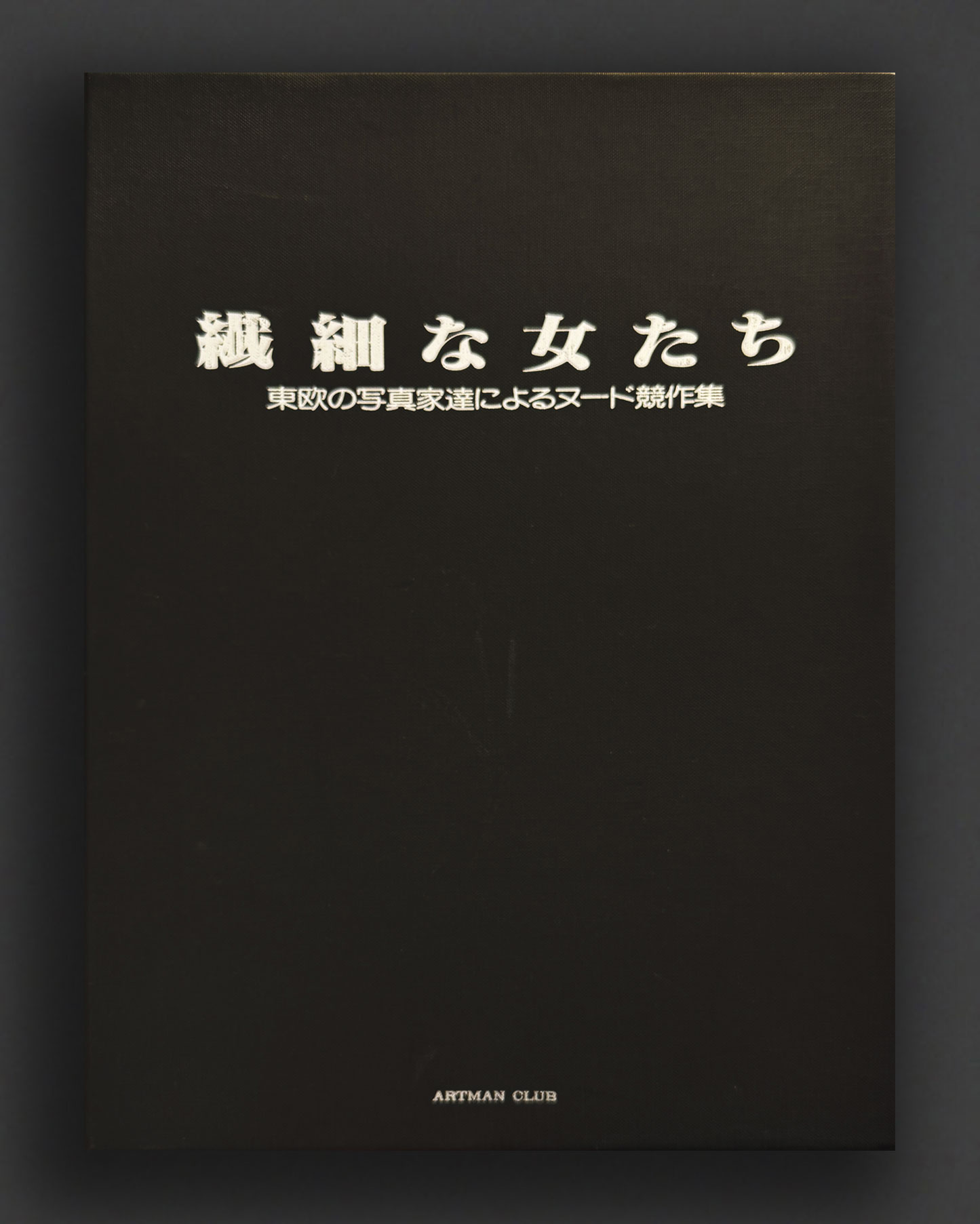
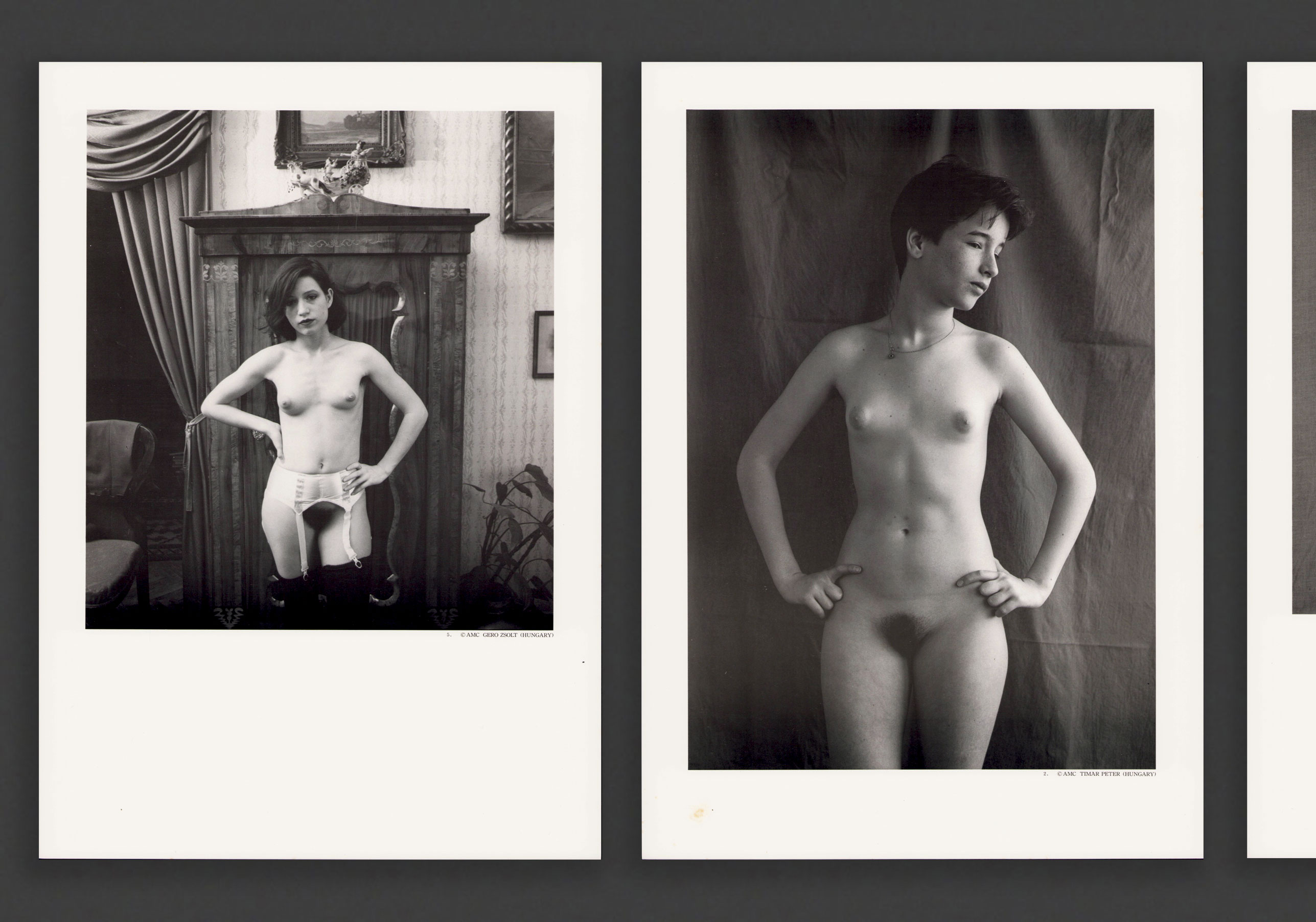
Exceptionally rare private-issue subscription-only deluxe boxset of erotic prints issued by the Japanese publisher Artman Club / Geijutsu Shuppan (NGS), undated but presumably late 1980s. Silver gilded black cloth hard case containing folio of 12 female nude photo-litho prints (36.5 x 26 cm) + introductory plate. Features the black and white work of Timar Peter (Hungary), Rimantas Dichavicius (USSR), Janusz Sobolewski (Poland), Gero Zsolt (Hungary), Tasnadi Laszlo (Hungary), Zsolt Barta (Hungary), Vitolis Vilpisauskas (Ussr), Rostislav Kostal (Czechoslovakia). Some photographers with multiple prints.
“The so-called "Eastern European countries" have long been cultivating their own unique cultures in the genres of painting and music, and in the world of photography they have also formed a unique trend, with works ranging from acoustic to avant-garde pieces.
This time, we have received valuable works by photographers from Eastern Europe (the Soviet Union, Poland, Czechoslovakia, and Hungary).
Without compromising the original image, we will be introducing this portfolio of 12 pieces to Artman Club members as soon as possible.”—Artman Club Editorial Office
Very Good—Near Fine box with light wear; Very Good prints, some foxing to the first, very light foxing after, otherwise in clean, crisp condition as if stored since publication.
1993, Japanese
Hardcover (w. dust jacket), 194 pages,14 x 20 cm
1st Edition, Out of print title / used / very good
Published by
Fusosha / Tokyo
$120.00 - In stock -
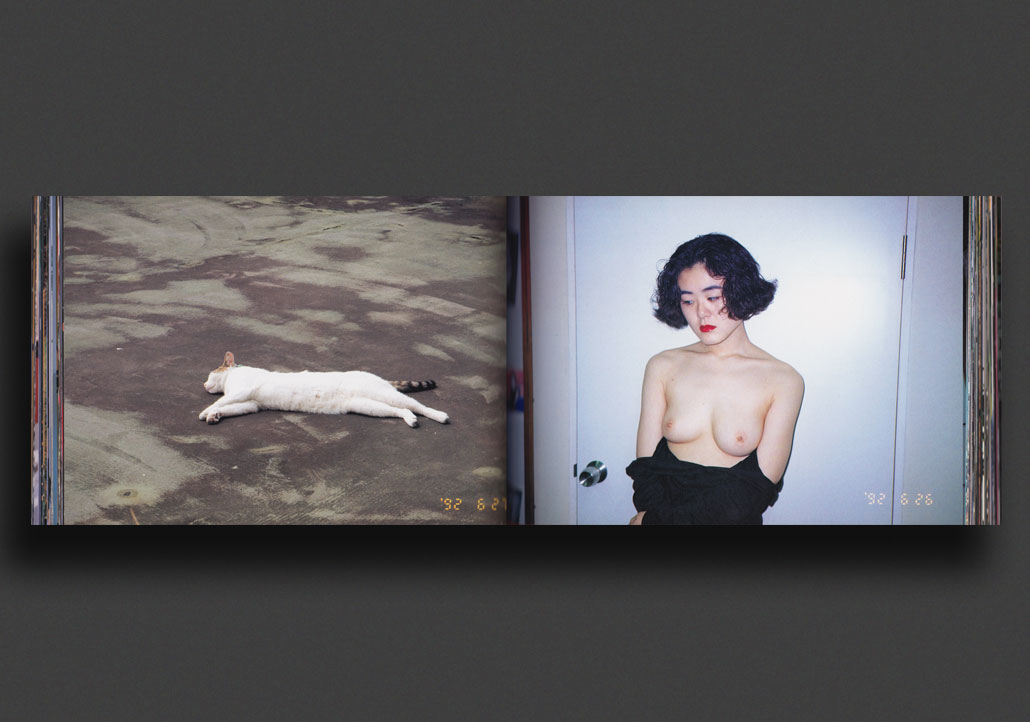
Scarce, first edition of this wonderful 1992 Araki photo album. "For this photographic record, Araki uses the art name Shakyojin (or photo-maniac) in imitation of Gakyojin (obsessive, or maniac, artist), used by the ukiyo-e artist Katsushika Hokusai."- Kotaro Iizawa. From cover to cover this book is entirely comprised of Araki's photographs taken in the year 1992, presented chronologically and in rich colour. It begins and ends with portraits of Araki's beloved cat Chiro, and filled with an abundance of Araki's favourite subjects - women, nudes, flowers, still-lifes, Japanese city details and more Chiro. Filmmaker Jim Jarmusch even makes an appearance. A lovely collection.
Very Good copy in Good dust jacket. Few fox spots to blank end papers.
1991, Japanese
Softcover (staple-bound), 210 pages, 21 x 15 cm
1st Edition, Out of print title / used / very good
Published by
Tsukasa Shobo / Tokyo
$55.00 - Out of stock
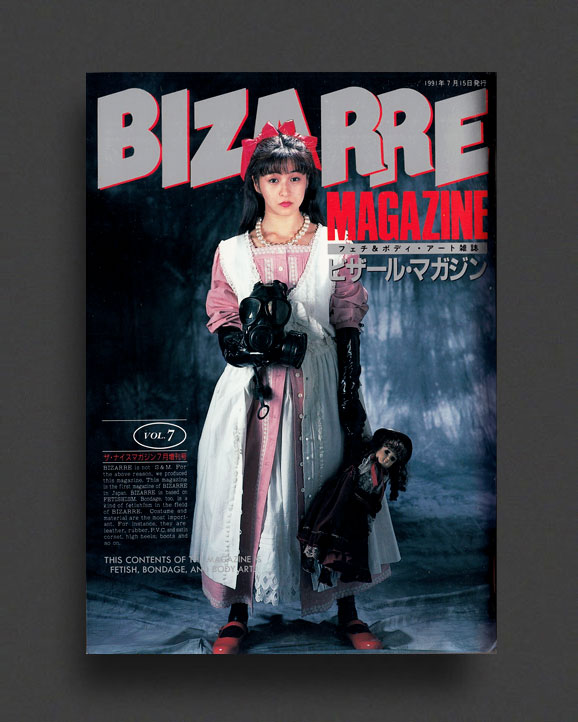
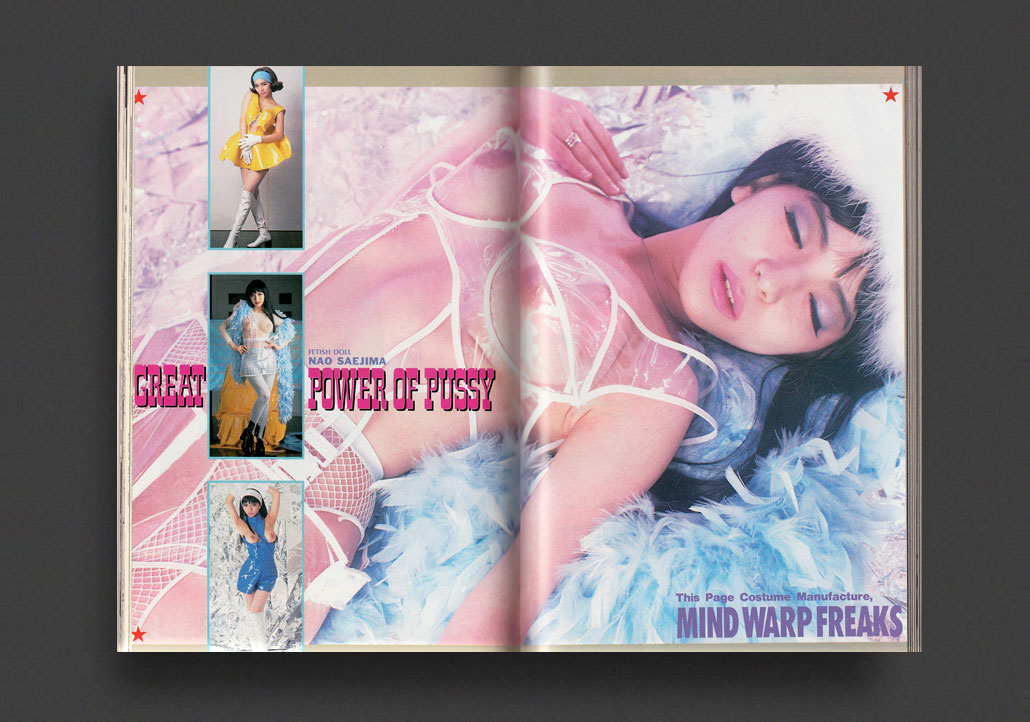
July 1991 issue of Bizarre Magazine, Japan's first glossy magazine devoted fully to all things "bizarre culture" and the new fetish subculture that exploded in the 1990's, published by manga (and SM Fan) publisher Tsukasa Shobo from 1990—2000s. "Fetish, bondage, psycho eros, and body arts". Profusely illustrated throughout with glossy colour and b/w photoshoots styled with fetish fashion materials and costume — models and Japanese AV/pink film idols in rubber, pvc, leather, boots, high heels, corsets, etc. covering all manner of fetishes and cos-themes from cyberpunk to medical, body art, cross-dressing, lesbianism, fem-dom, scene reports from around the world, dominatrix profiles and interviews, lots of manga, articles, stories, advice columns, DIY tutorials, and packed with wild ads for sex clubs, dungeons, bars, bookstores, video catalogues, toys, fashions, reviews of cult books and film, european imports, classifieds, all heavy with illustrations and hundreds, if not thousands of photographs. Each issue was overseen by a rotating group of editors, this issue including material by Kinichi Tanaka, Kaoru Hanano, Ryoko Narumi, Koji Yokoyama, Hitomi Nishina, Masami Akita (Merzbow), Rudolf Schwarzkogler, Domu Kitahara, Kazuya Ota, Erina, Jiro Ishikawa, Nao Saejima, and many more... Much like SM Sniper, Bizarre Magazine favoured the exploration of new innovations of fetish and underground sex culture, emphasising the work of the models, stylists, make-up artists, and fashion designers, as much as the writers or photographers, encompassing the entire "new wave" of SM counterculture embedded in underground music, film, fashion and visual art at the dawn of the 90's.
Cover statement: "BIZARRE is not S&M. For the above reason, we produced this magazine. This magazine is the first magazine of BIZARRE in Japan. BIZARRE is based on FETISHISM. Bondage, too, is a kind of fetishism in the field of BIZARRE. Costume and material are the most important. For instance, they are leather, rubber, P.V.C. and satin corset, high heels, boots and so on."
Very Good copy.
1969, English
Softcover, unpaginated, 28 x 21.5 cm
1st Edition, Out of print title / used / very good
Published by
Melbourne University Union Council / Carlton
$120.00 - Out of stock
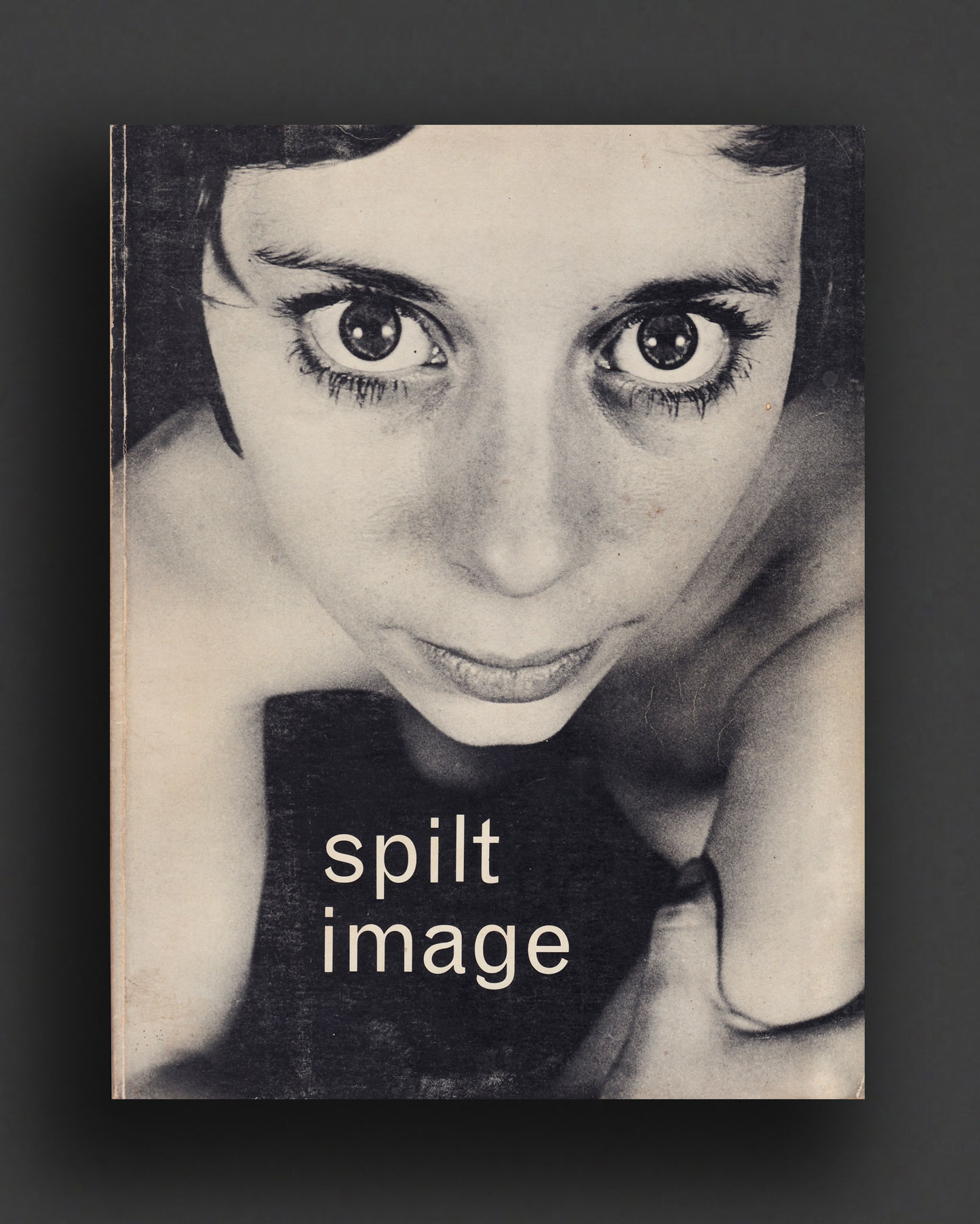
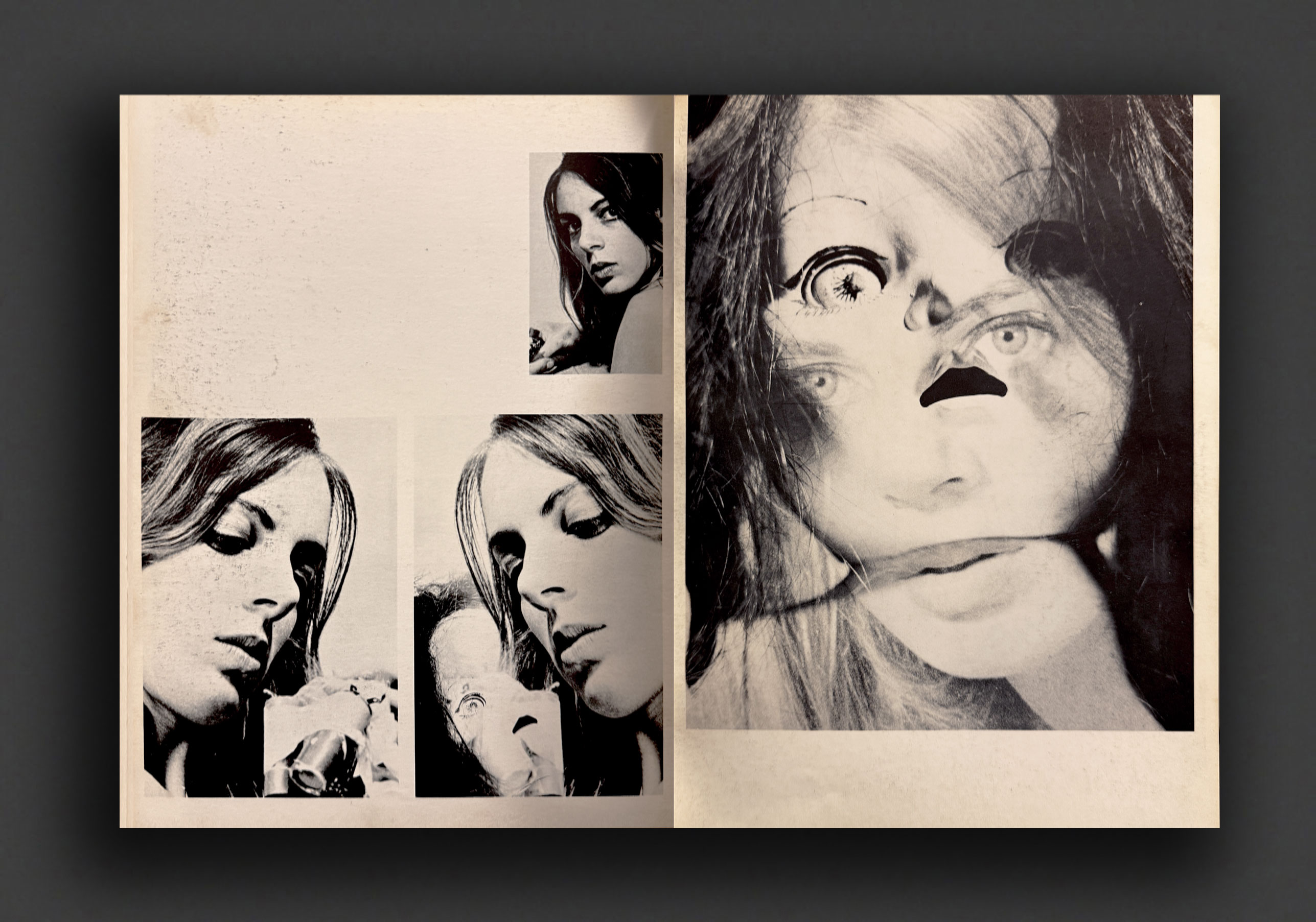
"Most of the photographs were printed on Agfa Brovira paper and taken on Tri X developed in Chicken Soup."
Rare volume of Australian photography published in 1969 by the Melbourne University Union Council, edited by John Julian and Ben Lewin, photography by Lachlan Arnott, John Julian, Ben Lewin, Brian Stevenson, words by Margaret Harrison, Ben Lewin, Diana Nash, design by Suzanne Davies and Stan Nikolic. Very 1969. Collections of grainy, high contrast, experimental photography from Oz. Lots of nudes, a healthy dose of hedonism and playful countercultural spirit within the Australian urban and natural landscape, acknowledging the influence of Sam Haskins.
Good—Very Good copy with general light dustiness, rubbing, age, wear to extremities, but a lovely copy.
1973, English
Softcover, 96 pages, 18 x 24 cm
1st Edition, Out of print title / used / very good
Published by
Sun Books / Melbourne
$80.00 - In stock -
First printing from 1973 of this photo-book dedicated entirely to the streets of the suburb of Carlton, Melbourne, by Australian photographer Les Gray (1920 - 2013). With an introduction by poet Garrie Hutchison (b. 1949) titled "Canning Street, Carlton, August 1973", this handsome little landscape album of snapshots captures the people, terraces, and shopfronts of early 1970s Drummond, Rathdowne, Cardigan, Faraday, Lygon, Gratton, Station, Canning, and Elgin streets. Published by Sun Books.
Good—Very Good copy with light wear/age.
1997, English
Softcover (staple-bound + invitation card), 16 pages. 30 x 23 cm
1st Edition, Out of print title / used / good
Published by
NGA / Canberra
ACCA / Melbourne
$35.00 - In stock -
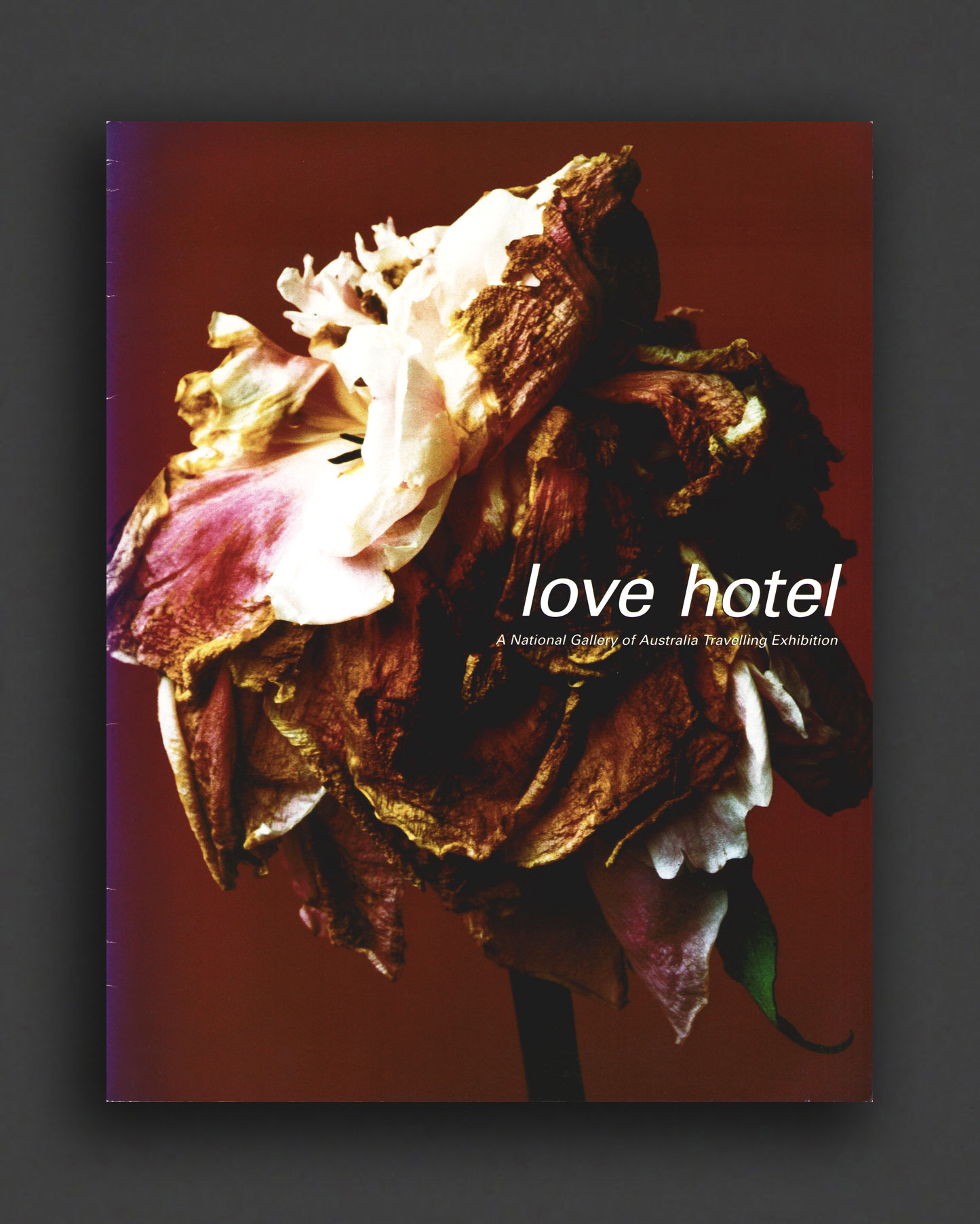
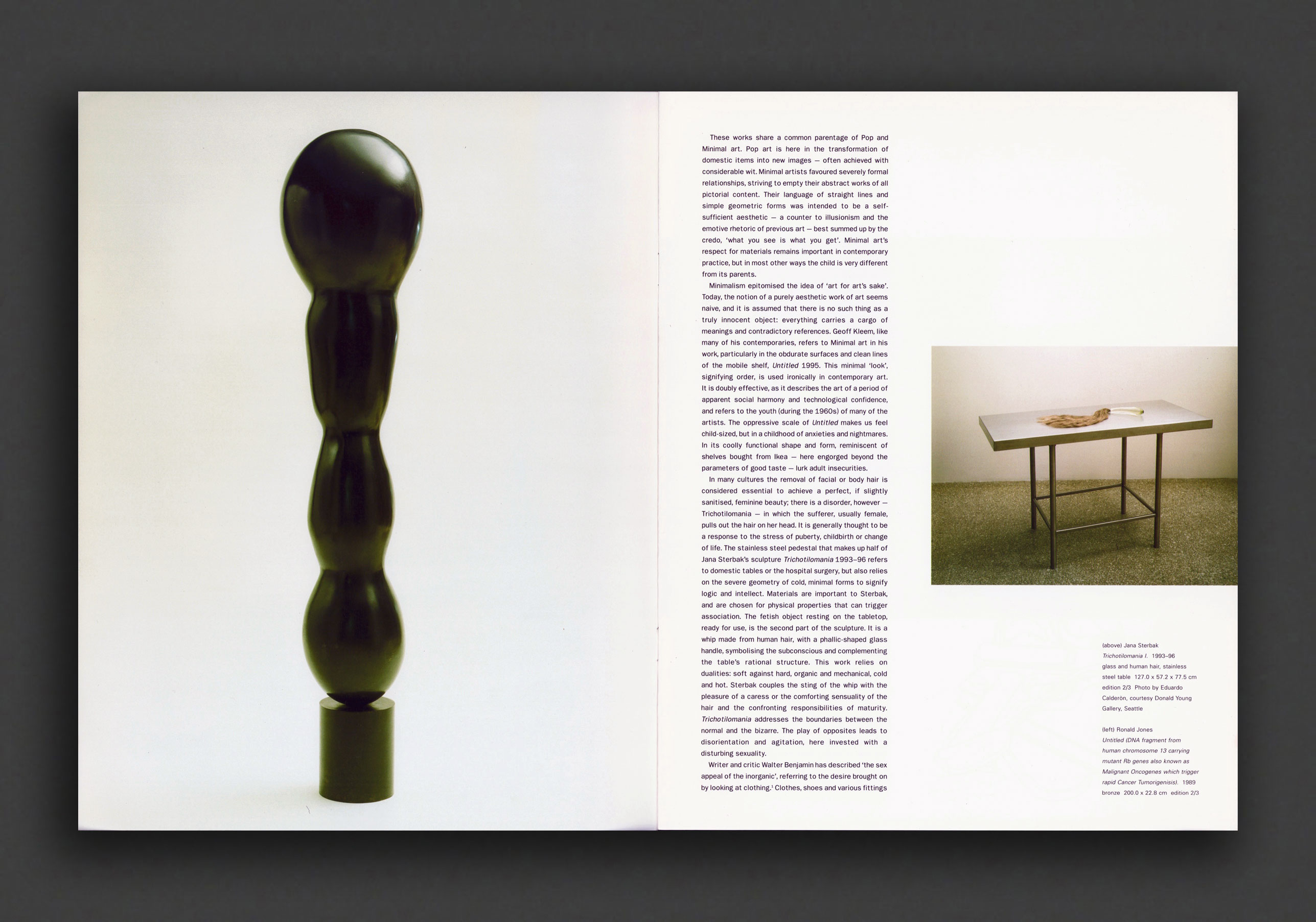
Catalogue published on the occasion of Love Hotel, a National Gallery of Australia Travelling Exhibition guest curated by Michael Desmond, travelling across five Australian and New Zealand venues throughout 1997-1998, including ACCA on Dallas Brooks Drive. This exhibition, taking its title from the Japanese architectural sex industry phenomenon, included works by Australian and international artists that "comprised self-contained sculptural objects that were neither at home in the museum or the outside world. They seem to exist in a curious hyper-state, in which objects are patently fictions, but somehow more real than real." Illustrated in colour throughout with accompanying texts.
Exhibiting Artists: Nobuyoshi Araki, Richard Artschwager, Aziz+Cucher, Michel Craig-Martin, Peter Cripps, Cheryl Donegan, Bob Flanagan, Mike Kelley and Sheree Rose, Sylvie Fleury, Nan Goldin, Ann Hamilton, Ronald Jones, Jannis Kounellis, Jana Sterbeck, Rosemarie Trockel, Robert Wilson.
"There is an undefined sense of loss at the heart of our existence, which we romanticise. Post-industrial, postcolonial, post-feminist, post-modern — if we measure every thing in terms of 'what was', by definition we seem to be at the end of a historical moment. In our fin de siécle mood we see the metaphorical cup as half empty, rather than half full. The past seems to loom larger than the present, and we are nostalgic for the sureties of our recent golden age. Paradise is lost. In the art in this exhibition nature is replaced by technology, the State is increasingly in control, money is all-important and image is everything — or so it seems. The objects present themselves as neutral and deadpan, but we sense their perversity as much as their realism. Below the skin a powerful vitality surges, indicating an essential humanity. In Love Hotel each work houses something of the artist and the culture that created it. We imbue all around us with our passions."—Michael Desmond
Very Good copy with invitation card enclosed (featuring Jannis Kounellis artwork). Spine edge sunned with some light pinching.
1984, English
Softcover, 200 pages, 26.5 x 23 cm
1st Edition, Out of print title / used / very good
Published by
Documan Press Ltd. / Kalamazoo
$50.00 - Out of stock
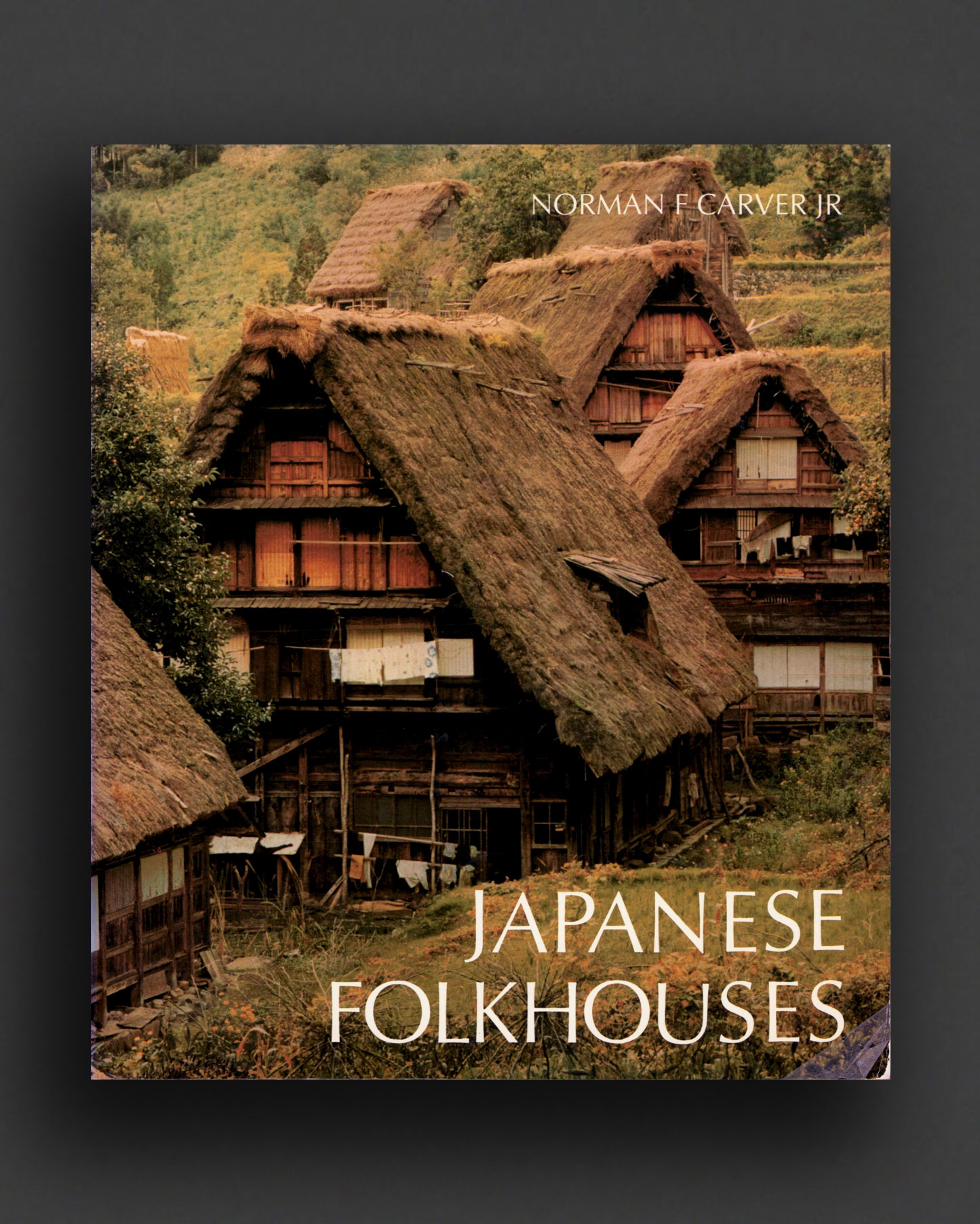
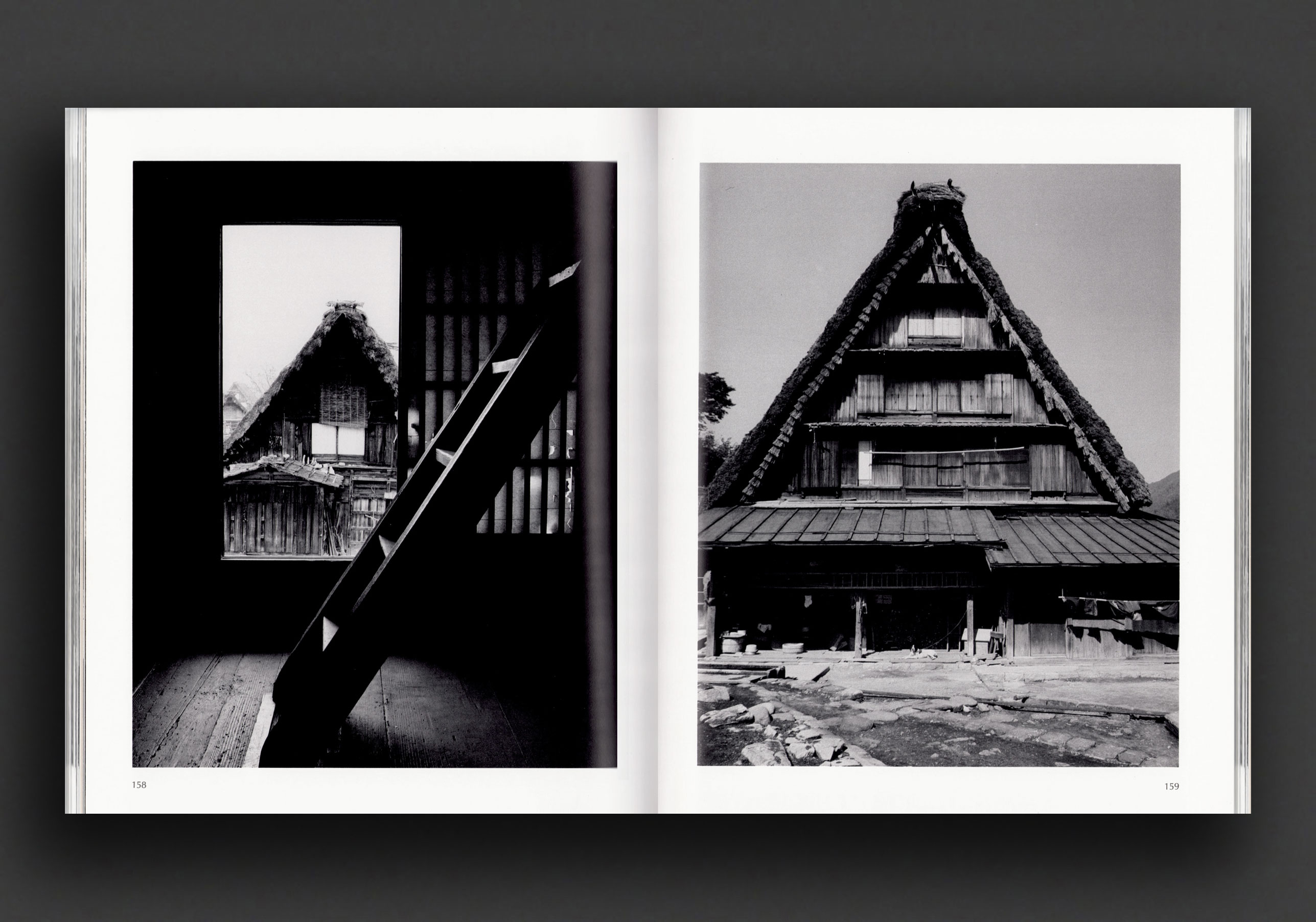
First 1984 edition of Japanese Folkhouses, "the eagerly awaited third book in the continuing series on vernacular architecture by Norman F. Carver Jr. [...] His previous book on Japan, FORM AND SPACE OF JAPANESE ARCHITECTURE (1955), now out of print, is a classic in its field and introduced new directions for architectural photography in Japan." Beautiful photography by Carver taken in 1953-55 and 1964 using Rolleiflex and Hasselblad 35 mm cameras.
"From timeless villages along the Inland Sea to primitive archetypes at Ise Shrine, from huge thatch-roofed farm houses near Kyoto to great manor houses in remote mountain towns, JAPANESE FOLKHOUSES reveals an architecture of dramatic form, sophisticated space, and powerful structure.
The 187 black & white and color photographs together with old drawings and succinct commentary document this ancient tradition's superb integration of architecture, culture, and nature-as well as its remarkable relevance to contemporary architecture.
Now, despite a robust history more than two thousand years' old, this important folk tradition is rapidly vanishing before the onslaught of twentieth century technology and social change."
Very Good copy with some light wear. Uncreased lightly sunned spine. Small laminate separation to bottom-right corner of cover.
2008, English
Softcover (w. dust jacket/poster), 72 pages, 28 x 22 cm
1st Edition, Out of print title / used / very good
Published by
Ammo Books / New York
$80.00 - Out of stock
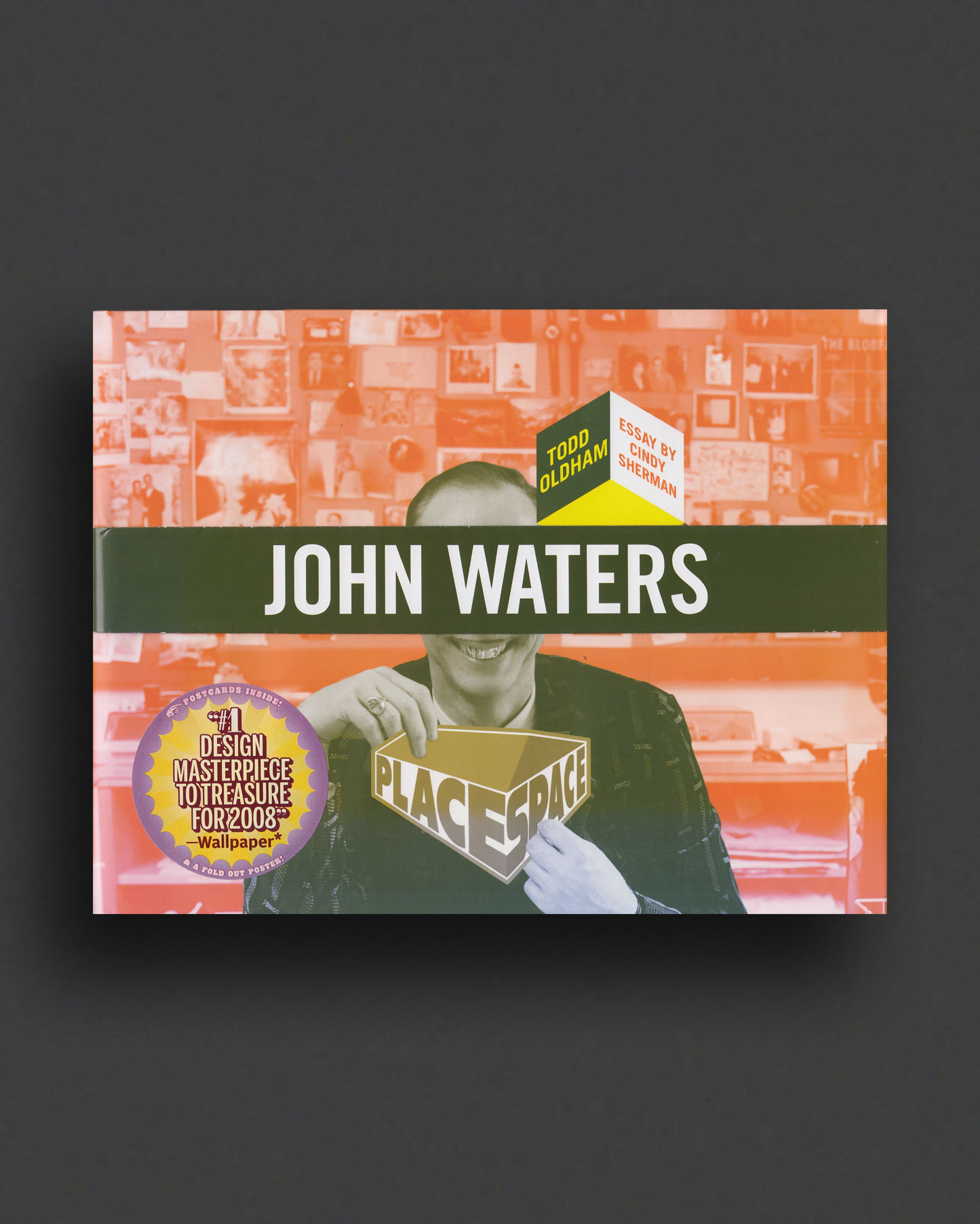
First 2008 out-of-print edition of John Waters: Place Space, the photo book that showcases the interior world of America’s self-proclaimed “Pope of Trash”, cult film-maker John Waters and his Baltimore home.
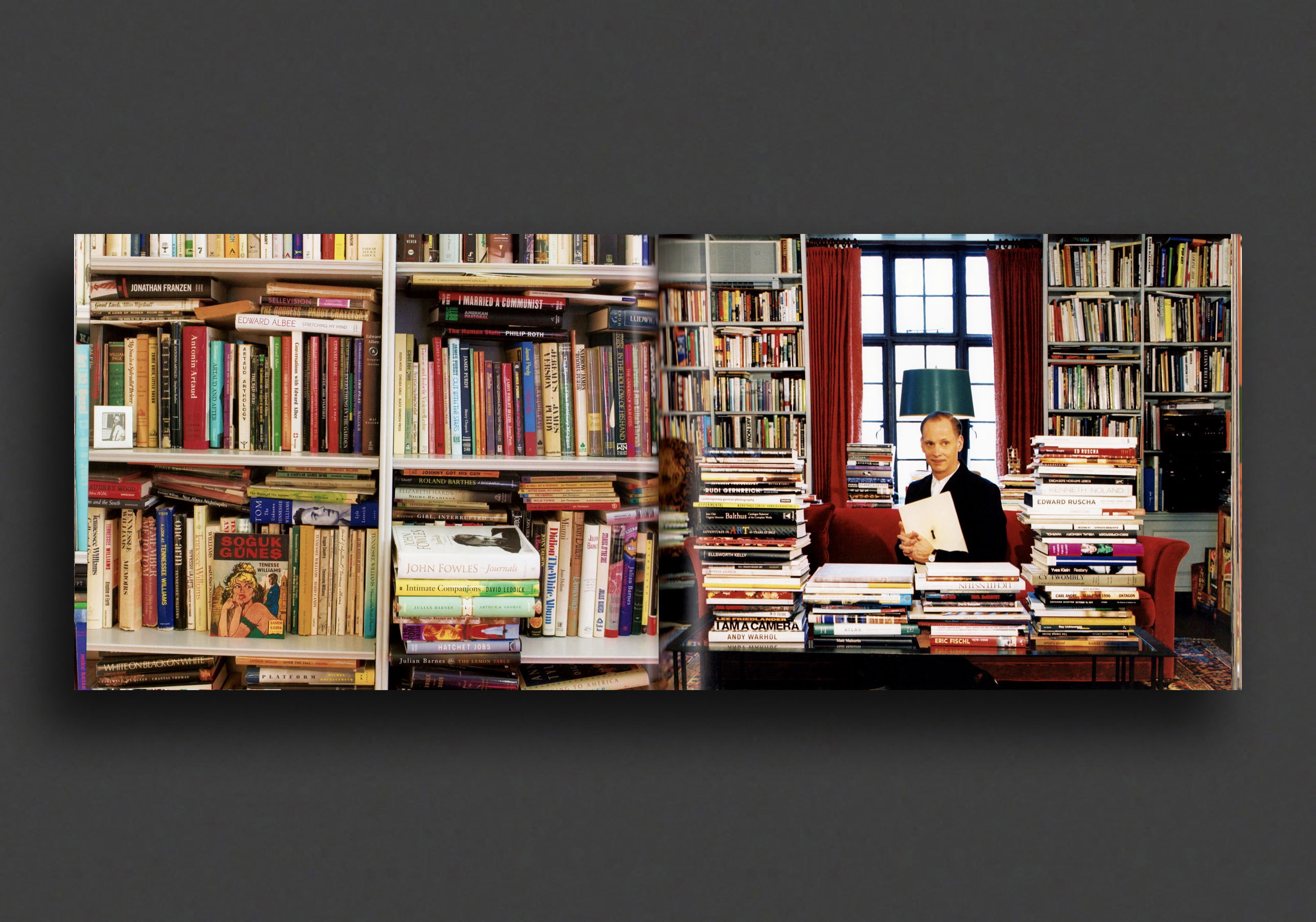
"In John Waters: Place Space visionary designer Todd Oldham turns his incredible eye toward the beauty and wit of John Waters' quirky abode. Oldham’s exquisite photography captures elegant and humorous still lifes and portraits of America’s beloved King of Sleaze in his disarmingly sweet and kindly home in Baltimore, Maryland. As a director, John Waters has achieved legendary status with films such as the art-house sensation Pink Flamingos and the family-friendly Hairspray. His unique sensibility is evident in every corner of his home, which, as Todd says, “looks like the offspring of a warped public library and the Museum of Modern Art.”
This beautifully designed John Waters book is wrapped in a custom-designed poster for your home, and includes tear-out postcards featuring books from Waters’ shelves, like Sex on Horseback and Gay John. With inspired essays by Todd Oldham and renowned photographer Cindy Sherman, this Place Space issue is sure to delight hardcore Waters fans and newcomers alike. Like a sophisticated game of "I Spy," roaming through John Waters' overflowing bookshelves for clues to his inspiration is a true delight.
Very Good copy preserved in original poster dust jacket.
1973, English
Softcover, 108 pages, 30 x 25 cm
1st Edition, Out of print title / used / good
Published by
Sun Books / Melbourne
$100.00 - In stock -
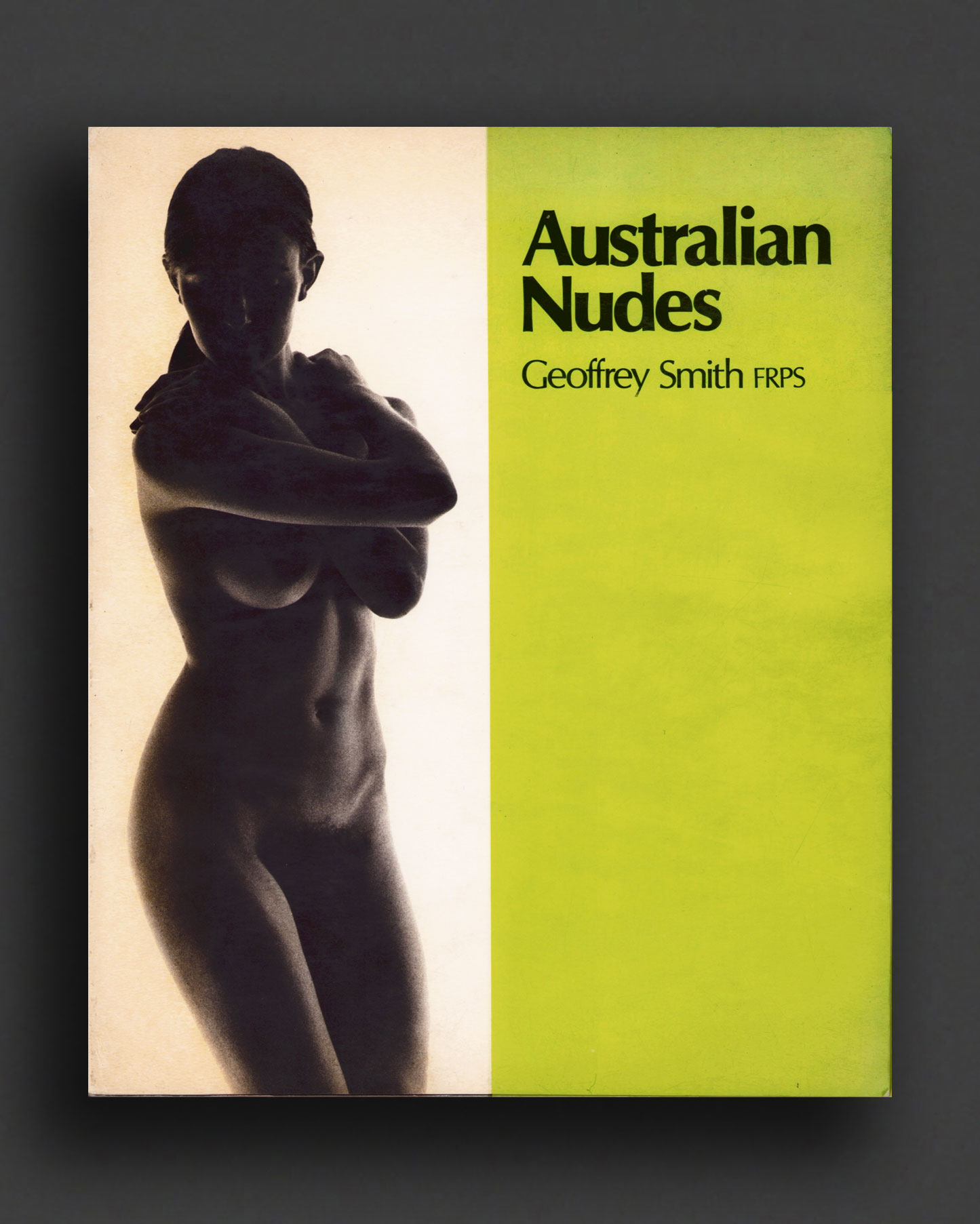
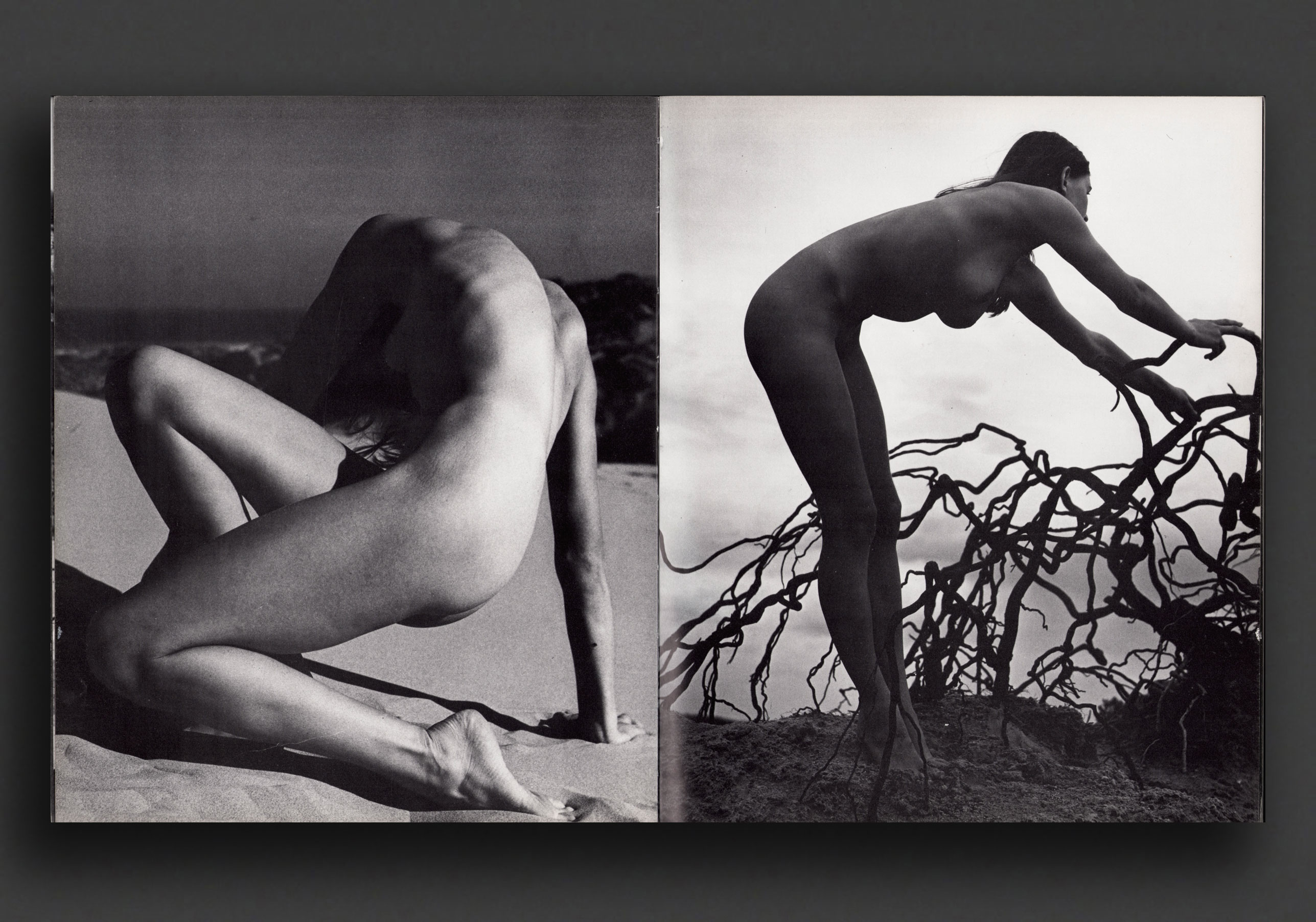
Rare copy of Geoffrey Smith's 1973 "Australian Nudes", an original Sun book.
"Sun worshipping bodies, golden beaches, youth and vitality: integrals of the Australian scene. Sensuous suppleness, light probing dark, clarity melding with luminous softness: the back-drop of wind and surf framing and complimenting the beauty of the naked form.
These photographs are an artistic and historical achievement. Artistic, because they display a masterly appreciation and knowledge of both the technicalities and aesthetics of photography; historical, because they provide a unique record of this facet of our culture and environment."
Good copy with some general light wear/toning/small cracking to top of spine, closed tear to edge of one page, otherwise a lovely copy.
1981, French
Softcover, 48 pages, 32 x 24 cm
1st Edition, Out of print title / used / very good
Published by
Éditions SNEP / Geneva
$45.00 - In stock -
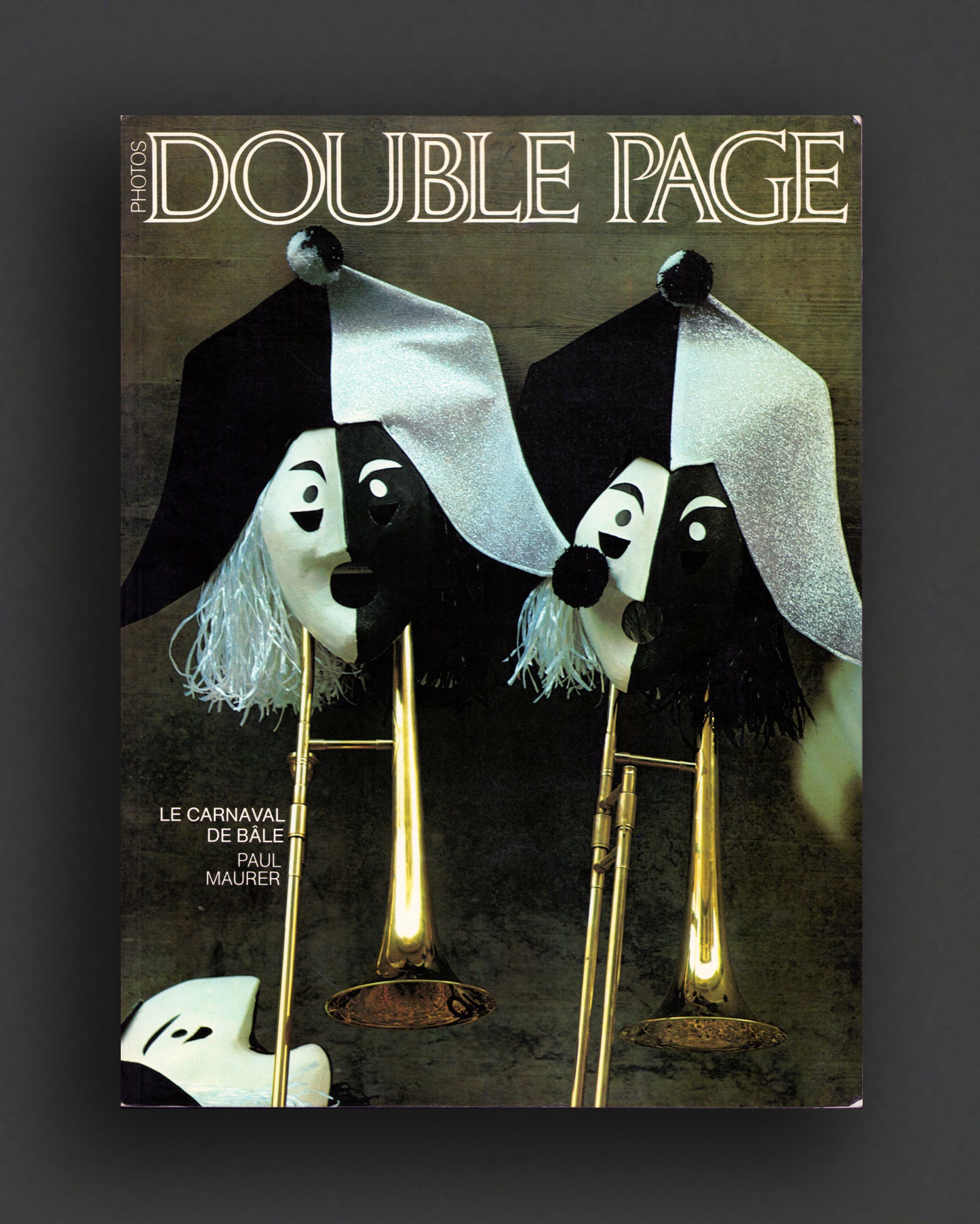
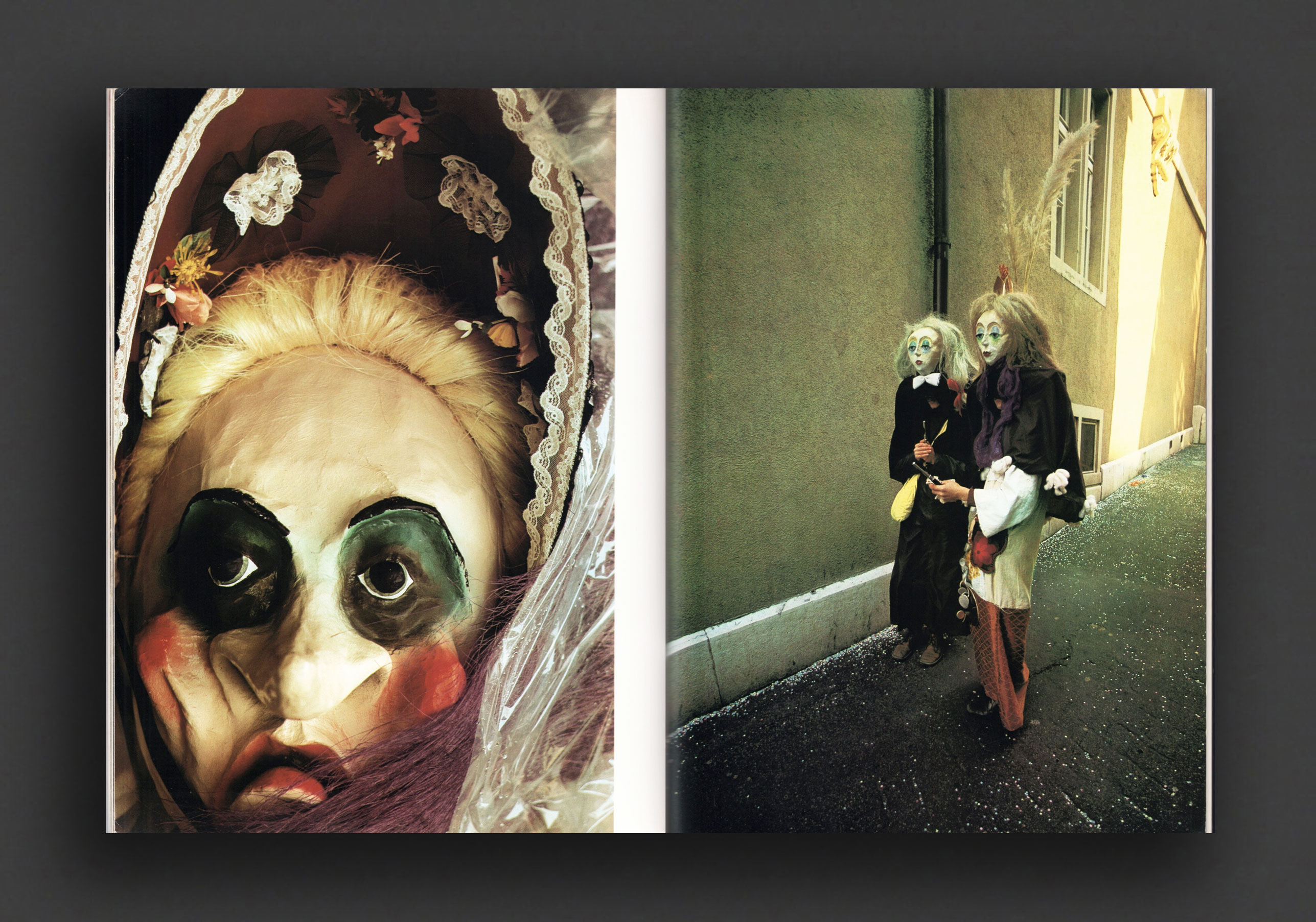
Double Page No. 8: Le Carnaval de Bâle / Paul Maurer, published in 1981 as part of the Swiss photography series of over-sized art books. "Each issue of DOUBLE PAGE presents a photographic series on a single subject, treated by a single photographer, preceded by an author's text." This volume comprising photographs of the masked and costumed participants of Le Carnaval de Bâle shot in the streets of Basel during the biggest carnival in Switzerland, photography by Paul Maurer with text by French writer Michèle Fitoussi.
Very Good copy with some light wear.
1982, French
Softcover, 48 pages, 32 x 24 cm
1st Edition, Out of print title / used / very good
Published by
Éditions SNEP / Geneva
$35.00 - Out of stock
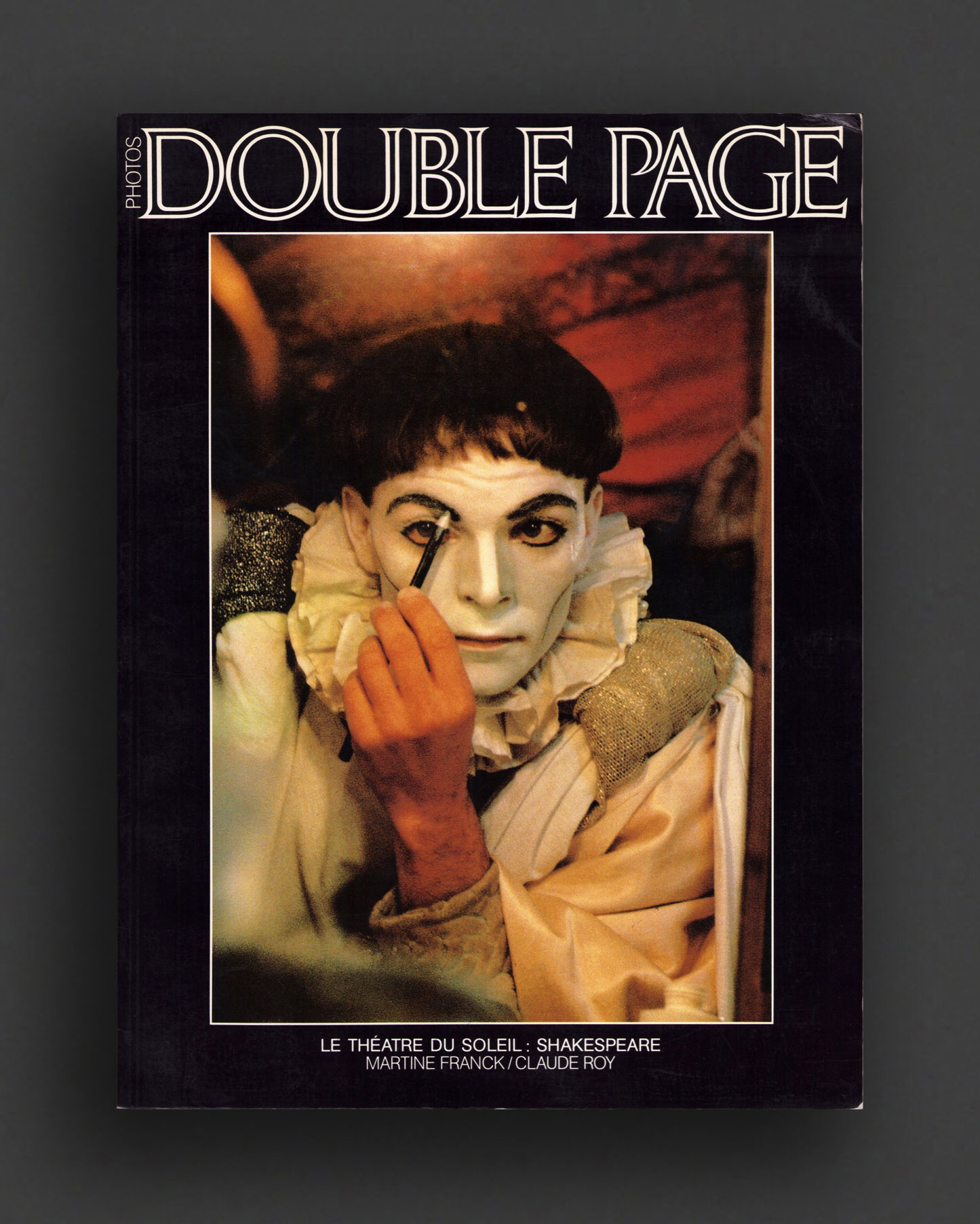
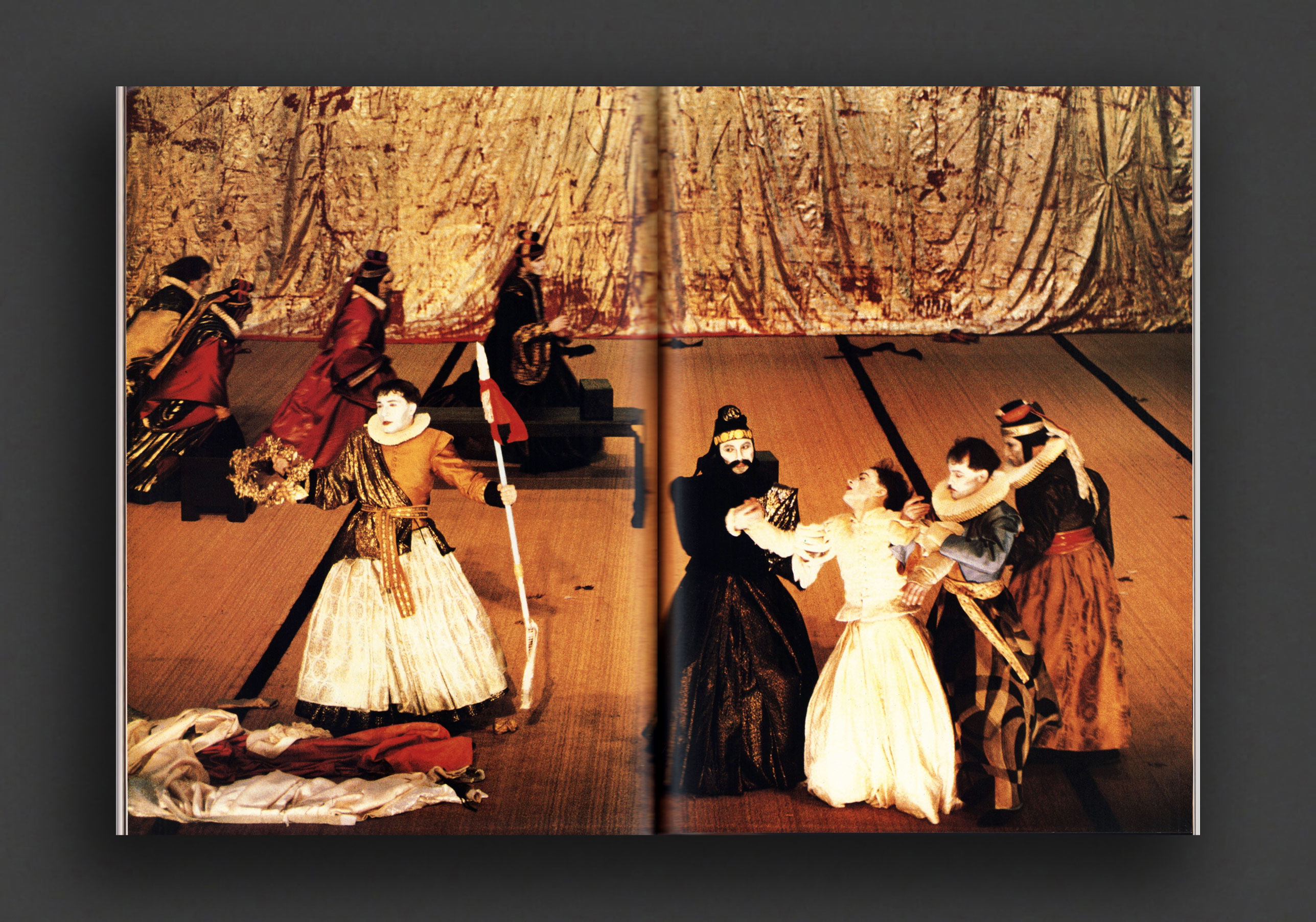
Double Page No. 21: Le Théatre du Soleil (Shakespeare) / Martine Franck and Claude Roy, published in 1982 as part of the Swiss photography series of over-sized art books. "Each issue of DOUBLE PAGE presents a photographic series on a single subject, treated by a single photographer, preceded by an author's text." This volume comprising Parisian avant-garde stage ensemble Le Théâtre du Soleil shot by acclaimed Belgian documetary photographer (and Henri Cartier-Bresson's wife) Martine Franck with text by French poet and essayist Claude Roy.
Very Good copy with some light wear.
1984, French
Softcover, 48 pages, 32 x 24 cm
1st Edition, Out of print title / used / very good
Published by
Éditions SNEP / Geneva
$45.00 - In stock -
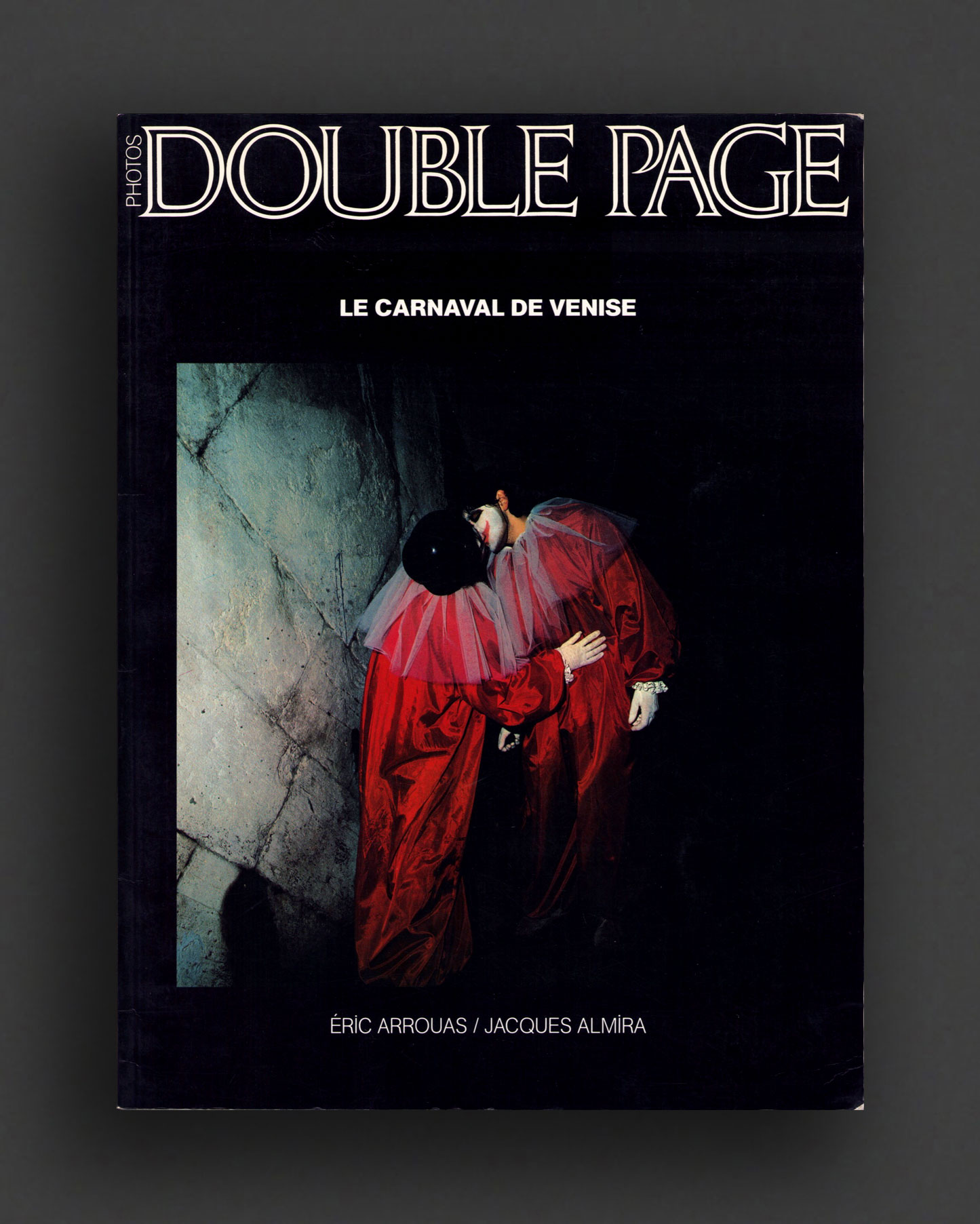
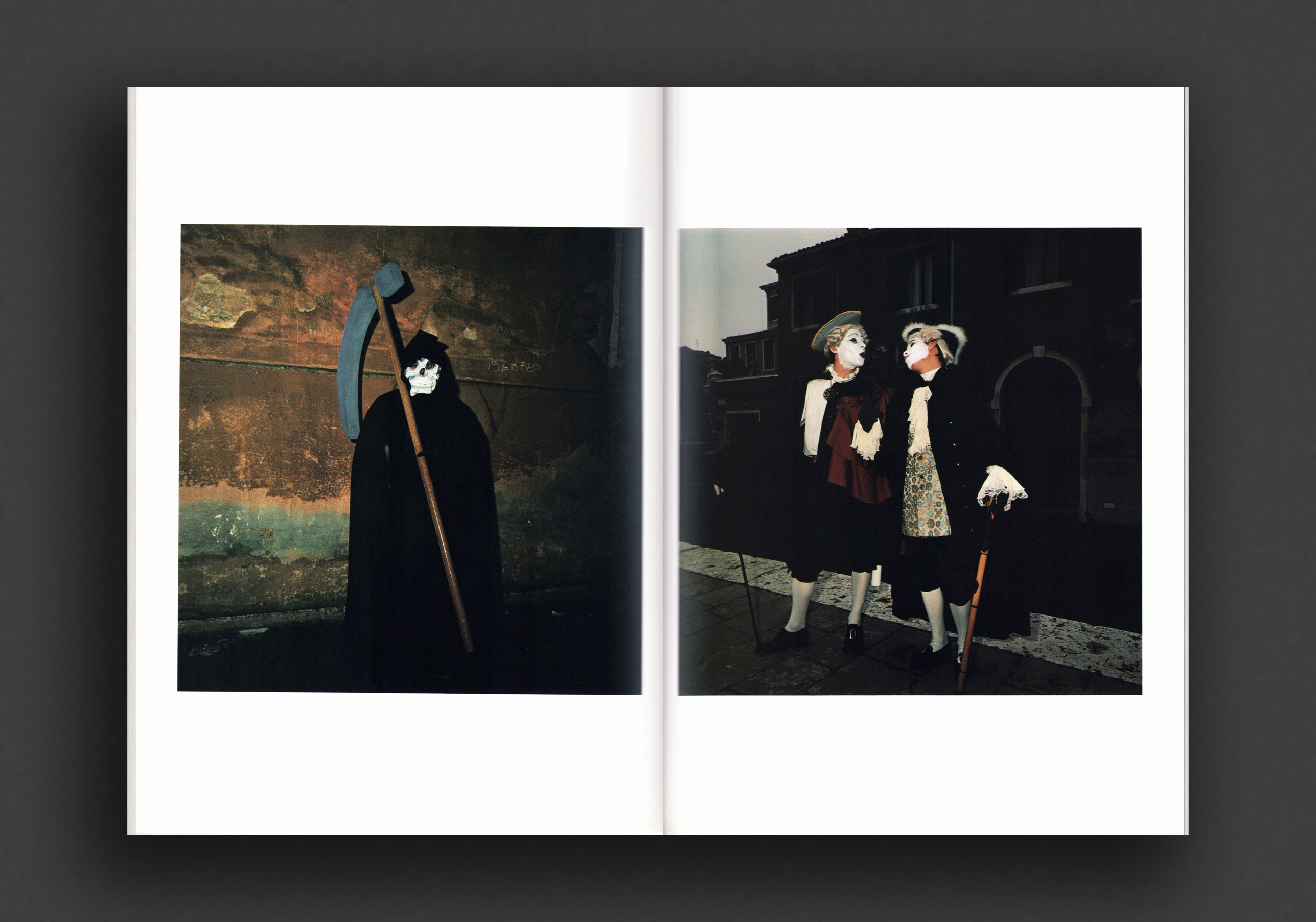
Double Page No. 30: Le Carnaval de Venise / Éric Arrouas and Jacques Almira, published in 1984 as part of the Swiss photography series of over-sized art books. "Each issue of DOUBLE PAGE presents a photographic series on a single subject, treated by a single photographer, preceded by an author's text." This volume comprising nocturnal photographs of costumed participants of the Venice Carnaval and scenes from around the squares and canals at night by Éric Arrouas with texts by Jacques Almira.
Very Good copy with some light pinching to spine, light wear.
1983, English
Softcover, 48 pages, 32 x 24 cm
1st Edition, Out of print title / used / very good
Published by
Éditions SNEP / Geneva
$35.00 - Out of stock
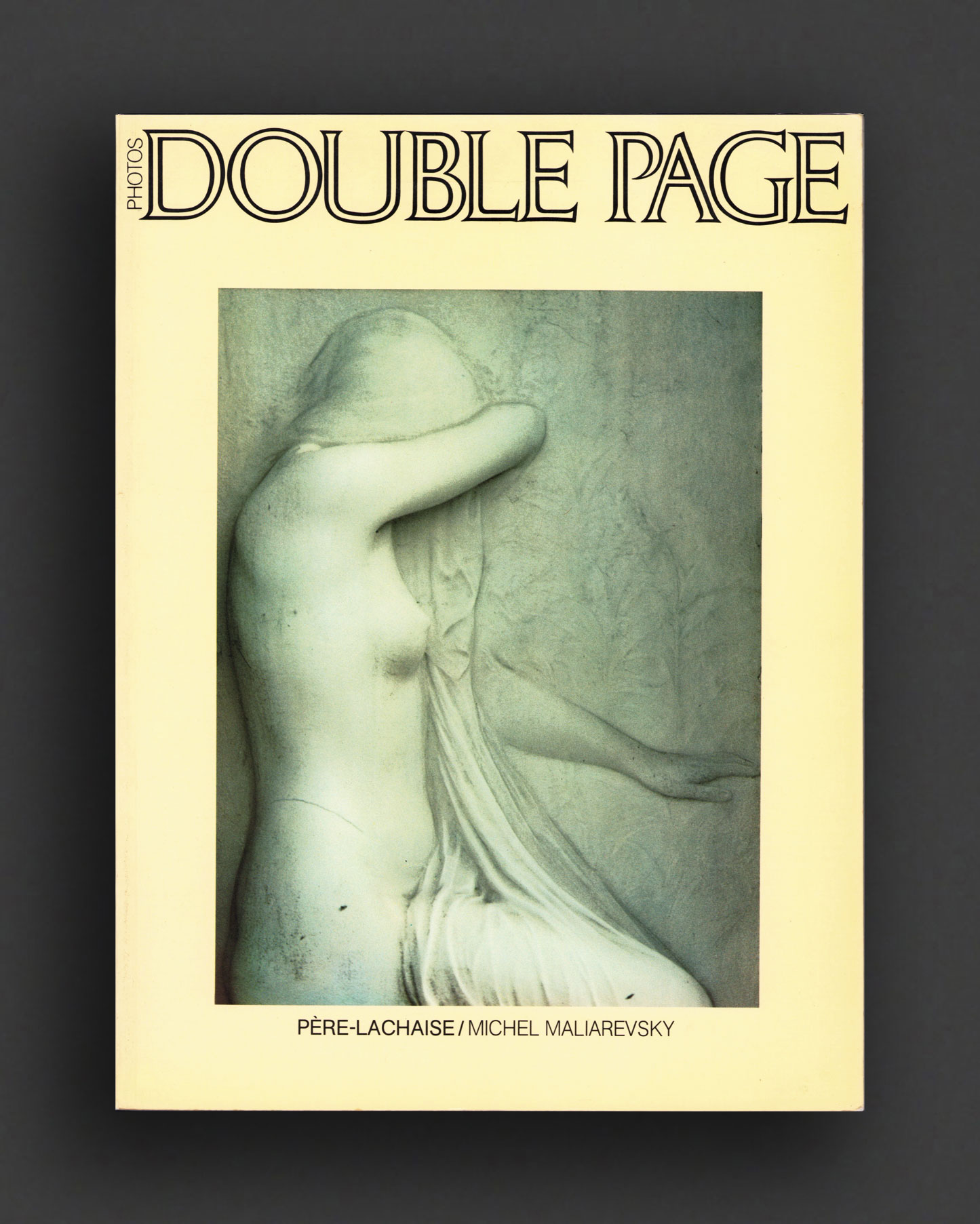
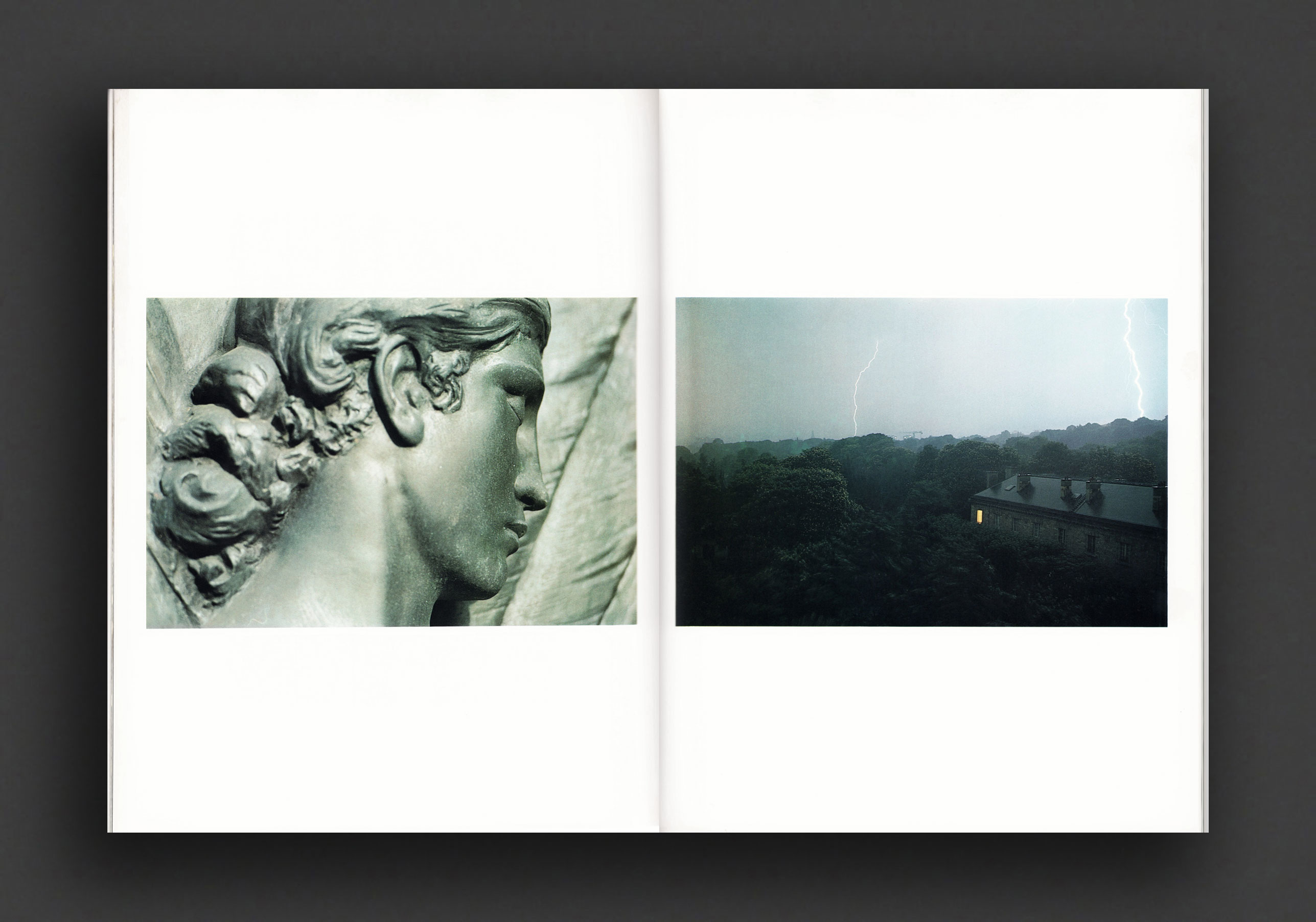
Double Page No. 25: Père-Lachaise / Michel Maliarevsky, published in 1983 as part of the French photography series of over-sized art books. "Each issue of DOUBLE PAGE presents a photographic series on a single subject, treated by a single photographer, preceded by an author's text." This volume comprising photographs of Père-Lachaise cemetary in Paris throughout the seasons by Michel Maliarevsky, with accompanying texts in French by Proust, Molière, Balzac, Apollinaire, La Fontaine, Cavafy, Heloïse, and Villiers de l'Isle-Adam.
Very Good copy.
1977, Japanese
Hardcover (w. hard slipcase and illustrated wrap), 100 pages, 25 x 27 cm
Out of print title / used / very good
Published by
Kawade Shobo Shinsha / Tokyo
$400.00 - Out of stock
Rare 1977 printing of acclaimed Japanese photographer Hajime Sawatari's cult photo book "Alice" in its first 1973 edition. Sawatari began working as a freelancer in 1966, photographing for many leading fashion magazines in Japan. This, his most famous work, reprinted countless times, is Sawatari's decadent, photographic interpretation of Lewis Carroll's literary classic Alice in Wonderland. Here Sawatari brilliantly engages and re-creates the themes, forms and symbolisms within the original narrative, focusing on the inevitable loss of the childhood innocence of a young girl confronted by the realities of adulthood. Sawatari’s ‘Wonderland’ is a world where phenomenas of the real intertwine with the unconscious, exploring a world that confronts viewers with the surreal, bending the roles between child and adult. Outside of Jan Švankmajer, this is truly one of the strangest, and most risqué, visual interpretations of the well-known story, with a heavy homage to the photography of the original book's author, Lewis Carroll. Sawatari's beautiful, atmospheric photographs (shot in England) are complimented by the design of Seiichi Horiuchi (1932-1987) and accompanying translations and poems by Shuzo Higuchi (1903-1979) and Shuntaro Tanikawa.
Hajime Sawatari is a celebrated fashion and advertising photographer. His photobooks are part of the important cultural renaissance that took place in Japan in the 1960s and '70s and saw the promotion of provocative, avant-garde book publishing.
Very Good copy with some light wear to covers, small chip to illustrated wrap corner, book preserved in box with only usual light tanning.
1995, English / Japanese
Softcover, 128 pages, 30 x 23 cm
1st Edition, Out of print title / used / good
Published by
Photo-Planète Co. / Tokyo
$50.00 - Out of stock
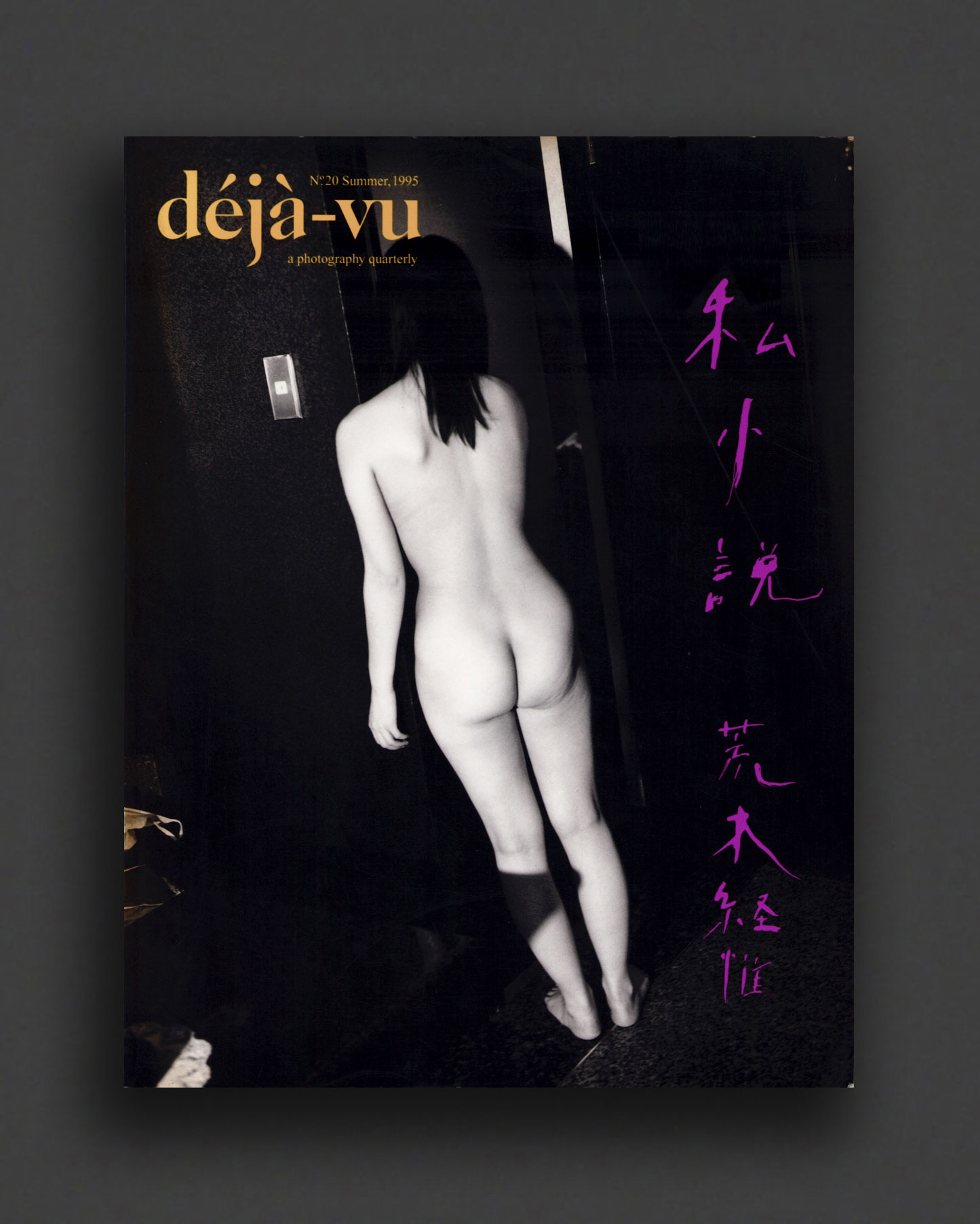
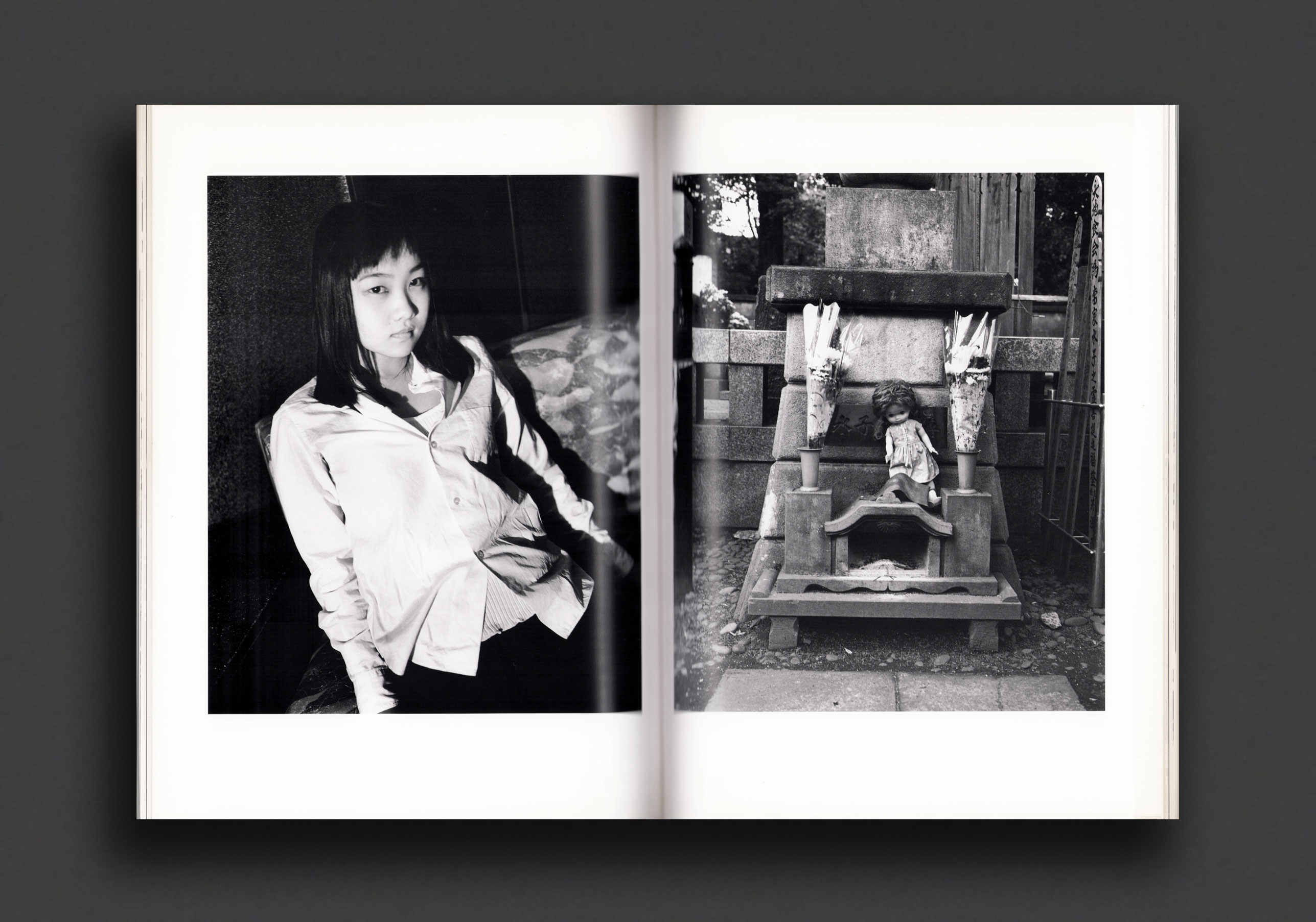
Nobuyoshi Araki special issue of leading Japanese photography quarterly journal, Déjà-Vu, published in Summer 1995, edited by Araki's many-time editor Yasumi Akihito. Profusely illustrated with an abundance of his black and white photography on gloss stock, heavy with his nudes and bondage photography from this era, along with his Tokyo street imagery. Includes writing by various authors on the key themes of his work (summarised in English from the Japanese), interviews with Araki in English and Japanese, discussions on his work by seven female editors, biography and bibliography, reviews of exhibitions in Amsterdam and Paris, and much more. A really great reference and introduction to his work from a key point of his career.
Very Good copy with light wear and a large crease to cover.
1987, Japanese / English
Softcover, 94 pages, 28 x 21 cm
1st Edition, Out of print title / used / very good
Published by
Fiction Inc. / Tokyo
$100.00 - In stock -
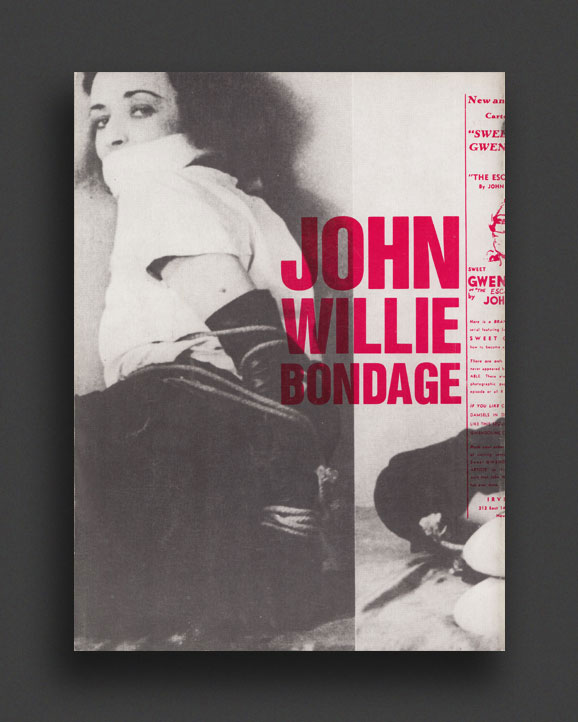
Stunning special edition of the great SALE2 periodical from Tokyo Japan, dedicated entirely to the work of fetish artist and publisher John Willie. This over-sized September 1987, no. 32, volume is profusely illustrated throughout with Willie's comic strips, photography, sketches, and his letters and writings, including fold-out photographic spreads. Perfectly compiled in the way SALE2 did so well, with elegant scrapbook style, dense with imagery, blown-up, full-bleed reproductions from many publications, alongside beautifully reproduced sequences and documents and first-time translations into Japanese. Littered with great Japanese adverts from the 1980s underground fetish scene too.
John Alexander Scott Coutts (1902 – 1962), better known by the pseudonym John Willie, was the artist, fetish photographer, editor, and publisher of the cult fetish magazine Bizarre. Born to a British family in Singapore, Coutts moved to Brisbane, Australia, in 1926, where he was introduced to the print media of a community of "shoe lovers" and fellow fetishists when he joined the High Heel Club. In Australia met his second wife, Holly Anna Faram, who shared an interest in bondage and high heels and became his muse and model. Through the club's mailing list, Willie was able to begin producing and selling his own illustrations and photography whilst working odd jobs, eventually establishing a company to produce exotic footwear, called "Achilles". In 1945, Willie moved to North America, while Holly chose to remain in Australia. First settling in Canada, it was here that he established his legendary Bizarre magazine, which ran from 1946 to 1959, introducing Willie to America's fetish underground. Willie is best known for his bondage comic strips, specifically "Sweet Gwendoline", which he drew in a distinct, now iconic style that influenced later artists such as Gene Bilbrew and Eric Stanton. Though distributed underground, Bizarre magazine and Willie's erotic art had a far-reaching impact on later fetish-themed publications and artists and experienced a resurgence in popularity, along with fetish model Bettie Page, beginning in the 1970s and 1980s, resonating to the current day.
Published regularly as a sort-of fanzine/journal/catalogue/pocket-book by Fiction, Inc., a specialty shop and publisher of fetish and erotica in Tokyo in the 1980-90s. Each issue covers different themes and features, heavy on fetishism.
Very Good copy, with some light wear.
1988, Japanese
Softcover, 120 pages, 26 x 21 cm
1st Edition, Out of print title / used / very good
Published by
Fiction Inc. / Tokyo
$100.00 - In stock -
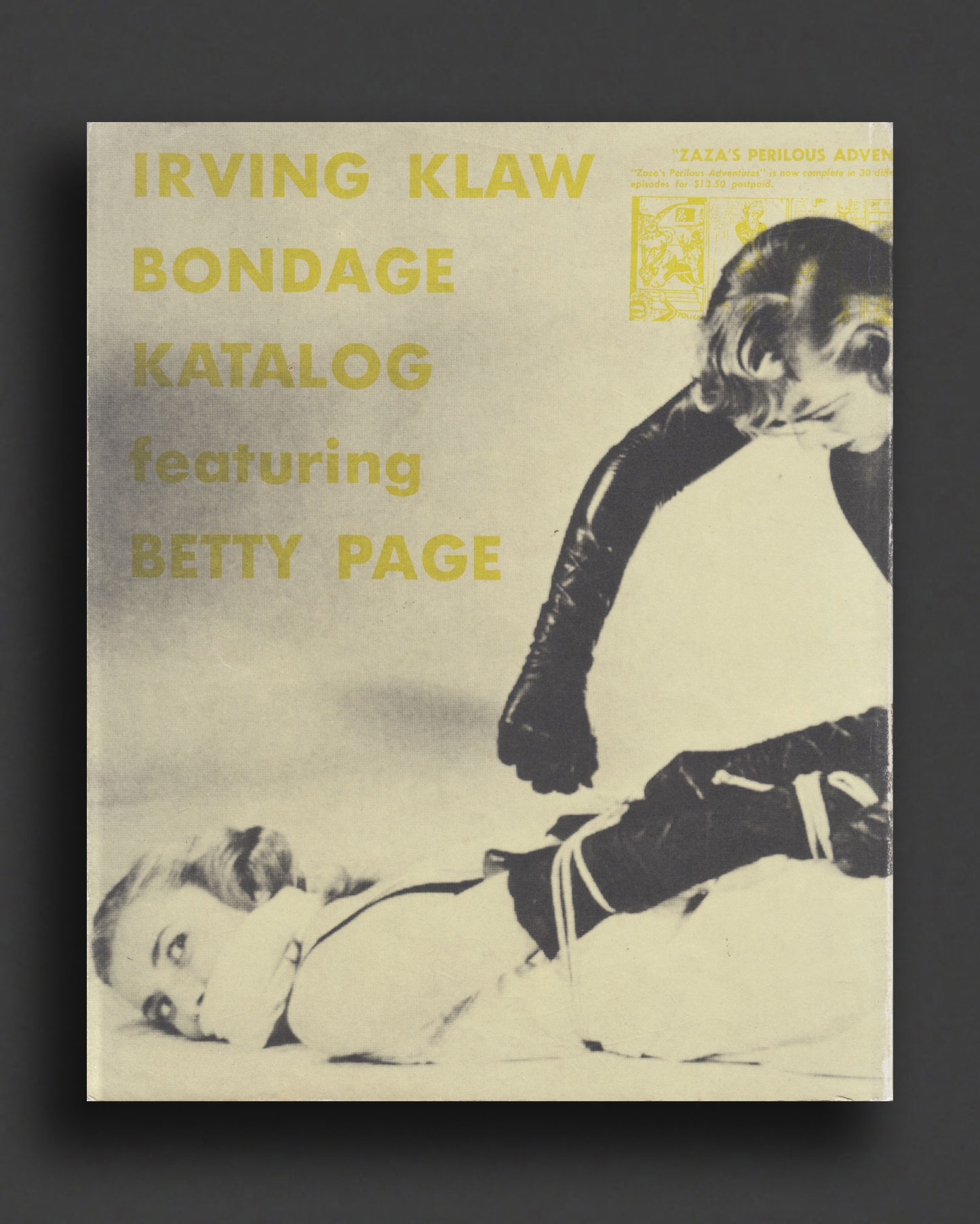
Stunning special edition of the great SALE2 periodical from Tokyo Japan, dedicated entirely to the work of influential master of Bondage and the original Pin-up King, Irving Klaw. Published in 1988, this over-sized issue no. 34 volume is profusely illustrated throughout with Klaw's rich and bizarre world of fetish photography and bondage film, as well as fetish illustration his associates Eric Stanton, Gene Bilbrew (ENEG), Jim, John Willie, Jay, et al, and featuring man yearly photographs of pin-up model and actress Betty Page, who collaborated with Klaw in the 1950s. It was Klaw's photography, filmmaking and publishing that helped to create the iconic image of Bettie Page, launching her career. Designed and edited by Makoto Ohrui, this is perfectly compiled in the way he did so well with SALE2, with elegant scrapbook style, dense with imagery, blown-up, full-bleed reproductions from many publications, alongside beautifully reproduced sequences and documents and first-time translations into Japanese. Littered with great Japanese adverts from the 1980s underground fetish scene too.
Irving Klaw (1910-1966), self-named the "Pin-up King", was a hugely influential American merchant of sexploitation, fetish, and Hollywood glamour pin-up photographs and films. In the history of heterosexual BDSM in the 20th century, Klaw was a curious paradox. He was a non-kinky person who produced and sold arguably more BDSM imagery than anyone before or since. He became a symbol for the cause of sexual freedom, and a martyr to anti-sex initiatives by the Federal government, yet he was non-political, uninterested in activism and never intended to be a martyr for anything. He was a business man who came from humble, working-class beginnings. Klaw worked closely with models like Bettie Page, June King, Joan Rydell, Jackie Miller, et al. for his photography and films. Inspired by John Willie, Klaw also commissioned and distributed illustrated adventure/bondage chapter serials by fetish artists Eric Stanton, Gene Bilbrew, Adolfo Ruiz, and others. Irving Klaw is a central figure in what fetish art historian Richard Pérez Seves has designated as the "Bizarre Underground," the pre-1970 fetish art years.
Published regularly as a sort-of fanzine/journal/catalogue/pocket-book by Fiction, Inc., a specialty shop and publisher of fetish and erotica in Tokyo in the 1980-90s. Each issue covers different themes and features, heavy on fetishism.
Very Good copy, with some light wear, light creases to back cover.
1989, German
Hardcover, 136 pages, 25.5 x 21.5 cm
1st Edition, Out of print title / used / very good
Published by
Ex Pose Verlag / Berlin
$90.00 - In stock -
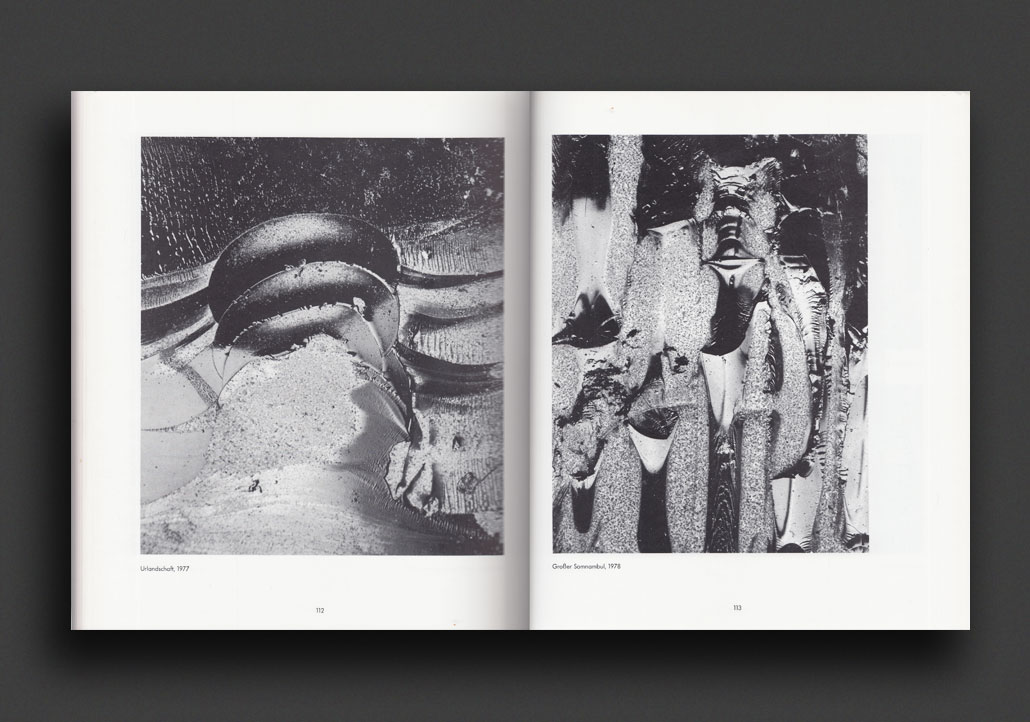
First edition of the out-of-print hardcover monograph on the work of Czech Surrealist photographer Vilém Reichmann, published on the occasion of a major survey exhibition at the Museum Bochum in 1989 and the Austrian Photo Archive in the Museum of Modern Art, Vienna in 1990. Extensive documentation of Reichmann's photographic works, including his incredible experimental photogram works. Includes portrait, biography, bibliography and texts by Antonín Dufek and Peter Spielmann in German.
Vilém Reichmann (1908-1991) was one of the premiere Czech surrealist photographers. Reichmann comes from the German-Jewish community in Brno and began photographing in 1930, whilst working as a graphic artist for numerous left-wing magazines in Czechoslovakia. Influenced by the Depression and war years, he developed a Surrealist style modelled on lyrical interpretations of reality through visual metaphors. After World War II he became a member of ‘Ra’, a Czech Surrealist art group, and his work shows the influence of textural abstraction and absurdist humor. Antonín Dufek, an erudite specialist in the field of the Czech photography, confirms Reichmann’s fundamental position in the history of the Czech photography, especially its surrealist movement.
Very Good copy, only very light wear to spine ends, cover, internally perfect.
1979, English
Softcover (staple-bound),
Published by
Belier Press / New York
$120.00 - In stock -
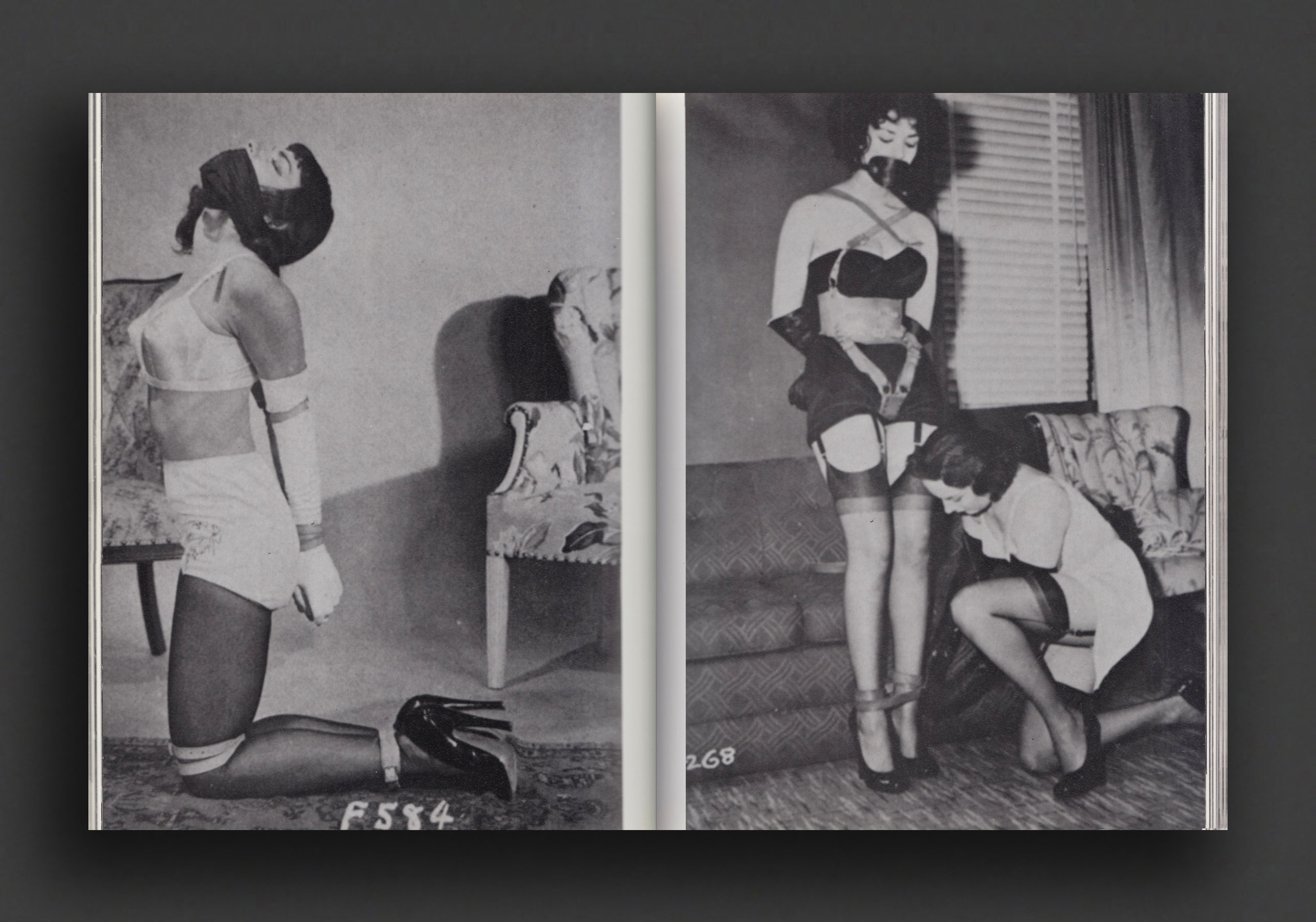
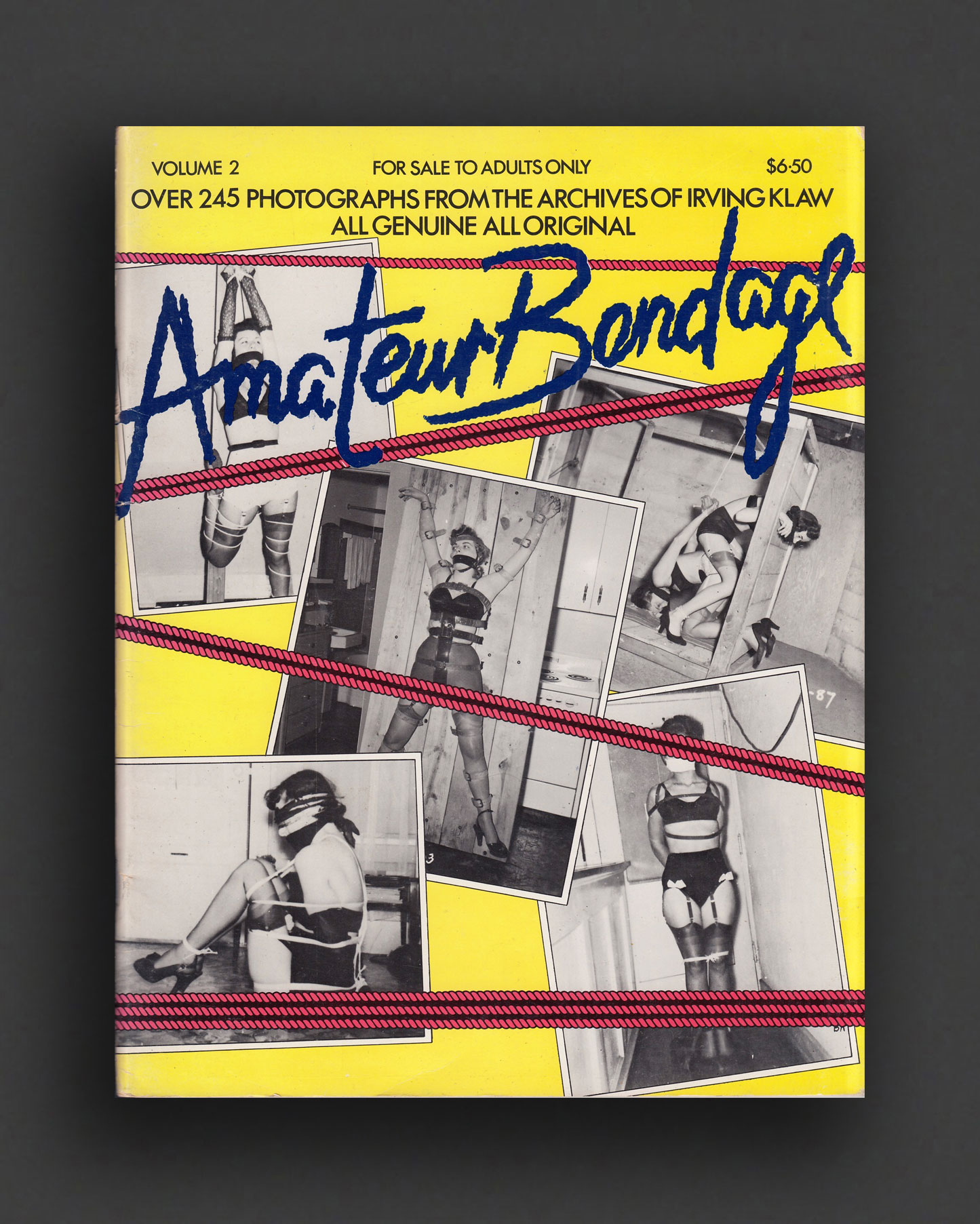
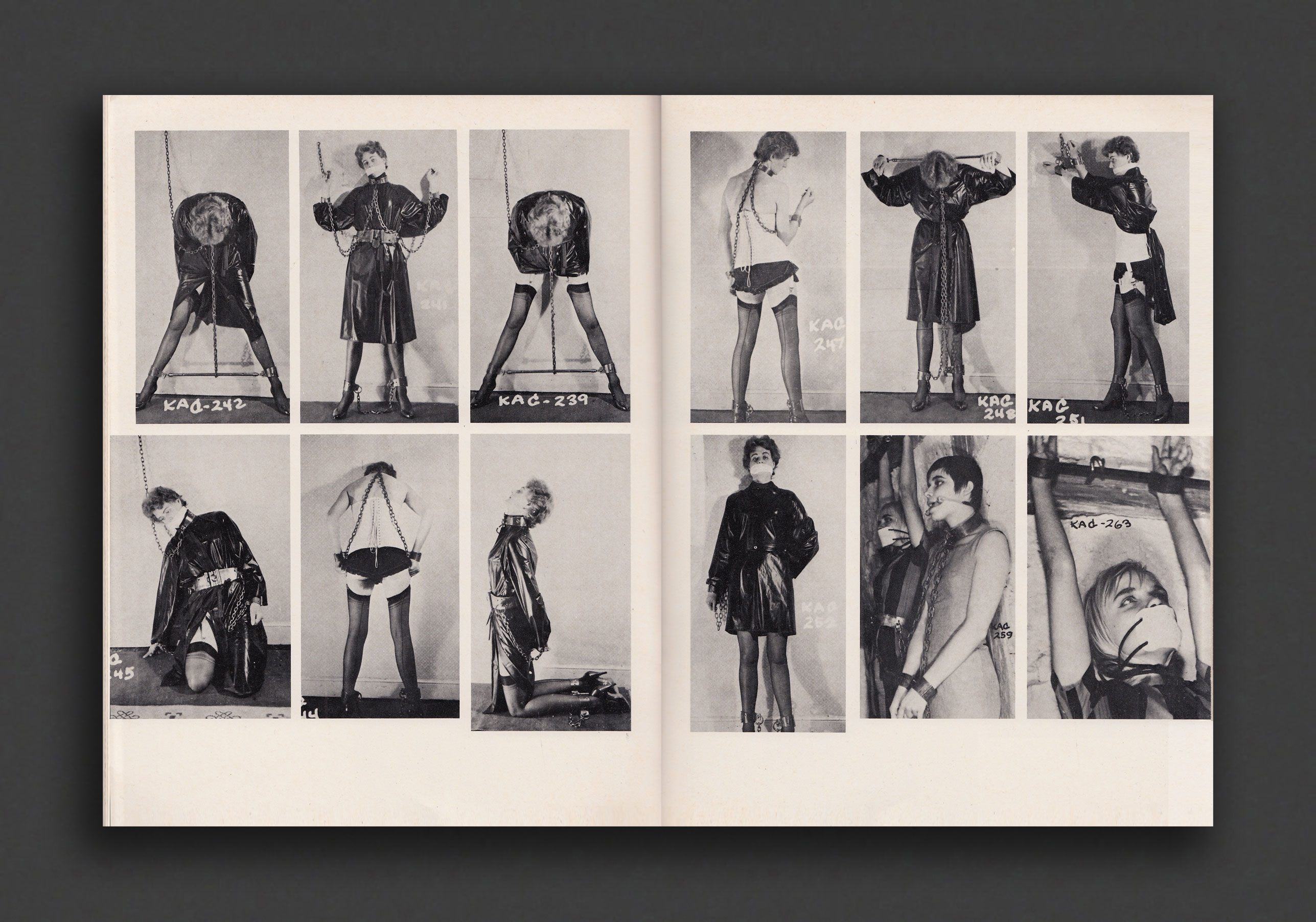
First 1979 edition of Amateur Bondage Vol. 2, collecting almost 250 photographs of women in bondage from the extensive photography archives of Irving Klaw. "All Genuine, all original"! Wildly creative image making by non-professional photographers, models and fetish enthusiasts, which were originally sold through mail-order c. 1950-1956 by the late Klaw.
Irving Klaw (1910-1966), self-named the "Pin-up King", was a hugely influential American merchant of sexploitation, fetish, and Hollywood glamour pin-up photographs and films. In the history of heterosexual BDSM in the 20th century, Klaw was a curious paradox. He was a non-kinky person who produced and sold arguably more BDSM imagery than anyone before or since. He became a symbol for the cause of sexual freedom, and a martyr to anti-sex initiatives by the Federal government, yet he was non-political, uninterested in activism and never intended to be a martyr for anything. He was a business man who came from humble, working-class beginnings. Klaw worked closely with models like Bettie Page, June King, Joan Rydell, Jackie Miller, et al. for his photography and films. Inspired by John Willie, Klaw also commissioned and distributed illustrated adventure/bondage chapter serials by fetish artists Eric Stanton, Gene Bilbrew, Adolfo Ruiz, and others. Irving Klaw is a central figure in what fetish art historian Richard Pérez Seves has designated as the "Bizarre Underground," the pre-1970 fetish art years.
Very Good copy with some general light wear/foxing. Sample image only. This copy sold through sold through Tokyo's Fiction Inc. shop distributor and has original shop stamp to colophon section.
1991, Japanese
Softcover, unpaginated, 26 x 21 cm
1st Edition, Out of print title / used / very good
Published by
Fiction Inc. / Tokyo
$140.00 - Out of stock
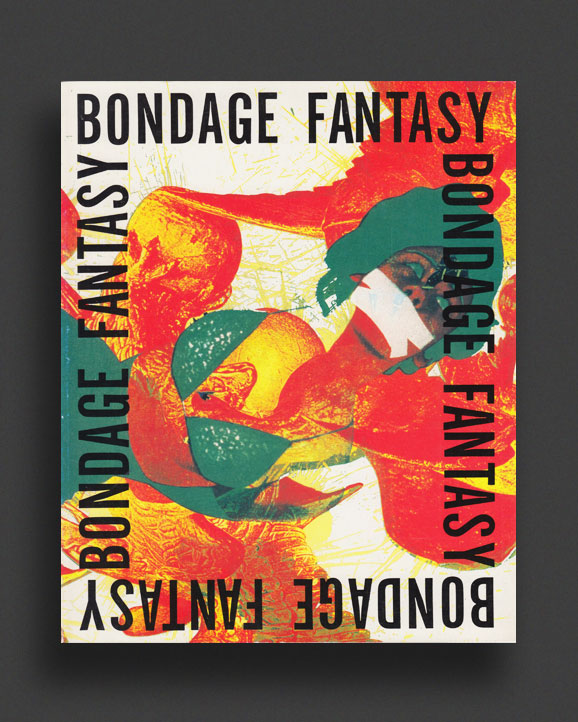
Stunning special ocer-sized edition of the great SALE2 periodical from Tokyo Japan, dedicated to the theme of Bondage Fantasy. With cover design by Tadanori Yokoo and design by Makoto Ohrui and edited by Japanese novelist Mari Akasaka, this 1991 volume is profusely illustrated throughout showcasing the erotic illustration and photography of artists John Willie, Irving Klaw, Eric Stanton, ENEG, Jim, Bill Ward, Jay, Tealdo, Europa, Gilles Berquet, Wolfgang Eicher. Perfectly compiled in the way SALE2 did so well, with elegant scrapbook style, dense with imagery, blown-up, full-bleed reproductions from many publications, and although a primarily visual volume packed cover-to-cover with illustrations, it also features a number of interviews with the artists in Japanese. Highly recommended!
Published regularly as a sort-of fanzine/journal/catalogue/pocket-book by Fiction, Inc., a specialty shop and publisher of fetish and erotica in Tokyo in the 1980-90s. Each issue covers different themes and features, heavy on fetishism.
Mari Akasaka (b. 1964) is a Japanese novelist born in Suginami, Tokyo, and studied Politics in the Law Department at Keio University. In 1999 her novel Vibrator was nominated for the Akutagawa Prize, which was adapted into a 2003 film directed by Ryūichi Hiroki. She was again nominated for the Akutagawa prize in 2000 for her novel, Muse, and won the Noma Literary Prize for New Writers for the same novel.
Very Good copy, well preserved.
1999, English
Softcover, 72 pages, 27 x 21 cm
1st Edition, Out of print title / used / fine
Published by
Charta / Milan
$60.00 - Out of stock
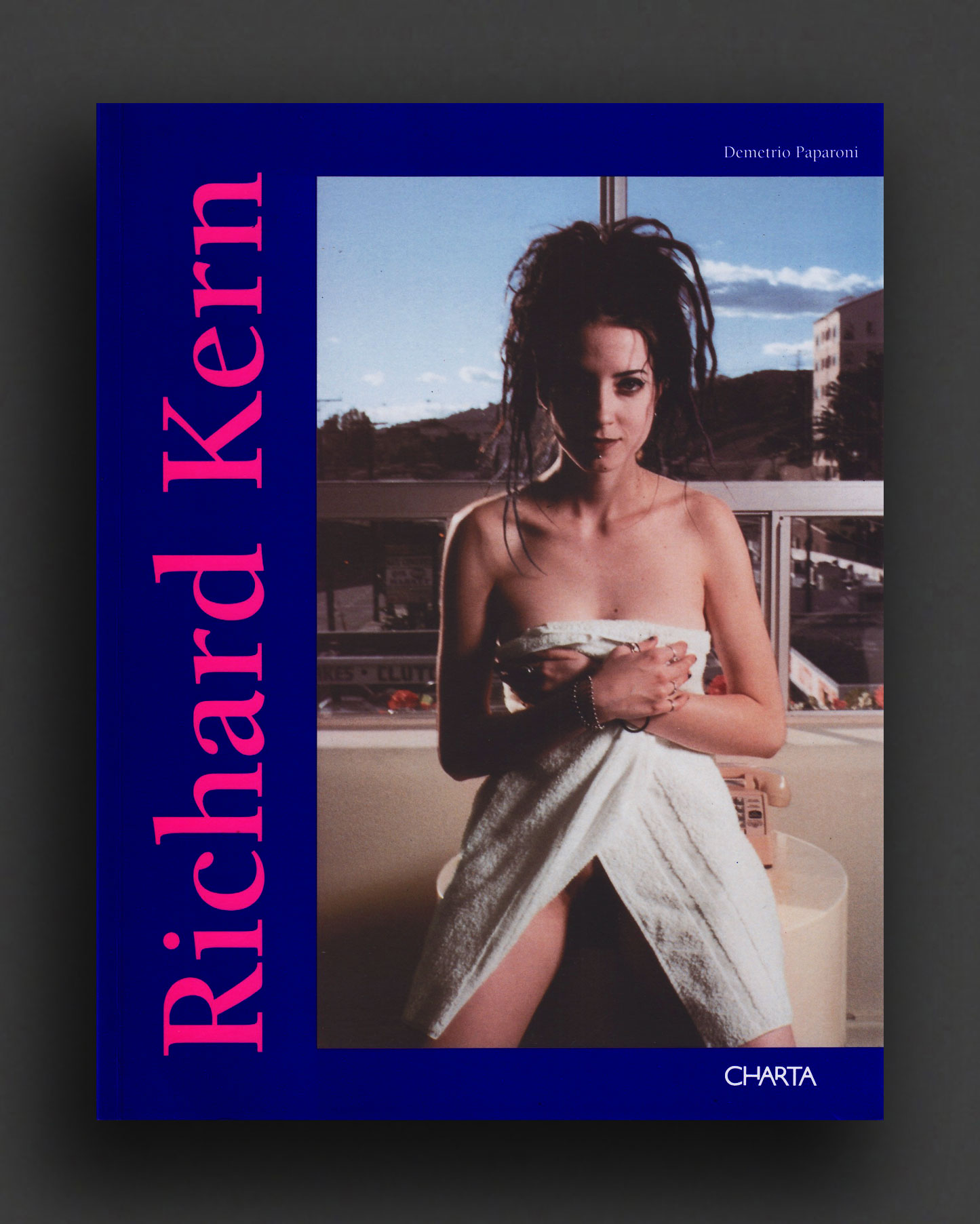
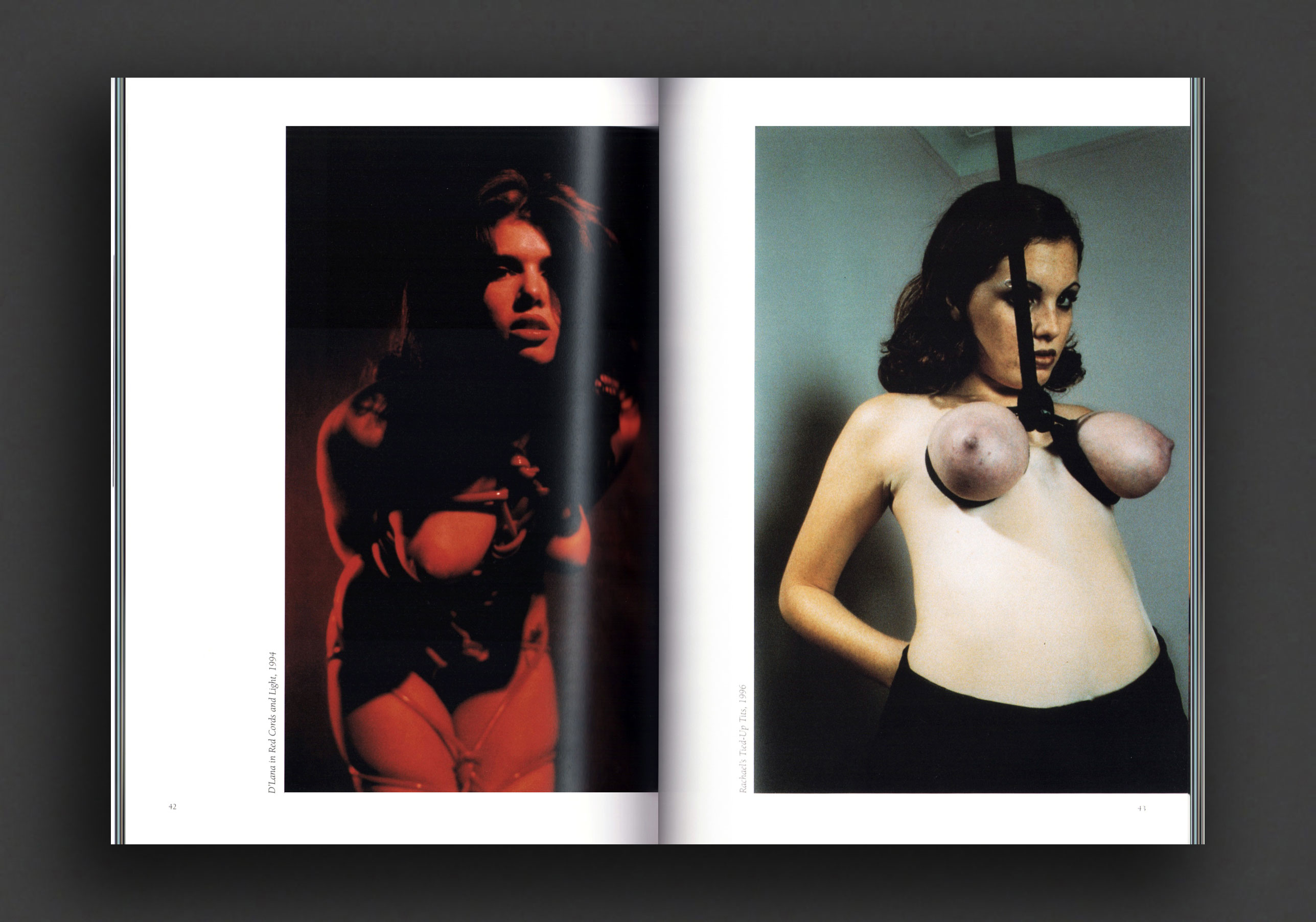
First 1998 edition of this catalogue of Richard Kern's photography, published on the occasion of his Italian exhibition "Guns, Girls and Candles", Galeria Reali, Brescia, Itay, 1998. A lavish full-colour early photo book by Kern, collecting his work to date. Texts by Nella Reali and Demetrio Paparoni in bi-lingual English and Italian.
"The spectacle of Richard Kern's legendary filmmaking and photography incites many reactions, but rarely is indifference among them. His imagery's characteristic blitzkrieg of subversive eroticism, porno kitsch, punk sensibility and aggressive femininity has won admirers of the so-called grunge aesthetic. This book has images of Kern's recent work, which stands at the intersection of fashion, sex and politics. The critical text by Paparoni explores the relationship between some of Kern's subjects and famous images from pre-war art history."
Very Good-Near Fine copy.