World Food Books' programme is largely produced on Kulin Nation land. We acknowledge the Wurundjeri people of the Kulin Nation as the first and continuing custodians of this land, and pay respect to their Elders past, present, and emerging.
World Food Books is an arts and special interests bookshop in Naarm / Melbourne. Founded in 2010, World Food Books is devoted to the presentation of a rotating, hand-selection of international art, design, literary and counterculture publications with an emphasis on the anti-traditional, the experimental, the avant-garde, the heretic, the marginal.
Presenting new titles alongside rare and out-of-print books, catalogues and journals spanning the fields of modern and contemporary art, design, photography, illustration, film, literature, poetry, cultural theory, philosophy, sexuality, popular and underground culture in its many radical forms, World Food Books wishes to encourage adventurous, thoughtful and open-minded reading, looking, writing, and exchange of publishing and ideas, both current and historical.
As well as our bookshop, located in Melbourne's historical Nicholas Building, all of our inventory is available internationally via our online mail-order service.
World Food Books semi-regularly co-ordinates "Occasions", a programme of exhibits and events at the bookshop and in partnership with other hosts (such as museums and art galleries) that develop out of the activities, relationships and content of the bookshop itself.
World Food Books
The Nicholas Building
37 Swanston Street
Room 5, Level 6
Melbourne 3000
Australia
SHOP HOURS:
Thu–Sat 11–5
WEB-SHOP OPEN 24/7
World Food Books
Postal Address:
PO Box 435
Flinders Lane
Victoria 8009
Australia
Art
Theory / Essay
Architecture / Interior
Graphic Design / Typography
Photography
Fashion
Eros
LGBTQ+
Fiction / Poetry
Weird / Speculative / Science Fiction / Horror
Transgressive / Visceral / Abject
Symbolism / Decadence / Fin de siècle
Film / Video
Painting
Sculpture / Installation
Performance / Dance / Theater
Drawing
Sound / Music
Curatorial
Group Shows / Collections
Periodicals
Out-of-print / Rare
Posters / Ephemera / Discs
Signed Books
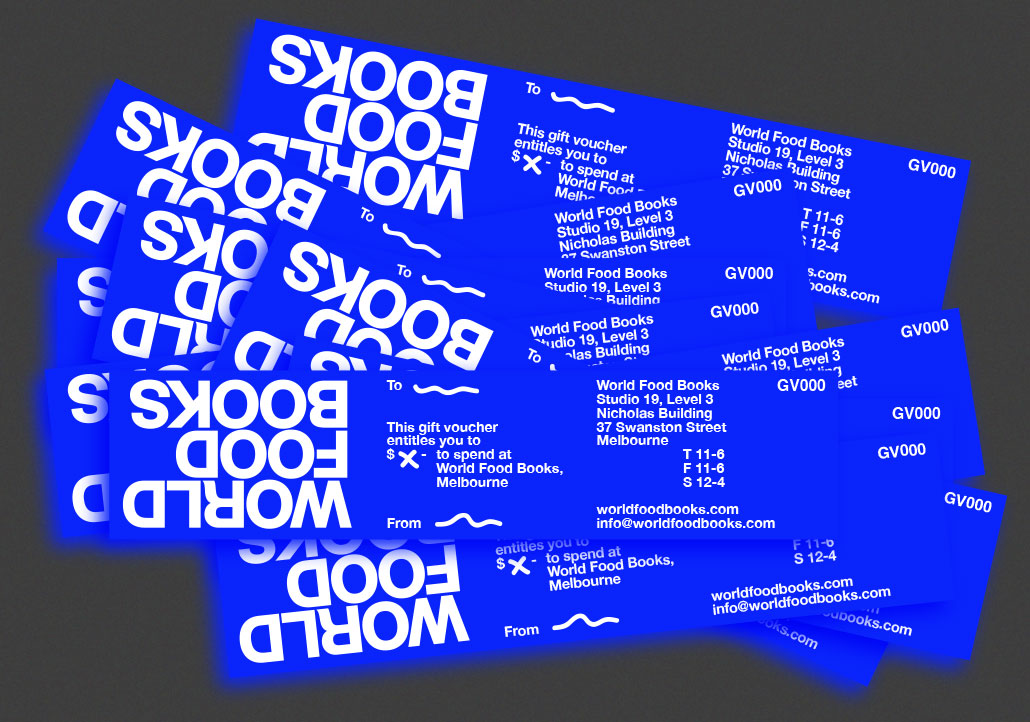
World Food Books Gift Voucher
World Food Book Bag
Australian Art
Australian Fiction
Australian Science Fiction / Speculative Fiction
Australian Poetry
Australian Photography
Japanese Photography
Conceptual Art
Minimal Art
Dada
'Pataphysics / Oulipo
Fluxus
Concrete Poetry
Pop Art
Surrealism
Arte Povera
Arte Informale / Haute Pâte / Tachism
Nouveau Réalisme / Zero / Kinetic
Situationism / Lettrism
Collage / Mail Art / Xerox Art
Art Brut / Folk / Visionary / Fantastic
Illustration / Graphic Art / Bandes Dessinées
Furniture
Italian Radical Design / Postmodernism
Textiles
Ceramics / Glass
Counterculture
Protest / Revolt
Philosophy
Psychoanalysis
Anthropology
Anarchism
Socialism / Anarchism / Communism / Capitalism
Literary Theory / Semiotics / Language
Feminism / Women's Studies
Gender Studies / Sexuality
Anthropology
Fetishism / BDSM
Drugs / Psychedelia
Crime / Violence
Animal Rights / Veganism
Occult / Esoterica
Ecology / Earth / Alternative Living
Whole Earth / Crafts
All prices in AUD (Australian dollars)
Pick-Ups
Pick-up orders can be collected in our bookshop during opening hours after order date. Please collect any Pick-up orders within 2 weeks of ordering as we have limited storage space. Orders will be released back into stock if not collected within this time. No refunds can be made for pick-ups left un-collected. If you cannot make it in to the bookshop in this time-frame, please choose postage option.
Return Policy
All sales are final. We do accept returns (for refund or exchange) for items received in error. All our orders are packed with special care using heavy-duty padding and cardboard book-mailers or bubble mailers (for smaller books), using reinforcement where required. We cannot take responsibility for any lost, stolen or damaged parcels.
Insurance
Should you wish to insure your package, please email us directly after placing your order and we can organise this at a small extra expense. Although all standard/express tracked packages are very safe and dependable, we cannot take responsibility for any lost, stolen or damaged parcels. We recommend insurance on valuable orders.
Interested in selling your old books, catalogues, journals, magazines, comics, fanzines, ephemera? We are always looking for interesting, unusual and out-of-print books to buy. We only buy books in our fields of interest and specialty, and that we feel we can resell.
We base these prices on desirability, market value, in-print prices, condition and our current stock levels. We offer cash, store credit, and can take stock on consignment. All
about 25% of the price we expect to get when we sell them, or 30% in store credit. We base these prices on desirability, market value, in-print prices, condition and our current stock levels.
Sell your books any day of the week. You can drop them off and return later. If you have a lot of books, we can visit your Sydney home.
We buy books that we feel we can resell. We offer about 25 % of the price we expect to get when we sell them, or 30% in store credit. We base these prices on desirability, market value, in-print prices, condition and our current stock levels.
Philadelphia Wireman
03 August - 01 September, 2018
World Food Books is proud to announce our next Occasion, the first presentation of sculptures by Philadelphia Wireman in Australia.
The Philadelphia Wireman sculptures were found abandoned in an alley off Philadelphia’s South Street on trash night in 1982. Their discovery in a rapidly-changing neighbourhood undergoing extensive renovation, compounded with the failure of all attempts to locate the artist, suggests that the works may have been discarded after the maker’s death. Dubbed the "Philadelphia Wireman" during the first exhibition of this work, in 1985, the maker’s name, age, ethnicity, and even gender remain uncertain. The entire collection totals approximately 1200 pieces, all intricately bound together with tightly-wound heavy-gauge wire (along with a few small, abstract marker drawings, reminiscent both of Mark Tobey and J.B. Murry). The dense construction of the work, despite a modest range of scale and materials, is singularly obsessive and disciplined in design: a wire armature or exoskeleton firmly binds a bricolage of found objects including plastic, glass, food packaging, umbrella parts, tape, rubber, batteries, pens, leather, reflectors, nuts and bolts, nails, foil, coins, toys, watches, eyeglasses, tools, and jewellery.
Heavy with associations—anthropomorphic, zoomorphic, and socio-cultural responses to wrapped detritus—the totemic sculptures by Philadelphia Wireman have been discussed in the context of work created to fulfil the shamanistic needs of alternative religions in American culture. Curators, collectors, and critics have variously compared certain pieces to sculpture from Classical antiquity, Native American medicine bundles, African-American memory jugs, and African fetish objects. Reflecting the artist’s prolific and incredibly focused scavenging impulse, and despite—or perhaps enhanced by—their anonymity, these enigmatic objects function as urban artefacts and arbiters of power, though their origin and purpose is unknown. Philadelphia Wireman, whatever their identity, possessed an astonishing ability to isolate and communicate the concepts of power and energy through the selection and transformation of ordinary materials. Over the course of the past two decades, this collection has come to be regarded as an important discovery in the field of self-taught art and vernacular art.
Presented in collaboration with Fleisher-Ollman Gallery, Philadelphia, and Robert Heald, Wellington.
Susan Te Kahurangi King
02 February - 10 March, 2018
Susan Te Kahurangi King (24 February 1951 - ) has been a confident and prolific artist since she was a young child, drawing with readily available materials - pencils, ballpoint pens and felt-tip markers, on whatever paper is at hand. Between the ages of four and six Susan slowly ceased verbal communication. Her grandparents William and Myrtle Murphy had developed a special bond with Susan so they took on caring responsibilities for extended periods. Myrtle began informally archiving her work, carefully collecting and storing the drawings and compiling scrapbooks. No drawing was insignificant; every scrap of paper was kept. The King family are now the custodians of a vast collection containing over 7000 individual works, from tiny scraps of paper through to 5 meter long rolls.
The scrapbooks and diaries reveal Myrtle to be a woman of great patience and compassion, seeking to understand a child who was not always behaving as expected. She encouraged Susan to be observant, to explore her environment and absorb all the sights and sounds. Myrtle would show Susan’s drawings to friends and people in her community that she had dealings with, such as shopkeepers and postal workers, but this was not simply a case of a grandmother’s bias. She recognised that Susan had developed a sophisticated and unique visual language and sincerely believed that her art deserved serious attention.
This was an unorthodox attitude for the time. To provide some context, Jean Dubuffet coined the term Art Brut in 1945 to describe work created by self-taught artists – specifically residents of psychiatric institutions and those he considered to be visionaries or eccentrics. In 1972 Roger Cardinal extended this concept by adopting the term Outsider Art to describe work made by non-academically trained artists operating outside of mainstream art networks through choice or circumstance. Susan was born in Te Aroha, New Zealand in 1951, far from the artistic hubs of Paris and London that Dubuffet and Cardinal operated in. That Myrtle fêted Susan as a self-taught artist who deserved to be taken seriously shows how progressive her attitudes were.
Susan’s parents Doug and Dawn were also progressive. Over the years they had consulted numerous health practitioners about Susan’s condition, as the medical establishment could not provide an explanation as to why she had lapsed into silence. Dawn educated herself in the field of homeopathy and went on to treat all twelve of her children using these principles – basing prescriptions on her observations of their physical, mental and emotional state.
Doug was a linguist with an interest in philosophy who devoted what little spare time he had to studying Maori language and culture. To some extent their willingness to explore the fringes of the mainstream made them outsiders too but it was their commitment to living with integrity and their respect for individuality that ensured Susan’s creativity was always encouraged.
Even though Susan’s family supported her artistic pursuits, some staff in schools and hospitals saw it as an impediment to her assimilation into the community and discouraged it in a variety of ways. Her family was not always aware of this and therefore did not fully understand why Susan stopped drawing in the early 1990s. However, rather than dwell on the challenges that Susan faced in pursuit of her artistic practice, they prefer to highlight her achievements. In 2008 Susan began drawing again in earnest, after an almost 20 year interruption, and her work is now shown in galleries around the world.
Susan grew up without television and has been heavily influenced by the comics she read as a child. She is absolutely fearless in the appropriation of recognizable characters, such as Donald Duck and Mickey Mouse, in her work. She twists their limbs, contorts their faces, compresses them together, blends them into complex patterned backgrounds - always imbuing them with an incredible energy. Although Susan often used pop culture characters in her work they are not naive or childlike. These are drawings by a brilliant self-taught artist who has been creating exceptional work for decades without an audience in mind.
Mladen Stilinović
"Various Works 1986 - 1999"
02 February 16 - September 10, 2016
Various works 1986 - 1999, from two houses, from the collections of John Nixon, Sue Cramer, Kerrie Poliness, Peter Haffenden and Phoebe Haffenden.
Including: Geometry of Cakes (various shelves), 1993; Poor People’s Law (black and white plate), 1993; White Absence (glasses, ruler, set square, silver spoon, silver ladel with skin photograph and wooden cubes), 1990-1996; Exploitation of the Dead (grey and red star painting, wooden painting, black spoon with red table, red plate), 1984-1990; Money and Zeros (zero tie, paintings made for friends in Australia (Sue, John, Kerrie), numbers painting), 1991-1992; Words - Slogans (various t-shirts) - “they talk about the death of art...help! someone is trying to kill me”, “my sweet little lamb”, “work is a disease - Karl Marx”; Various artist books, catalogues, monographs, videos; Poster from exhibition Insulting Anarchy; "Circular" Croatian - Australian edition; Artist book by Vlado Martek (Dostoyevsky); more.
Thanks to Mladen Stilinović and Branka Stipančić.
Jonathan Walker
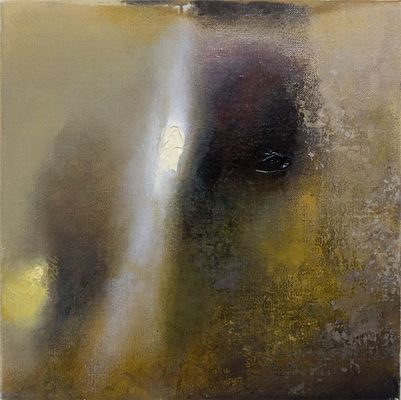
Always Will Need To Wear Winter Shirt Blue + Ochre Small Check Pattern
21 August - 21 September, 2015
Untitled
I am not a great reader of poetry but I always return to the work of Melbourne poet, Vincent Buckley (1925- 1988). Perhaps I find his most tantalising piece to be not a finished poem but a fragment left on a scrap of paper discovered on his desk after the poet’s death.
The poetry gathers like oil
In the word-core, and spreads
It has its music meet,
Its music is in movement.
This fragment is more the shell left behind from a volatile thought than a finished poem. I find the last two lines honest but awkward whereas the first two lines work like an arrow. Most likely he could not find a resolution so it was left. Still, in its present form, it remains an eloquent testimony to the ultimate failure of a medium to express mobile thought and sensation, in Buckley’s case, through verbal language. It’s an important matter because this is something all artists have to deal with regardless of the medium.
I have never written a poem, however, I am forever copying fragments from books on paper scraps in a vain effort to fix certain notions in my head. At first, they function as bookmarks that are sometimes returned to when I open the book. But before long, as they accumulate, they fall out littering the table interspersed with A4 photocopies, bills, books and medications.
To return to Buckley’s fragment, the first two lines very much evoke how I paint nowadays. As you age, detail diminishes and patches of light become more luminous and float. I feel the most honest way of dealing with this is by smearing the oil paint on the canvas with the fingers and working close-up, blind. Only if the patches coalesce into an approaching image can the work gain a life.
-
Jonathan Walker was born in Melbourne, Australia and brought up on a dairy farm in Gippsland. In the 1970’s he studied painting at RMIT and won the Harold Wright Scholarship to the British Museum, London. During the 1980’s he exhibited at Pinacotheca Gallery, Richmond and had work shown at the NGV and Heidi City Art Gallery. Over the same period he designed the cover for the “Epigenesi” LP by Giancarlo Toniutti, Italy and conducted a mail exchange work with Achim Wollscheid, Germany. The work with artists through the post resulted in an article published in the bicentenary issue of Art and Australia 1988. He showed in artist run spaces such as WestSpace in the 90’s and 2000’s, and until 2012, taught painting at Victoria University, which is where we (Colleen Ahern and Lisa Radford) as organisers of the exhibition, among many others, had the privilege of being his student.
Walker’s knowledge was imparted to students through the careful selection of music, literature, and artists found in books that he himself had ordered for the library. Walker’s strategy was the generosity of sharing his vast knowledge with references specific to each student and their context.
Walker’s paintings share a similar focus and intimacy.
This exhibition presents a small selection of recent paintings alongside a publication that includes Walker’s writing. Observational and analytical, Walker’s work is a type of material notation — the time of day, colour and how it is blended, the both specific and fleeting location of a reflection on lino or the question of whether a chair leg should be included in a painting.
Please join us on Friday August 21 between 6-8pm to celebrate the opening of the exhibition.
Curated by Colleen Ahern and Lisa Radford.
B. Wurtz
Curated by Nic Tammens
March 26 - April 4, 2015
B.Wurtz works from a basement studio in his home on Manhattan’s Lower East Side.
This local fact is attested to by the plastic shopping bags and newsprint circulars that appear in his work. As formal objects, they don’t make loud claims about their origins but nonetheless transmit street addresses and places of business from the bottom of this long thin island. Like plenty of artists, Wurtz is affected by what is local and what is consumed. His work is underpinned by this ethic. It often speaks from a neighborhood or reads like the contents of a hamper:
“BLACK PLUMS $1.29 lb.”
“Food Bazaar”
“USDA Whole Pork Shoulder Picnic 99c lb.”
“RITE AID Pharmacy, with us it’s personal.”
“H. Brickman & Sons.”
“Sweet Yams 59c lb."
Most of the work in this exhibition was made while the artist was in residence at Dieu Donne, a workshop dedicated to paper craft in Midtown. Here Wurtz fabricated assemblages with paper and objects that are relatively lightweight, with the intention that they would be easily transportable to Australia. This consideration isn’t absolute in Wurtz’s work, but was prescriptive for making the current exhibition light and cheap. Packed in two boxes, these works were sent from a USPS post office on the Lower East Side and delivered to North Melbourne by Australia Post.
Wurtz appears courtesy of Metro Pictures, New York.
Thanks to Rob Halverson, Joshua Petherick, Sari de Mallory, Matt Hinkley, Helen Johnson, Fayen d'Evie, Ask Kilmartin, Lisa Radon, Ellena Savage, Yale Union, and "Elizabeth".
John Nixon
"Archive"
December 15 - January 20, 2014
The presentation of John Nixon's archive offered a rare showcase of this extensive collection of the artist's own publications, catalogues, posters, ephemera, editions and more, from the mid 1980s onwards, alongside a selection of his artworks.
Organized by John Nixon, Joshua Petherick and Matt Hinkley.
"Habitat"
at Minerva, Sydney (organised by Joshua Petherick and Matt Hinkley)
November 15 - December 20, 2014
Lupo Borgonovo, Janet Burchill & Jennifer McCamley,
Lewis Fidock, HR Giger, Piero Gilardi, Veit Laurent Kurz,
Cinzia Ruggeri, Michael E. Smith, Lucie Stahl, Daniel Weil, Wols
Press Release:
“...It contained seven objects. The slender fluted bone, surely formed for flight, surely from the wing of some large bird. Three archaic circuitboards, faced with mazes of gold. A smooth white sphere of baked clay. An age-blackened fragment of lace. A fingerlength segment of what she assumed was bone from a human wrist, grayish white, inset smoothly with the silicon shaft of a small instrument that must once have ridden flush with the surface of the skin - but the thing’s face was seared and blackened.”
William Gibson, “Count Zero”, 1986
"Autumn Projects Archive"
Curated by Liza Vasiliou
March 6 - March 15, 2014
World Food Books, in conjunction with the Virgin Australia Melbourne Fashion Festival 2014, presented the Autumn Projects archive, consisting of a selection of early examples in Australian fashion with a particular interest in collecting designers and labels from the period beginning in the 1980’s, who significantly influenced the discourse of Australian Fashion.
Curated by Liza Vasiliou, the exhibition provided a unique opportunity to view pieces by designers Anthea Crawford, Barbara Vandenberg, Geoff Liddell and labels CR Australia, Covers, Jag along with early experimental collage pieces by Prue Acton and Sally Browne’s ‘Fragments’ collection, suspended throughout the functioning World Food Books shop in Melbourne.
H.B. Peace
presented by CENTRE FOR STYLE
November 14, 2013
"Hey Blinky, you say chic, I say same"
Anon 2013
H.B. Peace is a clothing collaboration between great friends Blake Barns and Hugh Egan Westland. Their pieces explore the divergences between 'character’ and ‘personality’ in garments....etc
Special Thanks to Joshua Petherick and Matt Hinkley of WFB and Gillian Mears
and a Very Special Thank you to Audrey Thomas Hayes for her shoe collaboration.
Janet Burchill & Jennifer McCamley
"Aesthetic Suicide"
May 10 - June 8, 2013
The first of our occasional exhibitions in the World Food Books office/shop space in Melbourne, "Aesthetic Suicide" presented a body of new and older works together by artists Janet Burchill & Jennifer McCamley, including videos, prints, a wall work, and publications.
During shop open hours videos played every hour, on the hour.
$.00 - Out of stock
The eternal clean out! New items weekly.
https://worldfoodbooks.com/category/sale
Published by World Food Books / Melbourne
$20.00 - In stock -
A World Food Books gift voucher is redeemable in our Melbourne bookshop or via our webshop (here). An e-voucher (printable pdf) will be sent to your purchase email address (please notify us if you wish to have the voucher sent to an alternate address and wish us to fill in the receiver's details on the card).
Gift vouchers can be purchased in increments of $20 (Australian Dollars) and the total amount can simply be added to by increasing the quantity in your shopping cart. eg. A quantity of 5 gift vouchers will result in an item total of $100 - a $100 gift voucher. Simply click "ADD TO CART" 5 times, or update your quantity in the shopping cart.
If you wish to purchase multiple, separate gift vouchers in one go, please just email us and we can personally prepare and email you a payment request.
Please note: Please select Pick-Up on gift voucher purchse to avoid any postage charges. Accidental postage charges will be refunded right away!
Thank you.
For any questions, please don't hesitate to email: [email protected]
2025, English
Hardcover, 568 pages, 30 x 24.5 cm
$110.00 - In stock -
Francis Bacon: Paintings is a collection of the complete paintings of Irish-born British figurative painter Francis Bacon. 745 illustrations. Accompanied by a curated selection of compelling quotes — from figures such as Lucian Freud, Roald Dahl and Damien Hirst — the book guides the reader through the evolution of Bacon’s distinctive aesthetic.
A master of the grotesque, Bacon created art that is both unsettling and hypnotic, repulsive and irresistible. Emerging from a turbulent inner life and the devastation of World War II, his images retain a quality of urgency that continues to resonate with contemporary audiences.
Over a career spanning more than five decades, Bacon produced almost 500 paintings, including his signature diptychs and triptychs. From his early Surrealist experiments of the 1920s to the stark, elegiac works completed just before his death, this book charts a lifetime of radical and groundbreaking artistry.
2020, English
Softcover, 256 pages, 20.6 x 13.72 cm
Published by
Wakefield Press / Cambridge
$36.00 - In stock -
A canonical gem of the nocturnal fantastic, in the tradition of German Romantics such as E.T.A. Hoffmann and Novalis.
Translated by George MacLennan and Edward Gauvin, with an introduction by George MacLennan.
First published in France in the dark year of 1942, the story collection Waystations of the Deep Night remains the best-known of Marcel Brion's numerous novels and stories in the vein of the strange and the fantastic. The journeys in this volume carry the reader through the surreal vistas of an underground city that appears aboveground as a bizarre theater of facades and a fire-ravaged landscape where souls turn to ash. A young castrato sings his heart out in a lost baroque garden; a child falls under the fateful spell of an enchanted painting; a traveler in a burned-out landscape encounters the Prince of Death; and dancing cats engage in mortal combat in the cellars of an abandoned port city.
A self-declared heir of Achim von Arnim and E.T.A. Hoffmann, Brion was also an admirer of the German Romantic writer Novalis and his sequence of Hymns to the Night, but his own imaginative homages to the night are more troublingly ambiguous, possibly an indirect reflection of the dark times in which they were written.
Born in Marseille in 1895, Marcel Brion was a freelance writer and critic. In 1964 he was elected to the Académie française in recognition of both his critical and creative writing, Over the course of a long and productive career he published 20 novels, four volumes of short stories and some 68 nonfiction books covering music, art, literature, history and travel. He died in Paris in 1984.
2011, English / French
Softcover, 558 pages, 23 x 15 cm
Published by
Black Widow Press / Boston
$52.00 - In stock -
René Char (1907-1988) was one of France's most respected 20th century poets. Part of the Surrealist group in the late 1920's-1930's, he gradually drifted away from the group. During WWII he joined the resistance and wrote his forceful prose poems describing what he saw and experienced. This large, bilingual anthology, includes all of his well known books Feuillets d'Hypnos and Fureur et Mystere as well as a sampling of other poems and prose poems. Insightful essays are provided by Sandra Bermann, Mary Ann Caws, and Nancy Kline.
2025, English
Hardcover, 200 pages, 36.2 x 22 cm
Published by
The New York Review of Books / New York
$78.00 - In stock -
In the mid-1960s, legendary artist and writer Joe Brainard (I Remember) teamed with poets such as John Ashbery, Frank O'Hara, Barbara Guest, Ron Padgett, Kenneth Koch, Ted Berrigan, and many more for these pioneering collaborative comic strips-unavailable for decades and collected here for the first time.
"PEOPLE OF THE WORLD... RELAX!"
In the creative hotbed of 1960s New York, Joe Brainard was a whirlwind. He was a maker of paintings, assemblages, collages, book covers, poetry-reading flyers, and more. But some of his most exciting work was done with his friends. In 1964, the twenty-two-year-old Brainard turned his talents to rewiring the lowly comic book form into something new and surprising. He invited his friends Frank O'Hara, Ted Berrigan, John Ashbery, Kenneth Koch, Peter Schjeldahl, Barbara Guest, Ron Padgett, and others-all of them New York School poets-to collaborate with him on comics that they would write and he would draw.
The results were unlike any comics seen before. Previously available only on the rare-book market (at very high prices) but available here under one cover for the first time, the two issues of C Comics still feel as fresh as when the first page rolled off the mimeograph machine more than sixty years ago. Brainard's energetic line and joyful humor charge across every page, illustrating O'Hara's recasting of a cowboy as a mash-note-writing lover, Padgett's experiments with traditional cartoon sound effects (ROAR! GRRR! SKREE!), cameos by Ernie Bushmiller's Nancy, and heaps of Dadaesque delights.
This edition includes a foreword from Padgett and an essay by comics historian Bill Kartalopolous, who details the creation (and creators) of C Comics. A masterpiece of collaboration and spontaneity, C Comics is a testament to the vastness of Brainard's creativity and his ability to push any artistic form in a new and powerful direction.
2001, English
Softcover, 192 pages, 17.3 x 11.2 cm
Published by
Granary Books / New York
$30.00 - In stock -
The American artist's much-imitated memoir, described by Paul Auster as "one of the few totally original books I have ever read."
Edited by Ron Padgett.
Joe Brainard's I Remember is a literary and artistic cult classic, praised and admired by writers from Paul Auster to John Ashery and Edmund White. As autobiography, Brainard's method was brilliantly simple: to set down specific memories as they rose to the surface of his consciousness, each prefaced by the refrain "I remember"
"I remember when I thought that if you did anything bad, policemen would put you in jail."
Brainard's enduring gem of a book has been issued in various forms over the past thirty years. In 1970, Angel Hair books published the first edition of I Remember, which quickly sold out; he wrote two subsequent volumes for Angel Hair, More I Remember (1972) and More I Remember More (1973), both of which proved as popular as the original. In 1973, the Museum of Modern Art in New York published Brainard's I Remember Christmas, a new text for which he also contributed a cover design and four drawings. Excerpts from the Angel Hair editions appeared in Interview, Gay Sunshine, The World and the New York Herald. Then in 1975, Full Court Press issued a revised version collecting all three of the Angel Hair volumes and added new material, using the original title I Remember.
This complete edition is prefaced by poet and translator Ron Padgett.
2002, English
Softcover, 320 pages, 19.7 x 13.4 cm
Published by
New Directions / New York
$36.00 - In stock -
The Hungarian master’s first work to appear in English, and still one of the best. Translated from Hungarian by George Szirtes.
"This is a book about a world into which the Leviathan has returned. The universality of its vision rivals that of Gogol's Dead Souls and far surpasses all the lesser concerns of contemporary writing."—W. G. Sebald
"Satantango and The Melancholy of Resistance are irresistible, unforgettable and required reading."—Eileen Battersby, The Irish Times
The Melancholy of Resistance, László Krasznahorkai's magisterial, surreal novel, depicts a chain of mysterious events in a small Hungarian town. A circus, promising to display the stuffed body of the largest whale in the world, arrives in the dead of winter, prompting bizarre rumors. Word spreads that the circus folk have a sinister purpose in mind, and the frightened citizens cling to any manifestation of order they can find —music, cosmology, fascism. The novel's characters are unforgettable: the evil Mrs. Eszter, plotting her takeover of the town; her weakling husband; and Valuska, our hapless hero with his head in the clouds, who is the tender center of the book, the only pure and noble soul to be found.
Compact, powerful and intense, The Melancholy of Resistance, as its enormously gifted translator George Szirtes puts it, "is a slow lava flow of narrative, a vast black river of type." And yet, miraculously, the novel, in the words of The Guardian, "lifts the reader along in lunar leaps and bounds."
László Krasznahorkai lives in the hills of Szentlászló. He has written five novels and won numerous prizes. New Directions also publishes his novels War and War and Satantango; another novel, Seiobo There Below, is forthcoming.
George Szirtes is a poet who was born in Budapest in 1948 and is now living in London.
His translations have won the European Translation Prize and the Gold Star Award for the Republic of Hungary.
Cover painting: James Ensor, "The Entry of Christ into Brussels in 1889" (detail)
2013, English
Softcover, 288 pages, 20 x 14 cm
Published by
New Directions / New York
$36.00 - In stock -
Now in paperback, Satantango, the novel that inspired Bela Tarr's classic film, is proof that the devil has all the good times. Set in an isolated hamlet, the novel unfolds over the course of a few rain-soaked days. Only a dozen inhabitants remain in the bleak village, rank with the stench of failed schemes, betrayals, failure, infidelity, sudden hopes, and aborted dreams. "Their world," in the words of the renowned translator George Szirtes is "rough and ready, lost somewhere between the cosmic and tragic, in one small insignificant corner of the cosmos. Theirs is the dance of death." Into this world comes, it seems, a messiah...
"He offers us stories that are relentlessly generative and defiantly irresolvable. They are haunting, pleasantly weird, and, ultimately, bigger than the worlds they inhabit."—The New York Times Book Review
"The excitement of Krasznahorkai's writing is that he has come up with his own original forms - and one of the most haunting is his first, Satantango. There is nothing else like it in contemporary literature."—Adam Thirwell, The New York Review of Books
"Satantango is a monster of a novel: compact, cleverly constructed, often exhilarating, and possessed of a distinctive, compelling vision - but a monster nonetheless...The grandeur is clearly palpable."—The Guardian
"Krasznahorkai is alone among European novelists now in his intensity and originality. One of the most mysterious artists now at work."—Colm Toibin
"Profoundly unsettling."—James Wood, The New Yorker
"His inexhaustible yet claustrophobic prose, with its long, tight, weaving sentences, each like a tantalising tightrope between banality and apocalypse, places the author in a European tradition of Beckett, Bernhard, and Kafka."—James Hopkin, The Independent
2024, English
Softcover, 311 pages, 20.4 x 13.5 cm
Published by
New Directions / New York
$36.00 - In stock -
Winner of The Nobel Prize in Literature 2025
In The World Goes On, a narrator first speaks directly, then narrates a number of unforgettable stories, and then bids farewell (“here I would leave this earth and these stars, because I would take nothing with me”).
As László Krasznahorkai himself explains: “Each text is about drawing our attention away from this world, speeding our body toward annihilation, and immersing ourselves in a current of thought or a narrative…”
A Hungarian interpreter obsessed with waterfalls, at the edge of the abyss in his own mind, wanders the chaotic streets of Shanghai. A traveler, reeling from the sights and sounds of Varanasi, India, encounters a giant of a man on the banks of the Ganges ranting on and on about the nature of a single drop of water. A child laborer in a Portuguese marble quarry wanders off from work one day into a surreal realm utterly alien from his daily toils.
“The excitement of his writing is that he has come up with his own original forms—there is nothing else like it in contemporary literature.”
2026, English
Hardcover (clothbound flexi), 160 pages, 17.5 x 12.5 cm
Published by
Hauser & Wirth / Zurich
$38.00 - In stock -
Focusing on the artist's daring and provocative paintings, this new publication offers a fascinating introduction to Lee Lozano's pioneering practice.
During her short but prolific career, Lee Lozano produced a body of work of striking formal breadth and complexity, ranging from expressionist figurative drawings and paintings to minimalist abstract canvases and, finally, the late conceptual works for which she become well-known. An illuminating text by Lucrezia Calabrò Visconti-co-curator of 'Lee Lozano: Strike', a major survey exhibition that travelled from Turin's Pinacoteca Agnelli to Paris's Bourse de Commerce - is accompanied by a meticulous exhibition history that features a wealth of ephemera and archival material.
Remembered for her withdrawal and ultimate rejection of the art world, Lozano produced an oeuvre united by her determination to expose the ruthless division of the world into categories such as gender and to reject capitalism's demand for constant production. Capturing the unapologetic confidence and striking complexity that defined the artist's singular practice, In the Studio: Lee Lozano is an excellent resource for both newcomers and longtime admirers of Lozano's radical work.
2006, English
Softcover, 160 pages, 15.24 x 1.91 x 16.51 cm
Published by
Archipelago Books / New York
$40.00 - In stock -
Stroke by Stroke is a pairing of two of Henri Michaux's most suggestive texts, Stroke by Stroke (Par des traits, 1984) and Grasp (Saisir, 1979), written towards the end of his life. Michaux's ideogrammic ink drawings accompany his poetic explorations of animals, humans, and the origins of language. This series of verbal and pictorial gestures is at once explosive and contemplative. Michaux emerges at his most Zen.
"I first encountered Michaux's astonishing work in Stroke By Stroke, a physically and conceptually beautiful little book . . . Reading Stroke By Stroke, I felt invited to travel "toward greater ungraspability"—and in our uncertain times, Michaux's ease with that is deeply reassuring."—Martha Cooley, The Common
Henri Michaux (1899-1994) was born in Namur, Belgium. His travels throughout the Americas, Asia, and Africa inspired his first two books, Ecuador and A Barbarian in Asia. In 1948, after the death of his wife, he devoted himself increasingly to his distinctive calligraphic ink drawings. Averse to publicity of any sort, in 1965 he refused the French Grand Prix National des Lettres. Michaux's other works in English translation include Emergences-Resurgences (Skira, 2001), Darkness Moves: An Henri Michaux Anthology (California, 1997), Tent Posts (Sun and Moon, 1997), and A Barbarian in Asia (New Directions, 1986).
Richard Sieburth's translations include Georg Büchner's Lenz, Friedrich Holderlin's Hymns and Fragments, Walter Benjamin's Moscow Diary, Gérard de Nerval's Selected Writings, Henri Michaux's Emergences/Resurgences, Michel Leiris' Nights as Day, Days as Night, and Gershom Scholem's The Fullness of Time. His English edition of the Nerval won the 2000 PEN/ Book-of-the-Month-Club Translation Prize. His recent translation of Maurice Sceve's Délie was a finalist for the PENTranslation Prize and the Weidenfeld Prize.
2025, English
Softcover, 360 pages, 21.5 x 14 cm
Published by
University of Minnesota Press / Minnesota
Univocal Publishing / Minneapolis
$62.00 - In stock -
From 1970 until 1987, Gilles Deleuze held a weekly seminar at the Experimental University of Vincennes and, starting in 1980, at Saint-Denis. In the spring of 1981, he began a series of eight seminars on painting and its intersections with philosophy. The recorded sessions, newly transcribed and translated into English, are now available in their entirety for the first time. Extensively annotated by philosopher David Lapoujade, On Painting illuminates Deleuze's thinking on artistic creation, significantly extending the lines of thought in his book Francis Bacon.
Through paintings and writing by Rembrandt, Delacroix, Turner, Cezanne, Van Gogh, Klee, Pollock, and Bacon, Deleuze explores the creative process, from chaos to the pictorial fact. The introduction and use of color feature prominently as Deleuze elaborates on artistic and philosophical concepts such as the diagram, modulation, code, and the digital and the analogical. Through this scrutiny, he raises a series of profound and stimulating questions for his students: How does a painter ward off greyness and attain color? What is a line without contour? Why paint at all?
Written and thought in a rhizomatic manner that is thoroughly Deleuzian-strange, powerful, and novel-On Painting traverses both the conception of art history and the possibility of color as a philosophical concept.
Edited by David Lapoujade, translated by Charles J. Stivale.
1978, Japanese
Softcover, 25.5 x 18 cm
1st Edition, Out of print title / used / good
Published by
Sun Publishing / Japan
$80.00 - In stock -
Rare premiere issue (October 1978) of June (magazine), the first yaoi (boys love or "BL") magazine in Japan, founded in 1978, named after the French author Jean Genet, with "june" being a play on the Japanese pronunciation of his name. An underground cult hit, June became synonymous with the BL genre, publishing male/male tanbi ("aesthetic") romances — stories written for and about the worship of idealised beauty, tragedy, and homoerotic romance between androgynous men and beautiful male youths, narratives that emphasise homosociality and de-emphasize socio-cultural homophobia, rich in decadence through the use of flowery language, baroque sexual fantasies and unusual kanji. The yaoi genre was coined by the female manga artists Yasuko Sakata and Akiko Hatsu and originated in the 1970s as a subgenre of shōjo manga, or comics for girls, influenced by the rising popularity of depictions of bishōnen ("beautiful boys"), a term for androgynous or effeminate male characters. June ushered in a new wave of — primarily female — manga artists and writers, including Keiko Takemiya, Tomomi Kobayashi, Kaoru Kurimoto, and Akimi Yoshida, and male artists such as Sadao Hasegawa, Gekko Hayashi, and Ben Kimura, publishing unsolicited manuscripts and homoerotic artworks alongside critical writings, reviews, and historical pieces, all centred around boys. Although it began typically as a genre by and for women, distinct from bara (gay manga created by men), June increasingly appealed to a gay audience, and played a significant role in the construction of a collective gay identity in Japan, alongside pioneering gay manga magazines such Barazoku, which featured many of the same artists. The June imprint ran various editions of the magazine, including the "large format" with many photos of youths and colour artworks, the popular Roman June ("Romantic June") which contained a mix of stories and manga, and Shousetsu June, and the original manga magazine.
The yaoi genre of June (also referred to as shōnen-ai "boy love") was heavily inspired by European decadent literature, philosophy, the homoerotic writings of Japanese authors Taruho Inagaki, Yukio Mishima, Yasunari Kawabata, Jun'ichirō Tanizaki, and the Bildungsroman (coming-of-age) literary genre as much as it was by pop culture and the androgyny of musicians such as David Bowie, Marc Bolan and David Sylvian, or actor Björn Andrésen's portrayal of Thaddeus in Visconti's 1971 film adaptation of Death in Venice. Early issues are be filled to the brim with lavish illustrations and comic stories, erotic fantasy fiction, photographs of "beautiful boys" (young film stars, catholic choir boys, musicians...), reviews, interviews, and essays, all rich with romantic connotations to the age of Decadence, Symbolism, and the aesthetics of the Victorian and Edwardian eras, as well as Japanese folklore.
Good—Very Good copy of this scarce early issue of June, published by Sun Publishing, Tokyo.
1978, Japanese
Softcover, 25.5 x 18 cm
1st Edition, Out of print title / used / good
Published by
Sun Publishing / Japan
$80.00 - In stock -
Issue No 2 (December 1978) of June (magazine), the first yaoi (boys love or "BL") magazine in Japan, founded in 1978, named after the French author Jean Genet, with "june" being a play on the Japanese pronunciation of his name. An underground cult hit, June became synonymous with the BL genre, publishing male/male tanbi ("aesthetic") romances — stories written for and about the worship of idealised beauty, tragedy, and homoerotic romance between androgynous men and beautiful male youths, narratives that emphasise homosociality and de-emphasize socio-cultural homophobia, rich in decadence through the use of flowery language, baroque sexual fantasies and unusual kanji. The yaoi genre was coined by the female manga artists Yasuko Sakata and Akiko Hatsu and originated in the 1970s as a subgenre of shōjo manga, or comics for girls, influenced by the rising popularity of depictions of bishōnen ("beautiful boys"), a term for androgynous or effeminate male characters. June ushered in a new wave of — primarily female — manga artists and writers, including Keiko Takemiya, Tomomi Kobayashi, Kaoru Kurimoto, and Akimi Yoshida, and male artists such as Sadao Hasegawa, Gekko Hayashi, and Ben Kimura, publishing unsolicited manuscripts and homoerotic artworks alongside critical writings, reviews, and historical pieces, all centred around boys. Although it began typically as a genre by and for women, distinct from bara (gay manga created by men), June increasingly appealed to a gay audience, and played a significant role in the construction of a collective gay identity in Japan, alongside pioneering gay manga magazines such Barazoku, which featured many of the same artists. The June imprint ran various editions of the magazine, including the "large format" with many photos of youths and colour artworks, the popular Roman June ("Romantic June") which contained a mix of stories and manga, and Shousetsu June, and the original manga magazine.
The yaoi genre of June (also referred to as shōnen-ai "boy love") was heavily inspired by European decadent literature, philosophy, the homoerotic writings of Japanese authors Taruho Inagaki, Yukio Mishima, Yasunari Kawabata, Jun'ichirō Tanizaki, and the Bildungsroman (coming-of-age) literary genre as much as it was by pop culture and the androgyny of musicians such as David Bowie, Marc Bolan and David Sylvian, or actor Björn Andrésen's portrayal of Thaddeus in Visconti's 1971 film adaptation of Death in Venice.
These early issues are filled to the brim with lavish illustrations and comic stories, erotic fantasy fiction, photographs of "beautiful boys" (young film stars, catholic choir boys, musicians...), reviews, interviews, and essays, all rich with romantic connotations to the age of Decadence, Symbolism, and the aesthetics of the Victorian and Edwardian eras, as well as Japanese folklore.
Good—Very Good copy of this scarce early issue of June, published by Sun Publishing, Tokyo.
2025, English
Softcover, 96 pages, 17.7 x 11.4 cm
Published by
Semiotext(e) / Los Angeles
$35.00 - In stock -
A foundational work of queer theory.
First published anonymously in the notorious "Three Billion Perverts" issue of Félix Guattari's journal Recherches—banned by French authorities upon its release in 1973—The Screwball Asses was erroneously attributed to Guy Hocquenghem when it was first published in English in 2009. This second edition of that translation, with a new preface by Hocquenghem biographer Antoine Idier that clarifies the different theoretical positions within France's Front Homosexuel d'Action Révolutionaire, returns the text to its true author: writer, journalist, and activist Christian Maurel.
In this dramatic treatise on erotic desire, Maurel takes on the militant delusions and internal contradictions of the gay-liberation movement. He vivisects not only the stifled mores of bourgeois capitalism, but also the phallocratic concessions of so-called homophiles and, ultimately, the very act of speaking desire. Rejecting any “pure theory” of homosexuality that would figure its “otherness” as revolutionary, Maurel contends that the ruling classes have invented homosexuality as a sexual ghetto, splitting and mutilating desire in the process. It is only when nondesire and the desire of desire are enacted simultaneously through speech and body that homosexuality can finally be sublimated under the true act of “making love.” There are thousands of sexes on earth, according to Maurel, but only one sexual desire. The Screwball Asses is a revelatory disquisition.
Introduction by Antoine Idier
Translated by Noura Wedell
2025, English
Softcover, 176 pages, 12.7 x 20.2 cm
Published by
The New York Review of Books / New York
$36.00 - In stock -
A cult classic now back in print, this novel about sex, obsession, and art is one of the defining works of 1980s gay fiction.
A classic of postmodern fiction, Robert Glück’s Jack the Modernist portrays the slow disintegration of a love affair set in the early 1980s. Bob is excited and lonely. He meets and pursues the elusive Jack, a director who is able to transform others without altering himself. Bob goes to the baths, gossips on the phone, goes to a bar, thinks about werewolves, has an orgasm, and discovers a number of truths about Jack. Out of print for decades, Glück’s paean to desire and obsession explores the everyday in an idiom both intimate and lush. Sensual as well as sensational, self-conscious, but never self-serious, Jack the Modernist is a candid and heartfelt lover’s discourse unlike any other.
“Jack the Modernist is the novel with the most information and most beauty. Glück is an extraordinary philosopher of ethics, aesthetics, and the English sentence—a thinker of the originality of William James, with the formal range of his brother Henry. This republication is cause for celebration not only because Jack the Modernist is an utter joy to read but because it calls our attention to an era-defining artist and public intellectual in our midst.”
—LUCY IVES
“In Jack the Modernist we find a testing and perfecting of language so skillful it appears to merge completely with the author’s intelligence and feelings.”
—DENNIS COOPER
“In Jack the Modernist self-exploration is so precise as to become impersonal. And some real sex at last. One is reminded of Genet and the transmutation of sex into something beyond sex. Glück even makes the disappointments, impasses, and blind alleys of love moving and interesting. He seems to say everything in a fresh way. Not since Genet have we seen such pure love of the human body and soul . . . seen as one flesh palpable as a haze.”
—WILLIAM S. BURROUGHS
1986 / 2005, English / Italian
Softcover, 96 pages, 12.2 x 16.1 cm
Published by
City Lights Books / San Francisco
$34.00 - In stock -
The Italian film-maker Pier Paolo Pasolini was first and always a poet—the most important civil poet, according to Alberto Moravia, in Italy in the second half of this century. His poems were at once deeply personal and passionately engaged in the political turmoil of his country. In 1949, after his homosexuality led the Italian Communist Party to expel him on charges of "moral and political unworthiness," Pasolini fled to Rome. This selection of poems from his early impoverished days on the outskirts of Rome to his last (with a backward longing glance at his native Friuli) is at the center of his poetic and filmic vision of modern Italian life as an Inferno.
"From all these refusals, we know what Pasolini stood against—political ideologies of all kinds, the complacency inherent in the established social order, the corruption of the institutions of church and state. If Pasolini could be said to have stood for anything it was for the struggles of Italy's working class—both the rural peasants and those barracked in the urban slums at the edges of Italian cities—whose humanity he evoked with great eloquence and nuance. But it is his refusals that animate his legacy with an incandescent rage, a passionate and profound fury that did not, as Zigaina suggests, cry out for death—but for just the opposite." —Nathaniel Rich, The New York Review of Books
2025, English
Softcover, 240 pages, 20 x 13 cm
Published by
Verso / London
$46.00 - In stock -
Presented here for the first time in English is a remarkable screenplay about the apostle Paul by Pier Paolo Pasolini, legendary filmmaker, novelist, poet, and radical intellectual activist. Written between the appearance of his renowned film Teorema and the shocking, controversial Salò, or the 120 Days of Sodom, St Paul was deemed too risky for investors. At once a political intervention and cinematic breakthrough, the script forces a revolutionary transformation on the contemporary legacy of Paul. In Pasolini's kaleidoscope, we encounter fascistic movements, resistance fighters, and faltering revolutions, each of which reflects on aspects of the Pauline teachings. From Jerusalem to Wall Street and Greenwich Village, from the rise of SS troops to the death of Martin Luther King, Jr, here— as Alain Badiou writes in the foreword—"Paul's text crosses all these circumstances intact, as if it had foreseen them all."
This is a key addition to the growing debate around St Paul and to the proliferation of literature centred on the current turn to religion in philosophy and critical theory, which embraces contemporary figures such as Alain Badiou, Slavoj Žižek and Giorgio Agamben.
Translated by Elizabeth A. Castelli
Preface by Alain Badiou
Introduction by Ward Blanton
2009, English
Softcover (staple-bound), 128 pages, 28.5 x 23.5 cm
1st Edition, Out of print title / used / very good
Published by
PIN-UP / New York
$150.00 - In stock -
Rare and collectible early issue of the acclaimed 'Magazine for Architectural Entretainment', PIN–UP. Issue 6, S/S 2009, back when the print-run was surprisingly small and magazines were still fantastic.
"PIN–UP 6, Spring Summer 2009. A mid-recession tour de force. Hot fluorescent pink, green, purple, and orange. A potent mix of Meier, Wines, and Ishigami. Plus: flowers, Sylvia Lavin, and Dynasty. The last PIN–UP to be staple-bound. A must-have in any PIN–UP collection."—from PIN-UP website
Featuring:
RICHARD MEIER
The authority on all things white is one colorful character
Interview by Horacio Silva
Photography by Katja Rahlwes
DAVID KOHN
The cunning fox behind London’s new eclecticism
Interview by Caroline Roux
Photography by Devin Blair
ROY MCMAKIN
Forever blurring the makers of art, architecture, and design
Interview by Michael Ned Holte
Photography by Julika Rudelius
JUNYA ISHIGAMI
The minimalist’s darling is a nature lover at heart
Interview by Beatrice Galilee
Photography by Takashi Homma
JAMES WINES
The perpetual nonconformist has the last laugh
Interview by Michael Bullock
Photography by Miguel Villalobos
Also:
Floor plans from Dark Rooms Atlas examine the ideal architecture of gay cruising spots in Barcelona. Andreas Angelidakis tinkers with the intersection between technology and physicality, using programs like Second Life to create his playfully geometric structures. Brooklyn-based design studio labDORA fuses computer-coded design with waxy blobs. A look into Eric Lloyd Wright’s unfinished house, a sparse concrete structure perched on the summit of California’s Malibu hills. Art by Thomas Ravens juxtapose the whimsy of watercolors with images of failed utopia. PIN–UP pays homage to Dan Friedman via collage, mixing the artist’s wacky furniture with found objects. Sketches for chairs by various designers reveal the complicated and raw psychology behind creating one of the most fundamental entities of design. PIN–UP reconsiders the basic shapes of architecture via bouquets and topiary arrangements. Screenshots from Dynasty pay tribute to set designer Brock Broughton. Suleman Anaya examines the logic behind architecture’s emotional impact, both in films and in his life. Maia Morgensztern writes about the economic and cultural impact of opening a Louvre museum on the island of Saadiyat, located off the coast of Abu Dhabi. Sylvia Lavin on the impact that Richard Neutra’s windows had on reshaping postwar buildings. Paul Elliman remembers Dan Friedman and the interplay between design and contemporary art. And a look at the interactive, anamorphosis paintings of Felice Varini, who uses light projectors to paint shapes that seemingly levitate within the space.
Very Good copy, light wear.
2007, English
Softcover (staple-bound), 108 pages, 28.5 x 23.5 cm
1st Edition, Out of print title / used / very good
Published by
PIN-UP / New York
$150.00 - In stock -
Rare and collectible early issue of the acclaimed 'Magazine for Architectural Entretainment', PIN–UP. Issue 3, F/W 2007-2008, back when the print-run was surprisingly small and magazines were still fantastic.
"The power of three. PIN–UP’s third issue combines theory with architectural fun and games. An inescapable document of the late 2000s New York scene and beyond. One of PIN–UP’s few staple-bound issues. VERY RARE."—from PIN-UP website
Featuring:
JULIUS SHULMAN
The photography legend shares his love for gardening with a young Los Angeles architect
Interview by Fritz Haeg
Photography by Todd Cole
ROBERT WILSON
The artist and director reflects on the objects of his affection
Text by Horacio Silva
Photography by Todd Eberle
K/R ARCHITECTS
Straight talk with two mellowed New York modernists
Interview by Aric Chen
Photography by Disco Meisch
BALL-NOGUES & GANDALF GAVAN
East and West Coast meet on the threshold of art and architecture
Interview by Pierre Alexandre de Looz
Photography by Gandalf Gavan
Drawings by Ball-Nogues
Also:
A Thierry Mugler fashion shoot from May 1980 conjures up the irresistible dynamic of Gotham’s darker, bolder days. One last visit to Robert Wilson’s former TriBeCa loft for a glimpse at his cargo cult of collectibles. Photographer Chris Mottalini captures the “beautiful ruins” of one Paul Rudolph house in Westport Connecticut, moments before it is demolished. A look back at the work of Tony Duquette, the designer who evoked the exotic strangeness of the natural world. A two-part meditation on the “folly of ruins” — in photographs and text. Lorenz Cugini and Richard Petit provide two distinct studies of the usually veiled dialogue between chairs and bodies. Ben Widdicome examines the position of the architect in popular cinema and, by extension, society-at-large. Ted Trussel Porter investigates the influence of David Whitney on his paramour Philip Johnson’s interiors. A letter sent across the Iron Curtain by German architect Hans Scharoun to his Czechoslovakian student and collaborator Lubomir Šlapeta. Mike Kelley and Paul McCarthy stage a critical conversation between avant-garde and kitsch with their installation Heidi at the Krizinger Gallery in Vienna. Some notes on play and architecture in the 1950s and 1960s by Dirk van den Heuvel. PIN–UP takes a fresh look at the aging beauty of Hong Kong’s Cultural Centre. A peek inside the VIP Suites Caracas —a n iconic landmark made over as a boutique hotel by New York architects Ashe+Leandro. Photographs by Marcelo Krasilcic invite you to imagine a scenario of your own in Steve McQueen’s recently restored Palm Springs residence. Simon Fujiwara turns the Documenta town’s ’80s civic architecture into an effervescent intervention. And photographer Adrian Gaut time-travels to Prague to recapture the creativity and forward-thinking work of 20th Century Czech theatre designers.
Very Good copy, light wear.
2025, English
Hardcover, 272 pages, 28 x 23 cm
Published by
Prestel / Munich
$99.00 - In stock -
English edition of this wonderful tribute to one of the fathers of international modernism, James Ensor.
James Ensor’s visionary spirit takes us on a journey through his manifold universe of still lifes, self-portraits, savage visions, carnival and satire. In the course of his career, Ensor grew into an unruly gamechanger who personally reset the rules of art. As he did so, he resolutely distanced himself from the classical European ideal of beauty and from the Impressionism that had initially fascinated him.
Ensor did not limit himself to painting – he also unleashed his passion for experiment in detailed drawings, huge collages and potent etchings. His love for the fanciful resulted in characteristically grotesque representations of countless wild dreams.
The pulse of a thrilling late nineteenth century beats through the more than two hundred works reproduced in this book. Ensor constantly surprises us with his contrasts between the comical and the macabre, the refined and the wanton, atmospheric bourgeois interiors and morbid skeletons.
Drawing on their wide-ranging expertise, fifteen authors each highlight specific facets of the Ostend artist’s developing practice to paint a fresh and comprehensive picture of Ensor’s life and work.
This publication accompanies the exhibition In Your Wildest Dreams – Ensor Beyond Impressionism from 28 September 2024 until 19 January 2025 at the Royal Museum of Fine Arts Antwerp (KMSKA).
1983, Japanese
Hardcover (clothbound w. dustjacket), 152 pages, 20.5 x 30 cm
1st Edition, Out of print title / used / very good
Published by
Orion Press / Tokyo
$150.00 - In stock -
Exquisitely designed and produced book dedicated entirely to the photography of the German artist Hans Bellmer (1902—1975). Produced in French by Editions Filipacchi, Centre Georges Pompidou, and Musee National D'art Moderne in Paris in 1983, this scarce Japanese hardcover printing (produced and printed in Japan that same year) features a different cover, with translations to the Japanese language of the introductory essay and texts. A beautiful photo book densely illustrated with colour and black and white reproductions of Bellmer's infamous doll photography, his many studies of the female nude (including those of his wife, artist Unica Zürn), and rare photography of his objects and sculptural assemblages, his studio, and more, this volume captures an important Surrealist visionary and one of the most daring artists of the 20th century through his stunning photography. Features the wonderful "La Poupee" — Hans Bellmer's articulated, anatomically amorphous Surrealist doll, reconfigured and captured through Bellmer's intimate hand-painted photographic images. "La Poupee" acquired iconic status as perhaps the purest exemplification of the Surrealist ideal of "convulsive beauty." Bellmer constructed his first doll in the early 1930s. André Breton and Paul Eluard described it as "the first and only Surrealist object with a universal, provocative power".
German artist Hans Bellmer (1902—1975) was one of the most subversive artists associated with Surrealism, famous—notorious, even—for his erotic engravings, objects and photographs. Many of Bellmer's works were inspired by the literary works of Comte de Lautréamont, Marquis de Sade and Georges Bataille, amongst others.
Very Good copy in VG dust jacket with light wear/light foxing.
1993, English
Softcover, 256 pages, 24 x 16.5 cm
1st Edition, Out of print title / used / very good
Published by
Whitney Museum / New York
Harry N. Abrams / New York
$340.00 - In stock -
Still, and will probably always be, the best book on Mike Kelley. First edition, now very collectible. This definitive survey was published in 1993 in conjunction with "Mike Kelley", a travelling exhibition held at Whitney Museum of American Art, New York; Los Angeles County Museum of Art, LA; and Moderna Museet, Stockholm, throughout 1994. Mike Kelley, one of the leading Californian artists of the 1990s, was a proponent of abject or pathetic art, an anti-aesthetic, anti-heroic movement, which criticized social and artistic issues through banality and humour. Exploring the work of this great and controversial performance artist and sculptor at the mid-way point in his career, this dense book presents thirteen essays, plus an introduction, discussing Kelley's projects, performances, and the ideas and diverse influences that motivate his work - contemporary art, rock and roll, social commentary and pop culture. Profusely illustrated throughout in colour and black and white, with texts by Elizabeth Sussman, David Marsh, Richard Armstrong, Timothy Martin, Howard Singerman, Colin Gardner, Dennis Cooper & Casey McKinney, John Miller, Ralph Rugoff, Kim Gordon, Howard N. Fox, Diedrich Diederichsen, Jutta Koether, Martin Prinzhorn, Paul Schimmel, John G. Hanhardt. No less! Includes a bibliography and exhibition history. Catalogue designed by Lorraine Wild and ReVerb.
Highly recommended.
Good—Very Good copy, with some general light wear to covers/spine.