World Food Books' programme is largely produced on Kulin Nation land. We acknowledge the Wurundjeri people of the Kulin Nation as the first and continuing custodians of this land, and pay respect to their Elders past, present, and emerging.
World Food Books is an arts and special interests bookshop in Naarm / Melbourne. Founded in 2010, World Food Books is devoted to the presentation of a rotating, hand-selection of international art, design, literary and counterculture publications with an emphasis on the anti-traditional, the experimental, the avant-garde, the heretic, the marginal.
Presenting new titles alongside rare and out-of-print books, catalogues and journals spanning the fields of modern and contemporary art, design, photography, illustration, film, literature, poetry, cultural theory, philosophy, sexuality, popular and underground culture in its many radical forms, World Food Books wishes to encourage adventurous, thoughtful and open-minded reading, looking, writing, and exchange of publishing and ideas, both current and historical.
As well as our bookshop, located in Melbourne's historical Nicholas Building, all of our inventory is available internationally via our online mail-order service.
World Food Books semi-regularly co-ordinates "Occasions", a programme of exhibits and events at the bookshop and in partnership with other hosts (such as museums and art galleries) that develop out of the activities, relationships and content of the bookshop itself.
World Food Books
The Nicholas Building
37 Swanston Street
Room 5, Level 6
Melbourne 3000
Australia
SHOP HOURS:
Thu–Sat 11–5
WEB-SHOP OPEN 24/7
World Food Books
Postal Address:
PO Box 435
Flinders Lane
Victoria 8009
Australia
Art
Theory / Essay
Architecture / Interior
Graphic Design / Typography
Photography
Fashion
Eros
LGBTQ+
Fiction / Poetry
Weird / Speculative / Science Fiction / Horror
Transgressive / Visceral / Abject
Symbolism / Decadence / Fin de siècle
Film / Video
Painting
Sculpture / Installation
Performance / Dance / Theater
Drawing
Sound / Music
Curatorial
Group Shows / Collections
Periodicals
Out-of-print / Rare
Posters / Ephemera / Discs
Signed Books
World Food Books Gift Voucher
World Food Book Bag
Australian Art
Australian Fiction
Australian Science Fiction / Speculative Fiction
Australian Poetry
Australian Photography
Japanese Photography
Conceptual Art
Minimal Art
Dada
'Pataphysics / Oulipo
Fluxus
Concrete Poetry
Pop Art
Surrealism
Arte Povera
Arte Informale / Haute Pâte / Tachism
Nouveau Réalisme / Zero / Kinetic
Situationism / Lettrism
Collage / Mail Art / Xerox Art
Art Brut / Folk / Visionary / Fantastic
Illustration / Graphic Art / Bandes Dessinées
Furniture
Italian Radical Design / Postmodernism
Textiles
Ceramics / Glass
Counterculture
Protest / Revolt
Philosophy
Psychoanalysis
Anthropology
Anarchism
Socialism / Anarchism / Communism / Capitalism
Literary Theory / Semiotics / Language
Feminism / Women's Studies
Gender Studies / Sexuality
Anthropology
Fetishism / BDSM
Drugs / Psychedelia
Crime / Violence
Animal Rights / Veganism
Occult / Esoterica
Ecology / Earth / Alternative Living
Whole Earth / Crafts
All prices in AUD (Australian dollars)
Pick-Ups
Pick-up orders can be collected in our bookshop during opening hours after order date. Please collect any Pick-up orders within 2 weeks of ordering as we have limited storage space. Orders will be released back into stock if not collected within this time. No refunds can be made for pick-ups left un-collected. If you cannot make it in to the bookshop in this time-frame, please choose postage option.
Return Policy
All sales are final. We do accept returns (for refund or exchange) for items received in error. All our orders are packed with special care using heavy-duty padding and cardboard book-mailers or bubble mailers (for smaller books), using reinforcement where required. We cannot take responsibility for any lost, stolen or damaged parcels.
Insurance
Should you wish to insure your package, please email us directly after placing your order and we can organise this at a small extra expense. Although all standard/express tracked packages are very safe and dependable, we cannot take responsibility for any lost, stolen or damaged parcels. We recommend insurance on valuable orders.
Interested in selling your old books, catalogues, journals, magazines, comics, fanzines, ephemera? We are always looking for interesting, unusual and out-of-print books to buy. We only buy books in our fields of interest and specialty, and that we feel we can resell.
We base these prices on desirability, market value, in-print prices, condition and our current stock levels. We offer cash, store credit, and can take stock on consignment. All
about 25% of the price we expect to get when we sell them, or 30% in store credit. We base these prices on desirability, market value, in-print prices, condition and our current stock levels.
Sell your books any day of the week. You can drop them off and return later. If you have a lot of books, we can visit your Sydney home.
We buy books that we feel we can resell. We offer about 25 % of the price we expect to get when we sell them, or 30% in store credit. We base these prices on desirability, market value, in-print prices, condition and our current stock levels.
Philadelphia Wireman
03 August - 01 September, 2018
World Food Books is proud to announce our next Occasion, the first presentation of sculptures by Philadelphia Wireman in Australia.
The Philadelphia Wireman sculptures were found abandoned in an alley off Philadelphia’s South Street on trash night in 1982. Their discovery in a rapidly-changing neighbourhood undergoing extensive renovation, compounded with the failure of all attempts to locate the artist, suggests that the works may have been discarded after the maker’s death. Dubbed the "Philadelphia Wireman" during the first exhibition of this work, in 1985, the maker’s name, age, ethnicity, and even gender remain uncertain. The entire collection totals approximately 1200 pieces, all intricately bound together with tightly-wound heavy-gauge wire (along with a few small, abstract marker drawings, reminiscent both of Mark Tobey and J.B. Murry). The dense construction of the work, despite a modest range of scale and materials, is singularly obsessive and disciplined in design: a wire armature or exoskeleton firmly binds a bricolage of found objects including plastic, glass, food packaging, umbrella parts, tape, rubber, batteries, pens, leather, reflectors, nuts and bolts, nails, foil, coins, toys, watches, eyeglasses, tools, and jewellery.
Heavy with associations—anthropomorphic, zoomorphic, and socio-cultural responses to wrapped detritus—the totemic sculptures by Philadelphia Wireman have been discussed in the context of work created to fulfil the shamanistic needs of alternative religions in American culture. Curators, collectors, and critics have variously compared certain pieces to sculpture from Classical antiquity, Native American medicine bundles, African-American memory jugs, and African fetish objects. Reflecting the artist’s prolific and incredibly focused scavenging impulse, and despite—or perhaps enhanced by—their anonymity, these enigmatic objects function as urban artefacts and arbiters of power, though their origin and purpose is unknown. Philadelphia Wireman, whatever their identity, possessed an astonishing ability to isolate and communicate the concepts of power and energy through the selection and transformation of ordinary materials. Over the course of the past two decades, this collection has come to be regarded as an important discovery in the field of self-taught art and vernacular art.
Presented in collaboration with Fleisher-Ollman Gallery, Philadelphia, and Robert Heald, Wellington.
Susan Te Kahurangi King
02 February - 10 March, 2018
Susan Te Kahurangi King (24 February 1951 - ) has been a confident and prolific artist since she was a young child, drawing with readily available materials - pencils, ballpoint pens and felt-tip markers, on whatever paper is at hand. Between the ages of four and six Susan slowly ceased verbal communication. Her grandparents William and Myrtle Murphy had developed a special bond with Susan so they took on caring responsibilities for extended periods. Myrtle began informally archiving her work, carefully collecting and storing the drawings and compiling scrapbooks. No drawing was insignificant; every scrap of paper was kept. The King family are now the custodians of a vast collection containing over 7000 individual works, from tiny scraps of paper through to 5 meter long rolls.
The scrapbooks and diaries reveal Myrtle to be a woman of great patience and compassion, seeking to understand a child who was not always behaving as expected. She encouraged Susan to be observant, to explore her environment and absorb all the sights and sounds. Myrtle would show Susan’s drawings to friends and people in her community that she had dealings with, such as shopkeepers and postal workers, but this was not simply a case of a grandmother’s bias. She recognised that Susan had developed a sophisticated and unique visual language and sincerely believed that her art deserved serious attention.
This was an unorthodox attitude for the time. To provide some context, Jean Dubuffet coined the term Art Brut in 1945 to describe work created by self-taught artists – specifically residents of psychiatric institutions and those he considered to be visionaries or eccentrics. In 1972 Roger Cardinal extended this concept by adopting the term Outsider Art to describe work made by non-academically trained artists operating outside of mainstream art networks through choice or circumstance. Susan was born in Te Aroha, New Zealand in 1951, far from the artistic hubs of Paris and London that Dubuffet and Cardinal operated in. That Myrtle fêted Susan as a self-taught artist who deserved to be taken seriously shows how progressive her attitudes were.
Susan’s parents Doug and Dawn were also progressive. Over the years they had consulted numerous health practitioners about Susan’s condition, as the medical establishment could not provide an explanation as to why she had lapsed into silence. Dawn educated herself in the field of homeopathy and went on to treat all twelve of her children using these principles – basing prescriptions on her observations of their physical, mental and emotional state.
Doug was a linguist with an interest in philosophy who devoted what little spare time he had to studying Maori language and culture. To some extent their willingness to explore the fringes of the mainstream made them outsiders too but it was their commitment to living with integrity and their respect for individuality that ensured Susan’s creativity was always encouraged.
Even though Susan’s family supported her artistic pursuits, some staff in schools and hospitals saw it as an impediment to her assimilation into the community and discouraged it in a variety of ways. Her family was not always aware of this and therefore did not fully understand why Susan stopped drawing in the early 1990s. However, rather than dwell on the challenges that Susan faced in pursuit of her artistic practice, they prefer to highlight her achievements. In 2008 Susan began drawing again in earnest, after an almost 20 year interruption, and her work is now shown in galleries around the world.
Susan grew up without television and has been heavily influenced by the comics she read as a child. She is absolutely fearless in the appropriation of recognizable characters, such as Donald Duck and Mickey Mouse, in her work. She twists their limbs, contorts their faces, compresses them together, blends them into complex patterned backgrounds - always imbuing them with an incredible energy. Although Susan often used pop culture characters in her work they are not naive or childlike. These are drawings by a brilliant self-taught artist who has been creating exceptional work for decades without an audience in mind.
Mladen Stilinović
"Various Works 1986 - 1999"
02 February 16 - September 10, 2016
Various works 1986 - 1999, from two houses, from the collections of John Nixon, Sue Cramer, Kerrie Poliness, Peter Haffenden and Phoebe Haffenden.
Including: Geometry of Cakes (various shelves), 1993; Poor People’s Law (black and white plate), 1993; White Absence (glasses, ruler, set square, silver spoon, silver ladel with skin photograph and wooden cubes), 1990-1996; Exploitation of the Dead (grey and red star painting, wooden painting, black spoon with red table, red plate), 1984-1990; Money and Zeros (zero tie, paintings made for friends in Australia (Sue, John, Kerrie), numbers painting), 1991-1992; Words - Slogans (various t-shirts) - “they talk about the death of art...help! someone is trying to kill me”, “my sweet little lamb”, “work is a disease - Karl Marx”; Various artist books, catalogues, monographs, videos; Poster from exhibition Insulting Anarchy; "Circular" Croatian - Australian edition; Artist book by Vlado Martek (Dostoyevsky); more.
Thanks to Mladen Stilinović and Branka Stipančić.
Jonathan Walker
Always Will Need To Wear Winter Shirt Blue + Ochre Small Check Pattern
21 August - 21 September, 2015
Untitled
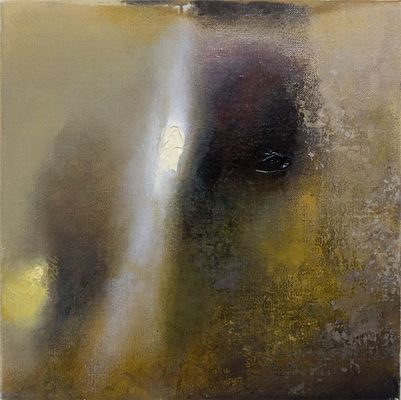
I am not a great reader of poetry but I always return to the work of Melbourne poet, Vincent Buckley (1925- 1988). Perhaps I find his most tantalising piece to be not a finished poem but a fragment left on a scrap of paper discovered on his desk after the poet’s death.
The poetry gathers like oil
In the word-core, and spreads
It has its music meet,
Its music is in movement.
This fragment is more the shell left behind from a volatile thought than a finished poem. I find the last two lines honest but awkward whereas the first two lines work like an arrow. Most likely he could not find a resolution so it was left. Still, in its present form, it remains an eloquent testimony to the ultimate failure of a medium to express mobile thought and sensation, in Buckley’s case, through verbal language. It’s an important matter because this is something all artists have to deal with regardless of the medium.
I have never written a poem, however, I am forever copying fragments from books on paper scraps in a vain effort to fix certain notions in my head. At first, they function as bookmarks that are sometimes returned to when I open the book. But before long, as they accumulate, they fall out littering the table interspersed with A4 photocopies, bills, books and medications.
To return to Buckley’s fragment, the first two lines very much evoke how I paint nowadays. As you age, detail diminishes and patches of light become more luminous and float. I feel the most honest way of dealing with this is by smearing the oil paint on the canvas with the fingers and working close-up, blind. Only if the patches coalesce into an approaching image can the work gain a life.
-
Jonathan Walker was born in Melbourne, Australia and brought up on a dairy farm in Gippsland. In the 1970’s he studied painting at RMIT and won the Harold Wright Scholarship to the British Museum, London. During the 1980’s he exhibited at Pinacotheca Gallery, Richmond and had work shown at the NGV and Heidi City Art Gallery. Over the same period he designed the cover for the “Epigenesi” LP by Giancarlo Toniutti, Italy and conducted a mail exchange work with Achim Wollscheid, Germany. The work with artists through the post resulted in an article published in the bicentenary issue of Art and Australia 1988. He showed in artist run spaces such as WestSpace in the 90’s and 2000’s, and until 2012, taught painting at Victoria University, which is where we (Colleen Ahern and Lisa Radford) as organisers of the exhibition, among many others, had the privilege of being his student.
Walker’s knowledge was imparted to students through the careful selection of music, literature, and artists found in books that he himself had ordered for the library. Walker’s strategy was the generosity of sharing his vast knowledge with references specific to each student and their context.
Walker’s paintings share a similar focus and intimacy.
This exhibition presents a small selection of recent paintings alongside a publication that includes Walker’s writing. Observational and analytical, Walker’s work is a type of material notation — the time of day, colour and how it is blended, the both specific and fleeting location of a reflection on lino or the question of whether a chair leg should be included in a painting.
Please join us on Friday August 21 between 6-8pm to celebrate the opening of the exhibition.
Curated by Colleen Ahern and Lisa Radford.
B. Wurtz
Curated by Nic Tammens
March 26 - April 4, 2015
B.Wurtz works from a basement studio in his home on Manhattan’s Lower East Side.
This local fact is attested to by the plastic shopping bags and newsprint circulars that appear in his work. As formal objects, they don’t make loud claims about their origins but nonetheless transmit street addresses and places of business from the bottom of this long thin island. Like plenty of artists, Wurtz is affected by what is local and what is consumed. His work is underpinned by this ethic. It often speaks from a neighborhood or reads like the contents of a hamper:
“BLACK PLUMS $1.29 lb.”
“Food Bazaar”
“USDA Whole Pork Shoulder Picnic 99c lb.”
“RITE AID Pharmacy, with us it’s personal.”
“H. Brickman & Sons.”
“Sweet Yams 59c lb."
Most of the work in this exhibition was made while the artist was in residence at Dieu Donne, a workshop dedicated to paper craft in Midtown. Here Wurtz fabricated assemblages with paper and objects that are relatively lightweight, with the intention that they would be easily transportable to Australia. This consideration isn’t absolute in Wurtz’s work, but was prescriptive for making the current exhibition light and cheap. Packed in two boxes, these works were sent from a USPS post office on the Lower East Side and delivered to North Melbourne by Australia Post.
Wurtz appears courtesy of Metro Pictures, New York.
Thanks to Rob Halverson, Joshua Petherick, Sari de Mallory, Matt Hinkley, Helen Johnson, Fayen d'Evie, Ask Kilmartin, Lisa Radon, Ellena Savage, Yale Union, and "Elizabeth".
John Nixon
"Archive"
December 15 - January 20, 2014
The presentation of John Nixon's archive offered a rare showcase of this extensive collection of the artist's own publications, catalogues, posters, ephemera, editions and more, from the mid 1980s onwards, alongside a selection of his artworks.
Organized by John Nixon, Joshua Petherick and Matt Hinkley.
"Habitat"
at Minerva, Sydney (organised by Joshua Petherick and Matt Hinkley)
November 15 - December 20, 2014
Lupo Borgonovo, Janet Burchill & Jennifer McCamley,
Lewis Fidock, HR Giger, Piero Gilardi, Veit Laurent Kurz,
Cinzia Ruggeri, Michael E. Smith, Lucie Stahl, Daniel Weil, Wols
Press Release:
“...It contained seven objects. The slender fluted bone, surely formed for flight, surely from the wing of some large bird. Three archaic circuitboards, faced with mazes of gold. A smooth white sphere of baked clay. An age-blackened fragment of lace. A fingerlength segment of what she assumed was bone from a human wrist, grayish white, inset smoothly with the silicon shaft of a small instrument that must once have ridden flush with the surface of the skin - but the thing’s face was seared and blackened.”
William Gibson, “Count Zero”, 1986
"Autumn Projects Archive"
Curated by Liza Vasiliou
March 6 - March 15, 2014
World Food Books, in conjunction with the Virgin Australia Melbourne Fashion Festival 2014, presented the Autumn Projects archive, consisting of a selection of early examples in Australian fashion with a particular interest in collecting designers and labels from the period beginning in the 1980’s, who significantly influenced the discourse of Australian Fashion.
Curated by Liza Vasiliou, the exhibition provided a unique opportunity to view pieces by designers Anthea Crawford, Barbara Vandenberg, Geoff Liddell and labels CR Australia, Covers, Jag along with early experimental collage pieces by Prue Acton and Sally Browne’s ‘Fragments’ collection, suspended throughout the functioning World Food Books shop in Melbourne.
H.B. Peace
presented by CENTRE FOR STYLE
November 14, 2013
"Hey Blinky, you say chic, I say same"
Anon 2013
H.B. Peace is a clothing collaboration between great friends Blake Barns and Hugh Egan Westland. Their pieces explore the divergences between 'character’ and ‘personality’ in garments....etc
Special Thanks to Joshua Petherick and Matt Hinkley of WFB and Gillian Mears
and a Very Special Thank you to Audrey Thomas Hayes for her shoe collaboration.
Janet Burchill & Jennifer McCamley
"Aesthetic Suicide"
May 10 - June 8, 2013
The first of our occasional exhibitions in the World Food Books office/shop space in Melbourne, "Aesthetic Suicide" presented a body of new and older works together by artists Janet Burchill & Jennifer McCamley, including videos, prints, a wall work, and publications.
During shop open hours videos played every hour, on the hour.
1988, English
Softcover, 74 pages, 29 x 21 cm
1st Edition, Out of print title / used / very good
Published by
National Art Gallery / Wellington
$45.00 - Out of stock
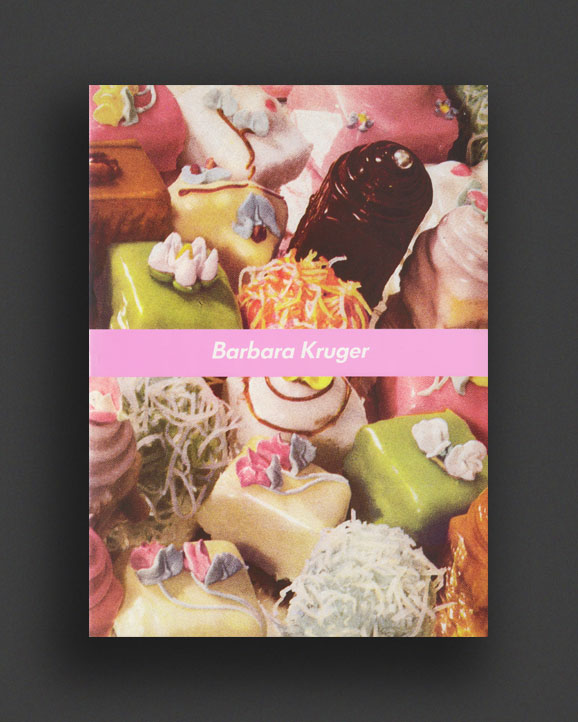
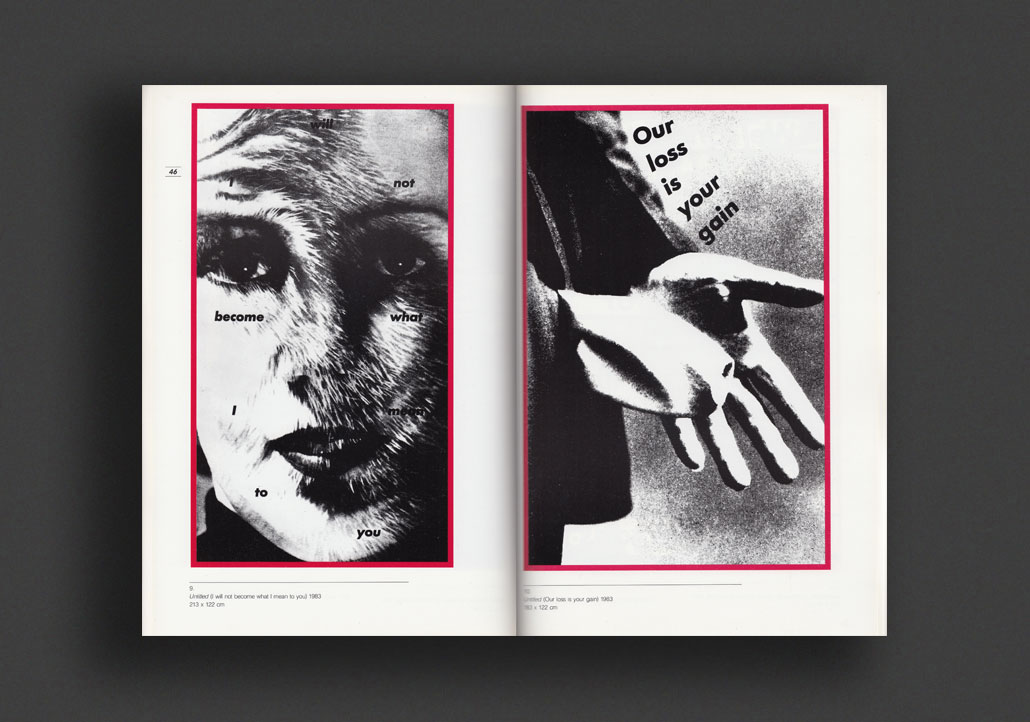
Scarce 1988 catalogue published to accompany the exhibition of Barbara Kruger at the National Art Gallery, Wellington, New Zealand in 1988, curated by Jenny Harper. Profusely illustrated with Kruger's artworks in colour and b/w, accompanied by texts from Harper and art critic Lita Barrie. Extensive full-page reproductions of exhibited catalogue of works, bibliography, etc. Barbara Kruger is an American conceptual artist and collagist associated with the Pictures Generation. Kruger's practice, spanning more than four decades, challenges how we assign meaning to visual signifiers of faith, morality, and power.
Very Good copy.
1980, English
Softcover, 60 pages, 28 x 22 cm
1st Edition, Out of print title / used / very good
Published by
Galerie Jurka / Amsterdam
$280.00 $160.00 - In stock -
Very scarce first edition of Robert Mapplethorpe's Black Males, published in 1980 by Galerie Jurka, Amsterdam. Dutch gallery owner Robert Jurka was instrumental in the early reception of Robert Mapplethorpe’s photography in Europe, exhibiting for the first time many of his (now) world-renowned photographs. Following an early Mapplethorpe monograph from 1979, Jurka also published the first Black Males catalogue as part of the homonymous exhibition he organized in 1980 at Galerie Jurka. With an introductory essay by Edmund White, this first 1980 edition remains the most sought after printing of this beautiful and controversial series by Mapplethorpe.
Robert Mapplethorpe (1946-1989) took his first photographs using a Polaroid camera. His first Polaroids were self-portraits and the first of a series of portraits of his close friend, the singer-artist-poet Patti Smith. These early photographic works were generally shown in groups or elaborately presented in shaped and painted frames that were as significant to the finished piece as the photograph itself. Then he acquired a large format press camera and began taking photographs of a wide circle of friends and acquaintances. These included artists, composers, socialites, pornographic film stars and members of the S & M underground. Some of these photographs were shocking for their content but exquisite in their technical mastery. During the early 1980s, Mapplethorpe’s photographs began a shift toward a phase of refinement of subject and an emphasis on classical formal beauty. During this period he concentrated on statuesque male and female nudes, delicate flower still lifes, and formal portraits of artists and celebrities.
Good copy throughout with light wear. Note coffee marking to covers and previous owner's name penned into first blank page. Interior otherwise clean, tight and overall well preserved.
1998, Japanese
Hardcover (w. dust jacket), 224 pages, 21.5 x 14.5 cm
1st Edition, Out of print title / used / very good
Published by
Futami Shobo / Japan
$100.00 - In stock -
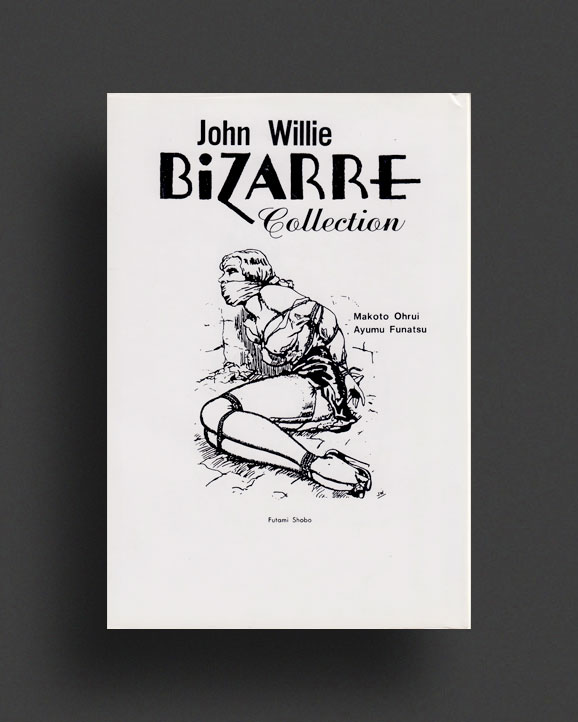
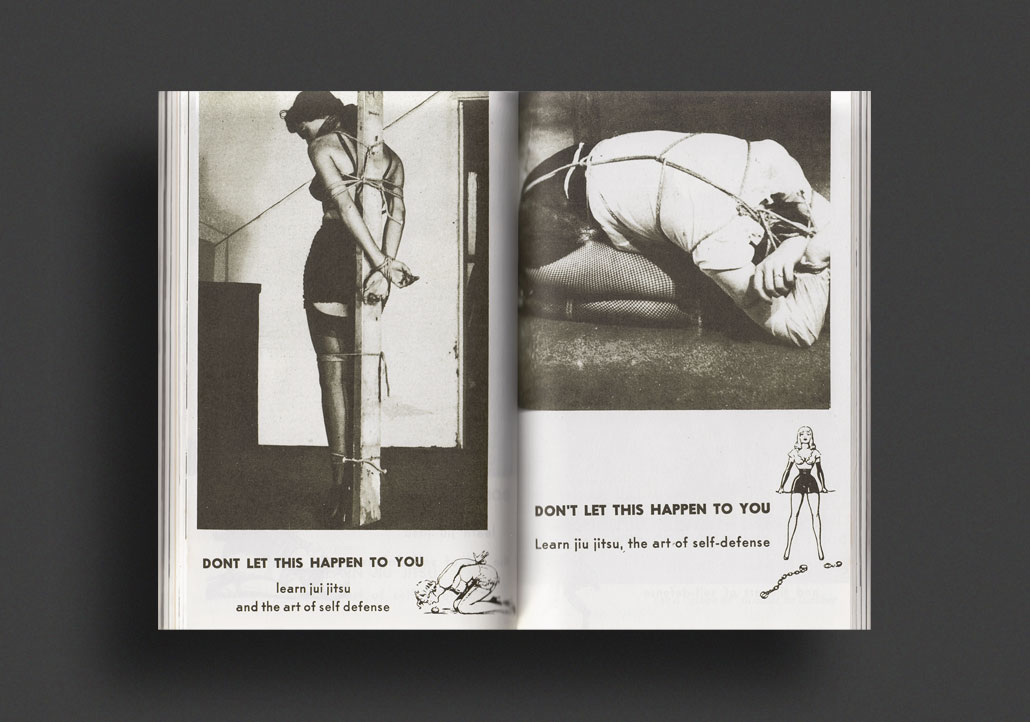
Rare first hardcover edition of this book collection of artwork by legendary fetish artist and publisher John Willie, compiled by SALE2/Fiction Inc. editor Makoto Ohrui and Ayumu Funatsu and published in Tokyo Japan by Futami Shobo in 1998. Packed cover-to-cover with colour and b/w reproductions of classic artworks by Willie and his famed Bizarre publications, John Willie's bondage photography, Bizarre fetish fashion illustrations and paintings, alongside his letters and writings translated into Japanese.
John Alexander Scott Coutts (1902—1962), better known by the pseudonym John Willie, was an artist, fetish photographer, editor and the publisher of the first 20 issues of the fetish magazine Bizarre, featuring his characters Sweet Gwendoline and Sir Dystic d'Arcy.
Makoto Ohrui founded the publishing house Fiction Inc. (later Radical Silence Production), the magazine SALE2, the gallery THE deep in Tokyo, and the magazine THE International. Ohrui was art director for SALE2, Purple, Rockin' On, and designed many books.
Very Good copy.
1959, Czech
Softcover, 64 pages, 17.5 x 15.5 cm
1st Edition, Out of print title / used / good
Published by
SNKLU / Prague
$120.00 - Out of stock
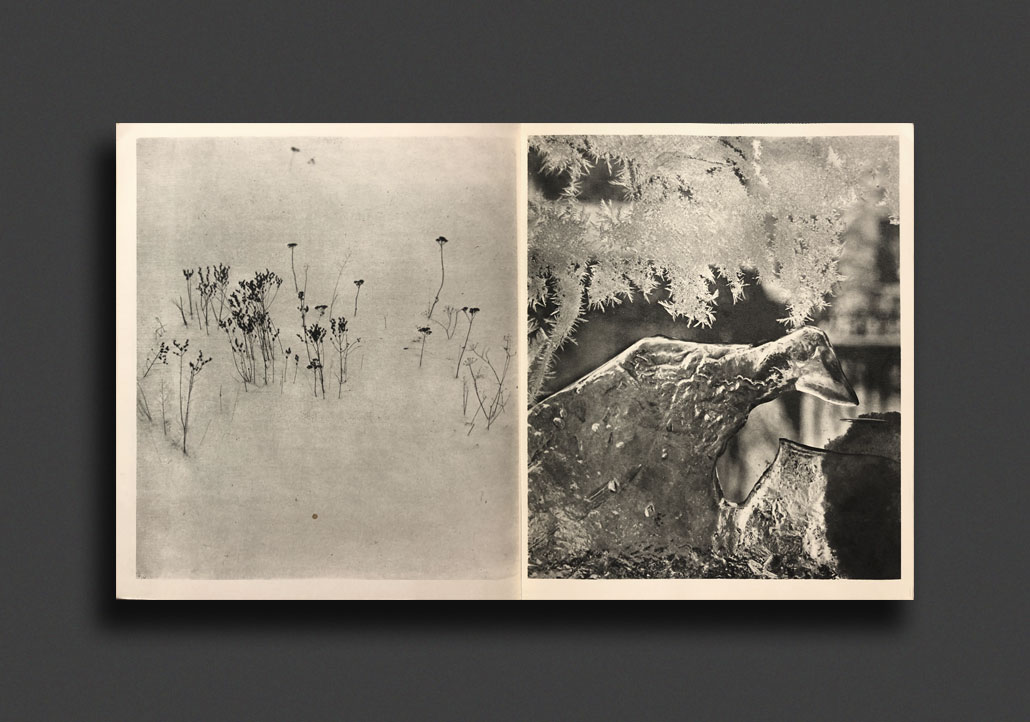
Wonderful and long out-of-print Miroslav Hák monograph, published in Prague in 1959 as part of the distinctive series of Czech monographs on photographers published by SNKLU, a wing of the great Odeon publishing house. With introductory text by Czech poet/painter Jiří Kolář, this beautifully printed book presents a selection of 62 of Hák's photographs printed in gravure.
Miroslav Hák (1911 – 1978) was a Czech photographer. He was one of the members of Group 42. Miroslav Hak was one of the most outstanding figures in the history of Czech modern photography, studying under his father, the photographer František Hák. Between 1925 and 1931 Hák worked as a photographer in Prague and Bratislava. In 1937 he joined the avant-garde D34 Theatre of Prague as a photographer and from 1940 he worked in the film industry. Between 1942 and 1948 Miroslav Hák associated with the Prague-based Group 42, which united avant-garde Czech photographers. From 1954 he served as a photographer at the Institute of Art Theory and History of the Czechoslovak Academy of Sciences.
Good - Very Good copy. General wear, tanning due to age. Edge wear to covers. Creasing to back cover.
2002, English
Softcover (staple-bound), 96 pages, 17 x 25 cm
1st Edition, Out of print title / used / very good
Published by
Purple Books / Paris
Fiction Inc. / Tokyo
$200.00 - Out of stock
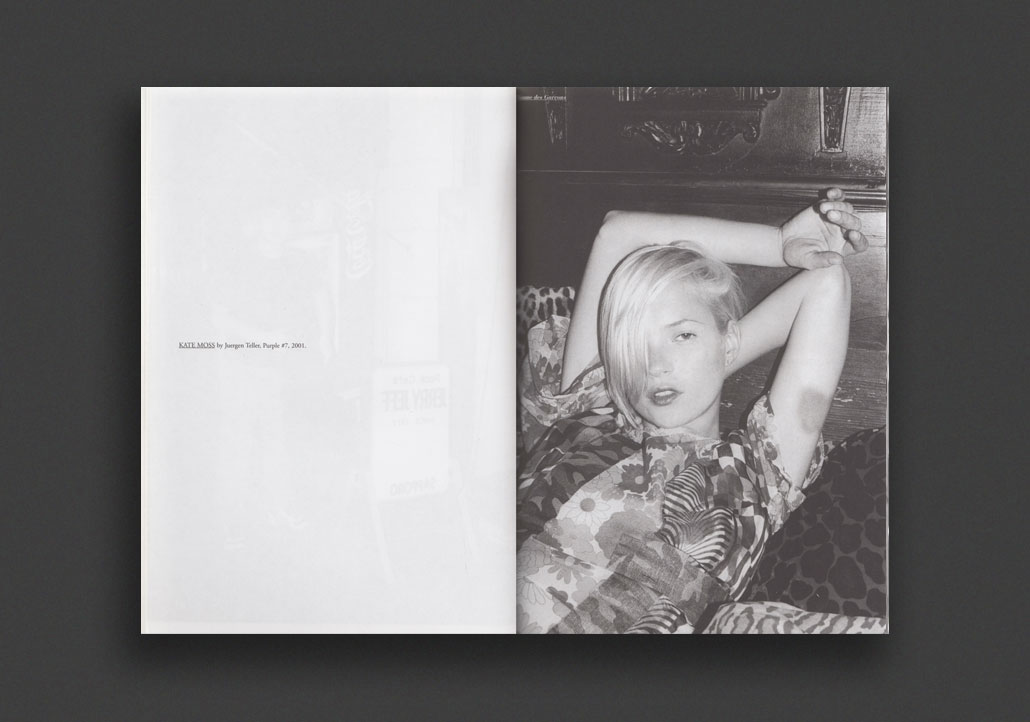
First and only edition of Purple Stars, a collection of portraits and fashion photographs of the stars of Purple magazine during those early definitive years of 90's anti-fashion and the establishment of one of the most important fashion magazines of our generation. Edited by Makoto Ohrui, Elein Fleiss and Oliver Zahm and published in Japan in 2002 by Purple Books & Fiction Inc, Purple Stars features the photography of Mark Borthwick, Juergen Teller, Camille Vivier, Wolfgang Tillmans, Laetitia Benat, Anders Edström, Takashi Homma, Jack Pierson, Anuschka Blommers & Niels Schumm, Richard Prince, Giasco Bertoli, Alex Antitch, Patterson Beckwith, Terry Richardson, Henry Roy, Vanina Sorrenti, Chikashi Suzuki, Mauricio Guillen, Marcelo Krasilcic, Serge Leblon, Armin Linke... with photographs of Hélène Fillières, Catherine Deneuve, Jutta Koether, Lou Doillon, Kim Gordon, Harmony Korine, Alex Bag, Kate Moss, Rita Ackermann, Colin de Land, Chloë Sevigny, Brad Pitt, Charlotte Rampling, Ludivine Sagnier, Camille Vivier, Cerith Wyn Evens, Yoshimi, Yukinori Maeda, Alexandra Bircken, Lizzie Bougatsos, Maurizio Cattelan, Susan Cianciolo, Elein Fleiss, Marieke Stolk, and many more.
A now very scarce compendium of some of the most iconic photographic images direct from the early pages of Purple.
Very Good copy, lacking glassine dust wrapper.
2003, English
Softcover, 418 pages, 27.5 x 21 cm
1st Edition, Out of print title / used / very good
Published by
Purple Institute / Paris
$220.00 - Out of stock
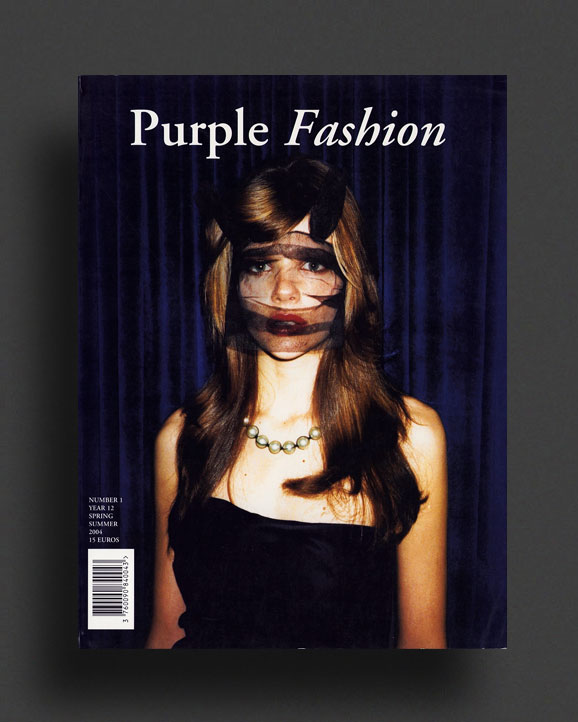
A very rare copy of the inaugural issue of Purple Fashion, edited by Olivier Zahm, featuring Richard Prince, Bruce Benderson, Gary Indiana, Paolo Roversi, Olivier Mosset, Camille Vivier, Mark Borthwick, Pierre Bailly, Elein Fleiss, Viviane Sassen, Helmut Lang, Kerry Hallihan, Antek Walczak, Marcelo Krasilcic, Michael Lonsdale, Maison Martin Margiela, Katja Rahlwes, Niels Schumm, Dike Blair, Vava Ribeiro, Monte Hellman, Comme des Garçons, Slavoj Zizek, Balenciaga, Tony Alva, Marina Faust, Wolfgang Tillmans, Terry Richardson, Dominique Gonzales Foerster, Jeff Rian, Noritoshi Hirakawa, Anuschka Blommers, François Laruelle, Yan Céh, Issey Miyake, Rick Owens, Susan Eldridge, John Galliano, Ann Demeuelemeester, Vava Ribeiro, Serge Leblon, Hiromix, Cecile Bortoletti, Vanessa Bruno, Takashi Suzuki, Miltos Manetas, Pascale Gatzen, Stéphanie Moisdon, Junya Watanabe, Ferdinand Gouzon, and many more...
In 1992, Elein Fleiss and Olivier Zahm started the magazine Purple Prose as a reaction against the superficial glamour of the 1980s; much as a part of the global counterculture at the time, inspired by magazines like Interview, Ray Gun, Nova, and Helmut Newton's Illustrated, but with the aesthetics of what usually is referred to as anti-fashion. Based on their personal interests and views; Purple was, and in a sense still is, made much in the same spirit of the fanzine. Started "without any means, and without any experience, because we wanted to make a magazine that was radically different. We wanted to support the artists around us that no one else supported, much less talked about."—Olivier Zahm. The magazine became associated with the "realism" of the new fashion photography of the 1990s, with names like Juergen Teller, Terry Richardson, Wolfgang Tillmans, Mark Borthwick, Corinne Day, and Mario Sorrenti. Soon after the birth of Purple Prose, Zahm and Fleiss created spin-off publications such as les cahiers purple, Purple Sexe, Purple Fiction, and of course, Purple Fashion, in which Zahm aimed at fusing together his two worlds, fashion and art. Now one of the most iconic and influential fashion magazines in history.
Very Good copy, some light wear to spine and extremities.
1972, Japanese
Softcover, 122 pages, 21.5 x 15 cm
1st Edition, Out of print title / used / good
Published by
Lemon Inc. / Tokyo
$45.00 - In stock -
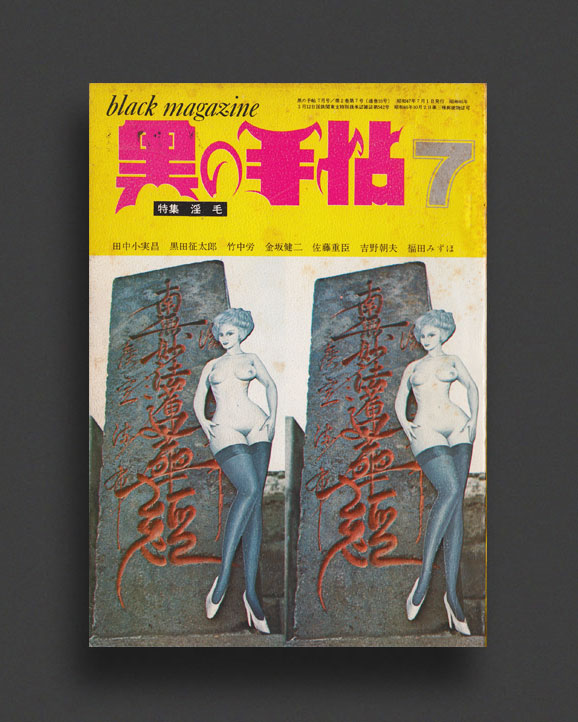
July 1972 issue of legendary Japanese underground arts periodical, Black Magazine (or Black Notebook), a taboo-shattering vehicle of the 1970s subculture in Tokyo. A magazine like no-other, each issue, "a paradise of 1970's heretical culture", was a who's who of non-conformity, introducing a new wave of illustrators, painters, doll-makers and photographers, "taboo" sexuality and fetish culture, avant-garde comics, sadistic literature, radical criticism, queer poetry, activism, black humour, underground film and theatre, and all manner of transgressive, esoteric and erotic material, new and historical. Black Magazine featured the work of Yukio Mishima, Toshio Saeki, Izumi Suzuki, Simon Yotsuya, Shūji Terayama, Ken Katayama, Nobuyoshi Araki, Genpei Akasegawa, Keiichi Tanaami, Kikuji Yamashita, Aoi Fujimoto, Tadanori Yokoo, Hiroshi Nakamura, and so many others. It was also where Japanese photographer Satomi Nihongi's Tokyo Transgender photographs were first printed. Black Magazine was heavy with queer and trans content, and Nihongi's "The Most Beautifuls" was a regular photo-feature in its pages. A lot of great things started in the pages of this unique magazine. A highly recommended publication!
1988, English
Softcover, 136 pages, 20.5 x 13.5 cm
1st Edition, Out of print title / used / average
Published by
Dia Art Foundation / New York
$20.00 - In stock -
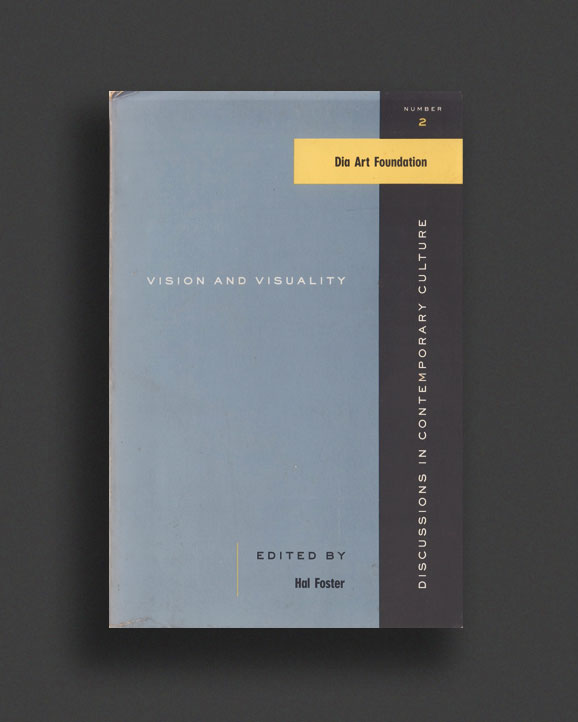
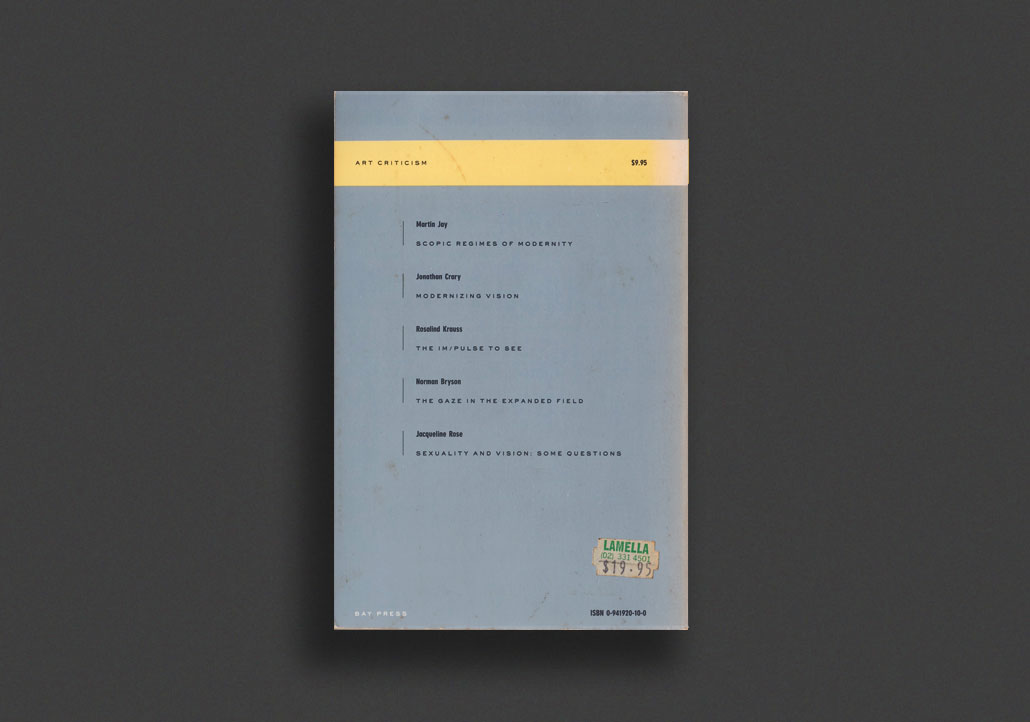
A Village Voice Best Book of the Year, this seminal work presents new models of vision and examines modern theories of seeing in the context of contemporary critical practice.
With contributions by: Norman Bryson, Jonathan Crary, Martin Jay, Rosalind Krauss, Jacqueline Rose
Discussions in Contemporary Culture is an award-winning series co-published with the Dia Center for the Arts in New York City. These volumes offer rich and timely discourses on a broad range of cultural issues and critical theory. The collection covers topics from urban planning to popular culture and literature, and continually attracts a wide and dedicated readership.
Average—Good copy with tanning to spine and wear to extremities.
1994, Japanese / English
Hardcover, 80 pages, 19.3 x 13.4 cm
1st Edition, Out of print title / used / fine
Published by
Nippon Geijutsu Shuppan (NGS) / Japan
$240.00 - In stock -
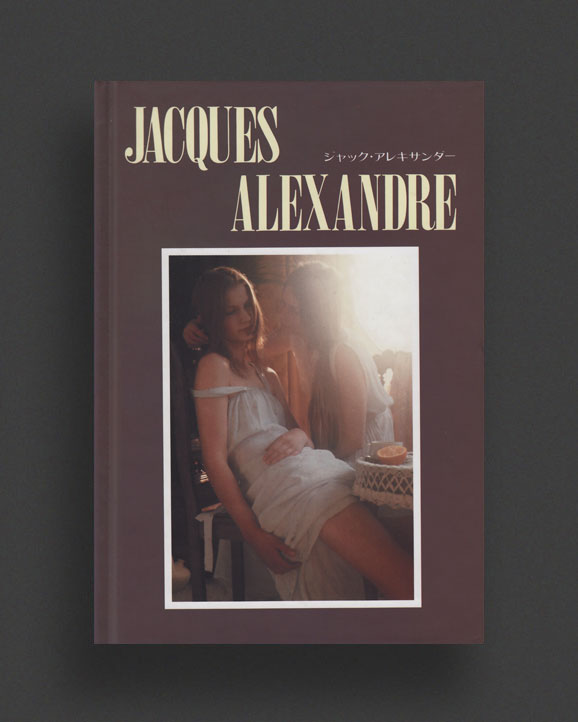
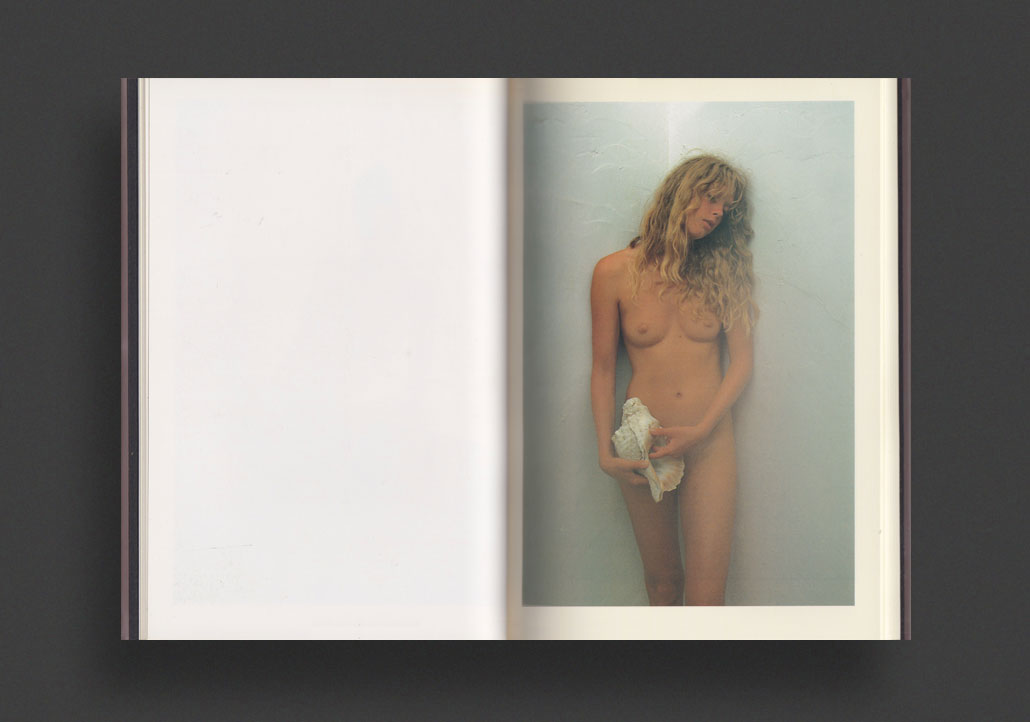
Very rare 1994 hardcover volume of nude photography by French photographer Jacques Alexandre from Japanese imprint Nippon Geijutsu Shuppan (NGS). Cover to cover glossy collection of Alexandre's romantic, dream-like nude photography spanning many years, capturing the beauty of his young amateur models in nature. Like his colleague Jacques Bourboulon, Alexandre spent time each year on the island of Ibiza and in Southern France working with mostly natural, non-professional models. One of his few and very rare photo books. Printed in Japan. First edition, never re-printed.
Very Good copy.
1976, French / Japanese
Softcover, 40 pages (w. Japanese translation booklet insert), 34.5 x 29 cm
1st Edition, Out of print title / used / very good
Published by
Façade / Paris
$350.00 - In stock -
Inaugural issue of the incredibly rare and iconic Façade, the French underground magazine published in Paris between 1976—1983. Founded in 1976 by Alain Benoist and Hervé Pinard, Façade was the french answer to Andy Warhol's Interview, heavily centered around Parisian club, fashion and art scene and published without any date or periodicity until 1983. Launched at an Issey Miyake show where models handed out the magazine from the catwalk, the cult magazine witness through its pages a long-lost, short-lived period in Paris featuring the so-called "jeunes gens modernes" of the 1970's, like punk icons Edwige Belmore and Alain Pacadis. With pop celebrity covers and vibrant fashion shoots styled by the likes of a young Pierre et Gilles (who met through working on this very magazine), features in collaboration with the likes of Serge Gainsbourg, and in each issue a unique "false" advertisement created by Karl Lagerfeld, it's no wonder Façade's reputation spread quickly to New York, Tokyo and beyond, making it one of the most desired magazines of the new wave. With texts in French, these rare issues come complete with the inserted Japanese translation booklets. Includes Divine and John Waters (interview), Kenzo (interview), Christian Boltanski (interview), Jean-Louis Bory, Popy Moreni, nude centrefold by Jacques Parnel … with contributions from Pierre Commoy, Dominique Gangloff, Tan Giudicelli, Annette Messager… A very rare first issue with cover shot and designed by Pierre Commoy (of Pierre et Gilles) featuring Eva Ionesco.
Very Good with light tanning. Beautiful copy.
1976, French / Japanese
Softcover, 40 pages (w. Japanese translation booklet insert), 34.5 x 29 cm
1st Edition, Out of print title / used / good
Published by
Façade / Paris
$160.00 - In stock -
Issue no. 2 of the incredibly rare and iconic Façade, the French underground magazine published in Paris between 1976—1983. Founded in 1976 by Alain Benoist and Hervé Pinard, Façade was the french answer to Andy Warhol's Interview, heavily centered around Parisian club, fashion and art scene and published without any date or periodicity until 1983. Launched at an Issey Miyake show where models handed out the magazine from the catwalk, the cult magazine witness through its pages a long-lost, short-lived period in Paris featuring the so-called "jeunes gens modernes" of the 1970's, like punk icons Edwige Belmore and Alain Pacadis. With pop celebrity covers and vibrant fashion shoots styled by the likes of a young Pierre et Gilles (who met through working on this very magazine), features in collaboration with the likes of Serge Gainsbourg, and in each issue a unique "false" advertisement created by Karl Lagerfeld, it's no wonder Façade's reputation spread quickly to New York, Tokyo and beyond, making it one of the most desired magazines of the new wave. With texts in French, these rare issues come complete with the inserted Japanese translation booklets. Includes features on New York City, Bodybuilding, an interview with Jean-Pierre Kalfon by Alain Pacadis, Elodie Lauten, and a long reprt of the Pigalle district of Paris, with collaborations from Pierre Commoy, Dominique Gangloff, Philippe Morillon, Thierry Ardisson, along with much more,
Good copy with some cover foxing and light wear.
1978, French / Japanese
Softcover, 58 pages (w. Japanese translation booklet insert), 34.5 x 29 cm
1st Edition, Out of print title / used / very good
Published by
Façade / Paris
$290.00 - In stock -
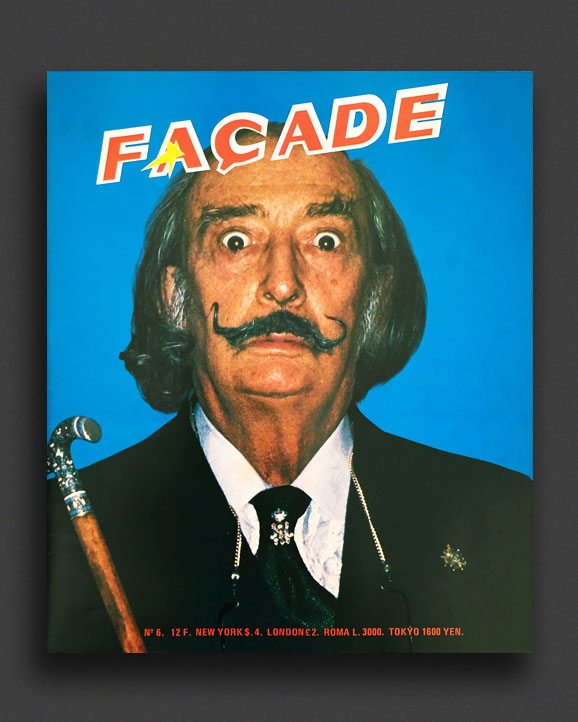
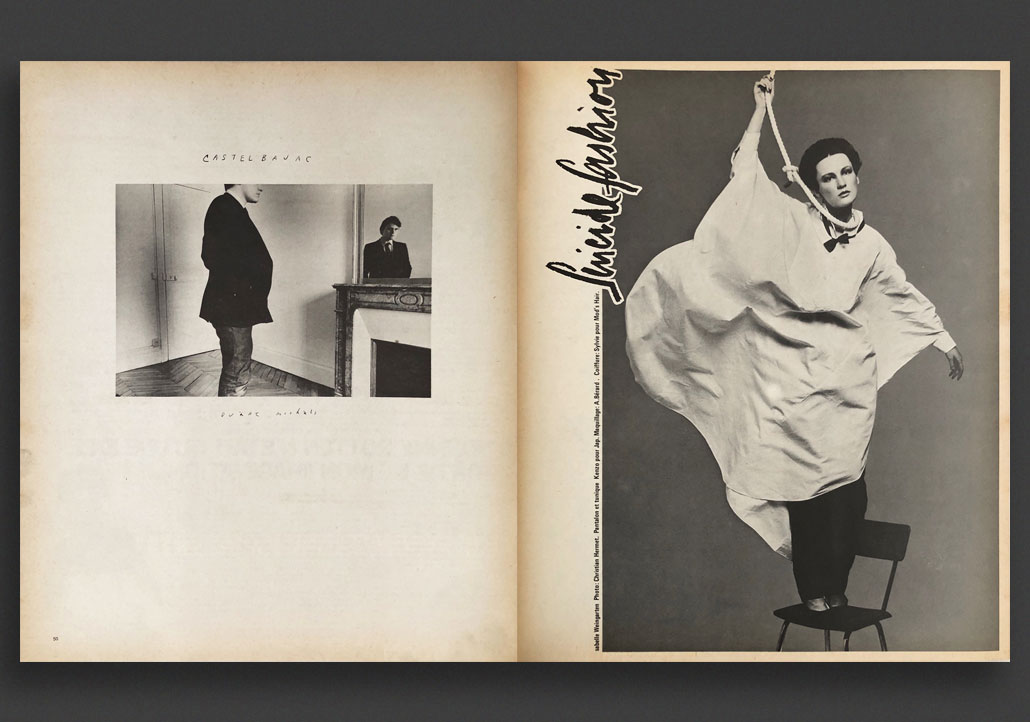
Issue no. 6 of the incredibly rare and iconic Façade, the French underground magazine published in Paris between 1976—1983. Founded in 1976 by Alain Benoist and Hervé Pinard, Façade was the french answer to Andy Warhol's Interview, heavily centered around Parisian club, fashion and art scene and published without any date or periodicity until 1983. Launched at an Issey Miyake show where models handed out the magazine from the catwalk, the cult magazine witness through its pages a long-lost, short-lived period in Paris featuring the so-called "jeunes gens modernes" of the 1970's, like punk icons Edwige Belmore and Alain Pacadis. With pop celebrity covers and vibrant fashion shoots styled by the likes of a young Pierre et Gilles (who met through working on this very magazine), features in collaboration with the likes of Serge Gainsbourg, and in each issue a unique "false" advertisement created by Karl Lagerfeld, it's no wonder Façade's reputation spread quickly to New York, Tokyo and beyond, making it one of the most desired magazines of the new wave. With texts in French, these rare issues come complete with the inserted Japanese translation booklets. Includes cover stars Salvador Dalí (front) and Eva Ionesco (back), with interviews and astrological charts for both, Amanda Lear, Jean-Charles de Castelbajac, Giorgio Moroder, General Idea, Yves Adrien, Le Palace, Christo, Maud Molyneux, Anja Lopez, Suicide Fashion shot by Laurence Sackman (featuring Eva Ionesco, Sayoko Yamaguchi, and others), Nightclubbing, Malcolm McLaren… with collaborations from Pierre Commoy, Jean-Baptiste Mondino, Thierry Ardisson, Alain Pacadis, Maud Molyneux… and much more.
Very Good copy of one of the best issues! Beautifully preserved.
1978, French / Japanese
Softcover, 58 pages (w. Japanese translation booklet insert), 34.5 x 29 cm
1st Edition, Out of print title / used / very good
Published by
Façade / Paris
$240.00 - In stock -
Issue no. 7 of the incredibly rare and iconic Façade, the French underground magazine published in Paris between 1976—1983. Founded in 1976 by Alain Benoist and Hervé Pinard, Façade was the french answer to Andy Warhol's Interview, heavily centered around Parisian club, fashion and art scene and published without any date or periodicity until 1983. Launched at an Issey Miyake show where models handed out the magazine from the catwalk, the cult magazine witness through its pages a long-lost, short-lived period in Paris featuring the so-called "jeunes gens modernes" of the 1970's, like punk icons Edwige Belmore and Alain Pacadis. With pop celebrity covers and vibrant fashion shoots styled by the likes of a young Pierre et Gilles (who met through working on this very magazine), features in collaboration with the likes of Serge Gainsbourg, and in each issue a unique "false" advertisement created by Karl Lagerfeld, it's no wonder Façade's reputation spread quickly to New York, Tokyo and beyond, making it one of the most desired magazines of the new wave. With texts in French, these rare issues come complete with the inserted Japanese translation booklets. Includes cover stars Jack Nicholson as 007 (front) and musician Djemila (back), with interviews and astrological charts for both, industrial designer Roger Tallon, Karl Lagerfeld, industrial designer Philippe Starck, publishing extraordinaire Daniel Filipacchi, Sonia Rykiel, Paco Rabanne, Thierry Mugler, a perverse fashion portfolio, Kenzo, Brion Gysin, Sid Vicious, Pierre et Gilles, Nightclubbing, Dining, Fashion, Music, tremendous ads and much more.
Very Good copy of one of the best issues! Beautifully preserved with only light marking/tan/age.
1980, French / Japanese
Softcover, 40 pages (w. Japanese translation booklet insert), 34.5 x 29 cm
1st Edition, Out of print title / used / very good
Published by
Façade / Paris
$190.00 - In stock -
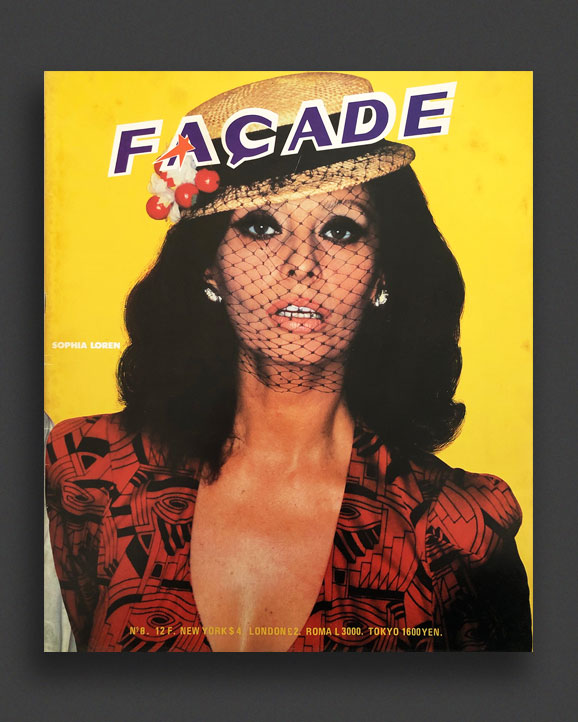
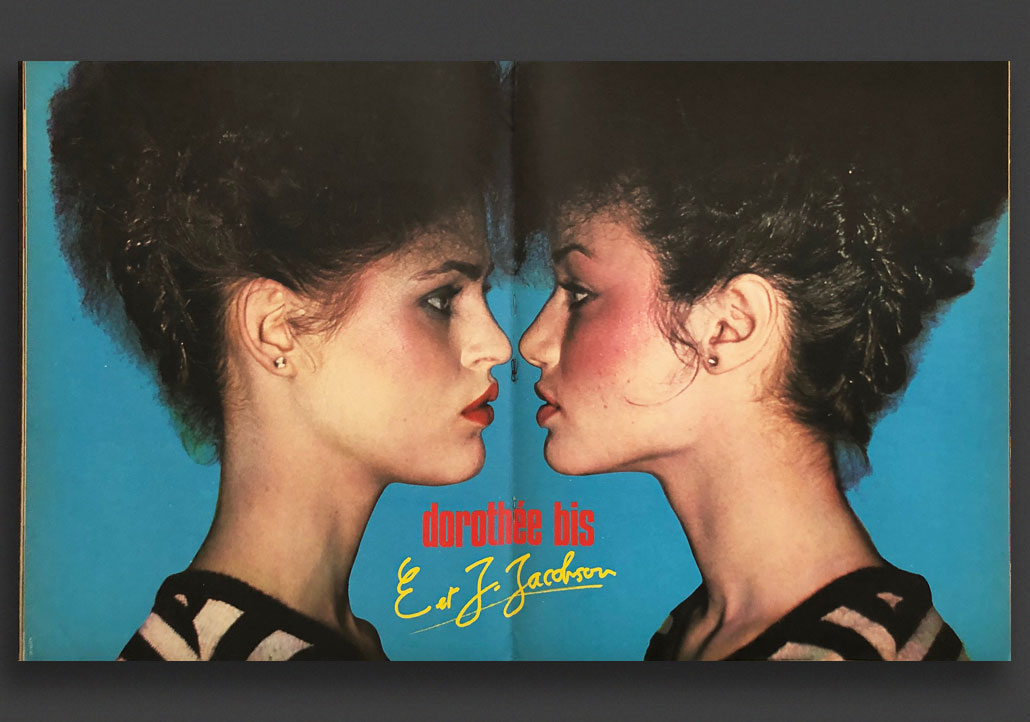
Issue no. 8 of the incredibly rare and iconic Façade, the French underground magazine published in Paris between 1976—1983. Founded in 1976 by Alain Benoist and Hervé Pinard, Façade was the french answer to Andy Warhol's Interview, heavily centered around Parisian club, fashion and art scene and published without any date or periodicity until 1983. Launched at an Issey Miyake show where models handed out the magazine from the catwalk, the cult magazine witness through its pages a long-lost, short-lived period in Paris featuring the so-called "jeunes gens modernes" of the 1970's, like punk icons Edwige Belmore and Alain Pacadis. With pop celebrity covers and vibrant fashion shoots styled by the likes of a young Pierre et Gilles (who met through working on this very magazine), features in collaboration with the likes of Serge Gainsbourg, and in each issue a unique "false" advertisement created by Karl Lagerfeld, it's no wonder Façade's reputation spread quickly to New York, Tokyo and beyond, making it one of the most desired magazines of the new wave. With texts in French, these rare issues come complete with the inserted Japanese translation booklets. Includes cover stars Sophia Loren (front) and Brian Ferry (back), with interviews and astrological charts for both, James White and The Blacks, Yellow Magic Orchestra, Kansai Yamamoto, Karl Lagerfeld, "Assistant Fashion" (shoots by the assistants of fashion fashion photographers), Helmut Newton, nightclubbing, dining, records, terrific ads, and much more...
Very Good with light foxing, wear the covers.
1980, French / Japanese
Softcover, 58 pages (w. Japanese translation booklet insert), 34.5 x 29 cm
1st Edition, Out of print title / used / very good
Published by
Façade / Paris
$160.00 - In stock -
Issue no. 7 of the incredibly rare and iconic Façade, the French underground magazine published in Paris between 1976—1983. Founded in 1976 by Alain Benoist and Hervé Pinard, Façade was the french answer to Andy Warhol's Interview, heavily centered around Parisian club, fashion and art scene and published without any date or periodicity until 1983. Launched at an Issey Miyake show where models handed out the magazine from the catwalk, the cult magazine witness through its pages a long-lost, short-lived period in Paris featuring the so-called "jeunes gens modernes" of the 1970's, like punk icons Edwige Belmore and Alain Pacadis. With pop celebrity covers and vibrant fashion shoots styled by the likes of a young Pierre et Gilles (who met through working on this very magazine), features in collaboration with the likes of Serge Gainsbourg, and in each issue a unique "false" advertisement created by Karl Lagerfeld, it's no wonder Façade's reputation spread quickly to New York, Tokyo and beyond, making it one of the most desired magazines of the new wave. With texts in French, these rare issues come complete with the inserted Japanese translation booklets. Includes cover stars Catherine Deneuve (front) and James Brown (back), with interviews and astrological charts for both, Sports Fashion (featuring Françoise Hardy), Funky fashion, The Village People, Karl Lagerfeld, more James Brown, clubbing, dining, jet-setting, dance music and much more.
Very Good with some light wear/marks to covers, light tanning.
1981, French / Japanese
Softcover, 58 pages (w. Japanese translation booklet insert), 34.5 x 29 cm
1st US Edition, Out of print title / used / very good
Published by
Façade / Paris
$160.00 - In stock -
Issue no. 10 of the incredibly rare and iconic Façade, the French underground magazine published in Paris between 1976—1983. Founded in 1976 by Alain Benoist and Hervé Pinard, Façade was the french answer to Andy Warhol's Interview, heavily centered around Parisian club, fashion and art scene and published without any date or periodicity until 1983. Launched at an Issey Miyake show where models handed out the magazine from the catwalk, the cult magazine witness through its pages a long-lost, short-lived period in Paris featuring the so-called "jeunes gens modernes" of the 1970's, like punk icons Edwige Belmore and Alain Pacadis. With pop celebrity covers and vibrant fashion shoots styled by the likes of a young Pierre et Gilles (who met through working on this very magazine), features in collaboration with the likes of Serge Gainsbourg, and in each issue a unique "false" advertisement created by Karl Lagerfeld, it's no wonder Façade's reputation spread quickly to New York, Tokyo and beyond, making it one of the most desired magazines of the new wave. With texts in French, these rare issues come complete with the inserted Japanese translation booklets. Includes Gina Lollobrigida interview and astrology, so too Jacno, Karl Lagerfeld, Howard Hughes, Sonia Rykiel, Defunkt (Mudd Club), Paul-Loup Sulitzer, Catherine Breillat, Djémila, dining, dancing, music, the scene… with collaborations from Dominique Gangloff, Dominique Lauga, Philippe Morillon, Serge Krüger, Jean-Edern Hallier, Alain Pacadis… and much more.
Very Good with light wear/marking to cover. Light tanning.
2003, Japanese
Softcover, 158 pages, 29.8 x 22.6 cm
1st Edition, Out of print title / used / fine
Published by
Infas / Tokyo
$65.00 - Out of stock
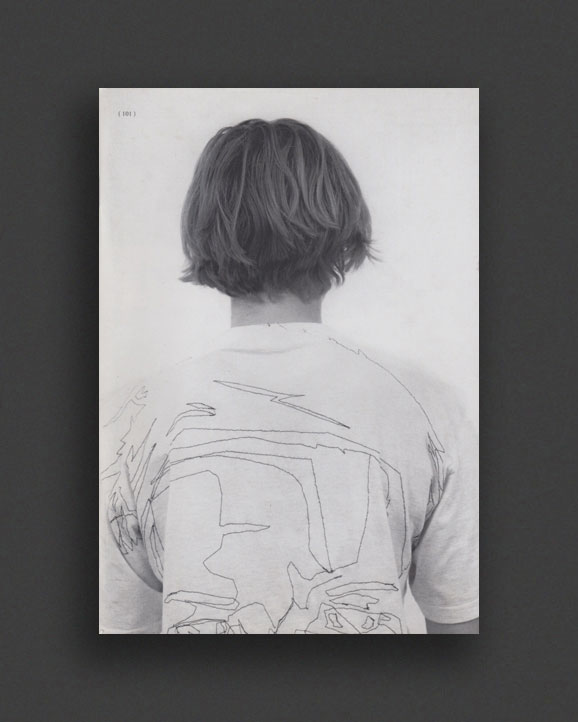
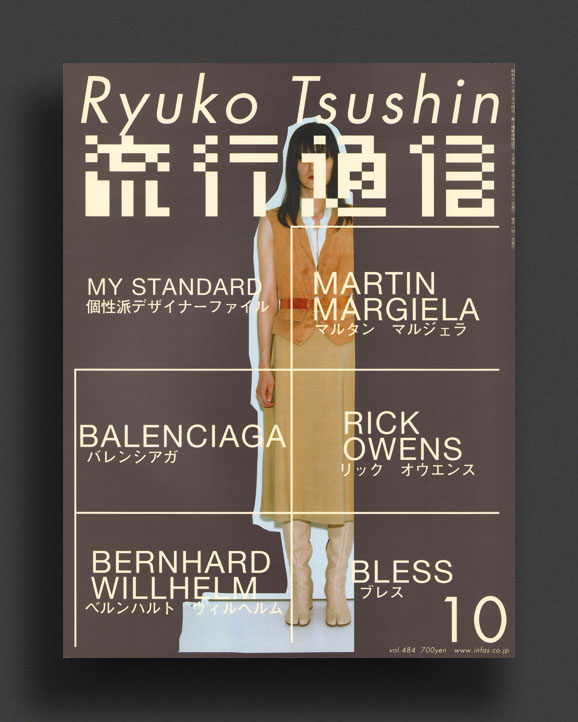
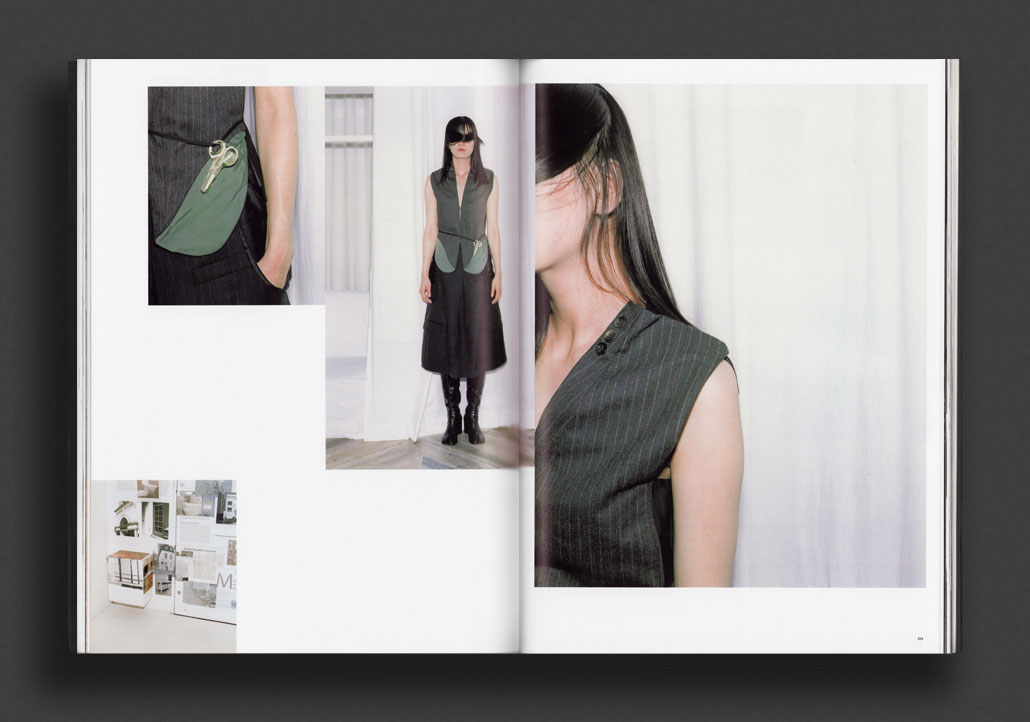
October 2003 of Ryuko Tsushin (volume 484), an award-winning issue under the art direction of the legendary designer Kazunari Hattori, who re-invigorated the magazine for a celebrated 25 issues. Hattori incorporated handwritten lettering and other manual work on the pages and intentionally composed them without a grid. This was his answer to his own doubts about the refined and neat design of magazines in the computer age. Hattori himself said that it was "made like an indie magazine". This special issue features large designer photo feature profiles on Martin Margiela, Balenciaga, Rick Owens, Bernhard Willhelm, and Bless. Also, Purple founder Elein Fleiss' diary and photography, Happy Victims by Kyoichi Tsuzuki, photography by Shigekazu Onuma, Kazuhiro Fujita, Shigekazu Onuma, Hiroya Kitai, and much more...
Fine copy.
1971, English
Hardcover (w. dustjacket), 82 pages, 29 x 21 cm
1st Edition, Out of print title / used / very good
Published by
Thomas Nelson / Melbourne
$180.00 - Out of stock
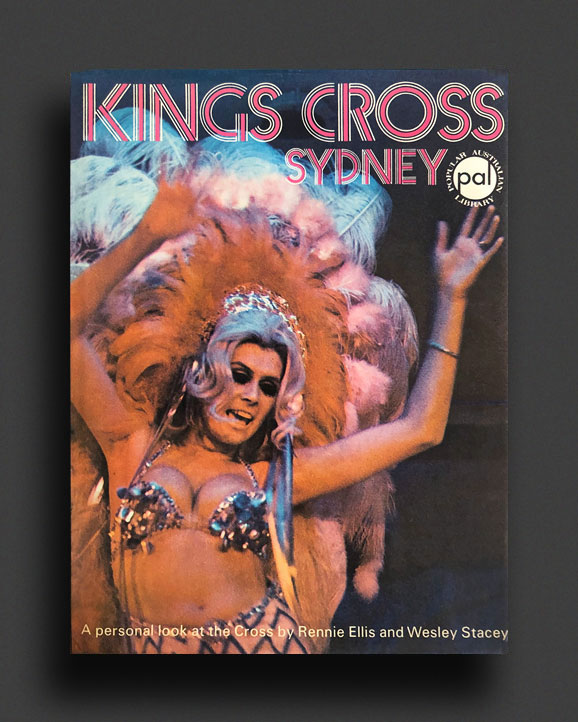
First hardcover edition of this Australian photo-book classic. In 1971, photographer Rennie Ellis and co-photographer and close friend, Wesley Stacey, published Kings Cross Sydney, which, as Ellis puts it "examines the surface glitter and underground guts of the Cross". An intimate look at the height of Kings Cross, before gentrification and controversial lock-out laws had their way with it. Illustrated throughout with black and white and colour photographs alongside quotes and stories from/about local residents (inc. the "Witch of Kings Cross", Rosaleen Norton), workers, businesses, controversies, and politics of Kings Cross. Colloquially known as The Cross, The Kings Cross district was Sydney's bohemian heartland from the early decades of the 20th century, known for its music halls and grand theatres and home to a large number of artists, writers, poets and journalists. From the 1960s onwards Kings Cross came to serve as the city's red-light district and entertainment mecca.
"Between the time when work was begun on this book and its appearance in the shops, Kings Cross has continued in its haphazard state of flux. The park at the El Alamein Fountain has been paved, the 'full
reveal' has become standard in the strip clubs, several night spots have gone out of existence and others
have opened in their places, Rose the Flower Seller has died, as have Tilly Devine, Chips Rafferty and
Kenneth Slessor, Sammy Lee has grown a moustache, and many more old buildings have crumbled under
the wreckers' hammers. Yet, the book remains a valid statement about the changing society it reflects because its images freeze moments in time that will forever remain symbols of the unusual character of the Cross. With their cameras Rennie Ellis and Wesley Stacey have penetrated the slick veneer of life at Kings Cross and revealed the beauty and the pathos, as well as the seaminess, which lurk beneath the tinsel glitter. The affinity which the authors feel for the place, the people, and their attitudes, has resulted in
an honest appraisal which may sadden, amuse, shock or repel, but never fair to intrigue those who read or look at the book."
"Over a period of six months the authors made frequent forays into the Cross armed with their cameras
and tape recorder. It was only by becoming known to the locals that they were able to record some of
the remarkable scenes in this book. Nevertheless, there is much that they learned about the Cross
which can only be hinted The laws of libel and the threats of bashings ensure a diplomatic silence. As
one of the authors put it: 'When a guy pulls a pistol on you and says that he's going to shoot you, you know that it's time to put away your camera and retire gracefully.'"
Very Good copy, in Very Good dust jacket, preserved under mylar wrap. A very well preserved copy all-round.
1997, Japanese
Softcover (w. dust jacket), 440 pages, 15 x 11 cm
1st Edition, Out of print title / used / very good
Published by
Kyoto Shoin / Tokyo
$80.00 - Out of stock
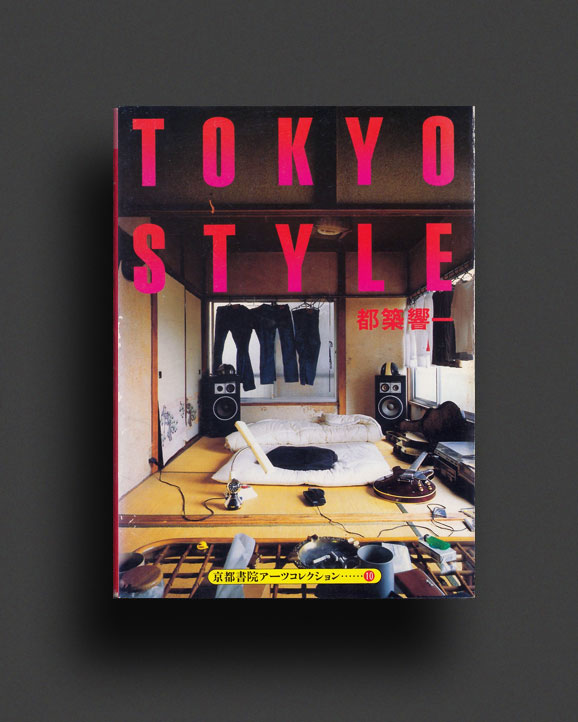
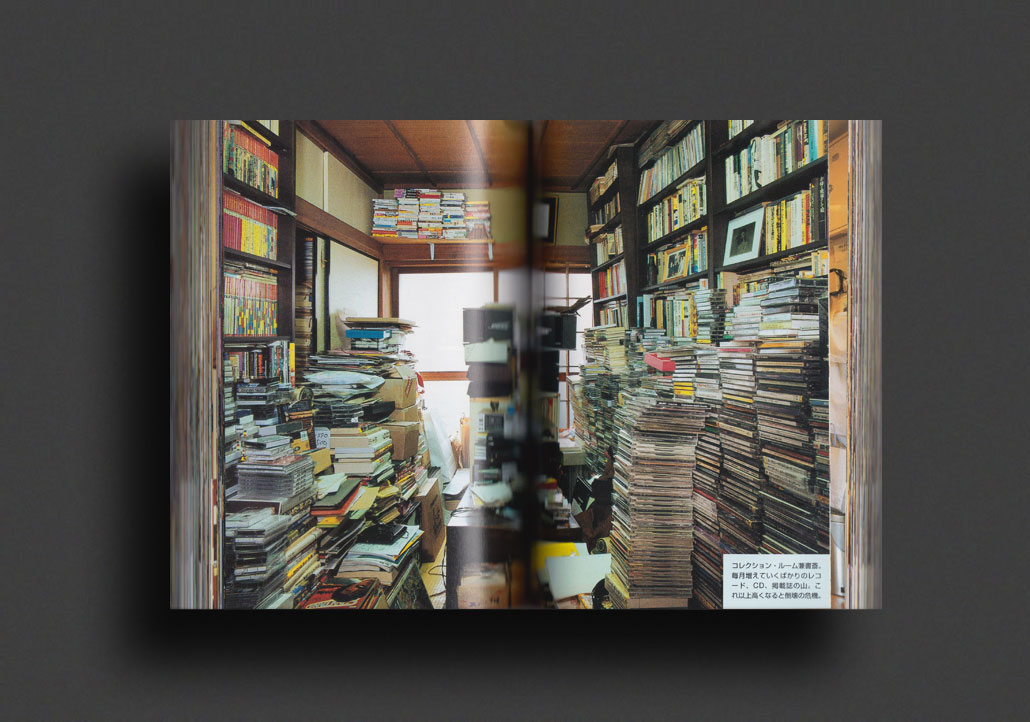
First 1997 edition, first printing of the hefty 440-page pocket version of what is now one of the truely iconic interior "design" books - Tokyo Style. Over a period of two years, Japanese writer-photographer Kyoichi Tsuzuki visited apartments, condos and suburban homes in Tokyo, and documented exactly what he saw in colour photography. First published in 1993 in the larger format, Tokyo Style is a collection of these photographs along with Tsuzuki's texts. Divided into eight sections - Beauty in Chaos, The Fancy Fetish, Artsy Pads, The Traditional Touch, Monomaniacs, Kiddie Kingdoms, Inertial Living and Hermitages - the book shows readers a demystified Tokyo and the ordinary lifestyles of the Tokyo people. No wide-angles or post-production here, just the most amazing compendium of hundreds of tiny Tokyo living spaces, no two alike. Somehow this print format seems all the more appropriate!
Reprinted many times since, this is the first edition of this format, first printing from 1997.
Very Good copy. Good—Very Good dust jacket with light wear to extremities.
2005, English / Japanese
Hardcover (w. dust jacket), 200 pages, 30 x 26 cm
1st Edition, Out of print title / used / very good
Published by
ASPECT Corp.
Tokyo
$100.00 $60.00 - Out of stock
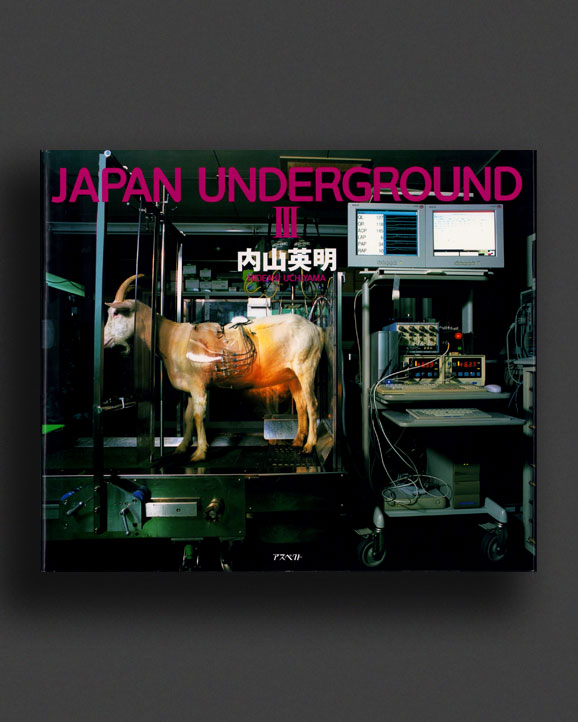
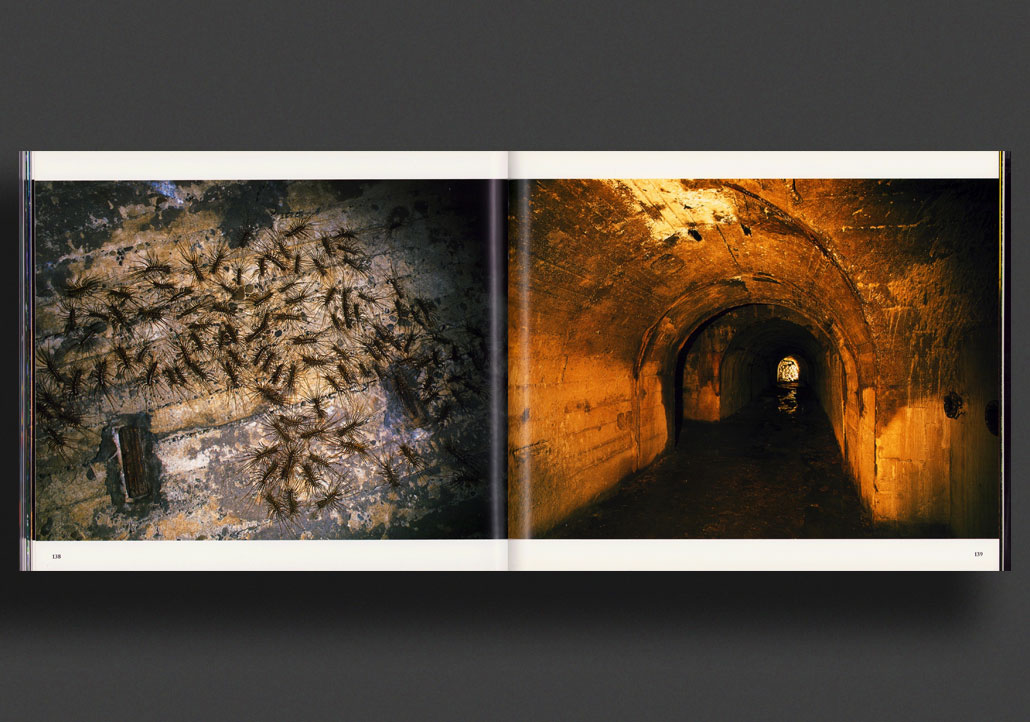
First hardcover 2005 edition of this Domon Ken award winning photographic work, the marvellous third photo reportage of Hideaki Uchiyama's adventurous into the underground spaces of Japan, from earth simulators, energy research centres, oil storage, biomedical research labs, dams, mines, ducts, trenches, particle accelerators, underground vegetable factories, artificial organ laboratories, and much more.
"Shooting these sci-fi-like facilities, where technology is put together, I realised that this is what moves the world above ground— that this is actually a crisis of civilisation that one might be better off seeing. Whatever is hidden and sealed in modern society reflects the unconsciousness tucked in one’s heart. The glaring, limitless desire of men has always been immeasurable, yet perhaps we are leading the lives of the replicants in Blade Runner."
Text is in Japanese and English.
Very Good copy in VG dust jacket.
1993, Japanese / English
Hardcover (w. dust jacket and obi), 144 pages, 23 x 31 cm
1st Edition, Out of print title / as new
Published by
Libro Port Publishing Co. Ltd. / Tokyo
$220.00 - Out of stock
Beautiful fine copy of the first 1993 edition of Araki's incredible Erotos photo book, one of his finest. In this work, controversial and legendary Japanese photographer Nobuyoshi Araki makes a radical departure from his usual portraits and cityscapes. A collection of arrestingly primal close-ups of parts of the body as well as various objects—pipes, fruit, wet sidewalks, flowers, snails—Erotos delves deep into the erotic subconscious. Reproduced in gorgeous glossy duotone full-page bleed, bound in heavy hardcovers with publisher's original obi-strip. A stunning book! Highly recommended.
Nobuyoshi Araki is a prolific Japanese photographer who has produced thousands of photographs over the course of his career. He became famous for “Un Voyage Sentimental” (1971), a series of photos depicting both banal and deeply intimate scenes of his wife and lifelong muse, essayist Aoki Yoko (whom the artist credits for making him a photographer), during their honeymoon. To date the 75 year old has produced 450 photo books and counting. With a repertoire that knows no boundaries, Araki's diaristic style of photography has captured the world around him (his cat Chiro, the people and landscapes of Japan and his travels, flowers, family), though it is Araki’s intensely sexual imagery that has elicited particular controversy and fascination throughout his career. Similarly to Helmut Newton, Araki has often addressed subversive themes — such as bondage in the Japanese style Kinbaku — in his provocative depictions of female nudes. He typically works in black-and-white photography, and his hallmark style is deliberately casual. “Rather than shooting something that looks like a professional photograph, I want my work to feel intimate, like someone in the subject’s inner circle shot them,” he says. Pushing against the world of commercialised photography, he is celebrated for his history of self-publishing and distributing his work, beginning with his Xerox Photo Albums of 1970. Amongst many others, Araki has collaborated with American photographer Nan Goldin and Icelandic musician Björk.
Fine, As New copy in Fine dust jacket and fine obi-strip.
2005, English / Japanese
Hardcover (w. dust jacket),
Ed. of 1000,
Published by
AaT Room / Tokyo
$190.00 - In stock -
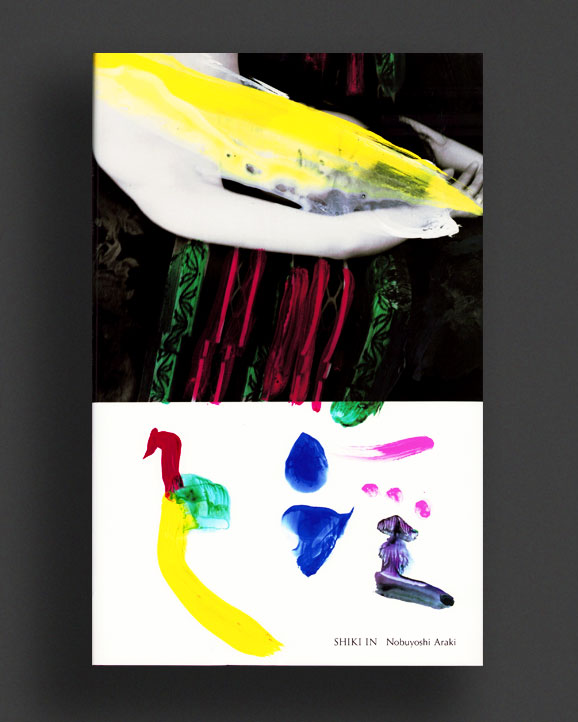
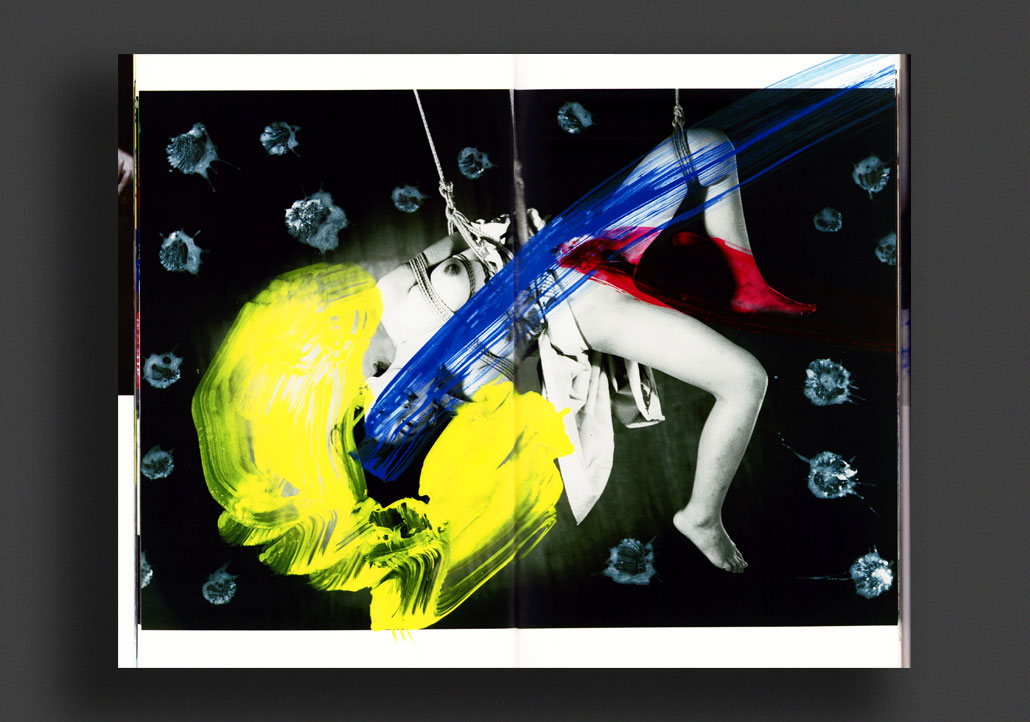
First edition, first printing of Nobuyoshi Araki's "Shiki In", published in an edition of 1000 copies in 2005 in this lavish hardcover edition, marking the beginning of publications by Araki which featured his erotic painted photo works. Confronting issues of censorship within Japanese society and faced with prosecution due to the graphic nature of his imagery, Araki, although always having confronted the comfort zones of his viewers, began to blot out and scrape over the genitals in his photographic images substituting the exposed area with expressive hand-scribbled lines of black, using more and more frequently bright and vibrant colours. This application of colours within Shiki In (published in 2005) brilliantly captures this now established part of his repertoire. Included within the pages are 128 images; portraits of his models bound in Kinbaku, vibrantly transformed with the painted brush strokes of Araki's hand. This self censorship of his works added a transformative element to his photographs, presenting them as a visual response on both the laws of censorship, as well as referencing the sexual imagery based on Japanese traditions alongside Araki's own visual motifs of color, used to portray all that is living and the use of monochrome to connote notions of death.
"I wanted to molest women who had become monochrome, it made me want to paint color on prints".
Afterword by Toshiharu Ito.
Near Fine copy in NF dust jacket.
1995, Japanese
Softcover, 208 pages, 15 cm x 21 cm
1st Edition, Out of print title / used / very good
Published by
Tom Shobo / Japan
$140.00 - Out of stock
Too Negative issue no. 4, April 1995. Now rare and highly collectible, Too Negative, the "Forbidden Picture Book", was a visceral and visually explosive glossy cult arts magazine that reflected the gory-depraved-beyond salvation-bad taste expressions visible in international subculture at the height of 1990s underground publishing, a time when art was pushing the limits of taste and morality. Edited solely by legendary Japanese publisher and gallery owner Kotaro Kobayashi and published by Tom Publication Inc. between 1994—2000, each thick, glossy volume takes on the aesthetics of a vibrant fashion magazine in the great Japanese "mook" format (the magazine book) packed cover to cover with themes of Eros and Thanatos, such as fetishism, erotica, medical/autopsy photography, death journalism, Japanese bondage, grotesque and neo-surrealist art, crime scene photography, tattooing/irezumi, piercing, and all things of the mondo, macabre, bizarro realm. Frequent collaborators and featured artists were Kiyotaka Tsurisaki, Joel-Peter Witkin, Trevor Brown, Kiyoshi Ikejiri, to name a few. With a Japanese publishing lineage that may be found in earlier bounding-pushing periodicals such as the 1920s erotic grotesque magazine Hentai Shiriou (Pervert Documents), Tasuhiko Shibusawa’s incredible 1960s avant-garde journal Le Sang Et La Rose, or Fiction Inc’s SALE2 journal published from 1980—mid 1990s, Too Negative, and affiliated periodicals such as ORG, Spiral, Schizo, etc. took their subjects to another level of extremism, even by Japanese standards.
Not for the faint hearted.
This issue features the Columbian corpse/death photography of Kiyotaka Tsurisaki (featuring Orozco the Embalmer), Kiyoshi Ikejiri, the artwork of Yoshifumi Hayashi and Trevor Brown, loads of abnormal medical photography, insane collages, vintage gay porn, fetish photography, adipophilia porn, death scenes, deranged art, genital piercing, you name it.
Very Good copy.
1997, Japanese
Softcover, 208 pages, Softcover, 15 cm x 21 cm
1st Edition, Out of print title / used / very good
Published by
Tom Shobo / Japan
$130.00 - Out of stock
Too Negative issue no. 8, March 1997. Now rare and highly collectible, Too Negative, the "Forbidden Picture Book", was a visceral and visually explosive glossy cult arts magazine that reflected the gory-depraved-beyond salvation-bad taste expressions visible in international subculture at the height of 1990s underground publishing, a time when art was pushing the limits of taste and morality. Edited solely by legendary Japanese publisher and gallery owner Kotaro Kobayashi and published by Tom Publication Inc. between 1994—2000, each thick, glossy volume takes on the aesthetics of a vibrant fashion magazine in the great Japanese "mook" format (the magazine book) packed cover to cover with themes of Eros and Thanatos, such as fetishism, erotica, medical/autopsy photography, death journalism, Japanese bondage, grotesque and neo-surrealist art, crime scene photography, tattooing/irezumi, piercing, and all things of the mondo, macabre, bizarro realm. Frequent collaborators and featured artists were Kiyotaka Tsurisaki, Joel-Peter Witkin, Trevor Brown, Kiyoshi Ikejiri, to name a few. With a Japanese publishing lineage that may be found in earlier bounding-pushing periodicals such as the 1920s erotic grotesque magazine Hentai Shiriou (Pervert Documents), Tasuhiko Shibusawa’s incredible 1960s avant-garde journal Le Sang Et La Rose, or Fiction Inc’s SALE2 journal published from 1980—mid 1990s, Too Negative, and affiliated periodicals such as ORG, Spiral, Schizo, etc. took their subjects to another level of extremism, even by Japanese standards.
Not for the faint hearted.
This issue, Too Negative issue no. 8, March 1997, features the photography the paintings of Manuel Ocampo, the art of Helter Skelter corpse/death photography, the art of Jake and Dinos Chapman, grotesque tabloid news, the art of Pierre Molinier, the art of Damien Hirst, the fetish photography of Hiroshi Yokoi, latex/rubber fetish photography by Uchiyama Kazunori, Kiyotaka Tsurisaki, Kiyoshi Ikejiri, loads of abnormal medical photography, autopsy, anatomical photographic/illustrated, much more.
Very Good copy.