World Food Books' programme is largely produced on Kulin Nation land. We acknowledge the Wurundjeri people of the Kulin Nation as the first and continuing custodians of this land, and pay respect to their Elders past, present, and emerging.
World Food Books is an arts and special interests bookshop in Naarm / Melbourne. Founded in 2010, World Food Books is devoted to the presentation of a rotating, hand-selection of international art, design, literary and counterculture publications with an emphasis on the anti-traditional, the experimental, the avant-garde, the heretic, the marginal.
Presenting new titles alongside rare and out-of-print books, catalogues and journals spanning the fields of modern and contemporary art, design, photography, illustration, film, literature, poetry, cultural theory, philosophy, sexuality, popular and underground culture in its many radical forms, World Food Books wishes to encourage adventurous, thoughtful and open-minded reading, looking, writing, and exchange of publishing and ideas, both current and historical.
As well as our bookshop, located in Melbourne's historical Nicholas Building, all of our inventory is available internationally via our online mail-order service.
World Food Books semi-regularly co-ordinates "Occasions", a programme of exhibits and events at the bookshop and in partnership with other hosts (such as museums and art galleries) that develop out of the activities, relationships and content of the bookshop itself.
World Food Books
The Nicholas Building
37 Swanston Street
Room 5, Level 6
Melbourne 3000
Australia
SHOP HOURS:
Thu–Sat 11–5
WEB-SHOP OPEN 24/7
World Food Books
Postal Address:
PO Box 435
Flinders Lane
Victoria 8009
Australia
Art
Theory / Essay
Architecture / Interior
Graphic Design / Typography
Photography
Fashion
Eros
LGBTQ+
Fiction / Poetry
Weird / Speculative / Science Fiction / Horror
Transgressive / Visceral / Abject
Symbolism / Decadence / Fin de siècle
Film / Video
Painting
Sculpture / Installation
Performance / Dance / Theater
Drawing
Sound / Music
Curatorial
Group Shows / Collections
Periodicals
Out-of-print / Rare
Posters / Ephemera / Discs
Signed Books
World Food Books Gift Voucher
World Food Book Bag
Australian Art
Australian Fiction
Australian Science Fiction / Speculative Fiction
Australian Poetry
Australian Photography
Japanese Photography
Conceptual Art
Minimal Art
Dada
'Pataphysics / Oulipo
Fluxus
Concrete Poetry
Pop Art
Surrealism
Arte Povera
Arte Informale / Haute Pâte / Tachism
Nouveau Réalisme / Zero / Kinetic
Situationism / Lettrism
Collage / Mail Art / Xerox Art
Art Brut / Folk / Visionary / Fantastic
Illustration / Graphic Art / Bandes Dessinées
Furniture
Italian Radical Design / Postmodernism
Textiles
Ceramics / Glass
Counterculture
Protest / Revolt
Philosophy
Psychoanalysis
Anthropology
Anarchism
Socialism / Anarchism / Communism / Capitalism
Literary Theory / Semiotics / Language
Feminism / Women's Studies
Gender Studies / Sexuality
Anthropology
Fetishism / BDSM
Drugs / Psychedelia
Crime / Violence
Animal Rights / Veganism
Occult / Esoterica
Ecology / Earth / Alternative Living
Whole Earth / Crafts
All prices in AUD (Australian dollars)
Pick-Ups
Pick-up orders can be collected in our bookshop during opening hours after order date. Please collect any Pick-up orders within 2 weeks of ordering as we have limited storage space. Orders will be released back into stock if not collected within this time. No refunds can be made for pick-ups left un-collected. If you cannot make it in to the bookshop in this time-frame, please choose postage option.
Return Policy
All sales are final. We do accept returns (for refund or exchange) for items received in error. All our orders are packed with special care using heavy-duty padding and cardboard book-mailers or bubble mailers (for smaller books), using reinforcement where required. We cannot take responsibility for any lost, stolen or damaged parcels.
Insurance
Should you wish to insure your package, please email us directly after placing your order and we can organise this at a small extra expense. Although all standard/express tracked packages are very safe and dependable, we cannot take responsibility for any lost, stolen or damaged parcels. We recommend insurance on valuable orders.
Interested in selling your old books, catalogues, journals, magazines, comics, fanzines, ephemera? We are always looking for interesting, unusual and out-of-print books to buy. We only buy books in our fields of interest and specialty, and that we feel we can resell.
We base these prices on desirability, market value, in-print prices, condition and our current stock levels. We offer cash, store credit, and can take stock on consignment. All
about 25% of the price we expect to get when we sell them, or 30% in store credit. We base these prices on desirability, market value, in-print prices, condition and our current stock levels.
Sell your books any day of the week. You can drop them off and return later. If you have a lot of books, we can visit your Sydney home.
We buy books that we feel we can resell. We offer about 25 % of the price we expect to get when we sell them, or 30% in store credit. We base these prices on desirability, market value, in-print prices, condition and our current stock levels.
Philadelphia Wireman
03 August - 01 September, 2018
World Food Books is proud to announce our next Occasion, the first presentation of sculptures by Philadelphia Wireman in Australia.
The Philadelphia Wireman sculptures were found abandoned in an alley off Philadelphia’s South Street on trash night in 1982. Their discovery in a rapidly-changing neighbourhood undergoing extensive renovation, compounded with the failure of all attempts to locate the artist, suggests that the works may have been discarded after the maker’s death. Dubbed the "Philadelphia Wireman" during the first exhibition of this work, in 1985, the maker’s name, age, ethnicity, and even gender remain uncertain. The entire collection totals approximately 1200 pieces, all intricately bound together with tightly-wound heavy-gauge wire (along with a few small, abstract marker drawings, reminiscent both of Mark Tobey and J.B. Murry). The dense construction of the work, despite a modest range of scale and materials, is singularly obsessive and disciplined in design: a wire armature or exoskeleton firmly binds a bricolage of found objects including plastic, glass, food packaging, umbrella parts, tape, rubber, batteries, pens, leather, reflectors, nuts and bolts, nails, foil, coins, toys, watches, eyeglasses, tools, and jewellery.
Heavy with associations—anthropomorphic, zoomorphic, and socio-cultural responses to wrapped detritus—the totemic sculptures by Philadelphia Wireman have been discussed in the context of work created to fulfil the shamanistic needs of alternative religions in American culture. Curators, collectors, and critics have variously compared certain pieces to sculpture from Classical antiquity, Native American medicine bundles, African-American memory jugs, and African fetish objects. Reflecting the artist’s prolific and incredibly focused scavenging impulse, and despite—or perhaps enhanced by—their anonymity, these enigmatic objects function as urban artefacts and arbiters of power, though their origin and purpose is unknown. Philadelphia Wireman, whatever their identity, possessed an astonishing ability to isolate and communicate the concepts of power and energy through the selection and transformation of ordinary materials. Over the course of the past two decades, this collection has come to be regarded as an important discovery in the field of self-taught art and vernacular art.
Presented in collaboration with Fleisher-Ollman Gallery, Philadelphia, and Robert Heald, Wellington.
Susan Te Kahurangi King
02 February - 10 March, 2018
Susan Te Kahurangi King (24 February 1951 - ) has been a confident and prolific artist since she was a young child, drawing with readily available materials - pencils, ballpoint pens and felt-tip markers, on whatever paper is at hand. Between the ages of four and six Susan slowly ceased verbal communication. Her grandparents William and Myrtle Murphy had developed a special bond with Susan so they took on caring responsibilities for extended periods. Myrtle began informally archiving her work, carefully collecting and storing the drawings and compiling scrapbooks. No drawing was insignificant; every scrap of paper was kept. The King family are now the custodians of a vast collection containing over 7000 individual works, from tiny scraps of paper through to 5 meter long rolls.
The scrapbooks and diaries reveal Myrtle to be a woman of great patience and compassion, seeking to understand a child who was not always behaving as expected. She encouraged Susan to be observant, to explore her environment and absorb all the sights and sounds. Myrtle would show Susan’s drawings to friends and people in her community that she had dealings with, such as shopkeepers and postal workers, but this was not simply a case of a grandmother’s bias. She recognised that Susan had developed a sophisticated and unique visual language and sincerely believed that her art deserved serious attention.
This was an unorthodox attitude for the time. To provide some context, Jean Dubuffet coined the term Art Brut in 1945 to describe work created by self-taught artists – specifically residents of psychiatric institutions and those he considered to be visionaries or eccentrics. In 1972 Roger Cardinal extended this concept by adopting the term Outsider Art to describe work made by non-academically trained artists operating outside of mainstream art networks through choice or circumstance. Susan was born in Te Aroha, New Zealand in 1951, far from the artistic hubs of Paris and London that Dubuffet and Cardinal operated in. That Myrtle fêted Susan as a self-taught artist who deserved to be taken seriously shows how progressive her attitudes were.
Susan’s parents Doug and Dawn were also progressive. Over the years they had consulted numerous health practitioners about Susan’s condition, as the medical establishment could not provide an explanation as to why she had lapsed into silence. Dawn educated herself in the field of homeopathy and went on to treat all twelve of her children using these principles – basing prescriptions on her observations of their physical, mental and emotional state.
Doug was a linguist with an interest in philosophy who devoted what little spare time he had to studying Maori language and culture. To some extent their willingness to explore the fringes of the mainstream made them outsiders too but it was their commitment to living with integrity and their respect for individuality that ensured Susan’s creativity was always encouraged.
Even though Susan’s family supported her artistic pursuits, some staff in schools and hospitals saw it as an impediment to her assimilation into the community and discouraged it in a variety of ways. Her family was not always aware of this and therefore did not fully understand why Susan stopped drawing in the early 1990s. However, rather than dwell on the challenges that Susan faced in pursuit of her artistic practice, they prefer to highlight her achievements. In 2008 Susan began drawing again in earnest, after an almost 20 year interruption, and her work is now shown in galleries around the world.
Susan grew up without television and has been heavily influenced by the comics she read as a child. She is absolutely fearless in the appropriation of recognizable characters, such as Donald Duck and Mickey Mouse, in her work. She twists their limbs, contorts their faces, compresses them together, blends them into complex patterned backgrounds - always imbuing them with an incredible energy. Although Susan often used pop culture characters in her work they are not naive or childlike. These are drawings by a brilliant self-taught artist who has been creating exceptional work for decades without an audience in mind.
Mladen Stilinović
"Various Works 1986 - 1999"
02 February 16 - September 10, 2016
Various works 1986 - 1999, from two houses, from the collections of John Nixon, Sue Cramer, Kerrie Poliness, Peter Haffenden and Phoebe Haffenden.
Including: Geometry of Cakes (various shelves), 1993; Poor People’s Law (black and white plate), 1993; White Absence (glasses, ruler, set square, silver spoon, silver ladel with skin photograph and wooden cubes), 1990-1996; Exploitation of the Dead (grey and red star painting, wooden painting, black spoon with red table, red plate), 1984-1990; Money and Zeros (zero tie, paintings made for friends in Australia (Sue, John, Kerrie), numbers painting), 1991-1992; Words - Slogans (various t-shirts) - “they talk about the death of art...help! someone is trying to kill me”, “my sweet little lamb”, “work is a disease - Karl Marx”; Various artist books, catalogues, monographs, videos; Poster from exhibition Insulting Anarchy; "Circular" Croatian - Australian edition; Artist book by Vlado Martek (Dostoyevsky); more.
Thanks to Mladen Stilinović and Branka Stipančić.
Jonathan Walker
Always Will Need To Wear Winter Shirt Blue + Ochre Small Check Pattern
21 August - 21 September, 2015
Untitled
I am not a great reader of poetry but I always return to the work of Melbourne poet, Vincent Buckley (1925- 1988). Perhaps I find his most tantalising piece to be not a finished poem but a fragment left on a scrap of paper discovered on his desk after the poet’s death.
The poetry gathers like oil
In the word-core, and spreads
It has its music meet,
Its music is in movement.
This fragment is more the shell left behind from a volatile thought than a finished poem. I find the last two lines honest but awkward whereas the first two lines work like an arrow. Most likely he could not find a resolution so it was left. Still, in its present form, it remains an eloquent testimony to the ultimate failure of a medium to express mobile thought and sensation, in Buckley’s case, through verbal language. It’s an important matter because this is something all artists have to deal with regardless of the medium.
I have never written a poem, however, I am forever copying fragments from books on paper scraps in a vain effort to fix certain notions in my head. At first, they function as bookmarks that are sometimes returned to when I open the book. But before long, as they accumulate, they fall out littering the table interspersed with A4 photocopies, bills, books and medications.
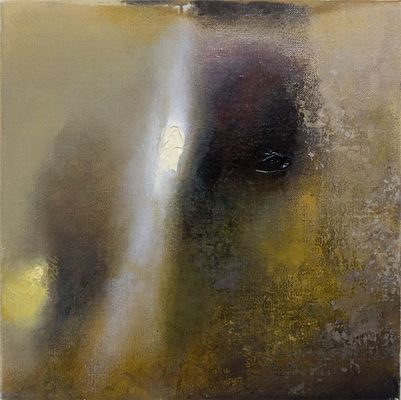
To return to Buckley’s fragment, the first two lines very much evoke how I paint nowadays. As you age, detail diminishes and patches of light become more luminous and float. I feel the most honest way of dealing with this is by smearing the oil paint on the canvas with the fingers and working close-up, blind. Only if the patches coalesce into an approaching image can the work gain a life.
-
Jonathan Walker was born in Melbourne, Australia and brought up on a dairy farm in Gippsland. In the 1970’s he studied painting at RMIT and won the Harold Wright Scholarship to the British Museum, London. During the 1980’s he exhibited at Pinacotheca Gallery, Richmond and had work shown at the NGV and Heidi City Art Gallery. Over the same period he designed the cover for the “Epigenesi” LP by Giancarlo Toniutti, Italy and conducted a mail exchange work with Achim Wollscheid, Germany. The work with artists through the post resulted in an article published in the bicentenary issue of Art and Australia 1988. He showed in artist run spaces such as WestSpace in the 90’s and 2000’s, and until 2012, taught painting at Victoria University, which is where we (Colleen Ahern and Lisa Radford) as organisers of the exhibition, among many others, had the privilege of being his student.
Walker’s knowledge was imparted to students through the careful selection of music, literature, and artists found in books that he himself had ordered for the library. Walker’s strategy was the generosity of sharing his vast knowledge with references specific to each student and their context.
Walker’s paintings share a similar focus and intimacy.
This exhibition presents a small selection of recent paintings alongside a publication that includes Walker’s writing. Observational and analytical, Walker’s work is a type of material notation — the time of day, colour and how it is blended, the both specific and fleeting location of a reflection on lino or the question of whether a chair leg should be included in a painting.
Please join us on Friday August 21 between 6-8pm to celebrate the opening of the exhibition.
Curated by Colleen Ahern and Lisa Radford.
B. Wurtz
Curated by Nic Tammens
March 26 - April 4, 2015
B.Wurtz works from a basement studio in his home on Manhattan’s Lower East Side.
This local fact is attested to by the plastic shopping bags and newsprint circulars that appear in his work. As formal objects, they don’t make loud claims about their origins but nonetheless transmit street addresses and places of business from the bottom of this long thin island. Like plenty of artists, Wurtz is affected by what is local and what is consumed. His work is underpinned by this ethic. It often speaks from a neighborhood or reads like the contents of a hamper:
“BLACK PLUMS $1.29 lb.”
“Food Bazaar”
“USDA Whole Pork Shoulder Picnic 99c lb.”
“RITE AID Pharmacy, with us it’s personal.”
“H. Brickman & Sons.”
“Sweet Yams 59c lb."
Most of the work in this exhibition was made while the artist was in residence at Dieu Donne, a workshop dedicated to paper craft in Midtown. Here Wurtz fabricated assemblages with paper and objects that are relatively lightweight, with the intention that they would be easily transportable to Australia. This consideration isn’t absolute in Wurtz’s work, but was prescriptive for making the current exhibition light and cheap. Packed in two boxes, these works were sent from a USPS post office on the Lower East Side and delivered to North Melbourne by Australia Post.
Wurtz appears courtesy of Metro Pictures, New York.
Thanks to Rob Halverson, Joshua Petherick, Sari de Mallory, Matt Hinkley, Helen Johnson, Fayen d'Evie, Ask Kilmartin, Lisa Radon, Ellena Savage, Yale Union, and "Elizabeth".
John Nixon
"Archive"
December 15 - January 20, 2014
The presentation of John Nixon's archive offered a rare showcase of this extensive collection of the artist's own publications, catalogues, posters, ephemera, editions and more, from the mid 1980s onwards, alongside a selection of his artworks.
Organized by John Nixon, Joshua Petherick and Matt Hinkley.
"Habitat"
at Minerva, Sydney (organised by Joshua Petherick and Matt Hinkley)
November 15 - December 20, 2014
Lupo Borgonovo, Janet Burchill & Jennifer McCamley,
Lewis Fidock, HR Giger, Piero Gilardi, Veit Laurent Kurz,
Cinzia Ruggeri, Michael E. Smith, Lucie Stahl, Daniel Weil, Wols
Press Release:
“...It contained seven objects. The slender fluted bone, surely formed for flight, surely from the wing of some large bird. Three archaic circuitboards, faced with mazes of gold. A smooth white sphere of baked clay. An age-blackened fragment of lace. A fingerlength segment of what she assumed was bone from a human wrist, grayish white, inset smoothly with the silicon shaft of a small instrument that must once have ridden flush with the surface of the skin - but the thing’s face was seared and blackened.”
William Gibson, “Count Zero”, 1986
"Autumn Projects Archive"
Curated by Liza Vasiliou
March 6 - March 15, 2014
World Food Books, in conjunction with the Virgin Australia Melbourne Fashion Festival 2014, presented the Autumn Projects archive, consisting of a selection of early examples in Australian fashion with a particular interest in collecting designers and labels from the period beginning in the 1980’s, who significantly influenced the discourse of Australian Fashion.
Curated by Liza Vasiliou, the exhibition provided a unique opportunity to view pieces by designers Anthea Crawford, Barbara Vandenberg, Geoff Liddell and labels CR Australia, Covers, Jag along with early experimental collage pieces by Prue Acton and Sally Browne’s ‘Fragments’ collection, suspended throughout the functioning World Food Books shop in Melbourne.
H.B. Peace
presented by CENTRE FOR STYLE
November 14, 2013
"Hey Blinky, you say chic, I say same"
Anon 2013
H.B. Peace is a clothing collaboration between great friends Blake Barns and Hugh Egan Westland. Their pieces explore the divergences between 'character’ and ‘personality’ in garments....etc
Special Thanks to Joshua Petherick and Matt Hinkley of WFB and Gillian Mears
and a Very Special Thank you to Audrey Thomas Hayes for her shoe collaboration.
Janet Burchill & Jennifer McCamley
"Aesthetic Suicide"
May 10 - June 8, 2013
The first of our occasional exhibitions in the World Food Books office/shop space in Melbourne, "Aesthetic Suicide" presented a body of new and older works together by artists Janet Burchill & Jennifer McCamley, including videos, prints, a wall work, and publications.
During shop open hours videos played every hour, on the hour.
1992, Japanese
Softcover (staple-bound), 210 pages, 21 x 15 cm
1st Edition, Out of print title / used / very good
Published by
Tsukasa Shobo / Tokyo
$65.00 - Out of stock
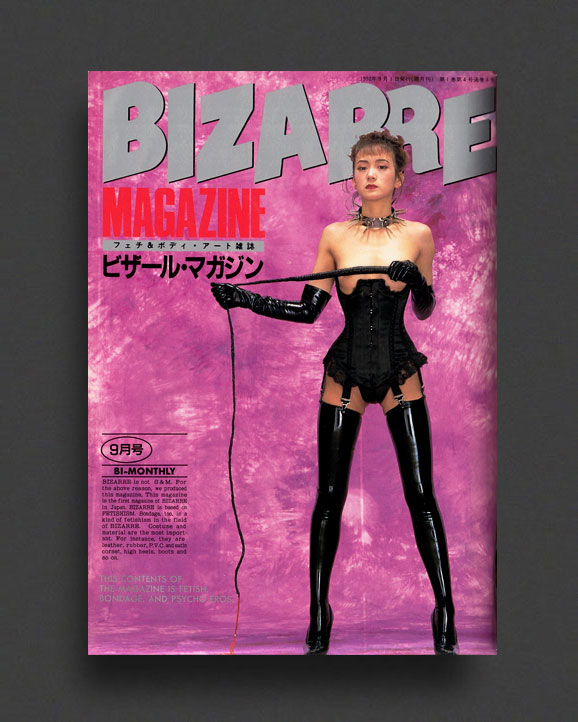
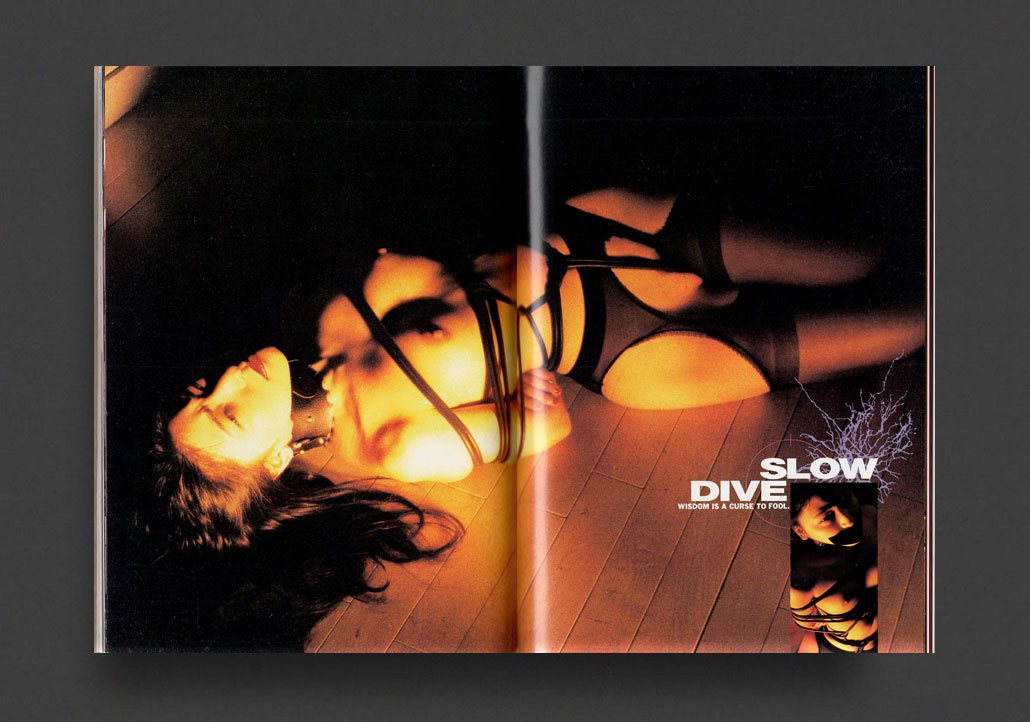
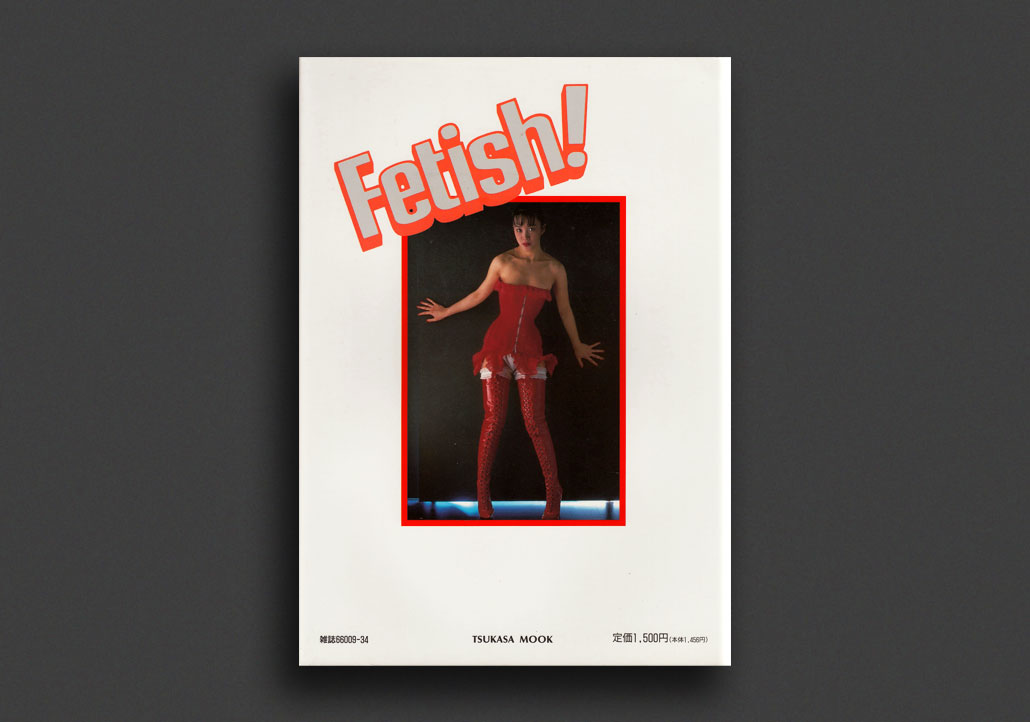
September 1992 issue of Bizarre Magazine, Japan's first glossy magazine devoted fully to all things "bizarre culture" and the new fetish subculture that exploded in the 1990's, published by manga (and SM Fan) publisher Tsukasa Shobo from 1990—2000s. "Fetish, bondage, psycho eros, and body arts". Profusely illustrated throughout with glossy colour and b/w photoshoots styled with fetish fashion materials and costume — models and Japanese AV/pink film idols in rubber, pvc, leather, boots, high heels, corsets, etc. covering all manner of fetishes and cos-themes from cyberpunk to medical, body art, cross-dressing, lesbianism, fem-dom, scene reports from around the world, dominatrix profiles and interviews, lots of manga, articles, stories, advice columns, DIY tutorials, and packed with wild ads for sex clubs, dungeons, bars, bookstores, video catalogues, toys, fashions, reviews of cult books and film, european imports, classifieds, all heavy with illustrations and hundreds, if not thousands of photographs. Each issue was overseen by a rotating group of editors, this issue including material by Kinichi Tanaka, Chimuo Nureki, Romain Slocombe, Masami Akita (Merzbow), Trevor Brown, Issei (Kobe Cannibal) Sagawa, Russ Meyer, Naito Hisashi, Mako Komuro, Koji Yokoyama, Domu Kitahara, Nao Saejima, Sahoko Koizumi, Non Kizuki, Lalako Kojima, Momoko Kotobuki, Naohiro Ukawa, and many more... Much like SM Sniper, Bizarre Magazine favoured the exploration of new innovations of fetish and underground sex culture, emphasising the work of the models, stylists, make-up artists, and fashion designers, as much as the writers or photographers, encompassing the entire "new wave" of SM counterculture embedded in underground music, film, fashion and visual art at the dawn of the 90's.
Cover statement: "BIZARRE is not S&M. For the above reason, we produced this magazine. This magazine is the first magazine of BIZARRE in Japan. BIZARRE is based on FETISHISM. Bondage, too, is a kind of fetishism in the field of BIZARRE. Costume and material are the most important. For instance, they are leather, rubber, P.V.C. and satin corset, high heels, boots and so on."
Very Good copy.
1989, Japanese / English
Softcover (w. dust jacket), unpaginated, 30 x 21 cm
1st Edition, Out of print title / used / very good
Published by
Tsukasa Shobo / Tokyo
$90.00 - Out of stock
Rare 1989 fetishwear photobook and catalogue for famous Japanese store Azzlo, purveyors of all things bizarre fashion. Full colour gloss photography throughout by Kinichi Tanaka documenting models in erotic scenes fashioning Azzlo's "bizarre latex items, leather bondage-equipment, exotic high-heels, maids uniforms, pants, skirts, bras, victorian corsets, ballet shoes, masks, hoods, cat-suits, baby dolls, t-shirts, gloves, garters, wigs, bloomers, shoes & boots"... Heavy on pvc, latex, leather and lace, all catalogued with specifications, list prices and ordering information. Azzlo was established in Shinjuku at the end of the 1980's by artist, costume designer and student of Kaneko Kuniyoshi, Yumi Azzlo. Azzlo and her store/gallery space became vital to the Tokyo subculture in the 1990's.
VG—NF copy, light bowing.
2005, English
Softcover (in card slipcase), 160 pages, 19 x 17 cm
1st Edition, Out of print title / used / fine
Published by
Atlas Press / London
$190.00 - Out of stock
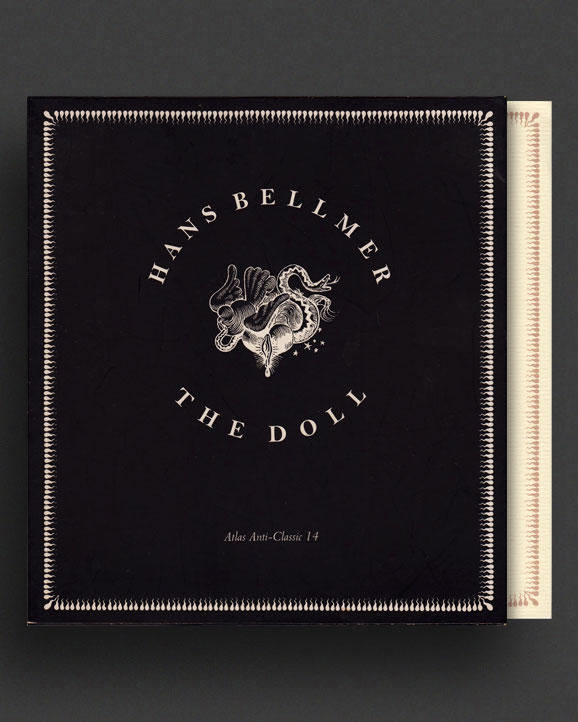
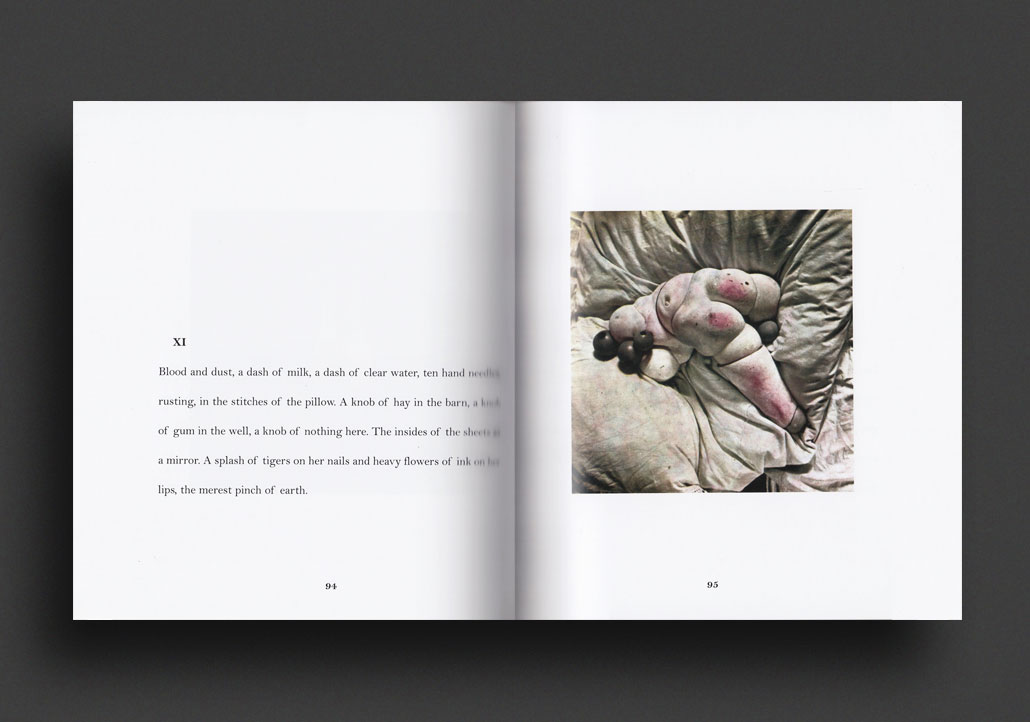
Rare first edition of this slipcased first English translation of Hans Bellmer's subversive Surrealist classic, Die Puppe (The Doll), first published in German in 1962, here translated and Introduced by Malcolm Green and published by the great Atlas Press, London.
Hans Bellmer (1902—1975) is one of the most illustrious names in the field of erotic art and Surrealism. The Doll comprises a series of photographs that have acquired iconic status and which exemplify the Surrealists’ conception of “convulsive beauty”. They are accompanied by a body of theoretical, poetic and speculative texts written between the 1930s and early 1960s which reveal Bellmer as one whose ideas are a “scandal for reason” (Joë Bousquet). But there is a lot more to Bellmer’s work than is at first apparent and the insights his writing provides into his work is crucial to its understanding, in particular those from the final edition of The Doll which are here translated in full. (The other editions widely available on the net mostly contain only the illustrations.) In these texts Bellmer weaves together a remarkably disparate set of concepts — covering such diverse fields as the body, psychology, anagrams, chance, the laws of optics and mathematics, the fourth dimension, hermaphroditism, the marvellous, intuition — into a theory of eroticism which forms the underlying rationale of his fearsome art.
Apart from the extensive texts by Bellmer it includes a suite of poems by Paul Éluard, 15 colour photographs, 10 in black and white, plus numerous line drawings. This English edition is based exactly upon the final edition overseen by Bellmer himself, the texts having been translated for the first time from the final German version rather than the preliminary French versions.
Near Fine copy.
1989, English / Japanese
Softcover, 196 pages, 39.5 x 30 cm
1st Edition, Out of print title / used / very good
Published by
Comme des Garçons / Tokyo
$350.00 - Out of stock
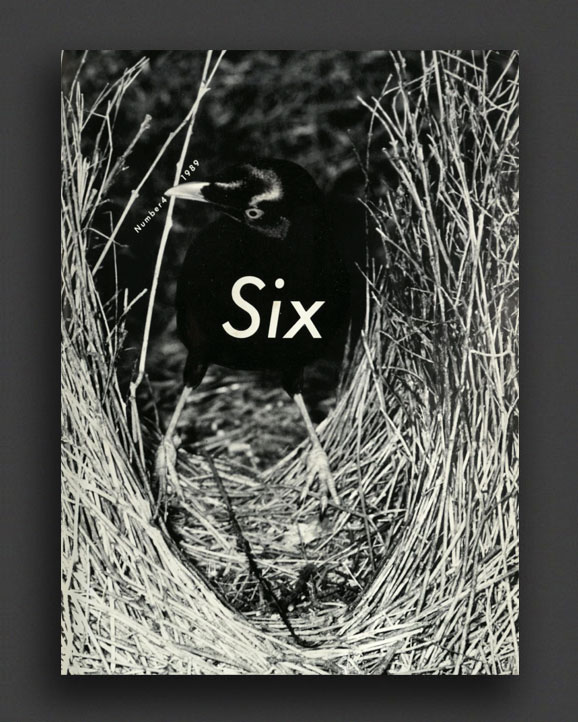
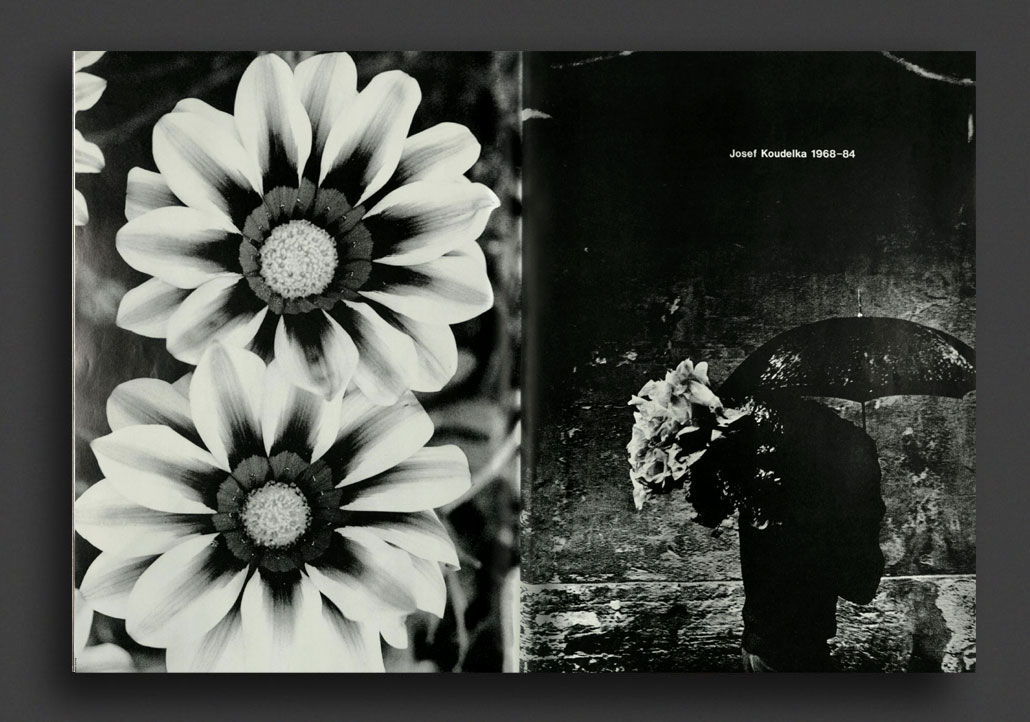
The incredible fourth issue of Comme des Garçons 'Six' magazine (1989) featuring avant-garde photography exploring the idea of the 'Sixth Sense' while reflecting the Fall 19891 collection, including photography by Robert Frank, Arthur Elgort, Josef Koudeika, Saul Leiter, Peter Lindbergh and Mike and Doug Stern. All incredible full-bleed photography spanning 196 over-sized pages!
Between 1988 and 1991, Comme des Garçons explored the theme of the sixth sense via eight special biannual oversized, unstapled magazines titled 'Six'. These magazines were launched to coincide with Comme des Garçons fashion collections and were privately distributed at the time. The magazine visually represented the brand in a way that no other fashion company had before. Rei Kawakubo invited Tsuguya Inoue to art direct and Atsuko Kozasu to edit the issues, whilst contributions came from different designers and artists.
Issues of Comme des Garçons 'Six' have become very sought after collectors items.
Very Good—Near Fine copy.
1986, Japanese
Softcover (staple-bound), 36.5 x 26 cm
1st Edition, Out of print title / used / good
Published by
Cross Culture Foundation / Tokyo
$25.00 $60.00 - In stock -
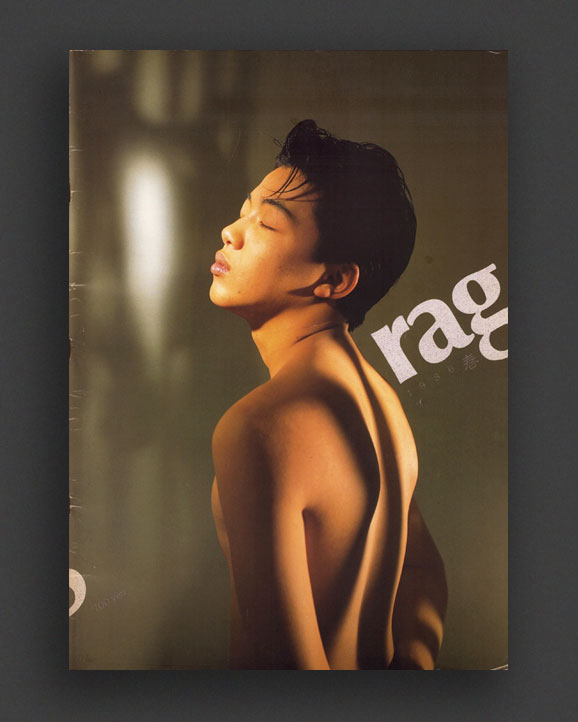
Rare inaugural issue of the almost unknown but incredible Japanese magazine, Rag. Was this the only issue? Published in 1986 in over-sized, staple-bound format, Rag issue 1 includes a beautiful photo feature on Butoh performer Goro Namerikawa, a large feature on "Art's Destroying Angel" Tadanori Yokoo, photography by Nobuyoshi Araki, Keiichi Tahara, Yasushi Handa, Shunji Kaida, Herbie Yamaguchi, Sachiko Kuro, Kaoru Ijima, experimental musician and playwright Koharu Kisaragi, costume designer Michiko Kitamura, designers Issey Miyake, Junko Shimada, musician Eitetsu Hayashi, and much more.
Good copy with some large format wear to spine/extremities.
1985, Japanese
Softcover, 276 pages, 29.7 x 21 cm
1st Edition, Out of print title / used / very good
Published by
Camera Mainichi and The Mainichi Graphic / Japan
$120.00 $80.00 - Out of stock
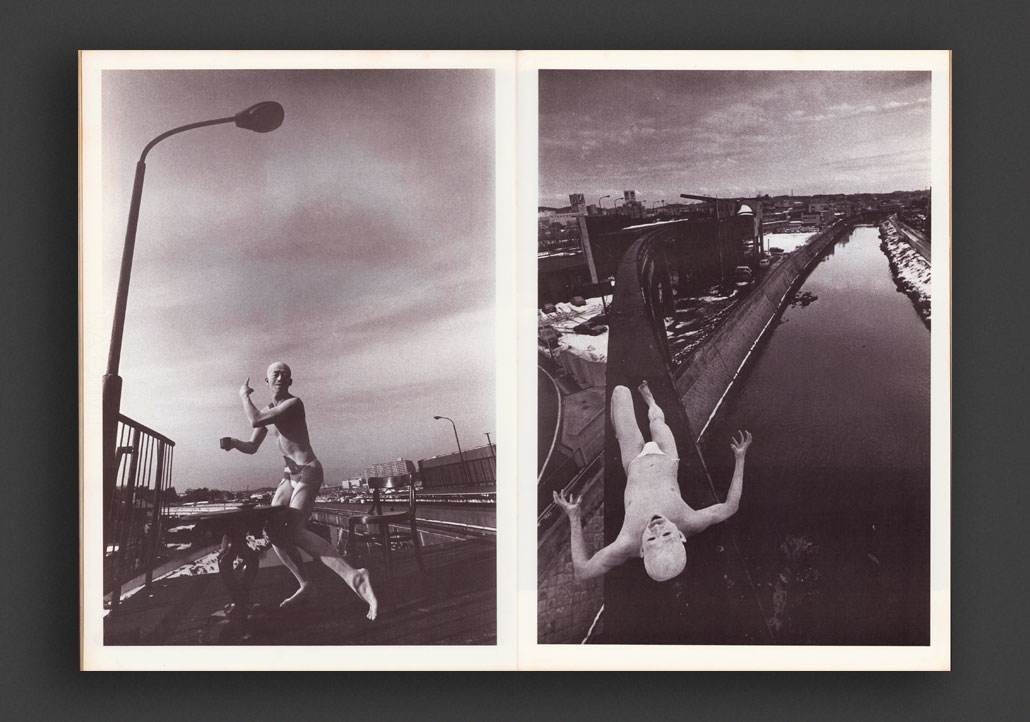
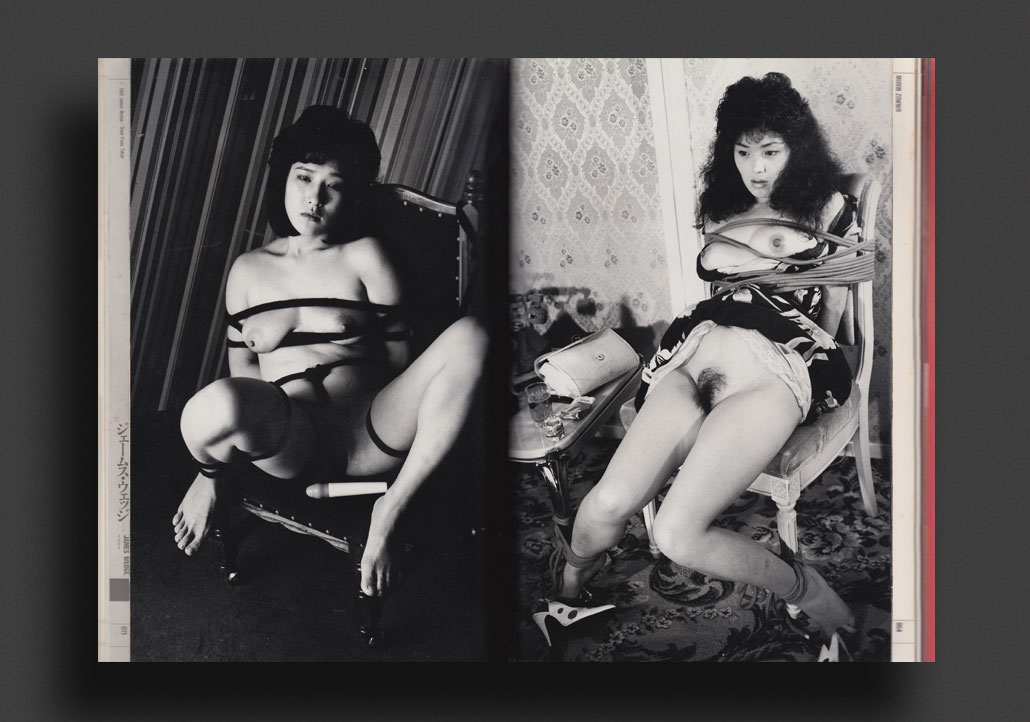
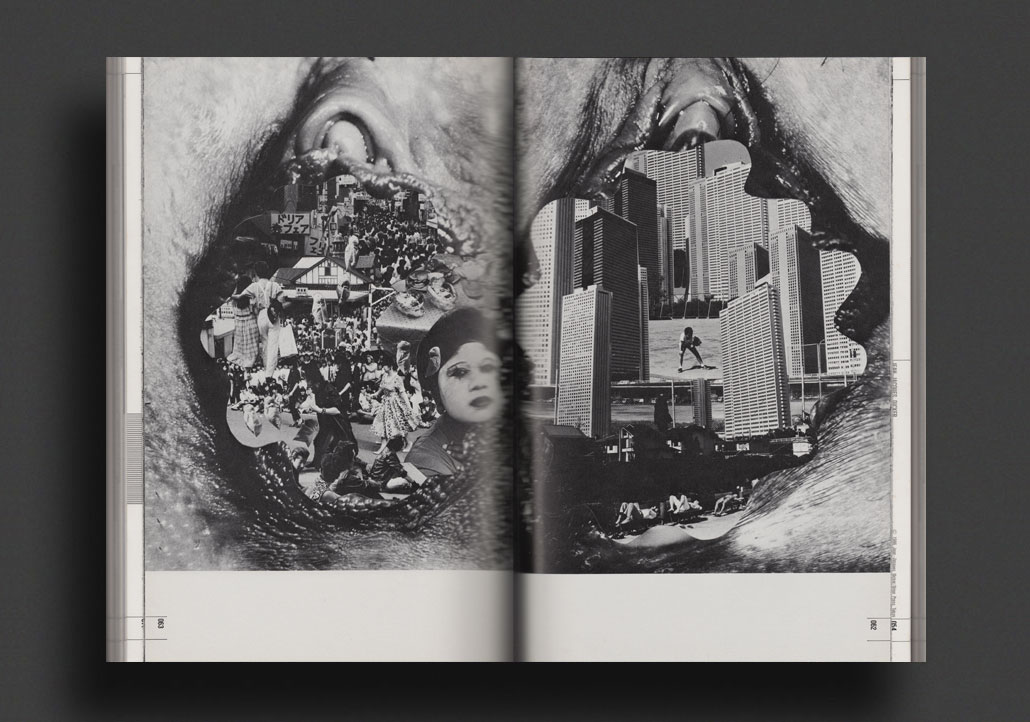
First printing of NEW NUDE 2, published in Japan in 1985 as part of a unique and short-lived book series published by the mighty Camera Mainchi house, showcasing leading photographers and artists on the subject of the nude. Opening with illustrated essays by photo critic Kōtarō Iizawa and others, this lovely volume, printed in Japan, presents works generously and sympathetically presented in colour and black-and-white across various paper-stocks. Includes the work of Masahisa Fukase, Hans Bellmer, Yoshiichi Hara, Masaaki Nakagawa, Nobuyoshi Araki, Lee Friedlander, Alice Odilon, E. J. Bellocq, Heinrich Zille, Donald Woodman, Florence Chevallier, Laurence Sackman, Joel Peter Witkin, Marie Bume, James Wedge, Franco Fontana, Lucas Samaras, Miron Zownir, Herlinde Koelbl, and others.
Good-Very Good copy. General wear.
1986, Japanese
Softcover, 276 pages, 29.7 x 21 cm
1st Edition, Out of print title / used / very good
Published by
Camera Mainichi and The Mainichi Graphic / Japan
$120.00 $80.00 - Out of stock
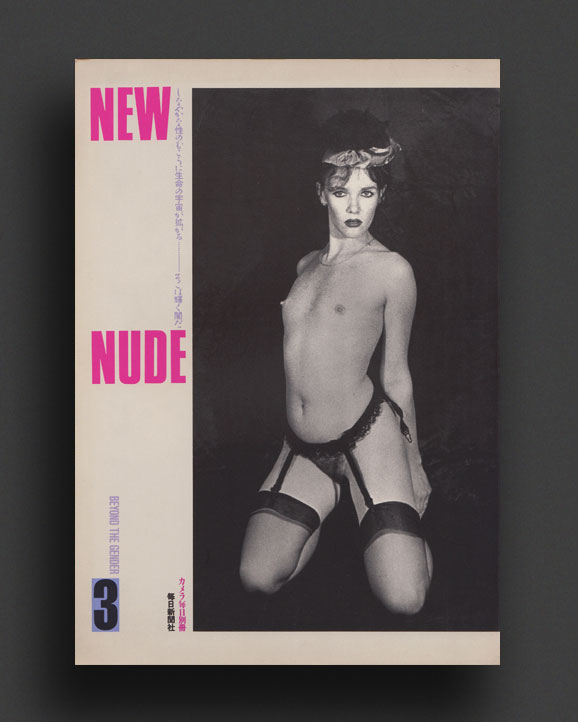
First printing of NEW NUDE 3, published in Japan in 1985 as part of a unique and short-lived book series published by the mighty Camera Mainchi house, showcasing leading photographers and artists on the subject of the nude. Opening with illustrated essays by photo critic Kōtarō Iizawa and others, this lovely volume, printed in Japan, presents works generously and sympathetically presented in colour and black-and-white across various paper-stocks. Includes the work of Nobuyoshi Araki, Daido Moriyama, Masahisa Fukase, Keiichi Tahara, Noriaki Yokosuka, Irina Ionesco, Hennri Maccheroni, Keizo Kitajima, Takashi Ishii, Richard Cerf, Ayako Parks, Taku Aramasa Seiji Kurata, Jean-Jacques Dicker, Flip and Debra Schulke, Robert Mapplethorpe, Marie-Claire Montanari, Lee Friedlander, Jaques Schumacher, Joyce Tenneson, Herlinde Koelbl, and many others.
Very Good copy. Light wear, crease to one front cover bottom corner.
1982, Italian / English / French / Japanese / German
Hardcover (w. dust jacket), 212 pages, 22 x 24 cm
1st Edition, Out of print title / used / good
Published by
Edizioni L'Agrifoglio / Milan
$160.00 - Out of stock
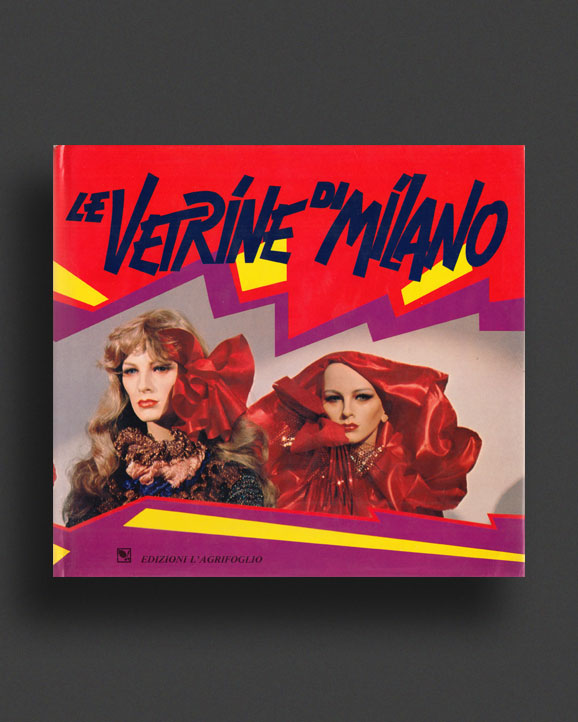
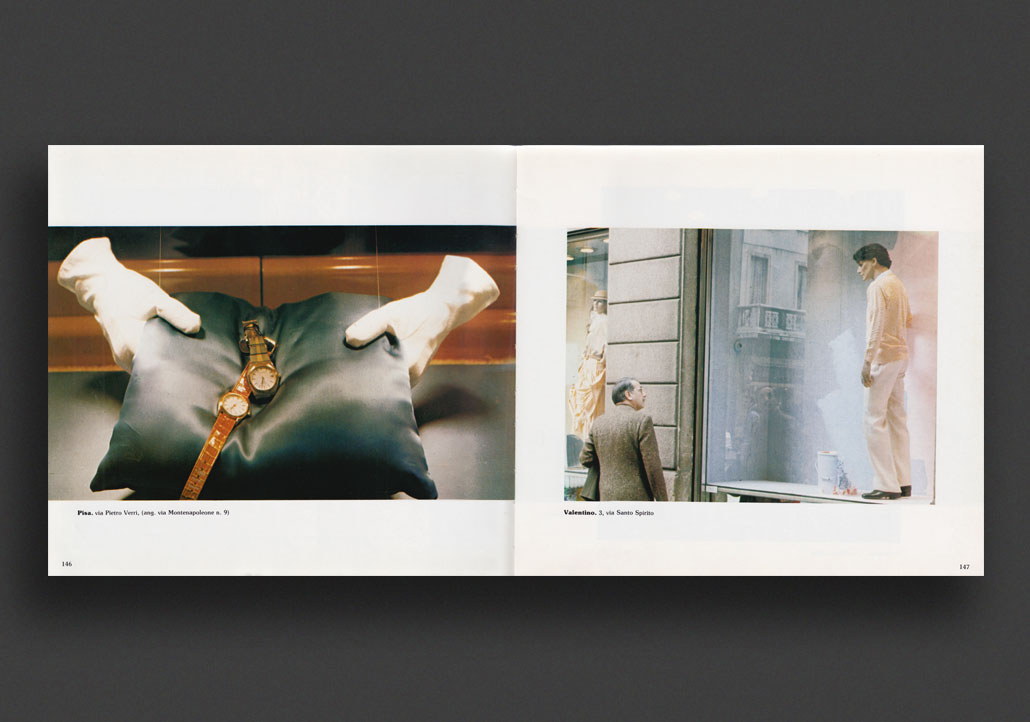
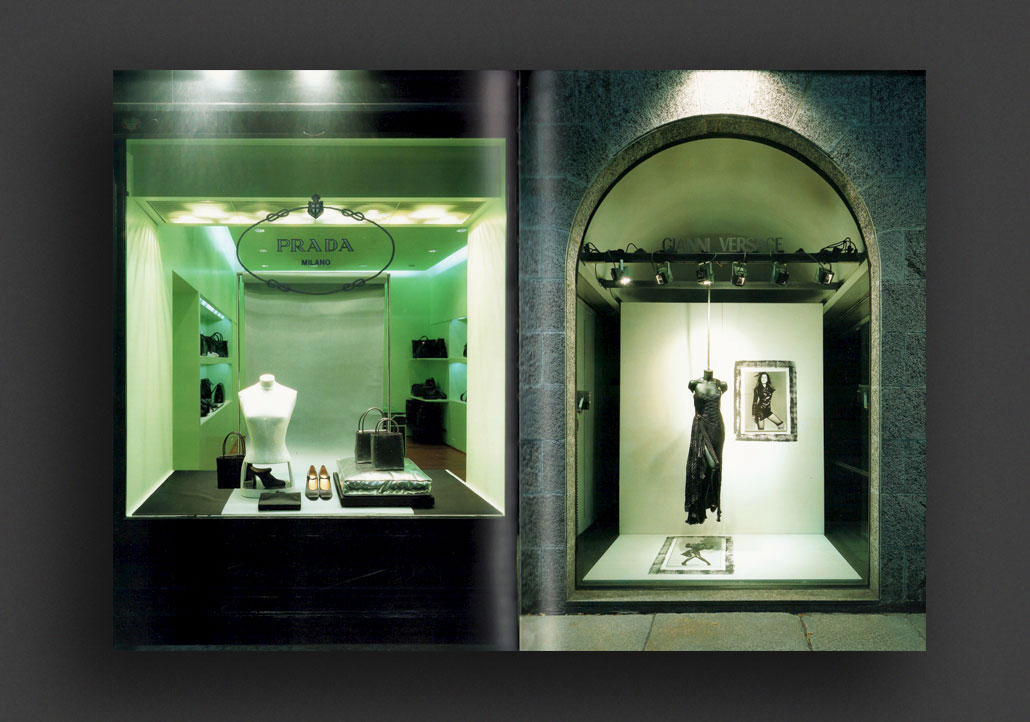
First and only edition of the scarce and wonderful "Le Vetrine Di Milano", published in 1982 by Edizioni L'Agrifoglio in Milan. If you ever wished to know what is was like to wander the piazzas and gaze through the shop windows of Milan in the early 1980s, this book lets you do just that. "Milan "presents itself" by way of its shopwindows, it expresses and fulfills itself in them." In 1982, local photographer Maurizio Montanari documented the latest designs and displays of boutiques and gallerias throughout the streets and squares of Milan, from Fiorucci to Christian Dior, Krizia to Arteluce, Pierre Cardin to Gucci. Views of delicate laces, day-glo sports wear, shimmering Alfa Romeos and ornate tapestries are reflected with the gaze of passers-by and the surrounding city landscape in Montanari's photographic flânerie. Illustrated throughout in vivd colour with texts in Italian / English / French / Japanese / German.
Good copy in VG dust jacket. Would be Very Good but only with loosening stitch binding (still strong and intact) and a couple of editing design notes in pencil (copy from collection in Milan).
1995, English / Italian
Hardcover (w. dust jacket), 260 pages, 30.5 x 22 cm
1st Edition, Out of print title / used / very good
Published by
Edizioni L'Archivolto / Milan
$90.00 - Out of stock
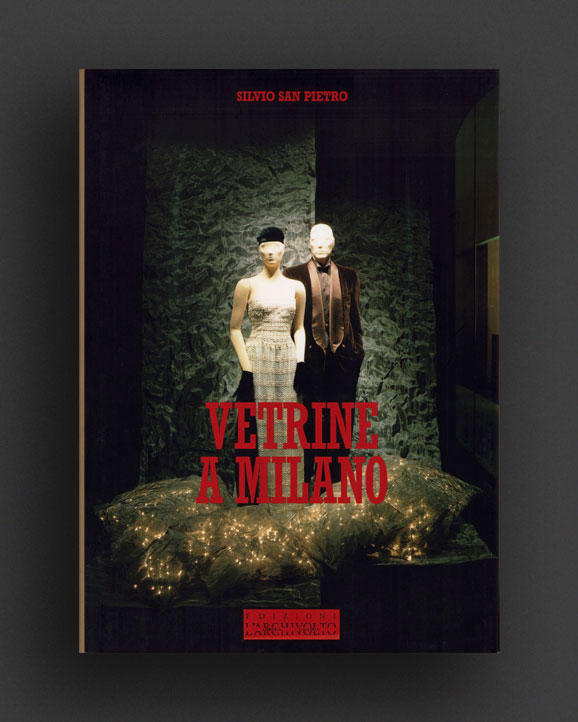
First 1995 edition of Vetrine a Milano, a lavish hardcover photographic document of window displays in the fashion capitol of Milan in the mid—1990's, published by L'Archivolto. Stunning gloss full-page and double-page colour photographic spreads by Alberto Ferraro capture the displays of the most famous and prestigious shops in Milan (Giorgio Armani, Gianni Versace, Hermés, Artemide, Krizia, Moschino, Valentino, Missoni, et al.) designed by leading interior designers and window-dressers of the day, all mapped out street by street, with comprehensive indexes and profiles.
Silvio San Pietro is an architect and publisher. In 1980 he founded L'Archivolto, a combined publishing company, bookstore, and gallery specializing in architecture and design. Since 1986 he has created, edited and published over 130 books for Edizioni L'Archivolto.
Very Good copy in VG dust jacket.
2024, English
Softcover, 192 pages, 31 x 23 cm
Published by
Bill / Brussels
$92.00 - In stock -
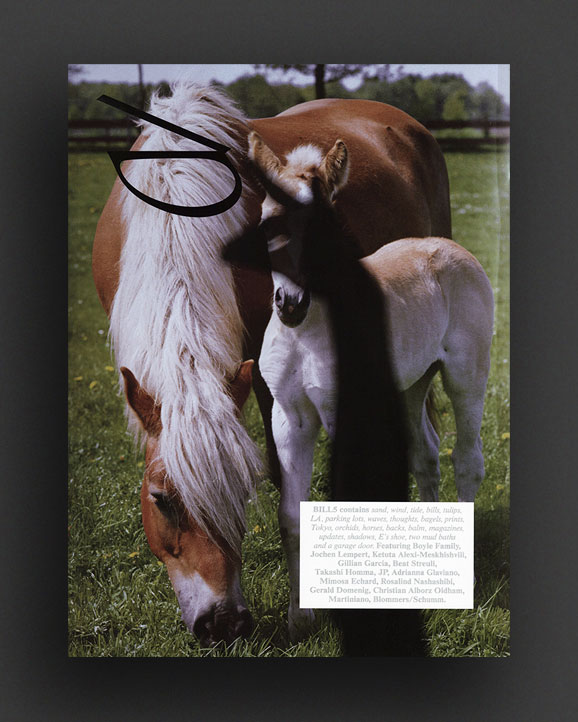
‘Bill’ is annual magazine that prioritises visual reading of its photographic stories without the distraction of text. This issue contains 192 offset pages printed in CMYK, silver, and black and white on a dozen different paper stocks, along with some Japanese bound signatures. Designed, edited, and produced by Julie Peeters and associate editor Elena Narbutaite.
Sand, wind, tide, bills, tulips, LA, parking lots, waves, thoughts, bagels, prints, Tokyo, orchids, horses, backs, balm, magazines, updates, shadows, Elena's shoe, two mudbaths and a garage door...
by Boyle Family, Jochen Lempert, Ketuta Alexi-Meskhishvili, Gillian Garcia, Beat Streuli, Takashi Homma, JP, Adrianna Glaviano, Mimosa Echard, Rosalind Nashashibi, Gerald Domenig, Christian Kōun Alborz Oldham, Martiniano, Blommers Schumm
2024, English
Softcover, 56 pages, 22.86 × 17.78 cm
Ed. of 500,
Published by
Friend Editions / New York
$48.00 - Out of stock
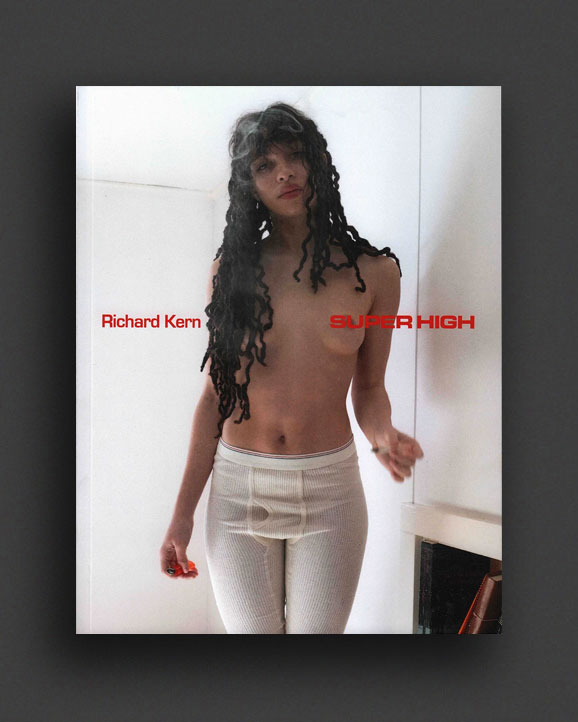
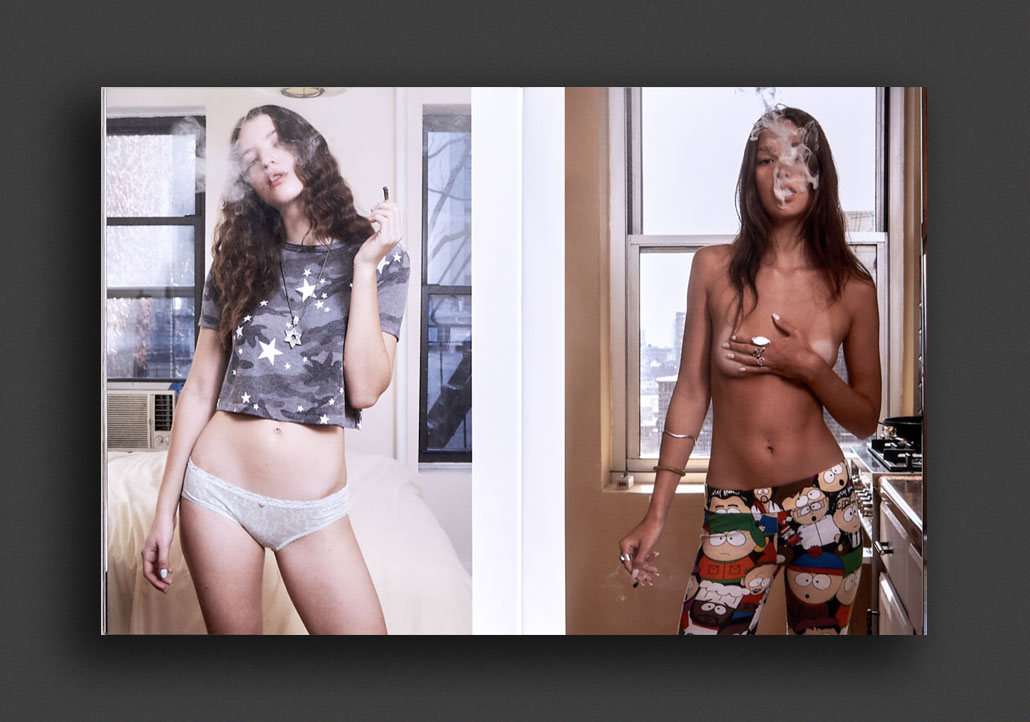
KERN IS BACK ONCE AGAIN WITH A POT BOOK OF YOUR DREAMS. THIRD IN THE SERIES OF HIGH BOOKS FEATURING NEW YORK AND MIAMI GIRLS SMOKING. SHOT BETWEEN 2016 AND 2024. IT'S REALLY GOOD.
2024, English / French
Softcover, 256 pages, 24 x 17.5 cm
Published by
May Revue / Paris
$34.00 - Out of stock
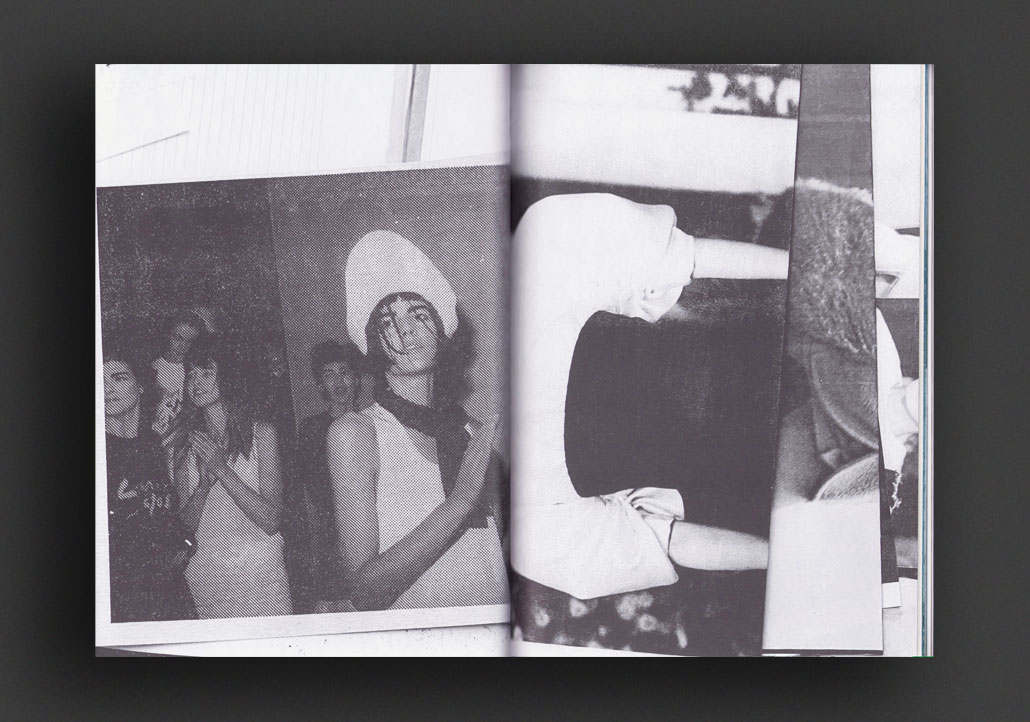
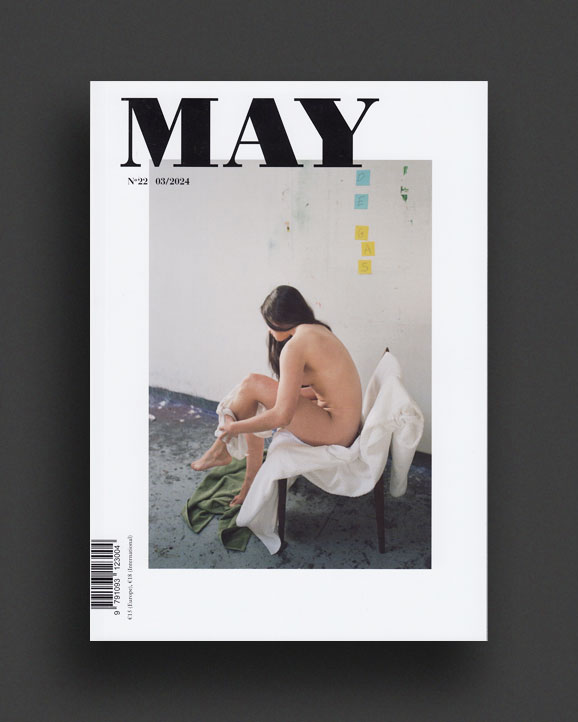
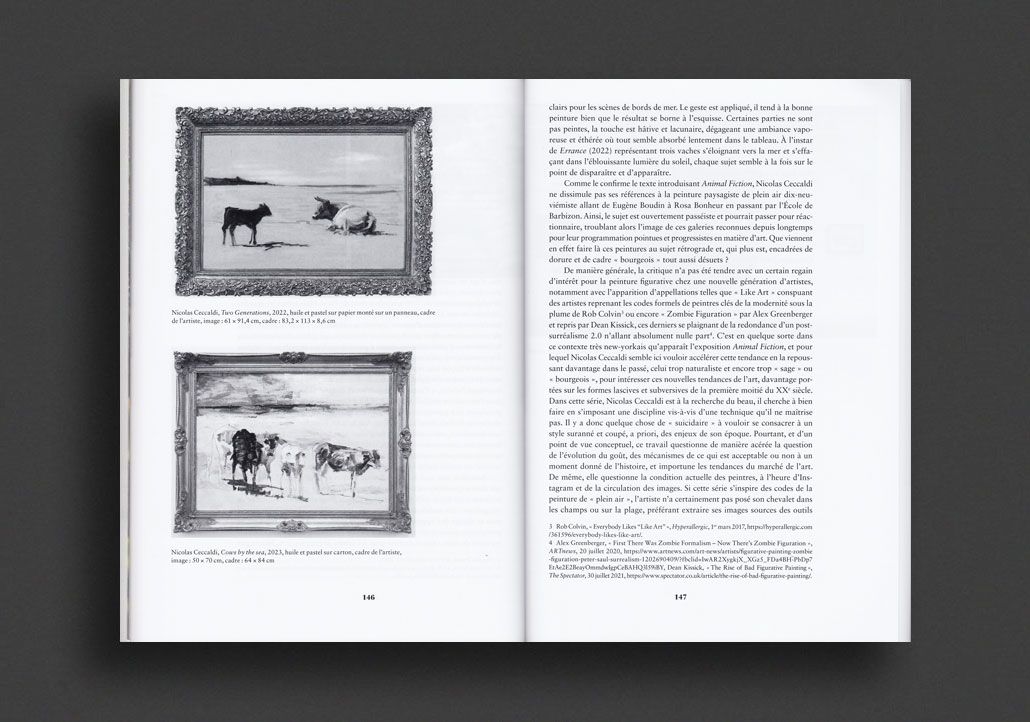
Introduction to Sylvère Lotringer's Interviews by Chris Kraus, interviews with David Wojnarowicz and Kathy Acker by Sylvère Lotringer, Machines for Looking by Karl Holmqvist, Anette Freudenberger on Hélène Fauquet, Gianmaria Andreetta on Yuki Kimura, Nick Irvin on Sam Pulitzer, Annie Ochmanek on Marc Kokopeli, Benoît Lamy de la Chapelle on Nicolas Ceccaldi, Shiv Kotecha on Klara Lidén and Hannah Black, Anke Dyes on Marie Angeletti, E.C. Feiss on Andrea Fraser, Thea Westreich Wagner, Our Guide to Comedy-Adventure by Bernadette Van-Huy.
Conceived as a collective space in which to develop thoughts and confront positions on artistic production, May magazine examines, once a year, contemporary art practice and theory in direct engagement with the issues, contexts and strategies that construct these two fields. An approach that could be summed up as critique at work – or as critique actively performed in text and art forms alike.
Featuring essays, interviews, art works and reviews by artists, writers and diverse practitioners of the arts, the magazine also intends to address the economy of the production of knowledge – the starting point of this reflection being the space of indistinction between information and advertisment typical of our time. This implies a dialogue with forms of critique produced in other fields.
2021, English
Softcover (w. print), 208 pages, 23 x 30 cm
1st Edition, Out of print title / used / very good
Published by
A Magazine / Antwerp
$200.00 - Out of stock
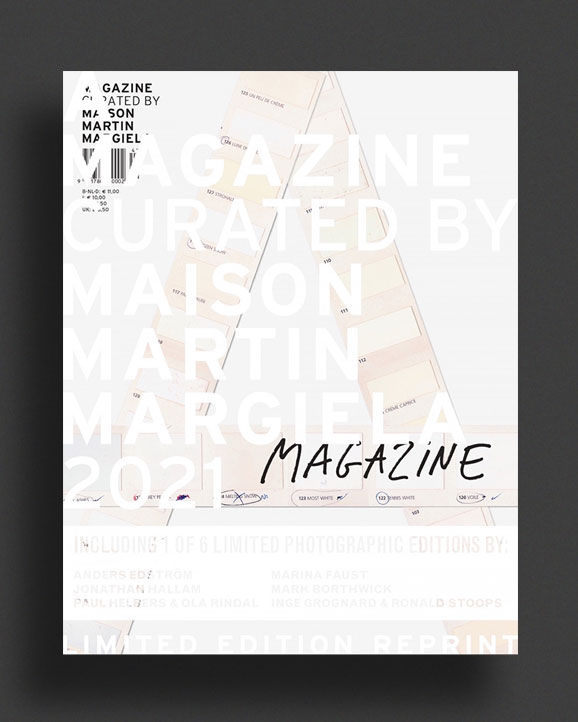
On the occasion of our 20th anniversary, A Magazine presents a limited-edition reprint of A Magazine Curated By Maison Martin Margiela. Originally released in 2004, this project can be traced back to the Belgian origins of A Magazine, which was founded in Antwerp by Walter Van Beirendonck in 2001.
After the magazines N°A, N°B, N°C, N°D and N°E, A Magazine Curated By Maison Martin Margiela was the first ever issue to bear the ‘Curated By’ title, and is a testament to this core concept thanks to Martin Margiela’s insightful mix of collaborators and projects that unveils many key names working quietly behind-the-scenes as parts of his anonymous fashion collective. Though not a single contribution bears his name, every page is imbued with the essence of the Maison, with written recounts via fax and photocopy as well as photographic and artistic projects by permanent staff members, trainees, assistants, models, artists, photographers, musicians, set designers and filmmakers.
Nearly two decades after its original release, the issue remains a bold statement that acknowledges the season-less, timeless nature of A Magazine. As a cult and collectible object in the realm of printed matter, it is a testament to the ongoing relevance of the founding ideals of the Maison Martin Margiela: from the deconstruction of garment-making and the disruption of classical ideals in photography, to such phenomena as street casting, unconventional beauty, subversive communication, and a Dadaist approach to the very concept of fashion and object design.
The 2021 edition is an identical reprint of the original magazine with matched paper stock and cover treatments, with all original content preserved.
Accompanying the issue, a selection of 6 archival images from Mark Borthwick, Anders Edström, Marina Faust, Jonathan Hallam, Ola Rindal and Ronald Stoops have been issued as 240 x 180mm unsigned prints.
Each copy contains a single print placed at random – in the spirit of the Maison Martin Margiela.
Contributor:
Åbäke, Ali Mahdavi, BLESS, Bob Verhelst, Claudia Riedel, David Ballu, Dorothee Perret, Elisabeth Broekaert, Eric Traoré, Frank Pay, Gerdi Esch, Hilde Bouchez, Hilde Decock, Inge Grognard, Jacques Habbah, Jane Birkin, Jonathan Hall House, Kanako B. Koga, Katerina Jebb, Kristina De Coninck, Kyoichi Tsuzuki, Laurence Passera, Laurent Mercier, Lutz Huelle, Marina Faust, Mark Borthwick, Nigel Bennett, Nigel Scott, Ola Rindal, Patrick Scallon, Paul Boudens, Paul Helbers, Peter Pilotto, Pierre Gayte, Ronald Stoops, Roxane Danset, Sébastien Meunier, Sherald Lamden, Tetsuya Kitayama, Violeta Sanchez, Yung
1998, Japanese
Softcover, 130 pages, 30 x 22.5 cm
1st Edition, Out of print title / used / very good
Published by
Studio Voice / Tokyo
$160.00 - Out of stock
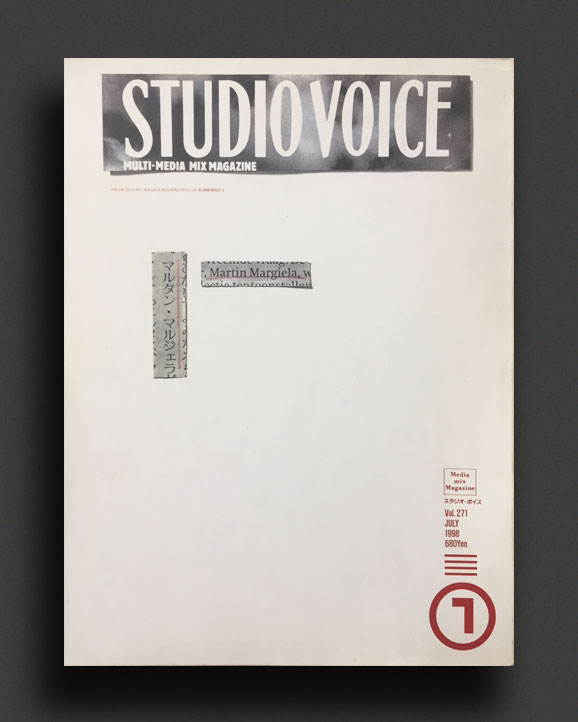
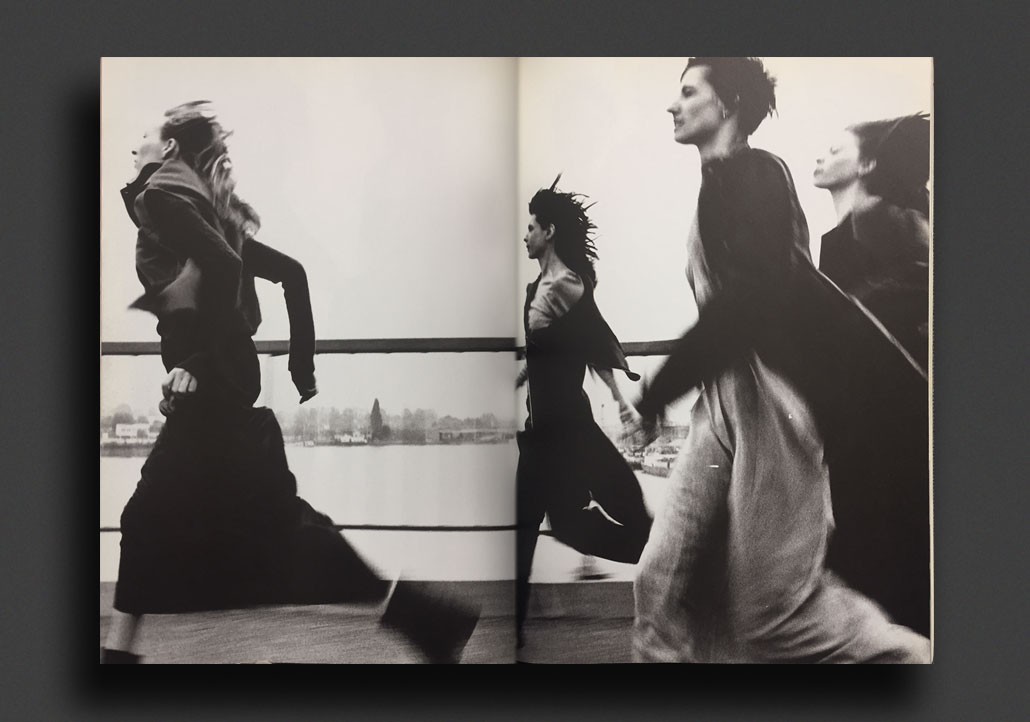
Rare 1998 special collector's issue of Japan's celebrated Studio Voice, dedicated to the work of Martin Margiela. Outside of the Margiela STREET issues, this would have been the largest feature committed to the Belgian fashion designer at the time, with most of the content unseen elsewhere. Almost 50 pages of large colour and b/w Margiela photographic shoots by Marina Faust, Mark Borthwick, and Ronald Stoops, amongst others, plus the Margiela exhibition at the Boymans Museum in Rotterdam, the Bacteria Project, "Working By Hand - Artisanal Production", Margiela's first collection for HERMÈS (98/99 AW), "Endless Threads" (text by Sydney Picasso), and a rare Q&A with Margiela himself.
As a bonus, this issue also includes artwork by EYƎ (Boredoms, etc.)!
Very Good copy. Light wear.
2000, German
Softcover, 80 pages,
1st Edition, Out of print title / used / very good
Published by
Fridericianum / Kassel
Haus der Kunst / Munich
$35.00 - Out of stock
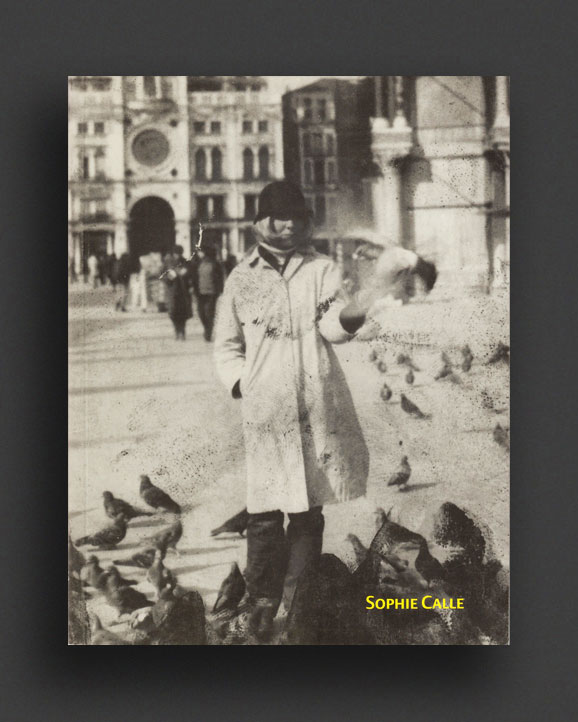
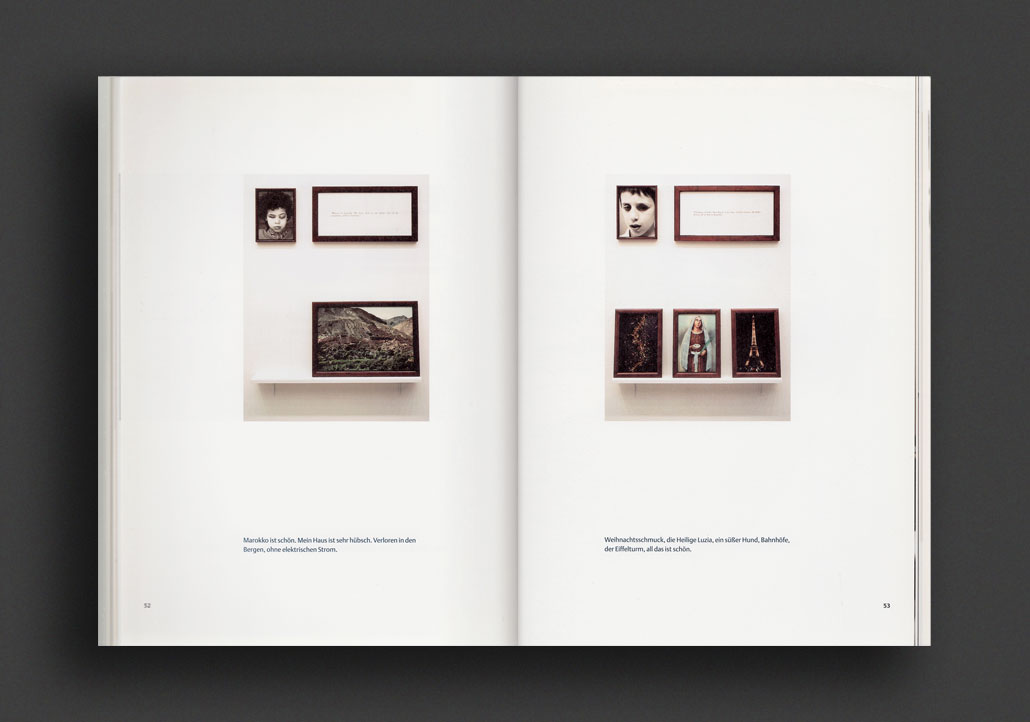
Heavily illustrated out-of-print German catalogue published with Sophie Calle on the occasion of her major exhibition at Museum Fridericianum Kassel, 8 April— 21May 2000 and Haus der Kunst, Münich, 26 August—12 November 2000. Artworks are accompanied by texts by Calle in German.
Sophie Calle is a French writer, photographer, installation artist, and conceptual artist. Calle's work is distinguished by its use of arbitrary sets of constraints, and evokes the French literary movement known as Oulipo.
Very Good copy.
1988, Japanese
Softcover, 208 pages, 13 x 18 cm
1st Edition, Out of print title / used / very good
Published by
Fiction Inc. / Tokyo
$70.00 - Out of stock
Issue No.35 of the great SALE2 periodical from Tokyo Japan, founded in 1984 by Makoto Orui, who later became art director for Purple magazine in France and Rockin’on magazine in Japan. SALE2 was active for about 14 years during the 1980s—1990s, published regularly as a sort-of fanzine/journal/catalogue/pocket-book by Fiction, Inc., a specialty shop and publisher of fetish and erotica in Tokyo in the 1980-90s. With Orui's distinct design SALE2 developed an exclusive curated editorial set on ‘erotisism and its spiritual philosophy’, with each issue exploring different themes and features, heavy on fetishism and erotic art.
Issue No.35, the "EROTIK!!" issue features erotic writings and artwork throughout by Hans Bellmer, Dorothea Tanning, André Berg, Pierre Molinier, Max Ernst, Armando Calvelli, articles on vintage stag films, nude French postcards, interspersed with lots of mysterious vintage erotic imagery, bondage illustration, and catalogue/advertisments/clippings of Eric Stanton, Irving Klaw, Jim, John Willie, Bizarre Comix, and much more...
Very heavily illustrated throughout with erotic photography and artwork, all texts in Japanese.
Very Good copy, tanning to pages.
1989, Japanese
Softcover, 184 pages, 21 x 14 cm
1st Edition, Out of print title / used / very good
Published by
Fiction Inc. / Tokyo
$70.00 - In stock -
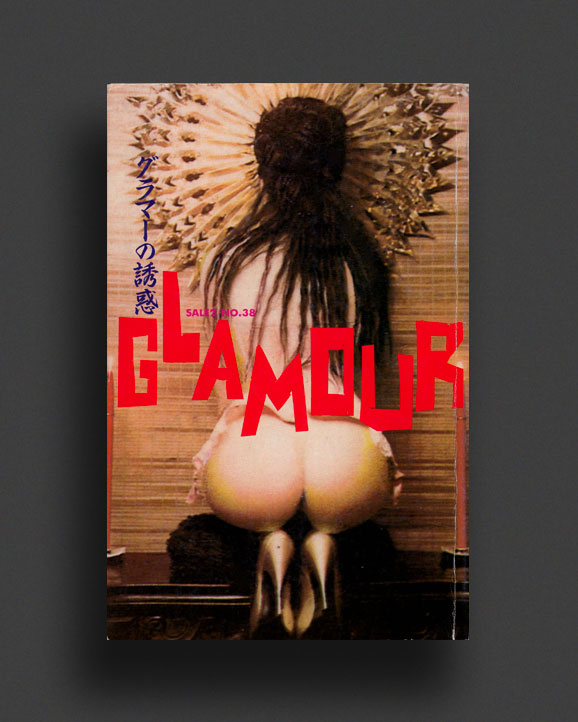
Issue No.38 of the great SALE2 periodical from Tokyo Japan, circa late 1980s and early 1990s. Published regularly as a sort-of fanzine/journal/catalogue/pocket-book by Fiction, Inc., a specialty shop and publisher of fetish and erotica in Tokyo in the 1980-90s. Each issue covers different themes and features, heavy on fetishism.
Issue No.38, the "Glamour" issue features Marc Attali, Carlo Mollino, Irving Claw, John Willie, Marie-Claire Montanari, Richard Cerf, Lucien Clergue, Marlo Broekmans, Stephan Lupino, Pierre Molinier, Claude Alexandre, Betty Page, clippings and adverts from Centurian periodicals, Sweet Gwen, Bondage Fantasy, and much more...
Very heavily illustrated throughout with erotic photography and artwork, all texts in Japanese.
1993, Japanese
Softcover (w. dust jacket and obi-strip), unpaginated, 14.5 x 10.5 cm
1st Edition, Out of print title / used / very good
Published by
Kawade Shobo Shinsha / Tokyo
$70.00 - Out of stock
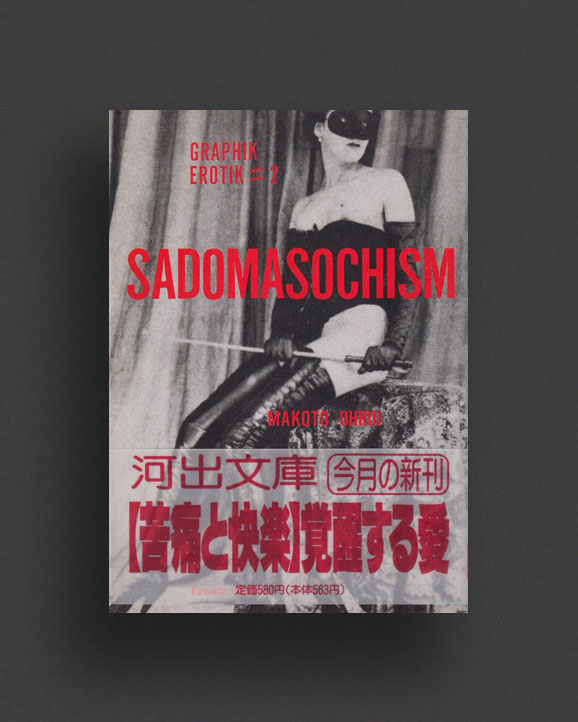
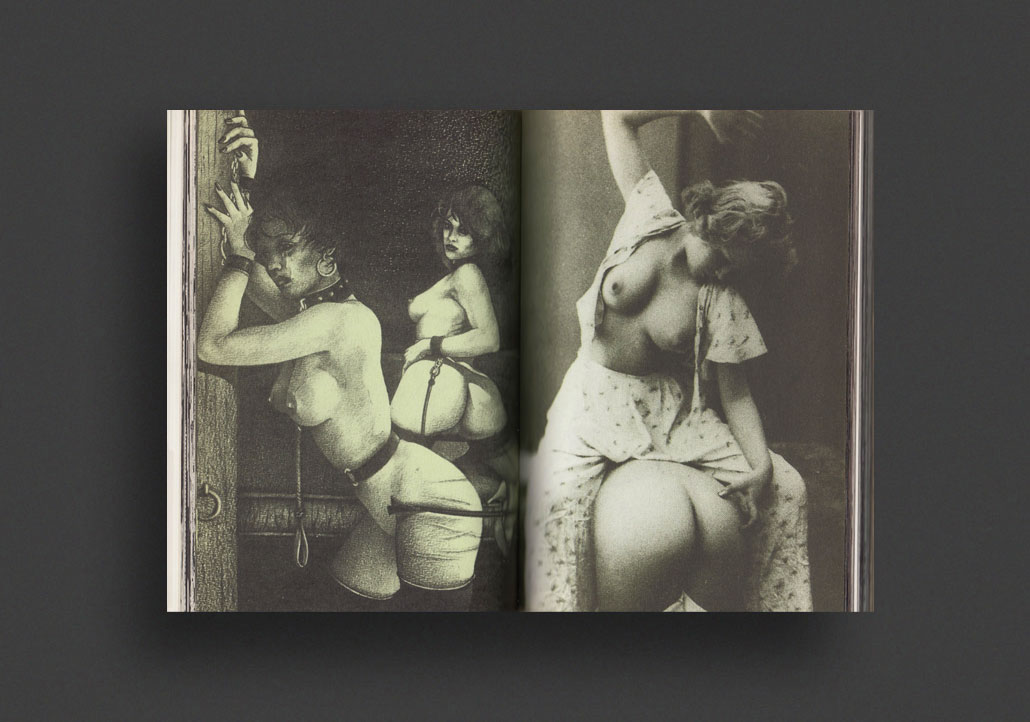
Amazing pocket art book of Sadomasochism, the second in the Graphik Erotik series edited by art director Makoto Ohrui (of SALE2/Fiction Inc./Purple/etc.) and published in Tokyo Japan by Kawade Bunko in 1993. Packed cover-to-cover with colour and b/w reproductions of European and American erotica illustrations and photography depicting all manner of lashings, spankings, and torture contraptions through the ages, including artworks by Carlo, Loïc Dubigeon, Serge Nazarieff, Serajat, Jean-Pierre Muhlstein, Juan Jose Fernandez, Luis Vigil, anonymous works from Bizarre Classix, reproductions of private collection prints, and much more. Perfectly compiled in the way SALE2 did so well, with elegant scrapbook style, dense with imagery, blown-up, full-bleed reproductions from many publications. Also includes two postcards bound-in featuring SM photography.
Makoto Ohrui founded the publishing house Fiction Inc. (later Radical Silence Production), the magazine SALE2, the gallery THE deep in Tokyo, and the magazine THE International. Ohrui was art director for SALE2, Purple, Rockin' On, and designed many books.
Very Good copy.
1983, Japanese
Softcover (w. dust jacket), 226 pages, 19 x 11 cm
1st Edition, Out of print title / used / very good
Published by
Goma Shobo / Tokyo
$240.00 - Out of stock
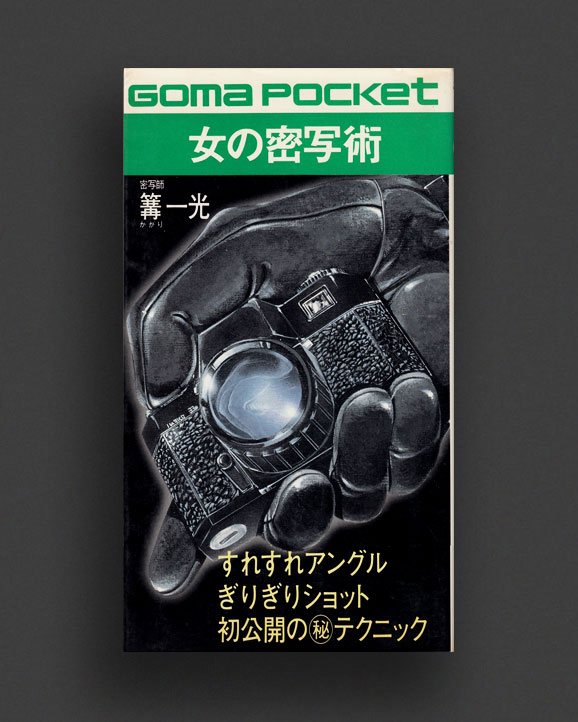
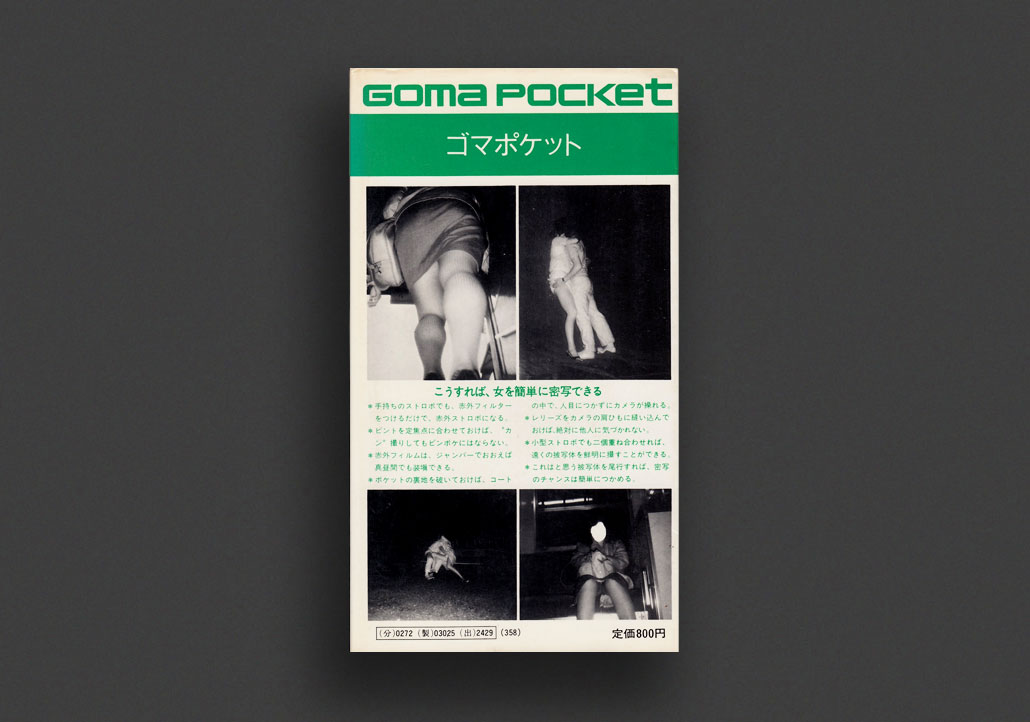
Very rare 1983 first edition of Japanese photographer Ikko Kagari's guide to surreptitious infrared photography. “A guide to taking hidden photos of women with an infrared camera with images such as car sex, office sex, lovers going into love hotels, night sex in the park, upskirt shots on the train; on escalators and at clubs, all shot in infrared.” A profusely illustrated and "revealing" in-depth photo/text book from the photographer of the infamous "Document Commuter Train" the year previous, Kagari here accompanies his photography with texts on his experiences, insights, technical clandestine methods, along with instructional manga and advice to amateurs. Kagari made a number of these extraordinary, extremely questionable, surreptitious infrared photography collections in the 1980's, featuring secret "close-up photography" documenting sexual activities in public places — groping and upskirt photographs taken on packed Tokyo Metro commuter trains, in nightclubs, on escalators, couples making it in public toilets, parked cars and in parks with infrared strobe techniques reminiscent of Kohei Yoshiyuki's incredible Document Park (the two often featured side-by-side in books and journals, both their masterpiece photobooks cited in Parr & Badger's The Photobook series). A "modern eroticism of the voyeur in the cold metropolis". Kagari's grainy, blown-out infrared images that blur all lines between voyeur/participant and simulated/real, make for disorientating, sometimes claustrophobic, uneasy viewing. But they are also absolutely stunning, effective photo books that feel as conceptual as they do devious. Kagari's fleeting in flagrante scenes capture erotic desire and criminal impulse engulfed by the soft folds of entangled garment fabrics with stunning technique.
Very Good copy in VG dust jacket.
1982, Japanese
Softcover (w. dust jacket), 96 pages, 30 x 21 cm
1st Edition, Out of print title / used / very good
Published by
Hama Shobo / Tokyo
$600.00 - Out of stock
Very rare first controversial photo book by Japanese photographer Ikko Kagari, published in 1982 in Tokyo. Kagari made a number of these extraordinary, extremely questionable, surreptitious infrared photography collections in the 1980's—1990's, featuring secret "close-up photography" documenting clandestine sexual activities in public places — groping and upskirt photographs taken on packed Tokyo Metro commuter trains, in nightclubs, on escalators, couples making it in public toilets, parked cars and in parks with infrared strobe techniques reminiscent of Kohei Yoshiyuki's incredible Document Park (the two often featured side-by-side in books and journals). Document Commuter Train is his cult highly sought-after "masterpiece", made most collectible in the West through it's feature in Parr & Badger's "The Photobook: Vol. III". Document Commuter Train is a beautifully produced photo book entirely made up of the infamous rush hour train carriage photography. Cover-to-cover b/w reproductions of Kagari's grainy, blown-out infrared images that blur all lines between voyeur/participant and simulated/real, make for disorientating, sometimes claustrophobic, uneasy viewing. But they are also absolutely stunning, effective photo books that feel as conceptual as they do devious. Kagari's fleeting in flagrante scenes capture erotic desire and criminal impulse engulfed by the soft folds of entangled garment fabrics with stunning technique. He went so far as to publish a how-to book for amateurs! Thankfully the 2000s saw the introduction of women-only carriages on the Tokyo Metro, relegating such expertise to history.
Very Good copy with VG dust jacket.
1983, Japanese
Softcover (w. dust jacket), 240 pages, 17.5 x 11 cm
1st Edition, Out of print title / used / very good
Published by
Hama Shobo / Tokyo
$180.00 - Out of stock
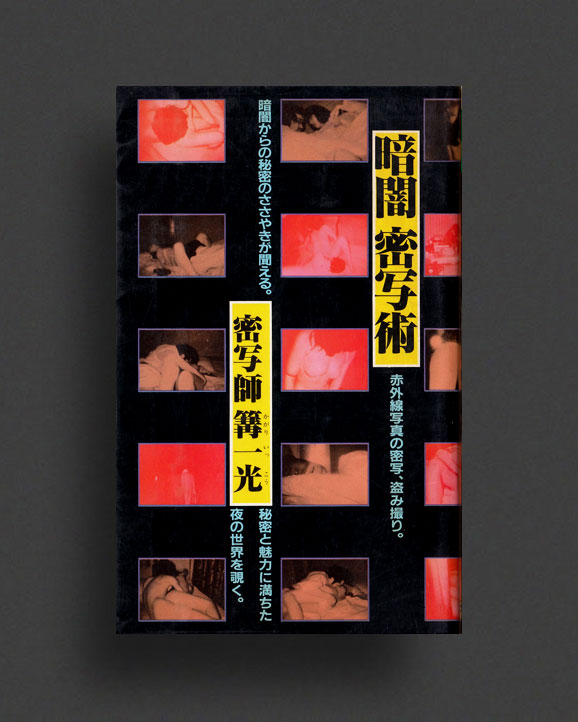
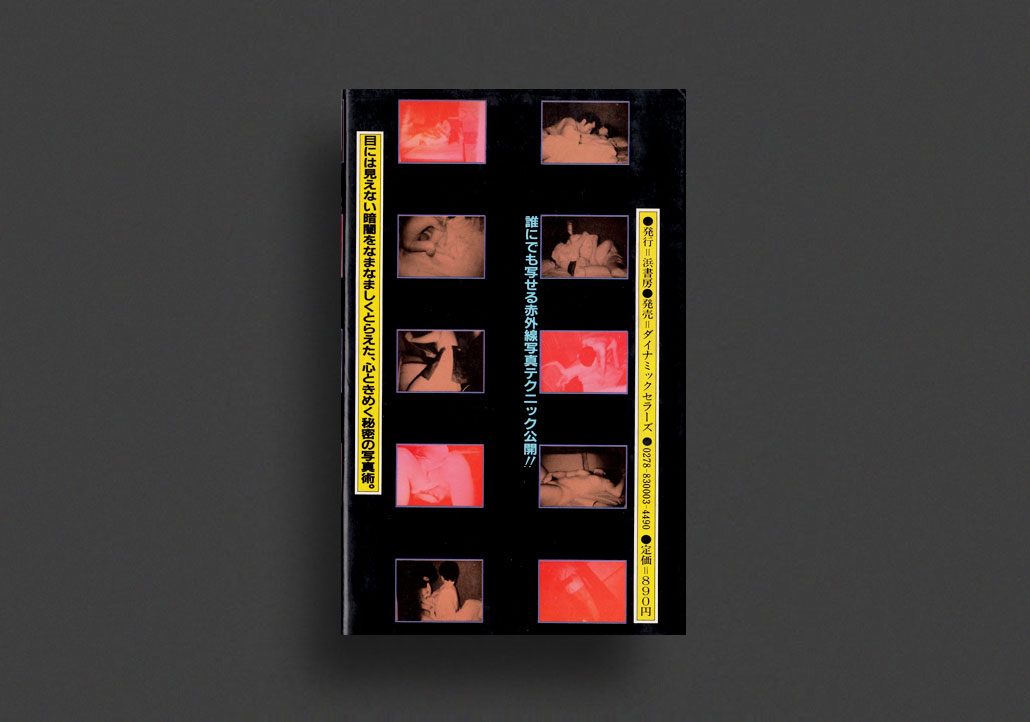
Rare 1983 photo/text book published the year following Ikko Kagari's infamous "Document Commuter Train" (1982). After the acclaim of his masterpiece photobook, Kagari stepped further into the darkness with this collection of his close-up candid infrared photography. Kagari takes to the streets, the parks, the gay beats, the girl's toilets, the alley-ways, the bars, the back-rooms, and back onto the trains with his "modern eroticism of the voyeur in the cold metropolis". "Full of secrets and charm", Kagari here accompanies his photography with texts on his experiences, insights, technical clandestine methods, along with amazing and humorous instructional manga. Kagari made a number of these extraordinary, extremely questionable, surreptitious infrared photography collections in the 1980's, featuring secret "close-up photography" documenting sexual activities in public places — groping and upskirt photographs taken on packed Tokyo Metro commuter trains, in nightclubs, on escalators, couples making it in public toilets, parked cars and in parks with infrared strobe techniques reminiscent of Kohei Yoshiyuki's incredible Document Park (the two often featured side-by-side in books and journals, both their masterpiece photobooks cited in Parr & Badger's The Photobook series). Kagari's grainy, blown-out infrared images that blur all lines between voyeur/participant and simulated/real, make for disorientating, sometimes claustrophobic, uneasy viewing. But they are also absolutely stunning, effective photo books that feel as conceptual as they do devious. Kagari's fleeting in flagrante scenes capture erotic desire and criminal impulse engulfed by the soft folds of entangled garment fabrics with stunning technique.
Very Good in VG dust jacket.
1982, Japanese
Softcover (w. dust jacket), 238 pages, 17.5 x 11 cm
1st Edition, Out of print title / used / very good
Published by
Hama Shobo / Tokyo
$120.00 - Out of stock
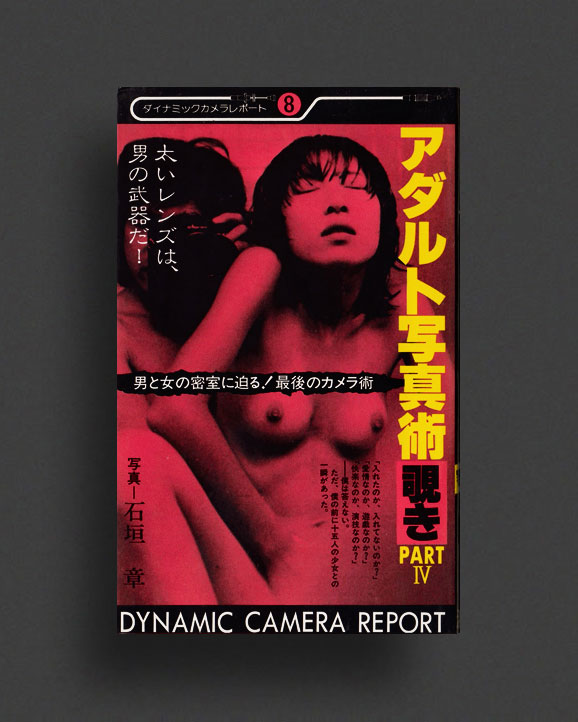
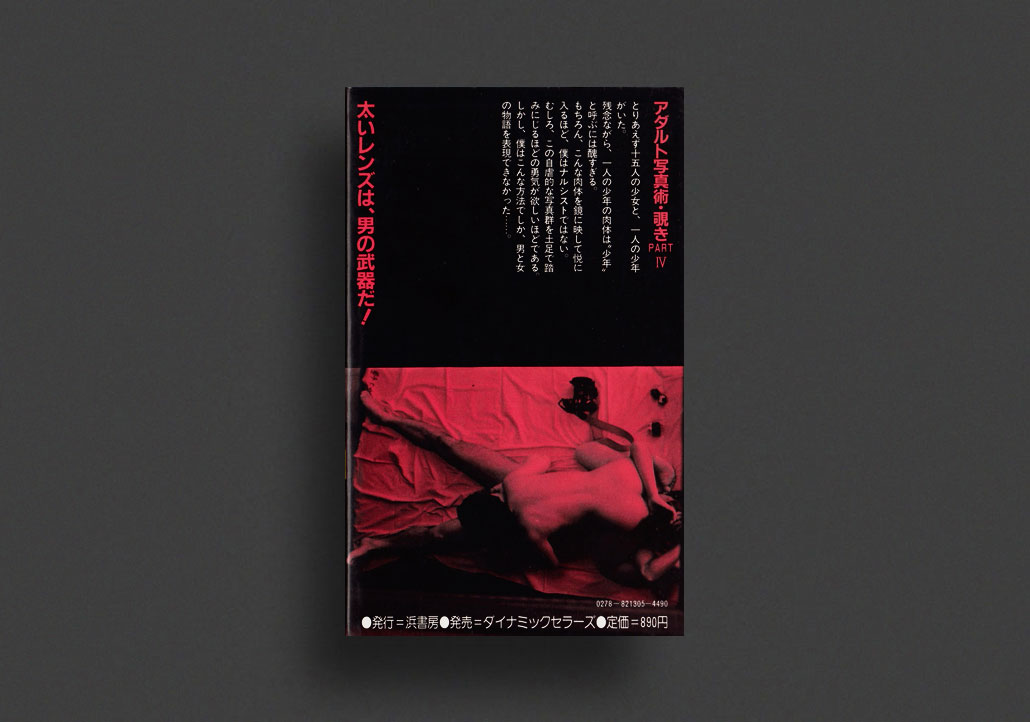
Rare first 1982 edition of acclaimed Japanese photographer Akira Ishigaki's heavily illustrated instructional photobook, published the same year as his award-winning bondage photobook “Strange Fruit”, now considered an absolute masterpiece of SM art photography. This is the fourth issue of Peeping that was published in a series in the 1980s. The first issue was by Yakuza photographer Michio Soejima, and the second and third by Ikko Kagari, of the infamous "Document Commuter Train" (1982). Profusely illustrated in b/w and gloss colour, Secret Rooms combines Ishigaki's erotic photographs, many shot within the "secret" mirrored room, alongside other peeper/close-up stories, Ishigaki's camera techniques, how-to manga, and experiences in Ishigaki's words. File alongside Kohei Yoshiyuki and Ikko Kagari.
Akira Ishigaki (b. 1953) was a Japanese photographer who was active from a young age in the 1970's, shooting vending machine books and vinyl books. In 1982, still in his 20's, he published the award-winning photobook “Strange Fruit”, now considered an absolute masterpiece of SM art photography with it's 1993 re-edition in collector's hardcover. "Strange Fruit" (featuring the bondage of then little-known bakushi Kaoru Roppongi) became a hot topic, and Ishigaki held solo exhibitions both in Japan and New York the following year. In 1984 his work was featured in the French magazine "PHOTO" and he became a pioneer of the overseas Kinbaku Art boom. He is also famous for his photo collections of musician Endo Michiro (Stalin). From the mid-1980s to the 1990s, he also released many directorial works for Nikkatsu films and videos. He passed away in September 2011.
Very Good in VG dust jacket.
1981, Japanese
Softcover (w. dust jacket), 252 pages, 17.5 x 11 cm
1st Edition, Out of print title / used / very good
Published by
Futami Shobo / Japan
$160.00 - Out of stock
"Whether voyeuristic or hardcore, Akira Ishigaki's shutters are a wedge of passion that penetrates the hidden city."
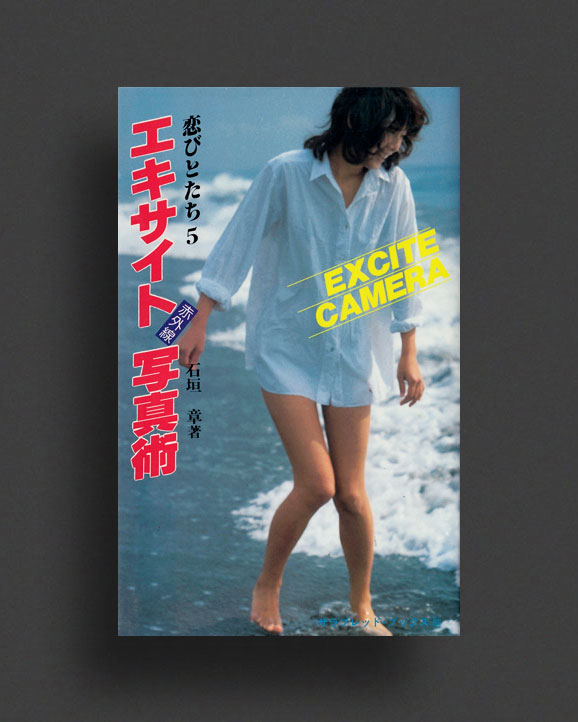
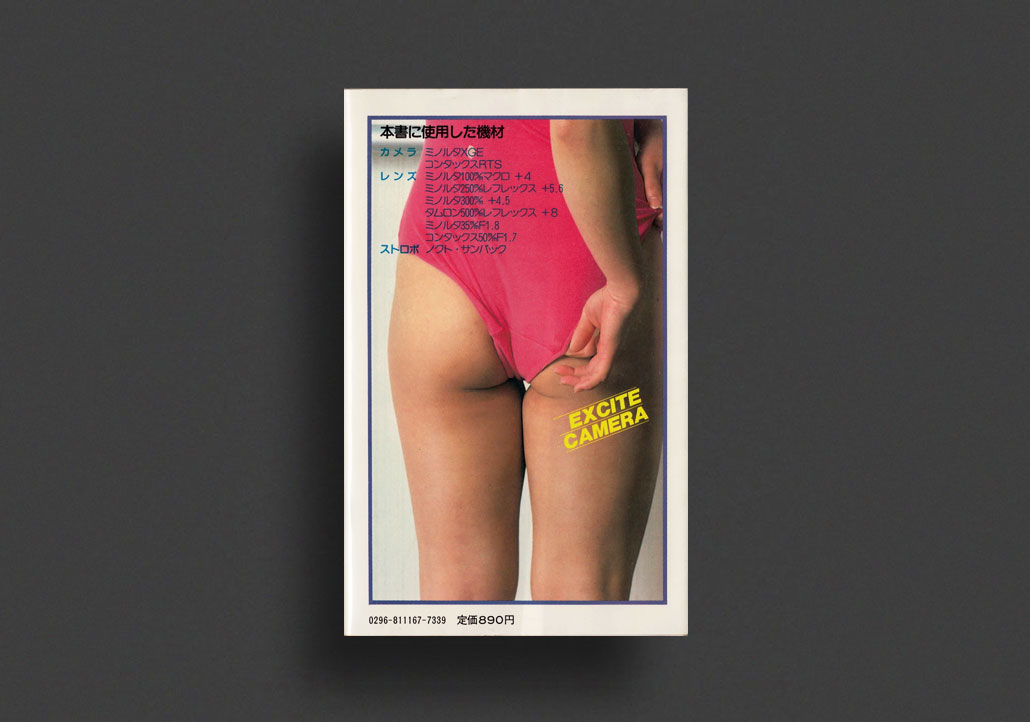
Very rare 1981 infrared and peeping photobook collection edited by acclaimed Japanese photographer Akira Ishigaki, published the year before his award-winning bondage photobook “Strange Fruit”, now considered an absolute masterpiece of SM art photography. Excite Infrared Photography introduces this "modern eroticism of the voyeur in the metropolis" via three of the celebrated masters of this deviant genre, Akira Ishigaki, Kohei Yoshiyuki and Ikko Kagari. Lavishly illustrated with colour photographic collections by all, many now infamous, many not seen elsewhere, they are accompanied by editor Ishigaki's experiences, technical insights and philosophical reflections on the world of peeping photography. Considering this was published in 1981, right after Kohei Yoshiyuki's "Document Park" (1980), and the year before Kagari's infamous "Document Commuter Train" (1982) and Ishigaki's award-winning “Strange Fruit” (1982), Excite Infrared Photography makes for an important and rare editorial statement on a clandestine moment in Japanese erotic photography, where fleeting in flagrante scenes capture erotic desire and criminal impulse, and lines between voyeur/participant and simulated/real are blurred.
Akira Ishigaki (b. 1953) was a Japanese photographer who was active from a young age in the 1970's, shooting vending machine books and vinyl books. In 1982, still in his 20's, he published the award-winning photobook “Strange Fruit”, now considered an absolute masterpiece of SM art photography with it's 1993 re-edition in collector's hardcover. "Strange Fruit" (featuring the bondage of then little-known bakushi Kaoru Roppongi) became a hot topic, and Ishigaki held solo exhibitions both in Japan and New York the following year. In 1984 his work was featured in the French magazine "PHOTO" and he became a pioneer of the overseas Kinbaku Art boom. He is also famous for his photo collections of musician Endo Michiro (Stalin). From the mid-1980s to the 1990s, he also released many directorial works for Nikkatsu films and videos. He passed away in September 2011.
Very Good copy in VG dust jacket.
2014, Japanese
Softcover (in card slipcase w. obi), 260 pages, 25.4 x 18.2 cm
Signed.,
1st Edition, Out of print title / used / fine
Published by
Town to House / Japan
$200.00 - In stock -
Signed first edition of "Shinjuku 1968" by acclaimed Japanese photographer and representative of the Provoke movement, Hitomi Watanabe, published in 2014 and now out of print.
"The core of the collection is formed by photographs from the year 1969, the year in which the Shinjuku West Exit square became a passage and a meeting penned by the media as “Folk Guerilla” was obliterated by the riot police, a greater part of the collected photos were taken in 1968. At that time, the first place editors would take me to was a bar called Unicon, near Shinjuku Gyoen. After that, we would go barhopping to places like DUG (which is still going strong even today),Trevi, DIG, Mokuba, Pit In, Bizarre, places where modern jazz was playing. The time of the Red Tents of Juro Kara near Hanazono shrine, of the avant-garde films of ATG, the performance art happenings on the streets, before they became pedestrian zones… It was a time when hippies stoned off their mind would cross your path, and “underground” was the word you’d hear in the streets of Shinjuku. When it was not Shibuya or Shimokitazawa, not Kichijoji but Shinjuku where culture was taking place. Days like these continued, until one night, a huge riot took place in the Shinjuku area. The 10.21 International Anti-War Day. While being jostled with the crowd, the once abstract Vietnam War and its consequences became a tangible reality which I experienced with my own body.
In the Shinjuku of 1968, you can see an entire era reflected." — Excerpt from the afterword
"These may be photographs of the past, but they show the present." — Nobuyoshi Araki
Shinjuku 1968 consists entirely of Watanabe's photographs of the Tokyo neighbourhood Shinjuku at the end of the 1960s, which can be said to be the beginning of her photographic career. It was here that she first encountered the Japanese counter culture and became involved in the student movement and anti-war protests. Her candid photographs of the everyday lives of the protesters, the state violence, and the aftermath of rioting from her insider’s vantage on this tumultuous moment afforded her work an undeniable, enduring power. Here, in "Shinjuku 1968", Watanabe presents her documents of the protests and rallies beside her images of the underground scene, the theatre, clubs, the Shinjuku streets, shopfronts, and the everyday folk that inhabited the neighbourhood at that time, with some of the images republished for the first time since her iconic "Shinjuku Contemporary 1968" and "Kaihoku '68 / Liberated Area '68" photo books of the 1960s.
Very Good copy, almost As New, with original slipcase and publisher's obi-strip (featuring Nobuyoshi Araki testimonial). Signed and dated by Hitomi Watanabe in 2015 to the colophon page in black pen.