World Food Books' programme is largely produced on Kulin Nation land. We acknowledge the Wurundjeri people of the Kulin Nation as the first and continuing custodians of this land, and pay respect to their Elders past, present, and emerging.
World Food Books is an arts and special interests bookshop in Naarm / Melbourne. Founded in 2010, World Food Books is devoted to the presentation of a rotating, hand-selection of international art, design, literary and counterculture publications with an emphasis on the anti-traditional, the experimental, the avant-garde, the heretic, the marginal.
Presenting new titles alongside rare and out-of-print books, catalogues and journals spanning the fields of modern and contemporary art, design, photography, illustration, film, literature, poetry, cultural theory, philosophy, sexuality, popular and underground culture in its many radical forms, World Food Books wishes to encourage adventurous, thoughtful and open-minded reading, looking, writing, and exchange of publishing and ideas, both current and historical.
As well as our bookshop, located in Melbourne's historical Nicholas Building, all of our inventory is available internationally via our online mail-order service.
World Food Books semi-regularly co-ordinates "Occasions", a programme of exhibits and events at the bookshop and in partnership with other hosts (such as museums and art galleries) that develop out of the activities, relationships and content of the bookshop itself.
World Food Books
The Nicholas Building
37 Swanston Street
Room 5, Level 6
Melbourne 3000
Australia
SHOP HOURS:
Thu–Sat 11–5
WEB-SHOP OPEN 24/7
World Food Books
Postal Address:
PO Box 435
Flinders Lane
Victoria 8009
Australia
Art
Theory / Essay
Architecture / Interior
Graphic Design / Typography
Photography
Fashion
Eros
LGBTQ+
Fiction / Poetry
Weird / Speculative / Science Fiction / Horror
Transgressive / Visceral / Abject
Symbolism / Decadence / Fin de siècle
Film / Video
Painting
Sculpture / Installation
Performance / Dance / Theater
Drawing
Sound / Music
Curatorial
Group Shows / Collections
Periodicals
Out-of-print / Rare
Posters / Ephemera / Discs
Signed Books
World Food Books Gift Voucher
World Food Book Bag
Australian Art
Australian Fiction
Australian Science Fiction / Speculative Fiction
Australian Poetry
Australian Photography
Japanese Photography
Conceptual Art
Minimal Art
Dada
'Pataphysics / Oulipo
Fluxus
Concrete Poetry
Pop Art
Surrealism
Arte Povera
Arte Informale / Haute Pâte / Tachism
Nouveau Réalisme / Zero / Kinetic
Situationism / Lettrism
Collage / Mail Art / Xerox Art
Art Brut / Folk / Visionary / Fantastic
Illustration / Graphic Art / Bandes Dessinées
Furniture
Italian Radical Design / Postmodernism
Textiles
Ceramics / Glass
Counterculture
Protest / Revolt
Philosophy
Psychoanalysis
Anthropology
Anarchism
Socialism / Anarchism / Communism / Capitalism
Literary Theory / Semiotics / Language
Feminism / Women's Studies
Gender Studies / Sexuality
Anthropology
Fetishism / BDSM
Drugs / Psychedelia
Crime / Violence
Animal Rights / Veganism
Occult / Esoterica
Ecology / Earth / Alternative Living
Whole Earth / Crafts
All prices in AUD (Australian dollars)
Pick-Ups
Pick-up orders can be collected in our bookshop during opening hours after order date. Please collect any Pick-up orders within 2 weeks of ordering as we have limited storage space. Orders will be released back into stock if not collected within this time. No refunds can be made for pick-ups left un-collected. If you cannot make it in to the bookshop in this time-frame, please choose postage option.
Return Policy
All sales are final. We do accept returns (for refund or exchange) for items received in error. All our orders are packed with special care using heavy-duty padding and cardboard book-mailers or bubble mailers (for smaller books), using reinforcement where required. We cannot take responsibility for any lost, stolen or damaged parcels.
Insurance
Should you wish to insure your package, please email us directly after placing your order and we can organise this at a small extra expense. Although all standard/express tracked packages are very safe and dependable, we cannot take responsibility for any lost, stolen or damaged parcels. We recommend insurance on valuable orders.
Interested in selling your old books, catalogues, journals, magazines, comics, fanzines, ephemera? We are always looking for interesting, unusual and out-of-print books to buy. We only buy books in our fields of interest and specialty, and that we feel we can resell.
We base these prices on desirability, market value, in-print prices, condition and our current stock levels. We offer cash, store credit, and can take stock on consignment. All
about 25% of the price we expect to get when we sell them, or 30% in store credit. We base these prices on desirability, market value, in-print prices, condition and our current stock levels.
Sell your books any day of the week. You can drop them off and return later. If you have a lot of books, we can visit your Sydney home.
We buy books that we feel we can resell. We offer about 25 % of the price we expect to get when we sell them, or 30% in store credit. We base these prices on desirability, market value, in-print prices, condition and our current stock levels.
Philadelphia Wireman
03 August - 01 September, 2018
World Food Books is proud to announce our next Occasion, the first presentation of sculptures by Philadelphia Wireman in Australia.
The Philadelphia Wireman sculptures were found abandoned in an alley off Philadelphia’s South Street on trash night in 1982. Their discovery in a rapidly-changing neighbourhood undergoing extensive renovation, compounded with the failure of all attempts to locate the artist, suggests that the works may have been discarded after the maker’s death. Dubbed the "Philadelphia Wireman" during the first exhibition of this work, in 1985, the maker’s name, age, ethnicity, and even gender remain uncertain. The entire collection totals approximately 1200 pieces, all intricately bound together with tightly-wound heavy-gauge wire (along with a few small, abstract marker drawings, reminiscent both of Mark Tobey and J.B. Murry). The dense construction of the work, despite a modest range of scale and materials, is singularly obsessive and disciplined in design: a wire armature or exoskeleton firmly binds a bricolage of found objects including plastic, glass, food packaging, umbrella parts, tape, rubber, batteries, pens, leather, reflectors, nuts and bolts, nails, foil, coins, toys, watches, eyeglasses, tools, and jewellery.
Heavy with associations—anthropomorphic, zoomorphic, and socio-cultural responses to wrapped detritus—the totemic sculptures by Philadelphia Wireman have been discussed in the context of work created to fulfil the shamanistic needs of alternative religions in American culture. Curators, collectors, and critics have variously compared certain pieces to sculpture from Classical antiquity, Native American medicine bundles, African-American memory jugs, and African fetish objects. Reflecting the artist’s prolific and incredibly focused scavenging impulse, and despite—or perhaps enhanced by—their anonymity, these enigmatic objects function as urban artefacts and arbiters of power, though their origin and purpose is unknown. Philadelphia Wireman, whatever their identity, possessed an astonishing ability to isolate and communicate the concepts of power and energy through the selection and transformation of ordinary materials. Over the course of the past two decades, this collection has come to be regarded as an important discovery in the field of self-taught art and vernacular art.
Presented in collaboration with Fleisher-Ollman Gallery, Philadelphia, and Robert Heald, Wellington.
Susan Te Kahurangi King
02 February - 10 March, 2018
Susan Te Kahurangi King (24 February 1951 - ) has been a confident and prolific artist since she was a young child, drawing with readily available materials - pencils, ballpoint pens and felt-tip markers, on whatever paper is at hand. Between the ages of four and six Susan slowly ceased verbal communication. Her grandparents William and Myrtle Murphy had developed a special bond with Susan so they took on caring responsibilities for extended periods. Myrtle began informally archiving her work, carefully collecting and storing the drawings and compiling scrapbooks. No drawing was insignificant; every scrap of paper was kept. The King family are now the custodians of a vast collection containing over 7000 individual works, from tiny scraps of paper through to 5 meter long rolls.
The scrapbooks and diaries reveal Myrtle to be a woman of great patience and compassion, seeking to understand a child who was not always behaving as expected. She encouraged Susan to be observant, to explore her environment and absorb all the sights and sounds. Myrtle would show Susan’s drawings to friends and people in her community that she had dealings with, such as shopkeepers and postal workers, but this was not simply a case of a grandmother’s bias. She recognised that Susan had developed a sophisticated and unique visual language and sincerely believed that her art deserved serious attention.
This was an unorthodox attitude for the time. To provide some context, Jean Dubuffet coined the term Art Brut in 1945 to describe work created by self-taught artists – specifically residents of psychiatric institutions and those he considered to be visionaries or eccentrics. In 1972 Roger Cardinal extended this concept by adopting the term Outsider Art to describe work made by non-academically trained artists operating outside of mainstream art networks through choice or circumstance. Susan was born in Te Aroha, New Zealand in 1951, far from the artistic hubs of Paris and London that Dubuffet and Cardinal operated in. That Myrtle fêted Susan as a self-taught artist who deserved to be taken seriously shows how progressive her attitudes were.
Susan’s parents Doug and Dawn were also progressive. Over the years they had consulted numerous health practitioners about Susan’s condition, as the medical establishment could not provide an explanation as to why she had lapsed into silence. Dawn educated herself in the field of homeopathy and went on to treat all twelve of her children using these principles – basing prescriptions on her observations of their physical, mental and emotional state.
Doug was a linguist with an interest in philosophy who devoted what little spare time he had to studying Maori language and culture. To some extent their willingness to explore the fringes of the mainstream made them outsiders too but it was their commitment to living with integrity and their respect for individuality that ensured Susan’s creativity was always encouraged.
Even though Susan’s family supported her artistic pursuits, some staff in schools and hospitals saw it as an impediment to her assimilation into the community and discouraged it in a variety of ways. Her family was not always aware of this and therefore did not fully understand why Susan stopped drawing in the early 1990s. However, rather than dwell on the challenges that Susan faced in pursuit of her artistic practice, they prefer to highlight her achievements. In 2008 Susan began drawing again in earnest, after an almost 20 year interruption, and her work is now shown in galleries around the world.
Susan grew up without television and has been heavily influenced by the comics she read as a child. She is absolutely fearless in the appropriation of recognizable characters, such as Donald Duck and Mickey Mouse, in her work. She twists their limbs, contorts their faces, compresses them together, blends them into complex patterned backgrounds - always imbuing them with an incredible energy. Although Susan often used pop culture characters in her work they are not naive or childlike. These are drawings by a brilliant self-taught artist who has been creating exceptional work for decades without an audience in mind.
Mladen Stilinović
"Various Works 1986 - 1999"
02 February 16 - September 10, 2016
Various works 1986 - 1999, from two houses, from the collections of John Nixon, Sue Cramer, Kerrie Poliness, Peter Haffenden and Phoebe Haffenden.
Including: Geometry of Cakes (various shelves), 1993; Poor People’s Law (black and white plate), 1993; White Absence (glasses, ruler, set square, silver spoon, silver ladel with skin photograph and wooden cubes), 1990-1996; Exploitation of the Dead (grey and red star painting, wooden painting, black spoon with red table, red plate), 1984-1990; Money and Zeros (zero tie, paintings made for friends in Australia (Sue, John, Kerrie), numbers painting), 1991-1992; Words - Slogans (various t-shirts) - “they talk about the death of art...help! someone is trying to kill me”, “my sweet little lamb”, “work is a disease - Karl Marx”; Various artist books, catalogues, monographs, videos; Poster from exhibition Insulting Anarchy; "Circular" Croatian - Australian edition; Artist book by Vlado Martek (Dostoyevsky); more.
Thanks to Mladen Stilinović and Branka Stipančić.
Jonathan Walker
Always Will Need To Wear Winter Shirt Blue + Ochre Small Check Pattern
21 August - 21 September, 2015
Untitled
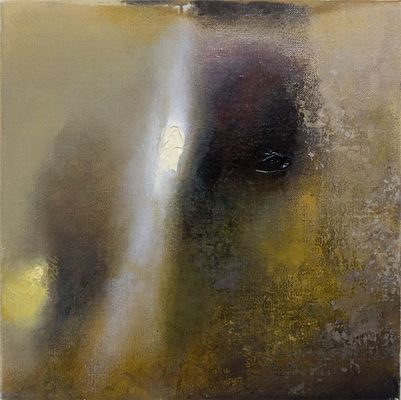
I am not a great reader of poetry but I always return to the work of Melbourne poet, Vincent Buckley (1925- 1988). Perhaps I find his most tantalising piece to be not a finished poem but a fragment left on a scrap of paper discovered on his desk after the poet’s death.
The poetry gathers like oil
In the word-core, and spreads
It has its music meet,
Its music is in movement.
This fragment is more the shell left behind from a volatile thought than a finished poem. I find the last two lines honest but awkward whereas the first two lines work like an arrow. Most likely he could not find a resolution so it was left. Still, in its present form, it remains an eloquent testimony to the ultimate failure of a medium to express mobile thought and sensation, in Buckley’s case, through verbal language. It’s an important matter because this is something all artists have to deal with regardless of the medium.
I have never written a poem, however, I am forever copying fragments from books on paper scraps in a vain effort to fix certain notions in my head. At first, they function as bookmarks that are sometimes returned to when I open the book. But before long, as they accumulate, they fall out littering the table interspersed with A4 photocopies, bills, books and medications.
To return to Buckley’s fragment, the first two lines very much evoke how I paint nowadays. As you age, detail diminishes and patches of light become more luminous and float. I feel the most honest way of dealing with this is by smearing the oil paint on the canvas with the fingers and working close-up, blind. Only if the patches coalesce into an approaching image can the work gain a life.
-
Jonathan Walker was born in Melbourne, Australia and brought up on a dairy farm in Gippsland. In the 1970’s he studied painting at RMIT and won the Harold Wright Scholarship to the British Museum, London. During the 1980’s he exhibited at Pinacotheca Gallery, Richmond and had work shown at the NGV and Heidi City Art Gallery. Over the same period he designed the cover for the “Epigenesi” LP by Giancarlo Toniutti, Italy and conducted a mail exchange work with Achim Wollscheid, Germany. The work with artists through the post resulted in an article published in the bicentenary issue of Art and Australia 1988. He showed in artist run spaces such as WestSpace in the 90’s and 2000’s, and until 2012, taught painting at Victoria University, which is where we (Colleen Ahern and Lisa Radford) as organisers of the exhibition, among many others, had the privilege of being his student.
Walker’s knowledge was imparted to students through the careful selection of music, literature, and artists found in books that he himself had ordered for the library. Walker’s strategy was the generosity of sharing his vast knowledge with references specific to each student and their context.
Walker’s paintings share a similar focus and intimacy.
This exhibition presents a small selection of recent paintings alongside a publication that includes Walker’s writing. Observational and analytical, Walker’s work is a type of material notation — the time of day, colour and how it is blended, the both specific and fleeting location of a reflection on lino or the question of whether a chair leg should be included in a painting.
Please join us on Friday August 21 between 6-8pm to celebrate the opening of the exhibition.
Curated by Colleen Ahern and Lisa Radford.
B. Wurtz
Curated by Nic Tammens
March 26 - April 4, 2015
B.Wurtz works from a basement studio in his home on Manhattan’s Lower East Side.
This local fact is attested to by the plastic shopping bags and newsprint circulars that appear in his work. As formal objects, they don’t make loud claims about their origins but nonetheless transmit street addresses and places of business from the bottom of this long thin island. Like plenty of artists, Wurtz is affected by what is local and what is consumed. His work is underpinned by this ethic. It often speaks from a neighborhood or reads like the contents of a hamper:
“BLACK PLUMS $1.29 lb.”
“Food Bazaar”
“USDA Whole Pork Shoulder Picnic 99c lb.”
“RITE AID Pharmacy, with us it’s personal.”
“H. Brickman & Sons.”
“Sweet Yams 59c lb."
Most of the work in this exhibition was made while the artist was in residence at Dieu Donne, a workshop dedicated to paper craft in Midtown. Here Wurtz fabricated assemblages with paper and objects that are relatively lightweight, with the intention that they would be easily transportable to Australia. This consideration isn’t absolute in Wurtz’s work, but was prescriptive for making the current exhibition light and cheap. Packed in two boxes, these works were sent from a USPS post office on the Lower East Side and delivered to North Melbourne by Australia Post.
Wurtz appears courtesy of Metro Pictures, New York.
Thanks to Rob Halverson, Joshua Petherick, Sari de Mallory, Matt Hinkley, Helen Johnson, Fayen d'Evie, Ask Kilmartin, Lisa Radon, Ellena Savage, Yale Union, and "Elizabeth".
John Nixon
"Archive"
December 15 - January 20, 2014
The presentation of John Nixon's archive offered a rare showcase of this extensive collection of the artist's own publications, catalogues, posters, ephemera, editions and more, from the mid 1980s onwards, alongside a selection of his artworks.
Organized by John Nixon, Joshua Petherick and Matt Hinkley.
"Habitat"
at Minerva, Sydney (organised by Joshua Petherick and Matt Hinkley)
November 15 - December 20, 2014
Lupo Borgonovo, Janet Burchill & Jennifer McCamley,
Lewis Fidock, HR Giger, Piero Gilardi, Veit Laurent Kurz,
Cinzia Ruggeri, Michael E. Smith, Lucie Stahl, Daniel Weil, Wols
Press Release:
“...It contained seven objects. The slender fluted bone, surely formed for flight, surely from the wing of some large bird. Three archaic circuitboards, faced with mazes of gold. A smooth white sphere of baked clay. An age-blackened fragment of lace. A fingerlength segment of what she assumed was bone from a human wrist, grayish white, inset smoothly with the silicon shaft of a small instrument that must once have ridden flush with the surface of the skin - but the thing’s face was seared and blackened.”
William Gibson, “Count Zero”, 1986
"Autumn Projects Archive"
Curated by Liza Vasiliou
March 6 - March 15, 2014
World Food Books, in conjunction with the Virgin Australia Melbourne Fashion Festival 2014, presented the Autumn Projects archive, consisting of a selection of early examples in Australian fashion with a particular interest in collecting designers and labels from the period beginning in the 1980’s, who significantly influenced the discourse of Australian Fashion.
Curated by Liza Vasiliou, the exhibition provided a unique opportunity to view pieces by designers Anthea Crawford, Barbara Vandenberg, Geoff Liddell and labels CR Australia, Covers, Jag along with early experimental collage pieces by Prue Acton and Sally Browne’s ‘Fragments’ collection, suspended throughout the functioning World Food Books shop in Melbourne.
H.B. Peace
presented by CENTRE FOR STYLE
November 14, 2013
"Hey Blinky, you say chic, I say same"
Anon 2013
H.B. Peace is a clothing collaboration between great friends Blake Barns and Hugh Egan Westland. Their pieces explore the divergences between 'character’ and ‘personality’ in garments....etc
Special Thanks to Joshua Petherick and Matt Hinkley of WFB and Gillian Mears
and a Very Special Thank you to Audrey Thomas Hayes for her shoe collaboration.
Janet Burchill & Jennifer McCamley
"Aesthetic Suicide"
May 10 - June 8, 2013
The first of our occasional exhibitions in the World Food Books office/shop space in Melbourne, "Aesthetic Suicide" presented a body of new and older works together by artists Janet Burchill & Jennifer McCamley, including videos, prints, a wall work, and publications.
During shop open hours videos played every hour, on the hour.
2013, Italian
Softcover, 432 pages, 25.5 x 20 cm
1st Edition, Out of print title / used / very good
Published by
Electa / Milan
MAXXI / Rome
$600.00 $390.00 - In stock -
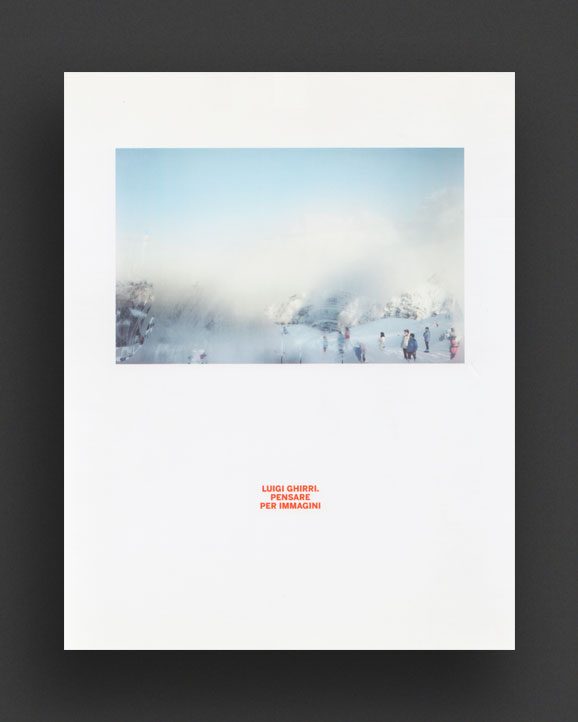
First edition of the very rare, immediately out-of-print comprehensive catalogue on Italian artist and photographer Luigi Ghirri (1943—1992), published on the occasion of the largest retrospective of his photographic work at MAXXI, Rome, 2013. Published by Electa, Milan.
Luigi Ghirri was one of Europe's photographers who revoluzionised, from the mid-1970s onwards, the atmosphere of Italian photography. The sequence of more than 300 photographs published in this book allows the reader to retrace Ghirri's photographic process. In this manner, we can understand the innovative Ghirri's ideas.
This extensive catalog examines the output of the Italian photographer through an original route which re-interprets the photographer’s encounter with the neo-avant-garde movement, his early decision in favor of color photography and the development of an analysis of photographic genres which led to a new way of understanding photographs. Ghirri organized most of his work into ‘sequences’ of images, and later regarded it as a gigantic work in progress. Ghirri succeeded in grasping the stimuli of the artistic and cultural scene of the 1970s, transforming them into an output that became a benchmark for contemporary art.
This book is a fundamental tool for historians and critics eager to learn about and study the work of the photographer from Modena. Critical essays by Giuliano Sergio, Quentin Bajac, Laura Gasparini, Larisa Dryansky and others tackle the multiple aspects of Ghirri’s work: his rapport with the avant-garde movements, the debate on post-Modernism, his encounters with architects and writers, his confrontation with American photography, and his role as an intellectual and a curator in many Italian photographic projects in the 1980s. There is an anthology of the most important critical writings which accompanied the photographer’s work.
The majority of this lavish, heavy book is devoted to 300 of his photographs, arranged according to his main topics: people, things and life. Each series of photographs is introduced by a quotation by Ghirri. The texts have been chosen to highlight the photographer’s skill as a writer and to help the public to understand the photographer’s work through his own words.
Very Good copy, with only very light wear, almost As New. No spine creasing.
2018, English
Softcover, 376 pages, 19.8 cm x 24.8 cm
1st Edition, Out of print title / as new
Published by
MACK / London
$220.00 - In stock -
Quickly out-of-print in all language editions, this is the first edition, of the especially collectible English language first printing of Luigi Ghirri — The Map and The Territory.
Through the course of the 1970s and 1980s, Luigi Ghirri pursued his extraordinary project, open-ended and mercurial, marked by empathy for the changing everyday spaces of his time. Over the course of his short career, Ghirri would produce a vast body of photographs without parallel in the Europe of his time and numerous writings which would have an indelible impact on the history of photography.
This extensive book compiled by the renowned British curator James Lingwood accompanies a touring exhibition to three major museum venues across Europe and focuses on the first decade of Ghirri’s work, defined by his 1979 exhibition in Parma. Vera Fotografia was grouped into fourteen different narrative sequences, each of which is represented in this volume: Fotografie del periodo iniziale (1970), Kodachrome (1970-78), Colazione sull’erba (1972-74), Catalogo (1970-79), Km 0.250 (1973), Diaframma 11, 1/125, luce naturale (1970-79), Atlante, (1973), Italia Ailati (1971-79), Il paese del balocchi (1972-79), Vedute (1970-79), Infinito (1974), In Scala (1976-79), Still Life (1975-79).
The focus of the project is on Ghirri’s quietly compelling project to create a new kind of geography, located in his fascination with representations of the world, in the form of reproductions, pictures, posters, models and maps. The mediation of experience through images in an Italy poised between the old and the new was, for Ghirri, an inexhaustible terrain to survey – “a great adventure into the world of thinking and looking, a wonderful magic toy that miraculously manages to combine our adult awareness and the fairy tale world of children…a never-ending journey through great and small, through variations and the realm of illusions and appearances, a labyrinthine specular place of multitudes and simulation."
Published in collaboration with Jeu de Paume, Museum Folkwang and Museo Reina Sofia.
Edited by James Lingwood
Out of print, As New copy. Rare.
2024, English
Softcover, 102 pages, 21 x 15 cm
Published by
Friends That Publish / Naarm
$35.00 - In stock -
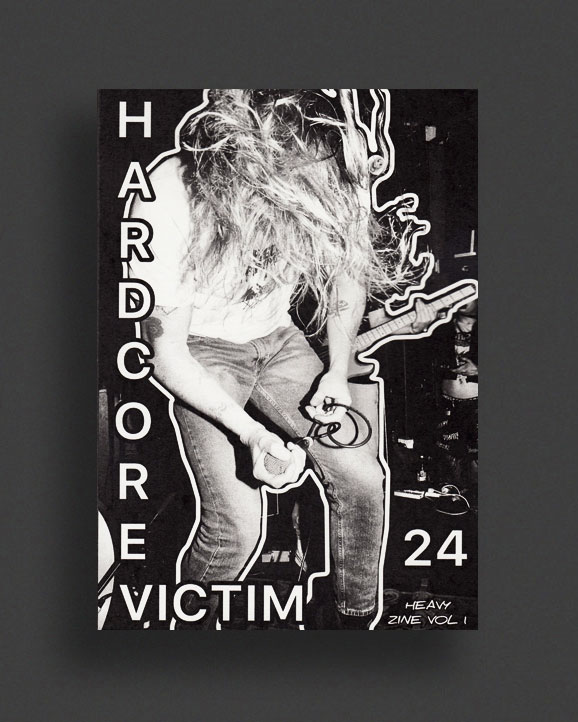
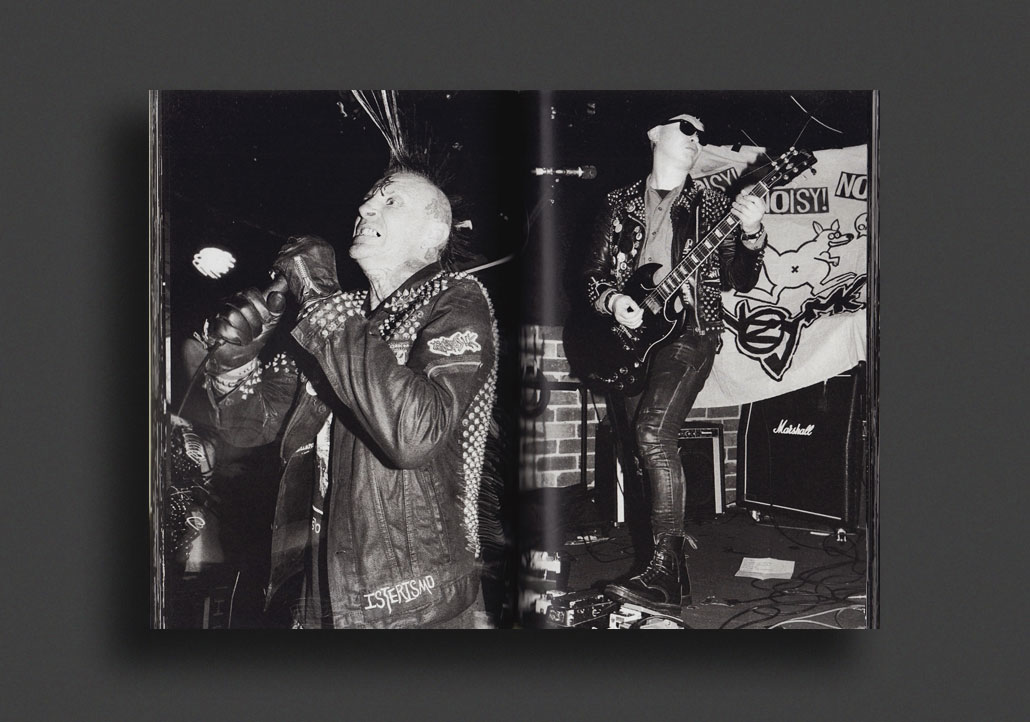
Volume 1 of Heavy Zine, a photo zine collection of black and white photography documenting 3 days of the 4 day Hardcore Victim ‘24 Festival in Naarm/Melbourne — featuring 19 bands — Kissland, Hacker, Romansy, No Future, Sintax, Straight-Jacket Nation, Kriegshög, Shove, Persecutor, Rat Bait, Sepsis, Phantasm, Swab, Dejector, Enzyme, Skizophrenia, Cryptid, Vampire, Thatchers Snatch. 102 pages of full bleed photographs shot by Charlie Foster and printed in Melbourne on enviro paper with heavy stock covers. $5 from every sale will be donated equally towards PARA and Pay The Rent.
1995, Japanese
Softcover (w. dust jacket), unpaginated, 30 x 21 cm
1st UK Edition, Out of print title / used / very good
Published by
Seibundo-Shinkosha / Tokyo
$100.00 - Out of stock
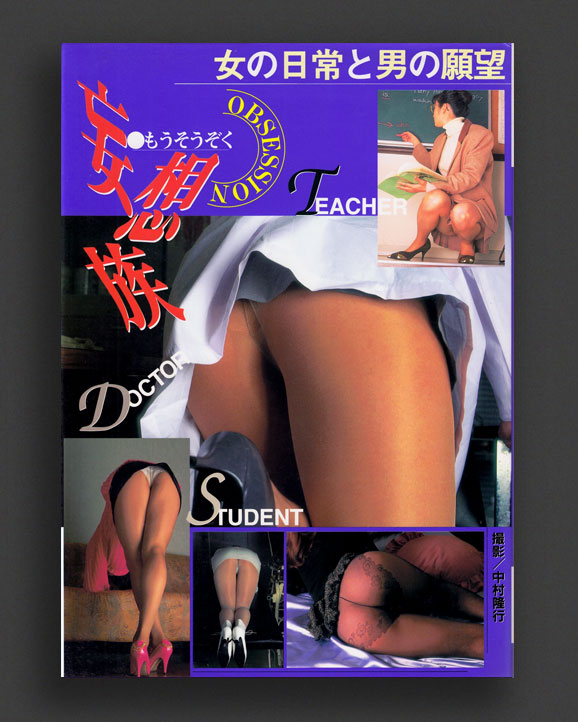
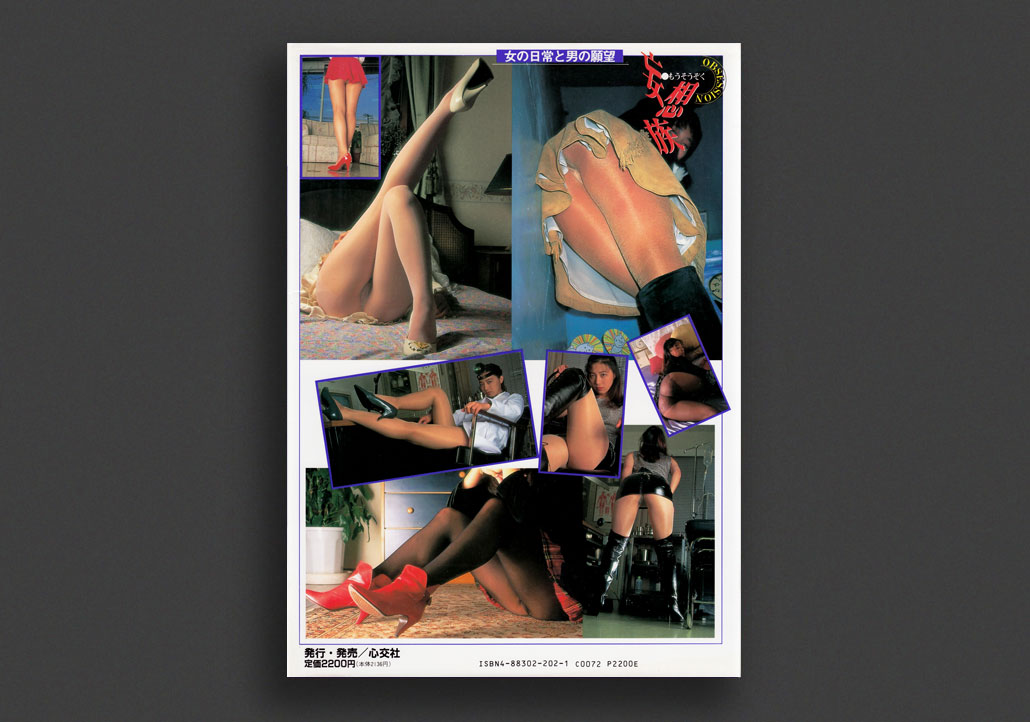
Early fetish photo collection by Takayuki Nakamura, published in Japan in 1995. "Obsession" by photographer Takayuki Nakamura is cover to cover full-colour 90's glamour soft-core/femdom/garment fetishism at its finest, a genre he mastered. The title says it all, this glossy fetish volume is all about teacher, doctor, student fantasies... a daydream remedy to the stifling world of the institution. Styled by Toshiko Sugino, Japanese models pose in 90's fashions, with loving attention to nylon, lace, heels, uniforms and boots. This collaboration made for incredible fashion styling/garment fetish publications. Undocumented and little known outside the fleeting appreciation of 1990's tokyo adult book vendors, Nakamura's books are really something special and very rare to come by. For fans of Namio Harukawa, the neon exhibitionism of Pink Star Editions and the peeping lens of Ikko Kagari.
Very Good copy.
1997, Japanese
Softcover, 210 pages, 15 cm x 21 cm
1st Edition, Out of print title / used / very good
Published by
Tom Shobo / Japan
$130.00 - Out of stock
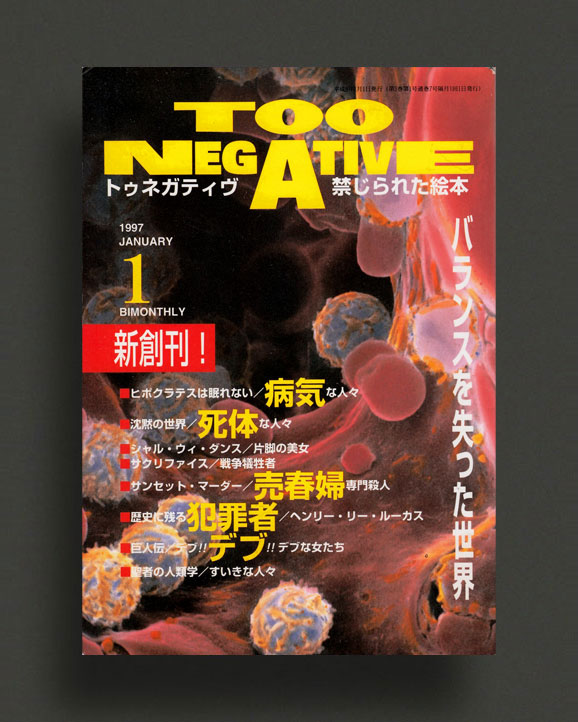
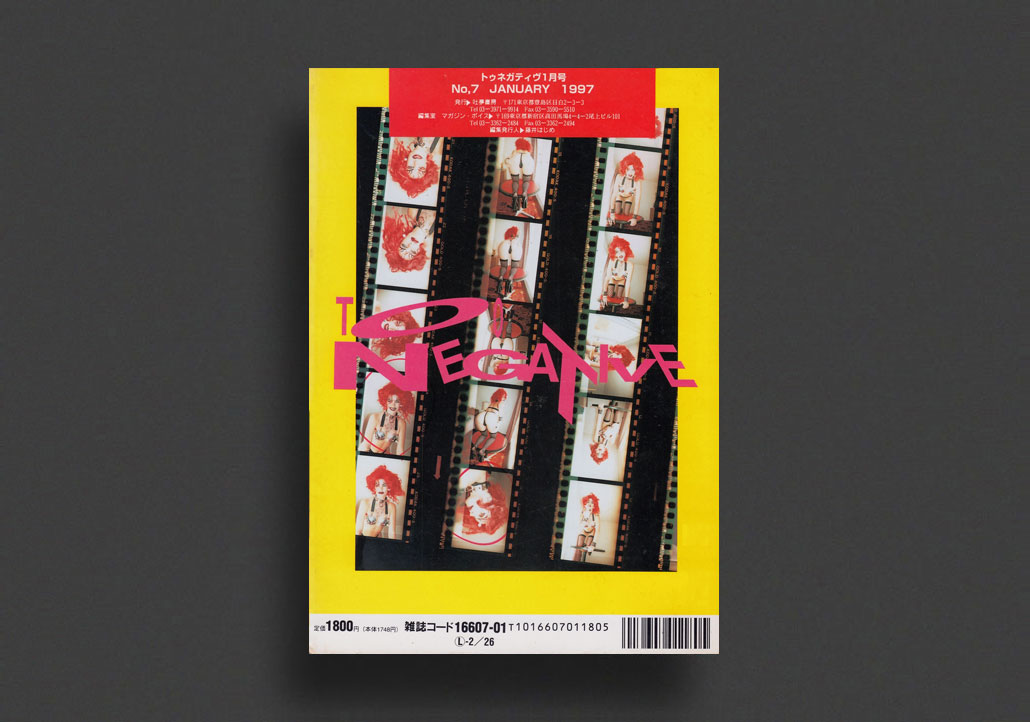
Too Negative No. 7 January 1997. Now rare and highly collectible, Too Negative, the "Forbidden Picture Book", was a visceral and visually explosive glossy cult arts magazine that reflected the gory-depraved-beyond salvation-bad taste expressions visible in international subculture at the height of 1990s underground publishing, a time when art was pushing the limits of taste and morality. Edited solely by legendary Japanese publisher and gallery owner Kotaro Kobayashi and published by Tom Publication Inc. between 1994—2000, each thick, glossy volume takes on the aesthetics of a vibrant fashion magazine in the great Japanese "mook" format (the magazine book) packed cover to cover with themes of Eros and Thanatos, such as fetishism, erotica, medical/autopsy photography, death journalism, Japanese bondage, grotesque and neo-surrealist art, crime scene photography, tattooing/irezumi, piercing, and all things of the mondo, macabre, bizarro realm. Frequent collaborators and featured artists were Kiyotaka Tsurisaki, Joel-Peter Witkin, Trevor Brown, Kiyoshi Ikejiri, to name a few. With a Japanese publishing lineage that may be found in earlier bounding-pushing periodicals such as the 1920s erotic grotesque magazine Hentai Shiriou (Pervert Documents), Tasuhiko Shibusawa’s incredible 1960s avant-garde journal Le Sang Et La Rose, or Fiction Inc’s SALE2 journal published from 1980—mid 1990s, Too Negative, and affiliated periodicals such as ORG, Spiral, Schizo, etc. took their subjects to another level of extremism, even by Japanese standards.
Not for the faint hearted.
This issue, Too Negative No. 7 January 1997, features the photography of Kiyotaka Tsurisaki, Francis Bacon, photographer Andres Serrano, photographer Eric Kroll, photographer Hiroshi Yokoi, artist/photographer Joel-Peter Witkin, early 20th Century medical photography, early American mugshots, ‘Forbidden Colors’ tattoo photography, artist Hideki Sugimoto, early war medical and facial prosthetics, crime scene photography ‘The Sunset Murders', contemporary infant medical photography, crime scene photography, ‘Henry Lee Lucas’ serial killer article with photos, ‘Women En Large’ photo feature, ‘The Man Who Fell To Heaven’ gunshot wounds medical photography, and much more.
Very Good copy.
1994, Japanese
Hardcover (w. dust jacket), unpaginated, 30 x 24 cm
1st Edition, Out of print title / used / very good
Published by
Kaiohsha / Japan
$100.00 - In stock -
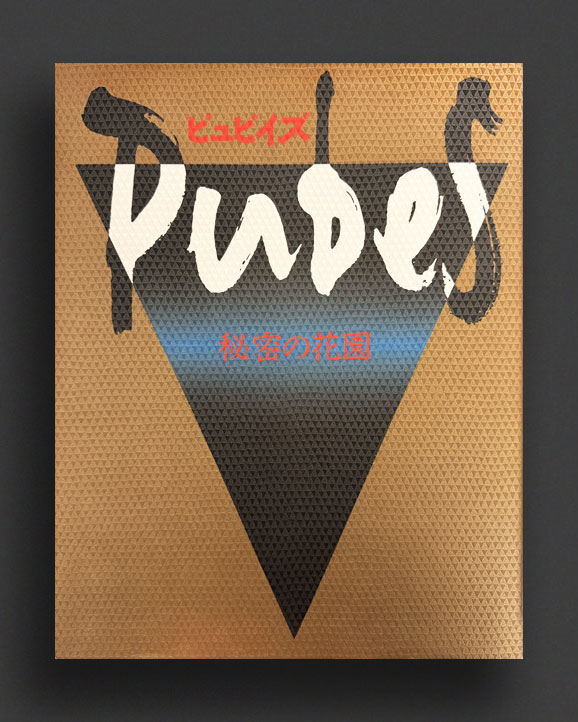
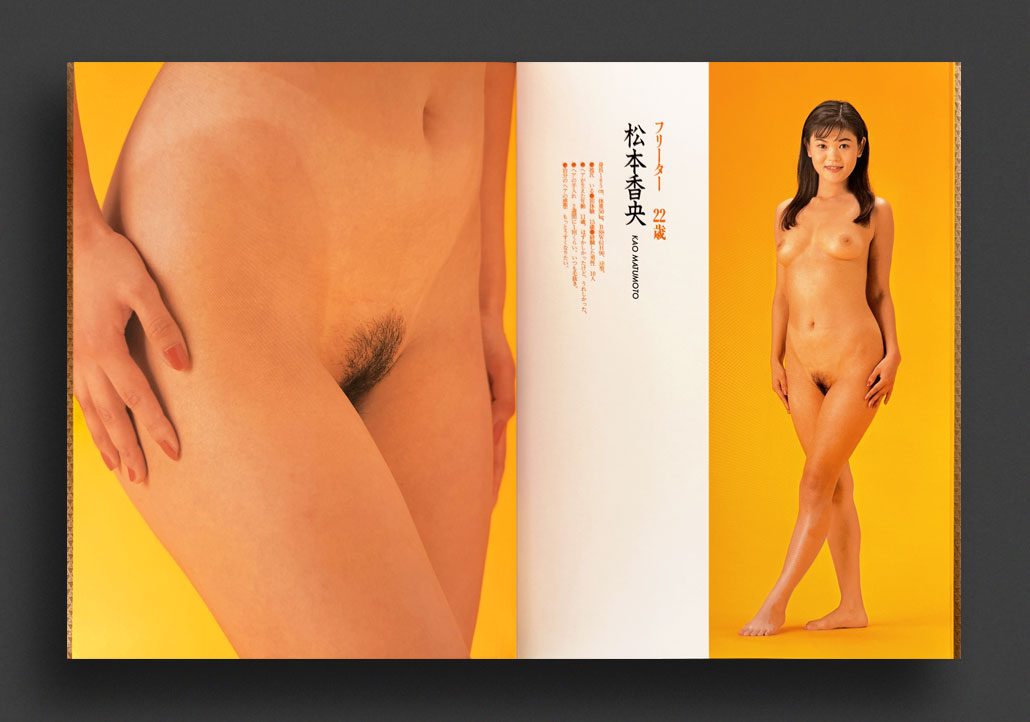
Rare first 1994 gold hardcover edition of Japanese photographer Masahiko Enomoto's photographic celebration of female public hair. A timely honouring of the forbidden fruit, Japan authorities had recently lifted the ban on the depiction of pubic hair in print and Enomoto's book is one of the boldest and earliest examples of Japanese photographers devoting books to the new uncensored nude (Akira Gomi's "Yellows Privacy '94" and Kishin Shinoyama's "Hair" books were both issued the very same year). Hidden hair was not off the hook entirely, and only tolerated when depiction was deemed “artistic”. Enomoto’s approach was unique and confronting with his poppy pubic portrait approach. Pubes — The Secret Garden (with its wonderful debossed triangle motif pattern print covering the dust jacket and endpapers), is entirely comprised of glossy full-colour studio photography spreads of Japanese models in full nude profile with pubic close-ups on the facing pages. A lavishly designed and charming book. Pubes 2, the following year, followed the same fetish principle, only with Western models. One for the ages!
Very Good copy in VG dust jacket, minor wear.
2020, English
Hardcover, 88 pages, 22.5 x 32 cm
Published by
Art Paper Editions / Ghent
$85.00 - Out of stock
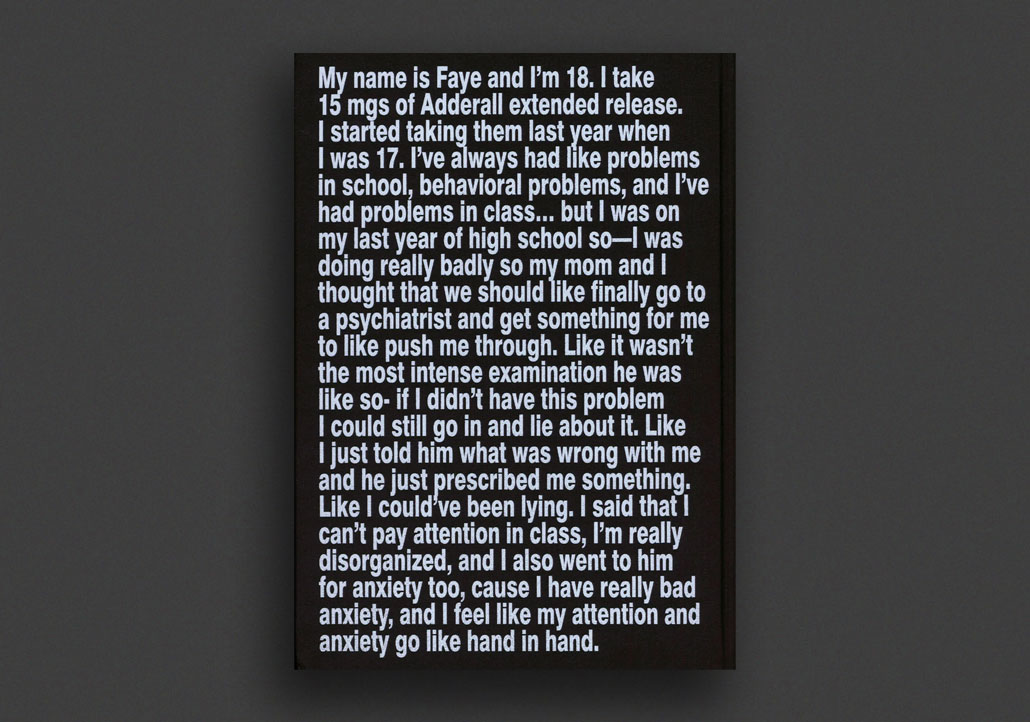
“My name is Faye and I’m 18. I take 15 mgs of Adderall extended release. I started taking them last year when I was 17. I’ve always had like problems in school, behavioral problems, and I’ve had problems in class… but I was on my last year of high school so—I was doing really badly so my mom and I thought that we should like finally go to a psychiatrist and get something for me to like push me through. Like it wasn’t the most intense examination he was like so- if I didn’t have this problem I could still go in and lie about it. Like I just told him what was wrong with me and he just prescribed me something. Like I could’ve been lying. I said that I can’t pay attention in class, I’m really disorganized, and I also went to him for anxiety too, cause I have really bad anxiety, and I feel like my attention and anxiety go like hand in hand.”
Between 2010 and 2018, Kern interviewed women about the medications they used and the effects of those meds on their outlook. Their responses appear side-by-side with their portraits shot by Kern.
1st edition, 1250 copies
2024, English
Hardcover, 200 pages, 31 x 24 cm
Published by
Amaya Productions / USA
$130.00 - In stock -
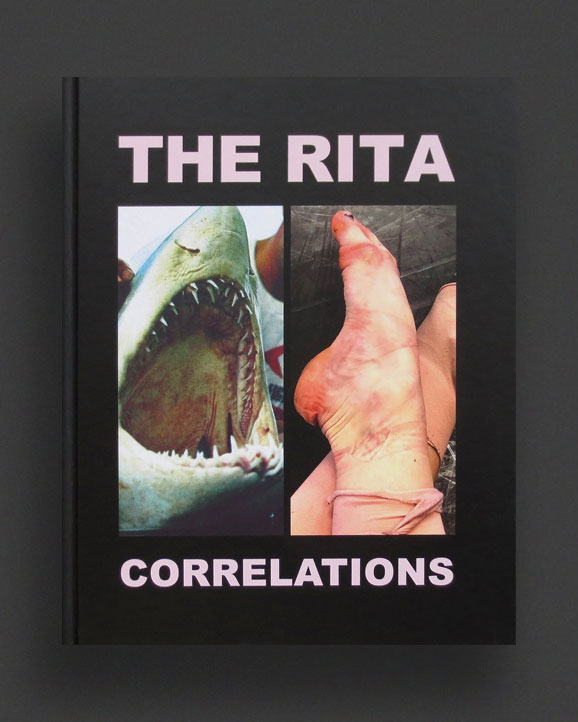
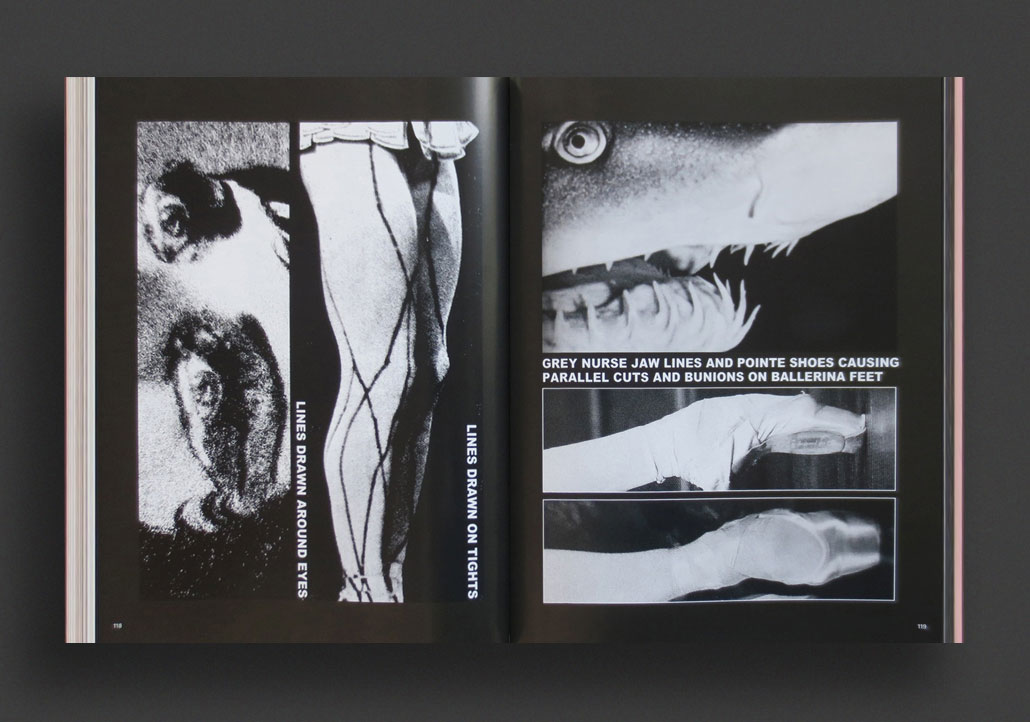
This monograph presents the visual language inseparable from the higly influential sound project of Sam McKinlay, pioneer of the "harsh noise wall" with the multidisciplinary entity The Rita.
Correlations presents some of the images and documents Sam McKinlay finds most definitive in his practice. The monograph is designed to provide a cohesive understanding of the artist's creative trajectory, as well as illuminate The Rita's uncanny process that visually, conceptually, and historically 'connects' seemingly unrelated subjects.
Published by Amaya Productions and curated by Andrea Stillacci; the monograph includes essays by the art historian and Centre Pompidou curator Nicolas Ballet (Shock Factory: The Visual Culture of Industrial Music), associate Professor and harsh noise artist Lexi Turner (Cornell University), and author, writer, producer Kier-La Janisse (House of Psychotic Women).
Credited as one of the pioneers of "harsh noise wall", influential artist Sam McKinlay (born 1974 in California) has been operating under the alias The Rita since the 1990s. Having performed extensively and credited with over 200 releases, the project has grown into a laser focused multidisciplinary venture and is celebrated for pushing the boundaries of "harsh noise". Accompanying The Rita's singular and often unpredictable sonic output is an inseparable and distinct visual language. By combining McKinlay's fine arts education, research, experimentation, and collaboration; the project visually and texturally unites the artist's interests in minimalist design, noise, ballet, sharks, choreography, and film.
Edited by Andrea Stillacci.
Texts by Nicolas Ballet, Lexi Turner, Kier-La Janisse.
2017, English
Softcover, 196 pages, 20 x 28 cm
Published by
Capricious / New York
$75.00 - In stock -
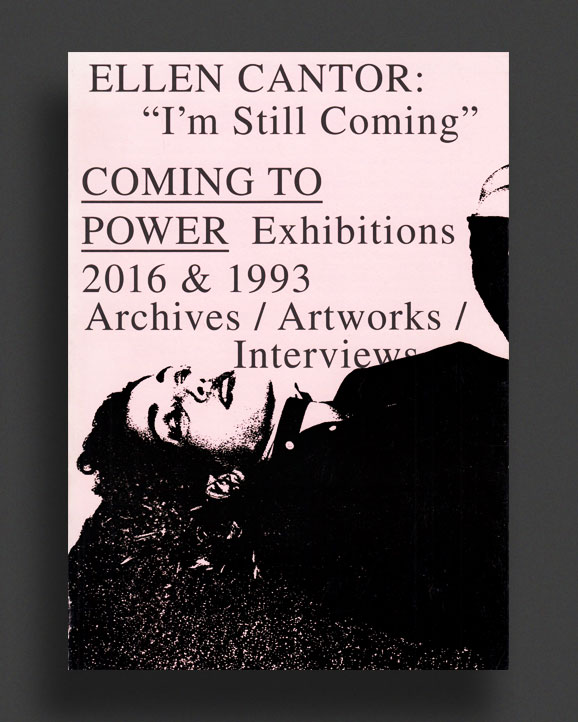
A dual catalogue and archival exposé that explores the pivotal exhibition, Coming to Power: 25 Years of Sexually X-Plicit Art By Women, originally curated by the late artist, Ellen Cantor, in 1993, along with its re-staging in 2016 by curator Pati Hertling and artist, Julie Tolentino.
The book also chronicles the unprecedented partnership amongst five New York City institutions. Exhibitions and programming of Cantor’s work were offered by 80WSWE, Maccarone, Foxy Productions, Participant Inc., Electronic Arts Intermix (EAI), Skowhegan School of Painting, and MOMA—highlighting the lush, visionary, and audacious aspects of Cantor’s drawings, paintings, curatorial projects, sculpture, assemblage, video, film, and evocative writing. Another section features a reprint of an interview between Cantor and Cerith Wyn Evans, a conversation between Lia Gangitano/Jonathan Berger and Julie Tolentino/Pati Hertling, as well as archival material from Cantor’s diary entries and never-seen sketches from Cantor’s personal papers.
LIST OF ARTISTS:
PAINTING/SCULPTURE/PHOTOGRAPHS: Lynda Benglis, Judith Bernstein, Louise Bourgeois, Ellen Cantor, Patricia Cronin, Mary Beth Edelson, Nicole Eisenman, Nancy Fried, Nan Goldin, Nancy Grossman, Pnina Jalon, G.B. Jones, Doris Kloster, Joyce Kozloff, Zoe Leonard, Monica Majoli, Marilyn Minter, Alice Neel, Lorraine O’Grady, Yoko Ono, Carolee Schneemann, Joan Semmel, Cindy Sherman, Nancy Spero, and Hannah Wilke
VIDEO/FILM: Peggy Ahwesh, Maria Beatty, Lynda Benglis, Abigail Child, Cicciolina, Kate Dymond, Azian Nurudin, Barbara Hammer, Holly Hughes, Julia Kunin, Blush Productions, Annie Sprinkle, and Ona Zee
PERFORMANCES: FlucT, luciana achugar, Kia Labeija, Xandra Ibarra/La Chica Boom, Zackary Drucker & Orlando Tirado, Jim Fletcher, Narcissister, niv Acosta, and Jen Rosenblit and their collaborators
1976, Portuguese
Double-sided fold-out, 4 panels, 47 x 30 cm (unfolded)
1st Edition, Out of print title / used / very good
Published by
Museu de Arte Contemporânea da Universidade de São Paulo / São Paulo
$45.00 - In stock -
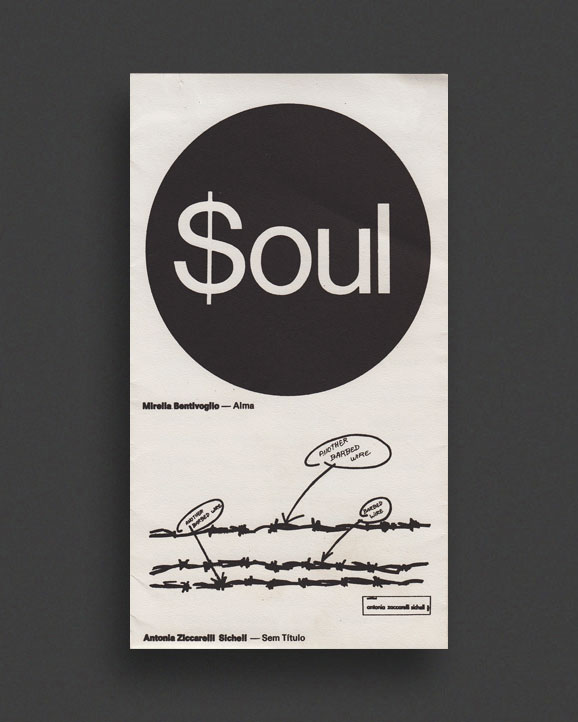
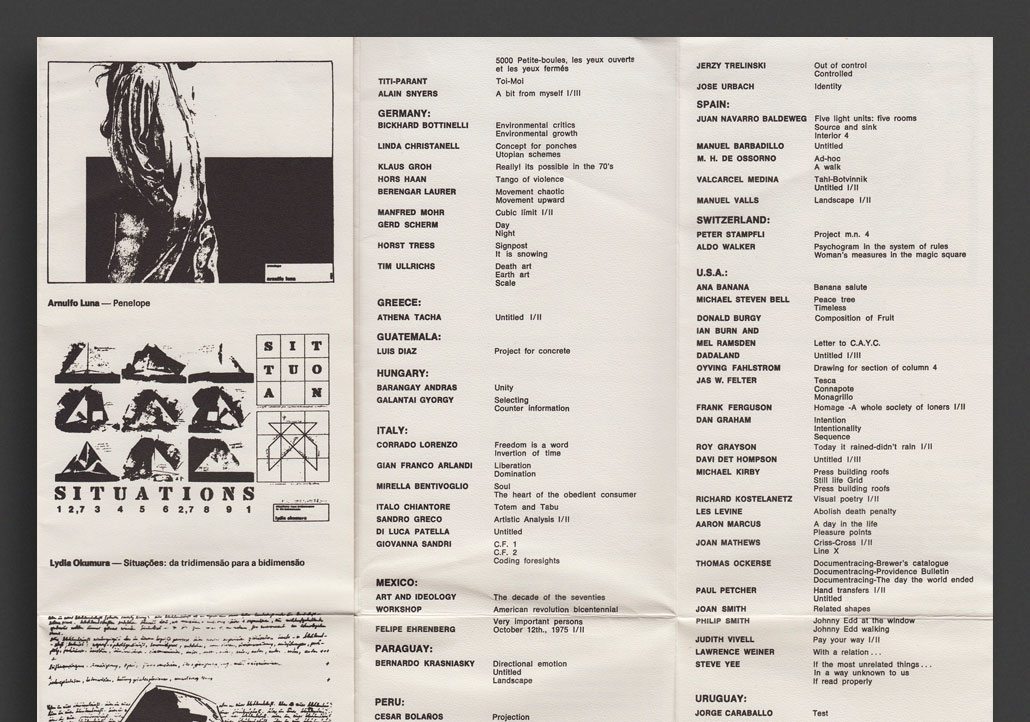
Very rare fold-out catalogue for the important international art exhibition surveying conceptual art, concrete poetry, experimental art, performance art, mail art ("activity with a critical view of society") in the 1970s organized by Argentine author, publisher, curator, professor, and conceptual artist, Jorge Glusberg, who was director of the Center for Art and Communication of Buenos Aires (CAYC). With text by Brazilian professor, historian, art critic and curator by Walter Zanini, director of the Museu de Arte Contemporânea da Universidade de Sao Paulo (MAC). With a number of the exhibited heliographic documents from the exhibition illustrated throughout, the brochure catalogues the exhibited works by participants including: Dan Graham, Lawrence Weiner, Genesis P-Orridge, Ian Burn and Mel Ramsden, Öyvind Fahlström, Július Koller, Tim Ullrichs, Luis Fernando Benedit, Jaime Davidovich, Jorge Glusberg, Víctor Grippo, Lea Lublin, Luis Pazos, Julio Plaza, Jonier Marin, Jiří Valoch, Guillermo Deisler, Juan Navarro Baldeweg, Manuel Barbadillo, MH de Ossorno, Valcárcel Medina, Felipe Ehrenberg, César Bolaños, Pawel Petasz, José Urbach, Lydia Okumura, Haroldo González, Les Levine, and many others.
Very Good copy with light wear.
2009, English / Japanese
Softcover, 214 pages, 21 x 25.5 cm
Flat signed by artist,
1st Edition, Out of print title / used / very good
Published by
Tokyo Metropolitan Museum of Photography / Tokyo
$250.00 - In stock -
Signed, first edition of this great out of print monograph on the work of Japanese photographer Keizo Kitajima, published by the Tokyo Metropolitan Museum of Photography. Contains 189 works from 1975 to 1991, beautifully reproduced, introducing and surveying all of Keizo's incredible major bodies of work : KOZA, TOKYO, NEW YORK, EASTERN EUROPE, USSR, alongside biography, and great texts in English and Japanese. A terrific overview of a great artist.
Keizo Kitajima (b .1954, Suzaka, Nagano) is a leading figure in the rise of Japanese photography in the 1970s and 1980s, first coming to be known for his grainy black-and-white shots of people on the streets of Tokyo, at an American military base in Okinawa after the end of the Vietnam War, and in New York. Daido Moriyama, with whom Kitajima first studied photography, praised his talent as a gifted snapshooter by calling him ‘a street killer in broad daylight.’ Kitajima’s image Shop CAMP, set up in the bustling Shinjuku area in 1976 in collaboration with Moriyama, was a pioneering experimental space for photographers before the gallery system was established. In his legendary experimental series Photo Express (1979), Kitajima photographed people at bars and on the streets in Shinjuku at night right outside the CAMP, converted the gallery into a darkroom to make wallsized prints as a public performance event, and even published the images as an instant booklet. Through these processes of delivering images immediately, the artist explored the ways that time affects photography in terms of documentation, record and memory. Kitajima spent six months in New York roaming its gritty streets and hanging out in its clubs, resulting in the book New York (1982) . He presents a vision of the 1980s New York, full of energy, decadence and moments of quiet desperation. Like the city the publication is full of stark juxtapositions, flamboyant displays of outrageous behaviour are shown next to pictures of desolation and dejection. For this photo book Kitajima received the important Kimura Ihei Award in 1983. Kitajima’s work has been shown in many Japanese and international exhibitions and his publications are popular among collectors of photo books and the importance of his work has been recognised by numerous Japanese photographic awards.
Very Good copy.
2019, English
Softcover in slipcase, 363 pages, 17.4 x 27 cm
Edition of 500,
Published by
Little Big Man / Los Angeles
$110.00 - Out of stock
Long-forgotten views of 1980s Europe.
Japanese photographer Keizo Kitajima traveled through Europe between 1983 and 1984, visiting both Western countries and states in the Eastern bloc—from West Germany to East Germany, Austria, Romania, Switzerland, Italy, Poland, Czech Republic, Turkey, and more. Kitajima visited Europe not as a tourist but as a photographer; the mission was to photograph what he encountered. For some reason, the photos he took during this trip have never been published—until now. After all this time, Kitajima’s black-and-white images of course take on meaning as historical documents. They are records of a time long gone by, after all. But Kitajima’s photos work on more than this one layer; he did not visit Europe to fix a historical moment for the future, after all, but to document life in places that were strange to him. His street photographs from both sides of the Iron Curtain capture local idiosyncrasies in architecture as well as fashion, but they also take a look at that chaotic universal force of daily life.
A strictly limited edition of 500 copies.
Keizo Kitajima was born in 1954 in Suzaka (Nagano Prefecture), Japan. He began photography at an early age; his discovery of the precursory works of Nobuyoshi Araki and Daidō Moriyama marked his teenage years. He was an original member of the Workshop Photo School. Like Moriyama, Kitajima developed an interest in the creative potential of photography’s reproducibility, but he took the notion of transformation in a very different direction, focusing on the layers of reproduction in his own work rather than the degeneration of cultural media. Kitajima’s photography is haunted by an obsession: identity, or rather the opposite; what Kitajima himself calls un-identity.
2022, English
Softcover, 376 pages, 30.1 x 23 cm
Ed. of 500,
1st Edition, Out of print title / used / fine
Published by
IDEA / London
$200.00 - Out of stock
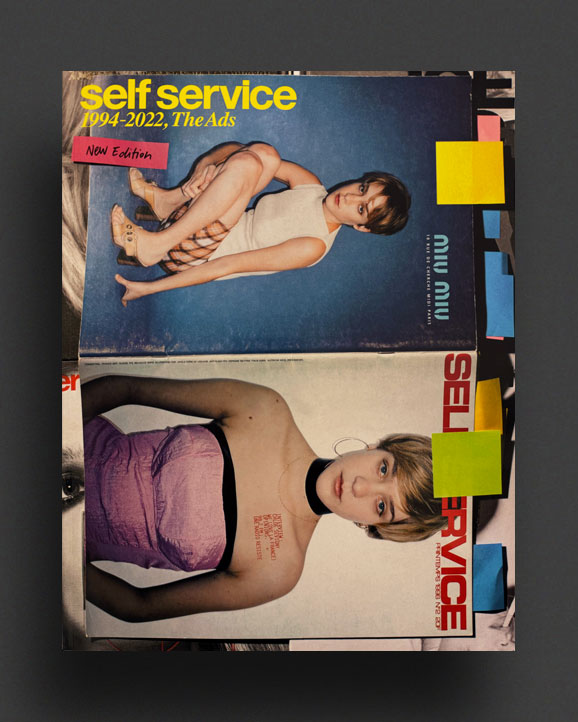
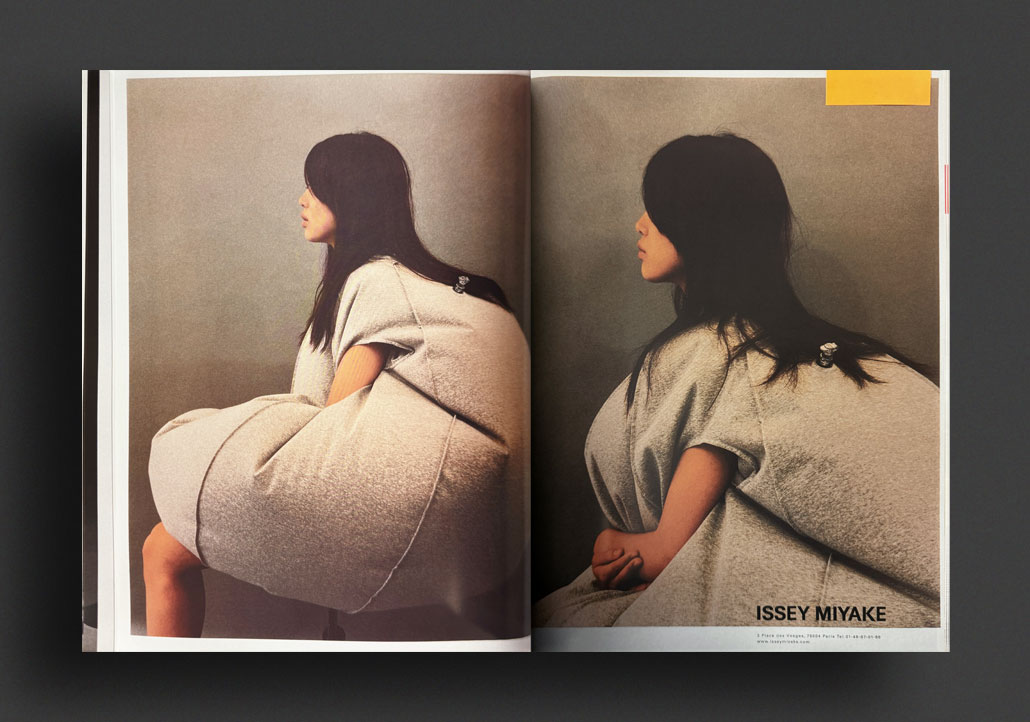
Expanded 2022 edition of IDEA London's Self Service 1994-2022, The Ads, the quickly out-of-print heavy visual compendium of more than 300 fashion ads from 25 years of Self Service magazine, featuring iconic contemporary advertising imagery from brands such as Raf Simons, Comme des Garçons, A.P.C., Alexander McQueen, Hussein Chalayan, Prada, Miu Miu, Issey Miyake, Chloé, Balenciaga, Yohji Yamamoto, Jacquemus, Hermès, Celine, Eckhaus Latta, Jil Sander, Calvin Klein, Viktor & Rolf, Yves Saint Laurent, Susan Cianciolo, Marc Jacobs, BLESS, Fendi, Koji Tatsuno, Gucci, Botetega Veneta, Zucca, Helmut Lang, to name a few, all packed into one exceptional reference volume.
Edition of 500 copies.
"This book is a gathering of more than two and a half decades* of fashion advertising campaigns as they have appeared on our printed pages, providing a fascinating testament to and a subjective barometer of fashion's evolving aesthetic and cultural norms."—Ezra Petronio, art director and founder of Self Service
*28 years, 112 seasons, 56 issues, 18,431 pages, 3,397 advertising pages, 314 brands.
Near Fine copy with light wear and light spine crease.
2004, English
Softcover, 96 pages, 12 x 17 cm
Ed. of 1000 (mostly destroyed),
1st Edition, Out of print title / used / fine
Published by
Star Publishing / Paris
$600.00 - In stock -
First edition of this exceptionally rare Guy Bourdin title. Due to a copyright restriction almost the entire print run of only 1000 copies of the book were destroyed immediately upon release, leaving only a few copies out in the wild. This is one of those few. 67 Polaroids is the most personal and behind-the-scenes of any of Bourdin's books, presenting a stunning selection of his personal polaroids, most of which were taken during the production of some of his most familiar photo shoots. Captures an intimate and moody glimpse into the creativity of Bourdin not seen elsewhere. Beautifully compiled. "These images step outside the safety of the fashion shoot, conjuring a real-life realm steeped in an ominous sexuality."
Guy Bourdin (1928 – 1991), was a French artist and fashion photographer known for his provocative images. From 1955, Bourdin worked mostly with Vogue as well as other publications including Harper's Bazaar. He shot ad campaigns for Chanel, Charles Jourdan, Pentax and Bloomingdale's. He is considered as one of the best known photographers of fashion and advertising of the second half of the 20th century, setting the stage for a new kind of fashion photography. A protégé of Man Ray, Bourdin like his teacher often brought an edge of menace or discomfort to his eroticism. "While conventional fashion images make beauty and clothing their central elements, Bourdin’s photographs offer a radical alternative." The first retrospective exhibition of his work was held at the Victoria & Albert Museum in London in 2003, and then toured the National Gallery of Victoria in Melbourne, Australia, and the Galerie nationale du Jeu de Paume in Paris. The Tate is permanently exhibiting a part of its collection (one of the largest) with works made between 1950 and 1955.
Fine copy.
1990, English / Japanese
Softcover (two-volume catalogue house in original printed cardboard sleeve w. invitation), 21 x 30 cm, 40 pages / 20 pages / folded invitation
1st Edition, Out of print title / used / very good
Published by
Touko Museum of Contemporary Art / Tokyo
$280.00 - Out of stock
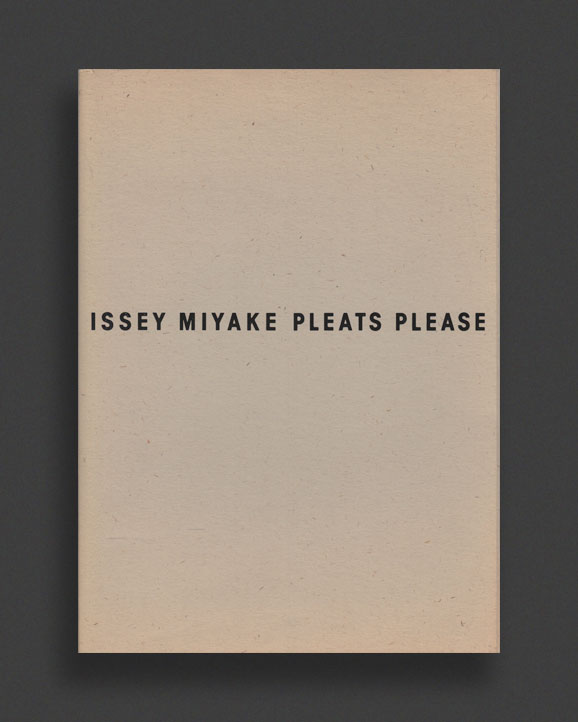
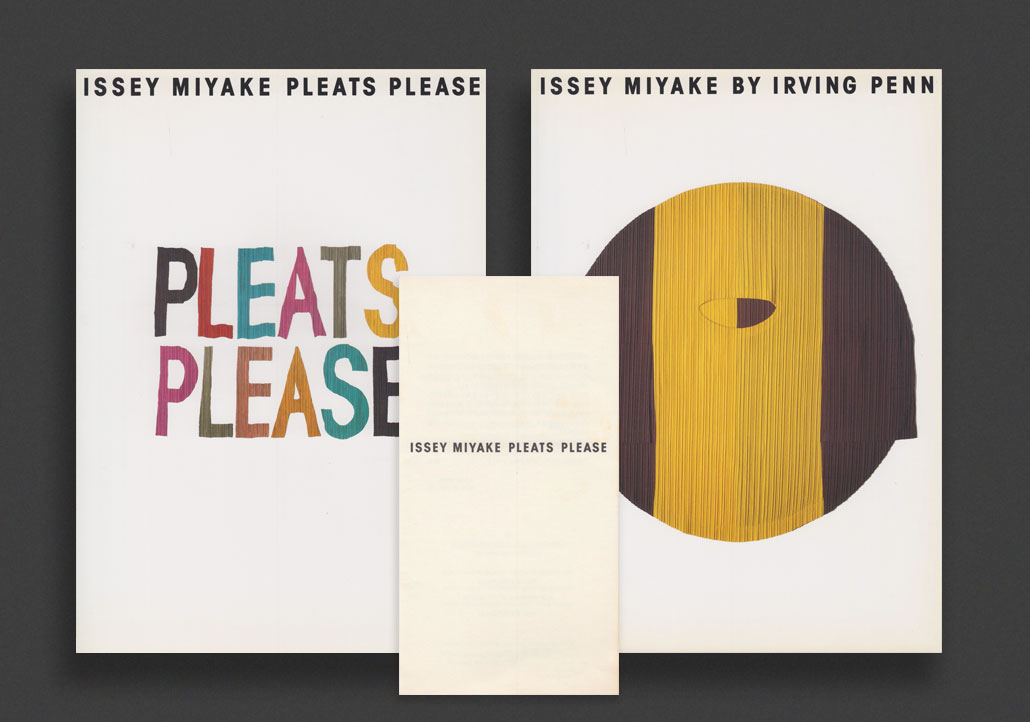
The incredibly rare and beautiful two-volume catalogue edition, issued in conjunction with the exhibition "Issey Miyake: Pleats Please" at Touko Museum of Contemporary Art, Tokyo, Japan, 1990.
This is a first (only) edition printing in VG—fine condition, with additional inserted exhibition folding invitation to the private reception in 1990.
Housed in their original printed cardboard folder/pocket, these two publications, designed by Ikko Tanaka, both feature text in English and Japanese. Volume one: "Pleats Please by Issey Miyake" examines the exhibition "Issey Miyake: Pleats Please", which saw the first presentation of renowned Japanese designer Issey Miyake's new technique called garment pleating, in which the garments are cut and sewn first, then sandwiched between layers of paper and fed into a heat press, where they are pleated. The fabric's 'memory' holds the pleats and when the garments are liberated from their paper cocoon, they are ready-to wear. Miyake's pleating works were first exhibited here in 1990, three years before the launch of the famous line "Pleats Please" in 1993. The publication documents production and installation photography from the exhibitions, where the garments were set into a custom built floor system.
Volume Two: "Issey Miyake by Irving Penn", features stunning photography by the great Irving Penn, of each of Issey Miyake's first "Pleats Please" garments together with a poem by Shuntaro Tanikawa.
This is truely a collector's item for any Issey Miyake enthusiast or collector, marking the beginning of "Pleats Please" through the photography of Irving Penn. This copy has been well looked after, with both books in wonderful condition, protected by the original printed folder sleeve, which is also in preserved condition.
VG—F condition all round.
1998, English / French
Softcover, 64 pages, 21 x 16 cm
1st Edition, Out of print title / used / very good
Published by
En Vues / Paris
$35.00 - Out of stock
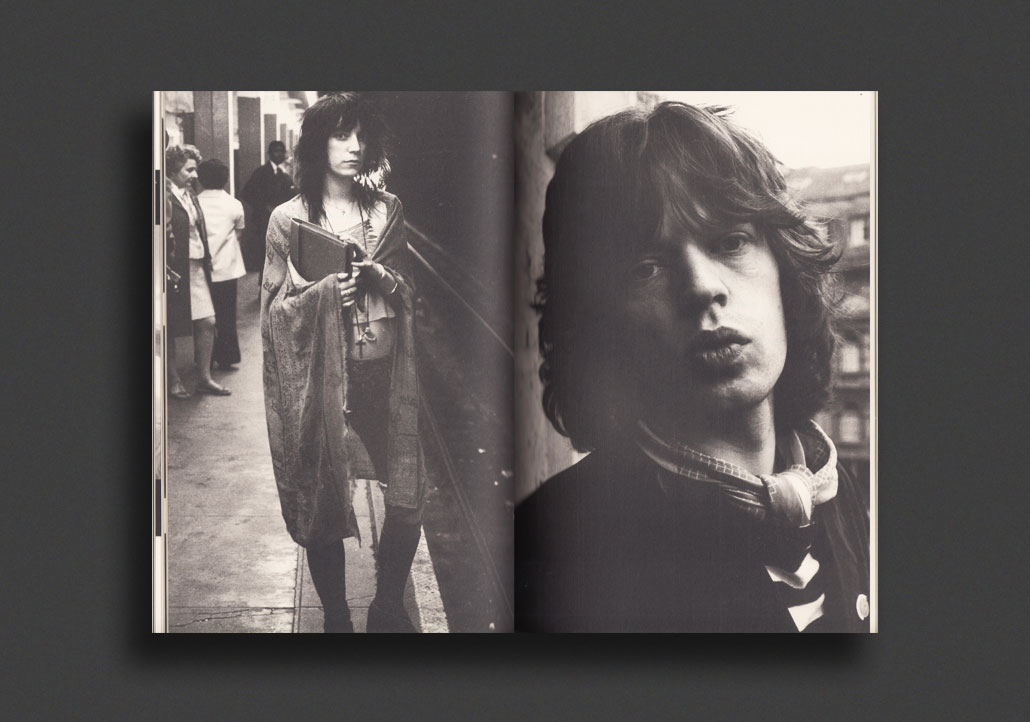
First edition of this scarce collection of poet and Warhol associate Gerard Malanga, compiling his poetry, nude photos, and portraits of luminaries (Edie Sedgwick, Lou Reed, Patti Smith, Mick Jagger, Dali, William Burroughs...). All texts in English and French.
Gerard Joseph Malanga (b. 1943) is an American poet, photographer, filmmaker, actor, curator and archivist. Malanga was the chief assistant for artist Andy Warhol in the mid-1960s, with whom he founded the magazine Interview in 1969. Malanga was also featured in several of Warhol’s films, collaborated with Warhol on his “Screen Tests” project, and was a member of Warhol’s cross-genre undertaking, “The Exploding Plastic Inevitable”, working with The Velvet Underground. Malanga began writing poetry as a teenager, and has published numerous books of poetry, including chic death (1971), Mythologies of the Heart (1996), No Respect: New And Selected Poems 1964-2000 (2001), and Cool & Other Poems (2019). Malanga's photography spans over four decades and encompasses portraits, nudes and the urban documentation of "New York's Changing Scene".
Very Good copy.
2024, English
Softcover, 80 pages, 23 x 17 cm
Published by
Hatje Cantz / Berlin
$69.00 - In stock -
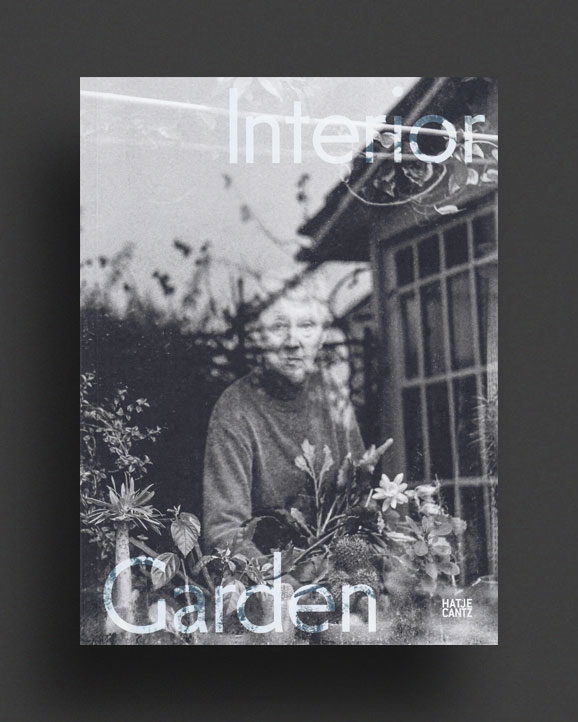
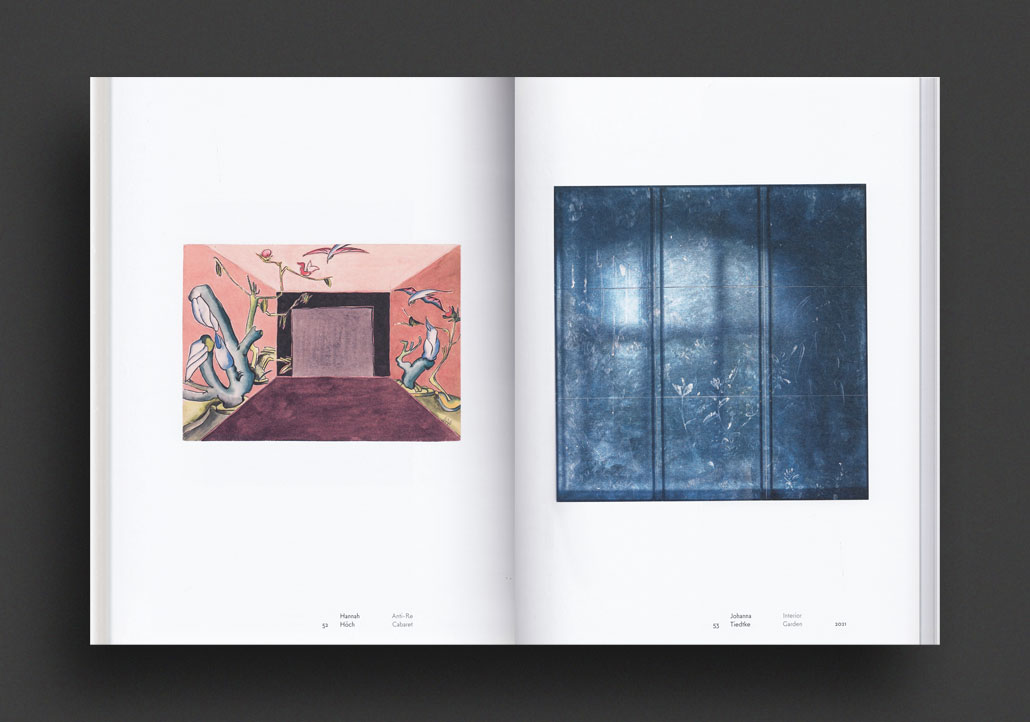
At the beginning of World War II, Dada artist Hannah Höch (1889–1978) retreated to a secluded house on the outskirts of Berlin to escape fascist persecution. The adjoining garden inspired and nourished her. And this is also where she hid her unique collection of dadaist artworks. Eighty years later, this richly illustrated and thoroughly researched book combines Höch’s botanical collages and photographs of the garden with documents on her relationship with the writer Til Brugman. Together with new works by artists Scott Roben and Johanna Tiedtke based on visits to the garden, and an essay by the scholar Alhena Katsof, the book interweaves past and present, private and public, personal and political, and opens up new perspectives on Höch’s long-forgotten refuge.
2024, English
Softcover, 200 pages. 23 x 16.6 cm
Published by
Memo Review / Naarm
$35.00 - Out of stock
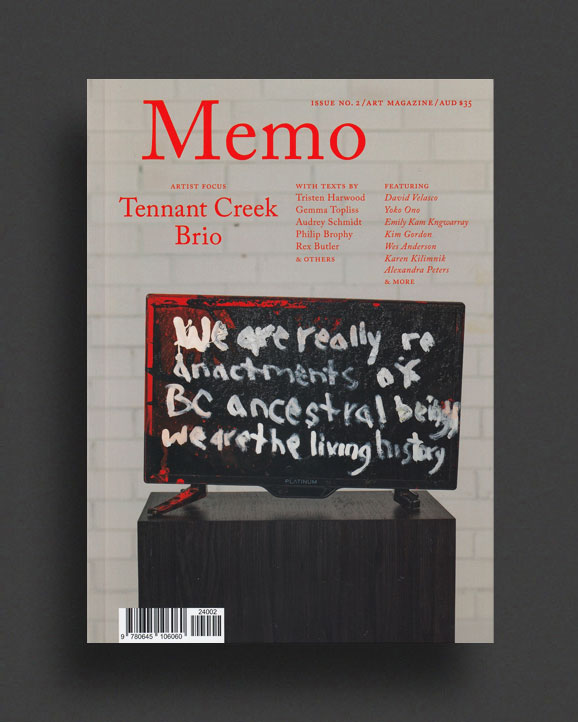
Memo is Australia’s premier source for critical writing on contemporary art and culture. A theme of institutionalism emerges in this second issue of Memo, its shadow seeming to lurk throughout the pages. Perhaps it’s because the Tennant Creek Brio, this issue’s artist focus, is about to cross an institutional threshold. Its artists are currently gearing up for the first major survey of the collective’s work at the Australian Centre for Contemporary Art.
Maurice O’Riordan draws on the late, great conservative art critic Robert Hughes to speak of the shock waves that the Brio continue to produce even as they achieve growing recognition. Jessyca Hutchens also rides one of those waves, reflecting on the 2023 exhibition of the Brio’s work Black Sky that she co-curated. But it is Tristen Harwood, in the most wide-reaching history of the collective published to date, who circles in on the Brio’s breakout. He refers to an “imprisoned energy” whose unleashed force the artists stage rather than proselytise about.
There is plenty more in this issue too. Kate Sutton and David Velasco, editor-in-chief of Artforum from 2017 to 2023, discuss the situation surrounding Velasco’s firing by Penske Media, owner of Artforum, following publication of a collective ceasefire letter in October 2023. Vincent Lê writes on the “hipster death cult” of Wes Anderson’s twee aesthetic; Declan Fry on language’s amoral violence; Philip Brophy on Yoko Ono’s Cut Piece; and Audrey Schmidt on the “Kool” Kim Gordon and Amelia Winata on the “uncool” hyperrealism of Edie Duffie. Elsewhere, you will find Carmen-Sibha Keiso on Alexandra Peters (a 2024 Macfarlane Commission artist) and Rex Butler on Emily Kam Kngwarray, a major exhibition of the eminent artist’s work recently held at the National Gallery of Australia (and set to travel to the Tate Modern).
With Gemma Topliss, Audrey Schmidt, Philip Brophy, Rex Butler, David Velasco, Carmen-Sibha Keiso, Vincent Lê, Lévi McLean, Paul Boyé, Declan Fry, and others.
Featuring Yoko Ono, Emily Kam Kngwarray, Kim Gordon, Wes Anderson, Karen Kilimnik, Alexandra Peters, and many more.
1997, Japanese
Softcover (w. dust jacket), 160 pages, 21 x 16 cm
1st Edition, Out of print title / used / very good
Published by
Tatsumi / Tokyo
$85.00 - Out of stock
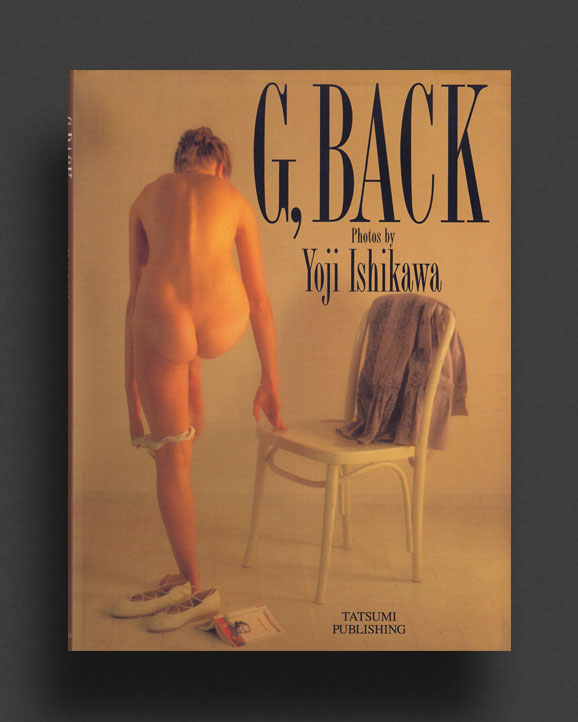
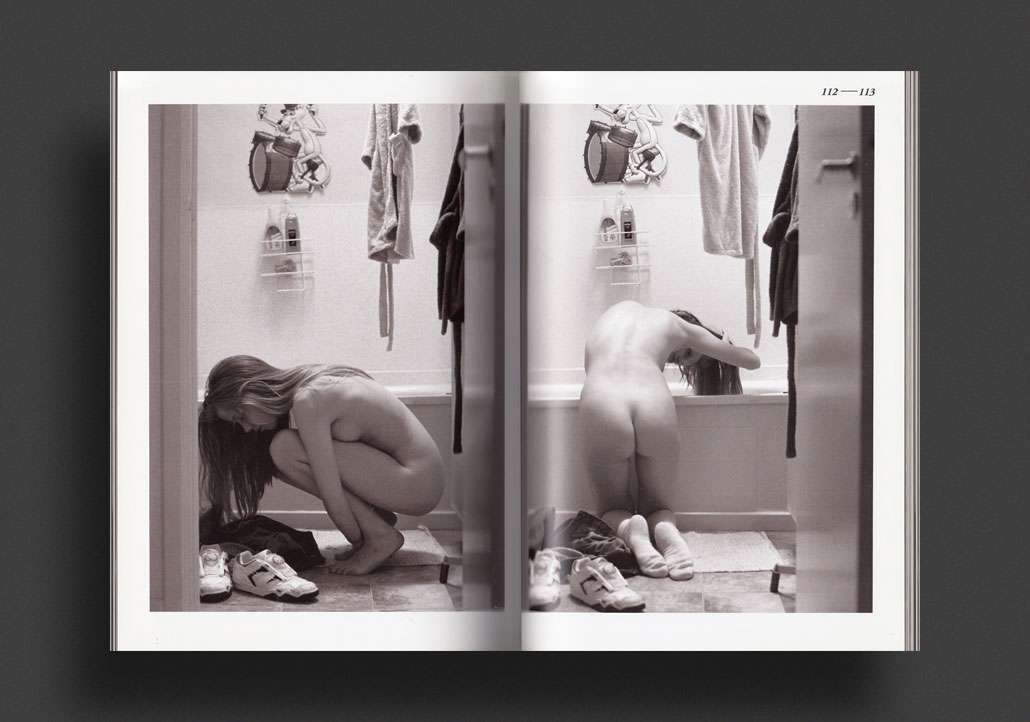
Rare first 1997 edition of renowned Japanese erotic photographer Yoji Ishikawa's G, BACK — "Eroticism Temptation of the Back View" — a book of Ishikawa's that is obsessively focused on a specific attribute of the female nude, much like Hiroshi Maruyama's "Backs", Lyu Hanabusa's "Back", and Jeanloup Sieff's "Derrieres". Entirely comprised of Ishikawa's nude photographs of young European women, Ishikawa's stylistic approach is sometimes romantically soft-focus, sometimes formalistic, sometimes almost as simplistic as a snapshot, at times reminiscent of the work of Sturges, Alterio, Bourboulon or Hamilton. Never available outside Japan, Ishikawa's books gained a cult following and collector prices in the West, and he was recently featured in the Japanese chapter of Bertolotti's acclaimed photo book reference "Books of Nudes" (2007).
Very Good copy in VG dust jacket. Obi present but in poor shape.
1995, Japanese
Softcover, 116 pages, 27.5 x 21 cm
1st Edition, Out of print title / used / very good
Published by
Take Shobo / Tokyo
$80.00 - In stock -
"Mr. Araki and the Six Women"
Scarce copy of this lesser known Araki title — Nobuyoshi Araki's "Obscene Photo Magazine" La-Chat Vol. 2 from 1995, packed cover-to-cover with glossy nude photography in colour and b/w. A gorgeous photo journal of 6 women with Araki's hand-written diary entries throughout.
Very Good copy with light wear.
2010, Japanese
Softcover (w. dust jacket), 144 pages, 21 x 15 cm
1st Edition, Out of print title / used / fine
Published by
Tokyo Kirara / Tokyo
$85.00 - In stock -
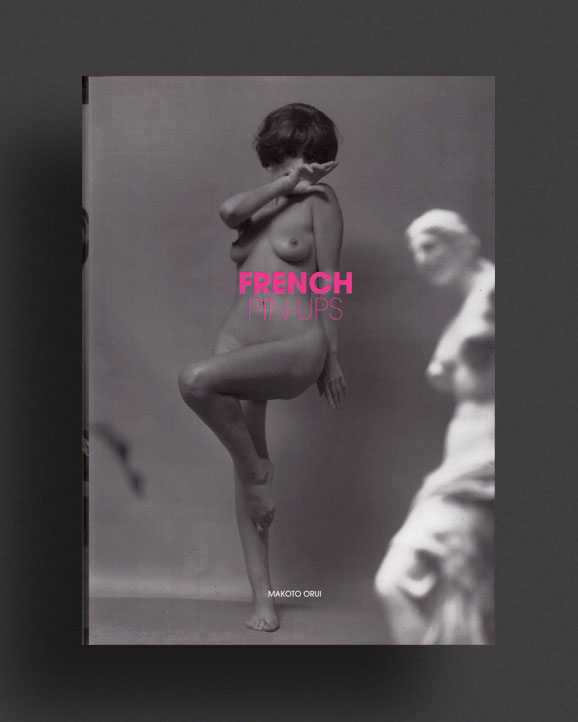
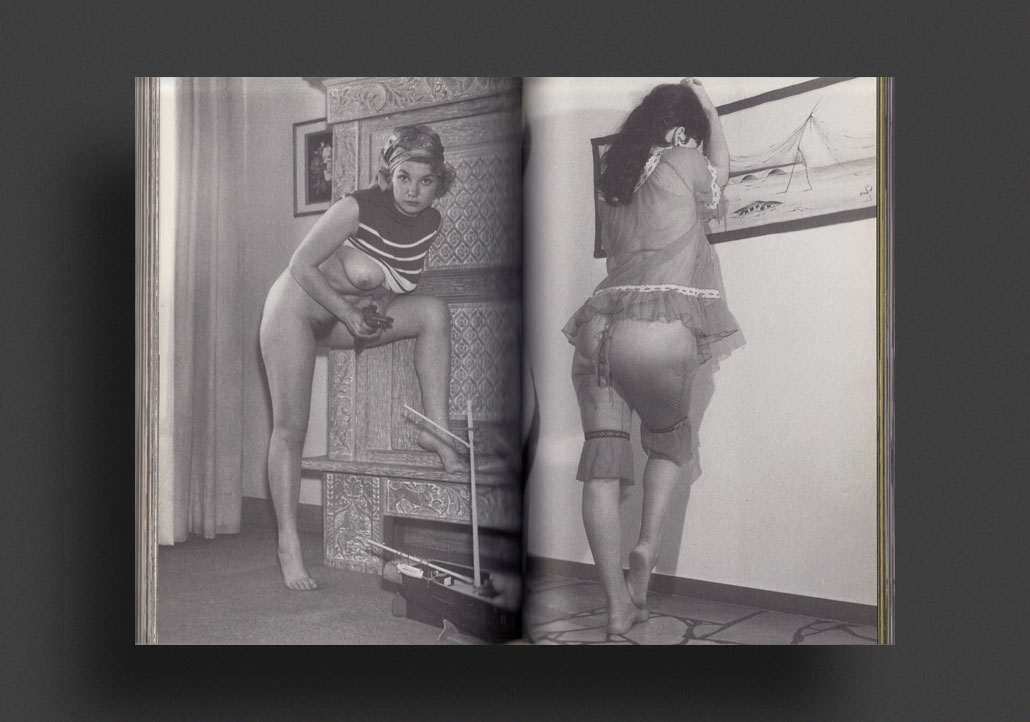
First edition of this collection of vintage French erotica, published in 2010 and now out-of-print.
Japanese editor and art director Makoto Orui (of Fiction Inc., SALE2, Purple fame) has devoted himself to collecting photographs once published in France’s numerous independent erotic magazines of the 1950s and ’60s. Assembled here in all their subtle and titillating power, these images of pin-up girls still hold an alluring aura in their natural, imperfect beauty and retro charm. Plucked from the pages of nude and glamour magazines, the often amateurish nudes posed in all kinds of indoor and outdoor settings can be seen as precursors to the shifting societal norms, more open sexual expression, and women’s empowerment that would develop in later decades. Beautifully compiled in the way Makoto Orui always did so perfectly.
Near Fine—As New copy.
2010, English
Hardcover (w. dust jacket), 21 x 31 cm
1st Edition, Out of print title / used / fine
Published by
Steidl / Göttingen
$70.00 $20.00 - Out of stock
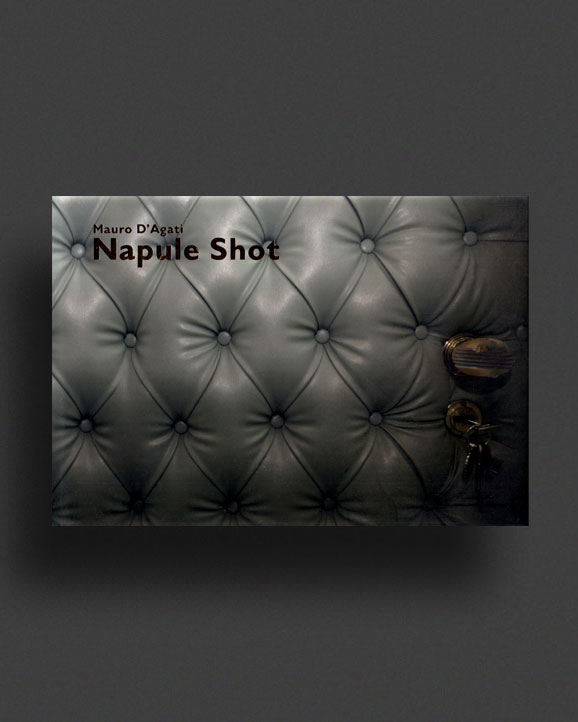
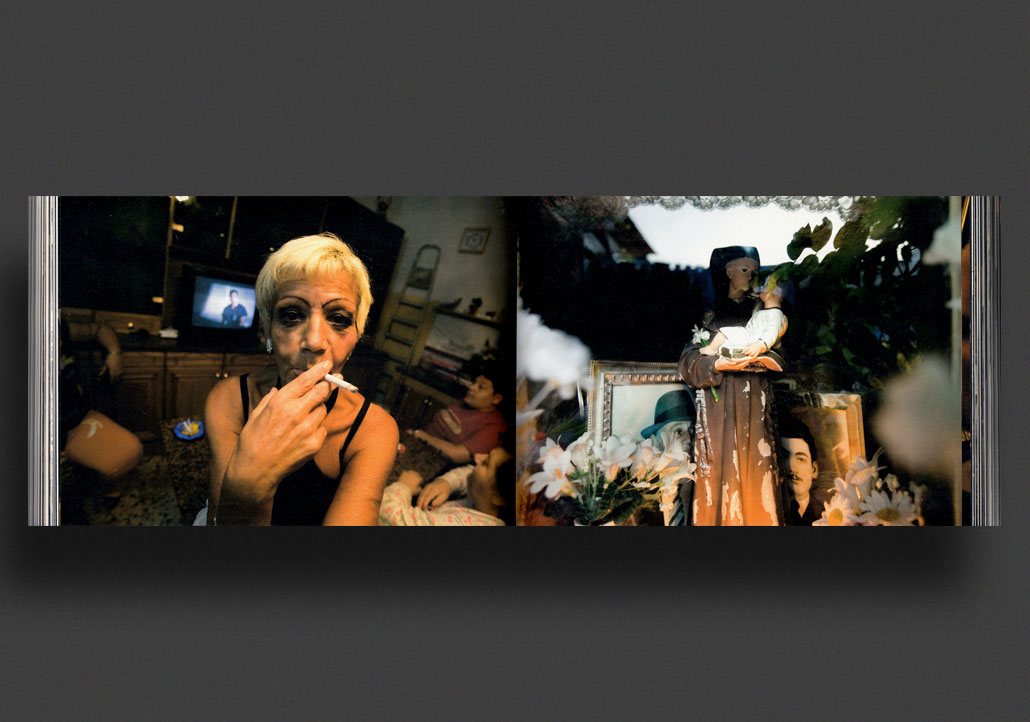
First 2010 hardcover English edition. Full-page colour photographs by Mauro D'Agati, taken between 2006 and 2009. Divided into "Outskirts" and "Downtown," Mauro D'Agati's Napule Shot makes a composite portrait of contemporary life in Naples, through a variety of characters and locations: a music manager, local singers, weddings, police operations, the heart of the city center and the edgier eastern zone of Naples and its inhabitants.
Mauro D'Agati, born in 1968 in Palermo, began working as a professional photographer in 1995, initially documenting Sicilian jazz festivals, art and theater events, before working for Italian and international magazines.
Near Fine, light wear.
1989, English / German / French
Softcover, 66 pages, 21 x 15 cm
Published by
Ex Pose Verlag / Berlin
$90.00 - Out of stock
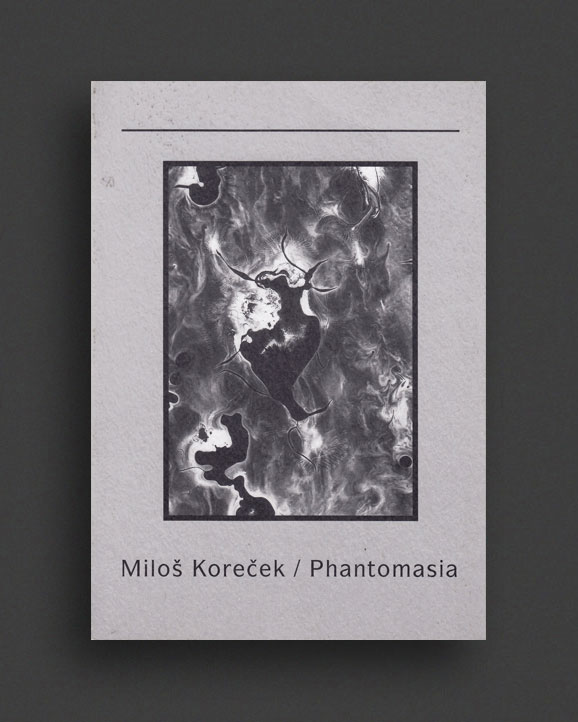
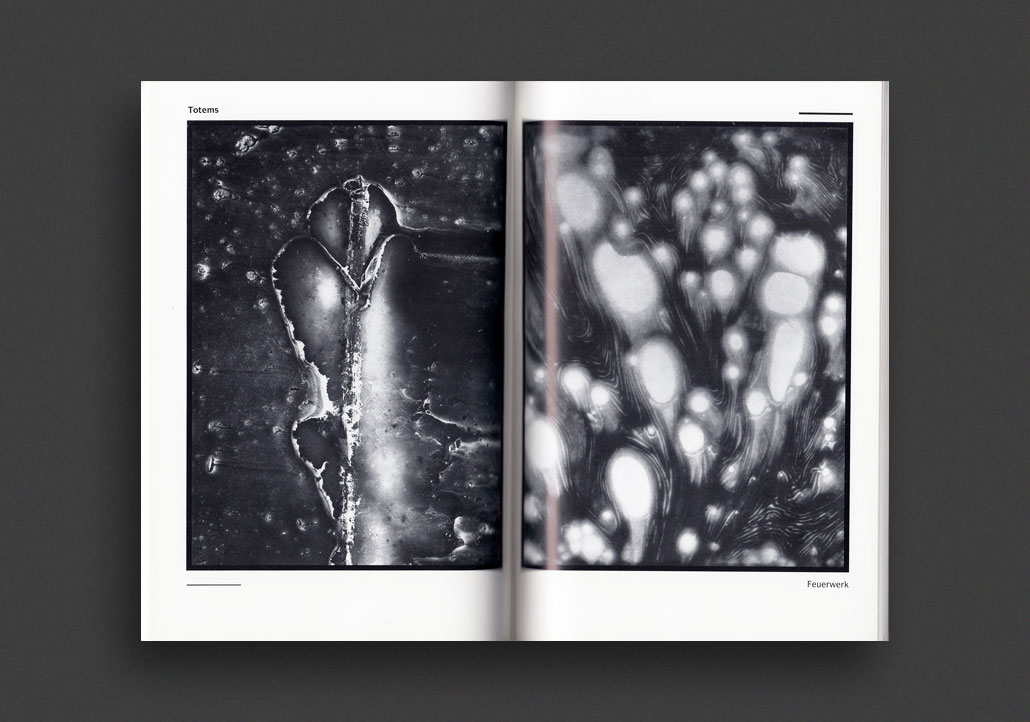
Rare monograph on Czech self-taught photographer Miloš Koreček (1906—1989), a founding member of the para-surrealist Ra Group. Profusely illustrated with Koreček's experimental and poetic abstract photographic works, which he called fokalk ("focal point" or "focal"), including multi-panel fold-out. Features text by Czech art historian Zdenek Primus in English, German and French. A rare look into into this important Czech artist seldom known outside Czechia.
At the turn of 1943–1946, while copying from a wet photographic plate in a hot enlarger, he accidentally discovered this artistic method of manipulating photographic emulsion. Named after the Spanish painter Oscar Dominguez, who is often referred to as the father of the so-called "decal" painting technique, where the painter uses transfer techniques to paint from his subconscious (“with no preconceived object”), rather than from a model, Koreček devoted himself to this method consistently, looking for interesting artistic details on the plate, which he photographed and copied. His stunning photo-method marked a significant creative contribution to the creation of Informel and abstract art in Europe. Together with Václav Zykmund, he organized photo happenings, which they themselves called "Rádění" — bizarre, grotesque and poetic object collages were later arranged with a living object — Václav Zykmund, who decorated himself with fake tattoos for these purposes. Koreček documented everything, and in 1944, a samizdat copy of Threatening Compass with accompanying text by Ludvík Kundera was created from the photographs. Both artists can be considered the forerunners of action art. Koreček exhibited focal lenses at the Ra Group's first exhibition in Brno in 1947 and at the group's other domestic exhibitions. In 1948, the Ra Group (inc. Josef Istler, Ludvík Kundera, Zdenek Lorenc, Vilém Reichmann, Václav Tikal, Vaclav Zykmund) was banned after the communist coup, and Koreček devoted himself to teaching, while his artist output largely fell into oblivion.
Very Good copy, light cover wear.
2023, English
Softcover, 176 pages, 22 x 30 cm
Published by
Art Paper Editions / Ghent
$110.00 - Out of stock
For more than three decades Richard Kern has sought to unravel and illuminate the complex and often darker sides of human nature. Kern makes the psychological space between the sitter, photographer and audience his subject. With his dry, matter of fact approach, he underlines the absurdity of truth and objectivity in photography while playing with our reliance upon taxonomies around sexual representation.
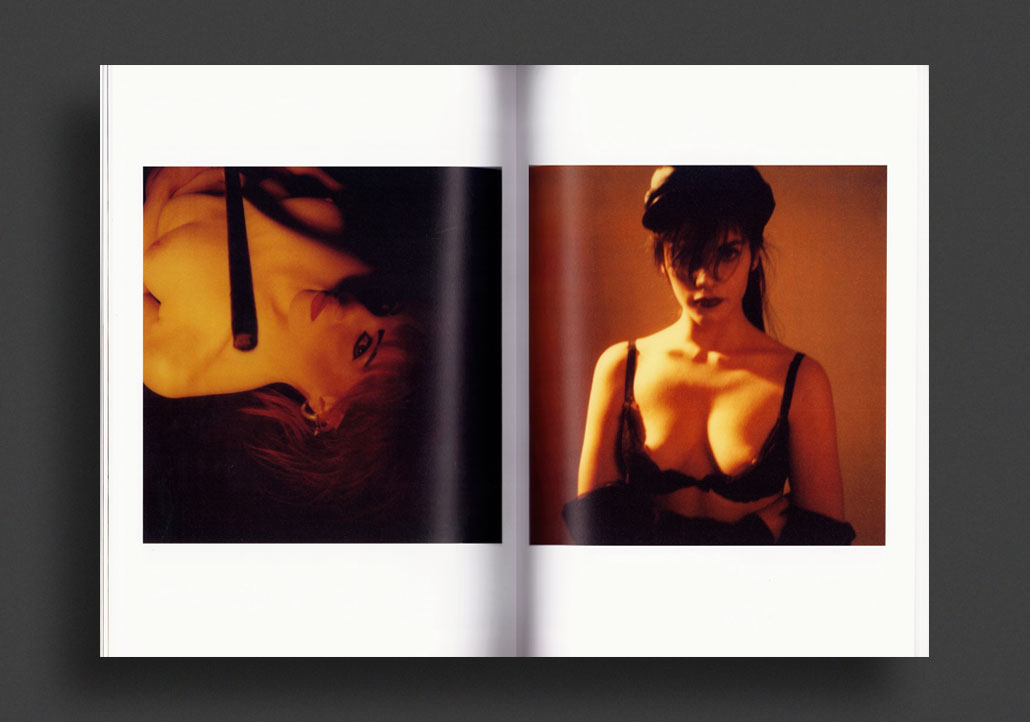
This publications contains more than 200 polaroids taken by Kern between 1980 and 2005 while shooting.
Edition of 1000