World Food Books' programme is largely produced on Kulin Nation land. We acknowledge the Wurundjeri people of the Kulin Nation as the first and continuing custodians of this land, and pay respect to their Elders past, present, and emerging.
World Food Books is an arts and special interests bookshop in Naarm / Melbourne. Founded in 2010, World Food Books is devoted to the presentation of a rotating, hand-selection of international art, design, literary and counterculture publications with an emphasis on the anti-traditional, the experimental, the avant-garde, the heretic, the marginal.
Presenting new titles alongside rare and out-of-print books, catalogues and journals spanning the fields of modern and contemporary art, design, photography, illustration, film, literature, poetry, cultural theory, philosophy, sexuality, popular and underground culture in its many radical forms, World Food Books wishes to encourage adventurous, thoughtful and open-minded reading, looking, writing, and exchange of publishing and ideas, both current and historical.
As well as our bookshop, located in Melbourne's historical Nicholas Building, all of our inventory is available internationally via our online mail-order service.
World Food Books semi-regularly co-ordinates "Occasions", a programme of exhibits and events at the bookshop and in partnership with other hosts (such as museums and art galleries) that develop out of the activities, relationships and content of the bookshop itself.
World Food Books
The Nicholas Building
37 Swanston Street
Room 5, Level 6
Melbourne 3000
Australia
SHOP HOURS:
Thu–Sat 11–5
WEB-SHOP OPEN 24/7
World Food Books
Postal Address:
PO Box 435
Flinders Lane
Victoria 8009
Australia
Art
Theory / Essay
Architecture / Interior
Graphic Design / Typography
Photography
Fashion
Eros
LGBTQ+
Fiction / Poetry
Weird / Speculative / Science Fiction / Horror
Transgressive / Visceral / Abject
Symbolism / Decadence / Fin de siècle
Film / Video
Painting
Sculpture / Installation
Performance / Dance / Theater
Drawing
Sound / Music
Curatorial
Group Shows / Collections
Periodicals
Out-of-print / Rare
Posters / Ephemera / Discs
Signed Books
World Food Books Gift Voucher
World Food Book Bag
Australian Art
Australian Fiction
Australian Science Fiction / Speculative Fiction
Australian Poetry
Australian Photography
Japanese Photography
Conceptual Art
Minimal Art
Dada
'Pataphysics / Oulipo
Fluxus
Concrete Poetry
Pop Art
Surrealism
Arte Povera
Arte Informale / Haute Pâte / Tachism
Nouveau Réalisme / Zero / Kinetic
Situationism / Lettrism
Collage / Mail Art / Xerox Art
Art Brut / Folk / Visionary / Fantastic
Illustration / Graphic Art / Bandes Dessinées
Furniture
Italian Radical Design / Postmodernism
Textiles
Ceramics / Glass
Counterculture
Protest / Revolt
Philosophy
Psychoanalysis
Anthropology
Anarchism
Socialism / Anarchism / Communism / Capitalism
Literary Theory / Semiotics / Language
Feminism / Women's Studies
Gender Studies / Sexuality
Anthropology
Fetishism / BDSM
Drugs / Psychedelia
Crime / Violence
Animal Rights / Veganism
Occult / Esoterica
Ecology / Earth / Alternative Living
Whole Earth / Crafts
All prices in AUD (Australian dollars)
Pick-Ups
Pick-up orders can be collected in our bookshop during opening hours after order date. Please collect any Pick-up orders within 2 weeks of ordering as we have limited storage space. Orders will be released back into stock if not collected within this time. No refunds can be made for pick-ups left un-collected. If you cannot make it in to the bookshop in this time-frame, please choose postage option.
Return Policy
All sales are final. We do accept returns (for refund or exchange) for items received in error. All our orders are packed with special care using heavy-duty padding and cardboard book-mailers or bubble mailers (for smaller books), using reinforcement where required. We cannot take responsibility for any lost, stolen or damaged parcels.
Insurance
Should you wish to insure your package, please email us directly after placing your order and we can organise this at a small extra expense. Although all standard/express tracked packages are very safe and dependable, we cannot take responsibility for any lost, stolen or damaged parcels. We recommend insurance on valuable orders.
Interested in selling your old books, catalogues, journals, magazines, comics, fanzines, ephemera? We are always looking for interesting, unusual and out-of-print books to buy. We only buy books in our fields of interest and specialty, and that we feel we can resell.
We base these prices on desirability, market value, in-print prices, condition and our current stock levels. We offer cash, store credit, and can take stock on consignment. All
about 25% of the price we expect to get when we sell them, or 30% in store credit. We base these prices on desirability, market value, in-print prices, condition and our current stock levels.
Sell your books any day of the week. You can drop them off and return later. If you have a lot of books, we can visit your Sydney home.
We buy books that we feel we can resell. We offer about 25 % of the price we expect to get when we sell them, or 30% in store credit. We base these prices on desirability, market value, in-print prices, condition and our current stock levels.
Philadelphia Wireman
03 August - 01 September, 2018
World Food Books is proud to announce our next Occasion, the first presentation of sculptures by Philadelphia Wireman in Australia.
The Philadelphia Wireman sculptures were found abandoned in an alley off Philadelphia’s South Street on trash night in 1982. Their discovery in a rapidly-changing neighbourhood undergoing extensive renovation, compounded with the failure of all attempts to locate the artist, suggests that the works may have been discarded after the maker’s death. Dubbed the "Philadelphia Wireman" during the first exhibition of this work, in 1985, the maker’s name, age, ethnicity, and even gender remain uncertain. The entire collection totals approximately 1200 pieces, all intricately bound together with tightly-wound heavy-gauge wire (along with a few small, abstract marker drawings, reminiscent both of Mark Tobey and J.B. Murry). The dense construction of the work, despite a modest range of scale and materials, is singularly obsessive and disciplined in design: a wire armature or exoskeleton firmly binds a bricolage of found objects including plastic, glass, food packaging, umbrella parts, tape, rubber, batteries, pens, leather, reflectors, nuts and bolts, nails, foil, coins, toys, watches, eyeglasses, tools, and jewellery.
Heavy with associations—anthropomorphic, zoomorphic, and socio-cultural responses to wrapped detritus—the totemic sculptures by Philadelphia Wireman have been discussed in the context of work created to fulfil the shamanistic needs of alternative religions in American culture. Curators, collectors, and critics have variously compared certain pieces to sculpture from Classical antiquity, Native American medicine bundles, African-American memory jugs, and African fetish objects. Reflecting the artist’s prolific and incredibly focused scavenging impulse, and despite—or perhaps enhanced by—their anonymity, these enigmatic objects function as urban artefacts and arbiters of power, though their origin and purpose is unknown. Philadelphia Wireman, whatever their identity, possessed an astonishing ability to isolate and communicate the concepts of power and energy through the selection and transformation of ordinary materials. Over the course of the past two decades, this collection has come to be regarded as an important discovery in the field of self-taught art and vernacular art.
Presented in collaboration with Fleisher-Ollman Gallery, Philadelphia, and Robert Heald, Wellington.
Susan Te Kahurangi King
02 February - 10 March, 2018
Susan Te Kahurangi King (24 February 1951 - ) has been a confident and prolific artist since she was a young child, drawing with readily available materials - pencils, ballpoint pens and felt-tip markers, on whatever paper is at hand. Between the ages of four and six Susan slowly ceased verbal communication. Her grandparents William and Myrtle Murphy had developed a special bond with Susan so they took on caring responsibilities for extended periods. Myrtle began informally archiving her work, carefully collecting and storing the drawings and compiling scrapbooks. No drawing was insignificant; every scrap of paper was kept. The King family are now the custodians of a vast collection containing over 7000 individual works, from tiny scraps of paper through to 5 meter long rolls.
The scrapbooks and diaries reveal Myrtle to be a woman of great patience and compassion, seeking to understand a child who was not always behaving as expected. She encouraged Susan to be observant, to explore her environment and absorb all the sights and sounds. Myrtle would show Susan’s drawings to friends and people in her community that she had dealings with, such as shopkeepers and postal workers, but this was not simply a case of a grandmother’s bias. She recognised that Susan had developed a sophisticated and unique visual language and sincerely believed that her art deserved serious attention.
This was an unorthodox attitude for the time. To provide some context, Jean Dubuffet coined the term Art Brut in 1945 to describe work created by self-taught artists – specifically residents of psychiatric institutions and those he considered to be visionaries or eccentrics. In 1972 Roger Cardinal extended this concept by adopting the term Outsider Art to describe work made by non-academically trained artists operating outside of mainstream art networks through choice or circumstance. Susan was born in Te Aroha, New Zealand in 1951, far from the artistic hubs of Paris and London that Dubuffet and Cardinal operated in. That Myrtle fêted Susan as a self-taught artist who deserved to be taken seriously shows how progressive her attitudes were.
Susan’s parents Doug and Dawn were also progressive. Over the years they had consulted numerous health practitioners about Susan’s condition, as the medical establishment could not provide an explanation as to why she had lapsed into silence. Dawn educated herself in the field of homeopathy and went on to treat all twelve of her children using these principles – basing prescriptions on her observations of their physical, mental and emotional state.
Doug was a linguist with an interest in philosophy who devoted what little spare time he had to studying Maori language and culture. To some extent their willingness to explore the fringes of the mainstream made them outsiders too but it was their commitment to living with integrity and their respect for individuality that ensured Susan’s creativity was always encouraged.
Even though Susan’s family supported her artistic pursuits, some staff in schools and hospitals saw it as an impediment to her assimilation into the community and discouraged it in a variety of ways. Her family was not always aware of this and therefore did not fully understand why Susan stopped drawing in the early 1990s. However, rather than dwell on the challenges that Susan faced in pursuit of her artistic practice, they prefer to highlight her achievements. In 2008 Susan began drawing again in earnest, after an almost 20 year interruption, and her work is now shown in galleries around the world.
Susan grew up without television and has been heavily influenced by the comics she read as a child. She is absolutely fearless in the appropriation of recognizable characters, such as Donald Duck and Mickey Mouse, in her work. She twists their limbs, contorts their faces, compresses them together, blends them into complex patterned backgrounds - always imbuing them with an incredible energy. Although Susan often used pop culture characters in her work they are not naive or childlike. These are drawings by a brilliant self-taught artist who has been creating exceptional work for decades without an audience in mind.
Mladen Stilinović
"Various Works 1986 - 1999"
02 February 16 - September 10, 2016
Various works 1986 - 1999, from two houses, from the collections of John Nixon, Sue Cramer, Kerrie Poliness, Peter Haffenden and Phoebe Haffenden.
Including: Geometry of Cakes (various shelves), 1993; Poor People’s Law (black and white plate), 1993; White Absence (glasses, ruler, set square, silver spoon, silver ladel with skin photograph and wooden cubes), 1990-1996; Exploitation of the Dead (grey and red star painting, wooden painting, black spoon with red table, red plate), 1984-1990; Money and Zeros (zero tie, paintings made for friends in Australia (Sue, John, Kerrie), numbers painting), 1991-1992; Words - Slogans (various t-shirts) - “they talk about the death of art...help! someone is trying to kill me”, “my sweet little lamb”, “work is a disease - Karl Marx”; Various artist books, catalogues, monographs, videos; Poster from exhibition Insulting Anarchy; "Circular" Croatian - Australian edition; Artist book by Vlado Martek (Dostoyevsky); more.
Thanks to Mladen Stilinović and Branka Stipančić.
Jonathan Walker
Always Will Need To Wear Winter Shirt Blue + Ochre Small Check Pattern
21 August - 21 September, 2015
Untitled
I am not a great reader of poetry but I always return to the work of Melbourne poet, Vincent Buckley (1925- 1988). Perhaps I find his most tantalising piece to be not a finished poem but a fragment left on a scrap of paper discovered on his desk after the poet’s death.
The poetry gathers like oil
In the word-core, and spreads
It has its music meet,
Its music is in movement.
This fragment is more the shell left behind from a volatile thought than a finished poem. I find the last two lines honest but awkward whereas the first two lines work like an arrow. Most likely he could not find a resolution so it was left. Still, in its present form, it remains an eloquent testimony to the ultimate failure of a medium to express mobile thought and sensation, in Buckley’s case, through verbal language. It’s an important matter because this is something all artists have to deal with regardless of the medium.
I have never written a poem, however, I am forever copying fragments from books on paper scraps in a vain effort to fix certain notions in my head. At first, they function as bookmarks that are sometimes returned to when I open the book. But before long, as they accumulate, they fall out littering the table interspersed with A4 photocopies, bills, books and medications.
To return to Buckley’s fragment, the first two lines very much evoke how I paint nowadays. As you age, detail diminishes and patches of light become more luminous and float. I feel the most honest way of dealing with this is by smearing the oil paint on the canvas with the fingers and working close-up, blind. Only if the patches coalesce into an approaching image can the work gain a life.
-
Jonathan Walker was born in Melbourne, Australia and brought up on a dairy farm in Gippsland. In the 1970’s he studied painting at RMIT and won the Harold Wright Scholarship to the British Museum, London. During the 1980’s he exhibited at Pinacotheca Gallery, Richmond and had work shown at the NGV and Heidi City Art Gallery. Over the same period he designed the cover for the “Epigenesi” LP by Giancarlo Toniutti, Italy and conducted a mail exchange work with Achim Wollscheid, Germany. The work with artists through the post resulted in an article published in the bicentenary issue of Art and Australia 1988. He showed in artist run spaces such as WestSpace in the 90’s and 2000’s, and until 2012, taught painting at Victoria University, which is where we (Colleen Ahern and Lisa Radford) as organisers of the exhibition, among many others, had the privilege of being his student.
Walker’s knowledge was imparted to students through the careful selection of music, literature, and artists found in books that he himself had ordered for the library. Walker’s strategy was the generosity of sharing his vast knowledge with references specific to each student and their context.
Walker’s paintings share a similar focus and intimacy.
This exhibition presents a small selection of recent paintings alongside a publication that includes Walker’s writing. Observational and analytical, Walker’s work is a type of material notation — the time of day, colour and how it is blended, the both specific and fleeting location of a reflection on lino or the question of whether a chair leg should be included in a painting.
Please join us on Friday August 21 between 6-8pm to celebrate the opening of the exhibition.
Curated by Colleen Ahern and Lisa Radford.
B. Wurtz
Curated by Nic Tammens
March 26 - April 4, 2015
B.Wurtz works from a basement studio in his home on Manhattan’s Lower East Side.
This local fact is attested to by the plastic shopping bags and newsprint circulars that appear in his work. As formal objects, they don’t make loud claims about their origins but nonetheless transmit street addresses and places of business from the bottom of this long thin island. Like plenty of artists, Wurtz is affected by what is local and what is consumed. His work is underpinned by this ethic. It often speaks from a neighborhood or reads like the contents of a hamper:
“BLACK PLUMS $1.29 lb.”
“Food Bazaar”
“USDA Whole Pork Shoulder Picnic 99c lb.”
“RITE AID Pharmacy, with us it’s personal.”
“H. Brickman & Sons.”
“Sweet Yams 59c lb."
Most of the work in this exhibition was made while the artist was in residence at Dieu Donne, a workshop dedicated to paper craft in Midtown. Here Wurtz fabricated assemblages with paper and objects that are relatively lightweight, with the intention that they would be easily transportable to Australia. This consideration isn’t absolute in Wurtz’s work, but was prescriptive for making the current exhibition light and cheap. Packed in two boxes, these works were sent from a USPS post office on the Lower East Side and delivered to North Melbourne by Australia Post.
Wurtz appears courtesy of Metro Pictures, New York.
Thanks to Rob Halverson, Joshua Petherick, Sari de Mallory, Matt Hinkley, Helen Johnson, Fayen d'Evie, Ask Kilmartin, Lisa Radon, Ellena Savage, Yale Union, and "Elizabeth".
John Nixon
"Archive"
December 15 - January 20, 2014
The presentation of John Nixon's archive offered a rare showcase of this extensive collection of the artist's own publications, catalogues, posters, ephemera, editions and more, from the mid 1980s onwards, alongside a selection of his artworks.
Organized by John Nixon, Joshua Petherick and Matt Hinkley.
<a href=http://wfb.public-office.info/artist/john-nixon>All titles by John Nixon
"Habitat"
at Minerva, Sydney (organised by Joshua Petherick and Matt Hinkley)
November 15 - December 20, 2014
Lupo Borgonovo, Janet Burchill & Jennifer McCamley,
Lewis Fidock, HR Giger, Piero Gilardi, Veit Laurent Kurz,
Cinzia Ruggeri, Michael E. Smith, Lucie Stahl, Daniel Weil, Wols
Press Release:
“...It contained seven objects. The slender fluted bone, surely formed for flight, surely from the wing of some large bird. Three archaic circuitboards, faced with mazes of gold. A smooth white sphere of baked clay. An age-blackened fragment of lace. A fingerlength segment of what she assumed was bone from a human wrist, grayish white, inset smoothly with the silicon shaft of a small instrument that must once have ridden flush with the surface of the skin - but the thing’s face was seared and blackened.”
William Gibson, “Count Zero”, 1986
"Autumn Projects Archive"
Curated by Liza Vasiliou
March 6 - March 15, 2014
World Food Books, in conjunction with the Virgin Australia Melbourne Fashion Festival 2014, presented the Autumn Projects archive, consisting of a selection of early examples in Australian fashion with a particular interest in collecting designers and labels from the period beginning in the 1980’s, who significantly influenced the discourse of Australian Fashion.
Curated by Liza Vasiliou, the exhibition provided a unique opportunity to view pieces by designers Anthea Crawford, Barbara Vandenberg, Geoff Liddell and labels CR Australia, Covers, Jag along with early experimental collage pieces by Prue Acton and Sally Browne’s ‘Fragments’ collection, suspended throughout the functioning World Food Books shop in Melbourne.
H.B. Peace
presented by CENTRE FOR STYLE
November 14, 2013
"Hey Blinky, you say chic, I say same"
Anon 2013
H.B. Peace is a clothing collaboration between great friends Blake Barns and Hugh Egan Westland. Their pieces explore the divergences between 'character’ and ‘personality’ in garments....etc
Special Thanks to Joshua Petherick and Matt Hinkley of WFB and Gillian Mears
and a Very Special Thank you to Audrey Thomas Hayes for her shoe collaboration.
Janet Burchill & Jennifer McCamley
"Aesthetic Suicide"
May 10 - June 8, 2013
The first of our occasional exhibitions in the World Food Books office/shop space in Melbourne, "Aesthetic Suicide" presented a body of new and older works together by artists Janet Burchill & Jennifer McCamley, including videos, prints, a wall work, and publications.
During shop open hours videos played every hour, on the hour.
1972, English
Softcover (staple-bound), 48 pages, 28 x 21.5 cm
1st Edition, Out of print title / used / good
Published by
Payton / NSW
$40.00 - In stock -
Rare copy of this fantastic, seldom seen issue of Camera Graphics Australia (no. 5), published in May/June 1972, published by Payton, McMahons Point, NSW, featuring the work of Australian photographers Sue Ford, Paul Cox, Greg Weight, Roger Warwick Scott, Rob Walls, Lissa Coote, Stan Ciccone (inc. front cover), illustrated review of Toowoomba '72 International Salon, illustrated review on American documentary photojournalist Leonard Freed's Germany... As well as the featured photographic portfolios, the magazine includes essays, news, reviews for photo books, exhibitions, products, photography/camera related advertising, and more.
Good copy with edge wear to textured card covers, some shallow insect marking to front.
1978, Japanese
Softcover (staple-bound), 16 pages, 29.5 x 21 cm
1st Edition, Out of print title / used / very good
Published by
Herald / Japan
$90.00 - In stock -
"Get with Stone, Take the Trip!"
Very rarely seen 1978 Japanese souvenir photo booklet for 1974 Australian outlaw biker film cult classic Stone, written, directed and produced by Sandy Harbutt. "Five years before MAD MAX, producer/director/co-writer/star Sandy Harbutt – in his first and only feature film – ignited Australia’s exploitation explosion, launched a global censorship battle and delivered what may still be the best biker movie in history: When an undercover cop (Ken Shorter of SUNDAY TOO FAR AWAY) infiltrates an outlaw motorcycle gang (led by Harbutt), he’ll straddle 7000 RPM of screaming steel for a full-throttle hell ride through sex, violence, and Down Under vengeance. Hugh Keays-Byrne (Immortan Joe in MAD MAX: FURY ROAD), Helen Morse (PICNIC AT HANGING ROCK), Roger Ward, Vincent Gil and Reg Evans of MAD MAX fame, and members of the Sydney Hells Angels co-star in the “ass-kicking bite of entertainment that delivers on every level” (DVD Drive-In)"—Severin
Heavily illustrated throughout with glossy colour and b/w stills from the film, alongside texts in Japanese about the film, cast and production information.
Very Good copy with light wear.
1979, Japanese
Softcover (staple-bound), 20 pages, 29.5 x 21 cm
1st Edition, Out of print title / used / very good
Published by
? / Japan
$15.00 - Out of stock
Japanese souvenir photo booklet for George Miller's Mad Max, a 1979 Australian dystopian action film produced by Byron Kennedy. Mel Gibson stars as "Mad" Max Rockatansky, a police officer turned vigilante in a near-future Australia in the midst of societal collapse. Joanne Samuel, Hugh Keays-Byrne, Steve Bisley, Tim Burns, and Roger Ward also star. The award-winning, though polarizing upon release, film helped open up the global market to Australian New Wave films and has become an international cult classic, giving rise to three sequels: Mad Max 2 (1981), Beyond Thunderdome (1985), and Fury Road (2015). Heavily illustrated throughout with glossy colour and b/w stills from the film, poster designs, alongside texts in Japanese about the film, cast, and production information.
Very Good copy.
2025, English
Softcover, 250 pages, 22.5 x 21 cm
Published by
Buxton Contemporary / Melbourne
$40.00 - In stock -
Catalogue published on the occasion of Hany Armanious — Stone Soup, Buxton Contemporary, 21 November 2025 – 11 April 2026, the artist’s largest exhibition to date, featuring more than 80 works spanning 15 years of practice, including a new commission and many works never before seen in Australia. The exhibition is curated by Laurence Sillars, Head of the Henry Moore Institute, with Samantha Comte, Head Curator, and Charlotte Day, Director of Art Museums, at the University of Melbourne, and builds on a recent presentation at the Henry Moore Institute in Leeds, UK. Richly illustrated with more than 100 works and featuring a major new essay by co-curator Laurence Sillars, this publication expands on Hany Armanious’ inventive practice and serves as the definitive companion to Stone Soup.
Curator Laurence Sillars says: “Armanious’s practice is not merely an exploration of the object, but an invitation to dwell in the uncertainty of perception itself – a quiet but radical challenge to the assumption that the world is a stable place. Throughout, there is joy, a celebration of being, touching, of looking so intently that the familiar becomes strange. In an age of synthetic realities, this is a profoundly generative act. Like stepping into a place where the language is unfamiliar and every word must be relearned, his sculptures offer the thrill and vertigo of finding one’s bearings in a newly translated world – a place where, in order to truly see, we must first allow ourselves to be lost.”
Published in an edition of 550 copies.
1999, English
Softcover, 60 pages, 27.1 x 23.4 cm
1st Edition, Out of print title / used / fine
Published by
Moet & Chandon Australian Art Foundation / Australia
$120.00 - In stock -
Wonderful early artist's book published in 1999 on the work of Australian sculptor Hany Armanious by Möet & Chandon Australian Art Foundation. Printed in France on textured heavy stock, this handsome volume documents works spanning 7-8 years of Hany's work, including sculptures, painting, installation, accompanied by captions and texts written by the artist to "walk" the reader through the works. As it should be. We think the best book on Armanious' work ever published, and now very rare to come by.
Hany Armanious (b. 1962 in Ismailia, Egypt. Lives and works Sydney, New South Wales) is a sculptor whose work is predominantly concerned with the magical properties of the casting process. Many of his works deal with the alchemical transformation of one object into another via what the artist has described as the ‘cult of casting’. Hany was a key figure in Sydney’s grunge scene of the early 1990s, and in 2011 was Australia’s representative at the Venice Biennale. His practice often deliberately skirts the fine line separating ‘something’ from ‘nothing’. While his works – as ‘things’ consciously, even meticulously, produced – are obviously never nothing, many nonetheless toy with notions of value and its contemporary ambiguities.
Near Fine copy.
2025, English
Softcover, 200 pages. 23 x 16.6 cm
Published by
Memo Review / Naarm
$35.00 - In stock -
Issue 4 of Memo Review focuses on Frankfurt-based artist Hana Earles, a defining figure in the recent history of Melbourne’s backyard gallery scene. Other pieces include renowned French philosopher Catherine Malabou on Cyril Schäublin’s 'Unrest', Chris Kraus on her literary evolution, Micaela Sahhar on media and institutional censorship of Palestine, and features on Caveh Zahedi, Carol Jerrems, Rosemarie Trockel, Hany Armanious, Nora Turato, Robert Rooney and more. Also featured: eminent art historian T. J. Clark’s Marxist-inflected commitment to modernity comes under review by Francis Plagne, and Keith Broadfoot restages Imants Tiller’s canonical von Guérard copy, Mount Analogue, as repetition and resurrection of Australian art through the colonial sublime.
"Across this issue, a recurring tension emerges between what can be said, what must be withheld, and who controls the threshold between the two. In conversation with Declan Fry, Chris Kraus reflects on her new novel’s blend of small-town crime and Trump-era “cancellation,” asking how a writer can depict other people’s lives when social media, true crime, and activist vocabularies are all busy turning them into types, or erasing them altogether. Micaela Sahhar turns to Anna Akhmatova, the poet who defied Stalin’s censors, to trace how media and cultural institutions now treat Palestine as a zone of censorship, suppression, and risk management. That climate finds an echo in Berlin, where Tania Bruguera’s hundred-hour Hannah Arendt reading at the Hamburger Bahnhof was overtaken first by pro-Palestine activists, then by the institution’s own fear. As Hilary Thurlow argues, what played out was not a clash of opposing camps but a sign of the Left’s deeper fractures under the pressure of moral absolutism. And is this not close to Nicolas Hausdorf ’s claim that the West’s moral language, forged in the crucible of the twentieth century’s horrors, has been worn thin by empty repetitions and meme-like escalation, until it can no longer bear its original meaning?
Meanwhile, the old question of “effective political art” persists. Rex Butler reads 65,000 Years: A Short History of Australian Art as a kind of visual plebiscite, a wall of works in which every artist gets a vote and every vote counts the same — a quasi-“Voice” in exhibition form — while there are revisitations of the weary Marxist art historian T. J. Clark, whose new collected essays are reviewed by Francis Plagne.
Elsewhere, the veil is not political but ontological. For Susie Anderson and Hannah Presley, the veil marks a space of partial revelation in which artists choose what to show and what to keep, set in stark contrast to the radical transparency of Caveh Zahedi’s life-as-art practice, with all its personal collateral, as explored by Chelsea Hopper.
Questions of exposure return again in Biz Sherbert’s interview with Hana Earles, where scribbled text, titles, and even Jo Malone perfume bottles act as “secret doorways” between diary-like interiority and the messy surface of painting. Seen this way, Earles’s work, steeped in psyops, Manson girls, anime adolescence, Addison Rae, mumblecore, and spiritual acceleration, offers an oblique map of Melbourne’s outwardly impoverished backyard-gallery ecology over the past decade — the Meows, Guzzlers, Asbestoses, and Punk Cafés at the fringes of the city’s institutional officialdom. Call it, with Gemma Topliss, façadism." — Paris Lettau
Contributors:
1980, English
Hardcover (w. dust jacket), 128 pages, 34 x 24.5 cm
Signed by Vali in 1981,
1st Edition, Out of print title / used / fine
Published by
Open House / London
$680.00 - Out of stock
Fine first edition of this rare and truely wonderful book on the magical Australian artist Vali Myers (1930—2003), published in this hardbound edition in 1980 by Open House, London, this copy signed by Vali in 1981. Artist, dancer, muse, lover of animals and powerful creatrix, Vali Myers was a unique spirit born out of time. She lived her extraordinary life like a bright flame, cutting her own path and living on her own terms: a tightrope walker – one foot in this world and one in a dream world that we can only glimpse in her profound artwork. This remains the finest volume collecting Vali's drawings and paintings, her life's work. The life of a fearless, wild spirit that is manifested in her artworks, lavishly illustrated here in colour. Foreword by photographer Ed van der Elsken, and Introduction by George A. Plimpton, editor of ‘The Paris Review’.
“Let it all be animal, my life and death, hard and clean like that, anything but human… a lot I care, me with my red heart in the dark earth and my tattooed feet following the animal ways.”—Vali Myers, diary entry, 1963
Premiere danseuse of the Melbourne Modern Ballet at seventeen, Vali left her Australian home for Paris, living on the streets of the Latin Quarter of Saint Germain des Pres on the Left Bank for three years, surviving on bread and milk and carrying a knife for protection. Despite the poverty of city ravaged by war, she never ceased to draw and dance. Vali became notorious in the cafés and nightclubs of the Quarter for her phantom-like face and almost supernatural ability to dance. Photographer Ed van der Elsken made Vali the main subject of a series of photographs documenting bohemian life in postwar Paris published in the book ‘Love on the Left Bank’ in 1956, featuring her artworks. Her work was praised by George Plimpton in his Paris Review. After stints in prison for vagrancy, Vali left Paris and began her ‘walkabout’ of France, Italy, Britain, Brussels and Austria, to return again to Paris with young architect, Rudi Rappold. Vali Myers, the 'Australian queen of bohemia', friend to Jean Cocteau, Tennessee Williams, and Jean Genet, left Paris for the last time in an effort to escape an opium addiction that was slowly killing her. After months of wandering, Vali and Rudi literally stumbled into the wild green valley of ‘Il Porto’ in Positano, Southern Italy. Protected by 1,000-foot cliffs, the almost impenetrable valley opened to the sea and became Vali’s main residence and greatest inspiration. In the early summer of 1971, Italian artist Gianni Menichetti began living with Vali and together they took care of the large animal family that developed in the valley. Ironically, these same animals had filled Vali’s dreams and work for years – the owl, raven, and the fox. Over the years more animals came to the retreat until Vali had built up a menagerie numbering over one hundred. After years of battling with local police and government bureaucracy, Vali finally obtained permission to turn the valley into a wildlife sanctuary under the protection of the World Wildlife Fund and dedicated all of her money, time and energy into it’s preservation. During the ‘60s, after years of hibernation from the outside world, the legend of Vali and her artwork began to seep into the consciousness of the new psychedelic generation, praised by Andy Warhol, Ernst Fuchs, and Salvador Dali, inspiration to Patti Smith, Deborah Harry, Mick Jagger, Mary Ellen Clark, and Marianne Faithful. She began exhibiting her artworks and dividing her time between the Hotel Chelsea in New York City, a 14th-century cottage at Il Porto, near Positano, a residence in Paris and her adopted home in Melbourne. Later, after she began having seizures, she returned to Melbourne in 1993, and opened a studio in the Nicholas Building; only returning to Positano occasionally. She passed away in 2003.
Fine copy in Fine dust jacket preserved under mylar wrap. Signed by Vali in 1981 "Vali Myers 1981" in her beautiful script to title page.
2025, English
Softcover (staple-bound), 12 pages, 13.4 x 13.6 cm
Limited Edition,
Published by
Oriette Wood / Naarm
$40.00 - In stock -
"Comic Trials" is a new small edition hand silk-screen and assembled graphic zine from Oriette Wood.
"A homage to the golden age of comics, this screen printed publication is an exercise of drawing and half-toning in colour, formatted like a comic panel. Like a lot of my work these pages are scenes of love, kink, femininity, and something other."—Oriette Wood
Silkscreened in very limited edition
2025, English
Softcover, 16 silk-screened pages, 14 x 16 cm
Edition of 30,
Published by
Oriette Wood / Naarm
$70.00 - In stock -
"'Insect Smut' is a small edition graphic zine made up of 14 collages. These are made by abstracting references from my personal archive of smut, kink, and comics. It's a homage to the vibrant scene of French graphic zines in the 1980's to 90's. Printed and bound at Troppo Print Studio over a three week period."—Oriette Wood
Silkscreened edition of 30
2025, English
Hardcover (clothbound), 120 pages, 30 x 30 cm
Ed. of 250 copies w. unique hand-drawn details,
Published by
Self-Published / Naarm
$55.00 - Out of stock
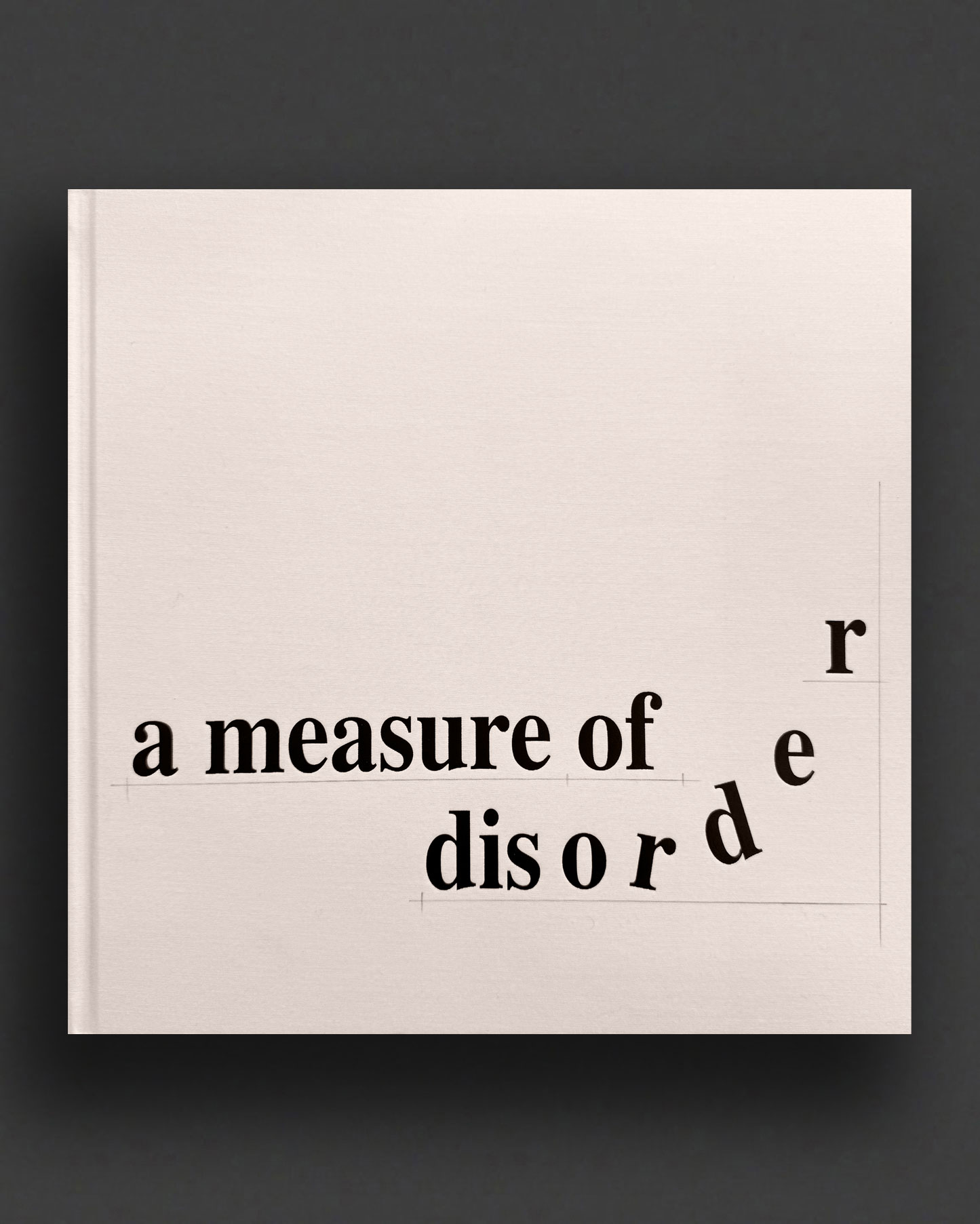
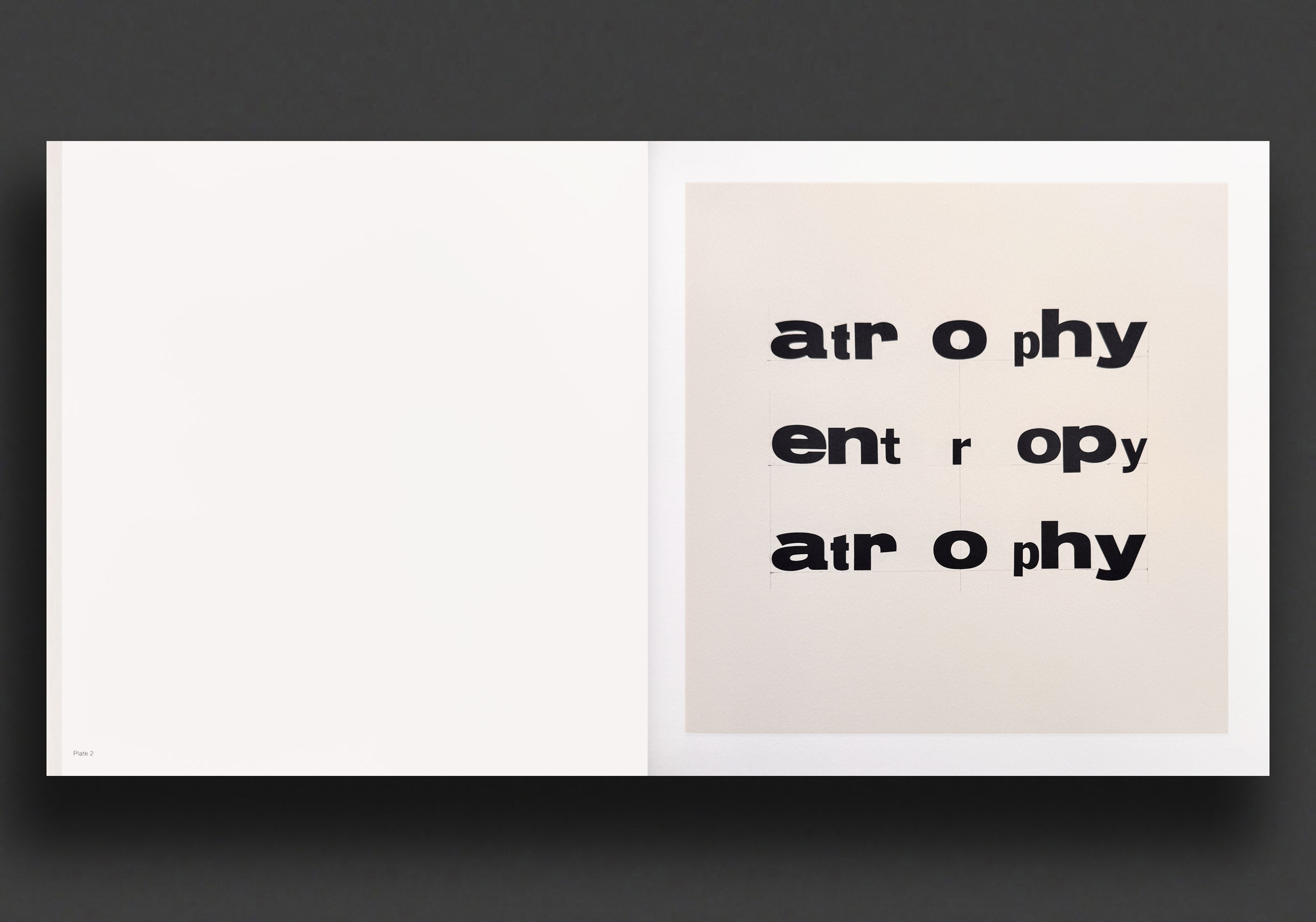
Darcey Bella Arnold’s A Measure of Disorder brings together a series of works on paper produced between 2022 and 2024. Presented in a 120-page limited edition (250 copies), measuring 30 x 30 cm, and printed in full colour on high-quality paper in a section-sewn hardback format, the publication documents a body of drawing-based works that extend Arnold’s ongoing inquiry into language, visual structure, and the disruptions embedded within systems of order.
The cover is embossed with black foil printing and each copy of the limited edition book is distinguished by hand-drawn lines in pencil by Darcey Bella Arnold to the cover, rendering each copy unique.
The book includes essays by curator Tim Riley Walsh and artist and curator Brooke Babington. These essays were originally developed in response to Arnold’s two-part exhibition series A Measure of Disorder, held at Gertrude Glasshouse (2022) and ReadingRoom (2023), both in Naarm/Melbourne. Babington’s essay Disordering Measures and Riley Walsh’s If a canvas is feeling and a page is thought situate Arnold’s work within broader conversations around feminist approaches to materiality, language, and repetition.
Designed by Yanni Florence, the publication maintains a focus on the material and formal qualities of the work. The drawings—reproduced at scale and in colour—are presented with attention to their spatial and conceptual detail.
Darcey Bella Arnold is a Melbourne-based artist working across painting, sculpture, and drawing in a research-led practice that interrogates language—its necessity, fallibility, and creative potential. Her work draws on metaphor, humour, and repetition to reframe familiar histories, cultural symbols, and institutional pedagogies through installation-driven environments that merge personal archives with broader cultural and political references. Arnold holds a BFA from the Victorian College of the Arts and Honours from Monash University, and has participated in national and international residencies including Gertrude Contemporary (AUS) and Eastside International (LA). Her work has been exhibited at major Australian institutions, with recent commissions at the Melbourne and Lorne Sculpture Biennales.
1981, English
Softcover, 176 pages, 21 x 29 cm
Signed by Virginia Fraser,
1st Edition, Out of print title / used / good
Published by
Sydney College of Arts / Sydney
$90.00 - In stock -
Australian photographer Virginia Fraser's copy of this fantastic publication from the Sydney College of Arts, 1981. Signed in red pen to the front blank page. Densely packed with essays and photo-essays focussing on photography, politics, theory, criticism, sexuality and racism. "This is the first publication in what we hope to be a continuing commitment to critical thought and practice in photography. Contributors from all over Australia were invited to participate on a collective basis for selection, layout and production." (from Foreword).
Features contributions from Fiona Hall, Terry Smith, Experimental Art Foundation, Sue Ford, John Williams, Ted Colless, Mimmo Cozzolino, Jacki Redgate, Violet Hamilton, Kris Hemensley, Charles Merewether, Martyn Jolly, Robyn Stacey, Esther Faerber, Anne Zahalka, Catherine De Lorenzo, Anne-Marie Willis, Christine Godden, and many more.
Good copy with some wear to extremities, sticker to front cover, light foxing to block edge.
1974, English
Softcover, 142 pages, 27.5 x 21cm
1st Edition, Out of print title / used / very good
Published by
Outback Press / Fitzroy
$650.00 - Out of stock
First edition of Carol Jerrems first, only photobook, "A Book About Australian Women", published by the Outback Press in Fitzroy in 1974, with text by Virginia Fraser. This now very collectable Australian photobook classic by Jerrems collects 131 portraits of Australian women dating from 1968 to 1974; 'womens liberationists, Aboriginal spokeswomen, activists, revolutionaries, teachers, students, drop-outs'. Preoccupied by subcultures or marginal groups, she intimately captures pockets of life previously ignored. A dynamic series of images that display Jerrems’ compositional flair, evident in the decorative synergy between foreground and background. The photographs are accompanied by text by Virginia Fraser.
Very Good copy with light tanning and edge/spine wear, very faint foxing to block edge. Lovely copy of this rare book.
1981, English
Softcover (staple-bound + fold-out poster), 32 pages, 30 x 22 cm
1st Edition, Out of print title / used / good
Published by
George Paton Gallery / Melbourne
$35.00 - In stock -
Scarce copy of the catalogue Australian Women Photographers 1890-1950, published by the George Paton Gallery, Melbourne University Union, 1981, including the A2 size poster for the exhibition folded inside as issued. Illustrated with texts by the Director of the George Paton Gallery at the time, Judy Annear, curator Barbara Hall, and Gael Newton, plus biographies for all photographers and catalogue of work.
Good copy with light wear, tanning and pinching to spine. Poster VG.
1987, English
Softcover (staple-bound), 84 pages, 30 x 21 cm
1st Edition, Out of print title / used / good
Published by
The Australian Video Festival / Paddington
$30.00 - Out of stock
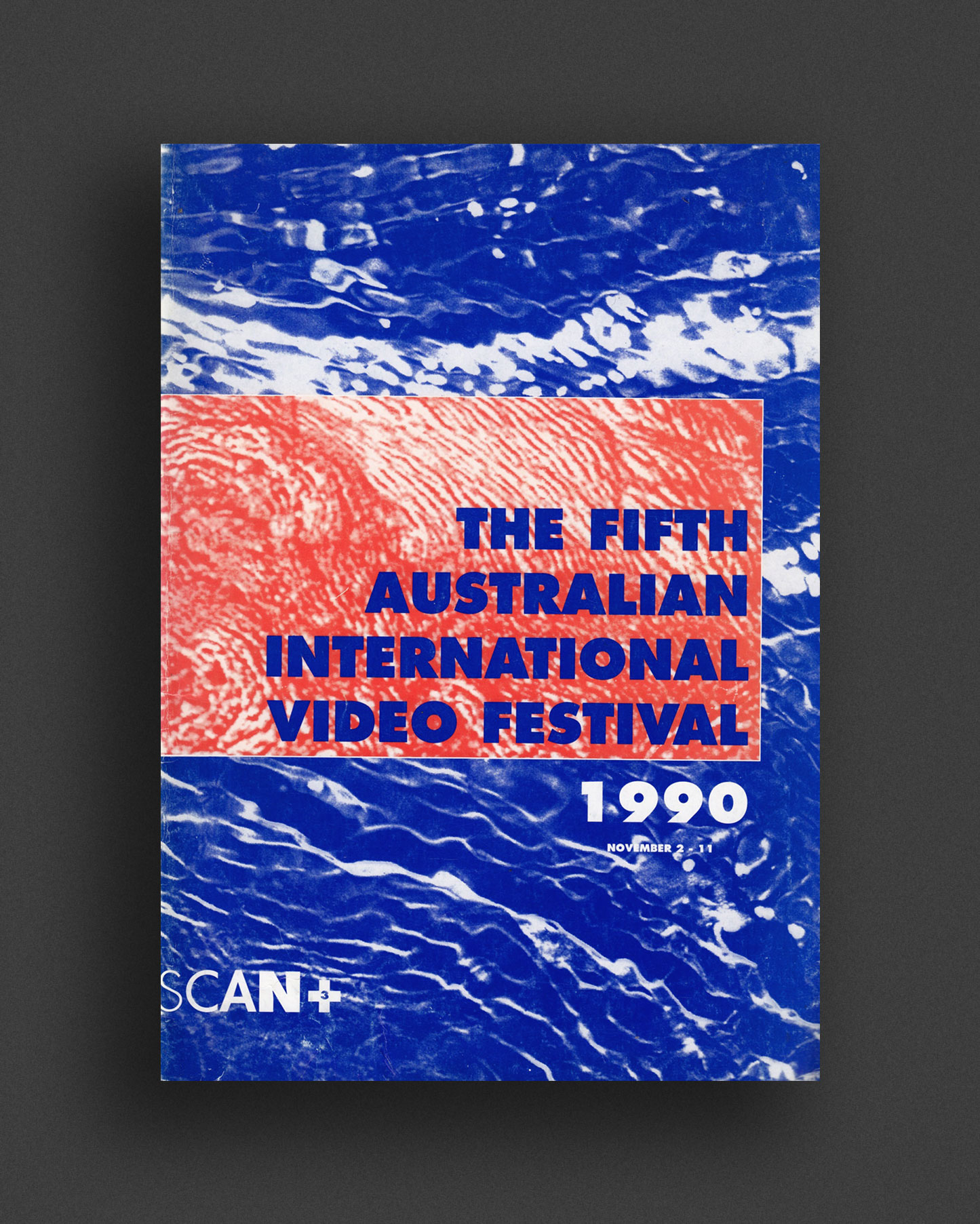
Rare 1987 catalogue published on the occasion of the second Australian Video Festival 1987, 4—10 September 1987, co-ordinated by curator Sally Couacaud. A wonderful time-capsule of Australian and international developments in experimental video, inc. Computer Graphics, Music Videos, Documentary, Video Art, Corporate Video, etc. illustrated throughout in b/w with texts around a program of feature installations, exhibitions and screenings in Sydney, including "Terrorizing the Code" (new video from the US), "Scratch Video", "Video Tapes from Europe", "Video from South East Asia", "Video, Lunacy and Post-Culture Japan", "Tapes from Europe", "Women and High Technology", "Public Television", "German Video Art", and much more.
Features the work of Gretchen Bender, Martha Rosler, Robert Ashley, Jenny Holzer, Judith Barry, Allan Vizents, Dennis Del Favero, FILEF, Peter Westheimer, Warren Burt, Max Almy, Pater Tyndall, Dara Birnbaum, David Blair, Gary Hill, Juan Downey, Hans Breder, Tony Labat, Bill Viola, Robert Longo, Paper Tiger Television, Teri Yarbrow, Yolanda López, Hiroya Sakurai, Taeko Kitajima, Gorilla Tapes, The Duvet Brothers, John Maybury, Adrian Martin, Ross Harley, Bernice Murphy, Ian Haig, David Chesworth, and many more...
Good copy with some cover rubbing and spine pinching.
1992, English
Softcover (w. dust jacket), 140 pages, 26 x 20 cm
1st Edition, Out of print title / used / very good
Published by
MIMA / Melbourne
$35.00 - Out of stock
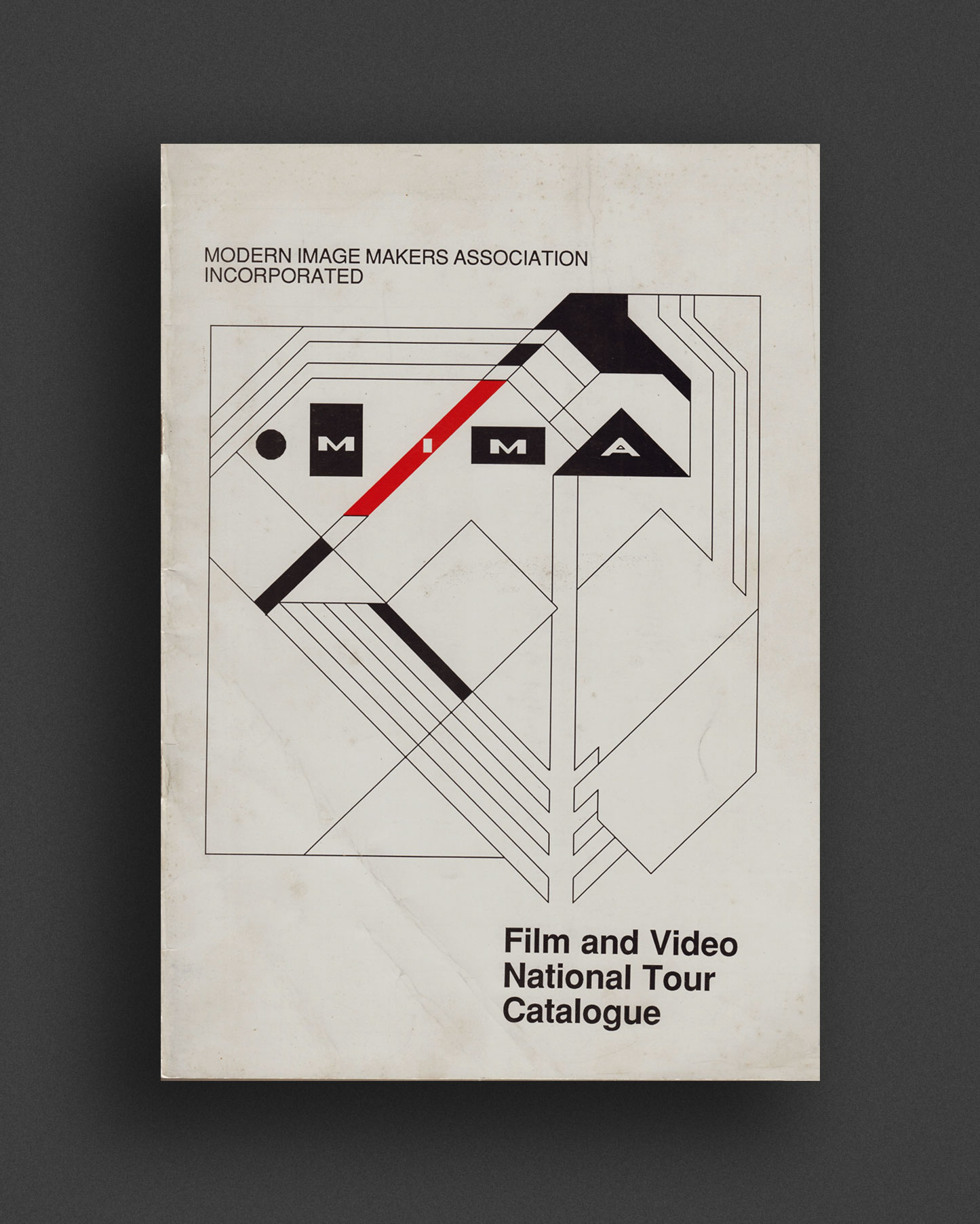
Scarce catalogue edited by Adrian Martin and published in 1990 to accompany experimenta — A Major Survey of Film and Video Art, Melbourne, November 20—December 4, 1990, presented by Modern Image Makers Association Inc. (MIMA) and founded in 1988. Showcasing Australian video art, media art, installation and performance works.
Contents include: An introduction to Experimenta 1992 by Lizzette Atkins, Of Prisms and Tools: The Possibility of an Avant Garde by Vikki Riley, Australian Screenings, Introduction by Steven Ball, Opening Night, Signposts To The Imagination Re-animated; (re)constructing an art, Techknowledge, Dusan Marek's Cobweb On A Parachute — Essay by Arthur Cantrill, David Perry's The Refracting Glasses, Interview with David Perry, Passionate Uncertainty, Text and Textures, Engineering Memory: Views of History, Politics, Culture and Geography, Helical Scans: Diverse Ways of Seeing (Video) Programme 1 and 2, One Way Street: Fragments for Walter Benjamin, Sound and Image, Experience and The Other, The Fall Of The Berlin Wall, The Open 'Iron Curtain' and Post-Socialist Drama, Artists seen by artists, Die Mauer—The negative horizon, The Czech Avant Garde 1911-1941 essay by Jaroslav Andel, Programme 1, Programme 2, Video Programmes From 'New Europe' curated by Heiko DaxI, U.K., Intimate Imaginaries, Artist Screening: Michael Maziere, Slow Glass, U.S.A., Shalom Gorewitz-Experimental Television Center, New York, WAX, or the discovery of television among the bees, Flesh Histories, Programme 1, Programme 2, Japan, Emotional Wave: Image Network Japan, V.I.E.W., Shinya Tsukamoto's Tetsuo: The Iron Man, Interview with Shinya Tsukamoto, Performance: Introduction by Jeffrey Fereday, Artist statements, Installation: Introduction by Jennifer Phipps, Artist statements, Medienkunst—A survey of German, installation art— introduction by Heiko Daxl, Medienkunst-Artist statements, Special Events, Noisefest 2, Techno Garden, Century Endings - An Afternoon of Performance in the Great Hall, Seminars and Talks, Essays: Video As Art: Personal Observations From New York by Shalom Gorewitz, Some Thoughts on the German State of Things: Teaching Video by Ingo Petzke, An Attempt Toward The Anti-Oedipus-Japanese Video Art After The '80s by Junji Ito, Schedule of events, Artist index, Title index...
Includes the work of Arthur and Corinne Cantrill, Arf Arf, Ian Haig, GANG, Jun Kurosawa, Warren Burt, Chris Mann, Anne Ferran, Sadie Benning, Michelle Handelman, Monte Cazazza, Pete Spence, Fiona MacDonald, Cyber Dada Manifesto, Dale Nason, Troy Innocent, Dusan Marek, Critical Art Ensemble, John Maybury, David Perrt, Steven Ball, Karel Hašler, Otakar Vávra, Jiří Lehovec, Michael Maziere, David Blair, Danny Fass, Joe Kelly, Shelly Silver, Laurens Tan, John Gillies, and many more.
VG copy light wear to extremities/DJ.
1998, English
Softcover (staple-bound), 32 pages, 30 x 21 cm
1st Edition, Out of print title / used / very good
Published by
Australia Post / Melbounre
Australia Post / Melbourne
$20.00 - In stock -
Rare exhibition catalogue published on the occasion of Designing Australia : Modernity And The Stamp 1936-1998, Postmaster Gallery Australian Philatelic Centre Melbourne, 25 April—6 July 1998, curated by Sally Gray.
In 1997 independent curator, author and scholar in art, design and urban studies, Sally Gray proposed an exhibition concept to Australia Post focusing on Australian modernism as expressed in the graphic design of Australian stamps. She researched and selected examples of proto-modern, modernist and post-modern graphic design for Australian stamps. The preliminary designs and finished printed stamp designs were shown in the Postmaster Gallery at the Australian Philatelic Centre in Melbourne. The catalogue included commissioned essays on styles of representation on stamps, Australian graphic design history and changing perceptions about national visual identity.
Illustrated throughout in colour and b/w with works by Gert Sellheim, Sydney Ball, Eric Thake, Erica McGilchrist, Brian Sadgrove, Garry Emery, John Coburn, Mimmo Cozzolino, Phil Ellett, Alex Stitt, and many others.
VG copy.
1990, English
Softcover (staple-bound), 54 pages, 30 x 21 cm
1st Edition, Out of print title / used / very good
Published by
MIMA / Melbourne
$25.00 - Out of stock
Scarce catalogue edited by Adrian Martin and published in 1990 to accompany experimenta — A Major Survey of Film and Video Art, Melbourne, November 20—December 4, 1990, presented by Modern Image Makers Association Inc. (MIMA) and founded in 1988. Showcasing Australian video art, media art, installation and performance works, this iteration also included programs of Lettrist Cinema and French Avant-Garde film from the 1980s. Illustrated throughout with information on all of the works, accompanied by essays: Adrian Martin – "The Adventures of Form", John Conomos – "Video as Moonlighting", Christian Lebrat – "The Lettrist Cinema of the 1950s", Vikki Riley – "The Picture Can't Get Any Louder", John Flaus – "In the Eye's Mind - Paul Winkler Retrospective.
Includes the work of Arthur and Corinne Cantrill, Maria Kozic and Ian Haig, Peter Callas, Josko Petkovic, Edward Colless, Tona Keane, Arf Arf, Shelley Lasica, Peter Tyndall, Gerald Murnane, William Yang, John Nixon, Primary Source, Warren Burt, Chris Mann, Stelarc, Pete Spence, Philip Brophy, David Cox, Maurice Lemaitre, Frederique Devaux, Cyber Dada Manifesto, Dale Nason, Troy Innocent, Lydia Lunch, Foil, Swans, Einsturzende Neubauten, Butthole Surfers, Violinda, Steven Ball, and so many more...
VG copy light wear to extremities.
1996, English
Softcover, 116 pages, 21 x 15 cm
Ed. of 300,
1st Edition, Out of print title / used / good
Published by
ACCA / Melbourne
$45.00 - In stock -
Very rare copy of Transgression And The Culture Industry — Critical Media: Perspectives On New Technologies, the book document of The Gordon Darling Foundation Seminars 1995, with guest convenors Denise Robinson and Julianne Pierce (VNS Matrix), presenting the papers from seminars held at the Australian Centre For Contemporary Art, Melbourne, 8 April—7 October 1995.
Contents:
"Introduction" – Denise Robinson, "Duchamp's Queer Signature" – Rex Butler, "Transgression And The Culture Industry (Australia/1995)" – Lesley Stern, "The Art Curator, Our Cultural Transponder" – Juan Davila, "Normalizing Transgression" – David M. Halperin, "Introduction" – Julianne Pierce, "The Indifference Engine – 1990s Culture And The Corporate Imagination" – David Cox, "Observations" – Linda Wallace, "The Amazing Mcscent™ Machine" – Bridget Mcgraw, "Rehearsal Of Memory" – Graham Harwood.
"This one day symposium is a response to the sliding formations of the concept of 'transgression', as it is appropriated, mobilised or mutated by our contemporary cultural institutions. The event comprised two elements. A two hour film screening of short films included a selection from 1964 by New York underground film maker, Kenneth Anger and a selection of recent contemporary films from Australia by Christopher Ryan and Leone Knight. A second element involved a presentation of papers published here by Rex Butler, Juan Davila, David Halperin and Lesley Stern. The papers were not intended to act as a commentary of the films or the films to reflect the papers, rather the co-existence of these elements were to function more like a folding of the languages of cinema and visual art: as one possible means of illuminating the effects of the historicisation of 'transgressive strategies in relation to the Culture Industry."—DENISE ROBINSON, Introduction
Good copy with sunned spine edge, crease to back cover corner.
2025, English
Softcover, 144 pages, 20 x 14.5 cm
Published by
un / Naarm
$30.00 - In stock -
un 19.1 Resonant Imaginaries
Edited by Lucreccia Quintanilla
Contributions by Anabelle Lacroix, Shareeka Helaluddin, Aasma Tulika, Daisy Currie, Nicholas Currie, Edwina Stevens, Nadeem Tiafau Eshraghi, Ripley Kavara, mgmgmgmg, Hannah Wickramasuriya, Hayden Ryan, Justine Makdessi, Geoff Robinson, Samuel Beilby, Victoria Pham, Wen Pei Low, Suneel Jethani.
1983, English
Hardcover (w. dust jacket), 198 pages, 22 x 14.5 cm
1st Edition, Out of print title / used / very good
Published by
Norstrilia Press / Brunswick
$150.00 - In stock -
Very rare first 1983 hardcover edition of Dreamworks: Strange New Stories, an anthology of speculative fiction from Australian writers, edited by David King and published by Norstrilia Press, Brunswick. Features Gerald Murnane, Greg Egan, George Turner, Russel Blackford, Lucy Sussex, Andrew Whitmore, Kevin McKay, Henry Gasko, David King, Bruse Gillespie, Damien Broderick, David J. Lake, dedicated to Philip K. Dick.
Norstrilia Press is a small press established in 1975 prior to Aussiecon, Australia's first world science fiction convention, by Rob Gerrand, Bruce Gillespie and Carey Handfield. Specialising in science fiction and speculative fiction, they published books by Gerald Murnane, Greg Egan, George Turner, Damien Broderick, Roger Zelazny, and many others.
Are you tired of sheepdip in your fiction and suntan oil in your reading matter?
Are you sick of the short stories you read today—even those which win prizes and make the bestseller lists?
What is the missing ingredient in the short story today?
Dreamworks provides the answer—the missing element in today's short stories. It's a radical new perception of what is 'real'.
This is not the old 'reality' which everybody around you accepts. This is the newer, more vivid reality of...
... an Australia colonised by the Spanish ('Life the Solitude')
an Australia which was never really colonised at all ('Land Deal')
... a next-door apartment in which lives God, who is just as threatened by the dangerous future as we are ('What God Said To Me When He Lived Next Door')
... a 'reality' where reality disappears altogether, only to re-emerge unexpectedly ('Feedback').
Dreamworks includes twelve stories which show radical shifts of perspective, surprising twists of fate, and delightful glimpses of cosmic humour-all part of the book's 'new reality'.
'The reader becomes imbued with a zest- fulness,' writes critic Dr Van Ikin, 'responding to the questing philosophical spirit with which these writers have con- fronted their troubled times.'
Very Good copy in VG dust jacket with discolouration. Some tanning/foxing to book block edges.
2025, English
Softcover, 188 pages, 29.5 x 20.5 cm
Published by
AdminAdmin / Melbourne
$45.00 - In stock -
Containing original contributions; artwork, art-historofiction, hagiofiction, critical essays, poetry and prose, some loosely centred around instinct and the mind.
This with contributions by Erik van Lieshout, Peles Duo x Rob Crosse, CAConrad, Robert McKenzie, Mark Beasley, Hany Armanious, Patrick Hartigan, Elizabeth Pulie, Anthea Behm, Luke Stettner, Skyler Brickley, Tommy Miller, Rebecca Holborn, Penelope Latté, Guy Benfield, Jason Vorhees.....and more
2025, English
Softcover (staple-bound), 16 pages, 29.7 x 21 cm
Edition of 50,
Published by
Light of Day Books / Melbourne
$10.00 - In stock -
Number 20 in the ongoing series of artist zines published by Light of Day Books, Melbourne, each in an edition of 50 copies.
POSTMORTEM
The angel of death is a ubiquitous pest
A phantom that buzzes in the shadows
Then falls silent
Ready for the kill
Postmortem is about fear and revulsion
And blood and compassion
About death and beauty
About transformation
Robert Ashton, born in Melbourne in 1950, is an Australian photographer known for his distinctive documentary style that emerged in the 1970s. After studying photography at Prahran College (1969–71), he became immersed in a creative community that included Carol Jerrems, Paul Cox, and cousin Rennie Ellis, with whom he shared a studio and worked at Brummels Gallery. His 1974 book Into the Hollow Mountains, documented everyday scenes in Fitzroy with striking intimacy. It was recently republished in an expanded edition. He has exhibited widely and is known for using hand-built large format cameras and traditional printing methods such as photogravure and the Collodion process to produce his work.
2025, English
Softcover (staple-bound), 16 pages, 29.7 x 21 cm
Edition of 50,
Published by
Light of Day Books / Melbourne
$10.00 - In stock -
Number 21 in the ongoing series of artist zines published by Light of Day Books, Melbourne, each in an edition of 50 copies.
Using a technique of double exposures developed while shooting Tokyo’s Yamanote line in 2024, Train Fetish frames the contemporary rolling stock of Melbourne’s transit system as objects of obsession and desire, dwelling on moments of urban intensity. With steel carriages superimposed in front of jagged skylines, Train Fetish recalls the glorification of trains in British railway posters, the obsessiveness of the anorak brigades and the central pillar of graffiti culture. From Comengs to X’Traps, each image is a near-seemless collage of images, with the odd glitch adding elements of drama and uncertainty. Composed on the platforms of Melbourne’s train network, Train Fetish showcases the first images in a longer series that has since expanded to include Tokyo, London and Berlin.
Lachlan MacDowall is a writer, photographer and curator based in Melbourne/Naarm. His work examines the evolution of contemporary cities using a mix of genres, images and data. His recent books include Instafame: Graffiti and Street Art in the Instagram Era and Off the Grid: Invader and Street Art of the Early 2000s, as well as the Flash Forward and Skyrail series of exhibitions. He is currently Director of the MIECAT Institute in Melbourne, Australia.
2025, English
Softcover (staple-bound), 16 pages, 29.7 x 21 cm
Edition of 50,
Published by
Light of Day Books / Melbourne
$10.00 - In stock -
Number 22 in the ongoing series of artist zines published by Light of Day Books, Melbourne, each in an edition of 50 copies.
These photos were taken on the Camino de Santiago, a long walk across northern Spain in the northern autumn of 2024, from mid-September to late October. During the walk I took photos of numerous subjects that took my fancy along the way. Subjects included, cemeteries, playgrounds, hobbit-house-like bodegas, bridges, canals, underpasses and graffiti, haystacks, horreos (stone and timber maize storage houses on stilts in Galicia), mists and fog, pelota courts in towns and settlements in the Pyrenees, rainbows, statues and underpasses. Photographed on my phone, the lens often grimy or misted, the photos are what they are.
I decided on the pairing of the playgrounds and cemeteries, each holding their own sense of melancholy. The light was failing towards November, the path was solitary as I walked slowly, after the crowds had passed me.
Sandra Bridie's work straddles individual practice, collaboration, exhibition curation, writing, and the interview as documentation of individual and collective artistic practice in Naarm, (Melbourne) Australia. Bridie's individual practice involves the creation of fictional artists, presented via a suite of art works from a range of media.