World Food Books' programme is largely produced on Kulin Nation land. We acknowledge the Wurundjeri people of the Kulin Nation as the first and continuing custodians of this land, and pay respect to their Elders past, present, and emerging.
World Food Books is an arts and special interests bookshop in Naarm / Melbourne. Founded in 2010, World Food Books is devoted to the presentation of a rotating, hand-selection of international art, design, literary and counterculture publications with an emphasis on the anti-traditional, the experimental, the avant-garde, the heretic, the marginal.
Presenting new titles alongside rare and out-of-print books, catalogues and journals spanning the fields of modern and contemporary art, design, photography, illustration, film, literature, poetry, cultural theory, philosophy, sexuality, popular and underground culture in its many radical forms, World Food Books wishes to encourage adventurous, thoughtful and open-minded reading, looking, writing, and exchange of publishing and ideas, both current and historical.
As well as our bookshop, located in Melbourne's historical Nicholas Building, all of our inventory is available internationally via our online mail-order service.
World Food Books semi-regularly co-ordinates "Occasions", a programme of exhibits and events at the bookshop and in partnership with other hosts (such as museums and art galleries) that develop out of the activities, relationships and content of the bookshop itself.
World Food Books
The Nicholas Building
37 Swanston Street
Room 5, Level 6
Melbourne 3000
Australia
SHOP HOURS:
Thu–Fri 12–6, Sat 12–5
WEB-SHOP OPEN 24/7
World Food Books
Postal Address:
PO Box 435
Flinders Lane
Victoria 8009
Australia
Art
Theory / Essay
Architecture / Interior
Graphic Design / Typography
Photography
Fashion
Eros
LGBTQ+
Fiction / Poetry
Weird / Speculative / Science Fiction / Horror
Transgressive / Visceral / Abject
Symbolism / Decadence / Fin de siècle
Film / Video
Painting
Sculpture / Installation
Performance / Dance / Theater
Drawing
Sound / Music
Curatorial
Group Shows / Collections
Periodicals
Out-of-print / Rare
Posters / Ephemera / Discs
Signed Books
World Food Books Gift Voucher
World Food Book Bag
Australian Art
Australian Fiction
Australian Science Fiction / Speculative Fiction
Australian Poetry
Australian Photography
Japanese Photography
Conceptual Art
Minimal Art
Dada
'Pataphysics / Oulipo
Fluxus
Concrete Poetry
Pop Art
Surrealism
Arte Povera
Arte Informale / Haute Pâte / Tachism
Nouveau Réalisme / Zero / Kinetic
Situationism / Lettrism
Collage / Mail Art / Xerox Art
Art Brut / Folk / Visionary / Fantastic
Illustration / Graphic Art / Bandes Dessinées
Furniture
Italian Radical Design / Postmodernism
Textiles
Ceramics / Glass
Counterculture
Protest / Revolt
Philosophy
Psychoanalysis
Anthropology
Anarchism
Socialism / Anarchism / Communism / Capitalism
Literary Theory / Semiotics / Language
Feminism / Women's Studies
Gender Studies / Sexuality
Anthropology
Fetishism / BDSM
Drugs / Psychedelia
Crime / Violence
Animal Rights / Veganism
Occult / Esoterica
Ecology / Earth / Alternative Living
Whole Earth / Crafts
All prices in AUD (Australian dollars)
Pick-Ups
Pick-up orders can be collected in our bookshop during opening hours after order date. Please collect any Pick-up orders within 2 weeks of ordering as we have limited storage space. Orders will be released back into stock if not collected within this time. No refunds can be made for pick-ups left un-collected. If you cannot make it in to the bookshop in this time-frame, please choose postage option.
Return Policy
All sales are final. We do accept returns (for refund or exchange) for items received in error. All our orders are packed with special care using heavy-duty padding and cardboard book-mailers or bubble mailers (for smaller books), using reinforcement where required. We cannot take responsibility for any lost, stolen or damaged parcels.
Insurance
Should you wish to insure your package, please email us directly after placing your order and we can organise this at a small extra expense. Although all standard/express tracked packages are very safe and dependable, we cannot take responsibility for any lost, stolen or damaged parcels. We recommend insurance on valuable orders.
Interested in selling your old books, catalogues, journals, magazines, comics, fanzines, ephemera? We are always looking for interesting, unusual and out-of-print books to buy. We only buy books in our fields of interest and specialty, and that we feel we can resell.
We base these prices on desirability, market value, in-print prices, condition and our current stock levels. We offer cash, store credit, and can take stock on consignment. All
about 25% of the price we expect to get when we sell them, or 30% in store credit. We base these prices on desirability, market value, in-print prices, condition and our current stock levels.
Sell your books any day of the week. You can drop them off and return later. If you have a lot of books, we can visit your Sydney home.
We buy books that we feel we can resell. We offer about 25 % of the price we expect to get when we sell them, or 30% in store credit. We base these prices on desirability, market value, in-print prices, condition and our current stock levels.
Philadelphia Wireman
03 August - 01 September, 2018
World Food Books is proud to announce our next Occasion, the first presentation of sculptures by Philadelphia Wireman in Australia.
The Philadelphia Wireman sculptures were found abandoned in an alley off Philadelphia’s South Street on trash night in 1982. Their discovery in a rapidly-changing neighbourhood undergoing extensive renovation, compounded with the failure of all attempts to locate the artist, suggests that the works may have been discarded after the maker’s death. Dubbed the "Philadelphia Wireman" during the first exhibition of this work, in 1985, the maker’s name, age, ethnicity, and even gender remain uncertain. The entire collection totals approximately 1200 pieces, all intricately bound together with tightly-wound heavy-gauge wire (along with a few small, abstract marker drawings, reminiscent both of Mark Tobey and J.B. Murry). The dense construction of the work, despite a modest range of scale and materials, is singularly obsessive and disciplined in design: a wire armature or exoskeleton firmly binds a bricolage of found objects including plastic, glass, food packaging, umbrella parts, tape, rubber, batteries, pens, leather, reflectors, nuts and bolts, nails, foil, coins, toys, watches, eyeglasses, tools, and jewellery.
Heavy with associations—anthropomorphic, zoomorphic, and socio-cultural responses to wrapped detritus—the totemic sculptures by Philadelphia Wireman have been discussed in the context of work created to fulfil the shamanistic needs of alternative religions in American culture. Curators, collectors, and critics have variously compared certain pieces to sculpture from Classical antiquity, Native American medicine bundles, African-American memory jugs, and African fetish objects. Reflecting the artist’s prolific and incredibly focused scavenging impulse, and despite—or perhaps enhanced by—their anonymity, these enigmatic objects function as urban artefacts and arbiters of power, though their origin and purpose is unknown. Philadelphia Wireman, whatever their identity, possessed an astonishing ability to isolate and communicate the concepts of power and energy through the selection and transformation of ordinary materials. Over the course of the past two decades, this collection has come to be regarded as an important discovery in the field of self-taught art and vernacular art.
Presented in collaboration with Fleisher-Ollman Gallery, Philadelphia, and Robert Heald, Wellington.
Susan Te Kahurangi King
02 February - 10 March, 2018
Susan Te Kahurangi King (24 February 1951 - ) has been a confident and prolific artist since she was a young child, drawing with readily available materials - pencils, ballpoint pens and felt-tip markers, on whatever paper is at hand. Between the ages of four and six Susan slowly ceased verbal communication. Her grandparents William and Myrtle Murphy had developed a special bond with Susan so they took on caring responsibilities for extended periods. Myrtle began informally archiving her work, carefully collecting and storing the drawings and compiling scrapbooks. No drawing was insignificant; every scrap of paper was kept. The King family are now the custodians of a vast collection containing over 7000 individual works, from tiny scraps of paper through to 5 meter long rolls.
The scrapbooks and diaries reveal Myrtle to be a woman of great patience and compassion, seeking to understand a child who was not always behaving as expected. She encouraged Susan to be observant, to explore her environment and absorb all the sights and sounds. Myrtle would show Susan’s drawings to friends and people in her community that she had dealings with, such as shopkeepers and postal workers, but this was not simply a case of a grandmother’s bias. She recognised that Susan had developed a sophisticated and unique visual language and sincerely believed that her art deserved serious attention.
This was an unorthodox attitude for the time. To provide some context, Jean Dubuffet coined the term Art Brut in 1945 to describe work created by self-taught artists – specifically residents of psychiatric institutions and those he considered to be visionaries or eccentrics. In 1972 Roger Cardinal extended this concept by adopting the term Outsider Art to describe work made by non-academically trained artists operating outside of mainstream art networks through choice or circumstance. Susan was born in Te Aroha, New Zealand in 1951, far from the artistic hubs of Paris and London that Dubuffet and Cardinal operated in. That Myrtle fêted Susan as a self-taught artist who deserved to be taken seriously shows how progressive her attitudes were.
Susan’s parents Doug and Dawn were also progressive. Over the years they had consulted numerous health practitioners about Susan’s condition, as the medical establishment could not provide an explanation as to why she had lapsed into silence. Dawn educated herself in the field of homeopathy and went on to treat all twelve of her children using these principles – basing prescriptions on her observations of their physical, mental and emotional state.
Doug was a linguist with an interest in philosophy who devoted what little spare time he had to studying Maori language and culture. To some extent their willingness to explore the fringes of the mainstream made them outsiders too but it was their commitment to living with integrity and their respect for individuality that ensured Susan’s creativity was always encouraged.
Even though Susan’s family supported her artistic pursuits, some staff in schools and hospitals saw it as an impediment to her assimilation into the community and discouraged it in a variety of ways. Her family was not always aware of this and therefore did not fully understand why Susan stopped drawing in the early 1990s. However, rather than dwell on the challenges that Susan faced in pursuit of her artistic practice, they prefer to highlight her achievements. In 2008 Susan began drawing again in earnest, after an almost 20 year interruption, and her work is now shown in galleries around the world.
Susan grew up without television and has been heavily influenced by the comics she read as a child. She is absolutely fearless in the appropriation of recognizable characters, such as Donald Duck and Mickey Mouse, in her work. She twists their limbs, contorts their faces, compresses them together, blends them into complex patterned backgrounds - always imbuing them with an incredible energy. Although Susan often used pop culture characters in her work they are not naive or childlike. These are drawings by a brilliant self-taught artist who has been creating exceptional work for decades without an audience in mind.
Mladen Stilinović
"Various Works 1986 - 1999"
02 February 16 - September 10, 2016
Various works 1986 - 1999, from two houses, from the collections of John Nixon, Sue Cramer, Kerrie Poliness, Peter Haffenden and Phoebe Haffenden.
Including: Geometry of Cakes (various shelves), 1993; Poor People’s Law (black and white plate), 1993; White Absence (glasses, ruler, set square, silver spoon, silver ladel with skin photograph and wooden cubes), 1990-1996; Exploitation of the Dead (grey and red star painting, wooden painting, black spoon with red table, red plate), 1984-1990; Money and Zeros (zero tie, paintings made for friends in Australia (Sue, John, Kerrie), numbers painting), 1991-1992; Words - Slogans (various t-shirts) - “they talk about the death of art...help! someone is trying to kill me”, “my sweet little lamb”, “work is a disease - Karl Marx”; Various artist books, catalogues, monographs, videos; Poster from exhibition Insulting Anarchy; "Circular" Croatian - Australian edition; Artist book by Vlado Martek (Dostoyevsky); more.
Thanks to Mladen Stilinović and Branka Stipančić.
Jonathan Walker
Always Will Need To Wear Winter Shirt Blue + Ochre Small Check Pattern
21 August - 21 September, 2015
Untitled
I am not a great reader of poetry but I always return to the work of Melbourne poet, Vincent Buckley (1925- 1988). Perhaps I find his most tantalising piece to be not a finished poem but a fragment left on a scrap of paper discovered on his desk after the poet’s death.
The poetry gathers like oil
In the word-core, and spreads
It has its music meet,
Its music is in movement.
This fragment is more the shell left behind from a volatile thought than a finished poem. I find the last two lines honest but awkward whereas the first two lines work like an arrow. Most likely he could not find a resolution so it was left. Still, in its present form, it remains an eloquent testimony to the ultimate failure of a medium to express mobile thought and sensation, in Buckley’s case, through verbal language. It’s an important matter because this is something all artists have to deal with regardless of the medium.
I have never written a poem, however, I am forever copying fragments from books on paper scraps in a vain effort to fix certain notions in my head. At first, they function as bookmarks that are sometimes returned to when I open the book. But before long, as they accumulate, they fall out littering the table interspersed with A4 photocopies, bills, books and medications.
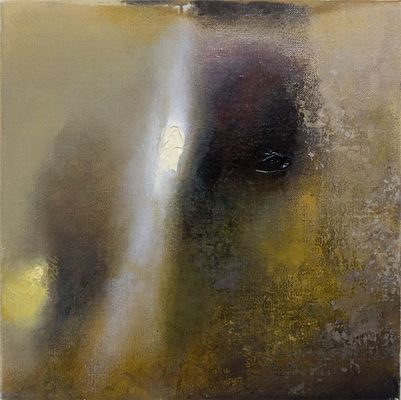
To return to Buckley’s fragment, the first two lines very much evoke how I paint nowadays. As you age, detail diminishes and patches of light become more luminous and float. I feel the most honest way of dealing with this is by smearing the oil paint on the canvas with the fingers and working close-up, blind. Only if the patches coalesce into an approaching image can the work gain a life.
-
Jonathan Walker was born in Melbourne, Australia and brought up on a dairy farm in Gippsland. In the 1970’s he studied painting at RMIT and won the Harold Wright Scholarship to the British Museum, London. During the 1980’s he exhibited at Pinacotheca Gallery, Richmond and had work shown at the NGV and Heidi City Art Gallery. Over the same period he designed the cover for the “Epigenesi” LP by Giancarlo Toniutti, Italy and conducted a mail exchange work with Achim Wollscheid, Germany. The work with artists through the post resulted in an article published in the bicentenary issue of Art and Australia 1988. He showed in artist run spaces such as WestSpace in the 90’s and 2000’s, and until 2012, taught painting at Victoria University, which is where we (Colleen Ahern and Lisa Radford) as organisers of the exhibition, among many others, had the privilege of being his student.
Walker’s knowledge was imparted to students through the careful selection of music, literature, and artists found in books that he himself had ordered for the library. Walker’s strategy was the generosity of sharing his vast knowledge with references specific to each student and their context.
Walker’s paintings share a similar focus and intimacy.
This exhibition presents a small selection of recent paintings alongside a publication that includes Walker’s writing. Observational and analytical, Walker’s work is a type of material notation — the time of day, colour and how it is blended, the both specific and fleeting location of a reflection on lino or the question of whether a chair leg should be included in a painting.
Please join us on Friday August 21 between 6-8pm to celebrate the opening of the exhibition.
Curated by Colleen Ahern and Lisa Radford.
B. Wurtz
Curated by Nic Tammens
March 26 - April 4, 2015
B.Wurtz works from a basement studio in his home on Manhattan’s Lower East Side.
This local fact is attested to by the plastic shopping bags and newsprint circulars that appear in his work. As formal objects, they don’t make loud claims about their origins but nonetheless transmit street addresses and places of business from the bottom of this long thin island. Like plenty of artists, Wurtz is affected by what is local and what is consumed. His work is underpinned by this ethic. It often speaks from a neighborhood or reads like the contents of a hamper:
“BLACK PLUMS $1.29 lb.”
“Food Bazaar”
“USDA Whole Pork Shoulder Picnic 99c lb.”
“RITE AID Pharmacy, with us it’s personal.”
“H. Brickman & Sons.”
“Sweet Yams 59c lb."
Most of the work in this exhibition was made while the artist was in residence at Dieu Donne, a workshop dedicated to paper craft in Midtown. Here Wurtz fabricated assemblages with paper and objects that are relatively lightweight, with the intention that they would be easily transportable to Australia. This consideration isn’t absolute in Wurtz’s work, but was prescriptive for making the current exhibition light and cheap. Packed in two boxes, these works were sent from a USPS post office on the Lower East Side and delivered to North Melbourne by Australia Post.
Wurtz appears courtesy of Metro Pictures, New York.
Thanks to Rob Halverson, Joshua Petherick, Sari de Mallory, Matt Hinkley, Helen Johnson, Fayen d'Evie, Ask Kilmartin, Lisa Radon, Ellena Savage, Yale Union, and "Elizabeth".
John Nixon
"Archive"
December 15 - January 20, 2014
The presentation of John Nixon's archive offered a rare showcase of this extensive collection of the artist's own publications, catalogues, posters, ephemera, editions and more, from the mid 1980s onwards, alongside a selection of his artworks.
Organized by John Nixon, Joshua Petherick and Matt Hinkley.
<a href=http://wfb.public-office.info/artist/john-nixon>All titles by John Nixon
"Habitat"
at Minerva, Sydney (organised by Joshua Petherick and Matt Hinkley)
November 15 - December 20, 2014
Lupo Borgonovo, Janet Burchill & Jennifer McCamley,
Lewis Fidock, HR Giger, Piero Gilardi, Veit Laurent Kurz,
Cinzia Ruggeri, Michael E. Smith, Lucie Stahl, Daniel Weil, Wols
Press Release:
“...It contained seven objects. The slender fluted bone, surely formed for flight, surely from the wing of some large bird. Three archaic circuitboards, faced with mazes of gold. A smooth white sphere of baked clay. An age-blackened fragment of lace. A fingerlength segment of what she assumed was bone from a human wrist, grayish white, inset smoothly with the silicon shaft of a small instrument that must once have ridden flush with the surface of the skin - but the thing’s face was seared and blackened.”
William Gibson, “Count Zero”, 1986
"Autumn Projects Archive"
Curated by Liza Vasiliou
March 6 - March 15, 2014
World Food Books, in conjunction with the Virgin Australia Melbourne Fashion Festival 2014, presented the Autumn Projects archive, consisting of a selection of early examples in Australian fashion with a particular interest in collecting designers and labels from the period beginning in the 1980’s, who significantly influenced the discourse of Australian Fashion.
Curated by Liza Vasiliou, the exhibition provided a unique opportunity to view pieces by designers Anthea Crawford, Barbara Vandenberg, Geoff Liddell and labels CR Australia, Covers, Jag along with early experimental collage pieces by Prue Acton and Sally Browne’s ‘Fragments’ collection, suspended throughout the functioning World Food Books shop in Melbourne.
H.B. Peace
presented by CENTRE FOR STYLE
November 14, 2013
"Hey Blinky, you say chic, I say same"
Anon 2013
H.B. Peace is a clothing collaboration between great friends Blake Barns and Hugh Egan Westland. Their pieces explore the divergences between 'character’ and ‘personality’ in garments....etc
Special Thanks to Joshua Petherick and Matt Hinkley of WFB and Gillian Mears
and a Very Special Thank you to Audrey Thomas Hayes for her shoe collaboration.
Janet Burchill & Jennifer McCamley
"Aesthetic Suicide"
May 10 - June 8, 2013
The first of our occasional exhibitions in the World Food Books office/shop space in Melbourne, "Aesthetic Suicide" presented a body of new and older works together by artists Janet Burchill & Jennifer McCamley, including videos, prints, a wall work, and publications.
During shop open hours videos played every hour, on the hour.
1993, English / German
Softcover + invitation, unpaginated, 26.5 x 24 cm
1st Edition, Out of print title / used / very good
Published by
Hochschule für Angewandte Kunst / Vienna
$140.00 - In stock -
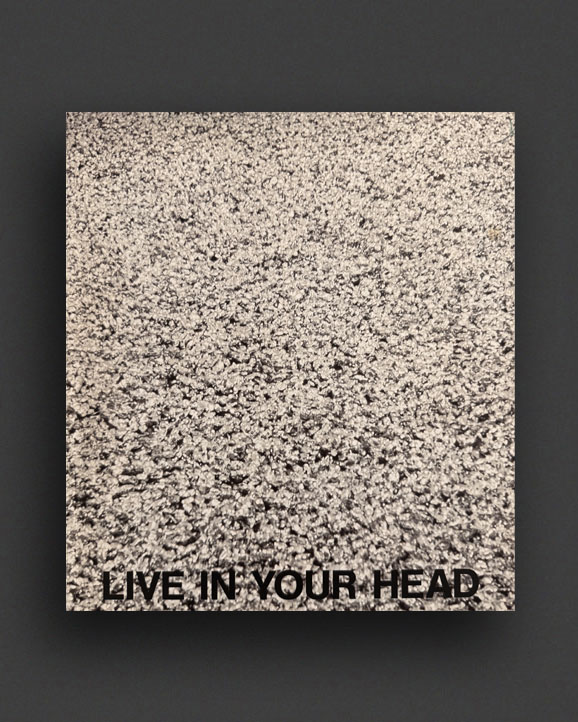
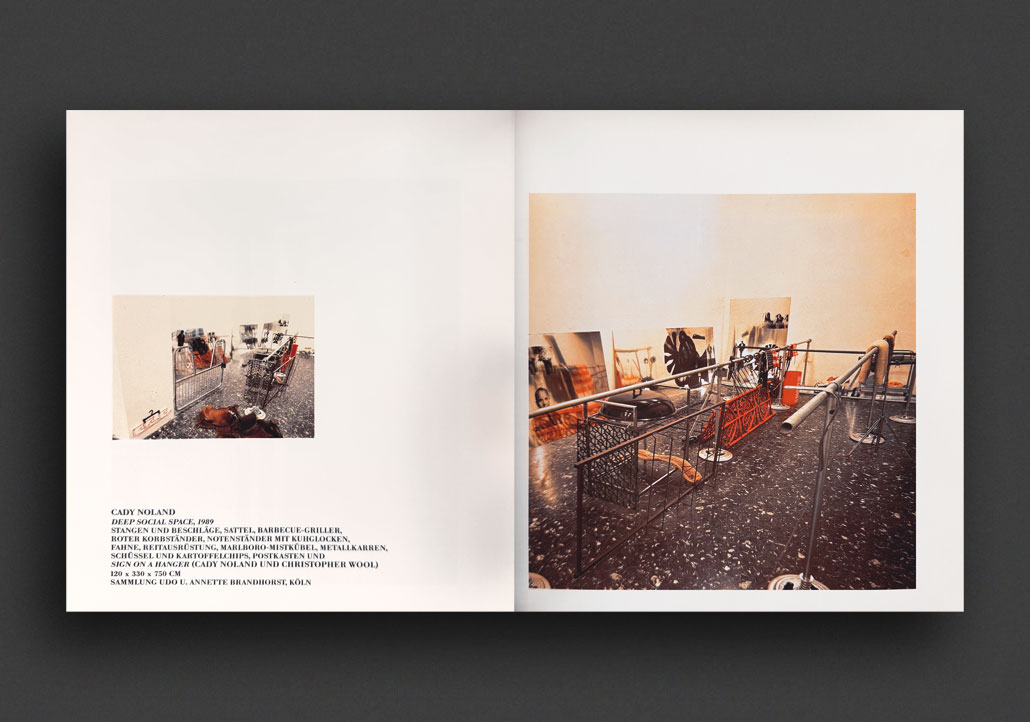
Exceptionally rare, incredible 1993 catalogue for this elusive group exhibition 'curated by' Robert "Bob" Nickas, at the Hochschule für Angewandte Kunst and Galerie Metropol, Vienna, 1993, featuring the work of Vito Acconci, John Armleder, Robert Barry, Bill Bitting, Gudrun Wolfgruber, Laurie Parsons, Steve DiBenedetto, Gretchen Faust, Robert Gober, Felix Gonzalez-Torres, Scott Grodesky, Peter Halley, Jon Kessler, Jutta Koether, Louise Lawler, Ken Lum, John Miller, Olivier Mosset, Chuck Nanney, Cady Noland, Steven Parrino, Raymond Pettibon, David Robbins, Lisa Ruyter, Sam Samore, Michael Scott, Rudolf Stingel, Joan Wallace, Dan Walsh. Profusely illustrated throughout in colour, accompanied by Nickas' introduction (in bi-lingual English and German), which alone makes the catalogue special.
Exhibition invitation card inserted.
Very Good copy.
1980, English
Softcover, 72 pages, 24.5 x 18 cm
1st Edition, Out of print title / used / good
Published by
Aspect Publications / Scotland Island
$50.00 - Out of stock
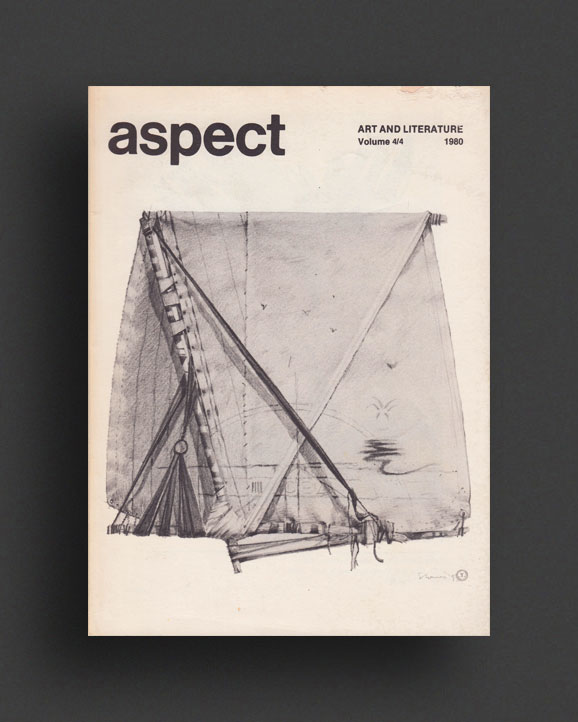
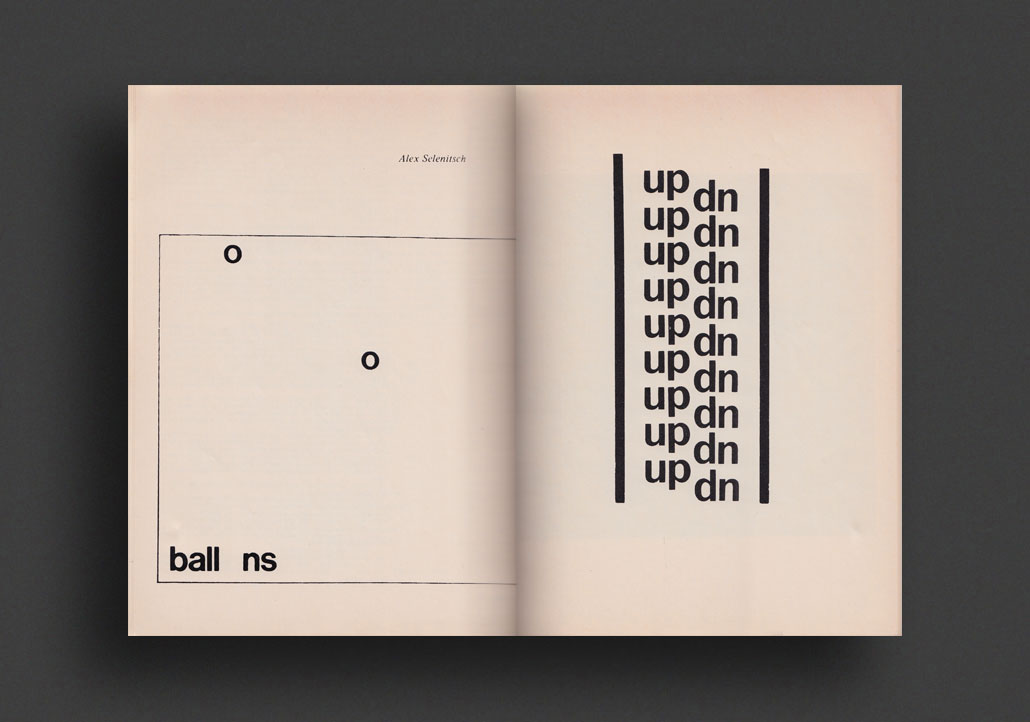
Special "Visual Poetry" issue of Aspect, a small press "Art and Literature" magazine edited by Australian playwright and poet, Rudi Krausmann, and published out of Scotland Island, NSW, between 1975—1989.
This issue, Vol. 4/4, 1980, with contributions by Richard Tipping, Nicholas Zurbrugg, Jas H. Duke, π.O., Noel Sheridan, Alex Selenitsch, Murray Bail, Peter Anderson, Gary Catalano, Dal Stivens, Ann Taylor, Grant Caldwell, Anna Couani, Liliana Rydzynski, Peter Skrzynecki, Richard James Allen, Madge Staunton, Kate Lilley, Stephen K. Kelen, Christopher Mooney, Russel Soaba, Harry Roskolenko, Jutta Brueckner, Nicholas Pope, Tim Storrier, Arthur McIntyre, Annette Onslow, and of course Rudi Krausmann. Contributing editors Franco Paisio, John Olsen, John Tranter, James Cowan, Tom Thompson, John Davies, Gary Catalano, Jenny Zimmer, Jennifer Compton, Horst Bienek, David Aspden.
Good copy, if not for some bug nibbles to the top of the cover it would be a Very Good copy with moderate age/page tanning.
2024, English
Softcover, 58 pages, 15 x 10.5 cm
Published by
Everyday Analysis / UK
$19.00 - In stock -
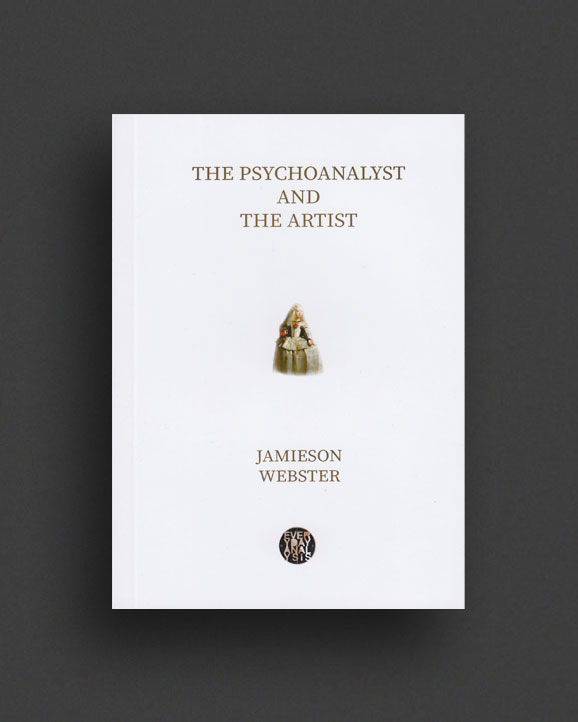
In these essays, New York psychoanalyst and author Jamieson Webster considers the relationship between the studio and the psychoanalyst’s couch. From the scopophilic instinct of the viewer and the artist’s anticipation of it to the pursuit of perfection and it’s connection to the girl-child’s curiosity about her mother’s body, she asks us to think about art and analysis as connected practices. Focusing on Carroll Dunham and Louise Bourgeois, she argues for an embrace of our wildest symptoms in theory and in art.
Jamieson Webster is a psychoanalyst in New York City. She is the author of The Life and Death of Psychoanalysis (Karnac, 2011) and Conversion Disorder (Columbia University Press, 2018); she also co-wrote, with Simon Critchley, Stay, Illusion! The Hamlet Doctrine (Pantheon, 2013). She contributes regularly to Artforum, Spike Art Magazine, Apology and the New York Review of Books.
The Everyday Analysis pamphlet series is a psychoanalytically inspired short-form publishing house. We publish texts in the form of pamphlets/chapbooks/tracts that are psychoanalytic or of interest to the psychoanalytic community but which are also political and timely. Authors include Slavoj Žižek, Simon Critchley, Jamieson Webster, Anouchka Grose, Srećko Horvat and others, though we also focus on new and emerging authors in psychoanalysis.
2022, English
Softcover, 364 pages, 14.2 x 21.8 cm
Published by
Divided Publishing / London
$46.00 - Out of stock
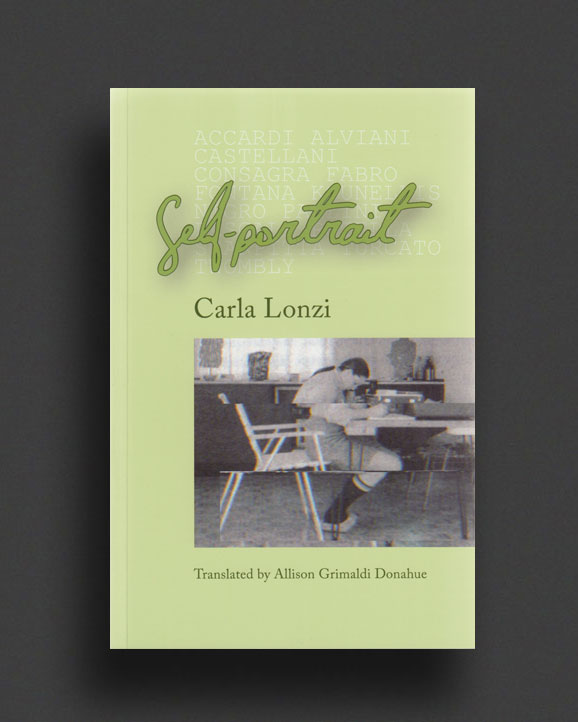
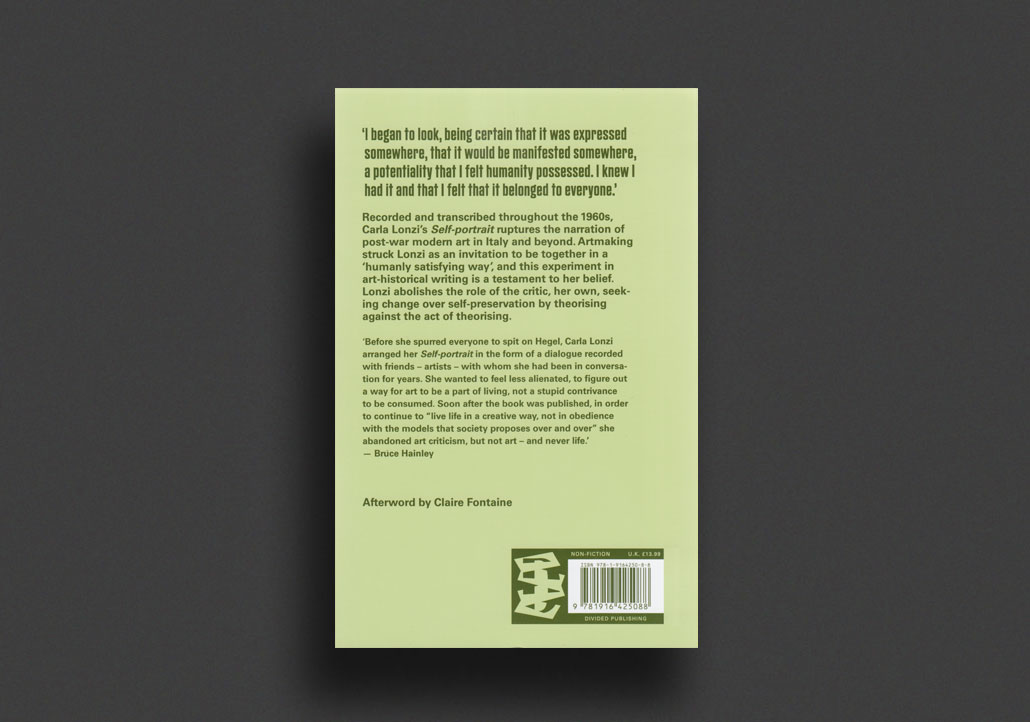
Recorded and transcribed throughout the 1960s, Carla Lonzi’s Self-portrait ruptures the narration of post-war modern art in Italy and beyond. Artmaking struck Lonzi as an invitation to be together in a ‘humanly satisfying way’, and this experiment in art-historical writing is a testament to her belief. Lonzi abolishes the role of the critic, her own, seeking change over self-preservation by theorising against the act of theorising.
The life and work of Carla Lonzi (1931–1982) is inseparable from the cultural, political, and social history of Italy in the decades following the Second World War; she occupies a singular position, which today merits reevaluation. A reputed art critic of the 1960s artistic scene, both friend and collaborator of such figures as Carla Accardi, Luciano Fabro, Giulio Paolini, and Jannis Kounellis, she wrote “Autoportrait” in 1969, a “love letter” to the artists and to creation, but also a farewell chorus to art criticism and the art world. The following year she founded Rivolta Femminile, an active feminist collective, thus becoming the central figure of Italian feminism.
Interviews with Carla Accardi, Getulio Alviani, Enrico Castellani, Pietro Consagra, Luciano Fabro, Lucio Fontana, Jannis Kounellis, Mario Nigro, Guilio Paolini, Pino Pascali, Mimmo Rotella, Salvatore Scarpita, Guilio Turcato, Cy Twombly.
Afterword by Claire Fontaine.
Translated by Allison Grimaldi Donahue.
"Before she spurred everyone to spit on Hegel, Carla Lonzi arranged her Self-portrait in the form of a dialogue recorded with friends – artists – with whom she had been in conversation for years. She wanted to feel less alienated, to figure out a way for art to be a part of living, not a stupid contrivance to be consumed. Soon after the book was published, in order to continue to ‘live life in a creative way, not in obedience with the models that society proposes over and over’, she abandoned art criticism, but not art – and never life." —Bruce Hainley
“The volume underscores the genderedness of its genre. Yet, it also pokes holes in the enterprise of art criticism more broadly and proves original precisely in its author’s intermittent passivity...”—Frieze Magazine
The life and work of Carla Lonzi (1931–1982) is inseparable from the cultural, political, and social history of Italy in the decades following the Second World War; she occupies a singular position, which today merits reevaluation. A reputed art critic of the 1960s artistic scene, both friend and collaborator of such figures as Carla Accardi, Luciano Fabro, Giulio Paolini, and Jannis Kounellis, she wrote “Autoportrait” in 1969, a “love letter” to the artists and to creation, but also a farewell chorus to art criticism and the art world. The following year she founded Rivolta Femminile, an active feminist collective, thus
2023, English
Softcover, 104 pages, 21.6 x 13.9 cm
Published by
Divided Publishing / London
$36.00 - Out of stock
"Few artists dig deep into themselves like this: an extraordinary insight into the process of producing art."—Cosey Fanni Tutti
To make art is to understand how you are, to notice your prejudices and assumptions about value, to acknowledge your hand in an unequal world, and to recognise how you institute yourself – all while letting go of the outcome of work. Bosses replaces strategies of high performance with acts of trust. It is a book about doubt, about maintaining that condition and its untenable faith. About becoming a parent. Where individualism dissolves into dependence, ‘like when you get into a bath that’s the same temperature as your body, or when the summer comes and the wind touches your skin’.
"I would call Bosses auto-factual. Leung accounts for work and life co-authored with facts, conjuring a prosaic and beautiful sociality. Her negations are profound, they hold and express the social apophatically. What is not here almost feels like a choice, and the thing convulses."—Ed Atkins
"Some events you can never correct. One of them is childbirth. If you want to know, here it is."—Fanny Howe
Ghislaine Leung is a British conceptual artist. Her work uses score-based instructions to radically redistribute and constitute the terms of artistic production. For Leung, limitations, felt as personal, institutional, structural or systemic to the parameters of industry, are engaged in as means to institute differently. Born in Stockholm, Sweden to a father from Hong Kong and a mother from London, she was raised first in Reims, France and then in London, England. She received a BA Fine Art in Context at the University of the West of England in 2002 and a Masters in Aesthetics and Art Theory at the Centre for Research in Modern European Philosophy at Middlesex University in 2009. Between 2004 and 2014 she worked at Tate and LUX, London. Leung’s first book was Partners (Cell Project Space, 2018). She lives in London, UK.
2024, English
2 hardcover vols in slipcase, 544 pages, 21 x 28 cm
Published by
Fondazione Prada / Venice
$220.00 - In stock -
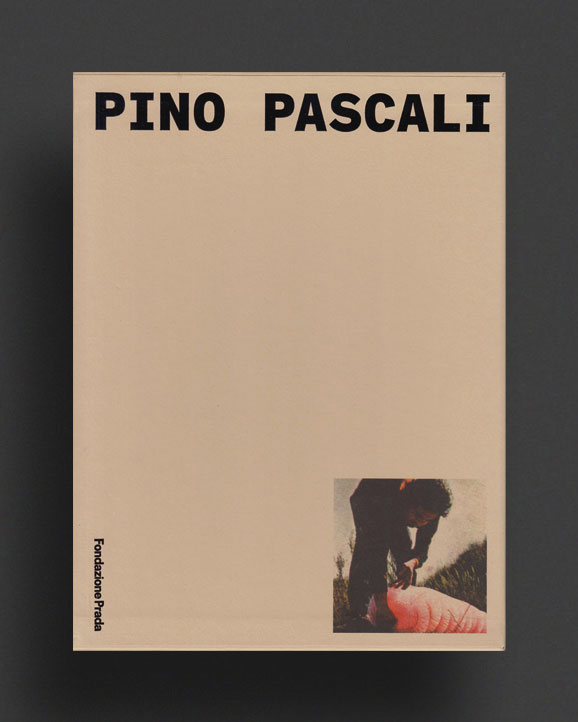
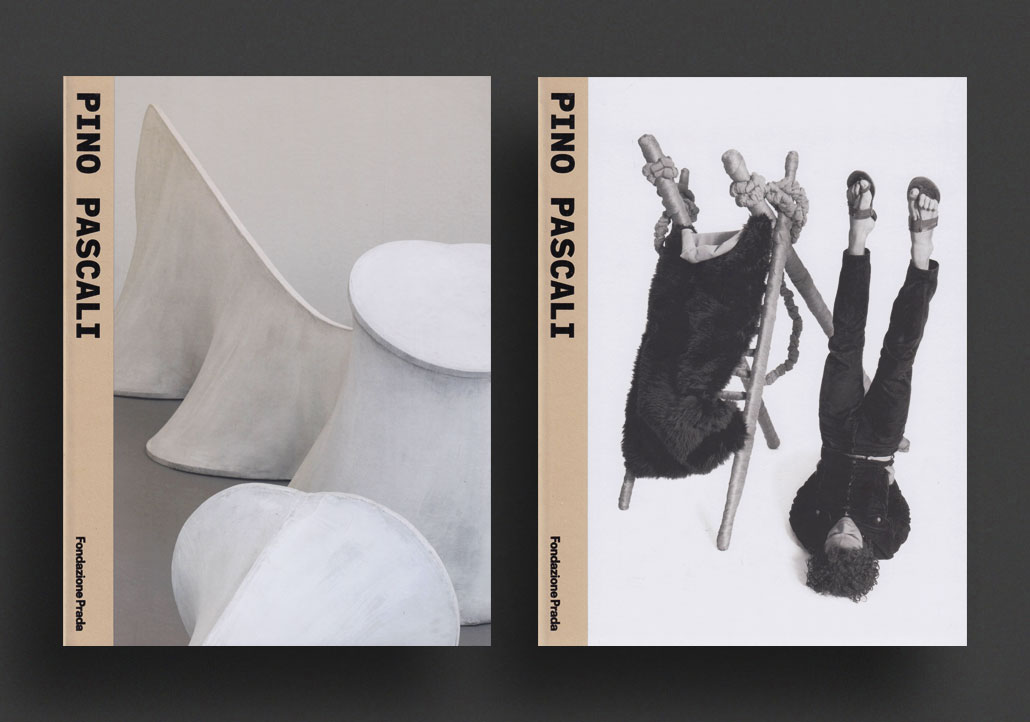
Lavish two-volume slipcased exhibition catalogue tracing the entire, tragically short career of Arte Povera artist Pino Pascali (1935–68), who created “fake sculptures” that played with perceptions of reality. From fuzzy spiders to toy machine guns, Pascali’s playfulness is on full display in this expansive catalogue-cum-reader, published on the occasion of the largest retrospective of the artist's work, curated by Mark Godfrey for the Fondazione Prada in Milan. Profusely illustrated in colour and b/w, the publication juxtaposes 49 of his works with nine pieces by other postwar artists, and includes both a full exhibition chronology and an anthology of texts on the artist.
Introduction by Miuccia Prada. Text by Mark Godfrey, Valérie Da Costa, Michele D’Aurizio, Eva Fabbris, Pia Gottschaller, Teresa Kittler, Peter Fischli, Achille Bonito Oliva, et al.
2024, English
Softcover (w. dust jacket), 96 pages. 17 x 24 cm
Published by
Drill Hall Gallery / Canberra
$38.00 - Out of stock
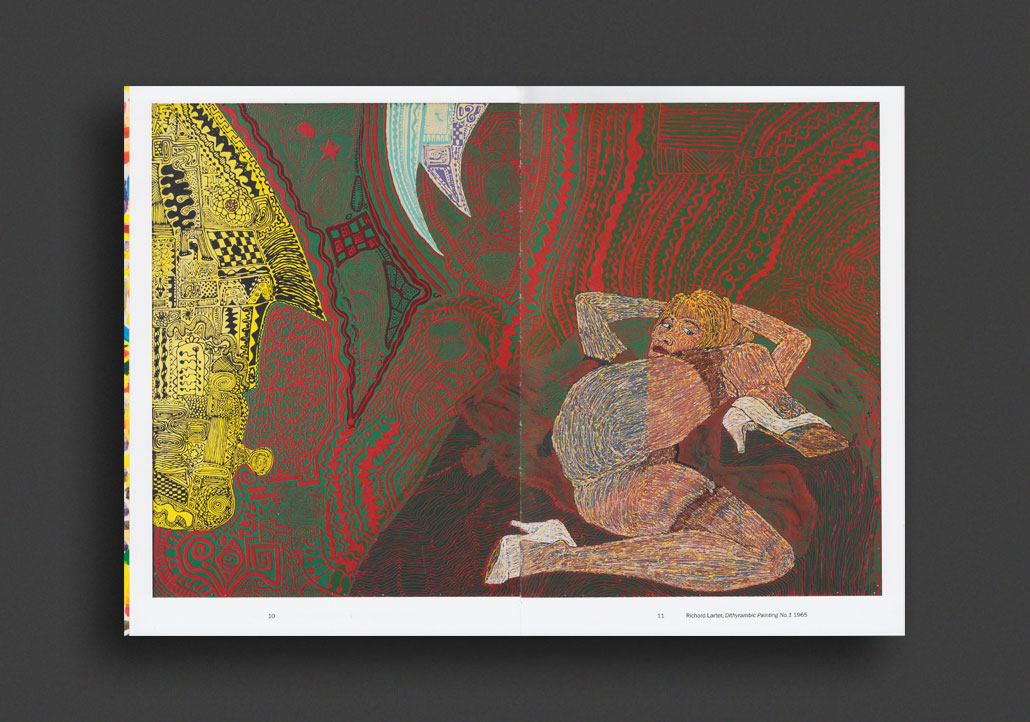
In this publication the art of Richard Larter, Pat Larter and Peter Maloney is unearthed in reproductions and three complimentary texts from Tony Oates, Hester Gascoigne and Mark Bayly. What emerges is a picture of Canberran visual culture that challenges the image of a stuffy national capital devoid of radical action. In its place we see a revolutionary community of like-minds hell bent on freedom, fairness and fun.Tony Oates delves into the leftist libertarian ethos that drove Richard Larter through the nitty gritty of his politically powerful pop imagery to his luminous abstraction, suggestive of universal truths. Here, Larter, so often regarded as the founding father of Australian Pop art, is revealed to be so much more. In Hester Gascoigne’s essay the work of husband faces off against the work of wife. Gascoigne traces the weaving threads of Pat’s and Richard’s practices as they merged and diverged over the years, from collaborative to competitive, always with an effervescent cheekiness and fierce dedication to the other. In conversation with Oates, Mark Bayly offers up personal reflections on the life and art of his late partner Peter Maloney with particular focus on the fertile relationship he shared with the Larters.
1966, English
Hardcover (Burlap covered boards), 342 pages, 32 x 31cm
1st Edition, Out of print title / used / very good
Published by
Harry N. Abrams / New York
$400.00 - Out of stock
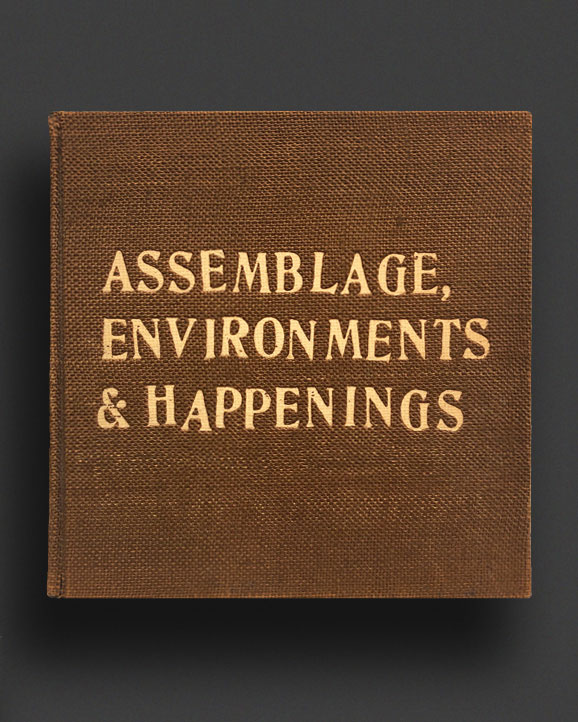
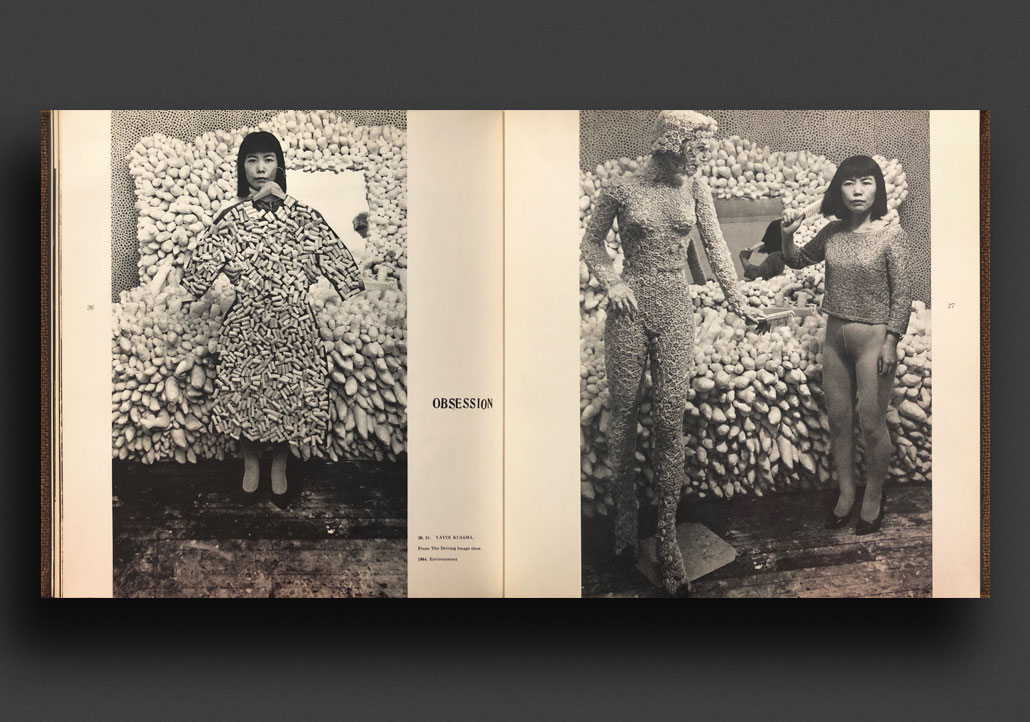
Rare first 1966 burlap-bound edition of this seminal work by Allan Kaprow documenting the milieu of performance art and happenings in the early-mid 1960s. Published by H. N. Abrams, Assemblage, Environments & Happenings is a legendary photo-artist-book by “one of the grand antiheroes of contemporary art”, produced in way we would never see today. Wrapped in a heavy, debossed and screen-printed raw burlap hardcover, this massive and visually stunning volume features incredible typography, commentary and lay-out by Kaprow himself, accompanying countless photogravures (photos taken by Oldenburg, Robert McElroy, Peter Moore and others) featuring the work of artists (and non-artists) such as Claes Oldenburg, Tetsumi Kudo, Jean Tinguely, Clarence Schmidt, Jean-Jacques Lebel, Wolf Vostell, George Brecht, Kenneth Dewey, Milan Knizak, Jackson Pollock, Robert Whitman, Red Grooms, George Segal, Yayoi Kusama, Jim Dine, Robert Rauschenberg, Allan Kaprow, together with images of works by the Japanese Gutai Group (Murakami Saburo, Shozo Shimamoto, Kazuo Shiraga, Atsuko Tanaka, et al) and many more.
Allan Kaprow, “an artist who coined the term ‘happenings’ in the late 1950s and whose anti-art works contributed to radical changes in the course of late 20th-century art,” was a leading member-with artists George Segal, Jim Dine and Claes Oldenberg-of a group whose performance works were signally influenced by John Cage’s “reliance on chance as an organizing, or disorganizing element in art. Like Cage, Kaprow used a combination of choice and accident as a way of creating nonverbal, quasi-theatrical situations in which performers functioned as kinetic objects, the role of the single artist-genius was de-emphasized, audience members became creative participants and no-clear distinction was made between everyday actions and ritual…” (New York Times).
"Step Right In"
Very Good copy, spotless with tight-As New binding, perfectly preserved.
2024, English
Softcover, 240 pages, 24.1 x 17.8 cm
Published by
Atelier Editions / Los Angeles
$74.00 - In stock -
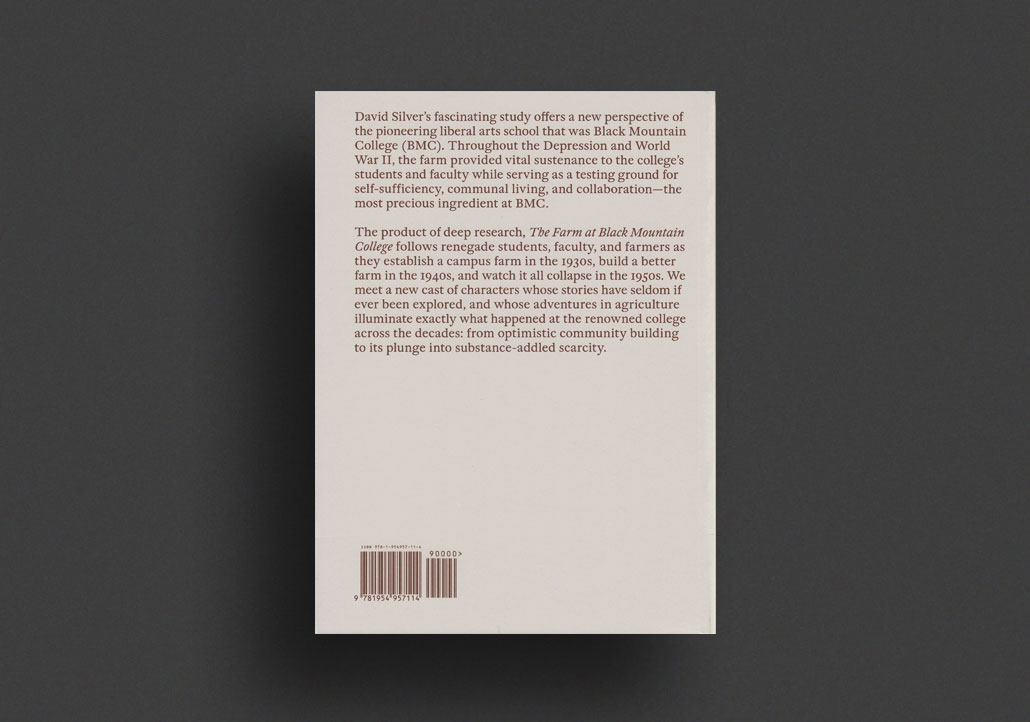
Black Mountain College (BMC) was a wellspring of 20th-century creative unorthodoxy. Through deep original research, this title follows renegade students, faculty & farmers as they establish a campus farm in the 1930s, build a better farm in the 1940s and watch it all collapse in the 1950s. In these engrossing pages, we encounter the extraordinary folk whose endeavours on the land helped shape the Black Mountain College of myth and extraordinary reality.From its founding in 1933 and over its celebrated 23-year history, the small liberal arts school in rural North Carolina attracted a remarkable number of famous and soon-to-be famous artists, writers and visionaries including Anni and Josef Albers, Ruth Asawa, John Cage, Merce Cunningham, Willem de Kooning, Buckminster Fuller, Ray Johnson, Charles Olson and M.C. Richards. The exploits of these BMC cultural luminaries have been recounted time and time again.David Silver’s fascinating new book offers a very different perspective. The farm was vital to BMC. Throughout the Depression and World War II it provided vital sustenance, while serving as a testing ground for self-sufficiency, communal living and collaboration—the most precious and precarious ingredient at the college.
David Silver (born 1968) is professor and chair of environmental studies at the University of San Francisco. He teaches classes on urban agriculture, hyperlocal food systems and food, culture and storytelling.
2024, English
Softcover, 256 pages. 20 x 13 cm
Published by
Silver Press / London
$37.00 - In stock -
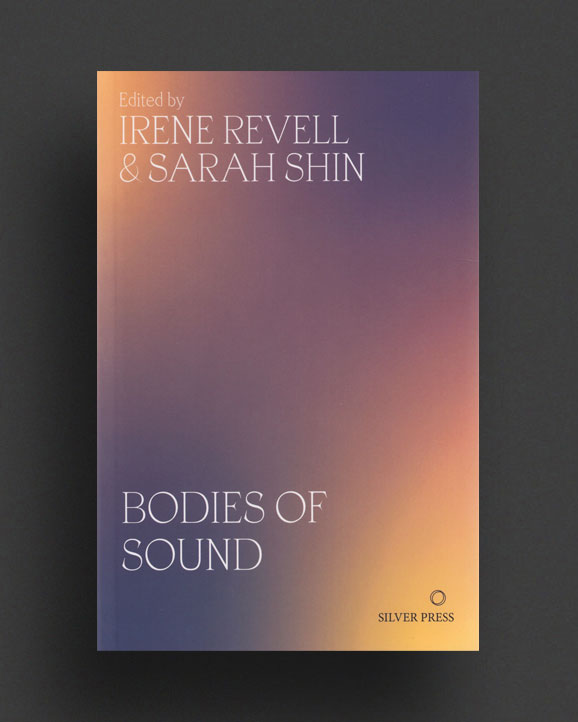
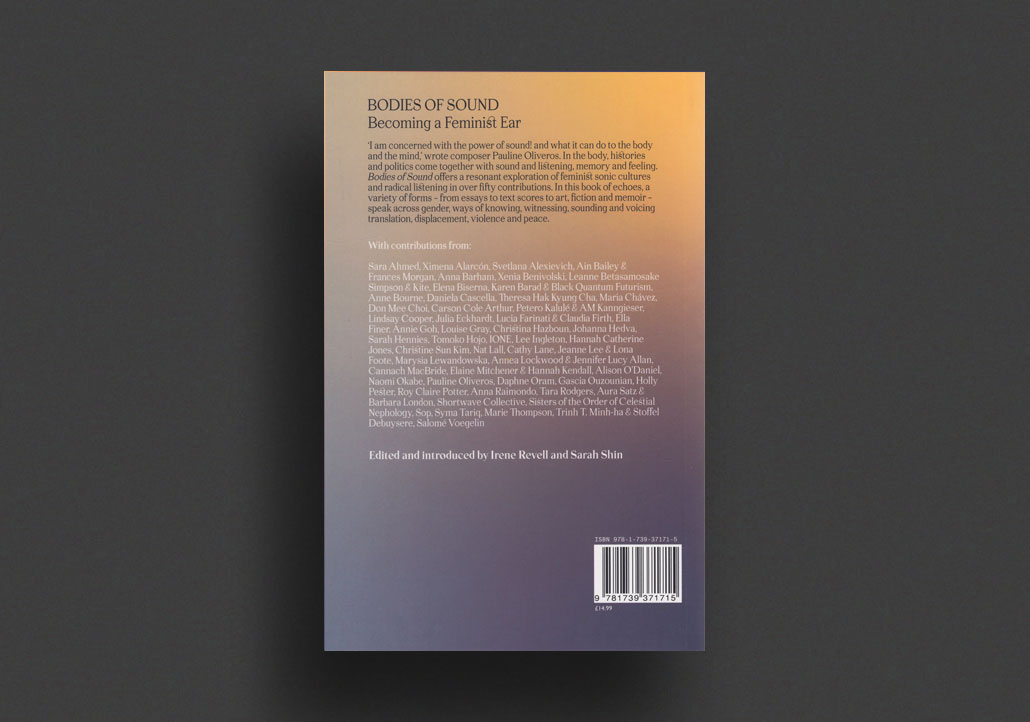
With contributions from: Sara Ahmed, Ximena Alarcón, Svetlana Alexievich, Ain Bailey & Frances Morgan, Anna Barham, Xenia Benivolski, Leanne Betasamosake Simpson & Kite, Elena Biserna, Karen Barad & Black Quantum Futurism, Anne Bourne, Daniela Cascella, Theresa Hak Kyung Cha, Maria Chávez, Don Mee Choi, Carson Cole Arthur, Petero Kalulé & AM Kanngieser, Lindsay Cooper, Julia Eckhardt, Lucia Farinati & Claudia Firth, Ella Finer, Annie Goh, Louise Gray, Christina Hazboun, Johanna Hedva, Sarah Hennies, Tomoko Hojo, IONE, Lee Ingleton, Hannah Catherine Jones, Christine Sun Kim, Nat Lall, Cathy Lane, Jeanne Lee & Lona Foote, Marysia Lewandowska, Annea Lockwood & Jennifer Lucy Allan, Cannach MacBride, Elaine Mitchener & Hannah Kendall, Alison O'Daniel, Naomi Okabe, Pauline Oliveros, Daphne Oram, Gascia Ouzounian, Holly Pester, Roy Claire Potter, Anna Raimondo, Tara Rodgers, Aura Satz & Barbara London, Shortwave Collective, Sisters of the Order of Celestial Nephology, Sop, Syma Tariq, Marie Thompson, Trinh T. Minh-ha & Stoffel Debuysere, Salomé Voegelin
‘I am concerned with the power of sound! and what it can do to the body and the mind,’ wrote composer Pauline Oliveros. In the body, histories and politics come together with sound and listening, memory and feeling. Bodies of Sound offers a resonant exploration of feminist sonic cultures and radical listening in over fifty contributions. In this book of echoes, a variety of forms – from essays to text scores to art, fiction and memoir – speak across gender, ways of knowing, witnessing, sounding and voicing, translation, displacement, violence and peace.
2022, English
Softcover, 64 pages, 11 x 16 cm
Published by
Ignota / UK
$20.00 - Out of stock
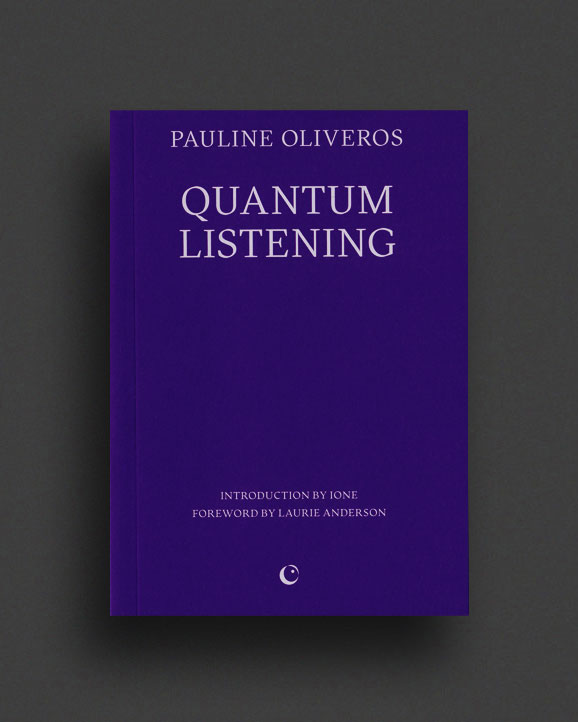
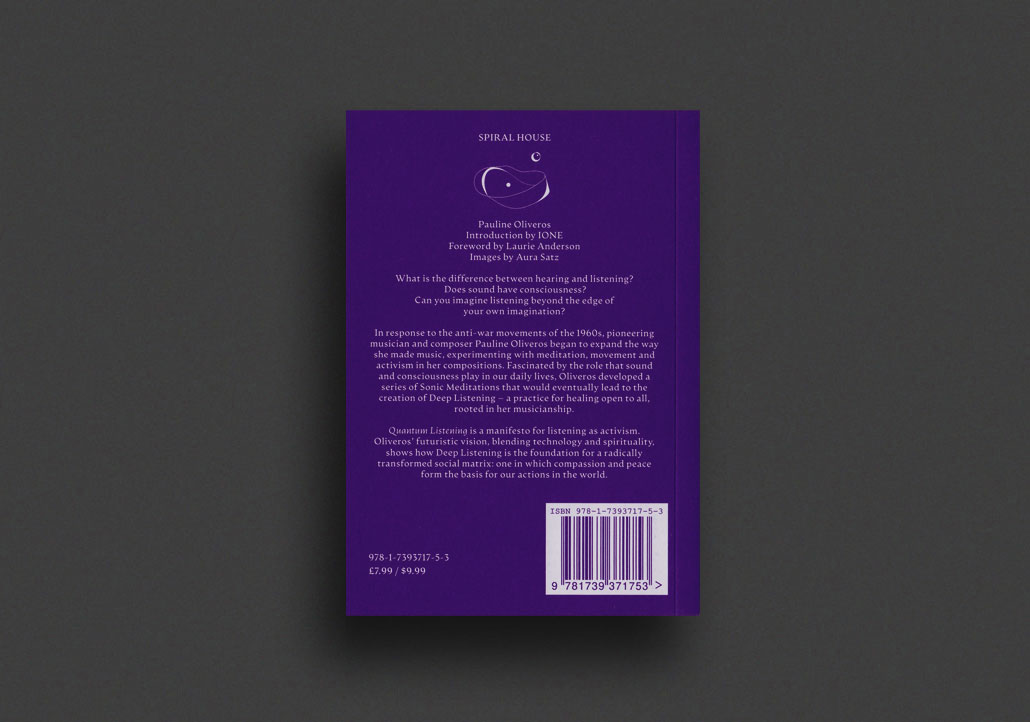
In response to the anti-war movements of the 1960s, pioneering musician and composer Pauline Oliveros began to expand the way she made music, experimenting with meditation, movement and activism in her compositions. This title is a manifesto for listening as activism. Through simple yet profound exercises, Oliveros shows how Deep Listening is the foundation for a radically transformed social matrix: one in which compassion and peace form the basis for our actions in the world. Fascinated by the role that sound and consciousness play in our daily lives, Oliveros developed a series of Sonic Meditations that would eventually lead to the creation of Deep Listening – a practice for healing and transformation open to all, rooted in her musicianship. This timely edition brings Oliveros’ futuristic vision – blending technology and spirituality – together with a new Foreword and Introduction by Laurie Anderson and IONE.
1989, English
Softcover, 26 pages, 21 x 14.8 cm
John Nixon hand-painted monochrome covers,
1st Edition, Out of print title / used / very good
Published by
City Gallery / Melbourne
$160.00 - Out of stock
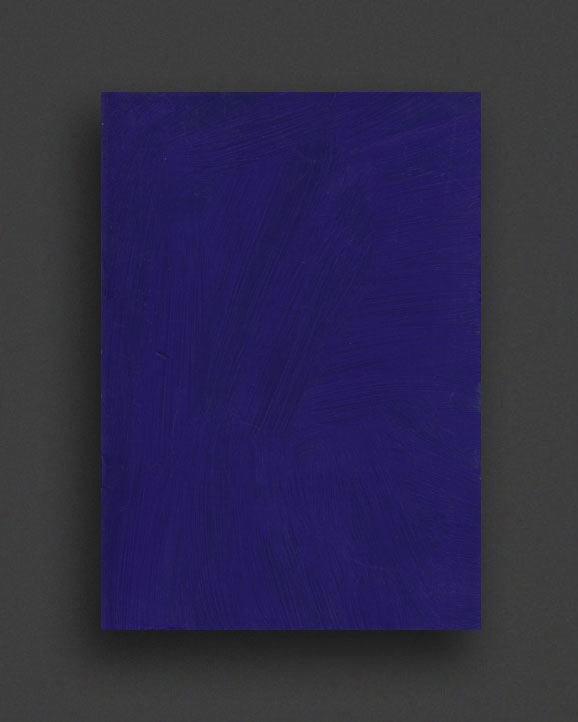
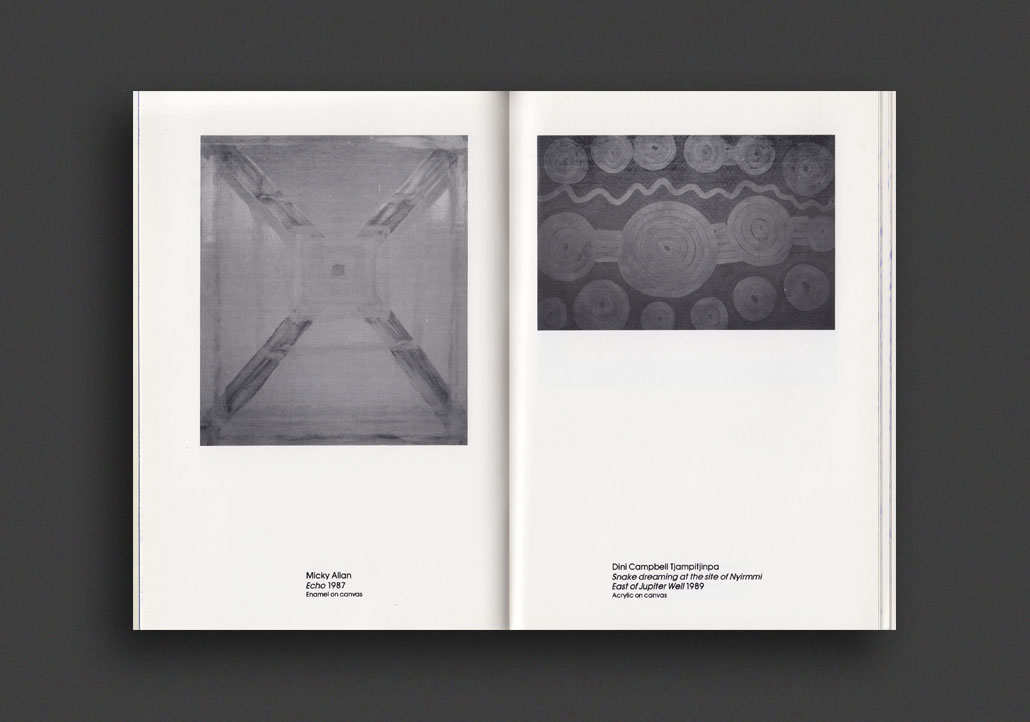
Rare copy of John Nixon's hand-painted monochromatic catalogue, published in 1989 on the occasion of the exhibition Nixon curated for the City Gallery, Melbourne. In stiff card wrappers painted in royal blue by John, the catalogue presents the work of Micky Allan, Dini Campbell Tjampitjinpa, Eugene Carchesio, Peter Cripps, Dale Frank, Melinda Harper, Tim Johnson, John Nixon, Rose Nolan, Robert Owen, Stieg Piersson, Billy Stockman Tjapaltjarra, Johnny Warangkula Tjupurrula, Jimmy Wululu, John Young.
"Our Commune: With a multitude of visions they have moved beyond the circle into the centre of the universe (into the world of 'non-objectivity'). Into a journey outward (with spiritual, cosmic, constructivist, materialist, simulative, dreaming, conceptual and formal endeavours) and into the worlds of the Cosmos;
the worlds of Abstractions Utopia."—John Nixon, July 1987
As New.
1991, English
Softcover, 736 pages, 25.3 x 16.5 cm
Published by
Vintage / UK
$42.00 - Out of stock
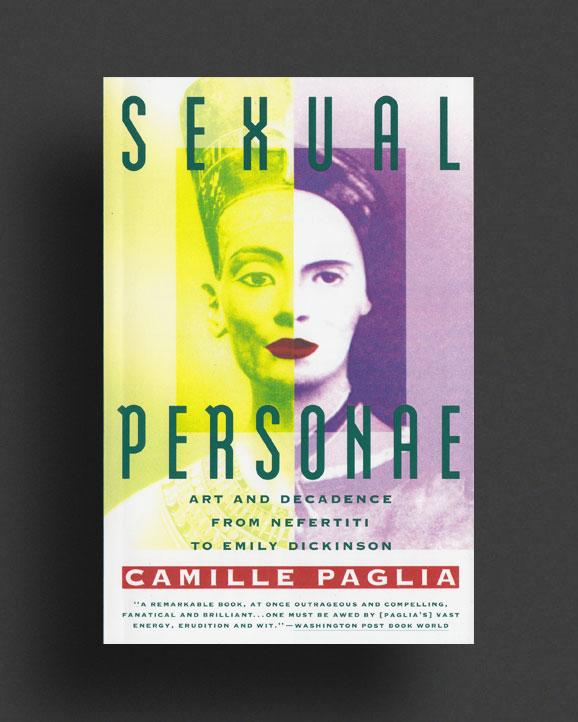
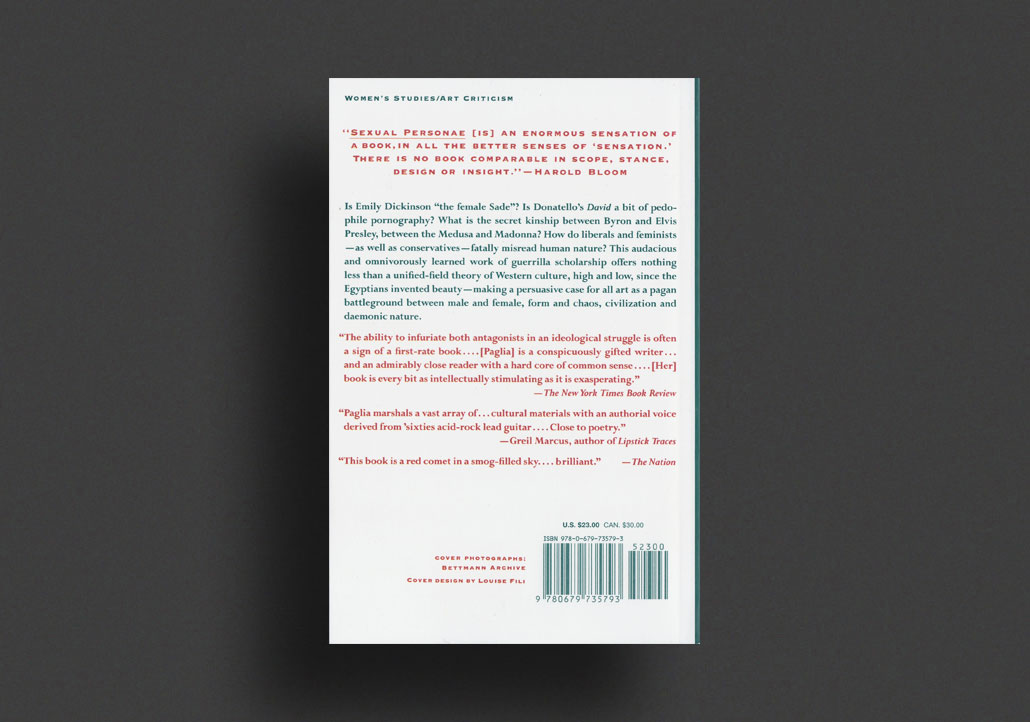
Here is the fiery, provocative, and unparalleled work of feminist art criticism that launched Camille Paglia's exceptional career as one of our most important public intellectuals. Is Emily Dickinson the female Sade? Is Donatello's David a bit of pedophile pornography? What is the secret kinship between Byron and Elvis Presley, between Medusa and Madonna? How do liberals and feminists as well as conservatives fatally misread human nature?
This audacious and omnivorously learned work of guerrilla scholarship offers nothing less than a unified-field theory of Western culture, high and low, since Egyptians invented beauty making a persuasive case for all art as a pagan battleground between male and female, form and chaos, civilization and daemonic nature.
Includes 47 photographs.
Camille Paglia is the University Professor of Humanities and Media Studies at the University of the Arts in Philadelphia. A regular contributor to Salon.com, she is the author of Glittering Images; Break, Blow, Burn; Sexual Personae; Sex, Art, and American Culture; and Vamps & Tramps.
"A remarkable book, at once outrageous and compelling, fanatical and brilliant. . . . One must be awed by [Paglia's] vast energy, erudition and wit."—The Washington Post
"Sexual Personae [is] an enormous sensation of a book, in all the better senses of 'sensation.' There is no book comparable in scope, stance, design or insight."—Harold Bloom
"The ability to infuriate both antagonists in an ideological struggle is often a sign of a first-rate book. . . . [Paglia] is a conspicuously gifted writer . . . and an admirably close reader with a hard core of common sense."—The New York Times Book Review
"Paglia marshals a vast array of . . . cultural materials with an authorial voice derived from sixties acid-rock lead guitar. . . . Close to poetry."—Greil Marcus, author of Lipstick Traces
"This book is a red comet in a smog-filled sky. . . . Brilliant."—The Nation
2024, English
Softcover, 416 pages, 21 x 14 cm
Published by
Verso / London
$48.00 - Out of stock
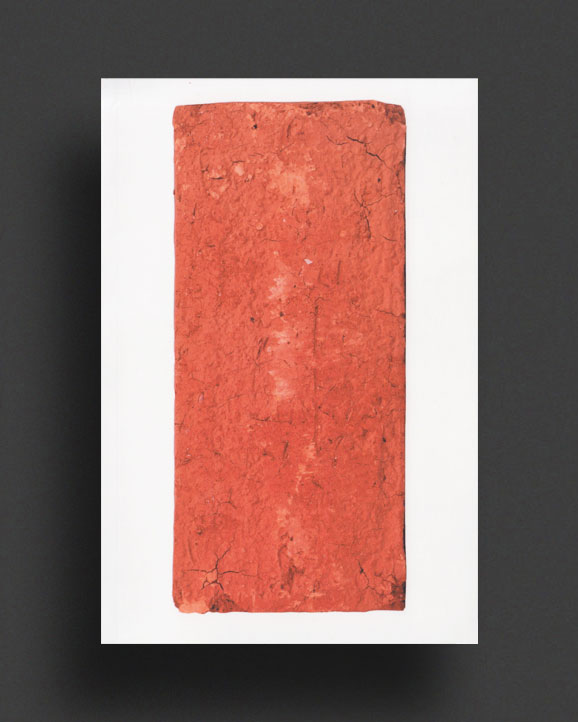
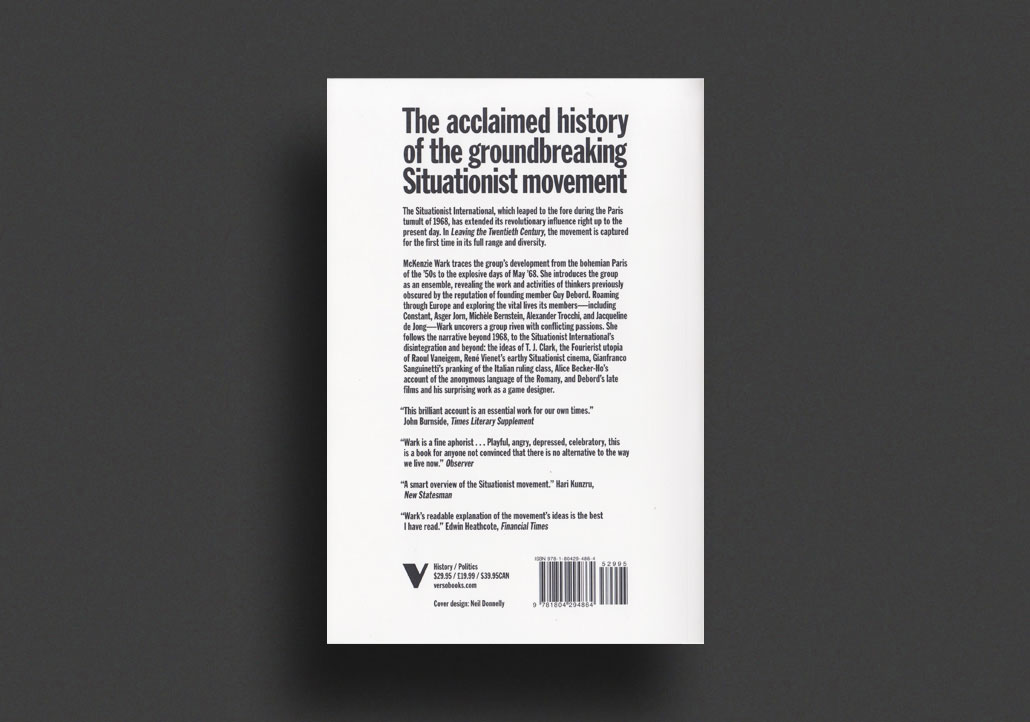
The highly-acclaimed history of the ground-breaking Situationist movement, in one volume for the first time.
The Situationist International, who came to the fore during the Paris tumults of 1968, were revolutionary thinkers who continue to influence movements and philosophy into the twenty-first century. Mostly know for Guy Debord's The Society of the Spectacle as well as other key texts, the group was in fact hugely diverse and radical. In Leaving The 20th Century McKenzie Wark explores the full range of the movement.
At once an extraordinary counter history of radical praxis and a call to arms in the age of financial crisis and the resurgence of the streets Wark traces the group's development from the bohemian Paris of the '50s to the explosive days of May '68, Wark's take on the Situationists is biographically and historically rich, presenting the group as an ensemble creation, rather than the brainchild and dominion of its most famous member, Guy Debord. Roaming through Europe and the lives of those who made up the movement—including Constant, Asger Jorn, Mich le Bernstein, Alex Trocchi and Jacqueline De Jong—Wark uncovers an international movement riven with conflicting passions.
She also follows the narrative beyond 1968 to show what happened after the movement disintegration exploring the lives and ideas of T.J. Clark, the Fourierist utopia of Raoul Vaneigem, Ren Vienet's earthy situationist cinema, Gianfranco Sangunetti's pranking of the Italian ruling class, Alice-Becker Ho's account of the anonymous language of the Romany, Guy Debord's late films and his surprising work as a game designer.
2011, English
Softcover, 416 pages, 20.3 x 14 cm
Published by
Deep Vellum / Texas
$34.00 - Out of stock
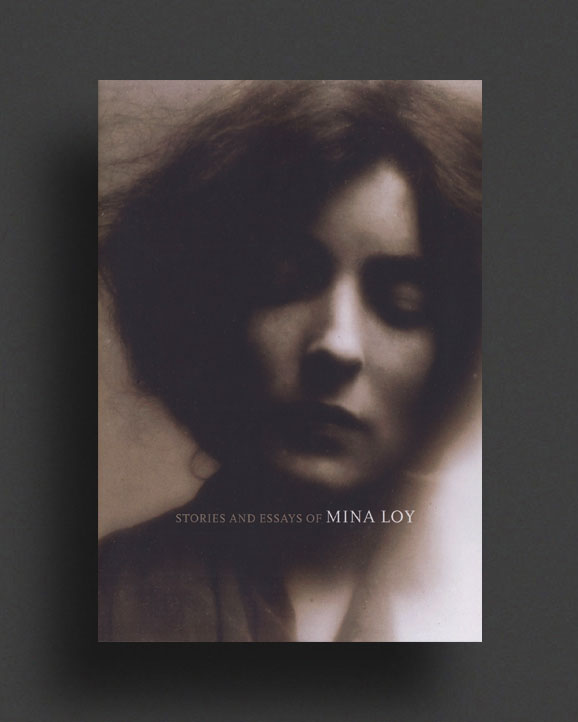
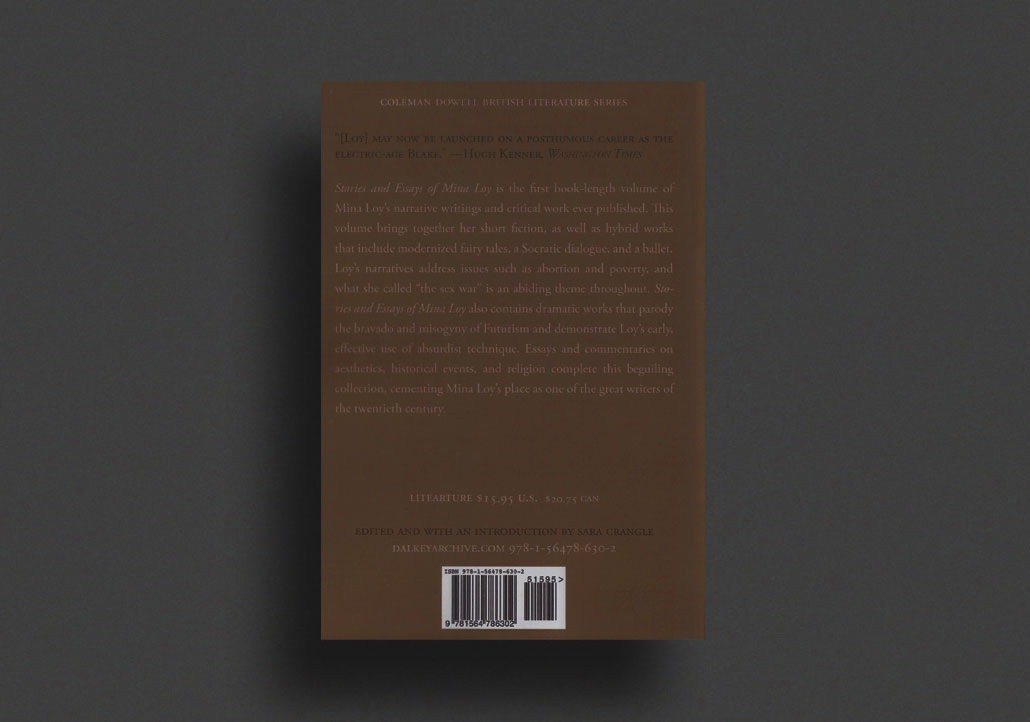
"Stories and Essays of Mina Loy" is the first book-length volume of Mina Loy's narrative writings and critical work ever published. This volume brings together her short fiction, as well as hybrid works that include modernized fairy tales, a Socratic dialogue, and a ballet. Loy's narratives address issues such as abortion and poverty, and what she called "the sex war" is an abiding theme throughout. "Stories and Essays of Mina Loy" also contains dramatic works that parody the bravado and misogyny of Futurism and demonstrate Loy's early, effective use of absurdist technique. Essays and commentaries on aesthetics, historical events, and religion complete this beguiling collection, cementing Mina Loy's place as one of the great writers of the twentieth century.
Marjorie Perloff writes: "Among the great modernist poets, Mina Loy was surely the greatest wit, the most sophisticated commentator on the vagaries of love, the one whose brittle and sardonic laughter continues... to pursue us."
2024, English
Softcover, 146 pages, 20.5 x 12.5 cm
Published by
Forgotten Press / Aotearoa—New Zealand
$30.00 - Out of stock
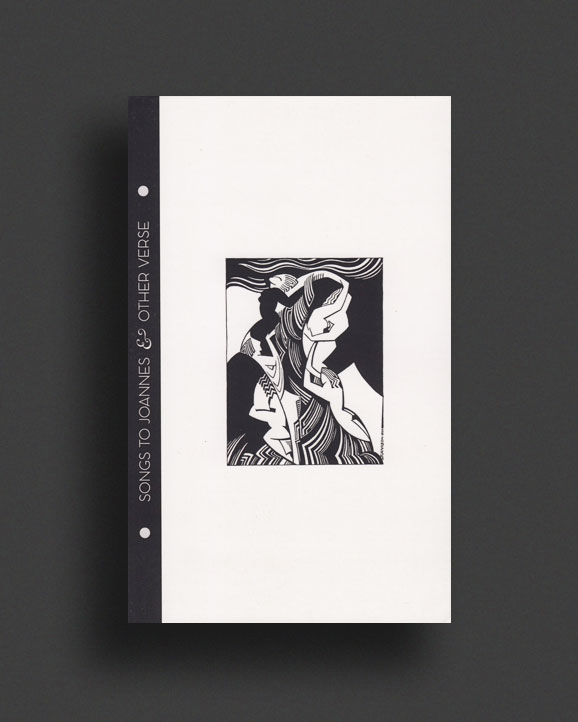
'Songs to Joannes & Other Verse' brings together a selection of poems by London poet Mina Loy, later based in Paris and New York, including the entire 34 song sequence, 'Songs to Joannes', and a generous selection of Loy's other verses (originally published 1914-1923), as well as selected short essays, manifestos, and aphorisms; with illustrations by Mina Loy, Djuna Barnes, and Clara Tice. Loy was a revolutionary poet, and a member of the Futurist and Dada groups in the mid-1910s, and a forerunner to the 'free' and 'new verse' movements of the 1920s.
The Forgotten Poets Newsletter presents: new collections of out-of-print and obscure poetry, with a focus on compressed & fragmented 'free' and 'new' verse from the late-1800s & early-1900s, & the early history of English-language tanka & haiku. Verses are carefully selected & spaciously laid-out, adorned with illustrations & ornaments from the books & magazines they originally appeared in.
1977, Spanish
Softcover (staple-bound), 50 pages, 30 x 21 cm
1st Edition, Out of print title / used / very good
Published by
Edita Edinaper / Barcelona
$100.00 - Out of stock
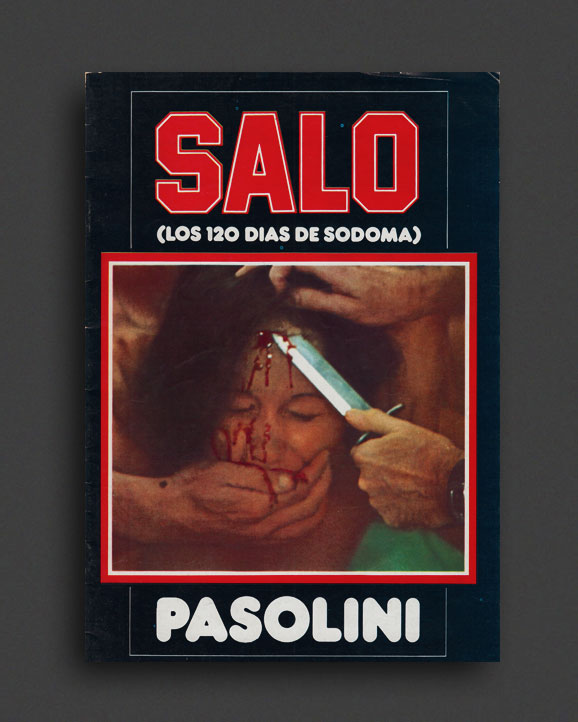
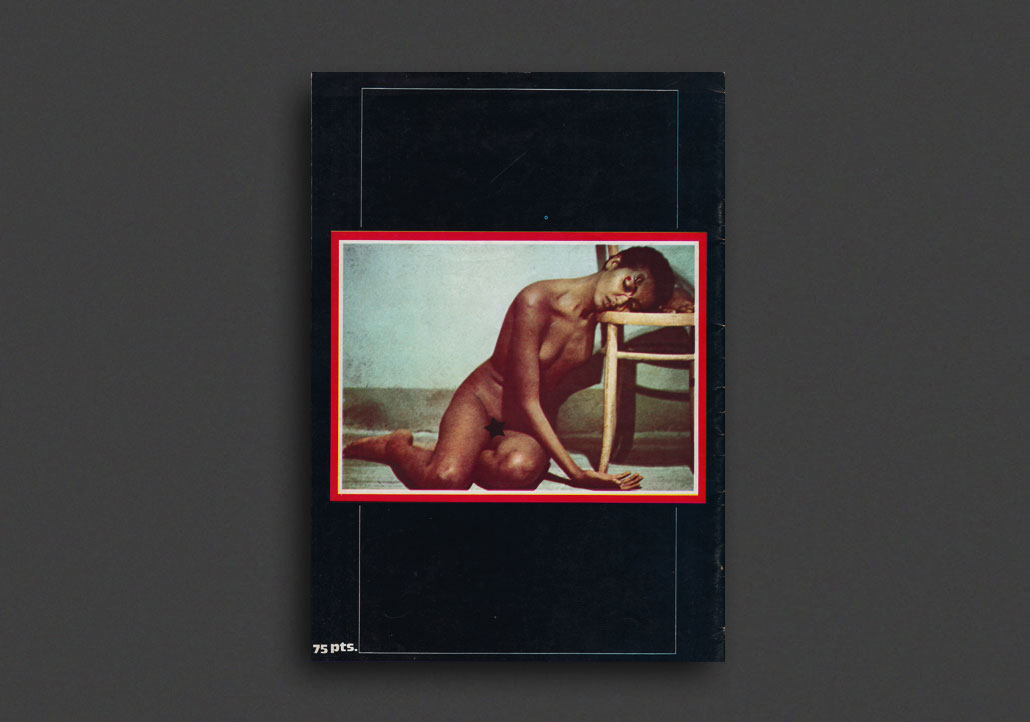
Glossy 1977 photo album documenting Salò, or The 120 Days of Sodom, Pasolini's notorious final film from 1975, released three weeks after his murder. The film has been called nauseating, shocking, depraved, pornographic... It’s also a masterpiece. The controversial poet, novelist, and filmmaker’s transposition of the Marquis de Sade’s eighteenth-century opus of torture and degradation to Fascist Italy in 1944 remains one of the most passionately debated films of all time, a thought-provoking inquiry into the political, social, and sexual dynamics that define the world we live in. Lavishly illustrated with film stills and behind-the-scenes imagery in graphic glossy colour and b/w, the publication visually documents the film script (in Spanish text), while giving a biographical account of Pasolini and his interest in Marquis de Sade, etc./origin to the film's making. Includes all film credits.
Salò, or the 120 Days of Sodom, billed on-screen as Pasolini's 120 Days of Sodom on English-language prints and commonly referred to as simply Salò, is a 1975 political horror film directed and co-written by Pier Paolo Pasolini. The film is a loose adaptation of the 1785 novel (first published in 1904) The 120 Days of Sodom by Marquis de Sade, updating the story's setting to the World War II era. It was Pasolini's final film, released three weeks after his murder.
The film focuses on four wealthy, corrupt Italian libertines in the time of the fascist Republic of Salò (1943–1945). The libertines kidnap 18 teenagers and subject them to four months of extreme violence, sadism, genital torture and psychological torture. The film explores themes of political corruption, consumerism, authoritarianism, nihilism, morality, capitalism, totalitarianism, sadism, sexuality, and fascism. The story is in four segments, inspired by Dante's Divine Comedy: the Anteinferno, the Circle of Manias, the Circle of Shit, and the Circle of Blood. The film also contains frequent references to and several discussions of Friedrich Nietzsche's 1887 book On the Genealogy of Morality, Ezra Pound's poem The Cantos, and Marcel Proust's novel sequence In Search of Lost Time.
Premiering at the Paris Film Festival on 23 November 1975, the film had a brief theatrical run in Italy before being banned in January 1976, and was released in the United States the following year on 3 October 1977. Because it depicts youths subjected to graphic violence, torture, sexual abuse, and murder, the film was controversial upon its release and has remained banned in many countries.
Good—Very Good copy. General light wear to extremities, well preserved.
1977, Spanish
Softcover (staple-bound), 50 pages, 30 x 21 cm
1st Edition, Out of print title / used / very good
Published by
Edita Edinaper / Barcelona
$60.00 - In stock -
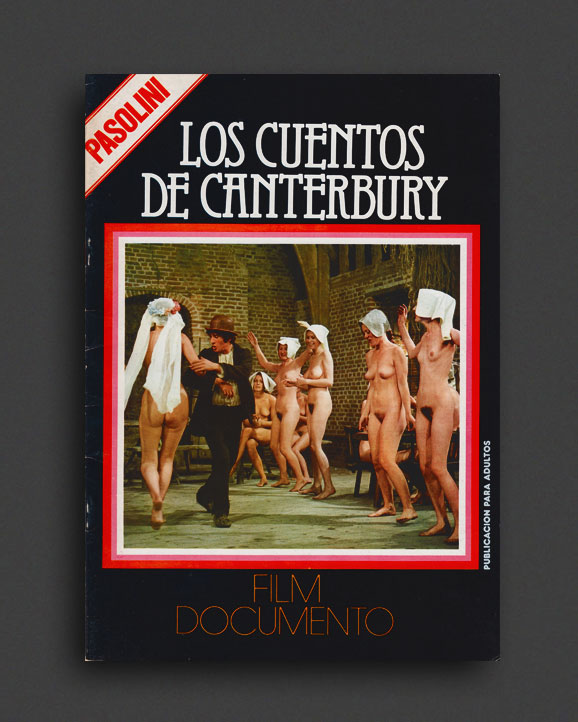
Glossy 1977 photo album documenting Pier Paolo Pasolini's The Canterbury Tales, a 1972 erotic black comedy based on the medieval narrative poem by Geoffrey Chaucer. Lavishly illustrated with titillating
film stills and behind-the-scenes imagery in graphic glossy colour and b/w, the publication visually documents the film script (in Spanish text), while giving a biographical account of Pasolini and his interest in Chaucer's tales/origin to the film's making. Includes all film credits.
The second film in Pasolini's "Trilogy of Life", preceded by The Decameron and followed by Arabian Nights, it won the Golden Bear at the 22nd Berlin International Film Festival. With the "Trilogy of Life", Pasolini sought to adapt vibrant, erotic tales from classical literature. With The Canterbury Tales he set his sights to the earthy Middle English tales of Chaucer. The film came after a string of movies of the late 1960s in which Pasolini had a major ideological bent. Though this film is much more light-hearted in nature Pasolini nonetheless considered it among his most "ideological". The film can be seen as an attack on the stiff sexual mores of both Chaucer and Pasolini's times.
Good—Very Good copy. General light wear to extremities, well preserved.
2013, Japanese
Softcover, 244 pages, 21 x 14.5 cm
1st Edition, Out of print title / as new
Published by
Disc Union Books / Tokyo
$160.00 - Out of stock
Long out-of-print and sought after Japanese disc guide devoted to noise and Industrial music — the only one of its kind, issued by the legendary Disc Union in 2013, and edited by Tamotsu Mochida, Japanese music critic specialising in Noise music and a famous Avant-Garde buyer at Disk Union for many years.
"... Due to the wide range of (anti-)musicality and the difficulty of archiving works due to the artists' excessive minor orientation, a so-called "disc guide" has never been published until now. This book is a step in that direction. It presents both easily accessible and almost impossible to find works side by side, and clearly organizes and catalogs the bottomless world of "industrial music""—blurb
The book comprises chronological sections: Classics, Experimental, Harsh/Power Electronics, Beat Noise, Extreme, Japanoise, further broken down into micro-genres and pulling in more historical influencers, with 511 selected record essentials, each with a write-up (in Japanese) album cover artwork, and all meticulously indexed. Includes accompanying essays in Japanese and further scattered graphics throughout.
Includes: SPK, Merzbow, Chrome, Hanatarashi, Throbbing Gristle, Grim, Psychic TV, Coil, Chris & Cosey, Club Moral, Nurse with Wound, Aube, Ramleh, Whitehouse, H.N.A.S., Masonna, Clair Obscur, Cabaret Voltaire, Gum, Anne Gillis, Controlled Bleeding, Einstürzende Neubauten, Makers of the Dead Travel Fast, Kapotte Musiek, Current 93, Nord, The Legendary Pink Dots, Boyd Rice, NON, Organium, MB, The New Blockaders, Laibach, Andrew Chalk, Ministry, Genocide Organ, Death in June, Foetus, Brume, AMM, Nihilist Spasm Band, White Hospital, Godflesh, Colin Potter, Vidna Obmana, Toll, Destroy All Monsters, Die Form,The Young Gods, Bastard Noise, Lard, Clock DVA, K.K.Null, Esplendor Geométrico, Muslimguze, Voice Crack, Charles Manson, Lemon Kittens, MSBR, Metabolist, Dead C, William Burroughs, Dome, Meat Beat Manifesto, John Cale, Monte Cazza, Hunting Lodge, The Hafler Trio, La Syndicat, Werkbund, Skullflower, Atrax Morgue, Cut Hands,Prurient, Con-Dom, Sutcliffe Jügend, The Grey Wolves, Front Line Assembly, Dark Day, Nocturnal Emissions, and many many more....
As New.
1985, English
Softcover (staple-bound), 20 pages, 25 x 18.5 cm
1st Edition, Out of print title / used / very good
Published by
IMA / Brisbane
$100.00 - In stock -
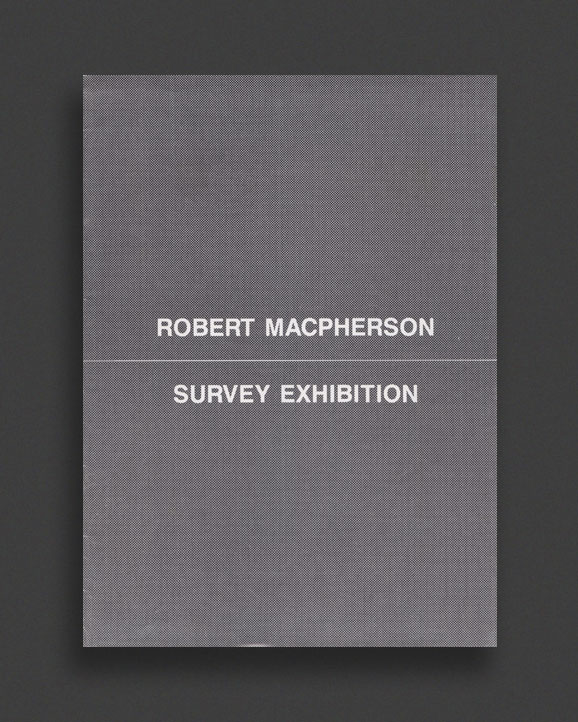
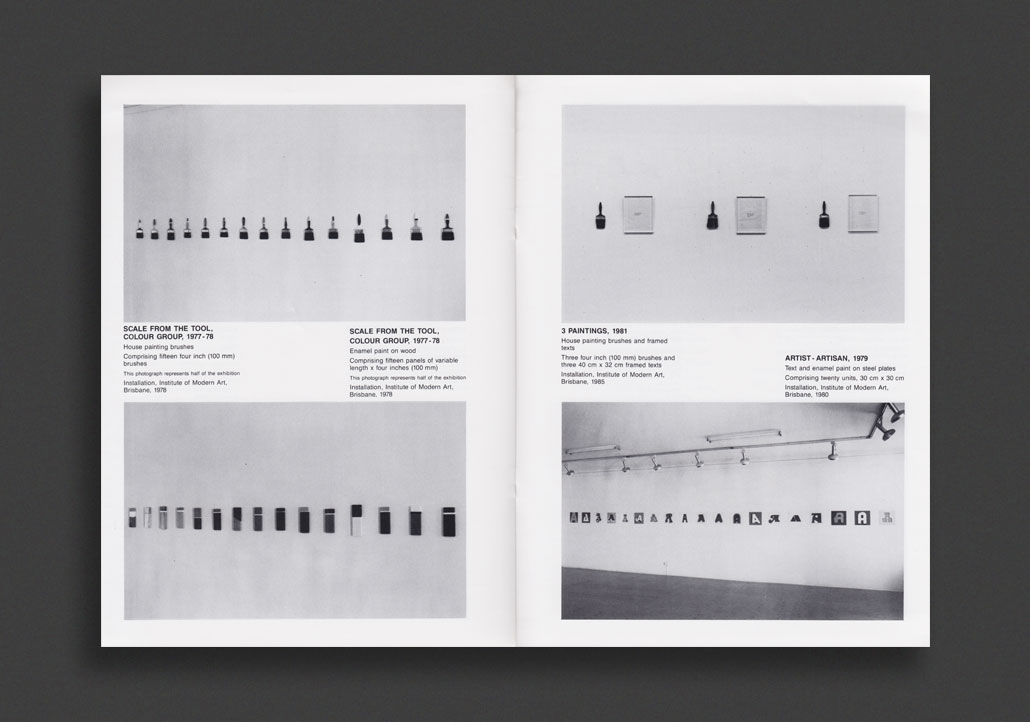
Rare glossy catalogue published on the occasion of a major "Survey Exhibition" of Australian conceptual artist Robert MacPherson at the Institute of Modern Art, Brisbane, 1985, curated by Peter Cripps and Malcolm Enright. Heavily illustrated throughout with MacPherson's works and installations mostly at the IMA, but also Q Space Annex and Ray Hughes Gallery. Includes informative text by then IMA director and artist Peter Cripps tracing the major works of MacPherson from his first solo exhibition in 1975 (also held at the IMA) through to 1985. Also includes biography and bibliography.
Over the course of his 40 plus-year career, Australian conceptual artist Robert MacPherson (1937–2021) explored the philosophical propositions of what constitutes a work of art. He often incorporated familiar imagery, everyday materials and visual elements from daily life, honouring the beauty of the mundane. MacPherson’s fascination with systems of objects and language is manifested through broad fields of knowledge, including art history and social history, biology and mythology.
Very Good copy.
1999 + 2000, English / Japanese
2 Vols. (softcover + hardcover), unpaginated, 15.5 x 11.5 cm / 18.5 x 13.5 cm
1st Edition, Out of print title / used / fine
Published by
Little More / Tokyo
$300.00 - Out of stock
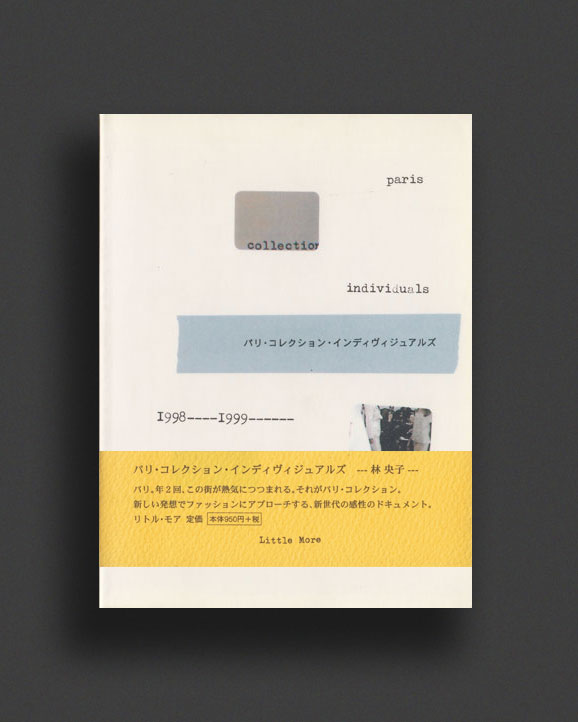
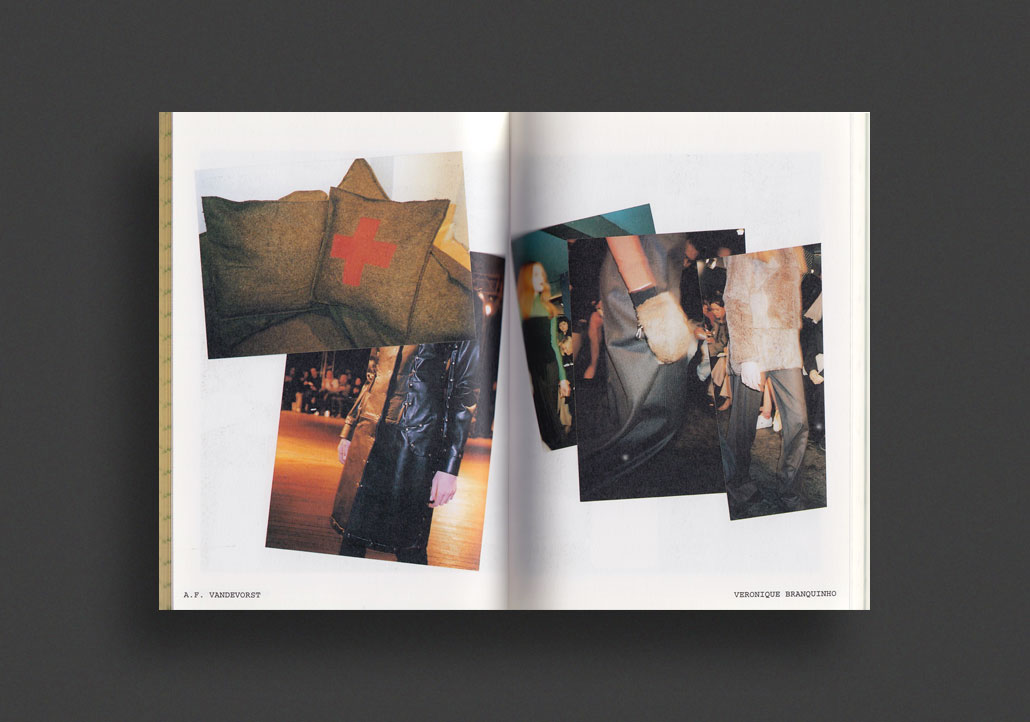
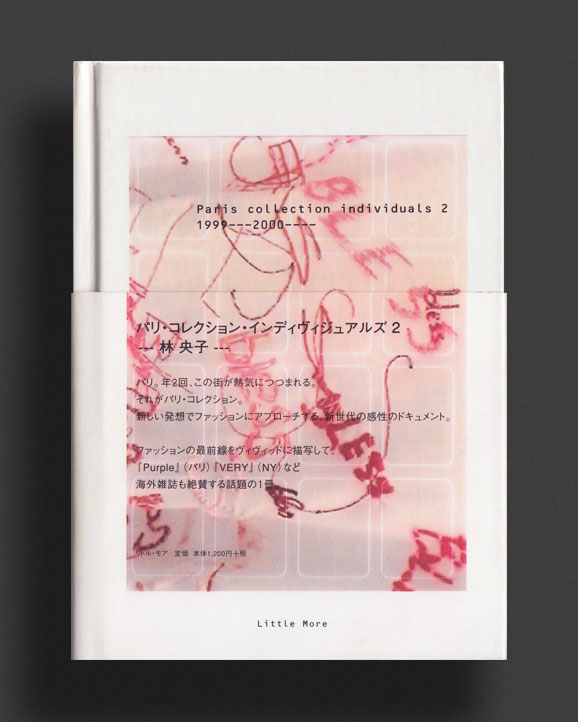
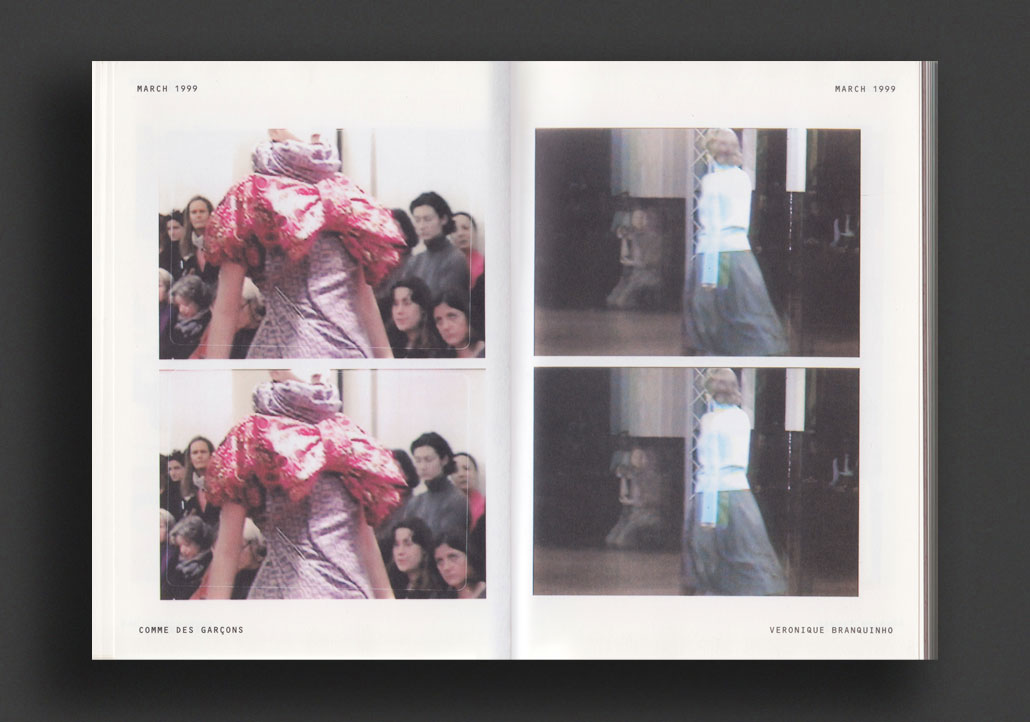
Complete set of the 2 volumes of this wonderful pocket fashion journal/photo book published in 1999 and 2000, respectively, by Tokyo's Little More, documenting the 1998—1999 and 1999—2000 Paris fashion weeks through the travels and relationships of Nakako Hayashi, artist and editor of the great Here and There journal and fashion and art contributor to Purple, Hanatsubaki, Ryu-ko-tsu-shin, and more. Naturally, this publication has all the feeling of Here and There and early issues of Purple, and includes intimate collaborations with most of the key contributors to those magazines, all friends of Hayashi's, plus documentation of the long lost galleries and hot-spots of Paris, London, New York, and Tokyo — Colette, Purple Institute, The Pineal Eye, The Deep Gallery, Purple Cafe, Alleged Galleries... rare photo documentation of fashion graduate catwalks in Arnhem and Antwerp, artist ads and pages... An excellent time-capsule of 1990's anti-fashion world at its peak. Volume 1 includes a sticker sheet of Susan Cianciolo's Run7 collection!
Contributions and documentation of work by Susan Cianciolo, Mark Borthwick, BLESS, Elein Fleiss, Comme des Garçons, Maison Martin Margiela, A.F. Vandevorst, Veronique Branquinho, Jerome Dreyfuss, Gaspard Yurkievich, Junya Watanabe, Martine Sitbon, Colette, Purple, Takashi Homma, Mike Mills, Olivier Theyskens, Andre Walker, Jeremy Scott, Niels Klavers, Dick Page, Bernadette Van-Huy, Dorothee Perret, Carol Christian Poell, Keupr/van Bentum, Patrick van Ommeslaeghe, Wendy & Jim, Anne Daems, Fergadelic, Walter Pfeiffer, Bernadette Corporation, Mark Gonzales, Sofia Coppola, Jurgi Persoons, Walter Van Beirendonck, Melanie Rozema & Jeroen Teunissen, Benoit Meleard, Marcha Hüskes, Oscar Süleyman, and many more.
Texts in English and Japanese.
Near Fine, most complete copies both, with NF obi strips and dust jacket.
1996, English
Softcover (staple-bound), unpaginated, 21 x 15 cm
1st Edition, Out of print title / used / very good
Published by
ACMA / Brisbane
$18.00 - In stock -
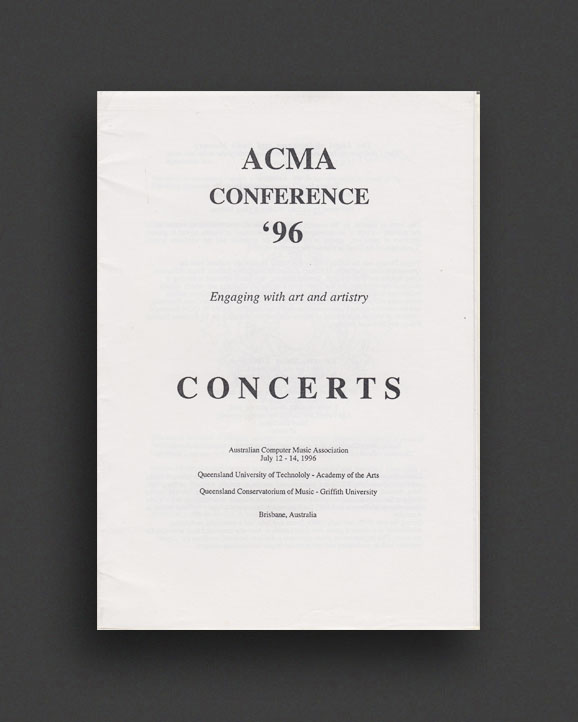
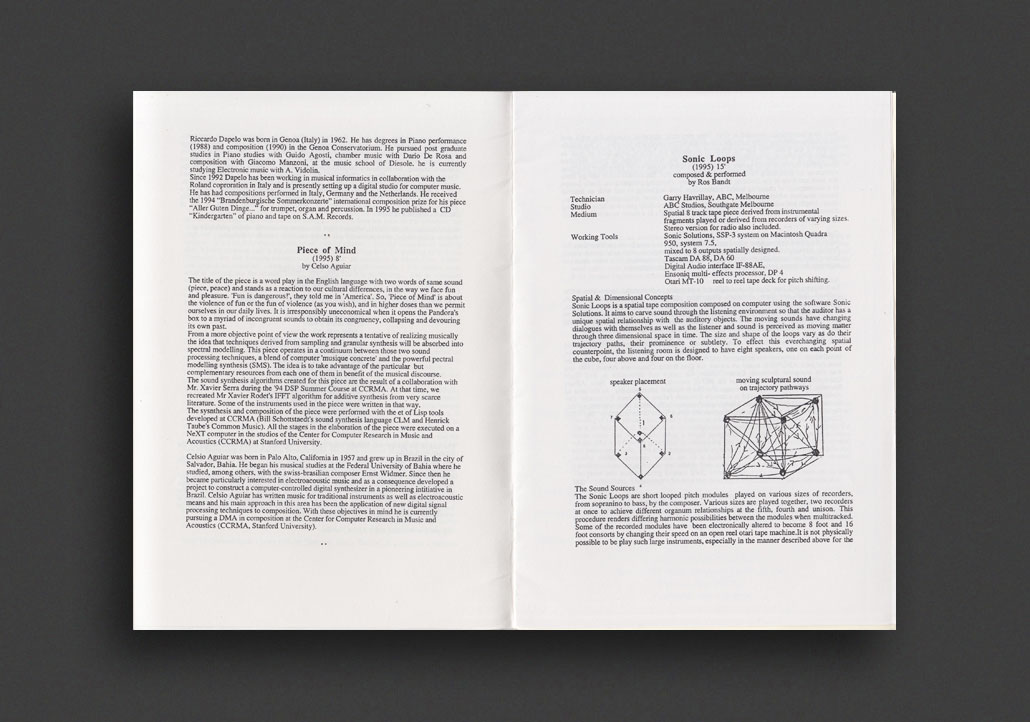
Attendee publication produced to accompany a concert series as part of ACMA (Australian Computer Music Association) Conference, July 12—14, 1996, QUT Academy of The Arts and Queensland Conservatorium of Music, Griffith University, Brisbane. A important fixture in Australia's new music scene of composition and sound art, with guest composers from all over the world, ACMA Conference '96 featured the work of Ros Bandt, Warren Burt, Gordon Monro, Celso Aguiar, Riccardo Dapelo, Lelio Camilleri, Tim Kreger, Anthony Hood, Panos Couros, John Emsley, Rodolphe Blois, Rajmil Fischman, John Rimmer, Martín Alejandro Fumarola, and many others. Information on all performed pieces, artist's texts, diagrams, bios, etc.
VG.
2024, English
Softcover, 196 pages, 21 x 15 cm
Published by
Aesthetic Calculations / Melbourne
$34.00 - Out of stock
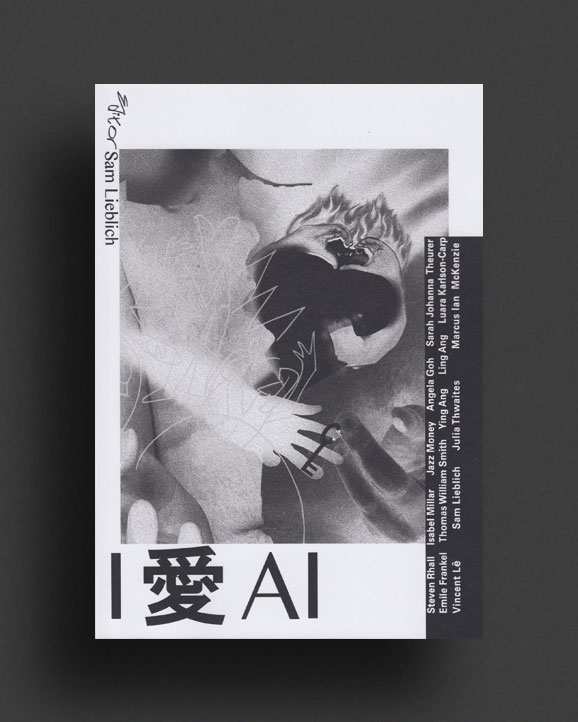
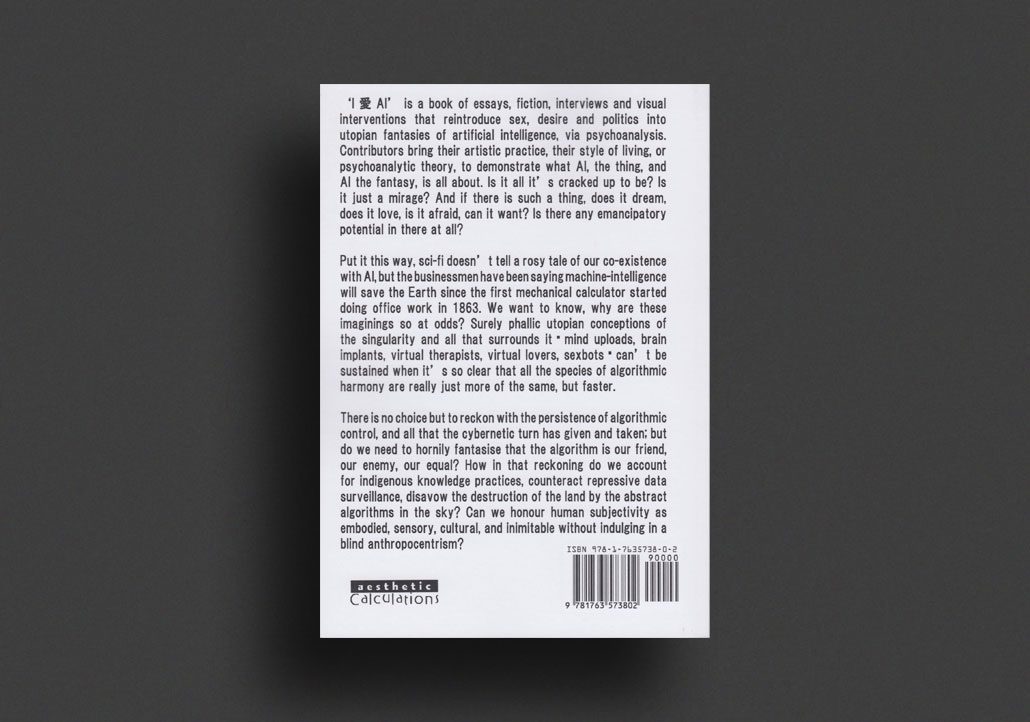
‘I 愛 AI’ is a book of essays, fiction, interviews and visual interventions that reintroduce sex, desire and politics into utopian fantasies of artificial intelligence, via psychoanalysis. Contributors bring their artistic practice, their style of living, or psychoanalytic theory, to demonstrate what AI, the thing, and AI the fantasy, is all about. Is it all it’s cracked up to be? Is it just a mirage? And if there is such a thing, does it dream, does it love, is it afraid, can it want? Is there any emancipatory potential in there at all?
Put it this way, sci-fi doesn’t tell a rosy tale of our co-existence with AI, but the businessmen have been saying machine-intelligence will save the Earth since the first mechanical calculator started doing office work in 1863. We want to know, why are these imaginings so at odds? Surely phallic utopian conceptions of the singularity and all that surrounds it–mind uploads, brain implants, virtual therapists, virtual lovers, sexbots–can’t be sustained when it’s so clear that all the species of algorithmic harmony are really just more of the same, but faster.
There is no choice but to reckon with the persistence of algorithmic control, and all that the cybernetic turn has given and taken; but do we need to hornily fantasise that the algorithm is our friend, our enemy, our equal? How in that reckoning do we account for indigenous knowledge practices, counteract repressive data surveillance, disavow the destruction of the land by the abstract algorithms in the sky? Can we honour human subjectivity as embodied, sensory, cultural, and inimitable without indulging in a blind anthropocentrism?
Edited by Sam Lieblich
Visual art edited by Anita Spooner
Featuring work by: Steven Rhall, Isabel Millar, Jazz Money, Angela Goh, Sarah Theurer, Emile Frankel, Thomas William Smith, Ying Ang, Ling Ang, Luara Karlson-Carp, Vincent Lê, Sam Lieblich, Julia Thwaites, Marcus lan McKenzie
Designed by James Vinciguerra
1989, English
Softcover, 430 pages, 23.5 x 16 cm
1st Edition, Out of print title / used / very good
Published by
Black Sparrow Press / Santa Rosa
$50.00 - Out of stock
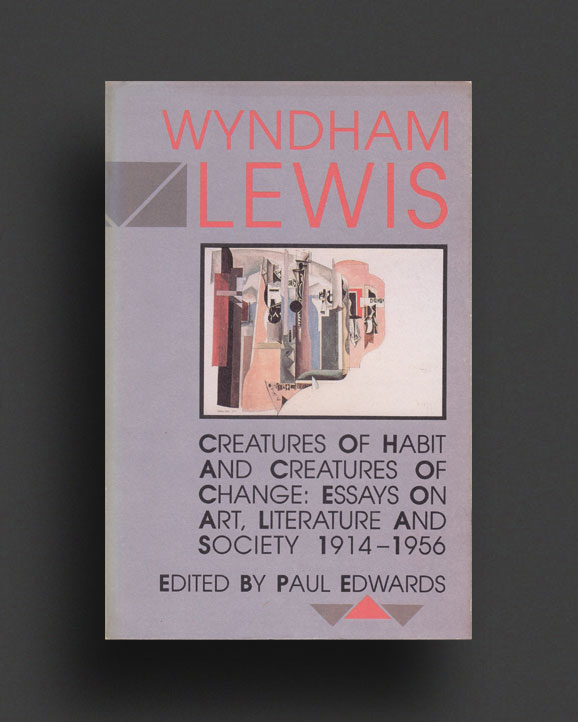
First 1989 edition published by Black Sparrow Press.
"In the course of his career as a prolific writer and painter, Wyndham Lewis published many essays and articles. Some of these he later in- corporated into books. But some of the liveliest and most important were not republished. Creatures of Habit and Creatures of Change now presents many of these for the first time since their original publica- tion. Lewis collected some of his writings on art in 1939, in Wyndham Lewis the Artist, from Blast to Burlington House, but the only articles he reprinted were from his own magazines, Blast and The Tyro. Ar- ticles from other magazines were not reprinted. In 1969 C. J. Fox and Walter Michel printed many of these other essays on art in Wyndham Lewis on Art. This book is now difficult to obtain, so I have included some of the same essays.
At one time Lewis intended to reprint some of his other essays. In 1927, in the first issue of his magazine, The Enemy, he promised to issue a collection of essays - which would extend the arguments of The Art of Being Ruled-under the title Creatures of Habit and Creatures of Change, but the collection never appeared. The title seemed ap- propriate for the present selection, even though in time and subject mat- ter its range is much wider than Lewis's 1927 book would (or could) have been. Almost the whole of Lewis's writing life, from 1914 to 1956, the year before his death, is represented, while the subjects range from the length of women's skirts to the letters of Ezra Pound; from the Royal Academy to Alexis de Tocqueville; and from F. T. Marinetti to Francis Bacon."—excerpt from book introduction
(Percy) Wyndham Lewis (1882-1957) was a novelist, painter, essayist, polemicist and one of the truly dynamic forces of the early 20th century and a central figure in the history of modernism. He was the founder of Vorticism, the only original movement in 20th century English painting. His Vorticist paintings from 1913 are the first abstract works produced in England, and influenced the development of Suprematism in Russia. Tarr (published in 1918), initiated his career as a satirical novelist, earning the praise of his contemporaries: "the most distinguished living novelist" (T.S. Eliot), "the only English writer who can be compared to Dostoevsky" (Ezra Pound).
After serving as an artillery officer and official war artist during the First World War, Lewis was unable to revive the avant-garde spirit of Vorticism, though he attempted to do so in a pamphlet advocating the modernisation of London architecture in 1919: The Caliph's Design Architects! Where is your Vortex? Exhibitions of his incisive figurative drawings, cutting-edge abstractions and satirical paintings were not an economic success, and in the early 1920s he devoted himself to study of political theory, anthropology, philosophy and aesthetics, becoming a regular reader in the British Museum Reading Room. The resulting books, such as The Art of Being Ruled (1926), Time and Western Man (1927), The Lion and the Fox: The Role of the Hero in the Plays of Shakespeare (1927) and Paleface: The Philosophy of the Melting-Pot (1929) created a reputation for him as one of the most important - if wayward - of contemporary thinkers.
The satirical The Apes of God (1930) damaged his standing by its attacks on Bloomsbury and other prominent figures in the arts, and the 1931 Hitler, which argued that in contemporary 'emergency conditions' Hitler might provide the best way forward in Germany damaged it yet further. Isolated and largely ignored, and persisting in advocacy of "appeasement," Lewis continued to produce some of his greatest masterpieces of painting and fiction during the remainder of the 1930s, culminating in the great portraits of his wife (1937), T. S. Eliot (1938) and Ezra Pound (1939), and the 1937 novel The Revenge for Love. After visiting Berlin in 1937 he produced books attacking Hitler and anti-semitism but decided to leave England for North America on the outbreak of war, hoping to support himself with portrait-painting. The difficult years he spent there before his return in 1945 are reflected in the 1954 novel, Self Condemned. Lewis went blind in 1951, from the effects of a pituitary tumor. He continued writing fiction and criticism, to renewed acclaim, until his death. He lived to see his visual work honored by a retrospective exhibition at London's Tate Gallery in 1956, and to hear the BBC broadcast dramatisations of his earlier novels and his fantastic trilogy of novels up-dating Dante's Inferno, The Human Age.
Very Good copy.