World Food Books' programme is largely produced on Kulin Nation land. We acknowledge the Wurundjeri people of the Kulin Nation as the first and continuing custodians of this land, and pay respect to their Elders past, present, and emerging.
World Food Books is an arts and special interests bookshop in Naarm / Melbourne. Founded in 2010, World Food Books is devoted to the presentation of a rotating, hand-selection of international art, design, literary and counterculture publications with an emphasis on the anti-traditional, the experimental, the avant-garde, the heretic, the marginal.
Presenting new titles alongside rare and out-of-print books, catalogues and journals spanning the fields of modern and contemporary art, design, photography, illustration, film, literature, poetry, cultural theory, philosophy, sexuality, popular and underground culture in its many radical forms, World Food Books wishes to encourage adventurous, thoughtful and open-minded reading, looking, writing, and exchange of publishing and ideas, both current and historical.
As well as our bookshop, located in Melbourne's historical Nicholas Building, all of our inventory is available internationally via our online mail-order service.
World Food Books semi-regularly co-ordinates "Occasions", a programme of exhibits and events at the bookshop and in partnership with other hosts (such as museums and art galleries) that develop out of the activities, relationships and content of the bookshop itself.
World Food Books
The Nicholas Building
37 Swanston Street
Room 5, Level 6
Melbourne 3000
Australia
SHOP HOURS:
Thu–Sat 11–5
WEB-SHOP OPEN 24/7
World Food Books
Postal Address:
PO Box 435
Flinders Lane
Victoria 8009
Australia
Art
Theory / Essay
Architecture / Interior
Graphic Design / Typography
Photography
Fashion
Eros
LGBTQ+
Fiction / Poetry
Weird / Speculative / Science Fiction / Horror
Transgressive / Visceral / Abject
Symbolism / Decadence / Fin de siècle
Film / Video
Painting
Sculpture / Installation
Performance / Dance / Theater
Drawing
Sound / Music
Curatorial
Group Shows / Collections
Periodicals
Out-of-print / Rare
Posters / Ephemera / Discs
Signed Books
World Food Books Gift Voucher
World Food Book Bag
Australian Art
Australian Fiction
Australian Science Fiction / Speculative Fiction
Australian Poetry
Australian Photography
Japanese Photography
Conceptual Art
Minimal Art
Dada
'Pataphysics / Oulipo
Fluxus
Concrete Poetry
Pop Art
Surrealism
Arte Povera
Arte Informale / Haute Pâte / Tachism
Nouveau Réalisme / Zero / Kinetic
Situationism / Lettrism
Collage / Mail Art / Xerox Art
Art Brut / Folk / Visionary / Fantastic
Illustration / Graphic Art / Bandes Dessinées
Furniture
Italian Radical Design / Postmodernism
Textiles
Ceramics / Glass
Counterculture
Protest / Revolt
Philosophy
Psychoanalysis
Anthropology
Anarchism
Socialism / Anarchism / Communism / Capitalism
Literary Theory / Semiotics / Language
Feminism / Women's Studies
Gender Studies / Sexuality
Anthropology
Fetishism / BDSM
Drugs / Psychedelia
Crime / Violence
Animal Rights / Veganism
Occult / Esoterica
Ecology / Earth / Alternative Living
Whole Earth / Crafts
All prices in AUD (Australian dollars)
Pick-Ups
Pick-up orders can be collected in our bookshop during opening hours after order date. Please collect any Pick-up orders within 2 weeks of ordering as we have limited storage space. Orders will be released back into stock if not collected within this time. No refunds can be made for pick-ups left un-collected. If you cannot make it in to the bookshop in this time-frame, please choose postage option.
Return Policy
All sales are final. We do accept returns (for refund or exchange) for items received in error. All our orders are packed with special care using heavy-duty padding and cardboard book-mailers or bubble mailers (for smaller books), using reinforcement where required. We cannot take responsibility for any lost, stolen or damaged parcels.
Insurance
Should you wish to insure your package, please email us directly after placing your order and we can organise this at a small extra expense. Although all standard/express tracked packages are very safe and dependable, we cannot take responsibility for any lost, stolen or damaged parcels. We recommend insurance on valuable orders.
Interested in selling your old books, catalogues, journals, magazines, comics, fanzines, ephemera? We are always looking for interesting, unusual and out-of-print books to buy. We only buy books in our fields of interest and specialty, and that we feel we can resell.
We base these prices on desirability, market value, in-print prices, condition and our current stock levels. We offer cash, store credit, and can take stock on consignment. All
about 25% of the price we expect to get when we sell them, or 30% in store credit. We base these prices on desirability, market value, in-print prices, condition and our current stock levels.
Sell your books any day of the week. You can drop them off and return later. If you have a lot of books, we can visit your Sydney home.
We buy books that we feel we can resell. We offer about 25 % of the price we expect to get when we sell them, or 30% in store credit. We base these prices on desirability, market value, in-print prices, condition and our current stock levels.
Philadelphia Wireman
03 August - 01 September, 2018
World Food Books is proud to announce our next Occasion, the first presentation of sculptures by Philadelphia Wireman in Australia.
The Philadelphia Wireman sculptures were found abandoned in an alley off Philadelphia’s South Street on trash night in 1982. Their discovery in a rapidly-changing neighbourhood undergoing extensive renovation, compounded with the failure of all attempts to locate the artist, suggests that the works may have been discarded after the maker’s death. Dubbed the "Philadelphia Wireman" during the first exhibition of this work, in 1985, the maker’s name, age, ethnicity, and even gender remain uncertain. The entire collection totals approximately 1200 pieces, all intricately bound together with tightly-wound heavy-gauge wire (along with a few small, abstract marker drawings, reminiscent both of Mark Tobey and J.B. Murry). The dense construction of the work, despite a modest range of scale and materials, is singularly obsessive and disciplined in design: a wire armature or exoskeleton firmly binds a bricolage of found objects including plastic, glass, food packaging, umbrella parts, tape, rubber, batteries, pens, leather, reflectors, nuts and bolts, nails, foil, coins, toys, watches, eyeglasses, tools, and jewellery.
Heavy with associations—anthropomorphic, zoomorphic, and socio-cultural responses to wrapped detritus—the totemic sculptures by Philadelphia Wireman have been discussed in the context of work created to fulfil the shamanistic needs of alternative religions in American culture. Curators, collectors, and critics have variously compared certain pieces to sculpture from Classical antiquity, Native American medicine bundles, African-American memory jugs, and African fetish objects. Reflecting the artist’s prolific and incredibly focused scavenging impulse, and despite—or perhaps enhanced by—their anonymity, these enigmatic objects function as urban artefacts and arbiters of power, though their origin and purpose is unknown. Philadelphia Wireman, whatever their identity, possessed an astonishing ability to isolate and communicate the concepts of power and energy through the selection and transformation of ordinary materials. Over the course of the past two decades, this collection has come to be regarded as an important discovery in the field of self-taught art and vernacular art.
Presented in collaboration with Fleisher-Ollman Gallery, Philadelphia, and Robert Heald, Wellington.
Susan Te Kahurangi King
02 February - 10 March, 2018
Susan Te Kahurangi King (24 February 1951 - ) has been a confident and prolific artist since she was a young child, drawing with readily available materials - pencils, ballpoint pens and felt-tip markers, on whatever paper is at hand. Between the ages of four and six Susan slowly ceased verbal communication. Her grandparents William and Myrtle Murphy had developed a special bond with Susan so they took on caring responsibilities for extended periods. Myrtle began informally archiving her work, carefully collecting and storing the drawings and compiling scrapbooks. No drawing was insignificant; every scrap of paper was kept. The King family are now the custodians of a vast collection containing over 7000 individual works, from tiny scraps of paper through to 5 meter long rolls.
The scrapbooks and diaries reveal Myrtle to be a woman of great patience and compassion, seeking to understand a child who was not always behaving as expected. She encouraged Susan to be observant, to explore her environment and absorb all the sights and sounds. Myrtle would show Susan’s drawings to friends and people in her community that she had dealings with, such as shopkeepers and postal workers, but this was not simply a case of a grandmother’s bias. She recognised that Susan had developed a sophisticated and unique visual language and sincerely believed that her art deserved serious attention.
This was an unorthodox attitude for the time. To provide some context, Jean Dubuffet coined the term Art Brut in 1945 to describe work created by self-taught artists – specifically residents of psychiatric institutions and those he considered to be visionaries or eccentrics. In 1972 Roger Cardinal extended this concept by adopting the term Outsider Art to describe work made by non-academically trained artists operating outside of mainstream art networks through choice or circumstance. Susan was born in Te Aroha, New Zealand in 1951, far from the artistic hubs of Paris and London that Dubuffet and Cardinal operated in. That Myrtle fêted Susan as a self-taught artist who deserved to be taken seriously shows how progressive her attitudes were.
Susan’s parents Doug and Dawn were also progressive. Over the years they had consulted numerous health practitioners about Susan’s condition, as the medical establishment could not provide an explanation as to why she had lapsed into silence. Dawn educated herself in the field of homeopathy and went on to treat all twelve of her children using these principles – basing prescriptions on her observations of their physical, mental and emotional state.
Doug was a linguist with an interest in philosophy who devoted what little spare time he had to studying Maori language and culture. To some extent their willingness to explore the fringes of the mainstream made them outsiders too but it was their commitment to living with integrity and their respect for individuality that ensured Susan’s creativity was always encouraged.
Even though Susan’s family supported her artistic pursuits, some staff in schools and hospitals saw it as an impediment to her assimilation into the community and discouraged it in a variety of ways. Her family was not always aware of this and therefore did not fully understand why Susan stopped drawing in the early 1990s. However, rather than dwell on the challenges that Susan faced in pursuit of her artistic practice, they prefer to highlight her achievements. In 2008 Susan began drawing again in earnest, after an almost 20 year interruption, and her work is now shown in galleries around the world.
Susan grew up without television and has been heavily influenced by the comics she read as a child. She is absolutely fearless in the appropriation of recognizable characters, such as Donald Duck and Mickey Mouse, in her work. She twists their limbs, contorts their faces, compresses them together, blends them into complex patterned backgrounds - always imbuing them with an incredible energy. Although Susan often used pop culture characters in her work they are not naive or childlike. These are drawings by a brilliant self-taught artist who has been creating exceptional work for decades without an audience in mind.
Mladen Stilinović
"Various Works 1986 - 1999"
02 February 16 - September 10, 2016
Various works 1986 - 1999, from two houses, from the collections of John Nixon, Sue Cramer, Kerrie Poliness, Peter Haffenden and Phoebe Haffenden.
Including: Geometry of Cakes (various shelves), 1993; Poor People’s Law (black and white plate), 1993; White Absence (glasses, ruler, set square, silver spoon, silver ladel with skin photograph and wooden cubes), 1990-1996; Exploitation of the Dead (grey and red star painting, wooden painting, black spoon with red table, red plate), 1984-1990; Money and Zeros (zero tie, paintings made for friends in Australia (Sue, John, Kerrie), numbers painting), 1991-1992; Words - Slogans (various t-shirts) - “they talk about the death of art...help! someone is trying to kill me”, “my sweet little lamb”, “work is a disease - Karl Marx”; Various artist books, catalogues, monographs, videos; Poster from exhibition Insulting Anarchy; "Circular" Croatian - Australian edition; Artist book by Vlado Martek (Dostoyevsky); more.
Thanks to Mladen Stilinović and Branka Stipančić.
Jonathan Walker
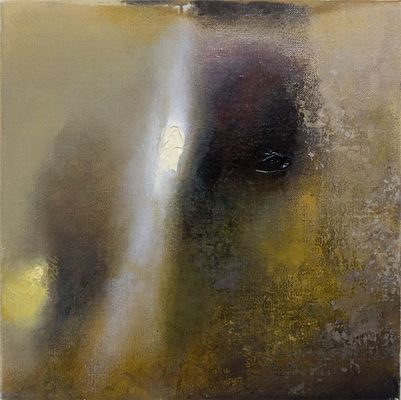
Always Will Need To Wear Winter Shirt Blue + Ochre Small Check Pattern
21 August - 21 September, 2015
Untitled
I am not a great reader of poetry but I always return to the work of Melbourne poet, Vincent Buckley (1925- 1988). Perhaps I find his most tantalising piece to be not a finished poem but a fragment left on a scrap of paper discovered on his desk after the poet’s death.
The poetry gathers like oil
In the word-core, and spreads
It has its music meet,
Its music is in movement.
This fragment is more the shell left behind from a volatile thought than a finished poem. I find the last two lines honest but awkward whereas the first two lines work like an arrow. Most likely he could not find a resolution so it was left. Still, in its present form, it remains an eloquent testimony to the ultimate failure of a medium to express mobile thought and sensation, in Buckley’s case, through verbal language. It’s an important matter because this is something all artists have to deal with regardless of the medium.
I have never written a poem, however, I am forever copying fragments from books on paper scraps in a vain effort to fix certain notions in my head. At first, they function as bookmarks that are sometimes returned to when I open the book. But before long, as they accumulate, they fall out littering the table interspersed with A4 photocopies, bills, books and medications.
To return to Buckley’s fragment, the first two lines very much evoke how I paint nowadays. As you age, detail diminishes and patches of light become more luminous and float. I feel the most honest way of dealing with this is by smearing the oil paint on the canvas with the fingers and working close-up, blind. Only if the patches coalesce into an approaching image can the work gain a life.
-
Jonathan Walker was born in Melbourne, Australia and brought up on a dairy farm in Gippsland. In the 1970’s he studied painting at RMIT and won the Harold Wright Scholarship to the British Museum, London. During the 1980’s he exhibited at Pinacotheca Gallery, Richmond and had work shown at the NGV and Heidi City Art Gallery. Over the same period he designed the cover for the “Epigenesi” LP by Giancarlo Toniutti, Italy and conducted a mail exchange work with Achim Wollscheid, Germany. The work with artists through the post resulted in an article published in the bicentenary issue of Art and Australia 1988. He showed in artist run spaces such as WestSpace in the 90’s and 2000’s, and until 2012, taught painting at Victoria University, which is where we (Colleen Ahern and Lisa Radford) as organisers of the exhibition, among many others, had the privilege of being his student.
Walker’s knowledge was imparted to students through the careful selection of music, literature, and artists found in books that he himself had ordered for the library. Walker’s strategy was the generosity of sharing his vast knowledge with references specific to each student and their context.
Walker’s paintings share a similar focus and intimacy.
This exhibition presents a small selection of recent paintings alongside a publication that includes Walker’s writing. Observational and analytical, Walker’s work is a type of material notation — the time of day, colour and how it is blended, the both specific and fleeting location of a reflection on lino or the question of whether a chair leg should be included in a painting.
Please join us on Friday August 21 between 6-8pm to celebrate the opening of the exhibition.
Curated by Colleen Ahern and Lisa Radford.
B. Wurtz
Curated by Nic Tammens
March 26 - April 4, 2015
B.Wurtz works from a basement studio in his home on Manhattan’s Lower East Side.
This local fact is attested to by the plastic shopping bags and newsprint circulars that appear in his work. As formal objects, they don’t make loud claims about their origins but nonetheless transmit street addresses and places of business from the bottom of this long thin island. Like plenty of artists, Wurtz is affected by what is local and what is consumed. His work is underpinned by this ethic. It often speaks from a neighborhood or reads like the contents of a hamper:
“BLACK PLUMS $1.29 lb.”
“Food Bazaar”
“USDA Whole Pork Shoulder Picnic 99c lb.”
“RITE AID Pharmacy, with us it’s personal.”
“H. Brickman & Sons.”
“Sweet Yams 59c lb."
Most of the work in this exhibition was made while the artist was in residence at Dieu Donne, a workshop dedicated to paper craft in Midtown. Here Wurtz fabricated assemblages with paper and objects that are relatively lightweight, with the intention that they would be easily transportable to Australia. This consideration isn’t absolute in Wurtz’s work, but was prescriptive for making the current exhibition light and cheap. Packed in two boxes, these works were sent from a USPS post office on the Lower East Side and delivered to North Melbourne by Australia Post.
Wurtz appears courtesy of Metro Pictures, New York.
Thanks to Rob Halverson, Joshua Petherick, Sari de Mallory, Matt Hinkley, Helen Johnson, Fayen d'Evie, Ask Kilmartin, Lisa Radon, Ellena Savage, Yale Union, and "Elizabeth".
John Nixon
"Archive"
December 15 - January 20, 2014
The presentation of John Nixon's archive offered a rare showcase of this extensive collection of the artist's own publications, catalogues, posters, ephemera, editions and more, from the mid 1980s onwards, alongside a selection of his artworks.
Organized by John Nixon, Joshua Petherick and Matt Hinkley.
<a href=http://wfb.public-office.info/artist/john-nixon>All titles by John Nixon
"Habitat"
at Minerva, Sydney (organised by Joshua Petherick and Matt Hinkley)
November 15 - December 20, 2014
Lupo Borgonovo, Janet Burchill & Jennifer McCamley,
Lewis Fidock, HR Giger, Piero Gilardi, Veit Laurent Kurz,
Cinzia Ruggeri, Michael E. Smith, Lucie Stahl, Daniel Weil, Wols
Press Release:
“...It contained seven objects. The slender fluted bone, surely formed for flight, surely from the wing of some large bird. Three archaic circuitboards, faced with mazes of gold. A smooth white sphere of baked clay. An age-blackened fragment of lace. A fingerlength segment of what she assumed was bone from a human wrist, grayish white, inset smoothly with the silicon shaft of a small instrument that must once have ridden flush with the surface of the skin - but the thing’s face was seared and blackened.”
William Gibson, “Count Zero”, 1986
"Autumn Projects Archive"
Curated by Liza Vasiliou
March 6 - March 15, 2014
World Food Books, in conjunction with the Virgin Australia Melbourne Fashion Festival 2014, presented the Autumn Projects archive, consisting of a selection of early examples in Australian fashion with a particular interest in collecting designers and labels from the period beginning in the 1980’s, who significantly influenced the discourse of Australian Fashion.
Curated by Liza Vasiliou, the exhibition provided a unique opportunity to view pieces by designers Anthea Crawford, Barbara Vandenberg, Geoff Liddell and labels CR Australia, Covers, Jag along with early experimental collage pieces by Prue Acton and Sally Browne’s ‘Fragments’ collection, suspended throughout the functioning World Food Books shop in Melbourne.
H.B. Peace
presented by CENTRE FOR STYLE
November 14, 2013
"Hey Blinky, you say chic, I say same"
Anon 2013
H.B. Peace is a clothing collaboration between great friends Blake Barns and Hugh Egan Westland. Their pieces explore the divergences between 'character’ and ‘personality’ in garments....etc
Special Thanks to Joshua Petherick and Matt Hinkley of WFB and Gillian Mears
and a Very Special Thank you to Audrey Thomas Hayes for her shoe collaboration.
Janet Burchill & Jennifer McCamley
"Aesthetic Suicide"
May 10 - June 8, 2013
The first of our occasional exhibitions in the World Food Books office/shop space in Melbourne, "Aesthetic Suicide" presented a body of new and older works together by artists Janet Burchill & Jennifer McCamley, including videos, prints, a wall work, and publications.
During shop open hours videos played every hour, on the hour.
1972, Japanese / French
Softcover, 180 pages, 21 x 21 cm
1st Edition, Out of print title / used / very good
Published by
Yomiuri Shimbun / Tokyo
$90.00 - Out of stock
Wonderful and scarcely seen Japanese catalogue on the work of Argentine artist Leonor Fini. Profusely illustrated throughout with Fini's incredible (Surrealist) paintings and drawings from 1936-1972, in colour and black and white. Includes biography and artist's introduction by Fini in French. All other texts are in Japanese.
Leonor Fini (1907–1996), an Argentine painter, designer, illustrator, and author, known for her depictions of powerful women, is considered one of the most important women artists of the twentieth century and also one of the most misunderstood. Fini had no formal artistic training. Born in Buenos Aires, she travelled extensively from a young age, living in Milan and then moving to Paris in 1931-32 where she was considered part of a pre-war generation of Parisian artists, becoming acquainted with Carlo Carrà and Giorgio de Chirico, who inspired much of her work, and also Paul Éluard, Max Ernst, Georges Bataille, Henri Cartier-Bresson, Picasso, Salvador Dalí, and André Pieyre de Mandiargues. She had her first one person show in Paris when she was twenty-five at a gallery directed by Christian Dior. Her work caught on fast and was included in the pivotal and groundbreaking Fantastic Art, Dada and Surrealism exhibition at the MOMA in 1936 while at the same time she had her first New York exhibition at the avant-garde Julien Levy Galley. Surrealist artists in France came to know her as important in the movement. She is mentioned in most comprehensive works about surrealism, although she did not consider herself a surrealist, nor a part of any particular artistic movement. Fini preferred to stake her own claim on modernism with a vision that owes more to the farthest shores of her imagination than to any affiliation with art trends, schools or movements. The originality of her art as well as her intelligence, famous wit and charisma accorded her celebrity status in the Paris art world and beyond beginning in the late thirties. Her panache and glamour, once they found a place in the collective imagination of the time, turned her into a much-publicized fashion and feminist icon. Always controversial, with as many detractors as admirers, she lived and painted consummately on her own terms.
In Paris in 1939 she curated the inaugural exhibition of her friend Leo Castelli’s first gallery (of surrealist furniture) and shortly thereafter, just before the German occupation, she traveled with André and a new lover to Arcachon in the southwest of France to begin waiting out the war. She remained there for almost a year with Salvador and Gala Dali before moving to Monte Carlo where she met the young Italian diplomat, Stanislao Lepri who became one of the great and enduring loves of her life. As the war intensified she moved with Stanislao to Rome where she lived, worked and formed close friendships with Anna Magnani, Luchino Visconti and other leading figures of world of art and letters. After the Liberation of Paris in 1946 she returned there to live and work for the remainder of her life, exhibiting extensively around the world.
The predominant themes in Leonor Fini’s art are sexual tensions, mysteries and games. One of her favored subjects is the interplay between the dominant female and the passive male, and in many of her most powerful works the female takes the form of the sphinx to which she felt a strong identification. She was also a renowned portraitist, and among her subjects were such friends as writers André Pieyre de Mandiargues, Jean Genet, Klaus Mann (son of Thomas), such actresses as Anna Magnani and Suzanne Flon, ballerina Margot Fonteyn, film director Luchino Visconti and artists Meret Oppenheim and Leonora Carrington.
Her genius for stage and screen design is evident in her numerous ground breaking theater decors with their elaborate conception, costumes and phantasmagorical masks. She designed for the Paris Opera, George Balanchine’s ballet Palais de Crystal, and choreographer Roland Petit’s company Ballets de Paris, for Maria Callas at the La Scala theater in Milan, as well as over seventy productions at theaters in Paris between 1946 and 1969. She had a unique talent for film design and created costumes for Fellini's 8 ½ as well as for Renato Castellani's Romeo and Juliet and John Huston’s A Walk with Love and Death.
In the 1970s, she wrote three novels, Rogomelec, Moumour, Contes pour enfants velu and Oneiropompe. Her friends included Jean Cocteau, Giorgio de Chirico, and Alberto Moravia, Fabrizio Clerici and most of the other artists and writers inhabiting or visiting Paris. She illustrated many works by the great authors and poets, including Edgar Allan Poe, Charles Baudelaire and Shakespeare, as well as texts by new writers. She was very generous with her illustrations and donated many drawings to writers to help them get published. She is, perhaps, best known for her graphic illustrations for Histoire d'O.
The provocative and much-publicized life of Leonor Fini was pure theater. Her story is that of a hard-won struggle to forge her life as a woman artist in a man’s world and to invent herself on her own terms. It is the story of a woman possessing exceptional independence, a highly original vision and great personal magnetism who lived passionately through her art and friendships and in the process became a feminist role model.
2001, French / Japanese
Hardcover, 174 pages, 25 x 20 cm
1st Edition, Out of print title / used / very good
Published by
Tokyo Station Gallery / Tokyo
$90.00 - Out of stock
First edition of this wonderful hardcover catalogue surveying the engravings of James Ensor, published to accompany a major travelling exhibition in Japan in 2001. Beautifully printed and lavishly illustrated throughout with 175 graphic works reproduced in crisp detail, alongside many other illustrations of Ensor's life and paintings, accompanying texts in French and Japanese, including text by Ensor himself, biography, bibliography, catalogue and portraits of the artist in Ostend. Contains a wealth of fine examples of Ensor's fantastic grotesque engravings in both their black line print form alongside their over-painted colour editions, many with additional related sketches and historical references. Highly recommended.
Very Good copy, perfectly preserved interior with only light wear to illustrated hardcover boards.
James Sidney Edouard, Baron Ensor (13 April 1860 – 19 November 1949) was a Belgian painter and printmaker, an important influence on expressionism and surrealism who lived in Ostend for almost his entire life. He was associated with the artistic group Les XX. While Ensor's early works, such as Russian Music (1881) and The Drunkards (1883), depict realistic scenes in a somber style, his palette subsequently brightened and he favoured increasingly bizarre subject matter. Such paintings as The Scandalized Masks (1883) and Skeletons Fighting over a Hanged Man (1891) feature figures in grotesque masks inspired by the ones sold in his mother's gift shop for Ostend's annual Carnival. Subjects such as carnivals, masks, puppetry, skeletons, and fantastic allegories are dominant in Ensor's mature work. Ensor dressed skeletons up in his studio and arranged them in colourful, enigmatic tableaux on the canvas, and used masks as a theatrical aspect in his still lifes. Attracted by masks' plastic forms, bright colours, and potential for psychological impact, he created a format in which he could paint with complete freedom. James Ensor is considered to be an innovator in 19th-century art. Although he stood apart from other artists of his time, he significantly influenced such 20th-century artists as Paul Klee, George Grosz, Wols, and many expressionist and surrealist painters of the 20th century.
2021, English
Hardback, 252 pages, 22.9 x 30.5 cm
Published by
Yale University Press / New Haven
$80.00 - Out of stock
The extraordinary life of a captivating American artist, beautifully illustrated with his dreamlike drawings.
Much of Joseph Elmer Yoakum's story comes from the artist himself-and is almost too fantastic to believe. At a young age, Yoakum (1891-1972) traveled the globe with numerous circuses; he later served in a segregated noncombat regiment during World War I before settling in Chicago. There, inspired by a dream, he began his artistic career at age seventy-one, producing some two thousand drawings over a decade. How did Yoakum gain representation in major museum collections in Chicago and New York? What fueled his process, which he described as a "spiritual unfoldment"? This volume delves into the friendships Yoakum forged with the Chicago Imagists that secured his place in art history, explores the religious outlook that may have helped him cope with a racially fractured city, and examines his complicated relationship to African American and Native American identities.
With hundreds of beautiful colour reproductions of his dreamlike drawings, it offers the most comprehensive study of the artist's work, illuminating his vivid and imaginative creativity and giving definition and dimension to his remarkable biography.
2001, English
Softcover, 166 pages, 25 x 21 cm
1st Edition, Out of print title / used / very good
Published by
Museum of American Folk Art / New York
$45.00 - Out of stock
The first monographic study on Joseph E. Yoakum (1890-1972), an African American-Native American self-taught master. Profusely illustrated, Traveling the Rainbow is a fitting tribute to this fascinating, yet little-known creator of visionary landscapes. What emerges herein fits an adventure novel. Yoakum traveled the oceans on steamliners working in their boiler rooms. He rode America's railways as an inspector. With an elite team of African American troops in World War I, he toured Europe. On the road with the Ringling Brothers Circus he posted circus flyers. He spent a year in a psychiatric hospital. He was 76 when he started to record his memories in the form of imaginary landscapes, and he produced over 2,000 watercolour and pencil drawings during the last decade of his life, infused with the motion and energy of travel. Much of what he told about his life -- especially about his travels -- was thought to be invented, but here Derrel DePasse makes startling discoveries about the artist's landscapes and finds that much of his story of himself was grounded in fact. Part African American, part Native American, Yoakum drew on his dual background and conjured powerful forms of expression -- the blues and Native American symbolism -- to create dynamic cultural fusions.
This monograph remains the most comprehensive study on this great American artist, including a chronology, bibliography, list of collections, exhibition history, and index.
Very Good copy.
1984, Japanese
Softcover, 224 pages, 21 x 15 cm
1st Edition, Out of print title / used / fine
Published by
Night Vision / Japan
$55.00 - Out of stock
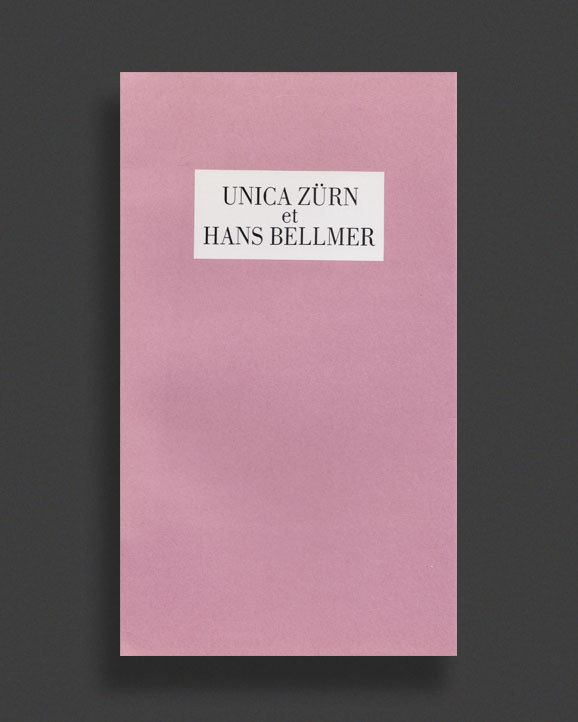
First 1984 edition of cult Japanese underground magazine Night Vision, a special edition dedicated to Surrealism. Packed with content, including many important Surrealist texts translated to Japanese, this heavily illustrated book includes features on Hans Bellmer and Unica Zürn, Yves Tanguy, Remedios Varo, Max Ernst, Belgian Surrealism, female Surrealist artists and poets (Remedios Varo, Mimi Parent, Valentine Penrose, Gisèle Prassinos, Dorothea Tanning, Bona de Mandiargues, Isabelle Walberg, Lise Deharme, Leonora Carrington, Dora Maar, Aube Elléouët, Jane Graverol, Nelly Kaplan (Belen), Joyce Mansour, Nora Mitrani, Unica Zürn, Valentine Hugo, Marianne Van Hirtum, Leonora Fini, Marie-Laure de Noailles, Kay Sage, Toyen, Annie Le Brun, Meret Oppenheim), Latin American Surrealism and Frida Kahlo-Diego Rivera, Surrealist literature and activities (Artaud, Picabia, Apollinaire, Bataille, Duchamp, Satie, Breton, etc.) plus much more, text contributions by Georges Bataille, Paul Eluard, Midori Wakakuwa, Kuniharu Akiyama, Takashi Tanyuya, Shigeo Goto, Takahiko Okada, Octavio Paz, André Breton, Kunio Iwaya, Gonzalo Cerorio, Yuichi Konno, Satoshi Takamura, and much more. Illustrated in b/w throughout (with many more artists than mentioned above) in that great Night Vision semi-fanzine/cheap reader quality.
Very Good - Fine copy.
2019, English
Softcover, 28 pages, 16.5 x 23.6 cm
Published by
Innen Books / Zürich
Kunsthalle Zürich / Zürich
$28.00 $10.00 - Out of stock
Norwegian artist Ida Ekblad's "Exist at All", published by Innen Books and Kunsthalle Zürich, Zürich, on the occasion of IDA EKBLAD: FRA ÅRE TIL OVN at Kunsthalle Zurich June 08 – August 18, 2019. First Edition.
Ida Ekblad's (b. 1980) artistic practice incorporates painting, sculpture, performance, filmmaking as well as poetry. Her works transmit a distinct vibrancy and spontaneity, created through the energetic movement of her compositions, the bold application of colour and the attentive use of found materials. Ekblad's expressive paintings often depict winding and twisted lines, some indicate human-like figures, others resemble landscapes. The forms and gestures found in her work derive from a wide variety of inspirations and art historical references, such as CoBrA, Situationism and Abstract Expressionism but also pop cultural aesthetics like graffiti or cartoon that indicate Ekblad's genre-crossing approach.
2003, English / German
Softcover, 94 pages, 21 x 16 cm
1st Edition, Out of print title / as new
Published by
FOE 156 / Munich
$18.00 - Out of stock
Artist publication and catalogue documenting Australian artist Stephen Bram's work, Oberföhringer Straβe 156, 2001, published in 2003. Edited with texts by Christopher Kramatschek, as well as Thomas Janzen, and an interview between curator Sue Cramer and Stephen Bram. Profusely illustrated throughout with extensive photo documentation of Oberföhringer Straβe 156, 2001, alongside elevations, and many reference images of Bram's paintings and other works, references. All texts in English and German.
2015, English
Softcover, 256 pages, 21 x 29.7 cm
Published by
Sun Vision Press / New York
$50.00 - Out of stock
I Am the First Consciousness of Chaos collects the key noirs' (lithographs, etchings and charcoals) of Odilon Redon, perhaps the most enigmatic and esoteric figure in the artistic lineage that leads directly from Symbolism to Surrealism. Never previously available in a single trade volume, the majority of Redon’s noirs (over 250 illustrations) are finally collected here, including the illuminating excerpts from the decadent texts which inspired their creation. Authors featured include J-K Huysmans, Gustave Flaubert, Charles Baudelaire, Edgar Allan Poe and others.‘
2013, English
Softcover (staple-bound), 72 pages, 21 x 24 cm
1st Edition, Out of print title / as new
Published by
Pace London / London
$140.00 - Out of stock
Very scarce copy of this rare and unprecedented overview of Paul Thek works from the early to mid 1960's, across all the media he worked, and never seen before to this extent in the UK. The exhibition, curated by Kenny Schachter, includes works from the noted newspaper series to the legendary and singular 'Technological Reliquary' series.
An American sculptor, painter, and installation artist, Paul Thek (1933-1988) is primarily known for hyper-realistic works of human body parts executed in fleshlike beeswax and for his strongly symbolic, room-size installations constructed from transitory materials. A major figure on the 1960s New York art scene, Thek also spent time in Europe, where he paved the way for artists adopting collaborative strategies. Although he gained a large following and was featured in more than one hundred solo and group exhibitions, the anti-establishment "artist's artist" was practically forgotten at the time of his death from AIDS related illness in New York City in 1988, aged 54.
As New copy.
2021, English
Softcover, 376 pages, 22.9 x 30.5 cm
Published by
Yale University Press / New Haven
Art Institute of Chicago / Chicago
$99.00 - Out of stock
Ray Johnson (1927–1995) was a renowned maker of meticulous collages whose works influenced movements including Pop Art, Fluxus, and Conceptual Art. Emerging from the interdisciplinary community of artists and poets at Black Mountain College, Johnson was extraordinarily adept at using social interaction as an artistic endeavor and founded a mail art network known as the New York Correspondence School.
Drawing on the vast collection of Johnson’s work at the Art Institute of Chicago, this oversized, beautifully designed volume gives new shape to our understanding of his artistic practice and features hundreds of pieces that include artist’s books, collages, drawings, mail art, and performance documentation. In keeping with Johnson’s democratic, rhizomatic, and antihierarchical ethos, this indispensable resource on the artist’s oeuvre contains 700 illustrations, many of them never before published, and twenty-one short essays by various contributors that allow readers to dip into and out of the book in a nonlinear manner.
Text by Jordan Carter, Colby Chamberlain, Jennifer R. Cohen, Johanna Gosse, Caitlin Haskell, Miriam Kienle, Brian T. Leahy, Ellen Levy, Solveig Nelson, Thea Liberty Nichols, Michael von Uchtrup
Caitlin Haskell is Gary C. and Frances Comer Curator of International Modern Art, and Jordan Carter is associate curator of modern and contemporary art, both at the Art Institute of Chicago.
2021, English
Softcover, 24 pages, 24.5 x 24.5 cm
Published by
Nieves / Zurich
$39.00 - Out of stock
The fascination with Emma Kunz (1892 – 1963) has never been greater than it is today. Much that the researcher, healer and artist anticipated with her holistic way of thinking is now taken for granted in contemporary art. ‘My images are intended for the 21st century,’ Emma Kunz is once said to have predicted. The augury of the researcher, naturopath and artist from Brittnau in the Canton of Aargau seems to be coming true: Emma Kunz’s drawings, presented to the public for the first time in the Aargauer Kunsthaus in 1973, have been shown in such places as Venice, Munich, London, Tel Aviv and Hong Kong over the past few years, and are celebrated by an international audience.
Living a secluded life far removed from the art scene, eighty years ago she exemplified an expanded concept of art, rejected the idea of art versus non-art and instead opened it up to a wide range of aspects – research, medicine, nature study and the supernatural, the magical, the visionary.
Emma Kunz (1892 in Brittnau/CH – 1963 in Waldstatt/CH) was born into humble conditions in Brittnau in the Canton of Aargau. She never had any artistic training or higher education of any kind. Emma Kunz is said to have become aware of her special clairvoyant and radiaesthetic [radiation- reading] abilities at an early age. She began to heal her first patients and to work with the divining pendulum that she would use in her drawings from 1938 onwards. Until a few years before her death she produced some 500 characteristic drawings on graph paper, which she used as a tool for her healing activity. She also worked with numerology, researched in the field of herbalism and achieved a legendary series of healing successes. At this time she began to ask her acquaintances to call her ‘Penta’. In 1942 Emma Kunz is said to have discovered Aion A, the healing rock that is still available from Swiss pharmacies, in a quarry in Würenlos that had been used since Roman times – and is known today as the Emma Kunz Grotto.
1989, English
Softcover (french flaps), 48 pages,
1st Edition, Out of print title / used / good
Published by
Hirschl & Adler Galleries / New York
$15.00 - Out of stock
Exhibition catalogue published on the occasion of Christopher Wilmarth — Drawings 1963-1987, Hirschl & Adler Galleries, New York, 1989. Surveying American sculptor Wilmarth's works on paper alongside poems by the artist, bibliography, exhibition history, work list and portrait.
Christopher Wilmarth (1943 – 1987) was an American post-minimalist artist and professor of sculpture at Cooper Union and Columbia University, known for producing sculptures that harness the illusory and emotional possibilities of glass and steel, as well as works on paper and poetry. His works are in major museum collections across America, including Museum of Modern Art, the Philadelphia Museum of Art, the Walker Art Center, the Art Institute of Chicago, the Metropolitan Museum of Art, and the Whitney Museum of American Art. In 1978, Wilmarth abandoned art dealer representation and established The Studio of the First Amendment, where he hosted his own exhibitions independently. In 1987, Wilmarth was found dead of an apparent suicide at his home in Red Hook, Brooklyn. He was 44.
Good-VG copy.
2014, English
Hardcover, 144 pages, 23.8 x 28 cm
Published by
Yale University Press / New Haven
$85.00 - Out of stock
The first survey of more than fifty years of drawing by legendary American sculptor and draftswoman Lee Bontecou.
Lee Bontecou (b. 1931) established a significant reputation in the 1960s with pioneering sculptures and reliefs made of raw and expressionistic materials. Her art is simultaneously organic and mechanical, and infused with biological, geological, and technological motifs. These same qualities also animate a less-known but compelling body of work: her drawings. Ranging from her early soot on paper works created using powder from a welding torch to recent drawings in pencil and coloured pencil that evoke cosmoses and microcosmic worlds, this stunning book is the first retrospective survey of Bontecou’s consistently innovative drawings. More than sixty full-colour plates, populated by imagery ranging from black voids to mechanomorphs to hybrid descendants of teeth, plants, and fish, are complemented by original essays from leading scholars who explore themes such as the drawings’ historical contexts, Bontecou’s use of the iconography of the void, and the eco-apocalyptic themes of an artist who came of age in the roiling political atmosphere of the 1960s.
Edited by Michelle White; With contributions by Dore Ashton and Joan Banach.
2017, English
Hardcover, 136 pages, 29.8 x 24.8 cm
Published by
Walther König / Köln
$65.00 - Out of stock
Since the 1960s, American artist Lee Bontecou has been internationally praised for her intriguing sculptures and installations. The rich, organic shapes of her sculptures seem to originate from a mysterious universe in which manʼs fears and desires are condensed.
Recently the artist created Sandbox, a new installation in which she combines elements from her work from the 1960s to the present.
A picture essay by Joan Banach, artist and friend of Bontecou, focuses on the genesis of Sandbox and maps the rich network of Bontecouʼs inspirations: pictures range from extracts from geological and historical books to images of works by old masters. The beautiful, detailed photographs were taken at the artistʼs studio.
This publication also shows Bontecouʼs sketchbooks and the inspirational ʻwall of drawingsʼ in her studio. It is an intimate insight into the creative process of the artist.
Published on the occasion of the exhibition at Gemeentemuseum Den Haag, The Hague, Netherlands, 25 February – 2 July 2017.
2021, English
Paperback, 256 pages, 12 x 18 cm
Published by
After 8 books / Paris
$49.00 - Out of stock
Since the 1970s, Amy Sillman―a beloved and key figure of the New York art scene―has developed a singular body of work that includes large-scale gestural paintings blending abstraction with representation, as well as zines and iPad animations.
Over the past decade, Sillman has also produced stimulating essays on the practice of art or the work of other artists: for example, reevaluating the work of the abstract expressionists with a queer eye; elaborating on the role of awkwardness and the body in the artistic process; and discussing in depth the role and meanings of color and shape. Featuring a foreword by Lynne Tillman, Faux Pas is the first book to gather a significant selection of Sillman’s essays, reviews and lectures, accompanied by drawings, most of them made specially for the book.
Faux Pas aims at revealing the coherence and originality of Sillman’s reflection, as she addresses the possibilities of art today, favoring excess over good taste, wrestling over dandyism, forms over symbols, with as much critical sense as humor. As Jason Farago notes in the New York Times, "Sillman is in a thin crowd (with, let’s say, Andrea Fraser, Hito Steyerl, Matias Faldbakken, David Salle) of artists who can really write. The evidence is in Faux Pas ... her writings display the same good humor and intelligence of her best paintings."
Based in New York City, Amy Sillman (born 1955) is an artist whose work consistently combines the visceral with the intellectual. She began to study painting in the 1970s at the School of Visual Arts and she received her MFA from Bard College in 1995. Her work has been exhibited internationally, including at the Whitney Biennial in 2014; her writing has appeared in Bookforum and Artforum, among other publications. She is currently represented by Gladstone Gallery, New York.
1994, Japanese / English
Softcover, 128 pages, 21 x 13.5 cm
1st Edition, Out of print title / used / fine
Published by
Wako Works of Art / Tokyo
$45.00 $20.00 - Out of stock
First, only edition of this long out of print and very scarce illustrated essay by Japanese art critic Kentaro Ichihara on the work of German painter, Sigmar Polke, published in 1994 by Wako Works of Art, Tokyo. Includes the complete essay "Disguised Sublimity" in Japanese, alongside an English summary and illustrated throughout with Polke's works and historical references. Published to accompany an exhibition of oil paintings, watercolours, prints, and photographic works using printed fabrics, exhibited at Wako, Tokyo, the same year.
Table of contents : 1. The End of Art, Art as the End 2. Unimaginable? Blots and Sublimity 3. Dot! Dot! Dot! 4. In the Beginning of the World
Fine, As New.
2005, English / Japanese
Softcover (w. printed paper dust-jacket and exhibition ephemera), 112 pages, 30 x 23 cm
1st Edition, Out of print title / used / very good
Published by
The National Museum of Art / Osaka
Ueno Royal Museum / Tokyo
$90.00 - Out of stock
Scarce first edition copy of this fine Japanese Polke catalogue (with inserted collected exhibition ephemera). Published in 2005 to accompany the Sigmar Polke exhibition "Alice In Wonderland" held at the Ueno Royal Museum in Tokyo and the National Museum of Art in Osaka, this handsome catalogue features many full-colour reproductions of Polke's paintings and drawings throughout.
"This exhibition is composed mainly of works in the collection of the artist, so it might be described as an exhibition of "Polke by Polke." In it, we examine the artist's career through approximately 30 of his large-scale paintings, from his early masterworks Alice in Wonderland (1971), and representative pieces of the 1980s and 1990s to some of his most recent work."
Includes texts in English and Japanese by Polke, Peter-Klaus Schuster, Wataru Hayashi, and more, plus an interview with Polke, biography, bibliography, exhibition list and catalogue of works. Comes wrapped in printed kraft paper dust-jacket and this copy with inserted collected exhibition ephemera, including exhibition flyer.
Polke is a major contemporary German artist and one of the most noted painters in the world. Polke was born in Oels, Silesia, formerly an eastern part of German territory, in 1941. At age 12 he moved to West Germany. After studying at the Dusseldorf Art Academy, he began making paintings incorporating photographs and references to American pop art and he has continued to develop experimental methods. Paintings that show the raster dots used in printing became his trademark and he also produced paintings on printed fabric or transparent materials instead of canvas. With broad knowledge and penetrating observation, parody, irony, and a sense of humor, he has combined a wide variety of motifs from the everyday life of contemporary people, fairy tales, history, military events, myths, and alchemy. These groups of images arouse the imagination of viewers. They are both fascinating and enigmatic. He received the Gold Lion Prize at the Venice Biennale in 1986 and the Praemium Imperiale in 2002.
Very Good copy, preserved in plastic jacket, with fine ephemera enclosed.
2021, English
Hardcover (clothbound), 220 pages, 31 x 24 cm
Published by
Stolpe Publishing / Stockholm
$80.00 - In stock -
Foreword by Daniel Birnbaum, Kurt Almqvist.
The drawings in this first volume of a new catalogue raisonné represent an intense ten-year period of Hilma af Klint’s (1862-1944) life that would lay the foundation for her later achievements. In 1896, af Klint and four other women formed The Five, a group steeped in the spiritualist beliefs permeating Europe at that time, including theosophy, Rosicrucianism and other strains of liberal religious thought. From 1896 to 1907, The Five engaged in a daily systematic method of spiritual experimentation. During séances, Hilma af Klint drew automatic spiritual sketches based on the messages that the medium (not always the same member) communicated from the spirits the group summoned. The elaborate system of symbols, geometry and biological imagery that characterize her work all find their origin during this period.
1970, English
Hardcover (w. dust jacket), 130 pages, 25 x 31 cm
1st Edition, Out of print title / used / good
Published by
Bodley Head / London
$35.00 - Out of stock
First English edition of Tomi Ungerer's "Comprimises", published in 1970 by Bodley Head in London and Farrar, Straus And Giroux in New York. "Comprimises" is a now classic collection of Ungerer's inimitable drawings spanning five years of the 1960's. An inexhaustibly prolific draughtsman, Tomi Ungerer's "Comprimises" captures the absurdist, often subversive, black humour that Ungerer produced so well through masterful line-work, at once a satire on the mechanised violence of human kind and a cutting parody of our body image and innermost desires.
Tomi Ungerer (1931—2019) is an award winning French illustrator and a writer in three languages. He has published over 140 books ranging from much loved children's books to controversial adult work and from the fantastic to the autobiographical. He is known for sharp social satire and witty aphorisms. He is renowned for his iconic Advertising campaigns and political posters against the Vietnam War and Racial Injustice which were representative of the burgeoning political consciousness in New York in the 1960’s. His political engagement has continued to this day in campaigns against Racism and Fascism, for Nuclear disarmament, Ecology and numerous Humanitarian causes.
Good copy.
2020, English
Hardcover, 152 pages, 23 x 29 cm
Published by
Stolpe Publishing / Stockholm
$50.00 - Out of stock
A handsomely redesigned edition of essays examining af Klint's final abstractions, edited Kurt Almqvist and Louise Belfrage.
The result of a series of lectures delivered during the 2016 Serpentine Galleries exhibition Hilma af Klint: Painting the Unseen, this volume gathers essays examining the last abstract series made by Hilma af Klint (1862-1944). The paintings were all created in the first half of the year 1920 and are the last paintings af Klint made before turning to watercolor. Reproductions of these images are complemented by essays from Briony Fer, David Lomas, Branden W. Joseph, Hans Ulrich Obrist and Daniel Birnbaum, which shed new light on af Klint and her importance for artists today, also addressing the need for a broader conception of art history that her work proposes. Beautifully redesigned by Sweden's most famous designer, this book is a key contribution to the burgeoning scholarship on this immensely popular painter.
2009, English
Softcover, 20 pages (colour & b/w ill.), offset, 160 x 290 mm
Edition of 1000,
Published by
The Narrows / Melbourne
$10.00 $5.00 - In stock -
Concertina style fold-out publication of the work of Melbourne artist Matt Hinkley. Features selections and details of Hinkley's works together with fragments of reference material and print inspiration.
Compilation and design Matt Hinkley and Warren Taylor.
2019, English
Softcover, 28 pages, 16.5 x 23.6 cm
Published by
Innen Books / Zürich
$28.00 $5.00 - Out of stock
Hungarian artist Révész László László's "Where is the Mirror?", published by Innen Books, Zürich, in 2019. First Edition.
László László Révész is a Hungarian painter and performance artist. He received a Master of Fine Arts degree in painting from the Hungarian University of Fine Arts in 1981 and an MA in animation from Moholy-Nagy University of Art and Design Budapest in 1986. The director of Musée d’Art Moderne de Saint-Etienne, France Lóránd Hegyi says about the drawings of Révész: "The subversive, destabilizing and irritating mixture of hidden irrationality, silent improbability and a – seemingly – innocent banality creates the basic narrative embodied in the drawings of Laszlo Laszlo Revesz..."
2015, English
Softcover (wiro bound), 84 pages, 23 x 18 cm
1st ed. of 500 copies,
Published by
The Narrows / Melbourne
$30.00 $5.00 - In stock -
Jon Campbells new artist’s book, Lettering brings together a collection of works on paper made over the past 10 years. Ranging from intimate doodles to highly rendered texts this is the first time these works have been published as a group. The book also contains a series of photographic stills as well as pages containing images of paintings that relate directly to the drawings.
1st edition of 500 copies.
2018, English / Italian
Softcover, 120 pages, 23 x 30 cm
Published by
Mousse / Milan
$59.00 - Out of stock
“With a simple gestures, Marisa draws a space, marks a place, alludes to its transparency, discovers the direction, and etches her passage into the very short breath of a vacuum that she fills with incommensurable meaning. A shoe, a net whose mesh captures the time and the moment, the material present in the fragment of impulses of the living, in the pattern of a notion of lightness and strenght.”—Ester Coen
Published on the occasion of Marisa Merz’s exhibition at MASI (Lugano, Switzerland), Marisa Merz: Geometrie sconnesse palpiti geometrici takes its name from a phrase by the artist written on a wall in her studio, and is the result of the precious collaboration between Collezione Giancarlo and Danna Olgiati (Lugano) and Fondazione Merz (Turin). Embracing all the expressive modalities explored by the artist—from drawings to unfired clay sculptures, from copper and nylon weavings to objects transmuted into wax— and with texts by Ester Coen, Douglas Fogle, and Beatrice Merz, the book follows and highlights the pivotal theme that recurs in the artist’s work: her exploration of the face and the figure in general. Traces of a complex, philosophical thought, they’re the products of an almost obsessively cadenced superimposition of visual marks and materials.