World Food Books' programme is largely produced on Kulin Nation land. We acknowledge the Wurundjeri people of the Kulin Nation as the first and continuing custodians of this land, and pay respect to their Elders past, present, and emerging.
World Food Books is an arts and special interests bookshop in Naarm / Melbourne. Founded in 2010, World Food Books is devoted to the presentation of a rotating, hand-selection of international art, design, literary and counterculture publications with an emphasis on the anti-traditional, the experimental, the avant-garde, the heretic, the marginal.
Presenting new titles alongside rare and out-of-print books, catalogues and journals spanning the fields of modern and contemporary art, design, photography, illustration, film, literature, poetry, cultural theory, philosophy, sexuality, popular and underground culture in its many radical forms, World Food Books wishes to encourage adventurous, thoughtful and open-minded reading, looking, writing, and exchange of publishing and ideas, both current and historical.
As well as our bookshop, located in Melbourne's historical Nicholas Building, all of our inventory is available internationally via our online mail-order service.
World Food Books semi-regularly co-ordinates "Occasions", a programme of exhibits and events at the bookshop and in partnership with other hosts (such as museums and art galleries) that develop out of the activities, relationships and content of the bookshop itself.
World Food Books
The Nicholas Building
37 Swanston Street
Room 5, Level 6
Melbourne 3000
Australia
SHOP HOURS:
Thu–Fri 12–6, Sat 12–5
WEB-SHOP OPEN 24/7
World Food Books
Postal Address:
PO Box 435
Flinders Lane
Victoria 8009
Australia
Art
Theory / Essay
Architecture / Interior
Graphic Design / Typography
Photography
Fashion
Eros
LGBTQ+
Fiction / Poetry
Weird / Speculative / Science Fiction / Horror
Transgressive / Visceral / Abject
Symbolism / Decadence / Fin de siècle
Film / Video
Painting
Sculpture / Installation
Performance / Dance / Theater
Drawing
Sound / Music
Curatorial
Group Shows / Collections
Periodicals
Out-of-print / Rare
Posters / Ephemera / Discs
Signed Books
World Food Books Gift Voucher
World Food Book Bag
Australian Art
Australian Fiction
Australian Science Fiction / Speculative Fiction
Australian Poetry
Australian Photography
Japanese Photography
Conceptual Art
Minimal Art
Dada
'Pataphysics / Oulipo
Fluxus
Concrete Poetry
Pop Art
Surrealism
Arte Povera
Arte Informale / Haute Pâte / Tachism
Nouveau Réalisme / Zero / Kinetic
Situationism / Lettrism
Collage / Mail Art / Xerox Art
Art Brut / Folk / Visionary / Fantastic
Illustration / Graphic Art / Bandes Dessinées
Furniture
Italian Radical Design / Postmodernism
Textiles
Ceramics / Glass
Counterculture
Protest / Revolt
Philosophy
Psychoanalysis
Anthropology
Anarchism
Socialism / Anarchism / Communism / Capitalism
Literary Theory / Semiotics / Language
Feminism / Women's Studies
Gender Studies / Sexuality
Anthropology
Fetishism / BDSM
Drugs / Psychedelia
Crime / Violence
Animal Rights / Veganism
Occult / Esoterica
Ecology / Earth / Alternative Living
Whole Earth / Crafts
All prices in AUD (Australian dollars)
Pick-Ups
Pick-up orders can be collected in our bookshop during opening hours after order date. Please collect any Pick-up orders within 2 weeks of ordering as we have limited storage space. Orders will be released back into stock if not collected within this time. No refunds can be made for pick-ups left un-collected. If you cannot make it in to the bookshop in this time-frame, please choose postage option.
Return Policy
All sales are final. We do accept returns (for refund or exchange) for items received in error. All our orders are packed with special care using heavy-duty padding and cardboard book-mailers or bubble mailers (for smaller books), using reinforcement where required. We cannot take responsibility for any lost, stolen or damaged parcels.
Insurance
Should you wish to insure your package, please email us directly after placing your order and we can organise this at a small extra expense. Although all standard/express tracked packages are very safe and dependable, we cannot take responsibility for any lost, stolen or damaged parcels. We recommend insurance on valuable orders.
Interested in selling your old books, catalogues, journals, magazines, comics, fanzines, ephemera? We are always looking for interesting, unusual and out-of-print books to buy. We only buy books in our fields of interest and specialty, and that we feel we can resell.
We base these prices on desirability, market value, in-print prices, condition and our current stock levels. We offer cash, store credit, and can take stock on consignment. All
about 25% of the price we expect to get when we sell them, or 30% in store credit. We base these prices on desirability, market value, in-print prices, condition and our current stock levels.
Sell your books any day of the week. You can drop them off and return later. If you have a lot of books, we can visit your Sydney home.
We buy books that we feel we can resell. We offer about 25 % of the price we expect to get when we sell them, or 30% in store credit. We base these prices on desirability, market value, in-print prices, condition and our current stock levels.
Philadelphia Wireman
03 August - 01 September, 2018
World Food Books is proud to announce our next Occasion, the first presentation of sculptures by Philadelphia Wireman in Australia.
The Philadelphia Wireman sculptures were found abandoned in an alley off Philadelphia’s South Street on trash night in 1982. Their discovery in a rapidly-changing neighbourhood undergoing extensive renovation, compounded with the failure of all attempts to locate the artist, suggests that the works may have been discarded after the maker’s death. Dubbed the "Philadelphia Wireman" during the first exhibition of this work, in 1985, the maker’s name, age, ethnicity, and even gender remain uncertain. The entire collection totals approximately 1200 pieces, all intricately bound together with tightly-wound heavy-gauge wire (along with a few small, abstract marker drawings, reminiscent both of Mark Tobey and J.B. Murry). The dense construction of the work, despite a modest range of scale and materials, is singularly obsessive and disciplined in design: a wire armature or exoskeleton firmly binds a bricolage of found objects including plastic, glass, food packaging, umbrella parts, tape, rubber, batteries, pens, leather, reflectors, nuts and bolts, nails, foil, coins, toys, watches, eyeglasses, tools, and jewellery.
Heavy with associations—anthropomorphic, zoomorphic, and socio-cultural responses to wrapped detritus—the totemic sculptures by Philadelphia Wireman have been discussed in the context of work created to fulfil the shamanistic needs of alternative religions in American culture. Curators, collectors, and critics have variously compared certain pieces to sculpture from Classical antiquity, Native American medicine bundles, African-American memory jugs, and African fetish objects. Reflecting the artist’s prolific and incredibly focused scavenging impulse, and despite—or perhaps enhanced by—their anonymity, these enigmatic objects function as urban artefacts and arbiters of power, though their origin and purpose is unknown. Philadelphia Wireman, whatever their identity, possessed an astonishing ability to isolate and communicate the concepts of power and energy through the selection and transformation of ordinary materials. Over the course of the past two decades, this collection has come to be regarded as an important discovery in the field of self-taught art and vernacular art.
Presented in collaboration with Fleisher-Ollman Gallery, Philadelphia, and Robert Heald, Wellington.
Susan Te Kahurangi King
02 February - 10 March, 2018
Susan Te Kahurangi King (24 February 1951 - ) has been a confident and prolific artist since she was a young child, drawing with readily available materials - pencils, ballpoint pens and felt-tip markers, on whatever paper is at hand. Between the ages of four and six Susan slowly ceased verbal communication. Her grandparents William and Myrtle Murphy had developed a special bond with Susan so they took on caring responsibilities for extended periods. Myrtle began informally archiving her work, carefully collecting and storing the drawings and compiling scrapbooks. No drawing was insignificant; every scrap of paper was kept. The King family are now the custodians of a vast collection containing over 7000 individual works, from tiny scraps of paper through to 5 meter long rolls.
The scrapbooks and diaries reveal Myrtle to be a woman of great patience and compassion, seeking to understand a child who was not always behaving as expected. She encouraged Susan to be observant, to explore her environment and absorb all the sights and sounds. Myrtle would show Susan’s drawings to friends and people in her community that she had dealings with, such as shopkeepers and postal workers, but this was not simply a case of a grandmother’s bias. She recognised that Susan had developed a sophisticated and unique visual language and sincerely believed that her art deserved serious attention.
This was an unorthodox attitude for the time. To provide some context, Jean Dubuffet coined the term Art Brut in 1945 to describe work created by self-taught artists – specifically residents of psychiatric institutions and those he considered to be visionaries or eccentrics. In 1972 Roger Cardinal extended this concept by adopting the term Outsider Art to describe work made by non-academically trained artists operating outside of mainstream art networks through choice or circumstance. Susan was born in Te Aroha, New Zealand in 1951, far from the artistic hubs of Paris and London that Dubuffet and Cardinal operated in. That Myrtle fêted Susan as a self-taught artist who deserved to be taken seriously shows how progressive her attitudes were.
Susan’s parents Doug and Dawn were also progressive. Over the years they had consulted numerous health practitioners about Susan’s condition, as the medical establishment could not provide an explanation as to why she had lapsed into silence. Dawn educated herself in the field of homeopathy and went on to treat all twelve of her children using these principles – basing prescriptions on her observations of their physical, mental and emotional state.
Doug was a linguist with an interest in philosophy who devoted what little spare time he had to studying Maori language and culture. To some extent their willingness to explore the fringes of the mainstream made them outsiders too but it was their commitment to living with integrity and their respect for individuality that ensured Susan’s creativity was always encouraged.
Even though Susan’s family supported her artistic pursuits, some staff in schools and hospitals saw it as an impediment to her assimilation into the community and discouraged it in a variety of ways. Her family was not always aware of this and therefore did not fully understand why Susan stopped drawing in the early 1990s. However, rather than dwell on the challenges that Susan faced in pursuit of her artistic practice, they prefer to highlight her achievements. In 2008 Susan began drawing again in earnest, after an almost 20 year interruption, and her work is now shown in galleries around the world.
Susan grew up without television and has been heavily influenced by the comics she read as a child. She is absolutely fearless in the appropriation of recognizable characters, such as Donald Duck and Mickey Mouse, in her work. She twists their limbs, contorts their faces, compresses them together, blends them into complex patterned backgrounds - always imbuing them with an incredible energy. Although Susan often used pop culture characters in her work they are not naive or childlike. These are drawings by a brilliant self-taught artist who has been creating exceptional work for decades without an audience in mind.
Mladen Stilinović
"Various Works 1986 - 1999"
02 February 16 - September 10, 2016
Various works 1986 - 1999, from two houses, from the collections of John Nixon, Sue Cramer, Kerrie Poliness, Peter Haffenden and Phoebe Haffenden.
Including: Geometry of Cakes (various shelves), 1993; Poor People’s Law (black and white plate), 1993; White Absence (glasses, ruler, set square, silver spoon, silver ladel with skin photograph and wooden cubes), 1990-1996; Exploitation of the Dead (grey and red star painting, wooden painting, black spoon with red table, red plate), 1984-1990; Money and Zeros (zero tie, paintings made for friends in Australia (Sue, John, Kerrie), numbers painting), 1991-1992; Words - Slogans (various t-shirts) - “they talk about the death of art...help! someone is trying to kill me”, “my sweet little lamb”, “work is a disease - Karl Marx”; Various artist books, catalogues, monographs, videos; Poster from exhibition Insulting Anarchy; "Circular" Croatian - Australian edition; Artist book by Vlado Martek (Dostoyevsky); more.
Thanks to Mladen Stilinović and Branka Stipančić.
Jonathan Walker
Always Will Need To Wear Winter Shirt Blue + Ochre Small Check Pattern
21 August - 21 September, 2015
Untitled
I am not a great reader of poetry but I always return to the work of Melbourne poet, Vincent Buckley (1925- 1988). Perhaps I find his most tantalising piece to be not a finished poem but a fragment left on a scrap of paper discovered on his desk after the poet’s death.
The poetry gathers like oil
In the word-core, and spreads
It has its music meet,
Its music is in movement.
This fragment is more the shell left behind from a volatile thought than a finished poem. I find the last two lines honest but awkward whereas the first two lines work like an arrow. Most likely he could not find a resolution so it was left. Still, in its present form, it remains an eloquent testimony to the ultimate failure of a medium to express mobile thought and sensation, in Buckley’s case, through verbal language. It’s an important matter because this is something all artists have to deal with regardless of the medium.
I have never written a poem, however, I am forever copying fragments from books on paper scraps in a vain effort to fix certain notions in my head. At first, they function as bookmarks that are sometimes returned to when I open the book. But before long, as they accumulate, they fall out littering the table interspersed with A4 photocopies, bills, books and medications.
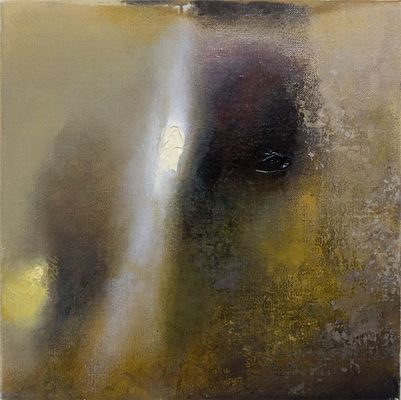
To return to Buckley’s fragment, the first two lines very much evoke how I paint nowadays. As you age, detail diminishes and patches of light become more luminous and float. I feel the most honest way of dealing with this is by smearing the oil paint on the canvas with the fingers and working close-up, blind. Only if the patches coalesce into an approaching image can the work gain a life.
-
Jonathan Walker was born in Melbourne, Australia and brought up on a dairy farm in Gippsland. In the 1970’s he studied painting at RMIT and won the Harold Wright Scholarship to the British Museum, London. During the 1980’s he exhibited at Pinacotheca Gallery, Richmond and had work shown at the NGV and Heidi City Art Gallery. Over the same period he designed the cover for the “Epigenesi” LP by Giancarlo Toniutti, Italy and conducted a mail exchange work with Achim Wollscheid, Germany. The work with artists through the post resulted in an article published in the bicentenary issue of Art and Australia 1988. He showed in artist run spaces such as WestSpace in the 90’s and 2000’s, and until 2012, taught painting at Victoria University, which is where we (Colleen Ahern and Lisa Radford) as organisers of the exhibition, among many others, had the privilege of being his student.
Walker’s knowledge was imparted to students through the careful selection of music, literature, and artists found in books that he himself had ordered for the library. Walker’s strategy was the generosity of sharing his vast knowledge with references specific to each student and their context.
Walker’s paintings share a similar focus and intimacy.
This exhibition presents a small selection of recent paintings alongside a publication that includes Walker’s writing. Observational and analytical, Walker’s work is a type of material notation — the time of day, colour and how it is blended, the both specific and fleeting location of a reflection on lino or the question of whether a chair leg should be included in a painting.
Please join us on Friday August 21 between 6-8pm to celebrate the opening of the exhibition.
Curated by Colleen Ahern and Lisa Radford.
B. Wurtz
Curated by Nic Tammens
March 26 - April 4, 2015
B.Wurtz works from a basement studio in his home on Manhattan’s Lower East Side.
This local fact is attested to by the plastic shopping bags and newsprint circulars that appear in his work. As formal objects, they don’t make loud claims about their origins but nonetheless transmit street addresses and places of business from the bottom of this long thin island. Like plenty of artists, Wurtz is affected by what is local and what is consumed. His work is underpinned by this ethic. It often speaks from a neighborhood or reads like the contents of a hamper:
“BLACK PLUMS $1.29 lb.”
“Food Bazaar”
“USDA Whole Pork Shoulder Picnic 99c lb.”
“RITE AID Pharmacy, with us it’s personal.”
“H. Brickman & Sons.”
“Sweet Yams 59c lb."
Most of the work in this exhibition was made while the artist was in residence at Dieu Donne, a workshop dedicated to paper craft in Midtown. Here Wurtz fabricated assemblages with paper and objects that are relatively lightweight, with the intention that they would be easily transportable to Australia. This consideration isn’t absolute in Wurtz’s work, but was prescriptive for making the current exhibition light and cheap. Packed in two boxes, these works were sent from a USPS post office on the Lower East Side and delivered to North Melbourne by Australia Post.
Wurtz appears courtesy of Metro Pictures, New York.
Thanks to Rob Halverson, Joshua Petherick, Sari de Mallory, Matt Hinkley, Helen Johnson, Fayen d'Evie, Ask Kilmartin, Lisa Radon, Ellena Savage, Yale Union, and "Elizabeth".
John Nixon
"Archive"
December 15 - January 20, 2014
The presentation of John Nixon's archive offered a rare showcase of this extensive collection of the artist's own publications, catalogues, posters, ephemera, editions and more, from the mid 1980s onwards, alongside a selection of his artworks.
Organized by John Nixon, Joshua Petherick and Matt Hinkley.
<a href=http://wfb.public-office.info/artist/john-nixon>All titles by John Nixon
"Habitat"
at Minerva, Sydney (organised by Joshua Petherick and Matt Hinkley)
November 15 - December 20, 2014
Lupo Borgonovo, Janet Burchill & Jennifer McCamley,
Lewis Fidock, HR Giger, Piero Gilardi, Veit Laurent Kurz,
Cinzia Ruggeri, Michael E. Smith, Lucie Stahl, Daniel Weil, Wols
Press Release:
“...It contained seven objects. The slender fluted bone, surely formed for flight, surely from the wing of some large bird. Three archaic circuitboards, faced with mazes of gold. A smooth white sphere of baked clay. An age-blackened fragment of lace. A fingerlength segment of what she assumed was bone from a human wrist, grayish white, inset smoothly with the silicon shaft of a small instrument that must once have ridden flush with the surface of the skin - but the thing’s face was seared and blackened.”
William Gibson, “Count Zero”, 1986
"Autumn Projects Archive"
Curated by Liza Vasiliou
March 6 - March 15, 2014
World Food Books, in conjunction with the Virgin Australia Melbourne Fashion Festival 2014, presented the Autumn Projects archive, consisting of a selection of early examples in Australian fashion with a particular interest in collecting designers and labels from the period beginning in the 1980’s, who significantly influenced the discourse of Australian Fashion.
Curated by Liza Vasiliou, the exhibition provided a unique opportunity to view pieces by designers Anthea Crawford, Barbara Vandenberg, Geoff Liddell and labels CR Australia, Covers, Jag along with early experimental collage pieces by Prue Acton and Sally Browne’s ‘Fragments’ collection, suspended throughout the functioning World Food Books shop in Melbourne.
H.B. Peace
presented by CENTRE FOR STYLE
November 14, 2013
"Hey Blinky, you say chic, I say same"
Anon 2013
H.B. Peace is a clothing collaboration between great friends Blake Barns and Hugh Egan Westland. Their pieces explore the divergences between 'character’ and ‘personality’ in garments....etc
Special Thanks to Joshua Petherick and Matt Hinkley of WFB and Gillian Mears
and a Very Special Thank you to Audrey Thomas Hayes for her shoe collaboration.
Janet Burchill & Jennifer McCamley
"Aesthetic Suicide"
May 10 - June 8, 2013
The first of our occasional exhibitions in the World Food Books office/shop space in Melbourne, "Aesthetic Suicide" presented a body of new and older works together by artists Janet Burchill & Jennifer McCamley, including videos, prints, a wall work, and publications.
During shop open hours videos played every hour, on the hour.
1985, English
Softcover (staple-bound), 62 pages, 30 x 21.5 cm
1st Edition, Out of print title / used / average
Published by
CROWD / Melbourne
$35.00 - Out of stock
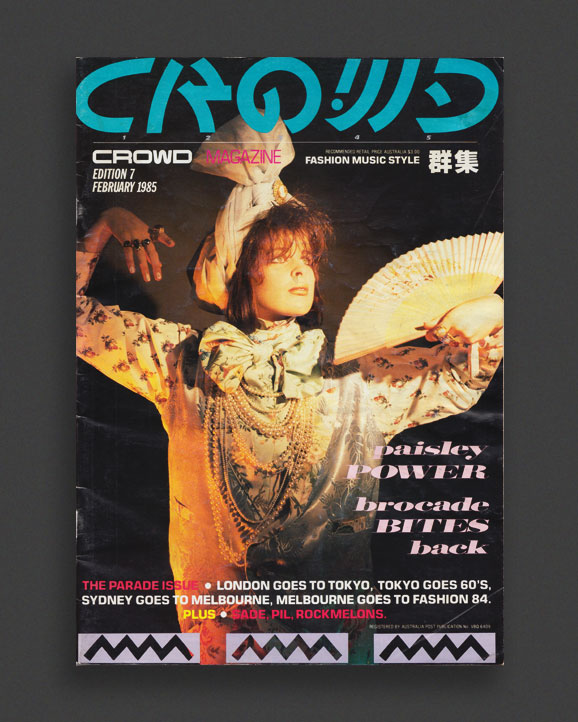
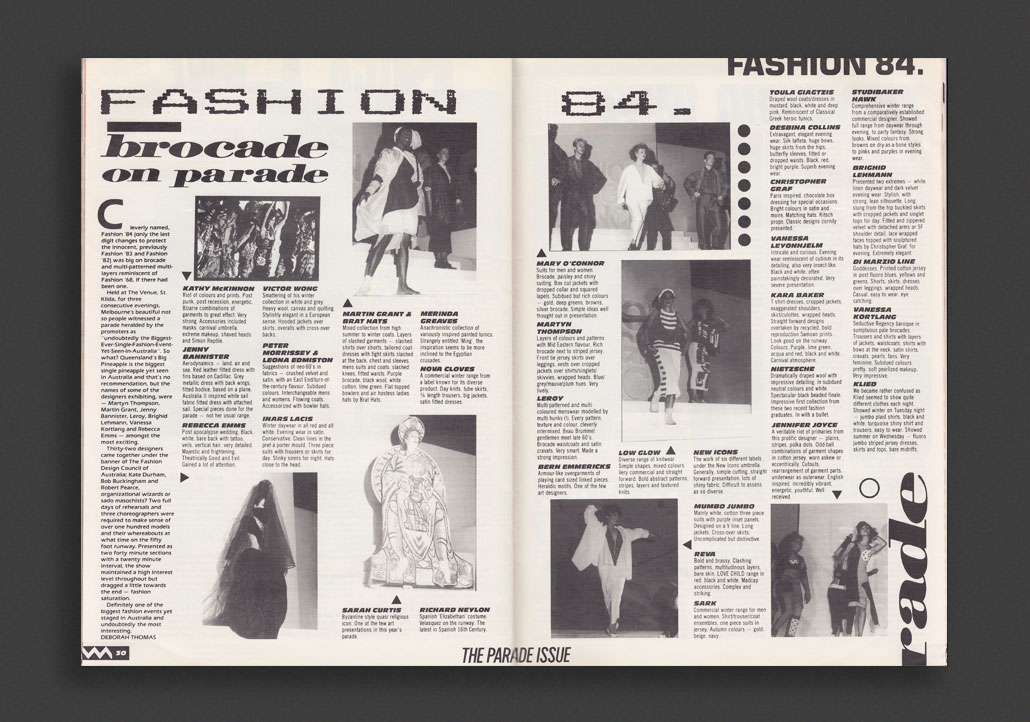
Scarce copy of the February 1985 issue of Melbourne's CROWD magazine, committed to "Fashion Music Style", published in Melbourne with heavy ties to Tokyo. With cover photographed by Rozalind Drummond, this issue, "The Parade Issue", includes features on "Fashion '84" (major Melbourne fashion parade presenting 32 Australian designers), "The Third Wave" a feature on Tokyo designers, "London Goes To Tokyo", "Tokyo International Collections" (Comme, Gaultier, Katharine Hamnett), an interview with PiL's John Lydon, Australian designer Marc Newson, British milliner Stephen Jones, interview with Sade Adu, fashion designer Reva Manicavasagar, Nick Lowe, fashion shoots, hair styling, films, records, social pages, clubs, clubs, clubs, fstreet fashion, great Melbourne advertisements, and more!
Good copy with wear and marking to covers, edges. Rippling to front cover.
1984, English
Softcover (staple-bound), 46 pages, 30 x 21.5 cm
1st Edition, Out of print title / used / good
Published by
CROWD / Melbourne
$35.00 - Out of stock
Scarce copy of the November 1984 issue of Melbourne's CROWD magazine, committed to "Fashion Music Style", published in Melbourne with heavy ties to Tokyo. With cover (Yohji Yamamoto) by photographer Polly Borland, this issue opens with Street Fashion and includes an exclusive interview with Andy Warhol via Keith Haring, an interview with Divine, interview with Howard Jones, Berlin (with photography by Rozalind Drummond), Polly Borland interview, The Cure, Machinations, Australian fashion designer Kara Baker's Sirens clothing label, Japanese fashion designer Koshin Satoh's ARRSTON VOLAJU clothing label (designer for Miles Davis), fashion shoots, hair styling, films, records, social pages, clubs, clubs, clubs, fashion parade reviews, great Melbourne advertisements, and more!
Good copy with wear and marking to covers, edges.
1973, Japanese
Softcover, 192 pages, 21 x 15 cm
1st Edition, Out of print title / used / good
Published by
Art Club Monthly / Japan
$90.00 - Out of stock
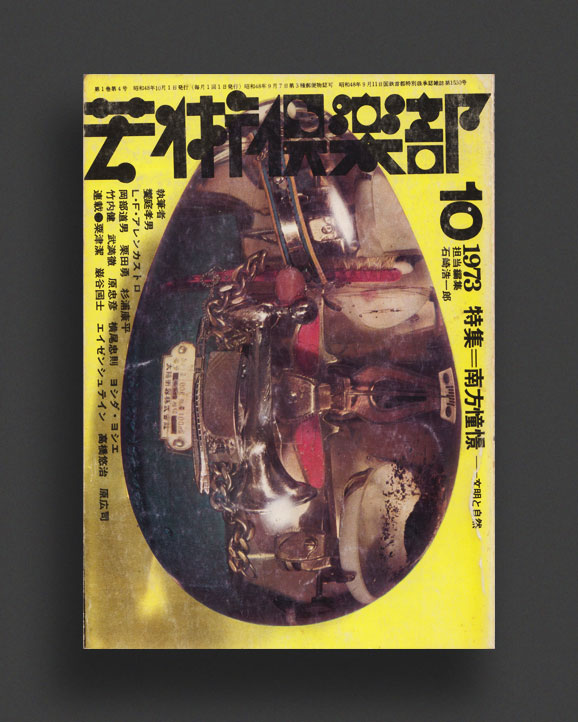
Scarce January 1973 issue of Japan's monthly periodical of art criticism, featuring a cover by Japanese avant garde artist Natsuyuki Nakanishi depicting one of his “Compact Objects”. This issue also features a coloured artwork section by Tadanori Yokoo, and contributions by/about director Michio Okabe, composer John Cage, director Sergei Eisenstein, Tenjō Sajiki / Shūji Terayama, critic Yoshida Yoshie, composer Yūji Takahashi, composer Tōru Takemitsu, art critic Isamu Kurita, and many more.
Good copy with some cover wear and tanning.
1987, German
Softcover, 294 pages, 17 x 23.5 cm
1st Edition, Out of print title / used / very good
Published by
Schirmer & Mosel / Munich
$65.00 - Out of stock
First 1987 edition of this excellent compendium of early films by prolific German director Rainer Werner Fassbinder. Introduction by Michael Toteberg. 252 film stills alongside script excerpts from the 5 early films : ' Der Stadtstreicher '(1965),' Das kleine Chaos' (1966), 'Liebe ist Kalter als der Tod / Love is Colder Than Death' (1969), 'Katzelmacher' (1969), and 'Gotter der Pest / Gods of The Plague' (1969). A must for any Fassbinder fan. Unfortunately they only made this one, first volume, not to be followed with more. It would've a tremendous collection!
Rainer Werner Fassbinder (1945 – 1982) was a West German filmmaker, actor, playwright and theatre director, who was a catalyst of the New German Cinema movement. Although Fassbinder's career lasted less than fifteen years, he was extremely productive. By the time of his death, Fassbinder had completed over forty films, two television series, three short films, four video productions, and twenty-four plays, often acting as well as directing. Fassbinder was also a composer, cameraman, and film editor. Fassbinder died on 10 June 1982 at the age of 37 from a lethal cocktail of cocaine and barbiturates.
Rainer Werner Fassbinder. The films 1: Der Stadtstreicher; The little mess; Love is colder than death Katzelmacher; Gods of the plague: Ed. Michael Töteberg. - Nothing more appeared.
Rainer Werner Fassbinder. The movies 1
Published by Schirmer / Mosel Verlag GmbH, Munich, Federal Rep. Of Germany (1987)
ISBN 10: 3888141826 ISBN 13: 9783888141829
New Trade Paperback/ OBroschur First Edition Quantity: 1
Seller:Lighthouse
(Flensburg, Germany)
RatingSeller Rating: 5-star rating
Book Description Trade Paperback / OBroschur. Condition: New, New. First edition / first edition. no more appeared. 294 p., 17 x 23.5 cm. Films: Die Stadtstreicher: 1965, Das kleine Chaos: 1966, Love is colder than death: 1969, Katzelmacher and: Gods of the Plague: both 1969. RWF. Seller Inventory # 88814182_Bd.1_Y
1975, English / French / Japanese
Softcover, unpaginated, 26 x 18 cm
1st Edition, Out of print title / used / very good
Published by
? / Japan
$70.00 - Out of stock
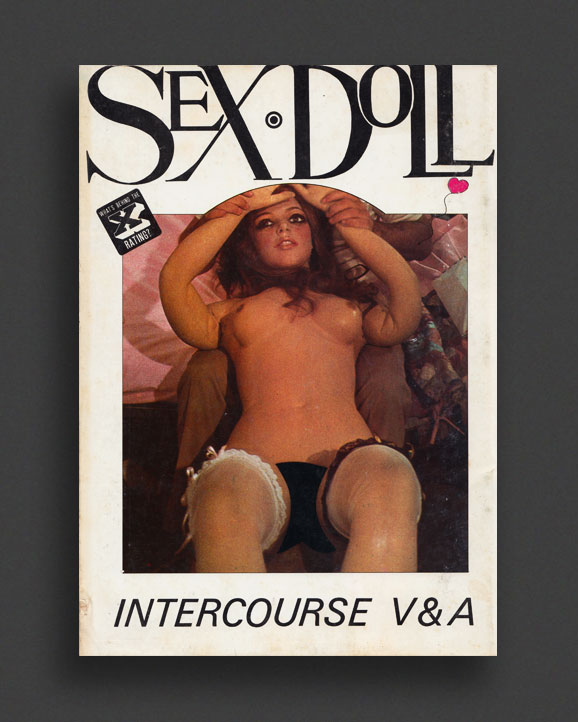
Sex Doll is an extremely rare, amazing and odd-to-exist souvenir photo-book (from Japan) of the long-lost film "Lifesize" or "Grandeur Nature" or (in Japan) "Sex Doll", an obscure outlandish x-rated 1974 film by acclaimed Spanish director Luis García Berlanga, starring the great Michel Piccoli. A tragicomedy about a middle aged dentist who has been unfaithful to his wife and feels lonely, until one day he receives from Japan a gift : a mannequin. He falls in love with the doll, causing all manner of strife and with it a sad and desperate critique on the human condition. A box-office and critical flop, Berlanga proves his passion for erotic stories with a film of humour and pathos about loneliness, impossible desires, egoism, escapism, misogyny, human judgement and cruelty. Unlike the film, the starring mannequin was considered a masterpiece, sculpted by the great Hungarian-French production designer Alexandre Trauner and costing more to create than it would to hire French Actress Bridgette Bardot for a leading film role at the time. The movie was prohibited in Spain and heavily censored, which is only more reason to make it into a picture book in Japan! Wildly designed and explosively illustrated with many vivid stills from the film, along with strange phrases and captions in French and "English", which leads one to believe this film struck more a of sympathetic lifestyle chord in Japan than it did in Europe.
Very Good with light wear to covers.
2019, English
Hardcover (w. dust jacket), 288 pages, 23.4 x 15.6 cm
Published by
FAB Press / UK
$52.00 - Out of stock
“I was not afraid of the dark, like most children. No, I was afraid of the bedroom corridor. It was a perfect form of terror: pure and unconditional.”
To his legion of admirers Dario Argento is a horror legend of the greatest magnitude. And to his genre filmmaking contemporaries he’s an inspiration and an icon.
For many years Argento’s ground-breaking shockers like The Bird with the Crystal Plumage, Deep Red, Suspiria, Inferno, Tenebrae and Opera meant box-office gold. Now the maverick auteur, lauded as the Italian Hitchcock and the Horror Fellini, has written his autobiography, revealing all about his fascinating life, his dark obsessions, his talented family, his perverse dreams, and his star-crossed work.
With candour and honesty, Fear lifts the lid on the trials and tribulations of Argento’s glittering career during the sensational Golden Era of Cinecittà. From his childhood mixing with glamorous Italian movie stars thanks to his noted photographer mother and his film industry father to his start in the fledgling field of cinema criticism, Argento shares compelling anecdotes about his life growing up in La Dolce Vita Rome.
Adapted from the Italian translation, annotated by world-renowned Argento expert Alan Jones, and illustrated with numerous rare photographs from his collection, the award-winning and critically acclaimed Master of Terror tells all. So put on your black leather gloves and start turning the pages of Fear for the answer to every question you’ve ever wanted to ask about the weird and wonderful world of Dario Argento.
2021, English
Hardcover, 212 pages, 15.6 x 23.4 cm
Published by
Walther König / Köln
$80.00 - Out of stock
An enchanting collection of Post-it note drawings done for a child's school lunchbox.
This volume assembles 200 drawings made by Berlin-based Ed Atkins (born 1982), internationally known for his video art. Drawn on Post-it notes during weekday mornings over breakfast and slipped into his daughter's lunchbox before school, these delightful and colorful illustrations are reproduced here in their original formats.
Ranging from the playful to the graphic and even sometimes grotesque, they mirror both the absurdity and mundanity of everyday love. Some contain, simply, the words "I love you" or a quick sketch of a sunset, while others seem to treat the format as a sort of canvas, with vividly surreal scenes filling the Post-it note from corner to corner. A true artist's book, this charming volume acts as a playful testament to, and a tender snapshot of, fatherly love.
1998, Japanese
Softcover (w. dust jacket and obi), unpaginated, 20 x 15 cm
1st Edition, Out of print title / used / very good
Published by
Asahi Press / Japan
$80.00 - Out of stock
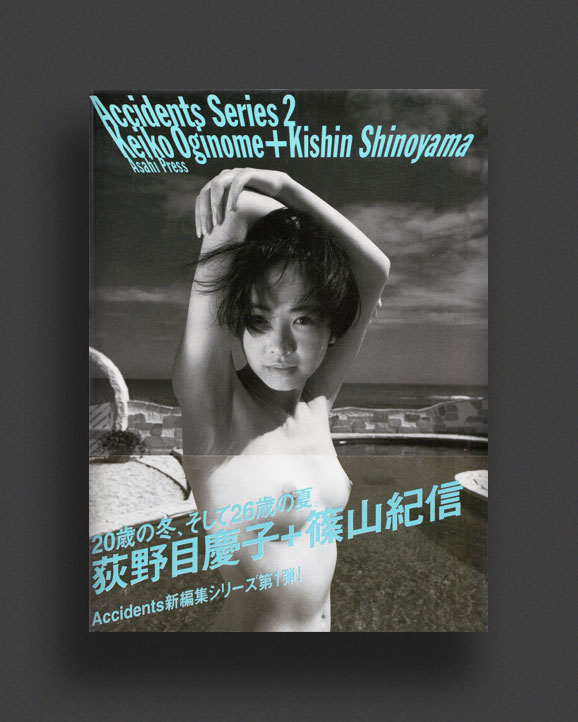
First edition of the second publication of Kishin Shinoyama's "Accidents" series of books. Shinoyama established these lovely photo books in the late 1990s as a way to present the consequential photographs that would develop from commercial nude photoshoots with his models. Each book represents a collaboration between the photographer and one model, Accidents 2 "Breezy Day" presenting a shoot with Japanese actress Keiko Oginome. Shinoyama had close friendships with many of his regular models, working closely with them throughout their entire careers. The "accidental photographs", unrestricted by the editorial outcome of the icon "pin-up", unfold with an intimacy, tenderness and freedom that carry with it the passing of time between the photographer and model, sometimes over one shoot, at others across ages. Lavishly illustrated throughout in colour and black and white.
Very Good w. VG dust jacket.
1998, Japanese
Softcover (w. dust jacket), unpaginated, 20 x 15 cm
1st Edition, Out of print title / used / very good
Published by
Asahi Press / Japan
$80.00 - Out of stock
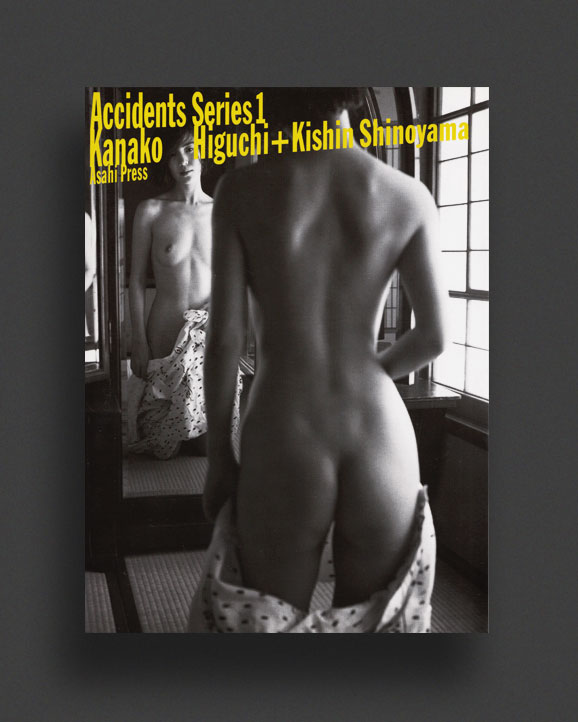
First edition of the first publication of Kishin Shinoyama's "Accidents" series of books. Shinoyama established these lovely photo books in the late 1990s as a way to present the consequential photographs that would develop from commercial nude photoshoots with his models. Each book represents a collaboration between the photographer and one model, Accidents 1 "Waterfruit" presenting a shoot with Japanese actress Kanako Higuchi. Shinoyama had close friendships with many of his regular models, working closely with them throughout their entire careers. The "accidental photographs", unrestricted by the editorial outcome of the icon "pin-up", unfold with an intimacy, tenderness and freedom that carry with it the passing of time between the photographer and model, sometimes over one shoot, at others across ages. Lavishly illustrated throughout in colour and black and white.
Very Good w. VG dust jacket.
2017, English
Hardcover, 364 pages, 17 x 24 cm
1st Edition, Out of print title / as new
Published by
Mousse / Milan
$60.00 - Out of stock
“The exhibition is conceived as a scripted space, like an automaton, producing different temporalities, a rhythm, an itinerary, and a duration. The visitor is guided through the spaces by the appearance and orchestration of sounds and images... a mental choreography.” – Philippe Parreno
Philippe Parreno is interested more in the dynamics of how a work of art is shown to the public than in its actual production, and in his films, installations, performances and texts, he subverts the codes normally applied to exhibition spaces. He places the construction of the exhibition at the heart of his process, approaching it through different formats and redefining the exhibition experience as a coherent object rather than as a collection of individual works.
Produced in conjunction with the H {N)Y P N(Y} OSIS exhibition – curated by Hans Ulrich Obrist and Alex Poots, with consulting curator Tom Eccles, in the spaces of the Park Avenue Armory in New York – and with Hypothesis – curated by Andrea Lissoni at Pirelli HangarBicocca in Milan – this monograph offers a rich critical overview of his work, with essays by Cyril Béghin, Molly Nesbit, Brian O’Doherty and Adam Thirlwell, and two interviews with Hans Ulrich Obrist and Andrea Lissoni.
It is thus an invaluable research tool for studying one of the most influential and charismatic figures on the contemporary art scene.
Edited by Andrea Lissoni.
Texts by Cyril Béghin, Andrea Lissoni, Molly Nesbit, Hans Ulrich Obrist, Brian O’Doherty, Philippe Parreno, Adam Thirlwell.
As New copy.
1974, English
Newspaper, 28 pages, 41 x 29 cm
1st Edition, Out of print title / used / very good
Published by
Incorporated Newsagencies / West Melbourne
$90.00 $60.00 - Out of stock
Rare February 1974 issue of The Living Daylights, a radical, riotous weekly counter-culture magazine out of North Melbourne in the 1970's, edited by Oz magazine founder Richard Neville, along with Terence Maher, Michael Morris, and graphic designer Laurel Olszewski, and published by Neville's fellow OZ colleague, Richard Walsh, between 1973-4. The Living Daylights was packed with all happening things in youth counter-culture, filled with articles, cartoons, artwork, sex, drugs, rock n roll and protest. A provocative, humorous and controversial anti-establishment bulletin in the tradition of Oz, regularly featuring the artwork of Martin Sharp, Michael Luenig, Dickie, and Neil McLean! This issue features 186 Years of Penal Outrage, activists against the closure of Lameroo "Free Beach" in Darwin, Bondi photography by Syd Shelton, dodgy Adelaide drug squad, Melbourne marijuana activists, Nimbin news, female singers, women's liberation and beauty trends by Margaret Smith, Confessions of a Working Class Shit Eater by poet Eric Beach, Taiwanese actress Angela Mao, Fritz the Cat, and so much more.
A wonderful, very seldom seen, historical piece of Australian counterculture publishing.
Very Good copy with light wear/tanning.
1974, English
Newspaper, 28 pages, 41 x 29 cm
1st Edition, Out of print title / used / very good
Published by
Incorporated Newsagencies / West Melbourne
$90.00 $60.00 - Out of stock
Rare March 1974 issue of The Living Daylights, a radical, riotous weekly counter-culture magazine out of North Melbourne in the 1970's, edited by Oz magazine founder Richard Neville, along with Terence Maher, Michael Morris, and graphic designer Laurel Olszewski, and published by Neville's fellow OZ colleague, Richard Walsh, between 1973-4. The Living Daylights was packed with all happening things in youth counter-culture, filled with articles, cartoons, artwork, sex, drugs, rock n roll and protest. A provocative, humorous and controversial anti-establishment bulletin in the tradition of Oz, regularly featuring the artwork of Martin Sharp, Michael Luenig, Dickie, and Neil McLean! This issue features Ian Stocks in conversation with science fiction legend Arthur C. Clarke, a guide to smuggling, Allen Ginsberg on cocaine and Abbie Hoffman, Heroin, Pentridge prison, Magic Mushrooms, police brutality against black Australians, Cherry Ripe on the pioneering drag queen anarchy of Sylvia and the Synthetics, meditation, Veronica Perry on the ecology of Shit, the Bitch newspaper, Miles Davis, and so much more.
A wonderful, very seldom seen, historical piece of Australian counterculture publishing.
Very Good copy with light wear/tanning.
2019, English
Softcover, 175 pages, 14 x 19 cm
Published by
The Song Cave / New York
$38.00 - Out of stock
"With pride because I finally believed in my ability to say something that I’d had trouble saying. I told myself, I am strong for once, I speak. I tell the truth."
In this unforgettable and moving memoir, the last book written before her death, the legendary film director Chantal Akerman (1950-2015) blends her matter-of-fact writing style with family photographs and stills from her own films in order to better describe and speak toward the most tender of human elements: her family, her lovers, and, most urgently, the deterioration of her mother’s health along with her own mental health.
While addressing universal experiences–the pain found woven into love, the end of relationships, difficult family histories, self-doubt, the end of life–Akerman‘s sharp eye toward memory raises questions about what it means to love and care for oneself and for another, and in the end, what the personal cost of those decisions can be.
Chantal Akerman was a Belgian film director, screenwriter, artist, and professor. She is best known for her film Jeanne Dielman, 23 quai du Commerce, 1080 Bruxelles (1975), which was dubbed a "masterpiece" by the New York Times. During her 42 years of active filmmaking, Akerman's influence on queer, feminist, and avant-garde cinema remains unmatched, her films highlighting a near physical passage of time.
Translated by Corina Copp
2016, English
Hardcover, 224 pages, 17 x 24 cm
Published by
Mousse / Milan
$88.00 $40.00 - Out of stock
Edited by Bettina Steinbrügge
Texts by Renee Gladman, Melissa Gronlund, Ed Halter, Andrea Picard, et al.
Ways of Worldmaking is the first comprehensive monograph on British experimental filmmaker Ben Rivers (born 1972). In recent years, Rivers has been celebrated as one of the most important experimental filmmakers of his generation. The series of exhibitions collected in this book explore the diversity and breadth of his work. Often following people who have in some way separated themselves from society, the raw film footage provides Rivers with a starting point for creating oblique narratives imagining alternative existences in marginal worlds. This publication has been published thanks to the support of four museum institutions – Camden Arts Centre, London; Kunstverein in Hamburg; The Renaissance Society, Chicago; and La Triennale di Milano – who all have presented (or will be presenting) solo exhibition dedicated to Rivers’s practice.
2018, English
Softcover, 368 pages, 21.5 x 29 cm
Published by
Sternberg Press / Berlin
$69.00 $30.00 - Out of stock
This publication emerges from Uriel Orlow’s Theatrum Botanicum (2015–18), a multi-faceted project encompassing film, sound, photography, and installation, which looks to the botanical world as a stage for politics. Working from the dual vantage points of South Africa and Europe, the project considers plants as both witnesses to, and dynamic agents in, history. It links nature and humans, rural and cosmopolitan medicine, tradition and modernity across different geographies, histories, and systems of knowledge—exploring the variety of curative, spiritual, and economic powers of plants. The project addresses “botanical nationalism” and “flower diplomacy” during apartheid; plant migration; the role and legacies of the imperial classification and naming of plants; bioprospecting and biopiracy; and the garden planted by Nelson Mandela and his fellow inmates at Robben Island prison.
This publication is made up of two intertwining books: one documents the works of Theatrum Botanicum, including the scripts for two films; the second is a compendium of brief, commissioned essays that aims to offer an accessible snapshot of the complex and multifaceted issues that inform and are raised by the artworks. The independent but interrelated essays, which either speak directly to the artworks or follow lines of inquiry alongside them, cover perspectives from postcolonial cultural studies; art criticism and art history; natural history, botany (including ethnobotany and economic botany), and conservation; jurisprudence and critical legal studies; and critical race studies.
Design by In the shade of a tree (Sophie Demay and Maël Fournier-Comte)
Edited by Shela Sheikh and Uriel Orlow
Contributions by Sita Balani, Melanie Boehi, Clelia Coussonnet, Karen Flint, Jason T. W. Irving, Nomusa Makhubu, Bettina Malcomess, Karin van Marle, Khadija von Zinnenburg Carroll
2021, English
Hardcover, 616 pages, 21 x 29 cm
Published by
Sternberg Press / Berlin
$90.00 - Out of stock
During the Cold War, modernist art became a flagship of freedom and democracy in the West, and took on the role of a symbolic overcoming of fascism. Parapolitics: Cultural Freedom and the Cold War examines the cultural diplomacy of this period, particularly the activities and magazines of the Congress for Cultural Freedom, an organization funded by the Central Intelligence Agency that was tasked with steering the left away from Soviet Communism and toward a new world order established under the aegis of the United States. This book analyzes how the organization’s activities in the non-European world were a major force behind the culturalization of economic liberalism on an international scale. With extensive archival documentation and recent responses by artists and writers, this book is a rich reference for readers interested in challenging the structural conditions of contemporary art and the prevailing canons of modernism.
Edited by Anselm Franke, Nida Ghouse, Paz Guevara, Antonia Majaca
Contributions By Savita Apte, Doug Ashford, Michael Baers, Ivana Bago, Lene Berg, Annett Busch, Rhea Dall, Peter Delius, Kodwo Eshun, Jenifer Evans, Anselm Franke, Andrea Giunta, Nida Ghouse, Paz Guevara, Stacy Hardy, Barnor Hesse, Michael Hochgeschwender, Emmanuel Iduma, Iman Issa, Voluspa Jarpa, Gabi Ngcobo, Alexander Keefe, Hyunjin Kim, Christian Kravagna, Antonia Majaca, Porter Mccray, Sylvester Ogbechie, Rasha Salti, Erhard Schüttpelz, Chinmay Sharma, Yashas Shetty, Quinn Slobodian, Karin Zitzewitz
2016, English
Softcover, 480 pages, 12.7 x 19.5 cm
Published by
Fitzcarraldo Editions / London
$35.00 - In stock -
One of the most widely celebrated artists of his generation, Ed Atkins makes videos, draws, and writes, developing a complex and deeply figured discourse around definition, wherein the impossibilities for sufficient representations of the physical, specifically corporeal, world — from computer generated imagery to bathetic poetry — are hysterically rehearsed.
A Primer for Cadavers, a startlingly original first collection, brings together a selection of his texts from 2010 to 2016. ‘Part prose-poetry, part theatrical direction, part script-work, part dream-work,’ writes Joe Luna in his afterword, ‘Atkins’ texts present something as fantastic and commonplace as the record of a creation, the diary of a writer glued to the screen of their own production, an elegiac, erotic Frankenstein for the twenty-first century.’
‘Discomfited by being a seer as much as an elective mute, Ed Atkins, with his mind on our crotch, careens between plainsong and unrequited romantic muttering. Alert to galactic signals from some unfathomable pre-human history, vexed by a potentially inhuman future, all the while tracking our desperate right now, he do masculinity in different voices – and everything in the vicinity shimmers, ominously.’
— Bruce Hainley, author of Under the Sign of [sic]
Afterword by Joe Luna
Ed Atkins is a British artist based in Berlin. In recent years, he has presented solo shows at the Palais de Tokyo in Paris, Stedelijk Museum in Amsterdam, Serpentine Sackler Gallery in London, and MoMA PS1 in New York, among others. His writing has appeared in October, Texte zur Kunst, frieze, The White Review, Hi Zero and EROS Journal. A Primer for Cadavers is his first collection.
Joe Luna writes poetry and critical prose out of Brighton, UK. He teaches literature at the University of Sussex.
2021, English / French
Softcover, 336 pages, 15 x 21 cm
Published by
Octopus Notes / Paris
$48.00 $20.00 - Out of stock
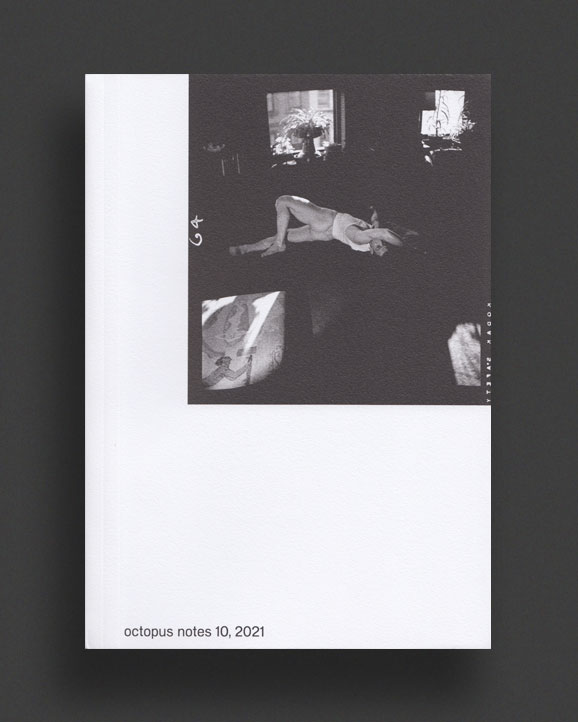
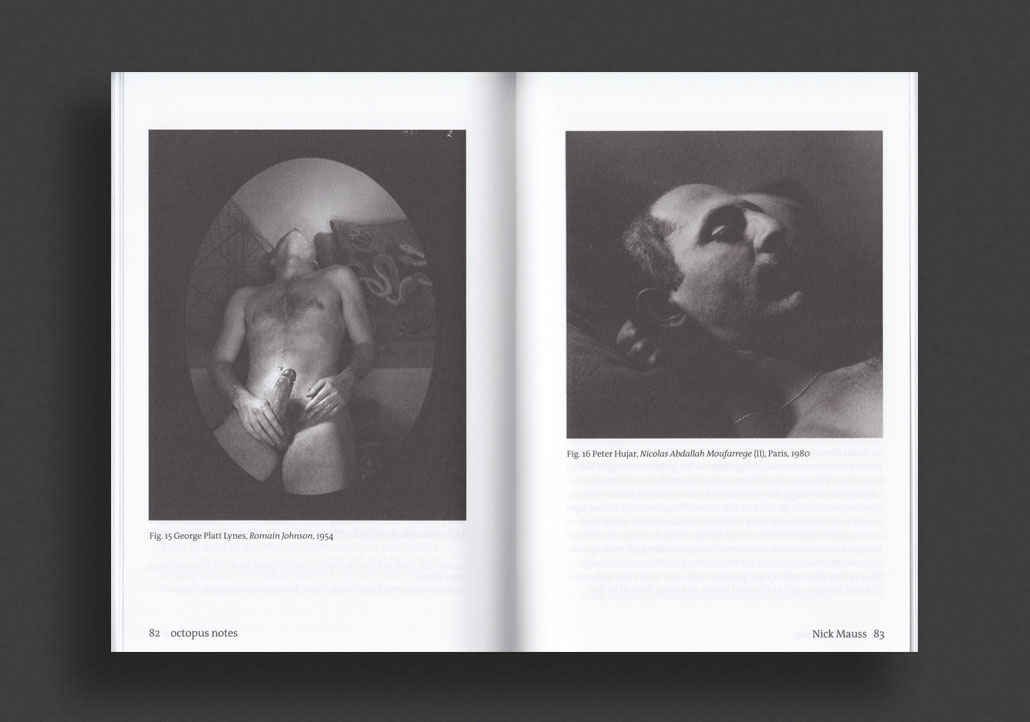
The tenth issue of the biannual journal-collection that brings together academic writings, interviews with artists, critical essays and artists’ interventions in the form of inserts.
With & about Sara de Chiara, Rafael Corcostegui, Moyra Davey, Pierre Dulieu, Guillaume Dustan, Jana Euler, Sylvie Fanchon, Jim Fletcher, Alexander García Düttmann, Jeanne Graff, Gary Haller, Alex Hay, Martin Laborde, Daniel Lentz, Mina Loy, Liz Magor, Nick Mauss, Nicolas Moufarrege, Baptiste Pinteaux, Richard Rezac, Clément Roussier, Edith Schloss, Albert Serra, Pierre Thévenin, Belén Uriel, Charles Veyron, Robin Waart, Emily Wardill, Román Yñán.
Edited by Alice Dusapin, Martin Laborde, Baptiste Pinteaux, Alice Pialoux.
Designed by Marc Touitou & Robert Milne.
2021, English
Softcover, 296 pages, 13 x 21 cm
Published by
Sternberg Press / Berlin
$47.00 - Out of stock
In modernity, the museum was the institution that made art accessible to the broader public. An artwork was collected if it was considered beautiful, passionate, engaged, or critical—and primarily if it was deemed historically relevant. But today, with the total availability and saturation of images, the museum has lost its privileged status as the exclusive place for the display of art. In our age of digital media, how is a particular artwork selected for a museum collection? Which symbolic criteria must this artwork satisfy for it to obtain value? And in what ways does the institution of the museum remain relevant?
Logic of the Collection is framed by Boris Groys’s original and provocative proposition: an artwork is considered historically relevant if it fits the logic of the museum collection. In these critical essays, the distinguished philosopher and theorist of art and media analyzes the relationship between the logic of the collection and various modern ideologies. He reflects on the explosion of art production and distribution through the ascendancy of digital media as well as the ways in which the accumulated artworks will be collected and preserved in the future.
2021, English
Softcover, 512 pages, 17 x 23.9 cm
Published by
Sternberg Press / Berlin
$60.00 - Out of stock
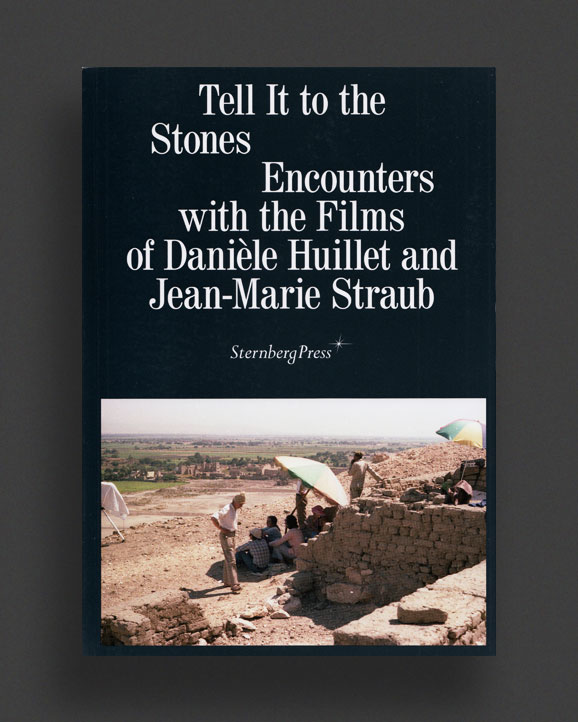
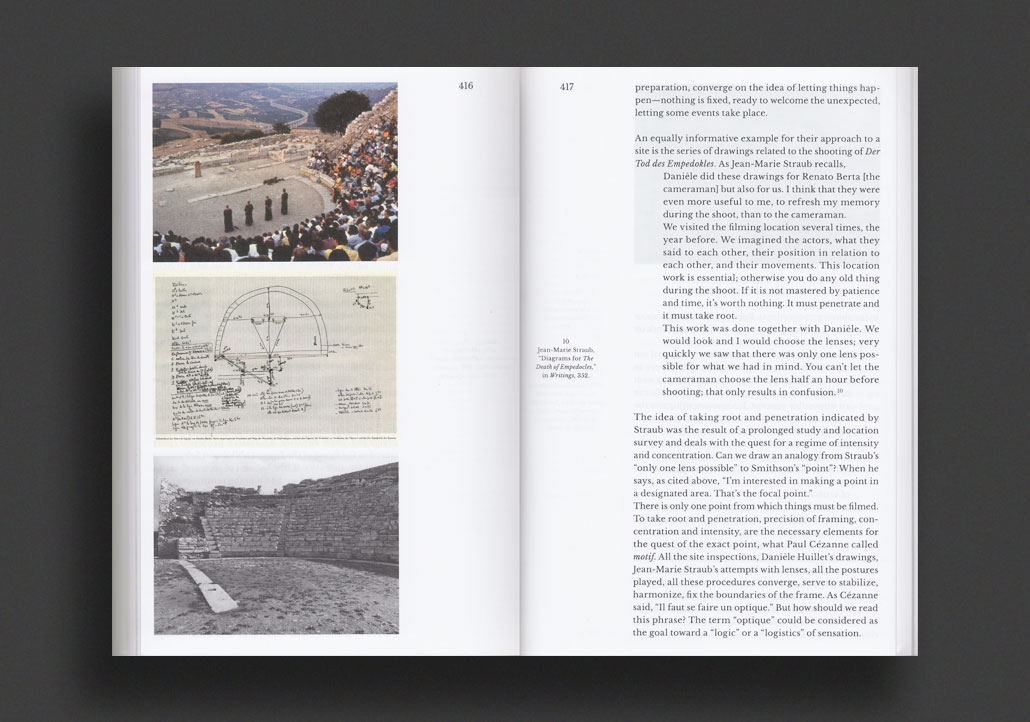
Artists, scholars, filmmakers, and writers revisit the films of Danièle Huillet and Jean-Marie Straub.
Jean-Marie Straub (b. 1933) and Danièle Huillet (1936-2006) met in Paris in 1954. Straub wanted to make a film about Johann Sebastian Bach, to which Huillet thought: "He's planning to do far too much; he won't manage it alone." It was the beginning of a fifty-year collaboration, which brought about one of the most unconventional and controversial bodies of work in modern cinema. Tell it to the Stones presents variations from a prolonged re-encounter with Huillet and Straub's work that was sparked by a three-month exhibition, complete cinema retrospective, workshops, and music performances in Berlin in the fall of 2017.
Contributing artists, scholars, filmmakers, and writers have revisited this collective experience in new texts, revised transcripts, conceptual essays, and visual montages. What happens during an encounter happens in-between: between language and image, gestures and words, looks and everything unsaid. "To help us build the in-between," is how Danièle Huillet once imagined a task for those who come to see their films. The present compendium revives these encounters and reveals the urgencies of how Straub and Huillet's oeuvre matters today, perhaps more than ever.
Contributions by Manfred Bauschulte, Renato Berta, Manfred Blank, Barton Byg, Paolo Caffoni, Rinaldo Censi, Diedrich Diederichsen, Luisa Greenfield, Louis Henderson, Ute Holl, Volko Kamensky, Peter Kammerer, Jan Lemitz, Armin Linke, Elke Marhöfer And Mikhail Lylov, Mochida Makoto, Peter Nestler, Maggie Perlado, Patrick Primavesi, Florian Schneider, Danièle Huillet And Jean-Marie Straub, Oraib Toukan, Ming Tsao, Barbara Ulrich, Rembert Hüser And Nikolaus Wegmann, Antonia Weisse, Ala Youni
2016, English
Softcover, 256 pages, 17.5 x 20 cm
Published by
Austrian Film Museum / Vienna
$58.00 - In stock -
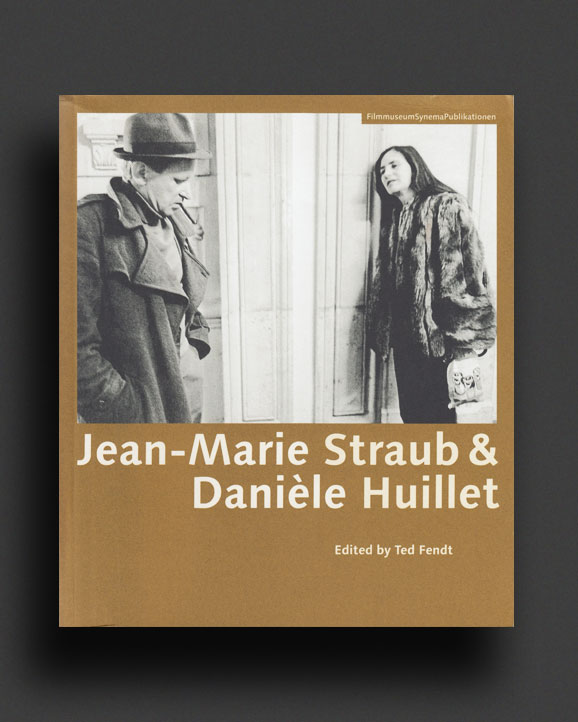
From their first film in 1963, Jean-Marie Straub and Danièle Huillet distinguished themselves as two of Europe's most inventive, generous, and uncompromising filmmakers. From Machorka-Muff (1963) through These Encounters of Theirs (2006), and in the subsequent solo work of Jean-Marie Straub, they developed groundbreaking and unique approaches to film adaptation, performance, sound recording, cinematography, and translation in films made across Germany, Italy, and France - including such modern classics as The Chronicle of Anna Magdalena Bach (1967), Moses and Aaron (1974), Class Relations (1983), and Sicilia! (1999).
On the occasion of the first complete North American retrospective of their films in more than two decades, this dense and profusely illustrated volume traces the history of Straub's and Huillet's work, placing their films in the specific cultural, linguistic, and critical contexts in which they were produced and providing an account of their distribution and reception in the English-speaking world.
Author Ted Fendt is a critic, translator, projectionist, and filmmaker based in New York. His translations have appeared in print and online in Cinemascope, Mubi Notebook, and Robert Bresson (Revised), and as subtitles on films by Jean-Marie Straub, Jean-Luc Godard, Max Ophuls, and Alain Resnais.
2016, English
Softcover, 624 pages / 135 pages, 14.8 x 21.3 cm
1st Edition, Out of print title / as new
Published by
Sequence Press / New York
$120.00 - Out of stock
A text is spoken; it merges the sphere of ideas, from which it comes, with an immediate and sensible sphere of bodies that give life to them, with a nature that sustains these bodies, and that they in turn nourish by naming it. The body, in which language resonates, becomes the body of the text itself and protracts its speaking.
Here trees are trees and become trees. We learn by taking pleasure in the sublime essence of colors (leaf-green, earth-brown, sky-blue, bronzed-skin...), of timbres (voices, birds, steps...), of textures (flesh, fabric, earth...), the irreversibility of gestures.
These shots are rich in their concerted poverty: here’s how.
—Anne Benhaïem
from introduction to "Conception of a Film"
Sequence Press is pleased to announce the publication of the writings of the filmmaking couple Jean-Marie Straub and Danièle Huillet, presented for the first time in a critical, English-language edition. Two of the most exacting directors of the past fifty years, Straub and Huillet are renowned for their meticulous adaptations of works by giants of Western art and literature: Sophocles, Corneille, Bach, Hölderlin, Cézanne, Brecht, Schoenberg, Kafka, Pavese, et al. The publication coincides with the first complete U.S. retrospective of their films opening on May 6 at the Museum of Modern Art in New York, and the concurrent exhibition, Films and Their Sites, at Miguel Abreu Gallery.
Jean-Marie Straub came of age as a slightly younger contemporary of the French New Wave. Like those directors, he began his career writing film criticism. “Writing about films,” Jean-Luc Godard later said, “was already a way of making films.” This volume thus begins with Straub’s early film criticism from the 1950s and traces the evolution of over five decades of writing activity, from manifestoes and trenchant declaratory texts, to detailed descriptions of working methods, letters, questionnaires and select interviews and oral interventions.
Writings opens with an introduction by Sally Shafto that provides an in-depth look at Straub and Huillet’s beginnings, within the context of the emergent filmmaking forces of the time. The book highlights their rigorous methodologies as translators of key texts, and the precision work required to adapt those translations for the screen. As Straub himself said, “We are the only European filmmakers, filmmakers of European nations. We make films in Italian as well as in French and in German. Who else can say that?” The book brings us behind the scenes and reveals how their publication practices mirrored those of their film production and distribution, as they often made distinct versions of the same film using alternative takes and different languages.
In addition to the published texts, the book comprises a richly illustrated Atelier section featuring three full length annotated film scripts, along with other pieces of writing, such as letters to their collaborators, shooting diagrams and schedules, lab notes, and press kits, all of which bring the reader into the heart of Huillet and Straub’s creative process. The volume closes with a Portfolio of intimate photographs of the filmmakers at work, with onsite observations by their long-time director of photography and collaborator, Renato Berta, and a detailed filmography.
Jean-Marie Straub and Danièle Huillet resolutely eschewed a Hollywood style of spectacle filmmaking to create some of the most raw and beautiful, as well as innovative and profoundly moving films of our times. Their writings open up a further understanding of their essential contributions, and their unique place in film history.
Design by Scott Ponik
Edited, translated and with an introduction by Sally Shafto
Foreword by Miguel Abreu
Out-of-print. As New copy.
2006, English / Japanese
Hardcove (in padded, silver foiled cover), 156 pages, 19 x 19 cm
1st Edition, Out of print title / used / fine
Published by
NGV (National Gallery of Victoria) / Victoria
$67.00 - Out of stock
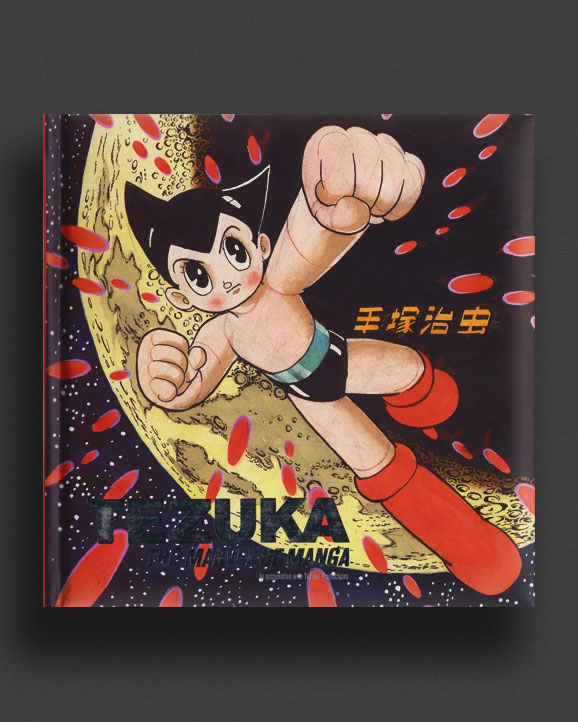
First out of print edition of Tezuka - The Marvel of Manga, catalogue published on the occasion of a major exhibition curated by Australian artist Philip Brophy for the National Gallery of Victoria, Melbourne in 2006. The exhibition profiled the Postwar manga of Japan's leading and most historically important manga artist, Osamu Tezuka. It toured to the Art Gallery of New South Wales, Sydney, and the Asian Art Museum of San Francisco. Edited by Philip Brophy with translations by Tetsuro Shimauchi, the book is profusely illustrated throughout, accompanied by a set of 6 critical essays written by English and Japanese writers, dealing with various aspects of Osamu Tezuka’s manga (with some reference to his anime). Also includes a complete checklist of all 234 works exhibited in the exhibition, biography and more.
Fine copy.
2013, English
Softcover (plus CD), 135 pages, 17 x 22 cm
1st Edition, Out of print title / as new
Published by
IMA / Brisbane
$39.00 - Out of stock
Those who follow Australian art, music, or film will have come across Melbourne’s Philip Brophy. Over the last thirty years, he has produced important work in all three scenes. He is also a critic and curator. And it is impossible to extricate his work as a commentator from his own work, because, as he admits, his own work is always a commentary on existing forms; it’s always art-about-art, music-about-music, film-about-film, or, indeed, art-about-music-about-film.
Brophy’s works might initially appear disparate. In the late 1970s and early 1980s, he led the group Tsk-tsk-tsk, which operated on the art/music fringe, generating performances, recordings, videos, and writings. In the late 1980s and early 1990s, he was the filmmaker obsessed with body fluids, directing Salt, Saliva, Sperm, and Sweat and Body Melt. In the 2000s, he was a new-media artist (making The Body Malleable), a manga/anime maven (making Vox and curating Tezuka: The Marvel of Manga), and a sound designer (composing soundtracks for films, his own and others’).
Despite their variety, everything Brophy does is underpinned by three connected lines of enquiry: music/pop (pop music, popular culture, manga and anime), body/sex (body-horror films, sex and violence, and gender), and sound/image (the unsung role of sound in cinema). A book surveying Brophy’s whole project seemed long overdue.
This generously illustrated monographic volume also includes a CD of Brophy's music. Now out-of-print.
Contributors Lara Travis, Darren Tofts, Shihoko Iida, Chris Chang, a selection of Brophy's own writings
Edited by Robert Leonard & Alexie Glass-Kantor
As New copy.