World Food Books' programme is largely produced on Kulin Nation land. We acknowledge the Wurundjeri people of the Kulin Nation as the first and continuing custodians of this land, and pay respect to their Elders past, present, and emerging.
World Food Books is an arts and special interests bookshop in Naarm / Melbourne. Founded in 2010, World Food Books is devoted to the presentation of a rotating, hand-selection of international art, design, literary and counterculture publications with an emphasis on the anti-traditional, the experimental, the avant-garde, the heretic, the marginal.
Presenting new titles alongside rare and out-of-print books, catalogues and journals spanning the fields of modern and contemporary art, design, photography, illustration, film, literature, poetry, cultural theory, philosophy, sexuality, popular and underground culture in its many radical forms, World Food Books wishes to encourage adventurous, thoughtful and open-minded reading, looking, writing, and exchange of publishing and ideas, both current and historical.
As well as our bookshop, located in Melbourne's historical Nicholas Building, all of our inventory is available internationally via our online mail-order service.
World Food Books semi-regularly co-ordinates "Occasions", a programme of exhibits and events at the bookshop and in partnership with other hosts (such as museums and art galleries) that develop out of the activities, relationships and content of the bookshop itself.
World Food Books
The Nicholas Building
37 Swanston Street
Room 5, Level 6
Melbourne 3000
Australia
SHOP HOURS:
Thu–Fri 12–6, Sat 12–5
WEB-SHOP OPEN 24/7
World Food Books
Postal Address:
PO Box 435
Flinders Lane
Victoria 8009
Australia
Art
Theory / Essay
Architecture / Interior
Graphic Design / Typography
Photography
Fashion
Eros
LGBTQ+
Fiction / Poetry
Weird / Speculative / Science Fiction / Horror
Transgressive / Visceral / Abject
Symbolism / Decadence / Fin de siècle
Film / Video
Painting
Sculpture / Installation
Performance / Dance / Theater
Drawing
Sound / Music
Curatorial
Group Shows / Collections
Periodicals
Out-of-print / Rare
Posters / Ephemera / Discs
Signed Books
World Food Books Gift Voucher
World Food Book Bag
Australian Art
Australian Fiction
Australian Science Fiction / Speculative Fiction
Australian Poetry
Australian Photography
Japanese Photography
Conceptual Art
Minimal Art
Dada
'Pataphysics / Oulipo
Fluxus
Concrete Poetry
Pop Art
Surrealism
Arte Povera
Arte Informale / Haute Pâte / Tachism
Nouveau Réalisme / Zero / Kinetic
Situationism / Lettrism
Collage / Mail Art / Xerox Art
Art Brut / Folk / Visionary / Fantastic
Illustration / Graphic Art / Bandes Dessinées
Furniture
Italian Radical Design / Postmodernism
Textiles
Ceramics / Glass
Counterculture
Protest / Revolt
Philosophy
Psychoanalysis
Anthropology
Anarchism
Socialism / Anarchism / Communism / Capitalism
Literary Theory / Semiotics / Language
Feminism / Women's Studies
Gender Studies / Sexuality
Anthropology
Fetishism / BDSM
Drugs / Psychedelia
Crime / Violence
Animal Rights / Veganism
Occult / Esoterica
Ecology / Earth / Alternative Living
Whole Earth / Crafts
All prices in AUD (Australian dollars)
Pick-Ups
Pick-up orders can be collected in our bookshop during opening hours after order date. Please collect any Pick-up orders within 2 weeks of ordering as we have limited storage space. Orders will be released back into stock if not collected within this time. No refunds can be made for pick-ups left un-collected. If you cannot make it in to the bookshop in this time-frame, please choose postage option.
Return Policy
All sales are final. We do accept returns (for refund or exchange) for items received in error. All our orders are packed with special care using heavy-duty padding and cardboard book-mailers or bubble mailers (for smaller books), using reinforcement where required. We cannot take responsibility for any lost, stolen or damaged parcels.
Insurance
Should you wish to insure your package, please email us directly after placing your order and we can organise this at a small extra expense. Although all standard/express tracked packages are very safe and dependable, we cannot take responsibility for any lost, stolen or damaged parcels. We recommend insurance on valuable orders.
Interested in selling your old books, catalogues, journals, magazines, comics, fanzines, ephemera? We are always looking for interesting, unusual and out-of-print books to buy. We only buy books in our fields of interest and specialty, and that we feel we can resell.
We base these prices on desirability, market value, in-print prices, condition and our current stock levels. We offer cash, store credit, and can take stock on consignment. All
about 25% of the price we expect to get when we sell them, or 30% in store credit. We base these prices on desirability, market value, in-print prices, condition and our current stock levels.
Sell your books any day of the week. You can drop them off and return later. If you have a lot of books, we can visit your Sydney home.
We buy books that we feel we can resell. We offer about 25 % of the price we expect to get when we sell them, or 30% in store credit. We base these prices on desirability, market value, in-print prices, condition and our current stock levels.
Philadelphia Wireman
03 August - 01 September, 2018
World Food Books is proud to announce our next Occasion, the first presentation of sculptures by Philadelphia Wireman in Australia.
The Philadelphia Wireman sculptures were found abandoned in an alley off Philadelphia’s South Street on trash night in 1982. Their discovery in a rapidly-changing neighbourhood undergoing extensive renovation, compounded with the failure of all attempts to locate the artist, suggests that the works may have been discarded after the maker’s death. Dubbed the "Philadelphia Wireman" during the first exhibition of this work, in 1985, the maker’s name, age, ethnicity, and even gender remain uncertain. The entire collection totals approximately 1200 pieces, all intricately bound together with tightly-wound heavy-gauge wire (along with a few small, abstract marker drawings, reminiscent both of Mark Tobey and J.B. Murry). The dense construction of the work, despite a modest range of scale and materials, is singularly obsessive and disciplined in design: a wire armature or exoskeleton firmly binds a bricolage of found objects including plastic, glass, food packaging, umbrella parts, tape, rubber, batteries, pens, leather, reflectors, nuts and bolts, nails, foil, coins, toys, watches, eyeglasses, tools, and jewellery.
Heavy with associations—anthropomorphic, zoomorphic, and socio-cultural responses to wrapped detritus—the totemic sculptures by Philadelphia Wireman have been discussed in the context of work created to fulfil the shamanistic needs of alternative religions in American culture. Curators, collectors, and critics have variously compared certain pieces to sculpture from Classical antiquity, Native American medicine bundles, African-American memory jugs, and African fetish objects. Reflecting the artist’s prolific and incredibly focused scavenging impulse, and despite—or perhaps enhanced by—their anonymity, these enigmatic objects function as urban artefacts and arbiters of power, though their origin and purpose is unknown. Philadelphia Wireman, whatever their identity, possessed an astonishing ability to isolate and communicate the concepts of power and energy through the selection and transformation of ordinary materials. Over the course of the past two decades, this collection has come to be regarded as an important discovery in the field of self-taught art and vernacular art.
Presented in collaboration with Fleisher-Ollman Gallery, Philadelphia, and Robert Heald, Wellington.
Susan Te Kahurangi King
02 February - 10 March, 2018
Susan Te Kahurangi King (24 February 1951 - ) has been a confident and prolific artist since she was a young child, drawing with readily available materials - pencils, ballpoint pens and felt-tip markers, on whatever paper is at hand. Between the ages of four and six Susan slowly ceased verbal communication. Her grandparents William and Myrtle Murphy had developed a special bond with Susan so they took on caring responsibilities for extended periods. Myrtle began informally archiving her work, carefully collecting and storing the drawings and compiling scrapbooks. No drawing was insignificant; every scrap of paper was kept. The King family are now the custodians of a vast collection containing over 7000 individual works, from tiny scraps of paper through to 5 meter long rolls.
The scrapbooks and diaries reveal Myrtle to be a woman of great patience and compassion, seeking to understand a child who was not always behaving as expected. She encouraged Susan to be observant, to explore her environment and absorb all the sights and sounds. Myrtle would show Susan’s drawings to friends and people in her community that she had dealings with, such as shopkeepers and postal workers, but this was not simply a case of a grandmother’s bias. She recognised that Susan had developed a sophisticated and unique visual language and sincerely believed that her art deserved serious attention.
This was an unorthodox attitude for the time. To provide some context, Jean Dubuffet coined the term Art Brut in 1945 to describe work created by self-taught artists – specifically residents of psychiatric institutions and those he considered to be visionaries or eccentrics. In 1972 Roger Cardinal extended this concept by adopting the term Outsider Art to describe work made by non-academically trained artists operating outside of mainstream art networks through choice or circumstance. Susan was born in Te Aroha, New Zealand in 1951, far from the artistic hubs of Paris and London that Dubuffet and Cardinal operated in. That Myrtle fêted Susan as a self-taught artist who deserved to be taken seriously shows how progressive her attitudes were.
Susan’s parents Doug and Dawn were also progressive. Over the years they had consulted numerous health practitioners about Susan’s condition, as the medical establishment could not provide an explanation as to why she had lapsed into silence. Dawn educated herself in the field of homeopathy and went on to treat all twelve of her children using these principles – basing prescriptions on her observations of their physical, mental and emotional state.
Doug was a linguist with an interest in philosophy who devoted what little spare time he had to studying Maori language and culture. To some extent their willingness to explore the fringes of the mainstream made them outsiders too but it was their commitment to living with integrity and their respect for individuality that ensured Susan’s creativity was always encouraged.
Even though Susan’s family supported her artistic pursuits, some staff in schools and hospitals saw it as an impediment to her assimilation into the community and discouraged it in a variety of ways. Her family was not always aware of this and therefore did not fully understand why Susan stopped drawing in the early 1990s. However, rather than dwell on the challenges that Susan faced in pursuit of her artistic practice, they prefer to highlight her achievements. In 2008 Susan began drawing again in earnest, after an almost 20 year interruption, and her work is now shown in galleries around the world.
Susan grew up without television and has been heavily influenced by the comics she read as a child. She is absolutely fearless in the appropriation of recognizable characters, such as Donald Duck and Mickey Mouse, in her work. She twists their limbs, contorts their faces, compresses them together, blends them into complex patterned backgrounds - always imbuing them with an incredible energy. Although Susan often used pop culture characters in her work they are not naive or childlike. These are drawings by a brilliant self-taught artist who has been creating exceptional work for decades without an audience in mind.
Mladen Stilinović
"Various Works 1986 - 1999"
02 February 16 - September 10, 2016
Various works 1986 - 1999, from two houses, from the collections of John Nixon, Sue Cramer, Kerrie Poliness, Peter Haffenden and Phoebe Haffenden.
Including: Geometry of Cakes (various shelves), 1993; Poor People’s Law (black and white plate), 1993; White Absence (glasses, ruler, set square, silver spoon, silver ladel with skin photograph and wooden cubes), 1990-1996; Exploitation of the Dead (grey and red star painting, wooden painting, black spoon with red table, red plate), 1984-1990; Money and Zeros (zero tie, paintings made for friends in Australia (Sue, John, Kerrie), numbers painting), 1991-1992; Words - Slogans (various t-shirts) - “they talk about the death of art...help! someone is trying to kill me”, “my sweet little lamb”, “work is a disease - Karl Marx”; Various artist books, catalogues, monographs, videos; Poster from exhibition Insulting Anarchy; "Circular" Croatian - Australian edition; Artist book by Vlado Martek (Dostoyevsky); more.
Thanks to Mladen Stilinović and Branka Stipančić.
Jonathan Walker
Always Will Need To Wear Winter Shirt Blue + Ochre Small Check Pattern
21 August - 21 September, 2015
Untitled
I am not a great reader of poetry but I always return to the work of Melbourne poet, Vincent Buckley (1925- 1988). Perhaps I find his most tantalising piece to be not a finished poem but a fragment left on a scrap of paper discovered on his desk after the poet’s death.
The poetry gathers like oil
In the word-core, and spreads
It has its music meet,
Its music is in movement.
This fragment is more the shell left behind from a volatile thought than a finished poem. I find the last two lines honest but awkward whereas the first two lines work like an arrow. Most likely he could not find a resolution so it was left. Still, in its present form, it remains an eloquent testimony to the ultimate failure of a medium to express mobile thought and sensation, in Buckley’s case, through verbal language. It’s an important matter because this is something all artists have to deal with regardless of the medium.
I have never written a poem, however, I am forever copying fragments from books on paper scraps in a vain effort to fix certain notions in my head. At first, they function as bookmarks that are sometimes returned to when I open the book. But before long, as they accumulate, they fall out littering the table interspersed with A4 photocopies, bills, books and medications.
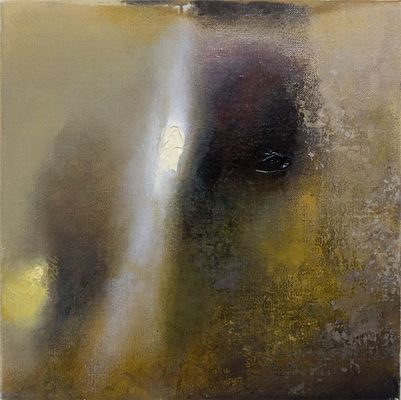
To return to Buckley’s fragment, the first two lines very much evoke how I paint nowadays. As you age, detail diminishes and patches of light become more luminous and float. I feel the most honest way of dealing with this is by smearing the oil paint on the canvas with the fingers and working close-up, blind. Only if the patches coalesce into an approaching image can the work gain a life.
-
Jonathan Walker was born in Melbourne, Australia and brought up on a dairy farm in Gippsland. In the 1970’s he studied painting at RMIT and won the Harold Wright Scholarship to the British Museum, London. During the 1980’s he exhibited at Pinacotheca Gallery, Richmond and had work shown at the NGV and Heidi City Art Gallery. Over the same period he designed the cover for the “Epigenesi” LP by Giancarlo Toniutti, Italy and conducted a mail exchange work with Achim Wollscheid, Germany. The work with artists through the post resulted in an article published in the bicentenary issue of Art and Australia 1988. He showed in artist run spaces such as WestSpace in the 90’s and 2000’s, and until 2012, taught painting at Victoria University, which is where we (Colleen Ahern and Lisa Radford) as organisers of the exhibition, among many others, had the privilege of being his student.
Walker’s knowledge was imparted to students through the careful selection of music, literature, and artists found in books that he himself had ordered for the library. Walker’s strategy was the generosity of sharing his vast knowledge with references specific to each student and their context.
Walker’s paintings share a similar focus and intimacy.
This exhibition presents a small selection of recent paintings alongside a publication that includes Walker’s writing. Observational and analytical, Walker’s work is a type of material notation — the time of day, colour and how it is blended, the both specific and fleeting location of a reflection on lino or the question of whether a chair leg should be included in a painting.
Please join us on Friday August 21 between 6-8pm to celebrate the opening of the exhibition.
Curated by Colleen Ahern and Lisa Radford.
B. Wurtz
Curated by Nic Tammens
March 26 - April 4, 2015
B.Wurtz works from a basement studio in his home on Manhattan’s Lower East Side.
This local fact is attested to by the plastic shopping bags and newsprint circulars that appear in his work. As formal objects, they don’t make loud claims about their origins but nonetheless transmit street addresses and places of business from the bottom of this long thin island. Like plenty of artists, Wurtz is affected by what is local and what is consumed. His work is underpinned by this ethic. It often speaks from a neighborhood or reads like the contents of a hamper:
“BLACK PLUMS $1.29 lb.”
“Food Bazaar”
“USDA Whole Pork Shoulder Picnic 99c lb.”
“RITE AID Pharmacy, with us it’s personal.”
“H. Brickman & Sons.”
“Sweet Yams 59c lb."
Most of the work in this exhibition was made while the artist was in residence at Dieu Donne, a workshop dedicated to paper craft in Midtown. Here Wurtz fabricated assemblages with paper and objects that are relatively lightweight, with the intention that they would be easily transportable to Australia. This consideration isn’t absolute in Wurtz’s work, but was prescriptive for making the current exhibition light and cheap. Packed in two boxes, these works were sent from a USPS post office on the Lower East Side and delivered to North Melbourne by Australia Post.
Wurtz appears courtesy of Metro Pictures, New York.
Thanks to Rob Halverson, Joshua Petherick, Sari de Mallory, Matt Hinkley, Helen Johnson, Fayen d'Evie, Ask Kilmartin, Lisa Radon, Ellena Savage, Yale Union, and "Elizabeth".
John Nixon
"Archive"
December 15 - January 20, 2014
The presentation of John Nixon's archive offered a rare showcase of this extensive collection of the artist's own publications, catalogues, posters, ephemera, editions and more, from the mid 1980s onwards, alongside a selection of his artworks.
Organized by John Nixon, Joshua Petherick and Matt Hinkley.
<a href=http://wfb.public-office.info/artist/john-nixon>All titles by John Nixon
"Habitat"
at Minerva, Sydney (organised by Joshua Petherick and Matt Hinkley)
November 15 - December 20, 2014
Lupo Borgonovo, Janet Burchill & Jennifer McCamley,
Lewis Fidock, HR Giger, Piero Gilardi, Veit Laurent Kurz,
Cinzia Ruggeri, Michael E. Smith, Lucie Stahl, Daniel Weil, Wols
Press Release:
“...It contained seven objects. The slender fluted bone, surely formed for flight, surely from the wing of some large bird. Three archaic circuitboards, faced with mazes of gold. A smooth white sphere of baked clay. An age-blackened fragment of lace. A fingerlength segment of what she assumed was bone from a human wrist, grayish white, inset smoothly with the silicon shaft of a small instrument that must once have ridden flush with the surface of the skin - but the thing’s face was seared and blackened.”
William Gibson, “Count Zero”, 1986
"Autumn Projects Archive"
Curated by Liza Vasiliou
March 6 - March 15, 2014
World Food Books, in conjunction with the Virgin Australia Melbourne Fashion Festival 2014, presented the Autumn Projects archive, consisting of a selection of early examples in Australian fashion with a particular interest in collecting designers and labels from the period beginning in the 1980’s, who significantly influenced the discourse of Australian Fashion.
Curated by Liza Vasiliou, the exhibition provided a unique opportunity to view pieces by designers Anthea Crawford, Barbara Vandenberg, Geoff Liddell and labels CR Australia, Covers, Jag along with early experimental collage pieces by Prue Acton and Sally Browne’s ‘Fragments’ collection, suspended throughout the functioning World Food Books shop in Melbourne.
H.B. Peace
presented by CENTRE FOR STYLE
November 14, 2013
"Hey Blinky, you say chic, I say same"
Anon 2013
H.B. Peace is a clothing collaboration between great friends Blake Barns and Hugh Egan Westland. Their pieces explore the divergences between 'character’ and ‘personality’ in garments....etc
Special Thanks to Joshua Petherick and Matt Hinkley of WFB and Gillian Mears
and a Very Special Thank you to Audrey Thomas Hayes for her shoe collaboration.
Janet Burchill & Jennifer McCamley
"Aesthetic Suicide"
May 10 - June 8, 2013
The first of our occasional exhibitions in the World Food Books office/shop space in Melbourne, "Aesthetic Suicide" presented a body of new and older works together by artists Janet Burchill & Jennifer McCamley, including videos, prints, a wall work, and publications.
During shop open hours videos played every hour, on the hour.
2012, English
Softcover, 192 pages 23 x 15.5 cm
1st Edition, Out of print title / used / very good
$80.00 - In stock -
Very rare copy of the first book by musician Joe Morris, published independently in 2012 by Riti and very quickly out-of-print.
Perpetual Frontier: The Properties of Free Music describes the way free music is constructed through the processes of synthesis, interpretation, and invention. With descriptive sections of four seminal methodologies: Unit Structures, Harmolodics, Tri-Axium Theory, and European Free Improvisation, as well as sections on how specific properties are consistently used and re-formulated in the construction of free music. This material, which the author developed through years of performing and teaching, is concise and coherent, making it clear for listeners and musicians alike, and thereby setting a new standard for the understanding and study of the most inherently forward-seeking musical form of our time.
"Free music is an art form that has been made by individuals who operate without regard for critical or institutional approval, who invented the way they play their instruments and invented platforms on which to play music, based on whatever aesthetic value they thought mattered to them."—Joe Morris
This extraordinary work also features contributions in the form of answers to a questionnaire by 15 renowned free music artists: Marilyn Crispell, Charles Downs, Joe McPhee, Alex Ward, Matthew Shipp, Ken Vandermark, Jack Wright, Simon H. Fell, Agusti Fernandez, Nate Wooley, William Parker, Mary Halvorson, Nicole Mitchell, Katt Hernandez, and Jamie Saft.
Very Good copy. Small moisture ripple patch to back page corners only.
1995, English
Softcover, 192 pages, 23 x 15.5 cm
1st Edition, Out of print title / used / very good
Published by
Matchless / Essex
$80.00 - In stock -
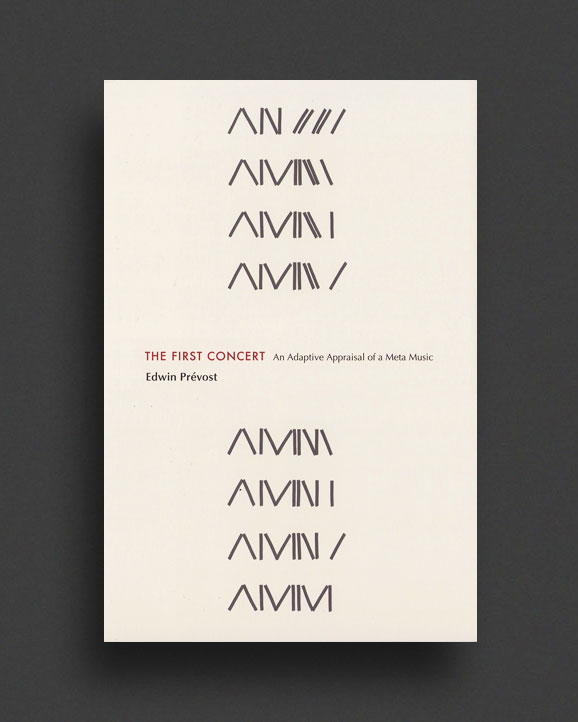
Rare first (1995) edition of the documented history and underlying philosophy of AMM by its percussionist and founding member Eddie Prévost. Essential for anyone curious about the internal fabric and inspiration of AMMusic.
The improvising group AMM was born some 30 years ago [1965], at a time of extraordinary creative ferment and transformational social possibility. Though its history has not been completely smooth, it continues today to pursue a unique sonic course, unswayed either by academic orthodoxy or the conformist pressures of the market. In this book, Eddie Prevost, drummer and a founder member, explores the reasons it came to be, the influences and refusals that have shaped its history, and the potential and the failings not only of the meta-music AMM is committed to, but all music everywhere: classical, jazz, folk, pop and the experimental avant-garde. In a unique series of acute and often moving dissections and meditations, directly modelled on AMM’s attitudes and practices in performances, Prevost examines the meanings of sound itself, giving them aesthetic, social and political dimension. These, together with an outline of the events of the group’s three decades of existence, of alliances and conflicts within the collective, give voice to a radically contrarian but always thoughtful underground strand in present-day music-making, which adherents all over the world, among players and listeners. It will fascinate and perhaps trouble anyone with an interest in modern music’s deeper currents.
"The idea of the performer of a written work as technical executor,or as a kind of curator (as Brendel puts it), precludes the possibility of free dialogue. If musical works could be perceived less as marketable or sacred objects, and more as possible views of the world on which to reflect, greater freedom might develop. Eddie Prévost's book, with great skill and imagination, provokes the readers into contemplating such questions."
Piano Journal
"This is an inspiring, modest and (to use a word that Prévost is not ashamed to use) beautiful book. Nothing in it is more beautiful than his own cry of resistance: I am something other than what you tell me I am."—The Wire
"One of the most successful attempts to illuminate the aesthetic, social and political aspects of the modus vivendi of improvised music."—Dissonanz (Swiss)
VG—Fine copy.
2011, English
Softcover, 250 pages, 23 x 15.3 cm
1st Edition, Out of print title / as new
Published by
Matchless / Essex
$45.00 - In stock -
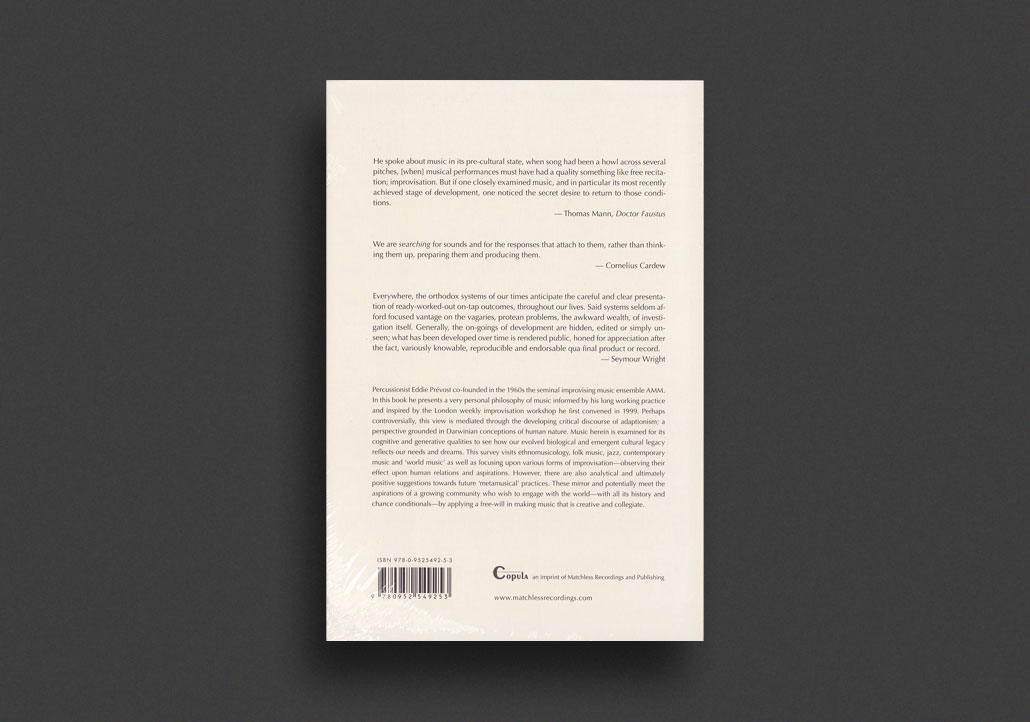
Percussionist Eddie Prévost co-founded in the 1960s the seminal improvising music ensemble AMM. In this book he presents a very personal philosophy of music informed by his long working practice and inspired by the London weekly improvisation workshop he first convened in 1999. Perhaps controversially, this view is mediated through the developing critical discourse of adaptionism; a perspective grounded in Darwinian conceptions of human nature. Music herein is examined for its cognitive and generative qualities to see how our evolved biological and emergent cultural legacy reflects our needs and dreams. This survey visits ethnomusicology, folk music, jazz, contemporary music and 'world music' as well as focusing upon various forms of improvisation - observing their effect upon human relations and aspirations. However, there are also analytical and ultimately positive suggestions towards future 'metamusical' practices. These mirror and potentially meet the aspirations of a growing community who wish to engage with the world - with all its history and chance conditionals - by applying a free-will in making music that is creative and collegiate.
Published 2011 by Copula, an imprint of Matchless Recordings and Publishing
As New, sealed copy.
2004, English
Softcover, 177 pages, 15.2 x x 23 cm
1st Edition, Out of print title / as new
Published by
Matchless / Essex
$45.00 - In stock -
Eddie Prevost (AMM)'s 2nd book of writings to be published by Matchless. Subtitled: "Meanings in music-making in the wake of hierarchal realignments and other essays." In 177 pages Eddie Prévost includes twenty-nine thought-provoking essays on ideas, perceptions, reactions and the practices of improvised music, as well as a short index. Reactions to the real world - in particular, the political, corporate and commercial ones - are never far from the surface and the place of the individual is mirrored through that of the musician developing his or her own position, responsiveness and voice in a group context. Discourses include the questioning of terminology such as 'non-idiomatic' to describe improvised music, cover sonic extremes and racial focus in current and recent musical endeavours, and revisit an hilarious review of reviews of the Ganelan Trio's first London concert in 1984. The premise with which each essay begins is analysed, explored and intellectually wrestled with so that even if the reader doesn't concur with the conclusions, at least there is food for further thought. Occasionally there is the impression of a Candide innocently walking through an embattled and battered musical landscape wondering where it's all gone wrong. Not sufficiently to suggest that the author made the wrong decision in becoming a musician - if there was a choice - and, in any case, there is the occasional footnote to indicate that perhaps (some) things are now on the mend. A recommended read.
As New, sealed copy.
1993, English
Hardcover, 56 pages, 21.5 x 16 cm
1st Edition, Out of print title / used / fine
Published by
Artspace Books / Sausalito
$65.00 - Out of stock
First 1993 edition of this hardcover collaborative book between artist Nayland Blake and author Dennis Cooper.
Illustrated by the works of conceptual artist Nayland Blake, whose images of marionettes are used to explore issues of desire and mortality, this is an original story by Dennis Cooper based on the confessions of David Brooks, an accomplice to a convicted American serial killer.
Long out-of-print.
Fine copy.
2011, Japanese / English
Softcover, 240 pages, 30 x 22.5 cm
1st Edition, Out of print title / used / very good
Published by
Art Days / Tokyo
$55.00 $25.00 - Out of stock
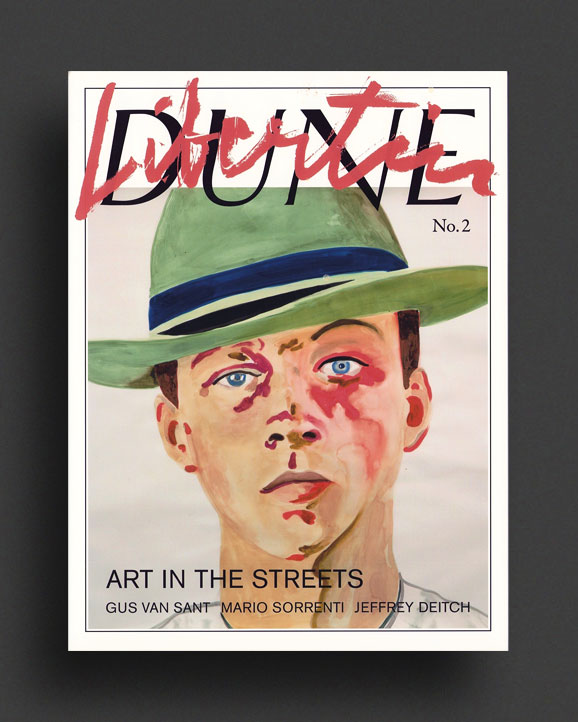
Second issue of DUNE Libertin, Japanese fashion and culture magazine following DUNE Quarterly, edited by the legendary Fumihiro Hayashi, re-launched for the new millennium, and as much a time-capsule of the 00s as Quarterly was of the 90s. With cover artwork by Gus Van Sant, other features in this issue include Mark Gonzales, Barry Mcgee, Momoko Ando, 111 Boadrum (Boredoms), Jeffrey Deitch, Mario Sorrenti, Ari Marcopoulos, Spike Jonze, Shepard Fairey, Hiromix, Liz Goldwyn, Aaron Rose, Punk Is Still Alive (w. Mike Watt — SST, Minutemen, Firehose), Rodarte, Chikashi Suzuki, Oliver Zahm (Purple), Tomoo Gokita, and much much more.
Very Good copy with small scuff to spine edge.
1996, English
Softcover, 136 pages, 22.5 x 29.5 cm
1st Edition, Out of print title / used / very good
Published by
Art Days / Tokyo
$200.00 - Out of stock
Special Summer 1996 10th issue of DUNE, featuring the iconic Chloë Sevigny cover styled by Andrew Richardson and shot by Terry Richardson. Rare and most sought-after issue of this Japanese fashion and culture magazine, edited by the legendary Fumihiro Hayashi, with the theme of "REALITY", encapsulating the "realism" of 1990's new fashion photography and anti-fashion aesthetic, including a huge photo feature of Chloë by Richardson, Hysteric Glamor shot by David Sorrenti, Prada does Palm Springs by Takashi Homma, Baby Generation by Takashi Homma, featuring Sofia Coppola, Kim Gordon, Ione Skye, Tamra Davis and Karen Klimnik, Walter Van Beirendonck, photography by Sofia Coppola, Shingo Wakagi, Katsumi Omori, Masashi Sanai, Fujio Saimon, Gregory Crewdson, Masashi Ohashi, plus Visionaire, Hiroshi Tanabe, Hunter S. Thompson, ads for X-Girl, Milk Fed, Paul Smith... a rare (even in Japan) time capsule and distant memory of the Genki days of the bookshop building.
Very Good copy.
1974, German
Softcover, 128 pages, 25.5 x 18.5 cm
1st Edition, Out of print title / used / good
Published by
Bündner Kunsthaus / Chur
$200.00 - Out of stock
Very rarely seen, first and only edition of Giger's Passagen: Werkkatalog 1971-1974, designed entirely by Giger himself and published in a limited edition in 1974 as the continuation of the first oeuvre catalog, 'A Rh +' published in 1971. Packed with amazing content, much not documented elsewhere), this book first and foremost features a fully illustrated catalogue of Giger's iconic Passagen works in colour and b/w. Alongside texts by various critics, writers, and colleagues, including Sandro Fischli, H. Hartmann, Fritz Billeter, and Sergius Golowin, the book traverses many different projects, exhibits, happenings and social gatherings, mostly photographed by Giger himself, including the work of (and/or his collaborations with) Walter Wegmüller, Li Tobler, Claude Sandoz, Timothy Leary, Friedrich Kahn, Wolfgang Hausamann, and more. Also catalogued in colour and b/w are Giger's magnificent landscape works dating from 1972-1974. Includes a biography, bibliography, full work listings and photo credits, closing with a lovely portrait of Swiss stage actress, gallerist, partner and model for many of Giger's paintings, Li Tobler (30 November 1947 – 19 May 1975).
Good copy.
1987, English
Softcover, 144 pages, 21 x 20 cm
1st Edition, Out of print title / used / very good
Published by
Het Apollohuis / Eindhoven
$80.00 - Out of stock
Rare 1987 exhibition catalogue published in conjunction with show held November 22—January 6, 1985. Illustrated throughout with texts by Paul Panhuysen, Ellen Fullman, Godfried-Willem Raes, Anton van Gemert, Bart Lootsma, Arnold Dreyblatt, Leon van Noorden, George Smits, and Hugh Davies. Artists include Max Eastly, Takeisha Kosugi, Walter Marchetti, Ellen Fullman, Godfried-Willem Raes, Horst Rickels, Rik van Lersel, Giancarlo Cardini, Juan Hidalgo, Jon Rose, and others. Includes selected bibliography, discography, and index.
blurb: "From November 1984 until January 1985 a group was held in Het Apollohuis, Eindhoven of works that combined image and sound. Installations, concerts and a symposium were organised around the exhibition, featuring artists who use sound in their work and composers who use visual aspects. In addition to a photographic report of this festival 'ECHO. The images of Sound I', this book contains a general survey of the development of sound arts and cassettes that have been published in the field of sound art. This section is written by Hugh Davies. Photographs, scores, drawings of articles describing the development of their own work are supplied by Julius, Ellen Fullman, HUM, Max Eastley, Takehisa Kosugi, Hugh Davies, Godfried-Willem Reas, STEIM, The Simulated Wood, VANDALIA, Arnold Dreyblatt, Richard Lerman, Leon van Noorden, Paul Panhuysen, Johan Goedhart, Hans-Karsten Raecke, Jon Rose and George Smits.[...]"
Very Good—Near Fine copy
1986, German
Softcover (w. dust jacket), 22 pages, 30 x 21 cm
1st Edition, Out of print title / used / very good
Published by
Galerie Fred Jahn / Münich
$200.00 - Out of stock
Beautiful, scarce catalogue published on the occasion of the solo exhibition Isa Genzken, held January 31 - March 31, 1986, at Galerie Fred Jahn, Münich. Illustrated throughout with Genzken's painted plaster and wood sculptures, alongside essay (in German) by Paul Groot, biography, bibliography, and exhibition history. Highly recommended.
Very Good copy.
2003, English / German
Hardcover (w. dust jacket), 192 pages, 32 x 25 cm
1st Edition, Out of print title / used / very good
Published by
Walther König / Köln
Kunsthalle Zürich / Zürich
Museum Abteiberg / Mönchengladbach
$600.00 - Out of stock
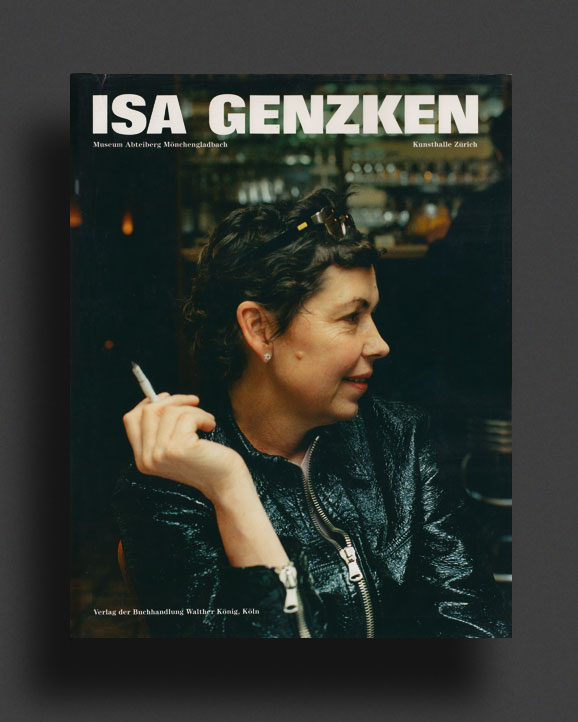
First edition of the mighty collectible catalogue raisonné of Isa Genzken, published by Walther Koenig in 2003 and very quickly out-of-print. Edited by Veit Loers and Beatrix Ruf, this over-sized hardcover volume is richly illustrated with Genzken's wide-ranging, multi-faceted body of work created over a ten year period, including large reproductions of her installations and a comprehensive chronological catalogue raisonné of work from 1992-2003. Includes texts by Diedrich Diederichsen, Vanessa Joan Müller and Josef Strau, and an interview between Genzken and artist Wolfgang Tillmans. An invaluable and rare resource on one of the greatest contemporary European artists. All texts in English and German.
Since the late 1970s, the Berlin-based contemporary artist Isa Genzken (b. 1948) has produced a body of work that is remarkable for its formal and material inventiveness. In her sculptural practice, Genzken has developed an expanded material repertoire that includes plaster, concrete, epoxy resin, and mass-produced objects that range from action figures to discarded pizza boxes. Her heterogeneous assemblages, a New York Times critic observes, are “brash, improvisational, full of searing color and attitude.” Genzken offers a highly original interpretation of modernist, avant-garde, and post minimalist practices even as she engages pressing sociopolitics and economic issues of the present.
Very Good - Fine copy in VG-Fine dust jacket.
1987, English
Hardcover (w. dust jacket), 208 pages, 24 x 16.5 cm
1st Edition, Out of print title / used / fine
Published by
Thames and Hudson / London
$90.00 - Out of stock
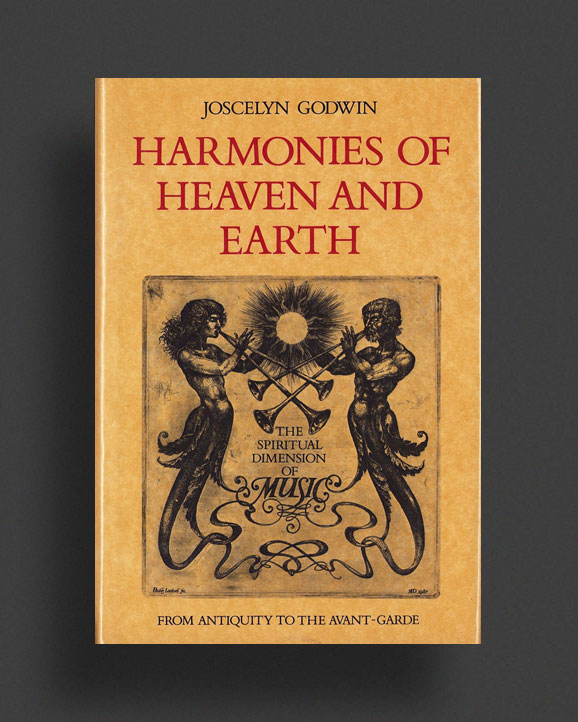
Scarce original 1987 hardcover edition of Harmonies of Heaven and Earth, published by Thames & Hudson, London. Joscelyn Godwin explores music's effects on matter, living things, and human behavior. Turning to metaphysical accounts of the higher worlds and theories of celestial harmony, the author follows the path of musical inspiration on its descent to Earth, illuminating the archetypal currents that lie beneath Western musical history.
The power of music is spiritual. It is, for many people, the principal point of access to a consciousness beyond that of ordinary life. Musicians and listeners alike can read analyses of the physics or the psychology, the technique or the history of music; but there is a contemporary need, as Joscelyn Godwin reveals in this challenging book, for informed discussion of the almost too obvious fact that there is something supernatural in musical experience. This is that universal dimension of which Plato, Kepler, Rameau and Novalis wrote, and of which Wagner said: 'I feel that I am one with this vibrating Force, that it is omniscient, and that I can draw upon it to an extent that is limited only by my own capacity." The spiritual power of music surfaces in folklore, myth and mystical experience, refusing as music always does- to be bound by narrow rationalism. It embraces Heaven as well as Earth, the music of the spheres as well as the music that is played and sung.
Joscelyn Godwin begins his closely argued study with music's perceived effects on matter, on plants, on animals and on human behaviour. He then turns inward, to the absorbing accounts that have been given of the higher worlds that are the birthplace of Harmony, and of the realm of pure Intelligence which lies both within and beyond. To hear music, however, we need composers and performers, and the argument then follows Harmony on its descent from Heaven to Earth. This descent takes place in the musician's inspiration, in the listener's experience, and in the world at large; for archetypal currents run beneath the surface of musical history, in the centuries that encompass the polyphony of Perotin or J.S. Bach and the psychic impact of Webern, Stockhausen and rock'n'roll. A self-contained final section embodies the fullest account ever given of ancient and modern theoretical systems of celestial harmony, from Pythagoras to Marius Schneider, Rudolf Steiner and Gurdjieff.
Joscelyn Godwin was born in Kelmscott, Oxfordshire, England on January 16, 1945. He was educated as a chorister at Christ Church Cathedral School, Oxford, then at Radley College (Music Scholar), and Magdalene College, Cambridge (Music Scholar; B.A., 1965, Mus. B., 1966, M.A. 1969). Coming to the USA in 1966, he did graduate work in Musicology at Cornell University (Ph. D., 1969; dissertation: "The Music of Henry Cowell") and taught at Cleveland State University for two years before joining the Colgate University Music Department in 1971. He has taught at Colgate ever since.
Near Fine in VG—NF dust jacket. Beautifully preserved, unread.
1985, English
Softcover, 160 pages, 13.97 x 21.59 cm
1st Edition, Out of print title / used / very good
Published by
Verso / London
$30.00 - Out of stock
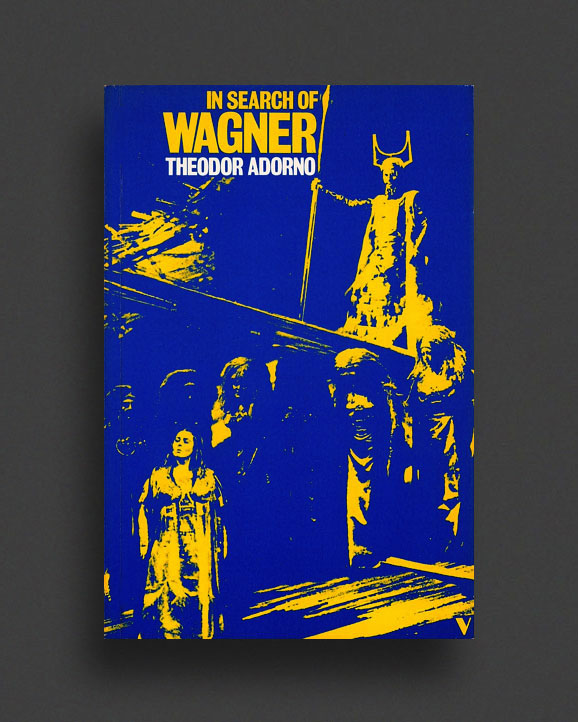
Written in exile from Germany, this potent study of Europe’s most controversial composer explodes the frontiers of musical and cultural analysis.
Richard Wagner's works are among the most controversial in the history of European music — aesthetically, for their ideal of Gesamtkunstwerk, which inspired such productions as the Ring cycle; and in wider terms, because of their ultimate assimilation into the official culture of the Third Reich. The aesthetic and the ideological and political are subtly interwoven throughout In Search of Wagner.
Adorno, who studied under Alban Berg in Vienna and went on to become the most brilliant exponent of the Frankfurt School of German Marxism, was in many ways the cultural antitype of his subject. In his concise synoptic account, he provides deft musicological analyses of Wagner's scores, of his compositional techniques, orchestration and staging methods, quoting copiously from the music dramas themselves. At the same time, he sets down incisive reflections on Wagner's social character, and on the ideological impulses of his artistic activity.
"Adorno's In Search of Wagner is an astonishing book, comparable only... to the later Wagner tracts by Nietzsche... It is essential reading for anyone seriously involved with the composer, and now we can read it thanks to a superior translation by Rodney Livingstone"—New York Review of Books
"Every chapter of this excellent little book has some penetrating insight"—Classical Music Weekly
VG copy.
1982, English
Softcover, 138 pages, 21 x 14.5 cm
1st Edition, Out of print title / used / very good
Published by
University of Melbourne / Parkville
$20.00 - In stock -
Scripsi No. 1 / Vol. 2 (November 1982), special commemorative edition dedicated to James Joyce, who passed away that year, featuring the contributions of Kenneth Cox, Vivian Mercier, D.J. O'Hearn, Richard Ellmann, Leslie Fiedler, William Empson, Peter Craven, David Hayman, Arnold Goldman, Simon During, Fritz Senn, Simon Evans... Editors: Peter Craven and Michael Heyward; Associate Editor: Colin McDowell; Editorial Assistant: Rosemary Hunter.
Scripsi was an Australian literary periodical published from 1981 to 1994 in Melbourne, first from the English Department and subsequently from Ormond College of the University of Melbourne. Its name comes from Pontius Pilate's assertion "Quod scripsi, scripsi" (What I have written, I have written). Scripsi was founded in 1981 by Michael Heyward and Peter Craven, who met while studying at the University of Melbourne. Craven and Heyward co-edited the journal until 1989, when Heyward left. For many years, the poetry editor was John Forbes and the graphics editor was Bill Henson. Associate Editors included Penny Hueston, Philippa Hawker, Owen Richardson and Andrew Rutherford. The latter two were briefly co-editors, in 1993–4. Editorial assistants included Rosemary Hunter and Rosemary Sorensen. The magazine was widely regarded at the time as one of the world's finest literary magazines.[3][citation needed] It published a wide variety of Australian writers, in fiction, poetry and non-fiction, and attracted contributions from world-famous literary figures such as Susan Sontag, Salman Rushdie, Georges Perec, John Ashbery, August Kleinzahler and others.
Very Good copy. light cover wear.
1985, English
Softcover (w. dust jacket), 264 pages, 21 x 14.5 cm
1st Edition, Out of print title / used / very good
Published by
University of Melbourne / Parkville
$40.00 - In stock -
Scripsi No. 4 / Vol. 3 (December 1985), Special French Issue, featuring Francis Steegmuller: Flaubert's letters; Gérard Genette on Proust; Hélène Cixous: The Meadow; John Sturrock on Sartre; Philippe Jaccottet: The Cormorants; Vivian Mercier: Gael and Gaul; J.M. Cocking: Lacan; Colin Nettelbeck on Truffaut; Emmanuel Hocquard translated by John A. Scott; Richard Sieburth: Versions of Guillevic; Poetry by Edmond Jabès, Claude Royet-Journoud, Jean Daive, Anne-Marie Albiach, Bernard Noël, plus more. Editors: Peter Craven and Michael Heyward; Associate Editor: Penny Hueston, Colin McDowell; Editorial Assistant: Rosemary Hunter.
Scripsi was an Australian literary periodical published from 1981 to 1994 in Melbourne, first from the English Department and subsequently from Ormond College of the University of Melbourne. Its name comes from Pontius Pilate's assertion "Quod scripsi, scripsi" (What I have written, I have written). Scripsi was founded in 1981 by Michael Heyward and Peter Craven, who met while studying at the University of Melbourne. Craven and Heyward co-edited the journal until 1989, when Heyward left. For many years, the poetry editor was John Forbes and the graphics editor was Bill Henson. Associate Editors included Penny Hueston, Philippa Hawker, Owen Richardson and Andrew Rutherford. The latter two were briefly co-editors, in 1993–4. Editorial assistants included Rosemary Hunter and Rosemary Sorensen. The magazine was widely regarded at the time as one of the world's finest literary magazines.[3][citation needed] It published a wide variety of Australian writers, in fiction, poetry and non-fiction, and attracted contributions from world-famous literary figures such as Susan Sontag, Salman Rushdie, Georges Perec, John Ashbery, August Kleinzahler and others.
Very Good copy. Moisture ripple to back dust jacket edge, not affecting any interior.
1991, English
Hardcover (w. dust jacket), 110 pages, 20.3 x 28.3 cm
1st Edition, Out of print title / used / very good
Published by
Peter Owen Ltd. / London
$160.00 - In stock -
First hardcover edition of this splendid collection of Jean Cocteau's Erotica Drawings, published by Peter Owen Ltd., London, published in 1991.
Although better known for his poetry, films and novels, Jean Cocteau experimented with drawing from childhood, and his caricatures have become iconic of his unique vision of people and life. This beautiful book collects four decades of his erotic drawings, many of which could not be published in the artist's lifetime. With images of some of Cocteau's famous lovers, including author Raymond Radiguet and actor Jean Marais.
Jean Maurice Eugène Clément Cocteau (1889—1963) was a French poet, playwright, novelist, designer, filmmaker, visual artist and critic. He was one of the foremost creatives of the surrealist, avant-garde, and Dadaist movements; and one of the most influential figures in early 20th-century art as a whole.
Very Good copy with VG dust jacket.
2002, Japanese
Hardcover in slipcase w. illustrated paste-on, unpaginated, 21.5 x 15 cm
1st Edition, Out of print title / used / fine
Published by
Seirin Kogeisha / Tokyo
$450.00 - Out of stock
Signed copy of the first, limited, number-stamped edition of "The Earliest Works of Toshio Saeki" by the Japanese master of Ero guro, published by Seirin-Kogei-Sha in 2002 and long out-of-print. Before Saeki worked in his later palette of bright flat colours, he expressed the darker and more chaotic aspects of unbridled eroticism in stark black and white, with the occasional and dramatic splash of a single primary colour. In this lavishly illustrated book, Saeki's disturbing iconography reveals links to the past and simultaneously indicates the even more bizarre twists his work would take in the future. The Earliest Works also shows the early inspirations of Toshio Saeki, Tomi Ungerer's effect being a most clear one. Broken into three chapters: Earliest Works, Uncollected Works, and Unpublished Studies from 1969, the book also includes a chronological record and notes by Yuji Yamashita. An incredible book! Signed by Saeki in metallic silver to inside cover.
Toshio Saeki (1945—2019) was an illusive Japanese illustrator and painter, and icon of 1970s Tokyo counterculture, known for combining Japanese folklore, Yōkai spirits and elements of Western art with his own sophisticated aesthetics to create a unique, sensational world of eros, dark humour, and horror. Given the title “Erotic Engineer” by Timothy Leary, Saeki's provocative art broke all sexual taboos, questioned Japanese ideology and traditional views on love, desire and gender roles. Saeki’s surgically-precise graphic work is closely related to the Japanese cultural phenomenon ‘Erotic, Grotesque, Nonsense’ (ero, guro, nansensu).
“Toshio Saeki conjures death with a pen”—Shūji Terayama, 1969.
Perfect fine hardcover copy housed in fine slipcase, beautifully preserved.
2007, Japanese
Softcover (w. obi), 68 pages, 27.5 x 21.5 cm
1st Edition, Out of print title / used / very good
Published by
Wailea Publishing / Tokyo
$220.00 - Out of stock
Seldom seen Japanese facsimile of this cult classic work by ero-guro master Toshio Saeki (1945—2019), published in original over-sized slipcased edition in 1972, this 2007 edition by erotica publisher Wailea. Also long out-of-print, this deluxe edition with exquisite printing presents each full-bleed colour spread from the original as double folded bound page, creating a unique viewing experience. With original heavily printed red obi-strip in honour of the original red box. The most famous work by Toshio Saeki, Red box (Akai Hako) brings together over fifty illustrations drawn by Toshio Saeki made in 1972. Akai Hako is a masterpiece!
Toshio Saeki (1945—2019) was an illusive Japanese illustrator and painter, and icon of 1970s Tokyo counterculture, known for combining Japanese folklore, Yōkai spirits and elements of Western art with his own sophisticated aesthetics to create a unique, sensational world of eros, dark humour, and horror. Given the title “Erotic Engineer” by Timothy Leary, Saeki's provocative art broke all sexual taboos, questioned Japanese ideology and traditional views on love, desire and gender roles. Saeki’s surgically-precise graphic work is closely related to the Japanese cultural phenomenon ‘Erotic, Grotesque, Nonsense’ (ero, guro, nansensu).
“Toshio Saeki conjures death with a pen”—Shūji Terayama, 1969.
Very Good with unique obi. Some marking with white covers from obi.
1990, English
Hardcover (w. dust jacket), 144 pages, 22.5 x 15 cm
1st Edition, Out of print title / used / very good
Published by
Dalkey Archive Press / US
$40.00 - Out of stock
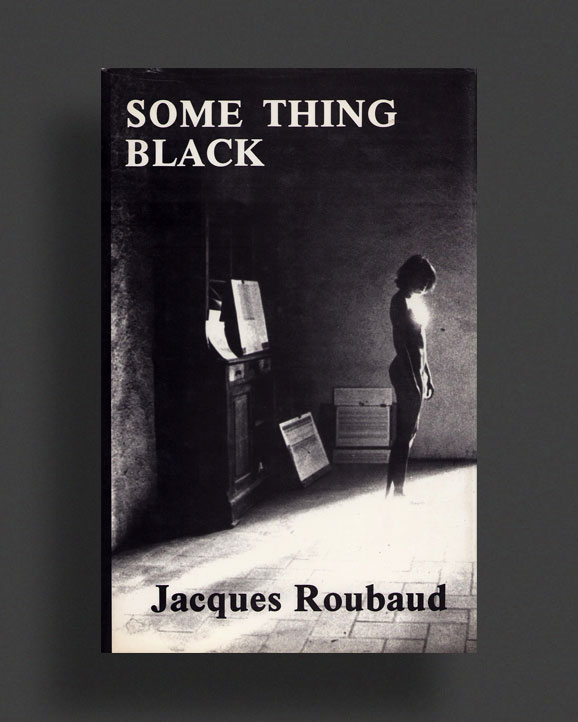
Gorgeous first 1990 hardcover edition of Jacques Roubaud's Some Thing Black, translated by Rosmarie Waldrop, alongside the photographic work of Alix Cleo Roubaud, and published by Dalkey Archive Press.
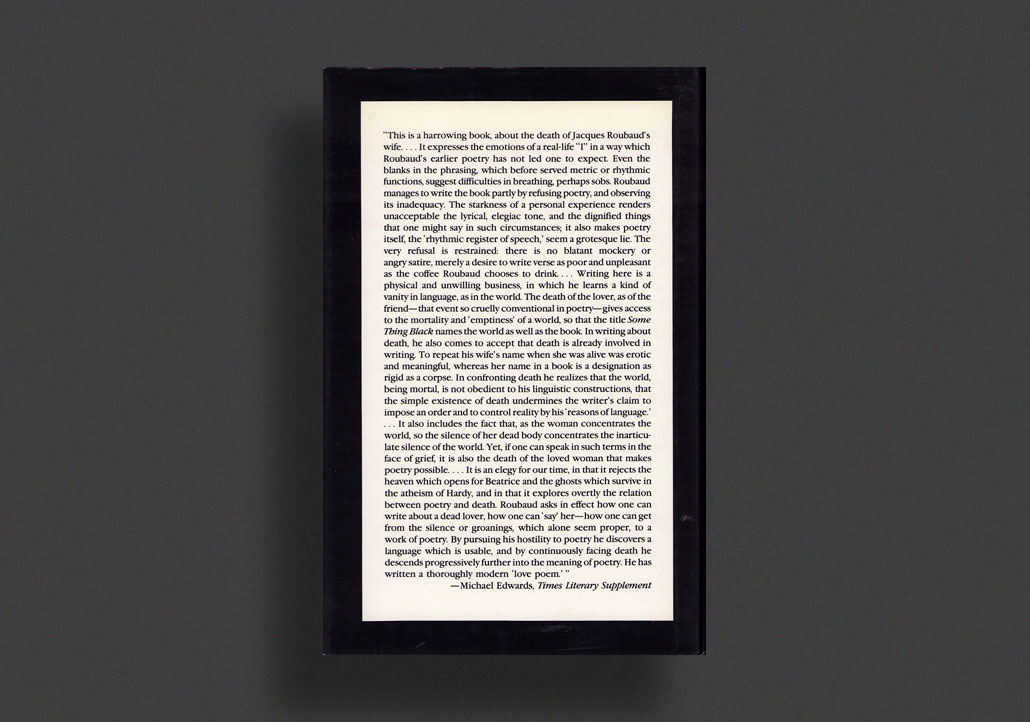
In 1983 Jacques Roubaud’s wife Alix Cleo died at the age of 31 of a pulmonary embolism. The grief-stricken author responded with one brief poem (“Nothing”), then fell silent for thirty months. In subsequent years, Roubaud―poet, novelist, mathematician―composed a series of prose poems, a collection that is a profound mediation on the experience of death, the devastation it brings to the lover who goes on living, and the love that remains. Despite the universality of this experience, no other writer has so devoted himself to exploring and recording the many-edged forms of grief, mourning, bewilderment, emptiness, and loneliness that attend death. No other writer has provided a kind of solace while facing with honesty and hardness the intricate ways in which the living are affected by such a loss. Some Thing Black is an ongoing monologue from Roubaud to his wife, as death assaults the mind’s failure to comprehend absence. Roubaud both refuses to and cannot surrender his wife to the past (“I always wake up in your voice, your hand, your smell”). The death, having occurred in an instant of time, goes on in him (“But inside me your death proceeds slowly, incomprehensibly”). While acknowledging “death calls for a poetry of meditation,” Roubaud is enraged at the limitations of language and words to affect the biological reality. Rather, all that language can do is clarify the exactness of his grief and to recall precisely the image of her life and death. But such recollection―the sight of her dead body, her photographs, her things, the rooms they lived in―becomes a “memory infinitely torturous.” And his most anguished recollection is of their making love (“These memories are the darkest of all”), and a sense of guilt for somehow not having prevented her death (“I did not save you from that difficult night”). This is a brave and honest book that does not disguise that pain of loss. Its nobility, grace, and humanity rest in its refusal to falsify death’s harsh presence (“This dirty rotten life to be mixed up with death”) and in its acceptance of the mind’s limitations (“I do not understand”). This moving, compassionate, uncompromising book is one of the most significant works of our time. Included in this edition is a portfolio of photographs made by Roubaud’s wife in 1980 entitled “If Some Thing Black.”
Jacques Roubaud (b. 1932) is a French poet, writer and mathematician. A member of the Oulipo group, he has published poetry, plays, novels, and translated English poetry and books into French such as Lewis Carroll's The Hunting of the Snark. French poet and novelist Raymond Queneau had Roubaud's first book, a collection of mathematically structured sonnets, published by Éditions Gallimard, and then invited Roubaud to join the Oulipo as the organization's first new member outside the founders.
Very Good in VG dust jacket.
1969, English
Softcover, 144 pages, 20 x 13.5 cm
1st Edition, Out of print title / used / good
Published by
New Directions / New York
$25.00 - Out of stock
First 1969 edition of Earth House Hold by Gary Snyder. Both Pound and Williams have shown how a good poet can revitalize prose style. Earth House Hold (a play on the root meanings of “ecology”) drawn from Gary Snyder’s essays and journals, may prove a landmark for the new generation. “As a poet," Snyder tells us, “I hold the most archaic values on earth. They go back to the late Paleolithic; the fertility of the soil, the magic of animals, the power-vision in solitude, the terrifying initiation and rebirth; the love and Ecstasy of the dance, the common work of the tribe.” He develops, as replacement for shattered social structures, a concept of tribal tradition which could lead to “growth and enlightenment in self-disciplined freedom. Whatever is or ever was in any other culture can be reconstructed from the unconscious through meditation . . . the coming revolution will close the circle––and link us in many ways with the most creative aspects of our archaic past.”
Good—Very Good copy with tanning, previous owners name to title page.
1980, English
Softcover, 84 pages, 23 x 15.5 cm
1st Edition, Out of print title / used / good
Published by
Burning Deck / Providence
$40.00 - Out of stock
First 1980 edition of Rosmarie Waldrop's When They Have Senses poetry collection, published by her Burning Deck imprint in an edition of 1000.
Rosmarie Waldrop (b. 1935) was born in Kitzingen am Main, Germany. At the age of ten, she spent half a year acting with a traveling theater. She has studied at Würzburg, Freiburg, Aix-Marseille, and Michigan universities, earning her PhD in 1966. She has lived in the United States since 1958. Waldrop began publishing her poetry in English in the late 1960s and, since 1968, has been co-editor and publisher of Burning Deck Press with her husband, the poet and translator Keith Waldrop. For nearly sixty years, the Waldrops have influenced multiple generations of writers through their own poetry and fiction, translations, teaching, and their press, Burning Deck, which published some of the most influential authors of late-twentieth-century avant-garde literature. Rosmarie Waldrop is the author of more than three dozen books of poetry, fiction, and criticism, most recently her trilogy Curves to the Apple: The Reproduction of Profiles, Lawn of Excluded Middle, Reluctant Gravities (New Directions, 2006), and Dissonance (University of Alabama Press, 2005), a collection of essays.
Good copy in stiff wrappers, crease to bottom-right corner, small knick to top of cover, light wear.
2012, English
Softcover, 144 pages, 160 x 240 mm
1st Edition, Out of print title / used / very good
Published by
Walther König / Köln
$120.00 - Out of stock
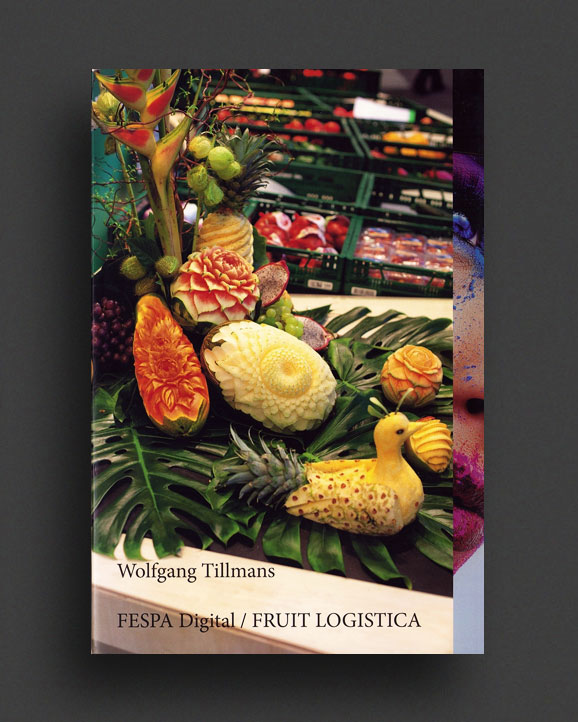
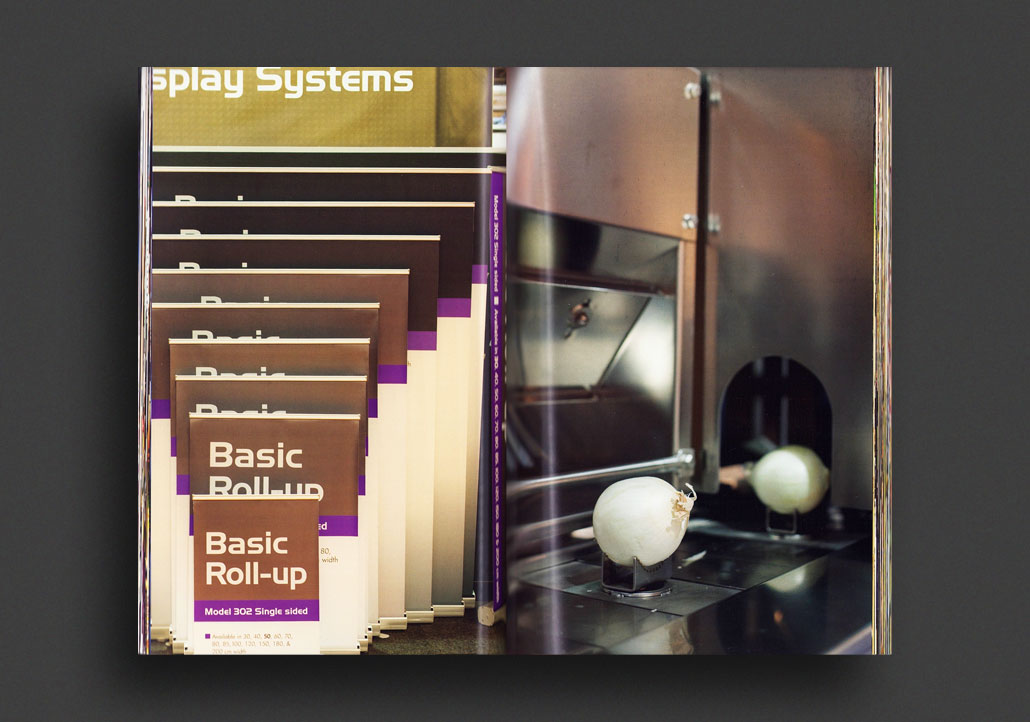
First edition of the fast out-of-print "FESPA Digital - Fruit Logistica" photo book by Wolfgang Tillmans. In February 2011, German photographer Wolfgang Tillmans (born 1968) decided to pay a visit to Fruit Logistica, the most important convention in the international fruit trade, held annually in Berlin. More than 2,400 fresh produce companies gather at the convention, presenting a dazzling panorama of commerce-and, of course, of texture and color. "I was left open-mouthed by the crazy displays and the variety and complexity of the international fruit trade and its processing machinery," he records. "I reacted with my camera straight away, but left the pictures for a while so I could look at them with a bit of distance, although I was immediately thinking of an artist's book in the format of "Concorde"" (Tillmans' 2008 book portrait of the eponymous aircraft). The resultant 66 color photographs are published here for the first time.
Very Good—Fine copy.
1977, English
Hardcover (w. dust jacket), 400 pages, 24 x 16.5 cm
1st US Edition, Out of print title / used / fine
Published by
Viking Press / New York
$250.00 - Out of stock
Rare Fine first hardcover 1977 English language edition of Gilles Deleuze and Félix Guattari's mighty Anti-Oedipus, published by The Viking Press in New York. With introduction by Michel Foucault.
When it first appeared in France in 1972, Anti-Oedipus was hailed as a masterpiece by some and "a work of heretical madness" by others. Anti-Oedipus was the opening explosion to the post-1968 reaction to the structuralist movement; it remains a primary text of post-structuralism. In his preface, Michel Foucault calls Anti-Oedipus an Introduction to Non-Fascist Living. He refers not just to political fascism but to the fascism that is within us, that causes us to desire our own domination. In the book, philosopher Gilles Deleuze and clinical psychoanalyst Félix Guattari set forth the following theory: Western society's innate herd instinct has allowed the government, the media, and even the principles of economics to take advantage of each person's unwillingness to be cut off from the group. What's more, those who suffer from mental disorders may not be insane, but could be individuals in the purest sense, because they are by nature isolated from society. More than twenty-five years after its original publication, Anti-Oedipus still stands as a controversial contribution to a much-needed dialogue on the nature of free thinking.
Fine copy in Fine dust jacket. Looks like clean, unread but brittle glue.
1966, English
Softcover (staple-bound), 18 pages
1st Edition, Out of print title / used / good
Published by
Auckland City Art Gallery / Auckland
$25.00 - In stock -
Catalogue published in 1966 on the occasion of the exhibition Eight New Zealand Artists, Auckland City Art Gallery, February 1966, featuring Don Binney, Robert Ellis, Patrick Hanly, Colin McCahon, Milan Mrkusich, Ross Ritchie, Greer Twiss, Tim Garrity. Illustrated throughout with work by the artists, introductory essay by Hamish Keith, biographical information on each artist, including exhibition chronologies. Catalogue lists 40 works executed in the years just prior to 1966 when the exhibition was held.
Good copy with age/tanning.