World Food Books' programme is largely produced on Kulin Nation land. We acknowledge the Wurundjeri people of the Kulin Nation as the first and continuing custodians of this land, and pay respect to their Elders past, present, and emerging.
World Food Books is an arts and special interests bookshop in Naarm / Melbourne. Founded in 2010, World Food Books is devoted to the presentation of a rotating, hand-selection of international art, design, literary and counterculture publications with an emphasis on the anti-traditional, the experimental, the avant-garde, the heretic, the marginal.
Presenting new titles alongside rare and out-of-print books, catalogues and journals spanning the fields of modern and contemporary art, design, photography, illustration, film, literature, poetry, cultural theory, philosophy, sexuality, popular and underground culture in its many radical forms, World Food Books wishes to encourage adventurous, thoughtful and open-minded reading, looking, writing, and exchange of publishing and ideas, both current and historical.
As well as our bookshop, located in Melbourne's historical Nicholas Building, all of our inventory is available internationally via our online mail-order service.
World Food Books semi-regularly co-ordinates "Occasions", a programme of exhibits and events at the bookshop and in partnership with other hosts (such as museums and art galleries) that develop out of the activities, relationships and content of the bookshop itself.
World Food Books
The Nicholas Building
37 Swanston Street
Room 5, Level 6
Melbourne 3000
Australia
SHOP HOURS:
Thu–Fri 12–6, Sat 12–5
WEB-SHOP OPEN 24/7
World Food Books
Postal Address:
PO Box 435
Flinders Lane
Victoria 8009
Australia
Art
Theory / Essay
Architecture / Interior
Graphic Design / Typography
Photography
Fashion
Eros
LGBTQ+
Fiction / Poetry
Weird / Speculative / Science Fiction / Horror
Transgressive / Visceral / Abject
Symbolism / Decadence / Fin de siècle
Film / Video
Painting
Sculpture / Installation
Performance / Dance / Theater
Drawing
Sound / Music
Curatorial
Group Shows / Collections
Periodicals
Out-of-print / Rare
Posters / Ephemera / Discs
Signed Books
World Food Books Gift Voucher
World Food Book Bag
Australian Art
Australian Fiction
Australian Science Fiction / Speculative Fiction
Australian Poetry
Australian Photography
Japanese Photography
Conceptual Art
Minimal Art
Dada
'Pataphysics / Oulipo
Fluxus
Concrete Poetry
Pop Art
Surrealism
Arte Povera
Arte Informale / Haute Pâte / Tachism
Nouveau Réalisme / Zero / Kinetic
Situationism / Lettrism
Collage / Mail Art / Xerox Art
Art Brut / Folk / Visionary / Fantastic
Illustration / Graphic Art / Bandes Dessinées
Furniture
Italian Radical Design / Postmodernism
Textiles
Ceramics / Glass
Counterculture
Protest / Revolt
Philosophy
Psychoanalysis
Anthropology
Anarchism
Socialism / Anarchism / Communism / Capitalism
Literary Theory / Semiotics / Language
Feminism / Women's Studies
Gender Studies / Sexuality
Anthropology
Fetishism / BDSM
Drugs / Psychedelia
Crime / Violence
Animal Rights / Veganism
Occult / Esoterica
Ecology / Earth / Alternative Living
Whole Earth / Crafts
All prices in AUD (Australian dollars)
Pick-Ups
Pick-up orders can be collected in our bookshop during opening hours after order date. Please collect any Pick-up orders within 2 weeks of ordering as we have limited storage space. Orders will be released back into stock if not collected within this time. No refunds can be made for pick-ups left un-collected. If you cannot make it in to the bookshop in this time-frame, please choose postage option.
Return Policy
All sales are final. We do accept returns (for refund or exchange) for items received in error. All our orders are packed with special care using heavy-duty padding and cardboard book-mailers or bubble mailers (for smaller books), using reinforcement where required. We cannot take responsibility for any lost, stolen or damaged parcels.
Insurance
Should you wish to insure your package, please email us directly after placing your order and we can organise this at a small extra expense. Although all standard/express tracked packages are very safe and dependable, we cannot take responsibility for any lost, stolen or damaged parcels. We recommend insurance on valuable orders.
Interested in selling your old books, catalogues, journals, magazines, comics, fanzines, ephemera? We are always looking for interesting, unusual and out-of-print books to buy. We only buy books in our fields of interest and specialty, and that we feel we can resell.
We base these prices on desirability, market value, in-print prices, condition and our current stock levels. We offer cash, store credit, and can take stock on consignment. All
about 25% of the price we expect to get when we sell them, or 30% in store credit. We base these prices on desirability, market value, in-print prices, condition and our current stock levels.
Sell your books any day of the week. You can drop them off and return later. If you have a lot of books, we can visit your Sydney home.
We buy books that we feel we can resell. We offer about 25 % of the price we expect to get when we sell them, or 30% in store credit. We base these prices on desirability, market value, in-print prices, condition and our current stock levels.
Philadelphia Wireman
03 August - 01 September, 2018
World Food Books is proud to announce our next Occasion, the first presentation of sculptures by Philadelphia Wireman in Australia.
The Philadelphia Wireman sculptures were found abandoned in an alley off Philadelphia’s South Street on trash night in 1982. Their discovery in a rapidly-changing neighbourhood undergoing extensive renovation, compounded with the failure of all attempts to locate the artist, suggests that the works may have been discarded after the maker’s death. Dubbed the "Philadelphia Wireman" during the first exhibition of this work, in 1985, the maker’s name, age, ethnicity, and even gender remain uncertain. The entire collection totals approximately 1200 pieces, all intricately bound together with tightly-wound heavy-gauge wire (along with a few small, abstract marker drawings, reminiscent both of Mark Tobey and J.B. Murry). The dense construction of the work, despite a modest range of scale and materials, is singularly obsessive and disciplined in design: a wire armature or exoskeleton firmly binds a bricolage of found objects including plastic, glass, food packaging, umbrella parts, tape, rubber, batteries, pens, leather, reflectors, nuts and bolts, nails, foil, coins, toys, watches, eyeglasses, tools, and jewellery.
Heavy with associations—anthropomorphic, zoomorphic, and socio-cultural responses to wrapped detritus—the totemic sculptures by Philadelphia Wireman have been discussed in the context of work created to fulfil the shamanistic needs of alternative religions in American culture. Curators, collectors, and critics have variously compared certain pieces to sculpture from Classical antiquity, Native American medicine bundles, African-American memory jugs, and African fetish objects. Reflecting the artist’s prolific and incredibly focused scavenging impulse, and despite—or perhaps enhanced by—their anonymity, these enigmatic objects function as urban artefacts and arbiters of power, though their origin and purpose is unknown. Philadelphia Wireman, whatever their identity, possessed an astonishing ability to isolate and communicate the concepts of power and energy through the selection and transformation of ordinary materials. Over the course of the past two decades, this collection has come to be regarded as an important discovery in the field of self-taught art and vernacular art.
Presented in collaboration with Fleisher-Ollman Gallery, Philadelphia, and Robert Heald, Wellington.
Susan Te Kahurangi King
02 February - 10 March, 2018
Susan Te Kahurangi King (24 February 1951 - ) has been a confident and prolific artist since she was a young child, drawing with readily available materials - pencils, ballpoint pens and felt-tip markers, on whatever paper is at hand. Between the ages of four and six Susan slowly ceased verbal communication. Her grandparents William and Myrtle Murphy had developed a special bond with Susan so they took on caring responsibilities for extended periods. Myrtle began informally archiving her work, carefully collecting and storing the drawings and compiling scrapbooks. No drawing was insignificant; every scrap of paper was kept. The King family are now the custodians of a vast collection containing over 7000 individual works, from tiny scraps of paper through to 5 meter long rolls.
The scrapbooks and diaries reveal Myrtle to be a woman of great patience and compassion, seeking to understand a child who was not always behaving as expected. She encouraged Susan to be observant, to explore her environment and absorb all the sights and sounds. Myrtle would show Susan’s drawings to friends and people in her community that she had dealings with, such as shopkeepers and postal workers, but this was not simply a case of a grandmother’s bias. She recognised that Susan had developed a sophisticated and unique visual language and sincerely believed that her art deserved serious attention.
This was an unorthodox attitude for the time. To provide some context, Jean Dubuffet coined the term Art Brut in 1945 to describe work created by self-taught artists – specifically residents of psychiatric institutions and those he considered to be visionaries or eccentrics. In 1972 Roger Cardinal extended this concept by adopting the term Outsider Art to describe work made by non-academically trained artists operating outside of mainstream art networks through choice or circumstance. Susan was born in Te Aroha, New Zealand in 1951, far from the artistic hubs of Paris and London that Dubuffet and Cardinal operated in. That Myrtle fêted Susan as a self-taught artist who deserved to be taken seriously shows how progressive her attitudes were.
Susan’s parents Doug and Dawn were also progressive. Over the years they had consulted numerous health practitioners about Susan’s condition, as the medical establishment could not provide an explanation as to why she had lapsed into silence. Dawn educated herself in the field of homeopathy and went on to treat all twelve of her children using these principles – basing prescriptions on her observations of their physical, mental and emotional state.
Doug was a linguist with an interest in philosophy who devoted what little spare time he had to studying Maori language and culture. To some extent their willingness to explore the fringes of the mainstream made them outsiders too but it was their commitment to living with integrity and their respect for individuality that ensured Susan’s creativity was always encouraged.
Even though Susan’s family supported her artistic pursuits, some staff in schools and hospitals saw it as an impediment to her assimilation into the community and discouraged it in a variety of ways. Her family was not always aware of this and therefore did not fully understand why Susan stopped drawing in the early 1990s. However, rather than dwell on the challenges that Susan faced in pursuit of her artistic practice, they prefer to highlight her achievements. In 2008 Susan began drawing again in earnest, after an almost 20 year interruption, and her work is now shown in galleries around the world.
Susan grew up without television and has been heavily influenced by the comics she read as a child. She is absolutely fearless in the appropriation of recognizable characters, such as Donald Duck and Mickey Mouse, in her work. She twists their limbs, contorts their faces, compresses them together, blends them into complex patterned backgrounds - always imbuing them with an incredible energy. Although Susan often used pop culture characters in her work they are not naive or childlike. These are drawings by a brilliant self-taught artist who has been creating exceptional work for decades without an audience in mind.
Mladen Stilinović
"Various Works 1986 - 1999"
02 February 16 - September 10, 2016
Various works 1986 - 1999, from two houses, from the collections of John Nixon, Sue Cramer, Kerrie Poliness, Peter Haffenden and Phoebe Haffenden.
Including: Geometry of Cakes (various shelves), 1993; Poor People’s Law (black and white plate), 1993; White Absence (glasses, ruler, set square, silver spoon, silver ladel with skin photograph and wooden cubes), 1990-1996; Exploitation of the Dead (grey and red star painting, wooden painting, black spoon with red table, red plate), 1984-1990; Money and Zeros (zero tie, paintings made for friends in Australia (Sue, John, Kerrie), numbers painting), 1991-1992; Words - Slogans (various t-shirts) - “they talk about the death of art...help! someone is trying to kill me”, “my sweet little lamb”, “work is a disease - Karl Marx”; Various artist books, catalogues, monographs, videos; Poster from exhibition Insulting Anarchy; "Circular" Croatian - Australian edition; Artist book by Vlado Martek (Dostoyevsky); more.
Thanks to Mladen Stilinović and Branka Stipančić.
Jonathan Walker
Always Will Need To Wear Winter Shirt Blue + Ochre Small Check Pattern
21 August - 21 September, 2015
Untitled
I am not a great reader of poetry but I always return to the work of Melbourne poet, Vincent Buckley (1925- 1988). Perhaps I find his most tantalising piece to be not a finished poem but a fragment left on a scrap of paper discovered on his desk after the poet’s death.
The poetry gathers like oil
In the word-core, and spreads
It has its music meet,
Its music is in movement.
This fragment is more the shell left behind from a volatile thought than a finished poem. I find the last two lines honest but awkward whereas the first two lines work like an arrow. Most likely he could not find a resolution so it was left. Still, in its present form, it remains an eloquent testimony to the ultimate failure of a medium to express mobile thought and sensation, in Buckley’s case, through verbal language. It’s an important matter because this is something all artists have to deal with regardless of the medium.
I have never written a poem, however, I am forever copying fragments from books on paper scraps in a vain effort to fix certain notions in my head. At first, they function as bookmarks that are sometimes returned to when I open the book. But before long, as they accumulate, they fall out littering the table interspersed with A4 photocopies, bills, books and medications.
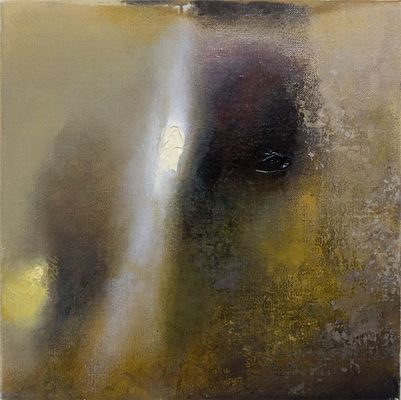
To return to Buckley’s fragment, the first two lines very much evoke how I paint nowadays. As you age, detail diminishes and patches of light become more luminous and float. I feel the most honest way of dealing with this is by smearing the oil paint on the canvas with the fingers and working close-up, blind. Only if the patches coalesce into an approaching image can the work gain a life.
-
Jonathan Walker was born in Melbourne, Australia and brought up on a dairy farm in Gippsland. In the 1970’s he studied painting at RMIT and won the Harold Wright Scholarship to the British Museum, London. During the 1980’s he exhibited at Pinacotheca Gallery, Richmond and had work shown at the NGV and Heidi City Art Gallery. Over the same period he designed the cover for the “Epigenesi” LP by Giancarlo Toniutti, Italy and conducted a mail exchange work with Achim Wollscheid, Germany. The work with artists through the post resulted in an article published in the bicentenary issue of Art and Australia 1988. He showed in artist run spaces such as WestSpace in the 90’s and 2000’s, and until 2012, taught painting at Victoria University, which is where we (Colleen Ahern and Lisa Radford) as organisers of the exhibition, among many others, had the privilege of being his student.
Walker’s knowledge was imparted to students through the careful selection of music, literature, and artists found in books that he himself had ordered for the library. Walker’s strategy was the generosity of sharing his vast knowledge with references specific to each student and their context.
Walker’s paintings share a similar focus and intimacy.
This exhibition presents a small selection of recent paintings alongside a publication that includes Walker’s writing. Observational and analytical, Walker’s work is a type of material notation — the time of day, colour and how it is blended, the both specific and fleeting location of a reflection on lino or the question of whether a chair leg should be included in a painting.
Please join us on Friday August 21 between 6-8pm to celebrate the opening of the exhibition.
Curated by Colleen Ahern and Lisa Radford.
B. Wurtz
Curated by Nic Tammens
March 26 - April 4, 2015
B.Wurtz works from a basement studio in his home on Manhattan’s Lower East Side.
This local fact is attested to by the plastic shopping bags and newsprint circulars that appear in his work. As formal objects, they don’t make loud claims about their origins but nonetheless transmit street addresses and places of business from the bottom of this long thin island. Like plenty of artists, Wurtz is affected by what is local and what is consumed. His work is underpinned by this ethic. It often speaks from a neighborhood or reads like the contents of a hamper:
“BLACK PLUMS $1.29 lb.”
“Food Bazaar”
“USDA Whole Pork Shoulder Picnic 99c lb.”
“RITE AID Pharmacy, with us it’s personal.”
“H. Brickman & Sons.”
“Sweet Yams 59c lb."
Most of the work in this exhibition was made while the artist was in residence at Dieu Donne, a workshop dedicated to paper craft in Midtown. Here Wurtz fabricated assemblages with paper and objects that are relatively lightweight, with the intention that they would be easily transportable to Australia. This consideration isn’t absolute in Wurtz’s work, but was prescriptive for making the current exhibition light and cheap. Packed in two boxes, these works were sent from a USPS post office on the Lower East Side and delivered to North Melbourne by Australia Post.
Wurtz appears courtesy of Metro Pictures, New York.
Thanks to Rob Halverson, Joshua Petherick, Sari de Mallory, Matt Hinkley, Helen Johnson, Fayen d'Evie, Ask Kilmartin, Lisa Radon, Ellena Savage, Yale Union, and "Elizabeth".
John Nixon
"Archive"
December 15 - January 20, 2014
The presentation of John Nixon's archive offered a rare showcase of this extensive collection of the artist's own publications, catalogues, posters, ephemera, editions and more, from the mid 1980s onwards, alongside a selection of his artworks.
Organized by John Nixon, Joshua Petherick and Matt Hinkley.
<a href=http://wfb.public-office.info/artist/john-nixon>All titles by John Nixon
"Habitat"
at Minerva, Sydney (organised by Joshua Petherick and Matt Hinkley)
November 15 - December 20, 2014
Lupo Borgonovo, Janet Burchill & Jennifer McCamley,
Lewis Fidock, HR Giger, Piero Gilardi, Veit Laurent Kurz,
Cinzia Ruggeri, Michael E. Smith, Lucie Stahl, Daniel Weil, Wols
Press Release:
“...It contained seven objects. The slender fluted bone, surely formed for flight, surely from the wing of some large bird. Three archaic circuitboards, faced with mazes of gold. A smooth white sphere of baked clay. An age-blackened fragment of lace. A fingerlength segment of what she assumed was bone from a human wrist, grayish white, inset smoothly with the silicon shaft of a small instrument that must once have ridden flush with the surface of the skin - but the thing’s face was seared and blackened.”
William Gibson, “Count Zero”, 1986
"Autumn Projects Archive"
Curated by Liza Vasiliou
March 6 - March 15, 2014
World Food Books, in conjunction with the Virgin Australia Melbourne Fashion Festival 2014, presented the Autumn Projects archive, consisting of a selection of early examples in Australian fashion with a particular interest in collecting designers and labels from the period beginning in the 1980’s, who significantly influenced the discourse of Australian Fashion.
Curated by Liza Vasiliou, the exhibition provided a unique opportunity to view pieces by designers Anthea Crawford, Barbara Vandenberg, Geoff Liddell and labels CR Australia, Covers, Jag along with early experimental collage pieces by Prue Acton and Sally Browne’s ‘Fragments’ collection, suspended throughout the functioning World Food Books shop in Melbourne.
H.B. Peace
presented by CENTRE FOR STYLE
November 14, 2013
"Hey Blinky, you say chic, I say same"
Anon 2013
H.B. Peace is a clothing collaboration between great friends Blake Barns and Hugh Egan Westland. Their pieces explore the divergences between 'character’ and ‘personality’ in garments....etc
Special Thanks to Joshua Petherick and Matt Hinkley of WFB and Gillian Mears
and a Very Special Thank you to Audrey Thomas Hayes for her shoe collaboration.
Janet Burchill & Jennifer McCamley
"Aesthetic Suicide"
May 10 - June 8, 2013
The first of our occasional exhibitions in the World Food Books office/shop space in Melbourne, "Aesthetic Suicide" presented a body of new and older works together by artists Janet Burchill & Jennifer McCamley, including videos, prints, a wall work, and publications.
During shop open hours videos played every hour, on the hour.
2008, English
Softcover (staple-bound w. CD), 66 pages, 25 x 16.5 cm
1st Edition, Out of print title / used / very good
Published by
The Journal / New York
$85.00 - Out of stock
Rare copy of Mark Borthwick's artist book "No Mark - Will Shine," issued in 2008 by The Journal in New York. Entirely comprised of Borthwick's personal photographs and collages of image and text. Comes with original inserted CD, "Sur end a" by Will Shine (aka Mark Borthwick). Mark Borthwick is a British photographer, film-maker and musician now living in Brooklyn, New York. He is among the generation of photographers who in the ’90s broke through the conventions of fashion photography, his distinct style being very light, intuitive and personal. He worked regularly shooting for Purple magazine, Vogue, and collaborated closely with Maison Martin Margiela in the 1990's.
As New condition. Now very collectable.
2002, English / Japanese
Softcover, 80 pages, 22 x 29 cm
1st Edition, Out of print title / used / fine
Published by
Street Editorial Office / Tokyo
$60.00 - Out of stock
2002 issue of the iconic STREET magazine from Japan. No. 129 "Style from LONDON" issue.
Every issue of the no longer in print, collectible STREET magazine is made up entirely full-bleed pages of photographs by legendary Japanese street style photographer and publisher Shoichi Aoki. Most issues cut back and forth between the fashion capitals (London, New York, Paris, Tokyo, etc.) candidly documenting the fashions in the streets, sometimes behind the scenes of fashion week, in street markets, around festivals, clubs, etc. Established in 1985 by Shoichi Aoki and Noriko Kojima, STREET (and later also Aoki's FRUITS) have become essential style goldmines, creating valuable photographic documents of the times like no other magazine.
Fine copy.
2003, English / Japanese
Softcover, 80 pages, 22 x 29 cm
Published by
Street Editorial Office / Tokyo
$45.00 - Out of stock
2003 issue of the iconic STREET magazine from Japan. No. 143 "Style from LONDON, NEW YORK, Cash Point / LONDON".
Every issue of the no longer in print, collectible STREET magazine is made up entirely full-bleed pages of photographs by legendary Japanese street style photographer and publisher Shoichi Aoki. Most issues cut back and forth between the fashion capitals (London, New York, Paris, Tokyo, etc.) candidly documenting the fashions in the streets, sometimes behind the scenes of fashion week, in street markets, around festivals, clubs, etc. Established in 1985 by Shoichi Aoki and Noriko Kojima, STREET (and later also Aoki's FRUITS) have become essential style goldmines, creating valuable photographic documents of the times like no other magazine.
Fine copy.
2003, English / Japanese
Softcover, 80 pages, 22 x 29 cm
1st UK Edition, Out of print title / used / fine
Published by
Street Editorial Office / Tokyo
$45.00 - Out of stock
2003 issue of the iconic STREET magazine from Japan. No. 145 "Style from NEW YORK, Hyères fashion festival 2003 France".
Every issue of the no longer in print, collectible STREET magazine is made up entirely full-bleed pages of photographs by legendary Japanese street style photographer and publisher Shoichi Aoki. Most issues cut back and forth between the fashion capitals (London, New York, Paris, Tokyo, etc.) candidly documenting the fashions in the streets, sometimes behind the scenes of fashion week, in street markets, around festivals, clubs, etc. Established in 1985 by Shoichi Aoki and Noriko Kojima, STREET (and later also Aoki's FRUITS) have become essential style goldmines, creating valuable photographic documents of the times like no other magazine.
Fine copy.
2003, English / Japanese
Softcover, 80 pages, 22 x 29 cm
1st Edition, Out of print title / used / fine
Published by
Street Editorial Office / Tokyo
$45.00 - Out of stock
2003 issue of the iconic STREET magazine from Japan. No. 148 "Style from LONDON, NEW YORK, Nag Nag Nag LONDON".
Every issue of the no longer in print, collectible STREET magazine is made up entirely full-bleed pages of photographs by legendary Japanese street style photographer and publisher Shoichi Aoki. Most issues cut back and forth between the fashion capitals (London, New York, Paris, Tokyo, etc.) candidly documenting the fashions in the streets, sometimes behind the scenes of fashion week, in street markets, around festivals, clubs, etc. Established in 1985 by Shoichi Aoki and Noriko Kojima, STREET (and later also Aoki's FRUITS) have become essential style goldmines, creating valuable photographic documents of the times like no other magazine.
Fine copy.
2004, English / Japanese
Softcover, 80 pages, 22 x 29 cm
1st Edition, Out of print title / used / fine
Published by
Street Editorial Office / Tokyo
$45.00 - Out of stock
2004 issue of the iconic STREET magazine from Japan. No. 150 "Style from Cash Point LONDON, LONDON".
Every issue of the no longer in print, collectible STREET magazine is made up entirely full-bleed pages of photographs by legendary Japanese street style photographer and publisher Shoichi Aoki. Most issues cut back and forth between the fashion capitals (London, New York, Paris, Tokyo, etc.) candidly documenting the fashions in the streets, sometimes behind the scenes of fashion week, in street markets, around festivals, clubs, etc. Established in 1985 by Shoichi Aoki and Noriko Kojima, STREET (and later also Aoki's FRUITS) have become essential style goldmines, creating valuable photographic documents of the times like no other magazine.
Fine copy.
2015, English
Softcover (Envelope), 74 loose-leaf pages, 22.5 x 16 cm
Published by
Self-Published / Melbourne
$20.00 - In stock -
Limited edition artist's book by Jonathan Walker, published on the occasion of his solo exhibition 'Always Will Need To Wear Winter Shirt Blue + Ochre Small Check Pattern', organised by Colleen Ahern and Lisa Radford at World Food Books, 21 August—21 September, 2015.
Comprising of a sticker-sealed black envelope housing over 70 loose-leaf reproductions of the artist's journal pages, writing fragments and painting swatches, the material collated here reflects the intimacy of Walker's exhibited oil paintings and the world they inhabited. Observational and analytical, "Walker’s work is a type of material notation — the time of day, colour and how it is blended, the both specific and fleeting location of a reflection on lino or the question of whether a chair leg should be included in a painting."
Designed by Lisa Radford and Nicholas Tammens.
Jonathan Walker was born in Melbourne, Australia and brought up on a dairy farm in Gippsland. In the 1970’s he studied painting at RMIT and won the Harold Wright Scholarship to the British Museum, London. During the 1980’s he exhibited at Pinacotheca Gallery, Richmond and had work shown at the NGV and Heidi City Art Gallery. Over the same period he designed the cover for the “Epigenesi” LP by Giancarlo Toniutti, Italy and conducted a mail exchange work with Achim Wollscheid, Germany. The work with artists through the post resulted in an article published in the bicentenary issue of Art and Australia 1988. He showed in artist run spaces such as WestSpace in the 90’s and 2000’s, and until 2012, taught painting at Victoria University. Since 1997 he has been painting exclusively mirror images from metal and glass. With the exception of the spectral paintings, all work is made directly from life. Apart from the drawings and framed watercolour, all works are oil on linen.
Untitled
I am not a great reader of poetry but I always return to the work of Melbourne poet, Vincent Buckley (1925- 1988). Perhaps I find his most tantalising piece to be not a finished poem but a fragment left on a scrap of paper discovered on his desk after the poet’s death.
The poetry gathers like oil
In the word-core, and spreads
It has its music meet,
Its music is in movement.
This fragment is more the shell left behind from a volatile thought than a finished poem. I find the last two lines honest but awkward whereas the first two lines work like an arrow. Most likely he could not find a resolution so it was left. Still, in its present form, it remains an eloquent testimony to the ultimate failure of a medium to express mobile thought and sensation, in Buckley’s case, through verbal language. It’s an important matter because this is something all artists have to deal with regardless of the medium.
I have never written a poem, however, I am forever copying fragments from books on paper scraps in a vain effort to fix certain notions in my head. At first, they function as bookmarks that are sometimes returned to when I open the book. But before long, as they accumulate, they fall out littering the table interspersed with A4 photocopies, bills, books and medications.
To return to Buckley’s fragment, the first two lines very much evoke how I paint nowadays. As you age, detail diminishes and patches of light become more luminous and float. I feel the most honest way of dealing with this is by smearing the oil paint on the canvas with the fingers and working close-up, blind. Only if the patches coalesce into an approaching image can the work gain a life.
(Jonathan Walker, March 2015)
2014, English
Softcover, 376 pages, 21 x 26 cm
1st Edition, Out of print title / as new
Published by
Paul Holberton Publishing / London
National Gallery of Canada / Ottawa
$200.00 $120.00 - In stock -
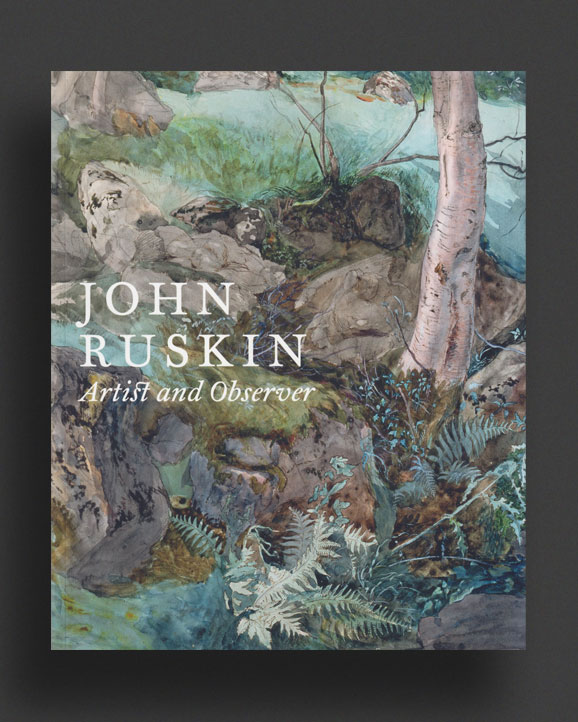
First, only, quickly out-of-print edition of this comprehensive catalogue surveying Ruskin's drawings and watercolours, published on the occasion of the major exhibition at the National Gallery of Canada, Ottawa, 14 February – 11 May 2014, and National Gallery of Scotland, Edinburgh, 4 July – 28 September 2014.
Known an a writer on art, architecture, nature, landscape, economics and history, John Ruskin (1819–1900) also produced extraordinary drawings and watercolours that offer insight into the workings of his brilliant mind and are testimony to the scrupulous attention he gave to everything that interested him. These exhilarating works deserve to be appreciated afresh by audiences anew.
Accompanying a landmark exhibition at the National Galleries of Canada and Scotland in 2104, this definitive exploration of a private but hugely revealing aspect of Ruskin’s creative life – representing his entire career and all subject types and degrees of finish and elaboration – will demonstrate how his use of drawing evolved in terms of his most characteristic stylistic traits and how he used the medium in a most distinctive technical manner. Ruskin regarded drawing as a means of focusing his eye and as a discipline of observation, and so he attached small significance to the work itself when completed. Paradoxically, despite the extraordinary skill and emotion his drawings demonstrate, Ruskin has never been acclaimed as the great artist he undoubtedly was.
Drawing was used by Ruskin to express the ecstasy he felt in the presence of transcendent beauty in nature and landscape, as well as in the works of man. His drawings are instantly enjoyable for their immediacy and verve, for their absence of self-consciousness or artistic indulgence, but they also reveal a range of emotional responses and are profoundly informative about the devastating swings of mood that he endured and which fired his massive intellectual creativity as well as his eventual descent into insanity.
In examining alongside the central core of Ruskin’s own drawings those made by artists who were his mentors, friends and followers, this book also aims to give an account of the wider phenomenon which might be called ‘Ruskinism’. It will demonstrate how Ruskin’s own style formed as a result of contact with an older generation of drawing masters, such as Samuel Prout and J.D. Harding. Ruskin’s paramount admiration for J.M.W. Turner, and the story of his advocacy of Turner as the greatest genius of British art, will also be explained. A fascinating and visually rich element of the book are the photographs (Daguerrotypes), including those taken by Ruskin himself or under his immediate supervision. By seeing photographs and drawings together it is possible to identify certain pictorial traits that are characteristic of Ruskinian methods of looking.
Contributions by Conal Shields, Ian Jeffrey, Christopher Baker and Christopher Newall.
As New, out-of-print.
1963, English
Hardcover (w. dust jacket), 140 pages
1st Edition, Out of print title / used / good
Published by
Boston Book & Art Shop / Boston
$30.00 - Out of stock
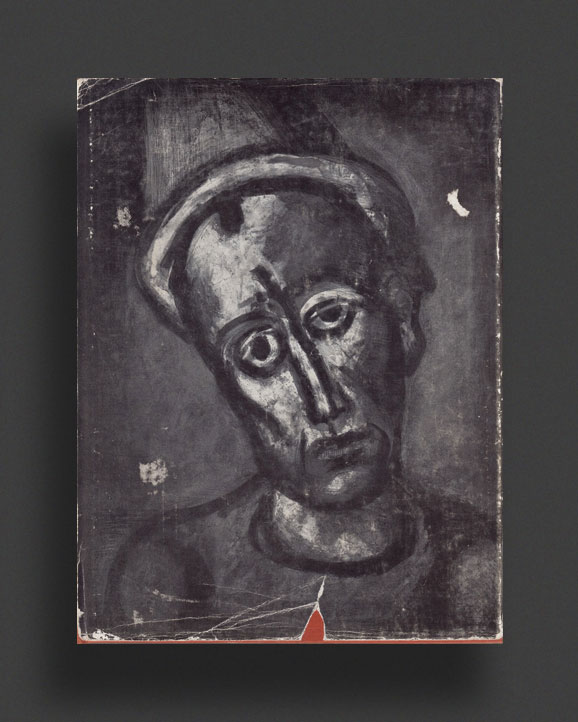
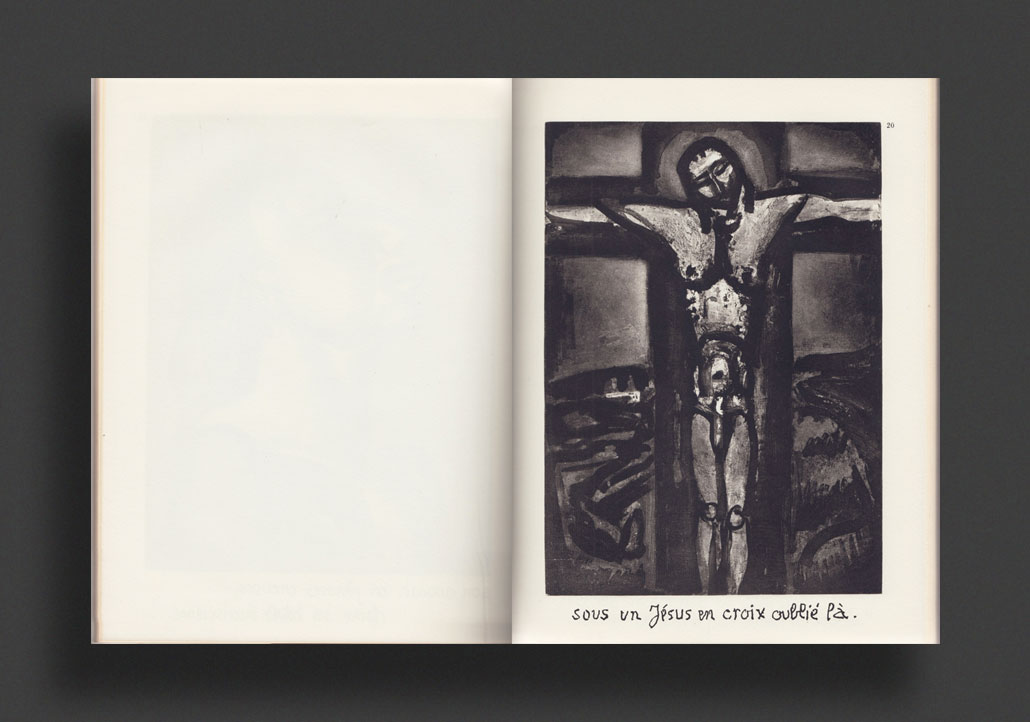
First 1963 hardcover edition of this English translation of Georges Rouault's (1871-1958) Miserere, published by the Boston Book & Art Shop. Beautifully printed reproduction of this classic, including Rouault's original preface translated to English, the series of 58 engravings with titles reproduced in facsimile from the artist's handwriting, and 18 plates comparing various successive states with the finished engravings. Introduction by Anthony Blunt.
Georges Henri Rouault (1871—1958) was a French painter, draughtsman, and print artist, whose work is often associated with Fauvism and Expressionism.
Average dust jacket with chipping and wear, book G—VG.
1999, English / Swedish
Hardcover (in illustrated slipcase w. dust jacket + 2 CD), 337 pages, 29 x 16 cm
1st Edition, Out of print title / used / very good
Published by
Sveriges Radios Förlag / Stockholm
$190.00 - In stock -
Under the motto: "Manipulate the world - take care of the world", Fahlström set up a variety of meeting-places in which participants were invited to take part in an interdiciplinary game of purposeful discovery. He introduced elements of popular culture into his work early on and made substantial contributions to a critical assessment of the "medialisation" of art. In this, the most extensive book about Öyvind Fahlström to date, Teddy Hultberg charts the artist´s predominant lines of creative development and shows how his cross-genre endeavours were based on a few central ideas: character forms, signs, games and life materials.
The present study focuses on two innovative and extraordinary compositions for radio: "Birds in Sweden" (1963) and "The Holy Torsten Nilsson" (1966). These works can be heard on the two accompanying CD records and are also included here in written form. Some unique and hitherto unpublished visual and textual material, the result of several years of research by Teddy Hultberg, is also included in the book.
Now long out-of-print, this first 1999 edition (in bi-lingual English / Swedish) comes housed in illustrated, die-cut slipcase, with hardcovers and illustrated dust jacket. All Very Good—Fine in condition.
2004, English
Softcover, 176 pages, 23 x 17.5 cm
1st Edition, Out of print title / used / very good
Published by
Yale University Press / New Haven
$45.00 - Out of stock
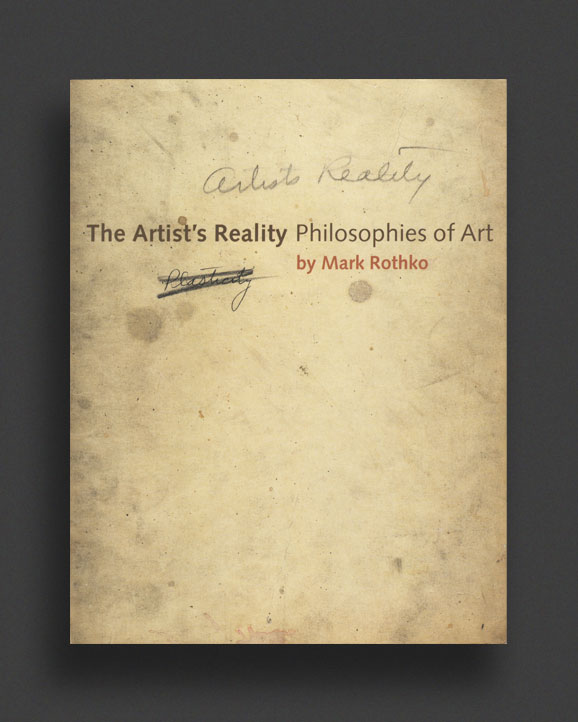
First edition of this recently discovered book manuscript by the celebrated artist Mark Rothko offering a landmark discussion of his views on topics ranging from the Renaissance to contemporary art, criticism, and the role of art and artists in society.
One of the most important artists of the twentieth century, Mark Rothko (1903–1970) created a new and impassioned form of abstract painting over the course of his career. Rothko also wrote a number of essays and critical reviews during his lifetime, adding his thoughtful, intelligent, and opinionated voice to the debates of the contemporary art world. Although the artist never published a book of his varied and complex views, his heirs indicate that he occasionally spoke of the existence of such a manuscript to friends and colleagues. Stored in a New York City warehouse since the artist’s death more than thirty years ago, this extraordinary manuscript, titled The Artist’s Reality, is now being published for the first time.
Probably written around 1940–41, this revelatory book discusses Rothko’s ideas on the modern art world, art history, myth, beauty, the challenges of being an artist in society, the true nature of “American art,” and much more. The Artist’s Reality alsoincludes an introduction by Christopher Rothko, the artist’s son, who describes the discovery of the manuscript and the complicated and fascinating process of bringing the manuscript to publication. The introduction is illustrated with a small selection of relevant examples of the artist’s own work as well as with reproductions of pages from the actual manuscript.
The Artist’s Reality will be a classic text for years to come, offering insight into both the work and the artistic philosophies of this great painter.
Out-of-print. First edition. Good copy with small creases to bottom cover corner, few pages. A few removable pencil underlines in text.
1990, English / Italian
Softcover, 180 pages, 22 x 22 cm
1st Edition, Out of print title / used / very good
Published by
Mascal / Italy
$200.00 - Out of stock
First, only edition of this exceptionally rare 1990 Italian book dedicated entirely to the art of the disco invitation, circa 1980-1990. Rave Invitation Cards is the ultimate time-capsule of Italy's 1980's nightlife, presenting a comprehensive collection of invitations to countless parties and club nights at around 60 of Italy's leading discos. Profusely illustrated throughout in the colours of the original flyers, Rave Invitation Cards itself embodies the graphic design of the period, conceived and art directed by Paolo Fornaciari and Giuliano Ravazzini, with accompanying introductory texts in both English and Italian and all invites detailed with their respective discoteques and designer/artist captions. A wonderful reference for wild 1980s-1990s typography and graphics, and a rare document of Italy's disco scene!
Very Good copy.
1993, English
Softcover, 150 pages, 20 x 13 cm
Ed. of 750,
1st UK Edition, Out of print title / used / very good
Published by
Het Apollohuis / Eindhoven
$140.00 - Out of stock
Very rare first edition of this wonderful collection of interviews with sound artists taking part in the festival ECHO, The Images of Sound II, in 1987, highlighting New Music and Sound Art, compiled by René van Peer. "This [accompanying] book has become an autonomous account of the personal histories of a number of sound artists, and thus it aims at providing an impression of the origins of Sound Art and New Music"—Paul Panhuysen, March 1993. Comprised entirely of in-depth interviews with Joe Jones, Richard Lerman, Jean Weinfeld, Martin Riches, Takehisa Kosugi, Horst Rickels, Johan Goedhart, Terry Fox, Christina Kubisch, Jim Pomeroy, Walter Fahndrich, Yoshi Wada, Paul Panhuysen.
Published in a limited edition of 750 copies. A valuable resource.
René van Peer is a journalist specializing in non-mainstream music.
Very Good copy.
2001, English
Softcover book + 2 CD, 100 pages
1st Edition, Out of print title / used / very good
Published by
Al Dante / Marseille
$45.00 - Out of stock
Reissue of the self-released 3 LP box set from 1976... as two cds nestled inside the covers of a regular-sized paperback book... considerably less expensive than the original! But alas, also now long out-of-print.
This and the other book/cd editions from al dante are among the most legendary artifacts from the canon of this pioneering french sound-poet, who, along with arch nemesis henri chopin, laid out the groundwork for text-based sound performance and tape collage for decades to come... essential.
Canal Street was recorded in July 1976 and originally released in a 3 LP Box Set on SEVIM in 1986.
Canal Street was written 1974-76.
Bernard Heidseick (1928-2014) was a French sound poet, associated with various movements throughout a long career: including Beat, Fluxus, and minimalism. Heidseick decided in the mid-1950s to break off from written poetry, and to bring it outside of books. He opposed passive poetry to active poetry, to an “on its feet” poetry, in his own words. Starting in 1955 he was one of the founders of Sound Poetry, and in 1962 of Action Poetry. As early as 1959 he used a tape recorder as an additional means for writing and retransmitting, opening his research to new experimental fields. While remaining concerned with semantics, Bernard Heidseick became increasingly independent from the constraints of language. He explored all its formal aspects, either by spatializing the text in his written scores, or by the presence of his body in space. He gave sound a formal dimension, notably through an exceptional diction based as much on breathing as on articulating perfectly or on constantly renewing the inflections of his voice. As the years went by he reinvented his writing in order to render our daily life more accurately. Our social, political or economical universe, through its main events, as well as through its extreme ordinariness. In 1955 he developed his first Score-Poems. He then worked continuously on series, with the 13 Biopsies between 1966 and 1969. From 1969 to 1980, he created the 29 Passe-Partout (Catch-alls). From 1978 to 1986, he wrote Derviche/Le Robert (Dervish/Le Robert) composed of 26 sound poems. Then, beginning in 1988, Respirations et brèves rencontres ( Respiration and Brief Encounters) (60 poems created from the archives of recordings of artists' breathing). He organised the first international festival of sound poetry in 1976 and the event Rencontres Internationales 1980 de poésie sonore which took place in Rennes, in Le Havre and at the Pompidou Centre in Paris.
Al Dante (1996-2006) was founded and directed by Laurent Cauwet. This French publishing house & recording label was dedicated to "experimental prose poetry, sound poetry, action poetry, visual poetry and art performance".
As New.
2002, English
Softcover book + 2 CD, 124 pages
1st Edition, Out of print title / used / very good
Published by
Al Dante / Marseille
$45.00 - Out of stock
Second regular-size book/disc set in this reissue campaign of heidsieck’s seminal self-released sound-poetry work from the 70s. This edition covers the “passe-partout” series (“nº 10 à 21”) written & executed between January and December 1972... essential. Lon out-of-print.
Carrefour de la Chaussée d'Antin
Passe-Partout n°10 to 21
January-December 1972
duration: 1 hour 50
Bernard Heidseick (1928-2014) was a French sound poet, associated with various movements throughout a long career: including Beat, Fluxus, and minimalism. Heidseick decided in the mid-1950s to break off from written poetry, and to bring it outside of books. He opposed passive poetry to active poetry, to an “on its feet” poetry, in his own words. Starting in 1955 he was one of the founders of Sound Poetry, and in 1962 of Action Poetry. As early as 1959 he used a tape recorder as an additional means for writing and retransmitting, opening his research to new experimental fields. While remaining concerned with semantics, Bernard Heidseick became increasingly independent from the constraints of language. He explored all its formal aspects, either by spatializing the text in his written scores, or by the presence of his body in space. He gave sound a formal dimension, notably through an exceptional diction based as much on breathing as on articulating perfectly or on constantly renewing the inflections of his voice. As the years went by he reinvented his writing in order to render our daily life more accurately. Our social, political or economical universe, through its main events, as well as through its extreme ordinariness. In 1955 he developed his first Score-Poems. He then worked continuously on series, with the 13 Biopsies between 1966 and 1969. From 1969 to 1980, he created the 29 Passe-Partout (Catch-alls). From 1978 to 1986, he wrote Derviche/Le Robert (Dervish/Le Robert) composed of 26 sound poems. Then, beginning in 1988, Respirations et brèves rencontres ( Respiration and Brief Encounters) (60 poems created from the archives of recordings of artists' breathing). He organised the first international festival of sound poetry in 1976 and the event Rencontres Internationales 1980 de poésie sonore which took place in Rennes, in Le Havre and at the Pompidou Centre in Paris.
Al Dante (1996-2006) was founded and directed by Laurent Cauwet. This French publishing house & recording label was dedicated to "experimental prose poetry, sound poetry, action poetry, visual poetry and art performance".
As New.
2012, English
Hardcover (w. dust jacket), 528 pages, 15.56 x 23.5 cm
1st Edition, Out of print title / used / very good
Published by
Yale University Press / New Haven
$65.00 - In stock -
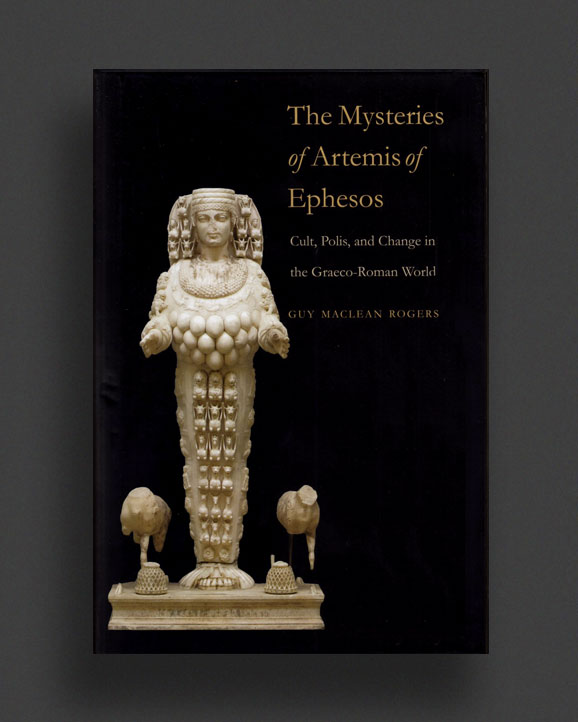
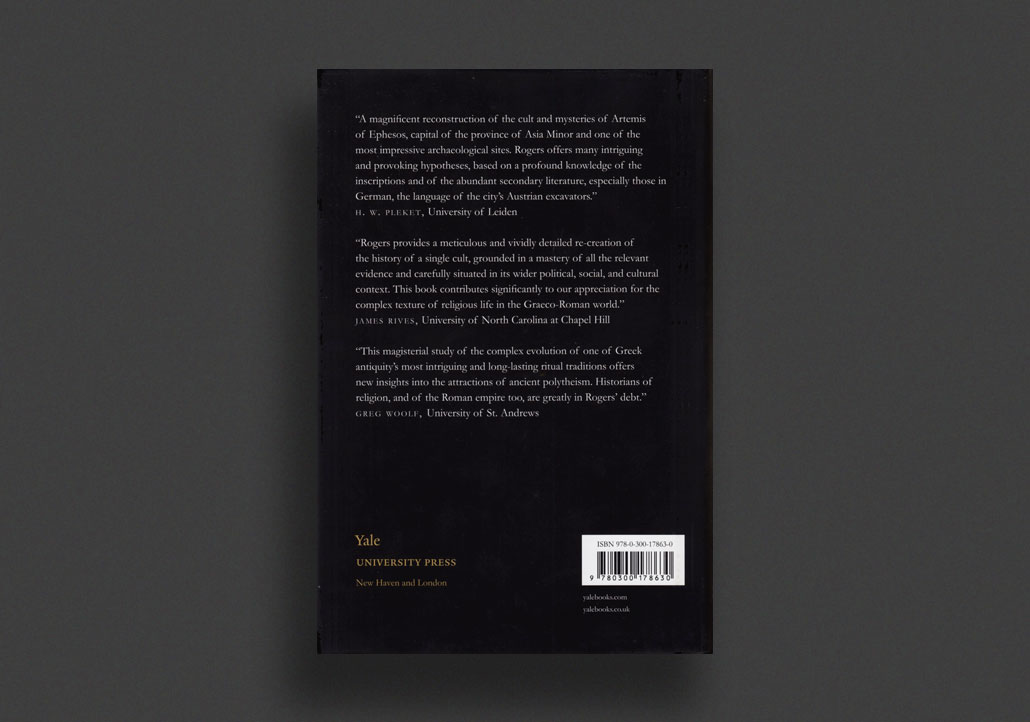
First, out-of-print hardcover edition of Guy MacLean Rogers' The Mysteries of Artemis of Ephesos, published by Yale in 2012.
Artemis of Ephesos was one of the most widely worshiped deities of the Graeco-Roman World. Her temple, the Artemision, was one of the seven wonders of the ancient world, and for more than half a millennium people flocked to Ephesos to learn the great secret of the mysteries and sacrifices that were celebrated every year on her birthday.
In this work Guy MacLean Rogers sets out the evidence for the celebration of Artemis's mysteries against the background of the remarkable urban development of the city during the Roman Empire and then proposes an entirely new theory about the great secret that was revealed to initiates into Artemis's mysteries. The revelation of that secret helps to explain not only the success of Artemis's cult and polytheism itself but, more surprisingly, the demise of both and the success of Christianity. Contrary to many anthropological and scientific theories, the history of polytheism, including the celebration of Artemis's mysteries, is best understood as a Darwinian tale of adaptation, competition, and change.
"A magnificent reconstruction of the cult and mysteries of Artemis of Ephesos, capital of the province of Asia Minor and one of the most impressive archaeological sites. Rogers offers many intriguing and provoking hypotheses, based on a profound knowledge of the inscriptions and of the abundant secondary literature, especially those in German, the language of the city’s Austrian excavators."—H.W. Pleket, University of Leiden
"Rogers provides a meticulous and vividly detailed recreation of the history of a single cult, grounded in a mastery of all the relevant evidence and carefully situated in its wider political, social, and cultural context. This book contributes significantly to our appreciation for the complex texture of religious life in the Graeco-Roman world.—James Rives, University of North Carolina at Chapel Hill"—James Rives
"This magisterial study of the complex evolution of one of Greek antiquity’s most intriguing and long-lasting ritual traditions offers new insights into the attractions of ancient polytheism. Historians of religion, and of the Roman empire too, are greatly in Rogers’ debt.—Greg Woolf, University of St. Andrews"—Greg Woolf
Very Good copy, in VG dust jacket with light wear.
1995, Japanese
Softcover, 210 pages, 15 cm x 21 cm
1st Edition, Out of print title / used / very good
Published by
Tom Shobo / Japan
$140.00 - Out of stock
Too Negative No. 3, February 1995. Now rare and highly collectible, Too Negative, the "Forbidden Picture Book", was a visceral and visually explosive glossy cult arts magazine that reflected the gory-depraved-beyond salvation-bad taste expressions visible in international subculture at the height of 1990s underground publishing, a time when art was pushing the limits of taste and morality. Edited solely by legendary Japanese publisher and gallery owner Kotaro Kobayashi and published by Tom Publication Inc. between 1994—2000, each thick, glossy volume takes on the aesthetics of a vibrant fashion magazine in the great Japanese "mook" format (the magazine book) packed cover to cover with themes of Eros and Thanatos, such as fetishism, erotica, medical/autopsy photography, death journalism, Japanese bondage, grotesque and neo-surrealist art, crime scene photography, tattooing/irezumi, piercing, and all things of the mondo, macabre, bizarro realm. Frequent collaborators and featured artists were Kiyotaka Tsurisaki, Joel-Peter Witkin, Trevor Brown, Kiyoshi Ikejiri, to name a few. With a Japanese publishing lineage that may be found in earlier bounding-pushing periodicals such as the 1920s erotic grotesque magazine Hentai Shiriou (Pervert Documents), Tasuhiko Shibusawa’s incredible 1960s avant-garde journal Le Sang Et La Rose, or Fiction Inc’s SALE2 journal published from 1980—mid 1990s, Too Negative, and affiliated periodicals such as ORG, Spiral, Schizo, etc. took their subjects to another level of extremism, even by Japanese standards.
Not for the faint hearted.
This issue features the Latin American corpse/death photography of Kiyotaka Tsurisaki, bondage and fetish photography by Kiyoshi Ikejiri, the artwork of Trevor Brown, the Police Hospital on Bangkok photographed by Kiyotaka Tsurisaki, tattoos, female bodybuilders, gynaecology photographs, loads of abnormal medical photography, fetish and bondage photoshoots, close-up genital photography, deranged art/collage, you name it.
Very Good - Fine copy.
1995, Japanese
Softcover, 210 pages, 21 x 15 cm
1st Edition, Out of print title / used / very good
Published by
Tom Shobo / Japan
$140.00 - Out of stock
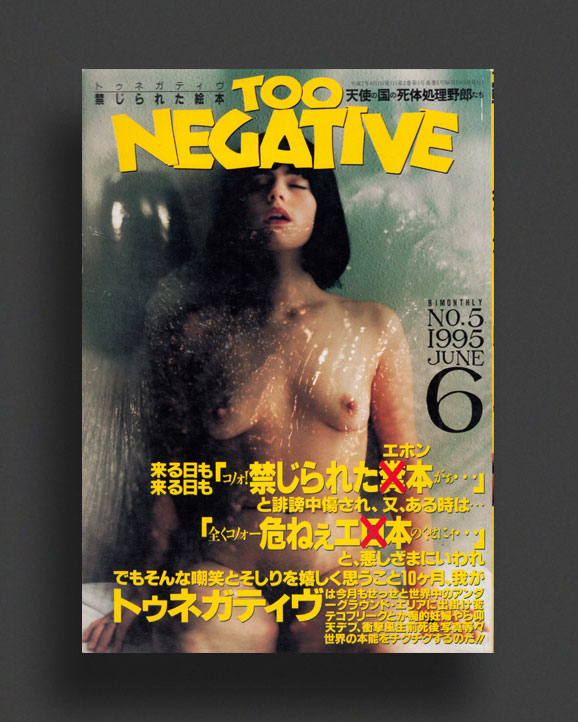
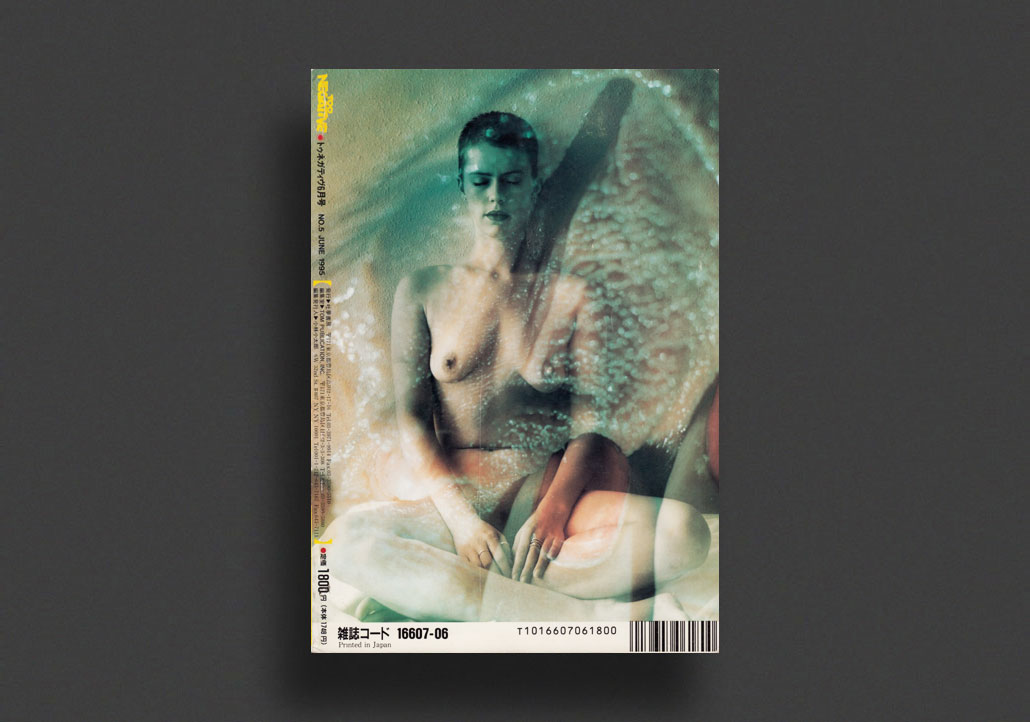
Too Negative No. 5 July 1995. Now rare and highly collectible, Too Negative, the "Forbidden Picture Book", was a visceral and visually explosive glossy cult arts magazine that reflected the gory-depraved-beyond salvation-bad taste expressions visible in international subculture at the height of 1990s underground publishing, a time when art was pushing the limits of taste and morality. Edited solely by legendary Japanese publisher and gallery owner Kotaro Kobayashi and published by Tom Publication Inc. between 1994—2000, each thick, glossy volume takes on the aesthetics of a vibrant fashion magazine in the great Japanese "mook" format (the magazine book) packed cover to cover with themes of Eros and Thanatos, such as fetishism, erotica, medical/autopsy photography, death journalism, Japanese bondage, grotesque and neo-surrealist art, crime scene photography, tattooing/irezumi, piercing, and all things of the mondo, macabre, bizarro realm. Frequent collaborators and featured artists were Kiyotaka Tsurisaki, Joel-Peter Witkin, Trevor Brown, Kiyoshi Ikejiri, to name a few. With a Japanese publishing lineage that may be found in earlier bounding-pushing periodicals such as the 1920s erotic grotesque magazine Hentai Shiriou (Pervert Documents), Tasuhiko Shibusawa’s incredible 1960s avant-garde journal Le Sang Et La Rose, or Fiction Inc’s SALE2 journal published from 1980—mid 1990s, Too Negative, and affiliated periodicals such as ORG, Spiral, Schizo, etc. took their subjects to another level of extremism, even by Japanese standards.
Not for the faint hearted.
This issue, Too Negative No. 6 August 1995, features Thailand corpse/death photography by Kiyotaka Tsurisaki, Trevor Brown artwork, Crime Museum photography, Chokudo Shibuya, Kiyoshi Ikejiri, western hardcore porn, asshole photography by Goro Asawa, Kotaro Kobayashi, x-ray porn, western obesity porn / adipophilia, Berlin sex, death art by noise artist Raita Ishikawa, Lisa Palac's Future Sex, piercing fetish, bizarre sex, medical photography, plus much more.
Very Good copy.
1995, Japanese
Softcover, 210 pages, 15 cm x 21 cm
1st Edition, Out of print title / used / very good
Published by
Tom Shobo / Japan
$140.00 - Out of stock
Too Negative No. 6 August 1995. Now rare and highly collectible, Too Negative, the "Forbidden Picture Book", was a visceral and visually explosive glossy cult arts magazine that reflected the gory-depraved-beyond salvation-bad taste expressions visible in international subculture at the height of 1990s underground publishing, a time when art was pushing the limits of taste and morality. Edited solely by legendary Japanese publisher and gallery owner Kotaro Kobayashi and published by Tom Publication Inc. between 1994—2000, each thick, glossy volume takes on the aesthetics of a vibrant fashion magazine in the great Japanese "mook" format (the magazine book) packed cover to cover with themes of Eros and Thanatos, such as fetishism, erotica, medical/autopsy photography, death journalism, Japanese bondage, grotesque and neo-surrealist art, crime scene photography, tattooing/irezumi, piercing, and all things of the mondo, macabre, bizarro realm. Frequent collaborators and featured artists were Kiyotaka Tsurisaki, Joel-Peter Witkin, Trevor Brown, Kiyoshi Ikejiri, to name a few. With a Japanese publishing lineage that may be found in earlier bounding-pushing periodicals such as the 1920s erotic grotesque magazine Hentai Shiriou (Pervert Documents), Tasuhiko Shibusawa’s incredible 1960s avant-garde journal Le Sang Et La Rose, or Fiction Inc’s SALE2 journal published from 1980—mid 1990s, Too Negative, and affiliated periodicals such as ORG, Spiral, Schizo, etc. took their subjects to another level of extremism, even by Japanese standards.
Not for the faint hearted.
This issue, Too Negative No. 6 August 1995, features corpse/death photography by Kotaro Kobayashi, fetish photography by Kiyoshi Ikejiri, Japanese neo-surrealist Sakuba Tomomi, upclose genital "non-retouching" collage/photography by Goro Asawa and Yoshiki Tsutsumi, death art by noise artist Raita Ishikawa, formaldehyde fetus photography by Kiyotaka Tsurisaki, genital piercing and modification, demented collage and collected imagery/medical/freak photography/illustration/porn, extreme anatomy imagery, lactating, pissing, western obesity porn / adipophilia, 'Bild Des Verbrechens In Ela Granti' crime scene photography from legend early 20th Century Japanese book, porn star John Holmes, artwork by Trevor Brown, plus much more.
Very Good copy.
1997, Japanese
Softocver, 208 pages, 21 x 15 cm
1st Edition, Out of print title / used / very good
Published by
Tom Shobo / Japan
$130.00 - Out of stock
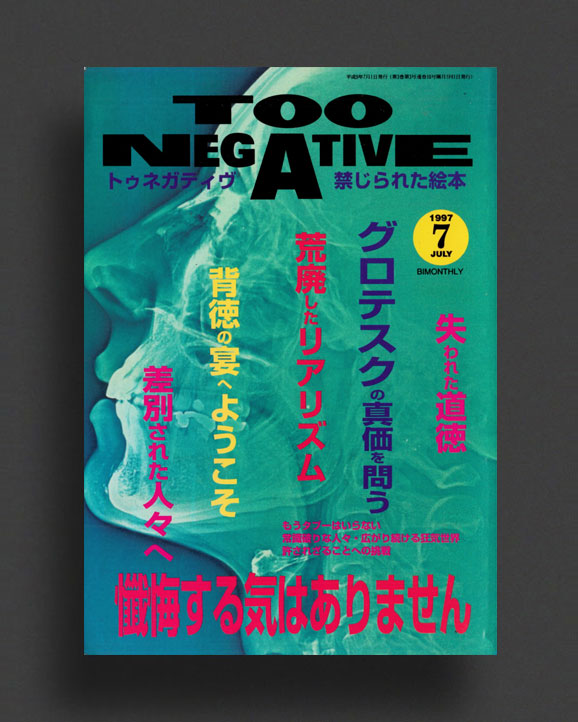
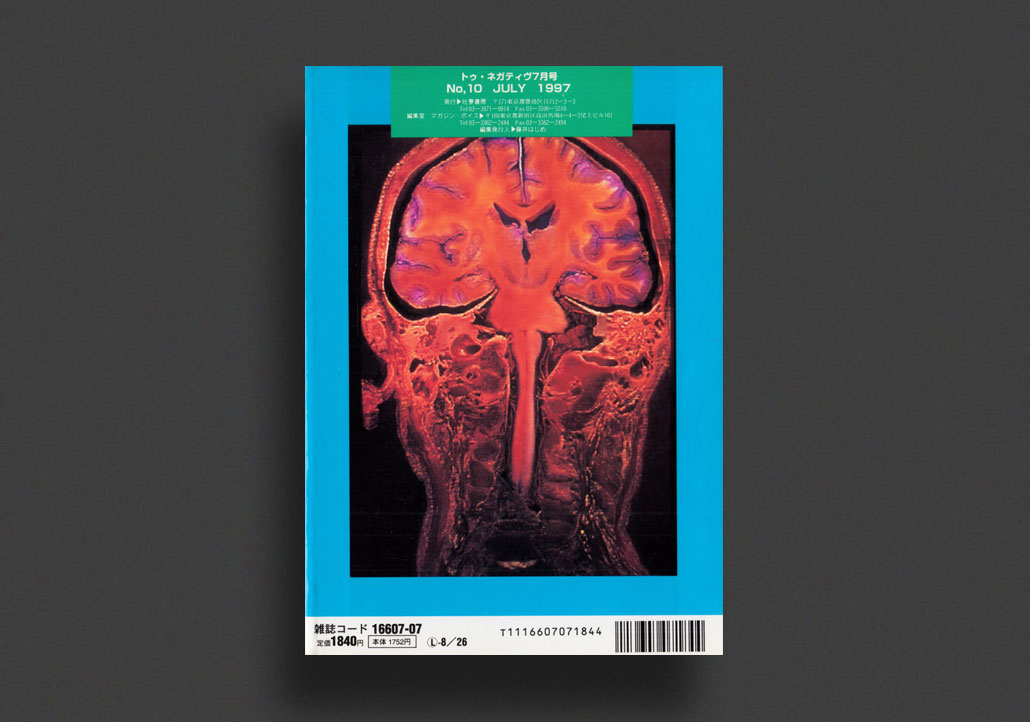
Too Negative No. 10 July 1997. Now rare and highly collectible, Too Negative, the "Forbidden Picture Book", was a visceral and visually explosive glossy cult arts magazine that reflected the gory-depraved-beyond salvation-bad taste expressions visible in international subculture at the height of 1990s underground publishing, a time when art was pushing the limits of taste and morality. Edited solely by legendary Japanese publisher and gallery owner Kotaro Kobayashi and published by Tom Publication Inc. between 1994—2000, each thick, glossy volume takes on the aesthetics of a vibrant fashion magazine in the great Japanese "mook" format (the magazine book) packed cover to cover with themes of Eros and Thanatos, such as fetishism, erotica, medical/autopsy photography, death journalism, Japanese bondage, grotesque and neo-surrealist art, crime scene photography, tattooing/irezumi, piercing, and all things of the mondo, macabre, bizarro realm. Frequent collaborators and featured artists were Kiyotaka Tsurisaki, Joel-Peter Witkin, Trevor Brown, Kiyoshi Ikejiri, to name a few. With a Japanese publishing lineage that may be found in earlier bounding-pushing periodicals such as the 1920s erotic grotesque magazine Hentai Shiriou (Pervert Documents), Tasuhiko Shibusawa’s incredible 1960s avant-garde journal Le Sang Et La Rose, or Fiction Inc’s SALE2 journal published from 1980—mid 1990s, Too Negative, and affiliated periodicals such as ORG, Spiral, Schizo, etc. took their subjects to another level of extremism, even by Japanese standards.
Not for the faint hearted.
This issue, Too Negative No. 10 July 1997, focuses around the special anniversary art galley that runs throughout the issue—" Welcome to the Feast of Immorality"—an almost cover-to-cover feature of artworks and photo documents spurred on by the question to editor Kotaro Kobayashi, "where lies the boundary between the grotesque and art", featuring the art of Andres Serrano, Mike Kelley, Paul McCarthy, Cindy Sherman, Joel-Peter Witkin, Joe Coleman, and so many more, a feature gallery of Japanese gore illustrator Shin Taga, pre-execution photographic portraits in Vietnam, "torture in the Edo period" with reference to Yoshihiko Sasama and featuring the ukiyo-e shunga of Yoshikazu Hayashi, vintage corpse/death photography, medical photography, lots of erotica, grotesque artworks, collage, bady manipulation, plus plus plus.
Very Good copy.
1980, English
Hardcover (w. dust jacket), 252 pages, 22.5 x 15 cm
1st Edition, Out of print title / used / good
Published by
The Viking Press / New York
$150.00 - Out of stock
Gorgeous first 1980 hardcover edition of Eric Rohmer's Six Moral Tales, a Seaver Book published by The Viking Press, New York. The literary antecedent to the French director’s film cycle of the same name. Stripped-down and incisive, these stories anticipate the literary quality of the cinematic works they would ultimately become. Translated from the French by Sabine d’Estree.
"Why be a filmmaker if you can be a novelist?" Eric Rohmer asks in the preface to his "Six Moral Tales." A surprising question from one so internationally reknowed for his contribution to the silver screen — and a question that prompts an alternative query: why write a story when you are going to film it? Yet rohmer does both, and his writing and filmmaking are steps to a single goal.
The multifaceted, deeply personal work of Eric Rohmer (1920—2010) has had an effect on cinema unlike any other. One of the founding critics of the history-making Cahiers du cinéma, Rohmer began translating his written manifestos to film in the 1960s, standing apart from his New Wave contemporaries with his patented brand of gently existential, hyperarticulate character studies set against vivid seasonal landscapes. This near genre unto itself was established with the audacious and wildly influential series Six Moral Tales. A succession of encounters between fragile men and the women who tempt them, Six Moral Tales unleashed on the film world a new voice, one that was at once sexy, philosophical, modern, daring, nonjudgmental, and liberating.
Very Good ex-libris copy, therefore Good with VG dust jacket, sticker to spine, associated library markings to title page/inner front cover and stamping to block edges. Well preserved library copy.
1988, Japanese
Softcover, 300 pages, 21 x 14.7 cm
1st Edition, Out of print title / used / very good
Published by
First Publishing / Japan
$80.00 - In stock -
One of the more obscure Japanese hardcore SM magazines, SM Secret was edited by Hiroshi Kawate and published by Takanori Shinya, and later Ryoichi Matomaru, between the late 1980s to the early 2000s. Wrapped in possibly the most bold, startling airbrushed covers of the genre, SM Secret was a glossy magazine dedicated to fetish/bdsm, born out the publication "Orange People" — one of the magazines that led the "husband and wife exchange" boom in the 80's. To be expected, this magazine too centres around amateur reader exchange of "Secret" sexual customs and fet-life behind closed doors, filled with photographic features, photographic Secret letters and stories from readers, articles, fetish advertisements, most heavy on photo features of femdom, malesub, torture, cross-dressing, wax play, rubber dress, bondage, urolagnia and queen/mistress S&M.
Very Good copy.
1996, Japanese
Softcover, 300 pages, 21.2 x 15.1 cm
1st Edition, Out of print title / used / good
Published by
Shishobo / Tokyo
$60.00 - Out of stock
SM Secret Club Vol. 7, an obscure Japanese bondage and fetishism magazine from the early—mid 1990s, published by the legendary Shishobo, a faction of Tokyo Sanseisha responsible for SM Fan, SM Frontier, Novel SM Fan, and others, closely related to Sanwa publishing. August 1996 issue is packed with vivid colour hardcore fetish photography of all manner of depraved SM bondage themes including urolagnia and coprophilia, and featuring models/pink actresses Hitomi Kurosawa, Rika Aoki, Yui Kawana and many others. Not for the faint hearted.
Good copy with some edge and corner wear.
1992, Japanese
Softcover, 84 pages, 21.5 cm x 30 cm
1st Edition, Out of print title / used / very good
Published by
Tsukasa Shobo / Tokyo
$90.00 - Out of stock
Published in Japan in 1992, BIZARRE JAPAN — Super Fetish Photo Collection Of Far East, is a glossy special edition photo volume published by Japanese bondage magazine Bizarre Japan, comprising entirely of their photoshoots of female fetish fashion wear designed by Z2. Features models Maiko Amagi, Nao Saejima, Reiko Suma, Reika, Mariko Kishi, and Kaoru ‘O’ in vivid colour glamour spreads, followed by a full catalogue of fetish wear. Scarce title!
Very Good copy.