World Food Books' programme is largely produced on Kulin Nation land. We acknowledge the Wurundjeri people of the Kulin Nation as the first and continuing custodians of this land, and pay respect to their Elders past, present, and emerging.
World Food Books is an arts and special interests bookshop in Naarm / Melbourne. Founded in 2010, World Food Books is devoted to the presentation of a rotating, hand-selection of international art, design, literary and counterculture publications with an emphasis on the anti-traditional, the experimental, the avant-garde, the heretic, the marginal.
Presenting new titles alongside rare and out-of-print books, catalogues and journals spanning the fields of modern and contemporary art, design, photography, illustration, film, literature, poetry, cultural theory, philosophy, sexuality, popular and underground culture in its many radical forms, World Food Books wishes to encourage adventurous, thoughtful and open-minded reading, looking, writing, and exchange of publishing and ideas, both current and historical.
As well as our bookshop, located in Melbourne's historical Nicholas Building, all of our inventory is available internationally via our online mail-order service.
World Food Books semi-regularly co-ordinates "Occasions", a programme of exhibits and events at the bookshop and in partnership with other hosts (such as museums and art galleries) that develop out of the activities, relationships and content of the bookshop itself.
World Food Books
The Nicholas Building
37 Swanston Street
Room 5, Level 6
Melbourne 3000
Australia
SHOP HOURS:
Thu–Fri 12–6, Sat 12–5
WEB-SHOP OPEN 24/7
World Food Books
Postal Address:
PO Box 435
Flinders Lane
Victoria 8009
Australia
Art
Theory / Essay
Architecture / Interior
Graphic Design / Typography
Photography
Fashion
Eros
LGBTQ+
Fiction / Poetry
Weird / Speculative / Science Fiction / Horror
Transgressive / Visceral / Abject
Symbolism / Decadence / Fin de siècle
Film / Video
Painting
Sculpture / Installation
Performance / Dance / Theater
Drawing
Sound / Music
Curatorial
Group Shows / Collections
Periodicals
Out-of-print / Rare
Posters / Ephemera / Discs
Signed Books
World Food Books Gift Voucher
World Food Book Bag
Australian Art
Australian Fiction
Australian Science Fiction / Speculative Fiction
Australian Poetry
Australian Photography
Japanese Photography
Conceptual Art
Minimal Art
Dada
'Pataphysics / Oulipo
Fluxus
Concrete Poetry
Pop Art
Surrealism
Arte Povera
Arte Informale / Haute Pâte / Tachism
Nouveau Réalisme / Zero / Kinetic
Situationism / Lettrism
Collage / Mail Art / Xerox Art
Art Brut / Folk / Visionary / Fantastic
Illustration / Graphic Art / Bandes Dessinées
Furniture
Italian Radical Design / Postmodernism
Textiles
Ceramics / Glass
Counterculture
Protest / Revolt
Philosophy
Psychoanalysis
Anthropology
Anarchism
Socialism / Anarchism / Communism / Capitalism
Literary Theory / Semiotics / Language
Feminism / Women's Studies
Gender Studies / Sexuality
Anthropology
Fetishism / BDSM
Drugs / Psychedelia
Crime / Violence
Animal Rights / Veganism
Occult / Esoterica
Ecology / Earth / Alternative Living
Whole Earth / Crafts
All prices in AUD (Australian dollars)
Pick-Ups
Pick-up orders can be collected in our bookshop during opening hours after order date. Please collect any Pick-up orders within 2 weeks of ordering as we have limited storage space. Orders will be released back into stock if not collected within this time. No refunds can be made for pick-ups left un-collected. If you cannot make it in to the bookshop in this time-frame, please choose postage option.
Return Policy
All sales are final. We do accept returns (for refund or exchange) for items received in error. All our orders are packed with special care using heavy-duty padding and cardboard book-mailers or bubble mailers (for smaller books), using reinforcement where required. We cannot take responsibility for any lost, stolen or damaged parcels.
Insurance
Should you wish to insure your package, please email us directly after placing your order and we can organise this at a small extra expense. Although all standard/express tracked packages are very safe and dependable, we cannot take responsibility for any lost, stolen or damaged parcels. We recommend insurance on valuable orders.
Interested in selling your old books, catalogues, journals, magazines, comics, fanzines, ephemera? We are always looking for interesting, unusual and out-of-print books to buy. We only buy books in our fields of interest and specialty, and that we feel we can resell.
We base these prices on desirability, market value, in-print prices, condition and our current stock levels. We offer cash, store credit, and can take stock on consignment. All
about 25% of the price we expect to get when we sell them, or 30% in store credit. We base these prices on desirability, market value, in-print prices, condition and our current stock levels.
Sell your books any day of the week. You can drop them off and return later. If you have a lot of books, we can visit your Sydney home.
We buy books that we feel we can resell. We offer about 25 % of the price we expect to get when we sell them, or 30% in store credit. We base these prices on desirability, market value, in-print prices, condition and our current stock levels.
Philadelphia Wireman
03 August - 01 September, 2018
World Food Books is proud to announce our next Occasion, the first presentation of sculptures by Philadelphia Wireman in Australia.
The Philadelphia Wireman sculptures were found abandoned in an alley off Philadelphia’s South Street on trash night in 1982. Their discovery in a rapidly-changing neighbourhood undergoing extensive renovation, compounded with the failure of all attempts to locate the artist, suggests that the works may have been discarded after the maker’s death. Dubbed the "Philadelphia Wireman" during the first exhibition of this work, in 1985, the maker’s name, age, ethnicity, and even gender remain uncertain. The entire collection totals approximately 1200 pieces, all intricately bound together with tightly-wound heavy-gauge wire (along with a few small, abstract marker drawings, reminiscent both of Mark Tobey and J.B. Murry). The dense construction of the work, despite a modest range of scale and materials, is singularly obsessive and disciplined in design: a wire armature or exoskeleton firmly binds a bricolage of found objects including plastic, glass, food packaging, umbrella parts, tape, rubber, batteries, pens, leather, reflectors, nuts and bolts, nails, foil, coins, toys, watches, eyeglasses, tools, and jewellery.
Heavy with associations—anthropomorphic, zoomorphic, and socio-cultural responses to wrapped detritus—the totemic sculptures by Philadelphia Wireman have been discussed in the context of work created to fulfil the shamanistic needs of alternative religions in American culture. Curators, collectors, and critics have variously compared certain pieces to sculpture from Classical antiquity, Native American medicine bundles, African-American memory jugs, and African fetish objects. Reflecting the artist’s prolific and incredibly focused scavenging impulse, and despite—or perhaps enhanced by—their anonymity, these enigmatic objects function as urban artefacts and arbiters of power, though their origin and purpose is unknown. Philadelphia Wireman, whatever their identity, possessed an astonishing ability to isolate and communicate the concepts of power and energy through the selection and transformation of ordinary materials. Over the course of the past two decades, this collection has come to be regarded as an important discovery in the field of self-taught art and vernacular art.
Presented in collaboration with Fleisher-Ollman Gallery, Philadelphia, and Robert Heald, Wellington.
Susan Te Kahurangi King
02 February - 10 March, 2018
Susan Te Kahurangi King (24 February 1951 - ) has been a confident and prolific artist since she was a young child, drawing with readily available materials - pencils, ballpoint pens and felt-tip markers, on whatever paper is at hand. Between the ages of four and six Susan slowly ceased verbal communication. Her grandparents William and Myrtle Murphy had developed a special bond with Susan so they took on caring responsibilities for extended periods. Myrtle began informally archiving her work, carefully collecting and storing the drawings and compiling scrapbooks. No drawing was insignificant; every scrap of paper was kept. The King family are now the custodians of a vast collection containing over 7000 individual works, from tiny scraps of paper through to 5 meter long rolls.
The scrapbooks and diaries reveal Myrtle to be a woman of great patience and compassion, seeking to understand a child who was not always behaving as expected. She encouraged Susan to be observant, to explore her environment and absorb all the sights and sounds. Myrtle would show Susan’s drawings to friends and people in her community that she had dealings with, such as shopkeepers and postal workers, but this was not simply a case of a grandmother’s bias. She recognised that Susan had developed a sophisticated and unique visual language and sincerely believed that her art deserved serious attention.
This was an unorthodox attitude for the time. To provide some context, Jean Dubuffet coined the term Art Brut in 1945 to describe work created by self-taught artists – specifically residents of psychiatric institutions and those he considered to be visionaries or eccentrics. In 1972 Roger Cardinal extended this concept by adopting the term Outsider Art to describe work made by non-academically trained artists operating outside of mainstream art networks through choice or circumstance. Susan was born in Te Aroha, New Zealand in 1951, far from the artistic hubs of Paris and London that Dubuffet and Cardinal operated in. That Myrtle fêted Susan as a self-taught artist who deserved to be taken seriously shows how progressive her attitudes were.
Susan’s parents Doug and Dawn were also progressive. Over the years they had consulted numerous health practitioners about Susan’s condition, as the medical establishment could not provide an explanation as to why she had lapsed into silence. Dawn educated herself in the field of homeopathy and went on to treat all twelve of her children using these principles – basing prescriptions on her observations of their physical, mental and emotional state.
Doug was a linguist with an interest in philosophy who devoted what little spare time he had to studying Maori language and culture. To some extent their willingness to explore the fringes of the mainstream made them outsiders too but it was their commitment to living with integrity and their respect for individuality that ensured Susan’s creativity was always encouraged.
Even though Susan’s family supported her artistic pursuits, some staff in schools and hospitals saw it as an impediment to her assimilation into the community and discouraged it in a variety of ways. Her family was not always aware of this and therefore did not fully understand why Susan stopped drawing in the early 1990s. However, rather than dwell on the challenges that Susan faced in pursuit of her artistic practice, they prefer to highlight her achievements. In 2008 Susan began drawing again in earnest, after an almost 20 year interruption, and her work is now shown in galleries around the world.
Susan grew up without television and has been heavily influenced by the comics she read as a child. She is absolutely fearless in the appropriation of recognizable characters, such as Donald Duck and Mickey Mouse, in her work. She twists their limbs, contorts their faces, compresses them together, blends them into complex patterned backgrounds - always imbuing them with an incredible energy. Although Susan often used pop culture characters in her work they are not naive or childlike. These are drawings by a brilliant self-taught artist who has been creating exceptional work for decades without an audience in mind.
Mladen Stilinović
"Various Works 1986 - 1999"
02 February 16 - September 10, 2016
Various works 1986 - 1999, from two houses, from the collections of John Nixon, Sue Cramer, Kerrie Poliness, Peter Haffenden and Phoebe Haffenden.
Including: Geometry of Cakes (various shelves), 1993; Poor People’s Law (black and white plate), 1993; White Absence (glasses, ruler, set square, silver spoon, silver ladel with skin photograph and wooden cubes), 1990-1996; Exploitation of the Dead (grey and red star painting, wooden painting, black spoon with red table, red plate), 1984-1990; Money and Zeros (zero tie, paintings made for friends in Australia (Sue, John, Kerrie), numbers painting), 1991-1992; Words - Slogans (various t-shirts) - “they talk about the death of art...help! someone is trying to kill me”, “my sweet little lamb”, “work is a disease - Karl Marx”; Various artist books, catalogues, monographs, videos; Poster from exhibition Insulting Anarchy; "Circular" Croatian - Australian edition; Artist book by Vlado Martek (Dostoyevsky); more.
Thanks to Mladen Stilinović and Branka Stipančić.
Jonathan Walker
Always Will Need To Wear Winter Shirt Blue + Ochre Small Check Pattern
21 August - 21 September, 2015
Untitled
I am not a great reader of poetry but I always return to the work of Melbourne poet, Vincent Buckley (1925- 1988). Perhaps I find his most tantalising piece to be not a finished poem but a fragment left on a scrap of paper discovered on his desk after the poet’s death.
The poetry gathers like oil
In the word-core, and spreads
It has its music meet,
Its music is in movement.
This fragment is more the shell left behind from a volatile thought than a finished poem. I find the last two lines honest but awkward whereas the first two lines work like an arrow. Most likely he could not find a resolution so it was left. Still, in its present form, it remains an eloquent testimony to the ultimate failure of a medium to express mobile thought and sensation, in Buckley’s case, through verbal language. It’s an important matter because this is something all artists have to deal with regardless of the medium.
I have never written a poem, however, I am forever copying fragments from books on paper scraps in a vain effort to fix certain notions in my head. At first, they function as bookmarks that are sometimes returned to when I open the book. But before long, as they accumulate, they fall out littering the table interspersed with A4 photocopies, bills, books and medications.
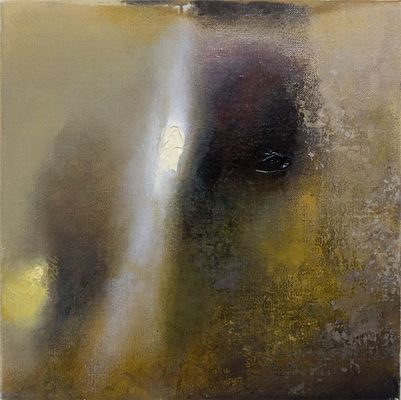
To return to Buckley’s fragment, the first two lines very much evoke how I paint nowadays. As you age, detail diminishes and patches of light become more luminous and float. I feel the most honest way of dealing with this is by smearing the oil paint on the canvas with the fingers and working close-up, blind. Only if the patches coalesce into an approaching image can the work gain a life.
-
Jonathan Walker was born in Melbourne, Australia and brought up on a dairy farm in Gippsland. In the 1970’s he studied painting at RMIT and won the Harold Wright Scholarship to the British Museum, London. During the 1980’s he exhibited at Pinacotheca Gallery, Richmond and had work shown at the NGV and Heidi City Art Gallery. Over the same period he designed the cover for the “Epigenesi” LP by Giancarlo Toniutti, Italy and conducted a mail exchange work with Achim Wollscheid, Germany. The work with artists through the post resulted in an article published in the bicentenary issue of Art and Australia 1988. He showed in artist run spaces such as WestSpace in the 90’s and 2000’s, and until 2012, taught painting at Victoria University, which is where we (Colleen Ahern and Lisa Radford) as organisers of the exhibition, among many others, had the privilege of being his student.
Walker’s knowledge was imparted to students through the careful selection of music, literature, and artists found in books that he himself had ordered for the library. Walker’s strategy was the generosity of sharing his vast knowledge with references specific to each student and their context.
Walker’s paintings share a similar focus and intimacy.
This exhibition presents a small selection of recent paintings alongside a publication that includes Walker’s writing. Observational and analytical, Walker’s work is a type of material notation — the time of day, colour and how it is blended, the both specific and fleeting location of a reflection on lino or the question of whether a chair leg should be included in a painting.
Please join us on Friday August 21 between 6-8pm to celebrate the opening of the exhibition.
Curated by Colleen Ahern and Lisa Radford.
B. Wurtz
Curated by Nic Tammens
March 26 - April 4, 2015
B.Wurtz works from a basement studio in his home on Manhattan’s Lower East Side.
This local fact is attested to by the plastic shopping bags and newsprint circulars that appear in his work. As formal objects, they don’t make loud claims about their origins but nonetheless transmit street addresses and places of business from the bottom of this long thin island. Like plenty of artists, Wurtz is affected by what is local and what is consumed. His work is underpinned by this ethic. It often speaks from a neighborhood or reads like the contents of a hamper:
“BLACK PLUMS $1.29 lb.”
“Food Bazaar”
“USDA Whole Pork Shoulder Picnic 99c lb.”
“RITE AID Pharmacy, with us it’s personal.”
“H. Brickman & Sons.”
“Sweet Yams 59c lb."
Most of the work in this exhibition was made while the artist was in residence at Dieu Donne, a workshop dedicated to paper craft in Midtown. Here Wurtz fabricated assemblages with paper and objects that are relatively lightweight, with the intention that they would be easily transportable to Australia. This consideration isn’t absolute in Wurtz’s work, but was prescriptive for making the current exhibition light and cheap. Packed in two boxes, these works were sent from a USPS post office on the Lower East Side and delivered to North Melbourne by Australia Post.
Wurtz appears courtesy of Metro Pictures, New York.
Thanks to Rob Halverson, Joshua Petherick, Sari de Mallory, Matt Hinkley, Helen Johnson, Fayen d'Evie, Ask Kilmartin, Lisa Radon, Ellena Savage, Yale Union, and "Elizabeth".
John Nixon
"Archive"
December 15 - January 20, 2014
The presentation of John Nixon's archive offered a rare showcase of this extensive collection of the artist's own publications, catalogues, posters, ephemera, editions and more, from the mid 1980s onwards, alongside a selection of his artworks.
Organized by John Nixon, Joshua Petherick and Matt Hinkley.
<a href=http://wfb.public-office.info/artist/john-nixon>All titles by John Nixon
"Habitat"
at Minerva, Sydney (organised by Joshua Petherick and Matt Hinkley)
November 15 - December 20, 2014
Lupo Borgonovo, Janet Burchill & Jennifer McCamley,
Lewis Fidock, HR Giger, Piero Gilardi, Veit Laurent Kurz,
Cinzia Ruggeri, Michael E. Smith, Lucie Stahl, Daniel Weil, Wols
Press Release:
“...It contained seven objects. The slender fluted bone, surely formed for flight, surely from the wing of some large bird. Three archaic circuitboards, faced with mazes of gold. A smooth white sphere of baked clay. An age-blackened fragment of lace. A fingerlength segment of what she assumed was bone from a human wrist, grayish white, inset smoothly with the silicon shaft of a small instrument that must once have ridden flush with the surface of the skin - but the thing’s face was seared and blackened.”
William Gibson, “Count Zero”, 1986
"Autumn Projects Archive"
Curated by Liza Vasiliou
March 6 - March 15, 2014
World Food Books, in conjunction with the Virgin Australia Melbourne Fashion Festival 2014, presented the Autumn Projects archive, consisting of a selection of early examples in Australian fashion with a particular interest in collecting designers and labels from the period beginning in the 1980’s, who significantly influenced the discourse of Australian Fashion.
Curated by Liza Vasiliou, the exhibition provided a unique opportunity to view pieces by designers Anthea Crawford, Barbara Vandenberg, Geoff Liddell and labels CR Australia, Covers, Jag along with early experimental collage pieces by Prue Acton and Sally Browne’s ‘Fragments’ collection, suspended throughout the functioning World Food Books shop in Melbourne.
H.B. Peace
presented by CENTRE FOR STYLE
November 14, 2013
"Hey Blinky, you say chic, I say same"
Anon 2013
H.B. Peace is a clothing collaboration between great friends Blake Barns and Hugh Egan Westland. Their pieces explore the divergences between 'character’ and ‘personality’ in garments....etc
Special Thanks to Joshua Petherick and Matt Hinkley of WFB and Gillian Mears
and a Very Special Thank you to Audrey Thomas Hayes for her shoe collaboration.
Janet Burchill & Jennifer McCamley
"Aesthetic Suicide"
May 10 - June 8, 2013
The first of our occasional exhibitions in the World Food Books office/shop space in Melbourne, "Aesthetic Suicide" presented a body of new and older works together by artists Janet Burchill & Jennifer McCamley, including videos, prints, a wall work, and publications.
During shop open hours videos played every hour, on the hour.
1972, Japanese
Softcover, 378 pages, 11 x 18 cm
1st Edition, Out of print title / used / very good
Published by
Shimpei Book Publishing / Tokyo
$60.00 - Out of stock
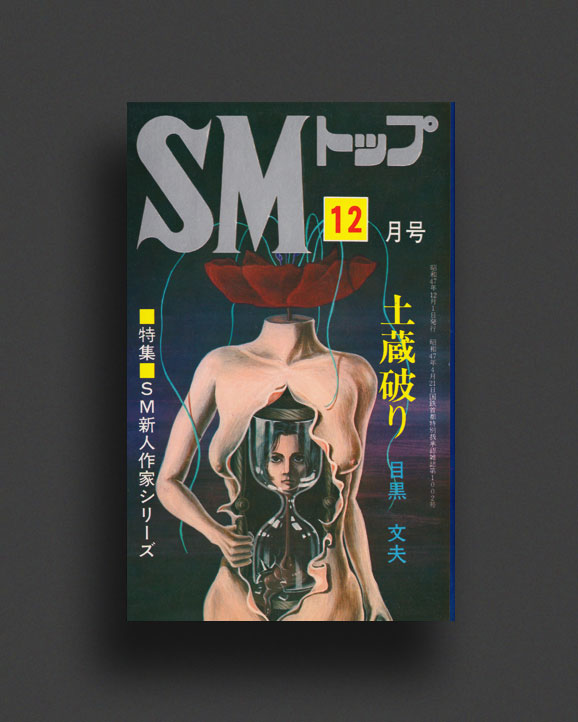
SM Top 1972 December Edition, published by Shimpei Book Publishing. Cult classic of vintage Japanese BDSM and Kinbaku (Japanese bondage), each issue of SM Fan featured almost 400 pages of Japan's most depraved fetish fiction, littered with illustrations unseen elsewhere, including many historical pieces, plus full-colour glossy bondage photo-features, surreal erotic art and manga, fold-outs, reviews, letters, and much more. SM Top, alongside SM Select, SM King, SM Fan, SM Sniper, SM Fantasia, etc. were often the first place to showcase the artwork and photography by some of Japan's biggest names in the field of erotic art, including Namio Harukawa, Yoshifumi Hayashi, Toshio Saeki, and Ken Katayama, alongside the likes of masters such as Yoshitoshi Tsukioka.
Very Good copy.
1977, French / Japanese
Softcover, 40 pages (w. Japanese translation booklet insert), 34.5 x 29 cm
1st Edition, Out of print title / used / very good
Published by
Façade / Paris
$220.00 - Out of stock
Issue no. 3 of the incredibly rare and iconic Façade, the French underground magazine published in Paris between 1976—1983. Founded in 1976 by Alain Benoist and Hervé Pinard, Façade was the french answer to Andy Warhol's Interview, heavily centered around Parisian club, fashion and art scene and published without any date or periodicity until 1983. Launched at an Issey Miyake show where models handed out the magazine from the catwalk, the cult magazine witness through its pages a long-lost, short-lived period in Paris featuring the so-called "jeunes gens modernes" of the 1970's, like punk icons Edwige Belmore and Alain Pacadis. With pop celebrity covers and vibrant fashion shoots styled by the likes of a young Pierre et Gilles (who met through working on this very magazine), features in collaboration with the likes of Serge Gainsbourg, and in each issue a unique "false" advertisement created by Karl Lagerfeld, it's no wonder Façade's reputation spread quickly to New York, Tokyo and beyond, making it one of the most desired magazines of the new wave. With texts in French, these rare issues come complete with the inserted Japanese translation booklets. Includes Eddie and the Hot Rods, Andy Warhol, Gilbert and George, the Inauguration of Beaubourg, Serge Gainsbourg, Alain Pacadis, Karl Lagerfeld… with collaborations from Pierre Commoy, Thierry Ardisson, Philippe Morillon, and much more.
Very Good copy, tanning. Beautifully preserved.
2003, English / Spanish
Softcover (w. wax dustjacket and die-cuts), 428 pages, 28 x 22 cm
1st Edition, Out of print title / used / fine
Published by
Fundacion Cisneros / Venezuela
$490.00 - In stock -
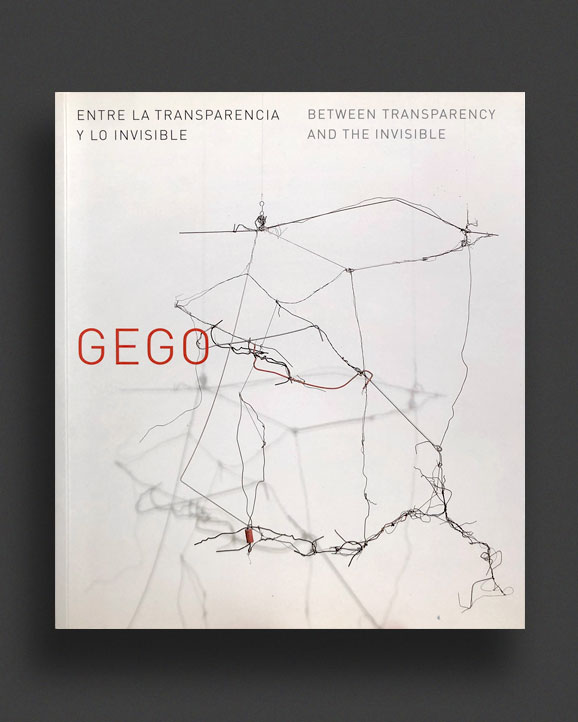
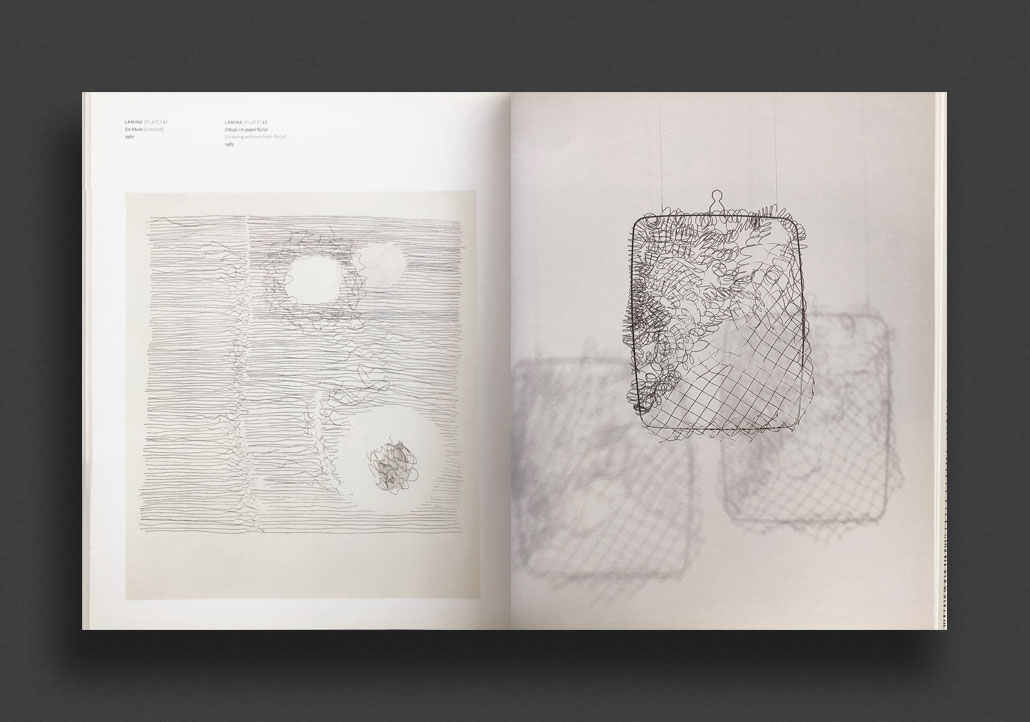
Extremely rare, most comprehensive monograph illuminating the work of one of the most innovative and influential Latin American artists of the twentieth century, Gego (1912–1994). Long out-of-print, this heavy, detailed catalogue raisonne of work prepared by the Fundación Museo de Bellas Artes, with the collaboration and assistance of the Fundacíon Gego on the occasion of the exhibition Gego 1955—1990 that was presented at the Museo de Ballas Artes in Caracas from November 2000 to April 2001. The German-born Venezuelan artist created spare and unequivocally abstract drawings, prints, three-dimensional works, hanging net pieces, and wire constructions of extraordinary quality. Gego used lines as conceptual and visual tools to create in-between spaces within her works. Whether drawing lines on paper or projecting them into space, the artist sought to “make visible the invisible.” She believed that line could express what is not physically present in nature––including thought, intuition, and emotions. Profusely illustrated in colour and b/w throughout with documentation of Gego's work and life, accompanied by important texts by art critics and the most serious scholars of Gego's work, Mónica Amor, Ruth Auerbach, Guadalupe Montenegro, Josefina Núñez, Luis Pérez-Oramas, and Iris Peruga, plus full chronology, biography, bibliography, and much more. "Rarely do we have the opportunity to see such intellectual generosity united: the best photographic reproductions of a work that requires the greatest rigor to find the greatest subtlety, the genius of the best graphic design embodied by Alvaro Sotillo, the greatest editorial effort on the part of our teams ." An extensive and exhaustive reference on the artist, beautifully printed and bound with die-cut chapter markers and translucent wax dust jacket in homage to Gego's sensibility. The designer of this publication was awarded the 2005 Gutenberg Prize.
Co-published by Fundacion Cisneros, Fundacion Gego, and Faundacion Museo de Bellas Artes.
Very Good—Near Fine copy. Light buckling in the translucent white wax dust jacket (as usual), otherwise As New with only light tanning to edges.
2007, English / Spanish
Softcover, 256 pages, 27 x 23 cm
1st Edition, Out of print title / used / very good
Published by
The Museum of Fine Arts / Houston
Malba Colección Costantini / Argentina
$100.00 - Out of stock
Scarce first printing limited to 1250 copies, printed on the occasion of the exhibition at The Museum of Fine Arts, Houston and Fundacion Eduardo Constantini, Buenos Aires, Argentina, and long out-of-print. An incredible, comprehensive book on Latin American artist Gego (1912–1994), who produced a vast range of line-based abstract work, including drawings, prints, and wire sculptures. Focusing on a rare series of monotypes from the early 1950s, drawings and prints, and “drawings without paper” and “tejeduras” (woven paper pieces) of the late 1970s and 1980s, this fascinating book traces Gego’s exploration of line and space. Gego used lines as conceptual and visual tools to create in-between spaces within her works. Whether drawing lines on paper or projecting them into space, the artist sought to “make visible the invisible.” She believed that line could express what is not physically present in nature––including thought, intuition, and emotions. By manipulating the density of the lines or by interrupting them, she brought light, shadow, and feeling into her linear works.
Profusely illustrated throughout with accompanying texts in both English and Spanish by Mari Carmen Ramirez, Josefina Manrique, Catherine de Zegher, and Gago, plus bibliography, biography and index.
Very Good—Fine copy.
1996, English
Hardcover (w. CD), 304 pages, 31 x 26 cm
1st Edition, Out of print title / used / fine
Published by
Prestel / Munich
$100.00 - Out of stock
First 1996 hardcover edition (with CD) of Klangkunst, published by Prestel and edited by Akademie der Künste, Berlin, and Helga de la Motte-Haber. Catalogue for the landmark sound art festival, Sonambiente – Festival für Hören und Sehen, held in August—September 1996 in Berlin, curated by Matthias Osterwold, Georg Weckwerth, and Christian Kneisel and named after the American designer Harry Bertoia’s sound-sculpture studio. Part of the Akademie der Künste's tricentennial celebration, Sonambiente 1996 presented the most comprehensive survey to date of contemporary international sound art, with works by more than 100 participating artists at more than 20 venues in Berlin's Mitte district. For nearly one month the city of Berlin was overflowing with the sounds of sound art. This book accompanied this inaugural edition, heavily illustrated throughout and featuring chronology and texts by Helga de la Motte-Haber, Sabine Breitsameter, Volker Straebel, Michael Glasmeier, R. Murray Schafer, Douglas Kahn, Golo Föllmer, Gisela Baurmann, Georg Weckwerth, André Ruschkowski, Jean-Yves Bosseur, Paul DeMarinis, Dieter Daniels, Heiner Büld, Peter Roloff, Manfred Mixner, Gottfried Hattinger, Diedrich Diederichsen, and many more, plus illustrated chapter dedicated to the artists featured, including Henning Christiansen, Alvin Lucier, Christian Marclay, Achim Freyer Ensemble, Alvin Curran, Paul Fuchs, Brian Eno, Terry Fox, Zoro Babel, Matt Heckert, Fatima Miranda, David Moss, Wolfgang Rihm, Klaus Vom Bruch, Ensemble 13, Dieter Schnebel, Laetitia Sonami, Mark Trayle, Wada Junko, Hans Peter Khun, Laurie Anderson, Sam Auinger, Bruce Odland, Andres Boshard, Nicolas Collins, Paul De Marinis, Louis-Philippe Demers, Bill Vorn, Ulrich Eller, Paul Fuchs, Hans Gierschik, Gün, Josefine Günschel, Felix Hess, Gary Hill, Stephan Von Huene, Robert Jacobsen, Arsenije Jovanovic, Rolf Julius, Christina Kubisch, Hans Peter Kuhn, Ron Kuivila, Bernhard Leitner, Robin Minard, Gordon Monahan, Max Neuhaus, Ed Osborn, Roberto Paci Dalò, Isabella Bordoni, Nam June Paik, Paul Panhuysen, Yufen Qin, Martin Riches, Don Ritter, David Rokeby, Nicola Sani, Mario Sasso, Sarkis, Leo Schatzl, Kyra Stratmann, Suzuki Akio, Ana Torfs, Trimpin, Peter Vogel... and many more.
Fine—As New copy with CD present and unplayed (many of the first edition were not issued with the CD, available only as an additional purchase).
1988, Italian
Softcover (staple-bound), 32 pages, 29 x 21 cm
1st Edition, Out of print title / used / very good
Published by
Maelzel / Poirino
$90.00 - Out of stock
Third issue of this rare, wonderful experimental / industrial music fanzine, Maelzel, published in Italy in 1988 by artist, journalist and founder of later fanzine Chain D.L.K., Maurizio Pustianaz (aka Gerstein). In navy printed wraps packed with artwork and texts by/features on/interviews with Giancarlo Toniutti, Ramleh, Tito Turbina Tastierista Futurista (Luca Faraci), Amok (Enrico Piva), LSD (Gianfranco Santoro), Maurizio's own Infektion Prod., NUN, Regina, and more. Giancarlo Toniutti interview particularly substantial, with photography and discography. All postal contacts for artists throughout. Texts in Italian.
Very Good copy, with only light wear/age to covers.
1982, English
Hardcover (w. dust jacket), 424 pages
1st Edition, Out of print title / used / very good
Published by
Evans Brothers / London
$200.00 - Out of stock
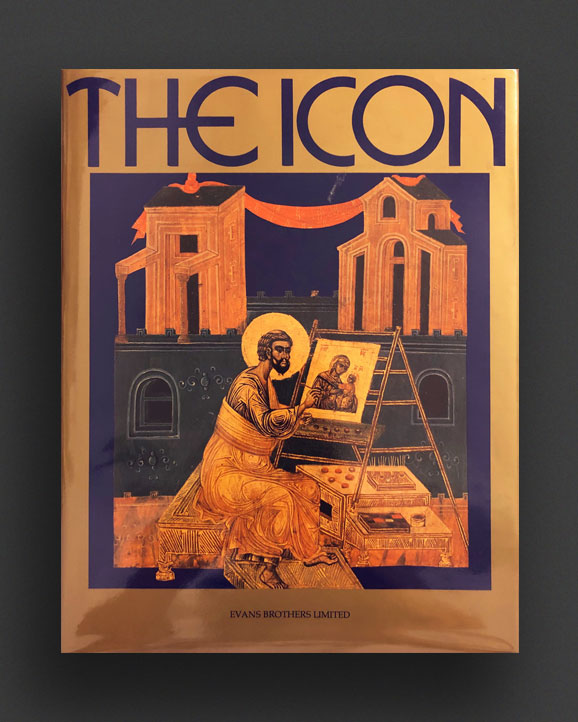
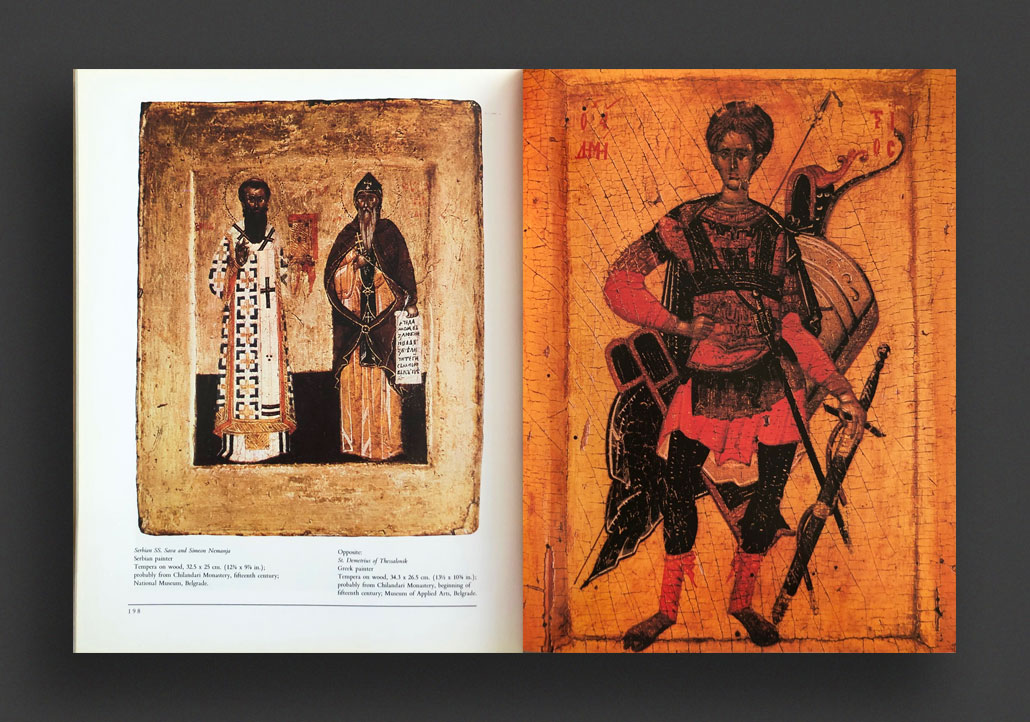
The monumental, now collectible, hardcover volume The Icon, by in rare English edition, published by Evans Brothers, London, 1982. A lavishly illustrated, comprehensive volume dedicated to the subject of the Icon spanning 1000 years, from 10th century Constantinople through the centuries in Greece, Russia, Crete, the Balkan peninsula, and the Holy Land. The most out-standing published study on the subject to date, examining icons of Christ, the Blessed Virgin, the great Church feasts, and the Saints and their lives, all artworks beautifully reproduced in vivid colour. Texts by Kurt Weitzman, Gaiane Alibegasvili, Aneli Volskaja, Manolis Chatzidakis, Gordana Babic, Mihail Alpatov, Teodora Voinescu. A stunning book with cloth-binding and gilded detailing.
Kurt Weitzmann (1904—1993) was a Germa-born American art historian who studied Byzantine and medieval art. He attended the universities of Münster, Würzburg and Vienna before moving to Princeton in 1935, due to Nazi persecution. He is well known for the time he spent researching the icons and architecture at Saint Catherine's Monastery in Egypt. He was elected to the American Philosophical Society in 1964 and the American Academy of Arts and Sciences in 1978.
Very Good—Near Fine copy in VG dust jacket. Beautifully preserved.
2011, English
Hardcover, 228 pages, 23.3 x 27 cm
1st Edition, Out of print title / used / very good
Published by
MoMA / New York
$100.00 - In stock -
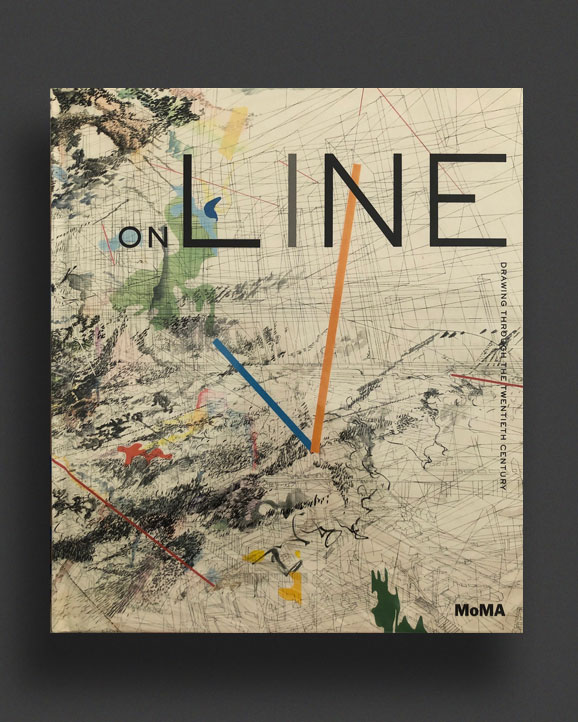
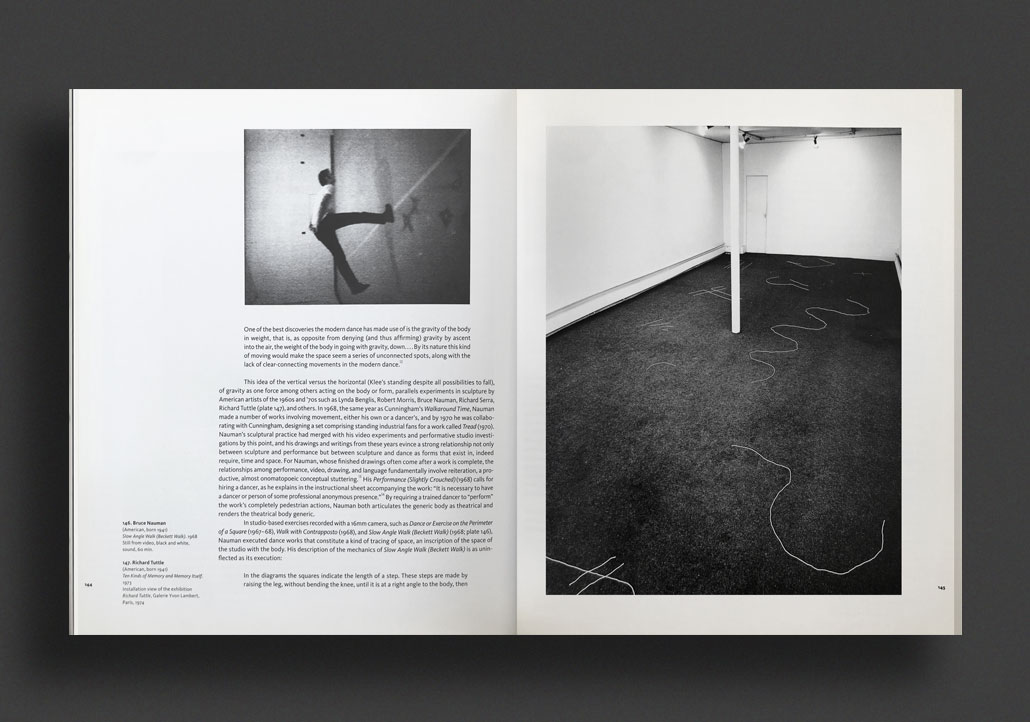
First edition of long out-of-print important catalogue published to accompany the exhibition On Line: Drawing Through the Twentieth Century, The Museum of Modern Art, New York, 21 Nov. 2010—7 Feb. 2011. On Line: Drawing through the Twentieth Century explores a radical transformation of drawing that began over a century ago and continues as a vital impulse in art today. In a revolutionary departure from traditional ideas of drawing, and from the reliance on paper as the medium's fundamental support, artists have pushed the line of drawing into real space, expanding its relationship to gesture and form and invigorating its links with painting and sculpture, photography and film, and, particularly notably, dance and performance. Through works by over 100 artists, and through essays by Cornelia Butler and Catherine de Zegher that illuminate both broad themes and individual practices, On Line presents a groundbreaking history of an art form. The great, recognized art movements, from Cubism and Futurism at the beginning of the twentieth century through Abstract Expressionism, Neo-Concretism, arte povera, Conceptualism, and many other approaches up to the diverse present, are shown from a new perspective, and are joined by a host of less familiar artworks that properly claim a place in this differently defined field. The exhibition and catalogue includes works by a wide range of artists, both familiar and relatively unknown, from different eras of the past century and from many nations, including Aleksandr Rodchenko, Alexander Calder, Karel Malich, Eva Hesse, Anna Maria Maiolino, Richard Tuttle, Mona Hatoum, and Monika Grzymala.
Very Good / As New copy.
1999, English
Softcover (w. dust jacket), 152 pages, 30.5 x 24.4 cm
1st Edition, Out of print title / used / very good
Published by
The MIT Press / Massachusetts
MOCA / Los Angeles
$100.00 - Out of stock
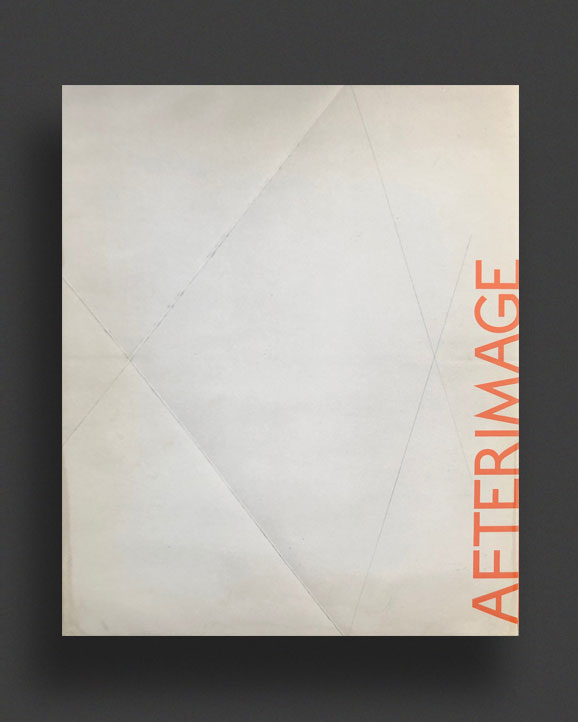
First edition of long out-of-print important catalogue published to accompany Afterimage : Draw Through Process, a major survey of conceptual / post-minimalist drawing at The Museum of Contemporary Art, Los Angeles, before travelling to Texas and Washington. Co-published by the MIT Press and MOCA.
The term "process art" describes a moment of radical, a formal experimentation in postwar American sculpture. Through the medium of drawing, Afterimage revisits process art in terms of the artists who defined the movement and suggests a transitional moment when many of its practitioners anticipated the feminist and post minimalist art of the 1970s.
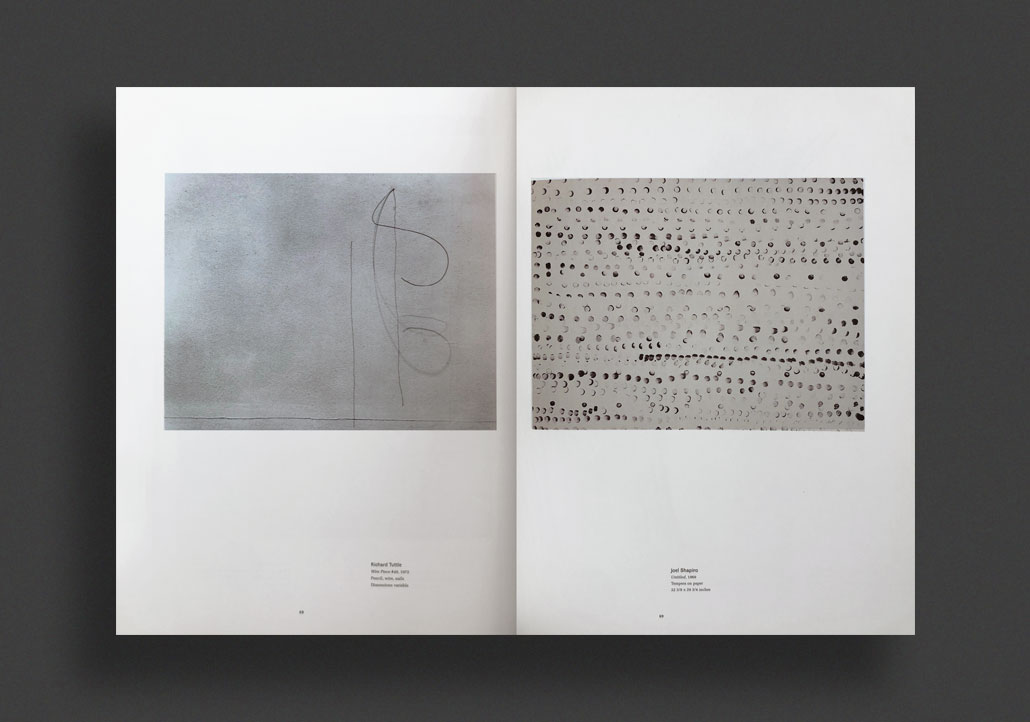
The term "process art" describes a moment of radical, a formal experimentation in postwar American sculpture. Through the medium of drawing, Afterimage revisits process art in terms of the artists who defined the movement and suggests a transitional moment when many of its practitioners anticipated the feminist and postminimalist art of the 1970s. Nancy Grossman's use of language, for example, suggests a kind of material abstraction, and Nancy Holt's earth works and related drawings introduced content into a minimalist vocabulary. The book also explores the drawing as a residual object in works in which the process of making dictates the form of the drawing. Examples include Gordon Matta-Clark's stacked cuttings, Robert Morris' "blind time" drawings, and Sol Lewitt's folded construction drawings. Other works, such as those by Bruce Nauman and Robert Smithson, record a particular approach to body-based and process-oriented sculpture. The book, which accompanies an exhibition, contains an essay by Cornelia H. Butler on the historical ambiguity surrounding process art and one by Pamela M. Lee on temporality in work of the late 1960s.
The artists included in the book are William Anastasi, Richard Artschwager, Mel Bochner, Agnes Denes, Nancy Grossman, Robert Grosvenor, Marcia Hafif, Eva Hesse, Nancy Holt, Barry LeVa, Sol Lewitt, Lee Lozano, Sylvia Plimack Mangold, Gordon Matta-Clark, Robert Morris, Bruce Nauman, Yvonne Rainer, Dorothea Rockburne, Alan Saret, Joel Shapiro, Robert Smithson, Michelle Stuart, Richard Tuttle, and Jack Whitten.
Very Good copy. Only very light wear to soft dust jacket, light tanning to edges.
1991, English
Softcover, 256 pages, 15.6 x 23.4 cm
1st Edition, Out of print title / used / good
Published by
Routledge / London
$65.00 - In stock -
First 1991 Routledge edition of "Who Comes After the Subject?". Edited by Jean-Luc Nancy, Eduardo Cadava, and Peter Connor, this collectible volume offers an overview of contemporary French thought on the question of the "subject", as it is viewed in philosophy, politics, history and psychoanalysis. It represents the most recent research from a host of the foremost contemporary French figures in philosophy and theory, including essays by Deleuze, Derrida, Lyotard, Blanchot, Lacoue-Labarthe, Nancy, Descombes, Kofman, Irigaray, Badiou, Ranciere, and Balibar.
Very Good copy.
1971, Japanese
Softcover, 120 pages, 29.5 x 22 cm
1st Edition, Out of print title / used / good
Published by
Kajima Institute / Tokyo
$80.00 - In stock -
Scarce May 1971 issue of Japanese monthly journal of urban housing, Toshi-Jutaku, edited by Masahiro Yoshida. This issue with a cover feature on Haus-Rucker-Co, the Viennese group founded in 1967 by Laurids Ortner, Günther Zamp Kelp and Klaus Pinter, later joined by Manfred Ortner. Their work explored the performative potential of architecture through installations and happenings using pneumatic structures or prosthetic devices that altered perceptions of space. Such concerns fit with the utopian architectural experiments of the 1960s by groups such as Superstudio, Archizoom, Ant Farm and Coop Himmelblau. Alongside these groups, Haus-Rucker-Co were exploring on the one hand, the potential of architecture as a form of critique, and on the other the possibility of creating designs for technically mediated experimental environments and utopian cities. Includes a fold-out chronology of their projects. The other incredible feature being "Decoration, Urban Decoration & Do-It-Yourself", tracing histories of self-organisation and expression in the form of urban decoration, from William Morris, Art Nouveau and sub-cities to Drop City, road-side attractions, pop interiors and building facades, murals, the city as a dress-up doll, playgrounds, and a wonderful photographic diagram pull-out feature on Tokyo's Ameyoko Shopping Street. Also included articles on Osaka's Senri New Town living environment project, Palawan Hill people's tree houses, architect Atsushi Ueda, toilet design and much more. Published and printed in Japan, Toshi-Jutaku was an important, heavily researched resource of international architecture and urban planning, each issue rich with in-depth articles, technical studies, plans, elevations, profiles, interviews, and much more, spanning the most innovative historical and contemporary developments in the field. Japanese text, only occasional English.
Good copy, light age, wear.
1972, English
Softcover, 130 pages, 17.8 x 20.3 cm
1st Edition, Out of print title / used / very good
Published by
Latimer / London
$300.00 - Out of stock
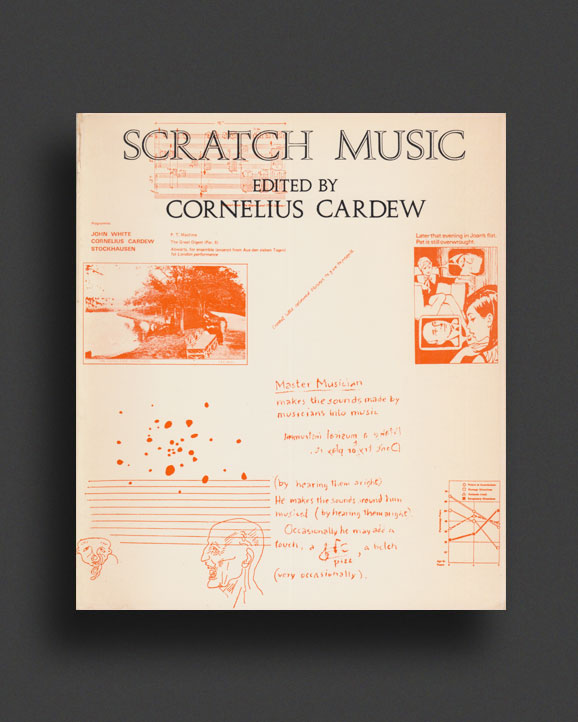
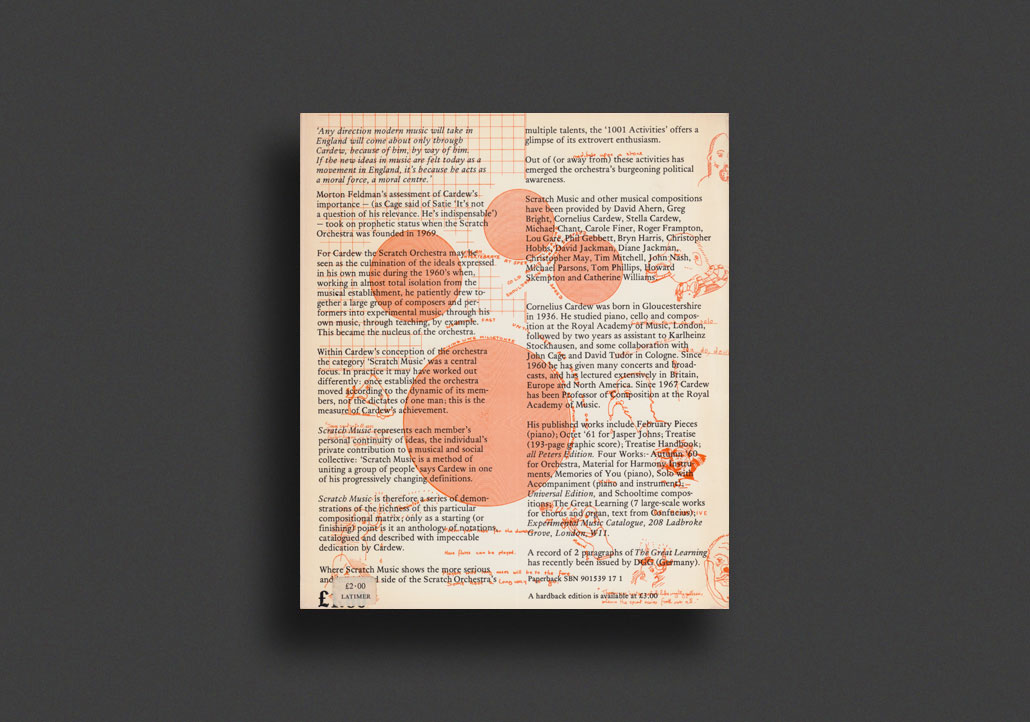
The very first 1972 UK edition of this historical publication by Cornelius Cardew, a key collection/collaborative manifesto of texts and scores by a group of British avant-garde musicians compiled and edited by the legendary experimental composer. Published by Latimer.
"Any direction modern music will take in England will come about only through Cardew, because of him, by way of him. If the new ideas in music are felt today as a movement in England, it's because he acts as a moral force, a moral centre."
This is Morton Feldman's assessment of Cardew's importance, an assessment that took on prophetic status when Cardew cofounded the Scratch Orchestra in 1969. This orchestra was a culmination of the ideals expressed in Cardew's own music in the 1960s when, working in almost total isolation from the musical establishment, he patiently drew together a large group of composers and performers into experimental music through his own compositional activities and through teaching. This group became the nucleus of the orchestra.
The draft constitution of the Scratch Orchestra opens as follows: "Definition: A Scratch Orchestra is a large number of enthusiasts pooling their resources (not primarily material resources) and assembling for action (music-making, performance, edification).
"Note: The word music and its derivatives are here not understood to refer exclusively to sound and related phenomena (hearing, etc). What they do refer to is flexible and depends entirely on the members of the Scratch Orchestra.
"The Scratch Orchestra intends to function in the public sphere, and this function will be expressed in the form of—for lack of a better word—concerts."
This lively book on the repertory the orchestra created is as much graphic and visual as it is verbal and about aural events and happenings. After all, scratch music itself is meant to be perceived by the eye and all the senses—not just by ear—so the notation used in preparing the scores for performance might be graphic, collage, verbal, or musical. The scores in Scratch Music are composed of written words, photographs, maps, graphs, diagrams, musical flow charts, conventional musical notation, whimsical drawings, playing cards, crossword puzzles, and other devices. Contemporary musicians, artists, and critics have long recognized both Cardew's music and this text as hugely influential and significant. Scratch Music demonstrates the extraordinary richness of this particular compositional matrix, giving the reader some idea of what it is like to put on a scratch music event.
Contents: Introduction; Scratch Music—Early Outlines and Later Notes; Scratch Music; Key to Scratch Music; Scratch Music Catalogue; 1001 Activities; Appendix: Four Compositions (David Ahern, Greg Bright, Michael Chant, Roger Frampton).
Cornelius Cardew (1936 – 1981) was an English experimental music composer. A student at the recently established the Studio for Electronic Music in Cologne, Cardew served as an assistant to Karlheinz Stockhausen from 1958 to 1960. Cardew was particularly prominent in introducing the works of American experimental composers such as Morton Feldman, La Monte Young, Earle Brown, Christian Wolff, and Cage to an English audience during the early to mid sixties and came to have a considerable impact on the development of English music from the late sixties onwards. In 1966, Cardew joined the free improvisation group AMM as cellist and pianist, alongside Lou Gare, Eddie Prévost, Keith Rowe, and one of his first students at the Royal Academy Christopher Hobbs. Performing with the group allowed Cardew to explore music in a completely democratic environment, freely improvising without recourse to scores. Cardew's most important scores from his experimental period are Treatise (1963–67), a 193-page graphic score which allows for considerable freedom of interpretation, and The Great Learning, a work in seven parts or "Paragraphs," based on translations of Confucius by Ezra Pound. The Great Learning instigated the formation of the Scratch Orchestra. During those years, he took a course in graphic design and he made his living as a graphic designer at Aldus Books in London. While teaching an experimental music class at London's Morley College in 1968, Cardew, along with Howard Skempton and Michael Parsons formed the Scratch Orchestra, a large experimental ensemble, initially for the purposes of interpreting Cardew's The Great Learning. He later rejected experimental music, his creative output from the demise of the Scratch Orchestra until his death reflected his political commitment as a member of the Communist Party of England (Marxist-Leninist) in the 1970s, and in 1979 as co-founder and member of the Central Committee of the Revolutionary Communist Party of Britain (Marxist-Leninist).
Very Good copy with some tanning and general wear.
1978, Japanese / English
Softcover, oversized folio w. obi-strip, 216 pages, 36.5 x 25 cm
1st Edition, Out of print title / used / very good
Published by
Heibonsha Limited Publishers / Tokyo
$150.00 - Out of stock
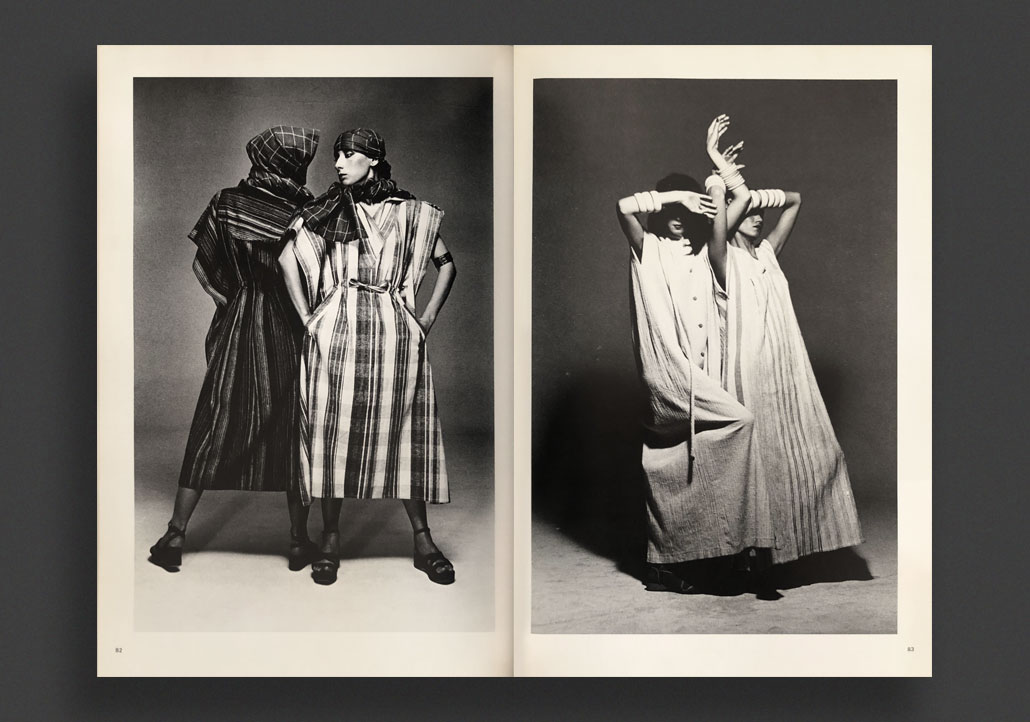
Hands-down one of the greatest Issey Miyake books ever published - the classic "East Meets West" of 1978.
First edition of the iconic first book/folio dedicated to the work of Japanese fashion designer Issey Miyake. Published by Heibonsha Limited Publishers of Tokyo in 1978, the book features beautiful photoshoots by the likes of Guy Bourdin, Richard Avedon, Kishin Shinoyama, Harry Peccinotti and David Bailey throughout, documenting Miyake's creations of the 1970s.
Broken into three sections ("Man and his Cloth", "The Form of Cloth" and "Witness of Time") the book texts include a preface by Diana Vreeland and essays by Mutsuo Takahashi, Arata Isozaki, and Eiko Ishioka.
Texts are in Japanese and English.
2000, English
Softcover, 64 pages, 28 x 22 cm
1st Edition, Out of print title / as new
Published by
Drill Hall Gallery / Canberra
$45.00 - Out of stock
Catalogue published on the occasion of the exhibition From the studio of From the studio of Rosalie Gascoigne : the Australian National University, Drill Hall Gallery, 5 September—8 October 2000, curated by Mary Eagle.
Now out-of-print, the catalogue (like the exhibition) is a unique and personal look into the world of New Zealand-born Australian sculptor and assemblage artist Rosalie Gascoigne, beginning with the many works from her home and studio—finished, unfinished, exhibited and never exhibited—that were brought to light along with many other pieces from the Gascoigne estate, including correspondence, rare photographs, and other items that shed a rare light on the way that Rosalie lived and worked. Edited in close collaboration with family members, studio assistants, friends and colleagues, the catalogue, profusely illustrated throughout the many texts with artworks and archival photographs, includes a major text by New Zealand-born optical astronomer and husband of Rosalie Gascoigne, Sidney Charles Bartholemew "Ben" Gascoigne AO (1915— 2010), on her studio life, chapters on the equipment in the studio, conversations with Peter Vandermark (Rosalie Gascoigne's studio assistant throughout the 1990s) with painter Marie Hagerty and curator Mary Eagle, letters to Martin (Rosalie's son) 1971—1980 : extracts selected and edited by Mary Eagle, list of works in the exhibition, and more.
Rosalie Norah King Gascoigne AM (1917—1999) was a New Zealand-born Australian sculptor and assemblage artist. Gascoigne is renowned for her sculptural assemblages of great clarity, simplicity and poetic power. Using natural or manufactured objects, sourced from collecting forays, that evoke the lyrical beauty of the Monaro region of New South Wales, her work radically reformulated the ways in which the Australian landscape is perceived. She showed at the Venice Biennale in 1982, becoming the first female artist to represent Australia there. In 1994, she was appointed a Member of the Order of Australia for her services to the arts.
Out-of-print, As New copies.
1975, English
Softcover, 192 pages
1st Edition, Out of print title / used / very good
Published by
Persea Books / New York
$18.00 $10.00 - In stock -
First 1975 edition of the fourth book from Andrei Godrescu, The Life and Times of an Involuntary Genius — memoir by Codrescu, a poet, novelist, and essayist who also utilizes the pen names Betty Laredo and Maria Parfeni, born Andrei Perlmutter in Transylvania, Romania, who moved to Detroit in 1966 and eventually settled in New Orleans. Codrescu’s poetry explores themes of identity, exile, and transformation with bold irreverence. Some of Codrescu's short stories and novels include his first poetry collection, License to Carry a Gun and a memoir entitled In America's Shoe. He is the author of dozens of books of poetry and was the recipient of the 2005 Ovidius Prize. Codrescu worked for National Public Radio as a commentator and has been featured on ABC News' Nightline. The Life and Times of An Involuntary Genius is Godrescu's account of growing up in Transylvania and his own journey to the United States.
Good copy.
1972, English
Softcover, 288 pages, 18.5 x 10.5 cm
1st Edition, Out of print title / used / good
Published by
Mudra / Prague—San Francisco
$35.00 - Out of stock
Lovely first 1972 English edition of Gustav Meyrink's gothic masterpiece The Golem, published by Mudra, Prague / San Francisco, with an afterword by poet and social activist, Jack Hirschman.
First published in serial form as Der Golem in the periodical Die weissen Blätter in 1913–14, The Golem, also known as the Satan from Prague, is a haunting Gothic tale of stolen identity and persecution, set in a strange underworld peopled by fantastical characters. The red-headed prostitute Rosina; the junk-dealer Aaron Wassertrum; puppeteers; street musicians; and a deaf-mute silhouette artist.
Lurking in its inhabitants’ subconscious is the Golem, a creature of rabbinical myth. Supposedly a manifestation of all the suffering of the ghetto, it comes to life every 33 years in a room without a door. When the jeweller Athanasius Pernath, suffering from broken dreams and amnesia, sees the Golem, he realises to his terror that the ghostly man of clay shares his own face...
The Golem, though rarely seen, is central to the novel as a representative of the ghetto's own spirit and consciousness, brought to life by the suffering and misery that its inhabitants have endured over the centuries. Perhaps the most memorable figure in the story is the city of Prague itself, recognisable through its landmarks such as the Street of the Alchemists and the Castle.
"A superbly atmospheric story set in the old Prague ghetto featuring The Golem, [...] this extraordinary book combines uncanny psychology of doppelganger stories with expressionism and more than a little melodrama... Meyrink's old Prague - like Dicken's London - is one of the great creations of City writing, an eerie, claustrophobic and fantastical underworld where anything can happen."—Phil Baker, The Sunday Times
Gustav Meyrink (1868—1932) was the pseudonym of Gustav Meyer, an Austrian author, novelist, dramatist, translator, and banker, most famous for his novel The Golem. He has been described as the "most respected German language writer in the field of supernatural fiction".
Good copy with heavy cover wear.
1990, English
Softcover, 512 pages, 20 x 13 cm
Out of print title / used / very good
Published by
Penguin Books / London
$20.00 - Out of stock
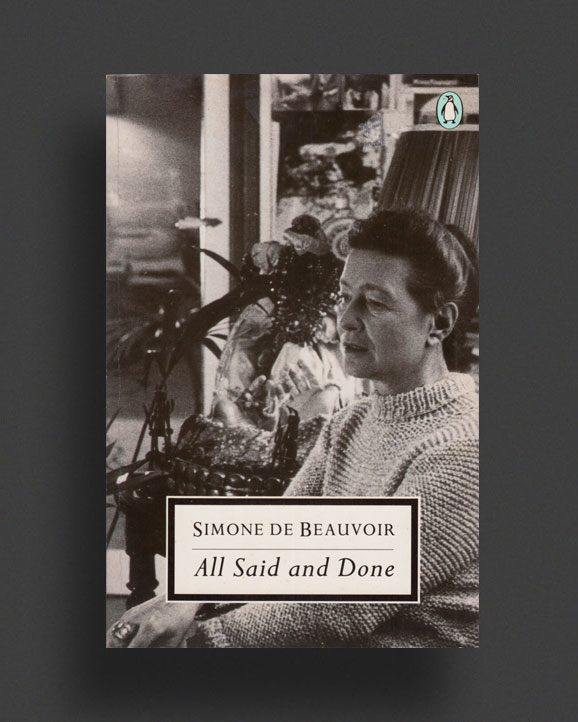
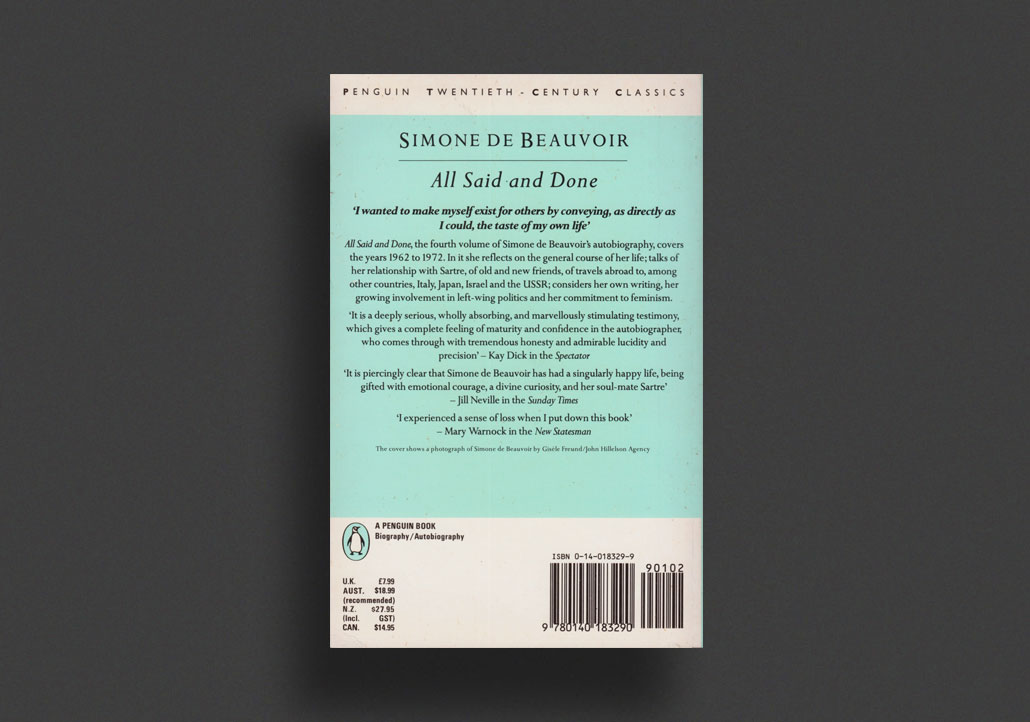
1990 re-print of Simone de Beauvoir's 1977 autobiography, All Said and Done.
"All Said and Done... offers us ten years (1962-72) not so much of experience realised (although this is exceptionally packed with incident) as an imaginative and intellectual transmutation of such experience. It is a deeply serious, wholly absorbing, and marvellously stimulating testimony, which gives a complete feeling of maturity and confidence in the autobiographer who comes through with tremendous honesty and admirable lucidity and precision... it inspires one to live, to look again, to learn more, to know more deeply the people and social systems which constitute our world. It throws open the windows, and simultaneously enables one better to examine the room behind one."—Kay Dick in the Spectator.
Simone de Beauvoir (1908—1986) was a French existentialist philosopher, writer, social theorist, and feminist activist.
Very Good copy.
1996, English
Softcover, 585 pages, 23 x 15 cm
Out of print title / as new
Published by
W W Norton & Co / New York
$48.00 - Out of stock
1996 edition of Simone de Beauvoir's The Coming of Age, published by W W Norton & Company, New York.
As the definitive study of the universal problem of growing old, The Coming of Age is "a brilliant achievement" (Marc Slonin, New York Times).
What do the words elderly, old, and aged really mean? How are they used by society, and how in turn do they define the generation that we are taught to respect and love but instead castigate and avoid? Most importantly, how is our treatment of this generation a reflection of our society's values and priorities?
In The Coming of Age, Simone de Beauvoir seeks greater understanding of our perception of elders. With bravery, tenacity, and forceful honesty, she guides us on a study spanning a thousand years and a variety of different nations and cultures to provide a clear and alarming picture of "Society's secret shame"--the separation and distance from our communities that the old must suffer and endure.
Simone de Beauvoir (1908—1986) was a French existentialist philosopher, writer, social theorist, and feminist activist.
Fine—As New copy.
1991, English
Hardcover (w. dust jacket), 210 pages, 24 x 16.5 cm
1st Edition, Out of print title / used / fine
Published by
Indiana University Press / Indiana
$70.00 - Out of stock
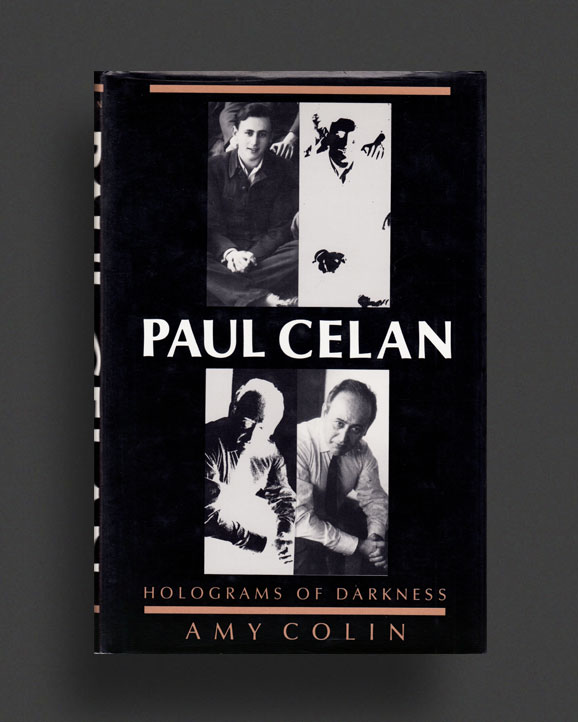
First edition of Paul Celan : Holograms of Darkness by Amy Colin, published in 1991 by Indiana University Press.
Paul Celan, one of the greatest poets of the post-Holocaust decades, strove to utter the unspeakable. In his literary struggle to respond to the Holocaust, he exploded literary traditions and, out of their residue, created a new poetry.
" ... Colin's brilliant new book ... demonstrates how deeply linked Celan's work is to the Romanian Jewish experience of the 1930s and '40s... A landmark in Celan studies and a major contribution to the study of contemporary poetry and theory."—Choice
"Unquestionably this book has much to offer: its discussion of the early Celan, especially his Roumanian poems; its survey of the cultural milieu out of which he came; and its valuable explications of hitherto unexplored Celan poems are excellent contributions to scholarship."—Alfred Hoelzel
"A wide ranging examination of the multifarious cultural background of one of the most important poets of this century and a brilliant analysis of his work."—Magill's Literary Annual
"In a hauntingly urgent voice, Amy Colin ... unravels and connects for the Celan scholar some of the intricacies of his early and his late poetic creations."—Modern Judaism
Work praised by Beda Allemann and Peter Demetz for the profound depth of background knowledge of Romanian, Ukrainian and Yiddish culture. Awarded "the outstanding book of 1992" by the American magazine "Choice".
Very Good—Fine copy in VG—Fine dust jacket.
1988, English
Hardcover (w. dust jacket), 350 pages, 14 x 21.1 cm
1st Edition, Out of print title / used / very good
Published by
Anvil Press Poetry / London
$90.00 - Out of stock
First 1988 hardcover edition of the Poems of Paul Celan, translated by Michael Hamburger and published by Anvil Press Poetry in London. Awarded the EC's inaugural European Translation Prize in 1990.
Paul Celan is among the most important German-language poets of the century, and, in George Steiner's words, 'almost certainly the major European poet of the period after 1945.' He was born in 1920 into a Jewish family in Bukovina, a German enclave in Romania which was destroyed by the Nazis. His parents were taken to a concentration camp in 1942, and did not return; Celan managed to escape deportation and to survive. After settling in Paris in 1948, he soon gained widespread recognition as a poet with the publication of his first collection of poems in 1952. Language, Paul Celan said, was the only thing that remained intact for him after the war. His experiences of the war years and of the loss of his parents are the recurrent themes of his poetry. In the end they led as well to his suicide by drowning in 1970.
Michael Peter Leopold Hamburger OBE (1924—2007) was a noted German-British translator, poet, critic, memoirist and academic.
Very Good copy in Good—VG dust jacket.
1986, English
Softcover, 256 pages, 21 x 13 cm
1st Edition, Out of print title / used / very good
Published by
North Point Press / San Francisco
$45.00 - Out of stock
First 1986 edition of Paul Celan's Last Poems, published in San Francisco by North Point Press in a bi-lingual English and German edition, translated by Katherine Washburn and Margret Guillemin.
Paul Celan is among the most important German-language poets of the century, and, in George Steiner's words, 'almost certainly the major European poet of the period after 1945.' He was born in 1920 into a Jewish family in Bukovina, a German enclave in Romania which was destroyed by the Nazis. His parents were taken to a concentration camp in 1942, and did not return; Celan managed to escape deportation and to survive. After settling in Paris in 1948, he soon gained widespread recognition as a poet with the publication of his first collection of poems in 1952. Language, Paul Celan said, was the only thing that remained intact for him after the war. His experiences of the war years and of the loss of his parents are the recurrent themes of his poetry. In the end they led as well to his suicide by drowning in 1970.
Very Good copy.
1973, English
Softcover, 575 pages, 18 x 11 cm
Out of print title / used / average
Published by
Penguin Books / Australia
$25.00 - Out of stock
1973 Penguin edition of Nobel Prize-winning author Elias Canetti's revolutionary work Crowds and Power, first published in 1960.
In Crowds and Power, one of the most extraordinary books of our time, Elias Canetti finds a new way of looking at human history and psychology. Breathtaking in its range and erudition, it explores the Rain Dances of Pueblo Indians, the Muharram Festival of the Shiites, the English Civil war, the finger exercises of monkeys and the effects of inflation in Weimar Germany. In this study of the interplay of crowds, that mysterious yet commonplace phenomenon, Canetti offers one of the most profound and startling portraits of the human condition.
Elias Canetti (1905—1994) was a German-language writer, born in Ruse, Bulgaria to a Sephardic family. They moved to Manchester, England, but his father died in 1912, and his mother took her three sons back to continental Europe. They settled in Vienna. Canetti moved to England in 1938 after the Anschluss to escape Nazi persecution. He became a British citizen in 1952. He is known as a modernist novelist, playwright, memoirist, and nonfiction writer. He won the Nobel Prize in Literature in 1981, "for writings marked by a broad outlook, a wealth of ideas and artistic power". In late 1980s he started to live in Zurich permanently. He died in 1994 in Zurich. He is noted for his nonfiction book Crowds and Power, among other works.
Average copy, heavily worn and creased covers and tanning, binding solid.
1971, English
Hardcover (w. dust jacket), 464 pages, 22 x 14.5 cm
Out of print title / used / good
Published by
Jonathan Cape / London
$60.00 - In stock -
"Strange, savage, subtle, beautifully mysterious... one of the great novels of the [twentieth] century"—Iris Murdoch
"One of the most important neglected novels of our time. It is a strange, eloquent and terrifying book, which tells us as much about the madness of our age as Kafka's The Trial or Musil's Man Without Qualities."—Philip Toynbee
Hardcover 1971 Jonathan Cape printing of Nobel Prize-winning author Elias Canetti's most well-known work, Auto-Da-Fé, first published in Germany in 1935, first translation to English in 1947.
Originally published in German as "Die Blendung" in 1935 and later banned in Nazi Germany, Auto-Da-Fe did not become widely known until the publication of Canetti's "Crowds and Power" in 1960. "In Auto-da-Fé no one is spared. Professor and furniture salesman, doctor, housekeeper, and thief all get it in the neck. The remoreseless quality of the comedy builds one of the most terrifying literary worlds of the century" (Salman Rushdie). "Savage, subtle, beautifully mysterious--one of the few great novels of the century" (Iris Murdoch). "A strange, eloquent and terrifying book" (Philip Toynbee). Auto da Fé is the story of Peter Kien, a distinguished, reclusive Sinologist living in Germany between the wars. With masterly precision, Canetti builds up the elements in Kien himself, and his personal relationships, which will lead to his destruction.
Elias Canetti (1905—1994) was a German-language writer, born in Ruse, Bulgaria to a Sephardic family. They moved to Manchester, England, but his father died in 1912, and his mother took her three sons back to continental Europe. They settled in Vienna. Canetti moved to England in 1938 after the Anschluss to escape Nazi persecution. He became a British citizen in 1952. He is known as a modernist novelist, playwright, memoirist, and nonfiction writer. He won the Nobel Prize in Literature in 1981, "for writings marked by a broad outlook, a wealth of ideas and artistic power". In late 1980s he started to live in Zurich permanently. He died in 1994 in Zurich. He is noted for his nonfiction book Crowds and Power, among other works.
Good copy with some marking to the book block edges, otherwise a clean, solid copy throughout. Average dust jacket with heavy marking and some chipping.
1981, English
Hardcover (w. dust jacket), 504 pages
1st Edition, Out of print title / used / very good
Published by
Avenel Books / New York
$30.00 - In stock -
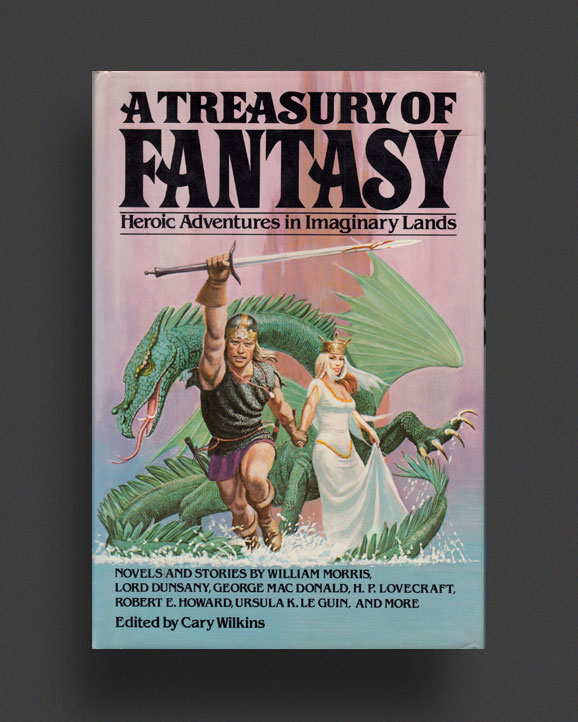
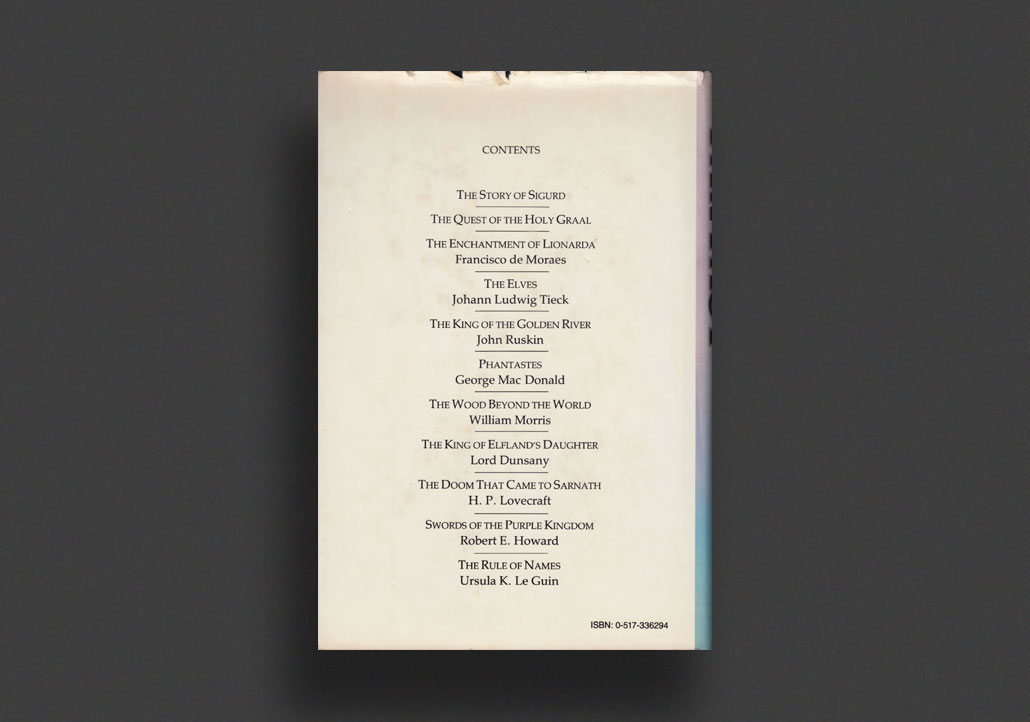
First 1981 hardcover edition of A Treasury of Fantasy: Heroic Adventures in Imaginary Lands, published in 1981, edited by Cary Wilkins. An anthology collecting eleven stories by William Morris, Mrs. Andrew Lang, Francisco de Moraes, Johann Ludwig Tieck, John Ruskin, George Mac Donald, Lord Dunsany, H.P. Lovecraft, Robert E. Howard, and Ursula K. Leguin. Illustrated throughout by various illustrators. Dust jacket illustration by Russ Hoover.
Very Good copy, Good dust jacket.