World Food Books' programme is largely produced on Kulin Nation land. We acknowledge the Wurundjeri people of the Kulin Nation as the first and continuing custodians of this land, and pay respect to their Elders past, present, and emerging.
World Food Books is an arts and special interests bookshop in Naarm / Melbourne. Founded in 2010, World Food Books is devoted to the presentation of a rotating, hand-selection of international art, design, literary and counterculture publications with an emphasis on the anti-traditional, the experimental, the avant-garde, the heretic, the marginal.
Presenting new titles alongside rare and out-of-print books, catalogues and journals spanning the fields of modern and contemporary art, design, photography, illustration, film, literature, poetry, cultural theory, philosophy, sexuality, popular and underground culture in its many radical forms, World Food Books wishes to encourage adventurous, thoughtful and open-minded reading, looking, writing, and exchange of publishing and ideas, both current and historical.
As well as our bookshop, located in Melbourne's historical Nicholas Building, all of our inventory is available internationally via our online mail-order service.
World Food Books semi-regularly co-ordinates "Occasions", a programme of exhibits and events at the bookshop and in partnership with other hosts (such as museums and art galleries) that develop out of the activities, relationships and content of the bookshop itself.
World Food Books
The Nicholas Building
37 Swanston Street
Room 5, Level 6
Melbourne 3000
Australia
SHOP HOURS:
Thu–Fri 12–6, Sat 12–5
WEB-SHOP OPEN 24/7
World Food Books
Postal Address:
PO Box 435
Flinders Lane
Victoria 8009
Australia
Art
Theory / Essay
Architecture / Interior
Graphic Design / Typography
Photography
Fashion
Eros
LGBTQ+
Fiction / Poetry
Weird / Speculative / Science Fiction / Horror
Transgressive / Visceral / Abject
Symbolism / Decadence / Fin de siècle
Film / Video
Painting
Sculpture / Installation
Performance / Dance / Theater
Drawing
Sound / Music
Curatorial
Group Shows / Collections
Periodicals
Out-of-print / Rare
Posters / Ephemera / Discs
Signed Books
World Food Books Gift Voucher
World Food Book Bag
Australian Art
Australian Fiction
Australian Science Fiction / Speculative Fiction
Australian Poetry
Australian Photography
Japanese Photography
Conceptual Art
Minimal Art
Dada
'Pataphysics / Oulipo
Fluxus
Concrete Poetry
Pop Art
Surrealism
Arte Povera
Arte Informale / Haute Pâte / Tachism
Nouveau Réalisme / Zero / Kinetic
Situationism / Lettrism
Collage / Mail Art / Xerox Art
Art Brut / Folk / Visionary / Fantastic
Illustration / Graphic Art / Bandes Dessinées
Furniture
Italian Radical Design / Postmodernism
Textiles
Ceramics / Glass
Counterculture
Protest / Revolt
Philosophy
Psychoanalysis
Anthropology
Anarchism
Socialism / Anarchism / Communism / Capitalism
Literary Theory / Semiotics / Language
Feminism / Women's Studies
Gender Studies / Sexuality
Anthropology
Fetishism / BDSM
Drugs / Psychedelia
Crime / Violence
Animal Rights / Veganism
Occult / Esoterica
Ecology / Earth / Alternative Living
Whole Earth / Crafts
All prices in AUD (Australian dollars)
Pick-Ups
Pick-up orders can be collected in our bookshop during opening hours after order date. Please collect any Pick-up orders within 2 weeks of ordering as we have limited storage space. Orders will be released back into stock if not collected within this time. No refunds can be made for pick-ups left un-collected. If you cannot make it in to the bookshop in this time-frame, please choose postage option.
Return Policy
All sales are final. We do accept returns (for refund or exchange) for items received in error. All our orders are packed with special care using heavy-duty padding and cardboard book-mailers or bubble mailers (for smaller books), using reinforcement where required. We cannot take responsibility for any lost, stolen or damaged parcels.
Insurance
Should you wish to insure your package, please email us directly after placing your order and we can organise this at a small extra expense. Although all standard/express tracked packages are very safe and dependable, we cannot take responsibility for any lost, stolen or damaged parcels. We recommend insurance on valuable orders.
Interested in selling your old books, catalogues, journals, magazines, comics, fanzines, ephemera? We are always looking for interesting, unusual and out-of-print books to buy. We only buy books in our fields of interest and specialty, and that we feel we can resell.
We base these prices on desirability, market value, in-print prices, condition and our current stock levels. We offer cash, store credit, and can take stock on consignment. All
about 25% of the price we expect to get when we sell them, or 30% in store credit. We base these prices on desirability, market value, in-print prices, condition and our current stock levels.
Sell your books any day of the week. You can drop them off and return later. If you have a lot of books, we can visit your Sydney home.
We buy books that we feel we can resell. We offer about 25 % of the price we expect to get when we sell them, or 30% in store credit. We base these prices on desirability, market value, in-print prices, condition and our current stock levels.
Philadelphia Wireman
03 August - 01 September, 2018
World Food Books is proud to announce our next Occasion, the first presentation of sculptures by Philadelphia Wireman in Australia.
The Philadelphia Wireman sculptures were found abandoned in an alley off Philadelphia’s South Street on trash night in 1982. Their discovery in a rapidly-changing neighbourhood undergoing extensive renovation, compounded with the failure of all attempts to locate the artist, suggests that the works may have been discarded after the maker’s death. Dubbed the "Philadelphia Wireman" during the first exhibition of this work, in 1985, the maker’s name, age, ethnicity, and even gender remain uncertain. The entire collection totals approximately 1200 pieces, all intricately bound together with tightly-wound heavy-gauge wire (along with a few small, abstract marker drawings, reminiscent both of Mark Tobey and J.B. Murry). The dense construction of the work, despite a modest range of scale and materials, is singularly obsessive and disciplined in design: a wire armature or exoskeleton firmly binds a bricolage of found objects including plastic, glass, food packaging, umbrella parts, tape, rubber, batteries, pens, leather, reflectors, nuts and bolts, nails, foil, coins, toys, watches, eyeglasses, tools, and jewellery.
Heavy with associations—anthropomorphic, zoomorphic, and socio-cultural responses to wrapped detritus—the totemic sculptures by Philadelphia Wireman have been discussed in the context of work created to fulfil the shamanistic needs of alternative religions in American culture. Curators, collectors, and critics have variously compared certain pieces to sculpture from Classical antiquity, Native American medicine bundles, African-American memory jugs, and African fetish objects. Reflecting the artist’s prolific and incredibly focused scavenging impulse, and despite—or perhaps enhanced by—their anonymity, these enigmatic objects function as urban artefacts and arbiters of power, though their origin and purpose is unknown. Philadelphia Wireman, whatever their identity, possessed an astonishing ability to isolate and communicate the concepts of power and energy through the selection and transformation of ordinary materials. Over the course of the past two decades, this collection has come to be regarded as an important discovery in the field of self-taught art and vernacular art.
Presented in collaboration with Fleisher-Ollman Gallery, Philadelphia, and Robert Heald, Wellington.
Susan Te Kahurangi King
02 February - 10 March, 2018
Susan Te Kahurangi King (24 February 1951 - ) has been a confident and prolific artist since she was a young child, drawing with readily available materials - pencils, ballpoint pens and felt-tip markers, on whatever paper is at hand. Between the ages of four and six Susan slowly ceased verbal communication. Her grandparents William and Myrtle Murphy had developed a special bond with Susan so they took on caring responsibilities for extended periods. Myrtle began informally archiving her work, carefully collecting and storing the drawings and compiling scrapbooks. No drawing was insignificant; every scrap of paper was kept. The King family are now the custodians of a vast collection containing over 7000 individual works, from tiny scraps of paper through to 5 meter long rolls.
The scrapbooks and diaries reveal Myrtle to be a woman of great patience and compassion, seeking to understand a child who was not always behaving as expected. She encouraged Susan to be observant, to explore her environment and absorb all the sights and sounds. Myrtle would show Susan’s drawings to friends and people in her community that she had dealings with, such as shopkeepers and postal workers, but this was not simply a case of a grandmother’s bias. She recognised that Susan had developed a sophisticated and unique visual language and sincerely believed that her art deserved serious attention.
This was an unorthodox attitude for the time. To provide some context, Jean Dubuffet coined the term Art Brut in 1945 to describe work created by self-taught artists – specifically residents of psychiatric institutions and those he considered to be visionaries or eccentrics. In 1972 Roger Cardinal extended this concept by adopting the term Outsider Art to describe work made by non-academically trained artists operating outside of mainstream art networks through choice or circumstance. Susan was born in Te Aroha, New Zealand in 1951, far from the artistic hubs of Paris and London that Dubuffet and Cardinal operated in. That Myrtle fêted Susan as a self-taught artist who deserved to be taken seriously shows how progressive her attitudes were.
Susan’s parents Doug and Dawn were also progressive. Over the years they had consulted numerous health practitioners about Susan’s condition, as the medical establishment could not provide an explanation as to why she had lapsed into silence. Dawn educated herself in the field of homeopathy and went on to treat all twelve of her children using these principles – basing prescriptions on her observations of their physical, mental and emotional state.
Doug was a linguist with an interest in philosophy who devoted what little spare time he had to studying Maori language and culture. To some extent their willingness to explore the fringes of the mainstream made them outsiders too but it was their commitment to living with integrity and their respect for individuality that ensured Susan’s creativity was always encouraged.
Even though Susan’s family supported her artistic pursuits, some staff in schools and hospitals saw it as an impediment to her assimilation into the community and discouraged it in a variety of ways. Her family was not always aware of this and therefore did not fully understand why Susan stopped drawing in the early 1990s. However, rather than dwell on the challenges that Susan faced in pursuit of her artistic practice, they prefer to highlight her achievements. In 2008 Susan began drawing again in earnest, after an almost 20 year interruption, and her work is now shown in galleries around the world.
Susan grew up without television and has been heavily influenced by the comics she read as a child. She is absolutely fearless in the appropriation of recognizable characters, such as Donald Duck and Mickey Mouse, in her work. She twists their limbs, contorts their faces, compresses them together, blends them into complex patterned backgrounds - always imbuing them with an incredible energy. Although Susan often used pop culture characters in her work they are not naive or childlike. These are drawings by a brilliant self-taught artist who has been creating exceptional work for decades without an audience in mind.
Mladen Stilinović
"Various Works 1986 - 1999"
02 February 16 - September 10, 2016
Various works 1986 - 1999, from two houses, from the collections of John Nixon, Sue Cramer, Kerrie Poliness, Peter Haffenden and Phoebe Haffenden.
Including: Geometry of Cakes (various shelves), 1993; Poor People’s Law (black and white plate), 1993; White Absence (glasses, ruler, set square, silver spoon, silver ladel with skin photograph and wooden cubes), 1990-1996; Exploitation of the Dead (grey and red star painting, wooden painting, black spoon with red table, red plate), 1984-1990; Money and Zeros (zero tie, paintings made for friends in Australia (Sue, John, Kerrie), numbers painting), 1991-1992; Words - Slogans (various t-shirts) - “they talk about the death of art...help! someone is trying to kill me”, “my sweet little lamb”, “work is a disease - Karl Marx”; Various artist books, catalogues, monographs, videos; Poster from exhibition Insulting Anarchy; "Circular" Croatian - Australian edition; Artist book by Vlado Martek (Dostoyevsky); more.
Thanks to Mladen Stilinović and Branka Stipančić.
Jonathan Walker
Always Will Need To Wear Winter Shirt Blue + Ochre Small Check Pattern
21 August - 21 September, 2015
Untitled
I am not a great reader of poetry but I always return to the work of Melbourne poet, Vincent Buckley (1925- 1988). Perhaps I find his most tantalising piece to be not a finished poem but a fragment left on a scrap of paper discovered on his desk after the poet’s death.
The poetry gathers like oil
In the word-core, and spreads
It has its music meet,
Its music is in movement.
This fragment is more the shell left behind from a volatile thought than a finished poem. I find the last two lines honest but awkward whereas the first two lines work like an arrow. Most likely he could not find a resolution so it was left. Still, in its present form, it remains an eloquent testimony to the ultimate failure of a medium to express mobile thought and sensation, in Buckley’s case, through verbal language. It’s an important matter because this is something all artists have to deal with regardless of the medium.
I have never written a poem, however, I am forever copying fragments from books on paper scraps in a vain effort to fix certain notions in my head. At first, they function as bookmarks that are sometimes returned to when I open the book. But before long, as they accumulate, they fall out littering the table interspersed with A4 photocopies, bills, books and medications.
To return to Buckley’s fragment, the first two lines very much evoke how I paint nowadays. As you age, detail diminishes and patches of light become more luminous and float. I feel the most honest way of dealing with this is by smearing the oil paint on the canvas with the fingers and working close-up, blind. Only if the patches coalesce into an approaching image can the work gain a life.
-
Jonathan Walker was born in Melbourne, Australia and brought up on a dairy farm in Gippsland. In the 1970’s he studied painting at RMIT and won the Harold Wright Scholarship to the British Museum, London. During the 1980’s he exhibited at Pinacotheca Gallery, Richmond and had work shown at the NGV and Heidi City Art Gallery. Over the same period he designed the cover for the “Epigenesi” LP by Giancarlo Toniutti, Italy and conducted a mail exchange work with Achim Wollscheid, Germany. The work with artists through the post resulted in an article published in the bicentenary issue of Art and Australia 1988. He showed in artist run spaces such as WestSpace in the 90’s and 2000’s, and until 2012, taught painting at Victoria University, which is where we (Colleen Ahern and Lisa Radford) as organisers of the exhibition, among many others, had the privilege of being his student.
Walker’s knowledge was imparted to students through the careful selection of music, literature, and artists found in books that he himself had ordered for the library. Walker’s strategy was the generosity of sharing his vast knowledge with references specific to each student and their context.
Walker’s paintings share a similar focus and intimacy.
This exhibition presents a small selection of recent paintings alongside a publication that includes Walker’s writing. Observational and analytical, Walker’s work is a type of material notation — the time of day, colour and how it is blended, the both specific and fleeting location of a reflection on lino or the question of whether a chair leg should be included in a painting.
Please join us on Friday August 21 between 6-8pm to celebrate the opening of the exhibition.
Curated by Colleen Ahern and Lisa Radford.
B. Wurtz
Curated by Nic Tammens
March 26 - April 4, 2015
B.Wurtz works from a basement studio in his home on Manhattan’s Lower East Side.
This local fact is attested to by the plastic shopping bags and newsprint circulars that appear in his work. As formal objects, they don’t make loud claims about their origins but nonetheless transmit street addresses and places of business from the bottom of this long thin island. Like plenty of artists, Wurtz is affected by what is local and what is consumed. His work is underpinned by this ethic. It often speaks from a neighborhood or reads like the contents of a hamper:
“BLACK PLUMS $1.29 lb.”
“Food Bazaar”
“USDA Whole Pork Shoulder Picnic 99c lb.”
“RITE AID Pharmacy, with us it’s personal.”
“H. Brickman & Sons.”
“Sweet Yams 59c lb."
Most of the work in this exhibition was made while the artist was in residence at Dieu Donne, a workshop dedicated to paper craft in Midtown. Here Wurtz fabricated assemblages with paper and objects that are relatively lightweight, with the intention that they would be easily transportable to Australia. This consideration isn’t absolute in Wurtz’s work, but was prescriptive for making the current exhibition light and cheap. Packed in two boxes, these works were sent from a USPS post office on the Lower East Side and delivered to North Melbourne by Australia Post.
Wurtz appears courtesy of Metro Pictures, New York.
Thanks to Rob Halverson, Joshua Petherick, Sari de Mallory, Matt Hinkley, Helen Johnson, Fayen d'Evie, Ask Kilmartin, Lisa Radon, Ellena Savage, Yale Union, and "Elizabeth".
John Nixon
"Archive"
December 15 - January 20, 2014
The presentation of John Nixon's archive offered a rare showcase of this extensive collection of the artist's own publications, catalogues, posters, ephemera, editions and more, from the mid 1980s onwards, alongside a selection of his artworks.
Organized by John Nixon, Joshua Petherick and Matt Hinkley.
<a href=http://wfb.public-office.info/artist/john-nixon>All titles by John Nixon
"Habitat"
at Minerva, Sydney (organised by Joshua Petherick and Matt Hinkley)
November 15 - December 20, 2014
Lupo Borgonovo, Janet Burchill & Jennifer McCamley,
Lewis Fidock, HR Giger, Piero Gilardi, Veit Laurent Kurz,
Cinzia Ruggeri, Michael E. Smith, Lucie Stahl, Daniel Weil, Wols
Press Release:
“...It contained seven objects. The slender fluted bone, surely formed for flight, surely from the wing of some large bird. Three archaic circuitboards, faced with mazes of gold. A smooth white sphere of baked clay. An age-blackened fragment of lace. A fingerlength segment of what she assumed was bone from a human wrist, grayish white, inset smoothly with the silicon shaft of a small instrument that must once have ridden flush with the surface of the skin - but the thing’s face was seared and blackened.”
William Gibson, “Count Zero”, 1986
"Autumn Projects Archive"
Curated by Liza Vasiliou
March 6 - March 15, 2014
World Food Books, in conjunction with the Virgin Australia Melbourne Fashion Festival 2014, presented the Autumn Projects archive, consisting of a selection of early examples in Australian fashion with a particular interest in collecting designers and labels from the period beginning in the 1980’s, who significantly influenced the discourse of Australian Fashion.
Curated by Liza Vasiliou, the exhibition provided a unique opportunity to view pieces by designers Anthea Crawford, Barbara Vandenberg, Geoff Liddell and labels CR Australia, Covers, Jag along with early experimental collage pieces by Prue Acton and Sally Browne’s ‘Fragments’ collection, suspended throughout the functioning World Food Books shop in Melbourne.
H.B. Peace
presented by CENTRE FOR STYLE
November 14, 2013
"Hey Blinky, you say chic, I say same"
Anon 2013
H.B. Peace is a clothing collaboration between great friends Blake Barns and Hugh Egan Westland. Their pieces explore the divergences between 'character’ and ‘personality’ in garments....etc
Special Thanks to Joshua Petherick and Matt Hinkley of WFB and Gillian Mears
and a Very Special Thank you to Audrey Thomas Hayes for her shoe collaboration.
Janet Burchill & Jennifer McCamley
"Aesthetic Suicide"
May 10 - June 8, 2013
The first of our occasional exhibitions in the World Food Books office/shop space in Melbourne, "Aesthetic Suicide" presented a body of new and older works together by artists Janet Burchill & Jennifer McCamley, including videos, prints, a wall work, and publications.
During shop open hours videos played every hour, on the hour.
2007, Japanese
Softcover (w. dust jacket), 144 pages, 23 x 21.5 cm
1st Edition, Out of print title / used / very good
Published by
Esquire Magazine / Japan
$70.00 - In stock -
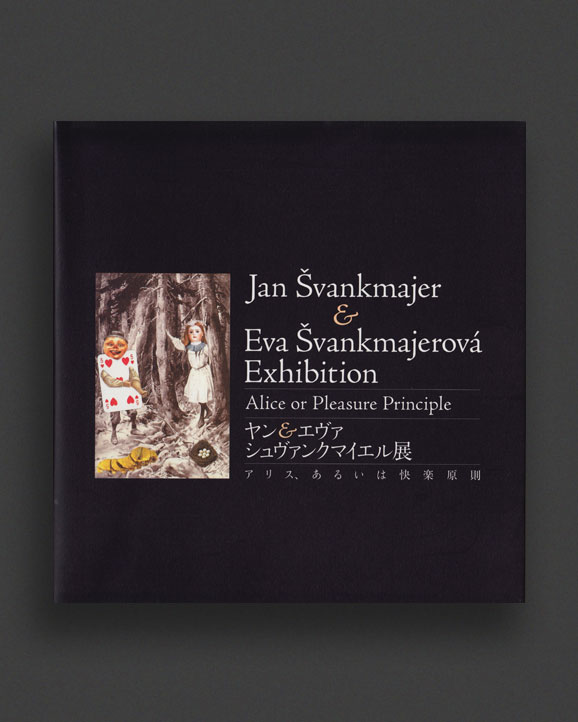
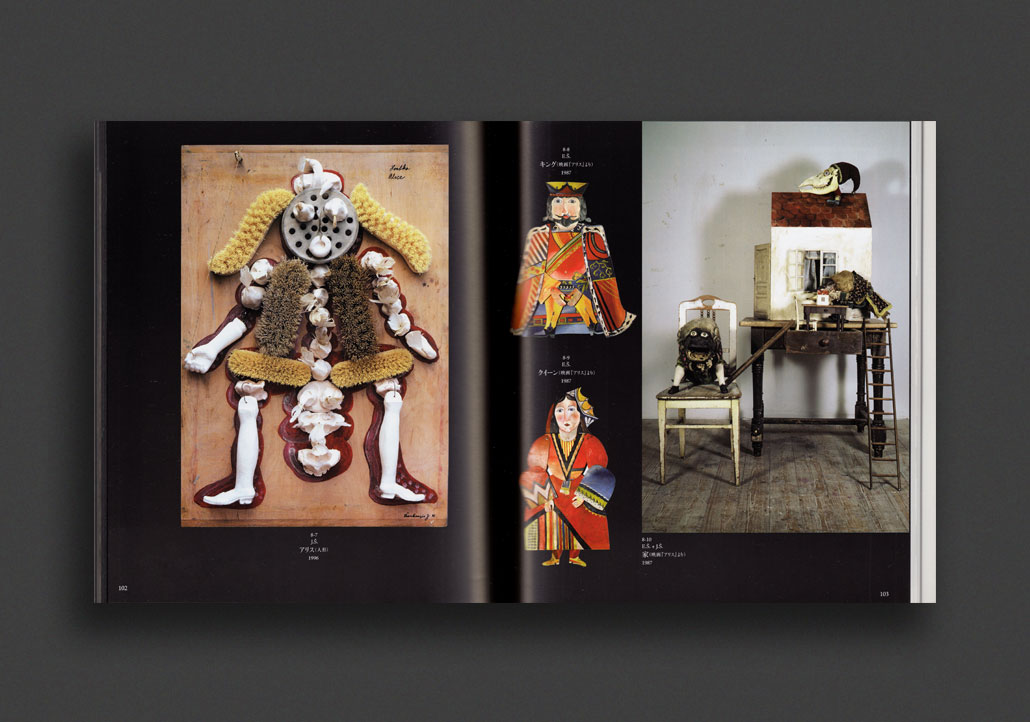
Scarce exhibition catalogue surveying the work of Czech Surrealist artists Jan Švankmajer & Eva Švankmajerová, published to accompany a major retrospective in Japan in 2007, where the artists work is most commonly exhibited. Eva Švankmajerová (1940 – 2005, b. Eva Dvořáková in Kostelec nad Černými lesy), was a renowned painter, ceramicist, and writer active in the Czech and Slovak Surrealist Group who's poetry and prose regularly appeared in the journal Analogon. Švankmajerová was married to the Surrealist filmmaker Jan Švankmajer (b. Prague, 1934) and collaborated on many of his award-winning animated masterpieces, including Alice (1988), Faust (1994), Conspirators of Pleasure (1996) and Otesánek (2000). Lavishly illustrated throughout, this catalogue includes Jan and Eva Švankmajer's independent and collaborative works, spanning painting, objects, collage, ceramics, poetry, graphics, and their highly acclaimed animated film works. Encompassing the entirety of the large-scale exhibition of over 200 works centered around the world of "Alice". Texts in Japanese by Hiroyuki Watanabe.
As New copy.
1971, English
Softcover, 160 pages, 18.5 x 12.5 cm
1st Edition, Out of print title / used / very good
Published by
Studio Vista / London
E P Dutton / New York
$20.00 - Out of stock
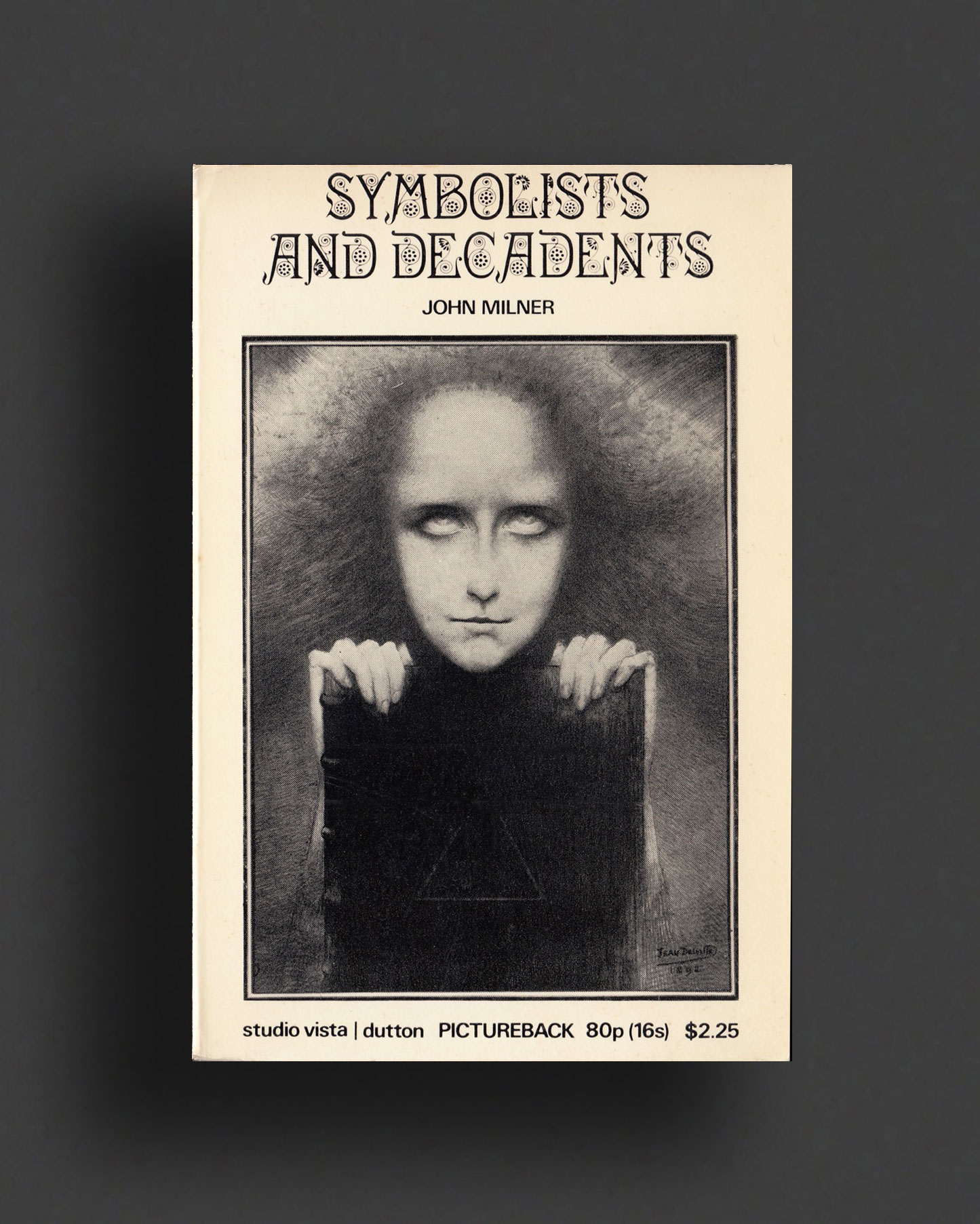
Lovely first print 1971 copy of the Studio Vista/Dutton Pictureback book on Symbolists and Decadents by John Milner. A profusely illustrated study, almost a concise accompaniment to Philippe Jullian's study the same year.
"Thinkers, writers and artists in late-nineteenth-century Europe were impelled by their distrust of the growing materialism of their age towards a search for truths that were of personal and universal significance. The artist embarked on an interior journey and endeavoured to represent his experience of it in an art that would give body and form to emotions and dreams.
Originally a literary movement, Symbolism was born out of this inward search as writers and artists portrayed the longings and nightmares which epitomized the preoccupations of the fin de siècle death and frustration, union and conflict of the sexes, cruel or superfluous beauty, the fatal woman, the siren and the sphinx.
In this new introduction to these fascinating and highly individual artists John Milner traces the Symbolist and Decadent movements from the forerunners in the Pre-Raphaelite movement through the Synthetists (Gauguin and the Pont-Aven group), the Rose +Croix, the German and Austrian Secessions, the personal and fantastic vision of artists such as Odilon Redon and Arnold Böcklin.
Both Symbolist and Decadent painters were concerned with the expression of ideas, mood and emotions. The Decadents, however, in their reaction to a pragmatist and materialist age, withdrew into an exclusive dandyism, and embraced the twin rituals of Catholicism and diabolism; while the search for significance in the forms of Symbolist art was the shadow of a seeking for meaning and spiritual experience in a time of good sense and clear-cut ideas.
Artists of France, Germany, Austria, Belgium, Holland and Britain are represented here with 115 compelling illustrations."
John Milner is a Lecturer in Art History at the University of Newcastle upon Tyne.
Very Good copy.
2023, English
Softcover, 160 pages, 37 x 27 cm
Published by
Edition Patrick Frey / Zürich
$155.00 - Out of stock
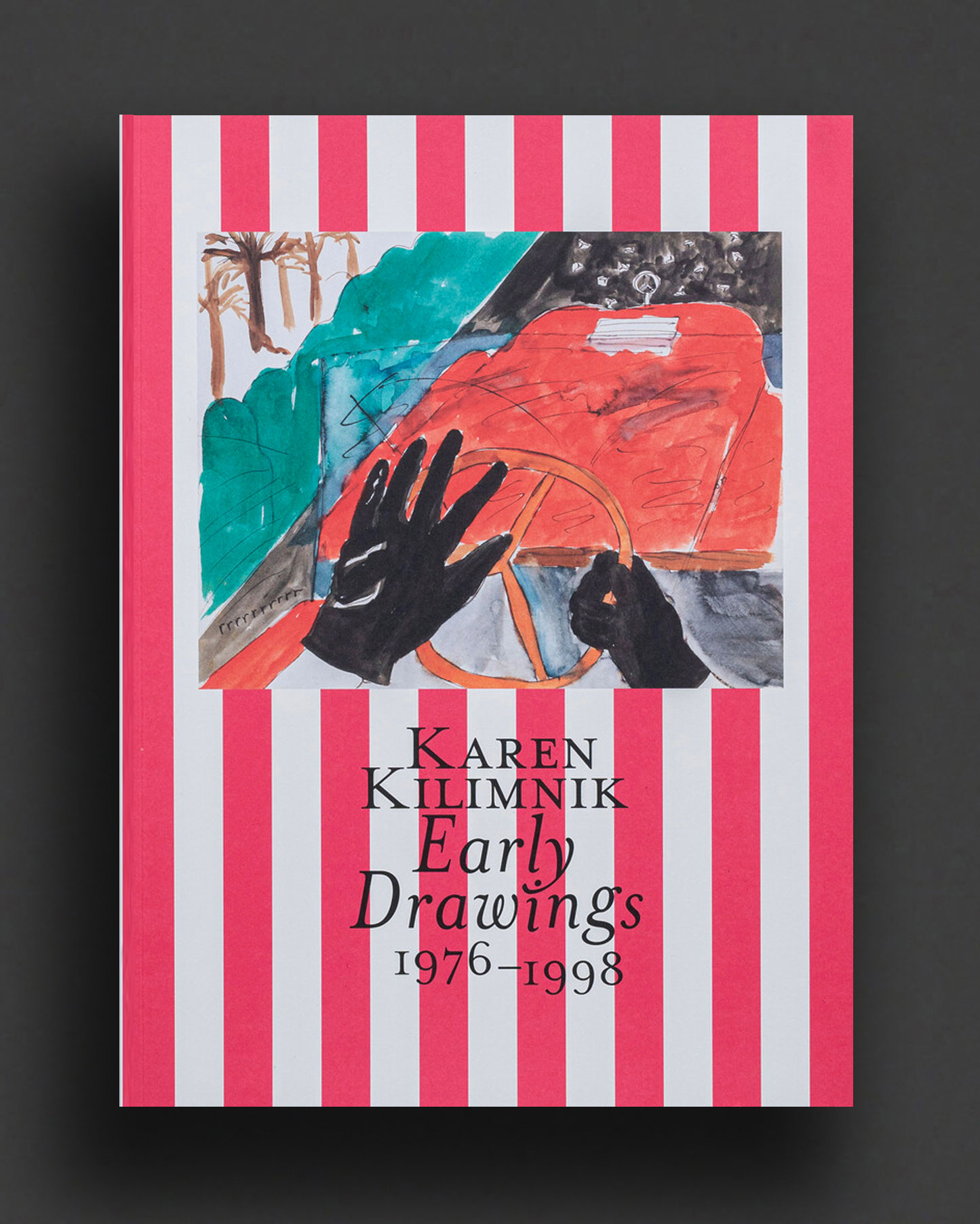
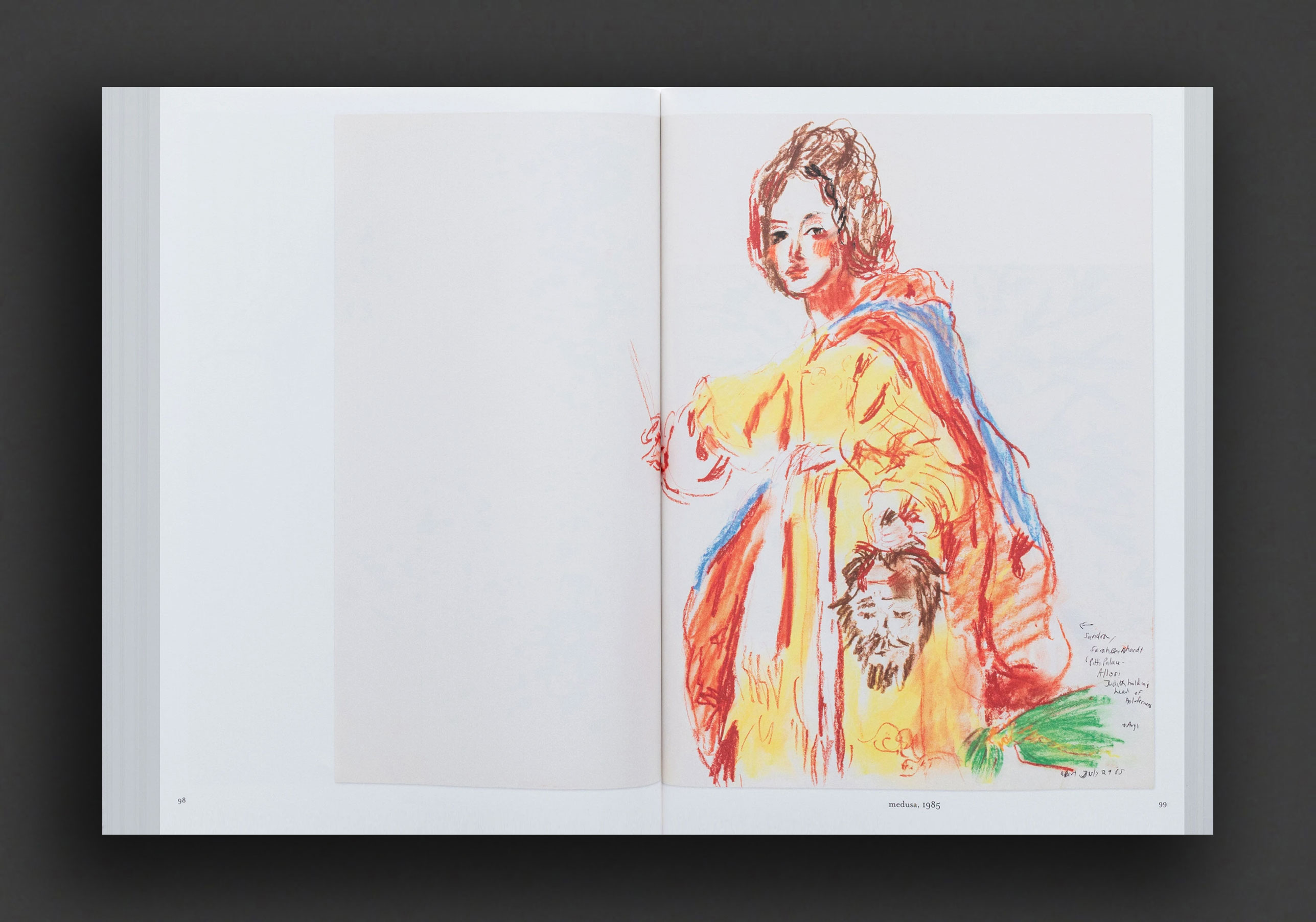
Karen Kilimnik’s artist’s book Early Drawings 1976–1998 is kind of a prequel to Kilimnik’s Drawings, also published by Edition Patrick Frey in 1997. Early Drawings 1976–1998 brings together the artist’s own rich and varied selection of around 130 never before published early works on paper. Detailed, finely worked pastel drawings created between 1976 and 1998 are presented along with ink drawings and other work from that same period; together they illuminate the scope, complexity and virtuosity of Kilimnik’s thematic world.
For more than forty years, Kilimnik has navigated an inexhaustible cosmos influenced by the traditions of Romantic painting, portraiture, and landscape painting. Her work gives equal weight to a broad array of subject matter, finding inspiration in such diverse sources as popular culture and fairy tales, Old Master paintings and television programs, films, literature, magazines, advertising, as well as window displays. The result dissolves the distinctions between “high” and “low” culture. This creative mixture appears in some of Kilimnik’s earliest output: after studying art and architecture in Philadelphia, the artist exhibited a series of genre-bending constellations in the mid-1980s and early 1990s; assembled works included paintings, photographs, drawings, sculptures, and films. Her oeuvre explores themes of mythology and femininity, history and fiction.
Early Drawings 1976–1998 is published on the occassion of a double exhibition bearing the same title at Galerie Eva Presenhuber in New York and at Sprüth Magers in London, which was shown in early summer 2022.
2025, English
Hardcover, 392 pages, 29.5 x 25 cm
$150.00 - In stock -
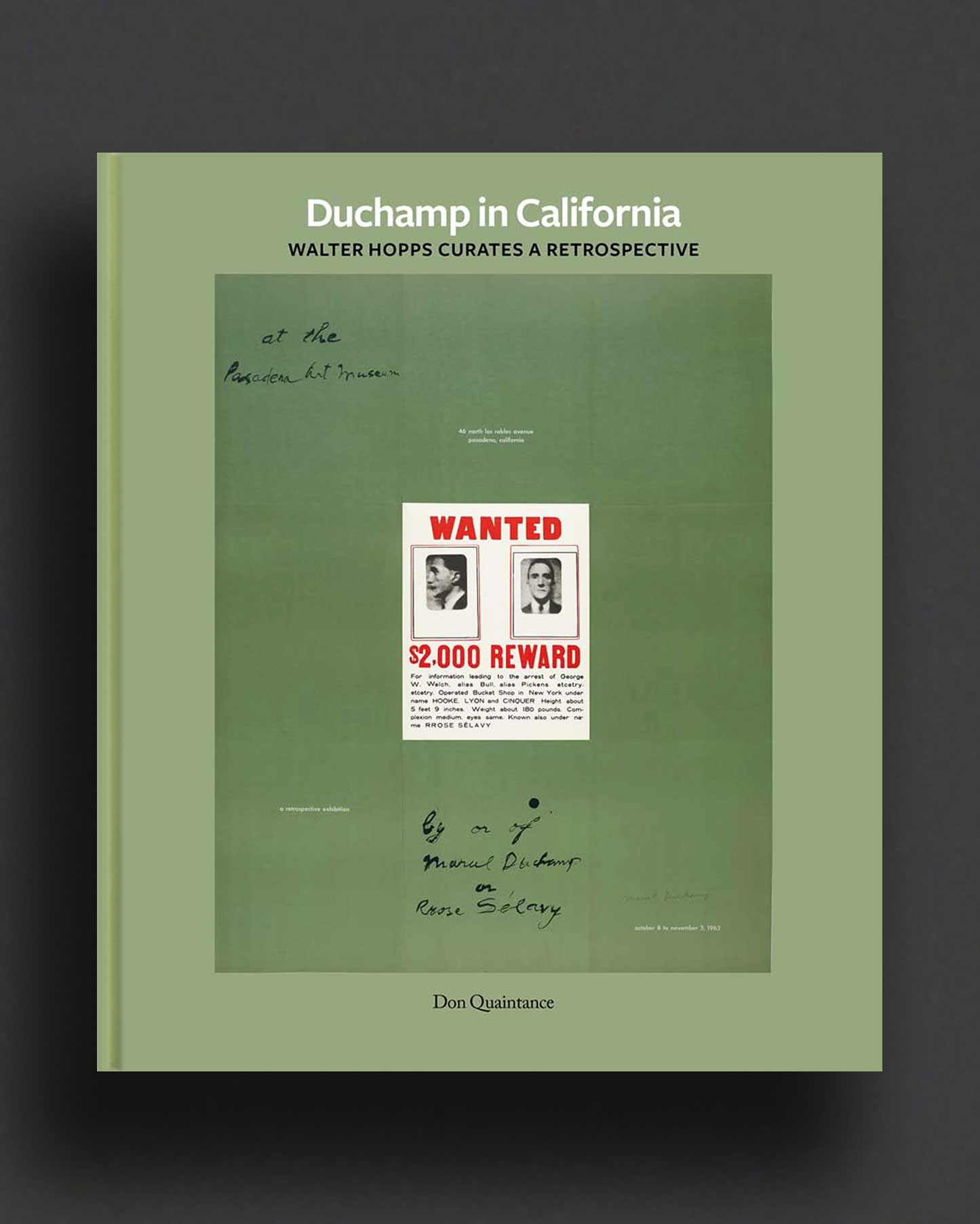
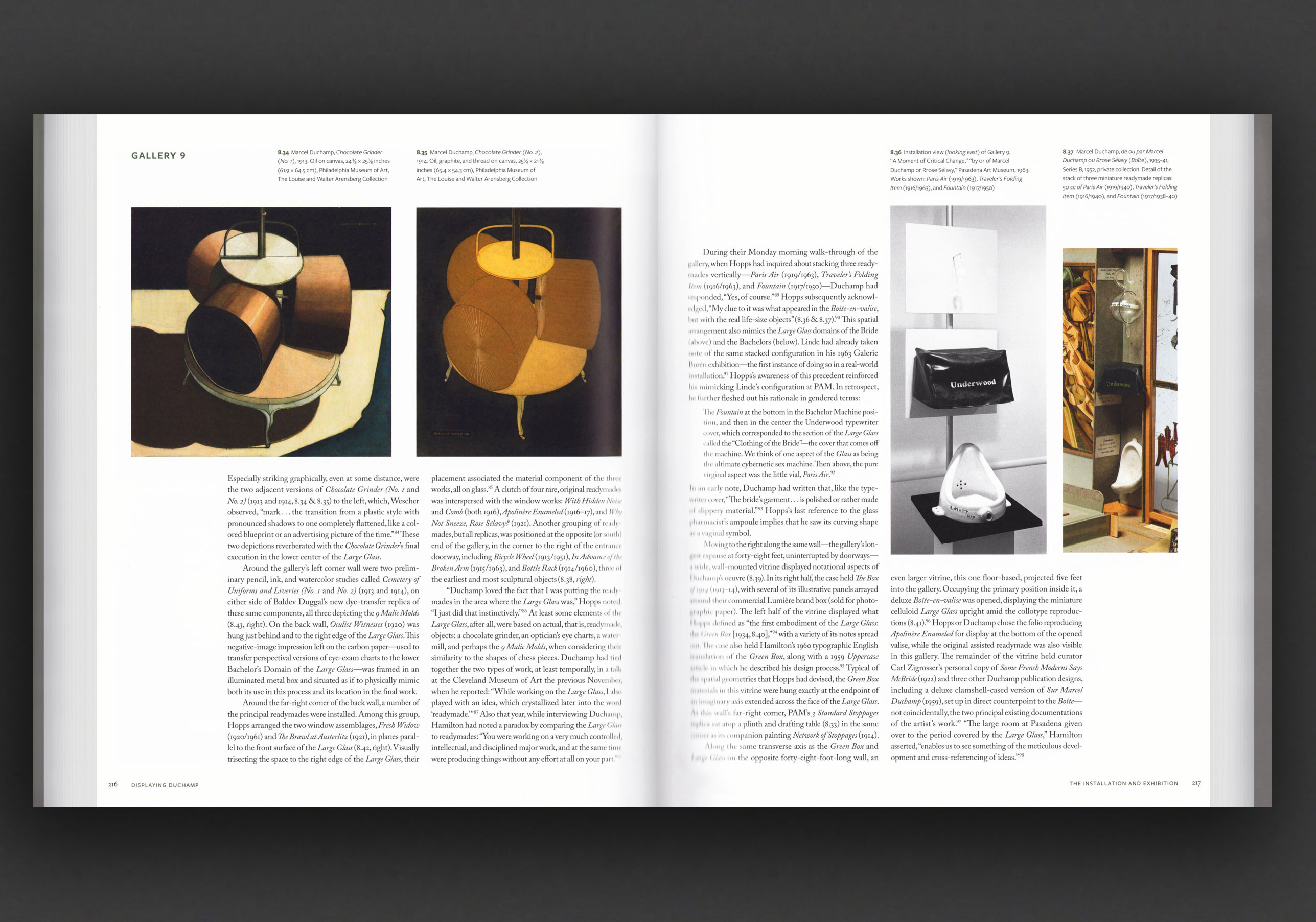
Marcel Duchamp’s first retrospective in 1963, curated by the youthful and energetic curator Walter Hopps, was a singular moment in twentieth-century art history. This chronicle of its conception and execution reveals an ascendant cultural history of Los Angeles in the early 1960s. A reawakening to Duchamp’s impact on contemporary thought was on full display first in California—accompanied by a remarkable cast of artists, curators, critics, gallerists, and collectors, including Larry Bell, Billy Al Bengston, Ed Bereal, Wallace Berman, George Brecht, William N. Copley, Sam Francis, Joe Goode, Richard Hamilton, Dennis Hopper, Robert Irwin, Ed Kienholz, Alison Knowles, Gerard Malanga, Marisol, Patty Mucha, Claes Oldenburg, Richard Pettibone, Ed Ruscha, Andy Warhol, and Robert Watts. With detailed installation diagrams and reproductions of every art object displayed published here for the first time, Duchamp in California shows why the exhibition is revered as an exemplar of curatorial practice for its compelling design and critical acclaim.
By Don Quaintance
2017, English
Softcover, 120 pages, 26.4 x 20.3 cm
Published by
Paul Kasmin / New York
$70.00 - In stock -
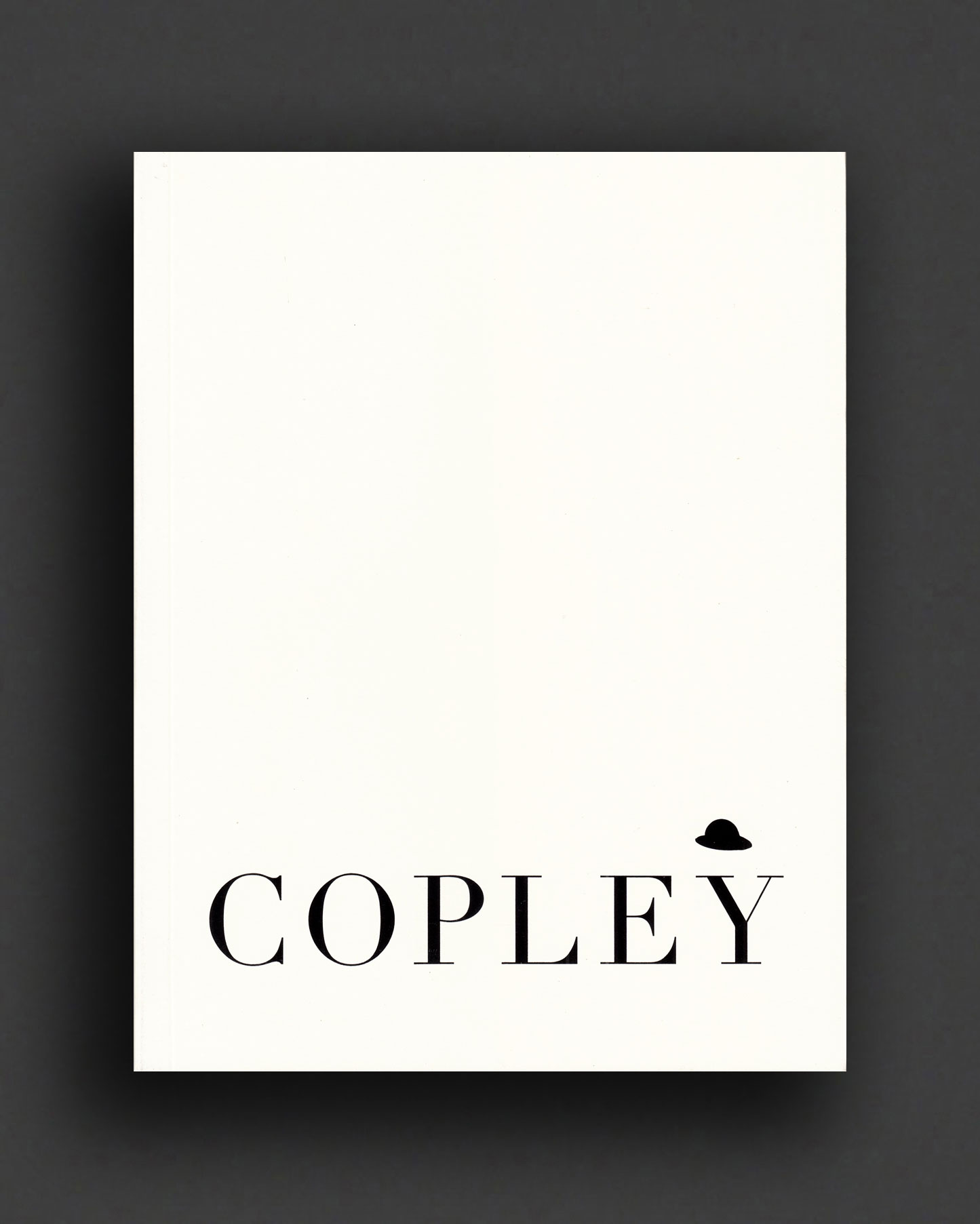
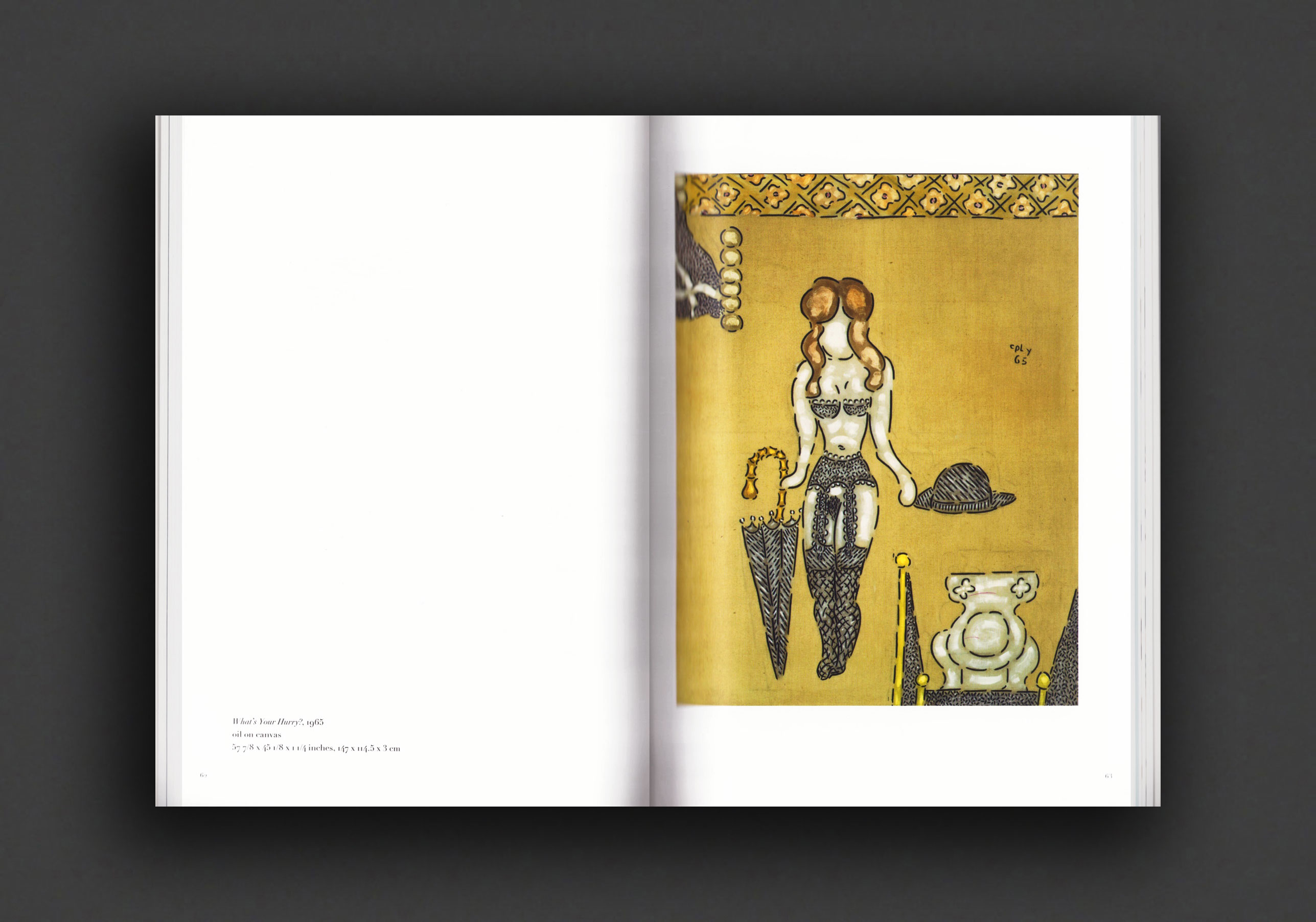
William N. Copley: Women features stunning photography of artworks spanning the entirety of Copley’s (1919-96) career. It unveils his enduring and multifaceted interest in femininity, masculinity, voyeurism, political themes, and the history of art.
A fresh essay by Claire Copley, one of the artist’s daughters, directly confronts the explicit sexuality and intricate gender dynamics present in much of her father’s creations, offering a distinctive blend of personal reflection, cultural analysis, and art historical insight.
The book also includes a reprint of Copley’s pivotal text, “CPLY’s Reply to the Breakup at the Wasteland of Good Taste,” alongside family archive photos and installation shots of significant past exhibitions at the Alexander Iolas and Iris Clert galleries in Paris, as well as the New Museum in New York City, offering additional historical and conceptual perspective.
2025, English
Hardcover, 216 pages, 28.5 x 20.5 cm
Published by
Lenz Press / Milan
Swiss Institute / New York
$85.00 - In stock -
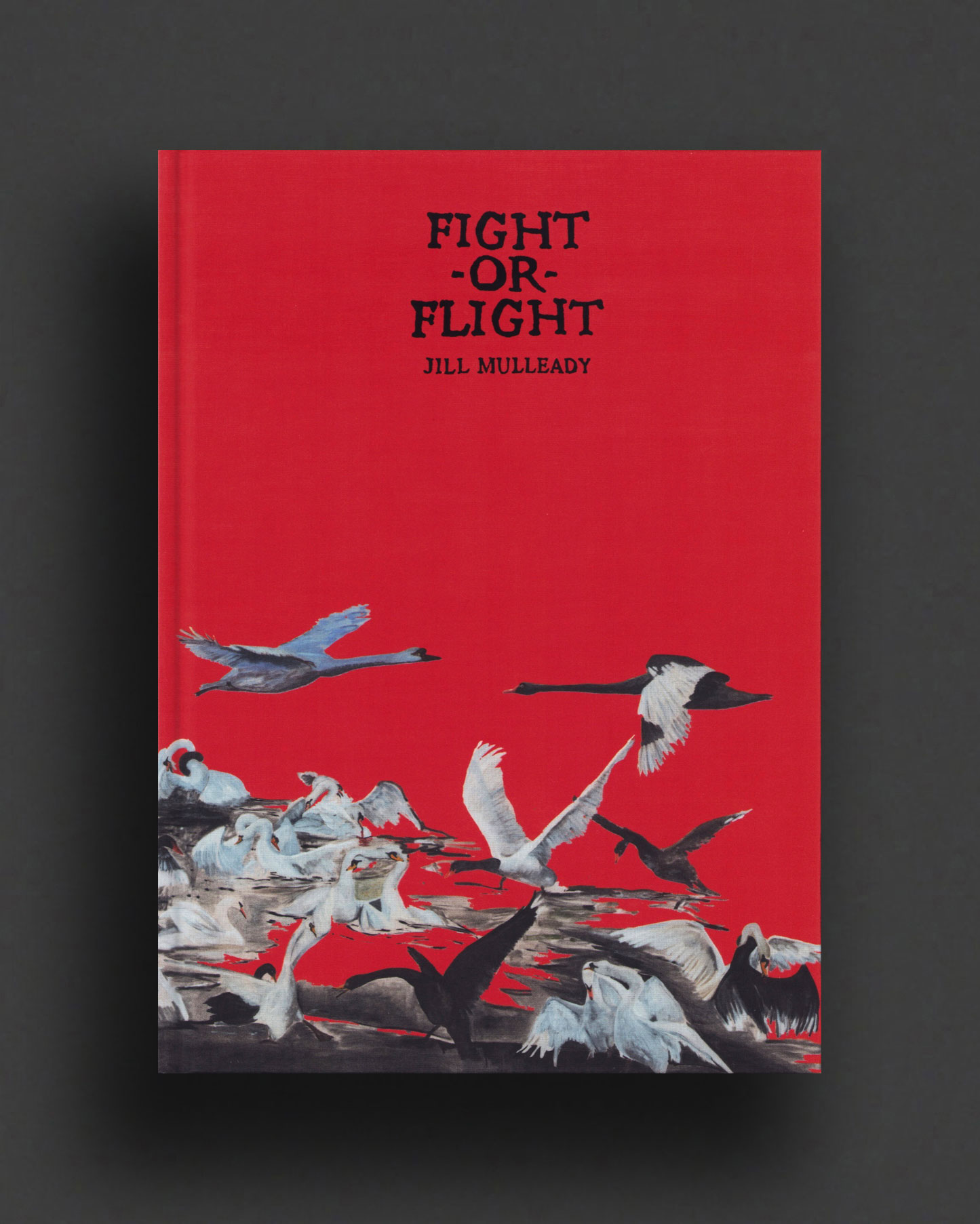
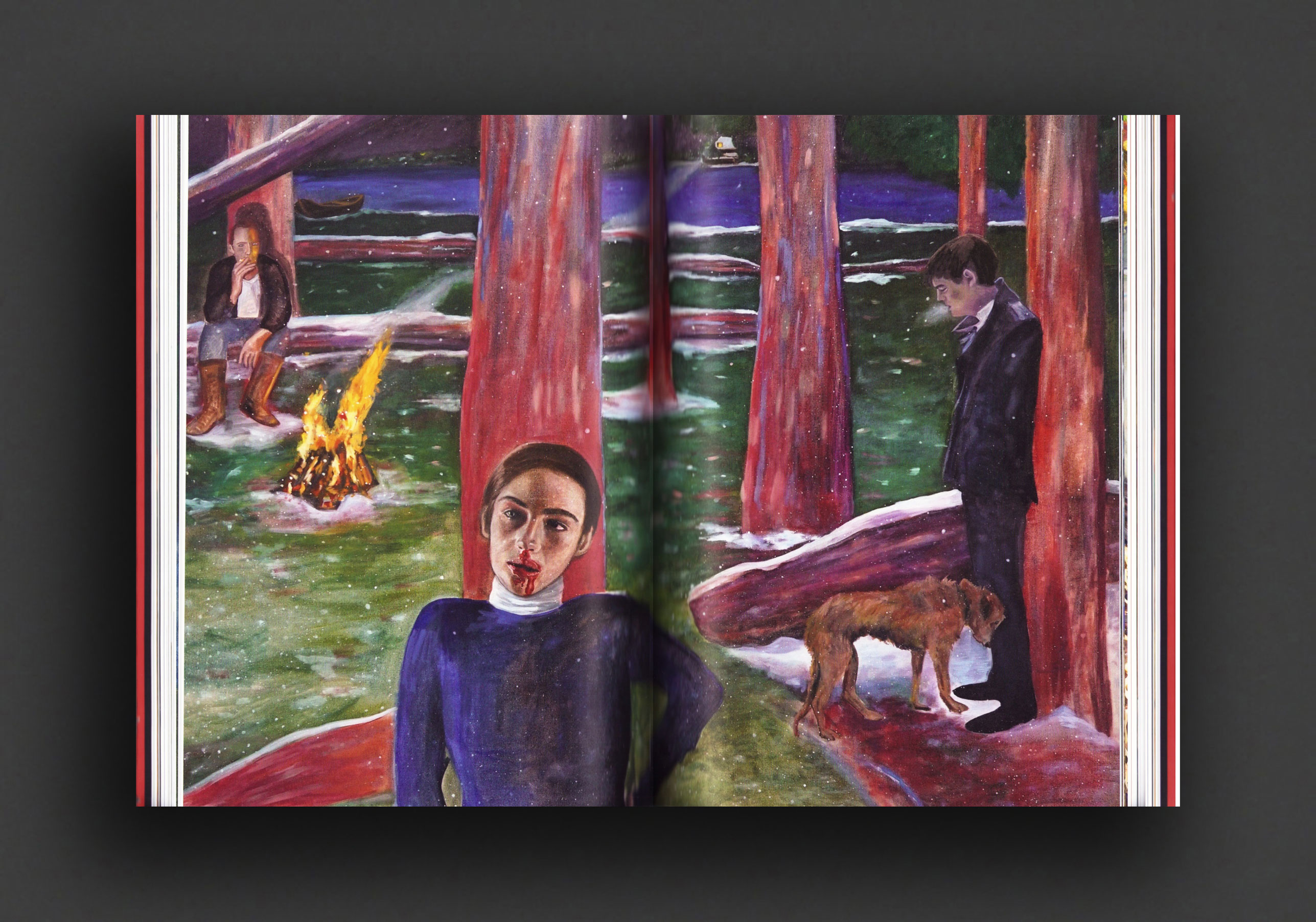
The first major monograph on Jill Mulleady, whose paintings feature humans and animals enacting their instinctive psychological reactions to ever-present threats of danger.
In the paintings and woodcuts of Jill Mulleady characters enact the physiological stress reactions of “fight or flight”: either adopting extreme or violent survival methods, or retreating into isolation. Mulleady’s work roots out fantasies, motivations and fears in order to depict a landscape of polarization and crisis. Ancient mythologies and recent histories are reanimated in her feverish work with an enduring, twisted force. And yet, opposed and extreme, the figures and scenes featured also point to futures in which beings are pushed into marginal spaces, suggesting an ominous threat at civilization’s center.
Fight-or-Flight is the first major monograph on Jill Mulleady, surveying her artistic output over the last 10 years. It features newly commissioned essays by curator Laura McLean-Ferris, author Ottessa Moshfegh and anthropologist Michael Taussig, and a conversation between Moshfegh and Mulleady.
Edited by Alison Coplan and Laura McLean-Ferris
Texts by Laura McLean-Ferris, Ottessa Moshfegh, Michael Taussig
Designed by Pacific
1972, French
Hardcover (cloth-bound), 176 pages, 31 x 31 cm
1st Edition, Out of print title / used / good
Published by
Clairefontaine / Lausanne
$140.00 - Out of stock
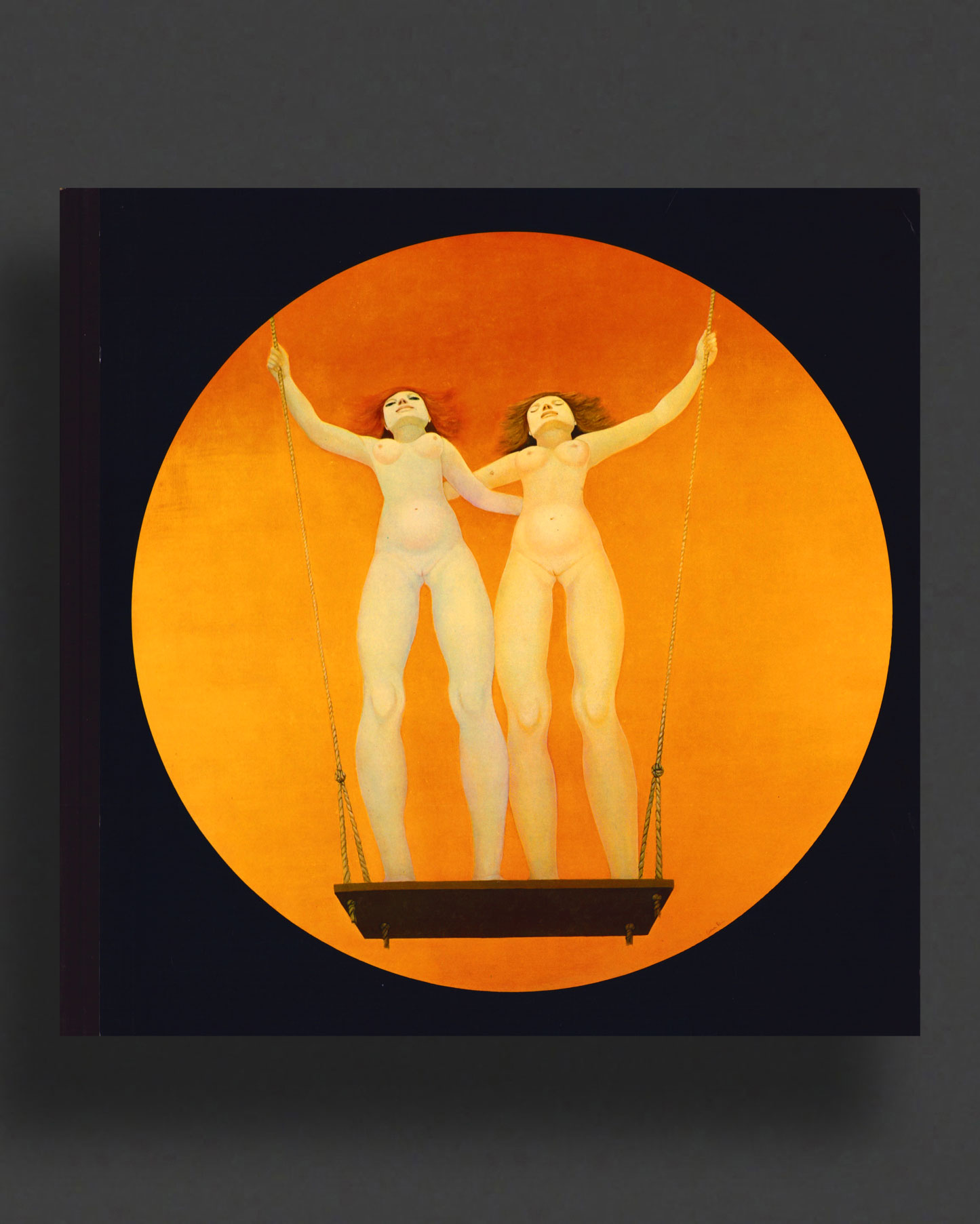
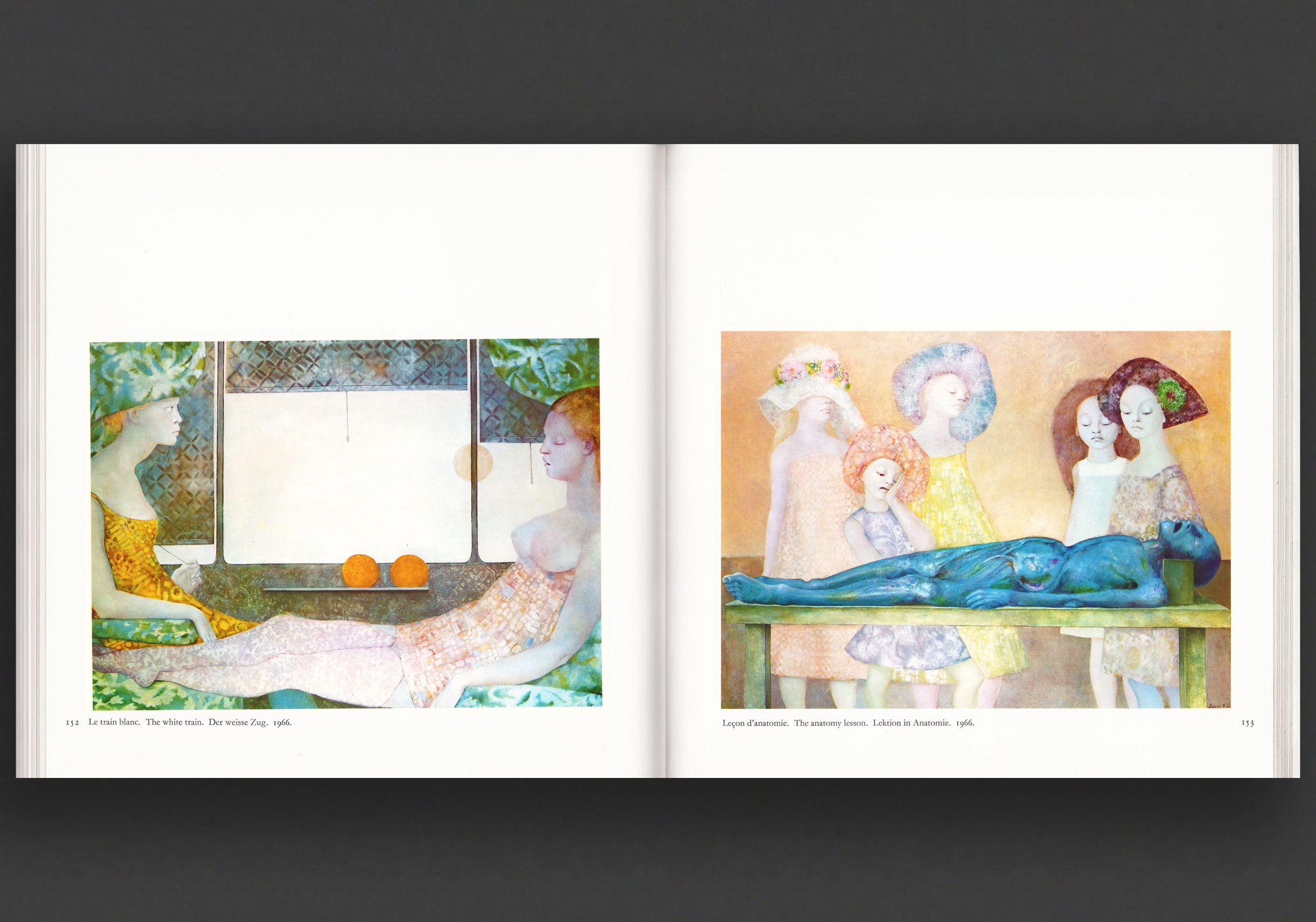
Wonderful 1972 hardcover edition of one of the most exquisite books on Argentine artist Leonor Fini (1918-1996), published by Clairefontaine, Lausanne, with text by Constantin Jelenski in the original French. This over-sized hardcover volume is profusely illustrated throughout with full-colour paste-in plates (some fold-outs) of Fini's incredible paintings throughout her career to date, alongside her magnificent ink works, portraits of the artist, catalogue of works, biography and bibliography. Printed and bound in numbered edition in Switzerland.
Leonor Fini (1907–1996), an Argentine painter, designer, illustrator, and author, known for her depictions of powerful women, is considered one of the most important women artists of the twentieth century and also one of the most misunderstood.
Fini had no formal artistic training. Born in Buenos Aires, she travelled extensively from a young age, living in Milan and then moving to Paris in 1931-32 where she was considered part of a pre-war generation of Parisian artists, becoming acquainted with Carlo Carrà and Giorgio de Chirico, who inspired much of her work, and also Paul Éluard, Max Ernst, Georges Bataille, Henri Cartier-Bresson, Picasso, Salvador Dalí, and André Pieyre de Mandiargues. She had her first one person show in Paris when she was twenty-five at a gallery directed by Christian Dior. Her work caught on fast and was included in the pivotal and groundbreaking Fantastic Art, Dada and Surrealism exhibition at the MOMA in 1936 while at the same time she had her first New York exhibition at the avant-garde Julien Levy Galley. Surrealist artists in France came to know her as important in the movement. She is mentioned in most comprehensive works about surrealism, although she did not consider herself a surrealist, nor a part of any particular artistic movement. Fini preferred to stake her own claim on modernism with a vision that owes more to the farthest shores of her imagination than to any affiliation with art trends, schools or movements. The originality of her art as well as her intelligence, famous wit and charisma accorded her celebrity status in the Paris art world and beyond beginning in the late thirties. Her panache and glamour, once they found a place in the collective imagination of the time, turned her into a much-publicized fashion and feminist icon. Always controversial, with as many detractors as admirers, she lived and painted consummately on her own terms.
In Paris in 1939 she curated the inaugural exhibition of her friend Leo Castelli’s first gallery (of surrealist furniture) and shortly thereafter, just before the German occupation, she traveled with André and a new lover to Arcachon in the southwest of France to begin waiting out the war. She remained there for almost a year with Salvador and Gala Dali before moving to Monte Carlo where she met the young Italian diplomat, Stanislao Lepri who became one of the great and enduring loves of her life. As the war intensified she moved with Stanislao to Rome where she lived, worked and formed close friendships with Anna Magnani, Luchino Visconti and other leading figures of world of art and letters. After the Liberation of Paris in 1946 she returned there to live and work for the remainder of her life, exhibiting extensively around the world.
The predominant themes in Leonor Fini’s art are sexual tensions, mysteries and games. One of her favored subjects is the interplay between the dominant female and the passive male, and in many of her most powerful works the female takes the form of the sphinx to which she felt a strong identification. She was also a renowned portraitist, and among her subjects were such friends as writers André Pieyre de Mandiargues, Jean Genet, Klaus Mann (son of Thomas), such actresses as Anna Magnani and Suzanne Flon, ballerina Margot Fonteyn, film director Luchino Visconti and artists Meret Oppenheim and Leonora Carrington.
Her genius for stage and screen design is evident in her numerous ground breaking theater decors with their elaborate conception, costumes and phantasmagorical masks. She designed for the Paris Opera, George Balanchine’s ballet Palais de Crystal, and choreographer Roland Petit’s company Ballets de Paris, for Maria Callas at the La Scala theater in Milan, as well as over seventy productions at theaters in Paris between 1946 and 1969. She had a unique talent for film design and created costumes for Fellini's 8 ½ as well as for Renato Castellani's Romeo and Juliet and John Huston’s A Walk with Love and Death.
In the 1970s, she wrote three novels, Rogomelec, Moumour, Contes pour enfants velu and Oneiropompe. Her friends included Jean Cocteau, Giorgio de Chirico, and Alberto Moravia, Fabrizio Clerici and most of the other artists and writers inhabiting or visiting Paris. She illustrated many works by the great authors and poets, including Edgar Allan Poe, Charles Baudelaire and Shakespeare, as well as texts by new writers. She was very generous with her illustrations and donated many drawings to writers to help them get published. She is, perhaps, best known for her graphic illustrations for Histoire d'O.
The provocative and much-publicized life of Leonor Fini was pure theater. Her story is that of a hard-won struggle to forge her life as a woman artist in a man’s world and to invent herself on her own terms. It is the story of a woman possessing exceptional independence, a highly original vision and great personal magnetism who lived passionately through her art and friendships and in the process became a feminist role model.
Good—Very Good copy with light wear to extremities and boards, block edges, front and back blank pages removed by previous owner.
1986, English
Softcover, 319 pages, 175 x 229 mm
1st Edition, Out of print title / used / very good
Published by
The MIT Press / Massachusetts
$45.00 - Out of stock
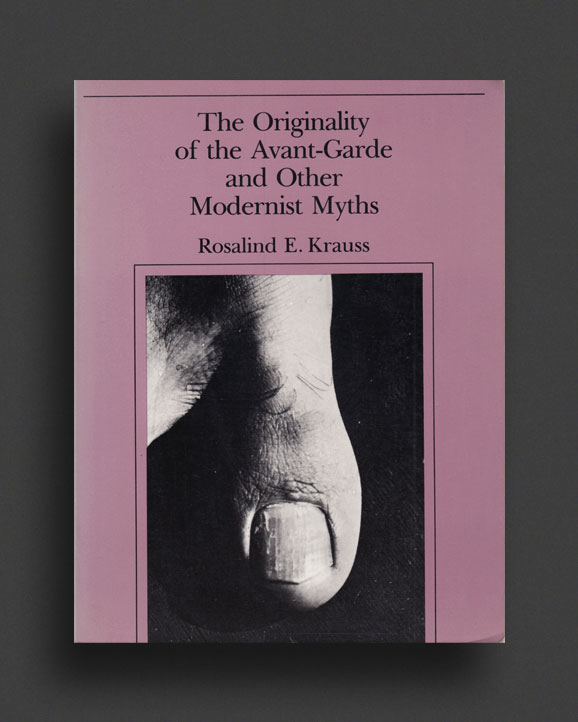
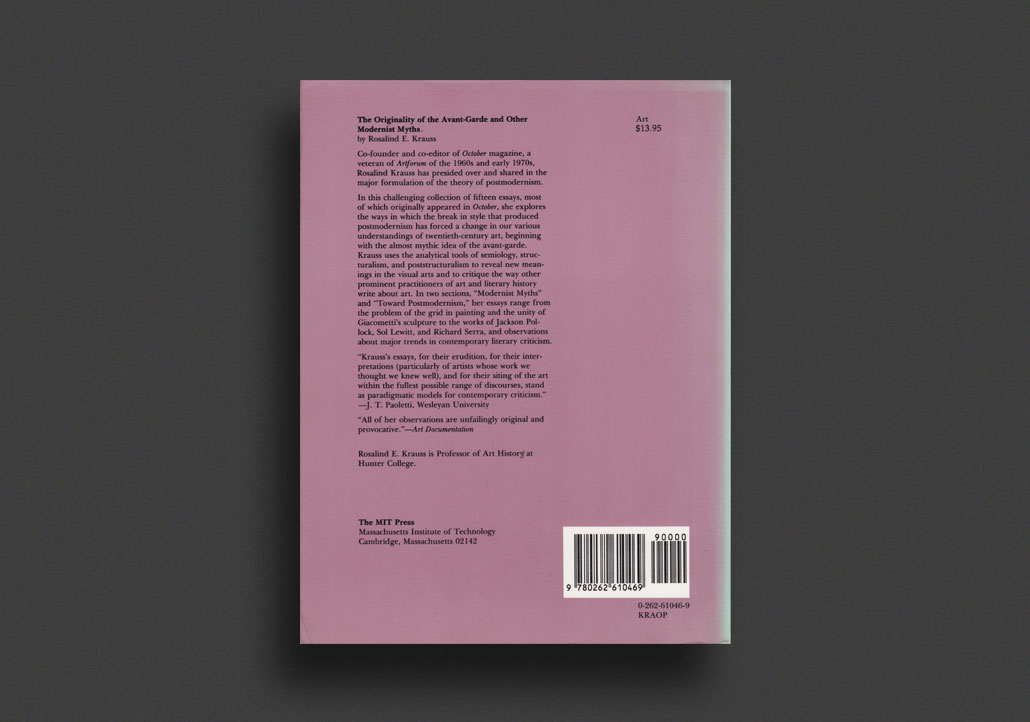
Co-founder and co-editor of October magazine, a veteran of Artforum of the 1960s and early 1970s, Rosalind Krauss has presided over and shared in the major formulation of the theory of postmodernism. In this challenging collection of fifteen essays, most of which originally appeared in October, she explores the ways in which the break in style that produced postmodernism has forced a change in our various understandings of twentieth-century art, beginning with the almost mythic idea of the avant-garde. Krauss uses the analytical tools of semiology, structuralism, and poststructuralism to reveal new meanings in the visual arts and to critique the way other prominent practitioners of art and literary history write about art. In two sections, "Modernist Myths" and "Toward Postmodernism," her essays range from the problem of the grid in painting and the unity of Giacometti's sculpture to the works of Jackson Pollock, Sol Lewitt, and Richard Serra, and observations about major trends in contemporary literary criticism.
Rosalind E. Krauss, University Professor at Columbia University and an editor and cofounder of October magazine, is the author of The Originality of the Avant-Garde and Other Modernist Myths (1985), The Optical Unconscious (1993), The Picasso Papers (1999), and Bachelors (1999), all published by the MIT Press, and coauthor (with Yve-Alain Bois) of Formless: A User's Guide (Zone Books, 1997).
"All of her observations are unfailingly original and provocative."—Art Documentation
Very Good copy of original 1986 edition, 1993 printing.
2012, English
Hardcover (clothbound), 72 pages, 24.5 x 20 cm
1st Edition, Out of print title / used / fine
Published by
Kerber Verlag / Berlin
$55.00 - In stock -
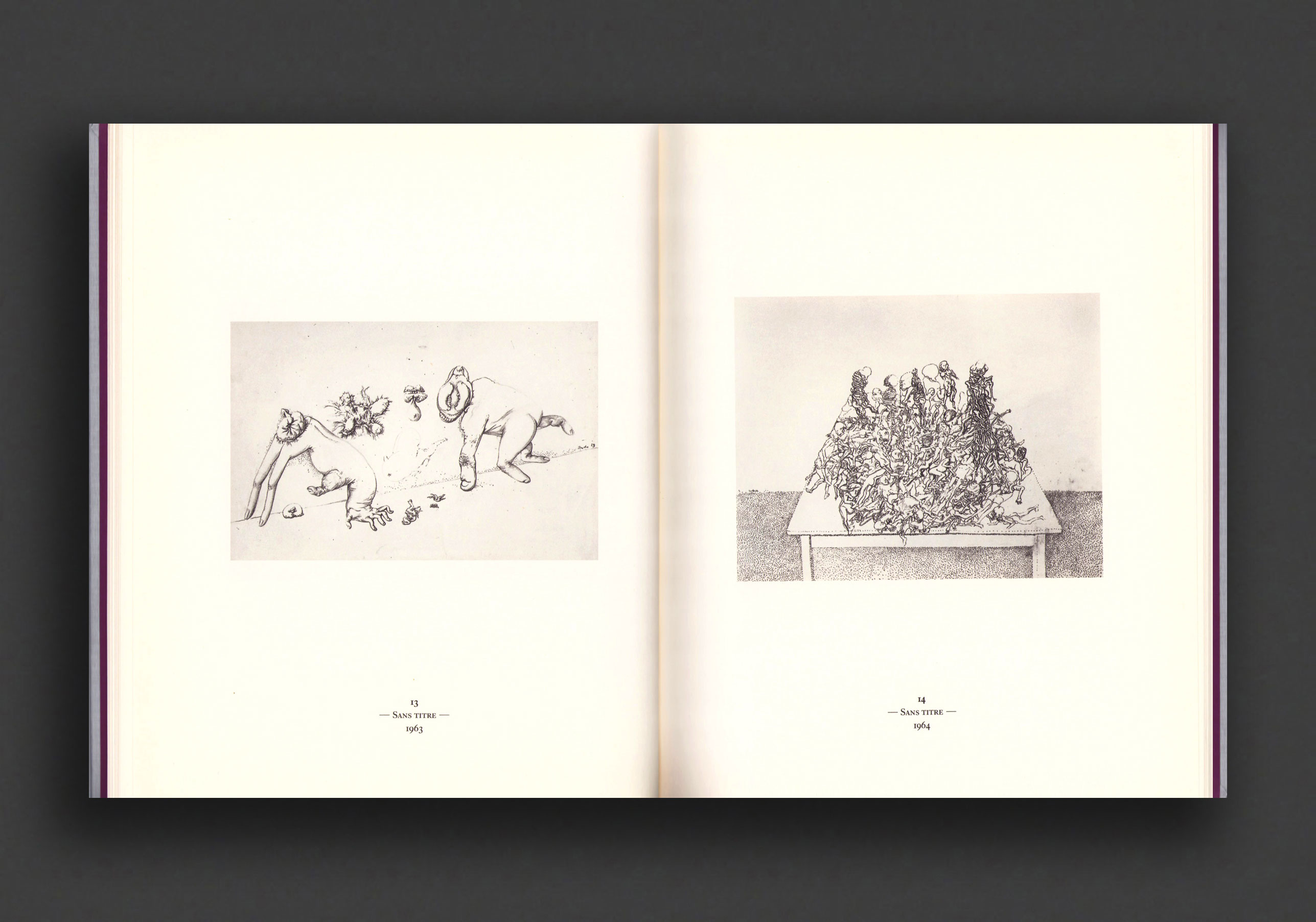
The roots of Dado's often nightmarish images can be found in Surrealism. The pictures are imbued with a deep melancholy inherent to all living creatures but which is at the same time an expression of uncompromising humanity. We encounter here milling masses of human suffering, scenes peopled by a variety of aggressive and grotesque monsters and strange beings. Forms melt away and fuse, frequently evoking a catastrophic state of psychic fragmentation and horrific physical decay. In a period hallmarked by informal abstraction, Dado's works of the 1960s became an important touchstone for artists espousing a new wave of figuration, among them Eugen Schönebeck and Georg Baselitz.
This hardcover catalogue presents a selection of Dado's early drawings and paintings, with accompanying text in bi-lingual by Gregor Jansen and Isabelle Monod-Fontaine in English and German.
Dado (Miodrag Djuric, 1933–2010) was born in Montenegro and came to Paris in 1956. His work has been featured in numerous exhibitions, including at the Chicago Art Institute and Centre Pompidou, Paris. In 2009 he represented Montenegro at the Venice Biennale.
Published to accompany the exhibition at Kunsthalle Düsseldorf 21.04. – 24.06.2012.
2006, English
Softcover, 118 pages, 23.5 x 16.5 cm
1st Edition, Out of print title / used / very good
Published by
Hayward Gallery Publishing / London
$25.00 - Out of stock
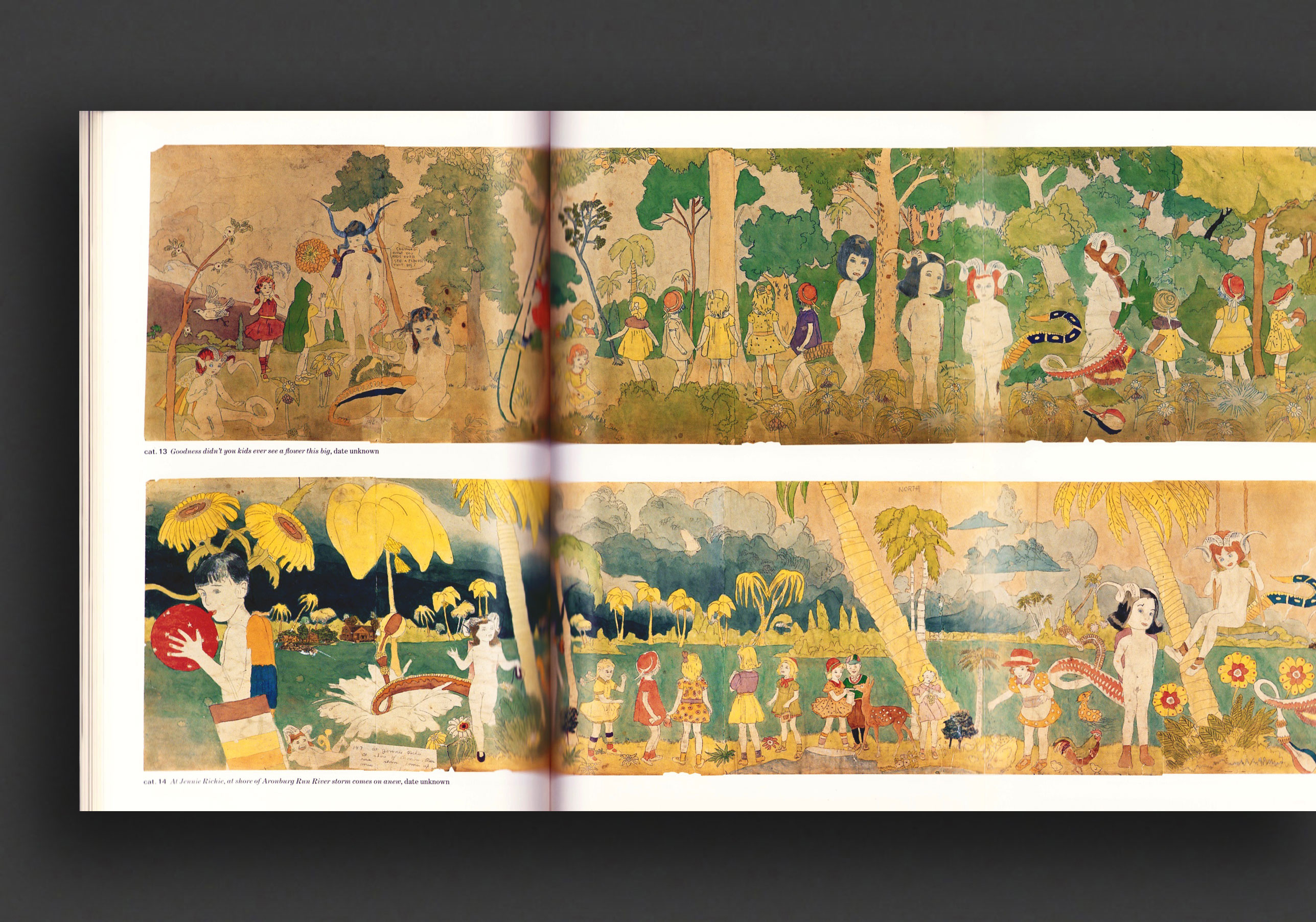
Published in 2006 on the occasion of this Hayward Gallery touring group exhibition, 'A Secret Service: Art, Compulsion, Concealment' explores the work of fifteen international artists and groups whose practices centre on the creation of secret worlds or the exposure of hidden facts and images. Key figures of Modern art, established and emerging contemporary artists and 'outsiders' together address numerous aspects of secrecy: magic, alchemy, sexuality, dreams, religion, political conspiracy, assumed identity and the covert workings of the State. Essays by Richard Grayson, Clare Carolin, and Roger Cardinal, accompany biographies and lavish, full-colour galleries of works by all featured artists: Sophie Calle, Roberto Cuoghi, Henry Darger, Gedewon, Susan Hiller, Tehching Hsieh, Kataryzna Józefowicz, Joachim Koester & Adrian Dannatt, Paul Étienne Lincoln, Mark Lombardi, Mike Nelson, Kurt Schwitters, The Speculative Archive, Jeffrey Vallance, Oskar Voll.
Very Good copy with light wear to covers.
1984, Czech
Hardcover (w. dust jacket), 270 pages, 31 x 23.5 cm
1st Edition, Out of print title / used / very good
Published by
Odeon / Prague
$120.00 - In stock -
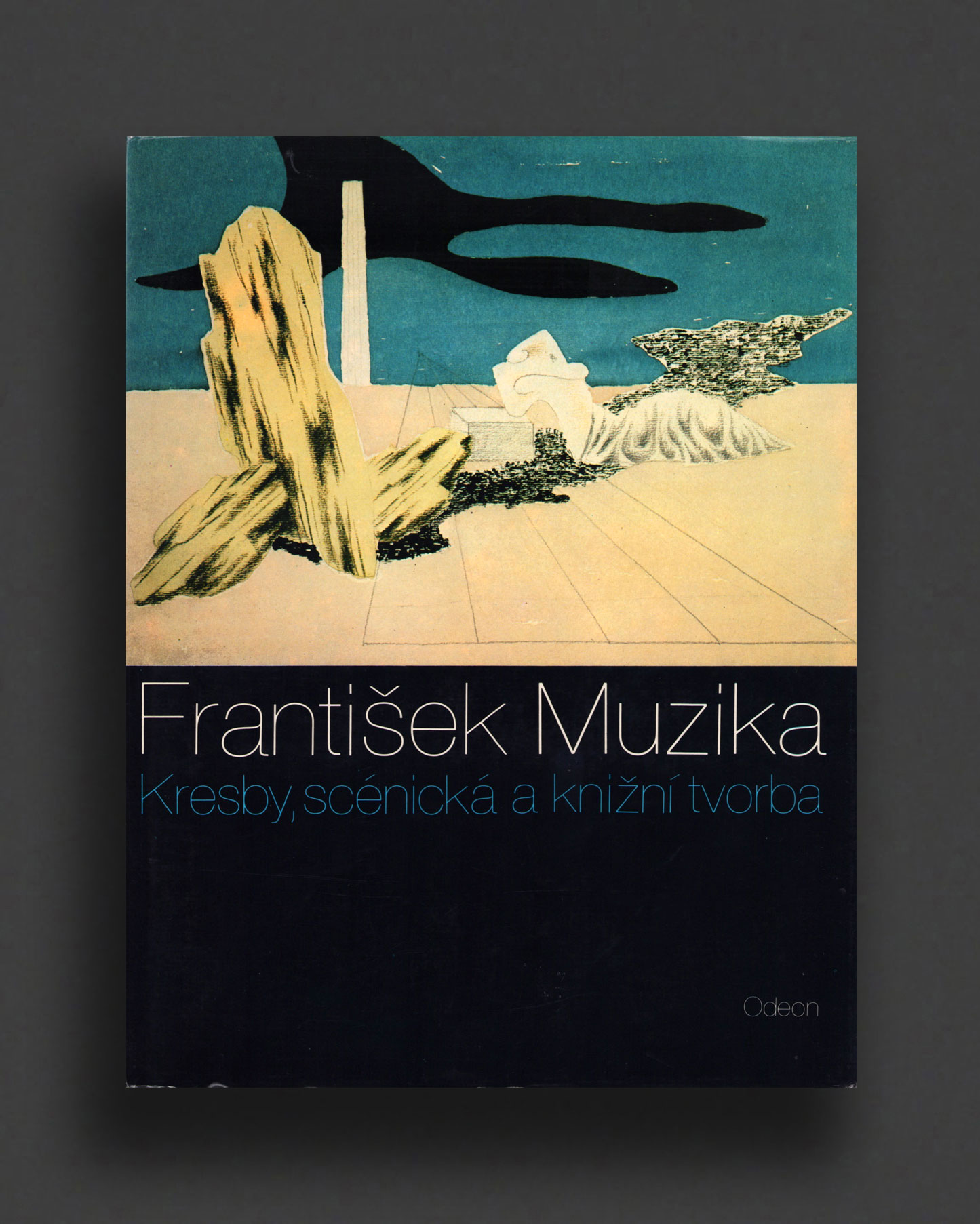
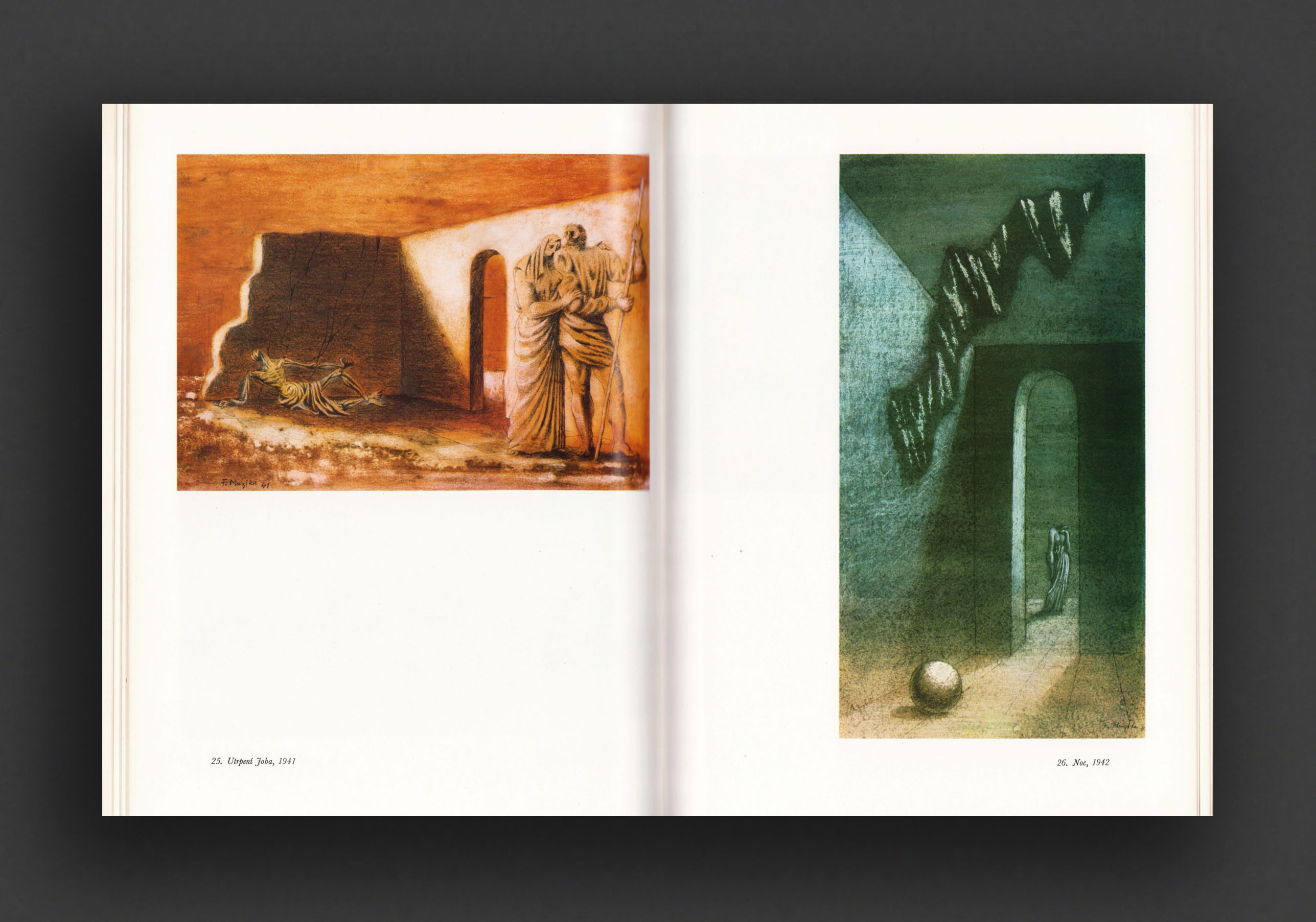
Rare first edition of this major 1984 monograph on artist František Muzika (1900—1974), a prominent representative of avant-garde in Czechoslovakia in the first half of the 20th century. Muzika was a painter, graphic designer, stage designer, illustrator, editor and professor at the Academy of Arts, Architecture and and Design in Prague. Written by Czech art critic, historian, and art theorist, František Šmejkal (1937—1988), and published by Odeon, Prague, this over-sized hardcover book is profusely illustrated throughout with over 200 illustrations in colour and b/w with accompanying biography, resume and bibliography.
Born in Prague, Muzika attended the Prague Academy of Fine Arts where his teachers were Jakub Obrovský, Karl Krattner and Jan Štursa. After finishing his study in 1924, he received a one-year scholarship from the French government for studying at École des Beaux-Arts. In Paris he also received private lessons from František Kupka at his atelier and exhibited with friends Max Jacob, Léonce Rosenberg, Joseph Bernard, Maillol, and Bissière. Muzika was linked with several artists’ associations: with Devětsil in 1921 and subsequently with the Mánes association and finally with Nová skupina. He took part in the ground-breaking exhibition Poezie 32 at Prague’s Mánes Gallery at which many foreign artists showed their works, and which played a fundamental role in the further development of the Czech art scene and Czech surrealism in particular. A key year for the painter, illustrator and typographer was 1927, when he met the publisher Otakar Štorch–Marien and became the artistic director of the Aventinum publishing house and editor of the magazine Musaion. He also played a major role in the history of Czech stage design, designing over forty sets for the National Theatre in Prague between 1927 and 1947. Over the years Muzika’s oeuvre evolved from its initial Fauvism, via magic realism, lyrical and then imaginative cubism to the organic expressionism of the late sixties and early seventies.
Very Good copy in VG dust jacket.
1977, German
Hardcover (clothbound), 422 pages, 27.5 x 21 cm
Out of print title / used / very good
Published by
VEB / Dresden
$55.00 - Out of stock
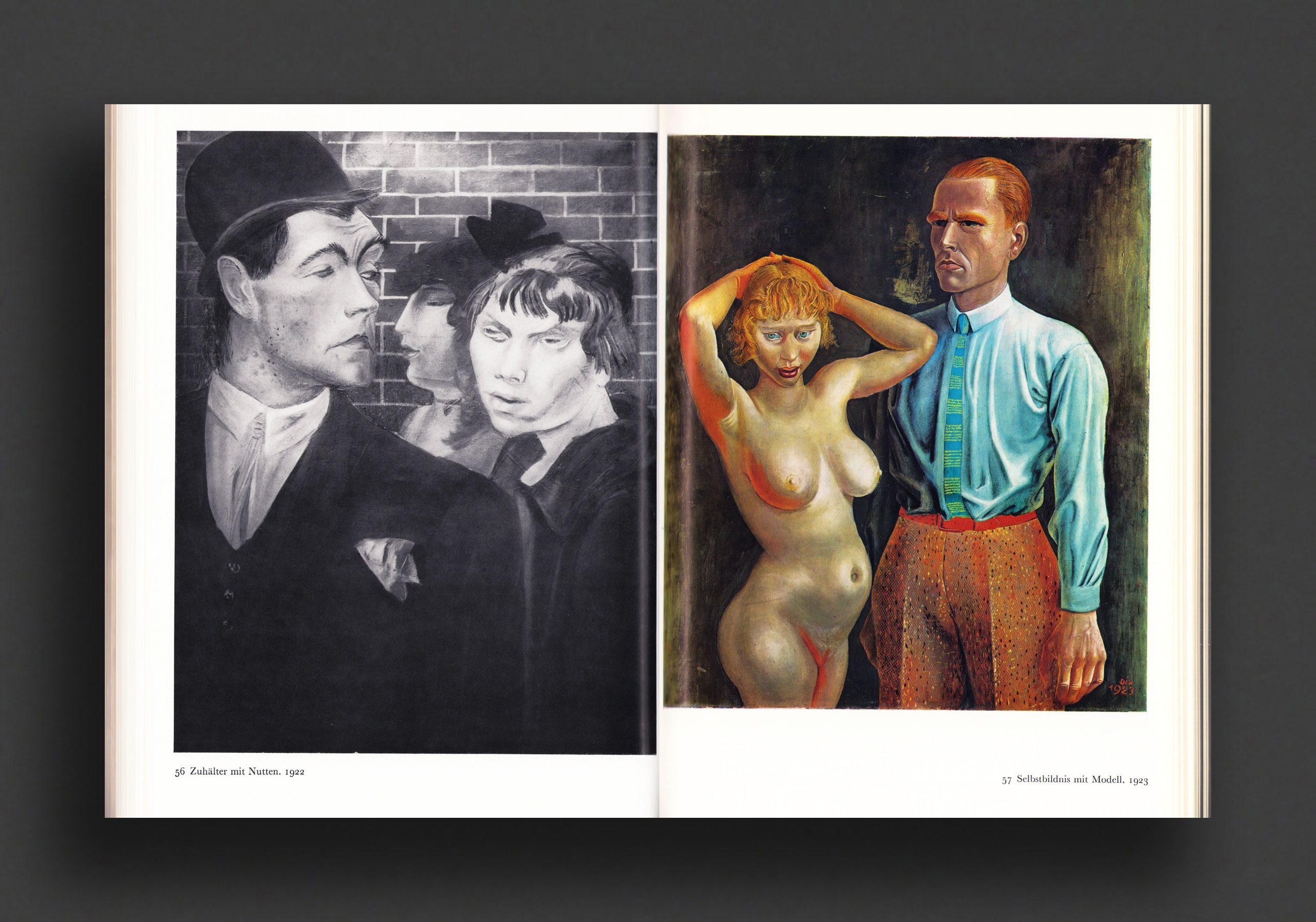
1977 printing of this definitive monographic study of German painter and printmaker, Otto Dix (1891—1969). Written by Fritz Löffler in the original German language, the books presents a large plate section of reproduced paintings and drawings in colour and b/w, including fold-out panels, spanning his entire career. One of the most important artists of the Neue Sachlichkeit (New Objectivity), which also attracted George Grosz and Max Beckmann in the mid 1920s. Dix was noted for his ruthless and harshly realistic depictions of German society during the Weimar Republic and the brutality of war. A veteran haunted by his experiences of WWI, his first great subjects were crippled soldiers, but during the height of his career he also painted nudes, prostitutes, and often savagely satirical portraits of celebrities from Germany's intellectual circles. His work became even darker and more allegorical in the early 1930s, and he became a target of the Nazis, defining Dix as one of Germany's most 'degenerate' artists. Through his art, he had committed a 'violation of the moral sensibilities' of the nation and forced to promise to paint only inoffensive landscapes. His paintings that were considered "degenerate" were discovered in 2012 among the 1500+ paintings hidden away by the son of Hitler's looted-art dealer Hildebrand Gurlitt.
Very Good copy (without dust jacket)
1996, English / Japanese
Hardcover, 48 pages, 31 x 23.5 cm
1st Edition, Out of print title / used / very good
Published by
Lampoon House / Tokyo
$180.00 - In stock -
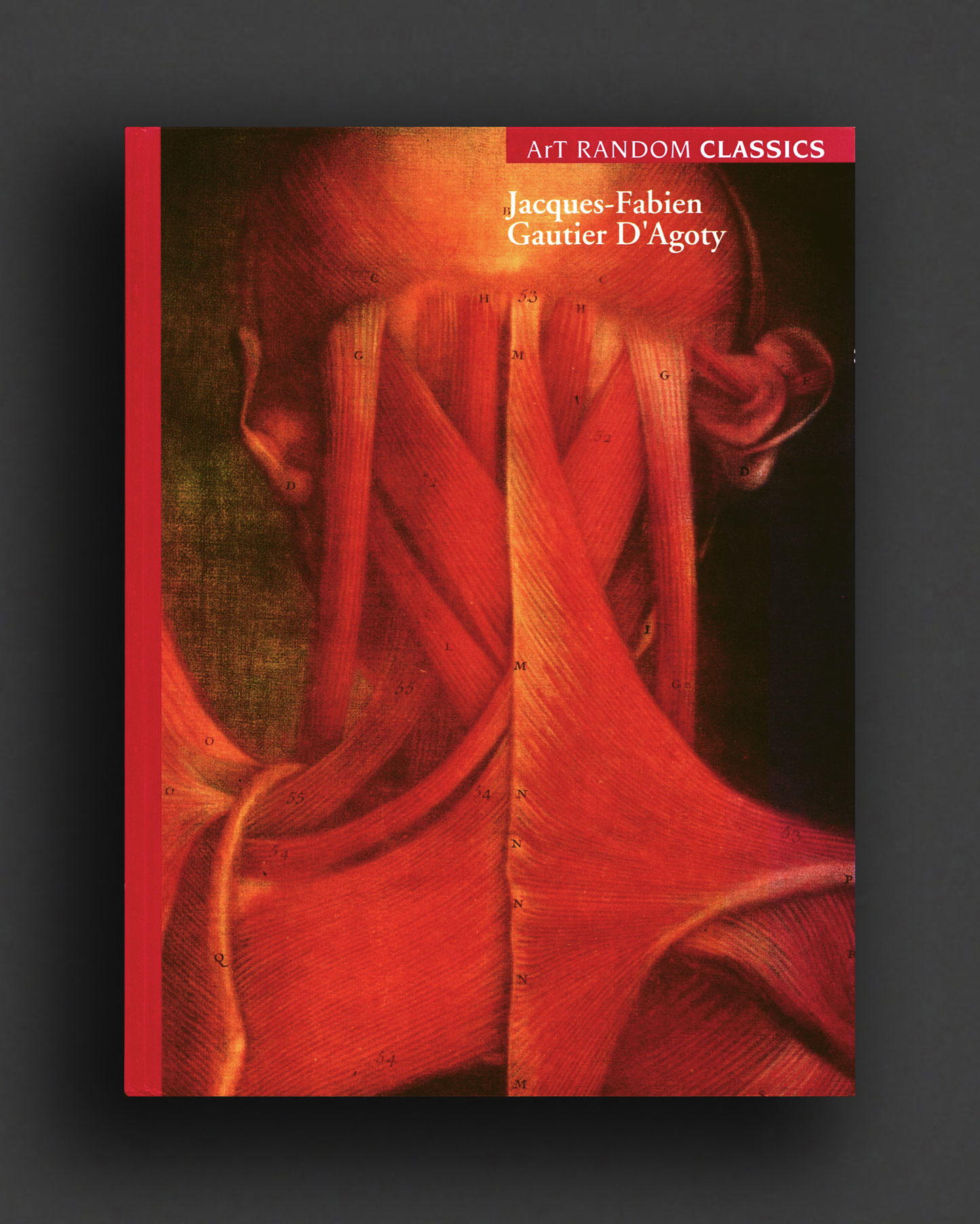
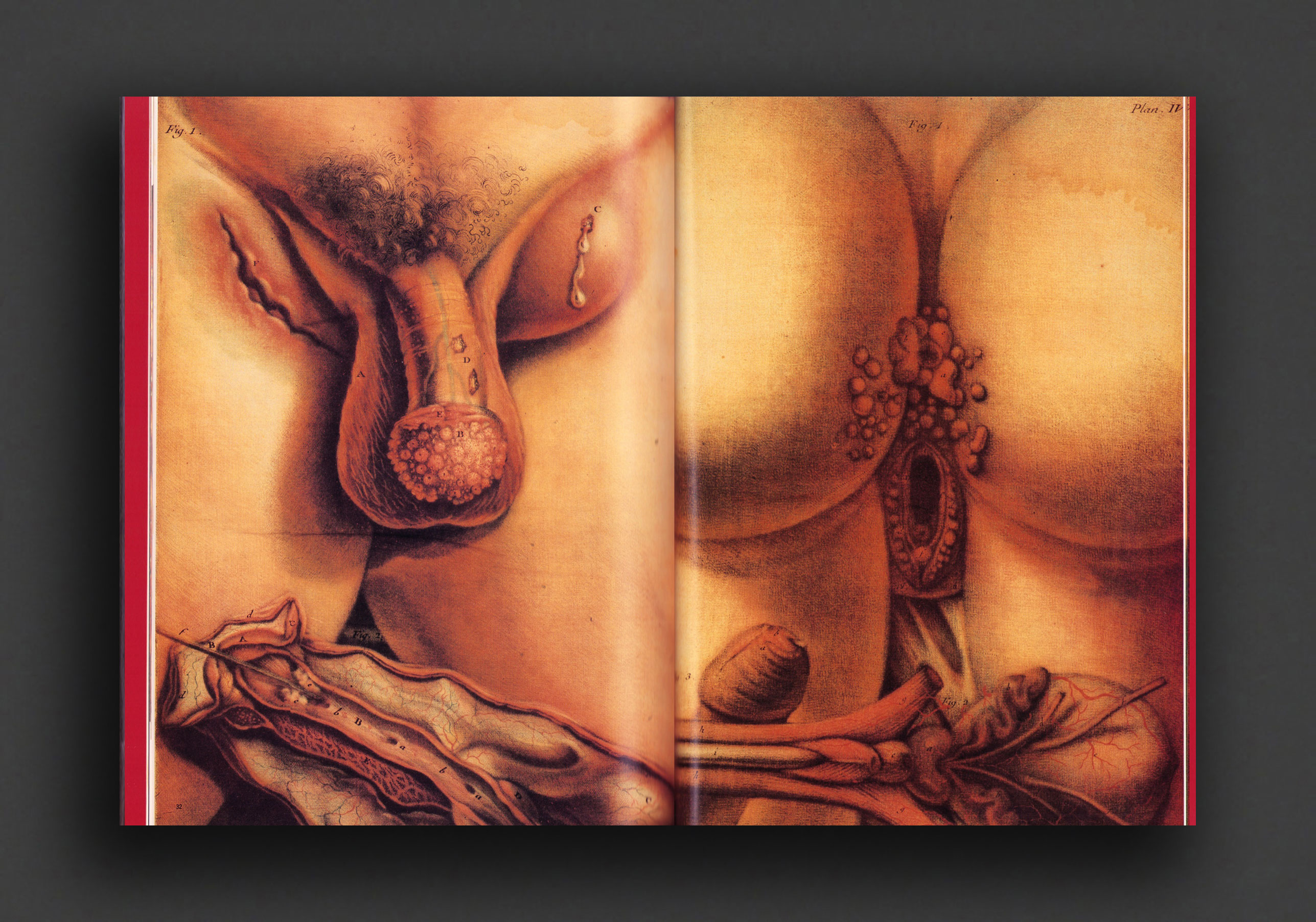
First 1996 hardcover edition of this long out-of-print volume presenting the exquisite "anatomical prints de couleur et grandure naturelles" by French anatomist, painter and printmaker, Jacques Fabien Gautier d'Agoty (1711–1786). Profusely illustrated throughout in full colour with D'Agoty's groundbreaking anatomical artworks, alongside many details of his "horrible precision". Edited with introductory texts by Adam Lowe, with the assistance of the Wellcome Institute Library, London, all texts in both English and Japanese, translated by the publisher, editor/photographer Kyoichi Tsuzuki (Happy Victims, Tokyo Style, Roadside Japan/Europe/America).
Jacques-Fabien Gautier-Dagoty received a royal license for his technique of four-plate colour printing in mezzotint, a process closely derived from the three-plate method of his teacher, Jacob Christoph Le Blon (to which Gautier-Dagoty added a plate printed in black or brown). Although he also made prints that reproduced paintings or depicted notable figures, Gautier-Dagoty's special interests lay in anatomy, botany, and zoology—fields that would be revolutionized by the publication of accurate color illustrations. He founded the first French illustrated scientific journal, and prepared large-scale publications such as Myologie complète en couleur et grandeur naturelle a treatise on the anatomy of muscles.
Very Good copy, light wear to cover boards.
2025, English
Hardcover, 616 pages, 31.8 x 21.6 cm
Published by
Glenstone Foundation / Maryland
$130.00 - Out of stock
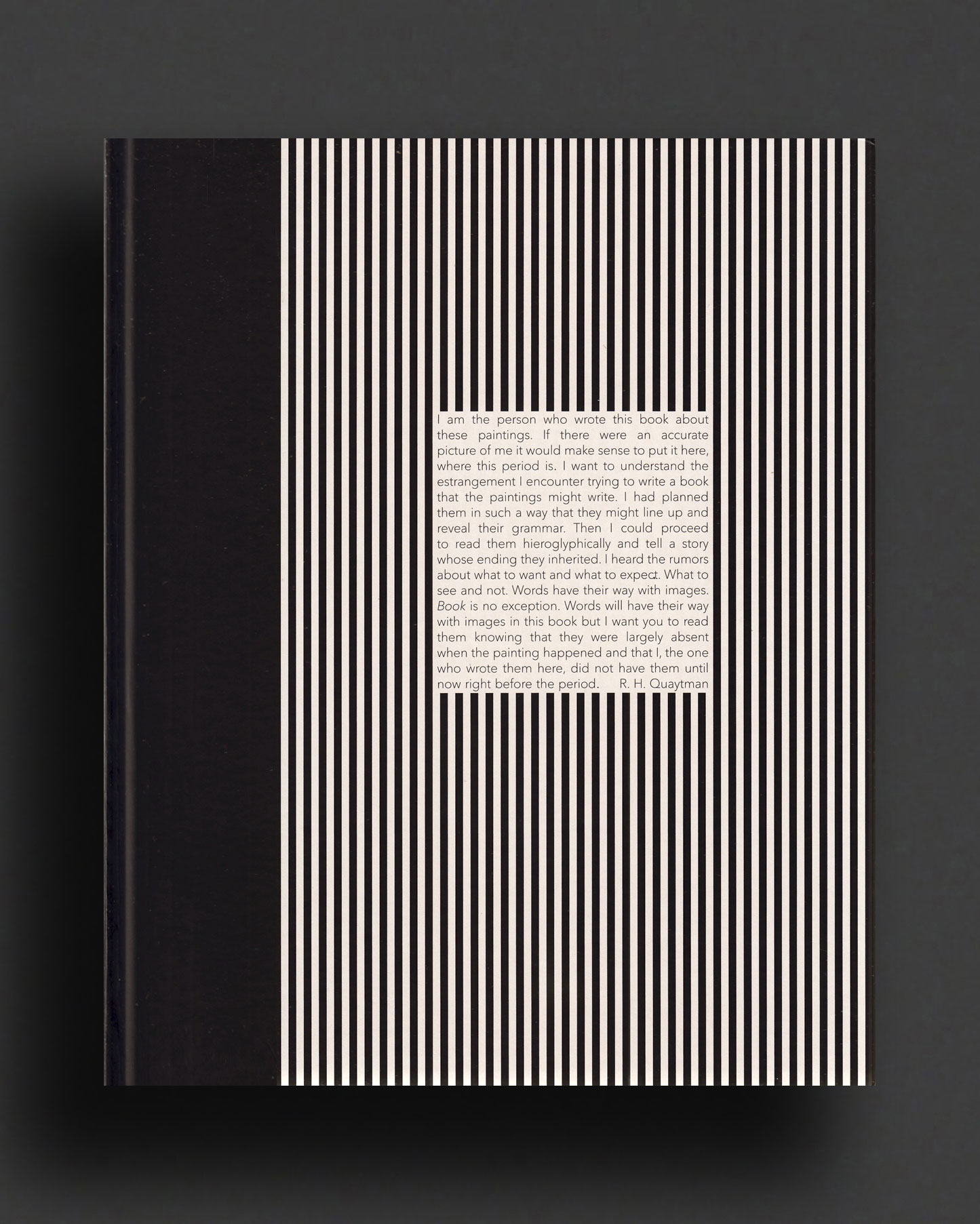
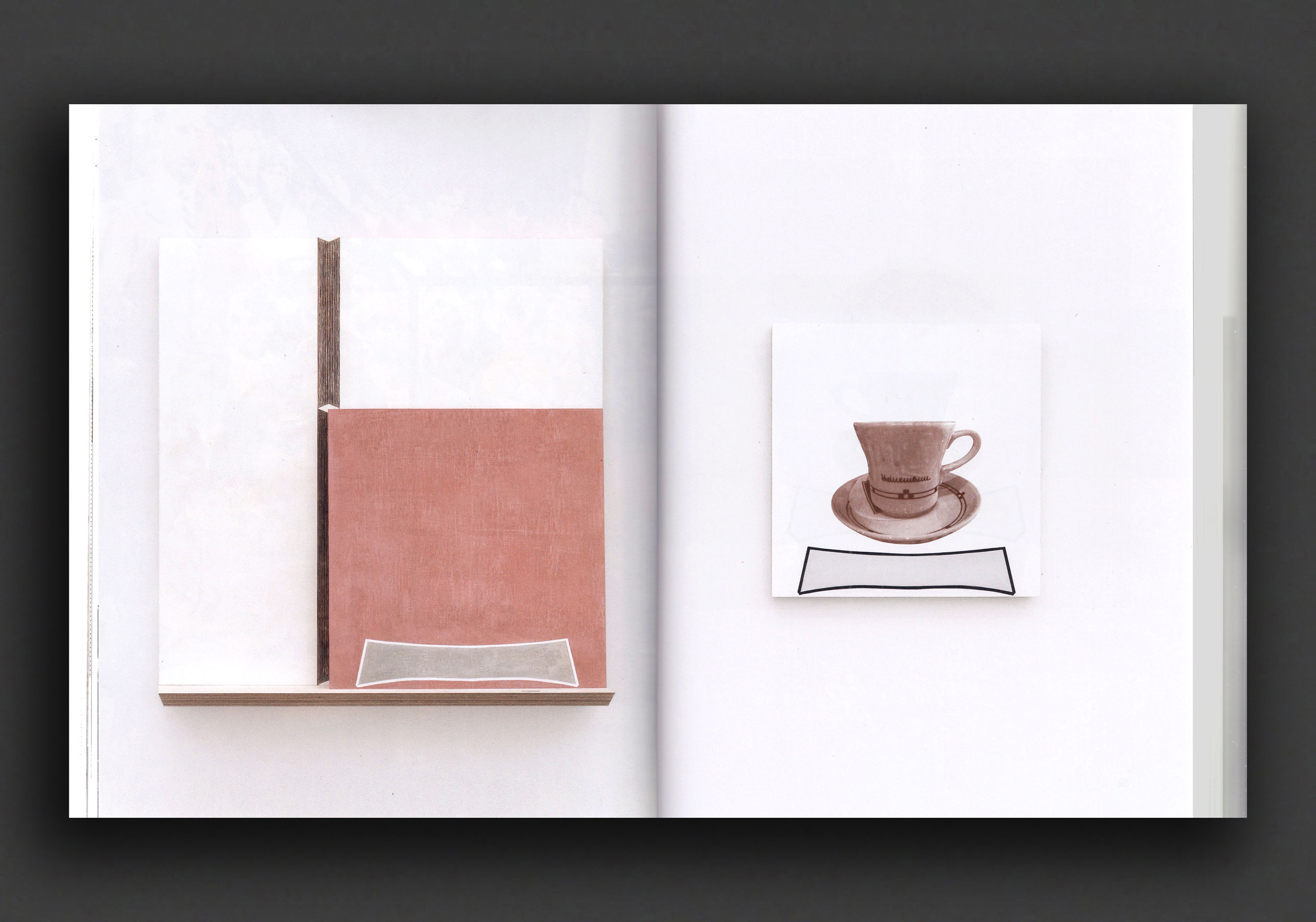
A comprehensive exploration of R.H. Quaytman’s work from 2010 to 2020, presented as both a catalogue raisonné and an artist’s book, following in the tradition of Quaytman’s earlier publication, Spine.
Since 2001, R.H. Quaytman’s (b. 1961) artistic output has been modeled on the structure of a book. Each body of work is a “chapter” in an ongoing investigation of the history of image making. Quaytman combines painted and silk-screened images on wood panels to create densely layered compositions that shift between abstraction and figuration.
Using her 2022 exhibition at Glenstone as a jumping off point, Book is the second volume of Quaytman’s catalogue raisonné and artist book. Following the first twenty chapters of work covered in Spine (2011), Book traces chapters 21 through 35. Designed in collaboration with Petra Hollenbach, the 719-page hardback volume richly illustrates and catalogues twelve years of work with hundreds of images alongside installation floorplans and exhibition schematics. With texts by the artist accompanying each chapter, the publication also features a foreword by Glenstone director and co-founder, Emily Wei Rales and prologue by curator Yuri Stone.
2017, English
Softcover, 168 pages, 20 x 12.5 cm
Published by
Silver Press / London
$35.00 - In stock -
With an Introduction by Sheila Heti and an Afterword by Marina Warner
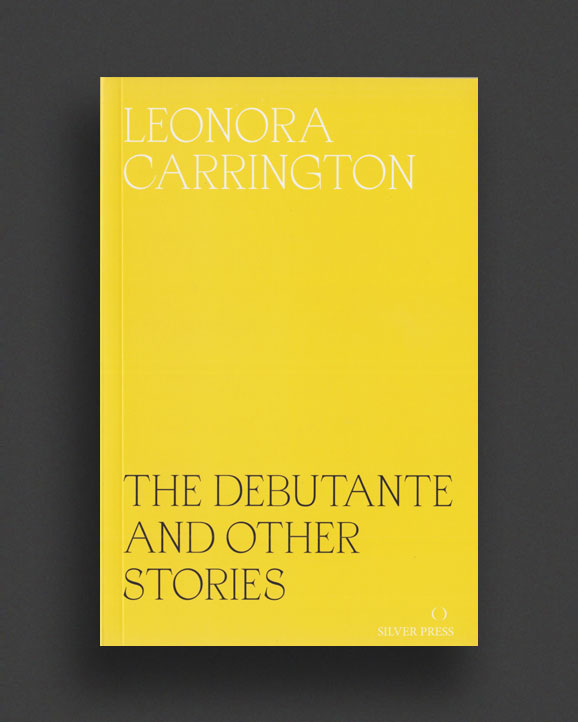
A debutante frees a hyena from the zoo so that it might take her place at her coming-out ball; an artist paints a portrait of a man’s dead wife, but finds she has painted herself instead; a psychoanalyst must decide what to do with the gift of a team of Russian rats trained to operate on humans. In this first complete edition of Leonora Carrington’s short stories, written throughout her life from her early years in Surrealist Paris to her late period in Dirty War-era Mexico City, the world is by turns subversive, funny, sly, wise and disarming.
1991, Czech
Softcover (2 volumes in wrap), 266 + 50 pages, 29.7 x 21 cm
1st Edition, Out of print title / used / good
Published by
Prague City Galerie / Prague
Václav Špála Galerie / Prague
$100.00 - In stock -
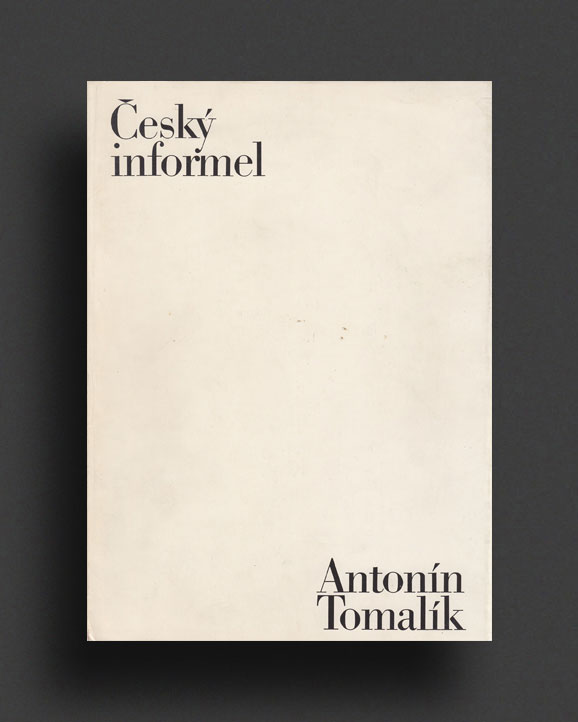
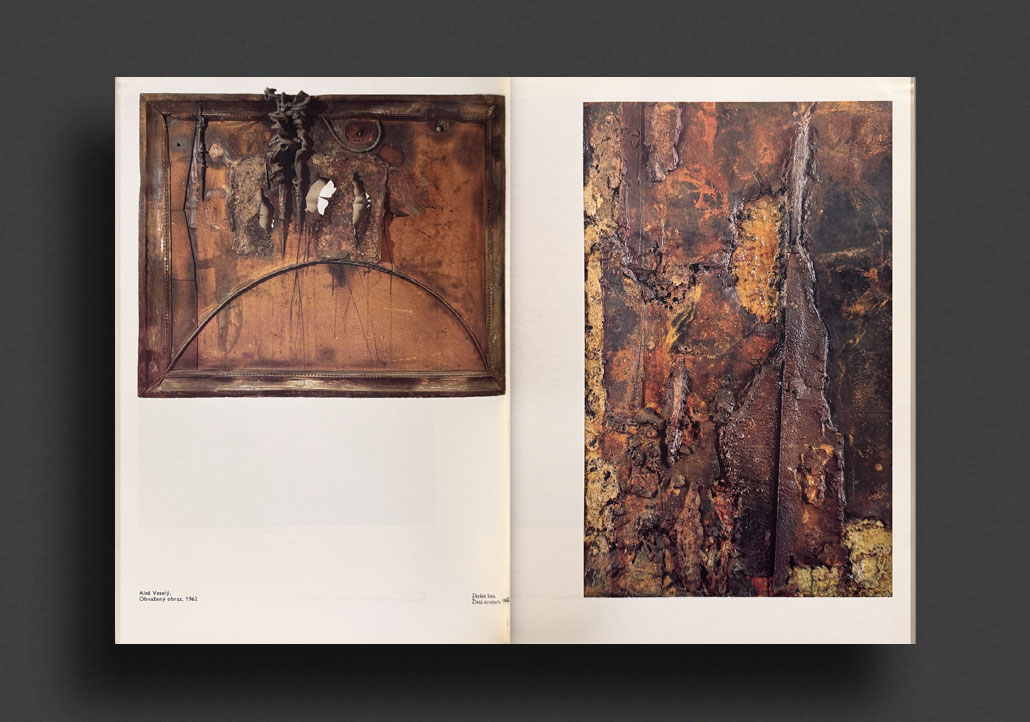
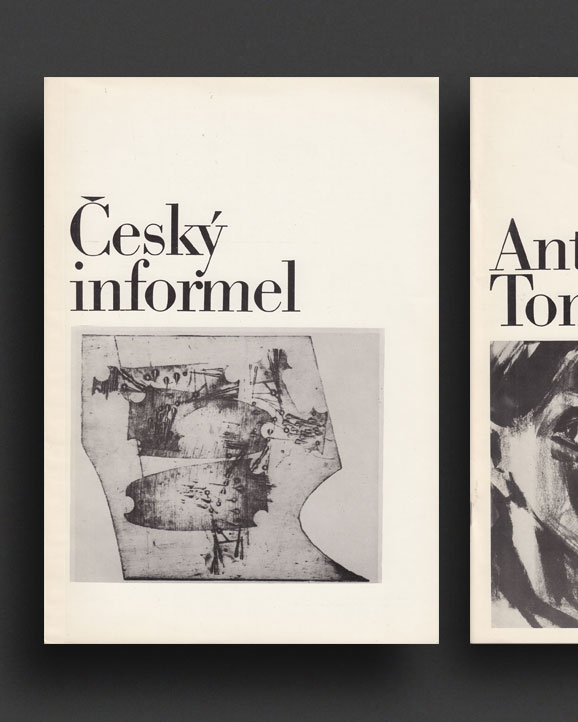
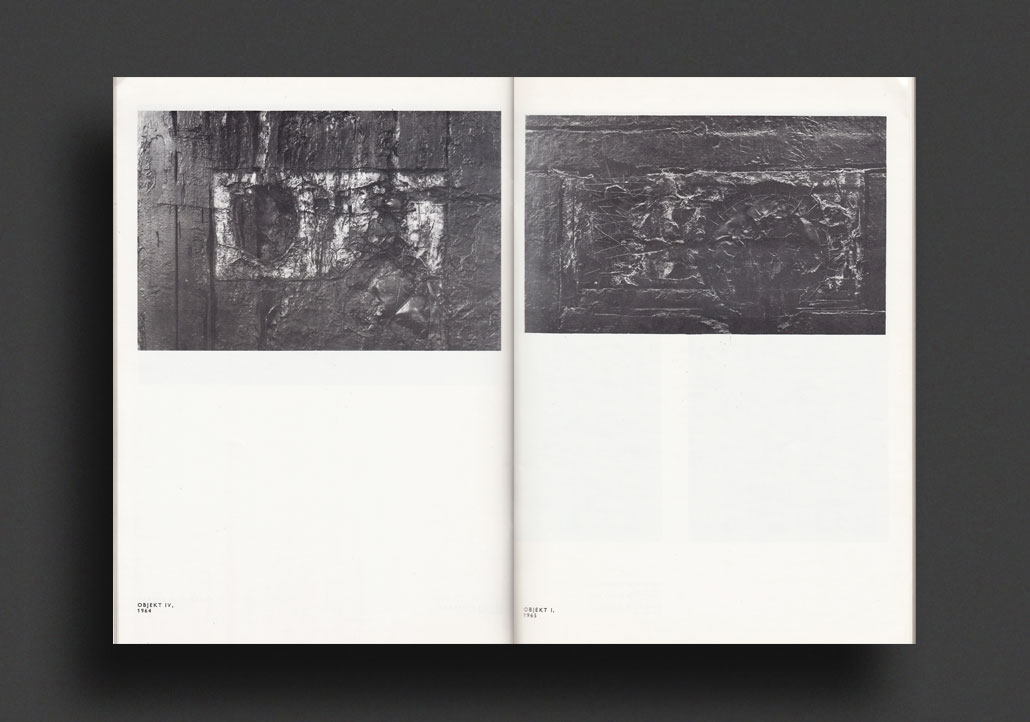
First edition of the only comprehensive book (a 2 volume survey) ever published on Český informel ("Czech Informel"), a radical current of post-war art that emerged in Prague from specific local conditions at the turn of the 1950s and 1960s. The term "Czech Informel" was an afterthought and defined only in the context of this major 1991 exhibition, accompanying symposium and publication. In the 1960s, the term "structural abstraction" was used, which according to Mahulena Nešlehová is inaccurate and misleading, because the term structure refers rather to an order that is internally organized. Informel, a term used from 1945 by the French critic Waldemar-George and later Michel Tapié, on the other hand, works with chance and the projection of spontaneous emotions and represents an "expressive material antipainting". The revolt of about thirty desperate avant-garde artists created a turning point in the history of Czech art, a phenomenon of which had no predecessor in Czechoslovakia. Sharing an emphasis on the aesthetic effect of raw materials and destruction with concurrent post-war European arts, Czech Informel differed in emphasis on its existential basis. The principle of the permanent construction and destruction of the image was a reaction to the severity of the times and an attempt to penetrate to the deeper essence of creation, in which the birth involves at the same time the extinction of the previous and reflects the consciousness of the fragility of human existence itself.
Profusely illustrated in b/w with select colour plates, the first volume traces the painting, sculpture, print and photographic works of the radical current of central Czech Informel artists, including Jan Koblasa, Aleš Veselý, Antonín Tomalík, Zbyšek Sion, Zdeněk Beran, Vladimír Boudník, Čestmír Janošek, Antonín Málek, Jiří Valenta, Miloš Koreček, Emila Medková, Zbyněk Sekal, Čestmír Krátký, Jiří Balcar, Karel Kuklík, Pavla Mautnerová, Jozef Jankovič, Jaroslav Hovadík, Mikuláš Medek, Alois Nožička, and many more.
The second volume is devoted to the life and work of Antonín Tomalík (1939—1968), one of the main artists of the radical Informel. He played a significant and irreplaceable role in the formation of Czech avant-garde and non-conformist art at a time when artists were burdened by an existential crisis as a result of the totalitarian regime. He belonged to a generation of young artists whose skepticism about life found expression in the raw, deliberately anti-aesthetic language of dark material creation, the result of which was an expressively urgent, internally destroyed object. Tomalík died in 1968, the result of an overdose of barbiturates and alcohol.
Texts in Czech by Antonín Dufek, Jiri Valoch, Mahulena Neslehová.
Highly recommended.
Good—VG copy.
1984, Japanese
Softcover (w. dust jacket), 98 pages (w. fold-outs), 42 x 30 cm
1st Edition, Out of print title / used / very good
Published by
Treville / Tokyo
$220.00 - Out of stock
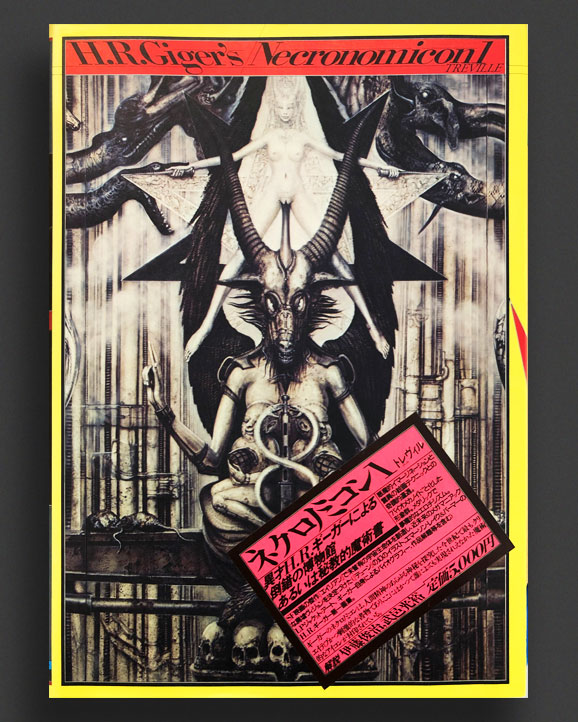
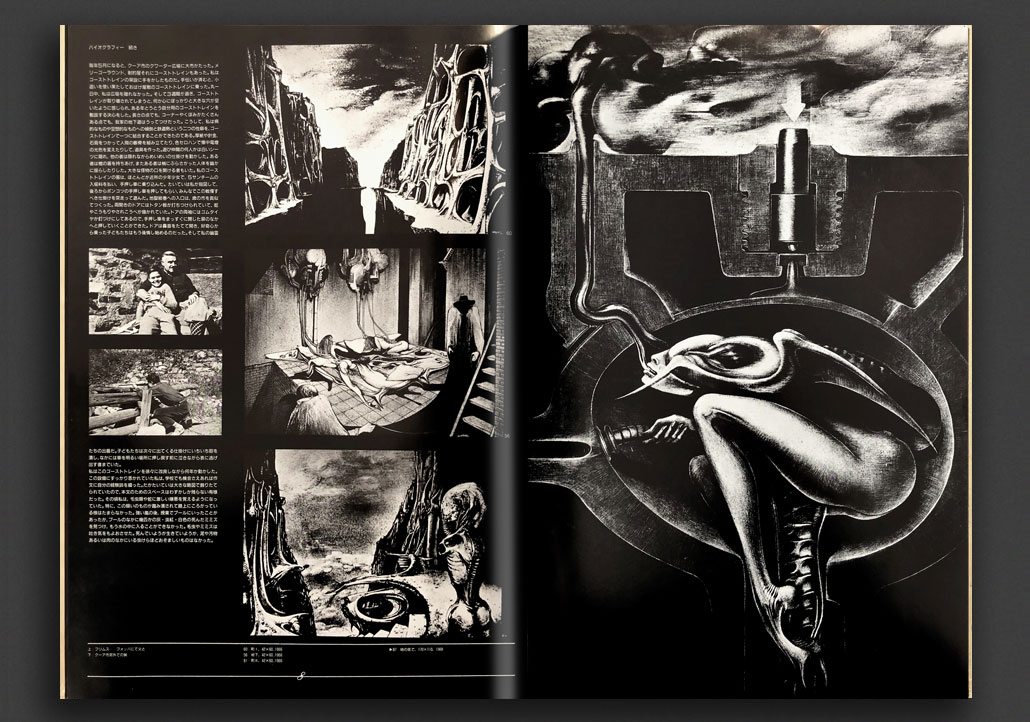
First Japanese edition of H.R. Giger's Necronomicon from 1984. Beginning with a hommage from Salvador Dali and introduction by Clive Baker, the first in this series of oversized and visually overwhelming Giger-designed volumes takes us through the early history of one of the most brilliant fantasy artists of the century. From his "Passegen" series, his work for theatre, posters, album artwork, environments, personal works, is designs for Alejandro Jodorowsky's DUNE, and much more, all beautifully reproduced in full-colour and black and white, full-bleed spreads, including fold-out pages. These Giger folio books have become very desirable, collectable editions in their various printings around the world, the series encompassing the work of one of the world's most unique and influential visionaries of the macabre. This is volume 1 of 2 of "HR Giger's Necronomicon" where Al Azred's legendary magical book of the most wonderful abominations and perversions, "Necronomicon" (made infamous in the pages of HP Lovecraft's "Cthulhu" mythology), becomes a visual reality!
With an introduction by Clive Baker and numerous texts by HR Giger as well as texts by Fritz Billeter and Simon Vinkenoog and a tribute from Salvador Dali. Note: Japanese language edition.
First Japanese edition, published by Treville, Tokyo, in 1984. Very good copy throughout with Very Good dust jacket. Some edge wear with fragile, oversized edition.
1987, Japanese
Softcover (w. dust jacket), 98 pages (w. fold-outs), 42 x 30 cm
1st Edition, Out of print title / used / very good
Published by
Treville / Tokyo
$180.00 - Out of stock
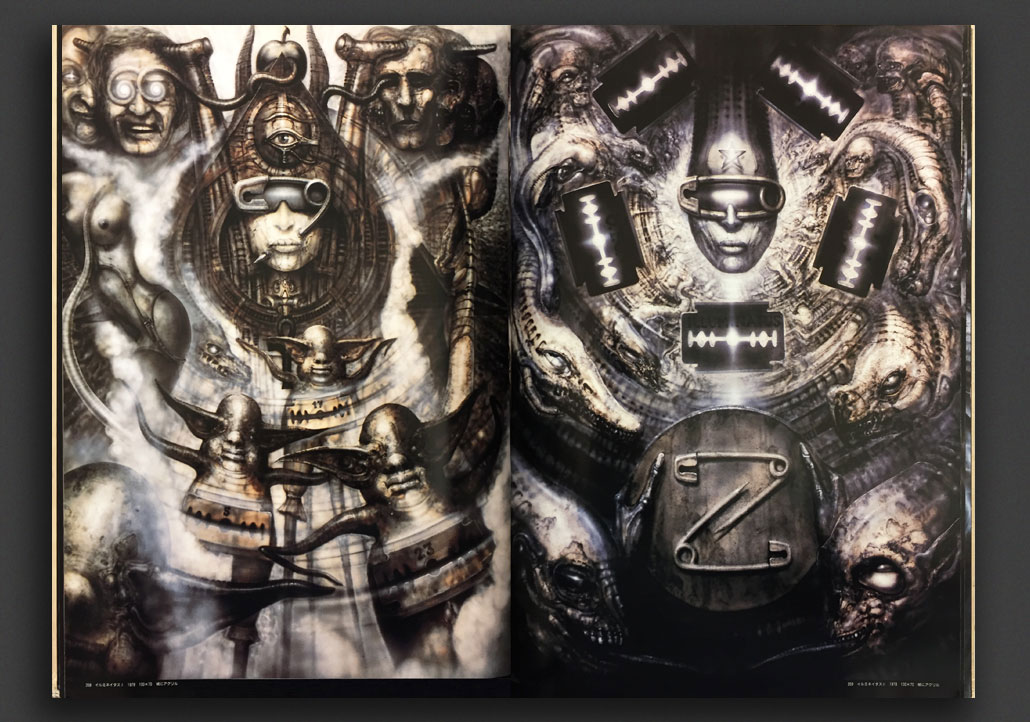
First Japanese edition of H.R. Giger's Necronomicon II, the second oversized and visually overwhelming Giger-designed collection that takes us further through the incredible history of one of the most brilliant fantasy artists of the century. Reproducing Giger's award-winning work for the film ALIEN, his paintings, environments, sculptural works, his work for never shot film "The Tourist", collaborations with Blondie's Debbie Harry, his "New York City" series from the late 1970's and much more, all beautifully reproduced in full-colour and black and white, full-bleed spreads, including fold-out pages. Also includes interviews, texts, biography. These Giger folio books have become very desirable, collectable editions in their various printings around the world, the series encompassing the work of one of the world's most unique and influential visionaries of the macabre. This is volume 2 of 2 of "HR Giger's Necronomicon" where Al Azred's legendary magical book of the most wonderful abominations and perversions, "Necronomicon" (made infamous in the pages of HP Lovecraft's "Cthulhu" mythology), becomes a visual reality!
First Japanese edition, published by Treville, Tokyo, in 1987. Very good copy throughout with Very Good dust jacket. Some light wear to over-sized book.
1999, English
Softcover (w. dust jacket), 304 pages, 29.2 x 25.5 cm
1st Edition, Out of print title / used / good
Published by
Phaidon / London
$120.00 - In stock -
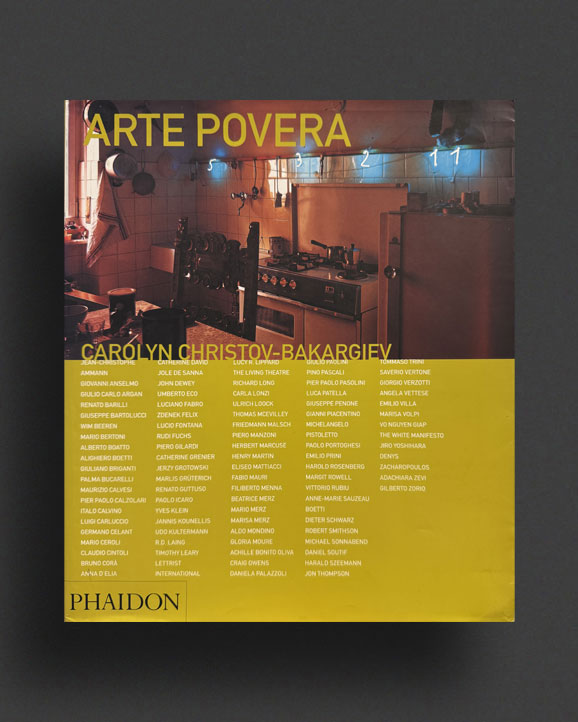
First 1999 edition of Arte Povera, the most complete overview of this movement ever published, edited by one of the world's foremost authorities on the subject.
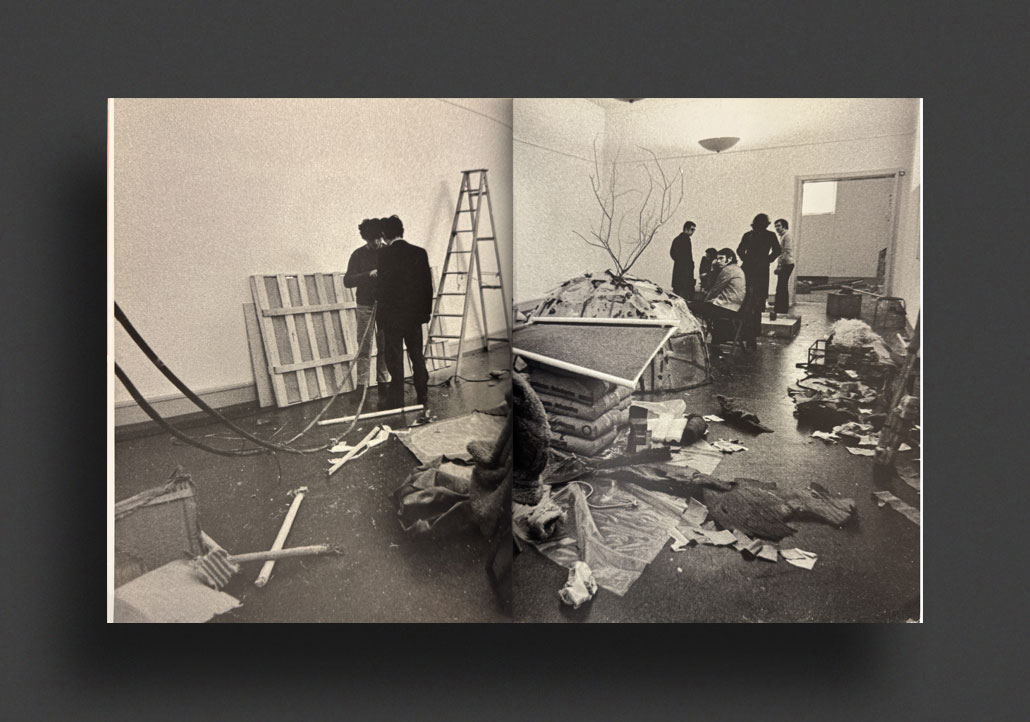
Arte Povera is Italy's most important and influential post-war art movement. Originally championed by the leading art critic Germano Celant, it included internationally recognized artists such as Alighiero Boetti, Jannis Kounellis, Mario and Marisa Merz and Michelangelo Pistoletto. Edited by one of the world's foremost authorities on the subject, this book is the most complete overview of the artworks and writings associated with Arte Povera, an art movement that explored the relation between art and life, made manifest through natural materials and human artifacts, and experienced through the body.
"This is now the definitive English-language sourcebook on Merz, Pistoletto, Paolini and company, thanks to its rich selection of images and texts."―Bookforum
"Get hold of Arte Povera... It is both compendium and critique, with artists' statements, a chronology and commentary. It contextualizes the work, and the pictures are great."―Adrian Searle, Guardian
Carolyn Christov-Bakargiev is a writer and curator living in Rome, who has become an internationally recognized scholar of late twentieth-century Italian art. She has written extensively on the Arte Povera movement and published interviews and texts on artists such as Boetti, Pistoletto, Merz, Fabro and Kounellis. Bakargiev is also a noted curator of contemporary art internationally: her exhibitions include 'Molteplici Culture', Rome, 1992 and a homage to John Cage which she co-curated with Alanna Heiss for the 1993 Venice Biennale.
She was part of the curatorial team for the 'Antwerp 93 European Capital of Culture', devising the major international survey, 'On Taking a Normal Situation and Re-translating it into Overlapping and Multiple Readings of Conditions Past and Present'. In 1996 Bakargiev curated a large-scale survey on Italian post-war artist Alberto Burri in Rome, Brussels and Munich. In 1997, she curated 'Citta-Natura': a city-wide exhibition of international artists including Anselmo, Mario Merz, Marisa Merz, Pascali and Kounellis, held in Rome.
She is Chief Curator at the Castello di Rivoli, Turin, and was formerly Senior Curator at P.S.1 Contemporary Art Center, New York. She was co-curator, with Iwona Blazwick, of Faces in the Crowd: Picturing Modern Life from Manet to Today , Whitechapel Art Gallery, London, and Castello di Rivoli, Turin, 2004 5.
Good copy with some corner knocking, small tear to top of spine dust jacket, otherwise very good throughout.
1974, English
Hardcover (w. dust jacket), 216 pages, 21 x 16 cm
1st Edition, Out of print title / used / very good
Published by
Thames and Hudson / London
$30.00 - Out of stock
First HC Edition.
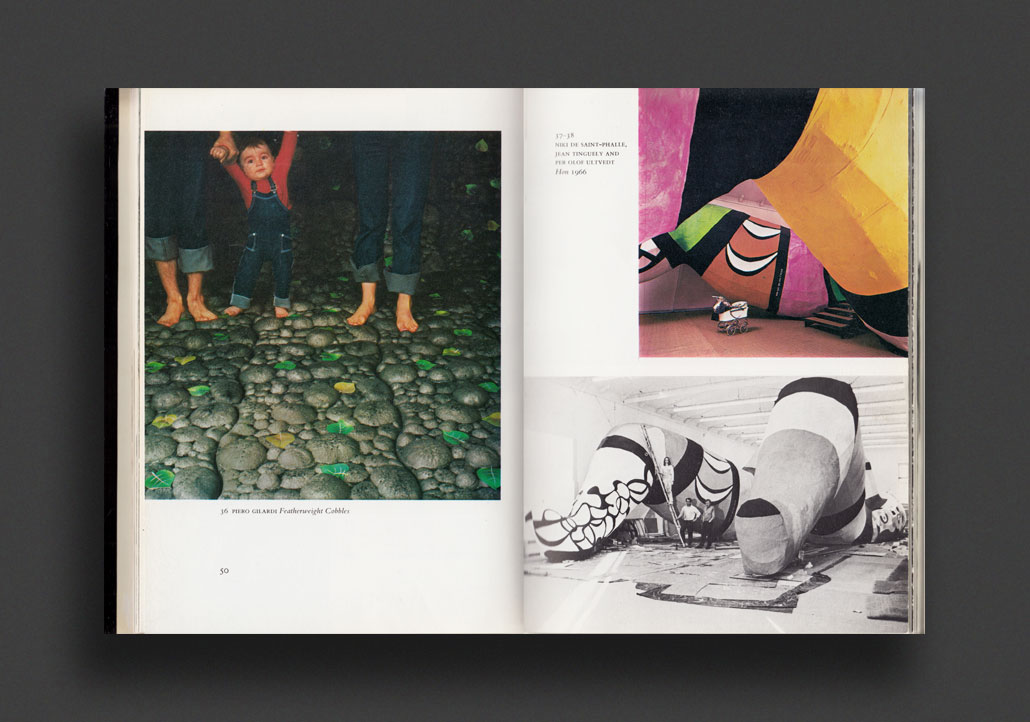
Environments and Happenings by painter and poet Adrian Henri, published by Thames & Hudson in 1974, forms one of the first mainstream book surveys to trace the phenomenon of environmental/performative/total living artworks that became prevalent in the 1960s/70s. This historical study is profusely illustrated in colour and b/w with many international works from Fluxus to Zero to Dolle Mina to Nouveau Réalisme to Provo to Gutai to The Situationists and much more. Includes the works of Joseph Beuys, Clarence Schmidt, Ray Johnson, Öyvind Fahlström, Paul Thek, Yves Klein, Allan Kaprow, Hans Haacke, Kurt Schwitters, Marcel Duchamp, Guerllia Art Action Group, Daniel Spoerri, Wolf Vostell, Gustav Metzger, Peter Kuttner, Jackson Pollock, Alison Knowles, Dick Higgins, Robert Morris, Situationist International, Ferdinand Kriwet, Klaus Rinke, Duane Hanson, A-Yo, Meret Oppenheim, Space Structure Workshop, Ferdinand Cheval, Dolle Mina (Mad Mina), Robert Smithson, Jeff Nuttall, Stefan Wewerka, Christo, Dennis Oppenheim, Vladimir Tatlin, Provo, Barry Flanagan, Andy Warhol, Meredith Monk, Atsuko Tanaka, Kazuo Shiraga, Ed Keinholz, Yayoi Kusama, Piero Gilardi, Niki de Saint-Phalle, Jean Tinguely, Claes Oldenburg, Les Levine, James Rosenquist, Red Grooms, Tom Wesselmann, George Segal, Eduardo Paolozzi, and many many more. Includes reproductions of performance scripts, partial chronology, etc.
Very Good copy in Good DJ some light wear, price-clipping to inner.
1975, English
Softcover, 64 pages, 18 x 11.5 cm
1st Edition, Out of print title / used / good
Published by
Thames and Hudson / London
$15.00 - In stock -
1975, profusely illustrated pocket-book survey of the many strands of contemporary art which have emerged since the appearance of Pop culture.
"Art after Pop, if not exactly uncharted territory, is only now beginning to turn into art history. This book sets out to disentangle the many strands which have appeared since Pop started the cult of cool in art. The Pop artists proved that figuration was not dead; and their Photo-Realist successors have carried the icy gloss finish to its limits. The Abstract Expressionists, too, have had successors, who proved that abstraction was not dead either; these were the Hard Edge artists, whose rejection of illusion was part of the trend towards the reduction of form and content to a minimum. With Minimal Art many people expected painting and sculpture to disappear altogether; this has not happened, but they have been joined by a number of would-be successors: Environments, Actions, Land art, photographic records, printed definitions, Conceptual art. The contact with popular culture, with the Rock underground, even with cybernetics and academic philosophy, has changed the physical appearance of art without changing the art world - and without diminishing the resources of creativity which mankind still puts into art."
John A. Walker is a critic of contemporary art and the author of a glossary of twentieth-century art terms.
Good—VG copy, general light wear/tanning/marking, previous owner's name to title page.
2021, Japanese / English
Hardcover (with obi), 368 pages, 20 x 30 cm
Published by
Toyota Municipal Museum of Art / Aichi
$130.00 - Out of stock
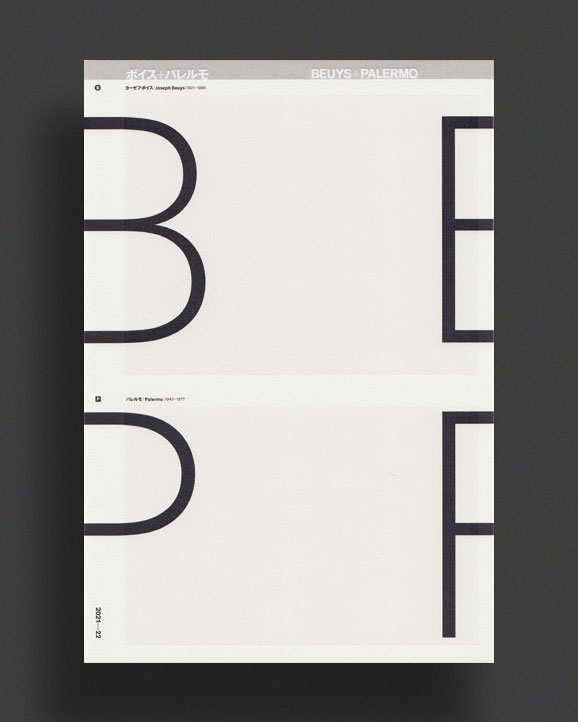
Beautiful hardcover catalogue published in Japan to the exhibition Beuys + Palermo touring three venues across Japan in 2021.
Joseph Beuys and Blinky Palermo were from different generations, but both experienced WWII and the postwar reconstruction, as teacher and pupil. One of the most important artists since World War II, Joseph Beuys (1921–1986) asserted that true capital lies in the creativity of human beings, and viewing the whole of society as sculpture, set out to change it. Beuys is also known for his role in nurturing numerous artists in his capacity as an educator. One such pupil was Blinky Palermo (1943–1977). The modest abstract works that form the legacy of this painter active for just a short few years from the mid-1960s up to his early demise, were an attempt to quietly overturn our perceptions, and social systems, via the visceral experience of color and form, all the while reconstructing the compositional elements of painting. The works of these two superficially contrasting German artists were alike in that both Beuys and Palermo endeavored to restore art to the status of a raw, live endeavor, Beuys indeed later acknowledging his former student to be the artist closest to himself. Composed primarily of works from the 1960s and ‘70s, documentation from the period and detailed texts, “Beuys + Palermo” explores the features of each of these two artists, while simultaneously searching for the latent power of their praxis in their involvement and overlap with each other.
2014, English
Hardcover (w. dust jacket), 256 pages, 17 x 15 cm
1st Edition, Out of print title / used / very good
Published by
Parkstone International / New York
$20.00 - In stock -
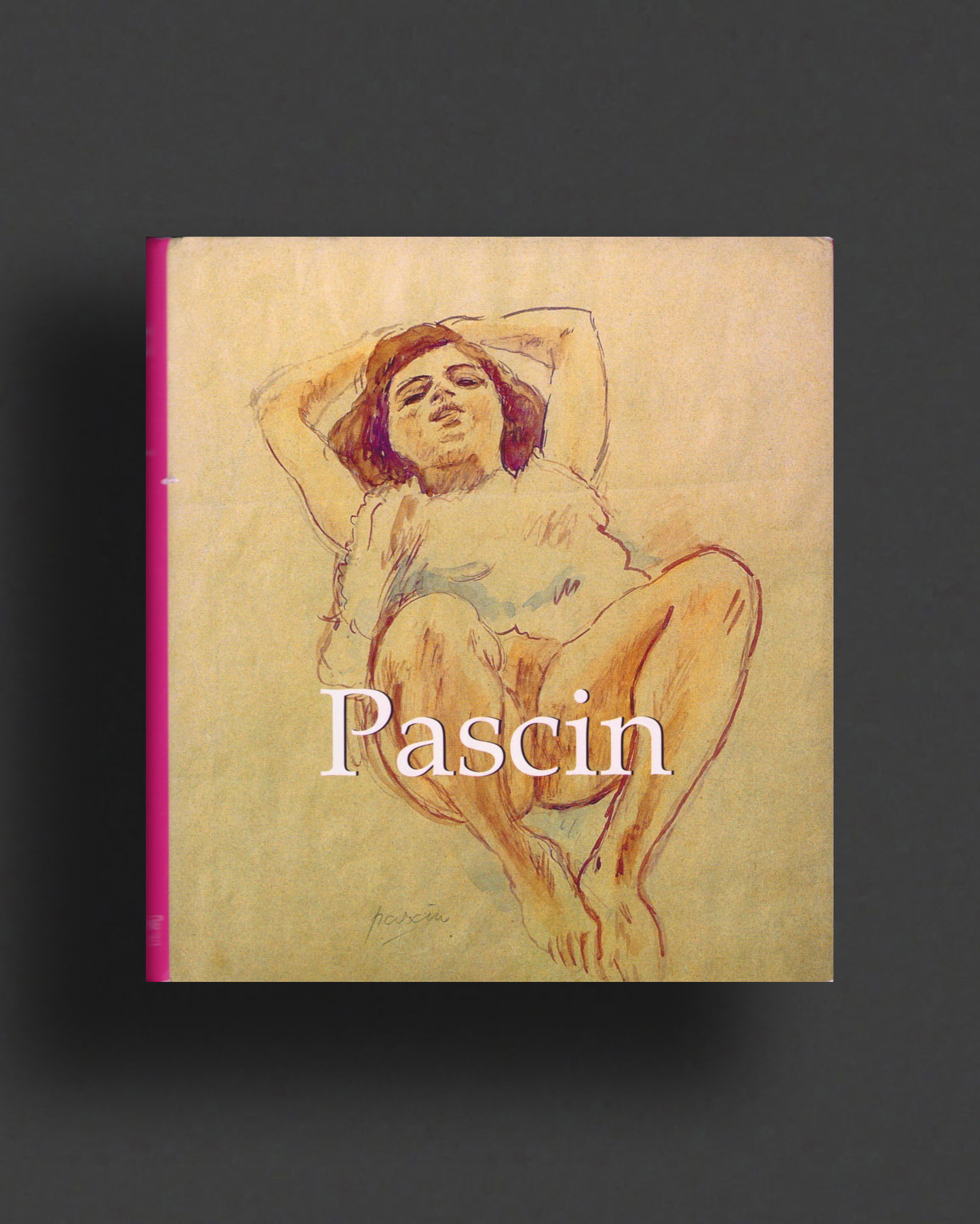
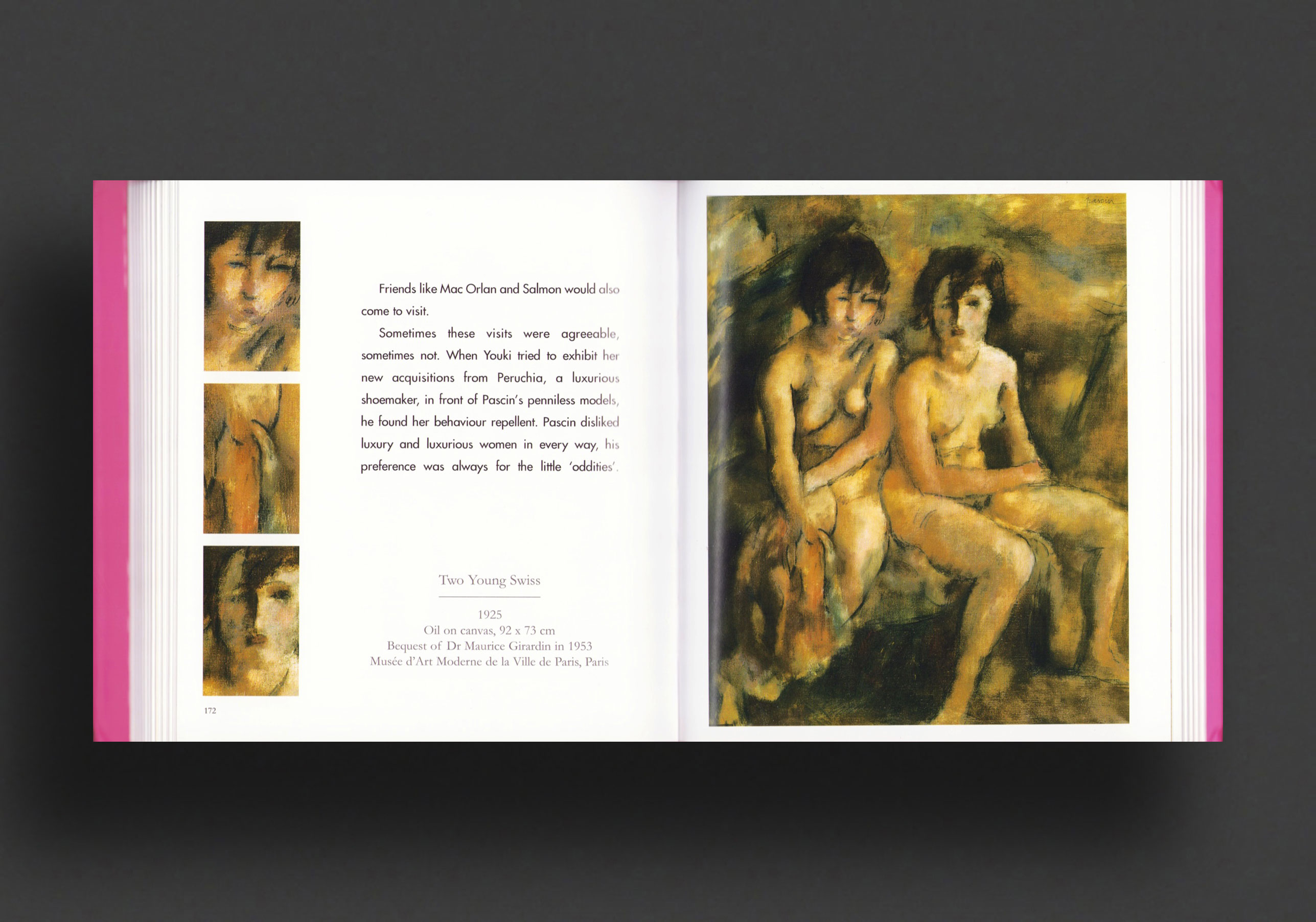
Julius Mordecai Pincas (1885–1930), known as Pascin, Jules Pascin, also known as the "Prince of Montparnasse", was a Bulgarian artist of the School of Paris, known for his paintings and drawings. His canvases are as turbulent as his “bad boy” lifestyle; full of parties and places the affluent patronize but never mention in polite society – those brothels and cabarets where scantily clad ladies hosted the pillars of society. His most frequent subject was women, depicted in casual poses, usually nude or partly dressed. Pascin set out on a wild and adventurous journey, studying in Vienna, Munich, then to Berlin before settling down in Paris in 1905 and painting under the name of Pascin. Over 1907 to 1930, Pascin exhibited in Berlin, Paris, and New York at fairs such as the 1911 Berlin Secession in 1911 and the 1913 Indepéndants and Autumn salons as well as at Bernheim and other leading private galleries. His experience as a satirical draftsman and his knowledge of German expressionism are evident in his early works, where some portraits evoke Otto Dix or Grosz with a less incisive and less cruel touch. He quickly evolved towards pastel-like, almost unreal colours that he skillfully harmonized with the theme of the female body, the center of his production. Among the painters of the School of Paris, Pascin's art noted itself with the imposition of expressive truth and melancholic gentleness. He painted with indulgence the underworld "of the girls," using a pearly touch, light with iridescent colors, in shades of gray, pink, ocher, and violet-blue. The languid bodies with softened forms exuded a heavy scent of eroticism. These women, captured in their intimacy, are, in fact, the mirror of Pascin's existential malaise. He spent most of his time travelling across Algeria, Cuba, Portugal, Spain, Tunisia, and the American South where he gained citizenship in 1920. After years of struggling with depression and alcoholism, he slit his wrists and hanged himself in his studio in Montmartre on June 2, 1930, only a year before major retrospective exhibitions of his works in New York and Paris. He left a message written in blood on the wall to his mistress Lucy Krohg.
Pascin was as brilliant at the easel as the drawing board but was all too easily overlooked, perhaps because he lived in the shadow of contemporaries Picasso, Modigliani, and many more.
VG copy with slight cocking to block, wear to DJ edges.
1990, French
Softcover (w. dust jacket), 288 pages, 24 x 21 cm
1st Edition, Out of print title / used / very good
Published by
Centre National Des Arts Plastiques / Paris
$200.00 - Out of stock
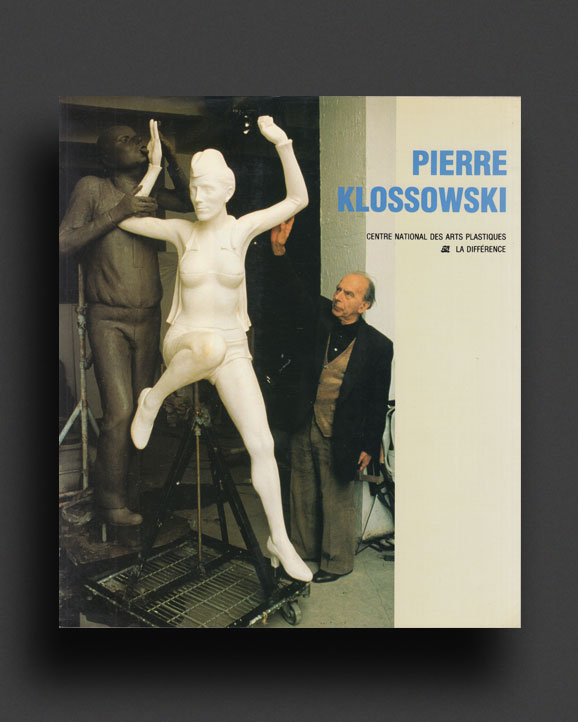
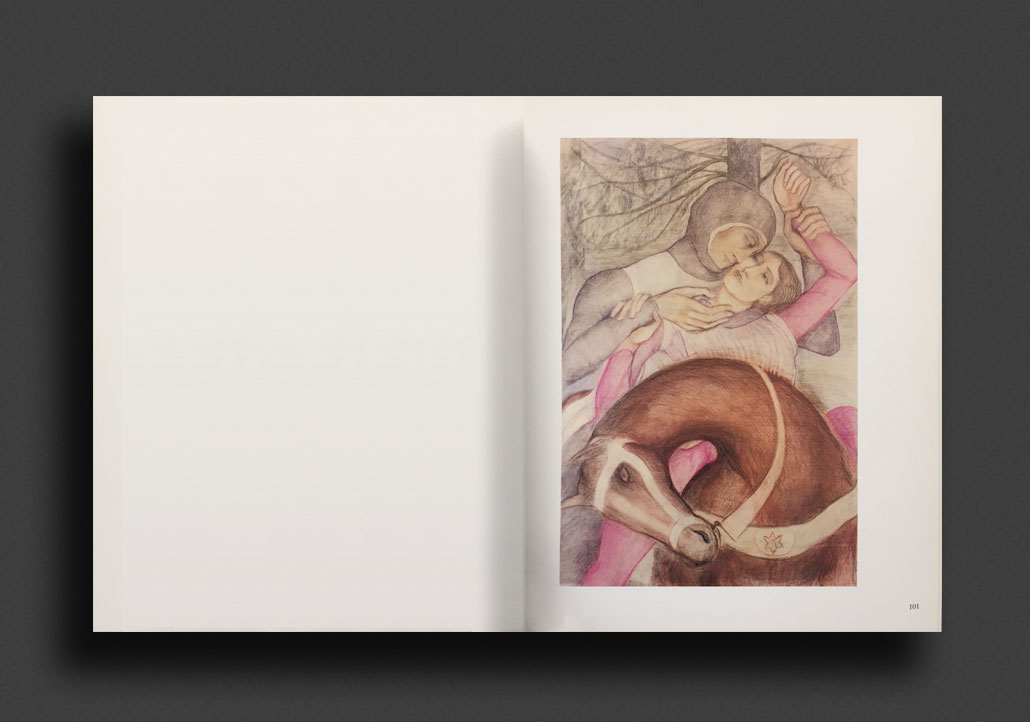
First edition of the comprehensive Pierre Klossowski catalogue raisonné published on the occasion of the major retrospective exhibition of his work held in Paris in 1990-1991 at CNAP. Profusely illustrated in colour and b/w with Klossowski's wonderful works, texts throughout by Catherine Grenier, Bernard Blistene, Claude Ritschard, Pascal Bonitzer, Marie-Dominique Wicker, Franco Cagnetta, André Masson, and Pierre Zucca (in French), a densely illustrated catalogue raisonné spanning his work dated 1952/53 through to 1990 (many not seen elsewhere), biography, exhibition history, and much more. Still the most in-depth book on Klossowski's oeuvre to date.
Pierre Klossowski (1905-2001) was a significant and influential philosopher, writer, translator and artist who befriended Georges Bataille and formulated an original stance on many theological issues, as well as the philosophy of the Marquis de Sade. His first novel, Roberte, ce soir, appeared in 1954 as a limited edition containing six of his own erotic illustrations, after he rejected drawings by his younger brother, the painter Balthus. Following the encouragement of Robert Lebel, Andre Masson and Alberto Giacometti, Klossowski held his first exhibition in Paris in 1956, and subsequently produced numerous life-size drawings of erotic scenes imbued with mythological, allegorical and philosophical connotations. By the 1970s, he had won the acclaim of such eminent thinkers as Maurice Blanchot, Michel Butor, Gilles Deleuze, Michel Foucault and Felix Guattari. Of Klossowski, Gilles Deleuze once said, "That bodies speak has been known for a long time."
Very Good in Very Good dust jacket.