World Food Books' programme is largely produced on Kulin Nation land. We acknowledge the Wurundjeri people of the Kulin Nation as the first and continuing custodians of this land, and pay respect to their Elders past, present, and emerging.
World Food Books is an arts and special interests bookshop in Naarm / Melbourne. Founded in 2010, World Food Books is devoted to the presentation of a rotating, hand-selection of international art, design, literary and counterculture publications with an emphasis on the anti-traditional, the experimental, the avant-garde, the heretic, the marginal.
Presenting new titles alongside rare and out-of-print books, catalogues and journals spanning the fields of modern and contemporary art, design, photography, illustration, film, literature, poetry, cultural theory, philosophy, sexuality, popular and underground culture in its many radical forms, World Food Books wishes to encourage adventurous, thoughtful and open-minded reading, looking, writing, and exchange of publishing and ideas, both current and historical.
As well as our bookshop, located in Melbourne's historical Nicholas Building, all of our inventory is available internationally via our online mail-order service.
World Food Books semi-regularly co-ordinates "Occasions", a programme of exhibits and events at the bookshop and in partnership with other hosts (such as museums and art galleries) that develop out of the activities, relationships and content of the bookshop itself.
World Food Books
The Nicholas Building
37 Swanston Street
Room 5, Level 6
Melbourne 3000
Australia
SHOP HOURS:
Thu–Fri 12–6, Sat 12–5
WEB-SHOP OPEN 24/7
World Food Books
Postal Address:
PO Box 435
Flinders Lane
Victoria 8009
Australia
Art
Theory / Essay
Architecture / Interior
Graphic Design / Typography
Photography
Fashion
Eros
LGBTQ+
Fiction / Poetry
Weird / Speculative / Science Fiction / Horror
Transgressive / Visceral / Abject
Symbolism / Decadence / Fin de siècle
Film / Video
Painting
Sculpture / Installation
Performance / Dance / Theater
Drawing
Sound / Music
Curatorial
Group Shows / Collections
Periodicals
Out-of-print / Rare
Posters / Ephemera / Discs
Signed Books
World Food Books Gift Voucher
World Food Book Bag
Australian Art
Australian Fiction
Australian Science Fiction / Speculative Fiction
Australian Poetry
Australian Photography
Japanese Photography
Conceptual Art
Minimal Art
Dada
'Pataphysics / Oulipo
Fluxus
Concrete Poetry
Pop Art
Surrealism
Arte Povera
Arte Informale / Haute Pâte / Tachism
Nouveau Réalisme / Zero / Kinetic
Situationism / Lettrism
Collage / Mail Art / Xerox Art
Art Brut / Folk / Visionary / Fantastic
Illustration / Graphic Art / Bandes Dessinées
Furniture
Italian Radical Design / Postmodernism
Textiles
Ceramics / Glass
Counterculture
Protest / Revolt
Philosophy
Psychoanalysis
Anthropology
Anarchism
Socialism / Anarchism / Communism / Capitalism
Literary Theory / Semiotics / Language
Feminism / Women's Studies
Gender Studies / Sexuality
Anthropology
Fetishism / BDSM
Drugs / Psychedelia
Crime / Violence
Animal Rights / Veganism
Occult / Esoterica
Ecology / Earth / Alternative Living
Whole Earth / Crafts
All prices in AUD (Australian dollars)
Pick-Ups
Pick-up orders can be collected in our bookshop during opening hours after order date. Please collect any Pick-up orders within 2 weeks of ordering as we have limited storage space. Orders will be released back into stock if not collected within this time. No refunds can be made for pick-ups left un-collected. If you cannot make it in to the bookshop in this time-frame, please choose postage option.
Return Policy
All sales are final. We do accept returns (for refund or exchange) for items received in error. All our orders are packed with special care using heavy-duty padding and cardboard book-mailers or bubble mailers (for smaller books), using reinforcement where required. We cannot take responsibility for any lost, stolen or damaged parcels.
Insurance
Should you wish to insure your package, please email us directly after placing your order and we can organise this at a small extra expense. Although all standard/express tracked packages are very safe and dependable, we cannot take responsibility for any lost, stolen or damaged parcels. We recommend insurance on valuable orders.
Interested in selling your old books, catalogues, journals, magazines, comics, fanzines, ephemera? We are always looking for interesting, unusual and out-of-print books to buy. We only buy books in our fields of interest and specialty, and that we feel we can resell.
We base these prices on desirability, market value, in-print prices, condition and our current stock levels. We offer cash, store credit, and can take stock on consignment. All
about 25% of the price we expect to get when we sell them, or 30% in store credit. We base these prices on desirability, market value, in-print prices, condition and our current stock levels.
Sell your books any day of the week. You can drop them off and return later. If you have a lot of books, we can visit your Sydney home.
We buy books that we feel we can resell. We offer about 25 % of the price we expect to get when we sell them, or 30% in store credit. We base these prices on desirability, market value, in-print prices, condition and our current stock levels.
Philadelphia Wireman
03 August - 01 September, 2018
World Food Books is proud to announce our next Occasion, the first presentation of sculptures by Philadelphia Wireman in Australia.
The Philadelphia Wireman sculptures were found abandoned in an alley off Philadelphia’s South Street on trash night in 1982. Their discovery in a rapidly-changing neighbourhood undergoing extensive renovation, compounded with the failure of all attempts to locate the artist, suggests that the works may have been discarded after the maker’s death. Dubbed the "Philadelphia Wireman" during the first exhibition of this work, in 1985, the maker’s name, age, ethnicity, and even gender remain uncertain. The entire collection totals approximately 1200 pieces, all intricately bound together with tightly-wound heavy-gauge wire (along with a few small, abstract marker drawings, reminiscent both of Mark Tobey and J.B. Murry). The dense construction of the work, despite a modest range of scale and materials, is singularly obsessive and disciplined in design: a wire armature or exoskeleton firmly binds a bricolage of found objects including plastic, glass, food packaging, umbrella parts, tape, rubber, batteries, pens, leather, reflectors, nuts and bolts, nails, foil, coins, toys, watches, eyeglasses, tools, and jewellery.
Heavy with associations—anthropomorphic, zoomorphic, and socio-cultural responses to wrapped detritus—the totemic sculptures by Philadelphia Wireman have been discussed in the context of work created to fulfil the shamanistic needs of alternative religions in American culture. Curators, collectors, and critics have variously compared certain pieces to sculpture from Classical antiquity, Native American medicine bundles, African-American memory jugs, and African fetish objects. Reflecting the artist’s prolific and incredibly focused scavenging impulse, and despite—or perhaps enhanced by—their anonymity, these enigmatic objects function as urban artefacts and arbiters of power, though their origin and purpose is unknown. Philadelphia Wireman, whatever their identity, possessed an astonishing ability to isolate and communicate the concepts of power and energy through the selection and transformation of ordinary materials. Over the course of the past two decades, this collection has come to be regarded as an important discovery in the field of self-taught art and vernacular art.
Presented in collaboration with Fleisher-Ollman Gallery, Philadelphia, and Robert Heald, Wellington.
Susan Te Kahurangi King
02 February - 10 March, 2018
Susan Te Kahurangi King (24 February 1951 - ) has been a confident and prolific artist since she was a young child, drawing with readily available materials - pencils, ballpoint pens and felt-tip markers, on whatever paper is at hand. Between the ages of four and six Susan slowly ceased verbal communication. Her grandparents William and Myrtle Murphy had developed a special bond with Susan so they took on caring responsibilities for extended periods. Myrtle began informally archiving her work, carefully collecting and storing the drawings and compiling scrapbooks. No drawing was insignificant; every scrap of paper was kept. The King family are now the custodians of a vast collection containing over 7000 individual works, from tiny scraps of paper through to 5 meter long rolls.
The scrapbooks and diaries reveal Myrtle to be a woman of great patience and compassion, seeking to understand a child who was not always behaving as expected. She encouraged Susan to be observant, to explore her environment and absorb all the sights and sounds. Myrtle would show Susan’s drawings to friends and people in her community that she had dealings with, such as shopkeepers and postal workers, but this was not simply a case of a grandmother’s bias. She recognised that Susan had developed a sophisticated and unique visual language and sincerely believed that her art deserved serious attention.
This was an unorthodox attitude for the time. To provide some context, Jean Dubuffet coined the term Art Brut in 1945 to describe work created by self-taught artists – specifically residents of psychiatric institutions and those he considered to be visionaries or eccentrics. In 1972 Roger Cardinal extended this concept by adopting the term Outsider Art to describe work made by non-academically trained artists operating outside of mainstream art networks through choice or circumstance. Susan was born in Te Aroha, New Zealand in 1951, far from the artistic hubs of Paris and London that Dubuffet and Cardinal operated in. That Myrtle fêted Susan as a self-taught artist who deserved to be taken seriously shows how progressive her attitudes were.
Susan’s parents Doug and Dawn were also progressive. Over the years they had consulted numerous health practitioners about Susan’s condition, as the medical establishment could not provide an explanation as to why she had lapsed into silence. Dawn educated herself in the field of homeopathy and went on to treat all twelve of her children using these principles – basing prescriptions on her observations of their physical, mental and emotional state.
Doug was a linguist with an interest in philosophy who devoted what little spare time he had to studying Maori language and culture. To some extent their willingness to explore the fringes of the mainstream made them outsiders too but it was their commitment to living with integrity and their respect for individuality that ensured Susan’s creativity was always encouraged.
Even though Susan’s family supported her artistic pursuits, some staff in schools and hospitals saw it as an impediment to her assimilation into the community and discouraged it in a variety of ways. Her family was not always aware of this and therefore did not fully understand why Susan stopped drawing in the early 1990s. However, rather than dwell on the challenges that Susan faced in pursuit of her artistic practice, they prefer to highlight her achievements. In 2008 Susan began drawing again in earnest, after an almost 20 year interruption, and her work is now shown in galleries around the world.
Susan grew up without television and has been heavily influenced by the comics she read as a child. She is absolutely fearless in the appropriation of recognizable characters, such as Donald Duck and Mickey Mouse, in her work. She twists their limbs, contorts their faces, compresses them together, blends them into complex patterned backgrounds - always imbuing them with an incredible energy. Although Susan often used pop culture characters in her work they are not naive or childlike. These are drawings by a brilliant self-taught artist who has been creating exceptional work for decades without an audience in mind.
Mladen Stilinović
"Various Works 1986 - 1999"
02 February 16 - September 10, 2016
Various works 1986 - 1999, from two houses, from the collections of John Nixon, Sue Cramer, Kerrie Poliness, Peter Haffenden and Phoebe Haffenden.
Including: Geometry of Cakes (various shelves), 1993; Poor People’s Law (black and white plate), 1993; White Absence (glasses, ruler, set square, silver spoon, silver ladel with skin photograph and wooden cubes), 1990-1996; Exploitation of the Dead (grey and red star painting, wooden painting, black spoon with red table, red plate), 1984-1990; Money and Zeros (zero tie, paintings made for friends in Australia (Sue, John, Kerrie), numbers painting), 1991-1992; Words - Slogans (various t-shirts) - “they talk about the death of art...help! someone is trying to kill me”, “my sweet little lamb”, “work is a disease - Karl Marx”; Various artist books, catalogues, monographs, videos; Poster from exhibition Insulting Anarchy; "Circular" Croatian - Australian edition; Artist book by Vlado Martek (Dostoyevsky); more.
Thanks to Mladen Stilinović and Branka Stipančić.
Jonathan Walker
Always Will Need To Wear Winter Shirt Blue + Ochre Small Check Pattern
21 August - 21 September, 2015
Untitled
I am not a great reader of poetry but I always return to the work of Melbourne poet, Vincent Buckley (1925- 1988). Perhaps I find his most tantalising piece to be not a finished poem but a fragment left on a scrap of paper discovered on his desk after the poet’s death.
The poetry gathers like oil
In the word-core, and spreads
It has its music meet,
Its music is in movement.
This fragment is more the shell left behind from a volatile thought than a finished poem. I find the last two lines honest but awkward whereas the first two lines work like an arrow. Most likely he could not find a resolution so it was left. Still, in its present form, it remains an eloquent testimony to the ultimate failure of a medium to express mobile thought and sensation, in Buckley’s case, through verbal language. It’s an important matter because this is something all artists have to deal with regardless of the medium.
I have never written a poem, however, I am forever copying fragments from books on paper scraps in a vain effort to fix certain notions in my head. At first, they function as bookmarks that are sometimes returned to when I open the book. But before long, as they accumulate, they fall out littering the table interspersed with A4 photocopies, bills, books and medications.
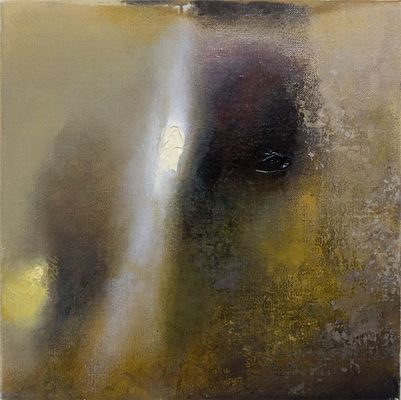
To return to Buckley’s fragment, the first two lines very much evoke how I paint nowadays. As you age, detail diminishes and patches of light become more luminous and float. I feel the most honest way of dealing with this is by smearing the oil paint on the canvas with the fingers and working close-up, blind. Only if the patches coalesce into an approaching image can the work gain a life.
-
Jonathan Walker was born in Melbourne, Australia and brought up on a dairy farm in Gippsland. In the 1970’s he studied painting at RMIT and won the Harold Wright Scholarship to the British Museum, London. During the 1980’s he exhibited at Pinacotheca Gallery, Richmond and had work shown at the NGV and Heidi City Art Gallery. Over the same period he designed the cover for the “Epigenesi” LP by Giancarlo Toniutti, Italy and conducted a mail exchange work with Achim Wollscheid, Germany. The work with artists through the post resulted in an article published in the bicentenary issue of Art and Australia 1988. He showed in artist run spaces such as WestSpace in the 90’s and 2000’s, and until 2012, taught painting at Victoria University, which is where we (Colleen Ahern and Lisa Radford) as organisers of the exhibition, among many others, had the privilege of being his student.
Walker’s knowledge was imparted to students through the careful selection of music, literature, and artists found in books that he himself had ordered for the library. Walker’s strategy was the generosity of sharing his vast knowledge with references specific to each student and their context.
Walker’s paintings share a similar focus and intimacy.
This exhibition presents a small selection of recent paintings alongside a publication that includes Walker’s writing. Observational and analytical, Walker’s work is a type of material notation — the time of day, colour and how it is blended, the both specific and fleeting location of a reflection on lino or the question of whether a chair leg should be included in a painting.
Please join us on Friday August 21 between 6-8pm to celebrate the opening of the exhibition.
Curated by Colleen Ahern and Lisa Radford.
B. Wurtz
Curated by Nic Tammens
March 26 - April 4, 2015
B.Wurtz works from a basement studio in his home on Manhattan’s Lower East Side.
This local fact is attested to by the plastic shopping bags and newsprint circulars that appear in his work. As formal objects, they don’t make loud claims about their origins but nonetheless transmit street addresses and places of business from the bottom of this long thin island. Like plenty of artists, Wurtz is affected by what is local and what is consumed. His work is underpinned by this ethic. It often speaks from a neighborhood or reads like the contents of a hamper:
“BLACK PLUMS $1.29 lb.”
“Food Bazaar”
“USDA Whole Pork Shoulder Picnic 99c lb.”
“RITE AID Pharmacy, with us it’s personal.”
“H. Brickman & Sons.”
“Sweet Yams 59c lb."
Most of the work in this exhibition was made while the artist was in residence at Dieu Donne, a workshop dedicated to paper craft in Midtown. Here Wurtz fabricated assemblages with paper and objects that are relatively lightweight, with the intention that they would be easily transportable to Australia. This consideration isn’t absolute in Wurtz’s work, but was prescriptive for making the current exhibition light and cheap. Packed in two boxes, these works were sent from a USPS post office on the Lower East Side and delivered to North Melbourne by Australia Post.
Wurtz appears courtesy of Metro Pictures, New York.
Thanks to Rob Halverson, Joshua Petherick, Sari de Mallory, Matt Hinkley, Helen Johnson, Fayen d'Evie, Ask Kilmartin, Lisa Radon, Ellena Savage, Yale Union, and "Elizabeth".
John Nixon
"Archive"
December 15 - January 20, 2014
The presentation of John Nixon's archive offered a rare showcase of this extensive collection of the artist's own publications, catalogues, posters, ephemera, editions and more, from the mid 1980s onwards, alongside a selection of his artworks.
Organized by John Nixon, Joshua Petherick and Matt Hinkley.
<a href=http://wfb.public-office.info/artist/john-nixon>All titles by John Nixon
"Habitat"
at Minerva, Sydney (organised by Joshua Petherick and Matt Hinkley)
November 15 - December 20, 2014
Lupo Borgonovo, Janet Burchill & Jennifer McCamley,
Lewis Fidock, HR Giger, Piero Gilardi, Veit Laurent Kurz,
Cinzia Ruggeri, Michael E. Smith, Lucie Stahl, Daniel Weil, Wols
Press Release:
“...It contained seven objects. The slender fluted bone, surely formed for flight, surely from the wing of some large bird. Three archaic circuitboards, faced with mazes of gold. A smooth white sphere of baked clay. An age-blackened fragment of lace. A fingerlength segment of what she assumed was bone from a human wrist, grayish white, inset smoothly with the silicon shaft of a small instrument that must once have ridden flush with the surface of the skin - but the thing’s face was seared and blackened.”
William Gibson, “Count Zero”, 1986
"Autumn Projects Archive"
Curated by Liza Vasiliou
March 6 - March 15, 2014
World Food Books, in conjunction with the Virgin Australia Melbourne Fashion Festival 2014, presented the Autumn Projects archive, consisting of a selection of early examples in Australian fashion with a particular interest in collecting designers and labels from the period beginning in the 1980’s, who significantly influenced the discourse of Australian Fashion.
Curated by Liza Vasiliou, the exhibition provided a unique opportunity to view pieces by designers Anthea Crawford, Barbara Vandenberg, Geoff Liddell and labels CR Australia, Covers, Jag along with early experimental collage pieces by Prue Acton and Sally Browne’s ‘Fragments’ collection, suspended throughout the functioning World Food Books shop in Melbourne.
H.B. Peace
presented by CENTRE FOR STYLE
November 14, 2013
"Hey Blinky, you say chic, I say same"
Anon 2013
H.B. Peace is a clothing collaboration between great friends Blake Barns and Hugh Egan Westland. Their pieces explore the divergences between 'character’ and ‘personality’ in garments....etc
Special Thanks to Joshua Petherick and Matt Hinkley of WFB and Gillian Mears
and a Very Special Thank you to Audrey Thomas Hayes for her shoe collaboration.
Janet Burchill & Jennifer McCamley
"Aesthetic Suicide"
May 10 - June 8, 2013
The first of our occasional exhibitions in the World Food Books office/shop space in Melbourne, "Aesthetic Suicide" presented a body of new and older works together by artists Janet Burchill & Jennifer McCamley, including videos, prints, a wall work, and publications.
During shop open hours videos played every hour, on the hour.
2025, English
Softcover, 224 pages, 29.7 x 21 cm
Published by
Galerie Eva Presenhuber / Zürich
Walther König / Köln
$70.00 - In stock -
This profusely illustrated catalogue focuses on early sculptures and objects by Austrian artist Franz West (1947—2012), created between 1975 and 1990. Many of the works are drawn from important private collections, including those belonging to West’s longtime mentor, former gallerist and curator Peter Pakesch, and to Galerie Eva Presenhuber.
2021, English
Softcover (2 volumes), 596 pages, 28 x 21.6 cm
Published by
Daniel Buchholz Galerie / Köln
$190.00 - In stock -
THE (double volume) book on Cady Noland, published in 2021 by Cady Noland, Rhea Anastas, and Robert Snowden and first only available through Galerie Buchholz directly. Now available to those who had missed it, through fine booksellers! Not to be missed!!
The two volumes of ‘Cady Noland: THE CLIP-ON METHOD’ can be picked up and read in any order: back to front, front to back, start in the middle. Both books commence their page numbering (their pagination) with the cover. ‘THE CLIP-ON METHOD’ is a book made from photographs of Noland’s artworks, often shown within their first installations. Noland’s primary materials are on display throughout the book (fencing, pipes, poles and rails; aluminium walkers, crates, and metal baskets; newspaper clippings, flags and beer cans) and are seen aggregated, arranged and assembled, equally menacing and left akimbo. Additionally, the publication contains writing by Noland, sociological essays selected by the artist, and a considerable amount of exhibition photography from the 1980s to the present.
Launched with the exhibition ‘THE CLIP-ON METHOD: Cady Noland’, 17 Jun – 18 Sep 2021, Galerie Buchholz, New York.
2019, English
Softcover, 678 pages, 21.5 x 27.5 cm
Ed. of 2000,
1st Edition, Out of print title / as new
Published by
Primary Information / New York
$120.00 - In stock -
As New still-sealed copy. Out of print.
Edited by Walter Robinson, Edit DeAk, and Joshua Cohn, Art-Rite was published in New York City between 1973 and 1978. The periodical has long been celebrated for its underground/overground position and its cutting, humorous, on-the-streets coverage and critique of the art world. Art-Rite moved easily through the expansive community it mapped out, paying homage to an emergent generation of artists, including many who were—or would soon become—the defining voices of the era. Through hundreds of interviews, reviews, statements, and projects for the page—as well as artist-focused and thematic issues on video, painting, performance, and artists’ books—Art-Rite’s sharp editorial vision and commitment to spotlighting the work of artists stands as a meaningful and lasting contribution to the art history of New York City and beyond.
All issues of Art-Rite are collected and published here.
Featured artists include Vito Acconci, Kathy Acker, Bas Jan Ader, Laurie Anderson, John Baldessari, Gregory Battcock, Lynda Benglis, Mel Bochner, Marcel Broodthaers, Trisha Brown, Chris Burden, Scott Burton, Ulises Carrión, Judy Chicago, Lucinda Childs, Christo, Diego Cortez, Hanne Darboven, Agnes Denes, Ralston Farina, Richard Foreman, Peggy Gale, Gilbert & George, John Giorno, Philip Glass, Leon Golub, Peter Grass, Julia Heyward, Nancy Holt, Ray Johnson, Joan Jonas, Richard Kern, Lee Krasner, Shigeko Kubota, Les Levine, Sol LeWitt, Lucy Lippard, Babette Mangolte, Brice Marden, Agnes Martin, Gordon Matta-Clark, Rosemary Mayer, Annette Messager, Elizabeth Murray, Alice Neel, Brian O’Doherty, Genesis P-Orridge, Nam June Paik, Charlemagne Palestine, Judy Pfaff, Lil Picard, Yvonne Rainer, Judy Rifka, Dorothea Rockburne, Ed Ruscha, Robert Ryman, David Salle, Carolee Schneemann, Richard Serra, Jack Smith, Patti Smith, Robert Smithson, Holly Solomon, Naomi Spector, Nancy Spero, Pat Steir, Frank Stella, Alan Suicide (Vega), David Tremlett, Richard Tuttle, Andy Warhol, William Wegman, Lawrence Weiner, Hannah Wilke, Robert Wilson, Yuri, and Irene von Zahn.
1992, English / French
Softcover (staple-bound), 64 pages, 24.5 x 19 cm
1st Edition, Out of print title / used / very good
Published by
Purple Institute / Paris
$580.00 - In stock -
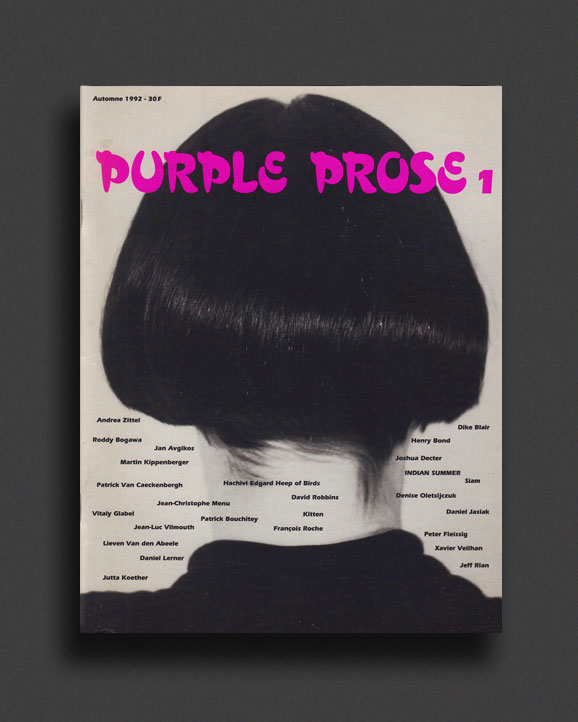
The true beginning of Purple — the very rare first issue of Elein Fleiss and Olivier Zahm's Purple Prose, published in 1992. Founded as a reaction against the superficial glamour of the 1980’s, Purple Prose embraced the immediate fanzine aesthetics of what became referred to as 1990's anti-fashion, a far cry from what we now identify with Purple Fashion with.
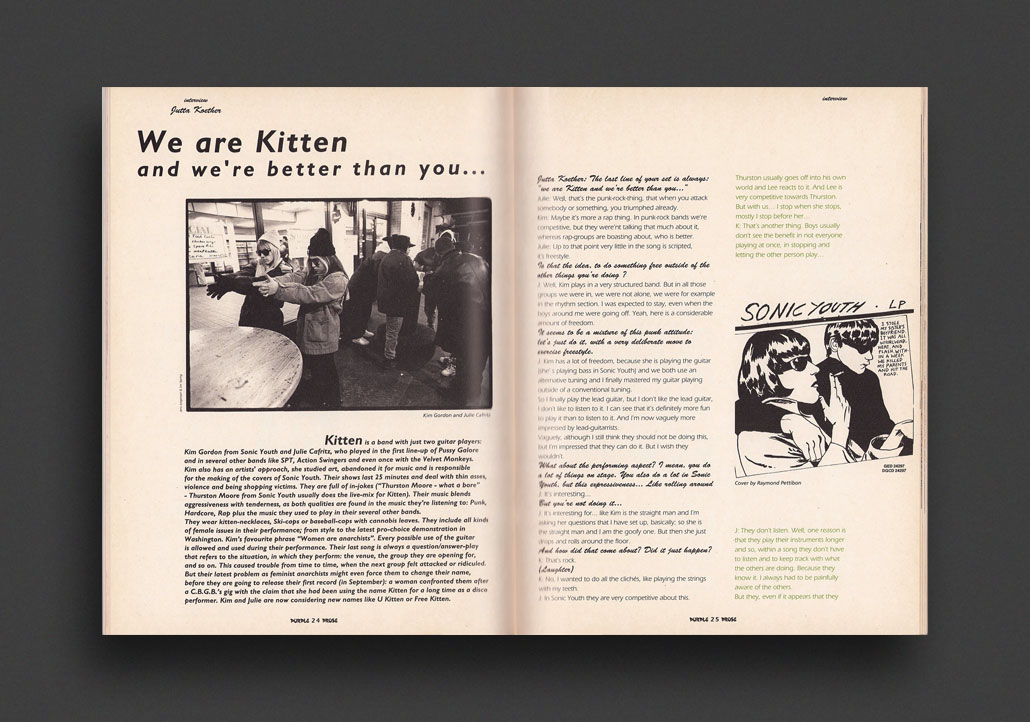
Purple Prose 1, Automne 1992, features contributions by Dike Blair, Andrea Zittel, Joshua Decter, Henry Bond, Daniel Lemer, Jutta Koether, Andrea Zittel, Roddy Bogawa, Jon Moritsugu, Jacques Boyreau, Jan Avgikos, Martin Kippenberger, Patrick Van Caeckenbergh, Edgar Heap of Birds, David Robbins, Jean-Christophe Menu, Vitaly Glabel, Kitten (pre—Free Kitten: Kim Gordon of Sonic Youth and Pussy Galore's Julia Cafritz), Patrick Bouchitey, Jean-Luc Vilmouth, François Roche, and many more.
Soon after the birth of Purple Prose, Zahm created spin-off publications like Purple Sexe, Purple Fiction and what we now know and love, Purple Fashion. Zahm aimed at fusing together his two worlds, fashion and art, in creating Purple Fashion.
Before entering the world of fashion, Zahm worked as an art critic with widespread recognition for his work as a curator as well as his participation in over 150 exhibitions featuring international contemporary art. In 1994, Zahm and Fleiss curated “The Winter of Love,” a hit show for the Museum of Modern Art in Paris that they later took to P.S.1 in New York. In responding to the superficial glamour of the 1980s, Zahm co-founded Purple Prose magazine. In the introduction of Purple Anthology, Zahm shares why he chose to create Purple Prose:
"We launched Purple Prose in the early 1990s without any means, and without any experience, because we wanted to make a magazine that was radically different. We wanted to support the artists around us that no one else supported, much less talked about. [..] It would be a form of opposition of our own".
Very Good—Near Fine copy, light wear.
2003, English
Softcover, 150 pages, 31 x 31 cm
1st Edition, Out of print title / used / good
Published by
The Tate Gallery / London
$35.00 - In stock -
From May to October 2003 two enormous inflatable sculptures will loom above visitors to Tate Modern and those strolling along the riverbank. The first, Blockhead, revisits one of McCarthy's trademark characters, a mutant cartoon character with a Pinocchio nose emerging from its cuboid head. At 35 meters, it towers as high as the fourth level of Tate Modern. The second sculpture is named Daddies Bighead. This 16-meter high figure has a body constructed from a giant replica of a ketchup bottle. McCarthy has frequently used ketchup in his performances and installations as a stand-in for blood and other bodily excretions. Much of his work has courted controversy, dealing as it does with iconic imagery taken from childhood and popular culture combined with sexually charged and transgressive elements. McCarthy has exhibited widely across the United States, Europe and Japan, and has undertaken collaborations with artists including Mike Kelly and Jason Rhoades. His works are in numerous major collections.
A unique record of an artistic event, Paul McCarthy at Tate Modern includes a new interview with the artist, brand new dramatic installation photography, working drawings and models, and essays that will place this incredible work in the context of McCarthy's career.
Good copy with some wear to covers, tanning to spine edge.
1962, German
Softcover, 190 pages, 21 x 16.8 cm
1st Edition, Out of print title / used / very good
Published by
Gerhardt Verlag / Berlin
$300.00 - In stock -
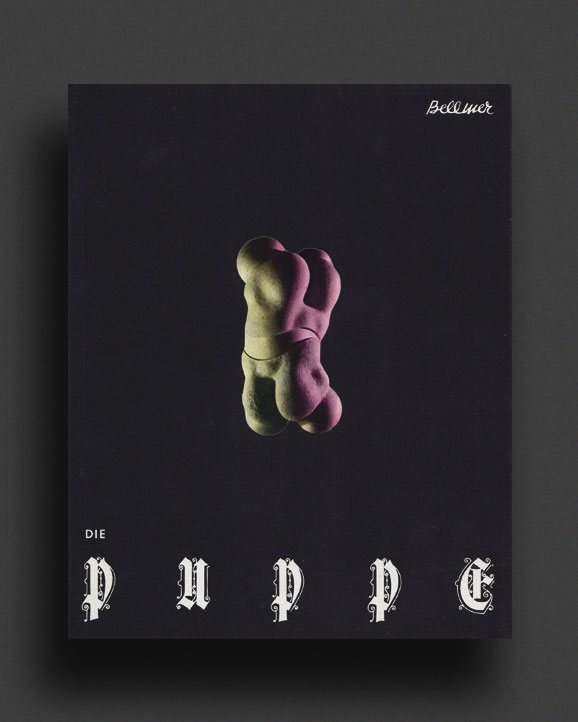
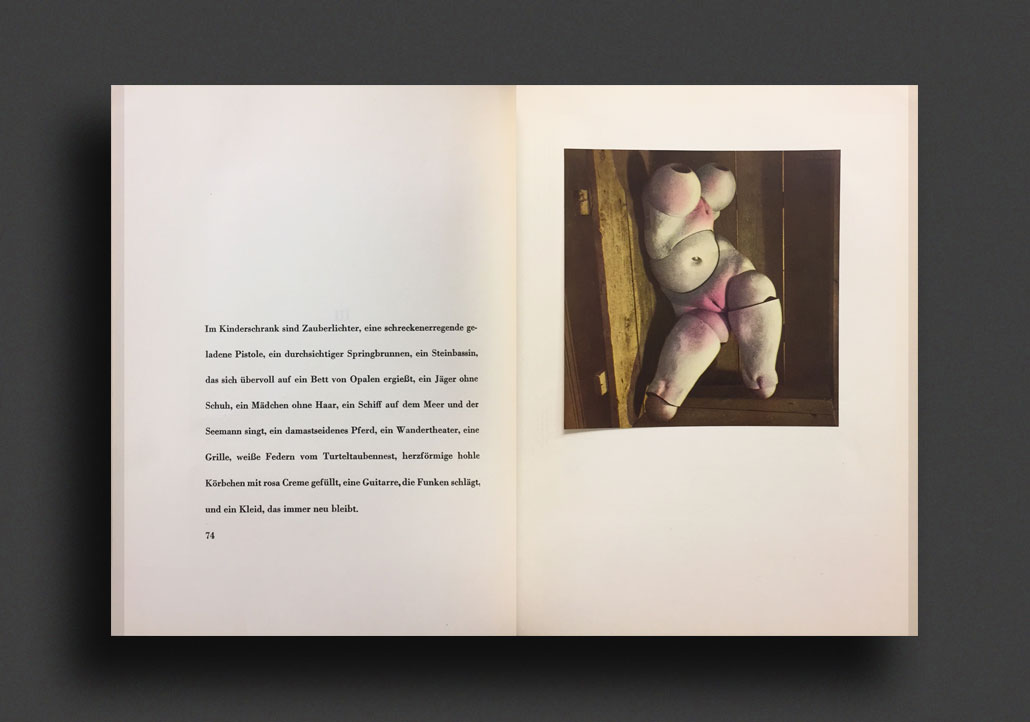
Rare 1962 edition of Bellmer's "Die Puppe", published by Gerhardt Verlag in Berlin. German artist Hans Bellmer (1902-1975) was one of the most subversive artists associated with Surrealism, famous—notorious, even--for his erotic engravings, objects and photographs. This collectable first edition of Die Puppe (The Doll) comprises a series of Bellmer's hand-painted photographs in the form of 10 monochrome and 15 coloured tipped-in plates accompanying his remarkable texts, here published for the first time. Bellmer's hand-coloured photographs subsequently acquired an iconic status as perhaps the purest exemplification of the Surrealist ideal of "convulsive beauty." Bellmer weaves a remarkably disparate set of concepts and intuitions—from fields as diverse as mathematics, morphology, optics and psychology—into a theory of eroticism that provides a totally unexpected rationale for his uncompromising art. His ideas are, in the words of poet Joë Bousquet, a "scandal to reason." The book also contains many b/w drawings by Bellmer along with prose poems by Paul Eluard. A book like no other!
Very Good—Near Fine preserved copy of this stunning edition with the die-cut decal cover. Light corner bump, light block shelf wear.
1995, English / Japanese
Softcover (w. card slipcase and printed sticker), 159 pages, 26 x 18 cm
1st Edition, Out of print title / used / fine
Published by
Sezon Museum of Art / Tokyo
$100.00 - In stock -
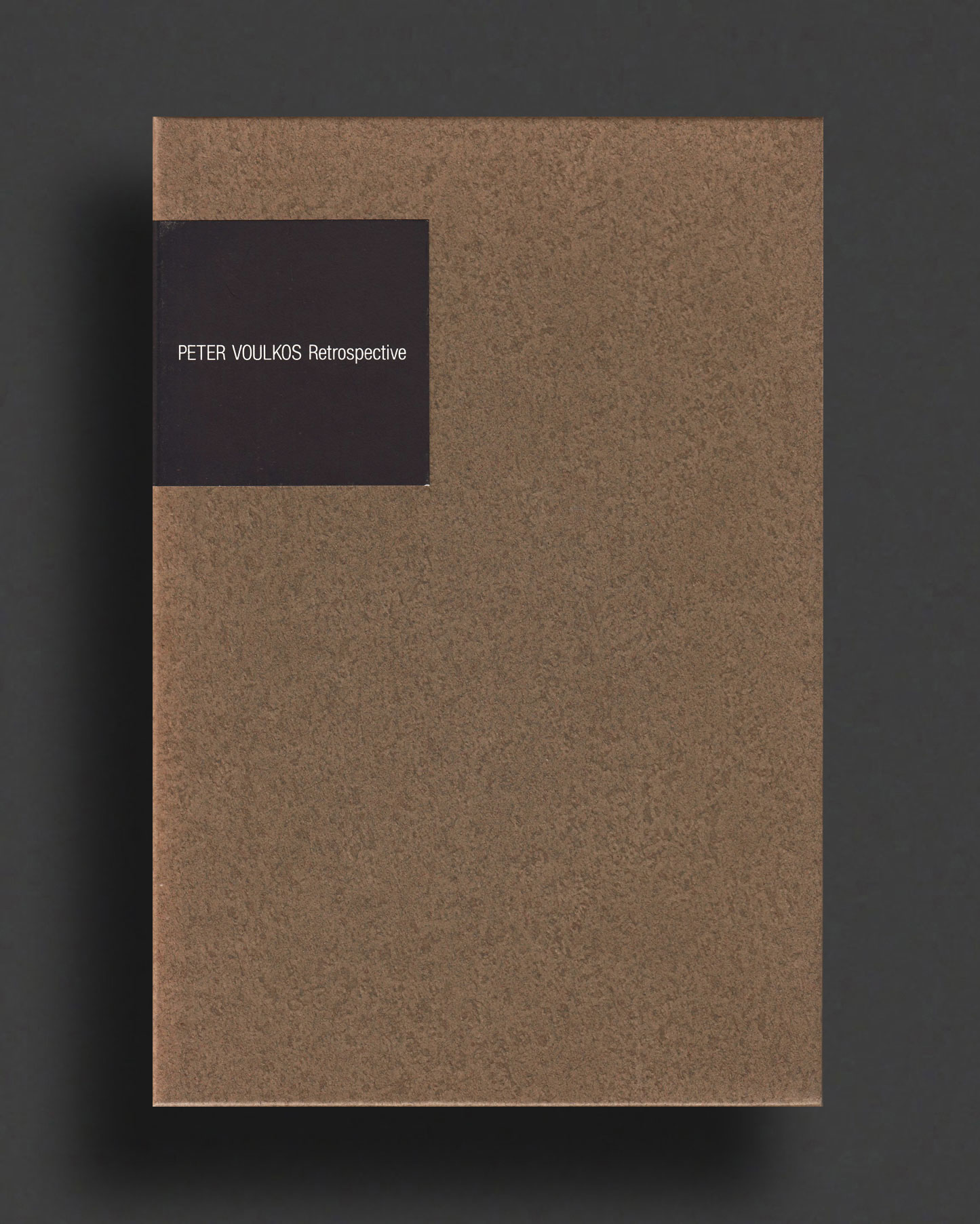
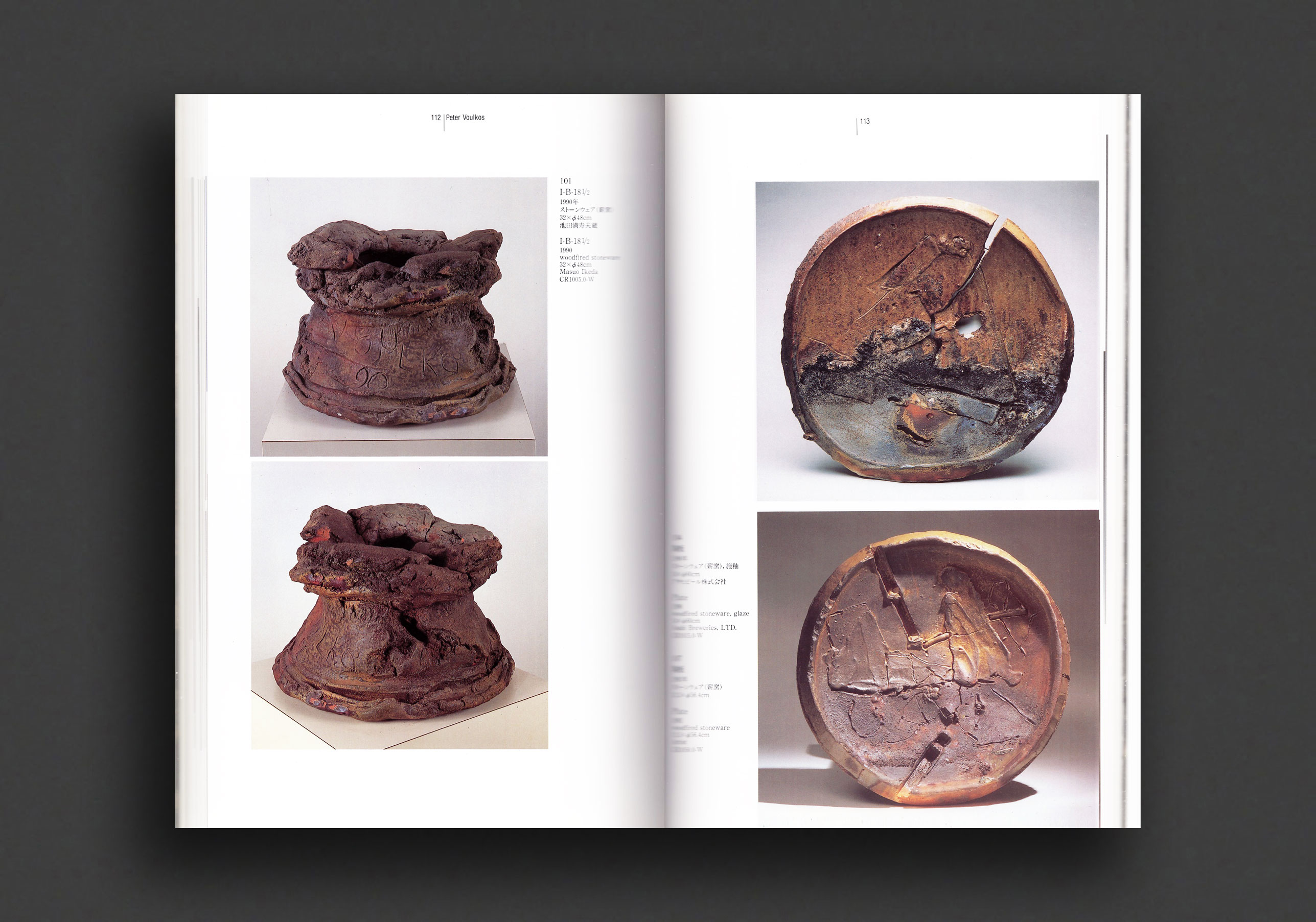
Published in conjunction with the 1995 touring Japanese Museum retrospective of work by the pioneering late artist/ceramicist Peter Voulkos, this is the beautifully designed and printed first-edition Japanese catalogue from the Sezon Museum of Art, Tokyo (Jan 2 - Feb 20, 1995) and The National Museum of Modern Art, Kyoto. (Feb 28 - April 2, 1995), which comes housed in an elegant printed cardboard slipcase. A very rare volume, and in our opinion the most stunning of books on the work of Peter Voulkos. Profusely illustrated with wonderful colour photo documentation of his many works, accompanied by studio photographs and an essay by Rose Slivka.
Peter Voulkos (1924 – 2002) was an American artist of Greek descent. After teaching a ceramics course at Black Mountain College in the summer of 1953, Voulkos founded the Ceramic Center at Otis Art Institute in Los Angeles (1954), which gave birth to the West Coast Abstract Expressionist ceramics movement. He is known for his gestural sculptural objects, which crossed the traditional divide between ceramic crafts and fine art. While his early work was fired in electric and gas kilns, later in his career he primarily fired in the anagama kiln of Peter Callas, who had helped to introduce Japanese wood firing aesthetics in the United States. Voulkos became a highly influential educator at UC Berkeley from 1959, while continuing a vital career that included work in bronze sculpture and wood-fired stoneware.
Near Fine.
2000, English / German
Softcover, 63 pages, 21.5 x 27 cm
1st Edition, Out of print title / as new
Published by
Kunstverein Braunschweig / Germany
Lukas & Sternberg / Berlin
$40.00 - Out of stock
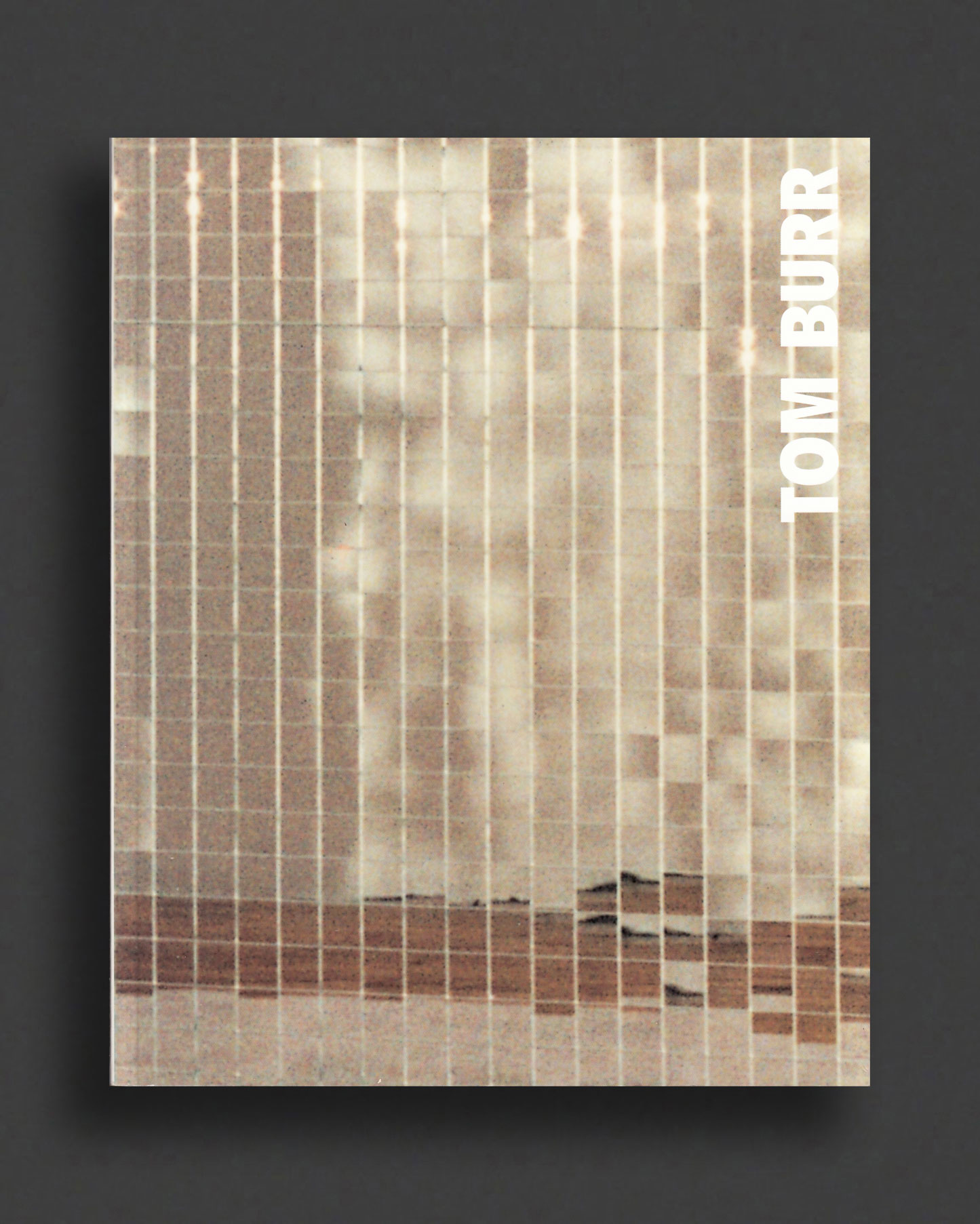
Edited by Tom Burr and Karola Grässlin, Kunstverein Braunschweig
Texts by Tom Burr, Carina Herring, Juliane Rebentisch
Video peepshows, porno theatres, garden pavilions – with subtle insight, Tom Burr (*\b. 1963) sheds light upon what is marginalized, or not immediately recognizable. His works, which make reference to Minimal art’s object sculptures, redefine them in current socio-economic and “queer” aspects. By acting as an intermediary between formal stringency and socio-political content, Tom Burr’s works overcome Hal Foster’s criticism that Minimal art tended to “handle the viewer as historically innocent and sexually indifferent." With comprehensive texts and illustrations, this book features an artist who belongs among those who have shaped a new form of institutionally critical art.
In her seminal text on “Tom Burr’s Minimalism”, author Juliane Rebentisch discusses how the artist “injects a new political and aesthetic engagement into certain works by Smith, Serra, Smithson, and Morris, by shifting their logic.” Detecting a melancholic aspect of Burr’s queer minimalist appropriations, she writes that “they connect in a peculiar way with what one might call the sepulchral quality which seems to predestine the anti-monumentalism of the minimalist aesthetic for the tasks of memorial art. At the same time the dialectic of mourning and desire, which can be released by the recollection of a largely destroyed sub-culture in Burr’s minimalist adaptations, is also, at least potentially, directed forward towards another future – a queer future. In so far as Burr’s works also function as allegorical gestures by means of which an image of the present crystallizes in images of the past, this opens the present up to the future.“
As New.
1993, English
Hardcover (w. dust jacket), 74 pages, 26.7 x 19 cm
1st Edition, Out of print title / used / very good
Published by
Grassfield Press / Florida
$220.00 - In stock -
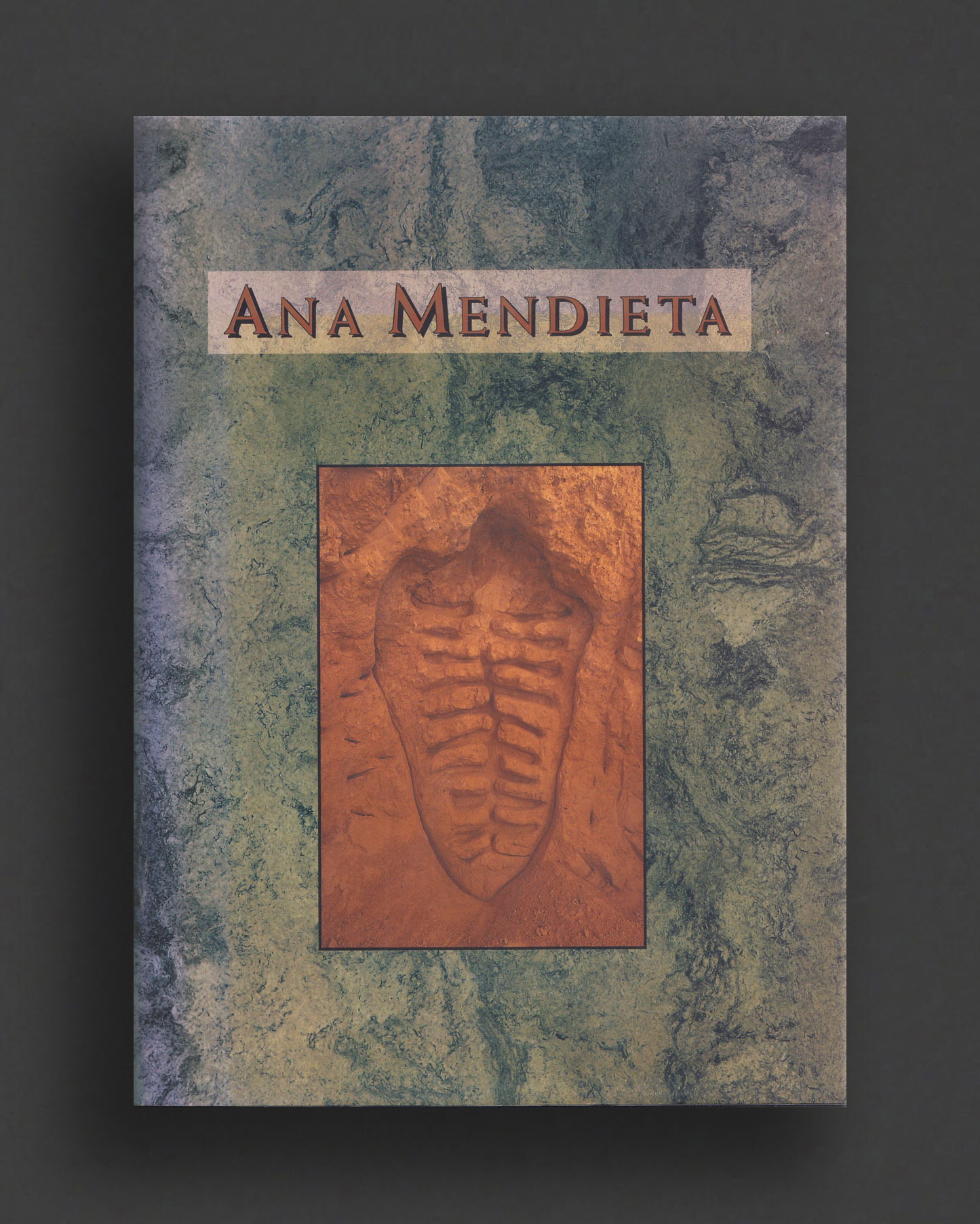
Rare first edition of Ana Mendieta's posthumous artist's book, A Book of Works, beautifully produced in an edition of 2,400 copies, edited by Bonnie Clearwater, and long out-of-print.
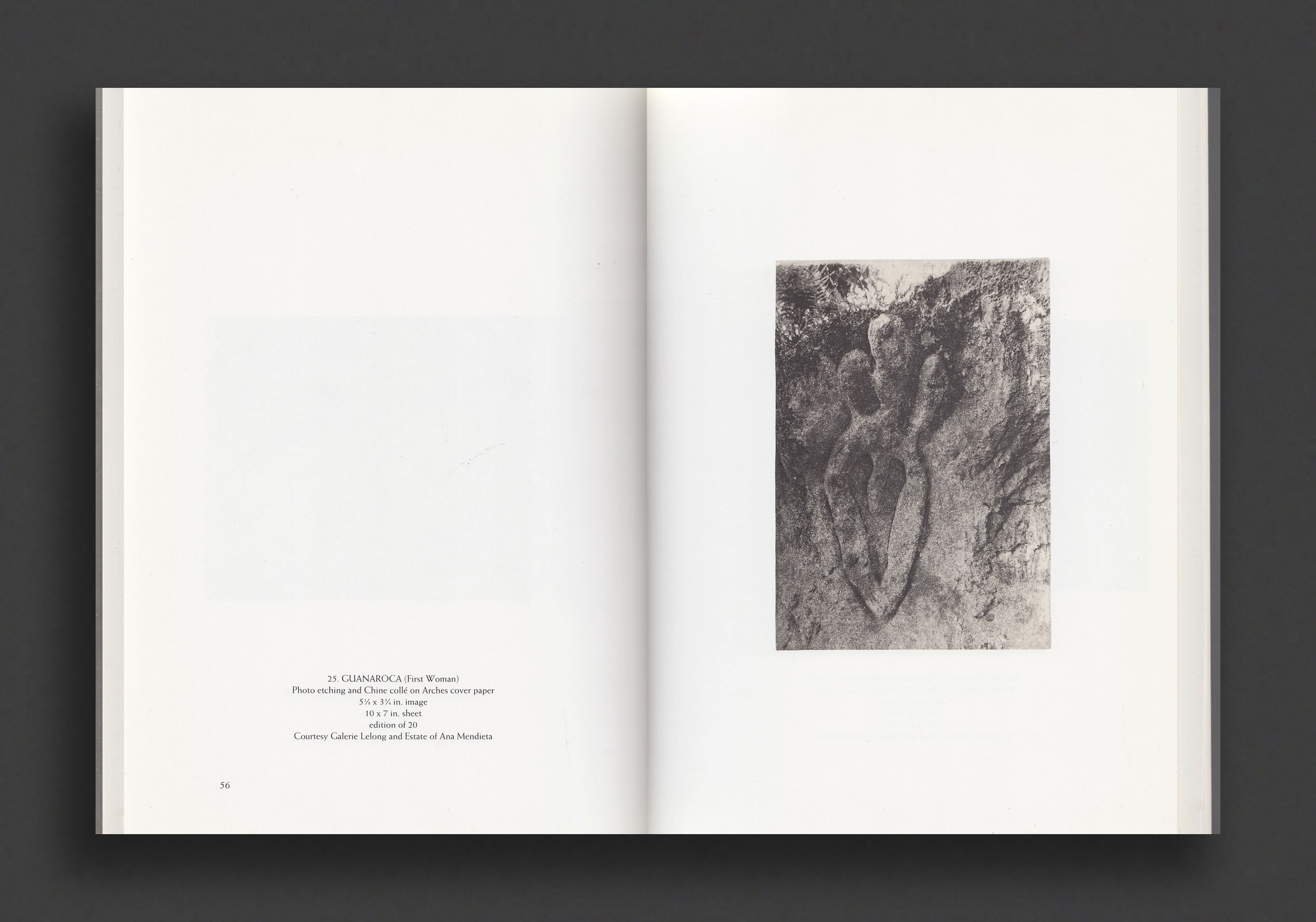
Cuban American artist Ana Mendieta was working on many important projects that were left incomplete at the time of her tragic death in 1985 at age 36. Among these was a beautiful book of photo etchings of her carvings of female figures in remote caves on the outskirts of Havana, Cuba. These sculptures were inspired by the myths and beliefs of the Tainos, pre-Columbian inhabitants of the West Indies. This publication reproduces in facsimile Mendieta's unfinished book of photo etchings and related works and publishes, for the first time, her notes and writings for this important project.
Mencdieta's work crosses the categories of earth art, body art, performance and conceptual photography. As her works generally were site specific and ephemeral, they became know primarily through the photographic documentation she exhibited in galleries and museums. She intended her intimate book of photo etchings to capture the experience of viewing her elusive life-size sculptures in the close quarters of the caves.
Illustrated with many never-before published photographs, this book is an important contribution to the understanding of his extraordinary artist.
"...the authors have honored (Mendieta's) desires by crating a book that speaks softly an genuinely in the artist's voice."
by Alexandra Tager --Art & Auction magazine
"When Ana Mendieta died in 1983, she was working on a book similar to this one, a slim volume of photo etchings of the life-size figures she carved into the stone walls of caves in Cuba's Jaruco State Park. The artist, a "Pedro Pan" child who was sent out of Cuba in the early days of Castro's reign, spent her short art life seeking expression for her personal exile. Inspired by Taino mythology, these pre-Columbian islanders believed the first humans emerged from a cave-Mendieta identified the Cuban caves with birth,including her own. Her entire body of work, largely a collection of photographs documenting such ephemeral art forms as earth works, performance pieces and body art, was spun on this theme of self-identity, a return to her roots, to mother earth. Unlike her other photographic artifacts, however, these photo etchings were destined for a book, of which this is a facsimile. Her montes on the Taino myths appear as if in her own hand on these pages, along with her thoughts about how the book should be arranged. The result is an intimate experience with the artist's hand and mind and a unique act of closure for a career that ended in a still-unexplained fall from a New york high-rise."—Helen L. Kohen—Miami Herald (1993)
Bonnie Clearwater is the Director and Chief Curator of the Museum of Contemporary Art, North Miami, and the former curator of the Mark Rothko Foundation, New York. Among her publications are "Frank Stella at 2000: Changing the Rules"; "Defining the Nineties: New York,Los Angeles,Miami"; "Mark Rothko: Works on Paper"; "Edward Ruscha: Words Without Thoughts Never to Heaven Go"; and "David Smith: Stop/Action".
Fine copy in VG—NF dust jacket with sunning to spine.
2025, English
Softcover, 250 pages, 22.5 x 21 cm
Published by
Buxton Contemporary / Melbourne
$40.00 - In stock -
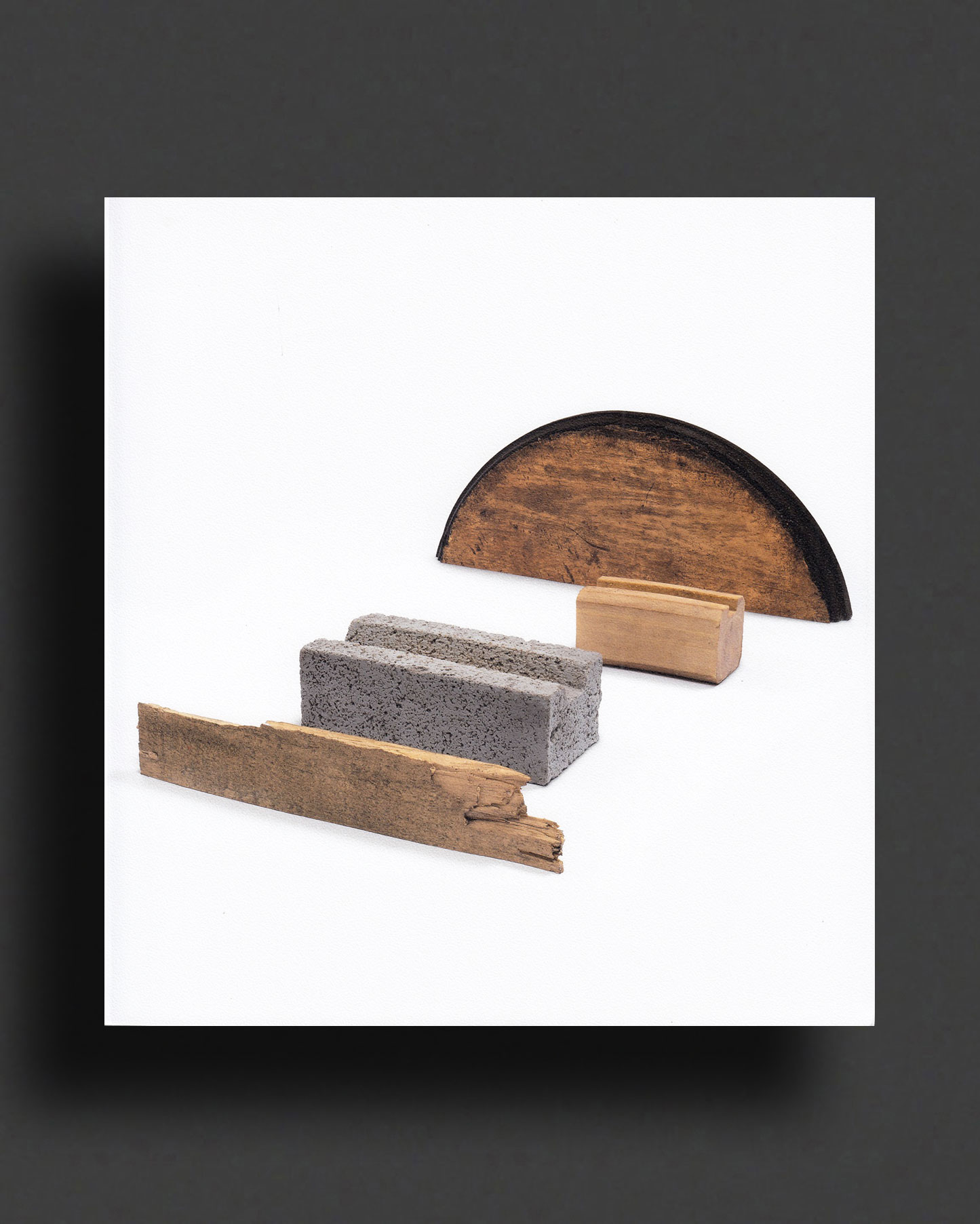
Catalogue published on the occasion of Hany Armanious — Stone Soup, Buxton Contemporary, 21 November 2025 – 11 April 2026, the artist’s largest exhibition to date, featuring more than 80 works spanning 15 years of practice, including a new commission and many works never before seen in Australia. The exhibition is curated by Laurence Sillars, Head of the Henry Moore Institute, with Samantha Comte, Head Curator, and Charlotte Day, Director of Art Museums, at the University of Melbourne, and builds on a recent presentation at the Henry Moore Institute in Leeds, UK. Richly illustrated with more than 100 works and featuring a major new essay by co-curator Laurence Sillars, this publication expands on Hany Armanious’ inventive practice and serves as the definitive companion to Stone Soup.
Curator Laurence Sillars says: “Armanious’s practice is not merely an exploration of the object, but an invitation to dwell in the uncertainty of perception itself – a quiet but radical challenge to the assumption that the world is a stable place. Throughout, there is joy, a celebration of being, touching, of looking so intently that the familiar becomes strange. In an age of synthetic realities, this is a profoundly generative act. Like stepping into a place where the language is unfamiliar and every word must be relearned, his sculptures offer the thrill and vertigo of finding one’s bearings in a newly translated world – a place where, in order to truly see, we must first allow ourselves to be lost.”
Published in an edition of 550 copies.
1999, English
Softcover, 60 pages, 27.1 x 23.4 cm
1st Edition, Out of print title / used / fine
Published by
Moet & Chandon Australian Art Foundation / Australia
$120.00 - In stock -
Wonderful early artist's book published in 1999 on the work of Australian sculptor Hany Armanious by Möet & Chandon Australian Art Foundation. Printed in France on textured heavy stock, this handsome volume documents works spanning 7-8 years of Hany's work, including sculptures, painting, installation, accompanied by captions and texts written by the artist to "walk" the reader through the works. As it should be. We think the best book on Armanious' work ever published, and now very rare to come by.
Hany Armanious (b. 1962 in Ismailia, Egypt. Lives and works Sydney, New South Wales) is a sculptor whose work is predominantly concerned with the magical properties of the casting process. Many of his works deal with the alchemical transformation of one object into another via what the artist has described as the ‘cult of casting’. Hany was a key figure in Sydney’s grunge scene of the early 1990s, and in 2011 was Australia’s representative at the Venice Biennale. His practice often deliberately skirts the fine line separating ‘something’ from ‘nothing’. While his works – as ‘things’ consciously, even meticulously, produced – are obviously never nothing, many nonetheless toy with notions of value and its contemporary ambiguities.
Near Fine copy.
2025, English
Softcover, 200 pages. 23 x 16.6 cm
Published by
Memo Review / Naarm
$35.00 - Out of stock
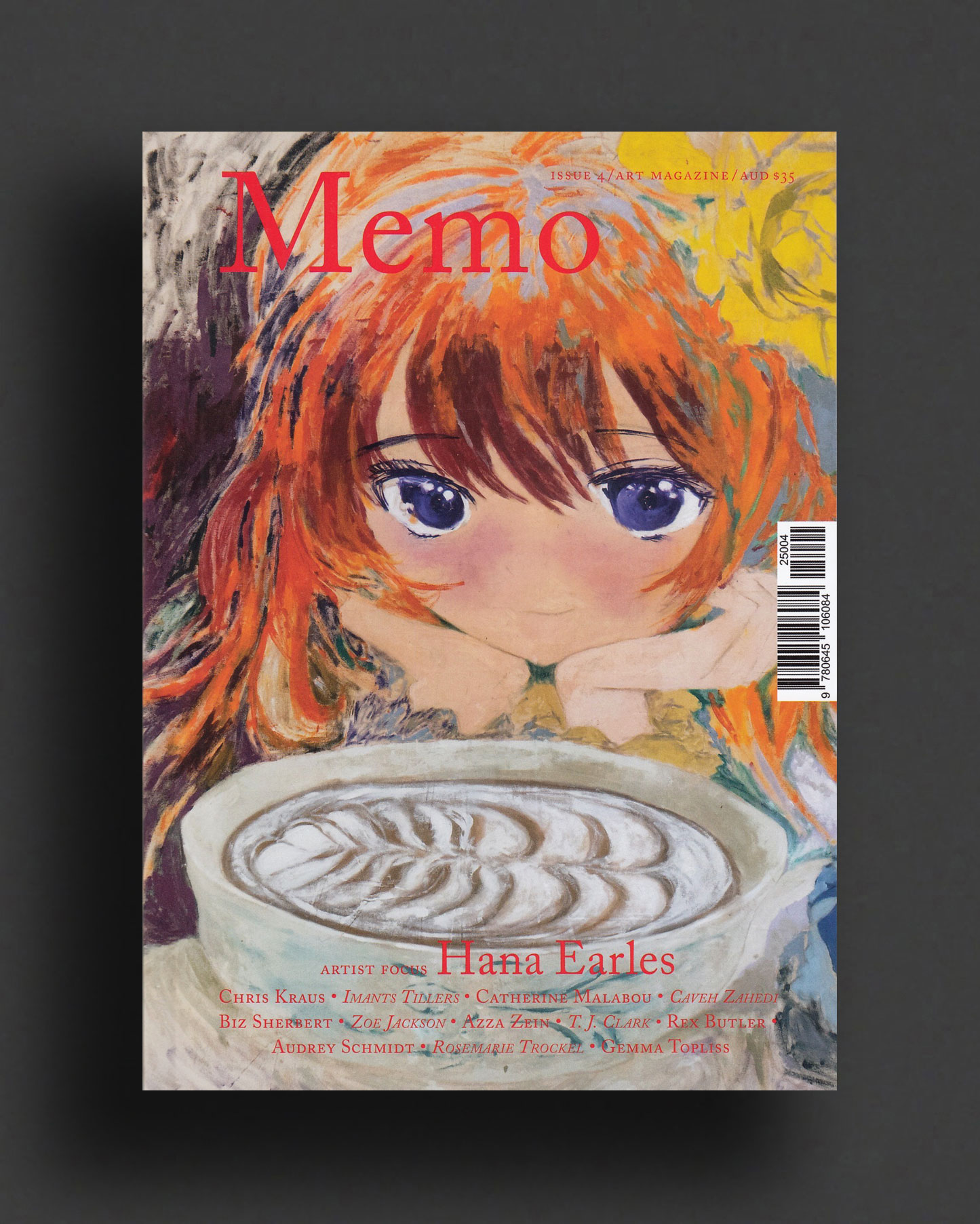
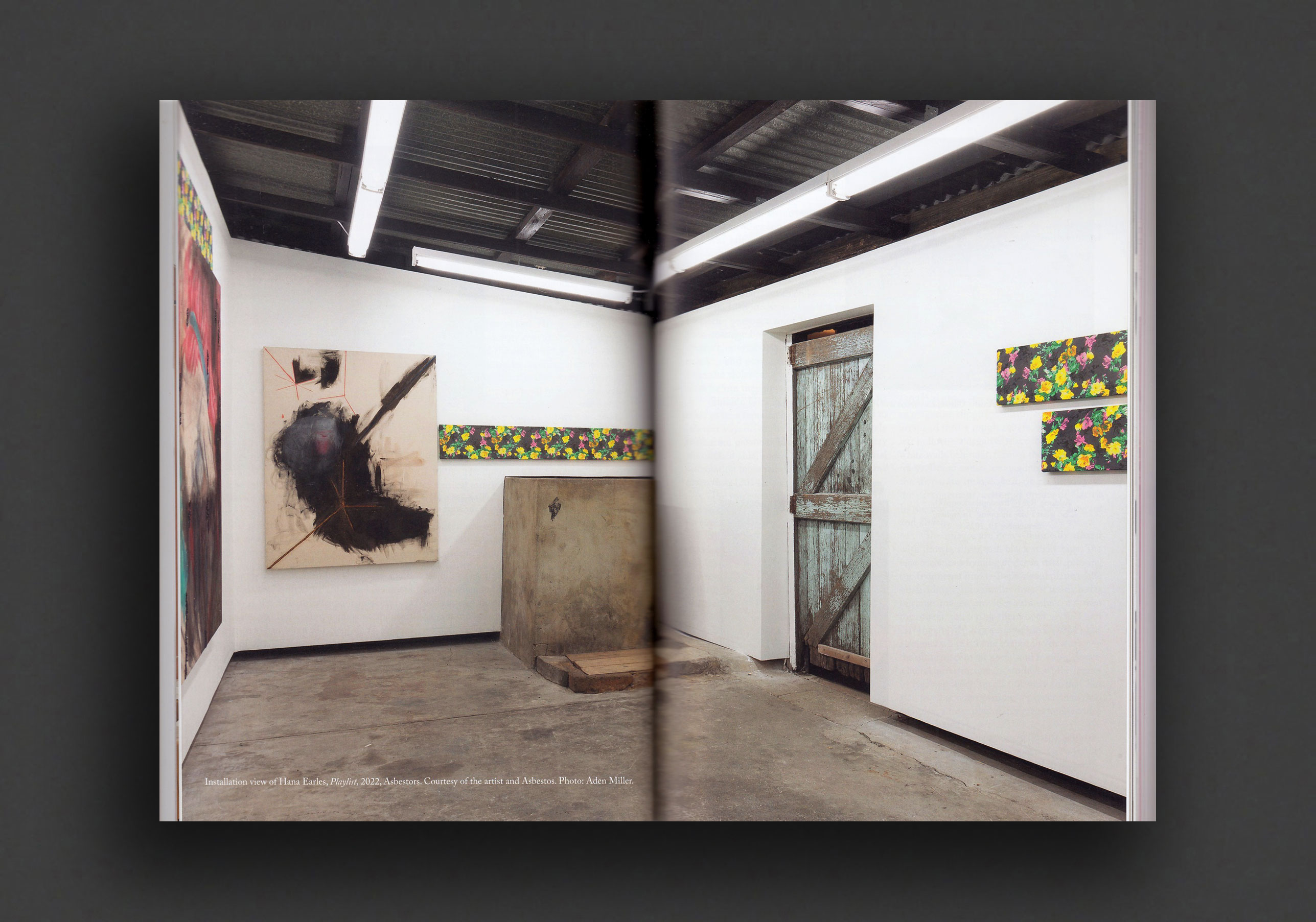
Issue 4 of Memo Review focuses on Frankfurt-based artist Hana Earles, a defining figure in the recent history of Melbourne’s backyard gallery scene. Other pieces include renowned French philosopher Catherine Malabou on Cyril Schäublin’s 'Unrest', Chris Kraus on her literary evolution, Micaela Sahhar on media and institutional censorship of Palestine, and features on Caveh Zahedi, Carol Jerrems, Rosemarie Trockel, Hany Armanious, Nora Turato, Robert Rooney and more. Also featured: eminent art historian T. J. Clark’s Marxist-inflected commitment to modernity comes under review by Francis Plagne, and Keith Broadfoot restages Imants Tiller’s canonical von Guérard copy, Mount Analogue, as repetition and resurrection of Australian art through the colonial sublime.
"Across this issue, a recurring tension emerges between what can be said, what must be withheld, and who controls the threshold between the two. In conversation with Declan Fry, Chris Kraus reflects on her new novel’s blend of small-town crime and Trump-era “cancellation,” asking how a writer can depict other people’s lives when social media, true crime, and activist vocabularies are all busy turning them into types, or erasing them altogether. Micaela Sahhar turns to Anna Akhmatova, the poet who defied Stalin’s censors, to trace how media and cultural institutions now treat Palestine as a zone of censorship, suppression, and risk management. That climate finds an echo in Berlin, where Tania Bruguera’s hundred-hour Hannah Arendt reading at the Hamburger Bahnhof was overtaken first by pro-Palestine activists, then by the institution’s own fear. As Hilary Thurlow argues, what played out was not a clash of opposing camps but a sign of the Left’s deeper fractures under the pressure of moral absolutism. And is this not close to Nicolas Hausdorf ’s claim that the West’s moral language, forged in the crucible of the twentieth century’s horrors, has been worn thin by empty repetitions and meme-like escalation, until it can no longer bear its original meaning?
Meanwhile, the old question of “effective political art” persists. Rex Butler reads 65,000 Years: A Short History of Australian Art as a kind of visual plebiscite, a wall of works in which every artist gets a vote and every vote counts the same — a quasi-“Voice” in exhibition form — while there are revisitations of the weary Marxist art historian T. J. Clark, whose new collected essays are reviewed by Francis Plagne.
Elsewhere, the veil is not political but ontological. For Susie Anderson and Hannah Presley, the veil marks a space of partial revelation in which artists choose what to show and what to keep, set in stark contrast to the radical transparency of Caveh Zahedi’s life-as-art practice, with all its personal collateral, as explored by Chelsea Hopper.
Questions of exposure return again in Biz Sherbert’s interview with Hana Earles, where scribbled text, titles, and even Jo Malone perfume bottles act as “secret doorways” between diary-like interiority and the messy surface of painting. Seen this way, Earles’s work, steeped in psyops, Manson girls, anime adolescence, Addison Rae, mumblecore, and spiritual acceleration, offers an oblique map of Melbourne’s outwardly impoverished backyard-gallery ecology over the past decade — the Meows, Guzzlers, Asbestoses, and Punk Cafés at the fringes of the city’s institutional officialdom. Call it, with Gemma Topliss, façadism." — Paris Lettau
Contributors:
2012, English / German
Softcover, 96 pages, 26 x 19 cm
1st Edition, Out of print title / used / good
Published by
Distanz / Berlin
$90.00 - Out of stock
Quickly out-of-print 2012 survey catalogue on the work of German artist Rosemarie Trockel, published by Distanz. Rosemarie Trockel (b. Schwerte 1952; lives and works in Cologne) rose to international fame in the mid-1980s with her knitting pictures. A second group of works from the 1990s consists of numerous variations on wall works and sculptures into which the artist integrates conventional stovetops. These works gave rise to the entrenched notion that she is an artist who interrogates the images that define women’s social roles, dedicated to contributing to their deconstruction. Yet Rosemarie Trockel’s oeuvre extends far beyond this one aspect. In its diversity, it defies any attempt to characterize it according to conventional criteria. Rosemarie Trockel is a painter as well as a graphic artist, a sculptor as well as a conceptual artist. In 2011, she receives the Kaiserring of the City of Goslar, one of the world’s most renowned art awards.
Includes essays by Friedemann Malsch, director, Kunstmuseum Liechtenstein, and Wulf Herzogenrath, director, Kunsthalle Bremen.
Good copy with light wear, light creasing.
1970/1971, French
Softcover, 2 volumes, unpaginated, 28.5 x 19 cm
1st Edition, Out of print title / used / very good
Published by
Marie Concorde / Paris
$320.00 - In stock -
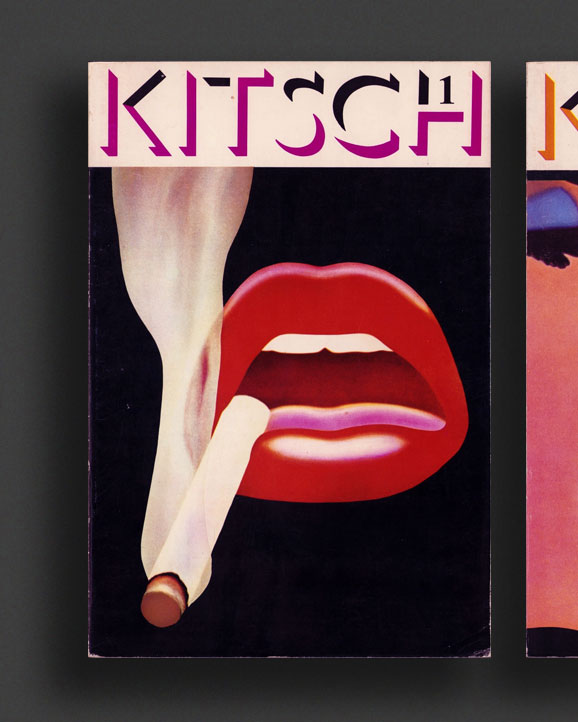
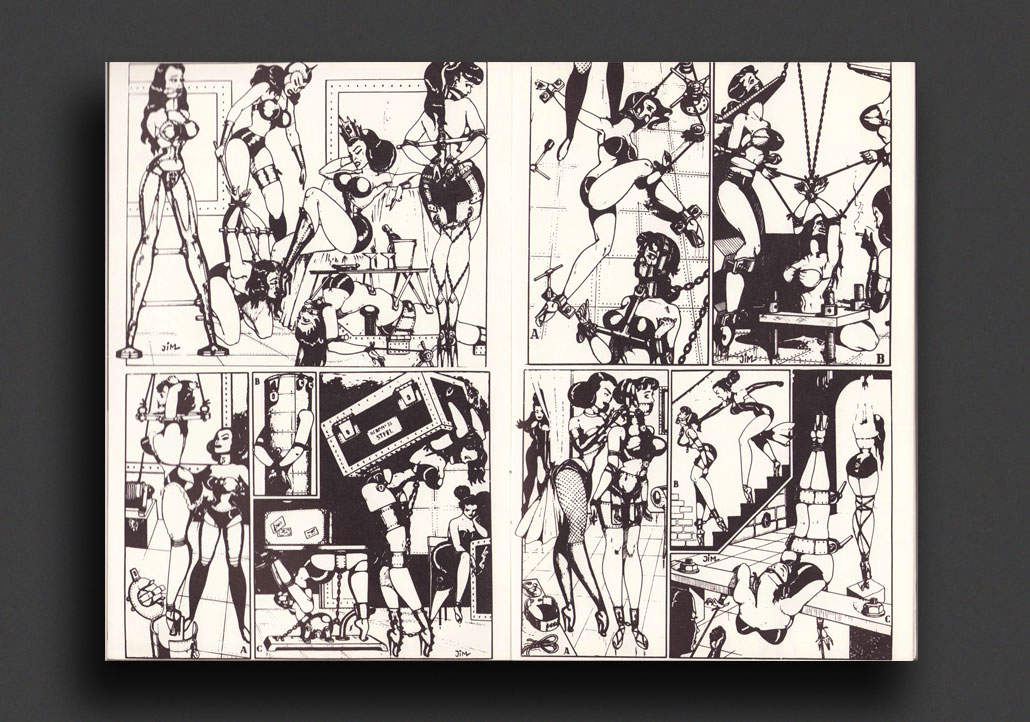
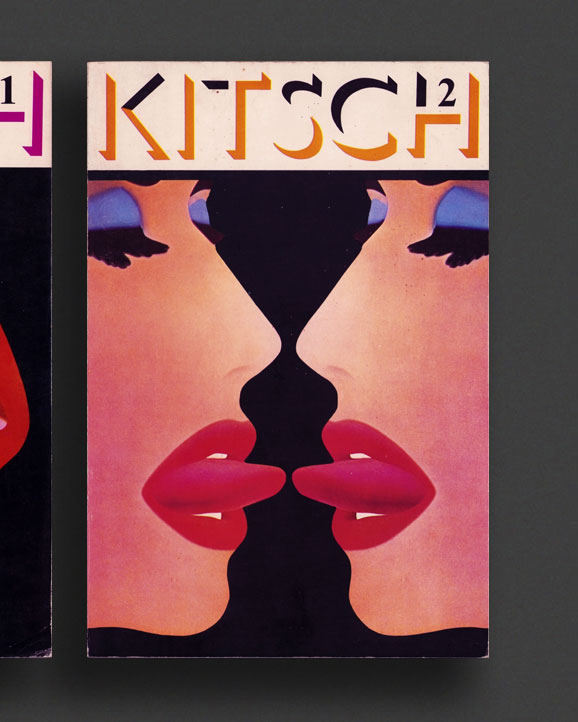
Both of the only volumes ever produced of this wonderful French avant-garde journal, published in Paris at the beginning of the 1970s. A visual manifesto against the prudishness of the times, KITSCH presented hundreds of illustrations of mostly erotic, fetish and fantastic/grotesque artwork by artists from all over the world, and spanning generations, with both issues wrapped in the most striking Tom Wesselmann covers. KITSCH 1 includes Toshio Saeki, Guido Crepax, Richard Linder, Robert Crumb, Guy Bourdin, Petr Herel, Hannes Jahn, Roman Cieślewicz, Ben Vautier, Christian Bour, Jacques Sternberg, Roland Topor, Jim, Allen Jones, Thomas Weir, alongside photo essays on upskirt polaroids, Satanik, Diabolik, fashion and more. KITSCH 2 includes Aslan, Roy Lichtenstein, Virgil Finlay, Jim Osborne, Ronald Lipking, Greg Irons, George Grosz, Egon Schiele, Mel Ramos, alongside photo essays on subjects such as "Pop Art", "Human Concern" and Paris' "Pigalle" district, further featuring work by H.C.Westermann, Paul Thek, Edward Keinholz, William Tunberg, Christian Schad, William Weegee, James Rosenquist, Frank Gallo, Tom Wesselmann, and many more.
Very good copies both, light wear.
2024, English
Hardcover (w. dust jacket), 88 pages, 26 x 28.6 cm
Published by
Letter16 Press / Miami
$90.00 - In stock -
New documentation of Joseph Beuys’ controversial performance piece.
Edited with foreword by Brett Sokol
May 2024 marks the 50th anniversary of Joseph Beuys’ infamous piece of performance art staged in New York City: I Like America and America Likes Me. The premise—a man and a wild coyote locked together inside a room—helped build a cult following for Beuys that has made him alternately revered and reviled throughout the contemporary art world. Stephen Aiken’s (born 1948) photographs of this May 1974 "action" by Beuys—recently unearthed and previously unpublished—offer a fresh look at this seminal art happening. These striking images are supplemented with a set of previously unseen color photos taken by Aiken of Beuys at Greenwich Village’s New School in January 1974: verbally sparring onstage with fellow artist Hannah Wilke and jousting with a raucous audience that threatened to turn his lecture into a brawl.
1976 / 1984, German
Softcover, 24 x 19.5 cm
Out of print title / used / fine
Published by
Achberger Verlag / Achberg
$28.00 - In stock -
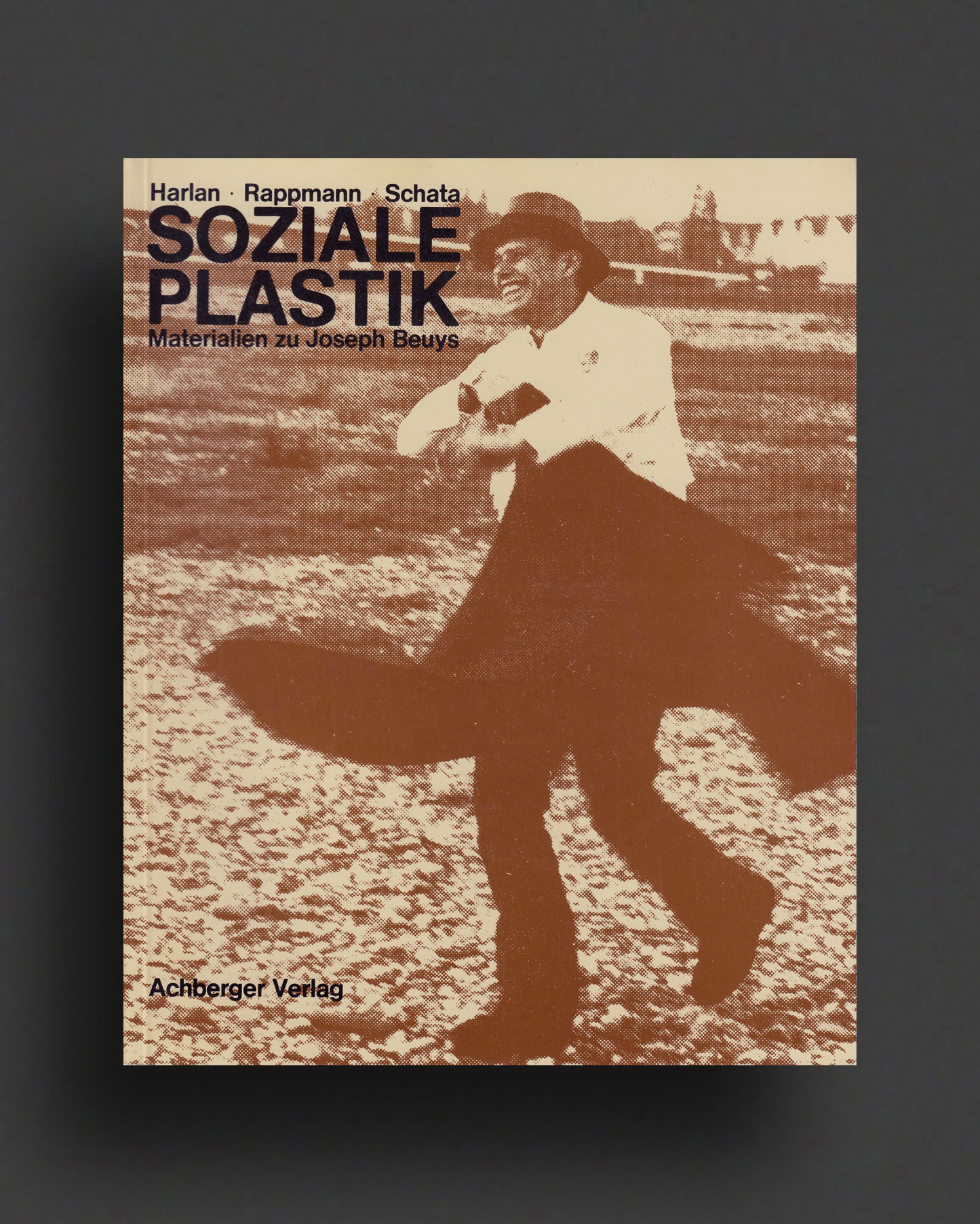
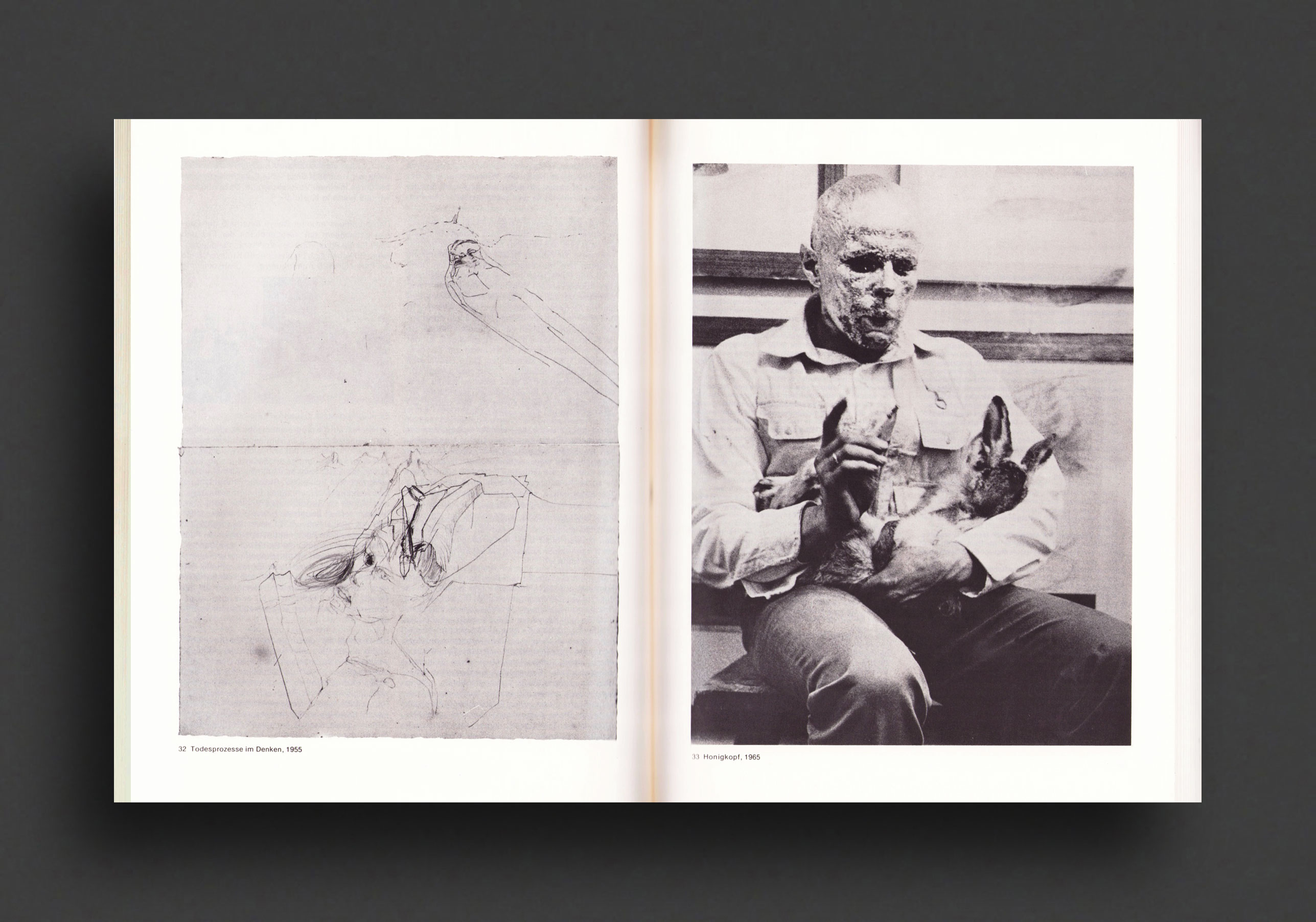
1984 print of the 1976 Joseph Beuys book "Soziale Plastik". "The three authors of this book engage with one of the most dazzling and controversial figures in contemporary cultural life. Joseph Beuys is among the most prominent figures in the modern art scene, and one cannot claim to have grasped the essential characteristics of this scene without also considering Beuys's contribution. This contribution is multifaceted, and the individual parts of his work are often judged very differently. The authors demonstrate how the various works and pronouncements of Joseph Beuys, often described as contradictory, can be considered together to form a unified, coherent, and consistent whole. Drawings, sculptures, performances, and lectures appear as logical stages in the development of an artist who, in recent times, has attracted particular attention by publicly presenting social concepts and advocating for political goals.
Beuys' political engagement can be understood as an integral part of his work, as a necessary consequence of the image of humanity presented throughout his oeuvre and the resulting image of society.
A large number of drawings, sculptures, and action photographs, some previously unpublished, help those unfamiliar with Beuys's work to gain an understanding. For those already acquainted with the work of Joseph Beuys, this book provides new material."
NF—Fine copy. German language.
2010, Japanese
Softcover, 208 pages, 24 x 18.5 cm
1st Edition, Out of print title / used / very good
Published by
Atelier Peyotl / Tokyo
$65.00 - Out of stock
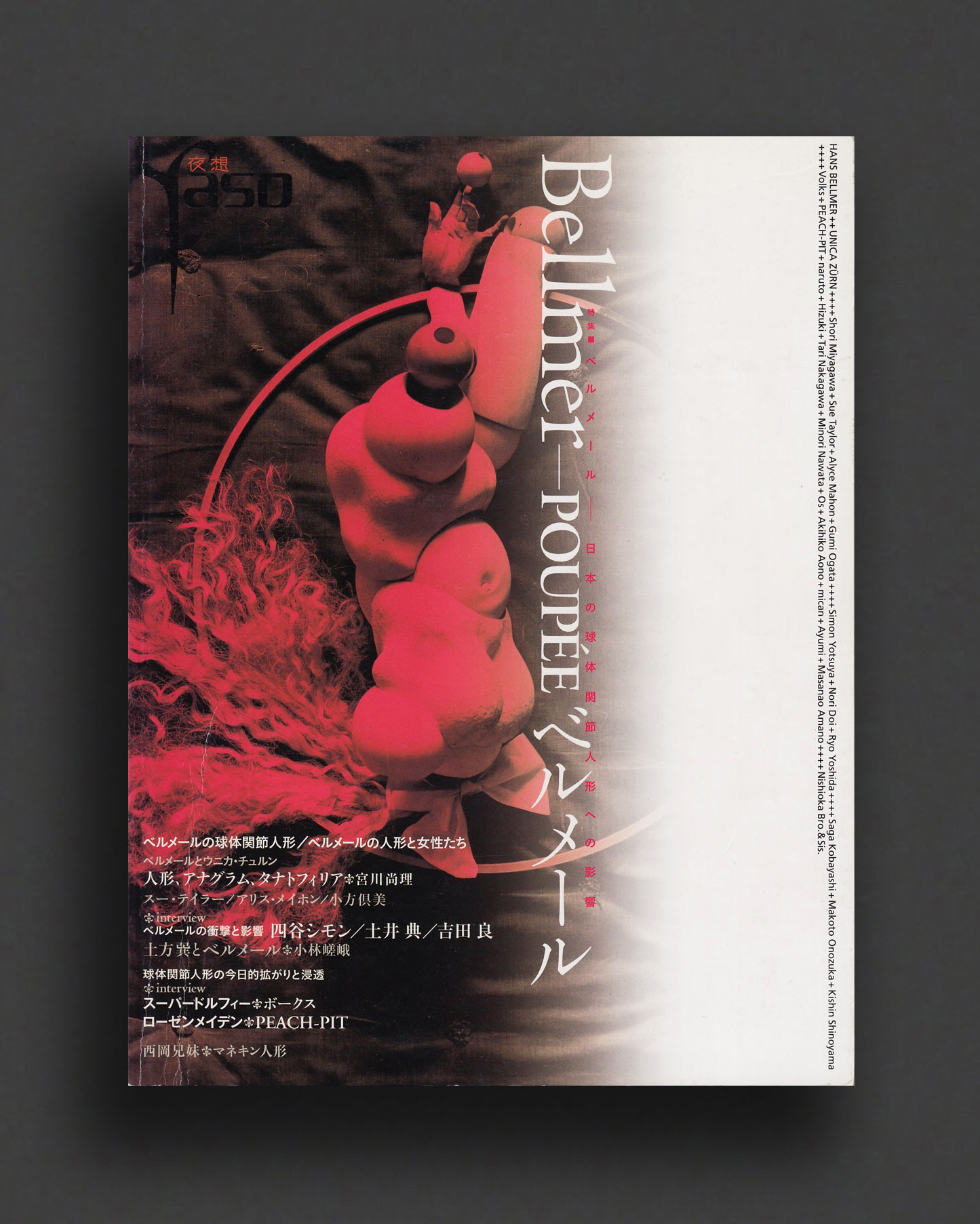
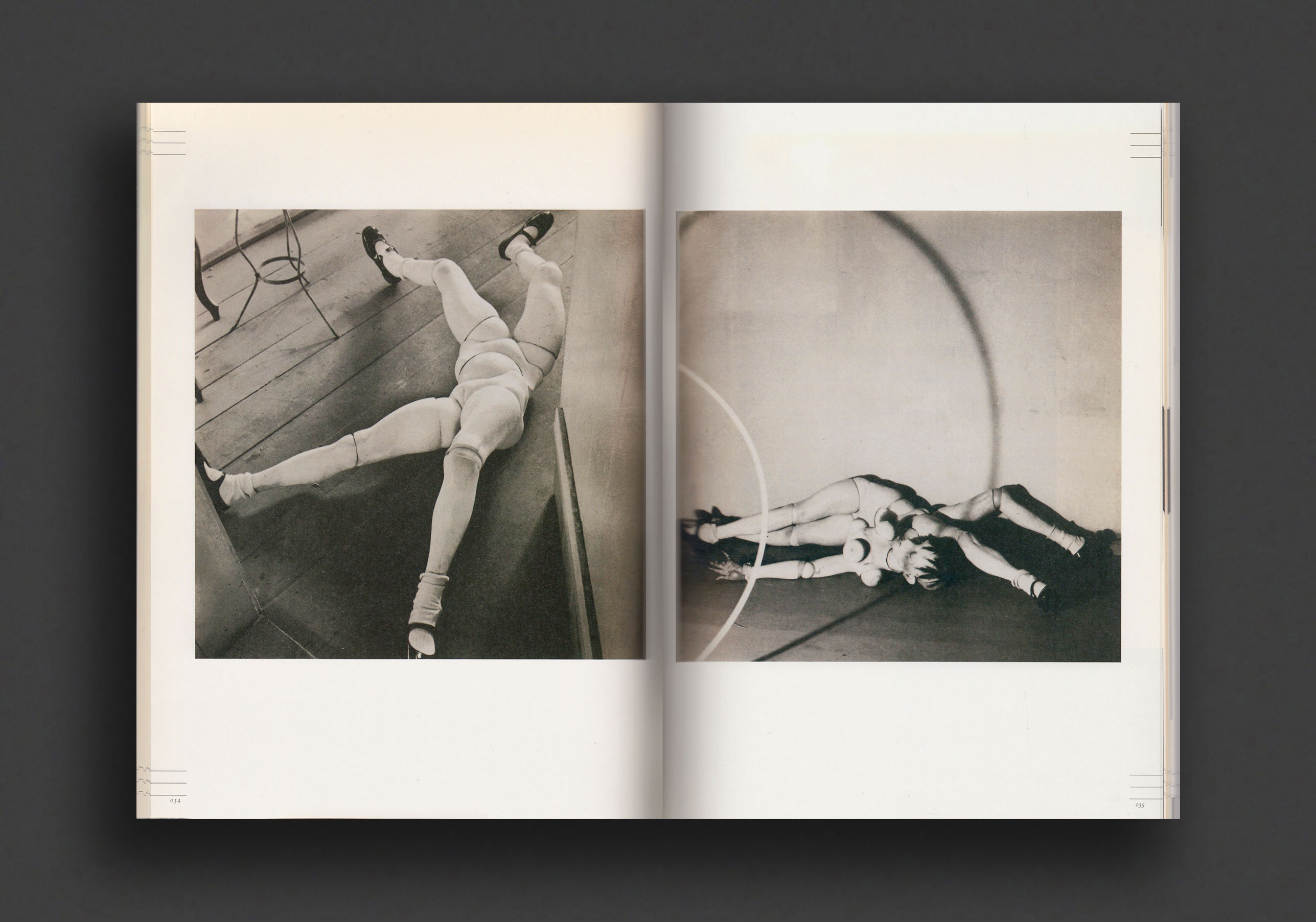
Incredible Hans Bellmer special feature Issue of cult Japanese underground magazine Yaso, published in 2010, edited by Yuichi Konno and Atelier Peyotl (publishers of Night Vision/Yaso/Peyotl/Wave/Silvester Club...). Being a magazine specialising in the doll arts it was only natural that they would dedicate an entire issue to the ground-breaking work of German Surrealist Hans Bellmer and the development of his dolls, and pay homage to his immense influence on Japanese doll artists by discussing his work with them. Heavily illustrated with reproductions of Bellmer's iconic doll photography and drawings, alongside reproduced and translated original texts, extensive chronology of Bellmer and Unica Zürn, the drawing and anagram work of his partner Zürn, an invaluable bibliography of publications related to Bellmer to date, and many portraits of the artist. There is an extensive chronicle of doll history and development stretching from 1902—2010 and a large part of the issue is made up of heavily illustrated exclusive interviews with Japanese artists influenced by the legacy of Bellmer, including Simon Yotsuya, Nori Doi, Ryo Yoshida, Tatsumi Hijikata, Makoto Onozuka, Kishin Shinoyama, Minori Nawata, and more, surveys contemporary doll artists Volks, PEACH-PIT, naruto, Hizuki, Tari Nakagawa, Minori Nawata, Os, Akihiko Aono, mican, Ayumi, Masanao, Katan Amano, Nishioka Bro. & Sis., and many more, and includes essays by Sue Taylor, Alice Mahon, Kumi Ogata... absolutely packed with content and a valuable Bellmer reference in the context of his Japanese influence on the arts.
Very Good copy.
2004, Japanese
Softcover, 176 pages, 24 x 18 cm
1st Edition, Out of print title / used / very good
Published by
Atelier Peyotl / Tokyo
$60.00 - Out of stock
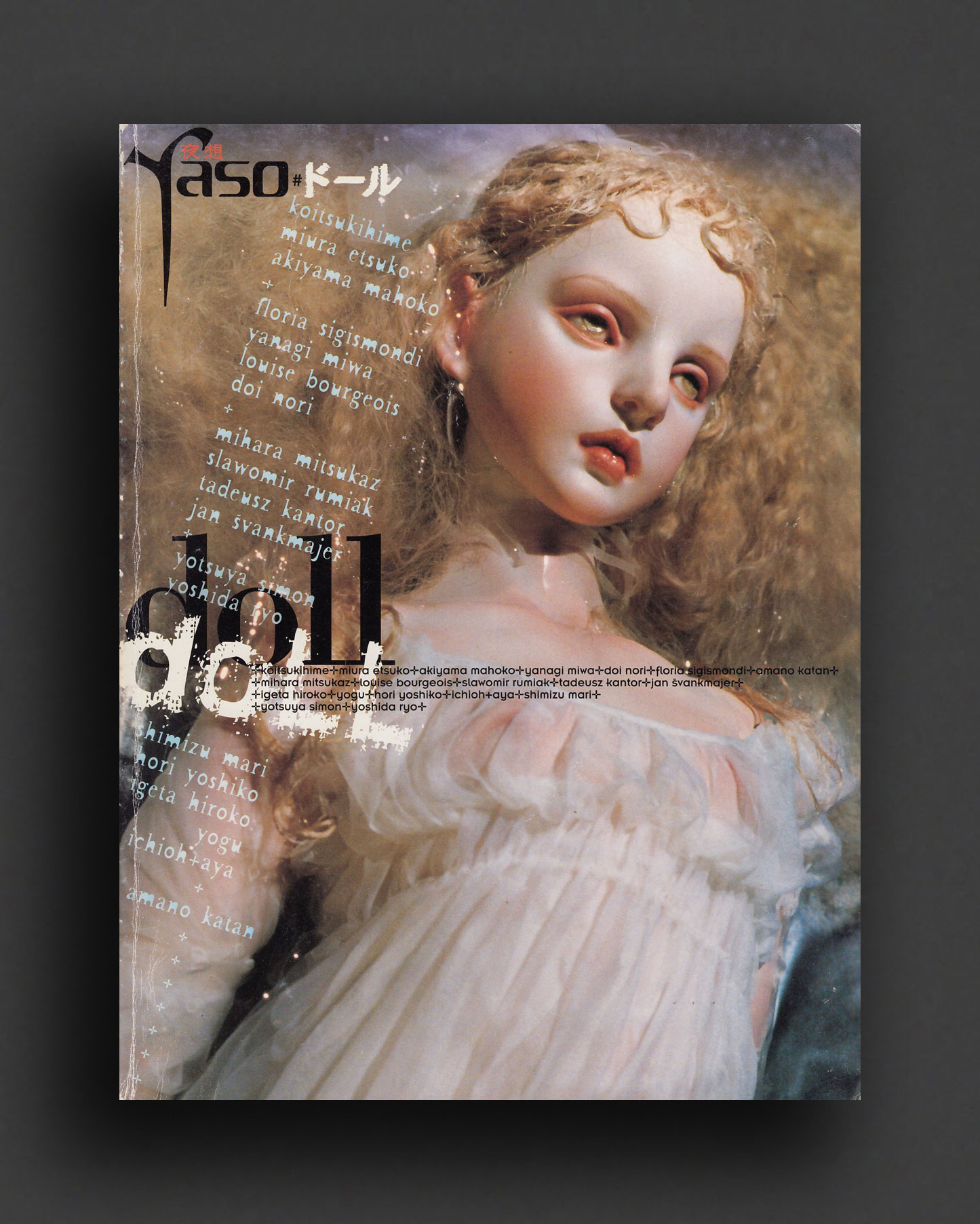
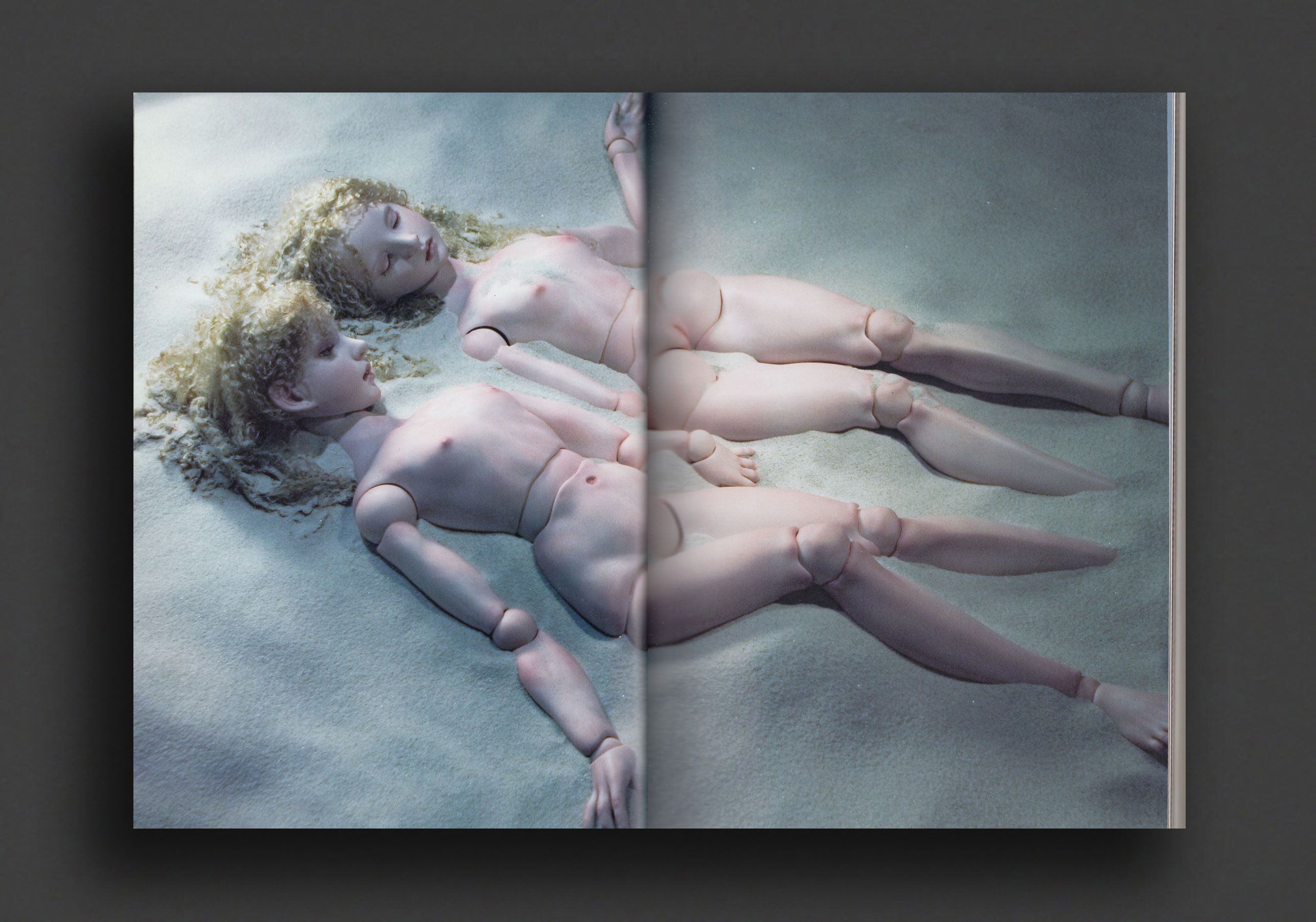
"Doll" Special Feature Issue of cult Japanese underground magazine Yaso, published in 2004, edited by Yuichi Konno and Atelier Peyotl (publishers of Night Vision/Yaso/Peyotl/Wave/Silvester Club...). Heavily illustrated with texts in Japanese with in-depth profiles, interviews and essays on leading artists that work with dolls, including contemporary Japanese masters of doll art, Koitsukihime, Katan Amano, Etsuko Miura, Yoshiko Hori, Yogu, Simon Yotsuya, Ryo Yoshida, Akiyama Mahoko, Mari Shimizu, influential Gothic Lolita illustrator Mitsukazu Mihara, Nori Doi, legendary Czech artist and animator Jan Švankmajer, Polish artist and theatre director Tadeusz Kantor, Japanese photographer Miwa Yanagi, film-maker Floria Sigismondi, Louise Bourgeois, Slawomir Rumiak, Nori Doi, and a fantastic illustrated book guide of doll-related art books and literature, from Mary Shelley to The Surrealists, Hans Bellmer, Ken Katayama, Pierre Mollinier, Makoto Aida, Irina Ionesco, H.R. Giger...
Very Good copy with some wear to cover extremities.
1968, Japanese
Softcover (lenticular cover w. illustrated slipcase), 244 pages, 18.5 x 12.5 cm
1st Edition, Out of print title / used / very good
Published by
Bijyutsu Shuppan / Tokyo
$200.00 - In stock -
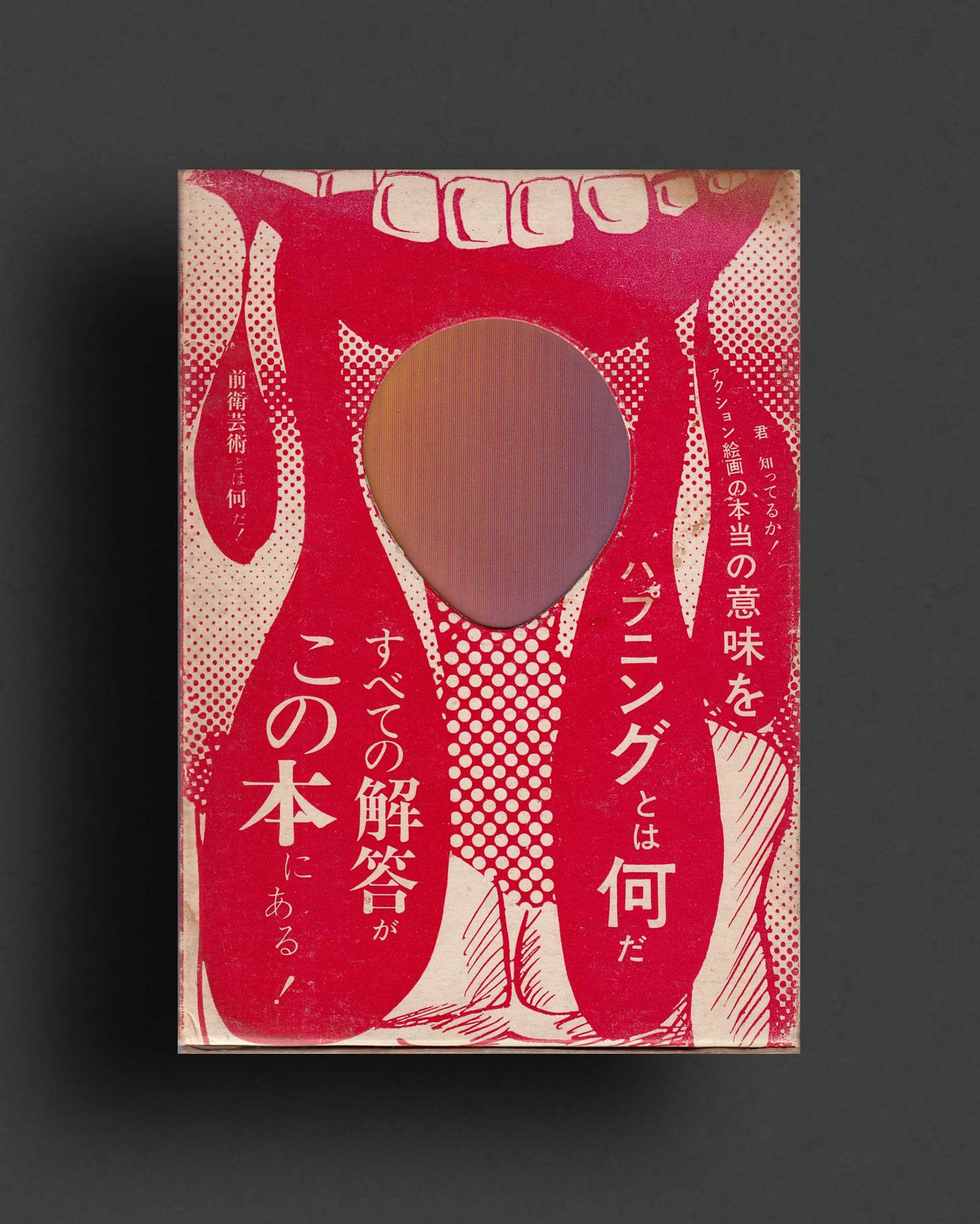
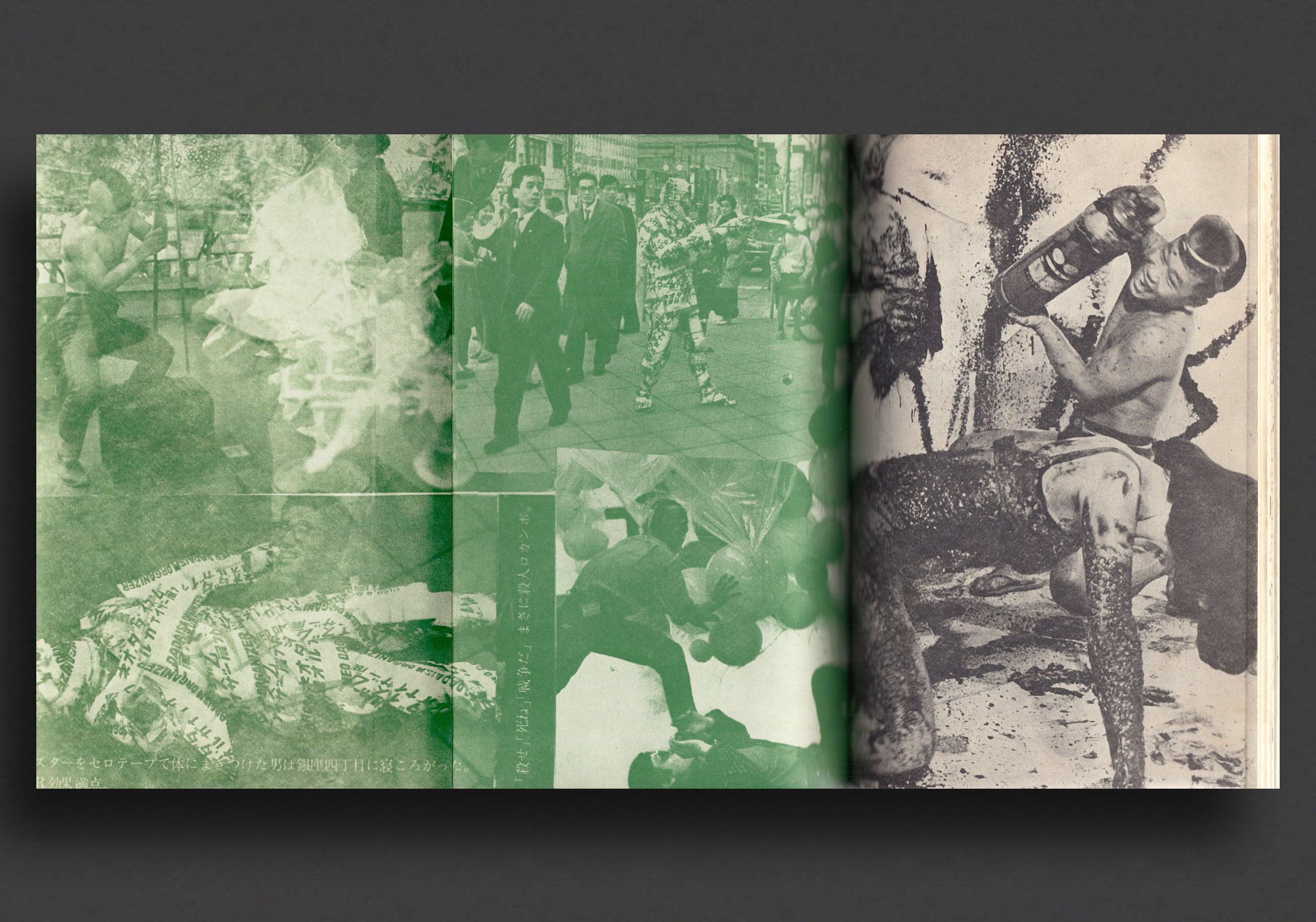
Rare first 1968 slipcase edition of legendary Japanese Neo-Dadaist Ushio Shinohara's autobiography art-book, published right before he left Japan for New York City. With endorsement on the slipcase from Japanese artist and theorist Tarō Okamoto, the book is as explosively designed as an iconic Shinohara boxing performance. Wrapped in a lenticular cover and spanning many different paper stocks and fold-out plates, "The Way of the Avant-Garde" is profusely illustrated with bold graphics, exhibition and performance photographs, cartoons and collages accompanying Shinohara's texts that document his post-war avant-garde work in Tokyo — a violent blend of Japanese unrest, Action Art and American Pop.
Ushio Shinohara (b. 1932), nicknamed “Gyu-chan” (Little Cow) for his iconic Mohawk haircut, was a pivotal member of the Neo-Dada movement (or Neo-Dada Organizers) in Japan along with artists Genpei Akasegawa, Masunobu Yoshimura, Shūsaku Arakawa, Sayako Kishimoto, Tetsumi Kudō, Natsuyuki Nakanishi, etc. The book focuses on his struggling years as a young artist in Japan, the early radical performances, actions, and exhibitions staged by himself and his peers in the avant-garde — impulsive spectacles, often involving physical destruction of objects, that the art critic Ichirō Hariu deemed "savagely meaningless," and that inspired another art critic, Yoshiaki Tōno, to coin the term "anti-art" (han-geijutsu). The term group member Genpei Akasegawa would later use was "creative destruction" whereby the group sought to create a space for new types of art to emerge by systematically seeking out and destroying all existing artistic norms and conventions. Examples included filling galleries with piles of garbage, smashing furniture to the beat of jazz music, and prancing the streets of Tokyo in various states of dress and undress. Using the human body as their medium of art, their violent performances reflected both their dissatisfaction with the restrictive environment of the Japanese art world at the time, as well as contemporary social developments, most notably the massive 1960 Anpo protests against the U.S.-Japan Security Treaty.
In June 1960, Akasegawa read out the group's "manifesto" (written by Ushio Shinohara) to a group of reporters:
"No matter how much we fantasize about procreation in the year 1960, a single atomic explosion will casually solve everything for us, so Picasso’s fighting bulls no longer move us any more than the spray of blood from a run-over stray cat. As we enter the blood-soaked ring in this 20th century—a century which has trampled on sincere works of art—the only way to avoid being butchered is to become butchers ourselves."
This statement conveyed a sense of hopeless desperation that, at a time when attempts to create new forms of art were being suffocated by oppressive ideologies and hide-bound institutions, the only way to save art was to kill it.
Shinohara embraced Pop Art as early as 1963. In 1964, Shinohara was inspired to creatively “copy” Robert Rauschenberg’s “Coca-Cola Plan” (1958), having seen the work pictured in an article by the iconic Japanese critic Yoshiaki Tono in “Mizue” magazine. Shinohara explained: “As I was looking closely at how it was made, I noticed the use of three empty Coca-Cola bottles and realized there were tons of empty Coca-Cola bottles in my backyard.” Because the original work by Rauschenberg had been reproduced in the magazine in black-and-white, Shinohara invented the colors for his own duplicative assemblage (of which he made ten), incorporating bright white and accents of yellow and red. When Rauschenberg visited Shinohara’s studio with Tono while visiting Tokyo in the same year, he was surprised to see Shinohara’s reimagining of his work, joyfully exclaiming, “My son!”
The book features Robert's creative friendship with Shinohara and documents their events and discussions together in Tokyo, illustrated with wonderful visual spreads of the “Coca-Cola Plan(s)", which contributed to an important artistic questioning of authorship and consumer culture that pre-occupied both artists.
Ushio has lived and worked in New York since 1969, his work has been exhibited internationally at institutions including the Hara Museum of Contemporary Art, Centre Georges Pompidou, the Guggenheim Museum SoHo, National Museum of Modern Art, Tokyo, Leo Castelli Gallery, New York, Museum of Contemporary Art, Los Angeles and The Metropolitan Museum of Art, Seoul, and others. Shinohara and his wife, Noriko, are the subjects of a documentary film by Zachary Heinzerling called Cutie and the Boxer.
Very Good copy in Good—VG slipcase (slipcase has some light marking an old damp-stains/toning, mostly to the back) otherwise well preserved.
1989, English
Softcover 138 pages, 28.6 x 19.5 cm
1st Edition, Out of print title / used / very good
Published by
Aperture / New York
Institute of Modern Art / Valencia
$440.00 - In stock -
Very rare first 1989 edition of one of Richard Prince’s best and most influential books. Spiritual America is a catalogue cum artist's book published by Aperture in conjunction with the artist’s landmark 1989 exhibition at the Institute of Modern Art in Valencia, Spain, and Guggenheim Museum, New York. Lavishly illustrated and stylishly designed closely with Prince by Bethany Johns, Spiritual America “retains a dual role as a retrospective survey of Prince’s work and a fascinating re-integration of his repertoire of images into the format from which they mostly originated - the magazine”(—Greg Hilty, Frieze Magazine). With over 200 colour images of Prince's work (the jokes, the bikers, the cowboys, the glamour girls, the hoods...), Spiritual America marked the first comprehensive publication on the artist and his work, featuring Prince's own texts as well as an incredible transcribed "interview" with author J.G. Ballard, and a preface by Corinne Diserens and Vincent Todoli.
"What would it be if I had the eyes of a fly?"
Artist's book entry 13 in "Bibliotheque d'un Amateur: Richard Prince's Publications 1981-2012"
VG—Near Fine, seemingly unread, tightly bound copy, no sunning. A light remainder stamp to top of book-block is the only detraction from a remarkable copy.
2022, English
Hardcover, 180 pages, 23.39 x 28.4 cm
Published by
Fulton Ryder / New York
$135.00 - Out of stock
“With the hoods, I wanted to paint something that was already painted.”―Richard Prince
Published to coincide with a major exhibition at Gagosian, New York, “Hoods, 1988–2013” documents Richard Prince’ 25-year body of work of the “Hoods” series.
Created by the artist Richard Prince (born 1949) in parallel to a major survey show, Hoods is both a monograph and an artist's book focused on a celebrated collection of painted sculptures made from 1988 through 2013. Archival photographs in the book document the evolution of the Hoods, cataloging both the artworks and Richard Prince's mythical "Body Shop" and the destroyed "Second House" in Upstate New York.
In an interview with photographer Larry Clark, Prince stated that "With the Hoods, I wanted to paint something that was already painted." From this simple act of conceptual appropriation, Prince evolved a massive body of work that engages deeply with the vernacular design tradition of the customized American muscle car. Taken all together, the sculptures, the upstate Body Shop and Prince's own photo-documentation evoke both ambiguous nostalgia as well as feelings of absence and loss, perhaps best expressed in a sampling of the artwork titles: Almost Grown; American Place; Folksongs; Vanishing Point.
2006, German
Hardcover (w. dust jacket), 280 pages, 28.5 x 23.7 cm
1st Edition, Out of print title / used / fine
Published by
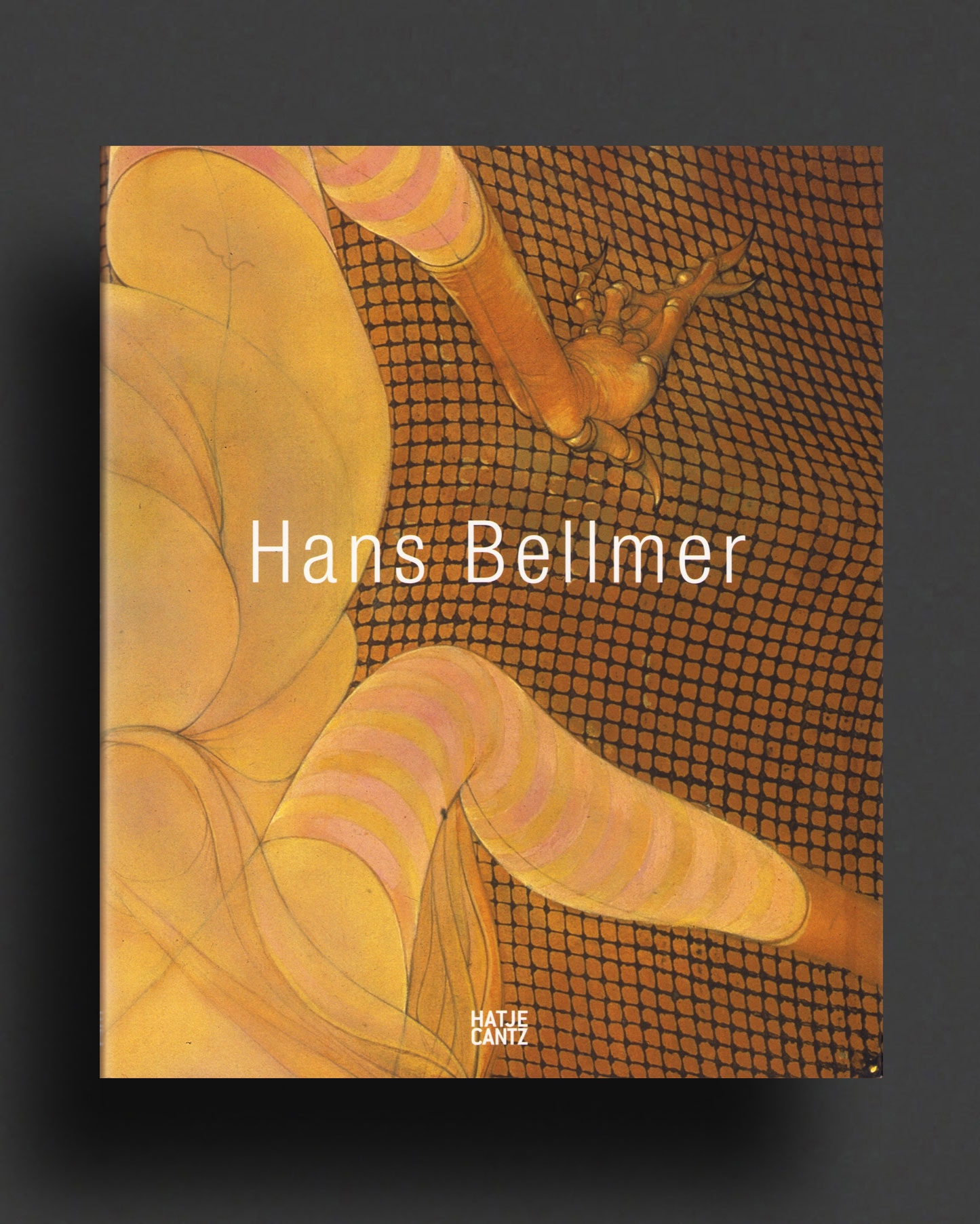
Hatje Cantz / Berlin
$180.00 - In stock -
"If the origin of my work is scandalous, it is because, for me, the world is a scandal."—Hans Bellmer
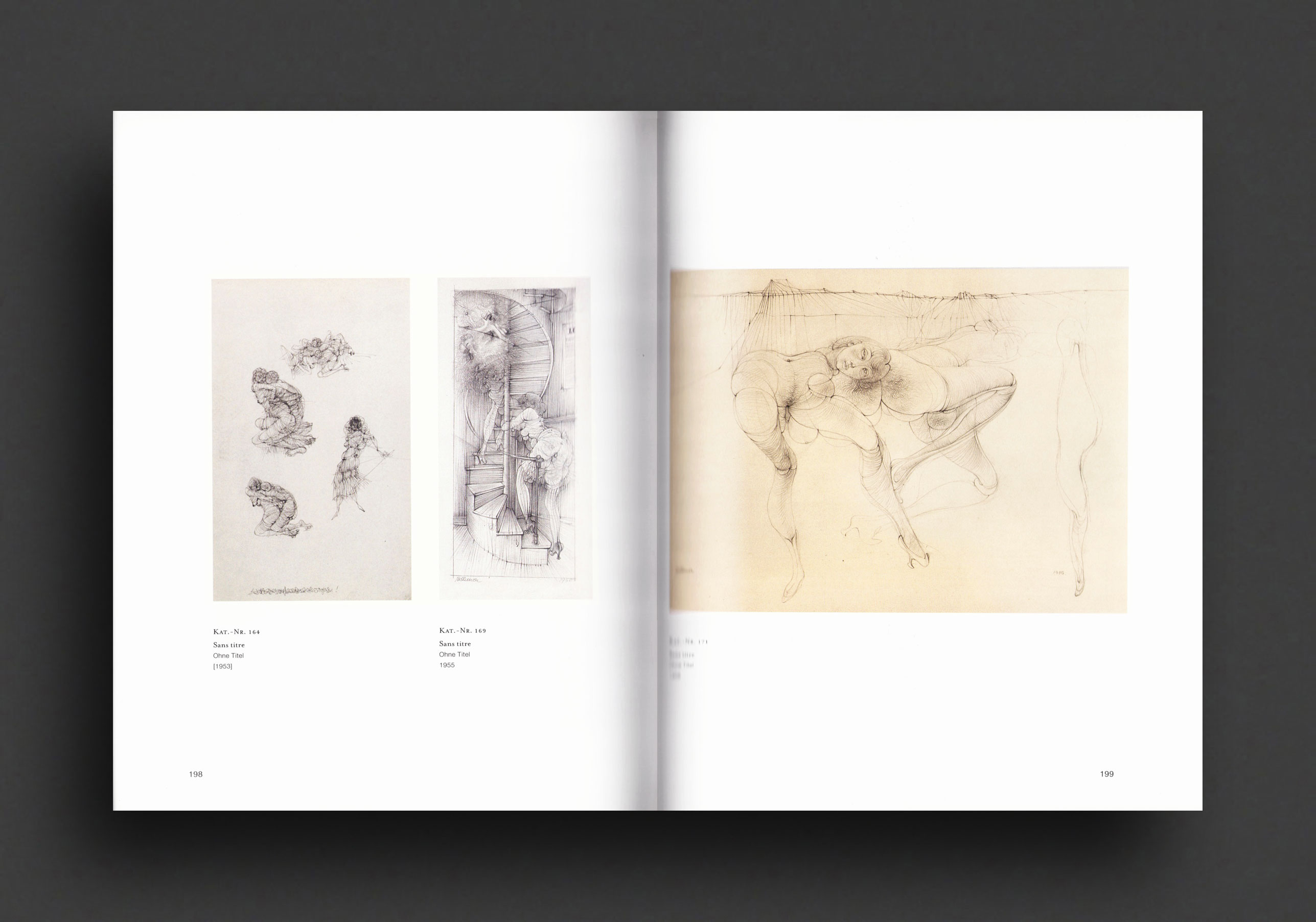
First hardcover edition of this lavish monograph on Hans Bellmer edited by Dr. Michael Semff and Anthony Spira to accompany the major retrospective exhibition at the Centre Georges Pompidou, Paris, March 1-May 22, 2006 · Staatliche Graphische Sammlung München, Munich, June 29-August 27, 2006·· Whitechapel Art Gallery, London, September 20-November 19, 2006.
The Surrealists' fascination for dolls and machines resembling humans is especially evident in the work of Hans Bellmer (1902-1975), the subject of this comprehensive monograph. Rejecting the Nazis' Aryan ideals, the artist began in 1933 to create disturbing dolls out of wax, wood, flax, plaster, and glue, equipped with wigs and glass eyes. Photographs of these fetishistic objects were published in Minotaure, the Surrealists' magazine, and eagerly supported by members of André Breton's circle. After emmigrating to Paris, Bellmer developed his erotic obsessions through art, influenced by the writings of the Marquis de Sade and Georges Bataille, and collaborated with his companion, the German artist Unica Zürn. Deeply involved in Freudian discourse, his drawings, lithographs, and photographs investigate psychoanalytical theories around hysteria and transference, and reveal a singular exploration into the relationship between language and body.
Fine copy of the German edition.
1985, English
Hardcover (w. dust jacket), 300 pages, 27.5 x 21 cm
1st Edition, Out of print title / used / very good
Published by
Quartet Books / London
$150.00 - Out of stock
First 1985 hardcover edition of the first fundamental and comprehensive study of Hans Bellmer (1902—1975), the most provocative representative of Surrealism, authored by Peter Webb with Robert Short and published by Quartet in London. English edition. Heavily illustrated throughout with many rare images, in colour and b/w, many photographs and artworks, with bibliography, catalogue and references.
"Surrealism was one of the most exciting and influential of twentieth century art movements and much has been written about it since its great flowering in the 1930s. The lives and work of its leading figures (Ernst, Magritte, Dali and Miró) have been extensively researched, but Hans Bellmer, perhaps the most controversial and misunderstood of all the surrealists, has until now remained a mystery. Peter Webb, who interviewed Bellmer shortly before his death, has spent two years unravelling the story of this photographer, sculptor, painter, engraver and writer, and his book provides the first opportunity to evaluate Bellmer's considerable artistic achievement."—book jacket blurb
Very Good copy in VG dust jacket.
1997, Japanese
Softcover, 32 pages, 25.5 x 18.2 cm
1st Edition, Out of print title / used / very good
Published by
G.I. Joe Collectors Club of Japan / Tokyo
$30.00 - In stock -
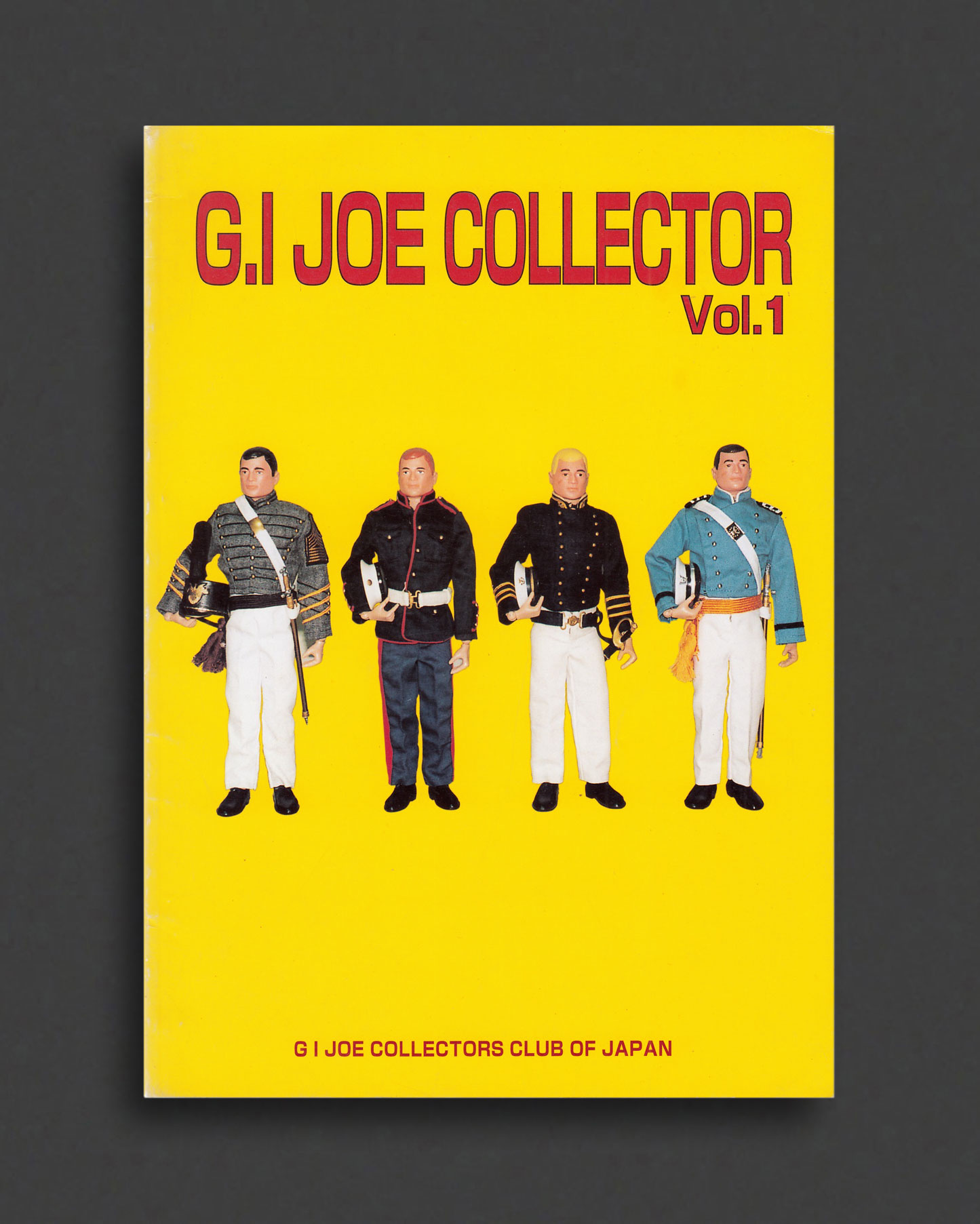
First issue of G.I. Joe Collector, the official fanzine of the G.I. Joe Collectors Club of Japan, a glossy newsletter published in 1997 for club members. All things devoted to the classic American action figure created by Hasbro in 1964, G.I. Joe Collector was the primary source of reference for collectors in Japan, with this issue launching the club, featuring a Joe convention report, illustrated articles on the history of many specific figures including G.I. Nurse and G.I. Jane, lots of uniform research, tripwire figures, G.I. Joe customs, and much more. Very heavily illustrated throughout in colour and b/w with texts in Japanese.
Very Good—Near Fine copy, light wear to edges, tightly bound and preserved.