World Food Books' programme is largely produced on Kulin Nation land. We acknowledge the Wurundjeri people of the Kulin Nation as the first and continuing custodians of this land, and pay respect to their Elders past, present, and emerging.
World Food Books is an arts and special interests bookshop in Naarm / Melbourne. Founded in 2010, World Food Books is devoted to the presentation of a rotating, hand-selection of international art, design, literary and counterculture publications with an emphasis on the anti-traditional, the experimental, the avant-garde, the heretic, the marginal.
Presenting new titles alongside rare and out-of-print books, catalogues and journals spanning the fields of modern and contemporary art, design, photography, illustration, film, literature, poetry, cultural theory, philosophy, sexuality, popular and underground culture in its many radical forms, World Food Books wishes to encourage adventurous, thoughtful and open-minded reading, looking, writing, and exchange of publishing and ideas, both current and historical.
As well as our bookshop, located in Melbourne's historical Nicholas Building, all of our inventory is available internationally via our online mail-order service.
World Food Books semi-regularly co-ordinates "Occasions", a programme of exhibits and events at the bookshop and in partnership with other hosts (such as museums and art galleries) that develop out of the activities, relationships and content of the bookshop itself.
World Food Books
The Nicholas Building
37 Swanston Street
Room 5, Level 6
Melbourne 3000
Australia
SHOP HOURS:
Thu–Sat 11–5
WEB-SHOP OPEN 24/7
World Food Books
Postal Address:
PO Box 435
Flinders Lane
Victoria 8009
Australia
Art
Theory / Essay
Architecture / Interior
Graphic Design / Typography
Photography
Fashion
Eros
LGBTQ+
Fiction / Poetry
Weird / Speculative / Science Fiction / Horror
Transgressive / Visceral / Abject
Symbolism / Decadence / Fin de siècle
Film / Video
Painting
Sculpture / Installation
Performance / Dance / Theater
Drawing
Sound / Music
Curatorial
Group Shows / Collections
Periodicals
Out-of-print / Rare
Posters / Ephemera / Discs
Signed Books
World Food Books Gift Voucher
World Food Book Bag
Australian Art
Australian Fiction
Australian Science Fiction / Speculative Fiction
Australian Poetry
Australian Photography
Japanese Photography
Conceptual Art
Minimal Art
Dada
'Pataphysics / Oulipo
Fluxus
Concrete Poetry
Pop Art
Surrealism
Arte Povera
Arte Informale / Haute Pâte / Tachism
Nouveau Réalisme / Zero / Kinetic
Situationism / Lettrism
Collage / Mail Art / Xerox Art
Art Brut / Folk / Visionary / Fantastic
Illustration / Graphic Art / Bandes Dessinées
Furniture
Italian Radical Design / Postmodernism
Textiles
Ceramics / Glass
Counterculture
Protest / Revolt
Philosophy
Psychoanalysis
Anthropology
Anarchism
Socialism / Anarchism / Communism / Capitalism
Literary Theory / Semiotics / Language
Feminism / Women's Studies
Gender Studies / Sexuality
Anthropology
Fetishism / BDSM
Drugs / Psychedelia
Crime / Violence
Animal Rights / Veganism
Occult / Esoterica
Ecology / Earth / Alternative Living
Whole Earth / Crafts
All prices in AUD (Australian dollars)
Pick-Ups
Pick-up orders can be collected in our bookshop during opening hours after order date. Please collect any Pick-up orders within 2 weeks of ordering as we have limited storage space. Orders will be released back into stock if not collected within this time. No refunds can be made for pick-ups left un-collected. If you cannot make it in to the bookshop in this time-frame, please choose postage option.
Return Policy
All sales are final. We do accept returns (for refund or exchange) for items received in error. All our orders are packed with special care using heavy-duty padding and cardboard book-mailers or bubble mailers (for smaller books), using reinforcement where required. We cannot take responsibility for any lost, stolen or damaged parcels.
Insurance
Should you wish to insure your package, please email us directly after placing your order and we can organise this at a small extra expense. Although all standard/express tracked packages are very safe and dependable, we cannot take responsibility for any lost, stolen or damaged parcels. We recommend insurance on valuable orders.
Interested in selling your old books, catalogues, journals, magazines, comics, fanzines, ephemera? We are always looking for interesting, unusual and out-of-print books to buy. We only buy books in our fields of interest and specialty, and that we feel we can resell.
We base these prices on desirability, market value, in-print prices, condition and our current stock levels. We offer cash, store credit, and can take stock on consignment. All
about 25% of the price we expect to get when we sell them, or 30% in store credit. We base these prices on desirability, market value, in-print prices, condition and our current stock levels.
Sell your books any day of the week. You can drop them off and return later. If you have a lot of books, we can visit your Sydney home.
We buy books that we feel we can resell. We offer about 25 % of the price we expect to get when we sell them, or 30% in store credit. We base these prices on desirability, market value, in-print prices, condition and our current stock levels.
Philadelphia Wireman
03 August - 01 September, 2018
World Food Books is proud to announce our next Occasion, the first presentation of sculptures by Philadelphia Wireman in Australia.
The Philadelphia Wireman sculptures were found abandoned in an alley off Philadelphia’s South Street on trash night in 1982. Their discovery in a rapidly-changing neighbourhood undergoing extensive renovation, compounded with the failure of all attempts to locate the artist, suggests that the works may have been discarded after the maker’s death. Dubbed the "Philadelphia Wireman" during the first exhibition of this work, in 1985, the maker’s name, age, ethnicity, and even gender remain uncertain. The entire collection totals approximately 1200 pieces, all intricately bound together with tightly-wound heavy-gauge wire (along with a few small, abstract marker drawings, reminiscent both of Mark Tobey and J.B. Murry). The dense construction of the work, despite a modest range of scale and materials, is singularly obsessive and disciplined in design: a wire armature or exoskeleton firmly binds a bricolage of found objects including plastic, glass, food packaging, umbrella parts, tape, rubber, batteries, pens, leather, reflectors, nuts and bolts, nails, foil, coins, toys, watches, eyeglasses, tools, and jewellery.
Heavy with associations—anthropomorphic, zoomorphic, and socio-cultural responses to wrapped detritus—the totemic sculptures by Philadelphia Wireman have been discussed in the context of work created to fulfil the shamanistic needs of alternative religions in American culture. Curators, collectors, and critics have variously compared certain pieces to sculpture from Classical antiquity, Native American medicine bundles, African-American memory jugs, and African fetish objects. Reflecting the artist’s prolific and incredibly focused scavenging impulse, and despite—or perhaps enhanced by—their anonymity, these enigmatic objects function as urban artefacts and arbiters of power, though their origin and purpose is unknown. Philadelphia Wireman, whatever their identity, possessed an astonishing ability to isolate and communicate the concepts of power and energy through the selection and transformation of ordinary materials. Over the course of the past two decades, this collection has come to be regarded as an important discovery in the field of self-taught art and vernacular art.
Presented in collaboration with Fleisher-Ollman Gallery, Philadelphia, and Robert Heald, Wellington.
Susan Te Kahurangi King
02 February - 10 March, 2018
Susan Te Kahurangi King (24 February 1951 - ) has been a confident and prolific artist since she was a young child, drawing with readily available materials - pencils, ballpoint pens and felt-tip markers, on whatever paper is at hand. Between the ages of four and six Susan slowly ceased verbal communication. Her grandparents William and Myrtle Murphy had developed a special bond with Susan so they took on caring responsibilities for extended periods. Myrtle began informally archiving her work, carefully collecting and storing the drawings and compiling scrapbooks. No drawing was insignificant; every scrap of paper was kept. The King family are now the custodians of a vast collection containing over 7000 individual works, from tiny scraps of paper through to 5 meter long rolls.
The scrapbooks and diaries reveal Myrtle to be a woman of great patience and compassion, seeking to understand a child who was not always behaving as expected. She encouraged Susan to be observant, to explore her environment and absorb all the sights and sounds. Myrtle would show Susan’s drawings to friends and people in her community that she had dealings with, such as shopkeepers and postal workers, but this was not simply a case of a grandmother’s bias. She recognised that Susan had developed a sophisticated and unique visual language and sincerely believed that her art deserved serious attention.
This was an unorthodox attitude for the time. To provide some context, Jean Dubuffet coined the term Art Brut in 1945 to describe work created by self-taught artists – specifically residents of psychiatric institutions and those he considered to be visionaries or eccentrics. In 1972 Roger Cardinal extended this concept by adopting the term Outsider Art to describe work made by non-academically trained artists operating outside of mainstream art networks through choice or circumstance. Susan was born in Te Aroha, New Zealand in 1951, far from the artistic hubs of Paris and London that Dubuffet and Cardinal operated in. That Myrtle fêted Susan as a self-taught artist who deserved to be taken seriously shows how progressive her attitudes were.
Susan’s parents Doug and Dawn were also progressive. Over the years they had consulted numerous health practitioners about Susan’s condition, as the medical establishment could not provide an explanation as to why she had lapsed into silence. Dawn educated herself in the field of homeopathy and went on to treat all twelve of her children using these principles – basing prescriptions on her observations of their physical, mental and emotional state.
Doug was a linguist with an interest in philosophy who devoted what little spare time he had to studying Maori language and culture. To some extent their willingness to explore the fringes of the mainstream made them outsiders too but it was their commitment to living with integrity and their respect for individuality that ensured Susan’s creativity was always encouraged.
Even though Susan’s family supported her artistic pursuits, some staff in schools and hospitals saw it as an impediment to her assimilation into the community and discouraged it in a variety of ways. Her family was not always aware of this and therefore did not fully understand why Susan stopped drawing in the early 1990s. However, rather than dwell on the challenges that Susan faced in pursuit of her artistic practice, they prefer to highlight her achievements. In 2008 Susan began drawing again in earnest, after an almost 20 year interruption, and her work is now shown in galleries around the world.
Susan grew up without television and has been heavily influenced by the comics she read as a child. She is absolutely fearless in the appropriation of recognizable characters, such as Donald Duck and Mickey Mouse, in her work. She twists their limbs, contorts their faces, compresses them together, blends them into complex patterned backgrounds - always imbuing them with an incredible energy. Although Susan often used pop culture characters in her work they are not naive or childlike. These are drawings by a brilliant self-taught artist who has been creating exceptional work for decades without an audience in mind.
Mladen Stilinović
"Various Works 1986 - 1999"
02 February 16 - September 10, 2016
Various works 1986 - 1999, from two houses, from the collections of John Nixon, Sue Cramer, Kerrie Poliness, Peter Haffenden and Phoebe Haffenden.
Including: Geometry of Cakes (various shelves), 1993; Poor People’s Law (black and white plate), 1993; White Absence (glasses, ruler, set square, silver spoon, silver ladel with skin photograph and wooden cubes), 1990-1996; Exploitation of the Dead (grey and red star painting, wooden painting, black spoon with red table, red plate), 1984-1990; Money and Zeros (zero tie, paintings made for friends in Australia (Sue, John, Kerrie), numbers painting), 1991-1992; Words - Slogans (various t-shirts) - “they talk about the death of art...help! someone is trying to kill me”, “my sweet little lamb”, “work is a disease - Karl Marx”; Various artist books, catalogues, monographs, videos; Poster from exhibition Insulting Anarchy; "Circular" Croatian - Australian edition; Artist book by Vlado Martek (Dostoyevsky); more.
Thanks to Mladen Stilinović and Branka Stipančić.
Jonathan Walker
Always Will Need To Wear Winter Shirt Blue + Ochre Small Check Pattern
21 August - 21 September, 2015
Untitled
I am not a great reader of poetry but I always return to the work of Melbourne poet, Vincent Buckley (1925- 1988). Perhaps I find his most tantalising piece to be not a finished poem but a fragment left on a scrap of paper discovered on his desk after the poet’s death.
The poetry gathers like oil
In the word-core, and spreads
It has its music meet,
Its music is in movement.
This fragment is more the shell left behind from a volatile thought than a finished poem. I find the last two lines honest but awkward whereas the first two lines work like an arrow. Most likely he could not find a resolution so it was left. Still, in its present form, it remains an eloquent testimony to the ultimate failure of a medium to express mobile thought and sensation, in Buckley’s case, through verbal language. It’s an important matter because this is something all artists have to deal with regardless of the medium.
I have never written a poem, however, I am forever copying fragments from books on paper scraps in a vain effort to fix certain notions in my head. At first, they function as bookmarks that are sometimes returned to when I open the book. But before long, as they accumulate, they fall out littering the table interspersed with A4 photocopies, bills, books and medications.
To return to Buckley’s fragment, the first two lines very much evoke how I paint nowadays. As you age, detail diminishes and patches of light become more luminous and float. I feel the most honest way of dealing with this is by smearing the oil paint on the canvas with the fingers and working close-up, blind. Only if the patches coalesce into an approaching image can the work gain a life.
-
Jonathan Walker was born in Melbourne, Australia and brought up on a dairy farm in Gippsland. In the 1970’s he studied painting at RMIT and won the Harold Wright Scholarship to the British Museum, London. During the 1980’s he exhibited at Pinacotheca Gallery, Richmond and had work shown at the NGV and Heidi City Art Gallery. Over the same period he designed the cover for the “Epigenesi” LP by Giancarlo Toniutti, Italy and conducted a mail exchange work with Achim Wollscheid, Germany. The work with artists through the post resulted in an article published in the bicentenary issue of Art and Australia 1988. He showed in artist run spaces such as WestSpace in the 90’s and 2000’s, and until 2012, taught painting at Victoria University, which is where we (Colleen Ahern and Lisa Radford) as organisers of the exhibition, among many others, had the privilege of being his student.
Walker’s knowledge was imparted to students through the careful selection of music, literature, and artists found in books that he himself had ordered for the library. Walker’s strategy was the generosity of sharing his vast knowledge with references specific to each student and their context.
Walker’s paintings share a similar focus and intimacy.
This exhibition presents a small selection of recent paintings alongside a publication that includes Walker’s writing. Observational and analytical, Walker’s work is a type of material notation — the time of day, colour and how it is blended, the both specific and fleeting location of a reflection on lino or the question of whether a chair leg should be included in a painting.
Please join us on Friday August 21 between 6-8pm to celebrate the opening of the exhibition.
Curated by Colleen Ahern and Lisa Radford.
B. Wurtz
Curated by Nic Tammens
March 26 - April 4, 2015
B.Wurtz works from a basement studio in his home on Manhattan’s Lower East Side.
This local fact is attested to by the plastic shopping bags and newsprint circulars that appear in his work. As formal objects, they don’t make loud claims about their origins but nonetheless transmit street addresses and places of business from the bottom of this long thin island. Like plenty of artists, Wurtz is affected by what is local and what is consumed. His work is underpinned by this ethic. It often speaks from a neighborhood or reads like the contents of a hamper:
“BLACK PLUMS $1.29 lb.”
“Food Bazaar”
“USDA Whole Pork Shoulder Picnic 99c lb.”
“RITE AID Pharmacy, with us it’s personal.”
“H. Brickman & Sons.”
“Sweet Yams 59c lb."
Most of the work in this exhibition was made while the artist was in residence at Dieu Donne, a workshop dedicated to paper craft in Midtown. Here Wurtz fabricated assemblages with paper and objects that are relatively lightweight, with the intention that they would be easily transportable to Australia. This consideration isn’t absolute in Wurtz’s work, but was prescriptive for making the current exhibition light and cheap. Packed in two boxes, these works were sent from a USPS post office on the Lower East Side and delivered to North Melbourne by Australia Post.
Wurtz appears courtesy of Metro Pictures, New York.
Thanks to Rob Halverson, Joshua Petherick, Sari de Mallory, Matt Hinkley, Helen Johnson, Fayen d'Evie, Ask Kilmartin, Lisa Radon, Ellena Savage, Yale Union, and "Elizabeth".
John Nixon
"Archive"
December 15 - January 20, 2014
The presentation of John Nixon's archive offered a rare showcase of this extensive collection of the artist's own publications, catalogues, posters, ephemera, editions and more, from the mid 1980s onwards, alongside a selection of his artworks.
Organized by John Nixon, Joshua Petherick and Matt Hinkley.
<a href=http://wfb.public-office.info/artist/john-nixon>All titles by John Nixon
"Habitat"
at Minerva, Sydney (organised by Joshua Petherick and Matt Hinkley)
November 15 - December 20, 2014
Lupo Borgonovo, Janet Burchill & Jennifer McCamley,
Lewis Fidock, HR Giger, Piero Gilardi, Veit Laurent Kurz,
Cinzia Ruggeri, Michael E. Smith, Lucie Stahl, Daniel Weil, Wols
Press Release:
“...It contained seven objects. The slender fluted bone, surely formed for flight, surely from the wing of some large bird. Three archaic circuitboards, faced with mazes of gold. A smooth white sphere of baked clay. An age-blackened fragment of lace. A fingerlength segment of what she assumed was bone from a human wrist, grayish white, inset smoothly with the silicon shaft of a small instrument that must once have ridden flush with the surface of the skin - but the thing’s face was seared and blackened.”
William Gibson, “Count Zero”, 1986
"Autumn Projects Archive"
Curated by Liza Vasiliou
March 6 - March 15, 2014
World Food Books, in conjunction with the Virgin Australia Melbourne Fashion Festival 2014, presented the Autumn Projects archive, consisting of a selection of early examples in Australian fashion with a particular interest in collecting designers and labels from the period beginning in the 1980’s, who significantly influenced the discourse of Australian Fashion.
Curated by Liza Vasiliou, the exhibition provided a unique opportunity to view pieces by designers Anthea Crawford, Barbara Vandenberg, Geoff Liddell and labels CR Australia, Covers, Jag along with early experimental collage pieces by Prue Acton and Sally Browne’s ‘Fragments’ collection, suspended throughout the functioning World Food Books shop in Melbourne.
H.B. Peace
presented by CENTRE FOR STYLE
November 14, 2013
"Hey Blinky, you say chic, I say same"
Anon 2013
H.B. Peace is a clothing collaboration between great friends Blake Barns and Hugh Egan Westland. Their pieces explore the divergences between 'character’ and ‘personality’ in garments....etc
Special Thanks to Joshua Petherick and Matt Hinkley of WFB and Gillian Mears
and a Very Special Thank you to Audrey Thomas Hayes for her shoe collaboration.
Janet Burchill & Jennifer McCamley
"Aesthetic Suicide"
May 10 - June 8, 2013
The first of our occasional exhibitions in the World Food Books office/shop space in Melbourne, "Aesthetic Suicide" presented a body of new and older works together by artists Janet Burchill & Jennifer McCamley, including videos, prints, a wall work, and publications.
During shop open hours videos played every hour, on the hour.
2014 / 2022, English
Softcover, 92 pages, 14.5 x 21.8 cm
Published by
Zero Books / UK
$29.00 - Out of stock
After 1989, capitalism has presented itself as the only realistic political economic system. What effects has this 'capitalist realism' had on work, culture, education and mental health? Is it possible to imagine an alternative to capitalism that is not some throwback to discredited models of state control?
"The beauty of Mark Fisher's laser sharp critique of the destructive effects of life under Neo-Liberalism was that it spoke to ordinary people in plain language that went beyond the often hermetic intellectual world of Academia. He is greatly missed. We need voices like Mark's more than ever."—Bobby Gillespie, Primal Scream”
Mark Fisher is highly respected both as a music writer and a theorist. He writes regularly for The Wire, frieze, New Statesman, and Sight & Sound. He is a Visiting Fellow at Goldsmiths, University Of London, and maintains one of the most successful weblogs on cultural theory, k-punk (http://k-punk.abstractdynamics.org)
1970, English
Softcover, 374 pages, 21 x 13 cm
1st Edition, Out of print title / used / good
Published by
The MIT Press / Massachusetts
$50.00 - In stock -
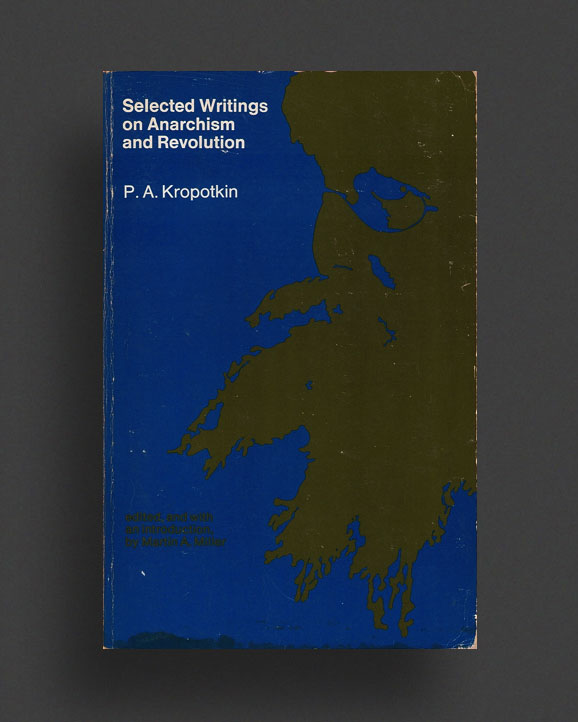
Scarce first 1970 edition of Kropotkin's Selected Writings on Anarchism and Revolution, published by the MIT Press, edited with an introduction by Martin A. Miller.
The selection of this anthology is designed to reveal such fundamental conceptions as Kropotkin's interpretation of the role of anarchism in modern history, his criticism of capitalism, his theory of revolution, and his views of the ideals to be realized in the postrevolutionary society of the future.
The editor of this anthology writes that anarchism in the late nineteenth century combined within itself the extremes of intellectuals such as Kropotkin and Tolstoy surrounded by an aura of unimpeachable moral conduct, together with assassins and bandit-outlaws such as Ravachol and Sazonov. What these widely disparate individuals shared was a common attitude toward society and the state. It was an attitude of profound alienation cutting across all social class lines from urban aristocrat to rural peasant.
This anthology contains selected essays and correspondence of Peter Alekseevich Kropotkin, who was, after Bakunin's death in 1876, unquestionably the most widely read and respected theorist of anarchism. The selection is designed to reveal such fundamental conceptions as Kropotkin's interpretation of the role of anarchism in modern history, his criticism of capitalism, his theory of revolution, and his views of the ideals to be realized in the postrevolutionary society of the future. The theoretical writings are supplemented by more concrete articles dealing specifically with conditions in nineteenth-century Russia--a society confronted by an authentic revolutionary opposition. Kropotkin's analysis of the revolution itself is implicit in the report of his meeting with Lenin and in his letters to the Bolshevik leader. The letters to Nettlau, Steffen, and Brandes present additional concerns which are closely related to the large themes of anarchism and revolution described in the essays.
Martin Miller's introduction surveys and analyzes the most significant aspects of Kropotkin's life and thought: Kropotkin's formative years in Russia, 1842-1876, and the origins of his anarchist thinking (military service in eastern Siberia, the influence of the works of Proudhon and Bakunin, his role in the Chaikovskii Circle); his years as an emigre in western Europe, 1976-1917, and the ripening of his political thought (editor of Le Révolté, his views on propaganda by the deed and on Marxist socialism); and his last years in the Soviet Union, 1917-1921 (the revolution and civil war, his meeting and correspondence with Lenin).
Good copy with general age wear. Previous owners name.
1976, English
Softcover, 362 pages, 21 x 13 cm
1st Edition, Out of print title / used / good
Published by
Sargent Porter / Massachusetts
$50.00 - Out of stock
First 1976 English edition of Kropotkin's Mutual Aid : A Factor of Evolution, published by Extending Horizons / Sargent Porter, Massachusetts. The fascinating work of a Russian prince-turned-anarchist, Peter Kropotkin (1842-1921), Mutual Aid is a pioneering treatise on cooperation and reciprocity, from the major anarchist thinker.
"Don't compete! - competition is always injurious to the species, and you have plenty of resources to avoid it!"
Welcome to the anarchist history of the world. In this lively, provocative work, Peter Kropotkin argues that 'mutual aid' is a natural instinct in all of us, animal and human. Cooperation, reciprocity, support: these, for Kropotkin, are the overlooked foundations of our history.
From the earliest days of evolution through to artisanal guilds, indigenous nomads and even the Royal National Lifeboat Association, it is a pragmatic, mutually beneficial bond to our fellow humans that has allowed us to survive. In this, Kropotkin challenges all the major orthodoxies of his age, from individualism and social Darwinism to Marxist theories of the saviour state. Instead, these essays insist that a better life for all of us - and our planet - begins when we reject competition, and embrace the local, the mutual and the collective.
One of the world's first international celebrities, Kropotkin was known as a brilliant scientist, famous for his work on animal and human cooperation, but also for his role as a founder and vocal proponent of anarchism. Kropotkin's path to fame was unexpected and labyrinthine, with asides in prison, breathtaking 50,000-mile journeys through the wastelands of Siberia, and banishment, for one reason or another, from most respectable Western countries of the day. In his homeland of Russia, Peter went from being Czar Alexander II's favored teenage page, to a young man enamored with the theory of evolution, to a convicted felon, jail-breaker and general agitator, eventually being chased halfway around the world by the Russian Secret police for his radical - some might (and did) say enlightened - political views.
Both while in jail, and while on the run when he was entertaining and enlightening huge crowds, Kropotkin found the energy and concentration to write books on a dazzling array of topics: evolution and behavior, ethics, the geography of Asia, anarchism, socialism and communism, penal systems, the coming industrial revolution in the East, the French Revolution, and the state of Russian literature. Though seemingly disparate topics, a common thread - the scientific law of mutual aid, which guided the evolution of all life on earth - tied these works together. This law boils down to Kropotkin's deep-seated conviction that what we today would call altruism and cooperation - but what the Prince called mutual aid - was the driving evolutionary force behind all social life, be it in microbes, animals or humans. Today, anthropologists, political scientists, economists and psychologists publish hundreds of studies each year on human cooperation, and researchers in these fields are just beginning to realize that so many of the topics they are investigating were first suggested and promulgated by Peter Kropotkin.
Good copy with general age wear. Previous owners name.
2015, English
Softcover, 72 pages, 9.5 x 14.8 cm
Published by
Sternberg Press / Berlin
Moderna Museet / Stockholm
$27.00 - In stock -
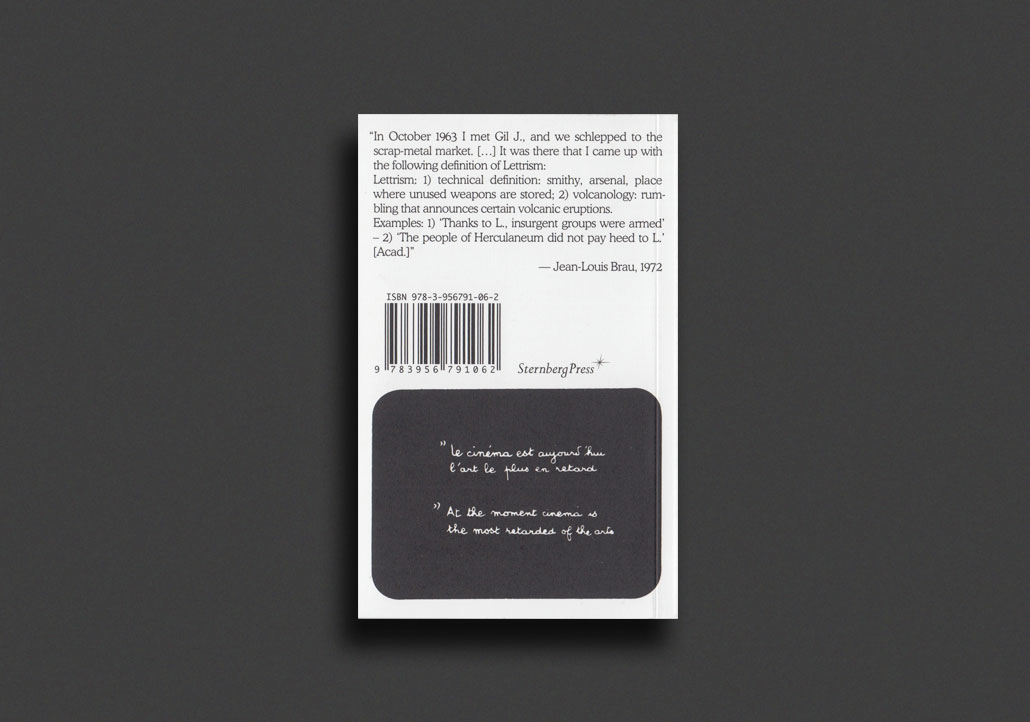
In October 1963 I met Gil J., and we schlepped to the scrap-metal market. [...] It was there that I came up with the following definition of Lettrism:
Lettrism: 1) technical definition: smithy, arsenal, place where unused weapons are stored; 2) volcanology: rumbling that announces certain volcanic eruptions. Examples: 1) “Thanks to L., insurgent groups were armed” – 2) “The people of Herculaneum did not pay heed to L.” [Acad.]
—Jean-Louis Brau, 1972
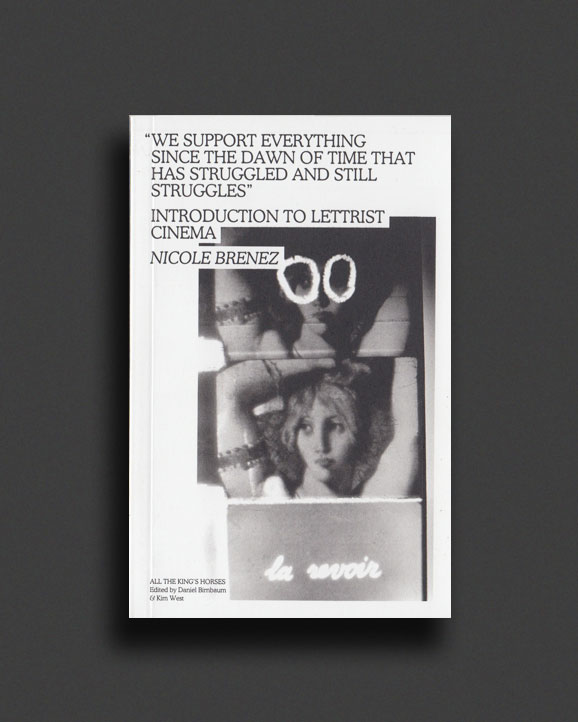
The Lettrist movement is unique in the history of avant-garde formations. Founded by Isidore Isou in Paris immediately after World War II, it remains active to this day, having lost none of its radicalism, either aesthetic or ethical. In this book, Nicole Brenez presents the key figures and the basic concepts of Lettrist cinema, the art form within which their formal innovations proved the most far-reaching, prefiguring the breakthroughs of the nouvelle vague and the experiments of expanded cinema.
All the King’s Horses series, edited by Daniel Birnbaum and Kim West
Copublished with Moderna Museet, Stockholm, with support from Allianz Kulturstiftung
Translated from the French by Clodagh Kinsella
Design by Studio Christopher West
2015, English
Softcover, 64 pages, 9.5 x 14.8 cm
Published by
Sternberg Press / Berlin
Moderna Museet / Stockholm
$27.00 - Out of stock
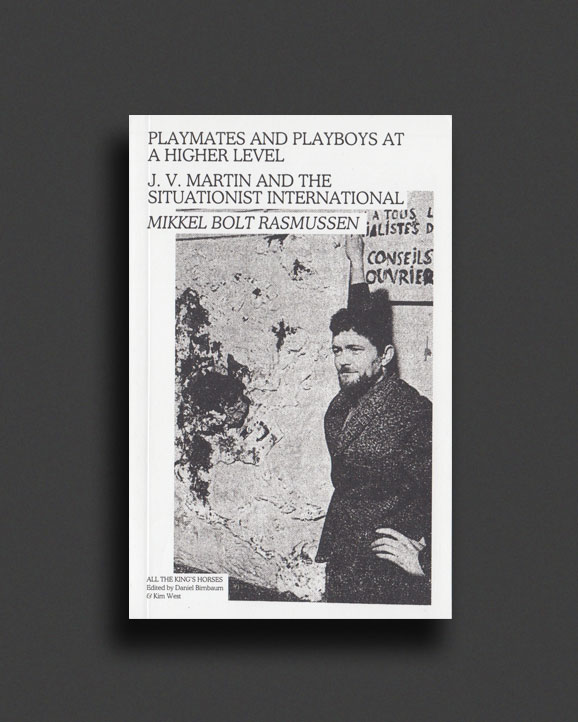
Considering these facts the Central Committee of the Situationist International:
– proclaims that all followers of Nash, the falsifier, and Elde, his agent, will be considered enemies of the SI.
– confers on J. V. Martin the supreme authority to represent the Situationist International in the area covered by the former Scandinavian section (Denmark, Finland, Norway, and Sweden) together with the task and the responsibility to reorganize the true Situationist elements in these countries before the opening of the 6th SI congress in Antwerp.
For the C. C. of the SI.
23 March, 1962
Debord, A. Kotanyi, U. Lausen, R. Vaneigem
—Proclamation from the Internationale Situationniste, 1962
After the infamous split in the Situationist International in 1962, the Danish artist J. V. Martin was unexpectedly put in charge of the group’s Scandinavian section. This book is the first presentation of Martin’s strange trajectory within the SI, in which he would remain a member until the group’s dissolution in 1972.
All the King’s Horses series, edited by Daniel Birnbaum and Kim West
Copublished with Moderna Museet, Stockholm, with support from Allianz Kulturstiftung
Design by Studio Christopher West
1995, English
Softcover, 158 pages, 23 x 15 cm
1st Edition, Out of print title / used / very good
Published by
Verso / London
$45.00 - Out of stock
First 1995 edition.
Few works of political and cultural theory have been as enduringly provocative as Guy Debord's "The Society of the Spectacle". From its publication amid the social upheavals of the 1960s up to the present, the volatile theses of this book have decisively transformed debates on the shape of modernity, capitalism and everyday life in the late 20th century. Now available in English translation, Debord's text remains as crucial for understanding the contemporary effects of power, which are increasingly inseparable from the new virtual worlds of our rapidly changing image/information culture.
Very Good copy.
1998, English
Softcover, 104 pages, 21.5 x 13.5 cm
1st Edition, Out of print title / used / very good
Published by
Verso / London
$45.00 - Out of stock
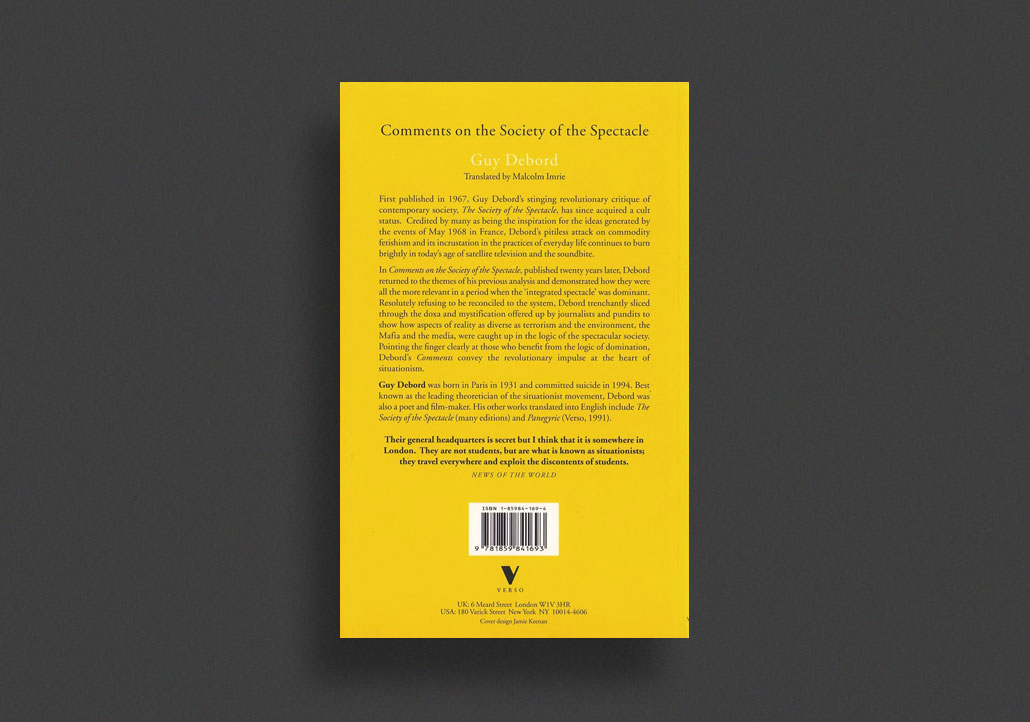
First English 1998 edition of Debord's Comments on the Society of the Spectacle, published by Verso.
First published in 1967, Guy Debord's stinging revolutionary critique of contemporary society, The Society of the Spectacle, has since acquired a cult status. Credited by many as being the inspiration for the ideas generated by the events of May 1968 in France, Debord's pitiless attack on commodity fetishism and its incrustation in the practices of everyday life continues to burn brightly in today's age of satellite television and the soundbite
In Comments on the Society of the Spectacle published twenty years later, Debord returned to the themes of his previous analysis and demonstrated how they were all the more relevant in a period when the 'integrated spectacle' was dominant. Resolutely refusing to be reconciled to the system, Debord trenchantly slices through the doxa and mystification offered tip by journalists and pundits to show how aspects of reality as diverse as terrorism and the environment, the Mafia and the media, were caught in the logic of the spectacular society. Pointing the finger clearly at those who benefit from the logic of domination, Debord's Comments convey the revolutionary impulse at the heart of situationism.
Guy Debord was born in Paris in 1931 and committed suicide in 1994. A Marxist theorist, French writer, poet, filmmaker, hypergraphist and founding member of the groups Letterist International and Situationist International, Debord is best known as the leading theoretician of the situationist movement. His works translated into English include The Society of the Spectacle, Comments on the Society of the Spectacle, and Panegyric.
Very Good copy.
1981, English
Softcover, 406 pages, 23.5 x 15.5 cm
1st Edition, Out of print title / used / very good
Published by
Bureau of Public Secrets / Berkeley
$85.00 - Out of stock
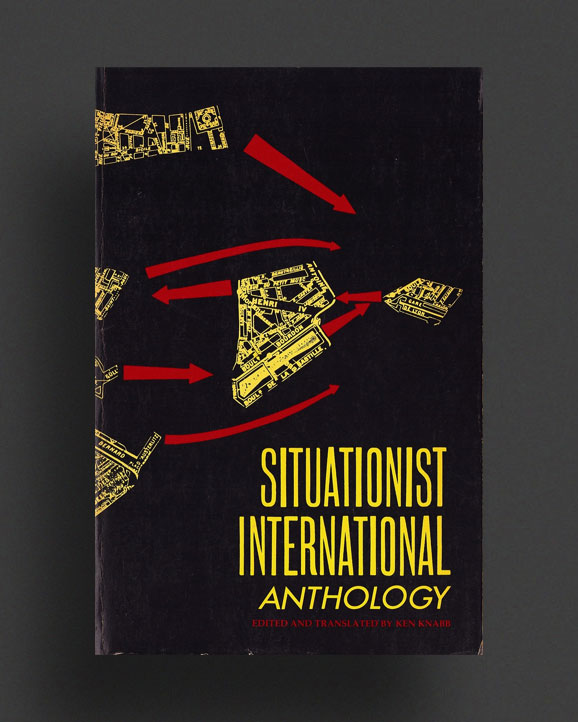
First 1981 edition of the essential Situationist International source book. A vast compendium of writings from all their major works, books, journals, leaflets etc. with all the major contributors translated to English (many for the first time), including Debord, Jorn, Vaneigem... Edited and translated by Ken Knabb and published by the Bureau of Public Secrets, Berkeley.
In 1957 a few experimental European groups stemming from the radical tradition of dadaism and surrealism, but seeking to avoid the cooption to which those movements succumbed, came together to form the Situationist International. The name came from their aim of liberating everyday life through the creation of open-ended, participatory "situations" (as opposed to fixed works of art) — an aim which naturally ran up against the whole range of material and mental obstacles produced by the present social order. Over the next decade the situationists developed an increasingly incisive critique of the global "spectacle-commodity system" and of its bureaucratic leftist pseudo-opposition, and their new methods of agitation helped trigger the May 1968 revolt in France. Since then — although the SI itself was dissolved in 1972 — situationist theories and tactics have continued to inspire radical currents in dozens of countries all over the world. The SI Anthology, generally recognized as the most comprehensive and accurately translated collection of situationist writings in English, presents a chronological survey of the group's activities and development as reflected in articles from its French journal and in a variety of leaflets, pamphlets, filmscripts and internal documents, ranging from their early experiments in urban "psychogeography" and cultural subversion to their lucid analyses of the Watts riot, the Vietnam war, the Prague Spring, the Chinese "Cultural Revolution" and other crises and upheavals of the sixties.
"Rejecting all morality and legal restraint, making sweeping denunciations of their fellow students, their professors, God, religion, the clergy, and the governments and political and social systems of the entire world, these cynics do not hesitate to advocate theft, the destruction of scholarship, the abolition of work, total subversion, and a permanent worldwide proletarian revolution with 'unrestrained pleasure' as its only goal." -- Judge Llabador, Strasbourg District Court 1966
Very Good copy of the rare first 1981 edition. Some wear to covers and spine edge, previous owner's name to front flyleaf.
1981, English
Softcover, 260 pages, 21.5 x 14 cm
1st Edition, Out of print title / used / good
Published by
Indiana University Press / Indiana
$30.00 - Out of stock
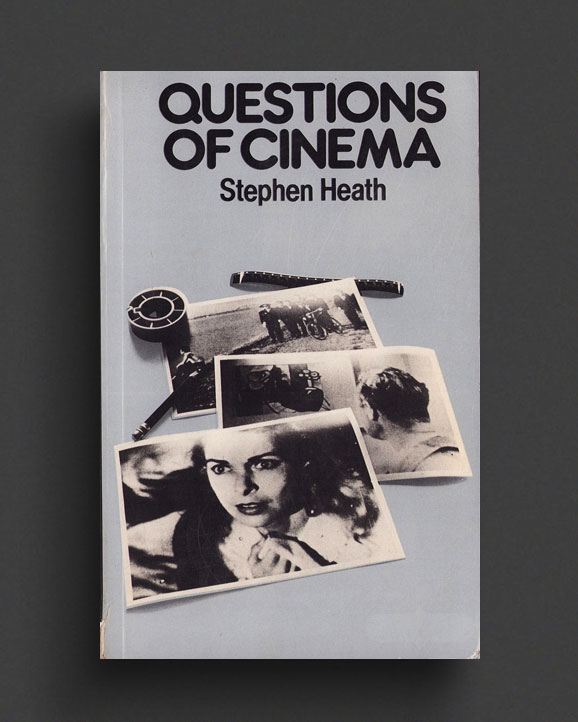
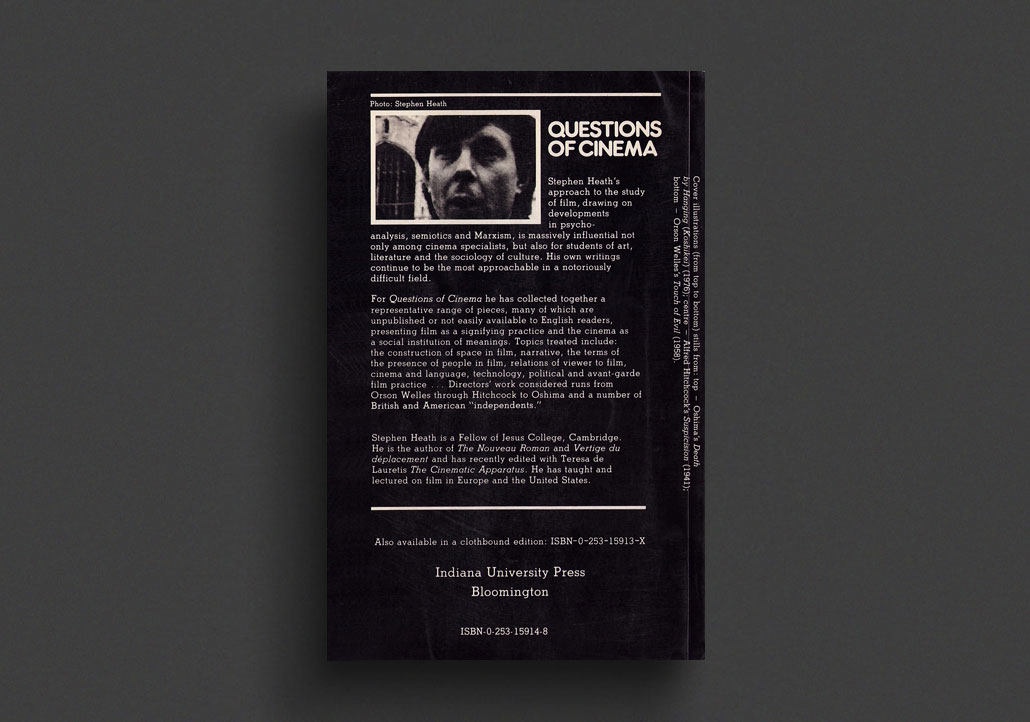
1981 first edition of Questions of Cinema by Stephen Heath, published by Indiana University Press. Stephen Heath's approach to the study of film, drawing on developments in psycho-analysis, semiotics and Marxism, is massively influential not only among cinema specialists, but also for students of art, literature and the sociology of culture. His own writings continue to be the most approachable in a notoriously difficult field.
For Questions of Cinema he has collected together a representative range of pieces, many of which are unpublished or not easily available to English readers, presenting film as a signifying practice and the cinema as a social institution of meanings. Topics treated include: the construction of space in film, narrative, the terms of the presence of people in film, relations of viewer to film, cinema and language, technology, political and avant-garde film practice ... Directors' work considered runs from Orson Welles through Hitchcock to Oshima and a number of British and American "independents."
Stephen Heath is a Fellow of Jesus College, Cambridge. He is the author of The Nouveau Roman and Vertige du deplacement and has recently edited with Teresa de Lauretis The Cinematic Apparatus. He has taught and lectured on film in Europe and the United States.
Good copy general wear split to bottom spine cover edge. Erasable marginalia in pencil.
2023, English
Softcover, 432 pages, 17.6 x 11.5 cm
Published by
Semiotext(e) / Los Angeles
$35.00 - Out of stock
An acute reappraisal for our time of the very concept of revolution.
In order to be effective, union struggles, struggles for national liberation, worker mutualism, or struggles for emancipation were strategies that were necessarily connected to revolution. Starting from the historic defeat of the global Revolution in the mid-1970s, this book draws a portrait-whose elaboration is still lacking-of the concept of revolution. What conditions could lead us to speak of revolution once again?
In The Intolerable Present, the Urgency of Revolution, Maurizio Lazzarato ponders the fundamental importance of the passage from the historical class struggle (the conflict between capital and labour) to the more recent class struggles that open onto plural trajectories- social, sexual, gender, and race struggles. Expanding the notion of class as a rejoinder to the normative appropriation of minority politics, the revolution is returned as the horizon where subjection can be resorbed.
In this sense, Marxist, feminist, anticolonial, and postcolonial theories provide the necessary critical tools to understand the relations between classes and minorities, between the global North and the global South, and between the time of revolutions and the eruption of new subjectivities.
Maurizio Lazzarato is an independent philosopher who lives and works in Paris. He is the author of Wars and Capital with Eric Alliez (Semiotext(e), 2018), and Capital Hates Everyone: Fascism or Revolution (Semiotext(e), 2021).
1983, English
Hardcover (w. dust jacket), 320 pages,
1st Edition, Out of print title / used / very good
Published by
Routledge / London
$40.00 - Out of stock
First 1984 hardcover English edition of this collection of essays documenting a dialogue between phenomenology and Marxism, with the contributors representing a cross-section from the two traditions. The theoretical and historical presuppositions of the phenomenology inaugurated by Husserl are very different from those of the much older Marxist tradition, yet, as these essays show, there are definite points of contact, communication and exchange between the two traditions.
Very Good copy in Good dust jacket.
1995, English
Softcover, 264 pages, 22.8 x 15 cm
1st Edition, Out of print title / used / very good
Published by
Duke University Press / North Carolina
$25.00 - In stock -
First 1995 edition.
At a time when philosophy of history is decidedly out of fashion, Theories and Narratives explores the relationship between historical writing and theoretical understanding and seeks to establish the legitimate scope of large-scale theories to grasp historical processes as a whole.
Pursuing this objective, Alex Callinicos critically confronts a number of leading attempts to reconceptualize the meaning of history, including Francis Fukuyama’s rehabilitation of Hegel’s philosophy of history and the postmodernist efforts of Hayden White and others to deny the existence of a past independent of our representations of it. In these cases philosophical arguments are pursued in tandem with discussions of historical interpretations or, respectively, Stalinism and the Holocaust. Leading theories of history—Marx’s and Weber’s—are then examined in the context of recent work by writers such as Michael Mann, W. G. Runciman, and Robert Brenner
Finally, the politics of historical theory is explored in a discussion of Marxism’s claims to be a universal theory of human progress. Contradicting current fashion, Callinicos rebuts the claims made by many postmodernists that Marxism is inherently Eurocentric in both its conceptual structures and its political practice. Marx’s project of human emancipation, he concludes, still define our political horizons.
Theories and Narratives will interest all readers for whom the role of history in the understanding of contemporary civilizations is an essential issue.
'Callinicos's well read both in recent philosophy of history and in recent postmodern theory, and engages with both of these in a clear and interesting way.'—Australian Journal of Philosophy
'An outstanding piece of committed scholarship, impressive in its intellectual scope, rational argumentation and clarity of exposition.'—Radical Philosophy
'Few social and political theorists in recent years can match the combination of quality and quantity in the writings of Alex Callinicos. This book offers incisive and lucid discussions in his best manner of the views on history of a range of contemporary thinkers from Francis Fukuyama to Hayden White and Robert Brenner.'—Political Studies
Very Good copy.
1997, English
Softcover, 224 pages, 23.5 x 14 cm
1st Edition, Out of print title / used / very good
Published by
Duke University Press / North Carolina
$20.00 - Out of stock
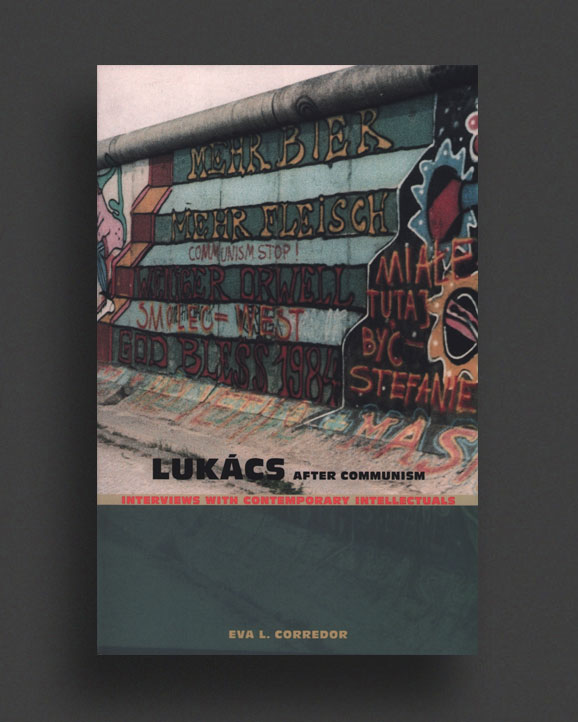
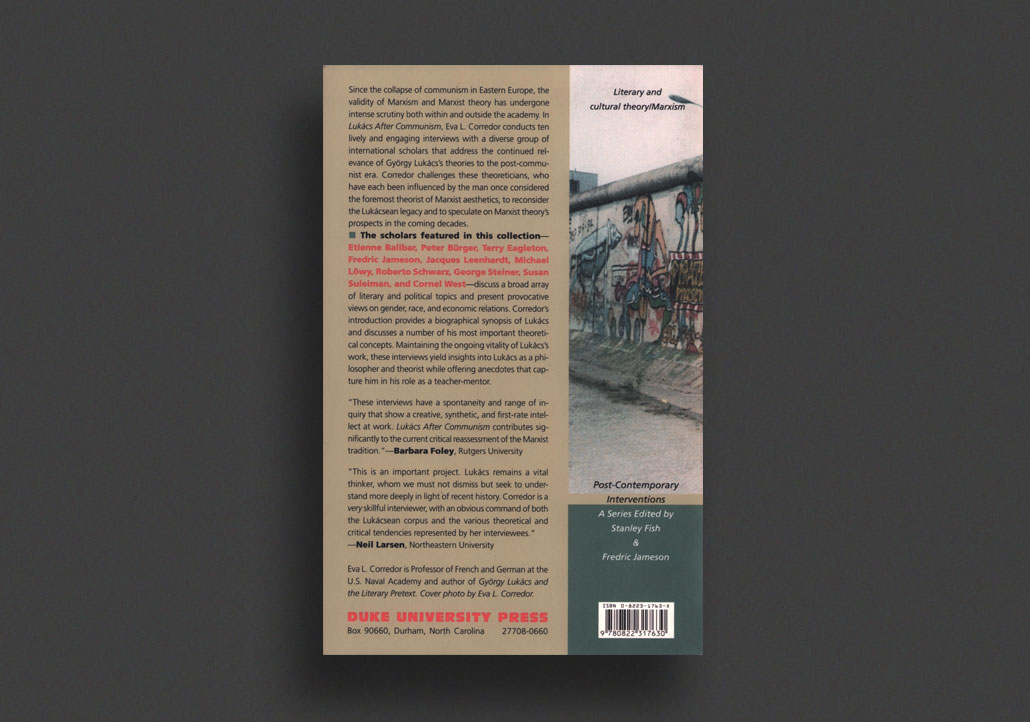
Since the collapse of communism in Eastern Europe, the validity of Marxism and Marxist theory has undergone intense scrutiny both within and outside the academy. In Lukács After Communism, Eva L. Corredor conducts ten lively and engaging interviews with a diverse group of international scholars to address the continued relevance of György Lukács’s theories to the post-communist era. Corredor challenges these theoreticians, who each have been influenced by the man once considered the foremost theoretician of Marxist aesthetics, to reconsider the Lukácsean legacy and to speculate on Marxist theory’s prospects in the coming decades.
The scholars featured in this collection—Etienne Balibar, Peter Bürger, Terry Eagleton, Fredric Jameson, Jacques Leenhardt, Michael Löwy, Roberto Schwarz, George Steiner, Susan Suleiman, and Cornel West—discuss a broad array of literary and political topics and present provocative views on gender, race, and economic relations. Corredor’s introduction provides a biographical synopsis of Lukács and discusses a number of his most important theoretical concepts. Maintaining the ongoing vitality of Lukács’s work, these interviews yield insights into Lukács as a philosopher and theorist, while offering anecdotes that capture him in his role as a teacher-mentor.
VG copy.
1971, English
Softcover, 408 pages, 20.5 x 13 cm
1st Edition, Out of print title / used / very good
Published by
The MIT Press / Massachusetts
$35.00 - Out of stock
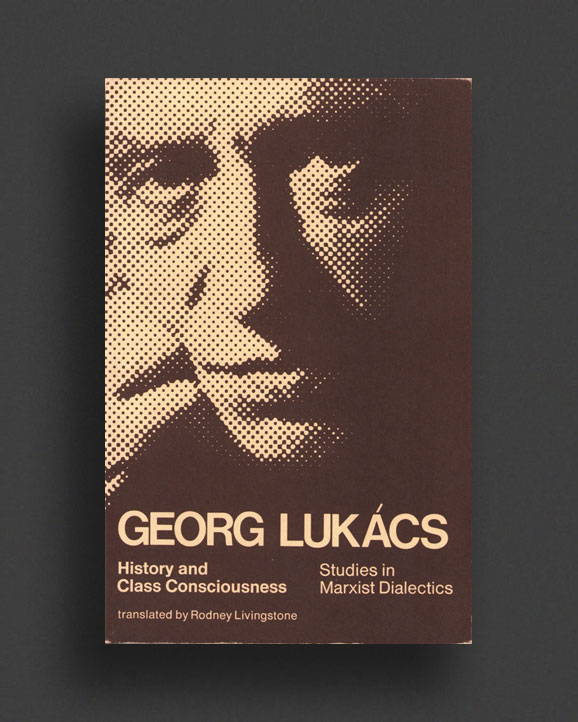
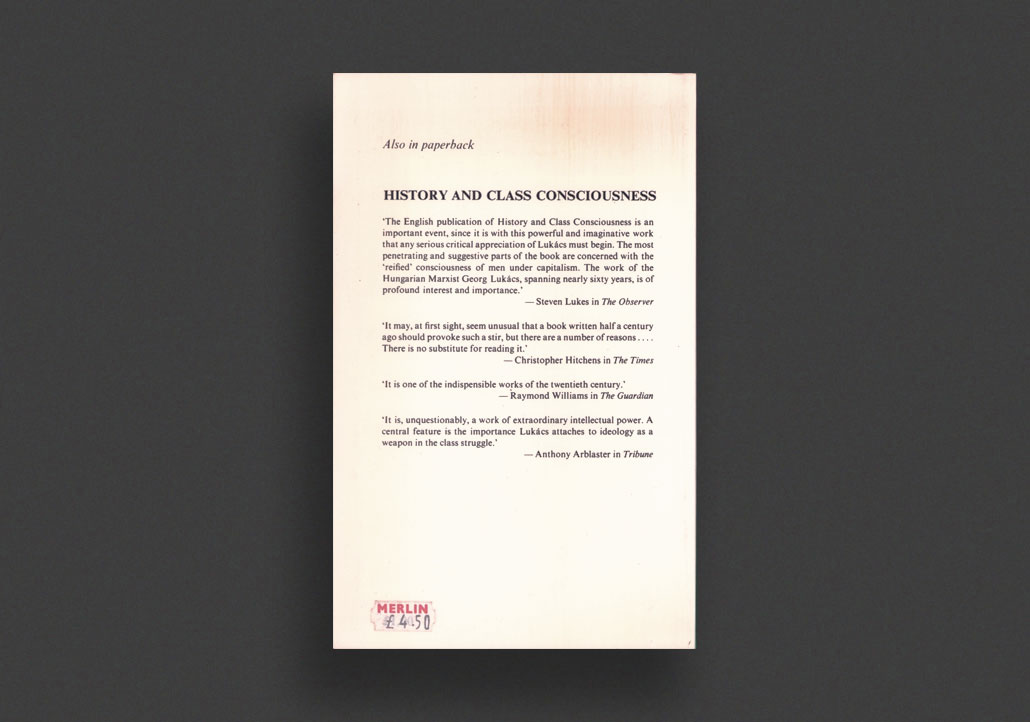
First 1971 edition of History and Class Consciousness by Georg Lukács, published by The MIT Press the year following the philosopher's death. Lukac's long suppressed, but most famous work of Marxist theory. "It is one of the indispensable works of the twentieth century"—Raymond Williams. Influential on the '68 uprisings.
This is the first time one of the most important of Lukács' early theoretical writings, published in Germany in 1923, has been made available in English. The book consists of a series of essays treating, among other topics, the definition of orthodox Marxism, the question of legality and illegality, Rosa Luxemburg as a Marxist, the changing function of Historic Marxism, class consciousness, and the substantiation and consciousness of the Proletariat.
Writing in 1968, on the occasion of the appearance of his collected works, Lukács evaluated the influence of this book as follows:
"For the historical effect of History and Class Consciousness and also for the actuality of the present time one problem is of decisive importance: alienation, which is here treated for the first time since Marx as the central question of a revolutionary critique of capitalism, and whose historical as well as methodological origins are deeply rooted in Hegelian dialectic. It goes without saying that the problem was omnipresent. A few years after History and Class Consciousness was published, it was moved into the focus of philosophical discussion by Heidegger in his Being and Time, a place which it maintains to this day largely as a result of the position occupied by Sartre and his followers. The philologic question raised by L. Goldmann, who considered Heidegger's work partly as a polemic reply to my (admittedly unnamed) work, need not be discussed here. It suffices today to say that the problem was in the air, particularly if we analyze its background in detail in order to clarify its effect, the mixture of Marxist and Existentialist thought processes, which prevailed especially in France immediately after the Second World War. In this connection priorities, influences, and so on are not particularly significant. What is important is that the alienation of man was recognized and appreciated as the central problem of the time in which we live, by bourgeois as well as proletarian, by politically rightist and leftist thinkers. Thus, History and Class Consciousness exerted a profound effect in the circles of the youthful intelligentsia."
Georg Lukács was a Hungarian Marxist philosopher, aesthetician, literary historian, and critic.
Rodney Livingstone, Reader in German at the University of Southampton, has edited and translated numerous works by Lukács, Theodor Adorno, and others.
Very Good copy.
1970, English
Softcover, 192 pages, 20.5 x 13 cm
1st Edition, Out of print title / used / very good
Published by
International Publishers / New York
$35.00 - Out of stock
First English 1970 edition of this collection of writings on the nature of politics in the modern age, on the interpretation of history and on the role of culture and the intellectuals are selected from Gramsci's notebooks, written while he was in prison under Mussolini. Little known in the West, he was a leading Marxist philosopher who had a germinal influence upon the Communist Party of Italy and its late leader Palmiro Togliatti. The notes were selected, annotated and edited by the Gramsci Institute in Rome.
Antonio Francesco Gramsci (1891—1937) was an Italian Marxist philosopher, journalist, linguist, writer, and politician. He wrote on philosophy, political theory, sociology, history, and linguistics. He was a founding member and one-time leader of the Italian Communist Party.
Very Good copy, light wear.
1978, English
Softcover, 277 pages, 20.5 x 13 cm
1st Edition, Out of print title / used / very good
Published by
Merlin Press / London
$20.00 - Out of stock
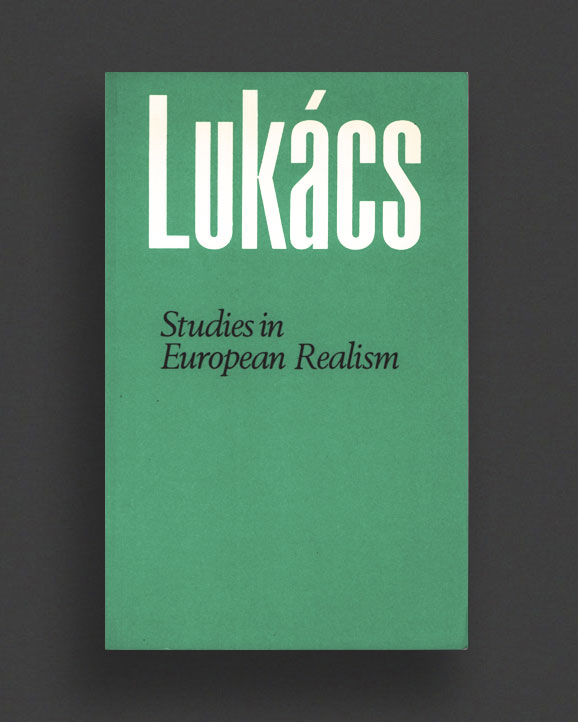
First Merlin Press English edition of Georg Lukács' Studies in European Realism, in which the great 20th century literary critic discusses the 19th century European novel. A Sociological survey of the writings of Balzac, Stendhal, Zola, Tolstoy, Gorki and others.
Georg Lukács was a Hungarian Marxist philosopher, aesthetician, literary historian, and critic.
Very Good copy.
1992, English
Softcover, 302 pages, 15.24 x 22.86 cm
1st Edition, Out of print title / used / very good
Published by
University Press of New England / New Hampshire
$30.00 - Out of stock
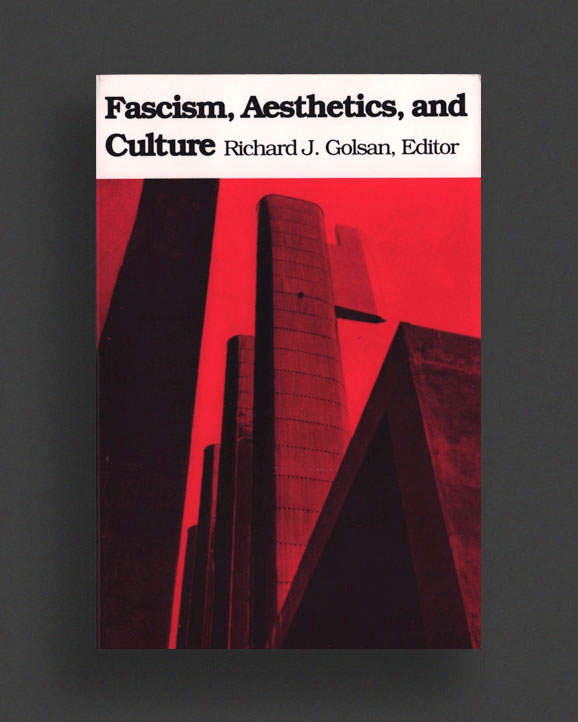
First 1992 edition of Fascism, Aesthetics, and Culture, edited by Richard J. Golsan.
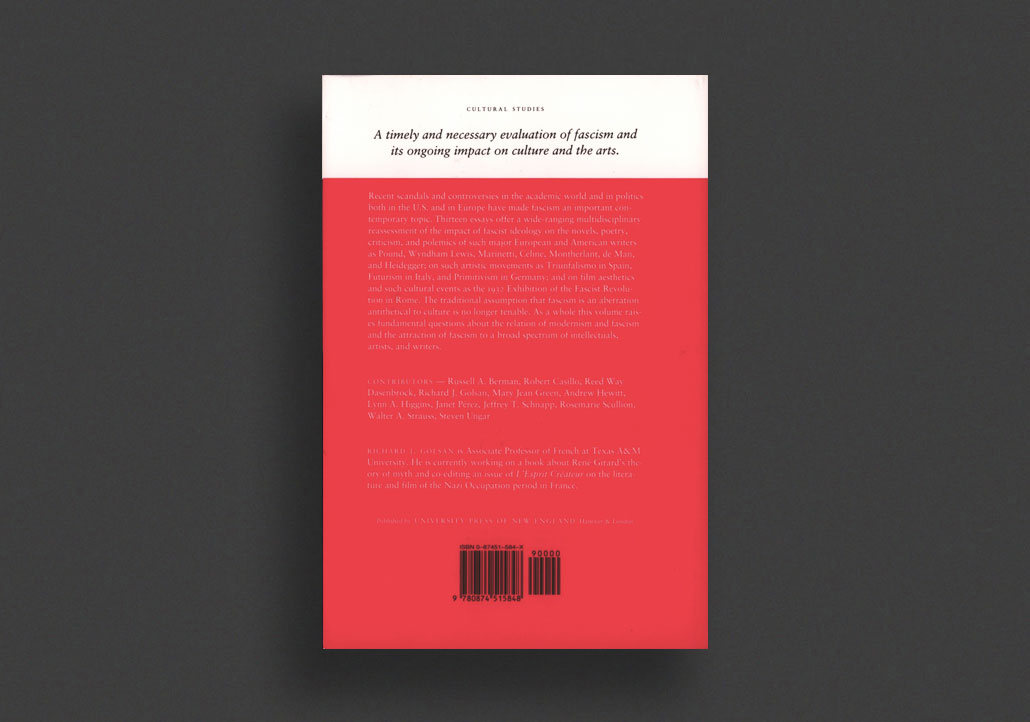
"A timely and necessary evaluation of fascism and its ongoing impact on culture and the arts."
"Recent scandals and controversies in the academic world and in politics both in the U.S. and in Europe have made fascism an important contemporary topic. Thirteen essays offer a wide-ranging multidisciplinary reassessment of the impact of fascist ideology on the novels, poetry, criticism, and polemics of such major European and American writers as Pound, Wyndham Lewis, Marinetti, Céline, Montherlant, de Man, and Heidegger; on such artistic movements as 'Triunfalismo in Spain, Futurism in Italy, and Primitivism in Germany; and on film aesthetics and such cultural events as the 1932 Exhibition of the Fascist Revolution in Rome. The traditional assumption that fascism is an aberration antithetical to culture is no longer tenable. As a whole this volume raises fundamental questions about the relation of modernism and fascism and the attraction of fascism to a broad spectrum of intellectuals, artists, and writers.
Richard J. Golsan is Associate Professor of French at Texas A &M University. He is currently working on a book about Rene Girard's theory of myth and co-editing an issue of L'Esprit Createur on the literature and film of the Nail Occupation period in France.
Very Good copy.
1969, English
Softcover (folded pamphlet), 16 pages, 26 x 10.5 cm
1st Edition, Out of print title / used / very good
Published by
Philip N. West / Carlton
$90.00 - In stock -
Very rare copy of the mighty Underground, published and edited by Philip N. West of Australian Free Press. This issue (Volume 2, Number 5), published in Carlton on March 21, 1969, was prepared "while awaiting the police to take us away at Melbourne University", jailed for non-payment of fines arising out of leaflet distribution. An unyielding anti-Vietnam war, anti-state/pig corruption, pro-freedom of expression and opinion publication that directly reports on anti-dissent government repression, the jailing, sentencing, and fining of poets, protestors, and activists in Melbourne, suspicious deaths, Australian politics, human-rights, and other "Private Eye" matters concerning the abuses of power. Free-Zarb!
A wonderful historical piece of Australian counterculture publishing from the anti-war movement.
Philip West (1947-1994) was most likely one of the first underground countercultural journalists in Australia. He published Psychedelic Stir, Underground and similar small magazines and newsletters from 1967, contributed to Revolution "Australia's First Rock Magazine", and others, reporting on subjects such as the Vietnam War protest movements and marijuana laws. He later edited the Alternate News Service both in Australia and from overseas as well as being the first publisher to document the Pentagon Papers controversy in book form. In the last years he worked as a night news editor at SBS dealing with international stories.
Very Good copy with light ageing, softening to edges.
1986, English
Softcover, 484 pages, 22 x 13 cm
1st Edition, Out of print title / used / very good
Published by
Lawrence and Wishart / London
$45.00 - Out of stock
First English 1986 edition of Selections from the Prison Notebooks. Antonio Gramsci (1891-1937) is widely celebrated as the most original political thinker in Western Marxism and an all-around outstanding intellectual figure. Arrested and imprisoned by the Italian Fascist regime in 1926, Gramsci died before fully regaining his freedom. Nevertheless, in his prison notebooks, he recorded thousands of brilliant reflections on an extraordinary range of subjects, establishing an enduring intellectual legacy.
Antonio Francesco Gramsci (1891—1937) was an Italian Marxist philosopher, journalist, linguist, writer, and politician. He wrote on philosophy, political theory, sociology, history, and linguistics. He was a founding member and one-time leader of the Italian Communist Party.
Very Good copy.
1995, English
Softcover, 504 pages, 15.2 x 22.9 cm
1st Edition, Out of print title / used / very good
Published by
The MIT Press / Massachusetts
$50.00 - Out of stock
The Principle of Hope is one of the great works of the human spirit. It is a critical history of the utopian vision and a profound exploration of the possible reality of utopia. Even as the world has rejected the doctrine on which Bloch sought to base his utopia, his work still challenges us to think more insightfully about our own visions of a better world.
The Principle of Hope is published in three volumes: Volume 1 lays the foundations of the philosophy of process and introduces the idea of the Not-Yet-Conscious--the anticipatory element that Bloch sees as central to human thought. It also contains a remarkable account of the aesthetic interpretations of utopian wishful images in fairy tales, popular fiction, travel, theater, dance, and the cinema. Volume 2 presents the outlines of a better world. It examines the utopian systems that progressive thinkers have developed in the fields of medicine, painting, opera, poetry, and ultimately, philosophy. It is nothing less than an encyclopedic account of utopian thought from the Greeks to the present. Volume 3 offers a prescription for ways in which humans can reach their proper homeland, where social justice is coupled with an openness to change and to the future.
Translated by Neville Plaice, Stephen Plaice, Paul Knight
Ernst Simon Bloch (1885—1977) was a German Marxist philosopher. Bloch was influenced by Georg Wilhelm Friedrich Hegel and Karl Marx, as well as by apocalyptic and religious thinkers such as Thomas Müntzer, Paracelsus, and Jacob Böhme. He established friendships with György Lukács, Bertolt Brecht, Kurt Weill, Walter Benjamin, and Theodor W. Adorno. Bloch's work focuses on an optimistic teleology of the history of mankind.
Fine copy of first 1995 edition. Long out-of-print.
1984, English
Softcover, 232 pages
1st Edition, Out of print title / used / very good
Published by
Johns Hopkins University Press / Baltimore
$25.00 - In stock -
First published in 1982. Aside from Jacques Derrida's own references to the "possible articulation" between deconstruction and Marxism, the relationship between the two has remained largely unexplored. In Marxism and Deconstruction, Michael Ryan examines that multifaceted relationship but not through a mere comparison of two distinct and inviolable entities. Instead, he looks at both with an eye to identifying their common elements and reweaving them into a new theory of political practice. To accomplish his task, Ryan undertakes a detailed comparison of deconstruction and Marxism, relating deconstruction to the dialectical tradition in philosophy and demonstrating how deconstruction can be used in the critique of ideology. He is a forceful critic of both the politics of deconstruction and the metaphysical aspect of Marxism (as seen from a deconstructionist perspective). Besides offering the first book-length study of Derrida in this context, Ryan makes the first methodic attempt by an American scholar to apply deconstruction to domains beyond literature. He proposes a deconstructive Marxism, one lacking the metaphysical underpinnings of conservative "scientific" Marxist theory and employing deconstructive analysis both for Marxist political criticism and to further current anti-metaphysical developments within Marxism. Marxism and Deconstruction is an innovative and controversial contribution to the fields of literary criticism, philosophy, and political science.
"A powerful riposte, both to Marxists who revile deconstructionism for its supposed liberal-bourgeois quietism, and to those among the current deconstructors who seem to invite that charge."—Christopher Norris, Times Literary Supplement.
G—VG copy.
1972, English
Softcover, 686 pages
1st Edition, Out of print title / used / good
Published by
W W Norton & Co / New York
$40.00 - Out of stock
This first 1972 edition of the leading anthology provides the essential writings of Marx and Engels -- those works necessary for an introduction to Marxist thought and ideology. The volume is arranged to show both the chronological and the thematic development of the two great thinkers. Selections range in coverage from history, society, and economics, to politics, philosophy, and the strategy and tactics of social revolution.
Friedrich Engels was born in 1820, in the German city of Barmen. He died in London in 1895 while editing the fourth volume of Capital.
Karl Marx studied law and philosophy at the universities of Bonn and Berlin, completing his doctorate in 1841. Expelled from Prussia in 1844, he took up residence first in Paris and then in London where, in 1867, he published his magnum opus Capital. A co-founder of the International Workingmen's Association in 1864, Marx died in London in 1883.
Robert C. Tucker is professor of politics emeritus at Princeton University and past president of the American Association for the Advancement of Slavic Studies.
G—VG copy. General wear from age, light creases.
2022, English
Softcover, 128 pages, 12.9 x 19.8 cm
Published by
Verso / London
$32.00 - In stock -
What if we could do better than the family?
We need to talk about the family. For those who are lucky, families can be filled with love and care, but for many they are sites of pain: from abandonment and neglect, to abuse and violence. Nobody is more likely to harm you than your family.
Even in so-called happy families, the unpaid, unacknowledged work that it takes to raise children and care for each other is endless and exhausting. It could be otherwise: in this urgent, incisive polemic, leading feminist critic Sophie Lewis makes the case for family abolition.
Abolish the Family traces the history of family abolitionist demands, beginning with nineteenth century utopian socialist and sex radical Charles Fourier, the Communist Manifesto and early-twentieth century Russian family abolitionist Alexandra Kollontai. Turning her attention to the 1960s, Lewis reminds us of the anti-family politics of radical feminists like Shulamith Firestone and the gay liberationists, a tradition she traces to the queer marxists bringing family abolition to the twenty-first century. This exhilarating essay looks at historic rightwing panic about Black families and the violent imposition of the family on indigenous communities, and insists: only by thinking beyond the family can we begin to imagine what might come after.
2014, English
Softcover, 536 pages, 11.5 x 17.5 cm
Published by
Merve Verlag / Berlin
Urbanomic / Cornwall
$69.00 - Out of stock
Accelerationism is the name of a contemporary political heresy: the insistence that the only radical political response to capitalism is not to protest, disrupt, critique, or détourne it, but to accelerate and exacerbate its uprooting, alienating, decoding, abstractive tendencies.
The term was coined to designate a certain nihilistic alignment of theory with the excess and abandon of capitalist culture, and the associated performative aesthetic of texts that seek to become immanent to the very process of alienation. Developing at the dawn of contemporary neoliberal consensus, the uneasy status of this impulse, between subversion and acquiescence, between theoretical purchase and aesthetic enjoyment, constitutes the core problematic of accelerationism.
Since the 2013 publication of Williams's and Srnicek's #Accelerate: Manifesto for an Accelerationist Politics, the term has been adopted to name a set of new theoretical enterprises that aim to conceptualise non-capitalist futures outside of traditional marxist critiques and regressive, decelerative or restorative solutions.
#Accelerate presents a genealogy of accelerationism, tracking the impulse through 90s UK darkside cyberculture and the theory-fictions of Nick Land, Sadie Plant, Iain Grant, and anonymous units like CCRU and SWITCH, across the cultural underground of the 80s (rave, acid house, Terminator and Bladerunner) and back to its sources in delirious post-68 ferment, in texts whose searing nihilistic jouissance would later be disavowed by their authors and the marxist and academic establishment alike.
On either side of this largely unexplored central sequence, the book includes texts by Marx that call attention to his own 'Prometheanism' and key works from recent years document the recent extraordinary emergence of new accelerationisms steeled against the onslaughts of neoliberal capitalist realism, and retooled for the twenty-first century.
At the forefront of the energetic contemporary debate around this disputed, problematic term, #ACCELERATE activates a historical conversation about futurality, technology, politics, enjoyment and Kapital. This is a legacy shot through with contradictions, yet urgently galvanized today by the poverty of 'reasonable' contemporary political alternatives.
Contents
ANTICIPATIONS
Karl Marx - Fragment on Machines
Samuel Butler - The Book of The Machines
Nikolai Fyodorov - The Common Task
Thorstein Veblen - The Machine Process and the Natural Decay of the Business Enterprise
FERMENT
Shulamith Firestone - On the Two Modes of Cultural History
Jacques Camatte - Decline of the Capitalist Mode of Production or Decline of Humanity?
Gilles Deleuze + Félix Guattari - The Civilized Capitalist Machine
Jean-François Lyotard - Energumen Capitalism
Gilles Lipovetsky - Power of Repetition
JG Ballard - Fictions of All Kinds
CYBERCULTURE
Nick Land - Circuitries
Nick Land + Sadie Plant - Cyberpositive
Iain Hamilton Grant - LA 2019: Demopathy and Xenogenesis
CCRU - Cybernetic Culture
CCRU - Swarmachines
ACCELERATION
Mark Fisher - Terminator vs Avatar
Nick Srnicek and Alex Williams - #Accelerate: Manifesto for an Accelerationist Politics
Antonio Negri - Reflections on the Manifesto
Tiziana Terranova - Red Stack Attack!
Luciana Parisi - Automated Architecture
Patricia Reed - Seven Prescriptions for Accelerationism
Reza Negarestani - The Labour of the Inhuman (Extended Mix)
Benedict Singleton - Maximum Jailbreak (Extended Mix)
Ray Brassier - Prometheanism and its Critics
Nick Land - Teloplexy: Notes on Acceleration
Diann Bauer - 4xAccelerationisms