World Food Books' programme is largely produced on Kulin Nation land. We acknowledge the Wurundjeri people of the Kulin Nation as the first and continuing custodians of this land, and pay respect to their Elders past, present, and emerging.
World Food Books is an arts and special interests bookshop in Naarm / Melbourne. Founded in 2010, World Food Books is devoted to the presentation of a rotating, hand-selection of international art, design, literary and counterculture publications with an emphasis on the anti-traditional, the experimental, the avant-garde, the heretic, the marginal.
Presenting new titles alongside rare and out-of-print books, catalogues and journals spanning the fields of modern and contemporary art, design, photography, illustration, film, literature, poetry, cultural theory, philosophy, sexuality, popular and underground culture in its many radical forms, World Food Books wishes to encourage adventurous, thoughtful and open-minded reading, looking, writing, and exchange of publishing and ideas, both current and historical.
As well as our bookshop, located in Melbourne's historical Nicholas Building, all of our inventory is available internationally via our online mail-order service.
World Food Books semi-regularly co-ordinates "Occasions", a programme of exhibits and events at the bookshop and in partnership with other hosts (such as museums and art galleries) that develop out of the activities, relationships and content of the bookshop itself.
World Food Books
The Nicholas Building
37 Swanston Street
Room 5, Level 6
Melbourne 3000
Australia
SHOP HOURS:
Thu–Fri 12–6, Sat 12–5
WEB-SHOP OPEN 24/7
World Food Books
Postal Address:
PO Box 435
Flinders Lane
Victoria 8009
Australia
Art
Theory / Essay
Architecture / Interior
Graphic Design / Typography
Photography
Fashion
Eros
LGBTQ+
Fiction / Poetry
Weird / Speculative / Science Fiction / Horror
Transgressive / Visceral / Abject
Symbolism / Decadence / Fin de siècle
Film / Video
Painting
Sculpture / Installation
Performance / Dance / Theater
Drawing
Sound / Music
Curatorial
Group Shows / Collections
Periodicals
Out-of-print / Rare
Posters / Ephemera / Discs
Signed Books
World Food Books Gift Voucher
World Food Book Bag
Australian Art
Australian Fiction
Australian Science Fiction / Speculative Fiction
Australian Poetry
Australian Photography
Japanese Photography
Conceptual Art
Minimal Art
Dada
'Pataphysics / Oulipo
Fluxus
Concrete Poetry
Pop Art
Surrealism
Arte Povera
Arte Informale / Haute Pâte / Tachism
Nouveau Réalisme / Zero / Kinetic
Situationism / Lettrism
Collage / Mail Art / Xerox Art
Art Brut / Folk / Visionary / Fantastic
Illustration / Graphic Art / Bandes Dessinées
Furniture
Italian Radical Design / Postmodernism
Textiles
Ceramics / Glass
Counterculture
Protest / Revolt
Philosophy
Psychoanalysis
Anthropology
Anarchism
Socialism / Anarchism / Communism / Capitalism
Literary Theory / Semiotics / Language
Feminism / Women's Studies
Gender Studies / Sexuality
Anthropology
Fetishism / BDSM
Drugs / Psychedelia
Crime / Violence
Animal Rights / Veganism
Occult / Esoterica
Ecology / Earth / Alternative Living
Whole Earth / Crafts
All prices in AUD (Australian dollars)
Pick-Ups
Pick-up orders can be collected in our bookshop during opening hours after order date. Please collect any Pick-up orders within 2 weeks of ordering as we have limited storage space. Orders will be released back into stock if not collected within this time. No refunds can be made for pick-ups left un-collected. If you cannot make it in to the bookshop in this time-frame, please choose postage option.
Return Policy
All sales are final. We do accept returns (for refund or exchange) for items received in error. All our orders are packed with special care using heavy-duty padding and cardboard book-mailers or bubble mailers (for smaller books), using reinforcement where required. We cannot take responsibility for any lost, stolen or damaged parcels.
Insurance
Should you wish to insure your package, please email us directly after placing your order and we can organise this at a small extra expense. Although all standard/express tracked packages are very safe and dependable, we cannot take responsibility for any lost, stolen or damaged parcels. We recommend insurance on valuable orders.
Interested in selling your old books, catalogues, journals, magazines, comics, fanzines, ephemera? We are always looking for interesting, unusual and out-of-print books to buy. We only buy books in our fields of interest and specialty, and that we feel we can resell.
We base these prices on desirability, market value, in-print prices, condition and our current stock levels. We offer cash, store credit, and can take stock on consignment. All
about 25% of the price we expect to get when we sell them, or 30% in store credit. We base these prices on desirability, market value, in-print prices, condition and our current stock levels.
Sell your books any day of the week. You can drop them off and return later. If you have a lot of books, we can visit your Sydney home.
We buy books that we feel we can resell. We offer about 25 % of the price we expect to get when we sell them, or 30% in store credit. We base these prices on desirability, market value, in-print prices, condition and our current stock levels.
Philadelphia Wireman
03 August - 01 September, 2018
World Food Books is proud to announce our next Occasion, the first presentation of sculptures by Philadelphia Wireman in Australia.
The Philadelphia Wireman sculptures were found abandoned in an alley off Philadelphia’s South Street on trash night in 1982. Their discovery in a rapidly-changing neighbourhood undergoing extensive renovation, compounded with the failure of all attempts to locate the artist, suggests that the works may have been discarded after the maker’s death. Dubbed the "Philadelphia Wireman" during the first exhibition of this work, in 1985, the maker’s name, age, ethnicity, and even gender remain uncertain. The entire collection totals approximately 1200 pieces, all intricately bound together with tightly-wound heavy-gauge wire (along with a few small, abstract marker drawings, reminiscent both of Mark Tobey and J.B. Murry). The dense construction of the work, despite a modest range of scale and materials, is singularly obsessive and disciplined in design: a wire armature or exoskeleton firmly binds a bricolage of found objects including plastic, glass, food packaging, umbrella parts, tape, rubber, batteries, pens, leather, reflectors, nuts and bolts, nails, foil, coins, toys, watches, eyeglasses, tools, and jewellery.
Heavy with associations—anthropomorphic, zoomorphic, and socio-cultural responses to wrapped detritus—the totemic sculptures by Philadelphia Wireman have been discussed in the context of work created to fulfil the shamanistic needs of alternative religions in American culture. Curators, collectors, and critics have variously compared certain pieces to sculpture from Classical antiquity, Native American medicine bundles, African-American memory jugs, and African fetish objects. Reflecting the artist’s prolific and incredibly focused scavenging impulse, and despite—or perhaps enhanced by—their anonymity, these enigmatic objects function as urban artefacts and arbiters of power, though their origin and purpose is unknown. Philadelphia Wireman, whatever their identity, possessed an astonishing ability to isolate and communicate the concepts of power and energy through the selection and transformation of ordinary materials. Over the course of the past two decades, this collection has come to be regarded as an important discovery in the field of self-taught art and vernacular art.
Presented in collaboration with Fleisher-Ollman Gallery, Philadelphia, and Robert Heald, Wellington.
Susan Te Kahurangi King
02 February - 10 March, 2018
Susan Te Kahurangi King (24 February 1951 - ) has been a confident and prolific artist since she was a young child, drawing with readily available materials - pencils, ballpoint pens and felt-tip markers, on whatever paper is at hand. Between the ages of four and six Susan slowly ceased verbal communication. Her grandparents William and Myrtle Murphy had developed a special bond with Susan so they took on caring responsibilities for extended periods. Myrtle began informally archiving her work, carefully collecting and storing the drawings and compiling scrapbooks. No drawing was insignificant; every scrap of paper was kept. The King family are now the custodians of a vast collection containing over 7000 individual works, from tiny scraps of paper through to 5 meter long rolls.
The scrapbooks and diaries reveal Myrtle to be a woman of great patience and compassion, seeking to understand a child who was not always behaving as expected. She encouraged Susan to be observant, to explore her environment and absorb all the sights and sounds. Myrtle would show Susan’s drawings to friends and people in her community that she had dealings with, such as shopkeepers and postal workers, but this was not simply a case of a grandmother’s bias. She recognised that Susan had developed a sophisticated and unique visual language and sincerely believed that her art deserved serious attention.
This was an unorthodox attitude for the time. To provide some context, Jean Dubuffet coined the term Art Brut in 1945 to describe work created by self-taught artists – specifically residents of psychiatric institutions and those he considered to be visionaries or eccentrics. In 1972 Roger Cardinal extended this concept by adopting the term Outsider Art to describe work made by non-academically trained artists operating outside of mainstream art networks through choice or circumstance. Susan was born in Te Aroha, New Zealand in 1951, far from the artistic hubs of Paris and London that Dubuffet and Cardinal operated in. That Myrtle fêted Susan as a self-taught artist who deserved to be taken seriously shows how progressive her attitudes were.
Susan’s parents Doug and Dawn were also progressive. Over the years they had consulted numerous health practitioners about Susan’s condition, as the medical establishment could not provide an explanation as to why she had lapsed into silence. Dawn educated herself in the field of homeopathy and went on to treat all twelve of her children using these principles – basing prescriptions on her observations of their physical, mental and emotional state.
Doug was a linguist with an interest in philosophy who devoted what little spare time he had to studying Maori language and culture. To some extent their willingness to explore the fringes of the mainstream made them outsiders too but it was their commitment to living with integrity and their respect for individuality that ensured Susan’s creativity was always encouraged.
Even though Susan’s family supported her artistic pursuits, some staff in schools and hospitals saw it as an impediment to her assimilation into the community and discouraged it in a variety of ways. Her family was not always aware of this and therefore did not fully understand why Susan stopped drawing in the early 1990s. However, rather than dwell on the challenges that Susan faced in pursuit of her artistic practice, they prefer to highlight her achievements. In 2008 Susan began drawing again in earnest, after an almost 20 year interruption, and her work is now shown in galleries around the world.
Susan grew up without television and has been heavily influenced by the comics she read as a child. She is absolutely fearless in the appropriation of recognizable characters, such as Donald Duck and Mickey Mouse, in her work. She twists their limbs, contorts their faces, compresses them together, blends them into complex patterned backgrounds - always imbuing them with an incredible energy. Although Susan often used pop culture characters in her work they are not naive or childlike. These are drawings by a brilliant self-taught artist who has been creating exceptional work for decades without an audience in mind.
Mladen Stilinović
"Various Works 1986 - 1999"
02 February 16 - September 10, 2016
Various works 1986 - 1999, from two houses, from the collections of John Nixon, Sue Cramer, Kerrie Poliness, Peter Haffenden and Phoebe Haffenden.
Including: Geometry of Cakes (various shelves), 1993; Poor People’s Law (black and white plate), 1993; White Absence (glasses, ruler, set square, silver spoon, silver ladel with skin photograph and wooden cubes), 1990-1996; Exploitation of the Dead (grey and red star painting, wooden painting, black spoon with red table, red plate), 1984-1990; Money and Zeros (zero tie, paintings made for friends in Australia (Sue, John, Kerrie), numbers painting), 1991-1992; Words - Slogans (various t-shirts) - “they talk about the death of art...help! someone is trying to kill me”, “my sweet little lamb”, “work is a disease - Karl Marx”; Various artist books, catalogues, monographs, videos; Poster from exhibition Insulting Anarchy; "Circular" Croatian - Australian edition; Artist book by Vlado Martek (Dostoyevsky); more.
Thanks to Mladen Stilinović and Branka Stipančić.
Jonathan Walker
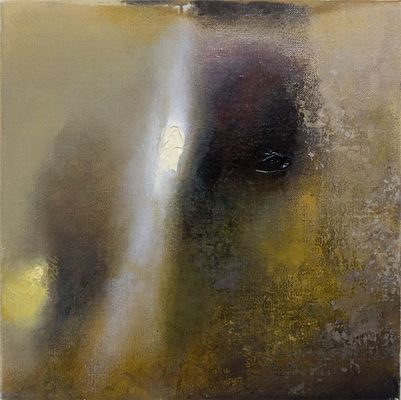
Always Will Need To Wear Winter Shirt Blue + Ochre Small Check Pattern
21 August - 21 September, 2015
Untitled
I am not a great reader of poetry but I always return to the work of Melbourne poet, Vincent Buckley (1925- 1988). Perhaps I find his most tantalising piece to be not a finished poem but a fragment left on a scrap of paper discovered on his desk after the poet’s death.
The poetry gathers like oil
In the word-core, and spreads
It has its music meet,
Its music is in movement.
This fragment is more the shell left behind from a volatile thought than a finished poem. I find the last two lines honest but awkward whereas the first two lines work like an arrow. Most likely he could not find a resolution so it was left. Still, in its present form, it remains an eloquent testimony to the ultimate failure of a medium to express mobile thought and sensation, in Buckley’s case, through verbal language. It’s an important matter because this is something all artists have to deal with regardless of the medium.
I have never written a poem, however, I am forever copying fragments from books on paper scraps in a vain effort to fix certain notions in my head. At first, they function as bookmarks that are sometimes returned to when I open the book. But before long, as they accumulate, they fall out littering the table interspersed with A4 photocopies, bills, books and medications.
To return to Buckley’s fragment, the first two lines very much evoke how I paint nowadays. As you age, detail diminishes and patches of light become more luminous and float. I feel the most honest way of dealing with this is by smearing the oil paint on the canvas with the fingers and working close-up, blind. Only if the patches coalesce into an approaching image can the work gain a life.
-
Jonathan Walker was born in Melbourne, Australia and brought up on a dairy farm in Gippsland. In the 1970’s he studied painting at RMIT and won the Harold Wright Scholarship to the British Museum, London. During the 1980’s he exhibited at Pinacotheca Gallery, Richmond and had work shown at the NGV and Heidi City Art Gallery. Over the same period he designed the cover for the “Epigenesi” LP by Giancarlo Toniutti, Italy and conducted a mail exchange work with Achim Wollscheid, Germany. The work with artists through the post resulted in an article published in the bicentenary issue of Art and Australia 1988. He showed in artist run spaces such as WestSpace in the 90’s and 2000’s, and until 2012, taught painting at Victoria University, which is where we (Colleen Ahern and Lisa Radford) as organisers of the exhibition, among many others, had the privilege of being his student.
Walker’s knowledge was imparted to students through the careful selection of music, literature, and artists found in books that he himself had ordered for the library. Walker’s strategy was the generosity of sharing his vast knowledge with references specific to each student and their context.
Walker’s paintings share a similar focus and intimacy.
This exhibition presents a small selection of recent paintings alongside a publication that includes Walker’s writing. Observational and analytical, Walker’s work is a type of material notation — the time of day, colour and how it is blended, the both specific and fleeting location of a reflection on lino or the question of whether a chair leg should be included in a painting.
Please join us on Friday August 21 between 6-8pm to celebrate the opening of the exhibition.
Curated by Colleen Ahern and Lisa Radford.
B. Wurtz
Curated by Nic Tammens
March 26 - April 4, 2015
B.Wurtz works from a basement studio in his home on Manhattan’s Lower East Side.
This local fact is attested to by the plastic shopping bags and newsprint circulars that appear in his work. As formal objects, they don’t make loud claims about their origins but nonetheless transmit street addresses and places of business from the bottom of this long thin island. Like plenty of artists, Wurtz is affected by what is local and what is consumed. His work is underpinned by this ethic. It often speaks from a neighborhood or reads like the contents of a hamper:
“BLACK PLUMS $1.29 lb.”
“Food Bazaar”
“USDA Whole Pork Shoulder Picnic 99c lb.”
“RITE AID Pharmacy, with us it’s personal.”
“H. Brickman & Sons.”
“Sweet Yams 59c lb."
Most of the work in this exhibition was made while the artist was in residence at Dieu Donne, a workshop dedicated to paper craft in Midtown. Here Wurtz fabricated assemblages with paper and objects that are relatively lightweight, with the intention that they would be easily transportable to Australia. This consideration isn’t absolute in Wurtz’s work, but was prescriptive for making the current exhibition light and cheap. Packed in two boxes, these works were sent from a USPS post office on the Lower East Side and delivered to North Melbourne by Australia Post.
Wurtz appears courtesy of Metro Pictures, New York.
Thanks to Rob Halverson, Joshua Petherick, Sari de Mallory, Matt Hinkley, Helen Johnson, Fayen d'Evie, Ask Kilmartin, Lisa Radon, Ellena Savage, Yale Union, and "Elizabeth".
John Nixon
"Archive"
December 15 - January 20, 2014
The presentation of John Nixon's archive offered a rare showcase of this extensive collection of the artist's own publications, catalogues, posters, ephemera, editions and more, from the mid 1980s onwards, alongside a selection of his artworks.
Organized by John Nixon, Joshua Petherick and Matt Hinkley.
<a href=http://wfb.public-office.info/artist/john-nixon>All titles by John Nixon
"Habitat"
at Minerva, Sydney (organised by Joshua Petherick and Matt Hinkley)
November 15 - December 20, 2014
Lupo Borgonovo, Janet Burchill & Jennifer McCamley,
Lewis Fidock, HR Giger, Piero Gilardi, Veit Laurent Kurz,
Cinzia Ruggeri, Michael E. Smith, Lucie Stahl, Daniel Weil, Wols
Press Release:
“...It contained seven objects. The slender fluted bone, surely formed for flight, surely from the wing of some large bird. Three archaic circuitboards, faced with mazes of gold. A smooth white sphere of baked clay. An age-blackened fragment of lace. A fingerlength segment of what she assumed was bone from a human wrist, grayish white, inset smoothly with the silicon shaft of a small instrument that must once have ridden flush with the surface of the skin - but the thing’s face was seared and blackened.”
William Gibson, “Count Zero”, 1986
"Autumn Projects Archive"
Curated by Liza Vasiliou
March 6 - March 15, 2014
World Food Books, in conjunction with the Virgin Australia Melbourne Fashion Festival 2014, presented the Autumn Projects archive, consisting of a selection of early examples in Australian fashion with a particular interest in collecting designers and labels from the period beginning in the 1980’s, who significantly influenced the discourse of Australian Fashion.
Curated by Liza Vasiliou, the exhibition provided a unique opportunity to view pieces by designers Anthea Crawford, Barbara Vandenberg, Geoff Liddell and labels CR Australia, Covers, Jag along with early experimental collage pieces by Prue Acton and Sally Browne’s ‘Fragments’ collection, suspended throughout the functioning World Food Books shop in Melbourne.
H.B. Peace
presented by CENTRE FOR STYLE
November 14, 2013
"Hey Blinky, you say chic, I say same"
Anon 2013
H.B. Peace is a clothing collaboration between great friends Blake Barns and Hugh Egan Westland. Their pieces explore the divergences between 'character’ and ‘personality’ in garments....etc
Special Thanks to Joshua Petherick and Matt Hinkley of WFB and Gillian Mears
and a Very Special Thank you to Audrey Thomas Hayes for her shoe collaboration.
Janet Burchill & Jennifer McCamley
"Aesthetic Suicide"
May 10 - June 8, 2013
The first of our occasional exhibitions in the World Food Books office/shop space in Melbourne, "Aesthetic Suicide" presented a body of new and older works together by artists Janet Burchill & Jennifer McCamley, including videos, prints, a wall work, and publications.
During shop open hours videos played every hour, on the hour.
2018, English
Softcover, 240 pages, 20 x 11 cm
Published by
Koenig Books / London
$30.00 - Out of stock
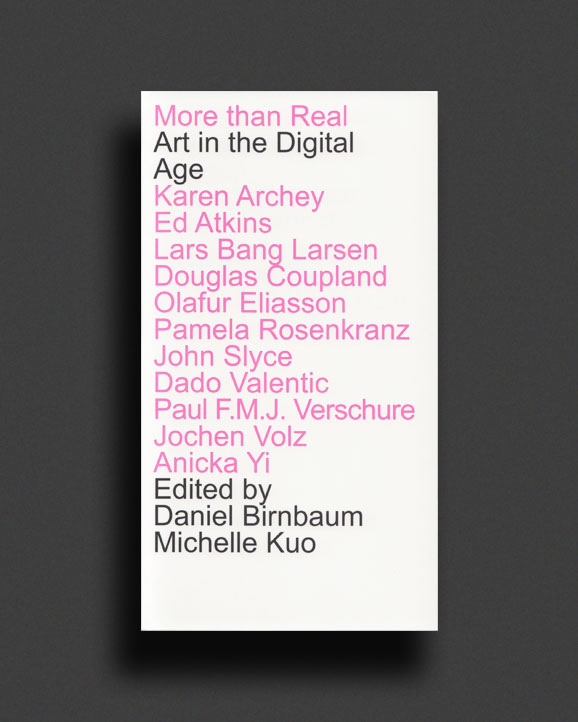
This is the second in the Summit publication series, disseminating key insights of the 2018 Summit and extending a global dialogue on an important social issue: art in the digital age. The multidisciplinary perspectives come together through the inspirational book design of Irma Boom.
Acting as a cultural incubator for innovative ideas and change, the Verbier Art Summit is an international platform erected to optimise the role of art in a global society. Their mission is to connect thought leaders to key figures in the art world and thus position the Summit as a catalyst for innovation and change. Their vision is to create an influential platform in a non-transactional context for artists, curators, museum directors, private and corporate collectors, art critics, gallerists, art historians and art consultants – Verbier Art Summit 2018
Contributors : Karen Archey, Ed Atkins, Douglas Coupland, Olafur Eliasson, Lars Bang Larsen, Pamela Rosenkranz, John Slyce, Dado Valentic, Paul F.M.J Verschure, Jochen Volz, Anicka Yi
Edited by Daniel Birnbaum and Michelle Kuo
2017, English
Softcover, 416 pages, 21 x 28 cm
Published by
Mousse / Milan
Walther König / Köln
$49.00 - Out of stock
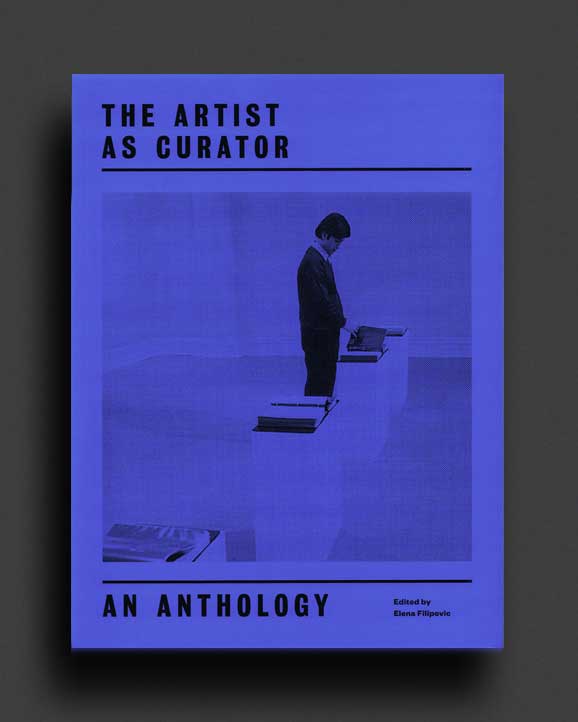
With texts by Alexander Alberro, Monica Amor and Carlos Basualdo, Biljana Ciric, Ekaterina Degot, Elena Filipovic, Claire Grace, Anthony Huberman, Dean Inkster, Alhena Katsof, William Krieger, Elisabeth Lebovici, Ana Longoni, James Meyer, Isabelle Moffat, Nina Möntmann, Natalie Musteata, Sandra Skurvida, Dirk Snauwaert, Lucy Steeds, Monika Szewczyk, and Kaelen Wilson-Goldie
Edited by Elena Filipovic.
Taking that ontologically ambiguous thing we call “the exhibition” as a critical medium, artists have often radically rethought conventional forms of exhibition making. This anthology surveys seminal examples of such exhibitions from the postwar to the present, including rare documents and illustrations. It includes an introduction and the twenty essays that first appeared in Mousse, a newly commissioned afterword by Hans Ulrich Obrist, and two additional essays that appear here for the first time.
The publication focuses on the following artists: Avant-Garde, the Argentinean artist group - Mel Bochner - Marcel Broodthaers - Hank Bull, Shen Fan, Zhou Tiehai, Shi Yong, and Ding Yi - John Cage - Judy Chicago, Miriam Schapiro, and the CalArt's Feminist Art Program - Collaborative Projects Inc. (Colab) - Alice Creischer, Andreas Siekmann, and Max Jorge Hinderer - Liam Gillick and Philippe Parreno - Group Material - Richard Hamilton and Victor Pasmore - David Hammons - Martin Kippenberger - Mark Leckey - Goshka Macuga - Lucy McKenzie and Paulina Olowska - Hélio Oiticica - Walid Raad and Akram Zaatari - Martha Rosler - Avdey Ter-Oganyan - Philippe Thomas - Andy Warhol.
2018, English / German
Softcover, 328 pages, 21 x 28.2 cm
Published by
Sternberg Press / Berlin
CCA Wattis Institute for Contemporary Arts / San Francisco
Künstlerhaus Stuttgart / Stuttgart
Participant Inc. / New York
$48.00 - Out of stock
Edited by Lia Gangitano, Fatima Hellberg, Jamie Stevens
Contributions by Dodie Bellamy, Jonathan Berger, John Brattin, Ellen Cantor, Lia Gangitano, Cy Gavin, Joseph Grigely, Clara López Menéndez, John Maybury
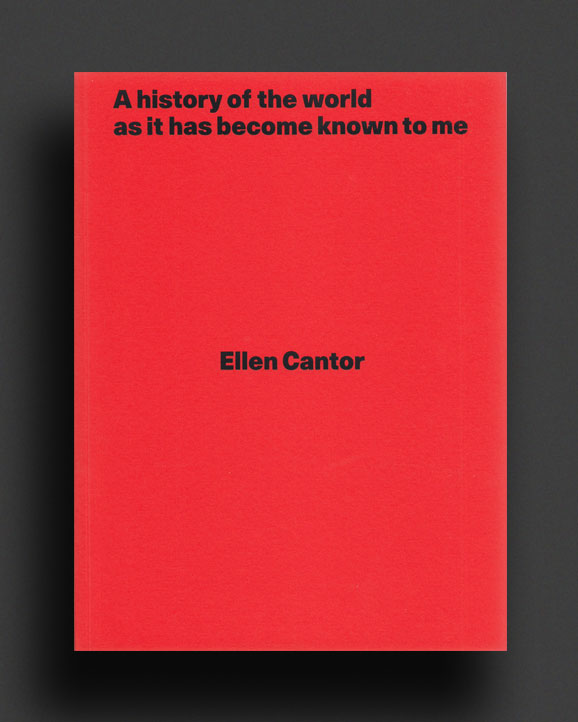
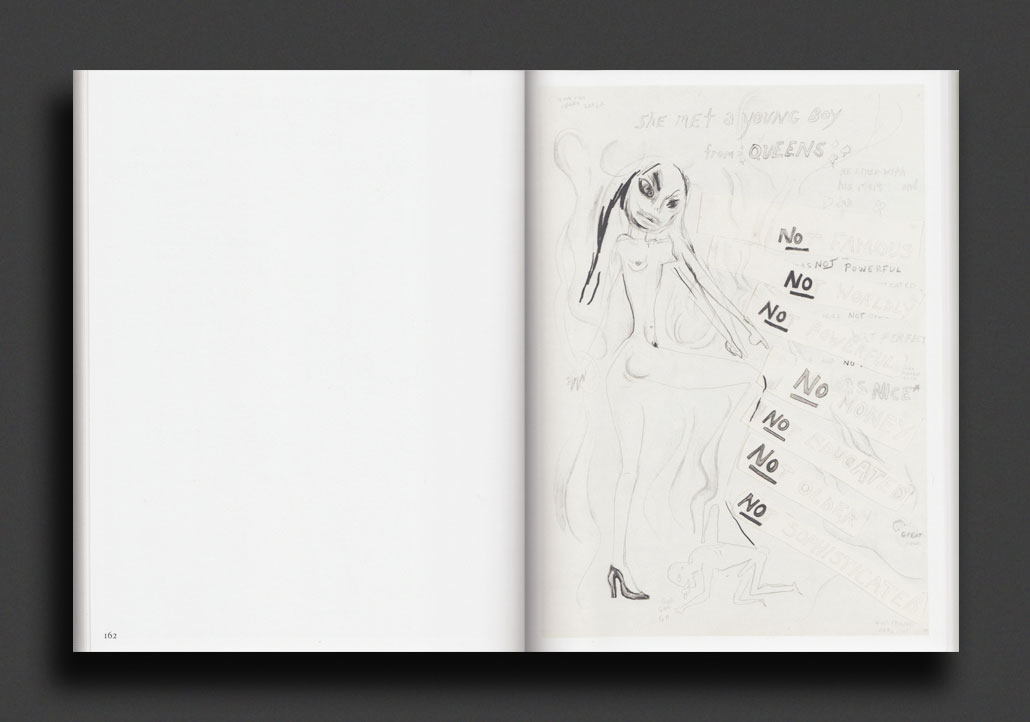
Ellen Cantor (1961–2013) combined ready-made materials with diaristic notes and drawings to probe her perceptions and experiences of personal desire and institutional violence. This book is concerned with, and a document of, Cantor’s work through the lens of Pinochet Porn (2008–16) and its making—an epic experimental film embodying and radically extending her multifaceted artistic practice. Taking the form of an episodic narrative about five children growing up under the regime of General Augusto Pinochet in Chile, and shot between her dual hometowns of London and New York, history is observed through Cantor’s fictive speculations on private experience within a totalizing political order. A history of the world as it has become known to me brings together writings and archival materials of Cantor’s, including a reproduction in full of her drawing-based script Circus Lives from Hell (2004), alongside contributions by writers, artists, collaborators, and friends reflecting on Cantor’s practice, Pinochet Porn, and a singularly transgressive vision: explicitly feminist, remorselessly emotional, dramatic in tone, and, as Cantor herself liked to put it, adult in subject matter.
This publication follows the exhibitions “Cinderella Syndrome,” CCA Wattis Institute for Contemporary Arts (December 8, 2015–February 13, 2016) and “Ellen Cantor,” Künstlerhaus Stuttgart (April 2–July 31, 2016).
Copublished with Künstlerhaus Stuttgart, Participant Inc., and CCA Wattis Institute for Contemporary Arts
Design by Pedro Cid Proença
2018, English
Softcover, 212 pages, 13 x 19.5 cm
Published by
Sternberg Press / Berlin
$39.00 - Out of stock
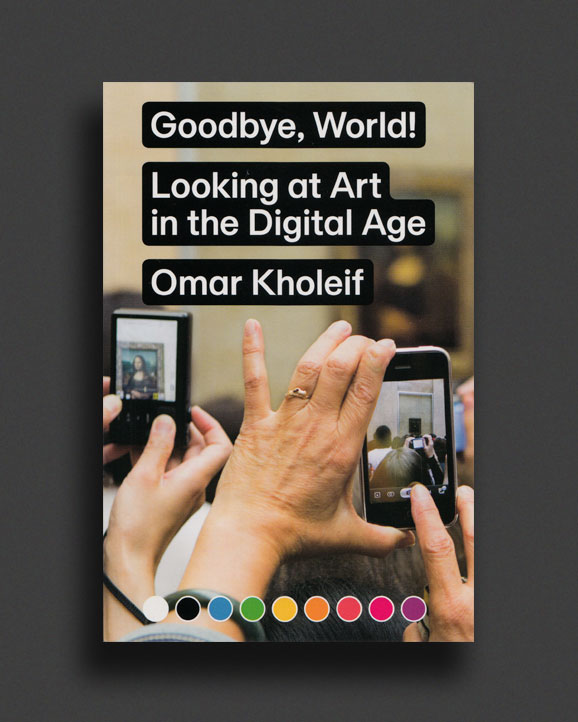
The way we see the world has changed drastically since NASA released the “blue marble” image of the earth taken by Apollo 17 in 1972. No longer a placid slow-moving orb, the world is now perceived as a hothouse of activity and hyper-connectivity that cannot keep up with its inhabitants. The internet has collectively bound human society, replacing the world as the network of all networks. In Goodbye, World! Looking at Art in the Digital Age, writer and curator Omar Kholeif traces the birth of a culture propagated but also consumed by this digitized network. Has the internet transformed the way we see and relate to images? How has the field of perception been altered by evolving technologies, pervasive distribution, and our interaction with screens? How have artists working in diverse contexts, from eBay auctions to augmented reality, created new ways of emoting that are determined by these technologies? Focusing on a cultural and artistic landscape that has taken shape since the year 2000, Kholeif aims to put into context a new language for seeing, feeling, and being that has emerged through post-millennial technologies, and argues for a nuanced understanding of the post-digital condition. Taking cues from John Berger’s Ways of Seeing and Alvin Toffler’s Future Shock, this book—part memoir, part critical analysis—should prove essential for anyone interested in the changing world of the internet.
“Goodbye, World! weaves through digital cultures, illustrating how both life and art have changed in the twenty-first century. Omar Kholeif’s critical eye is as alert to the issues facing artists as it is to those confronting the contemporary viewer.”
—Sofia Victorino, Daskalopoulos Director of Education and Public Programmes, Whitechapel Gallery
“Omar Kholeif’s insightful new book, built upon knowledge accumulated from research and practice, distills a fast-moving world mired with image overload, where the continuous reproduction of popular, or indeed viral images, contrary to general belief, can in itself offer a refreshing experience and hold an intrinsic value of its own. With Goodbye, World!, Kholeif has emerged as one of the leading contemporary historians of the digital age.”
—Sultan Sooud Al Qassemi, Director's Fellow at MIT Media Lab, founder of Barjeel Art Foundation
“Through deft juxtapositions of image, text, and digital detritus, Kholeif presents a visceral take on the strange implications of a world in which images, politics, subjectivities, and affects are recombined in a post-internet era. An Arcades Project for the twenty-first century.”
—Trevor Paglen, artist
“Omar Kholeif pushes forward our rapidly evolving understanding of contemporary art in the digital age. Goodbye, World! is an essential survey of the widening field of digital forms and formats and the growing number of artists that give this art its expression. Moreover, it is a fresh and necessary exploration of the very ontology of the work of art that digital movements force us to reevaluate.”
—Ken Stewart, Assistant Dean and Director of Communications and Public Programs, Harvard University Graduate School of Design
Design by Zak Group
2017, English
Softcover, 224 pages, 17.3 x 22 cm
Published by
MUDAM / Luxembourg
Sternberg Press / Berlin
$38.00 - Out of stock
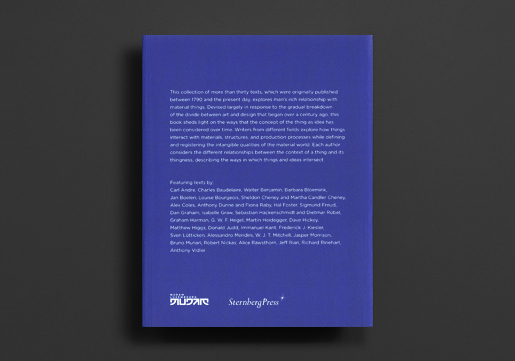
Contributions by Carl Andre, Charles Baudelaire, Walter Benjamin, Barbara Bloemink, Jan Boelen, Louise Bourgeois, Sheldon Cheney and Martha Candler Cheney, Alex Coles, Anthony Dunne and Fiona Raby, Hal Foster, Sigmund Freud, Dan Graham, Isabelle Graw, Sebastian Hackenschmidt and Dietmar Rübel, Graham Harman, G. W. F. Hegel, Martin Heidegger, Dave Hickey, Matthew Higgs, Donald Judd, Immanuel Kant, Frederick J. Kiesler, Sven Lütticken, Alessandro Mendini, W. J. T. Mitchell, Jasper Morrison, Bruno Munari, Robert Nickas, Alice Rawsthorn, Jeff Rian, Richard Rinehart, Anthony Vidler
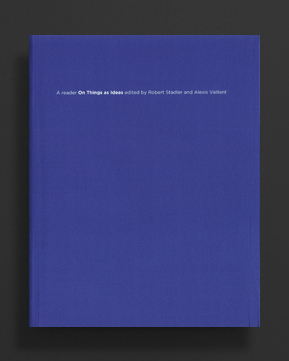
This collection of more than thirty texts, which were originally published between 1790 and the present day, explores man’s rich relationship with material things. Devised largely in response to the gradual breakdown of the divide between art and design that began over a century ago, this book sheds light on the ways that the concept of the thing as idea has been considered over time. Writers from different fields explore how things interact with materials, structures, and production processes while defining and registering the intangible qualities of the material world. Each author considers the different relationships between the context of a thing and its thingness, describing the ways in which things and ideas intersect.
Copublished with MUDAM Luxembourg
Design by Florence Richard
1997, English / Japanese
Hardcover (cardboard box covers w. glued in booklets, fold-outs, inserts), 84 pages plus fold-outs, 12.5 x 14 cm
1st edition, Out of print title / used*,
Published by
Wateri Museum of Contemporary Art / Tokyo
$90.00 - Out of stock
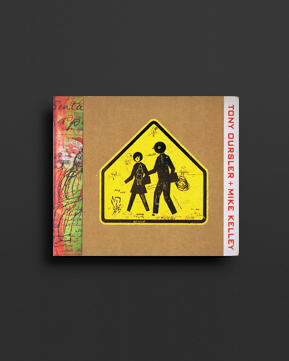
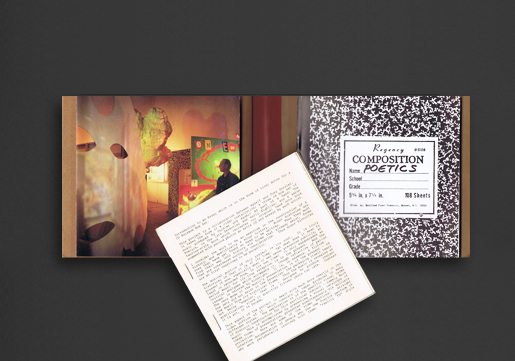
Very scarce Tony Oursler + Mike Kelley exhibition catalogue / artists' book published in conjunction with a major two-person exhibition held 1997 - 1998 in Tokyo. Includes colour installation images of the exhibition as installed at Documenta X, June 21 - September 28, 1997. "The ongoing 'Poetics Project' serves up a rich mix of visual and aural experiences, while inviting viewers to question the reliability of the shows as history. Artist Mike Kelley says, 'If you don't create your own history, someone else will." Kelley and Tony Oursler's the 'Poetics Project 1977-1997' is a retrospective work that draws from their collaborative efforts in painting, video, sculpture, drawing and music. Although the ostensible subject of this project is Kelley and Oursler's early experiences as performers in a loose-knit musical group called the Poetics, its broader concerns are the processes by which history is constructed, and the reciprocal relationship between the fine arts and popular culture. The conflation of past and present in the 'Poetics Project' makes it difficult at first for the viewer to penetrate the work. Video installations and taped interviews with visual artists, rock musicians and critics are intermingled with paintings, sculptures and stacks of drawings. A precise checklist and diagram prepared by Kelley and Oursler methodically pinpoint the authorship of each work, while serving as a serf-guided tour and critical record of the project. Only with this didactic help do viewers come to realize that the 'Poetics Project' is almost entirely made up of works created in 1997 and 1998, though based on what Kelley and Oursler tell us is a single notebook of sketches and a collection of audio recordings--some little more than notations for never-performed works--which date from the late 1970s and early '80s (the Poetics disbanded in 1983). Filled with irony and steeped in serf-reflexive practice, this work builds upon the radical autobiographical prose of William S. Burroughs and art works and performances by artists such as John Baldessari, Allan Kaprow and Andy Warhol. Reminiscent of Warhol's A:A Novel, which records one day in the life of the artist in 384 pages, the 'Poetics Project' is an expanding template of art works which explores how the past can be reconstructed to shed light on the present." -- Diane Shamash, Art in America, October 1998
First and only edition of this unique Japanese publication from these two American artists. Cardboard covers feature decal artwork reproducing the Oursler/Kelley collaborative artwork "Poetics Country", 1997.
2018, English / Dutch
Softcover, 288 pages, 17 x 24 cm
Published by
Nai010 Publishers / Rotterdam
$86.00 - In stock -
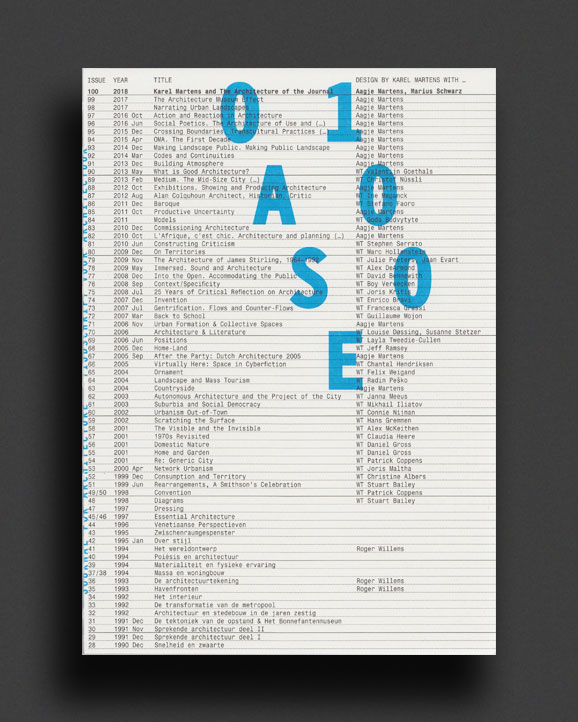
The 100th issue of OASE takes the journal’s long-standing collaboration with its graphic designer Karel Martens as a starting point to explore the relationship between architecture journals and graphic design. In doing so, it challenges the conventional idea that architecture journals are mere carriers of information, showing instead how these journals play a defining role in the message they convey. Adhering to Marshall McLuhan’s famous maxim ‘the medium is the message’, it considers the graphic space of the journal, its materiality, its production, and the physical experience of reading.
2018, English
Hardcover, 384 pages, 17 x 24 cm
Published by
Valiz / Amsterdam
$59.00 - Out of stock
What would happen if museums put relationships at the centre of their operations? This question inspires this publication, which offers a diverse, rigorous, and experimental analysis of what is commonly known as education, mediation or interpretation within museum institutions. It regards the visitor not as a passive receiver of predefined content, but as an active member of a constituent body, whom it facilitates, provokes, inspires and learns from. Moving beyond the practice of mediation as such, the publication situates constituent practices of collaboration and co-production within the existing social-political (neoliberal) context. It does this to reimagine and affect both the physical and organizational structures of museums and galleries.
Understanding the challenges of a constituent practice in an integral, interdisciplinary manner is what this publication aspires to. This is explored by placing the museum's constituents—museum professionals, active audience/co-curator, local and political agencies, operational structures and contexts—at the centre of the museum organization and looking at how their positions in society start to shift and change.
Issues that are addressed: ownership and power dynamics, collective pedagogy, pedagogy of encounter, collaboration, assent, dissent and consent, co-labour and co-curation (economies of exchange), precarity, and working with interns, archives and how to activate them, broadcasting, digital cultivation, crowdsourcing, and many other topics.
Editors: John Byrne, Elinor Morgan, November Paynter, Aida Sánchez de Serdio, Adela Železnik
Contributors: Azra Akšamija, Alberto Altés Arlandis, Burak Arikan, James Beighton, Manuel Borja-Villel, Sara Buraya, John Byrne, Jesús Carrillo, Alejandro Cevallos Narváez, Céline Condorelli, Sean Dockray, Özge Ersoy, Carmen Esbrí, Oriol Fontdevila, Amy Franceschini, Janna Graham, Nav Haq, Yaiza Hernández Velázquez, Emily Hesse, John Hill, Alistair Hudson, Adelita Husni-Bey, Kristine Khouri, Nora Landkammer, Maria Lind, Isabell Lorey, Francis McKee, Elinor Morgan, Paula Moliner, November Paynter, Manuela Pedrón Nicolau, Elliot Perkins, Bojana Piškur, Tjaša Pogačar Podgornik, Alan Quireyns, RedCSur, Rasha Salti, Francesco Salvini / pantxo ramas, Raúl Sánchez Cedillo, Aida Sánchez de Serdio, Somateca, Igor Španjol, Nora Sternfeld, Subtramas, Tiziana Terranova, Piet Van Hecke, Onur Yıldız, Adela Železnik
2017, English / French
Softcover, 560 pages, 16 x 23 cm
Published by
Les Presses Du Reel / Paris
$47.00 - Out of stock
Edited by Matthieu Saladin and Yvan Etienne
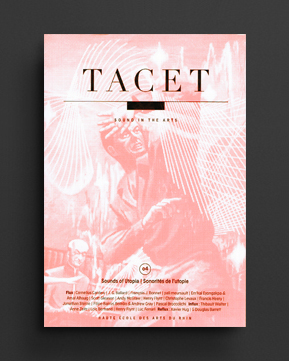
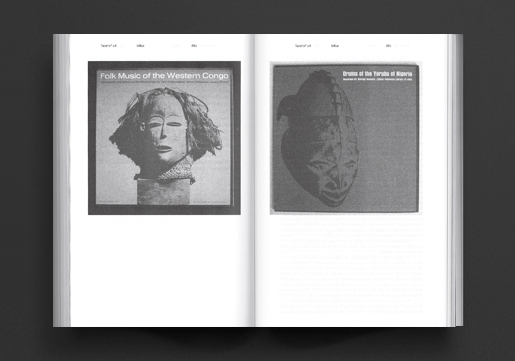
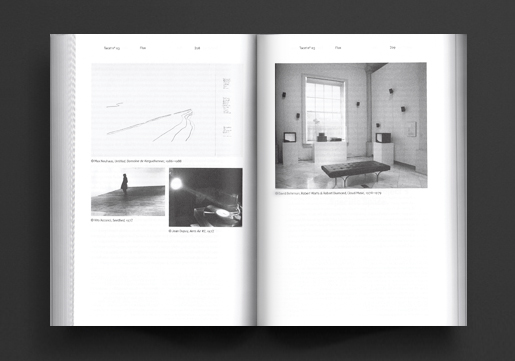
Tacet is a research publication dedicated to sound arts and experimental music. Published annually and bilingually (French, English), its ambition is to create an interdisciplinary and international space of reflection for this practices, in all its aesthetic diversity. The fourth issue is on the theme of utopias. Mixing science-fiction short stories, theoretical analysis and artists' writings, this issue addresses utopian and dystopian futures of our sound cultures. Includes: J.G. Ballard, Henry Flynt, Luc Ferrari, Francoise J. Bonnet, Loic Bertrand, Anne Zeitz, Max Neuhaus, Thibault Walter, Cornelius Cardew, Filipe Barros Beltrao, Andrew Gray, Jonathan Sterne, Christophe Levaux, John Cage, Henry A. Flynt, Jr., Andy McGraw, Scott Gleason and many more.
2014, English / French
Softcover, 448 pages, 16 x 23 cm
Published by
Les Presses Du Reel / Paris
$47.00 - Out of stock
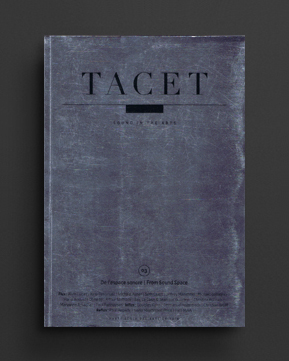
3rd issue of the sound arts and experimental music annual review, devoted to the question of sound space.
Featuring: Alvin Lucier, Kirsi Peltomäki, Michael Asher, Seth Cluett, Jeffrey Mansfield, Michael Gallagher, María Andueza Olmedo, Arthur Stidfolde, Éric La Casa & Jean-Luc Guionnet, Christina Kubisch, Maryanne Amacher, Paul Panhuysen, Douglas Kahn, Emmanuel Holterbach, Christian Wolff, Paul Hegarty, Ivana Miladinović Prica, Tom Mays...
Tacet is a new research publication dedicated to sound arts and experimental music. Published annually and bilingually (French, English), its ambition is to create an interdisciplinary and international space of reflection for this practices, in all its aesthetic diversity.
Tacet, as John Cage showed so well in 4'33'', designates a moment of silence observed by an instrumentalist during the whole period of a movement. By extension, it becomes, as the title of this publication, a moment of introspection, of reflectivity and reflection, where music interrupts itself to give way to research and theoretical questioning.
Tacet aims, in this way, on the side of sound arts and experimental music, to contribute to the renewal of theoretical research by confronting and intersecting artists and musicians' speeches, studies coming from aesthetics and philosophy of art, from the critical renewal of musicology, from cultural studies and gender studies, from political thought, from social sciences and geography.
Tacet is part of the Ohcetecho series, dedicated to sound arts and experimental music, published by Les presses du réel (editorial board: Matthieu Saladin and Yvan Etienne).
2015, English
Softcover, 304 pages. 24 x 28 cm
Published by
Hatje Cantz / Berlin
$99.00 - Out of stock
Text by Sabine Breitwieser, Andrea Fraser, Shannon Jackson, Sven Lütticken.
Controversial, provocative and poignantly humorous, American artist Andrea Fraser (born 1965) is one of the most influential and pioneering figures of her generation and has been captivating a devoted audience for more than 30 years. She employs a wide range of media, including prints, photographs, installations and performances as well as texts and videos, time and again reformulating the same fundamental questions: what do we want from art, how do we view it and how does the art market distribute it? Fraser's brand of performance during the 1990s popularized the institutional critique art movement, a loosely formed artistic practice meant to critique the very institutions that are involved in the sale, display, and commerce of art. Fraser's work typically comments on the politics, commerce, histories, and even the self-assuredness of the modern-day art museum, including the hierarchies and the exclusion mechanisms of art as an enterprise. Her performances, despite having serious undertones, are often presented in a humorous, ridiculous, or satirical manner. Fraser was a founding member of the feminist performance group, The V-Girls (1986-1996); the project-based artist initiative Parasite (1997-1998); and the cooperative art gallery Orchard (2005-2008). She was also co-organizer, with Helmut Draxler, of Services, a “working-group exhibition” that has been conceived at Kunstraum of Lüneburg University and toured to eight venues in Europe and the United States between 1994 and 2001.
This richly illustrated catalogue presents a full overview of the artist's career for the first time. It assembles the early Four Posters (1984) as well as her famous performances such as Museum Highlights (1989), Inaugural Speech (1997), Official Welcome (2001/03), and Untitled (2003) linking them with her most recent videos.
2018, English / German
Softcover, 272 pages, 23 x 16.5 cm
Published by
Texte Zur Kunst / Berlin
$30.00 - Out of stock
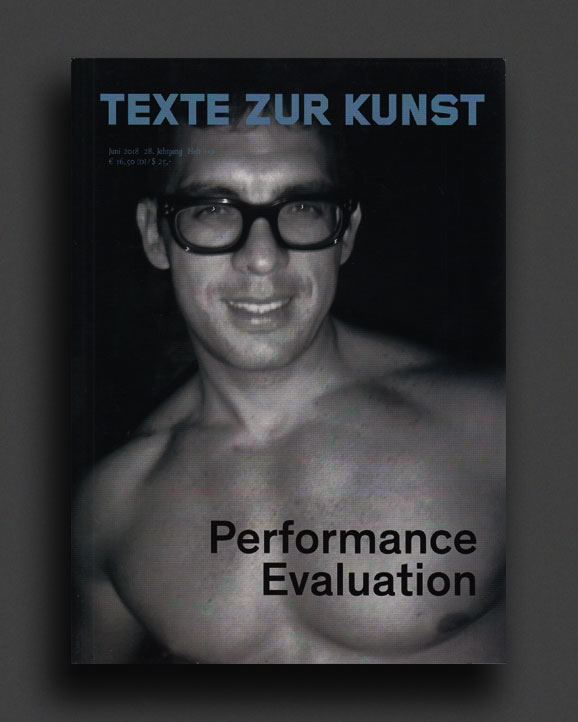
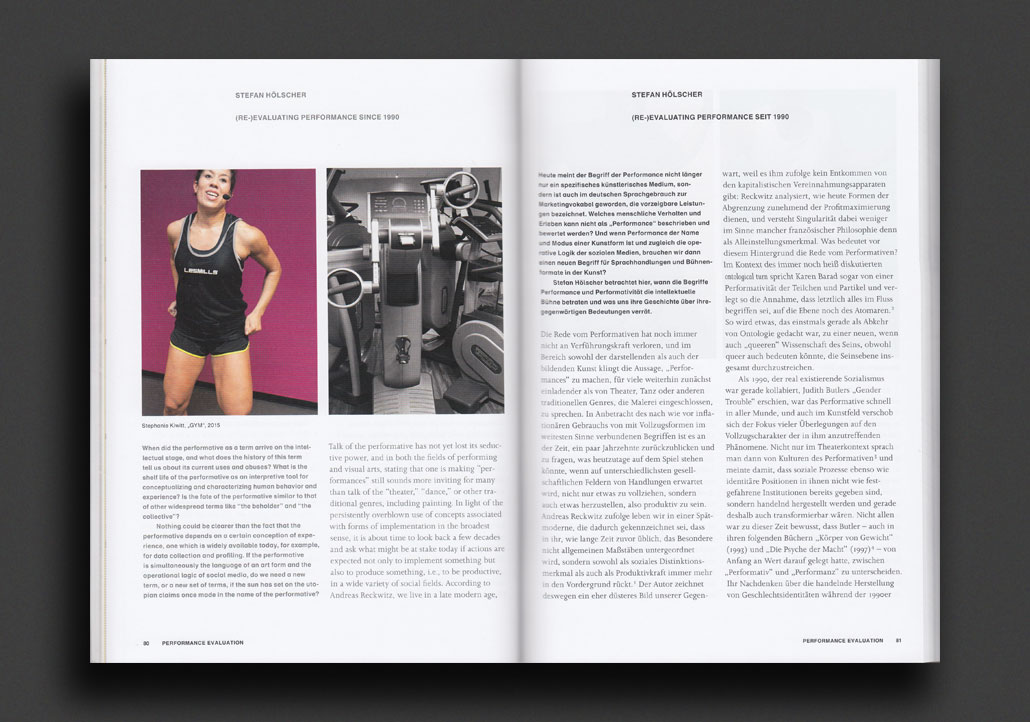
In the 18 years since Texte zur Kunst first turned its attention to the field of performance, a lot has happened, to say the least. Today, performance refers to almost any act, willing or forced, and is used by the institutions the world over whose aim is often to solicit performative acts from consumers, whether they are an audience at an art event or a user of social media. With performance today comes the inevitable system of evaluation—likes, ratings, grades, followers, etc.—a fact that has made separating performance as an art, and its popularity, from the overpowering influence of the culture of evaluation. For this issue of Texte zur Kunst, "Performance Evaluation," we investigate the overlapping definitions of performance, following their ubiquity and uses in particular, in order to evaluate what performance means today, and what we mean when we call something a "performance."
Issue No. 110 / June 2018 "Performance Evaluation"
Table Of Contents
Vorwort
Preface
Sabeth Buchmann
Feed Back: Performance In The Evaluation Society
Steffen Mau And Uwe Vormbusch
Likes And Performance / A Conversation Between Uwe Vormbusch And Steffen Mau On The Quantification Of The Social
Alexandra Pirici
Performance As Conjuring / Artist Statement
Stefan Hölscher
(Re-)Evaluating Performance Since 1990
Evelyn Annuss
On The Future Of The Volksbühne –
Failure Is An Option
Andreas Gelhard
Notes On The Competence Society
Working With Performance / A Conversation About Collaboration, Collectivity, And The Value Of Performance
New Development :
Amanda Schmitt
Miranda Warning
Rotation :
Nach Dem Metabolischen Bruch / Martin Müller Über „Molekulares Rot. Theorie Für Das Anthropozän“ Von Mckenzie Wark
Klang Körper
Äpfel Und Birnen / Wolfgang Seidel Über „Underground Und Improvisation. Alternative Musik Und Kunst Nach 1968“ In Der Akademie Der Künste, Berlin
Stunt / Anke Dyes Über Georgia Sagri Im Portikus Frankfurt/M.
Brighten The Corners / Colin Lang On “Res·O·Nant” At The Jewish Museum Berlin
Anke Dyes, Luisa Kleemann Und Tina Schulz
Über Das Gallery Weekend In Berlin
Reviews :
Endstation Selbstbezug / Hans-Christian Dany Über „Harald Szeemann: Museum Of Obsessions“ Und „Grandfather: A Pioneer Like Us“ Im Getty Center Und Ica In Los Angeles
Forward In This Generation / Eva Díaz On The New Museum Triennial
Archivarisch Verdichtet / Agnieszka Roguski Über „Left Performance Histories“
In Der Neuen Gesellschaft Für Bildende Kunst, Berlin
Broken Lineage / Gregory H. Williams On “Inventur: Art In Germany, 1943–55” At The Harvard Art Museums
Geld Ist Sein Pinsel / Verena Dengler Über Damien Hirst Bei Gagosian, Beverly Hills
Antipathy & Ecstasy / Kari Rittenbach On Ilya Lipkin At Svetlana, New York
Museum In Progress / Barbara Hess Über „Von Da An. Räume, Werke, Vergegenwärtigungen Des Antimuseums 1967–1978“ Im Museum Abteiberg, Mönchengladbach
Composition As Explanation / Annie Godfrey Larmon On Cally Spooner At The Centre D’art Contemporain Genève
Ikonisches Nachleben / Johannes Bennke Über James Benning Bei Neugerriem-Schneider, Berlin
Game Of Thrones / Chris Reitz On Geta Bratescu At Hauser & Wirth, Los Angeles
Park, Blicke / Benjamin Meyer-Krahmer Über Maya Schweizer Im Kunstverein Leipzig
Humanity’s Last Hopf / Mikael Brkic On Judith Hopf At Kunst-Werke Berlin
Memes, Schönheit Und Verfremdung / Jessica Aimufua Über Arthur Jafa In Der Julia Stoschek
Collection Berlin
Unendliche Arbeit / Hans-Jürgen Hafner Über Catherine Christer Hennix
Im Stedelijk Museum, Amsterdam
Relentless Applause / Carmen Gray On Katrina Daschner At The Neue Galerie Graz
Karikaturen Ohne Pointe / Michael Franz Und Franziska Ipfelkofer Über Matthias Noggler Bei Emanuel Layr, Wien
Administrativer Papierkram / Fiona Geuß Über „Paperwork“ In Der Sammlung Haubrok, Fahrbereitschaft, Berlin
Nachrufe :
Linda Nochlin (1931–2017)
Kynaston Mcshine (1935–2018)
Peter Gorsen (1933–2017)
Edition :
Tauba Auerbach
Eliza Douglas
Hans Haacke
2018, English
Softcover, 144 pages, 10.8 x 17.8 cm
Published by
Metropolis Books / New York
$35.00 - Out of stock
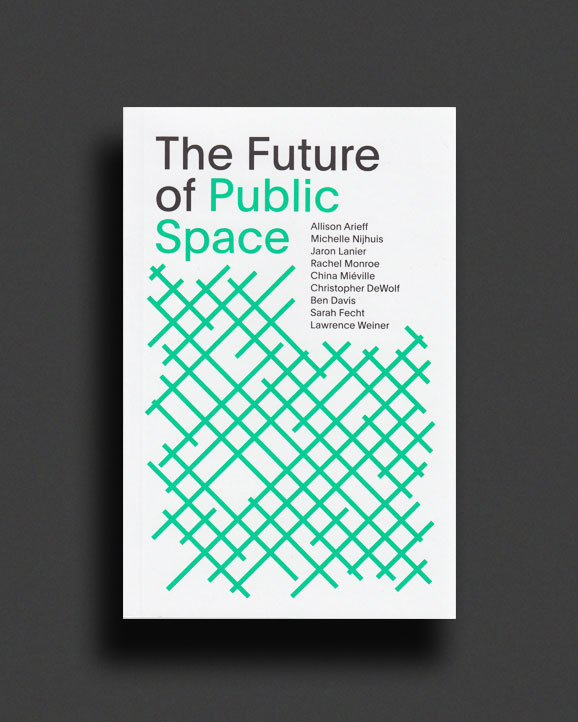
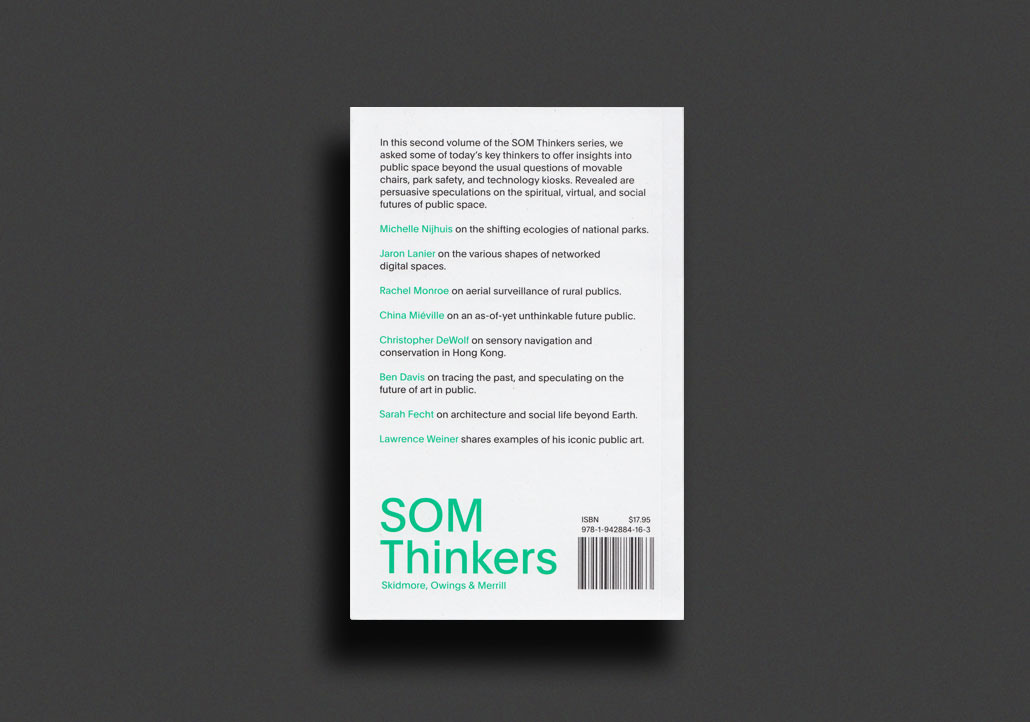
Introduction by Allison Arieff. Text by Michelle Nijhuis, Jaron Lanier, Rachel Monroe, China Miéville, Christopher DeWolf, Ben Davis, Sarah Fecht. Contributions by Lawrence Weiner.
Routine discussions on public space typically omit a gamut of possibilities ripe for critical discussion. This book, the latest in the SOM Thinkers series, aims to address these questions. Here, Rachel Monroe challenges American preconceptions of the wild, wide-open West by addressing issues of surveillance; the series’ first fictional piece, by China Miéville, covers an under-examined area of public space under the guise of detective fiction; a study of public art by Ben Davis sheds light on the myths and stigmas that have accrued to public art, also asking what it can become; Christopher DeWolf shares a sensory navigation trip through a directionless Hong Kong; Michelle Nijhuis writes on the shifting ecologies of national parks; Sarah Fecht explores architecture and social life beyond Earth; while Jaron Lanier meditates on the idea of public space online, linking the prevailing, free-for-all model of the internet with a characteristically American yearning for freedom and repudiation of rules and structure. Also included are examples of public art works by Lawrence Weiner.
2018, English
Softcover, 272 pages, 15 x 21 cm
Published by
Valiz / Amsterdam
$43.00 - Out of stock
By exploring the intellectual and practical interventions of so-called “courageous citizens” – thinkers, artists, activists, and collectives – this book highlights culture’s change-making capacity. These individuals, through their everyday actions, work towards a collective future and show courage and perseverance amid complex societal reconfigurations. Looking back at the last decade, three themes are identified which have been and continue to be relevant to social change: identity and fragmentation, culture, communities, and democracies, and solidarity and fragmentation. The book combines theoretical perspectives with case studies and narratives of change.
2018, English
Hardcover, 240 pages, 17 x 23.9 cm
Published by
The MIT Press / Massachusetts
$69.00 - Out of stock
Edited by Stefanie Hessler
Foreword by Markus Reymann
Essays, research, and art projects that formulate a Tidalectic worldview, addressing our most threatened ecosystem: the oceans.
The oceans cover two-thirds of the planet, shaping human history and culture, home to countless species. Yet we, as mostly land-dwelling humans, often fail to grasp the importance of these vast bodies of water. Climate change destabilizes notions of land-based embeddedness, collapses tropes of time and space, and turns our future more oceanic. Tidalectics imagines an oceanic worldview, with essays, research, and artists' projects that present a different way of engaging with our hydrosphere. Unbound by land-based modes of thinking and living, the essays and research in Tidalectics reflect the rhythmic fluidity of water.
Tidalectics emerges from the Thyssen-Bornemisza Art Contemporary (TBA21)–Academy, the only Western arts organization entirely dedicated to work on climate change and the oceans. In 2016, TBA21–Academy became the first cultural organization to gain UN observer status at the International Seabed Authority Assembly. The book presents newly commissioned work from a range of disciplines and often-neglected perspectives, alongside classic “anchor texts” by such writers as Rachel Carson. The contributors include an anthropologist from Fiji, a Norwegian scholar who specializes in maritime legal history, the author of the first comparative history of Caribbean and Pacific Island literatures, and a poet from Barbados who coined the term “tidalectics” as a play on “dialectics.” The art projects documented in the book form part of an exhibition curated by the volume's editor, and include a video of the infinite whites, blues, and grays of Antarctica; a collection of oceanic smells from the Caribbean and Pacific coasts of Costa Rica; and a quartz submersible capsule designed to communicate with cetaceans. Tidalectics provides a unique collection of the strongest voices in oceanic thinking, bridging arts, oceanography, history, law, and environmental studies.
With contributions by Nabil Ahmed, Tamatoa Bambridge, Kamau Brathwaite, Guigone Camus, Rachel Carson, Cynthia Chou, Paul D'Arcy, Tony deBrum, Elizabeth DeLoughrey, Keller Easterling, Bill Graham, Francesca von Habsburg, Stefan Helmreich, Stefanie Hessler, Cresantia Frances Koya Vaka'uta, Rosiana Lagi, Stéphanie Leyronas, Chus Martínez, Astrida Neimanis, Elizabeth A. Povinelli, Markus Reymann, Philip E. Steinberg, Khal Torabully, Lingikoni Vaka'uta, Davor Vidas, Susanne M. Winterling
Artists surveyed in the book : Atif Akin, Darren Almond, Julian Charrière, Em'kal Eyongakpa, Tue Greenfort, Ariel Guzik, Newell Harry, Alexander Lee, Eduardo Navarro, Sissel Tolaas, Janaina Tschäpe & David Gruber, Jana Winderen, Susanne M. Winterling
2018, English
Softcover, 89 pages, 17 x 24 cm
Published by
Art Against Art / Berlin
$18.00 - Out of stock
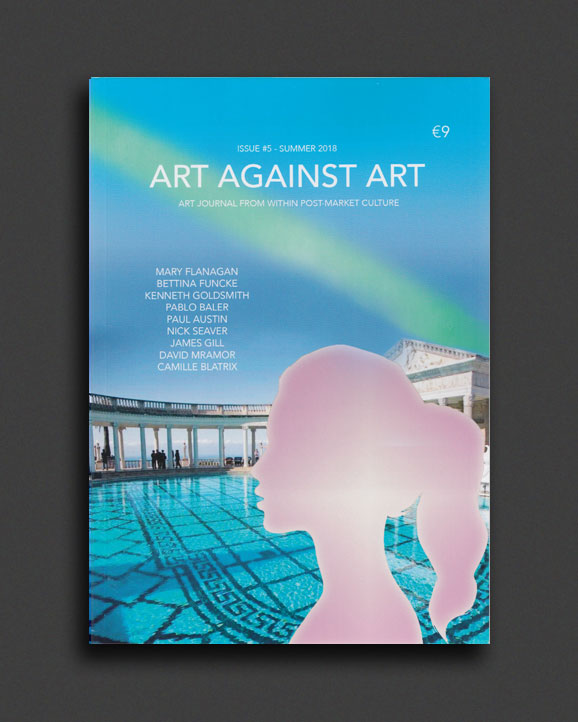
EDITORIAL
As we see the art world recalibrate again to a new cultural necessity, reacting to the face of power in a spectrum of ways, we’re seeing how closely connected cultural behaviour is, in reality, predictably mapped onto private interests. Very specific and niche individual trade-offs between the accuracy of an actor’s self view and their world view, mixed with their calculations and desires in relation to their personal biases, perceptions of positive value (social, political and economic value) as well their perceptions of the future are calculated determining a person’s consumer habits and in turn their cultural choices...
CONTENTS
Editorial
Bettina Funcke – Are Those Your Poems or Did You Write Them Yourself?
An Interview with Nick Seaver – Algorithms Are Culture
Mary Flanagan – Pretty Real
Image spread by Paul Austin
Kenneth Goldsmith – From “The Ideal Lecture” (In Memory of David Antin)
Kenneth Goldsmith – From “Soliloquy” (1996)
Pablo Baler – The Mad Flux of Life
Image spread by David Mramor
James Gill – The Death of Subculture: The Changing Role of Subculture in the 21st Century
Artist edition by Camille Blatrix
2018, English / French
Softcover, 128 pages, 23.5 x 16 cm
Published by
Koenig Books / London
Yves Saint-Laurent Museum / Marrakech
$36.00 - Out of stock
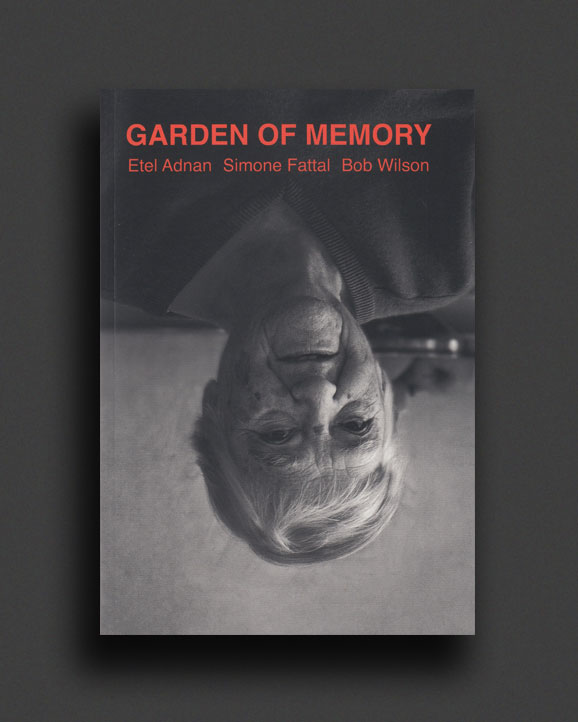
Lebanese artists Etel Adnan and Simone Fattal, along with revered American theatre director Robert Wilson together create a universe where poetry, sound and sculpture overlap, as well as a framework that enables them to construct situations in which memories are transformed into objects, objects into memories, fiction into reality, and reality into fiction.
Garden of Memory is based on a succession of these shared memories and experiences, manifested in the form of a mental landscape, a non-linear narrative and a choreography filled with both immutable and variable elements. The thrust behind it all is the reading of a poem by Etel Adnan entitled, Surge.
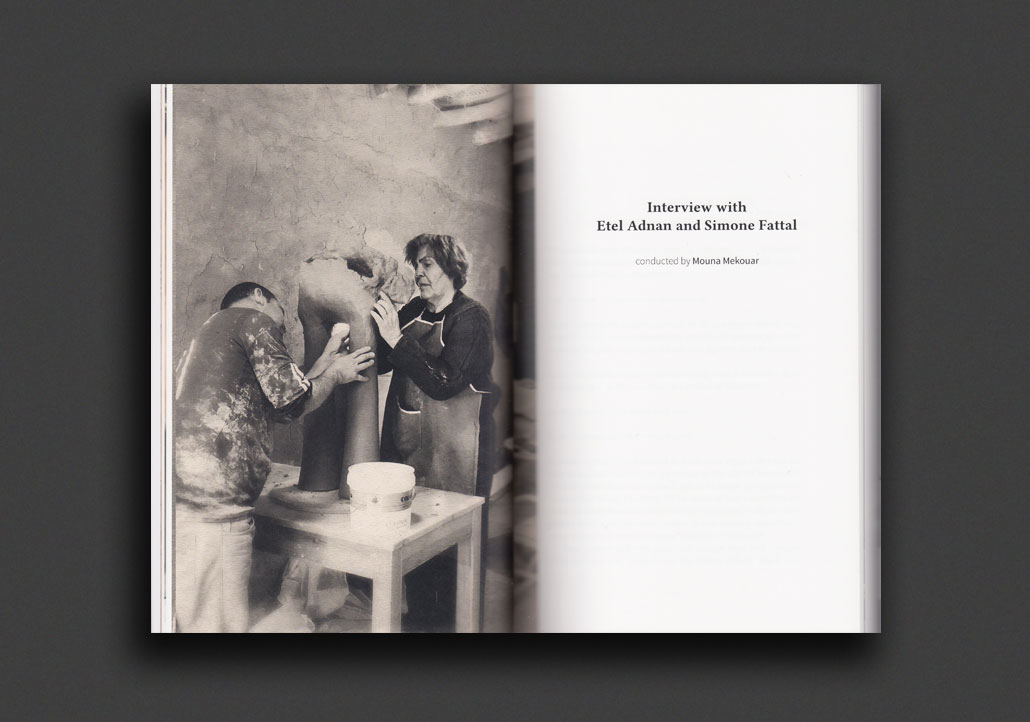
This book includes poetry, essays, artworks and a conversation between Etel Adnan and Simone Fattal moderated by Mouna Mekouar.
Published on the occasion of the exhibition, Garden of Memory: Etel Adnan, Simone Fattal, Bob Wilson at Yves Saint-Laurent Museum, Marrakech (14 May – 16 September 2018).
English and French text.
2018, English
Hardcover, 416 pages, 17 x 24 cm
Published by
Valiz / Amsterdam
$59.00 - In stock -
The 1980s triggered a fundamental reorientation in the relationship between governments and their publics, in turn shaping the imaginative landscape of the 21st century. Art and culture played a central role in responding to, pre-empting, and articulating these changes. Although globalisation has produced greater inequality and mixed economic results, it has also permitted the emergence of new regional cultural and activist networks, along with the possibility of a new global or transnational culture. How the effects of this shift have impacted our contemporary condition is told in diverse microhistories which compare very different geopolitical situations in Europe and beyond.
2015, English / German
Softcover (with dust jacket), 130 pages (4 b/w ill.), 12 x 19 cm
Published by
Sternberg Press / Berlin
$22.00 - Out of stock
Edited by Isabelle Graw, Daniel Birnbaum, Institut für Kunstkritik, Frankfurt am Main
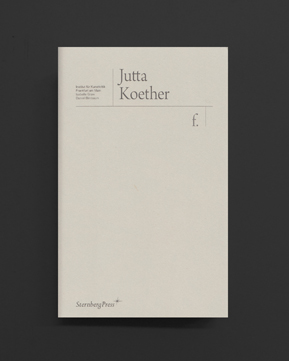
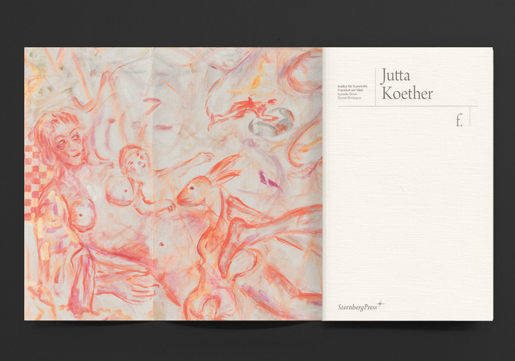
First published in German in 1987, this is artist and writer Jutta Koether’s meditation on painting. In novella form, f. follows several disembodied female characters as they consider velvet, coral, the curtain, money, color, red. These objects, these things, help the narrator and other characters come into being, but it is paintings that embody who the narrator really is: “Even if I’m their hostage when I look at them, I’m not inferior to them. I lie down, stand, or sit in front of them and, in this moment, I’m everything they affect in me.” Unlike people, paintings are fixed, explicit with their intentions and challenges—in the end they will still be here, outlasting those who made them or who looked at them. A facsimile of the original German publication is included in this volume.
Translated from the German by Nick Mauss and Michael Sanchez
Institut für Kunstkritik series
Design by Surface
This title is now out of print.
2016, English
Softcover, 224 pages, 24 x 17 cm
Published by
Walther König / Köln
$49.00 - Out of stock
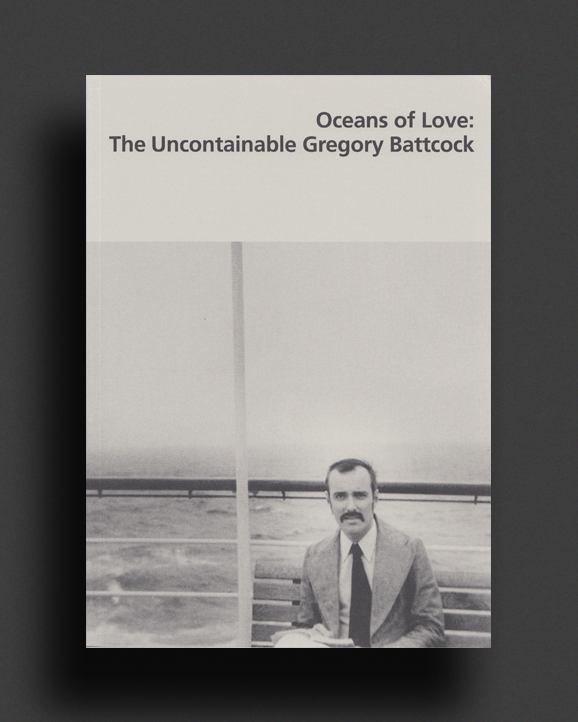
The publication is the first book to present a selection of Gregory Battcock's prefaces and essays (from Minimalism, Idea Art, Why Art?, and other books), as well as columns published in underground newspapers in the 1970s.
Edited by Joseph Grigely, Kunstverein in Hamburg, Grazer Kunstverein.
With an introduction by Joseph Grigely, published by König Books.
By chance, Joseph Grigely (1956 in East Longmeadow, Massachusetts) discovered the collected estate of Gregory Battcock abandoned in a warehouse in 1992. Battcock (1937 in New York, †1980 in San Juan, Puerto Rico) was a critic and key figure of the New York art scene of the 1960s and 70s. He wrote on Minimal Art, Concept Art, video and performance art, and championed artists who newly defined the borders of contemporary art. Prompted by this fortunate find, Grigely began academically and artistically engaging with the life and work of Battcock, an endeavor lasting until today.
2018, English
Softcover, 240 pages, 21 x 23 cm
Published by
The MIT Press / Massachusetts
Whitechapel / London
$49.00 - Out of stock
The first anthology to investigate what contemporary notions of practice mean for art, tracing their development and speculating on where this leads.
“Practice” is one of the key words of contemporary art, used in contexts ranging from artists' descriptions of their practice to curatorial practice, from social practice to practice-based research. This is the first anthology to investigate what contemporary notions of practice mean for art, tracing their development and speculating on where this leads.
Reframing the question of practice offers new ways of reading the history of art and of evaluating particular forms of practice-based art. Once used to denote “doing,” as distinct from thinking and making, today the term can convey associations of political action (praxis), professional activity, discipline, or rehearsal, and signal a shift away from the self-enclosed artwork or medium to open-ended actions, series, processes, and projects. Although the turn to practice might promise freedom from finality or eventfulness, it also reflects the neoliberal pressures to train oneself, to perform, and to rehearse a marketable set of skills. This book offers an indispensible guide to the art history and theoretical framework of art-as-practice, clarifying the complex issues at stake in thinking about and enacting practice.
Artists surveyed include Francis Alys, Arakawa, Rebecca Belmore, AA Bronson, Judy Chicago, Lygia Clark, Andrea Fraser, Madeline Gins, Tehching Hsieh, Mary Kelly, Henri Michaux, Linda M. Montano, Pauline Oliveros, Yoko Ono, Adrian Piper, Raivo Puusemp, Rammellzee, Gerhard Richter, Miriam Schapiro, Carolee Schneemann, Gregory Sholette, Aliza Shvarts, Situationist International, Jonas Staal, Stelarc, Fiona Tan, Min Tanaka, Nadezhda Tolokonnikova, Cecilia Vicuña
Writers include Kathy Acker, Giorgio Agamben, Louis Althusser, Hannah Arendt, Alain Badiou, Lauren Berlant, Gregg Bordowitz, Pierre Bourdieu, Julia Bryan-Wilson, Judith Butler, Jennifer Doyle, Okwui Enwezor, Saidiya V. Hartman, Maulana Karenga, Julia Kristeva, Saba Mahmood, Viktor Misiano, Fred Moten, Paul B. Preciado, Lane Relyea, Suely Rolnik, Peter Sloterdijk, Isabelle Stengers, Winnie Won Yin Wong
Part of the Whitechapel Documents of Contemporary Art series
2013, English
Softcover, 240 pages, 21 x 23 cm
Published by
The MIT Press / Massachusetts
Whitechapel / London
$55.00 $30.00 - Out of stock
The revival of documentary in art, considered in historical, theoretical, and contemporary contexts.
After a long period in eclipse, documentary has undergone a marked revival in recent art. This has been spurred by two phenomena: the exhibition of photographic and video work on political issues at Documenta and numerous biennials; and increasing attention to issues of injustice, violence, and trauma in the war zones of the endemically conflict-ridden twenty-first century. The renewed attention to photography and video in the gallery and museum world has helped make documentary one of the most prominent modes of art-making today. Unsurprisingly, this development has been accompanied by a rich strain of theoretical and historical writing on documentary.
This anthology provides a much-needed contextual grounding for documentary art. It explores the roots of documentary in modernism and its critique under postmodernism; surveys current theoretical thinking about documentary; and examines a wide range of work by artists within, around, or against documentary through their own writings and interviews.
Artists surveyed include:Kutlug Ataman, Ursula Biemann, Hasan Elahi, Harun Farocki, Omer Fast, Joan Fontcuberta, Regina José Galindo, David Goldblatt, Craigie Horsfield, Alfredo Jaar, Emily Jacir, Lisa F. Jackson, Philip Jones Griffiths, An-My Le, Renzo Martens, Boris Mikhailov, Daido Moriyama, Walid Raad, Michael Schmidt, Sean Snyder
Writers include:James Agee, Ariella Azoulay, Walter Benjamin, Adam Broomberg, Judith Butler, Oliver Chanarin, Georges Didi-Huberman, John Grierson, David Levi Strauss, Elizabeth McCausland, Carl Plantinga, Jacques Rancière, Martha Rosler, Jean-Paul Sartre, Allan Sekula, W. Eugene Smith, Susan Sontag, Hito Steyerl, Trinh T. Minh-ha
Part of the Whitechapel Documents of Contemporary Art series
2011, English
Softcover, 240 pages, 147 x 210 mm
Published by
The MIT Press / Massachusetts
Whitechapel / London
$55.00 - Out of stock
The "death of painting" and its subsequent resurrection in transformed conditions is a leitmotif of the modern era. Painting’s postconceptual resurgence at the start of the 1980s began a dramatic expansion of its field. If painting remains important today, it is because its contradictions have been acknowledged as artists have radically diversified the components of its production and presentation.
This first anthology to focus on painting's multiple discourses over the last three decades brings together key statements, dialogues, and debates that have moved the conversation beyond the modern/postmodern dialectic while redefining the conditions necessary for an artwork to be described as "painting." The diversity of contemporary painting’s meanings and practices encompasses the randomness and eclecticism associated with Web-based creation. Although for many the presence of paint endures, others have argued for painting to be classed not as a material but as a philosophical category.
Compiled by a leading critic of painting who actively participated in these conversations while also teaching young artists in the studio classroom, this collection ranges widely, to reflect the diversity of ways in which painting continues to be investigated and evaluated in studios, exhibition spaces, and the marketplace of ideas. These writings, statements, and interviews reflect ongoing debates and reignite questions for an as yet unimagined future of painting.
Artists surveyed include Glenn Brown, Vija Celmins, John Currin, Marlene Dumas, Olafur Eliasson, Bernard Frize, Katharina Grosse, Andreas Gursky, Peter Halley, Gary Hume, Jutta Koether, Paul McCarthy, Suzanne McCleland, Beatriz Milhazes, Takashi Murakami, Albert Oehlen, Lari Pittman, Sigmar Polke, Gerhard Richter, Robert Ryman, David Salle, Chéri Samba, Jim Shaw, Jessica Stockholder, Philip Taaffe, Luc Tuymans, Jeff Wall and Sue Williams.
Writers include Daniel Birnbaum, Norman Bryson, Douglas Crimp, Gilles Deleuze, Sebastian Egenhofer, Hal Foster, Jeremy Gilbert-Rolfe, Isabelle Graw, David Joselit, Shirley Kaneda, Geeta Kapur, Thomas Lawson, Midori Matsui, Lane Relyea, Rene Ricard, Jerry Saltz, Mira Schor, Barry Schwabsky and Adrian Searle.
About the Editor
Terry R. Myers is a Chicago— and Los Angeles-based writer, educator, and independent curator. A regular contributor since 1988 to numerous international journals, including Art Review, The Brooklyn Rail, Parkett, and Modern Painters, he is the author of Mary Heilmann: Save the Last Dance for Me (Afterall Books, 2007). He is Associate Professor of Painting and Drawing at the School of the Art Institute of Chicago.
2017, English
Softcover, 240 pages, 21 x 23 cm
Published by
Whitechapel / London
The MIT Press / Massachusetts
$55.00 $30.00 - Out of stock
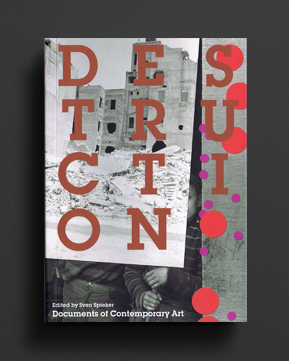
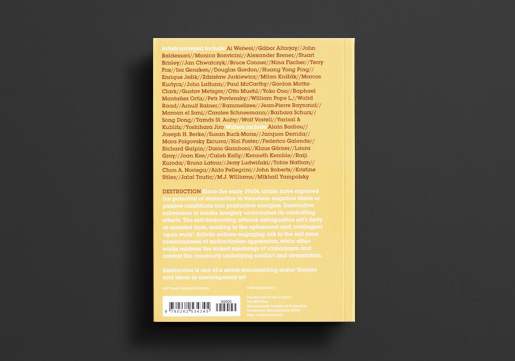
The effects and meanings of destruction are central to the work of many of our most influential artists. Since the early 1960s, artists have employed destruction to creative ends. Here destruction changes from a negative state or passive condition to a highly productive category. The destructive subversion of media imagery aims to release us from its controlling effects. The self-destructing artwork extinguishes art’s fixity as arrested form and ushers in the ephemeral and contingent "open work."
This anthology explores artworks that convey the threat of destruction an how they have disrupted the perceived integrity of built structures and institutions. Artistic acts of iconoclasm or risk to the self have raised consciousness of authoritarian oppression. More understated works explore the theme of destruction in armed conflict, media violence, and threats to the environment. These text make up the first collection to be focused systematically on destruction in modern and contemporary art.
Artists surveyed include
Ai Weiwei, John Baldessari, Monica Bonvicini, Alexander Brener, Stuart Brisley, Douglas Gordon, Huang Yong Ping, Enrique Jezik, Milan Knizak, Paul McCarthy, Piero Manzoni, Gordon Matta-Clark, Gustav Metzger, Otto Mühl, Yoko Ono, Raphael Montañez Ortiz, Petr Pavlensky, William Pope.L, Walid Raad, Arnulf Rainer, Robert Rauschenberg, Carolee Schneemann, Song Dong, Jean Tinguely, Wolf Vostell
Writers include
Alain Badiou, Walter Benjamin, Horst Bredekamp, Carolyn Christov-Bakargiev, Medina Cuauthémoc, Dario Gamboni, Richard Galpin, Caleb Kelly, Bruno Latour, Sven Lütticken, Antonio Negri, Sophie O’Brien, Kristine Stiles, Jennifer Walden
About the Editor
Sven Spieker is Professor of Germanic and Slavic Studies at the University of California, Santa Barbara, and editor of ARTmargins. His books include The Big Archive: Art from Bureaucracy (MIT Press).