World Food Books' programme is largely produced on Kulin Nation land. We acknowledge the Wurundjeri people of the Kulin Nation as the first and continuing custodians of this land, and pay respect to their Elders past, present, and emerging.
World Food Books is an arts and special interests bookshop in Naarm / Melbourne. Founded in 2010, World Food Books is devoted to the presentation of a rotating, hand-selection of international art, design, literary and counterculture publications with an emphasis on the anti-traditional, the experimental, the avant-garde, the heretic, the marginal.
Presenting new titles alongside rare and out-of-print books, catalogues and journals spanning the fields of modern and contemporary art, design, photography, illustration, film, literature, poetry, cultural theory, philosophy, sexuality, popular and underground culture in its many radical forms, World Food Books wishes to encourage adventurous, thoughtful and open-minded reading, looking, writing, and exchange of publishing and ideas, both current and historical.
As well as our bookshop, located in Melbourne's historical Nicholas Building, all of our inventory is available internationally via our online mail-order service.
World Food Books semi-regularly co-ordinates "Occasions", a programme of exhibits and events at the bookshop and in partnership with other hosts (such as museums and art galleries) that develop out of the activities, relationships and content of the bookshop itself.
World Food Books
The Nicholas Building
37 Swanston Street
Room 5, Level 6
Melbourne 3000
Australia
SHOP HOURS:
Thu–Sat 11–5
WEB-SHOP OPEN 24/7
World Food Books
Postal Address:
PO Box 435
Flinders Lane
Victoria 8009
Australia
Art
Theory / Essay
Architecture / Interior
Graphic Design / Typography
Photography
Fashion
Eros
LGBTQ+
Fiction / Poetry
Weird / Speculative / Science Fiction / Horror
Transgressive / Visceral / Abject
Symbolism / Decadence / Fin de siècle
Film / Video
Painting
Sculpture / Installation
Performance / Dance / Theater
Drawing
Sound / Music
Curatorial
Group Shows / Collections
Periodicals
Out-of-print / Rare
Posters / Ephemera / Discs
Signed Books
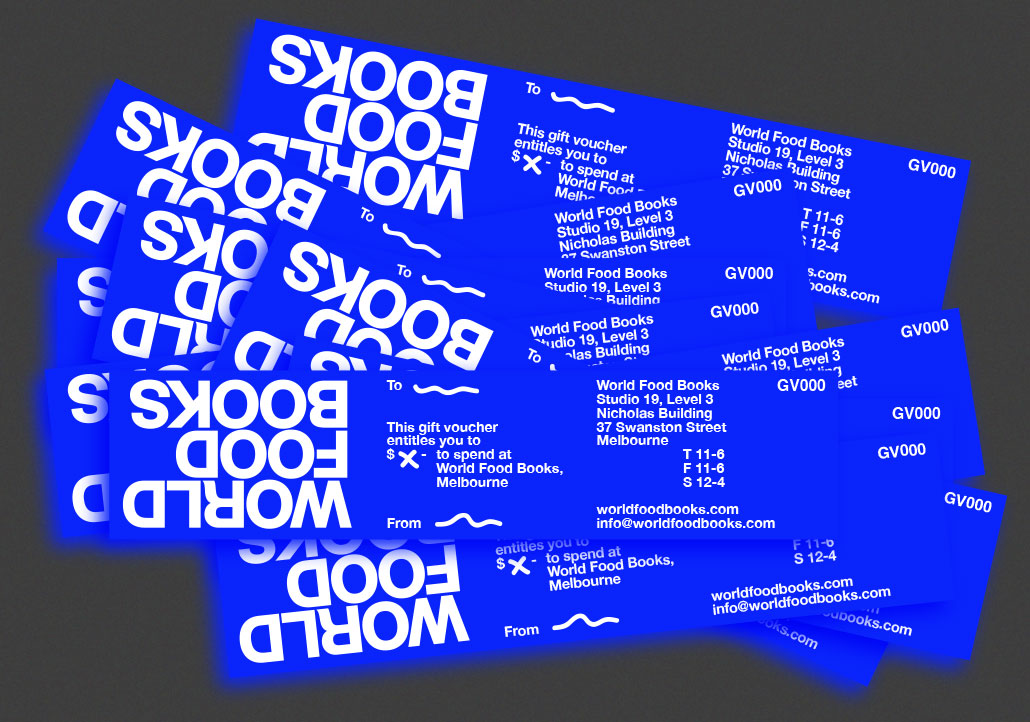
World Food Books Gift Voucher
World Food Book Bag
Australian Art
Australian Fiction
Australian Science Fiction / Speculative Fiction
Australian Poetry
Australian Photography
Japanese Photography
Conceptual Art
Minimal Art
Dada
'Pataphysics / Oulipo
Fluxus
Concrete Poetry
Pop Art
Surrealism
Arte Povera
Arte Informale / Haute Pâte / Tachism
Nouveau Réalisme / Zero / Kinetic
Situationism / Lettrism
Collage / Mail Art / Xerox Art
Art Brut / Folk / Visionary / Fantastic
Illustration / Graphic Art / Bandes Dessinées
Furniture
Italian Radical Design / Postmodernism
Textiles
Ceramics / Glass
Counterculture
Protest / Revolt
Philosophy
Psychoanalysis
Anthropology
Anarchism
Socialism / Anarchism / Communism / Capitalism
Literary Theory / Semiotics / Language
Feminism / Women's Studies
Gender Studies / Sexuality
Anthropology
Fetishism / BDSM
Drugs / Psychedelia
Crime / Violence
Animal Rights / Veganism
Occult / Esoterica
Ecology / Earth / Alternative Living
Whole Earth / Crafts
All prices in AUD (Australian dollars)
Pick-Ups
Pick-up orders can be collected in our bookshop during opening hours after order date. Please collect any Pick-up orders within 2 weeks of ordering as we have limited storage space. Orders will be released back into stock if not collected within this time. No refunds can be made for pick-ups left un-collected. If you cannot make it in to the bookshop in this time-frame, please choose postage option.
Return Policy
All sales are final. We do accept returns (for refund or exchange) for items received in error. All our orders are packed with special care using heavy-duty padding and cardboard book-mailers or bubble mailers (for smaller books), using reinforcement where required. We cannot take responsibility for any lost, stolen or damaged parcels.
Insurance
Should you wish to insure your package, please email us directly after placing your order and we can organise this at a small extra expense. Although all standard/express tracked packages are very safe and dependable, we cannot take responsibility for any lost, stolen or damaged parcels. We recommend insurance on valuable orders.
Interested in selling your old books, catalogues, journals, magazines, comics, fanzines, ephemera? We are always looking for interesting, unusual and out-of-print books to buy. We only buy books in our fields of interest and specialty, and that we feel we can resell.
We base these prices on desirability, market value, in-print prices, condition and our current stock levels. We offer cash, store credit, and can take stock on consignment. All
about 25% of the price we expect to get when we sell them, or 30% in store credit. We base these prices on desirability, market value, in-print prices, condition and our current stock levels.
Sell your books any day of the week. You can drop them off and return later. If you have a lot of books, we can visit your Sydney home.
We buy books that we feel we can resell. We offer about 25 % of the price we expect to get when we sell them, or 30% in store credit. We base these prices on desirability, market value, in-print prices, condition and our current stock levels.
Philadelphia Wireman
03 August - 01 September, 2018
World Food Books is proud to announce our next Occasion, the first presentation of sculptures by Philadelphia Wireman in Australia.
The Philadelphia Wireman sculptures were found abandoned in an alley off Philadelphia’s South Street on trash night in 1982. Their discovery in a rapidly-changing neighbourhood undergoing extensive renovation, compounded with the failure of all attempts to locate the artist, suggests that the works may have been discarded after the maker’s death. Dubbed the "Philadelphia Wireman" during the first exhibition of this work, in 1985, the maker’s name, age, ethnicity, and even gender remain uncertain. The entire collection totals approximately 1200 pieces, all intricately bound together with tightly-wound heavy-gauge wire (along with a few small, abstract marker drawings, reminiscent both of Mark Tobey and J.B. Murry). The dense construction of the work, despite a modest range of scale and materials, is singularly obsessive and disciplined in design: a wire armature or exoskeleton firmly binds a bricolage of found objects including plastic, glass, food packaging, umbrella parts, tape, rubber, batteries, pens, leather, reflectors, nuts and bolts, nails, foil, coins, toys, watches, eyeglasses, tools, and jewellery.
Heavy with associations—anthropomorphic, zoomorphic, and socio-cultural responses to wrapped detritus—the totemic sculptures by Philadelphia Wireman have been discussed in the context of work created to fulfil the shamanistic needs of alternative religions in American culture. Curators, collectors, and critics have variously compared certain pieces to sculpture from Classical antiquity, Native American medicine bundles, African-American memory jugs, and African fetish objects. Reflecting the artist’s prolific and incredibly focused scavenging impulse, and despite—or perhaps enhanced by—their anonymity, these enigmatic objects function as urban artefacts and arbiters of power, though their origin and purpose is unknown. Philadelphia Wireman, whatever their identity, possessed an astonishing ability to isolate and communicate the concepts of power and energy through the selection and transformation of ordinary materials. Over the course of the past two decades, this collection has come to be regarded as an important discovery in the field of self-taught art and vernacular art.
Presented in collaboration with Fleisher-Ollman Gallery, Philadelphia, and Robert Heald, Wellington.
Susan Te Kahurangi King
02 February - 10 March, 2018
Susan Te Kahurangi King (24 February 1951 - ) has been a confident and prolific artist since she was a young child, drawing with readily available materials - pencils, ballpoint pens and felt-tip markers, on whatever paper is at hand. Between the ages of four and six Susan slowly ceased verbal communication. Her grandparents William and Myrtle Murphy had developed a special bond with Susan so they took on caring responsibilities for extended periods. Myrtle began informally archiving her work, carefully collecting and storing the drawings and compiling scrapbooks. No drawing was insignificant; every scrap of paper was kept. The King family are now the custodians of a vast collection containing over 7000 individual works, from tiny scraps of paper through to 5 meter long rolls.
The scrapbooks and diaries reveal Myrtle to be a woman of great patience and compassion, seeking to understand a child who was not always behaving as expected. She encouraged Susan to be observant, to explore her environment and absorb all the sights and sounds. Myrtle would show Susan’s drawings to friends and people in her community that she had dealings with, such as shopkeepers and postal workers, but this was not simply a case of a grandmother’s bias. She recognised that Susan had developed a sophisticated and unique visual language and sincerely believed that her art deserved serious attention.
This was an unorthodox attitude for the time. To provide some context, Jean Dubuffet coined the term Art Brut in 1945 to describe work created by self-taught artists – specifically residents of psychiatric institutions and those he considered to be visionaries or eccentrics. In 1972 Roger Cardinal extended this concept by adopting the term Outsider Art to describe work made by non-academically trained artists operating outside of mainstream art networks through choice or circumstance. Susan was born in Te Aroha, New Zealand in 1951, far from the artistic hubs of Paris and London that Dubuffet and Cardinal operated in. That Myrtle fêted Susan as a self-taught artist who deserved to be taken seriously shows how progressive her attitudes were.
Susan’s parents Doug and Dawn were also progressive. Over the years they had consulted numerous health practitioners about Susan’s condition, as the medical establishment could not provide an explanation as to why she had lapsed into silence. Dawn educated herself in the field of homeopathy and went on to treat all twelve of her children using these principles – basing prescriptions on her observations of their physical, mental and emotional state.
Doug was a linguist with an interest in philosophy who devoted what little spare time he had to studying Maori language and culture. To some extent their willingness to explore the fringes of the mainstream made them outsiders too but it was their commitment to living with integrity and their respect for individuality that ensured Susan’s creativity was always encouraged.
Even though Susan’s family supported her artistic pursuits, some staff in schools and hospitals saw it as an impediment to her assimilation into the community and discouraged it in a variety of ways. Her family was not always aware of this and therefore did not fully understand why Susan stopped drawing in the early 1990s. However, rather than dwell on the challenges that Susan faced in pursuit of her artistic practice, they prefer to highlight her achievements. In 2008 Susan began drawing again in earnest, after an almost 20 year interruption, and her work is now shown in galleries around the world.
Susan grew up without television and has been heavily influenced by the comics she read as a child. She is absolutely fearless in the appropriation of recognizable characters, such as Donald Duck and Mickey Mouse, in her work. She twists their limbs, contorts their faces, compresses them together, blends them into complex patterned backgrounds - always imbuing them with an incredible energy. Although Susan often used pop culture characters in her work they are not naive or childlike. These are drawings by a brilliant self-taught artist who has been creating exceptional work for decades without an audience in mind.
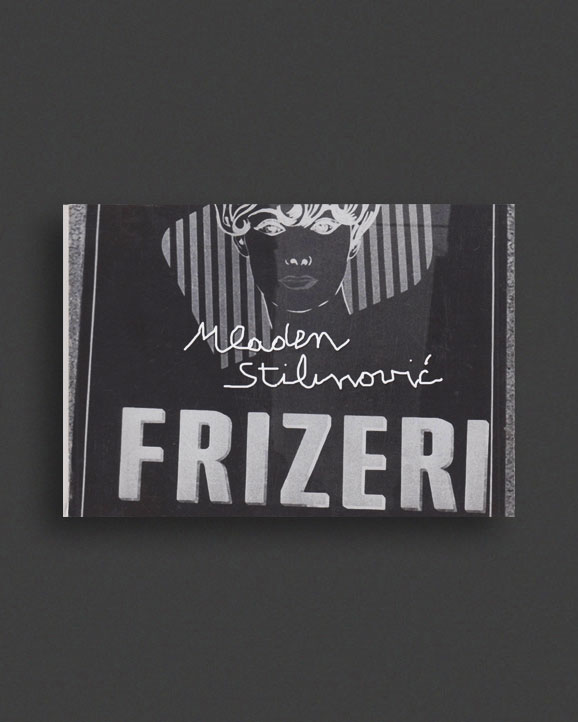
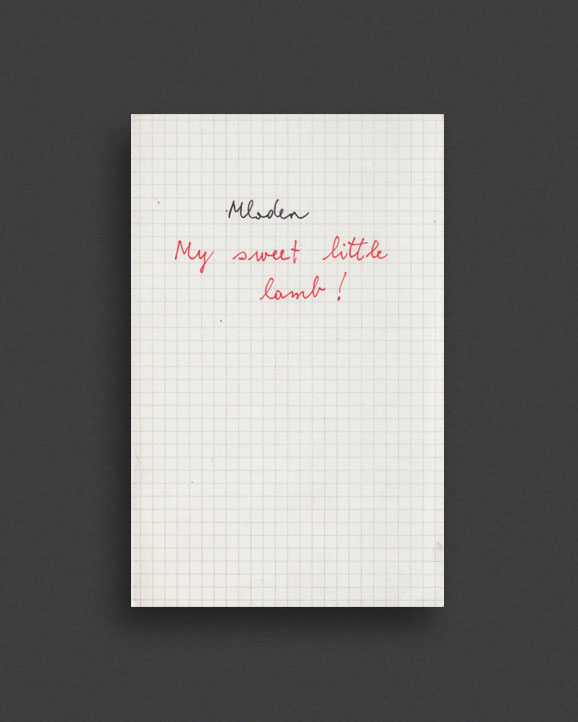
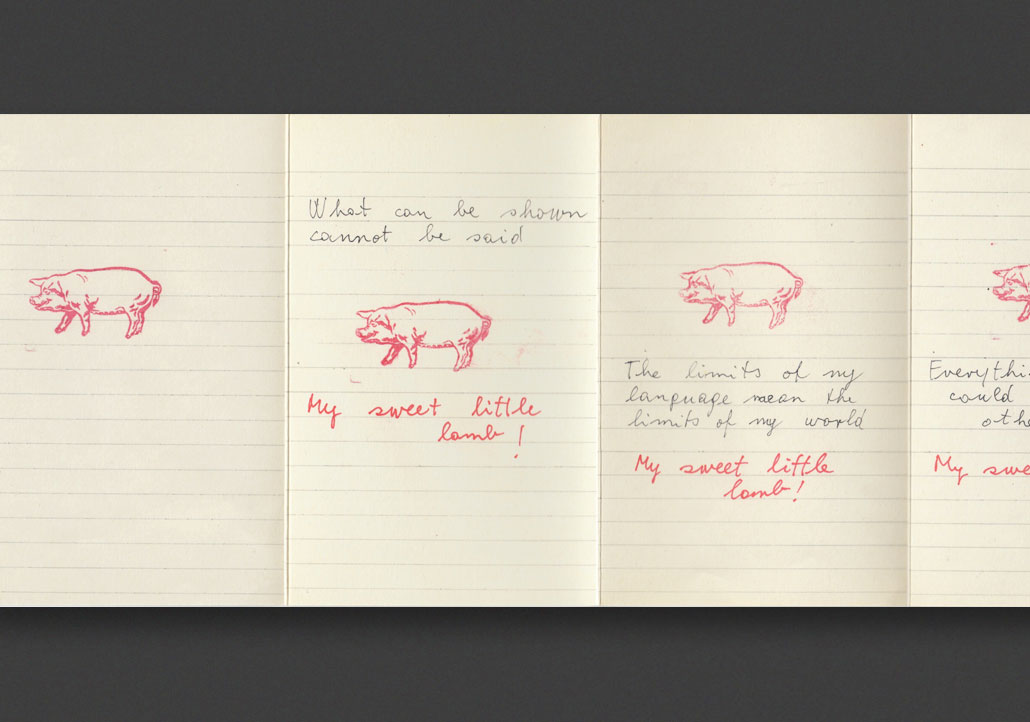
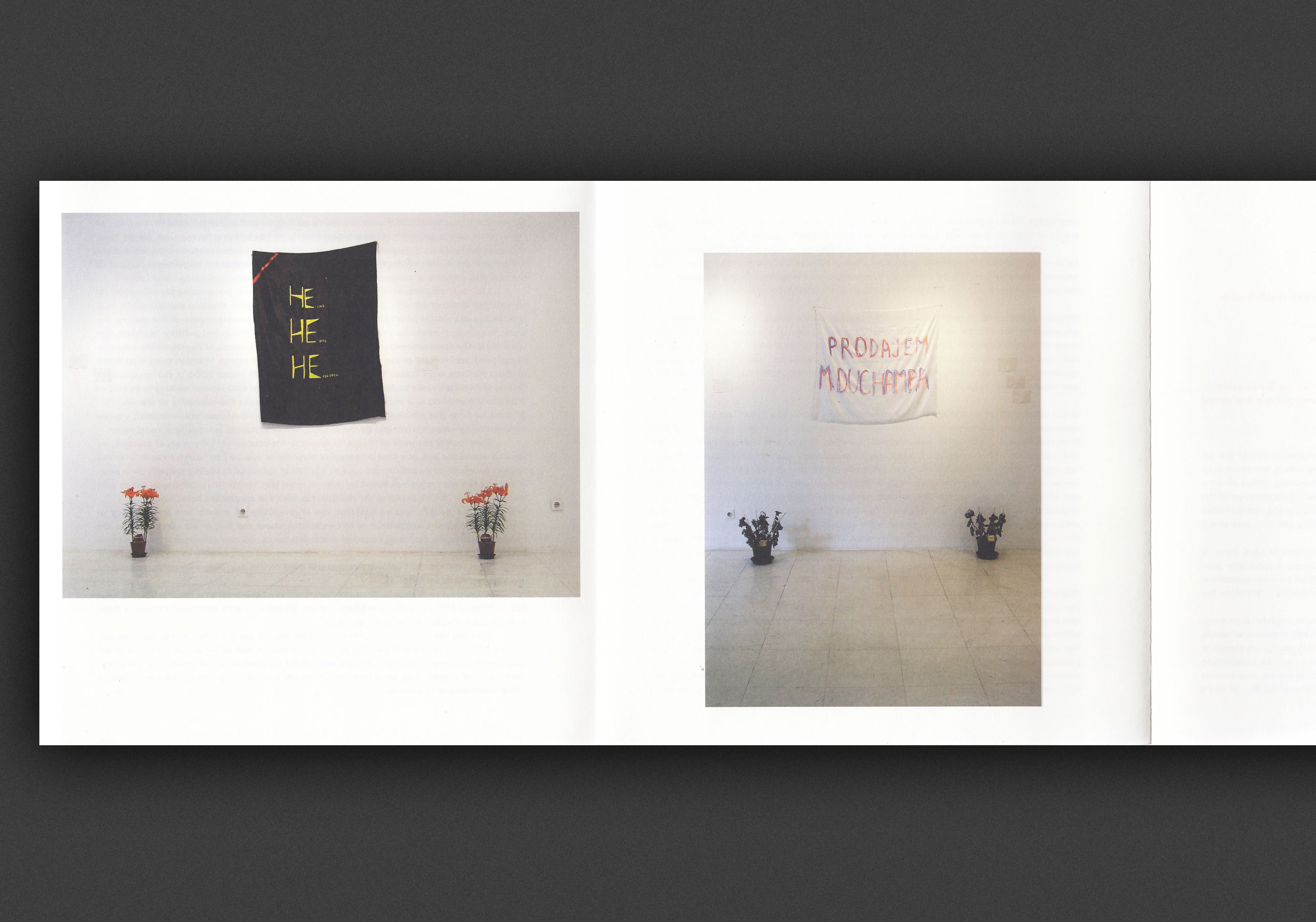
Mladen Stilinović
"Various Works 1986 - 1999"
02 February 16 - September 10, 2016
Various works 1986 - 1999, from two houses, from the collections of John Nixon, Sue Cramer, Kerrie Poliness, Peter Haffenden and Phoebe Haffenden.
Including: Geometry of Cakes (various shelves), 1993; Poor People’s Law (black and white plate), 1993; White Absence (glasses, ruler, set square, silver spoon, silver ladel with skin photograph and wooden cubes), 1990-1996; Exploitation of the Dead (grey and red star painting, wooden painting, black spoon with red table, red plate), 1984-1990; Money and Zeros (zero tie, paintings made for friends in Australia (Sue, John, Kerrie), numbers painting), 1991-1992; Words - Slogans (various t-shirts) - “they talk about the death of art...help! someone is trying to kill me”, “my sweet little lamb”, “work is a disease - Karl Marx”; Various artist books, catalogues, monographs, videos; Poster from exhibition Insulting Anarchy; "Circular" Croatian - Australian edition; Artist book by Vlado Martek (Dostoyevsky); more.
Thanks to Mladen Stilinović and Branka Stipančić.
Jonathan Walker
Always Will Need To Wear Winter Shirt Blue + Ochre Small Check Pattern
21 August - 21 September, 2015
Untitled
I am not a great reader of poetry but I always return to the work of Melbourne poet, Vincent Buckley (1925- 1988). Perhaps I find his most tantalising piece to be not a finished poem but a fragment left on a scrap of paper discovered on his desk after the poet’s death.
The poetry gathers like oil
In the word-core, and spreads
It has its music meet,
Its music is in movement.
This fragment is more the shell left behind from a volatile thought than a finished poem. I find the last two lines honest but awkward whereas the first two lines work like an arrow. Most likely he could not find a resolution so it was left. Still, in its present form, it remains an eloquent testimony to the ultimate failure of a medium to express mobile thought and sensation, in Buckley’s case, through verbal language. It’s an important matter because this is something all artists have to deal with regardless of the medium.
I have never written a poem, however, I am forever copying fragments from books on paper scraps in a vain effort to fix certain notions in my head. At first, they function as bookmarks that are sometimes returned to when I open the book. But before long, as they accumulate, they fall out littering the table interspersed with A4 photocopies, bills, books and medications.
To return to Buckley’s fragment, the first two lines very much evoke how I paint nowadays. As you age, detail diminishes and patches of light become more luminous and float. I feel the most honest way of dealing with this is by smearing the oil paint on the canvas with the fingers and working close-up, blind. Only if the patches coalesce into an approaching image can the work gain a life.
-
Jonathan Walker was born in Melbourne, Australia and brought up on a dairy farm in Gippsland. In the 1970’s he studied painting at RMIT and won the Harold Wright Scholarship to the British Museum, London. During the 1980’s he exhibited at Pinacotheca Gallery, Richmond and had work shown at the NGV and Heidi City Art Gallery. Over the same period he designed the cover for the “Epigenesi” LP by Giancarlo Toniutti, Italy and conducted a mail exchange work with Achim Wollscheid, Germany. The work with artists through the post resulted in an article published in the bicentenary issue of Art and Australia 1988. He showed in artist run spaces such as WestSpace in the 90’s and 2000’s, and until 2012, taught painting at Victoria University, which is where we (Colleen Ahern and Lisa Radford) as organisers of the exhibition, among many others, had the privilege of being his student.
Walker’s knowledge was imparted to students through the careful selection of music, literature, and artists found in books that he himself had ordered for the library. Walker’s strategy was the generosity of sharing his vast knowledge with references specific to each student and their context.
Walker’s paintings share a similar focus and intimacy.
This exhibition presents a small selection of recent paintings alongside a publication that includes Walker’s writing. Observational and analytical, Walker’s work is a type of material notation — the time of day, colour and how it is blended, the both specific and fleeting location of a reflection on lino or the question of whether a chair leg should be included in a painting.
Please join us on Friday August 21 between 6-8pm to celebrate the opening of the exhibition.
Curated by Colleen Ahern and Lisa Radford.
B. Wurtz
Curated by Nic Tammens
March 26 - April 4, 2015
B.Wurtz works from a basement studio in his home on Manhattan’s Lower East Side.
This local fact is attested to by the plastic shopping bags and newsprint circulars that appear in his work. As formal objects, they don’t make loud claims about their origins but nonetheless transmit street addresses and places of business from the bottom of this long thin island. Like plenty of artists, Wurtz is affected by what is local and what is consumed. His work is underpinned by this ethic. It often speaks from a neighborhood or reads like the contents of a hamper:
“BLACK PLUMS $1.29 lb.”
“Food Bazaar”
“USDA Whole Pork Shoulder Picnic 99c lb.”
“RITE AID Pharmacy, with us it’s personal.”
“H. Brickman & Sons.”
“Sweet Yams 59c lb."
Most of the work in this exhibition was made while the artist was in residence at Dieu Donne, a workshop dedicated to paper craft in Midtown. Here Wurtz fabricated assemblages with paper and objects that are relatively lightweight, with the intention that they would be easily transportable to Australia. This consideration isn’t absolute in Wurtz’s work, but was prescriptive for making the current exhibition light and cheap. Packed in two boxes, these works were sent from a USPS post office on the Lower East Side and delivered to North Melbourne by Australia Post.
Wurtz appears courtesy of Metro Pictures, New York.
Thanks to Rob Halverson, Joshua Petherick, Sari de Mallory, Matt Hinkley, Helen Johnson, Fayen d'Evie, Ask Kilmartin, Lisa Radon, Ellena Savage, Yale Union, and "Elizabeth".
John Nixon
"Archive"
December 15 - January 20, 2014
The presentation of John Nixon's archive offered a rare showcase of this extensive collection of the artist's own publications, catalogues, posters, ephemera, editions and more, from the mid 1980s onwards, alongside a selection of his artworks.
Organized by John Nixon, Joshua Petherick and Matt Hinkley.
<a href=http://wfb.public-office.info/artist/john-nixon>All titles by John Nixon
"Habitat"
at Minerva, Sydney (organised by Joshua Petherick and Matt Hinkley)
November 15 - December 20, 2014
Lupo Borgonovo, Janet Burchill & Jennifer McCamley,
Lewis Fidock, HR Giger, Piero Gilardi, Veit Laurent Kurz,
Cinzia Ruggeri, Michael E. Smith, Lucie Stahl, Daniel Weil, Wols
Press Release:
“...It contained seven objects. The slender fluted bone, surely formed for flight, surely from the wing of some large bird. Three archaic circuitboards, faced with mazes of gold. A smooth white sphere of baked clay. An age-blackened fragment of lace. A fingerlength segment of what she assumed was bone from a human wrist, grayish white, inset smoothly with the silicon shaft of a small instrument that must once have ridden flush with the surface of the skin - but the thing’s face was seared and blackened.”
William Gibson, “Count Zero”, 1986
"Autumn Projects Archive"
Curated by Liza Vasiliou
March 6 - March 15, 2014
World Food Books, in conjunction with the Virgin Australia Melbourne Fashion Festival 2014, presented the Autumn Projects archive, consisting of a selection of early examples in Australian fashion with a particular interest in collecting designers and labels from the period beginning in the 1980’s, who significantly influenced the discourse of Australian Fashion.
Curated by Liza Vasiliou, the exhibition provided a unique opportunity to view pieces by designers Anthea Crawford, Barbara Vandenberg, Geoff Liddell and labels CR Australia, Covers, Jag along with early experimental collage pieces by Prue Acton and Sally Browne’s ‘Fragments’ collection, suspended throughout the functioning World Food Books shop in Melbourne.
H.B. Peace
presented by CENTRE FOR STYLE
November 14, 2013
"Hey Blinky, you say chic, I say same"
Anon 2013
H.B. Peace is a clothing collaboration between great friends Blake Barns and Hugh Egan Westland. Their pieces explore the divergences between 'character’ and ‘personality’ in garments....etc
Special Thanks to Joshua Petherick and Matt Hinkley of WFB and Gillian Mears
and a Very Special Thank you to Audrey Thomas Hayes for her shoe collaboration.
Janet Burchill & Jennifer McCamley
"Aesthetic Suicide"
May 10 - June 8, 2013
The first of our occasional exhibitions in the World Food Books office/shop space in Melbourne, "Aesthetic Suicide" presented a body of new and older works together by artists Janet Burchill & Jennifer McCamley, including videos, prints, a wall work, and publications.
During shop open hours videos played every hour, on the hour.
$.00 - Out of stock
The eternal clean out! New items weekly.
https://worldfoodbooks.com/category/sale
Published by World Food Books / Melbourne
$20.00 - In stock -
A World Food Books gift voucher is redeemable in our Melbourne bookshop or via our webshop (here). An e-voucher (printable pdf) will be sent to your purchase email address (please notify us if you wish to have the voucher sent to an alternate address and wish us to fill in the receiver's details on the card).
Gift vouchers can be purchased in increments of $20 (Australian Dollars) and the total amount can simply be added to by increasing the quantity in your shopping cart. eg. A quantity of 5 gift vouchers will result in an item total of $100 - a $100 gift voucher. Simply click "ADD TO CART" 5 times, or update your quantity in the shopping cart.
If you wish to purchase multiple, separate gift vouchers in one go, please just email us and we can personally prepare and email you a payment request.
Please note: Please select Pick-Up on gift voucher purchse to avoid any postage charges. Accidental postage charges will be refunded right away!
Thank you.
For any questions, please don't hesitate to email: [email protected]
1996, English
Softcover, 594 pages, 22.5 x 15 cm
Out of print title / used / very good
Published by
Continuum / London
$60.00 - In stock -
Second 1996 Revised Edition
Truth and Method is a landmark work of 20th century thought which established Hans Georg-Gadamer as one of the most important philosophical voices of the 20th Century. In this book, Gadamer established the field of 'philosophical hermeneutics': exploring the nature of knowledge, the book rejected traditional quasi-scientific approaches to establishing cultural meaning that were prevalent after the war. In arguing the 'truth' and 'method' acted in opposition to each other, Gadamer examined the ways in which historical and cultural circumstance fundamentally influenced human understanding. It was an approach that would become hugely influential in the humanities and social sciences and remains so to this day in the work of Jurgen Habermas and many others.
"No one interested in hermeneutics and historical understanding can justify neglecting Wahheit und Methode. Gadamer not only reinterprets the history of modern hermeneutics, but he offers his own phenomenology of understanding.... His is our century's most creative and ambitious attempt to exorcise the demon of historicism."—Journal of the American Academy of Religion
"As a contribution to our understanding of understanding it ranks with the work of Pierce, Husserl, Cassirer, Wittgenstein, Polanyi, and Lonergan as a highpoint of twentieth century reflection upon the constitutive conditions of knowing.... It is impossible to praise the work too highly."—The Thomist
"...one of the major contributions to literary theory of the last few decades.... It is a defense of the truth value of texts that seeks to accommodate both the process of historical consciousness and the contingency of the individual subject."—ACLA Newsletter
"...the most ambitious theoretical justification of knowledge in the human sciences to appear in recent years. The book's impact as a thoroughgoing discussion of modern historicism has already been felt in the disciplines of aesthetics, law, theology, and philosophy." -Choice :..the single most important study of the origin, devel-opment, and nature of the concept and meaning of 'hermeneutical consciousness' extant."—Review of Metaphysics
VG copy, light wear.
2001, English
Softcover, 158 pages, 21.5 x 13.5 cm
Out of print title / used / very good
Published by
Marion Boyars / London
$25.00 - In stock -
2001 English language edition of Bataille's L'ABBÉ C, translated by Philip A. Facey and published by Marion Boyars.
Told in a series of first person accounts, L'ABBÉ C is a startling narrative of the intense and terrifying relationship between twin brothers, Charles and Robert. Charles is a modern libertine dedicated to vice and depravity; Robert is a priest so devout that he is nicknamed 'L'Abbé'. As the story progresses, the suffocating atmosphere becomes increasingly permeated with illness, breakdown and eventual death. As in Blue of Noon and Story of the Eye, Bataille has succeeded in portraying the darkest and most profound aspects of human experience with amazing strength and dispassionate objectivity.
"Bataille speaks about man's condition, not his nature. Bataille has survived the death of God. In him, reality is conflict."—Jean-Paul Sartre
"Bataille is now recognized in France as one of the most challenging and original writers of our century. English translations of his work are long overdue, and one can only welcome the opportunity for English speaking readers to discover this major modern thinker."—Leo Bersani
"Essentially a psychological novel in which the emotions of the characters determine the movement of the story from beginning to end; explicit sex is absent. The style is crisp and this translation is quite remarkable... always faithful to the spirit."—New York Times Book Review
"The psychological intricacies display a graceful crisscrossing intensity."—Chicago Tribune
Georges Bataille was born in 1897 and died in 1962. He was a philosopher, novelist and critic whose startling and original ideas have influenced much modern literature and thought.
VG copy with previous owner sticker to inside front cover.
1991 / 1994, English
Softcover, 156 pages, 21.5 x 13.5 cm
1st Edition, Out of print title / used / good
Published by
Marion Boyars / London
$28.00 - In stock -
First 1991, 1994 reprint English edition.
Set against the backdrop of Europe's slide into Fascism, Blue of Noon is one of Bataille's most overtly political works, exploring the ambiguity of sex as a subversive force and synthesizing the fetishes of violence, power and death that mesmerized an age. In this classic of twentieth century eroticism, the reader is taken on a dark journey through the psyche of the prewar French intel- ligentsia, torn between identification with the victims of history and the glamour of its victors.
"The writing is superlative... daringly imaginative, intended only for those awake and aware of the possibilities of excess in literature and life. Along with Céline and Breton, Bataille writes as if he were dropping a bomb; in a fore-flash he creates a world of demented funereal sexuality."—Detroit Free Press
"Bataille is one of the most important writers of this century. He broke with traditional narrative to tell us what has never been told before."—Michel Foucault
"Bataille denudes himself, exposes himself, his exhibitionism aims at destroying all literature. He has a holocaust of words. Bataille speaks about man's condition, not his nature. His tone recalls the scornful aggressiveness of the surrealist. Bataille has survived the death of God. In him reality is conflict."—Jean-Paul Sartre
Good—Very Good copy with some dark spotting to block edges. (sample image)
1996, English
Softcover, 272 pages, 23 x 15.5 cm
1st Edition, Out of print title / used / very good
Published by
Yale University Press / New Haven
$20.00 - In stock -
Edited by Michel Contat, Denis Hollier, and Jacques Neefs, this volume focuses on "critique génétique"—or genetic criticism—which has become central in French literary criticism during the past decade.
Genetic criticism favors a return to the text, but it includes in its definition of text not only the printed text of classical philology but also the manuscript or draft, the "textual unconscious" of a book. Articles discuss manuscripts by Valéry, Auden, Hugo, Joyce, and others, showing what is revealed in early drafts of their work and the transformations they undergo.
VG copy.
2002, English
Softcover, 310 pages, 23 x 18 cm
1st Edition, Out of print title / used / very good
Published by
The MIT Press / Massachusetts
$100.00 - In stock -
First 2002 paperback edition of this out-of-print study on Bellmer.
"The German-born surrealist Hans Bellmer (1902-1975), best known for his life-size pubescent dolls, devoted an artistic lifetime to creating sexualized images of the female body-distorted, dismembered, or menaced in sinister scenarios. In this book Sue Taylor draws on psychoanalytic theory to suggest why Bellmer was so driven by erotomania as well as a desire for revenge, suffering, and the safety of the womb. Tracing a repressed homoerotic attachment to his father, castration anxiety, and an unconscious sense of guilt, Taylor proposes that a feminine identification informs all the disquieting aspects of Bellmer's art.
Most scholarship to date has focused on Bellmer's work of the 1930s, especially the infamous dolls and the photographs he made of them. Taylor extends her discussion to the sexually explicit prints, drawings, paintings, and photographs he produced throughout the ensuing three decades. The book includes a color frontispiece and 121 black-and-white images (eight published here for the first time), as well as appendixes containing several significant texts by Bellmer previously unavailable in English.
Sue Taylor is Assistant Professor of Art History at Portland State University, Oregon.
"While ultimately subscribing to the conventional wisdom that the misogynist implications of Bellmer's many sinister images can never be altogether dismissed, [Taylor] insists that we look beyond their manifest content towards their latent meanings. Her tone and method is thus a long way from the punitive... literalism and crudity of much Bellmer criticism."—R. S. Short, Times Literary Supplement
"An impressive book by any standards. Every page displays intelligence, erudition and visual acuity."—Metapsychology
VG copy, light edge wear, faint edge tanning.
1986, English
Softcover, 294 pages, 16.5 x 10.5 cm
1st Edition, Out of print title / used / very good
Published by
Vintage Books / New York
$35.00 - In stock -
First Vintage 1986 edition. Translated by Robert Hurley.
In this, the sequel to The History of Sexuality, Volume I: An Introduction, the brilliantly original French thinker who died in 1984 gives an analysis of how the ancient Greeks perceived sexuality. Forthcoming
are volumes Ill and IV of The History of Sexuality, concerned, respectively, with the later Greeks and Romans and with the early Christians.
Throughout The Use of Pleasure Foucault analyzes an irresistible array of ancient Greek texts on eroticism as he tries to answer basic questions: How in the West did sexual experience become a moral issue? And why were other appetites of the body, such as hunger, and collective concerns, such as civic duty, not subjected to the numberless rules and regulations and judgments that have defined, if not confined, sexual behavior?
"Required reading for those who cling to stereotyped ideas about our difference from the Greeks in terms of pagan license versus Christian austerity or their hedonism versus our anxiety!"
—Los Angeles Times Book Review
VG copy with some light edgewear/crease to b cover/ tanning.
2003, English
Softcover, 222 pages 20 x 13 cm
Out of print title / used / very good
Published by
Corgi / London
$20.00 - In stock -
A national best-seller that was featured on such lists as The New York Times, the Los Angeles Times, The Washington Post, the San Francisco Chronicle, The Boston Globe, and Publishers Weekly, The Sexual Life of Catherine M. was the controversial sleeper hit of the year. Since her youth, Catherine Millet, the eminent editor of Art Press, has led an extraordinarily active and free sexual life -- from al fresco encounters in Italy to a gang bang on the edge of the Bois du Boulogne to a high-class orgy at a chichi Parisian restaurant. A graphic account of sex stripped of sentiment, of a life of physical gratification and a relentlessly honest look at the consequences -- both liberating and otherwise -- have created this candid, powerful, and deeply intelligent depiction of unfettered sexuality.
VG copy.
2006, English
Softcover, 488 pages, 13 x 20. 3 cm
Published by
The New York Review of Books / New York
$50.00 - In stock -
Perhaps the most revealing dispatch ever received from the far side of madness. Daniel Schreber was born in 1842, and was a distinguished German judge when he suffered his first mental breakdown in 1884. He was never released from hospital.
Translated by Ida McAlpine and Richard A. Hunter Introduced by Rosemary Dinnage.
In 1884 Daniel Paul Schreber suffered the first of a series of mental breakdowns that would lead to his permanent confinement in an insane asylum. He accused his doctors of 'soul murder' and composed this memoir to tell the public about his treatment and plea for his release.
One of the most revealing dispatches ever received from the far side of madness, Memoirs of My Nervous Illness made an extraordinary impression on Jung and was the subject of a controversial case history by Freud. It has continued to be an inspiration to writers like Walter Benjamin and Elias Canetti.
1971, English
Softcover, 142 pages, 17.5 x 10.5 cm
Out of print title / used / good
Published by
Berkley Medallion / Berkley
$15.00 - In stock -
1971 edition.
Set in a remote fishing village in Japan, The Sound of Waves is a timeless story of first love. It tells of Shinji, a young fisherman and Hatsue, the beautiful daughter of the wealthiest man in the village. Shinji is entranced at the sight of Hatsue in the twilight on the beach and they fall in love. When the villagers' gossip threatens to divide them, Shinji must risk his life to prove his worth.
Yukio Mishima (1925—1970), one of the most spectacularly gifted writers in modern Japan, was born into a samurai family in 1925. Yukio Mishima was a Japanese author, poet, playwright, actor, model, Shintoist, nationalist, and founder of the Tatenokai ("Shield Society"), an unarmed civilian militia. Mishima is considered one of the most important Japanese authors of the 20th century. He was considered for the Nobel Prize in Literature in 1968. His works include the novels Confessions of a Mask and The Temple of the Golden Pavilion. Mishima's work is characterized by "its luxurious vocabulary and decadent metaphors, its fusion of traditional Japanese and modern Western literary styles, and its obsessive assertions of the unity of beauty, eroticism and death", according to author Andrew Rankin. In November 1970 he and his Tatenokai forced their way into a Self-Defense Force headquarters in Tokyo, where Mishima, after reading out a proclamation, committed ritual suicide with a young follower in the commanding officer's room. On the morning of his death, the last volume of Mishima's tetralogy, The Sea of Fertility (The Spring Snow, Runaway Horses, The Temple of Dawn, The Decay of the Angel) was delivered to his publisher.
Good—Very Good copy with page/block/edge tanning.
1976, English
Softcover, 155 pages, 21 x 14 cm
Out of print title / used / good
Published by
Yale University Press / New Haven
$18.00 - In stock -
"Hans-Georg Gadamer is among the best known of German academic philosophers.... Hegel's Dialectic contains five of his recent studies, selected as examples of the author's 'hermeneutical' method... Gadamer is learned, wide-ranging, provocative, [and] deep."—W. H. Walsh, The Times Literary Supplement
"Gadamer is a penetrating thinker and in the short compass of these essays contributes something original to our understanding of Hegel. "—Choice
"Tracing the development of the notion of the dialectic from the classical Greek thinkers to the modern thinkers, Gadamer demonstrates that Hegel 'worked out his own dialectical method by extending the dialectic of the Ancients.' Specific topics covered in the text are the doctrine of the inverted world, the dialectic of self-consciousness, the idea of Hegel's logic, and the relationship of Hegel's thought to that of Martin Heidegger. ... Excellently translated, this book is a valuable if demanding addition to Gadamer's philosophical work now available in English."—Library Journal
"P. Christopher Smith in Hegel's Dialectic has translated five essays on Hegel which Gadamer composed in the 1960s, and which have been published together in German only recently. These are virtuoso show-pieces."—Alan M. Sica, Telos
Hans-Georg Gadamer is professor of philosophy at Heidelberg Univer-sity. P. Christopher Smith is professor of philosophy at the University of Lowell.
Good copy, light wear with erasable lead pencil marginalia.
1965, English
Softcover, 522 pages, 18 x 11 cm
Out of print title / used / very good
Published by
Penguin Books / Australia
$12.00 - Out of stock
1965 Penguin edition.
Seldom has a book so completely united the critics as this savage, grotesque, ludicrous vision of a mind on the slipway to madness.
"Strange, savage, subtle, beautifully mysterious... one of the great novels of the [twentieth] century"—Iris Murdoch
"One of the most important neglected novels of our time. It is a strange, eloquent and terrifying book, which tells us as much about the madness of our age as Kafka's The Trial or Musil's Man Without Qualities."—Philip Toynbee
Hardcover 1971 Jonathan Cape printing of Nobel Prize-winning author Elias Canetti's most well-known work, Auto-Da-Fé, first published in Germany in 1935, first translation to English in 1947.
Originally published in German as "Die Blendung" in 1935 and later banned in Nazi Germany, Auto-Da-Fe did not become widely known until the publication of Canetti's "Crowds and Power" in 1960. "In Auto-da-Fé no one is spared. Professor and furniture salesman, doctor, housekeeper, and thief all get it in the neck. The remoreseless quality of the comedy builds one of the most terrifying literary worlds of the century" (Salman Rushdie). "Savage, subtle, beautifully mysterious--one of the few great novels of the century" (Iris Murdoch). "A strange, eloquent and terrifying book" (Philip Toynbee). Auto da Fé is the story of Peter Kien, a distinguished, reclusive Sinologist living in Germany between the wars. With masterly precision, Canetti builds up the elements in Kien himself, and his personal relationships, which will lead to his destruction.
Elias Canetti (1905—1994) was a German-language writer, born in Ruse, Bulgaria to a Sephardic family. They moved to Manchester, England, but his father died in 1912, and his mother took her three sons back to continental Europe. They settled in Vienna. Canetti moved to England in 1938 after the Anschluss to escape Nazi persecution. He became a British citizen in 1952. He is known as a modernist novelist, playwright, memoirist, and nonfiction writer. He won the Nobel Prize in Literature in 1981, "for writings marked by a broad outlook, a wealth of ideas and artistic power". In late 1980s he started to live in Zurich permanently. He died in 1994 in Zurich. He is noted for his nonfiction book Crowds and Power, among other works.
Goof copy with light tanning and marking to covers.
1974, English
Softcover, 716 pages, 17.5 x 10.5 cm
Out of print title / used / very good
Published by
Fontana / UK
$15.00 - In stock -
1974 Fontana edition.
The devil makes a personal appearance in Moscow; his retinue includes two demons, a naked girl and a huge black cat which talks, walks upright, smokes cigars and is a dead shot with a Mauser automatic. Some of the devil's pranks are sheer anarchic fun, more often they are chosen to bring out the worst in everybody. When he leaves, the asylums are full, the forces of law and order are in disarray and the population is haunted with feelings of guilt and shame...
Amid this bizarre pantomime two people remain undiminished-the Master, a man single-mindedly devoted to the search for truth; and Margarita, the woman he loves.
The Master and Margarita combines supernatural elements with satirical dark comedy and Christian philosophy, defying categorization within a single genre. Many critics consider it to be one of the best novels of the 20th century, as well as the foremost of Soviet satires.
"This gay, dark fantasy entirely captures me. Wildly funny as it often is, the maddest jokes have an ominous tone"—Guardian
"The fantastic scenes are done with terrific verve and the nonsense is sometimes reminiscent of Lewis Carroll... on another level, Bulgakov's intentions are mystically serious. You need not catch them all to appreciate his great imaginative power and ingenuity"—Sunday Times
"A dazzling translation from the uncut, smuggled. original."—Sunday Telegraph
"A grim and beautiful tale...just as you think the whole thing is a very funny satire, a chilling wind out of the Ingmar Bergman country blows, and, yet again, as you search for some moral significance, there are pages of sheer and beautiful fantasy"—Times Educational Supplement
VG with light cover creasing/tanning.
1975 / 1979, English
Softcover, 222 pages, 18 x 10.5 cm
1st Edition, Out of print title / used / very good
Published by
Del Rey SF / New York
$18.00 - In stock -
First 1975 edition, second 1979 printing of Warm Worlds and Otherwise, a collection of "twelve furiously imaginative, occasionally explosive SF stories"(—David Pringle) by American writer Alice Sheldon, published under her pen name James Tiptree Jr., one of the greatest female science fiction writers ever.
Daring, energetic, and struck through with linguistic inventiveness, Warm Worlds and Otherwise is one of the most influential short story collections in all of science fiction, and one of the principle achievements of James Tiptree Jr - the pen name of Alice Bradley Sheldon.
Demonstrating Tiptree's eye for unnerving future dystopias and her unparalleled depiction of strange worlds and mysterious creatures, Warm Worlds and Otherwise also traces a movement toward ground-breaking explorations of sexuality, gender and race. Included in this collection are the Hugo and Nebula award-winning 'The Girl Who was Plugged In' and 'Love Is the Plan the Plan Is Death', as well as the extraordinary 'The Women Men Can't See'.
Alice Bradley Sheldon, better known as James Tiptree Jr., was a Nebula award-winning American science fiction and fantasy author. It was not publicly known until 1977 that James Tiptree Jr. was a pen name of a woman, which she used from 1967 until her death. From 1974 to 1985, she also occasionally used the pen name Raccoona Sheldon.
G—VG copy with light wear/tanning.
1966, English
Softcover, 574 pages, 18 x 11 cm
1st Edition, Out of print title / used / good
Published by
Pelican / London
$15.00 - In stock -
First 1966 Pelican edition.
Between Mussolini and Hitler there grew up a heavy, mutual, almost hypnotic admiration. Little else held the Axis together in the climate of contempt and mistrust which was bound to prevail between nations so different as Italy and Germany.
F. W. Deakin's meticulous history of the bewildering pattern of Italian politics after the autumn of 1942 and during the declining years of Axis power was published as The Brutal Friendship. This Pelican volume contains the first part of that book, as far as the coup d'état by which Mussolini was unseated on 25 July 1943.
Average—Good copy with some cover wear, crease to back cover, tanning to block.
1969, English
Softcover, 494 pages, 20.5 x 13 cm
1st US Edition, Out of print title / used / good
Published by
Minerva Press / New York
$20.00 - In stock -
First 1969 Minerva Press edition.
Poet and propagandist, Ezra Pound is one of the most controversial figures of the twentieth century. In the first full-length biography of the famous American expatriate, Mr. Norman presents material and letters never before published, as well as little-known incidents in Pound's early life. Here, for the first time in any account of him, is "Mary Moore of Trenton," the elusive young woman to whom Pound dedicated Personae in 1909 and as she appears today.
Drawing upon all resources of research, interviews, and correspondence, the author projects a man whose ideas were so dynamic they sparked literary movements, and whose influence was so powerful it caused Yeats to change his style in mid-career.
Mr. Norman's skill in biography is attested by his thorough treatment of Pound's struggles and achievements, as well as the dramatic indictment for treason and subsequent sanity trial. More than a portrait of a personality, however, this book is a gallery of the greatest writers and artists of our time Ford Madox Ford, Wyndham Lewis, Yeats, Eliot, Aldington, Joyce, and countless others—and vividly recaptures literary London at the turn of the century, Paris in the twenties, and Europe and the United States in the convulsion of World War II.
Good copy with general age/tanning/light wear and some previous price damage to cover.
1980, English
Hardcover (w. dust jacket), 184 pages, 22 x 15 cm
1st Edition, Out of print title / used / fine
Published by
Gollancz / London
$35.00 - In stock -
First 1980 hardcover edition.
Rarely are the worlds of the real and the fantastic so hauntingly evoked and traversed as they are in Ursula K. Le Guin's beautiful, compelling new novel, Threshold.
Two young people meet in a magic world across the stream and over the threshold from the everyday world where they have grown up. They do not know how or why they have reached the cobbled street and eternal twilight of Tembreabrezi, the town on the mountain. They know only that by returning there they will find peace and escape from all the dreary problems of daily life.
But when the refuge becomes horror, and the roads of dream lead to nightmare, then there is no escape. They must choose now, not between one life and another, but between life and death. And each must choose without any guide or explanation, without any help at allexcept perhaps from where they least expect it.
Threshold is an enthralling and perfectly orchestrated story that only Ursula K. Le Guin could create.
VG—NF in VG—NF dust jacket.
1973, English
Hardcover (w. dust jacket), 208 pages, 20 x 14 cm
1st Edition, Out of print title / used / good
Published by
Jonathan Cape / London
$340.00 - In stock -
Rare elusive first 1973 hardcover edition of the Jonathan Cape edition of Ballard's Vermilion Sands, which is considered the complete collection, adding an additional story, "The Singing Statues", to the original Berkley paperback edition from 1971, and a preface, both only available in the British edition.
Vermilion Sands is a collection of surreal science fiction short stories by Ballard, one of his finest, all set in an imaginary vacation resort called Vermilion Sands which suggests, among other places, a latter-day Palm Springs. Vermillion Sands is a fully automated desert resort designed to fulfil the most exotic whims of the idle rich. But now it languishes in uneasy decay, populated only by forgotten movie stars, solitary impresarios, parasites, and artistic and literary failures, a place where love and lust pall before the stronger pull of evil. It is a lair for malice and hate and envy — and the more cancerous forms of madness; a place where sensitive pigments paint portraits for their masters in a grotesque parody of art; where poets press the buttons of mechanical versifiers; where sculptures grow like funguses, and plants respond to music; where psychosensitive houses are driven mad by their owners' neuroses; where love and affection, and even lust, are effete madrigals played in a minor and discordant key.
From the dark recesses of a superb imagination, J. G. Ballard has conjured up an elegant nightmare of decadence, a portrait of a future Gomorrah where a Nero might play an automated violin.
"Ballard is one of the brightest stars in post-war science fiction."—Kingsley Amis
"Collection of stories first published in magazines between 1956 and 1970 "about a decaying artists' colony in the near future, set against surrealistic desert landscapes. With their motifs of singing flowers and statues, living clothes, cloud-sculpting and psychotropic houses, the tale are not conventionally linked, and have differing characters. All marvelously original, with unforgettable imagery. One of Ballard's most brilliant books ..." —Pringle, The Ultimate Guide to Science Fiction, second edition (1995), p. 401.
Good ex-libris copy in Very Good but price-clipped dust jacket. Book has some light general aging/light spotting to block edges. Paste-in to first blank page from "South Australian Railways Institute Library", otherwise only very mild marking to blanks. Preserved in mylar wrap.
1986, English
Hardcover (dust jacket), 384 pages, 24 x 15.5 cm
1st Edition, Out of print title / used / very good
Published by
Picador / USA
$40.00 - Out of stock
First 1986 hardcover edition.
Dreams are traditionally seen as the key to our unconscious, where the unspoken speaks and the unthinkable is thought. But once we wake up, there is no such thing as a dream; what remains is like the summary of a novel from memory. Those who speak arrogantly of the meaning and interpretation of dreams are like critics who would extrapolate an aesthetic judgement on one of the Pictures From an Exhibition from Mussorgsky's musical commentary. In a sense, dreams do not exist because the only witness, the dreamer, cannot speak when he is isolated in the privacy of his dream. Literature adds yet another distorting mirror to the warped reproduction of the mute private world of the dreamer in the common language of the waking.
Almost every writer since the beginning of recorded history has invented or transcribed dreams. Thus Guido Almansi and Claude Béguin were confronted with an embarras de richesses. In the end they confined themselves to Western Europe and North America, with a few excursions towards Russia and more exotic places, choosing a wide range of texts- from the Bible to Kurt Vonnegut - for their representativeness, their psychological interest, their aesthetic value, their stylistic exuberance - but most of all for their capacity to titillate our curiosity and stimulate our reflections in this area.
The provocative introduction explores the nature of literary dreams and sets the background to this anthology. The material is divided into four categories: instinctive dreams, which seem to emerge from deep sources within us; real dreams, which are in close relation with the day world; symbolic dreams, where reality is transformed into what might be the metaphor for something else; and fantastic dreams, with a prevalence of the unreal element.
Bringing together a wide selection of dreams drawn from the literature of all ages and many cultures, some of which are translated into English for the first time, with every piece put in its literary and historical context, this is a hugely entertaining work of some of the most bizarre, imaginative and perplexing passages ever written.
GUIDO ALMANSI, Italian, is Professor of English and Comparative Literature at the University of East Anglia. He is interested in the dishonesty of literature, in the subterfuges used by language and its wily accomplice, the writer, in order not to say what they mean and not to mean. what they say. His favourite author is Shakespeare.
CLAUDE BÉGUIN, Swiss, teaches French at the University of Siena, Italy. She likes squarers of circles, writers who, though conscious of the devious nature of language, attempt to be straight. Her favourite author is Diderot.
When the wind changes, the descriptions of their interests can be reversed. Literary dreams were an area of possible collaboration since at night there is not enough light to distinguish between honesty and dishonesty.
Guido Almansi and Claude Béguin are husband and wife.
Very Good copy in NF dust jacket preserved under mylar wrap. Sticker to back cover. Tanning to paper stock.
1998, English
Softcover (2 volumes), 1290 pages, 21.5 x 14 cm
1st Edition, Out of print title / used / fine
Published by
Oxford University Press / New York
$150.00 - In stock -
The two volumes of the only English edition of Hegel's Aesthetics, the work in which he gives full expression to his seminal theory of art. The substantial Introduction is his best exposition of his general philosophy of art.
In Part I he considers the general nature of art as a spiritual experience, distinguishes the beauty of art and the beauty of nature, and examines artistic genius and originality. Part II surveys the history of art from the ancient world through to the end of the eighteenth century, probing the meaning and significance of major works. Part III (also in the second volume) deals individually with architecture, sculpture, painting, music, and literature; a rich array of examples makes vivid his exposition of his theory.
Both volumes (2 books) together in their 1998 prints. Both Near Fine copies.
1998, English
Softcover, 160 pages, 22.5 x 15 cm
1st Edition, Out of print title / used / very good
Published by
State University of New York Press / New York
$20.00 - In stock -
Hegel's Transcendental Induction challenges the orthodox account of Hegelian phenomenology as a hyper-rationalism, arguing that Hegel's insistence on the primacy of experience in the development of scientific knowledge amounts to a kind of empiricism, or inductive epistemology. While the inductive element does not exclude an emphasis on deductive demonstration as well, Hegel's phenomenological description of knowledge demonstrates why knowing becomes scientific only to the extent that it recognizes its dependence on experience.
Simpson's argument closely parallels Hegel's own in the Phenomenology of Spirit, highlighting those sections, like Hegel's analysis of mastery and slavery, that contribute to the argument that knowing is both vulnerable and responsive to the way in which experience resists our attempts to make sense of things. Simpson's argument connects his account of Hegelian phenomenology with traditional accounts of induction, and with a number of other commentators.
VG copy.
1994, English
Softcover, 250 pages, 23.5 x 15.5 cm
1st Edition, Out of print title / used / very good
$25.00 - In stock -
Martin Heidegger's impact on contemporary thought is important and controversial. However in France, the influence of this German philosopher is such that contemporary French thought cannot be properly understood without reference to Heidegger and his extraordinary influence.
Tom Rockmore examines the reception of Heidegger's thought in France. He argues that in the period after the Second World War, due to the peculiar nature of the humanist French Philosophical tradition, Heidegger became the master thinker of French philosophy. Perhaps most importantly, he contends that this reception - first as philosophical anthropology and later as postmetaphysical humanism - is systematically mistaken.
VG—NF copy. First ed.
1995, English
Softcover, 336 pages, 23 x 15.5 cm
1st Edition, Out of print title / used / fine
Published by
Northwestern University Press / Evanston
$25.00 - In stock -
At a time in which many philosophers have concluded that Husserl's philosophy is exhausted, but when the alternatives to Husserl appear to be exhausted as well, Anthony J. Steinbock presents an innovative approach to Husserlian phenomenol-ogy. Steinbock implicitly attacks the most fundamental criticism aimed at Husserl: that his philosophy is intrinsically formalistic, unable in principle to deal with concrete matters of life and how to live it. The "generation" which Steinbock traces through Husserl's writings-from static through genetic and finally to generative phenomena—is in part the generation of the lifeworld in and through various kinds of domesticity and alienness. Steinbock's systematic study of the problems and themes of a generative phenomenology, normality and abnor-mality, and the sociohistorical concepts of home-world and alienworld, and the steps he takes toward developing such a generative phenomenology, open new doors for a phenomenology of the social world while casting new light on work done by Husserl himself and by many philosophers working more or less in a Husserlian vein. Both critique and an appropriation of a large and diverse body of work, Home and Beyond: Generative Phenomenology after Husserl is a major contribution to contemporary Husserl scholarship.
"This is the most important and original piece of Husserl scholarship and of Husserl-inspired phenomenology to have appeared in many years."—Claude Evans, Washington University
Fine copy, first ed.