World Food Books' programme is largely produced on Kulin Nation land. We acknowledge the Wurundjeri people of the Kulin Nation as the first and continuing custodians of this land, and pay respect to their Elders past, present, and emerging.
World Food Books is an arts and special interests bookshop in Naarm / Melbourne. Founded in 2010, World Food Books is devoted to the presentation of a rotating, hand-selection of international art, design, literary and counterculture publications with an emphasis on the anti-traditional, the experimental, the avant-garde, the heretic, the marginal.
Presenting new titles alongside rare and out-of-print books, catalogues and journals spanning the fields of modern and contemporary art, design, photography, illustration, film, literature, poetry, cultural theory, philosophy, sexuality, popular and underground culture in its many radical forms, World Food Books wishes to encourage adventurous, thoughtful and open-minded reading, looking, writing, and exchange of publishing and ideas, both current and historical.
As well as our bookshop, located in Melbourne's historical Nicholas Building, all of our inventory is available internationally via our online mail-order service.
World Food Books semi-regularly co-ordinates "Occasions", a programme of exhibits and events at the bookshop and in partnership with other hosts (such as museums and art galleries) that develop out of the activities, relationships and content of the bookshop itself.
World Food Books
The Nicholas Building
37 Swanston Street
Room 5, Level 6
Melbourne 3000
Australia
SHOP HOURS:
Thu–Fri 12–6, Sat 12–5
WEB-SHOP OPEN 24/7
World Food Books
Postal Address:
PO Box 435
Flinders Lane
Victoria 8009
Australia
Art
Theory / Essay
Architecture / Interior
Graphic Design / Typography
Photography
Fashion
Eros
LGBTQ+
Fiction / Poetry
Weird / Speculative / Science Fiction / Horror
Transgressive / Visceral / Abject
Symbolism / Decadence / Fin de siècle
Film / Video
Painting
Sculpture / Installation
Performance / Dance / Theater
Drawing
Sound / Music
Curatorial
Group Shows / Collections
Periodicals
Out-of-print / Rare
Posters / Ephemera / Discs
Signed Books
World Food Books Gift Voucher
World Food Book Bag
Australian Art
Australian Fiction
Australian Science Fiction / Speculative Fiction
Australian Poetry
Australian Photography
Japanese Photography
Conceptual Art
Minimal Art
Dada
'Pataphysics / Oulipo
Fluxus
Concrete Poetry
Pop Art
Surrealism
Arte Povera
Arte Informale / Haute Pâte / Tachism
Nouveau Réalisme / Zero / Kinetic
Situationism / Lettrism
Collage / Mail Art / Xerox Art
Art Brut / Folk / Visionary / Fantastic
Illustration / Graphic Art / Bandes Dessinées
Furniture
Italian Radical Design / Postmodernism
Textiles
Ceramics / Glass
Counterculture
Protest / Revolt
Philosophy
Psychoanalysis
Anthropology
Anarchism
Socialism / Anarchism / Communism / Capitalism
Literary Theory / Semiotics / Language
Feminism / Women's Studies
Gender Studies / Sexuality
Anthropology
Fetishism / BDSM
Drugs / Psychedelia
Crime / Violence
Animal Rights / Veganism
Occult / Esoterica
Ecology / Earth / Alternative Living
Whole Earth / Crafts
All prices in AUD (Australian dollars)
Pick-Ups
Pick-up orders can be collected in our bookshop during opening hours after order date. Please collect any Pick-up orders within 2 weeks of ordering as we have limited storage space. Orders will be released back into stock if not collected within this time. No refunds can be made for pick-ups left un-collected. If you cannot make it in to the bookshop in this time-frame, please choose postage option.
Return Policy
All sales are final. We do accept returns (for refund or exchange) for items received in error. All our orders are packed with special care using heavy-duty padding and cardboard book-mailers or bubble mailers (for smaller books), using reinforcement where required. We cannot take responsibility for any lost, stolen or damaged parcels.
Insurance
Should you wish to insure your package, please email us directly after placing your order and we can organise this at a small extra expense. Although all standard/express tracked packages are very safe and dependable, we cannot take responsibility for any lost, stolen or damaged parcels. We recommend insurance on valuable orders.
Interested in selling your old books, catalogues, journals, magazines, comics, fanzines, ephemera? We are always looking for interesting, unusual and out-of-print books to buy. We only buy books in our fields of interest and specialty, and that we feel we can resell.
We base these prices on desirability, market value, in-print prices, condition and our current stock levels. We offer cash, store credit, and can take stock on consignment. All
about 25% of the price we expect to get when we sell them, or 30% in store credit. We base these prices on desirability, market value, in-print prices, condition and our current stock levels.
Sell your books any day of the week. You can drop them off and return later. If you have a lot of books, we can visit your Sydney home.
We buy books that we feel we can resell. We offer about 25 % of the price we expect to get when we sell them, or 30% in store credit. We base these prices on desirability, market value, in-print prices, condition and our current stock levels.
Philadelphia Wireman
03 August - 01 September, 2018
World Food Books is proud to announce our next Occasion, the first presentation of sculptures by Philadelphia Wireman in Australia.
The Philadelphia Wireman sculptures were found abandoned in an alley off Philadelphia’s South Street on trash night in 1982. Their discovery in a rapidly-changing neighbourhood undergoing extensive renovation, compounded with the failure of all attempts to locate the artist, suggests that the works may have been discarded after the maker’s death. Dubbed the "Philadelphia Wireman" during the first exhibition of this work, in 1985, the maker’s name, age, ethnicity, and even gender remain uncertain. The entire collection totals approximately 1200 pieces, all intricately bound together with tightly-wound heavy-gauge wire (along with a few small, abstract marker drawings, reminiscent both of Mark Tobey and J.B. Murry). The dense construction of the work, despite a modest range of scale and materials, is singularly obsessive and disciplined in design: a wire armature or exoskeleton firmly binds a bricolage of found objects including plastic, glass, food packaging, umbrella parts, tape, rubber, batteries, pens, leather, reflectors, nuts and bolts, nails, foil, coins, toys, watches, eyeglasses, tools, and jewellery.
Heavy with associations—anthropomorphic, zoomorphic, and socio-cultural responses to wrapped detritus—the totemic sculptures by Philadelphia Wireman have been discussed in the context of work created to fulfil the shamanistic needs of alternative religions in American culture. Curators, collectors, and critics have variously compared certain pieces to sculpture from Classical antiquity, Native American medicine bundles, African-American memory jugs, and African fetish objects. Reflecting the artist’s prolific and incredibly focused scavenging impulse, and despite—or perhaps enhanced by—their anonymity, these enigmatic objects function as urban artefacts and arbiters of power, though their origin and purpose is unknown. Philadelphia Wireman, whatever their identity, possessed an astonishing ability to isolate and communicate the concepts of power and energy through the selection and transformation of ordinary materials. Over the course of the past two decades, this collection has come to be regarded as an important discovery in the field of self-taught art and vernacular art.
Presented in collaboration with Fleisher-Ollman Gallery, Philadelphia, and Robert Heald, Wellington.
Susan Te Kahurangi King
02 February - 10 March, 2018
Susan Te Kahurangi King (24 February 1951 - ) has been a confident and prolific artist since she was a young child, drawing with readily available materials - pencils, ballpoint pens and felt-tip markers, on whatever paper is at hand. Between the ages of four and six Susan slowly ceased verbal communication. Her grandparents William and Myrtle Murphy had developed a special bond with Susan so they took on caring responsibilities for extended periods. Myrtle began informally archiving her work, carefully collecting and storing the drawings and compiling scrapbooks. No drawing was insignificant; every scrap of paper was kept. The King family are now the custodians of a vast collection containing over 7000 individual works, from tiny scraps of paper through to 5 meter long rolls.
The scrapbooks and diaries reveal Myrtle to be a woman of great patience and compassion, seeking to understand a child who was not always behaving as expected. She encouraged Susan to be observant, to explore her environment and absorb all the sights and sounds. Myrtle would show Susan’s drawings to friends and people in her community that she had dealings with, such as shopkeepers and postal workers, but this was not simply a case of a grandmother’s bias. She recognised that Susan had developed a sophisticated and unique visual language and sincerely believed that her art deserved serious attention.
This was an unorthodox attitude for the time. To provide some context, Jean Dubuffet coined the term Art Brut in 1945 to describe work created by self-taught artists – specifically residents of psychiatric institutions and those he considered to be visionaries or eccentrics. In 1972 Roger Cardinal extended this concept by adopting the term Outsider Art to describe work made by non-academically trained artists operating outside of mainstream art networks through choice or circumstance. Susan was born in Te Aroha, New Zealand in 1951, far from the artistic hubs of Paris and London that Dubuffet and Cardinal operated in. That Myrtle fêted Susan as a self-taught artist who deserved to be taken seriously shows how progressive her attitudes were.
Susan’s parents Doug and Dawn were also progressive. Over the years they had consulted numerous health practitioners about Susan’s condition, as the medical establishment could not provide an explanation as to why she had lapsed into silence. Dawn educated herself in the field of homeopathy and went on to treat all twelve of her children using these principles – basing prescriptions on her observations of their physical, mental and emotional state.
Doug was a linguist with an interest in philosophy who devoted what little spare time he had to studying Maori language and culture. To some extent their willingness to explore the fringes of the mainstream made them outsiders too but it was their commitment to living with integrity and their respect for individuality that ensured Susan’s creativity was always encouraged.
Even though Susan’s family supported her artistic pursuits, some staff in schools and hospitals saw it as an impediment to her assimilation into the community and discouraged it in a variety of ways. Her family was not always aware of this and therefore did not fully understand why Susan stopped drawing in the early 1990s. However, rather than dwell on the challenges that Susan faced in pursuit of her artistic practice, they prefer to highlight her achievements. In 2008 Susan began drawing again in earnest, after an almost 20 year interruption, and her work is now shown in galleries around the world.
Susan grew up without television and has been heavily influenced by the comics she read as a child. She is absolutely fearless in the appropriation of recognizable characters, such as Donald Duck and Mickey Mouse, in her work. She twists their limbs, contorts their faces, compresses them together, blends them into complex patterned backgrounds - always imbuing them with an incredible energy. Although Susan often used pop culture characters in her work they are not naive or childlike. These are drawings by a brilliant self-taught artist who has been creating exceptional work for decades without an audience in mind.
Mladen Stilinović
"Various Works 1986 - 1999"
02 February 16 - September 10, 2016
Various works 1986 - 1999, from two houses, from the collections of John Nixon, Sue Cramer, Kerrie Poliness, Peter Haffenden and Phoebe Haffenden.
Including: Geometry of Cakes (various shelves), 1993; Poor People’s Law (black and white plate), 1993; White Absence (glasses, ruler, set square, silver spoon, silver ladel with skin photograph and wooden cubes), 1990-1996; Exploitation of the Dead (grey and red star painting, wooden painting, black spoon with red table, red plate), 1984-1990; Money and Zeros (zero tie, paintings made for friends in Australia (Sue, John, Kerrie), numbers painting), 1991-1992; Words - Slogans (various t-shirts) - “they talk about the death of art...help! someone is trying to kill me”, “my sweet little lamb”, “work is a disease - Karl Marx”; Various artist books, catalogues, monographs, videos; Poster from exhibition Insulting Anarchy; "Circular" Croatian - Australian edition; Artist book by Vlado Martek (Dostoyevsky); more.
Thanks to Mladen Stilinović and Branka Stipančić.
Jonathan Walker
Always Will Need To Wear Winter Shirt Blue + Ochre Small Check Pattern
21 August - 21 September, 2015
Untitled
I am not a great reader of poetry but I always return to the work of Melbourne poet, Vincent Buckley (1925- 1988). Perhaps I find his most tantalising piece to be not a finished poem but a fragment left on a scrap of paper discovered on his desk after the poet’s death.
The poetry gathers like oil
In the word-core, and spreads
It has its music meet,
Its music is in movement.
This fragment is more the shell left behind from a volatile thought than a finished poem. I find the last two lines honest but awkward whereas the first two lines work like an arrow. Most likely he could not find a resolution so it was left. Still, in its present form, it remains an eloquent testimony to the ultimate failure of a medium to express mobile thought and sensation, in Buckley’s case, through verbal language. It’s an important matter because this is something all artists have to deal with regardless of the medium.
I have never written a poem, however, I am forever copying fragments from books on paper scraps in a vain effort to fix certain notions in my head. At first, they function as bookmarks that are sometimes returned to when I open the book. But before long, as they accumulate, they fall out littering the table interspersed with A4 photocopies, bills, books and medications.
To return to Buckley’s fragment, the first two lines very much evoke how I paint nowadays. As you age, detail diminishes and patches of light become more luminous and float. I feel the most honest way of dealing with this is by smearing the oil paint on the canvas with the fingers and working close-up, blind. Only if the patches coalesce into an approaching image can the work gain a life.
-
Jonathan Walker was born in Melbourne, Australia and brought up on a dairy farm in Gippsland. In the 1970’s he studied painting at RMIT and won the Harold Wright Scholarship to the British Museum, London. During the 1980’s he exhibited at Pinacotheca Gallery, Richmond and had work shown at the NGV and Heidi City Art Gallery. Over the same period he designed the cover for the “Epigenesi” LP by Giancarlo Toniutti, Italy and conducted a mail exchange work with Achim Wollscheid, Germany. The work with artists through the post resulted in an article published in the bicentenary issue of Art and Australia 1988. He showed in artist run spaces such as WestSpace in the 90’s and 2000’s, and until 2012, taught painting at Victoria University, which is where we (Colleen Ahern and Lisa Radford) as organisers of the exhibition, among many others, had the privilege of being his student.
Walker’s knowledge was imparted to students through the careful selection of music, literature, and artists found in books that he himself had ordered for the library. Walker’s strategy was the generosity of sharing his vast knowledge with references specific to each student and their context.
Walker’s paintings share a similar focus and intimacy.
This exhibition presents a small selection of recent paintings alongside a publication that includes Walker’s writing. Observational and analytical, Walker’s work is a type of material notation — the time of day, colour and how it is blended, the both specific and fleeting location of a reflection on lino or the question of whether a chair leg should be included in a painting.
Please join us on Friday August 21 between 6-8pm to celebrate the opening of the exhibition.
Curated by Colleen Ahern and Lisa Radford.
B. Wurtz
Curated by Nic Tammens
March 26 - April 4, 2015
B.Wurtz works from a basement studio in his home on Manhattan’s Lower East Side.
This local fact is attested to by the plastic shopping bags and newsprint circulars that appear in his work. As formal objects, they don’t make loud claims about their origins but nonetheless transmit street addresses and places of business from the bottom of this long thin island. Like plenty of artists, Wurtz is affected by what is local and what is consumed. His work is underpinned by this ethic. It often speaks from a neighborhood or reads like the contents of a hamper:
“BLACK PLUMS $1.29 lb.”
“Food Bazaar”
“USDA Whole Pork Shoulder Picnic 99c lb.”
“RITE AID Pharmacy, with us it’s personal.”
“H. Brickman & Sons.”
“Sweet Yams 59c lb."
Most of the work in this exhibition was made while the artist was in residence at Dieu Donne, a workshop dedicated to paper craft in Midtown. Here Wurtz fabricated assemblages with paper and objects that are relatively lightweight, with the intention that they would be easily transportable to Australia. This consideration isn’t absolute in Wurtz’s work, but was prescriptive for making the current exhibition light and cheap. Packed in two boxes, these works were sent from a USPS post office on the Lower East Side and delivered to North Melbourne by Australia Post.
Wurtz appears courtesy of Metro Pictures, New York.
Thanks to Rob Halverson, Joshua Petherick, Sari de Mallory, Matt Hinkley, Helen Johnson, Fayen d'Evie, Ask Kilmartin, Lisa Radon, Ellena Savage, Yale Union, and "Elizabeth".
John Nixon
"Archive"
December 15 - January 20, 2014
The presentation of John Nixon's archive offered a rare showcase of this extensive collection of the artist's own publications, catalogues, posters, ephemera, editions and more, from the mid 1980s onwards, alongside a selection of his artworks.
Organized by John Nixon, Joshua Petherick and Matt Hinkley.
<a href=http://wfb.public-office.info/artist/john-nixon>All titles by John Nixon
"Habitat"
at Minerva, Sydney (organised by Joshua Petherick and Matt Hinkley)
November 15 - December 20, 2014
Lupo Borgonovo, Janet Burchill & Jennifer McCamley,
Lewis Fidock, HR Giger, Piero Gilardi, Veit Laurent Kurz,
Cinzia Ruggeri, Michael E. Smith, Lucie Stahl, Daniel Weil, Wols
Press Release:
“...It contained seven objects. The slender fluted bone, surely formed for flight, surely from the wing of some large bird. Three archaic circuitboards, faced with mazes of gold. A smooth white sphere of baked clay. An age-blackened fragment of lace. A fingerlength segment of what she assumed was bone from a human wrist, grayish white, inset smoothly with the silicon shaft of a small instrument that must once have ridden flush with the surface of the skin - but the thing’s face was seared and blackened.”
William Gibson, “Count Zero”, 1986
"Autumn Projects Archive"
Curated by Liza Vasiliou
March 6 - March 15, 2014
World Food Books, in conjunction with the Virgin Australia Melbourne Fashion Festival 2014, presented the Autumn Projects archive, consisting of a selection of early examples in Australian fashion with a particular interest in collecting designers and labels from the period beginning in the 1980’s, who significantly influenced the discourse of Australian Fashion.
Curated by Liza Vasiliou, the exhibition provided a unique opportunity to view pieces by designers Anthea Crawford, Barbara Vandenberg, Geoff Liddell and labels CR Australia, Covers, Jag along with early experimental collage pieces by Prue Acton and Sally Browne’s ‘Fragments’ collection, suspended throughout the functioning World Food Books shop in Melbourne.
H.B. Peace
presented by CENTRE FOR STYLE
November 14, 2013
"Hey Blinky, you say chic, I say same"
Anon 2013
H.B. Peace is a clothing collaboration between great friends Blake Barns and Hugh Egan Westland. Their pieces explore the divergences between 'character’ and ‘personality’ in garments....etc
Special Thanks to Joshua Petherick and Matt Hinkley of WFB and Gillian Mears
and a Very Special Thank you to Audrey Thomas Hayes for her shoe collaboration.
Janet Burchill & Jennifer McCamley
"Aesthetic Suicide"
May 10 - June 8, 2013
The first of our occasional exhibitions in the World Food Books office/shop space in Melbourne, "Aesthetic Suicide" presented a body of new and older works together by artists Janet Burchill & Jennifer McCamley, including videos, prints, a wall work, and publications.
During shop open hours videos played every hour, on the hour.
1985, English / German
Softcover, 96 pages, 26 x 21 cm
1st Edition, Out of print title / used / very good
Published by
Daadgalerie / Berlin
$45.00 - Out of stock
Excellent catalogue published on the occasion of an exhibition of Five Australian artists exhibiting at Daadgalerie, Berlin, Sep 2—Oct 6, 1985, organised by René Block with Mike Parr. Extensive and heavily illustrated chapters on each artist, Richard Dunn, John Lethbridge, Mike Parr, Peter Tyndall, and Ken Unsworth, alongside illustrated texts by curators René Block and Anthony Bond, and independent artist texts by George Alexander, Bernice Murphy, John Barbour, and more, in both English and German. Installation photographs and all works in colour and b/w, plus biographies, and much more. Catalogue by René Block.
Very Good copy, light wear.
1989, English
Hardcover (w. both dust jackets), 236 pages, 25 x 31.3 cm
1st Edition, Out of print title / used / very good
Published by
Schirmer & Mosel / Munich
$240.00 - Out of stock
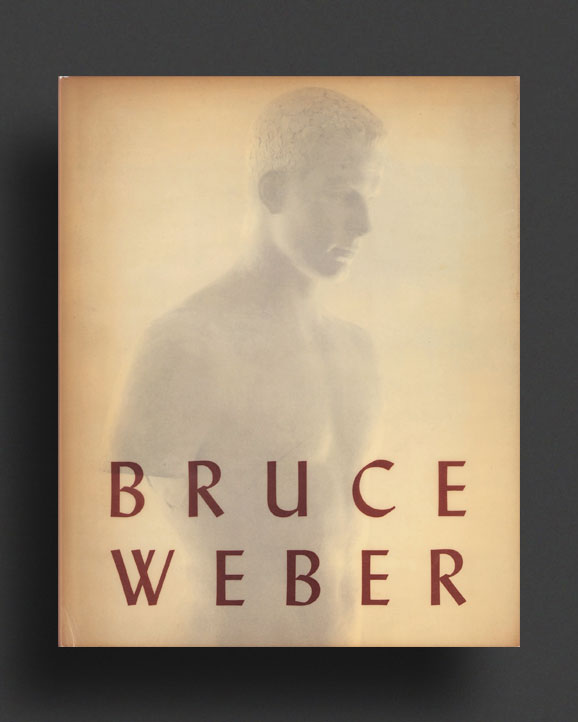
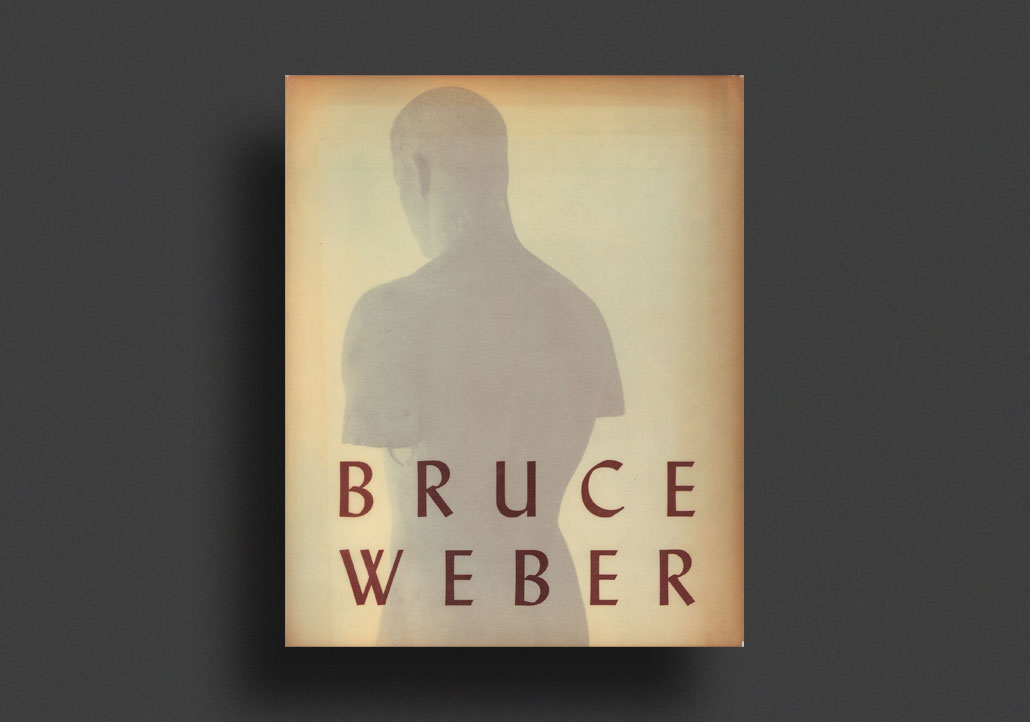
First 1989 hardcover edition of what is still one of the finest books on the work of American fashion photographer Bruce Weber (b. 1946). Edited and designed by John Cheim, this collection of 140 photographs is testimony to the breadth of Weber's photographic talent, from his male nudes charged with nostalgia and classicalism; his humanist portraits of artists, actors and athletes; his glorious homages to his beloved golden retrievers; his lyrical tributes to eroticism or his arcadian vision of the American landscape, it is all here, all beautifully reproduced. Working for Calvin Klein, Karl Lagerfeld, Comme des Garçons, Gianni Versace, Ralph Lauren, and Abercrombie & Fitch, Weber pioneered a nostalgic, aspirational style that redefined the industry. He is widely considered to have introduced a new level of artistry to commercial photography.
First hardcover edition in dust jacket, wrapped within printed translucent dust jacket.
Very Good copy with tanning/minor chips to translucent jacket spine and edges, light spotting to block edges, general age.
2024, English
Softcover, 80 pages, 26.7 x 35.6 cm
Published by
Primary Information / New York
$44.00 - Out of stock
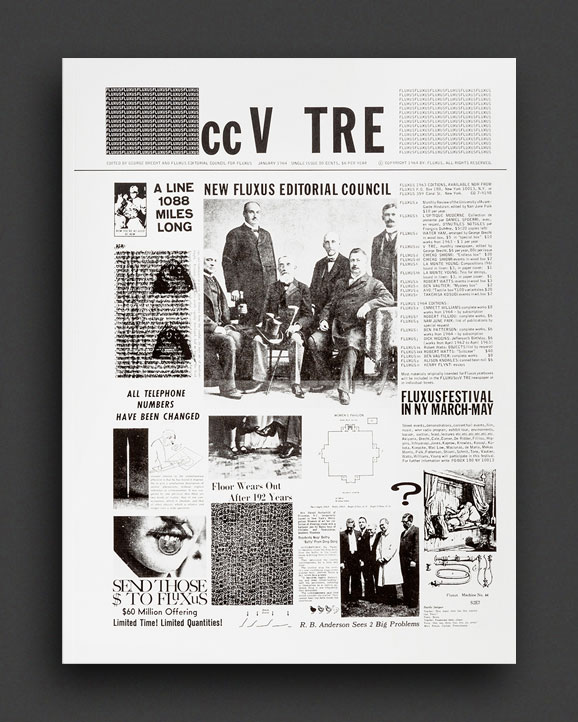
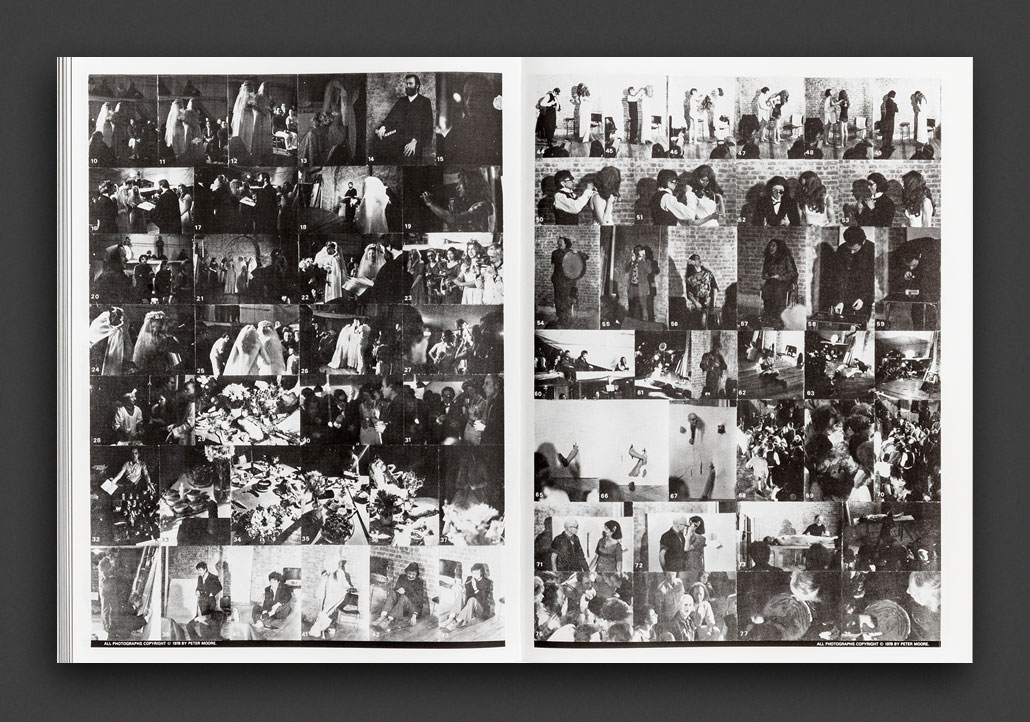
The Fluxus Newspaper collects all eleven newspapers published by the Fluxus art collective between January 1964 and March 1979. The newspapers were edited by an ever-changing team of artists known as the Fluxus Editorial Council for Fluxus and every issue, except the last two, was designed by Fluxus founder George Maciunas.
Although published irregularly, the newspapers were used to promote Fluxus events and publications, especially the group’s famous multiples and Fluxkits, with advertising materials, order forms, and pricelists interspersed throughout. More than just a space for promotion and information, the Fluxus newspapers featured the work of over sixty artists as well as appropriated newspaper headlines, advertisements, articles, and comic strips that are indicative of the group’s anti-art sensibility and characteristic humour.
The Fluxus Newspaper is exemplative of the 'do-it-yourself' creative attitude characteristic of Fluxus – an approach that is collaborative, interdisciplinary, anti-commercial, humorous, and open to anyone. The periodical is also an early example of the artist newspaper, a medium which grew out of the underground press movement and flourished in the late 60s and 70s as artists began to seek new mediums for presenting and distributing their work.
Artists featured in The Fluxus Newspaper include: Ay-O, Carol Bergé, Joseph Beuys, Elaine Bloedow, George Brecht, Christo, Philip Corner, Walter De Maria, Willem de Ridder, Bern Erismann, Nye Ffarrabas [participating as Bici Forbes], Robert Filliou, Henry Flynt, Ken Friedman, Carolyn Krumm, Heinz Gappmayr, Eugen Gomringer, Raymond Hains, Dick Higgins, Geoffrey Hendricks, Jon Hendricks, Alice Hutchins, Tatsu Izumi, Ray Johnson, Joe Jones, Allan Kaprow, Milan Knížak, Alison Knowles, Arthur Köpcke, Takehisa Kosugi, Ruth Krauss, Philip Krumm, György Ligeti, George Maciunas, Angus MacLise, Jackson Mac Low, Larry Miller, Peter Moore, Hans Nordenström, Yoko Ono, Nam June Paik, Benjamin Patterson, James Riddle, Dieter Roth, Takako Saito, Mieko Shiomi, Tomas Schmit, Daniel Spoerri, Christer Strömholm, Yasunao Tone, Stan VanDerBeek, Ben Vautier, Jacques Villeglé, Wolf Vostell, Yoshimasa Wada, Robert Watts, Emmett Williams, William S. Wilson, La Monte Young, Marian Zazeela.
80 pages, 26.7 x 35.6cm, softcover, Primary Information (New York).
1993—2000, Japanese
Softcover, 300—400 pages ea., 21 x 15 cm
1st Edition, Out of print title / used / very good
Published by
Sun Publishing / Japan
$300.00 $240.00 - In stock -
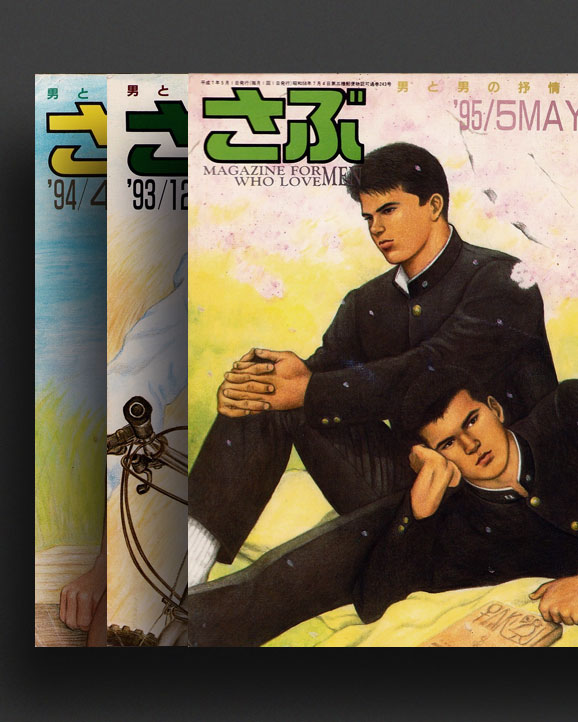
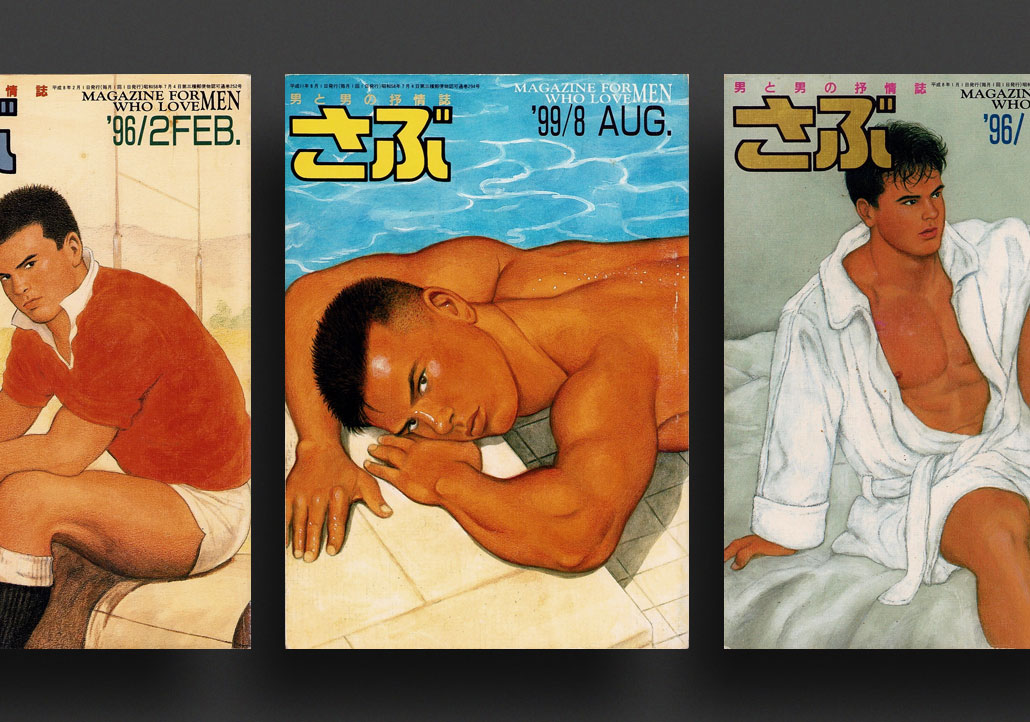
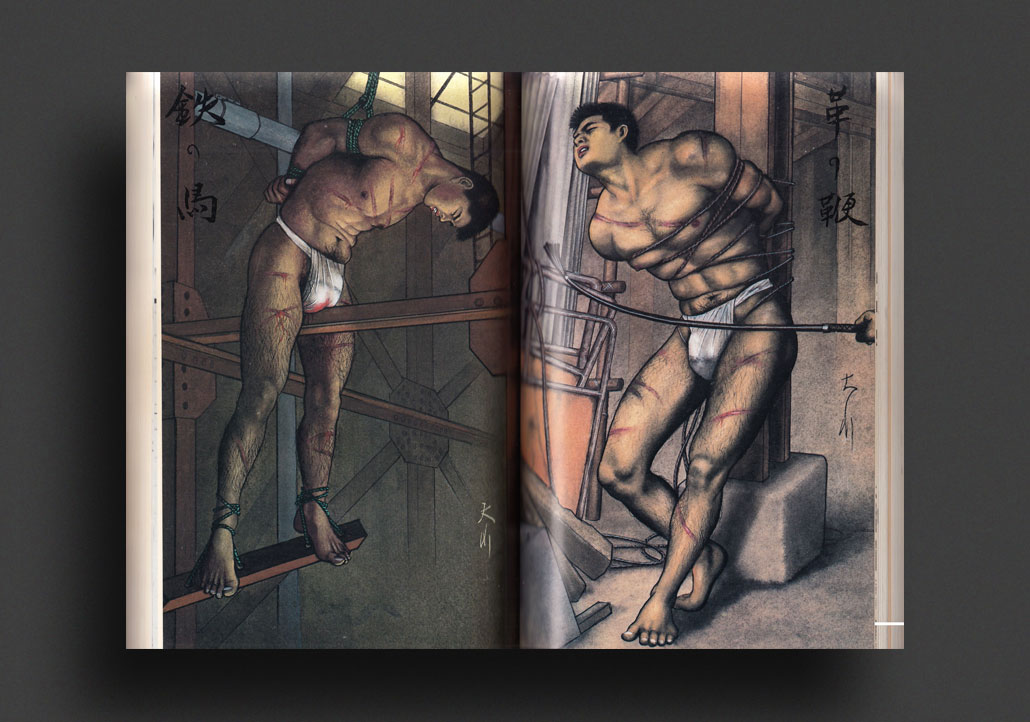
Huge lot of 11 issues of Sabu, "Magazine For Men Who Love Men", the trailblazing gay erotic magazine from Japan, founded in 1974. All issues from the 1990s, with one issue from 2000 thrown in, 1993—2000, all featuring the gorgeous wrap-around (front and back) cover artwork by legendary gay erotic illustrator Ben Kimura (1947—2003). Packed with illustrations by Gengoroh Tagame, Gekko Hayashi, Go Mishima, Ben Kimura, and many other artists, at roughly 350—400 pages in each issue, Sabu is more of a book (a "mook" as it were). Filled to the brim with gay erotic art galleries, glossy hardcore erotic photography, loads of fetish and bondage materials, wild "bara" manga, classifieds/letters/sexmate messageboards, articles, ads for Japanese gay bars, clubs, saunas, dungeons, gyms, mail-order toys, publications, media, news and reports on international scenes, and much more.
Each issue Very Good—Good, with light wear and tear. Specific shipping costs may apply.
2023, English / Japanese
Hardcover (w. slipcase and postcard), 176 pages, 31 x 21.5 cm
Edition of 1000,
1st Edition, Out of print title / as new
Published by
Gallery Naruyama / Tokyo
$240.00 - Out of stock
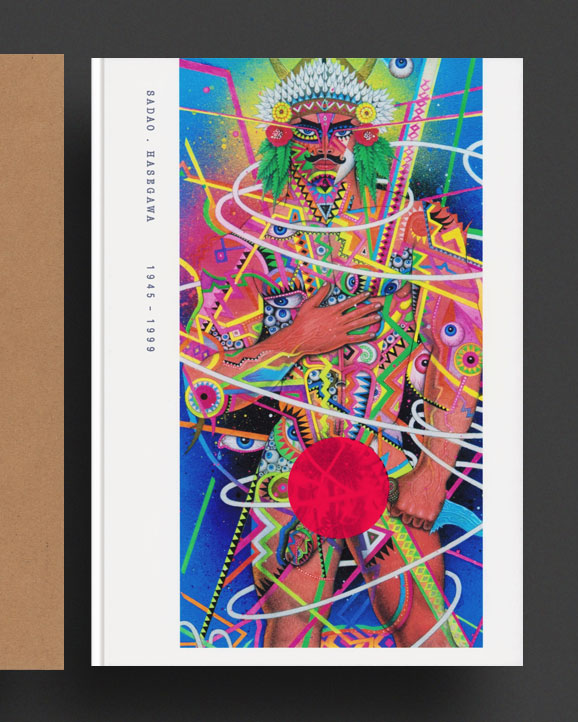
Remarkable, comprehensive new book published on the occasion of the retrospective exhibition of Sadao Hasegawa (1945—1999) at Gallery Naruyama, Tokyo, in 2023, divided into two periods for a span of six months. This lavishly produced and limited edition hardcover book (housed in gallery slipcase with removable cover sticker — a temporary censor for distribution purposes), reproduces all of his amazing homo-erotic artwork works in this extensive exhibition, making it the most comprehensive book on the artist yet. From his early romantic works drawn under the influence of psychedelic drugs, to works that interweave Hasegawa’s longing for foreign and exotic lands, erotic images of men created for magazines and manga, this book covers his vast array of styles, revealing many never before published sketches, preparatory drawings and graphic works. All works completely uncensored in their full glory — Hasegawa's unique blend of fantasy, Asian folklore, sado-masochism, and the homoeroticism of Yukio Mishima. Beautifully presented across many different paper stocks, with accompanying essay in English/Japanese. A must for any fan. This copy with illustrated exhibition invite laid in.
Inspired by Nobel Prize nominee Yukio Mishima, beauty, eroticism and death are recurring themes in the self-taught Hasegawa’s work. His unique vision incorporates Japanese, Indian, South-East Asian and African mythology, combined with homo-erotic depictions of men in acts of sado-masochism, juxtaposed with lush tropical flowers, strings of pearls, birds and animals that float through the margins of dreamy, ecstatic scenes. After Hasegawa’s suicide in Bangkok, Thailand, in 1999, his family was going to dispose of the artists archive but discovered a portrait of Mishima painted on a stone, accompanied by a note requesting that the works be bequeathed to Gallery Naruyama, Tokyo, where the artist’s estate is today.
"When I was a child, I was alone with kūsō (daydreams and wild imagination). Always I went to the fields and the woods. I liked talking to animals and plants. In my imagination, I changed into birds and insects and flowers... These childhood experiences are the basis for my pictures." Sadao Hasegawa (In Touch for Men)
As New copy.
1982, Japanese
Softcover, 300 pages, 21 x 15 cm
1st Edition, Out of print title / used / very good
Published by
Daini Shobo / Tokyo
$60.00 - Out of stock
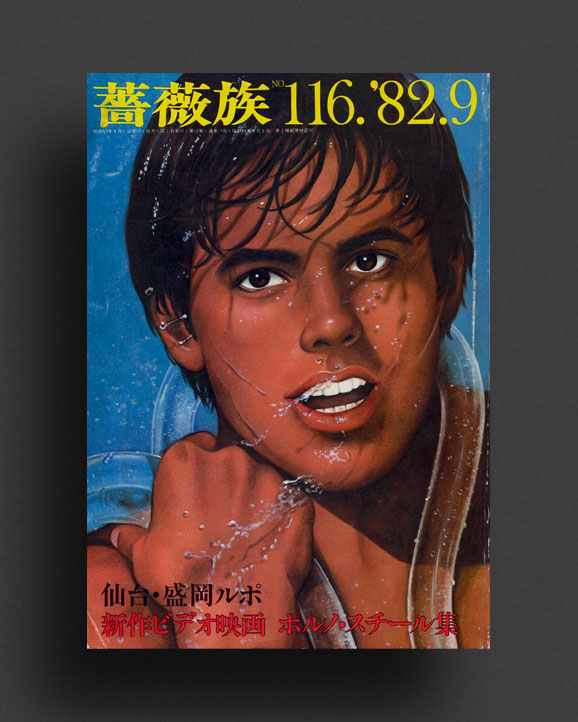
Rare early September 1982 issue of the trailblazing Barazoku, “The Rose Tribe”, Japan's first commercially circulated gay men's magazine, founded in 1971 by Bungaku Itō. Features cover artwork by Ben Kimura, colour gallery by Go Mishima, and many illustrations by Sadao Hasegawa, just to get started! A leader in Japanese gay culture, Barazoku was the longest running magazine of its kind, surviving 33 years, and despite mainstream disapproval and legal injunctions it became such a cultural phenomenon that its title, the term "bara", has entered the mainstream language as a synonym for "gay" and gay manga. Barazoku published an interview with Japan's first known AIDS sufferer at a time when the mainstream media refused to address the issue. The magazine was also instrumental in introducing seminal Japanese gay erotic artists such as Ben Kimura, Go Mishima, Rune Naito, and Sadao Hasegawa, amongst others. Each issue was packed with gay erotica art galleries, manga, colour and b/w glossy erotic photography, classifieds/letters/personal ads, articles, ads for Japanese gay bars, clubs, saunas, dungeons, gyms, mail-order toys, publications, media, news and reports on international scenes, and much more.
VG—Good copy. Wear.
1989, German
Softcover (staple-bound), 40 pages, 29.5 x 21 cm
1st Edition, Out of print title / used / very good
Published by
Michael Werner / Köln
$30.00 - In stock -
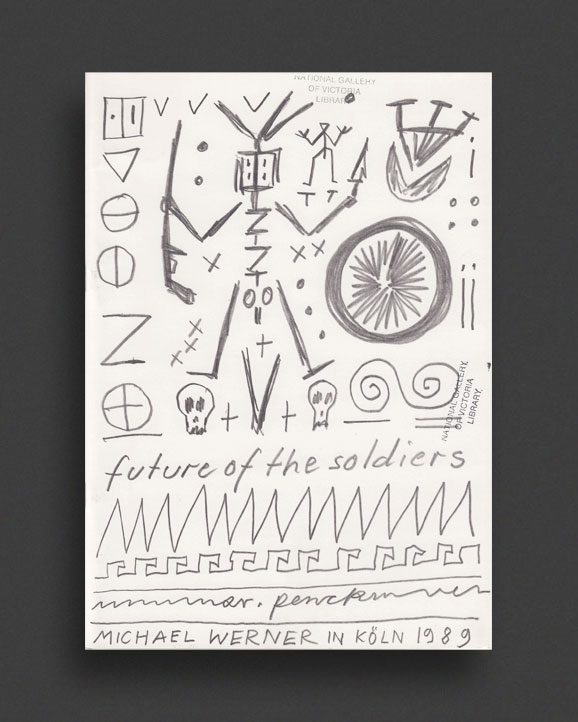
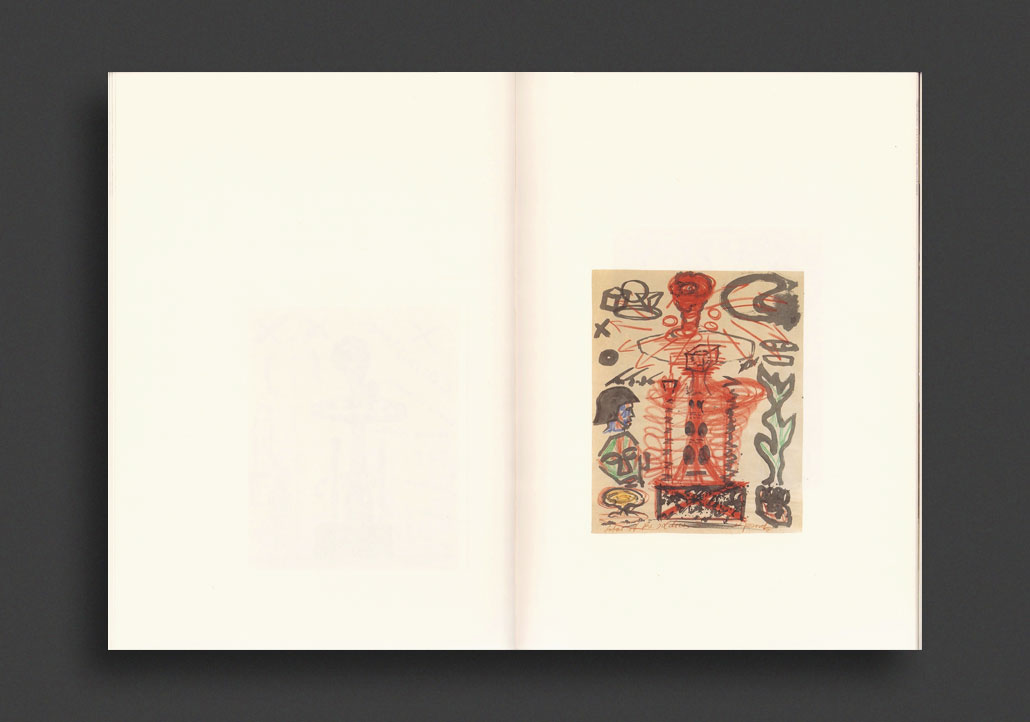
1989 catalogue published to accompany the exhibition A. R. Penck "Future of The Soldiers" at Michael Werner in Cologne. Published in an edition of 700 copies, this lovely catalogue reproduces in colour the drawings, paintings and sculptures featured in the exhibition, with texts in German.
Very Good, but National Gallery of Victoria ex-libris stamping to covers and first two pages.
2004, English
Softcover, 221 pages, 15.2 x 20.3 cm
Published by
Exact Change / Boston
$34.00 - Out of stock
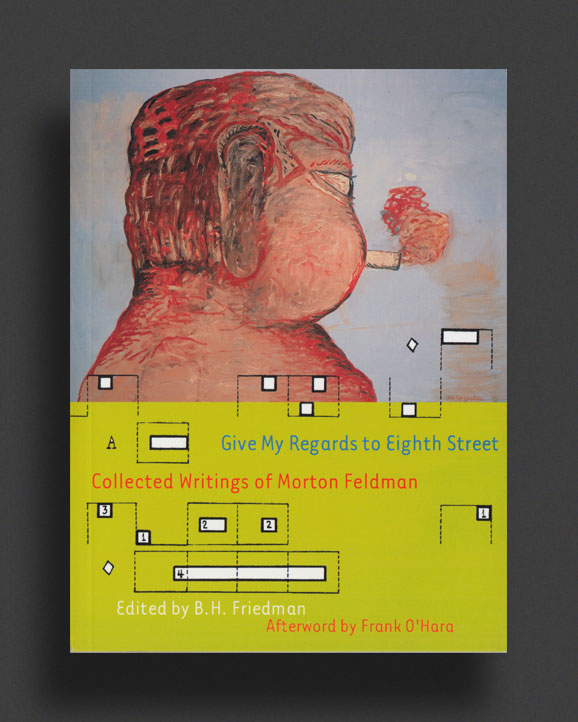
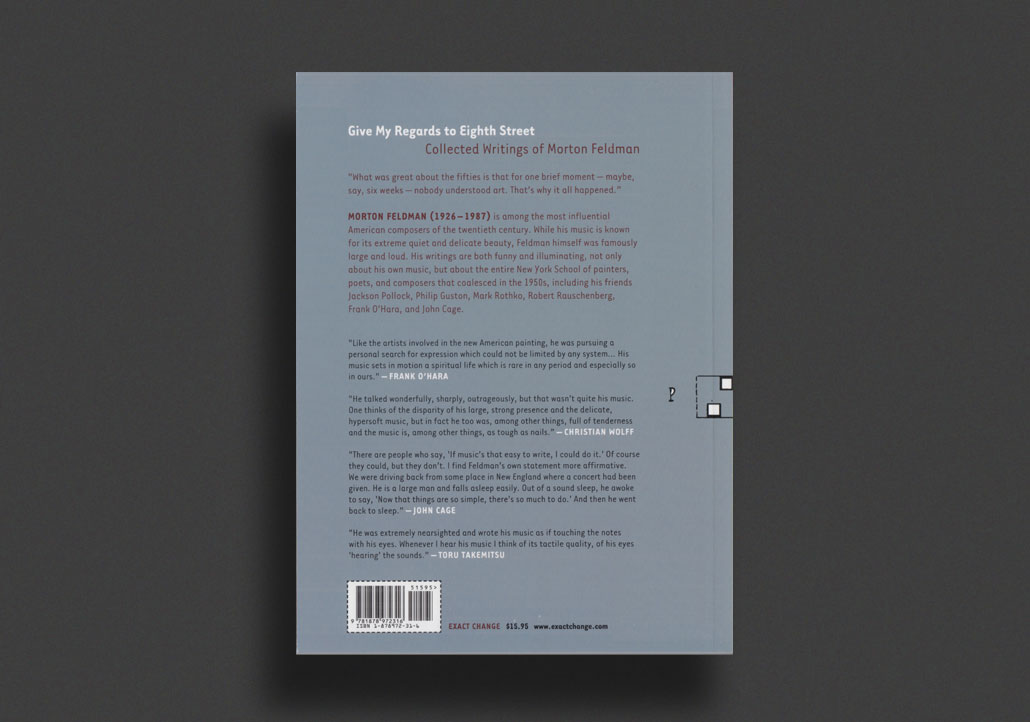
Morton Feldman wrote as he composed music, carefully placing one element after another, producing some of the avant-garde's most lucid considerations of what it means to make music
Morton Feldman (1926-87) is among the most influential American composers of the 20th century, a man whose music is known for its extreme quiet and delicate beauty (while Feldman himself was famously large and loud). Karlheinz Stockhausen once asked the composer what his secret was: I don't push the sounds around, Feldman replied. His writings resemble his music in their quiet steadiness, their oscillations between assertion and doubt. They are also funny and illuminating, not only about his own music but about the entire New York School of painters, poets and composers that coalesced in the 1950s, including Feldman's friends Jackson Pollock, Philip Guston, Mark Rothko, Robert Rauschenberg, Frank O'Hara and John Cage. Give My Regards to Eighth Street is an authoritative collection of Feldman's writings, culled from published articles, program notes, LP liners, lectures, interviews and unpublished writings. It is one of those rare books from which anyone can draw inspiration, no matter what the vocation or discipline.
Edited by B H Friedman
1985, English / Japanese
Softcover (w. dust jacket), 28 x 23 cm
1st Edition, Out of print title / used / very good
Published by
Ryuko Tsushin / Japan
$160.00 - Out of stock
First 1985 edition of "London after the Dream" by Japanese photographer Herbie Yamaguchi (b. 1950, Tokyo). A wonderful, lesser-known Japanese photo book of Yamaguchi's images of London in a time of great turmoil, under the control of Thatcher, the 'Iron Lady'. Yamaguchi, who came from the experimental performance arts scene in Tokyo, immersed himself in the punk rock scene in London. Being penniless and without a studio, Yamaguchi shot the people around him, from his flatmate Boy George to Joe Strummer to The Slits, the hair-dressers to the squat kids, intimately capturing an radical musical moment in the city against the backdrop of class tension. London after the Dream collects the best of these photographs, chaptered through Yamaguchi's images of the city's youth, his young adult peers (including a spread featuring Johnny Rotten vis-à-vis Lady Diana), and Britain's older generation. The changing of the guard.
Very Good copy in VG dust jacket.
1995, English
Softcover, 432 pages, 22 x 27.4 cm
1st Edition, Out of print title / used / very good
Published by
MIY (Mind In You) Publishing Ltd / UK
$150.00 $90.00 - Out of stock
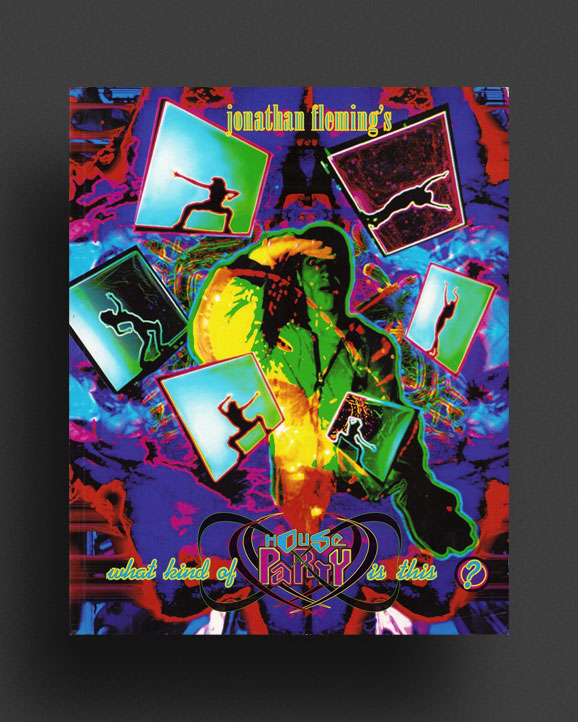
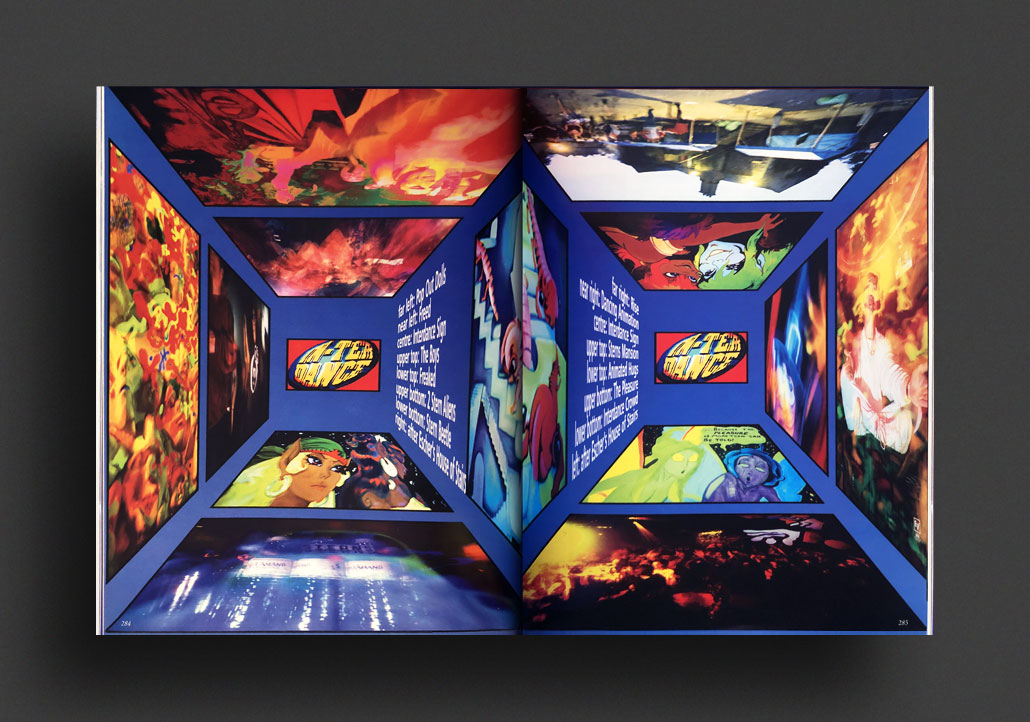
First and only edition of this enormous definitive history of House Music, self-published in Britain in 1995. Spanning Ambient, Techno, Jungle, Acid; from the DJ's to the raves; this huge book documents a cultural music and dance movement first-hand through the experiences and words of all the major DJ’s from the scene at the time including Larry Heard, Frankie Knuckles, Adonis, Norman Jay, Carl Cox, Fat Tony, Pete Tong, Alfredo, Fabio, Jesse Saunders, Grooverider, Juan Atkins, Sasha, Dimitri, Farley "Jackmaster" Funk, Derrick May, Andy Weatherall, Jamie Principal, about 80 interviews and profiles in total, plus extensive reviews, reflections and photography of the scenes in Ibiza, Great Britain, Italy, New York, San Francisco, Chicago, Detroit, etc., spanning all the major clubs and festivals of the time. The book's design also embodies the aesthetic of the movement at the time, with every page immersed in an insane sea of psychedelic, early CG graphic design, complete with a never-ending collection of rave flyers.
A true labor of love, this one-of-a-kind historical time-capsule is a must for any dance music collector.
1978, French
Softcover, 187 pages, 13.5 x 16.5 cm
1st Edition, Out of print title / used / very good
Published by
Albin Michel / Paris
$150.00 - Out of stock
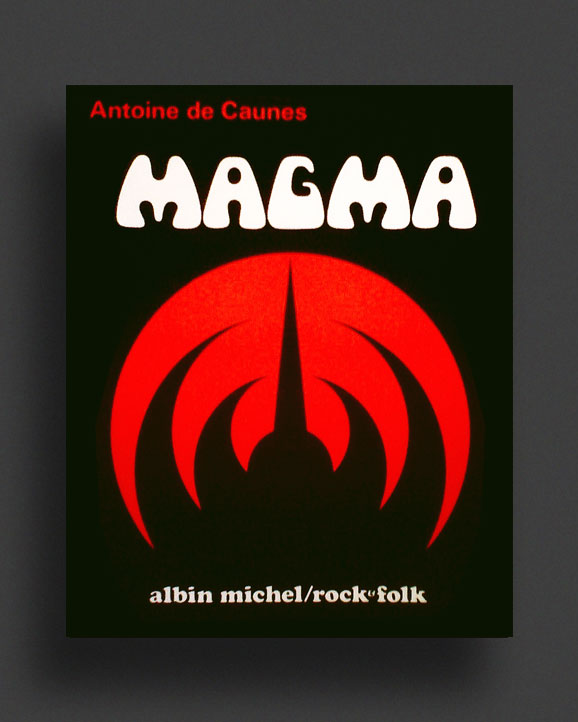
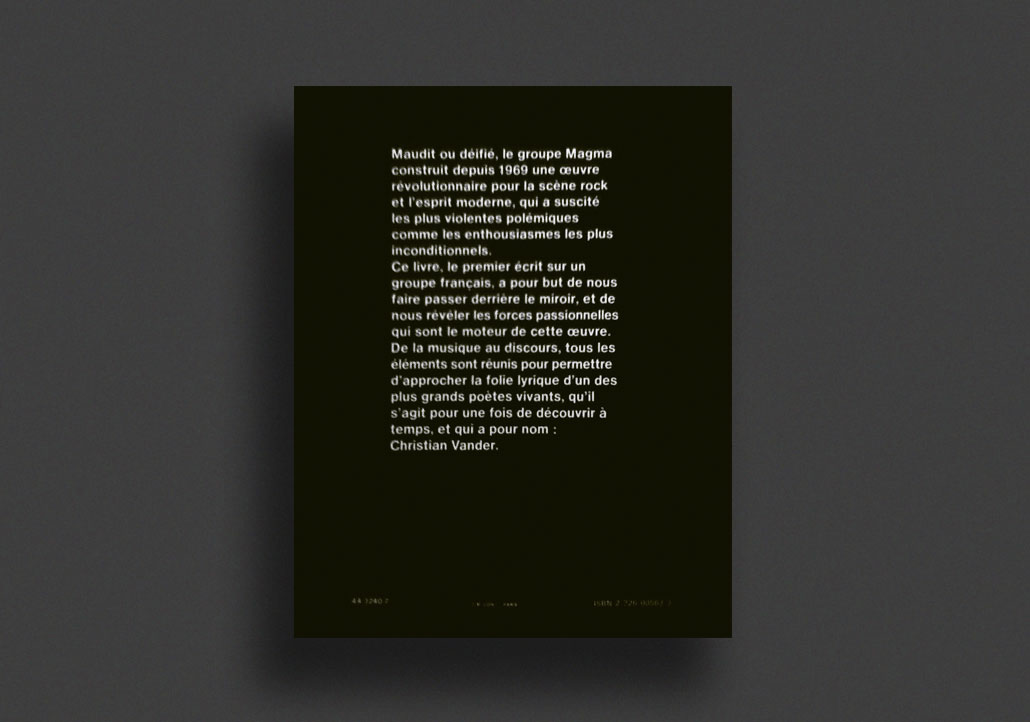
First edition of the rare 1978 Magma book, published by Éditions Albin Michel as part of their Rock & Folk series. Written by French TV presenter and director Antoine de Caunes, this remains the first and only official biography on the great Magma, a French progressive rock group founded in Paris in 1969 by classically trained drummer Christian Vander, who claimed as his inspiration a "vision of humanity's spiritual and ecological future" that profoundly disturbed him. In the course of their first album, the band tells the story of a group of people fleeing a doomed Earth to settle on the planet Kobaïa. Later, conflict arises when the Kobaïans—descendants of the original colonists—encounter other Earth refugees. Unique even amongst the most musically adventurous rock groups of 1970s Europe, Vander and Magma developed an entirely new musical style termed Zeuhl, and created a fictional language, Kobaïan, in which most Magma lyrics are sung. Zeuhl (meaning "celestial" in Kobaïan) encompassed the French jazz fusion/symphonic rock scene that grew around Magma and the many spinoff and solo musical projects by various Magma members, including Laurent Thibault, Didier Lockwood, Jannick Top, Patrick Gauthier, Benoît Widemann, Klaus Blasquiz, Bernard Paganotti, Frédéric d'Oelsnitz, Claude Engel, Claude Olmos, Yochk'o Sefer, François Cahen, Teddy Lasry... to name a few.
Heavily illustrated throughout. A must for any Magma fan!
Very Good copy with light edge and handling wear, light tanning.
2021, English
Hardcover, 320 pages, 23 x 16 cm
Published by
Blum & Poe / Los Angeles
$75.00 - Out of stock
Released on the 50th anniversary of the publication of Penny Slinger's iconic artists’ book 50% The Visible Woman, this 2021 edition presents Slinger’s series of surrealist photomontage works and poetry unabridged for the first time, following the hand-constructed snakeskin-bound book from 1969, and the out-of-print abridged edition from 1971. With a new conversation transcribed between Slinger and fellow artist and friend Linder.
1985, Italian
Softcover (stiff card boards), 80 pages, 31 x 23.5 cm
1st Edition, Out of print title / used / very good
Published by
Visualbooks / Milan
$200.00 - Out of stock
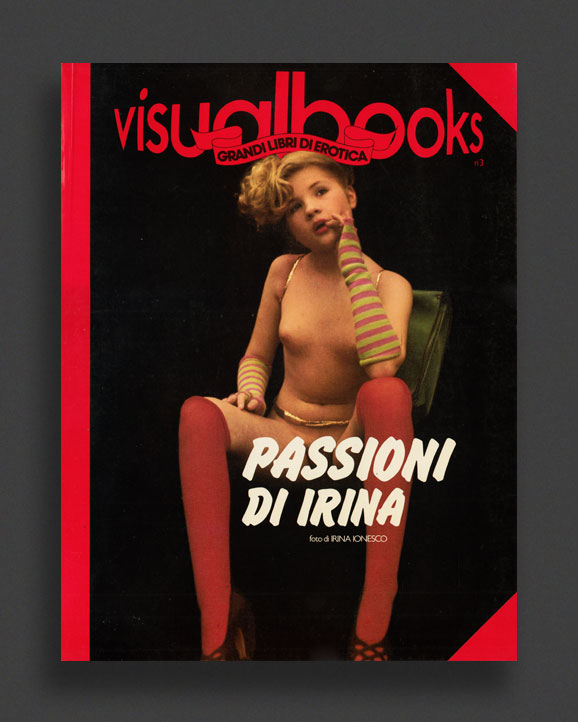
Very rare copy of the first, only edition of "Passioni Di Irina", one of the most sought after and best known books of French photographer Irina Ionesco. Published in 1985 in Milan as part of Visualbooks "Grandi Libri di Erotica", this large-format glossy book collects a beautiful selection of Ionesco's works in full-colour reproductions, uncensored. Published in a limited edition and very collectible.
Irina Ionesco (1935—2022) is a French photographer famous for her unique style of dramatically lit, baroque, erotic female portraits, influenced by the Decadent movement and the dream-like psycho-erotic imagery of Surrealism. At a young age she was sent to Romania where she was raised by her family who were circus performers. From the ages of 15 to 22 she performed as a contortionist. She traveled and painted for several years before discovering photography and gained wide attention when she exhibited her work at the Nikon Gallery in Paris in 1974, leading to her work being published in magazines, books, and exhibited at galleries across the globe. Working primarily as a fashion photographer, Ionesco stirred controversy with her nude portraits—much like Garry Gross would later cause with his sexualized photographs of a young Brooke Shields. Ionesco’s work often features women in elaborate dress, bejewelled, gloved, and in other finery, but also adorning themselves with symbolic pieces such as chokers and other fetishistic props, posing provocatively, partially disrobed as objects of sexual possession. Irina Ionesco is most famous for her photographs using her young daughter, Eva, as her model and muse, a decision that remains controversial to this day.
Very Good copy.
2024, English
Softcover, 666 pages, 22.61 x 15.19 cm
Published by
Blackstone / US
$42.00 - Out of stock
Dubbed "the most significant and controversial SF book" of its generation, Harlan Ellison's groundbreaking collection launched an entire subgenre: New Wave science fiction. With contributions from legendary authors and multiple Hugo and Nebula Awards, Dangerous Visions returns to print in a stunning new edition perfect for new and returning fans alike.
A landmark short story collection that put the more character-based New Wave science fiction on the map, Dangerous Visions won several prestigious awards and was nominated for many others. This now-classic anthology includes thirty-three stories by thirty-two award-winning authors, over half of whom have won multiple Hugo and Nebula Awards.
Contributing authors include: Robert Silverberg, Frederik Pohl, Brian W. Aldiss, Philip K. Dick, Larry Niven, Fritz Leiber, Poul Anderson, Theodore Sturgeon, J.G. Ballard, Samuel R. Delany, and Ellison himself.
As relevant now as it was when first published, Dangerous Visions is a phenomenal collection that deserves a place on every bookshelf.
1982, Japanese
Softcover, 112 pages, 25.5 x 18.5 cm
1st Edition, Out of print title / used / very good
Published by
Fool's Mate / Tokyo
$80.00 - Out of stock
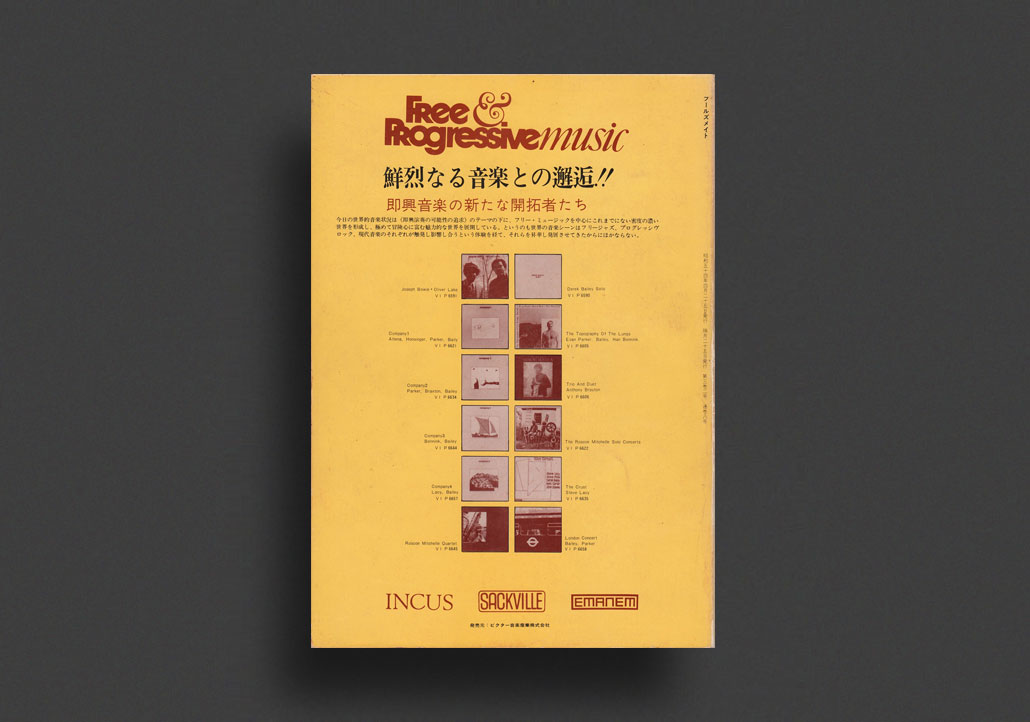
Rare early issue of the world's finest "Euro Rock Magazine", Fool's Mate, from Japan. Fool's Mate Vol. 21 May 1982. In the 1970's—1980's, Fool's Mate (named after the 1971 Peter Hammill LP), edited by Masashi Kitamura with regular contributions by Masami Akita (Merzbow) and many other heads, was a vital conduit between emerging and metamorphosing avant-garde music cultures in Europe (Progressive Rock, Art Rock, Free Music, Electronic, Cosmic, Psychedelic Folk, Avant Pop, Rock in Opposition, Post Punk, Industrial, etc.) and Japan. No doubt responsible for the resonance of experimental contemporary music there during that period through to today, each issue of Fool's Mate during these early years was packed cover-to-cover with exclusive interviews with the artists, rare photographs and graphics, thematic genre/artist/label/artistic movement features, in-depth profiles/discographies/family-trees, catalogues, lyrics, letters, collage art, record, book, and live reviews, columns and an endless stream of concert and import/record store/label/venue/coffee shop adverts, all presented in a perfectly obsessive fanzine aesthetic manner, cut 'n' pasted across many paper stocks. The Americas and other realms, including new directions in Japanese alternative music, are all covered alongside their European counterparts, with many issues exploring key artistic and theoretical influences, such as Symbolism, Dadaism, Surrealism, Eros, Futurism, etc.
This issue with cover feature on "Female" artists in avant-garde music and culture, including articles on the history of women in experimental music (The Shaggs, Malaria!, Brigitte Fontaine, Suburban Lawns, Tamia, Lydia Lunch, Phew, Sandy Denny, etc.), interviews/in-depths articles on/with Nico, Dagmar Krause, The Slits, The Raincoats, plus features on This Heat, Lieutenant Murnau (Vittore Baroni), Grafika Airlines cassette label, Penguin Cafe Orchestra, 4AD, Mike Oldfield, The Work, and much more. Highly recommended to any fan of such things.
Very Good copy. General wear/age.
1978, Japanese
Softcover, 96 pages, 25.5 x 18.5 cm
1st Edition, Out of print title / used / very good
Published by
Fool's Mate / Tokyo
$80.00 - In stock -
Rare early issue of the world's finest "Euro Rock Magazine", Fool's Mate, from Japan. Fool's Mate June 1978. In the 1970's—1980's, Fool's Mate (named after the 1971 Peter Hammill LP), edited by Masashi Kitamura with regular contributions by Masami Akita (Merzbow) and many other heads, was a vital conduit between emerging and metamorphosing avant-garde music cultures in Europe (Progressive Rock, Art Rock, Free Music, Electronic, Cosmic, Psychedelic Folk, Avant Pop, Rock in Opposition, Post Punk, Industrial, etc.) and Japan. No doubt responsible for the resonance of experimental contemporary music there during that period through to today, each issue of Fool's Mate during these early years was packed cover-to-cover with exclusive interviews with the artists, rare photographs and graphics, thematic genre/artist/label/artistic movement features, in-depth profiles/discographies/family-trees, catalogues, lyrics, letters, collage art, record, book, and live reviews, columns and an endless stream of concert and import/record store/label/venue/coffee shop adverts, all presented in a perfectly obsessive fanzine aesthetic manner, cut 'n' pasted across many paper stocks. The Americas and other realms, including new directions in Japanese alternative music, are all covered alongside their European counterparts, with many issues exploring key artistic and theoretical influences, such as Symbolism, Dadaism, Surrealism, Eros, Futurism, etc.
This issue with cover feature on "Occultism" with features on the history of the occult in culture and its influence on avant-garde art and music, with in depth articles on Ash Ra Temple, Magma, Heldon, David Bowie, The Pop Group, This Heat, Kate Bush, Robert Fripp, and much more. Highly recommended to any fan of such things.
Very Good copy. General wear/age.
1981, Japanese
Softcover, 112 pages, 25.5 x 18.5 cm
1st Edition, Out of print title / used / very good
Published by
Fool's Mate / Tokyo
$80.00 - In stock -
Rare early issue of the world's finest "Euro Rock Magazine", Fool's Mate, from Japan. Fool's Mate Vol. 19 December 1981. In the 1970's—1980's, Fool's Mate (named after the 1971 Peter Hammill LP), edited by Masashi Kitamura with regular contributions by Masami Akita (Merzbow) and many other heads, was a vital conduit between emerging and metamorphosing avant-garde music cultures in Europe (Progressive Rock, Art Rock, Free Music, Electronic, Cosmic, Psychedelic Folk, Avant Pop, Rock in Opposition, Post Punk, Industrial, etc.) and Japan. No doubt responsible for the resonance of experimental contemporary music there during that period through to today, each issue of Fool's Mate during these early years was packed cover-to-cover with exclusive interviews with the artists, rare photographs and graphics, thematic genre/artist/label/artistic movement features, in-depth profiles/discographies/family-trees, catalogues, lyrics, letters, collage art, record, book, and live reviews, columns and an endless stream of concert and import/record store/label/venue/coffee shop adverts, all presented in a perfectly obsessive fanzine aesthetic manner, cut 'n' pasted across many paper stocks. The Americas and other realms, including new directions in Japanese alternative music, are all covered alongside their European counterparts, with many issues exploring key artistic and theoretical influences, such as Symbolism, Dadaism, Surrealism, Eros, Futurism, etc.
This issue with cover feature on "Psychic Youth" with features on This Heat, Robert Wyatt, Chris Cutler, Art Bears, Recommended Records, Throbbing Gristle, Keiji Haino, Fred Frith, Merzbow, King Crimson, Peter Hammill, Massacre, Holger Czukay, Can, The Cure, Bauhaus, Dome, New Order, Joy Division, P.I.L., Pungo, Neo Tendency, and much more. Highly recommended to any fan of such things.
Very Good copy. General wear/age.
1978, Japanese
Softcover, 109 pages, 25.5 x 18.5 cm
1st Edition, Out of print title / used / very good
Published by
Fool's Mate / Tokyo
$80.00 - In stock -
Rare early issue of the world's finest "Euro Rock Magazine", Fool's Mate, from Japan. Fool's Mate April 1978. In the 1970's—1980's, Fool's Mate (named after the 1971 Peter Hammill LP), edited by Masashi Kitamura with regular contributions by Masami Akita (Merzbow) and many other heads, was a vital conduit between emerging and metamorphosing avant-garde music cultures in Europe (Progressive Rock, Art Rock, Free Music, Electronic, Cosmic, Psychedelic Folk, Avant Pop, Rock in Opposition, Post Punk, Industrial, etc.) and Japan. No doubt responsible for the resonance of experimental contemporary music there during that period through to today, each issue of Fool's Mate during these early years was packed cover-to-cover with exclusive interviews with the artists, rare photographs and graphics, thematic genre/artist/label/artistic movement features, in-depth profiles/discographies/family-trees, catalogues, lyrics, letters, collage art, record, book, and live reviews, columns and an endless stream of concert and import/record store/label/venue/coffee shop adverts, all presented in a perfectly obsessive fanzine aesthetic manner, cut 'n' pasted across many paper stocks. The Americas and other realms, including new directions in Japanese alternative music, are all covered alongside their European counterparts, with many issues exploring key artistic and theoretical influences, such as Symbolism, Dadaism, Surrealism, Eros, Futurism, etc.
This issue with cover feature on "Fantasy" in European rock and avant-garde music, features on fantasy art and literature, the Island Records label, Brian Eno, Klaus Schulze, David Bowie, special feature on Derek Bailey, Italian Prog, Peter Hammill, Ashra, Brian Eno, Tony Banks, Van Der Graaf, Genesis, Vangelis, Peter Gabriel, and much more. Highly recommended to any fan of such things.
Very Good copy. General wear/age.
1978, Japanese
Softcover, 90 pages, 25.5 x 18.5 cm
1st Edition, Out of print title / used / good
Published by
Fool's Mate / Tokyo
$90.00 - In stock -
Rare early issue of the world's finest "Euro Rock Magazine", Fool's Mate, from Japan. Fool's Mate Vol. 8 April 1978. In the 1970's—1980's, Fool's Mate (named after the 1971 Peter Hammill LP), edited by Masashi Kitamura with regular contributions by Masami Akita (Merzbow) and many other heads, was a vital conduit between emerging and metamorphosing avant-garde music cultures in Europe (Progressive Rock, Art Rock, Free Music, Electronic, Cosmic, Psychedelic Folk, Avant Pop, Rock in Opposition, Post Punk, Industrial, etc.) and Japan. No doubt responsible for the resonance of experimental contemporary music there during that period through to today, each issue of Fool's Mate during these early years was packed cover-to-cover with exclusive interviews with the artists, rare photographs and graphics, thematic genre/artist/label/artistic movement features, in-depth profiles/discographies/family-trees, catalogues, lyrics, letters, collage art, record, book, and live reviews, columns and an endless stream of concert and import/record store/label/venue/coffee shop adverts, all presented in a perfectly obsessive fanzine aesthetic manner, cut 'n' pasted across many paper stocks. The Americas and other realms, including new directions in Japanese alternative music, are all covered alongside their European counterparts, with many issues exploring key artistic and theoretical influences, such as Symbolism, Dadaism, Surrealism, Eros, Futurism, etc.
This issue with cover feature on Electronic Music with interviews and discographies of/with Brian Eno, Klaus Schulz, Tim Blake, the Egg Label, Vangelis, Mauro Bagani, Can, Amon Düül 2, Hawkwind, Throbbing Gristle, The Residents, Lucio Battisti, a special feature on Italian Rock (PFM, New Trolls, Area, etc.), Henry Cow, Gilgamesh, Recommended Records/R.I.O., Scorpians, and much more. Highly recommended to any fan of such things.
Very Good copy. General wear/age.
1980, Japanese
Softcover, 96 pages, 25.5 x 18.5 cm
1st Edition, Out of print title / used / good
Published by
Fool's Mate / Tokyo
$90.00 - In stock -
Rare early issue of the world's finest "Euro Rock Magazine", Fool's Mate, from Japan. Fool's Mate Vol. 16 March 1980. In the 1970's—1980's, Fool's Mate (named after the 1971 Peter Hammill LP), edited by Masashi Kitamura with regular contributions by Masami Akita (Merzbow) and many other heads, was a vital conduit between emerging and metamorphosing avant-garde music cultures in Europe (Progressive Rock, Art Rock, Free Music, Electronic, Cosmic, Psychedelic Folk, Avant Pop, Rock in Opposition, Post Punk, Industrial, etc.) and Japan. No doubt responsible for the resonance of experimental contemporary music there during that period through to today, each issue of Fool's Mate during these early years was packed cover-to-cover with exclusive interviews with the artists, rare photographs and graphics, thematic genre/artist/label/artistic movement features, in-depth profiles/discographies/family-trees, catalogues, lyrics, letters, collage art, record, book, and live reviews, columns and an endless stream of concert and import/record store/label/venue/coffee shop adverts, all presented in a perfectly obsessive fanzine aesthetic manner, cut 'n' pasted across many paper stocks. The Americas and other realms, including new directions in Japanese alternative music, are all covered alongside their European counterparts, with many issues exploring key artistic and theoretical influences, such as Symbolism, Dadaism, Surrealism, Eros, Futurism, etc.
This issue with cover feature on Throbbing Gristle/Genesis P-Orridge/Industrial Records, Come Org., Henry Cow / Art Bears, Brian Eno, French Meta Musique — The History of Magma, Heldon, Lard Free, Bernard Szajner, Catherine Ribeiro+Alpes, Yochk'o Seffer, Ariel Kalma, Theatre Du Chene Noir, Weidorje, Benoit Widemann, Urban Sax, Ilich, etc., P.I.L., The Pop Group, Metabolist, Camel, and much more. Highly recommended to any fan of such things.
Good copy. General wear/age.
1989, English
Softcover, 192 pages, 22 x 28 cm
Out of print title / used / very good
Published by
The Gay Men's Press (GMP) / London
Tom of Finland Foundation / Los Angeles
$190.00 - Out of stock
1989 printing of one of the finest collections of the great Tom of Finland, published by the Tom of Finland Foundation, Los Angeles, and The Gay Men's Press (GMP), London.
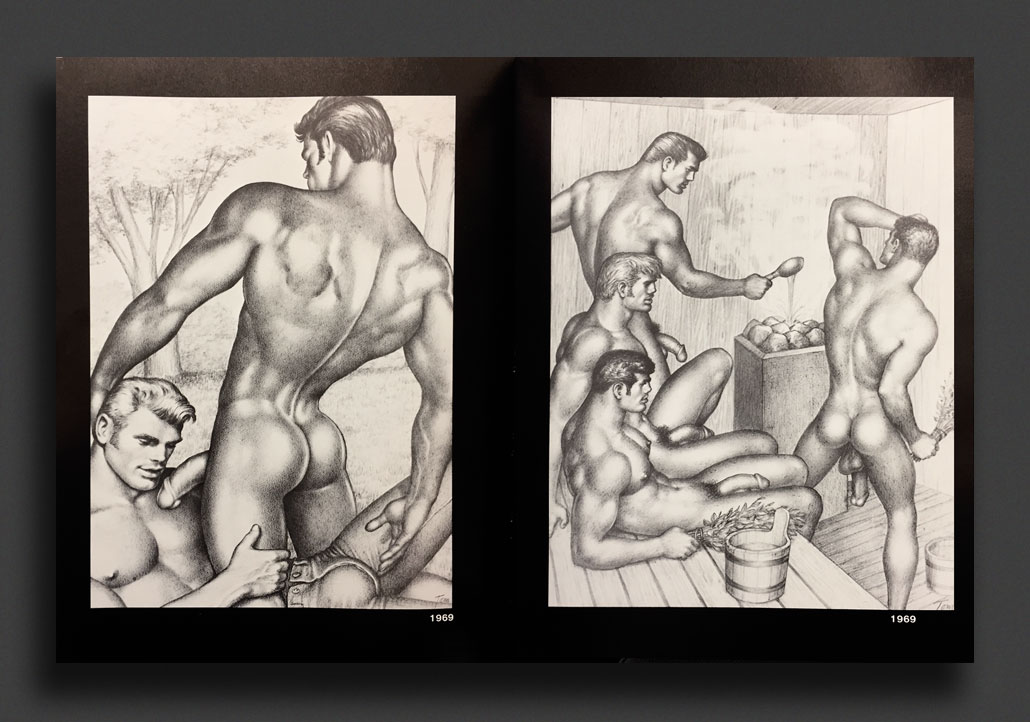
Preface by Tom of Finland with appreciation by Dennis Forbes and Fred Bisonnes. This book covers Tom of Finland's work from 1946 to 1987, depicting page by page throughout his iconic and impeccable erotic graphite drawings of macho leathermen, bikers, cowboys, cops, lumberjacks, hardhats, soldiers and sailors, all in all their glory.
Touko Valio Laaksonen (8 May 1920 – 7 November 1991), best known by his pseudonym Tom of Finland, was a Finnish artist known for his stylized highly masculine homoerotic fetish art, and his influence on late twentieth century gay culture. He has been called the "most influential creator of gay pornographic images" by cultural historian Joseph W. Slade. Over the course of four decades, he produced some 3500 illustrations.
Very Good copy with light cover/edge wear.
1991, English
Softcover, 192 pages, 22 x 28 cm
1st Edition, Out of print title / used / very good
Published by
Tom of Finland Foundation / Los Angeles
$150.00 - Out of stock
First printing of Retrospective II, another of the finest collections of work from the great Tom of Finland, published in 1991 by the Tom of Finland Foundation, Los Angeles.
Preface by Tom of Finland. This book covers Tom of Finland's work dating back to 1944, depicting page by page throughout his iconic and impeccable erotic graphite drawings of macho leathermen, bikers, cowboys, cops, lumberjacks, hardhats, soldiers and sailors, all in all their glory.
Touko Valio Laaksonen (8 May 1920 – 7 November 1991), best known by his pseudonym Tom of Finland, was a Finnish artist known for his stylized highly masculine homoerotic fetish art, and his influence on late twentieth century gay culture. He has been called the "most influential creator of gay pornographic images" by cultural historian Joseph W. Slade. Over the course of four decades, he produced some 3500 illustrations.
Very Good copy with light cover/edge wear.
1995, English / German
Softcover (staple-bound), 62 pages, 28 x 21.5 cm
1st Edition, Out of print title / used / very good
Published by
Tom of Finland Foundation / Los Angeles
$140.00 - In stock -
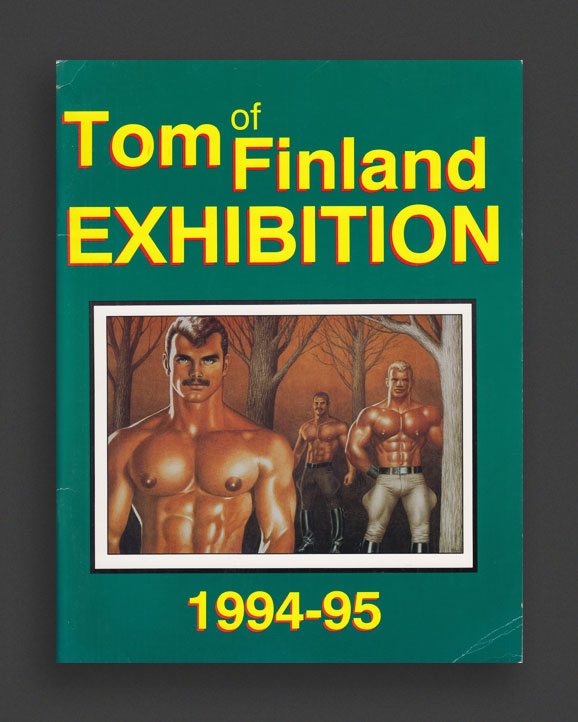
Rare copy of Tom of Finland Exhibition 1994-95, published in 1995 by the Tom of Finland Foundation, Los Angeles, on the occasion of the retrospective exhibition held in 1994 and the Schwules Museum, Berlin, Germany. Profusely illustrated with many unseen works, as well as photographs and documents tracing the life and work of Touko Valio Laaksonen (1920—1991), best known by his pseudonym Tom of Finland, the "most influential creator of gay pornographic images"(—Joseph W. Slade). Every period accounted for, from Tom's early commercial work to his most hardcore gay erotica, his sketch-books, his prints to his very last work. An incredible insight into this prolific artist of enduring influence. Texts throughout in English and German by president of Tom of Finland Foundation Durk Dehner and German art critic Wolfgang Max Faust, amongst others, plus chronology,
“Sometimes the attraction of the uniform is so powerful in me that I get the feeling that I am making love to the clothes and the man inside is just there to hold them up and give them shape, sort of like an animated department store dummy.”
Very Good, well preserved copy with light bump top of spine, crease to bottom front cover.
1989, English
Hardcover (w. dust jacket), 380 pages, 24 x 16 cm
1st Edition, Out of print title / used / very good
Published by
Andre Deutsch / London
$40.00 - In stock -
First hardcover edition published by Andre Deutsch, London, 1989.
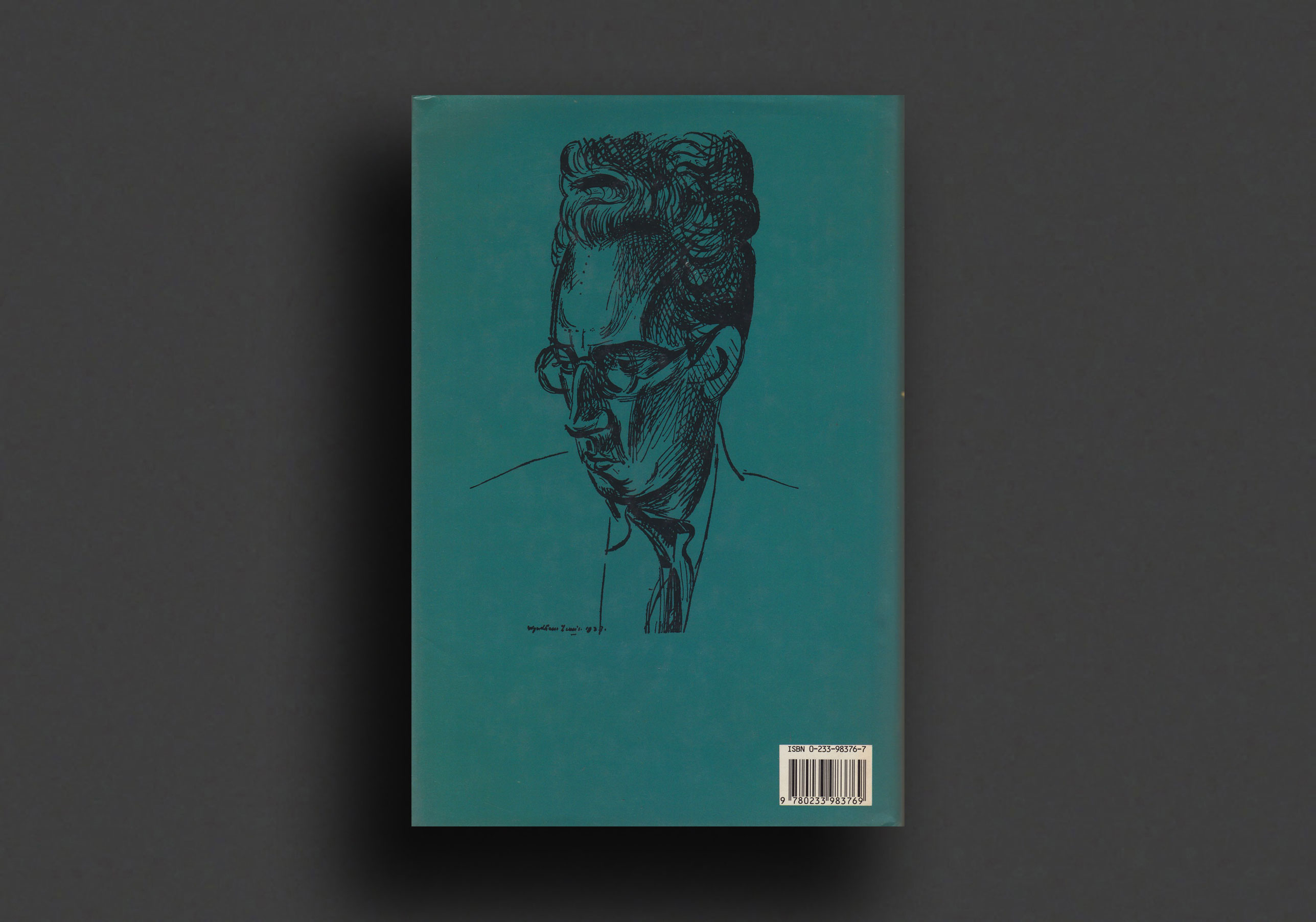
Wyndham Lewis is acknowledged as one of the most important British visual artists of this century. Lewis The Essential Wyndham sets out to affirm his equal standing as a writer. It contains extracts from the best of his fiction, together with passages from his social, artistic and literary criticism.
In his lively introduction, Julian Symons calls Lewis 'more greatly and variously gifted than any of his contemporaries'; but the diversity of his gifts has made his work hard to label. Many years ago, in Enemies of Promise, Cyril Connolly wrote: 'What is necessary for Lewis is that some of his admirers .. . should make an omnibus Lewis, an anthology of his best thought and finest passages, applying to his work the selection and compression which in the spate of his original creation have been wanting.'
Julian Symons's book, with its many linking passages, now fulfils what Connolly looked for. It becomes a compact anthology of one of the most original and controversial modern writers.
VG—NF copy in VG—NF dust jacket.