World Food Books' programme is largely produced on Kulin Nation land. We acknowledge the Wurundjeri people of the Kulin Nation as the first and continuing custodians of this land, and pay respect to their Elders past, present, and emerging.
World Food Books is an arts and special interests bookshop in Naarm / Melbourne. Founded in 2010, World Food Books is devoted to the presentation of a rotating, hand-selection of international art, design, literary and counterculture publications with an emphasis on the anti-traditional, the experimental, the avant-garde, the heretic, the marginal.
Presenting new titles alongside rare and out-of-print books, catalogues and journals spanning the fields of modern and contemporary art, design, photography, illustration, film, literature, poetry, cultural theory, philosophy, sexuality, popular and underground culture in its many radical forms, World Food Books wishes to encourage adventurous, thoughtful and open-minded reading, looking, writing, and exchange of publishing and ideas, both current and historical.
As well as our bookshop, located in Melbourne's historical Nicholas Building, all of our inventory is available internationally via our online mail-order service.
World Food Books semi-regularly co-ordinates "Occasions", a programme of exhibits and events at the bookshop and in partnership with other hosts (such as museums and art galleries) that develop out of the activities, relationships and content of the bookshop itself.
World Food Books
The Nicholas Building
37 Swanston Street
Room 5, Level 6
Melbourne 3000
Australia
SHOP HOURS:
Thu–Fri 12–6, Sat 12–5
WEB-SHOP OPEN 24/7
World Food Books
Postal Address:
PO Box 435
Flinders Lane
Victoria 8009
Australia
Art
Theory / Essay
Architecture / Interior
Graphic Design / Typography
Photography
Fashion
Eros
LGBTQ+
Fiction / Poetry
Weird / Speculative / Science Fiction / Horror
Transgressive / Visceral / Abject
Symbolism / Decadence / Fin de siècle
Film / Video
Painting
Sculpture / Installation
Performance / Dance / Theater
Drawing
Sound / Music
Curatorial
Group Shows / Collections
Periodicals
Out-of-print / Rare
Posters / Ephemera / Discs
Signed Books
World Food Books Gift Voucher
World Food Book Bag
Australian Art
Australian Fiction
Australian Science Fiction / Speculative Fiction
Australian Poetry
Australian Photography
Japanese Photography
Conceptual Art
Minimal Art
Dada
'Pataphysics / Oulipo
Fluxus
Concrete Poetry
Pop Art
Surrealism
Arte Povera
Arte Informale / Haute Pâte / Tachism
Nouveau Réalisme / Zero / Kinetic
Situationism / Lettrism
Collage / Mail Art / Xerox Art
Art Brut / Folk / Visionary / Fantastic
Illustration / Graphic Art / Bandes Dessinées
Furniture
Italian Radical Design / Postmodernism
Textiles
Ceramics / Glass
Counterculture
Protest / Revolt
Philosophy
Psychoanalysis
Anthropology
Anarchism
Socialism / Anarchism / Communism / Capitalism
Literary Theory / Semiotics / Language
Feminism / Women's Studies
Gender Studies / Sexuality
Anthropology
Fetishism / BDSM
Drugs / Psychedelia
Crime / Violence
Animal Rights / Veganism
Occult / Esoterica
Ecology / Earth / Alternative Living
Whole Earth / Crafts
All prices in AUD (Australian dollars)
Pick-Ups
Pick-up orders can be collected in our bookshop during opening hours after order date. Please collect any Pick-up orders within 2 weeks of ordering as we have limited storage space. Orders will be released back into stock if not collected within this time. No refunds can be made for pick-ups left un-collected. If you cannot make it in to the bookshop in this time-frame, please choose postage option.
Return Policy
All sales are final. We do accept returns (for refund or exchange) for items received in error. All our orders are packed with special care using heavy-duty padding and cardboard book-mailers or bubble mailers (for smaller books), using reinforcement where required. We cannot take responsibility for any lost, stolen or damaged parcels.
Insurance
Should you wish to insure your package, please email us directly after placing your order and we can organise this at a small extra expense. Although all standard/express tracked packages are very safe and dependable, we cannot take responsibility for any lost, stolen or damaged parcels. We recommend insurance on valuable orders.
Interested in selling your old books, catalogues, journals, magazines, comics, fanzines, ephemera? We are always looking for interesting, unusual and out-of-print books to buy. We only buy books in our fields of interest and specialty, and that we feel we can resell.
We base these prices on desirability, market value, in-print prices, condition and our current stock levels. We offer cash, store credit, and can take stock on consignment. All
about 25% of the price we expect to get when we sell them, or 30% in store credit. We base these prices on desirability, market value, in-print prices, condition and our current stock levels.
Sell your books any day of the week. You can drop them off and return later. If you have a lot of books, we can visit your Sydney home.
We buy books that we feel we can resell. We offer about 25 % of the price we expect to get when we sell them, or 30% in store credit. We base these prices on desirability, market value, in-print prices, condition and our current stock levels.
Philadelphia Wireman
03 August - 01 September, 2018
World Food Books is proud to announce our next Occasion, the first presentation of sculptures by Philadelphia Wireman in Australia.
The Philadelphia Wireman sculptures were found abandoned in an alley off Philadelphia’s South Street on trash night in 1982. Their discovery in a rapidly-changing neighbourhood undergoing extensive renovation, compounded with the failure of all attempts to locate the artist, suggests that the works may have been discarded after the maker’s death. Dubbed the "Philadelphia Wireman" during the first exhibition of this work, in 1985, the maker’s name, age, ethnicity, and even gender remain uncertain. The entire collection totals approximately 1200 pieces, all intricately bound together with tightly-wound heavy-gauge wire (along with a few small, abstract marker drawings, reminiscent both of Mark Tobey and J.B. Murry). The dense construction of the work, despite a modest range of scale and materials, is singularly obsessive and disciplined in design: a wire armature or exoskeleton firmly binds a bricolage of found objects including plastic, glass, food packaging, umbrella parts, tape, rubber, batteries, pens, leather, reflectors, nuts and bolts, nails, foil, coins, toys, watches, eyeglasses, tools, and jewellery.
Heavy with associations—anthropomorphic, zoomorphic, and socio-cultural responses to wrapped detritus—the totemic sculptures by Philadelphia Wireman have been discussed in the context of work created to fulfil the shamanistic needs of alternative religions in American culture. Curators, collectors, and critics have variously compared certain pieces to sculpture from Classical antiquity, Native American medicine bundles, African-American memory jugs, and African fetish objects. Reflecting the artist’s prolific and incredibly focused scavenging impulse, and despite—or perhaps enhanced by—their anonymity, these enigmatic objects function as urban artefacts and arbiters of power, though their origin and purpose is unknown. Philadelphia Wireman, whatever their identity, possessed an astonishing ability to isolate and communicate the concepts of power and energy through the selection and transformation of ordinary materials. Over the course of the past two decades, this collection has come to be regarded as an important discovery in the field of self-taught art and vernacular art.
Presented in collaboration with Fleisher-Ollman Gallery, Philadelphia, and Robert Heald, Wellington.
Susan Te Kahurangi King
02 February - 10 March, 2018
Susan Te Kahurangi King (24 February 1951 - ) has been a confident and prolific artist since she was a young child, drawing with readily available materials - pencils, ballpoint pens and felt-tip markers, on whatever paper is at hand. Between the ages of four and six Susan slowly ceased verbal communication. Her grandparents William and Myrtle Murphy had developed a special bond with Susan so they took on caring responsibilities for extended periods. Myrtle began informally archiving her work, carefully collecting and storing the drawings and compiling scrapbooks. No drawing was insignificant; every scrap of paper was kept. The King family are now the custodians of a vast collection containing over 7000 individual works, from tiny scraps of paper through to 5 meter long rolls.
The scrapbooks and diaries reveal Myrtle to be a woman of great patience and compassion, seeking to understand a child who was not always behaving as expected. She encouraged Susan to be observant, to explore her environment and absorb all the sights and sounds. Myrtle would show Susan’s drawings to friends and people in her community that she had dealings with, such as shopkeepers and postal workers, but this was not simply a case of a grandmother’s bias. She recognised that Susan had developed a sophisticated and unique visual language and sincerely believed that her art deserved serious attention.
This was an unorthodox attitude for the time. To provide some context, Jean Dubuffet coined the term Art Brut in 1945 to describe work created by self-taught artists – specifically residents of psychiatric institutions and those he considered to be visionaries or eccentrics. In 1972 Roger Cardinal extended this concept by adopting the term Outsider Art to describe work made by non-academically trained artists operating outside of mainstream art networks through choice or circumstance. Susan was born in Te Aroha, New Zealand in 1951, far from the artistic hubs of Paris and London that Dubuffet and Cardinal operated in. That Myrtle fêted Susan as a self-taught artist who deserved to be taken seriously shows how progressive her attitudes were.
Susan’s parents Doug and Dawn were also progressive. Over the years they had consulted numerous health practitioners about Susan’s condition, as the medical establishment could not provide an explanation as to why she had lapsed into silence. Dawn educated herself in the field of homeopathy and went on to treat all twelve of her children using these principles – basing prescriptions on her observations of their physical, mental and emotional state.
Doug was a linguist with an interest in philosophy who devoted what little spare time he had to studying Maori language and culture. To some extent their willingness to explore the fringes of the mainstream made them outsiders too but it was their commitment to living with integrity and their respect for individuality that ensured Susan’s creativity was always encouraged.
Even though Susan’s family supported her artistic pursuits, some staff in schools and hospitals saw it as an impediment to her assimilation into the community and discouraged it in a variety of ways. Her family was not always aware of this and therefore did not fully understand why Susan stopped drawing in the early 1990s. However, rather than dwell on the challenges that Susan faced in pursuit of her artistic practice, they prefer to highlight her achievements. In 2008 Susan began drawing again in earnest, after an almost 20 year interruption, and her work is now shown in galleries around the world.
Susan grew up without television and has been heavily influenced by the comics she read as a child. She is absolutely fearless in the appropriation of recognizable characters, such as Donald Duck and Mickey Mouse, in her work. She twists their limbs, contorts their faces, compresses them together, blends them into complex patterned backgrounds - always imbuing them with an incredible energy. Although Susan often used pop culture characters in her work they are not naive or childlike. These are drawings by a brilliant self-taught artist who has been creating exceptional work for decades without an audience in mind.
Mladen Stilinović
"Various Works 1986 - 1999"
02 February 16 - September 10, 2016
Various works 1986 - 1999, from two houses, from the collections of John Nixon, Sue Cramer, Kerrie Poliness, Peter Haffenden and Phoebe Haffenden.
Including: Geometry of Cakes (various shelves), 1993; Poor People’s Law (black and white plate), 1993; White Absence (glasses, ruler, set square, silver spoon, silver ladel with skin photograph and wooden cubes), 1990-1996; Exploitation of the Dead (grey and red star painting, wooden painting, black spoon with red table, red plate), 1984-1990; Money and Zeros (zero tie, paintings made for friends in Australia (Sue, John, Kerrie), numbers painting), 1991-1992; Words - Slogans (various t-shirts) - “they talk about the death of art...help! someone is trying to kill me”, “my sweet little lamb”, “work is a disease - Karl Marx”; Various artist books, catalogues, monographs, videos; Poster from exhibition Insulting Anarchy; "Circular" Croatian - Australian edition; Artist book by Vlado Martek (Dostoyevsky); more.
Thanks to Mladen Stilinović and Branka Stipančić.
Jonathan Walker
Always Will Need To Wear Winter Shirt Blue + Ochre Small Check Pattern
21 August - 21 September, 2015
Untitled
I am not a great reader of poetry but I always return to the work of Melbourne poet, Vincent Buckley (1925- 1988). Perhaps I find his most tantalising piece to be not a finished poem but a fragment left on a scrap of paper discovered on his desk after the poet’s death.
The poetry gathers like oil
In the word-core, and spreads
It has its music meet,
Its music is in movement.
This fragment is more the shell left behind from a volatile thought than a finished poem. I find the last two lines honest but awkward whereas the first two lines work like an arrow. Most likely he could not find a resolution so it was left. Still, in its present form, it remains an eloquent testimony to the ultimate failure of a medium to express mobile thought and sensation, in Buckley’s case, through verbal language. It’s an important matter because this is something all artists have to deal with regardless of the medium.
I have never written a poem, however, I am forever copying fragments from books on paper scraps in a vain effort to fix certain notions in my head. At first, they function as bookmarks that are sometimes returned to when I open the book. But before long, as they accumulate, they fall out littering the table interspersed with A4 photocopies, bills, books and medications.
To return to Buckley’s fragment, the first two lines very much evoke how I paint nowadays. As you age, detail diminishes and patches of light become more luminous and float. I feel the most honest way of dealing with this is by smearing the oil paint on the canvas with the fingers and working close-up, blind. Only if the patches coalesce into an approaching image can the work gain a life.
-
Jonathan Walker was born in Melbourne, Australia and brought up on a dairy farm in Gippsland. In the 1970’s he studied painting at RMIT and won the Harold Wright Scholarship to the British Museum, London. During the 1980’s he exhibited at Pinacotheca Gallery, Richmond and had work shown at the NGV and Heidi City Art Gallery. Over the same period he designed the cover for the “Epigenesi” LP by Giancarlo Toniutti, Italy and conducted a mail exchange work with Achim Wollscheid, Germany. The work with artists through the post resulted in an article published in the bicentenary issue of Art and Australia 1988. He showed in artist run spaces such as WestSpace in the 90’s and 2000’s, and until 2012, taught painting at Victoria University, which is where we (Colleen Ahern and Lisa Radford) as organisers of the exhibition, among many others, had the privilege of being his student.
Walker’s knowledge was imparted to students through the careful selection of music, literature, and artists found in books that he himself had ordered for the library. Walker’s strategy was the generosity of sharing his vast knowledge with references specific to each student and their context.
Walker’s paintings share a similar focus and intimacy.
This exhibition presents a small selection of recent paintings alongside a publication that includes Walker’s writing. Observational and analytical, Walker’s work is a type of material notation — the time of day, colour and how it is blended, the both specific and fleeting location of a reflection on lino or the question of whether a chair leg should be included in a painting.
Please join us on Friday August 21 between 6-8pm to celebrate the opening of the exhibition.
Curated by Colleen Ahern and Lisa Radford.
B. Wurtz
Curated by Nic Tammens
March 26 - April 4, 2015
B.Wurtz works from a basement studio in his home on Manhattan’s Lower East Side.
This local fact is attested to by the plastic shopping bags and newsprint circulars that appear in his work. As formal objects, they don’t make loud claims about their origins but nonetheless transmit street addresses and places of business from the bottom of this long thin island. Like plenty of artists, Wurtz is affected by what is local and what is consumed. His work is underpinned by this ethic. It often speaks from a neighborhood or reads like the contents of a hamper:
“BLACK PLUMS $1.29 lb.”
“Food Bazaar”
“USDA Whole Pork Shoulder Picnic 99c lb.”
“RITE AID Pharmacy, with us it’s personal.”
“H. Brickman & Sons.”
“Sweet Yams 59c lb."
Most of the work in this exhibition was made while the artist was in residence at Dieu Donne, a workshop dedicated to paper craft in Midtown. Here Wurtz fabricated assemblages with paper and objects that are relatively lightweight, with the intention that they would be easily transportable to Australia. This consideration isn’t absolute in Wurtz’s work, but was prescriptive for making the current exhibition light and cheap. Packed in two boxes, these works were sent from a USPS post office on the Lower East Side and delivered to North Melbourne by Australia Post.
Wurtz appears courtesy of Metro Pictures, New York.
Thanks to Rob Halverson, Joshua Petherick, Sari de Mallory, Matt Hinkley, Helen Johnson, Fayen d'Evie, Ask Kilmartin, Lisa Radon, Ellena Savage, Yale Union, and "Elizabeth".
John Nixon
"Archive"
December 15 - January 20, 2014
The presentation of John Nixon's archive offered a rare showcase of this extensive collection of the artist's own publications, catalogues, posters, ephemera, editions and more, from the mid 1980s onwards, alongside a selection of his artworks.
Organized by John Nixon, Joshua Petherick and Matt Hinkley.
<a href=http://wfb.public-office.info/artist/john-nixon>All titles by John Nixon
"Habitat"
at Minerva, Sydney (organised by Joshua Petherick and Matt Hinkley)
November 15 - December 20, 2014
Lupo Borgonovo, Janet Burchill & Jennifer McCamley,
Lewis Fidock, HR Giger, Piero Gilardi, Veit Laurent Kurz,
Cinzia Ruggeri, Michael E. Smith, Lucie Stahl, Daniel Weil, Wols
Press Release:
“...It contained seven objects. The slender fluted bone, surely formed for flight, surely from the wing of some large bird. Three archaic circuitboards, faced with mazes of gold. A smooth white sphere of baked clay. An age-blackened fragment of lace. A fingerlength segment of what she assumed was bone from a human wrist, grayish white, inset smoothly with the silicon shaft of a small instrument that must once have ridden flush with the surface of the skin - but the thing’s face was seared and blackened.”
William Gibson, “Count Zero”, 1986
"Autumn Projects Archive"
Curated by Liza Vasiliou
March 6 - March 15, 2014
World Food Books, in conjunction with the Virgin Australia Melbourne Fashion Festival 2014, presented the Autumn Projects archive, consisting of a selection of early examples in Australian fashion with a particular interest in collecting designers and labels from the period beginning in the 1980’s, who significantly influenced the discourse of Australian Fashion.
Curated by Liza Vasiliou, the exhibition provided a unique opportunity to view pieces by designers Anthea Crawford, Barbara Vandenberg, Geoff Liddell and labels CR Australia, Covers, Jag along with early experimental collage pieces by Prue Acton and Sally Browne’s ‘Fragments’ collection, suspended throughout the functioning World Food Books shop in Melbourne.
H.B. Peace
presented by CENTRE FOR STYLE
November 14, 2013
"Hey Blinky, you say chic, I say same"
Anon 2013
H.B. Peace is a clothing collaboration between great friends Blake Barns and Hugh Egan Westland. Their pieces explore the divergences between 'character’ and ‘personality’ in garments....etc
Special Thanks to Joshua Petherick and Matt Hinkley of WFB and Gillian Mears
and a Very Special Thank you to Audrey Thomas Hayes for her shoe collaboration.
Janet Burchill & Jennifer McCamley
"Aesthetic Suicide"
May 10 - June 8, 2013
The first of our occasional exhibitions in the World Food Books office/shop space in Melbourne, "Aesthetic Suicide" presented a body of new and older works together by artists Janet Burchill & Jennifer McCamley, including videos, prints, a wall work, and publications.
During shop open hours videos played every hour, on the hour.
1979 / 1983, English
Softcover, 90 pages, 20 x 13 cm
Out of print title / used / very good
Published by
Penguin Books / London
$18.00 - Out of stock
One of America's most brilliant writers examines the mythology of disease.
1979 Penguin edition, 1983 print of Susan Sontag's Illness as Metaphor, a classic work described by Newsweek as "one of the most liberating books of its time."
This is Sontag's penetrating analysis of the social attitudes toward various major illnesses — chiefly TB and cancer, and its symbolic use as a romantic tool in writing. A cancer patient herself when she was writing the book, Sontag shows how the metaphors and myths surrounding certain illnesses, especially cancer, add greatly to the suffering of patients and often inhibit them from seeking proper treatment. By demystifying the fantasies surrounding cancer, Sontag shows cancer for what it is — just a disease. Cancer, she argues, is not a curse, not a punishment, certainly not an embarrassment and, it is highly curable, if good treatment is followed. Illness as Metaphor has been translated into many languages and continues to have an enormous influence on the thinking of medical professionals and, above all, on the lives of many thousands of patients and caregivers.
VG copy with tanning, light age, sticker on back cleanly removed.
1982, English
Softcover, 208 pages, 20 x 13.5 cm
Out of print title / used / good
Published by
Penguin Books / London
$18.00 - Out of stock
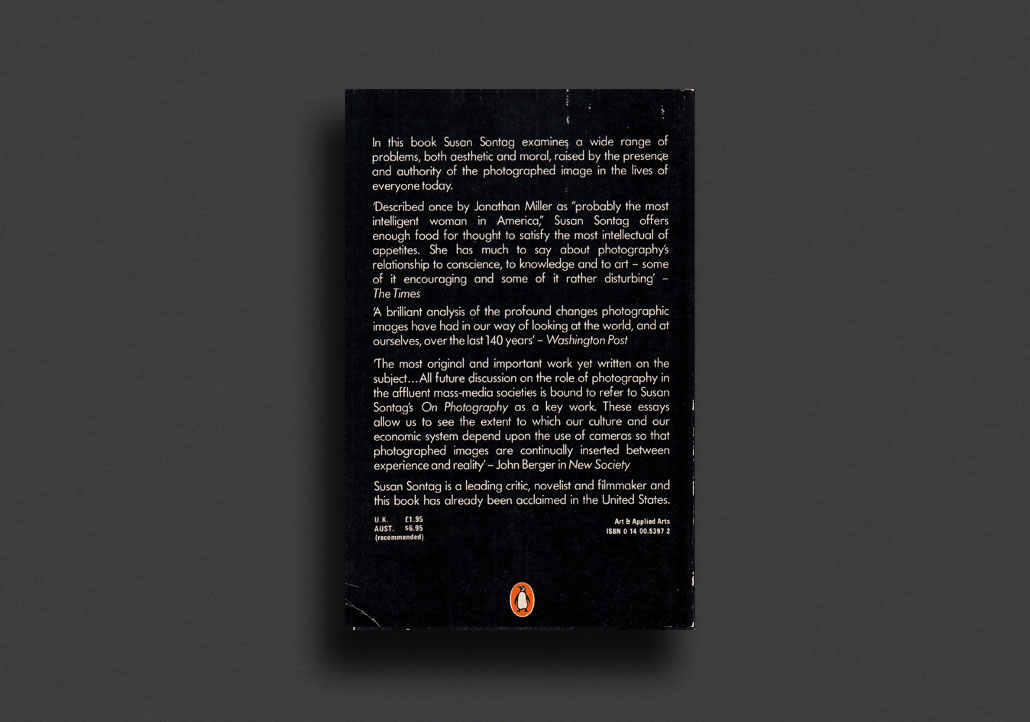
1982 Penguin edition of Susan Sontag's On Photography - a seminal and groundbreaking work on the subject of photography.
Susan Sontag's groundbreaking critique of photography asks forceful questions about the moral and aesthetic issues surrounding this art form. Photographs are everywhere, and the 'insatiability of the photographing eye' has profoundly altered our relationship with the world. Photographs have the power to shock, idealize or seduce, they create a sense of nostalgia and act as a memorial, and they can be used as evidence against us or to identify us. In these six incisive essays, Sontag examines the ways in which we use these omnipresent images to manufacture a sense of reality and authority in our lives.
'Sontag offers enough food for thought to satisfy the most intellectual of appetites' - The Times
'A brilliant analysis of the profound changes photographic images have made in our way of looking at the world, and at ourselves' - Washington Post
'The most original and illuminating study of the subject' - New Yorker
One of America's best-known and most admired writers, Susan Sontag was also a leading commentator on contemporary culture until her death in December 2004. Her books include four novels and numerous works of non-fiction, among them Regarding the Pain of Others, On Photography, Illness as Metaphor, At the Same Time, Against Interpretation and Other Essays and Reborn: Early Diaries 1947-1963, all of which are published by Penguin. A further eight books, including the collections of essays Under the Sign of Saturn and Where the Stress Falls, and the novels The Volcano Lover and The Benefactor, are available from Penguin Modern Classics.
Good copy.
1980, English
Hardcover (w. dust jacket), 204 pages, 21.5 x 14.5 cm
1st Edition, Out of print title / used / very good
Published by
Farrar Straus & Giroux / New York
$45.00 - Out of stock
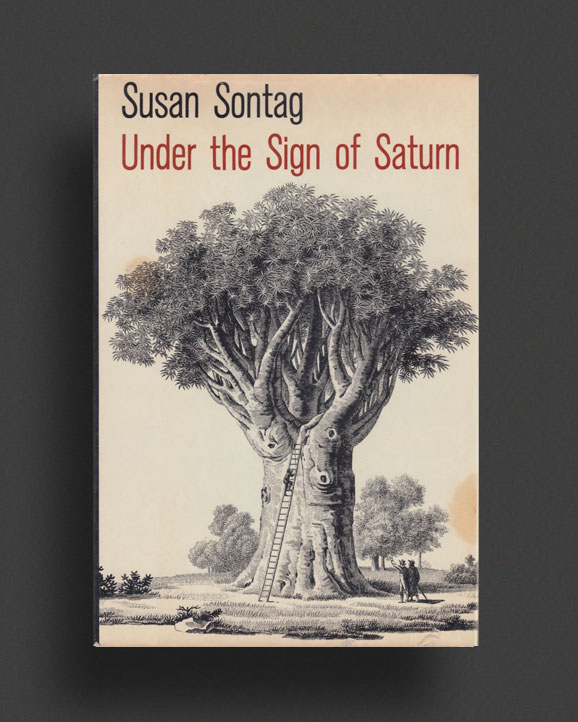
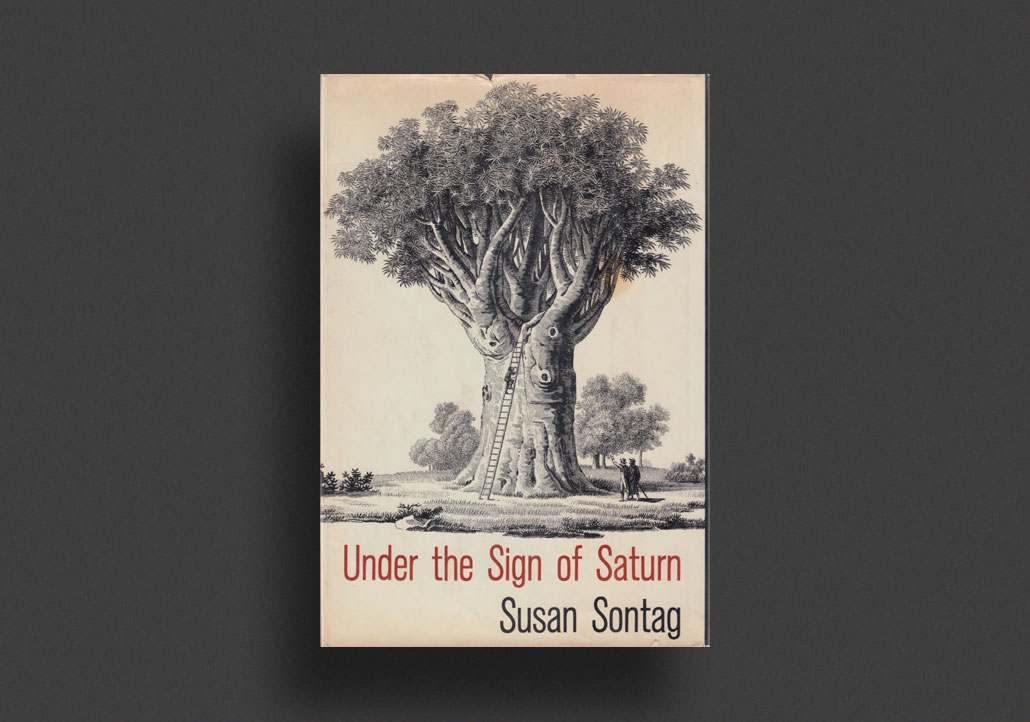
First hardcover edition from 1980 of Sontag's exploration of the most important artists of our time. Susan Sontag's third essay collection brings together her most important critical writing from 1972 to 1980. In these provocative and hugely influential works she explores some of the most controversial artists and thinkers of our time, including her now-famous polemic against Hitler's favourite film-maker, Leni Riefenstahl, and the cult of fascist art, as well as a dazzling analysis of Hans-Jürgen Syberberg's Hitler, a Film from Germany. Along with essays on Paul Goodman and Antonin Artaud, there are also highly personal and powerful explorations of death, art, language, history, the imagination and writing itself.
VG copy in Good dust jacket. Small previous owner's inscription to blank endpaper, some tanning/small chip/marking to jacket otherwise nicely preserved.
1982, English
Hardcover (w. dust jacket), 194 pages, 24 x 16 cm
1st Edition, Out of print title / used / very good
Published by
Carcanet New Press / Manchester
$45.00 - Out of stock
First UK hardcover edition of this incredible collection of Selected Stories by Robert Walser, published by Carcanet New Press, Manchester. Foreword by Susan Sontag. Translated by poet Christopher Middleton.
"The imp inside Kafka (the one that got out to ride coal scuttles or be Josephine the folksinger among the Mouse Folk) was Robert Walser's whole genius. Walser is a Kafka inside-out: his darkly prophetic vision remains inside a magically whimsical, brightly imaginative exterior. These fine translations, made or instigated by the poet Christopher Middleton, are a big step toward our as yet meager awareness of one of the most interesting writers of our time."—GUY DAVENPORT
One of the great writers of the twentieth century in the German language—and an important influence on Kafka—comes to light in this extraordinary, compact selection of the best of his short fiction pieces. Shining with brilliant intensity, Walser's stories range from a mere page to many pages, and hew to a haunting new voice. "For me," Walser writes, "the sketches I produce now and then are shortish or longish chapters of a novel. The novel I am constantly writing is always the same one, and it might be described as a variously sliced-up or torn-apart book of myself." Through his protagonists, be they young men of modest means, famous artists, upper-class women, workers, or animals endowed with the gift of speech, Walser's stories cohere into a fragmentary but powerful collage of life in the Europe of his time.
In a rare combination of lyricism and ruthlessness, philosophy and realism, Robert Walser—admired not only by Kafka but by such writers as Hesse and Benjamin—maps man's futility and isolation while rendering a moving account, at once personal and universal, of life's painful and yet mystically beautiful tenacity. As Susan Sontag writes in her foreword to the book, "He is a truly wonderful, heartbreaking writer."
Very Good copy in VG dust jacket with sunning to spine.
2022, English
Hardcover, 120 pages, 27 x 20 cm
Published by
Walther König / Köln
$80.00 - Out of stock
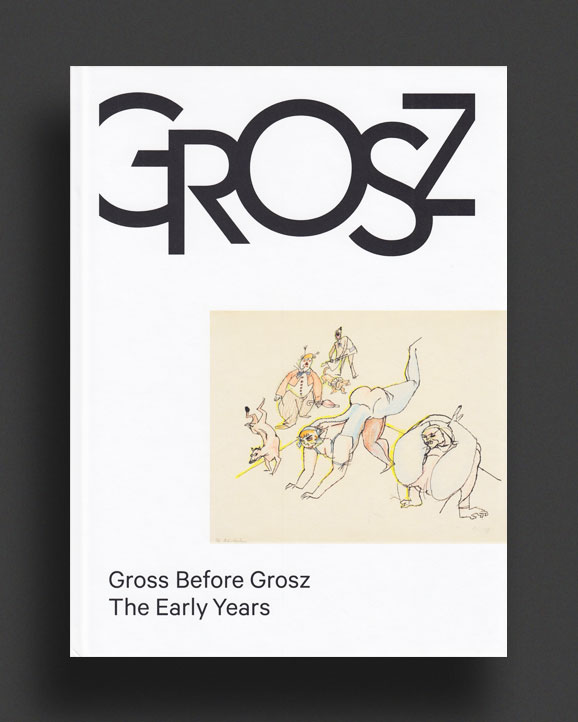
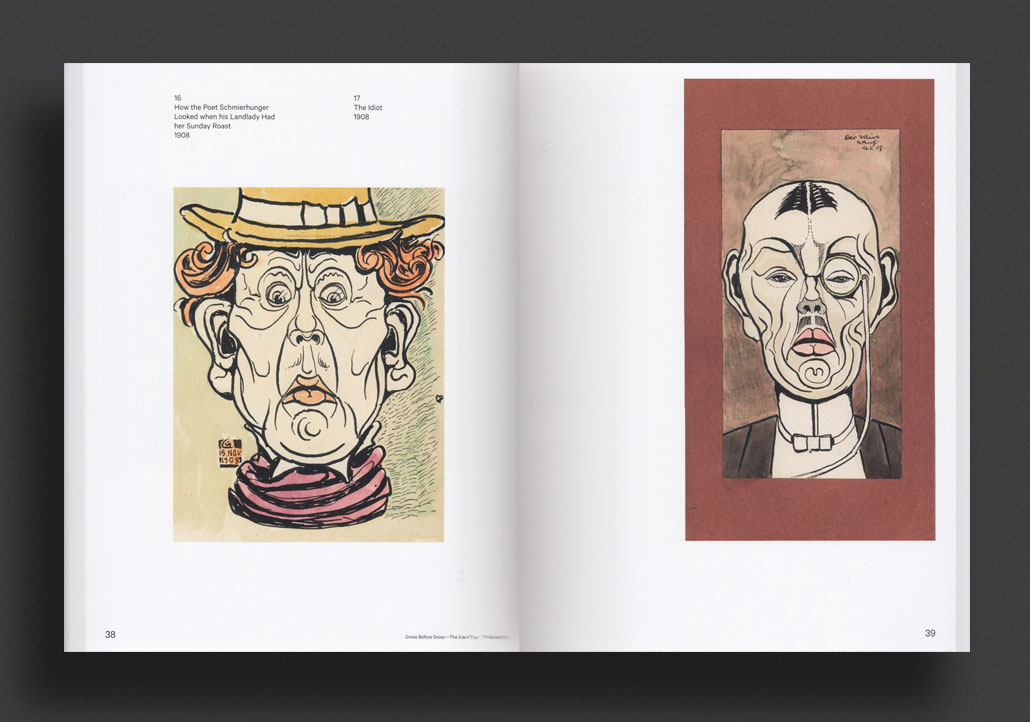
Previously unseen early works from the Weimar Republic's greatest chronicler and satirist.
This volume is dedicated to the early life and career of the brilliant young artist Georg Ehrenfried Gross (1893-1959), who would later become known as George Grosz. Known for his politically charged paintings and caricatural depictions of Berlin life in the 1920s, the youthful Gross had a long way to go before changing his name and becoming the most popular and sharp-tongued chronicler of the Weimar Republic. Gross made his first oil paintings in 1912 while still a student, and by 1914 was working in a style deeply influenced by Expressionism, Futurism and popular illustration. Presenting over 50 works made between the years 1904 and 1917, all but a few exhibited for the first time ever, the inaugural exhibition of Das kleine Grosz Museum, and this accompanying catalog, trace the artistic and biographical trajectory of this great artist's journey.
2023, English
Hardcover, 120 pages, 27 x 20 cm
Published by
Walther König / Köln
$80.00 - Out of stock
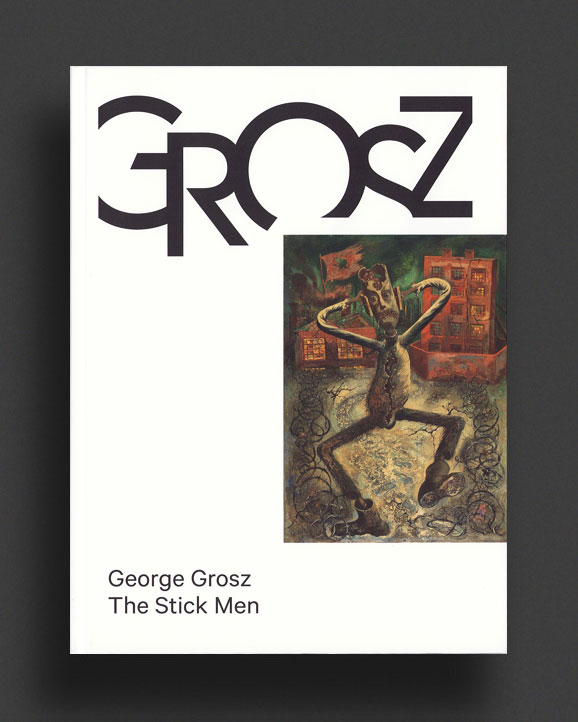
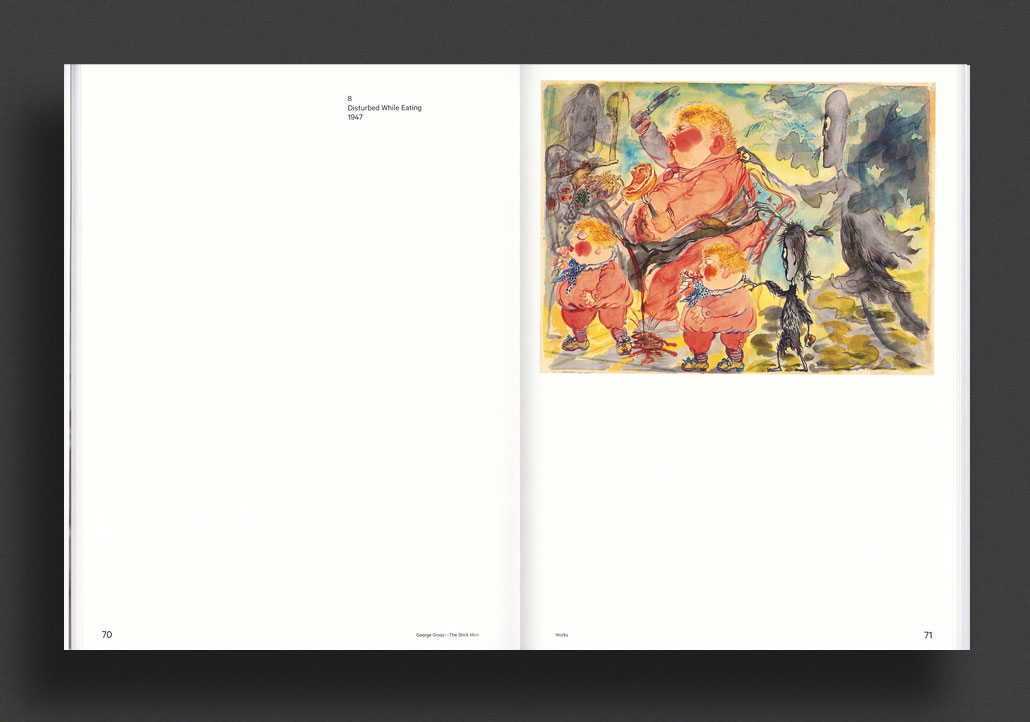
George Grosz created his last major series of paintings and watercolours, the “Stick Men”, beginning in the mid-1940s in reaction to the devastating news about the Holocaust and the other atrocities of the Second World War. The deployment of atomic bombs at the end of the war, and the threat of a Third World War, further deepened his pessimistic vision of mankind’s future. He presented his “Stickmen” as dehumanized, famished beings aimlessly wandering through a contaminated, post-apocalyptic world. The catalogue forcefully contradicting the widespread misconception that Grosz had become “soft” and apolitical during his American years. The contrary is true: his Stick Men series is the culmination of the political and artistic convictions of a lifetime of struggle – an artistic legacy that, given the current state of the world, could not be more timely and relevant.
English and German text.
Published on occasion of the exhibitions: ‘The Grey Man Dances: The ‘Stick Men’ of George Grosz’, May – Oct 2023, Das Kleine Grosz Museum, Berlin; as well as a forthcoming exhibition at The Heckscher Museum of Art, Huntington, NY, 2024.
1974, Japanese
Softcover, 160 pages, 21 x 15 cm
1st Edition, Out of print title / used / very good
Published by
Hayashi Bookstore / Tokyo
$45.00 - In stock -
Second issue of cult Japanese underground magazine, Heretical Literature, "A New Magazine Exploring The Unknown World of Aesthetics", published in August 1974. Edited by Munehiro Hayashi, with cover artwork by Pierre Molinier, this issue features colour galleries of Muzan-e (also known as "Bloody Prints", Japanese woodcut prints of violent nature published in the late Edo and Meiji periods), Viennese fantastic realist Rudolf Hausner, gallery of historical mistress illustrations, features/stories on Medieval subcontinental tales, the homo romantiscism of Rome, sadistic pornography, adult toys, rape, western astrology, and "miscellaneous notes on human waste and loincloths", with illustrations by Kaname Ozuma, Masao Koaku, Ran Akiyoshi, plus much more. Texts in Japanese.
VG copy, general light wear/tanning.
2023, English
Softcover (staple-bound), 24 pages, 21 x 14.5 cm
Published by
Degrowth Collective / Naarm
$5.00 - In stock -
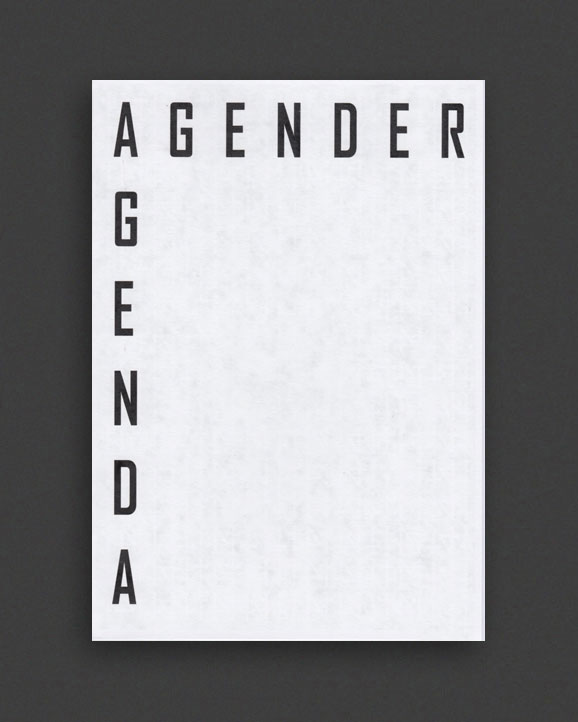
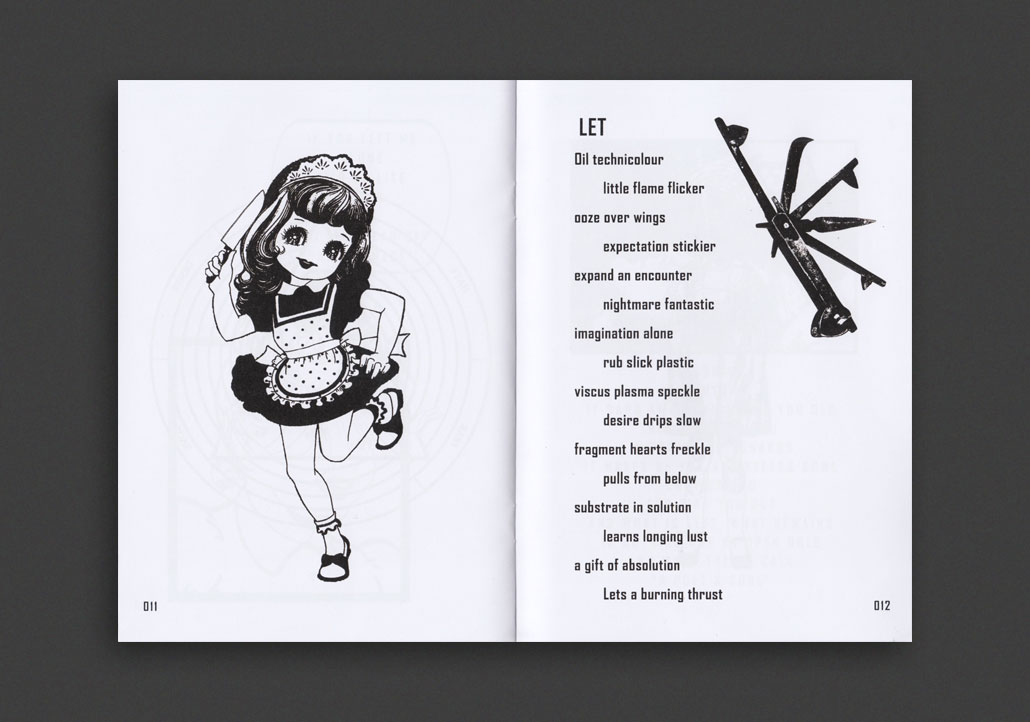
AGENDER AGENDA is the first poemzine produced by DEGROWTH COLLECTIVE, an art cult dedicated to the idea that decay the essential step we must first take into the circle which preserves us.
AGENDER AGENDA is an act of expression — that to destroy gender, colonialism, capitalism and punishment - we must first destroy these things in our self. It is a love letter to all those who have begun this process.
by ruth e pleasant, mercury violet, wren e pleasant, sky black
1998, Japanese
Hardcover (w. dust jacket), 168 pages, 13.6 cm x 19.4 cm
1st Edition, Out of print title / used / fine
Published by
Seikyūsha / Tokyo
$60.00 - Out of stock
First hardcover edition of "Vintage Erotica", written by Merzbow's Masami Akita and published only in Japan in 1998. An ardent collector of vintage erotica, Akita's knowledgable in-depth historical study covers the development of nude photography, curiosa, pornography and fetishism from around the world. From naturalism to glamour photography, dirty comics, girly mags, artistic nudes, classic bondage, to the protagonists of photographer/director Harrison Marks, model Betty Page, photographer E. J. Bellocq, Whitehouse magazine, under-the-counter publisher Alexandre Dupouy, photographer Peter Basch, and many more, all subjects illustrated in b/w with many photographic reproductions and magazine cover references. Merzbow is a noise project created in Tokyo, Japan in 1979 under the direction of noise technician Masami Akita. As well as a legendary underground noise artist, Akita is a prolific writer in Japan and frequently writes on the arts, music, erotica, esoterica, modern architecture, and animal rights, with articles on emerging subcultures and underground extreme cultures appearing in publications like SM Sniper, Studio Voice and Fool's Mate. His development of the Merzbow aesthetic ran parallel with a series of investigative books in which he catalogued and introduced a vast amount of hermetic types of music, sexual practices and autonomous creativity to a fairly conservative (but not close-minded) Japanese audience. "Vintage Erotica" is one of these very books.
First edition, Japanese text, fine copy with dust jacket.
1994, Japanese
Hardcover (w. dust jacket), 212 pages, 13.6 cm x 19.4 cm
1st Edition, Out of print title / used / fine
Published by
Seikyūsha / Tokyo
$90.00 - Out of stock
First hardcover edition of "Modern Sexuality Bizarre", written by Merzbow's Masami Akita and published only in Japan in 1994, an in-depth study of Japanese "abnormality" and the sexual bizarre in modern society, from its origins through to the culture of 'Ero-Guro Nonsense' — a period ranging from the end of the Taisho era (1912—1926) to the beginning of the Showa era (1926—1989). Akita discuss' the history of sexual media and the modern era of the bizarre with emphasis on its influence on psychology and sexual customs. From "The Dawn of Metamorphosis Research" and "Grotesque Trends" of modern pioneers of eroticism in Japan, including the legendary ero-guro magazines "Hentai Documents" and "Grotesque", their editors and authors Kitaaki Umehara and Kiyoshi Sakai, to othe rearly examples of modern obscene publishing, books of Showa modern bizarre, the modern female body and the beauty era, publishing of criminal sciences and the study of sexual criminals, the torture arts and Seiu Ito "the father of modern kinbaku", hentai psychology and the female viewpoint in criminal psychoogy, postwar marital theory, and more, all subjects illustrated in b/w. Merzbow is a noise project created in Tokyo, Japan in 1979 under the direction of noise technician Masami Akita. As well as a legendary underground noise artist, Akita is a prolific writer in Japan and frequently writes on the arts, music, erotica, esoterica, modern architecture, and animal rights, with articles on emerging subcultures and underground extreme cultures appearing in publications like SM Sniper, Studio Voice and Fool's Mate. His development of the Merzbow aesthetic ran parallel with a series of investigative books in which he catalogued and introduced a vast amount of hermetic types of music, sexual practices and autonomous creativity from the fringes to a fairly conservative (but not close-minded) mainstream Japanese audience. "Modern Sexuality Bizarre" is one of these very books.
First edition, Japanese text, fine copy with fine "textured" and illustrated dust jacket.
1990, English
Softcover, 280 pages, 23 x 15.5 cm
1st Edition, Out of print title / used / very good
Published by
Kahn & Averill / London
$120.00 - Out of stock
First 1990 softcover edition of this most important biography and study of a legendary composer who altered the course of post-war music. His fearsome talents, both as theoretician and artist enabled him to create an entirely revolutionary body of work through the development of new concepts - stochastic music, games theory, sieves, new forms of timbral composition, rhythms and scales - all of which are discussed in a clear and illuminating way, with reference to their scientific and philosophical underpinning. The fruit of ten years' study and close collaboration between Xenakis and Matossian, Xenakis authorised, for the first time, the publication of interviews, letters and documents of a highly personal and controversial nature, portraying vividly his relationships with his wife, novelist Françoise, Varèse, Messiaen, Le Corbusier, Boulez, Scherchen. The discussion of major works, both musical and architectural, is generously illustrated with musical examples, drawings, photographs and sketches, and appended by valuable lists of all Xenakis' compositions, architectural projects, discography and bibliographies.
Iannis Xenakis revolutionized post-war music more forcefully than any other 20th-century composer. A Resistance leader in World War II, he escaped from Greece to Paris under sentence of death. He became one of Le Corbusier's chief architects, and a pioneer of the computer age in music and the arts. Milan Kundera called him 'the prophet of insensibility'. Xenakis harnessed chaos theory and invented 'stochastic music'. He freed the sound spectrum from western scales and based music on natural principles. He combined architecture, light and sound in a radical new art form to create a boundless aesthetic in music. Shunned by contemporaries, this influential thinker created over 150 vast compositions imbued with elemental passion, and brilliantly reinvented the landscape of music forever. Since it was first published in 1981, Nouritza Matossian's perceptive book on Xenakis has helped students, musicians and audiences appreciate his music. She shares his Greek culture and interest in philosophy, and has chronicled vital discoveries in his work. A reserved man, he spoke frankly to her about his mysterious methods of composition, and his relationships with Varèse, Messiaen, Le Corbusier and Boulez. Xenakis' prophecy that computers, science and art would converge makes this book essential reading for understanding the digital revolution of our time. Matossian's well-researched biography is an unrivalled classic on modern music.
Nouritza Matossian, born in Cyprus of Armenian parents, was educated there and in England, graduating in philosophy at Bedford College, University of London. She has interviewed the foremost composers of new music and her articles have appeared in journals in England and abroad. She is married to the composer, Rolf Gehlhaar, and they live with their two sons in London.
Very Good copy with some light foxing, tanning and light creasing to cover.
2023, English
Softcover, 60 pages, 14.8 x 21 cm
Edition of 150,
Published by
no more poetry / Naarm
$25.00 - Out of stock
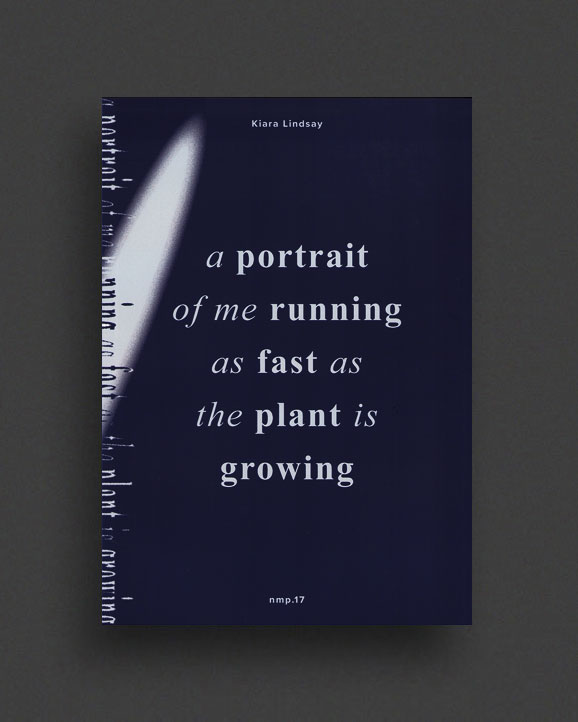
no more poetry presents nmp.17:
a portrait of me running as fast as the plant is growing
by Kiara Lindsay
Edition of 150
no more poetry alum, Brayden writes of nmp.17:
In a portrait of me running as fast as the plant is growing, the poet runs toward themselves, again and again; each poem a fierce affirmation of the self. This is a slippery kind of poetics; Lindsay does not readily accept an objective sense of reality, and in reading these poems there is the feeling of having one’s own reality pulled out from underneath you, in a way that is both startling and thrilling. These poems explore the release that comes with embracing multitudes. An offensively good collection, from one of Naarm’s most authentic writers.
Kiara Lindsay is an author.
She lives and writes in Naarm (Melbourne)
1996, English
Softcover, 176 pages, 23 x 21 cm
1st Edition, Out of print title / used / very good
Published by
Atlas Press / London
$65.00 - Out of stock
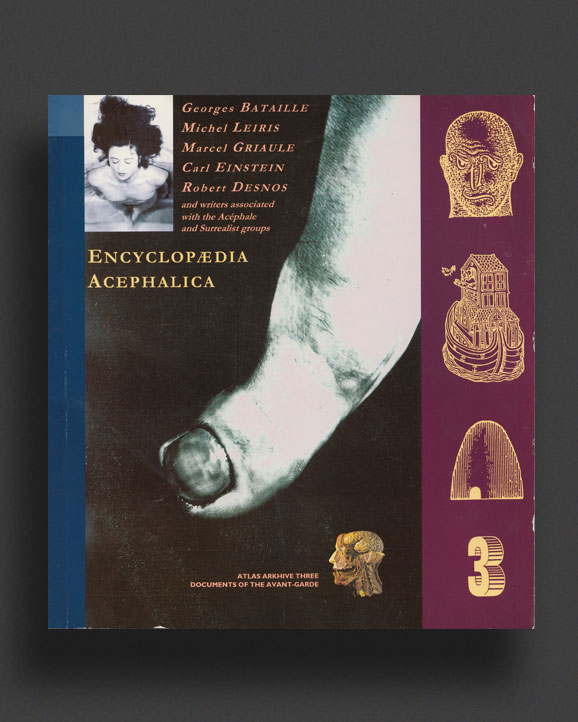
First edition of the incredible and sadly long out-of-print Encyclopedia Acephalica, published by Atlas Press in 1996 as part of their mighty Atlas Arkhive : Documents of the Avant Garde series..
Bataille’s thought is complex, and his books make few concessions to the reader. The first series of texts here, however, were written for a wider audience by Bataille and his friends, in the form of a Critical Dictionary, and they provide a witty, poetic and concise introduction to his ideas. The Dictionary appeared in the magazine edited by Bataille, Documents, in the early 1930s, and includes entries from prominent ethnologists and cultural commentators of the day. The second series of texts here, the Da Costa Encyclopédique was published anonymously after the liberation of Paris in 1947 by members of the Acéphale group and writers associated with the Surrealists. Both cover the essential concepts of Bataille and his associates: sacred sociology; scatology, death and the erotic; base materialism; the aesthetics of the formless; sacrifice, the festival and the politics of the tumult etc: a new description of the limits of being human. Humour, albeit, sardonic, is not absent from these remarkable redefinitions of the most heterogeneous objects or ideas: Camel, Church, Dust, Museum, Spittle, Skyscraper, Threshold, Work – to name but a few.
While the Documents group was celebrated for joining together artists, authors, sociologists and ethnologists (among the most important of their time) in a literary and philosophical project, the Acéphale group was more mysterious. Until recently even its membership was only vaguely known, and its activities remained secret (these are explored in detail for the first time in English in The Sacred Conspiracy, published by Atlas Press, also available at World Food Books). The origins of the Da Costa only became known in 1993, the present volume revealed for the first time its principal compilers: Robert Lebel, Isabelle Waldberg and Marcel Duchamp, but the identity of the authors of a large part of it is still unknown.
Texts by Georges Bataille, Michel Leiris, Marcel Griaule, Carl Einstein, Robert Desnos and writers associated with the Acéphale and Surrealist groups.
Introduced by Alastair Brotchie. Translated by Iain White, Dominic Faccini, Annette Michelson, John Harman, Alexis Lykiard.
Very Good copy, with some light edge wear.
2019, English
Softcover, 184 pages, 17 x 24.5 cm
Published by
Legenda / Oxford
$40.00 - Out of stock
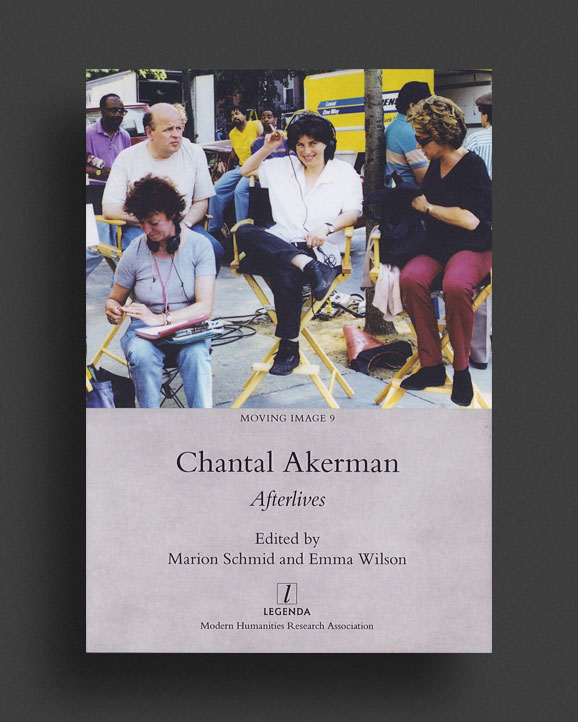
Chantal Akerman was one of the most significant directors of our times. A radical innovator of cinematic forms, she was at the forefront of feminist and women's filmmaking. In the 1990s, she developed an important installation practice and began to experiment with self-writing.
Focusing on Akerman's works of the last two decades, a period during which she diversified her creative practice, this collection traces her artistic trajectory across different media. From her documentaries 'bordering on fiction' to her final installation, NOW, the volume elucidates the thematic and aesthetic concerns of the later works, placing particular emphasis on self-portraiture, the exploration of intimacy, and the treatment of trauma, memory and exile. It also attends to the aural and visual textures that underpin her art. Drawing on a wide range of theoretical approaches as well as engaging more creatively with Akerman's work, the essays provide a new optic for understanding this deeply personal, prescient oeuvre.
Marion Schmid is Professor of French Literature and Film at the University of Edinburgh. Emma Wilson is Professor of French Literature and the Visual Arts at the University of Cambridge.
1989, English
3 Vols. softcovers, 500 + 560 + 584 pages, 23.5 x 18.5 cm
1st Edition, Out of print title / used / very good
Published by
Zone Books / New York
$190.00 - Out of stock
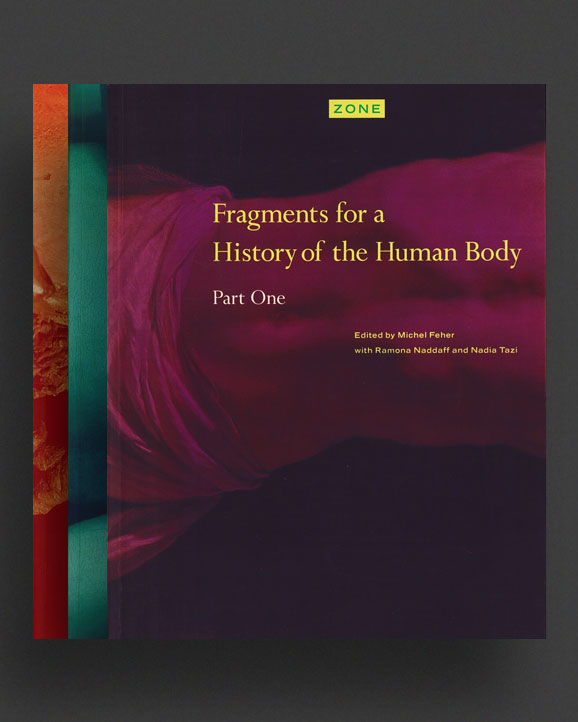
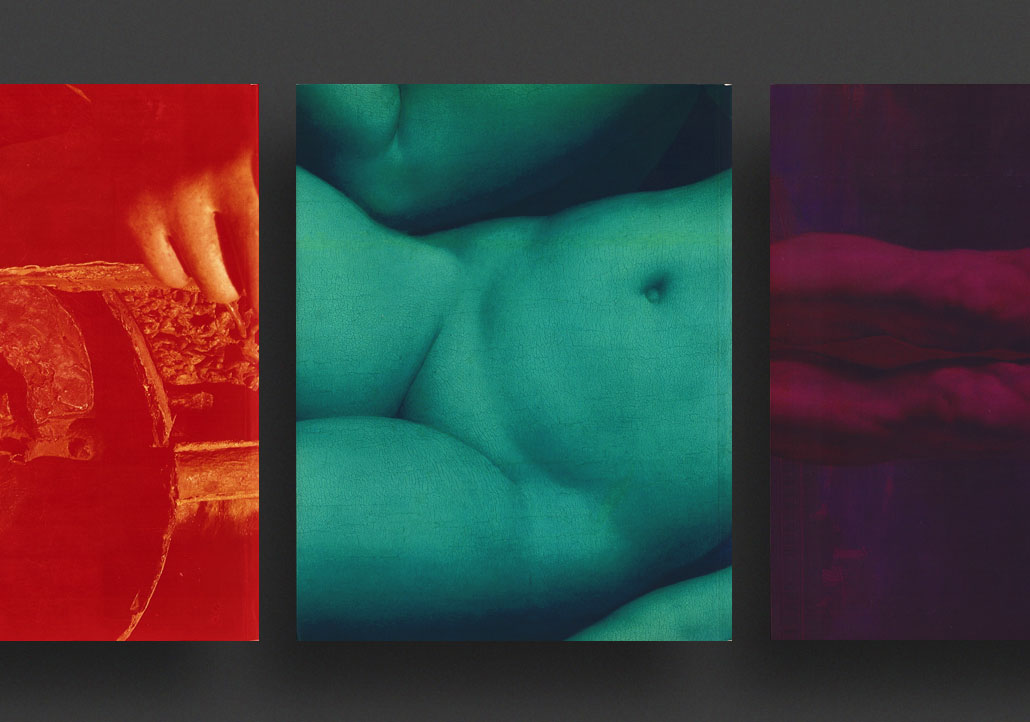
Complete set (3 volumes) of ZONE : Fragments for a History of the Human Body, published in 1989 by Zone Books, and all long out-of-print. The forty-eight essays and photographic dossiers in these three volumes examine the history of the human body as a field where life and thought intersect. They show how different cultures at different times have entwined physical capacities and mental mechanisms in order to construct a body adapted to moral ideas or social circumstances — the body of a charismatic citizen or a visionary monk, a mirror image of the world or a reflection of the spirit.
Each volume emphasizes a particular perspective. Part 1 explores the human body’s relationship to the divine, to the bestial, and to the machines that imitate or simulate it. Part 2 covers the junctures between the body’s “outside” and “inside” by studying the manifestations — or production — of the soul and the expression of the emotions and, on another level, by examining the speculations inspired by cenesthesia, pain, and death. Part 3 brings into play the classical opposition between organ and function by showing how organs or bodily substances can be used to justify or challenge the way human societies function and, conversely, how political and social functions tend to make the bodies of the persons filling them the organs of a larger body — the social body or the universe as a whole.
Among the contributors to Fragments for a History of the Human Body are Mark Elvin, Catherine Gallagher, Françoise Héritier-Augé, Julia Kristeva, William R. LaFleur, Thomas W. Laqueur, Jacques Le Goff, Nicole Loraux, Mario Perniola, Hillel Schwartz, Jean Starobinski, Jean-Pierre Vernant, and Caroline Walker Bynum.
“ZONE is unequivocally the most innovative, informative, and intellectually stimulating journal I have ever encountered…It belongs in all but the smallest personal, public, and academic collections.” —Library Journal
Very Good copies all, only light wear, light page tanning. All first editions, second printings.
1967, English / German / French
Hardcover (w. dust jacket), 199 pages, 24.2 x 30.5 cm
1st Edition, Out of print title / used / good
Published by
The Graphis Press / Zürich
$80.00 - Out of stock
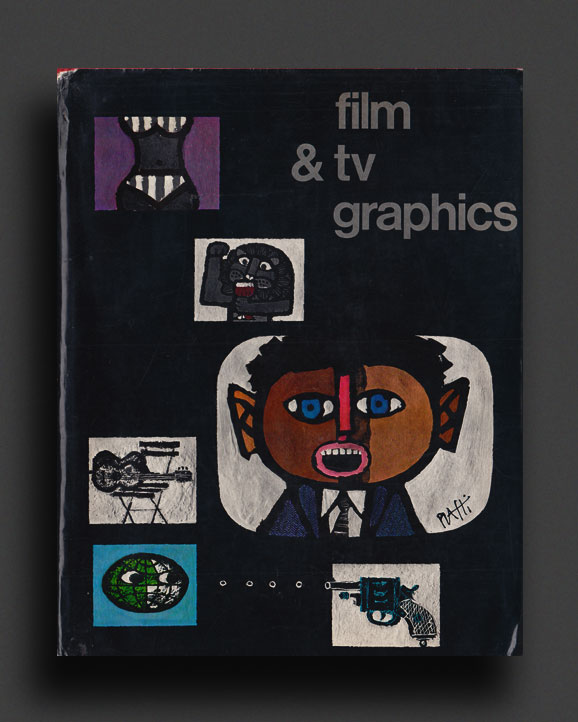
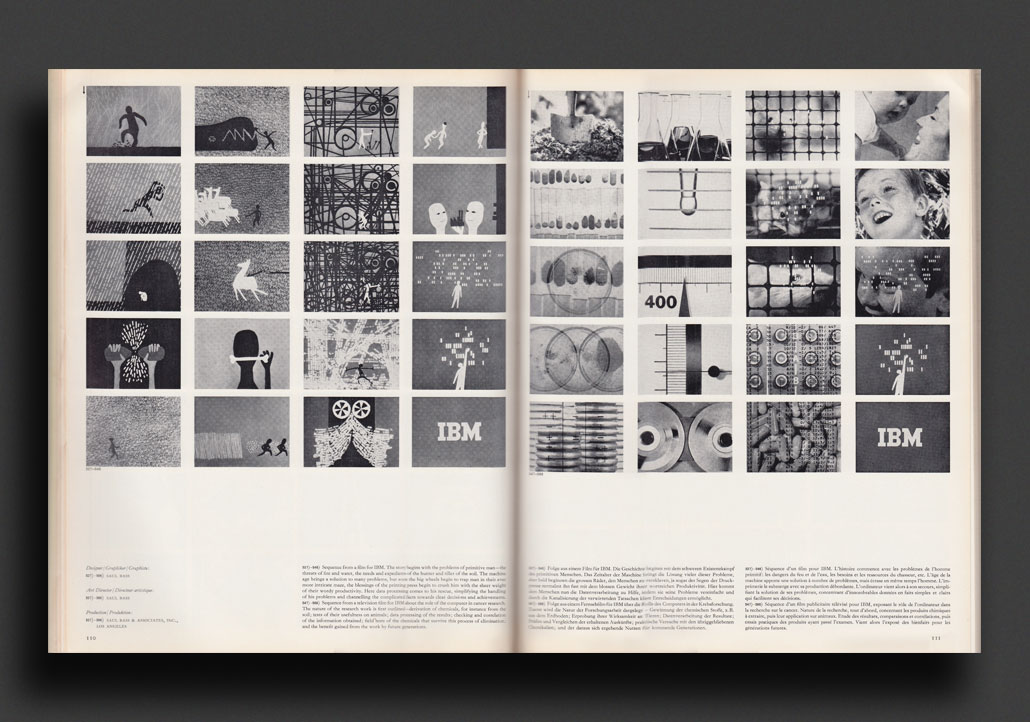
The great "FILM & TV GRAPHICS", published in 1967 by the legendary Graphis Press, Zürich. Bound in a Celestino Piatti illustrated hardcover this landmark volume from the Graphis hardcover book series, edited by Swiss graphic designer Walter Herdeg, forms an extensive survey of the best of international film and television animation art and graphics from the 1960s. Together with the 2nd volume, published in 1976, these compendiums are very highly recommended for anyone interested in animation from this period, showcasing many important works and artists little documented elsewhere.
Profusely illustrated throughout with 1079 b/w and colour examples, and, as per usual for Graphis publications, handsomely designed and heavily researched, with all texts in English, German and French.
Features the work of : Jiri Trnka, Bruno Bozzetto, Peter Foldes, Saul Bass, John Halas, Jan Lenica, Jacques Colombat, Jiri Brdecka, Rene Laloux, Roland Topor, Dean Spille, Joy Batchelor, Kiyoshi Awazu, Emanuelle Luzzati, Wolfgang Reitherman, Ken Anderson, Bill Peet, Milt Kahl, Gerald Potterton, Walerian Borowczyk, Zlatko Bourek, Yoji Kuri, Helmut Herbst, Jean Michel Folon, William Klein, Harold Whitaker, Jack Kuper, Faith and John Hubley, Fred Mogubgub, Anton van Dalen, Jean-François Laguionie, Art Goodman, Bohdan Butenko, Bill Justice, Roberto Gavioli, Larry Janiak, Richard Oden, Marco Biassoni, Ronald Searle, Ryohei Yanagihara, Pablo Ferro, Jiří Kalousek, John David Wilson, Peter Clark, Colin Cheesman, Harold F. Mack, and many others.
Walter Herdeg was a Swiss graphic designer, noted for his travel posters and work with Graphis Magazine, who was awarded an AIGA medal in 1986.
Good with Good dust jacket. Some ex-libris remnants to blank end papers.
1976, English / German / French
Hardcover, 212 pages, 24 x 24 cm
1st Edition, Out of print title / used / good
Published by
The Graphis Press / Zürich
$90.00 - Out of stock
The great "FILM + TV GRAPHICS 2", published in 1976 by the legendary Graphis Press, Zürich. Bound in a Raymond Savignac illustrated hardcover this landmark volume from the Graphis "square books series", edited by Swiss graphic designer Walter Herdeg, forms an extensive survey of the best of international film and television animation art and graphics from the 1970s, following on from the first edition, published in 1967. Both very highly recommended volumes for anyone interested in animation from this period, showcasing many important works and artists little documented elsewhere.
Profusely illustrated throughout with over 1200 b/w and colour examples, and, as per usual for Graphis publications, handsomely designed and heavily researched, with all texts in English, German and French.
Features the work of : Saul Bass, Jan Lenica, Rene Laloux, Faith and John Hubley, Ralph Bakshi, Bruno Bozzetto, Sally Cruikshank, Heinz Edelmann, Stanley Kubrick, Robert Crumb, Iwao Takamoto, Joseph Barbera and William Hanna, Jan Svankmajer, Maurice Sendak, Zlatko Grgić, Pavel Prochazka, Paul Grimault, Emma Heinzelmann, Paul and Gaëtan Brizzi, Jacques Colombat, Sadao Tsukioka, Yoji Kuri, Jacques Cardon, Jan Habarta, Jean-François Laguionie, Roberto Miller, Paul Brühwiler, Robert Abel, Rosemary Held, Etienne Delessert, Morton Goldsholl, Robert O. Blechman, Harold F. Mack, Ogilvy and Mather, Seymour Chwast, Pushpin Studios, Andre Chante, Ishu Patel, Bob Godfrey, Paul Birkbeck, Jan Habarta, John Worsley, Marguerita Bornstein, Gary Jackson, Lester Feldman, Ronald Searle, George Dunning, Jaroslav Bradac, Jean Michel Folon, Lou Dorfsman, Pierre L'Amare, Klaus Georgi, Andrzej Piliczewski, Jiří Šalamoun, the animations of Montreal Expo 1967, Osaka Expo 1970, and much more.
Walter Herdeg was a Swiss graphic designer, noted for his travel posters and work with Graphis Magazine, who was awarded an AIGA medal in 1986.
Good copy with catalogue sticker to spine and spine wear repaired with adhesive, internally VG with only light tanning. May differ slightly from cover image.
1984, Japanese
Softcover, 96 pages, 20 x 22.5 cm
1st Edition, Out of print title / used / very good
Published by
Cinefex / California
$70.00 - Out of stock
Rare early (no. 3) Winter 1984 issue of the mighty Cinefex journal, the Japanese edition, the in-depth cover feature of the publication is dedicated to the making of ALIEN, profusely illustrated throughout with the creature development of artist H.R. Giger, alongside the work of concept artists Ron Cobb and Chris Foss, drawings, paintings, behind-the-scenes and on-set photography, film stills, etc. of Ridley Scott and Dan O'Bannon's 1979 science fiction horror masterpiece, accompanied by text by Cinefex editor Don Shay (translated to Japanese). The second portion of the book dedicated to Twilight Zone The Movie, the 1983 film based on Rod Serling's 1959–1964 television series of the same name, featuring four stories directed by Landis, Spielberg, Joe Dante, and George Miller. One of the most collectible early issues, for obvious reasons.
Cinefex, founded by Don Shay in 1980, was a bimonthly journal covering visual effects in films. Each issue featured lengthy, detailed articles that described the creative and technical processes behind current films, the information drawn from interviews with the effects artists and technicians involved. Each issue also featured many behind-the-scenes photographs illustrating the progression of visual effects shots – from previsualization to final – as well as the execution of miniatures, pyrotechnics, makeup and other related effects.
Very Good copy with only light wear/age.
1983, Japanese
Softcover, 160 pages, 30 x 22.5 cm
1st Edition, Out of print title / used / good
Published by
Graphic-sha / Tokyo
$70.00 - Out of stock
Published in 1983 by Graphic-sha, this lavish book reproduces 270 images of women rendered by 77 of Japan's leading Illustrators of the late 1970s—early 1980s. Akira Uno, Harumi Yamaguchi, Iku Akiyama, Ayumu Ohashi, Hajime Sorayama, Yosuke Kawamura, Peter Sato, Yosuke Onishi, Hiroshi Nagai, Osamu Harada, Tara Yumura, Katsu Yoshida, Yoko Ochida, Sawako Goda, Aoi Fujimoto, Akira Yokoyama, and so many more! Includes interviews with a number of the artists, profiles for all, plus preface by Keisuke Nagatomo and Teruhiko Yumura.
Good copy with general wear and some foxing.
1988, English
Hardcover (w. dust jacket), 128 pages, 30 x 21 cm
1st Edition, Out of print title / used / very good
Published by
Rizzoli / New York
$100.00 - In stock -
First English-language hardcover edition of this major monograph on Jean Arp (1886—1966) published in 1988 by Rizzoli, New York, authored by Serge Fauchereau. Traces the life and career of the Franco-Swiss artist, lavishly illustrated throughout with wonderful colour and b/w reproductions of his collage, graphics, stone and bronze sculptures, and wooden reliefs. Jean Arp, also called Hans Arp, French sculptor, painter, and poet was one of the leaders of the European avant-garde in the arts during the first half of the 20th century, heavily associated with Dada, Surrealism and Abstract art.
Very Good copy in VG dust jacket.
2012, English
Hardcover (faux leather w. illustrated obi-strip), 304 pages, 23 x 27 cm
1st Edition, Out of print title / used / very good
Published by
Prestel / Munich
$220.00 - Out of stock
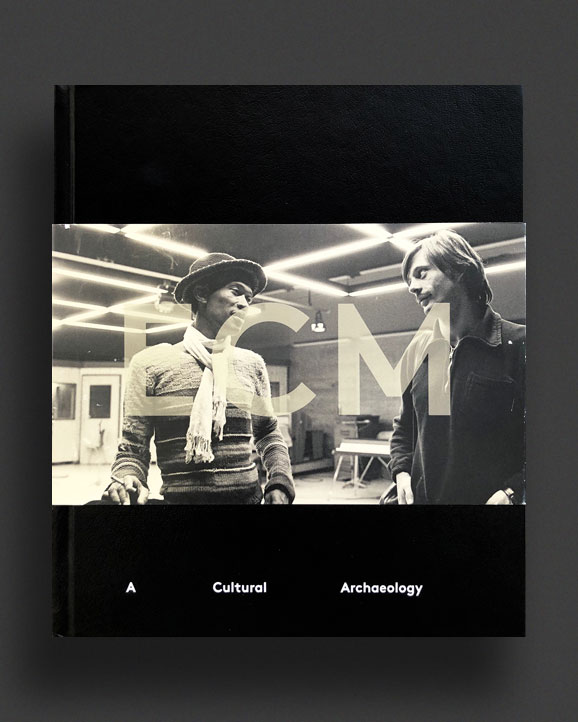
Rare English edition of the lavish hardcover catalogue to the critically-acclaimed ECM exhibition at Munich’s Haus der Kunst in 2012, and fast out-of-print. As stunning and complex as the music it celebrates, this book presents essays, rare photographs, archival material, film stills, original album artwork, and artworks that pay tribute to one of the world's most daring and innovative record labels. Founded by the legendary producer Manfred Eicher in 1969, a moment when contemporary music was being redefined across all genres, ECM (Edition of Contemporary Music) aimed to bring jazz, improvised, and written music out of the studio and into living rooms around the world. ECM's productions set new standards in sonic complexity, recording some of the world's most extraordinary music and it's enormous stable of artists includes some of the most influential musicians of the twentieth century, such as Keith Jarrett, Chick Corea, Steve Reich, Carla Bley, Meredith Monk, Marion Brown, Codona, and Art Ensemble of Chicago - along with music from the New Series that includes Arvo Part's choral work as well as works by Komitas Vardapet and George Gurdjieff. This comprehensive volume showcases ECM's cultural breadth, not just in the music world but also within the broader artistic universe. It highlights aspects of African-American music of the 1960s in Europe at the height of the American Civil Rights Era, as well as the changing relationships between musicians, music, and listeners. Lavishly illustrated with essays by Diedrich Diederichsen, Okwui Enwezor, Kodwo Eshun, Renée Green, Markus Müller, Wolfgang Sandner, and Jürg Stenzl, the book also contains a comprehensive chronology and discography of the ECM label, and biographies of artists and authors, as well as an extensive round-table talk with Manfred Eicher, Okwui Enwezor, Steve Lake, Karl Lippegaus, and Markus Müller. The most illuminating book ever published on the legendary label, and highly recommended.
Amongst the many artists included in the book are Jan Garbarek, Don Cherry, Nana Vasconcelos, Eberhard Weber, Gary Burton, Meredith Monk, Chick Corea, Wolfgang Dauner, Carla Bley, Keith Jarrett, Paul Bley, Pat Metheny, John McLaughlin, Evan Parker, Annette Peacock, Gary Peacock, Terje Rypdal, Ralph Towner, and so many more.
Very Good-Fine copy with only light edge wear to heavy covers and light wear to obi-strip, depicting Don Cherry on the front and the Art Ensemble of Chicago on the verso.
2005, English / Portuguese
Hardcover, 160 pages, 31 x 23 cm
1st Edition, Out of print title / used / very good
Published by
Serralves Museum of Contemporary Art / Porto
$200.00 - Out of stock
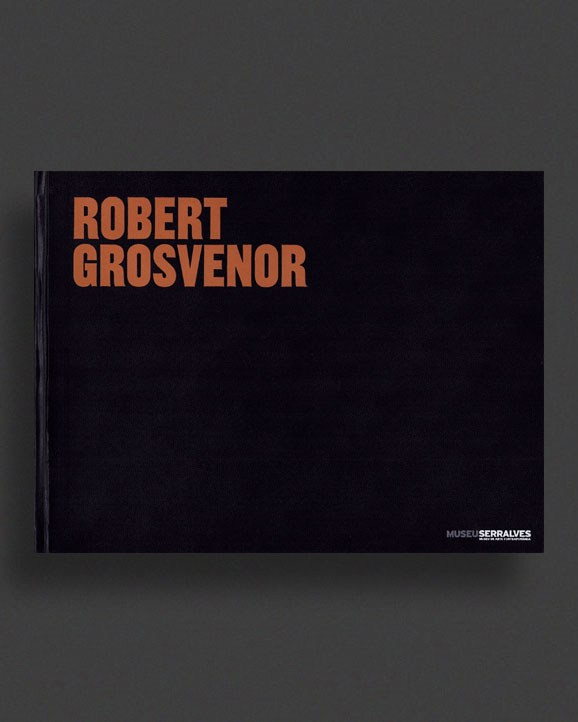
First edition of the best book ever published on Robert Grosvenor. One of the outstanding American sculptors of our age, Grosvenor produces large scale pieces which defy easy categorisation. His work is, according to critic Yve-Alain Bois, "vastly underrated". This now long out-of-print hardcover book provides the first comprehensive overview of his work from 1965 to the present, containing illustrations that are for the most part full page. Comes accompanied by reference pictures, Grosvenor's own commentaries, an anthology of texts and an extensive biography.
Very Good copy with a few knocks/scratches to the cover/spine.
2017, English
Softcover, 343 pages, 19.5 x 12.4 cm
1st Edition, Out of print title / used / fine
Published by
Serpent's Tail / London
$36.00 - Out of stock
Notes from the Sick Room takes place in an imaginary hospital that bends the rules of time and space.
Within its wards and departments we meet artists, musicians and writers who have suffered from various physical illnesses – cancer, tuberculosis, HIV/AIDS and physical trauma. Their lives and works are discussed in an attempt to diagnose how their complaints influenced their work or how their creativity affected their symptoms. We meet Virginia Woolf, Kathy Acker, Frida Kahlo, Katherine Mansfield, Bob Dylan Bruce Chatwin and many others as they struggle to produce works of art, literature and music while in denial, acceptance or flight and through periods of serious illness and convalescence. As we move through the hospital, specialists keep us informed of the history of creativity and illness and the author divulges his own medical history.
Fine copy, light pressure line on cover.
2023, English
Hardcover, 184 pages, 25.4 x 24.1 cm
Published by
Gregory R. Miller & Co. / New York
$95.00 - Out of stock
"Sibony's meticulous engagement with the scavenged object, his reverence for the mundane, has ... seemingly been an influence on a host of emerging artists worldwide."—Lauren O'Neill-Butler, Artforum
For over 20 years, Brooklyn-based artist Gedi Sibony (born 1973) has transformed cast-offs and other found materials into spare, elusive works of art, forging an evocative new strain of Minimalism from the salvage of contemporary life. This richly illustrated monograph surveys a decade of his varied production. Featuring newly commissioned texts by art historian Rhea Anastas and artist/poet Renee Gladman, as well as an interview with Sibony by Robert Enright, All These Hands Are Made of Crumbs surfaces points of connection between distinct bodies of work: from the artist's acclaimed series of found paintings cut from the sides of decommissioned semi-trailers to the subtle sculptural objects that, for him, serve as "guideposts for reframing the experience of place."