World Food Books' programme is largely produced on Kulin Nation land. We acknowledge the Wurundjeri people of the Kulin Nation as the first and continuing custodians of this land, and pay respect to their Elders past, present, and emerging.
World Food Books is an arts and special interests bookshop in Naarm / Melbourne. Founded in 2010, World Food Books is devoted to the presentation of a rotating, hand-selection of international art, design, literary and counterculture publications with an emphasis on the anti-traditional, the experimental, the avant-garde, the heretic, the marginal.
Presenting new titles alongside rare and out-of-print books, catalogues and journals spanning the fields of modern and contemporary art, design, photography, illustration, film, literature, poetry, cultural theory, philosophy, sexuality, popular and underground culture in its many radical forms, World Food Books wishes to encourage adventurous, thoughtful and open-minded reading, looking, writing, and exchange of publishing and ideas, both current and historical.
As well as our bookshop, located in Melbourne's historical Nicholas Building, all of our inventory is available internationally via our online mail-order service.
World Food Books semi-regularly co-ordinates "Occasions", a programme of exhibits and events at the bookshop and in partnership with other hosts (such as museums and art galleries) that develop out of the activities, relationships and content of the bookshop itself.
World Food Books
The Nicholas Building
37 Swanston Street
Room 5, Level 6
Melbourne 3000
Australia
SHOP HOURS:
Thu–Fri 12–6, Sat 12–5
WEB-SHOP OPEN 24/7
World Food Books
Postal Address:
PO Box 435
Flinders Lane
Victoria 8009
Australia
Art
Theory / Essay
Architecture / Interior
Graphic Design / Typography
Photography
Fashion
Eros
LGBTQ+
Fiction / Poetry
Weird / Speculative / Science Fiction / Horror
Transgressive / Visceral / Abject
Symbolism / Decadence / Fin de siècle
Film / Video
Painting
Sculpture / Installation
Performance / Dance / Theater
Drawing
Sound / Music
Curatorial
Group Shows / Collections
Periodicals
Out-of-print / Rare
Posters / Ephemera / Discs
Signed Books
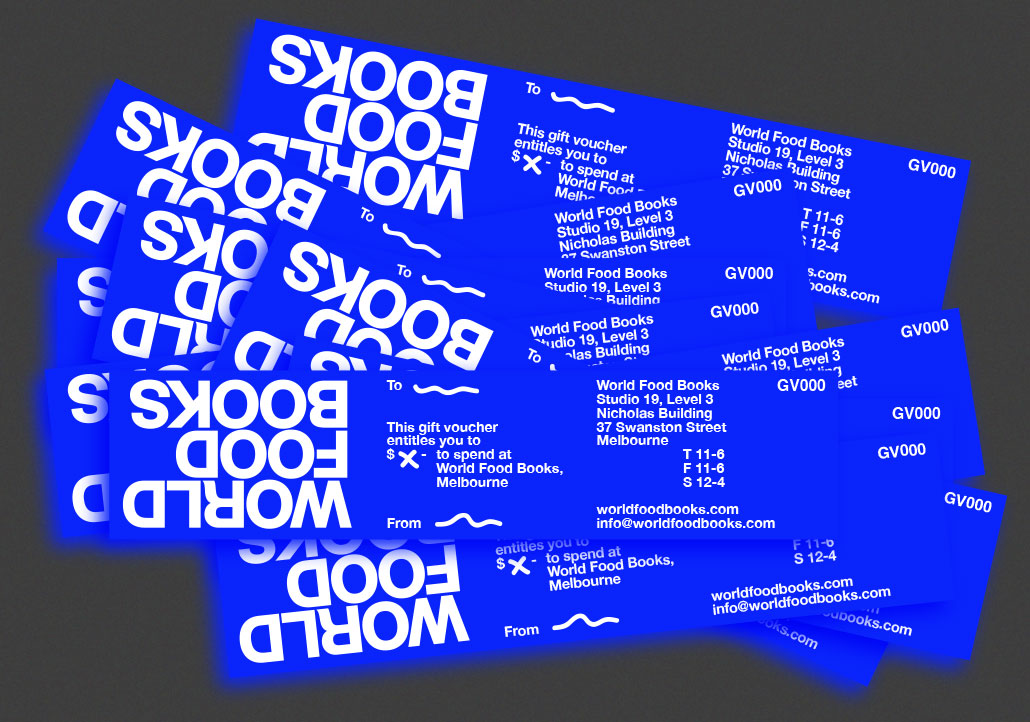
World Food Books Gift Voucher
World Food Book Bag
Australian Art
Australian Fiction
Australian Science Fiction / Speculative Fiction
Australian Poetry
Australian Photography
Japanese Photography
Conceptual Art
Minimal Art
Dada
'Pataphysics / Oulipo
Fluxus
Concrete Poetry
Pop Art
Surrealism
Arte Povera
Arte Informale / Haute Pâte / Tachism
Nouveau Réalisme / Zero / Kinetic
Situationism / Lettrism
Collage / Mail Art / Xerox Art
Art Brut / Folk / Visionary / Fantastic
Illustration / Graphic Art / Bandes Dessinées
Furniture
Italian Radical Design / Postmodernism
Textiles
Ceramics / Glass
Counterculture
Protest / Revolt
Philosophy
Psychoanalysis
Anthropology
Anarchism
Socialism / Anarchism / Communism / Capitalism
Literary Theory / Semiotics / Language
Feminism / Women's Studies
Gender Studies / Sexuality
Anthropology
Fetishism / BDSM
Drugs / Psychedelia
Crime / Violence
Animal Rights / Veganism
Occult / Esoterica
Ecology / Earth / Alternative Living
Whole Earth / Crafts
All prices in AUD (Australian dollars)
Pick-Ups
Pick-up orders can be collected in our bookshop during opening hours after order date. Please collect any Pick-up orders within 2 weeks of ordering as we have limited storage space. Orders will be released back into stock if not collected within this time. No refunds can be made for pick-ups left un-collected. If you cannot make it in to the bookshop in this time-frame, please choose postage option.
Return Policy
All sales are final. We do accept returns (for refund or exchange) for items received in error. All our orders are packed with special care using heavy-duty padding and cardboard book-mailers or bubble mailers (for smaller books), using reinforcement where required. We cannot take responsibility for any lost, stolen or damaged parcels.
Insurance
Should you wish to insure your package, please email us directly after placing your order and we can organise this at a small extra expense. Although all standard/express tracked packages are very safe and dependable, we cannot take responsibility for any lost, stolen or damaged parcels. We recommend insurance on valuable orders.
Interested in selling your old books, catalogues, journals, magazines, comics, fanzines, ephemera? We are always looking for interesting, unusual and out-of-print books to buy. We only buy books in our fields of interest and specialty, and that we feel we can resell.
We base these prices on desirability, market value, in-print prices, condition and our current stock levels. We offer cash, store credit, and can take stock on consignment. All
about 25% of the price we expect to get when we sell them, or 30% in store credit. We base these prices on desirability, market value, in-print prices, condition and our current stock levels.
Sell your books any day of the week. You can drop them off and return later. If you have a lot of books, we can visit your Sydney home.
We buy books that we feel we can resell. We offer about 25 % of the price we expect to get when we sell them, or 30% in store credit. We base these prices on desirability, market value, in-print prices, condition and our current stock levels.
Philadelphia Wireman
03 August - 01 September, 2018
World Food Books is proud to announce our next Occasion, the first presentation of sculptures by Philadelphia Wireman in Australia.
The Philadelphia Wireman sculptures were found abandoned in an alley off Philadelphia’s South Street on trash night in 1982. Their discovery in a rapidly-changing neighbourhood undergoing extensive renovation, compounded with the failure of all attempts to locate the artist, suggests that the works may have been discarded after the maker’s death. Dubbed the "Philadelphia Wireman" during the first exhibition of this work, in 1985, the maker’s name, age, ethnicity, and even gender remain uncertain. The entire collection totals approximately 1200 pieces, all intricately bound together with tightly-wound heavy-gauge wire (along with a few small, abstract marker drawings, reminiscent both of Mark Tobey and J.B. Murry). The dense construction of the work, despite a modest range of scale and materials, is singularly obsessive and disciplined in design: a wire armature or exoskeleton firmly binds a bricolage of found objects including plastic, glass, food packaging, umbrella parts, tape, rubber, batteries, pens, leather, reflectors, nuts and bolts, nails, foil, coins, toys, watches, eyeglasses, tools, and jewellery.
Heavy with associations—anthropomorphic, zoomorphic, and socio-cultural responses to wrapped detritus—the totemic sculptures by Philadelphia Wireman have been discussed in the context of work created to fulfil the shamanistic needs of alternative religions in American culture. Curators, collectors, and critics have variously compared certain pieces to sculpture from Classical antiquity, Native American medicine bundles, African-American memory jugs, and African fetish objects. Reflecting the artist’s prolific and incredibly focused scavenging impulse, and despite—or perhaps enhanced by—their anonymity, these enigmatic objects function as urban artefacts and arbiters of power, though their origin and purpose is unknown. Philadelphia Wireman, whatever their identity, possessed an astonishing ability to isolate and communicate the concepts of power and energy through the selection and transformation of ordinary materials. Over the course of the past two decades, this collection has come to be regarded as an important discovery in the field of self-taught art and vernacular art.
Presented in collaboration with Fleisher-Ollman Gallery, Philadelphia, and Robert Heald, Wellington.
Susan Te Kahurangi King
02 February - 10 March, 2018
Susan Te Kahurangi King (24 February 1951 - ) has been a confident and prolific artist since she was a young child, drawing with readily available materials - pencils, ballpoint pens and felt-tip markers, on whatever paper is at hand. Between the ages of four and six Susan slowly ceased verbal communication. Her grandparents William and Myrtle Murphy had developed a special bond with Susan so they took on caring responsibilities for extended periods. Myrtle began informally archiving her work, carefully collecting and storing the drawings and compiling scrapbooks. No drawing was insignificant; every scrap of paper was kept. The King family are now the custodians of a vast collection containing over 7000 individual works, from tiny scraps of paper through to 5 meter long rolls.
The scrapbooks and diaries reveal Myrtle to be a woman of great patience and compassion, seeking to understand a child who was not always behaving as expected. She encouraged Susan to be observant, to explore her environment and absorb all the sights and sounds. Myrtle would show Susan’s drawings to friends and people in her community that she had dealings with, such as shopkeepers and postal workers, but this was not simply a case of a grandmother’s bias. She recognised that Susan had developed a sophisticated and unique visual language and sincerely believed that her art deserved serious attention.
This was an unorthodox attitude for the time. To provide some context, Jean Dubuffet coined the term Art Brut in 1945 to describe work created by self-taught artists – specifically residents of psychiatric institutions and those he considered to be visionaries or eccentrics. In 1972 Roger Cardinal extended this concept by adopting the term Outsider Art to describe work made by non-academically trained artists operating outside of mainstream art networks through choice or circumstance. Susan was born in Te Aroha, New Zealand in 1951, far from the artistic hubs of Paris and London that Dubuffet and Cardinal operated in. That Myrtle fêted Susan as a self-taught artist who deserved to be taken seriously shows how progressive her attitudes were.
Susan’s parents Doug and Dawn were also progressive. Over the years they had consulted numerous health practitioners about Susan’s condition, as the medical establishment could not provide an explanation as to why she had lapsed into silence. Dawn educated herself in the field of homeopathy and went on to treat all twelve of her children using these principles – basing prescriptions on her observations of their physical, mental and emotional state.
Doug was a linguist with an interest in philosophy who devoted what little spare time he had to studying Maori language and culture. To some extent their willingness to explore the fringes of the mainstream made them outsiders too but it was their commitment to living with integrity and their respect for individuality that ensured Susan’s creativity was always encouraged.
Even though Susan’s family supported her artistic pursuits, some staff in schools and hospitals saw it as an impediment to her assimilation into the community and discouraged it in a variety of ways. Her family was not always aware of this and therefore did not fully understand why Susan stopped drawing in the early 1990s. However, rather than dwell on the challenges that Susan faced in pursuit of her artistic practice, they prefer to highlight her achievements. In 2008 Susan began drawing again in earnest, after an almost 20 year interruption, and her work is now shown in galleries around the world.
Susan grew up without television and has been heavily influenced by the comics she read as a child. She is absolutely fearless in the appropriation of recognizable characters, such as Donald Duck and Mickey Mouse, in her work. She twists their limbs, contorts their faces, compresses them together, blends them into complex patterned backgrounds - always imbuing them with an incredible energy. Although Susan often used pop culture characters in her work they are not naive or childlike. These are drawings by a brilliant self-taught artist who has been creating exceptional work for decades without an audience in mind.
Mladen Stilinović
"Various Works 1986 - 1999"
02 February 16 - September 10, 2016
Various works 1986 - 1999, from two houses, from the collections of John Nixon, Sue Cramer, Kerrie Poliness, Peter Haffenden and Phoebe Haffenden.
Including: Geometry of Cakes (various shelves), 1993; Poor People’s Law (black and white plate), 1993; White Absence (glasses, ruler, set square, silver spoon, silver ladel with skin photograph and wooden cubes), 1990-1996; Exploitation of the Dead (grey and red star painting, wooden painting, black spoon with red table, red plate), 1984-1990; Money and Zeros (zero tie, paintings made for friends in Australia (Sue, John, Kerrie), numbers painting), 1991-1992; Words - Slogans (various t-shirts) - “they talk about the death of art...help! someone is trying to kill me”, “my sweet little lamb”, “work is a disease - Karl Marx”; Various artist books, catalogues, monographs, videos; Poster from exhibition Insulting Anarchy; "Circular" Croatian - Australian edition; Artist book by Vlado Martek (Dostoyevsky); more.
Thanks to Mladen Stilinović and Branka Stipančić.
Jonathan Walker
Always Will Need To Wear Winter Shirt Blue + Ochre Small Check Pattern
21 August - 21 September, 2015
Untitled
I am not a great reader of poetry but I always return to the work of Melbourne poet, Vincent Buckley (1925- 1988). Perhaps I find his most tantalising piece to be not a finished poem but a fragment left on a scrap of paper discovered on his desk after the poet’s death.
The poetry gathers like oil
In the word-core, and spreads
It has its music meet,
Its music is in movement.
This fragment is more the shell left behind from a volatile thought than a finished poem. I find the last two lines honest but awkward whereas the first two lines work like an arrow. Most likely he could not find a resolution so it was left. Still, in its present form, it remains an eloquent testimony to the ultimate failure of a medium to express mobile thought and sensation, in Buckley’s case, through verbal language. It’s an important matter because this is something all artists have to deal with regardless of the medium.
I have never written a poem, however, I am forever copying fragments from books on paper scraps in a vain effort to fix certain notions in my head. At first, they function as bookmarks that are sometimes returned to when I open the book. But before long, as they accumulate, they fall out littering the table interspersed with A4 photocopies, bills, books and medications.
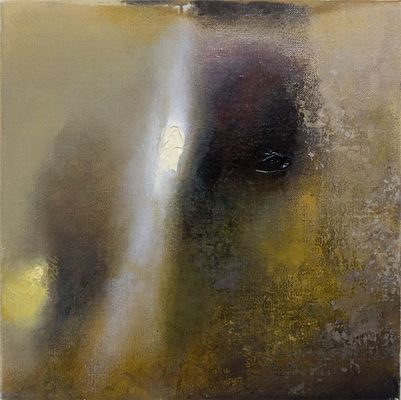
To return to Buckley’s fragment, the first two lines very much evoke how I paint nowadays. As you age, detail diminishes and patches of light become more luminous and float. I feel the most honest way of dealing with this is by smearing the oil paint on the canvas with the fingers and working close-up, blind. Only if the patches coalesce into an approaching image can the work gain a life.
-
Jonathan Walker was born in Melbourne, Australia and brought up on a dairy farm in Gippsland. In the 1970’s he studied painting at RMIT and won the Harold Wright Scholarship to the British Museum, London. During the 1980’s he exhibited at Pinacotheca Gallery, Richmond and had work shown at the NGV and Heidi City Art Gallery. Over the same period he designed the cover for the “Epigenesi” LP by Giancarlo Toniutti, Italy and conducted a mail exchange work with Achim Wollscheid, Germany. The work with artists through the post resulted in an article published in the bicentenary issue of Art and Australia 1988. He showed in artist run spaces such as WestSpace in the 90’s and 2000’s, and until 2012, taught painting at Victoria University, which is where we (Colleen Ahern and Lisa Radford) as organisers of the exhibition, among many others, had the privilege of being his student.
Walker’s knowledge was imparted to students through the careful selection of music, literature, and artists found in books that he himself had ordered for the library. Walker’s strategy was the generosity of sharing his vast knowledge with references specific to each student and their context.
Walker’s paintings share a similar focus and intimacy.
This exhibition presents a small selection of recent paintings alongside a publication that includes Walker’s writing. Observational and analytical, Walker’s work is a type of material notation — the time of day, colour and how it is blended, the both specific and fleeting location of a reflection on lino or the question of whether a chair leg should be included in a painting.
Please join us on Friday August 21 between 6-8pm to celebrate the opening of the exhibition.
Curated by Colleen Ahern and Lisa Radford.
B. Wurtz
Curated by Nic Tammens
March 26 - April 4, 2015
B.Wurtz works from a basement studio in his home on Manhattan’s Lower East Side.
This local fact is attested to by the plastic shopping bags and newsprint circulars that appear in his work. As formal objects, they don’t make loud claims about their origins but nonetheless transmit street addresses and places of business from the bottom of this long thin island. Like plenty of artists, Wurtz is affected by what is local and what is consumed. His work is underpinned by this ethic. It often speaks from a neighborhood or reads like the contents of a hamper:
“BLACK PLUMS $1.29 lb.”
“Food Bazaar”
“USDA Whole Pork Shoulder Picnic 99c lb.”
“RITE AID Pharmacy, with us it’s personal.”
“H. Brickman & Sons.”
“Sweet Yams 59c lb."
Most of the work in this exhibition was made while the artist was in residence at Dieu Donne, a workshop dedicated to paper craft in Midtown. Here Wurtz fabricated assemblages with paper and objects that are relatively lightweight, with the intention that they would be easily transportable to Australia. This consideration isn’t absolute in Wurtz’s work, but was prescriptive for making the current exhibition light and cheap. Packed in two boxes, these works were sent from a USPS post office on the Lower East Side and delivered to North Melbourne by Australia Post.
Wurtz appears courtesy of Metro Pictures, New York.
Thanks to Rob Halverson, Joshua Petherick, Sari de Mallory, Matt Hinkley, Helen Johnson, Fayen d'Evie, Ask Kilmartin, Lisa Radon, Ellena Savage, Yale Union, and "Elizabeth".
John Nixon
"Archive"
December 15 - January 20, 2014
The presentation of John Nixon's archive offered a rare showcase of this extensive collection of the artist's own publications, catalogues, posters, ephemera, editions and more, from the mid 1980s onwards, alongside a selection of his artworks.
Organized by John Nixon, Joshua Petherick and Matt Hinkley.
<a href=http://wfb.public-office.info/artist/john-nixon>All titles by John Nixon
"Habitat"
at Minerva, Sydney (organised by Joshua Petherick and Matt Hinkley)
November 15 - December 20, 2014
Lupo Borgonovo, Janet Burchill & Jennifer McCamley,
Lewis Fidock, HR Giger, Piero Gilardi, Veit Laurent Kurz,
Cinzia Ruggeri, Michael E. Smith, Lucie Stahl, Daniel Weil, Wols
Press Release:
“...It contained seven objects. The slender fluted bone, surely formed for flight, surely from the wing of some large bird. Three archaic circuitboards, faced with mazes of gold. A smooth white sphere of baked clay. An age-blackened fragment of lace. A fingerlength segment of what she assumed was bone from a human wrist, grayish white, inset smoothly with the silicon shaft of a small instrument that must once have ridden flush with the surface of the skin - but the thing’s face was seared and blackened.”
William Gibson, “Count Zero”, 1986
"Autumn Projects Archive"
Curated by Liza Vasiliou
March 6 - March 15, 2014
World Food Books, in conjunction with the Virgin Australia Melbourne Fashion Festival 2014, presented the Autumn Projects archive, consisting of a selection of early examples in Australian fashion with a particular interest in collecting designers and labels from the period beginning in the 1980’s, who significantly influenced the discourse of Australian Fashion.
Curated by Liza Vasiliou, the exhibition provided a unique opportunity to view pieces by designers Anthea Crawford, Barbara Vandenberg, Geoff Liddell and labels CR Australia, Covers, Jag along with early experimental collage pieces by Prue Acton and Sally Browne’s ‘Fragments’ collection, suspended throughout the functioning World Food Books shop in Melbourne.
H.B. Peace
presented by CENTRE FOR STYLE
November 14, 2013
"Hey Blinky, you say chic, I say same"
Anon 2013
H.B. Peace is a clothing collaboration between great friends Blake Barns and Hugh Egan Westland. Their pieces explore the divergences between 'character’ and ‘personality’ in garments....etc
Special Thanks to Joshua Petherick and Matt Hinkley of WFB and Gillian Mears
and a Very Special Thank you to Audrey Thomas Hayes for her shoe collaboration.
Janet Burchill & Jennifer McCamley
"Aesthetic Suicide"
May 10 - June 8, 2013
The first of our occasional exhibitions in the World Food Books office/shop space in Melbourne, "Aesthetic Suicide" presented a body of new and older works together by artists Janet Burchill & Jennifer McCamley, including videos, prints, a wall work, and publications.
During shop open hours videos played every hour, on the hour.
$.00 - Out of stock
The eternal clean out! New items weekly.
https://worldfoodbooks.com/category/sale
Published by World Food Books / Melbourne
$20.00 - In stock -
A World Food Books gift voucher is redeemable in our Melbourne bookshop or via our webshop (here). An e-voucher (printable pdf) will be sent to your purchase email address (please notify us if you wish to have the voucher sent to an alternate address and wish us to fill in the receiver's details on the card).
Gift vouchers can be purchased in increments of $20 (Australian Dollars) and the total amount can simply be added to by increasing the quantity in your shopping cart. eg. A quantity of 5 gift vouchers will result in an item total of $100 - a $100 gift voucher. Simply click "ADD TO CART" 5 times, or update your quantity in the shopping cart.
If you wish to purchase multiple, separate gift vouchers in one go, please just email us and we can personally prepare and email you a payment request.
Please note: Please select Pick-Up on gift voucher purchse to avoid any postage charges. Accidental postage charges will be refunded right away!
Thank you.
For any questions, please don't hesitate to email: [email protected]
2024, English
Hardcover, 192 pages, 30.5 x 22.9 cm
Published by
Fulgur Press / UK
$110.00 - In stock -
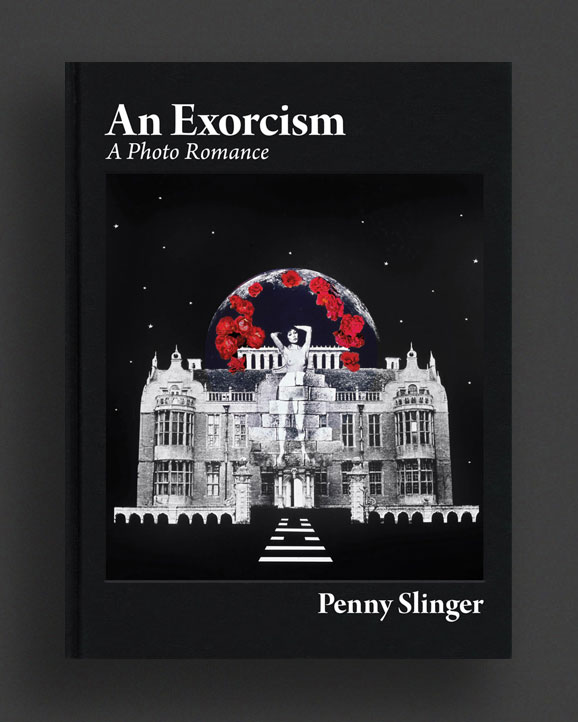
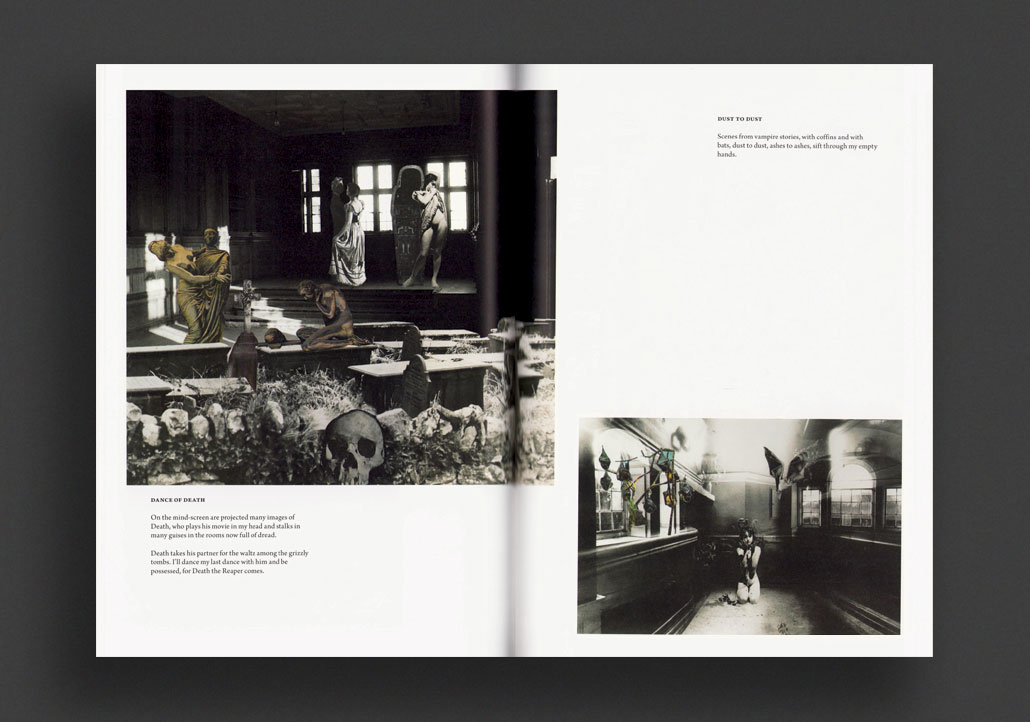
Sultry and gothic, Slinger’s legendary 1970s photomontage project returns to print with unpublished archival photos and text from the artist.
First published in 1977 and long out of print, Slinger's classic photobook, An Exorcism: A Photo Romance, explores the feminine psyche. Developed from a visit to Lilford Hall in 1970, Slinger provides us with a series of haunting images that chart a process of self-discovery and awakening. This new edition from Fulgur Press has been expanded with new images from the original series held in the artist’s archive and offers a previously unpublished narrative by Slinger.
Penny Slinger is a Los Angeles–based artist whose work investigates the feminine, the magical and the erotic. While studying at Chelsea College of Art in the late 1960s, Slinger encountered Max Ernst’s Une semaine de bonté (1934), initiating an enduring involvement with both the Surrealist movement and the medium of collage. She has published three books of provocative photo collage: 50% The Visible Woman, An Exorcism and Mountain Ecstasy. Her work is in many international museum collections, including Tate Britain.
2021, English / Italian
Softcover, 288 pages, 32 x 24 cm
1st Edition, Out of print title / as new
Published by
Mousse / Milan
$120.00 - In stock -
Out-of-print. A half-century of multimedia works from a protagonist of Italy's Radical Architecture movement.
Gianni Pettena was a founding member of the Radical architecture movement in the late 1960s, which included names like Archizoom, Remo Buti, 9999, UFO, Superstudio, and Zziggurat. Besides critiquing modernist functionalism, the self-proclaimed “anarchitect” became noted for a purposeful reluctance to actually design. The uniqueness of Pettena’s prolific career is informed by his rejection of discipline-based roles or methodologies, creating temporary works while constantly seeking alliances with radical design in other countries, as well as conceptual art, Land Art, and experimental music. This book covers almost all of his works, supported by an extensive anthology of his writings.
Edited by Luca Cerizza
Texts by Gianni Pettena, Stefano Pezzato, Christiane Rekade, Elisabetta Trincherini, and a conversation between Gianni Pettena, Hans Ulrich Obrist, and Luca Cerizza
“Gianni Pettena (born 1940, Bolzano, Italy) was a central figure in research regarding the boundary between architecture and art in the later 1960s—a movement Germano Celant dubbed “radical architecture.” Together with the Florentine groups Archizoom, Superstudio, and UFO, and Turinese groups like the Gruppo Strum, Pettena helped expand and redefine the limits of what could be described as architecture, making a fundamental contribution to the ferment that animated, at an international level, city planning debates in those years. Independently of his fellow radicals in Florence, Pettena took an anarchic and ironic attitude toward authority, whether exercised in politics, progress, or planning. Through an extraordinary variety of means, including installation, performance, photography, video, and design, he has remained “on strike out of his love of architecture” for more than fifty years. Rather than practice the discipline, he has chosen to challenge it through the language of art, critical and expository writing, and the medium of teaching. Within a practice filled with implications, attention to a respectful relationship with nature and its resources has been a constant characteristic of his work, and remains a crucial lesson in the context of the current environmental crisis.”—Luca Cerizza
As New.
2021, English
Hardcover, 200 pages, 30 x 22 cm
Published by
Walther König / Köln
Kunstforum / Vienna
$85.00 - In stock -
This extensive hardcover overview of Swiss Romanian artist Daniel Spoerri's (b. 1930) 60-year-long career, presents reproductions of archival material as well as rarely seen artworks from Spoerri's incredible artistic history of installations, assemblages, (including his famous "snare works"), performances, editions, and other activities as a protagonist of Fluxus, Nouveau réalisme and Eat Art. Includes texts by Ingried Brugger, Veronika Rudorfer, Hans Peter Hahn, Barbara Räderscheidt, Daniel Spoerri, Katerina Vatsella.
1998, German
Hardover (w. dust jacket), 140 pages, 30 x 23 cm
1st Edition, Out of print title / used / good
Published by
Prestel / Munich
$70.00 - In stock -
First edition of this excellent first German monograph on Swiss artist Daniel Spoerri, published by Prestel in 1998. Profusely illustrated with Spoerri's incredible artistic history of installations, performances, studio photos, editions, and other activities across important associations with Fluxus, Nouveau réalisme and Eat Art; works across sculpture, assemblage, action, and relief, including a great number of his iconic "snare works". Includes an exhibition history, bibliography and extensive text in German by Heidi E. Violand-Hobi.
Daniel Spoerri (b. 1930) is a Swiss artist and writer born in Romania. Spoerri is best known for his "snare-pictures". In 1960, Spoerri made his first "snare-picture": "objects found in chance positions, in order or disorder (on tables, in boxes, drawers, etc.) are fixed (‘snared’) as they are. Only the plane is changed: since the result is called a picture, what was horizontal becomes vertical. Example: remains of a meal are fixed to the table at which the meal was consumed and the table hung on the wall." His first "snare-picture", Kichka's Breakfast was created from his girlfriend's leftover breakfast. The piece is now in the collection in the Museum of Modern Art in New York. One snare-picture, made in 1964, consists of the remains of a meal eaten by Marcel Duchamp. He also is widely acclaimed for his book, Topographie Anécdotée* du Hasard (An Anecdoted Topography of Chance), a literary analog to his snare-pictures, in which he mapped all the objects located on his table at a particular moment, describing each with his personal recollections evoked by the object, with illustrations by the great Roland Topor. In the 1950s he was active in dance, studying classical dance with Olga Preobrajenska and in 1954 becoming the lead dancer at the State Opera of Bern, Switzerland. He later staged several avant-garde plays including Ionesco's The Bald Soprano and Picasso's surrealist Desire Trapped by the Tail. During that period he met a number of Surrealist artists, including Meret Oppenheim, Jean Tinguely, Marcel Duchamp and Man Ray, and also a number of artists subsequently associated with the Fluxus movement, including Robert Filliou, Dieter Roth and Emmett Williams. Closely associated with the Fluxus art movement, a movement "characterized by a strongly Dadaist attitude, [whose] participants were a divergent group of individualists whose most common theme was their delight in spontaneity and humor." It has been said that his Anecdoted Topography of Chance "seems perfectly to embody aspects of its spirit." Spoerri was also one of the original signers of the manifesto creating the Nouveau réalisme (New Realism) art movement, which involved artists such as Yves Klein, Arman, Martial Raysse, Pierre Restany, Niki de Saint Phalle, César, Jean Tinguely, Mimmo Rotella, Gérard Deschamps, and the Ultra-Lettrists, Francois Dufrêne, Raymond Hains, Jacques de la Villeglé, an avant garde endeavor begun in 1960. His use of everyday life as the main subject-matter of his art reflects his involvement in the New Realism movement. A major theme of Spoerri's artwork is food, and he has called this aspect of his work "Eat Art." This is seen not only in his snare-pictures of eaten meals, but in restaurant performance pieces, for which he cooks for guests and art-critics take on the role of waiters, playing on the idea of the critic bringing the art to the consumers and giving them an understanding of the work.
Good—Very Good copy with light wear and light fading to dust jacket edges.
2002, English
Softcover (glue-bound w. fold-out pages), 96 pages, 21 x 25 cm
1st Edition, Out of print title / used / very good
Published by
ICA / Philadelphia
$80.00 - In stock -
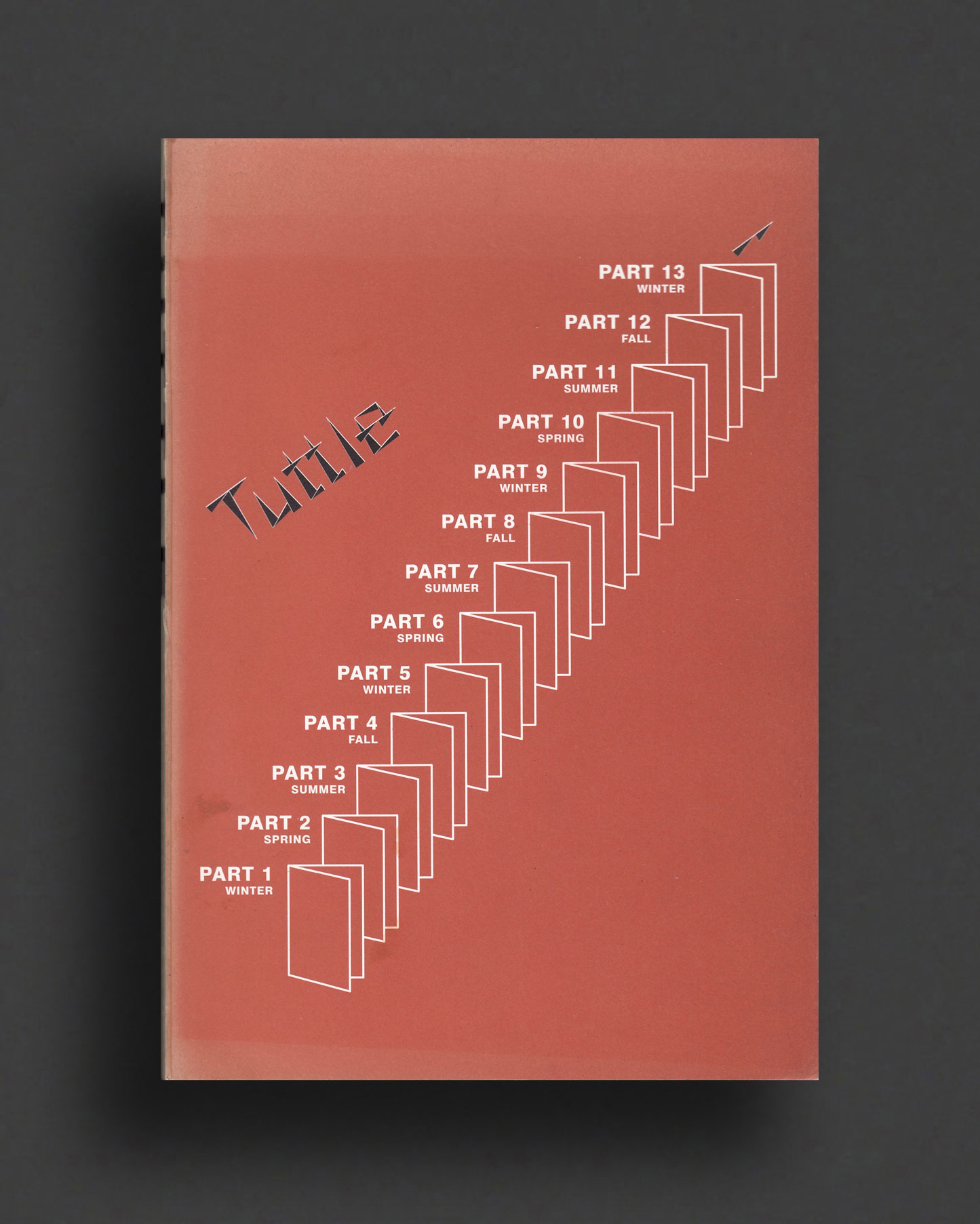
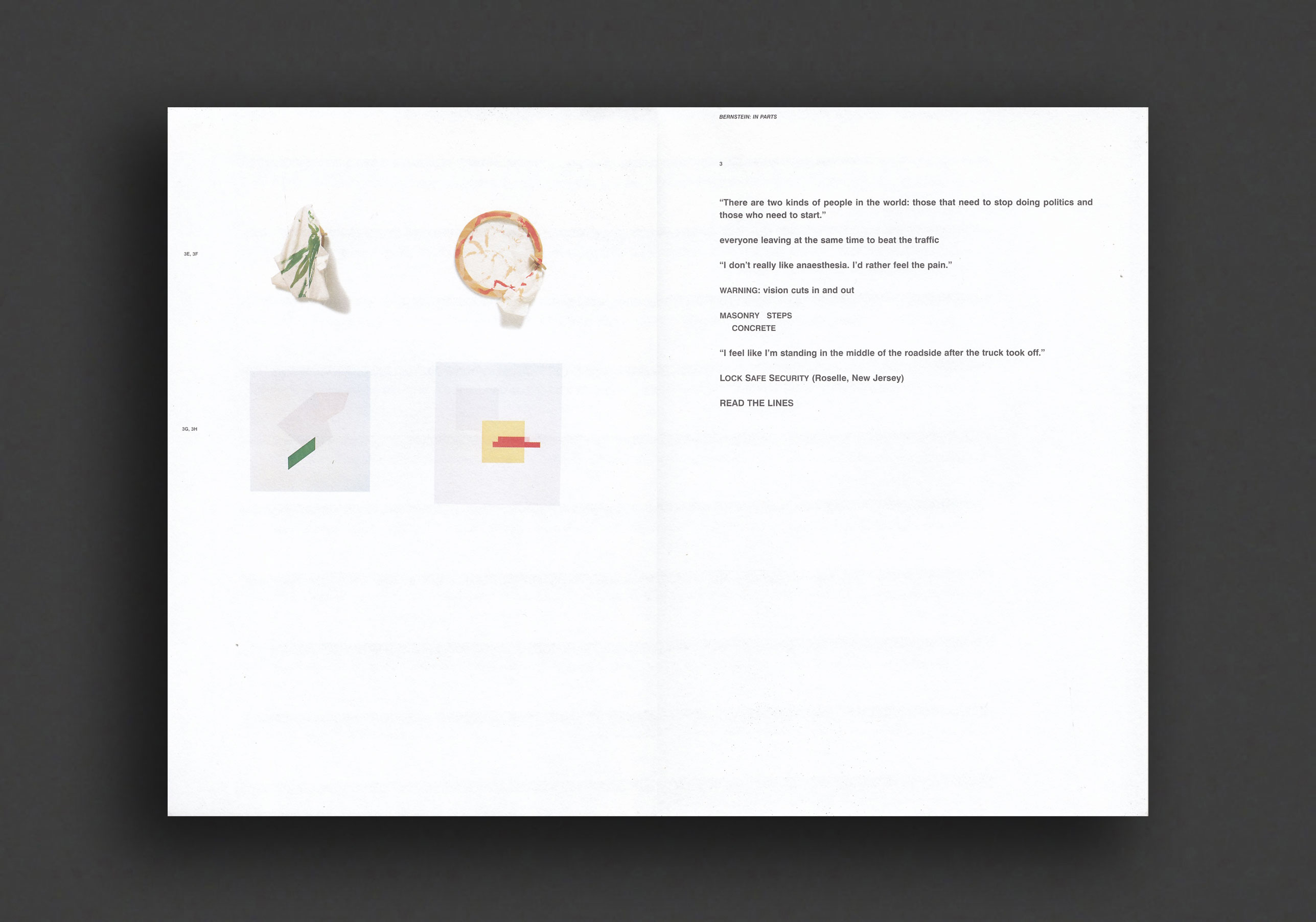
Scarce copy of the elaborate "In Parts: 1998-2001", wherein Richard Tuttle draws on 13 discrete bodies of work dating from 1998 to the early 2000s. This fully illustrated catalogue (with fold-out poster pages that capture details of Tuttle's work close-up with surrounding interiors and objects), expertly designed in collaboration with the Purtill Family Business, also includes an essay by Ingrid Schaffner, Senior Adjunct Curator at the Institute of Contemporary Art, and text by the poet Charles Bernstein, a frequent collaborator with Tuttle.
Very Good, light foxing to top edge, light tanning to boards.
1995, English / Japanese
Softcover (w. Frenchfolds), 156 pages, 23 x 16 cm
1st Edition, Out of print title / used / fine
Published by
Sezon Museum of Art / Tokyo
$160.00 - In stock -
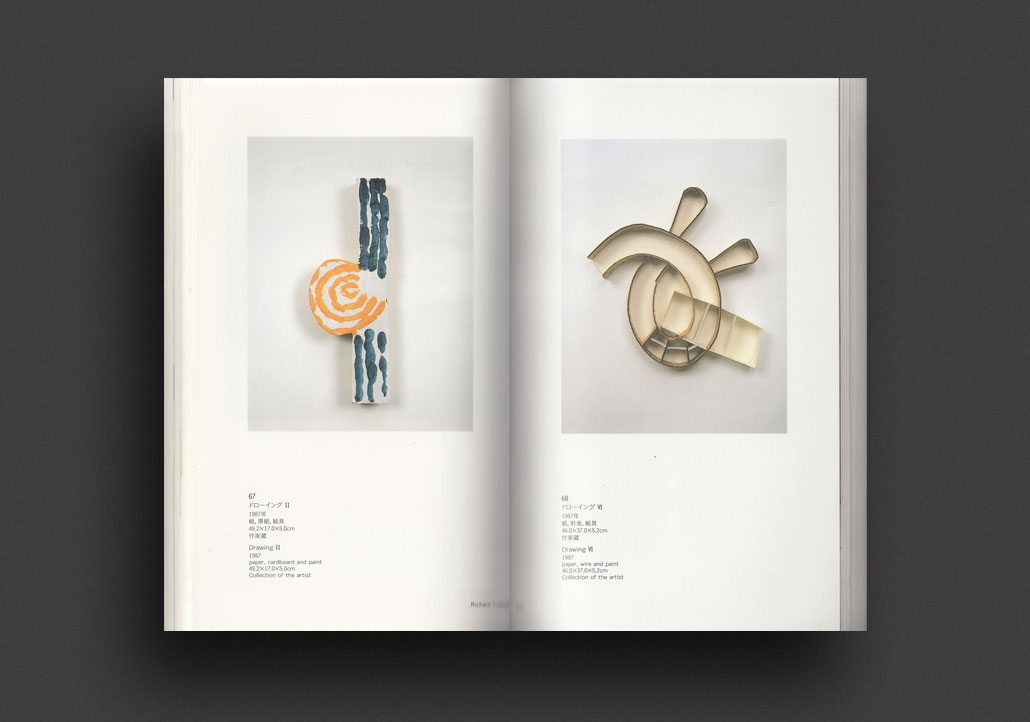
First edition of this fantastic, and very scarce Richard Tuttle catalogue. Published on the occasion of the solo exhibition of Richard Tuttle, September 7—October 10, 1995 at Sezon Museum of Art, Tokyo, this densely-packed and profusely illustrated book, surveys Tuttles career to date, reproducing many great sculptural works with fabric, on paper, reliefs and paintings, made by Tuttle between 1964 and 1994. Features an essay by Richard Tuttle alongside texts by Gerhard Mack and Shigemi Oka, the exhibition curator. All texts in both Japanese and English.
A great and rare Japanese book on the work of American artist, Richard Tuttle.
Fine copy with light age.
2006, English
Hardcover, 288 pages, 21 x 26 cm
1st Edition, Out of print title / used / fine
Published by
Yale University Press / New Haven
The Drawing Center / New York
$150.00 - Out of stock
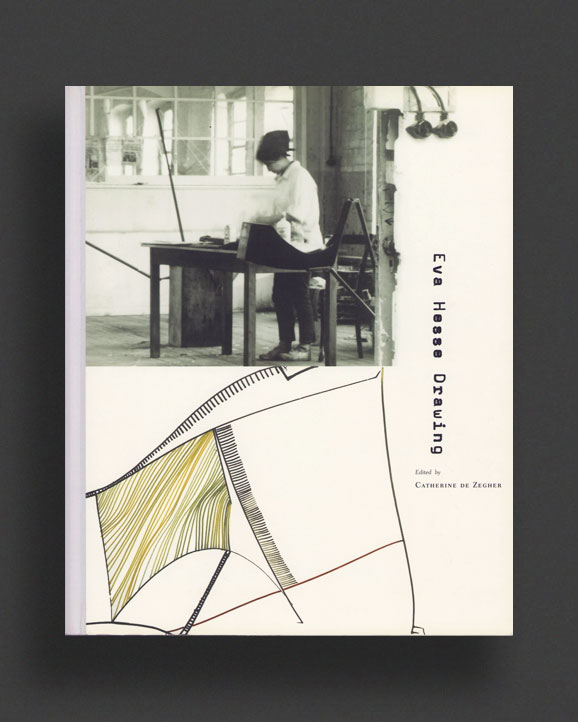
First hardcover edition of this out-of-print volume on Eva Hesse's drawing practice. Hesse (1936—1970) was a highly experimental artist who continually challenged the conventions of her time. For Hesse, drawing played a unique role, providing the nexus between her works in all media. Eva Hesse Drawing is the first book to explore her drawing process, following her work from drawing to painting and sculpture, and always back to drawing. The book features important, recently rediscovered “working drawings,” providing an intimate look at Hesse’s everyday practice and methodology.
An accomplished draftswoman, Hesse began to develop her wandering, tentative line while studying at Yale University in the late 1950s. Her early 1960s works on paper engaged with visual vocabularies from geometry to biomorphic abstraction. In 1965, Hesse combined her tactile sensibility for materials with her stringlike line to achieve a breakthrough: her astonishing reliefs, which began to bridge the space between two and three dimensions. Balancing the disembodiment of line with its intensified materialization, Hesse went on to develop one of the most innovative oeuvres of the twentieth century, anticipating the hybridization of media and crossing borderlines linking one impossible space to another.
Very Good—Near Fine copy.
2010, English
Softcover, 144 pages, 34.5 x 24 cm
1st Edition, Out of print title / used / very good
Published by
Serpentine Gallery / London
Walther König / Köln
$140.00 - In stock -
Wonderful long out-of-print Nick Mauss artist’s book, designed in collaboration with Manuel Raeder, Geschenkpapiere re-imagines the pages of a catalogue as sheets of wrapping paper, which are intended to be torn out by the reader and used to wrap gifts. The designs, conceived by Nick Mauss specifically for this book, are derived from various sources in the fine and decorative arts. The wrapping paper materialises those isolated elements on which the mind snags and questions the distinctions between the presentation of gifts and the presentation of textual or visual information.
Illustrated essays by Emmelyn Butterfield-Rosen and Kirsty Bell explore the cultural and philosophical context of Mauss’ work and the position of this book within it.
Includes 16 sheets of colour wrapping paper exclusively designed by the artist for this publication.
Very Good copy, light storage wear to extremities.
2015, English
Softcover, 8 pages, 48 x 33 cm
Ed. of 350,
1st Edition, Out of print title / used / very good
Published by
Mousse Publishing / Milan
$50.00 - In stock -
Out-of-print. Edition of 350.
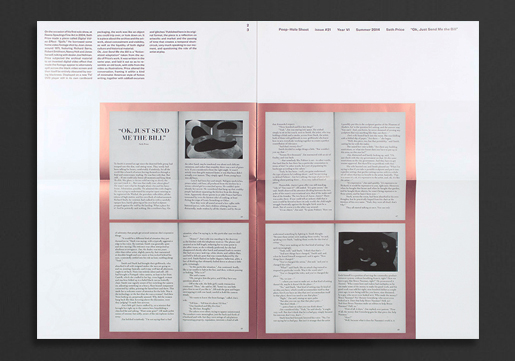
On the occasion of his first solo show, at Reena Spaulings Fine Arts in 2004, Seth Price made a piece called Digital Video Effect: “Spills.” He borrowed some video footage shot by Joan Jonas around 1971, featuring Richard Serra, Robert Smithson, Nancy Holt and Jonas herself, talking with dealer Joe Hellman. Price subjected the archival material to an invented digital video effect that made the footage appear to alternately spill across the black video screen and then itself be entirely obscured by oozing blackness. Displayed on a new TV/DVD player still in its own cardboard packaging, the work was like an object you could trip over, or look down on. It is a piece about concealment and visibility, as well as the liquidity of both digital culture and historical material.
Ok, Just Send Me the Bill is a “fictionalized adaptation” taken from the audio of Price's work. It was written in the same year, and laid it out so as to resemble an old book, with stills from the video as illustrations. Price altered the conversation, framing it within a kind of minimalist American style of fiction writing, together with oddball excurses and 'glitches.' Published here in its original format, the piece is a reflection on artworks and market and the passing of time that creates a temporal short-circuit, very much speaking to our moment, and questioning the role of the artist play.
New copy with general shelf/storage wear.
2022, English
Softcover, 344 pages, 26.8 x 35.5 cm
Published by
Skira / Milan
$110.00 $70.00 - In stock -
Charting the three momentous years in which New York became the global capital of art.
The radical cultural transformations that occurred in New York in the three years between January 1962 and December 1964 ramified across the world. In addition to a whole host of creative innovations across disciplines, the period also saw a shift in the center of artistic gravity from Europe to the United States and the rise of a new leadership in the arts—curators, gallerists and other impresarios.
Modeled on the scale and format of Life magazine (one of the most widely read publications of the era), this lavishly illustrated oversized paperback traces a detailed itinerary of artists and curators, experimental exhibitions and museums, as well as historical and political events that transformed society during this explosive moment. From the New Realists exhibition at Sidney Janis Gallery in 1962 to Robert Rauschenberg's unexpected win of the International Grand Prize in Painting at the 1964 Venice Biennale, every groundbreaking event from this incredible three-year period is documented.
Organized chronologically, the book is teeming with images of artworks and archival photographs, and artist interviews conducted by the late great curator Germano Celant.
Artists include: Diane Arbus, Lee Bontecou, Chryssa, Merce Cunningham, Jim Dine, Melvin Edwards, Dan Flavin, Lee Friedlander, Nancy Grossman, Jasper Johns, Donald Judd, Ellsworth Kelly, Yayoi Kusama, Norman Lewis, Roy Lichtenstein, Marisol, Agnes Martin, Louise Nevelson, Isamu Noguchi, Claes Oldenburg, Yvonne Rainer, Robert Rauschenberg, Faith Ringgold, Larry Rivers, James Rosenquist, Miriam Schapiro, Carolee Schneemann, George Segal, Jack Smith, Harold Stevenson, Marjorie Strider, Mark di Suvero, Bob Thompson and Andy Warhol.
Conceived by Germano Celant. Edited with text by Sam Sackeroff, Lerman-Neubauer Associate Curator at the Jewish Museum. Preface by Claudia Gould, Helen Goldsmith Menschel Director at the Jewish Museum. Introduction by Michael Rock. Interviews by Germano Celant with Christo and Jim Dine. Text by Claudia Gould, Michael Rock, Sam Sackeroff, Emily Bauman, Ninotchka D. Bennahum, Jennifer G. Buonocore-Nedrelow, Olivia Casa, Laura Conconi, J. English Cook, Maria Corti, Michaëla de Lacaze Mohrmann, Joshua B. Guild, Liz Hirsch, Hiroko Ikegami, Susan Murray, Kristina Parsons, Benjamin Serby, Jennifer Sichel, Robert Slifkin.
2011, English
Hardcover, 228 pages, 23.3 x 27 cm
1st Edition, Out of print title / used / very good
Published by
MoMA / New York
$100.00 $80.00 - In stock -
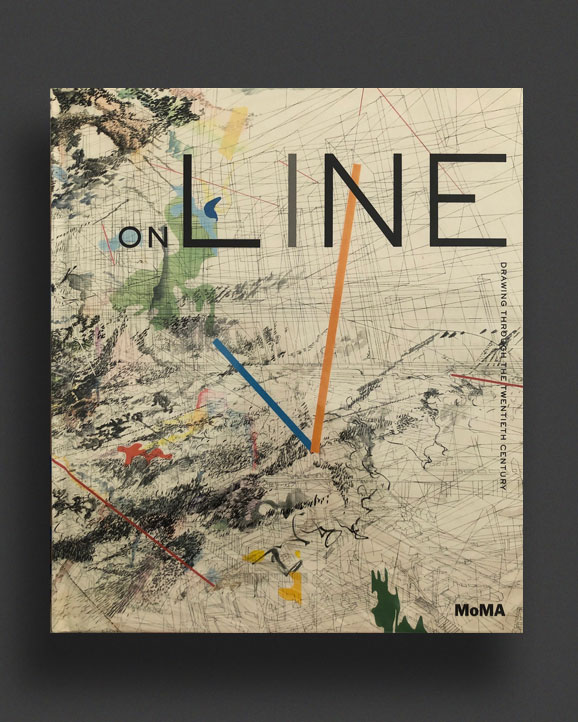
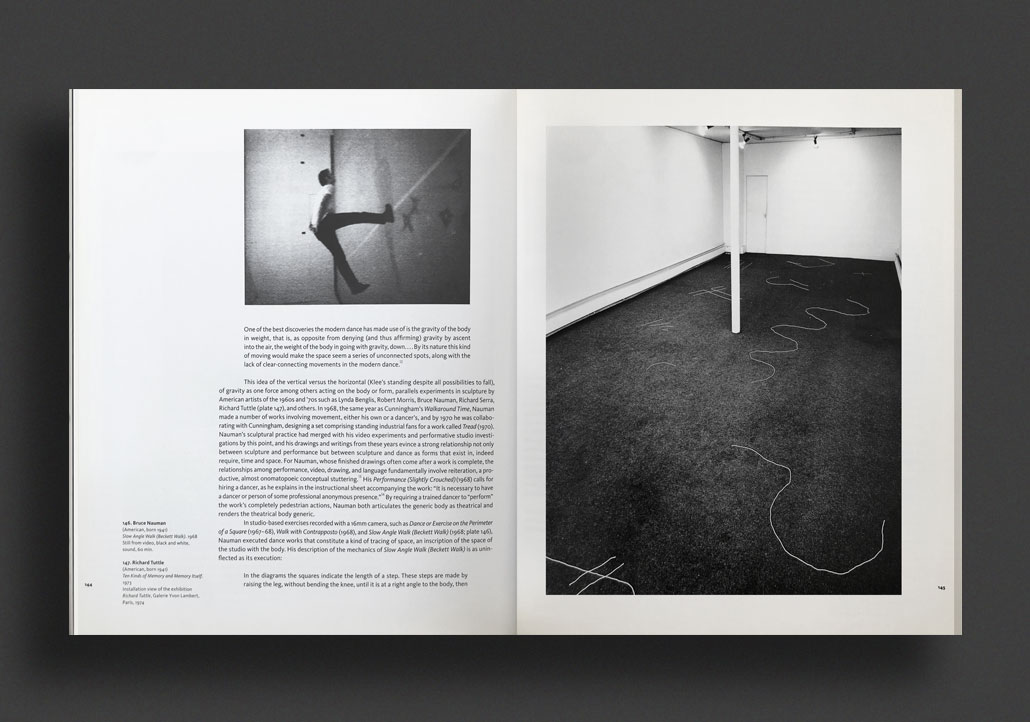
First edition of long out-of-print important catalogue published to accompany the exhibition On Line: Drawing Through the Twentieth Century, The Museum of Modern Art, New York, 21 Nov. 2010—7 Feb. 2011. On Line: Drawing through the Twentieth Century explores a radical transformation of drawing that began over a century ago and continues as a vital impulse in art today. In a revolutionary departure from traditional ideas of drawing, and from the reliance on paper as the medium's fundamental support, artists have pushed the line of drawing into real space, expanding its relationship to gesture and form and invigorating its links with painting and sculpture, photography and film, and, particularly notably, dance and performance. Through works by over 100 artists, and through essays by Cornelia Butler and Catherine de Zegher that illuminate both broad themes and individual practices, On Line presents a groundbreaking history of an art form. The great, recognized art movements, from Cubism and Futurism at the beginning of the twentieth century through Abstract Expressionism, Neo-Concretism, arte povera, Conceptualism, and many other approaches up to the diverse present, are shown from a new perspective, and are joined by a host of less familiar artworks that properly claim a place in this differently defined field. The exhibition and catalogue includes works by a wide range of artists, both familiar and relatively unknown, from different eras of the past century and from many nations, including Aleksandr Rodchenko, Alexander Calder, Karel Malich, Eva Hesse, Anna Maria Maiolino, Richard Tuttle, Mona Hatoum, and Monika Grzymala.
Very Good / As New copy.
2015, English
Hardcover (cloth-bound), 248 pages, 18 x 25 cm
1st Edition, Out of print title / used / fine
Published by
Mousse Publishing / Milan
$400.00 - In stock -
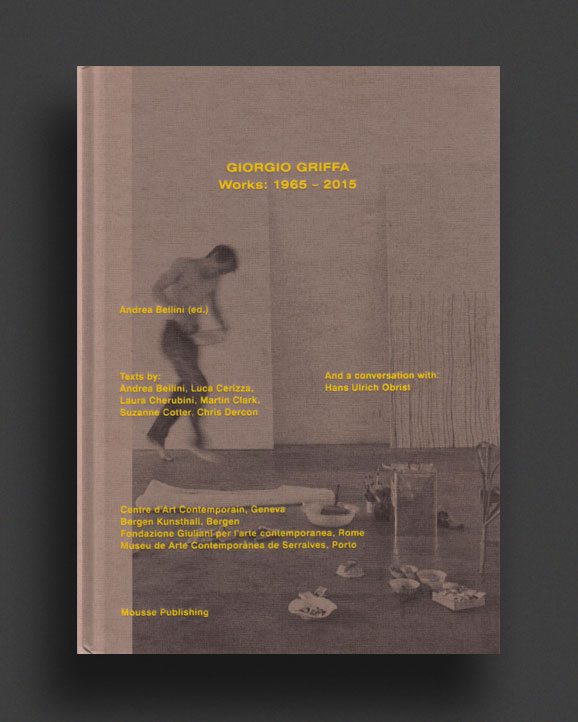
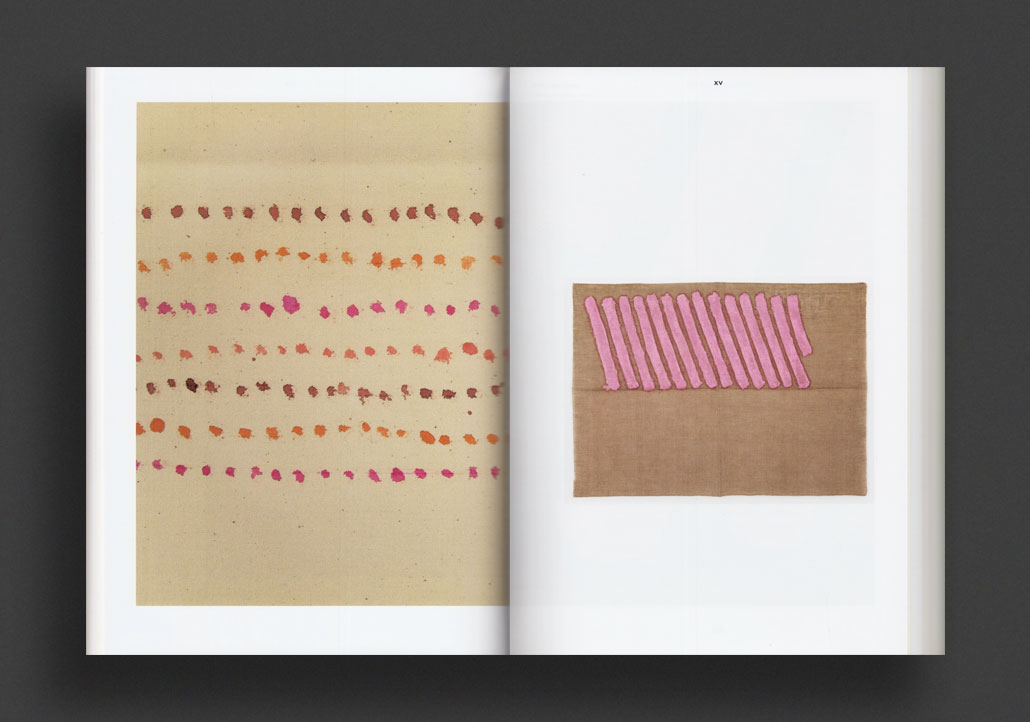
The great hardcover monographic book on the work of Giorgio Griffa, edited by Andrea Bellini, that very quickly disappeared from print and became understandibly collectible. This most comprehensive English-language book on the artist, published on the occasion of the cycle of exhibitions dedicated to the work of Giorgio Griffa (Turin, 1936) (Centre d’Art Contemporain, Geneva; Museu de Arte Contemporanea de Serralves, Porto; Bergen Kunsthall; and Fondazione Giuliani, Rome) aims—through a series of essays by Andrea Bellini, Luca Cerizza, Laura Cherubini, Martin Clark, Suzanne Cotter, and Chris Dercon, a conversation between Griffa and Hans Ulrich Obrist, and a selection of artist’s writings and a chronology compiled by Marianna Vecellio—to highlight the very diverse features and extraordinary richness of Griffa’s paintings. Profusely illustrated throughout.
“Giorgio Griffa is one of the least-known Turin-born artists of the Arte Povera generation. Another precious ‘secret’ that the city of Turin, discreet and haughty as ever, has managed to keep under wraps—in this case for almost half a century. From the immediate post-war period, a singular group of young artists in the city helped write the history of European art in the second half of the twentieth-century. Together with now universally acclaimed figures, such as Alighiero Boetti, Giuseppe Penone, Giulio Paolini, Giovanni Anselmo, Michelangelo Pistoletto, Gilberto Zorio, and Mario and Marisa Merz, there were also other leading artists in Turin, who have only recently begun to receive the international attention they deserve. Here I am thinking of the likes of Piero Gilardi, Gianni Piacentino, Carol Rama, Salvo, and Aldo Mondino, but also of the eccentric and eclectic Carlo Mollino. Griffa was one of the most discreet and isolated in this group of young people who revolved around Sperone’s gallery. He immediately showed an exclusive interest in painting, while his companions mainly moved out towards sculpture and installation from the mid-sixties.”—Andrea Bellini
Fine copy, almost As New.
1974, Japanese
Hardcover (w. dust jacket), 127 pages, 29 x 22 cm
1st Edition, Out of print title / used / very good
Published by
Bijutsu Shuppansha / Japan
Rippu Shobo / Japan
$200.00 - Out of stock
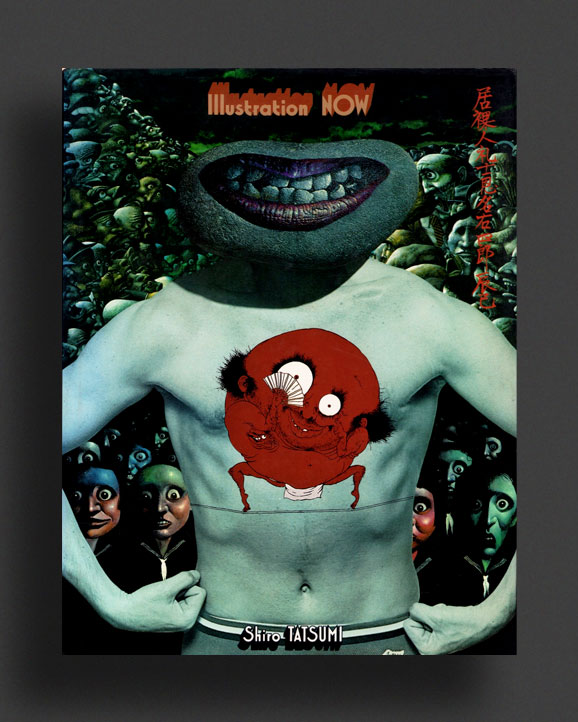
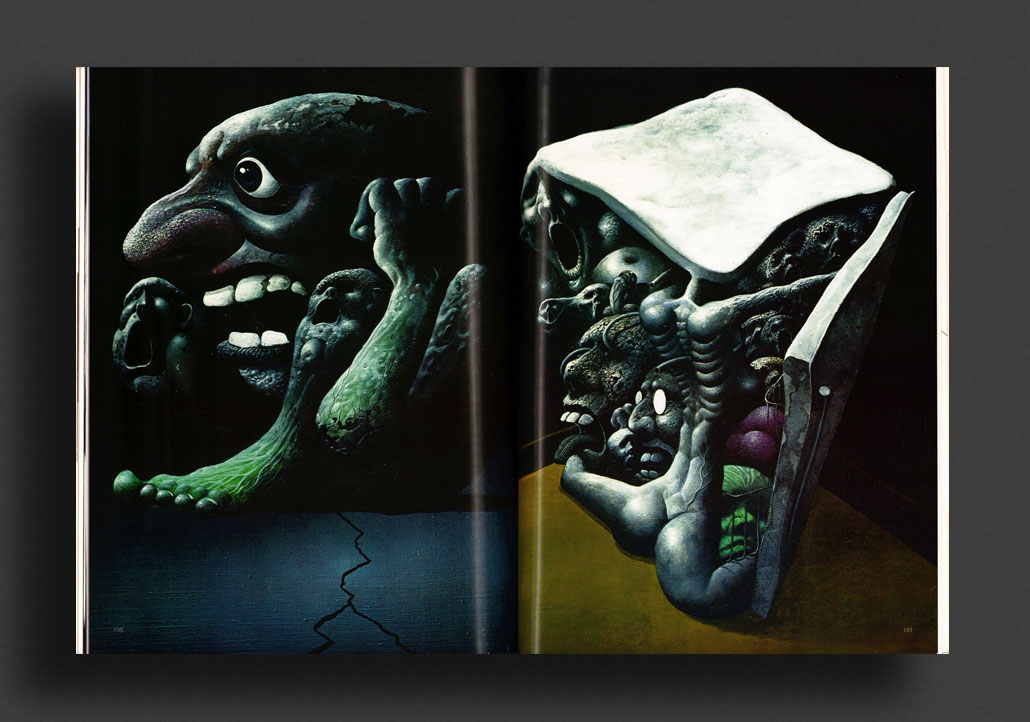
Rare copy of the best book on award-winning Japanese illustrator Shiro Tatsumi (1938—2003). From the legendary Illustration NOW series published by Rippu Shobo in 1974, this lavishly produced book collects the best of Tatsumi's radical graphic phantasmagoria, showcasing his unique work from the Tokyo underground to his award-winning commercial illustration, his never published private drawings and his illustrations of Hell. Fiercely independent and challenging, Tatsumi started his design career with Daido Moriyama’s first photobook, A Photo Theater, then worked on theater posters for the avant-garde performances of Shuji Terayama, and as a commercial illustrator and designer. Designed by Seiichi Horiuchi in the 1970s and presented by Keiichi Tanaami, Yoshitara Isaka, Yosuke Inoue and others, The World of Shiro Tatsumi includes 207 works, with fold-out panels. Highly recommended volume on an artist seldom spoken of outside Japan.
Very Good copy with VG dust jacket. Lacks pull-out poster.
1974, Japanese
Hardcover (w. dust jacket, poster and obi), 127 pages, 29 x 22 cm
1st Edition, Out of print title / used / very good
Published by
Rippu Shobo / Japan
$300.00 - In stock -
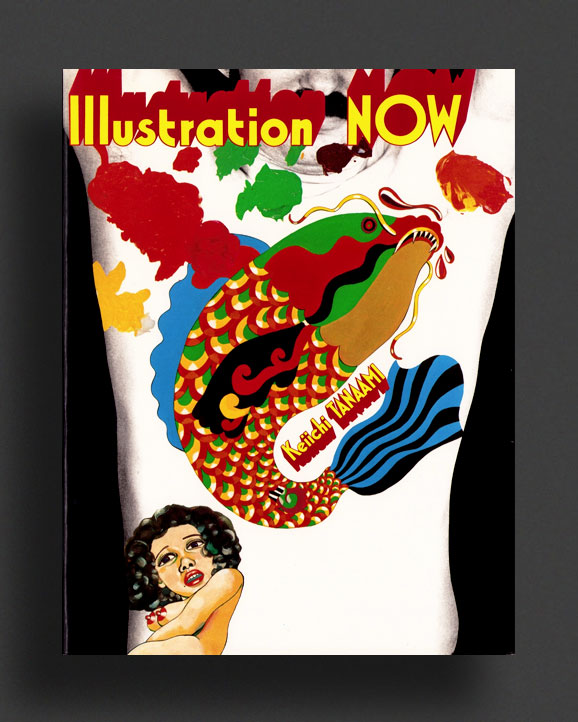
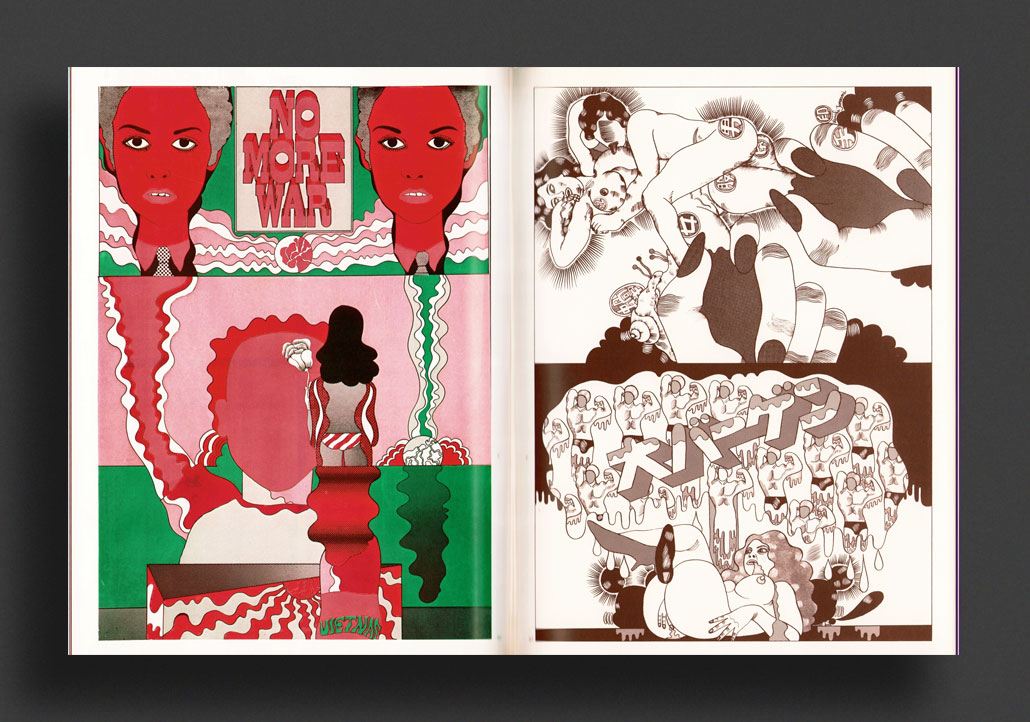
Rare copy of the best book on Japanese master graphic artist Keiichi Tanaami (1936—2024), one of the leading pop artists of postwar Japan. The first volume from the legendary Illustration NOW series published by Rippu Shobo between 1974—1975, this lavishly produced book collects the best of Tanaami's psychedelic "Aggressive Eroticism" from the 1960s—1970s, showcasing many of his most sexually provocative and anti-authoritarian/anti-war graphic works, printed beautifully with spot colour chapters and full-colour lavish reproductions. Most complete copy with fold-out poster and obi. Highly recommended volume on an artist seldom spoken of outside Japan.
Very Good copy in VG dust jacket w. obi and poster included.
1970, German
Softcover (w. dust jacket), 118 pages, 21 x 17 cm
Out of print title / used / very good
Published by
Studio 69 / Cologne
$100.00 - Out of stock
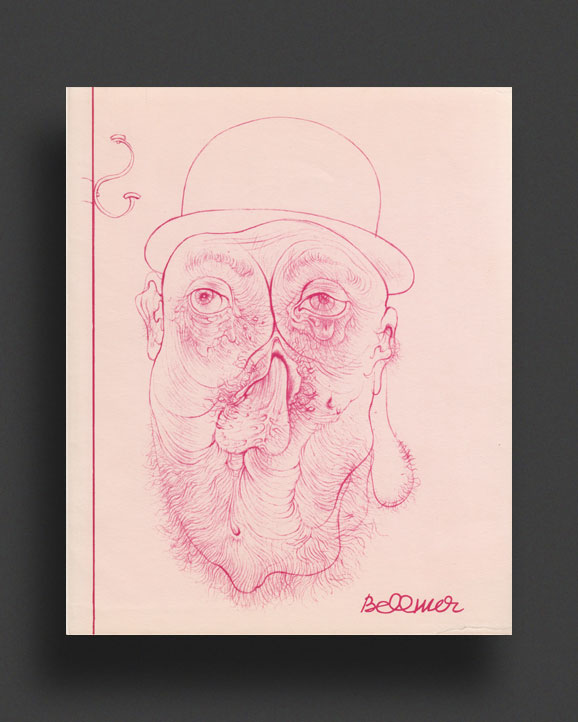
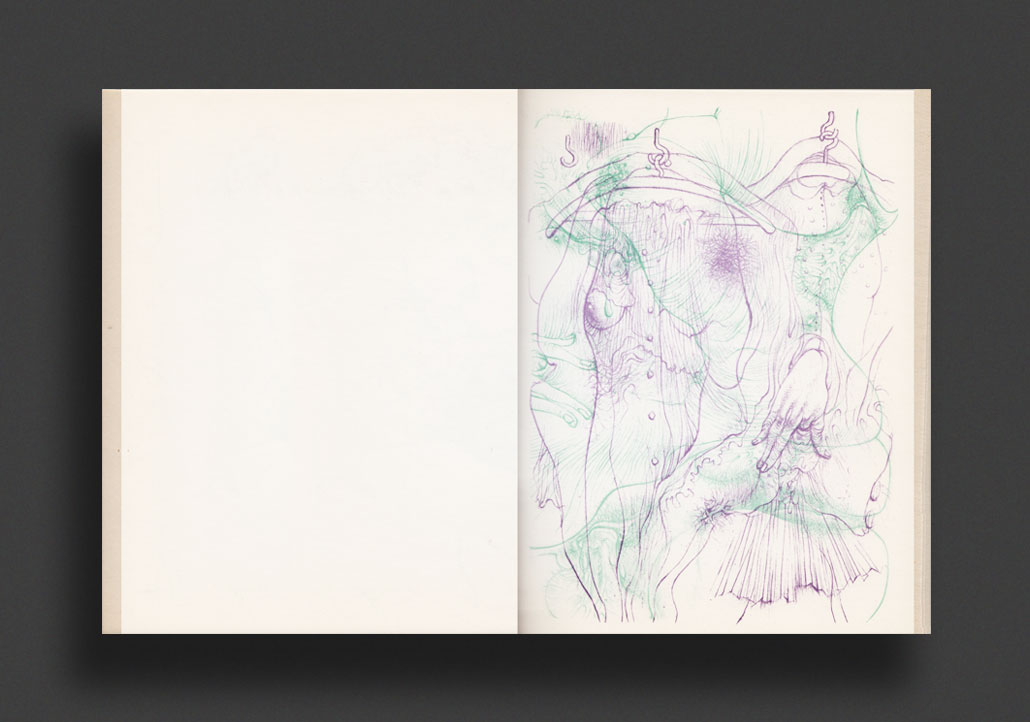
First edition, edited and designed by Galerie Sydow's Heinrich Sydow-Zirkwitz, this beautiful book of Hans Bellmer's graphic works was published as a special project between Studio 69 in Cologne and Galerie Sydow in Frankfurt to accompany the exhibition "Ars Erotica" in 1970. Handsomely printed with spot-colour over-printing and illustrated throughout with Bellmer's graphic famous graphic series' "Bellmer à Sade" (1961), "Petite Traité de Morale" (1965) and illustrations for Georges Bataille's "Madame Edwarda" (1965). Includes text by Horst Albert Glaser. A very handsome collection and one of the nicest Bellmer books.
Very Good copy in Good dust jacket with light tanning to spine/edges, dustiness.
1985, Japanese
Softcover, 80 pages, 33.5 x 26 cm
1st Edition, Out of print title / used / very good
Published by
The Museum Modern Art / Hyogo
$80.00 - Out of stock
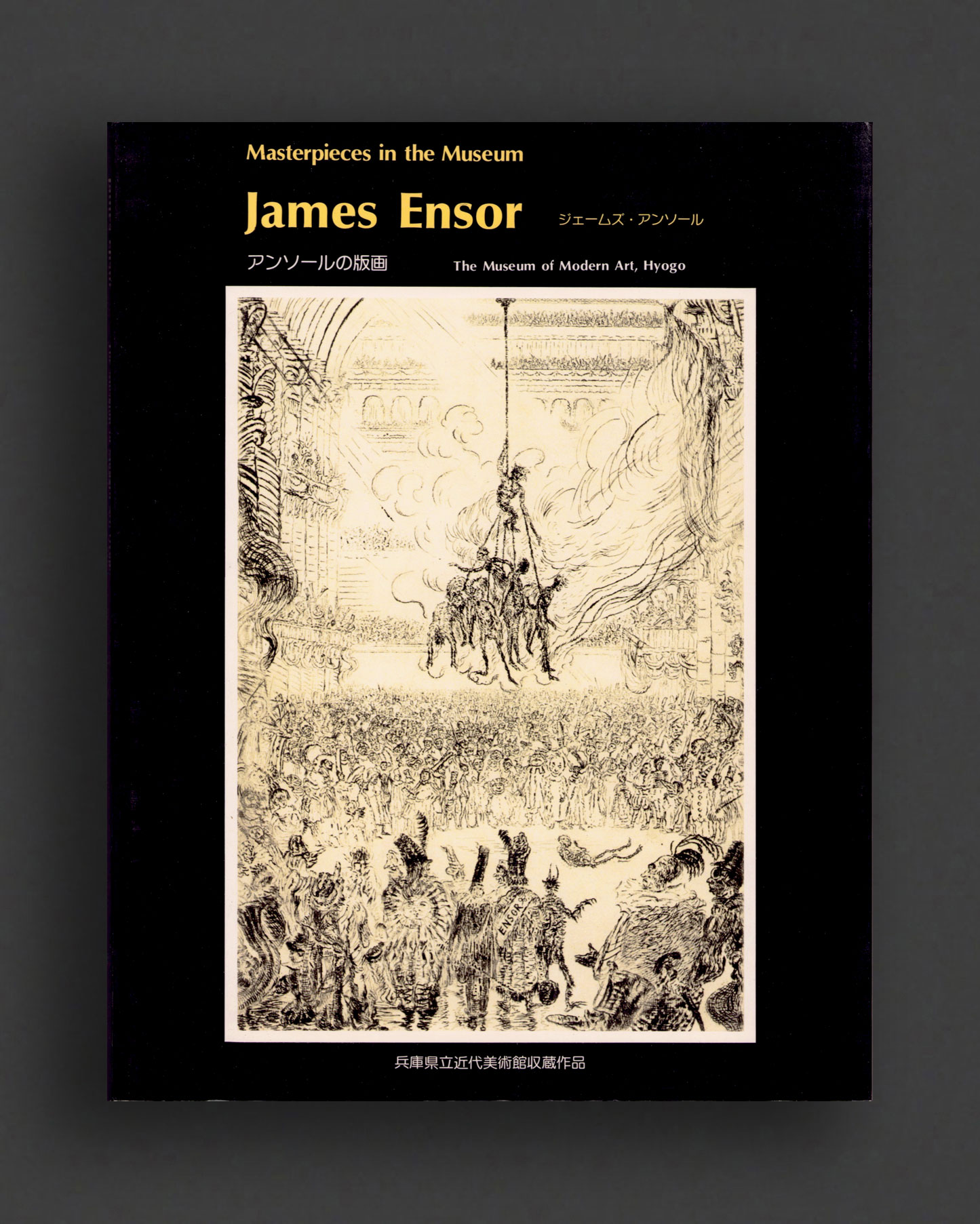
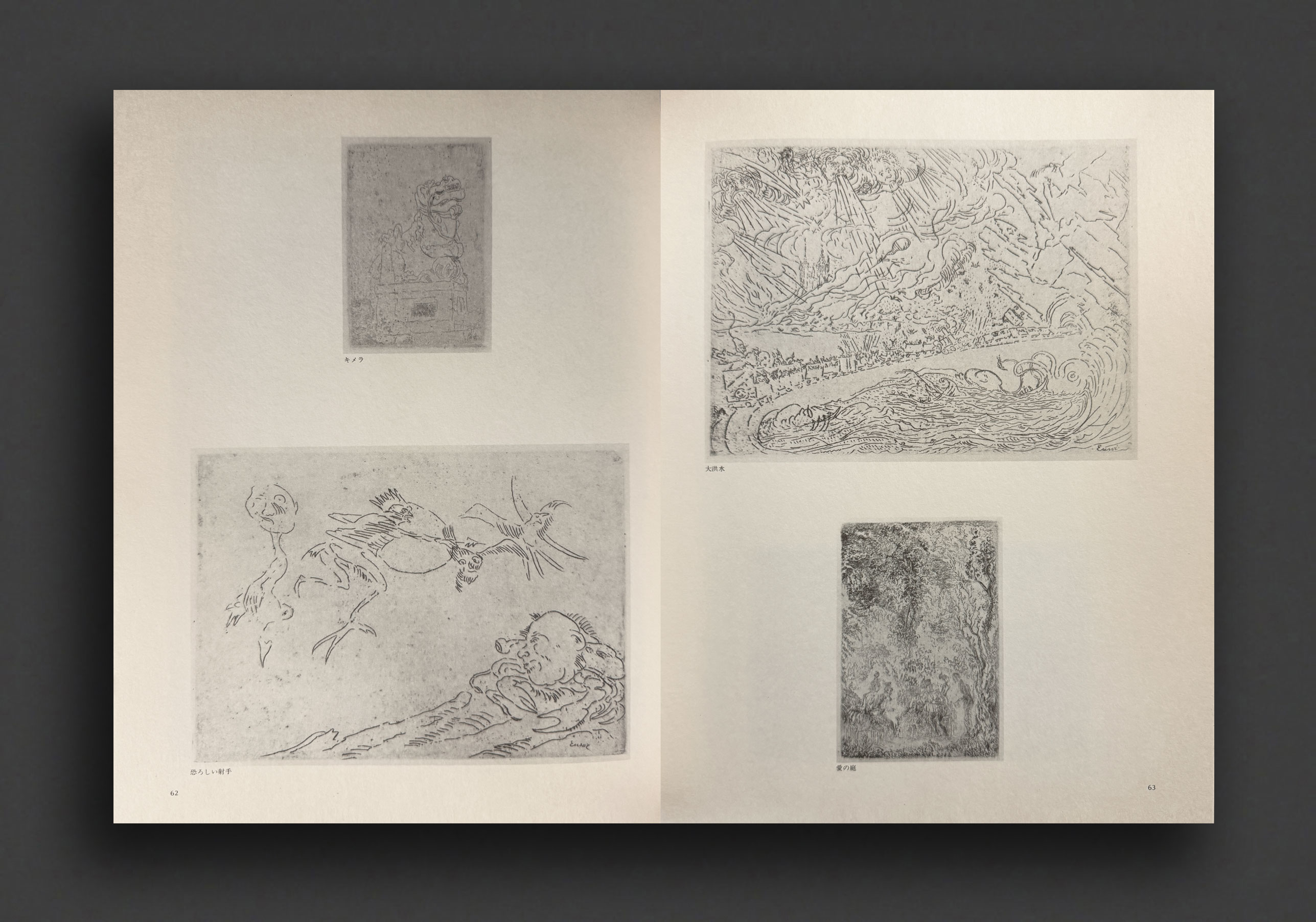
Rare major overview of James Ensor's astounding graphic work published on the occasion of a major 1985 Japanese exhibition at the Museum Modern Art in Hyogo, showcasing the prints held in their collection. Profusely illustrated with reproductions of Ensor's prints in an oversized softcover format, all catalogued in detail with an introductory text in Japanese. Lovely reproductions on warm paperstock.
James Sidney Edouard, Baron Ensor (13 April 1860 – 19 November 1949) was a Belgian painter and printmaker, an important influence on expressionism and surrealism who lived in Ostend for almost his entire life. He was associated with the artistic group Les XX. While Ensor's early works, such as Russian Music (1881) and The Drunkards (1883), depict realistic scenes in a somber style, his palette subsequently brightened and he favored increasingly bizarre subject matter. Such paintings as The Scandalized Masks (1883) and Skeletons Fighting over a Hanged Man (1891) feature figures in grotesque masks inspired by the ones sold in his mother's gift shop for Ostend's annual Carnival. Subjects such as carnivals, masks, puppetry, skeletons, and fantastic allegories are dominant in Ensor's mature work. Ensor dressed skeletons up in his studio and arranged them in colorful, enigmatic tableaux on the canvas, and used masks as a theatrical aspect in his still lifes. Attracted by masks' plastic forms, bright colors, and potential for psychological impact, he created a format in which he could paint with complete freedom. James Ensor is considered to be an innovator in 19th-century art. Although he stood apart from other artists of his time, he significantly influenced such 20th-century artists as Paul Klee, George Grosz, Wols, and many expressionist and surrealist painters of the 20th century.
Very Good copy.
2025, English
Hardcover, 272 pages, 28 x 23 cm
Published by
Prestel / Munich
$99.00 - In stock -
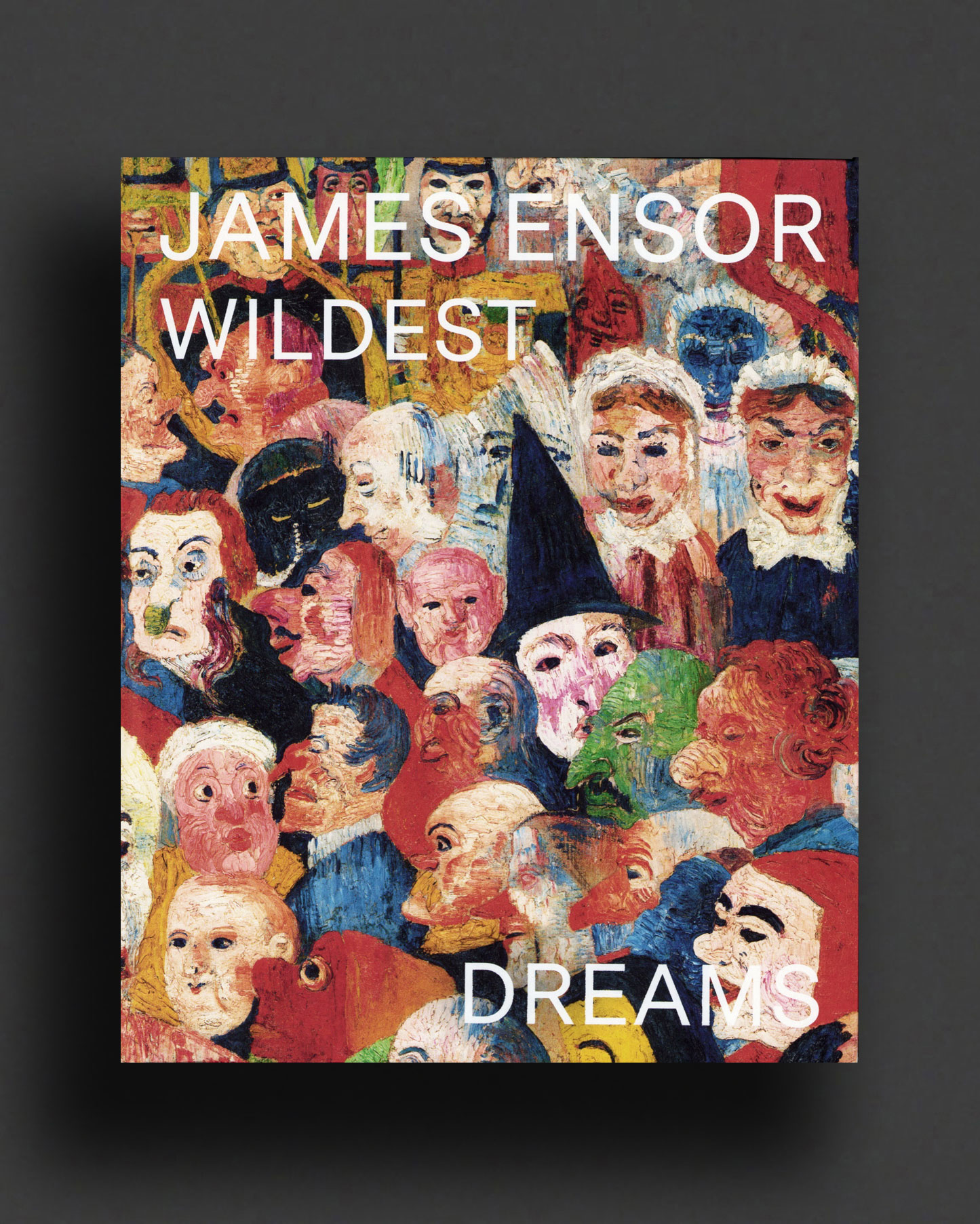
English edition of this wonderful tribute to one of the fathers of international modernism, James Ensor.
James Ensor’s visionary spirit takes us on a journey through his manifold universe of still lifes, self-portraits, savage visions, carnival and satire. In the course of his career, Ensor grew into an unruly gamechanger who personally reset the rules of art. As he did so, he resolutely distanced himself from the classical European ideal of beauty and from the Impressionism that had initially fascinated him.
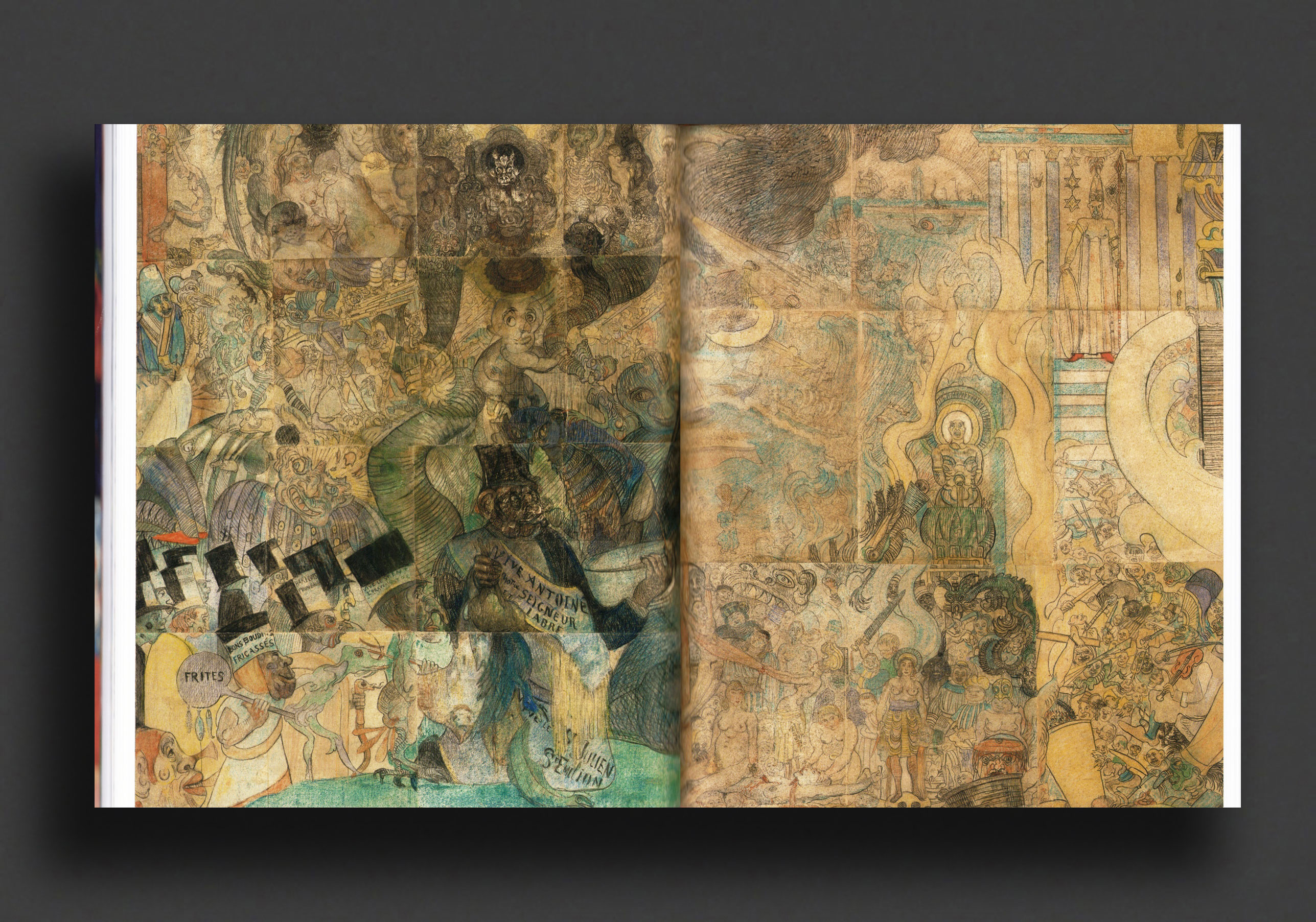
Ensor did not limit himself to painting – he also unleashed his passion for experiment in detailed drawings, huge collages and potent etchings. His love for the fanciful resulted in characteristically grotesque representations of countless wild dreams.
The pulse of a thrilling late nineteenth century beats through the more than two hundred works reproduced in this book. Ensor constantly surprises us with his contrasts between the comical and the macabre, the refined and the wanton, atmospheric bourgeois interiors and morbid skeletons.
Drawing on their wide-ranging expertise, fifteen authors each highlight specific facets of the Ostend artist’s developing practice to paint a fresh and comprehensive picture of Ensor’s life and work.
This publication accompanies the exhibition In Your Wildest Dreams – Ensor Beyond Impressionism from 28 September 2024 until 19 January 2025 at the Royal Museum of Fine Arts Antwerp (KMSKA).
2005, English / Japanese
Hardcover, 200 pages, 26 x 19.5 cm
1st Edition, Out of print title / as new
Published by
APT International / Tokyo
$85.00 - In stock -
Major Japanese hardcover monographic catalogue published on the occasion of a major travelling exhibition of James Ensor's work, hosted at 5 different museums across Japan in 2005. Profusely illustrated with reproductions of Ensor's paintings, prints and drawings, photographs, essays, descriptions of works, bibliography, biography, and much more, in bi-lingual English and Japanese. A most handsome copy of this fine book, with exhibition ticket stub neatly pasted into colophon page, Ensor exhibition flyer/poster inserted, along with Ensor-focussed newsletter from the museum, and further insert about related Belgian Symbolist exhibit.
James Sidney Edouard, Baron Ensor (13 April 1860 – 19 November 1949) was a Belgian painter and printmaker, an important influence on expressionism and surrealism who lived in Ostend for almost his entire life. He was associated with the artistic group Les XX. While Ensor's early works, such as Russian Music (1881) and The Drunkards (1883), depict realistic scenes in a somber style, his palette subsequently brightened and he favored increasingly bizarre subject matter. Such paintings as The Scandalized Masks (1883) and Skeletons Fighting over a Hanged Man (1891) feature figures in grotesque masks inspired by the ones sold in his mother's gift shop for Ostend's annual Carnival. Subjects such as carnivals, masks, puppetry, skeletons, and fantastic allegories are dominant in Ensor's mature work. Ensor dressed skeletons up in his studio and arranged them in colorful, enigmatic tableaux on the canvas, and used masks as a theatrical aspect in his still lifes. Attracted by masks' plastic forms, bright colors, and potential for psychological impact, he created a format in which he could paint with complete freedom. James Ensor is considered to be an innovator in 19th-century art. Although he stood apart from other artists of his time, he significantly influenced such 20th-century artists as Paul Klee, George Grosz, Wols, and many expressionist and surrealist painters of the 20th century.
Near Fine.
2009, English
Hardcover, 550 pages, 22 x 28 cm
1st Edition, Out of print title / used / very good
Published by
The MIT Press / Massachusetts
$380.00 - Out of stock
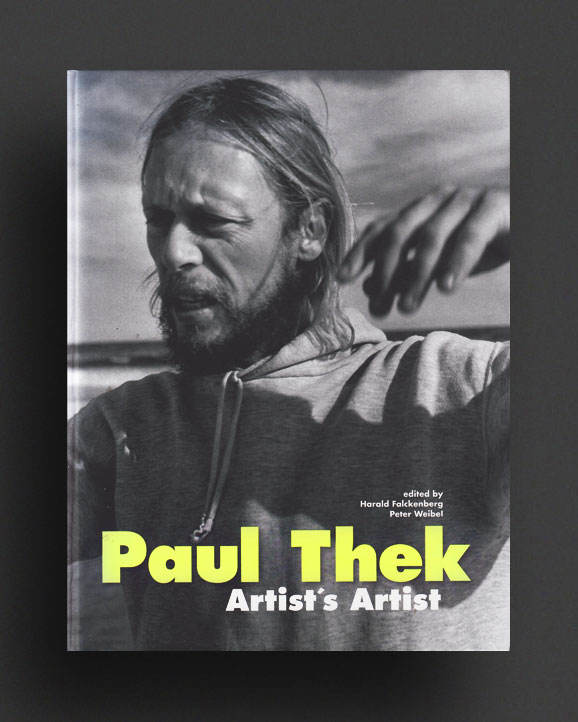
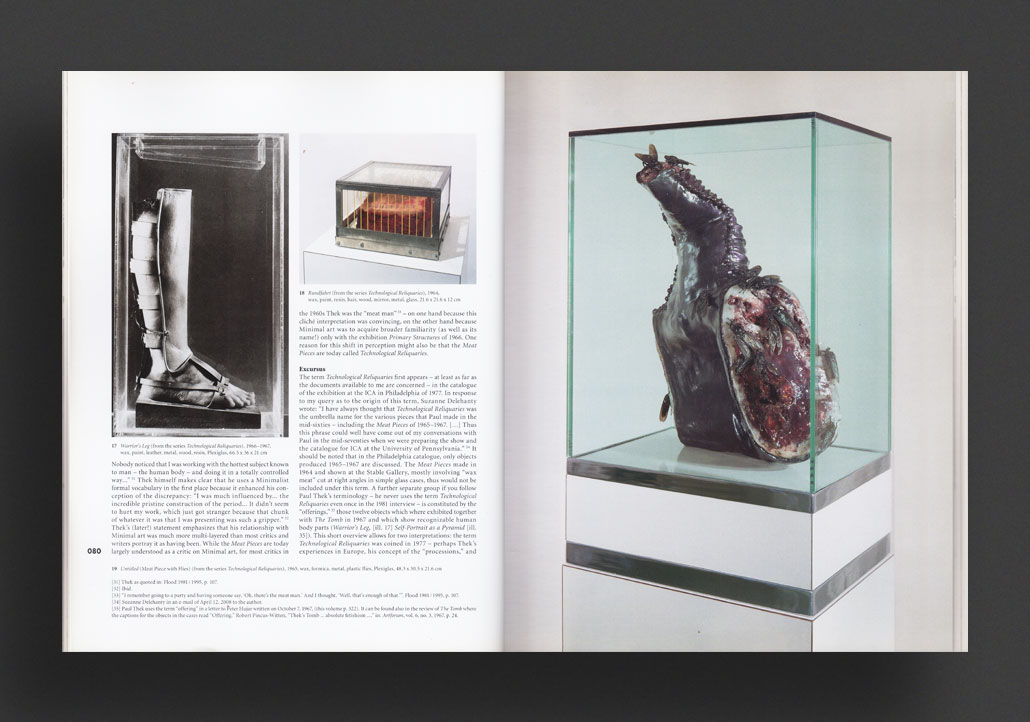
First edition of the scarce, highly sought after, and most comprehensive book ever published on American artist Paul Thek, published in 2009 by MIT Press. Edited by Harald Falckenberg and Peter Weibel, this enormous 550 page monograph contains more than 300 works by this groundbreaking artist, documenting his journey from legendary outsider to central figure in many contemporary art movements.
Paul Thek occupied a place between high art and low art, between the epic and the everyday. During his brief life (1933-1988), he went against the grain of art world trends, humanizing the institutional spaces of art with the force of his humor, spirituality, and character. Twenty years after Thek's death from AIDS, we can now recognize his influence on contemporary artists ranging from Vito Acconci and Bruce Nauman to Matthew Barney, Mike Kelley, and Paul McCarthy, as well as Kai Althoff, Jonathan Meese, and Thomas Hirschhorn. This book brings together more than 300 of Thek's works—many of which are published here for the first time—to offer the most comprehensive display of his work yet seen. The book, which accompanies an exhibition at ZKM ? Museum of Contemporary Art presenting Thek's work in dialogue with contemporary art by young artists, includes painting, sculpture, drawing, and installation work, as well as photographs documenting the room-size environments into which Thek incorporated elements from art, literature, theater, and religion. These works chart Thek's journey from legendary outsider to foundational figure in contemporary art. In their antiheroic diversity, Thek's works embody the art revolution of the 1960s; indeed, Susan Sontag dedicated her classic Against Interpretation to him. Thek's treatment of the body in such works as “Technological Reliquaries,” with their castings and replicas of human body parts, tissue, and bones, both evoke the aura of Christian relics and anticipate the work of Damien Hirst. The book, with more than 500 images (300 in colour) and nineteen essays by art historians, curators, collectors, and artists, investigates Thek's work on its own terms, and as a starting point for understanding the work of the many younger artists Thek has influenced.
Essays by Jean-Christophe Ammann, Margrit Brehm, Bazon Brock, Suzanne Delehanty, Harald Falckenberg, Marietta Franke, Stefan Germer, Kim Gordon, Roland Groenenboom, Axel Heil, Gregor Jansen, Mike Kelley, John Miller, Susanne Neubauer, Kenny Schachter, Harald Szeemann, Annette Tietenberg, Peter Weibel, Ann Wilson.
Very Good copy.
1996, Japanese
Softcover, 230 pages, 28 x 22.8 cm
1st Edition, Out of print title / used / fine
Published by
Asahi Shimbun / Japan
$100.00 - In stock -
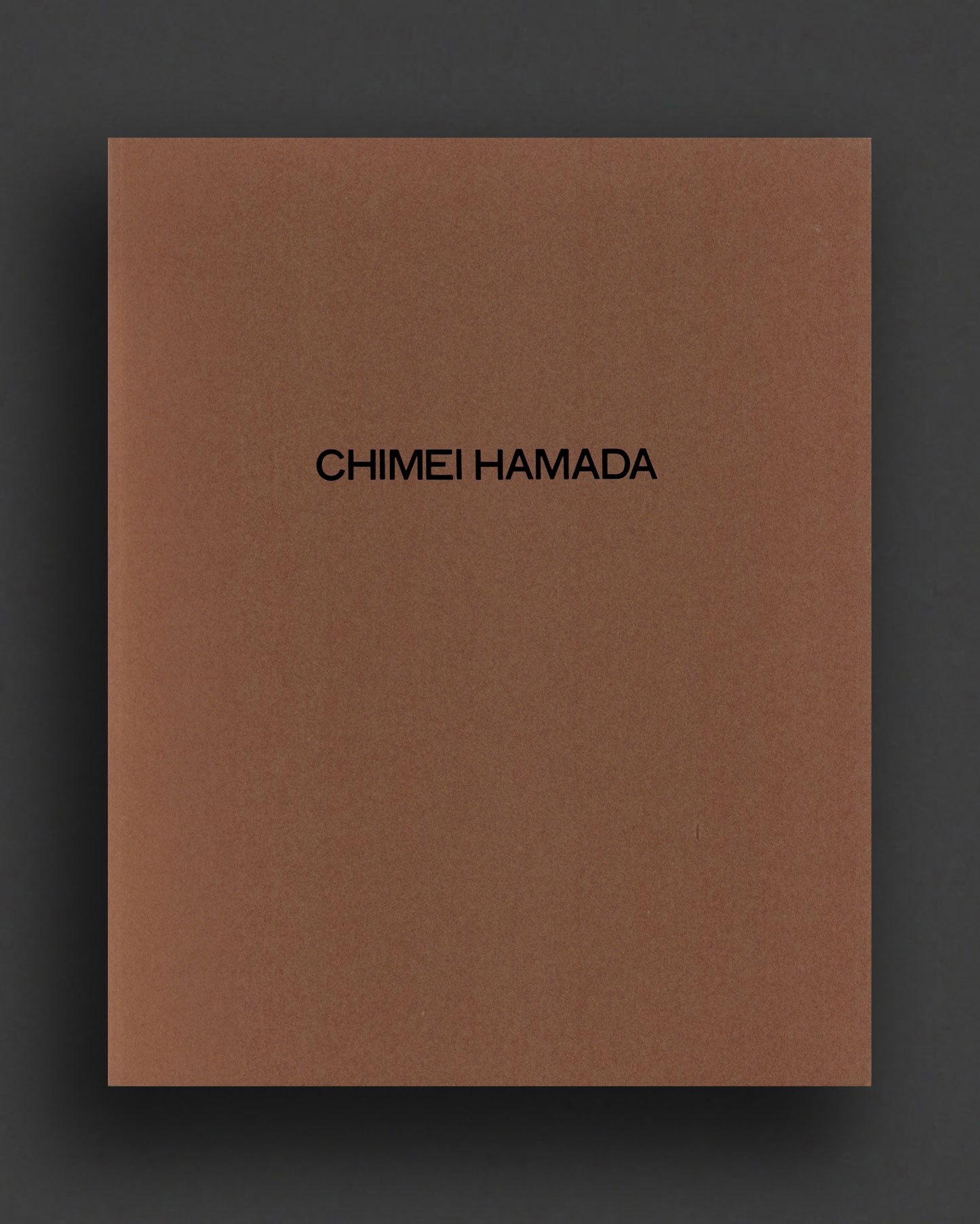
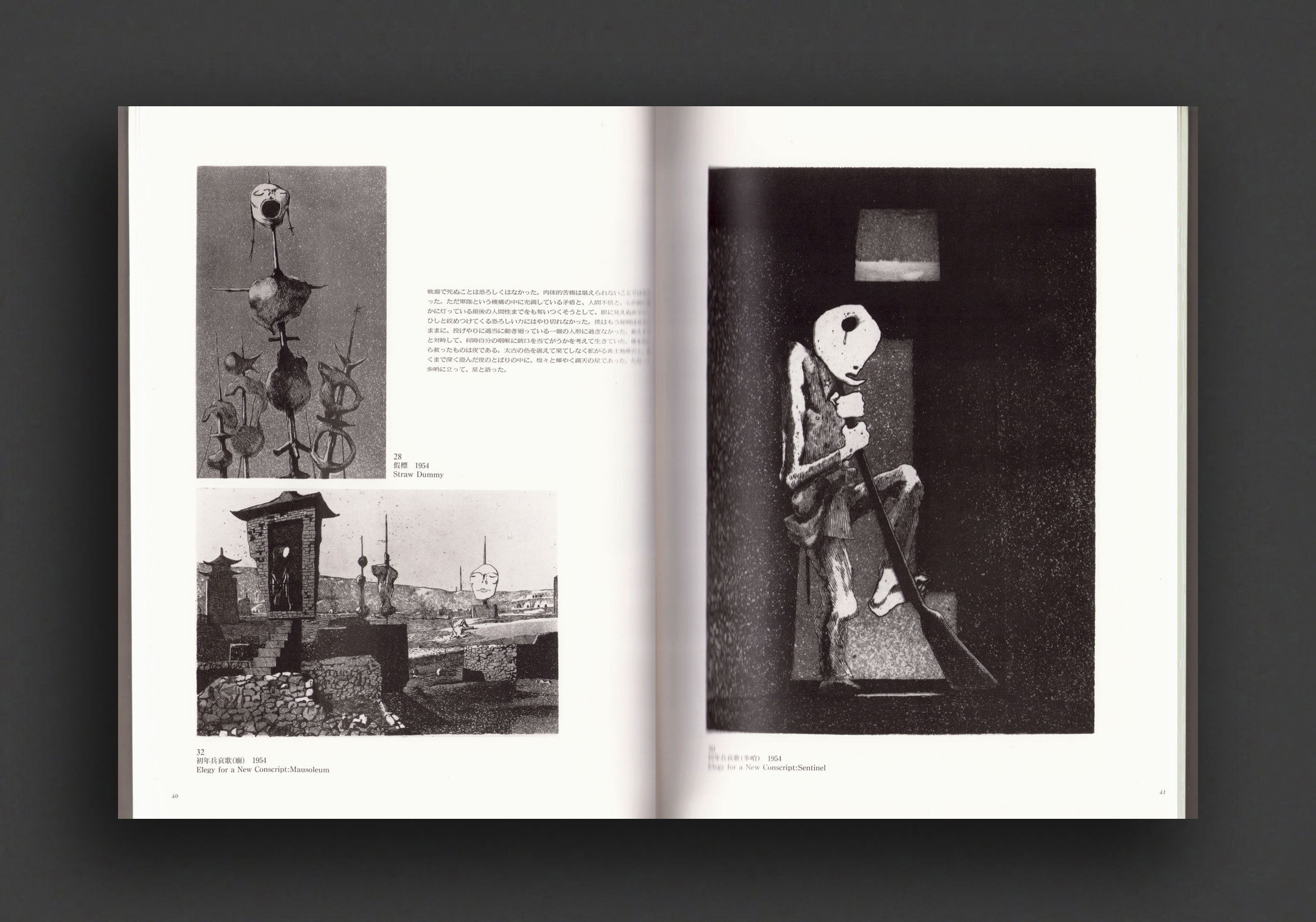
Wonderful and comprehensive 1996 catalogue on Japanese surrealist and satirical print artist Hamada Chimei (1917-2018). Hamada became famous for his copper-plate prints portraying hellish scenes based on his experiences as a conscript for five years during the second Sino-Japanese War (1937-1945). Hamada is unique among Japanese postwar print artists in his graphic depictions of the grim realities of war and tragedy. He is probably best known for his caustic series 'Elegy of raw recruits' ('Shonen-hei aika') from 1951-1954 which was based on his own experience as a soldier, and in which he bitterly exposed the inhuman aspects of the army, witnessing Japanese atrocities in China, which Hamada called "demonic." He said that what he encountered was "the darkness of the [Japanese] Middle Ages transported into the present."
Hamada graduated from the oil painting course at the Tokyo School of Fine Arts. After WWII Hamada began to study etching under Komai Tetsuro and Sekino Jun'ichiro, two of the best known artists working in copperplate techniques. Unlike the works of his two teachers, which are usually serene, his works are disturbing, delving into the dark side of the human psyche and society. In 1964 he traveled to Europe and by the time he returned to Japan in 1965, he had become an honorary member of the print department of the Florence Academy of Fine Arts (Italy). After completing the 'Elegy of raw recruits' series, he responded to the particular postwar political developments, namely the resurgence of nationalism and power in wrong hands. His later Kafka-esque works depict the alienation of human beings from society which controls them.
An assessment of Hamada's harrowing 'Elegy of raw recruits' series from an exhibition of his work at the Museum of Modern Art, NY in 2015 declared, "Hamada transmuted the barbarity he saw into a comedic theater of cruelty." The exhibition reviewer also stated that, "The decision to work in etching for this series was purposeful, as Hamada likened the process of an image emerging from an ink-covered etching plate to that of smoke clearing on the battlefield." A few years earlier, another researcher concluded that, "Hamada imbued his plates with a surreal and sometimes Otto Dix-like expressionism.... The copper plate print involves touching, manipulating, and wounding a surface with acid ... and has aggressive connotations best suited to [Hamada's] war-based images."
This large book documents one the largest survey of the artist to date, profusely illustrated throughout in colour and b/w with his incredible copper-plate print works, bronze sculptures, oil paintings and drawings, accompanied by texts (in Japanese), biography and a full catalogue of works.
Near Fine copy with one small dent to cover. Includes newspaper clipping with illustration and review of exhibition.
1965, English
Offset print, 28.8 x 20 cm
Out of print title / used / good
Published by
? / ?
$40.00 - In stock -
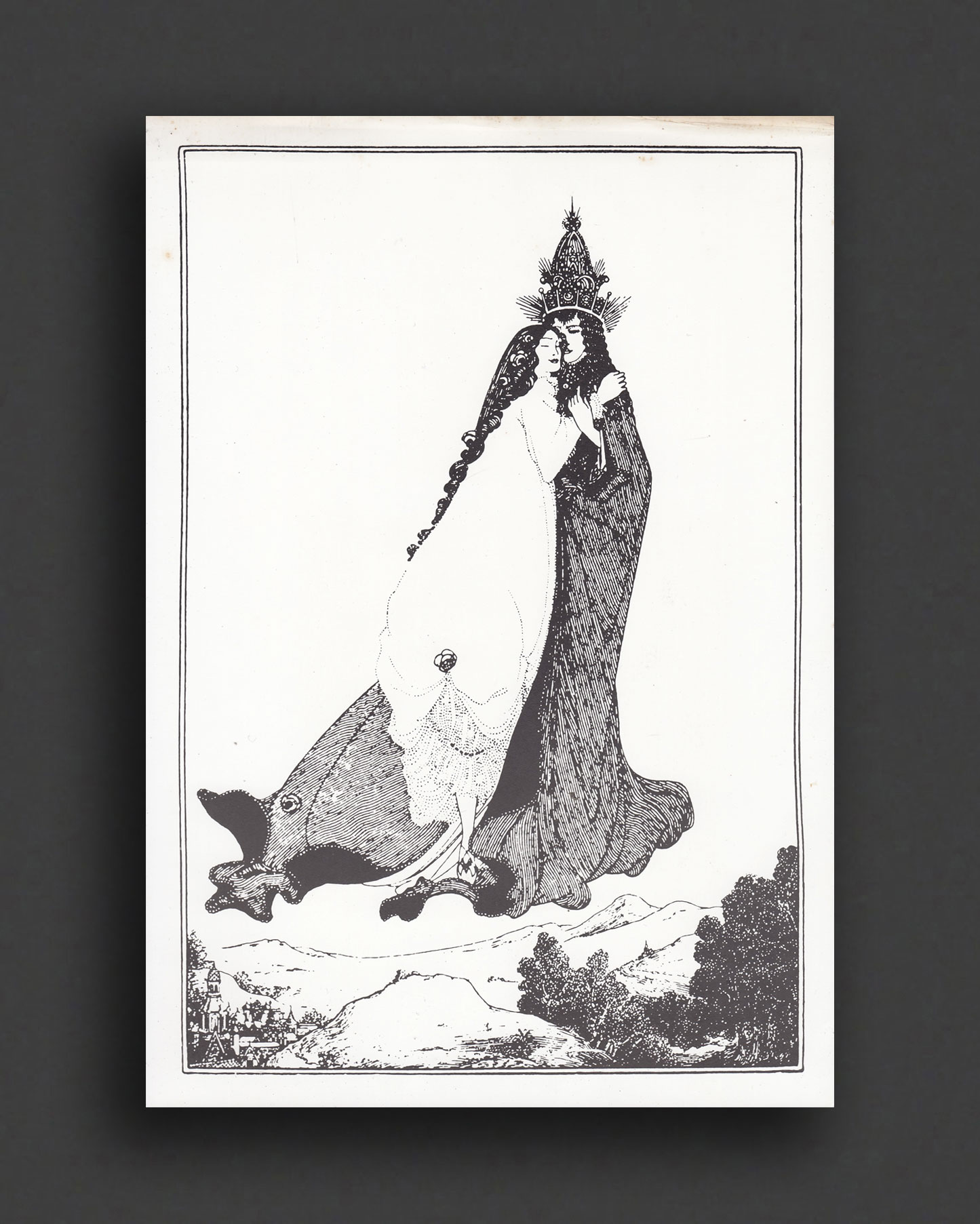
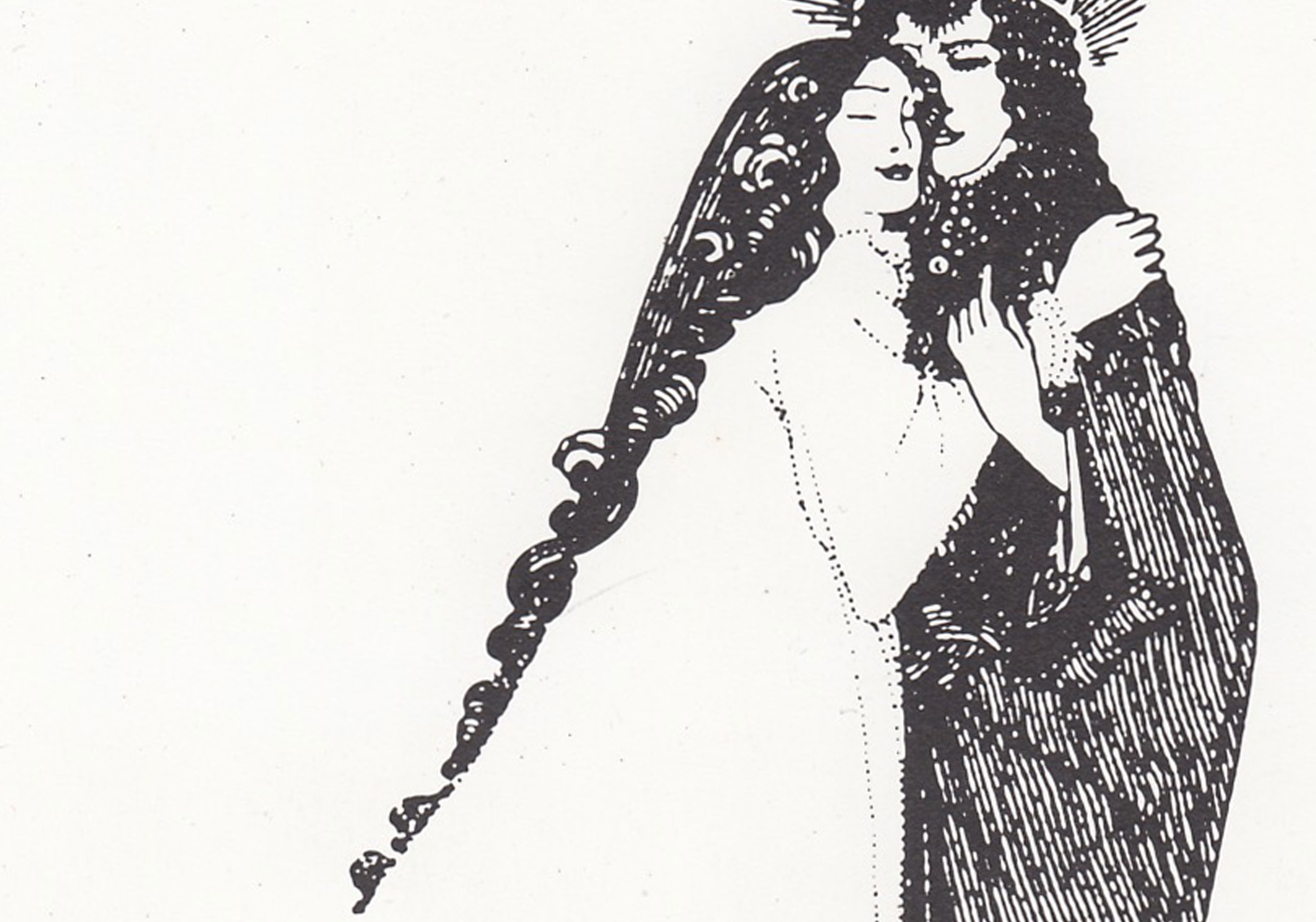
Vintage 1965 offset print of 'The Ascension of Saint Rose of Lima' (1896) by Aubrey Beardsley. This iconic work, featuring the saint's ethereal ascent to heaven, is inspired by Albrecht Dürer's 'The Great Fortune', and was originally published in 'The Savoy', Volume 2, published April, 1896, a line block print illustrating an excerpt from a story written by Beardsley titled 'Under the Hill'.
The following excerpt is from 'Under the Hill' by Aubrey Beardsley, from a longer excerpt published alongside this illustration in The Savoy magazine, 1896: 'All who would respire the perfumes of Saint Rose's sanctity , and enjoy the story of the adorable intimacy that subsisted between her and Our Lady , should read Mother Ursula's “ Ineffable and Miraculous Life of the Flower of Lima, published shortly after the canonization of Rose by Pope Clement X. in 1671. “Truly" exclaims the famous nun, “to chronicle the girlhood of this holy virgin makes as delicate a task as to trace the forms of some slim, sensitive plant, whose lightness, sweetness, and simplicity defy and trouble the most cunning pencil. Mother Ursula certauily acquits herself of the task with wonderful delicacy and taste.'
Aubrey Vincent Beardsley (1872–1898) was a popular and controversial British illustrator and author best known for his use of starkly contrasting and intricate black and white designs and for his caustic commentary on the society and the morality of his time of which he was a keen observer. Most of his drawings were executed in jet black ink on white paper. Beardsley was clearly influenced by the style of Japanese woodcuts. His subjects emphasized the beautiful, the grotesque, the decadent, and the erotic. He was a leading figure in the Aesthetic Art Movement of the late 1800s which also included the works of Oscar Wilde (whom he disliked,) Edgar Allan Poe, Harry Clarke, and James A. McNeill Whistler. Beardsley's contribution to the development of the Art Nouveau style and the poster movement was hugely significant, despite the brevity of his brilliant artistic career before his untimely death from tuberculosis at only 25 years old.
Good copy with some foxing, creasing and light wear to top edge.
1993, English
Softcover, 256 pages, 24 x 16.5 cm
1st Edition, Out of print title / used / very good
Published by
Whitney Museum / New York
Harry N. Abrams / New York
$300.00 - In stock -
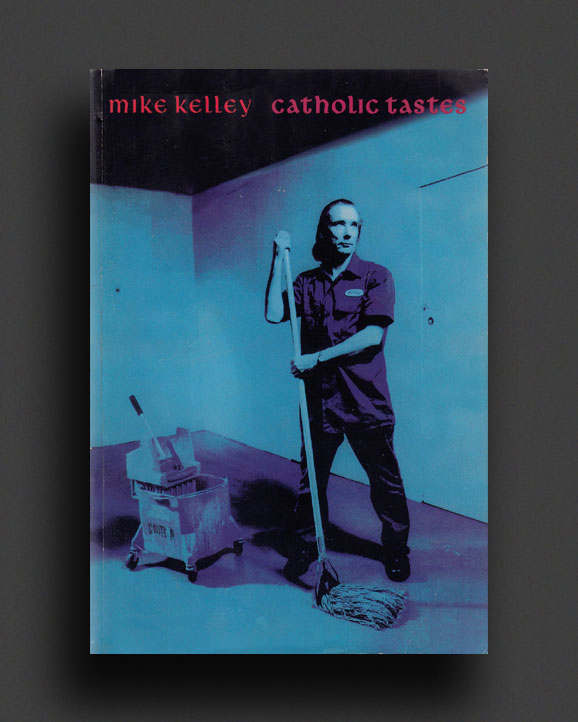
Still, and will probably always be, the best book on Mike Kelley. First edition, now very collectible. This definitive survey was published in 1993 in conjunction with "Mike Kelley", a travelling exhibition held at Whitney Museum of American Art, New York; Los Angeles County Museum of Art, LA; and Moderna Museet, Stockholm, throughout 1994. Mike Kelley, one of the leading Californian artists of the 1990s, was a proponent of abject or pathetic art, an anti-aesthetic, anti-heroic movement, which criticized social and artistic issues through banality and humour. Exploring the work of this great and controversial performance artist and sculptor at the mid-way point in his career, this dense book presents thirteen essays, plus an introduction, discussing Kelley's projects, performances, and the ideas and diverse influences that motivate his work - contemporary art, rock and roll, social commentary and pop culture. Profusely illustrated throughout in colour and black and white, with texts by Elizabeth Sussman, David Marsh, Richard Armstrong, Timothy Martin, Howard Singerman, Colin Gardner, Dennis Cooper & Casey McKinney, John Miller, Ralph Rugoff, Kim Gordon, Howard N. Fox, Diedrich Diederichsen, Jutta Koether, Martin Prinzhorn, Paul Schimmel, John G. Hanhardt. No less! Includes a bibliography and exhibition history. Catalogue designed by Lorraine Wild and ReVerb.
Highly recommended.
Good—Very Good copy, with some general light wear to covers/spine.