World Food Books' programme is largely produced on Kulin Nation land. We acknowledge the Wurundjeri people of the Kulin Nation as the first and continuing custodians of this land, and pay respect to their Elders past, present, and emerging.
World Food Books is an arts and special interests bookshop in Naarm / Melbourne. Founded in 2010, World Food Books is devoted to the presentation of a rotating, hand-selection of international art, design, literary and counterculture publications with an emphasis on the anti-traditional, the experimental, the avant-garde, the heretic, the marginal.
Presenting new titles alongside rare and out-of-print books, catalogues and journals spanning the fields of modern and contemporary art, design, photography, illustration, film, literature, poetry, cultural theory, philosophy, sexuality, popular and underground culture in its many radical forms, World Food Books wishes to encourage adventurous, thoughtful and open-minded reading, looking, writing, and exchange of publishing and ideas, both current and historical.
As well as our bookshop, located in Melbourne's historical Nicholas Building, all of our inventory is available internationally via our online mail-order service.
World Food Books semi-regularly co-ordinates "Occasions", a programme of exhibits and events at the bookshop and in partnership with other hosts (such as museums and art galleries) that develop out of the activities, relationships and content of the bookshop itself.
World Food Books
The Nicholas Building
37 Swanston Street
Room 5, Level 6
Melbourne 3000
Australia
SHOP HOURS:
THU–SAT 12–6
WEB-SHOP OPEN 24/7
World Food Books
Postal Address:
PO Box 435
Flinders Lane
Victoria 8009
Australia
Art
Theory / Essay
Architecture / Interior
Graphic Design / Typography
Photography
Fashion
Eros
LGBTQ+
Fiction / Poetry
Weird / Speculative / Science Fiction / Horror
Transgressive / Visceral / Abject
Symbolism / Decadence / Fin de siècle
Film / Video
Painting
Sculpture / Installation
Performance / Dance / Theater
Drawing
Sound / Music
Curatorial
Group Shows / Collections
Periodicals
Out-of-print / Rare
Posters / Ephemera / Discs
Signed Books
World Food Books Gift Voucher
World Food Book Bag
Australian Art
Australian Fiction
Australian Science Fiction / Speculative Fiction
Australian Poetry
Australian Photography
Japanese Photography
Conceptual Art
Minimal Art
Dada
'Pataphysics / Oulipo
Fluxus
Concrete Poetry
Pop Art
Surrealism
Arte Povera
Arte Informale / Haute Pâte / Tachism
Nouveau Réalisme / Zero / Kinetic
Situationism / Lettrism
Collage / Mail Art / Xerox Art
Art Brut / Folk / Visionary / Fantastic
Illustration / Graphic Art / Bandes Dessinées
Furniture
Italian Radical Design / Postmodernism
Textiles
Ceramics / Glass
Counterculture
Protest / Revolt
Philosophy
Psychoanalysis
Anthropology
Anarchism
Socialism / Anarchism / Communism / Capitalism
Literary Theory / Semiotics / Language
Feminism / Women's Studies
Gender Studies / Sexuality
Anthropology
Fetishism / BDSM
Drugs / Psychedelia
Crime / Violence
Animal Rights / Veganism
Occult / Esoterica
Ecology / Earth / Alternative Living
Whole Earth / Crafts
All prices in AUD (Australian dollars)
Pick-Ups
Pick-up orders can be collected in our bookshop during opening hours after order date. Please collect any Pick-up orders within 2 weeks of ordering as we have limited storage space. Orders will be released back into stock if not collected within this time. No refunds can be made for pick-ups left un-collected. If you cannot make it in to the bookshop in this time-frame, please choose postage option.
Return Policy
All sales are final. We do accept returns (for refund or exchange) for items received in error. All our orders are packed with special care using heavy-duty padding and cardboard book-mailers or bubble mailers (for smaller books), using reinforcement where required. We cannot take responsibility for any lost, stolen or damaged parcels.
Insurance
Should you wish to insure your package, please email us directly after placing your order and we can organise this at a small extra expense. Although all standard/express tracked packages are very safe and dependable, we cannot take responsibility for any lost, stolen or damaged parcels. We recommend insurance on valuable orders.
Interested in selling your old books, catalogues, journals, magazines, comics, fanzines, ephemera? We are always looking for interesting, unusual and out-of-print books to buy. We only buy books in our fields of interest and specialty, and that we feel we can resell.
We base these prices on desirability, market value, in-print prices, condition and our current stock levels. We offer cash, store credit, and can take stock on consignment. All
about 25% of the price we expect to get when we sell them, or 30% in store credit. We base these prices on desirability, market value, in-print prices, condition and our current stock levels.
Sell your books any day of the week. You can drop them off and return later. If you have a lot of books, we can visit your Sydney home.
We buy books that we feel we can resell. We offer about 25 % of the price we expect to get when we sell them, or 30% in store credit. We base these prices on desirability, market value, in-print prices, condition and our current stock levels.
Philadelphia Wireman
03 August - 01 September, 2018
World Food Books is proud to announce our next Occasion, the first presentation of sculptures by Philadelphia Wireman in Australia.
The Philadelphia Wireman sculptures were found abandoned in an alley off Philadelphia’s South Street on trash night in 1982. Their discovery in a rapidly-changing neighbourhood undergoing extensive renovation, compounded with the failure of all attempts to locate the artist, suggests that the works may have been discarded after the maker’s death. Dubbed the "Philadelphia Wireman" during the first exhibition of this work, in 1985, the maker’s name, age, ethnicity, and even gender remain uncertain. The entire collection totals approximately 1200 pieces, all intricately bound together with tightly-wound heavy-gauge wire (along with a few small, abstract marker drawings, reminiscent both of Mark Tobey and J.B. Murry). The dense construction of the work, despite a modest range of scale and materials, is singularly obsessive and disciplined in design: a wire armature or exoskeleton firmly binds a bricolage of found objects including plastic, glass, food packaging, umbrella parts, tape, rubber, batteries, pens, leather, reflectors, nuts and bolts, nails, foil, coins, toys, watches, eyeglasses, tools, and jewellery.
Heavy with associations—anthropomorphic, zoomorphic, and socio-cultural responses to wrapped detritus—the totemic sculptures by Philadelphia Wireman have been discussed in the context of work created to fulfil the shamanistic needs of alternative religions in American culture. Curators, collectors, and critics have variously compared certain pieces to sculpture from Classical antiquity, Native American medicine bundles, African-American memory jugs, and African fetish objects. Reflecting the artist’s prolific and incredibly focused scavenging impulse, and despite—or perhaps enhanced by—their anonymity, these enigmatic objects function as urban artefacts and arbiters of power, though their origin and purpose is unknown. Philadelphia Wireman, whatever their identity, possessed an astonishing ability to isolate and communicate the concepts of power and energy through the selection and transformation of ordinary materials. Over the course of the past two decades, this collection has come to be regarded as an important discovery in the field of self-taught art and vernacular art.
Presented in collaboration with Fleisher-Ollman Gallery, Philadelphia, and Robert Heald, Wellington.
Susan Te Kahurangi King
02 February - 10 March, 2018
Susan Te Kahurangi King (24 February 1951 - ) has been a confident and prolific artist since she was a young child, drawing with readily available materials - pencils, ballpoint pens and felt-tip markers, on whatever paper is at hand. Between the ages of four and six Susan slowly ceased verbal communication. Her grandparents William and Myrtle Murphy had developed a special bond with Susan so they took on caring responsibilities for extended periods. Myrtle began informally archiving her work, carefully collecting and storing the drawings and compiling scrapbooks. No drawing was insignificant; every scrap of paper was kept. The King family are now the custodians of a vast collection containing over 7000 individual works, from tiny scraps of paper through to 5 meter long rolls.
The scrapbooks and diaries reveal Myrtle to be a woman of great patience and compassion, seeking to understand a child who was not always behaving as expected. She encouraged Susan to be observant, to explore her environment and absorb all the sights and sounds. Myrtle would show Susan’s drawings to friends and people in her community that she had dealings with, such as shopkeepers and postal workers, but this was not simply a case of a grandmother’s bias. She recognised that Susan had developed a sophisticated and unique visual language and sincerely believed that her art deserved serious attention.
This was an unorthodox attitude for the time. To provide some context, Jean Dubuffet coined the term Art Brut in 1945 to describe work created by self-taught artists – specifically residents of psychiatric institutions and those he considered to be visionaries or eccentrics. In 1972 Roger Cardinal extended this concept by adopting the term Outsider Art to describe work made by non-academically trained artists operating outside of mainstream art networks through choice or circumstance. Susan was born in Te Aroha, New Zealand in 1951, far from the artistic hubs of Paris and London that Dubuffet and Cardinal operated in. That Myrtle fêted Susan as a self-taught artist who deserved to be taken seriously shows how progressive her attitudes were.
Susan’s parents Doug and Dawn were also progressive. Over the years they had consulted numerous health practitioners about Susan’s condition, as the medical establishment could not provide an explanation as to why she had lapsed into silence. Dawn educated herself in the field of homeopathy and went on to treat all twelve of her children using these principles – basing prescriptions on her observations of their physical, mental and emotional state.
Doug was a linguist with an interest in philosophy who devoted what little spare time he had to studying Maori language and culture. To some extent their willingness to explore the fringes of the mainstream made them outsiders too but it was their commitment to living with integrity and their respect for individuality that ensured Susan’s creativity was always encouraged.
Even though Susan’s family supported her artistic pursuits, some staff in schools and hospitals saw it as an impediment to her assimilation into the community and discouraged it in a variety of ways. Her family was not always aware of this and therefore did not fully understand why Susan stopped drawing in the early 1990s. However, rather than dwell on the challenges that Susan faced in pursuit of her artistic practice, they prefer to highlight her achievements. In 2008 Susan began drawing again in earnest, after an almost 20 year interruption, and her work is now shown in galleries around the world.
Susan grew up without television and has been heavily influenced by the comics she read as a child. She is absolutely fearless in the appropriation of recognizable characters, such as Donald Duck and Mickey Mouse, in her work. She twists their limbs, contorts their faces, compresses them together, blends them into complex patterned backgrounds - always imbuing them with an incredible energy. Although Susan often used pop culture characters in her work they are not naive or childlike. These are drawings by a brilliant self-taught artist who has been creating exceptional work for decades without an audience in mind.
Mladen Stilinović
"Various Works 1986 - 1999"
02 February 16 - September 10, 2016
Various works 1986 - 1999, from two houses, from the collections of John Nixon, Sue Cramer, Kerrie Poliness, Peter Haffenden and Phoebe Haffenden.
Including: Geometry of Cakes (various shelves), 1993; Poor People’s Law (black and white plate), 1993; White Absence (glasses, ruler, set square, silver spoon, silver ladel with skin photograph and wooden cubes), 1990-1996; Exploitation of the Dead (grey and red star painting, wooden painting, black spoon with red table, red plate), 1984-1990; Money and Zeros (zero tie, paintings made for friends in Australia (Sue, John, Kerrie), numbers painting), 1991-1992; Words - Slogans (various t-shirts) - “they talk about the death of art...help! someone is trying to kill me”, “my sweet little lamb”, “work is a disease - Karl Marx”; Various artist books, catalogues, monographs, videos; Poster from exhibition Insulting Anarchy; "Circular" Croatian - Australian edition; Artist book by Vlado Martek (Dostoyevsky); more.
Thanks to Mladen Stilinović and Branka Stipančić.
Jonathan Walker
Always Will Need To Wear Winter Shirt Blue + Ochre Small Check Pattern
21 August - 21 September, 2015
Untitled
I am not a great reader of poetry but I always return to the work of Melbourne poet, Vincent Buckley (1925- 1988). Perhaps I find his most tantalising piece to be not a finished poem but a fragment left on a scrap of paper discovered on his desk after the poet’s death.
The poetry gathers like oil
In the word-core, and spreads
It has its music meet,
Its music is in movement.
This fragment is more the shell left behind from a volatile thought than a finished poem. I find the last two lines honest but awkward whereas the first two lines work like an arrow. Most likely he could not find a resolution so it was left. Still, in its present form, it remains an eloquent testimony to the ultimate failure of a medium to express mobile thought and sensation, in Buckley’s case, through verbal language. It’s an important matter because this is something all artists have to deal with regardless of the medium.
I have never written a poem, however, I am forever copying fragments from books on paper scraps in a vain effort to fix certain notions in my head. At first, they function as bookmarks that are sometimes returned to when I open the book. But before long, as they accumulate, they fall out littering the table interspersed with A4 photocopies, bills, books and medications.
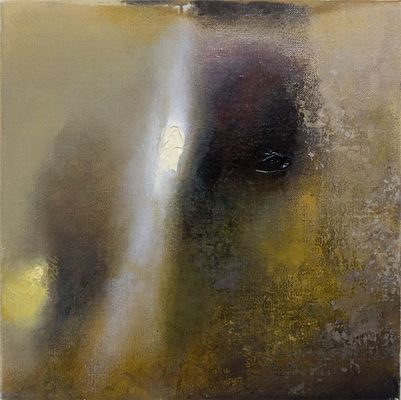
To return to Buckley’s fragment, the first two lines very much evoke how I paint nowadays. As you age, detail diminishes and patches of light become more luminous and float. I feel the most honest way of dealing with this is by smearing the oil paint on the canvas with the fingers and working close-up, blind. Only if the patches coalesce into an approaching image can the work gain a life.
-
Jonathan Walker was born in Melbourne, Australia and brought up on a dairy farm in Gippsland. In the 1970’s he studied painting at RMIT and won the Harold Wright Scholarship to the British Museum, London. During the 1980’s he exhibited at Pinacotheca Gallery, Richmond and had work shown at the NGV and Heidi City Art Gallery. Over the same period he designed the cover for the “Epigenesi” LP by Giancarlo Toniutti, Italy and conducted a mail exchange work with Achim Wollscheid, Germany. The work with artists through the post resulted in an article published in the bicentenary issue of Art and Australia 1988. He showed in artist run spaces such as WestSpace in the 90’s and 2000’s, and until 2012, taught painting at Victoria University, which is where we (Colleen Ahern and Lisa Radford) as organisers of the exhibition, among many others, had the privilege of being his student.
Walker’s knowledge was imparted to students through the careful selection of music, literature, and artists found in books that he himself had ordered for the library. Walker’s strategy was the generosity of sharing his vast knowledge with references specific to each student and their context.
Walker’s paintings share a similar focus and intimacy.
This exhibition presents a small selection of recent paintings alongside a publication that includes Walker’s writing. Observational and analytical, Walker’s work is a type of material notation — the time of day, colour and how it is blended, the both specific and fleeting location of a reflection on lino or the question of whether a chair leg should be included in a painting.
Please join us on Friday August 21 between 6-8pm to celebrate the opening of the exhibition.
Curated by Colleen Ahern and Lisa Radford.
B. Wurtz
Curated by Nic Tammens
March 26 - April 4, 2015
B.Wurtz works from a basement studio in his home on Manhattan’s Lower East Side.
This local fact is attested to by the plastic shopping bags and newsprint circulars that appear in his work. As formal objects, they don’t make loud claims about their origins but nonetheless transmit street addresses and places of business from the bottom of this long thin island. Like plenty of artists, Wurtz is affected by what is local and what is consumed. His work is underpinned by this ethic. It often speaks from a neighborhood or reads like the contents of a hamper:
“BLACK PLUMS $1.29 lb.”
“Food Bazaar”
“USDA Whole Pork Shoulder Picnic 99c lb.”
“RITE AID Pharmacy, with us it’s personal.”
“H. Brickman & Sons.”
“Sweet Yams 59c lb."
Most of the work in this exhibition was made while the artist was in residence at Dieu Donne, a workshop dedicated to paper craft in Midtown. Here Wurtz fabricated assemblages with paper and objects that are relatively lightweight, with the intention that they would be easily transportable to Australia. This consideration isn’t absolute in Wurtz’s work, but was prescriptive for making the current exhibition light and cheap. Packed in two boxes, these works were sent from a USPS post office on the Lower East Side and delivered to North Melbourne by Australia Post.
Wurtz appears courtesy of Metro Pictures, New York.
Thanks to Rob Halverson, Joshua Petherick, Sari de Mallory, Matt Hinkley, Helen Johnson, Fayen d'Evie, Ask Kilmartin, Lisa Radon, Ellena Savage, Yale Union, and "Elizabeth".
John Nixon
"Archive"
December 15 - January 20, 2014
The presentation of John Nixon's archive offered a rare showcase of this extensive collection of the artist's own publications, catalogues, posters, ephemera, editions and more, from the mid 1980s onwards, alongside a selection of his artworks.
Organized by John Nixon, Joshua Petherick and Matt Hinkley.
"Habitat"
at Minerva, Sydney (organised by Joshua Petherick and Matt Hinkley)
November 15 - December 20, 2014
Lupo Borgonovo, Janet Burchill & Jennifer McCamley,
Lewis Fidock, HR Giger, Piero Gilardi, Veit Laurent Kurz,
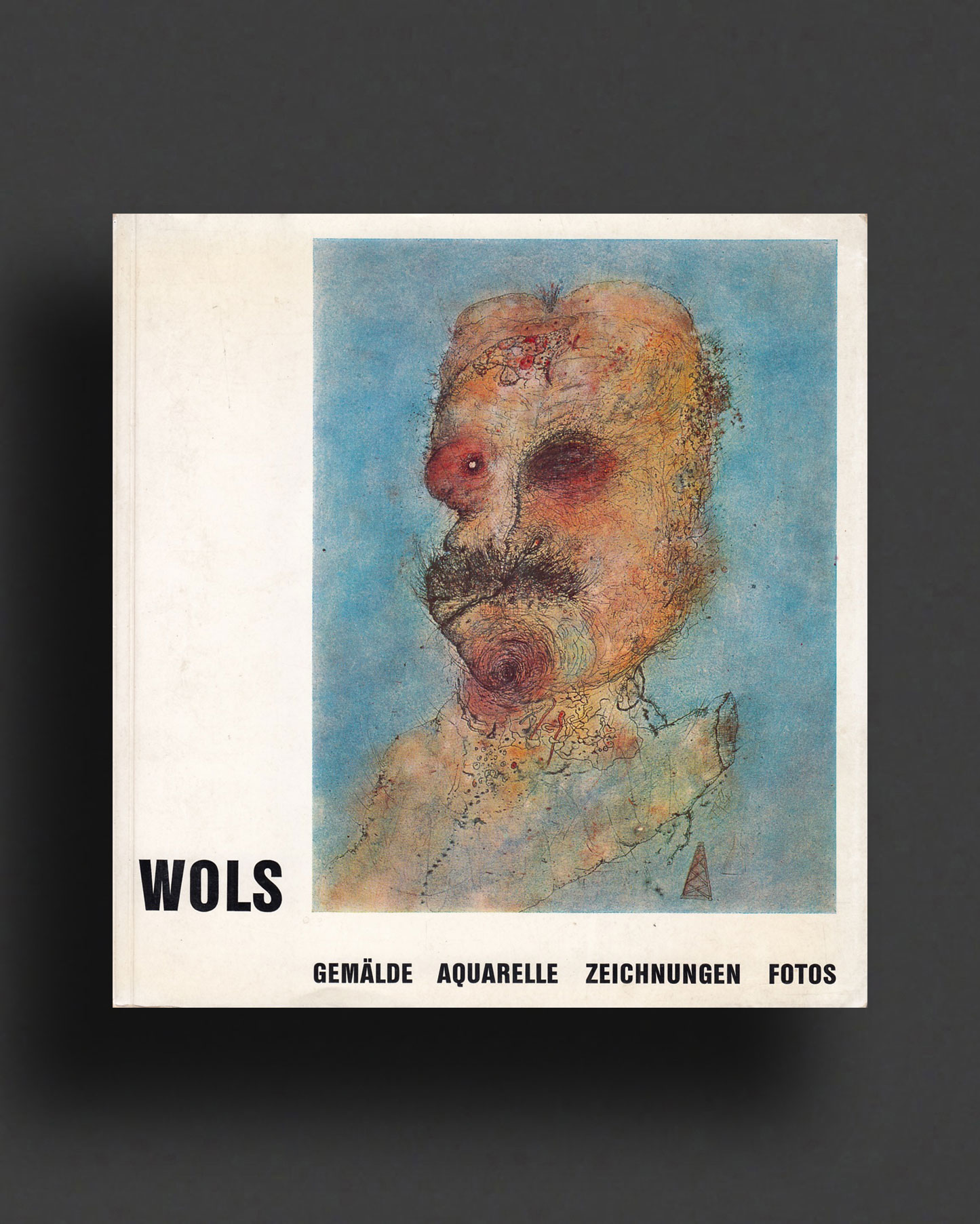
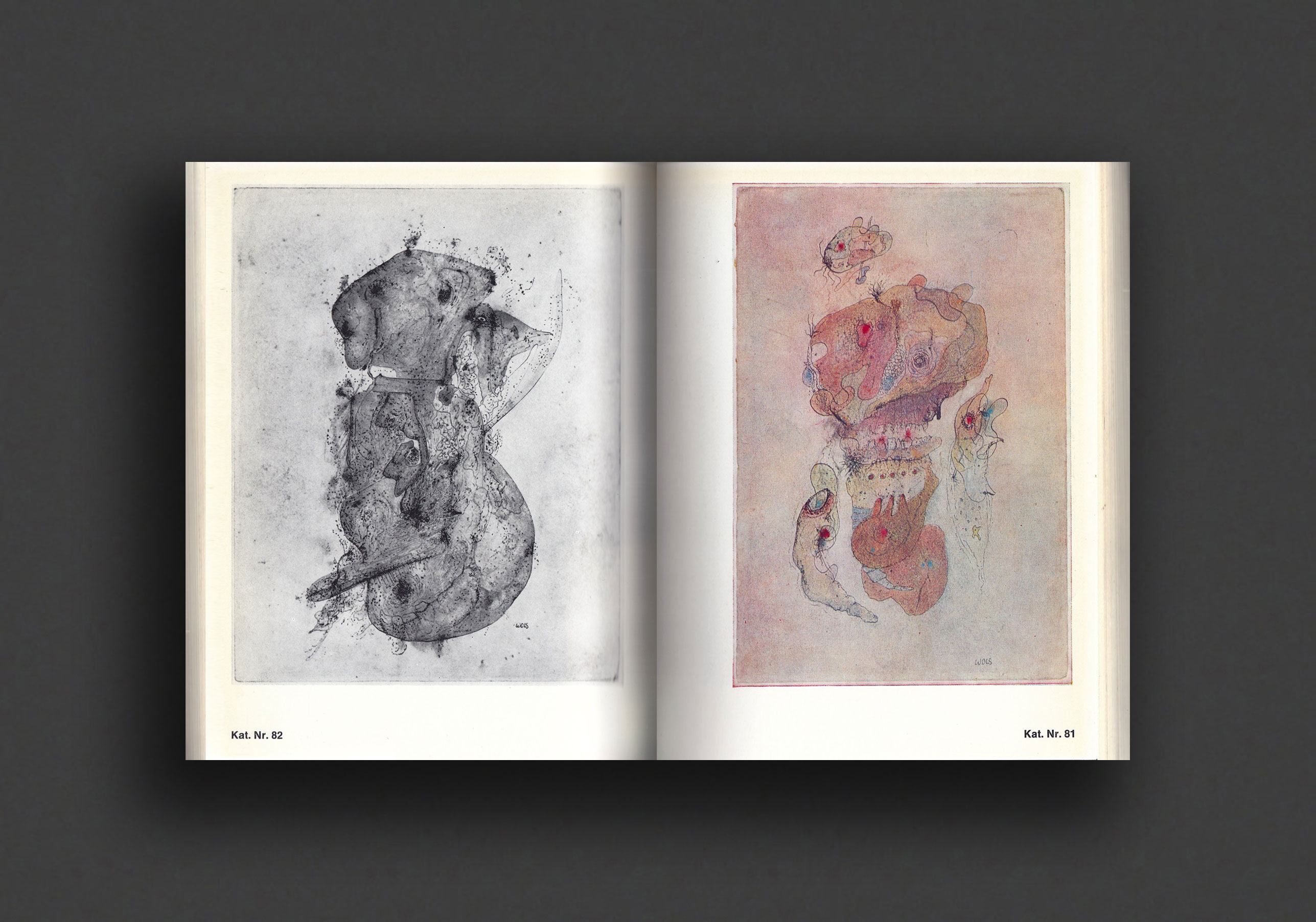
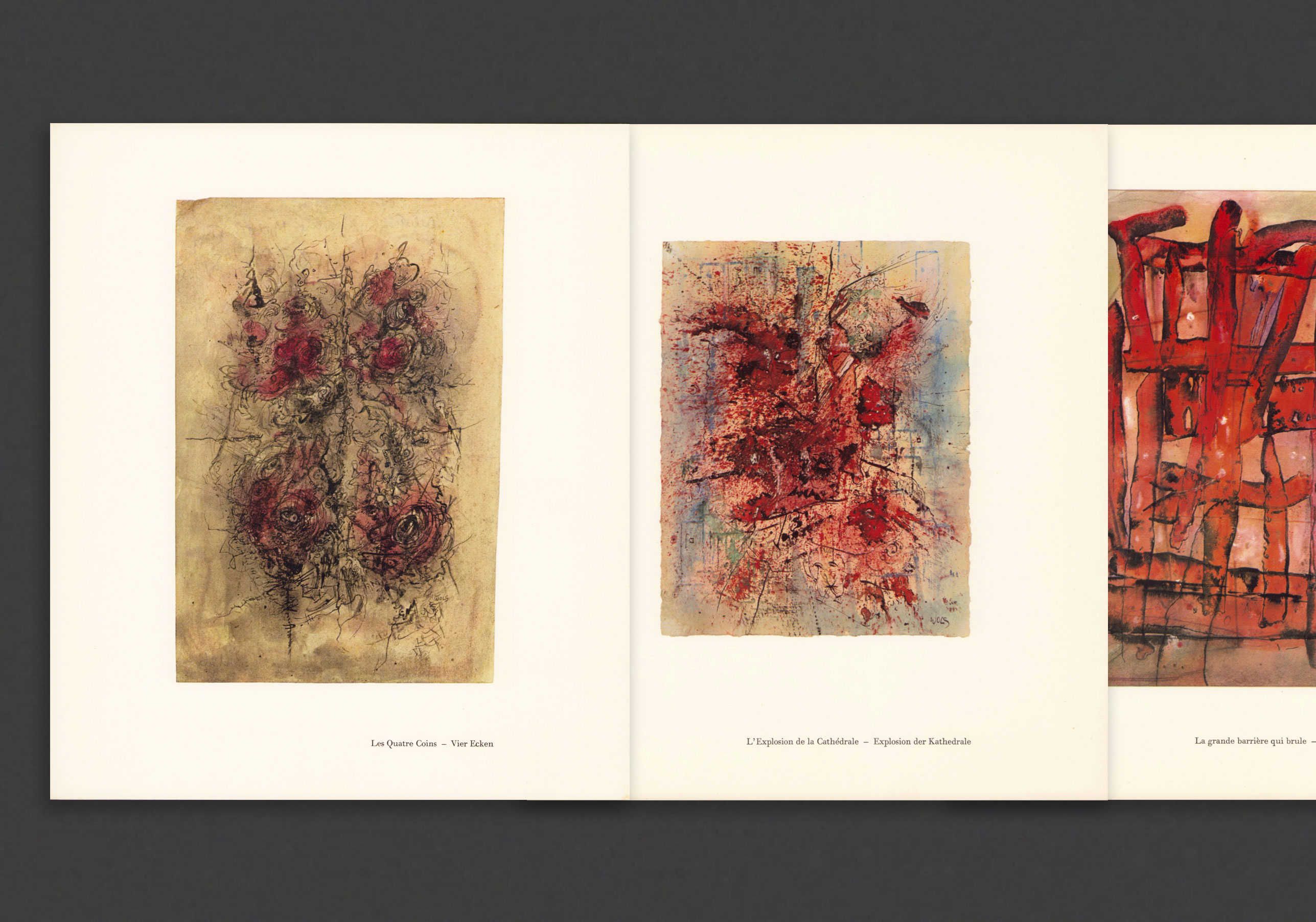
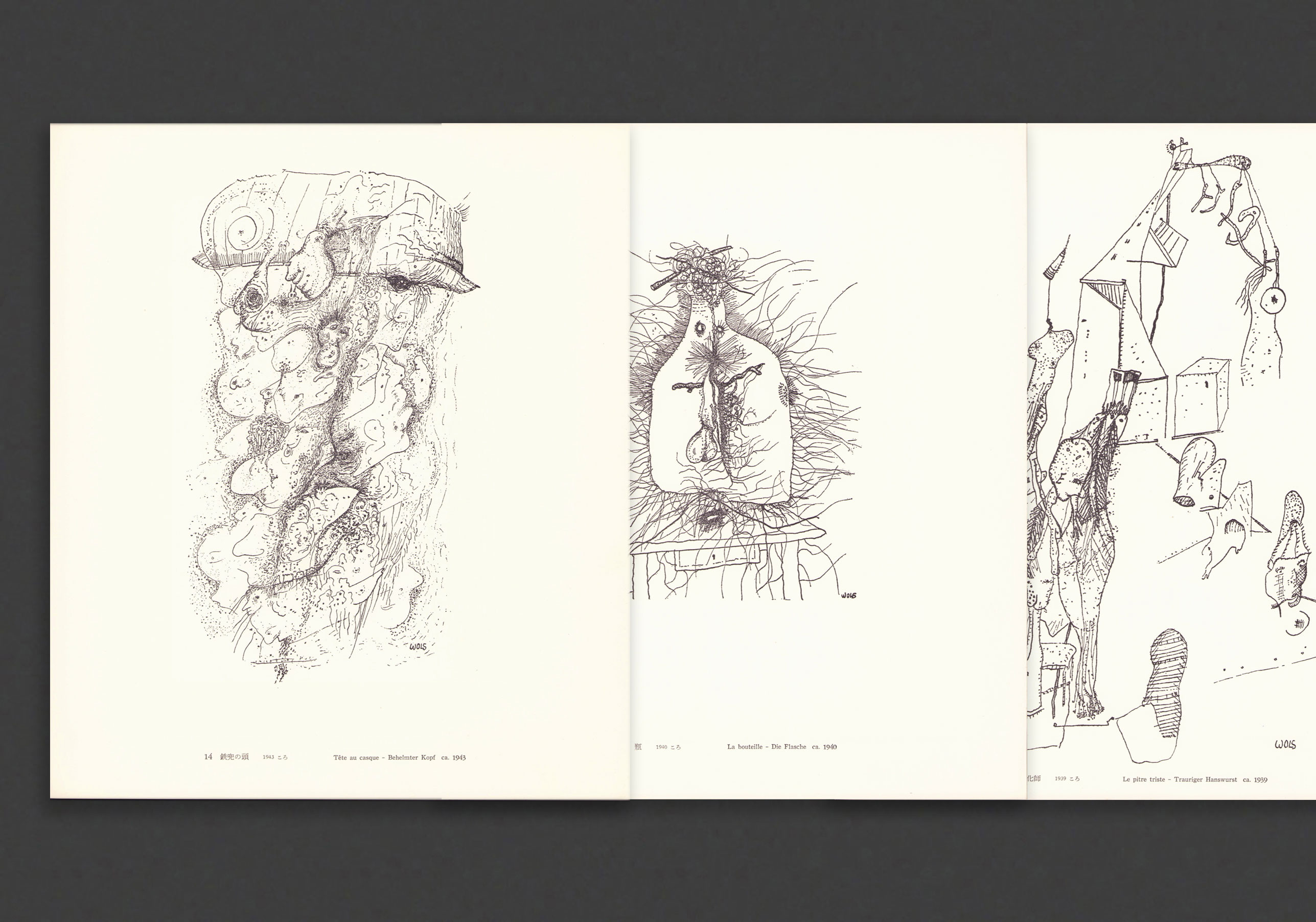
Cinzia Ruggeri, Michael E. Smith, Lucie Stahl, Daniel Weil, Wols
Press Release:
“...It contained seven objects. The slender fluted bone, surely formed for flight, surely from the wing of some large bird. Three archaic circuitboards, faced with mazes of gold. A smooth white sphere of baked clay. An age-blackened fragment of lace. A fingerlength segment of what she assumed was bone from a human wrist, grayish white, inset smoothly with the silicon shaft of a small instrument that must once have ridden flush with the surface of the skin - but the thing’s face was seared and blackened.”
William Gibson, “Count Zero”, 1986
"Autumn Projects Archive"
Curated by Liza Vasiliou
March 6 - March 15, 2014
World Food Books, in conjunction with the Virgin Australia Melbourne Fashion Festival 2014, presented the Autumn Projects archive, consisting of a selection of early examples in Australian fashion with a particular interest in collecting designers and labels from the period beginning in the 1980’s, who significantly influenced the discourse of Australian Fashion.
Curated by Liza Vasiliou, the exhibition provided a unique opportunity to view pieces by designers Anthea Crawford, Barbara Vandenberg, Geoff Liddell and labels CR Australia, Covers, Jag along with early experimental collage pieces by Prue Acton and Sally Browne’s ‘Fragments’ collection, suspended throughout the functioning World Food Books shop in Melbourne.
H.B. Peace
presented by CENTRE FOR STYLE
November 14, 2013
"Hey Blinky, you say chic, I say same"
Anon 2013
H.B. Peace is a clothing collaboration between great friends Blake Barns and Hugh Egan Westland. Their pieces explore the divergences between 'character’ and ‘personality’ in garments....etc
Special Thanks to Joshua Petherick and Matt Hinkley of WFB and Gillian Mears
and a Very Special Thank you to Audrey Thomas Hayes for her shoe collaboration.
Janet Burchill & Jennifer McCamley
"Aesthetic Suicide"
May 10 - June 8, 2013
The first of our occasional exhibitions in the World Food Books office/shop space in Melbourne, "Aesthetic Suicide" presented a body of new and older works together by artists Janet Burchill & Jennifer McCamley, including videos, prints, a wall work, and publications.
During shop open hours videos played every hour, on the hour.
1988, Japanese / English
Hardcover (w. dust jacket), 70 pages, 21 x 19 cm
1st Edition, Out of print title / used / very good
Published by
Atelier Peyotl / Tokyo
$100.00 - In stock -
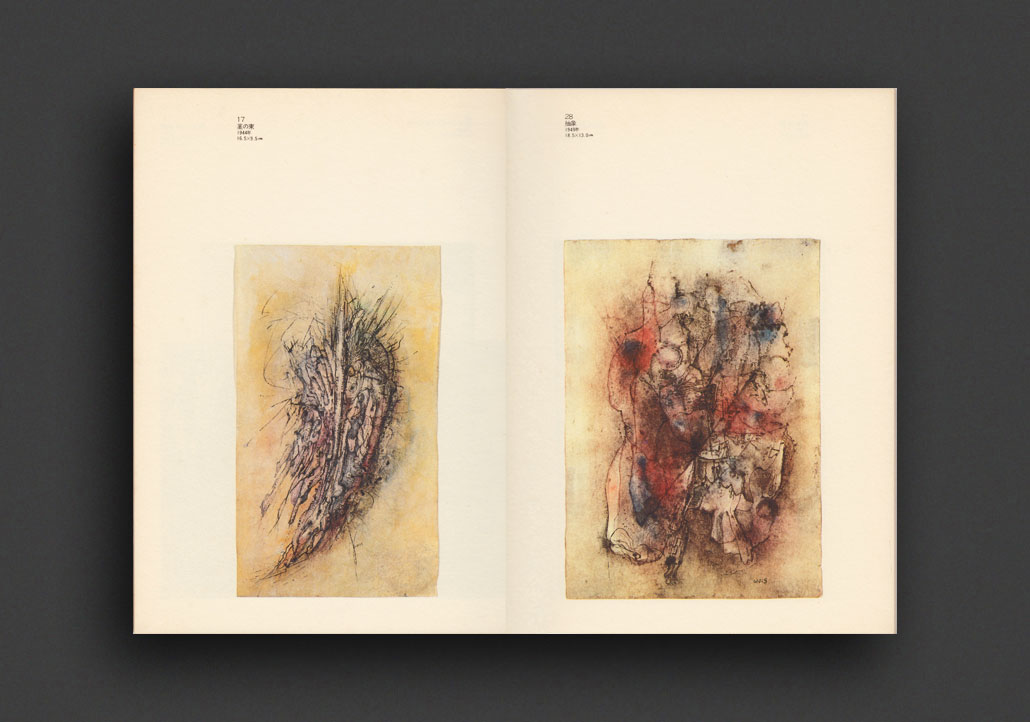
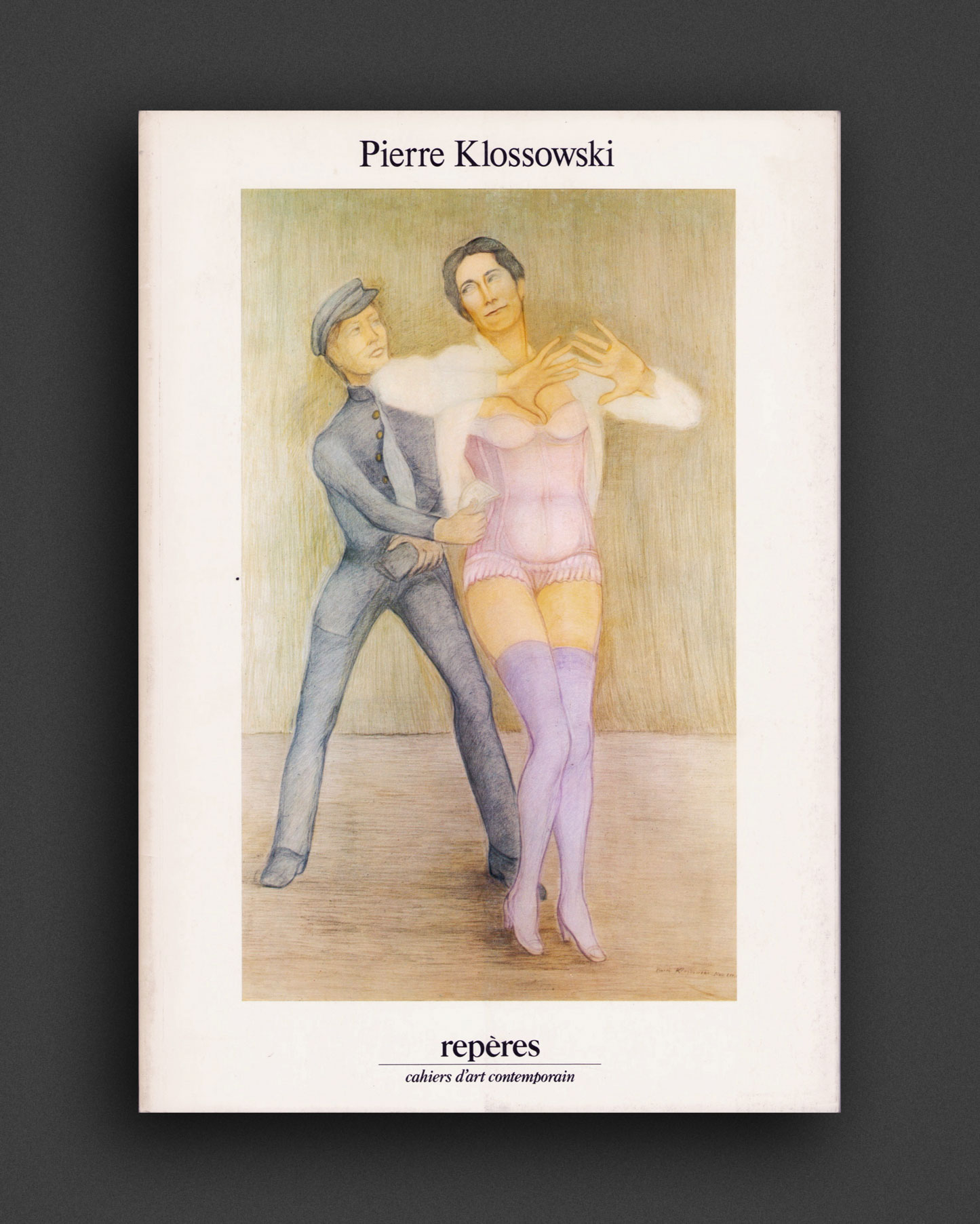
Wonderful and very rarely seen hardcover Japanese publication on the work of the great Pierre Klossowski. Features an extensive selection of his paintings and drawings reproduced in full-colour and black and white, alongside texts, biography and photographic portraits of Klossowski. Published by Atelier Peyotl and printed in Tokyo in 1988 on the occasion of a major exhibition at The Seed Hall, Seibu Shibuya. First printing in original illustrated dust jacket.
Pierre Klossowski (1905-2001) was a significant and influential philosopher, writer, translator and artist who befriended Georges Bataille and formulated an original stance on many theological issues, as well as the philosophy of the Marquis de Sade. His first novel, Roberte, ce soir, appeared in 1954 as a limited edition containing six of his own erotic illustrations, after he rejected drawings by his younger brother, the painter Balthus. Following the encouragement of Robert Lebel, Andre Masson and Alberto Giacometti, Klossowski held his first exhibition in Paris in 1956, and subsequently produced numerous life-size drawings of erotic scenes imbued with mythological, allegorical and philosophical connotations. By the 1970s, he had won the acclaim of such eminent thinkers as Maurice Blanchot, Michel Butor, Gilles Deleuze, Michel Foucault and Felix Guattari. Of Klossowski, Gilles Deleuze once said, "That bodies speak has been known for a long time."
Very Good copy in Good dust jacket with some rubbing to front print, light wear.
1983, English
Hardcover (w. dust jacket), 380 pages (approx), 36 x 24 cm
1st Edition, Out of print title / used / very good
Published by
Abbeville Press / New York
$650.00 - In stock -
Very rare copy of the first 1983 Abbeville English hardcover edition of the ever mysterious Codex Seraphinianus by Italian artist and designer Luigi Serafini (1949—), a book like no-other. Ever since the Codex Seraphinianus was first published in Italy in limited edition by Franco Maria Ricci in 1981, the book has been recognized as one of the strangest and most beautiful art books ever made. This phantasmagorical visual encyclopedia of an unknown world written in an unknown language has fueled much debate over its meaning. Written for the information age and addressing the import of coding and decoding in genetics, literary criticism, and computer science, the Codex confused, fascinated, and enchanted a generation, including Roland Barthes and Italo Calvino. While its message may be unclear, its appeal is obvious: it is a most exquisite artifact. Blurring the distinction between art book and art object.
Very Good book in Very Good dust jacket with a couple of straches to edges and light wear, preserved in mylar wrap. Light wear to block edge on a few pages.
2019, Japanese
Softcover (staple-bound) + flyer, 22 pages, 26 x 18 cm
Out of print title / used / good
Published by
Vanilla Gallery / Tokyo
$40.00 - In stock -
Rare collected documents from the 2019 iteration of the Japanese exhibition of Serial Killer Art at Vanilla Gallery, Ginza, Tokyo, first staged 2016 and 2017, from the HN collection. From John Wayne Gacy, Ed Gein, Ted Bundy, Henry Lee Lucas, and Ronnie Clay, these exhibitions featured artworks, self-portraits, letters, and documents of serial killers in Europe and America whose heinous personalities and numerous crimes have served as models for novels and films, becoming known the world over.
"The world portrayed by murderers who committed crimes that make you want to look away is like a dreadful, lonely, impermanent feeling that looks into the depths of the viewer's heart, and is like when confronted with something unknown. It's full of tension."
Collected by Mr. HN (H. Nakajima), over 200 items were displayed in Tokyo on the occasion of these exhibits, with these pamphlets available at the exhibitions only. Illustrated with examples throughout in colour and b/w, texts in Japanese by film critic Kiichirō Yanashita, Orihara Ichi, and collector/curator H. Nakajima.
Killers included in the exhibitions: John Wayne Gacy, Henry Lee Lucas, Peter Sutcliffe, Danny Rowling, Keith Jasperson, James Earl Ray, Thomas Pitera, Henry Hill, Nicholas Crowe, Dorothy Puente, Haddon Clarke, Gerald Shaffer, Anthony Shore, James Munro, Gary Ray Balls, Hudson Graham, Carroll Bundy, Otis Toole, Charles Watson, Lawrence Bittaker, Herbert Mullin, Arthur Shawcross, Rod Ferrell, Ted Bundy, Jim Jones, Christa Pike, Harvard Baumeister, David Berkowitz, Richard Ramirez, Ronnie Clay, Irene Wuornos, Wayne Low, Dana Sue Gray, Roy Norris, Kenneth Bianchi, Michael Alig, Veronica Compton, Joe Roy Metheny, Gary Heidnik, Charles Manson, Jeremy Jones, Jack Trawick, Carl Drew, Wayne Harton, Rosemary West, Theodore Kaczynski, Thomas Heyer, Ed Gein, Ferrell Mykers, Douglas Clark, Richard Clarey, Ian Brady, Jack Kevorkian, Bonnie & Clyde, Philip Jacobinski, Daniel Siebert, Tommy Lynn Sells.
Good with only light wear. Includes flyer for the 2019 exhibition, folded as issued.
1985, Japanese
Softcover, 210 pages, 23 x 22.5 cm
1st Edition, Out of print title / used / very good
Published by
Yomiuri Shimbun / Tokyo
$140.00 - In stock -
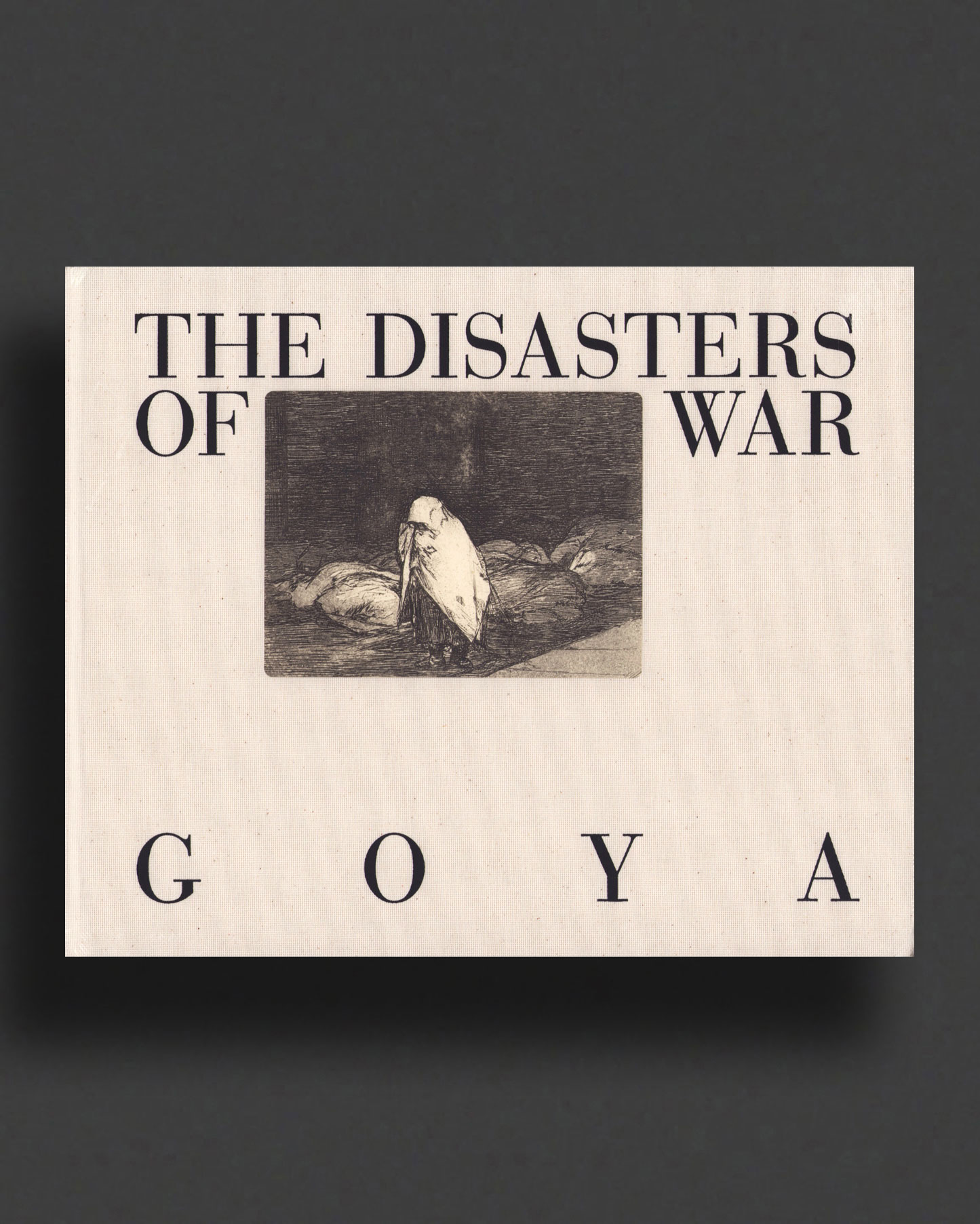
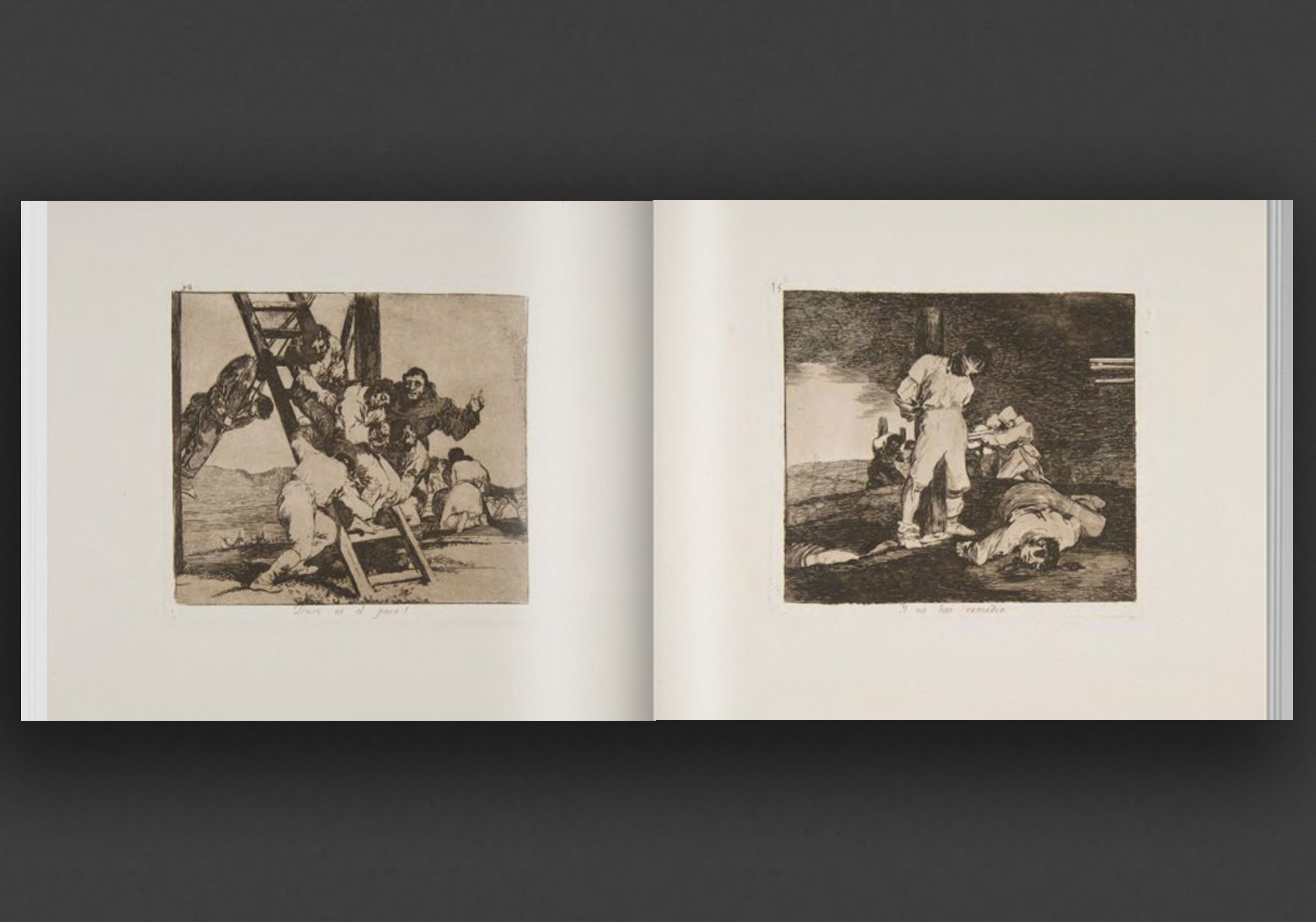
Rare 1985 Japanese catalogue published on the occasion of Goya Complete Prints Exhibition, supervised by art critic Hideo Takumi. Profusely illustrated with Goya's Caprichos, Desastres, Tauromaquia, and Disparates, accompanied by catalogue, biography, technical illustrated essays on Goya's methodology, major texts by Alfonso E. Pérez-Sanchez and Hideo Takumi, translated to Japanese by Keizo Kamiyoshi, Yasujiro Otaka, Gyoji Yukiyama. A phenomenal catalogue of Goya's incredible works in print, some of the finest ever made. Printed in Japan, produced by Art Publishing Design Center, published by Yomiuri Shimbun, Art Resource Center.
This copy with original exhibition leaflet laid-in.
Very Good copy, only light wear, marks.
2012, English / German
Softcover, 96 pages, 26 x 19 cm
1st Edition, Out of print title / used / good
Published by
Distanz / Berlin
$90.00 - Out of stock
Quickly out-of-print 2012 survey catalogue on the work of German artist Rosemarie Trockel, published by Distanz. Rosemarie Trockel (b. Schwerte 1952; lives and works in Cologne) rose to international fame in the mid-1980s with her knitting pictures. A second group of works from the 1990s consists of numerous variations on wall works and sculptures into which the artist integrates conventional stovetops. These works gave rise to the entrenched notion that she is an artist who interrogates the images that define women’s social roles, dedicated to contributing to their deconstruction. Yet Rosemarie Trockel’s oeuvre extends far beyond this one aspect. In its diversity, it defies any attempt to characterize it according to conventional criteria. Rosemarie Trockel is a painter as well as a graphic artist, a sculptor as well as a conceptual artist. In 2011, she receives the Kaiserring of the City of Goslar, one of the world’s most renowned art awards.
Includes essays by Friedemann Malsch, director, Kunstmuseum Liechtenstein, and Wulf Herzogenrath, director, Kunsthalle Bremen.
Good copy with light wear, light creasing.
1976/2006, Japanese
Hardcover (w. dust jacket, slipcase, obi), 82 pages, 31 x 25 cm
Out of print title / used / fine
Published by
Kawade Shobo Shinsha / Tokyo
$120.00 - In stock -
2006 facsimile edition of this wonderful 1976 slip-cased hardcover monograph on German artist Friedrich Schröder-Sonnenstern, considered one of the most important representatives of Art Brut or Outsider Art. Bound in red cloth and wrapped in illustrated original dust-jacket, this heavily illustrated book surveys Schröder-Sonnenstern's incredible paintings and drawings through beautiful colour and monochrome gravure reproductions, with alongside various texts, biography, bibliography and portrait of the artist. Published as volume 6 of the deluxe La Septième Face du Dé series by Kawade Shobo Shinsha in Japan in the 1970s, all later re-printed in the 2000s. All editions now out-of-print.
Friedrich Schröder-Sonnenstern was a draftsman, painter and poet-philosopher. Born in 1892 in East Prussia, one of thirteen children, all of whom apart from one other died shortly after birth. He was sent to a number of reform schools due to accusations of theft and violent behaviour and then, at the age of twenty-six, he was diagnosed with schizophrenia and committed to a sanatorium. His experiences as a child contributed to his lifelong hatred of authority. One year later he showed up in Berlin, where he occupied himself with occultism, divination and healing magnetism. He founded a sect and distributed its income in the form of bread rolls to poor children, earning him the title "Schrippenfürst of Schöneberg". He created the name Sonnenstern (English: Sun Star) for himself while working as a con-artist, posing as a Quack doctor in "natural health", calling himself Professor Dr. Eliot Gnass von Sonnenstern. This career path was cut off by the Nazis' interdiction of occult practices, and after being confined in psychiatric institutes and in a penal camp, Schröder-Sonnenstern reemerged in 1944, scavenging firewood in the bombed-out German capital. Only in his late fifties, in 1949, did he begin to draw, using coloured pencils to create allegorical grotesques stocked with a personal iconography. Although his art was rarely shown, he was championed in Surrealist and art brut circles; Jean Dubuffet and Hans Bellmer were among his admirers, and a few drawings were included in Marcel Duchamp and André Breton's 1959 "Exposition inteRnatiOnale du Surréalisme" in Paris. The demand for his pictures by collectors and gallerists rose rapidly and he resorted to employing assistants to produce his work for him. His success was short-lived when he began to paint less and less and became the victim of counterfeiting cliques by his assistants, destroying his position in the art market. He became increasingly dependent on alcohol following the death, in 1964, of his long-time companion, Martha Möller whom he called Aunt Martha. He died almost forgotten and impoverished in 1982 in Berlin.
Fine copy.
1971, German
Hardcover (cloth-bound), 264 pages, 18.5 x 23 cm
1st Edition, Out of print title / used / average
Published by
Propyläen-Verl / Berlin
$15.00 - Out of stock
First edition of this catalogue raisonne of lithographs by German painter, sculptor and graphic artist, Paul Wunderlich (1927—2010). Illustrated heavily throughout, this wonderful and extensive reference book of graphic works by Wunderlich was compiled by the artist, together with gallerist Dieter Brusberg, and accompanied by texts from art historians and philosophers Max Bense, Hanns Theodor Flemming, Fritz J. Raddatz, Frank Whitford, and others.
Paul Wunderlich (1927—2010) is known for his erotic, Surrealist-inspired paintings, prints, and sculptures featuring mythological imagery. A pioneer of Magic Realism, Wunderlich received the Japan Cultural Forum Award and the Kunstpreis des Landes Schleswig-Holstein among other accolades. Despite his iconic works being held in some of the world’s most prominent museums, such as the Museum of Modern Art, the British Museum, and the Victoria and Albert Museum, Wunderlich remains an “artist’s artist.” He studied graphic arts at the University of Fine Arts in Hamburg; he later learned printmaking techniques from Oskar Kokoschka and Emil Nolde. His early paintings displayed an abstract, Tachist style, although he embraced figuration in the late 1950s and he developed his characteristic style. He portrayed dismembered figures and sexually provocative imagery reminiscent of the Surrealists, but also influenced art movements such as Art Deco and Art Nouveau. His work was critically received as so scandalous that, in 1960, his lithograph series Qui s’explique (1959) was seized by authorities in Hamburg, and he often had trouble with raids that destroyed his works. Paul Wunderlich was married to photographer Karin Székessy in 1971, and the couple pursued art projects together.
Average copy as the fragile glue has deteriorated and some pages are loose, though all are present.
1978, German
Hardcover (w. hard slipcase), 22 pages + 34 plates, 35 x 29 cm
1st Edition, Out of print title / used / average
Published by
Edition Volker Huber / Offenbach am Main
$35.00 - In stock -
First German 1978 edition of Paul Wunderlich's erotic portfolio "Homo Sum", published by Edition Volker Huber, Offenbach am Main. An lovely over-sized, hardcover edition of 34 full-page drawings housed in hard slipcase with illustrated plate by German painter, sculptor and graphic artist, Paul Wunderlich (1927—2010). Homo Sum is Wunderlich's more explicit works including many same gender male and female scenarios rendered in his iconic airbrush style.
Paul Wunderlich (1927—2010) is known for his erotic, Surrealist-inspired paintings, prints, and sculptures featuring mythological imagery. A pioneer of Magic Realism, Wunderlich received the Japan Cultural Forum Award and the Kunstpreis des Landes Schleswig-Holstein among other accolades. Despite his iconic works being held in some of the world’s most prominent museums, such as the Museum of Modern Art, the British Museum, and the Victoria and Albert Museum, Wunderlich remains an “artist’s artist.” He studied graphic arts at the University of Fine Arts in Hamburg; he later learned printmaking techniques from Oskar Kokoschka and Emil Nolde. His early paintings displayed an abstract, Tachist style, although he embraced figuration in the late 1950s and he developed his characteristic style. He portrayed dismembered figures and sexually provocative imagery reminiscent of the Surrealists, but also influenced art movements such as Art Deco and Art Nouveau. His work was critically received as so scandalous that, in 1960, his lithograph series Qui s’explique (1959) was seized by authorities in Hamburg, and he often had trouble with raids that destroyed his works. Paul Wunderlich was married to photographer Karin Székessy in 1971, and the couple pursued art projects together.
Average copy due to significant foxing (spotting) to pages throughout, light wear, tanning to box edges.
1999, English / French / Japanese
Softcover (2 Vols in curregated cardboard slip-case), 226 + 120 pages, 18 x 25 cm
1st Edition, Out of print title / used / very good
Published by
APT International / Tokyo
Isetan Museum of Art / Tokyo
$160.00 - In stock -
First Edition of this long out-of-print, comprehensive, beautifully produced Japanese two-volume publication on the life and work of the great French avant-garde painter, poet and typographist, Francis Picabia.
Published by APT International in 1999 for a major Japanese travelling exhibition on Francis Picabia, starting at the Isetan Museum of Art in Tokyo in 1999, then to Fukushima and Osaka throughout 1999-2000.
Two Volumes bound in french-fold wraps, both housed in protective corrugated cardboard slip-case with scarlet label wrapped around spine. Slipcase itself is now protected under plastic sleeve.
First volume (226 page) forms a comprehensive retrospective of Picabia's life and prolific and defying work across painting, drawing, printing, poetry and film. Extensive colour and b&w reproductions of a vast collection of his painting, illustration and publishing projects are presented alongside a folio of his poems and drawings, plus photo documentation of his studio and private/social life. Also includes a biography and bibliography, as well as an insightful conversation between Olga Picabia (Francis Picabia's widow), Pierre Calté (director of Comité Picabia), Hans Ulrich Obrist (independent curator) and Stefan Banz (independent curator), about Picabia's life (text in English and Japanese). Introductory essays in Japanese and French by Beverley Calte and Arnauld Pierre.
Second volume (120 pages) "391" is a very special book made up of collated facsimiles of the 19 issues of Picabia's famous Dada periodical, "391", dating 1917-1924. 391 first appeared in January 1917 in Barcelona, published and edited by Picabia, assisted in assembling by Olga Sacharoff, a Georgian emigre residing in Barcelona. The title of the magazine derives from Alfred Stieglitz's New York periodical 291 (to which Picabia had contributed), and bore no relation to its contents. Despite Picabia's renown as an artist, it was mostly literary in content, with a wide-ranging aggressive tone, possibly influenced by Alfred Jarry and Apollinaire. There were contributions by two men new to Dada: Man Ray and Marcel Duchamp. However 391 remained essentially the expression of the inventive, energetic and wealthy Picabia, who stated of it: "Every page must explode, whether through seriousness, profundity, turbulence, nausea, the new, the eternal, annihilating nonsense, enthusiasm for principles, or the way it is printed. Art must be unaesthetic in the extreme, useless and impossible to justify."
Francis Picabia (22 January 1879 – 30 November 1953) was a French avant-garde painter, poet and typographist. After experimenting with Impressionism and pointillism, Picabia became associated with Cubism. His highly abstract planar compositions were colourful and rich in contrasts. He was one of the early major figures of the Dada movement in the United States and in France. His was later briefly associated with Surrealism, but would soon turn his back on the art establishment.
Very Good copy in Good slipcase that has discoloured with sun-tanning to spine, corregation has some wear. Books VG both.
2025, English / French
Hardcover (clothbound), 224 pages, 29.5 x 25 cm
Published by
Hauser & Wirth / Zurich
$110.00 - In stock -
Documenting the great, late, neglected work of a modernist master.
Prefaced by Beverley Calté, president of the Comité Picabia, this book delves into Picabia’s practice between the years 1945 to 1952—an incredibly rich period during which Picabia created paintings unlike anything he had produced before, working alongside the growing Art Informel movement in Paris.
Essays by art historians Arnauld Pierre and Candace Clements shed new light on the hidden signs and symbols buried in his abstractions, the new painting techniques he employed, and the mysterious and fantastical reappearance of the “dot” in his work.
'Éternel recommencement / Eternal Beginning' is an essential resource, marking the first focused exploration of a crucial chapter of Picabia’s practice.
1998, English / Japanese
Hardcover (w. dust jacket), 100 pages, 37 x 26 cm
1st Edition, Out of print title / used / fine
Published by
Sakuhinsha / Tokyo
$190.00 - In stock -
Scarce first Japanese hardcover edition of Japanese master of erotic fantasy illustration Hajime Sorayama's absolute classic Torquere (Torture), published in 1998. Following the success of best-seller NAGA, Sorayama's Torquere delves deeper into the darker realm of fantasy fetishism and, as the title suggests, into the world of Sadomasochism. This lavish over-sized volume is illustrated cover-to-cover with Sorayama's most explicit works presented in dramatic, glossy full-colour throughout. Rare in this original hardcover edition.
Hajime Sorayama is revered for his erotic airbrushed illustrations of humanoid robots that explore ideals of femininity and beauty. Drawing on pinup pictures, Sorayama published the first book of his signature “Sexy Robot” series of chromium-plated figures in 1983. Decades later, these striking works have sold for more than $500,000. Sorayama started his career in advertising before freelancing in Hollywood, where he helped to produce visuals for sci-fi films. His illustrations gained widespread attention in 1995, when Penthouse began featuring them in a monthly column. While Sorayama has enjoyed a particular cult status for his sensual cyborgs —who appear empowered rather than objectified —he has also received mainstream commercial attention. Sony enlisted him to produce the first designs for its robotic dog AIBO, which won the grand prize for Japan’s Good Design Award in 1999. Sorayama has also worked with fashion titans such as Thierry Mugler and Dior on projects that have extended his illustrations into the realm of wearables, sculpture, and performance.
Near Fine copy.
1976 / 1984, German
Softcover, 24 x 19.5 cm
Out of print title / used / fine
Published by
Achberger Verlag / Achberg
$28.00 - In stock -
1984 print of the 1976 Joseph Beuys book "Soziale Plastik". "The three authors of this book engage with one of the most dazzling and controversial figures in contemporary cultural life. Joseph Beuys is among the most prominent figures in the modern art scene, and one cannot claim to have grasped the essential characteristics of this scene without also considering Beuys's contribution. This contribution is multifaceted, and the individual parts of his work are often judged very differently. The authors demonstrate how the various works and pronouncements of Joseph Beuys, often described as contradictory, can be considered together to form a unified, coherent, and consistent whole. Drawings, sculptures, performances, and lectures appear as logical stages in the development of an artist who, in recent times, has attracted particular attention by publicly presenting social concepts and advocating for political goals.
Beuys' political engagement can be understood as an integral part of his work, as a necessary consequence of the image of humanity presented throughout his oeuvre and the resulting image of society.
A large number of drawings, sculptures, and action photographs, some previously unpublished, help those unfamiliar with Beuys's work to gain an understanding. For those already acquainted with the work of Joseph Beuys, this book provides new material."
NF—Fine copy. German language.
2020, English
Softcover (staple-bound), 20 pages, 19 x 13 cm
Published by
Innen Books / Zürich
$22.00 - In stock -
Susan Te Kahurangi King's "Selected Works 1958 – 1980", published by Innen Books, Zürich, in 2020. First edition.
Susan Te Kahurangi King (b. 1951, Te Aroha) is a New Zealand artist self-taught artist whose ability to speak declined by the age of four, and by the age of eight stopped speaking altogether. From an early age she communicated solely through her art. She has methodically created an entire analogous world through extraordinary, surreal, cartoon(ish) drawings using pen, graphite, coloured pencil, crayon and ink. From her childhood drawings, to her notebooks, to her mature work of the 1970s and ’80s up until the point, sometime in the 1980s, when King stopped drawing. In 2008 King returned to art, moving beyond representation.
2018, English
Softcover (staple-bound), 32 pages, 13 x 19 cm
Edition of 300,
Published by
Innen Books / Zürich
$22.00 - In stock -
"Selected Drawings from 1950 to 1990" is a limited edition publication dedicated to the rarely seen drawings of the reclusive and mysterious Czech photographer Miroslav Tichý. Published in 2017 by Innen Books in Zürich in an edition of 300 copies only.
Miroslav Tichy (1926-2011)
After studying at the Academy of Arts in Prague (1945-48), Miroslav Tichy withdrew to a life in isolation in his hometown of Kyjov, Moravia, Czech Republic. In the late 1950s he quit painting and became a distinctive Diogenes-like figure. From the end of the 1960s he began to take photographs mainly of local women, in part with cameras he made by hand. He later mounted them on hand-made frames, added finishing touches with pencil, and thus moved them from photography in the direction of drawing. The result are works of strikingly unusual formal qualities, which disregard the rules of conventional photography. They constitute a large oeuvre of poetic, dreamlike views of feminine beauty in a small town under the Czechoslovak Communist regime.
2010, Japanese
Softcover, 208 pages, 24 x 18.5 cm
1st Edition, Out of print title / used / very good
Published by
Atelier Peyotl / Tokyo
$65.00 - Out of stock
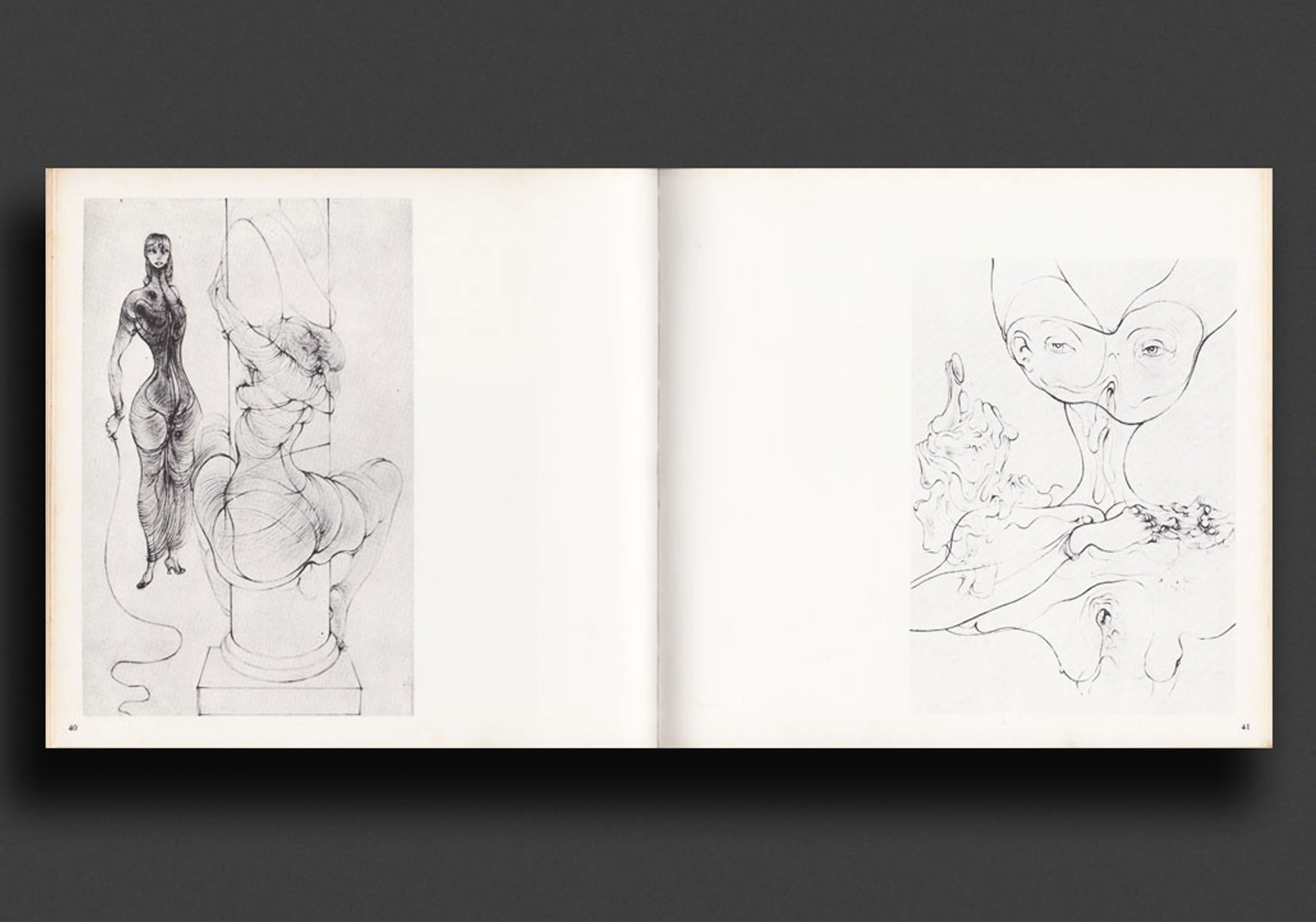
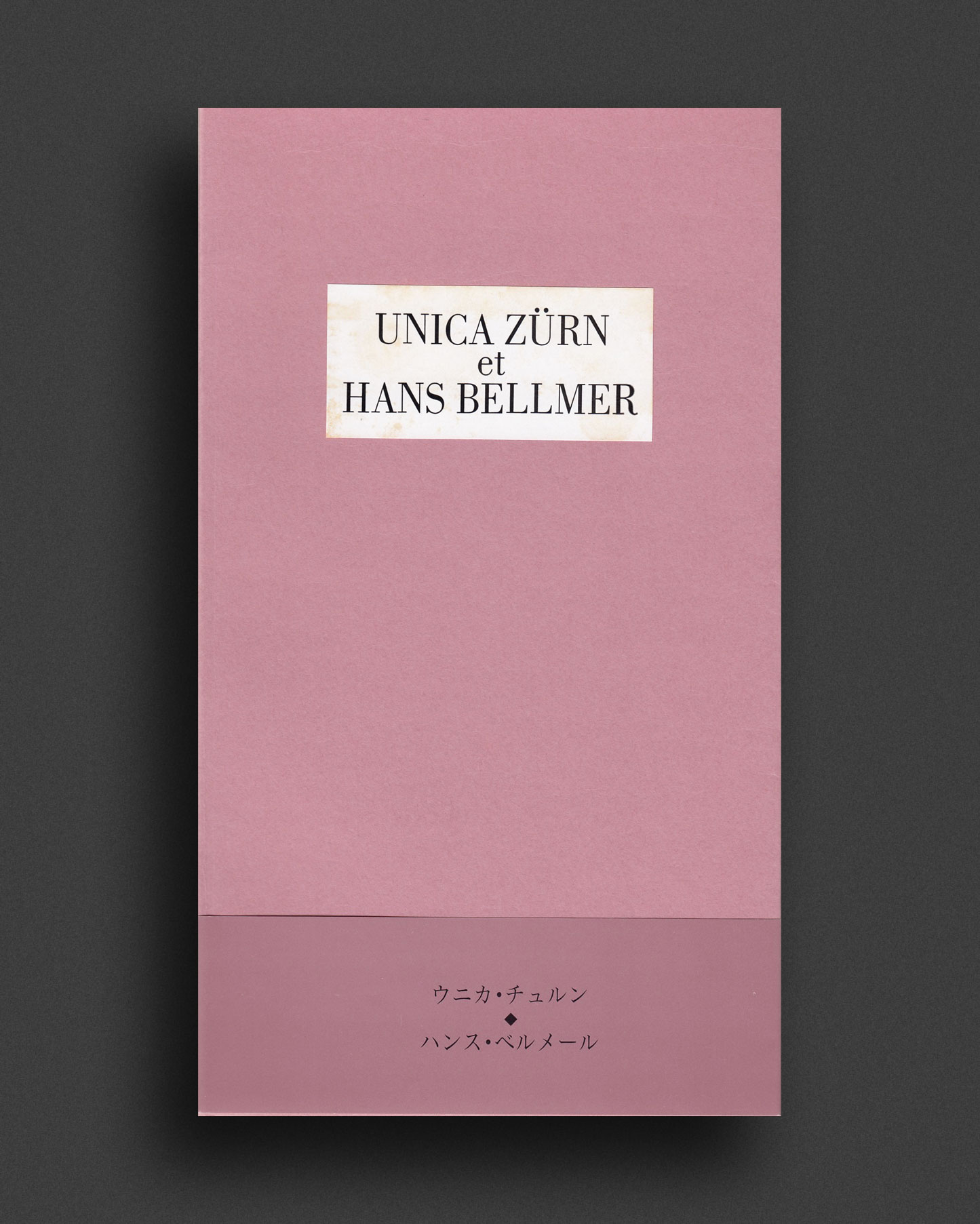
Incredible Hans Bellmer special feature Issue of cult Japanese underground magazine Yaso, published in 2010, edited by Yuichi Konno and Atelier Peyotl (publishers of Night Vision/Yaso/Peyotl/Wave/Silvester Club...). Being a magazine specialising in the doll arts it was only natural that they would dedicate an entire issue to the ground-breaking work of German Surrealist Hans Bellmer and the development of his dolls, and pay homage to his immense influence on Japanese doll artists by discussing his work with them. Heavily illustrated with reproductions of Bellmer's iconic doll photography and drawings, alongside reproduced and translated original texts, extensive chronology of Bellmer and Unica Zürn, the drawing and anagram work of his partner Zürn, an invaluable bibliography of publications related to Bellmer to date, and many portraits of the artist. There is an extensive chronicle of doll history and development stretching from 1902—2010 and a large part of the issue is made up of heavily illustrated exclusive interviews with Japanese artists influenced by the legacy of Bellmer, including Simon Yotsuya, Nori Doi, Ryo Yoshida, Tatsumi Hijikata, Makoto Onozuka, Kishin Shinoyama, Minori Nawata, and more, surveys contemporary doll artists Volks, PEACH-PIT, naruto, Hizuki, Tari Nakagawa, Minori Nawata, Os, Akihiko Aono, mican, Ayumi, Masanao, Katan Amano, Nishioka Bro. & Sis., and many more, and includes essays by Sue Taylor, Alice Mahon, Kumi Ogata... absolutely packed with content and a valuable Bellmer reference in the context of his Japanese influence on the arts.
Very Good copy.
1981, English
Softcover, 116 pages, 28 x 21 cm
1st Edition, Out of print title / used / very good
Published by
PARCO / Tokyo
$60.00 - In stock -
Like no other magazine - Super Art Gocoo was the wild late 1970s—1980s art journal from art director Ryōichi Enomoto and published by the mighty Parco gallery, imprint and department-store-like-no-other in Tokyo. With a cover by Harumi Yamaguchi, this bumper issue from 1981 is also largely dedicated to "Harumi Eros" — the work of legendary Japanese airbrush queen Harumi Yamaguchi and her "Gals". Not only does it feature a heavily illustrated behind-the-scenes with Yamaguchi it also visits the studio of fellow-airbrush master Pater Sato in his New York New Wave period. There is also lots of work by the great graphic artist Tadanori Yokoo, a feature on legendary French underground magazine Façade (1976—1983), a story on American dancer/choreographer/composer/Steve Reich collaborator Laura Dean, the photography of Hiroshi Yamazaki, graphic designer Kiyoshi Awazu, graphic designer Yutaka Sugita, a discussion between Japanese pop artists Akiko Yano and Nanako Sato, Tokyo Designers Space Report, plus articles, reviews, reports on art, dance, film, fashion, music, magazines, books.... The Face, Terry Riley, etc. Parco were instrumental in exhibiting, publishing and promoting Japanese and international graphic artists and new pop culture in this period, and these journals create a wonderful time-capsule at the height of that incredible time.
Very Good - Fine copy.
2025, English
Softcover, 220 pages, 32 x 24.5 cm
Published by
Hatje Cantz / Berlin
$85.00 - Out of stock
Edited by Vanessa Joan Müller, Bettina Steinbrügge.
Text by Lisa E. Bloom, Andrea Bowers, Haden Guest, Ingrid Luquet-Gad, Jason McBride, Christiane Meyer-Stoll, Olaf Nicolai, Letizia Ragaglia, Alexandro Segade, Bettina Steinbrügge.
Previously unpublished ephemera, poems and photographs accompany this sharp retrospective volume of Antin's 50 years of conceptual, feminist art, the most comprehensive publication on the artist to date, published to accompany the first survey on the artist in more than two decades.
For more than 50 years, Eleanor Antin (born 1935) has been a distinctive voice in postmodernism, traversing conceptual art and feminist movements. Her projects, often photographic series or performances, scrutinize the historic and contemporary roles of women, darkened by consumerist commentary on the ideal feminine. Crash dieting, Schick razors, mascara and pill bottles all play starring roles in her most famous works. This most comprehensive monograph to date accompanies Antin's first retrospective in 25 years and her first ever in Europe. Each commissioned text dives into a different facet of her work: her life in New York and San Diego; her Jewish identity; her feminist activism; her unfailing humor; her performances and films; and the impact of her art on younger generations of artists. It also features a complete exhibition history, a comprehensive list of works and a timeline of her life.
Eleanor Antin is a key figure emerging from the Conceptual art movements of the 1970s. Today as an octogenarian artist, she remains one of the world's leading Feminist artists. Her ground-breaking practice spans five decades and has covered themes surrounding identity, gender, autobiography, class and social structures. Antin's multi-disciplinary approach includes installation, painting, drawing, writing and most notably photography and performance. Over the last 50 years Antin has performed and exhibited her work internationally.
2025, English
Hardcover (w. slipcase), 192 pages, 31.6 x 26.6 cm
Published by
Monacelli Press / New York
$140.00 - Out of stock
A lavish portfolio of never-before-seen erotic drawings by celebrated twentieth-century American artist and gay icon, Paul Cadmus.
Paul Cadmus entered the art scene in the 1930s with paintings of dream-like urban demi-mondes: roiling tableaux of beatniks, sailors, and prostitutes. Undergirding his work has always been the artist’s masterful draftsmanship, seen in hundreds of drawings of nude male models, chief among them his long-time lover and muse, Jon Anderson. Paul Cadmus: 49 Drawings collects these never-before-seen drawings for the first time, presenting a singular body of work that exemplifies Cadmus’s classical proficiency, channeled into an obsessive emphasis of his model’s erotic zones.
Packaged in a stamped portfolio envelope, this is a landmark collection of queer art by a twentieth-century master, its images complemented by an introduction by Graham Steele that details the significance of Paul Cadmus to his career in the art world, plus an essay by leading queer-art scholar Richard Meyer, as well as a momentous discussion with painters Nash Glynn, Doron Langberg, and Oscar yi Hou, moderated by curator and critic Jarrett Earnest.
This elegant book, sumptuously produced to reflect the eminence of this newly revealed body of work, and the intimacy of its subject matter, represents a rare exposé of a significant body of unknown work from a major twentieth-century artist, and a substantial contribution to the study and legacy of queer art.
Graham Steele is founder of Graham Steele, Inc., a Los Angeles-based private art dealership.
Richard Meyer is the Robert and Ruth Halperin Professor in Art History at Stanford University.
Jarrett Earnest is a critic and curator whose books includeWhat it Means to Write About Art: Interviews with Art Critics andThe Young and Evil: Queer Modernism in New York, 1930-1955.
1997, English / Japanese
Softcover, 100 pages, 37 x 26 cm
1st Edition, Out of print title / used / fine
Published by
Sakuhinsha / Tokyo
$180.00 - Out of stock
First Japanese edition of Japanese master of erotic fantasy illustration Hajime Sorayama's classic NAGA, published in 1997. The long awaited arrival of the latest collection Sorayama's erotic illustrations, NAGA, which was completed after his previous best-seller, GYNOIDS. This lavish over-sized volume is illustrated cover-to-cover with 65 of Sorayama's works gathered on the central mythological theme of NAGA — the serpent gods. A celebration of feminine beauty, presented in dramatic, glossy full-colour throughout. This edition with beautiful production, including textured, patterned Japanese paper-stocks and incredible reproductions.
Hajime Sorayama is revered for his erotic airbrushed illustrations of humanoid robots that explore ideals of femininity and beauty. Drawing on pinup pictures, Sorayama published the first book of his signature “Sexy Robot” series of chromium-plated figures in 1983. Decades later, these striking works have sold for more than $500,000. Sorayama started his career in advertising before freelancing in Hollywood, where he helped to produce visuals for sci-fi films. His illustrations gained widespread attention in 1995, when Penthouse began featuring them in a monthly column. While Sorayama has enjoyed a particular cult status for his sensual cyborgs —who appear empowered rather than objectified —he has also received mainstream commercial attention. Sony enlisted him to produce the first designs for its robotic dog AIBO, which won the grand prize for Japan’s Good Design Award in 1999. Sorayama has also worked with fashion titans such as Thierry Mugler and Dior on projects that have extended his illustrations into the realm of wearables, sculpture, and performance.
Very Good copy.
2006, English / French
Softcover (french folds), 208 pages, 24 x 20 cm
1st Edition, Out of print title / used / very good
Published by
Halle Saint-Pierre / Paris
$200.00 - In stock -
First edition of this wonderful Unica Zürn monograph, published by Publisher Éditions du Panama to accompany a major survey exhibition in Paris in 2006—2007 at the Halle Saint Pierre, curated by Martine Lusardy and Sepp Hiekisch-Picard. Lavishly illustrated, this important catalogue, now long out-of-print, includes a large number of illuminating texts by scholars in bi-lingual English/French, including: "Unica Zürn: designs so dense" by Roger Cardinal; “Du wirst dein Geheimnis sagen (“You will tell your secret”). The anagram in the work of Unica Zürn" by Victoria Appelbe; "The magical encounter between writing and image" by Barbara Safarova; "The work of Unica Zürn, genesis and reception" by Sepp Hiekisch-Picard; "Read Unica Zürn: the contagion of the void" by Jean-Louis Lanoux; "Unica Zürn (July 6, 1916 – October 19, 1970): biographical references" by Rike Felka and Erich Brinkmann. An important, heavily illustrated reference of Zürn's life and work.
The German artist and writer Unica Zürn (1916-1970) joined the ranks of Surrealism in the 1950s, after moving to Paris and taking up residence with fellow German-born Surrealist Hans Bellmer. Already an accomplished author, Zürn was drawn to the Surrealist movement's espousal of automatic drawing and writing, Zürn pursued Henri Michaux's declaration that "the hand dreams," making a vocation of these techniques with her dense, otherworldly drawings and paintings that are labyrinthine in detail, as one form sprouts out of another. Also with her experimental anagrams, natural extensions of her established interest in hidden meanings and coincidences. Zürn produced most of her oeuvre during this intensive period in the 1950s and 60s, though one marked by her deteriorating mental health. Many of her works were made during periods of hospitalisation. In 1970, Zürn leapt to her death from the balcony of the Paris apartment she had shared with Bellmer. Upon his death in 1975, Bellmer was buried, at his request, next to Zürn in Paris’s Père-Lachaise Cemetery. Their grave is marked with the words Bellmer wrote for Zürn’s funeral wreath nearly five years before: “My love will follow you into Eternity.”
Zürn has left us an account of the sensation of automatic drawing: "After an initial moment when the pen 'swims' hesitantly on the paper, she discovers the place assigned to the first eye. It is only when she is being watched from the depths of the paper that she begins to get her bearings and, effortlessly, one motif is added to another."
Very Good copy with light wear.
2025, English
Hardcover, 272 pages, 28 x 23 cm
Published by
Prestel / Munich
$99.00 - Out of stock
English edition of this wonderful tribute to one of the fathers of international modernism, James Ensor.
James Ensor’s visionary spirit takes us on a journey through his manifold universe of still lifes, self-portraits, savage visions, carnival and satire. In the course of his career, Ensor grew into an unruly gamechanger who personally reset the rules of art. As he did so, he resolutely distanced himself from the classical European ideal of beauty and from the Impressionism that had initially fascinated him.
Ensor did not limit himself to painting – he also unleashed his passion for experiment in detailed drawings, huge collages and potent etchings. His love for the fanciful resulted in characteristically grotesque representations of countless wild dreams.
The pulse of a thrilling late nineteenth century beats through the more than two hundred works reproduced in this book. Ensor constantly surprises us with his contrasts between the comical and the macabre, the refined and the wanton, atmospheric bourgeois interiors and morbid skeletons.
Drawing on their wide-ranging expertise, fifteen authors each highlight specific facets of the Ostend artist’s developing practice to paint a fresh and comprehensive picture of Ensor’s life and work.
This publication accompanies the exhibition In Your Wildest Dreams – Ensor Beyond Impressionism from 28 September 2024 until 19 January 2025 at the Royal Museum of Fine Arts Antwerp (KMSKA).
2006, English
Softcover, 160 pages, 15.24 x 1.91 x 16.51 cm
Published by
Archipelago Books / New York
$39.00 - Out of stock
Stroke by Stroke is a pairing of two of Henri Michaux's most suggestive texts, Stroke by Stroke (Par des traits, 1984) and Grasp (Saisir, 1979), written towards the end of his life. Michaux's ideogrammic ink drawings accompany his poetic explorations of animals, humans, and the origins of language. This series of verbal and pictorial gestures is at once explosive and contemplative. Michaux emerges at his most Zen.
"I first encountered Michaux's astonishing work in Stroke By Stroke, a physically and conceptually beautiful little book . . . Reading Stroke By Stroke, I felt invited to travel "toward greater ungraspability"—and in our uncertain times, Michaux's ease with that is deeply reassuring."—Martha Cooley, The Common
Henri Michaux (1899-1994) was born in Namur, Belgium. His travels throughout the Americas, Asia, and Africa inspired his first two books, Ecuador and A Barbarian in Asia. In 1948, after the death of his wife, he devoted himself increasingly to his distinctive calligraphic ink drawings. Averse to publicity of any sort, in 1965 he refused the French Grand Prix National des Lettres. Michaux's other works in English translation include Emergences-Resurgences (Skira, 2001), Darkness Moves: An Henri Michaux Anthology (California, 1997), Tent Posts (Sun and Moon, 1997), and A Barbarian in Asia (New Directions, 1986).
Richard Sieburth's translations include Georg Büchner's Lenz, Friedrich Holderlin's Hymns and Fragments, Walter Benjamin's Moscow Diary, Gérard de Nerval's Selected Writings, Henri Michaux's Emergences/Resurgences, Michel Leiris' Nights as Day, Days as Night, and Gershom Scholem's The Fullness of Time. His English edition of the Nerval won the 2000 PEN/ Book-of-the-Month-Club Translation Prize. His recent translation of Maurice Sceve's Délie was a finalist for the PENTranslation Prize and the Weidenfeld Prize.
2006, German
Hardcover (w. dust jacket), 280 pages, 28.5 x 23.7 cm
1st Edition, Out of print title / used / fine
Published by
Hatje Cantz / Berlin
$180.00 - In stock -
"If the origin of my work is scandalous, it is because, for me, the world is a scandal."—Hans Bellmer
First hardcover edition of this lavish monograph on Hans Bellmer edited by Dr. Michael Semff and Anthony Spira to accompany the major retrospective exhibition at the Centre Georges Pompidou, Paris, March 1-May 22, 2006 · Staatliche Graphische Sammlung München, Munich, June 29-August 27, 2006·· Whitechapel Art Gallery, London, September 20-November 19, 2006.
The Surrealists' fascination for dolls and machines resembling humans is especially evident in the work of Hans Bellmer (1902-1975), the subject of this comprehensive monograph. Rejecting the Nazis' Aryan ideals, the artist began in 1933 to create disturbing dolls out of wax, wood, flax, plaster, and glue, equipped with wigs and glass eyes. Photographs of these fetishistic objects were published in Minotaure, the Surrealists' magazine, and eagerly supported by members of André Breton's circle. After emmigrating to Paris, Bellmer developed his erotic obsessions through art, influenced by the writings of the Marquis de Sade and Georges Bataille, and collaborated with his companion, the German artist Unica Zürn. Deeply involved in Freudian discourse, his drawings, lithographs, and photographs investigate psychoanalytical theories around hysteria and transference, and reveal a singular exploration into the relationship between language and body.
Fine copy of the German edition.
1985, English
Hardcover (w. dust jacket), 300 pages, 27.5 x 21 cm
1st Edition, Out of print title / used / very good
Published by
Quartet Books / London
$150.00 - In stock -
First 1985 hardcover edition of the first fundamental and comprehensive study of Hans Bellmer (1902—1975), the most provocative representative of Surrealism, authored by Peter Webb with Robert Short and published by Quartet in London. English edition. Heavily illustrated throughout with many rare images, in colour and b/w, many photographs and artworks, with bibliography, catalogue and references.
"Surrealism was one of the most exciting and influential of twentieth century art movements and much has been written about it since its great flowering in the 1930s. The lives and work of its leading figures (Ernst, Magritte, Dali and Miró) have been extensively researched, but Hans Bellmer, perhaps the most controversial and misunderstood of all the surrealists, has until now remained a mystery. Peter Webb, who interviewed Bellmer shortly before his death, has spent two years unravelling the story of this photographer, sculptor, painter, engraver and writer, and his book provides the first opportunity to evaluate Bellmer's considerable artistic achievement."—book jacket blurb
Very Good copy in VG dust jacket.