World Food Books' programme is largely produced on Kulin Nation land. We acknowledge the Wurundjeri people of the Kulin Nation as the first and continuing custodians of this land, and pay respect to their Elders past, present, and emerging.
World Food Books is an arts and special interests bookshop in Naarm / Melbourne. Founded in 2010, World Food Books is devoted to the presentation of a rotating, hand-selection of international art, design, literary and counterculture publications with an emphasis on the anti-traditional, the experimental, the avant-garde, the heretic, the marginal.
Presenting new titles alongside rare and out-of-print books, catalogues and journals spanning the fields of modern and contemporary art, design, photography, illustration, film, literature, poetry, cultural theory, philosophy, sexuality, popular and underground culture in its many radical forms, World Food Books wishes to encourage adventurous, thoughtful and open-minded reading, looking, writing, and exchange of publishing and ideas, both current and historical.
As well as our bookshop, located in Melbourne's historical Nicholas Building, all of our inventory is available internationally via our online mail-order service.
World Food Books semi-regularly co-ordinates "Occasions", a programme of exhibits and events at the bookshop and in partnership with other hosts (such as museums and art galleries) that develop out of the activities, relationships and content of the bookshop itself.
World Food Books
The Nicholas Building
37 Swanston Street
Room 5, Level 6
Melbourne 3000
Australia
SHOP HOURS:
Thu–Fri 12–6, Sat 12–5
WEB-SHOP OPEN 24/7
World Food Books
Postal Address:
PO Box 435
Flinders Lane
Victoria 8009
Australia
Art
Theory / Essay
Architecture / Interior
Graphic Design / Typography
Photography
Fashion
Eros
LGBTQ+
Fiction / Poetry
Weird / Speculative / Science Fiction / Horror
Transgressive / Visceral / Abject
Symbolism / Decadence / Fin de siècle
Film / Video
Painting
Sculpture / Installation
Performance / Dance / Theater
Drawing
Sound / Music
Curatorial
Group Shows / Collections
Periodicals
Out-of-print / Rare
Posters / Ephemera / Discs
Signed Books
World Food Books Gift Voucher
World Food Book Bag
Australian Art
Australian Fiction
Australian Science Fiction / Speculative Fiction
Australian Poetry
Australian Photography
Japanese Photography
Conceptual Art
Minimal Art
Dada
'Pataphysics / Oulipo
Fluxus
Concrete Poetry
Pop Art
Surrealism
Arte Povera
Arte Informale / Haute Pâte / Tachism
Nouveau Réalisme / Zero / Kinetic
Situationism / Lettrism
Collage / Mail Art / Xerox Art
Art Brut / Folk / Visionary / Fantastic
Illustration / Graphic Art / Bandes Dessinées
Furniture
Italian Radical Design / Postmodernism
Textiles
Ceramics / Glass
Counterculture
Protest / Revolt
Philosophy
Psychoanalysis
Anthropology
Anarchism
Socialism / Anarchism / Communism / Capitalism
Literary Theory / Semiotics / Language
Feminism / Women's Studies
Gender Studies / Sexuality
Anthropology
Fetishism / BDSM
Drugs / Psychedelia
Crime / Violence
Animal Rights / Veganism
Occult / Esoterica
Ecology / Earth / Alternative Living
Whole Earth / Crafts
All prices in AUD (Australian dollars)
Pick-Ups
Pick-up orders can be collected in our bookshop during opening hours after order date. Please collect any Pick-up orders within 2 weeks of ordering as we have limited storage space. Orders will be released back into stock if not collected within this time. No refunds can be made for pick-ups left un-collected. If you cannot make it in to the bookshop in this time-frame, please choose postage option.
Return Policy
All sales are final. We do accept returns (for refund or exchange) for items received in error. All our orders are packed with special care using heavy-duty padding and cardboard book-mailers or bubble mailers (for smaller books), using reinforcement where required. We cannot take responsibility for any lost, stolen or damaged parcels.
Insurance
Should you wish to insure your package, please email us directly after placing your order and we can organise this at a small extra expense. Although all standard/express tracked packages are very safe and dependable, we cannot take responsibility for any lost, stolen or damaged parcels. We recommend insurance on valuable orders.
Interested in selling your old books, catalogues, journals, magazines, comics, fanzines, ephemera? We are always looking for interesting, unusual and out-of-print books to buy. We only buy books in our fields of interest and specialty, and that we feel we can resell.
We base these prices on desirability, market value, in-print prices, condition and our current stock levels. We offer cash, store credit, and can take stock on consignment. All
about 25% of the price we expect to get when we sell them, or 30% in store credit. We base these prices on desirability, market value, in-print prices, condition and our current stock levels.
Sell your books any day of the week. You can drop them off and return later. If you have a lot of books, we can visit your Sydney home.
We buy books that we feel we can resell. We offer about 25 % of the price we expect to get when we sell them, or 30% in store credit. We base these prices on desirability, market value, in-print prices, condition and our current stock levels.
Philadelphia Wireman
03 August - 01 September, 2018
World Food Books is proud to announce our next Occasion, the first presentation of sculptures by Philadelphia Wireman in Australia.
The Philadelphia Wireman sculptures were found abandoned in an alley off Philadelphia’s South Street on trash night in 1982. Their discovery in a rapidly-changing neighbourhood undergoing extensive renovation, compounded with the failure of all attempts to locate the artist, suggests that the works may have been discarded after the maker’s death. Dubbed the "Philadelphia Wireman" during the first exhibition of this work, in 1985, the maker’s name, age, ethnicity, and even gender remain uncertain. The entire collection totals approximately 1200 pieces, all intricately bound together with tightly-wound heavy-gauge wire (along with a few small, abstract marker drawings, reminiscent both of Mark Tobey and J.B. Murry). The dense construction of the work, despite a modest range of scale and materials, is singularly obsessive and disciplined in design: a wire armature or exoskeleton firmly binds a bricolage of found objects including plastic, glass, food packaging, umbrella parts, tape, rubber, batteries, pens, leather, reflectors, nuts and bolts, nails, foil, coins, toys, watches, eyeglasses, tools, and jewellery.
Heavy with associations—anthropomorphic, zoomorphic, and socio-cultural responses to wrapped detritus—the totemic sculptures by Philadelphia Wireman have been discussed in the context of work created to fulfil the shamanistic needs of alternative religions in American culture. Curators, collectors, and critics have variously compared certain pieces to sculpture from Classical antiquity, Native American medicine bundles, African-American memory jugs, and African fetish objects. Reflecting the artist’s prolific and incredibly focused scavenging impulse, and despite—or perhaps enhanced by—their anonymity, these enigmatic objects function as urban artefacts and arbiters of power, though their origin and purpose is unknown. Philadelphia Wireman, whatever their identity, possessed an astonishing ability to isolate and communicate the concepts of power and energy through the selection and transformation of ordinary materials. Over the course of the past two decades, this collection has come to be regarded as an important discovery in the field of self-taught art and vernacular art.
Presented in collaboration with Fleisher-Ollman Gallery, Philadelphia, and Robert Heald, Wellington.
Susan Te Kahurangi King
02 February - 10 March, 2018
Susan Te Kahurangi King (24 February 1951 - ) has been a confident and prolific artist since she was a young child, drawing with readily available materials - pencils, ballpoint pens and felt-tip markers, on whatever paper is at hand. Between the ages of four and six Susan slowly ceased verbal communication. Her grandparents William and Myrtle Murphy had developed a special bond with Susan so they took on caring responsibilities for extended periods. Myrtle began informally archiving her work, carefully collecting and storing the drawings and compiling scrapbooks. No drawing was insignificant; every scrap of paper was kept. The King family are now the custodians of a vast collection containing over 7000 individual works, from tiny scraps of paper through to 5 meter long rolls.
The scrapbooks and diaries reveal Myrtle to be a woman of great patience and compassion, seeking to understand a child who was not always behaving as expected. She encouraged Susan to be observant, to explore her environment and absorb all the sights and sounds. Myrtle would show Susan’s drawings to friends and people in her community that she had dealings with, such as shopkeepers and postal workers, but this was not simply a case of a grandmother’s bias. She recognised that Susan had developed a sophisticated and unique visual language and sincerely believed that her art deserved serious attention.
This was an unorthodox attitude for the time. To provide some context, Jean Dubuffet coined the term Art Brut in 1945 to describe work created by self-taught artists – specifically residents of psychiatric institutions and those he considered to be visionaries or eccentrics. In 1972 Roger Cardinal extended this concept by adopting the term Outsider Art to describe work made by non-academically trained artists operating outside of mainstream art networks through choice or circumstance. Susan was born in Te Aroha, New Zealand in 1951, far from the artistic hubs of Paris and London that Dubuffet and Cardinal operated in. That Myrtle fêted Susan as a self-taught artist who deserved to be taken seriously shows how progressive her attitudes were.
Susan’s parents Doug and Dawn were also progressive. Over the years they had consulted numerous health practitioners about Susan’s condition, as the medical establishment could not provide an explanation as to why she had lapsed into silence. Dawn educated herself in the field of homeopathy and went on to treat all twelve of her children using these principles – basing prescriptions on her observations of their physical, mental and emotional state.
Doug was a linguist with an interest in philosophy who devoted what little spare time he had to studying Maori language and culture. To some extent their willingness to explore the fringes of the mainstream made them outsiders too but it was their commitment to living with integrity and their respect for individuality that ensured Susan’s creativity was always encouraged.
Even though Susan’s family supported her artistic pursuits, some staff in schools and hospitals saw it as an impediment to her assimilation into the community and discouraged it in a variety of ways. Her family was not always aware of this and therefore did not fully understand why Susan stopped drawing in the early 1990s. However, rather than dwell on the challenges that Susan faced in pursuit of her artistic practice, they prefer to highlight her achievements. In 2008 Susan began drawing again in earnest, after an almost 20 year interruption, and her work is now shown in galleries around the world.
Susan grew up without television and has been heavily influenced by the comics she read as a child. She is absolutely fearless in the appropriation of recognizable characters, such as Donald Duck and Mickey Mouse, in her work. She twists their limbs, contorts their faces, compresses them together, blends them into complex patterned backgrounds - always imbuing them with an incredible energy. Although Susan often used pop culture characters in her work they are not naive or childlike. These are drawings by a brilliant self-taught artist who has been creating exceptional work for decades without an audience in mind.
Mladen Stilinović
"Various Works 1986 - 1999"
02 February 16 - September 10, 2016
Various works 1986 - 1999, from two houses, from the collections of John Nixon, Sue Cramer, Kerrie Poliness, Peter Haffenden and Phoebe Haffenden.
Including: Geometry of Cakes (various shelves), 1993; Poor People’s Law (black and white plate), 1993; White Absence (glasses, ruler, set square, silver spoon, silver ladel with skin photograph and wooden cubes), 1990-1996; Exploitation of the Dead (grey and red star painting, wooden painting, black spoon with red table, red plate), 1984-1990; Money and Zeros (zero tie, paintings made for friends in Australia (Sue, John, Kerrie), numbers painting), 1991-1992; Words - Slogans (various t-shirts) - “they talk about the death of art...help! someone is trying to kill me”, “my sweet little lamb”, “work is a disease - Karl Marx”; Various artist books, catalogues, monographs, videos; Poster from exhibition Insulting Anarchy; "Circular" Croatian - Australian edition; Artist book by Vlado Martek (Dostoyevsky); more.
Thanks to Mladen Stilinović and Branka Stipančić.
Jonathan Walker
Always Will Need To Wear Winter Shirt Blue + Ochre Small Check Pattern
21 August - 21 September, 2015
Untitled
I am not a great reader of poetry but I always return to the work of Melbourne poet, Vincent Buckley (1925- 1988). Perhaps I find his most tantalising piece to be not a finished poem but a fragment left on a scrap of paper discovered on his desk after the poet’s death.
The poetry gathers like oil
In the word-core, and spreads
It has its music meet,
Its music is in movement.
This fragment is more the shell left behind from a volatile thought than a finished poem. I find the last two lines honest but awkward whereas the first two lines work like an arrow. Most likely he could not find a resolution so it was left. Still, in its present form, it remains an eloquent testimony to the ultimate failure of a medium to express mobile thought and sensation, in Buckley’s case, through verbal language. It’s an important matter because this is something all artists have to deal with regardless of the medium.
I have never written a poem, however, I am forever copying fragments from books on paper scraps in a vain effort to fix certain notions in my head. At first, they function as bookmarks that are sometimes returned to when I open the book. But before long, as they accumulate, they fall out littering the table interspersed with A4 photocopies, bills, books and medications.
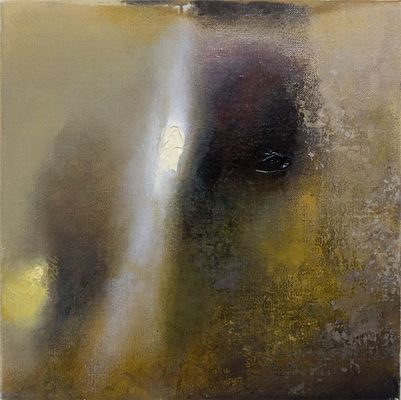
To return to Buckley’s fragment, the first two lines very much evoke how I paint nowadays. As you age, detail diminishes and patches of light become more luminous and float. I feel the most honest way of dealing with this is by smearing the oil paint on the canvas with the fingers and working close-up, blind. Only if the patches coalesce into an approaching image can the work gain a life.
-
Jonathan Walker was born in Melbourne, Australia and brought up on a dairy farm in Gippsland. In the 1970’s he studied painting at RMIT and won the Harold Wright Scholarship to the British Museum, London. During the 1980’s he exhibited at Pinacotheca Gallery, Richmond and had work shown at the NGV and Heidi City Art Gallery. Over the same period he designed the cover for the “Epigenesi” LP by Giancarlo Toniutti, Italy and conducted a mail exchange work with Achim Wollscheid, Germany. The work with artists through the post resulted in an article published in the bicentenary issue of Art and Australia 1988. He showed in artist run spaces such as WestSpace in the 90’s and 2000’s, and until 2012, taught painting at Victoria University, which is where we (Colleen Ahern and Lisa Radford) as organisers of the exhibition, among many others, had the privilege of being his student.
Walker’s knowledge was imparted to students through the careful selection of music, literature, and artists found in books that he himself had ordered for the library. Walker’s strategy was the generosity of sharing his vast knowledge with references specific to each student and their context.
Walker’s paintings share a similar focus and intimacy.
This exhibition presents a small selection of recent paintings alongside a publication that includes Walker’s writing. Observational and analytical, Walker’s work is a type of material notation — the time of day, colour and how it is blended, the both specific and fleeting location of a reflection on lino or the question of whether a chair leg should be included in a painting.
Please join us on Friday August 21 between 6-8pm to celebrate the opening of the exhibition.
Curated by Colleen Ahern and Lisa Radford.
B. Wurtz
Curated by Nic Tammens
March 26 - April 4, 2015
B.Wurtz works from a basement studio in his home on Manhattan’s Lower East Side.
This local fact is attested to by the plastic shopping bags and newsprint circulars that appear in his work. As formal objects, they don’t make loud claims about their origins but nonetheless transmit street addresses and places of business from the bottom of this long thin island. Like plenty of artists, Wurtz is affected by what is local and what is consumed. His work is underpinned by this ethic. It often speaks from a neighborhood or reads like the contents of a hamper:
“BLACK PLUMS $1.29 lb.”
“Food Bazaar”
“USDA Whole Pork Shoulder Picnic 99c lb.”
“RITE AID Pharmacy, with us it’s personal.”
“H. Brickman & Sons.”
“Sweet Yams 59c lb."
Most of the work in this exhibition was made while the artist was in residence at Dieu Donne, a workshop dedicated to paper craft in Midtown. Here Wurtz fabricated assemblages with paper and objects that are relatively lightweight, with the intention that they would be easily transportable to Australia. This consideration isn’t absolute in Wurtz’s work, but was prescriptive for making the current exhibition light and cheap. Packed in two boxes, these works were sent from a USPS post office on the Lower East Side and delivered to North Melbourne by Australia Post.
Wurtz appears courtesy of Metro Pictures, New York.
Thanks to Rob Halverson, Joshua Petherick, Sari de Mallory, Matt Hinkley, Helen Johnson, Fayen d'Evie, Ask Kilmartin, Lisa Radon, Ellena Savage, Yale Union, and "Elizabeth".
John Nixon
"Archive"
December 15 - January 20, 2014
The presentation of John Nixon's archive offered a rare showcase of this extensive collection of the artist's own publications, catalogues, posters, ephemera, editions and more, from the mid 1980s onwards, alongside a selection of his artworks.
Organized by John Nixon, Joshua Petherick and Matt Hinkley.
<a href=http://wfb.public-office.info/artist/john-nixon>All titles by John Nixon
"Habitat"
at Minerva, Sydney (organised by Joshua Petherick and Matt Hinkley)
November 15 - December 20, 2014
Lupo Borgonovo, Janet Burchill & Jennifer McCamley,
Lewis Fidock, HR Giger, Piero Gilardi, Veit Laurent Kurz,
Cinzia Ruggeri, Michael E. Smith, Lucie Stahl, Daniel Weil, Wols
Press Release:
“...It contained seven objects. The slender fluted bone, surely formed for flight, surely from the wing of some large bird. Three archaic circuitboards, faced with mazes of gold. A smooth white sphere of baked clay. An age-blackened fragment of lace. A fingerlength segment of what she assumed was bone from a human wrist, grayish white, inset smoothly with the silicon shaft of a small instrument that must once have ridden flush with the surface of the skin - but the thing’s face was seared and blackened.”
William Gibson, “Count Zero”, 1986
"Autumn Projects Archive"
Curated by Liza Vasiliou
March 6 - March 15, 2014
World Food Books, in conjunction with the Virgin Australia Melbourne Fashion Festival 2014, presented the Autumn Projects archive, consisting of a selection of early examples in Australian fashion with a particular interest in collecting designers and labels from the period beginning in the 1980’s, who significantly influenced the discourse of Australian Fashion.
Curated by Liza Vasiliou, the exhibition provided a unique opportunity to view pieces by designers Anthea Crawford, Barbara Vandenberg, Geoff Liddell and labels CR Australia, Covers, Jag along with early experimental collage pieces by Prue Acton and Sally Browne’s ‘Fragments’ collection, suspended throughout the functioning World Food Books shop in Melbourne.
H.B. Peace
presented by CENTRE FOR STYLE
November 14, 2013
"Hey Blinky, you say chic, I say same"
Anon 2013
H.B. Peace is a clothing collaboration between great friends Blake Barns and Hugh Egan Westland. Their pieces explore the divergences between 'character’ and ‘personality’ in garments....etc
Special Thanks to Joshua Petherick and Matt Hinkley of WFB and Gillian Mears
and a Very Special Thank you to Audrey Thomas Hayes for her shoe collaboration.
Janet Burchill & Jennifer McCamley
"Aesthetic Suicide"
May 10 - June 8, 2013
The first of our occasional exhibitions in the World Food Books office/shop space in Melbourne, "Aesthetic Suicide" presented a body of new and older works together by artists Janet Burchill & Jennifer McCamley, including videos, prints, a wall work, and publications.
During shop open hours videos played every hour, on the hour.
1973, English
Softcover, 36 pages, 28 x 21 cm
1st Edition, Out of print title / used / good
Published by
Eurap / London
$35.00 - Out of stock
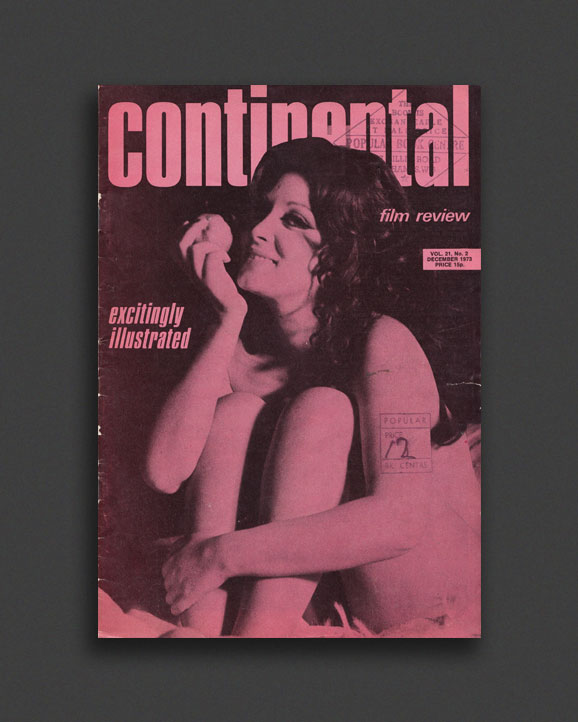
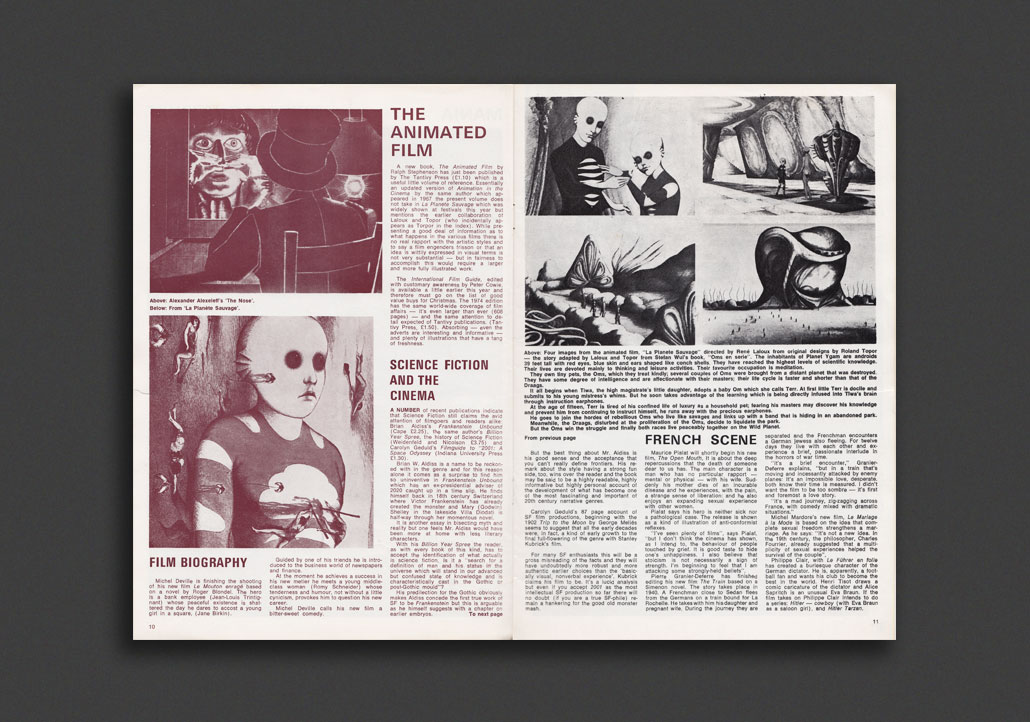
Continental Film Review, December 1973 issue, includes the films of José Ramón Larraz
Guy Casaril, Jean-Jacques Renon, Jean Desville, Claude Zidi, Francois Truffaut, René Laloux (Le Planete Sauvage), Marino Girolami, Jörn Donner, Torgny Wickman, Jan Halldoff, Fernando Di Leo, Tiziano Longo, and so much more. Heavily illustrated throughout.
Continental Film Review, founded in the UK in 1952, was an 'international' film magazine dedicated to foreign film, colloquially referred to in the UK and Australia as Continental Film. In its attitudes towards sex, art, politics and ethnic diversity, the Continental cinema audience anticipated the more widespread social and cultural changes that would transform society in the 1960s and 1970s. Continental Film Review purported to be a somewhat serious film journal devoted to the new cinema of the 1950-1980s, particularly European cinema, but clearly also had a prurient interest in the scantily-clad and often nude young actresses who starred the films of the era. That said, many of the new wave of directors and their films would be seldom documented anywhere else, making Continental Film Review a wonderful time-capsule of a more freely expressive time in film making.
1976, English
Softcover, 34 pages, 28 x 21 cm
1st Edition, Out of print title / used / good
Published by
Eurap / London
$35.00 - Out of stock
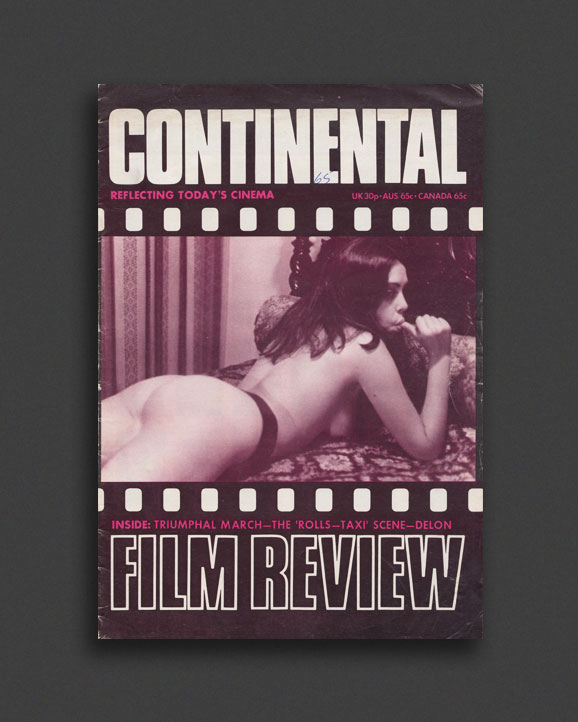
Continental Film Review, June 1976 issue, includes the films of Martin Scorsese (Taxi Driver), Pier Paolo Pasolini (Salò, or the 120 Days of Sodom), Marco Bellocchio, Joseph Losey, Silvio Amadio, Guido Leoni, Jean-Claude Brialy, Erwin C. Dietrich, Franco Martinelli, and so much more. Heavily illustrated throughout.
Continental Film Review, founded in the UK in 1952, was an 'international' film magazine dedicated to foreign film, colloquially referred to in the UK and Australia as Continental Film. In its attitudes towards sex, art, politics and ethnic diversity, the Continental cinema audience anticipated the more widespread social and cultural changes that would transform society in the 1960s and 1970s. Continental Film Review purported to be a somewhat serious film journal devoted to the new cinema of the 1950-1980s, particularly European cinema, but clearly also had a prurient interest in the scantily-clad and often nude young actresses who starred the films of the era. That said, many of the new wave of directors and their films would be seldom documented anywhere else, making Continental Film Review a wonderful time-capsule of a more freely expressive time in film making.
1976, English
Softcover, 34 pages, 28 x 21 cm
1st Edition, Out of print title / used / good
Published by
Eurap / London
$35.00 - Out of stock
Continental Film Review, September 1976 issue, includes the films of Jess Franco (Caged Women), Rainer Werner Fassbinder, Richard Donner (The Omen), Roman Polanski (The Tenant), Alfred Hitchcock, Hans-Jürgen Syberberg, Gérard Pirès, Brunello Rondi, Peter Weir (Picnic at Hanging Rock), actor/sculptor Jean Marais, and so much more. Heavily illustrated throughout.
Continental Film Review, founded in the UK in 1952, was an 'international' film magazine dedicated to foreign film, colloquially referred to in the UK and Australia as Continental Film. In its attitudes towards sex, art, politics and ethnic diversity, the Continental cinema audience anticipated the more widespread social and cultural changes that would transform society in the 1960s and 1970s. Continental Film Review purported to be a somewhat serious film journal devoted to the new cinema of the 1950-1980s, particularly European cinema, but clearly also had a prurient interest in the scantily-clad and often nude young actresses who starred the films of the era. That said, many of the new wave of directors and their films would be seldom documented anywhere else, making Continental Film Review a wonderful time-capsule of a more freely expressive time in film making.
1980, English
Softcover, 50 pages, 28 x 21 cm
1st Edition, Out of print title / used / good
Published by
Eurap / London
$35.00 - Out of stock
Continental Film Review, March 1980 issue, includes the films of Federico Fellini, David Cronenberg, Don Siegel, Norman Jewison, Nicolas Roeg (Bad Timing), David Hamilton (Laura), Daniel Duval, Roger Coggio and Elisabeth Huppert, Marco Bellocchio, Carlo Lizzani, Bruno Gaburro, Robert Benton (Kramer vs. Kramer), Giuseppe Vari (Sister Emanuelle), Andrea Bianchi (Strip Nude For Your Killer), Walter Boos (Confessions of a Sixth Form Teacher), and so much more. Heavily illustrated throughout.
Continental Film Review, founded in the UK in 1952, was an 'international' film magazine dedicated to foreign film, colloquially referred to in the UK and Australia as Continental Film. In its attitudes towards sex, art, politics and ethnic diversity, the Continental cinema audience anticipated the more widespread social and cultural changes that would transform society in the 1960s and 1970s. Continental Film Review purported to be a somewhat serious film journal devoted to the new cinema of the 1950-1980s, particularly European cinema, but clearly also had a prurient interest in the scantily-clad and often nude young actresses who starred the films of the era. That said, many of the new wave of directors and their films would be seldom documented anywhere else, making Continental Film Review a wonderful time-capsule of a more freely expressive time in film making.
1967, English
Softcover, 78 pages, 28 x 22 cm
1st Edition, Out of print title / used / very good
Published by
Howard Publishing / Sydney
$45.00 - Out of stock
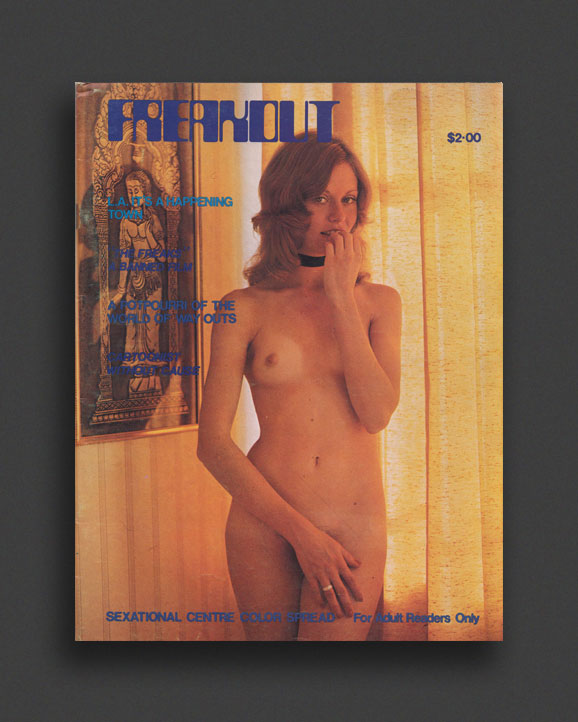
Very rare first, only (?) issue of Australian counterculture/mondo magazine Freakout, published in 1967 by Howard Publishing, Sydney, purveyors of permissive magazines. Documenting "the Freakout movement of the U.S. and across the globe. [...] the age of liberation, the end of the phony sexual puritanism", this issue seems to feature heavy editorial from America's beat and hippie scene, including articles on Los Angeles and Greenwich Village, L.S.D. (including LA police statement and photo-documentation of an LSD session), banned film "The Freaks", Sunset Strip curfew riots and the artists Vietnam tower protest, "Mondo Balordo" (A Fool's World) the 1964 documentary, "Attack on Mulholland Drive" (crime photo reenactment), cartoonist Ron Cobb, model Gypsy Flame, sculptor Vito, Guambo (The Underground Arts masked ball and orgy), the girls of the Penny Arcade, psychedelic art, transsexuality, and nude colour pin-up. Also littered with ads for Australian adult bookstores from the period.
Very Good copy.
1977, Japanese
Softcover, 390 pages, 11 x 18 cm
1st Edition, Out of print title / used / very good
Published by
Tokyo Sanseisha / Tokyo
$60.00 - Out of stock
SM Select October 1977 Edition, published by Tokyo Sanseisha. This issue including work by Toshio Saeki, amongst many others, and one of the great 1970s Haruo Shinozaki airbrushed covers. Cult classic of vintage Japanese BDSM and Kinbaku (Japanese bondage), each issue of SM Select featured almost 400 pages of Japan's most depraved fetish fiction, littered with illustrations unseen elsewhere, including many historical pieces, plus full-colour glossy bondage photo-features, surreal erotic art and manga, fold-outs, reviews, letters, and much more. SM Select, alongside SM Fan, SM King, SM Top, etc. were often the first place to showcase the artwork and photography by some of Japan's biggest names in the field of erotic art, were often the first place to showcase the artwork and photography by some of Japan's biggest names in the field, including Namio Harukawa, Yoshifumi Hayashi, Toshio Saeki, and Ken Katayama, alongside the likes of masters such as Yoshitoshi Tsukioka.
Very Good with light wear.
1978, Japanese
Softcover, 390 pages, 11 x 18 cm
1st Edition, Out of print title / used / very good
Published by
Tokyo Sanseisha / Tokyo
$60.00 - Out of stock
SM Select January 1978 Edition, published by Tokyo Sanseisha. This issue including work by Toshio Saeki, amongst many others, and one of the great 1970s Haruo Shinozaki airbrushed covers. Cult classic of vintage Japanese BDSM and Kinbaku (Japanese bondage), each issue of SM Select featured almost 400 pages of Japan's most depraved fetish fiction, littered with illustrations unseen elsewhere, including many historical pieces, plus full-colour glossy bondage photo-features, surreal erotic art and manga, fold-outs, reviews, letters, and much more. SM Select, alongside SM Fan, SM King, SM Top, etc. were often the first place to showcase the artwork and photography by some of Japan's biggest names in the field of erotic art, were often the first place to showcase the artwork and photography by some of Japan's biggest names in the field, including Namio Harukawa, Yoshifumi Hayashi, Toshio Saeki, and Ken Katayama, alongside the likes of masters such as Yoshitoshi Tsukioka.
Very Good with light wear.
1976, English
Softcover, 46 pages, 28 x 22 cm
1st Edition, Out of print title / used / very good
Published by
Tao Productions / Hollywood
$45.00 - Out of stock
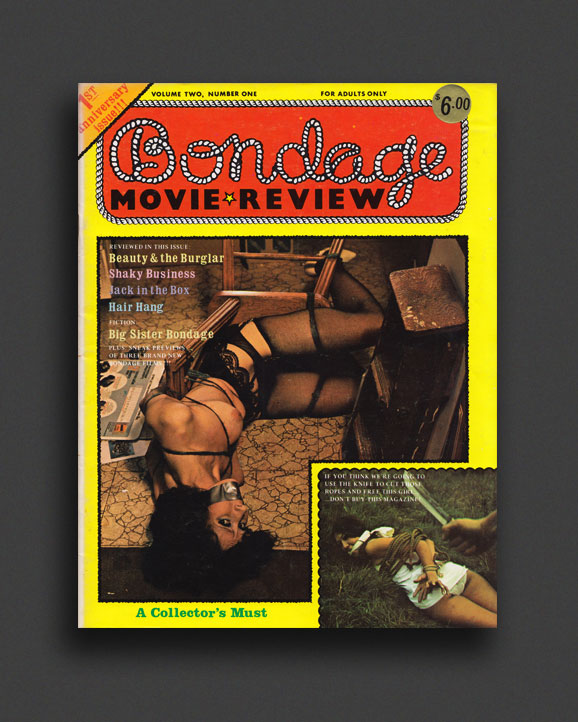
Bondage Movie Review Volume 2 No. 1, the collector's 1st Anniversary issue published by Tao Productions of Hollywood in 1976. Heavily illustrated throughout with b/w and colour bondage photographs, featuring many stills and photographs from Tao Productions films including "Hair Hung", "Jack in The Box", "Return of The Doctor", "Beauty and The Burglar", "The Visitor", "Shaky Business", "The Teat and The Pendulum", plus letters, fiction ("Big Sister Bondage"), illustrated catalogues of Bondage photographs and 8mm films, Bondage marketplace and Tao publications, and more. Includes colour centre spread from "Beauty and The Burglar".
Very Good copy with tanning to spine.
1980, Japanese
Hardcover (w. dust jacket in slipcase), 447 pages, 32 x 22.5 cm
1st Edition, Out of print title / used / good
Published by
Fantasia Co Ltd / Japan
$160.00 - Out of stock
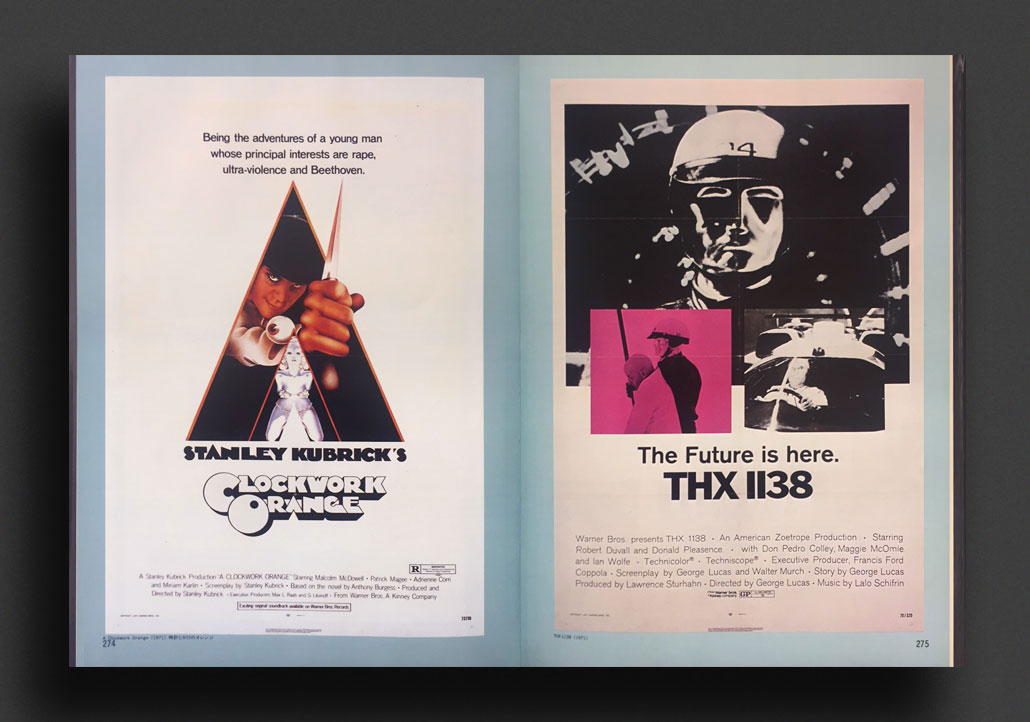
First deluxe edition of the illustrated Japanese encyclopaedic tome that explores the history of Science Fiction film, from early silent film to the modern era. Published in 1980 by special effects expert and editor of SFX Cinematic Illusion Shinji Nakako, A Pictorial History of SF Films compiles an exhaustive directory of chronological film listings from all over the world (including many unreleased Japanese sci-fi films, fantasy, horror, thriller, animation, and much beyond the usual SF category) through the decades. With comprehensive film details, credits and blurbs (in Japanese) for each film selection, illustrated with stills and each period including rich colour reproductions of the original film posters! Includes a neat, full index of the films included (in English and in Japanese), accompanied by thumbnails of Yoda, all housed in the original Hajime Sorayama illustrated dust jacket in original publishers heavy cardboard slipcase. A treasure for the SF fan.
Very Good copy, with small closed tears to jacket, preserved under mylar wrap and in VG original slipcase. Beautifully preserved copy.
1974, French
Hardcover (w. dust jacket), 168 pages, 29.6 x 19.9 cm
1st Edition, Out of print title / used / very good
Published by
Editions du Chene / Paris
$400.00 - Out of stock
Scarce first 1974 hardcover edition of Repérages, the wonderful photographic study by acclaimed French film director, Alain Renais. Repérages is a volume of Renais' photographs, taken between 1948 and 1971, of locations in London, Scotland, Paris, Nevers, Lyon, New York and Hiroshima. Some of the photographs relate to a long-cherished but unfulfilled idea for a film based on the Harry Dickson stories by Jean Ray. A very special, seldom seen photo collection for anyone interested in the work of Resnais. Introductory text by Jorge Semprun.
Very Good copy in VG dj.
2017, English / Portuguese
Softcover, 220 pages, 18 x 25 cm
Published by
Serralves Museum of Contemporary Art / Porto
$62.00 - Out of stock
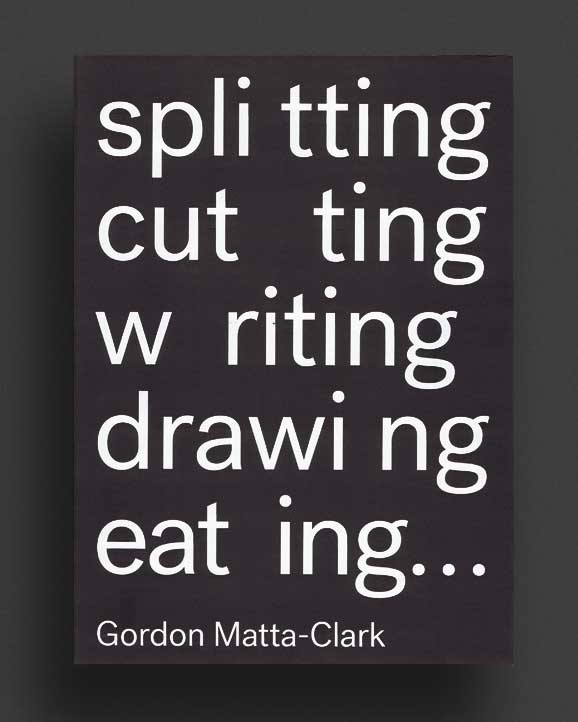
American artist Gordon Matta-Clark is perhaps best known for the site-specific artworks he made in the 1970s. His body of work includes performance and recycling pieces, space and texture works, and his “building cuts”. Matta-Clark used a number of media to document his work, such as film, video, and photography, much of which appears in this catalogue, itself published on the occasion of an eponymous exhibition at the Serralves Museum of Contemporary Art, Porto, and Culturgest, Lisbon. The attractively designed book includes numerous of the artist’s own sketches and plans for various works, plus letters and other material that together form an in-depth portrait.
2020, English
Softcover, 150 pages, 21 x 29.7
Ed. of 100,
Published by
Endless Lonely Planet / Melbourne
$25.00 - In stock -
Melbourne Artist Facilitated Biennial publication by Melbourne artist Christopher LG Hill is both the ninth issue of his ongoing publishing imprint Endless Lonely Planet, and a major survey art book marking the end of his 12 year artist facilitated biennale project, spanning 2008-2020.
"Multiple sites and moments, artist facilitated biennials extending on structures and limitations set by Signs of life: Melbourne International Biennial 1999. Abstracting and bringing new meaning to the form of a biennial as a more casual and independent entity, the project has seen many participants and collaborators over the last 12 years. This book hopes to document some of these moments, but more so to be a catalyst for different modes and models that it may inspire." — publisher
Includes extensive photographic documentation of The (self initiated, Artist funded) second (fourth) Y2K Melbourne Biennial of Art (& Design), TCB art inc., 2008; The First & Final Y3K Second (third) Inaugural Melbourne Biennial of International Arts, Y3K, 2011 (curated by Joshua Petherick, James Deutsher, and Christopher L G Hill); Third/Fourth Melbourne Biennial, Margaret Lawrence Gallery, 2013; 4th/5th Melbourne Artist Facilitated Biennial, TarraWarra Museum of Art, 2016 (as part of TarraWarra Biennial 2016: Endless Circulation curated by Victoria Lynn and Helen Hughes/Discipline); 5th/6th final Melbourne Artist Facilitated Biennial, Dec 2018 -Dec 2020 (co-facilitated by Virginia Overell and Christopher L G Hill in their apartment/ the ex-Telecom building that was the site of the Melbourne International Biennial 1999)
Includes the work of ACW, Liz Allen, Animal Charm, Dan Arps, Sean Bailey, Liv Barrett, Matthew Brown, Ruth Buchannan, Jon Campbell, Jane Caught, Xin Cheng, Fiona Connor, Ying Lan Dann, James Deutsher, Daniel du Bern, Ida Ekblad, ffiXXed, Pat Foster & Jen Berean, Justin K Fuller, Matt Griffin, Ardi Gunawan, Hao Guo, Bianca Hester, Christopher L G Hill, Matt Hinkley, Helen Johnson, Lisa Kelly, Devin Kenny, Taree Mackenzie, Simon McGlinn, Rob Mckenzie, Nick Mangan, Scott Mitchell, Tahi Moore, Kate Newby, Geoff Newton, John Nixon, OSW, Alexander Ouchtomsky, Damon Packard, Spiros Panigriakis, Sean Peoples/ Cheese Peoples, Joshua Petherick, Kain Picken, Janneke Raaphorst, Nick Selenitsch, Christopher Schueler & Matthew Hopkins, Gregory P Sharp, Kate Smith, Sriwhana Spong, Dylan Statham, Masato Takasaka, Ben Tankard, Simon Taylor, Alex Vivian, Annie Wu, Hany Armanious, Andreas Banderas, Mikala Dwyer, Katherine Huang, Tobias Kaspar, Piotr Łakomy, Taree Mackenzie, Tahi Moore, Michael O’Connell, Ester Partegas, Natalie Rognsoy, John Spiteri, Dan Arps, Sean Bailey, Olivia Barrett, Matthew Benjamin, Jon Campbell, Trevelyan Clay, Fiona Connor and Michala Paludan, James Deutsher, DoubleFly, George Egerton-Warburton, Endless Lonely Planet, ffiXXed, Alicia Frankovich, Justin K Fuller, Marco Fusinato, Greatest Hits, Ardi Gunawan, Hao Guo, Christopher L G Hill, Matt Hinkley, David Homewood, Matthew Hopkins, Lou Hubbard, Renee Jaeger, Helen Johnson, Kenneth Biennale (curated by Kenny Pittock and Amy May Stuart: Chris Clarke, Christo Crocker, Christina Hayes, Chris L G Hill, Christine Pittock, Christopher Sciuto), Legendary Hearts (Kieran Hegarty and Andrew Cowie), S.T. Lore, Patrick Lundberg, Carrie McGrath, Rob McKenzie, Taree McKenzie, Nick Mangan, Gian Manik, Kate Meakin, Adelle Mills, Tahi Moore, Kate Newby, Elizabeth Newman, Virginia Overell, Sean Peoples, Joshua Petherick, Kain Picken, Lisa Radford and Sam George, Nick Selenitsch, Kate Smith, Studio Masatotectures, Sydney (Esther Edquist), Masato Takasaka and Madeline Kidd, Ben Tankard, Alex Vivian, Nicki Wynnychuk, y3k, Lauren Burrow, Counterfeitnessfirst, James Deutsher, Laurel Doody, George Egerton-Warburton, ELP3 Vine, Endless Lonely Planet, Lewis Fidock, Aurelia Guo, Christopher L G Hill, Lou Hubbard, Lucina Lane, Kate Meakin, Tahi Moore, Elizabeth Newman, Liam Osborne, Virginia Overell, Joshua Petherick, Lisa Radford, Zac Segbedzi, Nick Selenitsch, Nicholas Tammens, Alex Vivian, Rudi Williams, Gavin Bell, Jarrah de Kuijer and Simon McGlinn, Candida ((Gian Manik and Ricarda Bigolin) in collaboration with Agnieszka Chabros, Samuel Heatley and Jaala Jensen), Xin Cheng, Fiona Connor, Renee Cosgrave, Christo Crocker, Ying Lan Dann, Endless Lonely Planet, Richard Frater, Aurelia Guo, HB Peace, Hoggle, Lou Hubbard, Olivia Koh, Spencer Lai, Laurel Doody Library Supply, Patrick Lundberg, Kate Meakin, Olivia O’Donnell, Jason Willers, and more...
More info at http://www.christopherlghill.com
2017, English
Hardcover (w. dust jacket), 352 pages, 18 x 23 cm
Published by
October Books / New York
The MIT Press / Massachusetts
$65.00 - Out of stock
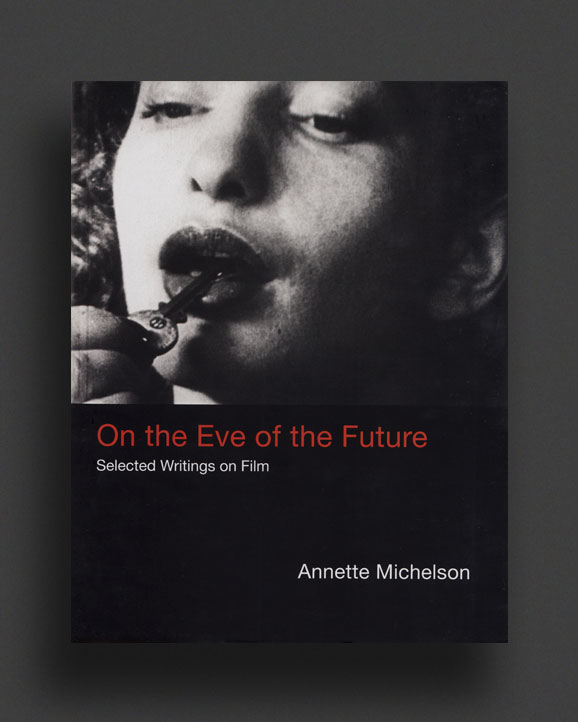
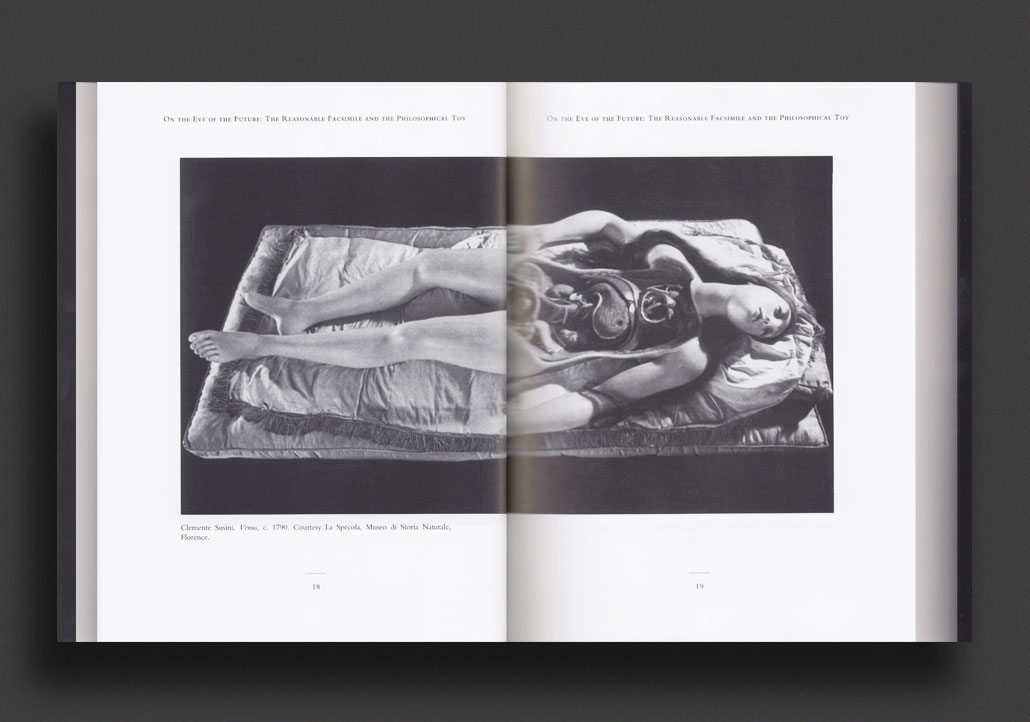
The celebrated critic and film scholar Annette Michelson saw the avant-garde filmmakers of the 1950s and 1960s as radically redefining and extending the Modernist tradition of painting and sculpture, and in essays that were as engaging as they were influential and as lucid as they were learned, she set out to demonstrate the importance of the underappreciated medium of film. On the Eve of the Future collects more than thirty years’ worth of those essays, focusing on her most relevant engagements with avant-garde production in experimental cinema, particularly with the movement known as American Independent Cinema.
This volume includes the first critical essay on Marcel Duchamp’s film Anemic Cinema, the first investigation into Joseph Cornell’s filmic practices, and the first major explorations of Michael Snow. It offers an important essay on Maya Deren, whose work was central to that era of renewal and reinvention, seminal critiques of Stan Brakhage, Hollis Frampton, and Harry Smith, and overviews of Independent Cinema. Gathered here for the first time, these texts demonstrate Michelson’s pervasive influence as a writer and thinker and her role in the establishment of cinema studies as an academic field.
The postwar generation of Independents worked to develop radically new terms, techniques, and strategies of production and distribution. Michelson shows that the fresh new forms they created from the legacy of Modernism became the basis of new forms of spectatorship and cinematic pleasure.
About the Author
Annette Michelson is Professor Emeritus in the Department of Cinema Studies at New York University. A founding editor of the journal October, she has written on art and cinema for more than five decades.
“Annette Michelson is one of the most brilliant minds that has ever turned its focus on the art of cinema. It's a blessing to have her illuminating, inspiring, and informative pieces available in this volume.”
—Jonas Mekas, filmmaker and writer
“When many of these texts first appeared, they were undergroundbreaking. Now, as history, they continue to be impressive for their subtle insights and nuanced style. Annette Michelson’s writing is as avant-garde and of-the-moment as that of a critic/historian can be.”
—Michael Snow, filmmaker, musician, visual artist
“Written with enviable precision and grace, these essays remain the most compelling chronicle of the radical impact that film would have on the other arts in the twentieth century. Through her writings, Annette Michelson defined a field of critical inquiry where others saw only boundaries.”
—Bruce Jenkins, Chair, Department of Film, Video, New Media and Animation, School of the Art Institute of Chicago
2020, English
Hardcover (w. dust jacket), 256 pages, 22.9 x 17.8 cm
Published by
The MIT Press / Massachusetts
October Books / New York
$50.00 - Out of stock
Annette Michelson's erudite and incisive readings of the revolutionary films of Sergei Eisenstein and Dziga Vertov, gathered here for the first time in this posthumous volume, giving readers the opportunity to track her sustained investigations into their work. Michelson introduced American audiences to Soviet cinema in the early 1970s, extending the interpretive paradigm she had used for American filmmakers of the mid-twentieth century—in which she emphasized phenomenological readings of their work—to films and writings by Eisenstein and Vertov. Over four decades, Michelson returned again and again to what she calls, following Eisenstein, “intellectual cinema”—the deliberate attempt to create philosophically informed analogues for consciousness.
The volume includes Michelson's major essays on Eisenstein's unrealized attempts to make movies of both Marx's Capital and Joyce's Ulysses, as well as her authoritative discussion of Vertov's 1929 masterpiece The Man with a Movie Camera. Together, the texts demonstrate Michelson's pervasive influence as a writer and thinker, and her role in the establishment of cinema studies as an academic field. This collection makes these canonical texts available for a new generation of film scholars.
Like the filmmakers with which she is engaged, Annette Michelson's intellectual project is nothing short of passionate. The analytic rigor, the discerning historical and cultural perspectives and the political resonance of these essays are confluent with Michelson's keen perception and striking associations, while the elegance of the writing also registers her intensely poetic and imaginative engagement. — Noa Steimatsky, author of Italian Locations and The Face on Film
2003, Japanese
Hardcover (w. dust jacket and obi strip), 27.2 x 23.6 cm
1st Edition, Out of print title / used / very good
Published by
Tokuma Shoten - Studio Ghibli / Japan
$140.00 - In stock -
First hardcover edition of the world's first artist's book written by Russian animation artist Yuri Norstein, and published only in Japan by Isao Takahata and Hayao Miyazaki of Studio Ghibli.
Translated by Hiroko Kojima, the title refers to the nickname of Norstein's wife, Russian artist Franchesca Yarbusova. It describes in Norstein's own words his childhood memories and his life with close-collaborator Yarbusova. The book reveals the secrets of the creation and process of his award-winning animations, including the landscapes and the people who became the models for the characters in his films. Lavishly illustrated throughout with countless drawings and paintings for his films "The Fox and the Hare" (1973), "The Heron and the Crane" (1974), "Hedgehog in The Fog" (1975), "Tale of Tales" (1979), and his unfinished masterpiece "The Overcoat", amongst others, the book weaves Norstein's film imagery, character studies, and photographs together with his deeply personal reflections and life experiences, alongside biographies of both Norstein and Franchesca Yarbusova. A very special book, heavily illustrated throughout.
Yuri Norstein (b. 1941) is a Soviet and Russian animator. Born to Jewish parents and raised in a Moscow suburb, Yuri Norstein painted as a hobby and trained as a carpenter before studying animation. He directed his first film in 1968 and made a series of short films notable for their attention to atmosphere and fine detail, using his sophisticated multiplane camera technique to create the illusion of shifting three-dimensional depth. Throughout the 1970s Norstein was prolific, working on many award-winning films including Hedgehog in the Fog (1975), one of the director's most widely known works, and his 1979 film Tale of Tales, acclaimed by animation experts as the best animated film of all time.
Very Good copy in Good dust jacket (with some very light edge wear), preserved with publisher's original obi-strip in mylar wrap.
2004, Japanese / English / Russian
Softcover (in card slipcase), 242 pages, 30.6 x 27.6 cm
1st Edition, Out of print title / used / fine
Published by
Fusion / Tokyo
$200.00 - Out of stock
The best book ever made on the work of the great Soviet and Russian animator Yuri Norstein (b. 1941). Born to Jewish parents and raised in a Moscow suburb, Yuri Norstein painted as a hobby and trained as a carpenter before studying animation. He directed his first film in 1968 and made a series of short films notable for their attention to atmosphere and fine detail, using his sophisticated multiplane camera technique to create the illusion of shifting three-dimensional depth. Throughout the 1970s Norstein was prolific, working on many award-winning films including Hedgehog in the Fog (1975), one of the director's most widely known works, and his 1979 film, 'Tale of Tales', acclaimed by animation experts as the best animated film of all time.
This stunning oversized book was published in Japan-only in 2004 (now long out-of-print) and looks at the entire history of Norstein's masterful film works, thoughtfully designed using various paper stocks including wax films to mimic the effects of Norstein's animations. Housed in the original publisher's cardboard slipcase, "The Works of Yuri Norstein" is profusely illustrated to give the most intimate, in-depth introduction to his unique production process, including to-scale reproductions of his working character cut-outs, storyboards, esquisses, countless film stills, working materials and paintings used in the films, technique diagrams, illustrations and photographs, studio and personal photographs, and copious drawings of Norstein's beloved characters. Also includes historical texts on Norstein's life and career, biographies of Norstein and his frequent collaborator and wife, the award winning Russian artist Franchesca Yarbusova, and work index, and additional essays (in Japanese). All image captions and blurbs throughout the book are in English, Russian and Japanese. Very highly recommended!
Very Good-Fine copy preserved in VG-fine slipcase.
1985, Japanese
Softcover, 146 pages, 29.5 x 21 cm
1st Edition, Out of print title / used / very good
Published by
Screen Extra / Tokyo
$90.00 - Out of stock
First edition of this scarce Japanese horror movie guide from the mid 1980s, The Horror Movies Part 2 (Screen Extra Edition). Beautifully printed in glossy covers with various paper stocks and lavishly illustrated with countless colour and b/w film stills and posters/VHS cover graphics. The mighty Horror Movies series aimed to compile a comprehensive catalogue of horror film from the height of video revolution across a series of publications, whilst also chronicling horror/sci-fi/fantasy from the past (1950s-1970s). This edition includes features/profiles/entries on Day of The Dead, Return of The Living Dead, Mutant, Alien, The Thing, The Fury, Rosemary's Baby, Manhattan Baby, Parasite, They Came From Within, Galaxy of Terror, Time Walker, Piranha 2, Happy Birthday to Me, Creepshow, Friday the 13th, Fright Night, Cat People, Cujo, Microwave Massacre, Saturday the 14th, Hell Night, The Crucible of Terror, Thirst, Lemora, Godsend, Savage Weekend, Halloween 3, The Innocents, Torture Dungeon, Bloodthirsty Butchers, The Rats Are Coming, The Beyond, The House by the Cemetary, Tales From The Darkside, The Shining, Christine, Jaws 1-3, The Legacy, The Amityville Horror 1-2, The Omen films, The Entity, The Exorcist films, The Wizard of Gore, Gore-Gore Girls, Psycho 1-2, The Man with 2 Heads, Time Walker, The Thing, Torso, The Blob, Tourist Trap, Demon Seed, Lifeforce, The Company of Wolves, CHUD, Re-Animator, The Mutilator, Silent Madness, directors Andy Milligan, Lucio Fulci, David Cronenberg, George A Romero, New York, and much more!
An invaluable guide for any fan of the genre.
1987, Japanese
Softcover, 106 pages, 27 x 21 cm
1st Edition, Out of print title / used / very good
Published by
Dunwich / Tokyo
$70.00 - Out of stock
Volume 1 of Dunwich, a leading, and extremely short-lived 1980s horror movie magazine from Tokyo that also covers art house/action/fantasy/sci fi film from the period. Profiles/reviews/articles on Blue Velvet, Critters, From Beyond, Guzoo, Legend, Poltergeist 2, The Golden Child, Stand By Me, American Ninja, Sky Pirates, The Vindicator, Street Trash, Hand of Steel, Giger/Alien, Friday the 13th pt. VI, Robot Holocaust, Scared to Death, Sword of Heaven, Highlander, El Topo, The Toxic Avenger, Festival d'Avoriaz '87 - the international fantasy film festival held in France, "Horror Music" (Goblin, Magma, King Crimson, Faust, Oldfield, Ozzy, Fripp-Eno, early Genesis), and much more.
Dunwich could be easily filed alongside the great V-Zone in promoting the home video revolution of the 1980s in Japan, and the explosion in popularity of horror, fantasy, and science fiction film that came with it. Like V-Zone, Dunwich covered the latest in American and European horror whilst publicising the new wave of Japanese gore and V-Cinema (direct-to-video splatter films). Heavy with film features, interviews, guides, stills, behind-the-scenes reports, ads, catalogues, and reviews. Another scarcely seen Japanese must for any 1980s video collector or lover of gore/sci fi.
2007, English
Hardcover, 528 pages, 25 x 28.9 cm
Published by
FAB Press / UK
$110.00 - Out of stock
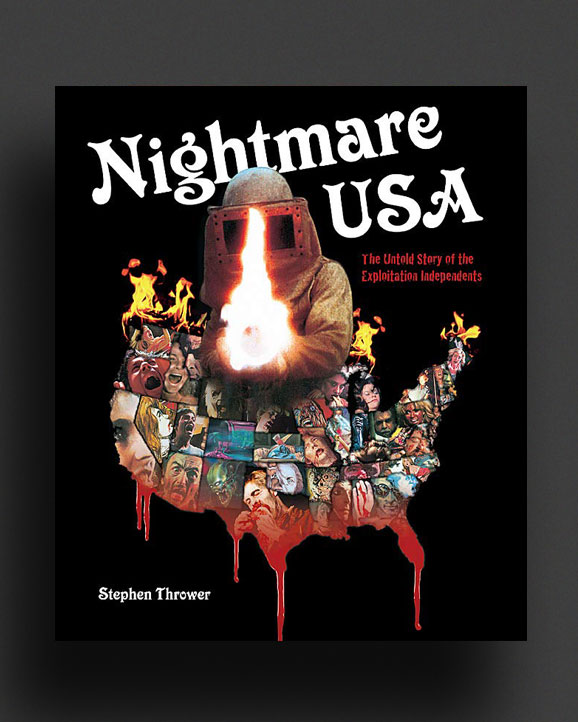
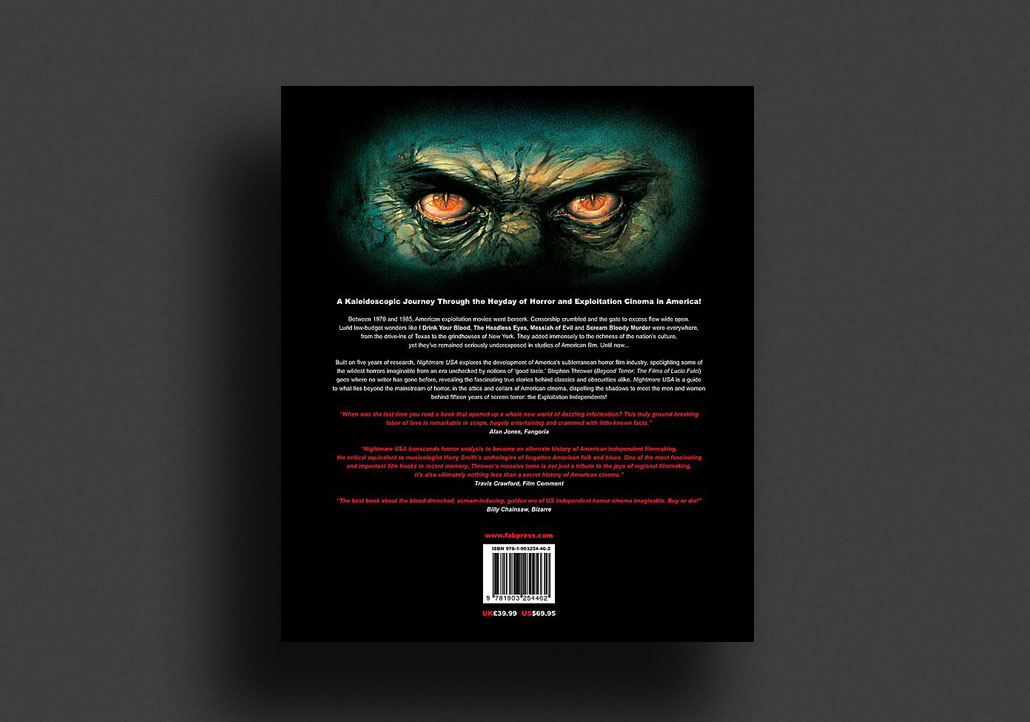
Running to 528 large-format pages, Nightmare USA is a veritable encyclopedia of grindhouse cinema - it's one of the most acclaimed genre film books ever published, and after having Sold Out three times over already, it's finally back in print!
From Quentin Tarantino (Kill Bill) to Eli Roth (Hostel), the young guns of modern Hollywood just can't get enough of that exploitation film high. That's because, between 1970 and 1985, American Exploitation movies went berserk. With censorship relaxed, and the gate to excess wide open, horror offered a vibrant alternative to the mainstream of American cinema. Luridly titled wonders like The Headless Eyes, Scream Bloody Murder and Hitch Hike to Hell were everywhere, from the drive-ins of Texas to the grindhouses of New York. Massively popular around the world, American exploitation movies added immensely to the richness of the nation's cinema.
Built on five years of research, Nightmare USA explores the development of America's subterranean horror film industry, spotlighting some of the wildest films imaginable from an era unchecked by censorship or 'good taste.' Ranging from cult favourites like I Drink Your Blood to stylish mind-benders like Messiah of Evil and shockers like Don't Go in the House, Nightmare USA goes where no other in-depth study has gone before, revealing the fascinating true stories behind classics and obscurities alike. Author Stephen Thrower has explored the attics and cellars of American cinema, delved beneath the floorboards, peered between the walls, searching for the strangest, most exotic cine-lifeforms... Nightmare USA is the reader's guide to what lies beyond the mainstream of American horror, dispelling the shadows to meet the men and women behind fifteen years of screen terror: the Exploitation Independents!
This massive overview of the Horror genre's development through the 1970s and 1980s features: In-depth EXCLUSIVE interviews with twenty-five grindhouse movie makers, many of whom are discussing their work for the first time ever in print, including David Durston (I Drink Your Blood), Robert Endelson (Fight for Your Life), Frederick Friedel (Axe), Don Jones (Schoolgirls in Chains); and Joseph Ellison (Don't Go in the House). Over 175 individual films reviewed, with full cast and crew credits. Vast quantities of previously unpublished stills, posters, press-books, plus behind-the-scenes photographs from the filmmakers' own collections.
2006, English
Hardcover, 220 pages, 17.8 x 25.4 cm
Published by
Semiotext(e) / Los Angeles
$60.00 - Out of stock
In February 1991, the artist David Wojnarowicz (1954-1992) and the philosopher Sylvère Lotringer met in a borrowed East Village apartment to conduct a long-awaited dialogue on Wojnarowicz's work. Wojnarowicz was then at the peak of his notoriety as the fiercest antagonist of morals crusader Senator Jesse Helms—a notoriety that Wojnarowicz alternately embraced and rejected. Already suffering the last stages of AIDS, David saw his dialogue with Lotringer as a chance to set the record straight on his aspirations, his personal history, and his political views. The two arranged to have this three-hour dialogue video-recorded by a mutual friend, the artist Marion Scemama. Lotringer held on to the tape for a long time. After Wojnarowicz's death the following year, he found the transcript enormously moving, yet somehow incomplete. David was trying, often with heartbreaking eloquence, to define not just his career but its position in time. The subject was huge, and transcended the actual dialogue. Lotringer then spent the next several years gathering additional commentary on Wojnarowicz's life and work from those who knew him best—the friends with whom he collaborated. Lotringer solicited personal testimony from Wojnarowicz's friends and other artists, including Mike Bildo, Steve Brown, Julia Scher, Richard Kern, Carlo McCormick, Ben Neill, Kiki Smith, Nan Goldin, Marguerite van Cook, and others. What emerges from these masterfully-conducted interviews is a surprising insight into something art history knows, but systematically hides: the collaborative nature of the work of any "great artist." All these respondents had, at one time, made performances, movies, sculptures, photographs, and other collaborative works with Wojnarowicz. In this sense, Wojnarowicz appears not only as a great originator, but as a great synthesizer.
1994, English
Softcover (staple-bound), 68 pages, 28 x 21.5 cm
1st Edition, Out of print title / used / very good
Published by
Feature Inc. / New York
$300.00 - Out of stock
The rarely seen, first edition of G.B. Jones' artist book, published in the US in 1994 and seized at the border and officially banned in Jones’ native Canada.
G.B. Jones (b. 1965) is a Canadian artist, filmmaker, and founding member of Canadian queer punk band Fifth Column (K Records/Outpunk/Kill Rock Stars/et al). She published legendary queercore fanzine J.D.s (Juvenile Delinquents) with fellow queer filmmaker Bruce LaBruce, which regularly featured her iconic Tom Girl drawings. According to novelist Dodie Bellamy, G.B. Jones' drawing "co-opts the male-on-male objectifying gaze of gay erotica and converts it to a female-on-female gaze." Depicting autonomous women through fantasies of bikers, punks and degenerates in the style of and situations similar to those drawn by Tom of Finland, her Tom Girls are "unapologetic, thrillingly anti-assimilationist." Compiling a scrapbook curriculum vitae of her work to date, this wonderful book presents the Tom Girl series of drawings alongside stills from videos, excerpts from J.D.s zines, gig flyers, photos and essays and commentaries by Dennis Cooper, Vaginal Davis, Dodie Bellamy, Kevin Killian, Caroline Azar, Johnny Noxzema, and others. The essential book on the artist.
Very Good, beautiful copy of the very first banned edition. Possibly in 1996 more were printed (also barely exist), but this is definitely the original 1994 print, exceptionally rare.
2002, Japanese
Hardcover (w. obi strip), 64 pages, 25.5 x 19 cm
1st Edition, Out of print title / as new
Published by
Petit Grand / Tokyo
$45.00 - Out of stock
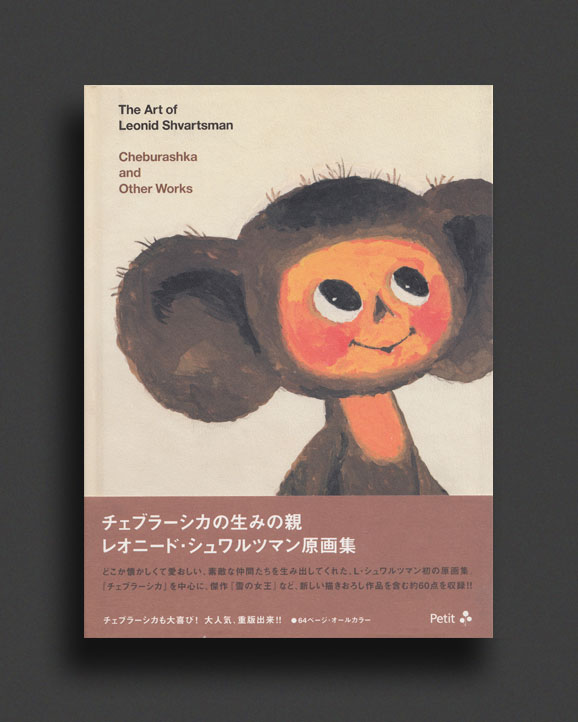
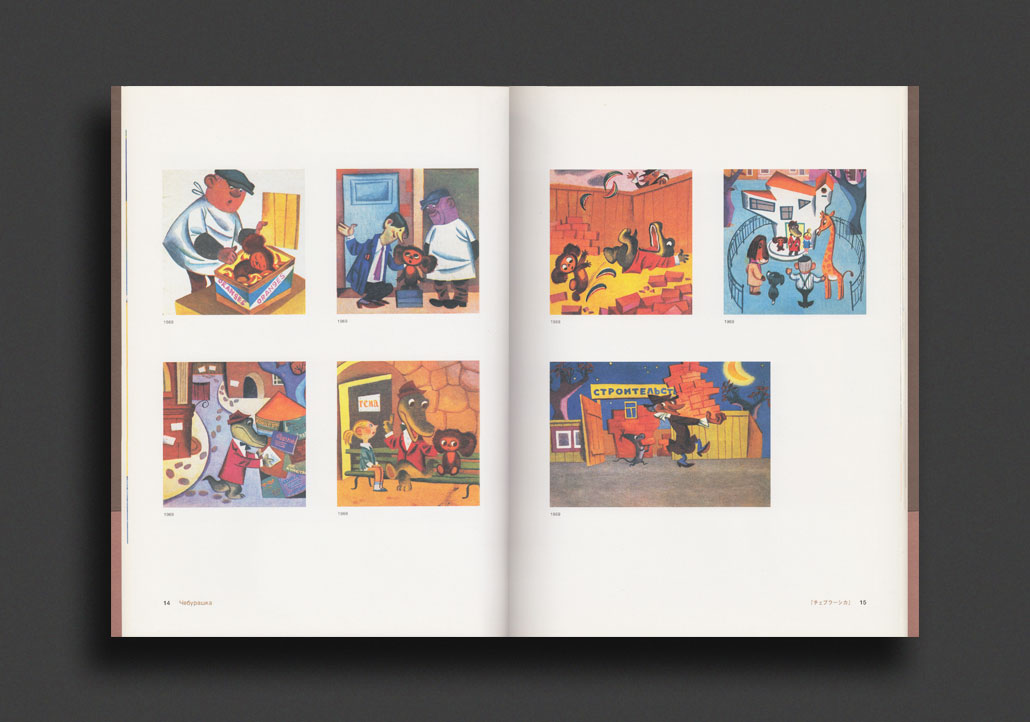
First edition Japanese monograph on the work of legendary Soviet and Russian animator Leonid Shvartsman (b. 1920), who celebrated his 100th birthday this year. Internationally famed for his popular work animating the iconic Russian character Cheburashka, this lovely hardcover book presents a selection of Shvartsman's paintings and illustrations, revisiting his most celebrated animated works throughout his career, as well as reproductions of earlier works from the late 1960s onward. Includes a biography and filmography. Texts in Japanese. Now out of print.
Leonid Aronovich Shvartsman (b. 1920, Minsk, BSSR) is a Soviet and Russian animator and artist. He spent most of his creative career at the Soyuzmultfilm Studio, in Moscow, where he served as art director. Generations of Soviet and Russian children grew up on his films about the adventures of Cheburashka, the crocodile Gena and their friends, the series of puppet films "38 parrots", films "A Kitten named Woof", "Mitten", "The Snow Queen" and many others. Shvartsman grew up in a Yiddish-speaking religious family in the city of Old Minsk. His father died prematurely when Shvartsman was just 13 years of age, and his mother and nephew starved to death in the Siege of Leningrad. Homeless, without parents or siblings, and being denied an art career, he sought out more marginal corners in the creative world. In 1945, he applied to the film institute, VGIK, and in 1951 when he graduated, secured the entry to Soyuzmultfilm, where he stayed his entire career. Shvartsman is credited on 70 films at the studio. He is known as the creator of the visual image of Cheburashka, an iconic character of children's literature from a 1966 story by Soviet writer Eduard Uspensky. Shvartsman sculpted and animated the character and his friends himself, first starring in stop-motion form in 1969. Shvartsman is beloved in America and Europe, and even has a cult following in Japan for creating the character. Hayao Miyazaki said he began to animate again once he saw his work on The Snow Queen (1957).
As New copy w. original illustrated obi strip.
1993, French
Softcover, 144 pages, 12 x 17 cm
1st Edition, Out of print title / used / very good
Published by
Editions Yellow Now / Belgium
$50.00 - Out of stock
First edition of the 1993 French photo-book of Jean-Luc Godard's "Bande à part" (Band of Outsiders, 1964), published in Belgium and written by Barthélemy Amengual, the Algerian born film critic, essayist, historian, educator, and film club host who settled in Paris in 1968 where he would write for the film periodicals Cahiers du Cinéma, Positif, French Screen, Young Cinema, CinémAction and more.
Alongside profuse photographic documentation through beautiful film stills, this landscape book compiles Amengual's accounts and commentary of this iconic genre-defying milestone of French New Wave cinema, conversations with director Jean-Luc Godard and cinematographer Raoul Coutard, filmography, bibliography, and more. An ingenious and unconventional study by one of the greatest names in French criticism.
"Four years after Breathless, Jean-Luc Godard reimagined the gangster film even more radically with Band of Outsiders (Bande à part). In it, two restless young men (Sami Frey and Claude Brasseur) enlist the object of both of their fancies (Anna Karina) to help them commit a robbery—in her own home. This audacious and wildly entertaining French New Wave gem is at once sentimental and insouciant, effervescently romantic and melancholy, and it features some of Godard’s most memorable set pieces, including the headlong race through the Louvre and the unshakably cool Madison dance sequence."
2018, English
Softcover, 222 pages, 17 x 24 cm
Published by
Valiz / Amsterdam
$55.00 - Out of stock
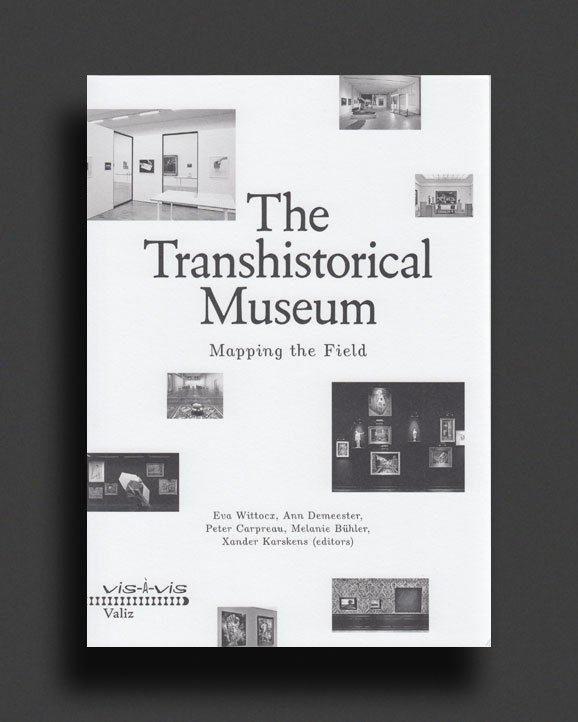
In the 21st century we have witnessed a significant expansion in the field of transhistorical exhibition practice. A range of curatorial efforts have emerged in which objects and artefacts from various periods and art historical and cultural contexts are combined in display, in an effort to question and expand traditional museological notions such as chronology, context, and category. Such experiments in transcending art historical boundaries can result in fresh insights into the workings of entrenched historical presumptions, providing a space to reassess interpretations of individual objects. With contributions by Mieke Bal, Hendrik Folkerts, Nicola Setari, Maria Iñigo Clavo, and others.