World Food Books' programme is largely produced on Kulin Nation land. We acknowledge the Wurundjeri people of the Kulin Nation as the first and continuing custodians of this land, and pay respect to their Elders past, present, and emerging.
World Food Books is an arts and special interests bookshop in Naarm / Melbourne. Founded in 2010, World Food Books is devoted to the presentation of a rotating, hand-selection of international art, design, literary and counterculture publications with an emphasis on the anti-traditional, the experimental, the avant-garde, the heretic, the marginal.
Presenting new titles alongside rare and out-of-print books, catalogues and journals spanning the fields of modern and contemporary art, design, photography, illustration, film, literature, poetry, cultural theory, philosophy, sexuality, popular and underground culture in its many radical forms, World Food Books wishes to encourage adventurous, thoughtful and open-minded reading, looking, writing, and exchange of publishing and ideas, both current and historical.
As well as our bookshop, located in Melbourne's historical Nicholas Building, all of our inventory is available internationally via our online mail-order service.
World Food Books semi-regularly co-ordinates "Occasions", a programme of exhibits and events at the bookshop and in partnership with other hosts (such as museums and art galleries) that develop out of the activities, relationships and content of the bookshop itself.
World Food Books
The Nicholas Building
37 Swanston Street
Room 5, Level 6
Melbourne 3000
Australia
SHOP HOURS:
Thu–Fri 12–6, Sat 12–5
WEB-SHOP OPEN 24/7
World Food Books
Postal Address:
PO Box 435
Flinders Lane
Victoria 8009
Australia
Art
Theory / Essay
Architecture / Interior
Graphic Design / Typography
Photography
Fashion
Eros
LGBTQ+
Fiction / Poetry
Weird / Speculative / Science Fiction / Horror
Transgressive / Visceral / Abject
Symbolism / Decadence / Fin de siècle
Film / Video
Painting
Sculpture / Installation
Performance / Dance / Theater
Drawing
Sound / Music
Curatorial
Group Shows / Collections
Periodicals
Out-of-print / Rare
Posters / Ephemera / Discs
Signed Books
World Food Books Gift Voucher
World Food Book Bag
Australian Art
Australian Fiction
Australian Science Fiction / Speculative Fiction
Australian Poetry
Australian Photography
Japanese Photography
Conceptual Art
Minimal Art
Dada
'Pataphysics / Oulipo
Fluxus
Concrete Poetry
Pop Art
Surrealism
Arte Povera
Arte Informale / Haute Pâte / Tachism
Nouveau Réalisme / Zero / Kinetic
Situationism / Lettrism
Collage / Mail Art / Xerox Art
Art Brut / Folk / Visionary / Fantastic
Illustration / Graphic Art / Bandes Dessinées
Furniture
Italian Radical Design / Postmodernism
Textiles
Ceramics / Glass
Counterculture
Protest / Revolt
Philosophy
Psychoanalysis
Anthropology
Anarchism
Socialism / Anarchism / Communism / Capitalism
Literary Theory / Semiotics / Language
Feminism / Women's Studies
Gender Studies / Sexuality
Anthropology
Fetishism / BDSM
Drugs / Psychedelia
Crime / Violence
Animal Rights / Veganism
Occult / Esoterica
Ecology / Earth / Alternative Living
Whole Earth / Crafts
All prices in AUD (Australian dollars)
Pick-Ups
Pick-up orders can be collected in our bookshop during opening hours after order date. Please collect any Pick-up orders within 2 weeks of ordering as we have limited storage space. Orders will be released back into stock if not collected within this time. No refunds can be made for pick-ups left un-collected. If you cannot make it in to the bookshop in this time-frame, please choose postage option.
Return Policy
All sales are final. We do accept returns (for refund or exchange) for items received in error. All our orders are packed with special care using heavy-duty padding and cardboard book-mailers or bubble mailers (for smaller books), using reinforcement where required. We cannot take responsibility for any lost, stolen or damaged parcels.
Insurance
Should you wish to insure your package, please email us directly after placing your order and we can organise this at a small extra expense. Although all standard/express tracked packages are very safe and dependable, we cannot take responsibility for any lost, stolen or damaged parcels. We recommend insurance on valuable orders.
Interested in selling your old books, catalogues, journals, magazines, comics, fanzines, ephemera? We are always looking for interesting, unusual and out-of-print books to buy. We only buy books in our fields of interest and specialty, and that we feel we can resell.
We base these prices on desirability, market value, in-print prices, condition and our current stock levels. We offer cash, store credit, and can take stock on consignment. All
about 25% of the price we expect to get when we sell them, or 30% in store credit. We base these prices on desirability, market value, in-print prices, condition and our current stock levels.
Sell your books any day of the week. You can drop them off and return later. If you have a lot of books, we can visit your Sydney home.
We buy books that we feel we can resell. We offer about 25 % of the price we expect to get when we sell them, or 30% in store credit. We base these prices on desirability, market value, in-print prices, condition and our current stock levels.
Philadelphia Wireman
03 August - 01 September, 2018
World Food Books is proud to announce our next Occasion, the first presentation of sculptures by Philadelphia Wireman in Australia.
The Philadelphia Wireman sculptures were found abandoned in an alley off Philadelphia’s South Street on trash night in 1982. Their discovery in a rapidly-changing neighbourhood undergoing extensive renovation, compounded with the failure of all attempts to locate the artist, suggests that the works may have been discarded after the maker’s death. Dubbed the "Philadelphia Wireman" during the first exhibition of this work, in 1985, the maker’s name, age, ethnicity, and even gender remain uncertain. The entire collection totals approximately 1200 pieces, all intricately bound together with tightly-wound heavy-gauge wire (along with a few small, abstract marker drawings, reminiscent both of Mark Tobey and J.B. Murry). The dense construction of the work, despite a modest range of scale and materials, is singularly obsessive and disciplined in design: a wire armature or exoskeleton firmly binds a bricolage of found objects including plastic, glass, food packaging, umbrella parts, tape, rubber, batteries, pens, leather, reflectors, nuts and bolts, nails, foil, coins, toys, watches, eyeglasses, tools, and jewellery.
Heavy with associations—anthropomorphic, zoomorphic, and socio-cultural responses to wrapped detritus—the totemic sculptures by Philadelphia Wireman have been discussed in the context of work created to fulfil the shamanistic needs of alternative religions in American culture. Curators, collectors, and critics have variously compared certain pieces to sculpture from Classical antiquity, Native American medicine bundles, African-American memory jugs, and African fetish objects. Reflecting the artist’s prolific and incredibly focused scavenging impulse, and despite—or perhaps enhanced by—their anonymity, these enigmatic objects function as urban artefacts and arbiters of power, though their origin and purpose is unknown. Philadelphia Wireman, whatever their identity, possessed an astonishing ability to isolate and communicate the concepts of power and energy through the selection and transformation of ordinary materials. Over the course of the past two decades, this collection has come to be regarded as an important discovery in the field of self-taught art and vernacular art.
Presented in collaboration with Fleisher-Ollman Gallery, Philadelphia, and Robert Heald, Wellington.
Susan Te Kahurangi King
02 February - 10 March, 2018
Susan Te Kahurangi King (24 February 1951 - ) has been a confident and prolific artist since she was a young child, drawing with readily available materials - pencils, ballpoint pens and felt-tip markers, on whatever paper is at hand. Between the ages of four and six Susan slowly ceased verbal communication. Her grandparents William and Myrtle Murphy had developed a special bond with Susan so they took on caring responsibilities for extended periods. Myrtle began informally archiving her work, carefully collecting and storing the drawings and compiling scrapbooks. No drawing was insignificant; every scrap of paper was kept. The King family are now the custodians of a vast collection containing over 7000 individual works, from tiny scraps of paper through to 5 meter long rolls.
The scrapbooks and diaries reveal Myrtle to be a woman of great patience and compassion, seeking to understand a child who was not always behaving as expected. She encouraged Susan to be observant, to explore her environment and absorb all the sights and sounds. Myrtle would show Susan’s drawings to friends and people in her community that she had dealings with, such as shopkeepers and postal workers, but this was not simply a case of a grandmother’s bias. She recognised that Susan had developed a sophisticated and unique visual language and sincerely believed that her art deserved serious attention.
This was an unorthodox attitude for the time. To provide some context, Jean Dubuffet coined the term Art Brut in 1945 to describe work created by self-taught artists – specifically residents of psychiatric institutions and those he considered to be visionaries or eccentrics. In 1972 Roger Cardinal extended this concept by adopting the term Outsider Art to describe work made by non-academically trained artists operating outside of mainstream art networks through choice or circumstance. Susan was born in Te Aroha, New Zealand in 1951, far from the artistic hubs of Paris and London that Dubuffet and Cardinal operated in. That Myrtle fêted Susan as a self-taught artist who deserved to be taken seriously shows how progressive her attitudes were.
Susan’s parents Doug and Dawn were also progressive. Over the years they had consulted numerous health practitioners about Susan’s condition, as the medical establishment could not provide an explanation as to why she had lapsed into silence. Dawn educated herself in the field of homeopathy and went on to treat all twelve of her children using these principles – basing prescriptions on her observations of their physical, mental and emotional state.
Doug was a linguist with an interest in philosophy who devoted what little spare time he had to studying Maori language and culture. To some extent their willingness to explore the fringes of the mainstream made them outsiders too but it was their commitment to living with integrity and their respect for individuality that ensured Susan’s creativity was always encouraged.
Even though Susan’s family supported her artistic pursuits, some staff in schools and hospitals saw it as an impediment to her assimilation into the community and discouraged it in a variety of ways. Her family was not always aware of this and therefore did not fully understand why Susan stopped drawing in the early 1990s. However, rather than dwell on the challenges that Susan faced in pursuit of her artistic practice, they prefer to highlight her achievements. In 2008 Susan began drawing again in earnest, after an almost 20 year interruption, and her work is now shown in galleries around the world.
Susan grew up without television and has been heavily influenced by the comics she read as a child. She is absolutely fearless in the appropriation of recognizable characters, such as Donald Duck and Mickey Mouse, in her work. She twists their limbs, contorts their faces, compresses them together, blends them into complex patterned backgrounds - always imbuing them with an incredible energy. Although Susan often used pop culture characters in her work they are not naive or childlike. These are drawings by a brilliant self-taught artist who has been creating exceptional work for decades without an audience in mind.
Mladen Stilinović
"Various Works 1986 - 1999"
02 February 16 - September 10, 2016
Various works 1986 - 1999, from two houses, from the collections of John Nixon, Sue Cramer, Kerrie Poliness, Peter Haffenden and Phoebe Haffenden.
Including: Geometry of Cakes (various shelves), 1993; Poor People’s Law (black and white plate), 1993; White Absence (glasses, ruler, set square, silver spoon, silver ladel with skin photograph and wooden cubes), 1990-1996; Exploitation of the Dead (grey and red star painting, wooden painting, black spoon with red table, red plate), 1984-1990; Money and Zeros (zero tie, paintings made for friends in Australia (Sue, John, Kerrie), numbers painting), 1991-1992; Words - Slogans (various t-shirts) - “they talk about the death of art...help! someone is trying to kill me”, “my sweet little lamb”, “work is a disease - Karl Marx”; Various artist books, catalogues, monographs, videos; Poster from exhibition Insulting Anarchy; "Circular" Croatian - Australian edition; Artist book by Vlado Martek (Dostoyevsky); more.
Thanks to Mladen Stilinović and Branka Stipančić.
Jonathan Walker
Always Will Need To Wear Winter Shirt Blue + Ochre Small Check Pattern
21 August - 21 September, 2015
Untitled
I am not a great reader of poetry but I always return to the work of Melbourne poet, Vincent Buckley (1925- 1988). Perhaps I find his most tantalising piece to be not a finished poem but a fragment left on a scrap of paper discovered on his desk after the poet’s death.
The poetry gathers like oil
In the word-core, and spreads
It has its music meet,
Its music is in movement.
This fragment is more the shell left behind from a volatile thought than a finished poem. I find the last two lines honest but awkward whereas the first two lines work like an arrow. Most likely he could not find a resolution so it was left. Still, in its present form, it remains an eloquent testimony to the ultimate failure of a medium to express mobile thought and sensation, in Buckley’s case, through verbal language. It’s an important matter because this is something all artists have to deal with regardless of the medium.
I have never written a poem, however, I am forever copying fragments from books on paper scraps in a vain effort to fix certain notions in my head. At first, they function as bookmarks that are sometimes returned to when I open the book. But before long, as they accumulate, they fall out littering the table interspersed with A4 photocopies, bills, books and medications.
To return to Buckley’s fragment, the first two lines very much evoke how I paint nowadays. As you age, detail diminishes and patches of light become more luminous and float. I feel the most honest way of dealing with this is by smearing the oil paint on the canvas with the fingers and working close-up, blind. Only if the patches coalesce into an approaching image can the work gain a life.
-
Jonathan Walker was born in Melbourne, Australia and brought up on a dairy farm in Gippsland. In the 1970’s he studied painting at RMIT and won the Harold Wright Scholarship to the British Museum, London. During the 1980’s he exhibited at Pinacotheca Gallery, Richmond and had work shown at the NGV and Heidi City Art Gallery. Over the same period he designed the cover for the “Epigenesi” LP by Giancarlo Toniutti, Italy and conducted a mail exchange work with Achim Wollscheid, Germany. The work with artists through the post resulted in an article published in the bicentenary issue of Art and Australia 1988. He showed in artist run spaces such as WestSpace in the 90’s and 2000’s, and until 2012, taught painting at Victoria University, which is where we (Colleen Ahern and Lisa Radford) as organisers of the exhibition, among many others, had the privilege of being his student.
Walker’s knowledge was imparted to students through the careful selection of music, literature, and artists found in books that he himself had ordered for the library. Walker’s strategy was the generosity of sharing his vast knowledge with references specific to each student and their context.
Walker’s paintings share a similar focus and intimacy.
This exhibition presents a small selection of recent paintings alongside a publication that includes Walker’s writing. Observational and analytical, Walker’s work is a type of material notation — the time of day, colour and how it is blended, the both specific and fleeting location of a reflection on lino or the question of whether a chair leg should be included in a painting.
Please join us on Friday August 21 between 6-8pm to celebrate the opening of the exhibition.
Curated by Colleen Ahern and Lisa Radford.
B. Wurtz
Curated by Nic Tammens
March 26 - April 4, 2015
B.Wurtz works from a basement studio in his home on Manhattan’s Lower East Side.
This local fact is attested to by the plastic shopping bags and newsprint circulars that appear in his work. As formal objects, they don’t make loud claims about their origins but nonetheless transmit street addresses and places of business from the bottom of this long thin island. Like plenty of artists, Wurtz is affected by what is local and what is consumed. His work is underpinned by this ethic. It often speaks from a neighborhood or reads like the contents of a hamper:
“BLACK PLUMS $1.29 lb.”
“Food Bazaar”
“USDA Whole Pork Shoulder Picnic 99c lb.”
“RITE AID Pharmacy, with us it’s personal.”
“H. Brickman & Sons.”
“Sweet Yams 59c lb."
Most of the work in this exhibition was made while the artist was in residence at Dieu Donne, a workshop dedicated to paper craft in Midtown. Here Wurtz fabricated assemblages with paper and objects that are relatively lightweight, with the intention that they would be easily transportable to Australia. This consideration isn’t absolute in Wurtz’s work, but was prescriptive for making the current exhibition light and cheap. Packed in two boxes, these works were sent from a USPS post office on the Lower East Side and delivered to North Melbourne by Australia Post.
Wurtz appears courtesy of Metro Pictures, New York.
Thanks to Rob Halverson, Joshua Petherick, Sari de Mallory, Matt Hinkley, Helen Johnson, Fayen d'Evie, Ask Kilmartin, Lisa Radon, Ellena Savage, Yale Union, and "Elizabeth".
John Nixon
"Archive"
December 15 - January 20, 2014
The presentation of John Nixon's archive offered a rare showcase of this extensive collection of the artist's own publications, catalogues, posters, ephemera, editions and more, from the mid 1980s onwards, alongside a selection of his artworks.
Organized by John Nixon, Joshua Petherick and Matt Hinkley.
<a href=http://wfb.public-office.info/artist/john-nixon>All titles by John Nixon
"Habitat"
at Minerva, Sydney (organised by Joshua Petherick and Matt Hinkley)
November 15 - December 20, 2014
Lupo Borgonovo, Janet Burchill & Jennifer McCamley,
Lewis Fidock, HR Giger, Piero Gilardi, Veit Laurent Kurz,
Cinzia Ruggeri, Michael E. Smith, Lucie Stahl, Daniel Weil, Wols
Press Release:
“...It contained seven objects. The slender fluted bone, surely formed for flight, surely from the wing of some large bird. Three archaic circuitboards, faced with mazes of gold. A smooth white sphere of baked clay. An age-blackened fragment of lace. A fingerlength segment of what she assumed was bone from a human wrist, grayish white, inset smoothly with the silicon shaft of a small instrument that must once have ridden flush with the surface of the skin - but the thing’s face was seared and blackened.”
William Gibson, “Count Zero”, 1986
"Autumn Projects Archive"
Curated by Liza Vasiliou
March 6 - March 15, 2014
World Food Books, in conjunction with the Virgin Australia Melbourne Fashion Festival 2014, presented the Autumn Projects archive, consisting of a selection of early examples in Australian fashion with a particular interest in collecting designers and labels from the period beginning in the 1980’s, who significantly influenced the discourse of Australian Fashion.
Curated by Liza Vasiliou, the exhibition provided a unique opportunity to view pieces by designers Anthea Crawford, Barbara Vandenberg, Geoff Liddell and labels CR Australia, Covers, Jag along with early experimental collage pieces by Prue Acton and Sally Browne’s ‘Fragments’ collection, suspended throughout the functioning World Food Books shop in Melbourne.
H.B. Peace
presented by CENTRE FOR STYLE
November 14, 2013
"Hey Blinky, you say chic, I say same"
Anon 2013
H.B. Peace is a clothing collaboration between great friends Blake Barns and Hugh Egan Westland. Their pieces explore the divergences between 'character’ and ‘personality’ in garments....etc
Special Thanks to Joshua Petherick and Matt Hinkley of WFB and Gillian Mears
and a Very Special Thank you to Audrey Thomas Hayes for her shoe collaboration.
Janet Burchill & Jennifer McCamley
"Aesthetic Suicide"
May 10 - June 8, 2013
The first of our occasional exhibitions in the World Food Books office/shop space in Melbourne, "Aesthetic Suicide" presented a body of new and older works together by artists Janet Burchill & Jennifer McCamley, including videos, prints, a wall work, and publications.
During shop open hours videos played every hour, on the hour.
2015, English
Softcover, 256 pages, 17 x 24 cm
Published by
Valiz / Amsterdam
$50.00 - Out of stock
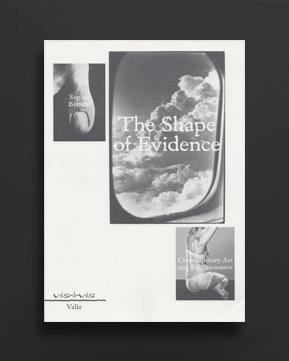
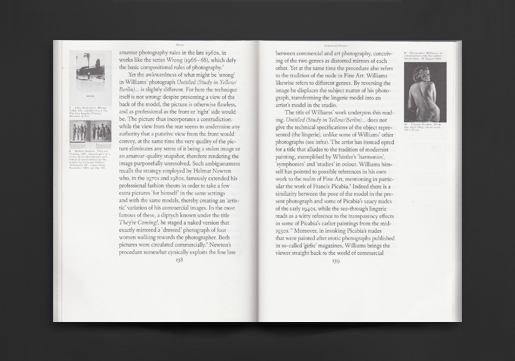
The Shape of Evidence examines the role and use of visual documents in contemporary art, looking at artworks in which the document is valued not only as a source of information but also as a distinctive visual and critical form. It contends that for artists who use film, photography or written sources, adopting formats derived from specific professional, industrial, scientific of or commercial contexts, the document offers a way to develop a critical reflection around issues of representation, knowledge production, art and its history.
It addresses several issues that are key both in art and in general culture today: the role of the museum and the archive, the role of documents and the trust that is placed in them, the circulation of such images and the historical genealogies that can be drawn in relation to images. Its uniqueness, however, also derives from its method: it is based on a close reading of a select number of works of art (e.g. Christopher Williams, Fiona Tan, Jean-Luc Moulène), which makes it approachable and engaging with the reader.
Moreover it applies an interdisciplinary perspective: while being about contemporary art it discusses objects and ideas drawn from a wide spectrum of areas including literature, history, photography history, scientific representation, surrealism, conceptual art, commercial photography and so forth.
The Shape of Evidence invites viewers to reflect upon the production and interpretation of seemingly straightforward images, and proposes that some artists can show us through their practice how to turn these deceptively simple images inside out.
Sophie Berrebi (1973) is a writer, art historian and occasional curator, born in Paris and living in Amsterdam. Her writing has appeared in frieze, Afterall, Metropolis M, and Art and Research, among other publications. She received her PhD from the Courtauld Institute of Art, University of London, and has been based at the University of Amsterdam since 2003 where she teaches art history and theory, mainly in the areas of photography and contemporary art.
1998, English
Softcover, 28 pages, 21 x 28 cm
1st Edition, Out of print title / as new
Published by
The Renaissance Society / Chicago
$45.00 - Out of stock
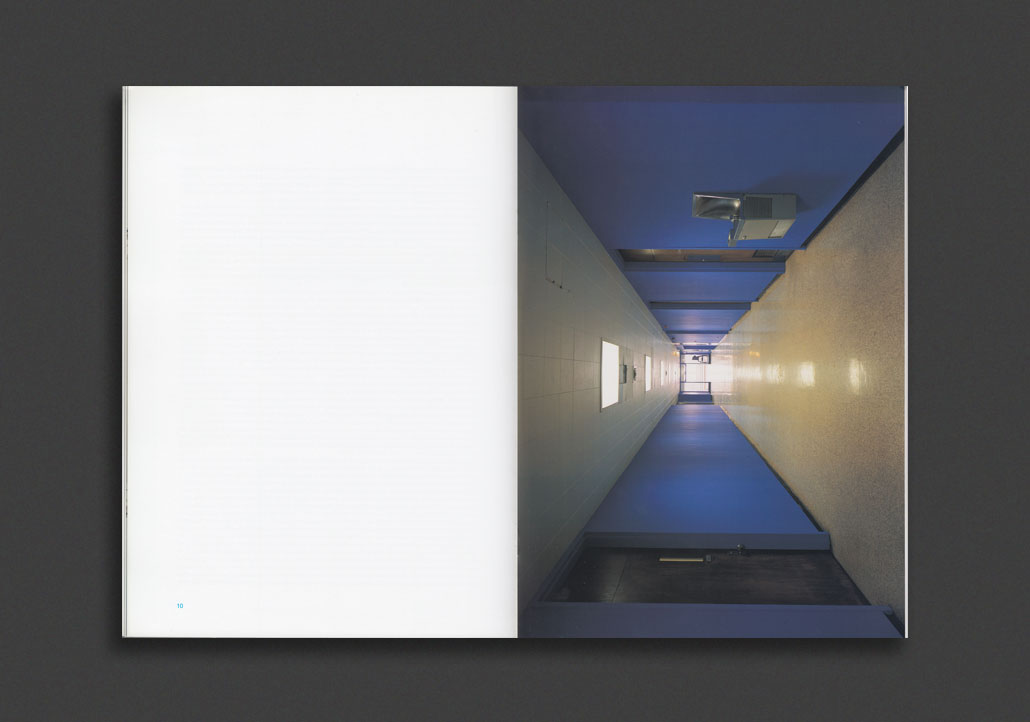
Catalogue published on the occasion of Heimo Zobernig's solo exhibition at Renaissance Society in 1996. Austrian Heimo Zobernig's work intervenes, rearranges, recontextualizes, and down-right makes fun of the architecture of museum/gallery spaces so as to demystify its illusory potential and reinscribe it with self-referentiality. Zobernig is among several significant contemporary artists such as Michael Asher, General Idea, and Daniel Buren who have made it their mission to critique sites of modern art.
In Zobernig's 1996 installation, the gallery walls from the Society's preceding exhibition were laid flat on the floor-a neat-handed figure/ground reversal turning support into sculpture. In another provocative turn, Zobernig brought the outside in to this altered gallery space via video - he had himself filmed cavorting around the Renaissance Society hallway naked in front of walls that were painted video back-drop blue; this image was then super-imposed on footage shot while driving around Chicago. This informative and engaging book, designed by Zobernig, serves as a valuable pictorial document, and an insightful critical analysis of this important work. Walker's essay speaks to the challenge Zobernig's art poses for art history and the implications of that challenge for the future of art. In addition, the catalog features a transcript of the panel discussion: Planned Obsolescence, in which a group of critics, curators and architectural historians gathered to discuss how Zobernig's practice differs from, or further informs, practices that have made an art out of calling for an end of art.
2019, English
Softcover (leporello folded guide w. illustrations), 15 x 10 cm
1st Edition, Out of print title / as new
Published by
Belgian Pavilion La Biennale Di Venezia / Venice
$10.00 - In stock -
Visitor's Guide (English edition) published to accompany the presentation "Mondo Cane" by Belgian art duo Jos de Gruyter and Harald Thys for the 2019 Venice Biennale. This staple-bound booklet presents all the characters featured in "Mondo Cane" together with their biographies. Highly recommended.
The Belgian artists Jos de Gruyter (b. 1965) and Harald Thys (b. 1966) have collaborated for more than two decades on artworks in a variety of media, including film, photography, drawing, painting, and sculpture; they are known for thought-provoking works, often imbued with an antic sense of humor. Depression, autism, power games, psychosis, sexual tensions and idolatry are just a few of the interests that Jos De Gruyter & Harald Thys have cited as crucial to their dark repertoire. The pair was selected to represent Belgium at the 2019 Venice Biennale. Its title, "Mondo Cane", refers to a 1962 Italian film that documented-in a style intended to provoke Western audiences-cultural practices from around the world.
2020, English
Softcover, 196 pages, 14.6 x 20.3 cm
Published by
Strange Attractor / London
$44.00 - Out of stock
A journey deep into the heart of the trash experience: tales from the underground and
exploitation movie scene in America during the 1960s.
“Trash has always served me well—over the years it has become the outer form and material expression of my dreams: of tomorrow, of life in space, of the blissful alienation from this world that I have always craved.”—from Inferno
So begins the first part of this personal inquiry into the world of trash by writer and theorist Ken Hollings. Why do we find ourselves so attracted to the cheap and vulgar, the discarded, the misshapen and the abject? What do we really mean when we say that something is “so bad it’s good,” and what finally does it say about us? Part personal confession and part historical roadmap of tales from the underground and exploitation movie scene in America during the 1960s, Inferno takes the reader on a journey deep into the heart of the trash experience.
With Inferno, Hollings offers a complex and intricate timeline of connections, coincidences, and resonances that have mostly gone unnoticed. He traces the transmission of “the Purple Death,” a deadly and exotic virus first depicted in an old episode of a Flash Gordon movie serial, through the films of Jack Smith, Andy Warhol, and Kenneth Anger and into the output of such exploitation pioneers as Ray Dennis Steckler, Hershel Gordon Lewis, and Russ Meyer. Hollings also turns his idiosyncratic gaze upon key aspects of teenage culture during the 1960s, including hot rods, “Rat Fink,” surfers, bikers, and beach parties, uncovering a secretive and hidden universe of masks, fake identities, and secret desires. Even Dante would think twice about taking this trip into Hell.
2016, English
Softcover (w. dust jacket, poster and postcard), 246 pages, 17 x 24 cm
Published by
IMA / Brisbane
KW Institute for Contemporary Art / Berlin
MUMA / Victoria
Sternberg Press / Berlin
$46.00 - Out of stock
Edited by Aileen Burns, Charlotte Day, Krist Gruijthuijsen, Johan Lundh
Texts by Max Andrews and Mariana Cánepa Luna (Latitudes), Helen Hughes, Ana Teixeira Pinto
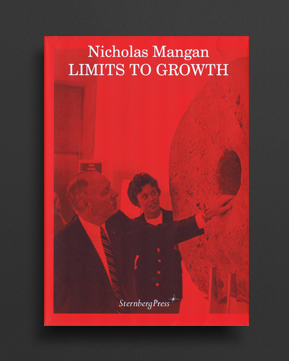
This publication accompanies Australian multidisciplinary artist Nicholas Mangan’s survey exhibition “Limits to Growth.” The exhibition and book bring together four of Mangan’s most significant works of the past seven years, alongside a new commission. The works in the show tackle narratives from his own geographical region—Asia Pacific, in which his home country of Australia plays a colonial role—and weaves them into a bigger picture to take into account the global economy, resource extraction, and the ultimate power of the sun. Featuring an in-depth series of conversations between the artist and the Barcelona-based curatorial collective Latitudes, and essays by Ana Teixeira Pinto and Helen Hughes, this publication is richly illustrated with documentation of Mangan’s artworks and historical source material.
Copublished with the Institute of Modern Art, Brisbane; KW Institute for Contemporary Art, Berlin; and Monash University Museum of Art, Melbourne
Design by Žiga Testen
2014, English
Die-cut softcover, 368 pages, (1,000 color ill.), 20 x 29.5 cm
Published by
Sternberg Press / Berlin
$130.00 $60.00 - Out of stock
Edited by Quinn Latimer and Adam Szymczyk
Since his arrival in New York in 1969, the French artist Michel Auder (b. 1945, Soissons, France) has authored more than five hundred video works that chart five decades of the medium’s history. Employing new video formats as they become available, many of which have quickly fallen into obsolescence, Auder has prolifically produced short and feature films as well as video installations and photography that transgress genres, gleaning the fields of art history, literature, commercial television, and experimental cinema. At once poetic and critical, cruel and confessional, Auder’s casually virtuosic oeuvre continues to disrupt traditional perceptual habits of moviegoers and art audiences alike, subverting notions of filmic narrative and process.
This new monograph includes “Twenty Film-Poems for M. Auder,” a series of mini-essays on selected videos by Quinn Latimer, an American poet and critic based in Basel, as well as “Portrait of the Marauder,” an extensive interview with the artist by Adam Szymczyk, director of Kunsthalle Basel. The book which also includes a catalogue raisonné of Auder’s video works, was designed by Julia Born, a Swiss graphic designer who lives and works in Berlin.
This book was conceived on the occasion of the exhibitions “Stories, Myths, Ironies, and Other Songs: Conceived, Directed, Edited, and Produced by M. Auder,” on view at Kunsthalle Basel, June 9–August 25, 2013, and curated by Adam Szymczyk; and “Michel Auder: Selected Works,” on view at Portikus, Frankfurt am Main, October 31–November 17, 2013, and curated by Sophie von Olfers.
Design by Julia Born
2017, English
Softcover, 152 pages, 15.2 x 22.9 cm
Published by
The MIT Press / Massachusetts
$44.00 $10.00 - Out of stock
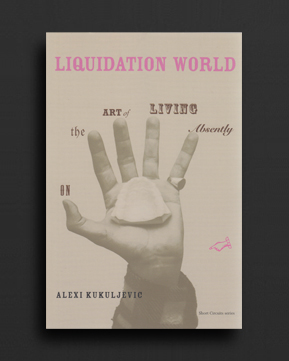
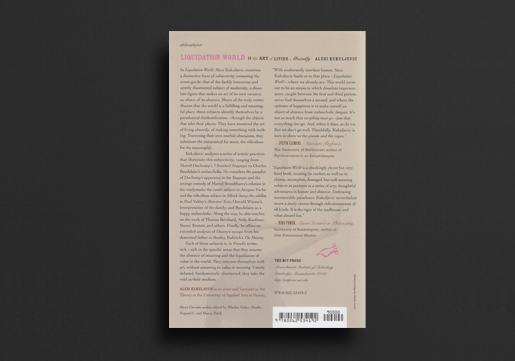
In Liquidation World, Alexi Kukuljevic examines a distinctive form of subjectivity animating the avant-garde: that of the darkly humorous and utterly disoriented subject of modernity, a dissolute figure that makes an art of its own vacancy, an object of its absence. Shorn of the truly rotten illusion that the world is a fulfilling and meaningful place, these subjects identify themselves by a paradoxical disidentification—through the objects that take their places. They have mastered the art of living absently, of making something with nothing. Traversing their own morbid obsessions, they substitute the nonsensical for sense, the ridiculous for the meaningful.
Kukuljevic analyzes a series of artistic practices that illuminate this subjectivity, ranging from Marcel Duchamp’s Three Standard Stoppages to Charles Baudelaire’s melancholia. He considers the paradox of Duchamp’s apparatus in the Stoppages and the strange comedy of Marcel Broodthaers’s relation to the readymade; the comic subject in Jacques Vaché and the ridiculous subject in Alfred Jarry; the nihilist in Paul Valéry’s Monsieur Teste; Oswald Wiener’s interpretation of the dandy; and Charles Baudelaire as a happy melancholic. Along the way, he also touches on the work of Thomas Bernhard, Andy Kaufman, Buster Keaton, and others. Finally, he offers an extended analysis of Danny’s escape from his demented father in Stanley Kubrick’s The Shining.
Each of these subjects is, in Freud’s terms, sick—sick in the specific sense that they assume the absence of meaning and the liquidation of value in the world. They concern themselves with art, without assuming its value or meaning. Utterly debased, fundamentally disoriented, they take the void as their medium.
Alexi Kukuljevic is an artist and Lecturer in Art Theory at the University of Applied Arts in Vienna.
“With exuberantly mordant humor, Alexi Kukuljevic leads us to that place—Liquidation World—where we already are. This world turns out to be an atopia in which dissolute impersonators, caught between the first and third person, never find themselves a second, and where the epitome of happiness is to make oneself an object of absence from melancholic despair. It’s not so much that everything must go—just that everything does go. And, when it does, so do we. But we don’t go well. Thankfully, Kukuljevic is here to show us the pistols and the ropes.”
—Justin Clemens, Associate Professor, The University of Melbourne; author of Psychoanalysis is an Antiphilosophy
“Liquidation World is a shockingly clever but very kind book, treating its readers as well as its clumsy, incomplete, damaged, but well-meaning subjects as partners in a series of arty, thoughtful adventures in humor and absence. Embracing innumerable paradoxes, Kukuljevic nevertheless steers a steely course through ridiculousnesses of all kinds. It is the rigor of the madhouse, and what absurd fun.”
—Nina Power, Senior Lecturer in Philosophy, University of Roehampton; author of One Dimensional Woman
2001, English
Softcover (w. French flaps), 256 pages, 21.2 x 32 cm
1st Edition, Out of print title / used / very good
Published by
Holzwarth / Berlin
$350.00 $150.00 - Out of stock
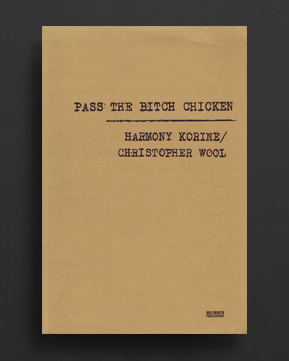
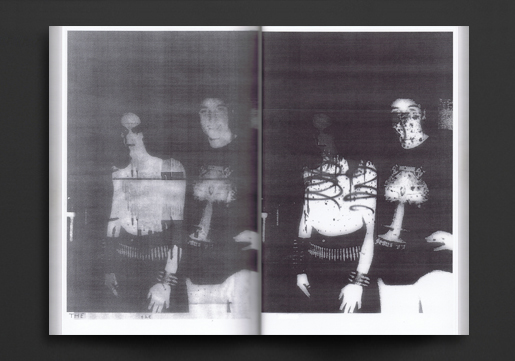
First, collectible edition. The result of a collaboration between the filmmaker Harmony Korine and the painter Christopher Wool, this series of experimental images tests the limits of the pictorial and the abstract, pushing the boundaries of visual and textual narrative to extremes. Korine’s photographs form the basis of an intense process of layering, drawing, overprinting and photocopying as each image is passed back and forth between the artists until the images are reduced to ghostly shadows beneath a barrage of scumbled dot-screens, random patterning and symbolic blurs and drips. Gradually the fragmented, distorted images serially mutate, attacked by a combination of mechanical and human processes, yet despite the violence exerted upon it, a vestige of narrative always survives.
Harmony Korine was born in Bolinas, California in 1974. At 19, he wrote the screenplay for Kids, directed by Larry Clark, and later wrote and directed Gummo, which won awards at the Venice and Rotterdam film festivals, and Julian Donkey-Boy, which won an award for best art direction at the Gijon International Film Festival in Spain. He is the author of the novel A Crack Up at the Race Riots.
Christopher Wool was born and brought up in Chicago. In the early 1970s he moved to New York, where he studied painting intermittently and worked as an assistant to the artist Joel Shapiro. His first show was at the Cable Gallery, New York, in 1984. Since then he has exhibited internationally, including the 1989 Whitney Biennial, Documenta9, Birth of the Cool, the Museum of Contemporary Art in Los Angeles, Kunsthalle Basel and the Secession Gallery in Vienna.
Very Good - Fine.
2017, English
Hardcover, 260 pages, 22 x 26 cm
Published by
Mousse / Milan
$75.00 $50.00 - Out of stock
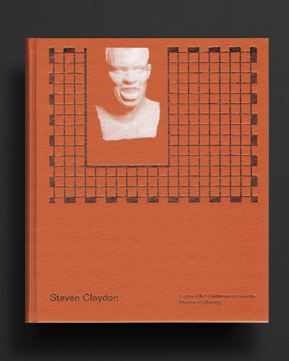
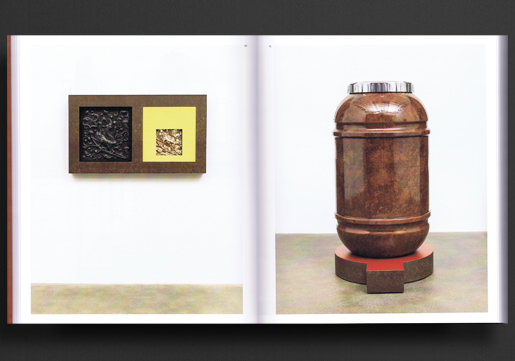
“This book, the first major monograph on British artist Steven Claydon – published on the occasion of his 2015 exhibition at Centre d’Art Contemporain Geneve –, brings together visual documentation, texts addressing the artist’s multifarious practice over recent years, and a comprehensive chronology spanning his twenty-year career. […] Claydon’s work is rich and complex. As the reader will witness through the pages, his visual lexicon embraces a wide range of references, from contemporary design to technology, from architecture to archaeology, from art history to science fiction, from popular culture to medieval music. Synesthetic connections and associations represent the very essence of the way Claydon works and thinks. This book is conceived both as a tool for better understanding his dynamic and pluralistic practice, and his important role as a precursor to the practices of today’s young artists.” – Andrea Bellini
Edited by Andrea Bellini.
Texts by Mark Beasley, Andrea Bellini, Michael Bracewell, James Cahill, Martin Clark, Steven Claydon, Michelle Cotton
English
Softcover, 122 pages + 8 page booklet insert, 182 x 257 mm
Edition of 1000,
Published by
3-Ply / Victoria
$25.00 - Out of stock
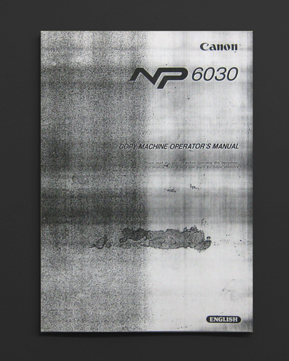
Some Kinds of Duration presents the results of Nicholas Mangan’s research into the improbable links between: the Walter Burley Griffin Pyrmont incinerator in Sydney (now demolished); the Mayan Palace of the Governor of Uxmal in the Yucatan, Mexico; George Kubler’s treatise on ‘The Shape of Time’; and the form and function of a Canon NP6030 photocopier. This book can be read as a visual thesis, proposing new narratives and frameworks for considering innovation, destruction, reproduction and mutation.
1990, Japanese
Softcover, 112 pages, 30 x 22.5 cm
1st Edition, Out of print title / used / good
Published by
Studio Voice / Tokyo
$30.00 - Out of stock
1990 ACID AGE issue of Japan's esteemed "multi-media mix" magazine STUDIO VOICE, a cultural magazine dedicated to the cutting-edge of music, fashion, technology, the arts, film, video games, and literature. Cover feature is a primer on ACID through the ages, 1960-1990, the music, philosophy, literature, art, drugs, fashion... from William S. Burroughs, Philip K. Dick, KLF, Syd Barrett, DAF, Timothy Leary, Manuel Göttsching, Antwerp 6, Throbbing Gristle, Kraftwerk, Detroit Techno, etc., also the work of fashion designer Mitsuhiro Matsuda, musician Susumu Hirasawa, photographer Javier Vallhonrat, Amy Arbus, Studio V, and more.
Good copy.
2016, English
Hardcover, 60 pages, 23 x 21 cm
1st Edition, Out of print title / used / very good
Published by
Gavin Brown’s Enterprise / New York
$600.00 - Out of stock
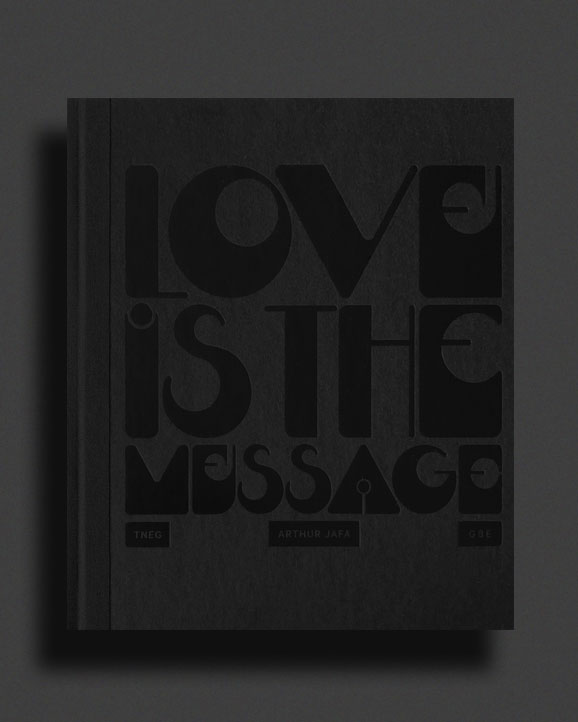
First, only edition of the incredible, and now very rare Love is the Message : The Message is Death by Arthur Jafa. Published in 2016 by Gavin Brown’s Enterprise, New York to accompany the exhibition of the same name. Illustrated throughout with text by Greg Tate and Christina Sharpe.
Very Good copy.
1983, English
Softcover (staple-bound), 96 pages, 28 x 20 cm
1st Edition, Out of print title / used / good
Published by
HM Communications / New York
$30.00 - Out of stock
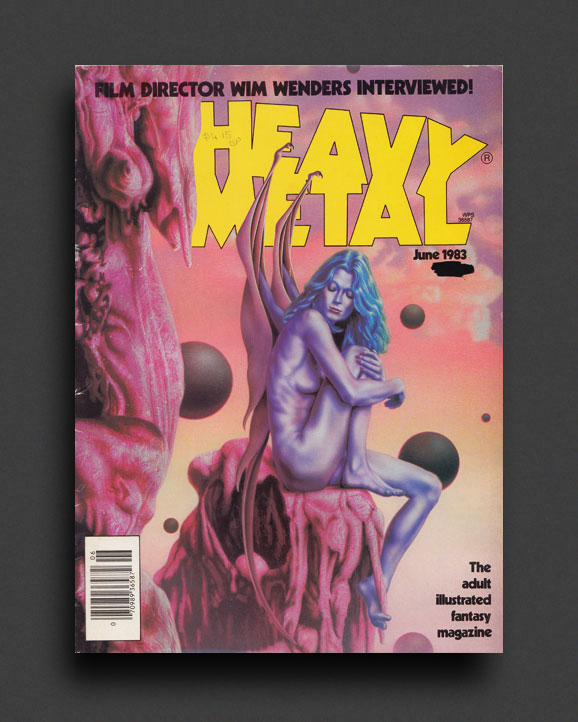
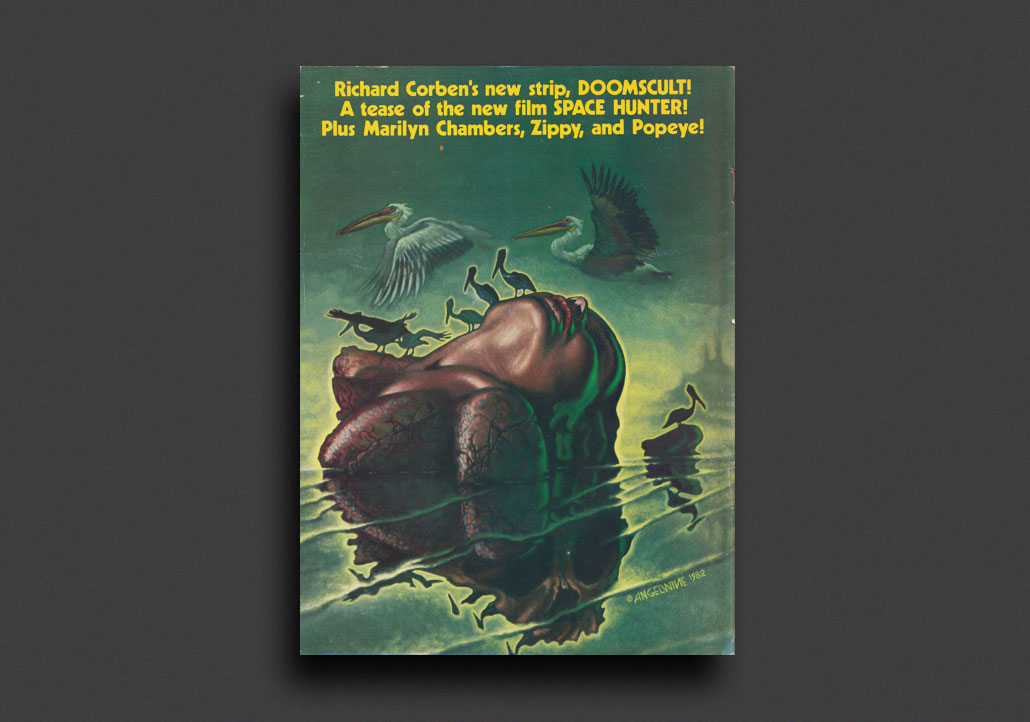
Heavy Metal June 1983 issue, featuring interview with director Wim Wenders, plus comic stories/art by Richard Corben, Guido Crepax, Enki Bilal, Jeff Jones, Caza, Michael Kaluta, Stephen R. Bissette, José Maria Martín Sauri, and many more, plus the usual fare of sci-fi, movies, music... Cover art by Barclay Shaw.
Heavy Metal is an American science fiction and fantasy comics magazine that exploded onto the publishing scene in 1977 and shaped a generation with its blend of dark fantasy/science fiction and erotica. Unlike the traditional American comic books of that time bound by the restrictive Comics Code Authority, Heavy Metal featured explicit content. The magazine started out as a licensed translation of the French science-fantasy magazine Métal Hurlant, including work by Enki Bilal, Philippe Caza, Guido Crepax, Philippe Druillet, Jean-Claude Forest, Jean Giraud (a.k.a. Moebius), Chantal Montellier, and Milo Manara. The magazine later ran Stefano Tamburini and Tanino Liberatore's ultra-violent RanXerox. Heavy Metal gradually evolved into a publication featuring North American contributors like Richard Corben, Matt Howarth, Stephen R. Bissette, Alex Ebel, John Holmstrom, Paul Kirchner, Terrance Lindall, Gray Morrow, Walt Simonson, Dan Steffan, Jim Steranko, John Shirley, Arthur Suydam, Bernie Wrightson, and Olivia De Berardinis.
Good copy, light general wear.
1978, English
Softcover, 194 pages (plus insert), 21 x 29 cm
1st Edition, Out of print title / used / good
Published by
LIP / Melbourne
$50.00 - Out of stock
The incredible book-sized 1978-79 edition of Melbourne's great LIP journal. Published out of Carlton between 1976-1984, LIP encapsulated Australian feminist artistic practice of the period, publishing articles and interviews by women on women in film, sound, theatre, painting, photography, poetry, criticism, activism, journalism, publishing, sculpture, design, education, and much more.
In this issue: Art Sense and Sensibility: Women's Art and Feminist Criticism - Janine Burke; Aboriginal Women: Ritual and Culture - Diane Bell interviewed by Lesley Dumbrell; Map of Transition: Performance - Jillian Orr; Jane Sutherland - Frances Lindsay; Sybil Craig - Mary Eagle; Make Your Own Teaset - Mary Newsome; Women's Images of Women - Barbara Hall; In Search of Old Mistresses - Patricia Symons; Women Ceramacists; Olive Bishop interviewed by Julie Ewington; Margaret Dodd Talking with Julie Ewington; Lorrain Jenyns; Wendy Stavrianos interviewed by Pauline Petrus; The Development of a Political View: A Conversation Between Two Women Artists - Jennifer Barwell and Vivienne Binns; Micky Allan interviewed by Suzanne Davies; Photographs - Jacqueline Mitelman; From the Ground Up - Photographs - Virginia Coventry; Survey of Women's Art Theory Courses and Feminine Sensibility - Janine Burke; The Women's Art Register Extension Project - Bonita Ely; Sisterhood ― For Whom? Jude Adams and Jenny Barber; Posters by Women in the Earthworks Poster Collective; Film - Margaret Fink and Her Brilliant Career - Frida Freiberg; Following My Star - Elsa Chauvel; Monique Schwarz interviewed by Christine Johnston; A Dialogue between Toni Robertson, a Feminist Poster Maker, and Jeni Thornley, a Feminist Film-maker; Nina Claditz interviewed by Annette Blonski; Introducing Helmer Sanders - Frida Freiberg; Reviews: Shopping in Hearbreak Arcade - Meredith Nolte; Me and Daphne - Linda Rubinstein; Feminine Focus at the Festival - Frida Freiberg; Supplement: Australian Women in Music - Australian Women in Music - Terry Radic; Margaret Sutherland - Helen Coles; May Brahe: Composer - Mimi Colligan; Dr. Ruby Davy - Silvia O’Toole; Four Women Composers: Helen Gifford, Ann Boyd, Ann Carr-Boyd and Peggy Glanville-Hicks - Marcia Ruff; Esther Rofe interviewed by Pauline Petrus; Talking with Linda Phillips by Kerry Murphy; Mary Nemet interviewed by Jeanette Fenelon; The Women's Electric Band interviewed by Jeannette Fenelon; Robyn Archer interviewed by Jeannette Fenelon; The Shameless Hussie A.C.R.; Jane Clifton and Celeste Howden interviewed by Jeannette Fenelon; Janie Conway and Marnie Sheehan - Virginia Fraser; Theatre - The Women's Theatre Group: A Selection of Scripts, Interviews and Comments Kerry Dwyer, Jenny Walsh and Suzanne Spunner; Roma: A One Woman Play - Jan Macdonald and the Roma cast; Tongue to Lip - Valerie Kirwan; And Women Must Wait: Savage Sepia - Suzanne Spunner; Dance and Movement - Marilyn Jones interviewed by Roseanne Hull-Brown; Betty Pounder interviewed by Roseanne Hull-Brown; Yum Wing Chun: Never Underestimate the Power of a Woman - Karen Armstrong; Media - An Open Letter - Shere Hite; Feminism and Publishing: Interviews with Women Publishers - Cathy Peake; Two Early Melbourne Journalists - Lurline Stewart; Sydney Women Writers’ Workshop - Anna Couani and Pamela Brown; The Australian Women's Weekly ― The Case of the Bald Cockatoo - Cathy Peake, Maree Conway and Sue Parvaris.
LIP Collective members: Annette Blonski, Janine Burke, Isabel Davies, Suzanne Davies, Lesley Dumbrell, Jeannette Fenelon, Freda Freiberg, Christine Johnston, Elizabeth Owen, Cathy Peake, Meredith Rogers, Suzanne Spunner, Lynne Wilkinson.
This copy includes the original 1978 etching "Make Your Own Teaset" insert by Mary Newsome.
Good-Very Good copy. Bump to one corner, light wear/tanning.
2020, English
Hardcover, 352 pages, 22 x 30 cm
Published by
Gingko Press / Berkeley
$139.00 - In stock -
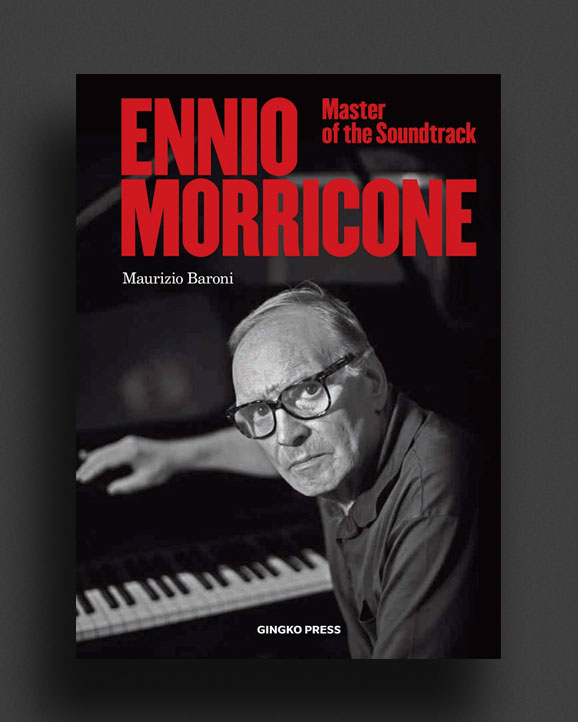
Unique in its genre, Ennio Morricone: Master of the Soundtrack originates from the idea of the collector, author, and cinema expert Maurizio Baroni. Baroni draws on his own archive to give life to a rich selection highlighting over fifty years of a prestigious career, largely unseen before, which includes handwritten scores by the maestro himself, the original album and single cover sleeves from his soundtracks, and much more.
This book is a definitive homage to this great Italian composer of film soundtracks, probably the most famous in the world.
Accompanying the most comprehensive and lavishly illustrated chronology/discography of Morricone's work in print, this large hardcover volume contains texts by Dario Argento, Bernardo Bertolucci, Liliana Cavani, Lisa Gastoni, Franco Nero, Quentin Tarantino, and many more.
A wonder for any Morricone fan.
2020, English / German
Hardcover, 576 pages, 16.5 x 13.2 cm
Published by
Walther König / Köln
Kunsthaus Bregenz / Austria
$58.00 - Out of stock
Renowned British artist, Ed Atkins makes videos, writes and draws, developing a complex and deeply figured discourse around definition, wherein the impossibilities for sufficient representations of the physical, specifically corporeal, world — from computer generated imagery to bathetic poetry — are hysterically rehearsed.
Atkins’ works often centres on an unidentified figure, a kind of surrogate for the artist, who is animated by the artist’s own performance. The figure is to be found in situations of everyday despair, anxiety, frustration and pitch comedy. Atkins transports us to a pseudo-historic world of peasantry, bucolic landscapes and eternal ruin. Characters weep continuously, their lives devoid of dramatic redemption; crowds of people plummet while credits roll; and inedible, impossible sandwiches assemble and collapse in lurid advertisements. Produced exclusively using CGI (computer generated imagery), everything in Atkins’ exhibition is understood as fake — nostalgia, history, progress, authentic life, identity.
Published after the exhibition, Ed Atkins at Kunsthaus Bregenz (19 January — 31 March 2019).
English and German text.
2014, English / German
Softcover, 384 pages (1,052 colour illustrations), 24.4 cm x 16.8 cm
Published by
Walther König / Köln
$98.00 - Out of stock
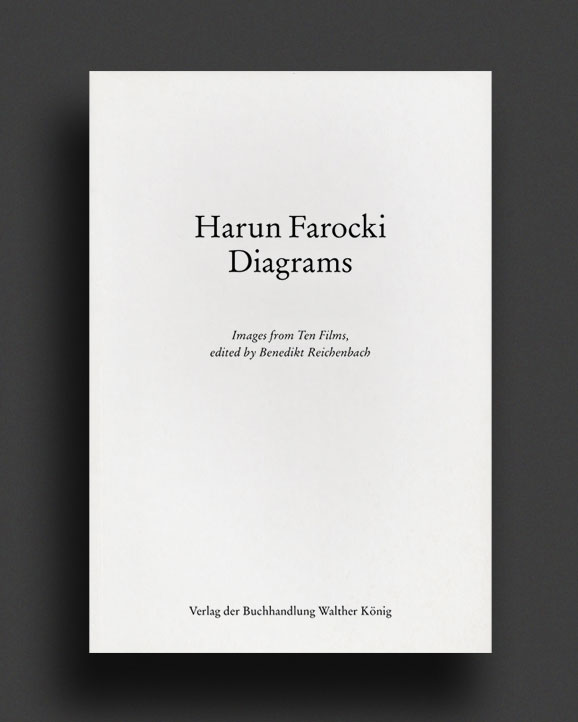
This publication attempts to map a visual approach to one of the world's foremost documentary and essay filmmakers, Harun Farocki. Unlike the many other, more theoretical publications about his work, this book operates with still images beyond an illustrative or documentary purpose. By means of repetition, interruption and displacement, the configurations pursue specific movements within each film, taking into account mechanisms of order and open-endedness that are characteristic for Farocki's work in general.
Diagrams traces the dynamics in ten of Farocki's films and presents them along with each film's complete commentaries, dialogues and intertitles, celebrating their major critical gesture: the exposition of mediality.
Edited by Benedikt Reichenbach, with texts by Thomas Elsaesser, Maren Grimm, Jan Verwoert, Christa Blümlinger, Dietrich Leder, Ute Holl, Benedikt Reichenbach, Matthias Rajmann, Hila Peleg, Anselm Franke.
2017, English
Softcover, 248 pages, 13.6 x 20.5 cm
Published by
Sternberg Press / Berlin
$54.00 - Out of stock
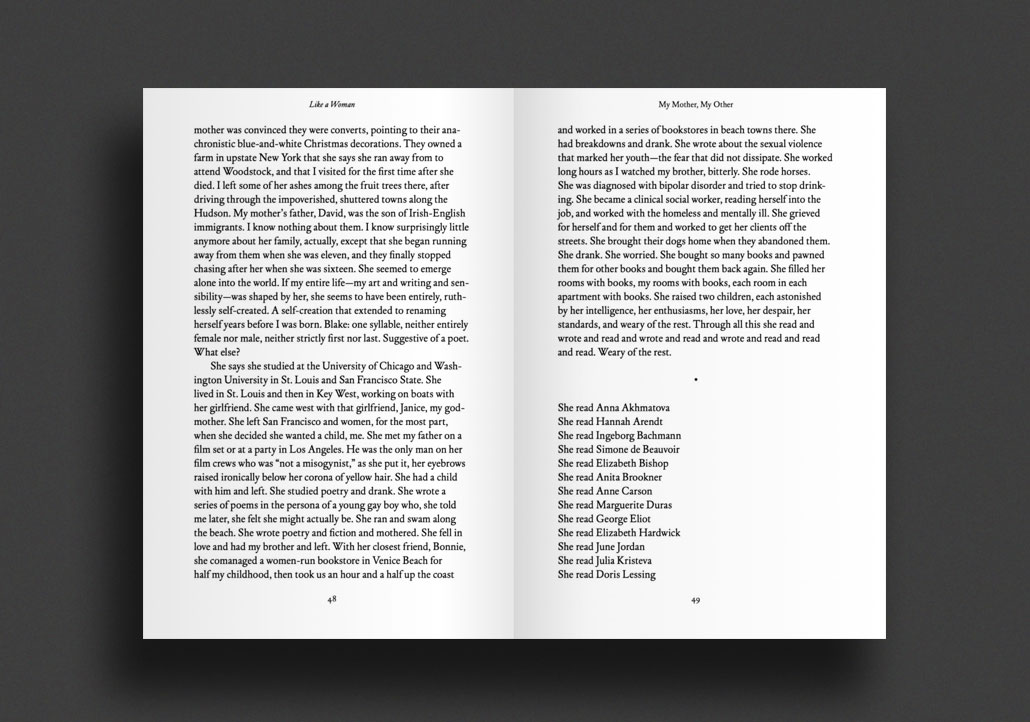
Quinn Latimer’s arresting writings find expression in literature and theory as well as contemporary art and its history. Moving from Southern California to central and southern Europe, crossing geographies and genres, her texts record specters and realities of culture, migration, and displacement, compounding the vagaries of rhetoric and poetics with those of personal history and criticism.
Composed in the space between the page and live performance, Latimer’s recent essays and poems collected here examine issues of genealogy and influence, the poverty and privilege of place, architecture’s relationship to language, and feminist economies of writing, reading, and art making. Shifting between written language and live address, between the needs of the internal and the external voice, Like a Woman retrieves the refrain, the litany, and the chorus, exploring their serial ecstasies and political possibilities.
Quinn Latimer is a poet and critic from California. Her writings and readings have been featured widely, including at Chisenhale Gallery, London; REDCAT, Los Angeles; and Qalandiya International, Ramallah/Jerusalem. Her books include Stories, Myths, Ironies, and Other Songs: Conceived, Directed, Edited, and Produced by M. Auder, coedited with Adam Szymczyk (Sternberg Press, 2014); Sarah Lucas: Describe This Distance (Mousse Publishing, 2013); Film as a Form of Writing, with Akram Zaatari (WIELS/Motto Books, 2013); and Rumored Animals (Dream Horse Press, 2012).
Latimer is editor in chief of publications for documenta 14.
Design by Sam de Groot
1972, French
Siftcover (w. French flaps), 169 pages, 13 x 18 cm
1st Edition, Out of print title / used / very good
Published by
Éditions Dominique Leroy / Paris
$25.00 - In stock -
Pocket book of the French film Midi Minuit, published in 1972 by Edition Dominique Leroy. With covers by French illustrator Jean Gourmelin, this lovely little book presents the screenplay of director Pierre Philippe's sadomasochistic cult horror film from 1970, involving a Parisian couple who visit a friend who lives in a strange troglodyte manor in the south of France with his sadistic father and sister...
Good-Very Good copy.
2002, English / German
Softcover, 68 pages, 22 x 27 cm
Published by
Walther König / Köln
$35.00 - Out of stock
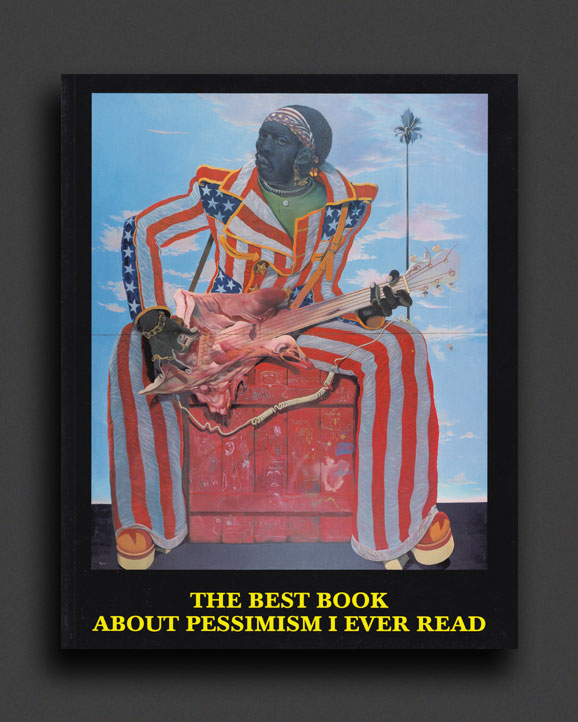
The Best Book About Pessimism I Ever Read, a group exhibition curated by Scottish artist Lucy McKenzie at Kunstverein Braunschweig in 2002, builds a bridge between international artists to create a forum in which subject areas such as "content as a metaphor for meaning", "pictoriality as a medium for the concept" and "negation through representation" are up for discussion. Features the work os John Byrne, Bonnie Camplin, Enrico David, Keith Farquhar, Alasdair Gray, Ronnie Heeps, Paulina Olowska, Mathilde Rosier, Lucy Skaer, Joanne Tatham & Tom O'Sullivan. All works and installation views are documented here with media spanning drawing, embroidery, painting, illustration, literature, film, video, sculpture and spatial installation. Includes bios, texts by Lucy McKenzie, Karola Grässlin, Andrea Kusel and Neil Mulholland.
2015, English
Softcover, 304 pages, 15 x 23 cm
Published by
Semiotext(e) / Los Angeles
$43.00 - Out of stock
Introduction by William E. Jones
Ronnie Reagan’s bizarre legs are sufficient reason to watch John Loves Mary (1949), a picture so ordinaire it needs this bizarre touch. When the faces in this historic still from the Museum of Modern Art are cropped, Reagan could pass for a butch lez from the Women’s Army Corps who is about to put the old make on a fluff (Patricia Neal).
—from Cruising the Movies
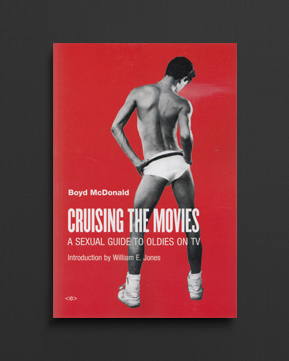
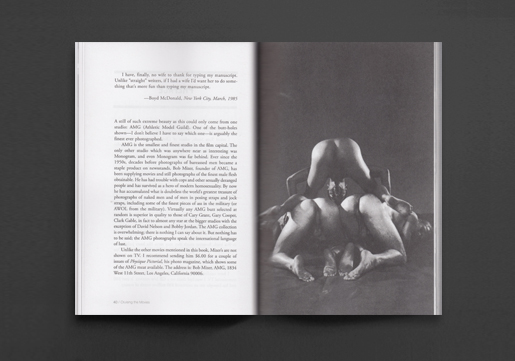
Cruising the Movies was Boyd McDonald’s “sexual guide” to televised cinema, originally published by the Gay Presses of New York in 1985. The capstone of McDonald’s prolific turn as a freelance film columnist for the magazine Christopher Street, Cruising the Movies collects the author’s movie reviews of 1983–1985. This new, expanded edition also includes previously uncollected articles and a new introduction by William E. Jones.
Eschewing new theatrical releases for the “oldies” once common as cheap programing on independent television stations, and more interested in starlets and supporting players than leading actors, McDonald casts an acerbic, queer eye on the greats and not-so-greats of Hollywood’s Golden Age. Writing against the bleak backdrop of Reagan-era America, McDonald never ceases to find subversive, arousing delights in the comically chaste aesthetics imposed by the censorious Motion Picture Production Code of 1930–1968.
Better known as the editor of the Straight to Hell paperback series—a compendia of real-life sexual stories that is part pornography, part ethnography—McDonald in his film writing reveals both his studious and sardonic sides. Many of the texts in Cruising the Movies were inspired by McDonald’s attentive inspection of the now-shuttered MoMA Film Stills Archive, and his columns gloriously capture a bygone era in film fandom. Gay and subcultural, yet never reducible to a zany cult concern or mere camp, McDonald’s “reviews” capture a lost art of queer cinephilia, recording a furtive obsession that once animated gay urban life. With lancing wit, Cruising celebrates gay subculture’s profound embrace of mass culture, seeing film for what it is—a screen that reflects our fantasies, desires, and dreams.
About the Author
Boyd McDonald (1925–1993) was a writer for Time and IBM, a journalist, and founder and editor of Straight to Hell, a celebrated fanzine that bore a variety of subtitles, including “The Manhattan Review of Unnatural Acts” or “The New York Review of Cocksucking.”
2013, English
Softcover, 400 pages, 17.5 x 22.6 cm
Published by
October Books / New York
The MIT Press / Massachusetts
$84.00 - Out of stock
In 1964, at age forty, Marcel Broodthaers (1924-1976) proclaimed that his years of writing poetry—of being "good for nothing," in his words—were over, and a brief but dazzling artistic career began. Considered a founding father of institutional critique, Broodthaers created hundreds of objects, books, films, photographs and exhibitions, including a "fictive" museum of modern art that evolved from an installation in his own home to a massive exhibition of over three hundred works representing eagles. In The Absence of Work, Rachel Haidu argues that all of Broodthaers's art is defined by its relationship to language. His perception of his poetry's "failure to communicate" led him to explore in his art the noncommunicative, nontransparent uses of language. By showing us the ways in which language is instrumentalized across society—used for its efficiency despite the complexities it introduces into communication—Broodthaers shows us how we imagine language to work and points us to its hidden operations.
Haidu's characterization of Broodthaers's contribution to institutional critique represents a major departure from the usual approach to this movement. Considering the wider political implications of his work, including its reflections on national identity and democracy, she explores how they derive from historical references and examines his work's relationships to the works of other contemporary artists. With The Absence of Work, one of the first monographs on Broodthaers in English, Haidu demystifies a crucial and enigmatic figure in postwar and contemporary art.
About the Author:
Rachel Haidu is Associate Professor in the Department of Art and Art History and the Graduate Program in Visual and Cultural Studies at the University of Rochester.
2019, English
Softcover, 144 pages, 16 x 24 cm
Published by
Kunsthalle Zürich / Zürich
Bergen Kunsthall / Norway
Sternberg Press / Berlin
$52.00 - Out of stock
Jolly Rogers is a collection of Peter Wächtler's latest short texts, written in preparation of his two solo exhibitions at Bergen Kunsthall and Kunsthalle Zürich (both 2019), and combined with a nearly complete collection of the artist's drawings and prints from recent years.
The texts operate like vignettes to a larger story, and the images as unreliable illustrations to the narrative. However, the larger story never really is revealed. Each individual text, each single work, articulates itself by means of an intense focus. It is as if we were suspended in a continual zooming motion, as if the artist and author wanted to tell and show it all. But alas, such is life under the microscope: always larger-than-life, but at the wrong scale at a time driven by individual interests, self-optimization, and egos that stage themselves simultaneously as victims and disruptors.
Peter Wächtler works in a variety of media: bronze, ceramics, drawings and video. But in many ways “stories” could be described as his main artistic material. His works often evoke a narration, with animals or human figures in animated states. They are made in ways that use and adapt elements of fiction and folklore, relating to specific traditions and common tales, and materialize the ways of telling a story as much as the story itself.
Born 1979 in Hannover, Peter Wächtler lives and works in Brussels and Berlin.
2017, English
Softcover, 207 pages, 20 x 13 cm
Published by
Manchester University Press / Manchester
$39.00 - Out of stock
By Marion Schmid
Chantal Akerman is widely acclaimed as one of cinema's boldest visionaries.
A towering figure in women's and feminist film-making, she produced a diverse and intensely personal body of work ranging from minimalist portraits of the everyday to exuberant romantic comedies, and from documentaries and musicals to installation art. This book traces the director's career at the crossroads between experimental and mainstream cinema, contextualising her work within the American avant-garde of the 1970s, European anti-naturalism, feminism and the post-modern aesthetics.
While offering an in-depth analysis of her multi-faceted film style, it also stresses the social and ethical dimension of her work, especially as regards her representation of marginal groups and her exploration of exilic and diasporic identities. Particular attention is given to the inscription of the Holocaust and of Jewish memory in her films.
From Manchester University Press' French Film Directors series, edited by Diana Holmes and Robert Ingram.