World Food Books' programme is largely produced on Kulin Nation land. We acknowledge the Wurundjeri people of the Kulin Nation as the first and continuing custodians of this land, and pay respect to their Elders past, present, and emerging.
World Food Books is an arts and special interests bookshop in Naarm / Melbourne. Founded in 2010, World Food Books is devoted to the presentation of a rotating, hand-selection of international art, design, literary and counterculture publications with an emphasis on the anti-traditional, the experimental, the avant-garde, the heretic, the marginal.
Presenting new titles alongside rare and out-of-print books, catalogues and journals spanning the fields of modern and contemporary art, design, photography, illustration, film, literature, poetry, cultural theory, philosophy, sexuality, popular and underground culture in its many radical forms, World Food Books wishes to encourage adventurous, thoughtful and open-minded reading, looking, writing, and exchange of publishing and ideas, both current and historical.
As well as our bookshop, located in Melbourne's historical Nicholas Building, all of our inventory is available internationally via our online mail-order service.
World Food Books semi-regularly co-ordinates "Occasions", a programme of exhibits and events at the bookshop and in partnership with other hosts (such as museums and art galleries) that develop out of the activities, relationships and content of the bookshop itself.
World Food Books
The Nicholas Building
37 Swanston Street
Room 5, Level 6
Melbourne 3000
Australia
SHOP HOURS:
Thu–Fri 12–6, Sat 12–5
WEB-SHOP OPEN 24/7
World Food Books
Postal Address:
PO Box 435
Flinders Lane
Victoria 8009
Australia
Art
Theory / Essay
Architecture / Interior
Graphic Design / Typography
Photography
Fashion
Eros
LGBTQ+
Fiction / Poetry
Weird / Speculative / Science Fiction / Horror
Transgressive / Visceral / Abject
Symbolism / Decadence / Fin de siècle
Film / Video
Painting
Sculpture / Installation
Performance / Dance / Theater
Drawing
Sound / Music
Curatorial
Group Shows / Collections
Periodicals
Out-of-print / Rare
Posters / Ephemera / Discs
Signed Books
World Food Books Gift Voucher
World Food Book Bag
Australian Art
Australian Fiction
Australian Science Fiction / Speculative Fiction
Australian Poetry
Australian Photography
Japanese Photography
Conceptual Art
Minimal Art
Dada
'Pataphysics / Oulipo
Fluxus
Concrete Poetry
Pop Art
Surrealism
Arte Povera
Arte Informale / Haute Pâte / Tachism
Nouveau Réalisme / Zero / Kinetic
Situationism / Lettrism
Collage / Mail Art / Xerox Art
Art Brut / Folk / Visionary / Fantastic
Illustration / Graphic Art / Bandes Dessinées
Furniture
Italian Radical Design / Postmodernism
Textiles
Ceramics / Glass
Counterculture
Protest / Revolt
Philosophy
Psychoanalysis
Anthropology
Anarchism
Socialism / Anarchism / Communism / Capitalism
Literary Theory / Semiotics / Language
Feminism / Women's Studies
Gender Studies / Sexuality
Anthropology
Fetishism / BDSM
Drugs / Psychedelia
Crime / Violence
Animal Rights / Veganism
Occult / Esoterica
Ecology / Earth / Alternative Living
Whole Earth / Crafts
All prices in AUD (Australian dollars)
Pick-Ups
Pick-up orders can be collected in our bookshop during opening hours after order date. Please collect any Pick-up orders within 2 weeks of ordering as we have limited storage space. Orders will be released back into stock if not collected within this time. No refunds can be made for pick-ups left un-collected. If you cannot make it in to the bookshop in this time-frame, please choose postage option.
Return Policy
All sales are final. We do accept returns (for refund or exchange) for items received in error. All our orders are packed with special care using heavy-duty padding and cardboard book-mailers or bubble mailers (for smaller books), using reinforcement where required. We cannot take responsibility for any lost, stolen or damaged parcels.
Insurance
Should you wish to insure your package, please email us directly after placing your order and we can organise this at a small extra expense. Although all standard/express tracked packages are very safe and dependable, we cannot take responsibility for any lost, stolen or damaged parcels. We recommend insurance on valuable orders.
Interested in selling your old books, catalogues, journals, magazines, comics, fanzines, ephemera? We are always looking for interesting, unusual and out-of-print books to buy. We only buy books in our fields of interest and specialty, and that we feel we can resell.
We base these prices on desirability, market value, in-print prices, condition and our current stock levels. We offer cash, store credit, and can take stock on consignment. All
about 25% of the price we expect to get when we sell them, or 30% in store credit. We base these prices on desirability, market value, in-print prices, condition and our current stock levels.
Sell your books any day of the week. You can drop them off and return later. If you have a lot of books, we can visit your Sydney home.
We buy books that we feel we can resell. We offer about 25 % of the price we expect to get when we sell them, or 30% in store credit. We base these prices on desirability, market value, in-print prices, condition and our current stock levels.
Philadelphia Wireman
03 August - 01 September, 2018
World Food Books is proud to announce our next Occasion, the first presentation of sculptures by Philadelphia Wireman in Australia.
The Philadelphia Wireman sculptures were found abandoned in an alley off Philadelphia’s South Street on trash night in 1982. Their discovery in a rapidly-changing neighbourhood undergoing extensive renovation, compounded with the failure of all attempts to locate the artist, suggests that the works may have been discarded after the maker’s death. Dubbed the "Philadelphia Wireman" during the first exhibition of this work, in 1985, the maker’s name, age, ethnicity, and even gender remain uncertain. The entire collection totals approximately 1200 pieces, all intricately bound together with tightly-wound heavy-gauge wire (along with a few small, abstract marker drawings, reminiscent both of Mark Tobey and J.B. Murry). The dense construction of the work, despite a modest range of scale and materials, is singularly obsessive and disciplined in design: a wire armature or exoskeleton firmly binds a bricolage of found objects including plastic, glass, food packaging, umbrella parts, tape, rubber, batteries, pens, leather, reflectors, nuts and bolts, nails, foil, coins, toys, watches, eyeglasses, tools, and jewellery.
Heavy with associations—anthropomorphic, zoomorphic, and socio-cultural responses to wrapped detritus—the totemic sculptures by Philadelphia Wireman have been discussed in the context of work created to fulfil the shamanistic needs of alternative religions in American culture. Curators, collectors, and critics have variously compared certain pieces to sculpture from Classical antiquity, Native American medicine bundles, African-American memory jugs, and African fetish objects. Reflecting the artist’s prolific and incredibly focused scavenging impulse, and despite—or perhaps enhanced by—their anonymity, these enigmatic objects function as urban artefacts and arbiters of power, though their origin and purpose is unknown. Philadelphia Wireman, whatever their identity, possessed an astonishing ability to isolate and communicate the concepts of power and energy through the selection and transformation of ordinary materials. Over the course of the past two decades, this collection has come to be regarded as an important discovery in the field of self-taught art and vernacular art.
Presented in collaboration with Fleisher-Ollman Gallery, Philadelphia, and Robert Heald, Wellington.
Susan Te Kahurangi King
02 February - 10 March, 2018
Susan Te Kahurangi King (24 February 1951 - ) has been a confident and prolific artist since she was a young child, drawing with readily available materials - pencils, ballpoint pens and felt-tip markers, on whatever paper is at hand. Between the ages of four and six Susan slowly ceased verbal communication. Her grandparents William and Myrtle Murphy had developed a special bond with Susan so they took on caring responsibilities for extended periods. Myrtle began informally archiving her work, carefully collecting and storing the drawings and compiling scrapbooks. No drawing was insignificant; every scrap of paper was kept. The King family are now the custodians of a vast collection containing over 7000 individual works, from tiny scraps of paper through to 5 meter long rolls.
The scrapbooks and diaries reveal Myrtle to be a woman of great patience and compassion, seeking to understand a child who was not always behaving as expected. She encouraged Susan to be observant, to explore her environment and absorb all the sights and sounds. Myrtle would show Susan’s drawings to friends and people in her community that she had dealings with, such as shopkeepers and postal workers, but this was not simply a case of a grandmother’s bias. She recognised that Susan had developed a sophisticated and unique visual language and sincerely believed that her art deserved serious attention.
This was an unorthodox attitude for the time. To provide some context, Jean Dubuffet coined the term Art Brut in 1945 to describe work created by self-taught artists – specifically residents of psychiatric institutions and those he considered to be visionaries or eccentrics. In 1972 Roger Cardinal extended this concept by adopting the term Outsider Art to describe work made by non-academically trained artists operating outside of mainstream art networks through choice or circumstance. Susan was born in Te Aroha, New Zealand in 1951, far from the artistic hubs of Paris and London that Dubuffet and Cardinal operated in. That Myrtle fêted Susan as a self-taught artist who deserved to be taken seriously shows how progressive her attitudes were.
Susan’s parents Doug and Dawn were also progressive. Over the years they had consulted numerous health practitioners about Susan’s condition, as the medical establishment could not provide an explanation as to why she had lapsed into silence. Dawn educated herself in the field of homeopathy and went on to treat all twelve of her children using these principles – basing prescriptions on her observations of their physical, mental and emotional state.
Doug was a linguist with an interest in philosophy who devoted what little spare time he had to studying Maori language and culture. To some extent their willingness to explore the fringes of the mainstream made them outsiders too but it was their commitment to living with integrity and their respect for individuality that ensured Susan’s creativity was always encouraged.
Even though Susan’s family supported her artistic pursuits, some staff in schools and hospitals saw it as an impediment to her assimilation into the community and discouraged it in a variety of ways. Her family was not always aware of this and therefore did not fully understand why Susan stopped drawing in the early 1990s. However, rather than dwell on the challenges that Susan faced in pursuit of her artistic practice, they prefer to highlight her achievements. In 2008 Susan began drawing again in earnest, after an almost 20 year interruption, and her work is now shown in galleries around the world.
Susan grew up without television and has been heavily influenced by the comics she read as a child. She is absolutely fearless in the appropriation of recognizable characters, such as Donald Duck and Mickey Mouse, in her work. She twists their limbs, contorts their faces, compresses them together, blends them into complex patterned backgrounds - always imbuing them with an incredible energy. Although Susan often used pop culture characters in her work they are not naive or childlike. These are drawings by a brilliant self-taught artist who has been creating exceptional work for decades without an audience in mind.
Mladen Stilinović
"Various Works 1986 - 1999"
02 February 16 - September 10, 2016
Various works 1986 - 1999, from two houses, from the collections of John Nixon, Sue Cramer, Kerrie Poliness, Peter Haffenden and Phoebe Haffenden.
Including: Geometry of Cakes (various shelves), 1993; Poor People’s Law (black and white plate), 1993; White Absence (glasses, ruler, set square, silver spoon, silver ladel with skin photograph and wooden cubes), 1990-1996; Exploitation of the Dead (grey and red star painting, wooden painting, black spoon with red table, red plate), 1984-1990; Money and Zeros (zero tie, paintings made for friends in Australia (Sue, John, Kerrie), numbers painting), 1991-1992; Words - Slogans (various t-shirts) - “they talk about the death of art...help! someone is trying to kill me”, “my sweet little lamb”, “work is a disease - Karl Marx”; Various artist books, catalogues, monographs, videos; Poster from exhibition Insulting Anarchy; "Circular" Croatian - Australian edition; Artist book by Vlado Martek (Dostoyevsky); more.
Thanks to Mladen Stilinović and Branka Stipančić.
Jonathan Walker
Always Will Need To Wear Winter Shirt Blue + Ochre Small Check Pattern
21 August - 21 September, 2015
Untitled
I am not a great reader of poetry but I always return to the work of Melbourne poet, Vincent Buckley (1925- 1988). Perhaps I find his most tantalising piece to be not a finished poem but a fragment left on a scrap of paper discovered on his desk after the poet’s death.
The poetry gathers like oil
In the word-core, and spreads
It has its music meet,
Its music is in movement.
This fragment is more the shell left behind from a volatile thought than a finished poem. I find the last two lines honest but awkward whereas the first two lines work like an arrow. Most likely he could not find a resolution so it was left. Still, in its present form, it remains an eloquent testimony to the ultimate failure of a medium to express mobile thought and sensation, in Buckley’s case, through verbal language. It’s an important matter because this is something all artists have to deal with regardless of the medium.
I have never written a poem, however, I am forever copying fragments from books on paper scraps in a vain effort to fix certain notions in my head. At first, they function as bookmarks that are sometimes returned to when I open the book. But before long, as they accumulate, they fall out littering the table interspersed with A4 photocopies, bills, books and medications.
To return to Buckley’s fragment, the first two lines very much evoke how I paint nowadays. As you age, detail diminishes and patches of light become more luminous and float. I feel the most honest way of dealing with this is by smearing the oil paint on the canvas with the fingers and working close-up, blind. Only if the patches coalesce into an approaching image can the work gain a life.
-
Jonathan Walker was born in Melbourne, Australia and brought up on a dairy farm in Gippsland. In the 1970’s he studied painting at RMIT and won the Harold Wright Scholarship to the British Museum, London. During the 1980’s he exhibited at Pinacotheca Gallery, Richmond and had work shown at the NGV and Heidi City Art Gallery. Over the same period he designed the cover for the “Epigenesi” LP by Giancarlo Toniutti, Italy and conducted a mail exchange work with Achim Wollscheid, Germany. The work with artists through the post resulted in an article published in the bicentenary issue of Art and Australia 1988. He showed in artist run spaces such as WestSpace in the 90’s and 2000’s, and until 2012, taught painting at Victoria University, which is where we (Colleen Ahern and Lisa Radford) as organisers of the exhibition, among many others, had the privilege of being his student.
Walker’s knowledge was imparted to students through the careful selection of music, literature, and artists found in books that he himself had ordered for the library. Walker’s strategy was the generosity of sharing his vast knowledge with references specific to each student and their context.
Walker’s paintings share a similar focus and intimacy.
This exhibition presents a small selection of recent paintings alongside a publication that includes Walker’s writing. Observational and analytical, Walker’s work is a type of material notation — the time of day, colour and how it is blended, the both specific and fleeting location of a reflection on lino or the question of whether a chair leg should be included in a painting.
Please join us on Friday August 21 between 6-8pm to celebrate the opening of the exhibition.
Curated by Colleen Ahern and Lisa Radford.
B. Wurtz
Curated by Nic Tammens
March 26 - April 4, 2015
B.Wurtz works from a basement studio in his home on Manhattan’s Lower East Side.
This local fact is attested to by the plastic shopping bags and newsprint circulars that appear in his work. As formal objects, they don’t make loud claims about their origins but nonetheless transmit street addresses and places of business from the bottom of this long thin island. Like plenty of artists, Wurtz is affected by what is local and what is consumed. His work is underpinned by this ethic. It often speaks from a neighborhood or reads like the contents of a hamper:
“BLACK PLUMS $1.29 lb.”
“Food Bazaar”
“USDA Whole Pork Shoulder Picnic 99c lb.”
“RITE AID Pharmacy, with us it’s personal.”
“H. Brickman & Sons.”
“Sweet Yams 59c lb."
Most of the work in this exhibition was made while the artist was in residence at Dieu Donne, a workshop dedicated to paper craft in Midtown. Here Wurtz fabricated assemblages with paper and objects that are relatively lightweight, with the intention that they would be easily transportable to Australia. This consideration isn’t absolute in Wurtz’s work, but was prescriptive for making the current exhibition light and cheap. Packed in two boxes, these works were sent from a USPS post office on the Lower East Side and delivered to North Melbourne by Australia Post.
Wurtz appears courtesy of Metro Pictures, New York.
Thanks to Rob Halverson, Joshua Petherick, Sari de Mallory, Matt Hinkley, Helen Johnson, Fayen d'Evie, Ask Kilmartin, Lisa Radon, Ellena Savage, Yale Union, and "Elizabeth".
John Nixon
"Archive"
December 15 - January 20, 2014
The presentation of John Nixon's archive offered a rare showcase of this extensive collection of the artist's own publications, catalogues, posters, ephemera, editions and more, from the mid 1980s onwards, alongside a selection of his artworks.
Organized by John Nixon, Joshua Petherick and Matt Hinkley.
<a href=http://wfb.public-office.info/artist/john-nixon>All titles by John Nixon
"Habitat"
at Minerva, Sydney (organised by Joshua Petherick and Matt Hinkley)
November 15 - December 20, 2014
Lupo Borgonovo, Janet Burchill & Jennifer McCamley,
Lewis Fidock, HR Giger, Piero Gilardi, Veit Laurent Kurz,
Cinzia Ruggeri, Michael E. Smith, Lucie Stahl, Daniel Weil, Wols
Press Release:
“...It contained seven objects. The slender fluted bone, surely formed for flight, surely from the wing of some large bird. Three archaic circuitboards, faced with mazes of gold. A smooth white sphere of baked clay. An age-blackened fragment of lace. A fingerlength segment of what she assumed was bone from a human wrist, grayish white, inset smoothly with the silicon shaft of a small instrument that must once have ridden flush with the surface of the skin - but the thing’s face was seared and blackened.”
William Gibson, “Count Zero”, 1986
"Autumn Projects Archive"
Curated by Liza Vasiliou
March 6 - March 15, 2014
World Food Books, in conjunction with the Virgin Australia Melbourne Fashion Festival 2014, presented the Autumn Projects archive, consisting of a selection of early examples in Australian fashion with a particular interest in collecting designers and labels from the period beginning in the 1980’s, who significantly influenced the discourse of Australian Fashion.
Curated by Liza Vasiliou, the exhibition provided a unique opportunity to view pieces by designers Anthea Crawford, Barbara Vandenberg, Geoff Liddell and labels CR Australia, Covers, Jag along with early experimental collage pieces by Prue Acton and Sally Browne’s ‘Fragments’ collection, suspended throughout the functioning World Food Books shop in Melbourne.
H.B. Peace
presented by CENTRE FOR STYLE
November 14, 2013
"Hey Blinky, you say chic, I say same"
Anon 2013
H.B. Peace is a clothing collaboration between great friends Blake Barns and Hugh Egan Westland. Their pieces explore the divergences between 'character’ and ‘personality’ in garments....etc
Special Thanks to Joshua Petherick and Matt Hinkley of WFB and Gillian Mears
and a Very Special Thank you to Audrey Thomas Hayes for her shoe collaboration.
Janet Burchill & Jennifer McCamley
"Aesthetic Suicide"
May 10 - June 8, 2013
The first of our occasional exhibitions in the World Food Books office/shop space in Melbourne, "Aesthetic Suicide" presented a body of new and older works together by artists Janet Burchill & Jennifer McCamley, including videos, prints, a wall work, and publications.
During shop open hours videos played every hour, on the hour.
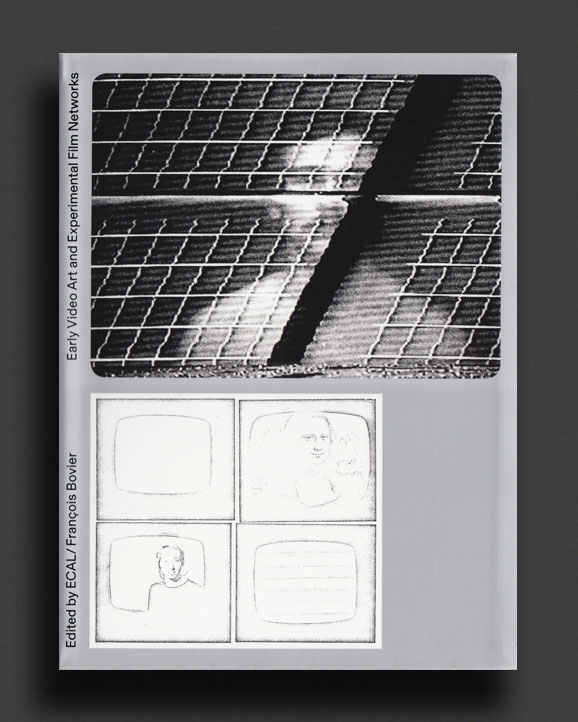
2018, English
Softcover, 268 pages, 23 x 31 cm
Published by
écal / Renens
$82.00 - Out of stock
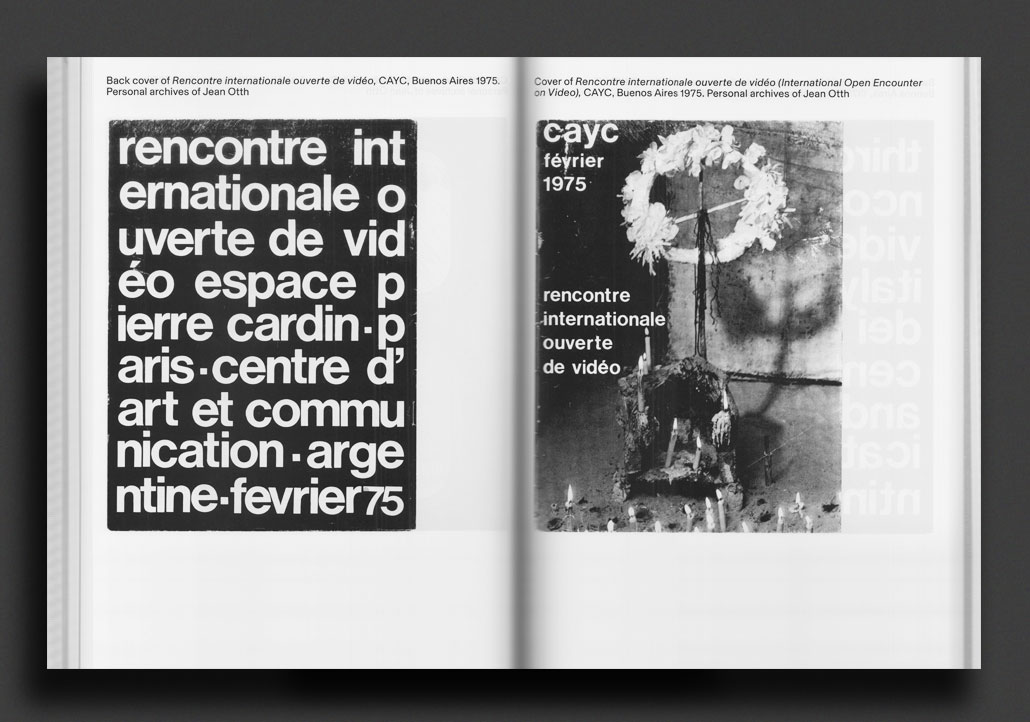
Early Video Art and Experimental Films Networks traces the diffuse international networks through which video art and experimental films circulated during the late sixties and early seventies. It explores forgotten exhibitions both in Switzerland and France, the activities of public television channels and alternative art spaces in the US, a production art center dedicated to video in Italy and an Argentinian collective of conceptual artists, aiming to shed new light on the production and diffusion of moving images.
This volume is divided into two parts: the first part, which is longer and more extensively documented, explores the emergence and consolidation of video art networks at international level; the second focuses more specifically on two exhibitions of artists' films (New Forms in Film and Une histoire du cinéma) and one of the main instances of the museification of experimental cinema, Anthology Film Archives. Indeed, this particular story has wider currency insofar as several important works in recent years have focused on artists' films 23 and expanded cinema 24. We have adopted the principle, wherever possible, of providing rare and previously unpublished images and documents alongside the essays specifically commissioned for this volume, the choice of which has been left to the discretion of the author of each particular chapter.
Edited by François Bovier.
Texts by Kristen Alfaro, François Bovier, Enrico Camporesi, Katarzyna Cytlak, Larisa Dryansky, Tristan Lavoyer, Adeena Mey, Kris Paulsen, Cosetta G. Saba, Andrew V. Uroskie.
2019, English
Softcover, 560 pages, 17.3 x 27.5 cm
Published by
A.R.T. Press / New York
Koenig Books / London
$60.00 - Out of stock
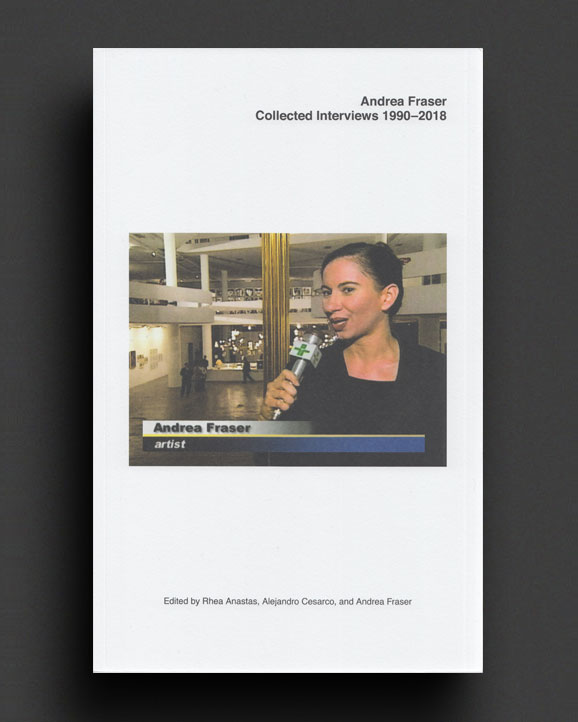
Since the 1980s Andrea Fraser has achieved renown for performances that interrogate social structures with humor and pathos, aligning herself with feminism and institutional critique. While Fraser’s video and performance works are often associated with investigations of art institutions, her performances since the early 2000s evidence a turn toward analyzing the intersection between sociopolitical and psychological structures as they produce individual and group identity.
The extensive collection of conversations with fellow artists and curators provides access to Andrea Fraser's work and reception. The interview format gives a very personal insight into her artistic practice. Central ideas and topics of her work are explained from different perspectives. The chronological composition of the minimal editorial intervention covers three decades.
This volume was published on the occasion of Andrea Fraser's exhibition at the Hammer Museum, Los Angelis in May- September 2019.
Contributors include: Judith Batalion, Helmut Draxler, Vincenzo de Bellis, Gregg Bordowitz, Sabine Breitwieser, Stuart Comer, Joshua Decter, Yilmaz Dziewior, Andrea Fraser, Jorg Heiser, Miwon Kwon, Bennett Simpson et al.
2019, English
Softcover, 488 pages, 18 x 11 cm
Published by
Koenig Books / London
Städelschule / Frankfurt
$42.00 - Out of stock
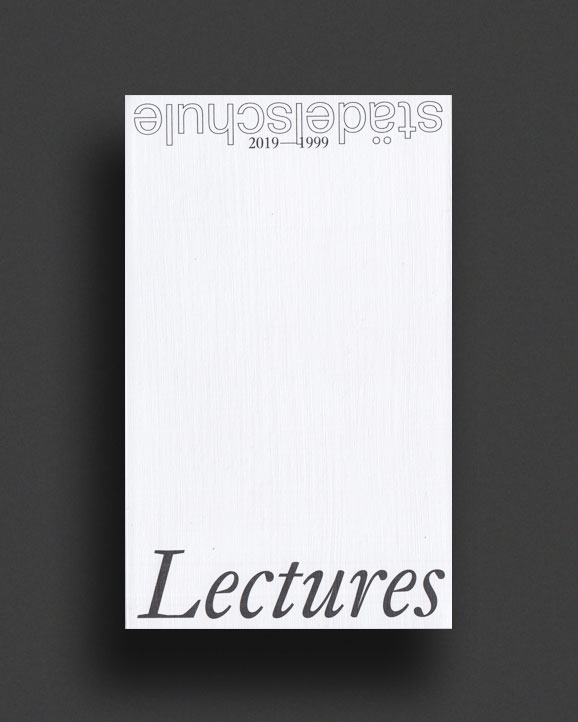
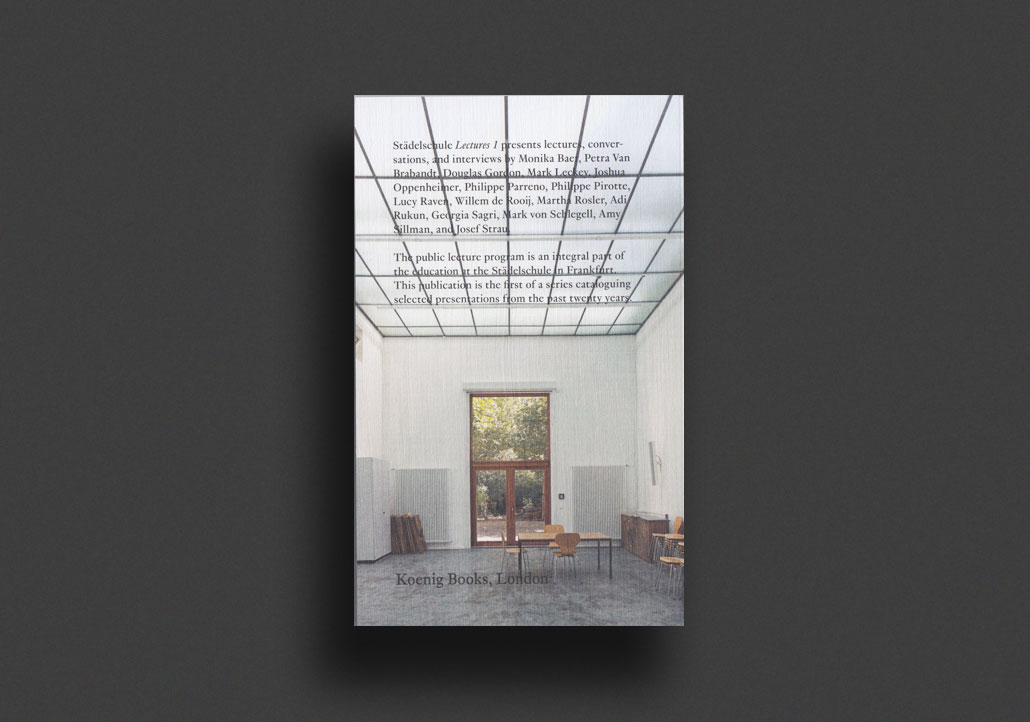
‘Since the year 1999, around 800 lectures have taken place at the Städelschule in Frankfurt. The texts are transcripts of thirteen lectures, selected to represent the most recent history, cataloguing ideas that might otherwise be buried and forgotten. This volume is the first of a series and focuses on the diversity of artistic perspectives. It provides an insight into the Städelschule’s educational program and documents a variety of artistic and theoretical approaches that the school seeks to support in art and society at large. The ongoing series will continuously reflect the school’s anatomy and core protagonists—the professors, the curatorial program at Portikus, and the students.’ — Philippe Pirotte (Städelschule Rector)
Städelschule Lectures 1 presents lectures, conversations, and interviews by: Monika Baer, Petra Van Brabandt, Douglas Gordon, Mark Leckey, Joshua Oppenheimer, Philippe Parreno, Philippe Pirotte, Lucy Raven, Willem de Rooij, Martha Rosler, Adi Rukun, Georgia Sagri, Mark von Schlegell, Amy Sillman and Josef Strau. The public lecture program is an integral part of the education at the Städelschule in Frankfurt. This publication is the first of a series cataloguing selected presentations from the past 20 years. Co-published with Städelschule.
1995, German
Softcover, 200 pages, 15.2 x 21 cm
1st Edition, Out of print title / used / fine
Published by
Walther König / Köln
$100.00 - Out of stock
First edition of this fantastic 1995 Thomas Bayrle publication from Walther König, Cologne. "Grafik" is densely illustrated with almost 200 colour and b/w images of Bayrle's early "super-forms" and animation/film works. Almost entirely a volume of images, it also includes texts by Brigitte Kölle and Kobe Matthys, in both English and German. A valuable and highly visual overview of the pioneering German pop artist.
A pioneer of German Pop Art, Thomas Bayrle is best known for his ‘super-forms’, large images composed of iterations of smaller cell-like images. Humorous, satirical, and often political, his paintings, sculptures, and digital images are commentaries on the systems of control and domination in a rapidly globalizing economy, via allegorical references to traffic patterns, mass production, and the generic designs of popular goods such as wrappers and wallpaper. Bayrle draws readily on his experience of Cold War Germany as a microcosm of broader power struggles.
1959 / 1978 Ed., English
Softcover, 138 pages, 18.5 x 11 cm
Out of print title / used / very good
Published by
Grove Press Inc. / New York
$18.00 $8.00 - Out of stock
In his most famous and perhaps most typical work, Robbe-Grillet explores his principle preoccupation: the meaning of reality. The novel is set on a tropical banana plantation, and the action is seen through the eyes of a narrator who never appears in person, never speaks and never acts. He is a point of observation, his personality only to be guessed at, watching every movement of the other characters' actions as they flash like moving pictures across the distorting screen of a jealous mind. The result is one of the most important and influential books of our time, a completely integrated masterpiece that has already become a classic.
Alain Robbe-Grillet (1922 – 2008) was a French writer and filmmaker. He was one of the figures most associated with the Nouveau Roman (new novel) trend of the 1960s, along with Nathalie Sarraute, Michel Butor and Claude Simon. Robbe-Grillet's career as a creator of fiction was not restricted to the writing of novels. For him, creating fiction in the form of films was of equal importance. His film career began when Alain Resnais chose to collaborate with him on his 1961 film Last Year at Marienbad. Robbe-Grillet then went on to launch a career as a writer-director of an award-winning series of cerebral and often sexually provocative feature films which explored similar themes to those in his literary work (e.g. Voyeurism, The Body as Text, The 'Double'), including L'Immortelle (The Immortal One) (1962); Trans-Europ-Express (1966); L'homme qui ment/Muž, ktorý luže (The Man Who Lies) (1968); L'Eden et après/Eden a potom (Eden and After) (1970); Glissements progressifs du plaisir (Progressive Slidings towards Pleasure) (1974); Le jeu avec le feu (Playing with Fire) (1975); La belle captive (The Beautiful Captive) (1983); and more.
Very Good-Fine Grove Press paperback edition from 1978.
2019, English
Hardcover, 256 pages, 15.2 x 22.9 cm
Published by
The MIT Press / Massachusetts
$77.00 - Out of stock
An examination of how artists have combined performance and moving image for decades, anticipating our changing relation to images in the internet era.
In Performing Image, Isobel Harbison examines how artists have combined performance and moving image in their work since the 1960s, and how this work anticipates our changing relations to images since the advent of smart phones and the spread of online prosumerism. Over this period, artists have used a variety of DIY modes of self-imaging and circulation-from home video to social media-suggesting how and why Western subjects might seek alternative platforms for self-expression and self-representation. In the course of her argument, Harbison offers close analyses of works by such artists as Robert Rauschenberg, Yvonne Rainer, Mark Leckey, Wu Tsang, and Martine Syms.
Harbison argues that while we produce images, images also produce us-those that we take and share, those that we see and assimilate through mass media and social media, those that we encounter in museums and galleries. Although all the artists she examines express their relation to images uniquely, they also offer a vantage point on today's productive-consumptive image circuits in which billions of us are caught. This unregulated, all-encompassing image performativity, Harbison writes, puts us to work, for free, in the service of global corporate expansion. Harbison offers a three-part interpretive framework for understanding this new proximity to images as it is negotiated by these artworks, a detailed outline of a set of connected practices-and a declaration of the value of art in an economy of attention and a crisis of representation.
2013, English
Softcover, 496 pages, 178 x 218.5 cm
Published by
The MIT Press / Massachusetts
$77.00 - Out of stock
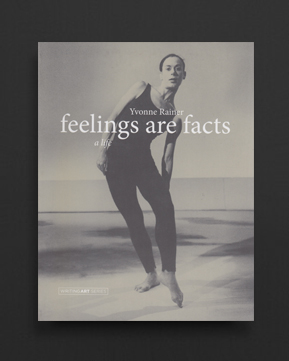
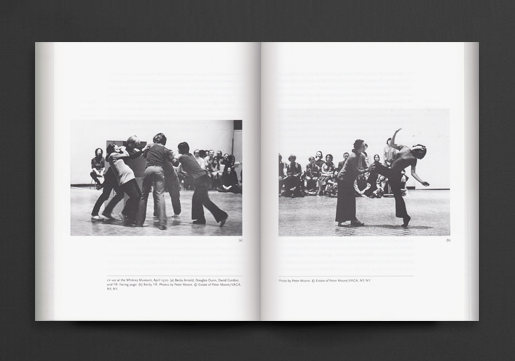
If you're interested in Plato, you're reading the wrong book. If you're interested in difficult childhoods, sexual misadventures, aesthetics, cultural history, and the reasons that a club sandwich and other meals -- including breakfast -- have remained in the memory of the present writer, keep reading. -- from Feelings Are Facts In this memoir, dancer, choreographer, and filmmaker Yvonne Rainer traces her personal and artistic coming of age. Feelings Are Facts (the title comes from a dictum by Rainer's one-time psychotherapist) uses diary entries, letters, program notes, excerpts from film scripts, snapshots, and film-frame enlargements to present a vivid portrait of an extraordinary artist and woman in postwar America. Rainer tells of a California childhood in which she was farmed out by her parents to foster families and orphanages, of sexual and intellectual initiations in San Francisco and Berkeley, and of artistic discoveries and accomplishments in the New York City dance world. Rainer studied with Martha Graham and Merce Cunningham in the late 1950s and early 1960s, cofounded the Judson Dance Theater in 1962, hobnobbed with New York artists including Robert Rauschenberg, Robert Morris (her lover and partner for several years), and Yoko Ono, and became involved with feminist and antiwar causes in the 1970s and 1980s. Rainer writes about how she constructed her dances -- including The Mind Is a Muscle and its famous section, Trio A, as well as the recent After Many a Summer Dies the Swan -- and about turning from dance to film and back to dance. And she writes about meeting her longtime partner Martha Gever and discovering the pleasures of domestic life.
2019, English
Softcover, 24 pages, 13 x 19 cm
Ed. of 150,
Published by
Innen Books / Zürich
$14.00 - Out of stock
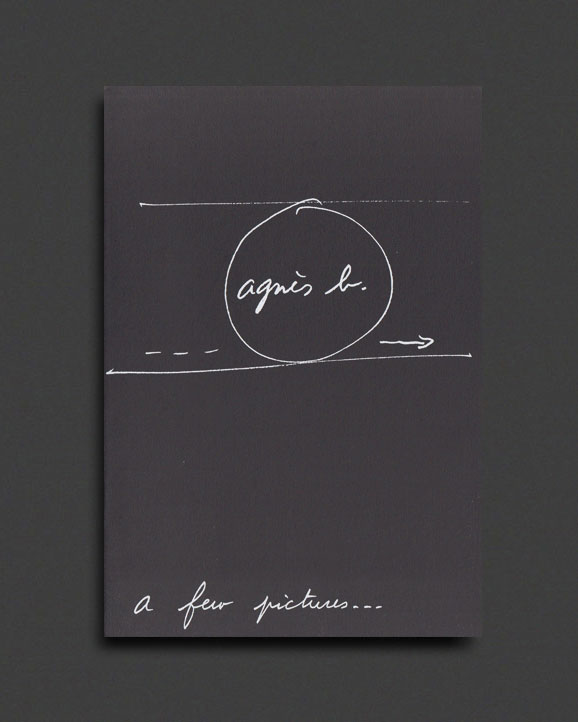
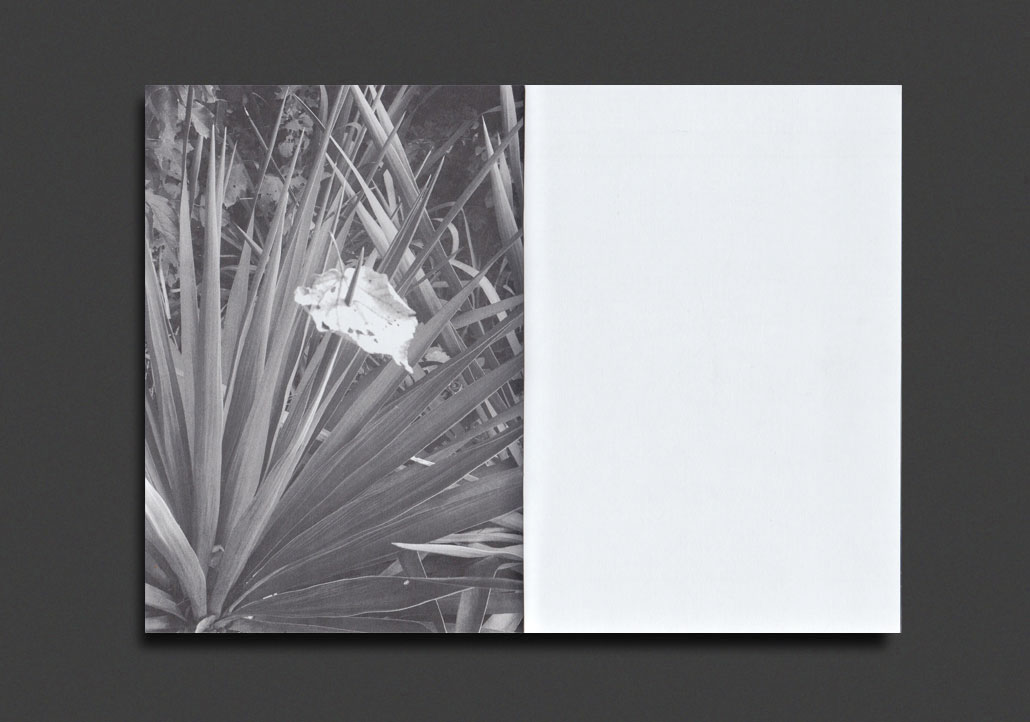
"a few pictures …" is a new publication by French fashion designer agnès b., published in 2019 by Innen Books, Zürich. Alongside selected images from agnès’ photographic archive is a text by Jonas Mekas.
First Edition of 150 copies.
agnès b. (born Agnès Andrée Marguerite Troublé, 1941 in Versailles) is a French fashion designer. She is known for her self-named brand, which includes fashion and film interests.
2016, English
Hardcover (w. dust jacket), 288 pages, 15.2 x 24.1 cm
Published by
University of Chicago Press / Chicago
$89.00 - Out of stock
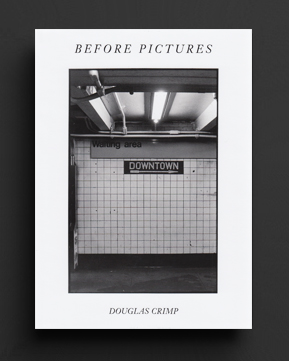
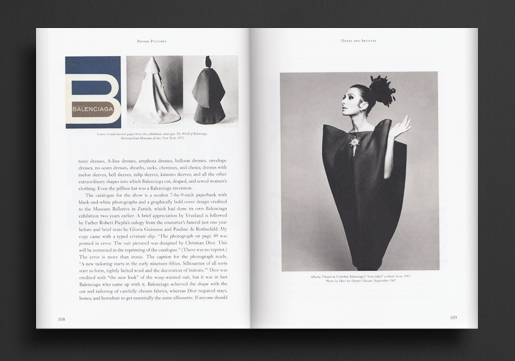
Douglas Crimp is the rare art critic whose work profoundly influenced a generation of artists. He is best known for his work with the "Pictures Generation" the very name of which Crimp coined to define the work of artists like Robert Longo and Cindy Sherman who appropriated images from mass culture to carry out a subversive critique. But while his influence is widely recognized, we know little about Crimp's own formative experiences before "Pictures."Before Pictures tells the story of Crimp's life as a young gay man and art critic in New York City during the late 1960s through the turbulent 1970s. Crimp participated in all of what made the city so stimulating in that vibrant decade. The details of his professional and personal life are interwoven with this the particularly rich history of New York City at that time, producing a vivid portrait of both the critic and his adopted city. The book begins with his escape from his hometown in Idaho, and we quickly find Crimp writing criticism for ArtNews while working at the Guggenheim where, as a young curatorial assistant, he was one of the few to see Daniel Buren's Peinture-Sculpture before it was removed amid cries of institutional censorship. We also travel to the Chelsea Hotel (where Crimp helped the down-on-his-luck couturier Charles James organize his papers) through to his days as a cinephile and balletomane to the founding of the art journal October, where he remained a central figure for many years. As he was developing his reputation as a critic, he was also partaking of the New York night life, from drugs and late nights alongside the Warhol crowd at the Max's Kansas City to discos, roller-skating, and casual sex with famous (and not-so-famous) men. As AIDS began to ravage the closely linked art and gay communities, Crimp eventually turned his attention to activism dedicated to rethinking AIDS. Part biography and part cultural history, Before Pictures is a courageous account of an exceptional period in both Crimp's life and the life of New York City. At the same time, it offers a deeply personal and engaging point of entry into important issues in contemporary art.
Includes the work of Cindy Sherman, Jack Goldstein, Daniel Buren, Charles James, Hiroshi Sugimoto, Agnes Martin, Dan Flavin, Peter Hujar, Eva Hesse, Bernardo Bertolucci, Walker Evans, Joseph Cornell, Alfred Hitchcock, Jack Tworkov, Robert Ryman, Jane Freilicher, Robert Smithson, Michael Snow, Stanley Kubrick, Cristobal Balenciaga, Christian Dior, Brice Marden, Ellsworth Kelly, Guilio Romano, Andrea Mantegna, Merce Cunningham, Joan Jonas, Yvonne Rainer, John Baldessari, Dan Graham, Vito Acconci, Alvin Baltrop, Divine, Gordon Matta-Clark, Edgar Degas, Louise Lawler, and so many others.
2017, English
Softcover, 112 pages, 21 x 15 cm
1st Edition, Out of print title / used / very good
Published by
ACCA / Melbourne
$65.00 - Out of stock
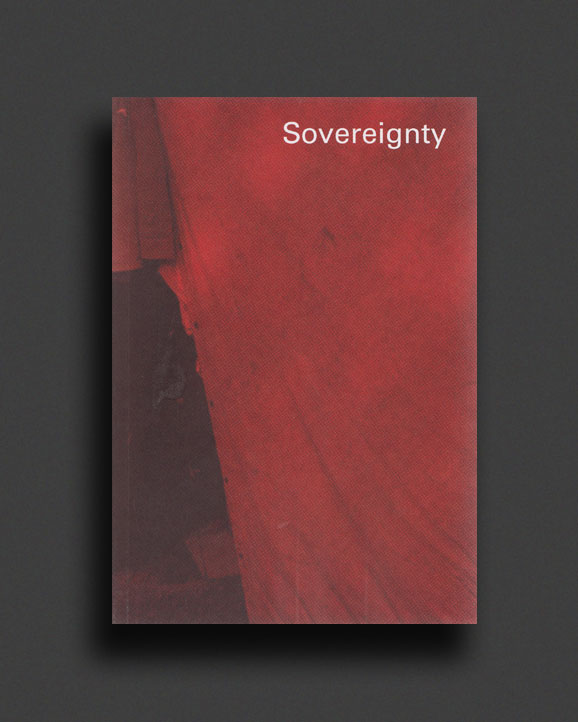
The quickly sold out catalogue published to accompany the exhibition 'Sovereignty' at the Australian Centre for Contemporary Art (ACCA), 17 December 2016 – 26 March 2017.
With a foreword by Arweet Carolyn Briggs, the Sovereignty catalogue features essays by exhibition curators Paola Balla and Max Delany, and commissioned texts by celebrated author Dr Tony Birch and Yorta Yorta curator and writer Kimberley Moulton.
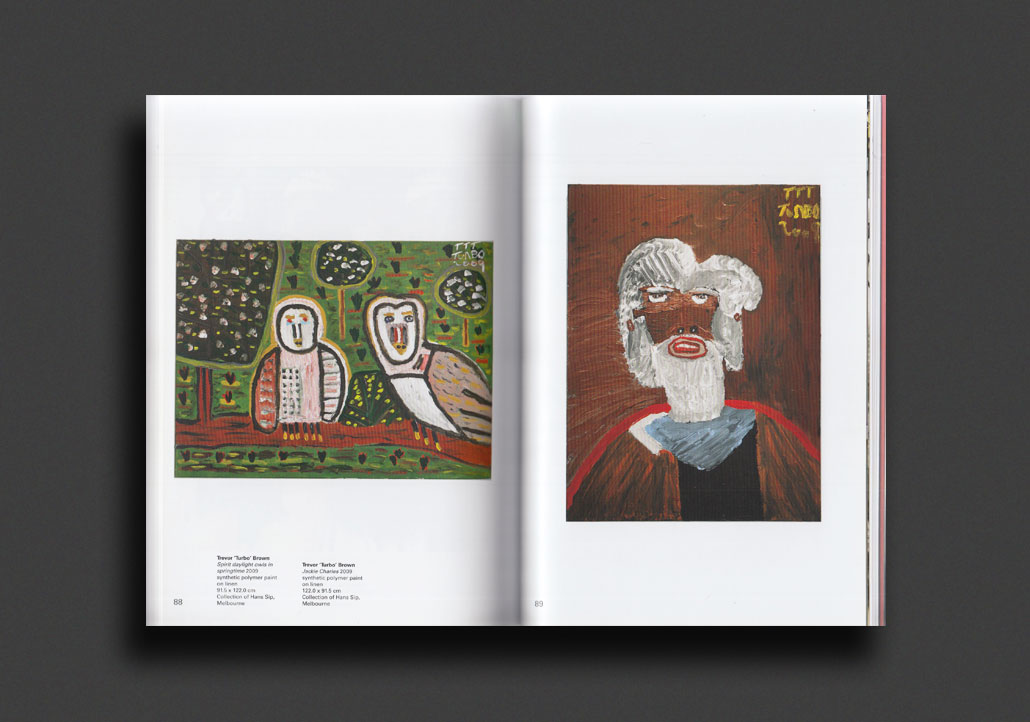
Encompassing extensive documentation of artists’ works in the exhibition printed in full colour, the publication serves as a companion to the exhibition, presenting the vibrant and diverse visual art and culture of the continuous and distinct nations, language groups and communities of Victoria’s sovereign, Indigenous peoples. Sovereignty focuses on contemporary art of First Nations peoples of South East Australia, alongside keynote historical works, to explore culturally and linguistically diverse narratives of self-determination, identity, sovereignty and resistance. Bringing together new commissions, recent and historical works by over thirty artists, Sovereignty is structured around a set of practices and relationships in which art and society, community and family, history and politics are inextricably connected. A diverse range of discursive and thematic contexts are elaborated: the celebration and assertion of cultural identity and resistance; the significance and inter-connectedness of Country, people and place; the renewal and re-inscription of cultural languages and practices; the importance of matriarchal culture and wisdom; the dynamic relations between activism and aesthetics; and a playfulness with language and signs in contemporary society.
Artists featured: Brook Andrew, William Barak, Lisa Bellear, Jim Berg, Briggs, Trevor Turbo Brown,
Amiel Courtin-Wilson / Uncle Jack Charles, Maree Clarke, Vicky Couzens, Destiny Deacon & Virginia Fraser, Marlene Gilson, Korin Gamadji Institute, Brian Martin, Kent Morris, Clinton Nain, Glenda Nicholls, Bill Onus, Steaphan Paton, Bronwyn Razem, Reko Rennie, Steven Rhall, Yhonnie Scarce, Warriors of the Aboriginal Resistance (WAR), Peter Waples-Crowe, Lucy Williams-Connelly
Out of print edition of 750 copies.
Very Good. Like New, but with light marking to cover.
2017, English
Softcover, 174 pages, 24 x 17 cm
Published by
Griffith University / Brisbane
$30.00 - Out of stock
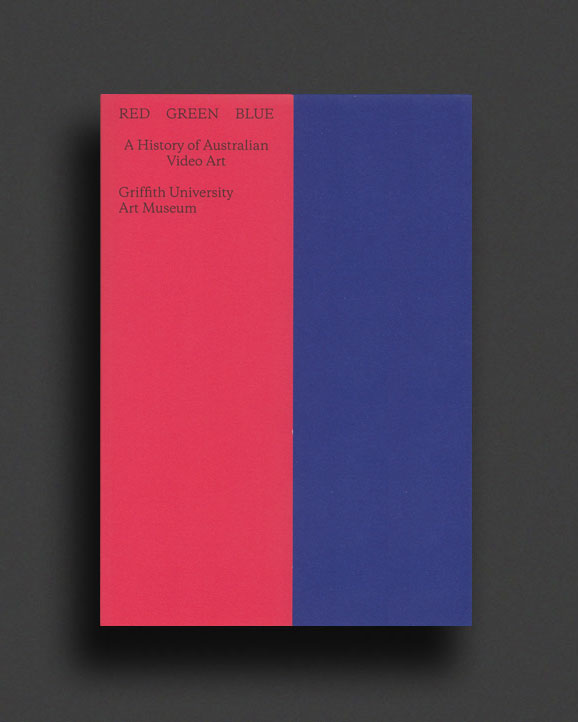
Catalogue for Red Green Blue: A History of Australian Video Art, a major three part exhibition at the Griffith University Art Museum, 2017, mapping a thematic history of video art in Australia from the 1970s until the present. The exhibition brought together more than 60 works, highlighting the many possibilities offered by the medium, in terms of form, content and interaction with other disciplines. Artworks drawn from archives, artist holdings and the Griffith University Art Collection shows a historical journey that is also a celebration of the ongoing dynamism and depth of Australian video art practice. Features texts by curator Matthew Perkins, as well as Angela Goddard, Bree Richards, Daniel Palmer; interviews with artists Peter Kennedy, Bonita Ely, Soda_Jerk, Lyndal Jones, David Rosetzky, Michael Glasheen, Michaela Gleave. Also features the work of Destiny Deacon and Virginia Fraser, VNS Matrix, Susan Norrie, Hannah Brontë, James Lynch, Masato Takasaka, Warren Burt, Tracey Moffatt, Jill Orr, Dale Frank, Mike Parr, and many more.
2019, English / German
Softcover, 240 pages, 23 x 16.5 cm
Published by
Texte Zur Kunst / Berlin
$32.00 - Out of stock
The sea has inspired artists, writers, and thinkers for centuries; but what has changed in our view of the sea since the canonical seafaring novels and paintings of the 19th century? In the June issue of Texte zur Kunst, dedicated to the mysteries and violence of the deep, we examine the sea from a media-theoretical perspective as well as from the perspective of current political and ecological catastrophes. For this issue, the theoretical texts are punctuated by photo essays by four artists who have dealt with the sea as a biosphere as well as a transit system for container vessels. In short, we realize just how important it is to look at the sea again, and again.
ISSUE NO. 114 / JUNE 2019 "THE SEA"
TABLE OF CONTENTS
PREFACE
BERNHARD SIEGERT
THE SINKING OF A STEAMBOAT / Robert Carrick’s, William Suhr’s, David Bull’s, and J. M. W. Turner’s “Rockets and Blue Lights” (1840–2003)
NADJA ABT -
SEAWOMEN
ASHNA ALI
- MEDITERRANEAN BORDERLAND
SUSANNE M. WINTERLING -
CODE AND POETRY OF THE SEA
IN THE THICKNESS OF THE CROSSING / Challenging the Liquid Violence of Borders in the Mediterranean – An interview with Charles Heller
MANDLA REUTER
- MOUNTAIN WATER
D. GRAHAM BURNETT
JETSAM
HIRA NABI
- HOW TO DISMANTLE A SHIP IN NINE STEPS
FRANZISKA BRONS
- THE SEA: MEDIUM AND MILIEU
LIEBE ARBEIT KINO
FOR A PANAFRICAN PAST AND FUTURE! / Michaela Ott über das Jubiläum des subsaharischen Filmfestivals FESPACO in Ouagadougou
ROTATION
DIE UNANGENEHME VERWANDTE / Vojin Saša Vukadinović über „Last Days at Hot Slit. The Radical Feminism of Andrea Dworkin“ von Johanna Fateman und Amy Scholder (Hg.)
REVIEWS
A LEGIBLE FUTURE / Jeffrey West Kirkwood on “The New Alphabet” at Haus der Kulturen der Welt, Berlin
LEERSTELLEN IN DER VERGANGENHEIT, RISSE IN DER GEGENWART / Sven Beckstette über Dierk Schmidt im Museo Nacional Centro de Arte Reina Sofía, Madrid
SUBJECTS OF MADNESS: NANOTYRANNUS, RAW CHAMPAGNE, AND BREASTS LIKE CAMELLIAS / Nina Prader on “Flying High: Women Artists of Art Brut” at the Kunstforum Vienna
AFROATLANTISCHE GESCHICHTEN / Frauke Zabel über Rubem Valentim im Museu de Arte de São Paulo
SYSTEMIC AESTHETICIZATION / Sven Lütticken on Pierre Huyghe at the Serpentine Gallery, London
CIVILIZATIONAL ENTANGLEMENTS / Rike Frank on Rossella Biscotti at the daadgalerie, Berlin
PIPELINE DREAMS / Benjamin Thorel on Lucie Stahl at Freedman Fitzpatrick, Paris
REALITÄTSEFFEKTE / Hannes Loichinger über Jay Chung und Q Takeki Maeda im Kölnischen Kunstverein
FAIL BETTER / Colin Lang on Stefanie Heinze at Capitain Petzel, Berlin
ALLE KÜNSTLER*INNEN LÜGEN / Michael Franz über KP Brehmer im Neuen Museum in Nürnberg
THE DISCREET CHARM OF VANISHING / Estelle Nabeyrat on Lourdes Castro at Musée régional d’art contemporain Occitanie / Pyrénées-Méditerranée, Sérignan
BIZARRE LOVE TRIANGLE / David Bussel on Ghislaine Leung at Chisenhale Gallery, London
STABILE UNGLEICHGEWICHTE / Gürsoy Doğtaş über Nil Yalter im Museum Ludwig, Köln
BEST SINGER-SONGPAINTING / Gunter Reski über Norbert Schwontkowski bei Contemporary Fine Arts, Berlin
HERE’S AL / Eli Diner on Allen Ruppersberg at the Hammer Museum, Los Angeles
BATHETIC FALLACY / Alexandra Symons Sutcliffe on “A Fatal Attraction” at Galerie Barbara Weiss, Berlin
OBITUARIES
OKWUI ENWEZOR (1963–2019) / by Ulrich Wilmes, Ute Meta Bauer and Markus Müller, with an introduction by Isabelle Graw
CAROLEE SCHNEEMANN (1939–2019) / by Pamela M. Lee
KARL LAGERFELD (1933−2019) / von Barbara Vinken
EDITION
JANA EULER
HELEN MARTEN
2019, English
Softcover, 176 pages, 21.5 x 27 cm
Published by
Prestel / Munich
$65.00 - Out of stock
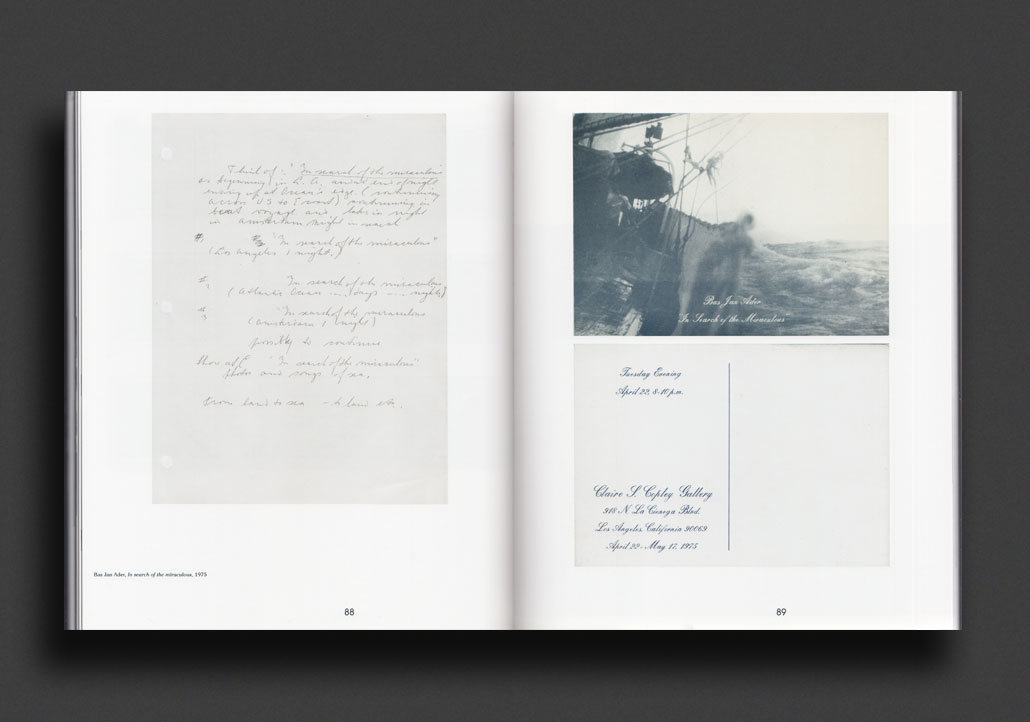
In 1971, Chris Burden disappeared for three days without a trace. This book, also entitled Disappearing, examines the theme of disappearance in the works of Burden and his contemporaries, Bas Jan Ader and Jack Goldstein, in 1970s Southern California. Loosely affiliated, these three artists shared an interest in themes of disappearance and self-effacement. In 1972, Goldstein buried himself alive during a performance, while during Ader's tragic last work, In search of the miraculous (1975), the artist vanished crossing the Atlantic. Responding to cultural pressures like the Vietnam War and the nascent field of feminist art, the artists used "disappearing" as a response to the masculine anxiety of the 1970s. This book reveals a fascinating intersection between major figures at a critical turning point for Californian art.
2019, English / German
Hardcover (w. dust jacket), 198 pages, 24.8 x 31.2 cm
Published by
Walther König / Köln
Kunsthalle Basel / Basel
$65.00 - In stock -
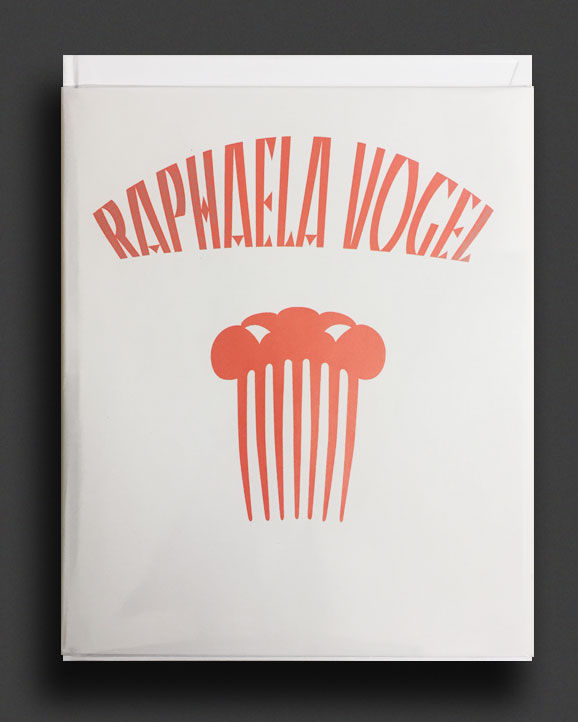
First expansive hardcover monograph dedicated to the work of German artist Raphaela Vogel, and published on the occasion of her solo exhibitions at Kunstpalais Erlangen, 2018; Leopold-Hoesch-Museum, Du¨ren, 2018; Kunsthalle Basel, 2018. Raphaela Vogel’s exhibitions host impressive sculptural installations, mostly poised in precarious balance, often in combination with pulsating sound or videos that feature the artist herself (b. 1988). Her series of new works unfurls a world at once thrilling and dystopian.
Edited by Milena Mercer, with contributions from Tenzing Barshee, Patrizia Dander, Hans-Christian Dany, Elena Filipovic, Michael Hakimi, Michael Vogel. Designed by Yvonne Quirmbach, Berlin.
2019, English
Softcover, 104 pages, 26 x 21 cm
Published by
Heide Museum of Modern Art / Victoria
$30.00 - Out of stock
Catalogue published on the occasion of the exhibition "Janet Burchill & Jennifer McCamley - Temptation to Co-Exist", curated by Sue Cramer at Heide Museum of Modern Art, Victoria, 6 April - 14 July 2019 and the most comprehensive monograph of the artists to date. Essays contributions by Sue Cramer, Justin Clemens, Helen Hughes, Juan Davila, Kyla McFarlane and Rex Butler.
Working together since the early 1980s, Janet Burchill and Jennifer McCamley have developed an expansive framework of formal and thematic concerns drawing broadly on the histories of art and design, film, literature and cultural theory. Influenced by feminism, and applying an appreciation and critique of modernism, they make visually stunning artworks across an ever-expanding repertoire of mediums—from painting and sculpture, photography and printmaking, to neon light and textile works.
This exhibition delves into the startling diversity of their artistic production, and their philosophy of ‘material conceptualism’, which highlights the spaces between objects, images and ideas. It will reveal the free spirit of enquiry and invention that has underpinned their practice from the 1980s up until today. Borrowing and adapting its title from an earlier group of photographs and installations, Temptation to Co-Exist celebrates the achievement of these innovative artists, and the collaborative partnership they have sustained over several decades.
Profusely illustrated with full documentation of the exhibition, past exhibitions, individual works, plus biographies, bibliographies, list of works and more.
2018, English
Softcover, 304 pages, 19.4 x 27.9 cm
Published by
Koenig Books / London
$75.00 - Out of stock
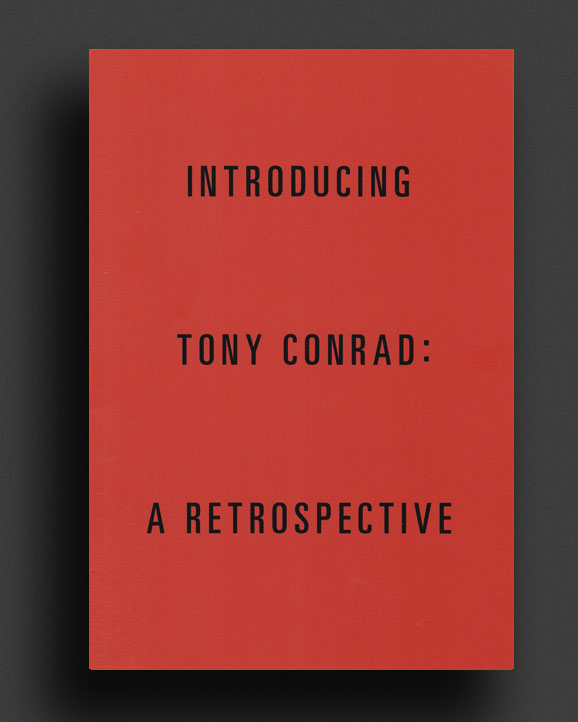
Edited with text by Cathleen Chaffee. Text by Rachel Adams, Vera Alemani, Constance DeJong, Diedrich Diederichsen, Anthony Elms, David Grubbs, Henriette Huldisch, Branden W. Joseph, Andrew Lampert, Christopher Müller, Annie Ochmanek, Tony Oursler, Tina Rivers Ryan, Jay Sanders, Paige Sarlin, Christopher Williams.
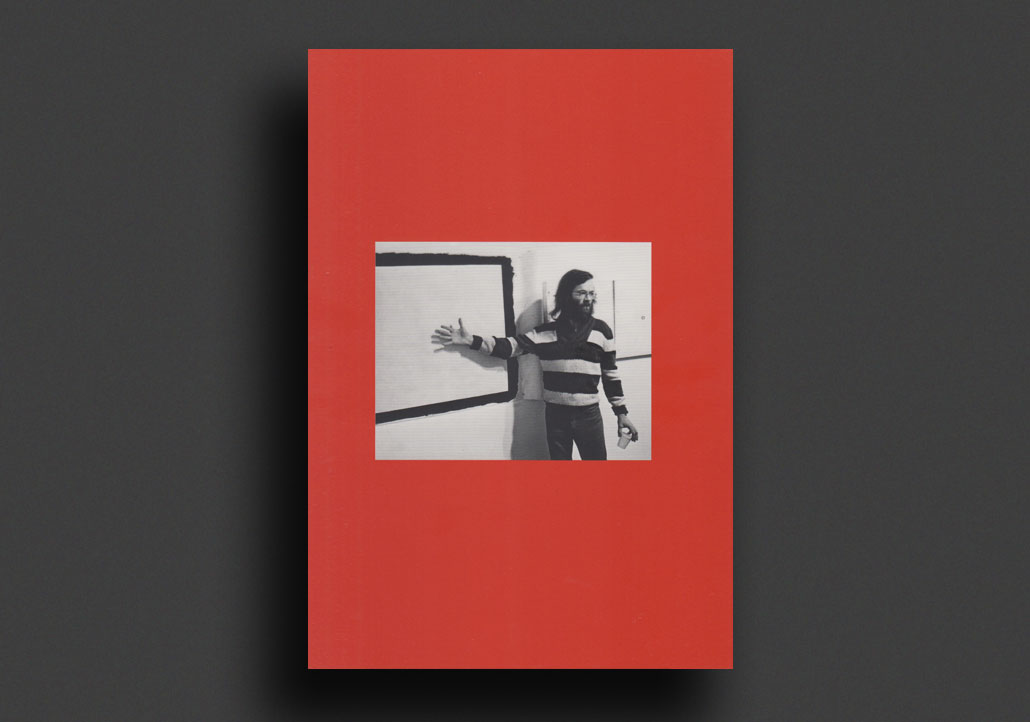
Tony Conrad (1940-2016) was a pioneering American avant-garde video artist, experimental filmmaker, musician, composer, sound artist, teacher, and writer.
Throughout his six-decade career he forged a unique path through numerous artistic movements and defined a vast range of culture, including rock music and public access television.
In music, Conrad was an early member of the Theatre of Eternal Music (The Dream Syndicate), which included John Cale and La Monte Young. In the early 1960s he was also influential in the origins of the iconic band, The Velvet Underground. In film, Conrad was associated with the Structuralist movement which included filmmakers such as Paul Sharits and Hollis Frampton.
This richly illustrated catalogue offers an in-depth introduction to Conrad’s life and career: presenting his early Structuralist films projects in which he treated film as a sculptural and performative material; his Invented Acoustical Tools which presented as sculptures themselves; the ambitious films about power relations, set in the military and in prison; and his final sculptures and installations, which evoke and critique what he perceived as an emerging culture of surveillance, control, and containment.
This book also includes Conrad’s own writings writings from 1966 to 2016, as well as texts by curators, theorists and notable artists such as Tony Oursler, Christopher Müller, and Christopher Williams.
Accompanying the exhibition, Introducing Tony Conrad: A Retrospective at Albright-Knox Art Gallery, Buffalo, New York (2018), MIT List Visual Arts Center and Carpenter Center for Visual Arts, Harvard University (2018/2019), and ICA, University of Pennsylvania (2019).
1969, English
Softcover, 167 pages,
Out of print title / used / very good
Published by
L&S Publishing / Melbourne
$25.00 - Out of stock
Australian edition of the great if.... script book, published by L&S Publishing, Melbourne, in 1969. Profusely illustrated throughout with stills from Lindsay Anderson's landmark of British countercultural cinema, accompanied by the complete script, a preface by Anderson himself, cast and credits, and more.
if.... is a 1968 British drama film produced and directed by Lindsay Anderson satirising English public school life. Famous for its depiction of a savage insurrection at a fictitious boys' boarding school, the X certificate film was made at the time of the May 1968 protests in France by a director who was strongly associated with the 1960s counterculture. The film stars Malcolm McDowell in his first screen role and his first appearance as Anderson's "everyman" character Mick Travis. Richard Warwick, Christine Noonan, David Wood, and Robert Swann also star. if.... won the Palme d'Or at the 1969 Cannes Film Festival. In 1999, the British Film Institute named it the 12th greatest British film of the 20th Century.
Very Good copy.
1983, English
Softcover, 96 pages, 20.6 x 14.5 cm
1st Edition, Out of print title / used / good
Published by
Methuen Publishing / London
$50.00 - Out of stock
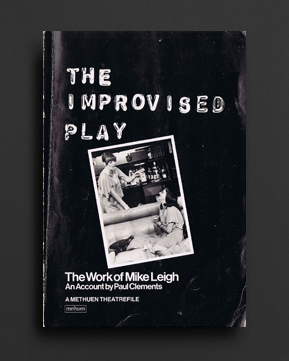
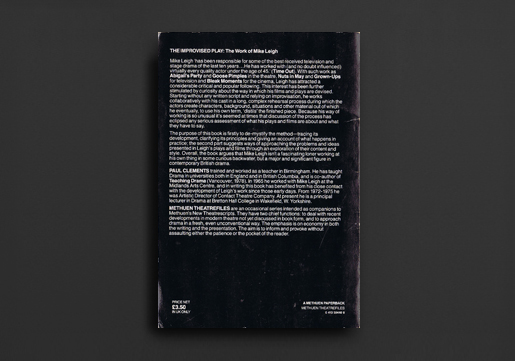
The scarce 1983 paperback "The Improvised Play : The Work of Mike Leigh", written by Paul Clements and dedicated entirely to the work of the great English writer and director of film and theatre, Mike Leigh. Leigh began as a theatre director and playwright in the mid-1960s and in the 1970s and 1980s his career moved between theatre work and making films for BBC Television, many of which were characterised by a gritty "kitchen sink realism" style. Mike Leigh's many works include "Nuts in May"(1975), "Abigail's Party"(1977), "Life Is Sweet"(1990), "Naked"(1993), "Secrets & Lies"(1993), "Vera Drake"(2004),"Mr. Turner"(2014), to name a few. Being the first extensive study of Leigh's early work, this textbook, drawn principally from innumerable conversations and taped interviews with Leigh between 1980-1982, gives the reader an introduction and background to Leigh's beginnings, an in-depth study of his methods and approaches to plays and films, and a valuable appendix (complete checklist of all the plays and films devised and directed by Mike Leigh up until 1983).
First edition. Good copy with cover wear, creasing.
1968, English
Softcover, 124 pages, 20 x 14 cm
1st Edition, Out of print title / used / good
Published by
Lorrimer / London
$40.00 - In stock -
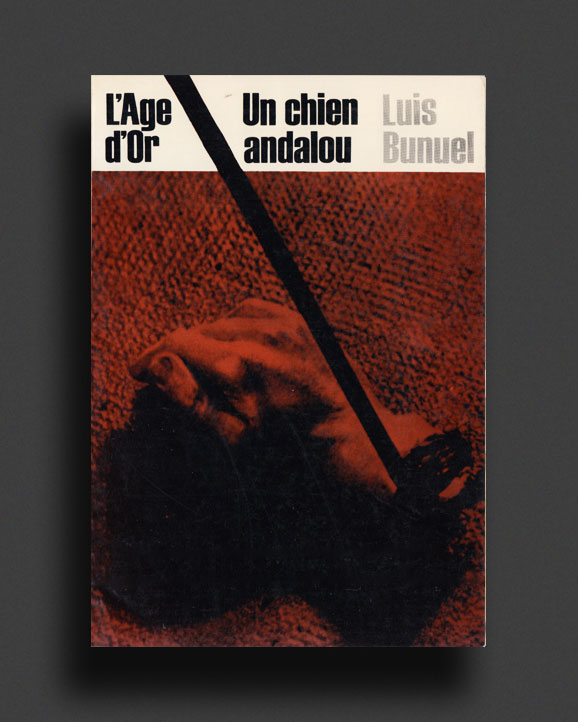
First edition of the Luis Buñuel volume of Classic Film Scripts, dedicated entirely to his masterpieces "Un chien andalou" and "l'Age d'or" (both co-scripted by Salvador Dali). Illustrated throughout with stills from these iconic surrealist films, accompanied by their full scripts translated from French by Marianne Alexandre. Surrealist cinema, as epitomised by Un Chien Andalou and L'Age D'Or, was a knife through the very heart of the establishment - a scorpionic, scatological black joke galvanised by the irrational, the uncanny and the spectre of de Sade.
Luis Buñuel Portolés was a Spanish filmmaker who worked in Spain, Mexico and France. When Luis Buñuel died at age 83, his obituary in the New York Times called him "an iconoclast, moralist, and revolutionary who was a leader of avant-garde surrealism in his youth and a dominant international movie director half a century later". His first picture made in the silent era was called "the most famous short film ever made" by critic Roger Ebert, and his last film made 48 years later won him Best Director awards from the National Board of Review and the National Society of Film Critics. Often associated with the surrealist movement of the 1920s, Buñuel created films from the 1920s through the 1970s. His work spans two continents, three languages, and an array of genres, including experimental film, documentary, melodrama, satire, musical, erotica, comedy, romance, costume dramas, fantasy, crime film, adventure, and western. Despite this variety, filmmaker John Huston believed that, regardless of genre, a Buñuel film is so distinctive as to be instantly recognizable, or, as Ingmar Bergman put it, "Buñuel nearly always made Buñuel films".
2014, English
Softcover, 296 pages, 15.2 x 22.9 cm
Published by
Columbia University Press / New York
$58.00 - Out of stock
Maya Deren (1917–1961) was a Russian-born American filmmaker, theorist, poet, and photographer working at the forefront of the American avant-garde in the 1940s and 1950s. Influenced by Jean Cocteau and Marcel Duchamp, she is best known for her seminal film Meshes of the Afternoon (1943), a dream-like experiment with time and symbol, looped narrative and provocative imagery, setting the stage for the twentieth-century's groundbreaking aesthetic movements and films.
Maya Deren: Incomplete Control assesses both the filmmaker's completed work and her numerous unfinished projects, arguing Deren's overarching aesthetic is founded on principles of incompletion, contingency, and openness. Combining the contrasting approaches of documentary, experimental, and creative film, Deren created a wholly original experience for film audiences that disrupted the subjectivity of cinema, its standards of continuity, and its dubious facility with promoting categories of realism. This critical retrospective reflects on the development of Deren's career and the productive tensions she initiated that continue to energize film.
This book is a thorough review of Maya Deren's total oeuvre, offering a study of one of our most important filmmakers who has been more overlooked than one might expect. Further study of Deren from a distinct point of view, as Keller offers, is a vital contribution. (Bill Nichols, film critic and editor of Maya Deren and the American Avant-Garde)
Keller's truly excellent book considers both Deren's theoretical writings and cinematic work and places them within the context of her life and the difficulties she faced as an experimental artist (frequently unfunded and living on the edge). This volume fills a gap in scholarship on Deren with clear and elegant writing. (Lucy Fischer, University of Pittsburgh)
Maya Deren: Incomplete Control is a tour de force of historical and critical scholarship that explores new primary research material from Maya Deren's voluminous and complex archive to assert the significance of incompletion and process as central to Deren's artistic and intellectual production. Keller's clear, erudite prose offers brilliant new readings of Deren's extant films, including canonical works like Meshes of the Afternoon, and comprehensively explores Deren's incomplete projects―films, research projects, writings―to draw out Deren's radical imaginings of art and culture. (Michael Zryd, York University)
A required resource for serious examination of Deren's groundbreaking films.... Keller's smoothly organized, cleanly written text is perhaps the most comprehensive single volume on Deren's work.... Essential. (Choice)
A must-read for scholars of experimental cinema, women filmmakers, and Maya Deren. (Film Criticism)
About the Author
Sarah Keller is assistant professor of Art and cinema studies at the University of Massachusetts–Boston. She is coeditor, with Jason Paul, of Jean Epstein: Critical Essays and New Translations.
1993, English
Softcover, 176 pages, 25.5 x 23 cm
1st Edition, Out of print title / used / very good
Published by
Walker Art Centre / Minneapolis
$20.00 - Out of stock
Major monograph published by the Walker Art Centre, Minneapolis in 1993. Profusely illustrated throughout with essays by Peter Boswell, Andrzej Turowski, Patricia C. Phillips and Dick Hebdige, this extensive catalogue gives a wonderful overview of Wodiczko's unique and controversial oeuvre, traversing industrial design, sculpture, performance, photography, architecture, urban planning, social theory and critical writing, Wodiczko asks: what is public space?; who controls it? how is it used? what is its social role?.
Krzysztof Wodiczko (born April 16, 1943) is a Polish artist known for his large-scale slide and video projections on architectural facades and monuments. He has realized more than 80 such public projections in Australia, Austria, Canada, England, Germany, Holland, Ireland, Israel, Italy, Japan, Mexico, Poland, Spain, Switzerland, and the United States. War, conflict, trauma, memory, and communication in the public sphere are some of the major themes of his work. His practice, known as Interrogative Design, combines art and technology as a critical design practice in order to highlight marginal social communities and add legitimacy to cultural issues that are often given little design attention. He lives and works in New York City and teaches in Cambridge, Massachusetts, where he is currently professor in residence of art and the public domain for the Harvard Graduate School of Design (GSD). Wodiczko was formerly director of the Interrogative Design Group at the Massachusetts Institute of Technology (MIT) where he was a professor in the Visual Arts Program since 1991. He also teaches as Visiting Professor in the Psychology Department at the Warsaw School of Social Psychology.
Very Good copy.
1971, English
Softcover, 210 pages, 23 x 25 cm
1st UK Edition, Out of print title / used / good
Published by
Mathews Miller Dunbar / London
$70.00 - Out of stock
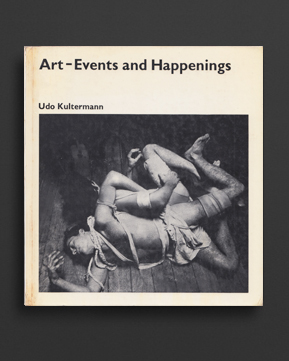
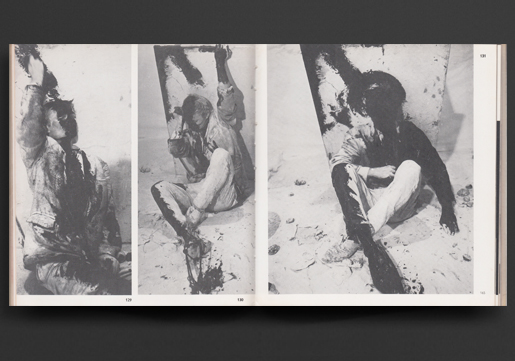
First English edition from 1971, Udo Kultermann's "Art-Events and Happenings", published by Mathews Miller Dunbar of London, translated by John William Gabriel. A deep reflection on an important part of Art's development throughout the 1960s - the turn to action through performance and conceptual art - surveying happenings, protests, theatre, ritual, land art and much more, and featuring a vast collection of black and white photographic illustrations of the work of Allan Kaprow, Ann Halprin, Yvonne Rainer, Merce Cunningham, Otto Mühl, Oyvind Fahlstrom, Piero Gilardi, Charlotte Moorman, Franz Erhard Walther, Joseph Beuys, Tetsumi Kudo, Lygia Clark, Carolee Schneemann, Stan Brakhage, John Cage, Hermann Nitsch, Günther Brus, Dennis Oppenheim, Jean-Jacques Lebel, Andy Warhol, Jan Dibbets, Carl Andre, Barry La Va, Rafael Ferrer, Marinus Boezum, Nam June Paik, Wolf Vostell, Milan Knizak, Jackson Pollock, Saburo Murakami, Atsuko Tanaka, Claes Oldenburg, Piero Manzoni, Peter Hutchinson, Christo, Robert Morris, and many more.
Very good copy (some tanning, previous owners name to first page)
2015, English
Softcover, 256 pages, 20 x 13 cm
Published by
Manchester University Press / Manchester
$36.00 - Out of stock
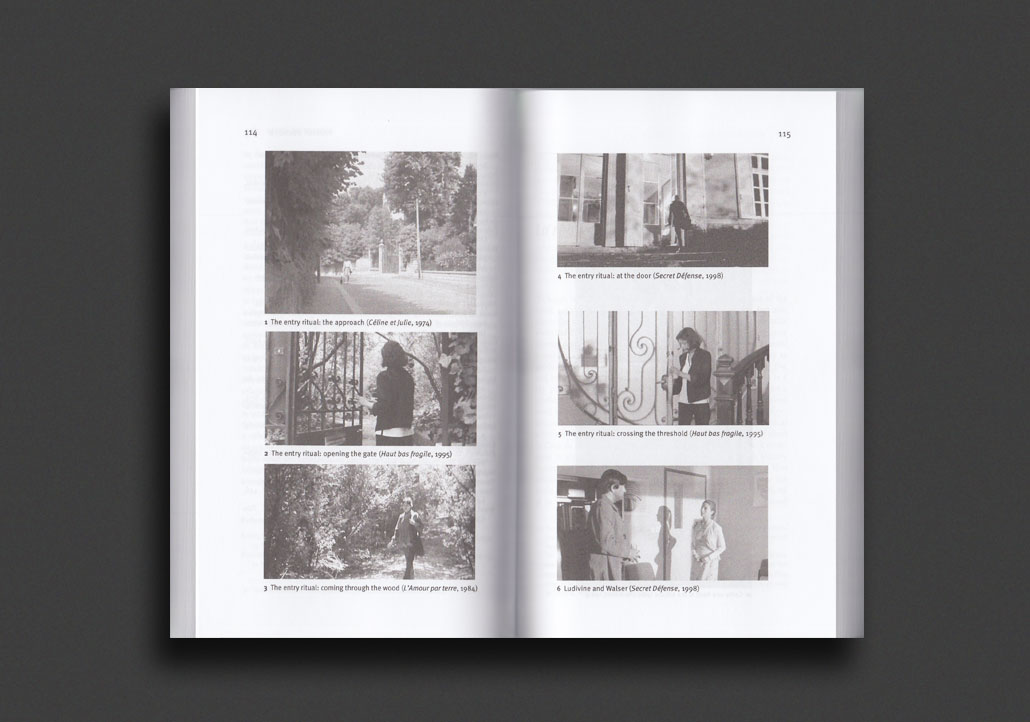
By Douglas Morrey and Alison Smith
Jacques Rivette is perhaps the best-kept secret of French cinema. A founding figure in the New Wave, and at the centre of the Cahiers du cinéma team, he developed into one of the most unusual and adventurous French directors of the last sixty years, yet his work remains little-known in comparison with his contemporaries, and this study is the first in English to look at the full span of his career. Starting with his decisively influential film criticism of the 1950s, it moves from the New Wave through the complex, experimental films of the 1970s to the challenging, playful dramas which ensured his visibility during the following two decades, and ends in the present, including Rivette's most recent films, Histoire de Marie et Julien (2003) and Ne touchez pas la hache (2007).
The book takes a thematic approach, offering detailed discussion of key elements of Rivette's film world, including games, conspiracy and jealousy, as well as a study of what Rivette's cinema adds to our understanding of key theoretical concepts in Film Studies such as narrative, space and adaptation.
From Manchester University Press' French Film Directors series, edited by Diana Holmes and Robert Ingram.
2016, English
Softcover, 176 pages, 20 x 13 cm
Published by
Manchester University Press / Manchester
$36.00 - Out of stock
By John Phillips.
Placing Robbe-Grillet's filmic oeuvre in the related contexts of both his novelistic work and the different historical and cultural periods in which his films were made, from the early 1960s to the present, the book traces lines of influence and continuity throughout his work, which is shown to exhibit a consistent preoccupation with an identifiable body of themes, motifs and structures. Close readings of all the films are skilfully combined with a thematic approach, ranging across the entire filmic corpus. The book also contains chapters on cinematography and technique.
Alain Robbe-Grillet (1922 – 2008) was a French writer and filmmaker. He was one of the figures most associated with the Nouveau Roman (new novel) trend of the 1960s, along with Nathalie Sarraute, Michel Butor and Claude Simon. Robbe-Grillet's career as a creator of fiction was not restricted to the writing of novels. For him, creating fiction in the form of films was of equal importance. His film career began when Alain Resnais chose to collaborate with him on his 1961 film Last Year at Marienbad. Robbe-Grillet then went on to launch a career as a writer-director of an award-winning series of cerebral and often sexually provocative feature films which explored similar themes to those in his literary work (e.g. Voyeurism, The Body as Text, The 'Double'), including L'Immortelle (The Immortal One) (1962); Trans-Europ-Express (1966); L'homme qui ment/Muž, ktorý luže (The Man Who Lies) (1968); L'Eden et après/Eden a potom (Eden and After) (1970); Glissements progressifs du plaisir (Progressive Slidings towards Pleasure) (1974); Le jeu avec le feu (Playing with Fire) (1975); La belle captive (The Beautiful Captive) (1983); and more.
Now available in paperback, this lucid, comprehensive and fascinating study shows Robbe-Grillet's contribution to the evolution of the cinematic art both in France and internationally to have been considerably more important than previously acknowledged.
From Manchester University Press' French Film Directors series, edited by Diana Holmes and Robert Ingram.