World Food Books' programme is largely produced on Kulin Nation land. We acknowledge the Wurundjeri people of the Kulin Nation as the first and continuing custodians of this land, and pay respect to their Elders past, present, and emerging.
World Food Books is an arts and special interests bookshop in Naarm / Melbourne. Founded in 2010, World Food Books is devoted to the presentation of a rotating, hand-selection of international art, design, literary and counterculture publications with an emphasis on the anti-traditional, the experimental, the avant-garde, the heretic, the marginal.
Presenting new titles alongside rare and out-of-print books, catalogues and journals spanning the fields of modern and contemporary art, design, photography, illustration, film, literature, poetry, cultural theory, philosophy, sexuality, popular and underground culture in its many radical forms, World Food Books wishes to encourage adventurous, thoughtful and open-minded reading, looking, writing, and exchange of publishing and ideas, both current and historical.
As well as our bookshop, located in Melbourne's historical Nicholas Building, all of our inventory is available internationally via our online mail-order service.
World Food Books semi-regularly co-ordinates "Occasions", a programme of exhibits and events at the bookshop and in partnership with other hosts (such as museums and art galleries) that develop out of the activities, relationships and content of the bookshop itself.
World Food Books
The Nicholas Building
37 Swanston Street
Room 5, Level 6
Melbourne 3000
Australia
SHOP HOURS:
Thu–Fri 12–6, Sat 12–5
WEB-SHOP OPEN 24/7
World Food Books
Postal Address:
PO Box 435
Flinders Lane
Victoria 8009
Australia
Art
Theory / Essay
Architecture / Interior
Graphic Design / Typography
Photography
Fashion
Eros
LGBTQ+
Fiction / Poetry
Weird / Speculative / Science Fiction / Horror
Transgressive / Visceral / Abject
Symbolism / Decadence / Fin de siècle
Film / Video
Painting
Sculpture / Installation
Performance / Dance / Theater
Drawing
Sound / Music
Curatorial
Group Shows / Collections
Periodicals
Out-of-print / Rare
Posters / Ephemera / Discs
Signed Books
World Food Books Gift Voucher
World Food Book Bag
Australian Art
Australian Fiction
Australian Science Fiction / Speculative Fiction
Australian Poetry
Australian Photography
Japanese Photography
Conceptual Art
Minimal Art
Dada
'Pataphysics / Oulipo
Fluxus
Concrete Poetry
Pop Art
Surrealism
Arte Povera
Arte Informale / Haute Pâte / Tachism
Nouveau Réalisme / Zero / Kinetic
Situationism / Lettrism
Collage / Mail Art / Xerox Art
Art Brut / Folk / Visionary / Fantastic
Illustration / Graphic Art / Bandes Dessinées
Furniture
Italian Radical Design / Postmodernism
Textiles
Ceramics / Glass
Counterculture
Protest / Revolt
Philosophy
Psychoanalysis
Anthropology
Anarchism
Socialism / Anarchism / Communism / Capitalism
Literary Theory / Semiotics / Language
Feminism / Women's Studies
Gender Studies / Sexuality
Anthropology
Fetishism / BDSM
Drugs / Psychedelia
Crime / Violence
Animal Rights / Veganism
Occult / Esoterica
Ecology / Earth / Alternative Living
Whole Earth / Crafts
All prices in AUD (Australian dollars)
Pick-Ups
Pick-up orders can be collected in our bookshop during opening hours after order date. Please collect any Pick-up orders within 2 weeks of ordering as we have limited storage space. Orders will be released back into stock if not collected within this time. No refunds can be made for pick-ups left un-collected. If you cannot make it in to the bookshop in this time-frame, please choose postage option.
Return Policy
All sales are final. We do accept returns (for refund or exchange) for items received in error. All our orders are packed with special care using heavy-duty padding and cardboard book-mailers or bubble mailers (for smaller books), using reinforcement where required. We cannot take responsibility for any lost, stolen or damaged parcels.
Insurance
Should you wish to insure your package, please email us directly after placing your order and we can organise this at a small extra expense. Although all standard/express tracked packages are very safe and dependable, we cannot take responsibility for any lost, stolen or damaged parcels. We recommend insurance on valuable orders.
Interested in selling your old books, catalogues, journals, magazines, comics, fanzines, ephemera? We are always looking for interesting, unusual and out-of-print books to buy. We only buy books in our fields of interest and specialty, and that we feel we can resell.
We base these prices on desirability, market value, in-print prices, condition and our current stock levels. We offer cash, store credit, and can take stock on consignment. All
about 25% of the price we expect to get when we sell them, or 30% in store credit. We base these prices on desirability, market value, in-print prices, condition and our current stock levels.
Sell your books any day of the week. You can drop them off and return later. If you have a lot of books, we can visit your Sydney home.
We buy books that we feel we can resell. We offer about 25 % of the price we expect to get when we sell them, or 30% in store credit. We base these prices on desirability, market value, in-print prices, condition and our current stock levels.
Philadelphia Wireman
03 August - 01 September, 2018
World Food Books is proud to announce our next Occasion, the first presentation of sculptures by Philadelphia Wireman in Australia.
The Philadelphia Wireman sculptures were found abandoned in an alley off Philadelphia’s South Street on trash night in 1982. Their discovery in a rapidly-changing neighbourhood undergoing extensive renovation, compounded with the failure of all attempts to locate the artist, suggests that the works may have been discarded after the maker’s death. Dubbed the "Philadelphia Wireman" during the first exhibition of this work, in 1985, the maker’s name, age, ethnicity, and even gender remain uncertain. The entire collection totals approximately 1200 pieces, all intricately bound together with tightly-wound heavy-gauge wire (along with a few small, abstract marker drawings, reminiscent both of Mark Tobey and J.B. Murry). The dense construction of the work, despite a modest range of scale and materials, is singularly obsessive and disciplined in design: a wire armature or exoskeleton firmly binds a bricolage of found objects including plastic, glass, food packaging, umbrella parts, tape, rubber, batteries, pens, leather, reflectors, nuts and bolts, nails, foil, coins, toys, watches, eyeglasses, tools, and jewellery.
Heavy with associations—anthropomorphic, zoomorphic, and socio-cultural responses to wrapped detritus—the totemic sculptures by Philadelphia Wireman have been discussed in the context of work created to fulfil the shamanistic needs of alternative religions in American culture. Curators, collectors, and critics have variously compared certain pieces to sculpture from Classical antiquity, Native American medicine bundles, African-American memory jugs, and African fetish objects. Reflecting the artist’s prolific and incredibly focused scavenging impulse, and despite—or perhaps enhanced by—their anonymity, these enigmatic objects function as urban artefacts and arbiters of power, though their origin and purpose is unknown. Philadelphia Wireman, whatever their identity, possessed an astonishing ability to isolate and communicate the concepts of power and energy through the selection and transformation of ordinary materials. Over the course of the past two decades, this collection has come to be regarded as an important discovery in the field of self-taught art and vernacular art.
Presented in collaboration with Fleisher-Ollman Gallery, Philadelphia, and Robert Heald, Wellington.
Susan Te Kahurangi King
02 February - 10 March, 2018
Susan Te Kahurangi King (24 February 1951 - ) has been a confident and prolific artist since she was a young child, drawing with readily available materials - pencils, ballpoint pens and felt-tip markers, on whatever paper is at hand. Between the ages of four and six Susan slowly ceased verbal communication. Her grandparents William and Myrtle Murphy had developed a special bond with Susan so they took on caring responsibilities for extended periods. Myrtle began informally archiving her work, carefully collecting and storing the drawings and compiling scrapbooks. No drawing was insignificant; every scrap of paper was kept. The King family are now the custodians of a vast collection containing over 7000 individual works, from tiny scraps of paper through to 5 meter long rolls.
The scrapbooks and diaries reveal Myrtle to be a woman of great patience and compassion, seeking to understand a child who was not always behaving as expected. She encouraged Susan to be observant, to explore her environment and absorb all the sights and sounds. Myrtle would show Susan’s drawings to friends and people in her community that she had dealings with, such as shopkeepers and postal workers, but this was not simply a case of a grandmother’s bias. She recognised that Susan had developed a sophisticated and unique visual language and sincerely believed that her art deserved serious attention.
This was an unorthodox attitude for the time. To provide some context, Jean Dubuffet coined the term Art Brut in 1945 to describe work created by self-taught artists – specifically residents of psychiatric institutions and those he considered to be visionaries or eccentrics. In 1972 Roger Cardinal extended this concept by adopting the term Outsider Art to describe work made by non-academically trained artists operating outside of mainstream art networks through choice or circumstance. Susan was born in Te Aroha, New Zealand in 1951, far from the artistic hubs of Paris and London that Dubuffet and Cardinal operated in. That Myrtle fêted Susan as a self-taught artist who deserved to be taken seriously shows how progressive her attitudes were.
Susan’s parents Doug and Dawn were also progressive. Over the years they had consulted numerous health practitioners about Susan’s condition, as the medical establishment could not provide an explanation as to why she had lapsed into silence. Dawn educated herself in the field of homeopathy and went on to treat all twelve of her children using these principles – basing prescriptions on her observations of their physical, mental and emotional state.
Doug was a linguist with an interest in philosophy who devoted what little spare time he had to studying Maori language and culture. To some extent their willingness to explore the fringes of the mainstream made them outsiders too but it was their commitment to living with integrity and their respect for individuality that ensured Susan’s creativity was always encouraged.
Even though Susan’s family supported her artistic pursuits, some staff in schools and hospitals saw it as an impediment to her assimilation into the community and discouraged it in a variety of ways. Her family was not always aware of this and therefore did not fully understand why Susan stopped drawing in the early 1990s. However, rather than dwell on the challenges that Susan faced in pursuit of her artistic practice, they prefer to highlight her achievements. In 2008 Susan began drawing again in earnest, after an almost 20 year interruption, and her work is now shown in galleries around the world.
Susan grew up without television and has been heavily influenced by the comics she read as a child. She is absolutely fearless in the appropriation of recognizable characters, such as Donald Duck and Mickey Mouse, in her work. She twists their limbs, contorts their faces, compresses them together, blends them into complex patterned backgrounds - always imbuing them with an incredible energy. Although Susan often used pop culture characters in her work they are not naive or childlike. These are drawings by a brilliant self-taught artist who has been creating exceptional work for decades without an audience in mind.
Mladen Stilinović
"Various Works 1986 - 1999"
02 February 16 - September 10, 2016
Various works 1986 - 1999, from two houses, from the collections of John Nixon, Sue Cramer, Kerrie Poliness, Peter Haffenden and Phoebe Haffenden.
Including: Geometry of Cakes (various shelves), 1993; Poor People’s Law (black and white plate), 1993; White Absence (glasses, ruler, set square, silver spoon, silver ladel with skin photograph and wooden cubes), 1990-1996; Exploitation of the Dead (grey and red star painting, wooden painting, black spoon with red table, red plate), 1984-1990; Money and Zeros (zero tie, paintings made for friends in Australia (Sue, John, Kerrie), numbers painting), 1991-1992; Words - Slogans (various t-shirts) - “they talk about the death of art...help! someone is trying to kill me”, “my sweet little lamb”, “work is a disease - Karl Marx”; Various artist books, catalogues, monographs, videos; Poster from exhibition Insulting Anarchy; "Circular" Croatian - Australian edition; Artist book by Vlado Martek (Dostoyevsky); more.
Thanks to Mladen Stilinović and Branka Stipančić.
Jonathan Walker
Always Will Need To Wear Winter Shirt Blue + Ochre Small Check Pattern
21 August - 21 September, 2015
Untitled
I am not a great reader of poetry but I always return to the work of Melbourne poet, Vincent Buckley (1925- 1988). Perhaps I find his most tantalising piece to be not a finished poem but a fragment left on a scrap of paper discovered on his desk after the poet’s death.
The poetry gathers like oil
In the word-core, and spreads
It has its music meet,
Its music is in movement.
This fragment is more the shell left behind from a volatile thought than a finished poem. I find the last two lines honest but awkward whereas the first two lines work like an arrow. Most likely he could not find a resolution so it was left. Still, in its present form, it remains an eloquent testimony to the ultimate failure of a medium to express mobile thought and sensation, in Buckley’s case, through verbal language. It’s an important matter because this is something all artists have to deal with regardless of the medium.
I have never written a poem, however, I am forever copying fragments from books on paper scraps in a vain effort to fix certain notions in my head. At first, they function as bookmarks that are sometimes returned to when I open the book. But before long, as they accumulate, they fall out littering the table interspersed with A4 photocopies, bills, books and medications.
To return to Buckley’s fragment, the first two lines very much evoke how I paint nowadays. As you age, detail diminishes and patches of light become more luminous and float. I feel the most honest way of dealing with this is by smearing the oil paint on the canvas with the fingers and working close-up, blind. Only if the patches coalesce into an approaching image can the work gain a life.
-
Jonathan Walker was born in Melbourne, Australia and brought up on a dairy farm in Gippsland. In the 1970’s he studied painting at RMIT and won the Harold Wright Scholarship to the British Museum, London. During the 1980’s he exhibited at Pinacotheca Gallery, Richmond and had work shown at the NGV and Heidi City Art Gallery. Over the same period he designed the cover for the “Epigenesi” LP by Giancarlo Toniutti, Italy and conducted a mail exchange work with Achim Wollscheid, Germany. The work with artists through the post resulted in an article published in the bicentenary issue of Art and Australia 1988. He showed in artist run spaces such as WestSpace in the 90’s and 2000’s, and until 2012, taught painting at Victoria University, which is where we (Colleen Ahern and Lisa Radford) as organisers of the exhibition, among many others, had the privilege of being his student.
Walker’s knowledge was imparted to students through the careful selection of music, literature, and artists found in books that he himself had ordered for the library. Walker’s strategy was the generosity of sharing his vast knowledge with references specific to each student and their context.
Walker’s paintings share a similar focus and intimacy.
This exhibition presents a small selection of recent paintings alongside a publication that includes Walker’s writing. Observational and analytical, Walker’s work is a type of material notation — the time of day, colour and how it is blended, the both specific and fleeting location of a reflection on lino or the question of whether a chair leg should be included in a painting.
Please join us on Friday August 21 between 6-8pm to celebrate the opening of the exhibition.
Curated by Colleen Ahern and Lisa Radford.
B. Wurtz
Curated by Nic Tammens
March 26 - April 4, 2015
B.Wurtz works from a basement studio in his home on Manhattan’s Lower East Side.
This local fact is attested to by the plastic shopping bags and newsprint circulars that appear in his work. As formal objects, they don’t make loud claims about their origins but nonetheless transmit street addresses and places of business from the bottom of this long thin island. Like plenty of artists, Wurtz is affected by what is local and what is consumed. His work is underpinned by this ethic. It often speaks from a neighborhood or reads like the contents of a hamper:
“BLACK PLUMS $1.29 lb.”
“Food Bazaar”
“USDA Whole Pork Shoulder Picnic 99c lb.”
“RITE AID Pharmacy, with us it’s personal.”
“H. Brickman & Sons.”
“Sweet Yams 59c lb."
Most of the work in this exhibition was made while the artist was in residence at Dieu Donne, a workshop dedicated to paper craft in Midtown. Here Wurtz fabricated assemblages with paper and objects that are relatively lightweight, with the intention that they would be easily transportable to Australia. This consideration isn’t absolute in Wurtz’s work, but was prescriptive for making the current exhibition light and cheap. Packed in two boxes, these works were sent from a USPS post office on the Lower East Side and delivered to North Melbourne by Australia Post.
Wurtz appears courtesy of Metro Pictures, New York.
Thanks to Rob Halverson, Joshua Petherick, Sari de Mallory, Matt Hinkley, Helen Johnson, Fayen d'Evie, Ask Kilmartin, Lisa Radon, Ellena Savage, Yale Union, and "Elizabeth".
John Nixon
"Archive"
December 15 - January 20, 2014
The presentation of John Nixon's archive offered a rare showcase of this extensive collection of the artist's own publications, catalogues, posters, ephemera, editions and more, from the mid 1980s onwards, alongside a selection of his artworks.
Organized by John Nixon, Joshua Petherick and Matt Hinkley.
<a href=http://wfb.public-office.info/artist/john-nixon>All titles by John Nixon
"Habitat"
at Minerva, Sydney (organised by Joshua Petherick and Matt Hinkley)
November 15 - December 20, 2014
Lupo Borgonovo, Janet Burchill & Jennifer McCamley,
Lewis Fidock, HR Giger, Piero Gilardi, Veit Laurent Kurz,
Cinzia Ruggeri, Michael E. Smith, Lucie Stahl, Daniel Weil, Wols
Press Release:
“...It contained seven objects. The slender fluted bone, surely formed for flight, surely from the wing of some large bird. Three archaic circuitboards, faced with mazes of gold. A smooth white sphere of baked clay. An age-blackened fragment of lace. A fingerlength segment of what she assumed was bone from a human wrist, grayish white, inset smoothly with the silicon shaft of a small instrument that must once have ridden flush with the surface of the skin - but the thing’s face was seared and blackened.”
William Gibson, “Count Zero”, 1986
"Autumn Projects Archive"
Curated by Liza Vasiliou
March 6 - March 15, 2014
World Food Books, in conjunction with the Virgin Australia Melbourne Fashion Festival 2014, presented the Autumn Projects archive, consisting of a selection of early examples in Australian fashion with a particular interest in collecting designers and labels from the period beginning in the 1980’s, who significantly influenced the discourse of Australian Fashion.
Curated by Liza Vasiliou, the exhibition provided a unique opportunity to view pieces by designers Anthea Crawford, Barbara Vandenberg, Geoff Liddell and labels CR Australia, Covers, Jag along with early experimental collage pieces by Prue Acton and Sally Browne’s ‘Fragments’ collection, suspended throughout the functioning World Food Books shop in Melbourne.
H.B. Peace
presented by CENTRE FOR STYLE
November 14, 2013
"Hey Blinky, you say chic, I say same"
Anon 2013
H.B. Peace is a clothing collaboration between great friends Blake Barns and Hugh Egan Westland. Their pieces explore the divergences between 'character’ and ‘personality’ in garments....etc
Special Thanks to Joshua Petherick and Matt Hinkley of WFB and Gillian Mears
and a Very Special Thank you to Audrey Thomas Hayes for her shoe collaboration.
Janet Burchill & Jennifer McCamley
"Aesthetic Suicide"
May 10 - June 8, 2013
The first of our occasional exhibitions in the World Food Books office/shop space in Melbourne, "Aesthetic Suicide" presented a body of new and older works together by artists Janet Burchill & Jennifer McCamley, including videos, prints, a wall work, and publications.
During shop open hours videos played every hour, on the hour.
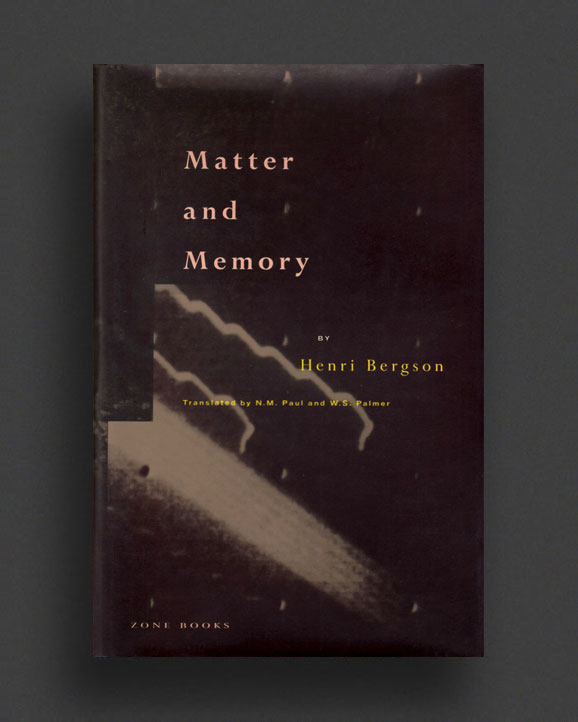
1991, English
Hardcover (w. dust jacket), 288 pages, 22.8 x 15.2 cm
1st Edition, Out of print title / used / very good
Published by
Zone Books / New York
$65.00 - Out of stock
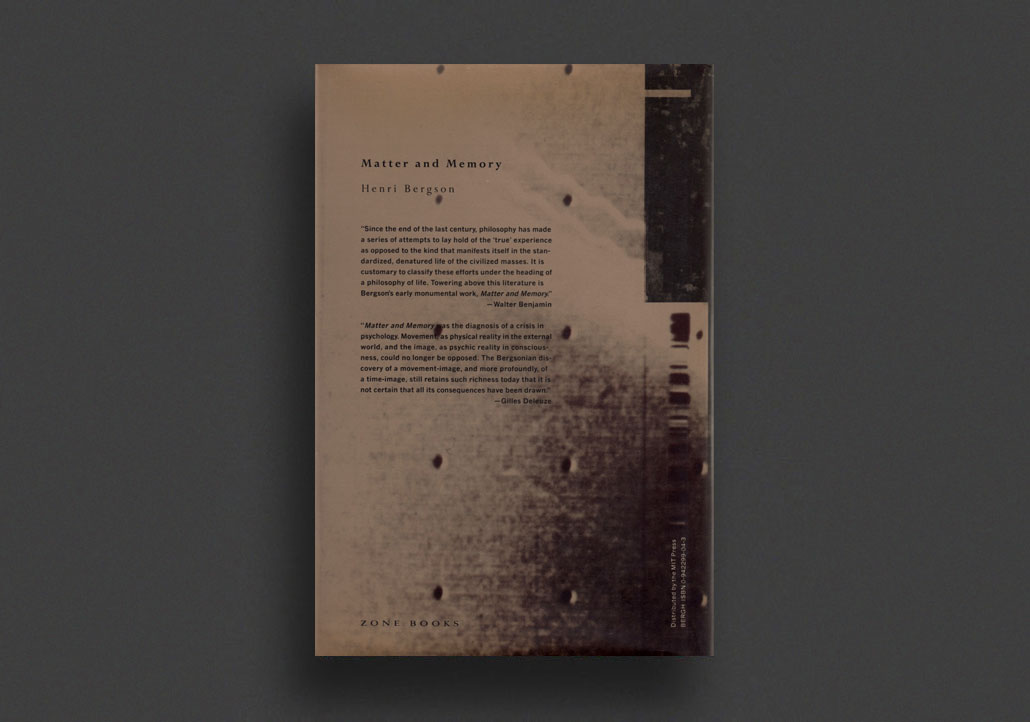
“Since the end of the last century,” Walter Benjamin wrote, “philosophy has made a series of attempts to lay hold of the ‘true’ experience as opposed to the kind that manifests itself in the standardized, denatured life of the civilized masses. It is customary to classify these efforts under the heading of a philosophy of life. Towering above this literature is Henri Bergson’s early monumental work Matter and Memory.”
Along with Husserl’s Ideas and Heidegger’s Being and Time, Bergson’s work represents one of the great twentieth-century investigations into perception and memory, movement and time, matter and mind. Arguably Bergson’s most significant book, Matter and Memory is essential to an understanding of his philosophy and its legacy.
“It would greatly distort Bergson to minimize the amazing description of perceived being given in Matter and Memory. Never before had anyone thus described the brute being of the perceived world. In unveiling it along with nascent duration, Bergson rediscovers in the heart of man a pre-Socratic and ‘prehuman’ sense of the world.”—Maurice Merleau-Ponty
"Matter and Memory was the diagnosis of a crisis in psychology. Movement, as physical reality in the external world, and the image, as psychic reality in consciousness, could no longer be opposed. The Bergsonian discovery of a movement-image, and more profoundly, of a time-image, still retains such richness today that it is not certain that all its consequences have been drawn."—Gilles Deleuze
"Since the end of the Last century, philosophy has made a series of attempts to lay hold of the 'true' experience as opposed to the kind that manifests itself in the standardized, denatured life of the civilized masses. It is customary to classify these efforts under the heading of a philosophy of life. Towering above this literature is Bergson's early monumental work, Matter and Memory."—Walter Benjamin
Translated by N.M. Paul, W.S.
Henri Bergson (1859-1941) was awarded the Nobel Prize in 1927. His works include Time and Free Will, An Introduction to Metaphysics, Creative Evolution, and The Creative Mind.
1988, Japanese
Hardcover, (w. slipcase and obi), 31.5 x 31 cm
1st Edition, Out of print title / used / very good
Published by
ADV communication / Tokyo
$320.00 - Out of stock
Rare, first edition printing of Gashō Yamamura's 1988 masterpiece, Botanical Planetarium, published posthumously in this lavish, over-sized slip-case edition the year after the photographer's sudden death. After Yamamura (b. Osaka, 1939—1987) began photographing plants in 1974, he published two incredible, largely unknown collections of his otherworldly botanical photo-studies before his sudden death by suicide in 1987 — “Plants” (1976) and “Botanical Planetarium” (1988). Yamamura's plant photography is like no-other. "Caught in stroboscopic light, the plants stiffen momentarily; they emerge as strange shapes not seen in natural light, rising up and towering high as if by desire." “Botanical Planetarium”, which can be translated from the Japanese as “Hunting Flowers”, is Yamamura's photobook of colour plant photography, focussing exclusively on blossoms, the plants’ reproductive organs. "The perspective is different to how we usually see flower beds and plants; there are no downwards, surveying gazes. Instead, many of Yamamura’s photographs employ an upwards angle, taken in close vicinity to the plants, the way a bug would see them. Here, even the tenderest of flowers appear as bold, towering structures. With this insectuous, un-human perspective, Yamamura carves out the strange and unfamiliar hiding in everyday reality and questions a way of looking that turns its subjects into mere trivialities." [...] "The sights that Yamamura captured expose plants as strange entities that exist in indifference towards human life. At the same time, they let us imagine a world before the presence of human life, or perhaps the world after our disappearance from this earth."—Mika Kobayashi, photography researcher
Highly recommended.
Yamamura began photographing in high school, focusing mainly on the children in his neighborhood. In 1959, he turned his attention to Americans living in Washington Heights, a residential area in central Tokyo that housed soldiers and their families. His images of American children, shot through fences or wearing masks, convey not only a sense of sinister strangeness and distance, but also the stark economic differences between American and Japanese children immediately after the war. He began photographing plants in the mid-1970s and continued to do so until his suicide at age 47 in 1987.
Very Good—Near Fine copy preserved in original illustrated slip-case w. original obi-strip, light case/obi wear. Book fine.
1980, Japanese
Softcover (w. dust jacket and obi strip), 114 pages, 26 x 21 cm
1st Edition, Out of print title / used / very good
Published by
Seven Sha / Tokyo
$900.00 - Out of stock
Stunning first edition of Kohei Yoshiyuki's cult classic photo book, Document: The Park (Document Park), published in 1980 by Seven Sha, Tokyo. Yoshiyuki's voyeuristic masterpiece, The Park is like no other photo book. A controversial volume of 74 photographs taken by the photographer using a 35mm camera, infrared film, and flash, Yoshiyuki documented a secret community of lovers and voyeurs who gathered in Shinjuku Park and Yoyogi Park between 1971 and 1973. His pictures document the people who gathered in these parks for clandestine trysts under the cloak of darkness, as well as the many spectators lurking in the bushes who watched—and sometimes participated in—these couplings. With their raw, snapshot-like quality, these images not only uncover the hidden illicit sexual encounters of their subjects, both homosexual and heterosexual, but they also serve as a chronicle of a Japan we rarely see. As Martin Parr writes in The Photobook: A History, Volume II, The Park is "a brilliant piece of social documentation, capturing perfectly the loneliness, sadness and desperation that so often accompany sexual or human relationships in a big, hard metropolis like Tokyo."
A beautifully printed book, complete with original dust-jacket and obi-strip. Includes two conversations with Kohei Yoshiyuki with Kenichi Matsumoto and Nobuyoshi Araki.
Kohei Yoshiyuki (b. 1946—2022) came to recognition in 1972 when material from his photo project “The Park” was featured in magazine Shukan Shincho, and a year later, in respected photo journal Camera Mainichi. However, it was the 1979 photo exhibition “The Park” at Komai Gallery and 1980 photo book “Document: The Park” that established him within the contemporary photographic landscape. Since then, Yoshiyuki was a recurrent fixture in Japan debauchery journal Super Photo Magazine along photographers: Nobuyoshi Araki, Daido Moriyama, Keizo Kitajima and Seiji Kurata.
Very Good copy with tanning to front-right edge of dust jacket. Light edge wear/age to jacket and obi. A lovely copy, well preserved.
199?, Japanese
Softcover (w. dust jacket), 29.5 x 21 cm
1st Edition, Out of print title / used / very good
Published by
Sakurato Shobo / Tokyo
$190.00 - Out of stock
Very rare photo book by Japanese photographer Ikko Kagari and others, published in the mid—1990s in Tokyo. Kagari made a number of these extraordinary, extremely questionable, surreptitious infrared photography collections in the 1980's—1990's, featuring secret "close-up photography" documenting clandestine sexual activities in public places — groping and upskirt photographs taken on packed Tokyo Metro commuter trains, in nightclubs, on escalators, couples making it in public toilets, parked cars and in parks with infrared strobe techniques reminiscent of Kohei Yoshiyuki's incredible Document Park. Cover-to-cover b/w reproductions of Kagari's grainy, blown-out infrared images that blur all lines between voyeur/participant and simulated/real, make for disorientating, sometimes claustrophobic, uneasy viewing. But they are also absolutely stunning, effective photo books that feel as conceptual as they do devious. Including selections from Kagari's "Document Commuter Train" (1982), as featured in The Photobook: Vol. III, by Parr & Badger, Kagari's fleeting in flagrante scenes capture erotic desire and criminal impulse engulfed by the soft folds of entangled garment fabrics, through foliage and grass, and across the cold darkness of the metropolis, with stunning technique. He went so far as to publish a how-to book for amateurs! Thankfully the 2000s saw the introduction of women-only carriages on the Tokyo Metro, relegating such expertise to history. With two pages of text by erotica author Kagero Mutsuki.
Very Good copy with VG dust jacket.
2007, English
Hardcover (clothbound), 58 pages (w. fold-outs), 28 x 24 cm
1st Edition, Out of print title / used / very good
Published by
Hammer / Los Angeles
$40.00 $20.00 - In stock -
Hardcover artist's book published on the occasion of Mathias Poledna’s Crystal Palace, a travelling exhibition/commission organized by the New Museum, New York; the Museum of Contemporary Art, Chicago; and the Hammer Museum, Los Angeles. Crystal Palace is a 35mm film installation comprised of a small number of long, static shots of the montane rainforest landscape of the Southern Highlands Province of Papua New Guinea. Using tightly framed medium-close to medium-wide shots, the film’s carefully selected scenes focus on the complex patterns, textures, and the overall abstract qualities of this environment, seemingly without human presence. Only subtle changes in light and movement in foliage provide visual cues to the passing of time. The film is accompanied by a dense and highly edited soundtrack created from on-location and archival field recordings that oscillate between distinct insect and bird sounds, and drone-like noise.
Poledna’s title, Crystal Palace, evokes the monumental glass-and-steel structure of that name constructed for the Great Exhibition of 1851 in London, an important precursor of modern architecture and industrialized construction that was built to present the newest products of the capitalist economy, accompanied by exotic displays, fauna and flora. Poledna’s work explores how meaning becomes attached to images and sounds; it creates a complex tension between a specific place, its cinematic appearance, and historical concepts circulating around it. In Crystal Palace, Poledna specifically references Sounds of a Tropical Rainforest, a 1951 album of staged field recordings produced by Folkways Records for the American Museum of Natural History to accompany an exhibition about indigenous Amazonian people.
Poledna’s work is also informed by film history, particularly the interconnections between early film and popular and avant-garde cinema, as well as the history of visual ethnography. Unlike traditional documentary and ethnographic film, Crystal Palace lacks an authoritative voice as it investigates a foreign place through an extremely narrow focus and highly subjective framing. While it presents itself as a fragmentary document of an existing landscape and its history, its images seem to deviate only slightly from our common assumptions of how a tropical rainforest might appear. The images’ virtual motionlessness and extreme depth of field, which paradoxically makes them appear flat, enforces a nonobjective dimension in the work, which, along with the intense soundtrack, suggests the physiological experience of abstract and structural film.
Very Good copy with buckle to boards and wave to inner edge pages.
1971, Japanese
Softcover, 106 pages, 25.7 x 29.6 cm
Signed copy,
1st Edition, Out of print title / used / good
Published by
Mainichi Shimbun / Tokyo
$360.00 - Out of stock
Scarce first edition of Japanese photographer Yoshihiro Tatsuki's wonderful photobook "Private", published in 1971 by Mainichi Shinbun. This collectible copy is signed by Yoshihiro Tatsuki. Mariko "Private" is a beautiful collection of intimate colour and black and white photos taken in Tokyo, Karuizawa, California and Paris, with popular Japanese actress Mariko Kaga as the subject. This famed collection of joyful and touching portraits was published as a special issue of the great Camera Mainichi, edited by critic Shōji Yamagishi, with cover by printmaker Masuo Ikeda and features commentary by Toshiro Mayuzumi, Kazumi Yasui and others. Highly recommended.
Number 1 in Camera Mainichi's Private series.
Tatsuki was born into a family that operated an photographic portrait studio. While at Tokyo junior College of Photography, he exhibited photographs of his family at the Fuji Photo Salon. After graduation, he began working as a photographer at Ad Center under the art direction of graphic designer Seiichi Horiuchi. Tatsuki’s name entered the limelight when he was just 26 years old with the publication of "A Fallen Angel", an astonishing 56 pages feature of his photographs shots for Camera Mainichi. Since starting as a freelance photographer in 1969, he has worked on the front lines of the advertising, magazine, publishing, and motion picture industries. He has published a number of celebrated photo books on female subjects and is best-known for works such as GIRL, EVES, Private (Mariko Kaga), Aoi Toki, My America, and Portrait of Family.
Good copy with heavy tanning to cover edges and spine.
1971 / 2000?, English
Softcover, 64 pages, 23 x 30.5 cm
Out of print title / used / good
Published by
Grove Press / New York
$65.00 - Out of stock
When it first appeared in 1971, Larry Clark's groundbreaking book Tulsa sparked immediate controversy across the nation. Its graphic depictions of sex, violence, and drug abuse in the youth culture of Oklahoma were acclaimed by critics for stripping bare the myth that Middle America had been immune to the social convulsions that rocked America in the 1960s. The raw, haunting images taken in 1963, 1968, and 1971 document a youth culture progressively overwhelmed by self-destruction -- and are as moving and disturbing today as when they first appeared. Originally published in a limited paperback version and republished in 1983 as a limited hardcover edition commissioned by the author, rare-book dealers sell copies of this book for more than a thousand dollars. Grove Press re-print of this seminal work of photographic art and social history
Larry Clark (b. 1943) is an American film director, photographer, writer and film producer who is best known for his controversial teen film Kids and his photography book Tulsa.
Very Good copy with some light tanning and wear to covers. Undated, presumed 2000.
1971, Japanese
Hardcover (w.dust jacket and slipcase), 24 x 23 cm
Ed. of 600,
1st Edition, Out of print title / used / good
Published by
Kyuryudo / Tokyo
$350.00 - In stock -
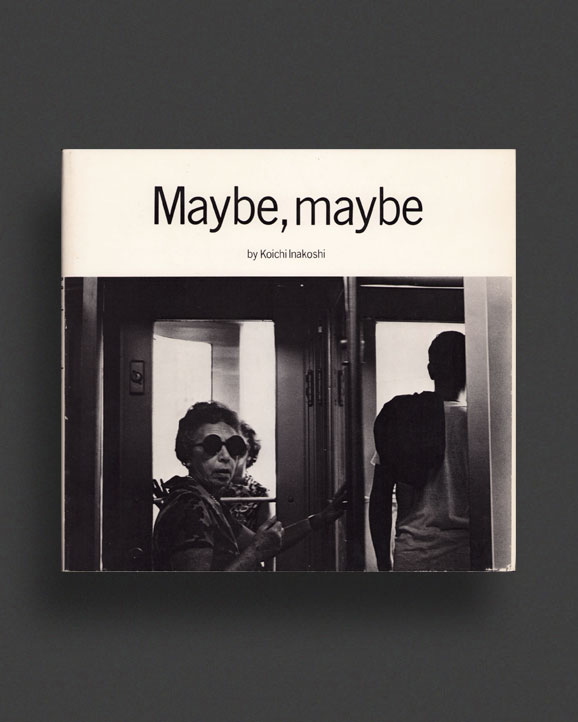
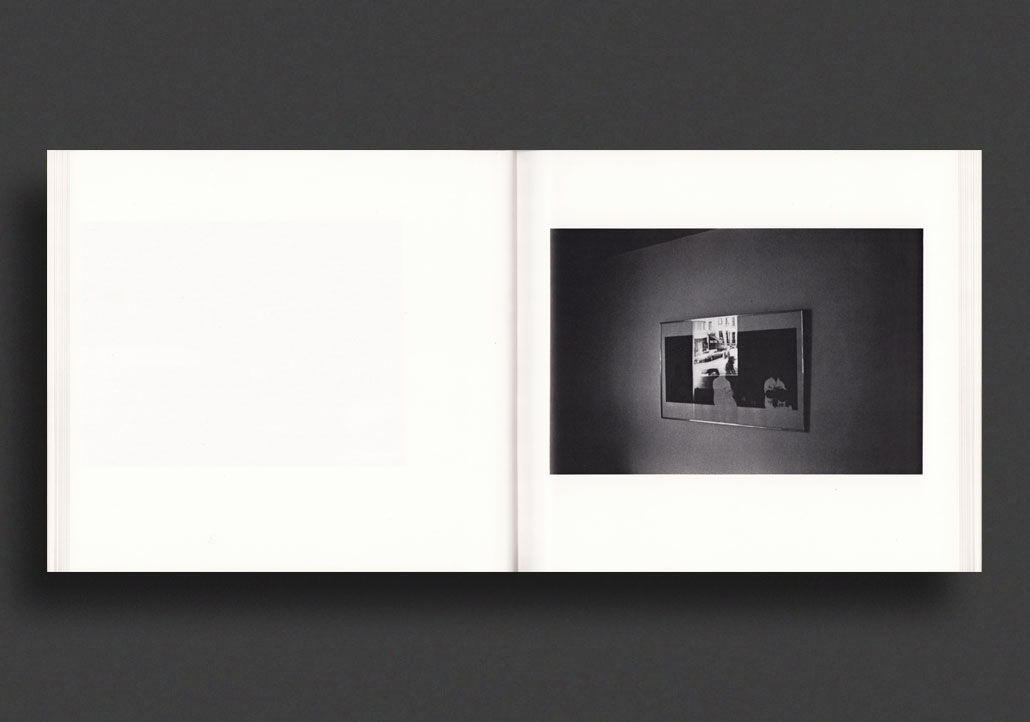
Rare first photo book by Japanese photographer Inakoshi Koichi, published in Japan in 1971 in an edition of only 600 copies. Maybe, maybe is an incredible collection of moody monochrome images shot in Manhattan, New York, evoking an overwhelming feeling of loneliness. The pictures have been printed in a dark gravure, with some shots bordering on conceptual, while others capture the bleak reality of American pessimism, especially as it relates to the Vietnam War. Reminiscent of the vein of Japanese photography popularized by Shigeo Gocho and Kiyoshi Suzuki, but with the lens turned outside Japan. Includes essay by Key Hasegawa.
Japanese photographer Koichi Inakoshi began his career as a graphic artist. However in 1970, he began working as a freelance photographer. Known for his monochromatic images of daily life, his works also include landscapes, streets, and portraits. A very prolific artist, he published several books of his work before his death in 2009. Koichi Inakoshi's first book titled Maybe, Maybe was published in 1971. His works have been exhibited in Japan, the United States, and Europe. Throughout his career, Koichi Inakoshi worked with artists of different fields. Notably, in 1984 Inakoshi collaborated with famous Japanese writer Haruki Murakami on the book Pictures of Wave, Tales of Wave.
Very Good copy book in average—poor slipcase with small chips and spine-creased.
1972, Japanese
Softcover (w. french-fold dust jacket and printed cardboard slipcase w. original obistrip), 246 pages, 13 x 19.5 cm
1st Edition, Out of print title / used / very good
Published by
Kodansha Int / Tokyo
$160.00 - Out of stock
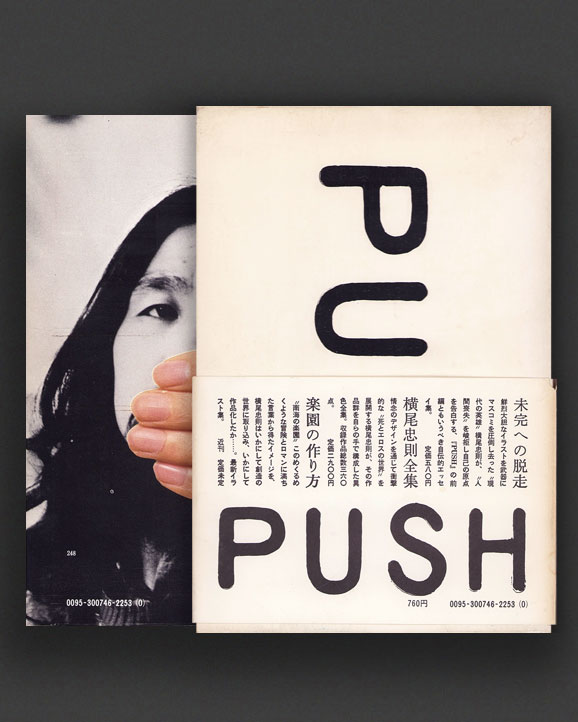
The very scarce and unique PUSH by Tadanori Yokoo, published in 1972 and featuring photography by Kishin Shinoyama and Daido Moriyama.
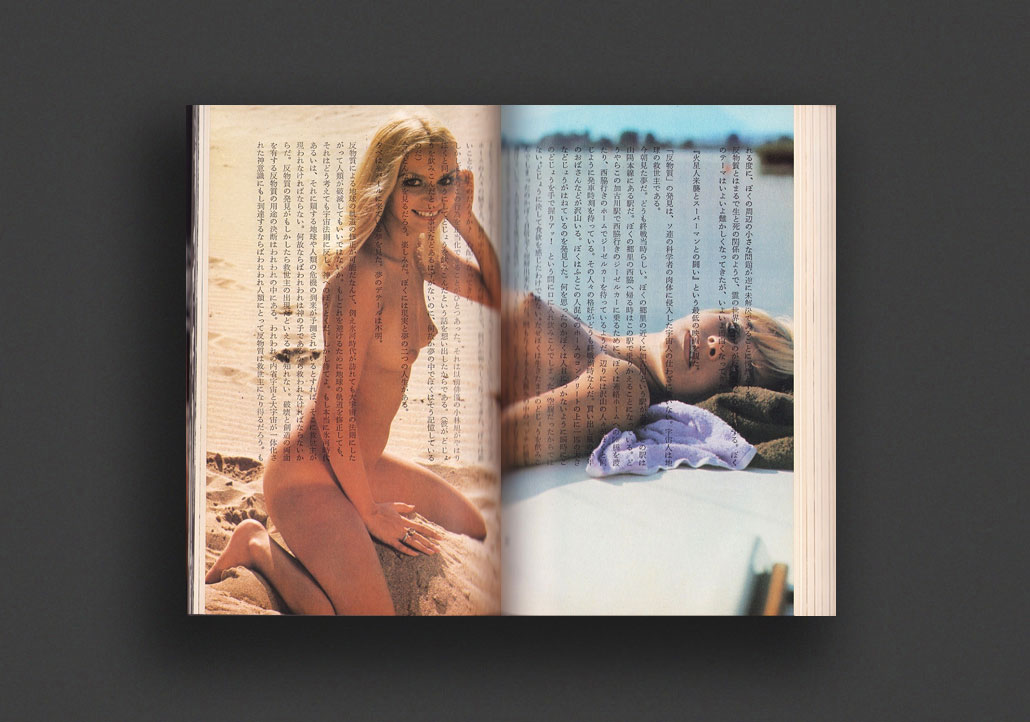
After a car accident in 1972 Tadanori Yokoo decided to take a two year hiatus from work at the height of his fame. PUSH is a visually inventive dairy of this period beautifully designed by Yokoo himself with colour nude girl photographs and b/w self-portraits of the artist by none other than Kishin Shinoyama, Daido Moriyama and Tadashi Krahashi. A gorgeous and curious production with humorous over-printing and incredible design, housed in original printed slipcase with the original publisher's obi-strip.
Tadanori Yokoo (b. 1936) is one of Japan's most successful and internationally recognized graphic designers and artists, who began working with painting in 1966. In parallel, Yokoo’s early screenprints experimented with collage and illustration, combining found photographs with the influence of traditional Japanese ukiyo-e and pop art’s flat vibrant colours and overtly sexual and grotesque content, often reflecting on the rapid changes and Westernisation of Japan post-war society. His interests in mysticism and esotericism, deepened by travels to India, influenced his iconic posters with eclectic psychedelic imagery sharing the aesthetics of the underground counterculture he was associated with. In Tokyo, Yokoo worked as a stage designer for avant-garde theatre, collaborating extensively with Shūji Terayama and his experimental theater group Tenjō Sajiki. By the late 60s he had already achieved international recognition and in the early 1970s MoMA mounted a solo exhibition of his graphic work. His famous designs for The Beatles, Miles Davis, Carlos Santana and collaborations with friend and iconic Japanese fashion designer Issey Miyake are renowned the world over. He also starred as a protagonist in Nagisa Oshima's film Diary of a Shinjuku Thief in 1968.
Very Good—Near Fine copy, with only light wear and age. Very well preserved and complete.
1982, Japanese
Softcover (w. dust jacket), 172 pages, 29 x 21 cm
Signed.,
1st Edition, Out of print title / used / very good
Published by
Soushisha / Tokyo
$500.00 - In stock -
First 1982 edition of scarce cult photobook by Japanese photographer Joji 'George' Hashiguchi (b. born in Kagoshima in 1949). This copy boldly signed by Hashiguchi in silver marker on the front black endpaper. Hashiguchi's first, and arguably most powerful photobook, dedicated to rebellious or extremist 70s/80s youth tribes — punks, gangsters, skinheads, dealers/users, early b-boys, tearaways, bikers, berlin squatters, junkies, etc., in Liverpool, London, Nüremberg, East Berlin, New York City, Tokyo Shinjuku. At the age of nineteen Hashiguchi entered the Aoyama Photography School (Tokyo). For several years he wandered around the world and gradually became interested in recording the disaffected youth around the world. This, his first book, published after winning the Taiyo photography award, established him as a serious documentary photographer. A fascinating collection, both socially and ethnographically, capturing the spirit of late 70s counterculture and youthful unrest shot in raw photodocumentary style and finely printed in deep gravure. Texts in Japanese.
Very Good copy in Good dust jacket that has general wear, tanning to spine/edges, wear to dj edges.
1981, English
Softcover, 102 pages, 24 x 17 cm
1st Edition, Out of print title / used / good
Published by
Society for Education in Film and Television Ltd. / London
$14.00 - In stock -
Vol. 21 No. 4 of Screen, Independent Cinema, British TV - The Future, published by the Society for Education in Film and Television Ltd., London.
Contents : JOHN CAUGHIE: Because I am King and Independent Cinema; A discussion between Marc Karlin and Claire Johnston, Mark Nash and Paul Willemen: Problems of Independent Cinema; JOHN ELLIS: At the Fountainhead (of TV History); The Independent Film-makers' Association and the Fourth Channel; British TV Today; Channel Four and Innovation; PAUL KERR: Re-Inventing the Cinema; ALAN LOVELL: BFI Regional Conference; IAN CONNELL: Edinburgh TV Festival; MICHAEL O'PRAY: On Adrian Stokes and Film Aesthetics.
G—VG copy.
2015, English
Softcover (+ black staple-bound, silk-screened metallic-cover zine), 208 + 24 pages, 20 x 25 cm
1st Edition, Out of print title / as new
Published by
Roma / Amsterdam
$290.00 - Out of stock
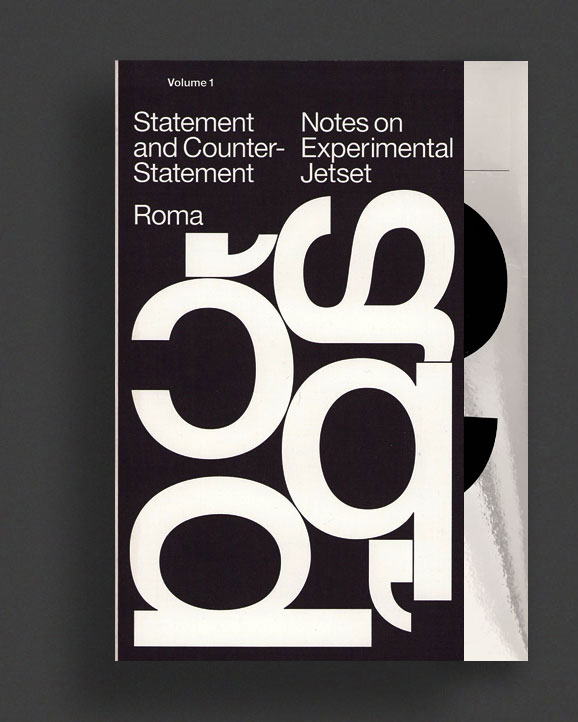
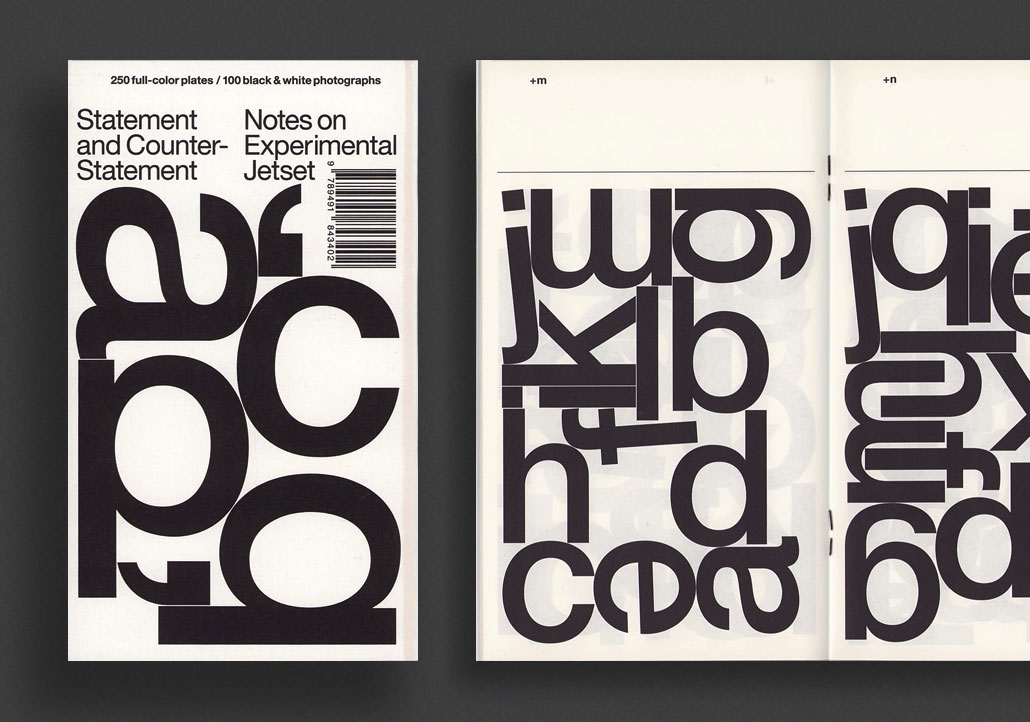
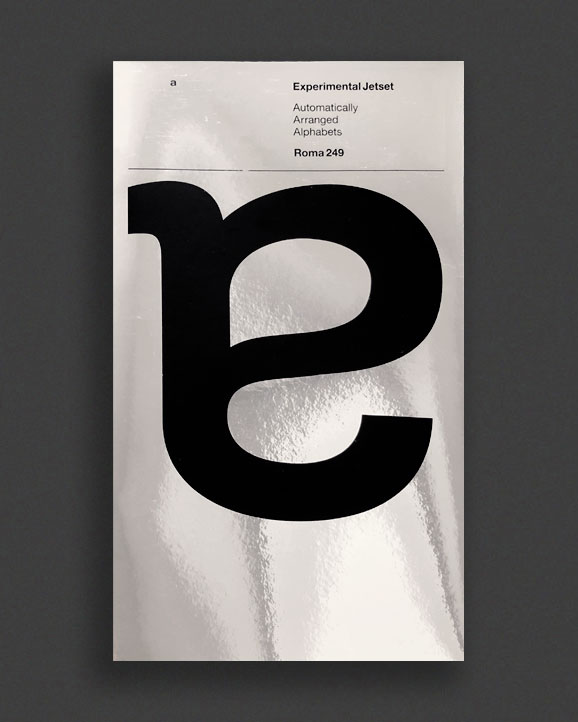
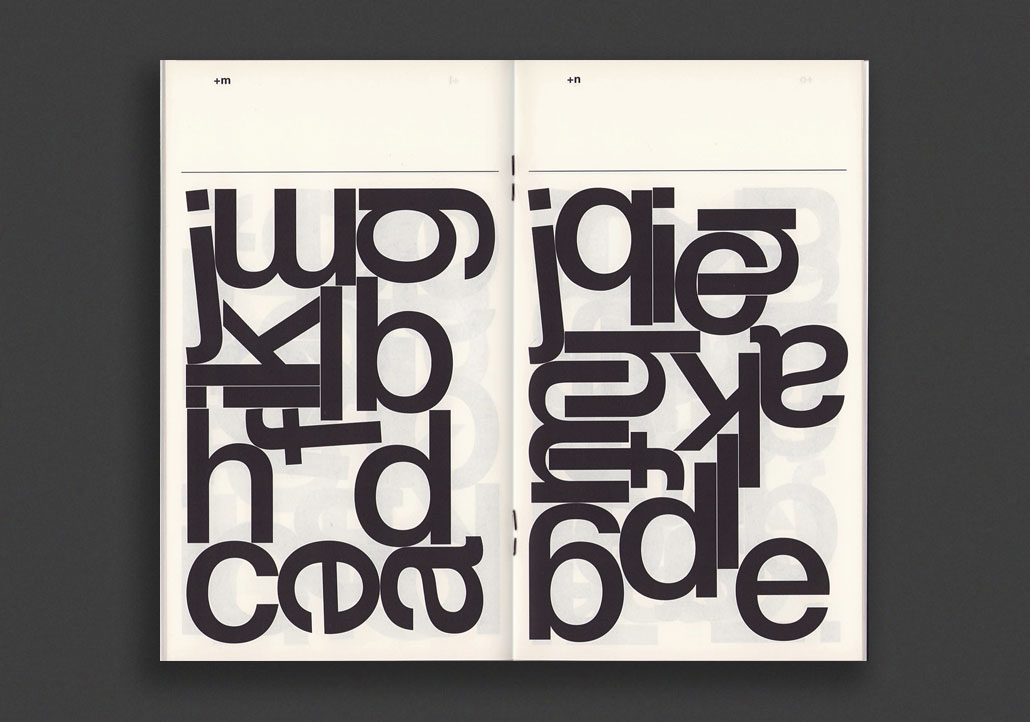
Rare first edition (Black cover) of the out-of-print first publication on the work of Experimental Jetset featuring almost two decades of graphic design praxis. Rather than a monolithic monograph, it is a very loose, personal archive, with essays by Linda van Deursen, Mark Owens, and Ian Svenonius, plus two photographic chapters with a selection of work by the studio, covering both printed matter and the documentation of site-specific pieces and installations. To conclude is a glossary-like anthology of texts (fragments of interviews, lectures, correspondence, etc.) previously written by Experimental Jetset, selected, edited, and structured by Jon Sueda. Combined with the zine 'Automatically Arranged Alphabets'. Stapled in a screenprinted silver cardboard cover, the zine contains a typographic experiment involving software-generated compositions (part of a series of sketches made between 2014-2015).
Both publications designed by Experimental Jetset.
As New copy of the first (black) print (book was re-printed multiple times in changing cover colours).
2015, English
Softcover (black staple-bound, silk-screened metallic stock), 24 pages, 11 x 18 cm
Published by
Roma / Amsterdam
$18.00 - Out of stock
Stapled in a screenprinted silver cardboard cover, the zine (titled 'Automatically Arranged Alphabets') contains a typographic experiment involving software-generated compositions (part of a series of sketches made between 2014-2015).
Design: Experimental Jetset
1981, English
Softcover, 260 pages, 21.5 x 14 cm
1st Edition, Out of print title / used / good
Published by
Indiana University Press / Indiana
$30.00 - Out of stock
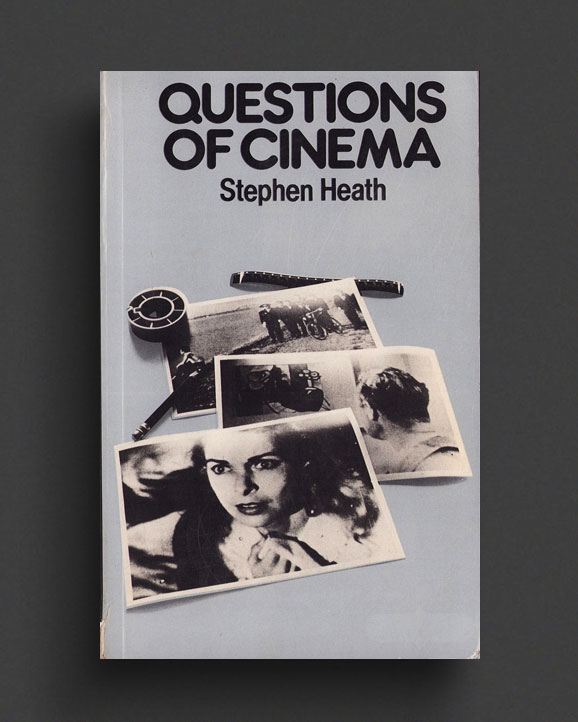
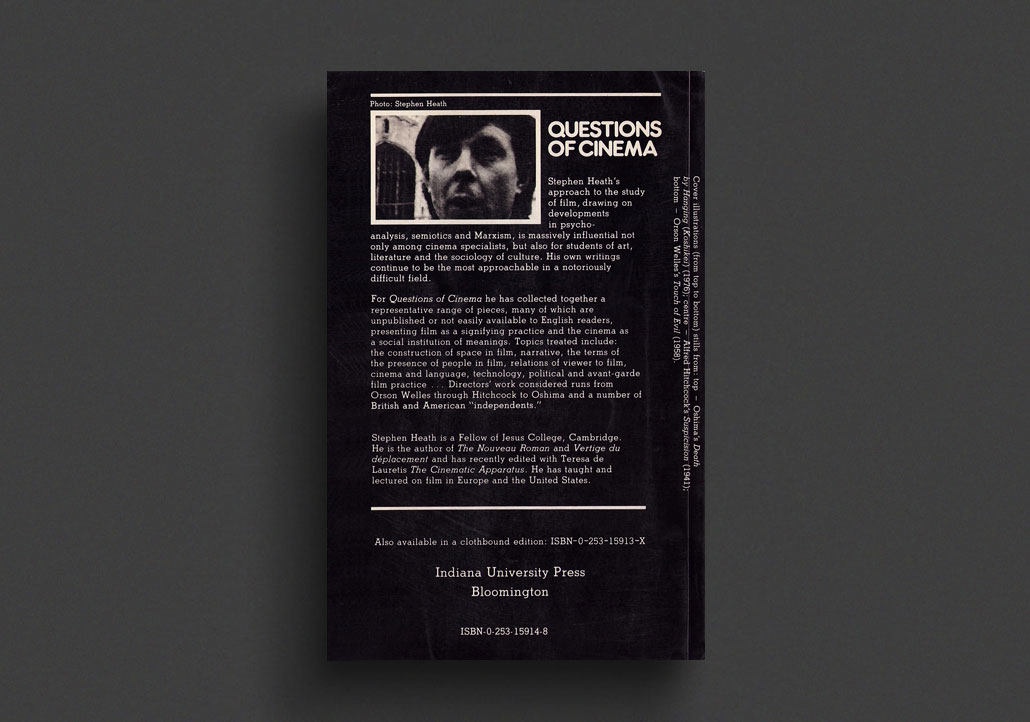
1981 first edition of Questions of Cinema by Stephen Heath, published by Indiana University Press. Stephen Heath's approach to the study of film, drawing on developments in psycho-analysis, semiotics and Marxism, is massively influential not only among cinema specialists, but also for students of art, literature and the sociology of culture. His own writings continue to be the most approachable in a notoriously difficult field.
For Questions of Cinema he has collected together a representative range of pieces, many of which are unpublished or not easily available to English readers, presenting film as a signifying practice and the cinema as a social institution of meanings. Topics treated include: the construction of space in film, narrative, the terms of the presence of people in film, relations of viewer to film, cinema and language, technology, political and avant-garde film practice ... Directors' work considered runs from Orson Welles through Hitchcock to Oshima and a number of British and American "independents."
Stephen Heath is a Fellow of Jesus College, Cambridge. He is the author of The Nouveau Roman and Vertige du deplacement and has recently edited with Teresa de Lauretis The Cinematic Apparatus. He has taught and lectured on film in Europe and the United States.
Good copy general wear split to bottom spine cover edge. Erasable marginalia in pencil.
1974 / 1983, English
Softcover, 360 pages, 21 x 13 cm
Out of print title / used / good
Published by
Oxford University Press / New York
$20.00 - Out of stock
Revised 1983 edition of the 1974 Oxford University publication Documentary: A History of the Non-fiction Film by Erik Barnouw, a classic work on documentary films and filmmaking that surveys the history of the genre from 1895 to the present day (1983). Filled with photographs, many of them rare, collected during the author's travels around the world, Barnouw considers the medium within international political and social climate, examining the impact of new technical breakthroughs such as the video cassettes and cable television, spanning an extensive chronology of documentary works from Louis Lumiere's first effort to David Attenborough's groundbreaking Life on Earth via Dziga Vertov, Frederick Wiseman, Jean Pianleve, Roman Lazarevich Karmen, Arne Sucksdorff, Leni Riefenstahl, Albert and David Maysles, and hundreds more. This book makes the growing importance of a unique blend of art and reality accessible and understandable to all film lovers.
Good copy with general wear.
1976, English / Italian
Hardcover, 230 pages, 31 x 22 cm
1st Edition, Out of print title / used / good
Published by
Idea Books Edizioni / Milano
Studio Vista / London
$300.00 - Out of stock
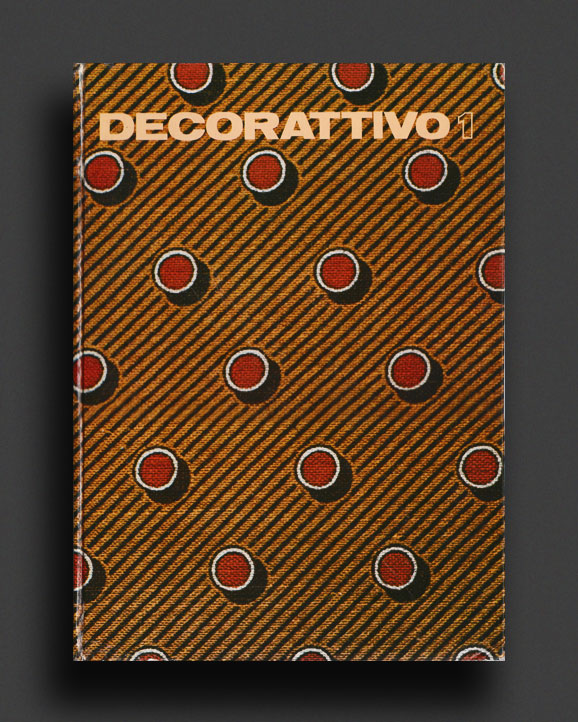
The like-no-other Decorattivo - a groundbreaking publishing project from Achizoom founders Andrea Branzi and Massimo Morozzi, along with Clino T. Castelli and Adela Coat Turin, who together formed Il Centro Design Montefibre, to research textiles, fibres and colours. The published outcome was Decorattivo - a hardcover publication dedicated to "monographic themes of international textile and environmental design. This work is the result of wide research conducted internationally in museums, private collections and foundations, and aiming to trace original textile samples relating to the handbook's different chosen themes."
Intended to be an annual publication, only two editions of Decorattivo were issued by Idea (Milan) and Studio Vista, becoming very collectable source-books for anyone interested in pattern design, textiles, fibre design, and decorative systems, not to mention the work of some of Italy's finest avant-garde designers.
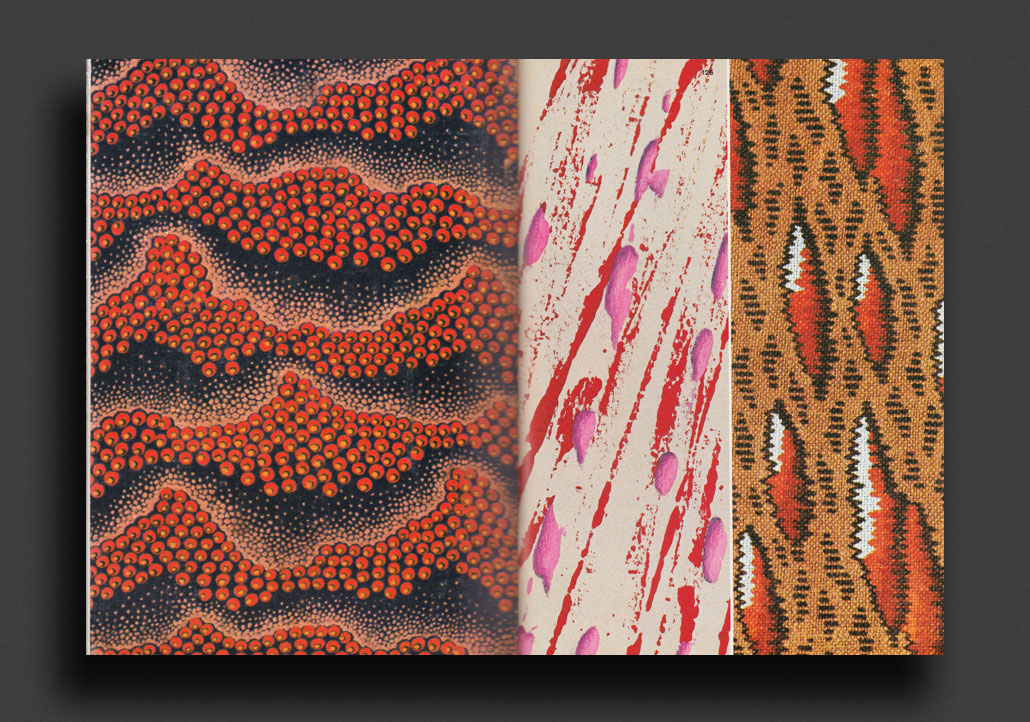
"The monographic theme of Decorattivo 1 is concerned with two contrasting decorative trends: on one side the amorphous or informal design directly connected to creative and spontaneous processes, on the other, the 'UFO', a decorative system created out of objects in space."
A one-of-kind design resource, profusely illustrated throughout in colour and black and white, including fold-out spreads. All texts in English and Italian.
Good copy, with light cover/spine wear and bumping to hard covers. Minor ex-libris card and markings. Light warp, but bright, crisp pages and good binding throughout.
1977, English / Italian
Hardcover, 230 pages, 31 x 22 cm
Private edition,
1st Edition, Out of print title / used / very good
Published by
Centro Design Montefibre / Milan
$350.00 - Out of stock
The like-no-other Decorattivo - a groundbreaking publishing project from Achizoom founders Andrea Branzi and Massimo Morozzi, along with Clino T. Castelli and Adela Coat Turin, who together formed Il Centro Design Montefibre, to research textiles, fibres and colours. The published outcome was Decorattivo - a hardcover publication dedicated to "monographic themes of international textile and environmental design. This work is the result of wide research conducted internationally in museums, private collections and foundations, and aiming to trace original textile samples relating to the handbook's different chosen themes."
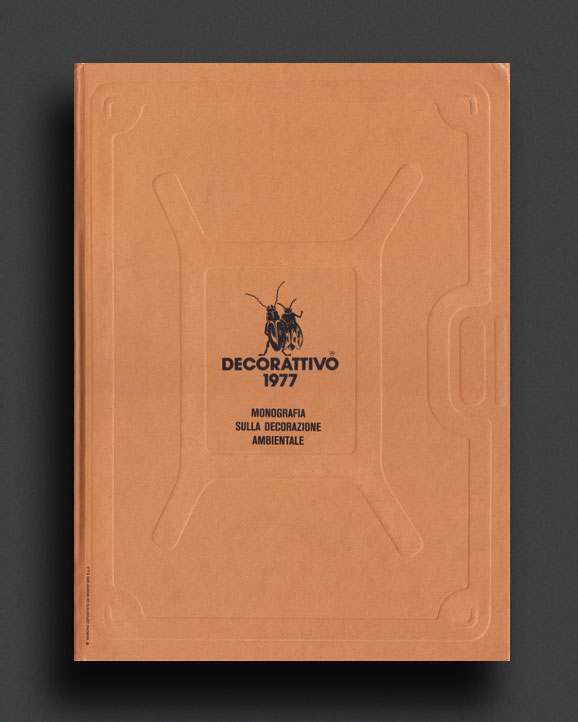
Intended to be an annual publication, only two editions of Decorattivo were issued, in both commercially distributed editions by Idea Books Milan, and the exceptionally rare privately distributed not-for-sale editions issued by Centro Design Montefibre itself. All versions very rare, but the not-for-sale editions with debossed covers barely exist. Very collectable source-books for anyone interested in pattern design, textiles, fibre design, and decorative systems, not to mention the work of some of Italy's finest avant-garde designers.
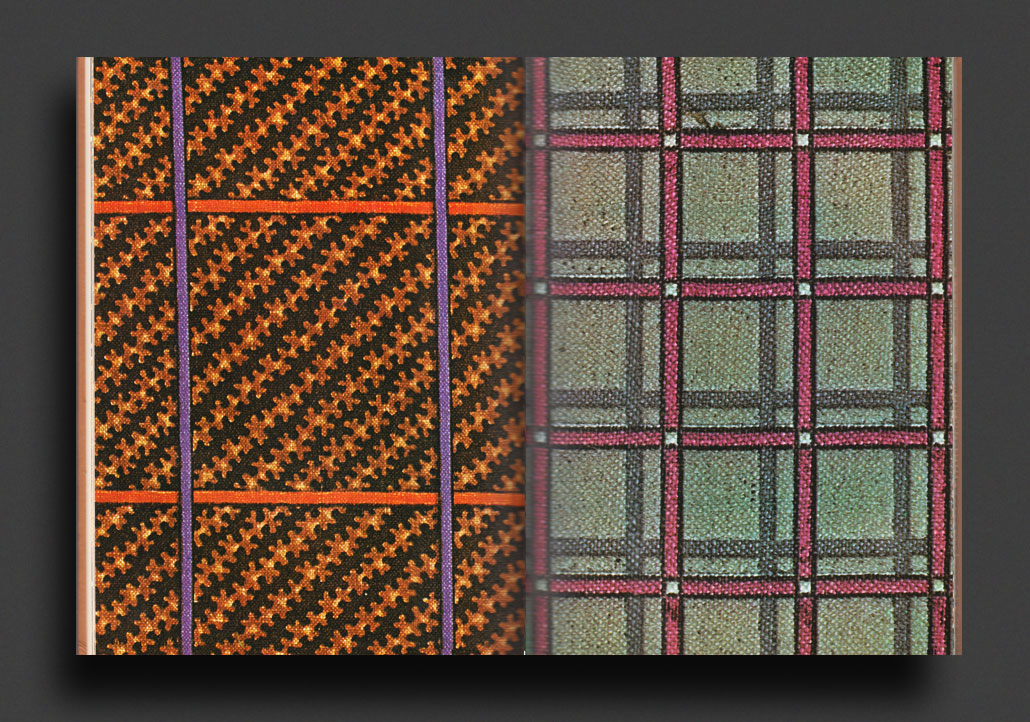
The monographic them of Decorattivo 2 is Righe e Quadri (Lines and Squares).
A one-of-kind design resource, profusely illustrated throughout in colour and black and white. All texts in English and Italian.
VG copy, with light cover/spine wear and bumping to one hard cover corner not affecting the pages within. Clean and bright throughout, tightly bound.
1974, Italian
Softcover, 198 pages, 27.5 x 13.5 cm
1st Edition, Out of print title / used / good
Published by
Casabella / Milan
$450.00 - Out of stock
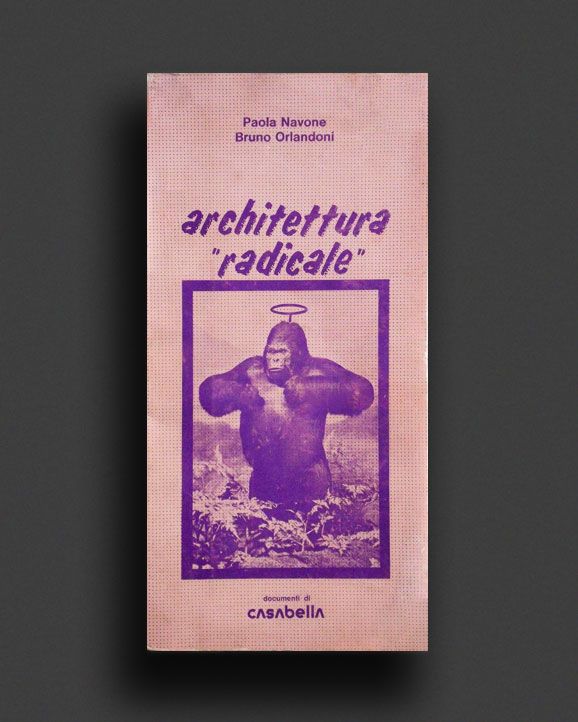
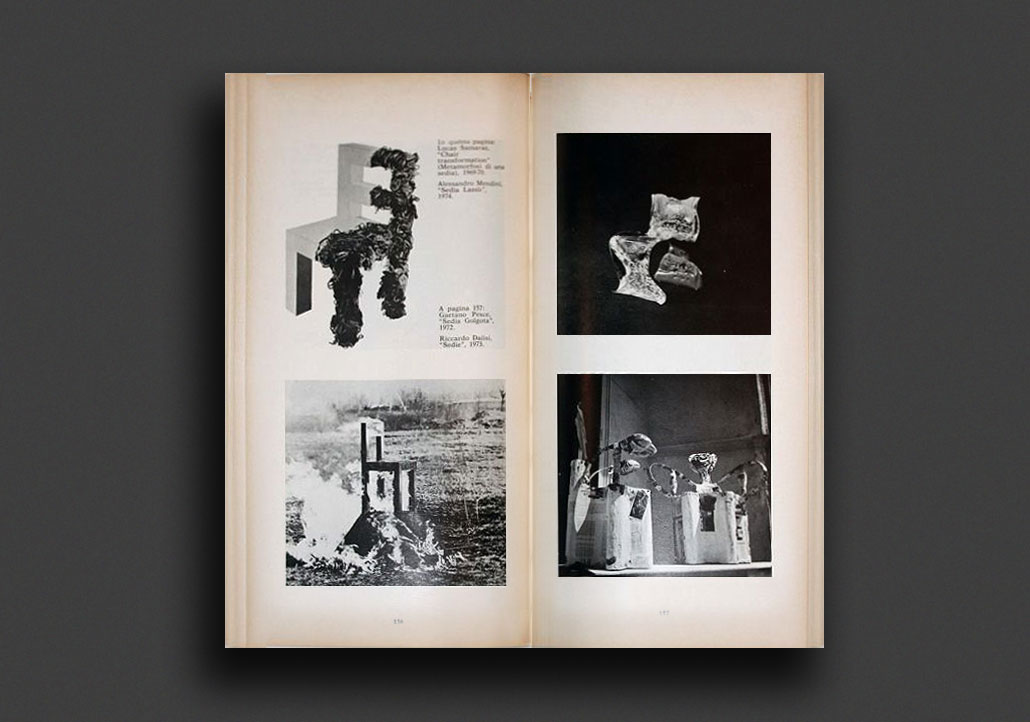
The extremely collectable book of the movement, Architettura "Radicale" was published by Casabella Milan in 1974 and collects Navone's thesis with Orlandoni, forming an unsurpassed critical essay on the new avant-garde architecture and radical design of Italy (and further afield) that rose out of the 1960s. With an introduction by the great designer and editor Andrea Branzi, this volume contains over 150 black and white illustrations of projects and works by Archizoom, Superstudio, Alessandro Mendini, Gianni Pettena, UFO Group, Raimund Abraham, Lapo Binazzi, Andrea Branzi, James Gowan, Rem Koolhaas, Ugo La Pietra, Eduardo Paolozzi, Gaetano Pesce, Walter Pichler, Ettore Sottsass and many others. Includes a very important bibliography and profiles on the designers. A stunning piece of printed design history, now very rarely seen.
Good-Very Good copy with light general cover and corner wear, tanning to edges.
2011, English / Japanese
Softcover (w. dust jacket and obi), 192 pages, 18 x 11.4 cm
1st UK Edition, Out of print title / used / very good
Published by
Kodansha Int / Tokyo
$300.00 - Out of stock
Daido Moriyama's legendary photo book, A Hunter. Rare, limited Kodansha reissue of the original first published in 1972, in new format akin to Araki's original classic Tokyo Lucky Hole (1990), now also out-of-print and collectible.
A seminal piece and an important addition to any serious photobook collector. “A Hunter”, one of Moriyama's first books, was originally published in 1972, as the tenth part of Japan's most lauded photobook series called “Gendai no Me,” and includes many of Daido Moriyama’s most infamous and respected photographs. For the series, Moriyama—inspired by Kerouac’s “On The Road”—drove through Japan by car, took photos wherever his wheels took him, and substantiated his status as one of Japan’s greatest photographers. "When I shoot something on a road ... I mutate to a hungry hunter. Routes and roads are the hunting field for as a photographer where I hunt images." A masterpiece!
Introduction and colophon in Japanese and English.
Daidō Moriyama is a Japanese photographer, born in 1938 in Osaka. Firstly, he studied photography before moving to Tokyo in 1961. To begin with, he worked as an assistant to Japanese photographer and filmmaker Eikoh Hosoe. As a result, he began to produce his own collection of photographs. Afterwards, he ended up depicting the forgotten areas and darker side of cities. Shortly after, Japan Photo-critics awarded him the New Artist Award. Hence, Moriyama’s images are now known for capturing the breakdown of Japanese tradition. His work captures life during and following the American occupation of Japan after World War II. In particular the effects of industrialisation and the consequential shift in urban life. His images focus on the areas left behind in a rapidly changing city. He received the Infinity Award for Lifetime Achievement from the International Center of Photography in New York in 2004 as well as the Hasselblad Award in 2019.
Very Good copy.
1994, Japanese / English
Hardcover (w. obi strip), 382 pages, 27 x 22 cm
1st Edition, Out of print title / used / fine
Published by
Fuga Shobo / Tokyo
$380.00 - In stock -
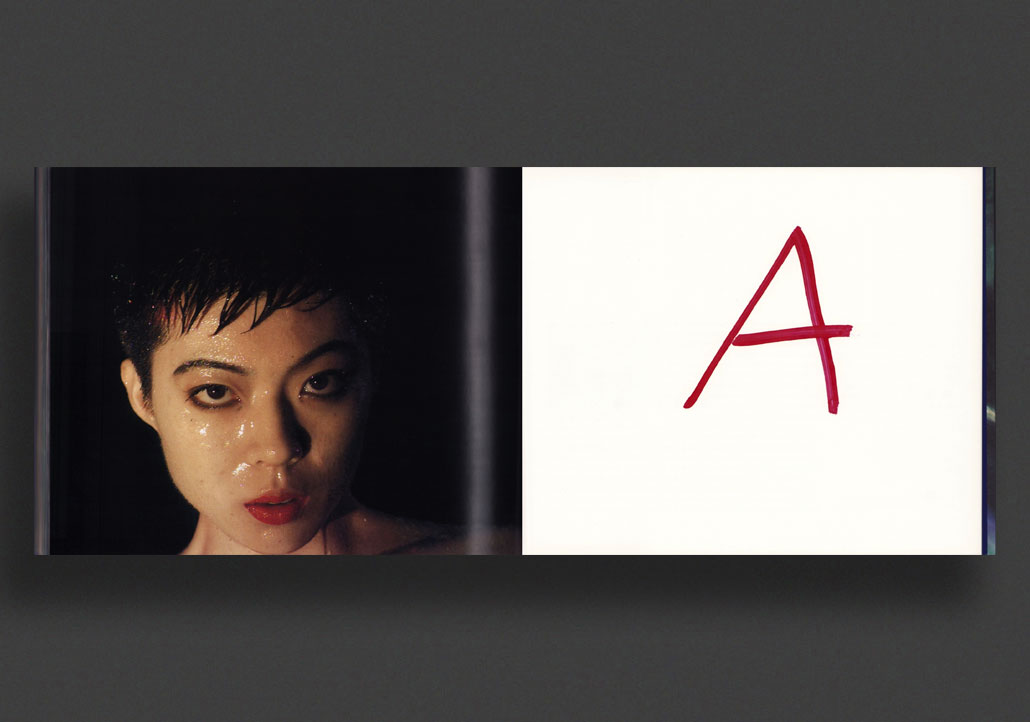
Fine, signed copy of Nobuyoshi Araki's 1994 photo book, Arakitronics, the first work of Araki created on digital camera, yet quintessentially Araki. Shot in 1994 in a studio with a single female model, and briefly a stand-in "lover", and of course Araki in cameo. This heavy hardcover book is comprised cover-to-cover with full-bleed full-colour rich glossy fetish and bondage-themed nudes of his model performing. Shot in a digital stream, "Araki's attempt here is a challenge to the traditional way of photography that gives a privileged meaning to one cut and is to be governed by arbitrary aesthetics [...] the essential anarchism of the image is opposed to the principle that has continued to secretly control photography"—Koitaro Iizawa (photo critic, historian) in his Afterword. In print the photos can at times be rough and lacking in resolution, but they express "the direct power inherent to Eros".
This special copy signed by Araki on the one available blank page in his trademark "A" in large red marker!
Nobuyoshi Araki is a prolific Japanese photographer who has produced thousands of photographs over the course of his career. He became famous for “Un Voyage Sentimental” (1971), a series of photos depicting both banal and deeply intimate scenes of his wife and lifelong muse, essayist Aoki Yoko (whom the artist credits for making him a photographer), during their honeymoon. To date the 75 year old has produced 450 photo books and counting. With a repertoire that knows no boundaries, Araki's diaristic style of photography has captured the world around him (his cat Chiro, the people and landscapes of Japan and his travels, flowers, family), though it is Araki’s intensely sexual imagery that has elicited particular controversy and fascination throughout his career. Similarly to Helmut Newton, Araki has often addressed subversive themes — such as bondage in the Japanese style Kinbaku — in his provocative depictions of female nudes. He typically works in black-and-white photography, and his hallmark style is deliberately casual. “Rather than shooting something that looks like a professional photograph, I want my work to feel intimate, like someone in the subject’s inner circle shot them,” he says. Pushing against the world of commercialised photography, he is celebrated for his history of self-publishing and distributing his work, beginning with his Xerox Photo Albums of 1970. Amongst many others, Araki has collaborated with American photographer Nan Goldin and Icelandic musician Björk.
Near Fine copy with VG obi and clean interior.
2006, English
Hardcover, 288 pages, 21 x 26 cm
1st Edition, Out of print title / used / very good
Published by
Yale University Press / New Haven
The Drawing Center / New York
$150.00 - In stock -
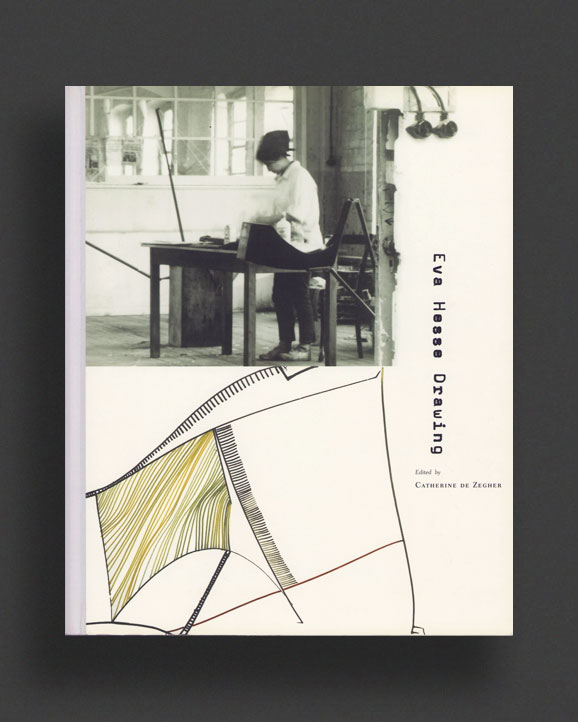
First hardcover edition of this out-of-print volume on Eva Hesse's drawing practice. Hesse (1936—1970) was a highly experimental artist who continually challenged the conventions of her time. For Hesse, drawing played a unique role, providing the nexus between her works in all media. Eva Hesse Drawing is the first book to explore her drawing process, following her work from drawing to painting and sculpture, and always back to drawing. The book features important, recently rediscovered “working drawings,” providing an intimate look at Hesse’s everyday practice and methodology.
An accomplished draftswoman, Hesse began to develop her wandering, tentative line while studying at Yale University in the late 1950s. Her early 1960s works on paper engaged with visual vocabularies from geometry to biomorphic abstraction. In 1965, Hesse combined her tactile sensibility for materials with her stringlike line to achieve a breakthrough: her astonishing reliefs, which began to bridge the space between two and three dimensions. Balancing the disembodiment of line with its intensified materialization, Hesse went on to develop one of the most innovative oeuvres of the twentieth century, anticipating the hybridization of media and crossing borderlines linking one impossible space to another.
Very Good—Near Fine copy.
1997, English / German
Hardcover (w. dust jacket), 296 pages, 22 x 29 cm
1st Edition, Out of print title / used / fine
Published by
Generali Foundation / Vienna
$280.00 - In stock -
Rare first hardcover edition of the catalogue raisonné of Gordon Matta-Clark's incredible drawings published in conjunction with exhibition held at Generali Foundation, Vienna, May 7—August 10, 1997. Heavily illustrated throughout (243 colour and 548 b/w illustrations) with essays by Sabine Breitwiesser, Peter Fend, and Pamela M. Lee. Includes a biography and bibliography. Text in English and German.
Gordon Matta-Clark (1943—1978) was an American artist best known for site-specific artworks he made in the 1970s. He was also a pioneer in the field of socially engaged food art.
Fine copy in Fine DJ.
1983, English
Hardcover (w. dust jacket), 320 pages,
1st Edition, Out of print title / used / very good
Published by
Routledge / London
$40.00 - Out of stock
First 1984 hardcover English edition of this collection of essays documenting a dialogue between phenomenology and Marxism, with the contributors representing a cross-section from the two traditions. The theoretical and historical presuppositions of the phenomenology inaugurated by Husserl are very different from those of the much older Marxist tradition, yet, as these essays show, there are definite points of contact, communication and exchange between the two traditions.
Very Good copy in Good dust jacket.
1978, English / Japanese
Softcover, 216 pages, 36.5 x 25 cm
1st Edition, Out of print title / used / very good
Published by
Heibonsha Limited Publishers / Tokyo
$160.00 - Out of stock
Hands-down one of the greatest Issey Miyake books ever published - the classic "East Meets West" of 1978.
First edition of the iconic first book/folio dedicated to the work of Japanese fashion designer Issey Miyake. Published by Heibonsha Limited Publishers of Tokyo in 1978, the book features beautiful photoshoots by the likes of Guy Bourdin, Richard Avedon, Kishin Shinoyama, Harry Peccinotti and David Bailey throughout, documenting Miyake's creations of the 1970s.
Broken into three sections ("Man and his Cloth", "The Form of Cloth" and "Witness of Time") the book texts include a preface by Diana Vreeland and essays by Mutsuo Takahashi, Arata Isozaki, and Eiko Ishioka.
Texts are in Japanese and English.
Very Good copy with light cover edge-wear, general light age.