World Food Books' programme is largely produced on Kulin Nation land. We acknowledge the Wurundjeri people of the Kulin Nation as the first and continuing custodians of this land, and pay respect to their Elders past, present, and emerging.
World Food Books is an arts and special interests bookshop in Naarm / Melbourne. Founded in 2010, World Food Books is devoted to the presentation of a rotating, hand-selection of international art, design, literary and counterculture publications with an emphasis on the anti-traditional, the experimental, the avant-garde, the heretic, the marginal.
Presenting new titles alongside rare and out-of-print books, catalogues and journals spanning the fields of modern and contemporary art, design, photography, illustration, film, literature, poetry, cultural theory, philosophy, sexuality, popular and underground culture in its many radical forms, World Food Books wishes to encourage adventurous, thoughtful and open-minded reading, looking, writing, and exchange of publishing and ideas, both current and historical.
As well as our bookshop, located in Melbourne's historical Nicholas Building, all of our inventory is available internationally via our online mail-order service.
World Food Books semi-regularly co-ordinates "Occasions", a programme of exhibits and events at the bookshop and in partnership with other hosts (such as museums and art galleries) that develop out of the activities, relationships and content of the bookshop itself.
World Food Books
The Nicholas Building
37 Swanston Street
Room 5, Level 6
Melbourne 3000
Australia
SHOP HOURS:
Thu–Fri 12–6, Sat 12–5
WEB-SHOP OPEN 24/7
World Food Books
Postal Address:
PO Box 435
Flinders Lane
Victoria 8009
Australia
Art
Theory / Essay
Architecture / Interior
Graphic Design / Typography
Photography
Fashion
Eros
LGBTQ+
Fiction / Poetry
Weird / Speculative / Science Fiction / Horror
Transgressive / Visceral / Abject
Symbolism / Decadence / Fin de siècle
Film / Video
Painting
Sculpture / Installation
Performance / Dance / Theater
Drawing
Sound / Music
Curatorial
Group Shows / Collections
Periodicals
Out-of-print / Rare
Posters / Ephemera / Discs
Signed Books
World Food Books Gift Voucher
World Food Book Bag
Australian Art
Australian Fiction
Australian Science Fiction / Speculative Fiction
Australian Poetry
Australian Photography
Japanese Photography
Conceptual Art
Minimal Art
Dada
'Pataphysics / Oulipo
Fluxus
Concrete Poetry
Pop Art
Surrealism
Arte Povera
Arte Informale / Haute Pâte / Tachism
Nouveau Réalisme / Zero / Kinetic
Situationism / Lettrism
Collage / Mail Art / Xerox Art
Art Brut / Folk / Visionary / Fantastic
Illustration / Graphic Art / Bandes Dessinées
Furniture
Italian Radical Design / Postmodernism
Textiles
Ceramics / Glass
Counterculture
Protest / Revolt
Philosophy
Psychoanalysis
Anthropology
Anarchism
Socialism / Anarchism / Communism / Capitalism
Literary Theory / Semiotics / Language
Feminism / Women's Studies
Gender Studies / Sexuality
Anthropology
Fetishism / BDSM
Drugs / Psychedelia
Crime / Violence
Animal Rights / Veganism
Occult / Esoterica
Ecology / Earth / Alternative Living
Whole Earth / Crafts
All prices in AUD (Australian dollars)
Pick-Ups
Pick-up orders can be collected in our bookshop during opening hours after order date. Please collect any Pick-up orders within 2 weeks of ordering as we have limited storage space. Orders will be released back into stock if not collected within this time. No refunds can be made for pick-ups left un-collected. If you cannot make it in to the bookshop in this time-frame, please choose postage option.
Return Policy
All sales are final. We do accept returns (for refund or exchange) for items received in error. All our orders are packed with special care using heavy-duty padding and cardboard book-mailers or bubble mailers (for smaller books), using reinforcement where required. We cannot take responsibility for any lost, stolen or damaged parcels.
Insurance
Should you wish to insure your package, please email us directly after placing your order and we can organise this at a small extra expense. Although all standard/express tracked packages are very safe and dependable, we cannot take responsibility for any lost, stolen or damaged parcels. We recommend insurance on valuable orders.
Interested in selling your old books, catalogues, journals, magazines, comics, fanzines, ephemera? We are always looking for interesting, unusual and out-of-print books to buy. We only buy books in our fields of interest and specialty, and that we feel we can resell.
We base these prices on desirability, market value, in-print prices, condition and our current stock levels. We offer cash, store credit, and can take stock on consignment. All
about 25% of the price we expect to get when we sell them, or 30% in store credit. We base these prices on desirability, market value, in-print prices, condition and our current stock levels.
Sell your books any day of the week. You can drop them off and return later. If you have a lot of books, we can visit your Sydney home.
We buy books that we feel we can resell. We offer about 25 % of the price we expect to get when we sell them, or 30% in store credit. We base these prices on desirability, market value, in-print prices, condition and our current stock levels.
Philadelphia Wireman
03 August - 01 September, 2018
World Food Books is proud to announce our next Occasion, the first presentation of sculptures by Philadelphia Wireman in Australia.
The Philadelphia Wireman sculptures were found abandoned in an alley off Philadelphia’s South Street on trash night in 1982. Their discovery in a rapidly-changing neighbourhood undergoing extensive renovation, compounded with the failure of all attempts to locate the artist, suggests that the works may have been discarded after the maker’s death. Dubbed the "Philadelphia Wireman" during the first exhibition of this work, in 1985, the maker’s name, age, ethnicity, and even gender remain uncertain. The entire collection totals approximately 1200 pieces, all intricately bound together with tightly-wound heavy-gauge wire (along with a few small, abstract marker drawings, reminiscent both of Mark Tobey and J.B. Murry). The dense construction of the work, despite a modest range of scale and materials, is singularly obsessive and disciplined in design: a wire armature or exoskeleton firmly binds a bricolage of found objects including plastic, glass, food packaging, umbrella parts, tape, rubber, batteries, pens, leather, reflectors, nuts and bolts, nails, foil, coins, toys, watches, eyeglasses, tools, and jewellery.
Heavy with associations—anthropomorphic, zoomorphic, and socio-cultural responses to wrapped detritus—the totemic sculptures by Philadelphia Wireman have been discussed in the context of work created to fulfil the shamanistic needs of alternative religions in American culture. Curators, collectors, and critics have variously compared certain pieces to sculpture from Classical antiquity, Native American medicine bundles, African-American memory jugs, and African fetish objects. Reflecting the artist’s prolific and incredibly focused scavenging impulse, and despite—or perhaps enhanced by—their anonymity, these enigmatic objects function as urban artefacts and arbiters of power, though their origin and purpose is unknown. Philadelphia Wireman, whatever their identity, possessed an astonishing ability to isolate and communicate the concepts of power and energy through the selection and transformation of ordinary materials. Over the course of the past two decades, this collection has come to be regarded as an important discovery in the field of self-taught art and vernacular art.
Presented in collaboration with Fleisher-Ollman Gallery, Philadelphia, and Robert Heald, Wellington.
Susan Te Kahurangi King
02 February - 10 March, 2018
Susan Te Kahurangi King (24 February 1951 - ) has been a confident and prolific artist since she was a young child, drawing with readily available materials - pencils, ballpoint pens and felt-tip markers, on whatever paper is at hand. Between the ages of four and six Susan slowly ceased verbal communication. Her grandparents William and Myrtle Murphy had developed a special bond with Susan so they took on caring responsibilities for extended periods. Myrtle began informally archiving her work, carefully collecting and storing the drawings and compiling scrapbooks. No drawing was insignificant; every scrap of paper was kept. The King family are now the custodians of a vast collection containing over 7000 individual works, from tiny scraps of paper through to 5 meter long rolls.
The scrapbooks and diaries reveal Myrtle to be a woman of great patience and compassion, seeking to understand a child who was not always behaving as expected. She encouraged Susan to be observant, to explore her environment and absorb all the sights and sounds. Myrtle would show Susan’s drawings to friends and people in her community that she had dealings with, such as shopkeepers and postal workers, but this was not simply a case of a grandmother’s bias. She recognised that Susan had developed a sophisticated and unique visual language and sincerely believed that her art deserved serious attention.
This was an unorthodox attitude for the time. To provide some context, Jean Dubuffet coined the term Art Brut in 1945 to describe work created by self-taught artists – specifically residents of psychiatric institutions and those he considered to be visionaries or eccentrics. In 1972 Roger Cardinal extended this concept by adopting the term Outsider Art to describe work made by non-academically trained artists operating outside of mainstream art networks through choice or circumstance. Susan was born in Te Aroha, New Zealand in 1951, far from the artistic hubs of Paris and London that Dubuffet and Cardinal operated in. That Myrtle fêted Susan as a self-taught artist who deserved to be taken seriously shows how progressive her attitudes were.
Susan’s parents Doug and Dawn were also progressive. Over the years they had consulted numerous health practitioners about Susan’s condition, as the medical establishment could not provide an explanation as to why she had lapsed into silence. Dawn educated herself in the field of homeopathy and went on to treat all twelve of her children using these principles – basing prescriptions on her observations of their physical, mental and emotional state.
Doug was a linguist with an interest in philosophy who devoted what little spare time he had to studying Maori language and culture. To some extent their willingness to explore the fringes of the mainstream made them outsiders too but it was their commitment to living with integrity and their respect for individuality that ensured Susan’s creativity was always encouraged.
Even though Susan’s family supported her artistic pursuits, some staff in schools and hospitals saw it as an impediment to her assimilation into the community and discouraged it in a variety of ways. Her family was not always aware of this and therefore did not fully understand why Susan stopped drawing in the early 1990s. However, rather than dwell on the challenges that Susan faced in pursuit of her artistic practice, they prefer to highlight her achievements. In 2008 Susan began drawing again in earnest, after an almost 20 year interruption, and her work is now shown in galleries around the world.
Susan grew up without television and has been heavily influenced by the comics she read as a child. She is absolutely fearless in the appropriation of recognizable characters, such as Donald Duck and Mickey Mouse, in her work. She twists their limbs, contorts their faces, compresses them together, blends them into complex patterned backgrounds - always imbuing them with an incredible energy. Although Susan often used pop culture characters in her work they are not naive or childlike. These are drawings by a brilliant self-taught artist who has been creating exceptional work for decades without an audience in mind.
Mladen Stilinović
"Various Works 1986 - 1999"
02 February 16 - September 10, 2016
Various works 1986 - 1999, from two houses, from the collections of John Nixon, Sue Cramer, Kerrie Poliness, Peter Haffenden and Phoebe Haffenden.
Including: Geometry of Cakes (various shelves), 1993; Poor People’s Law (black and white plate), 1993; White Absence (glasses, ruler, set square, silver spoon, silver ladel with skin photograph and wooden cubes), 1990-1996; Exploitation of the Dead (grey and red star painting, wooden painting, black spoon with red table, red plate), 1984-1990; Money and Zeros (zero tie, paintings made for friends in Australia (Sue, John, Kerrie), numbers painting), 1991-1992; Words - Slogans (various t-shirts) - “they talk about the death of art...help! someone is trying to kill me”, “my sweet little lamb”, “work is a disease - Karl Marx”; Various artist books, catalogues, monographs, videos; Poster from exhibition Insulting Anarchy; "Circular" Croatian - Australian edition; Artist book by Vlado Martek (Dostoyevsky); more.
Thanks to Mladen Stilinović and Branka Stipančić.
Jonathan Walker
Always Will Need To Wear Winter Shirt Blue + Ochre Small Check Pattern
21 August - 21 September, 2015
Untitled
I am not a great reader of poetry but I always return to the work of Melbourne poet, Vincent Buckley (1925- 1988). Perhaps I find his most tantalising piece to be not a finished poem but a fragment left on a scrap of paper discovered on his desk after the poet’s death.
The poetry gathers like oil
In the word-core, and spreads
It has its music meet,
Its music is in movement.
This fragment is more the shell left behind from a volatile thought than a finished poem. I find the last two lines honest but awkward whereas the first two lines work like an arrow. Most likely he could not find a resolution so it was left. Still, in its present form, it remains an eloquent testimony to the ultimate failure of a medium to express mobile thought and sensation, in Buckley’s case, through verbal language. It’s an important matter because this is something all artists have to deal with regardless of the medium.
I have never written a poem, however, I am forever copying fragments from books on paper scraps in a vain effort to fix certain notions in my head. At first, they function as bookmarks that are sometimes returned to when I open the book. But before long, as they accumulate, they fall out littering the table interspersed with A4 photocopies, bills, books and medications.
To return to Buckley’s fragment, the first two lines very much evoke how I paint nowadays. As you age, detail diminishes and patches of light become more luminous and float. I feel the most honest way of dealing with this is by smearing the oil paint on the canvas with the fingers and working close-up, blind. Only if the patches coalesce into an approaching image can the work gain a life.
-
Jonathan Walker was born in Melbourne, Australia and brought up on a dairy farm in Gippsland. In the 1970’s he studied painting at RMIT and won the Harold Wright Scholarship to the British Museum, London. During the 1980’s he exhibited at Pinacotheca Gallery, Richmond and had work shown at the NGV and Heidi City Art Gallery. Over the same period he designed the cover for the “Epigenesi” LP by Giancarlo Toniutti, Italy and conducted a mail exchange work with Achim Wollscheid, Germany. The work with artists through the post resulted in an article published in the bicentenary issue of Art and Australia 1988. He showed in artist run spaces such as WestSpace in the 90’s and 2000’s, and until 2012, taught painting at Victoria University, which is where we (Colleen Ahern and Lisa Radford) as organisers of the exhibition, among many others, had the privilege of being his student.
Walker’s knowledge was imparted to students through the careful selection of music, literature, and artists found in books that he himself had ordered for the library. Walker’s strategy was the generosity of sharing his vast knowledge with references specific to each student and their context.
Walker’s paintings share a similar focus and intimacy.
This exhibition presents a small selection of recent paintings alongside a publication that includes Walker’s writing. Observational and analytical, Walker’s work is a type of material notation — the time of day, colour and how it is blended, the both specific and fleeting location of a reflection on lino or the question of whether a chair leg should be included in a painting.
Please join us on Friday August 21 between 6-8pm to celebrate the opening of the exhibition.
Curated by Colleen Ahern and Lisa Radford.
B. Wurtz
Curated by Nic Tammens
March 26 - April 4, 2015
B.Wurtz works from a basement studio in his home on Manhattan’s Lower East Side.
This local fact is attested to by the plastic shopping bags and newsprint circulars that appear in his work. As formal objects, they don’t make loud claims about their origins but nonetheless transmit street addresses and places of business from the bottom of this long thin island. Like plenty of artists, Wurtz is affected by what is local and what is consumed. His work is underpinned by this ethic. It often speaks from a neighborhood or reads like the contents of a hamper:
“BLACK PLUMS $1.29 lb.”
“Food Bazaar”
“USDA Whole Pork Shoulder Picnic 99c lb.”
“RITE AID Pharmacy, with us it’s personal.”
“H. Brickman & Sons.”
“Sweet Yams 59c lb."
Most of the work in this exhibition was made while the artist was in residence at Dieu Donne, a workshop dedicated to paper craft in Midtown. Here Wurtz fabricated assemblages with paper and objects that are relatively lightweight, with the intention that they would be easily transportable to Australia. This consideration isn’t absolute in Wurtz’s work, but was prescriptive for making the current exhibition light and cheap. Packed in two boxes, these works were sent from a USPS post office on the Lower East Side and delivered to North Melbourne by Australia Post.
Wurtz appears courtesy of Metro Pictures, New York.
Thanks to Rob Halverson, Joshua Petherick, Sari de Mallory, Matt Hinkley, Helen Johnson, Fayen d'Evie, Ask Kilmartin, Lisa Radon, Ellena Savage, Yale Union, and "Elizabeth".
John Nixon
"Archive"
December 15 - January 20, 2014
The presentation of John Nixon's archive offered a rare showcase of this extensive collection of the artist's own publications, catalogues, posters, ephemera, editions and more, from the mid 1980s onwards, alongside a selection of his artworks.
Organized by John Nixon, Joshua Petherick and Matt Hinkley.
<a href=http://wfb.public-office.info/artist/john-nixon>All titles by John Nixon
"Habitat"
at Minerva, Sydney (organised by Joshua Petherick and Matt Hinkley)
November 15 - December 20, 2014
Lupo Borgonovo, Janet Burchill & Jennifer McCamley,
Lewis Fidock, HR Giger, Piero Gilardi, Veit Laurent Kurz,
Cinzia Ruggeri, Michael E. Smith, Lucie Stahl, Daniel Weil, Wols
Press Release:
“...It contained seven objects. The slender fluted bone, surely formed for flight, surely from the wing of some large bird. Three archaic circuitboards, faced with mazes of gold. A smooth white sphere of baked clay. An age-blackened fragment of lace. A fingerlength segment of what she assumed was bone from a human wrist, grayish white, inset smoothly with the silicon shaft of a small instrument that must once have ridden flush with the surface of the skin - but the thing’s face was seared and blackened.”
William Gibson, “Count Zero”, 1986
"Autumn Projects Archive"
Curated by Liza Vasiliou
March 6 - March 15, 2014
World Food Books, in conjunction with the Virgin Australia Melbourne Fashion Festival 2014, presented the Autumn Projects archive, consisting of a selection of early examples in Australian fashion with a particular interest in collecting designers and labels from the period beginning in the 1980’s, who significantly influenced the discourse of Australian Fashion.
Curated by Liza Vasiliou, the exhibition provided a unique opportunity to view pieces by designers Anthea Crawford, Barbara Vandenberg, Geoff Liddell and labels CR Australia, Covers, Jag along with early experimental collage pieces by Prue Acton and Sally Browne’s ‘Fragments’ collection, suspended throughout the functioning World Food Books shop in Melbourne.
H.B. Peace
presented by CENTRE FOR STYLE
November 14, 2013
"Hey Blinky, you say chic, I say same"
Anon 2013
H.B. Peace is a clothing collaboration between great friends Blake Barns and Hugh Egan Westland. Their pieces explore the divergences between 'character’ and ‘personality’ in garments....etc
Special Thanks to Joshua Petherick and Matt Hinkley of WFB and Gillian Mears
and a Very Special Thank you to Audrey Thomas Hayes for her shoe collaboration.
Janet Burchill & Jennifer McCamley
"Aesthetic Suicide"
May 10 - June 8, 2013
The first of our occasional exhibitions in the World Food Books office/shop space in Melbourne, "Aesthetic Suicide" presented a body of new and older works together by artists Janet Burchill & Jennifer McCamley, including videos, prints, a wall work, and publications.
During shop open hours videos played every hour, on the hour.
1997, English / Japanese
Hardcover (plastic boards w. printed plastic slipcase), 52 pages (leporello-fold), 22 x 30.5 cm
1st Edition, Out of print title / used / fine
Published by
Marugame Genichiro-Inokuma Museum of Contemporary Art / Tokyo
$380.00 - Out of stock
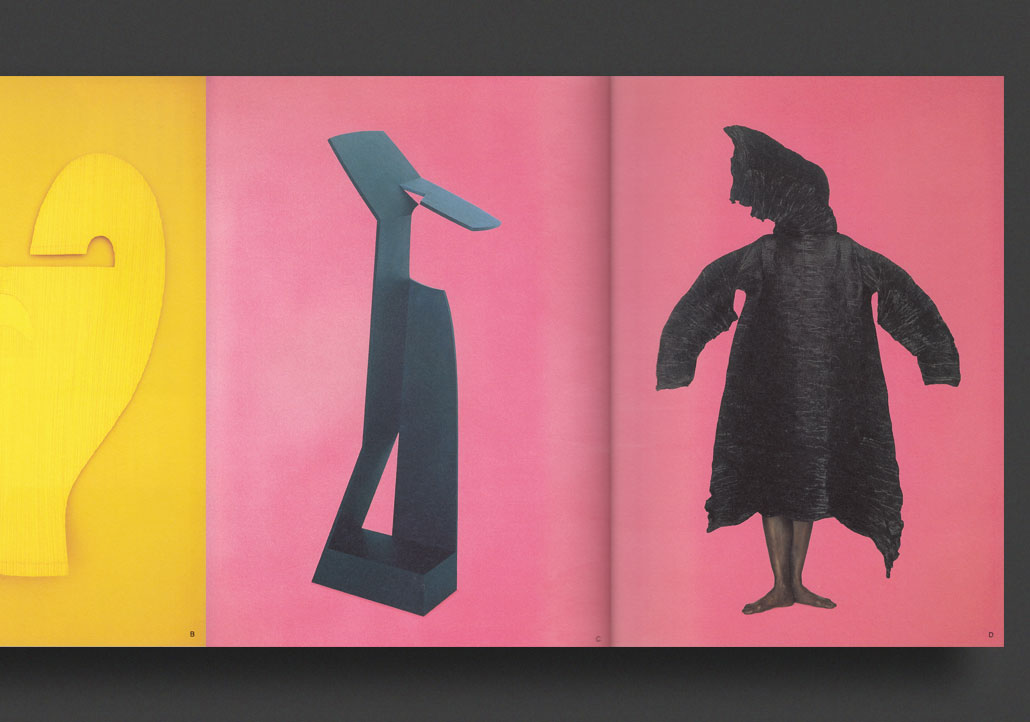
The beautiful and extremely rare "Arizona" publication, produced to accompany a collaborative exhibition between sculptor Isamu Noguchi and fashion designer Issey Miyake at Marugame Genichiro-Inokuma Museum of Contemporary Art, in 1997. This elaborate leporello-fold (accordian) publication is lavishly illustrated with the works of both artists, putting Noguchi's sculptures in direct conversation with Miyake's textiles across it's photographic pages. Accompanying texts from architects, fellow artists and critics addressing their work make up the reverse side of the publication, all in English and Japanese, with biographies. Bound between textured, foiled, plastic boards and housed in the original printed plastic slipcase, this unique edition is the perfect celebration of the incredible friendship between Isamu Noguchi and Issey Miyake, whose works fused the ideas and cultures of East and West and continue to inspire generations.
Fine first edition of this rare book.
1999, German
Softcover + CD, 230 pages, 20.5 x 18 cm
1st Edition, Out of print title / used / very good
Published by
Kunsthalle Wien / Vienna
$30.00 - In stock -
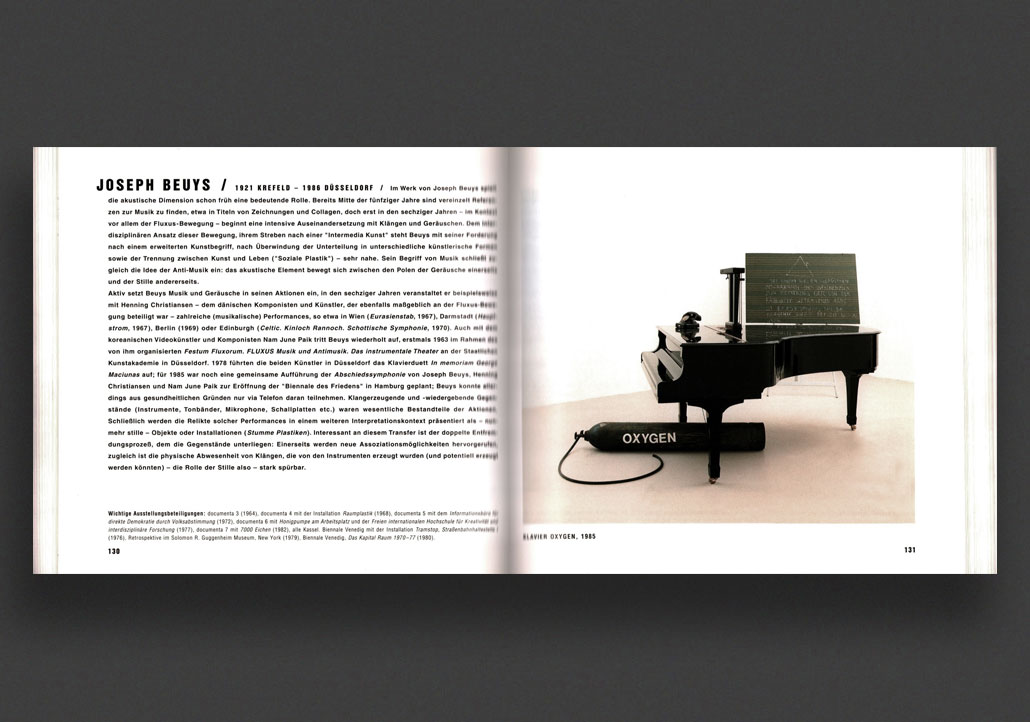
First edition w. CD, published in 1998 to accompany the exhibition Crossings – Art to Hear and See, Kunsthalle Wien, curated by Cathrin Pichler and Edek Bartz. "CROSSINGS" is about the meeting of music and visual arts. An encounter that was expressed in many facets and forms in the 20th century, featuring works by: Mario Airò, Richard Artschwager, Jean-Michel Basquiat, Joseph Beuys, Angela Bulloch, John Cage, Henning Christiansen, Martin Creed, Jeremy Deller, Stan Douglas, Daniel Egg, Angus Fairhurst, Jochen Gerz, Douglas Gordon, Franz Graf, Dan Graham, Henrik Hakansson, Russel Haswell, Carl Michael von Hausswolff, Dick Higgins, Gary Hill, Noritoshi Hirakawa, Arto Lindsay, Stephan von Huene, Lee Jaffe, Mike Kelley, Jon Kessler, Milan Knízák, Bernhard Leitner, Hans-Peter Litscher, Christian Marclay, Charles Long, Alvin Lucier, Paul D. Miller aka DJ Spooky that Subliminal Kid, Bruce Nauman, Max Neuhaus, Flora Neuwirth with Olga Neuwirth & NICJOB, Yoko Ono, Albert Oehlen, Nam June Paik, Paul Panhuysen, Michelangelo Pistoletto, Stephen Prina, Alan Rath, Gerwald Rockenschaub, Sarkís, Christoph Steinbrener, Wolfgang Stengel, Ned Sublette, Lawrence Weiner, Peter Weibel.
Very Good with audio CD featuring many of the artists above.
1973, Japanese
Softcover (staple-bound), 250 pages, 21 x 15 cm
1st Edition, Out of print title / used / good
Published by
Sun Publishing / Japan
$70.00 - Out of stock
October 1973 issue of S&M Collector, the legendary cult pioneering Japanese kinbaku magazine published monthly by Sun Publishing from 1972—1985 and founded by Shin Miyasaka and Toshiyuki Suma. Cover artwork by Haruo Shinozaki. One of the finest examples of SM publishing in Japan in the 1970s and 1980s, each issue of S&M Collector included a perfect combination of colour and b/w bondage photo features, illustrated fetish fiction, articles and a heavy selection of the most talented bondage artwork galleries, with contributors including Oniroku Dan, Ran Akiyoshi, Shoji Oki, Yoji Muku, Namio Harukawa, Tadao Chigusa, Mito Akiyoshi, Sanpei Akashi, Juan Maeda, Yoko Ozuma, Toshimi Fuji, Hakuzan Shiraishi, Ran Akiyoshi, Haruo Shinozaki, Akira Minomura, Bill Ward, Osamu Nakahara, and many more. Beautifully designed with printing on many various paper-stocks, finishes, and fold-out spreads.
Good copy with some loose but present central pages.
1976, Japanese
Softcover (staple-bound), 250 pages, 21 x 15 cm
1st Edition, Out of print title / used / very good
Published by
Sun Publishing / Japan
$75.00 - Out of stock
December 1973 issue of S&M Collector, the legendary cult pioneering Japanese kinbaku magazine published monthly by Sun Publishing from 1972—1985 and founded by Shin Miyasaka and Toshiyuki Suma. Cover artwork by Haruo Shinozaki. One of the finest examples of SM publishing in Japan in the 1970s and 1980s, each issue of S&M Collector included a perfect combination of colour and b/w bondage photo features, illustrated fetish fiction, articles and a heavy selection of the most talented bondage artwork galleries, with contributors including Oniroku Dan, Ran Akiyoshi, Shoji Oki, Yoji Muku, Namio Harukawa, Tadao Chigusa, Mito Akiyoshi, Sanpei Akashi, Juan Maeda, Yoko Ozuma, Toshimi Fuji, Hakuzan Shiraishi, Ran Akiyoshi, Haruo Shinozaki, Akira Minomura, Bill Ward, Osamu Nakahara, and many more. Beautifully designed with printing on many various paper-stocks, finishes, and fold-out spreads.
Very Good copy with some loose but present central pages.
2002, English
Hardcover + 4 CD, 96 pages, 23.5 x 16 cm
1st Edition, Out of print title / used / very good
Published by
The Anja Offensive / Oregon
$45.00 - Out of stock
First hardcover edition of this luxurious hardcover book and 4 x CD cross-pollination of sound and botany, published in 2022 by Anja Offensive in Oregon. 40 artists are invited to choose a plant, herb or tree they resonate with and craft a song to honour it. From free folk to industrial, neoclassical to dark ambient, each artist contributes to 4 discs with a playtime averaging 67 minutes per disc, as well as artwork, texts, passages, lyrics, quotations, credits to the lavish full-colour art book — a directory of artistic botanical dedications. Includes Makoto Kawabata, Steve Roden, Aube, Lotus Eaters, In Gowan Ring, Allerseelen, Troum, Michael Northam, Apoptose, and many more.
Very Good—Fine copy, all CDs fine.
1995, English
Softcover, 264 pages, 22.8 x 15 cm
1st Edition, Out of print title / used / very good
Published by
Duke University Press / North Carolina
$25.00 - In stock -
First 1995 edition.
At a time when philosophy of history is decidedly out of fashion, Theories and Narratives explores the relationship between historical writing and theoretical understanding and seeks to establish the legitimate scope of large-scale theories to grasp historical processes as a whole.
Pursuing this objective, Alex Callinicos critically confronts a number of leading attempts to reconceptualize the meaning of history, including Francis Fukuyama’s rehabilitation of Hegel’s philosophy of history and the postmodernist efforts of Hayden White and others to deny the existence of a past independent of our representations of it. In these cases philosophical arguments are pursued in tandem with discussions of historical interpretations or, respectively, Stalinism and the Holocaust. Leading theories of history—Marx’s and Weber’s—are then examined in the context of recent work by writers such as Michael Mann, W. G. Runciman, and Robert Brenner
Finally, the politics of historical theory is explored in a discussion of Marxism’s claims to be a universal theory of human progress. Contradicting current fashion, Callinicos rebuts the claims made by many postmodernists that Marxism is inherently Eurocentric in both its conceptual structures and its political practice. Marx’s project of human emancipation, he concludes, still define our political horizons.
Theories and Narratives will interest all readers for whom the role of history in the understanding of contemporary civilizations is an essential issue.
'Callinicos's well read both in recent philosophy of history and in recent postmodern theory, and engages with both of these in a clear and interesting way.'—Australian Journal of Philosophy
'An outstanding piece of committed scholarship, impressive in its intellectual scope, rational argumentation and clarity of exposition.'—Radical Philosophy
'Few social and political theorists in recent years can match the combination of quality and quantity in the writings of Alex Callinicos. This book offers incisive and lucid discussions in his best manner of the views on history of a range of contemporary thinkers from Francis Fukuyama to Hayden White and Robert Brenner.'—Political Studies
Very Good copy.
1982, English
Softcover, 320 pages, 23.32 x 15.6 cm
1st Edition, Out of print title / used / good
Published by
Yale University Press / New Haven
$40.00 - Out of stock
First 1982 edition.
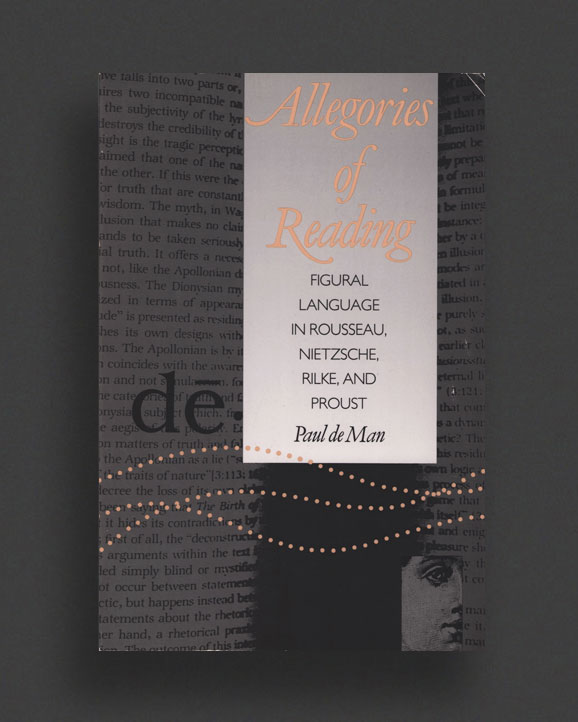
This important theoretical work by Paul de Man sets forth a mode of reading and interpretation based on exemplary texts by Rousseau, Nietzsche, Rilke, and Proust. The readings start from unresolved difficulties in the critical traditions engendered by these authors, and they return to the places in the text where those difficulties are most apparent or most incisively reflected upon. The close reading leads to the elaboration of a more general model of textual understanding, in which de Man shows that the thematic aspects of the texts-their assertions of truth or falsehood as well as their assertions of values-are linked to specific modes of figuration that can be identified and described. The description of synchronic figures of substitution leads, by an inner logic embedded in the structure of all tropes, to extended, narrative figures or allegories. De Man poses the question whether such self-generating systems of figuration can account fully for the intricacies of meaning and of signification they produce.
Throughout the book, issues in contemporary criticism are addressed analytically rather than polemically. Traditional oppositions are put in question by a rhetorical analysis which demonstrates why literary texts are such powerful sources of meaning yet epistemologically so unreliable. Since the structure which underlies this tension belongs to language in general and is not confined to literary texts, the book, starting out as practical and historical criticism or as the demonstration of a theory of literary reading, leads into larger questions pertaining to the philosophy of language.
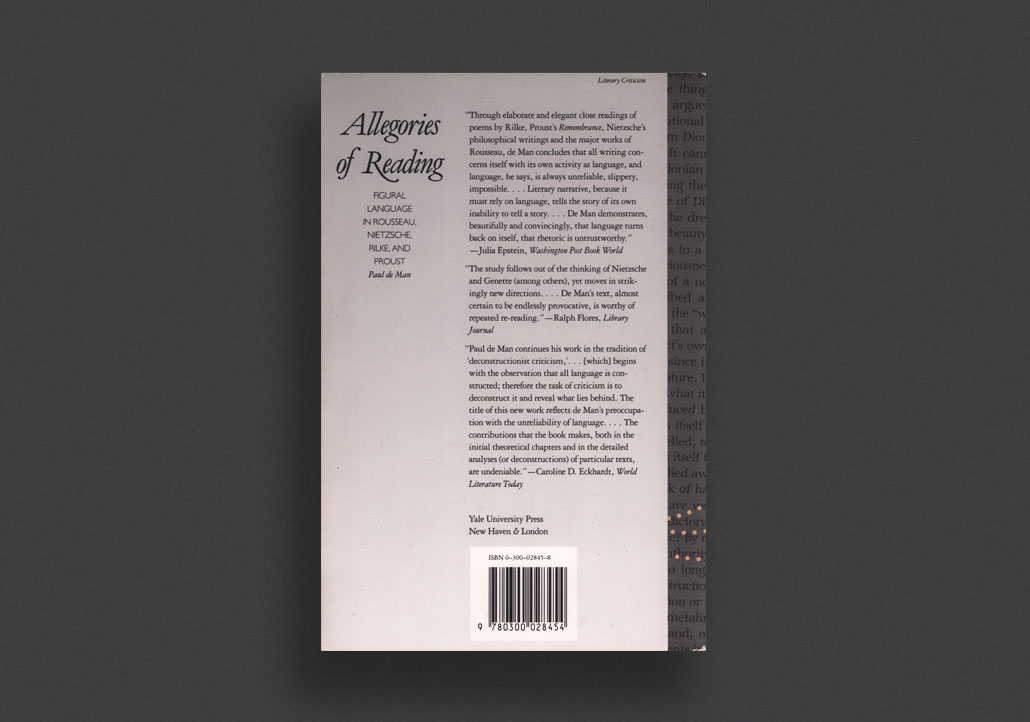
"Through elaborate and elegant close readings of poems by Rilke, Proust's Remembrance, Nietzsche's philosophical writings and the major works of Rousseau, de Man concludes that all writing concerns itself with its own activity as language, and language, he says, is always unreliable, slippery, impossible .Literary narrative, because it must rely on language, tells the story of its own inability to tell a story....De Man demonstrates, beautifully and convincingly, that language turns back on itself, that rhetoric is untrustworthy."—Julia Epstein, Washington Post Book World
"The study follows out of the thinking of Nietzsche and Genette (among others), yet moves in strikingly new directions....De Man's text, almost certain to be endlessly provocative, is worthy of repeated re-reading."—Ralph Flores, Library Journal
Good copy, general wear, creases.
1992, English
Softcover, 112 pages, 13.79 x 21.59 cm
1st Edition, Out of print title / used / very good
Published by
Routledge / London
$15.00 - Out of stock
First 1992 Routledge edition.
Elemental Passions explores the man/woman relationship in a series of meditations of the senses and the formal elements. Its form resembles a series of love letters in which, however, the identity-and even the reality-of the adressee are deliberately obscured.
Luce Irigaray (b. 1930) is a Belgian-born French feminist, philosopher, linguist, psycholinguist, psychoanalyst, and cultural theorist who examined the uses and misuses of language in relation to women.
Very Good copy.
1991, English
Softcover, 252 pages, 15.6 x 23.39 cm
1st Edition, Out of print title / used / very good
Published by
Routledge / London
$30.00 - Out of stock
First 1991 Routledge edition.
An ideal introduction to Igigaray's whole corpus, which includes previously untranslated texts. Luce Irigaray (b. 1930) is a Belgian-born French feminist, philosopher, linguist, psycholinguist, psychoanalyst, and cultural theorist who examined the uses and misuses of language in relation to women.
Very Good copy, some wear, age.
1996, English
Softcover, 328 pages, 15.24 x 22.86 cm
1st Edition, Out of print title / used / very good
Published by
New York University Press / New York
$35.00 - In stock -
First 1996 edition.
The intellectual movements of psychoanalysis, postmodernism, and feminism have redefined the ways in which we think about human experience. And yet, an integration of these movements has been elusive, if not impossible. In this landmark book, J.C. Smith and Carla J. Ferstman combine these disparate traditions to create a provocative, unified, and tightly woven perspective that transcends the misogyny implicit in much of Freudian psychoanalytic theory.
The dialectics of domination and submission are central to Smith and Ferstman's argument. Men and women, they insist, must avoid the temptation to fetishize equality and recognize the roles of domination and submission in the human psyche, or, in Nietzsche's terms, the Will to Power. They argue that the unification of psychoanalysis, postmodernism, and feminism leads us to a shocking conclusion--that women and men cannot move beyond the suffering which so haunts the human condition, unless heterosexual men surrender the power that is causing their misery and affirm life by joyfully accepting domination by women. And women, conversely, must reaffirm their power by rejecting Oedipal genderization and embracing a liberating matriarchal consciousness and a matriphallic sexuality.
A work of tremendous insight and extraordinary intellectual energy, The Castration of Oedipus will provoke strong reactions in all readers regardless of ideology.
J.C. Smith is Professor of Law at the University of British Columbia, and the author of Psychoanalytic Roots of Patriarchy: The Neurotic Foundations of Social Order, also from NYU Press.
Carla J. Ferstman is Associate Counsel at the firm of Bolton and Muldoon.
Very Good copy, some wear, creasing.
1991, English
Softcover, 114.61 x 21.59 cm
Published by
Pennbridge / US
$20.00 - In stock -
First 1991 edition.
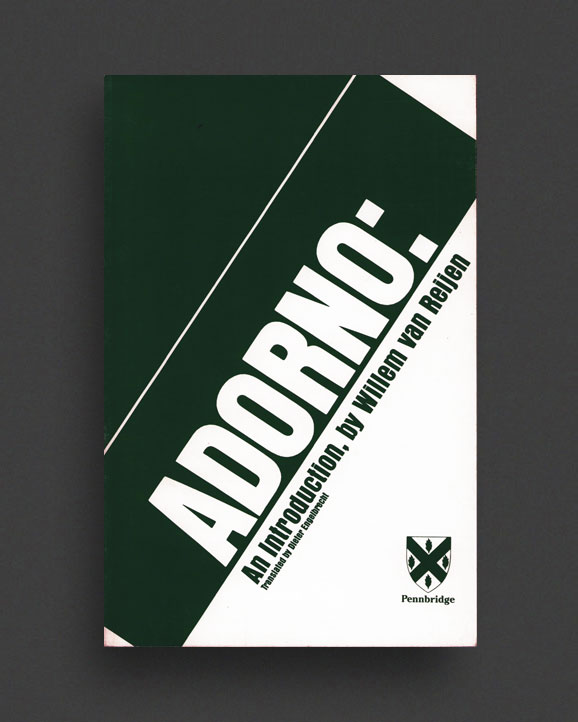
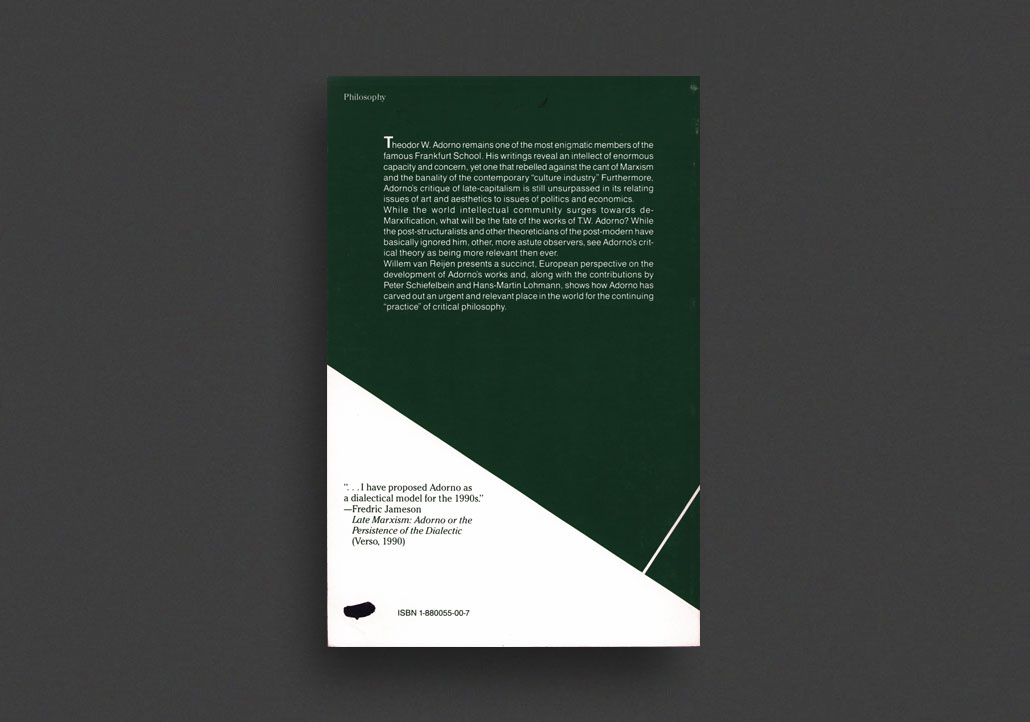
Theodor W. Adorno remains one of the most enigmatic members of the famous Frankfurt School. His writings reveal an intellect of enormous capacity and concern, yet one that rebelled against the cant of Marxism and the banality of the contemporary "culture industry: Furthermore, Adorno's critique of late-capitalism is still unsurpassed in its relating issues of art and aesthetics to issues of politics and economics. While the world intellectual community surges towards de-Marxification, what will be the fate of the works of T.W. Adorno? While the post-structuralists and other theoreticians of the post-modern have basically ignored him, other, more astute observers, see Adorno's crit-ical theory as being more relevant then ever. Willem van Reijen presents a succinct, European perspective on the development of Adorno's works and, along with the contributions by Peter Schiefelbein and Hans-Martin Lohmann, shows how Adorno has carved out an urgent and relevant place in the world for the continuing "practice" of critical philosophy.
Very Good copy.
2001, English
Softcover, 480 pages, 15.24 x 22.86 cm
1st Edition, Out of print title / used / very good
Published by
Cambridge University Press / Cambridge
$55.00 - In stock -
First 2001 edition of this book providing the first account in any language of the ethical theory latent in Adorno's writings.
Theodor W. Adorno is best known for his contributions to aesthetics and social theory. Critics have always complained about the lack of a practical, political or ethical dimension to Adorno's philosophy. In this highly original contribution to the literature on Adorno, J. M. Bernstein offers the first attempt in any language to provide an account of the ethical theory latent in Adorno's writings. Bernstein relates Adorno's ethics to major trends in contemporary moral philosophy. He analyses the full range of Adorno's major works, with a special focus on Dialectic of Enlightenment, Minima Moralia and Negative Dialectics. In developing his account Bernstein lays particular stress on Adorno's contention that the event of Auschwitz demands a new categorical imperative. This book will be widely acknowledged as the standard work on Adorno's ethics and as such will interest professionals and students of philosophy, political theory, sociology, history of ideas, art history and music.
"This is a marvelous book, balancing a commitment to hermeneutic explication with a desire to make Adorno relevant to contemporary thought in the widest possible sense."—Choice
"Bernstein's study of Adorno may mark a watershed in the reception of Adorno in the Anglo-american philosophical community... This is a marvelous book, balancing a commitment to hermeneutic explication with a desire to make Adorno relevant to contemporary thought in the widest possible sense. Highly recommended for general readers and upper-division undergraduates through professionals."—Choice
Very Good copy, some wear.
1996, English
Softcover, 446 pages, 15.24 x 22.86 cm
1st UK Edition, Out of print title / used / good
Published by
State University of New York Press / New York
$25.00 - Out of stock
First 1996 edition.
This book examines the nature of change in history, philosophy, and culture. Precisely because the idea of change is so vast, the book's strategy is to exercise some control over it by organizing itself as a structured progression of theoretical, political, and ideological concerns whose focus is on change.
Barker begins with the idea of history and historicity and proceeds through an investigation of the relationship of semiotics and hermeneutics to change, to topography and topology as functions of change, to sexuality and gender as political aspects of a hypothetical theory of change, and to the seemingly culminative issue of life and death themselves as functions of change. Finally, the book concludes with a coda concerning alterity both as concept and as lived and literary phenomenon ranging from the avant-garde's drunkenness to the alterity of the characters in Chinese poetry. Not only does the book not attempt to make categorical statements about the nature of change, but it delights in an open-ended discussion of the implications and reverberations of change throughout the world of human experience.
Good copy with wear.
1990, English
Softcover, 360 pages, 15.24 x 22.86 cm
1st Edition, Out of print title / used / good
Published by
State University of New York Press / New York
$25.00 - Out of stock
First 1990 edition.
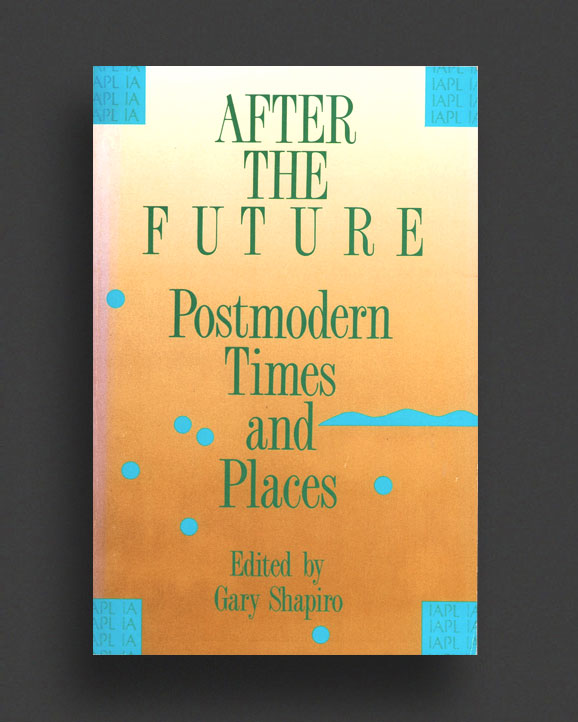
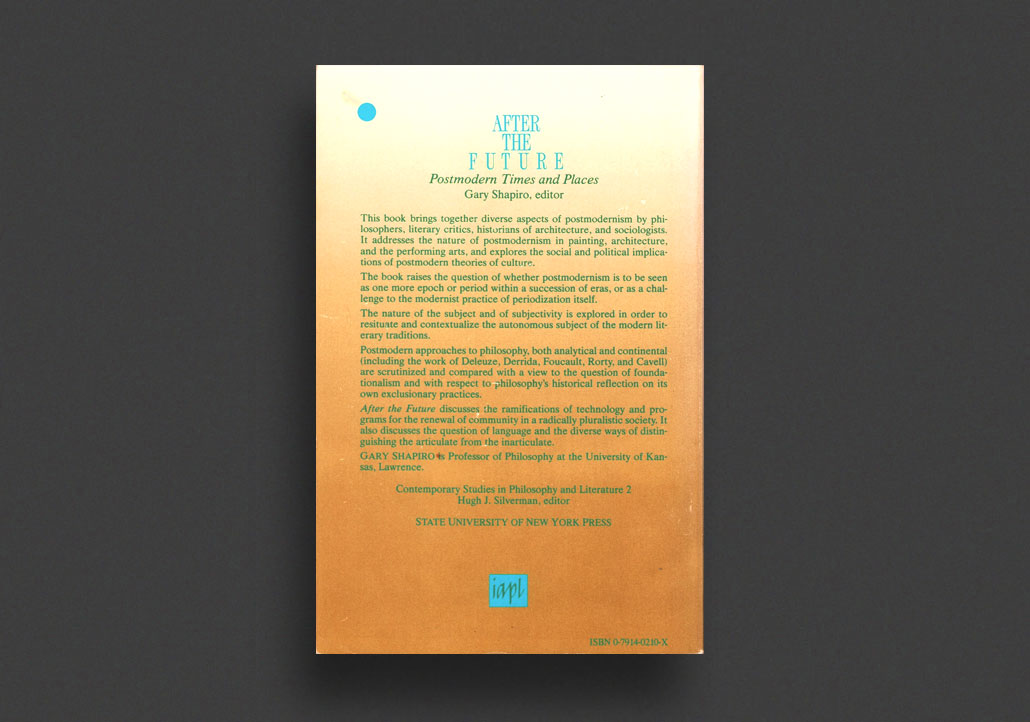
This book brings together diverse aspects of postmodernism by philosophers, literary critics, historians of architecture, and sociologists. It addresses the nature of postmodernism in painting, architecture, and the performing arts, and explores the social and political implications of postmodern theories of culture. The book raises the question of whether postmodernism is to be seen as one more epoch or period within a succession of eras, or as a challenge to the modernist practice of periodization itself. The nature of the subject and of subjectivity is explored in order to resituate and contextualize the autonomous subject of the modern literary traditions. Postmodern approaches to philosophy, both analytical and continental (including the work of Deleuze, Derrida, Foucault, Rorty, and Cavell) are scrutinized and compared with a view to the question of foundationalism and with respect to philosophy's historical reflection on its own exclusionary practices. After the Future discusses the ramifications of technology and programs for the renewal of community in a radically pluralistic society. It also discusses the question of language and the diverse ways of distinguishing the articulate from the inarticulate.
Good copy with general wear.
1992, English
Softcover, 40 pages
Out of print title / used / good
Published by
Wiley—Blackwell / London
$20.00 - Out of stock
1992 English edition of The Concept of Time, presenting the reconstructed text of a lecture delivered by Martin Heidegger to the Marburg Theological Society in 1924. It offers a fascinating insight into the developmental years leading up to the publication, in 1927, of his magnum opus Being and Time, itself one of the most influential philosophical works this century.
In The Concept of Time Heidegger introduces many of the central themes of his analyses of human existence which were subsequently incorporated into Being and Time , themes such as Dasein, Being-in-the-world, everydayness, disposition, care, authenticity, death, uncanniness, temporality and historicity. Starting out by asking: What is time?, Heidegger proceeds to radicalise the concept of time and our relation to it, ending with the question: Are we ourselves time? Am I time?
Martin Heidegger - 1889-1976 - is a 20th century German philosopher in the European tradition. His work contributed to such areas as phenomenology and existentialism. Heidegger's politics were controversial since he was a member of the Nazi party. Two of his influential philosophical works are The Concept of Time and Being and Time.
Good copy with heavy tanning to boards, light wear.
1986, English
Softcover, 210 pages, 13.79 21.59 cm
Out of print title / used / good
Published by
Routledge / London
$15.00 - Out of stock
1986 edition of this title first published 1972, Metaphor examines the complex concept of metaphor. It defines the term by placing the various key ideas about the nature of metaphor in their literary and social context, and in doing so, it traces the developing history of the concept. This account has considerable range, beginning with Aristotle and ending with the work of modern linguist and anthropologists. From this analysis emerge two opposed yet complementary ideas: the classical view of metaphor, which sees metaphor as a detachable device imported into language, and the romantic view, which sees metaphor as inseparable from language.
Terence Hawkes was a professor of English at the University of Cardiff, where he was responsible for encouraging major developments in Literary Theory following the publication in 1977 of his book Structuralism and Semiotics, one of the founding volumes in the revolutionary New Accents Series.
This book will be of interest to those studying English literature and language.
Good with wear and creasing.
1997, English
Softcover, 224 pages, 23.5 x 14 cm
1st Edition, Out of print title / used / very good
Published by
Duke University Press / North Carolina
$20.00 - Out of stock
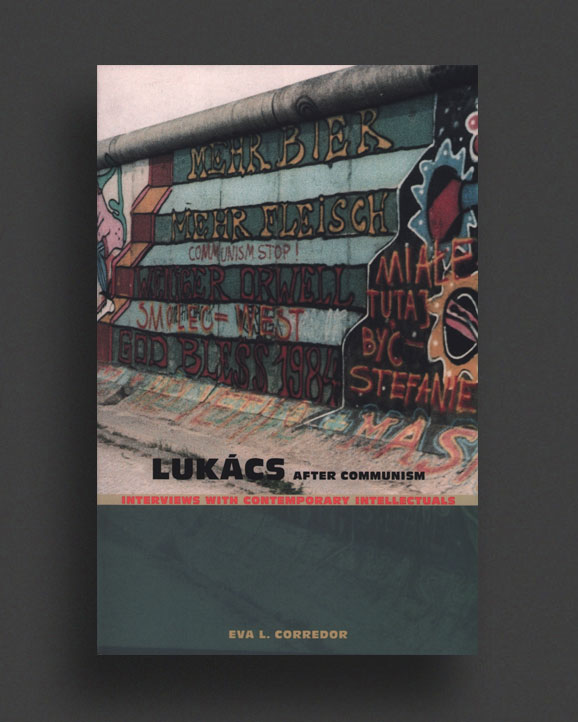
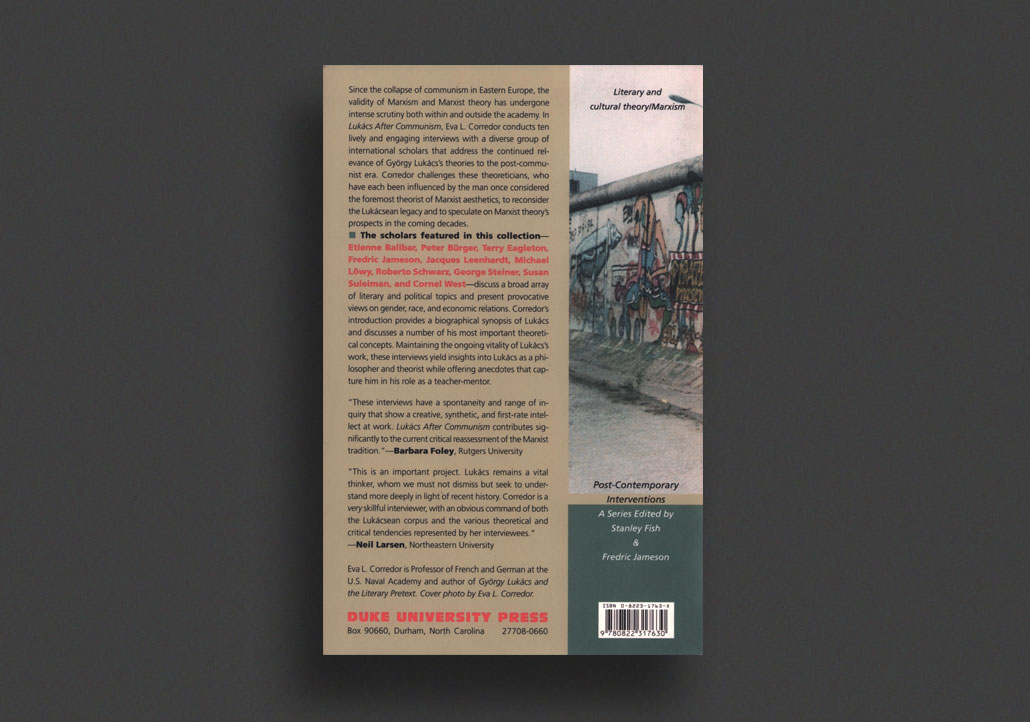
Since the collapse of communism in Eastern Europe, the validity of Marxism and Marxist theory has undergone intense scrutiny both within and outside the academy. In Lukács After Communism, Eva L. Corredor conducts ten lively and engaging interviews with a diverse group of international scholars to address the continued relevance of György Lukács’s theories to the post-communist era. Corredor challenges these theoreticians, who each have been influenced by the man once considered the foremost theoretician of Marxist aesthetics, to reconsider the Lukácsean legacy and to speculate on Marxist theory’s prospects in the coming decades.
The scholars featured in this collection—Etienne Balibar, Peter Bürger, Terry Eagleton, Fredric Jameson, Jacques Leenhardt, Michael Löwy, Roberto Schwarz, George Steiner, Susan Suleiman, and Cornel West—discuss a broad array of literary and political topics and present provocative views on gender, race, and economic relations. Corredor’s introduction provides a biographical synopsis of Lukács and discusses a number of his most important theoretical concepts. Maintaining the ongoing vitality of Lukács’s work, these interviews yield insights into Lukács as a philosopher and theorist, while offering anecdotes that capture him in his role as a teacher-mentor.
VG copy.
1971, English
Softcover, 408 pages, 20.5 x 13 cm
1st Edition, Out of print title / used / very good
Published by
The MIT Press / Massachusetts
$35.00 - Out of stock
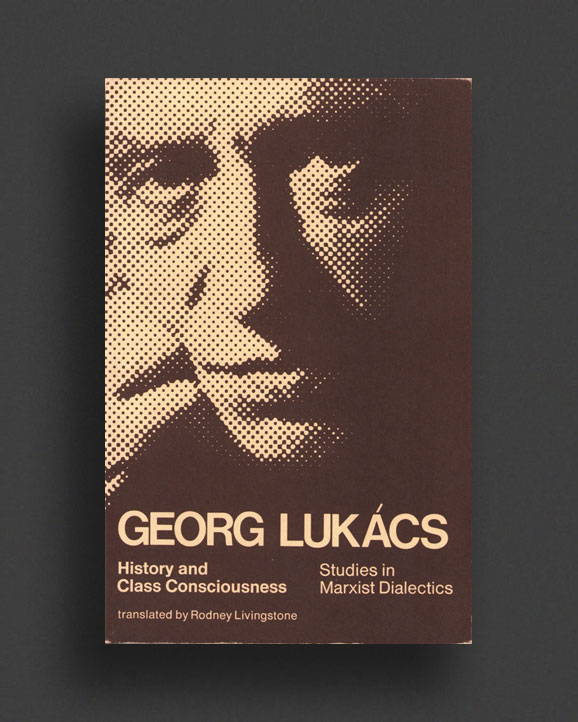
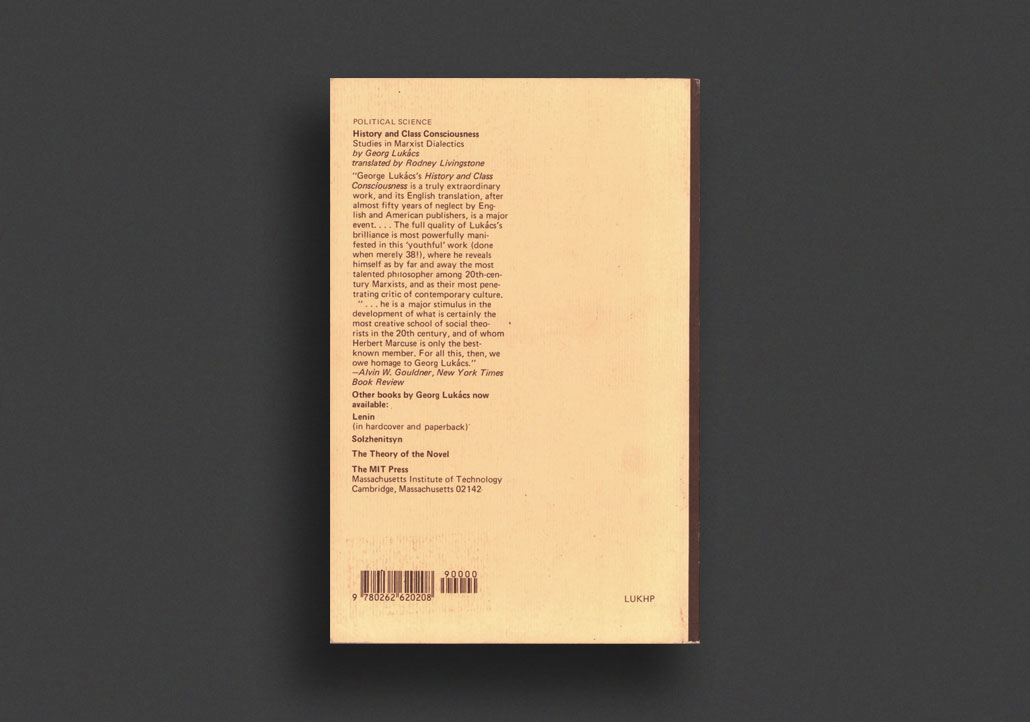
First 1971 edition of History and Class Consciousness by Georg Lukács, published by The MIT Press the year following the philosopher's death. Lukac's long suppressed, but most famous work of Marxist theory. "It is one of the indispensable works of the twentieth century"—Raymond Williams. Influential on the '68 uprisings.
This is the first time one of the most important of Lukács' early theoretical writings, published in Germany in 1923, has been made available in English. The book consists of a series of essays treating, among other topics, the definition of orthodox Marxism, the question of legality and illegality, Rosa Luxemburg as a Marxist, the changing function of Historic Marxism, class consciousness, and the substantiation and consciousness of the Proletariat.
Writing in 1968, on the occasion of the appearance of his collected works, Lukács evaluated the influence of this book as follows:
"For the historical effect of History and Class Consciousness and also for the actuality of the present time one problem is of decisive importance: alienation, which is here treated for the first time since Marx as the central question of a revolutionary critique of capitalism, and whose historical as well as methodological origins are deeply rooted in Hegelian dialectic. It goes without saying that the problem was omnipresent. A few years after History and Class Consciousness was published, it was moved into the focus of philosophical discussion by Heidegger in his Being and Time, a place which it maintains to this day largely as a result of the position occupied by Sartre and his followers. The philologic question raised by L. Goldmann, who considered Heidegger's work partly as a polemic reply to my (admittedly unnamed) work, need not be discussed here. It suffices today to say that the problem was in the air, particularly if we analyze its background in detail in order to clarify its effect, the mixture of Marxist and Existentialist thought processes, which prevailed especially in France immediately after the Second World War. In this connection priorities, influences, and so on are not particularly significant. What is important is that the alienation of man was recognized and appreciated as the central problem of the time in which we live, by bourgeois as well as proletarian, by politically rightist and leftist thinkers. Thus, History and Class Consciousness exerted a profound effect in the circles of the youthful intelligentsia."
Georg Lukács was a Hungarian Marxist philosopher, aesthetician, literary historian, and critic.
Rodney Livingstone, Reader in German at the University of Southampton, has edited and translated numerous works by Lukács, Theodor Adorno, and others.
Very Good copy.
1970, English
Softcover, 192 pages, 20.5 x 13 cm
1st Edition, Out of print title / used / very good
Published by
International Publishers / New York
$35.00 - Out of stock
First English 1970 edition of this collection of writings on the nature of politics in the modern age, on the interpretation of history and on the role of culture and the intellectuals are selected from Gramsci's notebooks, written while he was in prison under Mussolini. Little known in the West, he was a leading Marxist philosopher who had a germinal influence upon the Communist Party of Italy and its late leader Palmiro Togliatti. The notes were selected, annotated and edited by the Gramsci Institute in Rome.
Antonio Francesco Gramsci (1891—1937) was an Italian Marxist philosopher, journalist, linguist, writer, and politician. He wrote on philosophy, political theory, sociology, history, and linguistics. He was a founding member and one-time leader of the Italian Communist Party.
Very Good copy, light wear.
1978, English
Softcover, 277 pages, 20.5 x 13 cm
1st Edition, Out of print title / used / very good
Published by
Merlin Press / London
$20.00 - Out of stock
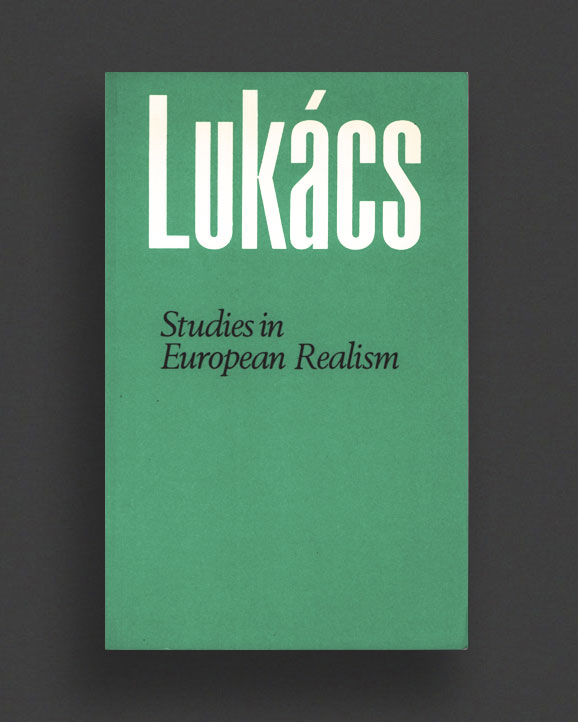
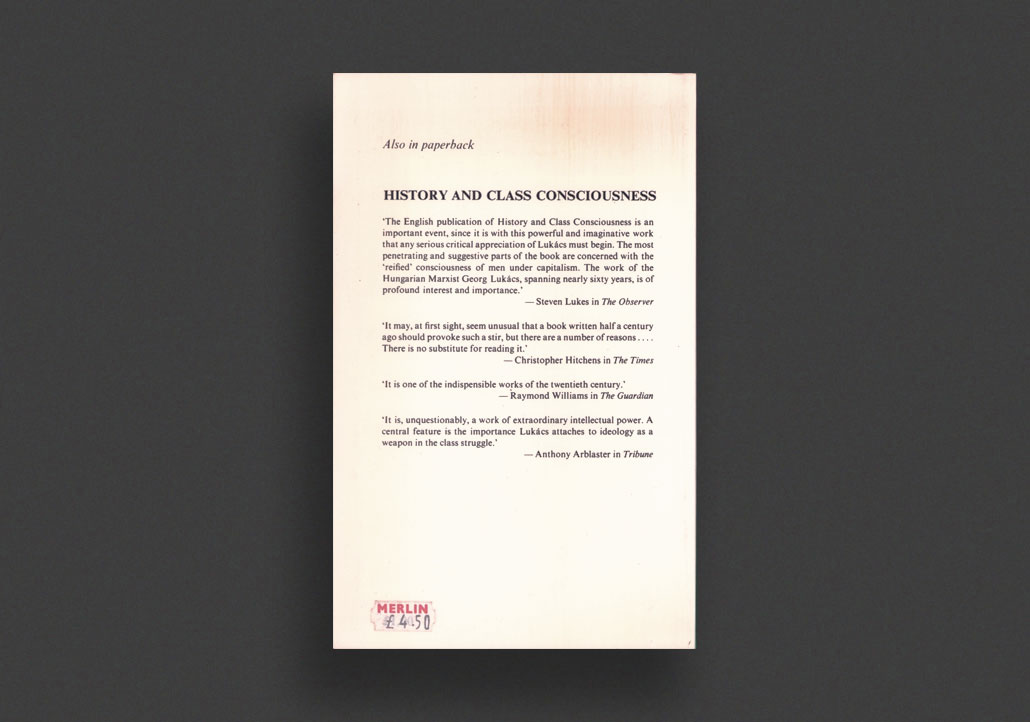
First Merlin Press English edition of Georg Lukács' Studies in European Realism, in which the great 20th century literary critic discusses the 19th century European novel. A Sociological survey of the writings of Balzac, Stendhal, Zola, Tolstoy, Gorki and others.
Georg Lukács was a Hungarian Marxist philosopher, aesthetician, literary historian, and critic.
Very Good copy.
1992, English
Softcover, 302 pages, 15.24 x 22.86 cm
1st Edition, Out of print title / used / very good
Published by
University Press of New England / New Hampshire
$30.00 - Out of stock
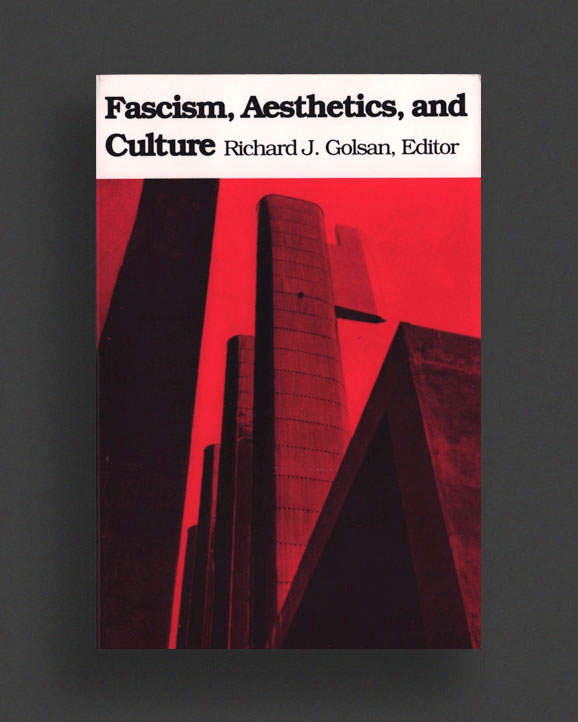
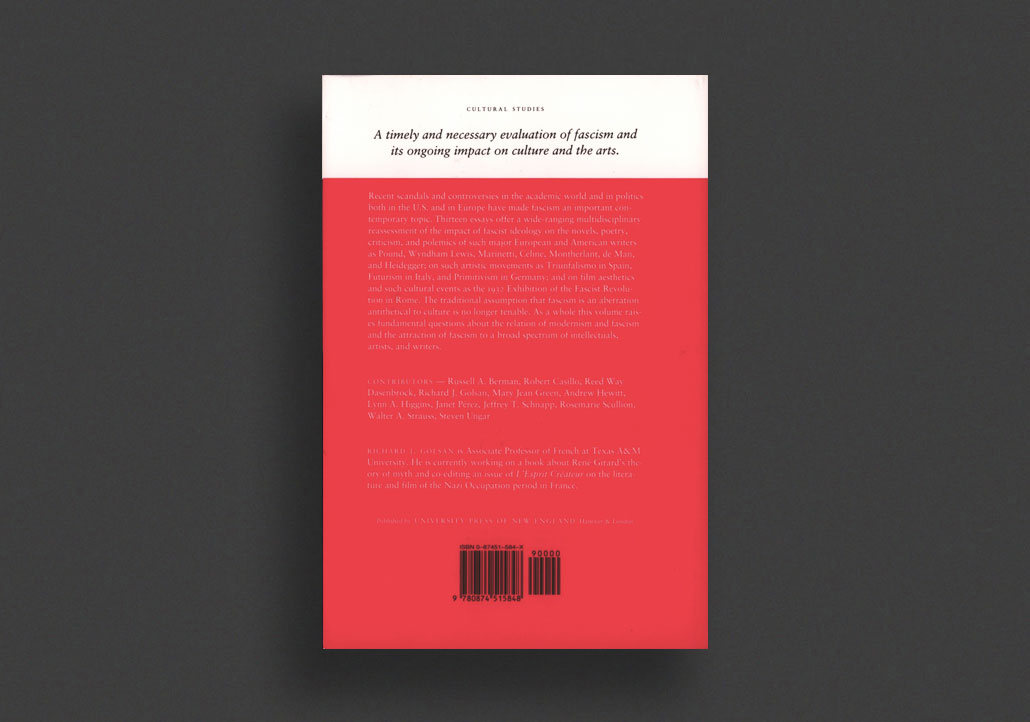
First 1992 edition of Fascism, Aesthetics, and Culture, edited by Richard J. Golsan.
"A timely and necessary evaluation of fascism and its ongoing impact on culture and the arts."
"Recent scandals and controversies in the academic world and in politics both in the U.S. and in Europe have made fascism an important contemporary topic. Thirteen essays offer a wide-ranging multidisciplinary reassessment of the impact of fascist ideology on the novels, poetry, criticism, and polemics of such major European and American writers as Pound, Wyndham Lewis, Marinetti, Céline, Montherlant, de Man, and Heidegger; on such artistic movements as 'Triunfalismo in Spain, Futurism in Italy, and Primitivism in Germany; and on film aesthetics and such cultural events as the 1932 Exhibition of the Fascist Revolution in Rome. The traditional assumption that fascism is an aberration antithetical to culture is no longer tenable. As a whole this volume raises fundamental questions about the relation of modernism and fascism and the attraction of fascism to a broad spectrum of intellectuals, artists, and writers.
Richard J. Golsan is Associate Professor of French at Texas A &M University. He is currently working on a book about Rene Girard's theory of myth and co-editing an issue of L'Esprit Createur on the literature and film of the Nail Occupation period in France.
Very Good copy.
1980, Japanese
Softcover, 200 pages (plus poster insert), 21 x 15 cm
1st Edition, Out of print title / used / very good
Published by
Night Vision / Japan
$80.00 - Out of stock
First 1980 edition of cult Japanese underground magazine Night Vision, a special edition dedicated to the work of German artist Hans Bellmer (1902-1975). ("the doll = the human form - the body"). Nowhere in the world has Bellmer's "Die Puppe" has such a lasting effect than in Japan. This volume compiles many of the artist's texts, translated to Japanese, with many illustrations of Bellmer's graphic works, drawings nad photography, alongside contributions by Miyoko Nakano, Yuichi Konno, Shuzo Takiguchi, Hideo Nakai and others. This book also comes with an inserted copy of Japanese doll artist Nori Doi's four-fold poster
German artist Hans Bellmer (1902-1975) was one of the most subversive artists associated with Surrealism, famous--notorious, even--for his erotic engravings, objects and photographs. Best known for the life-sized pubescent female dolls he produced in the mid-1930s. "Bellmer was born in the city of Kattowitz, then part of the German Empire (now Katowice, Poland). Up until 1926, he'd been working as a draftsman for his own advertising company. He initiated his doll project to oppose the fascism of the Nazi Party by declaring that he would make no work that would support the new German state. Represented by mutated forms and unconventional poses, his dolls were directed specifically at the cult of the perfect body then prominent in Germany. Bellmer was influenced in his choice of art form by reading the published letters of Oskar Kokoschka (Der Fetisch, 1925)."
Very Good copy.
unknown, English
Softcover (screw post binding), 108 pages, 28 x 21.5 cm
Out of print title / used / very good
Published by
? / ?
$140.00 - In stock -
Super rare production storyboard bootleg publication for the original 1984 Blade Runner, illustrated throughout by Sherman Labby with typed and handwritten notes, original notes from the production team and bearing the photocopied signature of production manager John W. Rogers. These storyboards were confidential and not allowed to be re-xeroxed, but leaked copies were bootlegged and leaked into fan market places. An incredible insight into the making of one of the greatest films of all time.
Sherman Labby (1929—1998) was a legendary American storyboard artist and production illustrator. After many years as a magazine illustrator, and like many in his craft, his first motion-picture work was in animation at studios such as Filmation, Hanna-Barbera, and Marvel. He worked as a storyboard artist on such shows as Star Trek: The Animated Series, Groovie Goolies, The Batman/Superman Hour, The New Adventures of Batman, The New Adventures of Gilligan, The Secret Lives of Waldo Kitty, and Will the Real Jerry Lewis Please Sit Down, and the animated TV series of Journey to the Center of the Earth, Fantastic Voyage, and Godzilla. His best-known live-action credits include Invasion of the Body Snatchers (1978), The Wanderers, The Incredible Shrinking Woman, Blade Runner, 2010, The Witches of Eastwick, Broadcast News, Lethal Weapon 2, The War of the Roses, Thelma & Louise, Bram Stoker's Dracula, Made in America, Free Willy, The Horse Whisperer, and What Dreams May Come.
Near Fine copy.
2000, English
Hardcover (w. dust jacket), 72 pages, 24 x 21 cm
1st Edition, Out of print title / used / very good
Published by
Titan Books / London
$300.00 - Out of stock
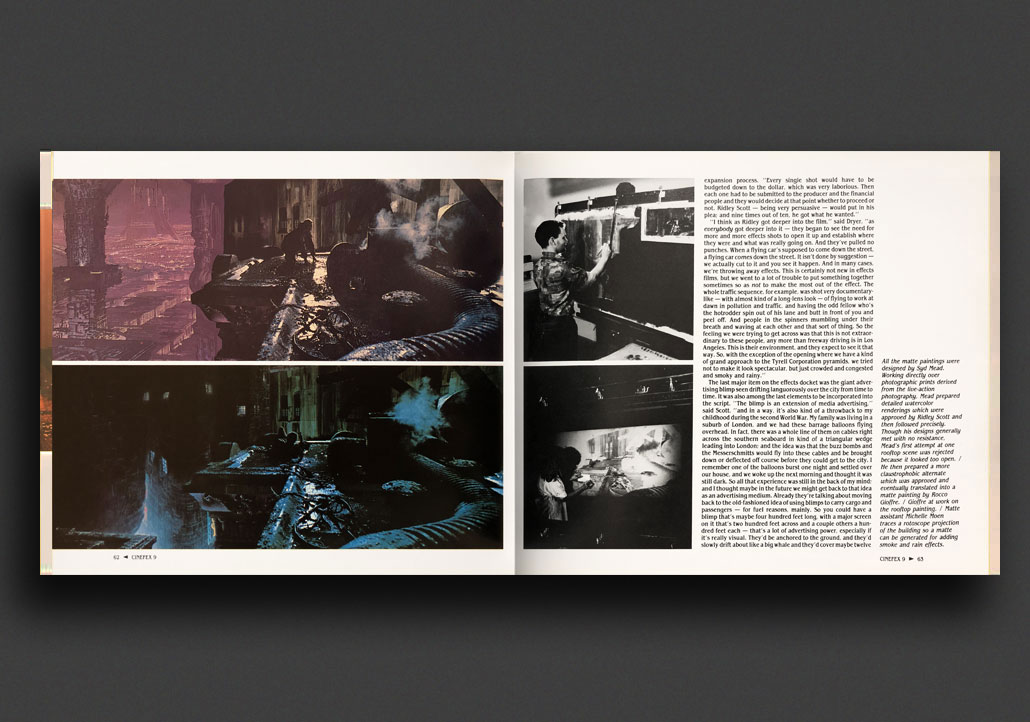
Super collectible first, limited edition hardcover edition of the amazing "Blade Runner : The Inside Story," the first extensively illustrated book about the most influential sci-fi film ever made, published by the mighty Cinefex and Titan Books in 2000.
In 1982, to coincide with Blade Runner's original release, the highly respected movie magazine Cinefex devoted an entire, extended issue to the design and special effects of Ridley Scott's sci-fi masterpiece. Selling out immediately and in constant demand since, Cinefex and Titan Books brought this classic back into print, in an expanded, remastered hardcover edition in 2000. Not surprisingly, this first clothbound book edition, which was published in a limited edition, also went out of print quickly and has become a collectors item itself. It was later re-issued again in the more common 2003 edition.
Described as 'the single most comprehensive examination of Blade Runner's special effects', this must-have book contains scores of images not available elsewhere, as well as authoritative text, containing in-depth, exclusive interviews with director Ridley Scott, special effects supervisor Douglas Trumbull, legendary futurist/designer Syd Mead and dozens of other artists who contributed to this landmark film. This book is the definitive guide to the creation of Bladerunner's unsurpassed vision of the future, and a must for any fan.
Don Shay is the founder and publisher of Cinefex magazine.
Very Good copy in Very Good dust jacket with tanning and light wear.