World Food Books' programme is largely produced on Kulin Nation land. We acknowledge the Wurundjeri people of the Kulin Nation as the first and continuing custodians of this land, and pay respect to their Elders past, present, and emerging.
World Food Books is an arts and special interests bookshop in Naarm / Melbourne. Founded in 2010, World Food Books is devoted to the presentation of a rotating, hand-selection of international art, design, literary and counterculture publications with an emphasis on the anti-traditional, the experimental, the avant-garde, the heretic, the marginal.
Presenting new titles alongside rare and out-of-print books, catalogues and journals spanning the fields of modern and contemporary art, design, photography, illustration, film, literature, poetry, cultural theory, philosophy, sexuality, popular and underground culture in its many radical forms, World Food Books wishes to encourage adventurous, thoughtful and open-minded reading, looking, writing, and exchange of publishing and ideas, both current and historical.
As well as our bookshop, located in Melbourne's historical Nicholas Building, all of our inventory is available internationally via our online mail-order service.
World Food Books semi-regularly co-ordinates "Occasions", a programme of exhibits and events at the bookshop and in partnership with other hosts (such as museums and art galleries) that develop out of the activities, relationships and content of the bookshop itself.
World Food Books
The Nicholas Building
37 Swanston Street
Room 5, Level 6
Melbourne 3000
Australia
SHOP HOURS:
Thu–Fri 12–6, Sat 12–5
WEB-SHOP OPEN 24/7
World Food Books
Postal Address:
PO Box 435
Flinders Lane
Victoria 8009
Australia
Art
Theory / Essay
Architecture / Interior
Graphic Design / Typography
Photography
Fashion
Eros
LGBTQ+
Fiction / Poetry
Weird / Speculative / Science Fiction / Horror
Transgressive / Visceral / Abject
Symbolism / Decadence / Fin de siècle
Film / Video
Painting
Sculpture / Installation
Performance / Dance / Theater
Drawing
Sound / Music
Curatorial
Group Shows / Collections
Periodicals
Out-of-print / Rare
Posters / Ephemera / Discs
Signed Books
World Food Books Gift Voucher
World Food Book Bag
Australian Art
Australian Fiction
Australian Science Fiction / Speculative Fiction
Australian Poetry
Australian Photography
Japanese Photography
Conceptual Art
Minimal Art
Dada
'Pataphysics / Oulipo
Fluxus
Concrete Poetry
Pop Art
Surrealism
Arte Povera
Arte Informale / Haute Pâte / Tachism
Nouveau Réalisme / Zero / Kinetic
Situationism / Lettrism
Collage / Mail Art / Xerox Art
Art Brut / Folk / Visionary / Fantastic
Illustration / Graphic Art / Bandes Dessinées
Furniture
Italian Radical Design / Postmodernism
Textiles
Ceramics / Glass
Counterculture
Protest / Revolt
Philosophy
Psychoanalysis
Anthropology
Anarchism
Socialism / Anarchism / Communism / Capitalism
Literary Theory / Semiotics / Language
Feminism / Women's Studies
Gender Studies / Sexuality
Anthropology
Fetishism / BDSM
Drugs / Psychedelia
Crime / Violence
Animal Rights / Veganism
Occult / Esoterica
Ecology / Earth / Alternative Living
Whole Earth / Crafts
All prices in AUD (Australian dollars)
Pick-Ups
Pick-up orders can be collected in our bookshop during opening hours after order date. Please collect any Pick-up orders within 2 weeks of ordering as we have limited storage space. Orders will be released back into stock if not collected within this time. No refunds can be made for pick-ups left un-collected. If you cannot make it in to the bookshop in this time-frame, please choose postage option.
Return Policy
All sales are final. We do accept returns (for refund or exchange) for items received in error. All our orders are packed with special care using heavy-duty padding and cardboard book-mailers or bubble mailers (for smaller books), using reinforcement where required. We cannot take responsibility for any lost, stolen or damaged parcels.
Insurance
Should you wish to insure your package, please email us directly after placing your order and we can organise this at a small extra expense. Although all standard/express tracked packages are very safe and dependable, we cannot take responsibility for any lost, stolen or damaged parcels. We recommend insurance on valuable orders.
Interested in selling your old books, catalogues, journals, magazines, comics, fanzines, ephemera? We are always looking for interesting, unusual and out-of-print books to buy. We only buy books in our fields of interest and specialty, and that we feel we can resell.
We base these prices on desirability, market value, in-print prices, condition and our current stock levels. We offer cash, store credit, and can take stock on consignment. All
about 25% of the price we expect to get when we sell them, or 30% in store credit. We base these prices on desirability, market value, in-print prices, condition and our current stock levels.
Sell your books any day of the week. You can drop them off and return later. If you have a lot of books, we can visit your Sydney home.
We buy books that we feel we can resell. We offer about 25 % of the price we expect to get when we sell them, or 30% in store credit. We base these prices on desirability, market value, in-print prices, condition and our current stock levels.
Philadelphia Wireman
03 August - 01 September, 2018
World Food Books is proud to announce our next Occasion, the first presentation of sculptures by Philadelphia Wireman in Australia.
The Philadelphia Wireman sculptures were found abandoned in an alley off Philadelphia’s South Street on trash night in 1982. Their discovery in a rapidly-changing neighbourhood undergoing extensive renovation, compounded with the failure of all attempts to locate the artist, suggests that the works may have been discarded after the maker’s death. Dubbed the "Philadelphia Wireman" during the first exhibition of this work, in 1985, the maker’s name, age, ethnicity, and even gender remain uncertain. The entire collection totals approximately 1200 pieces, all intricately bound together with tightly-wound heavy-gauge wire (along with a few small, abstract marker drawings, reminiscent both of Mark Tobey and J.B. Murry). The dense construction of the work, despite a modest range of scale and materials, is singularly obsessive and disciplined in design: a wire armature or exoskeleton firmly binds a bricolage of found objects including plastic, glass, food packaging, umbrella parts, tape, rubber, batteries, pens, leather, reflectors, nuts and bolts, nails, foil, coins, toys, watches, eyeglasses, tools, and jewellery.
Heavy with associations—anthropomorphic, zoomorphic, and socio-cultural responses to wrapped detritus—the totemic sculptures by Philadelphia Wireman have been discussed in the context of work created to fulfil the shamanistic needs of alternative religions in American culture. Curators, collectors, and critics have variously compared certain pieces to sculpture from Classical antiquity, Native American medicine bundles, African-American memory jugs, and African fetish objects. Reflecting the artist’s prolific and incredibly focused scavenging impulse, and despite—or perhaps enhanced by—their anonymity, these enigmatic objects function as urban artefacts and arbiters of power, though their origin and purpose is unknown. Philadelphia Wireman, whatever their identity, possessed an astonishing ability to isolate and communicate the concepts of power and energy through the selection and transformation of ordinary materials. Over the course of the past two decades, this collection has come to be regarded as an important discovery in the field of self-taught art and vernacular art.
Presented in collaboration with Fleisher-Ollman Gallery, Philadelphia, and Robert Heald, Wellington.
Susan Te Kahurangi King
02 February - 10 March, 2018
Susan Te Kahurangi King (24 February 1951 - ) has been a confident and prolific artist since she was a young child, drawing with readily available materials - pencils, ballpoint pens and felt-tip markers, on whatever paper is at hand. Between the ages of four and six Susan slowly ceased verbal communication. Her grandparents William and Myrtle Murphy had developed a special bond with Susan so they took on caring responsibilities for extended periods. Myrtle began informally archiving her work, carefully collecting and storing the drawings and compiling scrapbooks. No drawing was insignificant; every scrap of paper was kept. The King family are now the custodians of a vast collection containing over 7000 individual works, from tiny scraps of paper through to 5 meter long rolls.
The scrapbooks and diaries reveal Myrtle to be a woman of great patience and compassion, seeking to understand a child who was not always behaving as expected. She encouraged Susan to be observant, to explore her environment and absorb all the sights and sounds. Myrtle would show Susan’s drawings to friends and people in her community that she had dealings with, such as shopkeepers and postal workers, but this was not simply a case of a grandmother’s bias. She recognised that Susan had developed a sophisticated and unique visual language and sincerely believed that her art deserved serious attention.
This was an unorthodox attitude for the time. To provide some context, Jean Dubuffet coined the term Art Brut in 1945 to describe work created by self-taught artists – specifically residents of psychiatric institutions and those he considered to be visionaries or eccentrics. In 1972 Roger Cardinal extended this concept by adopting the term Outsider Art to describe work made by non-academically trained artists operating outside of mainstream art networks through choice or circumstance. Susan was born in Te Aroha, New Zealand in 1951, far from the artistic hubs of Paris and London that Dubuffet and Cardinal operated in. That Myrtle fêted Susan as a self-taught artist who deserved to be taken seriously shows how progressive her attitudes were.
Susan’s parents Doug and Dawn were also progressive. Over the years they had consulted numerous health practitioners about Susan’s condition, as the medical establishment could not provide an explanation as to why she had lapsed into silence. Dawn educated herself in the field of homeopathy and went on to treat all twelve of her children using these principles – basing prescriptions on her observations of their physical, mental and emotional state.
Doug was a linguist with an interest in philosophy who devoted what little spare time he had to studying Maori language and culture. To some extent their willingness to explore the fringes of the mainstream made them outsiders too but it was their commitment to living with integrity and their respect for individuality that ensured Susan’s creativity was always encouraged.
Even though Susan’s family supported her artistic pursuits, some staff in schools and hospitals saw it as an impediment to her assimilation into the community and discouraged it in a variety of ways. Her family was not always aware of this and therefore did not fully understand why Susan stopped drawing in the early 1990s. However, rather than dwell on the challenges that Susan faced in pursuit of her artistic practice, they prefer to highlight her achievements. In 2008 Susan began drawing again in earnest, after an almost 20 year interruption, and her work is now shown in galleries around the world.
Susan grew up without television and has been heavily influenced by the comics she read as a child. She is absolutely fearless in the appropriation of recognizable characters, such as Donald Duck and Mickey Mouse, in her work. She twists their limbs, contorts their faces, compresses them together, blends them into complex patterned backgrounds - always imbuing them with an incredible energy. Although Susan often used pop culture characters in her work they are not naive or childlike. These are drawings by a brilliant self-taught artist who has been creating exceptional work for decades without an audience in mind.
Mladen Stilinović
"Various Works 1986 - 1999"
02 February 16 - September 10, 2016
Various works 1986 - 1999, from two houses, from the collections of John Nixon, Sue Cramer, Kerrie Poliness, Peter Haffenden and Phoebe Haffenden.
Including: Geometry of Cakes (various shelves), 1993; Poor People’s Law (black and white plate), 1993; White Absence (glasses, ruler, set square, silver spoon, silver ladel with skin photograph and wooden cubes), 1990-1996; Exploitation of the Dead (grey and red star painting, wooden painting, black spoon with red table, red plate), 1984-1990; Money and Zeros (zero tie, paintings made for friends in Australia (Sue, John, Kerrie), numbers painting), 1991-1992; Words - Slogans (various t-shirts) - “they talk about the death of art...help! someone is trying to kill me”, “my sweet little lamb”, “work is a disease - Karl Marx”; Various artist books, catalogues, monographs, videos; Poster from exhibition Insulting Anarchy; "Circular" Croatian - Australian edition; Artist book by Vlado Martek (Dostoyevsky); more.
Thanks to Mladen Stilinović and Branka Stipančić.
Jonathan Walker
Always Will Need To Wear Winter Shirt Blue + Ochre Small Check Pattern
21 August - 21 September, 2015
Untitled
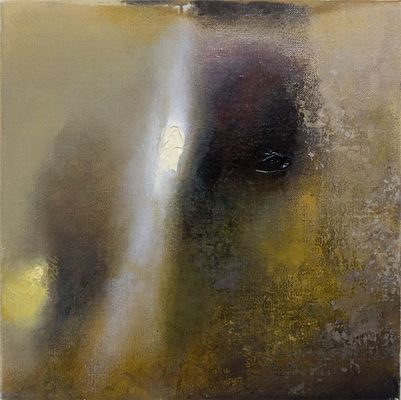
I am not a great reader of poetry but I always return to the work of Melbourne poet, Vincent Buckley (1925- 1988). Perhaps I find his most tantalising piece to be not a finished poem but a fragment left on a scrap of paper discovered on his desk after the poet’s death.
The poetry gathers like oil
In the word-core, and spreads
It has its music meet,
Its music is in movement.
This fragment is more the shell left behind from a volatile thought than a finished poem. I find the last two lines honest but awkward whereas the first two lines work like an arrow. Most likely he could not find a resolution so it was left. Still, in its present form, it remains an eloquent testimony to the ultimate failure of a medium to express mobile thought and sensation, in Buckley’s case, through verbal language. It’s an important matter because this is something all artists have to deal with regardless of the medium.
I have never written a poem, however, I am forever copying fragments from books on paper scraps in a vain effort to fix certain notions in my head. At first, they function as bookmarks that are sometimes returned to when I open the book. But before long, as they accumulate, they fall out littering the table interspersed with A4 photocopies, bills, books and medications.
To return to Buckley’s fragment, the first two lines very much evoke how I paint nowadays. As you age, detail diminishes and patches of light become more luminous and float. I feel the most honest way of dealing with this is by smearing the oil paint on the canvas with the fingers and working close-up, blind. Only if the patches coalesce into an approaching image can the work gain a life.
-
Jonathan Walker was born in Melbourne, Australia and brought up on a dairy farm in Gippsland. In the 1970’s he studied painting at RMIT and won the Harold Wright Scholarship to the British Museum, London. During the 1980’s he exhibited at Pinacotheca Gallery, Richmond and had work shown at the NGV and Heidi City Art Gallery. Over the same period he designed the cover for the “Epigenesi” LP by Giancarlo Toniutti, Italy and conducted a mail exchange work with Achim Wollscheid, Germany. The work with artists through the post resulted in an article published in the bicentenary issue of Art and Australia 1988. He showed in artist run spaces such as WestSpace in the 90’s and 2000’s, and until 2012, taught painting at Victoria University, which is where we (Colleen Ahern and Lisa Radford) as organisers of the exhibition, among many others, had the privilege of being his student.
Walker’s knowledge was imparted to students through the careful selection of music, literature, and artists found in books that he himself had ordered for the library. Walker’s strategy was the generosity of sharing his vast knowledge with references specific to each student and their context.
Walker’s paintings share a similar focus and intimacy.
This exhibition presents a small selection of recent paintings alongside a publication that includes Walker’s writing. Observational and analytical, Walker’s work is a type of material notation — the time of day, colour and how it is blended, the both specific and fleeting location of a reflection on lino or the question of whether a chair leg should be included in a painting.
Please join us on Friday August 21 between 6-8pm to celebrate the opening of the exhibition.
Curated by Colleen Ahern and Lisa Radford.
B. Wurtz
Curated by Nic Tammens
March 26 - April 4, 2015
B.Wurtz works from a basement studio in his home on Manhattan’s Lower East Side.
This local fact is attested to by the plastic shopping bags and newsprint circulars that appear in his work. As formal objects, they don’t make loud claims about their origins but nonetheless transmit street addresses and places of business from the bottom of this long thin island. Like plenty of artists, Wurtz is affected by what is local and what is consumed. His work is underpinned by this ethic. It often speaks from a neighborhood or reads like the contents of a hamper:
“BLACK PLUMS $1.29 lb.”
“Food Bazaar”
“USDA Whole Pork Shoulder Picnic 99c lb.”
“RITE AID Pharmacy, with us it’s personal.”
“H. Brickman & Sons.”
“Sweet Yams 59c lb."
Most of the work in this exhibition was made while the artist was in residence at Dieu Donne, a workshop dedicated to paper craft in Midtown. Here Wurtz fabricated assemblages with paper and objects that are relatively lightweight, with the intention that they would be easily transportable to Australia. This consideration isn’t absolute in Wurtz’s work, but was prescriptive for making the current exhibition light and cheap. Packed in two boxes, these works were sent from a USPS post office on the Lower East Side and delivered to North Melbourne by Australia Post.
Wurtz appears courtesy of Metro Pictures, New York.
Thanks to Rob Halverson, Joshua Petherick, Sari de Mallory, Matt Hinkley, Helen Johnson, Fayen d'Evie, Ask Kilmartin, Lisa Radon, Ellena Savage, Yale Union, and "Elizabeth".
John Nixon
"Archive"
December 15 - January 20, 2014
The presentation of John Nixon's archive offered a rare showcase of this extensive collection of the artist's own publications, catalogues, posters, ephemera, editions and more, from the mid 1980s onwards, alongside a selection of his artworks.
Organized by John Nixon, Joshua Petherick and Matt Hinkley.
<a href=http://wfb.public-office.info/artist/john-nixon>All titles by John Nixon
"Habitat"
at Minerva, Sydney (organised by Joshua Petherick and Matt Hinkley)
November 15 - December 20, 2014
Lupo Borgonovo, Janet Burchill & Jennifer McCamley,
Lewis Fidock, HR Giger, Piero Gilardi, Veit Laurent Kurz,
Cinzia Ruggeri, Michael E. Smith, Lucie Stahl, Daniel Weil, Wols
Press Release:
“...It contained seven objects. The slender fluted bone, surely formed for flight, surely from the wing of some large bird. Three archaic circuitboards, faced with mazes of gold. A smooth white sphere of baked clay. An age-blackened fragment of lace. A fingerlength segment of what she assumed was bone from a human wrist, grayish white, inset smoothly with the silicon shaft of a small instrument that must once have ridden flush with the surface of the skin - but the thing’s face was seared and blackened.”
William Gibson, “Count Zero”, 1986
"Autumn Projects Archive"
Curated by Liza Vasiliou
March 6 - March 15, 2014
World Food Books, in conjunction with the Virgin Australia Melbourne Fashion Festival 2014, presented the Autumn Projects archive, consisting of a selection of early examples in Australian fashion with a particular interest in collecting designers and labels from the period beginning in the 1980’s, who significantly influenced the discourse of Australian Fashion.
Curated by Liza Vasiliou, the exhibition provided a unique opportunity to view pieces by designers Anthea Crawford, Barbara Vandenberg, Geoff Liddell and labels CR Australia, Covers, Jag along with early experimental collage pieces by Prue Acton and Sally Browne’s ‘Fragments’ collection, suspended throughout the functioning World Food Books shop in Melbourne.
H.B. Peace
presented by CENTRE FOR STYLE
November 14, 2013
"Hey Blinky, you say chic, I say same"
Anon 2013
H.B. Peace is a clothing collaboration between great friends Blake Barns and Hugh Egan Westland. Their pieces explore the divergences between 'character’ and ‘personality’ in garments....etc
Special Thanks to Joshua Petherick and Matt Hinkley of WFB and Gillian Mears
and a Very Special Thank you to Audrey Thomas Hayes for her shoe collaboration.
Janet Burchill & Jennifer McCamley
"Aesthetic Suicide"
May 10 - June 8, 2013
The first of our occasional exhibitions in the World Food Books office/shop space in Melbourne, "Aesthetic Suicide" presented a body of new and older works together by artists Janet Burchill & Jennifer McCamley, including videos, prints, a wall work, and publications.
During shop open hours videos played every hour, on the hour.
1993, Japanese / English
Hardcover (w. dust jacket), 144 pages, 23 x 31 cm
1st Edition, Out of print title / used / very good
Published by
Libro Port Publishing Co. Ltd. / Tokyo
$200.00 - In stock -
Never to be missed, the first 1993 over-sized hardcover edition of Araki's incredible Erotos photo book, our favourite of his books. In this provocative work, controversial and legendary Japanese photographer Nobuyoshi Araki makes a radical departure from his usual portraits and cityscapes, zooming his lens in on his evocative subjects. An exquisitely printed collection of arrestingly primal close-ups of parts of the human body, as well as pipes, fruit, wet sidewalks, flowers, snails—Erotos delves deep into the erotic subconscious. Reproduced in gorgeous glossy duotone full-page bleed, bound in heavy gloss red, foiled hardcovers. A stunning book! Araki at his most surrealist. Highest recommendation.
Nobuyoshi Araki is a prolific Japanese photographer who has produced thousands of photographs over the course of his career. He became famous for “Un Voyage Sentimental” (1971), a series of photos depicting both banal and deeply intimate scenes of his wife and lifelong muse, essayist Aoki Yoko (whom the artist credits for making him a photographer), during their honeymoon. To date the 75 year old has produced 450 photo books and counting. With a repertoire that knows no boundaries, Araki's diaristic style of photography has captured the world around him (his cat Chiro, the people and landscapes of Japan and his travels, flowers, family), though it is Araki’s intensely sexual imagery that has elicited particular controversy and fascination throughout his career. Similarly to Helmut Newton, Araki has often addressed subversive themes — such as bondage in the Japanese style Kinbaku — in his provocative depictions of female nudes. He typically works in black-and-white photography, and his hallmark style is deliberately casual. “Rather than shooting something that looks like a professional photograph, I want my work to feel intimate, like someone in the subject’s inner circle shot them,” he says. Pushing against the world of commercialised photography, he is celebrated for his history of self-publishing and distributing his work, beginning with his Xerox Photo Albums of 1970. Amongst many others, Araki has collaborated with American photographer Nan Goldin and Icelandic musician Björk.
Very Good copy in Very Good dust jacket with small amount of wear and tear.
1989, Japanese
Softcover, (w. dust jacket + obi), 240 pages, 40 x 30 cm
1st Edition, Out of print title / used / very good
Published by
Mother Brain / Tokyo
$580.00 - In stock -
Very collectible, rare first 1989 edition of Araki's provocative and poetic photo book masterpiece "Tokyo Nude", published by Mother Brain. Wonderful, most complete copy in original dust jacket and publisher's obi, seldom preserved. This large-format photo book by Nobuyoshi Araki was shot with a Pentax 6x7. “Each double-page spread juxtaposes a nude photograph and a fragmentary scene of everyday life in Tokyo. Turning the pages, the reader becomes enveloped in a sense of erotic travel within the womb.”—Iizawa, Araki: Self, Life, Death.
"Every diptych is divided into an image of a woman (left) and a Tokyo scene (right). Upon first glance, this juxtaposition may seem illogical. By photographing these two subjects and placing them next to each other, Araki explores them in the same light. Moreover, although he often features Tokyo in his work, "Tokyo Nude" exposes the city's more quiet and vulnerable side, and explores parts of the city that are not often displayed. The desolation of these urban pictures is complemented by the distressed, unnerving and often bold expressions worn by the female bodies on the left side of the diptychs. These architectural images thereby connect with the exposed women who stand beside them. By capturing similar feelings of desolation and abandonment from both Tokyo and its women, Araki causes them to meld into one composition. As a result, one forgets they are looking at two photographs joined together, but rather begins to understand the series of Tokyo revealed or Tokyo "Nude"."—Yoshii Gallery
Very Good copy with VG dust jacket and VG obi, both light wear to extremities.
2010, English
Softcover (+ audio CD), 62 pages, 19 x 13 cm
1st Edition, Out of print title / as new
Published by
Thin Man Press / London
$65.00 - Out of stock
This is the first time Aragon's seminal 1924 French surrealist text has been published in English as a single volume. Aragon's extraordinary prose-poem-essay A Wave of Dreams (Une vague de reves), is a compelling, lyrical, first-hand account of the early days of surrealist experimentation in Paris. Writing in 1924, Aragon vividly describes, and philosophically evaluates, the inner adventures, the hallucinations and encounters with the 'Marvellous' which took the young surrealists to the brink of insanity as a revolutionary new era in Art History was born. Among Aragon’s companions in derangement are André Breton (whose own Surrealist Manifesto was preceded by this book), Max Ernst, Man Ray, Antonin Artaud, Robert Desnos, Georgio de Chirico, Philippe Soupault and Benjamin Peret.
This beautifully presented art book contains Susan de Muth’s translation of the text in English with an introduction by Dawn Ades.
The physical copy of A Wave of Dreams is accompanied by a complimentary CD of eight extracts from the test, spoken by actor Alex Walker, evocatively set in musical soundscapes by Tymon Dogg and Alex Thomas.
"A leftfield treat…mysteriously opaque and strangely lovely."—Thomas H Green, Daily Telegraph.
Fine—As New.
2007, Japanese
Softcover (w. dust jacket), 144 pages, 23 x 21.5 cm
1st Edition, Out of print title / used / very good
Published by
Esquire Magazine / Japan
$70.00 - In stock -
Scarce exhibition catalogue surveying the work of Czech Surrealist artists Jan Švankmajer & Eva Švankmajerová, published to accompany a major retrospective in Japan in 2007, where the artists work is most commonly exhibited. Eva Švankmajerová (1940 – 2005, b. Eva Dvořáková in Kostelec nad Černými lesy), was a renowned painter, ceramicist, and writer active in the Czech and Slovak Surrealist Group who's poetry and prose regularly appeared in the journal Analogon. Švankmajerová was married to the Surrealist filmmaker Jan Švankmajer (b. Prague, 1934) and collaborated on many of his award-winning animated masterpieces, including Alice (1988), Faust (1994), Conspirators of Pleasure (1996) and Otesánek (2000). Lavishly illustrated throughout, this catalogue includes Jan and Eva Švankmajer's independent and collaborative works, spanning painting, objects, collage, ceramics, poetry, graphics, and their highly acclaimed animated film works. Encompassing the entirety of the large-scale exhibition of over 200 works centered around the world of "Alice". Texts in Japanese by Hiroyuki Watanabe.
As New copy.
1948, English
Hardcover, 252 pages, 22 x 15 cm
1st Edition, Out of print title / used / good
Published by
Gerald G. Swan / London
$35.00 - Out of stock
1948 printing of the first English Gerald G. Swan hardcover edition of The Whip and The Rod by Prof. R. G. Van Yelyer, first printed in 1941. Illustrated throughout with plates of cruelty.
"Basically every form of corporal punishment may be traced to the human animal's penchant for cruelty, which expresses itself in the infliction of pain or humiliation whenever an opportunity presents itself."
"With regard to many of the habits and customs of mankind there is much dispute as to the exact time when they first made their appearance, but so far as whipping is concerned there can be no such dispute or contention. It is as old as mankind itself. All that ranks as debatable is the time when any one specific aspect or form of flagellation was initiated. For, like most things, flagellation is an art, capable of much development. The history of the whip, as will be evident from this treatise, shows strange evolutionary concepts."—from the introduction
Good copy with some marking to boards, foxing/tanning to block edges.
2003, English
Softcover, 164 pages, 14 x 21.5 cm
Out of print title / used / very good
Published by
Creation Books / London
$140.00 - Out of stock
Long out-of-print 2003 English edition of Eden, Eden, Eden - Pierre Guyotat's masterpiece of atrocity and obscenity.
The most subversive French novelist of the later 20th century, Pierre Guyotat (b. 1940) was the uncompromising heir of De Sade, Artaud, Rimbaud and Genet. Published in France in 1970 by Gallimard, with a preface by Michel Leiris, Roland Barthes and Philippe Sollers, Eden, Eden, Eden was greeted by both furore and acclaim. The book was immediately banned by the French government as pornographic. A campaign of international support for the book was signed by the like of Pier Paolo Pasolini, Jean-Paul Sartre, Pierre Boulez, Joseph Beuys, Pierre Dac, Jean Genet, Simone de Beauvoir, Joseph Kessel, Maurice Blanchot, Max Ernst, Italo Calvino, Jacques Monod, and Nathalie Sarraute. François Mitterrand and Georges Pompidou tried to get the ban lifted but failed until 11 years later when a newly elected President Mitterrand personally intervened to lift the ban in 1981.
Today Eden, Eden, Eden is recognised as one of the major works of the last century. In literally a single sentence, a desert-like, polluted, apocalyptic landscape of unending civil war unfolds without any morality (and therefore also without evil). This delirious, lacerating novel of startling innovation brings scenes of brutal carnage into intimate collision with relentless acts of prostitutional sex and humiliation.
'a new landmark and starting-point for new writing'—Roland Barthes
'I have never read anything like it in any stream of literature'—Michel Foucault
Very Good copy. Light corner bump, light crease to top back cover, otherwise Fine throughout.
1998, English
Softcover, 96 pages, 13.3 x 21.6 cm
1st Edition, Out of print title / used / very good
Published by
Creation Books / London
$140.00 - In stock -
First published anonymously in France in 1928, Irene's Cunt (Le Con d'Irène) by French poet and novelist Louis Aragon, under the pseudonym Albert de Routisie, is the last 'lost' masterpiece of Surrealist erotica. Like Georges Bataille's Story of the Eye (published the same year), Irene's Cunt is an intensely poetic account, the story of a man's torment when he becomes fixated upon the genitalia of an imaginary woman and is reduced to voyeuristically scoping 'her' erotic encounters. In between describing various events in brothels and other sexual adventures, Louis Aragon charts an inner monologue which is often reminiscent, in its poetic/surreal intensity, of the work of Lautreamont, and of Artaud in its evocation of physical disgust as the dark correlative to spiritual illumination.
This new edition features an exceptional and completely unexpurgated translation by Alexis Lykiard (translator of Lautreamont's Maldoror and Apollinaire's Les Onze Mille Verges), and includes complete annotation and an illuminating introduction.
"The finest of all works touching on eroticism" - Albert Camus
"One of the four or five most beautiful poetic works produced by Surrealism" - Jean-Jacques Pauvert
1994, English
Softcover, 182 pages, 20 x 12.5 cm
1st Edition, Out of print title / used / very good
Published by
Faber & Faber / London
$18.00 - Out of stock
The first 1994 softcover edition of the first comprehensive and authoritative account of the life and work of the man who changed the course of modern theatre. Antonin Artaud is one of the great cultural legends of the twentieth century. His Theatre of Cruelty altered the course of modern theatre, and his experiments with the Surrealist movement have proved inspirational throughout Europe and America.
But Artaud's life was one of terrible failure and confrontation, an exploration of the extremes of agony and joy. At the end of a long series of journeys - both physical and spiritual - aimed at creating a magical culture of the human body, he was arrested and interned for nine years in a succession of French lunatic asylums, where he suffered starvation and was subjected to fifty electroshock treatments.
Stephen Barber's book is a faithful and moving portrait of a unique figure.
VG copy with some page tanning light wear.
1975, English
Softcover, 174 pages, 18 x 11 cm
1st Edition, Out of print title / used / very good
Published by
Corgi / London
$28.00 - Out of stock
1975 Corgi English edition of Story of O, one of the most famous erotic novels of all time, by French literary critic, journalist, and novelist, Anne Cécile Desclos (1907—1998), under the pen name Pauline Réage. The original French text published in 1954 by Jean-Jacques Pauvert, with the first English translation published by Olympia Press in 1965.
"STORY OF O — notorious as an underground novel, remarkable as a rare instance of pornography sublimed to purest art — appeared first under mysterious circumstances at Paris in 1954 ... STORY OF O is neither a fantasy nor a case history. With its alternate beginnings and endings; its simple direct style (like that of a fable); its curious air of abstraction, of independence from time, place and personality, what it resembles most is a legend — the spiritual history of a saint and martyr. ... Commencing with the simplest of situations, the story gradually opens out into a Daedalian maze of perverse relationships — a clandestine society of sinister formality and elegance where the primary bond is mutual complicity in dedication to the pleasures of sadism and masochism...."—New York Times Book Review
In February 1955, Story of O won the French literature prize Prix des Deux Magots, but the French authorities still brought obscenity charges against the publisher. The charges were rejected by the courts, but a publicity ban was imposed for a number of years.
Only just before her death did the book's author Anne Desclos reveal her true identity in regards to the book. Jean Paulhan, the author's lover and the person to whom she wrote Story of O in the form of love letters, wrote the preface, "Happiness in Slavery". Paulhan admired the Marquis de Sade's work and told Desclos that a woman could not write like de Sade. Desclos took this as a challenge and wrote the book. Paulhan was so impressed that he sent it to a publisher. In the preface, he goes out of his way to appear as if he does not know who wrote it.
"A remarkable piece of work"—Harold Pinter
"I do believe that Pauline Réage has confounded all her critics and made pornography (if that is what it is) an art"—Brian Aldiss
"A rare thing, a pornographic book well written and without a trace of obscenity"—Graham Greene
"A highly literary and imaginative work, the brilliance of whose style leaves one in no doubt whatever of the author's genius... a profoundly disturbing book, as well as a black tour-de-force"—Spectator
"Here all kinds of terrors await us, but like a baby taking its mother's milk all pains are assuaged.
Touched by the magic of love, everything is transformed. STORY OF O is a deeply moral homily"
—J.G. Ballard
Very Good copy, light wear only,
1988, English
Softcover, 288 pages, 18 x 10.5 cm
Out of print title / used / very good
Published by
Corgi / London
$18.00 - Out of stock
1988 Corgi English edition of Story of O, one of the most famous erotic novels of all time, by French literary critic, journalist, and novelist, Anne Cécile Desclos (1907—1998), under the pen name Pauline Réage. The original French text published in 1954 by Jean-Jacques Pauvert, with the first English translation published by Olympia Press in 1965.
"STORY OF O — notorious as an underground novel, remarkable as a rare instance of pornography sublimed to purest art — appeared first under mysterious circumstances at Paris in 1954 ... STORY OF O is neither a fantasy nor a case history. With its alternate beginnings and endings; its simple direct style (like that of a fable); its curious air of abstraction, of independence from time, place and personality, what it resembles most is a legend — the spiritual history of a saint and martyr. ... Commencing with the simplest of situations, the story gradually opens out into a Daedalian maze of perverse relationships — a clandestine society of sinister formality and elegance where the primary bond is mutual complicity in dedication to the pleasures of sadism and masochism...."—New York Times Book Review
In February 1955, Story of O won the French literature prize Prix des Deux Magots, but the French authorities still brought obscenity charges against the publisher. The charges were rejected by the courts, but a publicity ban was imposed for a number of years.
Only just before her death did the book's author Anne Desclos reveal her true identity in regards to the book. Jean Paulhan, the author's lover and the person to whom she wrote Story of O in the form of love letters, wrote the preface, "Happiness in Slavery". Paulhan admired the Marquis de Sade's work and told Desclos that a woman could not write like de Sade. Desclos took this as a challenge and wrote the book. Paulhan was so impressed that he sent it to a publisher. In the preface, he goes out of his way to appear as if he does not know who wrote it.
"A remarkable piece of work"—Harold Pinter
"I do believe that Pauline Réage has confounded all her critics and made pornography (if that is what it is) an art"—Brian Aldiss
"A rare thing, a pornographic book well written and without a trace of obscenity"—Graham Greene
"A highly literary and imaginative work, the brilliance of whose style leaves one in no doubt whatever of the author's genius... a profoundly disturbing book, as well as a black tour-de-force"—Spectator
"Here all kinds of terrors await us, but like a baby taking its mother's milk all pains are assuaged.
Touched by the magic of love, everything is transformed. STORY OF O is a deeply moral homily"
—J.G. Ballard
Very Good copy, light wear only,
1971, English
Softcover, 160 pages, 18.5 x 12.5 cm
1st Edition, Out of print title / used / very good
Published by
Studio Vista / London
E P Dutton / New York
$20.00 - Out of stock
Lovely first print 1971 copy of the Studio Vista/Dutton Pictureback book on Symbolists and Decadents by John Milner. A profusely illustrated study, almost a concise accompaniment to Philippe Jullian's study the same year.
"Thinkers, writers and artists in late-nineteenth-century Europe were impelled by their distrust of the growing materialism of their age towards a search for truths that were of personal and universal significance. The artist embarked on an interior journey and endeavoured to represent his experience of it in an art that would give body and form to emotions and dreams.
Originally a literary movement, Symbolism was born out of this inward search as writers and artists portrayed the longings and nightmares which epitomized the preoccupations of the fin de siècle death and frustration, union and conflict of the sexes, cruel or superfluous beauty, the fatal woman, the siren and the sphinx.
In this new introduction to these fascinating and highly individual artists John Milner traces the Symbolist and Decadent movements from the forerunners in the Pre-Raphaelite movement through the Synthetists (Gauguin and the Pont-Aven group), the Rose +Croix, the German and Austrian Secessions, the personal and fantastic vision of artists such as Odilon Redon and Arnold Böcklin.
Both Symbolist and Decadent painters were concerned with the expression of ideas, mood and emotions. The Decadents, however, in their reaction to a pragmatist and materialist age, withdrew into an exclusive dandyism, and embraced the twin rituals of Catholicism and diabolism; while the search for significance in the forms of Symbolist art was the shadow of a seeking for meaning and spiritual experience in a time of good sense and clear-cut ideas.
Artists of France, Germany, Austria, Belgium, Holland and Britain are represented here with 115 compelling illustrations."
John Milner is a Lecturer in Art History at the University of Newcastle upon Tyne.
Very Good copy.
1990, Japanese
Softcover, 176 pages, 13 x 18 cm
1st Edition, Out of print title / used / very good
Published by
Fiction Inc. / Tokyo
$70.00 - In stock -
Issue No.40 of the great SALE2 periodical from Tokyo Japan, founded in 1984 by Makoto Orui, who later became art director for Purple magazine in France and Rockin’on magazine in Japan. SALE2 was active for about 14 years during the 1980s—1990s, published regularly as a sort-of fanzine/journal/catalogue/pocket-book by Fiction, Inc., a specialty shop and publisher of fetish and erotica in Tokyo in the 1980-90s. With Orui's distinct design SALE2 developed an exclusive curated editorial set on ‘eroticism and its spiritual philosophy’, with each issue exploring different themes and features, heavy on fetishism and erotic art.
Issue No.40, the "FREAKS" issue features writings and artwork throughout by Fictcryptokrimsographs by Les Krims, Amputee Love comic by Rich and Rene, Masami Akita (Merzbow), Odilon Redon, Joel-Peter Witkin, Hiromi Itō, Masaaki Oba, Diane Arbus, Erving Goffman, Pierre Molinier, lots of mysterious vintage "freak" and erotic imagery and illustration, and catalogue/advertisments/clippings of Eric Stanton, Irving Klaw, John Willie, Bizarre Comix, and much more...
Very heavily illustrated throughout with erotic photography and artwork, all texts in Japanese.
Very Good copy, tanning to pages and some wear to cover.
1980, English
Hardcover (w. dust jacket), 228 pages, 25 x 23 cm
1st Edition, Out of print title / used / very good
Published by
Barron's / Woodbury
$65.00 - In stock -
First US hardcover edition of this major retrospective look at Man Ray's photographic career, edited by Janus, profusely illustrated with a photograph per page, a full catalogue with English texts about the works, introduction essay by Janus, documents and texts translated to English by a who's who of Man Ray's world, Desnos, Picabia, Tzara, Breton, Gallotti, Hugnet, Eluard, Pierre Mac Orlan, and many more.
"The innovative eye of Man Ray explored the outer limits of photography with profound brilliance, wit and originality, transcending the medium as no photographer has done before or since. More than any other figure, he freed photography from the bonds of equipment and literal-minded technique. Often he would shed his camera altogether, as in the creation of his boldly abstract "rayographs" — compositions made by placing various objects directly on light-sensitive paper.
A member of that remarkable generation of artists and writers who found refuge in Paris between the two World Wars, Man Ray was an American (his real name remains unknown to this day), a founder of the radical Dada movement, and an important influence in the development of Surrealism. The artists who. associated with Man Ray, artists whose faces reappear as portraits in this retrospective al-bum, constitute a veritable Who's Who of Modernism: Pablo Picasso, Gertrude Stein, James Joyce, Arnold Schoenberg, Henri Matisse, Le Corbusier, Henry Miller, Salvador Dali.
This exciting and definitive collection of photo-graphs, approved by Man Ray during his final illness, includes a broad selection of critical essays by some of his eminent contemporaries — among them André Breton, Tristan Tzara, Marcel Duchamp, and Francis Picabia. The noted critic Janus, who edited this volume and supplied the detailed commentaries on each work, introduces the photographs with a provocative view of Man Ray as liberator. A generous sampling of Man Ray's own writings is included as well. But the core of this long-awaited book is the chronologically-arranged selection of 160 Man Ray photographs: the stylized, almost abstract portraits and nudes, the startling and brilliant rayographs, the experimental "solarizations" and clichés verrés.
To know Man Ray is to know the modern era. He was the epitome of the avant-garde spirit, "the experimenter par excellence." As Janus observes in the introductory essay, Man Ray is "a fixed point for understanding our century in all its profundity."
G—VG in G—VG dust jacket. Some foxing to initial pages, dustiness, light wear to dust jacket extremities, preserved under mylar wrap.
1970, Japanese
Softcover (staple-bound w. 2 x flexi-disc), 16 pages, 24.5 x 20.5 cm
1st Edition, Out of print title / used / very good
Published by
Asahi Sonorama / Tokyo
$150.00 - Out of stock
The Death of Yukio Mishima! is a special edition "Sounds Magazine" published in 1970 by Asahi Sonorama in Tokyo to commemorate the sudden, shocking death of Japanese writer Yukio Mishima, one of the most important postwar stylists of the Japanese language. Kimitake Hiraoka (b. 1925), known by his pen name Yukio Mishima, was a Japanese author, poet, playwright, actor, model, Shintoist, ultranationalist, and the leader of an attempted coup d'état on 25th November 1970 that culminated in his own spectacular suicide, in a traditional seppuku (hara-kiri), or samurai ritual disemboweling. He was 45 years old.
This commemorative magazine is entirely devoted to Mishima, published right after the news of his suicide, presenting two 7" flexi-discs compiling alarming, moment by moment audio recordings from the 25th November 1970 — announcements from the scene by the self-defense forces and the chief-of-police; the Shield Society members arrested for intruding; right-wing group salute to Mishima's spirit; Mishima's speech about his motivation for founding The Tatenokai (Shield Society) – a private militia dedicated to traditional Japanese values and veneration of the Emperor, his training in kendo and bodybuilding, the Japanese language; audio of Mishima's mentor and friend, Nobel Prize-winning novelist Yasunari Kawabata, rushing to the scene of the incident; nationalist politician and writer Shintaro Ishihara talks about Mishima’s death; a discussion about the life and death of Mishima at the Tokyo University; and more. The publication is full of photographs of Mishima performing and training, giving his speech on Nov 25, and a shocking crime scene image after the incident. It also reproduces the full text of his shield society manifesto.
VG copy, light wear to cover corners/edges, light page toning, flexi-discs likely unplayed.
1970, Japanese
Softcover, 170 pages, 25.5 x 18 cm
1st Edition, Out of print title / used / good
Published by
Shūkan Gendai / Tokyo
$50.00 - Out of stock
"Patriotic writer Yukio Mishima commits suicide!"
The special expanded December 1970 issue of Shūkan Gendai, entirely devoted to Japanese writer Yukio Mishima, one of the most important postwar stylists of the Japanese language. Kimitake Hiraoka (b. 1925), known by his pen name Yukio Mishima, was a Japanese author, poet, playwright, actor, model, Shintoist, ultranationalist, and the leader of an attempted coup d'état on 25th November 1970 that culminated in his own spectacular suicide, in a traditional seppuku (hara-kiri), or samurai ritual disemboweling. He was 45 years old. Published right after the news of his suicide, this special issue of the famous Shūkan Gendai magazine is packed with wonderful colour and monochrome photographs of the many faces of Mishima (on the stage, in the class-room, in the gym, the husband, the gay icon, the avant-garde, the militant), and brimming with political, cultural and biographical articles, interviews, and discussions about Mishima, his life and work, reproducing many of his written works, his essays and interviews, including the response to Mishima's death from 40 Japanese intellectuals, conversations with those closest to Mishima, the private and public, and Mishima's last words — his requests, orders, speeches, and his dying words. Hundreds of images throughout.
Good copy with wear and pinching to spine edge and cover extremities. Tanning to page edges.
1971, English
Hardcover (w. dust jacket), 104 pages, 20.5 x 13.5 cm
1st Edition, Out of print title / used / very good
Published by
Secker & Warburg / London
$450.00 - In stock -
Rare first English hardcover edition of Yukio Mishima's Sun and Steel, a masterpiece of modern Japanese literature, translated by John Bester, and published by Secker & Warburg, London, in 1971. With the iconic book jacket designed by Yukio Mishima.
In this fascinating document, one of Japan's best known-and controversial-writers created what might be termed a new literary form. Sun and Steel: Art, Action and Ritual Death (Japanese: 太陽と鉄, Hepburn: Taiyō to Tetsu) is an autobiographical essay, a memoir of the author's relationship to his body. It is new because it combines elements of many existing types of writing, yet in the end fits into none of them.
At one level, it may be read as an account of how a puny, bookish boy discovered the importance of his own physical being; the "sun and steel" of the title are themselves symbols respectively of the cult of the open air and the weights used in bodybuilding. At another level, it is a discussion by a major novelist of the relation between action and art, and his own highly polished art in particular. More personally, it is an account of one individual's search for identity and self-integration. Or again, the work could be seen as a demonstration of how an intensely individual preoccupation can be developed into a profound philosophy of life.
All these elements are woven together by Mishima's complex yet polished and supple style. The confession and the self-analysis, the philosophy and the poetry combine in the end to create something that is in itself perfect and self-sufficient. It is a piece of literature that is as carefully fashioned as Mishima's novels, and at the same time provides an indispensable key to the understanding of them as art.
The road Mishima took to salvation is a highly personal one. Yet here, ultimately, one detects the unmistakable tones of a self transcending the particular and attaining to a poetic vision of the universal. The book is therefore a moving document, and is highly significant as a pointer to the future development of one of the most interesting novelists of modern times.
"One of the twentieth century's outstanding statements of literary and personal purpose."—Library Journal
"Had we [read this before his suicide], the extravagant events surrounding his death would have been more readily comprehensible."—Sunday Times
YUKIO MISHIMA, one of the most spectacularly gifted writers in modern Japan, was born into a samurai family in 1925. Yukio Mishima was a Japanese author, poet, playwright, actor, model, Shintoist, nationalist, and founder of the Tatenokai ("Shield Society"), an unarmed civilian militia. Mishima is considered one of the most important Japanese authors of the 20th century. He was considered for the Nobel Prize in Literature in 1968. His works include the novels Confessions of a Mask and The Temple of the Golden Pavilion. Mishima's work is characterized by "its luxurious vocabulary and decadent metaphors, its fusion of traditional Japanese and modern Western literary styles, and its obsessive assertions of the unity of beauty, eroticism and death", according to author Andrew Rankin. In November 1970 he and his Tatenokai forced their way into a Self-Defense Force headquarters in Tokyo, where Mishima, after reading out a proclamation, committed ritual suicide with a young follower in the commanding officer's room. On the morning of his death, the last volume of Mishima's tetralogy, The Sea of Fertility (The Spring Snow, Runaway Horses, The Temple of Dawn, The Decay of the Angel) was delivered to his publisher.
The Translator, JOHN BESTER, born and educated in England, is one of the foremost translators of Japanese fiction. Among his translations are Masuji Ibuse's Black Rain, Kenzaburo Oe's The Silent Cry, Fumiko Enchi's The Waiting Years, and Junnosuke Yoshiyuki's The Dark Room. He received the 1990 Noma Award for the Translation.
Very Good copy in VG dust jacket. Light tanning, spots and edge wear. Well preserved copy.
1967 / 1974, English
Softcover (french-fold boards), 76 pages, 26.5 x 19 cm
1st Edition, Out of print title / used / fine
Published by
John Weatherhill / Tokyo
$290.00 - In stock -
Rare 1974 English edition of the first 1967 edition of Young Samurai: Bodybuilders of Japan, which was planned, designed and produced by John Weatherhill publishers in Tokyo in both Japanese (with original Japanese title "Taido (The Way of the Body)") and English language editions, preceding the more common Grove Press US re-print of 1967.
Japanese physique photography by one of Japan’s most noted photographers of homoerotic imagery, Tamotsu Yatō. For this celebrated collection of bodybuilding photographs, novelist Yukio Mishima not only contributed the introduction, in which he describes this as “the first collection of photographs of Japanese bodybuilders ever published”, but also modelled for some of the most memorable photographs. This was Yatō's first photo book.
"…for the past ten years and more there has been a group of young men in Japan who, privately, sweating silently, and with barbells for companions, have developed sturdy, well-proportioned physiques such as earlier Japanese never imagined even in dreams. The present book is eloquent testimony to their success. As the well-known essayist Michio Takeyama has written, it is amazing how faithfully the bodies of Japanese youths conform to the aesthetic standards of ancient Greece, and I am reminded of Lafcadio Hearn's having called the Japanese 'the Greeks of the Orient.'"
Includes an essay by Hitoshi Tamari, Managing Director of the Japan Bodybuilding Association.
Near Fine copy, beautifully preserved copy of the original publisher's English edition, printed in Japan.
1972 / 1979, English
Softcover, 88 pages, 20 x 12.8 cm
Out of print title / used / very good
Published by
Academy Editions / London
$30.00 - Out of stock
1979 revised edition of this 1972 book, an invaluable Alice reference edited by Graham Ovenden with an introduction by John Davis, published by Academy Editions. Profusely illustrated throughout in colour and b/w, expanded and revised.
"Rarely has an author been so successfully served by an illustrator as Carroll by Tenniel. Yet every decade has produced its own Alice. There have been Art Nouveau, Art Deco, Surrealist and Pop Alices. Virtually every year and in every major country a new illustrated edition of Wonderland and Through The Looking-Glass is published. This book contains a selection of some of the best and most interesting illustrations done over the last century.
Since first published in 1972, The Illustrators of Alice has become a minor classic and a valuable reference book. Reprinted several times, it is now presented revised and updated in a new format."
Very Good—NF copy.
1976, English
Softcover, 88 pages, 20 x 12.8 cm
1st Edition, Out of print title / used / good
Published by
Academy Editions / London
$30.00 - Out of stock
First 1976 edition of this book edited by Graham Ovenden, published by Academy Editions, profusely illustrated throughout with the work of Eleanor Vere Boyle, William Stephen Coleman and Richard Doyle in colour and b/w.
"Children's fairy tales are peopled with creatures who defy the descriptive powers of mere writers. Only a Victorian illustrator was capable of capturing the elusive nymphets and fairies who lived under mushrooms and inhabited adolescent dreams, and the drawings of E.V.B., William Stephen Coleman and Richard Doyle, all included in this panorama of whimsy, mark a high point in the depiction of childhood fantasies, mixing imaginative inspiration with delicate craftsmanship."
Good—VG copy with some light wear/light creasing to boards.
1908 / 1988, English
Hardcover, unpaginated, 24 x 19 cm
Out of print title / used / very good
Published by
William Heinemann / London
$100.00 - In stock -
A lovely 1988 hardcover reissue by William Heinemann, London, of the very collectible 1908 book of Shakespeare's 'A Midsummer Night's Dream' published with Arthur Rackham's stunning illustrations of the woodland realm of Fairyland. One Shakespeare’s most beloved plays and one of Rackham’s most sought after books, the weaving of magic and fairies perfectly suited to his style. Gold gilded clothbound hardcover with the original plastic slip cover. Profusely illustrated with the many b/w and colour plates by Rackham. Issued by the original 1908 publisher (Heinemann) this edition also now rather a scarce find.
Arthur Rackham RWS (1867—1939) was an English book illustrator. He is recognised as one of the leading figures during the Golden Age.
Very Good—Near Fine copy.
2002, English / Japanese
Hardcover (w. dust jacket), 92 pages, 22 x 15.5 cm
1st Edition, Out of print title / used / very good
Published by
Treville / Tokyo
Pan-Exotica / Tokyo
$420.00 - In stock -
First 2004 hardcover edition of this long out of print, highly sought after collection of photos by French photographer Irina Ionesco (1930-2022), published only in Japan. Wrapped in gold gilded dust jacket, "R" is comprised entirely of Ionesco's dream-like and excessive erotic photographs, prominently featuring daughter Eva in numerous guises (who graces the cover), with an afterword in English and Japanese by Kyoko Jumbo, historian of photography.
Irina Ionesco (1930-2022) was a French photographer celebrated for her unique style of dramatically lit, baroque, erotic female portraits, influenced by the Decadent movement, the poetry of Baudelaire, and the dream-like psycho-erotic imagery of Surrealism. Raised in Romania by her circus performing family, Ionesco herself spent the ages of 15 to 22 performing as a contortionist. She traveled and painted for several years before discovering photography and gained wide attention when she exhibited her work at the Nikon Gallery in Paris in 1974, leading to her work being published in magazines, books, and exhibited at galleries across the globe. Ionesco stirred controversy with her renowned nude portraits. Her work often features women in elaborate dress, bejewelled, gloved, and in other finery, but also adorning themselves with symbolic pieces such as chokers, clawed nails and other fetishistic props, posing provocatively like black widows — objects of deadly sexual desire. Ionesco is most famous for her photographs using her young daughter, Eva, as her model and muse, a decision that remains controversial to this day.
Very Good copy in VG dust jacket with some light jacket wear/light foxing to reverse. Preserved in mylar wrap.
1992, English
Softcover, 156 pages, 21 x 13.5 cm
1st Edition, Out of print title / used / good
Published by
Atlas Press / London
$100.00 - Out of stock
First English 1992 Atlas Press edition.
J.-K. Huysmans was the writer of the French fin de siècle. His masterpiece Against Nature — forever associated with the trial of Oscar Wilde — more or less defined the taste of the Decadents. Essentially a writer of disillusion, Huysmans’ books charts his autobiographical hero’s attempt, and failure, to find some meaning in life. Another novel La Bas (Down There) described the hero’s involvement in Satanism. Between these two seminal works Huysmans wrote another: Becalmed (En Rade) — it is their connecting link.
The protagonist of Becalmed seeks spiritual shelter in the countryside. He finds not rest but a nightmare — a gruesome crumbling house, peasants both stupid and cunning, and the landscape, indeed the whole natural world, in a ghastly state of decay. “A hemorrhage of ordure,” he calls it. His descriptions, of Gothic intensity, provide a total inversion of naturalism which is emphasized by the remarkable dream passages which intercut the novel.
In many ways this is Huysmans’ most extraordinary book, and despite its immediately following Against Nature, Zola called it “his most intense work”, and later André Breton celebrated it in his Anthology of Black Humour.
Good copy with light creasing and wear to cover extremities/corner, internally clean, very good copy with no spine creasing.
?, Japanese
Softcover, unpaginated, 18 x 10.8 cm
1st Edition, Out of print title / used / very good
Published by
Circlesha / Tokyo
$380.00 - In stock -
One of the rarest photo book collections by Japanese photographer Ikko Kagari, undated, published in Tokyo by Circlesha. Kagari made a number of these extraordinary, extremely questionable, surreptitious infrared photography collections in the 1980's—1990's, featuring secret "close-up photography" documenting clandestine sexual activities in public places — groping and upskirt photographs taken on packed Tokyo Metro commuter trains, in nightclubs, on escalators, couples making it in public toilets, parked cars and in parks with infrared strobe techniques reminiscent of Kohei Yoshiyuki's incredible Document Park (the two often featured side-by-side in books and journals).
"Two shadows moving in the darkness
In the dark night with no stars
a couple
They embrace each other without making a sound
A man's fingers groping the hem of a woman's miniskirt
Accurately captures sensitive areas.
A woman's suppressed voice of excitement
The woman's arms are wrapped around the man's back
The joy of the two reaches its peak."
Fingers of Darkness is cover-to-cover monochrome reproductions of Kagari's grainy, blown-out infrared images that blur all lines between voyeur/participant and simulated/real, make for disorientating, sometimes claustrophobic, uneasy viewing. But they are also absolutely stunning, often tender, very revealing, and incredibly effective photo books that feel as conceptual as they do devious. Included are many photo stories by Kagari, particularly those in the Tokyo parks at night — his erotic Hanami photographs ("Cherry Blossom Hunting") when the public ecstasy of sakura season reaches climax, plus many of his unseen "chikan" photographs ala "Document Commuter Train" but transferred into dark cinemas and public bathrooms. As featured in The Photobook: Vol. III, by Parr & Badger, Kagari's fleeting in flagrante scenes capture erotic desire and criminal impulse engulfed by the soft folds of entangled garment fabrics with stunning hidden camera technique. Groping for intimacy in the cold metropolis. He went so far as to publish a how-to book for amateurs!
Very Good copy.
1980, Japanese
Softcover (w. dust jacket), 114 pages, 26 x 21 cm
1st Edition, Out of print title / used / very good
Published by
Seven Sha / Tokyo
$550.00 - In stock -
Rare first edition of Kohei Yoshiyuki's cult classic photo book, Document: The Park (Document Park), published in 1980 by Seven Sha, Tokyo. Yoshiyuki's voyeuristic masterpiece, The Park is like no other photo book. A controversial volume of 74 photographs taken by the photographer using a 35mm camera, infrared film, and flash, Yoshiyuki documented a secret community of lovers and voyeurs who gathered in Shinjuku Park and Yoyogi Park between 1971 and 1973. His pictures document the people who gathered in these parks for clandestine trysts under the cloak of darkness, as well as the many spectators lurking in the bushes who watched—and sometimes participated in—these couplings. With their raw, snapshot-like quality, these images not only uncover the hidden illicit sexual encounters of their subjects, both homosexual and heterosexual, but they also serve as a chronicle of a Japan we rarely see. As Martin Parr writes in The Photobook: A History, Volume II, The Park is "a brilliant piece of social documentation, capturing perfectly the loneliness, sadness and desperation that so often accompany sexual or human relationships in a big, hard metropolis like Tokyo."
A beautifully printed book, with original dust-jacket. Includes two conversations with Kohei Yoshiyuki with Kenichi Matsumoto and Nobuyoshi Araki.
Kohei Yoshiyuki (b. 1946—2022) came to recognition in 1972 when material from his photo project “The Park” was featured in magazine Shukan Shincho, and a year later, in respected photo journal Camera Mainichi. However, it was the 1979 photo exhibition “The Park” at Komai Gallery and 1980 photo book “Document: The Park” that established him within the contemporary photographic landscape. Since then, Yoshiyuki was a recurrent fixture in Japan debauchery journal Super Photo Magazine along photographers: Nobuyoshi Araki, Daido Moriyama, Keizo Kitajima and Seiji Kurata.
Very Good copy in Good dust jacket with usual tanning to spine edge, wear to extremities, and dj corner tear hidden inside jacket fold (blank black area, not affecting any content). Otherwise a well preserved copy.