World Food Books' programme is largely produced on Kulin Nation land. We acknowledge the Wurundjeri people of the Kulin Nation as the first and continuing custodians of this land, and pay respect to their Elders past, present, and emerging.
World Food Books is an arts and special interests bookshop in Naarm / Melbourne. Founded in 2010, World Food Books is devoted to the presentation of a rotating, hand-selection of international art, design, literary and counterculture publications with an emphasis on the anti-traditional, the experimental, the avant-garde, the heretic, the marginal.
Presenting new titles alongside rare and out-of-print books, catalogues and journals spanning the fields of modern and contemporary art, design, photography, illustration, film, literature, poetry, cultural theory, philosophy, sexuality, popular and underground culture in its many radical forms, World Food Books wishes to encourage adventurous, thoughtful and open-minded reading, looking, writing, and exchange of publishing and ideas, both current and historical.
As well as our bookshop, located in Melbourne's historical Nicholas Building, all of our inventory is available internationally via our online mail-order service.
World Food Books semi-regularly co-ordinates "Occasions", a programme of exhibits and events at the bookshop and in partnership with other hosts (such as museums and art galleries) that develop out of the activities, relationships and content of the bookshop itself.
World Food Books
The Nicholas Building
37 Swanston Street
Room 5, Level 6
Melbourne 3000
Australia
SHOP HOURS:
Thu–Fri 12–6, Sat 12–5
WEB-SHOP OPEN 24/7
World Food Books
Postal Address:
PO Box 435
Flinders Lane
Victoria 8009
Australia
Art
Theory / Essay
Architecture / Interior
Graphic Design / Typography
Photography
Fashion
Eros
LGBTQ+
Fiction / Poetry
Weird / Speculative / Science Fiction / Horror
Transgressive / Visceral / Abject
Symbolism / Decadence / Fin de siècle
Film / Video
Painting
Sculpture / Installation
Performance / Dance / Theater
Drawing
Sound / Music
Curatorial
Group Shows / Collections
Periodicals
Out-of-print / Rare
Posters / Ephemera / Discs
Signed Books
World Food Books Gift Voucher
World Food Book Bag
Australian Art
Australian Fiction
Australian Science Fiction / Speculative Fiction
Australian Poetry
Australian Photography
Japanese Photography
Conceptual Art
Minimal Art
Dada
'Pataphysics / Oulipo
Fluxus
Concrete Poetry
Pop Art
Surrealism
Arte Povera
Arte Informale / Haute Pâte / Tachism
Nouveau Réalisme / Zero / Kinetic
Situationism / Lettrism
Collage / Mail Art / Xerox Art
Art Brut / Folk / Visionary / Fantastic
Illustration / Graphic Art / Bandes Dessinées
Furniture
Italian Radical Design / Postmodernism
Textiles
Ceramics / Glass
Counterculture
Protest / Revolt
Philosophy
Psychoanalysis
Anthropology
Anarchism
Socialism / Anarchism / Communism / Capitalism
Literary Theory / Semiotics / Language
Feminism / Women's Studies
Gender Studies / Sexuality
Anthropology
Fetishism / BDSM
Drugs / Psychedelia
Crime / Violence
Animal Rights / Veganism
Occult / Esoterica
Ecology / Earth / Alternative Living
Whole Earth / Crafts
All prices in AUD (Australian dollars)
Pick-Ups
Pick-up orders can be collected in our bookshop during opening hours after order date. Please collect any Pick-up orders within 2 weeks of ordering as we have limited storage space. Orders will be released back into stock if not collected within this time. No refunds can be made for pick-ups left un-collected. If you cannot make it in to the bookshop in this time-frame, please choose postage option.
Return Policy
All sales are final. We do accept returns (for refund or exchange) for items received in error. All our orders are packed with special care using heavy-duty padding and cardboard book-mailers or bubble mailers (for smaller books), using reinforcement where required. We cannot take responsibility for any lost, stolen or damaged parcels.
Insurance
Should you wish to insure your package, please email us directly after placing your order and we can organise this at a small extra expense. Although all standard/express tracked packages are very safe and dependable, we cannot take responsibility for any lost, stolen or damaged parcels. We recommend insurance on valuable orders.
Interested in selling your old books, catalogues, journals, magazines, comics, fanzines, ephemera? We are always looking for interesting, unusual and out-of-print books to buy. We only buy books in our fields of interest and specialty, and that we feel we can resell.
We base these prices on desirability, market value, in-print prices, condition and our current stock levels. We offer cash, store credit, and can take stock on consignment. All
about 25% of the price we expect to get when we sell them, or 30% in store credit. We base these prices on desirability, market value, in-print prices, condition and our current stock levels.
Sell your books any day of the week. You can drop them off and return later. If you have a lot of books, we can visit your Sydney home.
We buy books that we feel we can resell. We offer about 25 % of the price we expect to get when we sell them, or 30% in store credit. We base these prices on desirability, market value, in-print prices, condition and our current stock levels.
Philadelphia Wireman
03 August - 01 September, 2018
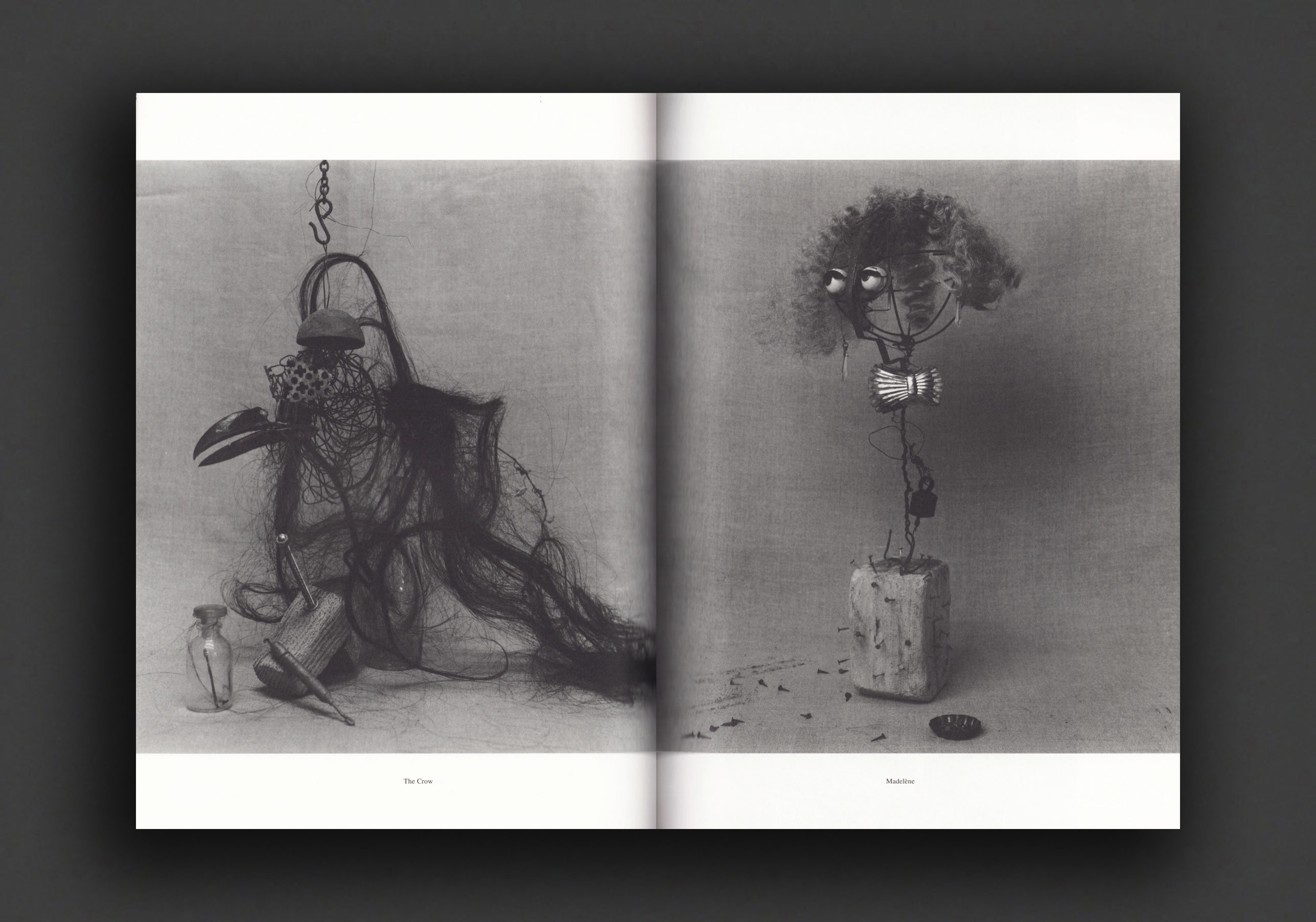
World Food Books is proud to announce our next Occasion, the first presentation of sculptures by Philadelphia Wireman in Australia.
The Philadelphia Wireman sculptures were found abandoned in an alley off Philadelphia’s South Street on trash night in 1982. Their discovery in a rapidly-changing neighbourhood undergoing extensive renovation, compounded with the failure of all attempts to locate the artist, suggests that the works may have been discarded after the maker’s death. Dubbed the "Philadelphia Wireman" during the first exhibition of this work, in 1985, the maker’s name, age, ethnicity, and even gender remain uncertain. The entire collection totals approximately 1200 pieces, all intricately bound together with tightly-wound heavy-gauge wire (along with a few small, abstract marker drawings, reminiscent both of Mark Tobey and J.B. Murry). The dense construction of the work, despite a modest range of scale and materials, is singularly obsessive and disciplined in design: a wire armature or exoskeleton firmly binds a bricolage of found objects including plastic, glass, food packaging, umbrella parts, tape, rubber, batteries, pens, leather, reflectors, nuts and bolts, nails, foil, coins, toys, watches, eyeglasses, tools, and jewellery.
Heavy with associations—anthropomorphic, zoomorphic, and socio-cultural responses to wrapped detritus—the totemic sculptures by Philadelphia Wireman have been discussed in the context of work created to fulfil the shamanistic needs of alternative religions in American culture. Curators, collectors, and critics have variously compared certain pieces to sculpture from Classical antiquity, Native American medicine bundles, African-American memory jugs, and African fetish objects. Reflecting the artist’s prolific and incredibly focused scavenging impulse, and despite—or perhaps enhanced by—their anonymity, these enigmatic objects function as urban artefacts and arbiters of power, though their origin and purpose is unknown. Philadelphia Wireman, whatever their identity, possessed an astonishing ability to isolate and communicate the concepts of power and energy through the selection and transformation of ordinary materials. Over the course of the past two decades, this collection has come to be regarded as an important discovery in the field of self-taught art and vernacular art.
Presented in collaboration with Fleisher-Ollman Gallery, Philadelphia, and Robert Heald, Wellington.
Susan Te Kahurangi King
02 February - 10 March, 2018
Susan Te Kahurangi King (24 February 1951 - ) has been a confident and prolific artist since she was a young child, drawing with readily available materials - pencils, ballpoint pens and felt-tip markers, on whatever paper is at hand. Between the ages of four and six Susan slowly ceased verbal communication. Her grandparents William and Myrtle Murphy had developed a special bond with Susan so they took on caring responsibilities for extended periods. Myrtle began informally archiving her work, carefully collecting and storing the drawings and compiling scrapbooks. No drawing was insignificant; every scrap of paper was kept. The King family are now the custodians of a vast collection containing over 7000 individual works, from tiny scraps of paper through to 5 meter long rolls.
The scrapbooks and diaries reveal Myrtle to be a woman of great patience and compassion, seeking to understand a child who was not always behaving as expected. She encouraged Susan to be observant, to explore her environment and absorb all the sights and sounds. Myrtle would show Susan’s drawings to friends and people in her community that she had dealings with, such as shopkeepers and postal workers, but this was not simply a case of a grandmother’s bias. She recognised that Susan had developed a sophisticated and unique visual language and sincerely believed that her art deserved serious attention.
This was an unorthodox attitude for the time. To provide some context, Jean Dubuffet coined the term Art Brut in 1945 to describe work created by self-taught artists – specifically residents of psychiatric institutions and those he considered to be visionaries or eccentrics. In 1972 Roger Cardinal extended this concept by adopting the term Outsider Art to describe work made by non-academically trained artists operating outside of mainstream art networks through choice or circumstance. Susan was born in Te Aroha, New Zealand in 1951, far from the artistic hubs of Paris and London that Dubuffet and Cardinal operated in. That Myrtle fêted Susan as a self-taught artist who deserved to be taken seriously shows how progressive her attitudes were.
Susan’s parents Doug and Dawn were also progressive. Over the years they had consulted numerous health practitioners about Susan’s condition, as the medical establishment could not provide an explanation as to why she had lapsed into silence. Dawn educated herself in the field of homeopathy and went on to treat all twelve of her children using these principles – basing prescriptions on her observations of their physical, mental and emotional state.
Doug was a linguist with an interest in philosophy who devoted what little spare time he had to studying Maori language and culture. To some extent their willingness to explore the fringes of the mainstream made them outsiders too but it was their commitment to living with integrity and their respect for individuality that ensured Susan’s creativity was always encouraged.
Even though Susan’s family supported her artistic pursuits, some staff in schools and hospitals saw it as an impediment to her assimilation into the community and discouraged it in a variety of ways. Her family was not always aware of this and therefore did not fully understand why Susan stopped drawing in the early 1990s. However, rather than dwell on the challenges that Susan faced in pursuit of her artistic practice, they prefer to highlight her achievements. In 2008 Susan began drawing again in earnest, after an almost 20 year interruption, and her work is now shown in galleries around the world.
Susan grew up without television and has been heavily influenced by the comics she read as a child. She is absolutely fearless in the appropriation of recognizable characters, such as Donald Duck and Mickey Mouse, in her work. She twists their limbs, contorts their faces, compresses them together, blends them into complex patterned backgrounds - always imbuing them with an incredible energy. Although Susan often used pop culture characters in her work they are not naive or childlike. These are drawings by a brilliant self-taught artist who has been creating exceptional work for decades without an audience in mind.
Mladen Stilinović
"Various Works 1986 - 1999"
02 February 16 - September 10, 2016
Various works 1986 - 1999, from two houses, from the collections of John Nixon, Sue Cramer, Kerrie Poliness, Peter Haffenden and Phoebe Haffenden.
Including: Geometry of Cakes (various shelves), 1993; Poor People’s Law (black and white plate), 1993; White Absence (glasses, ruler, set square, silver spoon, silver ladel with skin photograph and wooden cubes), 1990-1996; Exploitation of the Dead (grey and red star painting, wooden painting, black spoon with red table, red plate), 1984-1990; Money and Zeros (zero tie, paintings made for friends in Australia (Sue, John, Kerrie), numbers painting), 1991-1992; Words - Slogans (various t-shirts) - “they talk about the death of art...help! someone is trying to kill me”, “my sweet little lamb”, “work is a disease - Karl Marx”; Various artist books, catalogues, monographs, videos; Poster from exhibition Insulting Anarchy; "Circular" Croatian - Australian edition; Artist book by Vlado Martek (Dostoyevsky); more.
Thanks to Mladen Stilinović and Branka Stipančić.
Jonathan Walker
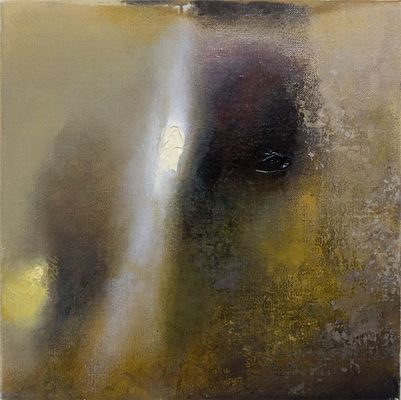
Always Will Need To Wear Winter Shirt Blue + Ochre Small Check Pattern
21 August - 21 September, 2015
Untitled
I am not a great reader of poetry but I always return to the work of Melbourne poet, Vincent Buckley (1925- 1988). Perhaps I find his most tantalising piece to be not a finished poem but a fragment left on a scrap of paper discovered on his desk after the poet’s death.
The poetry gathers like oil
In the word-core, and spreads
It has its music meet,
Its music is in movement.
This fragment is more the shell left behind from a volatile thought than a finished poem. I find the last two lines honest but awkward whereas the first two lines work like an arrow. Most likely he could not find a resolution so it was left. Still, in its present form, it remains an eloquent testimony to the ultimate failure of a medium to express mobile thought and sensation, in Buckley’s case, through verbal language. It’s an important matter because this is something all artists have to deal with regardless of the medium.
I have never written a poem, however, I am forever copying fragments from books on paper scraps in a vain effort to fix certain notions in my head. At first, they function as bookmarks that are sometimes returned to when I open the book. But before long, as they accumulate, they fall out littering the table interspersed with A4 photocopies, bills, books and medications.
To return to Buckley’s fragment, the first two lines very much evoke how I paint nowadays. As you age, detail diminishes and patches of light become more luminous and float. I feel the most honest way of dealing with this is by smearing the oil paint on the canvas with the fingers and working close-up, blind. Only if the patches coalesce into an approaching image can the work gain a life.
-
Jonathan Walker was born in Melbourne, Australia and brought up on a dairy farm in Gippsland. In the 1970’s he studied painting at RMIT and won the Harold Wright Scholarship to the British Museum, London. During the 1980’s he exhibited at Pinacotheca Gallery, Richmond and had work shown at the NGV and Heidi City Art Gallery. Over the same period he designed the cover for the “Epigenesi” LP by Giancarlo Toniutti, Italy and conducted a mail exchange work with Achim Wollscheid, Germany. The work with artists through the post resulted in an article published in the bicentenary issue of Art and Australia 1988. He showed in artist run spaces such as WestSpace in the 90’s and 2000’s, and until 2012, taught painting at Victoria University, which is where we (Colleen Ahern and Lisa Radford) as organisers of the exhibition, among many others, had the privilege of being his student.
Walker’s knowledge was imparted to students through the careful selection of music, literature, and artists found in books that he himself had ordered for the library. Walker’s strategy was the generosity of sharing his vast knowledge with references specific to each student and their context.
Walker’s paintings share a similar focus and intimacy.
This exhibition presents a small selection of recent paintings alongside a publication that includes Walker’s writing. Observational and analytical, Walker’s work is a type of material notation — the time of day, colour and how it is blended, the both specific and fleeting location of a reflection on lino or the question of whether a chair leg should be included in a painting.
Please join us on Friday August 21 between 6-8pm to celebrate the opening of the exhibition.
Curated by Colleen Ahern and Lisa Radford.
B. Wurtz
Curated by Nic Tammens
March 26 - April 4, 2015
B.Wurtz works from a basement studio in his home on Manhattan’s Lower East Side.
This local fact is attested to by the plastic shopping bags and newsprint circulars that appear in his work. As formal objects, they don’t make loud claims about their origins but nonetheless transmit street addresses and places of business from the bottom of this long thin island. Like plenty of artists, Wurtz is affected by what is local and what is consumed. His work is underpinned by this ethic. It often speaks from a neighborhood or reads like the contents of a hamper:
“BLACK PLUMS $1.29 lb.”
“Food Bazaar”
“USDA Whole Pork Shoulder Picnic 99c lb.”
“RITE AID Pharmacy, with us it’s personal.”
“H. Brickman & Sons.”
“Sweet Yams 59c lb."
Most of the work in this exhibition was made while the artist was in residence at Dieu Donne, a workshop dedicated to paper craft in Midtown. Here Wurtz fabricated assemblages with paper and objects that are relatively lightweight, with the intention that they would be easily transportable to Australia. This consideration isn’t absolute in Wurtz’s work, but was prescriptive for making the current exhibition light and cheap. Packed in two boxes, these works were sent from a USPS post office on the Lower East Side and delivered to North Melbourne by Australia Post.
Wurtz appears courtesy of Metro Pictures, New York.
Thanks to Rob Halverson, Joshua Petherick, Sari de Mallory, Matt Hinkley, Helen Johnson, Fayen d'Evie, Ask Kilmartin, Lisa Radon, Ellena Savage, Yale Union, and "Elizabeth".
John Nixon
"Archive"
December 15 - January 20, 2014
The presentation of John Nixon's archive offered a rare showcase of this extensive collection of the artist's own publications, catalogues, posters, ephemera, editions and more, from the mid 1980s onwards, alongside a selection of his artworks.
Organized by John Nixon, Joshua Petherick and Matt Hinkley.
<a href=http://wfb.public-office.info/artist/john-nixon>All titles by John Nixon
"Habitat"
at Minerva, Sydney (organised by Joshua Petherick and Matt Hinkley)
November 15 - December 20, 2014
Lupo Borgonovo, Janet Burchill & Jennifer McCamley,
Lewis Fidock, HR Giger, Piero Gilardi, Veit Laurent Kurz,
Cinzia Ruggeri, Michael E. Smith, Lucie Stahl, Daniel Weil, Wols
Press Release:
“...It contained seven objects. The slender fluted bone, surely formed for flight, surely from the wing of some large bird. Three archaic circuitboards, faced with mazes of gold. A smooth white sphere of baked clay. An age-blackened fragment of lace. A fingerlength segment of what she assumed was bone from a human wrist, grayish white, inset smoothly with the silicon shaft of a small instrument that must once have ridden flush with the surface of the skin - but the thing’s face was seared and blackened.”
William Gibson, “Count Zero”, 1986
"Autumn Projects Archive"
Curated by Liza Vasiliou
March 6 - March 15, 2014
World Food Books, in conjunction with the Virgin Australia Melbourne Fashion Festival 2014, presented the Autumn Projects archive, consisting of a selection of early examples in Australian fashion with a particular interest in collecting designers and labels from the period beginning in the 1980’s, who significantly influenced the discourse of Australian Fashion.
Curated by Liza Vasiliou, the exhibition provided a unique opportunity to view pieces by designers Anthea Crawford, Barbara Vandenberg, Geoff Liddell and labels CR Australia, Covers, Jag along with early experimental collage pieces by Prue Acton and Sally Browne’s ‘Fragments’ collection, suspended throughout the functioning World Food Books shop in Melbourne.
H.B. Peace
presented by CENTRE FOR STYLE
November 14, 2013
"Hey Blinky, you say chic, I say same"
Anon 2013
H.B. Peace is a clothing collaboration between great friends Blake Barns and Hugh Egan Westland. Their pieces explore the divergences between 'character’ and ‘personality’ in garments....etc
Special Thanks to Joshua Petherick and Matt Hinkley of WFB and Gillian Mears
and a Very Special Thank you to Audrey Thomas Hayes for her shoe collaboration.
Janet Burchill & Jennifer McCamley
"Aesthetic Suicide"
May 10 - June 8, 2013
The first of our occasional exhibitions in the World Food Books office/shop space in Melbourne, "Aesthetic Suicide" presented a body of new and older works together by artists Janet Burchill & Jennifer McCamley, including videos, prints, a wall work, and publications.
During shop open hours videos played every hour, on the hour.
1989, English
Softcover, 262 pages, 18 x 11 cm
1st Edition, Out of print title / used / very good
Published by
New English Library / London
$15.00 - Out of stock
"Do bodices get ripped in outer space!
How can you form a
meaningful relationship in a state of weightlessness or get serious in zero gravity?
Which bit goes where when you're talking chlorine-breathing polyps?
Does the earth still move when you're beyond the stars?
Pretty fundamental questions.
It was a late-night bar after a writers' conference when, as can happen, the subject of sex and SF came up. Imaginations were lubricated. Fingers began to itch in anticipation of the firm but yielding touch of the keyboard. The idea became a concept. Another round was bought. The concept hardened into a project.
Arrows of Eros was conceived..."
1989 New English Library edition of this Sci-Fi/Horror/Eros anthology edited by Alex Stewart featuring stories by Brian Stableford, David Langford, Anne Gay, Iain M. Banks, Geraldine Harris, Kim Newman, Tanith Lee, Chris Morgan, Freda Warrington, Alex Stewart, Paul Kincaid, Garry Kilworth, Stephen Gallagher, Diana Wynne Jones, Christina Lake, Simon Ounsley.
"Challenged to produce original stories of SF, fantasy and horror in some way related to sexual-ity, the contributors to this volume cover almost the entire field of modern speculative writing. Fantasist Geraldine Harris appears next to the maverick talents of lain M. Banks, Stephen Gallagher's mastery of horror mingles with Brian Stableford's traditional SF approach, and established stars like Garry Kilworth and Tanith Lee stand alongside newcomer Paul Kincaid's first major sale. The new generation actually accounts for seven of the sixteen stories in this collection, in itself something that could hardly have been contemplated a year or two ago. All that really matters, though, is that the stories themselves are entertaining. So now, if you dare, follow our sixteen contributors into the shadows cast by the dark side of sex ..."
Good—VG copy with light tanning the ages, light wear/creasing to covers, sticker damage to barcode area of back cover. Previous inscription clipped from top corner of first page.
1979, English
Hardcover (w. dust jacket), 220 pages, 21.5 x 14 cm
1st Edition, Out of print title / used / good
Published by
Norstrilia Press / Brunswick
$35.00 - Out of stock
First 1979 hardcover edition of Keith Antill's 'Moon in the Ground', published by Norstrilia Press and cover artwork by Stephen campbell. Alick Keith Antill (b. Perth 1929—1999) was an Australian broadcaster and author whose sf novel, 'Moon in the Ground', involves an unpleasant US military intelligence unit battling to extract an Alien AI from Australia's Northern Territory. The Australians (and the Russians) resist.
"What is really happening at the famous and very secret US base just outside of Alice Springs? Communications with satellites . . . or communications with Pandora? And who is Pandora? An ancient Aboriginal god, the origin of the Rainbow Snake legends from the dreamtime? A computer with a quirky sense of humour? A vanguard of an interstellar invasion fleet? Or is the reality much simpler . . . and much more dangerous?'
Norstrilia Press is a small press established in 1975 prior to Aussiecon, Australia's first world science fiction convention, by Rob Gerrand, Bruce Gillespie and Carey Handfield. Specialising in science fiction and speculative fiction, they published books by Gerald Murnane, Greg Egan, George Turner, Damien Broderick, Roger Zelazny, and many others.
Good copy in Good dust jacket with wear to extremities and discolouration to spine edge, closed tears. Book VG with some dustiness to top of block.
1990, English
Softcover, 122 pages, 21 x 13.5 cm
1st Edition, Out of print title / used / very good
Published by
Atlas Press / London
$70.00 - Out of stock
Rare first 1990 English Atlas Press edition, published in an edition of 1000 copies.
Introduced by Antony Melville. Translated by Jon Graham.
Perhaps the most important Surrealist automatic text, The Immaculate Conception (1930) traces the interior and exterior life of man from Conception and Intra-Uterine Life to Death and The Original Judgement. The central section is a celebrated series of “simulations” of various types of mental instability.
Maurice Nadeau (in The History of Surrealism) described the book as “An astonishing series of poems in prose, more brilliant than those of either Breton or Eluard on his own … if all that remained of the Surrealist movement were the pages of The Immaculate Conception, man, alerted, could not turn away from the astounding mystery of his condition.”
Very Good copy some wear/light creasing to covers.
2001, Japanese
Hardcover (w. dust jacket), unpaginated, 25.5 x 19 cm
1st Edition, Out of print title / used / fine
Published by
Shueisha / Japan
$90.00 - In stock -
First 2001 hardcover edition of this special book edition published by Weekly Playboy in Tokyo, a collection of nude photography by Japanese photographer Noboru Nakamura of "Beautiful Women from far Away Countries". Yugoslavia, Hungary, Poland, Romania, Czech, Slovakia. Full colour gloss reproductions with many photographs of each model.
Fin copy in Fine dust jacket.
1966, English
Hardcover (w. dust jacket), 320 pages, 22 x 15 cm
1st UK Edition, Out of print title / used / good
Published by
Anthony Blond / London
$80.00 - Out of stock
Rare first UK 1966 hardcover edition of Genet's classic, translated from French by Gregory Streatham, published by Anthony Blond, London.
Jean Genet, French playwright, novelist and poet, turned the experiences in his life amongst pimps, whores, thugs and other fellow social outcasts into a poetic literature, with an honesty and explicitness unprecedented at the time. Widely considered an outstanding and unique figure in French literature, Genet wrote five novels between 1942 and 1947. Querelle of Brest is widely considered to be Jean Genet's most accomplished novel, which was made into a film by Rainer Werner Fassbinder in 1982. Querelle, a young sailor at large in the port of Brest, is an object of illicit desire to his diary-keeping superior officer, Lieutenant Seblon. He is coveted, too, by corrupt policeman Mario. He gives himself freely both to brothel-keeper Madame Lysiane and to her husband. But Querelle is a thief and a murderer -- not a man to be trusted or trifled with . . .
Jean Genet, (born Dec. 19, 1910, Paris, France-died April 15, 1986, Paris), French criminal and social outcast turned writer who, as a novelist, transformed erotic and often obscene subject matter into a poetic vision of the universe and, as a dramatist, became a leading figure in the avant-garde theatre, especially the Theatre of the Absurd.
Good copy in Good dust jacket, some wear to dj extremities, small closed tears, foxing to block edge and inner dj. Preserved in mylar wrap.
1972, Japanese
Hardcover (w. dust jacket), unpaginated, 21.5 x 15.5 cm
1st Edition, Out of print title / used / very good
Published by
Tankikai / Tokyo
$180.00 - Out of stock
Very rare and incredible 1972 hardcover collection of Kinbaku (Japanese Bondage) art edited by Mikasa Shobo and published with Tankikai, Tokyo. Cover to cover artworks by Japanese underground masters who have refined the beauty of masochism and carried on the legacy of Japanese Shibari-e eroticism as pioneered by Seiu Ito into the 1960s-70s. Beautiful b/w reproductions of rare artworks by Ayako Nakagawa, Yoji Muku, Akira Kito, Akira Kasuga, Kohinata Ichiyume, Ishizuka Yoshiyuki, Okishiji, Yamada Akihiro, and many more.
Seldom seen, highly recommended.
VG copy in VG dust jacket with minor wear to extremities of DJ.
1996, Japanese
Hardcover (clothbound), 136 pages, 27 x 21.6 cm
1st Edition, Out of print title / used / very good
Published by
NG Publication / Tokyo
$600.00 - Out of stock
Very rare, highly sought after first book, Danse Macabre To The Hardcore Works, by Japanese "corpse photographer" Kiyotaka Tsurisaki, published by NG Publication (imprint of editor Kotaro Kobayashi — Too Negative, Ultra Negative, ORG, etc.) in 1996 in an edition of 1000 copies. This deluxe clothbound hardcover volume contains an unwavering, unapologetic look at death, collecting Tsurisaki's first works (a three year survey) bound together in glossy full-colour. Most never before published, the book includes his first published photographs from the second issue of Kobayashi's Too Negative magazine. Since 1994, Japanese photographer, film director, and writer Kiyotaka Tsurisaki (b. 1966) has become known for prolifically photographing dead bodies; his images of death and conflict from global "hot-spots" earning him a reputation as a leading underground photographer. For Kiyotaka’s raw photo-journalistic practice he habitats disaster areas, accident sites and war zones, locations where society has collapsed to seek out and photograph man's ultimate taboo — death. Many of these people met with violent ends, whether by vehicle crash, homicide, or suicide. The images are stark, confronting, bleak and profound. Tsurisaki also brings the viewer into morgues and forensics labs, where the macabre work of embalming and autopsy is unapologetically documented. His work has led him from Fukoshima and Japan’s suicide forest Aokigahara, Thailand, Colombia, Mexico, Russia, and Palestine, as well as other lawless or war-torn parts of the world, to photograph human corpses. In El Cartucho, Bogota, Kiyotaka filmed the shockumentary Orozco The Embalmer (2001) — a now cult classic in its genre, alongside his Junk Films (2007) and Wasteland (2012). Tsurisaki has published several photo books and authored Book Of The Dead (2011), and The Dogs of the Nuclear War: A Chronicle Of The Fukushima Daiichi Nuclear Power Plant (2017).
Very Good—Near Fine copy.
1977, German
Hardcover (clothbound w. screen-printed vinyl dust jacket in publisher's slipcase), 1330 pages, 44.5 x 33.5 cm
1st UK Edition, Out of print title / used / fine
Published by
S. Fischer Verlag / Frankfurt am Main
$400.00 - In stock -
The stunning 1977 hard cover, slip-cased facsimile reproduction of Schmidt's epic manuscript of Zettel's Traum (Bottom's Dream), comprising 1334 leaves and published by S. Fischer Verlag, Frankfurt am Main. Since its publication in 1970 Zettel’s Traum/Bottom’s Dream has been regarded as Arno Schimdt’s magnum opus, as the definitive work of a titan of postwar German literature. Schmidt's gargantuan novel was published in this collector's facsimile folio format just as Schmidt created it — the un-type-settable story is told mostly in three shifting columns, presenting the text in the form of collages, typewritten pages and marginalia. Bound in cloth hardcover with wrap-around thick vinyl dust jacket with screen-printed colour artwork, in publisher's original cardboard slipcase with attached paper spine label, this edition of Schmidt's "superbook" presents the reader with it's true character, beautifully reproduced on warm paper stock.
Bottom's Dream (German: Zettels Traum or ZETTEL'S TRAUM as the author wrote the title) is a novel published in 1970 by West German author Arno Schmidt. Schmidt began writing the novel in December 1963 while he and Hans Wollschläger were translating the works of Edgar Allan Poe into German. The novel was inspired by James Joyce's novel Finnegans Wake, particularly Schmidt's use of columns (his "SpaltenTechnik"), which Schmidt claimed was borrowed from the Wake. It tells the love story between the aging writer Daniel Pagenstecher and the sixteen-year-old Franziska Jacobi, and also tells the life and work of Edgar Allan Poe. He develops his own literary theory in the tradition of Sigmund Freud and, as if by chance, develops a new orthography. In Zettels' Dream, Arno Schmidt's efforts to create a modern prose form and an appropriate linguistic representation of human consciousness reach their preliminary climax.
Arno Schmidt, in full Arno Otto Schmidt, (b. 1914—1979), novelist, translator, and critic, whose experimental prose established him as the preeminent Modernist of 20th-century German literature. With roots in both German Romanticism and Expressionism, he attempted to develop modern prose forms that correspond more closely to the workings of the conscious and subconscious mind and to revitalize a literary language that he considered debased by Nazism and war. The influence of James Joyce and Sigmund Freud are apparent in both a collection of short stories, Kühe in Halbtrauer (1964; Country Matters), and, most especially, in Zettels Traum (1970; Bottom’s Dream)—a three-columned, more than 1,300-page, photo-offset typescript, centring on the mind and works of Poe. It was then that Schmidt developed his theory of “etyms,” the morphemes of language that betray subconscious desires. Two further works on the same grand scale are the “novella-comedy” Die Schule der Atheisten (1972; School for Atheists) and Abend mit Goldrand (1975; Evening Edged in Gold), a dream-scape that has as its focal point Hiëronymus Bosch’s Garden of Earthly Delights and that has come to be regarded as his finest and most mature work. Schmidt was a man of vast autodidactic learning and Rabelaisian humour. Though complex and sometimes daunting, his works are enriched by inventive language and imbued with a profound commitment to humanity’s intellectual achievements.
Near Fine copy in VG DJ, VG slipcase with light wear/toning.
BEWARE: This might be the heaviest book in our bookshop, so precise shipping costs will be applied if inaccurate.
1996, Japanese
Softcover, 30 bound postcards, 15.5 x 11.7 cm
1st Edition, Out of print title / as new
Published by
Little More / Tokyo
$480.00 - In stock -
Very rare early book of portraits of Tokyo teenagers by leading Japanese photographer Takashi Homma (b. 1962 in Tokyo, Japan). This special publication features around 30 selected photographs of Homma's iconic and very influential early 1990's photography bound into one volume in the form of thick perforated postcards. These images of Tokyo teens, along with images of their bedrooms and Shibuya / Harajuku street surrounds, are emblematic of Homma's work of the period, known in the West through Purple magazine, etc. Following in the spirit of Provoke photographers such as Araki, Moriyama, and Nakahira, Homma created a new photographic expression for Tokyo at the end of the century. Homma's photography would become a great influence on the fashionable 1990's girly photo boom of Hiromix and Yurie Nagashima, etc.
Fine—As New copy, all postcards still bound, vinyl cover sticker still attached as issued.
1995, Japanese
Softcover, 80 pages, 25 x 23 cm
1st Edition, Out of print title / used / very good
Published by
Little More / Tokyo
$120.00 - Out of stock
Scarce first book by leading Japanese photographer Takashi Homma (b. 1962 in Tokyo, Japan). Babyland, published in 1995, was released in conjunction with an exhibition of the same name at Parco Gallery, Tokyo, launching the career of one of Japan's most influential and acclaimed photographers. The book collects Homma's photographs taken between 1993 and 1995, including his Tokyo Teens series and portraits of Kim Gordon, Mike Kelley and Nan Goldin, amongst others. A beautiful book of Homma's distinctively subdued, atmospheric photography that created a new photographic expression for Tokyo at the end of the century.
Very Good—Near Fine copy, complete with booklet insert and publisher's inlaid promotional materials. Text is a dialogue between Kyoko Okagaki and Homma
1991, Italian / English
Hardcover, 50 pages, 30 x 22 cm
Edition of 1250 numbered copies,
1st Edition, Out of print title / used / very good
Published by
Alessi / Italy
$200.00 - Out of stock
First (limited, numbered) edition book by Andrea Branzi "Il Dolce Stil Novo (della Casa)", published in 1991 on the occasion of a very special exhibition featuring works by Lapo Binazzi, Denis Santachiara, Shiro Kuramata, Andrea Branzi, Ettore Sottsass Jr., Massimo Iosa Ghini, Remo Buti, George Sowden, and Borek Sipek. The book collects the reflections of this group of architects of different ages, cultures and backgrounds who were called upon to realize a group of domestic landscapes in the large empty rooms of Palazzo Strozzi Firenze. "Auto-biographical, poetic or theoretical reflections take the viewer and reader to the central point of the project in question: a person's home. That is, our survival within the artistic universe that surrounds us, within the violence and the vulgarity of our times, in the expropriation and eradication of intrusive streams of information. Building a house for man means building a place and objects within it which make it possible to establish relationships not only of use and functionality, but also of a psychological, symbolic, and poetic nature. Holderlin said, "Man lives poetically," which means the relationship that binds man to his nest is of a nature, literary, partly obscure, and symbolic." — translated roughly from the Italian introduction by Andrea Branzi, 1990.
This handsome hardcover book (faux leather with de-bossed Branzi illustrated plate) compiled by Branzi himself feels more like an artist's book than an exhibition catalogue, beautifully reproducing intimate drawings, texts, conversations, photographs by the contributors, and printed in an edition of 1250 numbered copies. This copy is number stamped no. 830.
Very Good copy.
1984, English
Softcover, 184 pages, 27 x 21 cm
1st Edition, Out of print title / used / fine
Published by
Frölich & Kaufmann / Berlin
$90.00 - In stock -
First hardcover edition of Design Als Gegenstand (Design as an object), published only in Germany to showcase many of the leading contemporary/radical designers of the early 1980s, visually documenting many incredible and seldom seen works of furniture, industrial objects, electronics, exhibition design, textiles, etc. through object and installation photography, alongside reproductions of design sketches and German texts.
Includes the work of Adolfo Natalini, Thomas S. Bley, Daniele Puppa, Franco Raggi, One Off, Studio Alchimia, Sacha Ketoff, Piero Castiglioni, Winfried Scheuer, Lux, Rouli Lecatsa, Borek Sipek, Paolo Deganello, Lapo Binazzi, Florian Borkenhagen · Harald Krischer, Javier Mariscal, Andrea Branzi, Studio Dada, David Palterer, Ettore Sottsas Jr, Bepi Maggiori, Marco Zanuso Jr., Antonia Astori De Ponti, Denys Santachiara, Juma Francisco, Michele De Luchhi, Nemo, Paola Navone, Jasper Morrison, Zak Ark, Maurizio Corrado, Martine Bedin, Daniel Weil, Totem, Bellefast, Claus Böhmler, Rainer Krause, George James Sowden, Tom Lynham & Lee Curtis, Nathalie Du Pasquier, Jörg Ratzlaff, Dirk Staubert, Matteo Thun.
NF in NF dust jacket.
1990, English
Hardcover (w. dust jacket), 192 pages, 22.5 x 26 cm
1st Edition, Out of print title / used / very good
Published by
Rizzoli / New York
$140.00 - Out of stock
First 1988 UK hardcover edition of this excellent book that was issued in variant cover colours, depending on country. The UK edition being a much smaller run to the US edition, and the best colour variant, in our opinion.
An international selection of over 400 objects (over 500 illustrations) such as tableware, furniture, jewellery, glassware and light fixtures designed by more than 50 leading architects. The book provides a cross-section of original ideas to be found in the best of modern design and aims to show the powerful influence that architects continue to have on industrial and furniture design. Furniture and lighting by Norman Foster, tableware by Sottsass, Robert Stern and Venturi, jewellery by Arata Isogaki and Stern, furniture by Ambasz, Mario Botta, Michael Graves and Richard Meier are some of the artefacts included in this study. The architects, Juli Capella and Quim Larreo are editors of the magazine "De Diseno" and are on the board of the architectural magazine "El Croquis" published in Madrid.
Includes an introduction by Alessandro Mendini, "This Book is This Painting".
Features the work of: Emilio Ambasz, Ron Arad, Gae Aulenti, Mario Bellini, Cini Boeri, Pep Bonet, Mario Botta, Andrea Branzi, Santiago Calatrava, Anna Castelli, Achille Castiglioni, Cristian Cirici, Antonio Citterio, Lluis Clotet, Paolo Deganello, Michele de Lucchi, Jonathan de Pas, Donato d'Urbino, Paolo Lomazzi, Norman Foster, Frank Gehry, Michael Graves, Vittorio Gregotti, Pierluigi Cerri, Hans Hollein, Arata Isozaki, Charles Jencks, Ugo la Pietra, Vico Magistretti, Angelo Mangiarotti, Richard Meier, Alessandro Mendini, Pedro MMiralles, Rafael Moneo, Nemo, Oscar Niemeyer, Peolo Portoghesi, Aldo Rossi, Afra and Tobia Scarpa, Alvaro Siza Vieira, Ettore Sottsass Jr., Robert A.M. Stern, Giotto Stoppino, Kazuide Takahama, Matteo Thun, Elias Torres Tur, José Antonio, Martinez Lapeña, Oscar Tusquets, Robert Venturi, Daniel Weil, Stefan Wewerka, Marco Zanuso.
1995, English
Softcover, 276 pages, 24.5 x 17 cm
1st Edition, Out of print title / used / very good
Published by
Creation Books / London
$80.00 - Out of stock
From Peeping Tom to Videodrome, Mondo Cane to "shockumentaries", Faces of Death to live TV suicides.
The 1994 cult classic, in the updated and revised 1995 edition, Killing for Culture: Death Film from Mondo to Snuff by David Kerekes & David Slater, the definitive investigation into that controversial and inflammatory of all urban myths: the "snuff" movie. Including: Feature film, Mondo film, Death film, and a comprehensive filmography and index. Illustrated by rare and stunning photographs from cinema, documentary and real life, Killing for Culture is a vital book which examines and questions the human obsession with images of violence, dismemberment and death, and the way our society is coping with an increased profusion of these disturbing yet compelling images from all quarters.
Very Good copy.
1974, English
Softcover, 218 pages, 22.2 x 13.3 cm
1st Edition, Out of print title / used / very good
Published by
E P Dutton / New York
$65.00 - Out of stock
Scarce first 1974 Dutton edition of Dworkin’s seminal debut which argued that a deep-rooted hatred of women reigned society for centuries – and still governs us today.
‘This book is an action, a political action where revolution is the goal’
Andrea Dworkin’s blazing, prophetic debut argued that a deep-rooted hatred of women has been ingrained in society for centuries – and still governs us today. From fairy tales to erotic novels to witch-burnings, she uncovers the ways in which male violence and oppression have been normalized throughout history, and points the way to liberation.
"... a bold and visionary book.... Her ideas are powerful and dangerous."—Phyllis Chesler
"Reading a fairy tale after reading Woman Hating will never be the same. Nor will the phrase 'they lived happily ever after.'"—Ellen Frankfort
"To see where we are going we must understand where we have been. Woman Hating is a much needed and long overdue addition toward that understanding."—Audre Lourde
"The very fact of Dworkin's book, its abrasive, outrageous quality, its ability to generate so much abuse, anger, warfare—is testament to its power."—Kate Millett
"This book is fast, pure, and angry. Just reading the chapter on foot-binding or the Story of O could turn a reader into a revolutionary."—Gloria Steinem
Very Good copy, light foxing to block edges, spine sunned no creasing, tight binding.
1983, English
Hardcover (w. dust jacket), 96 pages, 28.5 x 22.5 cm
Out of print title / used / very good
Published by
Omega Books / Hertfordshire
$25.00 - Out of stock
Hardcover volume published in 1983, profusely illustrated throughout. Text by Lucienne and Jesús Romé. English edition.
"[...] This book deals with taboos, the magic of love, the role played by the five senses, rites of initia-tion, the link between religion and eroticism, and homosexuality, as well as many other aspects of the subject. It takes us to Oceania, to Black Africa, to the New World, including both the Pre-Columbian civilizations and the North American Indians, and it takes us back to the time of the Celts and the Vikings.
The very expressive illustrations, often previously unpublished, will give the reader an idea of the extent of sexual liberty among primitive peoples, their audacity and their obsessions, but also of their sense of modesty and their natural unaffectedness."
VG—VG dust jacket.
1981, English
Hardcover (w. dust jacket), 96 pages, 28.5 x 22.5 cm
1st Edition, Out of print title / used / very good
Published by
Liber / Fribourg
Crescent Books / New York
$35.00 - In stock -
Hardcover volume published in 1981, profusely illustrated throughout. Text by Marc de Smedt exploring the customs and traditions of human sexuality in Eastern Asian art.
The people of ancient China were fond of making love. They saw it as a way of harmonizing the energies of heaven and earth, and thus of continuing nature's cycle of creation. So love became an art, the art of living, the art of untying the body's knots. It was also an integral part of religion. Thus to the great indignation of their enemies, the Taoists combined sexual practices with their techniques of meditation. [...]
VG—VG dust jacket.
1981, English
Hardcover (w. dust jacket), 96 pages, 28.5 x 22.5 cm
Out of print title / used / very good
Published by
Liber / Fribourg
$30.00 - In stock -
Hardcover volume published in 1981, profusely illustrated throughout. Text by Bernard Soulié and translated by Evelyn Roissiter. 1983 print from Liber, Fribourg. English text.
"As radio cars and helicopters keep the crowd in order, an imposing procession of women follows a group of laughing priests, while expressionless police officers hold the onlookers back. This scene would be fairly commonplace were it not for the nature of the object in honor of which the procession is being held: the phallus. Finely sculpted specimens made of carefully polished wood are to be found in dozens of sanctuaries dedicated to the cult of Shinto, the ancient religion which preceded Buddhism and which still pervades Japan today.
Needless to say, in such a country there is no taboo on sexuality or sexual images. Sex has always been very much taken for granted. The place it occupies in literature and the arts is therefore not surprising. Graphic treatment of the subject in Japan has been abundant, of high quality and distinctly original, even when compared to the work of the Chinese masters. Japanese erotic art blends refinement of line with a brutally realistic depiction of the sexual act. The attendant commentary, often expressed by the protagonists themselves, gives an unabashed account of intimate anatomical and physiological details, while the sexual organs, particularly that of the male, are shown as being vastly larger than life during and just before intercourse. In many instances, however, the rest of the protagonists' bodies is clothed, and sumptuously so. Their finery and hairstyle, as well as the decor of the scene, provide clues as to their social background. Certain pictures include accessories designed to enhance pleasure, whether solitary or shared, such as the harigata (artificial penis) or the higo-miki (ring hastening erection). [...]
VG—VG dust jacket.
2014, English
Hardcover, 256 pages, 22 x 26 cm
1st Edition, Out of print title / used / very good
Published by
Prestel / Munich
Barbican Art Gallery / London
$45.00 - Out of stock
The relationship between architecture and photography is the focus of this book that features the work of eighteen influential artists, from the 1930s to the present day. Architecture has long been a subject matter for photographers, who utilize the medium not just to document the built world, but also to reveal wider truths about society.
Featuring the architectural photography of Berenice Abbott, Iwan Baan, Bernd and Hilla Becher, Hélène Binet, Walker Evans, Luigi Ghirri, Andreas Gursky, Lucien Hervé, Nadav Kander, Luisa Lambri, Simon Norfolk, Bas Princen, Ed Ruscha, Stephen Shore, Julius Shulman, Thomas Struth, Hiroshi Sugimoto and Guy Tillim
This book features chapters devoted to various artists and includes 220 colour and duotone images. Each chapter opens with a text introducing the artists’ work, followed by reproductions of their photographs. Arranged chronologically, the book documents the birth of the skyscraper against the backdrop of the Great Depression; the rise of the modernist tradition in America, post-colonial Africa, and India; the effects of industry on 1960s Europe; the increasing suburbanization of America and Europe; and the consequences of today’s mass urbanization in Asia, the Middle East, and South America. Far-reaching and penetrating, this volume reflects on the ongoing dialogue between photography and architecture.
Published to accompany the exhibition held at the Barbican Art Gallery, London, 25 September 2014-11 January 2015.
Alona Pardo is an Associate Curator at Barbican Art Gallery in London. She has curated numerous projects at the Barbican as well as at South London Gallery and the Austrian Cultural Forum in London. Elias Redstone is the author of Shooting Space: Architecture in Contemporary Photography and the curator of Archizines. He has served as a curator of the Architecture Foundation in London, the London Festival of Architecture and the Polish Pavilion at the Venice Architecture Biennale. David Campany is a writer and curator. His books include Walker Evans: the magazine work, Gasoline, Jeff Wall: Picture for Women, Photography and Cinema and Art and Photography.
NF—VG copy, light cover wear otherwise As New.
2000, English
Softcover, 224 pages, 21.5 x 13.5 cm
1st Edition, Out of print title / used / very good
Published by
Creation Books / London
$80.00 - Out of stock
Flesh Unlimited is a compendium edition of three classic erotic/surrealist novellas: Les Onze Mille Verges and Les Mémoires d'un Jeune Don Juan by Guillaume Appollinaire and Le Con d'Irène by Louis Aragon. Published by Creation in 2000, translated into English from the original, complete and unexpurgated versions by Alexis Lykiard (translator of Lautréamont's Maldoror), including a general introduction and notes section. Long out-of-print. Cover artwork by Hans Bellmer.
Dadaist poet Guillaume Apollinaire fine-tuned his uniquely poetic and surreal vision to produce these two materpieces of the explicit erotic imagination at the turn of the century, works which compare with the best of the Marquis de Sade. In Les Onze Milles Verges, debauched aristocrat Mony Vibescu and a circle of fellow sybarites blaze a trail of uncontrollable lust, bloody cruelty and depravity across the streets of Europe. Whilst in Les Mémoires d'un Jeune Don Juan, a young man reminisces his sexual awakening at the hands of his aunt, his sister and their friends as he is utterly corrupted in a season of carnal excess.
Louis Aragon's Le Con d'Irène is the intense story of a man's torment when he becomes fixated upon the genitalia of an imaginary woman and is reduced to voyeuristically scoping her erotic encounters in-between describing various events in brothels and other sexual adventures.
Very Good copy.
1993, English
Softcover, 280 pages,
1st Edition, Out of print title / used / very good
Published by
Dedalus / Cambs
$35.00 - In stock -
In the the public mind surrealism is associated primarily with its visual imagery: and this has served to obscure the richness of surrealist contributions in other spheres. This has been particularly so in respect of its rich storytelling tradition...Surrealism draws on older traditions of storytelling, most notably the fairy tale and the Gothic novel...it seeks to capture the mysterious essence of reality and to embody myth and the forces set free by desire.
"The range is impressive, and includes several women...Gisele Prassinos...Leonora Carrington and Meret Oppenheim; contemporary writers like Rikki Ducornet. Richardson makes available in English several early treasures, such as Salvador Dali's Reverie and Pierre Unik's Long Live the Bride, a wonderful tale of mistaken identity and metonymical transfer of meaning." —Fiona Bradley in the Times Literary Supplement
"'I went to fetch my car, but my chauffeur, who has no sense at all, had just buried it,' writes Leonora Carrington in this captivating collection of tales from 17 languages."—The Observer
VG copy.
1992, English
Softcover, 302 pages, 24 x 16.5 cm
1st Edition, Out of print title / used / good
Published by
Cornell University Press / New York
$100.00 - Out of stock
First 1992 edition.
"This brilliant and substantial study will be required reading for critics of Gothic literature and for feminist theorists. Unlike other psychoanalytic readers who localize the 'horror' in Gothic fiction by interpreting it as an effect of repressed anxiety about motherhood or genital sexuality, Massé regards the horror as systemic and actual, and for this reason her study is far more radical, comprehensive, and satisfying. In the Name of Love is challenging and engaging reading that opens out onto new critical territory all the way through." -Claudia L. Johnson, Marquette University
"Massé handles an important topic in a thorough, clear, and interesting fashion. I especially liked the book's combination of theoretical analysis and original readings of texts. In the Name of Love will make a significant contribution in all the areas it treats-feminism, psychoanalysis, and literature."-Shirley Nelson Garner, Department of English, University of Minnesota
The Gothic woman is taught to believe that self-abnegation will be rewarded by love; her experience clearly proves otherwise. Although Gothic fiction has characteristically been written by and for women, this sophisticated and venturesome book is one of the first to examine the contradictions of the Gothic pact in the light of contemporary feminist and psychoanalytic theory. Michelle A. Massé looks at selected British and American novels from the eighteenth century to the present, focusing on the theme of masochism as an element of women's identity. Approaching the Gothic novel by way of psychoanalysis, she also identifies a Gothic plot within psychoanalytic theory itself.
In fiction that ranges from Charlotte Brontë's Jane Eyre, Charlotte Perkins Gilman's The Yellow Wallpaper, and Daphne de Maurier's Rebecca to Gloria Naylor's Linden Hills, Margaret Atwood's Lady Oracle, and Pauline Réage's Story of O, Massé explores the narrative of women being trained to embrace their own subordination. She begins by asserting that the stylistic and structural repetitions of the Gothic constitute both symptoms of this trauma and attempts to work it through. Massé delineates the pattern of women's ego formation in the courtship plot and discusses what she calls "marital Gothic." She then addresses the complicated issues raised by the classic beating fantasy in which the young girl must choose to accept the role of victim, aggressor, or spectator. In her conclusion, she con- siders modes of resistance to this triangular drama and to the related fantasy of romance.
In the Name of Love will be essential reading for scholars and students in the fields of gender studies, critical, psycho-analytic, and novel theory, as well as Victorian and contemporary fiction.
MICHELLE A. MASSÉ is Associate Professor of English at Louisiana State University, Baton Rouge. A graduate of Anna Maria College, she received her Ph.D. degree from Brown University.
Cover illustration: King Cophetua and the Beggar Maid, by Edward Burne-Jones. Tate Gallery, London/Art Resource, New York.
Good copy, light spine tanning/creasing, crease to front cover corner, light wear.
1992, English
Hardcover, 262 pages
1st Edition, Out of print title / used / very good
Published by
State University of New York Press / New York
$10.00 - In stock -
First hardcover edition, 1992.
This book asks how we may undertake to represent representation.
Stephen David Ross is Professor of Philosophy and Comparative Literature at the State University of New York at Binghamton. He is the author of Art and Its Significance: An Anthology of Aesthetic Theory-Second Edition; Metaphysical Aporia and Philosophical Heresy; Perspective in Whitehead's Metaphysics; Philosophical Mysteries; and A Theory of Art: Inexhaustibility by Contrast, all published by SUNY Press.
Reviews
"It's the ambitious question of how philosophical representation can proceed once it ceases to be naive regarding its representational means. Can philosophy recognize its own limits? (What is a 'limit' in this case?) It is Heidegger's question concerning the 'overcoming' of metaphysics. It is implicitly posed by Kant's 1st Critique: what is the status of the critique itself?"—Forrest Williams, University of Colorado, Boulder
"There is no book I know of that deals with such an extensive group of philosophers and themes. The author has addressed many of the most cogent issues in contemporary philosophy, allowed them to resonate in terms of each other, even provided an implicit landscape from which to organize them. There is a lot of original work here and some interpretation of recent essays that will prove extraordinarily helpful. I would point to his extraordinary treatment of Derrida's Geschlecht texts. The importance of these texts is well known and Ross' 'commentary' on them and his ability to situate Derrida's discussion in a chapter on embodiment is the best treatment of the subject I know of. I would also mention Ross' notion of 'sonorescence' which completely shifts the 'ground' of philosophy and is an original philosophical contribution. Finally, he has set up a dialogue between many of the key figures in philosophy, both contemporary and in the history.
"Ross shows that the issue is not an overcoming of metaphysics but a releasing of the excess within and beyond representational metaphysics. But his own work is itself a metaphysics. Each of the issues he addresses flow into the next issue so that his final discussion of physis and techne really returns and re-presents the origin of metaphysics." — Walter A. Brogan, Villanova University
VG copy.
1975, English
Hardcover (w. dust jacket), 208 pages, 24 x 16 cm
1st Edition, Out of print title / used / very good
Published by
New York Graphic Society / Boston
$30.00 - Out of stock
First hardcover edition of the first major English-language monographic study on the brilliant Man Ray, by close friend Roland Penrose, published by the New York Graphic Society in Boston, 1975.
Since before World War I, Man Ray has stood at the center of European and American modernismas a painter, conjurer of magical and poetic objects, inventor, and photographer. Few contemporary artists have played such a vital role in the creation of imaginative visual realities.
Although Man Ray was born in America, he has lived most of his adult life in France, and as a result, he is generally thought of as a European artist, especially since he was a central figure in the Surrealist movement. He is, however, an essential precursor of contemporary American art.
Man Ray has always been a pioneering artist: in combining photography and painting, something later taken up by such artists as Rauschenberg and Warhol; in his creation of enigmatic and mysterious, humorous and unpretentious surrealist objects; in anticipating Abstract Expressionism with his "drip" paintings; in manipulating scale, echoed today in the work of Oldenburg; in his "wrapped objects," done a half century before Christo's works.
The influence of Man Ray continues to increase. Its most important aspects transcend individual paintings, objects, or photographs. Its virtue lies not only in the new techniques he has mastered but also in his subtle and disturbing probes into the very nature of life and in the directness and surprise of his inventions. His genius is a kind of liberating poetry he instills into the heart of artistic activity.
Roland Penrose has been a close friend of the artist for almost fifty years. This is the first major monograph ever published on Man Ray, and for it Penrose has created an absorbing narrative about the life of his friend, about his work and about his steady presence at the flash point of twentieth-century contemporary art. As the organizer of the International Surrealist Exhibition in London, in 1936, where Man Ray's work was shown in England for the first time, and as a Surrealist painter himself, Roland Penrose writes from a unique vantage point of the work and life of a modern genius.
Good—VG copy, with Good—VG dust jacket.