World Food Books' programme is largely produced on Kulin Nation land. We acknowledge the Wurundjeri people of the Kulin Nation as the first and continuing custodians of this land, and pay respect to their Elders past, present, and emerging.
World Food Books is an arts and special interests bookshop in Naarm / Melbourne. Founded in 2010, World Food Books is devoted to the presentation of a rotating, hand-selection of international art, design, literary and counterculture publications with an emphasis on the anti-traditional, the experimental, the avant-garde, the heretic, the marginal.
Presenting new titles alongside rare and out-of-print books, catalogues and journals spanning the fields of modern and contemporary art, design, photography, illustration, film, literature, poetry, cultural theory, philosophy, sexuality, popular and underground culture in its many radical forms, World Food Books wishes to encourage adventurous, thoughtful and open-minded reading, looking, writing, and exchange of publishing and ideas, both current and historical.
As well as our bookshop, located in Melbourne's historical Nicholas Building, all of our inventory is available internationally via our online mail-order service.
World Food Books semi-regularly co-ordinates "Occasions", a programme of exhibits and events at the bookshop and in partnership with other hosts (such as museums and art galleries) that develop out of the activities, relationships and content of the bookshop itself.
World Food Books
The Nicholas Building
37 Swanston Street
Room 5, Level 6
Melbourne 3000
Australia
SHOP HOURS:
Thu–Fri 12–6, Sat 12–5
WEB-SHOP OPEN 24/7
World Food Books
Postal Address:
PO Box 435
Flinders Lane
Victoria 8009
Australia
Art
Theory / Essay
Architecture / Interior
Graphic Design / Typography
Photography
Fashion
Eros
LGBTQ+
Fiction / Poetry
Weird / Speculative / Science Fiction / Horror
Transgressive / Visceral / Abject
Symbolism / Decadence / Fin de siècle
Film / Video
Painting
Sculpture / Installation
Performance / Dance / Theater
Drawing
Sound / Music
Curatorial
Group Shows / Collections
Periodicals
Out-of-print / Rare
Posters / Ephemera / Discs
Signed Books
World Food Books Gift Voucher
World Food Book Bag
Australian Art
Australian Fiction
Australian Science Fiction / Speculative Fiction
Australian Poetry
Australian Photography
Japanese Photography
Conceptual Art
Minimal Art
Dada
'Pataphysics / Oulipo
Fluxus
Concrete Poetry
Pop Art
Surrealism
Arte Povera
Arte Informale / Haute Pâte / Tachism
Nouveau Réalisme / Zero / Kinetic
Situationism / Lettrism
Collage / Mail Art / Xerox Art
Art Brut / Folk / Visionary / Fantastic
Illustration / Graphic Art / Bandes Dessinées
Furniture
Italian Radical Design / Postmodernism
Textiles
Ceramics / Glass
Counterculture
Protest / Revolt
Philosophy
Psychoanalysis
Anthropology
Anarchism
Socialism / Anarchism / Communism / Capitalism
Literary Theory / Semiotics / Language
Feminism / Women's Studies
Gender Studies / Sexuality
Anthropology
Fetishism / BDSM
Drugs / Psychedelia
Crime / Violence
Animal Rights / Veganism
Occult / Esoterica
Ecology / Earth / Alternative Living
Whole Earth / Crafts
All prices in AUD (Australian dollars)
Pick-Ups
Pick-up orders can be collected in our bookshop during opening hours after order date. Please collect any Pick-up orders within 2 weeks of ordering as we have limited storage space. Orders will be released back into stock if not collected within this time. No refunds can be made for pick-ups left un-collected. If you cannot make it in to the bookshop in this time-frame, please choose postage option.
Return Policy
All sales are final. We do accept returns (for refund or exchange) for items received in error. All our orders are packed with special care using heavy-duty padding and cardboard book-mailers or bubble mailers (for smaller books), using reinforcement where required. We cannot take responsibility for any lost, stolen or damaged parcels.
Insurance
Should you wish to insure your package, please email us directly after placing your order and we can organise this at a small extra expense. Although all standard/express tracked packages are very safe and dependable, we cannot take responsibility for any lost, stolen or damaged parcels. We recommend insurance on valuable orders.
Interested in selling your old books, catalogues, journals, magazines, comics, fanzines, ephemera? We are always looking for interesting, unusual and out-of-print books to buy. We only buy books in our fields of interest and specialty, and that we feel we can resell.
We base these prices on desirability, market value, in-print prices, condition and our current stock levels. We offer cash, store credit, and can take stock on consignment. All
about 25% of the price we expect to get when we sell them, or 30% in store credit. We base these prices on desirability, market value, in-print prices, condition and our current stock levels.
Sell your books any day of the week. You can drop them off and return later. If you have a lot of books, we can visit your Sydney home.
We buy books that we feel we can resell. We offer about 25 % of the price we expect to get when we sell them, or 30% in store credit. We base these prices on desirability, market value, in-print prices, condition and our current stock levels.
Philadelphia Wireman
03 August - 01 September, 2018
World Food Books is proud to announce our next Occasion, the first presentation of sculptures by Philadelphia Wireman in Australia.
The Philadelphia Wireman sculptures were found abandoned in an alley off Philadelphia’s South Street on trash night in 1982. Their discovery in a rapidly-changing neighbourhood undergoing extensive renovation, compounded with the failure of all attempts to locate the artist, suggests that the works may have been discarded after the maker’s death. Dubbed the "Philadelphia Wireman" during the first exhibition of this work, in 1985, the maker’s name, age, ethnicity, and even gender remain uncertain. The entire collection totals approximately 1200 pieces, all intricately bound together with tightly-wound heavy-gauge wire (along with a few small, abstract marker drawings, reminiscent both of Mark Tobey and J.B. Murry). The dense construction of the work, despite a modest range of scale and materials, is singularly obsessive and disciplined in design: a wire armature or exoskeleton firmly binds a bricolage of found objects including plastic, glass, food packaging, umbrella parts, tape, rubber, batteries, pens, leather, reflectors, nuts and bolts, nails, foil, coins, toys, watches, eyeglasses, tools, and jewellery.
Heavy with associations—anthropomorphic, zoomorphic, and socio-cultural responses to wrapped detritus—the totemic sculptures by Philadelphia Wireman have been discussed in the context of work created to fulfil the shamanistic needs of alternative religions in American culture. Curators, collectors, and critics have variously compared certain pieces to sculpture from Classical antiquity, Native American medicine bundles, African-American memory jugs, and African fetish objects. Reflecting the artist’s prolific and incredibly focused scavenging impulse, and despite—or perhaps enhanced by—their anonymity, these enigmatic objects function as urban artefacts and arbiters of power, though their origin and purpose is unknown. Philadelphia Wireman, whatever their identity, possessed an astonishing ability to isolate and communicate the concepts of power and energy through the selection and transformation of ordinary materials. Over the course of the past two decades, this collection has come to be regarded as an important discovery in the field of self-taught art and vernacular art.
Presented in collaboration with Fleisher-Ollman Gallery, Philadelphia, and Robert Heald, Wellington.
Susan Te Kahurangi King
02 February - 10 March, 2018
Susan Te Kahurangi King (24 February 1951 - ) has been a confident and prolific artist since she was a young child, drawing with readily available materials - pencils, ballpoint pens and felt-tip markers, on whatever paper is at hand. Between the ages of four and six Susan slowly ceased verbal communication. Her grandparents William and Myrtle Murphy had developed a special bond with Susan so they took on caring responsibilities for extended periods. Myrtle began informally archiving her work, carefully collecting and storing the drawings and compiling scrapbooks. No drawing was insignificant; every scrap of paper was kept. The King family are now the custodians of a vast collection containing over 7000 individual works, from tiny scraps of paper through to 5 meter long rolls.
The scrapbooks and diaries reveal Myrtle to be a woman of great patience and compassion, seeking to understand a child who was not always behaving as expected. She encouraged Susan to be observant, to explore her environment and absorb all the sights and sounds. Myrtle would show Susan’s drawings to friends and people in her community that she had dealings with, such as shopkeepers and postal workers, but this was not simply a case of a grandmother’s bias. She recognised that Susan had developed a sophisticated and unique visual language and sincerely believed that her art deserved serious attention.
This was an unorthodox attitude for the time. To provide some context, Jean Dubuffet coined the term Art Brut in 1945 to describe work created by self-taught artists – specifically residents of psychiatric institutions and those he considered to be visionaries or eccentrics. In 1972 Roger Cardinal extended this concept by adopting the term Outsider Art to describe work made by non-academically trained artists operating outside of mainstream art networks through choice or circumstance. Susan was born in Te Aroha, New Zealand in 1951, far from the artistic hubs of Paris and London that Dubuffet and Cardinal operated in. That Myrtle fêted Susan as a self-taught artist who deserved to be taken seriously shows how progressive her attitudes were.
Susan’s parents Doug and Dawn were also progressive. Over the years they had consulted numerous health practitioners about Susan’s condition, as the medical establishment could not provide an explanation as to why she had lapsed into silence. Dawn educated herself in the field of homeopathy and went on to treat all twelve of her children using these principles – basing prescriptions on her observations of their physical, mental and emotional state.
Doug was a linguist with an interest in philosophy who devoted what little spare time he had to studying Maori language and culture. To some extent their willingness to explore the fringes of the mainstream made them outsiders too but it was their commitment to living with integrity and their respect for individuality that ensured Susan’s creativity was always encouraged.
Even though Susan’s family supported her artistic pursuits, some staff in schools and hospitals saw it as an impediment to her assimilation into the community and discouraged it in a variety of ways. Her family was not always aware of this and therefore did not fully understand why Susan stopped drawing in the early 1990s. However, rather than dwell on the challenges that Susan faced in pursuit of her artistic practice, they prefer to highlight her achievements. In 2008 Susan began drawing again in earnest, after an almost 20 year interruption, and her work is now shown in galleries around the world.
Susan grew up without television and has been heavily influenced by the comics she read as a child. She is absolutely fearless in the appropriation of recognizable characters, such as Donald Duck and Mickey Mouse, in her work. She twists their limbs, contorts their faces, compresses them together, blends them into complex patterned backgrounds - always imbuing them with an incredible energy. Although Susan often used pop culture characters in her work they are not naive or childlike. These are drawings by a brilliant self-taught artist who has been creating exceptional work for decades without an audience in mind.
Mladen Stilinović
"Various Works 1986 - 1999"
02 February 16 - September 10, 2016
Various works 1986 - 1999, from two houses, from the collections of John Nixon, Sue Cramer, Kerrie Poliness, Peter Haffenden and Phoebe Haffenden.
Including: Geometry of Cakes (various shelves), 1993; Poor People’s Law (black and white plate), 1993; White Absence (glasses, ruler, set square, silver spoon, silver ladel with skin photograph and wooden cubes), 1990-1996; Exploitation of the Dead (grey and red star painting, wooden painting, black spoon with red table, red plate), 1984-1990; Money and Zeros (zero tie, paintings made for friends in Australia (Sue, John, Kerrie), numbers painting), 1991-1992; Words - Slogans (various t-shirts) - “they talk about the death of art...help! someone is trying to kill me”, “my sweet little lamb”, “work is a disease - Karl Marx”; Various artist books, catalogues, monographs, videos; Poster from exhibition Insulting Anarchy; "Circular" Croatian - Australian edition; Artist book by Vlado Martek (Dostoyevsky); more.
Thanks to Mladen Stilinović and Branka Stipančić.
Jonathan Walker
Always Will Need To Wear Winter Shirt Blue + Ochre Small Check Pattern
21 August - 21 September, 2015
Untitled
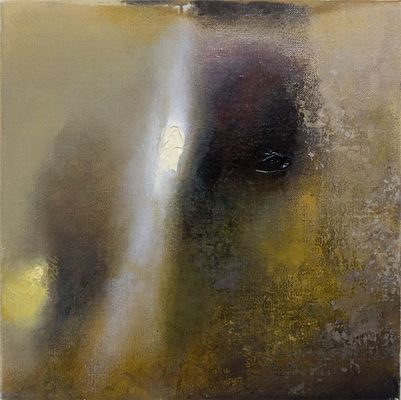
I am not a great reader of poetry but I always return to the work of Melbourne poet, Vincent Buckley (1925- 1988). Perhaps I find his most tantalising piece to be not a finished poem but a fragment left on a scrap of paper discovered on his desk after the poet’s death.
The poetry gathers like oil
In the word-core, and spreads
It has its music meet,
Its music is in movement.
This fragment is more the shell left behind from a volatile thought than a finished poem. I find the last two lines honest but awkward whereas the first two lines work like an arrow. Most likely he could not find a resolution so it was left. Still, in its present form, it remains an eloquent testimony to the ultimate failure of a medium to express mobile thought and sensation, in Buckley’s case, through verbal language. It’s an important matter because this is something all artists have to deal with regardless of the medium.
I have never written a poem, however, I am forever copying fragments from books on paper scraps in a vain effort to fix certain notions in my head. At first, they function as bookmarks that are sometimes returned to when I open the book. But before long, as they accumulate, they fall out littering the table interspersed with A4 photocopies, bills, books and medications.
To return to Buckley’s fragment, the first two lines very much evoke how I paint nowadays. As you age, detail diminishes and patches of light become more luminous and float. I feel the most honest way of dealing with this is by smearing the oil paint on the canvas with the fingers and working close-up, blind. Only if the patches coalesce into an approaching image can the work gain a life.
-
Jonathan Walker was born in Melbourne, Australia and brought up on a dairy farm in Gippsland. In the 1970’s he studied painting at RMIT and won the Harold Wright Scholarship to the British Museum, London. During the 1980’s he exhibited at Pinacotheca Gallery, Richmond and had work shown at the NGV and Heidi City Art Gallery. Over the same period he designed the cover for the “Epigenesi” LP by Giancarlo Toniutti, Italy and conducted a mail exchange work with Achim Wollscheid, Germany. The work with artists through the post resulted in an article published in the bicentenary issue of Art and Australia 1988. He showed in artist run spaces such as WestSpace in the 90’s and 2000’s, and until 2012, taught painting at Victoria University, which is where we (Colleen Ahern and Lisa Radford) as organisers of the exhibition, among many others, had the privilege of being his student.
Walker’s knowledge was imparted to students through the careful selection of music, literature, and artists found in books that he himself had ordered for the library. Walker’s strategy was the generosity of sharing his vast knowledge with references specific to each student and their context.
Walker’s paintings share a similar focus and intimacy.
This exhibition presents a small selection of recent paintings alongside a publication that includes Walker’s writing. Observational and analytical, Walker’s work is a type of material notation — the time of day, colour and how it is blended, the both specific and fleeting location of a reflection on lino or the question of whether a chair leg should be included in a painting.
Please join us on Friday August 21 between 6-8pm to celebrate the opening of the exhibition.
Curated by Colleen Ahern and Lisa Radford.
B. Wurtz
Curated by Nic Tammens
March 26 - April 4, 2015
B.Wurtz works from a basement studio in his home on Manhattan’s Lower East Side.
This local fact is attested to by the plastic shopping bags and newsprint circulars that appear in his work. As formal objects, they don’t make loud claims about their origins but nonetheless transmit street addresses and places of business from the bottom of this long thin island. Like plenty of artists, Wurtz is affected by what is local and what is consumed. His work is underpinned by this ethic. It often speaks from a neighborhood or reads like the contents of a hamper:
“BLACK PLUMS $1.29 lb.”
“Food Bazaar”
“USDA Whole Pork Shoulder Picnic 99c lb.”
“RITE AID Pharmacy, with us it’s personal.”
“H. Brickman & Sons.”
“Sweet Yams 59c lb."
Most of the work in this exhibition was made while the artist was in residence at Dieu Donne, a workshop dedicated to paper craft in Midtown. Here Wurtz fabricated assemblages with paper and objects that are relatively lightweight, with the intention that they would be easily transportable to Australia. This consideration isn’t absolute in Wurtz’s work, but was prescriptive for making the current exhibition light and cheap. Packed in two boxes, these works were sent from a USPS post office on the Lower East Side and delivered to North Melbourne by Australia Post.
Wurtz appears courtesy of Metro Pictures, New York.
Thanks to Rob Halverson, Joshua Petherick, Sari de Mallory, Matt Hinkley, Helen Johnson, Fayen d'Evie, Ask Kilmartin, Lisa Radon, Ellena Savage, Yale Union, and "Elizabeth".
John Nixon
"Archive"
December 15 - January 20, 2014
The presentation of John Nixon's archive offered a rare showcase of this extensive collection of the artist's own publications, catalogues, posters, ephemera, editions and more, from the mid 1980s onwards, alongside a selection of his artworks.
Organized by John Nixon, Joshua Petherick and Matt Hinkley.
<a href=http://wfb.public-office.info/artist/john-nixon>All titles by John Nixon
"Habitat"
at Minerva, Sydney (organised by Joshua Petherick and Matt Hinkley)
November 15 - December 20, 2014
Lupo Borgonovo, Janet Burchill & Jennifer McCamley,
Lewis Fidock, HR Giger, Piero Gilardi, Veit Laurent Kurz,
Cinzia Ruggeri, Michael E. Smith, Lucie Stahl, Daniel Weil, Wols
Press Release:
“...It contained seven objects. The slender fluted bone, surely formed for flight, surely from the wing of some large bird. Three archaic circuitboards, faced with mazes of gold. A smooth white sphere of baked clay. An age-blackened fragment of lace. A fingerlength segment of what she assumed was bone from a human wrist, grayish white, inset smoothly with the silicon shaft of a small instrument that must once have ridden flush with the surface of the skin - but the thing’s face was seared and blackened.”
William Gibson, “Count Zero”, 1986
"Autumn Projects Archive"
Curated by Liza Vasiliou
March 6 - March 15, 2014
World Food Books, in conjunction with the Virgin Australia Melbourne Fashion Festival 2014, presented the Autumn Projects archive, consisting of a selection of early examples in Australian fashion with a particular interest in collecting designers and labels from the period beginning in the 1980’s, who significantly influenced the discourse of Australian Fashion.
Curated by Liza Vasiliou, the exhibition provided a unique opportunity to view pieces by designers Anthea Crawford, Barbara Vandenberg, Geoff Liddell and labels CR Australia, Covers, Jag along with early experimental collage pieces by Prue Acton and Sally Browne’s ‘Fragments’ collection, suspended throughout the functioning World Food Books shop in Melbourne.
H.B. Peace
presented by CENTRE FOR STYLE
November 14, 2013
"Hey Blinky, you say chic, I say same"
Anon 2013
H.B. Peace is a clothing collaboration between great friends Blake Barns and Hugh Egan Westland. Their pieces explore the divergences between 'character’ and ‘personality’ in garments....etc
Special Thanks to Joshua Petherick and Matt Hinkley of WFB and Gillian Mears
and a Very Special Thank you to Audrey Thomas Hayes for her shoe collaboration.
Janet Burchill & Jennifer McCamley
"Aesthetic Suicide"
May 10 - June 8, 2013
The first of our occasional exhibitions in the World Food Books office/shop space in Melbourne, "Aesthetic Suicide" presented a body of new and older works together by artists Janet Burchill & Jennifer McCamley, including videos, prints, a wall work, and publications.
During shop open hours videos played every hour, on the hour.
1998, English
Hardcover (w. dust jacket), 176 pages, 10 x 14 cm
1st Edition, Out of print title / used / very good
Published by
Weidenfeld & Nicholson / London
$20.00 - Out of stock
First 1999 UK HC edition, translated by William Weaver.
"Best-selling author Umberto Eco's latest work unlocks the riddles of history in an exploration of the "linguistics of the lunatic," stories told by scholars, scientists, poets, fanatics, and ordinary people in order to make sense of the world. Exploring the "Force of the False," Eco uncovers layers of mistakes that have shaped human history, such as Columbus's assumption that the world was much smaller than it is, leading him to seek out a quick route to the East via the West and thus fortuitously "discovering" America. The fictions that grew up around the cults of the Rosicrucians and Knights Templar were the result of a letter from a mysterious "Prester John"—undoubtedly a hoax—that provided fertile ground for a series of delusions and conspiracy theories based on religious, ethnic, and racial prejudices. While some false tales produce new knowledge (like Columbus's discovery of America) and others create nothing but horror and shame (the Rosicrucian story wound up fueling European anti-Semitism) they are all powerfully persuasive.
In a careful unraveling of the fabulous and the false, Eco shows us how serendipities—unanticipated truths—often spring from mistaken ideas. From Leibniz's belief that the I Ching illustrated the principles of calculus to Marco Polo's mistaking a rhinoceros for a unicorn, Eco tours the labyrinth of intellectual history, illuminating the ways in which we project the familiar onto the strange.
Eco uncovers a rich history of linguistic endeavor—much of it ill-conceived—that sought to "heal the wound of Babel." Through the Middle Ages and the Renaissance, Greek, Hebrew, Chinese, and Egyptian were alternately proclaimed as the first language that God gave to Adam, while—in keeping with the colonial climate of the time—the complex language of the Amerindians in Mexico was viewed as crude and diabolical. In closing, Eco considers the erroneous notion of linguistic perfection and shrewdly observes that the dangers we face lie not in the rules we use to interpret other cultures but in our insistence on making these rules absolute.
With the startling combination of erudition and wit, bewildering anecdotes and scholarly rigor that are Eco's hallmarks, Serendipities is sure to entertain and enlighten any reader with a passion for the curious history of languages and ideas."
Umberto Eco is the author of five best-selling novels and numerous collections of essays. He is a professor of semiotics at the University of Bologna and lives in Italy.
VG/VG
1999, English
Softcover (French-folds), 250 pages, 23 x 15 cm
1st Edition, Out of print title / used / fine
Published by
Allen & Unwin / NSW
$45.00 - Out of stock
First 1999 edition.
With cover artwork by Linda Dement.
"The location of the author's investigations, the body itself rather than the sphere of subjective representations of self and of function in cultures, is wholly new. . . . I believe this work will be a landmark in future feminist thinking." —Alphonso Lingis
"This is a text of rare erudition and intellectual force. It will not only introduce feminists to an enriching set of theoretical perspectives but sets a high critical standard for feminist dialogues on the status of the body." —Judith Butler
Volatile Bodies demonstrates that the sexually specific body is socially constructed: biology or nature is not opposed to or in conflict with culture. Human biology is inherently social and has no pure or natural "origin" outside of culture. Being the raw material of social and cultural organization, it is "incomplete" and thus subject to the endless rewriting and social inscription that constitute all sign systems.
Examining the theories of Freud, Lacan, Merleau-Ponty, Foucault, Deleuze, Derrida, etc. on the subject of the body, Elizabeth Grosz concludes that the body they theorize is male. These thinkers are not providing an account of "human" corporeality but of male corporeality. Grosz then turns to corporeal experiences unique to women—menstruation, pregnancy, childbirth, lactation, menopause. Her examination of female experience lays the groundwork for developing theories of sexed corporeality rather than merely rectifying flawed models of male theorists.
VG/NF copy.
1999, English
Softcover, 536 pages, 23.5 x 15.5 cm
1st Edition, Out of print title / used / good
Published by
Stanford University Press / Palo Alto
$25.00 - In stock -
First 1999 edition.
This innovative work sets two texts by two different authors on facing pages, designed so that they read in tandem—Miller's text on the right, Asensi's on the left. It makes a long trajectory, moving back and forth as an ox plows a field, boustrophedonically, to borrow the figure in Manuel Asensi's title.
Black Holes, by J. Hillis Miller, analyzes changes in the contemporary research university in the West. The mission of the research university has been profoundly influenced by the end of the Cold War and by globalization, advances in communication technologies, and shifts in funding from the federal government to transnational corporations. Miller aims to discover what the function of the humanities might be in this new kind of university. Echoing Bill Readings, he calls for a university of dissensus that would be made up of adjacent or overlapping communities, each fundamentally other to the others, each inhabited by its own otherness. Each of those opacities is a kind of black hole in the luminosity or enlightenment to which the university has traditionally been dedicated. Miller concludes with sections on Trollope and Proust that attempt to show how otherness is exemplified in the work of two fundamentally dissimilar authors.
Manuel Asensi's J. Hillis Miller: or, Boustrophedonic Reading is the first comprehensive interpretation of Miller's work, one that foregrounds its difference not only from the work of his associates—such as Paul de Man, Jacques Derrida, and Georges Poulet—but from European literary methodologies such as semiotics, Slavic formalism, Glosematics, narratology, structuralism, and reception theory. Bypassing or challenging conventional accounts of Miller's work, Asensi brings a fresh view to his readings of Miller's criticism. He finds there a complex and partially contradictory "matrix" that persists, throughout the apparent methodological changes, from Miller's earliest work to the most recent. According to Asensi, that matrix organizes itself around a fascination with the strangeness or otherness of literary works.
G-VG some light cover toning/dustiness.
1994, English
Softcover, 300 pages, 23.5 x 15.5 cm
1st Edition, Out of print title / used / very good
Published by
Verso / London
$20.00 - In stock -
Firsy 1994 Ed.
This work provides a defence and illustration of deconstruction. Bennington demonstrates the possibility of clear and rigorous explication of deconstructive thought, and explores the political potential of deconstruction, via readings of Rousseau, Kant, Hegel, Freud, De Man and Lyotard.
Written by Jacques Derrida's leading English-language translator and collaborator, this invigorating and intelligent volume displays the continuing power and versatility of deconstruction, presenting it as the most important intellectual movement of our time. Geoffrey Bennington develops a devastating critique of many attempts to clarify or criticize deconstructive thought, and elaborates its potential through original readings of, amongst others, Rousseau, Kant, Hegel, Freud, De Man and Lyotard. While he is principally concerned with a defence of deconstruction in fields where it has long since demonstrated its critical prowess, Bennington also emphasizes its political dimension. Deconstruction is a political thinking, he argues, because it entails an irreducible opening to alterity (if only in the form of reading); and this opening, where the other always might arrive as an event on the frontier of my experience, is a place for legislation.
VG.
1997, English
Softcover, 198 pages, 23 x 15 cm
1st Edition, Out of print title / used / very good
Published by
Routledge / London
$30.00 - In stock -
In Telling Flesh, Vicki Kirby addresses a major theoretical issue at the intersection of the social sciences and feminist theory—the separation of nature from culture. Kirby focuses particularly on postmodern approaches to corporeality, and explores how these approaches confine the body within questions about meaning and interpretation. Kirby explores the implications of this containment in the work of Jane Gallop, Judith Butler, and Drucilla Cornell, as well as in recent cyber-criticism. By analysing the inadvertent repetition of the nature/culture division in this work, Kirby offers a powerful reassessment of dualism itself.
"Vicki Kirby has written a book of stunning range and depth: she has presented nothing less than a profound interrogation of the very substance and power of representation and matter in their mutually intricate and undecidable relations. In opening up nature to culture, Kirby also reveals how culture itself is inherently implicated in a refigured and active nature. This book is central to the concerns of the humanities and the sciences, both social and natural. Kirby is a beautiful and stylish writer, whose work, in spite of its intellectual complexity, raises among the most crucial social and political questions of our age. A stunning book!" —Elizabeth Grosz, Monash University, Australia
Vicki Kirby teaches in the Department of Sociology, Culture and Communication at the University of New South Wales in Sydney.
VG copy.
1993, English
Softcover, 184 pages, 21.5 x 14 cm
1st Edition, Out of print title / used / very good
Published by
Routledge / London
$40.00 - Out of stock
First 1993 edition.
This ground-breaking work offers a challenging and positive view of postmodern culture. It draws on the author's extensive interviews with a number of leading postmodern artists, writers and performers, including: Jean Baudrillard Samuel Beckett John Cage Phillip Glass The Parameters of Postmodernism focuses on both the prevailing negative theories of postmodernism, and the more positive aspects of postmodern theory and practice. The negative aspect is exemplified by the work of writers like Brecht, Beckett, Barthes and Baudrillard, who emphasise the death of artistic innovation and the lack of a permanent reality. Zurbrugg highlights the contradictions in the arguments of these writers, and examines the later works in which they qualify their earlier, more infamous, statements. The positive aspect is characterised by artists such as Cage, Glass and Monk - who interweave the new postmodern media with confidence and invention, and Eco, Grass and Wolf - who revive mythological and folkloric traditions. The Parameters of Postmodernism argues that in each case - high-tech or revivalist - postmodern creativity culminates in a highly positive synthesis of past, present and futuristic materials.
VG copy.
1986, English
Hardcover (w. dust jacket), 286 pages, 22.5 x 14.5 cm
1st Edition, Out of print title / used / very good
Published by
Verso / London
$30.00 - Out of stock
First 1986 HC edition.
From Prague to Paris is above all a critique of French structuralism. But it is also an exercise in the wider history of ideas, showing that structuralism had already matured significantly prior to its adoption in France. Far from being a methodological high-road, the route from Prague in the 1930s to Paris in the 1960s was complicated by various ideological biases. Merquior argues that Parisian structuralism was notably formalist, and that this was not the only option open to it — as the work of the Prague School shows.
J. G. Merquior was a participant in the intellectual milieu of Parisian structuralism during its rise, and here focuses on three key figures of its heyday: Levi-Strauss, Barthes and Derrida. The first remains the master of classical structuralism, the second its most distinguished apostle — and then apostate — in literary criticism, while Derrida currently leads the revolt against the rational elements of the philosophical tradition from which it springs.
While its decline in France itself is now obvious, the (post-) structuralist style of thought has conquered influential strongholds in the Anglo-Saxon world. From Prague to Paris offers an assessment of its results that is at once scholarly and uninhibited — an irreverent but impeccably researched assault on the citadels of fashionable ideology. It will be useful to students and general readers alike, and no familiarity with the jargon of structuralism is assumed.
VG/VG price-clipped DJ
1983, English
Hardcover (w. dust jacket), 262 pages, 22.5 x 14.5 cm
1st Edition, Out of print title / used / very good
Published by
St. Martin's Press / New York
$35.00 - In stock -
First 1983 HC edition.
Counter-Modernism in Current Critical Theory presents a serious and concerted critique of the principal attitudes and beliefs of the major schools of twentieth-century literary criticism - Eliot and the precursors, the New Critics, Marxists, the practitioners of stylistics, structuralists, post-structuralists and deconstructionists. Geoffrey Thurley analyzes the fallacies he detects in I. A. Richards, Susanne Langer, Barthes, Foucault, Derrida and others and challenges the modernist view that texts are "style" and can have no content as traditionally understood. Borrowing and adapting a notion from symbolic logic, he provides new definitions for the concepts of content and form: that content is what we can describe and form is what we can only point to. Artworks, however, have their own internal form; that is they "mean" themselves; they are statements which can be read or missed; they are not only objects, but objects with a particular configuration and it is the function and purpose of criticism to relay this configuration back to the reader.
The book concludes with an original account of the evolution of styles which is entirely different from modernist claims for the uniqueness of post-Romantic art. While the book's readers may question the arguments it contains, no one concerned with the current critical debate can afford to ignore it.
VG copy, VG DJ.
1992, English
Softcover, 272 pages, 22.5 x 14.5 cm
1st Edition, Out of print title / used / very good
Published by
Routledge / London
$30.00 - In stock -
First 1992 Edition.
What is Bakhtin's relevance for contemporary social and cultural theory?
Can his ideas revitalize the theory and critique of ideology?
"A very significant and important book. It has all the advantages of a general discussion of Bakhtin, and it also carries a sophisticated and specific argument of its own which makes it far more than a dispassionate survey of his work. In addition, its extremely competent and wide engagement with so many significant theories will undoubtedly be of service to future discussions of them and Bakhtin and the Bakhtin circle."—Sadie Plant, Birmingham University
The Dialogics of Critique provides an excellent and perceptive introduction to the work of Mikhail Bakhtin, whose ideas have generated immense interest in recent years. Most critical studies have concentrated on Bakhtin as a literary theorist. This book challenges that view, depicting him instead as a social thinker with a significant contribution to make to contemporary debates in social and political theory.
Michael Gardiner lectures in Sociology at the University of York.
VG copy.
1960, English
Softcover, 318 pages, 21.5 x14 cm
1st Edition, Out of print title / used / good
Published by
Routledge & Kegan Paul / London
$35.00 - In stock -
Rare first 1960 Routledge UK edition.
Ideology and Utopia is a 1929 book written by Karl Mannheim. One of his main ideas regarding utopias is what he considers the "utopian mentality", which Mannheim describes in four ideal types: orgiastic chiliasm, liberal humanist utopias, the conservative idea, modern communism.
"A great sociologist here analyses brilliantly the shifting social and ideological currents of our time in a book essential to clear understanding and judgment of the contemporary world.
Professor Mannheim considers that ideologies are mental fictions whose function is to veil the true nature of a given society. They originate unconsciously in the minds of those who seek to stabilise a social order. Utopias are wish-dreams that inspire the collective action of opposition groups which aim at entirely transforming such a society. These two opposing elements Professor Mannheim shows to dominate not only our social thought but even unexpectedly to penetrate into the most scientific theories in philosophy, history and the social sciences."
Karl Mannheim was a Hungarian sociologist and a key figure in classical sociology as well as one of the founders of the sociology of knowledge
Good copy with tanning and general light wear to block edges/binding, still sound.
1980, English
Hardcover (w. dust jacket), 452 pages, 23 x 16 cm
1st Edition, Out of print title / used / very good
Published by
International Universities Press
Inc. / New York
$70.00 - In stock -
Very rare first 1980 hardcover edition.
"There have been books in English about psychoanalysis in France, and a very few translations of books by French psychoanalysts. To date, however, there is little first-hand information written in English about the current status of psychoanalysis in France. No longer is there a need to rely on secondary sources and scattered translations of books and papers selected by non-French analysts in order to answer such questions as:
• How do the French differ in their approach to developmental psychology?
• What is their stance in regard to metapsychology?
• What are the theoretical positions prevalent in France?
• What recent clinical contributions have been made by the French School?
• What positions do French analysts take on ego psychology, on the "death instinct," on the vicissitudes of transference and countertransference?
• What is the approach to childhood disturbances, to narcissistic and borderline personality disorders, to homosexuality, to fetishism?
Doctors Lebovici and Widlöcher—both prominent French analysts—have selected a group of representative papers, by their most eminent colleagues in France, which span the last decade. All but one are translated here for the first time.
Here is a book of crucial interest not only to psychoanalysts, but to members of all allied professions influenced by developments in psychoanalysis.
Very Good copy in Good DJ. DJ has general wear and tear to extremities, esp around tips of spine, light toning/rubbing, book with light lead pencil, occasional, discreet marginalia (erasable).
1993, English / German
Softcover (french-folds), 296 pages, 22.5 x 15.5 cm
1st Edition, Out of print title / used / fine
Published by
Verlag Ritter Klagenfurt / Austria
$50.00 - In stock -
Scarce 1993 book compendium of critical theory edited by Georg Schöllhammer and Christian Kravagna, designed by Heimo Zobernig and Florian Pumhösl, featuring texts by Richard Rorty, Paul Freyerabend, Francisco J. Varela, Robert W. Witkin, Barbara Jaffee, Teresa de Lauretis, Jacqueline Rose, Amy Winter, Silvia Eiblmayr, Peter Gorsen, and Douglas Crimp. Text in English and German.
"REAL TEXT forms, so to speak, the "discursive bracket" between the individual parts of the exhibition (REAL SEX, REAL REAL, REAL AIDS). But it is also a separate exhibition part that, with a view to the consequences for art and aesthetics, outlines the philosophical, art historical and epistemological problem horizon of determining the self between the phantasm of identity and absorption into the structures of our highly differentiated society."—(From the foreword by Georg Schöllhammer and Christian Kravagna)
In bi-lingual English/German, contents include:
Richard Rorty: Trotsky and the Wild Orchids; Paul Feyerabend: Art as a natural product; Francisco J. Varela: The body thinks; Robert W. Witkin: From the touch of the ancients to the gaze of modern times; Barbara Jaffee: Modernity and the Promise of Autonomy; Teresa de Lauretis: drive and habit; Jacqueline Rose: Sexuality in View; Amy Winter: The Surrealismus, Lacan, and the metaphor of the woman without a head; Silvia Eiblmayr: The SurrealIstian eroticism with Hans Bellmer; Peter Gorsen: Hans Bellmer-Pierre Molinier; Douglas Crimp: Portraits of people with AIDS.
VG/NF copy.
2005, Japanese / English
Hardcover (w. dust jacket and obi), 80 pages, 19 x 27 cm
1st Edition, Out of print title / used / fine
Published by
Blue Interactions / Japan
$120.00 - Out of stock
Wonderful hardcover collection of Aquirax Uno's poster work dating 1959-1975.
Aquirax Uno, also known as Akira Uno (b. 1934) is a Japanese graphic artist, illustrator and painter who was very influential in the 1960s and 1970s. His incredibly unique work is characterized by fantastic visuals, capricious and sensuous line flow, flamboyant (and occasionally grotesque) eroticism, and frequent use of collage and psychedelic bright colours. Uno was prominently involved with the Japanese underground art of the 1960s–1970s, and is particularly notable for his frequent collaborations with Shuji Terayama and his experimental theater Tenjo Sajiki.
Near Fine copy with dust jacket and obi.
1986, English
Softcover, unpaginated, 22.5 x 19.5 cm
1st Edition, Out of print title / used / very good
Published by
Penguin / Ringwood
$35.00 - Out of stock
"Whimsical and shot through with black humour, stirring-up fears and desires which most civilised people cover up in public."—City Limits
First 1986 edition of A Piece of Cake, the second collection of drawings by Mary Leunig, long out-of-print.
Mary Leunig's first book, There's No Place Like Home, was acclaimed by the press and found an immediate and dedicated following. People were stunned by her ability to reveal the hard truths and absurdities behind everyday experiences. Her second book is even more startling in the way in which the drawings expose those sorts of feelings we hardly dare recognize in ourselves.
"...this wonderful combination of horror and laughter in the cartoons makes them so instantaneously appealing and ultimately therapeutic ... although we recognize the truth of the horrors, we are also made to realize the funny side."—Alison Coates, ABC 'Focus'
Very Good—Near Fine copy.
1992, English
Softcover, unpaginated, 26 x 19 cm
1st Edition, Out of print title / as new
Published by
Penguin / Ringwood
$25.00 - In stock -
First 1992 edition of One Big Happy Family, the third collection of drawings by Mary Leunig, long out-of-print.
Mary Leunig was born in Melbourne in 1950. She studied art in the late 1960s, had two children, and completed her studies in 1975. While working at home she continued drawing, and has been widely published in a variety of newspapers and magazines including Nation Review, the Age, Harpers Bazaar and Cleo Like her two previous books, There's No Place Like Home and A Piece of Cake, this rich new collection takes a disarming look at the terrors of the domestic front, while also exploring a new range of themes, from the personal to the political.
As New.
1988, English
Hardcover (w. dust jacket), 112 pages, 36 x 28.5 cm
1st Edition, Out of print title / used / very good
Published by
Twelvetrees Press / California
$200.00 - Out of stock
First 1988 Twelvetrees Press hardcover edition of Herbert List's classic Junge Männer.
Beginning in 1929, Herbert List (1903-1975), who had been given a Rolleiflex camera by Andreas Feininger, began to photograph the young men he knew and traveled with throughout Greece, Italy, and Germany. He captured the innocence of their beauty and physical prowess before Hitler’s politics commandeered those qualities for his own bleak purposes. He never published his male nudes in his own lifetime, and kept them hidden in his mother's house in a sack he called his 'poison bag'.
List, influenced by the Bauhaus and artists of the surrealist movements (Man Ray, Giorgio De Chirico, Max Ernst...), used male models, draped fabric, masks and double-exposures to depict dream states and fantastic imagery. He has explained that his metaphysical photos were "composed visions where [my] arrangements try to capture the magical essence inhabiting and animating the world of appearances."
In 1936, in response to the danger of Gestapo attention to his openly gay lifestyle and his Jewish heritage, List left Germany for Paris, where he met George Hoyningen-Huene with whom he travelled to Greece, deciding then to become a photographer. During 1937 he worked in a studio in London and held his first one-man show at Galerie du Chasseur d'Images in Paris. List's austere, classically posed black-and-white compositions, particularly his homoerotic male nudes, taken in Italy and Greece, were very influential in modern photography and contemporary fashion photography. List worked for Vogue, Harper's Bazaar, and Life, and was associated with Magnum Photos.
Introduction by Sir Stephen Spender.
Very Good copy in VG dust with toning to edges, light sunning/waving, some light wear and tear to extremities of dj.
1990, English
Softcover, 362 pages, 21.6 x 24 cm
Reprint,
Out of print title / used / good
Published by
Feral House / Los Angeles
$45.00 - In stock -
"Apocalypse Culture is compulsory reading for all those concerned with the crisis of our times. An extraordinary collection unlike anything I have ever encountered. These are the terminal documents of the twentieth century."—J.G. Ballard
Two thousand years have passed since the death of Christ and the world is going mad. Nihilist prophets, born-again pornographers, transcendental schizophrenics and just plain folks are united in their belief in an imminent global catastrophe. What are the forces lurking behind this mass delirium?
APOCALYPSE CULTURE is a startling, absorbing and exhaustive tour through the nether regions of today’s psychotic brainscape.
First published in 1987, APOCALYPSE CULTURE immediately touched a nerve. Alternately excoriated and lauded as “epochal”, “the most important book of the decade,” APOCALYPSE CULTURE had begun to articulate what many inwardly sensed — the-fear inspired irrationalism and faith, the clash of irreconcilable forces, and the ever-looming specter of fin de race. In its present incarnation for Feral House, APOCALYPSE CULTURE has significantly increased in size, taking on new perspectives on our current crisis, with pertinent revisions of many articles from the original edition.—burb from this expanded and revised 1990 edition.
As New.
1972 / 1977, English
Softcover, 166 pages, 20 x 13 cm
Out of print title / used / good
Published by
British Broadcasting Corp. / London
$18.00 - Out of stock
'Seeing comes before words. The child looks and recognizes before it can speak.'
'But there is also another sense in which seeing comes before words. It is seeing which establishes our place in the surrounding world; we explain that world with words, but word can never undo the fact that we are surrounded by it. The relation between what we see and what we know is never settled.'
John Berger's Ways of Seeing is one of the most stimulating and influential books on art in any language. First published in 1972, it was based on the BBC television series about which the Sunday Times critic commented: 'This is an eye-opener in more ways than one: by concentrating on how we look at paintings . . . he will almost certainly change the way you look at pictures.' By now he has.
John Peter Berger (1926 – 2017) was an English art critic, novelist, painter and poet. He is well known for his novels and stories as well as for his works of nonfiction, including several volumes of art criticism. His first novel, A Painter of Our Time, was published in 1958, and since then his books have included Ways of Seeing, the fiction trilogy Into Their Labours, and the novel G., which won the Booker Prize in 1972. In 1962 he left Britain permanently and moved to a small village in the French Alps. He died in 2017.
'Berger has the ability to cut right through the mystification of professional art critics ... he is a liberator of images: and once we have allowed the paintings to work on us directly, we are in a much better position to make a meaningful evaluation'—Peter Fuller, Arts Review
'One of the most influential intellectuals of our time'—Observer
Good copy of 1972 ed, presumably 1977 print. Previous woner name penned to title page.
2014, Japanese
Hardcase folio (w. pockets, 2 leporello booklets), unpaginated, 32 x 19.5 cm
1st Edition, Out of print title / used / very good
Published by
Amana / Japan
$130.00 - In stock -
This beautiful limited edition Balthus photobook was produced in Japan, containing a carefully selected collection photographs from approximately 2000 Polaroid photographs discovered after the death of the last master of the 20th century, Balthus (1908-2001). The elegant hardcase bookbinding, housing two folding screen-like Orihons (Japanese-accordian style book) enveloped in rich textile hues, is like a dedication to Balthus, who loved Japanese culture. The title "room 17" comes from the name of the room in the Swiss mansion Grand Chalet, where Balthus worked and photographed a young female model for eight years in study for his much loved paintings. A lovely selection of these photographic studies are collected in this touching tribute, alongside text by Nicola Page. Translation to Japanese by Tadashi Miyagi, book design by Daishiro Mori.
Very Good copy.
1998, English
Softcover, 576 pages, 20.96 x 15.24 cm
1st Edition, Out of print title / used / very good
Published by
Taschen / Cologne
$65.00 - In stock -
First 1998 English language edition of The Dominant Wives & Other Stories, Eric Stanton's brick-sized collection of his highly prized femdom Stantoons.
That bottom won’t spank itself!
20 stories from America’s premier fetish artist Eric Stanton (1926–1999) was America’s premier fetish artist, a man of very particular tastes, as all fetishists are. Most keep their work and sex preferences separate, but Stanton made his desires the center of his art, pouring his passions onto the page. These preferences included, in no particular order, female dominance, female fighting, mixed gender wrestling, and face sitting.
Perhaps if the man born Ernest Stanzoni in New York City, 1926, had grown taller, all would have been different. As happened, he topped out around 5’5” (165 cm), making him smaller and weaker than many women, and rather than bemoan this shortcoming, he chose to eroticize it. Then, like Robert Crumb and Tom of Finland to follow, he put his fantasies on paper.
Stanton produced paperback book covers, magazine illustrations, comics and even wrestling and smother videos, but what he is best known for is his Stantoons: self-published 16- to 28-page booklets produced between 1982 and his death in 1999. These booklets best represent Stanton’s rich and complex fantasy life, as well as the lives of his fans, whose fantasies he also incorporated. This new edition of The Dominant Wives & Other Stories, brings together the finest of the Stantoons, along with Stanton’s most famous series for Irving Klaw: Bound in Leather, parts 1 and 2. Done in pencil, pen and ink, gouache and mixed media, these 20 stories represent the best of Stanton, who himself represents the best of fetish.
Good—VG copy with some light edge wear an minor buckling (common due to size)
1989, Japanese
Softcover (w. dust jacket and original plastic wrap), 80 pages, 22.8 x 16.3 cm
1st Edition, Out of print title / used / very good
Published by
Gakutokan / Japan
$90.00 - Out of stock
First edition of The World of Pierre Molinier, published in 1989 in Japan. An exquisite book of Molinier's fetishistic gender-bending paintings, photomontages, and drawings, fittingly wrapped in "stocking" dust jacket, with texts by André Breton, translated from French to Japanese by Kosaku Ikuta, imagery from "Molinier" (1966) film by Raymond Borde, beautifully designed and printed in Japan where Molinier's artworks had a particular resonance.
Pierre Molinier (1900—1976) was a French painter, photographer and a forerunner of gender performance art and Body Art (Art corporel). Molinier spent much of his artistic life working in isolation in Bordeaux, exiled from local and national art scenes. Born in Agen, nothing had predestined Molinier to a life as an artist. Self-taught, from a working-class background, he followed in his father’s footsteps and started out as a house painter. He got married and had two children. Tired of his infidelities and provocative behaviour, his wife left their marital home an in 1950 and Molinier begun photographing himself seriously, staging his own death and erecting a fake gravestone proudly declaring himself ‘a man without morals’. He was thrown out of the Bordeaux Salon des Indépendants as early as 1951 amidst controversy over his orgiastic painting of the same year, Le Grand Combat. Stirring up an obsessive correspondence with the anarchic poet-founder of Surrealism, André Breton, Molinier was soon integrated into the Surrealist group with a solo exhibition at Breton’s Paris gallery in 1956. Molinier’s anti-moral project appealed to the group’s interest in repressed desires, fetishism, and the transgression of bourgeois morals. In 1959, he exhibited at the Exposition International du Surrealism in Paris. From the mid-1960s Molinier chronicled the exploration of his subconscious transsexual desires in "Cent Photographies Erotiques": graphically detailed images of pain and pleasure. Cut-up, reassembled, and manipulated, Molinier painstakingly created elaborate and sensual photomontages in which he assumed the roles of dominatrix and succuba previously taken by the women of his paintings. Either alone with doll-like mannequins or with female models such as German sadomasochist Hanel Koeck, Molinier, who considered himself fundamentally androgynous, appears as a transvestite, employing his body and that of his acquaintances to create visions of hybrid identity, where stockinged multi-limbed, multi-sexed beings imitate pagan figures, Hindu gods, and Masonic symbols, in a rejection of a Christian tradition which he argued, had repressed androgyny. Designed to shock, Molinier’s artwork represented a very intimate disclosure about his own sexual ambiguity, inviting the viewer to bring to the images his or her own response of excitement or disgust. The degree of his artistic perversity and blasphemous tendencies was deemed too much for the French cultural elite, and the man Breton dubbed the “magician of erotic art” was shunned from the art world. Molinier did not participate in the 1965 International Surrealist Exhibition. For the last 11 years of his life Molinier played out his own most profound moments in the 'theatre' of his Bordeaux 'boudoir – atelier'. He committed suicide in 1976, shooting himself with a pistol, something he had foreshadowed in his artwork, time and again. Essentially a leg fetishist, but also considering himself as a shaman, facetious and provocative, anti-bourgeois and anti-religious, Molinier enjoyed transgressing gender identification : his outstanding photographs greatly influenced the European and North American Body Art in the 1970s and continue to fascinate artists today.
Very Good copy in original plastic jacket.
1984, Japanese
Softcover (staple-bound), 32 pages, 25.5 x 18 cm
1st Edition, Out of print title / used / very good
Published by
Herald Ace Company / Tokyo
$35.00 - In stock -
Rare 1984 Japanese film programme published to celebrate the release of Another Country (1984), the classic British romantic historical drama film directed by Marek Kanievska, and written by Julian Mitchell, adapted from his 1981 stage play of the same name. The film, starring Rupert Everett as Guy Bennett, with Colin Firth making his feature film debut, had an enormous impact in Japan. Loosely inspired by the life of British spy and double agent Guy Burgess, the narrative follows Bennett, a student at an elite English public school in the 1930s, as he confronts the rigid expectations of the institution while grappling with his homosexuality and growing attraction to Marxist ideology.
Heavily illustrated throughout in colour and b/w with film stills, this film book features original text contributions from artist Kuniyoshi Kaneko about male romance; artist, writer, and translator Kyoko Michishita about male beauty; and many more contributions from essayist Yasuo Kurata, actor Jun Maki, Nagasawa Setsu, Kagami Mizuho Ozawa, Terumi Takano... on homo-eroticism, men's clothing, the history of Traditional Britain represented in film, plus cast and production information, etc.
Very Good copy with some light age/foxing to cover boards.
1979, Japanese
Softcover, 240 pages, 25.5 x 18.5 cm
1st Edition, Out of print title / used / very good
Published by
Fool's Mate / Tokyo
$80.00 - In stock -
Rare "Special Stock" compendium book by the world's finest "Euro Rock Magazine", Fool's Mate, from Japan. In the 1970's—1980's, Fool's Mate (named after the 1971 Peter Hammill LP), edited by Masashi Kitamura with regular contributions by Masami Akita (Merzbow) and many other heads, was a vital conduit between emerging and metamorphosing avant-garde music cultures in Europe (Progressive Rock, Art Rock, Free Music, Electronic, Cosmic, Psychedelic Folk, Avant Pop, Rock in Opposition, Post Punk, Industrial, etc.) and Japan. No doubt responsible for the resonance of experimental contemporary music there during that period through to today, each issue of Fool's Mate during these early years was packed cover-to-cover with exclusive interviews with the artists, rare photographs and graphics, thematic genre/artist/label/artistic movement features, in-depth profiles/discographies/family-trees, catalogues, lyrics, letters, collage art, record, book, and live reviews, columns and an endless stream of concert and import/record store/label/venue/cafe adverts, all presented in a perfectly obsessive fanzine aesthetic manner, cut 'n' pasted across many paper stocks. The Americas and other realms, including new directions in Japanese alternative music, are all covered alongside their European counterparts, with many issues exploring key artistic and theoretical influences, such as Symbolism, Dadaism, Surrealism, Eros, Futurism, etc.
This special three issue collection combines Vol. 4 "Fantasy" + Vol. 6 "Eros" + Vol. 7 "Avant-Garde". Says it all really. Incredible in-depth, encyclopaedic features on Derek Bailey (full biography and discograohy), British avant-garde/free music/jazz/avant-rock/R.I.O./Canterbury (Bailey, Henry Cow, Daevid Allen/Gong, Lol Coxhill, Soft Machine, Company, Slapp Happy, Keith Tippett, National Health, Evan Parker, Art Bears, King Crimson, Hatfield and The North, Kew Rhone, National Health, Robert Wyatt, Spontaneous Music Ensemble, Incus Records, Ogun Records, etc.), R.I.O. expanded (Univers Zero, Art Zoyd, ZNR, The Residents, Albert Marcoeur, Stormy Six, Etron Fou Leloublan, Samla Mammas Manna, etc.), plus features and articles on Robert Fripp, Atoll, Annette Peacock, Italian Prog, Gloria Mundi, Peter Hammill, Ashra, Brian Eno, Tony Banks, Van Der Graaf, Genesis, Vangelis, Peter Gabriel, New Spanish Rock, and much more. Highly recommended to any fan of such things.
Very Good copy.
1988, Japanese
Softcover, 88 pages, 26 x 18.5 cm
1st Edition, Out of print title / used / very good
Published by
NEWSWAVE / Tokyo
$35.00 - Out of stock
Rare copy of NEWSWAVE, a great post-punk/avant-rock/synth-pop fanzine from Tokyo in the 1980s, very seldom seen. This issue, volume 16 from 1988, includes a huge cover story on Patti Smith, A.R. Kane, Coil, Felt, Les Nouvelles Propagandes (French industrial/ambient label), Test Dept., Crime & The City Solution, The Pogues, David Bowie, the ZTT label (Paul Morley's label with Trevor Horn and Jill Sinclair — home of Art of Noise, Grace Jones...), plus abundant illustrated reviews and ads, all features packed with chronology and discography information, release artwork, graphics and photographs.
Very Good copy, very light wear.