World Food Books' programme is largely produced on Kulin Nation land. We acknowledge the Wurundjeri people of the Kulin Nation as the first and continuing custodians of this land, and pay respect to their Elders past, present, and emerging.
World Food Books is an arts and special interests bookshop in Naarm / Melbourne. Founded in 2010, World Food Books is devoted to the presentation of a rotating, hand-selection of international art, design, literary and counterculture publications with an emphasis on the anti-traditional, the experimental, the avant-garde, the heretic, the marginal.
Presenting new titles alongside rare and out-of-print books, catalogues and journals spanning the fields of modern and contemporary art, design, photography, illustration, film, literature, poetry, cultural theory, philosophy, sexuality, popular and underground culture in its many radical forms, World Food Books wishes to encourage adventurous, thoughtful and open-minded reading, looking, writing, and exchange of publishing and ideas, both current and historical.
As well as our bookshop, located in Melbourne's historical Nicholas Building, all of our inventory is available internationally via our online mail-order service.
World Food Books semi-regularly co-ordinates "Occasions", a programme of exhibits and events at the bookshop and in partnership with other hosts (such as museums and art galleries) that develop out of the activities, relationships and content of the bookshop itself.
World Food Books
The Nicholas Building
37 Swanston Street
Room 5, Level 6
Melbourne 3000
Australia
SHOP HOURS:
Thu–Fri 12–6, Sat 12–5
WEB-SHOP OPEN 24/7
World Food Books
Postal Address:
PO Box 435
Flinders Lane
Victoria 8009
Australia
Art
Theory / Essay
Architecture / Interior
Graphic Design / Typography
Photography
Fashion
Eros
LGBTQ+
Fiction / Poetry
Weird / Speculative / Science Fiction / Horror
Transgressive / Visceral / Abject
Symbolism / Decadence / Fin de siècle
Film / Video
Painting
Sculpture / Installation
Performance / Dance / Theater
Drawing
Sound / Music
Curatorial
Group Shows / Collections
Periodicals
Out-of-print / Rare
Posters / Ephemera / Discs
Signed Books
World Food Books Gift Voucher
World Food Book Bag
Australian Art
Australian Fiction
Australian Science Fiction / Speculative Fiction
Australian Poetry
Australian Photography
Japanese Photography
Conceptual Art
Minimal Art
Dada
'Pataphysics / Oulipo
Fluxus
Concrete Poetry
Pop Art
Surrealism
Arte Povera
Arte Informale / Haute Pâte / Tachism
Nouveau Réalisme / Zero / Kinetic
Situationism / Lettrism
Collage / Mail Art / Xerox Art
Art Brut / Folk / Visionary / Fantastic
Illustration / Graphic Art / Bandes Dessinées
Furniture
Italian Radical Design / Postmodernism
Textiles
Ceramics / Glass
Counterculture
Protest / Revolt
Philosophy
Psychoanalysis
Anthropology
Anarchism
Socialism / Anarchism / Communism / Capitalism
Literary Theory / Semiotics / Language
Feminism / Women's Studies
Gender Studies / Sexuality
Anthropology
Fetishism / BDSM
Drugs / Psychedelia
Crime / Violence
Animal Rights / Veganism
Occult / Esoterica
Ecology / Earth / Alternative Living
Whole Earth / Crafts
All prices in AUD (Australian dollars)
Pick-Ups
Pick-up orders can be collected in our bookshop during opening hours after order date. Please collect any Pick-up orders within 2 weeks of ordering as we have limited storage space. Orders will be released back into stock if not collected within this time. No refunds can be made for pick-ups left un-collected. If you cannot make it in to the bookshop in this time-frame, please choose postage option.
Return Policy
All sales are final. We do accept returns (for refund or exchange) for items received in error. All our orders are packed with special care using heavy-duty padding and cardboard book-mailers or bubble mailers (for smaller books), using reinforcement where required. We cannot take responsibility for any lost, stolen or damaged parcels.
Insurance
Should you wish to insure your package, please email us directly after placing your order and we can organise this at a small extra expense. Although all standard/express tracked packages are very safe and dependable, we cannot take responsibility for any lost, stolen or damaged parcels. We recommend insurance on valuable orders.
Interested in selling your old books, catalogues, journals, magazines, comics, fanzines, ephemera? We are always looking for interesting, unusual and out-of-print books to buy. We only buy books in our fields of interest and specialty, and that we feel we can resell.
We base these prices on desirability, market value, in-print prices, condition and our current stock levels. We offer cash, store credit, and can take stock on consignment. All
about 25% of the price we expect to get when we sell them, or 30% in store credit. We base these prices on desirability, market value, in-print prices, condition and our current stock levels.
Sell your books any day of the week. You can drop them off and return later. If you have a lot of books, we can visit your Sydney home.
We buy books that we feel we can resell. We offer about 25 % of the price we expect to get when we sell them, or 30% in store credit. We base these prices on desirability, market value, in-print prices, condition and our current stock levels.
Philadelphia Wireman
03 August - 01 September, 2018
World Food Books is proud to announce our next Occasion, the first presentation of sculptures by Philadelphia Wireman in Australia.
The Philadelphia Wireman sculptures were found abandoned in an alley off Philadelphia’s South Street on trash night in 1982. Their discovery in a rapidly-changing neighbourhood undergoing extensive renovation, compounded with the failure of all attempts to locate the artist, suggests that the works may have been discarded after the maker’s death. Dubbed the "Philadelphia Wireman" during the first exhibition of this work, in 1985, the maker’s name, age, ethnicity, and even gender remain uncertain. The entire collection totals approximately 1200 pieces, all intricately bound together with tightly-wound heavy-gauge wire (along with a few small, abstract marker drawings, reminiscent both of Mark Tobey and J.B. Murry). The dense construction of the work, despite a modest range of scale and materials, is singularly obsessive and disciplined in design: a wire armature or exoskeleton firmly binds a bricolage of found objects including plastic, glass, food packaging, umbrella parts, tape, rubber, batteries, pens, leather, reflectors, nuts and bolts, nails, foil, coins, toys, watches, eyeglasses, tools, and jewellery.
Heavy with associations—anthropomorphic, zoomorphic, and socio-cultural responses to wrapped detritus—the totemic sculptures by Philadelphia Wireman have been discussed in the context of work created to fulfil the shamanistic needs of alternative religions in American culture. Curators, collectors, and critics have variously compared certain pieces to sculpture from Classical antiquity, Native American medicine bundles, African-American memory jugs, and African fetish objects. Reflecting the artist’s prolific and incredibly focused scavenging impulse, and despite—or perhaps enhanced by—their anonymity, these enigmatic objects function as urban artefacts and arbiters of power, though their origin and purpose is unknown. Philadelphia Wireman, whatever their identity, possessed an astonishing ability to isolate and communicate the concepts of power and energy through the selection and transformation of ordinary materials. Over the course of the past two decades, this collection has come to be regarded as an important discovery in the field of self-taught art and vernacular art.
Presented in collaboration with Fleisher-Ollman Gallery, Philadelphia, and Robert Heald, Wellington.
Susan Te Kahurangi King
02 February - 10 March, 2018
Susan Te Kahurangi King (24 February 1951 - ) has been a confident and prolific artist since she was a young child, drawing with readily available materials - pencils, ballpoint pens and felt-tip markers, on whatever paper is at hand. Between the ages of four and six Susan slowly ceased verbal communication. Her grandparents William and Myrtle Murphy had developed a special bond with Susan so they took on caring responsibilities for extended periods. Myrtle began informally archiving her work, carefully collecting and storing the drawings and compiling scrapbooks. No drawing was insignificant; every scrap of paper was kept. The King family are now the custodians of a vast collection containing over 7000 individual works, from tiny scraps of paper through to 5 meter long rolls.
The scrapbooks and diaries reveal Myrtle to be a woman of great patience and compassion, seeking to understand a child who was not always behaving as expected. She encouraged Susan to be observant, to explore her environment and absorb all the sights and sounds. Myrtle would show Susan’s drawings to friends and people in her community that she had dealings with, such as shopkeepers and postal workers, but this was not simply a case of a grandmother’s bias. She recognised that Susan had developed a sophisticated and unique visual language and sincerely believed that her art deserved serious attention.
This was an unorthodox attitude for the time. To provide some context, Jean Dubuffet coined the term Art Brut in 1945 to describe work created by self-taught artists – specifically residents of psychiatric institutions and those he considered to be visionaries or eccentrics. In 1972 Roger Cardinal extended this concept by adopting the term Outsider Art to describe work made by non-academically trained artists operating outside of mainstream art networks through choice or circumstance. Susan was born in Te Aroha, New Zealand in 1951, far from the artistic hubs of Paris and London that Dubuffet and Cardinal operated in. That Myrtle fêted Susan as a self-taught artist who deserved to be taken seriously shows how progressive her attitudes were.
Susan’s parents Doug and Dawn were also progressive. Over the years they had consulted numerous health practitioners about Susan’s condition, as the medical establishment could not provide an explanation as to why she had lapsed into silence. Dawn educated herself in the field of homeopathy and went on to treat all twelve of her children using these principles – basing prescriptions on her observations of their physical, mental and emotional state.
Doug was a linguist with an interest in philosophy who devoted what little spare time he had to studying Maori language and culture. To some extent their willingness to explore the fringes of the mainstream made them outsiders too but it was their commitment to living with integrity and their respect for individuality that ensured Susan’s creativity was always encouraged.
Even though Susan’s family supported her artistic pursuits, some staff in schools and hospitals saw it as an impediment to her assimilation into the community and discouraged it in a variety of ways. Her family was not always aware of this and therefore did not fully understand why Susan stopped drawing in the early 1990s. However, rather than dwell on the challenges that Susan faced in pursuit of her artistic practice, they prefer to highlight her achievements. In 2008 Susan began drawing again in earnest, after an almost 20 year interruption, and her work is now shown in galleries around the world.
Susan grew up without television and has been heavily influenced by the comics she read as a child. She is absolutely fearless in the appropriation of recognizable characters, such as Donald Duck and Mickey Mouse, in her work. She twists their limbs, contorts their faces, compresses them together, blends them into complex patterned backgrounds - always imbuing them with an incredible energy. Although Susan often used pop culture characters in her work they are not naive or childlike. These are drawings by a brilliant self-taught artist who has been creating exceptional work for decades without an audience in mind.
Mladen Stilinović
"Various Works 1986 - 1999"
02 February 16 - September 10, 2016
Various works 1986 - 1999, from two houses, from the collections of John Nixon, Sue Cramer, Kerrie Poliness, Peter Haffenden and Phoebe Haffenden.
Including: Geometry of Cakes (various shelves), 1993; Poor People’s Law (black and white plate), 1993; White Absence (glasses, ruler, set square, silver spoon, silver ladel with skin photograph and wooden cubes), 1990-1996; Exploitation of the Dead (grey and red star painting, wooden painting, black spoon with red table, red plate), 1984-1990; Money and Zeros (zero tie, paintings made for friends in Australia (Sue, John, Kerrie), numbers painting), 1991-1992; Words - Slogans (various t-shirts) - “they talk about the death of art...help! someone is trying to kill me”, “my sweet little lamb”, “work is a disease - Karl Marx”; Various artist books, catalogues, monographs, videos; Poster from exhibition Insulting Anarchy; "Circular" Croatian - Australian edition; Artist book by Vlado Martek (Dostoyevsky); more.
Thanks to Mladen Stilinović and Branka Stipančić.
Jonathan Walker
Always Will Need To Wear Winter Shirt Blue + Ochre Small Check Pattern
21 August - 21 September, 2015
Untitled
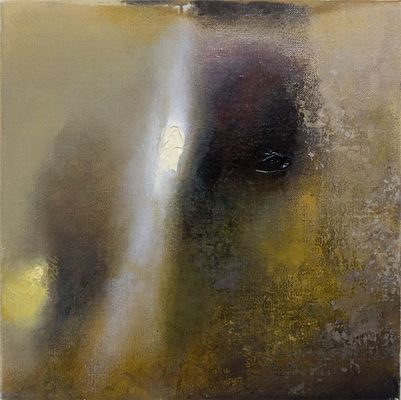
I am not a great reader of poetry but I always return to the work of Melbourne poet, Vincent Buckley (1925- 1988). Perhaps I find his most tantalising piece to be not a finished poem but a fragment left on a scrap of paper discovered on his desk after the poet’s death.
The poetry gathers like oil
In the word-core, and spreads
It has its music meet,
Its music is in movement.
This fragment is more the shell left behind from a volatile thought than a finished poem. I find the last two lines honest but awkward whereas the first two lines work like an arrow. Most likely he could not find a resolution so it was left. Still, in its present form, it remains an eloquent testimony to the ultimate failure of a medium to express mobile thought and sensation, in Buckley’s case, through verbal language. It’s an important matter because this is something all artists have to deal with regardless of the medium.
I have never written a poem, however, I am forever copying fragments from books on paper scraps in a vain effort to fix certain notions in my head. At first, they function as bookmarks that are sometimes returned to when I open the book. But before long, as they accumulate, they fall out littering the table interspersed with A4 photocopies, bills, books and medications.
To return to Buckley’s fragment, the first two lines very much evoke how I paint nowadays. As you age, detail diminishes and patches of light become more luminous and float. I feel the most honest way of dealing with this is by smearing the oil paint on the canvas with the fingers and working close-up, blind. Only if the patches coalesce into an approaching image can the work gain a life.
-
Jonathan Walker was born in Melbourne, Australia and brought up on a dairy farm in Gippsland. In the 1970’s he studied painting at RMIT and won the Harold Wright Scholarship to the British Museum, London. During the 1980’s he exhibited at Pinacotheca Gallery, Richmond and had work shown at the NGV and Heidi City Art Gallery. Over the same period he designed the cover for the “Epigenesi” LP by Giancarlo Toniutti, Italy and conducted a mail exchange work with Achim Wollscheid, Germany. The work with artists through the post resulted in an article published in the bicentenary issue of Art and Australia 1988. He showed in artist run spaces such as WestSpace in the 90’s and 2000’s, and until 2012, taught painting at Victoria University, which is where we (Colleen Ahern and Lisa Radford) as organisers of the exhibition, among many others, had the privilege of being his student.
Walker’s knowledge was imparted to students through the careful selection of music, literature, and artists found in books that he himself had ordered for the library. Walker’s strategy was the generosity of sharing his vast knowledge with references specific to each student and their context.
Walker’s paintings share a similar focus and intimacy.
This exhibition presents a small selection of recent paintings alongside a publication that includes Walker’s writing. Observational and analytical, Walker’s work is a type of material notation — the time of day, colour and how it is blended, the both specific and fleeting location of a reflection on lino or the question of whether a chair leg should be included in a painting.
Please join us on Friday August 21 between 6-8pm to celebrate the opening of the exhibition.
Curated by Colleen Ahern and Lisa Radford.
B. Wurtz
Curated by Nic Tammens
March 26 - April 4, 2015
B.Wurtz works from a basement studio in his home on Manhattan’s Lower East Side.
This local fact is attested to by the plastic shopping bags and newsprint circulars that appear in his work. As formal objects, they don’t make loud claims about their origins but nonetheless transmit street addresses and places of business from the bottom of this long thin island. Like plenty of artists, Wurtz is affected by what is local and what is consumed. His work is underpinned by this ethic. It often speaks from a neighborhood or reads like the contents of a hamper:
“BLACK PLUMS $1.29 lb.”
“Food Bazaar”
“USDA Whole Pork Shoulder Picnic 99c lb.”
“RITE AID Pharmacy, with us it’s personal.”
“H. Brickman & Sons.”
“Sweet Yams 59c lb."
Most of the work in this exhibition was made while the artist was in residence at Dieu Donne, a workshop dedicated to paper craft in Midtown. Here Wurtz fabricated assemblages with paper and objects that are relatively lightweight, with the intention that they would be easily transportable to Australia. This consideration isn’t absolute in Wurtz’s work, but was prescriptive for making the current exhibition light and cheap. Packed in two boxes, these works were sent from a USPS post office on the Lower East Side and delivered to North Melbourne by Australia Post.
Wurtz appears courtesy of Metro Pictures, New York.
Thanks to Rob Halverson, Joshua Petherick, Sari de Mallory, Matt Hinkley, Helen Johnson, Fayen d'Evie, Ask Kilmartin, Lisa Radon, Ellena Savage, Yale Union, and "Elizabeth".
John Nixon
"Archive"
December 15 - January 20, 2014
The presentation of John Nixon's archive offered a rare showcase of this extensive collection of the artist's own publications, catalogues, posters, ephemera, editions and more, from the mid 1980s onwards, alongside a selection of his artworks.
Organized by John Nixon, Joshua Petherick and Matt Hinkley.
<a href=http://wfb.public-office.info/artist/john-nixon>All titles by John Nixon
"Habitat"
at Minerva, Sydney (organised by Joshua Petherick and Matt Hinkley)
November 15 - December 20, 2014
Lupo Borgonovo, Janet Burchill & Jennifer McCamley,
Lewis Fidock, HR Giger, Piero Gilardi, Veit Laurent Kurz,
Cinzia Ruggeri, Michael E. Smith, Lucie Stahl, Daniel Weil, Wols
Press Release:
“...It contained seven objects. The slender fluted bone, surely formed for flight, surely from the wing of some large bird. Three archaic circuitboards, faced with mazes of gold. A smooth white sphere of baked clay. An age-blackened fragment of lace. A fingerlength segment of what she assumed was bone from a human wrist, grayish white, inset smoothly with the silicon shaft of a small instrument that must once have ridden flush with the surface of the skin - but the thing’s face was seared and blackened.”
William Gibson, “Count Zero”, 1986
"Autumn Projects Archive"
Curated by Liza Vasiliou
March 6 - March 15, 2014
World Food Books, in conjunction with the Virgin Australia Melbourne Fashion Festival 2014, presented the Autumn Projects archive, consisting of a selection of early examples in Australian fashion with a particular interest in collecting designers and labels from the period beginning in the 1980’s, who significantly influenced the discourse of Australian Fashion.
Curated by Liza Vasiliou, the exhibition provided a unique opportunity to view pieces by designers Anthea Crawford, Barbara Vandenberg, Geoff Liddell and labels CR Australia, Covers, Jag along with early experimental collage pieces by Prue Acton and Sally Browne’s ‘Fragments’ collection, suspended throughout the functioning World Food Books shop in Melbourne.
H.B. Peace
presented by CENTRE FOR STYLE
November 14, 2013
"Hey Blinky, you say chic, I say same"
Anon 2013
H.B. Peace is a clothing collaboration between great friends Blake Barns and Hugh Egan Westland. Their pieces explore the divergences between 'character’ and ‘personality’ in garments....etc
Special Thanks to Joshua Petherick and Matt Hinkley of WFB and Gillian Mears
and a Very Special Thank you to Audrey Thomas Hayes for her shoe collaboration.
Janet Burchill & Jennifer McCamley
"Aesthetic Suicide"
May 10 - June 8, 2013
The first of our occasional exhibitions in the World Food Books office/shop space in Melbourne, "Aesthetic Suicide" presented a body of new and older works together by artists Janet Burchill & Jennifer McCamley, including videos, prints, a wall work, and publications.
During shop open hours videos played every hour, on the hour.
1992, English
Softcover, 160 pages, 42.5 x 28 cm
1st Edition, Out of print title / used / very good
Published by
Semiotext(e) / Los Angeles
$150.00 - Out of stock
"This three-foot, in-your-face, on-your-lap monster belongs on every five-foot shelf."
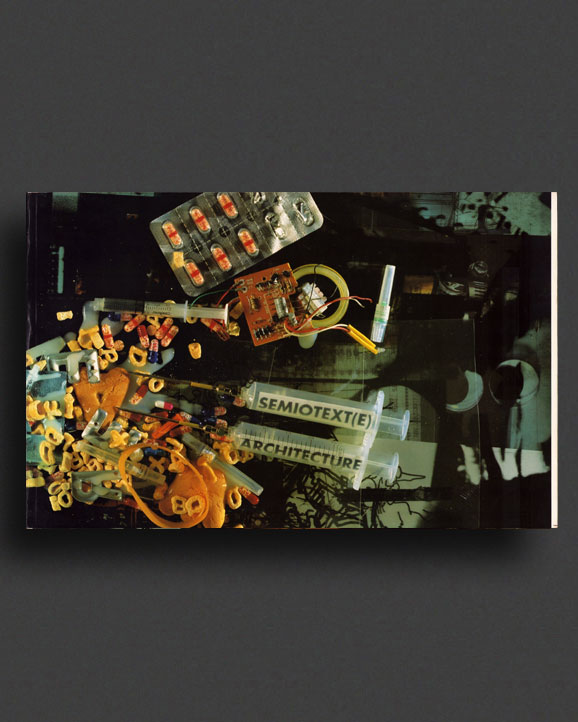
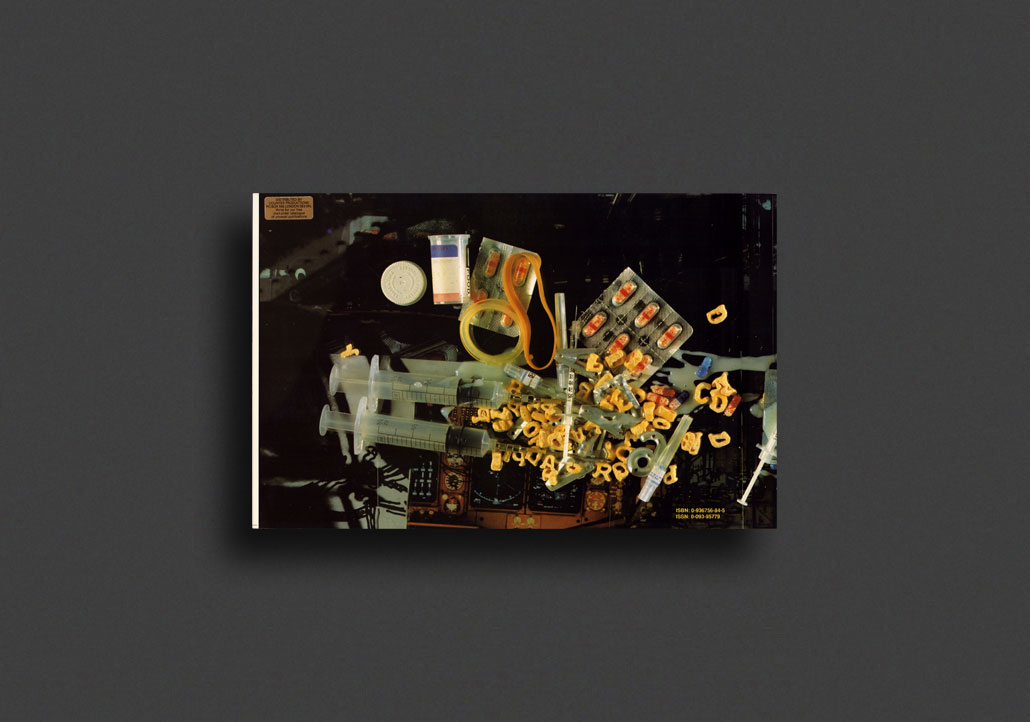
Rare first edition copy of the most unruly of the remarkable special book issues of the original Semiotext(e) journal — the Semiotext(e) Architecture Issue, published in 1992, edited and Schizo-designed as an enormous and heavy landscape magazine by Hrazten Zeitlian, featuring the work of Brian Boigon, Atom Egoyan, Felix Guattari, Arthur Kroker, Catherine Ingraham, Hrazten Zeitlian, Erwin Panofsky, Jesse Reiser, Daniel Libeskind, Stan Allen, Daniel Tiffany, Greg Ulmer, and many others packed into an explosion of architectural and typographical DIY desktop delirium. "Complex texts struggling with architectures intended to drag you into a visual and conceptual maelstrom. [...] a volume too big to open in most city apartments."—MIT Press
First edition. Not the 2009 reprint.
Founded in 1974, Semiotext(e) began as a journal that emerged from a semiotics reading group led by Sylvère Lotringer at the Columbia University philosophy department. Initially, the magazine was devoted to readings of thinkers like Nietzsche and Saussure. In 1978, Lotringer and his collaborators published a special issue, Schizo-Culture, in the wake of a conference of the same name he had organized two years before at Columbia University. The magazine brought together artists and thinkers such as Gilles Deleuze, Kathy Acker, John Cage, Michel Foucault, Jack Smith, Martine Barrat and Lee Breuer. Schizo-Culture brought out connections between high theory and underground culture that had not yet been made, and forged the "high/low" aesthetic that remains central to the Semiotext(e) project.
Very Good copy with light general wear. Very well preserved for the format!
1980, Italian
Softcover, 72 pages, 24 x 17 cm
1st Edition, Out of print title / used / very good
Published by
Studio Forma / Turin
Studio Alchymia / Milan
$280.00 - In stock -
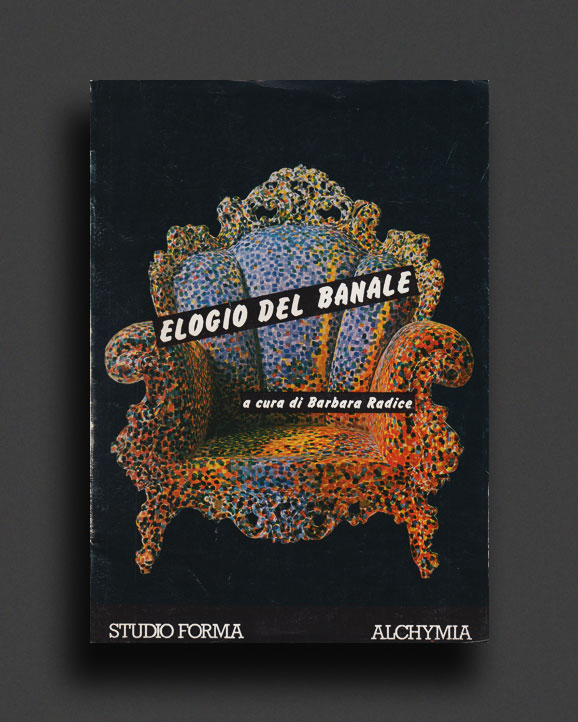
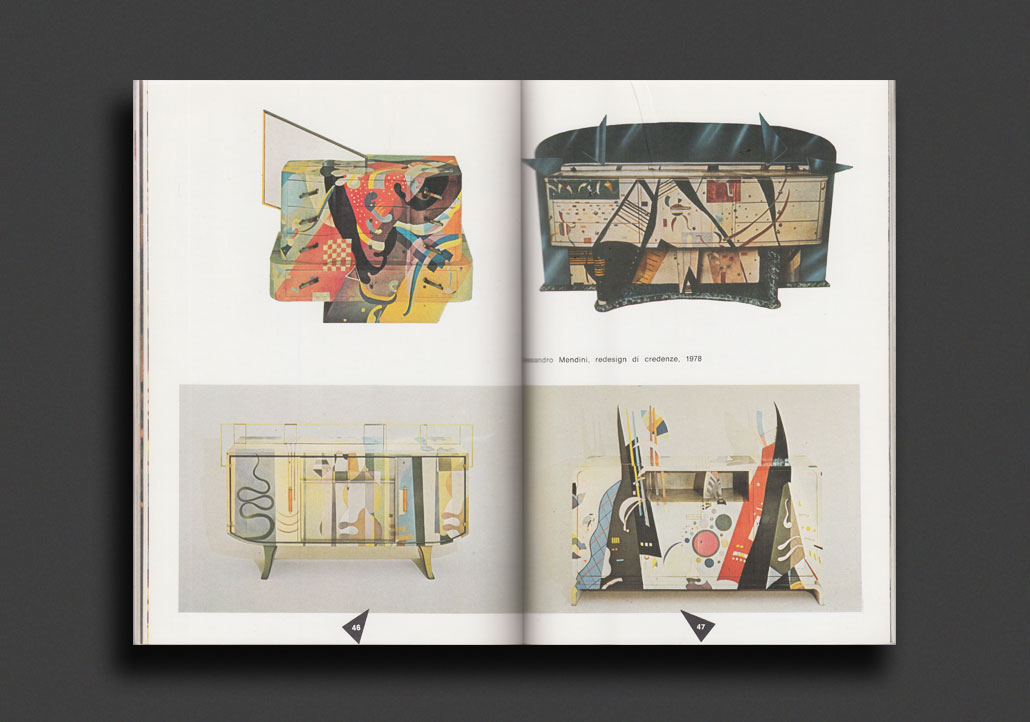
Very rare, very early volume published on the occasion of the exhibition "Elogio Del Banale" at the Venice Biennale, 1980, as part of the 1st International Architecture Exhibition. Conceived by Alessandro Mendini, Daniela Puppa, Paola Navone, this collection and book (directed by Andrea Branzi and designed by Michele de Lucchi) is heavily illustrated throughout with the work and studies of radical Italian design group Studio Alchimia, including many rarely seen early exhibition designs, interiors, furniture, objects, even catalogue decor for Fiorucci. Accompanying texts are by founding members Alessandro Mendini and Franco Raggi, and with an introduction by Barbara Radice. Includes patterns by Paola Navone and photographic studies by Ettore Sottsass throughout. An exceptional piece of printed radical design history, featuring many future Memphis members, published by Studio forma in Turin and Studio Alchymia in Milan.
Studio Alchimia was an iconoclastic, radical design group founded in Italy in 1976 by the Italian Architect Alessandro Guerriero. The Studio Alchimia was composed of designers, whose aim was to design and manufacture exhibition pieces, rather than consumer orientated products. Their products were to be regarded as prototypes / one-offs, leading the way from the principles of modernist design to a bold, new, experimental design style. This style would lead to the formation and popularity of Italian design groups in the 1980′s such as the Memphis Group and the new directions taken by the Alessi company.
Very Good copy.
2021, English
Hardcover, 192 pages, 18.4 x 26 cm
1st Edition, Out of print title / as new
Published by
Atelier EXB / Paris
$100.00 - Out of stock
In 1977, Masahisa Fukase turned his lens toward his cat, Sasuke, spending a year "crawling on my stomach to be at eye level with a cat and, in a way, that made me a cat." A year later, he acquired a second cat, Momoe. Featuring tipped-on cover images, this gorgeously made book is arranged in four chapters, organised around the timeline of Fukase’s life with his cats. They become for the Japanese photographer a boundless experimental field leading to an extraordinary body of work in its technical and visual inventiveness. As so often in his work, these tender images also express the photographer’s subjectivity and his connection to his subject. The cat, a faithful companion who never leaves him, takes the place of his wife, eternal heartache, later represented by the iconic fleeing crows of his masterpiece
Ravens series.
1974, English
Softcover, 335 pages, 22.5 x 16 cm
1st Edition, Out of print title / used / very good
Published by
Random House / New York
$85.00 - Out of stock
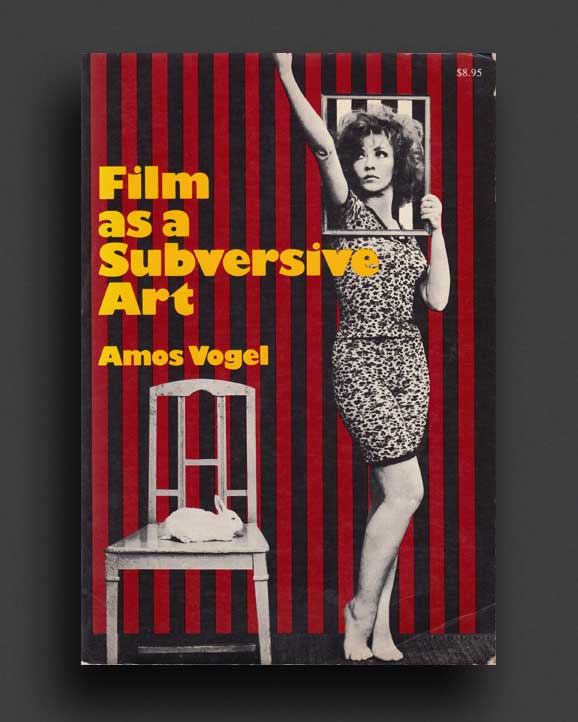
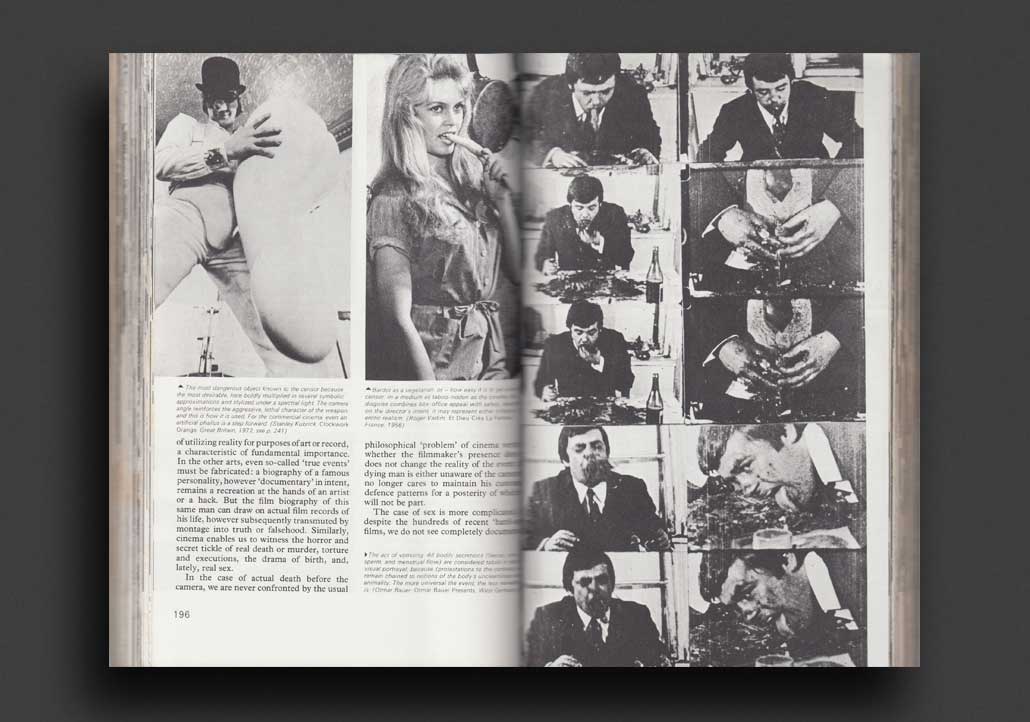
The first edition of Amos Vogel's seminal book, Film as a Subversive Art, one of the greatest books on cinema, published in 1974. Reprinted in 2005 by D.A.P./C.T. Editions, that edition also quickly went out of print and this landmark book has not been available since. According to Vogel--founder of Cinema 16, North America's legendary film society--the book details the "accelerating worldwide trend toward a more liberated cinema, in which subjects and forms hitherto considered unthinkable or forbidden are boldly explored."
So ahead of his time was Vogel that the ideas that he penned some 30 years ago for this classic volume are still relevant today. Accompanied by over 300 rare film stills, Film as a Subversive Art analyzes how aesthetic, sexual and ideological subversives use one of the most powerful art forms of our day to exchange or manipulate our conscious and unconscious, demystify visual taboos, destroy dated cinematic forms, and undermine existing value systems and institutions. This subversion of form, as well as of content, is placed within the context of the contemporary world view of science, philosophy, and modern art, and is illuminated by a detailed examination of over 500 films, including many banned, rarely seen, or never released works.
Includes Luis Buñuel, Dusan Makavejev, Luis Buñuel, Stan Brakhage, Bruce Connor, Roman Polanski, Vera Chytilova, Alfred Hitchcock, Carolee Schneemann, Peter Watkins, Tony Conrad, Jonas Mekas, Andrei Tarkovsky, Marcel Duchamp, Robert Bresson, Luchino Visconti, Chris Marker, Federico Fellini, Rainer Werner Fassbinder, Kate Millett, John Cassavettes, Shuji Terayama, William Klein, Russ Meyers, Louis Malle, Woody Allen, Yoko Ono, Michelangelo Antonioni, Agnes Varda, Walerian Borowczyk, Andy Warhol, Ingmar Bergman, Jacques Rivette, Sergei M. Eisenstein, Ingmar Bergman, Lindsay Anderson, Roberto Rossellini, Marguerite Duras, Charlie Chaplin, Paul Morrissey, Joseph Losey, Otto Muehl, Hans Richter, Fritz Lang, Jean Genet, Kenneth Anger, Maya Deren, Jean-Luc Godard, Frans Zwartjes, Arrabal, Jack Smith, Stan Vanderbeek, Werner Herzog, Morgan Fisher, Jean Renior, Michael Snow, Robert Frank, Jan Svankmajer, Sam Peckinpah, Paul Sharits, Akira Kurosawa, Yoko Ono, Orson Welles, Frederick Wiseman, Ken Jacobs, Martin Scorcese, Jean Cocteau, Manuel Octavio Gomez, Stanley Kubrick, Norman McLaren, Albert Maysles and David Maysles, to name only a few of the hundreds of film-makers whose works are featured in this essential film book.
VG copy, single crease to front cover edge, not other real damages, well preserved throughout. Image only a sample.
1993, Japanese
Hardcover (w. dust jacket), 220 pages, 13.6 cm x 19.4 cm
1st Edition, Out of print title / used / fine
Published by
Seikyūsha / Tokyo
$110.00 - Out of stock
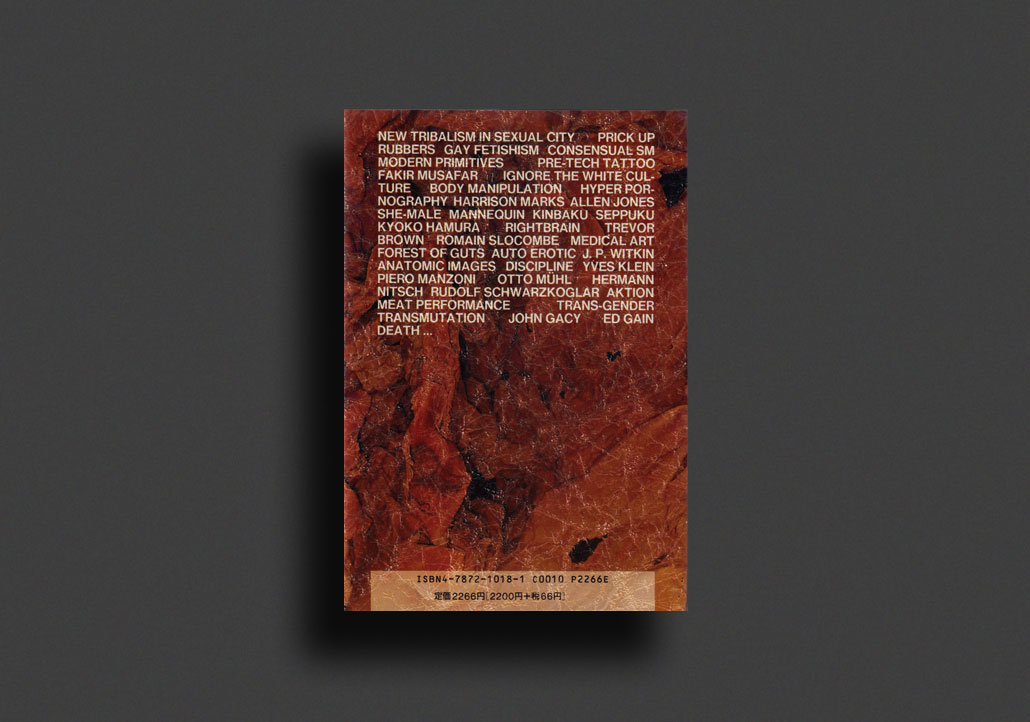
New Tribalism In Sexual City, Prick Up, Rubbers, Gay Fetishism, Consensual SM, Modern Primitives, Pre-Tech Tattoo, Fakir Musafar, Ignore the White Culture, Body Manipulation, Hyper Pornography, Harrison Marks, Allen Jones, She-Male, Mannequin, Kinbaku, Seppuku, Kyoko Hamura, Rightbrain, Trevor Brown, Roman Slocombe, Medical Art, Forest Of Guts, Auto Erotic, J. P. Witkin, Anatomic Images, Discipline, Yves Klein, Piero Manzoni, Otto Mühl, Hermann Nitsch, Rudolf Schwarzkoglar, Aktion, Meat Performance, Trans-Gender, Transmutation, John Gacy, Ed Gain, Death ...
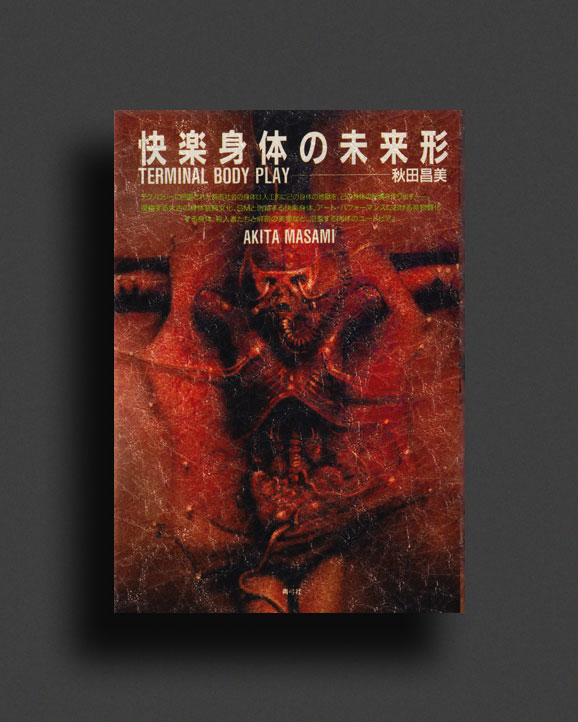
First hardcover edition of "Terminal Body Play", written by Merzbow's Masami Akita and published only in Japan in 1993. Covering all the above subjects with b/w illustrations, "Terminal Body Play" explores a plethora of physical utopias, including a revived ancient culture of body decoration and manipulation, the pleasure of the body perverted by BDSM, the dematerialised body of performance art, the aesthetics of murder, medicine and anatomy, and so much more. Merzbow is a noise project created in Tokyo, Japan in 1979 under the direction of noise technician Masami Akita. As well as a legendary underground noise artist, Akita is a prolific writer in Japan and frequently writes on the arts, music, erotica, esoterica, modern architecture, and animal rights, with articles on emerging subcultures and underground extreme cultures appearing in publications like SM Sniper, Studio Voice and Fool's Mate. His development of the Merzbow aesthetic ran parallel with a series of investigative books in which he catalogued and introduced a vast amount of hermetic types of music, sexual practices and autonomous creativity to a fairly conservative (but not close-minded) Japanese audience. "Terminal Body Play" is one of these very books.
First edition, Japanese text, fine copy with fine "textured" and illustrated dust jacket.
1988, English
Hardcover (w. dust jacket), 348 pages, 29.5 x 24.5 cm
1st Edition, Out of print title / used / fine
Published by
Abbeville Press / New York
National Museum of American Art / Washington
$180.00 - In stock -
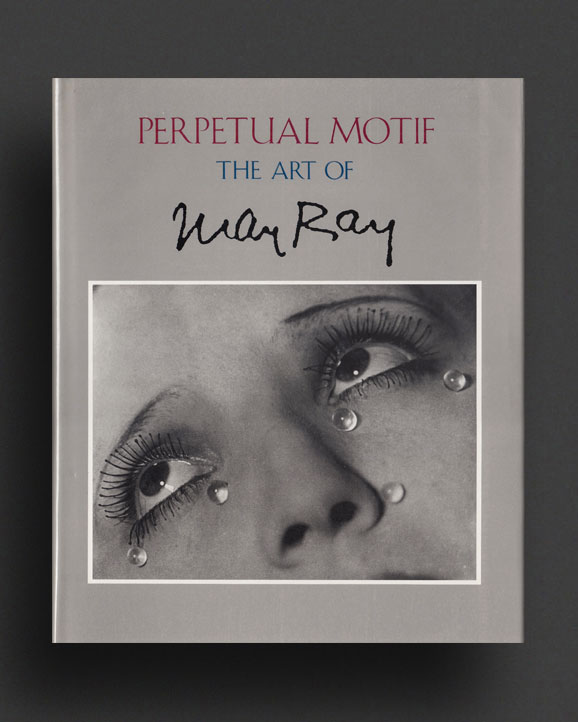
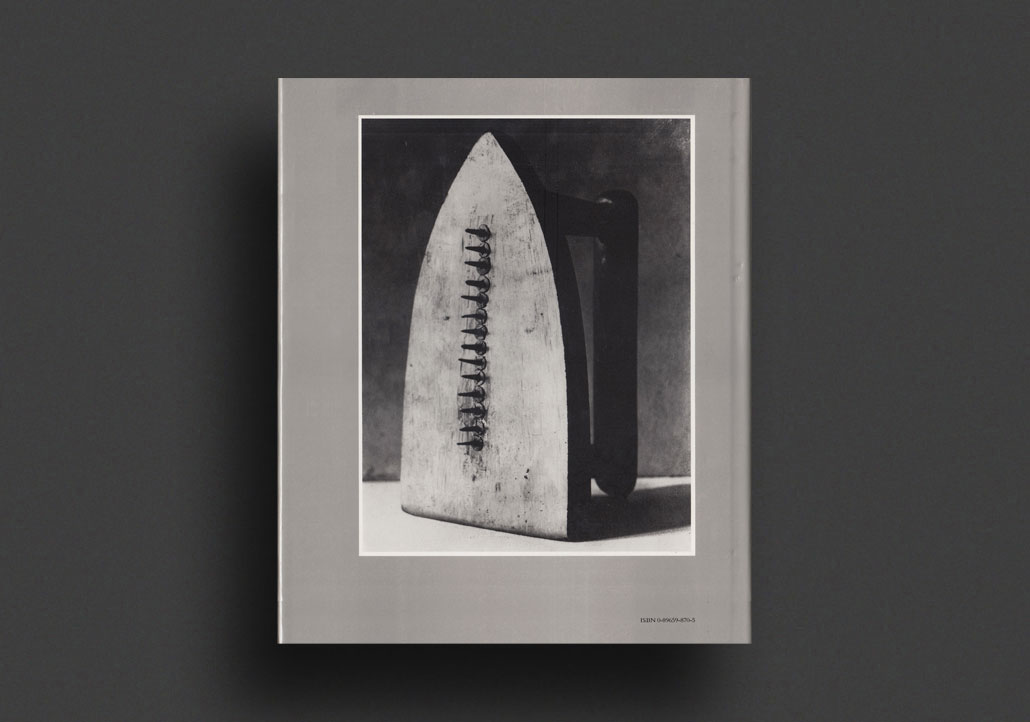
First 1988 hardcover edition of "Perpetual Motif: The Art of Man Ray", the most extensive retrospective of Man Ray's art ever published in the English language, re-printed many times.
Amid the exuberant chaos of the Paris art scene between the world wars, among the jarring factions of Dadaists, Surrealists, Futurists, and miscellaneous others, Philadelphia-born Man Ray was universally admired yet - it seemed - stubbornly mysterious. Although he looms large in today's standard art histories as a figure of unmistakable importance, few people have seen more than a selection of his remarkable photographs or a handful of his enigmatic "objects". Indeed, surprisingly little is known about this extraordinary and innovative creator of paintings, collages, drawings, films, aesthetic theory, and autobiography - as well as photographs and objects.
"Perpetual Motif: The Art of Man Ray" was acclaimed as "the first major book on this mysterious and eclectic artist and his work" (The Bloomsbury Review). It not only examines all aspects of the artist's production in all its forms, but also discusses Man Ray's multifarious connections with the artistic and political radicals of pre-World War I New York, the underground avant-garde as well as the haute monde of Paris between the wars, and the emigre society of Hollywood after World War 11.
Illustrated with nearly 300 of the artist's works in full colour and duotone (many published for the first time)"Perpetual Motif" brings together a host of authors who have distinguished themselves as specialists in the many fields of Man Ray's endeavours. Each has contributed an enlightening essay on one of the many facets in the career of this multifaceted artist.
Features an introduction by Merry Foresta and essays by Francis Naumann, Billy Kluver and Julie Martin, Elizabeth Hutton Turner, Sandra S. Phillips, Stephen C. Foster, and Roger Shattuck.
VG—NF copy in VG—NF dust jacket.
1993, English
Softcover , 96 pages, 28 x 22.23 cm
1st Edition, Out of print title / used / very good
Published by
NBM / New York
$110.00 - Out of stock
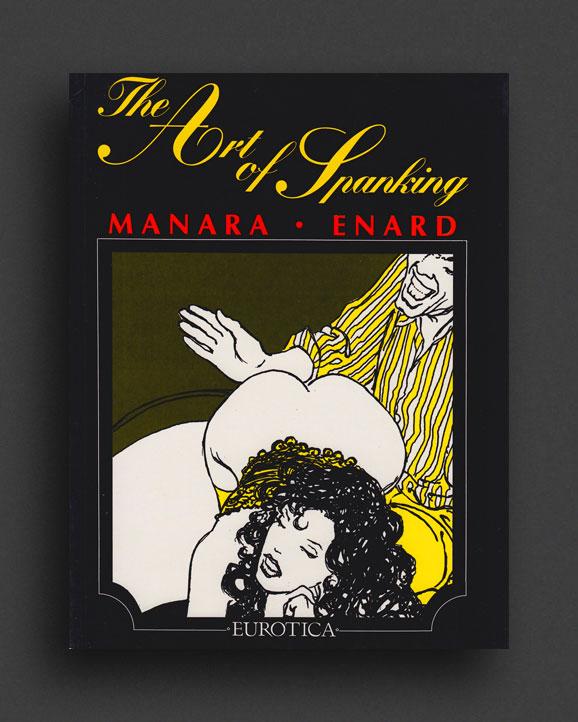
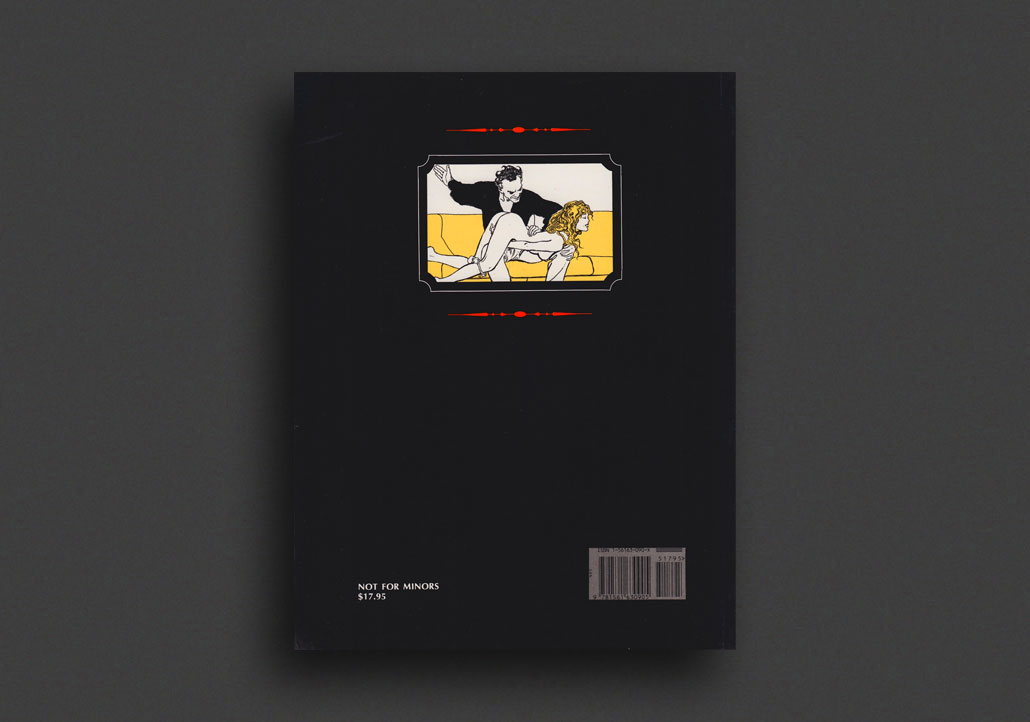
First English 1993 edition of this classic work of erotica where the heroine is introduced to the pleasures of being administered—and administering—spankings! Legendary Italian comic book writer and artist Manara beautifully and abundantly illustrates the tongue-in-(ahem)-cheek text by Enard. Luxuriously presented trade paperback in sepia and black colours and with flaps. Originally published in France in 1991, translated into English by Elizabeth Bell for Eurotica, an imprint of NBM, New York. A favourite of Manara's collections, for obvious reasons.
VG copy.
1982, Japanese
Softcover, 180 pages, 21 x 14.5 cm
1st Edition, Out of print title / used / fine
Published by
Flying '80 / Tokyo
$50.00 - In stock -
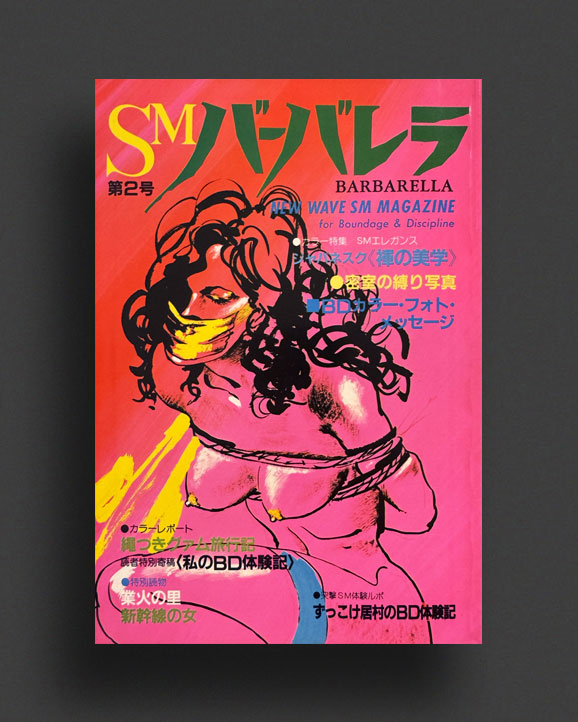
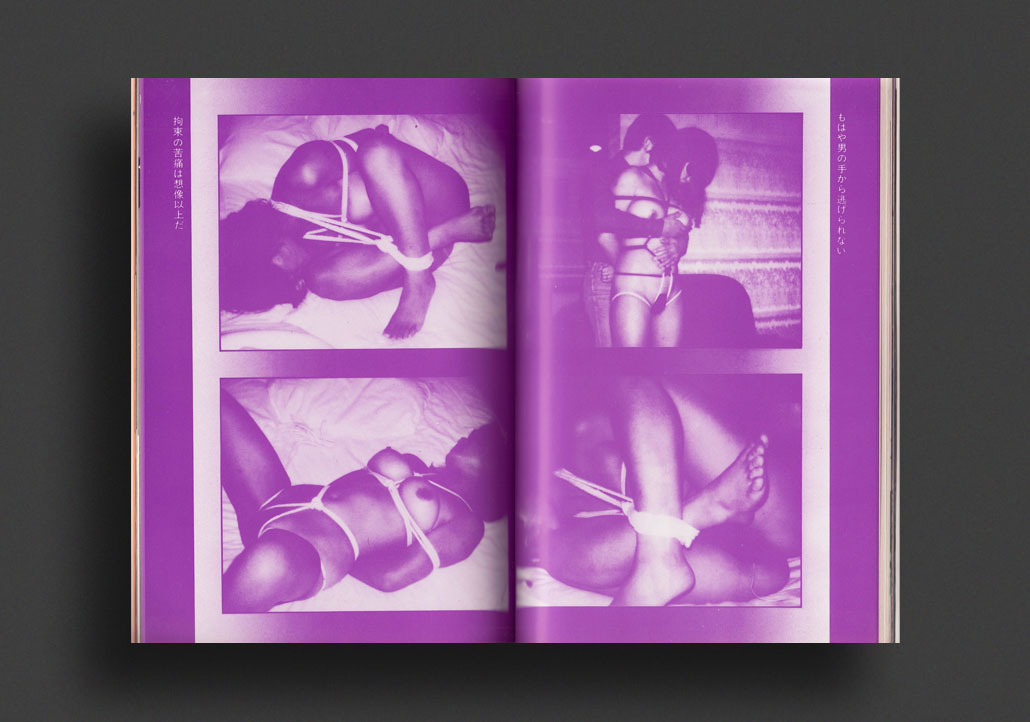
Issue no. 2 of only 3 issues ever published. SM Barbarella was launched in Tokyo in 1982 by Flying '80, who also published the SM and sex customs magazines Orange People, Fuuzoku Arts, and Monthly Secret. Wrapped in glossy illustrated covers, SM Barbarella embraced and devoted much of it's content to the secret worlds of its readers and amateur enthusiasts, with full-colour glossy spreads of SM parties, readers bondage photography, letters, classifieds, scene reports from Japan and abroad, etc. alongside professional glossy colour kinbaku shoots with pull-out spreads and illustrated articles on fetish culture, from the aesthetic of masks to rubber wear, ads, stories, illustrations, etc.
Near Fine copy.
1982, Japanese
Softcover, 182 pages, 21 x 14.5 cm
1st Edition, Out of print title / used / fine
Published by
Flying '80 / Tokyo
$45.00 - In stock -
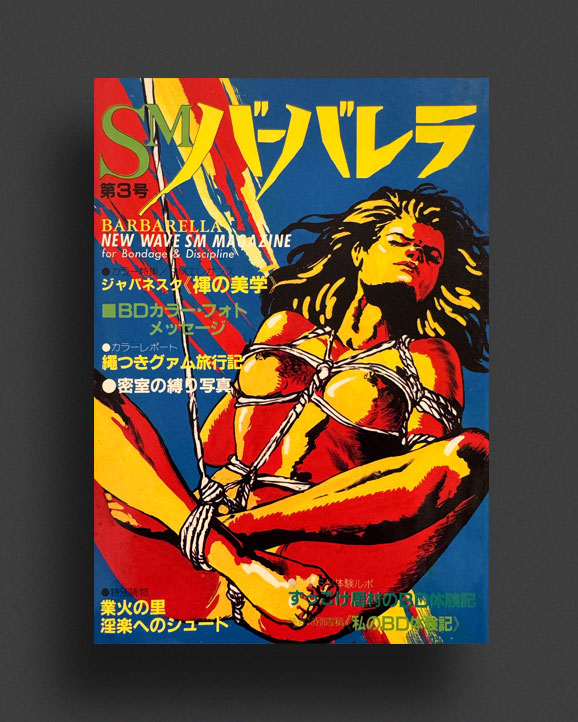
Issue no. 3 of only 3 issues ever published. SM Barbarella was launched in Tokyo in 1982 by Flying '80, who also published the SM and sex customs magazines Orange People, Fuuzoku Arts, and Monthly Secret. Wrapped in glossy illustrated covers, SM Barbarella embraced and devoted much of it's content to the secret worlds of its readers and amateur enthusiasts, with full-colour glossy spreads of SM parties, readers bondage photography, letters, classifieds, scene reports from Japan and abroad, etc. alongside professional glossy colour kinbaku shoots with pull-out spreads and illustrated articles on fetish culture, from the aesthetic of masks to rubber wear, ads, stories, illustrations, etc.
Near Fine copy.
?, Japanese
Softcover, 174 pages, 20.5 x 14.5 cm
1st Edition, Out of print title / used / good
Published by
Surugadai Shobo / Tokyo
$55.00 - Out of stock
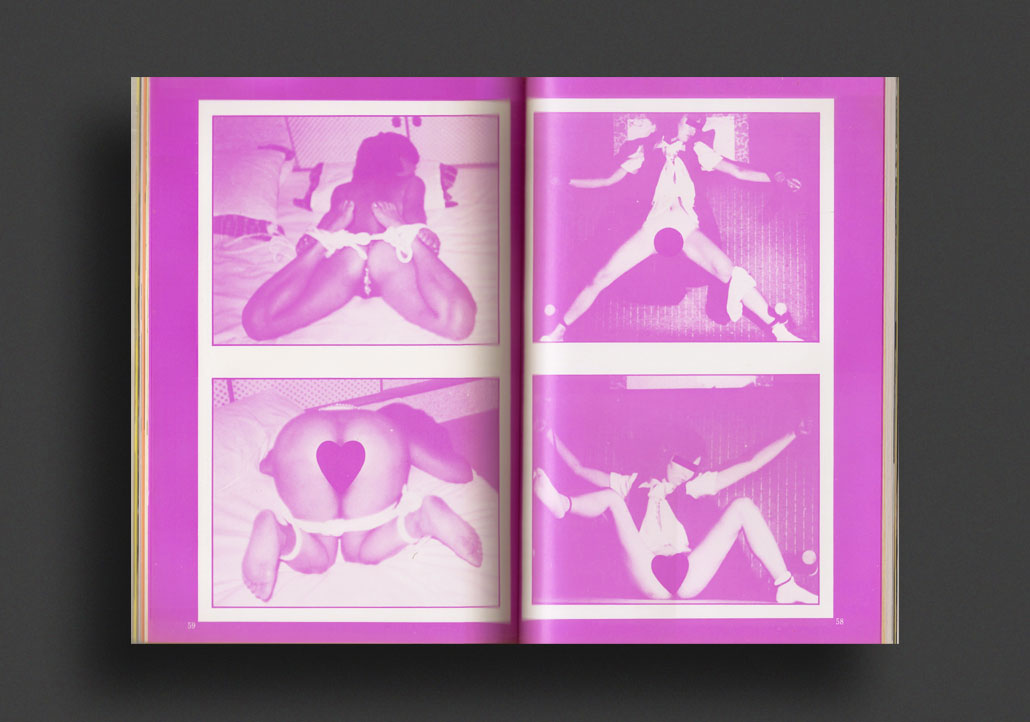
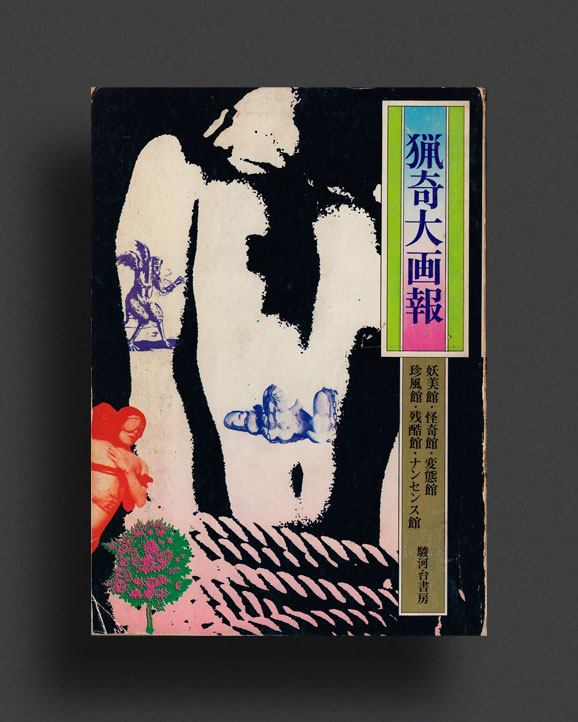
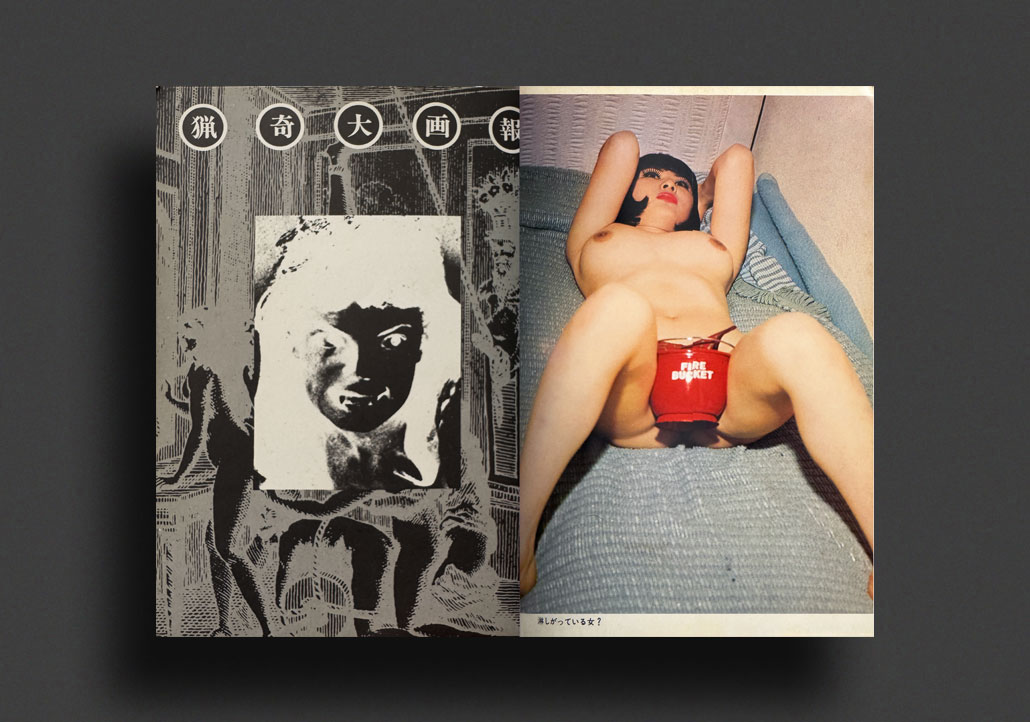
Rare copy of A Bizarre Pictorial, a one off, undated (looks to be late 1960s/very early 1970s) publication possibly affiliated with Erotica, Japan's erotic magazine for bibliophiles, published in the 1960s—1970s by Misaki Bookstore. A Bizarre Pictorial, published by Surugadai Bookstore, is "The Museum of Beauty, Mystery, and Perversion; The House of Pranks, The House of Cruelty, and The House of Nonsense". A books of Eros and Thantos — packed with heavily illustrated (colour and b/w) features, articles, photo and illustration galleries around the aforementioned chaptered themes, heavy with sadism, demonology, kinbaku, medieval perversions, history of misery, corpses, crime, possessions, black humour, Shunga artworks, and Japanese monsters (yokai). Essentially an illustrated book of weird and macabre world histories, phenomenons, perversions and customs, care of Kiyoshi Sumida, legendary bondage artist and editor Ueda Seishiro, artist Kawanabe Kyosai, and many more.
G—VG copy with light general edge-wear to covers and spine.
1979, Japanese
Softcover (staple-bound), 16 pages, 25.8 mm x 18.3 cm
1st Edition, Out of print title / used / good
Published by
Paroru sha / Tokyo
$680.00 - In stock -
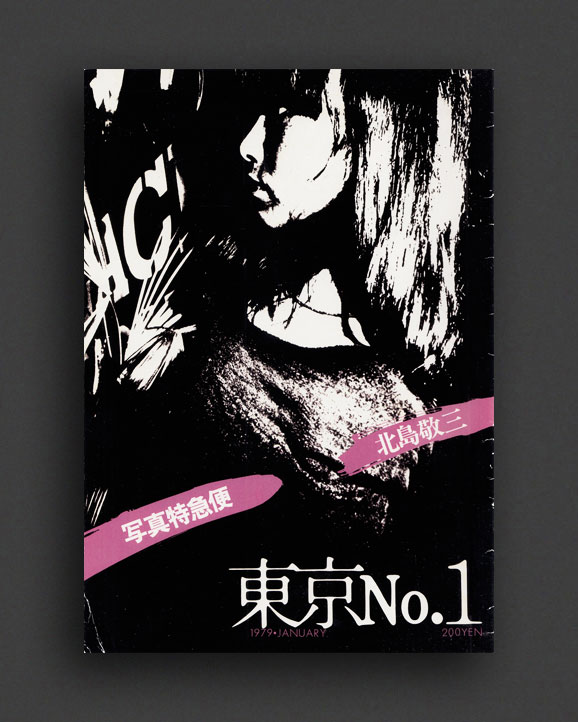
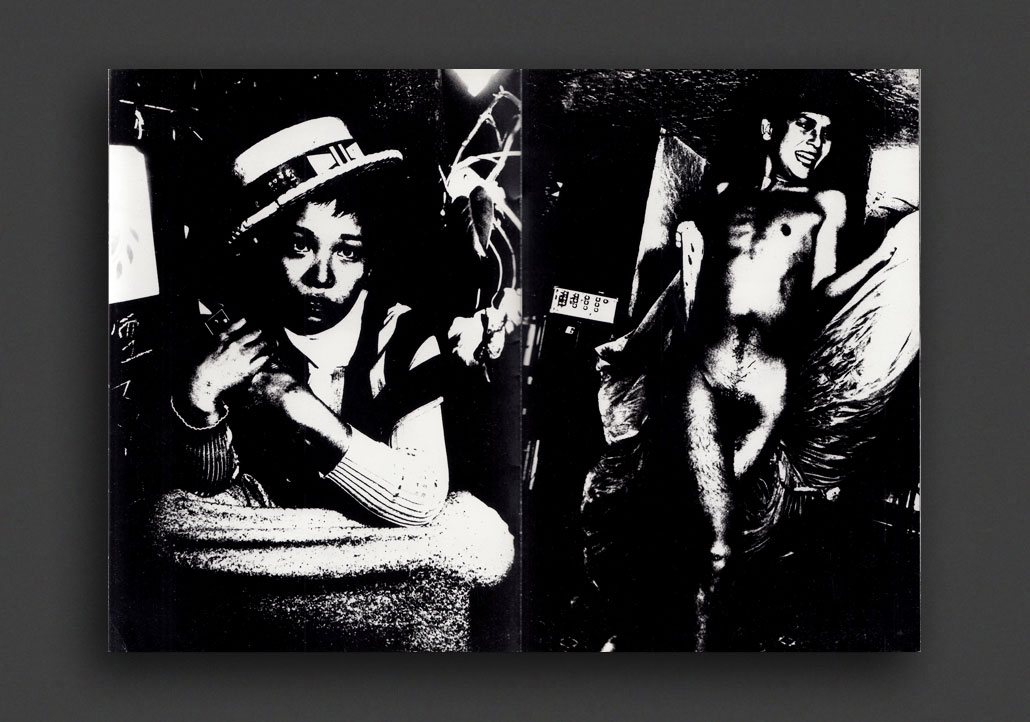
Rare 1979 printing of the first volume of Keizo Kitajima's cult masterpiece 'Photo Express: Tokyo' series published by the Japanese photographer in 1979 throughout the duration of his exhibition of the same name, 'Photo Express: Tokyo' at his self-run Tokyo gallery "CAMP", founded with fellow photographers Daido Moriyama and Seiji Kurata. Now absolute cult objects, each of these publications was created per month of the exhibition throughout the year of 1979, numbered from one to twelve, each publication documenting a new iteration of Kitajima's legendary exhibition. Kitajima applied a punk attitude to the making and disseminating of his work, covering every inch of the gallery walls with his stark, high-contrast black and white nocturnal urban images taken that month, often including projections and prints pasted directly on to the gallery walls just hours after the photographs were taken. He photographed at night, wandering around Tokyo, shooting on the streets, in the bars and clubs, capturing the buzzing after-hours energy of the city. One of the greatest street photographers to come out of Tokyo, Kitajima's images are grainy and dark in the manner of Moriyama or Anders Petersen, but even more extreme in their use of contrast and saturation. Sometimes, you have to look hard to see what exactly he has caught, particularly with his super-grainy close-ups of faces and figures: real people blend into their surroundings through constant movement. This is wilfully impressionistic street photography that adds up to a blurred portrait of night-time Tokyo, as well as suggesting Kitajima's state of mind at that time. Each of Kitajima's monthly shows was historicised by a 16-page booklet of full-bleed gloss reproductions in all their harsh, grainy glory, capturing the energy and innovation that went into each show. Sometimes, Kitajima would make the gallery his darkroom, attaching sheets of bromide paper to the walls, projecting images on to them, then applying developer and fixer with a sponge. His methodology was fast, haphazard and alert to all the possibilities of the accidental. The making and showing of the work became a kind of monthly art happening with Kitajima as the restless spirit at its centre.
Note: A facsimile of this legendary series was published in 2011 as a box set by Steidl / Le Bal, which too is now a collector's item. However, this is a Paroru sha print from 1979.
Good—VG copy with some spine pinching and bump to bottom corner.
1980, English / Japanese
Softcover (w. acetate jacket and obi-strip), 190 pages, 30 x 22 cm
1st Edition, Out of print title / used / very good
Published by
Byakuya Shobo / Tokyo
$850.00 - In stock -
First edition. A seminal Japanese photo book and instant classic upon release, Flash up is one of the most remarkable photographic excursions into the seedy underbelly of 1970s Tokyo. Kurata (b. 1945—2020), one Japan’s formidable contemporary photographers who’s work is often referenced in the same circles as his "Provoke" teachers Daido Moriyama and Nobuyoshi Araki, won the fifth Kimura Ihei Award in 1980 for this, his first book, his acclaimed collection of photographs of creatures of the night — gangsters showing off their full-length tattoos, youth styling themselves after the Hells Angels, self-professed ultra-nationalists from the notorious Black Dragon Society, transvestites drawing in crowds of men, cabaret girls...
"The photographs of Seiji Kurata are striking for their violence. The viewer must be prepared to be hit by his flashgun along with the subjects. ‘Violence’, in this case, is not necessarily invoked by the scenes of blood-shed; rather, it is Kurata’s sharp-shooting ability to stop the flow of time, capture the moment, draw of details we would otherwise never see, then proffer them up before our eyes. Sometimes our response is to avert our eyes for fear of seeing too much. This is not to say that the images are not exaggerated; for after all, people tend only to see what they want to see. If there are those who find Kurata’s photographs ‘ugly’, it can only be said that he has succeeded in paradoxically pointing the finger at them: You who want to avoid ugliness, he says, this is reality and I have cut it out for you. [...] we must admit that the ugliness apparent in these photographs is our ugliness. Our failure to do so simply invites Kurata to deal us an extra-violent blow with his images."—Akira Hasegawa, from the afterword.
Included in Martin Parr & Gerry Badger, The Photobook, Vol. II.
Text in English and Japanese.
Very Good copy, wear and usual shrinkage to publisher's thick acetate dust jacket, VG original metallic obi-strip, Very Good book, light bump to one corner.
1995, English
Offset Lithographic poster (87 x 67 cm)
1st Edition, Out of print title / used / fine
Published by
Unknown
$350.00 $300.00 - In stock -
Lovely rare 1995 colour offset lithographic poster of Sigmar Polke's "Modern Art (Moderne Kunst)" from 1968, printed on heavy stock in 1995. Unknown publisher, likely a German museum edition. A striking reproduction of this iconic Polke painting.
Dimensions : 87 x 67 cm
Fine condition, immaculately preserved, ready to frame.
Sigmar Polke (1941–2010)
Characterized by wit and endless inventiveness, German artist Sigmar Polke created an oeuvre that is wildly diverse in its exploration of mediums and materials. Inspired by his fascination with science and alchemy, Polke innovated techniques in painting and photography by manipulating chemical processes. Life in post-war Germany led the artist to establish Capitalist Realism, an ironic exploration of consumerism using the imagery of popular culture and advertising, evident in his 1976 collage on paper Supermarkets aus dem Zyklus, Wir Kleinbürger (translated as “Supermarkets from the Cycle, We Petty Bourgeoisie”), featuring iconic Superman figures shopping in a brand-laden supermarket.
1990, English / German
Hardcover (w. dust jacket), 320 pages, 29.7 x 24.7 cm
1st Edition, Out of print title / used / fine
$250.00 - Out of stock
Rare, first hardcover bi-lingual (English and German) edition of this long out-of-print, comprehensive book on Sigmar Polke's work with photography, published by Editions Cantz to accompany the exhibition at Staatliche Kunsthalle Baden-Baden in 1990. This handsome book exhaustively compiles the jubilant and almost cheeky relationship that the German artist had with the photographic medium during his career. Photography is just a starting point for Polke. He alters his imagery—much of it derived from his travels in Asia and South America—in every way imaginable. He hand colours some of his photographs; others he mutilates. Some are the result of darkroom experimentation with light and\or chemistry. His work is wide ranging and often fascinating, and page by page the many photographic genres and experiments usual to Polke's practice reveal themselves, creating a body of work partly family album, partly road movie. The book also insists on the important place the chemical and photographic experiments held in the painter's practice. Includes stunning installation views, a major essay, printed in both English and German, by critic Bice Curiger. A key publication on the photographic practice of Polke and a treasure trove archive of rare images! Includes exhibition checklist, biography, and exhibition history.
VG—Near Fine copy in VG—NF dust jacket preserved under mylar wrap.
1979, English
Softcover, 152 pages, 20 x 13.5 cm
1st Edition, Out of print title / used / fine
Published by
Chrysalis Books / Los Angeles
$290.00 - In stock -
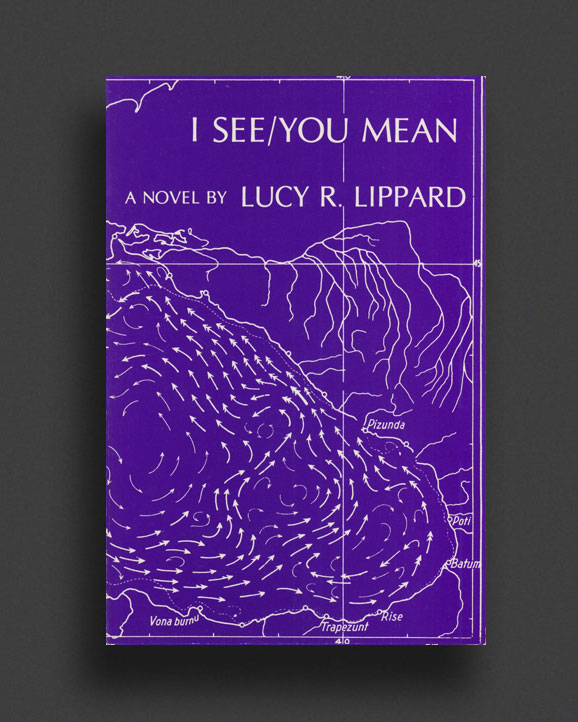
Rare unread first 1979 edition of Lucy R. Lippard's experimental novel, I See / You Mean.
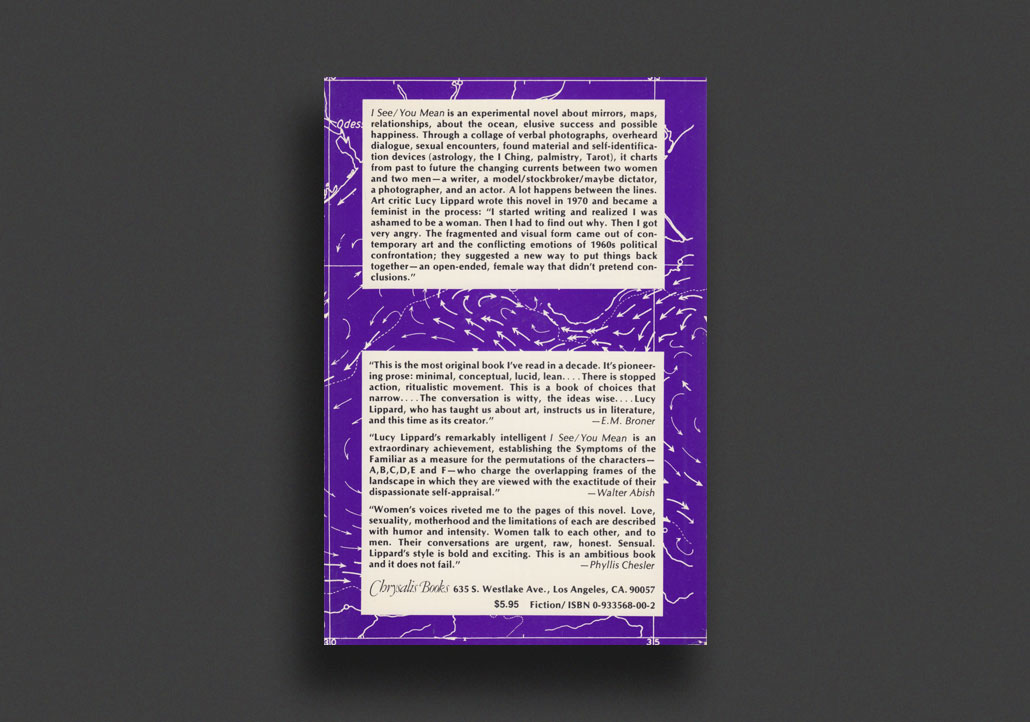
I See / You Mean is an experimental novel about mirrors, maps, relationships, the ocean, elusive success, and possible happiness. Through a collage of verbal photographs, overheard dialogue, sexual encounters, found material, and self identification devices (astrology, the I Ching, palmistry, Tarot), it charts from past to future the changing currents between two women and two men: a writer, a model/stockbroker/maybe dictator, a photographer, and an actor. A lot happens between the lines. Art critic Lucy Lippard wrote this novel in 1970 and became a feminist in the process: “I started writing and realized I was ashamed to be a woman. Then I had to find out why. Then I got very angry. The fragmented visual form came out of contemporary art and the conflicting emotions of 1960s political confrontation; they suggested a new way to put things back together—an open-ended, female way that didn’t pretend conclusions.”
Lucy R. Lippard is a writer, activist, and curator. She is the author of twenty-five books on contemporary art and cultural criticism and has curated some fifty exhibitions in the United States, Europe, and Latin America.
As New, unread copy of the first 1979 edition.
1973, English
Softcover, 96 pages, 18.5 x 18 cm
1st Edition, Out of print title / used / fine
Published by
Art Gallery of New South Wales / Sydney
$45.00 - Out of stock
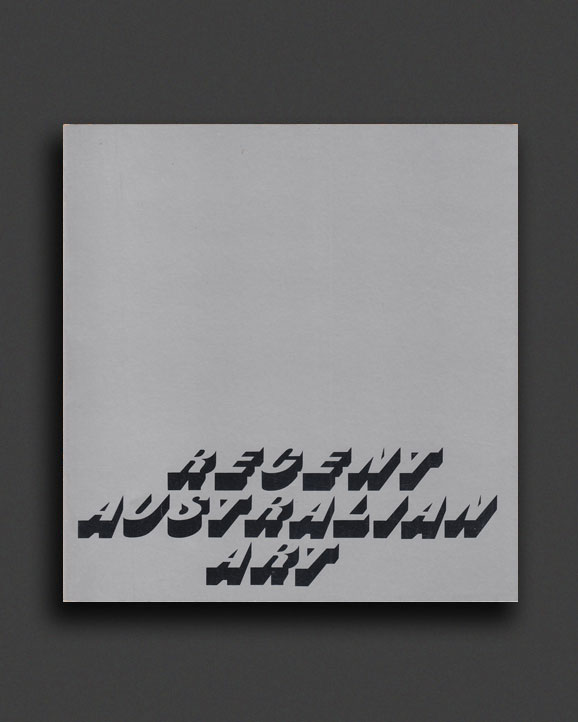
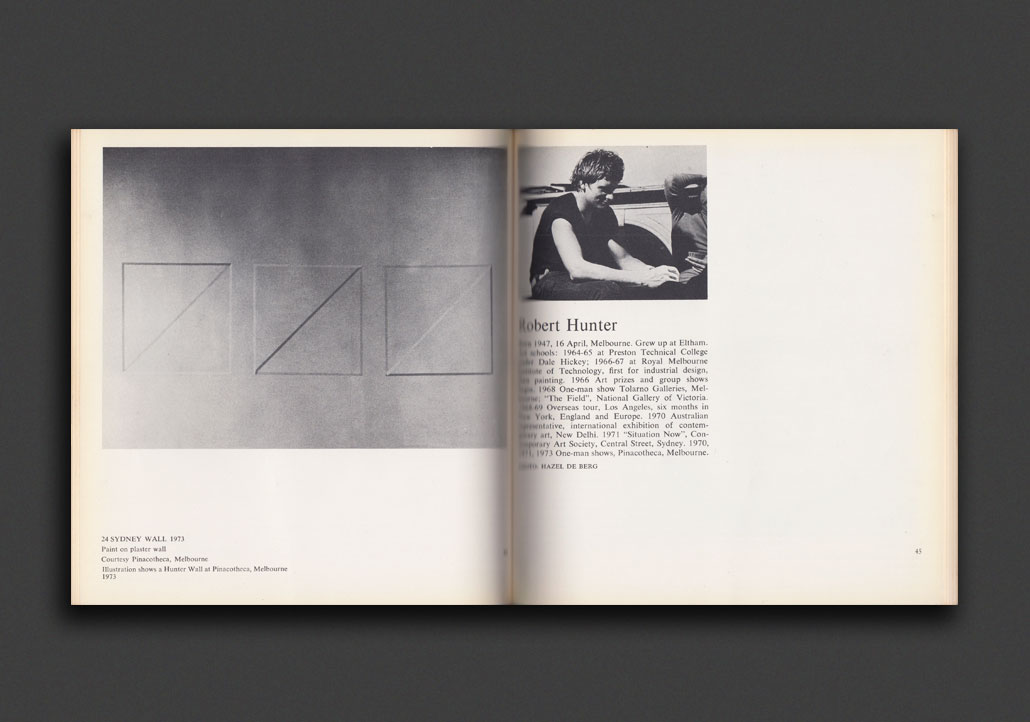
Catalogue published on the occasion of the major exhibition "Recent Australian Art" held at Art Gallery of New South Wales, Sydney, 18 October-18 November 1973, featuring new work (created between 1970-1973) by close to 50 Australian artists, including many of 'The Field' artists. Each exhibited artist is profiled with a photographic portrait, potted history and blck and white reproductions of their work. Includes a foreword by Peter Laverty, Director, Art Gallery of New South Wales, and introduction by Frances McCarthy and Daniel Thomas.
Artists: Robert Hunter, Mel Ramsden, Ian Burn, Dick Watkins, Robert Rooney, Aleks Danko, Ewa Pachuka, Ti Parks, John Firth-Smith, Robert Jacks, Tim Johnson, Robert Hunter, Victor K, Donald Laycock, Mike Parr, Peter Kennedy, Paul Partos, Nigel Lendon, Rollin Schlicht, Alberr Shomaly, Guy Frank Stuart, William Anderson, David Aspden, Jonas Balsaitis, Peter Booth, Robert Boynes, Mike Brown, Tim Burns, Gunter Christmann, William Delafield Cook, John Davis, Bill Clements, Tony Coleing, Ross Grounds, Dale Hickey, Ian Howard, Noel Hutchison, Tony Kirkman, Richard Larter, Donald Laycock, Tony McGillick, Alan Oldfield, John Peart, Peter Powditch, Ron Robert-Swann, Rollin Schlicht, Alberr Shomaly, Guy Stuart, Michael Taylor, Imants Tillers, Tony Tuckson.
VG—NF copy.
1970, English / German / French / Spanish
Hardcover (w. dust jacket), 128 pages, 24.5 x 21.5 cm
Out of print title / used / very good
Published by
Arthur Niggli / Niederteufen
$90.00 $50.00 - Out of stock
Second 1970 hardcover edition of Swiss designer and photographer, Armin Haab's (1919—1991) Lettera 3, the third in his wonderful series of lettering books for Swiss publisher Arthur Niggli. Cover design by typographer Walter Haettenschweiler, typesetting and layout by Armin Haab and Walter Haettenschweiler. Gorgeously designed selection of five varieties of typeface : 19th century ornamental, Egyptian, English-Italian, Art Nouveau, new sans-serif creations and the latest trends in type face design from the period (end of the 1960s). Text in English, German, French and Spanish; printed in Switzerland.
Very Good copy in Good dust jacket. Light wear to dj with faint former owner stamp to front, interior sharp and well-preserved.
1983, English
Softcover, 240 pages, 26 x 26 cm
1st Edition, Out of print title / used / very good
Published by
The Overlook Press / New York
$70.00 $40.00 - Out of stock
First 1983 edition of this classic first collected works of legendary graphic designer and illustrator, Milton Glaser (1929—2020), published by The Overlook Press, New York. Co-founder of Push Pin Studios, Glaser's absolutely iconic graphic work is synonymous with a bold, radical aesthetic shift through in the 1960's through the innovation of the counterculture's influence on the broader graphic landscape in America. Milton drew heavily from music, literature, and early 20th century artists to create his own signature style that consisted of playful, psychedelic graphics with controlled blasts of colours along with silhouettes and bold geometric outlines. Pop, psychedelic, jazz, esoteric and Anti-war sensibilities propelled Glaser's masterful modernism internationally and this book is the first to collect Glaser's most important work to date. 340 illustrations spanning posters, magazine covers, illustrations, logos, typography, packaging design, record sleeves, most of them accompanied by Glaser's own commentary. Includes an interview and complete list of works, with foreword by French illustrator Jean Michel Folon.
Very Good copy.
2007, English
Hardcover (clothbound), 220 pages, 23.5 x 16 cm
Special private edition,
1st Edition, Out of print title / as new
Published by
The Edwin Mellen Press / Wales
$140.00 $50.00 - Out of stock
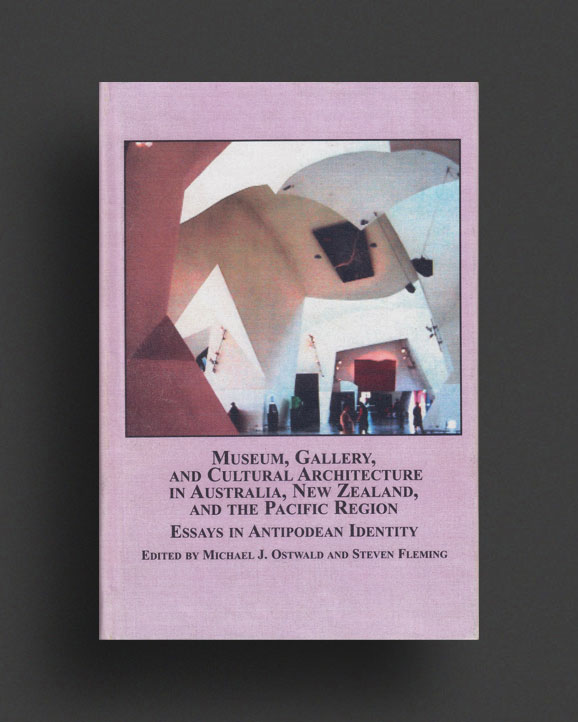
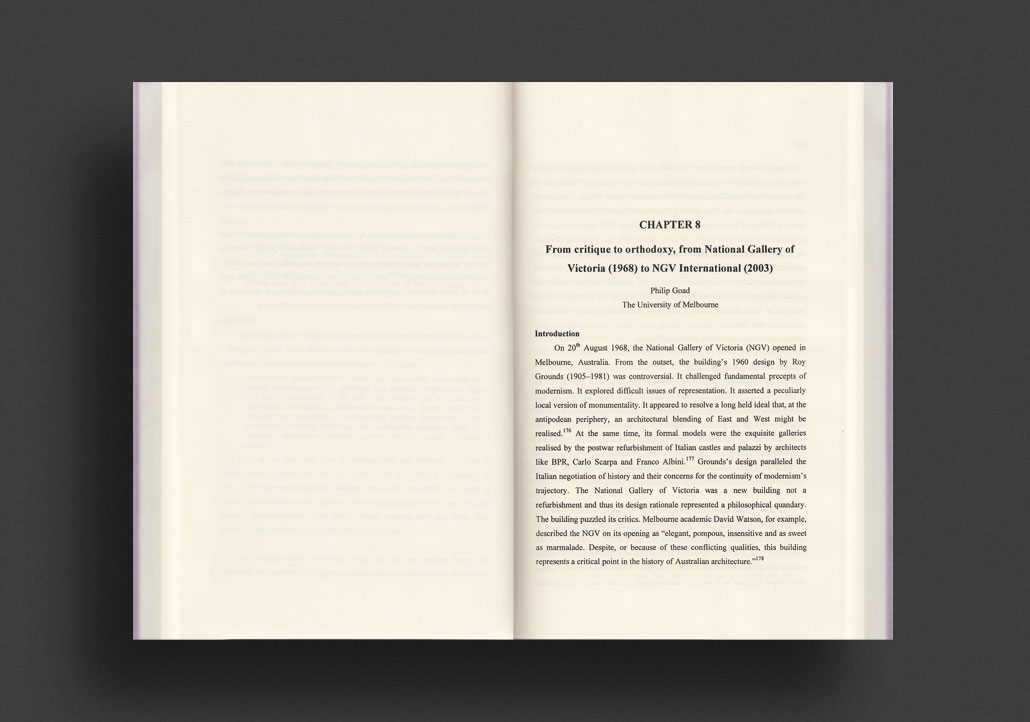
Special private issue edition of this seldom seen hardcover collection of academic essays in antipodean identity through architecture, edited by Michael J. Ostwald & Steven Fleming, awarded the Adele Mellen Prize for Distinguished Contribution to Scholarship. Preface by architect Lindsay Johnston. Texts by Stephen Frith, Philip Goad, Harriet Edquist, Michael Linzey, William Taylor, Ali Mozaffari, Naomi Stead, Mike Austin, Davina Jackson, Michael J. Ostwald and Steven Fleming.
In the years since the completion of Jørn Utzon’s Sydney Opera House countries throughout the South Pacific have displayed a particular fascination with the possibility that architecture may be able to embody regional cultural identity. This book examines a number of major museums, art galleries and cultural centers that have been constructed in Australia, New Zealand and the South Pacific regions. The majority of these buildings, landscapes or structures have been completed in the last few years and all have employed different architectural strategies to shape their designs. This collection of nine critical essays by leading scholars of contemporary architecture provides an important survey and assessment of Antipodean cultural architecture. Emphasizing common traits, the introduction to the text asks how this phenomenon might be understood and why it may be relevant in different regions around the world. Acknowledging the pluralistic nature of Antipodean architecture, the conclusion offers an alternative hermeneutical framework, one that accepts the fragmentary nature of the contemporary cultural landscape.
“There is, in fact, a hint of mild amusement amongst the architects of the Antipodes that the world has discovered that their other [hemisphere] is so interesting. There is a reassurance that maybe the real truth is being ‘dug with the other foot’. Irish poet Seamus Heaney speaks of his writing as “digging with the pen” and the essays that follow are turning over the sods of the cultural soil of Antipodean architecture in a way that may reveal new comprehensions, comprehensions beyond the scale of the domestic.”—Professor Lindsay Johnston, Head of the School of Architecture and Planning, The University of Auckland
“The depth and breadth of the authors’ writings reflects the multi-valence of a region that defies generalization. Through their attention to buildings and their attendant theoretical concerns, each author opens our eyes to another facet of this vast region of the world, revealing more of its rich cultural and intellectual heritage as the volume unfolds.”—Dr. Mark A. Reynolds, Instructor in Geometry, Academy of Art University
“This book, edited by Michael J. Ostwald and Steven Fleming, is a much-needed and engaging collection of essays from a group of pre-eminent Australasian architectural writers and thinkers ... The volume deals with museums, cultural centers, gardens, art galleries and public space and as such it is likely to be of interest to not only architects, urban designers and architectural teachers and students but also to art historians, cultural theorists and those engaged in museum practice.”—Dr. Sarah Treadwell, Deputy Head of School, University of Auckland
Dr. Michael J. Ostwald is Professor of Architectural Analytics at the University of New South Wales (UNSW), Sydney (Australia) where he was previously Associate Dean of Research in the Faculty of Arts, Design and Architecture and in the Faculty of the Built Environment.
As New, light cloth wear.
1994, English
Softcover, 132 pages, 27 x 20.5 cm
1st Edition, Out of print title / used / very good
Published by
AK Press / Edinburgh
$100.00 - Out of stock
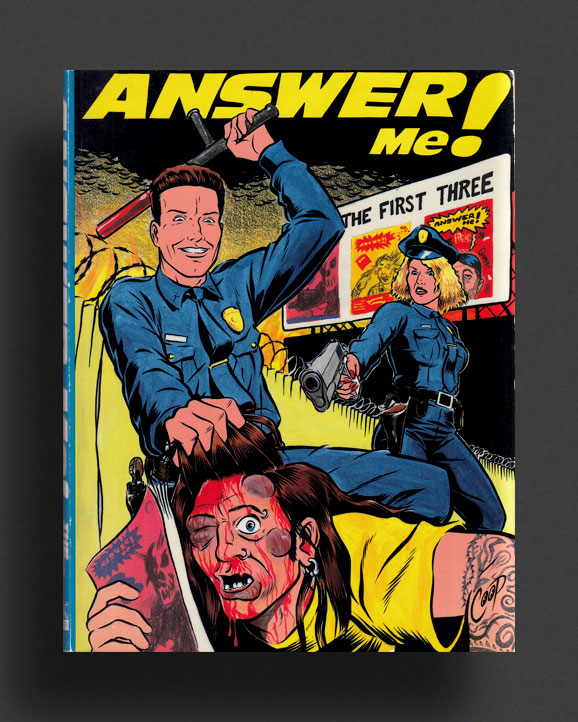
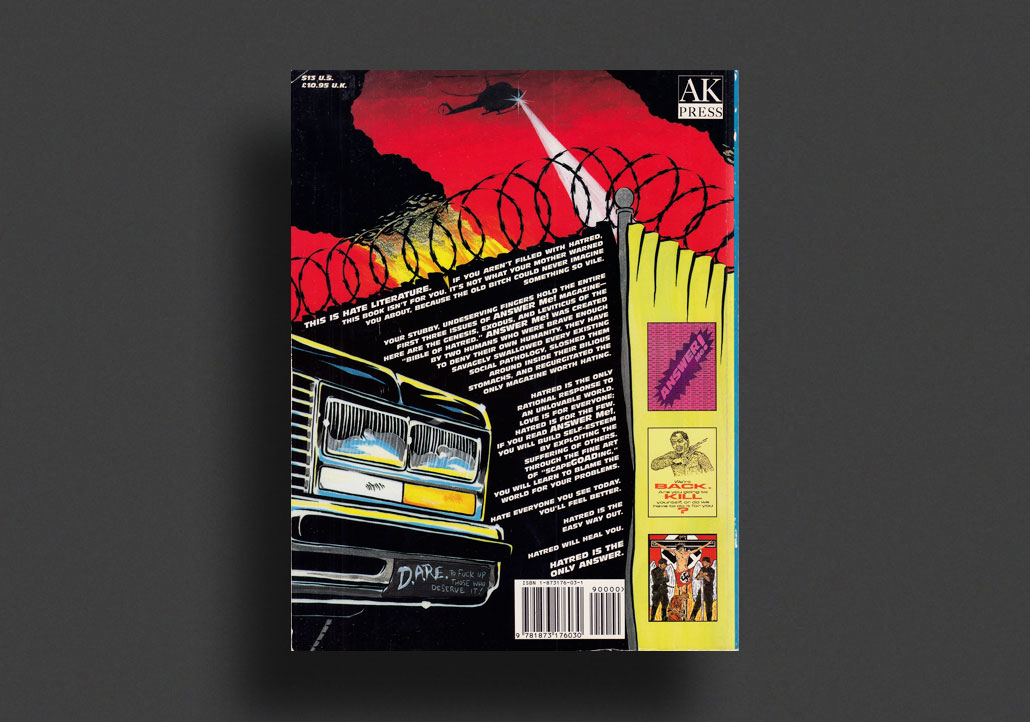
First 1994 AK Press printing of the book anthology of the first three issues of ANSWER Me!, the short-lived but ever-controversial Los Angeles zine edited by Jim and Debbie Goad and published between 1991 and 1994. At the forefront of 1990's "End of the Century"/anti-humanist/nihilist/piss-take underground rant/black humour publishing, ANSWER Me! focused on the social pathologies of interest to the Los Angeles–based couple ("Two Against The World, honest assholes in a world of dishonest ones"). The anthology sold thousands before going out of print. ANSWER Me! has been blamed for a White House shooting and a triple suicide. It has been banned in several countries and put on trial for obscenity in the USA. Chock full of well-written rants, interviews, and articles on topics ranging from music and subcultures to sex, love, hate, murder, serial killers, and suicide, this fat, gorgeous anthology contains the legendary rant-zine’s first three issues in their entirety.
"ANSWER Me! was so wonderful because it reminded me of when my uncle Joey turned me on to National Lampoon when I was eight years old. After National Lampoon I was always looking for uglier forms of humor, and then comes along ANSWER Me!"—Shaun Partridge, Partridge Family Temple
The mouthpiece of Jim and Debbie Goad, ANSWER Me! also featured written and illustrated contributors, from comic artists to serial killers, such as Adam Parfrey (Feral House/Apocalypse Party), Mike Diana, Boyd Rice, Peter Sotos, Charles Manson, Richard Ramirez, Molly Kiely, Jim Blanchard, Frank Kozik, Randall Phillip, Nick Bougas, Mark David Chapman, John Wayne Gacy, Trevor Brown, Kenneth Bianchi, Gary M. Heidnik, Phil Cisco, Marcel Ruijters, Larry Wessel, Tom Crites, Shaun Partridge, Ottis Toole, Henry Lee Lucas, Timothy Patrick Butler, Coop, who contributed the cover artwork to the anthology (and also the following issue 4), and others.
Issue No. 1 (October 1991) features interviews with Russ Meyer, Timothy Leary, Holly Woodlawn, Kid Frost, Public Enemy, Iceberg Slim, and pieces on Bakersfield, California, Sunset Boulevard, masturbation in literature, and Twelve-Step programs.
Issue No. 2 (July 1992) features Anton LaVey, David Duke, Al Goldstein, El Duce of The Mentors, the Geto Boys, Ray Dennis Steckler, 100 serial killers and mass murderers, Vietnamese gangs, and Mexican murder magazines.
Issue No. 3 (July 1993) features Jack Kevorkian, Al Sharpton, NAMBLA, the Kids of Widney High, Boyd Rice, Suzanne Muldowney, 100 suicides, guns, Andrei Chikatilo, pedophilia in Steven Spielberg's work, Mexican deformity comics[clarification needed], paintings and drawings by murderers, and a prank call to a suicide hotline.
"THIS IS HATE LITERATURE. IF YOU AREN'T FILLED WITH HATRED, THIS BOOK ISN'T FOR YOU. IT'S NOT WHAT YOUR MOTHER WARNED YOU ABOUT, BECAUSE THE OLD BITCH COULD NEVER IMAGINE SOMETHING SO VILE.
YOUR STUBBY, UNDESERVING FINGERS HOLD THE ENTIRE FIRST THREE ISSUES OF ANSWER Me! MAGAZINE-HERE ARE THE GENESIS, EXODUS, AND LEVITICUS OF THE "BIBLE OF HATRED." ANSWER Me! WAS CREATED BY TWO HUMANS WHO WERE BRAVE ENOUGH TO DENY THEIR OWN HUMANITY. THEY HAVE SAVAGELY SWALLOWED EVERY EXISTING SOCIAL PATHOLOGY, SLOSHED THEM AROUND INSIDE THEIR BILIOUS STOMACHS, AND REGURGITATED THE ONLY MAGAZINE WORTH HATING.
HATRED IS THE ONLY RATIONAL RESPONSE TO AN UNLOVABLE WORLD. LOVE IS FOR EVERYONE;
HATRED IS FOR THE FEW. IF YOU READ ANSWER Me!, YOU WILL BUILD SELF-ESTEEM
BY EXPLOITING THE SUFFERING OF OTHERS. THROUGH THE FINE ART OF "SCAPEGOADING," YOU WILL LEARN TO BLAME THE WORLD FOR YOUR PROBLEMS.
HATE EVERYONE YOU SEE TODAY.
YOU'LL FEEL BETTER.
HATRED IS THE EASY WAY OUT.
HATRED WILL HEAL YOU.
HATRED IS THE ONLY ANSWER."
—book jacket blurb
Mature audiences only!
VG copy with wear to extremities.
1982, Japanese
Softcover (staple-bound), 60 pages, 39.1 x 30 cm
1st Edition, Out of print title / used / good
Published by
JICC Publishing Bureau / Japan
$180.00 - Out of stock
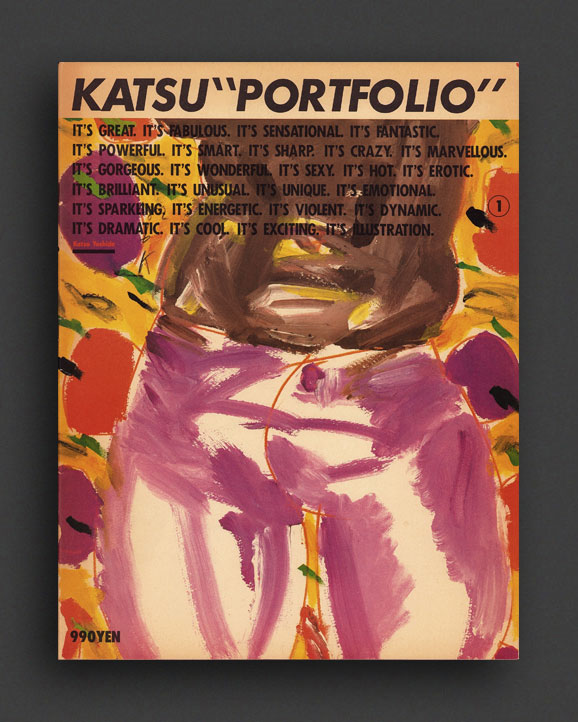
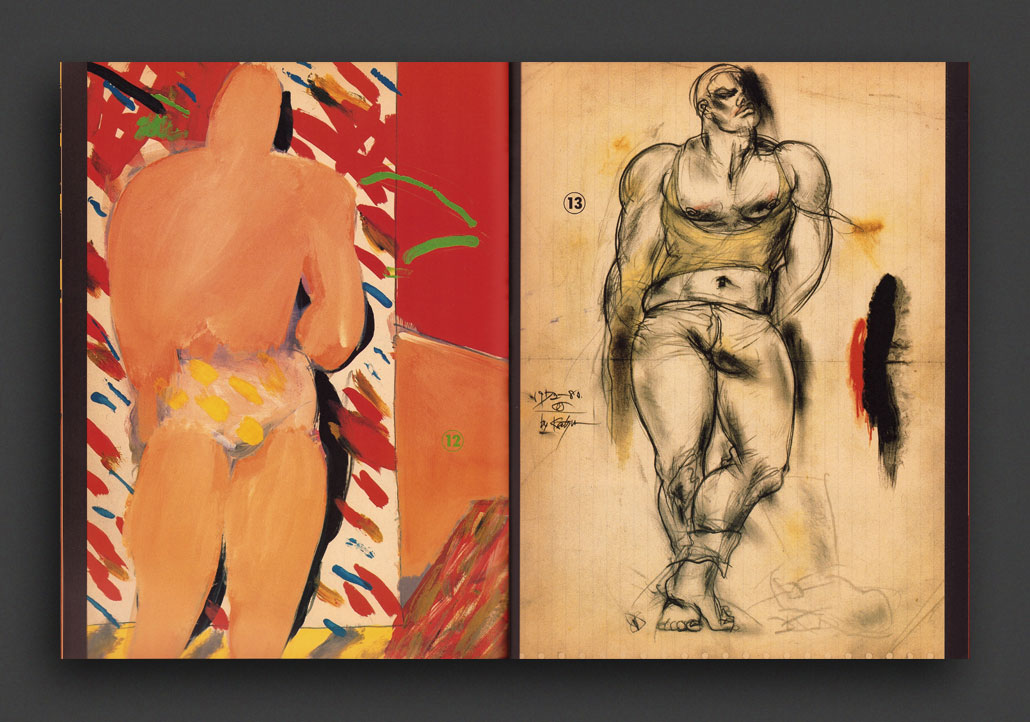
First 1982 edition of this wonderful, very early collection of artworks by Japanese artist Katsu Yoshida (1938—2002). Bold, expressionist and homo-erotically charged, Yoshida's illustration work defined the new wave of 1980's Tokyo. "Portfolio" is packed cover to cover with full-bleed, over-sized reproductions of his sensational, sensual colour brushwork that was to become iconic through the pages of Japanese underground magazines such as SM Sniper and through his collaborations in the world of fashion with Issey Miyake.
Good copy with some chipping to the spine edge of covers, tanning to extremities of newsprint stock.
1983, English / Japanese
Softcover (staple-bound), 62 pages, 39 x 30 cm
1st Edition, Out of print title / used / good
Published by
Daimaru / Tokyo
$180.00 - Out of stock
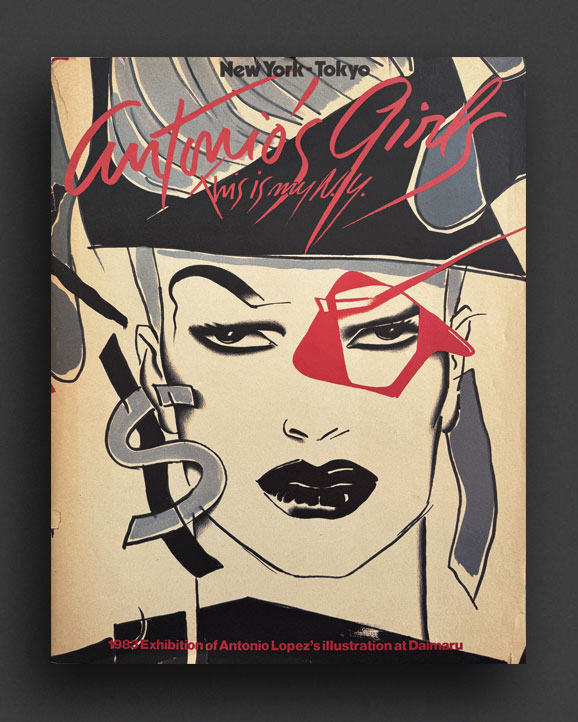
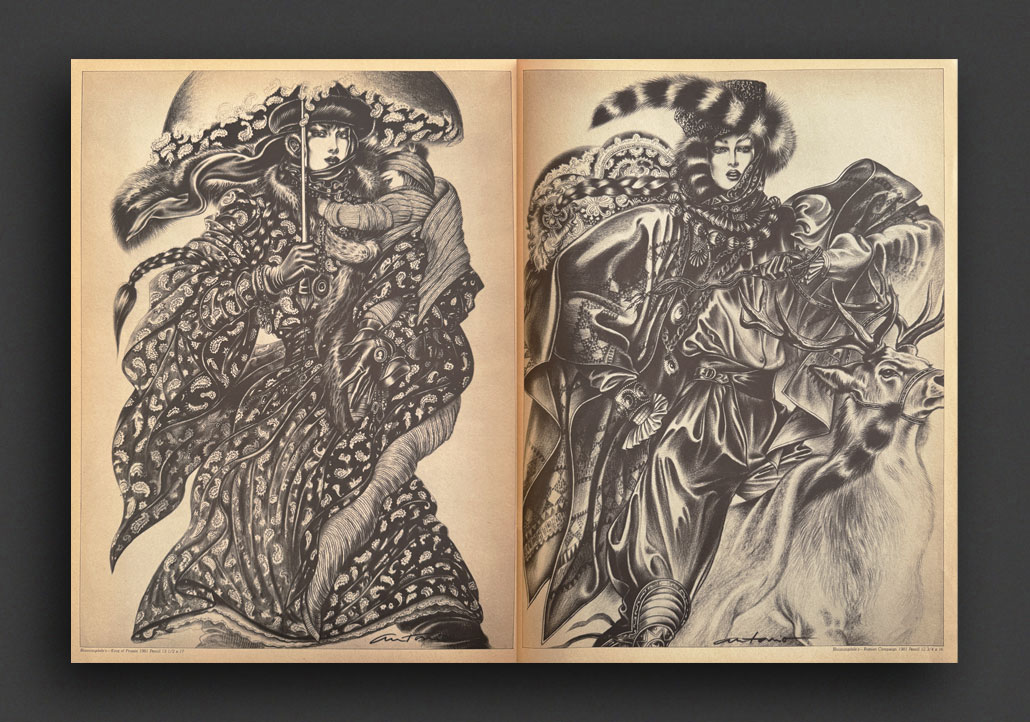
Very rare newspaper-format catalogue from 1983 published to accompany Puerto Rican fashion illustrator Antonio Lopez's (1943—1987) exhibition at Daimaru, New York/Tokyo, 1983. Profusely illustrated with "Antonio's Girls" (and Boys), his iconic fashion illustration made famous through publications such as Vogue, Harper's Bazaar, Elle, Interview and The New York Times. Published exclusively for the Tokyo exhibition around the same time as his cult classic book "Antonio's Girls", this catalogue features a lot of work not published in the book, plus chapters documenting his studio, his boys and girls, a day in the life of Antonio, Antonio's glamorous friends and New York light life (Grace, Debbie, Andy, et al.), plus testimonials from Andy Warhol and Tadanori Yokoo, biographical rise to fame, further interviews, all packed with rare "scene" and behind-the-scenes fashion photographs. But primarily this is a newspaper of Antonio's full-colour and b/w illustrations in abundance.
Comes with bonus Daimaru full-colour catalogue "OPEN", with cover illustration and advertisement for the exhibition.
Good—VG copy w. some chipping to the edge of covers, tanning to extremities of newsprint stock. Cover leaving staples.
1980, English
Softcover (staple + tape bound), 76 pages, 29 x 21.5 cm
1st Edition, Out of print title / used / very good
Published by
Experimental Art Foundation / Adelaide
$380.00 - Out of stock
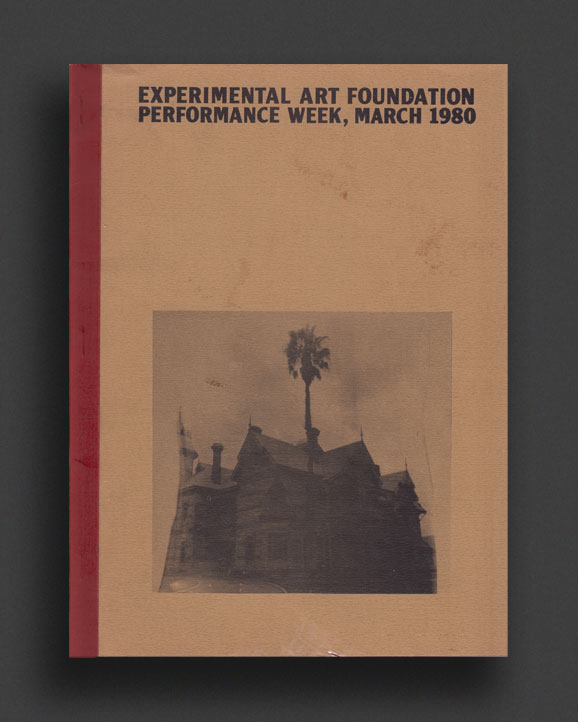
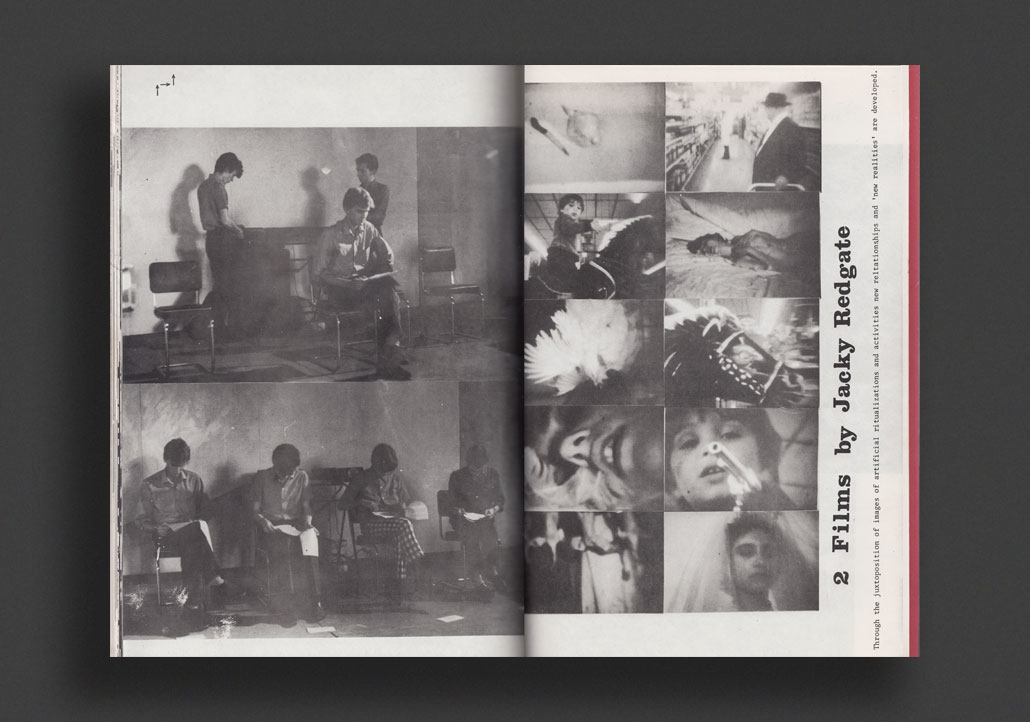
Exceptionally rare private-issue publication documenting the Experimental Art Foundation (EAF) Performance Week, March 1980. The festival, directed by Noel Sheridan, centred around Carclew House, Adelaide, and featured the work of Brian Abraham, Arch-y Brothers (Pram Factory), Art Circus, Chris Barnett, Richard Boulez, Ross Boyd, Peter Callas, Domenico de Clario, → ↑ → (Tsk Tsk Tsk), Graeme Davis, Ross Digby, Lionel Doolan, EG (Chris Mann, Paul Pendergast, Peter Munnie, Hugh McSpedden), F.A.C.K (F Martins, A. White, C. Brooks, K Turner, K. Flugelman), Dale Franks, Ann Fogarty, Sandra Greentree, Adrian Hall, Elizabeth Honeybun, Jan Hubrechsen, Kathy Marmour, Robert McDonald, Kevin Mortensen, Bruce Lamrock, Steve Turpie, Peter Hopcraft, Jill Orr, Mike Parr, Jackie Redgate, SALT workers (C. Brooks, P. Cheslyn, A. Davy, K Flugelman, F. Martins, B. Sachs, D. Watt, A. White, S. Wigg, D. Kreckler), SIDE F/X (G. Aldridge, J. Lawes, W. Hutchins, M. Shirley, R. Maude, M. Kolodrovic, T. Reid, K. Stanton, L. Lee), Strachan and Pearce, David Tolley and Bruce Tolley, Karen Tyler, Peter Tyndall, Donald Walters, Dave Watt, Arthur Wicks, Dave Young... no less!
Profusely illustrated with artist pages packed with photographic documentation, texts, drawings, and more. Two page introduction text by Noel Sheridan. Printed and published by EAF for the participants, this is an incredibly rare and important document of the history of radical performance art in Australia in the 1980's.
The EAF was founded in Adelaide in 1974 by a small group of artists, curators and theorists, with a mission to promote art that interrogated the status quo, was only incidentally aesthetic, and, by definition, was radical. This important national and international organisation promoted experimental art practices and became renowned for supporting early performance art in Australia.
Very Good copy with a small scuff/knick to the bottom of the front cover, light cover marking.
From the collection of Australian artist (and performer during the event) Bernhard Sachs (1954—2022), whose name is penned to the top of the first blank page, date "'80".
1978, English
Softcover (staple-bound), 64 pages, 29.5 x 22 cm
1st Edition, Out of print title / used / very good
Published by
ANU Arts Centre / Canberra
$250.00 - In stock -
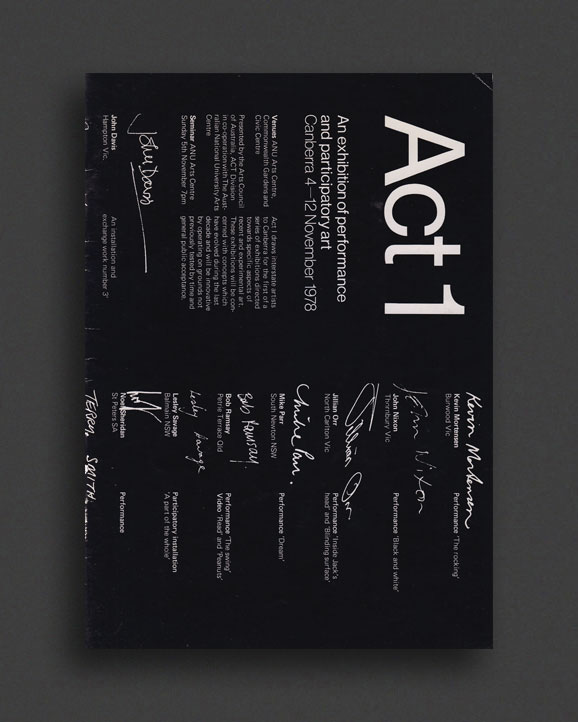
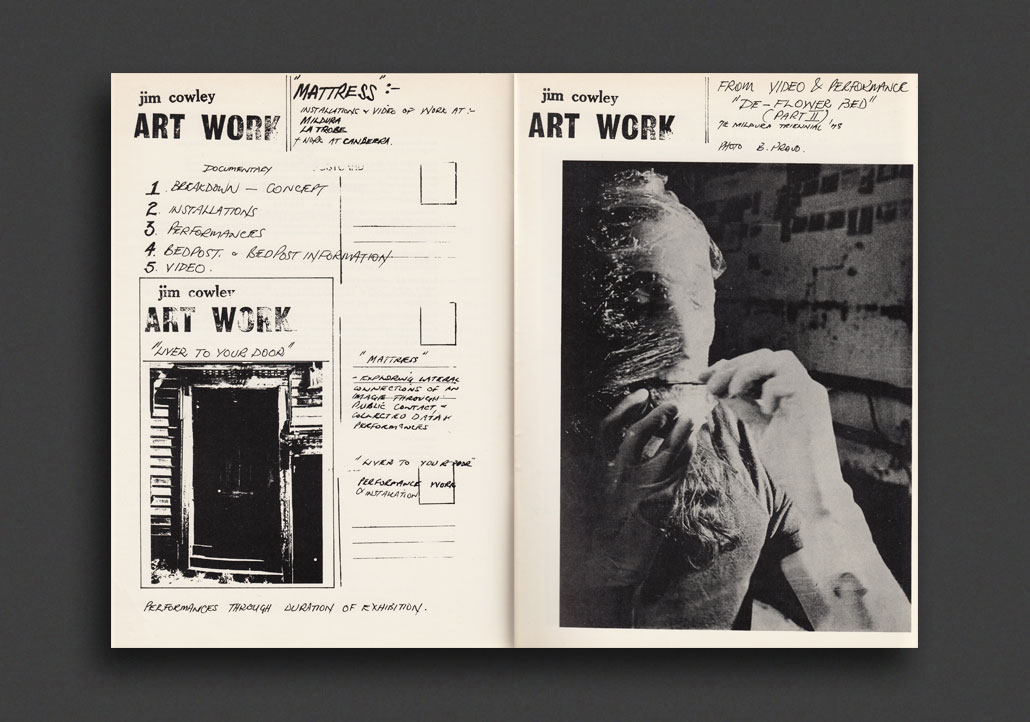
Rare catalogue published on the occasion of Act 1: an exhibition of performance and participatory art, 4—12 November 1978, spanning the ANU Arts Centre, Commonwealth Gardens and Civic Centre, Canberra. Organised by the ANU Arts Centre, Act I drew Australian artists to Canberra for the "first of a series of exhibitions directed towards specific aspects of recent and experimental art". Profusely illustrated artist pages throughout with photo documentation, collage, drawings, and artist's texts. Artists include Mike Parr, Ian Hamilton, Terry Smith and Media Action Group (Ian Burn, Nigel Lendon, Terry Smith, Michael Dolk, Kieren Finnane, Mary Kinney, Ian Milliss, Anne Sutherland...), Leigh Hobba, Kevin Mortensen, John Nixon, John Davis, Marr Grounds, Ken Unsworth, John Fisher, Liz Honybun, David Kerr, Richard and Pat Larter, Tony Twigg, Lesley Savage, Terry Smith, Tony Twigg, Bob Ramsay, Noel Sheridan, Arthur Wicks, Jillian Orr, Richard Tipping, Jim Cowley, Donald Walters... Includes critical essays by Paul McGillick and Terry Smith on performance art and private and public work, plus further texts by organisers Ingo Kleinert, Diana Ashcroft Johnson, Mildred Kirk. The catalogue also operates in as a document of the exchanges between the organisers and the artists, laying bare the operations and budget, reproducing the open letter to the invited artists along with a selection of the signed responses outlining the artistic concepts, all reproduced in full facsimile. Signatures and transcribed concept responses of contributing artists also make up the wrap-around cover design. Also of particular interest for the contribution by Terry Smith and Media Action Group, who formed in 1977 at Sydney University around the Australian members of the Art & Language group, who had recently returned to Australia. The group produced slide shows on the ideological bias in media treatment of advertising, uranium mining, new technology and the history of May Day. This work is stamped "withdrawn because titled 'performance'" in the contents.
Very Good copy with light wear to cover extremities/light spine pinching. Toned pages from age.