World Food Books' programme is largely produced on Kulin Nation land. We acknowledge the Wurundjeri people of the Kulin Nation as the first and continuing custodians of this land, and pay respect to their Elders past, present, and emerging.
World Food Books is an arts and special interests bookshop in Naarm / Melbourne. Founded in 2010, World Food Books is devoted to the presentation of a rotating, hand-selection of international art, design, literary and counterculture publications with an emphasis on the anti-traditional, the experimental, the avant-garde, the heretic, the marginal.
Presenting new titles alongside rare and out-of-print books, catalogues and journals spanning the fields of modern and contemporary art, design, photography, illustration, film, literature, poetry, cultural theory, philosophy, sexuality, popular and underground culture in its many radical forms, World Food Books wishes to encourage adventurous, thoughtful and open-minded reading, looking, writing, and exchange of publishing and ideas, both current and historical.
As well as our bookshop, located in Melbourne's historical Nicholas Building, all of our inventory is available internationally via our online mail-order service.
World Food Books semi-regularly co-ordinates "Occasions", a programme of exhibits and events at the bookshop and in partnership with other hosts (such as museums and art galleries) that develop out of the activities, relationships and content of the bookshop itself.
World Food Books
The Nicholas Building
37 Swanston Street
Room 5, Level 6
Melbourne 3000
Australia
SHOP HOURS:
Thu–Fri 12–6, Sat 12–5
WEB-SHOP OPEN 24/7
World Food Books
Postal Address:
PO Box 435
Flinders Lane
Victoria 8009
Australia
Art
Theory / Essay
Architecture / Interior
Graphic Design / Typography
Photography
Fashion
Eros
LGBTQ+
Fiction / Poetry
Weird / Speculative / Science Fiction / Horror
Transgressive / Visceral / Abject
Symbolism / Decadence / Fin de siècle
Film / Video
Painting
Sculpture / Installation
Performance / Dance / Theater
Drawing
Sound / Music
Curatorial
Group Shows / Collections
Periodicals
Out-of-print / Rare
Posters / Ephemera / Discs
Signed Books
World Food Books Gift Voucher
World Food Book Bag
Australian Art
Australian Fiction
Australian Science Fiction / Speculative Fiction
Australian Poetry
Australian Photography
Japanese Photography
Conceptual Art
Minimal Art
Dada
'Pataphysics / Oulipo
Fluxus
Concrete Poetry
Pop Art
Surrealism
Arte Povera
Arte Informale / Haute Pâte / Tachism
Nouveau Réalisme / Zero / Kinetic
Situationism / Lettrism
Collage / Mail Art / Xerox Art
Art Brut / Folk / Visionary / Fantastic
Illustration / Graphic Art / Bandes Dessinées
Furniture
Italian Radical Design / Postmodernism
Textiles
Ceramics / Glass
Counterculture
Protest / Revolt
Philosophy
Psychoanalysis
Anthropology
Anarchism
Socialism / Anarchism / Communism / Capitalism
Literary Theory / Semiotics / Language
Feminism / Women's Studies
Gender Studies / Sexuality
Anthropology
Fetishism / BDSM
Drugs / Psychedelia
Crime / Violence
Animal Rights / Veganism
Occult / Esoterica
Ecology / Earth / Alternative Living
Whole Earth / Crafts
All prices in AUD (Australian dollars)
Pick-Ups
Pick-up orders can be collected in our bookshop during opening hours after order date. Please collect any Pick-up orders within 2 weeks of ordering as we have limited storage space. Orders will be released back into stock if not collected within this time. No refunds can be made for pick-ups left un-collected. If you cannot make it in to the bookshop in this time-frame, please choose postage option.
Return Policy
All sales are final. We do accept returns (for refund or exchange) for items received in error. All our orders are packed with special care using heavy-duty padding and cardboard book-mailers or bubble mailers (for smaller books), using reinforcement where required. We cannot take responsibility for any lost, stolen or damaged parcels.
Insurance
Should you wish to insure your package, please email us directly after placing your order and we can organise this at a small extra expense. Although all standard/express tracked packages are very safe and dependable, we cannot take responsibility for any lost, stolen or damaged parcels. We recommend insurance on valuable orders.
Interested in selling your old books, catalogues, journals, magazines, comics, fanzines, ephemera? We are always looking for interesting, unusual and out-of-print books to buy. We only buy books in our fields of interest and specialty, and that we feel we can resell.
We base these prices on desirability, market value, in-print prices, condition and our current stock levels. We offer cash, store credit, and can take stock on consignment. All
about 25% of the price we expect to get when we sell them, or 30% in store credit. We base these prices on desirability, market value, in-print prices, condition and our current stock levels.
Sell your books any day of the week. You can drop them off and return later. If you have a lot of books, we can visit your Sydney home.
We buy books that we feel we can resell. We offer about 25 % of the price we expect to get when we sell them, or 30% in store credit. We base these prices on desirability, market value, in-print prices, condition and our current stock levels.
Philadelphia Wireman
03 August - 01 September, 2018
World Food Books is proud to announce our next Occasion, the first presentation of sculptures by Philadelphia Wireman in Australia.
The Philadelphia Wireman sculptures were found abandoned in an alley off Philadelphia’s South Street on trash night in 1982. Their discovery in a rapidly-changing neighbourhood undergoing extensive renovation, compounded with the failure of all attempts to locate the artist, suggests that the works may have been discarded after the maker’s death. Dubbed the "Philadelphia Wireman" during the first exhibition of this work, in 1985, the maker’s name, age, ethnicity, and even gender remain uncertain. The entire collection totals approximately 1200 pieces, all intricately bound together with tightly-wound heavy-gauge wire (along with a few small, abstract marker drawings, reminiscent both of Mark Tobey and J.B. Murry). The dense construction of the work, despite a modest range of scale and materials, is singularly obsessive and disciplined in design: a wire armature or exoskeleton firmly binds a bricolage of found objects including plastic, glass, food packaging, umbrella parts, tape, rubber, batteries, pens, leather, reflectors, nuts and bolts, nails, foil, coins, toys, watches, eyeglasses, tools, and jewellery.
Heavy with associations—anthropomorphic, zoomorphic, and socio-cultural responses to wrapped detritus—the totemic sculptures by Philadelphia Wireman have been discussed in the context of work created to fulfil the shamanistic needs of alternative religions in American culture. Curators, collectors, and critics have variously compared certain pieces to sculpture from Classical antiquity, Native American medicine bundles, African-American memory jugs, and African fetish objects. Reflecting the artist’s prolific and incredibly focused scavenging impulse, and despite—or perhaps enhanced by—their anonymity, these enigmatic objects function as urban artefacts and arbiters of power, though their origin and purpose is unknown. Philadelphia Wireman, whatever their identity, possessed an astonishing ability to isolate and communicate the concepts of power and energy through the selection and transformation of ordinary materials. Over the course of the past two decades, this collection has come to be regarded as an important discovery in the field of self-taught art and vernacular art.
Presented in collaboration with Fleisher-Ollman Gallery, Philadelphia, and Robert Heald, Wellington.
Susan Te Kahurangi King
02 February - 10 March, 2018
Susan Te Kahurangi King (24 February 1951 - ) has been a confident and prolific artist since she was a young child, drawing with readily available materials - pencils, ballpoint pens and felt-tip markers, on whatever paper is at hand. Between the ages of four and six Susan slowly ceased verbal communication. Her grandparents William and Myrtle Murphy had developed a special bond with Susan so they took on caring responsibilities for extended periods. Myrtle began informally archiving her work, carefully collecting and storing the drawings and compiling scrapbooks. No drawing was insignificant; every scrap of paper was kept. The King family are now the custodians of a vast collection containing over 7000 individual works, from tiny scraps of paper through to 5 meter long rolls.
The scrapbooks and diaries reveal Myrtle to be a woman of great patience and compassion, seeking to understand a child who was not always behaving as expected. She encouraged Susan to be observant, to explore her environment and absorb all the sights and sounds. Myrtle would show Susan’s drawings to friends and people in her community that she had dealings with, such as shopkeepers and postal workers, but this was not simply a case of a grandmother’s bias. She recognised that Susan had developed a sophisticated and unique visual language and sincerely believed that her art deserved serious attention.
This was an unorthodox attitude for the time. To provide some context, Jean Dubuffet coined the term Art Brut in 1945 to describe work created by self-taught artists – specifically residents of psychiatric institutions and those he considered to be visionaries or eccentrics. In 1972 Roger Cardinal extended this concept by adopting the term Outsider Art to describe work made by non-academically trained artists operating outside of mainstream art networks through choice or circumstance. Susan was born in Te Aroha, New Zealand in 1951, far from the artistic hubs of Paris and London that Dubuffet and Cardinal operated in. That Myrtle fêted Susan as a self-taught artist who deserved to be taken seriously shows how progressive her attitudes were.
Susan’s parents Doug and Dawn were also progressive. Over the years they had consulted numerous health practitioners about Susan’s condition, as the medical establishment could not provide an explanation as to why she had lapsed into silence. Dawn educated herself in the field of homeopathy and went on to treat all twelve of her children using these principles – basing prescriptions on her observations of their physical, mental and emotional state.
Doug was a linguist with an interest in philosophy who devoted what little spare time he had to studying Maori language and culture. To some extent their willingness to explore the fringes of the mainstream made them outsiders too but it was their commitment to living with integrity and their respect for individuality that ensured Susan’s creativity was always encouraged.
Even though Susan’s family supported her artistic pursuits, some staff in schools and hospitals saw it as an impediment to her assimilation into the community and discouraged it in a variety of ways. Her family was not always aware of this and therefore did not fully understand why Susan stopped drawing in the early 1990s. However, rather than dwell on the challenges that Susan faced in pursuit of her artistic practice, they prefer to highlight her achievements. In 2008 Susan began drawing again in earnest, after an almost 20 year interruption, and her work is now shown in galleries around the world.
Susan grew up without television and has been heavily influenced by the comics she read as a child. She is absolutely fearless in the appropriation of recognizable characters, such as Donald Duck and Mickey Mouse, in her work. She twists their limbs, contorts their faces, compresses them together, blends them into complex patterned backgrounds - always imbuing them with an incredible energy. Although Susan often used pop culture characters in her work they are not naive or childlike. These are drawings by a brilliant self-taught artist who has been creating exceptional work for decades without an audience in mind.
Mladen Stilinović
"Various Works 1986 - 1999"
02 February 16 - September 10, 2016
Various works 1986 - 1999, from two houses, from the collections of John Nixon, Sue Cramer, Kerrie Poliness, Peter Haffenden and Phoebe Haffenden.
Including: Geometry of Cakes (various shelves), 1993; Poor People’s Law (black and white plate), 1993; White Absence (glasses, ruler, set square, silver spoon, silver ladel with skin photograph and wooden cubes), 1990-1996; Exploitation of the Dead (grey and red star painting, wooden painting, black spoon with red table, red plate), 1984-1990; Money and Zeros (zero tie, paintings made for friends in Australia (Sue, John, Kerrie), numbers painting), 1991-1992; Words - Slogans (various t-shirts) - “they talk about the death of art...help! someone is trying to kill me”, “my sweet little lamb”, “work is a disease - Karl Marx”; Various artist books, catalogues, monographs, videos; Poster from exhibition Insulting Anarchy; "Circular" Croatian - Australian edition; Artist book by Vlado Martek (Dostoyevsky); more.
Thanks to Mladen Stilinović and Branka Stipančić.
Jonathan Walker
Always Will Need To Wear Winter Shirt Blue + Ochre Small Check Pattern
21 August - 21 September, 2015
Untitled
I am not a great reader of poetry but I always return to the work of Melbourne poet, Vincent Buckley (1925- 1988). Perhaps I find his most tantalising piece to be not a finished poem but a fragment left on a scrap of paper discovered on his desk after the poet’s death.
The poetry gathers like oil
In the word-core, and spreads
It has its music meet,
Its music is in movement.
This fragment is more the shell left behind from a volatile thought than a finished poem. I find the last two lines honest but awkward whereas the first two lines work like an arrow. Most likely he could not find a resolution so it was left. Still, in its present form, it remains an eloquent testimony to the ultimate failure of a medium to express mobile thought and sensation, in Buckley’s case, through verbal language. It’s an important matter because this is something all artists have to deal with regardless of the medium.
I have never written a poem, however, I am forever copying fragments from books on paper scraps in a vain effort to fix certain notions in my head. At first, they function as bookmarks that are sometimes returned to when I open the book. But before long, as they accumulate, they fall out littering the table interspersed with A4 photocopies, bills, books and medications.
To return to Buckley’s fragment, the first two lines very much evoke how I paint nowadays. As you age, detail diminishes and patches of light become more luminous and float. I feel the most honest way of dealing with this is by smearing the oil paint on the canvas with the fingers and working close-up, blind. Only if the patches coalesce into an approaching image can the work gain a life.
-
Jonathan Walker was born in Melbourne, Australia and brought up on a dairy farm in Gippsland. In the 1970’s he studied painting at RMIT and won the Harold Wright Scholarship to the British Museum, London. During the 1980’s he exhibited at Pinacotheca Gallery, Richmond and had work shown at the NGV and Heidi City Art Gallery. Over the same period he designed the cover for the “Epigenesi” LP by Giancarlo Toniutti, Italy and conducted a mail exchange work with Achim Wollscheid, Germany. The work with artists through the post resulted in an article published in the bicentenary issue of Art and Australia 1988. He showed in artist run spaces such as WestSpace in the 90’s and 2000’s, and until 2012, taught painting at Victoria University, which is where we (Colleen Ahern and Lisa Radford) as organisers of the exhibition, among many others, had the privilege of being his student.
Walker’s knowledge was imparted to students through the careful selection of music, literature, and artists found in books that he himself had ordered for the library. Walker’s strategy was the generosity of sharing his vast knowledge with references specific to each student and their context.
Walker’s paintings share a similar focus and intimacy.
This exhibition presents a small selection of recent paintings alongside a publication that includes Walker’s writing. Observational and analytical, Walker’s work is a type of material notation — the time of day, colour and how it is blended, the both specific and fleeting location of a reflection on lino or the question of whether a chair leg should be included in a painting.
Please join us on Friday August 21 between 6-8pm to celebrate the opening of the exhibition.
Curated by Colleen Ahern and Lisa Radford.
B. Wurtz
Curated by Nic Tammens
March 26 - April 4, 2015
B.Wurtz works from a basement studio in his home on Manhattan’s Lower East Side.
This local fact is attested to by the plastic shopping bags and newsprint circulars that appear in his work. As formal objects, they don’t make loud claims about their origins but nonetheless transmit street addresses and places of business from the bottom of this long thin island. Like plenty of artists, Wurtz is affected by what is local and what is consumed. His work is underpinned by this ethic. It often speaks from a neighborhood or reads like the contents of a hamper:
“BLACK PLUMS $1.29 lb.”
“Food Bazaar”
“USDA Whole Pork Shoulder Picnic 99c lb.”
“RITE AID Pharmacy, with us it’s personal.”
“H. Brickman & Sons.”
“Sweet Yams 59c lb."
Most of the work in this exhibition was made while the artist was in residence at Dieu Donne, a workshop dedicated to paper craft in Midtown. Here Wurtz fabricated assemblages with paper and objects that are relatively lightweight, with the intention that they would be easily transportable to Australia. This consideration isn’t absolute in Wurtz’s work, but was prescriptive for making the current exhibition light and cheap. Packed in two boxes, these works were sent from a USPS post office on the Lower East Side and delivered to North Melbourne by Australia Post.
Wurtz appears courtesy of Metro Pictures, New York.
Thanks to Rob Halverson, Joshua Petherick, Sari de Mallory, Matt Hinkley, Helen Johnson, Fayen d'Evie, Ask Kilmartin, Lisa Radon, Ellena Savage, Yale Union, and "Elizabeth".
John Nixon
"Archive"
December 15 - January 20, 2014
The presentation of John Nixon's archive offered a rare showcase of this extensive collection of the artist's own publications, catalogues, posters, ephemera, editions and more, from the mid 1980s onwards, alongside a selection of his artworks.
Organized by John Nixon, Joshua Petherick and Matt Hinkley.
<a href=http://wfb.public-office.info/artist/john-nixon>All titles by John Nixon
"Habitat"
at Minerva, Sydney (organised by Joshua Petherick and Matt Hinkley)
November 15 - December 20, 2014
Lupo Borgonovo, Janet Burchill & Jennifer McCamley,
Lewis Fidock, HR Giger, Piero Gilardi, Veit Laurent Kurz,
Cinzia Ruggeri, Michael E. Smith, Lucie Stahl, Daniel Weil, Wols
Press Release:
“...It contained seven objects. The slender fluted bone, surely formed for flight, surely from the wing of some large bird. Three archaic circuitboards, faced with mazes of gold. A smooth white sphere of baked clay. An age-blackened fragment of lace. A fingerlength segment of what she assumed was bone from a human wrist, grayish white, inset smoothly with the silicon shaft of a small instrument that must once have ridden flush with the surface of the skin - but the thing’s face was seared and blackened.”
William Gibson, “Count Zero”, 1986
"Autumn Projects Archive"
Curated by Liza Vasiliou
March 6 - March 15, 2014
World Food Books, in conjunction with the Virgin Australia Melbourne Fashion Festival 2014, presented the Autumn Projects archive, consisting of a selection of early examples in Australian fashion with a particular interest in collecting designers and labels from the period beginning in the 1980’s, who significantly influenced the discourse of Australian Fashion.
Curated by Liza Vasiliou, the exhibition provided a unique opportunity to view pieces by designers Anthea Crawford, Barbara Vandenberg, Geoff Liddell and labels CR Australia, Covers, Jag along with early experimental collage pieces by Prue Acton and Sally Browne’s ‘Fragments’ collection, suspended throughout the functioning World Food Books shop in Melbourne.
H.B. Peace
presented by CENTRE FOR STYLE
November 14, 2013
"Hey Blinky, you say chic, I say same"
Anon 2013
H.B. Peace is a clothing collaboration between great friends Blake Barns and Hugh Egan Westland. Their pieces explore the divergences between 'character’ and ‘personality’ in garments....etc
Special Thanks to Joshua Petherick and Matt Hinkley of WFB and Gillian Mears
and a Very Special Thank you to Audrey Thomas Hayes for her shoe collaboration.
Janet Burchill & Jennifer McCamley
"Aesthetic Suicide"
May 10 - June 8, 2013
The first of our occasional exhibitions in the World Food Books office/shop space in Melbourne, "Aesthetic Suicide" presented a body of new and older works together by artists Janet Burchill & Jennifer McCamley, including videos, prints, a wall work, and publications.
During shop open hours videos played every hour, on the hour.
1974, Japanese
Softcover (staple–bound), 90 pages, 21 x 15 cm
1st Edition, Out of print title / used / very good
Published by
Spin / Tokyo
$45.00 - Out of stock
Rare copy of Dabu–dabo No. 24, published in Tokyo in 1974, with original cover art painted by Aquirax Uno (Akira Uno). Dabu-dabo was wild countercultural lifestyle magazine ("A Lifestyle Catalog of Dawn Culture") that featured artwork, photography, manga and articles that proposed "new human life materials for the global village." This issue features Japanese jazz and blues singer/composer Maki Asakawa, actress/singer/politician Chinatsu Nakayama, pink actress Chiho Yuki, photography by Masaaki Nakagawa, Araki Nobuyoshi, illustration galleries by Yōji Kuri, Shizuichi Hayashi, Ryuzan Aki, folk singer Itsuro Shimoda (of Shimonsai and Tokyo Kid Brothers), Ryōhei Uchida, singer Mari Natsuki, Yonin Bayashi (rock group), singe/director Morio Agata, articles on how to grow marijuana, how to improve your jeans, how to make a lie detector, how to find out about psychic abilities, how to cure men's (sexual) illnesses, how to cure women's (sexual) illnesses, how to make candles, how to make shoes, how to raise chickens, how to make a flying horse, and how to spend time well in jail, and much more. Like Goro meets CoEvolution Quarterly via Oz!
VG with light wear to extremities, rusted staples.
1974, Japanese
Softcover (staple–bound), 90 pages, 21 x 15 cm
1st Edition, Out of print title / used / very good
Published by
Spin / Tokyo
$45.00 - Out of stock
Rare copy of Dabu–dabo No. 25, published in Tokyo in 1974, with original cover art painted by Aquirax Uno (Akira Uno). Dabu-dabo was wild countercultural lifestyle magazine ("A Lifestyle Catalog of Dawn Culture") that featured artwork, photography, manga and articles that proposed "new human life materials for the global village." This issue features an interview with author/model/actress/icon Izumi Suzuki, photography by Hajime Sawatari, jazz musician Sadao Watanabe, illustration galleries by avant–garde artist and author Genpei Akasegawa, Ayumi Ohashi and Teruya Harada, Hiro Tsunoda of the Sadistic Mika Band and psych legends Jacks, nude photography by Kenji Hiruma, poet and folk singer Shigeru Izumiya, a host of informative feature articles on "Commune Practices": developing commune practices, including the use of geodesic domes and inflatable housing, the farming practices of Japanese folk singer Masato Minami, DIY solar thermal devices, and much more. Like Goro meets CoEvolution Quarterly via Oz!
VG with light wear to extremities, rusted staples.
2007, Japanese
Softcover, 160 pages, 24 x 18.3 cm
1st Edition, Out of print title / used / very good
Published by
Atelier Peyotl / Tokyo
$65.00 - In stock -
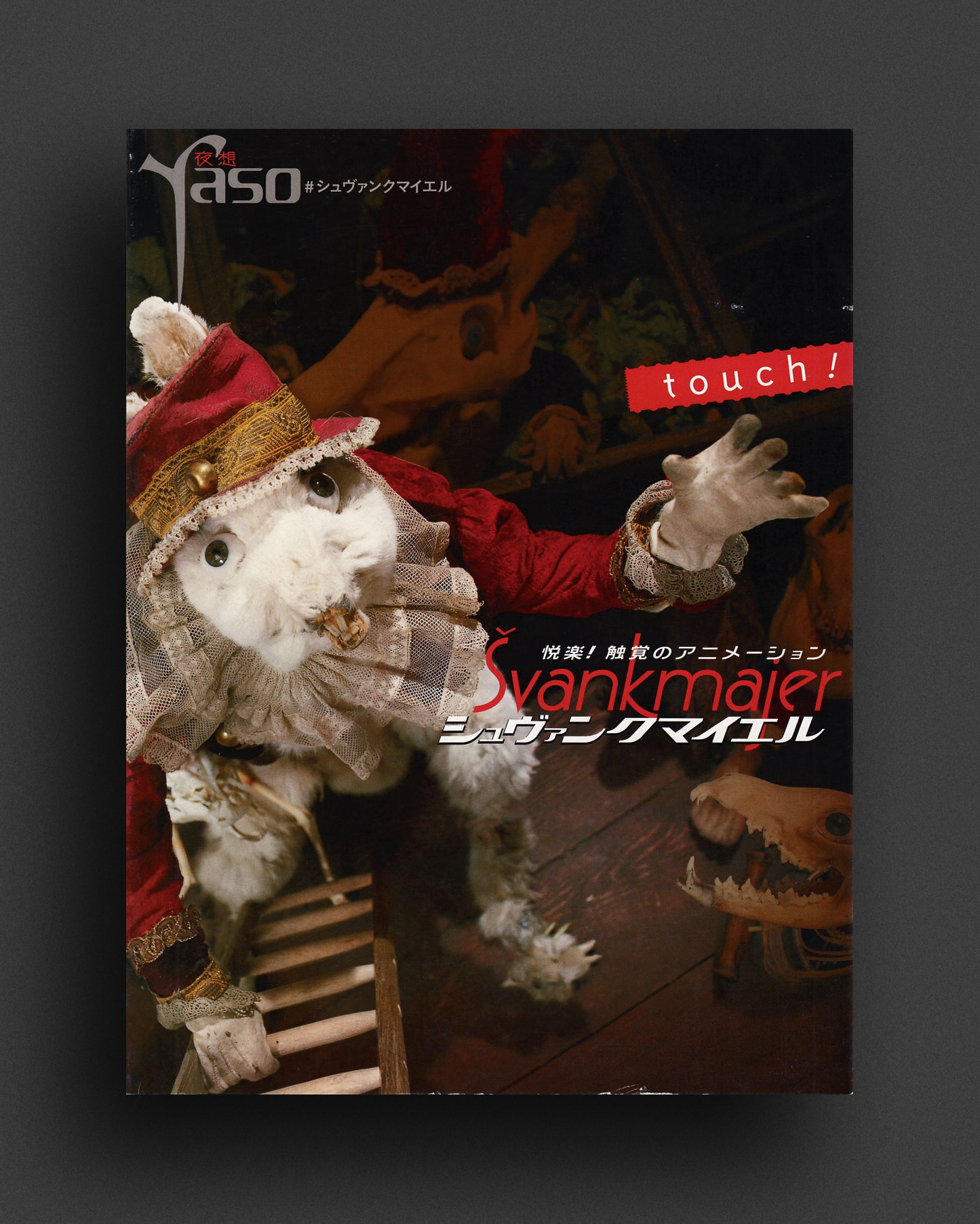
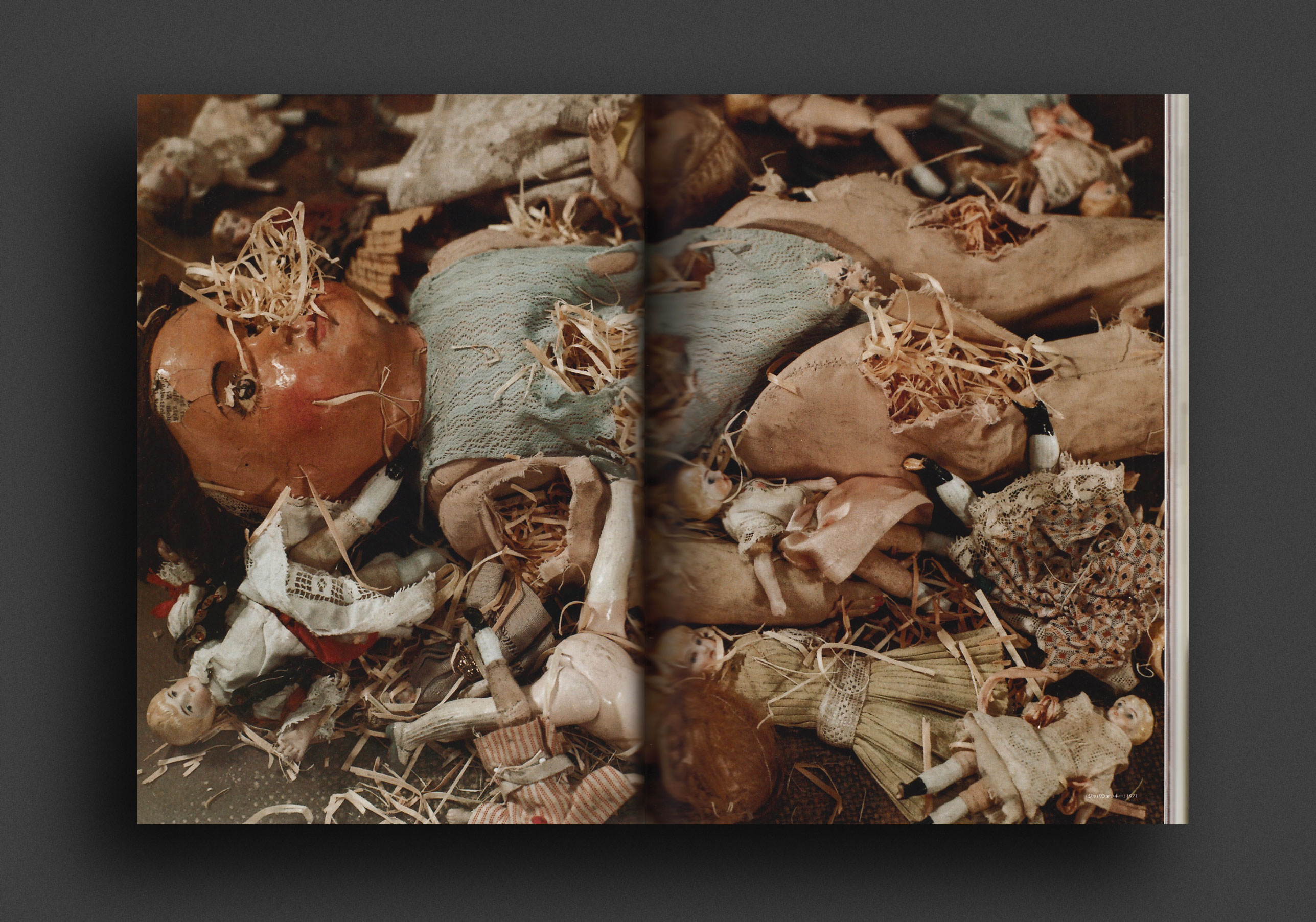
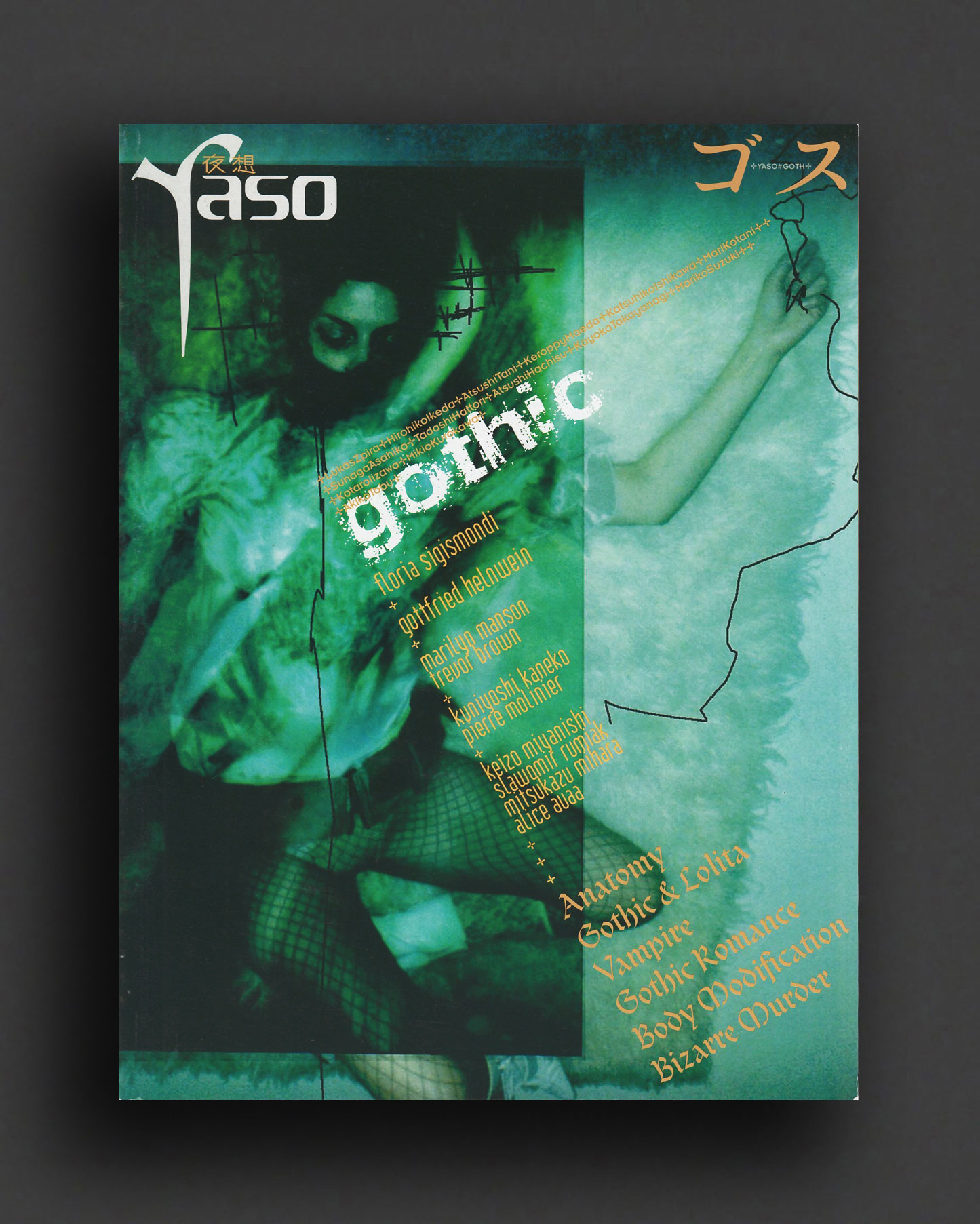
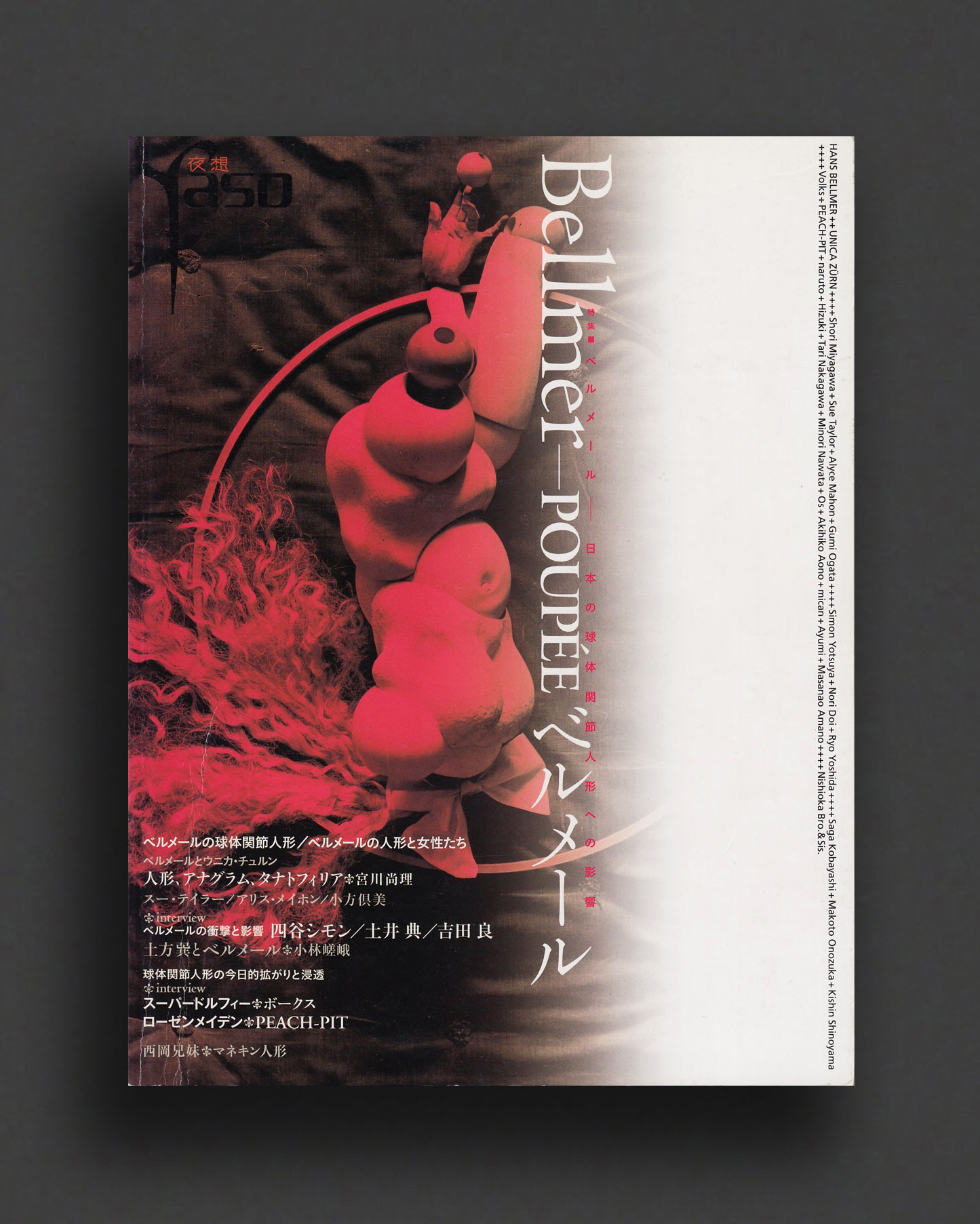
"Jan Svankmajer" Special Feature Issue of cult Japanese underground magazine Yaso, published in 2007, edited by Yuichi Konno and Atelier Peyotl (publishers of Night Vision/Yaso/Peyotl/Wave/Silvester Club...). Profusely illustrated in colour with texts in Japanese that look at the genius of Jan Švankmajer, the Czech filmmaker, animator, writer, playwright and artist, a self-labeled surrealist celebrated for his innovative stop–motion animations and feature films, his extensive collaboration with wife painter and author Eva Švankmajerová, his collage, ceramics, tactile objects and assemblages. In the early 1960s, he explored informel, which later became an important part of the visual form of his animated films. Packed with his drawings, film stills, artworks, photographs, interviews, articles on Svankmajer's motifs, artists inspired by Svankmajer and their works, a Svanmkajer filmography, and a section on Travel Tips to the Czech Republic. In typical Japanese magazine fashion, and Yaso in particular, this volume is incredibly comprehensive.
Very Good copy.
2024, English
Softcover, 416 pages, 21.6 x 13.8 cm
Published by
SPBH Editions / UK
$89.00 $65.00 - In stock -
The cult periodical Little Joe, published as a limited-edition zine from 2010 to 2021, challenged the mainstream narrative of film history with a rebellious, queer perspective. Rather than reviewing new releases, it explored forgotten and overlooked films and celebrated a diverse spectrum of cinema – from obscure art films to porn to Hollywood classics – as worthy of critical debate. Stubbornly print-only, Little Joe was notoriously hard to find, privileging word-of-mouth distribution akin to the films it championed. This volume, compiled by editor-in-chief Sam Ashby, brings together the best of its previously elusive texts and proposes a new, alternative cinematic canon drawn from the fringes of taste and style, while paying homage to the original DIY Risograph aesthetic of the journal.
This volume features essays, in-depth conversations, short stories and archival discoveries from a host of queer and allied writers, artists, filmmakers, and academics, including John Waters, Sarah Schulman, Douglas Crimp, William E. Jones, Erika Balsom, Jeremy Atherton Lin, John Greyson, Elizabeth Purchell, Liz Rosenfeld, Peter Strickland, Ira Sachs, Terence Davies, Shu Lea Cheang, Kevin Killian, Wayne Koestenbaum, Abdellah Taïa, Marlene McCarty, John Cameron Mitchell, Rosa von Praunheim, Stuart Comer, Ed Halter, Jenni Olson, A.L. Steiner, A.K. Burns, Desiree Akhavan, and Andrew Haigh.
2007, English
Softcover, 458 pages, 10.7 x 17.5 cm
Published by
Urbanomic / Cornwall
$65.00 - In stock -
Philosophical Research and Development.
Edited by Robin Mackay
Associate Editor: Dustin McWherter
Collapse III contains explorations of the work of Gilles Deleuze by pioneering thinkers in the fields of philosophy, aesthetics, music and architecture. In addition, we publish in this volume two previously untranslated texts by Deleuze himself, along with a fascinating piece of vintage science fiction from one of his more obscure influences. Finally, as an annex to Collapse Volume II, we also include a full transcription of the conference on 'Speculative Realism' held in London in 2007.
The contributors to this volume aim to clarify, from a variety of perspectives, Deleuze's contribution to philosophy: in what does his philosophical originality lie; what does he appropriate from other philosophers and how does he transform it? And how can the apparently disparate threads of his work to be 'integrated' - what is the precise nature of the constellation of the aesthetic, the conceptual and the political proposed by Gilles Deleuze, and what are the overarching problems in which the numerous philosophical concepts 'signed Deleuze' converge?
Contents
ROBIN MACKAY - Editorial Introduction
THOMAS DUZER - In Memoriam: Gilles Deleuze 1925-1995
GILLES DELEUZE - Responses to a Series of Questions
ARNAUD VILLANI - "I Feel I Am A Pure Metaphysician": The Consequences of Deleuze's Remark
QUENTIN MEILLASSOUX - Subtraction and Contraction: Deleuze, Immanence and Matter and Memory
HASWELL & HECKER - Blackest Ever Black
GILLES DELEUZE - Mathesis, Science and Philosophy
INCOGNITUM - Malfatti's Decade
JOHN SELLARS - Chronos and Aion: Deleuze and the Stoic Theory of Time
ÉRIC ALLIEZ & JEAN-CLAUDE BONNE - Matisse-Thought and the Strict Ordering of Fauvism
MEHRDAD IRAVANIAN - Unknown Deleuze
J.-H. ROSNY THE ELDER - Another World
RAY BRASSIER, IAIN HAMILTON GRANT, GRAHAM HARMAN, QUENTIN MEILLASSOUX - Speculative Realism
2007, English
Softcover, 330 pages, 10.7 x 17.5 cm
Published by
Urbanomic / Cornwall
$55.00 - In stock -
Philosophical Research and Development.
Edited by Robin Mackay
Associate Editor: Damian Veal
Comprising subjects from probability theory to theology, from quantum theory to neuroscience, from astrophysics to necrology, and involving them in unforeseen and productive syntheses, Collapse II features a selection of speculative essays by some of the foremost young philosophers at work today, together with new work from artists and cinéastes, and searching interviews with leading scientists.
Against the tide of institutional balkanisation and specialisation, this volume testifies to a defiant reanimation of the most radical philosophical problematics - the status of the scientific object, metaphysics and its "end", the prospects for a revival of speculative realism, the possibility of phenomenology, transcendence and the divine, the nature of causation, the necessity of contingency - both through a fresh reappropriation of the philosophical tradition and through an openness to its outside. The breadth of philosophical thought in this volume is matched by the surprising and revealing thematic connections that emerge between the philosophers and scientists who have contributed.
Contents
ROBIN MACKAY - Editorial Introduction
RAY BRASSIER - The Enigma of Realism
QUENTIN MEILLASSOUX - Potentiality and Virtuality
ROBERTO TROTTA - Dark Matter: Facing the Arche-Fossil (Interview)
GRAHAM HARMAN - On Vicarious Causation
PAUL CHURCHLAND - Demons Get Out! (Interview)
CLÉMENTINE DUZER & LAURA GOZLAN - Nevertheless Empire
REZA NEGARESTANI - Islamic Exotericism: Apocalypse in the Wake of Refractory Impossibility
KRISTEN ALVANSON - Elysian Space in the Middle East
1986, Japanese
Softcover (staple-bound), 36.5 x 26 cm
1st Edition, Out of print title / used / good
Published by
Cross Culture Foundation / Tokyo
$25.00 - In stock -
Rare inaugural issue of the almost unknown but incredible Japanese magazine, Rag. Was this the only issue? Published in 1986 in over-sized, staple-bound format, Rag issue 1 includes a beautiful photo feature on Butoh performer Goro Namerikawa, a large feature on "Art's Destroying Angel" Tadanori Yokoo, photography by Nobuyoshi Araki, Keiichi Tahara, Yasushi Handa, Shunji Kaida, Herbie Yamaguchi, Sachiko Kuro, Kaoru Ijima, experimental musician and playwright Koharu Kisaragi, costume designer Michiko Kitamura, designers Issey Miyake, Junko Shimada, musician Eitetsu Hayashi, and much more.
Good copy with some wear to spine/extremities.
1976, French / Japanese
Softcover, 40 pages (w. Japanese translation booklet insert), 34.5 x 29 cm
1st Edition, Out of print title / used / very good
Published by
Façade / Paris
$300.00 - In stock -
Inaugural issue of the incredibly rare and iconic Façade, the French underground magazine published in Paris between 1976—1983. Founded in 1976 by Alain Benoist and Hervé Pinard, Façade was the french answer to Andy Warhol's Interview, heavily centered around Parisian club, fashion and art scene and published without any date or periodicity until 1983. Launched at an Issey Miyake show where models handed out the magazine from the catwalk, the cult magazine witness through its pages a long-lost, short-lived period in Paris featuring the so-called "jeunes gens modernes" of the 1970's, like punk icons Edwige Belmore and Alain Pacadis. With pop celebrity covers and vibrant fashion shoots styled by the likes of a young Pierre et Gilles (who met through working on this very magazine), features in collaboration with the likes of Serge Gainsbourg, and in each issue a unique "false" advertisement created by Karl Lagerfeld, it's no wonder Façade's reputation spread quickly to New York, Tokyo and beyond, making it one of the most desired magazines of the new wave. With texts in French, these rare issues come complete with the inserted Japanese translation booklets. Includes Divine and John Waters (interview), Kenzo (interview), Christian Boltanski (interview), Jean-Louis Bory, Popy Moreni, nude centrefold by Jacques Parnel … with contributions from Pierre Commoy, Dominique Gangloff, Tan Giudicelli, Annette Messager… A very rare first issue with cover shot and designed by Pierre Commoy (of Pierre et Gilles) featuring Eva Ionesco.
Very Good with light tanning. Beautiful copy.
1976, French / Japanese
Softcover, 40 pages (w. Japanese translation booklet insert), 34.5 x 29 cm
1st Edition, Out of print title / used / good
Published by
Façade / Paris
$180.00 - In stock -
Issue no. 2 of the incredibly rare and iconic Façade, the French underground magazine published in Paris between 1976—1983. Founded in 1976 by Alain Benoist and Hervé Pinard, Façade was the french answer to Andy Warhol's Interview, heavily centered around Parisian club, fashion and art scene and published without any date or periodicity until 1983. Launched at an Issey Miyake show where models handed out the magazine from the catwalk, the cult magazine witness through its pages a long-lost, short-lived period in Paris featuring the so-called "jeunes gens modernes" of the 1970's, like punk icons Edwige Belmore and Alain Pacadis. With pop celebrity covers and vibrant fashion shoots styled by the likes of a young Pierre et Gilles (who met through working on this very magazine), features in collaboration with the likes of Serge Gainsbourg, and in each issue a unique "false" advertisement created by Karl Lagerfeld, it's no wonder Façade's reputation spread quickly to New York, Tokyo and beyond, making it one of the most desired magazines of the new wave. With texts in French, these rare issues come complete with the inserted Japanese translation booklets. Includes features on New York City, Bodybuilding, an interview with Jean-Pierre Kalfon by Alain Pacadis, Elodie Lauten, and a long reprt of the Pigalle district of Paris, with collaborations from Pierre Commoy, Dominique Gangloff, Philippe Morillon, Thierry Ardisson, along with much more,
Good copy with some cover foxing and light wear.
1977, French / Japanese
Softcover, 40 pages (w. Japanese translation booklet insert), 34.5 x 29 cm
1st Edition, Out of print title / used / very good
Published by
Façade / Paris
$200.00 - In stock -
Issue no. 3 of the incredibly rare and iconic Façade, the French underground magazine published in Paris between 1976—1983. Founded in 1976 by Alain Benoist and Hervé Pinard, Façade was the french answer to Andy Warhol's Interview, heavily centered around Parisian club, fashion and art scene and published without any date or periodicity until 1983. Launched at an Issey Miyake show where models handed out the magazine from the catwalk, the cult magazine witness through its pages a long-lost, short-lived period in Paris featuring the so-called "jeunes gens modernes" of the 1970's, like punk icons Edwige Belmore and Alain Pacadis. With pop celebrity covers and vibrant fashion shoots styled by the likes of a young Pierre et Gilles (who met through working on this very magazine), features in collaboration with the likes of Serge Gainsbourg, and in each issue a unique "false" advertisement created by Karl Lagerfeld, it's no wonder Façade's reputation spread quickly to New York, Tokyo and beyond, making it one of the most desired magazines of the new wave. With texts in French, these rare issues come complete with the inserted Japanese translation booklets. Includes Eddie and the Hot Rods, Andy Warhol, Gilbert and George, the Inauguration of Beaubourg, Serge Gainsbourg, Alain Pacadis, Karl Lagerfeld… with collaborations from Pierre Commoy, Thierry Ardisson, Philippe Morillon, and much more.
Very Good copy, tanning. Beautifully preserved.
1978, French / Japanese
Softcover, 58 pages (w. Japanese translation booklet insert), 34.5 x 29 cm
1st Edition, Out of print title / used / very good
Published by
Façade / Paris
$200.00 - In stock -
Issue no. 6 of the incredibly rare and iconic Façade, the French underground magazine published in Paris between 1976—1983. Founded in 1976 by Alain Benoist and Hervé Pinard, Façade was the french answer to Andy Warhol's Interview, heavily centered around Parisian club, fashion and art scene and published without any date or periodicity until 1983. Launched at an Issey Miyake show where models handed out the magazine from the catwalk, the cult magazine witness through its pages a long-lost, short-lived period in Paris featuring the so-called "jeunes gens modernes" of the 1970's, like punk icons Edwige Belmore and Alain Pacadis. With pop celebrity covers and vibrant fashion shoots styled by the likes of a young Pierre et Gilles (who met through working on this very magazine), features in collaboration with the likes of Serge Gainsbourg, and in each issue a unique "false" advertisement created by Karl Lagerfeld, it's no wonder Façade's reputation spread quickly to New York, Tokyo and beyond, making it one of the most desired magazines of the new wave. With texts in French, these rare issues come complete with the inserted Japanese translation booklets. Includes cover stars Salvador Dalí (front) and Eva Ionesco (back), with interviews and astrological charts for both, Amanda Lear, Jean-Charles de Castelbajac, Giorgio Moroder, General Idea, Yves Adrien, Le Palace, Christo, Maud Molyneux, Anja Lopez, Suicide Fashion shot by Laurence Sackman (featuring Eva Ionesco, Sayoko Yamaguchi, and others), Nightclubbing, Malcolm McLaren… with collaborations from Pierre Commoy, Jean-Baptiste Mondino, Thierry Ardisson, Alain Pacadis, Maud Molyneux… and much more.
Very Good copy of one of the best issues! Beautifully preserved.
1978, French / Japanese
Softcover, 58 pages (w. Japanese translation booklet insert), 34.5 x 29 cm
1st Edition, Out of print title / used / very good
Published by
Façade / Paris
$180.00 - In stock -
Issue no. 7 of the incredibly rare and iconic Façade, the French underground magazine published in Paris between 1976—1983. Founded in 1976 by Alain Benoist and Hervé Pinard, Façade was the french answer to Andy Warhol's Interview, heavily centered around Parisian club, fashion and art scene and published without any date or periodicity until 1983. Launched at an Issey Miyake show where models handed out the magazine from the catwalk, the cult magazine witness through its pages a long-lost, short-lived period in Paris featuring the so-called "jeunes gens modernes" of the 1970's, like punk icons Edwige Belmore and Alain Pacadis. With pop celebrity covers and vibrant fashion shoots styled by the likes of a young Pierre et Gilles (who met through working on this very magazine), features in collaboration with the likes of Serge Gainsbourg, and in each issue a unique "false" advertisement created by Karl Lagerfeld, it's no wonder Façade's reputation spread quickly to New York, Tokyo and beyond, making it one of the most desired magazines of the new wave. With texts in French, these rare issues come complete with the inserted Japanese translation booklets. Includes cover stars Jack Nicholson as 007 (front) and musician Djemila (back), with interviews and astrological charts for both, industrial designer Roger Tallon, Karl Lagerfeld, industrial designer Philippe Starck, publishing extraordinaire Daniel Filipacchi, Sonia Rykiel, Paco Rabanne, Thierry Mugler, a perverse fashion portfolio, Kenzo, Brion Gysin, Sid Vicious, Pierre et Gilles, Nightclubbing, Dining, Fashion, Music, tremendous ads and much more.
Very Good copy of one of the best issues! Beautifully preserved with only light marking/tan/age.
1980, French / Japanese
Softcover, 40 pages (w. Japanese translation booklet insert), 34.5 x 29 cm
1st Edition, Out of print title / used / very good
Published by
Façade / Paris
$120.00 - In stock -
Issue no. 8 of the incredibly rare and iconic Façade, the French underground magazine published in Paris between 1976—1983. Founded in 1976 by Alain Benoist and Hervé Pinard, Façade was the french answer to Andy Warhol's Interview, heavily centered around Parisian club, fashion and art scene and published without any date or periodicity until 1983. Launched at an Issey Miyake show where models handed out the magazine from the catwalk, the cult magazine witness through its pages a long-lost, short-lived period in Paris featuring the so-called "jeunes gens modernes" of the 1970's, like punk icons Edwige Belmore and Alain Pacadis. With pop celebrity covers and vibrant fashion shoots styled by the likes of a young Pierre et Gilles (who met through working on this very magazine), features in collaboration with the likes of Serge Gainsbourg, and in each issue a unique "false" advertisement created by Karl Lagerfeld, it's no wonder Façade's reputation spread quickly to New York, Tokyo and beyond, making it one of the most desired magazines of the new wave. With texts in French, these rare issues come complete with the inserted Japanese translation booklets. Includes cover stars Sophia Loren (front) and Brian Ferry (back), with interviews and astrological charts for both, James White and The Blacks, Yellow Magic Orchestra, Kansai Yamamoto, Karl Lagerfeld, "Assistant Fashion" (shoots by the assistants of fashion fashion photographers), Helmut Newton, nightclubbing, dining, records, terrific ads, and much more...
Very Good with light foxing, wear the covers.
1980, French / Japanese
Softcover, 58 pages (w. Japanese translation booklet insert), 34.5 x 29 cm
1st Edition, Out of print title / used / very good
Published by
Façade / Paris
$120.00 - In stock -
Issue no. 7 of the incredibly rare and iconic Façade, the French underground magazine published in Paris between 1976—1983. Founded in 1976 by Alain Benoist and Hervé Pinard, Façade was the french answer to Andy Warhol's Interview, heavily centered around Parisian club, fashion and art scene and published without any date or periodicity until 1983. Launched at an Issey Miyake show where models handed out the magazine from the catwalk, the cult magazine witness through its pages a long-lost, short-lived period in Paris featuring the so-called "jeunes gens modernes" of the 1970's, like punk icons Edwige Belmore and Alain Pacadis. With pop celebrity covers and vibrant fashion shoots styled by the likes of a young Pierre et Gilles (who met through working on this very magazine), features in collaboration with the likes of Serge Gainsbourg, and in each issue a unique "false" advertisement created by Karl Lagerfeld, it's no wonder Façade's reputation spread quickly to New York, Tokyo and beyond, making it one of the most desired magazines of the new wave. With texts in French, these rare issues come complete with the inserted Japanese translation booklets. Includes cover stars Catherine Deneuve (front) and James Brown (back), with interviews and astrological charts for both, Sports Fashion (featuring Françoise Hardy), Funky fashion, The Village People, Karl Lagerfeld, more James Brown, clubbing, dining, jet-setting, dance music and much more.
Very Good with some light wear/marks to covers, light tanning.
1981, French / Japanese
Softcover, 58 pages (w. Japanese translation booklet insert), 34.5 x 29 cm
1st US Edition, Out of print title / used / very good
Published by
Façade / Paris
$120.00 - In stock -
Issue no. 10 of the incredibly rare and iconic Façade, the French underground magazine published in Paris between 1976—1983. Founded in 1976 by Alain Benoist and Hervé Pinard, Façade was the french answer to Andy Warhol's Interview, heavily centered around Parisian club, fashion and art scene and published without any date or periodicity until 1983. Launched at an Issey Miyake show where models handed out the magazine from the catwalk, the cult magazine witness through its pages a long-lost, short-lived period in Paris featuring the so-called "jeunes gens modernes" of the 1970's, like punk icons Edwige Belmore and Alain Pacadis. With pop celebrity covers and vibrant fashion shoots styled by the likes of a young Pierre et Gilles (who met through working on this very magazine), features in collaboration with the likes of Serge Gainsbourg, and in each issue a unique "false" advertisement created by Karl Lagerfeld, it's no wonder Façade's reputation spread quickly to New York, Tokyo and beyond, making it one of the most desired magazines of the new wave. With texts in French, these rare issues come complete with the inserted Japanese translation booklets. Includes Gina Lollobrigida interview and astrology, so too Jacno, Karl Lagerfeld, Howard Hughes, Sonia Rykiel, Defunkt (Mudd Club), Paul-Loup Sulitzer, Catherine Breillat, Djémila, dining, dancing, music, the scene… with collaborations from Dominique Gangloff, Dominique Lauga, Philippe Morillon, Serge Krüger, Jean-Edern Hallier, Alain Pacadis… and much more.
Very Good with light wear/marking to cover. Light tanning.
1993, Japanese
Softcover, 240 pages, 21 x 15 cm
1st Edition, Out of print title / used / very good
Published by
Atelier Peyotl / Tokyo
$65.00 - Out of stock
"Mannequin" Special Feature Issue of cult Japanese underground magazine Yaso, published in 1993, edited by Yuichi Konno and Atelier Peyotl (publishers of Night Vision/Yaso/Peyotl/Wave/Silvester Club...). Heavily illustrated with texts in Japanese that look at the theme of the mannequin from fashion apparatus to fetish object, automatons to living dolls, including a panoramic photographic history of mannequins, a photo feature of French photographer Bernard Faucon's boy mannequin collection, a huge illustrated article on famous Japanese costume, stage and exhibition designer, and Issey Miyake collaborator Tomio Mohri, the wax anatomical models of dissected corpses by Clemente Michelangelo Susini of Florence (1754–1814) shot by Ryuji Miyamoto, Czech animator Jirí Barta's Klub odlozenych, Japanese model and actress Sayoko Yamaguchi, the living dolls of the Japanese theatre, medical mannequins, crash-test dummies, icons, "Doll Love" and erotic dolls, plus lots more and a lot more Bernard Faucon!
Very Good—Near Fine copy.
2026, English
Softcover (staplebound), 40 pages, 29.7 x 21 cm
Published by
Chris Mikul / Sydney
$8.00 - In stock -
Bizarrism is Australia’s longest-running zine, first published in 1986 when Chris Mikul begin collating information and writing about a grand parade of eccentrics, visionaries, crackpots, cult leaders, artists, theorists and outsiders of every stripe — “beacons of shining if erratic brilliance in a world of sensible conformity”. In writing their stories, Mikul does not judge, but instead celebrates these characters for their fabulous weirdness. The world would be a poorer place without them.
"If strangeness be a standard for unfavorable judgment, I damn at a swipe most of this book. But damnation is nothing to me. I offer the data. Suit yourself."–Charles Fort. Lo!
Bizarrism No. 19: “Eternity” Goes On: The Remarkable Peter Freuchen; Larrimah Latest; A Lamb and his Guinea Pigs; The Strange Death of Thelma Todd; The Story of Chang Woo Gow; Relics of Corder; Books; Notes and Sources; and more....
Chris Mikul has been clipping weird stories out of newspapers for as long as he can remember. He’s been writing and publishing Bizarrism, Australia’s longest-running zine, since 1986, and also produces Biblio-Curiosa, a zine devoted to strange fiction. His other books include The Cult Files, Tales of the Macabre and Ordinary, The Eccentropedia and Bizarrism Vols 1 and 2. He lives in the Sydney suburb of Newtown, home of many an eccentric, with his partner Cath.
202?, English
Softcover (staple-bound), 40 pages, 29.7 x 21 cm
Published by
Chris Mikul / Sydney
$8.00 - Out of stock
Bizarrism is Australia’s longest-running zine, first published in 1986 when Chris Mikul begin collating information and writing about a grand parade of eccentrics, visionaries, crackpots, cult leaders, artists, theorists and outsiders of every stripe — “beacons of shining if erratic brilliance in a world of sensible conformity”. In writing their stories, Mikul does not judge, but instead celebrates these characters for their fabulous weirdness. The world would be a poorer place without them.
Bizarrism No. 18: Welcome to Larrimah; Kings Cross Wax Works; The Unfathomable Mystery of Kaspar Hauser; An Inspiration for Bacon; Somerton Man Identified; A Scandal in Academia; Thomas Griffiths Wainewright; The Odyssey of Maria Rasputin; and more....
Chris Mikul has been clipping weird stories out of newspapers for as long as he can remember. He’s been writing and publishing Bizarrism, Australia’s longest-running zine, since 1986, and also produces Biblio-Curiosa, a zine devoted to strange fiction. His other books include The Cult Files, Tales of the Macabre and Ordinary, The Eccentropedia and Bizarrism Vols 1 and 2. He lives in the Sydney suburb of Newtown, home of many an eccentric, with his partner Cath.
202?, English
Softcover (staple-bound), 40 pages, 29.7 x 21 cm
Published by
Chris Mikul / Sydney
$8.00 - Out of stock
Bizarrism is Australia’s longest-running zine, first published in 1986 when Chris Mikul begin collating information and writing about a grand parade of eccentrics, visionaries, crackpots, cult leaders, artists, theorists and outsiders of every stripe — “beacons of shining if erratic brilliance in a world of sensible conformity”. In writing their stories, Mikul does not judge, but instead celebrates these characters for their fabulous weirdness. The world would be a poorer place without them.
Bizarrism No. 17: Paying a Visit to Somerton Man; A Glamour Model Among the Headhunters; A Brief History of Embalmed Dictators; The Entrepreneur and His Nemesis: The Story of G.J.. de Garis; The Ghost of Harry Price; The Resurrection of Connie Converse and more....
Chris Mikul has been clipping weird stories out of newspapers for as long as he can remember. He’s been writing and publishing Bizarrism, Australia’s longest-running zine, since 1986, and also produces Biblio-Curiosa, a zine devoted to strange fiction. His other books include The Cult Files, Tales of the Macabre and Ordinary, The Eccentropedia and Bizarrism Vols 1 and 2. He lives in the Sydney suburb of Newtown, home of many an eccentric, with his partner Cath.
202?, English
Softcover (staple-bound), 40 pages, 29.7 x 21 cm
Published by
Chris Mikul / Sydney
$8.00 - Out of stock
Bizarrism is Australia’s longest-running zine, first published in 1986 when Chris Mikul begin collating information and writing about a grand parade of eccentrics, visionaries, crackpots, cult leaders, artists, theorists and outsiders of every stripe — “beacons of shining if erratic brilliance in a world of sensible conformity”. In writing their stories, Mikul does not judge, but instead celebrates these characters for their fabulous weirdness. The world would be a poorer place without them.
Bizarrism No. 16: Last Days of the Olympia Milk Bar; Oneida: the Free Love Cult; The Human Bomb; High Jinks on the High Seas; Sydney Suicides of 1935, "Who do you think you are? Lady Docker?", Bokassa; A Visit to Whitby and more....
Chris Mikul has been clipping weird stories out of newspapers for as long as he can remember. He’s been writing and publishing Bizarrism, Australia’s longest-running zine, since 1986, and also produces Biblio-Curiosa, a zine devoted to strange fiction. His other books include The Cult Files, Tales of the Macabre and Ordinary, The Eccentropedia and Bizarrism Vols 1 and 2. He lives in the Sydney suburb of Newtown, home of many an eccentric, with his partner Cath.
2024, English
Softcover (staple-bound), 44 pages, 21 x 15 cm
Published by
Chris Mikul / Sydney
$6.00 - In stock -
Biblio-Curiosa, a zine about unusual authors and strange books, published by Chris Mikul of Bizarrism, Australia’s longest-running zine (est. 1986) devoted to the eccentrics, visionaries, crackpots, the “beacons of shining if erratic brilliance in a world of sensible conformity”. Biblio-Curiosa takes this very logic and applies it to the wonderous outer realms of the published page and to the library of the bibliomaniac. Each issue packed with book excerpts, Chris' marvellous articles, interviews, and colour illustrations.
Biblio-Curiosa No. 12 — The Other Alices Issue: Oedipus in Disneyland by Hercules Molloy, A New Alice in the Old Wonderland by Anna M. Richards, In Search of Alice by Guy Bousfield, More 'Alice' by Yates Wilson, Alice Versary, The Campaign Alice by Jim Quinn, Alice in Tarland by Debbie Harman, The Agony of Lewis Carroll, Jack the Ripper: Light-hearted Friend by Richard Wallace, Night of the Jabberwock by Fredric Brown, Blue Alice by Jackson Short, Through a Looking Glass Darkly by Jake Fior, and more.
Chris Mikul has been clipping weird stories out of newspapers for as long as he can remember. He’s been writing and publishing Bizarrism, Australia’s longest-running zine, since 1986, and also produces Biblio-Curiosa, a zine devoted to strange fiction. His other books include The Cult Files, Tales of the Macabre and Ordinary, The Eccentropedia and Bizarrism Vols 1 and 2. He lives in the Sydney suburb of Newtown, home of many an eccentric, with his partner Cath.
2023, English
Softcover (staple-bound), 44 pages, 21 x 15 cm
Published by
Chris Mikul / Sydney
$6.00 - In stock -
Biblio-Curiosa, a zine about unusual authors and strange books, published by Chris Mikul of Bizarrism, Australia’s longest-running zine (est. 1986) devoted to the eccentrics, visionaries, crackpots, the “beacons of shining if erratic brilliance in a world of sensible conformity”. Biblio-Curiosa takes this very logic and applies it to the wonderous outer realms of the published page and to the library of the bibliomaniac. Each issue packed with book excerpts, Chris' marvellous articles, interviews, and colour illustrations.
Biblio-Curiosa No. 11: Satan's Drome by William Reeves, Everything is an Illusion: The Writings of Ladislav Klíma, Fugitive Anne by Mrs Campbell Praed, Remembrances of a Religio-Maniac by D. Davidson, The Flaw in the Sapphire by Charles M. Snyder, and more.
Chris Mikul has been clipping weird stories out of newspapers for as long as he can remember. He’s been writing and publishing Bizarrism, Australia’s longest-running zine, since 1986, and also produces Biblio-Curiosa, a zine devoted to strange fiction. His other books include The Cult Files, Tales of the Macabre and Ordinary, The Eccentropedia and Bizarrism Vols 1 and 2. He lives in the Sydney suburb of Newtown, home of many an eccentric, with his partner Cath.
2022, English
Softcover (staple-bound), 44 pages, 21 x 15 cm
Published by
Chris Mikul / Sydney
$5.00 - In stock -
Biblio-Curiosa, a zine about unusual authors and strange books, published by Chris Mikul of Bizarrism, Australia’s longest-running zine (est. 1986) devoted to the eccentrics, visionaries, crackpots, the “beacons of shining if erratic brilliance in a world of sensible conformity”. Biblio-Curiosa takes this very logic and applies it to the wonderous outer realms of the published page and to the library of the bibliomaniac. Each issue packed with book excerpts, Chris' marvellous articles, interviews, and colour illustrations.
Biblio-Curiosa No. 10 — The Master of the Macabre by Russell Thorndike, Doctor Transit by I.S., Going into the Dark: The Life, Birth and Death of Edgar Mittelholzer, The Death of the Führer by Roland Puccetti, Gwenllean by Mary G. Lewis, and more.
Chris Mikul has been clipping weird stories out of newspapers for as long as he can remember. He’s been writing and publishing Bizarrism, Australia’s longest-running zine, since 1986, and also produces Biblio-Curiosa, a zine devoted to strange fiction. His other books include The Cult Files, Tales of the Macabre and Ordinary, The Eccentropedia and Bizarrism Vols 1 and 2. He lives in the Sydney suburb of Newtown, home of many an eccentric, with his partner Cath.
2020, English
Softcover (staple-bound), 44 pages, 21 x 15 cm
Published by
Chris Mikul / Sydney
$5.00 - In stock -
Biblio-Curiosa, a zine about unusual authors and strange books, written and published by Chris Mikul of Bizarrism, Australia’s longest-running zine (est. 1986) devoted to the eccentrics, visionaries, crackpots, the “beacons of shining if erratic brilliance in a world of sensible conformity”. Biblio-Curiosa takes this very logic and applies it to the wonderous outer realms of the published page and to the library of the bibliomaniac. Each issue packed with book excerpts, Chris' marvellous articles, interviews, and colour illustrations.
Biblio-Curiosa No. 9 (The Autobiographies and Memoirs Issue) — Some Bods Move On by E.W. Martell; From the Earth to a Star by Seamus Burke; A Genius for Provocation: The Autobiographical Writings of Mary MacLane; Will by G. Gordon Liddy; Crook Frightfulness by A Victim; Décadence Mandchoue by Sir Edmund Backhouse, and more.
Chris Mikul has been clipping weird stories out of newspapers for as long as he can remember. He’s been writing and publishing Bizarrism, Australia’s longest-running zine, since 1986, and also produces Biblio-Curiosa, a zine devoted to strange fiction. His other books include The Cult Files, Tales of the Macabre and Ordinary, The Eccentropedia and Bizarrism Vols 1 and 2. He lives in the Sydney suburb of Newtown, home of many an eccentric, with his partner Cath.