World Food Books' programme is largely produced on Kulin Nation land. We acknowledge the Wurundjeri people of the Kulin Nation as the first and continuing custodians of this land, and pay respect to their Elders past, present, and emerging.
World Food Books is an arts and special interests bookshop in Naarm / Melbourne. Founded in 2010, World Food Books is devoted to the presentation of a rotating, hand-selection of international art, design, literary and counterculture publications with an emphasis on the anti-traditional, the experimental, the avant-garde, the heretic, the marginal.
Presenting new titles alongside rare and out-of-print books, catalogues and journals spanning the fields of modern and contemporary art, design, photography, illustration, film, literature, poetry, cultural theory, philosophy, sexuality, popular and underground culture in its many radical forms, World Food Books wishes to encourage adventurous, thoughtful and open-minded reading, looking, writing, and exchange of publishing and ideas, both current and historical.
As well as our bookshop, located in Melbourne's historical Nicholas Building, all of our inventory is available internationally via our online mail-order service.
World Food Books semi-regularly co-ordinates "Occasions", a programme of exhibits and events at the bookshop and in partnership with other hosts (such as museums and art galleries) that develop out of the activities, relationships and content of the bookshop itself.
World Food Books
The Nicholas Building
37 Swanston Street
Room 5, Level 6
Melbourne 3000
Australia
SHOP HOURS:
Thu–Fri 12–6, Sat 12–5
WEB-SHOP OPEN 24/7
World Food Books
Postal Address:
PO Box 435
Flinders Lane
Victoria 8009
Australia
Art
Theory / Essay
Architecture / Interior
Graphic Design / Typography
Photography
Fashion
Eros
LGBTQ+
Fiction / Poetry
Weird / Speculative / Science Fiction / Horror
Transgressive / Visceral / Abject
Symbolism / Decadence / Fin de siècle
Film / Video
Painting
Sculpture / Installation
Performance / Dance / Theater
Drawing
Sound / Music
Curatorial
Group Shows / Collections
Periodicals
Out-of-print / Rare
Posters / Ephemera / Discs
Signed Books
World Food Books Gift Voucher
World Food Book Bag
Australian Art
Australian Fiction
Australian Science Fiction / Speculative Fiction
Australian Poetry
Australian Photography
Japanese Photography
Conceptual Art
Minimal Art
Dada
'Pataphysics / Oulipo
Fluxus
Concrete Poetry
Pop Art
Surrealism
Arte Povera
Arte Informale / Haute Pâte / Tachism
Nouveau Réalisme / Zero / Kinetic
Situationism / Lettrism
Collage / Mail Art / Xerox Art
Art Brut / Folk / Visionary / Fantastic
Illustration / Graphic Art / Bandes Dessinées
Furniture
Italian Radical Design / Postmodernism
Textiles
Ceramics / Glass
Counterculture
Protest / Revolt
Philosophy
Psychoanalysis
Anthropology
Anarchism
Socialism / Anarchism / Communism / Capitalism
Literary Theory / Semiotics / Language
Feminism / Women's Studies
Gender Studies / Sexuality
Anthropology
Fetishism / BDSM
Drugs / Psychedelia
Crime / Violence
Animal Rights / Veganism
Occult / Esoterica
Ecology / Earth / Alternative Living
Whole Earth / Crafts
All prices in AUD (Australian dollars)
Pick-Ups
Pick-up orders can be collected in our bookshop during opening hours after order date. Please collect any Pick-up orders within 2 weeks of ordering as we have limited storage space. Orders will be released back into stock if not collected within this time. No refunds can be made for pick-ups left un-collected. If you cannot make it in to the bookshop in this time-frame, please choose postage option.
Return Policy
All sales are final. We do accept returns (for refund or exchange) for items received in error. All our orders are packed with special care using heavy-duty padding and cardboard book-mailers or bubble mailers (for smaller books), using reinforcement where required. We cannot take responsibility for any lost, stolen or damaged parcels.
Insurance
Should you wish to insure your package, please email us directly after placing your order and we can organise this at a small extra expense. Although all standard/express tracked packages are very safe and dependable, we cannot take responsibility for any lost, stolen or damaged parcels. We recommend insurance on valuable orders.
Interested in selling your old books, catalogues, journals, magazines, comics, fanzines, ephemera? We are always looking for interesting, unusual and out-of-print books to buy. We only buy books in our fields of interest and specialty, and that we feel we can resell.
We base these prices on desirability, market value, in-print prices, condition and our current stock levels. We offer cash, store credit, and can take stock on consignment. All
about 25% of the price we expect to get when we sell them, or 30% in store credit. We base these prices on desirability, market value, in-print prices, condition and our current stock levels.
Sell your books any day of the week. You can drop them off and return later. If you have a lot of books, we can visit your Sydney home.
We buy books that we feel we can resell. We offer about 25 % of the price we expect to get when we sell them, or 30% in store credit. We base these prices on desirability, market value, in-print prices, condition and our current stock levels.
Philadelphia Wireman
03 August - 01 September, 2018
World Food Books is proud to announce our next Occasion, the first presentation of sculptures by Philadelphia Wireman in Australia.
The Philadelphia Wireman sculptures were found abandoned in an alley off Philadelphia’s South Street on trash night in 1982. Their discovery in a rapidly-changing neighbourhood undergoing extensive renovation, compounded with the failure of all attempts to locate the artist, suggests that the works may have been discarded after the maker’s death. Dubbed the "Philadelphia Wireman" during the first exhibition of this work, in 1985, the maker’s name, age, ethnicity, and even gender remain uncertain. The entire collection totals approximately 1200 pieces, all intricately bound together with tightly-wound heavy-gauge wire (along with a few small, abstract marker drawings, reminiscent both of Mark Tobey and J.B. Murry). The dense construction of the work, despite a modest range of scale and materials, is singularly obsessive and disciplined in design: a wire armature or exoskeleton firmly binds a bricolage of found objects including plastic, glass, food packaging, umbrella parts, tape, rubber, batteries, pens, leather, reflectors, nuts and bolts, nails, foil, coins, toys, watches, eyeglasses, tools, and jewellery.
Heavy with associations—anthropomorphic, zoomorphic, and socio-cultural responses to wrapped detritus—the totemic sculptures by Philadelphia Wireman have been discussed in the context of work created to fulfil the shamanistic needs of alternative religions in American culture. Curators, collectors, and critics have variously compared certain pieces to sculpture from Classical antiquity, Native American medicine bundles, African-American memory jugs, and African fetish objects. Reflecting the artist’s prolific and incredibly focused scavenging impulse, and despite—or perhaps enhanced by—their anonymity, these enigmatic objects function as urban artefacts and arbiters of power, though their origin and purpose is unknown. Philadelphia Wireman, whatever their identity, possessed an astonishing ability to isolate and communicate the concepts of power and energy through the selection and transformation of ordinary materials. Over the course of the past two decades, this collection has come to be regarded as an important discovery in the field of self-taught art and vernacular art.
Presented in collaboration with Fleisher-Ollman Gallery, Philadelphia, and Robert Heald, Wellington.
Susan Te Kahurangi King
02 February - 10 March, 2018
Susan Te Kahurangi King (24 February 1951 - ) has been a confident and prolific artist since she was a young child, drawing with readily available materials - pencils, ballpoint pens and felt-tip markers, on whatever paper is at hand. Between the ages of four and six Susan slowly ceased verbal communication. Her grandparents William and Myrtle Murphy had developed a special bond with Susan so they took on caring responsibilities for extended periods. Myrtle began informally archiving her work, carefully collecting and storing the drawings and compiling scrapbooks. No drawing was insignificant; every scrap of paper was kept. The King family are now the custodians of a vast collection containing over 7000 individual works, from tiny scraps of paper through to 5 meter long rolls.
The scrapbooks and diaries reveal Myrtle to be a woman of great patience and compassion, seeking to understand a child who was not always behaving as expected. She encouraged Susan to be observant, to explore her environment and absorb all the sights and sounds. Myrtle would show Susan’s drawings to friends and people in her community that she had dealings with, such as shopkeepers and postal workers, but this was not simply a case of a grandmother’s bias. She recognised that Susan had developed a sophisticated and unique visual language and sincerely believed that her art deserved serious attention.
This was an unorthodox attitude for the time. To provide some context, Jean Dubuffet coined the term Art Brut in 1945 to describe work created by self-taught artists – specifically residents of psychiatric institutions and those he considered to be visionaries or eccentrics. In 1972 Roger Cardinal extended this concept by adopting the term Outsider Art to describe work made by non-academically trained artists operating outside of mainstream art networks through choice or circumstance. Susan was born in Te Aroha, New Zealand in 1951, far from the artistic hubs of Paris and London that Dubuffet and Cardinal operated in. That Myrtle fêted Susan as a self-taught artist who deserved to be taken seriously shows how progressive her attitudes were.
Susan’s parents Doug and Dawn were also progressive. Over the years they had consulted numerous health practitioners about Susan’s condition, as the medical establishment could not provide an explanation as to why she had lapsed into silence. Dawn educated herself in the field of homeopathy and went on to treat all twelve of her children using these principles – basing prescriptions on her observations of their physical, mental and emotional state.
Doug was a linguist with an interest in philosophy who devoted what little spare time he had to studying Maori language and culture. To some extent their willingness to explore the fringes of the mainstream made them outsiders too but it was their commitment to living with integrity and their respect for individuality that ensured Susan’s creativity was always encouraged.
Even though Susan’s family supported her artistic pursuits, some staff in schools and hospitals saw it as an impediment to her assimilation into the community and discouraged it in a variety of ways. Her family was not always aware of this and therefore did not fully understand why Susan stopped drawing in the early 1990s. However, rather than dwell on the challenges that Susan faced in pursuit of her artistic practice, they prefer to highlight her achievements. In 2008 Susan began drawing again in earnest, after an almost 20 year interruption, and her work is now shown in galleries around the world.
Susan grew up without television and has been heavily influenced by the comics she read as a child. She is absolutely fearless in the appropriation of recognizable characters, such as Donald Duck and Mickey Mouse, in her work. She twists their limbs, contorts their faces, compresses them together, blends them into complex patterned backgrounds - always imbuing them with an incredible energy. Although Susan often used pop culture characters in her work they are not naive or childlike. These are drawings by a brilliant self-taught artist who has been creating exceptional work for decades without an audience in mind.
Mladen Stilinović
"Various Works 1986 - 1999"
02 February 16 - September 10, 2016
Various works 1986 - 1999, from two houses, from the collections of John Nixon, Sue Cramer, Kerrie Poliness, Peter Haffenden and Phoebe Haffenden.
Including: Geometry of Cakes (various shelves), 1993; Poor People’s Law (black and white plate), 1993; White Absence (glasses, ruler, set square, silver spoon, silver ladel with skin photograph and wooden cubes), 1990-1996; Exploitation of the Dead (grey and red star painting, wooden painting, black spoon with red table, red plate), 1984-1990; Money and Zeros (zero tie, paintings made for friends in Australia (Sue, John, Kerrie), numbers painting), 1991-1992; Words - Slogans (various t-shirts) - “they talk about the death of art...help! someone is trying to kill me”, “my sweet little lamb”, “work is a disease - Karl Marx”; Various artist books, catalogues, monographs, videos; Poster from exhibition Insulting Anarchy; "Circular" Croatian - Australian edition; Artist book by Vlado Martek (Dostoyevsky); more.
Thanks to Mladen Stilinović and Branka Stipančić.
Jonathan Walker
Always Will Need To Wear Winter Shirt Blue + Ochre Small Check Pattern
21 August - 21 September, 2015
Untitled
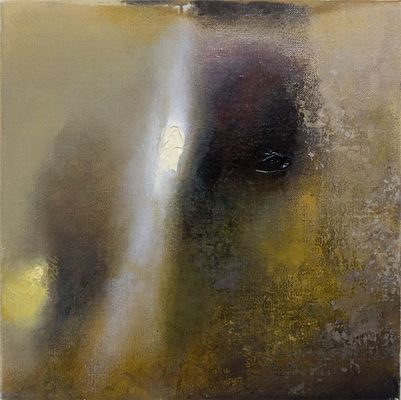
I am not a great reader of poetry but I always return to the work of Melbourne poet, Vincent Buckley (1925- 1988). Perhaps I find his most tantalising piece to be not a finished poem but a fragment left on a scrap of paper discovered on his desk after the poet’s death.
The poetry gathers like oil
In the word-core, and spreads
It has its music meet,
Its music is in movement.
This fragment is more the shell left behind from a volatile thought than a finished poem. I find the last two lines honest but awkward whereas the first two lines work like an arrow. Most likely he could not find a resolution so it was left. Still, in its present form, it remains an eloquent testimony to the ultimate failure of a medium to express mobile thought and sensation, in Buckley’s case, through verbal language. It’s an important matter because this is something all artists have to deal with regardless of the medium.
I have never written a poem, however, I am forever copying fragments from books on paper scraps in a vain effort to fix certain notions in my head. At first, they function as bookmarks that are sometimes returned to when I open the book. But before long, as they accumulate, they fall out littering the table interspersed with A4 photocopies, bills, books and medications.
To return to Buckley’s fragment, the first two lines very much evoke how I paint nowadays. As you age, detail diminishes and patches of light become more luminous and float. I feel the most honest way of dealing with this is by smearing the oil paint on the canvas with the fingers and working close-up, blind. Only if the patches coalesce into an approaching image can the work gain a life.
-
Jonathan Walker was born in Melbourne, Australia and brought up on a dairy farm in Gippsland. In the 1970’s he studied painting at RMIT and won the Harold Wright Scholarship to the British Museum, London. During the 1980’s he exhibited at Pinacotheca Gallery, Richmond and had work shown at the NGV and Heidi City Art Gallery. Over the same period he designed the cover for the “Epigenesi” LP by Giancarlo Toniutti, Italy and conducted a mail exchange work with Achim Wollscheid, Germany. The work with artists through the post resulted in an article published in the bicentenary issue of Art and Australia 1988. He showed in artist run spaces such as WestSpace in the 90’s and 2000’s, and until 2012, taught painting at Victoria University, which is where we (Colleen Ahern and Lisa Radford) as organisers of the exhibition, among many others, had the privilege of being his student.
Walker’s knowledge was imparted to students through the careful selection of music, literature, and artists found in books that he himself had ordered for the library. Walker’s strategy was the generosity of sharing his vast knowledge with references specific to each student and their context.
Walker’s paintings share a similar focus and intimacy.
This exhibition presents a small selection of recent paintings alongside a publication that includes Walker’s writing. Observational and analytical, Walker’s work is a type of material notation — the time of day, colour and how it is blended, the both specific and fleeting location of a reflection on lino or the question of whether a chair leg should be included in a painting.
Please join us on Friday August 21 between 6-8pm to celebrate the opening of the exhibition.
Curated by Colleen Ahern and Lisa Radford.
B. Wurtz
Curated by Nic Tammens
March 26 - April 4, 2015
B.Wurtz works from a basement studio in his home on Manhattan’s Lower East Side.
This local fact is attested to by the plastic shopping bags and newsprint circulars that appear in his work. As formal objects, they don’t make loud claims about their origins but nonetheless transmit street addresses and places of business from the bottom of this long thin island. Like plenty of artists, Wurtz is affected by what is local and what is consumed. His work is underpinned by this ethic. It often speaks from a neighborhood or reads like the contents of a hamper:
“BLACK PLUMS $1.29 lb.”
“Food Bazaar”
“USDA Whole Pork Shoulder Picnic 99c lb.”
“RITE AID Pharmacy, with us it’s personal.”
“H. Brickman & Sons.”
“Sweet Yams 59c lb."
Most of the work in this exhibition was made while the artist was in residence at Dieu Donne, a workshop dedicated to paper craft in Midtown. Here Wurtz fabricated assemblages with paper and objects that are relatively lightweight, with the intention that they would be easily transportable to Australia. This consideration isn’t absolute in Wurtz’s work, but was prescriptive for making the current exhibition light and cheap. Packed in two boxes, these works were sent from a USPS post office on the Lower East Side and delivered to North Melbourne by Australia Post.
Wurtz appears courtesy of Metro Pictures, New York.
Thanks to Rob Halverson, Joshua Petherick, Sari de Mallory, Matt Hinkley, Helen Johnson, Fayen d'Evie, Ask Kilmartin, Lisa Radon, Ellena Savage, Yale Union, and "Elizabeth".
John Nixon
"Archive"
December 15 - January 20, 2014
The presentation of John Nixon's archive offered a rare showcase of this extensive collection of the artist's own publications, catalogues, posters, ephemera, editions and more, from the mid 1980s onwards, alongside a selection of his artworks.
Organized by John Nixon, Joshua Petherick and Matt Hinkley.
<a href=http://wfb.public-office.info/artist/john-nixon>All titles by John Nixon
"Habitat"
at Minerva, Sydney (organised by Joshua Petherick and Matt Hinkley)
November 15 - December 20, 2014
Lupo Borgonovo, Janet Burchill & Jennifer McCamley,
Lewis Fidock, HR Giger, Piero Gilardi, Veit Laurent Kurz,
Cinzia Ruggeri, Michael E. Smith, Lucie Stahl, Daniel Weil, Wols
Press Release:
“...It contained seven objects. The slender fluted bone, surely formed for flight, surely from the wing of some large bird. Three archaic circuitboards, faced with mazes of gold. A smooth white sphere of baked clay. An age-blackened fragment of lace. A fingerlength segment of what she assumed was bone from a human wrist, grayish white, inset smoothly with the silicon shaft of a small instrument that must once have ridden flush with the surface of the skin - but the thing’s face was seared and blackened.”
William Gibson, “Count Zero”, 1986
"Autumn Projects Archive"
Curated by Liza Vasiliou
March 6 - March 15, 2014
World Food Books, in conjunction with the Virgin Australia Melbourne Fashion Festival 2014, presented the Autumn Projects archive, consisting of a selection of early examples in Australian fashion with a particular interest in collecting designers and labels from the period beginning in the 1980’s, who significantly influenced the discourse of Australian Fashion.
Curated by Liza Vasiliou, the exhibition provided a unique opportunity to view pieces by designers Anthea Crawford, Barbara Vandenberg, Geoff Liddell and labels CR Australia, Covers, Jag along with early experimental collage pieces by Prue Acton and Sally Browne’s ‘Fragments’ collection, suspended throughout the functioning World Food Books shop in Melbourne.
H.B. Peace
presented by CENTRE FOR STYLE
November 14, 2013
"Hey Blinky, you say chic, I say same"
Anon 2013
H.B. Peace is a clothing collaboration between great friends Blake Barns and Hugh Egan Westland. Their pieces explore the divergences between 'character’ and ‘personality’ in garments....etc
Special Thanks to Joshua Petherick and Matt Hinkley of WFB and Gillian Mears
and a Very Special Thank you to Audrey Thomas Hayes for her shoe collaboration.
Janet Burchill & Jennifer McCamley
"Aesthetic Suicide"
May 10 - June 8, 2013
The first of our occasional exhibitions in the World Food Books office/shop space in Melbourne, "Aesthetic Suicide" presented a body of new and older works together by artists Janet Burchill & Jennifer McCamley, including videos, prints, a wall work, and publications.
During shop open hours videos played every hour, on the hour.
2016, English
Softcover (w. dust jacket) 188 pages, 14.5 x 21 cm
Published by
Sternberg Press / Berlin
$64.00 $10.00 - Out of stock
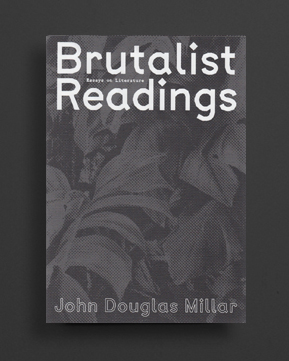
John Douglas Millar’s Brutalist Readings: Essays on Literature is a significant intervention into recent debates on the place of literature and writing in the context of contemporary art. Featuring essays on the highs and lows of the conceptual turn in poetics, avant-garde literary genealogies, and monographic pieces on Paul B. Preciado, Chris Kraus, and Pierre Guyotat, among others, Brutalist Readings explores the radical histories of writing, as well as its potential now.
Design by Present Perfect
2016, English
Softcover, 264 pages, 13 x 21 cm
Published by
Sternberg Press / Berlin
$64.00 $5.00 - Out of stock
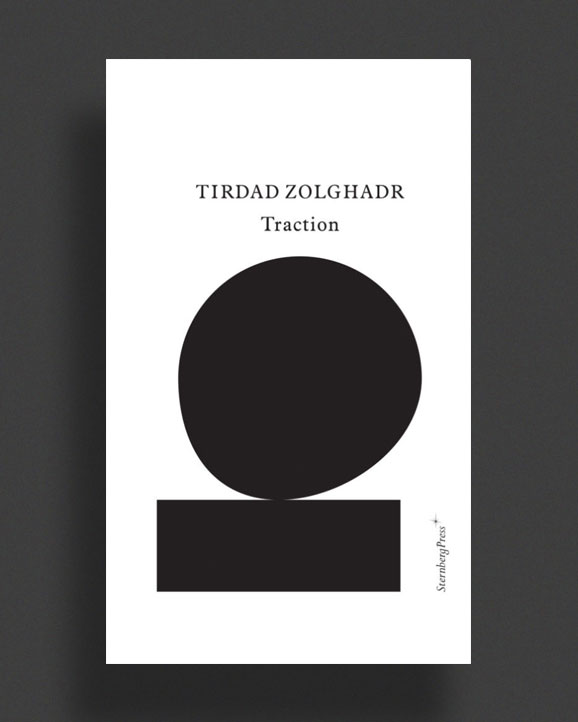
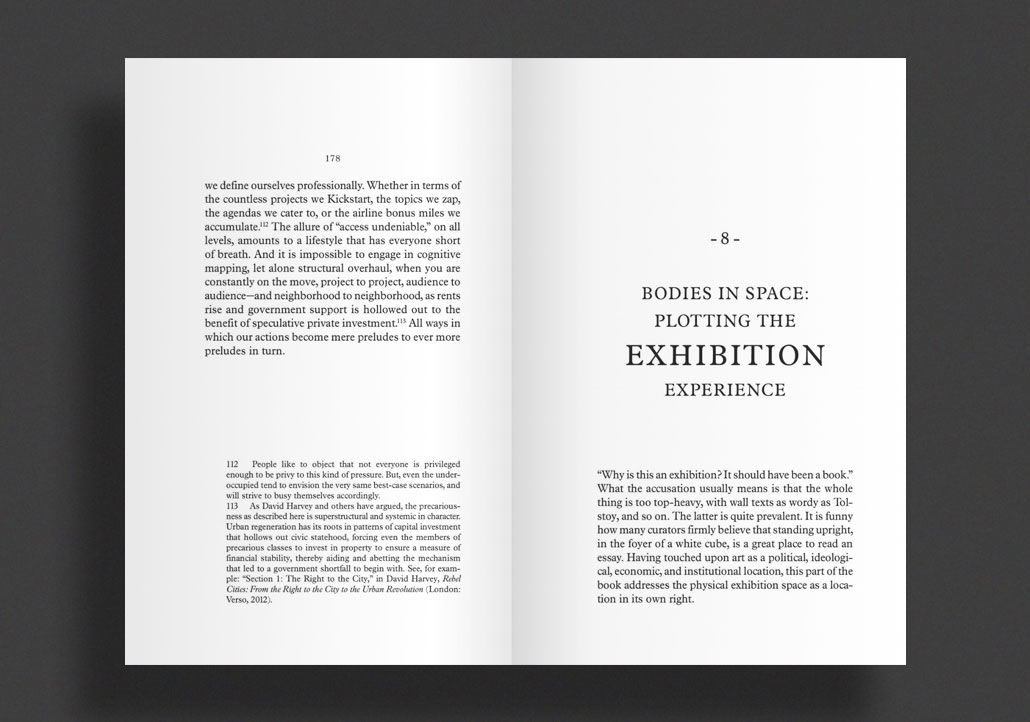
Traction argues that contemporary art is defined by a moral economy of indeterminacy that allows curators and artists to imagine themselves on the other side of power. This self-positioning, in turn, leaves us politically bankrupt, intellectually stagnant, and aesthetically predictable. In his memoir-polemic, curator and writer Tirdad Zolghadr candidly reflects on his own experiences and the work of others. He also drafts possibilities for a logic and a support structure that can offer some purchase of their own, beyond the gravitational pull of business as usual. Ultimately, Traction calls for a renewed sense of profession, somewhere within the corridors of power where, for better or worse, contemporary art has long arrived.
Design by Aude Lehmann, Zurich
2020, English
Softcover (cloth), 284 pages, 16.5 x 10.4 cm
Published by
Office / Melbourne
$27.00 $15.00 - Out of stock
The Politics of Public Space is a quarterly publication of transcripts that speak directly to the city and the way we read it.
The second volume addresses the effects of COVID-19, including the sudden changes in the way we interact and view our public spaces. It contains excerpts from Myria Georgiou, Saskia Sassen, Jack Self, Brooke Holmes, Ian Strange and Alfredo Brillembourg.
This publication curates a series of global perspectives as we all come to terms with a new way of life due to the virus. Myria Georgiou observes the emergence of digital solidarity groups throughout the UK as inequalities and vulnerabilities are foregrounded. World-renowned sociologist Saskia Sassen reveals the pervasiveness of power as the fragility of our global connectedness is further disclosed. The true publicness of our cities is revealed in Jack Self’s account of protest and opposition to the political structures. Brooke Holmes depicts an interconnectedness between the health of the city and it’s citizens traced back to antiquity. Australian artist Ian Strange unpacks his understanding of the home as he recounts a decade of practice into the subject. And Venezuelan architect Alfredo Brillembourg calls to arms the architecture profession to deal directly with issues of injustice within the built environment.
2016, English
Hardcover, 248 pages, 23.8 x 29.2 cm
Published by
Koenig Books / London
Stedelijk Museum / Amsterdam
$65.00 $50.00 - Out of stock
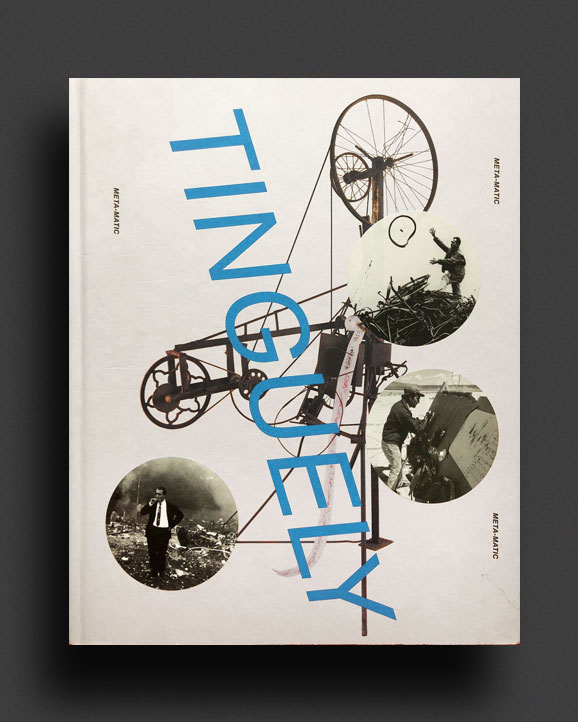
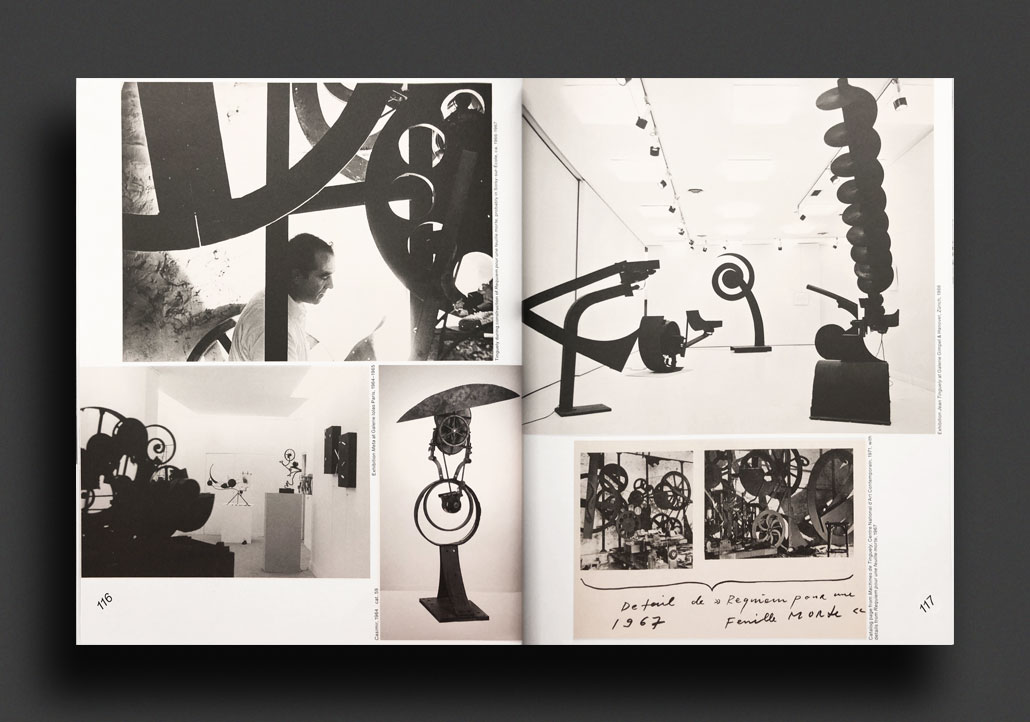
Associated with the Nouveaux Réalistes and Zero, Swiss painter and sculptor Jean Tinguely (1925–91) is best known for his whirring, jangling meta-mechanic sculptures, which take up Dada’s mantle in their use of discarded materials and their wit, humor and irony. But this perception of Tinguely as merely a playful kinetic sculptor neglects the more topical, critical, theoretical and interdisciplinary aspects of Tinguely’s work.
An extensive monograph on this chronically underpublished artist, Jean Tinguely: Retrospective is the first publication to explore the artist’s work from this perspective.
Tinguely’s machines are built to malfunction or self-destruct, expressing a pessimistic view of human existence and death--and yet they are infectiously cheerful. His meta-mechanics suggest a hobbyist’s enthusiasm for technology, but made out of junk, they also suggest the artist’s skepticism regarding technological advance. Tinguely loved art history, and yet he launched savage attacks on the museum with pieces that are now seminal works of institutional critique.
With contributions from Kaira Cabañas, Hans-Christian von Herrmann, Dominik Müller, Johan Pas, Margriet Schavemaker, Barbara Til and Beat Wismer, this volume presents Tinguely as an artist whose work sustained contradictions and courted ambiguity.
A fantastic and visually-rich book! Now out-of-print.
2017, English
Softcover, 112 pages, 21 x 29.7 cm
Published by
David Pestorius / Brisbane
Sternberg Press / Berlin
$69.00 $2.00 - Out of stock
CityCat Project 2006–2016 is the record of an extraordinary collaboration between American artist Dave Hullfish Bailey and senior Aboriginal writer and activist Sam Watson. The collaboration is structured around Maiwar Performance, in which the CityCat ferries that ply the Brisbane River (Maiwar) execute unannounced maneuvers near a site of significance to the Aboriginal people who lived on the lands around Brisbane before British colonization in the early nineteenth century.
After its first iteration in 2006, Watson designated the event a “Dreaming,” which meant that it should be periodically repeated. The performance has since been restaged in 2009, 2012, and 2016, with Watson seeing it as an important act of Indigenous empowerment: a way of restoring agency to the local Aboriginal people in bringing their past alive and allowing them to think that the future has not been definitively determined.
Parallel to this recurring event is an evolving body of works in diverse media. At its core is Bailey’s lateral research-based process, which combines a highly reflexive approach to language with granular descriptions of material and cultural systems. The call-and-response collaboration between Watson and Bailey and the many irreducibilities within it, generates an articulation of place that is playfully extrapolative, yet politically and intellectually resistant.
This publication includes an introduction by its editor, Rex Butler, and an essay and detailed timeline by CityCat Project curator, David Pestorius, which covers the activities of Bailey and Watson both before and throughout their work together. In addition, art historian Sally Butler reflects upon Watson’s literary production, while curator Michele Helmrich sheds light on the local historical context that significantly informs the collaboration.
Edited by Rex Butler
Texts by Rex Butler, David Pestorius, Sally Butler, Michele Helmrich
Graphic concept by Heimo Zobernig
Design by Michael Phillips
Copublished with Australian Fine Arts/David Pestorius, Brisbane
2018, English
Softcover, 128 pages, 22.5 x 29 cm
Published by
Sternberg Press / Berlin
IMA / Brisbane
$75.00 $5.00 - Out of stock
Contributions by Aileen Burns & Johan Lundh, Carolin Köchling, Rafael Ortega, Filipa Ramos, Volker Sommer, Eugenio Viola
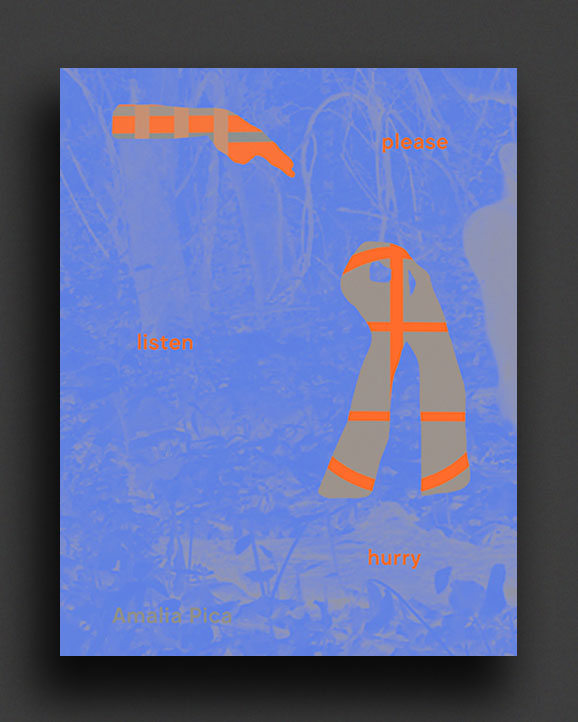
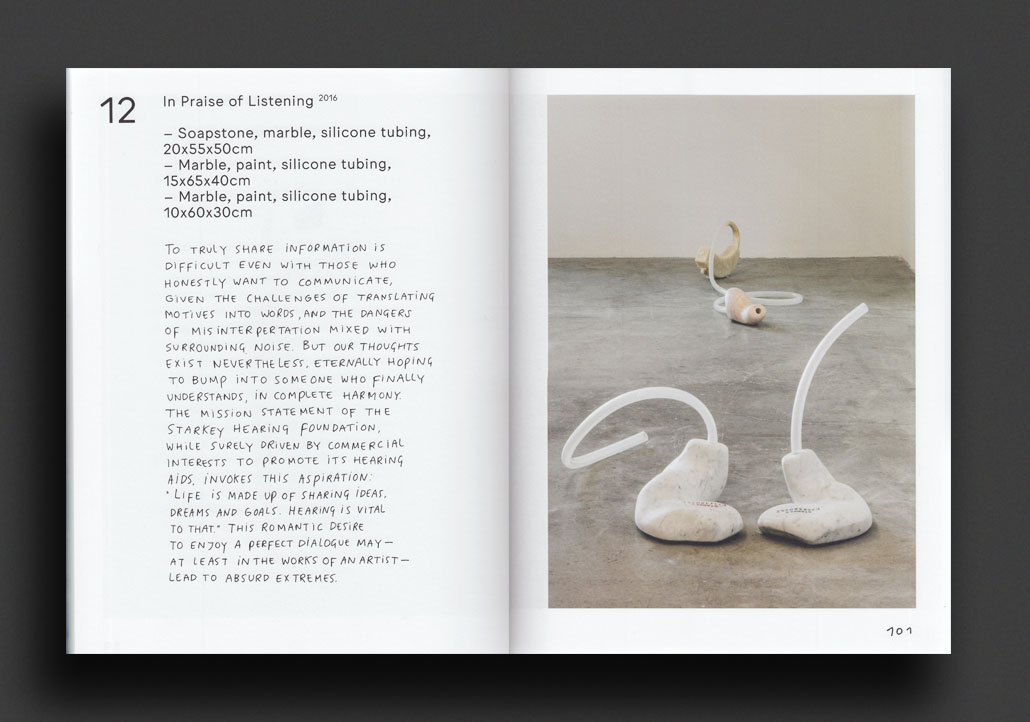
The catalogue please listen hurry others speak better accompanies solo exhibitions by Amalia Pica at three venues: “ears to speak” at The Power Plant in Toronto and “please open hurry” at the Institute of Modern Art, Brisbane, and Perth Institute of Contemporary Arts. Two threads in Pica’s practice are brought together: communication between humans and exchange between species. The artist raises questions of mutual understanding through constructing forums that address shared experience. Illustrations of primate and human social models and interpersonal communication in the publication are accompanied by documentation of performances that enact social hierarchies and animal-language studies. Volker Sommer writes about his work on animal rights and the initiative to establish a “community of equals,” and Filipa Ramos reflects on primate anthropologists Jane Goodall and Gregory Bateson. A conversation between Carolin Köchling and Pica considers her artistic practice, and Eugenio Viola and Pica discuss the performative element of the artworks.
Copublished with The Power Plant Contemporary Art Gallery, Toronto; Institute of Modern Art, Brisbane; and Perth Institute of Contemporary Arts
Design by Lotte Lara Schröder
1973, English
Softcover (soft boards), 204 pages, 29.6 x 21.2 cm
1st Edition, Out of print title / used / average
Published by
Harry N. Abrams / New York
Thames and Hudson / London
$25.00 $15.00 - Out of stock
English edition wide ranging and comprehensive survey of conceptual and other contemporary art movements circa 1973—1974, profiling 53 contemporary artists from 18 countries, edited and designed by the legendary Dutch typographer and museum curator, Willem Sandberg, with associates including Jean-Christophe Ammann, Harald Szeemann, Achille Bonito Oliva, Yona Fischer and many others. Original cover by Alighiero Boetti. Profusely illustrated throughout in colour and black and white with collected works by each artist or original pieces made for the publication, aside from the occasional accompanying artist's text it is entirely made up of visuals. Artists featured include : Sergi Aguilar, Gilles Aillaud, Keith Arnatt, Gábor Attalai, Lothar Baumgarten, Ola Billgren, Alighiero Boetti, Christian Boltanski, Marcel Broodthaers, Boris Budan, Luciano Castelli, Mary Corse, William Crozier, Hanne Darboven, Jan Dibbets, Braco Dimitrijević, Gino De Dominicis, Benni Efrat, Luciano Fabro, Robert Filliou, John-E Franzen, Hamish Fulton, Tibor Gayor, Avital Geva, Zbigniew Gostomski, Allan V. Harrison, Jeroen Henneman, Martha Jungwirth, Zdzislaw Jurkiewicz, Per Kirkeby, Christof Kohlhöfer, Harriet Korman, Piotr Kowalski, Richard Long, Urs Lüthi, Inge Mahn, Richard Nonas, Lev Nusberg, Panamarenko, Antonio Soler Pedret, Ireneusz Pierzgalski, Vettor Pisani, Joan Hernández Pijuan, Carl J. Plackrnan, Markus Raetz, Franz Ringel, Salvador Sauna, Kjartan Slettemark, Hugo Suter, Endre Tot, Jerzy Treliński, Carel Visser, Rolf Winnewisser...
Average—Poor copy, contents and interior in good shape and complete, cover and edges with decent wear and marking, spine 75% torn away, although all still thread-bound.
2022, English
Softcover, 400 pages, 20 x 26 cm
Published by
gta Verlag / Zürich
$132.00 $80.00 - Out of stock
Our time is an urban age. More people than ever before are living in cities, cities are becoming bigger and denser than ever, and urbanity has reached an unprecedented level of complexity. This urbanization boom, which can be observed around the globe today, began at the turn of the 20th century, when technical progress and the extraction of seemingly unlimited natural resources drove urban development. With the steady growth of urban populations, architects and planners not only had to deal with the design of living space and public space, but also new social challenges such as (geo-) political tensions, the reconstruction after two world wars, decolonization, economic crises, responding to growing climatic problems and cultural changes. By analyzing more than one hundred richly illustrated urban planning projects and initiatives, the book offers the first comprehensive story of how these challenges have continuously generated new attitudes and approaches in the urban planning discipline since the early 20th century.
2019, English
Softcover, 92 pages, 24.5 x 17 cm
Published by
Warehouse / Amsterdam
$24.00 $15.00 - Out of stock
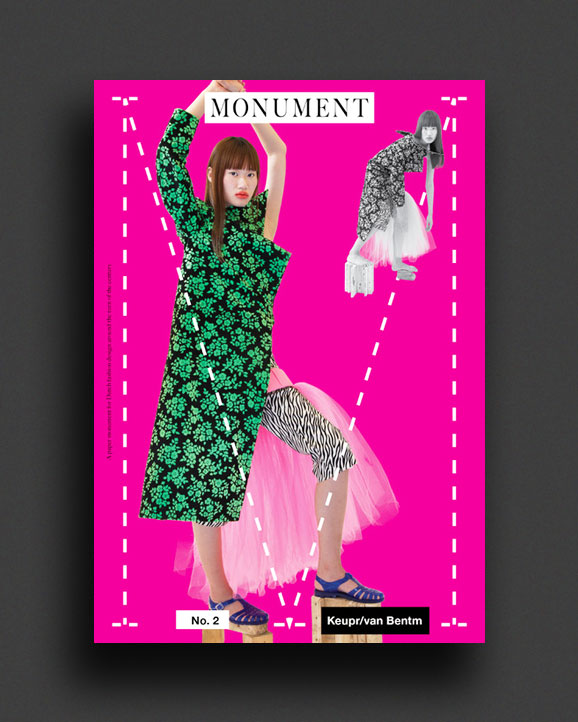
‘We strive to put things out of context’
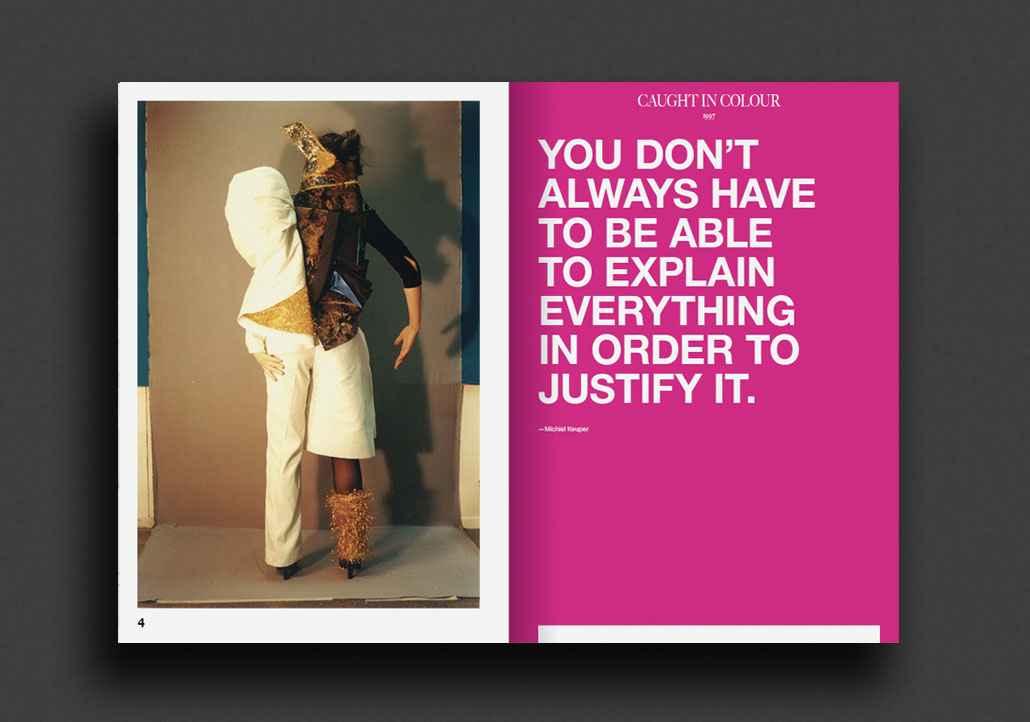
The fashion designers of ‘The Dutch Wave’ make remarkable and seemingly unavoidable use of this type of expression when describing their years as young, emerging designers. It is ironic that both of these rides do not provide any option to change direction or to pull on the brakes. After all, Michiel Keuper and Francisco van Benthum, the designers subject of this second issue of Monument, didn’t get on board to just sit back and take in the view.
With photography by Roos Quakernaat and an essay by fashion writer Laura Gardner.
About Monument
“Monument oscillates between a DIY fanzine and a high-end journal. Such ambivalence in its materiality also reflects the publication’s unconventional concept—demonstrating how change in the trend-fixated fashion realm can be initiated and driven by retrospect”
—Valkan Dechev, Glamcult, August 2018
Monument is founded by Mary-Lou Berkulin and designed by Karen van de Kraats. The magazine focuses on Dutch fashion design around the turn of the century. Each issue is dedicated to a single designer or label, enabling the contributors to go in depth on the coming and passing of the designers who were part of the 1998 “Dutch wave”. It is the first publication to focus solely on these designers.
2017, English
Softcover, 88 pages, 22 x 31.5 cm
Published by
Galerie Buchholz / Köln
Stedelijk Museum / Amsterdam
Walther König / Köln
$54.00 $15.00 - Out of stock
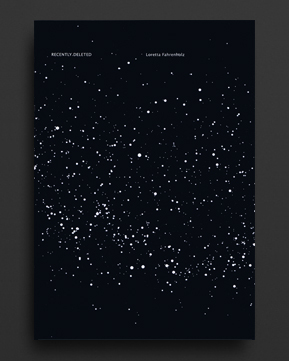
This now out-of-print publication features several series, such as Recently Deleted and film stills of Two A.M., Loretta Fahrenholz's most recent work. Loretta Fahrenholz is an experimental filmmaker, often working closely with the actors and extras who perform in her work. Her films document the contemporary reality that is shaped by collective fictions, staging, and media communication.
Texts by Gili Tal and Elsa Von Freytag-Loringhoven.
2020, English
Softcover, 448 pages, 15 x 24 cm
Published by
Valiz / Amsterdam
$62.00 $10.00 - Out of stock
Forces of Art investigates the way in which artists, artworks and cultural organizations affect people and their social environments, and explores how cases of creative practice have been operational in empowering people, communities, and societies in their given contexts. It is a dense, multi-layered, polyvocal compendium of current thinking about the impact of art on civil society and social change, and contains a large number of essays and case studies located all over the world, from Central Asia to Meso and Latin America, from Africa to Central Europe, from South and South-East Asia to the Middle East. The driving force is the shared concern and responsibility for societies worldwide, with regards to culture and the well-being of its communities. Considering the question of how art can be consequential, the book challenges the reader to think beyond art as representation, as merely aesthetical, or as simply an object or commodity. Instead, it stirs thinking of art in terms of a force that has the ability to transform.
Editors: Carin Kuoni, Jordi Baltà Portolés, Nora N. Khan & Serubiri Moses
Contributors: Mariam Abou Ghazi, Kobina Ankomah-Graham, Jordi Baltà Portolés, Ilka Eickhof, Fernando Escobar Neira, Fatin Farhat Maya Indira Ganesh, Rocca Holly-Nambi, Miranda Jeanne Marie Iossifidis, Nuraini Juliastuti, Nora N. Khan, Višnja Kisić, Diana T. Kudaibergenova, Carin Kuoni, Kabelo Malatsie, Jenny Mbaye, Zayd Minty, Nadia Moreno Moya, Serubiri Moses Judith Naeff, Laura Nkula-Wenz, Joseph Oduro-Frimpong, Arnout van Ree, Naomi Roux, Vaughn Sadie, Anna Selmeczi Nishant Shah, Lenneke Sipkes, Rike Sitas, Cristiana Strava, Goran Tomka, Kasper Tromp, Minna Valjakka, Paulina E. Varas Mark R. Westmoreland, Kitty Zijlmans
Design: Lu Liang
2021, English
Softcover (cloth), 266 pages, 16.5 x 10.4 cm
Published by
Office / Melbourne
$27.00 $15.00 - Out of stock
In July, Melbourne experienced a second wave of the virus and the introduction of further restrictions forced the city to a standstill. Workplaces, student accommodation and universities remained empty as local businesses were also required to close their premises. The structures of the state, city and its residents were again laid bare. This third volume of the quarterly publication addresses many of these issues by gathering talks held prior to the pandemic alongside recent interviews. Kate Shaw shows how the recent lockdown of the housing towers in Flemington and North Melbourne reveals the government’s underlying attitude towards public housing tenants. Tony Birch used the Shrine of Remembrance as the site for his talk on the Indigenous protest movement Camp Sovereignty and the significance of monuments in shaping collective values. Nicole Kalms outlines the experiences of women in Melbourne’s public spaces through data gathered by XYX Lab. Sarah Lynn Rees discusses the complexities of engaging and working respectfully with Traditional Owners when intervening in the built environment. Andy Fergus & Brighid Sammon expose the failings of planning in the modern development of Melbourne, and Philip Brophy declares the general failings of the built environment profession at large.
2016, English / German
Softcover, 352 pages, 20 x 12.8 cm
Published by
Walther König / Köln
$58.00 $20.00 - Out of stock
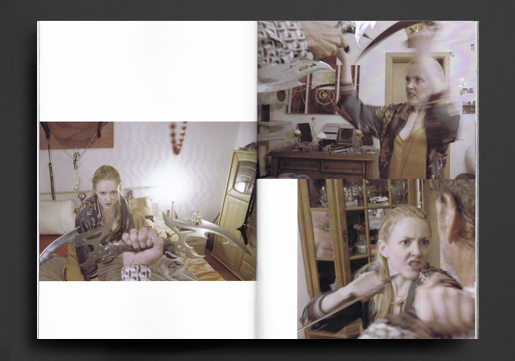
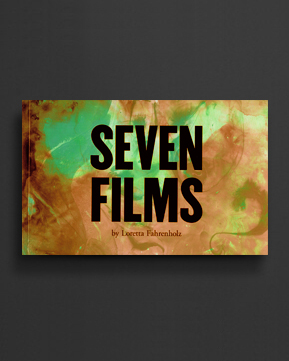
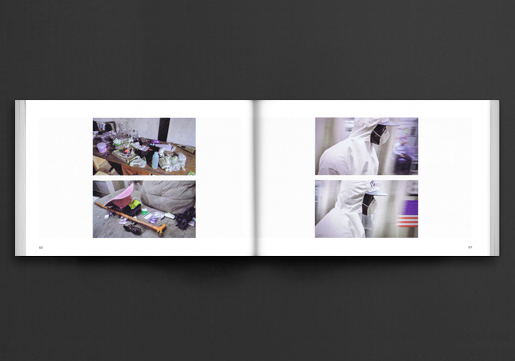
The first comprehensive analysis of Loretta Fahrenholz’s filmic work.
Seven of the artist’s films (2010–2016) are portrayed in synopses through separate series’ of images.
John Kelsey and Caroline Busta analyze the artist’s experimental films, which defy the distinction between fiction and documentary and propose new forms for a post-cinematic present.
Produced in cooperation with the Kunsthalle Zürich on the occasion of Fahrenholz’s solo exhibition at the Fridericianum, Kassel, Germany (25 September 2016 – 1 January 2017).
English and German text.
2019, English
Softcover, 248 pages, 21 x 28 cm
Published by
Themerson Estate / London
$95.00 $45.00 - In stock -
In 1980 the late British art critic and historian Nick Wadley befriended artist Franciszka Themerson (1907–1988), whose work he had admired for many years. This first monograph about the Polish-born painter, illustrator, and print and stage designer introduces her work mainly through his words, gathering together lectures, notes, catalogue introductions, and more. The material covers 60 years of her artistic career, detailing her painting, drawing, reliefs, theatre design, and illustrations for children. More than just a tribute to her extraordinary mastery of the drawn line, it also includes a list of facts and dates which help the reader to understand the artist’s versatility and work.
Themerson collaborated with her husband, the writer Stefan Themerson on many experimental films and illustrated books for children, and in 1948 they founded the adventurous publishing company, Gaberbocchus Press, of which she was the art director. The press was named after a Latinisation of 'Jabberwocky', from Lewis Carroll's 'Alice' coined by Carroll's uncle, Hassard Dodgson. In 31 years the Gaberbocchus Press published over sixty titles, including works by Alfred Jarry, Kurt Schwitters, Bertrand Russell, Raymond Queneau, and the Themersons themselves. Alfred Jarry’s Ubu Roi was its flagship publication, published in many editions and still in print. The Gaberbocchus edition is a most apposite evocation of the spirit of Jarry's grotesque fable. The text, which was hand-written directly onto lithographic plates by the translator, Barbara Wright - interspersed with Themerson's conte crayon illustrations - is printed on loud yellow pages. Themerson's contributions as illustrator contributed enormously to the autograph originality of design of Gaberbocchus books. Apart from appearing in many journals worldwide, several collections of her drawings have been published as books: Forty Drawings for Friends, London 1940-42 (1943), The Way It Walks (1954), Traces of Living (1969) and Music (1998). Themerson's theatre designs included marionette productions of Ubu Roi, Ubu Enchainé and the Threepenny Opera, mostly made for the Marionetteatern in Stockholm, in the 1960s, which toured worldwide for decades, and were rewarded with international acclaim. Many of these were exhibited at the National Theatre in 1993.
2012, English
Softcover, 256 pages, 16 x 22 cm
1st Edition, Out of print title / used / very good
Published by
Independent Curators / New York
$30.00 $20.00 - Out of stock
First 2012 edition, out-of-print.
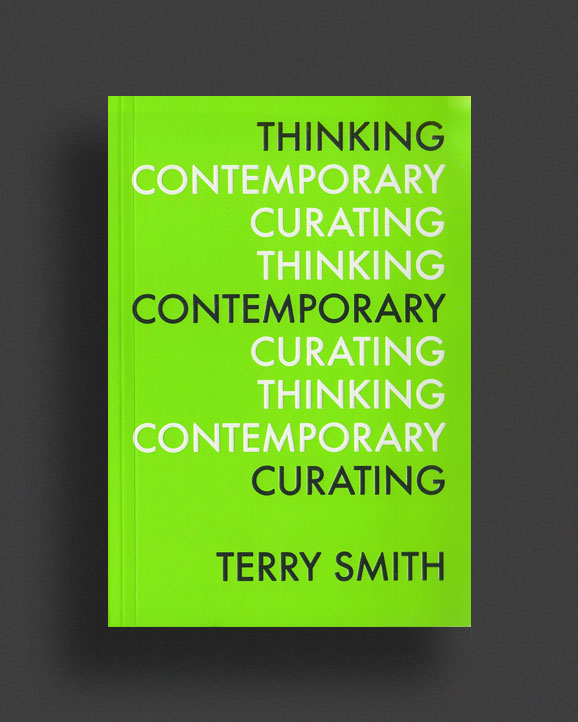
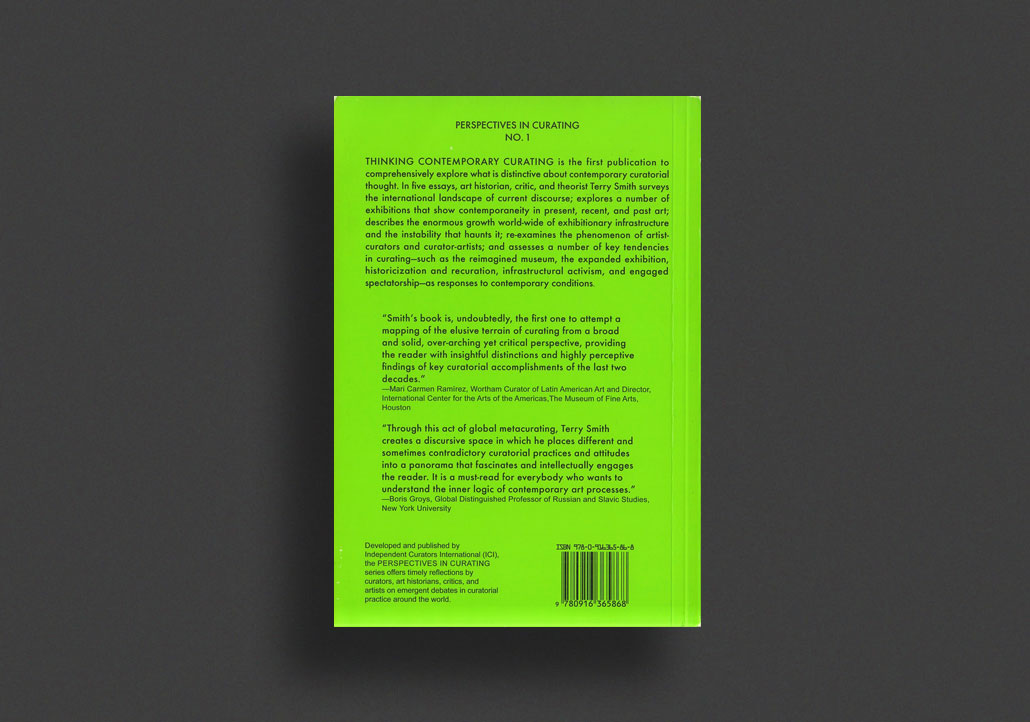
In these five essays, art historian and theorist Terry Smith surveys the international landscape of current thinking by curators; explores a number of exhibitions that show contemporaneity in recent, present and past art; describes the enormous growth world wide of exhibition infrastructure and the instability that haunts it; re-examines the contribution of artist-curators and questions the rise of curators utilizing artistic strategies; and, finally, assesses a number of key tendencies in curating as responses to contemporary conditions. Thinking Contemporary Curating is the first book to comprehensively chart the variety of practices of curating undertaken today, and to think through, systematically, what is distinctive about contemporary curatorial thought.
VG copy, light wear.
1976, Japanese
Softcover (w. dust jacket), 200 pages, 21 x 14.8 cm
1st Edition, Out of print title / used / very good
Published by
Haga Bookstore / Japan
$80.00 $20.00 - Out of stock
The wonderful, very rare first 1976 edition Japanese photo-book / "Cine Album" devoted entirely to Jack Nicholson. Long out-of-print, this amazing volume documents Jack's films up to the time of printing in 1976, from his feature debut The Cry Baby Killer (1958), through Easy Rider (1969), Five Easy Pieces (1970), Carnal Knowledge (1971),The Last Detail (1973), Chinatown (1974), One Flew Over the Cuckoo's Nest (1975), The Passanger (1975)..... and so many more. Countless stills and behind the scenes shots from all the films alongside visual documentation of all of the film poster artwork, Jack's magazine cover appearances, award ceremonies, full filmography, extensive texts on each film and essay by editor Yuji Konna. Texts in Japanese. An absolute must for any fan or collector of Jack Nicholson, exploding with hundreds of images. Even has excellent endpapers tiled with Jack's cover for Andy Warhol's Interview magazine, and the book cover beneath the dust jacket is even better than the jacket itself. Published by the great Haga Bookstore imprint.
Very Good copy in VG dust jacket.
1994, English
Softcover (staple-bound), 36 pages, 27 x 21.5 cm
1st Edition, Out of print title / used / very good
Published by
The University of Melbourne Museum of Art / Melbourne
$35.00 $25.00 - In stock -
Catalogue published on the occasion of Australian artist Aleks Danko's exhibition at Ian Potter Gallery, 18 May-18 June 1994; volume #1 in "The Artist and the Museum" series curated by Merryn Gates. A timeline of works spanning the bottom half of each page throughout the catalogue traces Danko's history of works across sculpture, installation, video, performance, editions, books, etc. from 1970-1994, accompanied by texts by Charles Green, Jacqueline Thomas, Jackie Dunn, and Merryn Gates occupying the top half of each page. Also includes "Lafart" Manifesto - 18/3/1975 written by Danko and Mike Parr!
Aleks Danko (b. 1950) is an Australian performance artist and sculptor. The son of Ukrainian migrants, he was born in Adelaide, and educated at the South Australian School of Art and the Hawthorn Institute of Education. He started exhibiting in Adelaide in 1970. Aleks Danko’s career spans more than 5 decades and encompasses diverse media, from sculpture and installation to text and language-based works. Drawing actively on Australia’s political and cultural history, his work is infused with satirical humour and a subtle critique of contemporary social values.
Very Good copy.
2004, English
Softcover, 30cm x 21cm. 48 pages
1st Edition, Out of print title / used / very good
Published by
NGV (National Gallery of Victoria) / Victoria
$35.00 $25.00 - In stock -
Exhibition catalogue published on the occasion of the major National Gallery of Victoria travelling exhibition Aleks Danko — Songs of Australia Volume 16: Shhh, Go Back To Sleep (an un-Australian dob-in mix) in 2004. Presenting "The Song Cycle Volumes 1—16" this profusely illustrated catalogue documents many of Danko's major installations in glossy colour, alongside texts, including those by the artist, exhibition history, bibliography.
Aleks Danko (b. 1950) is an Australian performance artist and sculptor. The son of Ukrainian migrants, he was born in Adelaide, and educated at the South Australian School of Art and the Hawthorn Institute of Education. He started exhibiting in Adelaide in 1970. Aleks Danko’s career spans more than 5 decades and encompasses diverse media, from sculpture and installation to text and language-based works. Drawing actively on Australia’s political and cultural history, his work is infused with satirical humour and a subtle critique of contemporary social values.
Very Good copy.
2011, English
Hardcover (cloth bound), 152 pages, 28.5 x 23 cm
Published by
Walther König / Köln
$65.00 $25.00 - In stock -
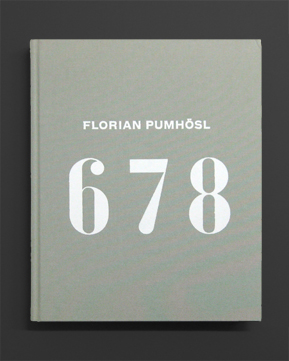
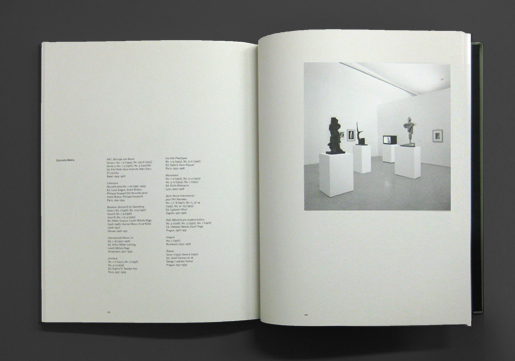
Florian Pumhösl’s latest production focuses on abstract films and paintings and their interaction with the surrounding space.
6 7 8 is made up of three new pieces: In his picture cycle Diminution, Pumhösl is concerned with the possibilities of portraits, the representation of individual characteristics and profiles.
The film installation Expressive Rhythm refers to Alexander Rodchenko’s painting of the same name from 1942/43.
Dance notations are the theme of the second film project Tract, an abstract animation.
2014, English
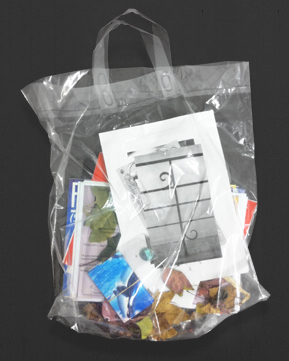
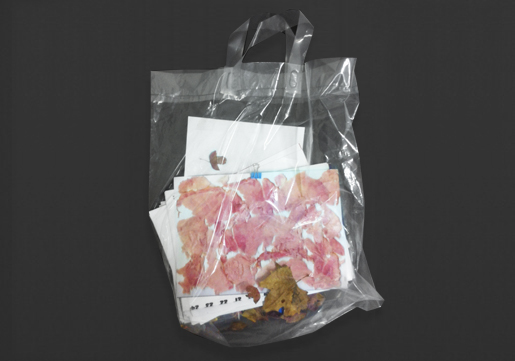
Transparent plastic shopping bag, C90 audio cassette, autumnal leaves, loose-leaf A4 printed pages, envelope with edition, various other materials
Edition of 100,
Published by
Endless Lonely Planet / Melbourne
$15.00 $5.00 - Out of stock
Endless Lonely Planet is a yearly periodical of print and data from Melbourne, Australia.
ELP3 features: "a c90 tape from Porpoise Torture, an edition work and poem from Virginia Overell, a vine channel from Fictitious Sighs and Bunyip Trax, including at least 52 artists throughout the coming year, a selection of poetry from Internetemotions, a seasonal treat from Christopher L G Hill, a calender of contributors birthdays from Discipline, a poem by George Egerton-Warburton, an edition work by David Homewood, artist pages from James Deutsher, Kain Picken, Matthew Benjamin, and Dan Arps, an excerpt from a possible novella by Fayen d'Evie, two beautiful text works from Alex Vivian, a posy of poems from Adelle Mills, cover art as always by the illustrious Joshua Petherick"
Self published by Christopher LG Hill and contributors, each copy of Endless Lonely Planet issue III comes with all collateral bound together in a transparent plastic shopping bag.
Limited to 100 copies.
Contributors to this issue in full and counting: Adelle Mills, Alex Vivian, Christopher L G Hill, Dan Arps, David Homewood, Disciple, Fayen K X d'Evie. George Egerton-Warburton, Giles Fielke, Molly Dyson, Julian Schwarmer, Aurelia Guo, Jessica Yu, Trevelyan Clay, Anastsia Klose, Eva Birch, Clare Wöhlnick, Alice Jamerson, Jarved Costa, Tim Cøstẽr, Hamish M Macdonald, Holly Childs, Kate Meakin, Lipstick Larry, Simon Zoric, Brennen Oliver, Jessica van Hecke, Ruth O'Leary, Maffew Linde, Kain Picken, James Deutsher, Joshua Petherick, Matthew Benjamin, Porpoise Torture, Virginia Overell, Endless Lonely Planet III vine channel, Matthew P Hopkins, Kieran Hegarty, Air Max '97, and more to come.....
1993, German
Softcover, 20 pages + CD, 29 x 17.5 cm
1st Edition, Out of print title / used / very good
Published by
Verlag Das Beispiel GmbH Darmstadt / Darmstadt
$140.00 $90.00 - In stock -
Rare first, only edition of Rolf Julius – Wind, beautiful artist book published with accompanying CD by Verlag Das Beispiel GmbH Darmstadt in 1993. Includes book with texts (score) by sound artist Rolf Julius (1939 — 2011), and Helga de la Motte-Haber (essay), and b/w illustrations (drawings and photographs) throughout. CD includes the pieces : Sommerstück (Belèm) - 1993 and Neues Klavierkonzert - 1992.
Rolf Julius has frequently been compared to John Cage for his attempts of integrating the world of common noises into the realm of sounds. "The surface of a sound interests me. Is it round or angled, grinding and raw, or smooth, etc." Julius thus creates extraordinary sound installations which can be described as "music for the eyes" and have secured him an unmistakeable place in the spectrum of contemporary art. An important book for anyone interested in Julius or Cage's concept of "Small Music" or ambient/field recording in general.
Very Good copy.
1996, English
Softcover (staple-bound), 16 pages, 21 x 15 cm
1st UK Edition, Out of print title / used / very good
Published by
Artspace / Sydney
David Pestorius / Brisbane
Experimental Art Foundation / Adelaide
$25.00 $10.00 - Out of stock
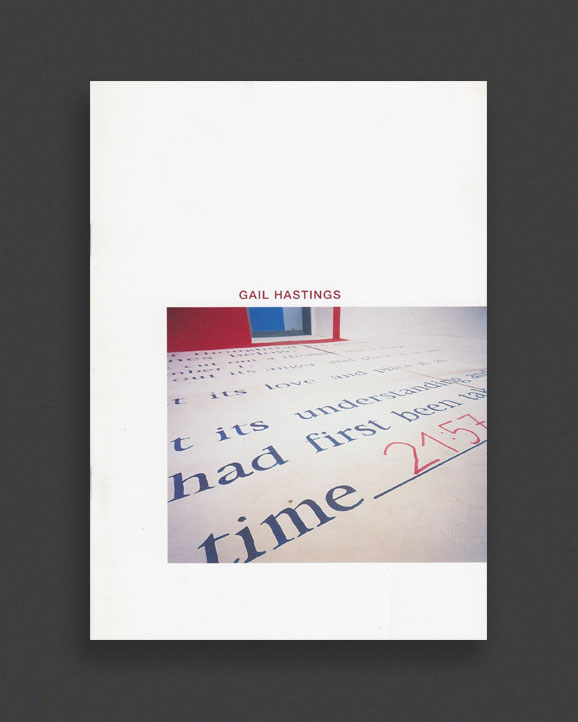
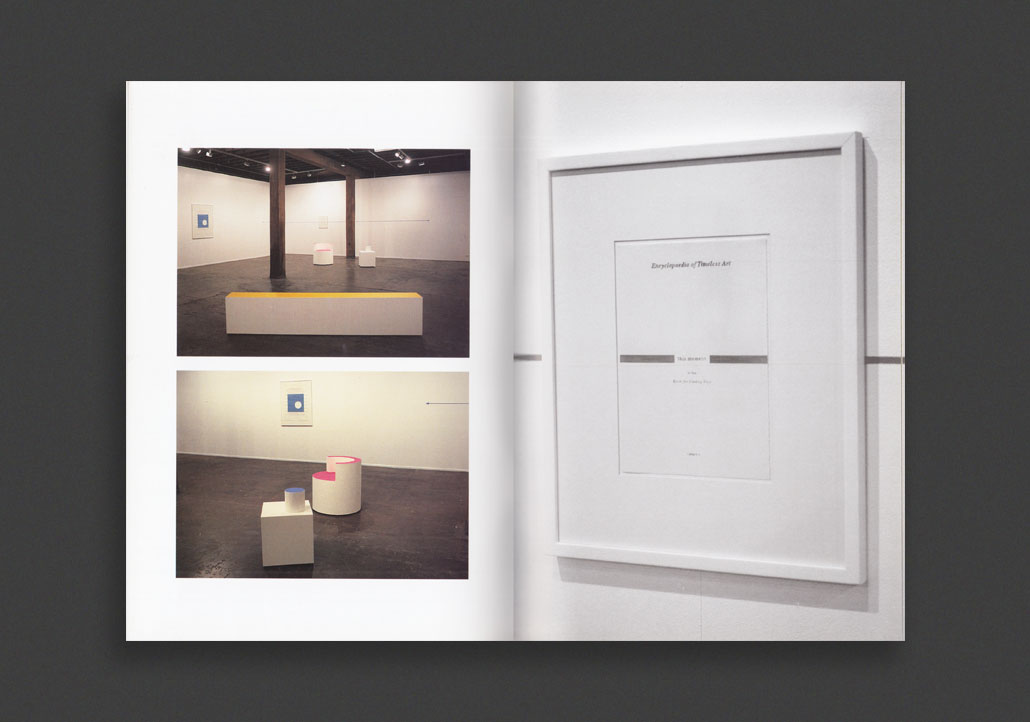
Catalogue published on the occasion of the traveling exhibition Gail Hastings — To Make a Work of Timeless Art, at Artspace, Sydney; Experimental Art Foundation, Adelaide; David Pestorius Gallery, Brisbane, 1996. Illustrated throughout in colour and b/w with essay by Linda Michael. Published in an edition of 600 copies.
Australian abstract artist Gail Hastings makes work which she describes as 'sculptuation': a combination of sculpture and situation. Her work is a conversation about space and objects, and about the ideas that arise through their interaction and in different situations.
Very Good copy.
2019, English
Softcover, 328 pages, 14 x 22.5 cm
Published by
Sternberg Press / Berlin
$79.00 $20.00 - Out of stock
Art and (Bare) Life: A Biopolitical Inquiry analyzes modern and contemporary art’s drive to blur with life, and how this is connected to the democratic state’s biologized control of life. Art’s ambition to transform life intersects in striking ways with modern biopower’s aim to normalize, purify, judge, and transform life—rendering it bare. In these intersecting yet different orientations toward life, this book finds the answer to the question: How did autonomous art become such an effective tool of the capitalist state?
From today’s “creative cities” to the birth of modern democracy and art in the French Revolution, Art and (Bare) Life explores how the Enlightenment’s discovery of life itself is mirrored in politics and art. The galvanizing revelation that we are, in Michel Foucault’s words, “a living species in a living world,” free to alter our environment to produce specific effects, is compared here to the discovery that art is an autonomous system that can be piloted toward its own self-determined ends—art for art’s sake. But when both art and the capitalist state seek to change life rather than reflect it, they find themselves set on a collision course.
“Josephine Berry’s Art and (Bare) Life is an exemplary work. Here, for the first time, key concepts of contemporary political philosophy, such as biopower and biopolitics, are embedded within modern art history and theory. Erudite and sensitive to art’s complex field of intentions and outcomes, this in-depth study of aesthetics and politics is a must-read for anyone interested in understanding a foundational and regularly renewed dichotomy: ‘art’ and ‘life.’”
—Angela Dimitrakaki, Senior Lecturer in Contemporary Art History and Theory, University of Edinburgh
“The millennial body of the human is a territory marked by sacred codes, disciplines, and abstractions. To the technologies of biopower Josephine Berry waves the Medusa head of the art of rebellion.”
—Matteo Pasquinelli, Professor in Media Theory, Karlsruhe University of Arts and Design
Design by A Practice for Everyday Life
2020, English
Softcover, 320 pages, 12 x 19 cm
Published by
Uh Books / Amsterdam
KW Institute for Contemporary Art / Berlin
$24.00 $15.00 - Out of stock
Edited by Will Holder, the constellation of material in this issue collectively philosophises on topics that deal with difference and the transformative processes between things. It essentially puts forth the notion of the intellectual as a transitional identity. Contributions from various contemporary, historical, and even ancient authors and sources include George Orwell, Simone Weil, Apuleius, Ian Hamilton Finlay, Alan Stanbridge, John Cage, Bernadette Mayer, Anne Carson, Barbara Guest, Jenn Ashworth, Lewis Hyde, and many others. The volume begins with an introduction by Charles Bernstein and concludes with an afterword by Robert Duncan.