World Food Books' programme is largely produced on Kulin Nation land. We acknowledge the Wurundjeri people of the Kulin Nation as the first and continuing custodians of this land, and pay respect to their Elders past, present, and emerging.
World Food Books is an arts and special interests bookshop in Naarm / Melbourne. Founded in 2010, World Food Books is devoted to the presentation of a rotating, hand-selection of international art, design, literary and counterculture publications with an emphasis on the anti-traditional, the experimental, the avant-garde, the heretic, the marginal.
Presenting new titles alongside rare and out-of-print books, catalogues and journals spanning the fields of modern and contemporary art, design, photography, illustration, film, literature, poetry, cultural theory, philosophy, sexuality, popular and underground culture in its many radical forms, World Food Books wishes to encourage adventurous, thoughtful and open-minded reading, looking, writing, and exchange of publishing and ideas, both current and historical.
As well as our bookshop, located in Melbourne's historical Nicholas Building, all of our inventory is available internationally via our online mail-order service.
World Food Books semi-regularly co-ordinates "Occasions", a programme of exhibits and events at the bookshop and in partnership with other hosts (such as museums and art galleries) that develop out of the activities, relationships and content of the bookshop itself.
World Food Books
The Nicholas Building
37 Swanston Street
Room 5, Level 6
Melbourne 3000
Australia
SHOP HOURS:
Thu–Fri 12–6, Sat 12–5
WEB-SHOP OPEN 24/7
World Food Books
Postal Address:
PO Box 435
Flinders Lane
Victoria 8009
Australia
Art
Theory / Essay
Architecture / Interior
Graphic Design / Typography
Photography
Fashion
Eros
LGBTQ+
Fiction / Poetry
Weird / Speculative / Science Fiction / Horror
Transgressive / Visceral / Abject
Symbolism / Decadence / Fin de siècle
Film / Video
Painting
Sculpture / Installation
Performance / Dance / Theater
Drawing
Sound / Music
Curatorial
Group Shows / Collections
Periodicals
Out-of-print / Rare
Posters / Ephemera / Discs
Signed Books
World Food Books Gift Voucher
World Food Book Bag
Australian Art
Australian Fiction
Australian Science Fiction / Speculative Fiction
Australian Poetry
Australian Photography
Japanese Photography
Conceptual Art
Minimal Art
Dada
'Pataphysics / Oulipo
Fluxus
Concrete Poetry
Pop Art
Surrealism
Arte Povera
Arte Informale / Haute Pâte / Tachism
Nouveau Réalisme / Zero / Kinetic
Situationism / Lettrism
Collage / Mail Art / Xerox Art
Art Brut / Folk / Visionary / Fantastic
Illustration / Graphic Art / Bandes Dessinées
Furniture
Italian Radical Design / Postmodernism
Textiles
Ceramics / Glass
Counterculture
Protest / Revolt
Philosophy
Psychoanalysis
Anthropology
Anarchism
Socialism / Anarchism / Communism / Capitalism
Literary Theory / Semiotics / Language
Feminism / Women's Studies
Gender Studies / Sexuality
Anthropology
Fetishism / BDSM
Drugs / Psychedelia
Crime / Violence
Animal Rights / Veganism
Occult / Esoterica
Ecology / Earth / Alternative Living
Whole Earth / Crafts
All prices in AUD (Australian dollars)
Pick-Ups
Pick-up orders can be collected in our bookshop during opening hours after order date. Please collect any Pick-up orders within 2 weeks of ordering as we have limited storage space. Orders will be released back into stock if not collected within this time. No refunds can be made for pick-ups left un-collected. If you cannot make it in to the bookshop in this time-frame, please choose postage option.
Return Policy
All sales are final. We do accept returns (for refund or exchange) for items received in error. All our orders are packed with special care using heavy-duty padding and cardboard book-mailers or bubble mailers (for smaller books), using reinforcement where required. We cannot take responsibility for any lost, stolen or damaged parcels.
Insurance
Should you wish to insure your package, please email us directly after placing your order and we can organise this at a small extra expense. Although all standard/express tracked packages are very safe and dependable, we cannot take responsibility for any lost, stolen or damaged parcels. We recommend insurance on valuable orders.
Interested in selling your old books, catalogues, journals, magazines, comics, fanzines, ephemera? We are always looking for interesting, unusual and out-of-print books to buy. We only buy books in our fields of interest and specialty, and that we feel we can resell.
We base these prices on desirability, market value, in-print prices, condition and our current stock levels. We offer cash, store credit, and can take stock on consignment. All
about 25% of the price we expect to get when we sell them, or 30% in store credit. We base these prices on desirability, market value, in-print prices, condition and our current stock levels.
Sell your books any day of the week. You can drop them off and return later. If you have a lot of books, we can visit your Sydney home.
We buy books that we feel we can resell. We offer about 25 % of the price we expect to get when we sell them, or 30% in store credit. We base these prices on desirability, market value, in-print prices, condition and our current stock levels.
Philadelphia Wireman
03 August - 01 September, 2018
World Food Books is proud to announce our next Occasion, the first presentation of sculptures by Philadelphia Wireman in Australia.
The Philadelphia Wireman sculptures were found abandoned in an alley off Philadelphia’s South Street on trash night in 1982. Their discovery in a rapidly-changing neighbourhood undergoing extensive renovation, compounded with the failure of all attempts to locate the artist, suggests that the works may have been discarded after the maker’s death. Dubbed the "Philadelphia Wireman" during the first exhibition of this work, in 1985, the maker’s name, age, ethnicity, and even gender remain uncertain. The entire collection totals approximately 1200 pieces, all intricately bound together with tightly-wound heavy-gauge wire (along with a few small, abstract marker drawings, reminiscent both of Mark Tobey and J.B. Murry). The dense construction of the work, despite a modest range of scale and materials, is singularly obsessive and disciplined in design: a wire armature or exoskeleton firmly binds a bricolage of found objects including plastic, glass, food packaging, umbrella parts, tape, rubber, batteries, pens, leather, reflectors, nuts and bolts, nails, foil, coins, toys, watches, eyeglasses, tools, and jewellery.
Heavy with associations—anthropomorphic, zoomorphic, and socio-cultural responses to wrapped detritus—the totemic sculptures by Philadelphia Wireman have been discussed in the context of work created to fulfil the shamanistic needs of alternative religions in American culture. Curators, collectors, and critics have variously compared certain pieces to sculpture from Classical antiquity, Native American medicine bundles, African-American memory jugs, and African fetish objects. Reflecting the artist’s prolific and incredibly focused scavenging impulse, and despite—or perhaps enhanced by—their anonymity, these enigmatic objects function as urban artefacts and arbiters of power, though their origin and purpose is unknown. Philadelphia Wireman, whatever their identity, possessed an astonishing ability to isolate and communicate the concepts of power and energy through the selection and transformation of ordinary materials. Over the course of the past two decades, this collection has come to be regarded as an important discovery in the field of self-taught art and vernacular art.
Presented in collaboration with Fleisher-Ollman Gallery, Philadelphia, and Robert Heald, Wellington.
Susan Te Kahurangi King
02 February - 10 March, 2018
Susan Te Kahurangi King (24 February 1951 - ) has been a confident and prolific artist since she was a young child, drawing with readily available materials - pencils, ballpoint pens and felt-tip markers, on whatever paper is at hand. Between the ages of four and six Susan slowly ceased verbal communication. Her grandparents William and Myrtle Murphy had developed a special bond with Susan so they took on caring responsibilities for extended periods. Myrtle began informally archiving her work, carefully collecting and storing the drawings and compiling scrapbooks. No drawing was insignificant; every scrap of paper was kept. The King family are now the custodians of a vast collection containing over 7000 individual works, from tiny scraps of paper through to 5 meter long rolls.
The scrapbooks and diaries reveal Myrtle to be a woman of great patience and compassion, seeking to understand a child who was not always behaving as expected. She encouraged Susan to be observant, to explore her environment and absorb all the sights and sounds. Myrtle would show Susan’s drawings to friends and people in her community that she had dealings with, such as shopkeepers and postal workers, but this was not simply a case of a grandmother’s bias. She recognised that Susan had developed a sophisticated and unique visual language and sincerely believed that her art deserved serious attention.
This was an unorthodox attitude for the time. To provide some context, Jean Dubuffet coined the term Art Brut in 1945 to describe work created by self-taught artists – specifically residents of psychiatric institutions and those he considered to be visionaries or eccentrics. In 1972 Roger Cardinal extended this concept by adopting the term Outsider Art to describe work made by non-academically trained artists operating outside of mainstream art networks through choice or circumstance. Susan was born in Te Aroha, New Zealand in 1951, far from the artistic hubs of Paris and London that Dubuffet and Cardinal operated in. That Myrtle fêted Susan as a self-taught artist who deserved to be taken seriously shows how progressive her attitudes were.
Susan’s parents Doug and Dawn were also progressive. Over the years they had consulted numerous health practitioners about Susan’s condition, as the medical establishment could not provide an explanation as to why she had lapsed into silence. Dawn educated herself in the field of homeopathy and went on to treat all twelve of her children using these principles – basing prescriptions on her observations of their physical, mental and emotional state.
Doug was a linguist with an interest in philosophy who devoted what little spare time he had to studying Maori language and culture. To some extent their willingness to explore the fringes of the mainstream made them outsiders too but it was their commitment to living with integrity and their respect for individuality that ensured Susan’s creativity was always encouraged.
Even though Susan’s family supported her artistic pursuits, some staff in schools and hospitals saw it as an impediment to her assimilation into the community and discouraged it in a variety of ways. Her family was not always aware of this and therefore did not fully understand why Susan stopped drawing in the early 1990s. However, rather than dwell on the challenges that Susan faced in pursuit of her artistic practice, they prefer to highlight her achievements. In 2008 Susan began drawing again in earnest, after an almost 20 year interruption, and her work is now shown in galleries around the world.
Susan grew up without television and has been heavily influenced by the comics she read as a child. She is absolutely fearless in the appropriation of recognizable characters, such as Donald Duck and Mickey Mouse, in her work. She twists their limbs, contorts their faces, compresses them together, blends them into complex patterned backgrounds - always imbuing them with an incredible energy. Although Susan often used pop culture characters in her work they are not naive or childlike. These are drawings by a brilliant self-taught artist who has been creating exceptional work for decades without an audience in mind.
Mladen Stilinović
"Various Works 1986 - 1999"
02 February 16 - September 10, 2016
Various works 1986 - 1999, from two houses, from the collections of John Nixon, Sue Cramer, Kerrie Poliness, Peter Haffenden and Phoebe Haffenden.
Including: Geometry of Cakes (various shelves), 1993; Poor People’s Law (black and white plate), 1993; White Absence (glasses, ruler, set square, silver spoon, silver ladel with skin photograph and wooden cubes), 1990-1996; Exploitation of the Dead (grey and red star painting, wooden painting, black spoon with red table, red plate), 1984-1990; Money and Zeros (zero tie, paintings made for friends in Australia (Sue, John, Kerrie), numbers painting), 1991-1992; Words - Slogans (various t-shirts) - “they talk about the death of art...help! someone is trying to kill me”, “my sweet little lamb”, “work is a disease - Karl Marx”; Various artist books, catalogues, monographs, videos; Poster from exhibition Insulting Anarchy; "Circular" Croatian - Australian edition; Artist book by Vlado Martek (Dostoyevsky); more.
Thanks to Mladen Stilinović and Branka Stipančić.
Jonathan Walker
Always Will Need To Wear Winter Shirt Blue + Ochre Small Check Pattern
21 August - 21 September, 2015
Untitled
I am not a great reader of poetry but I always return to the work of Melbourne poet, Vincent Buckley (1925- 1988). Perhaps I find his most tantalising piece to be not a finished poem but a fragment left on a scrap of paper discovered on his desk after the poet’s death.
The poetry gathers like oil
In the word-core, and spreads
It has its music meet,
Its music is in movement.
This fragment is more the shell left behind from a volatile thought than a finished poem. I find the last two lines honest but awkward whereas the first two lines work like an arrow. Most likely he could not find a resolution so it was left. Still, in its present form, it remains an eloquent testimony to the ultimate failure of a medium to express mobile thought and sensation, in Buckley’s case, through verbal language. It’s an important matter because this is something all artists have to deal with regardless of the medium.
I have never written a poem, however, I am forever copying fragments from books on paper scraps in a vain effort to fix certain notions in my head. At first, they function as bookmarks that are sometimes returned to when I open the book. But before long, as they accumulate, they fall out littering the table interspersed with A4 photocopies, bills, books and medications.
To return to Buckley’s fragment, the first two lines very much evoke how I paint nowadays. As you age, detail diminishes and patches of light become more luminous and float. I feel the most honest way of dealing with this is by smearing the oil paint on the canvas with the fingers and working close-up, blind. Only if the patches coalesce into an approaching image can the work gain a life.
-
Jonathan Walker was born in Melbourne, Australia and brought up on a dairy farm in Gippsland. In the 1970’s he studied painting at RMIT and won the Harold Wright Scholarship to the British Museum, London. During the 1980’s he exhibited at Pinacotheca Gallery, Richmond and had work shown at the NGV and Heidi City Art Gallery. Over the same period he designed the cover for the “Epigenesi” LP by Giancarlo Toniutti, Italy and conducted a mail exchange work with Achim Wollscheid, Germany. The work with artists through the post resulted in an article published in the bicentenary issue of Art and Australia 1988. He showed in artist run spaces such as WestSpace in the 90’s and 2000’s, and until 2012, taught painting at Victoria University, which is where we (Colleen Ahern and Lisa Radford) as organisers of the exhibition, among many others, had the privilege of being his student.
Walker’s knowledge was imparted to students through the careful selection of music, literature, and artists found in books that he himself had ordered for the library. Walker’s strategy was the generosity of sharing his vast knowledge with references specific to each student and their context.
Walker’s paintings share a similar focus and intimacy.
This exhibition presents a small selection of recent paintings alongside a publication that includes Walker’s writing. Observational and analytical, Walker’s work is a type of material notation — the time of day, colour and how it is blended, the both specific and fleeting location of a reflection on lino or the question of whether a chair leg should be included in a painting.
Please join us on Friday August 21 between 6-8pm to celebrate the opening of the exhibition.
Curated by Colleen Ahern and Lisa Radford.
B. Wurtz
Curated by Nic Tammens
March 26 - April 4, 2015
B.Wurtz works from a basement studio in his home on Manhattan’s Lower East Side.
This local fact is attested to by the plastic shopping bags and newsprint circulars that appear in his work. As formal objects, they don’t make loud claims about their origins but nonetheless transmit street addresses and places of business from the bottom of this long thin island. Like plenty of artists, Wurtz is affected by what is local and what is consumed. His work is underpinned by this ethic. It often speaks from a neighborhood or reads like the contents of a hamper:
“BLACK PLUMS $1.29 lb.”
“Food Bazaar”
“USDA Whole Pork Shoulder Picnic 99c lb.”
“RITE AID Pharmacy, with us it’s personal.”
“H. Brickman & Sons.”
“Sweet Yams 59c lb."
Most of the work in this exhibition was made while the artist was in residence at Dieu Donne, a workshop dedicated to paper craft in Midtown. Here Wurtz fabricated assemblages with paper and objects that are relatively lightweight, with the intention that they would be easily transportable to Australia. This consideration isn’t absolute in Wurtz’s work, but was prescriptive for making the current exhibition light and cheap. Packed in two boxes, these works were sent from a USPS post office on the Lower East Side and delivered to North Melbourne by Australia Post.
Wurtz appears courtesy of Metro Pictures, New York.
Thanks to Rob Halverson, Joshua Petherick, Sari de Mallory, Matt Hinkley, Helen Johnson, Fayen d'Evie, Ask Kilmartin, Lisa Radon, Ellena Savage, Yale Union, and "Elizabeth".
John Nixon
"Archive"
December 15 - January 20, 2014
The presentation of John Nixon's archive offered a rare showcase of this extensive collection of the artist's own publications, catalogues, posters, ephemera, editions and more, from the mid 1980s onwards, alongside a selection of his artworks.
Organized by John Nixon, Joshua Petherick and Matt Hinkley.
<a href=http://wfb.public-office.info/artist/john-nixon>All titles by John Nixon
"Habitat"
at Minerva, Sydney (organised by Joshua Petherick and Matt Hinkley)
November 15 - December 20, 2014
Lupo Borgonovo, Janet Burchill & Jennifer McCamley,
Lewis Fidock, HR Giger, Piero Gilardi, Veit Laurent Kurz,
Cinzia Ruggeri, Michael E. Smith, Lucie Stahl, Daniel Weil, Wols
Press Release:
“...It contained seven objects. The slender fluted bone, surely formed for flight, surely from the wing of some large bird. Three archaic circuitboards, faced with mazes of gold. A smooth white sphere of baked clay. An age-blackened fragment of lace. A fingerlength segment of what she assumed was bone from a human wrist, grayish white, inset smoothly with the silicon shaft of a small instrument that must once have ridden flush with the surface of the skin - but the thing’s face was seared and blackened.”
William Gibson, “Count Zero”, 1986
"Autumn Projects Archive"
Curated by Liza Vasiliou
March 6 - March 15, 2014
World Food Books, in conjunction with the Virgin Australia Melbourne Fashion Festival 2014, presented the Autumn Projects archive, consisting of a selection of early examples in Australian fashion with a particular interest in collecting designers and labels from the period beginning in the 1980’s, who significantly influenced the discourse of Australian Fashion.
Curated by Liza Vasiliou, the exhibition provided a unique opportunity to view pieces by designers Anthea Crawford, Barbara Vandenberg, Geoff Liddell and labels CR Australia, Covers, Jag along with early experimental collage pieces by Prue Acton and Sally Browne’s ‘Fragments’ collection, suspended throughout the functioning World Food Books shop in Melbourne.
H.B. Peace
presented by CENTRE FOR STYLE
November 14, 2013
"Hey Blinky, you say chic, I say same"
Anon 2013
H.B. Peace is a clothing collaboration between great friends Blake Barns and Hugh Egan Westland. Their pieces explore the divergences between 'character’ and ‘personality’ in garments....etc
Special Thanks to Joshua Petherick and Matt Hinkley of WFB and Gillian Mears
and a Very Special Thank you to Audrey Thomas Hayes for her shoe collaboration.
Janet Burchill & Jennifer McCamley
"Aesthetic Suicide"
May 10 - June 8, 2013
The first of our occasional exhibitions in the World Food Books office/shop space in Melbourne, "Aesthetic Suicide" presented a body of new and older works together by artists Janet Burchill & Jennifer McCamley, including videos, prints, a wall work, and publications.
During shop open hours videos played every hour, on the hour.
1993, Czech
Hardcover, 214 pages, 30.5 x 21.5 cm
1st Edition, Out of print title / used / very good
Published by
Odeon / Prague
$70.00 - In stock -
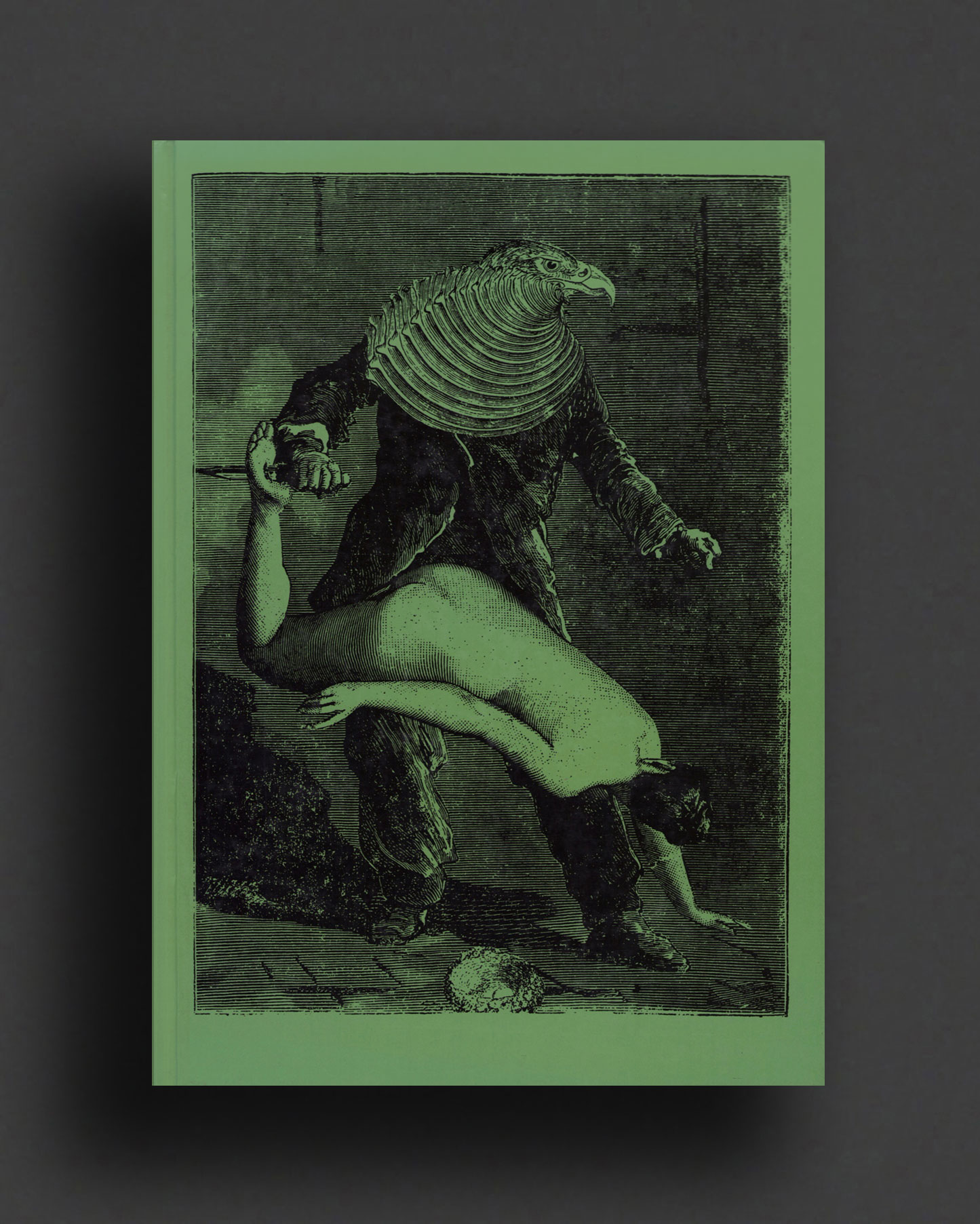
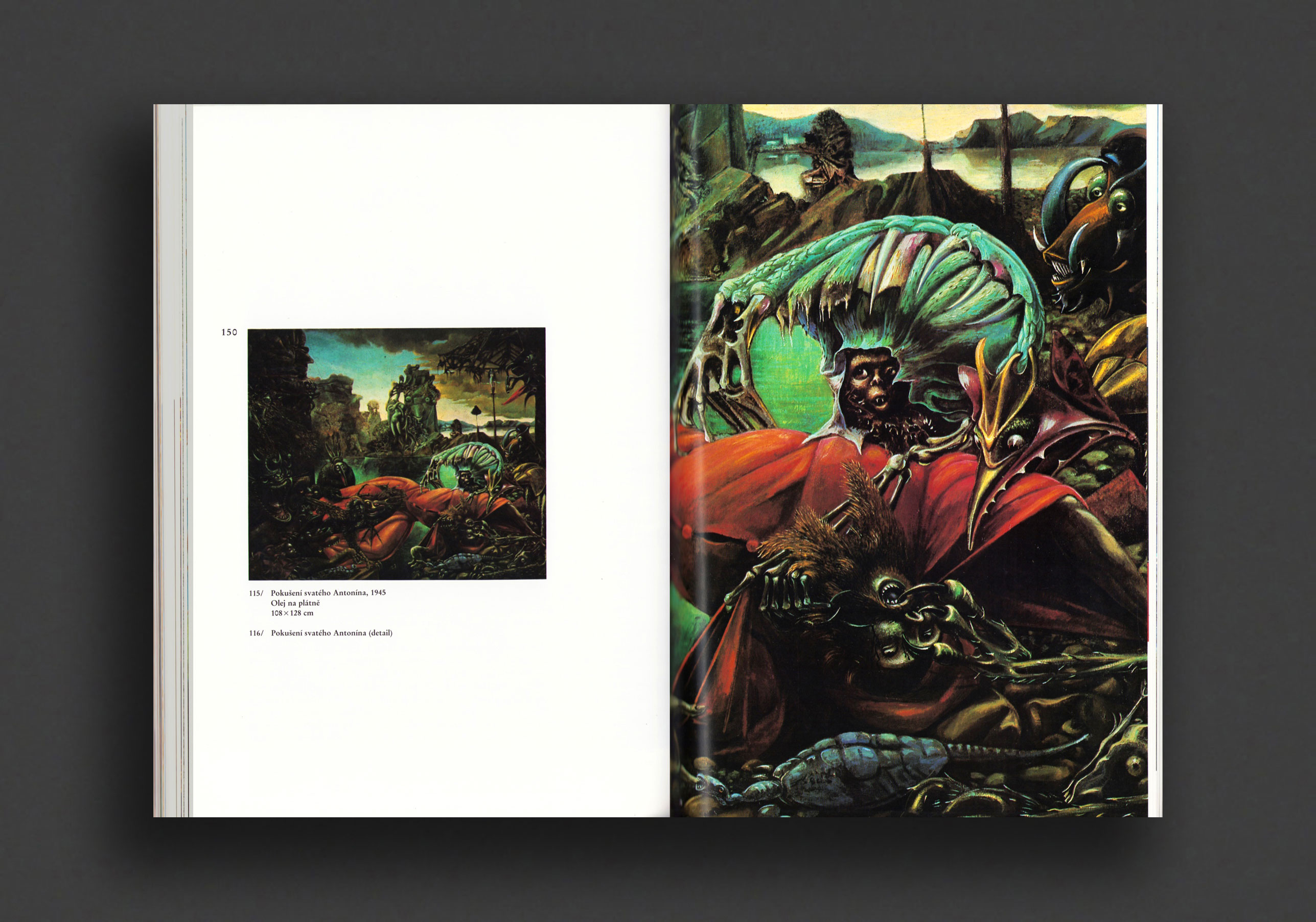
Rare, Czech language hardcover edition of Czech art historian Eva Petrová's study on Max Ernst (1891—1976), 'The Stohláva Identity of Max Ernst', with introductory text, 'Max Ernst or the Dissolution of Identity', by Per Gimferrer. This major study traces the sources of inspiration of the German-born painter, sculptor, printmaker, graphic artist, and poet, a most prolific, experimental artist and pioneer of the Dada movement and surrealism in Europe. Profusely illustrated with 184 mostly coloured reproductions.
Eva Petrová was a Czech art critic, curator, theorist and art historian, graphic artist, writer and poet.
Pere Gimferrer Torrens is a Spanish poet, novelist, literary critic and translator. He has been a member of the Real Academia Española since 1985.
Very Good copy.
1989, English / German
Hardcover (w. dust jacket), 160 pages, 30 x 25 cm
1st Edition, Out of print title / used / very good
Published by
Delano Greenidge Editions / New York
$160.00 - Out of stock
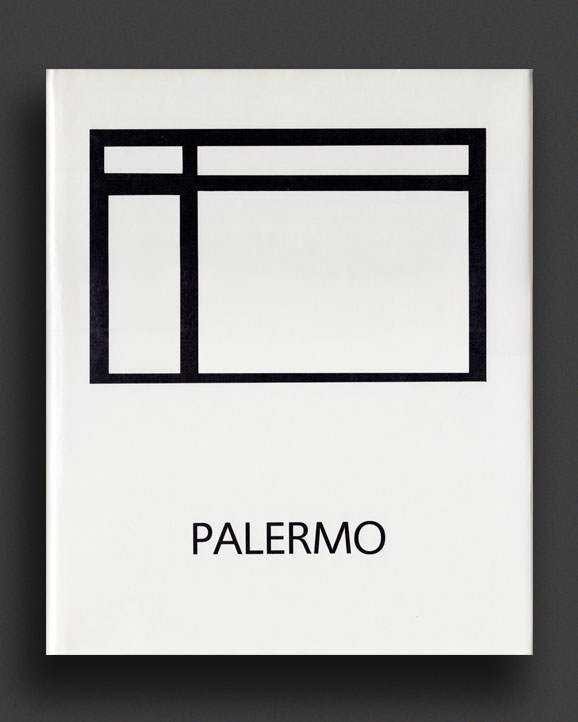
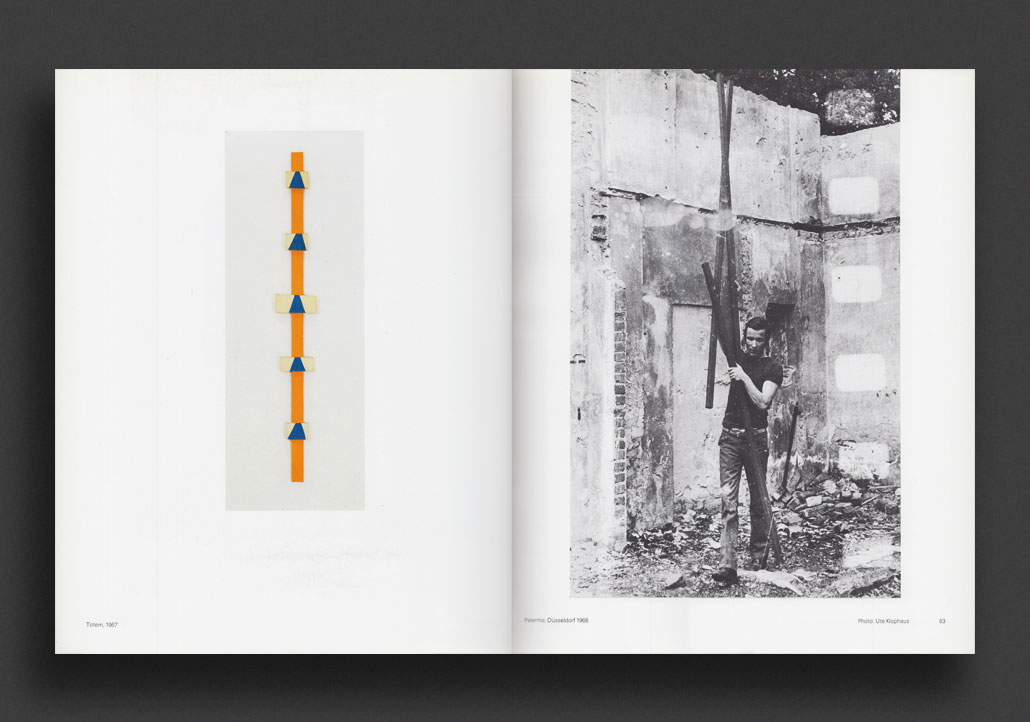
First 1989 hardcover edition of this seminal and now rare English-language Palermo monograph, published by Delano Greenidge Editions, New York. This gorgeous book, personally our favourite Palermo book, is profusely illustrated throughout in colour and black and white, surveying this great German artist's entire career, accompanied by texts from Franz Dahlem, Evelyn Weiss, Max Wechsler, and a bibliography by Aurel Scheibler, plus list of exhibitions. Includes many portraits, installations and studio photographs, also. Edited by Erich Maas and Delano Greenidge. All texts are in both English and German.
Blinky Palermo (1943—1977), born Peter Schwarze, Heisterkamp his foster surname, was a German abstract painter. He adopted his outlandish name in 1964, during his studies with Bruno Goller and Joseph Beuys at the Kunstakademie Düsseldorf between 1962 and 1967, in reference to Frank "Blinky" Palermo, an American Mafioso and boxing promoter who managed Sonny Liston. In 1969, Palermo moved to Mönchengladbach and set up a studio he would share with Imi Knoebel and Ulrich Rückriem. After a stay in New York in the early 1970s, he moved into Gerhard Richter's former Düsseldorf studio. Over the course of his 14-year artistic career Palermo tirelessly probed the limits of abstract painting. Having begun his brushwork on more traditional surfaces, he shifted his activity to less conventional supports, experimenting with diverse materials and forms, exploring the relationships that can exist between the wall and the space delimited by the painting. Under Beuys, he became increasingly interested in the organized spatial relationship between form and colour, a polarity which is manifest throughout the rest of his oeuvre. In the mid 1960s, Palermo moved away from conventional rectangular canvases and increasingly opted for surfaces such as the circle, triangle, cruciform, totem pole and even the interior walls of buildings. Between 1964 and 1966, Palermo produced a small series of paintings on canvas in which he experimented with constructivist principles of order. Over the course of his short life, Palermo participated in more than seventy exhibitions worldwide, including Documenta in 1972 and the Venice Biennale in 1975. Blinky Palermo died in 1977, aged 33, during a trip to the Maldives.
Very Good copy in VG dust jacket, bumping to hardcover corners not affecting pages, light wear and tear to DJ.
1934, Czech
Softcover (staple-bound), 30 pages, 29.5 x 21.5 cm
1st Edition, Out of print title / used / very good
Published by
Mánes Association of Fine Artists / Prague
$65.00 - In stock -
Rare 1934 issue of important modern Czech arts and literary magazine, Volné směry (Free Directions), Vol XXX, edited by Emil Filla with Jindřich Štyrský, Karel Honzík, Václav Špála. Published following the landmark 'Poesie 1932' exhibition, one of the first exhibitions of international Surrealism, and issued the year poet Vítězslav Nezval founded the Czech Surrealist group, the content of this issue holds particular significance. This copy includes the inserted announcement of the inaugural revue of the Czech Surrealist group, Surrealismus v ČSR, edited by Nezval with collaborators Konstantin Biebl, Jindřich Štyrský, Toyen, Bohuslav Brouk, Imre Forbath, Jindrich Honzl, Jaroslav Ježek, Katy King, Josef Kunstadt, Vincenc Makovský. The magazine itself features writing by Nezval, Konstantin Biebl and Adolf Hoffmeister, and artworks by Toyen, Jindřich Štyrský, Alfréd Justitz, Rodin, Picasso, Max Ernst, Corbusier-Jeanneret, Edvard Munch, and many more.
Volné směry (Free Directions) was an important monthly arts and literary journal published in Prague between 1896–1948 by the Mánes Association of Fine Artists in Prague. It was one of the longest-running art magazines of the 20th century (1897–1949) and also the most influential platform for modernism and openness of Czech art towards European artistic developments. Editors included Stanislav Sucharda, Josef Čapek, Miloš Jiránek, Karel Vítězslav Mašek, Jan Preisler, František Xaver Šalda, Martin Jiránek, Jan Štursa, Jaroslav Fragner, Jan Kotěra, Emil Filla, and others. After the cubism of Filla's generation, the magazine devoted itself to the art of the 'Poesie 1932' exhibition, one of the first exhibitions of international Surrealism, held at the Mánes Building itself, including the works of Czech artists such as Josef Šíma, Jindřich Štyrský, and Toyen, alongside Hans Arp, Max Ernst, Alberto Giacometti, Paul Klee, Joan Miró, and Yves Tanguy, to name a few. The Mánes Association and Volné Směry became an important outlet of Czech Surrealism, avant-garde art and poetry, with further exhibitions by Štyrský, Toyen and Vincenc Makovský, the trio all members of both the Mánes Association and the Czech Surrealist Group, founded in 1934. After the war, it still captured the spirit of the association and the work of its youngest members (Zdeněk Sklenář, Václav Zykmund, Toyen, Vaclav Tikal, Jindřich Štyrský, etc.), but the Nazi occupation of Czechoslovakia in late 1938 had a major impact on the Mánes Association, Volné směry, and a generation of artists deemed "degenerate". Volné Směry was stopped altogether as part of the post-February changes and Communist takeover of Czechoslovakia. During the Stalinist period, the Mánes Association was dissolved as a private society. The gallery remained, however, and today still stands at its location on the Vltava.
Very Good copy with only light general wear/age.
1938, Czech
Softcover, 58 pages, 29.5 x 21.5 cm
1st Edition, Out of print title / used / good
Published by
Mánes Association of Fine Artists / Prague
$30.00 - In stock -
1938 double-issue of important modern Czech arts and literary magazine, Volné směry (Free Directions), Vol XXXIV, edited by Emil Filla with Jindřich Štyrský. Jaroslav Fragner, Václav Špála, Josef Wagner. Heavily illustrated with artworks by Toyen, Jindřich Štyrský, Delacroix, Matisse, Manet, Duccio, André Derain, Antoine-Louis Barye, Théodore Géricault, and many more.
Volné směry (Free Directions) was an important monthly arts and literary journal published in Prague between 1896–1948 by the Mánes Association of Fine Artists in Prague. It was one of the longest-running art magazines of the 20th century (1897–1949) and also the most influential platform for modernism and openness of Czech art towards European artistic developments. Editors included Stanislav Sucharda, Josef Čapek, Miloš Jiránek, Karel Vítězslav Mašek, Jan Preisler, František Xaver Šalda, Martin Jiránek, Jan Štursa, Jaroslav Fragner, Jan Kotěra, Emil Filla, and others. After the cubism of Filla's generation, the magazine devoted itself to the art of the 'Poesie 1932' exhibition, one of the first exhibitions of international Surrealism, held at the Mánes Building itself, including the works of Czech artists such as Josef Šíma, Jindřich Štyrský, and Toyen, alongside Hans Arp, Max Ernst, Alberto Giacometti, Paul Klee, Joan Miró, and Yves Tanguy, to name a few. The Mánes Association and Volné Směry became an important outlet of Czech Surrealism, avant-garde art and poetry, with further exhibitions by Štyrský, Toyen and Vincenc Makovský, the trio all members of both the Mánes Association and the Czech Surrealist Group, founded in 1934. After the war, it still captured the spirit of the association and the work of its youngest members (Zdeněk Sklenář, Václav Zykmund, Toyen, Vaclav Tikal, Jindřich Štyrský, etc.), but the Nazi occupation of Czechoslovakia in late 1938 had a major impact on the Mánes Association, Volné směry, and a generation of artists deemed "degenerate". Volné Směry was stopped altogether as part of the post-February changes and Communist takeover of Czechoslovakia. During the Stalinist period, the Mánes Association was dissolved as a private society. The gallery remained, however, and today still stands at its location on the Vltava.
Good copy with only light general wear/age but a tape-repaired split to the bottom of the spine.
1967, English
Hardcover (clothbound w. dust jacket), 186 pages, 33 x 26 cm
1st Edition, Out of print title / used / very good
Published by
Nagel
Geneva
$60.00 - In stock -
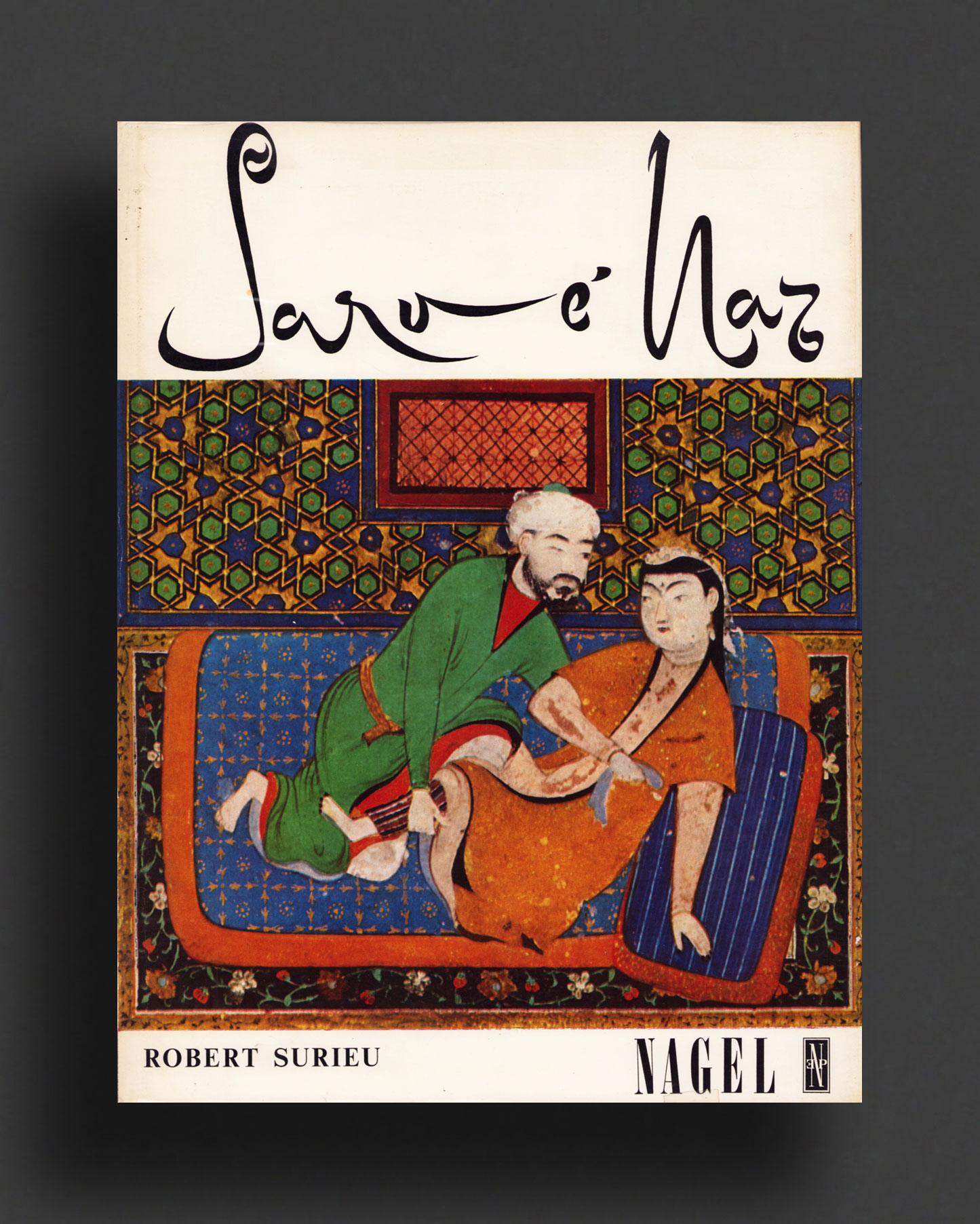
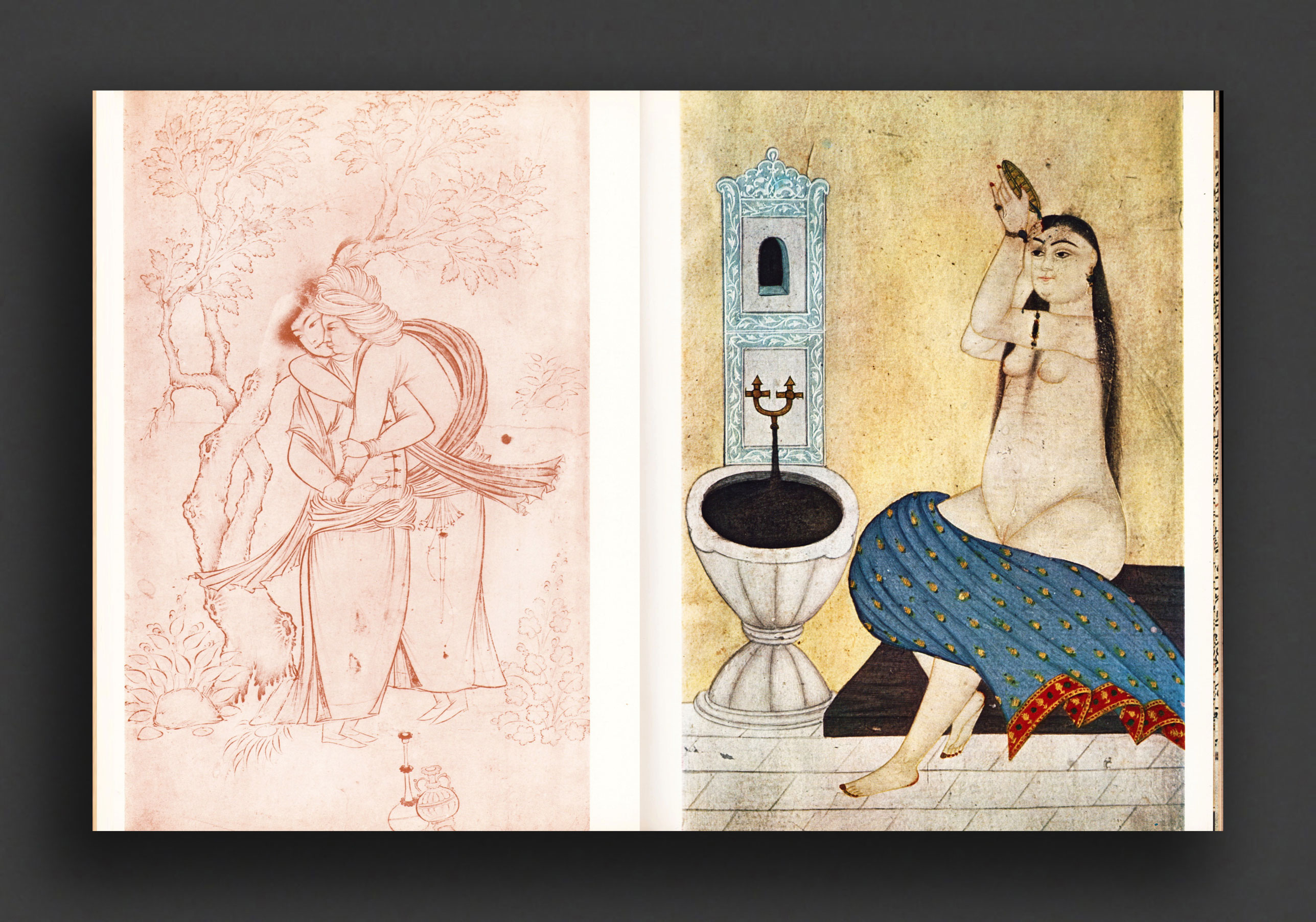
First 1967 oversized hardcover edition of "Sarv-e Naz: An Essay on Love and the Representation of Erotic Themes in Ancient Iran" by Robert Surieu, translated to English by James Hogarth. Profusely illustrated in colour plates and monochrome, many with metallic overlay print.
"In few civilisations has love in all its various aspects played such an important part as in that of Iran.
Gradually freeing itself from the legacy of prehistoric rites directed to securing the fruitfulness of the species and the proper balance of the universe, the cult of love developed in the early period, under strong Hellenic influence, towards the courtly ideal which seems to have prevailed in the feudal society of the Arsacid and Sassanian empires and in the early centuries of the Caliphate.
The advent of Islam led to the birth of a new culture, born of the encounter between the old Aryan heritage and the new monotheistic religion from Arabia. In this union love attained a stature far surpassing that hitherto accorded to it. Transcending the pleasures of the flesh and the exaltation of the sense of beauty, it became in the teachings of the sages a means of philosophical perception and of mystical fulfil-ment, which in addition provided the central theme of one of the richest bodies of poetry in world literature.
Yearning always for the absolute, and refined by thousands of years of spiritual and artistic striving, the Persian soul is nevertheless very far from despising the ordinary human joys: indeed it displays infinite ingenuity in savouring them in all their range and variety. We shall see that the greatest poets of Iran accepted and appreciated all the different forms of love, seeing in each of them a fresh means of fulfilment, no matter whether they ran counter to the strict laws of morality or were exalted by the sublimity of their object.
Throughout its history, and particularly in the Islamic period, Iran alternated continually between times of glory and of distress: now basking in the splendour of a great empire, now racked by invasion and war. The vicissitudes of their existence built up in the people of Iran a deep insight into the relativity of things, so that they not only yearned for the ineffable satisfactions of the life beyond but were eager to enjoy to the full all the delights offered by the passing moment. Persian sensibility oscillates continually between these two opposing poles."—from the introduction
VG copy in Good—VG dust jacket, only very light wear, light tanning/toning/foxing to stock edges. Preserved in mylar wrap.
2025, English
Hardcover (2 softcover volumes in hard case), 288 pages, 27.2 x 21 cm
Published by
Gagosian / New York
$240.00 - In stock -
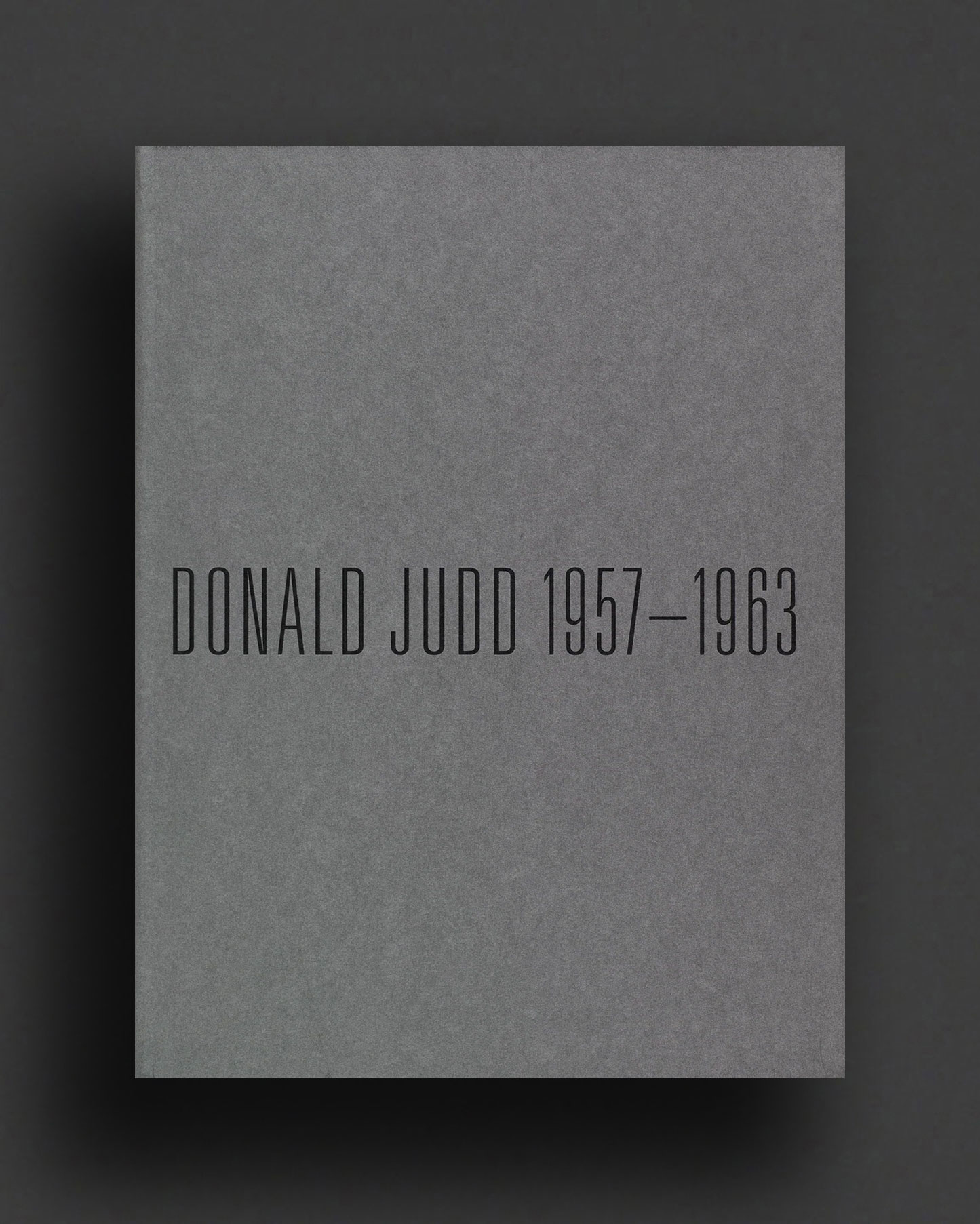
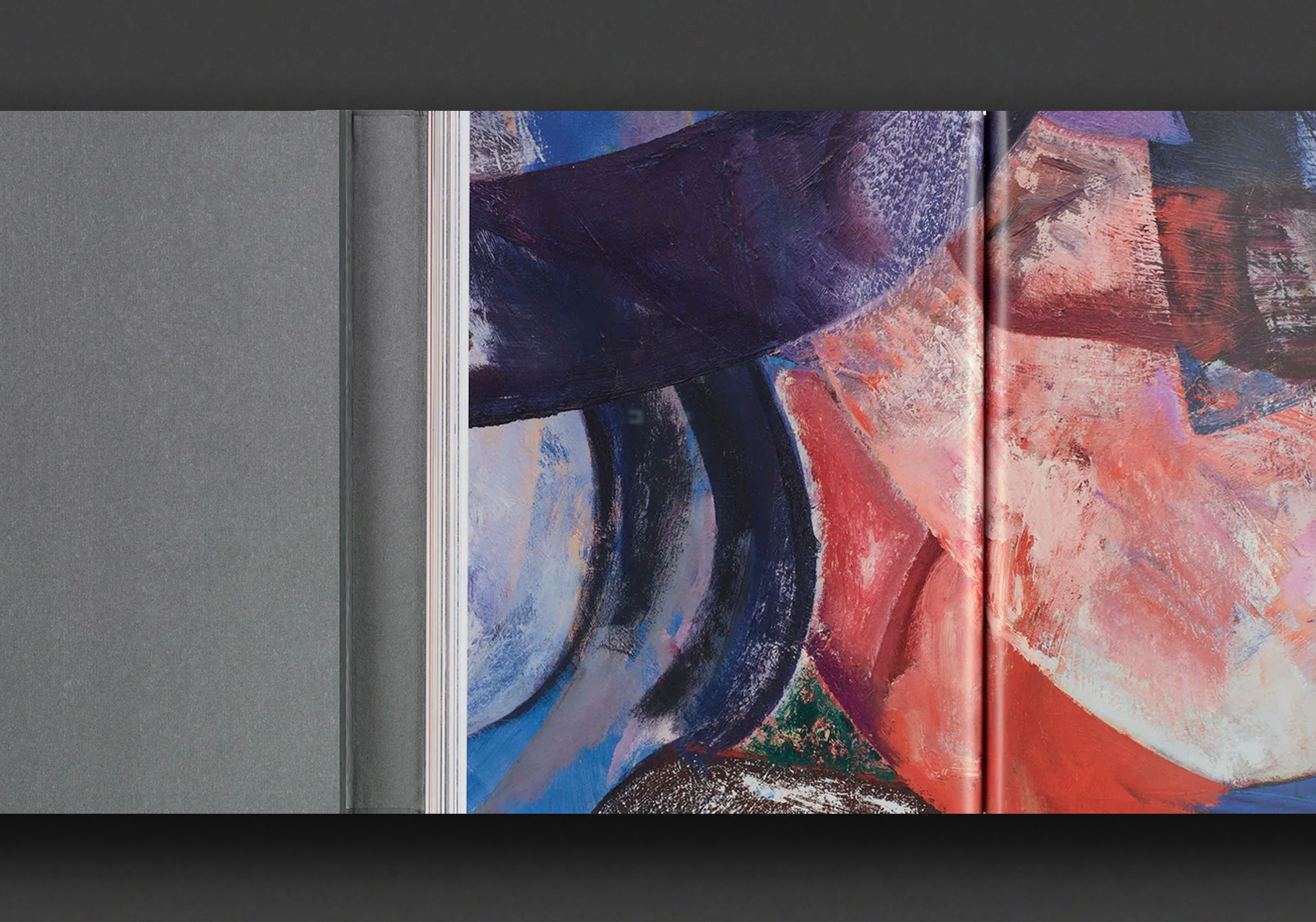
Donald Judd 1957–1963: Paintings and Objects is the most comprehensive exploration to date of Donald Judd’s paintings and early works, providing unparalleled insight into the pivotal seven-year period in which the artist transitioned from two-dimensional to three-dimensional work. Judd’s radical practice helped shape the look of the late twentieth century and still influences artists, architects, and designers worldwide. Through his visual work and critical writing, Judd introduced an art that exists on its own terms, exercising a transformative impact on the ways in which both art objects and practical designs are produced, exhibited, and used.
Designed by Flavin Judd and Michael Dyer, the unique publication comprises two softcover books—both bound to the hardcover case—which open in opposite directions. One book contains three essays on aspects of Judd’s early work in painting, tracing its evolution into his object-oriented practice. The other reproduces numerous plates and details, alongside personal photographs, printed ephemera, and contextual imagery.
In her essay “Maybe It’s the Fact That I’m a Painter,” art historian Eileen Costello looks at Judd’s artistic emergence and development, examining how an interest in color continued to inflect his later, three-dimensional work. In her text “Donald Judd and Painting,” art historian and curator Lynn Zelevansky further explores Judd’s oeuvre, focusing on several paintings in detail and delving into the artist’s interaction with the art and theory of his time. Finally, in “The Ground and the Center: Inside the Paintings of Donald Judd,” art historian Sarah K. Rich considers the material and optical composition of Judd’s painted output, linking its materiality to that of the artist’s sculpture.
2008, English
Softcover (w. poster dust jacket), 176 pages, 21 x 29.7 cm
1st Edition, Out of print title / used / fine
Published by
Migros Museum für Gegenwartskunst / Zürich
JRP Ringier / Zürich
$380.00 - In stock -
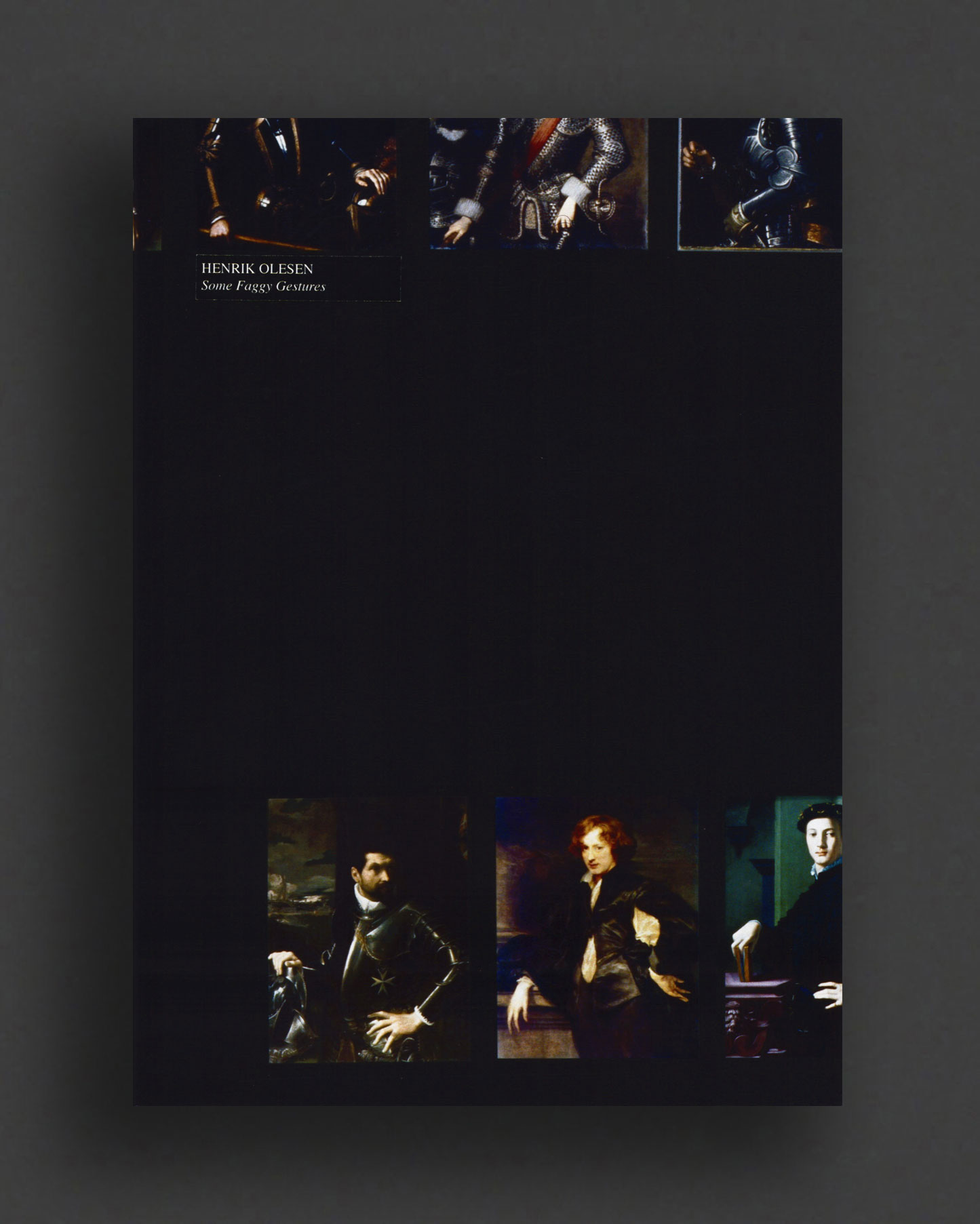
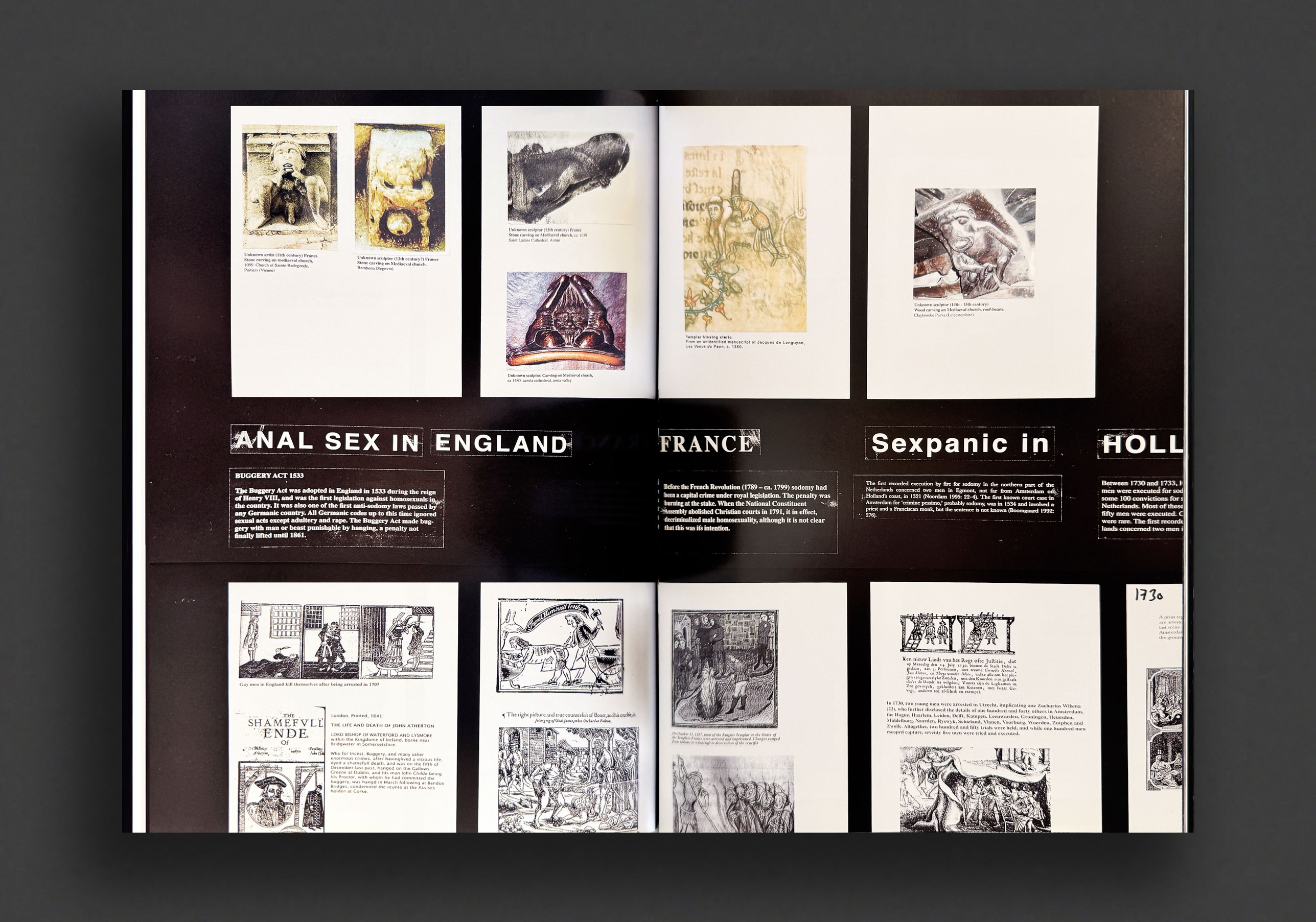
The "Mnemosyne" of sexual identity.
Rare, first (and only) edition of this wonderful book centred around one of Olesen's master works, published by JRP-Ringier and Migros Museum für Gegenwartskunst, Zürich, and awarded for the “Most Beautiful Swiss Books 2008”. Edited by Heike Munder, with texts by Heike Munder and Henrik Olesen.
Since the mid-1990s, Henrik Olesen (*1967 Denmark, lives and works in Berlin) has used media such as collage, sculpture, and minimalistic spatial intervention to investigate the social construction of identity andits historiography. Through the appropriation of source images and contextual shifts not dissimilar to the method invented by Aby Warburg for his "Mnemosyne Atlas," Olesen probes the associations between
homosexuality and its criminalization in the past, as well as in the present. His archival work sheds light on the enduring existence of spaces for Others, and inscribes homosexual subculture once more into the history of art and culture.
Near Fine copy complete with fold-out poster dust jacket, only light wear to edge folds.
1981, English
Softcover, 48 pages, 40 x 28 cm
1st Edition, Out of print title / used / very good
Published by
Charles E. Tuttle / Tokyo
$140.00 - Out of stock
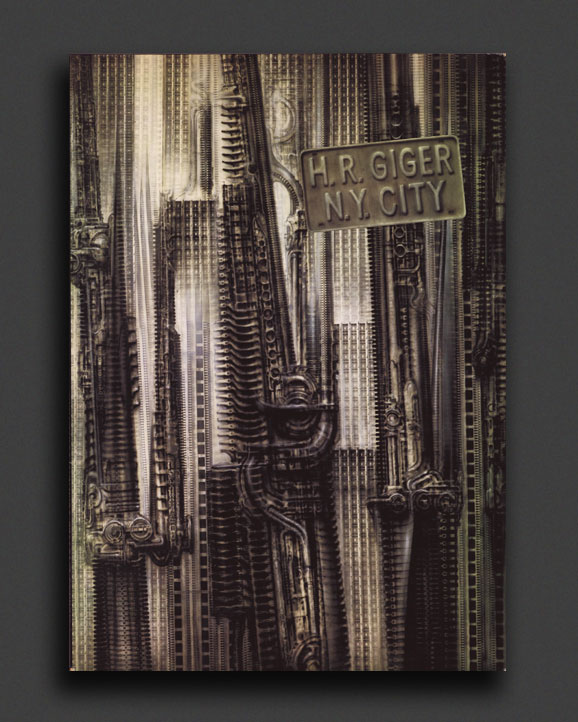
Scarce first Japanese edition (entirely in English language), published in Tokyo by Charles Tuttle, of this beautifully produced over-sized 1981 book by H. R. Giger. Foreword by Timothy Leary.
In 1981, a year after being awarded the Oscar for Best Achievement for Visual Effects for Alien, the book H.R. GIGER N.Y. CITY was published. This series of post Alien works, the result of an intense period of non-stop painting, literally day and night, were inspired by Giger's trip to New York City and a template which his colleague Cornelius de Fries, brought back from one of his excursions into the electronic industry. The stencil was actually a sheet of scrap metal from which electrical components had been punched out. Alongside these incredible works are drawings, articles, press clippings, posters and polaroids from Giger's time in New York City.
Fantastic Swiss surrealist painter, sculptor and set designer Hans Rudolf “Ruedi” Giger was born in 1940, the son of a chemist. He spoke of a father who viewed art as a "breadless profession", and strongly encouraged his son to enter into pharmaceutics. Despite this, in 1962, he moved to Zürich, where he studied Architecture and industrial design at the School of Applied Arts until 1970. Giger's style and thematic execution have been hugely influential. His design for the Alien was inspired by his painting Necronom IV and earned him an Oscar in 1980. His books of paintings, particularly Necronomicon and Necronomicon II (1985) and the frequent appearance of his art in Omni magazine continued his rise to international prominence. Giger is also well known for artwork on several music recording albums. His most distinctive stylistic innovation is that of a representation of human bodies and machines in a cold, interconnected relationship, he described as "biomechanical". His paintings often display fetishistic sexual imagery. His main influences were painters Ernst Fuchs and Salvador Dalí. He was also a personal friend of Timothy Leary. Giger suffered from night terrors and his paintings are all to some extent inspired by his experiences with that particular sleep disorder, making his first paintings as a means of art therapy. In 1998 Giger acquired the Château St. Germain in Gruyères, Switzerland, and it now houses the H. R. Giger Museum, a permanent repository of his work.
Good—Very Good copy, tight binding with some cover wear and corner wear, some sunning to edges.
1980, German
Hardcover (w. dust jacket), 384 pages, 22 x 21 cm
1st Edition, Out of print title / used / very good
Published by
Rogner & Bernhard / Münich
$30.00 - Out of stock
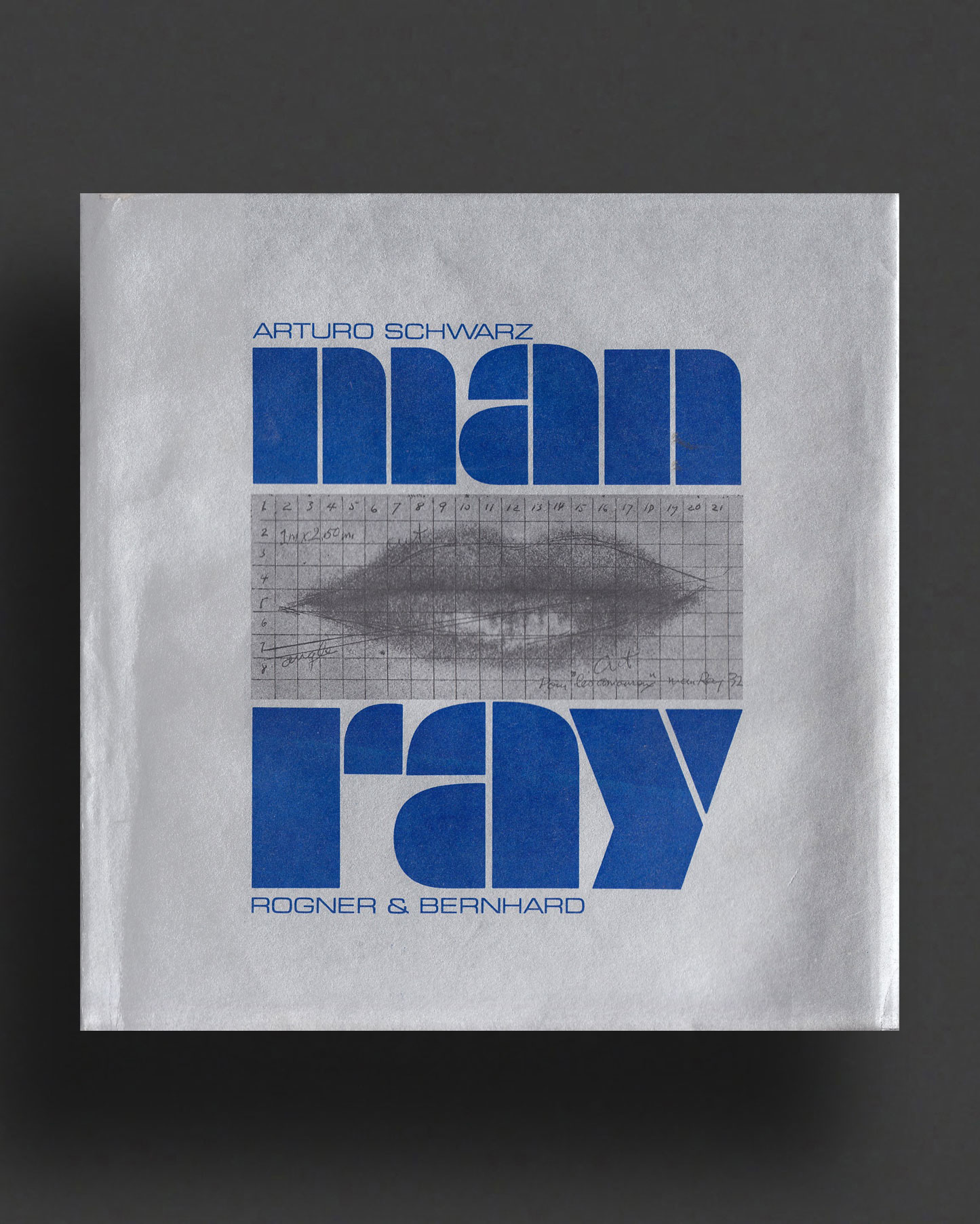
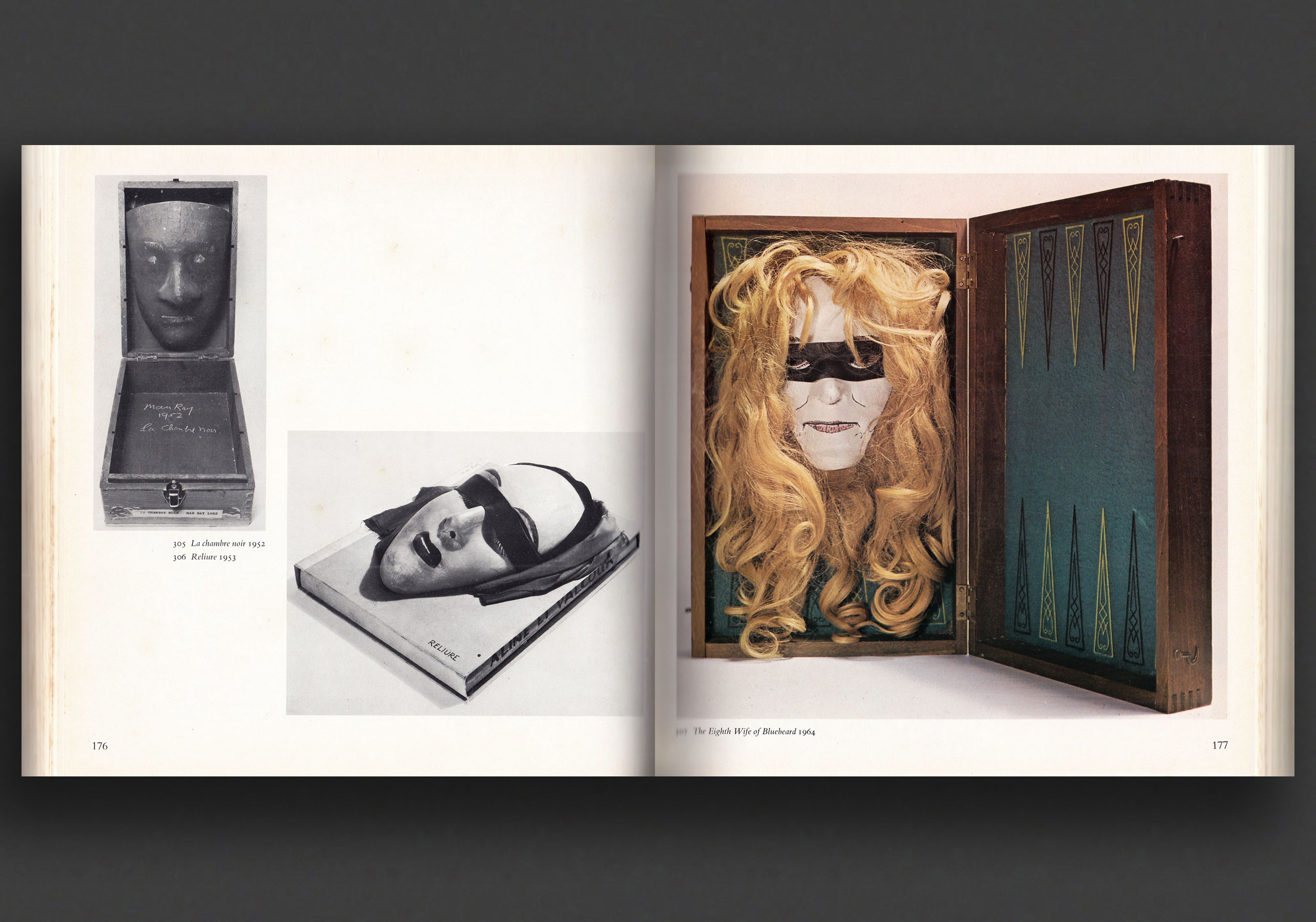
First 1980 German language hardcover edition of 'Man Ray - The Rigour of Imagination', a wonderful monographic study on Man Ray by Italian art historian, writer, curator and friend of Man Ray, Arturo Schwarz. This book, an intimate survey of Man Ray's life and works first issued in 1977, was made in close collaboration with Man Ray until his death in 1976 and was the first to reveal Man Ray's real name, Emmanuel Radnitzky. Profusely illustrated in colour and monochrome with Man Ray's diverse breadth of paintings, drawings, photography, film, sculptural objects, publications, editions, exhibition and studio documentation, as well as personal photography.
Arturo Schwarz (1924 – 2021) was an Italian scholar, art historian, poet, writer, lecturer, art consultant and curator of international art exhibitions. He lived in Milan, where he amassed a large collection of Dada and Surrealist art, including many works by personal friends such as Marcel Duchamp, André Breton, Man Ray, and Jean Arp.
"Painter, creator of poetic objects, photographer, writer, filmmaker: Man Ray, born in Philadelphia in 1890, decisively shaped the cultural history of the 20th century with his genius. For the first time, this book, on which the artist actively collaborated until his death in 1976, presents and documents all aspects of his life and work.
Throughout his life, Man Ray performed pioneering work in all media; in all areas of the visual arts, photography, and film, he tirelessly searched for new means of expression that questioned everything established, usual, and taken for granted. His childlike curiosity, creative desire, and wit, which persisted well into old age, allowed him to take the most surprising paths and perform the most bewildering twists and turns. He transformed photography into art and placed it on a par with painting by "painting" his rayographs, photographs taken without a camera, or, in 1917, by being the first to create "paintings" with an airbrush, whose soft shading transferred the effects of photography to the canvas. He translated word games into optical puzzles and vice versa; he used objects and assemblages to develop highly idiosyncratic photographs; he set his inventions or rediscoveries in the field of photography in motion in the most fascinating examples of Dadaist and Surrealist film. Many of his works anticipate modern developments in art by decades.
Exhibitions of the European avant-garde around 1910 (Armory Show, Gallery 291 by Alfred Stieglitz, among others) had torn the young Man Ray from the academic waters of American art. As early as 1915/16, he placed himself at the forefront of the American avant-garde with Marcel Duchamp and Francis Picabia, who had fled into exile in America before the World War, and was present at the birth of New York Dada. The European Dadaists and Surrealists in Paris welcomed him into their midst with open arms in 1921 [...]"—from the jacket blurb
Very Good copy in VG dust jacket.
1970—1980,
Offset poster (82 x 48 cm)
1st Edition, Out of print title / used / very good
Published by
Galerie Alexandre Iolas / Paris
$280.00 - Out of stock
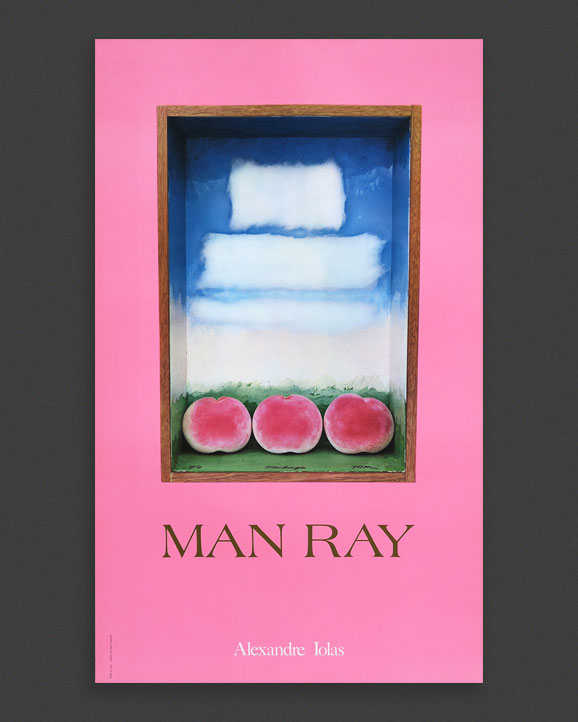
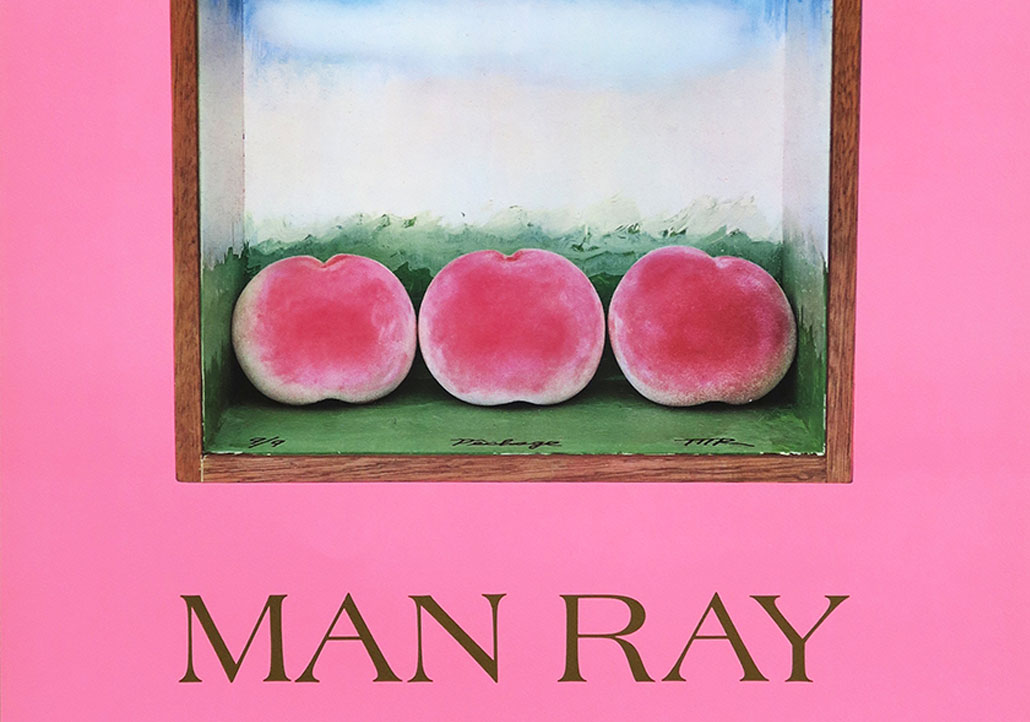
Gorgeous vintage Man Ray (1890—1976) exhibition poster from the 1970s of the artist at the legendary Galerie Alexandre Iolas, Paris, where the American artist spent much of his life as a significant contributor to the Dada and Surrealist movements. Issued by the gallery in a beautiful offset print on lovely wove paper featuring Man Ray's "Pêchage"Peaches"), 1969, painted wooden box, artificial peaches and cotton.
A stunning collector's item, ready to frame.
Dimensions : 82 x 48 cm
Very Good condition, well preserved.
1996, English
Softcover, 116 pages, 21 x 15 cm
Ed. of 300,
1st Edition, Out of print title / used / good
Published by
ACCA / Melbourne
$45.00 - In stock -
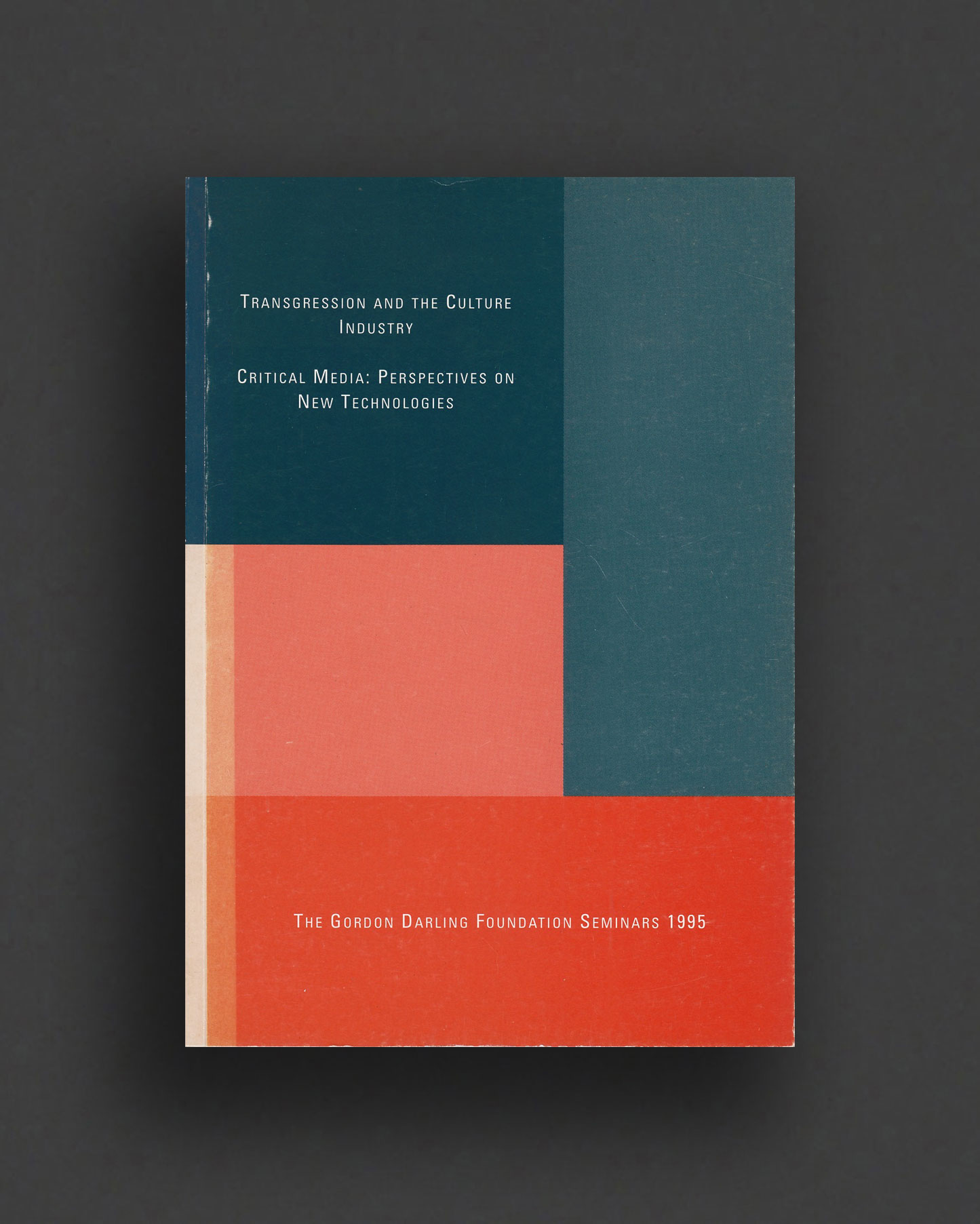
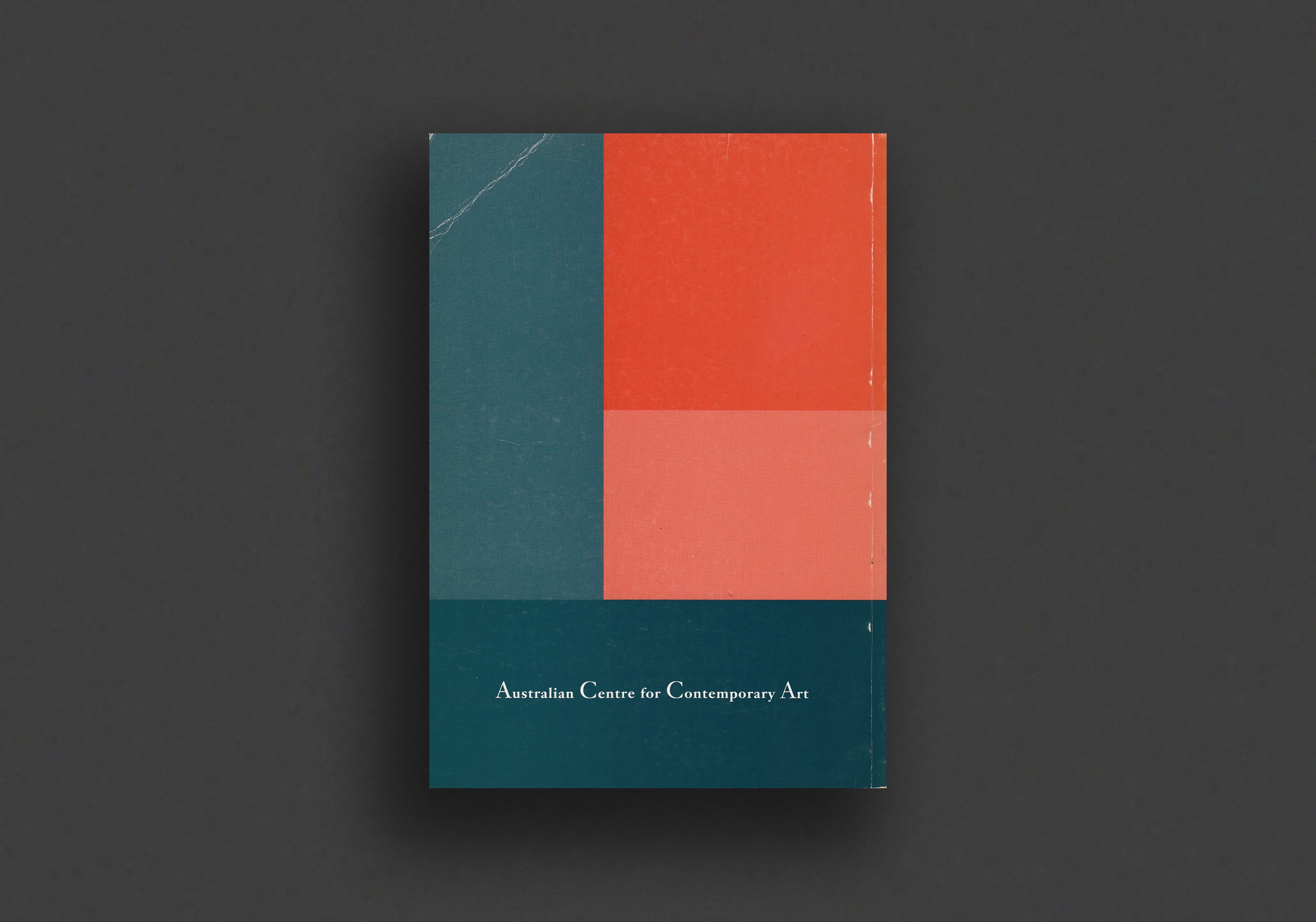
Very rare copy of Transgression And The Culture Industry — Critical Media: Perspectives On New Technologies, the book document of The Gordon Darling Foundation Seminars 1995, with guest convenors Denise Robinson and Julianne Pierce (VNS Matrix), presenting the papers from seminars held at the Australian Centre For Contemporary Art, Melbourne, 8 April—7 October 1995.
Contents:
"Introduction" – Denise Robinson, "Duchamp's Queer Signature" – Rex Butler, "Transgression And The Culture Industry (Australia/1995)" – Lesley Stern, "The Art Curator, Our Cultural Transponder" – Juan Davila, "Normalizing Transgression" – David M. Halperin, "Introduction" – Julianne Pierce, "The Indifference Engine – 1990s Culture And The Corporate Imagination" – David Cox, "Observations" – Linda Wallace, "The Amazing Mcscent™ Machine" – Bridget Mcgraw, "Rehearsal Of Memory" – Graham Harwood.
"This one day symposium is a response to the sliding formations of the concept of 'transgression', as it is appropriated, mobilised or mutated by our contemporary cultural institutions. The event comprised two elements. A two hour film screening of short films included a selection from 1964 by New York underground film maker, Kenneth Anger and a selection of recent contemporary films from Australia by Christopher Ryan and Leone Knight. A second element involved a presentation of papers published here by Rex Butler, Juan Davila, David Halperin and Lesley Stern. The papers were not intended to act as a commentary of the films or the films to reflect the papers, rather the co-existence of these elements were to function more like a folding of the languages of cinema and visual art: as one possible means of illuminating the effects of the historicisation of 'transgressive strategies in relation to the Culture Industry."—DENISE ROBINSON, Introduction
Good copy with sunned spine edge, crease to back cover corner.
2025, English
Softcover, 188 pages, 29.5 x 20.5 cm
Published by
AdminAdmin / Melbourne
$45.00 - In stock -
Containing original contributions; artwork, art-historofiction, hagiofiction, critical essays, poetry and prose, some loosely centred around instinct and the mind.
This with contributions by Erik van Lieshout, Peles Duo x Rob Crosse, CAConrad, Robert McKenzie, Mark Beasley, Hany Armanious, Patrick Hartigan, Elizabeth Pulie, Anthea Behm, Luke Stettner, Skyler Brickley, Tommy Miller, Rebecca Holborn, Penelope Latté, Guy Benfield, Jason Vorhees.....and more
2009, English
Softcover, 156 pages, 24 x 16.8 cm
Published by
Walther König / Köln
$78.00 - Out of stock
There are some artists who are never forgotten simply because other artists will constantly cite them as examples. Paul Thek (1933-1988) is one such artist. Revered for his disarming humor and irreverent handling of artworld proprieties, and much lamented for his premature death from AIDS at the age of 55, the likes of Vito Acconci, Bruce Nauman, Mike Kelley, John Miller, Paul McCarthy, Kim Gordon and Matthew Barney have all sung his praises. Tales the Tortoise Told Us is a three-part Thek compendium, composed of writing by Margit Brehm, Axel Heil and Roberto Ort (who discuss the artist's ambivalent relationship with his homeland, and Thek's odd place in the Beat and Hippie generation), a large spread of reproductions of Thek works and a chronologically-arranged survey of works from 1963 up to the artist's death in 1988.
1984, English
Softcover, 184 pages, 27 x 21 cm
1st Edition, Out of print title / used / fine
Published by
Frölich & Kaufmann / Berlin
$90.00 - In stock -
First hardcover edition of Design Als Gegenstand (Design as an object), published only in Germany to showcase many of the leading contemporary/radical designers of the early 1980s, visually documenting many incredible and seldom seen works of furniture, industrial objects, electronics, exhibition design, textiles, etc. through object and installation photography, alongside reproductions of design sketches and German texts.
Includes the work of Adolfo Natalini, Thomas S. Bley, Daniele Puppa, Franco Raggi, One Off, Studio Alchimia, Sacha Ketoff, Piero Castiglioni, Winfried Scheuer, Lux, Rouli Lecatsa, Borek Sipek, Paolo Deganello, Lapo Binazzi, Florian Borkenhagen · Harald Krischer, Javier Mariscal, Andrea Branzi, Studio Dada, David Palterer, Ettore Sottsas Jr, Bepi Maggiori, Marco Zanuso Jr., Antonia Astori De Ponti, Denys Santachiara, Juma Francisco, Michele De Luchhi, Nemo, Paola Navone, Jasper Morrison, Zak Ark, Maurizio Corrado, Martine Bedin, Daniel Weil, Totem, Bellefast, Claus Böhmler, Rainer Krause, George James Sowden, Tom Lynham & Lee Curtis, Nathalie Du Pasquier, Jörg Ratzlaff, Dirk Staubert, Matteo Thun.
NF in NF dust jacket.
1990, English
Hardcover (w. dust jacket), 192 pages, 22.5 x 26 cm
1st Edition, Out of print title / used / very good
Published by
Rizzoli / New York
$140.00 - Out of stock
First 1988 UK hardcover edition of this excellent book that was issued in variant cover colours, depending on country. The UK edition being a much smaller run to the US edition, and the best colour variant, in our opinion.
An international selection of over 400 objects (over 500 illustrations) such as tableware, furniture, jewellery, glassware and light fixtures designed by more than 50 leading architects. The book provides a cross-section of original ideas to be found in the best of modern design and aims to show the powerful influence that architects continue to have on industrial and furniture design. Furniture and lighting by Norman Foster, tableware by Sottsass, Robert Stern and Venturi, jewellery by Arata Isogaki and Stern, furniture by Ambasz, Mario Botta, Michael Graves and Richard Meier are some of the artefacts included in this study. The architects, Juli Capella and Quim Larreo are editors of the magazine "De Diseno" and are on the board of the architectural magazine "El Croquis" published in Madrid.
Includes an introduction by Alessandro Mendini, "This Book is This Painting".
Features the work of: Emilio Ambasz, Ron Arad, Gae Aulenti, Mario Bellini, Cini Boeri, Pep Bonet, Mario Botta, Andrea Branzi, Santiago Calatrava, Anna Castelli, Achille Castiglioni, Cristian Cirici, Antonio Citterio, Lluis Clotet, Paolo Deganello, Michele de Lucchi, Jonathan de Pas, Donato d'Urbino, Paolo Lomazzi, Norman Foster, Frank Gehry, Michael Graves, Vittorio Gregotti, Pierluigi Cerri, Hans Hollein, Arata Isozaki, Charles Jencks, Ugo la Pietra, Vico Magistretti, Angelo Mangiarotti, Richard Meier, Alessandro Mendini, Pedro MMiralles, Rafael Moneo, Nemo, Oscar Niemeyer, Peolo Portoghesi, Aldo Rossi, Afra and Tobia Scarpa, Alvaro Siza Vieira, Ettore Sottsass Jr., Robert A.M. Stern, Giotto Stoppino, Kazuide Takahama, Matteo Thun, Elias Torres Tur, José Antonio, Martinez Lapeña, Oscar Tusquets, Robert Venturi, Daniel Weil, Stefan Wewerka, Marco Zanuso.
1983, English
Hardcover (w. dust jacket), 96 pages, 28.5 x 22.5 cm
Out of print title / used / very good
Published by
Omega Books / Hertfordshire
$25.00 - Out of stock
Hardcover volume published in 1983, profusely illustrated throughout. Text by Lucienne and Jesús Romé. English edition.
"[...] This book deals with taboos, the magic of love, the role played by the five senses, rites of initia-tion, the link between religion and eroticism, and homosexuality, as well as many other aspects of the subject. It takes us to Oceania, to Black Africa, to the New World, including both the Pre-Columbian civilizations and the North American Indians, and it takes us back to the time of the Celts and the Vikings.
The very expressive illustrations, often previously unpublished, will give the reader an idea of the extent of sexual liberty among primitive peoples, their audacity and their obsessions, but also of their sense of modesty and their natural unaffectedness."
VG—VG dust jacket.
1975, English
Hardcover (w. dust jacket), 208 pages, 24 x 16 cm
1st Edition, Out of print title / used / very good
Published by
New York Graphic Society / Boston
$30.00 - Out of stock
First hardcover edition of the first major English-language monographic study on the brilliant Man Ray, by close friend Roland Penrose, published by the New York Graphic Society in Boston, 1975.
Since before World War I, Man Ray has stood at the center of European and American modernismas a painter, conjurer of magical and poetic objects, inventor, and photographer. Few contemporary artists have played such a vital role in the creation of imaginative visual realities.
Although Man Ray was born in America, he has lived most of his adult life in France, and as a result, he is generally thought of as a European artist, especially since he was a central figure in the Surrealist movement. He is, however, an essential precursor of contemporary American art.
Man Ray has always been a pioneering artist: in combining photography and painting, something later taken up by such artists as Rauschenberg and Warhol; in his creation of enigmatic and mysterious, humorous and unpretentious surrealist objects; in anticipating Abstract Expressionism with his "drip" paintings; in manipulating scale, echoed today in the work of Oldenburg; in his "wrapped objects," done a half century before Christo's works.
The influence of Man Ray continues to increase. Its most important aspects transcend individual paintings, objects, or photographs. Its virtue lies not only in the new techniques he has mastered but also in his subtle and disturbing probes into the very nature of life and in the directness and surprise of his inventions. His genius is a kind of liberating poetry he instills into the heart of artistic activity.
Roland Penrose has been a close friend of the artist for almost fifty years. This is the first major monograph ever published on Man Ray, and for it Penrose has created an absorbing narrative about the life of his friend, about his work and about his steady presence at the flash point of twentieth-century contemporary art. As the organizer of the International Surrealist Exhibition in London, in 1936, where Man Ray's work was shown in England for the first time, and as a Surrealist painter himself, Roland Penrose writes from a unique vantage point of the work and life of a modern genius.
Good—VG copy, with Good—VG dust jacket.
2024, English
Hardcover (clothbound), 496 pages, 29 x 24 cm
Published by
Mumok / Vienna
Walther König / Köln
$110.00 - Out of stock
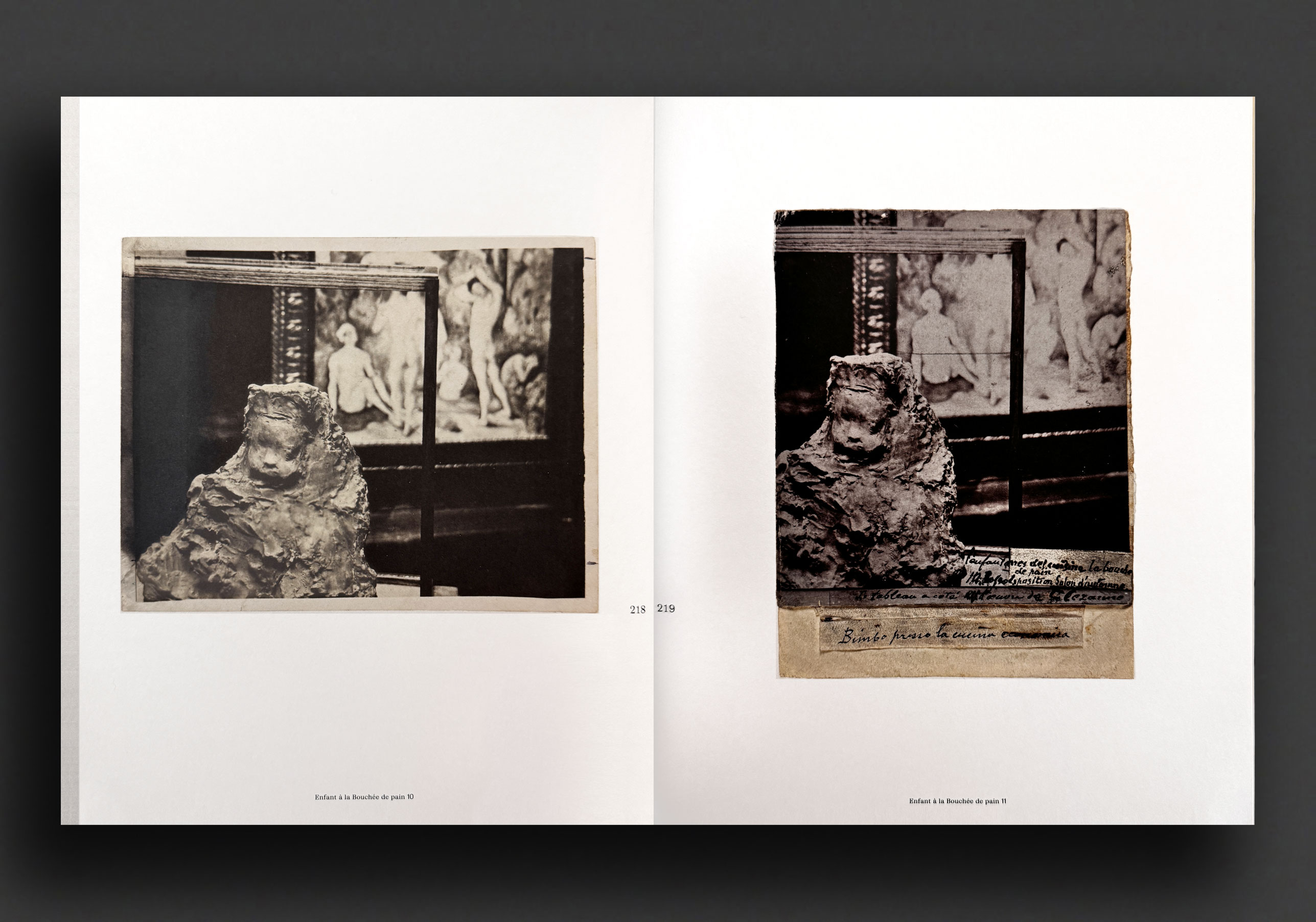
The rediscovery of a still underappreciated artist who, along with Auguste Rodin, revolutionised sculpture in the 19th century.
Artist and artisan, art theorist and proto-installation artist, master of high-publicity productions and rival of Auguste Rodin, Medardo Rosso (b. 1858 in Turin, d. 1928 in Milan) was one of the great pioneers of modernism and a figure as extraordinary as he was eccentric.
Published on the occasion of a comprehensive retrospective curated by Heike Eipeldauer withexhibition design by Florian Pumhösl and Walter Kräutler, devoted to the Italian-French artist’s still little-known oeuvre, with more than fifty sculptures and a large selection of photographs, photocollages, and drawings. The exhibition and catalogue (at almost 500 pages) delves into a thorough analysis of Rosso’s processual and repetitive approach, with which the artist defied all conventions of traditional sculpture. A concise selection of works by artists directly or indirectly influenced by Rosso further unpack and create a dialogue with Rosso’s equally groundbreaking and hermetic work. The show thus adheres to Rosso’s own artistic practice of not exhibiting alone but always in “conversation” with others — among them Francis Bacon, Nairy Baghramian, Phyllida Barlow, Louise Bourgeois, Constantin Brancusi, Edgar Degas, Alberto Giacometti, David Hammons, Eva Hesse, Robert Morris, and Andy Warhol - who resonate directly or indirectly with Rosso. The book is profusely illustrated with Rosso's works, as well as the works in dialogue and full installation documentation of this triumphant exhibition.
Artists in dialogue with Medardo Rosso: Giovanni Anselmo / Guillaume Apollinaire / Francis Bacon / Nairy Baghramian / Olga Balema / Phyllida Barlow / Lynda Benglis / Louise Bourgeois / Anton Giulio Bragaglia / Constantin Brâncuși / Eugène Carrière / John Chamberlain / Honoré Daumier / Edgar Degas / Raymond Duchamp-Villon / Luciano Fabro / Loïe Fuller / Isa Genzken / Alberto Giacometti / Robert Gober / David Hammons / Eva Hesse / Jasper Johns / Hans Josephsohn / Ellsworth Kelly / Käthe Kollwitz / Yayoi Kusama / Maria Lassnig / Sherrie Levine / Matthijs Maris / Marisa Merz / Amedeo Modigliani / Robert Morris / Juan Muñoz / Senga Nengudi / Carol Rama / Auguste Rodin / Richard Serra / Georges Seurat / Erin Shirreff / Edward Steichen / Alina Szapocznikow / Paul Thek / Rosemarie Trockel / Hannah Villiger / Andy Warhol / Rebecca Warren / James Welling / Francesca Woodman
Texts by: Jo Applin, Birgit Brunk, Georges Didi-Huberman, Heike Eipeldauer, Elena Filipovic, Ines Gebetsroither, Francesco Guzzetti, Karola Kraus, Lisa LeFeuvre, Megan R. Luke, Esmee Postma, Florian Pumhosl, Nina Schallenberg, Francesco Stocchi, Matthew S. Witkovsky.
Medardo Rosso, b. 1858 in Turin, d. 1928 in Milan, was a resident of Paris from 1889 on. There, he befriended Auguste Rodin, whose collaborator and later rival he became. Both artists sought to radically redefine the ostensibly unmodern medium of sculpture, which had been stuck in the confines of the monumental. Designed in the spirit of a fluid idea of modernism and shaped by the philosopher Henri Bergson's revolutionary concept of space and time, Rosso's sculptures overcame classical characteristics such as solidity and durability in favor of modern phenomena of the transitory and immaterial.
The exhibition, which is organized in close collaboration with the Medardo Rosso Estate, travels from Mumok, Vienna to Kunstmuseum Basel, spanning 2024—2025.
Highly recommended!
1984, French
Softcover, 36 pages (6 colour & 8 b/w ill.), 21 x 26 cm
1st Edition, Out of print title / as new
Published by
Le Consortium / Dijon
$150.00 - In stock -
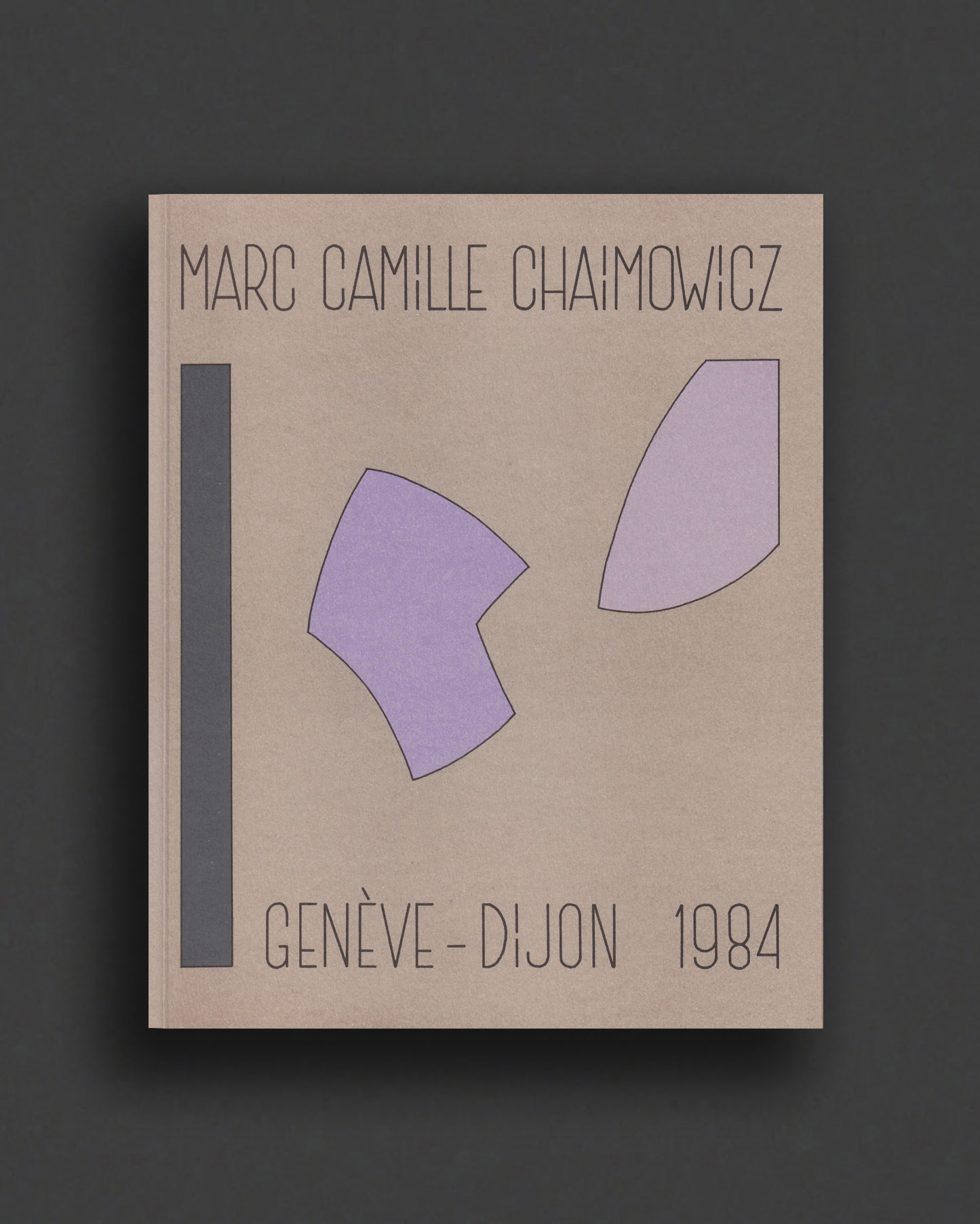
Rare 1984 catalogue/artist book published to accompany the exhibition Six Works at Le Consortium, Dijon, 25 June–28 July, 1984. Installation and individual works documented, with laid-in artist-designed wine label. Accompanying texts by Hubert Besacier, Haendel Teicher.
Born in Paris in the aftermath of World War II of a Polish father and a French mother, Marc Camille Chaimowicz (1947-2024) moved as a child to the United Kingdom. He studied at Ealing, Camberwell, and the Slate School of Art in London. In new artistic times, careful to bring art and life closer, often using performance, the life of Marc Camille Chaimowicz has become a great workshop. Living in the exhibition spaces, he sets up hotels entrances, decorates them with his own artefacts, and serves there some tea to visitors with musical background. When it became an official art practice which was no longer subversive, Chaimowicz abandoned performance art. From 1975 to 1979, he designed the interior of his Approach Road flat. Wallpapers, curtains, videos he made while performing in his own decor: everything had been tailored-imagined, drawn, and conceived to turn his interior into a room conducive to reverie. From the 1980s onwards, decors and furniture set like in a theatre scenography took their place in museums. Since then, hundreds of exhibitions have featured the interiors series of this international artist.
Fine—As New copy.
1981, English
Fold-out booklet, 20.4 x 22.6 cm (folded), 72 x 22.6 cm (unfolded)
1st Edition, Out of print title / used / fine
Published by
The Tate Gallery / London
$50.00 - In stock -
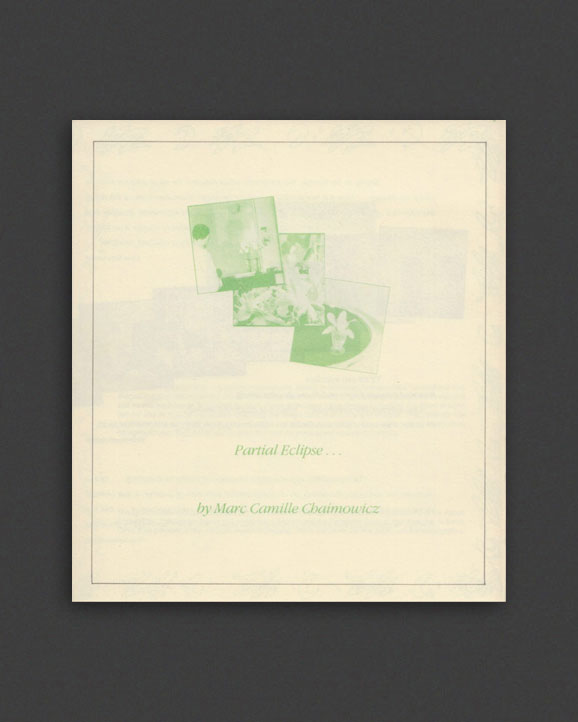
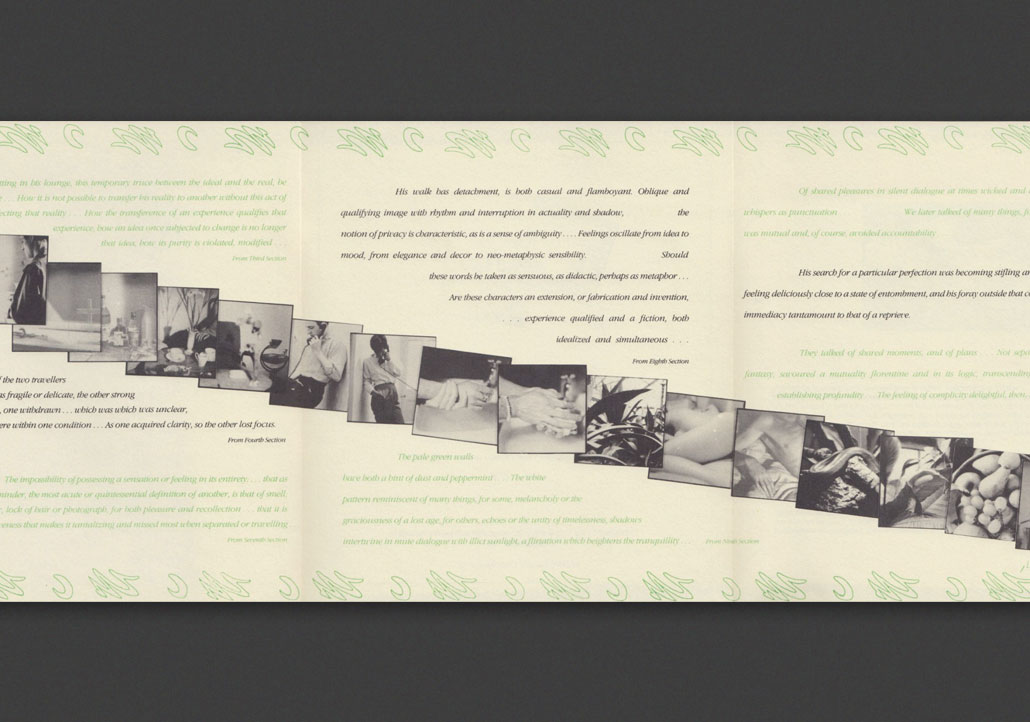
Rare 1981 fold-out booklet published to accompany Marc Camille Chaimowicz's performance of Partial Eclipse… at the Tate Gallery, London in September, 1981.
Born in 1947, Paris, Marc Camille Chaimowicz is a London-based artist whose cross-disciplinary work in painting, drawing, collage, sculpture, installation, furniture, lighting, ceramics, textiles, and wallpaper challenges the categorical divisions between fine and applied arts, masculine and feminine, public and private, past and present.
Fine copy.
2010, English / German / French
Folio of five looseleaf pattern sheets, a letter in facsimile, and catalogue, colour offset printed, 21.5 x 27 cm
1st Edition, Out of print title / as new
Published by
Secession / Vienna
Walther König / Köln
$180.00 - Out of stock
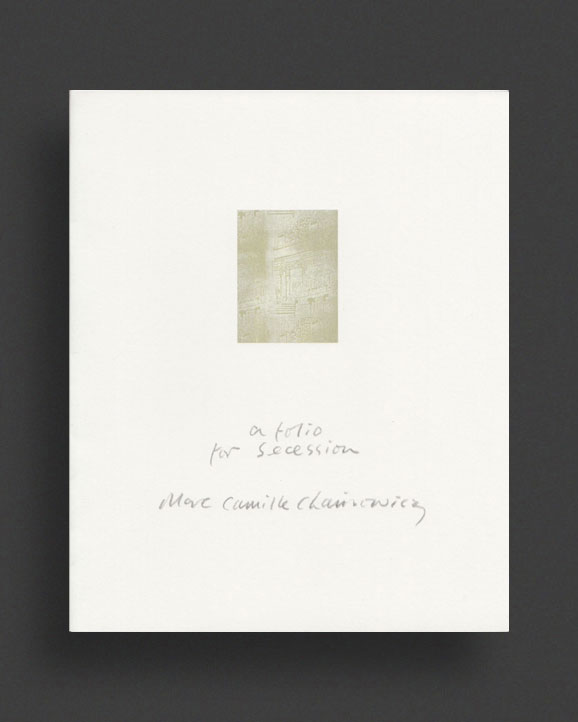
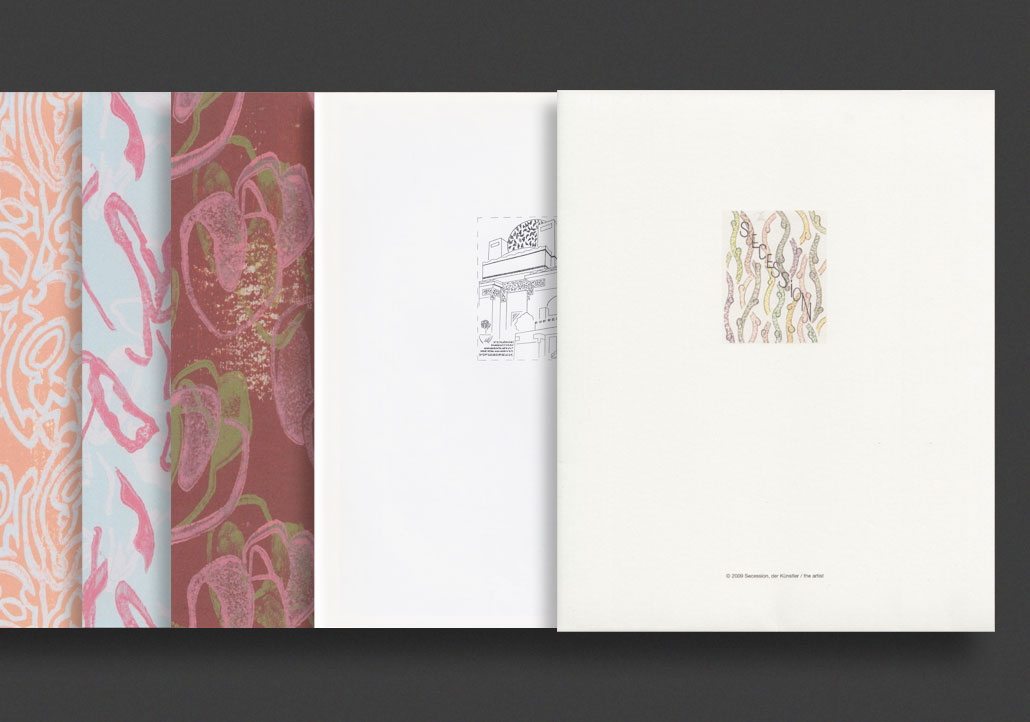
Out-of-print and collectible artist’s portfolio by Marc Camille Chaimowicz with five pattern sheets, a letter from Chaimowicz in facsimile, and an illustrated catalogue with essay by Silvia Eiblmayr (German/English and French/English). Produced by the Secession in a limited edition and published in cooperation with Musée La Piscine, Roubaix.
Born in 1947, Paris, Marc Camille Chaimowicz is a London-based artist whose cross-disciplinary work in painting, drawing, collage, sculpture, installation, furniture, lighting, ceramics, textiles, and wallpaper challenges the categorical divisions between fine and applied arts, masculine and feminine, public and private, past and present.
Like New copy.
1981, English
Die cut folded exhibition card, 18 x 14.7 cm
1st Edition, Out of print title / used / fine
Published by
Nigel Greenwood Inc. / London
$90.00 - In stock -
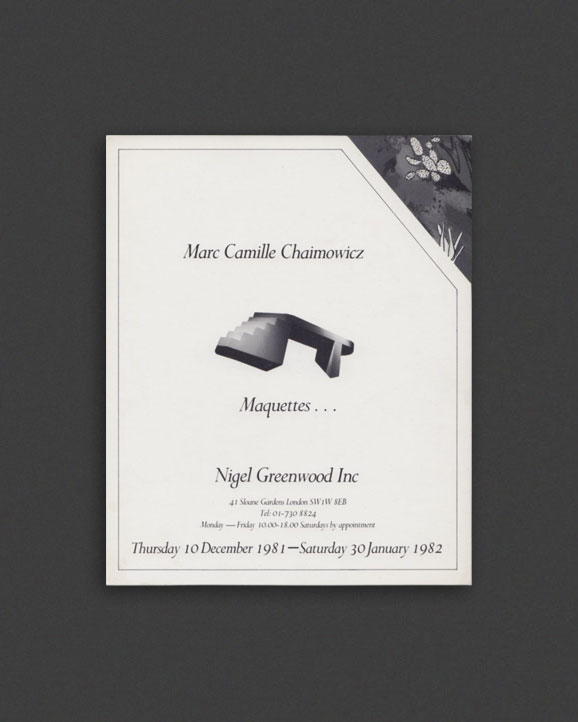
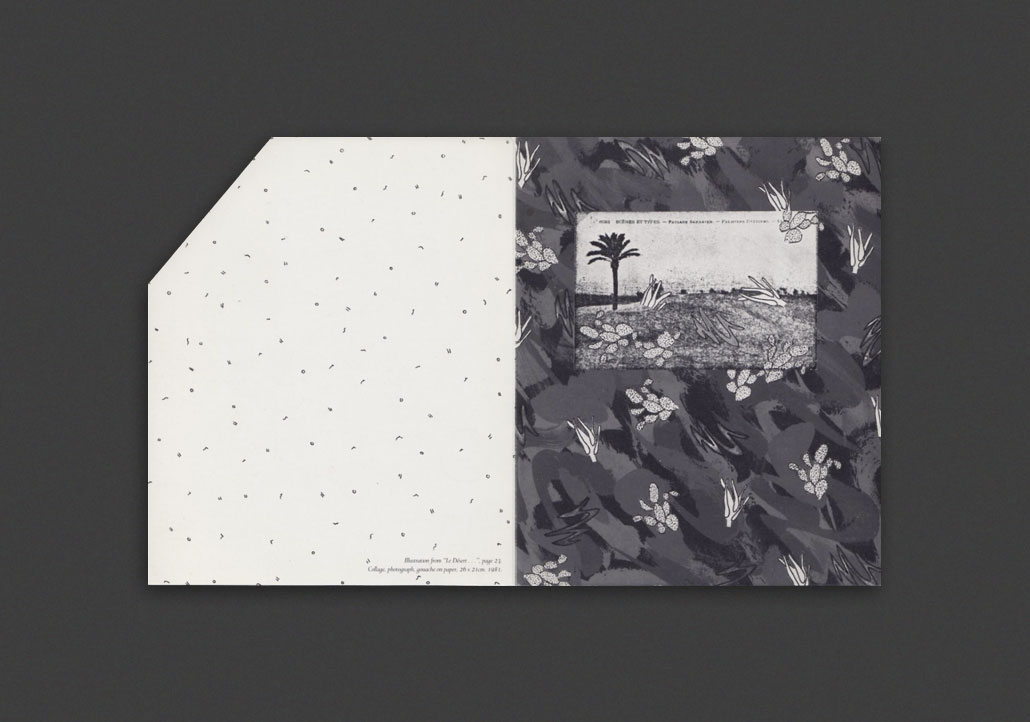
Rare die-cut folded exhibition card produced by Marc Camille Chaimowicz on the occasion of the exhibition Macquettes… at Nigel Greenwood Inc, London, 10 December, 1981—30 January, 1982.
Born in 1947, Paris, Marc Camille Chaimowicz is a London-based artist whose cross-disciplinary work in painting, drawing, collage, sculpture, installation, furniture, lighting, ceramics, textiles, and wallpaper challenges the categorical divisions between fine and applied arts, masculine and feminine, public and private, past and present.
Fine copy.
1995, English / Japanese
Hardcover, 80 pages, 21.5 x 15.5 cm
1st Edition, Out of print title / used / fine
Published by
Treville / Tokyo
Pan-Exotica / Tokyo
$140.00 - Out of stock
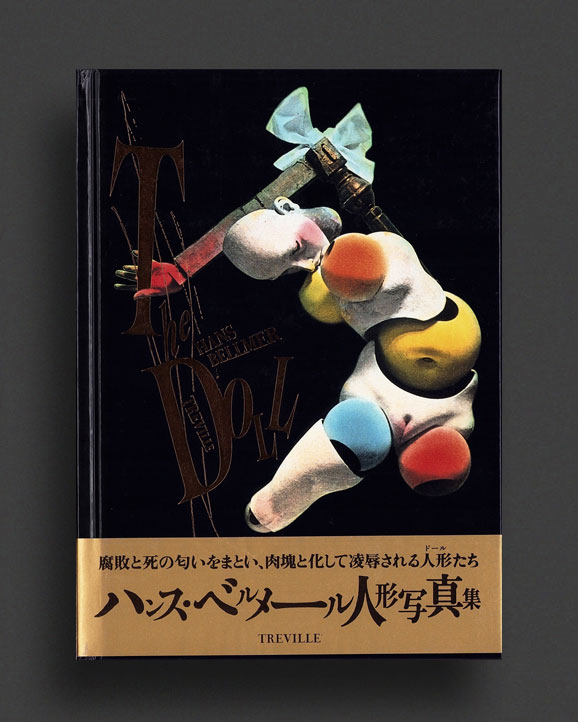
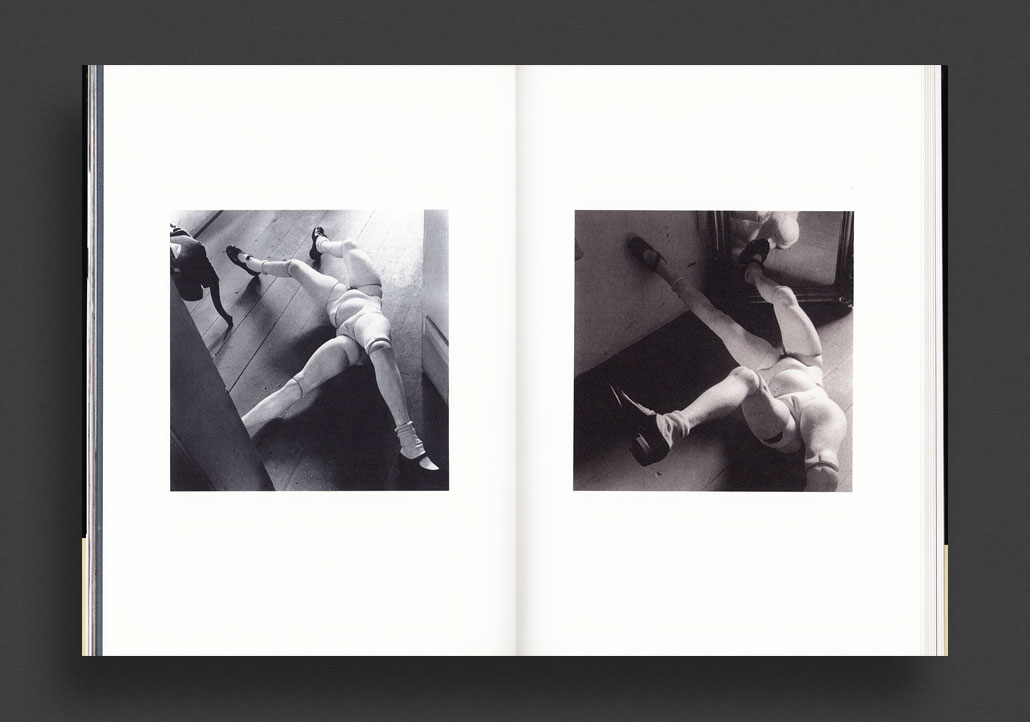
First 1995 hardcover edition of Hans Bellmer's surrealist masterpiece, The Doll, a beautiful photo book published only in Japan, comprised entirely of all of the known photographic images of "La Poupee" — Hans Bellmer's articulated, anatomically amorphous Surrealist doll, reconfigured and captured through Bellmer's intimate hand-painted photographic images. "La Poupee" acquired iconic status as perhaps the purest exemplification of the Surrealist ideal of "convulsive beauty." Bellmer constructed his first doll in the early 1930s. André Breton and Paul Eluard described it as "the first and only Surrealist object with a universal, provocative power". Wordless, this lovely volume is photographs-only, reproduced in colour and black and white. Designed by Jun Takechi.
German artist Hans Bellmer (1902—1975) was one of the most subversive artists associated with Surrealism, famous—notorious, even—for his erotic engravings, objects and photographs. Many of Bellmer's works were inspired by the literary works of Comte de Lautréamont and Georges Bataille, amongst others.
VG—Fine copy with obi.
2001, English
Hardcover (w. galssine dust jacket), 254 pages, 22.5 x 18.5 cm
1st Edition, Out of print title / used / very good
Published by
University of California / Berkeley
International Centre of Photography / New York
$140.00 - In stock -
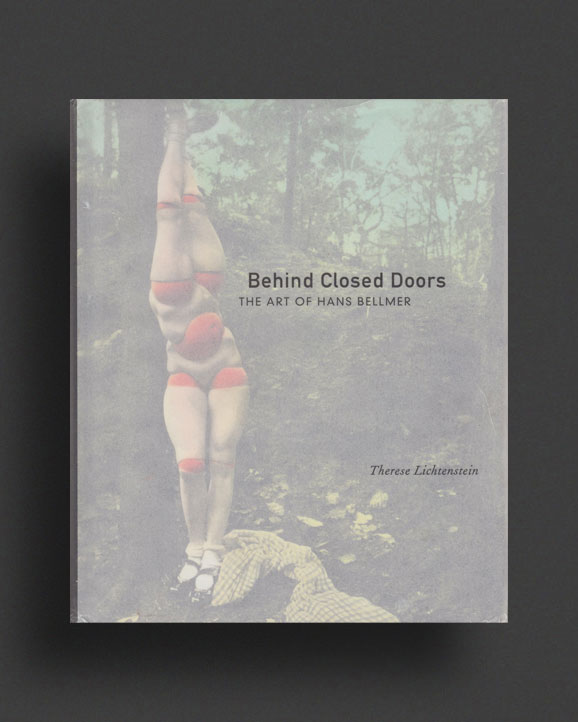
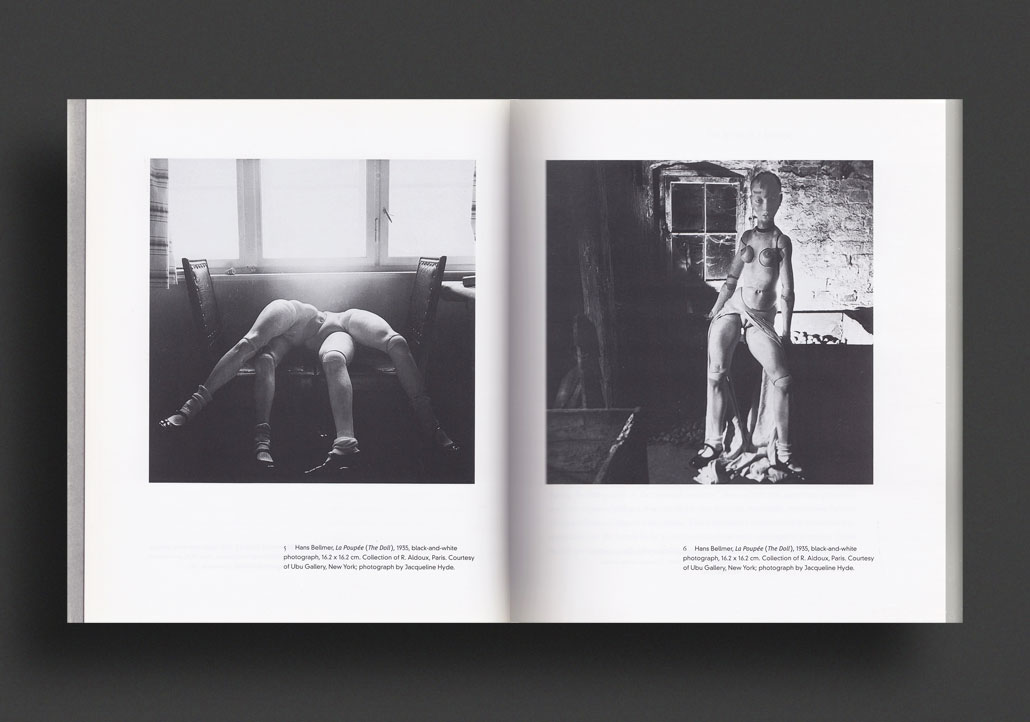
First 2001 hardcover edition of Behind Closed Doors: The Art of Hans Bellmer, Therese Lichtenstein's highly original book studying the the life-size, adolescent-girl dolls created by German artist Hans Bellmer in the 1930s.
Disturbing and controversial, Bellmer's dolls with their uncanny, fragmented bodies and eroticized poseswere just as shocking during Bellmer's time as they are today. Until now there has been little available in English about Bellmer's dolls, and Lichtenstein's book will be welcomed for its fresh interpretation of the artist's work and his place in European modernism. Eighty striking photographs accompany the text. Working during a time when Nazism was on the rise, Bellmer created several dolls with fragmented bodies that could be dismantled and arranged in various configurations. Using a narrative format, he then photographed the dolls in a range of grotesque, often sexual, positions. The images he conveyed were of death and decay, abuse and longing, in stark contrast to Nazism's mythic utopian celebration of adolescence.Lichtenstein interprets Bellmer's complex expressions of eroticism as a protest against the Nazis and also against his father, a cold and repressive Nazi sympathizer. At the same time, she says, by hyperbolically flaunting a passive femininity in a theatrical manner, Bellmer's images allow us to consider how cultural representations can affect the formation of identity and alternative possibilities.
"Behind Closed Doors reveals the complex structure behind these photographs of violated female adolescence, a structure in which sadism, masochism, hermaphroditism, fetishism, utopianism, and nostalgia all play a role. Above all, Lichtenstein's study makes clear the political aspect of these transgressive images: the way in which they served to question and undermine the contemporary authoritarian Nazi image of sexual 'normalcy' by recourse to a violent return of the repressed." -Linda Nochlin, author of Representing Women "Behind Closed Doors: The Art of Hans Bellmer is a compelling gathering of the narratives around psychoanalysis, visual culture, biology, and gender. Therese Lichtenstein rigorously examines Bellmer's picturing of the body as the site of desire, confusion, and sudden disaster, and in doing so produces a telling tale of history's secrets and lies."—Barbara Kruger
Therese Lichtenstein has taught art history and museum studies at New York University, Rice University, and Mount Holyoke College.
Very Good copy in Good original glassine dust jacket with some light wear.