World Food Books' programme is largely produced on Kulin Nation land. We acknowledge the Wurundjeri people of the Kulin Nation as the first and continuing custodians of this land, and pay respect to their Elders past, present, and emerging.
World Food Books is an arts and special interests bookshop in Naarm / Melbourne. Founded in 2010, World Food Books is devoted to the presentation of a rotating, hand-selection of international art, design, literary and counterculture publications with an emphasis on the anti-traditional, the experimental, the avant-garde, the heretic, the marginal.
Presenting new titles alongside rare and out-of-print books, catalogues and journals spanning the fields of modern and contemporary art, design, photography, illustration, film, literature, poetry, cultural theory, philosophy, sexuality, popular and underground culture in its many radical forms, World Food Books wishes to encourage adventurous, thoughtful and open-minded reading, looking, writing, and exchange of publishing and ideas, both current and historical.
As well as our bookshop, located in Melbourne's historical Nicholas Building, all of our inventory is available internationally via our online mail-order service.
World Food Books semi-regularly co-ordinates "Occasions", a programme of exhibits and events at the bookshop and in partnership with other hosts (such as museums and art galleries) that develop out of the activities, relationships and content of the bookshop itself.
World Food Books
The Nicholas Building
37 Swanston Street
Room 5, Level 6
Melbourne 3000
Australia
SHOP HOURS:
Thu–Fri 12–6, Sat 12–5
WEB-SHOP OPEN 24/7
World Food Books
Postal Address:
PO Box 435
Flinders Lane
Victoria 8009
Australia
Art
Theory / Essay
Architecture / Interior
Graphic Design / Typography
Photography
Fashion
Eros
LGBTQ+
Fiction / Poetry
Weird / Speculative / Science Fiction / Horror
Transgressive / Visceral / Abject
Symbolism / Decadence / Fin de siècle
Film / Video
Painting
Sculpture / Installation
Performance / Dance / Theater
Drawing
Sound / Music
Curatorial
Group Shows / Collections
Periodicals
Out-of-print / Rare
Posters / Ephemera / Discs
Signed Books
World Food Books Gift Voucher
World Food Book Bag
Australian Art
Australian Fiction
Australian Science Fiction / Speculative Fiction
Australian Poetry
Australian Photography
Japanese Photography
Conceptual Art
Minimal Art
Dada
'Pataphysics / Oulipo
Fluxus
Concrete Poetry
Pop Art
Surrealism
Arte Povera
Arte Informale / Haute Pâte / Tachism
Nouveau Réalisme / Zero / Kinetic
Situationism / Lettrism
Collage / Mail Art / Xerox Art
Art Brut / Folk / Visionary / Fantastic
Illustration / Graphic Art / Bandes Dessinées
Furniture
Italian Radical Design / Postmodernism
Textiles
Ceramics / Glass
Counterculture
Protest / Revolt
Philosophy
Psychoanalysis
Anthropology
Anarchism
Socialism / Anarchism / Communism / Capitalism
Literary Theory / Semiotics / Language
Feminism / Women's Studies
Gender Studies / Sexuality
Anthropology
Fetishism / BDSM
Drugs / Psychedelia
Crime / Violence
Animal Rights / Veganism
Occult / Esoterica
Ecology / Earth / Alternative Living
Whole Earth / Crafts
All prices in AUD (Australian dollars)
Pick-Ups
Pick-up orders can be collected in our bookshop during opening hours after order date. Please collect any Pick-up orders within 2 weeks of ordering as we have limited storage space. Orders will be released back into stock if not collected within this time. No refunds can be made for pick-ups left un-collected. If you cannot make it in to the bookshop in this time-frame, please choose postage option.
Return Policy
All sales are final. We do accept returns (for refund or exchange) for items received in error. All our orders are packed with special care using heavy-duty padding and cardboard book-mailers or bubble mailers (for smaller books), using reinforcement where required. We cannot take responsibility for any lost, stolen or damaged parcels.
Insurance
Should you wish to insure your package, please email us directly after placing your order and we can organise this at a small extra expense. Although all standard/express tracked packages are very safe and dependable, we cannot take responsibility for any lost, stolen or damaged parcels. We recommend insurance on valuable orders.
Interested in selling your old books, catalogues, journals, magazines, comics, fanzines, ephemera? We are always looking for interesting, unusual and out-of-print books to buy. We only buy books in our fields of interest and specialty, and that we feel we can resell.
We base these prices on desirability, market value, in-print prices, condition and our current stock levels. We offer cash, store credit, and can take stock on consignment. All
about 25% of the price we expect to get when we sell them, or 30% in store credit. We base these prices on desirability, market value, in-print prices, condition and our current stock levels.
Sell your books any day of the week. You can drop them off and return later. If you have a lot of books, we can visit your Sydney home.
We buy books that we feel we can resell. We offer about 25 % of the price we expect to get when we sell them, or 30% in store credit. We base these prices on desirability, market value, in-print prices, condition and our current stock levels.
Philadelphia Wireman
03 August - 01 September, 2018
World Food Books is proud to announce our next Occasion, the first presentation of sculptures by Philadelphia Wireman in Australia.
The Philadelphia Wireman sculptures were found abandoned in an alley off Philadelphia’s South Street on trash night in 1982. Their discovery in a rapidly-changing neighbourhood undergoing extensive renovation, compounded with the failure of all attempts to locate the artist, suggests that the works may have been discarded after the maker’s death. Dubbed the "Philadelphia Wireman" during the first exhibition of this work, in 1985, the maker’s name, age, ethnicity, and even gender remain uncertain. The entire collection totals approximately 1200 pieces, all intricately bound together with tightly-wound heavy-gauge wire (along with a few small, abstract marker drawings, reminiscent both of Mark Tobey and J.B. Murry). The dense construction of the work, despite a modest range of scale and materials, is singularly obsessive and disciplined in design: a wire armature or exoskeleton firmly binds a bricolage of found objects including plastic, glass, food packaging, umbrella parts, tape, rubber, batteries, pens, leather, reflectors, nuts and bolts, nails, foil, coins, toys, watches, eyeglasses, tools, and jewellery.
Heavy with associations—anthropomorphic, zoomorphic, and socio-cultural responses to wrapped detritus—the totemic sculptures by Philadelphia Wireman have been discussed in the context of work created to fulfil the shamanistic needs of alternative religions in American culture. Curators, collectors, and critics have variously compared certain pieces to sculpture from Classical antiquity, Native American medicine bundles, African-American memory jugs, and African fetish objects. Reflecting the artist’s prolific and incredibly focused scavenging impulse, and despite—or perhaps enhanced by—their anonymity, these enigmatic objects function as urban artefacts and arbiters of power, though their origin and purpose is unknown. Philadelphia Wireman, whatever their identity, possessed an astonishing ability to isolate and communicate the concepts of power and energy through the selection and transformation of ordinary materials. Over the course of the past two decades, this collection has come to be regarded as an important discovery in the field of self-taught art and vernacular art.
Presented in collaboration with Fleisher-Ollman Gallery, Philadelphia, and Robert Heald, Wellington.
Susan Te Kahurangi King
02 February - 10 March, 2018
Susan Te Kahurangi King (24 February 1951 - ) has been a confident and prolific artist since she was a young child, drawing with readily available materials - pencils, ballpoint pens and felt-tip markers, on whatever paper is at hand. Between the ages of four and six Susan slowly ceased verbal communication. Her grandparents William and Myrtle Murphy had developed a special bond with Susan so they took on caring responsibilities for extended periods. Myrtle began informally archiving her work, carefully collecting and storing the drawings and compiling scrapbooks. No drawing was insignificant; every scrap of paper was kept. The King family are now the custodians of a vast collection containing over 7000 individual works, from tiny scraps of paper through to 5 meter long rolls.
The scrapbooks and diaries reveal Myrtle to be a woman of great patience and compassion, seeking to understand a child who was not always behaving as expected. She encouraged Susan to be observant, to explore her environment and absorb all the sights and sounds. Myrtle would show Susan’s drawings to friends and people in her community that she had dealings with, such as shopkeepers and postal workers, but this was not simply a case of a grandmother’s bias. She recognised that Susan had developed a sophisticated and unique visual language and sincerely believed that her art deserved serious attention.
This was an unorthodox attitude for the time. To provide some context, Jean Dubuffet coined the term Art Brut in 1945 to describe work created by self-taught artists – specifically residents of psychiatric institutions and those he considered to be visionaries or eccentrics. In 1972 Roger Cardinal extended this concept by adopting the term Outsider Art to describe work made by non-academically trained artists operating outside of mainstream art networks through choice or circumstance. Susan was born in Te Aroha, New Zealand in 1951, far from the artistic hubs of Paris and London that Dubuffet and Cardinal operated in. That Myrtle fêted Susan as a self-taught artist who deserved to be taken seriously shows how progressive her attitudes were.
Susan’s parents Doug and Dawn were also progressive. Over the years they had consulted numerous health practitioners about Susan’s condition, as the medical establishment could not provide an explanation as to why she had lapsed into silence. Dawn educated herself in the field of homeopathy and went on to treat all twelve of her children using these principles – basing prescriptions on her observations of their physical, mental and emotional state.
Doug was a linguist with an interest in philosophy who devoted what little spare time he had to studying Maori language and culture. To some extent their willingness to explore the fringes of the mainstream made them outsiders too but it was their commitment to living with integrity and their respect for individuality that ensured Susan’s creativity was always encouraged.
Even though Susan’s family supported her artistic pursuits, some staff in schools and hospitals saw it as an impediment to her assimilation into the community and discouraged it in a variety of ways. Her family was not always aware of this and therefore did not fully understand why Susan stopped drawing in the early 1990s. However, rather than dwell on the challenges that Susan faced in pursuit of her artistic practice, they prefer to highlight her achievements. In 2008 Susan began drawing again in earnest, after an almost 20 year interruption, and her work is now shown in galleries around the world.
Susan grew up without television and has been heavily influenced by the comics she read as a child. She is absolutely fearless in the appropriation of recognizable characters, such as Donald Duck and Mickey Mouse, in her work. She twists their limbs, contorts their faces, compresses them together, blends them into complex patterned backgrounds - always imbuing them with an incredible energy. Although Susan often used pop culture characters in her work they are not naive or childlike. These are drawings by a brilliant self-taught artist who has been creating exceptional work for decades without an audience in mind.
Mladen Stilinović
"Various Works 1986 - 1999"
02 February 16 - September 10, 2016
Various works 1986 - 1999, from two houses, from the collections of John Nixon, Sue Cramer, Kerrie Poliness, Peter Haffenden and Phoebe Haffenden.
Including: Geometry of Cakes (various shelves), 1993; Poor People’s Law (black and white plate), 1993; White Absence (glasses, ruler, set square, silver spoon, silver ladel with skin photograph and wooden cubes), 1990-1996; Exploitation of the Dead (grey and red star painting, wooden painting, black spoon with red table, red plate), 1984-1990; Money and Zeros (zero tie, paintings made for friends in Australia (Sue, John, Kerrie), numbers painting), 1991-1992; Words - Slogans (various t-shirts) - “they talk about the death of art...help! someone is trying to kill me”, “my sweet little lamb”, “work is a disease - Karl Marx”; Various artist books, catalogues, monographs, videos; Poster from exhibition Insulting Anarchy; "Circular" Croatian - Australian edition; Artist book by Vlado Martek (Dostoyevsky); more.
Thanks to Mladen Stilinović and Branka Stipančić.
Jonathan Walker
Always Will Need To Wear Winter Shirt Blue + Ochre Small Check Pattern
21 August - 21 September, 2015
Untitled
I am not a great reader of poetry but I always return to the work of Melbourne poet, Vincent Buckley (1925- 1988). Perhaps I find his most tantalising piece to be not a finished poem but a fragment left on a scrap of paper discovered on his desk after the poet’s death.
The poetry gathers like oil
In the word-core, and spreads
It has its music meet,
Its music is in movement.
This fragment is more the shell left behind from a volatile thought than a finished poem. I find the last two lines honest but awkward whereas the first two lines work like an arrow. Most likely he could not find a resolution so it was left. Still, in its present form, it remains an eloquent testimony to the ultimate failure of a medium to express mobile thought and sensation, in Buckley’s case, through verbal language. It’s an important matter because this is something all artists have to deal with regardless of the medium.
I have never written a poem, however, I am forever copying fragments from books on paper scraps in a vain effort to fix certain notions in my head. At first, they function as bookmarks that are sometimes returned to when I open the book. But before long, as they accumulate, they fall out littering the table interspersed with A4 photocopies, bills, books and medications.
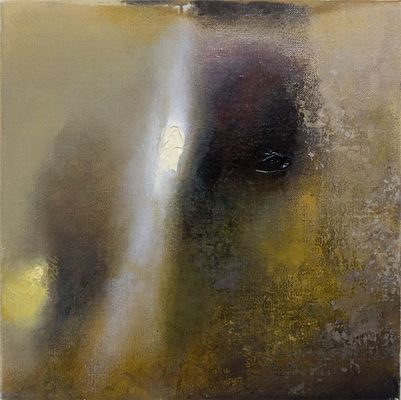
To return to Buckley’s fragment, the first two lines very much evoke how I paint nowadays. As you age, detail diminishes and patches of light become more luminous and float. I feel the most honest way of dealing with this is by smearing the oil paint on the canvas with the fingers and working close-up, blind. Only if the patches coalesce into an approaching image can the work gain a life.
-
Jonathan Walker was born in Melbourne, Australia and brought up on a dairy farm in Gippsland. In the 1970’s he studied painting at RMIT and won the Harold Wright Scholarship to the British Museum, London. During the 1980’s he exhibited at Pinacotheca Gallery, Richmond and had work shown at the NGV and Heidi City Art Gallery. Over the same period he designed the cover for the “Epigenesi” LP by Giancarlo Toniutti, Italy and conducted a mail exchange work with Achim Wollscheid, Germany. The work with artists through the post resulted in an article published in the bicentenary issue of Art and Australia 1988. He showed in artist run spaces such as WestSpace in the 90’s and 2000’s, and until 2012, taught painting at Victoria University, which is where we (Colleen Ahern and Lisa Radford) as organisers of the exhibition, among many others, had the privilege of being his student.
Walker’s knowledge was imparted to students through the careful selection of music, literature, and artists found in books that he himself had ordered for the library. Walker’s strategy was the generosity of sharing his vast knowledge with references specific to each student and their context.
Walker’s paintings share a similar focus and intimacy.
This exhibition presents a small selection of recent paintings alongside a publication that includes Walker’s writing. Observational and analytical, Walker’s work is a type of material notation — the time of day, colour and how it is blended, the both specific and fleeting location of a reflection on lino or the question of whether a chair leg should be included in a painting.
Please join us on Friday August 21 between 6-8pm to celebrate the opening of the exhibition.
Curated by Colleen Ahern and Lisa Radford.
B. Wurtz
Curated by Nic Tammens
March 26 - April 4, 2015
B.Wurtz works from a basement studio in his home on Manhattan’s Lower East Side.
This local fact is attested to by the plastic shopping bags and newsprint circulars that appear in his work. As formal objects, they don’t make loud claims about their origins but nonetheless transmit street addresses and places of business from the bottom of this long thin island. Like plenty of artists, Wurtz is affected by what is local and what is consumed. His work is underpinned by this ethic. It often speaks from a neighborhood or reads like the contents of a hamper:
“BLACK PLUMS $1.29 lb.”
“Food Bazaar”
“USDA Whole Pork Shoulder Picnic 99c lb.”
“RITE AID Pharmacy, with us it’s personal.”
“H. Brickman & Sons.”
“Sweet Yams 59c lb."
Most of the work in this exhibition was made while the artist was in residence at Dieu Donne, a workshop dedicated to paper craft in Midtown. Here Wurtz fabricated assemblages with paper and objects that are relatively lightweight, with the intention that they would be easily transportable to Australia. This consideration isn’t absolute in Wurtz’s work, but was prescriptive for making the current exhibition light and cheap. Packed in two boxes, these works were sent from a USPS post office on the Lower East Side and delivered to North Melbourne by Australia Post.
Wurtz appears courtesy of Metro Pictures, New York.
Thanks to Rob Halverson, Joshua Petherick, Sari de Mallory, Matt Hinkley, Helen Johnson, Fayen d'Evie, Ask Kilmartin, Lisa Radon, Ellena Savage, Yale Union, and "Elizabeth".
John Nixon
"Archive"
December 15 - January 20, 2014
The presentation of John Nixon's archive offered a rare showcase of this extensive collection of the artist's own publications, catalogues, posters, ephemera, editions and more, from the mid 1980s onwards, alongside a selection of his artworks.
Organized by John Nixon, Joshua Petherick and Matt Hinkley.
<a href=http://wfb.public-office.info/artist/john-nixon>All titles by John Nixon
"Habitat"
at Minerva, Sydney (organised by Joshua Petherick and Matt Hinkley)
November 15 - December 20, 2014
Lupo Borgonovo, Janet Burchill & Jennifer McCamley,
Lewis Fidock, HR Giger, Piero Gilardi, Veit Laurent Kurz,
Cinzia Ruggeri, Michael E. Smith, Lucie Stahl, Daniel Weil, Wols
Press Release:
“...It contained seven objects. The slender fluted bone, surely formed for flight, surely from the wing of some large bird. Three archaic circuitboards, faced with mazes of gold. A smooth white sphere of baked clay. An age-blackened fragment of lace. A fingerlength segment of what she assumed was bone from a human wrist, grayish white, inset smoothly with the silicon shaft of a small instrument that must once have ridden flush with the surface of the skin - but the thing’s face was seared and blackened.”
William Gibson, “Count Zero”, 1986
"Autumn Projects Archive"
Curated by Liza Vasiliou
March 6 - March 15, 2014
World Food Books, in conjunction with the Virgin Australia Melbourne Fashion Festival 2014, presented the Autumn Projects archive, consisting of a selection of early examples in Australian fashion with a particular interest in collecting designers and labels from the period beginning in the 1980’s, who significantly influenced the discourse of Australian Fashion.
Curated by Liza Vasiliou, the exhibition provided a unique opportunity to view pieces by designers Anthea Crawford, Barbara Vandenberg, Geoff Liddell and labels CR Australia, Covers, Jag along with early experimental collage pieces by Prue Acton and Sally Browne’s ‘Fragments’ collection, suspended throughout the functioning World Food Books shop in Melbourne.
H.B. Peace
presented by CENTRE FOR STYLE
November 14, 2013
"Hey Blinky, you say chic, I say same"
Anon 2013
H.B. Peace is a clothing collaboration between great friends Blake Barns and Hugh Egan Westland. Their pieces explore the divergences between 'character’ and ‘personality’ in garments....etc
Special Thanks to Joshua Petherick and Matt Hinkley of WFB and Gillian Mears
and a Very Special Thank you to Audrey Thomas Hayes for her shoe collaboration.
Janet Burchill & Jennifer McCamley
"Aesthetic Suicide"
May 10 - June 8, 2013
The first of our occasional exhibitions in the World Food Books office/shop space in Melbourne, "Aesthetic Suicide" presented a body of new and older works together by artists Janet Burchill & Jennifer McCamley, including videos, prints, a wall work, and publications.
During shop open hours videos played every hour, on the hour.
2021, English
Hardcover, 360 pages, 19.5 x 25.2 cm
Published by
Faber & Faber / London
$52.00 - Out of stock
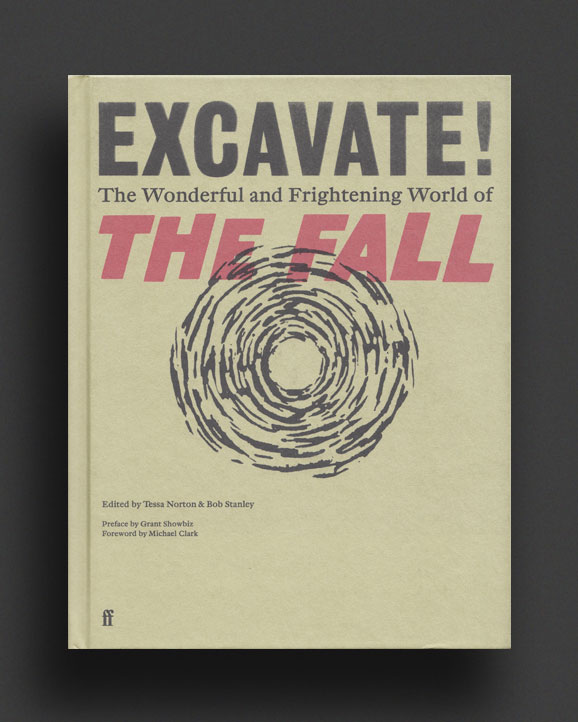
A definitive insight into the ever-influential world of Mark E. Smith and the Fall, featuring never-before published essays and ephemera from fans, collectors and the artist and band themselves.
This is not a book about a rock band. This is not even a book about Mark E Smith. This is a book about The Fall group - or more precisely, their world. Over a prolific forty-year career, the Fall created a world that was influential, idiosyncratic and fiercely original - and defied simple categorisation. Their frontman and lyricist Mark E. Smith spun opaque tales that resisted conventional understanding; the Fall's worldview was an education in its own right. Who wouldn't want to be armed with a working knowledge of M. R. James, shipping-dock procedures, contemporary dance, Manchester City and Can? The group inspired and shaped the lives of those who listened to and tried to make sense of their work.
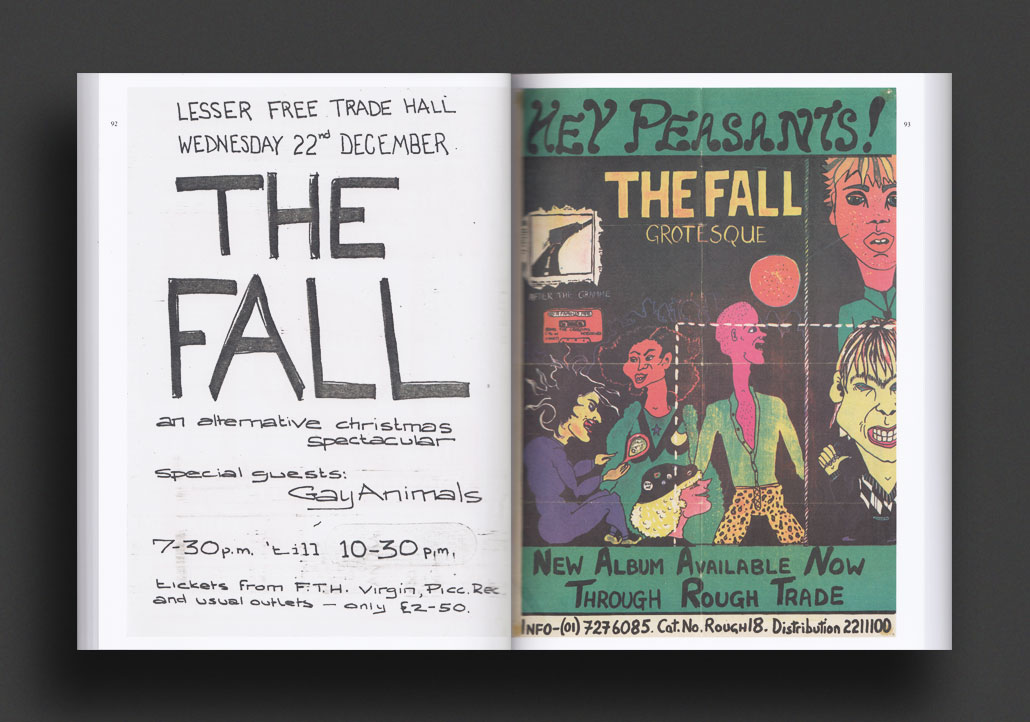
Bringing together previously unseen artwork, rare ephemera and handwritten material, alongside essays by a slate of fans, EXCAVATE! is a vivid, definitive record - an illumination of the dark corners of the Fall's wonderful and frightening world.
This is a book about Mark E. Smith and The Fall - or more precisely, their ever-influential world. The Fall were so many things, so many worlds; if you got it (and not everyone did), they represented everything.
'To 50,000 Fall Fans: please buy this inspired & inspiring, profound & provocative, beautiful & bonkers Book of Revelations, choc-stock-full of loving Acts by true Apostles, simultaneously both the scrapbook you wished you'd kept and a portal to futures & pasts, known & unknown, & a Fantastic Celebration of this Nation's Saving Grace.' — DAVID PEACE
Contributions by : Elain Harwood, Ian Penman, Paul Wilson, Owen Hatherley, Mark Fisher, Mark Sinker, Michael Bracewell, Jon Wilde, Stuart Bertolotti-Bailey, Sian Pattenden, Dan Fox, Adelle Stripe, Scott King, Richard McKenna...
2020, Japanese
Softcover (w. dust jacket and obi-strip), 144 pages, 15 x 21 cm
Published by
Tokyo Kirara / Tokyo
$65.00 - Out of stock
"Do not shoot!" - I heard Miles' real voice trembling for the first time.
A special collection of photographs by photographer Shigeru Uchiyama that capture every moment of Emperor Miles, such as precious recorded photographs from Miles Davis' Japan tours from 1981 to 1988, unreleased photographs, and private shots of his later years.
Shigeru Uchiyama's photographic sensibility is central to Tokyo's jazz scene, his works appearing on numerous jazz record jackets (Sun Ra Arkestra, Jaco Pastorius, Weather Report, Keith Jarrett, The Art Ensemble Of Chicago, etc), in the pages of jazz magazines, and as the exclusive photographer of Jazz clubs in Tokyo, including Bruce Array Japan, Blue Note Tokyo, Keystone Corner Tokyo, Sweet Basil 139. He recorded all of the jazz festivals and large touring concerts and published the cult photo book "Miles Smiles" which documeted Uchiyama's photography of Miles Davis over 10 years. "No Picture!" follows this book into the Miles Davis of the 1980s.
2013, English
Softcover (plus CD), 135 pages, 17 x 22 cm
1st Edition, Out of print title / as new
Published by
IMA / Brisbane
$39.00 - Out of stock
Those who follow Australian art, music, or film will have come across Melbourne’s Philip Brophy. Over the last thirty years, he has produced important work in all three scenes. He is also a critic and curator. And it is impossible to extricate his work as a commentator from his own work, because, as he admits, his own work is always a commentary on existing forms; it’s always art-about-art, music-about-music, film-about-film, or, indeed, art-about-music-about-film.
Brophy’s works might initially appear disparate. In the late 1970s and early 1980s, he led the group Tsk-tsk-tsk, which operated on the art/music fringe, generating performances, recordings, videos, and writings. In the late 1980s and early 1990s, he was the filmmaker obsessed with body fluids, directing Salt, Saliva, Sperm, and Sweat and Body Melt. In the 2000s, he was a new-media artist (making The Body Malleable), a manga/anime maven (making Vox and curating Tezuka: The Marvel of Manga), and a sound designer (composing soundtracks for films, his own and others’).
Despite their variety, everything Brophy does is underpinned by three connected lines of enquiry: music/pop (pop music, popular culture, manga and anime), body/sex (body-horror films, sex and violence, and gender), and sound/image (the unsung role of sound in cinema). A book surveying Brophy’s whole project seemed long overdue.
This generously illustrated monographic volume also includes a CD of Brophy's music. Now out-of-print.
Contributors Lara Travis, Darren Tofts, Shihoko Iida, Chris Chang, a selection of Brophy's own writings
Edited by Robert Leonard & Alexie Glass-Kantor
As New copy.
1996, Japanese
Softcover, 48 pages, 26.5 x 20 cm
1st Edition, Out of print title / used / fine
Published by
Comstock / Japan
$70.00 - Out of stock
Scarce Japanese movie program book for Jean-Luc Godard's 1968 film "One Plus One" (Sympathy for the Devil), published exclusively in Japan by Comstock in the mid-1990s. Reproduces many amazing full-bleed stills from the film in colour and black and white, behind the scenes photos, texts by famed Japanese music critic Mike M. Koshitani, spreads of "Mike's Stones' Collection" (Mr. Koshitani's collection of Rolling Stones related newspapers and magazines from the period), cast biographies, Godard filmography, Stones discography, and more.
After May 1968, French film director Jean-Luc Godard moved to London to film the Rolling Stones recording “Sympathy for the Devil.” In Sympathy for the Devil, Godard juxtaposed the Rolling Stones rehearsing with seemingly unrelated scenes with a soundtrack featuring, among others, the Black Panthers. The film showed the Stones at work, deconstructing the myth of the genius creator.
Fine, almost As New copy.
2021, English
Softcover, 264 pages, 20 x 13 cm
Published by
Sternberg Press / Berlin
$40.00 - Out of stock
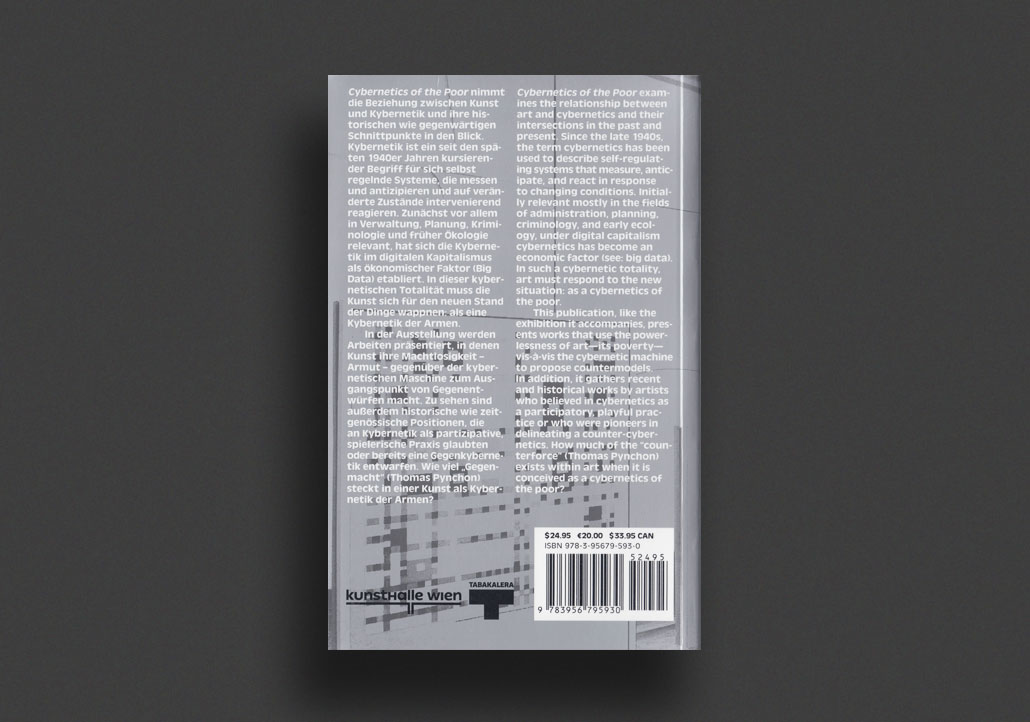
An examination of the relationship between art and cybernetics and their intersections, with works that uses the powerlessness of art.
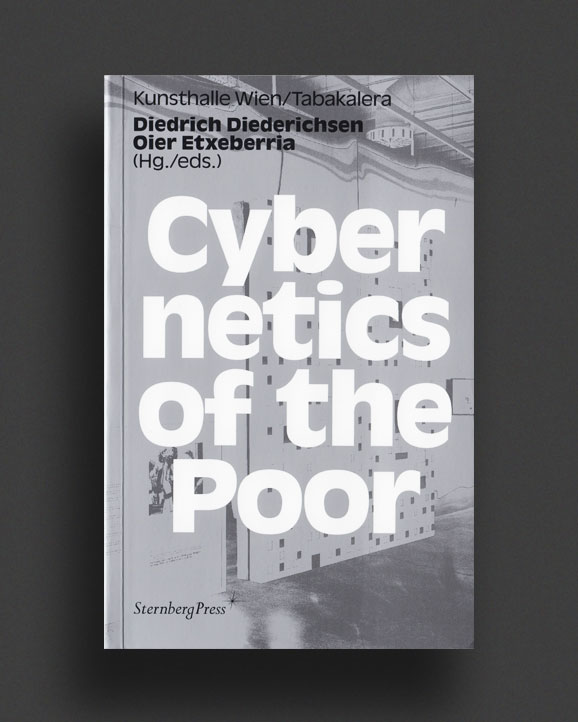
Cybernetics of the Poor examines the relationship between art and cybernetics and their intersections in the past and present. From the late 1940s on, the term cybernetics began to be used to describe self-regulating systems that measure, anticipate, and react in order to intervene in changing conditions. Initially relevant mostly in the fields of administration, planning, criminology, and early ecology, under digital capitalism cybernetics has since become an economic factor (particularly in the realm of big data). In such a cybernetic totality, art must respond to a new situation: a cybernetics of the poor.
Cybernetics of the Poor presents work that uses the powerlessness of art—its poverty—vis-à-vis the cybernetic machine to propose countermodels: work that is both recent and historical by artists who believed in cybernetics as a participatory, playful practice or were pioneers in delineating a counter-cybernetics. How much of what Thomas Pynchon termed “counterforce” exists within art when it is conceived as a cybernetics of the poor?
Texts by Sabeth Buchmann, Mercedes Bunz, Diedrich Diederichsen, Oier Etxeberria, Harun Farocki
With artistic contributions by Agency, Ana De Almeida, Alicja Rogalska & Vanja Smiljanić, Eleanor Antin, Cory Arcangel, Elena Asins, Paolo Cirio, Coleman Collins, Hanne Darboven, Jon Mikel Euba, Michael Hakimi, Douglas Huebler, Gema Intxausti, Kameelah Janan Rasheed, Mike Kelley, Ferdinand Kriwet, Agnieszka Kurant, Mario Navarro, Adrian Piper, Lili Reynaud-Dewar, Heinrich Riebesehl, Pedro G. Romero, Constanze Ruhm, Jörg Schlick, Camila Sposati, Kathrin Stumreich, Isidoro Valcárcel Medina, Tanja Widmann, Robert Adrian X
Diedrich Diederichsen
Diedrich Diederichsen is a German author, music journalist, and cultural critic. He is one of Germany's most renowned intellectual writers at the crossroads of the arts, politics, and pop culture.
Oier Etxeberria
Oier Etxeberria is a Basque visual artist and musician. He is head of the Visual Arts at CICC Tabakalera.
1992, English / German
Hardcover, 104 pages, 21.5 x 28 mm
1st Edition, Out of print title / used / very good
Published by
Kunsthalle Basel / Basel
Edition Cantz / Stuttgart
$190.00 - Out of stock
First 1992 hardcover edition of this wonderful monographic catalogue published to accompany American artist Mike Kelley's major travelling exhibition staged at Kunsthalle Basel; ICA, London, and Portikus, Frankfurt. Profusely illustrated throughout with beautiful documentation of Kelley's diverse works and installations, alongside texts in German and English, including many writings by Kelley himself, with additional texts by Colin Gardner, Christopher Knight, and conversations between Kelley and Paul Taylor, and Kelley and Ralph Rugoff. Edited by Thomas Kellein.
Mike Kelley (1954 – 2012) was one of the leading Californian artists of the 1990s; a proponent of abject or pathetic art, an anti-aesthetic, anti-heroic movement, which criticized social and artistic issues through banality and humour. His work involved found objects, textile banners, drawings, assemblage, collage, performance and video. He often worked collaboratively with artists such as Paul McCarthy, Tony Oursler, and John Miller, and was a member of the noise band Destroy All Monsters.
Very Good copy.
1997, Japanese
Softcover, 270 pages, 21 x 14.5 cm
1st Edition, Out of print title / used / very good
Published by
Art Notebook / Tokyo
$140.00 - Out of stock
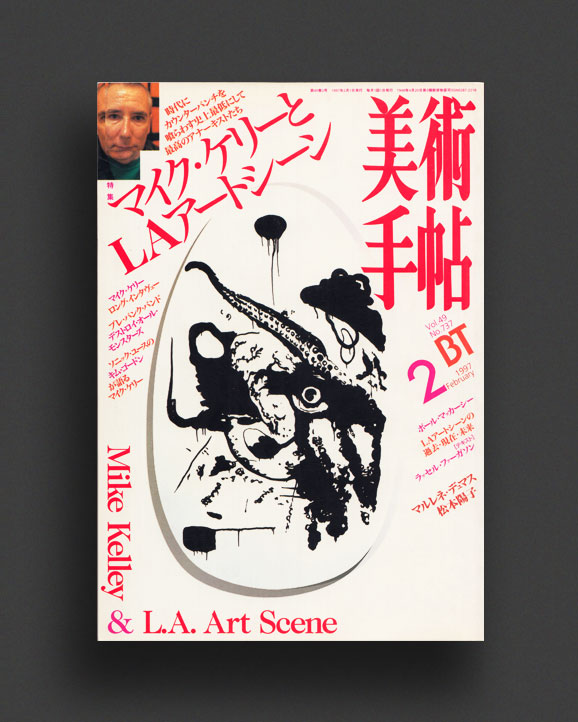
Incredibly rare special issue of Japanese contemporary art journal Art Notebook dedicated to "Mike Kelley and L.A. Art Scene", published in February 1997. To coincide with Kelley's major solo exhibition at Wako Works of Art, Tokyo in 1996, Art Notebook compiled this in-depth feature with Kelley as their tour guide to Los Angeles. Heavy illustrated with Kelley's works in colour and monochrome, the issue includes an interview with Kelley by Japanese art critic Kentaro Ichihara (author of the Kelley essay for Wako Works of Art), the L.A. Art scene presented by Kelley featuring art, music and sub-culture from L.A. (illustrated profiles on Jim Shaw, Raymond Pettibon, Paul McCarthy, Sharon Lockhart, Catherin Opie, Joe Mama-Nitzberg, Margaret Honda, Destroy All Monsters...), an interview with artist Paul McCarthy by artist Takashi Murakami, photo feature, live review and special interview with Destroy all Monsters who reformed to perform in Harajuku with Puzzle Punks (EYE), interview with Kim Gordon (Sonic Youth), Paul McCarthy and Mike Kelley's performances, an article on 1990s art in Los Angeles by curator Russell Ferguson (MoCA, Hammer, University of California)..... To top it off there is a fold-pout artwork by Yamantaka Eye (Puzzle Punks, Boredoms,...)! Heavily illustrated, text mostly Japanese (small introductory amount in English).
Very Good copy!
2021, English
Softcover, 144 pages, 11 x 15 cm
Published by
Onomatopee / Eindhoven
$35.00 - Out of stock
Sound is ephemeral. It does not belong to anyone. It cannot be captured in words. Writing on sound art usually focuses on the same familiar figures, but this treatment will broaden the field to explore artistic practitioners like the godfather of movie sound, Walter Murch, the king of the jungle Chris Watson, naturalist and explorer Alexander von Humboldt, pioneer wildlife recordist Ludwig Karl Koch, American pioneer composer and master teacher James Fulkerson, uncompromising composer Eliane Radigue, visionary sound sculptor Edgard Varèse, offbeat composer Luc Ferrari, true maverick Maryanne Amacher, and sonic terrorist MSBR aka Koji Tano and others.
Sounding Things Out explains what it is like to work as a composer with sound and installation art. Drawing on anecdotal and personal insight as well, Esther Venrooij explores the spaces between sounds, and follows the subject through the cracks where it isn’t supposed to go, thereby making her sound art theory accessible to anyone with an interest in music and sound.
2020, English
Hardcover box (2 vols), 224 pages, 27.9 x 20.3 cm
1st Edition, Out of print title / as new
Published by
Atelier Editions / Los Angeles
$200.00 - Out of stock
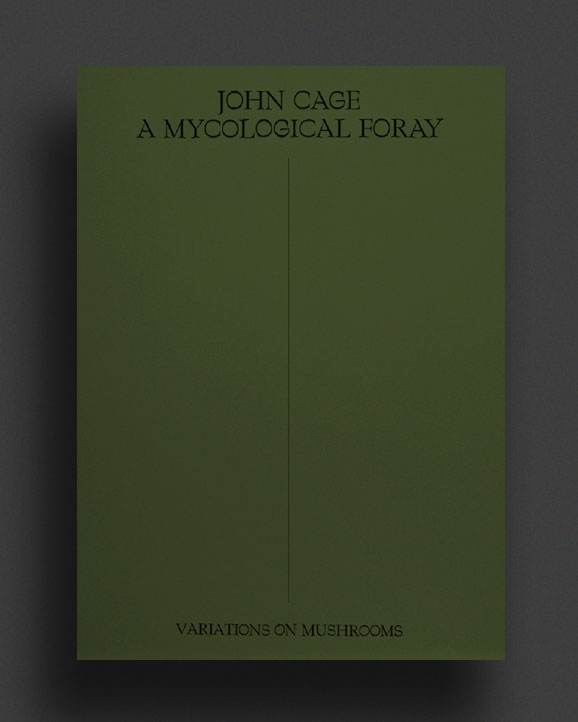
Sealed copy of this incredible, now out-of-print book, foraging for mushrooms with John Cage: writing, art, photography and ephemera from an idiosyncratic chapter in the composer's life.
Imagined as an extended mushroom-foraging expedition, John Cage: A Mycological Foray gathers together Cage’s mushroom-themed compositions, photographs, illustrations and ephemera. Indeterminacy Stories and other writings by Cage are interwoven throughout the first volume within a central essay examining Cage’s enduring relationship with mycology. Also included is a transcript of Cage’s 1983 performance, MUSHROOMS et Variationes. The second volume is the inaugural reproduction of Cage’s 1972 portfolio, Mushroom Book, authored in collaboration with illustrator Lois Long and botanist Alexander H. Smith. Readers are thus drawn through the landscape of Cage’s mycologically centred oeuvre and interests, discovering assorted works, images, compositions, philosophies and ephemera, as one might encounter assorted fungi and flora while foraging.
2011, English
Hardcover (w. dust jacket), 312 pages, 18.7 x 22 cm
Published by
Wesleyan University Press / US
$48.00 - Out of stock
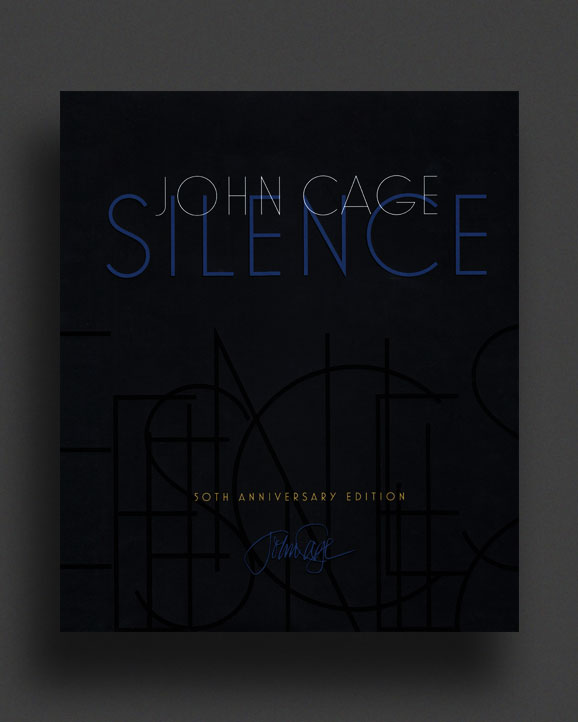
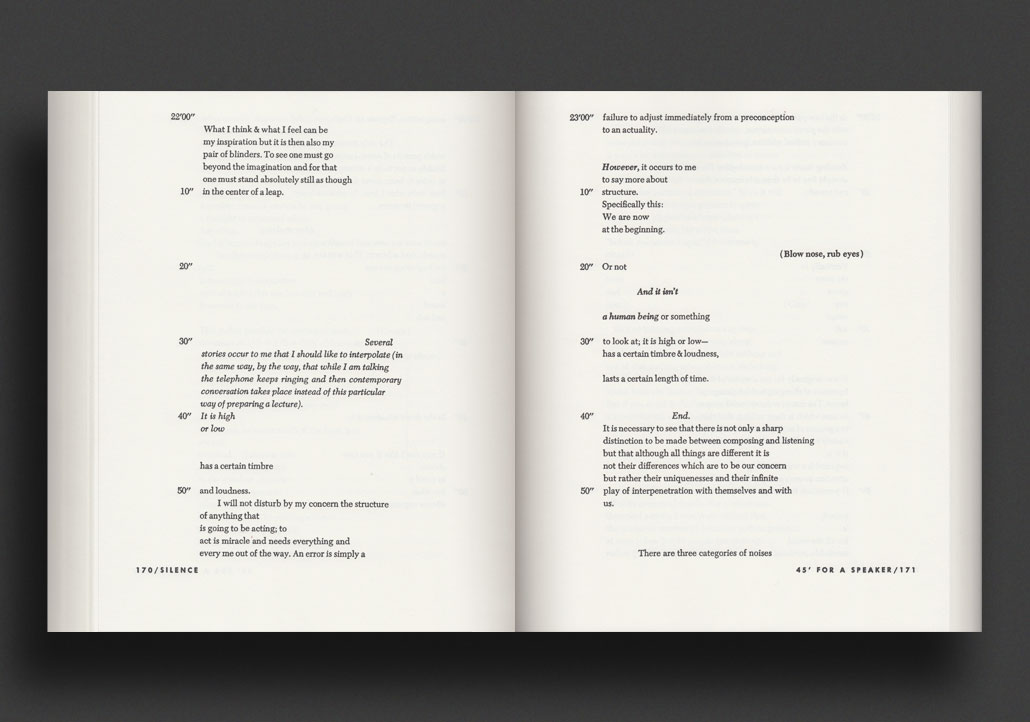
Silence, A Year from Monday, M, Empty Words and X (in this order) form the five parts of a series of books in which Cage tries, as he says, "to find a way of writing which comes from ideas, is not about them, but which produces them." Often these writings include mesostics and essays created by subjecting the work of other writers to chance procedures using the I Ching (what Cage called "writing through").
"There is no such thing as an empty space or an empty time. There is always something to see, something to hear. In fact, try as we may to make a silence, we cannot. Sounds occur whether intended or not; the psychological turning in direction of those not intended seems at first to be a giving up of everything that belongs to humanity. But one must see that humanity and nature, not separate, are in this world together, that nothing was lost when everything was given away."
John Cage is the outstanding composer of avant-garde music today. The Saturday Review said of him: "Cage possesses one of the rarest qualities of the true creator- that of an original mind- and whether that originality pleases, irritates, amuses or outrages is irrelevant." "He refuses to sermonize or pontificate. What John Cage offers is more refreshing, more spirited, much more fun-a kind of carefree skinny-dipping in the infinite. It's what's happening now." -The American Record Guide
2018, English
Softcover, 432 pages, 19.5 x 13 cm
Published by
Serpent's Tail / London
$34.00 - Out of stock
An essential masterpiece of jazz history by renowned photographer and music historian, with a new foreword by Richard Williams
In this classic account of the new black music of the 1960s and 70s, celebrated photographer and jazz historian Val Wilmer tells the story of how a generation of revolutionary musicians established black music as the true vanguard of American culture.
Placing the achievements of African-American artists such as Albert Ayler, Ornette Coleman, John Coltrane and Sun Ra in their broader political and social context, Wilmer evokes an era of extraordinary innovation and experimentation that continues to inspire musicians today.
As vital now as when it was first published in 1977, As Serious As Your Life is the essential story of one of the most dynamic musical movements of the twentieth century.
About the author
Val Wilmer is an internationally acclaimed photographer, journalist, author and black music historian who has been documenting African-American music since 1959. In that time she has interviewed and photographed almost every significant figure in post-war jazz, blues and R&B, from Louis Armstrong and Thelonious Monk to Sun Ra and Albert Ayler via Muddy Waters and Aretha Franklin. As a photographer, her work features in the permanent collections of the British Library, the V&A Museum and the National Portrait Gallery; as a writer and historian, she has contributed to the Oxford Dictionary Of National Biography and the New Grove Dictionary Of Jazz. She lives in London.
2006, English
Softcover, 304 pages, 15.6 x 23.5 cm
Published by
Duke University Press / North Carolina
$66.00 - Out of stock
Steve Lacy: Conversations is a collection of thirty-four interviews with the innovative saxophonist and jazz composer. Lacy (1934–2004), a pioneer in making the soprano saxophone a contemporary jazz instrument, was a prolific performer and composer, with hundreds of recordings to his name.
This volume brings together interviews that appeared in a variety of magazines between 1959 and 2004. Conducted by writers, critics, musicians, visual artists, a philosopher, and an architect, the interviews indicate the evolution of Lacy’s extraordinary career and thought. Lacy began playing the soprano saxophone at sixteen, and was soon performing with Dixieland musicians much older than he. By nineteen he was playing with the pianist Cecil Taylor, who ignited his interest in the avant-garde. He eventually became the foremost proponent of Thelonious Monk’s music. Lacy played with a broad range of musicians, including Monk and Gil Evans, and led his own bands. A voracious reader and the recipient of a MacArthur “genius” grant, Lacy was particularly known for setting to music literary texts—such as the Tao Te Ching, and the work of poets including Samuel Beckett, Robert Creeley, and Taslima Nasrin—as well as for collaborating with painters and dancers in multimedia projects.
Lacy lived in Paris from 1970 until 2002, and his music and ideas reflect a decades-long cross-pollination of cultures. Half of the interviews in this collection originally appeared in French sources and were translated specifically for this book. Jason Weiss provides a general introduction, as well as short introductions to each of the interviews and to the selection of Lacy’s own brief writings that appears at the end of the book. The volume also includes three song scores, a selected discography of Lacy’s recordings, and many photos from the personal collection of his wife and longtime collaborator, Irene Aebi.
Interviews by: Derek Bailey, Franck Bergerot, Yves Bouliane, Etienne Brunet, Philippe Carles, Brian Case, Garth W. Caylor Jr., John Corbett, Christoph Cox, Alex Dutilh, Lee Friedlander, Maria Friedlander, Isabelle Galloni d'Istria, Christian Gauffre, Raymond Gervais, Paul Gros-Claude, Alain-René Hardy, Ed Hazell, Alain Kirili, Mel Martin, Franck Médioni, Xavier Prévost, Philippe Quinsac, Ben Ratliff, Gérard Rouy, Kirk Silsbee, Roberto Terlizzi, Jason Weiss
2021, English / French
Softcover, 180 pages, 10 x 15.5 cm
Published by
Lenka Lente / Nantes
$35.00 - Out of stock
169 fundamental free jazzrecords recommended in 180 pages by Maurizio & Roberto Opalio (My Cat Is An Alien) and Philippe Robert, from must-have classics to indispensable curiosities.
Free Jazz Manifesto is not simply a list of 169 recommended records, but a poetic vision, a parallel universe based on a personal aesthetics of perception and an in nite love for the most creative, incendiary, spiritual music. If Sun Ra, Ornette Coleman or Anthony Braxton are well present, many unknown musicians make a place in this list of essential curiosities: Ahmed Abdullah, The Baden-Baden Free Jazz Orchestra, Black Unity Trio, Byron & Gerald, Cairo Free Jazz Ensemble, CCMC, Ric Colbeck, Jerome Cooper, Michael Cosmic, Phill Musra, Leo Cuypers, GL Unit, Griot Galaxy, Stephen Horenstein, INTERface, Interspecies, Clint Jackson III, Milo Fine Free Jazz Ensemble, Muun Music, Robert F. Pozar, Abdullah Sami, Synthesis, Motoharu Yoshizawa...
My Cat Is An Alien is the world-renowned outsider duo of radical, experimental instantaneous composers and intermedia artists formed by brothers Maurizio and Roberto Opalio in early 1998. They started their activity in Torino, Italy, before moving in a remote, secret region of the Western Alps. MCIAA is a single intermedia entity that acts through music, shamanic live audiovisual performance, painting and drawing, art design, photography, “cinematic poetry” films & videos, installation, writing and poetry, phonographic editions and artists' books.
French musical critic Philippe Robert works for Revue & Corrigée, and is a former collaborator for Jazz Magazine, Les Inrockuptibles, Octopus, and Mouvement. He runs the blog Merzbo-Derek (merzbow-derek.tumblr.com).
2017, English
Hardcover (cloth-binding w. 7" vinyl), 272 pages, 20.3 x 27.3 cm
Published by
Anthology Editions / Brooklyn
$110.00 $40.00 - Out of stock
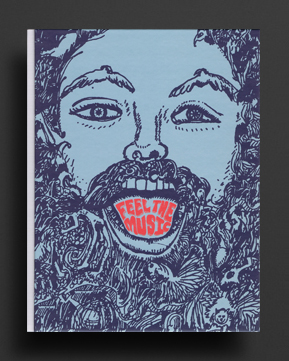
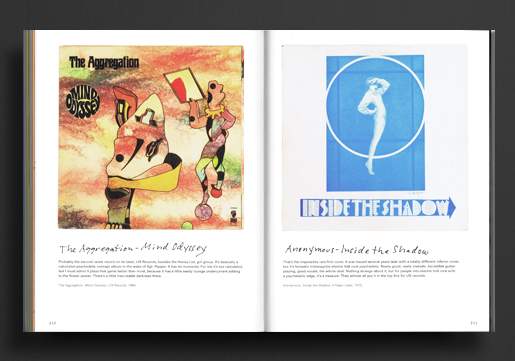
Paul Major has lived resolutely at the edge of outsider music culture for nearly a half-century. As an early private press and 'real people' record collector turned eminent, underground rock 'n' roller, his influence is felt if not heard all around us, until now.
Feel the Music traces Paul's trajectory from his formative days in the Midwest, his years in the late 70s New York punk scene, and into his curious career as a connoisseur and campaigner of the weirdest records of all time. Brought to life with unseen photographs, rare record covers, and cut n' paste ephemera from Paul's long running mail order catalog, while animated by Paul's storytelling, Feel the Music is a fanatical mystery tour through the further, outer reaches of music history. Alongside Paul's writing and an introduction by Christ and savior Johan Kugelberg, Feel the Music features essays by Jack Streitman, Michael P. Daley, Rich Haupt, Stefan Kery, Patrick Lundborg, Geoffrey Weiss, Jesper Eklow, and Glenn Terry.
Includes an inserted Sorcerers/Endless Boogie 7″ record.
2021, English
Hardcover (w. dust jacket), 224 pages, 21.6 x 13.8 cm
Published by
Faber & Faber / London
$29.00 - Out of stock
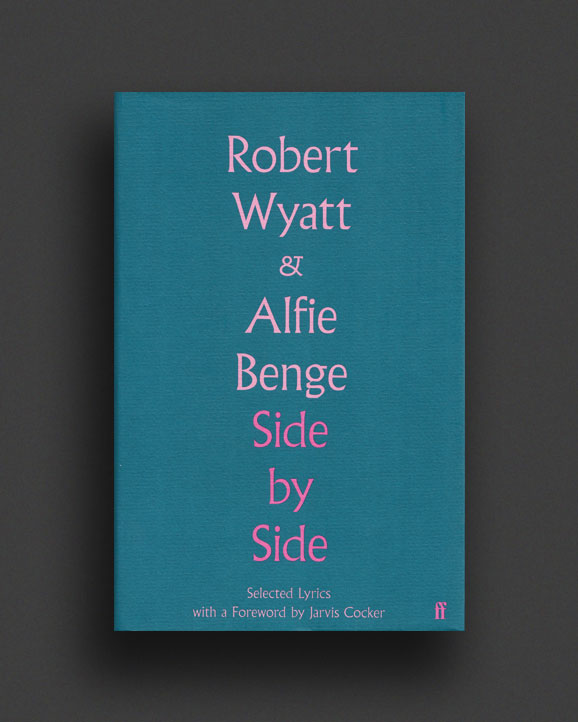
The life’s work of two of British music’s most unique and timeless artists, with an introduction by Jarvis Cocker.
Selected and arranged by the authors themselves, Side by Side presents the lyrics, poems, writings and drawings of innovative musician Robert Wyatt and his creative partner, English painter and songwriter Alfie Benge. As a founding member of influential English rock bands Soft Machine and Matching Mole, and with a solo career which has lasted for over forty years and seen him collaborate with a diverse range of artists including Bjork, Brian Eno, Carla Bley, Paul Weller and David Gilmour, his own music remains unclassifiably personal. Alfie Benge is a visual artist, songwriter and pioneering music manager, having managed Robert’s career for fifty years. She is also married to Robert. Since 1982 they have collaborated on many of Robert’s most well-known songs. This unique volume celebrates one of the most enduring creative partnerships of the last half-century.
"Whenever an aspiring musician asks me about songwriting I point them towards Robert and Alfie. Their work is so unusual, so perceptive, so playful and so grownup. I don’t think there's anyone to compare. If you want songs that touch your mind as well as your heart, these are the best. Wide distribution of this book could improve the state of music dramatically." — Brian Eno
"Taken together Alfie & Robert’s lyrics combine to create a humanist world-view that is at once global & particular. Take it from me: that’s no mean feat." — Jarvis Cocker
2021, English
Softcover, 128 pages, 15 x 23 cm
Published by
Sound American / New York
$35.00 - Out of stock
Sound American's 25th issue, the Folk Issue, celebrates and explores the intersections of experimental and folk music. Guest edited by Sarah Hennies and Anna Roberts-Gevalt–two of America's most forward-looking practitioners in experimental and folk music, respectively–this issue takes on questions of musical community and what it means to work inside and outside of its traditions.
The issue features writing by Ana Alonso-Minutti on La Llorona, Drew Daniel on Throbbing Gristle, Henry Flynt on his own violin practice, Suzanne Kite in conversation with Scott Benisiinaabandan, John McCowen interviewing Sean Meehan, Kurt Newman and Martin Arnold, Ian Nagoski on bird call impresario Charles Kellogg, and Anna Roberts-Gevalt's moving COVID diary and conversation with Meredith Monk and Peggy Seeger. This issue’s Exquisite Corpse is by vocalist and composer Amirtha Kidambi.
Produced in an edition of 500.
2020, English
Softcover, 116 pages, 15 x 23 cm
Published by
Sound American / New York
$36.00 - Out of stock
A quarterly journal founded in 2012 by Nate Wooley, providing in-depth interviews and essays, 'Sound American' starts from a simple desire to open the doors of experimental music to a wider audience. Their latest issue celebrates interstellar icon and generative force of nature, Sun Ra. Sun Ra (1914–1993) is an African-American experimental jazz pianist and composer. A prolific artist, he recorded over 100 albums with his band, the Sun Ra Arkestra.
Contributors include Taylor Ho Bynum, John Corbett, Naima Lowe, Luke Stewart with Thomas Stanley, and Ken Vandermark. The issue also features supplemental writing from Jessie Cox on Marshall Allen, Reg Bloor on Glenn Branca, Chris Pitsiokos on Miles Davis's On The Corner, Peter Margasak on Derek Bailey's On The Edge series, and a conversation between Audra Wolowiec and Freya Powell. The issue closes with the first exquisite corpse of the new season: a phenomenal text work by Camae Ayewa (Moor Mother).
1969, English / Swedish
Softcover, 640 pages, 26.8 x 21 cm
2nd Ed. ,
Out of print title / used / good
Published by
Moderna Museet / Stockholm
$640.00 - Out of stock
Still the best Warhol catalogue ever made, the very collectible and iconic Warhol photo book published to accompany his first European museum show "Andy Warhol" at the Moderna Museet, Stockholm, February - March, 1968, only three months before he was shot by Valerie Solanas. With virtually no text and adorned with Warhol's flower cover vividly printed in five spot colors, the concept of the catalogue was developed by the great German curator and museum director Kasper König, who commissioned Factory chronicler and inhabitant Billy Name, and a teenage Stephen Shore (!), to document Warhol's world and his co-conspirators living, working, and performing around his East 47th Street New York studio. Both Name and Shore composed rhythms of their own sequences, and neither of them added any captions: they felt the images should speak for themselves. This absence of text contributed to the object-status of the book. The result is one of the most historical photographic capsules of a pivotal time in the New York art scene of the late 1960s. Alongside hundreds of wonderful photographs from the studio, the film-sets, the Velvet Underground performances, the happenings, the road trips, the parties, including further photography by Rudy Burkhardt, Eric Pollitzer, and John Schiff, there are also selections of Warhol's artworks (where König's use of the xerox machine to reproduce Warhol's own work gives this catalogue its signature feel), and documentation of his exhibitions, including fantastic social imagery of the Moderna Museet proceedings not included in the first edition. The only text comes, fittingly, in the form of a series of introductory Warhol quotes and aphorisms.
Since Warhol himself had so much input into the production of this book, this catalogue-as-artist's-book-as-photobook can truly be considered a work of art in its own right. It quickly becoming a cult object, then a collector’s item.
Edited by Andy Warhol, Kasper König, Pontus Hultén, and Olle Granath.
This is the expanded 2nd edition, published in May 1969.
An excellent copy of a fragile book that is extremely prone to wear. Well preserved but with the common brittle binding issue from age and a bulky page count, with some loosening/disconnecting of sections from the spine glue. Much better than most copies out there! A tiny chip to the top back corner (spine corner), otherwise a very clean, presentable copy with only light corner wear and tanning to the newsprint.
2017, English
Softcover, 200 pages, 11.8 x 16.5 cm
Published by
Sternberg Press / Berlin
The Serving Library / New York
$25.00 $10.00 - Out of stock
Edited by Francesca Bertolotti-Bailey, Stuart Bertolotti-Bailey, Angie Keefer, David Reinfurt
With contributions by Vincenzo Latronico, Mathew Kneebone & James Langdon, Sarah Demeuse, Johan Hjerpe, 9mother9horse9eyes9, Jumana Manna & Robert Wyatt, Lucy McKenzie, Mark de Silva, Jocelyn Penny Small, Abigail Reynolds
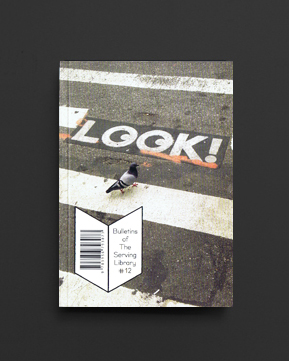
This issue comprises various outlooks on “perspective.” This might be taken to mean something as specific as a particular opinion or as general as an axonometric projection; in short, different ways and means of looking at the world. And so we find Vincenzo Latronico attempting to get in touch with E.T., a collection of Lucy McKenzie’s illusory quodlibets, a conversation between Jumana Manna and Robert Wyatt on art and ethics, a timely analysis of “Lifestyles of the Rich and Famous” by Sarah Demeuse, along with other points of view from Mark de Silva, Jocelyn Penny Small, Abigail Reynolds, James Langdon & Mathew Kneebone, Johan Hjerpe, and the inimitable 9mother9horse9eyes9.
Published by The Serving Library
2016, English / German
Softcover, 44 pages, 14 x 21 cm
Published by
Halle für Kunst / Lüneburg
Sternberg Press / Berlin
$34.00 $15.00 - Out of stock
Edited by Sandro Droschl
Texts by Christian Egger and João Ribas
Following the 2015 exhibition “Florian Hecker/John McCracken” at Künstlerhaus, Halle für Kunst & Medien Graz, this publication probes the experimental capacity of the white-cube space of the gallery. For the exhibition, two complementary yet autonomous artists were brought into dialogue with each other: German artist and computer composer Florian Hecker, and the late American sculptor John McCracken.
The fiberglass-coated, monochrome “planks” by McCracken spanned the floor and the walls of the building, evoking a juncture between painting and sculpture, while Hecker’s computer-generated sound pieces dramatized both space and time. By combining the work of the two artists, a framework was created in which an aesthetic experience occurred between the shifting boundaries and intersections of sculpture and sound as they affected each other within a space consisting of geometric and architectural formations as well as temporal and subjective formations. At the same time, the viewer/listener became more sensitized to the conditions, qualities, and degrees of intensity between the physical and the ephemeral.
The publication includes a curatorial introduction by Christian Egger, and a comprehensive essay by the author and curator of the Serralves Museum of Contemporary Art, Porto, João Ribas. The cover has been designed by Florian Hecker using an objectness measure algorithm.
Copublished with Künstlerhaus, Halle für Kunst & Medien Graz
Design by NORM, Zurich
1967, English
Softcover, 78 pages, 28 x 22 cm
1st Edition, Out of print title / used / very good
Published by
Howard Publishing / Sydney
$45.00 - Out of stock
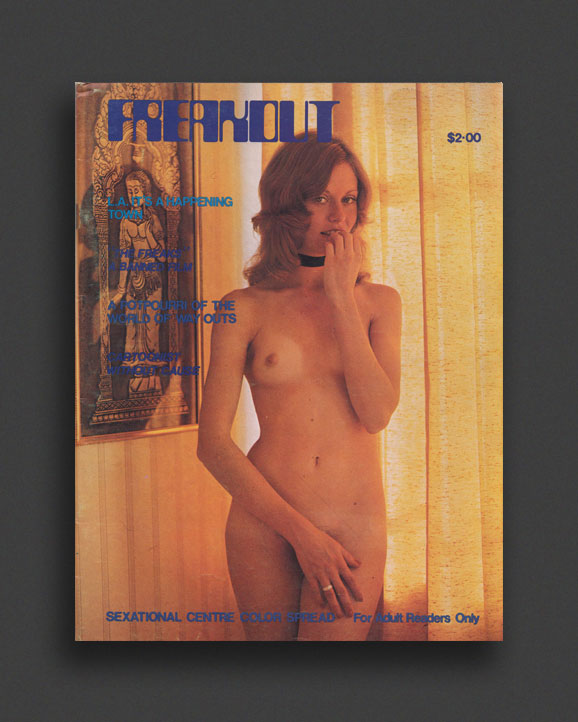
Very rare first, only (?) issue of Australian counterculture/mondo magazine Freakout, published in 1967 by Howard Publishing, Sydney, purveyors of permissive magazines. Documenting "the Freakout movement of the U.S. and across the globe. [...] the age of liberation, the end of the phony sexual puritanism", this issue seems to feature heavy editorial from America's beat and hippie scene, including articles on Los Angeles and Greenwich Village, L.S.D. (including LA police statement and photo-documentation of an LSD session), banned film "The Freaks", Sunset Strip curfew riots and the artists Vietnam tower protest, "Mondo Balordo" (A Fool's World) the 1964 documentary, "Attack on Mulholland Drive" (crime photo reenactment), cartoonist Ron Cobb, model Gypsy Flame, sculptor Vito, Guambo (The Underground Arts masked ball and orgy), the girls of the Penny Arcade, psychedelic art, transsexuality, and nude colour pin-up. Also littered with ads for Australian adult bookstores from the period.
Very Good copy.
2020, English
Softcover, 150 pages, 21 x 29.7
Ed. of 100,
Published by
Endless Lonely Planet / Melbourne
$25.00 - In stock -
Melbourne Artist Facilitated Biennial publication by Melbourne artist Christopher LG Hill is both the ninth issue of his ongoing publishing imprint Endless Lonely Planet, and a major survey art book marking the end of his 12 year artist facilitated biennale project, spanning 2008-2020.
"Multiple sites and moments, artist facilitated biennials extending on structures and limitations set by Signs of life: Melbourne International Biennial 1999. Abstracting and bringing new meaning to the form of a biennial as a more casual and independent entity, the project has seen many participants and collaborators over the last 12 years. This book hopes to document some of these moments, but more so to be a catalyst for different modes and models that it may inspire." — publisher
Includes extensive photographic documentation of The (self initiated, Artist funded) second (fourth) Y2K Melbourne Biennial of Art (& Design), TCB art inc., 2008; The First & Final Y3K Second (third) Inaugural Melbourne Biennial of International Arts, Y3K, 2011 (curated by Joshua Petherick, James Deutsher, and Christopher L G Hill); Third/Fourth Melbourne Biennial, Margaret Lawrence Gallery, 2013; 4th/5th Melbourne Artist Facilitated Biennial, TarraWarra Museum of Art, 2016 (as part of TarraWarra Biennial 2016: Endless Circulation curated by Victoria Lynn and Helen Hughes/Discipline); 5th/6th final Melbourne Artist Facilitated Biennial, Dec 2018 -Dec 2020 (co-facilitated by Virginia Overell and Christopher L G Hill in their apartment/ the ex-Telecom building that was the site of the Melbourne International Biennial 1999)
Includes the work of ACW, Liz Allen, Animal Charm, Dan Arps, Sean Bailey, Liv Barrett, Matthew Brown, Ruth Buchannan, Jon Campbell, Jane Caught, Xin Cheng, Fiona Connor, Ying Lan Dann, James Deutsher, Daniel du Bern, Ida Ekblad, ffiXXed, Pat Foster & Jen Berean, Justin K Fuller, Matt Griffin, Ardi Gunawan, Hao Guo, Bianca Hester, Christopher L G Hill, Matt Hinkley, Helen Johnson, Lisa Kelly, Devin Kenny, Taree Mackenzie, Simon McGlinn, Rob Mckenzie, Nick Mangan, Scott Mitchell, Tahi Moore, Kate Newby, Geoff Newton, John Nixon, OSW, Alexander Ouchtomsky, Damon Packard, Spiros Panigriakis, Sean Peoples/ Cheese Peoples, Joshua Petherick, Kain Picken, Janneke Raaphorst, Nick Selenitsch, Christopher Schueler & Matthew Hopkins, Gregory P Sharp, Kate Smith, Sriwhana Spong, Dylan Statham, Masato Takasaka, Ben Tankard, Simon Taylor, Alex Vivian, Annie Wu, Hany Armanious, Andreas Banderas, Mikala Dwyer, Katherine Huang, Tobias Kaspar, Piotr Łakomy, Taree Mackenzie, Tahi Moore, Michael O’Connell, Ester Partegas, Natalie Rognsoy, John Spiteri, Dan Arps, Sean Bailey, Olivia Barrett, Matthew Benjamin, Jon Campbell, Trevelyan Clay, Fiona Connor and Michala Paludan, James Deutsher, DoubleFly, George Egerton-Warburton, Endless Lonely Planet, ffiXXed, Alicia Frankovich, Justin K Fuller, Marco Fusinato, Greatest Hits, Ardi Gunawan, Hao Guo, Christopher L G Hill, Matt Hinkley, David Homewood, Matthew Hopkins, Lou Hubbard, Renee Jaeger, Helen Johnson, Kenneth Biennale (curated by Kenny Pittock and Amy May Stuart: Chris Clarke, Christo Crocker, Christina Hayes, Chris L G Hill, Christine Pittock, Christopher Sciuto), Legendary Hearts (Kieran Hegarty and Andrew Cowie), S.T. Lore, Patrick Lundberg, Carrie McGrath, Rob McKenzie, Taree McKenzie, Nick Mangan, Gian Manik, Kate Meakin, Adelle Mills, Tahi Moore, Kate Newby, Elizabeth Newman, Virginia Overell, Sean Peoples, Joshua Petherick, Kain Picken, Lisa Radford and Sam George, Nick Selenitsch, Kate Smith, Studio Masatotectures, Sydney (Esther Edquist), Masato Takasaka and Madeline Kidd, Ben Tankard, Alex Vivian, Nicki Wynnychuk, y3k, Lauren Burrow, Counterfeitnessfirst, James Deutsher, Laurel Doody, George Egerton-Warburton, ELP3 Vine, Endless Lonely Planet, Lewis Fidock, Aurelia Guo, Christopher L G Hill, Lou Hubbard, Lucina Lane, Kate Meakin, Tahi Moore, Elizabeth Newman, Liam Osborne, Virginia Overell, Joshua Petherick, Lisa Radford, Zac Segbedzi, Nick Selenitsch, Nicholas Tammens, Alex Vivian, Rudi Williams, Gavin Bell, Jarrah de Kuijer and Simon McGlinn, Candida ((Gian Manik and Ricarda Bigolin) in collaboration with Agnieszka Chabros, Samuel Heatley and Jaala Jensen), Xin Cheng, Fiona Connor, Renee Cosgrave, Christo Crocker, Ying Lan Dann, Endless Lonely Planet, Richard Frater, Aurelia Guo, HB Peace, Hoggle, Lou Hubbard, Olivia Koh, Spencer Lai, Laurel Doody Library Supply, Patrick Lundberg, Kate Meakin, Olivia O’Donnell, Jason Willers, and more...
More info at http://www.christopherlghill.com
2020, English
Softcover, 76 pages, 11 x 18 cm
Ed. of 200,
Published by
Daisart / Naarm-Melbourne
$18.00 - Out of stock
“weeds change the colour of water”… is a speculative effort, one dreamt to collect ideas, interpretations, and interactions. By listening patiently, we may come to recognise some pattern in the tangle that surrounds and involves us – a spot to sense that, like a weed, we are insecurely tethered amid choppy and changing waters, which now, more than usual, have us flailing and adrift.
Features:
Hearing Australian Identity: Sites as Acoustic Spaces, an Audible Polyphony, Ros Bandt; Ephemeral Tears: Interview with Kazumichi Grime and Nick Wilson of Clan Analogue; "underneath a pile of rags": A playlist by friends of related "Australian" artists; that from which can be told is divided into two sections, Wound Without A Tear.
Extract:
Australian identity is a complex interplay of site, language and technology. Sound installations are powerful tools to access the collective consciousness associated with sites, each one an ever-changing audible polyphony. For each site there are many stories, dissolving around each other, some reflecting, some disappearing, many mutating according to the context, the time of hearing and the manner in which it is told. Sound carries layers of meaning and nonverbal information not possible with text-based accounts. The breath, the timbre, the speed and the intonation of each authentic voice influence the content and meaning of the spoken word. Utterance shapes narration and identity. Different voices when made audible side by side in a slipping mobile confluence, can inform each other in different and changing ways.
2020, Enlgish
Softcover, 336 pages, 19.1 x 23.5 cm
Published by
Eurock Publications / Portland
$60.00 - In stock -
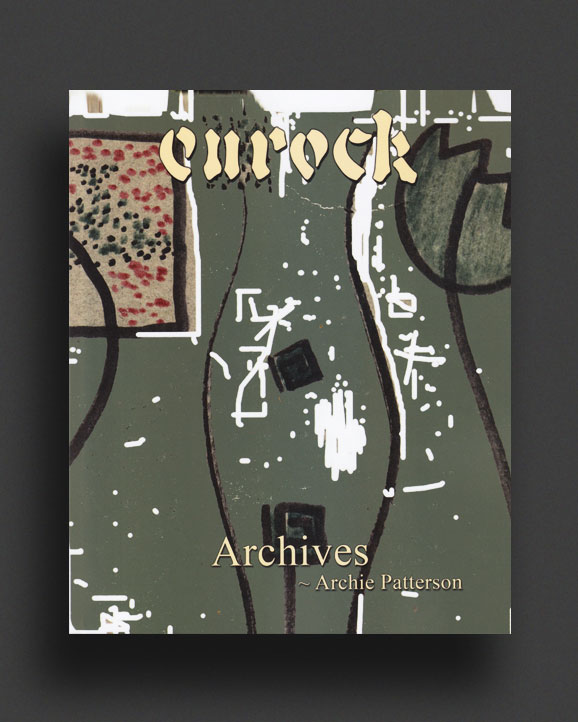
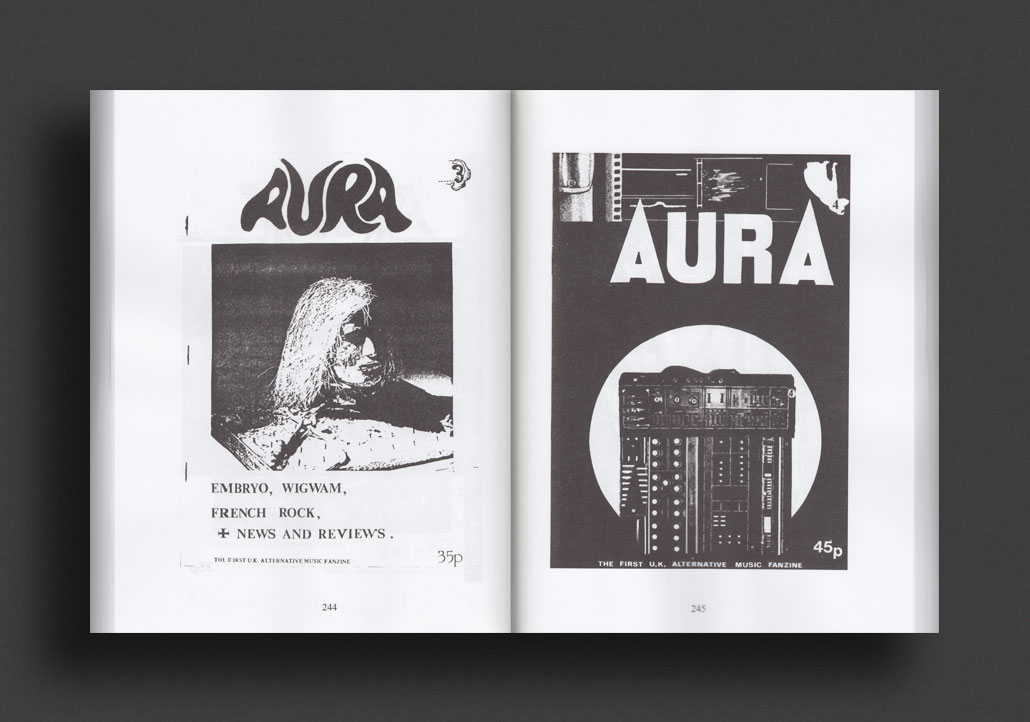
A collection of 'Artifacts' from the files of the legendary Eurock Magazine, "Archives" presents rare images, letters, and communiqués that help complete the intimate Eurock portrait of an era, the music and the friendships spanning 1970-2000. Haphazardly tracing Eurock founder Archie Patterson's life in music, "Archives" is at once both a visual scrapbook and idiosyncratic introduction to 1970s-80s experimental music networks around the world (Krautrock, Musique Française, Behind the Iron Curtain, Musica de Mexico, experimental music from Japan, Brazil, UK, Sweden, the labels, fanzines, distributions...), all heavily illustrated with ephemera, press images, hand-bills, letters, clippings, gig posters, zine covers, and much more.
Includes Cosmic Couriers, Klaus Schulze, Tangerine Dream, Ash Ra Tempel, Popol Vuh, Manuel Göttsching, Wallenstein, Witthüser & Westrupp, Floh de Cologne, Hoelderlin, Emtidi, Mythos, Amon Düül 2, Roedelius, Can, Konrad Schnitzler, Peter Baumann, Kraftwerk, Spacebox, Embryo, Lard Free, Guru Guru, Gilbert Artman, Urban Sax, Art Zoyd, Heldon, Etron Fou Leloublan, Patrick Gauthier, Ilitch, ZNR, Bernard Szajner, DDAA, Didier Bocquet, Wapassou, Univers Zero, Fondation, Shub Niggurath, Troll, Pascal Comelade, Eskaton, Christian Vander, Catherine Riberio + Alpes, Yochk'o Seffer, Luc Marianni, Pulsar, Pataphonie, Michail Chekalin, Patrick Vian, Plastic People of the Universe, Carlos Alvarado, Chac Mool, Decibel, Jorge Reyes, Far East Family Band, Stomu Yamash'ta, Magical Power Mako, Samla Mammas Manna, Aska Temple, Legendary Pink Dots, Michael Huygen, Vangelis, Neuronium, Klaus Schonning, Cybotron, Steve Maxwell Von Braund, Ian McFarlane, Rainbow Theatre, Kulu Hatha Mamma, Savage Rose, Metabolist, Henry Cow, Lemon Kittens, Half Japanese, Chrome, and many more...
Founded by Archie Patterson in Portland 1971 as an FM radio show in Central California, Eurock developed into the fanzine bible of European rock and electronic music, promoting space, cosmic music, krautrock, ambient, and experimental music through its pages and subsequent Intergalactic Trading Company and Paradox Music Mailorder services. Whilst releasing and distributing the "100 Points" recording by the imprisoned Czech underground band Plastic People of the Universe, consulting on film scores in LA (introducing director Michael Mann to Tangerine Dream), and teaching Rock music history classes in public high school, Archie published 45 issues of the invaluable, internationally distributed, vanguard Eurock magazine.