World Food Books' programme is largely produced on Kulin Nation land. We acknowledge the Wurundjeri people of the Kulin Nation as the first and continuing custodians of this land, and pay respect to their Elders past, present, and emerging.
World Food Books is an arts and special interests bookshop in Naarm / Melbourne. Founded in 2010, World Food Books is devoted to the presentation of a rotating, hand-selection of international art, design, literary and counterculture publications with an emphasis on the anti-traditional, the experimental, the avant-garde, the heretic, the marginal.
Presenting new titles alongside rare and out-of-print books, catalogues and journals spanning the fields of modern and contemporary art, design, photography, illustration, film, literature, poetry, cultural theory, philosophy, sexuality, popular and underground culture in its many radical forms, World Food Books wishes to encourage adventurous, thoughtful and open-minded reading, looking, writing, and exchange of publishing and ideas, both current and historical.
As well as our bookshop, located in Melbourne's historical Nicholas Building, all of our inventory is available internationally via our online mail-order service.
World Food Books semi-regularly co-ordinates "Occasions", a programme of exhibits and events at the bookshop and in partnership with other hosts (such as museums and art galleries) that develop out of the activities, relationships and content of the bookshop itself.
World Food Books
The Nicholas Building
37 Swanston Street
Room 5, Level 6
Melbourne 3000
Australia
SHOP HOURS:
Thu–Fri 12–6, Sat 12–5
WEB-SHOP OPEN 24/7
World Food Books
Postal Address:
PO Box 435
Flinders Lane
Victoria 8009
Australia
Art
Theory / Essay
Architecture / Interior
Graphic Design / Typography
Photography
Fashion
Eros
LGBTQ+
Fiction / Poetry
Weird / Speculative / Science Fiction / Horror
Transgressive / Visceral / Abject
Symbolism / Decadence / Fin de siècle
Film / Video
Painting
Sculpture / Installation
Performance / Dance / Theater
Drawing
Sound / Music
Curatorial
Group Shows / Collections
Periodicals
Out-of-print / Rare
Posters / Ephemera / Discs
Signed Books
World Food Books Gift Voucher
World Food Book Bag
Australian Art
Australian Fiction
Australian Science Fiction / Speculative Fiction
Australian Poetry
Australian Photography
Japanese Photography
Conceptual Art
Minimal Art
Dada
'Pataphysics / Oulipo
Fluxus
Concrete Poetry
Pop Art
Surrealism
Arte Povera
Arte Informale / Haute Pâte / Tachism
Nouveau Réalisme / Zero / Kinetic
Situationism / Lettrism
Collage / Mail Art / Xerox Art
Art Brut / Folk / Visionary / Fantastic
Illustration / Graphic Art / Bandes Dessinées
Furniture
Italian Radical Design / Postmodernism
Textiles
Ceramics / Glass
Counterculture
Protest / Revolt
Philosophy
Psychoanalysis
Anthropology
Anarchism
Socialism / Anarchism / Communism / Capitalism
Literary Theory / Semiotics / Language
Feminism / Women's Studies
Gender Studies / Sexuality
Anthropology
Fetishism / BDSM
Drugs / Psychedelia
Crime / Violence
Animal Rights / Veganism
Occult / Esoterica
Ecology / Earth / Alternative Living
Whole Earth / Crafts
All prices in AUD (Australian dollars)
Pick-Ups
Pick-up orders can be collected in our bookshop during opening hours after order date. Please collect any Pick-up orders within 2 weeks of ordering as we have limited storage space. Orders will be released back into stock if not collected within this time. No refunds can be made for pick-ups left un-collected. If you cannot make it in to the bookshop in this time-frame, please choose postage option.
Return Policy
All sales are final. We do accept returns (for refund or exchange) for items received in error. All our orders are packed with special care using heavy-duty padding and cardboard book-mailers or bubble mailers (for smaller books), using reinforcement where required. We cannot take responsibility for any lost, stolen or damaged parcels.
Insurance
Should you wish to insure your package, please email us directly after placing your order and we can organise this at a small extra expense. Although all standard/express tracked packages are very safe and dependable, we cannot take responsibility for any lost, stolen or damaged parcels. We recommend insurance on valuable orders.
Interested in selling your old books, catalogues, journals, magazines, comics, fanzines, ephemera? We are always looking for interesting, unusual and out-of-print books to buy. We only buy books in our fields of interest and specialty, and that we feel we can resell.
We base these prices on desirability, market value, in-print prices, condition and our current stock levels. We offer cash, store credit, and can take stock on consignment. All
about 25% of the price we expect to get when we sell them, or 30% in store credit. We base these prices on desirability, market value, in-print prices, condition and our current stock levels.
Sell your books any day of the week. You can drop them off and return later. If you have a lot of books, we can visit your Sydney home.
We buy books that we feel we can resell. We offer about 25 % of the price we expect to get when we sell them, or 30% in store credit. We base these prices on desirability, market value, in-print prices, condition and our current stock levels.
Philadelphia Wireman
03 August - 01 September, 2018
World Food Books is proud to announce our next Occasion, the first presentation of sculptures by Philadelphia Wireman in Australia.
The Philadelphia Wireman sculptures were found abandoned in an alley off Philadelphia’s South Street on trash night in 1982. Their discovery in a rapidly-changing neighbourhood undergoing extensive renovation, compounded with the failure of all attempts to locate the artist, suggests that the works may have been discarded after the maker’s death. Dubbed the "Philadelphia Wireman" during the first exhibition of this work, in 1985, the maker’s name, age, ethnicity, and even gender remain uncertain. The entire collection totals approximately 1200 pieces, all intricately bound together with tightly-wound heavy-gauge wire (along with a few small, abstract marker drawings, reminiscent both of Mark Tobey and J.B. Murry). The dense construction of the work, despite a modest range of scale and materials, is singularly obsessive and disciplined in design: a wire armature or exoskeleton firmly binds a bricolage of found objects including plastic, glass, food packaging, umbrella parts, tape, rubber, batteries, pens, leather, reflectors, nuts and bolts, nails, foil, coins, toys, watches, eyeglasses, tools, and jewellery.
Heavy with associations—anthropomorphic, zoomorphic, and socio-cultural responses to wrapped detritus—the totemic sculptures by Philadelphia Wireman have been discussed in the context of work created to fulfil the shamanistic needs of alternative religions in American culture. Curators, collectors, and critics have variously compared certain pieces to sculpture from Classical antiquity, Native American medicine bundles, African-American memory jugs, and African fetish objects. Reflecting the artist’s prolific and incredibly focused scavenging impulse, and despite—or perhaps enhanced by—their anonymity, these enigmatic objects function as urban artefacts and arbiters of power, though their origin and purpose is unknown. Philadelphia Wireman, whatever their identity, possessed an astonishing ability to isolate and communicate the concepts of power and energy through the selection and transformation of ordinary materials. Over the course of the past two decades, this collection has come to be regarded as an important discovery in the field of self-taught art and vernacular art.
Presented in collaboration with Fleisher-Ollman Gallery, Philadelphia, and Robert Heald, Wellington.
Susan Te Kahurangi King
02 February - 10 March, 2018
Susan Te Kahurangi King (24 February 1951 - ) has been a confident and prolific artist since she was a young child, drawing with readily available materials - pencils, ballpoint pens and felt-tip markers, on whatever paper is at hand. Between the ages of four and six Susan slowly ceased verbal communication. Her grandparents William and Myrtle Murphy had developed a special bond with Susan so they took on caring responsibilities for extended periods. Myrtle began informally archiving her work, carefully collecting and storing the drawings and compiling scrapbooks. No drawing was insignificant; every scrap of paper was kept. The King family are now the custodians of a vast collection containing over 7000 individual works, from tiny scraps of paper through to 5 meter long rolls.
The scrapbooks and diaries reveal Myrtle to be a woman of great patience and compassion, seeking to understand a child who was not always behaving as expected. She encouraged Susan to be observant, to explore her environment and absorb all the sights and sounds. Myrtle would show Susan’s drawings to friends and people in her community that she had dealings with, such as shopkeepers and postal workers, but this was not simply a case of a grandmother’s bias. She recognised that Susan had developed a sophisticated and unique visual language and sincerely believed that her art deserved serious attention.
This was an unorthodox attitude for the time. To provide some context, Jean Dubuffet coined the term Art Brut in 1945 to describe work created by self-taught artists – specifically residents of psychiatric institutions and those he considered to be visionaries or eccentrics. In 1972 Roger Cardinal extended this concept by adopting the term Outsider Art to describe work made by non-academically trained artists operating outside of mainstream art networks through choice or circumstance. Susan was born in Te Aroha, New Zealand in 1951, far from the artistic hubs of Paris and London that Dubuffet and Cardinal operated in. That Myrtle fêted Susan as a self-taught artist who deserved to be taken seriously shows how progressive her attitudes were.
Susan’s parents Doug and Dawn were also progressive. Over the years they had consulted numerous health practitioners about Susan’s condition, as the medical establishment could not provide an explanation as to why she had lapsed into silence. Dawn educated herself in the field of homeopathy and went on to treat all twelve of her children using these principles – basing prescriptions on her observations of their physical, mental and emotional state.
Doug was a linguist with an interest in philosophy who devoted what little spare time he had to studying Maori language and culture. To some extent their willingness to explore the fringes of the mainstream made them outsiders too but it was their commitment to living with integrity and their respect for individuality that ensured Susan’s creativity was always encouraged.
Even though Susan’s family supported her artistic pursuits, some staff in schools and hospitals saw it as an impediment to her assimilation into the community and discouraged it in a variety of ways. Her family was not always aware of this and therefore did not fully understand why Susan stopped drawing in the early 1990s. However, rather than dwell on the challenges that Susan faced in pursuit of her artistic practice, they prefer to highlight her achievements. In 2008 Susan began drawing again in earnest, after an almost 20 year interruption, and her work is now shown in galleries around the world.
Susan grew up without television and has been heavily influenced by the comics she read as a child. She is absolutely fearless in the appropriation of recognizable characters, such as Donald Duck and Mickey Mouse, in her work. She twists their limbs, contorts their faces, compresses them together, blends them into complex patterned backgrounds - always imbuing them with an incredible energy. Although Susan often used pop culture characters in her work they are not naive or childlike. These are drawings by a brilliant self-taught artist who has been creating exceptional work for decades without an audience in mind.
Mladen Stilinović
"Various Works 1986 - 1999"
02 February 16 - September 10, 2016
Various works 1986 - 1999, from two houses, from the collections of John Nixon, Sue Cramer, Kerrie Poliness, Peter Haffenden and Phoebe Haffenden.
Including: Geometry of Cakes (various shelves), 1993; Poor People’s Law (black and white plate), 1993; White Absence (glasses, ruler, set square, silver spoon, silver ladel with skin photograph and wooden cubes), 1990-1996; Exploitation of the Dead (grey and red star painting, wooden painting, black spoon with red table, red plate), 1984-1990; Money and Zeros (zero tie, paintings made for friends in Australia (Sue, John, Kerrie), numbers painting), 1991-1992; Words - Slogans (various t-shirts) - “they talk about the death of art...help! someone is trying to kill me”, “my sweet little lamb”, “work is a disease - Karl Marx”; Various artist books, catalogues, monographs, videos; Poster from exhibition Insulting Anarchy; "Circular" Croatian - Australian edition; Artist book by Vlado Martek (Dostoyevsky); more.
Thanks to Mladen Stilinović and Branka Stipančić.
Jonathan Walker
Always Will Need To Wear Winter Shirt Blue + Ochre Small Check Pattern
21 August - 21 September, 2015
Untitled
I am not a great reader of poetry but I always return to the work of Melbourne poet, Vincent Buckley (1925- 1988). Perhaps I find his most tantalising piece to be not a finished poem but a fragment left on a scrap of paper discovered on his desk after the poet’s death.
The poetry gathers like oil
In the word-core, and spreads
It has its music meet,
Its music is in movement.
This fragment is more the shell left behind from a volatile thought than a finished poem. I find the last two lines honest but awkward whereas the first two lines work like an arrow. Most likely he could not find a resolution so it was left. Still, in its present form, it remains an eloquent testimony to the ultimate failure of a medium to express mobile thought and sensation, in Buckley’s case, through verbal language. It’s an important matter because this is something all artists have to deal with regardless of the medium.
I have never written a poem, however, I am forever copying fragments from books on paper scraps in a vain effort to fix certain notions in my head. At first, they function as bookmarks that are sometimes returned to when I open the book. But before long, as they accumulate, they fall out littering the table interspersed with A4 photocopies, bills, books and medications.
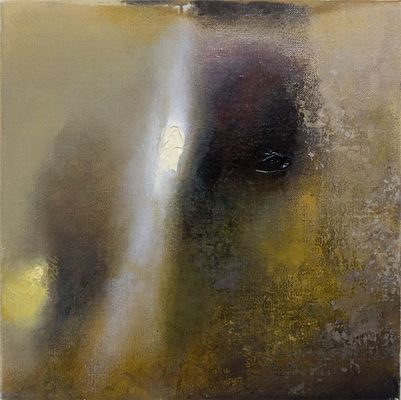
To return to Buckley’s fragment, the first two lines very much evoke how I paint nowadays. As you age, detail diminishes and patches of light become more luminous and float. I feel the most honest way of dealing with this is by smearing the oil paint on the canvas with the fingers and working close-up, blind. Only if the patches coalesce into an approaching image can the work gain a life.
-
Jonathan Walker was born in Melbourne, Australia and brought up on a dairy farm in Gippsland. In the 1970’s he studied painting at RMIT and won the Harold Wright Scholarship to the British Museum, London. During the 1980’s he exhibited at Pinacotheca Gallery, Richmond and had work shown at the NGV and Heidi City Art Gallery. Over the same period he designed the cover for the “Epigenesi” LP by Giancarlo Toniutti, Italy and conducted a mail exchange work with Achim Wollscheid, Germany. The work with artists through the post resulted in an article published in the bicentenary issue of Art and Australia 1988. He showed in artist run spaces such as WestSpace in the 90’s and 2000’s, and until 2012, taught painting at Victoria University, which is where we (Colleen Ahern and Lisa Radford) as organisers of the exhibition, among many others, had the privilege of being his student.
Walker’s knowledge was imparted to students through the careful selection of music, literature, and artists found in books that he himself had ordered for the library. Walker’s strategy was the generosity of sharing his vast knowledge with references specific to each student and their context.
Walker’s paintings share a similar focus and intimacy.
This exhibition presents a small selection of recent paintings alongside a publication that includes Walker’s writing. Observational and analytical, Walker’s work is a type of material notation — the time of day, colour and how it is blended, the both specific and fleeting location of a reflection on lino or the question of whether a chair leg should be included in a painting.
Please join us on Friday August 21 between 6-8pm to celebrate the opening of the exhibition.
Curated by Colleen Ahern and Lisa Radford.
B. Wurtz
Curated by Nic Tammens
March 26 - April 4, 2015
B.Wurtz works from a basement studio in his home on Manhattan’s Lower East Side.
This local fact is attested to by the plastic shopping bags and newsprint circulars that appear in his work. As formal objects, they don’t make loud claims about their origins but nonetheless transmit street addresses and places of business from the bottom of this long thin island. Like plenty of artists, Wurtz is affected by what is local and what is consumed. His work is underpinned by this ethic. It often speaks from a neighborhood or reads like the contents of a hamper:
“BLACK PLUMS $1.29 lb.”
“Food Bazaar”
“USDA Whole Pork Shoulder Picnic 99c lb.”
“RITE AID Pharmacy, with us it’s personal.”
“H. Brickman & Sons.”
“Sweet Yams 59c lb."
Most of the work in this exhibition was made while the artist was in residence at Dieu Donne, a workshop dedicated to paper craft in Midtown. Here Wurtz fabricated assemblages with paper and objects that are relatively lightweight, with the intention that they would be easily transportable to Australia. This consideration isn’t absolute in Wurtz’s work, but was prescriptive for making the current exhibition light and cheap. Packed in two boxes, these works were sent from a USPS post office on the Lower East Side and delivered to North Melbourne by Australia Post.
Wurtz appears courtesy of Metro Pictures, New York.
Thanks to Rob Halverson, Joshua Petherick, Sari de Mallory, Matt Hinkley, Helen Johnson, Fayen d'Evie, Ask Kilmartin, Lisa Radon, Ellena Savage, Yale Union, and "Elizabeth".
John Nixon
"Archive"
December 15 - January 20, 2014
The presentation of John Nixon's archive offered a rare showcase of this extensive collection of the artist's own publications, catalogues, posters, ephemera, editions and more, from the mid 1980s onwards, alongside a selection of his artworks.
Organized by John Nixon, Joshua Petherick and Matt Hinkley.
<a href=http://wfb.public-office.info/artist/john-nixon>All titles by John Nixon
"Habitat"
at Minerva, Sydney (organised by Joshua Petherick and Matt Hinkley)
November 15 - December 20, 2014
Lupo Borgonovo, Janet Burchill & Jennifer McCamley,
Lewis Fidock, HR Giger, Piero Gilardi, Veit Laurent Kurz,
Cinzia Ruggeri, Michael E. Smith, Lucie Stahl, Daniel Weil, Wols
Press Release:
“...It contained seven objects. The slender fluted bone, surely formed for flight, surely from the wing of some large bird. Three archaic circuitboards, faced with mazes of gold. A smooth white sphere of baked clay. An age-blackened fragment of lace. A fingerlength segment of what she assumed was bone from a human wrist, grayish white, inset smoothly with the silicon shaft of a small instrument that must once have ridden flush with the surface of the skin - but the thing’s face was seared and blackened.”
William Gibson, “Count Zero”, 1986
"Autumn Projects Archive"
Curated by Liza Vasiliou
March 6 - March 15, 2014
World Food Books, in conjunction with the Virgin Australia Melbourne Fashion Festival 2014, presented the Autumn Projects archive, consisting of a selection of early examples in Australian fashion with a particular interest in collecting designers and labels from the period beginning in the 1980’s, who significantly influenced the discourse of Australian Fashion.
Curated by Liza Vasiliou, the exhibition provided a unique opportunity to view pieces by designers Anthea Crawford, Barbara Vandenberg, Geoff Liddell and labels CR Australia, Covers, Jag along with early experimental collage pieces by Prue Acton and Sally Browne’s ‘Fragments’ collection, suspended throughout the functioning World Food Books shop in Melbourne.
H.B. Peace
presented by CENTRE FOR STYLE
November 14, 2013
"Hey Blinky, you say chic, I say same"
Anon 2013
H.B. Peace is a clothing collaboration between great friends Blake Barns and Hugh Egan Westland. Their pieces explore the divergences between 'character’ and ‘personality’ in garments....etc
Special Thanks to Joshua Petherick and Matt Hinkley of WFB and Gillian Mears
and a Very Special Thank you to Audrey Thomas Hayes for her shoe collaboration.
Janet Burchill & Jennifer McCamley
"Aesthetic Suicide"
May 10 - June 8, 2013
The first of our occasional exhibitions in the World Food Books office/shop space in Melbourne, "Aesthetic Suicide" presented a body of new and older works together by artists Janet Burchill & Jennifer McCamley, including videos, prints, a wall work, and publications.
During shop open hours videos played every hour, on the hour.
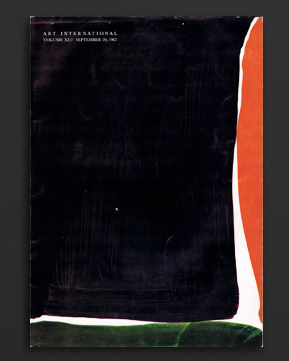
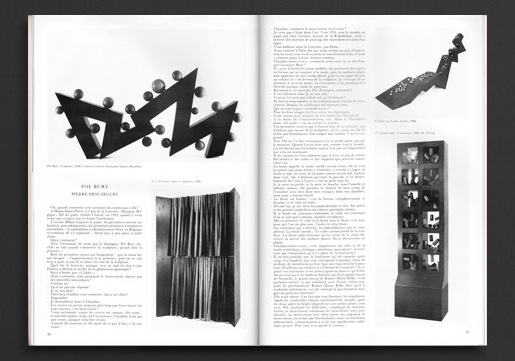
1967, English / French / Italian
Softcover, 64 pages, 24.5 x 34.5 cm
Out of print title / used / good
Published by
James Fitzsimmons / Lugano
$55.00 - In stock -
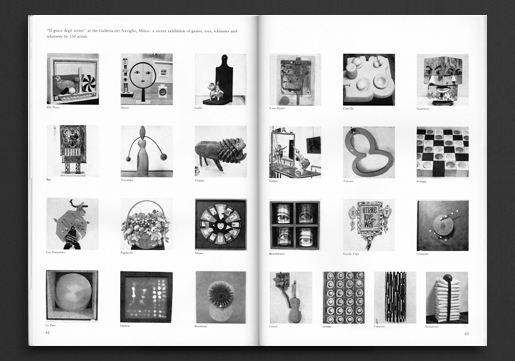
Art International, Vol. XI/7 September 20, 1967
Published and Edited by James Fitzsimmons
Advisory Editors: Umbro Apollonio, Jorge Romero Brest, Lucy R. Lippard, James Mellow.
Features: Helen Frankenthaler, Expo '67, Jean Tinguely, Alexander Calder, Max Bill, Niki de Saint-Phalle, Otto Frei, James Rosenquist, Claude Viseux, Henri Michaux, César, Antonio Saura, Piero Gilardi, Roy Lichtenstein, Claes Oldenburg, Andy Warhol, Arman, Pol Bury, Paul de Lussanet, Henry Moore, Luis Alberto Wells, Peter Schmidt, Erwin Heerich, Michelangelo Pistoletto, Kenneth Martin, Tim Scott, Allen Jones, Tess Jaray, Jean Dubuffet, Brassai, Tetsumi Kudo, Louise Nevelson, Marcel Duchamp, Raphael Jesus Soto, and many more.
Art International was a highly regarded international art journal based in Switzerland from 1957-1984. With international editors and contributing writers, A.I. was issued 10 times per year and was published and edited by James A. Fitzsimmons.
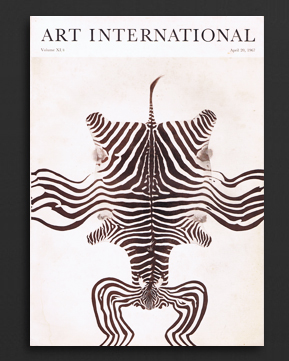
1967, English
Softcover, 80 pages, 24.5 x 34.5 cm
Out of print title / used / good
Published by
James Fitzsimmons / Lugano
$55.00 - In stock -
Art International, Vol. XI/4 April 20, 1967
Published and Edited by James Fitzsimmons
Advisory Editors: Umbro Apollonio, Jorge Romero Brest, Lucy R. Lippard, James Mellow.
Features: Jacques Kaplan, Clement Greenberg, Anne Truitt, Anthony Caro, Carl Andre, Ronald Bladen, Robert Smithson, Lucy R. Lippard, Larry Poons, Colin Self, Eli Bornstein, Bridget Riley, Maurice de Sansmarez, Nanda Vigo, Victor Vasarely, Marcel Broodthaers, Arman, Roberto Crippa, Richard Smith, Howard Hodgkin, Avinash Chandra, Mary Preminger, Dan Flavin, Steve Kaltenbach, DeWain Valentine, Leonard Esbensen, Craig Kauffman, Kenneth Snelson, Morris Louis, Franz Kline, Aubrey Beardsley, Sam Francis, Richard Tuttle, Paul Klee, Gary Kuehn, Tony Smith, John Wesley, Jack Beal, Antonin Artuad, Nicholas Krushenick, Colin Self, Lucio del Pezzo, Peter Voulkos, Leonard da Vinci, Kenneth Noland, Jules Olitski, Ludwig Sander, Yves Klein, Edward Kienholz, Adolph Gottlieb, and many more.
Art International was a highly regarded international art journal based in Switzerland from 1957-1984. With international editors and contributing writers, A.I. was issued 10 times per year and was published and edited by James A. Fitzsimmons.
1965, English
Softcover, 80 pages, 24.5 x 34.5 cm
Out of print title / used / good
Published by
James Fitzsimmons / Lugano
$45.00 - In stock -
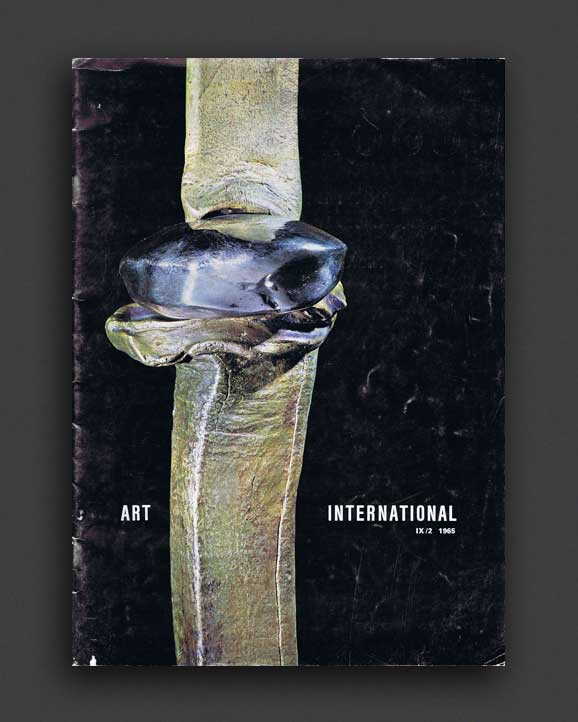
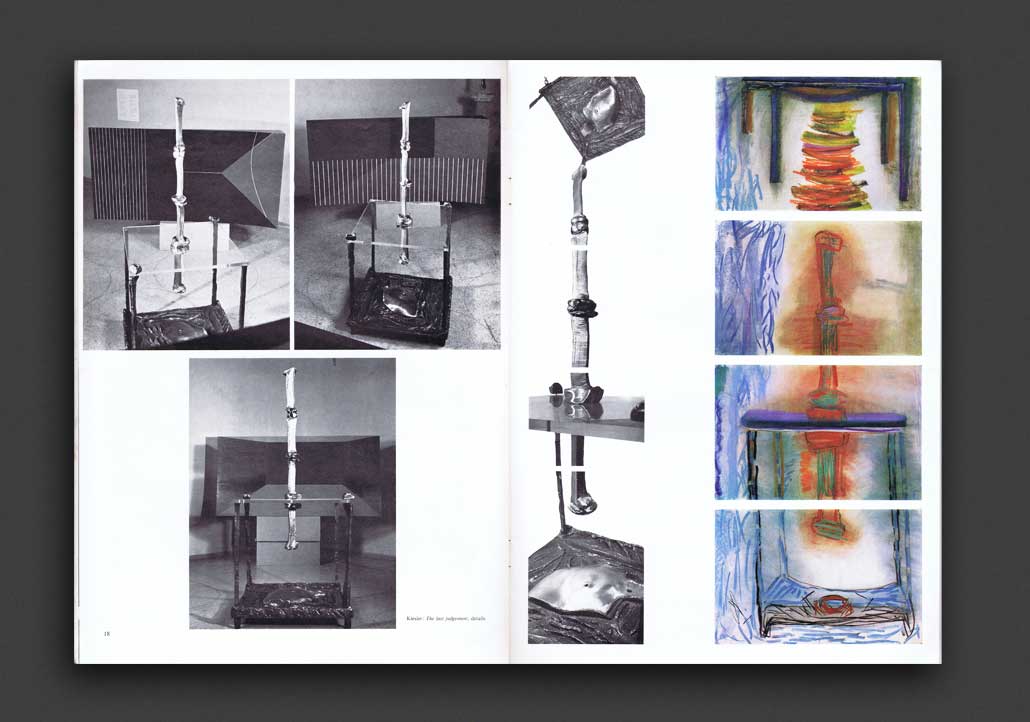
Art International, Vol. IX/II March 1965
Published and Edited by James Fitzsimmons
Features: Frederick Kiesler, Abraham Rattner, Henry Miller, Lucy R. Lippard, Ruth Vollmer, Jean Dubuffet, Jean Tinguely, Nicolas de Staël, Georges Mattieu, Piet Mondrian, Carlo Carrà, Frank Stella, Robert Morris, Tomioki Tessai, Masuo Ikeda, Taizo Yoshinaka, Keiji Usami, Jasper Johns, Toshimitsu Imai, Toshinobu Onosato, John Hoyland, Abrella Giorgi, and many more.
Art International was a highly regarded international art journal based in Switzerland from 1957-1984. With international editors and contributing writers, A.I. was issued 10 times per year and was published and edited by James A. Fitzsimmons.
2017, English
Softcover, 220 pages, 22.9 x 27.9 xcm
Published by
Yale University Press / New Haven
$69.00 - Out of stock
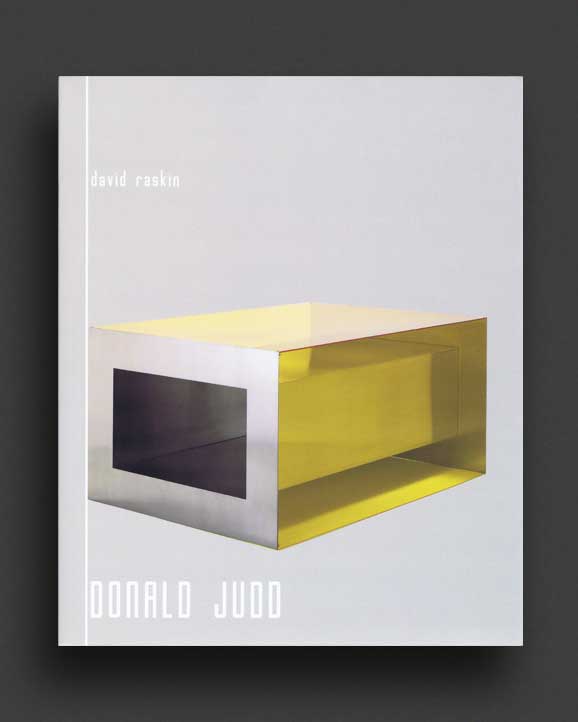
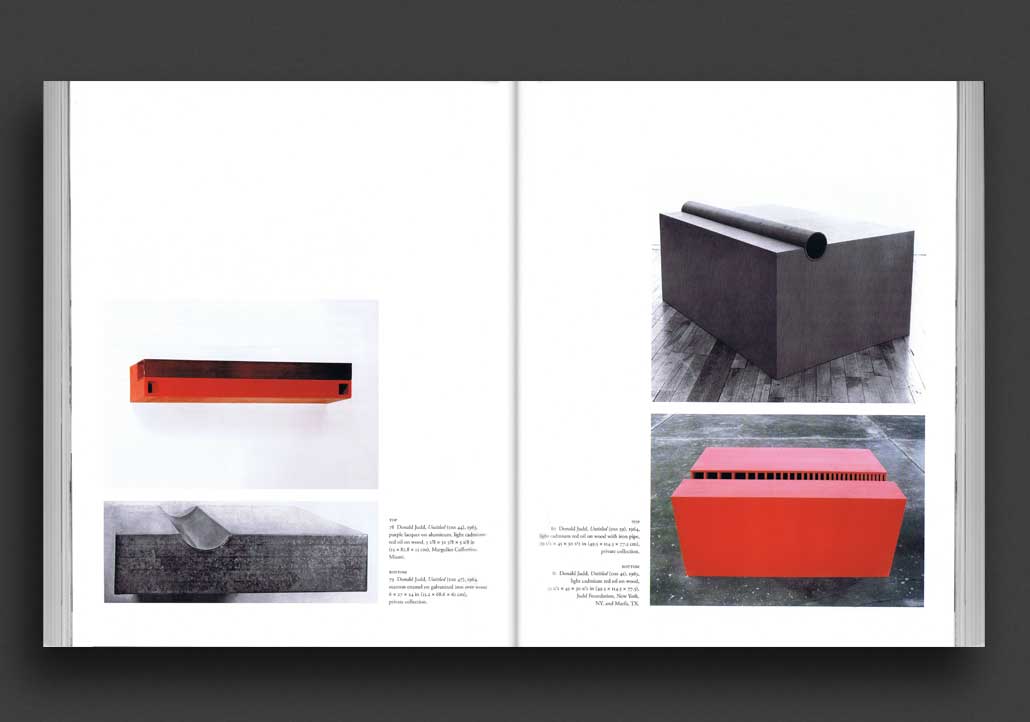
This pioneering, critically acclaimed book, originally published in 2010 and now available in paperback, is an authoritative and enlightening guide to a wide array of works by the great American artist Donald Judd (1928-1994). Showcasing the entire breadth of Judd's practices, the book draws on documents from nearly twenty archives and investigates Judd and his work both within and outside the context of the 1960s Minimalist art movement. David Raskin explains why some of Judd's works seem startlingly ephemeral while others remain insistently physical; in the process of answering this perplexing question, Raskin traces Judd's principles from his beginnings as an art critic through his fabulous installations and designs in Marfa, Texas. Raskin develops a truly singular picture of Judd: he shows us an artist who asserted his individuality with spare designs; who found spiritual values in plywood, Plexiglas, and industrial production; who refused to distinguish between thinking and feeling while asserting that science marked the limits of knowledge; who claimed that his art provided intuitions of morality but not a specific set of tenets; and who worked for political causes that were neither left nor right.
2017, English
Hardcover (w. dust jacket), 328 pages, 15.2 x 23 cm
Published by
The MIT Press / Massachusetts
$65.00 - Out of stock
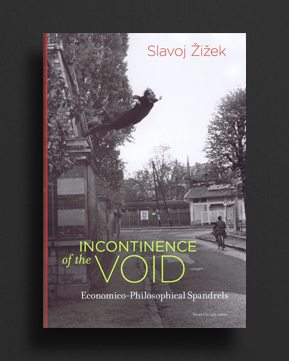
If the most interesting theoretical interventions emerge today from the interspaces between fields, then the foremost interspaceman is Slavoj Žižek. In Incontinence of the Void (the title is inspired by a sentence in Samuel Beckett’s late masterpiece Ill Seen Ill Said), Žižek explores the empty spaces between philosophy, psychoanalysis, and the critique of political economy. He proceeds from the universal dimension of philosophy to the particular dimension of sexuality to the singular dimension of the critique of political economy. The passage from one dimension to another is immanent: the ontological void is accessible only through the impasses of sexuation and the ongoing prospect of the abolition of sexuality, which is itself opened up by the technoscientific progress of global capitalism, in turn leading to the critique of political economy.
Responding to his colleague and fellow Short Circuits author Alenka Zupančič’s What Is Sex?, Žižek examines the notion of an excessive element in ontology that gives body to radical negativity, which becomes the antagonism of sexual difference. From the economico-philosophical perspective, Žižek extrapolates from ontological excess to Marxian surplus value to Lacan’s surplus enjoyment. In true Žižekian fashion, Incontinence of the Void focuses on eternal topics while detouring freely into contemporary issuesfrom the Internet of Things to Danish TV series.
About the Author
Slavoj Žižek, a philosopher and cultural critic, is Senior Researcher in the Department of Philosophy at the University of Ljubljana, Global Distinguished Professor of German at New York University, and International Director of the Birkbeck Institute for the Humanities at the University of London. He is the author of more than thirty books, including Looking Awry: An Introduction to Jacques Lacan through Popular Culture, The Puppet and the Dwarf: The Perverse Core of Christianity, The Parallax View, The Monstrosity of Christ: Paradox or Dialectic (with John Milbank), and Žižek’s Jokes (Did you hear the one about Hegel and negation?), these five published by the MIT Press.
2017, English
Softcover, 128 pages, 20 x 28 cm
Published by
Roma / Amsterdam
$57.00 - Out of stock
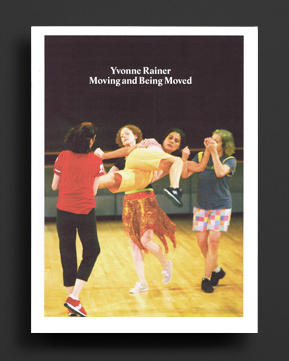
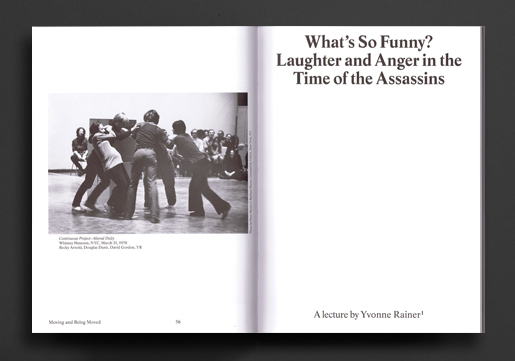
Edited by Yvonne Rainer, this selection of texts and images by Rainer and various authors offers a retrospective portrait of her work, focusing on some of her most notable performances and projects from both the late 1960s (‘Trio A’, ‘The Mind Is a Muscle’) and since her return to dance with the White Oak Dance Project in 2000. Rainer is known for her challengingly experimental and sometimes minimalist work as a dancer, choreographer, and filmmaker, which spearheaded the rise of postmodern dance. An essay by Rainer frames things from the perspective of an ageing dancer who is aware of her physical limitations. With a conversation between Rainer and dancer Trisha Brown.
2017, English
Softcover, 200 pages, 21 x 30 cm
Published by
Roma / Amsterdam
$60.00 $20.00 - In stock -
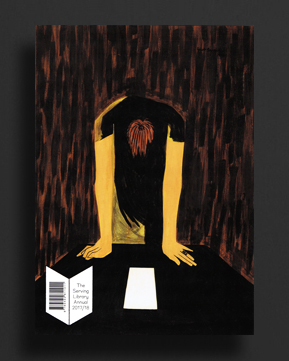
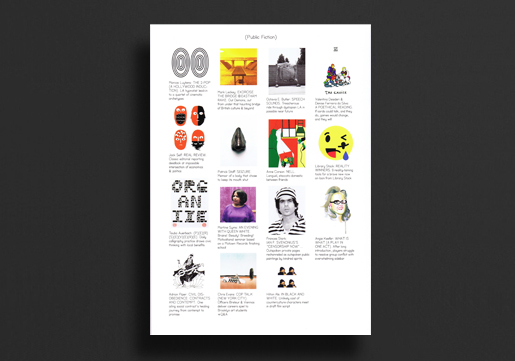
'The Serving Library Annual' comprises a number of individual “Bulletins” organized around a theme for an international audience of designers, artists, writers, and researchers. Newly published by ROMA Publications in a yearly format, this inaugural issue is realised in collaboration with Public Fiction, a journal and exhibition-maker based in Los Angeles. It deals with acts of civil disobedience and other forms of resistance, particularly in view of the relationship between entertainment and power. Contributors include Hilton Als, Tauba Auerbach, Anne Carson, Mark Leckey, Adrian Piper, Frances Stark, and Martine Syms.
2017, English
Softcover, 96 pages, 12 x 19 cm
Published by
Quodlibet / Italy
$22.00 - Out of stock
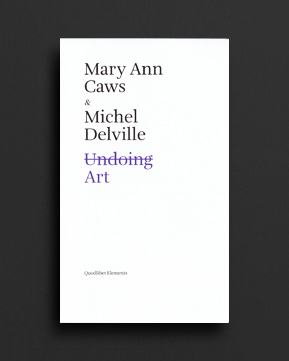
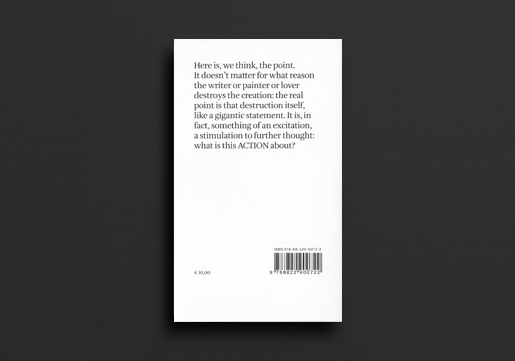
What do Stéphane Mallarmé, Antonin Artaud, Meret Oppenheim, Asger Jorn, Yoko Ono, Tom Phillips, and Martin Arnold have in common? Whereas a wealth of critics have diagnosed contemporary art’s preoccupations with madness, depression, and self-abuse, as well as its tendency to cultivate an (anti-)aesthetics of the negative, the excremental, and the abject, much less attention has been paid to how modern artists and publics have thrived on the destruction, disfiguration, and obliteration of work by the artists and/or by that of others. This book recounts the history of “undoing” art in a positive mode, rescued from popular narratives of the decline and death of the avant-garde.
2013, English
Softcover, 48 pages, 21.1 x 13.5 cm
Published by
Companion Editions / Portland
$20.00 - Out of stock
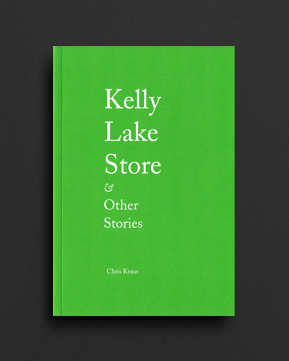
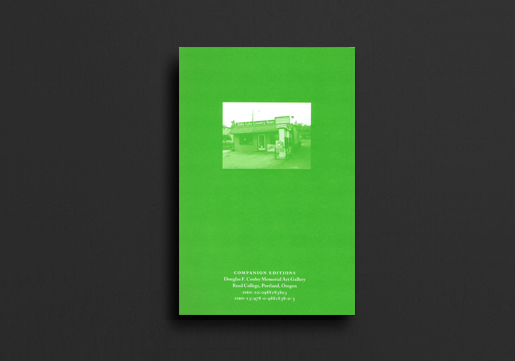
"Two hours south of the border, we are transported into a parallel universe-a collapsing of time, culture, and space-available, it seems now, to anyone, at the price of absolute poverty." - Chris Kraus
In Kelly Lake Store and Other Stories, Chris Kraus continues to blur the boundaries of genre in an exploration of Mexicali border culture, "participant" art, the romance of regionalism, and the relationship between art and real estate. As a writer and co-editor of the highly influential independent press Semiotext(e), Kraus's writing inhabits what Helen Stuhr-Rommereim called the "rare space where art, politics, theory and feelings are all tied up together because, as she continually makes clear, they are always all tied up together."
1971, German
Softcover, 32 pages, 15 x 10 cm
1st Edition, Out of print title / used / very good
Published by
Phillipp Reclam / Stuttgart
$20.00 - Out of stock
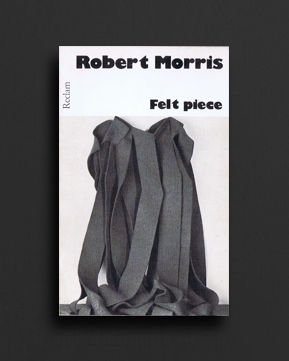
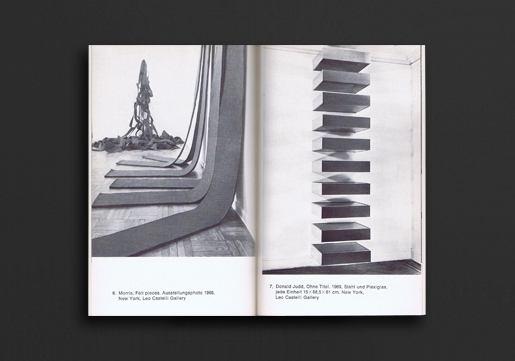
Robert Morris "Felt Piece", from the Phillipp Reclam (Stuttgart) pocket-book series on individual artworks. Text in German by Walter Kambartel with illustrated section of Morris' works, alongside works by Donald Judd, Carl Andre, Walter de Maria, Constantin Brancusi, David Smith, Marcel Duchamp, John McCracken, Frank Stella, Jackson Pollock, and Allan Kaprow.
First edition, very good copy.
2009, English
Hardcover (cloth-bound), 320 pages, 20.3 x 25.4 cm
Published by
Yale University Press / New Haven
$119.00 - Out of stock
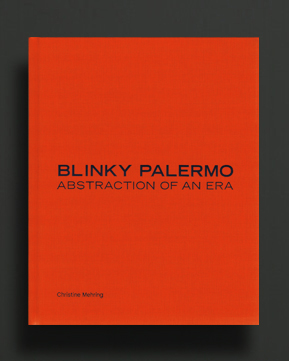
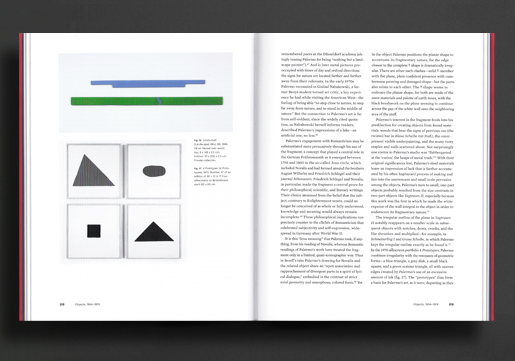
Twenty-one-year-old Peter Heisterkamp began signing his colorful and playful abstract artworks Palermo in 1964, when peers noted his resemblance to the American gangster Frank “Blinky” Palermo. This handsome book—a historical and critical study of Palermo’s painting from the time he entered Joseph Beuys’s now famous class at the Düsseldorf academy in 1964 to his death in 1977—explores his significance for postwar and abstract art.
Christine Mehring notes that over the course of Palermo’s brief career he created five concurrent but distinct bodies of work: objects, cloth-pictures, wall-paintings, metal-pictures, and collaborative projects, primarily with his friend and colleague Gerhard Richter. Mehring shows how each of these groups demonstrates Palermo’s efforts to lead German art out of its international isolation and to transform modernist painting into historically resonant abstraction by incorporating artifice, humor, period colors, and play.
(Blinky) Palermo (1943–1977) was born Peter Schwarze in Leipzig. In 1962, he entered the Kunstakademie Düsseldorf, where he studied with Bruno Goller and then with Joseph Beuys and, in 1964, appropriated the name Blinky Palermo from the American boxing promoter-cum-mafioso Frank “Blinky” Palermo, famous for managing heavyweight champion Sonny Liston. Over the course of his short life, Palermo participated in more than seventy exhibitions worldwide, including Documenta in 1972 and the Venice Biennale in 1975. He has had posthumous retrospectives at the Kunstmuseum Winterthur, Switzerland (1984); Kunstmuseum Bonn (1993); Museu d’Art Contemporani de Barcelona (MACBA) (2002); Kunsthalle Düsseldorf (2007); and Dia:Beacon and the Center for Curatorial Studies at Bard College, Annandale-on-Hudson, New York (CCS Bard) (2011).
2017, English
Paperback, 125 pages, 21.6 x 28 cm
Published by
Light Industry / New York
$75.00 - Out of stock
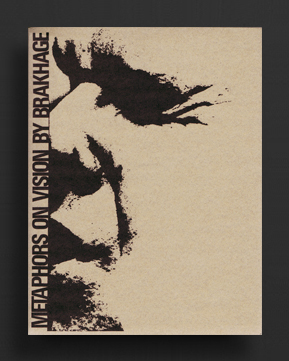
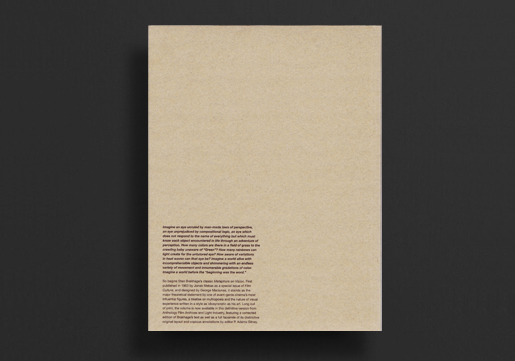
Originally published in 1963 by Jonas Mekas as a special issue of Film Culture, and designed by George Maciunas, Metaphors on Vision stands as the major theoretical statement by one of avant-garde cinema's most influential figures, a treatise on mythopoeia and the nature of visual experience written in a style as idiosyncratic as his art. Long out of print, the volume is now available in this definitive edition. Featuring Brakhage's complete text in its distinctive original layout, as well as annotations by scholar P. Adams Sitney.
2017, English / German
Softcover, 248 pages, 23 x 16.5 cm
Published by
Texte Zur Kunst / Berlin
$32.00 - Out of stock
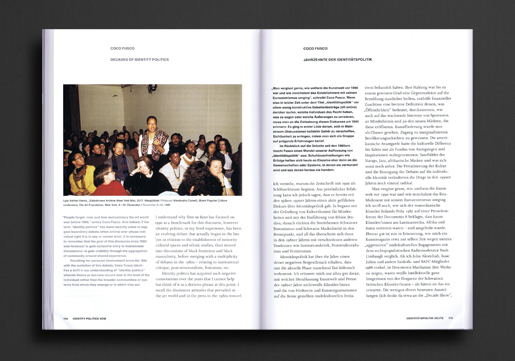
"Identity politics" has always been beleaguered territory. Yet recently the debate around “identity" has intensified and (with Trump) even developed new fronts. This issue examines the present state of identity politics in the West, finding the commodification of identity in mass culture (as in the art market) to be a leading influence. We also recognize a divide between, on the one hand, non-dominant communities cohering around identity so as to become visible together; and on the other hand, individuals aiming to stand out as special or "unique" by dint of membership in various non-dominant groups. Such ambiguity, in the face of current leadership (see issue cover) lends only all the more urgency, we feel, for a serious engagement with “identity” vis-a-vis “politics” now.
ISSUE NO. 107 / SEPTEMBER 2017 "IDENTITY POLITICS NOW"
Table Of Contents
Preface
True And False Victims / Sarah Schulman In Conversation With Caroline Busta and Anke Dyes (Texte Zur Kunst)
People Politics
Gabi Ngcobo & Yvette Mutumba, Klaus Biesenbach, Egija Inzule On "People Politics"
Monique Roelofs / Identity And Its Public Platforms: A String Of Promises Entwined With Threats
Andreas Reckwitz / Performative Authenticity: The Subject In The Late Modern Society Of Singularities
What Would Winning Look Like? / Bini Adamczak In Conversation With Anke Dyes (Texte Zur Kunst)
Coco Fusco / Decades Of Identity Politics
Bildstrecke
Sandra Mujinga
Rotation
Das Falsche Buch Zur Richtigen Zeit / Floris Biskamp Über „Beißreflexe“ Von Patsy L’amour Lalove
Apocalypse, A Lover’s Discourse / Jeff Nagy On “Life” By Hannah Black and Juliana Huxtable
Das Unbewusste Ist Strukturiert Wie Eine Ware / Helmut Draxler Und Kerstin Stakemeier Über „The Capitalist Unconscious“ Von Samo Tomšic
Zwischen Warten Und Wandern / Christiane Voss Über „Siegfried Kracauer. Eine Biografie“ Von Jörg Später
Liebe Arbeit Kino
Ghost In Chanel / Tobias Madison On Olivier Assayas’s Film “Personal Shopper”
Lippenbekenntnisse / Fiona Mcgovern Über Kerstin Honeit Im Videoraum Der Berlinischen Galerie
Grand Tour
Documenta 14 - Skulptur Projekte Münster - 57Th Biennale Di Venezia
Aus Fehlern Lernen / Sabeth Buchmann Und Ilse Lafer Über Die Documenta 14 In Athen
Incorrect History / Tom Mcdonough On Naeem Mohaiemen’s “Two Meetings And A Funeral” At Documenta 14, Kassel
Public Sculpture Pokéstop / Amy Lien And Enzo Camacho On Skulptur Projekte Münster 2017
Aufhören, Wenn’s Am Schönsten Ist / Eva Ehninger Über Die Skulptur Projekte Münster
The Stuck Hourglass / Venus Lau On The 57Th Venice Biennale
Crowd Kontrolle / Judith Rodenbeck On Anne Imhof’s “Faust” For The German Pavilion, 57Th Venice Biennale
Reviews
Negative Chic / Ken Okiishi On Rei Kawakubo/Comme Des Garçons At The Metropolitan Museum Of Art, New York
Zünftig In Die Zukunft / Beate Söntgen Über „Otto Freundlich: Kosmischer Kommunismus“ Im Museum Ludwig, Köln
The Man In The Mirror / Sarah Morris On Merlin Carpenter At Galerie Neu, Berlin
Verdeckte Arbeit / Gertrud Koch Über Sarah Morris Bei Capitain Petzel, Berlin
Marilyn And The Museum With Walls / Kevin Lotery On Rachel Harrison At Greene Naftali, New York
Unterwerfung Durch Architektur / Anna Voswinkel Über Peggy Buth Im Museum Folkwang Essen
Democracy Of Sound / Zoë Alexandra Harris On “Free Music Production/Fmp: The Living Music” At Haus Der Kunst, Munich
Tausend Snapchat-Rimbauds / Hans-Christian Dany Über Seth Price Im Stedelijk Museum, Amsterdam
Trocadero Drift / John Kelsey on Michel Houellebecq At Venus Over Manhattan, New York
Resident Aliens / Ella Plevin On Monira Al Qadiri At Gasworks, London
Blickwechsel-Begehren / Ines Kleesattel Über Birgit Megerle Im Kunsthaus Glarus
Containers Of The Virtual / Lars Bang Larsen On Hans-Christian Lotz At Christian Andersen, Copenhagen
Geschwätzige Zeiten / Tobias Teutenberg Über „After The Fact. Propaganda Im 21. Jahrhundert“ In Der Städtischen Galerie Im Lenbachhausund Kunstbau München
The Interdependence Of Feelings And Debates / Yuki Higashino On Martin Beck At Mumok, Vienna
Nachruf
Werner Hamacher (1948–2017)
Edition
Josh Kline
Juergen Teller
2017, English
Softcover, 48 pages, 20.95 x 13.3 cm
ed. of 750 copies,
Published by
Primary Information / New York
$23.00 - Out of stock
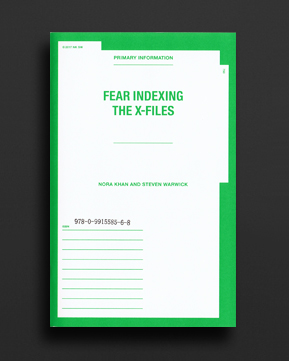
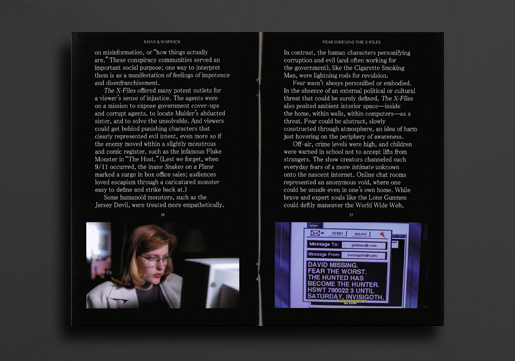
For Fear Indexing The X-Files, Nora Khan and Steven Warwick combed through the first 9 seasons of The X-Files television series—which ran from 1992 to 2002—gathering and indexing the fears that occurred as themes throughout the show. The authors employ a documentary-style commentary to narrate how the show posited fear as an inherent quality of domestic life.
The original run of the series aired in the period nestled between the end of the Cold War and the start of the War on Terror—a time in which enemies of the state shifted, with aliens replacing Communism, and a fear of ghosts and the paranormal prefacing our current climate of Islamophobia. Throughout the show, deregulated neoliberalism continually hovers, like an invisible man in the room.
Khan and Warwick take this index and link it to the rise of the World Wide Web and the global internet, which emerged in the same era. As the show developed, its characters became more adept at using the internet, as did its fans, many of whom visited chat rooms and dedicated forums to discuss episode content, speculate on theories, and come up with urban legends of their own. This behavior provides a through line to the present, as conspiracy theories discussed on those vanguard message boards eerily echo today’s fake news stories perpetuated by the alt-right.
Nora Khan is a New York City-based writer of criticism and fiction. She focuses on issues within digital art, the philosophy of technology, electronic music, and artificial intelligence, and her work has appeared in places like 4Columns, Art in America, Spike Art Magazine, California Sunday, The Village Voice, Rhizome, POSTmatter, and After Us. Khan is a 2016 Thoma Foundation Arts Writing Fellow in Digital Art, a 2017 Eyebeam Research Resident, and a contributing editor at Rhizome. She frequently collaborates with artists, including Katja Novitskova, Yuri Pattison, and Jeremy Shaw, writing essays commissioned by Sternberg Press, Mousse, Chisenhale Gallery, and König Galerie.
Steven Warwick is an artist, musician, and writer based in Berlin. He has exhibited and performed throughout the United States and Europe at venues including Exile Galerie, ICA London, the Modern Institute, MoMA/PS1, MUTEK, the Schinkel Pavillon, the New Theater Berlin, and Unsound Festival. His writings have appeared in Texte zur Kunst, Spike, Urbanomic, Electronic Beats, and The Wire. Warwick records for the label PAN under his name and also as Heatsick.
2017, English
Softcover, 116 pages, 22.8 x 15.2 cm
ed. of 1000,
Published by
Primary Information / New York
$35.00 - Out of stock
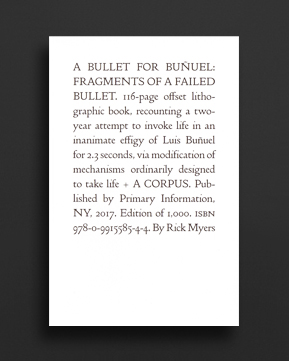
A Bullet for Buñuel: Fragments of a Failed Bullet documents Rick Myers’ attempt to complete a project begun by the late filmmaker Luis Buñuel: to create a bullet possessing such a weak charge that it would simply bounce off the filmmaker’s shirt when fired at him. Consulting with the estate and sources ranging from online forums for bullet makers to a ballistics lab associated with the United States Secret Service, Myers sought to make the bullet and fire it at a shirt that had been worn by Buñuel. While trying to bring this absurdist endeavor to completion, the artist was met with a colorful cast of characters and failures at almost every turn.
A Bullet for Buñuel has taken many forms—a video work, a multiple, and a performative lecture—all of which are represented in this publication. Myers’ writing, research, correspondence, and photographs are also included in the book, which synthesizes years of work into a singular meditation on the poetics of failure.
Rick Myers is a Manchester-born artist and publisher living in Massachusetts. Myers works in a variety of media including video, installation, and drawing in addition to producing artists’ books and editions. He has recently had solo exhibitions at The Poetry Library at Southbank Centre and The Book Library at The Courtauld Institute of Art, London; Printed Matter, New York; and White Columns, New York.
2017, English
Softcover, 270 pages, 15.2 x 22.9 cm
Published by
The MIT Press / Massachusetts
$55.00 - Out of stock
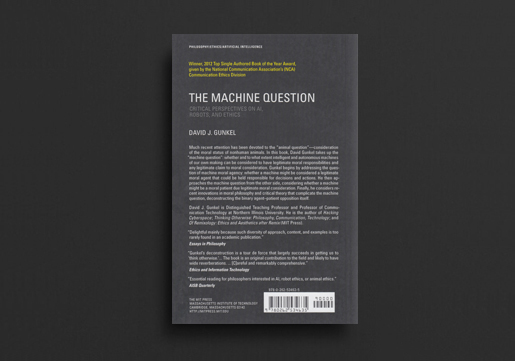
One of the enduring concerns of moral philosophy is deciding who or what is deserving of ethical consideration. Much recent attention has been devoted to the "animal question"—consideration of the moral status of nonhuman animals. In this book, David Gunkel takes up the "machine question": whether and to what extent intelligent and autonomous machines of our own making can be considered to have legitimate moral responsibilities and any legitimate claim to moral consideration.
The machine question poses a fundamental challenge to moral thinking, questioning the traditional philosophical conceptualization of technology as a tool or instrument to be used by human agents. Gunkel begins by addressing the question of machine moral agency: whether a machine might be considered a legitimate moral agent that could be held responsible for decisions and actions. He then approaches the machine question from the other side, considering whether a machine might be a moral patient due legitimate moral consideration. Finally, Gunkel considers some recent innovations in moral philosophy and critical theory that complicate the machine question, deconstructing the binary agent–patient opposition itself.
Technological advances may prompt us to wonder if the science fiction of computers and robots whose actions affect their human companions (think of HAL in 2001: A Space Odyssey) could become science fact. Gunkel’s argument promises to influence future considerations of ethics, ourselves, and the other entities who inhabit this world.
About the Author
David J. Gunkel is Distinguished Teaching Professor and Professor of Communication Technology at Northern Illinois University. He is the author of Hacking Cyberspace, Thinking Otherwise: Philosophy, Communication, Technology and Of Remixology: Ethics and Aesthetics After Remix (MIT Press).
2017, English
Hardcover, 288 pages, 16.5 x 23.8 cm
Published by
The MIT Press / Massachusetts
$69.00 - Out of stock
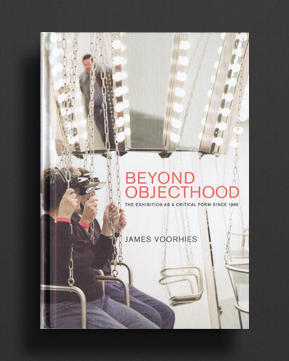
In 1968, Robert Smithson reacted to Michael Fried's influential essay "Art and Objecthood" with a series of works called non-sites. While Fried described the spectator's connection with a work of art as a momentary visual engagement, Smithson's non-sites asked spectators to do something more: to take time looking, walking, seeing, reading, and thinking about the combination of objects, images, and texts installed in a gallery. In Beyond Objecthood, James Voorhies traces a genealogy of spectatorship through the rise of the exhibition as a critical form -- and artistic medium. Artists like Smithson, Group Material, and Michael Asher sought to reconfigure and expand the exhibition and the museum into something more active, open, and democratic, by inviting spectators into new and unexpected encounters with works of art and institutions. This practice was sharply critical of the ingrained characteristics long associated with art institutions and conventional exhibition-making; and yet, Voorhies finds, over time the critique has been diluted by efforts of the very institutions that now gravitate to the "participatory." Beyond Objecthood focuses on innovative figures, artworks, and institutions that pioneered the exhibition as a critical form, tracing its evolution through the activities of curator Harald Szeemann, relational art, and New Institutionalism. Voorhies examines recent artistic and curatorial work by Liam Gillick, Thomas Hirschhorn, Carsten Holler, Maria Lind, Apolonija Sustersic, and others, at such institutions as Documenta, e-flux, Manifesta, and Office for Contemporary Art Norway, and he considers the continued potential of the exhibition as a critical form in a time when the differences between art and entertainment increasingly blur.
James Voorhies is a curator and art historian of modern and contemporary art. He is Dean of Fine Arts and Associate Professor at California College of the Arts in San Francisco.
1987, English
Hardcover (w. dustjacket), 456 pages, 22.3 x 17.5 cm
1st Edition, Out of print title / used / very good
Published by
October Books / New York
The MIT Press / Massachusetts
$95.00 - Out of stock
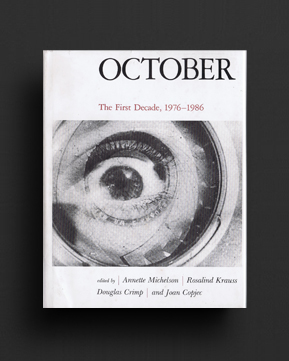
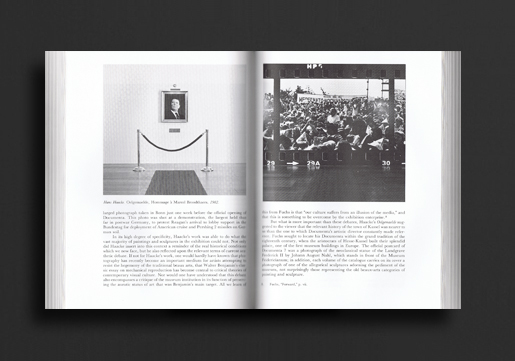
First edition of the heavy "OCTOBER: The First Decade, 1976 - 1986", which brings together a selection of some of the most important and representative texts, many from issues long out of print, that have appeared in one of the foremost journals in art criticism and theory - October.
Contributors include Rosalind Krauss, Sergei Eisenstein, Peter Handke, Georges Didi-Huberman, Mary Ann Doane, and Hans Haacke. Their essays are organized under the categories of "the index, historical materialism, the critique of institutions, psychoanalysis, rhetoric, and the body." -- publisher's statement.
Texts by Annette Michelson, Rosalind Krauss, Douglas Crimp, Joan Copjec, Nadar, Georges Didi-Huberman, Roger Caillois, Benjamin H.D. Buchloh, Sergei Einstein, Maria-Antonietta Macciocchi, Rosalyn Deutsche, Cara Gendel Ryan, Yve-Alain Bois, Daniel Buren, Louise Lawler, Christopher Philips, Homi Bhabha, Mary Ann Doane, Joel Fineman, Babette Mangolte, Peter Handke, Anette Michelson, Georges Bataille, Hollis Frampton, Robert Morris, Hans Haacke, and Trisha Brown.
"October is among the most advanced journals of the 1970s and 1980s in the fields of art theory, criticism, history, and practice. [Its editors] are intimately familiar with the cultural and political avant-garde of Europe and the U.S. and are able to attract its best thinkers.... Few, if any, journals could receive a higher recommendation."—Choice
2017, English
Softcover, 280 pages, 17 x 24 cm
Published by
Fundació Antoni Tàpies / Barcelona
Thyssen-Bornemisza Art Contemporary / Vienna
Sternberg Press / Berlin
$49.00 - Out of stock
Edited by Daniela Zyman, Cory Scozzari
Contributions by Nabil Ahmed, Keller Easterling, Carles Guerra Rojas, Celina Jeffery, Laleh Khalili, Rosa Lleó, Gabriele Mackert, Jegan Vincent de Paul, Allan Sekula, Sally Stein, Daniela Zyman
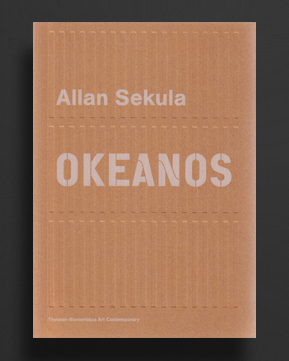
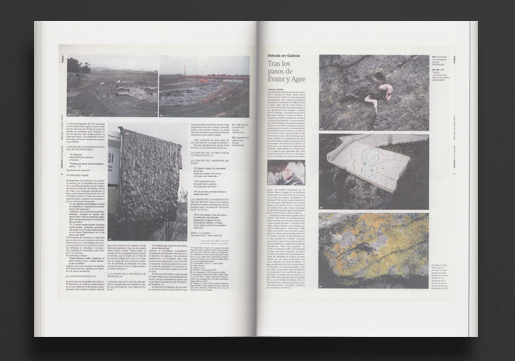
This publication intersperses essays from scholars, historians, and thinkers with a selection of Allan Sekula’s seminal texts and excerpts from his private notebooks. The title is a reference to Okeanos—son of Gaia, the Greek goddess of the earth—who ruled over the oceans and water. Made and written across the decades, Sekula’s sketches and texts focus on maritime space and the material, economic, and ecological implications of globalization. In projects such as his magnum opus Fish Story (1989–95), or films like Lottery of the Sea (2006) and The Forgotten Space (2010), Sekula provided a view from and of the sea. This publication expands on these oceanic themes, seeking to honor the scope and complexity of the late artist-theorist’s work, and situate his ideas in current political, social, and environmental discourses.
The book is divided thematically: the section “Containerization” focuses on the sea as a site of infrastructural complication; Sekula’s work Black Tide / Marea negra (2002–3) is also revisited, which explores environmental violence and contamination as well as their social implications; a selection from Sekula’s personal drawings are accompanied by an essay by photo historian Sally Stein; various essays readdress Sekula’s legacy in the age of the Anthropocene; and a number of case studies by contemporary artists, writers, and thinkers examine ideas that overlap with Sekula’s and expand on his interests.
Design by Kristin Metho
2016, English
Softcover, 280 pages, 21.8 x 27.3 cm
2nd Ed.,
Published by
MACK / London
$79.00 - Out of stock
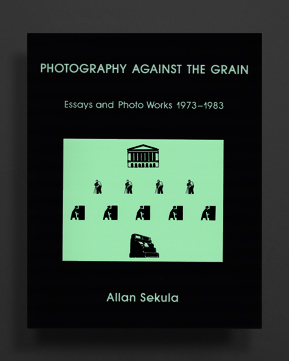
Long out of print, this seminal collection of essays and photographs are by artist, theorist and filmmaker, Allan Sekula. Originally published by the Nova Scotia College of Art and Design in 1984, in these essays and images Sekula sought to portray the inextricable bond between labour and material culture, drawing deeply on Marxist theory to argue passionately for a collective model of progress. Sekula taught at California Institute of Arts (CalArts) from 1985 until his death in 2013, and from that insider's position he critiqued photography and the circumstances of its production and consumption, exposing what the medium failed to represent – women, labourers, minorities and the institutional structures that reinforce cultural biases.
Allan Sekula (1951–2013) was an American artist, whose work spans multiple media: long form photographic series (Aerospace Folktales, 1973; School as a Factory,1980; War Without Bodies, 1991/96), critical texts (The Body and the Archive, 1986 and Debating Occupy, 2012) and film (The Forgotten Space, 2012).
2017, English / Polish
Softcover, 396 pages, 18 x 24.3 cm
Published by
Sternberg Press / Berlin
$44.00 - Out of stock
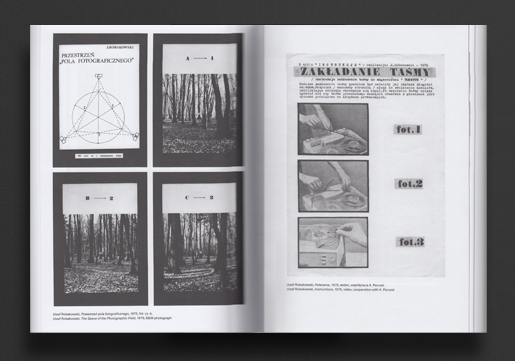
Workshop of the Film Form provides an in-depth overview of the achievements of Warsztat Formy Filmowej (WWF; Workshop of the Film Form), a group of avant-garde artists who were working at the Leon Schiller National Higher School of Film, Television and Theatre in Lodz, Poland, between 1970 and 1977. WWF was founded by the students and graduates of the school, now known as the National Film School, and included: Wojciech Bruszewski, Paweł Kwiek, Andrzej Różycki, Józef Robakowski, Zbigniew Rybczyński, Kazimierz Bendkowski, Antoni Mikołajczyk, Janusz Połom, and Ryszard Waśko. As pioneers of video art in Poland and structural cinema in Central and Eastern Europe, the artists refused classical narrative and traditional film media, working instead somewhere between cinematography and contemporary art.
This publication examines all aspects of WFF’s activity, from their films, photographic experiments, video art, and performative actions to their teaching work, which includes previously unexplored pedagogical contributions to the National Film School. Drawing on the private archives and oral testimonies of the WWF, Workshop of the Film Form attempts to provide a full account of the group’s history as well as a comprehensive survey of each member’s practice. The writers who were invited to respond to the WWF for this book provide insightful new readings of the group’s output and activities, contextualizing their work in the history of the prewar Polish avant-garde and the politics of experimental filmmaking in Poland under the rule of the Polish United Workers’ Party (PZPR).
Copublished with Fundacja Arton
Design by Fontarte Studio
2017, English
Softcover, 120 pages, 14 x 24 cm
Published by
Sternberg Press / Berlin
Exhibition Research Lab / Liverpool
$22.00 - Out of stock
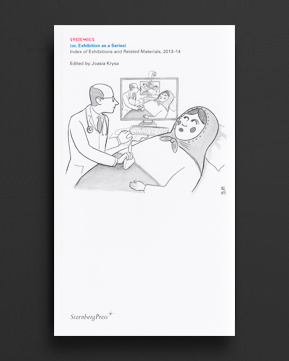
Texts by Franco “Bifo” Berardi, Boris Groys, Mathias Kokholm, Joasia Krysa, Fatima Hellberg, Lars Bang Larsen, Bárbara Rodriquez Muñoz, Jussi Parikka
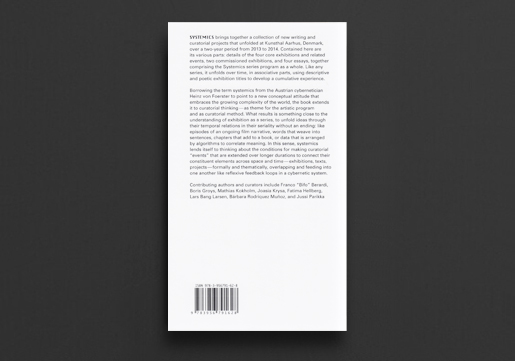
Systemics brings together a collection of new writing and curatorial projects that unfolded at Kunsthal Aarhus, Denmark, over a two-year period from 2013 to 2014. Contained here are its various parts: details of the four core exhibitions and related events, two commissioned exhibitions, and four essays, together comprising the Systemics series program as a whole. Like any series, it unfolds over time, in associative parts, using descriptive and poetic exhibition titles to develop a cumulative experience.
Borrowing the term systemics from the Austrian cybernetician Heinz von Foerster to point to a new conceptual attitude that embraces the growing complexity of the world, the book extends it to curatorial thinking—as theme for the artistic program and as curatorial method. What results is something close to the understanding of exhibition as a series, to unfold ideas through their temporal relations in their seriality without an ending: like episodes of an ongoing film narrative, words that weave into sentences, chapters that add to a book, or data that is arranged by algorithms to correlate meaning. In this sense, systemics lends itself to thinking about the conditions for making curatorial “events” that are extended over longer durations to connect their constituent elements across space and time—exhibitions, texts, projects—formally and thematically, overlapping and feeding into one another like reflexive feedback loops in a cybernetic system.
Design by Stuart Bertolotti-Bailey
2017, English
Softcover, 132 pages, 14 x 20 cm
Published by
Sternberg Press / Berlin
$34.00 - Out of stock
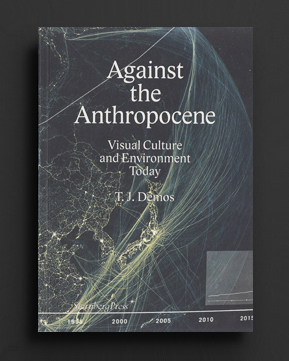
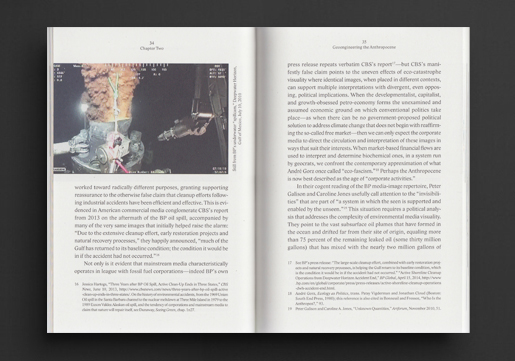
Addressing the current upswing of attention in the sciences, arts, and humanities to the new proposal that we are in a human-driven epoch called the Anthropocene, this book critically surveys that thesis and points to its limitations. It analyzes contemporary visual culture—popular science websites, remote sensing and SatNav imagery, eco-activist mobilizations, and experimental artistic projects—to consider how the term proposes more than merely a description of objective geological periodization. This book argues that the Anthropocene terminology works ideologically in support of a neoliberal financialization of nature, anthropocentric political economy, and endorsement of geoengineering as the preferred—but likely disastrous—method of approaching climate change. To democratize decisions about the world’s near future, we urgently need to subject the Anthropocene thesis to critical scrutiny and develop creative alternatives in the present.
“The idea of the Anthropocene needs to be eviscerated, and there is no one better suited to do it than T. J. Demos. In this sharp book Demos demonstrates that the Anthropocene thesis obscures a host of gross inequalities and the powerful interests behind them. Exploring examples (such as Google Earth) that support Anthropocene iconography, as well as a plethora of critical alternatives that decolonize and indigenize the Anthropocene, Demos offers a strong indictment of the violence of contemporary fossil capitalism. This manifesto should be on the bookshelves and in the back pockets of all climate justice activists.”
—Ashley Dawson, Professor of English, CUNY Graduate Center and College of Staten Island
“Against the Anthropocene is much more than simply ‘against.’ In this short, accessible, and fiercely written book, T. J. Demos shows how visual culture is implicated in the Anthropocene’s occlusions as well as a resource for conceptualizing—and mobilizing for—emancipatory alternatives. Deftly weaving together environmental accounts, scholarly arguments, and activist mobilizations, Demos makes an impassioned argument for new modes of thinking and representing the global environmental crisis that refuse the old fictions of the ‘social’ and the ‘natural.’ It is a book that shows how visual culture matters in our struggle for a just and livable future.”
—Jason W. Moore, Associate Professor of Sociology, Binghamton University
“T. J. Demos is one of the most important critics of visual culture and its politics today. In this must-read book he makes a compelling argument not only against the discourse of the Anthropocene but also for an activist, critical, and intersectional culture of climate justice.”
—Carrie Lambert-Beatty, Professor of Visual and Environmental Studies and of History of Art and Architecture, Harvard University
“In Against the Anthropocene, T. J. Demos adds to the growing chorus of voices critical of a term that, while intending to sound an alarm about climate change, in fact obscures responsibility for our eco-disaster. Through his unique assessment of the role of the image in the Anthropocene, Demos highlights the work of contemporary artistic-activist projects that contest imagery designed to shape our response to environmental crisis. For those who think that we can’t envision our crisis or do anything about it, this wonderful book shows us all the ways in which visuality is being reinvented in support of a new, vibrant politics of collectivity.”
—Imre Szeman, Canada Research Chair in Cultural Studies and Professor of English and Film Studies, University of Alberta
“In this indispensable survey of visual culture’s intersection with the ongoing catastrophe of climate change, T. J. Demos makes its political stakes visible in new and exciting ways.”
—Nicholas Mirzoeff, Professor of Media, Culture, and Communication, New York University
Design by Miriam Rech, Berlin
2017, English
Softcover, 975 pages, 19 x 26 cm
Published by
The Exhibitionist / New York
$65.00 - Out of stock
Edited with introduction by Jens Hoffmann.
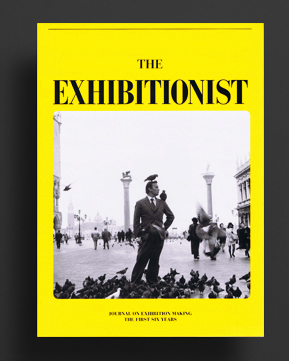
A journal by curators for curators, The Exhibitionist has asked the most pertinent questions on contemporary exhibition-making since its founding in 2009.
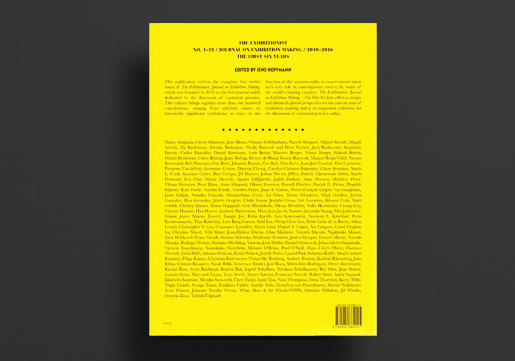
The Exhibitionist: Journal on Exhibition Making is an anthology of the first 12 issues of the journal about contemporary curating that bears the same name. Established in 2009 as a forum for critical reflection on exhibition-making and curatorial practice, The Exhibitionist has always defined itself as “by curators, for curators.” Modelled after the iconic French film journal Cahiers du cinéma, The Exhibitionist has served a critical role in examining current curatorial practices by focusing specifically on the exhibition format as a site of experimentation and inquiry. The Exhibitionist has historicized, analyzed and critiqued a phenomenon it is itself symptomatic of—the rise of the curator since the 1960s, the ensuing explosion of curatorial creativity and the growing fascination with the discipline of curating.
Over the six years of its run, The Exhibitionist has published writings from many of the most prominent curatorial voices in the field, offering a who’s who of curatorial practice; contributors include Okwui Enwezor, Hans Ulrich Obrist, Mary Jane Jacob, Nato Thompson, Jessica Morgan, Maria Lind, Sofía Hernández Chong Cuy and Massimiliano Gioni, to name just a select few.
Collected together in a monumental omnibus edition (clocking in at 975 pages), the complete run of the journal is accompanied by a new introduction by founding editor Jens Hoffmann, and a critical approach to a theory of the exhibition by senior editor Julian Myers-Szupinska. With the publication of this volume, The Exhibitionist closes a chapter of its existence as a print magazine and shifts its activities to the-exhibitionist.com.