World Food Books' programme is largely produced on Kulin Nation land. We acknowledge the Wurundjeri people of the Kulin Nation as the first and continuing custodians of this land, and pay respect to their Elders past, present, and emerging.
World Food Books is an arts and special interests bookshop in Naarm / Melbourne. Founded in 2010, World Food Books is devoted to the presentation of a rotating, hand-selection of international art, design, literary and counterculture publications with an emphasis on the anti-traditional, the experimental, the avant-garde, the heretic, the marginal.
Presenting new titles alongside rare and out-of-print books, catalogues and journals spanning the fields of modern and contemporary art, design, photography, illustration, film, literature, poetry, cultural theory, philosophy, sexuality, popular and underground culture in its many radical forms, World Food Books wishes to encourage adventurous, thoughtful and open-minded reading, looking, writing, and exchange of publishing and ideas, both current and historical.
As well as our bookshop, located in Melbourne's historical Nicholas Building, all of our inventory is available internationally via our online mail-order service.
World Food Books semi-regularly co-ordinates "Occasions", a programme of exhibits and events at the bookshop and in partnership with other hosts (such as museums and art galleries) that develop out of the activities, relationships and content of the bookshop itself.
World Food Books
The Nicholas Building
37 Swanston Street
Room 5, Level 6
Melbourne 3000
Australia
SHOP HOURS:
Thu–Fri 12–6, Sat 12–5
WEB-SHOP OPEN 24/7
World Food Books
Postal Address:
PO Box 435
Flinders Lane
Victoria 8009
Australia
Art
Theory / Essay
Architecture / Interior
Graphic Design / Typography
Photography
Fashion
Eros
LGBTQ+
Fiction / Poetry
Weird / Speculative / Science Fiction / Horror
Transgressive / Visceral / Abject
Symbolism / Decadence / Fin de siècle
Film / Video
Painting
Sculpture / Installation
Performance / Dance / Theater
Drawing
Sound / Music
Curatorial
Group Shows / Collections
Periodicals
Out-of-print / Rare
Posters / Ephemera / Discs
Signed Books
World Food Books Gift Voucher
World Food Book Bag
Australian Art
Australian Fiction
Australian Science Fiction / Speculative Fiction
Australian Poetry
Australian Photography
Japanese Photography
Conceptual Art
Minimal Art
Dada
'Pataphysics / Oulipo
Fluxus
Concrete Poetry
Pop Art
Surrealism
Arte Povera
Arte Informale / Haute Pâte / Tachism
Nouveau Réalisme / Zero / Kinetic
Situationism / Lettrism
Collage / Mail Art / Xerox Art
Art Brut / Folk / Visionary / Fantastic
Illustration / Graphic Art / Bandes Dessinées
Furniture
Italian Radical Design / Postmodernism
Textiles
Ceramics / Glass
Counterculture
Protest / Revolt
Philosophy
Psychoanalysis
Anthropology
Anarchism
Socialism / Anarchism / Communism / Capitalism
Literary Theory / Semiotics / Language
Feminism / Women's Studies
Gender Studies / Sexuality
Anthropology
Fetishism / BDSM
Drugs / Psychedelia
Crime / Violence
Animal Rights / Veganism
Occult / Esoterica
Ecology / Earth / Alternative Living
Whole Earth / Crafts
All prices in AUD (Australian dollars)
Pick-Ups
Pick-up orders can be collected in our bookshop during opening hours after order date. Please collect any Pick-up orders within 2 weeks of ordering as we have limited storage space. Orders will be released back into stock if not collected within this time. No refunds can be made for pick-ups left un-collected. If you cannot make it in to the bookshop in this time-frame, please choose postage option.
Return Policy
All sales are final. We do accept returns (for refund or exchange) for items received in error. All our orders are packed with special care using heavy-duty padding and cardboard book-mailers or bubble mailers (for smaller books), using reinforcement where required. We cannot take responsibility for any lost, stolen or damaged parcels.
Insurance
Should you wish to insure your package, please email us directly after placing your order and we can organise this at a small extra expense. Although all standard/express tracked packages are very safe and dependable, we cannot take responsibility for any lost, stolen or damaged parcels. We recommend insurance on valuable orders.
Interested in selling your old books, catalogues, journals, magazines, comics, fanzines, ephemera? We are always looking for interesting, unusual and out-of-print books to buy. We only buy books in our fields of interest and specialty, and that we feel we can resell.
We base these prices on desirability, market value, in-print prices, condition and our current stock levels. We offer cash, store credit, and can take stock on consignment. All
about 25% of the price we expect to get when we sell them, or 30% in store credit. We base these prices on desirability, market value, in-print prices, condition and our current stock levels.
Sell your books any day of the week. You can drop them off and return later. If you have a lot of books, we can visit your Sydney home.
We buy books that we feel we can resell. We offer about 25 % of the price we expect to get when we sell them, or 30% in store credit. We base these prices on desirability, market value, in-print prices, condition and our current stock levels.
Philadelphia Wireman
03 August - 01 September, 2018
World Food Books is proud to announce our next Occasion, the first presentation of sculptures by Philadelphia Wireman in Australia.
The Philadelphia Wireman sculptures were found abandoned in an alley off Philadelphia’s South Street on trash night in 1982. Their discovery in a rapidly-changing neighbourhood undergoing extensive renovation, compounded with the failure of all attempts to locate the artist, suggests that the works may have been discarded after the maker’s death. Dubbed the "Philadelphia Wireman" during the first exhibition of this work, in 1985, the maker’s name, age, ethnicity, and even gender remain uncertain. The entire collection totals approximately 1200 pieces, all intricately bound together with tightly-wound heavy-gauge wire (along with a few small, abstract marker drawings, reminiscent both of Mark Tobey and J.B. Murry). The dense construction of the work, despite a modest range of scale and materials, is singularly obsessive and disciplined in design: a wire armature or exoskeleton firmly binds a bricolage of found objects including plastic, glass, food packaging, umbrella parts, tape, rubber, batteries, pens, leather, reflectors, nuts and bolts, nails, foil, coins, toys, watches, eyeglasses, tools, and jewellery.
Heavy with associations—anthropomorphic, zoomorphic, and socio-cultural responses to wrapped detritus—the totemic sculptures by Philadelphia Wireman have been discussed in the context of work created to fulfil the shamanistic needs of alternative religions in American culture. Curators, collectors, and critics have variously compared certain pieces to sculpture from Classical antiquity, Native American medicine bundles, African-American memory jugs, and African fetish objects. Reflecting the artist’s prolific and incredibly focused scavenging impulse, and despite—or perhaps enhanced by—their anonymity, these enigmatic objects function as urban artefacts and arbiters of power, though their origin and purpose is unknown. Philadelphia Wireman, whatever their identity, possessed an astonishing ability to isolate and communicate the concepts of power and energy through the selection and transformation of ordinary materials. Over the course of the past two decades, this collection has come to be regarded as an important discovery in the field of self-taught art and vernacular art.
Presented in collaboration with Fleisher-Ollman Gallery, Philadelphia, and Robert Heald, Wellington.
Susan Te Kahurangi King
02 February - 10 March, 2018
Susan Te Kahurangi King (24 February 1951 - ) has been a confident and prolific artist since she was a young child, drawing with readily available materials - pencils, ballpoint pens and felt-tip markers, on whatever paper is at hand. Between the ages of four and six Susan slowly ceased verbal communication. Her grandparents William and Myrtle Murphy had developed a special bond with Susan so they took on caring responsibilities for extended periods. Myrtle began informally archiving her work, carefully collecting and storing the drawings and compiling scrapbooks. No drawing was insignificant; every scrap of paper was kept. The King family are now the custodians of a vast collection containing over 7000 individual works, from tiny scraps of paper through to 5 meter long rolls.
The scrapbooks and diaries reveal Myrtle to be a woman of great patience and compassion, seeking to understand a child who was not always behaving as expected. She encouraged Susan to be observant, to explore her environment and absorb all the sights and sounds. Myrtle would show Susan’s drawings to friends and people in her community that she had dealings with, such as shopkeepers and postal workers, but this was not simply a case of a grandmother’s bias. She recognised that Susan had developed a sophisticated and unique visual language and sincerely believed that her art deserved serious attention.
This was an unorthodox attitude for the time. To provide some context, Jean Dubuffet coined the term Art Brut in 1945 to describe work created by self-taught artists – specifically residents of psychiatric institutions and those he considered to be visionaries or eccentrics. In 1972 Roger Cardinal extended this concept by adopting the term Outsider Art to describe work made by non-academically trained artists operating outside of mainstream art networks through choice or circumstance. Susan was born in Te Aroha, New Zealand in 1951, far from the artistic hubs of Paris and London that Dubuffet and Cardinal operated in. That Myrtle fêted Susan as a self-taught artist who deserved to be taken seriously shows how progressive her attitudes were.
Susan’s parents Doug and Dawn were also progressive. Over the years they had consulted numerous health practitioners about Susan’s condition, as the medical establishment could not provide an explanation as to why she had lapsed into silence. Dawn educated herself in the field of homeopathy and went on to treat all twelve of her children using these principles – basing prescriptions on her observations of their physical, mental and emotional state.
Doug was a linguist with an interest in philosophy who devoted what little spare time he had to studying Maori language and culture. To some extent their willingness to explore the fringes of the mainstream made them outsiders too but it was their commitment to living with integrity and their respect for individuality that ensured Susan’s creativity was always encouraged.
Even though Susan’s family supported her artistic pursuits, some staff in schools and hospitals saw it as an impediment to her assimilation into the community and discouraged it in a variety of ways. Her family was not always aware of this and therefore did not fully understand why Susan stopped drawing in the early 1990s. However, rather than dwell on the challenges that Susan faced in pursuit of her artistic practice, they prefer to highlight her achievements. In 2008 Susan began drawing again in earnest, after an almost 20 year interruption, and her work is now shown in galleries around the world.
Susan grew up without television and has been heavily influenced by the comics she read as a child. She is absolutely fearless in the appropriation of recognizable characters, such as Donald Duck and Mickey Mouse, in her work. She twists their limbs, contorts their faces, compresses them together, blends them into complex patterned backgrounds - always imbuing them with an incredible energy. Although Susan often used pop culture characters in her work they are not naive or childlike. These are drawings by a brilliant self-taught artist who has been creating exceptional work for decades without an audience in mind.
Mladen Stilinović
"Various Works 1986 - 1999"
02 February 16 - September 10, 2016
Various works 1986 - 1999, from two houses, from the collections of John Nixon, Sue Cramer, Kerrie Poliness, Peter Haffenden and Phoebe Haffenden.
Including: Geometry of Cakes (various shelves), 1993; Poor People’s Law (black and white plate), 1993; White Absence (glasses, ruler, set square, silver spoon, silver ladel with skin photograph and wooden cubes), 1990-1996; Exploitation of the Dead (grey and red star painting, wooden painting, black spoon with red table, red plate), 1984-1990; Money and Zeros (zero tie, paintings made for friends in Australia (Sue, John, Kerrie), numbers painting), 1991-1992; Words - Slogans (various t-shirts) - “they talk about the death of art...help! someone is trying to kill me”, “my sweet little lamb”, “work is a disease - Karl Marx”; Various artist books, catalogues, monographs, videos; Poster from exhibition Insulting Anarchy; "Circular" Croatian - Australian edition; Artist book by Vlado Martek (Dostoyevsky); more.
Thanks to Mladen Stilinović and Branka Stipančić.
Jonathan Walker
Always Will Need To Wear Winter Shirt Blue + Ochre Small Check Pattern
21 August - 21 September, 2015
Untitled
I am not a great reader of poetry but I always return to the work of Melbourne poet, Vincent Buckley (1925- 1988). Perhaps I find his most tantalising piece to be not a finished poem but a fragment left on a scrap of paper discovered on his desk after the poet’s death.
The poetry gathers like oil
In the word-core, and spreads
It has its music meet,
Its music is in movement.
This fragment is more the shell left behind from a volatile thought than a finished poem. I find the last two lines honest but awkward whereas the first two lines work like an arrow. Most likely he could not find a resolution so it was left. Still, in its present form, it remains an eloquent testimony to the ultimate failure of a medium to express mobile thought and sensation, in Buckley’s case, through verbal language. It’s an important matter because this is something all artists have to deal with regardless of the medium.
I have never written a poem, however, I am forever copying fragments from books on paper scraps in a vain effort to fix certain notions in my head. At first, they function as bookmarks that are sometimes returned to when I open the book. But before long, as they accumulate, they fall out littering the table interspersed with A4 photocopies, bills, books and medications.
To return to Buckley’s fragment, the first two lines very much evoke how I paint nowadays. As you age, detail diminishes and patches of light become more luminous and float. I feel the most honest way of dealing with this is by smearing the oil paint on the canvas with the fingers and working close-up, blind. Only if the patches coalesce into an approaching image can the work gain a life.
-
Jonathan Walker was born in Melbourne, Australia and brought up on a dairy farm in Gippsland. In the 1970’s he studied painting at RMIT and won the Harold Wright Scholarship to the British Museum, London. During the 1980’s he exhibited at Pinacotheca Gallery, Richmond and had work shown at the NGV and Heidi City Art Gallery. Over the same period he designed the cover for the “Epigenesi” LP by Giancarlo Toniutti, Italy and conducted a mail exchange work with Achim Wollscheid, Germany. The work with artists through the post resulted in an article published in the bicentenary issue of Art and Australia 1988. He showed in artist run spaces such as WestSpace in the 90’s and 2000’s, and until 2012, taught painting at Victoria University, which is where we (Colleen Ahern and Lisa Radford) as organisers of the exhibition, among many others, had the privilege of being his student.
Walker’s knowledge was imparted to students through the careful selection of music, literature, and artists found in books that he himself had ordered for the library. Walker’s strategy was the generosity of sharing his vast knowledge with references specific to each student and their context.
Walker’s paintings share a similar focus and intimacy.
This exhibition presents a small selection of recent paintings alongside a publication that includes Walker’s writing. Observational and analytical, Walker’s work is a type of material notation — the time of day, colour and how it is blended, the both specific and fleeting location of a reflection on lino or the question of whether a chair leg should be included in a painting.
Please join us on Friday August 21 between 6-8pm to celebrate the opening of the exhibition.
Curated by Colleen Ahern and Lisa Radford.
B. Wurtz
Curated by Nic Tammens
March 26 - April 4, 2015
B.Wurtz works from a basement studio in his home on Manhattan’s Lower East Side.
This local fact is attested to by the plastic shopping bags and newsprint circulars that appear in his work. As formal objects, they don’t make loud claims about their origins but nonetheless transmit street addresses and places of business from the bottom of this long thin island. Like plenty of artists, Wurtz is affected by what is local and what is consumed. His work is underpinned by this ethic. It often speaks from a neighborhood or reads like the contents of a hamper:
“BLACK PLUMS $1.29 lb.”
“Food Bazaar”
“USDA Whole Pork Shoulder Picnic 99c lb.”
“RITE AID Pharmacy, with us it’s personal.”
“H. Brickman & Sons.”
“Sweet Yams 59c lb."
Most of the work in this exhibition was made while the artist was in residence at Dieu Donne, a workshop dedicated to paper craft in Midtown. Here Wurtz fabricated assemblages with paper and objects that are relatively lightweight, with the intention that they would be easily transportable to Australia. This consideration isn’t absolute in Wurtz’s work, but was prescriptive for making the current exhibition light and cheap. Packed in two boxes, these works were sent from a USPS post office on the Lower East Side and delivered to North Melbourne by Australia Post.
Wurtz appears courtesy of Metro Pictures, New York.
Thanks to Rob Halverson, Joshua Petherick, Sari de Mallory, Matt Hinkley, Helen Johnson, Fayen d'Evie, Ask Kilmartin, Lisa Radon, Ellena Savage, Yale Union, and "Elizabeth".
John Nixon
"Archive"
December 15 - January 20, 2014
The presentation of John Nixon's archive offered a rare showcase of this extensive collection of the artist's own publications, catalogues, posters, ephemera, editions and more, from the mid 1980s onwards, alongside a selection of his artworks.
Organized by John Nixon, Joshua Petherick and Matt Hinkley.
<a href=http://wfb.public-office.info/artist/john-nixon>All titles by John Nixon
"Habitat"
at Minerva, Sydney (organised by Joshua Petherick and Matt Hinkley)
November 15 - December 20, 2014
Lupo Borgonovo, Janet Burchill & Jennifer McCamley,
Lewis Fidock, HR Giger, Piero Gilardi, Veit Laurent Kurz,
Cinzia Ruggeri, Michael E. Smith, Lucie Stahl, Daniel Weil, Wols
Press Release:
“...It contained seven objects. The slender fluted bone, surely formed for flight, surely from the wing of some large bird. Three archaic circuitboards, faced with mazes of gold. A smooth white sphere of baked clay. An age-blackened fragment of lace. A fingerlength segment of what she assumed was bone from a human wrist, grayish white, inset smoothly with the silicon shaft of a small instrument that must once have ridden flush with the surface of the skin - but the thing’s face was seared and blackened.”
William Gibson, “Count Zero”, 1986
"Autumn Projects Archive"
Curated by Liza Vasiliou
March 6 - March 15, 2014
World Food Books, in conjunction with the Virgin Australia Melbourne Fashion Festival 2014, presented the Autumn Projects archive, consisting of a selection of early examples in Australian fashion with a particular interest in collecting designers and labels from the period beginning in the 1980’s, who significantly influenced the discourse of Australian Fashion.
Curated by Liza Vasiliou, the exhibition provided a unique opportunity to view pieces by designers Anthea Crawford, Barbara Vandenberg, Geoff Liddell and labels CR Australia, Covers, Jag along with early experimental collage pieces by Prue Acton and Sally Browne’s ‘Fragments’ collection, suspended throughout the functioning World Food Books shop in Melbourne.
H.B. Peace
presented by CENTRE FOR STYLE
November 14, 2013
"Hey Blinky, you say chic, I say same"
Anon 2013
H.B. Peace is a clothing collaboration between great friends Blake Barns and Hugh Egan Westland. Their pieces explore the divergences between 'character’ and ‘personality’ in garments....etc
Special Thanks to Joshua Petherick and Matt Hinkley of WFB and Gillian Mears
and a Very Special Thank you to Audrey Thomas Hayes for her shoe collaboration.
Janet Burchill & Jennifer McCamley
"Aesthetic Suicide"
May 10 - June 8, 2013
The first of our occasional exhibitions in the World Food Books office/shop space in Melbourne, "Aesthetic Suicide" presented a body of new and older works together by artists Janet Burchill & Jennifer McCamley, including videos, prints, a wall work, and publications.
During shop open hours videos played every hour, on the hour.
2017, English
Softcover, 230 pages, 20 x 12.5 cm
Published by
Silver Press / London
$33.00 - Out of stock
With a Preface by Reni Eddo-Lodge and an Introduction by Sara Ahmed.
Audre Lorde (1934-92) described herself as ‘Black, lesbian, mother, warrior, poet’. Her extraordinary belief in the power of language – of speaking – to articulate selfhood, confront injustice and bring about change in the world remains as transformative today as it was then, and no less urgent.
Your Silence Will Not Protect You brings Lorde's poetry and prose together for the first time.
2018, English
Softcover, 240 pages, 20 x 12.5 cm
Published by
Silver Press / London
$28.00 - Out of stock
With an introduction by Ali Smith and a new Afterword by Nell Dunn
In 1964, Nell Dunn spoke to nine of her friends over a bottle of wine about sex, work, money, babies, freedom and love. The novelist Ann Quin says she appears to be a 'singular girl, singular and single’ but questions the use she makes of her freedom. The Pop artist Pauline Boty reveals she married 'the first man I could talk very freely to’ ten days after meeting him. Kathy Collier, who worked with Dunn in a Battersea sweet factory, talks about what it takes to 'get out’ of a life that isn’t fulfilling. Edna O’Brien tells us about the time she inadvertently stole a brown georgette scarf and the lesson she took from it: 'Morality is not the same thing as abstinence.’ After more than fifty years out of print, Talking to Women is still as sparkling, honest, profound, funny and wise as when it was first published.
1991, English
Hardcover (w. dust jacket), 210 pages, 24 x 16.5 cm
1st Edition, Out of print title / used / fine
Published by
Indiana University Press / Indiana
$70.00 - Out of stock
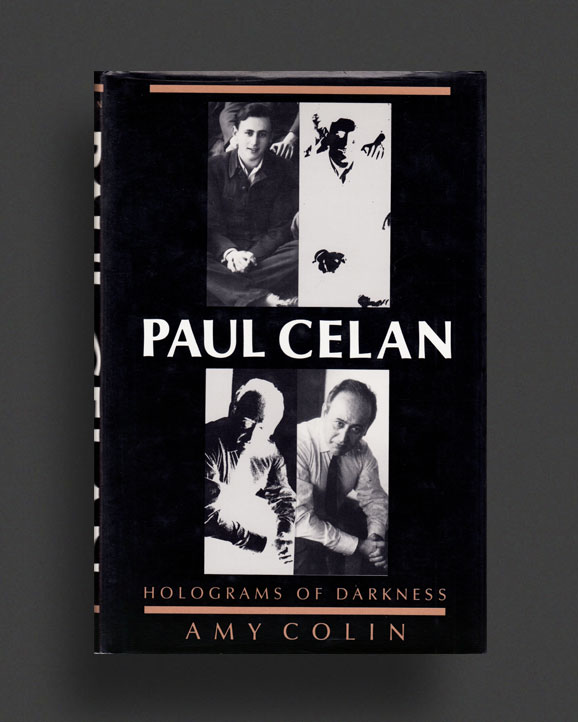
First edition of Paul Celan : Holograms of Darkness by Amy Colin, published in 1991 by Indiana University Press.
Paul Celan, one of the greatest poets of the post-Holocaust decades, strove to utter the unspeakable. In his literary struggle to respond to the Holocaust, he exploded literary traditions and, out of their residue, created a new poetry.
" ... Colin's brilliant new book ... demonstrates how deeply linked Celan's work is to the Romanian Jewish experience of the 1930s and '40s... A landmark in Celan studies and a major contribution to the study of contemporary poetry and theory."—Choice
"Unquestionably this book has much to offer: its discussion of the early Celan, especially his Roumanian poems; its survey of the cultural milieu out of which he came; and its valuable explications of hitherto unexplored Celan poems are excellent contributions to scholarship."—Alfred Hoelzel
"A wide ranging examination of the multifarious cultural background of one of the most important poets of this century and a brilliant analysis of his work."—Magill's Literary Annual
"In a hauntingly urgent voice, Amy Colin ... unravels and connects for the Celan scholar some of the intricacies of his early and his late poetic creations."—Modern Judaism
Work praised by Beda Allemann and Peter Demetz for the profound depth of background knowledge of Romanian, Ukrainian and Yiddish culture. Awarded "the outstanding book of 1992" by the American magazine "Choice".
Very Good—Fine copy in VG—Fine dust jacket.
1973, English
Softcover, 575 pages, 18 x 11 cm
Out of print title / used / average
Published by
Penguin Books / Australia
$25.00 - Out of stock
1973 Penguin edition of Nobel Prize-winning author Elias Canetti's revolutionary work Crowds and Power, first published in 1960.
In Crowds and Power, one of the most extraordinary books of our time, Elias Canetti finds a new way of looking at human history and psychology. Breathtaking in its range and erudition, it explores the Rain Dances of Pueblo Indians, the Muharram Festival of the Shiites, the English Civil war, the finger exercises of monkeys and the effects of inflation in Weimar Germany. In this study of the interplay of crowds, that mysterious yet commonplace phenomenon, Canetti offers one of the most profound and startling portraits of the human condition.
Elias Canetti (1905—1994) was a German-language writer, born in Ruse, Bulgaria to a Sephardic family. They moved to Manchester, England, but his father died in 1912, and his mother took her three sons back to continental Europe. They settled in Vienna. Canetti moved to England in 1938 after the Anschluss to escape Nazi persecution. He became a British citizen in 1952. He is known as a modernist novelist, playwright, memoirist, and nonfiction writer. He won the Nobel Prize in Literature in 1981, "for writings marked by a broad outlook, a wealth of ideas and artistic power". In late 1980s he started to live in Zurich permanently. He died in 1994 in Zurich. He is noted for his nonfiction book Crowds and Power, among other works.
Average copy, heavily worn and creased covers and tanning, binding solid.
1993, Japanese
Hardcover (w. dust jacket and obi-strip), 230 pages, 13.6 cm x 19.4 cm
1st Edition, Out of print title / used / very good
Published by
Seikyūsha / Tokyo
$90.00 - In stock -
First hardcover edition of "Body Exotica : Sexual Atrocity", written by Merzbow's Masami Akita and published only in Japan in 1993. Covering subjects such as body manipulation and decoration, Japanese genital museums, German anarcho-pacifist Ernst Friedrich's Anti-War imagery, Daisy and Violet Hilton, amputee love, clothing and deformity, "freaks", fetishism, abnormal sex customs, corpse and medical photography, and much more, all with b/w illustrations, "Body Exotica : Sexual Atrocity" could be considered the sister book to Akita's "Terminal Body Play", issued the same year. Merzbow is a noise project created in Tokyo, Japan in 1979 under the direction of noise technician Masami Akita. As well as a legendary underground noise artist, Akita is a prolific writer in Japan and frequently writes on the arts, music, erotica, esoterica, modern architecture, and animal rights, with articles on emerging subcultures and underground extreme cultures appearing in publications like SM Sniper, Studio Voice and Fool's Mate. His development of the Merzbow aesthetic ran parallel with a series of investigative books in which he catalogued and introduced a vast amount of hermetic types of music, sexual practices and autonomous creativity to a fairly conservative (but not close-minded) Japanese audience. "Body Exotica" is one of these very books.
First edition, Japanese text, VG copy with VG "textured" and illustrated dust jacket and original publisher's obi-strip inserted (not-pictured).
1999, German / English
Softcover (w. mini-cd), 246 pages, 21 x 15 cm
1st Edition, Out of print title / used / very good
Published by
Auf Abwegen / Bochum—Cologne
$120.00 - Out of stock
"We are surrounded by ghostly things"
The Asmus Tietchens monograph, first hand-numbered limited edition of 500 copies with mini cd, published in autumn of 1999, edited by Kai U. Jürgens. Opening with a quote from E. M. Cioran, this long out-of-print, wonderful publication dedicated to the prolific German avant-garde composer, published by Auf Abwegen in Bochum/Cologne and co-edited by Guido Sprenger and Till Kniola, features a wealth of information in the form of collected texts by Kai U. Jürgens, producer Okko Bekker, Asmus Tietchens, Ditterich von Euler-Donnersperg, Guido Sprenger and Till Kniola, accompanied by a comprehensive discography and bibliography. Bi-lingual texts in English and German. Also includes the original 4-track limited edition mini-cd, "Phosphor", recorded in Hamburg in 1999. A must for any fan of the illusive, prolific experimental artist.
Asmus Tietchens (b. 1947, Hamburg) is a German composer of avant-garde music. Tietchens became interested in experimental music and musique concrète as a child, and began recording sound experiments in 1965 with electronic musical instruments, synthesizers and tape loops. In the 1970s he met producer Okko Bekker, and the two formed a decades-long partnership. Peter Baumann (of Tangerine Dream) heard a recording of Tietchens' music and offered to produce an album; the result was Nachtstücke, Tietchens' 1980 offering on Egg Records. His early recordings feature more accessible synthesized music, but beginning with Formen Letzer Hausmusik, his 1984 release for Nurse With Wound's label United Dairies, he began moving toward more abstract sound collages. He has taught acoustics in Hamburg since 1990.
Very Good copy, hand-numbered "410" of 500. Tiny amount of rubbing to back cover due to cd inserted into back french-fold.
2009, English
Softcover, 82 Pages, 21.6 x 14.2 cm
Published by
Zero Books / UK
$29.00 - In stock -
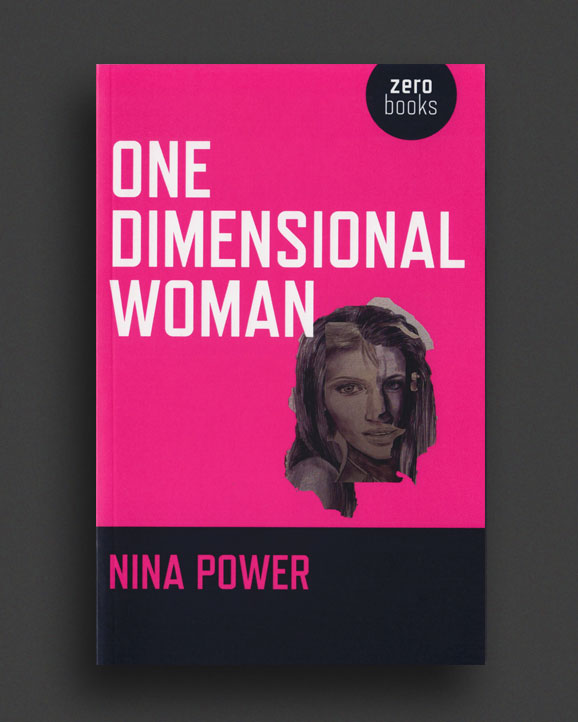
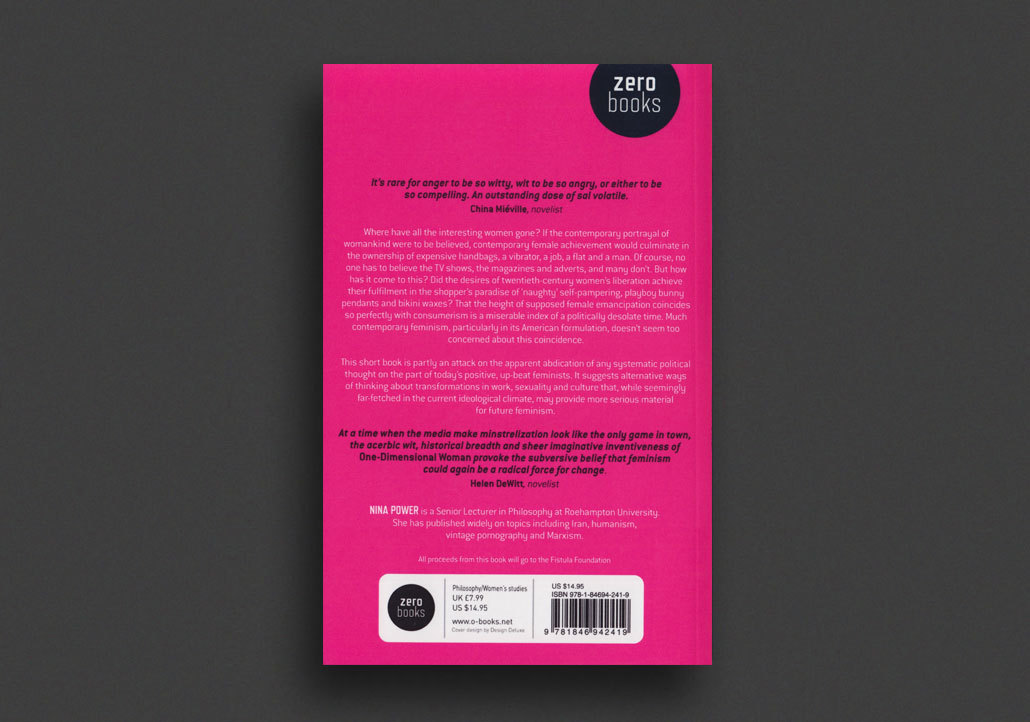
Where have all the interesting women gone? If the contemporary portrayal of womankind were to be believed, contemporary female achievement would culminate in the ownership of expensive handbags, a vibrator, a job, a flat and a man. Of course, no one has to believe the TV shows, the magazines and adverts, and many don't. But how has it come to this? Did the desires of twentieth-century women's liberation achieve their fulfilment in the shopper's paradise of 'naughty' self-pampering, playboy bunny pendants and bikini waxes? That the height of supposed female emancipation coincides so perfectly with consumerism is a miserable index of a politically desolate time. Much contemporary feminism, particularly in its American formulation, doesn't seem too concerned about this coincidence.
This short book is partly an attack on the apparent abdication of any systematic political thought on the part of today's positive, up-beat feminists. It suggests alternative ways of thinking about transformations in work, sexuality and culture that, while seemingly far-fetched in the current ideological climate, may provide more serious material for future feminism.
"It's rare for anger to be so witty, wit to be so angry, or either to be so compelling. An outstanding dose of sal volatile."—China Mieville, author of "weird fiction" Embassytown, The City and the city, Railsea...
"Nina Power is keen to confront the uncomfortable and unpalatable, a refreshing trait in a culture perpetually moving toward anodyne."—Catherine Scott, Bitch
Nina Power is an English writer and philosopher. She is a senior editor of and columnist for the online magazine Compact.
2023, English
Hardcover (w. dust jacket), 288 pages, 25.4 x 19 cm
Published by
Princeton University Press / New York
$89.00 - Out of stock
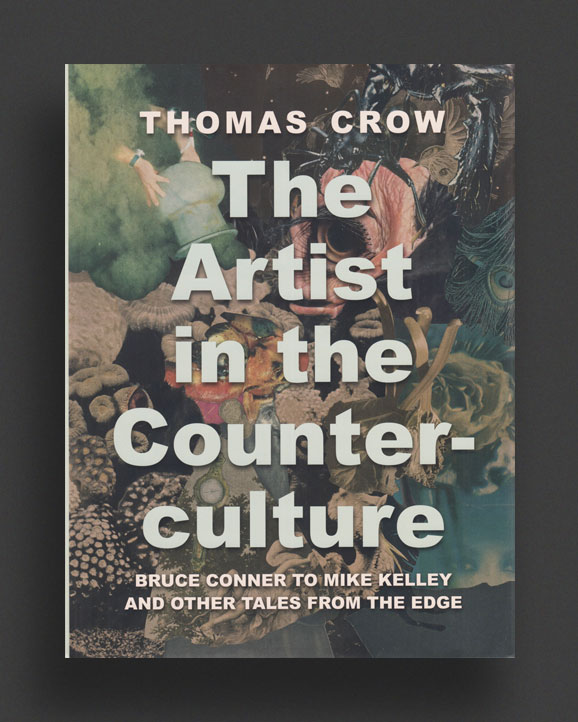
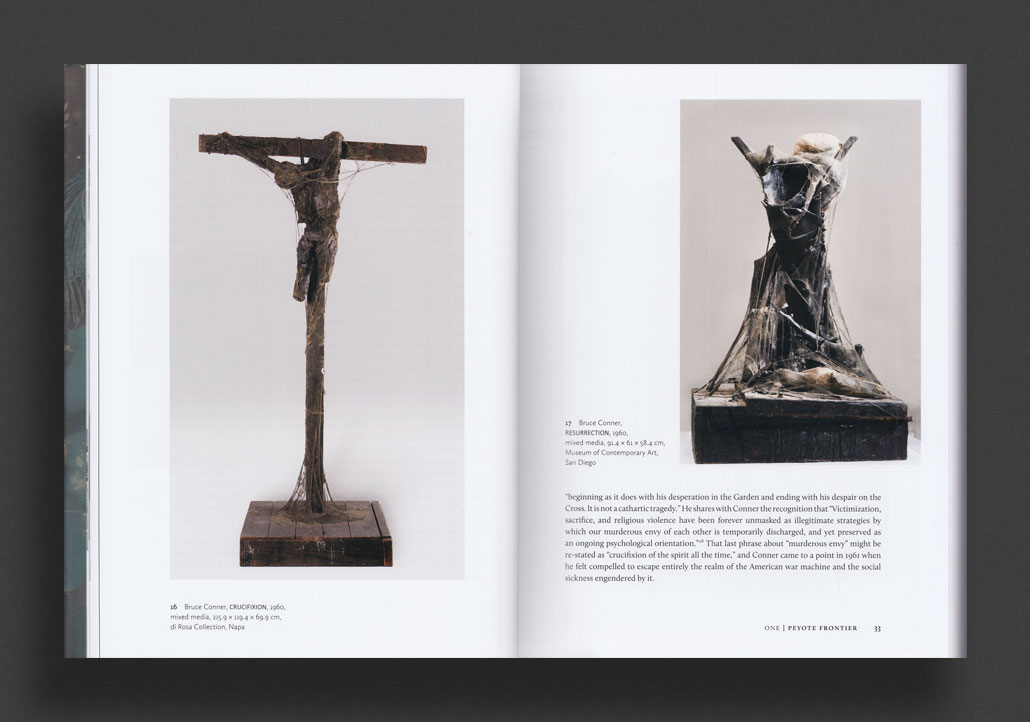
How California's counterculture of the 1960s to 1980s profoundly shaped—and was shaped by—West Coast artists.
The 1960s exert a special fascination in modern art. But most accounts miss the defining impact of the period's youth culture, largely incubated in California, on artists who came of age in that decade. As their prime exemplar, Bruce Conner, reminisced, "I did everything that everybody did in 1967 in the Haight-Ashbury. . . . I would take peyote and walk out in the streets." And he vividly channeled those experiences into his art, while making his mark on every facet of the psychedelic movement—from the mountains of Mexico with Timothy Leary to the rock ballrooms of San Francisco to the gilded excesses of the New Hollywood. In The Artist in the Counterculture, Thomas Crow tells the story of California art from the 1960s to the 1980s—some of the strongest being made anywhere at the time—and why it cannot be understood apart from the new possibilities of thinking and feeling unleashed by the rebels of the counterculture.
Crow reevaluates Conner and other key figures—from Catholic activist Corita Kent to Black Panther Emory Douglas to ecological witness Bonnie Ora Sherk—as part of a generational cohort galvanized by resistance to war, racial oppression, and environmental degradation. Younger practitioners of performance and installation carried the mindset of rebellion into the 1970s and 1980s, as previously excluded artists of color moved to the forefront in Los Angeles. Mike Kelley, their contemporary, remained unwaveringly true to the late countercultural flowering he had witnessed at the dawn of his career.
The result is a major new account of the counterculture's enduring influence on modern art.
1992, English
Softcover, 136 pages, 15.6 x 23.4 cm
1st Edition, Out of print title / used / very good
Published by
University of Minnesota Press / Minnesota
$18.00 $10.00 - Out of stock
Employing an interdisciplinary approach to analyze the complexities of contemporary urban culture, this work examines a diverse range of cultural expressions that may be considered typical of the 1980s, from retro fashion, to Latinization, to the recycling of religious imagery as kitsch. The topics Olalquiaga explores are shown to be exemplary condensations of different cultural currents, and she establishes reception as a vantage point from which to think about city life. "Megalopolis" sees in 1950s and 1960s retro fashion a re-enactment of space-age fears of technological dehumanization, in the resurfacing of kitsch an attempt at recovering emotional intensity, in an aesthetics of death and ruins a lament for the loss of a concrete and organic reality. Consumption is the basis of an unavoidable postmodernity in which the traditional ways of looking at the world have become so many icons; technology is the new language through - or against - which experience is articulated.
Very Good copy with some cover marks, otherwise as new.
2009, English / French
Softcover (+ audio CD), 320 pages, 22.5 x 24.5 cm
1st Edition, Out of print title / as new
Published by
Les Presses Du Reel / Paris
$45.00 - In stock -
This publication is the first monograph on the artist, musician, performer, organiser, attempting to disclose the complex articulations between multiples activities and to introduce sound and contextual art problematic.
The texts present various approaches and activities of Paul Panhuysen, a general introduction, archives, music installations, paintings, in situ installations, games, Het Apolohuis activities and theoretical positions. The pictures illustrate different projects of Panhuysen's work (in situ installations, technical plan, exhibitions views), collected in different classifications: sound installation with long fine wire, installation with bird, game, painting... and the graphic design couch with different colour and form.
The audio CD Small Samples, Many Pieces is made up of small samples and a variety of sound art works. It presents sounds produced by musicians, animals and objects, composed music and improvisations, acoustical, amplified and electronic sounds. There are pieces based on calculus, but on intuition as well. In many works image and sound go together. This multitude and variety of impulses are typical for the artist Paul Panhuysen.
"A beautiful looking and sounding survey of a key European art and music figure."—Alan Licht, The Wire
Artist, musician, performer, organizer, Paul Panhuysen (1934, Borgharen—2015), after having studied painting and monumental design at the Jan van Eyck Academy in Maastricht, and art sociology at the University of Utrecht, was, successively, the director of the Fine Arts Academy in Leeuwarden, and a curator and head of education and public relations for the Den Haag City Museum and for the Van Abbe Museum in Eindhoven. In addition, he continued to paint and make collages. In 1965 he founded the artist group “De Bende van de Blauwe Hand.” This group, which was closely related to Fluxus, presented exhibitions, environments and happenings in museums and galleries. Starting in 1965, he presented “situations” meant to involve the audience, and in 1968, he started the Maciunas Quartet, who are still making experimental music as the Maciunas Ensemble. In the early seventies, Panhuysen worked as an advisory artist with urban development teams (o.a. in Zoetermeer, Lunetten, Maaspoort) and developed systematic ordering systems and mathematical series that he has continued to use in his work as an artist. In addition, Panhuysen's work shows a predilection for found objects and the element of chance. To an increasing degree, Panhuysen has been concentrating on sound art, which has come to occupy an important place in his visual art work. He has presented his Long String Installations, which are played in concerts personally and in exhibitions as automats, worldwide in festivals since 1982 . These installations are set-up in indoor or outdoor spaces for anywhere from 1 to 40 days, using specific properties and architectural prospects of the location. Since 1989 Panhuysen developed artworks in which he confronts the audience with the creativity, intelligence and communicational skills of animals, especially of birds.
In 1980, Panhuysen founded Het Apollohuis, and since then till 1997, he has been the director of this internationally oriented podium where artists from divergent disciplines did present their work. In 1996 he received the Cultural Award of Noord-Brabant and in1998 he became Companion of the Order of the Dutch Lion. In 2004 Panhuysen received in the category Digital Musics from PrixArs Electronica an Honory Mention for the composition A Magic Square of 5 to Look at / A Magic Square of 5 to Listen to.
Edited by Yvan Etienne.
Texts by Paul Panhuysen, Jaap Bremer, Yvan Etienne, Michel Giroud, Rahma Khazam, Paul Kuypers, Helga de la Motte-Haber, Rene van Peer, Rolf Sachsse, Louis Ucciani.
2022, English
Hardcover, 352 pages, 22 x 28 cm
Published by
Yale University Press / New Haven
Barbican Art Gallery / London
$80.00 - Out of stock
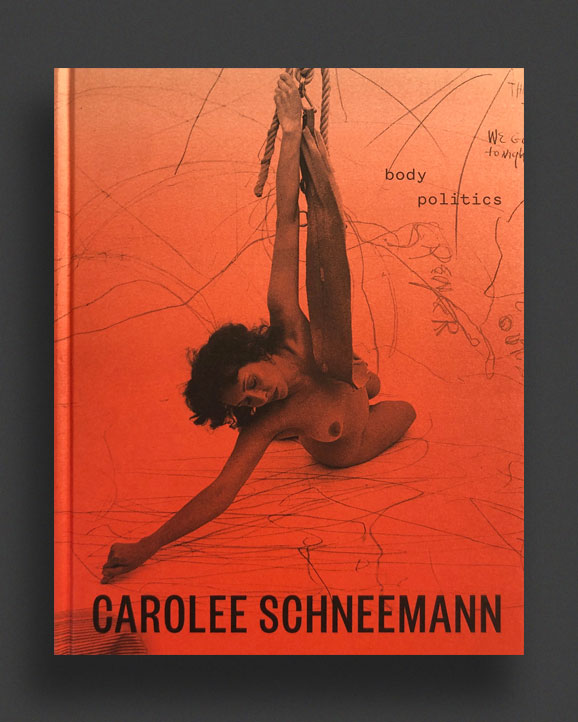
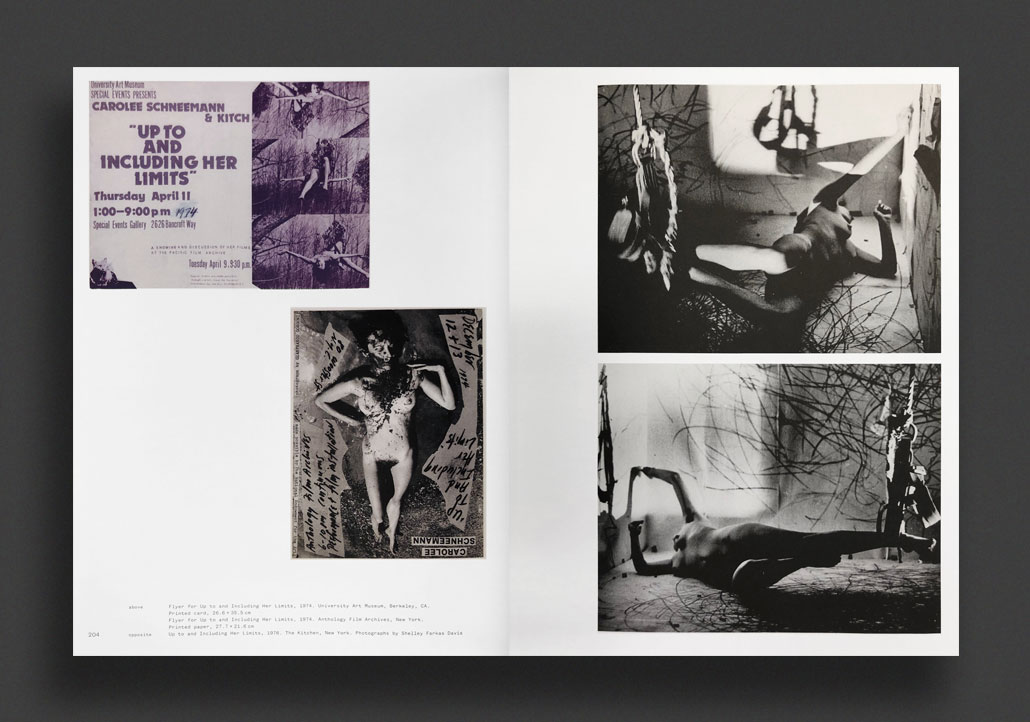
Traces the feminist icon Carolee Schneemann's prolific six-decade output, spanning her remarkably diverse, transgressive, and interdisciplinary expression.
Edited by Lotte Johnson and Chris Bayley.
Contributions by Jo Applin, Karen Di Franco, Jennifer Doyle, Elena Gorfinkel, Alison Green, Emily LaBarge, Thomas (T.) Jean Lax, Eileen Myles, Melissa Ragona, Amy Sillman and Kenneth White
Carolee Schneemann (1939-2019) was one of the most experimental artists of the twentieth and early twenty-first centuries. This book traces six decades of the feminist icon's diverse, transgressive and interdisciplinary expression through Schneemann's experimental early paintings, sculptural assemblages and kinetic works; rarely seen photographs of her radical performances; her pioneering films; and groundbreaking multi-media installations. Contributors shed new light on Schneemann's work, which addressed urgent topics from sexual expression and the objectification of women to human suffering and the violence of war. An artist who was concerned with the precarious lived experience of both humans and animals, this book positions Schneemann as one of the most relevant, provocative and inspiring artists in recent years.
Published by Yale in association with Barbican Art Gallery.
2023, English
Softcover, 208 pages, 23.5 x 22.2 cm
Published by
Strange Attractor / London
$79.00 - Out of stock
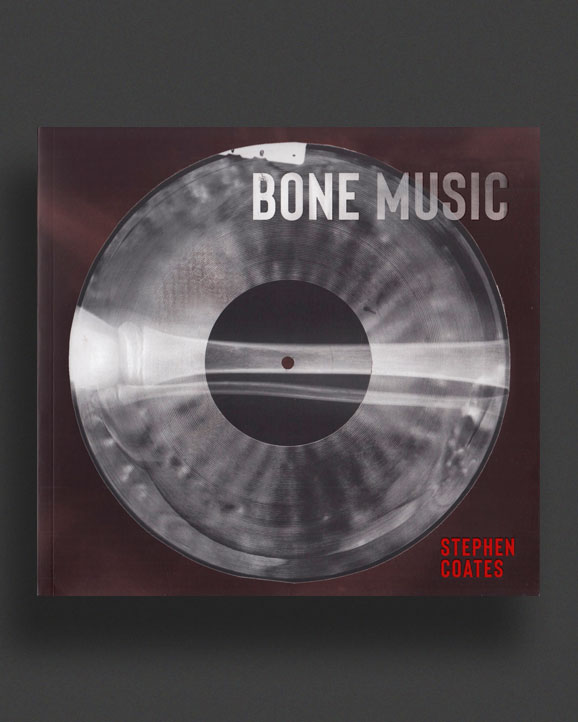
Stories of the secret underground Cold War-era Soviet music subculture that distributed forbidden music on used hospital x-rays.
During the Cold War era, the songs that Soviet citizens could listen to were ruthlessly controlled by the state. But a secret underground subculture of music lovers and bootleggers defied the censors, building recording machines and making their own records of forbidden jazz, rock 'n' roll, and Russian music, cut onto used hospital x-ray film. Bone Music is the follow up the acclaimed X-Ray Audio: The Strange History of Soviet Music on the Bone, delving deeper into a forgotten era when being a music fan could mean a lengthy prison sentence, or worse.
Who made these records? Why did they do it and how was it even possible? Foregrounding interviews and oral testimonies gathered over five years, Bone Music presents the stories of the original bone bootleggers, their customers, musicians, record collectors, and commentators, evoking a spirited resistance to a repressive culture of prohibition and punishment. It reveals that although Western jazz and rock'n'roll were important to the Stilyagi youth culture, the true rebel music was that of forbidden Russian emigres, gypsy romances, and criminal tunes: the soul songs of a society brutally cut off from its culture.
Richly illustrated with dozens of new images of Soviet x-ray discs and sound letters, Bone Music details how the bootleggers worked, outlining the technical precedents of their techniques, situating their discs in a revised history of recorded media, and bringing a wealth of compelling new detail.
2023, English
Softcover, 560 pages, 24 x 17 cm
Published by
Inventory Press / New York
$62.00 - Out of stock
“This invaluable research tool will hugely expand, update, and perhaps even revolutionize the feminist discourse. It might even be considered a work of conceptual art in itself."—Lucy R. Lippard, author of Six Years: The Dematerialization of the Art Object from 1966 to 1972
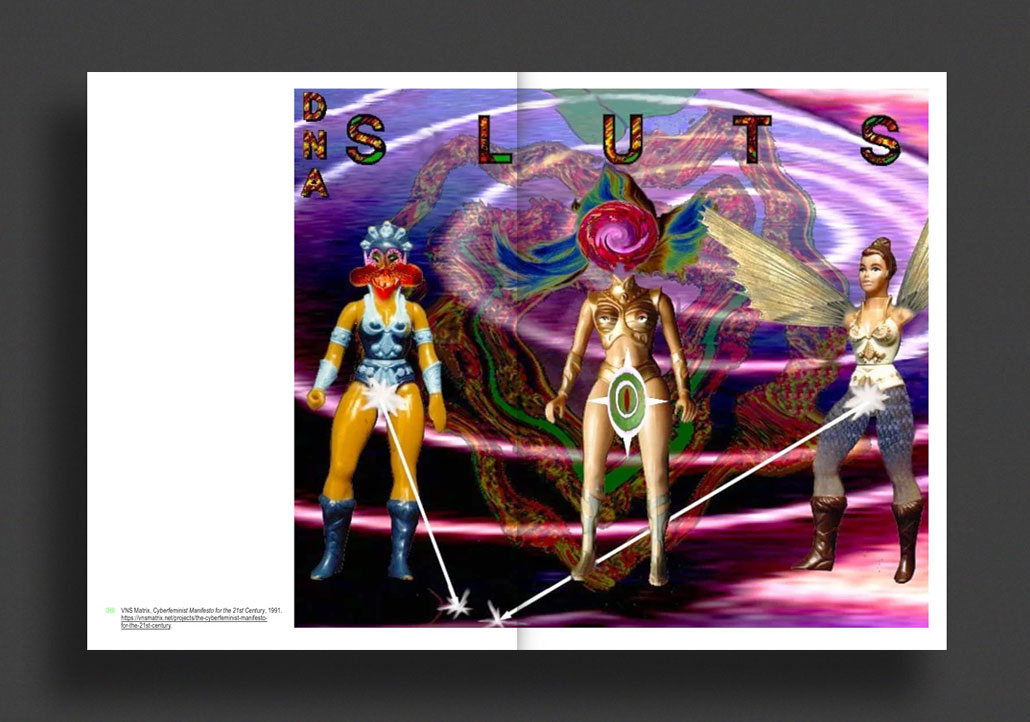
The creation and use of the Cyberfeminism Index is a social and political act. It takes the name cyberfeminism as an umbrella, complicates it and pushes it into plain sight. Edited by designer, professor and researcher Mindy Seu, it includes more than 1000 short entries of radical techno-critical activism in a variety of media, including excerpts from academic articles and scholarly texts; descriptions of hackerspaces, digital rights activist groups, bio-hacktivism; and depictions of feminist net art.
When learning about internet history, we are taught to focus on engineering, the military-industrial complex and the grandfathers who created the architecture and protocol, but the internet is not only a network of cables, servers and computers. It is an environment that shapes and is shaped by its inhabitants and their use.
“You can use it as a reference, follow a thread, or just access it at random and it delivers wit and wisdom from over three decades of one of the most politically and intellectually challenging movements of our era. What happens between sexed flesh and gendered tech? More than ever we all need to know."—McKenzie Wark, author of A Hacker Manifesto
Contributors include: Skawennati, Charlotte Web, Melanie Hoff, Constanza Pina, Melissa Aguilar, Cornelia Sollfrank, Paola Ricaurte Quijano, Mary Maggic, Neema Githere, Helen Hester, Annie Goh, VNS Matrix, Klau Chinche / Klau Kinky and Irina Aristarkhova.
1978, English
Hardcover (w. dust jacket), 387 pages, 21.59 x 28.58 cm
1st Edition, Out of print title / used / good
Published by
US Games Systems / US
$80.00 - Out of stock
First volume of Stuart R. Kaplan's The Encyclopedia Of Tarot, published by Kaplan's own U.S. Games Systems imprint in 1978. The first major reference work of its kind, this comprehensive volume traces the history and origins of the earliest extant tarot, tarocchi, and tarock decks. Written with authority, and sharing a wealth of information, Kaplan's chronological presentation takes readers from the earliest hand-painted cards, through the historical developments of printed cards, and surveys twentieth century tarot interests. Included are discussions and photographs of 3,200 cards from decks dating from the 15th to the 20th century, plus 100 references to the origins of tarot and playing cards. Annotated bibliography of over 1,700 entries.
Very Good copy with Good dust jacket, small tears and light wear.
2015, English
Softcover (letterpress boards), 93 pages, 11.1 x 16.5 cm
Published by
Univocal Publishing / Minneapolis
$52.00 - In stock -
Limited letterpress edition.
In Science Fiction and Extro-Science Fiction, Quentin Meillassoux addresses the problem of chaos and of the constancy of natural laws in the context of literature. With his usual argumentative rigor, he elucidates the distinction between science fiction, a genre in which science remains possible in spite of all the upheavals that may attend the world in which the tale takes place, and fiction outside-science, the literary concept he fashions in this book, a fiction in which science becomes impossible. With its investigations of the philosophies of Hume, Kant, and Popper, Science Fiction and Extro-Science Fiction broadens the inquiry that Meillassoux began in After Finitude, thinking through the concrete possibilities and consequences of a chaotic world in which human beings can no longer resort to science to ground their existence. It is a significant milestone in the work of an emerging philosopher, which will appeal to readers of both philosophy and literature.
Translated by Alyosha Edlebi.
The text is followed by Isaac Asimov's essay "The Billiard Ball."
2015, English
Softcover (letterpress boards), 214 pages, 12.7 x 20.3 cm
Published by
Univocal Publishing / Minneapolis
$55.00 - Out of stock
Limited letterpress edition.
Those who are mad like Antonin Artaud, are they just as mad as he was? Madness, like the plague, is contagious, and everyone, from his psychiatrists to his disciples, family, and critics, everyone who gets close to Artaud, seems to participate in his delirium. Sylvere Lotringer explores various embodiments of this shared delirium through what Artaud called "mental dramas"-a series of confrontations with his witnesses or "persecutors" where we uncover the raw delirium at work, even in Lotringer himself. Mad Like Artaud does not intend to add one more layer of commentary to the bitter controversies that have been surrounding the cursed poet's work since his death in 1948, nor does it take sides among the different camps who are still haggling over his corpse. This book speaks of the site where "madness" itself is simmering.
Translated by Joanna Spinks.
2021, English
Softcover, 72 pages, 21 x 14.8 cm
Published by
Cabinet Gallery / London
Plea / UK
$26.00 - Out of stock
Anti-ligature rooms are designed to protect the inhabitants from themselves. Cells that work to prevent us from any agency in the biggest, grandest sense. A room full of paintings that won't let you kill yourself. ANTI-LIGATURE ROOMS by Contemporary Art Writing Daily is an attempt to retexturize a world – a world streamlining a smoother digestion of us, of our resources and our art. Fear for an art that is affective palliative to an experience that's just generally bad.
Contemporary Art Writing Daily (www.artwritingdaily.com) is an author project. It has been described as “a black eye in the face of contemporary criticism.” Since 2014, it has contributed texts to numerous exhibitions and publications, including the Venice Biennale, CCS Bard, Isabella Bortolozzi, SPIKE, and Provence Magazine. Contemporary Art Writing Daily is represented by Cabinet, London.
ANTI-LIGATURE ROOMS is a co-publication by Plea and Cabinet, London. Plea is an occasional press based in Copenhagen specialising in poetry, commentary and fiction. Plea is run by Ed Atkins and Pablo Larios.
"My colleagues tell me I should start calling collectors on the phone to talk sales. Should I just read them passages from this book? Because otherwise what am I saying about art they’re not looking at?"–––Bridget Donahue
"For some years, Contemporary Art Writing Daily has been publishing some of the best art criticism — the only arts writing worth reading? – on their eponymous website. With this book, they frame their feelings in a way that approximates literature, but only to the degree that the site approximates journalism. It’s just as biting and prickly, longing and melancholic, fragmented, confusing, and ambiguous."–––Seth Price
"How might aesthetics be rethought at the level of the plastic and gastric forces that swamp human experience from all sides? In the human mouth with its 600 bacterial strains, in the fecal ooze of suburban asphalt, in the controlled hallucination of screen- space...a splenetic, spellbound sort of treatise-fable announces the posthuman destiny of art."–––John Kelsey
"This is a work of hostile inventiveness, a book of gleeful anxiety, of immanence. It is itself a product of the rubbled tautology of culture’s symbolist milkshake, a maniacal light shone down into semiotics’ intestinal dungeon. We insatiable readers bark at it, gulp into it, taking our places on the giddy train of consumed content and excreted meaning – fantastical, murderous, pharmaceutical. Anti-Ligature Rooms punches the mouth, then kisses it better, electrifying a taste for systems at their point of collapse. This is a sequence of writing that knits the mad particles of material information into theory that both wounds and is a piercing act of precision. In our world where image is a meta-event, Contemporary Art Writing Daily is a critical cauldron, with bile and dust its grinning gastric avatars."–––Helen Marten
"I have no idea what an Anti-Ligature Room might be, but the greatest advances in culture, or at least the most thrilling ones to me, are those that basically ask: If I learn the language of whatever this thing is, what will it reveal that at present I’m completely unaware of? Knock, knock. Open up, I’m coming in."–––Mark Leckey
1995 / 1996, English
Softcover, 306 pages, 21 x 13.5 cm
1st Edition, Out of print title / used / very good
Published by
Serpent's Tail / London
$100.00 - In stock -
Extremely rare first edition of the classic account of ambient music by English musician, author, curator, and professor, David Toop. David Toop's extraordinary work of sonic history travels from the rainforests of Amazonas to virtual Las Vegas, from David Lynch's house, high in the Hollywood Hills to the megalopolis of Tokyo via the work of (and interviews with) artists as diverse as Brian Eno, Sun Ra, Erik Satie, Aphex Twin, Lee Perry, Ryuichi Sakamoto, Kate Bush, Kraftwerk and Brian Wilson. Beginning in 1889 at the Paris exposition when Debussy first heard Javanese music performed, Ocean of Sound channels the competing instincts of 20th century music into an exhilarating, path-breaking account of ambient sound, from new rhythmic and tonal influences to the sounds of war, machines, and the new digital revolution.
"A meditation on the development of modern music, there's no single term that is adequate to describe what Toop has accomplished here ... mixing interviews, criticism, history, and memory, Toop moves seamlessly between sounds, styles, genres, and eras"—Pitchfork's '60 Favourite Music Books'
Very Good copy. First edition, second print run.
2022, English
Softcover, 112 pages, 12.4 x 17.3 cm
Published by
Transit Books / Oakland
$35.00 - Out of stock
"It is rare to find a writer who can take such candid pleasure in beauty—the beauty of faces, figures, clothing, and cities—while also querying its injustices. To watch Godard's films through Joanna Walsh's eyes is to see envy and appreciation, longing and disavowal, walking hand in hand. This book is a gorgeous complex gesture of criticism."—Merve Emre, author of The Annotated Mrs. Dalloway
As Joanna Walsh watches the films of Jean-Luc Godard, she considers beauty and desire in life and art. “There’s a resistance, in Godard’s women,” writes Walsh, “that is at the heart of his work (and theirs).” She is captivated by the Paris of his films and the often porous border between the city presented on screen and the one she inhabited herself. With cool precision, and in language that shines with aphoristic wit, Walsh has crafted an exquisitely intimate portrait of the way attention to works of art becomes attention to changes in ourselves. Taut and gem-like, My Life as a Godard Movie is a probing meditation by one of our most observant writers.
Joanna Walsh is a multidisciplinary writer, artist and arts activist. The author of eleven books, including Hotel, Vertigo, Worlds from the Word's End Break*up, and Girl Online, she also writes for performance, visual art and digital narrative, often working with programming and AI. She is a UK Arts Foundation fellow, and the recipient of the Markievicz Award in the Republic of Ireland. She founded and ran #readwomen (2014-18), described by the New York Times as “a rallying cry for equal treatment for women writers” and currently runs @noentry_arts.
My Life as a Godard Movie is part of the Undelivered Lectures series.
“Joanna Walsh is fast becoming one of our most important writers.”—Deborah Levy, author of Real Estate
Joanna Walsh is a multidisciplinary writer for print, digital and performance. The author of seven books, including Hotel, Vertigo, Worlds from the Word's End and Break*up, she has two new projects with Verso, Girl Online and On Screens (coming 2023). She also works as a critic, editor, teacher and arts activist.
2021, English
Softcover, 144 pages, 12 x 19 cm
Published by
Rab-Rab Press / Helsinki
$38.00 - Out of stock
Punk Suprematism includes the first English translation of theoretical writings on punk, art, socialism, bureaucracy, and nationalism by Slavoj Žižek, Rastko Močnik, and Zoja Skušek.
Written in the first half of the eighties, these texts are a unique mixture of punk attitude with theoretical concepts borrowed from Althusser, Lacan, and avant-garde art. Written in a turbulent period of Yugoslav socialism, these texts were trying to understand the political importance of punk as a mass movement of impoverished youth. The conclusions of these interventions had a lasting effect on the theoretical formation of Yugoslav post-Marxism, as well to the organizational forms of the socialist alternative. The book also includes a foreword on the historical context of the eighties and the extensive narrative bibliography of punk related publications in the Socialist Republic of Slovenia written by Sezgin Boynik. In addition to this, it also includes translations of the two editorials to Punk Problemi written by renowned Slovenian theoreticians.
The book is the first in an upcoming series on punk research by Rab-Rab press. The series starts from the idea that punk is a break, and focuses on punk as something completely separated from bourgeois culture.
2002, English
Softcover, 164 pages, 20.5 x 15 cm
1st Edition, Out of print title / used / very good
Published by
ReR Megacorp / Surrey
Edition ReR Megacorp / London
$40.00 - Out of stock
Wonderful book collection of interviews with Romanian composers Iancu Dumitrescu and Ana Maria Avram conducted by Gilles Peyret, Serge Leroy, Jerome Noetinger, Tim Hodgkinson and Costin Cazaban, collected by the mighty Recommended Records Megacorp into this vital reader published in 2002. Includes a catalogue of works and full discography. "This is serious meditation on the nature of making and receiving music, on the state of music in itself and on procedures and essences. This represents an important crystallisation of the thoughts and practices of two of today's unsung but indubitably important composers (unsung because they tread an unfashionable and deeply radical path - in disregarded Romania - and are therefore deemed 'outsiders to the official Western self declared 'mainstream'. From Phenomenology to Sampling, with a perspective that links deeply to a thread of uniquely Romanian orientation going back 80 years and is yet unquestionably contemporary and directed toward the future. A valuable collection."
Iancu Dumitrescu (b. 1944, Sibiu, Romania) is a Romanian composer, conductor, and musicologist. Between the ages of 7 and 22 he pursued conventional musical studies leading to an M.A. in composition at the National Conservatoire in Bucharest and after that period he became interested in electroacoustic music. In 1976, Dumitrescu founded Hyperion Ensemble. In 1990, with his wife Ana-Maria Avram, he formed the record label Edition Modern.
2022, English
Softcover, 32 pages, 24 x 17 cm
Published by
After 8 Books / Paris
$35.00 $15.00 - Out of stock
This volume gathers a collection of diary-like texts, posted in 2015 by Evelyn Taocheng Wang on her Facebook page, recording the experiences she had as an undercover transgender masseuse in a massage parlour in Amsterdam. The vignette-like chapters retrace the daily routine at the parlour, incidents with clients and conversations with fellow workers. A series of watercolours by the artist accompanies and illustrates the texts, interpreting her anecdotes in colourful visions. Also includes personal reflections that deftly mix bursts of humour with moments of tension, poetical notes and an acute sense of observation.Through transcriptions of discussions between Chinese immigrant women working together, the author proposes an unconventional portrait of the Chinese diaspora. Inaccuracies of language are an integral part of the narrative.
2000, English
Hardcover, 221 pages, 23 x 16 cm
1st Edition, Out of print title / used / fine
Published by
Harwood Academic Publishers / UK
$180.00 - Out of stock
Impossibly rare, first edition of this first extensive study in English of the Greek composer Jani Christou (1926—1970), Anna M. Lucciano presents his exceptionally striking personality, that of a highly original composer who made an essential contribution to new music. Anna M. Lucciano has long studied the private archives of Jani Christou. She is a musicologist specializing in Greek contemporary music and is Professor of the History of Music, Musical Aesthetics and Analysis at the Conservatoire d'Aix-en Provence.
"Lucciaino provides important insights into the music of a Greek composer whose works are not widely known or performed at the current time....These texts contribute greatly toward the understanding not only of the composer's compositional techniques but also his artistic temperament....Uniquely and effectively organized....Recommended for all serious collections of 20th-century music."—CHOICE
Jani Christou was born in Cairo, Egypt in 1926 and died in a car accident in Athens, Greece in 1970. In 1945 he went to England to study at Cambridge, where he read philosophy with Ludwig Wittgenstein and Bertrand Russell. In 1948 he gained an MA in philosophy. During this period Christou studied composition privately with H. F. Redlich, and in 1949 he travelled to Rome to study orchestration with F. Lavagnino. Later in Zurich he attended lectures in psychology with Carl Jung. In 1951 he returned to Alexandria where he married Theresia Horemi. Already at an early age his works displayed an inclination towards the mystical and the ecstatic. This tendency culminated during his last years (1965-1970) producing, next to incidental music for the staging of ancient Greek dramas, his works Mysterion, Praxis for 12, The Strychnine Lady, Enantiodromia, Anaparastasis I & Anaparastasis III and Epicycle that share a strong ritual feel, an exploration of primeval acts and of the state of trance plus an urge to unleash powers and behaviours that go beyond the self (a state Christou had named metapraxis).
Very Good—Fine copy, almost As New, light shelf wear to boards.
2022, English
Hardcover (w. dust jacket), 376 Pages, 22.8 x 15.2 cm
Published by
Zone Books / New York
$72.00 - Out of stock
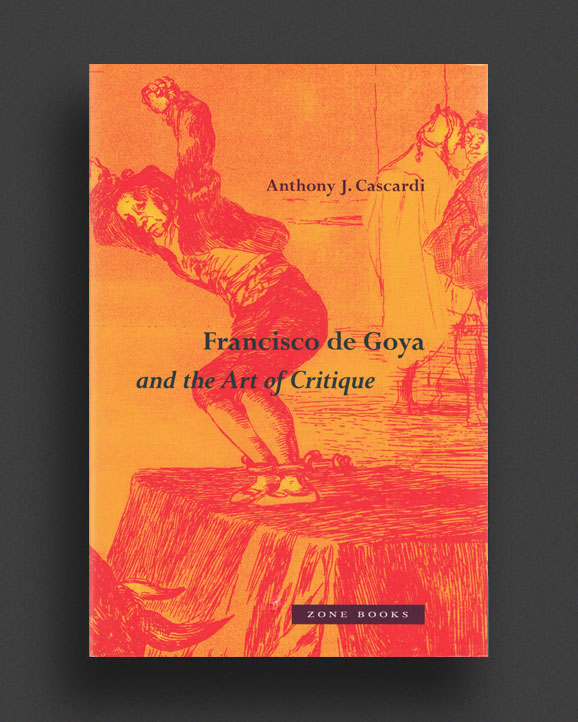
Francisco de Goya and the Art of Critique probes the relationship between the enormous, extraordinary, and sometimes baffling body of Goya’s work and the interconnected issues of modernity, Enlightenment, and critique. Taking exception to conventional views that rely mainly on Goya’s darkest images to establish his relevance for modernity, Cascardi argues that the entirety of Goya’s work is engaged in a thoroughgoing critique of the modern social and historical worlds, of which it nonetheless remains an integral part. The book reckons with the apparent gulf assumed to divide the Disasters of War and the so-called Black Paintings from Goya’s scenes of bourgeois life or from the well-mannered portraits of aristocrats, military men, and intellectuals. It shows how these apparent contradictions offer us a gateway into Goya’s critical practice vis-à-vis a European modernity typically associated with the Enlightenment values dominant in France, England, and Germany. In demonstrating Goya’s commitment to the project of critique, Cascardi provides an alternative to established readings of Goya’s work, which generally acknowledge the explicit social criticism evident in works such as the Caprichos but which have little to say about those works that do not openly take up social or political themes. In Francisco de Goya and the Art of Critique, Cascardi shows how Goya was consistently engaged in a critical response to—and not just a representation of—the many different factors that are often invoked to explain his work, including history, politics, popular culture, religion, and the history of art itself.
“This is a landmark study that will change the terms in which Goya’s art will henceforth be understood.”—Peter de Bolla
“One doesn’t need to be a Frankfurt School buff to acknowledge that Anthony Cascardi has written the most convincing account of Goya’s work—all of Goya, the religious frescoes, the court paintings, and the tapestry cartoons as well as the Caprichos, the Disasters of War, and the black paintings in the Quinta del Sordo—using the lens of Adorno and Horkheimer’s Dialectic of the Enlightenment. An enlightening study indeed, which stops short of wanting to illuminate what in Goya should remain steeped in darkness.” —Thierry de Duve, Evelyn Kranes Kossak Professor of Art History, Hunter College
“In this deeply reflective and thorough study, Cascardi blows the lid off standard accounts of Goya’s extraordinary art, demonstrating that both the ‘painter of light’ and the ‘painter of darkness’ theses fall way short of the artist’s immersion in the culture of his time. In chapter after chapter, Cascardi argues that Goya was involved in a critique of the world he lived in—its politics, religious belief, ethics, history—and, at the same time, of the means of representation at his disposal. This is a landmark study that will change the terms in which Goya’s art will henceforth be understood.” —Peter de Bolla, Professor of Cultural History and Aesthetics, University of Cambridge