World Food Books' programme is largely produced on Kulin Nation land. We acknowledge the Wurundjeri people of the Kulin Nation as the first and continuing custodians of this land, and pay respect to their Elders past, present, and emerging.
World Food Books is an arts and special interests bookshop in Naarm / Melbourne. Founded in 2010, World Food Books is devoted to the presentation of a rotating, hand-selection of international art, design, literary and counterculture publications with an emphasis on the anti-traditional, the experimental, the avant-garde, the heretic, the marginal.
Presenting new titles alongside rare and out-of-print books, catalogues and journals spanning the fields of modern and contemporary art, design, photography, illustration, film, literature, poetry, cultural theory, philosophy, sexuality, popular and underground culture in its many radical forms, World Food Books wishes to encourage adventurous, thoughtful and open-minded reading, looking, writing, and exchange of publishing and ideas, both current and historical.
As well as our bookshop, located in Melbourne's historical Nicholas Building, all of our inventory is available internationally via our online mail-order service.
World Food Books semi-regularly co-ordinates "Occasions", a programme of exhibits and events at the bookshop and in partnership with other hosts (such as museums and art galleries) that develop out of the activities, relationships and content of the bookshop itself.
World Food Books
The Nicholas Building
37 Swanston Street
Room 5, Level 6
Melbourne 3000
Australia
SHOP HOURS:
Thu–Fri 12–6, Sat 12–5
WEB-SHOP OPEN 24/7
World Food Books
Postal Address:
PO Box 435
Flinders Lane
Victoria 8009
Australia
Art
Theory / Essay
Architecture / Interior
Graphic Design / Typography
Photography
Fashion
Eros
LGBTQ+
Fiction / Poetry
Weird / Speculative / Science Fiction / Horror
Transgressive / Visceral / Abject
Symbolism / Decadence / Fin de siècle
Film / Video
Painting
Sculpture / Installation
Performance / Dance / Theater
Drawing
Sound / Music
Curatorial
Group Shows / Collections
Periodicals
Out-of-print / Rare
Posters / Ephemera / Discs
Signed Books
World Food Books Gift Voucher
World Food Book Bag
Australian Art
Australian Fiction
Australian Science Fiction / Speculative Fiction
Australian Poetry
Australian Photography
Japanese Photography
Conceptual Art
Minimal Art
Dada
'Pataphysics / Oulipo
Fluxus
Concrete Poetry
Pop Art
Surrealism
Arte Povera
Arte Informale / Haute Pâte / Tachism
Nouveau Réalisme / Zero / Kinetic
Situationism / Lettrism
Collage / Mail Art / Xerox Art
Art Brut / Folk / Visionary / Fantastic
Illustration / Graphic Art / Bandes Dessinées
Furniture
Italian Radical Design / Postmodernism
Textiles
Ceramics / Glass
Counterculture
Protest / Revolt
Philosophy
Psychoanalysis
Anthropology
Anarchism
Socialism / Anarchism / Communism / Capitalism
Literary Theory / Semiotics / Language
Feminism / Women's Studies
Gender Studies / Sexuality
Anthropology
Fetishism / BDSM
Drugs / Psychedelia
Crime / Violence
Animal Rights / Veganism
Occult / Esoterica
Ecology / Earth / Alternative Living
Whole Earth / Crafts
All prices in AUD (Australian dollars)
Pick-Ups
Pick-up orders can be collected in our bookshop during opening hours after order date. Please collect any Pick-up orders within 2 weeks of ordering as we have limited storage space. Orders will be released back into stock if not collected within this time. No refunds can be made for pick-ups left un-collected. If you cannot make it in to the bookshop in this time-frame, please choose postage option.
Return Policy
All sales are final. We do accept returns (for refund or exchange) for items received in error. All our orders are packed with special care using heavy-duty padding and cardboard book-mailers or bubble mailers (for smaller books), using reinforcement where required. We cannot take responsibility for any lost, stolen or damaged parcels.
Insurance
Should you wish to insure your package, please email us directly after placing your order and we can organise this at a small extra expense. Although all standard/express tracked packages are very safe and dependable, we cannot take responsibility for any lost, stolen or damaged parcels. We recommend insurance on valuable orders.
Interested in selling your old books, catalogues, journals, magazines, comics, fanzines, ephemera? We are always looking for interesting, unusual and out-of-print books to buy. We only buy books in our fields of interest and specialty, and that we feel we can resell.
We base these prices on desirability, market value, in-print prices, condition and our current stock levels. We offer cash, store credit, and can take stock on consignment. All
about 25% of the price we expect to get when we sell them, or 30% in store credit. We base these prices on desirability, market value, in-print prices, condition and our current stock levels.
Sell your books any day of the week. You can drop them off and return later. If you have a lot of books, we can visit your Sydney home.
We buy books that we feel we can resell. We offer about 25 % of the price we expect to get when we sell them, or 30% in store credit. We base these prices on desirability, market value, in-print prices, condition and our current stock levels.
Philadelphia Wireman
03 August - 01 September, 2018
World Food Books is proud to announce our next Occasion, the first presentation of sculptures by Philadelphia Wireman in Australia.
The Philadelphia Wireman sculptures were found abandoned in an alley off Philadelphia’s South Street on trash night in 1982. Their discovery in a rapidly-changing neighbourhood undergoing extensive renovation, compounded with the failure of all attempts to locate the artist, suggests that the works may have been discarded after the maker’s death. Dubbed the "Philadelphia Wireman" during the first exhibition of this work, in 1985, the maker’s name, age, ethnicity, and even gender remain uncertain. The entire collection totals approximately 1200 pieces, all intricately bound together with tightly-wound heavy-gauge wire (along with a few small, abstract marker drawings, reminiscent both of Mark Tobey and J.B. Murry). The dense construction of the work, despite a modest range of scale and materials, is singularly obsessive and disciplined in design: a wire armature or exoskeleton firmly binds a bricolage of found objects including plastic, glass, food packaging, umbrella parts, tape, rubber, batteries, pens, leather, reflectors, nuts and bolts, nails, foil, coins, toys, watches, eyeglasses, tools, and jewellery.
Heavy with associations—anthropomorphic, zoomorphic, and socio-cultural responses to wrapped detritus—the totemic sculptures by Philadelphia Wireman have been discussed in the context of work created to fulfil the shamanistic needs of alternative religions in American culture. Curators, collectors, and critics have variously compared certain pieces to sculpture from Classical antiquity, Native American medicine bundles, African-American memory jugs, and African fetish objects. Reflecting the artist’s prolific and incredibly focused scavenging impulse, and despite—or perhaps enhanced by—their anonymity, these enigmatic objects function as urban artefacts and arbiters of power, though their origin and purpose is unknown. Philadelphia Wireman, whatever their identity, possessed an astonishing ability to isolate and communicate the concepts of power and energy through the selection and transformation of ordinary materials. Over the course of the past two decades, this collection has come to be regarded as an important discovery in the field of self-taught art and vernacular art.
Presented in collaboration with Fleisher-Ollman Gallery, Philadelphia, and Robert Heald, Wellington.
Susan Te Kahurangi King
02 February - 10 March, 2018
Susan Te Kahurangi King (24 February 1951 - ) has been a confident and prolific artist since she was a young child, drawing with readily available materials - pencils, ballpoint pens and felt-tip markers, on whatever paper is at hand. Between the ages of four and six Susan slowly ceased verbal communication. Her grandparents William and Myrtle Murphy had developed a special bond with Susan so they took on caring responsibilities for extended periods. Myrtle began informally archiving her work, carefully collecting and storing the drawings and compiling scrapbooks. No drawing was insignificant; every scrap of paper was kept. The King family are now the custodians of a vast collection containing over 7000 individual works, from tiny scraps of paper through to 5 meter long rolls.
The scrapbooks and diaries reveal Myrtle to be a woman of great patience and compassion, seeking to understand a child who was not always behaving as expected. She encouraged Susan to be observant, to explore her environment and absorb all the sights and sounds. Myrtle would show Susan’s drawings to friends and people in her community that she had dealings with, such as shopkeepers and postal workers, but this was not simply a case of a grandmother’s bias. She recognised that Susan had developed a sophisticated and unique visual language and sincerely believed that her art deserved serious attention.
This was an unorthodox attitude for the time. To provide some context, Jean Dubuffet coined the term Art Brut in 1945 to describe work created by self-taught artists – specifically residents of psychiatric institutions and those he considered to be visionaries or eccentrics. In 1972 Roger Cardinal extended this concept by adopting the term Outsider Art to describe work made by non-academically trained artists operating outside of mainstream art networks through choice or circumstance. Susan was born in Te Aroha, New Zealand in 1951, far from the artistic hubs of Paris and London that Dubuffet and Cardinal operated in. That Myrtle fêted Susan as a self-taught artist who deserved to be taken seriously shows how progressive her attitudes were.
Susan’s parents Doug and Dawn were also progressive. Over the years they had consulted numerous health practitioners about Susan’s condition, as the medical establishment could not provide an explanation as to why she had lapsed into silence. Dawn educated herself in the field of homeopathy and went on to treat all twelve of her children using these principles – basing prescriptions on her observations of their physical, mental and emotional state.
Doug was a linguist with an interest in philosophy who devoted what little spare time he had to studying Maori language and culture. To some extent their willingness to explore the fringes of the mainstream made them outsiders too but it was their commitment to living with integrity and their respect for individuality that ensured Susan’s creativity was always encouraged.
Even though Susan’s family supported her artistic pursuits, some staff in schools and hospitals saw it as an impediment to her assimilation into the community and discouraged it in a variety of ways. Her family was not always aware of this and therefore did not fully understand why Susan stopped drawing in the early 1990s. However, rather than dwell on the challenges that Susan faced in pursuit of her artistic practice, they prefer to highlight her achievements. In 2008 Susan began drawing again in earnest, after an almost 20 year interruption, and her work is now shown in galleries around the world.
Susan grew up without television and has been heavily influenced by the comics she read as a child. She is absolutely fearless in the appropriation of recognizable characters, such as Donald Duck and Mickey Mouse, in her work. She twists their limbs, contorts their faces, compresses them together, blends them into complex patterned backgrounds - always imbuing them with an incredible energy. Although Susan often used pop culture characters in her work they are not naive or childlike. These are drawings by a brilliant self-taught artist who has been creating exceptional work for decades without an audience in mind.
Mladen Stilinović
"Various Works 1986 - 1999"
02 February 16 - September 10, 2016
Various works 1986 - 1999, from two houses, from the collections of John Nixon, Sue Cramer, Kerrie Poliness, Peter Haffenden and Phoebe Haffenden.
Including: Geometry of Cakes (various shelves), 1993; Poor People’s Law (black and white plate), 1993; White Absence (glasses, ruler, set square, silver spoon, silver ladel with skin photograph and wooden cubes), 1990-1996; Exploitation of the Dead (grey and red star painting, wooden painting, black spoon with red table, red plate), 1984-1990; Money and Zeros (zero tie, paintings made for friends in Australia (Sue, John, Kerrie), numbers painting), 1991-1992; Words - Slogans (various t-shirts) - “they talk about the death of art...help! someone is trying to kill me”, “my sweet little lamb”, “work is a disease - Karl Marx”; Various artist books, catalogues, monographs, videos; Poster from exhibition Insulting Anarchy; "Circular" Croatian - Australian edition; Artist book by Vlado Martek (Dostoyevsky); more.
Thanks to Mladen Stilinović and Branka Stipančić.
Jonathan Walker
Always Will Need To Wear Winter Shirt Blue + Ochre Small Check Pattern
21 August - 21 September, 2015
Untitled
I am not a great reader of poetry but I always return to the work of Melbourne poet, Vincent Buckley (1925- 1988). Perhaps I find his most tantalising piece to be not a finished poem but a fragment left on a scrap of paper discovered on his desk after the poet’s death.
The poetry gathers like oil
In the word-core, and spreads
It has its music meet,
Its music is in movement.
This fragment is more the shell left behind from a volatile thought than a finished poem. I find the last two lines honest but awkward whereas the first two lines work like an arrow. Most likely he could not find a resolution so it was left. Still, in its present form, it remains an eloquent testimony to the ultimate failure of a medium to express mobile thought and sensation, in Buckley’s case, through verbal language. It’s an important matter because this is something all artists have to deal with regardless of the medium.
I have never written a poem, however, I am forever copying fragments from books on paper scraps in a vain effort to fix certain notions in my head. At first, they function as bookmarks that are sometimes returned to when I open the book. But before long, as they accumulate, they fall out littering the table interspersed with A4 photocopies, bills, books and medications.
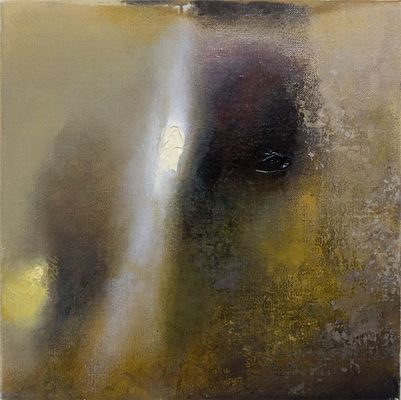
To return to Buckley’s fragment, the first two lines very much evoke how I paint nowadays. As you age, detail diminishes and patches of light become more luminous and float. I feel the most honest way of dealing with this is by smearing the oil paint on the canvas with the fingers and working close-up, blind. Only if the patches coalesce into an approaching image can the work gain a life.
-
Jonathan Walker was born in Melbourne, Australia and brought up on a dairy farm in Gippsland. In the 1970’s he studied painting at RMIT and won the Harold Wright Scholarship to the British Museum, London. During the 1980’s he exhibited at Pinacotheca Gallery, Richmond and had work shown at the NGV and Heidi City Art Gallery. Over the same period he designed the cover for the “Epigenesi” LP by Giancarlo Toniutti, Italy and conducted a mail exchange work with Achim Wollscheid, Germany. The work with artists through the post resulted in an article published in the bicentenary issue of Art and Australia 1988. He showed in artist run spaces such as WestSpace in the 90’s and 2000’s, and until 2012, taught painting at Victoria University, which is where we (Colleen Ahern and Lisa Radford) as organisers of the exhibition, among many others, had the privilege of being his student.
Walker’s knowledge was imparted to students through the careful selection of music, literature, and artists found in books that he himself had ordered for the library. Walker’s strategy was the generosity of sharing his vast knowledge with references specific to each student and their context.
Walker’s paintings share a similar focus and intimacy.
This exhibition presents a small selection of recent paintings alongside a publication that includes Walker’s writing. Observational and analytical, Walker’s work is a type of material notation — the time of day, colour and how it is blended, the both specific and fleeting location of a reflection on lino or the question of whether a chair leg should be included in a painting.
Please join us on Friday August 21 between 6-8pm to celebrate the opening of the exhibition.
Curated by Colleen Ahern and Lisa Radford.
B. Wurtz
Curated by Nic Tammens
March 26 - April 4, 2015
B.Wurtz works from a basement studio in his home on Manhattan’s Lower East Side.
This local fact is attested to by the plastic shopping bags and newsprint circulars that appear in his work. As formal objects, they don’t make loud claims about their origins but nonetheless transmit street addresses and places of business from the bottom of this long thin island. Like plenty of artists, Wurtz is affected by what is local and what is consumed. His work is underpinned by this ethic. It often speaks from a neighborhood or reads like the contents of a hamper:
“BLACK PLUMS $1.29 lb.”
“Food Bazaar”
“USDA Whole Pork Shoulder Picnic 99c lb.”
“RITE AID Pharmacy, with us it’s personal.”
“H. Brickman & Sons.”
“Sweet Yams 59c lb."
Most of the work in this exhibition was made while the artist was in residence at Dieu Donne, a workshop dedicated to paper craft in Midtown. Here Wurtz fabricated assemblages with paper and objects that are relatively lightweight, with the intention that they would be easily transportable to Australia. This consideration isn’t absolute in Wurtz’s work, but was prescriptive for making the current exhibition light and cheap. Packed in two boxes, these works were sent from a USPS post office on the Lower East Side and delivered to North Melbourne by Australia Post.
Wurtz appears courtesy of Metro Pictures, New York.
Thanks to Rob Halverson, Joshua Petherick, Sari de Mallory, Matt Hinkley, Helen Johnson, Fayen d'Evie, Ask Kilmartin, Lisa Radon, Ellena Savage, Yale Union, and "Elizabeth".
John Nixon
"Archive"
December 15 - January 20, 2014
The presentation of John Nixon's archive offered a rare showcase of this extensive collection of the artist's own publications, catalogues, posters, ephemera, editions and more, from the mid 1980s onwards, alongside a selection of his artworks.
Organized by John Nixon, Joshua Petherick and Matt Hinkley.
<a href=http://wfb.public-office.info/artist/john-nixon>All titles by John Nixon
"Habitat"
at Minerva, Sydney (organised by Joshua Petherick and Matt Hinkley)
November 15 - December 20, 2014
Lupo Borgonovo, Janet Burchill & Jennifer McCamley,
Lewis Fidock, HR Giger, Piero Gilardi, Veit Laurent Kurz,
Cinzia Ruggeri, Michael E. Smith, Lucie Stahl, Daniel Weil, Wols
Press Release:
“...It contained seven objects. The slender fluted bone, surely formed for flight, surely from the wing of some large bird. Three archaic circuitboards, faced with mazes of gold. A smooth white sphere of baked clay. An age-blackened fragment of lace. A fingerlength segment of what she assumed was bone from a human wrist, grayish white, inset smoothly with the silicon shaft of a small instrument that must once have ridden flush with the surface of the skin - but the thing’s face was seared and blackened.”
William Gibson, “Count Zero”, 1986
"Autumn Projects Archive"
Curated by Liza Vasiliou
March 6 - March 15, 2014
World Food Books, in conjunction with the Virgin Australia Melbourne Fashion Festival 2014, presented the Autumn Projects archive, consisting of a selection of early examples in Australian fashion with a particular interest in collecting designers and labels from the period beginning in the 1980’s, who significantly influenced the discourse of Australian Fashion.
Curated by Liza Vasiliou, the exhibition provided a unique opportunity to view pieces by designers Anthea Crawford, Barbara Vandenberg, Geoff Liddell and labels CR Australia, Covers, Jag along with early experimental collage pieces by Prue Acton and Sally Browne’s ‘Fragments’ collection, suspended throughout the functioning World Food Books shop in Melbourne.
H.B. Peace
presented by CENTRE FOR STYLE
November 14, 2013
"Hey Blinky, you say chic, I say same"
Anon 2013
H.B. Peace is a clothing collaboration between great friends Blake Barns and Hugh Egan Westland. Their pieces explore the divergences between 'character’ and ‘personality’ in garments....etc
Special Thanks to Joshua Petherick and Matt Hinkley of WFB and Gillian Mears
and a Very Special Thank you to Audrey Thomas Hayes for her shoe collaboration.
Janet Burchill & Jennifer McCamley
"Aesthetic Suicide"
May 10 - June 8, 2013
The first of our occasional exhibitions in the World Food Books office/shop space in Melbourne, "Aesthetic Suicide" presented a body of new and older works together by artists Janet Burchill & Jennifer McCamley, including videos, prints, a wall work, and publications.
During shop open hours videos played every hour, on the hour.
2018, English
Softcover, 208 pages, 21.2 x 15.2 cm
Published by
Valiz / Amsterdam
Istanbul Design Biennial / Istanbul
$44.00 - Out of stock
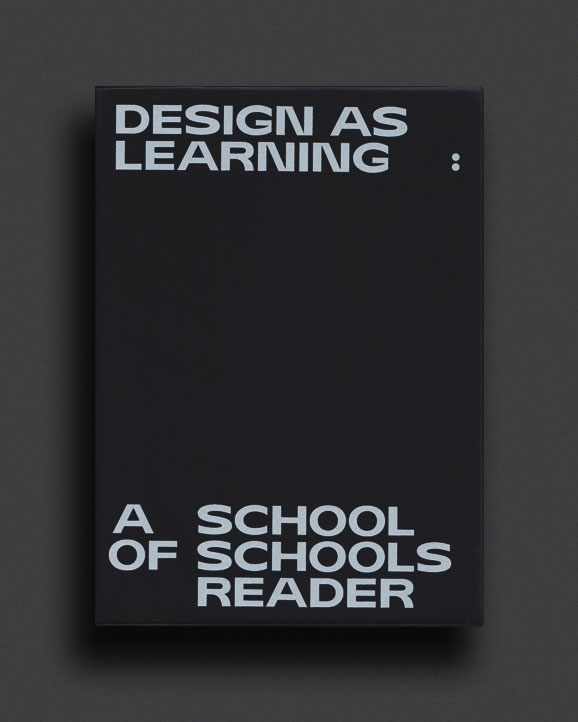
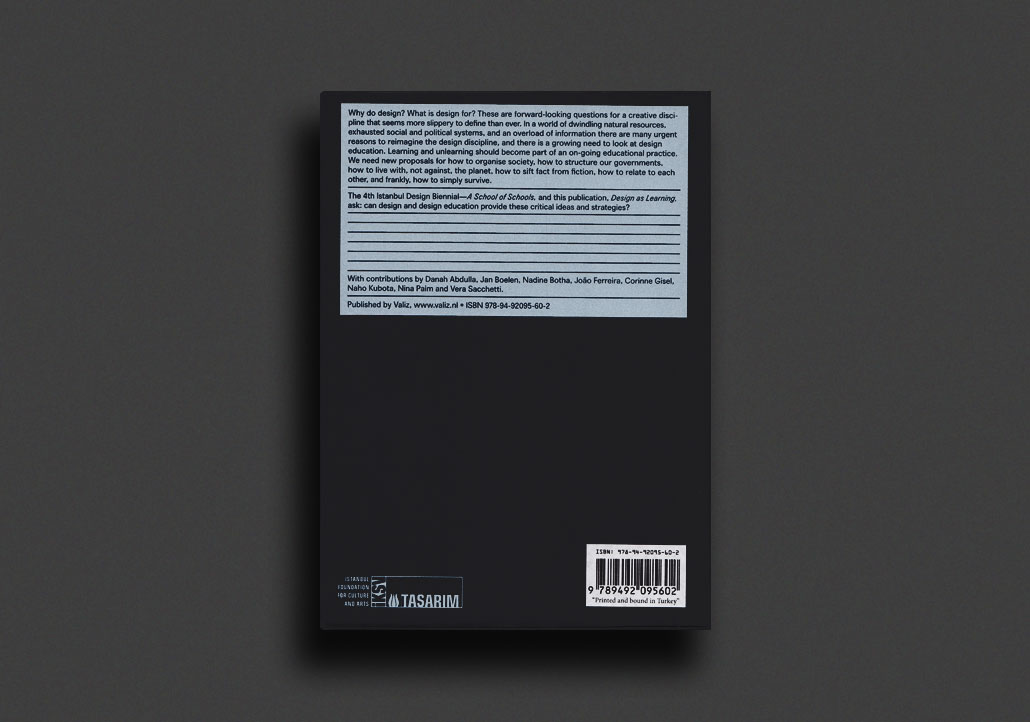
Why do design? What is design for? These are forward-looking questions for a creative discipline that seems more slippery to define than ever. In a world of dwindling natural resources, exhausted social and political systems, and an overload of information there are many urgent reasons to reimagine the design discipline, and there is a growing need to look at design education. Learning and unlearning should become part of an on-going educational practice. We need new proposals for how to organise society, how to structure our governments, how to live with, not against, the planet, how to sift fact from fiction, how to relate to each other, and frankly, how to simply survive.
The 4th Istanbul Design Biennial—A School of Schools, and this publication, Design as Learning ask: can design and design education provide these critical ideas and strategies?
Editors: Jan Boelen, Nadine Botha, Vera Sacchetti
Contributors: Danah Abdulla, Zeynep Çelik Alexander, Nelly Ben Hayoun, Jan Boelen, Nadine Botha, João Ferreira, Corinne Gisel, Gabrielle Kennedy, Naho Kubota, Peter Lang, Claudia Mareis, Deniz Ova, Nina Paim, Vera Sacchetti
Interviews: Åbäke (Maki Suzuki), Fabb (Burcu Biçer Saner, Efe Gözen), Navine G. Kahn-Dossos, Ebru Kurbak, Prototype Series (Mae-ling Lokko), Studio Folder (Marco Ferrari & Elisa Pasqual), SulSolSal (Hannes Bernard & Guido Gigli), Pinar Yoldaş
Design: Offshore Studio
2018, English
Softcover, 162 pages, 17 x 23 cm
Published by
Valiz / Amsterdam
$39.00 - Out of stock
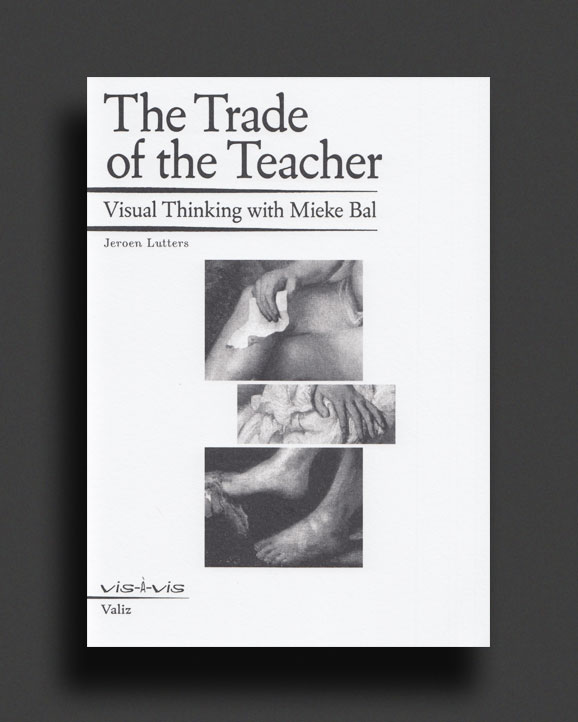
This book documents a series of conversations on the art of teaching between cultural theorist Mieke Bal and Jeroen Lutters. In a dialogue that also touches on the role of visual art, Lutters introduced paintings by Banksy, Rembrandt, Marlene Dumas, and George Deem as “teaching objects” and asked Bal to elucidate upon each. The result is a personal, meandering, and precise account of her way of thinking through visual art and literature, as well as how she exchanges ideas with students and colleagues. The text makes clear how objects can speak, how they are thought-images, and serves as a source of inspiration for both students and teachers of the arts and humanities.
Mieke Bal is a cultural theorist, critic, video artist and occasional curator, with a long history of teaching in the arts and the humanities. She works on gender, migratory culture, psychoanalysis, and the critique of capitalism. She has published 38 books, including A Mieke Bal Reader (2006), Quoting Caravaggio (1999) and Narratology (1985), that has been reprinted, revised and translated numerous times. www.miekebal.org
Jeroen Lutters is an art and cultural analyst and educational designer. He concentrates on the central role of the arts and humanities in the contemporary curriculum, the need for artist educators as wandering teachers and the theory and practice of art-based learning. He is a professor at ArtEZ, University of the Arts.
1973-74, English
Softcover, 500 plus pages, 28 x 21 cm
1st Edition, Out of print title / used / very good
Published by
Earth Garden / Balmain
$200.00 - Out of stock
A tool-box and a time-capsule; complete set of issues 1-10 of the amazing Earth Garden magazine, edited by Keith Vincent Smith and Irene Smith and published in Balmain NSW between 1972-1974. The Australian Whole Earth!
"EARTH GARDEN presents a range of natural life-styles. It is intended as a key to sources, practical ideas and alternatives to the nine-to-five drag. EARTH GARDEN is concerned with the back-to-the-earth movement, surviving in the city, living in the country, organic gardening, community, outdoors, food and diet, living more with less, and the inner changes which follow when you are in tune with Nature. Let us lead you up EARTH GARDEN'S path to the good life. There are no advertisements in EARTH GARDEN, books, places and products recommended are those we think relevant."
The combined 500-plus pages of these 10 issues cover everything, including dome building, bush foraging, sun cults, edible flowers, Montsalvat, hydroponics, mud building, food co-ops, natural dyes, bee-lore and bee-keeping, raku firing, Australian communes, Robert Rodale, suburban farms, planting charts, wholefoods, the Feedwell Family, macrobiotics, fruit wines, Neil Douglas, veganism, fallout shelters, goats, Nimbin, Clifton Pugh, bamboo flutes, animal care, mushrooms, A-frames, school farms, bio-dynamics/Rudolf Steiner, Shalom, banana-gas, weaving, solar and wind power, pottery, clothing, cooking... you get the idea - just the surface. Articles, guides, stories and interviews with so many Australian practitioner's of harmonious living, all heavily illustrated with photographs and drawings. A real treasure and more important than ever!
All very good with only light wear/ageing.
1985, English
Softcover, 64 pages, 24.5 x 16.5 cm
1st Edition, Out of print title / used / good
Published by
IWD Press / Sydney
$45.00 - Out of stock
"A History of International Women's Day (in Words and Images)" by Joyce Stevens was published in Sydney in 1985 by IWD Press. This great publication documents the history of International Women's Day, tracing its origins (around 1910) and development across the world throughout the generations since, with particular focus on the 1950s-1980s and detailed information on activities in and around Sydney, Australia, where the author was based. Heavily illustrated throughout with photographs documenting IWD marches, protests, concerts, theatre, benefits, posters, ephemera, and much more. A wonderful resource.
"Over the years, International Women's Day (IWD) has taken to the streets, sparked off a revolution, met cosily at luncheons and concerts, rubbed shoulders with Premiers, Prime Ministers and Mayors, demonstrated at the doors of newspapers and welfare institutions, occupied empty houses intent on gaining shelter for homeless women and has ushered in reform legislation.
The history of IWD dates back to 1910 internationally and, in Australia, to 1928. But socialist women in the United States organised the first national Women's Day in 1908 and helped to inspire the international event.
The day has been variously seen as a time for asserting women's political and social rights, for reviewing the progress that women have made, or as a day for celebration. In keeping with its early radical traditions, Lena Lewis, U S. socialist, declared in 1910 that it was not a time for celebrating anything, but rather a day for anticipating all the struggles to come when" we may eventually and forever stamp out the last vestige of male egotism and his desire to dominate over women""
Joyce Stevens (1928–2014) was a prominent Australian activist and writer in the left, union and feminist movements. Stevens was an historian of the Women’s Movement, authoring three major publications ("A History of International Women's Day" (1985), "Taking the Revolution Home – Work Among Women in the Communist Party of Australia – 1920-1945" (1987), "Lightening the Load: Women at Work – A History of WEAC 1982-1989" (1991)) and helping to produce the first Women's Liberation newspaper in Australia, Mejane and Australia's first socialist-feminist magazine, Scarlet Woman. Her contribution, influence and impact were enormous.She helped set up the Control Abortion Referral Service which established the first two women's health centres in Sydney - at Leichhardt and Liverpool. She worked for the Women's Employment Action Centre (WEAC) on its register of women in non-traditional jobs and in their attempts to establish a comparable worth case between pay rates in traditional female and male occupations. Joyce became part of that section of the CPA which was working for a renewal of its "socialist vision" drawing on feminist, environmental, Aboriginal and multicultural aspirations. In 1991 she supported the dissolution of the CPA believing that new forces and forms of organisation were needed for the renewal of left politics.
In 1996 Joyce received an Order of Australia (AM) for "service to social justice for women as an activist and writer"
Good copy with light general wear, foxing, creasing to covers, light tanning.
2019, English
Softcover (w. silk organza dust jacket), 400 pages, 27.8 x 20.8 cm
Published by
Surpllus / Melbourne
$70.00 - Out of stock
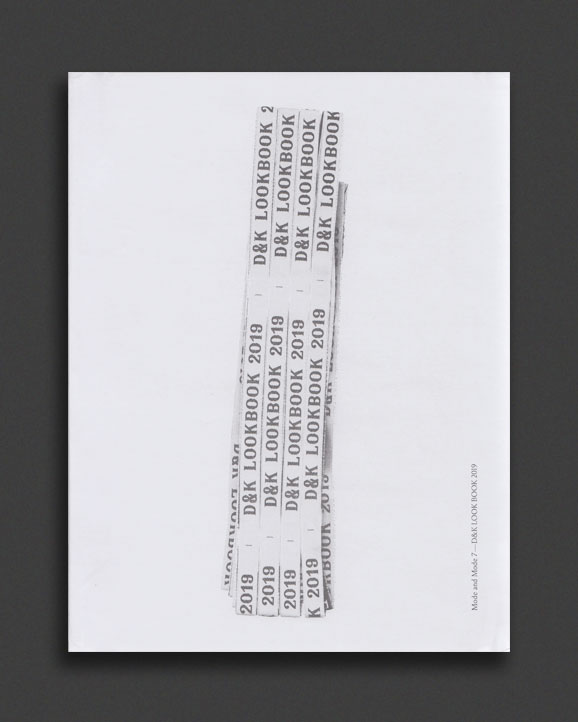
Fashion has always been expanded. Fashion practitioners have always produced things other than clothes. Fashion subsumes the fields, disciplines, movements and cultures around it, in a relentless quest for the new. In D&K LOOK BOOK 2019, the traditional fashion ‘lookbook’ is expanded from a slight and selective compendium of a collection to an extensive monograph about fashion practice. This experimental fashion publication, subsumed in the format of a glossy fashion magazine, questions the ubiquity and mass consumption of fashion images. Critical fashion practice appropriates the conventions of fashion publishing to communicate alternative narratives of fashion systems and industry practice as evident in the practice of D&K. This is explored through an obsessive and excessive documentation of the project ‘D&K All or Nothing’ (2017), with imagery by Agnieszka Chabros, Kate Meakin, Layla Cluer, Warwick Baker, Marc Morel and Christine Scott-Young. Newly commissioned texts by fashion scholars and practitioners including Clemens Thornquist, Femke de Vries, José Teunissen, Matthew Linde, Michael Beverland, Nella Themelios and Ricarda Bigolin explore such themes as the performance of fashion, branding, product languages and strategies for critical fashion practice.
Designed by Brad Haylock
First Edition, wrapped in a special edition silk organza cover, and found aluminium charm by D&K - Ricarda Bigolin and Chantal Kirby.
2019, English
Softcover, 70 pages, 27.1 x 20.7 cm
Published by
Mode and Mode / Melbourne
$14.00 - In stock -
Mode and Mode seven presents an anthology of text works and biographical listings of key D&K (Ricarda Bigolin and Nella Themelios) projects from 2012 to present as a companion publication to D&K LOOK BOOK 2019. D&K produced writing—including ficto-critical prose, cut-and-paste collage, poetry, and screenwriting—to reconstitute components of fashion, such as garments, retail atmosphere and packaging ephemera. Their interrogation of fashion language in (and as) branding represents a body of experimental text works by a critical fashion practice that highlights the plasticity of words in fashion, which are always both meaningless and meaningful.
Published in an edition of 500 copies.
Mode and Mode is a periodical that addresses printed matter in fashion practice. Each issue explores experimental publishing in fashion with an interview around a print-based project — one that has critical effects to fashion as a discourse. In doing so, we reflect on the role of print and its potency to disrupt, propel and remake fashion narratives.
Editor: Laura Gardner
Designer: Karina Soraya
2019, English
Softcover, 300 pages, 17 x 24 cm
Published by
Sternberg Press / Berlin
$69.00 $40.00 - Out of stock
Contributions By Georges Didi-Huberman, Erika Fischer-Lichte, Barbara Gronau, Reinhold Görling, Adrian Heathfield, Misha Kavka, David Lapoujade, Mirjam Lewandowsky, Via Lewandowsky, Oliver Marchart, Rita Mcbride, Christoph Menke, Aernout Mik, Marcel Odenbach, Peter Osborne, Jacques Rancière, Christine Ross, Ludger Schwarte, Martin Seel
“Standstill” could be the name for the exact kind of experience that is the hiatus between social expectations and real possibilities of agency. Standstill may also be the name of an aesthetic strategy to instill a non-linear time of resistance and experience into the political protocol of progress. Finally, standstill can be the name for the temporal fissure in the midst of the subject, for the lapse between the subject of the enunciation and the subject of a statement, the limit that is the border between the inside and the outside. It can be the name for the mode of potentiality, for the moment of gesture, or, with Walter Benjamin, the medium of the dialectical image. The essays of this book transverse these dimensions of standstill as an in-between of time. The book includes essays by Georges Didi-Huberman, David Lapoujade, Peter Osborne, Jacques Rancière, Christine Ross, and others as well as conversations with Via Lewandowsky, Aernout Mik and Marcel Odenbach.
1969, Italian / English / French
Hardcover (w. dust jacket), 196 pages, 23 x 25 cm
1st Edition, Out of print title / used / good
Published by
Alfieri / Milan
$90.00 - Out of stock
Scarce copy of Metro, "The International Review Of Contemporary Art", published in Milan twice yearly, each issue in dust-jacketed hardcover format and edited by Bruno Alfieri. This 15th edition from 1969 with a wonderful illustrated cover by Pino Pascali. Like it's more widely-known architectural counterpart, Lotus, each issue of Metro features in-depth articles on a selection of artists or events in a format and style far closer to a book than a periodical. This issue also includes articles on Piero Manzoni, Leo Castelli Gallery (Robert Morris, Richard Serra, etc.), Bridget Riley, Documenta 4 in Kassel, Italian sociologist and artist Hans Glauber, and of course Pino Pascali. Also an article that looks at the work of Pascali alongside Lucio Fontana. Texts by Germano Celant, Lea Vergine, Bruno Alfieri, Giulio Carlo Argan, Peter Gorsen, Gillo Dorfles, Maurizio Dell'Arco, Giuseppe Gatt, and others. Text in Italian, English and French.
Good copy with some small closed tears to jacket and edge wear. Now preserved in mylar wrap.
2019, English
Softcover, 272 pages, 15.2 x 22.9 cm
Published by
Semiotext(e) / Los Angeles
$44.00 - Out of stock
Introduction by Kevin Killian
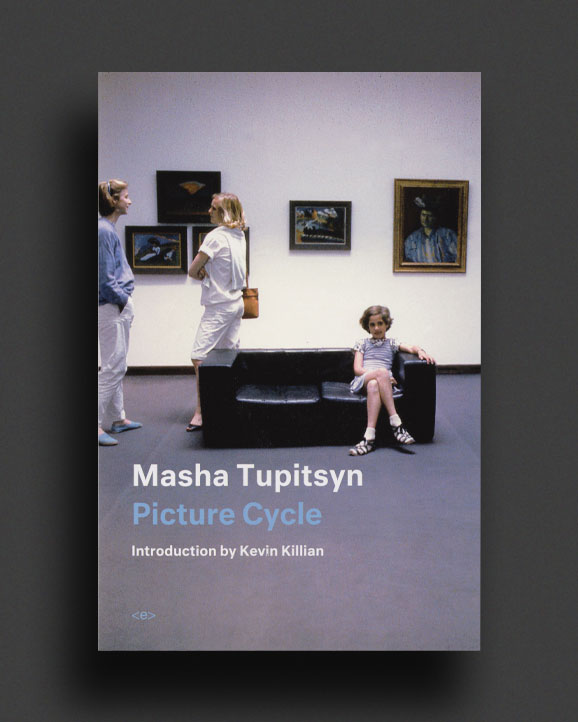
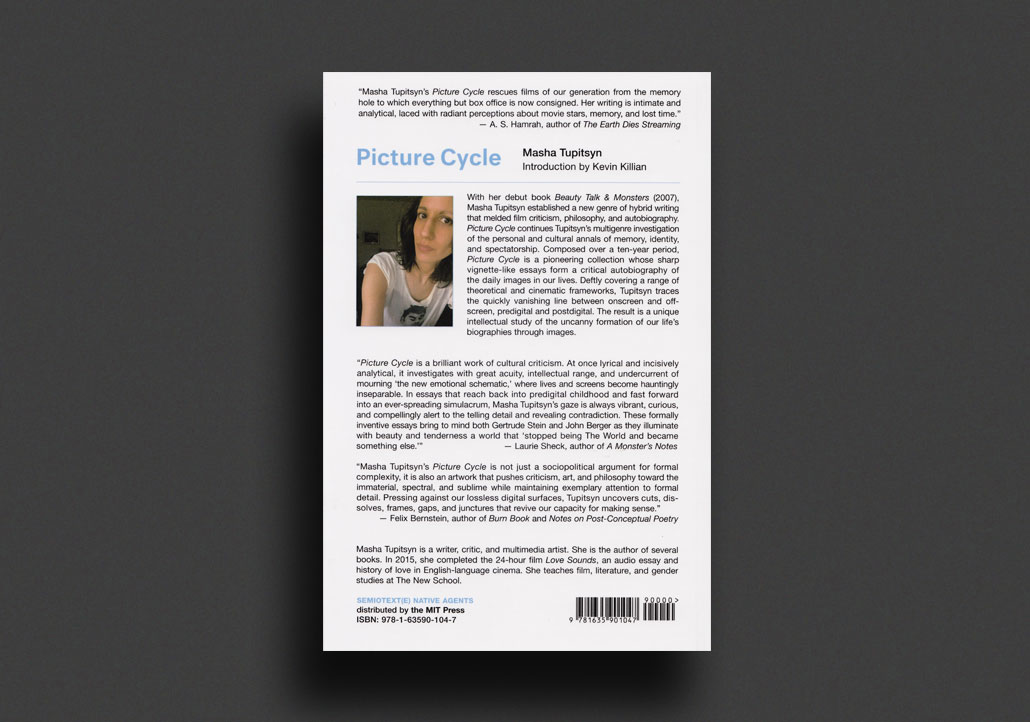
With her debut collection Beauty Talk & Monsters (2007), Masha Tupitsyn established a new genre of hybrid writing that melded film criticism, philosophy, and autobiography. Picture Cycle continues Tupitsyn's multigenre investigation of the personal and cultural annals of memory, identity, and spectatorship, both on and off the screen. Composed over a ten-year period, Picture Cycle is a pioneering collection whose sharp and knowing vignette-like essays form a critical autobiography of the daily images in our lives. Deftly covering a range of theoretical and cinematic frameworks, Tupitsyn traces here the quickly vanishing line between onscreen and offscreen, predigital and postdigital. The result is a unique intellectual study of the uncanny formation of our life's biographies through images.
In exchange for studying what each fraudulent cell looks like under a merciless commercial and commodified lens, viewers enable late-capitalism to run more smoothly by calling in with their votes, as is the case with Reality TV. From the inside, secrecy appears eradicated, as though secrets or coded transparencies comprise the totality of injustice, rather than just one part. Justice is reduced to a vantage point. We see and we see and we see ad infinitum. - from Picture Cycle
2017, English
Hardcover w. softcover supplement and obi-strip, 716 pages total, 22.5 x 27.5 cm
Published by
Park Books / Zürich
$140.00 - Out of stock
The spectacular first-ever global survey of brutalist architecture from the 1950s to the 1970s, the result of a major collaborative research undertaking by Deutsches Architektur Museum DAM and Wüstenrot Foundation. Lavishly illustrated, this heavy hardcover book (with softcover supplement) covers around 120 key buildings from the period from around the world, many of them little-known and in imminent danger of destruction, captured in print for the first time here. Case studies of hotspots such as the Macedonian capital Skopje or New Haven, Connecticut, and essays on the history and theory of brutalism round out this groundbreaking and lavishly illustrated book that is sure to become an essential classic.
Edited by Oliver Elser, Philip Kurz, Peter Cachola Schmal
2019, English
Softcover, 248 pages, 12 x 19 cm
Published by
Sternberg Press / Berlin
$49.00 - Out of stock
In 1985, the philosopher Jean-François Lyotard curated “Les Immatériaux” at Centre Georges Pompidou. Though widely misunderstood at the time, the exhibition marked a “curatorial turn” in critical theory. Through its experimental layout and hybrid presentation of objects, technologies, and ideas, this pioneering exploration of virtuality reflected on the exhibition as a medium of communication, and anticipated a deeper engagement with immersive and digital space in both art and theory. In Spacing Philosophy, Daniel Birnbaum and Sven-Olov Wallenstein analyze the significance and logic of Lyotard’s exhibition while contextualizing it in the history of exhibition practices, the philosophical tradition, and Lyotard’s own work on aesthetics and phenomenology. “Les Immatériaux” can thus be seen as a culmination and materialization of a life’s work as well as a primer for the many thought-exhibitions produced in the following decades.
Curator, art critic and philosopher, director of the Städelschule in Frankfurt am Main and director of its Portikus Gallery until 2010, currently director of the Moderna Museet in Stockholm, Daniel Birnbaum is is also a member of the board of the Institut für Sozialforschung. A contributing editor of Artforum, he is the author of numerous texts on art and philosophy.
Sven-Olov Wallenstein is professor of Philosophy at Södertörn University. His areas of research include aesthetic theory, with a particular focus on visual arts and architecture, German Idealism, phenomenology, critical theory, and modern philosophies of desire, power, and subjectivity.
1979, English
Softcover (staple-bound), 52 pages, 30 x 21 cm
1st Edition, Out of print title / used / very good
Published by
Working Papers on Photography (WOPOP) / Melbourne
$45.00 $30.00 - In stock -
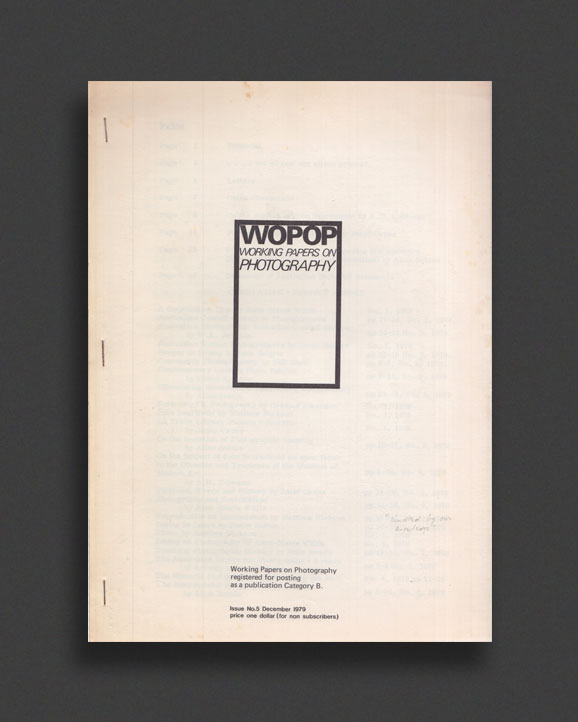
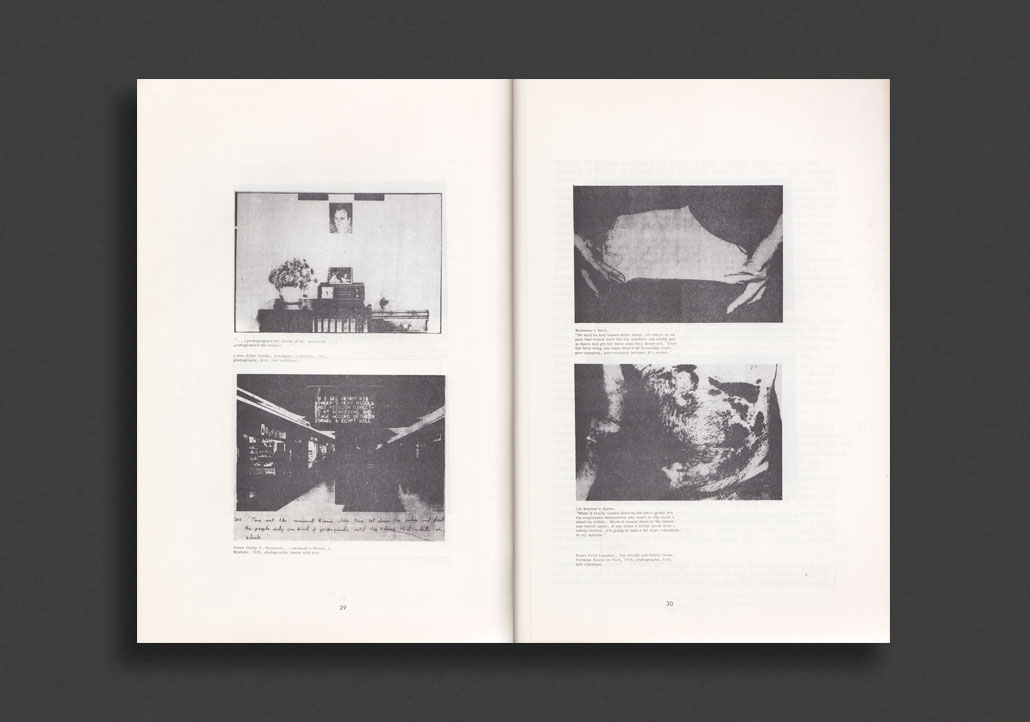
Scarce issue of Melbourne photography journal, WOPOP : Working Papers on Photography, founded in Melbourne in 1978 by Euan McGillivray, the Curator of Photography at the Science Museum of Victoria, and Matthew Nickson, from the Photography Department at RMIT. The irregular journal encouraged critical discussion of photography by a new generation of artists and critics.
This issue (WOPOP Issue No.5 December 1979) includes: Editorial by Euan McGillivray and Matthew Nickson; "...A Not So New Non Silver Process" by the Editors; "China Cheesecake"; "On the Subject of John Szarkowski" by A.D. Coleman; "Pictures, Words and History" by Jozef Gross; "Dismantling Modernism, Reinventing Documentary (Notes on the Politics of representation)" by Allan Sekula; Directory of Australian Pictorial Resources, and more.
Very Good copy. Very light toning, spotting, wear with age.
1978, English
Softcover (staple-bound), 44 pages, 34 x 20.5 cm
1st Edition, Out of print title / used / good
Published by
Working Papers on Photography (WOPOP) / Melbourne
$45.00 - Out of stock
Scarce issue of Melbourne photography journal, WOPOP : Working Papers on Photography, founded in Melbourne in 1978 by Euan McGillivray, the Curator of Photography at the Science Museum of Victoria, and Matthew Nickson, from the Photography Department at RMIT. The irregular journal encouraged critical discussion of photography by a new generation of artists and critics.
This issue (WOPOP Issue No.1 1978) includes: Editorial by Euan McGillivray and Matthew Nickson; "John Heartfield" by Matthew Nickson; "Futurology & Photography" by Graeme Johanson (Latrobe Library, State Library of Victoria); "LaTrobe Library Picture Collection" by Jenny Carew (acting Picture Librarian, Latrobe Library, State Library of Victoria); "Sontag on Photography" by Ann-Marie Willis; "Silver" by Matthew Nickson; "A Constitution Lost" by Ann-Marie Willis; "Australian Women Photographers" by Jenni Mather.
Good copy. Some toning, spotting, wear with age.
1979, English
Softcover, 86 pages, 18 x 10.5 cm
Out of print title / used / good
Published by
Vintage Books / New York
$18.00 - Out of stock
In 1978 Susan Sontag wrote Illness as Metaphor, a classic work described by Newsweek as "one of the most liberating books of its time." This is Sontag's penetrating analysis of the social attitudes toward various major illnesses - chiefly TB and cancer, and its symbolic use as a romantic tool in writing. A cancer patient herself when she was writing the book, Sontag shows how the metaphors and myths surrounding certain illnesses, especially cancer, add greatly to the suffering of patients and often inhibit them from seeking proper treatment. By demystifying the fantasies surrounding cancer, Sontag shows cancer for what it is--just a disease. Cancer, she argues, is not a curse, not a punishment, certainly not an embarrassment and, it is highly curable, if good treatment is followed. Illness as Metaphor has been translated into many languages and continues to have an enormous influence on the thinking of medical professionals and, above all, on the lives of many thousands of patients and caregivers.
1980, English
Hardcover, 156 pages, 22.5 x 23.5 cm
Out of print title / used / fine
Published by
MoMA / New York
$45.00 - Out of stock
1980 hardcover edition of The Photographer's Eye by John Szarkowski, a twentieth-century classic and an indispensable introduction to the visual language of photography. Based on a landmark exhibition at The Museum of Modern Art in 1964, and originally published in 1966, the book has long been out of print. This also out of print 1980 edition reproduces the beautiful duotone printing that closely follows the original edition. Szarkowski's compact text eloquently complements skilfully selected and sequenced groupings of 172 photographs drawn from the entire history and range of the medium. Celebrated works by such masters as Cartier-Bresson, Evans, Steichen, Strand, and Weston are juxtaposed with vernacular documents and even amateur snapshots to analyze the fundamental challenges and opportunities that all photographers have faced. Szarkowski, the legendary curator who worked at the Museum from 1962 to 1991, has published many influential books. But none more radically and succinctly demonstrates why--as U.S. News & World Report put it in 1990--"whether Americans know it or not," his thinking about photography "has become our thinking about photography."
Features the work of Lee Friedlander, Edward Weston, Elliott Erwitt, Robert Frank, Richard Avedon, Henri Lartigue, Otto Steinert, Paul Strand, Walker Evans, Garry Winograd, Minor White, Dorothea Lange, Mario Giacomelli, Henri Cartier-Bresson, Danny Lyon, Manuel Alvarez-Bravo, Eugène Atget, William Klein, René Groebli, Bill Brandt, Brassaï, Robert Frank, André Kertész, Herbert List, László Moholy-Nagy, Irving Penn, and many more.
2019, English
Softcover, 408 pages , 11.4 x 19 cm
Published by
Sternberg Press / Berlin
The MIT Press / Massachusetts
$68.00 - Out of stock
In Design by Accident, Alexandra Midal declares the autonomy of design, in and on its own terms. This meticulously researched work proposes not only a counterhistory but a new historiography of design, shedding light on overlooked historical landmarks and figures while reevaluating the legacies of design's established luminaries from the nineteenth century to the present. Midal rejects both linear narratives of progress and the long-held perception of design as a footnote to the histories of fine art and architecture. By weaving critical analysis of the canon of design history and theory together, with special attention to the writings of designers themselves, she draws out the nuances and radical potentials of the discipline—from William Morris's ambivalence toward industry, to Catharine Beecher's proto-feminist household appliances, to the Bauhaus's Expressionist origins, and the influence of Herbert Marcuse on Joe Colombo.
Preface by Michelle Millar Fisher
Foreword by Paola Antonelli
2009, English
Softcover, 112 pages (w. leporello foldout), 34.5 x 24.5 cm
1st Edition, Out of print title / as new
Published by
Dexter Sinister / New York
Roma / Amsterdam
$100.00 - In stock -
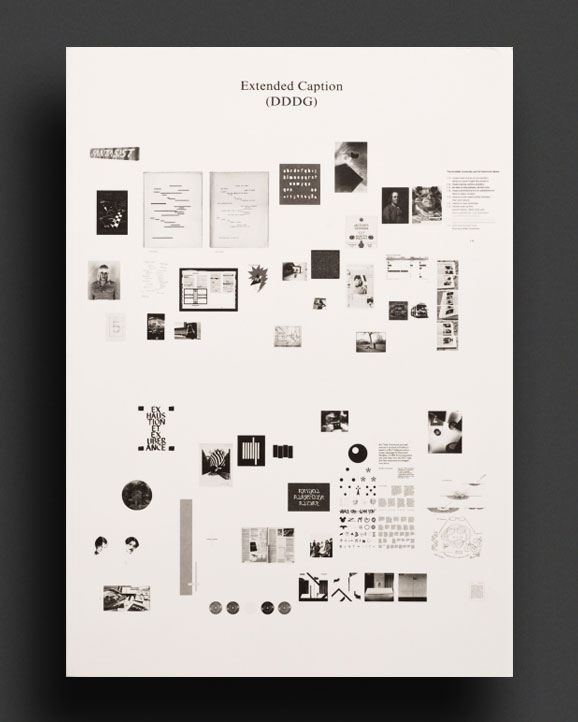
The long out-of-print, over-sized Dot Dot Dot compendium catalogue, published on the occasion of an exhibition in Culturgest, Porto. This exhibit provided the seventh occasion for Stuart Bailey to show a group of artefacts whose only shared connection was that they had appeared somewhere in the pages of Dot Dot Dot - a magazine which he has edited since its conception in 2000. The publication plays with the idea of inverting the regular hierarchy of this magazine where texts are generally treated as primary and images secondary. It contains a leporello reproduction of the exhibition wall with all the 43 artefacts, followed by subsequent reproductions of 43 previously published Dot Dot Dot articles, systematically presented as captions of these artefacts.
With texts by Stuart Bailey and Jan Verwoert.
Design: Roger Willems and Sam de Groot.
As New copy.
2019, English
Softcover, 160 pages, 21.5 x 14 cm
Published by
Rowman & Littlefield / London
$36.00 $20.00 - Out of stock
From the Insolubilia: New Work in Contemporary Philosophy series edited by A.J. Bartlett, Justin Clemens and Jon Roffe
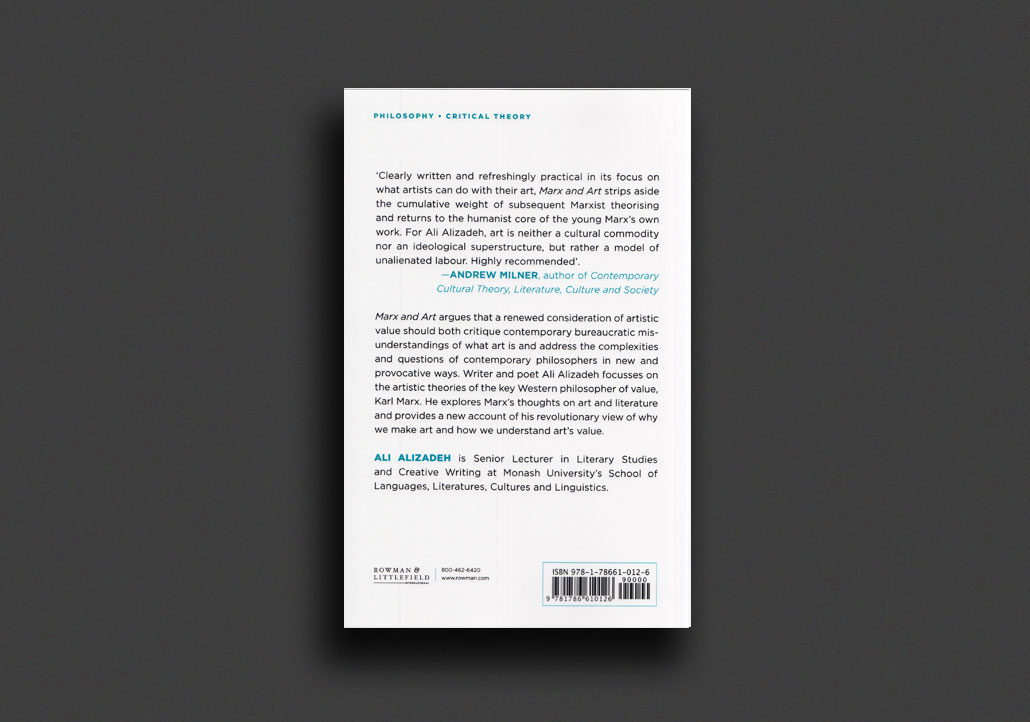
This book argues that a renewed consideration of artistic value should both critique contemporary bureaucratic misunderstandings of what art is and address the complexities and questions of contemporary philosophers in new and provocative ways. Writer and poet Ali Alizadeh focusses on the artistic theories of the key Western philosopher of value, Karl Marx. He explores Marx’s thoughts on art and literature and provides a new account of his revolutionary view of why we make art and how we understand art’s value.
By returning to Marx’s writings, from his juvenile poetry and earliest journalism to his final publications, Alizadeh proposes a theory which not only challenges many tenets of contemporary Marxist literary or cultural theory, but one which also presents us with a profound, coherent and stimulating theory of art that defines, values and demonstrates artistic practice. By mapping Marx’s intellectual development from the ideals of a young Hegelian to the polemics of a seasoned internationalist communist he shows that Marx never lost sight of art as a key aspect of human activity
Ali Alizadeh is a Senior Lecturer in Literary Studies and Creative Writing at Monash University’s School of Languages, Literatures, Cultures and Linguistics. His books include collections of poems, Towards the End, Ashes in the Air and Eyes in Times of War; novels, The Last Days of Jeanne d’Arc, Transactions and The New Angel; and a work of literary non-fiction, Iran, My Grandfather. This is his first philosophical monograph.
1990, Serbian
Softcover, 188 pages
1st Edition, Out of print title / used / fine
Published by
Museum of Contemporary Art / Belgrade
$80.00 - Out of stock
Long out of print, this is the only monograph on the wonderful work of Serbian surrealist Vane Bor (Stevan Živadinović), published as a comprehensive catalogue to accompany the retrospective exhibition of his work held at the Museum of Contemporary Art in Belgrade, 1990. Profusely illustrated throughout with Bor's collages, paintings, photograms, and photographs, alongside texts and poems by himself and contributors. Also a full biography, personal photographs, exhibition history, bibliography, etc. Texts in Serbian.
Vane Bor (Stevan Živadinović) (1908, Bor – 1993, Oxford) was one of the most important members of the Serbian surrealist movement. He is the creator of a number of collages, photograms, photographs, theoretical texts, paintings and poems. He was born in the mining village of Bor, from which he took his pseudonym. In 1926, as a law student in Paris, Vane Bor socialized with surrealists, and a year later his first collages and photo-montages were created. While his collages reflected playfulness and wit, reduced material and the atmosphere of insecurity in his photo-montages captured a multilayered aura of dreams and memories. Many of his works reflected interest in avant-garde film, while Bor himself considered photo-montages a form of static film. His work was published in important articles in L'Impossible and Revue du Cinéma, and in 1930 Bor co-signed the Surrealist Manifesto. Jean-Paul Dreyfus in the Parisian journal “Revue du cinéma" dedicated his critique of Fritz Lang's film to Bor. Bor's photographs, just like his photograms created during 1928 – 1936, were characterized by interplays and simulations of movement and the passage of time. These achievements were made through careful editing, rather than the automatism that was characteristic of Surrealism, often using fragments of broken glass. At the beginning of the thirties Bor worked for the magazine "Surrealism Here and Now" and in 1932 with Ristic published the book Anti-wall . A year later the Parisien journal “Le surréalisme au service de la Revolution” published Bor's private letter addressed to Salvador Dali, whom Bor met in 1931. During the thirties he published articles on psychoanalysis and film in the magazines "Danas / Today" and "Politika / Politics". As a doctor of science Bor was appointed lecturer at the Law Faculty in Subotica. In 1936 he filmed a documentary about Belgrade. During the period between 1938 – 1941 Bor worked as an assistant professor at the Law Faculty in Belgrade. In 1944 Bor left the country illegally and moved to London where he created a cycle of collages. During the sixties in London, Bor created a series of surrealist paintings from non-painterly materials. 1966 Becomes a member of the Free Painters and Sculptors Association in London. In 1984 he became a member of Oxford University Geological Society and the University Anthropological Society. Vane's archive, four crates of books, photographs, writings and other works, was halved, lost by the carelessness of a cleaner in a 1986 London warehouse. In 1990 the Museum of Contemporary Art in Belgrade organised a retrospective exhibition of his work. He died in Oxford on May 6, 1993.
Fine copy.
2019, English
Softcover magazine in folder w. poster, 20 x 20 cm
Ed. of 1500,
Published by
Primary Information / New York
$48.00 - Out of stock
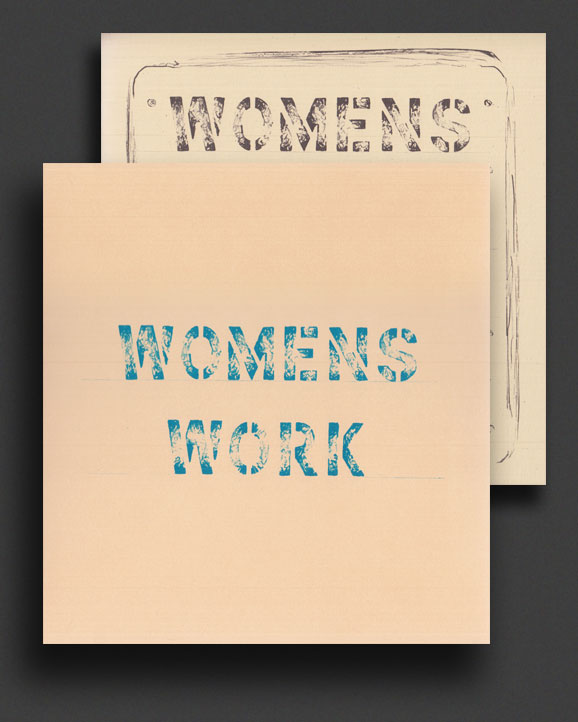
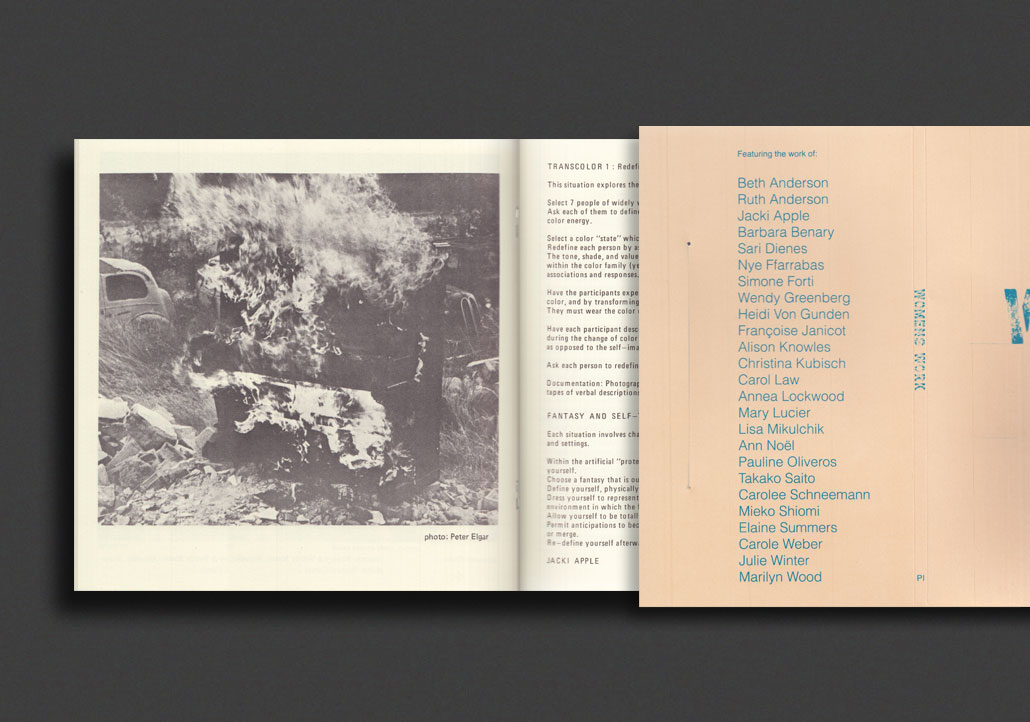
Originally published in the mid-1970s, Womens Work was a magazine that sought to highlight the overlooked work of female artists working at the cusp of the visual arts, music, and performance. The magazine was edited by Alison Knowles and Annea Lockwood and featured text-based and instructional performance scores by the following 25 artists, composers, and choreographers:
Beth Anderon, Ruth Anderson, Jacki Apple, Barbara Benary, Sari Dienes, Nye Ffarrabas (participating as Bici Forbes), Simone Forti, Wendy Greenberg, Heidi Von Gunden, Françoise Janicot, Alison Knowles, Christina Kubisch, Carol Law, Annea Lockwood (also included as Anna Lockwood), Mary Lucier, Lisa Mikulchik, Ann Noël (included as Ann Williams), Pauline Oliveros, Takako Saito, Carolee Schneemann, Mieko Shiomi, Elaine Summers, Carole Weber, Julie Winter, and Marilyn Wood.
The magazine was designed by Alison Knowles, who deliberately chose off-white paper and brown inks as a contrast to the sterile, white-paged publications prevalent at the time. The works contained in the magazine range in scope and take on a multitude of forms, employing both typed and written text, often with visual elements such as diagrams, drawings, and photographic images. The editors were and remain adamant that the work should be performed; that they not remain static as an artifact.
We wanted to publish work which other people could pick up and do: that aspect of it was really important…this was not anecdotal, this was not archival material, it was live material. You look at a score, you do it. – Annea Lockwood
The first issue, published in 1975, took the form of a saddle-stitched magazine and the second, published in 1978, took the form of a fold-out poster. This facsimile edition reproduces both and houses them in a custom self-folding box. Womens Work is produced in an edition of 1,500 copies.
Alison Knowles (b. 1933) is a conceptual artist known for intermedia works in text, graphics, sound, installations, transvironments, performances, paperworks and publishing. She is a founding member of Fluxus, the experimental avant-garde group formally launched in 1962. Her most recent retrospective was at the Carnegie Museum of Art in 2016. In 2019 she debuted in Havana, Cuba.
Annea Lockwood (b. 1939) is an artist and composer whose lifelong fascination with timbre and new sound sources is reflected in her multidisciplinary work, which has incorporated chamber music, performance, electronic and environmental sound, and visual art. Recent works include commissions for the Bang on a Can All-Stars, Thomas Buckner and the S.E.M. Ensemble, and the Merce Cunningham Dance Company. She is a recipient of the 2007 Henry Cowell Award.
2019, English
Hardcover (gilt green leatherette), 112 pages, 13.3 x 19 cm
Published by
No Place Press / US
$62.00 - Out of stock
How Silicon Valley, the dark net, and digital culture have affected our relationship to knowledge, history, language, aesthetics, reading, and truth.
In October 2013, twenty-nine-year-old Ross William Ulbricht was arrested at the Glen Park Public Branch Library in San Francisco, accused of being the "Dread Pirate Roberts" and mastermind of a dark net drug marketplace known as Silk Road. Ulbricht was an ardent libertarian who believed Silk Road-described by the New York Times as "the largest, most sophisticated criminal enterprise the internet has ever seen"-was battling the forces of big government. He was convicted two years later of money laundering, computer hacking, and conspiracy to traffic narcotics and sentenced to life in prison.
Art historian Pamela Lee reads this event as a fairy tale of disruption rather than an isolated episode in the history of the dark net, Silicon Valley, and the relationship between public libraries and digital culture. Lee argues that the notion of "disruptive" technology in contemporary culture has radically affected our relationship to knowledge, history, language, aesthetics, reading, and truth. Against the backdrop of her account of Ulbricht and his exploits, Lee provides original readings of five women artists-Gretchen Bender, Cecile B. Evans, Josephine Pryde, Carissa Rodriguez, and Martine Syms-who weigh in, either explicitly or inadvertently, on the nature of contemporary media and technology. Written as a work of experimental art criticism, The Glen Park Library is both a homage to the Bay Area and an excoriation of the ethos of Silicon Valley. As with all fairy tales, the book's ultimate subjects are much greater, however, and Lee casts a critical eye on collisions between privacy and publicity, knowledge and information, and the past and future that are enabled by the technocratic worldview.
Foreward by Foreword by Michelle Kuo
2016, English
Softcover, 98 pages, 13.7 x 20.3 cm
Published by
The MIT Press / Massachusetts
$29.00 - Out of stock
A lucid and wide-ranging meditation on why photography is unique among the picture-making arts.
Photography matters, writes Jerry Thompson, because of how it works-not only as an artistic medium but also as a way of knowing. With this provocative observation, Thompson begins a wide-ranging and lucid meditation on why photography is unique among the picture-making arts. He constructs an argument that moves with natural logic from Thomas Pynchon (and why we read him for his vision and not his command of miscellaneous facts) to Jonathan Swift to Plato to Emily Dickinson (who wrote "Tell all the Truth but tell it slant") to detailed readings of photographs by Eugene Atget, Garry Winogrand, Marcia Due, Walker Evans, and Robert Frank. Forcefully and persuasively, he argues for photography as a medium whose business is not constructing fantasies pleasing to the eye or imagination, but describing the world in the toughest and deepest way.
2019, English
Softcover, 304 pages, 23 × 30 cm
Published by
Discipline / Melbourne
$20.00 - Out of stock
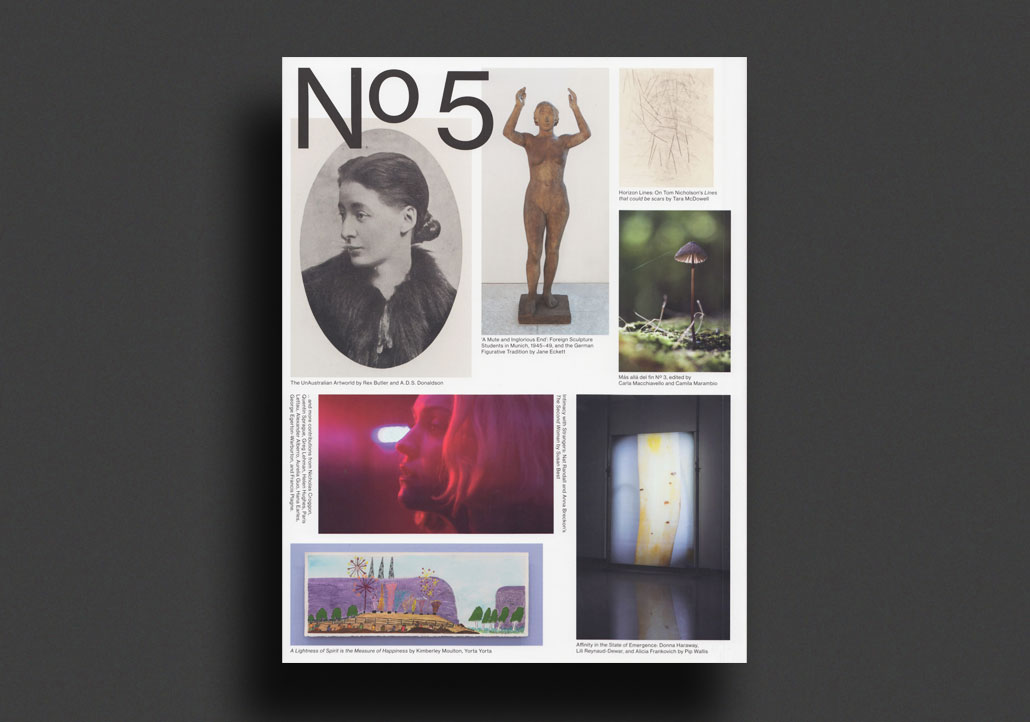
Edited by Helen Hughes and David Homewood (Discipline Nº 5); Carla Macchiavello and Camila Marambio (Más allá del fin Nº 3).
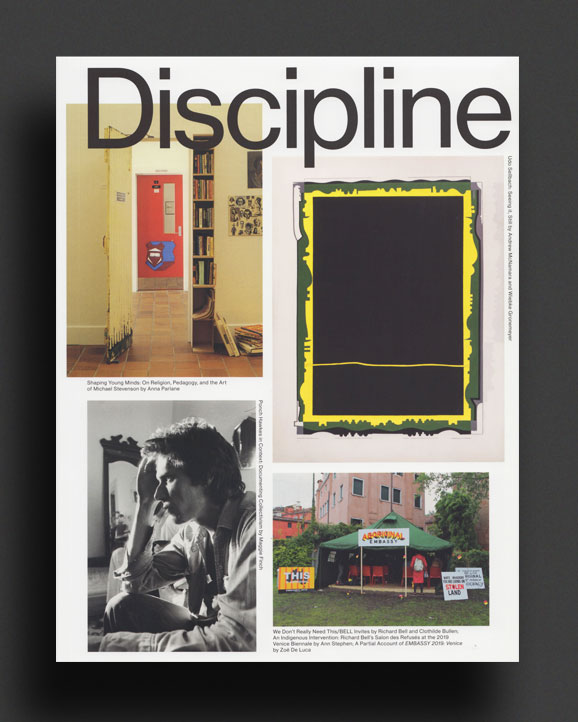
Discipline, Más allá del fin (translating to ‘discipline beyond the end’)—represents an effort to map a South–South relationship between Chile and Australia, and even more specifically, between its southernmost island tips: Tierra del Fuego and Tasmania. For centuries, the Northern imagination conceived of these places as the very personification of distance itself, whereas the editors of Más allá del fin refer to Tierra del Fuego as ‘the centre of the known universe’. In addition to publishing a range of essays on modern and contemporary art, this joint issue recentres and forges new connections between Southern perspectives, generating a dynamic and relational art history of the contemporary.
Designed by Robert Milne.
Discipline is a publisher and contemporary art journal edited by Nicholas Croggon, David Homewood, and Helen Hughes. Alongside artist pages and interviews, it publishes research essays about contemporary Australian art, and histories and theories of contemporary art as a global industry or phenomenon. For each issue a guest editor, from somewhere else in the world, is invited to contribute a guest edited section. Guest editors since 2011 are: Vivian Ziherl; Maria Fusco; Raimundas Malašauskas; Ferdiansyah Thajib, KUNCI Cultural Studies Center; and Carla Macchiavello and Camila Marambio, Ensayos.
2019, English
Softcover, 424 pages, 13.7 x 20.3 cm
Published by
Semiotext(e) / Los Angeles
The MIT Press / Massachusetts
$48.00 - Out of stock
Since its first publication by Semiotext(e) in 1992, David Rattray's How I Became One of the Invisible has functioned as a kind of secret history and guidebook to a poetic and mystical tradition running through Western civilization from Pythagoras to In Nomine music to Hoelderlin and Antonin Artaud. Rattray not only excavated this tradition, he embodied and lived it. He studied at Harvard and the Sorbonne but remained a poet, outside the academy. His stories "Van" and "The Angel" chronicle his travels in southern Mexico with his friend, the poet Van Buskirk, and his adventures after graduating from Dartmouth in the mid-1950s. Eclipsed by the more mediagenic Beat writers during his lifetime, Rattray has become a powerful influence on contemporary artists and writers.
"In order to become one of the invisible, it is necessary to throw oneself into the arms of God... Some of us stayed for weeks, some for months, some forever." - from How I Became One of the Invisible
Living in Paris, Rattray became the first English translator of Antonin Artaud, and he understood Artaud's incisive scholarship and technological prophecies as few others would. As he writes of his translations in How I Became One of the Invisible, "You have to identify with the man or the woman. If you don't, then you shouldn't be translating it. Why would you translate something that you didn't think had an important message for other people? I translated Artaud because I wanted to turn my friends on and pass a message that had relevance to our lives. Not to get a grant, or be hired by an English department."
Compiled and edited by Chris Kraus in the months before his untimely death at age 57, How I Became One of the Invisible is the only volume of Rattray's prose. This new edition includes five additional pieces, two of them previously unpublished.
Cover photograph by Ira Cohen.