World Food Books' programme is largely produced on Kulin Nation land. We acknowledge the Wurundjeri people of the Kulin Nation as the first and continuing custodians of this land, and pay respect to their Elders past, present, and emerging.
World Food Books is an arts and special interests bookshop in Naarm / Melbourne. Founded in 2010, World Food Books is devoted to the presentation of a rotating, hand-selection of international art, design, literary and counterculture publications with an emphasis on the anti-traditional, the experimental, the avant-garde, the heretic, the marginal.
Presenting new titles alongside rare and out-of-print books, catalogues and journals spanning the fields of modern and contemporary art, design, photography, illustration, film, literature, poetry, cultural theory, philosophy, sexuality, popular and underground culture in its many radical forms, World Food Books wishes to encourage adventurous, thoughtful and open-minded reading, looking, writing, and exchange of publishing and ideas, both current and historical.
As well as our bookshop, located in Melbourne's historical Nicholas Building, all of our inventory is available internationally via our online mail-order service.
World Food Books semi-regularly co-ordinates "Occasions", a programme of exhibits and events at the bookshop and in partnership with other hosts (such as museums and art galleries) that develop out of the activities, relationships and content of the bookshop itself.
World Food Books
The Nicholas Building
37 Swanston Street
Room 5, Level 6
Melbourne 3000
Australia
SHOP HOURS:
Thu–Fri 12–6, Sat 12–5
WEB-SHOP OPEN 24/7
World Food Books
Postal Address:
PO Box 435
Flinders Lane
Victoria 8009
Australia
Art
Theory / Essay
Architecture / Interior
Graphic Design / Typography
Photography
Fashion
Eros
LGBTQ+
Fiction / Poetry
Weird / Speculative / Science Fiction / Horror
Transgressive / Visceral / Abject
Symbolism / Decadence / Fin de siècle
Film / Video
Painting
Sculpture / Installation
Performance / Dance / Theater
Drawing
Sound / Music
Curatorial
Group Shows / Collections
Periodicals
Out-of-print / Rare
Posters / Ephemera / Discs
Signed Books
World Food Books Gift Voucher
World Food Book Bag
Australian Art
Australian Fiction
Australian Science Fiction / Speculative Fiction
Australian Poetry
Australian Photography
Japanese Photography
Conceptual Art
Minimal Art
Dada
'Pataphysics / Oulipo
Fluxus
Concrete Poetry
Pop Art
Surrealism
Arte Povera
Arte Informale / Haute Pâte / Tachism
Nouveau Réalisme / Zero / Kinetic
Situationism / Lettrism
Collage / Mail Art / Xerox Art
Art Brut / Folk / Visionary / Fantastic
Illustration / Graphic Art / Bandes Dessinées
Furniture
Italian Radical Design / Postmodernism
Textiles
Ceramics / Glass
Counterculture
Protest / Revolt
Philosophy
Psychoanalysis
Anthropology
Anarchism
Socialism / Anarchism / Communism / Capitalism
Literary Theory / Semiotics / Language
Feminism / Women's Studies
Gender Studies / Sexuality
Anthropology
Fetishism / BDSM
Drugs / Psychedelia
Crime / Violence
Animal Rights / Veganism
Occult / Esoterica
Ecology / Earth / Alternative Living
Whole Earth / Crafts
All prices in AUD (Australian dollars)
Pick-Ups
Pick-up orders can be collected in our bookshop during opening hours after order date. Please collect any Pick-up orders within 2 weeks of ordering as we have limited storage space. Orders will be released back into stock if not collected within this time. No refunds can be made for pick-ups left un-collected. If you cannot make it in to the bookshop in this time-frame, please choose postage option.
Return Policy
All sales are final. We do accept returns (for refund or exchange) for items received in error. All our orders are packed with special care using heavy-duty padding and cardboard book-mailers or bubble mailers (for smaller books), using reinforcement where required. We cannot take responsibility for any lost, stolen or damaged parcels.
Insurance
Should you wish to insure your package, please email us directly after placing your order and we can organise this at a small extra expense. Although all standard/express tracked packages are very safe and dependable, we cannot take responsibility for any lost, stolen or damaged parcels. We recommend insurance on valuable orders.
Interested in selling your old books, catalogues, journals, magazines, comics, fanzines, ephemera? We are always looking for interesting, unusual and out-of-print books to buy. We only buy books in our fields of interest and specialty, and that we feel we can resell.
We base these prices on desirability, market value, in-print prices, condition and our current stock levels. We offer cash, store credit, and can take stock on consignment. All
about 25% of the price we expect to get when we sell them, or 30% in store credit. We base these prices on desirability, market value, in-print prices, condition and our current stock levels.
Sell your books any day of the week. You can drop them off and return later. If you have a lot of books, we can visit your Sydney home.
We buy books that we feel we can resell. We offer about 25 % of the price we expect to get when we sell them, or 30% in store credit. We base these prices on desirability, market value, in-print prices, condition and our current stock levels.
Philadelphia Wireman
03 August - 01 September, 2018
World Food Books is proud to announce our next Occasion, the first presentation of sculptures by Philadelphia Wireman in Australia.
The Philadelphia Wireman sculptures were found abandoned in an alley off Philadelphia’s South Street on trash night in 1982. Their discovery in a rapidly-changing neighbourhood undergoing extensive renovation, compounded with the failure of all attempts to locate the artist, suggests that the works may have been discarded after the maker’s death. Dubbed the "Philadelphia Wireman" during the first exhibition of this work, in 1985, the maker’s name, age, ethnicity, and even gender remain uncertain. The entire collection totals approximately 1200 pieces, all intricately bound together with tightly-wound heavy-gauge wire (along with a few small, abstract marker drawings, reminiscent both of Mark Tobey and J.B. Murry). The dense construction of the work, despite a modest range of scale and materials, is singularly obsessive and disciplined in design: a wire armature or exoskeleton firmly binds a bricolage of found objects including plastic, glass, food packaging, umbrella parts, tape, rubber, batteries, pens, leather, reflectors, nuts and bolts, nails, foil, coins, toys, watches, eyeglasses, tools, and jewellery.
Heavy with associations—anthropomorphic, zoomorphic, and socio-cultural responses to wrapped detritus—the totemic sculptures by Philadelphia Wireman have been discussed in the context of work created to fulfil the shamanistic needs of alternative religions in American culture. Curators, collectors, and critics have variously compared certain pieces to sculpture from Classical antiquity, Native American medicine bundles, African-American memory jugs, and African fetish objects. Reflecting the artist’s prolific and incredibly focused scavenging impulse, and despite—or perhaps enhanced by—their anonymity, these enigmatic objects function as urban artefacts and arbiters of power, though their origin and purpose is unknown. Philadelphia Wireman, whatever their identity, possessed an astonishing ability to isolate and communicate the concepts of power and energy through the selection and transformation of ordinary materials. Over the course of the past two decades, this collection has come to be regarded as an important discovery in the field of self-taught art and vernacular art.
Presented in collaboration with Fleisher-Ollman Gallery, Philadelphia, and Robert Heald, Wellington.
Susan Te Kahurangi King
02 February - 10 March, 2018
Susan Te Kahurangi King (24 February 1951 - ) has been a confident and prolific artist since she was a young child, drawing with readily available materials - pencils, ballpoint pens and felt-tip markers, on whatever paper is at hand. Between the ages of four and six Susan slowly ceased verbal communication. Her grandparents William and Myrtle Murphy had developed a special bond with Susan so they took on caring responsibilities for extended periods. Myrtle began informally archiving her work, carefully collecting and storing the drawings and compiling scrapbooks. No drawing was insignificant; every scrap of paper was kept. The King family are now the custodians of a vast collection containing over 7000 individual works, from tiny scraps of paper through to 5 meter long rolls.
The scrapbooks and diaries reveal Myrtle to be a woman of great patience and compassion, seeking to understand a child who was not always behaving as expected. She encouraged Susan to be observant, to explore her environment and absorb all the sights and sounds. Myrtle would show Susan’s drawings to friends and people in her community that she had dealings with, such as shopkeepers and postal workers, but this was not simply a case of a grandmother’s bias. She recognised that Susan had developed a sophisticated and unique visual language and sincerely believed that her art deserved serious attention.
This was an unorthodox attitude for the time. To provide some context, Jean Dubuffet coined the term Art Brut in 1945 to describe work created by self-taught artists – specifically residents of psychiatric institutions and those he considered to be visionaries or eccentrics. In 1972 Roger Cardinal extended this concept by adopting the term Outsider Art to describe work made by non-academically trained artists operating outside of mainstream art networks through choice or circumstance. Susan was born in Te Aroha, New Zealand in 1951, far from the artistic hubs of Paris and London that Dubuffet and Cardinal operated in. That Myrtle fêted Susan as a self-taught artist who deserved to be taken seriously shows how progressive her attitudes were.
Susan’s parents Doug and Dawn were also progressive. Over the years they had consulted numerous health practitioners about Susan’s condition, as the medical establishment could not provide an explanation as to why she had lapsed into silence. Dawn educated herself in the field of homeopathy and went on to treat all twelve of her children using these principles – basing prescriptions on her observations of their physical, mental and emotional state.
Doug was a linguist with an interest in philosophy who devoted what little spare time he had to studying Maori language and culture. To some extent their willingness to explore the fringes of the mainstream made them outsiders too but it was their commitment to living with integrity and their respect for individuality that ensured Susan’s creativity was always encouraged.
Even though Susan’s family supported her artistic pursuits, some staff in schools and hospitals saw it as an impediment to her assimilation into the community and discouraged it in a variety of ways. Her family was not always aware of this and therefore did not fully understand why Susan stopped drawing in the early 1990s. However, rather than dwell on the challenges that Susan faced in pursuit of her artistic practice, they prefer to highlight her achievements. In 2008 Susan began drawing again in earnest, after an almost 20 year interruption, and her work is now shown in galleries around the world.
Susan grew up without television and has been heavily influenced by the comics she read as a child. She is absolutely fearless in the appropriation of recognizable characters, such as Donald Duck and Mickey Mouse, in her work. She twists their limbs, contorts their faces, compresses them together, blends them into complex patterned backgrounds - always imbuing them with an incredible energy. Although Susan often used pop culture characters in her work they are not naive or childlike. These are drawings by a brilliant self-taught artist who has been creating exceptional work for decades without an audience in mind.
Mladen Stilinović
"Various Works 1986 - 1999"
02 February 16 - September 10, 2016
Various works 1986 - 1999, from two houses, from the collections of John Nixon, Sue Cramer, Kerrie Poliness, Peter Haffenden and Phoebe Haffenden.
Including: Geometry of Cakes (various shelves), 1993; Poor People’s Law (black and white plate), 1993; White Absence (glasses, ruler, set square, silver spoon, silver ladel with skin photograph and wooden cubes), 1990-1996; Exploitation of the Dead (grey and red star painting, wooden painting, black spoon with red table, red plate), 1984-1990; Money and Zeros (zero tie, paintings made for friends in Australia (Sue, John, Kerrie), numbers painting), 1991-1992; Words - Slogans (various t-shirts) - “they talk about the death of art...help! someone is trying to kill me”, “my sweet little lamb”, “work is a disease - Karl Marx”; Various artist books, catalogues, monographs, videos; Poster from exhibition Insulting Anarchy; "Circular" Croatian - Australian edition; Artist book by Vlado Martek (Dostoyevsky); more.
Thanks to Mladen Stilinović and Branka Stipančić.
Jonathan Walker
Always Will Need To Wear Winter Shirt Blue + Ochre Small Check Pattern
21 August - 21 September, 2015
Untitled
I am not a great reader of poetry but I always return to the work of Melbourne poet, Vincent Buckley (1925- 1988). Perhaps I find his most tantalising piece to be not a finished poem but a fragment left on a scrap of paper discovered on his desk after the poet’s death.
The poetry gathers like oil
In the word-core, and spreads
It has its music meet,
Its music is in movement.
This fragment is more the shell left behind from a volatile thought than a finished poem. I find the last two lines honest but awkward whereas the first two lines work like an arrow. Most likely he could not find a resolution so it was left. Still, in its present form, it remains an eloquent testimony to the ultimate failure of a medium to express mobile thought and sensation, in Buckley’s case, through verbal language. It’s an important matter because this is something all artists have to deal with regardless of the medium.
I have never written a poem, however, I am forever copying fragments from books on paper scraps in a vain effort to fix certain notions in my head. At first, they function as bookmarks that are sometimes returned to when I open the book. But before long, as they accumulate, they fall out littering the table interspersed with A4 photocopies, bills, books and medications.
To return to Buckley’s fragment, the first two lines very much evoke how I paint nowadays. As you age, detail diminishes and patches of light become more luminous and float. I feel the most honest way of dealing with this is by smearing the oil paint on the canvas with the fingers and working close-up, blind. Only if the patches coalesce into an approaching image can the work gain a life.
-
Jonathan Walker was born in Melbourne, Australia and brought up on a dairy farm in Gippsland. In the 1970’s he studied painting at RMIT and won the Harold Wright Scholarship to the British Museum, London. During the 1980’s he exhibited at Pinacotheca Gallery, Richmond and had work shown at the NGV and Heidi City Art Gallery. Over the same period he designed the cover for the “Epigenesi” LP by Giancarlo Toniutti, Italy and conducted a mail exchange work with Achim Wollscheid, Germany. The work with artists through the post resulted in an article published in the bicentenary issue of Art and Australia 1988. He showed in artist run spaces such as WestSpace in the 90’s and 2000’s, and until 2012, taught painting at Victoria University, which is where we (Colleen Ahern and Lisa Radford) as organisers of the exhibition, among many others, had the privilege of being his student.
Walker’s knowledge was imparted to students through the careful selection of music, literature, and artists found in books that he himself had ordered for the library. Walker’s strategy was the generosity of sharing his vast knowledge with references specific to each student and their context.
Walker’s paintings share a similar focus and intimacy.
This exhibition presents a small selection of recent paintings alongside a publication that includes Walker’s writing. Observational and analytical, Walker’s work is a type of material notation — the time of day, colour and how it is blended, the both specific and fleeting location of a reflection on lino or the question of whether a chair leg should be included in a painting.
Please join us on Friday August 21 between 6-8pm to celebrate the opening of the exhibition.
Curated by Colleen Ahern and Lisa Radford.
B. Wurtz
Curated by Nic Tammens
March 26 - April 4, 2015
B.Wurtz works from a basement studio in his home on Manhattan’s Lower East Side.
This local fact is attested to by the plastic shopping bags and newsprint circulars that appear in his work. As formal objects, they don’t make loud claims about their origins but nonetheless transmit street addresses and places of business from the bottom of this long thin island. Like plenty of artists, Wurtz is affected by what is local and what is consumed. His work is underpinned by this ethic. It often speaks from a neighborhood or reads like the contents of a hamper:
“BLACK PLUMS $1.29 lb.”
“Food Bazaar”
“USDA Whole Pork Shoulder Picnic 99c lb.”
“RITE AID Pharmacy, with us it’s personal.”
“H. Brickman & Sons.”
“Sweet Yams 59c lb."
Most of the work in this exhibition was made while the artist was in residence at Dieu Donne, a workshop dedicated to paper craft in Midtown. Here Wurtz fabricated assemblages with paper and objects that are relatively lightweight, with the intention that they would be easily transportable to Australia. This consideration isn’t absolute in Wurtz’s work, but was prescriptive for making the current exhibition light and cheap. Packed in two boxes, these works were sent from a USPS post office on the Lower East Side and delivered to North Melbourne by Australia Post.
Wurtz appears courtesy of Metro Pictures, New York.
Thanks to Rob Halverson, Joshua Petherick, Sari de Mallory, Matt Hinkley, Helen Johnson, Fayen d'Evie, Ask Kilmartin, Lisa Radon, Ellena Savage, Yale Union, and "Elizabeth".
John Nixon
"Archive"
December 15 - January 20, 2014
The presentation of John Nixon's archive offered a rare showcase of this extensive collection of the artist's own publications, catalogues, posters, ephemera, editions and more, from the mid 1980s onwards, alongside a selection of his artworks.
Organized by John Nixon, Joshua Petherick and Matt Hinkley.
<a href=http://wfb.public-office.info/artist/john-nixon>All titles by John Nixon
"Habitat"
at Minerva, Sydney (organised by Joshua Petherick and Matt Hinkley)
November 15 - December 20, 2014
Lupo Borgonovo, Janet Burchill & Jennifer McCamley,
Lewis Fidock, HR Giger, Piero Gilardi, Veit Laurent Kurz,
Cinzia Ruggeri, Michael E. Smith, Lucie Stahl, Daniel Weil, Wols
Press Release:
“...It contained seven objects. The slender fluted bone, surely formed for flight, surely from the wing of some large bird. Three archaic circuitboards, faced with mazes of gold. A smooth white sphere of baked clay. An age-blackened fragment of lace. A fingerlength segment of what she assumed was bone from a human wrist, grayish white, inset smoothly with the silicon shaft of a small instrument that must once have ridden flush with the surface of the skin - but the thing’s face was seared and blackened.”
William Gibson, “Count Zero”, 1986
"Autumn Projects Archive"
Curated by Liza Vasiliou
March 6 - March 15, 2014
World Food Books, in conjunction with the Virgin Australia Melbourne Fashion Festival 2014, presented the Autumn Projects archive, consisting of a selection of early examples in Australian fashion with a particular interest in collecting designers and labels from the period beginning in the 1980’s, who significantly influenced the discourse of Australian Fashion.
Curated by Liza Vasiliou, the exhibition provided a unique opportunity to view pieces by designers Anthea Crawford, Barbara Vandenberg, Geoff Liddell and labels CR Australia, Covers, Jag along with early experimental collage pieces by Prue Acton and Sally Browne’s ‘Fragments’ collection, suspended throughout the functioning World Food Books shop in Melbourne.
H.B. Peace
presented by CENTRE FOR STYLE
November 14, 2013
"Hey Blinky, you say chic, I say same"
Anon 2013
H.B. Peace is a clothing collaboration between great friends Blake Barns and Hugh Egan Westland. Their pieces explore the divergences between 'character’ and ‘personality’ in garments....etc
Special Thanks to Joshua Petherick and Matt Hinkley of WFB and Gillian Mears
and a Very Special Thank you to Audrey Thomas Hayes for her shoe collaboration.
Janet Burchill & Jennifer McCamley
"Aesthetic Suicide"
May 10 - June 8, 2013
The first of our occasional exhibitions in the World Food Books office/shop space in Melbourne, "Aesthetic Suicide" presented a body of new and older works together by artists Janet Burchill & Jennifer McCamley, including videos, prints, a wall work, and publications.
During shop open hours videos played every hour, on the hour.
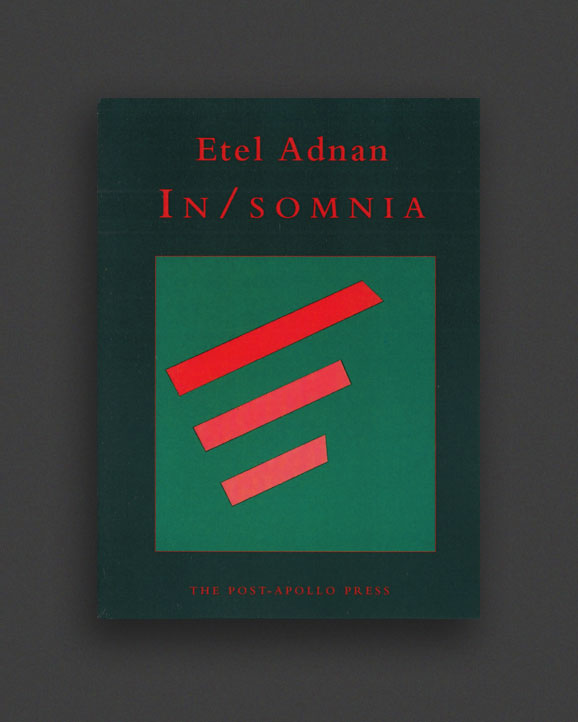
2002, English
Softcover, 38 pages, 11.6 x 16 cm
Published by
Post Apollo Press / US
$28.00 - Out of stock
In/somnia explores fissures within words as places where thought enters. Sleepless sleepers, we dream among ever more complex and hallucinatory realitites: `in/tense/in/season'—Rosmarie Waldrop.
2020, English
Softcover, 88 pages, 14 x 20.3 cm
Published by
Nightboat Books / New York
$34.00 - Out of stock
Shifting the Silence breaks the taboo around writing and speaking about our own deaths. In short, unrelenting paragraphs, Adnan grapples with the breadth of her life at ninety-five, the process of aging, and the knowledge of her own approaching death. The personal is continuously projected outwards and mirrored back through ruminations on climate catastrophe, the ongoing war in Syria, Mars missions, and Adnan’s view of the sea out of her window in Brittany in a poignant, often painful interplay between the interior and the cosmic.
“When you have no way to go anywhere, what do you do? Of course, nothing.” Adnan’s prose-poetic rumination on death would strike a chord at any time, but it feels especially apt in this moment of protracted grief. Peppered with questions—“There are so many islands I dreamed of visiting, where have they gone?”—Adnan’s lamentations are recursive and soothing. To live is to die, and the poets can ease the passage. - Nick Ripatrazone, The Millions
2022, English / Spanish
Softcover, 124 pages, 15 x 22.4 cm
Published by
Cardboard House Press / US
$40.00 - In stock -
The work of Rodolfo Hinostroza carries us into a world of physical & spiritual poetry at its limits & beyond: a further gift from the Southern continent in line with the likes of Vallejo, Huidobro & Neruda, & no less powerful for all its late emergence. For those of us who want & need the fullness of a poetry unfettered, CONTRA NATURA takes its place as one of our new essentials—a ripeness & overabundance for which I'm truly grateful.—Jerome Rothenberg
Kinetic, defiant, exuberant, furious, libidinous, and thunderously alive, CONTRA NATURA is an interdisciplinary tour de force: a restorative, transformative riot in which world history, current events, languages, literature, astrology, and mathematics are radiantly fused in Rodolfo Hinostrosa's kaleidoscopic lens. Anthony Seidman's translation is a marvel: attentive, inventive, agleam.—Robin Myers
The publication of CONTRA NATURA, by the Peruvian poet Rodolfo Hinostroza in 1971—after having obtained the prestigious Maldoror Prize (1970), awarded by Barral editions, and judged by Octavio Paz—signified a major transformation in Latin American poetry, and in Spanish-language poetry at large. The book arrived with major expectations, garlanded with the same enthusiasm for other works within the great Western tradition ad portas of the XXI century. And indeed, CONTRA NATURA—now in its first-ever presentation for the Anglophonic world, as translated by Anthony Seidman—proves to be the most influential book of poetry written in Spanish, on both sides of the Atlantic.—Roger Santiváñez
Translated by Anthony Seidman
Rodolfo Hinostroza (Peru, 1941-2016) is one of Latin America’s most celebrated poets from the 20th century. His poetry is noted for its vast sweep which includes astronomy, history, counterculture, alchemy, politics, all rendered in erudite, yet lyrical open sequences. He is recognized as a bridge between Vallejo and contemporary poets from Peru. His most acclaimed collection of poetry, Contra natura (1971), made an impression as indelible as Vallejo’s Trilce, and it won the Maldoror prize in 1970 with none other than Octavio Paz as presiding judge. Other publications by Hinostroza include Consejero del lobo (1964), the novel Fata morgana (1994), and the play Apocalipsis de una noche de verano (1988). He was awarded a Guggenheim in 2009 and Peru’s Premio Nacional de Cultura in 2013 for his life’s work. At the time of his death in 2016, he was revered by younger poets and was a central figure in the literary life of Lima.
Anthony Seidman is a poet and translator from Los Angeles. His translations include the novel For Love of the Dollar by J.M. Servin, and A Stab in the Dark by Facundo Bernal. Seidman’s most recent collections of poetry are Cosmic Weather and A Sleepless Man Sits Up In Bed. His poetry, translations, reviews, and short fiction have appeared in such journals and anthologies as New American Writing, Poetry International, World Literature Today, The Bitter Oleander, Modern Poetry in Translation, Ambit, and The Ecopoetry Anthology. Some of his poetry has been translated into French and Spanish, with versions appearing in literary magazines from Mexico, Chile, France, and Argentina.
1996, Japanese
Softcover (w. dust jacket and obi strip), 192 pages, 15 x 23 cm
1st Edition, Out of print title / used / very good
Published by
Heibonsha / Tokyo
$90.00 - Out of stock
First edition of Araki's "Chiro, Araki and 2 Lovers", published as part of the Complete Works collection. A lovely collection of Araki's photographs of he and his wife Yoko's beloved cat, Chiro, in a variety of different moods and situations. On the balcony and on the roof of the neighborhood, on the sofa, in the shower, in Yoko's arms, on the sleeping belly of Araki... The figure of Chiro behaving freely, and Araki taking the shutter to love it. Poignant in retrospect as it includes a number of photos of Chiro with Yoko. Like Masahisa Fukase's "Sasuke", this is an intimate book for cats and photographers.
Nobuyoshi Araki was born in Tokyo in 1940. Given a camera by his father at the ripe age of twelve, Araki has been taking pictures ever since. He studied photography and film at Chiba University and went into commercial photography soon after graduating. In 1970 he created his famous Xeroxed Photo Albums, which he produced in limited editions and sent to friends, art critics, and people selected randomly from the telephone book. Over the years, his bold, unabashed photographs of his private life have been the object of a great deal of controversy and censorship (especially in his native Japan), a fact that has not fazed the artist nor diminished his influence. To date, Araki has published over 400 books of his work.
Very Good in good dust jacket with some wear, obi with some wear.
1997, Japanese
Softcover (w. dust jacket), 225 pages, 15 x 23 cm
1st Edition, Out of print title / used / very good
$190.00 - Out of stock
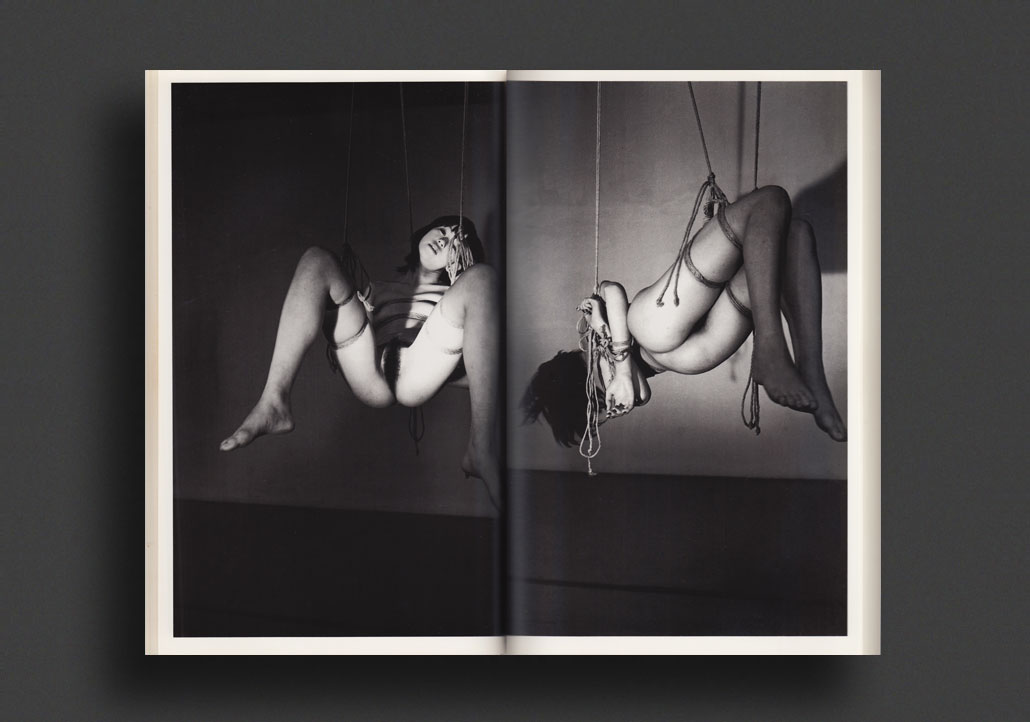
First edition of Araki's "Bondage", published as part of the Complete Works collection and, naturally, one of the most sought after of the series. This is an incredible collection of Araki's finest bondage works from the 1970s through to the 1990s, lavishly printed in colour and black and white throughout. "Bondage is my main private thing." Originally a photo series that started as contribution Japanese BDSM magazines such as "S&M Sniper", many of which are included in this book, Araki's long-time fascination with Kinbaku-bi: “the beauty of tight binding” is what he's become best known for in the west, and earned him considerable acclaim, opprobrium, and even legal consequences. Araki's unique approach to artistic themes that date back as far as the Edo period, kabuki theater and ukiyo-e, his fetish photography has an emotional, dramatic, often humorous quality that is different from the ritualistic atmosphere of most modern bondage photography. "Because bondage is a story, I meet with girls and ask what they want to play first." The fact that Araki has consciously worked on it for nearly 20 years has created a book that has achieved a deepening that differs from other themes in his work. Filled with hanging nudes, fake blood, and a lot of rope, Araki's "Bondage" is the perfect volume of a contemporary Japanese master of Ero-Guro (the “erotic grotesque.”)
Nobuyoshi Araki was born in Tokyo in 1940. Given a camera by his father at the ripe age of twelve, Araki has been taking pictures ever since. He studied photography and film at Chiba University and went into commercial photography soon after graduating. In 1970 he created his famous Xeroxed Photo Albums, which he produced in limited editions and sent to friends, art critics, and people selected randomly from the telephone book. Over the years, his bold, unabashed photographs of his private life have been the object of a great deal of controversy and censorship (especially in his native Japan), a fact that has not fazed the artist nor diminished his influence. To date, Araki has published over 400 books of his work.
Very Good in good dust jacket with some wear.
1996, Japanese
Softcover (w. dust jacket), 225 pages, 15 x 23 cm
1st Edition, Out of print title / used / very good
Published by
Heibonsha / Tokyo
$100.00 - Out of stock
First edition of Araki's "Bodyscapes", the second in the series of the Complete Works collection. This beautiful collection focuses on the intimate nude portrait work of Araki, from the 1970 to the 1990s, mostly photographs of women, with a few men, and a little bondage. Although, as the title suggests, these are not nude pictures but "naked scenery", a word coined by Araki and legendary Japanese publisher Akira Suei at a time when it was not allowed to record the nude body public in Japan. Always one to challenge sexual taboos with radical techniques, this book captures Araki's trickery and mockery of the censors with his famed pubic hair shaving and soap bubble photos, pushing photographic freedom in the face of regulations that lead to dangerous definition of "obscenities". A gorgeous collection of Araki's nudes, lavishly reproduced in colour and black and white.
Nobuyoshi Araki was born in Tokyo in 1940. Given a camera by his father at the ripe age of twelve, Araki has been taking pictures ever since. He studied photography and film at Chiba University and went into commercial photography soon after graduating. In 1970 he created his famous Xeroxed Photo Albums, which he produced in limited editions and sent to friends, art critics, and people selected randomly from the telephone book. Over the years, his bold, unabashed photographs of his private life have been the object of a great deal of controversy and censorship (especially in his native Japan), a fact that has not fazed the artist nor diminished his influence. To date, Araki has published over 400 books of his work.
Very Good in VG dust jacket.
1997, Japanese
Softcover, 192 pages, 15 x 23 cm
1st Edition, Out of print title / used / very good
Published by
Heibonsha / Tokyo
$140.00 - Out of stock
First edition of one of the finest of Araki's photo books, Sensual Flowers, dedicated entirely to his incredible flower photography collected for the first time together, spanning the 1980s—1990s. Published as part of the Complete Works collection, this wonderful book is filled with one of Araki's greatest loves, flowers. He began his photographic studies of flowers in earnest in the early 1970's, photographing dead bouquets from tombs at the Joruri Temple of Minowa, where he was born and raised. For Araki, the eroticism contained in the flower is extracted from its "life" and "death". Exquisitely exemplified here in this beautiful volume, where lush, vibrant bouquets bloom and deteriorate in sumptuous colour and b/w, in sensuous still life compositions and natural settings (w. lizards, food, cats). One of the finest Araki collections, as authoritatively seen as any flower photography by Penn, Mapplethorpe or Blossfeldt.
Nobuyoshi Araki was born in Tokyo in 1940. Given a camera by his father at the ripe age of twelve, Araki has been taking pictures ever since. He studied photography and film at Chiba University and went into commercial photography soon after graduating. In 1970 he created his famous Xeroxed Photo Albums, which he produced in limited editions and sent to friends, art critics, and people selected randomly from the telephone book. Over the years, his bold, unabashed photographs of his private life have been the object of a great deal of controversy and censorship (especially in his native Japan), a fact that has not fazed the artist nor diminished his influence. To date, Araki has published over 400 books of his work.
Very Good in good dust jacket and obi, light wear.
1977, English
Softcover, 296 pages, 19.5 x 12.5 cm
1st Edition, Out of print title / used / good
Published by
Quartet Books / London
$90.00 - Out of stock
Scarce first 1977 edition of this essential masterpiece of jazz history by renowned photographer and music historian, Val Wilmer.
In this classic account of the new black music of the 1960s and 70s, celebrated photographer and jazz historian Val Wilmer tells the story of how a generation of revolutionary musicians established black music as the true vanguard of American culture.
Placing the achievements of African-American artists such as Albert Ayler, Ornette Coleman, John Coltrane and Sun Ra in their broader political and social context, Wilmer evokes an era of extraordinary innovation and experimentation that continues to inspire musicians today.
As vital now as when it was first published in 1977, As Serious As Your Life is the essential story of one of the most dynamic musical movements of the twentieth century.
About the author
Val Wilmer is an internationally acclaimed photographer, journalist, author and black music historian who has been documenting African-American music since 1959. In that time she has interviewed and photographed almost every significant figure in post-war jazz, blues and R&B, from Louis Armstrong and Thelonious Monk to Sun Ra and Albert Ayler via Muddy Waters and Aretha Franklin. As a photographer, her work features in the permanent collections of the British Library, the V&A Museum and the National Portrait Gallery; as a writer and historian, she has contributed to the Oxford Dictionary Of National Biography and the New Grove Dictionary Of Jazz. She lives in London.
Good copy, solid binding.
2020, English
Softcover, 118 pages, 20.3 x 12.7 cm
Published by
Weirdpunk Books / US
$30.00 - Out of stock
Three Women, One Battle
A world gone mad. Cities abandoned. Dreams invade waking minds. An invisible threat lures those who oppose its otherworldly violence to become acolytes of a nameless cult. As a teenage girl struggles for autonomy, a female weapons director in a secret research facility develops a living neuro-cognitive device that explodes into self-awareness. Discovering their hidden emotional bonds, all three unveil a common enemy through dissonant realities that intertwine in a cosmic battle across hallucinatory dreamscapes.
Time is the winning predator, and every moment spirals deeper into the heart of the beast.
"I'm awestruck by Joanna Koch's nonstop spellbinding, almost paralyzingly inventive and yet propulsive, ultra-focused prose. The Wingspan of Severed Hands is a truly amazing find."—Dennis Cooper (The Marbled Swarm, The Sluts)
"Koch's latest novella is what might have happened if Robert W. Chambers had been a surrealist with a penchant for body horror. A strange trip to Carcosa offered in thickly evocative language, The Wingspan of Severed Hands is a highly original hallucination."—Brian Evenson (Song For the Unraveling of the World, A Collapse of Horses)
"Joanna Koch is a stunning and talented writer, and their new book, The Wingspan of Severed Hands, is a horror story that opens new vistas in the genre."—Jack Zipes (Literature and Literary Theory: Fairy Tales and the Art of Subversion)
2010, English
Softcover, 256 pages, 21.6 x 15.2 cm
Published by
University of Minnesota Press / Minnesota
$38.00 - Out of stock
Derek Jarman’s stunning account of his life and art
From his sexual awakening in postwar England to life in the sixties and beyond, Derek Jarman tells his life story with the in-your-face immediacy that became his trademark style in his films and writing. Accompanied by photographs of Jarman, his friends, lovers, and inspirations, the candid accounts in Dancing Ledge provide intimate and vivid glimpses into his life and times.
The clarity with which Derek Jarman offered up his life and the living of it, particularly since the epiphany—I can call it nothing less—of his illness was a genius stroke, not only of provocation, but of grace.—Tilda Swinton
2009, English
Softcover, 320 pages, 14 x 21.6 cm
Published by
University of Minnesota Press / Minnesota
$39.00 - Out of stock
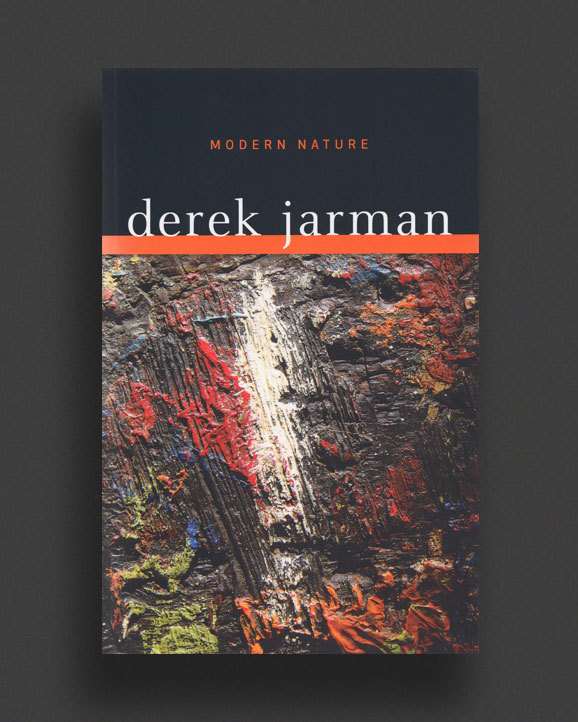
This text is the iconoclastic and controversial filmmaker Derek Jarman's candid journals from 1989 to 1990. In 1986 Derek Jarman discovered he was HIV positive and decided to make a garden at his cottage on the barren coast of Dungeness. Facing an uncertain future, he nevertheless found solace in nature, growing all manner of plants. While some perished beneath wind and sea-spray others flourished, creating brilliant, unexpected beauty in the wilderness.
Modern Nature is both a diary of the garden and a meditation by Jarman on his own life: his childhood, his time as a young gay man in the 1960s, his renowned career as an artist, writer and film-maker. It is at once a lament for a lost generation, an unabashed celebration of gay sexuality, and a devotion to all that is living.
'An essential - urgent - book for the 21st Century' — Hans Ulrich Obrist
2020, English
Softcover, 208 pages, 21 x 13 cm
Published by
Apocalypse Party / Philadelphia
$30.00 - Out of stock
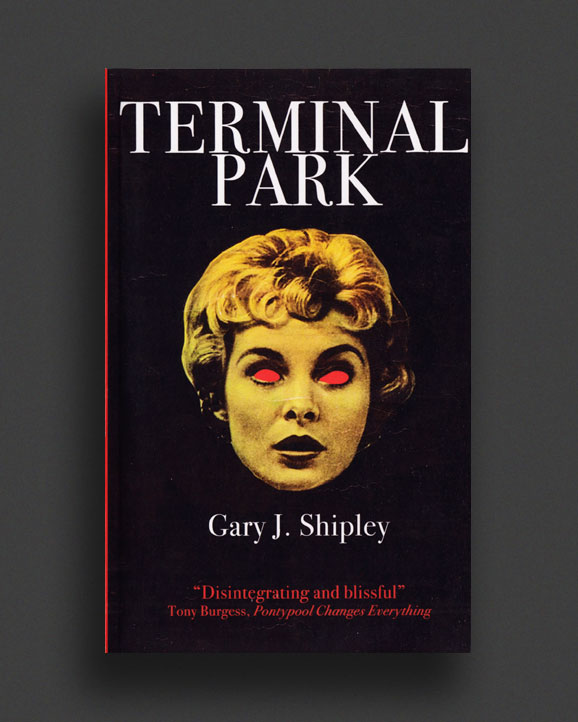
Gary J. Shipley's fascinating mixture of horror, apocalypse, and experimental theory-fiction.
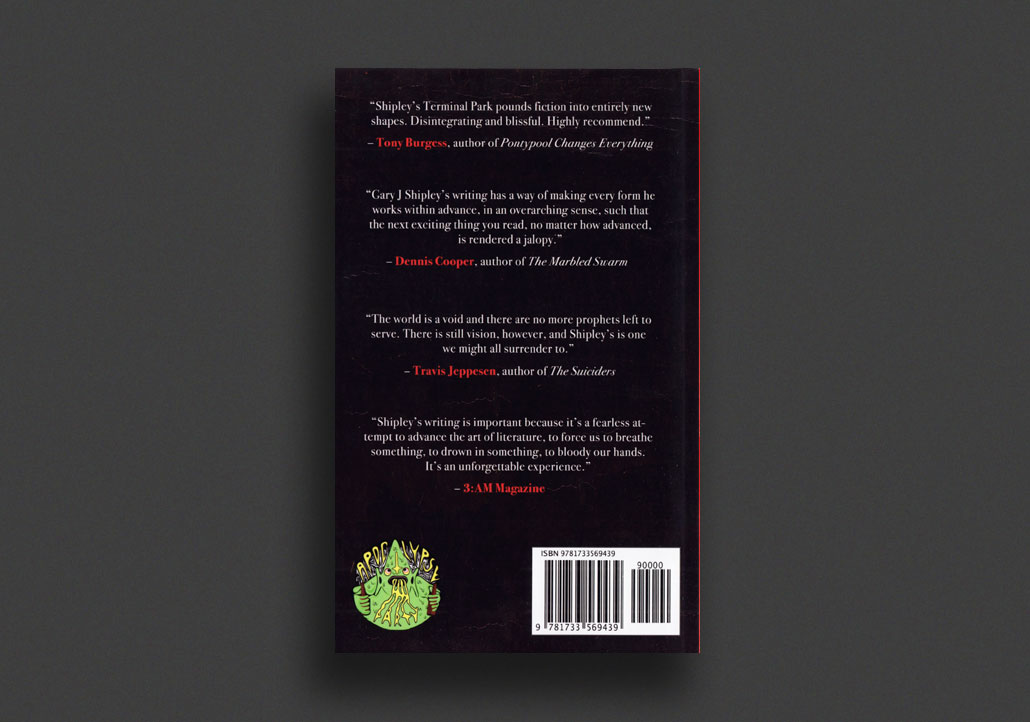
"Shipley's Terminal Park pounds fiction into entirely new shapes. Disintegrating and blissful. Highly Recommend."—Tony Burgess, author of Pontypool Changes Everything
"Gary J. Shipley's writing has a way of making every form he works within advance, in an overarching sense, such that the next exciting thing you read, no matter how advanced, is rendered a jalopy."—Dennis Cooper, author of The Marbled Swarm
"The world is a void and there are no more prophets left to serve. There is still vision, however, and Shipley's is one we might all surrender to."—Travis Jeppesen, author of The Suiciders
"Shipley's writing is important because it's a fearless attempt to advance the art of literature, to force us to breathe something, to drown in something, to bloody our hands. It's an unforgettable experience."—3: AM Magazine
Gary J. Shipley is a writer and philosopher based in the UK. He has published work in various philosophy journals and literary journals.
2015, English
Softcover, 96 pages. 21.6 x 14 cm
Published by
Fordham University Press / New York
$38.00 - Out of stock
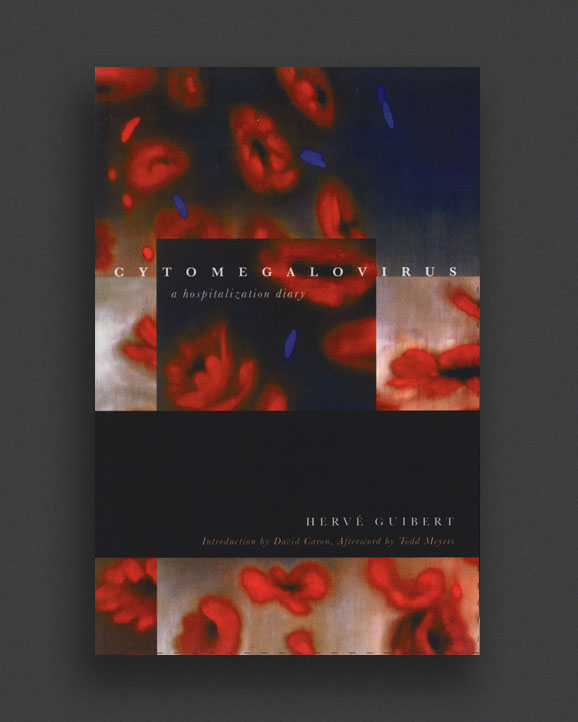
"Like Roland Barthes's Mourning Diary, Hervé Guibert's hospitalization diary speaks with moonlit clarity about the threshold between life and death; with this heartbreaking and exemplary book Guibert has earned literary immortality."—Wayne Koestenbaum, Author and Distinguished Professor of English, CUNY
By the time of his death, Herve Guibert had become a singular literary voice on the impact of AIDS in France. He was prolific. His oeuvre contained some twenty novels, including To the Friend Who Did Not Save My Life and The Compassion Protocol. He was thirty-six years old. In Cytomegalovirus, Guibert offers an autobiographical narrative of the everyday moments of his hospitalization because of complications of AIDS. Cytomegalovirus is spare, biting, and anguished. Guibert writes through the minutiae of living and of death-as a quality of invention, of melancholy, of small victories in the face of greater threats-at the moment when his sight (and life) is eclipsed.
This new edition includes an Introduction and Afterword contextualizing Guibert's work within the history of the AIDS pandemic, its relevance in the contemporary moment, and the importance of understanding the quotidian aspects of terminal illness.
Translated by Clara Orban
Afterword by Todd Meyers
Introduction by David Caron
Hervé Guibert (1955-91) was a French journalist and photographer before becoming a prominent literary figure in the early 1980s. He published nearly two dozen works in his lifetime, several of which deal with HIV/AIDS.
David Caron is Professor of French and Women's Studies at the University of Michigan. He is the author of The Nearness of Others: Searching for Tact and Contact in the Age of HIV.
Todd Meyers is Associate Professor of Medical Anthropology at Wayne State University. He is the author of The Clinic and Elsewhere: Addiction, Adolescents, and the Afterlife of Therapy.
Clara Orban is Professor and Chair of French and Italian at DePaul University.
2014, English
Softcover, 160 pages, 52 x 80 cm
Published by
University of Chicago Press / Chicago
$44.00 - Out of stock
Ghost Image is made up of sixty-three short essays - meditations, memories, fantasies, and stories bordering on prose poems - and not a single image. Herve Guibert's brief, literary rumination on photography was written in response to Roland Barthes' Camera Lucida, but its deeply personal contents go far beyond that canonical text. Some essays talk of Guibert's parents and friends, some describe old family photographs and films, and spinning through them all are reflections on remembrance, narcissism, seduction, deception, death, and the phantom images that have been missed. Both a memoir and an exploration of the artistic process, Ghost Image not only reveals Guibert's particular experience as a gay artist captivated by the transience and physicality of his media and his life, but also his thoughts on the more technical aspects of his vocation. In one essay, Guibert searches through a cardboard box of family portraits for clues-answers, or even questions-about the lives of his parents and more distant relatives.
Rifling through vacation snapshots and the autographed images of long-forgotten film stars, Guibert muses, "I don't even recognize the faces, except occasionally that of an aunt or great-aunt, or the thin, fair face of my mother as a young girl." In other essays, he explains how he composes his photographs, and how - in writing - he seeks to escape and correct the inherent limits of his technique, to preserve those images lost to his technical failings as a photographer. With strains of Jean Genet and recurring themes that speak to the work of contemporary artists across a range of media, Guibert's Ghost Image is a beautifully written, melancholic ode to existence and art forms both fleeting and powerful - a unique memoir at the nexus of family, memory, desire, and photography.
HERVÉ GUIBERT (1955-1991) was a French writer and photographer. A critic for Le Monde, he was the author of some thirty books, most notably To the Friend Who Did Not Save My Life, which presents an intimate portrait of Michel Foucault and played a significant role in changing public attitudes in France towards AIDS.
2004, English
Softcover, 219 pages, 14 x 21.6 cm
Published by
FC2 / US
The University of Alabama Press / Alabama
$42.00 - Out of stock
The 2004 definitive edition of a classic and controversial novel. First written in 1969 and completed days before the Stonewall riots in New York, Hogg is one of America’s most famous “unpublishable” novels. It recounts three horrifically violent days in the life of truck driver and rapist-for-hire, Franklin Hargus. Narrated by his young boy accomplice, the novel portrays a descent into unimaginable depravity, a hell comprised of the filth and brutality civilization exists to forget. What transforms this nightmare into literature is Delany’s refusal, faced with our moral anxieties, to mutilate his appalling creation. Hogg’s monsters wear our faces, possessing the human complexities of intense loyalty, perverse admiration, and an integrity so pure that pity becomes betrayal. No reader can be prepared for such a story. It is a stunning achievement.
"Hogg is a truly significant book. It is distasteful, raw, and upsetting; it also treats some of the sexual taboos that Americans do not want addressed in either art or politics. Hogg is an artistic triumph, as well as a political one." — John O'Brien, Dalkey Archive Press
"There’s no question that Hogg by Samuel R. Delany is a serious book with literary merit." — Norman Mailer
"Hogg is explicitly and violently pornographic. Delany takes his readers to the limit of readability – but as long as you keep reading, you repeatedly face up to some of the darkest and most carefully hidden parts of your own desire." — Dennis Cooper
"Hogg is a truly experimental novel and a minimalist testing of a single hypothesis. It wants to know to what limits appetite can suffuse consciousness before that consciousness stops being human." — Bruce Benderson
Samuel R. Delany (b. 1942), nicknamed "Chip", is an award-winning American science-fiction novelist and critic whose highly imaginative works address sexual, racial, and social issues, heroic quests, and the nature of language. Delany was the first African American writer to achieve note through commercial American science fiction. The Lambda Book Report chose Delany, a recipient of the William Whitehead Memorial Award for a lifetime’s contribution to lesbian and gay literature, as one of the hundred men and women who have most changed our concept of gayness in the last century. Delany’s books include Atlantis: Three Tales (Wesleyan University Press), Dhalgren (Vintage Books), as well as the best-selling Times Square Red, Times Square Blue (New York University Press).
1976, English
Softcover, 432 pages,
1st Edition, Out of print title / used / good
Published by
Vision / London
$55.00 - In stock -
First softcover edition of The Secret Life of Salvador Dalí, published by Vision in London in 1976. Painter, designer, and filmmaker Salvador Dalí (1904-1989) was one of the most colourful and controversial figures in twentieth-century art. A pioneer of Surrealism, he was both praised and reviled for the subconscious imagery he projected into his paintings, which he sometimes referred to as hand-painted dream photographs.
This early autobiography, first published in 1942, which takes him through his late thirties, is as startling and unpredictable as his art. On its first publication, the reviewer of Books observed: It is impossible not to admire this painter as writer. As a whole, he ... communicates the snobbishness, self-adoration, comedy, seriousness, fanaticism, in short the concept of life and the total picture of himself he sets out to portray. Dalí's flamboyant self-portrait begins with his earliest recollections and ends at the pinnacle of his earliest successes. His tantalizing chapter titles and headnotes—among them Intra-Uterine Memories, Apprenticeship to Glory, Permanent Expulsion from the School of Fine Arts, Dandyism and Prison, I am Disowned by my Family, My Participation and my Position in the Surrealist Revolution, and Discovery of the Apparatus for Photographing Thought—only hint at the compelling revelations to come.
Here are fascinating glimpses of the brilliant, ambitious, and relentlessly self-promoting artist who designed theater sets, shop interiors, and jewellery as readily as he made surrealistic paintings and films. Here is the mind that could envision and create with great technical virtuosity images of serene Raphaelesque beauty one moment and nightmarish landscapes of soft watches, burning giraffes, and fly-covered carcasses the next. For anyone interested in twentieth-century art and one of its most gifted and charismatic figures, The Secret Life of Salvador Dalí is essential reading.
Illustrated with photographs of Dalí and his works, and scores of Dalí drawings and sketches. Translated by Haakon M. Chevalier; introduction by Robert Melville.
Good copy, creasing to covers, light general wear.
2007, English
Hardback (w. dust jacket), 242 pages, 21 x 28 cm
1st Edition, Out of print title / as new
Published by
Yale University Press / New Haven
$45.00 - In stock -
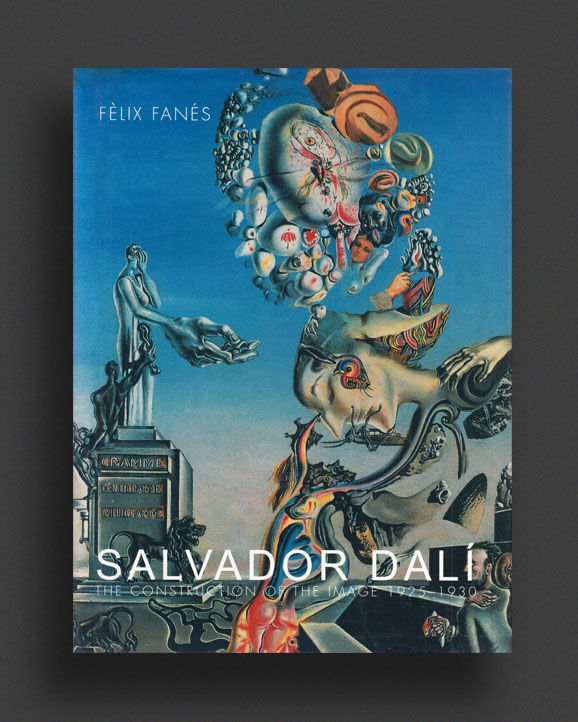
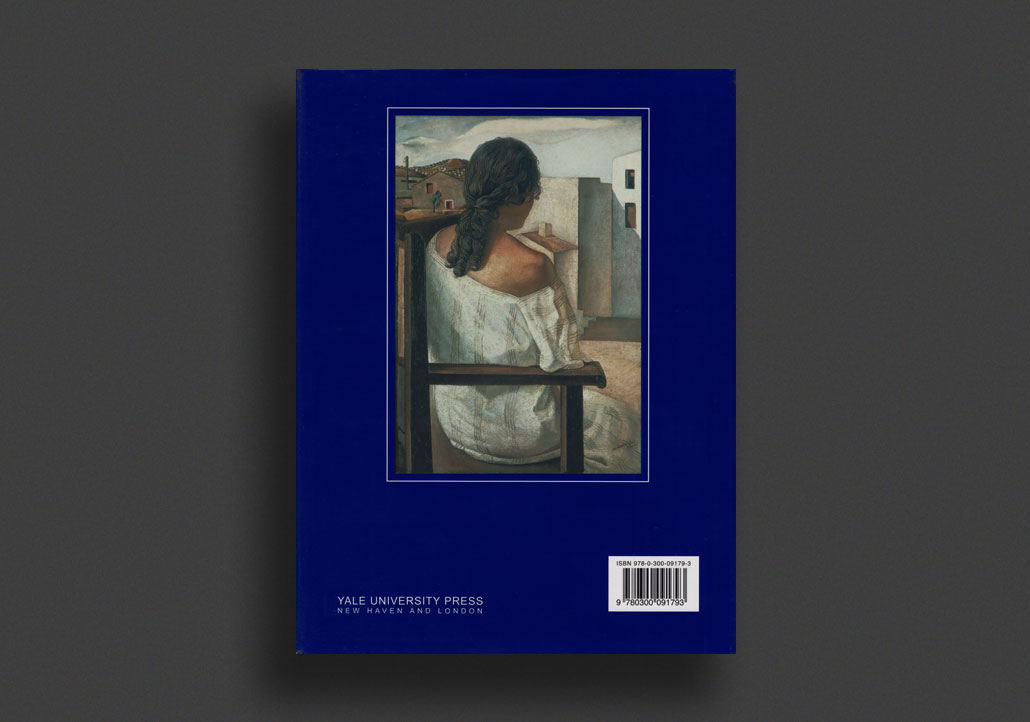
As a very young artist in training at the academy in Madrid, Salvador Dalí worked in two distinct modes a highly detailed naturalism (under the influence of the return to order”) and a more avant-garde, cubist-derived style that owed much to Picasso (whom Dalí visited in Paris in 1926). Then, in 1927, the twenty-three-year-old artist, influenced by André Breton’s Surrealist Manifesto of 1924 and the paintings of such artists as Joan Miró and Yves Tanguy, began to move towards Surrealism. In the spring of 1929, to coincide with the shooting of Buñuel’s Un Chien andalou, Dalí organized his first Paris exhibition, thereby gaining acclaim as a full member of the surrealist movement.
This book offers a wealth of new material about Dalí’s formative years as a young artist in Spain and first years in Paris. Fèlix Fanés, one of the most knowledgeable Dalí scholars in the world, transforms perceptions of the artist and shows how the stage was set for the emergence of Dalí’s mature artistic personality. With a fresh and detailed assessment of Dalí’s truly revolutionary work, Fanés reveals the central role of the artist not only in the development of the Surrealist movement but also the course of 20th-century art.
Out-of-print, As New copy.
1979, English
Hardcover (w. dust jacket), 238 pages, 32 x 27 cm
1st Edition, Out of print title / used / very good
Published by
Park Lane / New York
$65.00 - In stock -
First English hardcover edition of this monographic on Salvador Dalí by Spanish writer Ramón Gómez de la Serna, published by Park Lane in 1979.
This book is a tribute to two great Spanish personalities of our century, the painter Salvador Dali and the writer Raman Gomez de la Serna. When Raman Gomez de la Serna undertook a study of Salvador Dali, Dali himself promised to illustrate the text with original drawings. Unfortunately, the death of the writer in 1963 prevented the project from being realized until recently, when the study, almost complete, was discovered posthumously among his papers. Dali kept his word and this magnificent book is the result.
Supported by other writings, photographs, and illustrations, Dali is made up of three sections. The first of these is largely composed of the essay and the drawings, with a note by the Spanish scholar Sebastian Grasso on Ramon Gomez de la Serna, and a chronology which charts the life and works of the surrealist artist. The second section contains more than 80 color reproductions of Dali's works....
Lavishly illustrated in paintings, drawings, Dalí's home, studio, furniture, musuem, testimonials, and much more.
Painter, designer, and filmmaker Salvador Dalí (1904-1989) was one of the most colourful and controversial figures in twentieth-century art. A pioneer of Surrealism, he was both praised and reviled for the subconscious imagery he projected into his paintings, which he sometimes referred to as hand-painted dream photographs.
Ramón Gómez de la Serna y Puig (3 July 1888 in Madrid – 13 January 1963 in Buenos Aires) was a Spanish writer, dramatist and avant-garde agitator. He strongly influenced surrealist film maker Luis Buñuel.
Very Good in Good dust jacket, some edge wear.
1982, English
Softcover, 34 pages, 17.5 x 22 cm
1st Edition, Out of print title / used / very good
Published by
The Alternative Museum / New York
$100.00 - In stock -
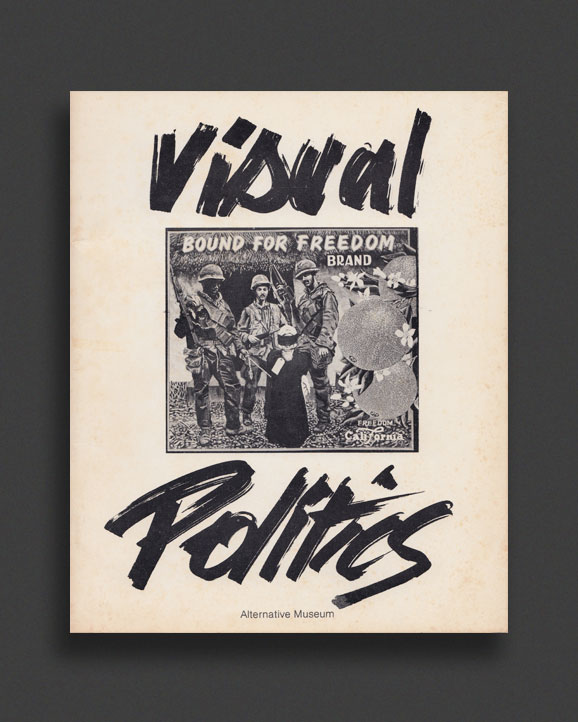
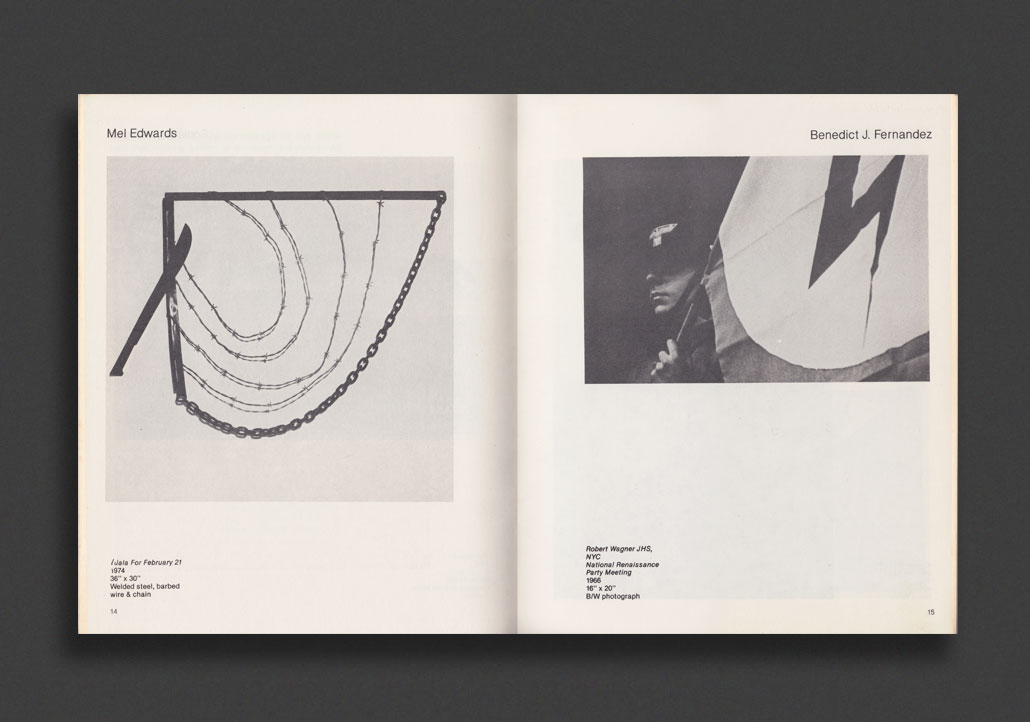
Extremely scarce, lovely catalogue published on the occasion of the exhibition "Visual Politics", curated by Geno Rodriguez at the Alternative Museum in New York, 1982.
Featuring the work of Melvin Edwards, David Hammons, Francesc Torres, Sonia Balassanian, Benedict J. Fernandez, Daniel Kazimierski, Despo Magoni, Juan Sanchez, Randy Lee White, amongst others. Illustrated throughout with the artworks featured in the exhibit, plus biographical info for each artist and a foreword essay by Robert H. Browning.
Very Good with light edge tanning with age.
1986, English
Softcover (staple-bound), 16 pages, 21 x 13.5 cm
1st Edition, Out of print title / used / very good
Published by
Athletic Model Guild (AMG) / Los Angeles
$30.00 - Out of stock
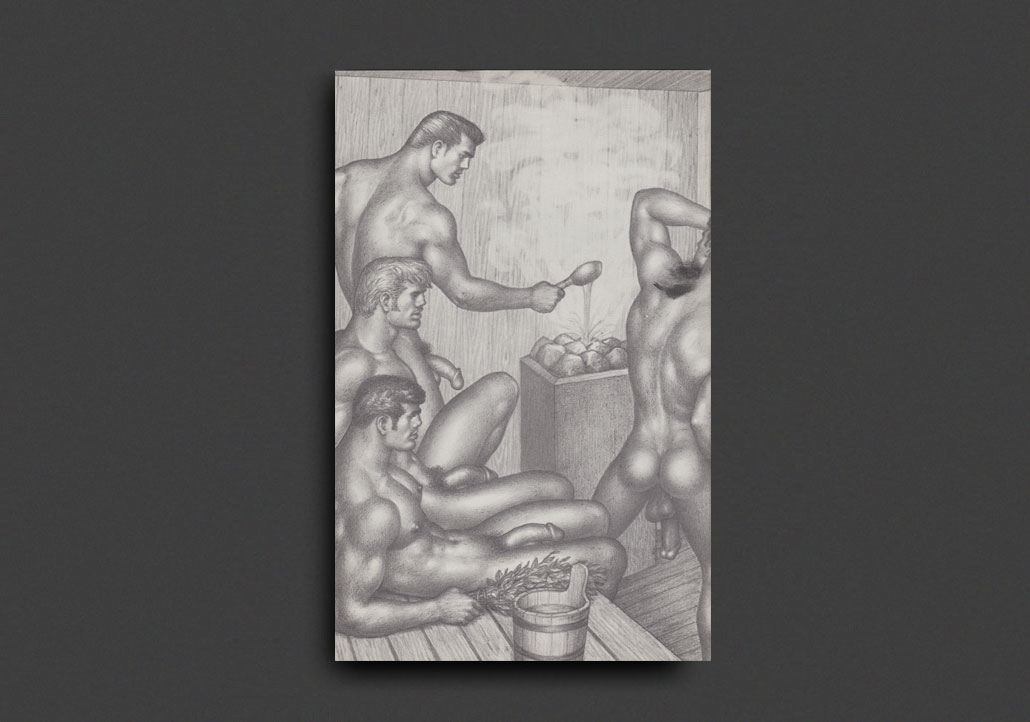
Premier issue of the Athletic Model Guild trade catalogue of photos, slides, videos, and magazines, from the makers of the iconic Physique Pictorial magazine (back-issues also all listed). Packed with male nudes and their profiles. Published in 1986.
In 1945, gay pornography pioneer Bob Mizer founded Athletic Model Guild, or AMG. Mizer's AMG produced the trailblazing, iconic Physique Pictorial, the first all-nude and all-male magazine. Bob, himself, worked on every aspect of PP's production from the graphic design and tedious cut-and-paste production of the layout to the composition of the texts and the all-important selection of photographs and illustrations. Physique Pictorial was and still is the most highly coveted publication of its genre, introducing the world to such fantastic photographers such as Bruce of Los Angeles, Lon of London and Champion Studios, models such as John Apache, Jim Paris, and Tico Patterson, and artists such as Tom of Finland, Etienne and George Quaintance. In the 1960s, the pretense of being a digest about about exercise and fitness was dropped as controls on pornography were reduced. By the end of the decade gay pornography became legal, and the market for physique "beefcake" magazines collapsed. These magazines are a gorgeous time capsule.
Very Good copy.
1991, English
Softcover (staple-bound), 32 pages, 21 x 13.5 cm
1st Edition, Out of print title / used / very good
Published by
Athletic Model Guild (AMG) / Los Angeles
$40.00 - Out of stock
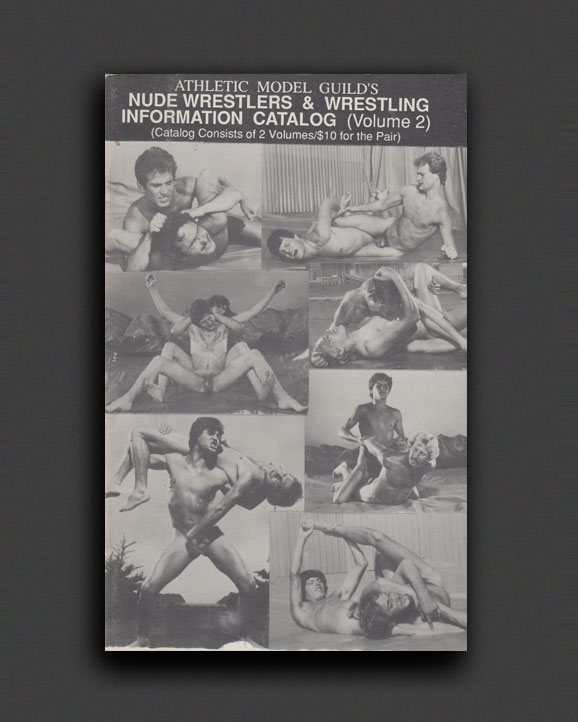
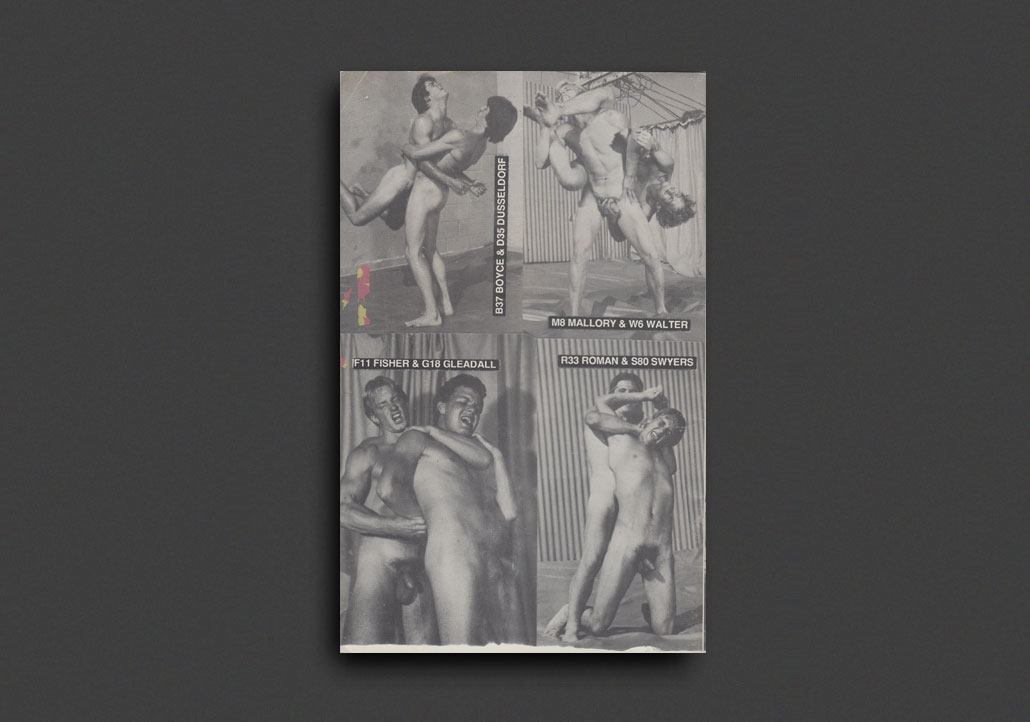
Athletic Model Guild's Nude Wrestlers & Wrestling Information Catalog (Vol. 2), published in 1991. Densely packed with photographs of full-frontal male nude models with catalog numbers relating to available VHS and Beta video tapes as well as cover and inner cover stills from the wrestling videos produced by AMG.
In 1945, gay pornography pioneer Bob Mizer founded Athletic Model Guild, or AMG. Mizer's AMG produced the trailblazing, iconic Physique Pictorial, the first all-nude and all-male magazine. Bob, himself, worked on every aspect of PP's production from the graphic design and tedious cut-and-paste production of the layout to the composition of the texts and the all-important selection of photographs and illustrations. Physique Pictorial was and still is the most highly coveted publication of its genre, introducing the world to such fantastic photographers such as Bruce of Los Angeles, Lon of London and Champion Studios, models such as John Apache, Jim Paris, and Tico Patterson, and artists such as Tom of Finland, Etienne and George Quaintance. In the 1960s, the pretense of being a digest about about exercise and fitness was dropped as controls on pornography were reduced. By the end of the decade gay pornography became legal, and the market for physique "beefcake" magazines collapsed. These magazines are a gorgeous time capsule.
Very Good copy.
1970, English
Softcover (staple-bound), 32 pages, 21 x 13.5 cm
1st Edition, Out of print title / used / very good
Published by
Athletic Model Guild (AMG) / Los Angeles
$60.00 - In stock -
Physique Pictorial Vol. 18, #1 January, 1970 issue of the iconic Physique Pictorial magazine from Los Angeles. Original issue packed with nude photographs and illustrations from various artists. Includes both covers by Tom of Finland.
In 1945, gay pornography pioneer Bob Mizer founded Athletic Model Guild, or AMG. Mizer's AMG produced the trailblazing, iconic Physique Pictorial, the first all-nude and all-male magazine. Bob, himself, worked on every aspect of PP's production from the graphic design and tedious cut-and-paste production of the layout to the composition of the texts and the all-important selection of photographs and illustrations. Physique Pictorial was and still is the most highly coveted publication of its genre, introducing the world to such fantastic photographers such as Bruce of Los Angeles, Lon of London and Champion Studios, models such as John Apache, Jim Paris, and Tico Patterson, and artists such as Tom of Finland, Etienne and George Quaintance. In the 1960s, the pretense of being a digest about about exercise and fitness was dropped as controls on pornography were reduced. By the end of the decade gay pornography became legal, and the market for physique "beefcake" magazines collapsed. These magazines are a gorgeous time capsule.
Very Good copy.
1976, English
Softcover (staple-bound), 32 pages, 21 x 13.5 cm
1st Edition, Out of print title / used / very good
Published by
Athletic Model Guild (AMG) / Los Angeles
$60.00 - Out of stock
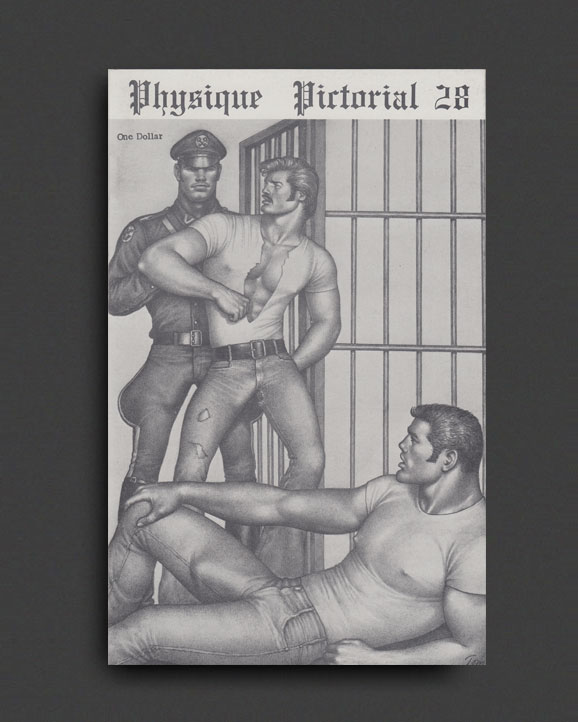
Physique Pictorial Vol. 28 August, 1976 issue of the iconic Physique Pictorial magazine from Los Angeles. Original issue packed with nude photographs and illustrations from various artists. Includes cover artwork by Tom of Finland.
In 1945, gay pornography pioneer Bob Mizer founded Athletic Model Guild, or AMG. Mizer's AMG produced the trailblazing, iconic Physique Pictorial, the first all-nude and all-male magazine. Bob, himself, worked on every aspect of PP's production from the graphic design and tedious cut-and-paste production of the layout to the composition of the texts and the all-important selection of photographs and illustrations. Physique Pictorial was and still is the most highly coveted publication of its genre, introducing the world to such fantastic photographers such as Bruce of Los Angeles, Lon of London and Champion Studios, models such as John Apache, Jim Paris, and Tico Patterson, and artists such as Tom of Finland, Etienne and George Quaintance. In the 1960s, the pretense of being a digest about about exercise and fitness was dropped as controls on pornography were reduced. By the end of the decade gay pornography became legal, and the market for physique "beefcake" magazines collapsed. These magazines are a gorgeous time capsule.
Very Good copy.
1984, English
Softcover (staple-bound), 69 pages, 28 x 21cm
1st Edition, Out of print title / used / good
Published by
Drummer / San Francisco
$65.00 - Out of stock
Very rare copy of The Erotic Art of Bill Ward, a book of homoerotic fantasy comic stories by British gay graphic artist, Bill Ward (1927–1996), published by Drummer magazine. This volume collects his various graphic erotic adventures that would appear in the pages of British and American magazines from about 1976 onwards, such as Him, Zipper, Manifest Reader, Stroke, Drummer, etc. It particularly focusses on his famed "Adventures of Drum" series, and also the strips of "King". Muscular bears, bikers, barbarians, cops and mythological creatures in sexual quests that play out in clubs, alleys and dungeons.
Bill Ward was a gay graphic artist born 20th August 1927 in East London. (Not to be confused with the American heterosexual erotic artist by the same name, William Hess Ward 1919-1998). Bill's publishing career began as a copyboy in newspaper publishing before becoming an art editor for children’s comics and then a graphic artist. He worked as a graphic artist for Amalgamated Press and Fleetway on childrens’ comics, notably their Thriller series (November 1951 – May 1963). In 1957 Bill had his first erotic drawings published anonymously in the British physique magazine Male Classics and he would later work openly for hard-core American magazines. Bill’s work features in the same issue of Drummer that includes Robert Mapplethorpe’s first commissioned cover (issue 24, September 1978). Bill was a member of the British gay bikers club called MSC London. Bill Ward died on 24th July 1996 at Stratford in London at the tail end of the worst period of the AIDS epidemic.
Good copy with light wear and spine pinching.