World Food Books' programme is largely produced on Kulin Nation land. We acknowledge the Wurundjeri people of the Kulin Nation as the first and continuing custodians of this land, and pay respect to their Elders past, present, and emerging.
World Food Books is an arts and special interests bookshop in Naarm / Melbourne. Founded in 2010, World Food Books is devoted to the presentation of a rotating, hand-selection of international art, design, literary and counterculture publications with an emphasis on the anti-traditional, the experimental, the avant-garde, the heretic, the marginal.
Presenting new titles alongside rare and out-of-print books, catalogues and journals spanning the fields of modern and contemporary art, design, photography, illustration, film, literature, poetry, cultural theory, philosophy, sexuality, popular and underground culture in its many radical forms, World Food Books wishes to encourage adventurous, thoughtful and open-minded reading, looking, writing, and exchange of publishing and ideas, both current and historical.
As well as our bookshop, located in Melbourne's historical Nicholas Building, all of our inventory is available internationally via our online mail-order service.
World Food Books semi-regularly co-ordinates "Occasions", a programme of exhibits and events at the bookshop and in partnership with other hosts (such as museums and art galleries) that develop out of the activities, relationships and content of the bookshop itself.
World Food Books
The Nicholas Building
37 Swanston Street
Room 5, Level 6
Melbourne 3000
Australia
SHOP HOURS:
Thu–Fri 12–6, Sat 12–5
WEB-SHOP OPEN 24/7
World Food Books
Postal Address:
PO Box 435
Flinders Lane
Victoria 8009
Australia
Art
Theory / Essay
Architecture / Interior
Graphic Design / Typography
Photography
Fashion
Eros
LGBTQ+
Fiction / Poetry
Weird / Speculative / Science Fiction / Horror
Transgressive / Visceral / Abject
Symbolism / Decadence / Fin de siècle
Film / Video
Painting
Sculpture / Installation
Performance / Dance / Theater
Drawing
Sound / Music
Curatorial
Group Shows / Collections
Periodicals
Out-of-print / Rare
Posters / Ephemera / Discs
Signed Books
World Food Books Gift Voucher
World Food Book Bag
Australian Art
Australian Fiction
Australian Science Fiction / Speculative Fiction
Australian Poetry
Australian Photography
Japanese Photography
Conceptual Art
Minimal Art
Dada
'Pataphysics / Oulipo
Fluxus
Concrete Poetry
Pop Art
Surrealism
Arte Povera
Arte Informale / Haute Pâte / Tachism
Nouveau Réalisme / Zero / Kinetic
Situationism / Lettrism
Collage / Mail Art / Xerox Art
Art Brut / Folk / Visionary / Fantastic
Illustration / Graphic Art / Bandes Dessinées
Furniture
Italian Radical Design / Postmodernism
Textiles
Ceramics / Glass
Counterculture
Protest / Revolt
Philosophy
Psychoanalysis
Anthropology
Anarchism
Socialism / Anarchism / Communism / Capitalism
Literary Theory / Semiotics / Language
Feminism / Women's Studies
Gender Studies / Sexuality
Anthropology
Fetishism / BDSM
Drugs / Psychedelia
Crime / Violence
Animal Rights / Veganism
Occult / Esoterica
Ecology / Earth / Alternative Living
Whole Earth / Crafts
All prices in AUD (Australian dollars)
Pick-Ups
Pick-up orders can be collected in our bookshop during opening hours after order date. Please collect any Pick-up orders within 2 weeks of ordering as we have limited storage space. Orders will be released back into stock if not collected within this time. No refunds can be made for pick-ups left un-collected. If you cannot make it in to the bookshop in this time-frame, please choose postage option.
Return Policy
All sales are final. We do accept returns (for refund or exchange) for items received in error. All our orders are packed with special care using heavy-duty padding and cardboard book-mailers or bubble mailers (for smaller books), using reinforcement where required. We cannot take responsibility for any lost, stolen or damaged parcels.
Insurance
Should you wish to insure your package, please email us directly after placing your order and we can organise this at a small extra expense. Although all standard/express tracked packages are very safe and dependable, we cannot take responsibility for any lost, stolen or damaged parcels. We recommend insurance on valuable orders.
Interested in selling your old books, catalogues, journals, magazines, comics, fanzines, ephemera? We are always looking for interesting, unusual and out-of-print books to buy. We only buy books in our fields of interest and specialty, and that we feel we can resell.
We base these prices on desirability, market value, in-print prices, condition and our current stock levels. We offer cash, store credit, and can take stock on consignment. All
about 25% of the price we expect to get when we sell them, or 30% in store credit. We base these prices on desirability, market value, in-print prices, condition and our current stock levels.
Sell your books any day of the week. You can drop them off and return later. If you have a lot of books, we can visit your Sydney home.
We buy books that we feel we can resell. We offer about 25 % of the price we expect to get when we sell them, or 30% in store credit. We base these prices on desirability, market value, in-print prices, condition and our current stock levels.
Philadelphia Wireman
03 August - 01 September, 2018
World Food Books is proud to announce our next Occasion, the first presentation of sculptures by Philadelphia Wireman in Australia.
The Philadelphia Wireman sculptures were found abandoned in an alley off Philadelphia’s South Street on trash night in 1982. Their discovery in a rapidly-changing neighbourhood undergoing extensive renovation, compounded with the failure of all attempts to locate the artist, suggests that the works may have been discarded after the maker’s death. Dubbed the "Philadelphia Wireman" during the first exhibition of this work, in 1985, the maker’s name, age, ethnicity, and even gender remain uncertain. The entire collection totals approximately 1200 pieces, all intricately bound together with tightly-wound heavy-gauge wire (along with a few small, abstract marker drawings, reminiscent both of Mark Tobey and J.B. Murry). The dense construction of the work, despite a modest range of scale and materials, is singularly obsessive and disciplined in design: a wire armature or exoskeleton firmly binds a bricolage of found objects including plastic, glass, food packaging, umbrella parts, tape, rubber, batteries, pens, leather, reflectors, nuts and bolts, nails, foil, coins, toys, watches, eyeglasses, tools, and jewellery.
Heavy with associations—anthropomorphic, zoomorphic, and socio-cultural responses to wrapped detritus—the totemic sculptures by Philadelphia Wireman have been discussed in the context of work created to fulfil the shamanistic needs of alternative religions in American culture. Curators, collectors, and critics have variously compared certain pieces to sculpture from Classical antiquity, Native American medicine bundles, African-American memory jugs, and African fetish objects. Reflecting the artist’s prolific and incredibly focused scavenging impulse, and despite—or perhaps enhanced by—their anonymity, these enigmatic objects function as urban artefacts and arbiters of power, though their origin and purpose is unknown. Philadelphia Wireman, whatever their identity, possessed an astonishing ability to isolate and communicate the concepts of power and energy through the selection and transformation of ordinary materials. Over the course of the past two decades, this collection has come to be regarded as an important discovery in the field of self-taught art and vernacular art.
Presented in collaboration with Fleisher-Ollman Gallery, Philadelphia, and Robert Heald, Wellington.
Susan Te Kahurangi King
02 February - 10 March, 2018
Susan Te Kahurangi King (24 February 1951 - ) has been a confident and prolific artist since she was a young child, drawing with readily available materials - pencils, ballpoint pens and felt-tip markers, on whatever paper is at hand. Between the ages of four and six Susan slowly ceased verbal communication. Her grandparents William and Myrtle Murphy had developed a special bond with Susan so they took on caring responsibilities for extended periods. Myrtle began informally archiving her work, carefully collecting and storing the drawings and compiling scrapbooks. No drawing was insignificant; every scrap of paper was kept. The King family are now the custodians of a vast collection containing over 7000 individual works, from tiny scraps of paper through to 5 meter long rolls.
The scrapbooks and diaries reveal Myrtle to be a woman of great patience and compassion, seeking to understand a child who was not always behaving as expected. She encouraged Susan to be observant, to explore her environment and absorb all the sights and sounds. Myrtle would show Susan’s drawings to friends and people in her community that she had dealings with, such as shopkeepers and postal workers, but this was not simply a case of a grandmother’s bias. She recognised that Susan had developed a sophisticated and unique visual language and sincerely believed that her art deserved serious attention.
This was an unorthodox attitude for the time. To provide some context, Jean Dubuffet coined the term Art Brut in 1945 to describe work created by self-taught artists – specifically residents of psychiatric institutions and those he considered to be visionaries or eccentrics. In 1972 Roger Cardinal extended this concept by adopting the term Outsider Art to describe work made by non-academically trained artists operating outside of mainstream art networks through choice or circumstance. Susan was born in Te Aroha, New Zealand in 1951, far from the artistic hubs of Paris and London that Dubuffet and Cardinal operated in. That Myrtle fêted Susan as a self-taught artist who deserved to be taken seriously shows how progressive her attitudes were.
Susan’s parents Doug and Dawn were also progressive. Over the years they had consulted numerous health practitioners about Susan’s condition, as the medical establishment could not provide an explanation as to why she had lapsed into silence. Dawn educated herself in the field of homeopathy and went on to treat all twelve of her children using these principles – basing prescriptions on her observations of their physical, mental and emotional state.
Doug was a linguist with an interest in philosophy who devoted what little spare time he had to studying Maori language and culture. To some extent their willingness to explore the fringes of the mainstream made them outsiders too but it was their commitment to living with integrity and their respect for individuality that ensured Susan’s creativity was always encouraged.
Even though Susan’s family supported her artistic pursuits, some staff in schools and hospitals saw it as an impediment to her assimilation into the community and discouraged it in a variety of ways. Her family was not always aware of this and therefore did not fully understand why Susan stopped drawing in the early 1990s. However, rather than dwell on the challenges that Susan faced in pursuit of her artistic practice, they prefer to highlight her achievements. In 2008 Susan began drawing again in earnest, after an almost 20 year interruption, and her work is now shown in galleries around the world.
Susan grew up without television and has been heavily influenced by the comics she read as a child. She is absolutely fearless in the appropriation of recognizable characters, such as Donald Duck and Mickey Mouse, in her work. She twists their limbs, contorts their faces, compresses them together, blends them into complex patterned backgrounds - always imbuing them with an incredible energy. Although Susan often used pop culture characters in her work they are not naive or childlike. These are drawings by a brilliant self-taught artist who has been creating exceptional work for decades without an audience in mind.
Mladen Stilinović
"Various Works 1986 - 1999"
02 February 16 - September 10, 2016
Various works 1986 - 1999, from two houses, from the collections of John Nixon, Sue Cramer, Kerrie Poliness, Peter Haffenden and Phoebe Haffenden.
Including: Geometry of Cakes (various shelves), 1993; Poor People’s Law (black and white plate), 1993; White Absence (glasses, ruler, set square, silver spoon, silver ladel with skin photograph and wooden cubes), 1990-1996; Exploitation of the Dead (grey and red star painting, wooden painting, black spoon with red table, red plate), 1984-1990; Money and Zeros (zero tie, paintings made for friends in Australia (Sue, John, Kerrie), numbers painting), 1991-1992; Words - Slogans (various t-shirts) - “they talk about the death of art...help! someone is trying to kill me”, “my sweet little lamb”, “work is a disease - Karl Marx”; Various artist books, catalogues, monographs, videos; Poster from exhibition Insulting Anarchy; "Circular" Croatian - Australian edition; Artist book by Vlado Martek (Dostoyevsky); more.
Thanks to Mladen Stilinović and Branka Stipančić.
Jonathan Walker
Always Will Need To Wear Winter Shirt Blue + Ochre Small Check Pattern
21 August - 21 September, 2015
Untitled
I am not a great reader of poetry but I always return to the work of Melbourne poet, Vincent Buckley (1925- 1988). Perhaps I find his most tantalising piece to be not a finished poem but a fragment left on a scrap of paper discovered on his desk after the poet’s death.
The poetry gathers like oil
In the word-core, and spreads
It has its music meet,
Its music is in movement.
This fragment is more the shell left behind from a volatile thought than a finished poem. I find the last two lines honest but awkward whereas the first two lines work like an arrow. Most likely he could not find a resolution so it was left. Still, in its present form, it remains an eloquent testimony to the ultimate failure of a medium to express mobile thought and sensation, in Buckley’s case, through verbal language. It’s an important matter because this is something all artists have to deal with regardless of the medium.
I have never written a poem, however, I am forever copying fragments from books on paper scraps in a vain effort to fix certain notions in my head. At first, they function as bookmarks that are sometimes returned to when I open the book. But before long, as they accumulate, they fall out littering the table interspersed with A4 photocopies, bills, books and medications.
To return to Buckley’s fragment, the first two lines very much evoke how I paint nowadays. As you age, detail diminishes and patches of light become more luminous and float. I feel the most honest way of dealing with this is by smearing the oil paint on the canvas with the fingers and working close-up, blind. Only if the patches coalesce into an approaching image can the work gain a life.
-
Jonathan Walker was born in Melbourne, Australia and brought up on a dairy farm in Gippsland. In the 1970’s he studied painting at RMIT and won the Harold Wright Scholarship to the British Museum, London. During the 1980’s he exhibited at Pinacotheca Gallery, Richmond and had work shown at the NGV and Heidi City Art Gallery. Over the same period he designed the cover for the “Epigenesi” LP by Giancarlo Toniutti, Italy and conducted a mail exchange work with Achim Wollscheid, Germany. The work with artists through the post resulted in an article published in the bicentenary issue of Art and Australia 1988. He showed in artist run spaces such as WestSpace in the 90’s and 2000’s, and until 2012, taught painting at Victoria University, which is where we (Colleen Ahern and Lisa Radford) as organisers of the exhibition, among many others, had the privilege of being his student.
Walker’s knowledge was imparted to students through the careful selection of music, literature, and artists found in books that he himself had ordered for the library. Walker’s strategy was the generosity of sharing his vast knowledge with references specific to each student and their context.
Walker’s paintings share a similar focus and intimacy.
This exhibition presents a small selection of recent paintings alongside a publication that includes Walker’s writing. Observational and analytical, Walker’s work is a type of material notation — the time of day, colour and how it is blended, the both specific and fleeting location of a reflection on lino or the question of whether a chair leg should be included in a painting.
Please join us on Friday August 21 between 6-8pm to celebrate the opening of the exhibition.
Curated by Colleen Ahern and Lisa Radford.
B. Wurtz
Curated by Nic Tammens
March 26 - April 4, 2015
B.Wurtz works from a basement studio in his home on Manhattan’s Lower East Side.
This local fact is attested to by the plastic shopping bags and newsprint circulars that appear in his work. As formal objects, they don’t make loud claims about their origins but nonetheless transmit street addresses and places of business from the bottom of this long thin island. Like plenty of artists, Wurtz is affected by what is local and what is consumed. His work is underpinned by this ethic. It often speaks from a neighborhood or reads like the contents of a hamper:
“BLACK PLUMS $1.29 lb.”
“Food Bazaar”
“USDA Whole Pork Shoulder Picnic 99c lb.”
“RITE AID Pharmacy, with us it’s personal.”
“H. Brickman & Sons.”
“Sweet Yams 59c lb."
Most of the work in this exhibition was made while the artist was in residence at Dieu Donne, a workshop dedicated to paper craft in Midtown. Here Wurtz fabricated assemblages with paper and objects that are relatively lightweight, with the intention that they would be easily transportable to Australia. This consideration isn’t absolute in Wurtz’s work, but was prescriptive for making the current exhibition light and cheap. Packed in two boxes, these works were sent from a USPS post office on the Lower East Side and delivered to North Melbourne by Australia Post.
Wurtz appears courtesy of Metro Pictures, New York.
Thanks to Rob Halverson, Joshua Petherick, Sari de Mallory, Matt Hinkley, Helen Johnson, Fayen d'Evie, Ask Kilmartin, Lisa Radon, Ellena Savage, Yale Union, and "Elizabeth".
John Nixon
"Archive"
December 15 - January 20, 2014
The presentation of John Nixon's archive offered a rare showcase of this extensive collection of the artist's own publications, catalogues, posters, ephemera, editions and more, from the mid 1980s onwards, alongside a selection of his artworks.
Organized by John Nixon, Joshua Petherick and Matt Hinkley.
<a href=http://wfb.public-office.info/artist/john-nixon>All titles by John Nixon
"Habitat"
at Minerva, Sydney (organised by Joshua Petherick and Matt Hinkley)
November 15 - December 20, 2014
Lupo Borgonovo, Janet Burchill & Jennifer McCamley,
Lewis Fidock, HR Giger, Piero Gilardi, Veit Laurent Kurz,
Cinzia Ruggeri, Michael E. Smith, Lucie Stahl, Daniel Weil, Wols
Press Release:
“...It contained seven objects. The slender fluted bone, surely formed for flight, surely from the wing of some large bird. Three archaic circuitboards, faced with mazes of gold. A smooth white sphere of baked clay. An age-blackened fragment of lace. A fingerlength segment of what she assumed was bone from a human wrist, grayish white, inset smoothly with the silicon shaft of a small instrument that must once have ridden flush with the surface of the skin - but the thing’s face was seared and blackened.”
William Gibson, “Count Zero”, 1986
"Autumn Projects Archive"
Curated by Liza Vasiliou
March 6 - March 15, 2014
World Food Books, in conjunction with the Virgin Australia Melbourne Fashion Festival 2014, presented the Autumn Projects archive, consisting of a selection of early examples in Australian fashion with a particular interest in collecting designers and labels from the period beginning in the 1980’s, who significantly influenced the discourse of Australian Fashion.
Curated by Liza Vasiliou, the exhibition provided a unique opportunity to view pieces by designers Anthea Crawford, Barbara Vandenberg, Geoff Liddell and labels CR Australia, Covers, Jag along with early experimental collage pieces by Prue Acton and Sally Browne’s ‘Fragments’ collection, suspended throughout the functioning World Food Books shop in Melbourne.
H.B. Peace
presented by CENTRE FOR STYLE
November 14, 2013
"Hey Blinky, you say chic, I say same"
Anon 2013
H.B. Peace is a clothing collaboration between great friends Blake Barns and Hugh Egan Westland. Their pieces explore the divergences between 'character’ and ‘personality’ in garments....etc
Special Thanks to Joshua Petherick and Matt Hinkley of WFB and Gillian Mears
and a Very Special Thank you to Audrey Thomas Hayes for her shoe collaboration.
Janet Burchill & Jennifer McCamley
"Aesthetic Suicide"
May 10 - June 8, 2013
The first of our occasional exhibitions in the World Food Books office/shop space in Melbourne, "Aesthetic Suicide" presented a body of new and older works together by artists Janet Burchill & Jennifer McCamley, including videos, prints, a wall work, and publications.
During shop open hours videos played every hour, on the hour.
2019, English
Softcover, 256 pages, 15.2 x 23 cm
Published by
D.A.P. / New York
Inventory Press / New York
$52.00 - Out of stock
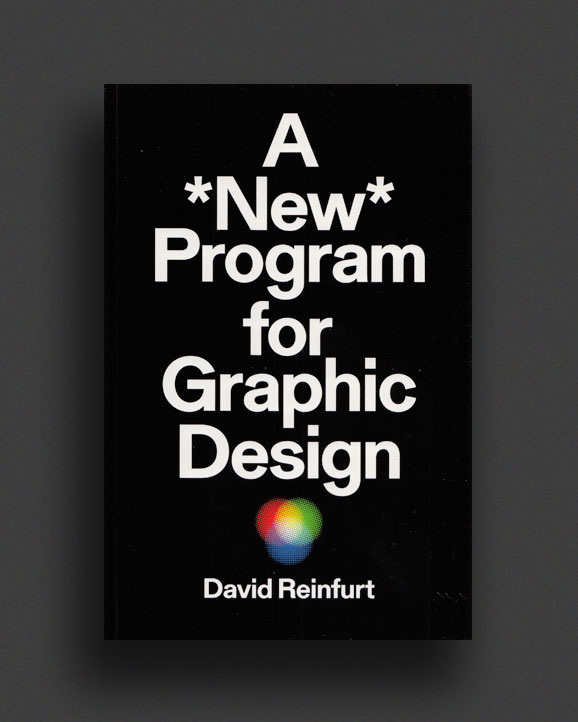
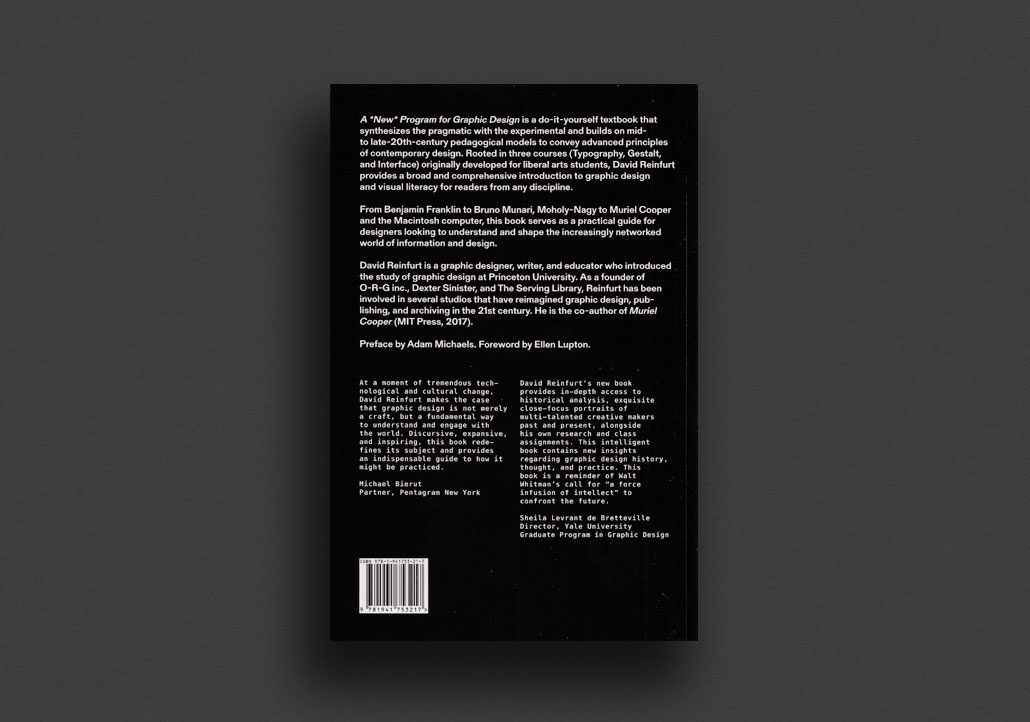
A New Program for Graphic Design is the first communication-design textbook expressly of and for the 21st century. Three courses--Typography, Gestalt and Interface--provide the foundation of this book. Through a series of in-depth historical case studies (from Benjamin Franklin to the Macintosh computer) and assignments that progressively build in complexity, A New Program for Graphic Design serves as a practical guide both for designers and for undergraduate students coming from a range of other disciplines. Synthesizing the pragmatic with the experimental, and drawing on the work of Max Bill, Beatrice Warde, Muriel Cooper and Stewart Brand (among many others), it builds upon mid- to late-20th-century pedagogical models to convey contemporary design principles in an understandable form for students of all levels--treating graphic design as a liberal art that informs the dissemination of knowledge across all disciplines. For those seeking to understand and shape our increasingly networked world of information, this guide to visual literacy is an indispensable tool.
“At a moment of tremendous technological and cultural change, David Reinfurt makes the case that graphic design is not merely a craft, but a fundamental way to understand and engage with the world. Discursive, expansive, and inspiring, this book redefines its subject and provides an indispensable guide to how it might be practiced.” —Michael Bierut (Partner, Pentagram New York)
“David Reinfurt's new book provides … in depth access to a historical analysis, exquisite close-focus portraits of multi-talented creative makers past and present, alongside his own research and examples of his class assignments. This intelligent book contains new insights regarding graphic design history, thought, and practice. This book is a reminder of Walt Whitman’s call for "a force infusion of intellect" to confront the future.” —Sheila Levrant de Bretteville (Director, Yale University Graduate Program in Graphic Design)
David Reinfurt (born 1971), a graphic designer, writer and educator, reestablished the Typography Studio at Princeton University and introduced the study of graphic design. Previously, he held positions at Columbia University Graduate School of Architecture, Planning and Preservation, Rhode Island School of Design and Yale University School of Art. As a cofounder of O-R-G inc. (2000), Dexter Sinister (2006) and the Serving Library (2012), Reinfurt has been involved in several studios that have reimagined graphic design, publishing and archiving in the 21st century. He was the lead designer for the New York City MTA Metrocard vending machine interface, still in use today. His work is included in the collections of the Walker Art Center, Whitney Museum of American Art, Cooper Hewitt National Design Museum and the Museum of Modern Art. He is the co-author of Muriel Cooper (MIT Press, 2017), a book about the pioneering designer.
Foreword by Adam Michaels
Introduction by Ellen Lupton
Design by IN-FO.CO
2016, English
Softcover, 48 page, 17 x 24 cm
Out of print title / as new
Published by
Roma / Amsterdam
$200.00 - Out of stock
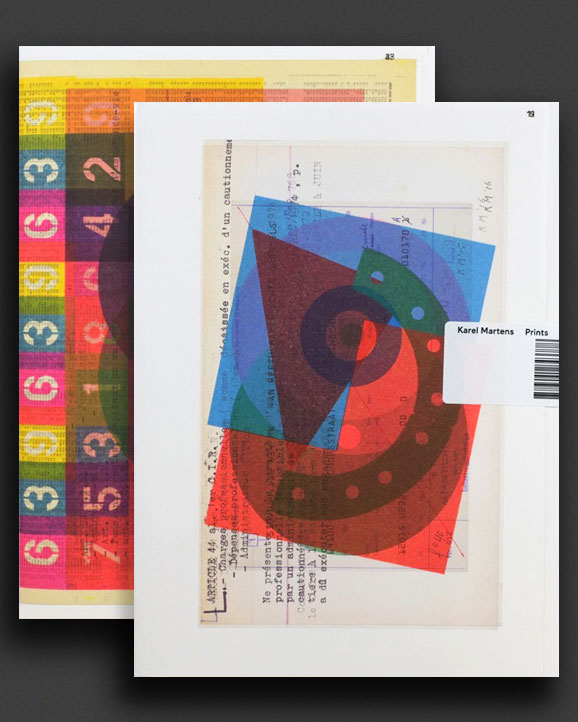
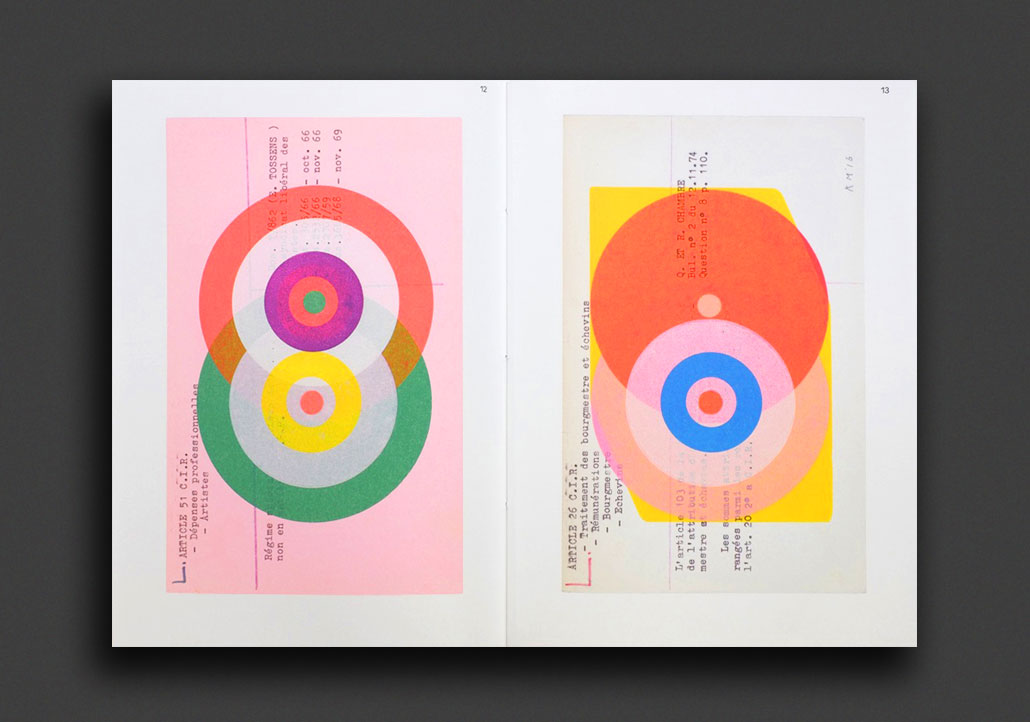
The out-of-print survey of renowned Dutch graphic designer Karel Martens' wonderfully bright and colourful letterpress monoprints that were created between 2014 and 2016. This artist publication contains all prints reproduced at actual size (except for two larger prints), and comes in two different covers which is the result of a printing experiment by printing all the content of the book in 3 layers on top of each other. This particular print sheet was cut and folded into two different covers. Martens has been producing letterpress experiments since the 1950’s.
As New copy, sealed.
2019, English
Hardcover, 236 pages, 24.6 x 33.8 cm
Published by
Scottsdale Museum of Contemporary Art / SF
$98.00 - Out of stock
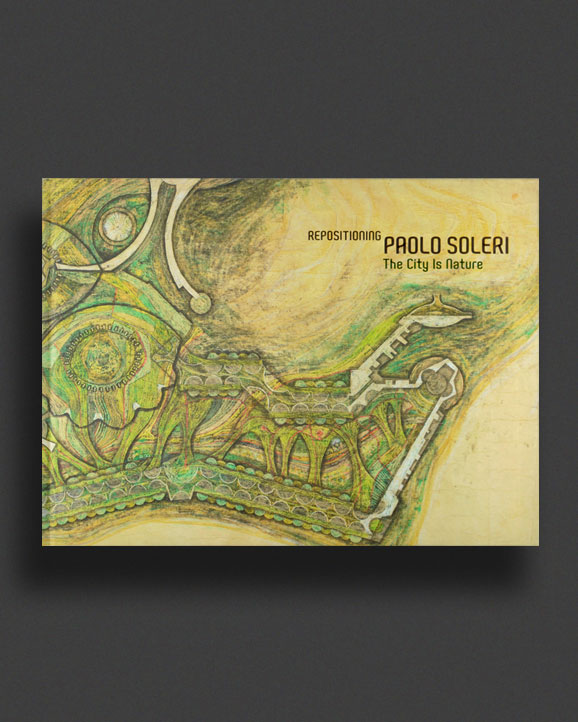
The richly illustrated catalogue Repositioning Paolo Soleri: The City is Nature presents the drawings, sculptures and models the seminal artist and architect produced from 1947 until the mid-1970s--during the richest years of his artistic evolution. These selected works represent Soleri's most creative moments when he was making his artwork and constructing his home-studio, primarily with his own hands.
Four chapters by expert historians closely examine Soleri's often-overlooked achievements within the disciplines of design and craft, futurist and utopian architecture, and 1970s theories of consciousness-raising and therapy. The book demonstrates the widespread popular interest and excitement about Soleri's ideas in 1970 and offer a variety of possibilities for the steep decline in his popularity and the resulting lack of historical attention paid to this important artist.
Repositioning Paolo Soleri: The City Is Nature is the only monograph to analyze Soleri's art and ideas after 2009. Radical new material includes an extensive annotated bibliography, a previously unpublished 1974 interview with the architect and a photographic essay of Soleri's two experimental communities, Cosanti and Arcosanti.
1995, Japanese
Softcover (w. dust jacket), 145 pages, 25 x 24 cm
1st Edition, Out of print title / used / very good
Published by
Chihiro Art Museum / Tokyo
$80.00 - Out of stock
Scarce, first and only edition of what might be the only major publication and survey exhibition on the work of Czech artist and illustrator Květa Pacovská, published in Japan on the occasion of the retrospective at Chihiro Iwasaki Picture Book Museum, Tokyo, in 1995. Printed in Japan with various stocks, illustrated wax film overlays and metallic elements, this beautiful catalogue is lavishly illustrated throughout with Pacovská's drawings, lithographs, children's books, visual poetry, picture objects, designs and much more, accompanied by photographs, biography, list of exhibitions, list of authored and illustrated books, and much more, revealing so many seldom seen works. Texts in Japanese and English. A treasure for any fan!
Květa Pacovská (b. Prague 1928) is Czech artist and illustrator. She received the international Hans Christian Andersen Medal in 1992 for her "lasting contribution to children's literature". Pacovská was born in Prague and studied at its School of Applied Arts, where she mainly worked in graphic art, arts, conceptual art and artist book fields. For many years she developed a career as a graphic designer and participated in more than 50 exhibitions. In 1961 she started drawing picture books for her own children. Her work is characterised by the use of geometric forms and vibrant, saturated colours, mainly red.
Very Good copy in illustrated dust jacket. Some light tanning to edges/cover.
1990, Japanese
Softcover, 112 pages, 30 x 22.5 cm
1st Edition, Out of print title / used / good
Published by
Studio Voice / Tokyo
$30.00 - Out of stock
1990 ACID AGE issue of Japan's esteemed "multi-media mix" magazine STUDIO VOICE, a cultural magazine dedicated to the cutting-edge of music, fashion, technology, the arts, film, video games, and literature. Cover feature is a primer on ACID through the ages, 1960-1990, the music, philosophy, literature, art, drugs, fashion... from William S. Burroughs, Philip K. Dick, KLF, Syd Barrett, DAF, Timothy Leary, Manuel Göttsching, Antwerp 6, Throbbing Gristle, Kraftwerk, Detroit Techno, etc., also the work of fashion designer Mitsuhiro Matsuda, musician Susumu Hirasawa, photographer Javier Vallhonrat, Amy Arbus, Studio V, and more.
Good copy.
1978, Japanese
Softcover, 102 pages, 28 x 21 cm
Published by
PARCO / Tokyo
$40.00 - Out of stock
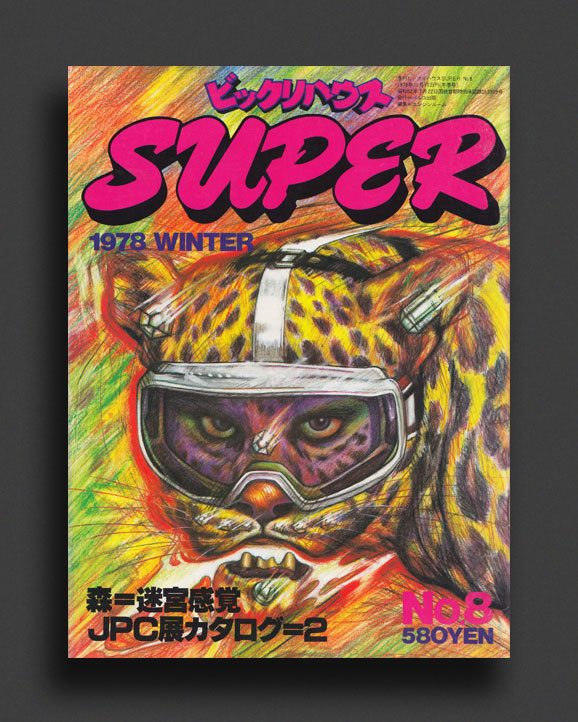
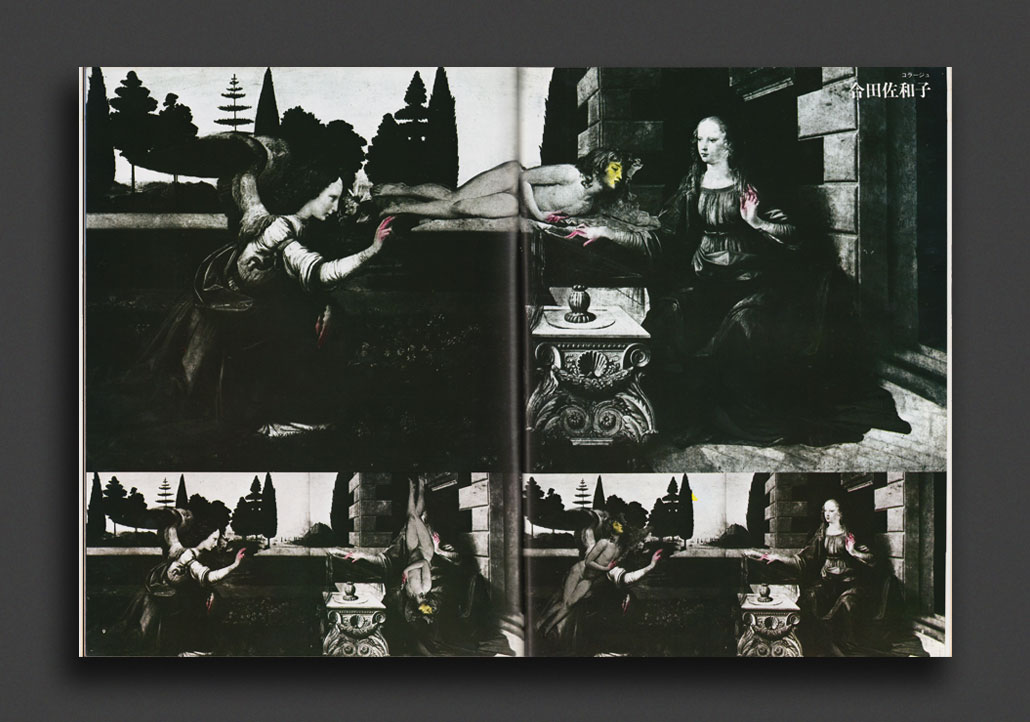
Somewhere between Fiorucci and National Lampoon, Surprise House SUPER was a live-fast, die young quarterly magazine from art director Ryōichi Enomoto and published by the mighty Parco gallery, imprint and department-store-like-no-other in Tokyo. With the theme of "parody", SUPER was a spin-off from the subculture magazine "Surprise House", also published by Parco/Enomoto, showcasing the wildest reaches of graphic art cultural parody - this 1978 issue centering around the 2nd Japan Advertising Parody competition! Hosted by leading Japanese graphic artists Shigeo Fukuda, Kiyoshi Awazu, Yoshitaka Amano, Harumi Yamaguchi, and moderated by Enomoto, this issue presents the endless stream of hectic appropriated and reimagined commercial poster advertisements from Japan at the time. Plus much other photo montage, collage madness.
Very Good copy.
1976, English
Hardcover, 120 pages, 29.5 x 21 cm
1st Edition, Out of print title / used / average
Published by
Mathews Miller Dunbar / London
$55.00 - Out of stock
Barry Kay's wonderful "The Other Women" photo book from 1976. Intimate black and white documentary portrait collection of Australian transgender women in Sydney (and Melbourne) in the mid 1970's. Melbourne-born Barry Kay (1932-1985), was a highly acclaimed stage and costume designer of international renown, who later in his career also made a name for himself as a distinguished photographer.
From the cover : "In this book Barry Kay documents Australian transvestism, female impersonation and Sydney's unique transsexual community. His photographs were made during visits to Australia in 1974 and 1975"
Scarcer first hardcover English edition. Ex-library copy with associated markings/binding and lacking dust jacket. General wear.
2019, English
Hardcover, 112 pages, 12.7 x 20.3 cm
Published by
Wave / Washington
$36.00 - Out of stock
Since 2009, when it first published, to today, Bluets has drawn scores of readers with its surprising insights into the emotional depths that make us most human-via 240 short pieces, at once lyrical and philosophical, on the color blue. This beautiful hardcover edition celebrates Maggie Nelson's uncompromising vision, inviting longtime fans and newcomers alike to experience and share in an indispensable work that continues to disrupt the literary landscape.
MAGGIE NELSON is the author of nine books of poetry and prose, including the National Book Critics Circle Award winner The Argonauts, The Art of Cruelty: A Reckoning, Bluets, The Red Parts, and Jane: A Murder. She has been the recipient of a Guggenheim Fellowship in Nonfiction, an NEA Fellowship in Poetry, an Innovative Literature Fellowship from Creative Capital, and an Arts Writers Fellowship from the Andy Warhol Foundation. In 2016, she was awarded a MacArthur “Genius” Fellowship. She lives in Los Angeles.
2020, English
Softcover, 64 pages, 11.4 x 18.5 cm
Published by
New Directions / New York
$30.00 - Out of stock
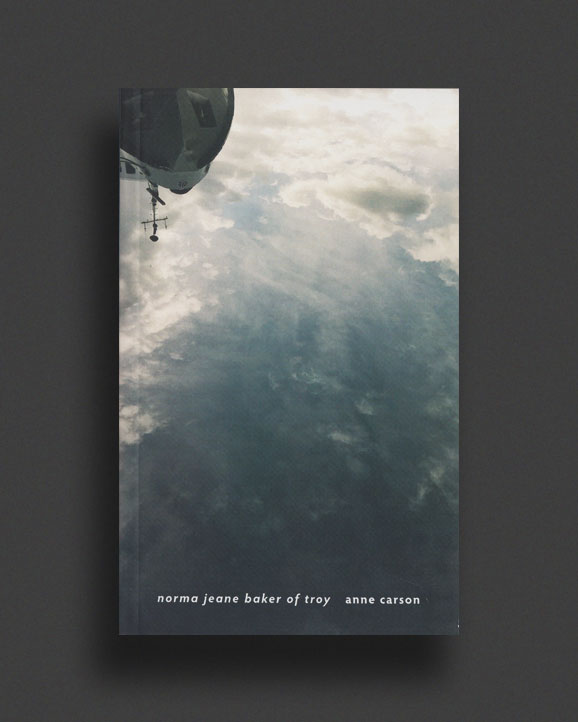
Norma Jeane Baker of Troy is a "spoken and sung performance piece" written by the Canadian author and classicist Anne Carson. It is a meditation on the destabilizing and destructive power of beauty, drawing together Helen of Troy and Marilyn Monroe, twin avatars of female fascination separated by millennia but united in mythopoeic force. Norma Jeane Baker was staged in the spring of 2019 at The Shed's Griffin Theater in New York, starring actor Ben Whishaw and soprano Renée Fleming and directed by Katie Mitchell.
ANNE CARSON was born in Canada and has been a professor of Classics for over thirty years. Her awards and honors include the Lannan Award, the Pushcart Prize, the Griffin Trust Award for Excellence in Poetry, and fellowships from the Guggenheim and MacArthur Foundations.
2019, English
Softcover (staple-bound), 30 pages, 20 x 20 cm
Published by
Printed Matter Inc. / New York
Primary Information / New York
$38.00 - In stock -
Originally published in 1971, Four Basic Kinds of Lines & Colour is a classic artist’s book by preeminent conceptual artist Sol LeWitt (1928–2007). Featuring 34 pages of drawings, the work is an early example of LeWitt’s rigorous, algorithmic process in which a set of rules, applied to generate an image, are subsequently run through all of their permutations.
In the late 1960s LeWitt began applying this technique, first developed for his wall drawings, to 'artists’ books', a term that was coined two years after this book appeared. In this publication, LeWitt demonstrates the 34 ways that basic lines (horizontal, vertical, left-facing diagonal and right-facing diagonal) can be rendered in four colours (red, yellow, blue and black), with each page displaying a single combination (for example, horizontal lines in blue).
The book is one of LeWitt’s signature bookworks, which in its original edition remains quite scarce, so this new facsimile edition is significant; almost none, if any, of his books (he produced over 50) have been reprinted.
1984, German / English / Spanish
Softcover, 80 pages, 30 x 24 cm
1st Edition, Out of print title / used / very good
$15.00 - Out of stock
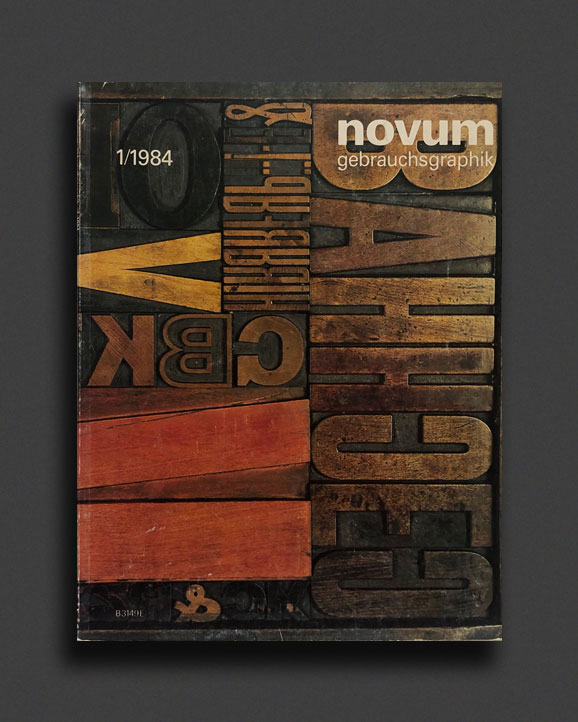
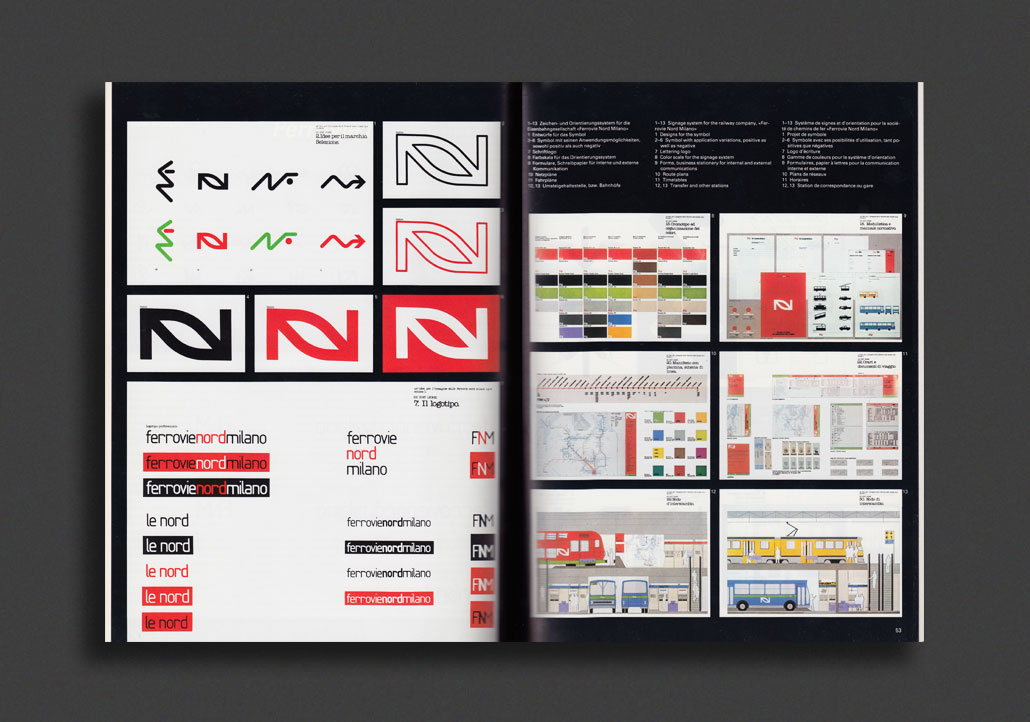
novum Gebrauchsgraphik issue 1/1984 features The Art Directors Club of New York, International Animted Film Festival Annency '83, space advertising for HI-FI, trademarks by Jim Donoahue, the identity of Ferrovie Nord Milano, and more.
novum was founded in Germany in 1924, under the name of Gebrauchsgraphik. The magazine quickly developed into the foremost journal of graphic design, valued widely at home and abroad as a source of inspiration. The magazine was founded by Prof. H. K. Frenzel and published by Phönix Berlin.
Very Good copy.
1985, English / German / French
Softcover, 92 pages, 30 x 24 cm
1st Edition, Out of print title / used / very good
Published by
The Graphis Press / Zürich
$20.00 $10.00 - Out of stock
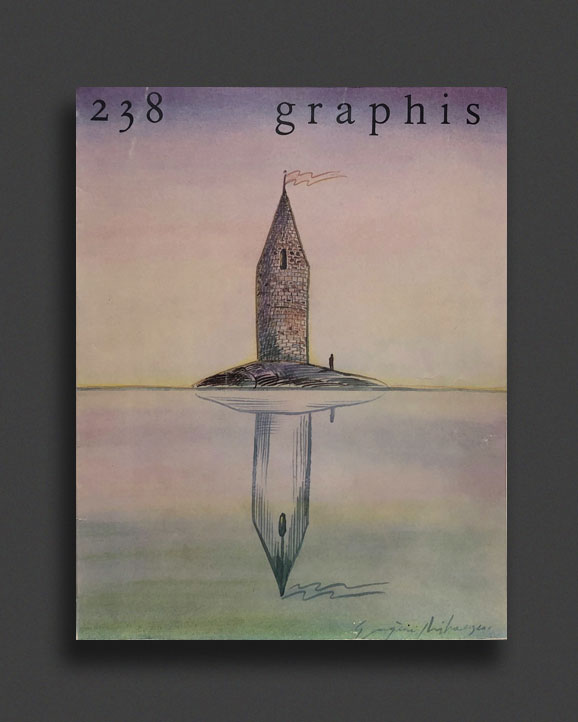
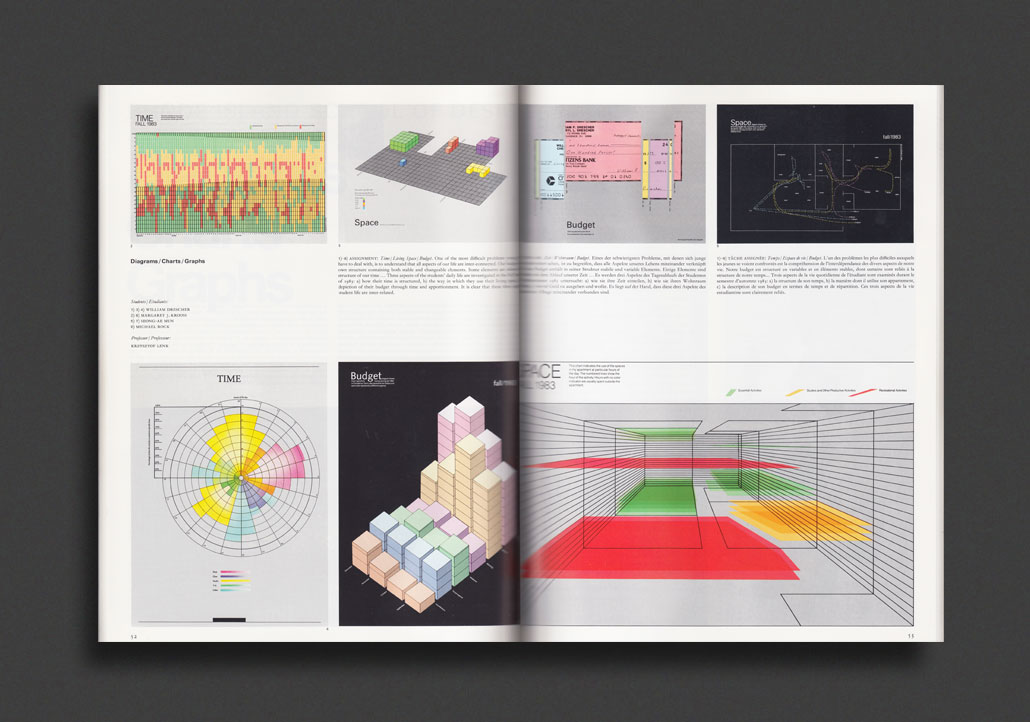
Graphis issue 238, July/August 1985, featuring the work of Swiss design agency GGK (Karl Gerstner, Paul Gredinger + Markus Kutter), the conceptual photography of Henry Wolf, New Yorker illustrator Eugène Mihaesco, Diagrams/Charts/Graphs, calendars, and more. Cover by Eugène Mihaesco.
Graphis is the world's foremost international publishers of books on communication design, presenting and promoting the best work in International Design, Advertising, Photography and Art/Illustration since it's founding in 1944 by Walter Herdeg and Dr. Walter Amstutz in Zurich, Switzerland. Graphis published over 350 issues of the highly-regarded, influential Graphis Magazine, along with hardcover Annuals including: Graphis Design Annual, Graphis Advertising Annual, Graphis Photography Annual, Graphis Annual Reports Annual, and Graphis Poster Annual.
Very Good copy.
1985, English / German / French
Softcover, 92 pages, 30 x 24 cm
1st Edition, Out of print title / used / very good
Published by
The Graphis Press / Zürich
$20.00 - Out of stock
Graphis issue 237, May/June 1985, featuring the visual identity of Swissair, the graphic design of Knoll International, Swiss Posters 1984, Kodak '85, Roger Bezombes fantastic shoe creations for Bally, Hans Georg Raunch, and more. Cover by Rudolf Beck.
Graphis is the world's foremost international publishers of books on communication design, presenting and promoting the best work in International Design, Advertising, Photography and Art/Illustration since it's founding in 1944 by Walter Herdeg and Dr. Walter Amstutz in Zurich, Switzerland. Graphis published over 350 issues of the highly-regarded, influential Graphis Magazine, along with hardcover Annuals including: Graphis Design Annual, Graphis Advertising Annual, Graphis Photography Annual, Graphis Annual Reports Annual, and Graphis Poster Annual.
Very Good copy.
1979, English / German / French
Softcover, 92 pages, 30 x 24 cm
1st Edition, Out of print title / used / very good
Published by
The Graphis Press / Zürich
$40.00 - Out of stock
Graphis issue 207, 1979/80, featuring the work of Herb Lubalin's Associates (Alan Peckolick, Ernie Smith, Tony DiSpigna), Photographis '80, Jürgen Sohn's poster design, Swiss Posters 1979, Kodak calendar 1980, Elwood Smith, Chicago '79, Paul Degen, and more. Cover by Herb Lubalin's Associates (Alan Peckolick, Ernie Smith, Tony DiSpigna).
Graphis is the world's foremost international publishers of books on communication design, presenting and promoting the best work in International Design, Advertising, Photography and Art/Illustration since it's founding in 1944 by Walter Herdeg and Dr. Walter Amstutz in Zurich, Switzerland. Graphis published over 350 issues of the highly-regarded, influential Graphis Magazine, along with hardcover Annuals including: Graphis Design Annual, Graphis Advertising Annual, Graphis Photography Annual, Graphis Annual Reports Annual, and Graphis Poster Annual.
Very Good copy.
2020, English
Softcover, 182 pages, 24 x 30 cm
Published by
Forma Edizioni / Firenze
$105.00 - Out of stock
This English-edition exhibition catalogue on the pioneering, avant-garde Italian artist Alberto Burri (1915-1995), whose work famously blurred the boundaries of painting and relief sculpture, documents a comprehensive retrospective at the Fondazione Giorgio Cini in Venice. It aims to reconstruct the full trajectory of his career, and addresses the transformative ways that he turned material into art. Nearly 50 works selected from each phase of his career are represented, including the rarely exhibited Catrami (tars), Muffe (molds), Sacchi (sacks), Combustioni (combustions), Legni (woods), Plastiche (plastics), Cretti, and Cellotex series.The show was curated by the art historian and president of the Fondazione Burri, Bruno Cora, with critical essays by Cora and the director of the Institute of Art History of the Fondazione Giorgio Cini, Luca Massimo Barbero.
Alberto Burri (12 March 1915 – 13 February 1995) was an Italian abstract painter considered a key figure in Post-War European art. Associated with the Arte Povera movement, he is perhaps best known for his sacchi (“sacks”) series, wherein he stitched, patched, and painted on rough burlap bags. Born on March 12, 1915 in Citta di Castello, Italy, he studied medicine before serving in Mussolini’s army during World War II as a doctor. Captured in Tunisia, Burri was interned at Camp Howze in Texas as a prisoner of war, where he began painting on readily available discarded burlap. After his release in 1946, he moved to Rome where his art practice turned towards abstraction. His interest in non-traditional materials continued with experiments using wood, tar, plastic, zinc oxide, pumice, PVC adhesives, and fabric. In one of his very rare statements, Burri claimed that the critics’ words, as well as his own, were of no use in offering a description of his artworks, affirming that its only real key strength was the formal balance that poor and industrial materials were surprisingly able to give.
2018, English
Hardcover, 150 pages, 14 x 18 cm
Published by
Tin House Books / US
$30.00 - Out of stock
When the New York Times referred to Ursula K. Le Guin as America's greatest writer of science fiction, they just might have undersold her legacy. It's hard to look at her vast body of work - novels and stories across multiple genres, poems, translations, essays, speeches, and criticism - and see anything but one of our greatest writers, period.
In a series of interviews with David Naimon (Between the Covers), Le Guin discusses craft, aesthetics, and philosophy in her fiction, poetry, and nonfiction respectively. The discussions provide ample advice and guidance for writers of every level, but also give Le Guin a chance to to sound off on some of her favorite subjects: the genre wars, the patriarchy, the natural world, and what, in her opinion, makes for great writing. With excerpts from her own books and those that she looked to for inspiration, this volume is a treat for Le Guin's longtime readers, a perfect introduction for those first approaching her writing, and a tribute to her incredible life and work.
2001, English
Softcover, 802 pages, 20.1 x 13.3 cm
Published by
Random House / New York
$36.00 - Out of stock
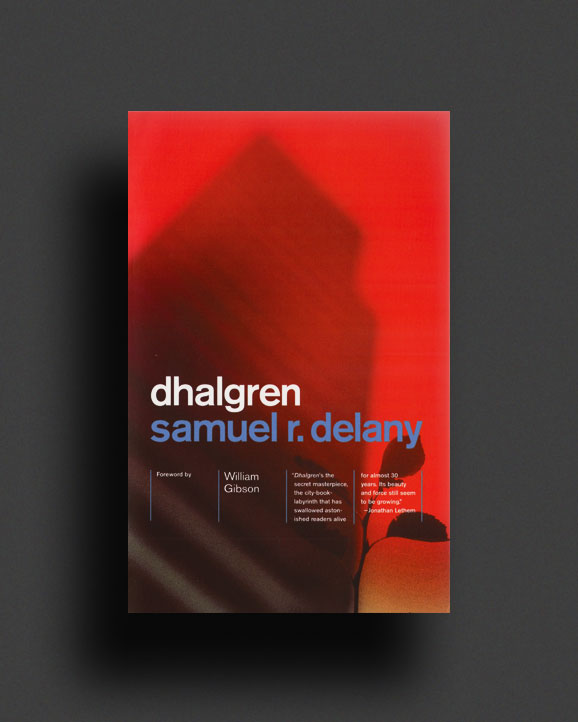
In Dhalgren, perhaps one of the most profound and bestselling science fiction novels of all time, Samuel R. Delany has produced a novel "to stand with the best American fiction of the 1970s" (Jonathan Lethem). Bellona is a city at the dead center of the United States. Something has happened there.... The population has fled. Madmen and criminals wander the streets. Strange portents appear in the cloud-covered sky. And into this disaster zone comes a young man-poet, lover, and adventurer-known only as the Kid. Tackling questions of race, gender, and sexuality, Dhalgren is a literary marvel and groundbreaking work of American magical realism.
Foreward by William Gibson.
After his seventh novel, Empire Star (1966), Samuel R. Delany began publishing short fiction professionally with “The Star Pit.” It appeared in Worlds of Tomorrow and was turned into a popular two-hour radio play, broadcast annually over WBAI-FM for more than a decade. Two tales, “Aye, and Gomorrah” and “Time Considered as a Helix of Semi-Precious Stones,” won Nebula Awards as the best science fiction short stories, respectively, of 1967 and 1969. Aye, and Gomorrah: And Other Stories contains all the significant short science fiction and fantasy works that Delany published between 1965 and 1988, excepting only those tales in his Return to Nevèrÿon series. A native New Yorker, Delany teaches English and creative writing at Temple University in Philadelphia. In July of 2002, he was inducted into the Science Fiction Hall of Fame.
2002, English
Softcover, 336 pages, 13.1 x 20.2 cm
Published by
Random House / New York
$32.00 - Out of stock
Author of the bestselling Dhalgren and winner of four Nebulas and one Hugo, Samuel R. Delany is one of the most acclaimed writers of speculative fiction. Babel-17, winner of the Nebula Award for best novel of the year, is a fascinating tale of a famous poet bent on deciphering a secret language that is the key to the enemy's deadly force, a task that requires she travel with a splendidly improbable crew to the site of the next attack. For the first time, Babel-17 is published as the author intended with the short novel Empire Star, the tale of Comet Jo, a simple-minded teen thrust into a complex galaxy when he's entrusted to carry a vital message to a distant world. Spellbinding and smart, both novels are testimony to Delany's vast and singular talent.
After his seventh novel, Empire Star (1966), Samuel R. Delany began publishing short fiction professionally with “The Star Pit.” It appeared in Worlds of Tomorrow and was turned into a popular two-hour radio play, broadcast annually over WBAI-FM for more than a decade. Two tales, “Aye, and Gomorrah” and “Time Considered as a Helix of Semi-Precious Stones,” won Nebula Awards as the best science fiction short stories, respectively, of 1967 and 1969. Aye, and Gomorrah: And Other Stories contains all the significant short science fiction and fantasy works that Delany published between 1965 and 1988, excepting only those tales in his Return to Nevèrÿon series. A native New Yorker, Delany teaches English and creative writing at Temple University in Philadelphia. In July of 2002, he was inducted into the Science Fiction Hall of Fame.
2020, English
Softcover, 512 pages, 19.2 x 25.5 cm
Published by
Koenig Books / London
WIELS / Brussels
$78.00 - Out of stock
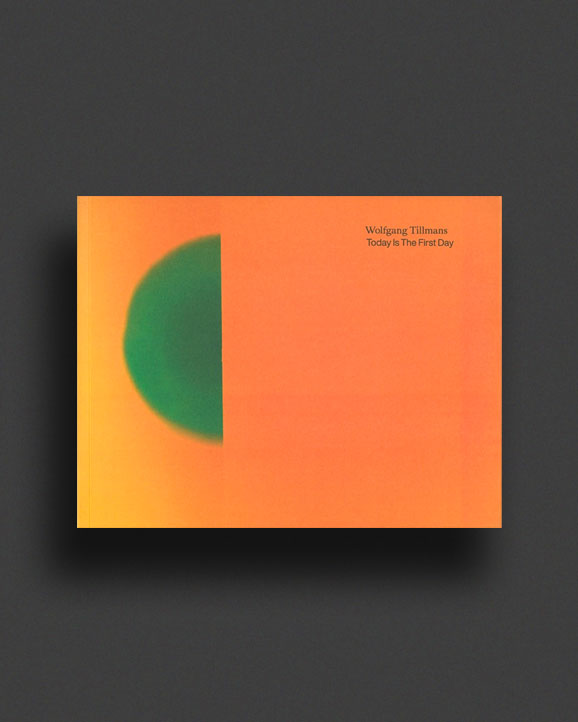
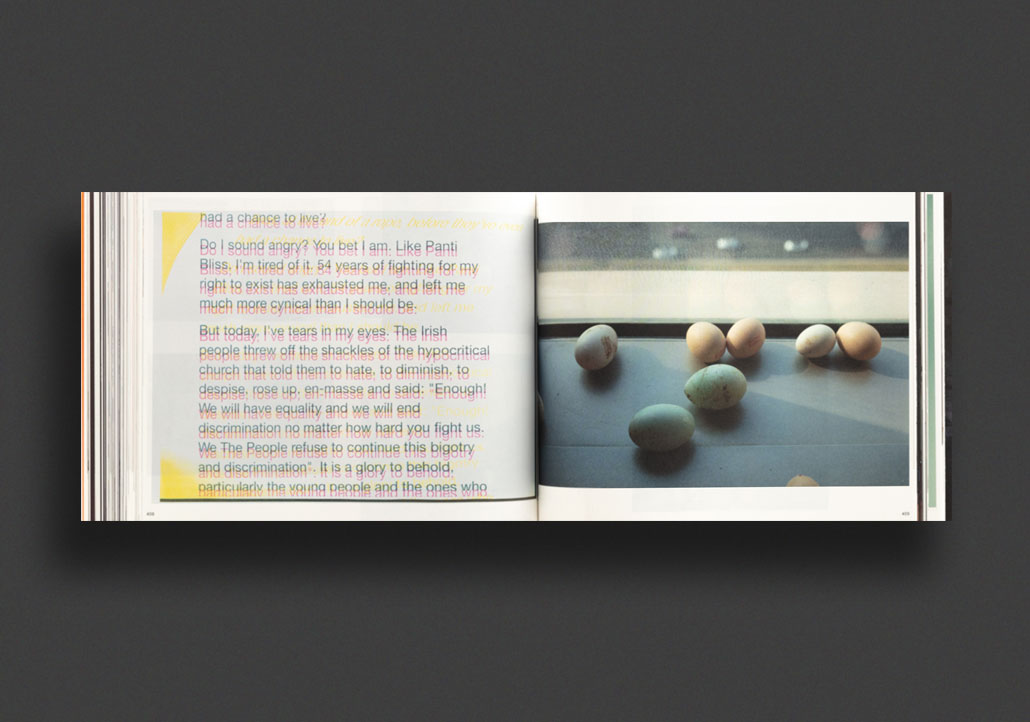
Conceived and designed by Wolfgang Tillmans, and published in association with the exhibitions Rebuilding the Future, at IMMA, Dublin and Today Is The First Day, at WIELS, Brussels, this richly illustrated artist’s book explores the latest developments in Tillmans’s work over the last three years. Today Is The First Day spans the artist’s multifaceted approach to image-making, video, performance, music and political activities, presenting newly commissioned texts from contributors including novelist Olivia Laing, historian Brian Dillon, curator Catherine Wood, and geologist Dr David Chew, each of whom illuminate a different aspect of Tillmans’s work. The scope of the book includes over 30 pages featuring his set design for the English National Opera’s production of War Requiem, recent portraits, and detailed installation views that allow to see in depth Tillmans’s installation practices in venues as far afield as Kinshasa and Goslar, Hong Kong and Johannesburg.
2012, English
Softcover, (staple-bound), 16 pages, 15 x 21 cm
1st Edition, Out of print title / as new
Published by
The Artist's Institute / New York
$15.00 - In stock -
Staple-bound publication published on the occasion of the exhibition Haim Steinbach, August 31, 2012 – January 20, 2013, The Artist’s Institute, New York as part of the "Today we should be thinking about" series, which took place between 2010 and 2013. Narrated by Anthony Huberman, it documented the legacies and contemporary conversations that surround a selection of artists today (Robert Filliou, Jo Baer, Jimmie Durham, Rosemarie Trockel, Haim Steinbach and Thomas Bayrle). The Artist’s Institute at Hunter College was a research and exhibition space for contemporary artists and writers.
As New.
2016, English
Hardcover, 60 pages, 23 x 21 cm
1st Edition, Out of print title / used / very good
Published by
Gavin Brown’s Enterprise / New York
$600.00 - Out of stock
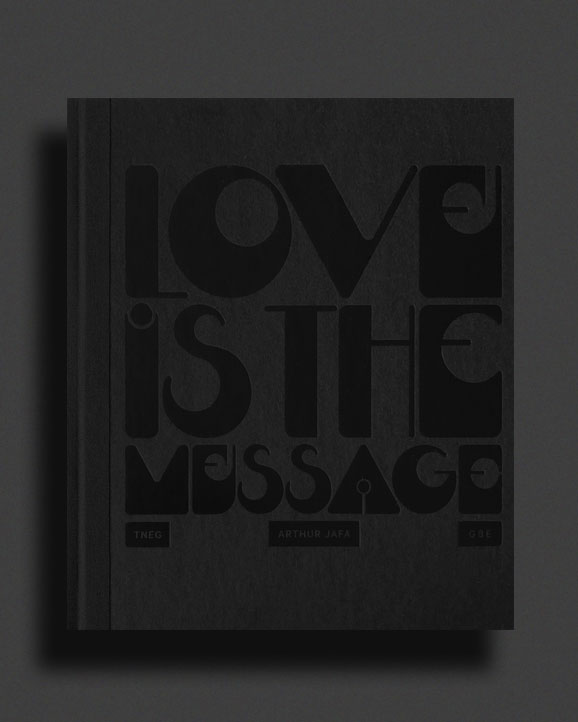
First, only edition of the incredible, and now very rare Love is the Message : The Message is Death by Arthur Jafa. Published in 2016 by Gavin Brown’s Enterprise, New York to accompany the exhibition of the same name. Illustrated throughout with text by Greg Tate and Christina Sharpe.
Very Good copy.
2020, English
Softcover, 120 pages, 15.5 x 22.1 cm
Published by
New Directions / New York
$32.00 - Out of stock
“Only artworks are capable of transmitting chthonic echo-signals,” Susan Howe has said. In Concordance, she has created a fresh body of work transmitting vital signals from a variety of archives. “Since,” a semiautobiographical prose poem, opens the collection: concerned with first and last things, meditating on the particular and peculiar affinities between law and poetry, it ranges from the Permian time of Pangaea through Rembrandt and Dickinson to the dire present. “Concordance” a collage poem originally published as a Grenfell Press limited edition, springs from slivers of poetry and marginalia, cut from old concordances and facsimile editions of Milton, Swift, Herbert, Browning, Dickinson, Coleridge, and Yeats, as well as from various field guides to birds, rocks, and trees: the collages’ “rotating prisms” form the heart of the book. The final poem, “Space Permitting,” is collaged from drafts and notes Thoreau sent to Emerson and Margaret Fuller’s friends and family in Concord while on a mission to recover Fuller’s remains from a shipwreck on Fire Island. The fierce ethic of salvage in these three very different pieces expresses the vitalism in words, sounds, and syllables—the telepathic spirit of all things singing into air.
2020, English
Softcover, 80 pages, 14.2 x 20.6 cm
Published by
New Directions / New York
$32.00 - Out of stock
Originally a cloth co-edition with the Christine Burgin Gallery, this rapturous hymn to discoveries and archives is now a paperback.
Great American writers — William Carlos Williams, Jonathan Edwards, Emily Dickinson, Noah Webster, Hart Crane, Wallace Stevens, Henry James —in the physicality of their archival manuscripts (reproduced here in the beautiful facsimiles)—are the presiding spirits of Spontaneous Particulars: Telepathy of Archives. Also woven into Susan Howe’s long essay are beautiful photographs of embroideries and textiles from anonymous craftspeople. The archived materials create links, discoveries, chance encounters, the visual and the acoustic shocks of rooting around amid physical archives. These are the telepathies the bibliomaniacal poet relishes. Rummaging in the archives she finds “a deposit of a future yet to come, gathered and guarded…a literal and mythical sense of life hereafter—you permit yourself liberties —in the first place—happiness.” Digital scholarship may offer much for scholars, but Susan Howe loves the materiality of research in the real archives, and Spontaneous Particulars “is a collaged swan song to the old ways.”
1994, English / Japanese
Softcover (w. dust jacket and obi-strip), 150 pages, 23 x 30 cm
1st Edition, Out of print title / used / very good
Published by
Sezon Museum of Art / Tokyo
$100.00 - Out of stock
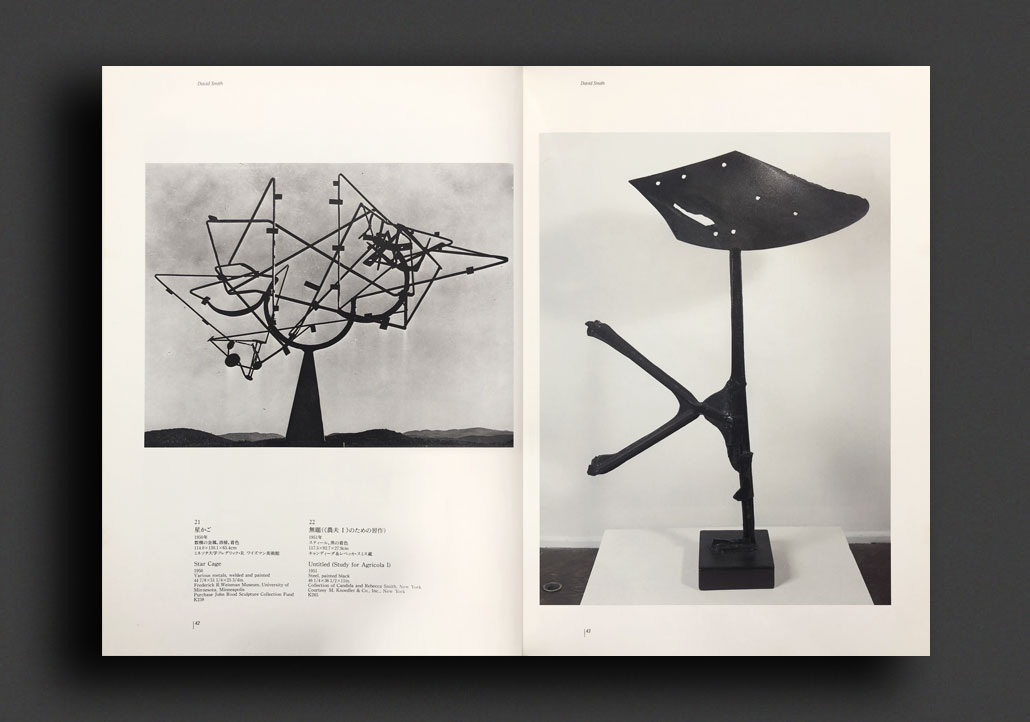
First edition of this scarce, heavily-illustrated Japanese catalogue on the work of pioneer American sculptor David Smith, published on the occasion of an major survey exhibition at the Sezon Museum of Art, Tokyo, Japan, in 1994.
Broken into the sections: Sculptures, Paintings, Drawings, each profusely illustrated in colour and b/w with Smith's prolific and diverse work spanning his entire career. This rare volume also features texts in both Japanese and English, including David Smith's "Questions to Art Students", a foreward by Peter Stevens, and a full biography, bibliography and list of exhibitions (all in English).
Among the greatest American sculptors of the twentieth century, David Smith was the first to work with welded metal. He wove a rich mythology around this rugged work, often talking of the formative experiences he had in his youth while working in a car body workshop. Yet this only disguised a brilliant mind that fruitfully combined a range of influences from European modernism including Cubism, Surrealism, and Constructivism. It also concealed the motivations of a somewhat private man whose art was marked by expressions of trauma. Smith was close to painters such as Robert Motherwell, and in many respects he translated the painterly concerns of the Abstract Expressionists into sculpture. But far from being a follower, his achievement in sculpture was distinctive and influential. He brought qualities of industrial manufacturing into the language of art and proved to be an important influence on Minimalism.
Very Good copy with with original obi-strip and dust jacket. Tanning to edges, light wear.