World Food Books' programme is largely produced on Kulin Nation land. We acknowledge the Wurundjeri people of the Kulin Nation as the first and continuing custodians of this land, and pay respect to their Elders past, present, and emerging.
World Food Books is an arts and special interests bookshop in Naarm / Melbourne. Founded in 2010, World Food Books is devoted to the presentation of a rotating, hand-selection of international art, design, literary and counterculture publications with an emphasis on the anti-traditional, the experimental, the avant-garde, the heretic, the marginal.
Presenting new titles alongside rare and out-of-print books, catalogues and journals spanning the fields of modern and contemporary art, design, photography, illustration, film, literature, poetry, cultural theory, philosophy, sexuality, popular and underground culture in its many radical forms, World Food Books wishes to encourage adventurous, thoughtful and open-minded reading, looking, writing, and exchange of publishing and ideas, both current and historical.
As well as our bookshop, located in Melbourne's historical Nicholas Building, all of our inventory is available internationally via our online mail-order service.
World Food Books semi-regularly co-ordinates "Occasions", a programme of exhibits and events at the bookshop and in partnership with other hosts (such as museums and art galleries) that develop out of the activities, relationships and content of the bookshop itself.
World Food Books
The Nicholas Building
37 Swanston Street
Room 5, Level 6
Melbourne 3000
Australia
SHOP HOURS:
Thu–Fri 12–6, Sat 12–5
WEB-SHOP OPEN 24/7
World Food Books
Postal Address:
PO Box 435
Flinders Lane
Victoria 8009
Australia
Art
Theory / Essay
Architecture / Interior
Graphic Design / Typography
Photography
Fashion
Eros
LGBTQ+
Fiction / Poetry
Weird / Speculative / Science Fiction / Horror
Transgressive / Visceral / Abject
Symbolism / Decadence / Fin de siècle
Film / Video
Painting
Sculpture / Installation
Performance / Dance / Theater
Drawing
Sound / Music
Curatorial
Group Shows / Collections
Periodicals
Out-of-print / Rare
Posters / Ephemera / Discs
Signed Books
World Food Books Gift Voucher
World Food Book Bag
Australian Art
Australian Fiction
Australian Science Fiction / Speculative Fiction
Australian Poetry
Australian Photography
Japanese Photography
Conceptual Art
Minimal Art
Dada
'Pataphysics / Oulipo
Fluxus
Concrete Poetry
Pop Art
Surrealism
Arte Povera
Arte Informale / Haute Pâte / Tachism
Nouveau Réalisme / Zero / Kinetic
Situationism / Lettrism
Collage / Mail Art / Xerox Art
Art Brut / Folk / Visionary / Fantastic
Illustration / Graphic Art / Bandes Dessinées
Furniture
Italian Radical Design / Postmodernism
Textiles
Ceramics / Glass
Counterculture
Protest / Revolt
Philosophy
Psychoanalysis
Anthropology
Anarchism
Socialism / Anarchism / Communism / Capitalism
Literary Theory / Semiotics / Language
Feminism / Women's Studies
Gender Studies / Sexuality
Anthropology
Fetishism / BDSM
Drugs / Psychedelia
Crime / Violence
Animal Rights / Veganism
Occult / Esoterica
Ecology / Earth / Alternative Living
Whole Earth / Crafts
All prices in AUD (Australian dollars)
Pick-Ups
Pick-up orders can be collected in our bookshop during opening hours after order date. Please collect any Pick-up orders within 2 weeks of ordering as we have limited storage space. Orders will be released back into stock if not collected within this time. No refunds can be made for pick-ups left un-collected. If you cannot make it in to the bookshop in this time-frame, please choose postage option.
Return Policy
All sales are final. We do accept returns (for refund or exchange) for items received in error. All our orders are packed with special care using heavy-duty padding and cardboard book-mailers or bubble mailers (for smaller books), using reinforcement where required. We cannot take responsibility for any lost, stolen or damaged parcels.
Insurance
Should you wish to insure your package, please email us directly after placing your order and we can organise this at a small extra expense. Although all standard/express tracked packages are very safe and dependable, we cannot take responsibility for any lost, stolen or damaged parcels. We recommend insurance on valuable orders.
Interested in selling your old books, catalogues, journals, magazines, comics, fanzines, ephemera? We are always looking for interesting, unusual and out-of-print books to buy. We only buy books in our fields of interest and specialty, and that we feel we can resell.
We base these prices on desirability, market value, in-print prices, condition and our current stock levels. We offer cash, store credit, and can take stock on consignment. All
about 25% of the price we expect to get when we sell them, or 30% in store credit. We base these prices on desirability, market value, in-print prices, condition and our current stock levels.
Sell your books any day of the week. You can drop them off and return later. If you have a lot of books, we can visit your Sydney home.
We buy books that we feel we can resell. We offer about 25 % of the price we expect to get when we sell them, or 30% in store credit. We base these prices on desirability, market value, in-print prices, condition and our current stock levels.
Philadelphia Wireman
03 August - 01 September, 2018
World Food Books is proud to announce our next Occasion, the first presentation of sculptures by Philadelphia Wireman in Australia.
The Philadelphia Wireman sculptures were found abandoned in an alley off Philadelphia’s South Street on trash night in 1982. Their discovery in a rapidly-changing neighbourhood undergoing extensive renovation, compounded with the failure of all attempts to locate the artist, suggests that the works may have been discarded after the maker’s death. Dubbed the "Philadelphia Wireman" during the first exhibition of this work, in 1985, the maker’s name, age, ethnicity, and even gender remain uncertain. The entire collection totals approximately 1200 pieces, all intricately bound together with tightly-wound heavy-gauge wire (along with a few small, abstract marker drawings, reminiscent both of Mark Tobey and J.B. Murry). The dense construction of the work, despite a modest range of scale and materials, is singularly obsessive and disciplined in design: a wire armature or exoskeleton firmly binds a bricolage of found objects including plastic, glass, food packaging, umbrella parts, tape, rubber, batteries, pens, leather, reflectors, nuts and bolts, nails, foil, coins, toys, watches, eyeglasses, tools, and jewellery.
Heavy with associations—anthropomorphic, zoomorphic, and socio-cultural responses to wrapped detritus—the totemic sculptures by Philadelphia Wireman have been discussed in the context of work created to fulfil the shamanistic needs of alternative religions in American culture. Curators, collectors, and critics have variously compared certain pieces to sculpture from Classical antiquity, Native American medicine bundles, African-American memory jugs, and African fetish objects. Reflecting the artist’s prolific and incredibly focused scavenging impulse, and despite—or perhaps enhanced by—their anonymity, these enigmatic objects function as urban artefacts and arbiters of power, though their origin and purpose is unknown. Philadelphia Wireman, whatever their identity, possessed an astonishing ability to isolate and communicate the concepts of power and energy through the selection and transformation of ordinary materials. Over the course of the past two decades, this collection has come to be regarded as an important discovery in the field of self-taught art and vernacular art.
Presented in collaboration with Fleisher-Ollman Gallery, Philadelphia, and Robert Heald, Wellington.
Susan Te Kahurangi King
02 February - 10 March, 2018
Susan Te Kahurangi King (24 February 1951 - ) has been a confident and prolific artist since she was a young child, drawing with readily available materials - pencils, ballpoint pens and felt-tip markers, on whatever paper is at hand. Between the ages of four and six Susan slowly ceased verbal communication. Her grandparents William and Myrtle Murphy had developed a special bond with Susan so they took on caring responsibilities for extended periods. Myrtle began informally archiving her work, carefully collecting and storing the drawings and compiling scrapbooks. No drawing was insignificant; every scrap of paper was kept. The King family are now the custodians of a vast collection containing over 7000 individual works, from tiny scraps of paper through to 5 meter long rolls.
The scrapbooks and diaries reveal Myrtle to be a woman of great patience and compassion, seeking to understand a child who was not always behaving as expected. She encouraged Susan to be observant, to explore her environment and absorb all the sights and sounds. Myrtle would show Susan’s drawings to friends and people in her community that she had dealings with, such as shopkeepers and postal workers, but this was not simply a case of a grandmother’s bias. She recognised that Susan had developed a sophisticated and unique visual language and sincerely believed that her art deserved serious attention.
This was an unorthodox attitude for the time. To provide some context, Jean Dubuffet coined the term Art Brut in 1945 to describe work created by self-taught artists – specifically residents of psychiatric institutions and those he considered to be visionaries or eccentrics. In 1972 Roger Cardinal extended this concept by adopting the term Outsider Art to describe work made by non-academically trained artists operating outside of mainstream art networks through choice or circumstance. Susan was born in Te Aroha, New Zealand in 1951, far from the artistic hubs of Paris and London that Dubuffet and Cardinal operated in. That Myrtle fêted Susan as a self-taught artist who deserved to be taken seriously shows how progressive her attitudes were.
Susan’s parents Doug and Dawn were also progressive. Over the years they had consulted numerous health practitioners about Susan’s condition, as the medical establishment could not provide an explanation as to why she had lapsed into silence. Dawn educated herself in the field of homeopathy and went on to treat all twelve of her children using these principles – basing prescriptions on her observations of their physical, mental and emotional state.
Doug was a linguist with an interest in philosophy who devoted what little spare time he had to studying Maori language and culture. To some extent their willingness to explore the fringes of the mainstream made them outsiders too but it was their commitment to living with integrity and their respect for individuality that ensured Susan’s creativity was always encouraged.
Even though Susan’s family supported her artistic pursuits, some staff in schools and hospitals saw it as an impediment to her assimilation into the community and discouraged it in a variety of ways. Her family was not always aware of this and therefore did not fully understand why Susan stopped drawing in the early 1990s. However, rather than dwell on the challenges that Susan faced in pursuit of her artistic practice, they prefer to highlight her achievements. In 2008 Susan began drawing again in earnest, after an almost 20 year interruption, and her work is now shown in galleries around the world.
Susan grew up without television and has been heavily influenced by the comics she read as a child. She is absolutely fearless in the appropriation of recognizable characters, such as Donald Duck and Mickey Mouse, in her work. She twists their limbs, contorts their faces, compresses them together, blends them into complex patterned backgrounds - always imbuing them with an incredible energy. Although Susan often used pop culture characters in her work they are not naive or childlike. These are drawings by a brilliant self-taught artist who has been creating exceptional work for decades without an audience in mind.
Mladen Stilinović
"Various Works 1986 - 1999"
02 February 16 - September 10, 2016
Various works 1986 - 1999, from two houses, from the collections of John Nixon, Sue Cramer, Kerrie Poliness, Peter Haffenden and Phoebe Haffenden.
Including: Geometry of Cakes (various shelves), 1993; Poor People’s Law (black and white plate), 1993; White Absence (glasses, ruler, set square, silver spoon, silver ladel with skin photograph and wooden cubes), 1990-1996; Exploitation of the Dead (grey and red star painting, wooden painting, black spoon with red table, red plate), 1984-1990; Money and Zeros (zero tie, paintings made for friends in Australia (Sue, John, Kerrie), numbers painting), 1991-1992; Words - Slogans (various t-shirts) - “they talk about the death of art...help! someone is trying to kill me”, “my sweet little lamb”, “work is a disease - Karl Marx”; Various artist books, catalogues, monographs, videos; Poster from exhibition Insulting Anarchy; "Circular" Croatian - Australian edition; Artist book by Vlado Martek (Dostoyevsky); more.
Thanks to Mladen Stilinović and Branka Stipančić.
Jonathan Walker
Always Will Need To Wear Winter Shirt Blue + Ochre Small Check Pattern
21 August - 21 September, 2015
Untitled
I am not a great reader of poetry but I always return to the work of Melbourne poet, Vincent Buckley (1925- 1988). Perhaps I find his most tantalising piece to be not a finished poem but a fragment left on a scrap of paper discovered on his desk after the poet’s death.
The poetry gathers like oil
In the word-core, and spreads
It has its music meet,
Its music is in movement.
This fragment is more the shell left behind from a volatile thought than a finished poem. I find the last two lines honest but awkward whereas the first two lines work like an arrow. Most likely he could not find a resolution so it was left. Still, in its present form, it remains an eloquent testimony to the ultimate failure of a medium to express mobile thought and sensation, in Buckley’s case, through verbal language. It’s an important matter because this is something all artists have to deal with regardless of the medium.
I have never written a poem, however, I am forever copying fragments from books on paper scraps in a vain effort to fix certain notions in my head. At first, they function as bookmarks that are sometimes returned to when I open the book. But before long, as they accumulate, they fall out littering the table interspersed with A4 photocopies, bills, books and medications.
To return to Buckley’s fragment, the first two lines very much evoke how I paint nowadays. As you age, detail diminishes and patches of light become more luminous and float. I feel the most honest way of dealing with this is by smearing the oil paint on the canvas with the fingers and working close-up, blind. Only if the patches coalesce into an approaching image can the work gain a life.
-
Jonathan Walker was born in Melbourne, Australia and brought up on a dairy farm in Gippsland. In the 1970’s he studied painting at RMIT and won the Harold Wright Scholarship to the British Museum, London. During the 1980’s he exhibited at Pinacotheca Gallery, Richmond and had work shown at the NGV and Heidi City Art Gallery. Over the same period he designed the cover for the “Epigenesi” LP by Giancarlo Toniutti, Italy and conducted a mail exchange work with Achim Wollscheid, Germany. The work with artists through the post resulted in an article published in the bicentenary issue of Art and Australia 1988. He showed in artist run spaces such as WestSpace in the 90’s and 2000’s, and until 2012, taught painting at Victoria University, which is where we (Colleen Ahern and Lisa Radford) as organisers of the exhibition, among many others, had the privilege of being his student.
Walker’s knowledge was imparted to students through the careful selection of music, literature, and artists found in books that he himself had ordered for the library. Walker’s strategy was the generosity of sharing his vast knowledge with references specific to each student and their context.
Walker’s paintings share a similar focus and intimacy.
This exhibition presents a small selection of recent paintings alongside a publication that includes Walker’s writing. Observational and analytical, Walker’s work is a type of material notation — the time of day, colour and how it is blended, the both specific and fleeting location of a reflection on lino or the question of whether a chair leg should be included in a painting.
Please join us on Friday August 21 between 6-8pm to celebrate the opening of the exhibition.
Curated by Colleen Ahern and Lisa Radford.
B. Wurtz
Curated by Nic Tammens
March 26 - April 4, 2015
B.Wurtz works from a basement studio in his home on Manhattan’s Lower East Side.
This local fact is attested to by the plastic shopping bags and newsprint circulars that appear in his work. As formal objects, they don’t make loud claims about their origins but nonetheless transmit street addresses and places of business from the bottom of this long thin island. Like plenty of artists, Wurtz is affected by what is local and what is consumed. His work is underpinned by this ethic. It often speaks from a neighborhood or reads like the contents of a hamper:
“BLACK PLUMS $1.29 lb.”
“Food Bazaar”
“USDA Whole Pork Shoulder Picnic 99c lb.”
“RITE AID Pharmacy, with us it’s personal.”
“H. Brickman & Sons.”
“Sweet Yams 59c lb."
Most of the work in this exhibition was made while the artist was in residence at Dieu Donne, a workshop dedicated to paper craft in Midtown. Here Wurtz fabricated assemblages with paper and objects that are relatively lightweight, with the intention that they would be easily transportable to Australia. This consideration isn’t absolute in Wurtz’s work, but was prescriptive for making the current exhibition light and cheap. Packed in two boxes, these works were sent from a USPS post office on the Lower East Side and delivered to North Melbourne by Australia Post.
Wurtz appears courtesy of Metro Pictures, New York.
Thanks to Rob Halverson, Joshua Petherick, Sari de Mallory, Matt Hinkley, Helen Johnson, Fayen d'Evie, Ask Kilmartin, Lisa Radon, Ellena Savage, Yale Union, and "Elizabeth".
John Nixon
"Archive"
December 15 - January 20, 2014
The presentation of John Nixon's archive offered a rare showcase of this extensive collection of the artist's own publications, catalogues, posters, ephemera, editions and more, from the mid 1980s onwards, alongside a selection of his artworks.
Organized by John Nixon, Joshua Petherick and Matt Hinkley.
<a href=http://wfb.public-office.info/artist/john-nixon>All titles by John Nixon
"Habitat"
at Minerva, Sydney (organised by Joshua Petherick and Matt Hinkley)
November 15 - December 20, 2014
Lupo Borgonovo, Janet Burchill & Jennifer McCamley,
Lewis Fidock, HR Giger, Piero Gilardi, Veit Laurent Kurz,
Cinzia Ruggeri, Michael E. Smith, Lucie Stahl, Daniel Weil, Wols
Press Release:
“...It contained seven objects. The slender fluted bone, surely formed for flight, surely from the wing of some large bird. Three archaic circuitboards, faced with mazes of gold. A smooth white sphere of baked clay. An age-blackened fragment of lace. A fingerlength segment of what she assumed was bone from a human wrist, grayish white, inset smoothly with the silicon shaft of a small instrument that must once have ridden flush with the surface of the skin - but the thing’s face was seared and blackened.”
William Gibson, “Count Zero”, 1986
"Autumn Projects Archive"
Curated by Liza Vasiliou
March 6 - March 15, 2014
World Food Books, in conjunction with the Virgin Australia Melbourne Fashion Festival 2014, presented the Autumn Projects archive, consisting of a selection of early examples in Australian fashion with a particular interest in collecting designers and labels from the period beginning in the 1980’s, who significantly influenced the discourse of Australian Fashion.
Curated by Liza Vasiliou, the exhibition provided a unique opportunity to view pieces by designers Anthea Crawford, Barbara Vandenberg, Geoff Liddell and labels CR Australia, Covers, Jag along with early experimental collage pieces by Prue Acton and Sally Browne’s ‘Fragments’ collection, suspended throughout the functioning World Food Books shop in Melbourne.
H.B. Peace
presented by CENTRE FOR STYLE
November 14, 2013
"Hey Blinky, you say chic, I say same"
Anon 2013
H.B. Peace is a clothing collaboration between great friends Blake Barns and Hugh Egan Westland. Their pieces explore the divergences between 'character’ and ‘personality’ in garments....etc
Special Thanks to Joshua Petherick and Matt Hinkley of WFB and Gillian Mears
and a Very Special Thank you to Audrey Thomas Hayes for her shoe collaboration.
Janet Burchill & Jennifer McCamley
"Aesthetic Suicide"
May 10 - June 8, 2013
The first of our occasional exhibitions in the World Food Books office/shop space in Melbourne, "Aesthetic Suicide" presented a body of new and older works together by artists Janet Burchill & Jennifer McCamley, including videos, prints, a wall work, and publications.
During shop open hours videos played every hour, on the hour.
1976, English
Softcover, 208 pages, 18 x 12 cm
1st Edition, Out of print title / used / very good
Published by
Harper Collins / New York
$28.00 - Out of stock
First 1976 paperback edition of Philip K. Dick's Flow My Tears, the Policeman Said.
Flow My Tears, the Policeman Said grapples with many of the themes Philip K. Dick is best known for— identity, altered reality, drug use, and dystopia—in a rollicking chase story that earned the novel the John W. Campbell Award and nominations for the Hugo and Nebula.
Jason Taverner—world-famous talk show host and man-about-town—wakes up one day to find that no one knows who he is—including the vast databases of the totalitarian government. And in a society where lack of identification is a crime, Taverner has no choice but to go on the run with a host of shady characters, including crooked cops and dealers of alien drugs. But do they know more than they are letting on? And just how can a person’s identity be erased overnight?
"Dick skillfully explores the psychological ramifications of this nightmare."—The New York Times Review of Books
Very Good copy, light wear, tanning.
1986, English
Softcover, 464 pages, 18 x 11 cm
1st Edition, Out of print title / used / very good
Published by
Grafton / UK
$28.00 - Out of stock
First 1986 Grafton paperback edition of Samuel R. Delany's Stars in My Pocket Like Grains of Sand.
A stunning, many-layered speculation on the future of humanity, on interaction between cultures, on love and sex, on religion and politics, STARS IN MY POCKETS LIKE GRAINS OF SAND is an enduring masterpiece by one of science fiction's greatest writers.
The only survivor when his home is utterly destroyed, Rat Korga is transported to a new life on the planet Velm. Escaping a society that suppressed and enslaved him, Korga joins a vast, rich interstellar culture and finds himself sharing a world with Marq Dyeth, the person this civilization's officials have calculated to be his perfect partner.
"Sentence by sentence, phrase by phrase, Delany invites the reader to collaborate in the process of creation. The reader who accepts this invitation has an extraordinarily satisfying experience in store"—New York Times Book Review
"A rocket launch, a phoenix reborn, a new Delany novel-three wonderful, fiery events"—Ursula K. Le Guin
Very Good copy, light wear, ageing.
1977, English
Softcover, 18 x 12 cm
1st Edition, Out of print title / used / very good
Published by
Sphere / UK
$28.00 - Out of stock
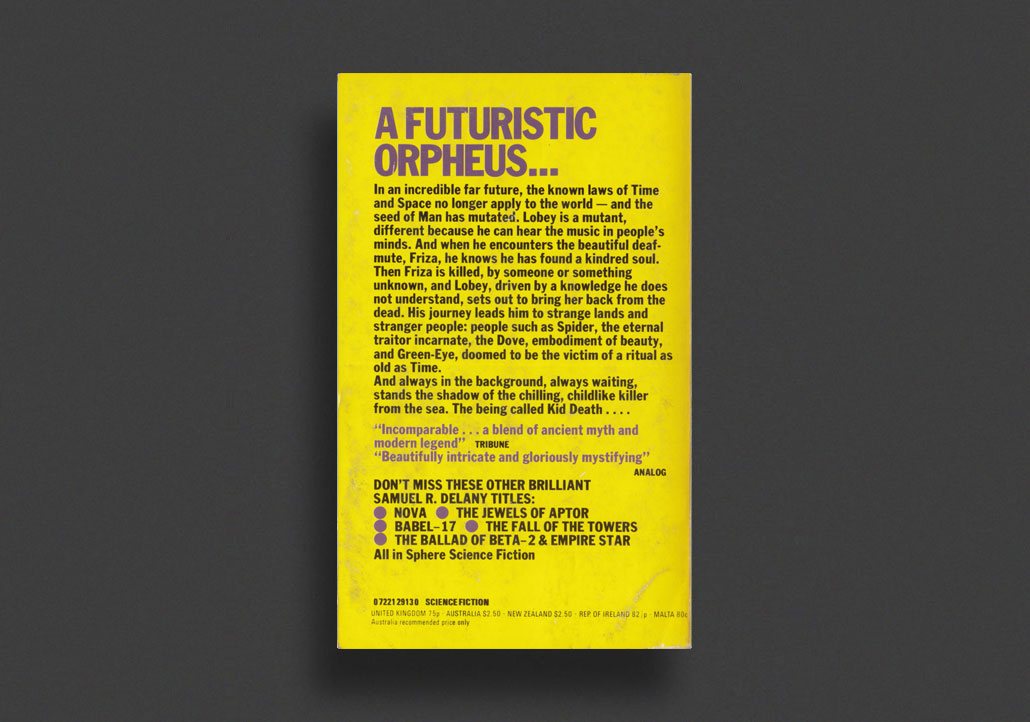
First 1977 Sphere paperback edition of Samuel R. Delany's The Einstein Intersection.
A nonhuman race reimagines human mythology.
The Einstein Intersection won the Nebula Award for best science fiction novel of 1967. The surface story tells of the problems a member of an alien race, Lo Lobey, has assimilating the mythology of earth, where his kind have settled among the leftover artifacts of humanity. The deeper tale concerns, however, the way those who are "different" must deal with the dominant cultural ideology. The tale follows Lobey's mythic quest for his lost love, Friza. In luminous and hallucinated language, it explores what new myths might emerge from the detritus of the human world as those who are "different" try to seize history and the day.
"When Delany describes to us what he has seen, what he can compute, adduce, intuit or smell in the underbrush, our reaction is to sit bolt upright and cry out, 'Of course, I have that very wound myself!' The ability to produce this reaction in people is one of the commonly accepted and apparently valid appurtenances of genius... I look forward to the explosion reading this will create within you."—A. J. Budrys (Galaxy Magazine)
Very Good copy, light wear, tanning.
1993, Japanese
Hardcover (w. dust jacket and obi-strip), 230 pages, 13.6 cm x 19.4 cm
1st Edition, Out of print title / used / very good
Published by
Seikyūsha / Tokyo
$90.00 - In stock -
First hardcover edition of "Body Exotica : Sexual Atrocity", written by Merzbow's Masami Akita and published only in Japan in 1993. Covering subjects such as body manipulation and decoration, Japanese genital museums, German anarcho-pacifist Ernst Friedrich's Anti-War imagery, Daisy and Violet Hilton, amputee love, clothing and deformity, "freaks", fetishism, abnormal sex customs, corpse and medical photography, and much more, all with b/w illustrations, "Body Exotica : Sexual Atrocity" could be considered the sister book to Akita's "Terminal Body Play", issued the same year. Merzbow is a noise project created in Tokyo, Japan in 1979 under the direction of noise technician Masami Akita. As well as a legendary underground noise artist, Akita is a prolific writer in Japan and frequently writes on the arts, music, erotica, esoterica, modern architecture, and animal rights, with articles on emerging subcultures and underground extreme cultures appearing in publications like SM Sniper, Studio Voice and Fool's Mate. His development of the Merzbow aesthetic ran parallel with a series of investigative books in which he catalogued and introduced a vast amount of hermetic types of music, sexual practices and autonomous creativity to a fairly conservative (but not close-minded) Japanese audience. "Body Exotica" is one of these very books.
First edition, Japanese text, VG copy with VG "textured" and illustrated dust jacket and original publisher's obi-strip inserted (not-pictured).
1978 / 1979, Japanese
Softcover, 127 pages + 144 pages, 22.5 x 29 cm
1st Edition, Out of print title / used / very good
Published by
Visual Message / Tokyo
$150.00 - Out of stock
First (1978) and second (1979) issues of Visual Message, the "comprehensive magazine of the visual age", published in Japan for a short period at the end of the 1970s. This explosive inaugural issue, co-edited by graphic designers Ikko Tanaka and Kazuya Uegami, and copywriter Shinya Nishimura and themed "Visual Scandal" is cover-to-cover packed with leading graphic artists, photographers, architects, textile designers, etc. from Japan and overseas including Tadanori Yokoo, Masao Saito, Harumi Yamaguchi, Masamichi Oikawa, Eiko Ishioka, Shigeo Fukuda, Tomi Ungerer, Masayuki Kurokawa, SITE, Tsunehisa Kimura, Tenmei Kano, Raymond Savignac, Katsumi Asaba, Ken Mori, Andy Warhol, Jean-Michel Folon, Asai Shinpei, Marcel Duchamp, Rene Magritte, Herb Lubalin, Osamu Nagahama, M.C. Escher, Shiro Tatsumi, Hiroki Hayashi, Masayoshi Nakajo, Hiroshi Yoda, Hipgnosis, and many more.
Second 1979 issue of Visual Message is structured around the themes "Before/After" and "Scale" and again is cover-to-cover packed with leading graphic artists, photographers, architects, textile designers, etc. from Japan and overseas including Tadanori Yokoo, Philip Johnson, Hideo Yamashita, Seiji Takada, Takahisa Kamijō, Haruo Takino, Takenobu Igarashi, Akira Yokoyama, Hisaki Hiramatsu, Takamichi Ito, Tomoya Nakano, Shōji Yamagishi, and many more.
V.M. 1. Good copy. Some cover/spine wear/creases/small closed tear to edge.
V.M. 2. Very Good copy. Light general wear.
1999, German / English
Softcover (w. mini-cd), 246 pages, 21 x 15 cm
1st Edition, Out of print title / used / very good
Published by
Auf Abwegen / Bochum—Cologne
$120.00 - Out of stock
"We are surrounded by ghostly things"
The Asmus Tietchens monograph, first hand-numbered limited edition of 500 copies with mini cd, published in autumn of 1999, edited by Kai U. Jürgens. Opening with a quote from E. M. Cioran, this long out-of-print, wonderful publication dedicated to the prolific German avant-garde composer, published by Auf Abwegen in Bochum/Cologne and co-edited by Guido Sprenger and Till Kniola, features a wealth of information in the form of collected texts by Kai U. Jürgens, producer Okko Bekker, Asmus Tietchens, Ditterich von Euler-Donnersperg, Guido Sprenger and Till Kniola, accompanied by a comprehensive discography and bibliography. Bi-lingual texts in English and German. Also includes the original 4-track limited edition mini-cd, "Phosphor", recorded in Hamburg in 1999. A must for any fan of the illusive, prolific experimental artist.
Asmus Tietchens (b. 1947, Hamburg) is a German composer of avant-garde music. Tietchens became interested in experimental music and musique concrète as a child, and began recording sound experiments in 1965 with electronic musical instruments, synthesizers and tape loops. In the 1970s he met producer Okko Bekker, and the two formed a decades-long partnership. Peter Baumann (of Tangerine Dream) heard a recording of Tietchens' music and offered to produce an album; the result was Nachtstücke, Tietchens' 1980 offering on Egg Records. His early recordings feature more accessible synthesized music, but beginning with Formen Letzer Hausmusik, his 1984 release for Nurse With Wound's label United Dairies, he began moving toward more abstract sound collages. He has taught acoustics in Hamburg since 1990.
Very Good copy, hand-numbered "410" of 500. Tiny amount of rubbing to back cover due to cd inserted into back french-fold.
1979, English
Softcover, unpaginated, 24 x 18 cm
1st Edition, Out of print title / used / very good
Published by
Bill McAuley / Carlton
$45.00 - Out of stock
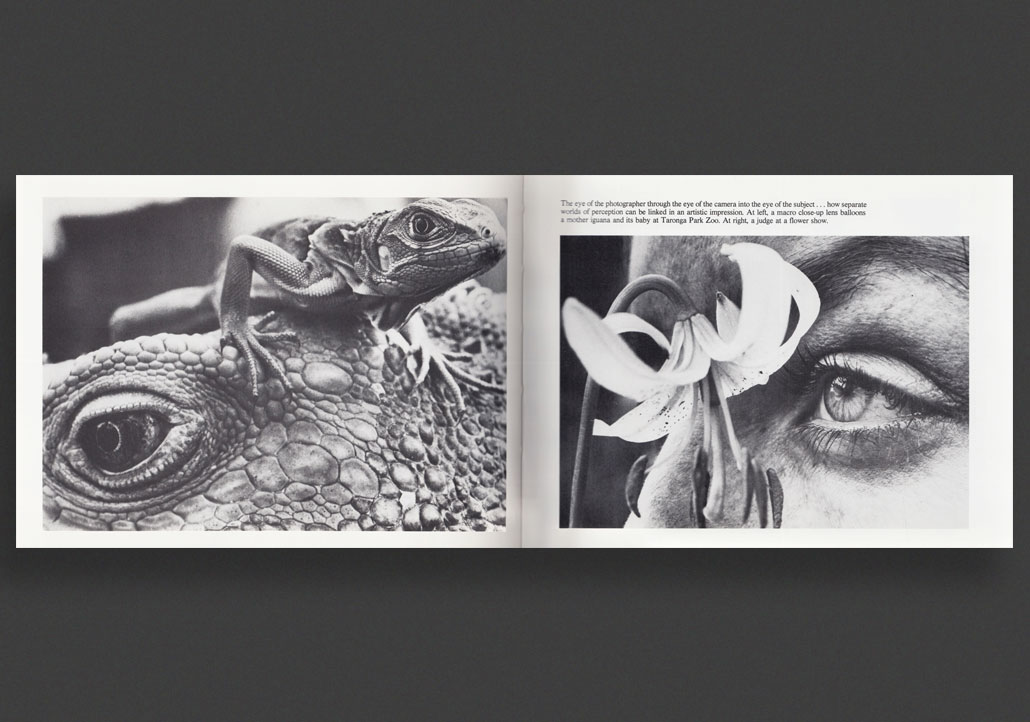
Rare signed copy of the first photo book of Australian photographer Bill McAuley (1920—2011), Faces and Places: A Pictorial Essay of the Seventies. McAuley began his career in newspapers and magazines in 1969 as a cadet photographer at The Age in Melbourne. For the next forty years he worked in Melbourne, Sydney, London and Canberra. "A press photographer is a visual historian, his role is to record history. Even if it ugly and violent, it is still a valid example of society at that point in time"—Bill McAuley. "Thus this book preserves a small piece of history and hopefully, given the sensitivity of the work it contains, those who turn its pages in the future will not judge us too unkindly"—Don Sharpe (from the introduction) Includes portraits of horticulturalist and artist Neil Douglas, Gough Whitlam, Queenie Paul, Barry Humphries, Frank Zappa, and many more characters captured (most notably the Australian cultural landscape c. 1970's) alongside quotes, notes, and lyrics. Dedicated to "late nights at King's Cross, Marlboro cigarettes, pool tables, crazy artists and tradesmen, beautiful bush, beautiful children."
Very Good copy, signed "Bill McAuley" to opening page in blue (biro) ink.
1982, English
Softcover, unpaginated, 30 x 21 cm
1st Edition, Out of print title / used / very good
Published by
The Amazing Aquarian Dream Factory / Sydney
$40.00 - Out of stock
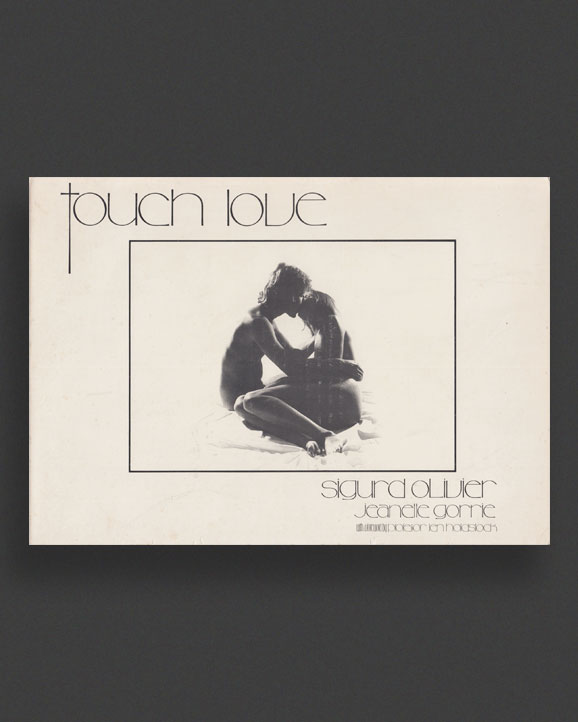
First 1982 edition of erotic photobook Touch Love, with photography by Sigurd Olivier and prose by Jeanette Gorrie on the tenderness of human touch and sexuality. Published by The Amazing Aquarian Dream Factory in Sydney.
Very Good copy with some light foxing to first page, light cover wear.
2022, English
Softcover, 130 pages, 17 x 13 cm
Published by
Masala Noir / Paris
$40.00 - Out of stock
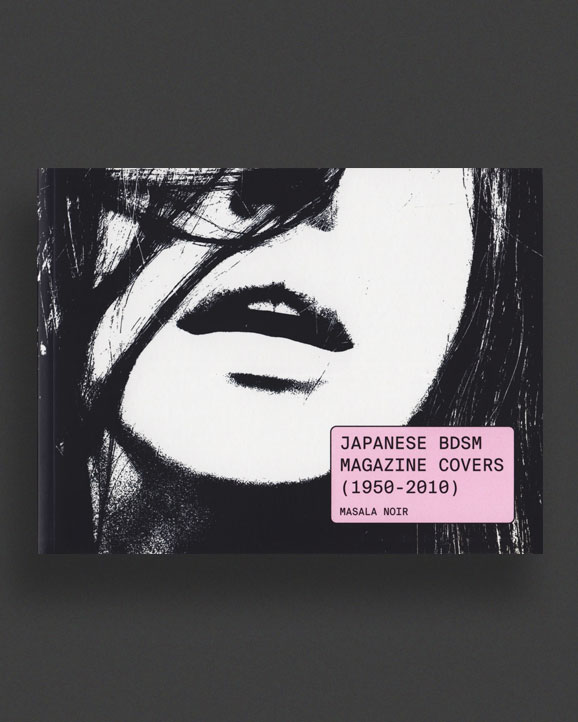
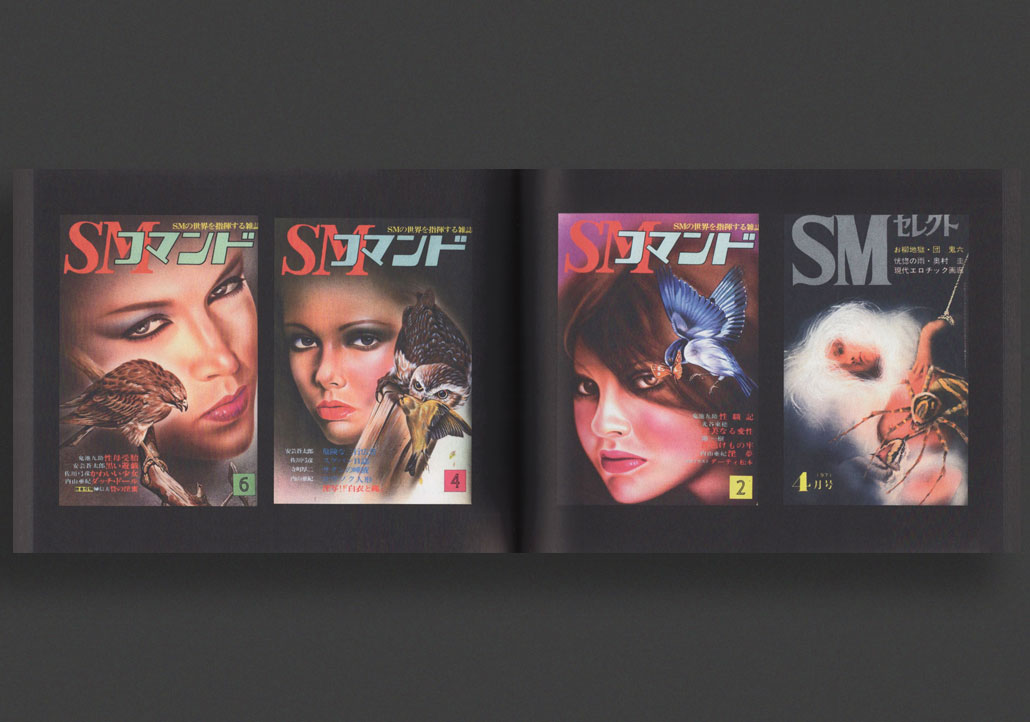
A collection of 250+ BDSM magazine covers from Japan between 1950—1990s compiled by Shinzo Noda.
2022, English
Softcover, 240 pages, 13 x 17 cm
Published by
Masala Noir / Paris
$42.00 - Out of stock
A visual compilation of 200+ Punk Flyers. Crime, Smegma, M.D.C., Disorder, Black Flag, White Flag, Negative Approach, J.F.A., Void, Ramones, G.G. Allin, Youth of Today, The Adolescents, T.S.O.L., The Weirdos, Discharge, Jerry's Kids, Fear, Gang Green, Minutemen, F.U.'s, G.B.H, The Stiffs, Descendents, Minor Threat, Gorilla Biscuits, Circle Jerks, Flipper, Pure Hell, The Weirdos, Meat Puppets, Crucifix, The Dickies, Poison Idea, Dead Boys, Throbbing Gristle, Antisect, Disfear, Chaos U.K., Necros, Doom, Government Issue, Bad Brains, Dead Kennedys, Meatmen, The Dils, Suicidal Tendencies, Social Distortion, Siege, Melvins, Middle Class, Bored Youth, Hüsker Dü, Sonc Youth, Minimal Man, Septic Death, Crucifucks, Cro-Mags, Screamers, Tuxedomoon, 7 Seconds, Germs, D.R.I., SSD, Rites of Spring, Butthole Surfers..... to name few....
Limited edition.
2022, English
Hardcover, 224 pages, 22 x 29 cm
Published by
Masala Noir / Paris
$89.00 - Out of stock
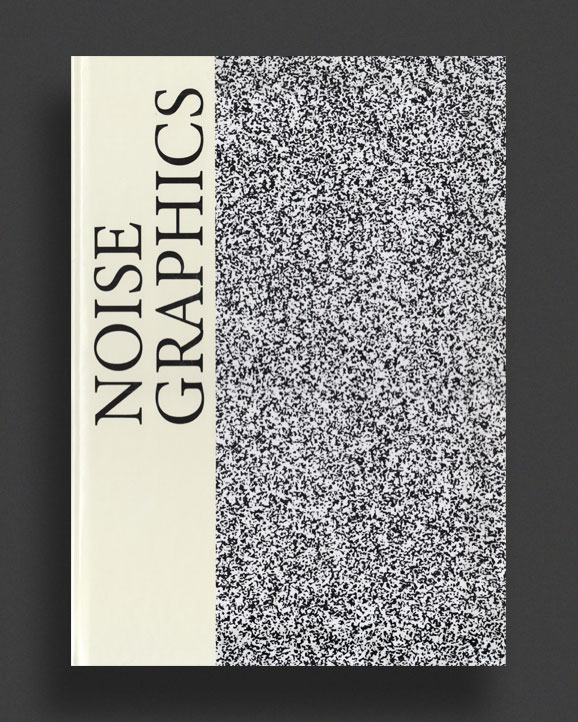
A visual archive of Noise vinyl and cassette covers, 1980—1990. Merzbow, Bourbonese Qualk, Maurizio Bianchi (MB), Controlled Bleeding, The Haters, Whitehouse, Le Syndicat, Broken Flag, Anti-Music, Borbetomagus, Sonic Youth, Sonic Death, ZSF Produkt, Ramleh, P16.D4, Area Condizionata, Kleistwahr, Masonna, DD. Records, Alto Stratus, Boredoms, Pussy Galore, Septiembre Negro, GG Allin, Lokomotiv S.S., Giancarlo Toniutti, The New Blockaders, Club Moral, Coup De Grace, H.N.A.S., Come Organisation, Birthbiter, Consumer Electronics, Minamata, Mauthausen Orchestra, Pain Teens, S·Core, The Gerogerigegege, Psychic T.V., Sonic Violence, Epitapes, ZG Music, Recloose Organisation, Con-Dom, Deviant & the Clones, Skullflower, Pure, Thee Un-Kommuniti, Skullflower, Putrefier, Ethnic Acid, and many many more.......
1997, English
Softcover (staple-bound), 20 pages, 21 x 16 cm
1st Edition, Out of print title / used / very good
Published by
The Bloomsbury Workshop / London
$30.00 - Out of stock
Rare exhibition catalogue for The Legacy of Omega, The Bloomsbury Workshop, London, April—May, 1997, one of the most comprehensive Omega Workshops exhibitions ever to be staged, comprising a range of artefacts from the Omega such as plates, dishes, bowls, jars, original sketches, fabric, books, woodcuts, tapestry rugs.... likely the last important commercial exhibition of Omega material. Includes texts by Bloomsbury scholars James Beechey and Abigail Willis. Full catalogue of exhibited works, some illustrated in full-colour, and this copy including the loose original price list inserted. Published by The Bloomsbury Workshop, London.
The boundaries between visual and decorative art were broken down in The Omega Workshops, whose Bloomsbury artists brought abstract shapes and bold colours from modern art into designs for the home. In 1913 artist and writer Roger Fry opened Omega Workshops Ltd. at 33 Fitzroy Square in Bloomsbury, central London. Omega Workshops provided Fry and his friends, including fellow Bloomsbury artists Vanessa Bell and Duncan Grant, with the chance to make a living designing and decorating furniture, textiles and other household goods, alongside their careers as artists. The premises in Fitzroy Square included studios where products were designed and made, and public showrooms where customers could browse and buy Omega's designs. Fry insisted that all Omega work was produced anonymously. He felt that objects and furniture should be bought and valued for their beauty rather than because of the reputation of the artist. Designs were unsigned and marked only with the symbol Ω, which is the Greek letter Omega. Omega is the last letter of the Greek alphabet, and in the late 19th century it was used to mean the ‘last word’ on a subject.
Very Good copy with single National Gallery of Victoria library stamp to first introduction page. Price-list inserted.
1983, English
Softcover (staple-bound), 16 pages, 25.5 x 20.5 cm
1st Edition, Out of print title / used / very good
Published by
Geelong Art Gallery / Victoria
$25.00 - Out of stock
Rare catalogue published on the occasion of the travelling 1983 exhibition, Aspects of the unreal : Australian surrealism 1930s—1950s, that travelled between Geelong Art Gallery, Warrnambool Art Gallery, and Shepparton Art Gallery, curated by W. J. Pascoe. Text-based catalogue of works and biographies, along with curator's text and gallery director's introduction. A rare exhibit to survey the influence of Surrealism in the work of modern Australian artists from the 1940s onward, including David Edgar Strachan, John Joseph Wardell Power, Eric Thake, Sydney Nolan, Roy Opie, Jeffrey Smart, Peter Purves-Smith, Carl Olaf Plate, James Montgomery Cant, Vincent Brown, Roy Dalgarno, Donald Friend, James Gleeson, Vincent Brown, Bernard Boles, Oswald Hall, Danila Vassilieff.
Very Good copy, light wear.
1968, English
Hardcover (clothbound w. dust jacket), 132 pages, 28.5 x 22.5 cm
1st Edition, Out of print title / used / good
Published by
Rudy Komon Gallery / Woollahra
$90.00 - In stock -
First edition of the 1968 hardcover catalogue raisonné of etchings by Australian painter and printmaker Fred Williams (1927—1982). Profusely illustrated with 73 plates and 273 figures of beautiful reproductions on warm print stock gathering together a complete collection of graphic works by one of Australia’s most important artists, and one of the twentieth century's major landscapists. Compiled by James Mollison with an introduction by fellow Australian painter John Brack. This major, now collectible, volume was produced on the occasion of a survey of William's etchings held at the Rudy Komon Gallery in 1968.
Very Good copy with Average dust jacket with creases and tears though mostly all present, now preserved in removable mylar wrap.
1991, English
Softcover, 8 pages, 26 x 20.5 cm
1st Edition, Out of print title / used / good
Published by
Charles Nodrum / Melbourne
$30.00 - In stock -
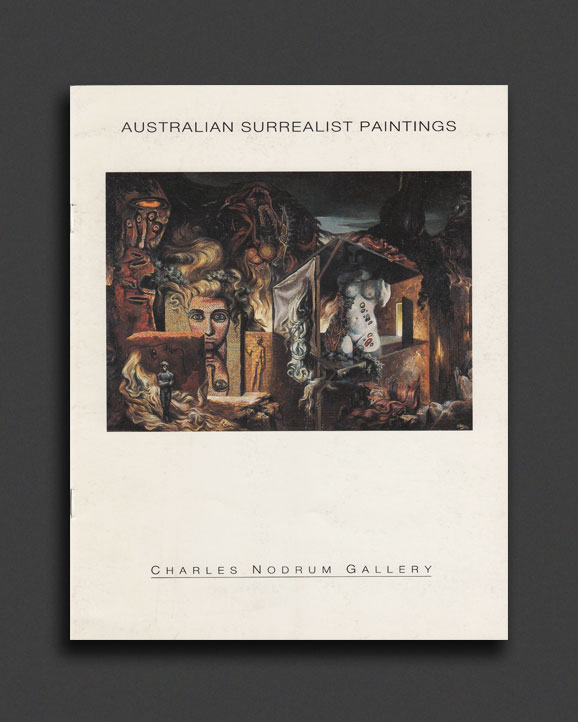
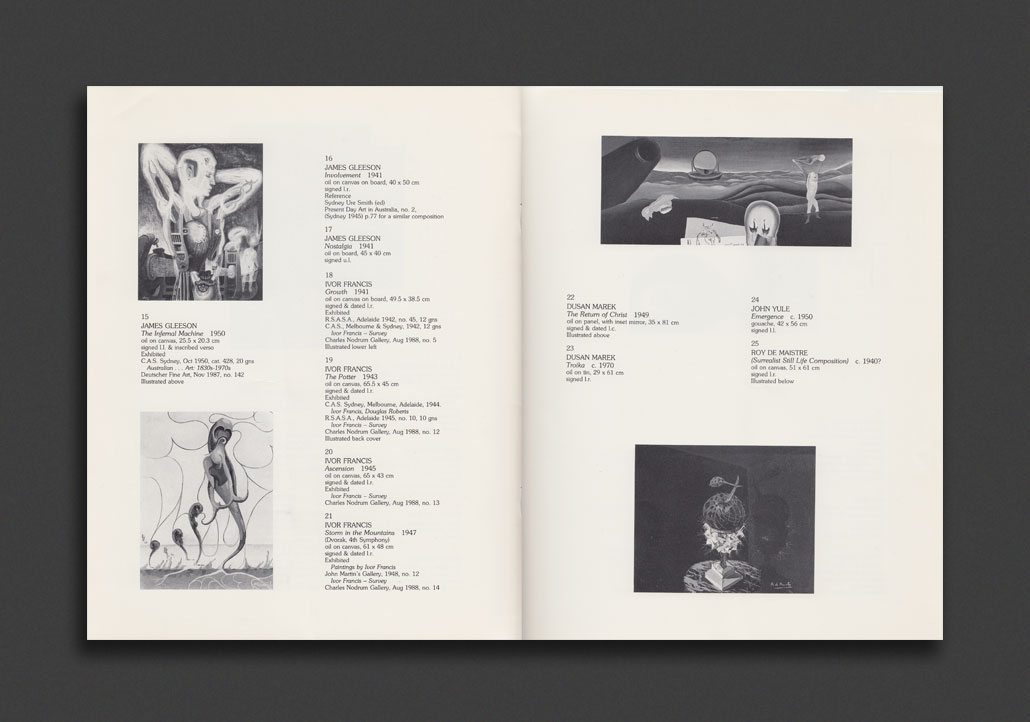
Scarce catalogue published in 1991 on the occasion of the exhibition "Australian Surrealist Paintings" at Charles Nodrum Gallery, Melbourne. Presenting surrealist paintings from the 1940s by its most prominent Australian exponents - James Gleeson, Ivor Francis, and Douglas Roberts, as well as Bernard Boles, Mary Macqueen, Percy Watson, Ronald Steuart, Russell Drysdale, Dusan Marek, John Yule, Roy de Maistre, Sydney Nolan, Ian Sime, Peter Wright, Joel Elenberg, and Stan Ostoja Kotkowski. A rare glimpse into the Australian branch of Surrealism (and its influence) that has received little attention compared to other movements here such as Angry Penguins, Antipodeans, Social Realists, etc. A lovely introduction by Charles Nodrum wit ha full list of exhibited works and select b/w illustrations throughout. Colour illustrated boards.
Good copy with some light rubbing to covers.
1992, English
Softcover, 24 x 29.7 cm
1st Edition, Out of print title / used / very good
Published by
Kunstmuseum Den Haag / Netherlands
$140.00 - Out of stock
Lovely over-sized landscape exhibition catalogue designed by Sol LeWitt and published in conjunction with his exhibition of drawings, 1958—1992, held at Haags Gemeentemuseum, The Hague, 1992. Profusely illustrated throughout in colour and b/w, accompanied by texts by Rudi Fuchs, Franz W. Kaiser, Trevor Fairbrother. All texts in English. Includes 270 works illustrated, and checklist of the exhibition. Edited by Susanna Singer. This major survey exhibition later traveled to the UK, Germany, Switzerland, France, Spain and the USA between 1993—1995.
Very Good copy. Light cover tanning.
1992, English
Softcover, 222 pages, 23.2 x 29.2 cm
Out of print title / used / good
Published by
Kunsthalle Bern / Bern
Sala Recalde / Bilbao
$120.00 - Out of stock
Wonderful over-sized landscape catalogue raisonné designed by Sol LeWitt and of his wall drawings, 1984—1992, originally published in conjunction with show held at Kunsthalle Bern, January 27 - March 12, 1989. Republished in this third revised, expanded and most complete edition, in conjunction with show held at Sala Recalde, Bilbao, Spain, 1992. Traveled to the Addison Gallery of American Art, Phillips Academy, Andover, Massachusetts, 1993. Profusely illustrated throughout in colour and b/w illustrations extensively documenting the wall drawings by Sol LeWitt executed between 1984 and 1992. Edited by Susanna Singer, translated by Margaret Joss with text by Ulrich Loock. Catalogue raisonné by Susanna Singer of Sol LeWitt's wall drawings numbered 410 to 701. Text in English and German.
Good—VG copy, tight and clean internally with one crease to cover and light shelf wear to covers.
2009, English
Softcover, 82 Pages, 21.6 x 14.2 cm
Published by
Zero Books / UK
$29.00 - In stock -
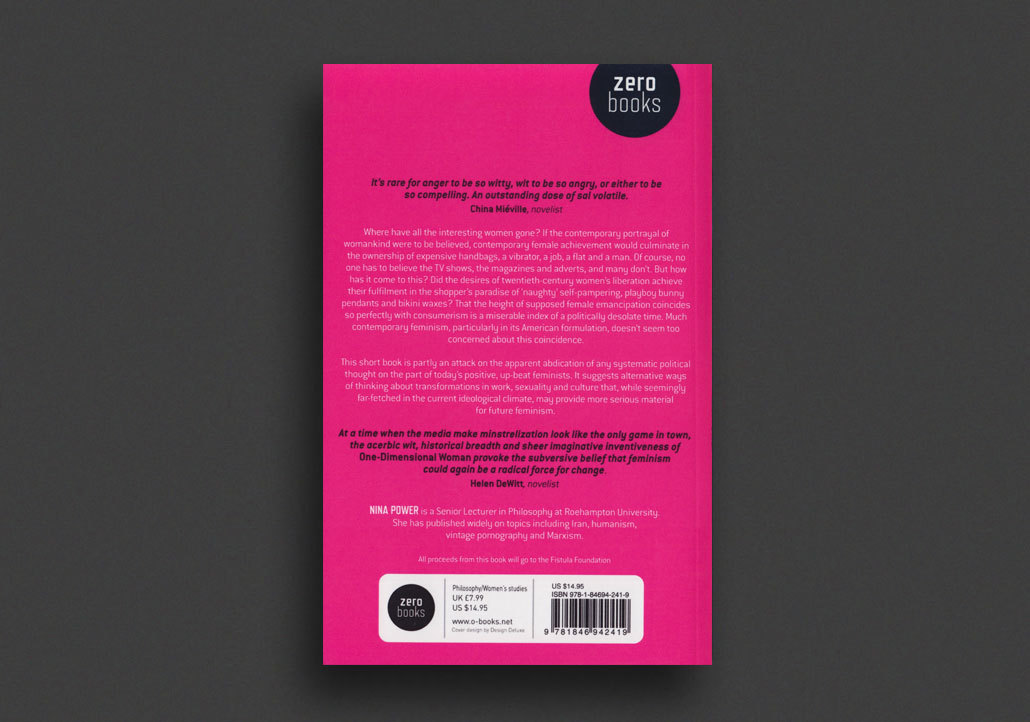
Where have all the interesting women gone? If the contemporary portrayal of womankind were to be believed, contemporary female achievement would culminate in the ownership of expensive handbags, a vibrator, a job, a flat and a man. Of course, no one has to believe the TV shows, the magazines and adverts, and many don't. But how has it come to this? Did the desires of twentieth-century women's liberation achieve their fulfilment in the shopper's paradise of 'naughty' self-pampering, playboy bunny pendants and bikini waxes? That the height of supposed female emancipation coincides so perfectly with consumerism is a miserable index of a politically desolate time. Much contemporary feminism, particularly in its American formulation, doesn't seem too concerned about this coincidence.
This short book is partly an attack on the apparent abdication of any systematic political thought on the part of today's positive, up-beat feminists. It suggests alternative ways of thinking about transformations in work, sexuality and culture that, while seemingly far-fetched in the current ideological climate, may provide more serious material for future feminism.
"It's rare for anger to be so witty, wit to be so angry, or either to be so compelling. An outstanding dose of sal volatile."—China Mieville, author of "weird fiction" Embassytown, The City and the city, Railsea...
"Nina Power is keen to confront the uncomfortable and unpalatable, a refreshing trait in a culture perpetually moving toward anodyne."—Catherine Scott, Bitch
Nina Power is an English writer and philosopher. She is a senior editor of and columnist for the online magazine Compact.
1973, English
Hardcover (w. dust jacket), 321 pages
1st Edition, Out of print title / used / very good
Published by
Souvenir Press / London
$30.00 - In stock -
First hardcover 1973 edition.
When we ask what the phrase "Great Society" means, we are actually thinking about an age-old idea—that of utopia, the ideal society. Here is a collection of essays by leading scholars in many fields that explore the reasons why men have been yearning for utopia—or scorning it—at least since Plato's time. Edited by Frank E. Manuel.
Frank Edward Manuel (1910—2003) was an American historian, Kenan Professor of History, emeritus, at New York University and Alfred and Viola Hart University Professor, emeritus, at Brandeis University. He was known for his work on the idea of utopia.
Very Good copy, light age/wear to book and jacket.
1972, English
Softcover, 266 pages, 18 x 11 cm
Published by
Penguin Books / London
$30.00 - Out of stock
Sirius: A Fantasy of Love and Discord by Olaf Stapledon, first published in 1944.
Sirius is a tale of immense and tragic pathos in which Olaf Stapledon evokes the terrible loneliness of a dog born with the mind of a man. Thomas Trelone's life-work was to explore the possibilities of producing a superman by experimenting with hormone injections into various mammals. Sirius himself is infinitely the most successful of these trials. He is the only viable puppy born with the train capacity of a human being, but he still has the senses, the instincts, and the physique of a dog. Born at the same time as Plaxy, Thomas's youngest daughter, the child and puppy are brought up together, share the same lessons, and develop an intense understanding of one another's humanness and dogness.
It is the inevitable conflict between Sirius's intellect and instincts and its effects upon the girl, Plaxy, which has produced one of the most moving of the 'Wonder Stories' we call Science Fiction.
William Olaf Stapledon (1886—1950) – known as Olaf Stapledon – was a British philosopher and author of science fiction. In 2014, he was inducted into the Science Fiction and Fantasy Hall of Fame.
Very Good copy of the 1972 Penguin edition.
1989, English
Hardcover (w. dust jacket), 726 pages, 21.5 x 14.5 cm
1st Edition, Out of print title / used / very good
Published by
Guild America Books / New York
$120.00 - Out of stock
Scarce first hardcover edition of Xenogenesis by Octavia E. Butler, comprising her acclaimed trilogy Dawn, Adulthood Rites, and Imago, collected in this now out-of-print volume published in 1989. Later known as Lilith's Brood, Xenogenesis, a profoundly evocative, sensual — and disturbing — epic of human transformation, is multiple Hugo and Nebula award-winner Octavia E. Butler at her best.
Lilith Iyapo is in the Andes, mourning the death of her family, when war destroys Earth. Centuries later, she is resurrected — by miraculously powerful unearthly beings, the Oankali. Driven by an irresistible need to heal others, the Oankali are rescuing our dying planet by merging genetically with mankind. But Lilith and all humanity must now share the world with uncanny, unimaginably alien creatures: their own children. This is their story.
Octavia Estelle Butler (1947-2006) was an American science fiction writer, one of the best-known among the few African-American women in the field. Butler was the renowned author of numerous ground-breaking novels and recipient of the Locus, Hugo and Nebula awards, and a PEN Lifetime Achievement Award for her body of work, in 1995 she became the first science-fiction writer to receive the MacArthur Fellowship ‘Genius Grant’. A pioneer of her genre, Octavia’s dystopian novels explore myriad themes of Black injustice, women’s rights, global warming and political disparity.
Very Good—Fine copy in VG dust jacket.
1977, English
Softcover, 155 pages, 18 x 11 cm
Out of print title / used / good
Published by
Pan / London
$28.00 - In stock -
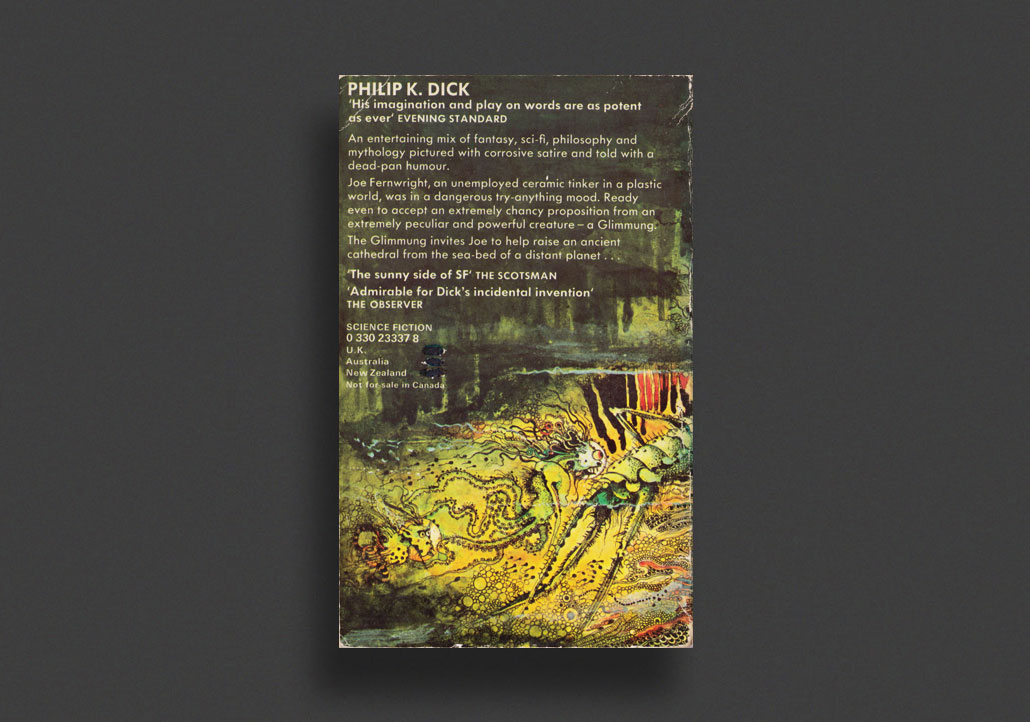
1977 Pan edition of Galactic Pot-Healer, a science fiction novel by American writer Philip K. Dick, first published in 1969. The novel deals with a number of philosophical and political issues such as repressive societies, fatalism, and the search for meaning in life.
The Glimmung wants Joe Fernwright. Fernwright is a pot-healer - a repairer of ceramics - in a drably utilitarian future where such skills have little value. And the Glimmung? The Glimmung is a being that looks something like a gyroscope, something like a teenaged girl, and something like the contents of an ocean. What's more, it may be divine. And, like certain gods of old Earth, it has a bad temper.
What could an omnipresent and seemingly omnipotent entity want with a humble pot-healer? Or with the dozens of other odd creatures it has lured to Plowman's Planet? And if the Glimmung is a god, are its ends positive or malign? Combining quixotic adventure, spine-chilling horror, and deliriously paranoid theology, Galactic Pot-Healer is a uniquely Dickian voyage to alternate worlds of the imagination.
Philip K. Dick (1928—2007) was born in Chicago and lived most of his life in California. In 1952, he began writing professionally and proceeded to write numerous novels and short-story collections. He won the Hugo Award for the best novel in 1962 for The Man in the High Castle and the John W. Campbell Memorial Award for best novel of the year in 1974 for Flow My Tears, the Policeman Said. In addition to 44 published novels, Dick wrote approximately 121 short stories, most of which appeared in science fiction magazines during his lifetime. Although Dick spent most of his career as a writer in near-poverty, ten of his stories have been adapted into popular films since his death, including Blade Runner, Total Recall, A Scanner Darkly, Minority Report, Paycheck, Next, Screamers, and The Adjustment Bureau. In 2005, Time magazine named Ubik one of the one hundred greatest English-language novels published since 1923. In 2007, Dick became the first science fiction writer to be included in The Library of America series. Philip K. Dick died on March 2, 1982, in Santa Ana, California, of heart failure following a stroke.
Good copy.
1982 , English
Softcover, 320 pages, 11 x 18 cm
Out of print title / used / very good
Published by
Panther / London
$40.00 - Out of stock
1982 Panther edition of Ursula K. Le Guin's "The Dispossessed".
Le Guin called her 1974 novel an “anarchist utopia”, a reaction to the Vietnam war. Originally “a very bad short story” according to Le Guin, “there was a book in it, and I knew it, but the book had to wait for me to learn what I was writing about and how to write about it. I needed to understand my own passionate opposition to the war that we were, endlessly it seemed, waging in Vietnam, and endlessly protesting at home,” she writes in an introduction.
The Dispossessed is set in the fictional universe of the seven novels of the Hainish Cycle, e.g. The Left Hand of Darkness, about anarchist and other societal structures. The book won the Nebula Award for Best Novel in 1974, won both the Hugo and Locus Awards in 1975, and received a nomination for the John W. Campbell Memorial Award in 1975. It achieved a degree of literary recognition unusual for science fiction due to its exploration of themes such as anarchism (on a planet called Anarres) and revolutionary societies, capitalism, and individualism and collectivism.
Ursula K. Le Guin (1929–2018) was an American author of speculative fiction, realistic fiction, non-fiction, screenplays, librettos, essays, poetry, speeches, translations, literary critiques, chapbooks, and children's fiction. She was primarily known for her works of speculative fiction. These include works set in the fictional world of Earthsea, stories in the Hainish Cycle, and standalone novels and short stories. Though frequently referred to as an author of science fiction, critics have described her work as being difficult to classify.
Very Good copy.
1974, English
Softcover, 156 pages, 11 x 18 cm
Out of print title / used / good
Published by
Panther / London
$35.00 - Out of stock
1974 Panther edition of Ursula K. Le Guin's "The Lathe of Heaven".
The plot of 1971's The Lathe of Heaven concerns a character whose dreams alter past and present reality. George Orr, a draftsman, has long been abusing drugs to prevent himself from having "effective" dreams, which change reality. After having one of these dreams, the new reality is the only reality for everyone else, but George retains memory of the previous reality. Under threat of being placed in an asylum, Orr is forced to undergo "voluntary" psychiatric care for his drug abuse. George begins attending therapy sessions with an ambitious psychiatrist and sleep researcher named William Haber. Orr claims that he has the power to dream "effectively" and Haber, gradually coming to believe it, seeks to use George's power to change the world. His experiments with a biofeedback/EEG machine, nicknamed the Augmentor, enhance Orr's abilities and produce a series of increasingly intolerable alternative worlds, based on an assortment of utopian (and dystopian) premises. The story was first serialized in the American science fiction magazine Amazing Stories. The novel received nominations for the 1972 Hugo and the 1971 Nebula Award, and won the Locus Award for Best Novel in 1972. Theodore Sturgeon, reviewing Lathe for The New York Times, praised Le Guin for "produc[ing] a rare and powerful synthesis of poetry and science, reason and emotion."
Ursula K. Le Guin (1929–2018) was an American author of speculative fiction, realistic fiction, non-fiction, screenplays, librettos, essays, poetry, speeches, translations, literary critiques, chapbooks, and children's fiction. She was primarily known for her works of speculative fiction. These include works set in the fictional world of Earthsea, stories in the Hainish Cycle, and standalone novels and short stories. Though frequently referred to as an author of science fiction, critics have described her work as being difficult to classify.
Good copy. General page tanning / cover wear.