World Food Books' programme is largely produced on Kulin Nation land. We acknowledge the Wurundjeri people of the Kulin Nation as the first and continuing custodians of this land, and pay respect to their Elders past, present, and emerging.
World Food Books is an arts and special interests bookshop in Naarm / Melbourne. Founded in 2010, World Food Books is devoted to the presentation of a rotating, hand-selection of international art, design, literary and counterculture publications with an emphasis on the anti-traditional, the experimental, the avant-garde, the heretic, the marginal.
Presenting new titles alongside rare and out-of-print books, catalogues and journals spanning the fields of modern and contemporary art, design, photography, illustration, film, literature, poetry, cultural theory, philosophy, sexuality, popular and underground culture in its many radical forms, World Food Books wishes to encourage adventurous, thoughtful and open-minded reading, looking, writing, and exchange of publishing and ideas, both current and historical.
As well as our bookshop, located in Melbourne's historical Nicholas Building, all of our inventory is available internationally via our online mail-order service.
World Food Books semi-regularly co-ordinates "Occasions", a programme of exhibits and events at the bookshop and in partnership with other hosts (such as museums and art galleries) that develop out of the activities, relationships and content of the bookshop itself.
World Food Books
The Nicholas Building
37 Swanston Street
Room 5, Level 6
Melbourne 3000
Australia
SHOP HOURS:
Thu–Fri 12–6, Sat 12–5
WEB-SHOP OPEN 24/7
World Food Books
Postal Address:
PO Box 435
Flinders Lane
Victoria 8009
Australia
Art
Theory / Essay
Architecture / Interior
Graphic Design / Typography
Photography
Fashion
Eros
LGBTQ+
Fiction / Poetry
Weird / Speculative / Science Fiction / Horror
Transgressive / Visceral / Abject
Symbolism / Decadence / Fin de siècle
Film / Video
Painting
Sculpture / Installation
Performance / Dance / Theater
Drawing
Sound / Music
Curatorial
Group Shows / Collections
Periodicals
Out-of-print / Rare
Posters / Ephemera / Discs
Signed Books
World Food Books Gift Voucher
World Food Book Bag
Australian Art
Australian Fiction
Australian Science Fiction / Speculative Fiction
Australian Poetry
Australian Photography
Japanese Photography
Conceptual Art
Minimal Art
Dada
'Pataphysics / Oulipo
Fluxus
Concrete Poetry
Pop Art
Surrealism
Arte Povera
Arte Informale / Haute Pâte / Tachism
Nouveau Réalisme / Zero / Kinetic
Situationism / Lettrism
Collage / Mail Art / Xerox Art
Art Brut / Folk / Visionary / Fantastic
Illustration / Graphic Art / Bandes Dessinées
Furniture
Italian Radical Design / Postmodernism
Textiles
Ceramics / Glass
Counterculture
Protest / Revolt
Philosophy
Psychoanalysis
Anthropology
Anarchism
Socialism / Anarchism / Communism / Capitalism
Literary Theory / Semiotics / Language
Feminism / Women's Studies
Gender Studies / Sexuality
Anthropology
Fetishism / BDSM
Drugs / Psychedelia
Crime / Violence
Animal Rights / Veganism
Occult / Esoterica
Ecology / Earth / Alternative Living
Whole Earth / Crafts
All prices in AUD (Australian dollars)
Pick-Ups
Pick-up orders can be collected in our bookshop during opening hours after order date. Please collect any Pick-up orders within 2 weeks of ordering as we have limited storage space. Orders will be released back into stock if not collected within this time. No refunds can be made for pick-ups left un-collected. If you cannot make it in to the bookshop in this time-frame, please choose postage option.
Return Policy
All sales are final. We do accept returns (for refund or exchange) for items received in error. All our orders are packed with special care using heavy-duty padding and cardboard book-mailers or bubble mailers (for smaller books), using reinforcement where required. We cannot take responsibility for any lost, stolen or damaged parcels.
Insurance
Should you wish to insure your package, please email us directly after placing your order and we can organise this at a small extra expense. Although all standard/express tracked packages are very safe and dependable, we cannot take responsibility for any lost, stolen or damaged parcels. We recommend insurance on valuable orders.
Interested in selling your old books, catalogues, journals, magazines, comics, fanzines, ephemera? We are always looking for interesting, unusual and out-of-print books to buy. We only buy books in our fields of interest and specialty, and that we feel we can resell.
We base these prices on desirability, market value, in-print prices, condition and our current stock levels. We offer cash, store credit, and can take stock on consignment. All
about 25% of the price we expect to get when we sell them, or 30% in store credit. We base these prices on desirability, market value, in-print prices, condition and our current stock levels.
Sell your books any day of the week. You can drop them off and return later. If you have a lot of books, we can visit your Sydney home.
We buy books that we feel we can resell. We offer about 25 % of the price we expect to get when we sell them, or 30% in store credit. We base these prices on desirability, market value, in-print prices, condition and our current stock levels.
Philadelphia Wireman
03 August - 01 September, 2018
World Food Books is proud to announce our next Occasion, the first presentation of sculptures by Philadelphia Wireman in Australia.
The Philadelphia Wireman sculptures were found abandoned in an alley off Philadelphia’s South Street on trash night in 1982. Their discovery in a rapidly-changing neighbourhood undergoing extensive renovation, compounded with the failure of all attempts to locate the artist, suggests that the works may have been discarded after the maker’s death. Dubbed the "Philadelphia Wireman" during the first exhibition of this work, in 1985, the maker’s name, age, ethnicity, and even gender remain uncertain. The entire collection totals approximately 1200 pieces, all intricately bound together with tightly-wound heavy-gauge wire (along with a few small, abstract marker drawings, reminiscent both of Mark Tobey and J.B. Murry). The dense construction of the work, despite a modest range of scale and materials, is singularly obsessive and disciplined in design: a wire armature or exoskeleton firmly binds a bricolage of found objects including plastic, glass, food packaging, umbrella parts, tape, rubber, batteries, pens, leather, reflectors, nuts and bolts, nails, foil, coins, toys, watches, eyeglasses, tools, and jewellery.
Heavy with associations—anthropomorphic, zoomorphic, and socio-cultural responses to wrapped detritus—the totemic sculptures by Philadelphia Wireman have been discussed in the context of work created to fulfil the shamanistic needs of alternative religions in American culture. Curators, collectors, and critics have variously compared certain pieces to sculpture from Classical antiquity, Native American medicine bundles, African-American memory jugs, and African fetish objects. Reflecting the artist’s prolific and incredibly focused scavenging impulse, and despite—or perhaps enhanced by—their anonymity, these enigmatic objects function as urban artefacts and arbiters of power, though their origin and purpose is unknown. Philadelphia Wireman, whatever their identity, possessed an astonishing ability to isolate and communicate the concepts of power and energy through the selection and transformation of ordinary materials. Over the course of the past two decades, this collection has come to be regarded as an important discovery in the field of self-taught art and vernacular art.
Presented in collaboration with Fleisher-Ollman Gallery, Philadelphia, and Robert Heald, Wellington.
Susan Te Kahurangi King
02 February - 10 March, 2018
Susan Te Kahurangi King (24 February 1951 - ) has been a confident and prolific artist since she was a young child, drawing with readily available materials - pencils, ballpoint pens and felt-tip markers, on whatever paper is at hand. Between the ages of four and six Susan slowly ceased verbal communication. Her grandparents William and Myrtle Murphy had developed a special bond with Susan so they took on caring responsibilities for extended periods. Myrtle began informally archiving her work, carefully collecting and storing the drawings and compiling scrapbooks. No drawing was insignificant; every scrap of paper was kept. The King family are now the custodians of a vast collection containing over 7000 individual works, from tiny scraps of paper through to 5 meter long rolls.
The scrapbooks and diaries reveal Myrtle to be a woman of great patience and compassion, seeking to understand a child who was not always behaving as expected. She encouraged Susan to be observant, to explore her environment and absorb all the sights and sounds. Myrtle would show Susan’s drawings to friends and people in her community that she had dealings with, such as shopkeepers and postal workers, but this was not simply a case of a grandmother’s bias. She recognised that Susan had developed a sophisticated and unique visual language and sincerely believed that her art deserved serious attention.
This was an unorthodox attitude for the time. To provide some context, Jean Dubuffet coined the term Art Brut in 1945 to describe work created by self-taught artists – specifically residents of psychiatric institutions and those he considered to be visionaries or eccentrics. In 1972 Roger Cardinal extended this concept by adopting the term Outsider Art to describe work made by non-academically trained artists operating outside of mainstream art networks through choice or circumstance. Susan was born in Te Aroha, New Zealand in 1951, far from the artistic hubs of Paris and London that Dubuffet and Cardinal operated in. That Myrtle fêted Susan as a self-taught artist who deserved to be taken seriously shows how progressive her attitudes were.
Susan’s parents Doug and Dawn were also progressive. Over the years they had consulted numerous health practitioners about Susan’s condition, as the medical establishment could not provide an explanation as to why she had lapsed into silence. Dawn educated herself in the field of homeopathy and went on to treat all twelve of her children using these principles – basing prescriptions on her observations of their physical, mental and emotional state.
Doug was a linguist with an interest in philosophy who devoted what little spare time he had to studying Maori language and culture. To some extent their willingness to explore the fringes of the mainstream made them outsiders too but it was their commitment to living with integrity and their respect for individuality that ensured Susan’s creativity was always encouraged.
Even though Susan’s family supported her artistic pursuits, some staff in schools and hospitals saw it as an impediment to her assimilation into the community and discouraged it in a variety of ways. Her family was not always aware of this and therefore did not fully understand why Susan stopped drawing in the early 1990s. However, rather than dwell on the challenges that Susan faced in pursuit of her artistic practice, they prefer to highlight her achievements. In 2008 Susan began drawing again in earnest, after an almost 20 year interruption, and her work is now shown in galleries around the world.
Susan grew up without television and has been heavily influenced by the comics she read as a child. She is absolutely fearless in the appropriation of recognizable characters, such as Donald Duck and Mickey Mouse, in her work. She twists their limbs, contorts their faces, compresses them together, blends them into complex patterned backgrounds - always imbuing them with an incredible energy. Although Susan often used pop culture characters in her work they are not naive or childlike. These are drawings by a brilliant self-taught artist who has been creating exceptional work for decades without an audience in mind.
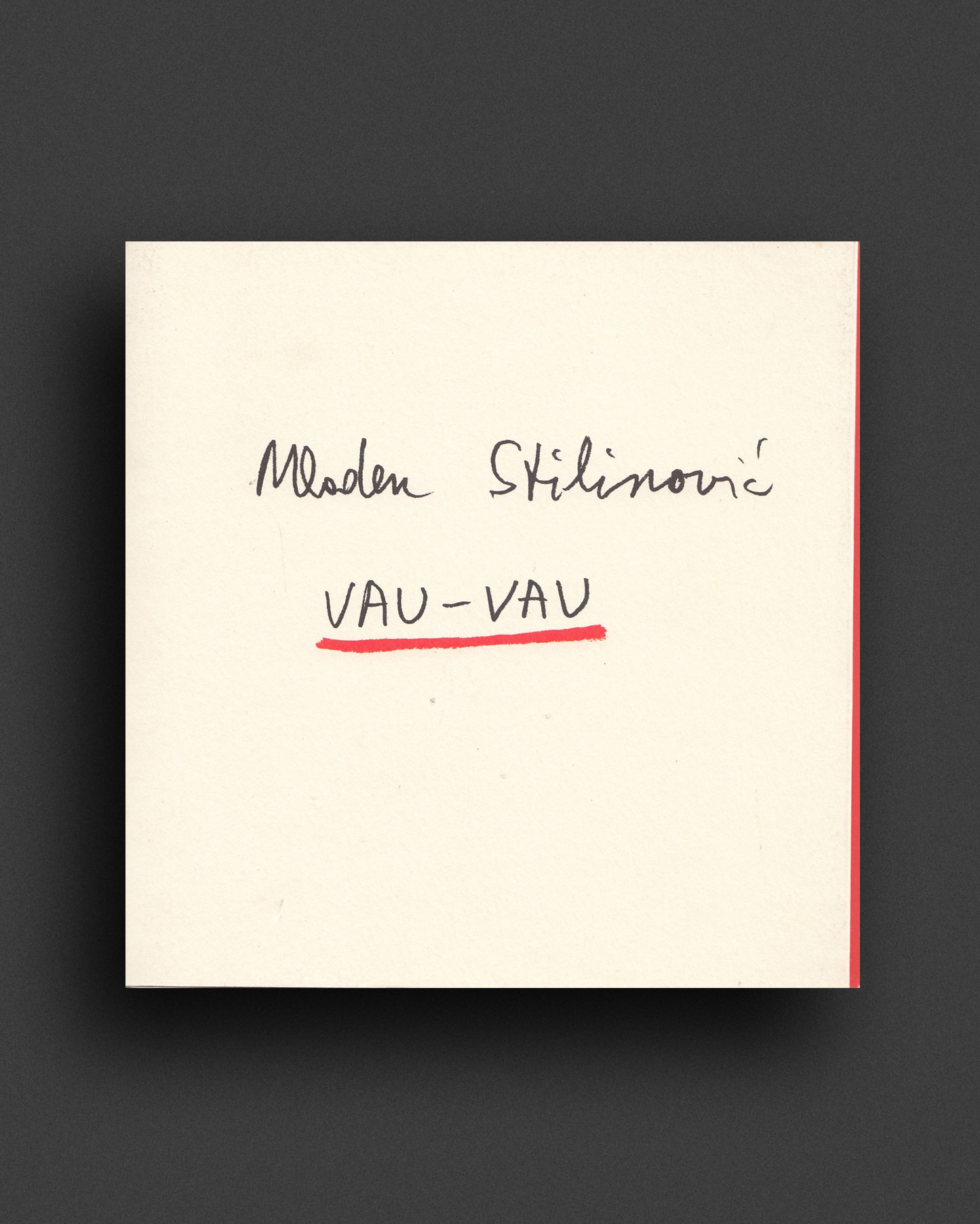
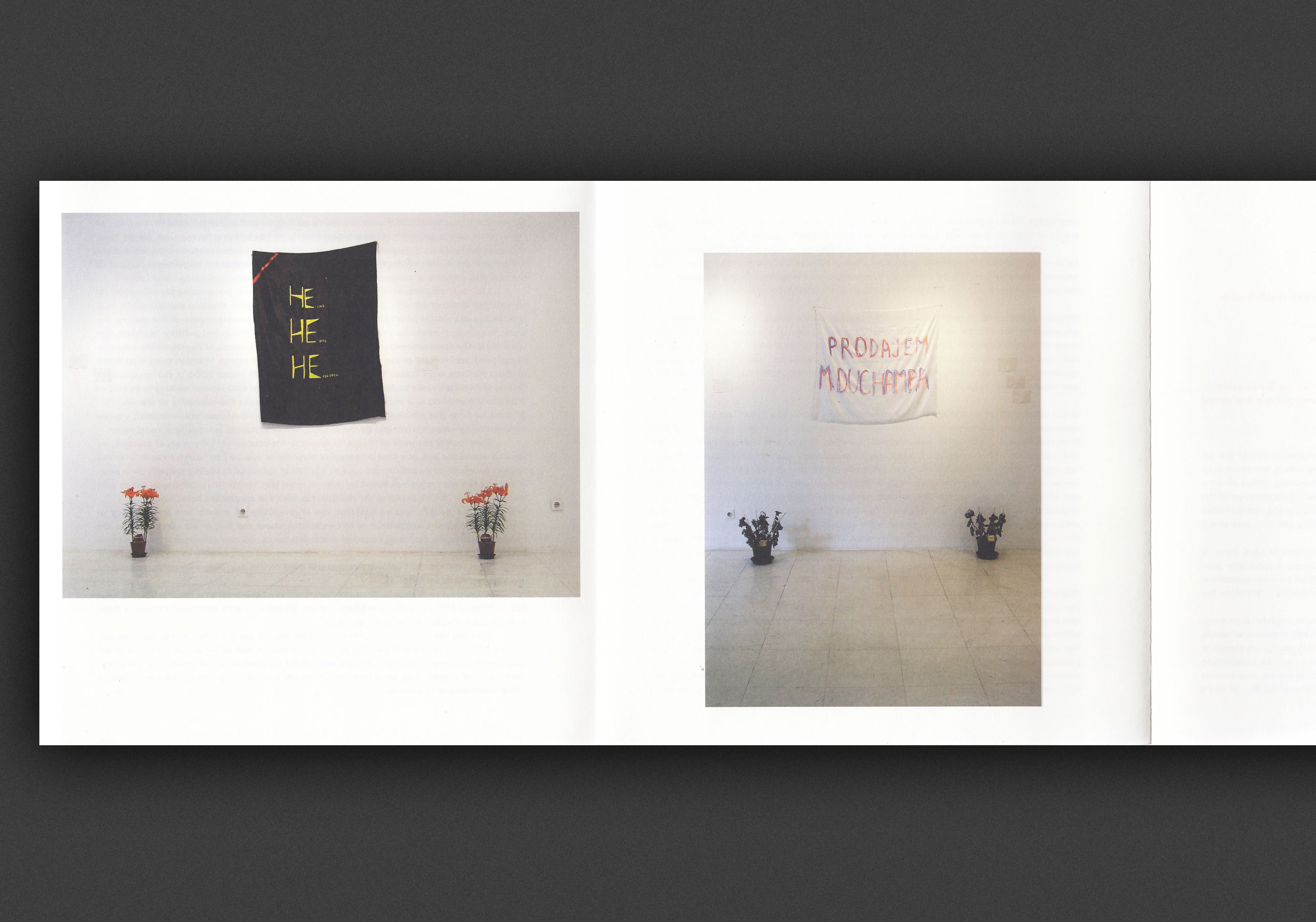
Mladen Stilinović
"Various Works 1986 - 1999"
02 February 16 - September 10, 2016
Various works 1986 - 1999, from two houses, from the collections of John Nixon, Sue Cramer, Kerrie Poliness, Peter Haffenden and Phoebe Haffenden.
Including: Geometry of Cakes (various shelves), 1993; Poor People’s Law (black and white plate), 1993; White Absence (glasses, ruler, set square, silver spoon, silver ladel with skin photograph and wooden cubes), 1990-1996; Exploitation of the Dead (grey and red star painting, wooden painting, black spoon with red table, red plate), 1984-1990; Money and Zeros (zero tie, paintings made for friends in Australia (Sue, John, Kerrie), numbers painting), 1991-1992; Words - Slogans (various t-shirts) - “they talk about the death of art...help! someone is trying to kill me”, “my sweet little lamb”, “work is a disease - Karl Marx”; Various artist books, catalogues, monographs, videos; Poster from exhibition Insulting Anarchy; "Circular" Croatian - Australian edition; Artist book by Vlado Martek (Dostoyevsky); more.
Thanks to Mladen Stilinović and Branka Stipančić.
Jonathan Walker
Always Will Need To Wear Winter Shirt Blue + Ochre Small Check Pattern
21 August - 21 September, 2015
Untitled
I am not a great reader of poetry but I always return to the work of Melbourne poet, Vincent Buckley (1925- 1988). Perhaps I find his most tantalising piece to be not a finished poem but a fragment left on a scrap of paper discovered on his desk after the poet’s death.
The poetry gathers like oil
In the word-core, and spreads
It has its music meet,
Its music is in movement.
This fragment is more the shell left behind from a volatile thought than a finished poem. I find the last two lines honest but awkward whereas the first two lines work like an arrow. Most likely he could not find a resolution so it was left. Still, in its present form, it remains an eloquent testimony to the ultimate failure of a medium to express mobile thought and sensation, in Buckley’s case, through verbal language. It’s an important matter because this is something all artists have to deal with regardless of the medium.
I have never written a poem, however, I am forever copying fragments from books on paper scraps in a vain effort to fix certain notions in my head. At first, they function as bookmarks that are sometimes returned to when I open the book. But before long, as they accumulate, they fall out littering the table interspersed with A4 photocopies, bills, books and medications.
To return to Buckley’s fragment, the first two lines very much evoke how I paint nowadays. As you age, detail diminishes and patches of light become more luminous and float. I feel the most honest way of dealing with this is by smearing the oil paint on the canvas with the fingers and working close-up, blind. Only if the patches coalesce into an approaching image can the work gain a life.
-
Jonathan Walker was born in Melbourne, Australia and brought up on a dairy farm in Gippsland. In the 1970’s he studied painting at RMIT and won the Harold Wright Scholarship to the British Museum, London. During the 1980’s he exhibited at Pinacotheca Gallery, Richmond and had work shown at the NGV and Heidi City Art Gallery. Over the same period he designed the cover for the “Epigenesi” LP by Giancarlo Toniutti, Italy and conducted a mail exchange work with Achim Wollscheid, Germany. The work with artists through the post resulted in an article published in the bicentenary issue of Art and Australia 1988. He showed in artist run spaces such as WestSpace in the 90’s and 2000’s, and until 2012, taught painting at Victoria University, which is where we (Colleen Ahern and Lisa Radford) as organisers of the exhibition, among many others, had the privilege of being his student.
Walker’s knowledge was imparted to students through the careful selection of music, literature, and artists found in books that he himself had ordered for the library. Walker’s strategy was the generosity of sharing his vast knowledge with references specific to each student and their context.
Walker’s paintings share a similar focus and intimacy.
This exhibition presents a small selection of recent paintings alongside a publication that includes Walker’s writing. Observational and analytical, Walker’s work is a type of material notation — the time of day, colour and how it is blended, the both specific and fleeting location of a reflection on lino or the question of whether a chair leg should be included in a painting.
Please join us on Friday August 21 between 6-8pm to celebrate the opening of the exhibition.
Curated by Colleen Ahern and Lisa Radford.
B. Wurtz
Curated by Nic Tammens
March 26 - April 4, 2015
B.Wurtz works from a basement studio in his home on Manhattan’s Lower East Side.
This local fact is attested to by the plastic shopping bags and newsprint circulars that appear in his work. As formal objects, they don’t make loud claims about their origins but nonetheless transmit street addresses and places of business from the bottom of this long thin island. Like plenty of artists, Wurtz is affected by what is local and what is consumed. His work is underpinned by this ethic. It often speaks from a neighborhood or reads like the contents of a hamper:
“BLACK PLUMS $1.29 lb.”
“Food Bazaar”
“USDA Whole Pork Shoulder Picnic 99c lb.”
“RITE AID Pharmacy, with us it’s personal.”
“H. Brickman & Sons.”
“Sweet Yams 59c lb."
Most of the work in this exhibition was made while the artist was in residence at Dieu Donne, a workshop dedicated to paper craft in Midtown. Here Wurtz fabricated assemblages with paper and objects that are relatively lightweight, with the intention that they would be easily transportable to Australia. This consideration isn’t absolute in Wurtz’s work, but was prescriptive for making the current exhibition light and cheap. Packed in two boxes, these works were sent from a USPS post office on the Lower East Side and delivered to North Melbourne by Australia Post.
Wurtz appears courtesy of Metro Pictures, New York.
Thanks to Rob Halverson, Joshua Petherick, Sari de Mallory, Matt Hinkley, Helen Johnson, Fayen d'Evie, Ask Kilmartin, Lisa Radon, Ellena Savage, Yale Union, and "Elizabeth".
John Nixon
"Archive"
December 15 - January 20, 2014
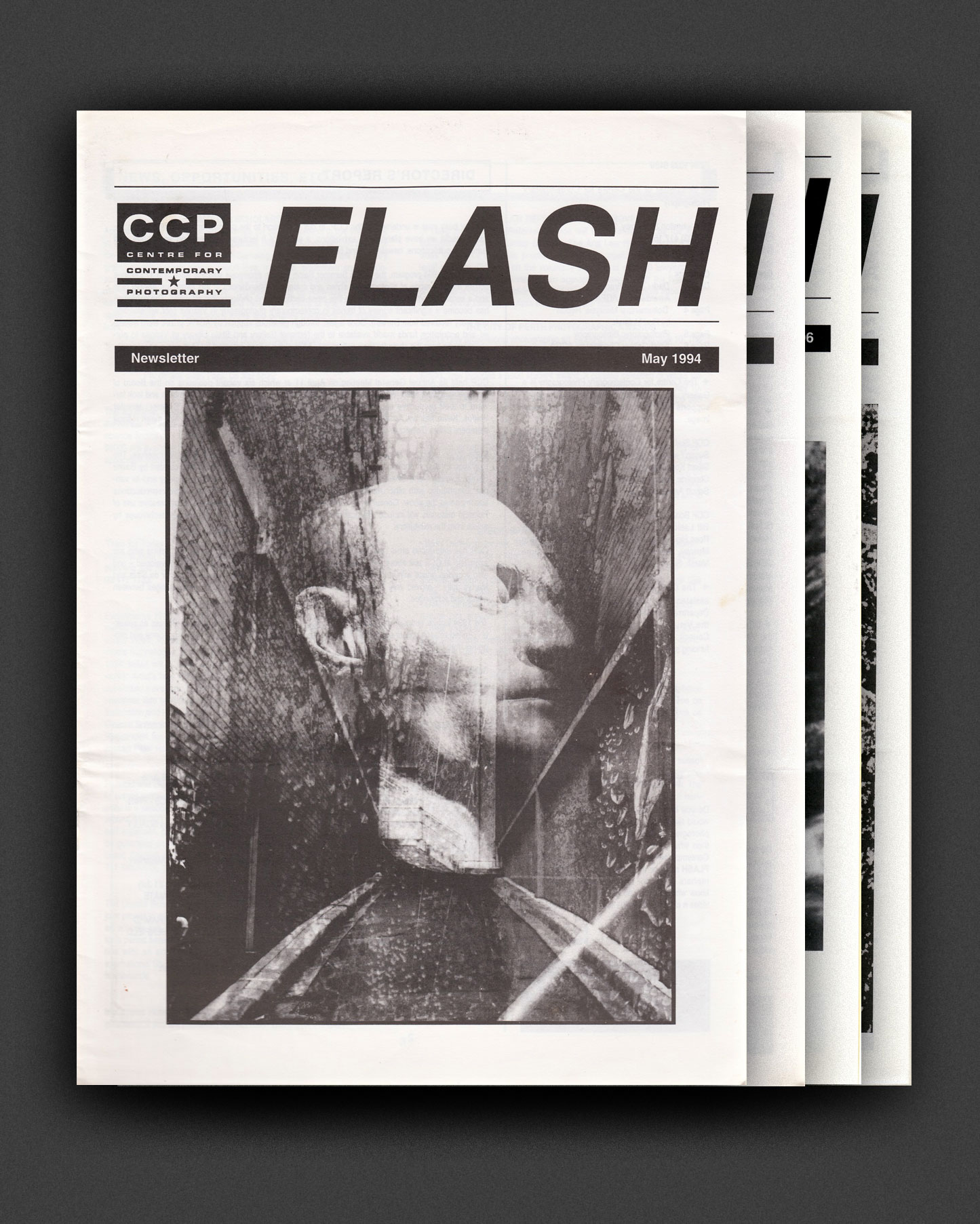
The presentation of John Nixon's archive offered a rare showcase of this extensive collection of the artist's own publications, catalogues, posters, ephemera, editions and more, from the mid 1980s onwards, alongside a selection of his artworks.
Organized by John Nixon, Joshua Petherick and Matt Hinkley.
<a href=http://wfb.public-office.info/artist/john-nixon>All titles by John Nixon
"Habitat"
at Minerva, Sydney (organised by Joshua Petherick and Matt Hinkley)
November 15 - December 20, 2014
Lupo Borgonovo, Janet Burchill & Jennifer McCamley,
Lewis Fidock, HR Giger, Piero Gilardi, Veit Laurent Kurz,
Cinzia Ruggeri, Michael E. Smith, Lucie Stahl, Daniel Weil, Wols
Press Release:
“...It contained seven objects. The slender fluted bone, surely formed for flight, surely from the wing of some large bird. Three archaic circuitboards, faced with mazes of gold. A smooth white sphere of baked clay. An age-blackened fragment of lace. A fingerlength segment of what she assumed was bone from a human wrist, grayish white, inset smoothly with the silicon shaft of a small instrument that must once have ridden flush with the surface of the skin - but the thing’s face was seared and blackened.”
William Gibson, “Count Zero”, 1986
"Autumn Projects Archive"
Curated by Liza Vasiliou
March 6 - March 15, 2014
World Food Books, in conjunction with the Virgin Australia Melbourne Fashion Festival 2014, presented the Autumn Projects archive, consisting of a selection of early examples in Australian fashion with a particular interest in collecting designers and labels from the period beginning in the 1980’s, who significantly influenced the discourse of Australian Fashion.
Curated by Liza Vasiliou, the exhibition provided a unique opportunity to view pieces by designers Anthea Crawford, Barbara Vandenberg, Geoff Liddell and labels CR Australia, Covers, Jag along with early experimental collage pieces by Prue Acton and Sally Browne’s ‘Fragments’ collection, suspended throughout the functioning World Food Books shop in Melbourne.
H.B. Peace
presented by CENTRE FOR STYLE
November 14, 2013
"Hey Blinky, you say chic, I say same"
Anon 2013
H.B. Peace is a clothing collaboration between great friends Blake Barns and Hugh Egan Westland. Their pieces explore the divergences between 'character’ and ‘personality’ in garments....etc
Special Thanks to Joshua Petherick and Matt Hinkley of WFB and Gillian Mears
and a Very Special Thank you to Audrey Thomas Hayes for her shoe collaboration.
Janet Burchill & Jennifer McCamley
"Aesthetic Suicide"
May 10 - June 8, 2013
The first of our occasional exhibitions in the World Food Books office/shop space in Melbourne, "Aesthetic Suicide" presented a body of new and older works together by artists Janet Burchill & Jennifer McCamley, including videos, prints, a wall work, and publications.
During shop open hours videos played every hour, on the hour.
$.00 - Out of stock
The eternal clean out! New items weekly.
https://worldfoodbooks.com/category/sale
Published by World Food Books / Melbourne
$20.00 - In stock -
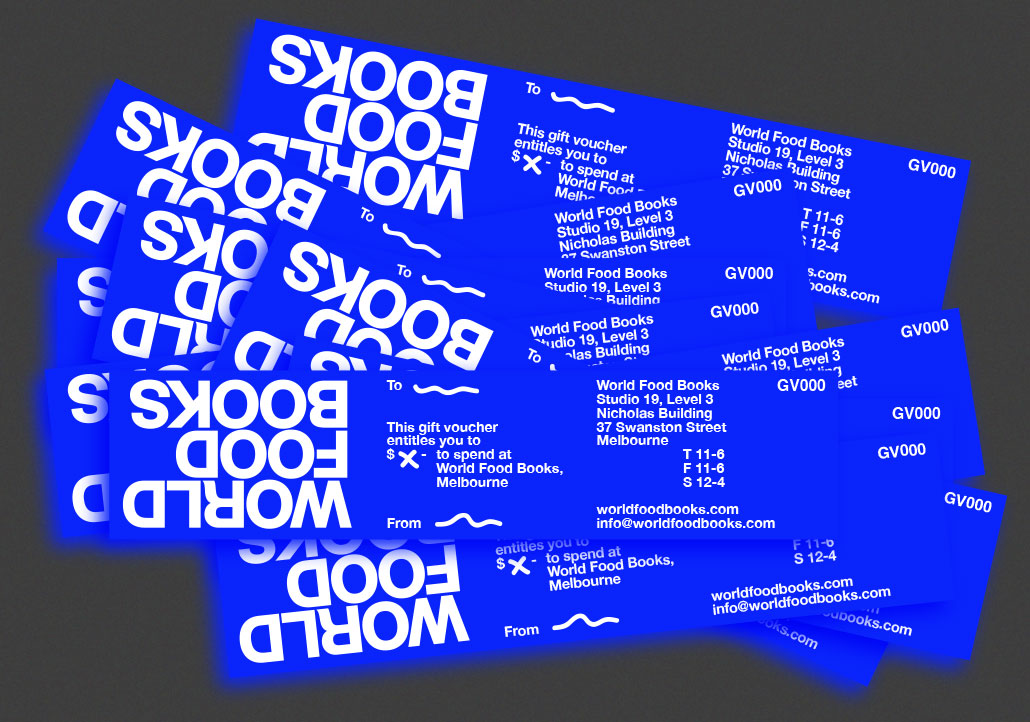
A World Food Books gift voucher is redeemable in our Melbourne bookshop or via our webshop (here). An e-voucher (printable pdf) will be sent to your purchase email address (please notify us if you wish to have the voucher sent to an alternate address and wish us to fill in the receiver's details on the card).
Gift vouchers can be purchased in increments of $20 (Australian Dollars) and the total amount can simply be added to by increasing the quantity in your shopping cart. eg. A quantity of 5 gift vouchers will result in an item total of $100 - a $100 gift voucher. Simply click "ADD TO CART" 5 times, or update your quantity in the shopping cart.
If you wish to purchase multiple, separate gift vouchers in one go, please just email us and we can personally prepare and email you a payment request.
Please note: Please select Pick-Up on gift voucher purchse to avoid any postage charges. Accidental postage charges will be refunded right away!
Thank you.
For any questions, please don't hesitate to email: [email protected]
2026, English
Softcover, 432 pages, 25.4 x 19.7 cm
Published by
Primary Information / New York
$65.00 - In stock -
Otherhow brings together four decades of writings, lectures, interviews, and documentation of work by the artist Joseph Grigely. Deaf since the age of ten, his art and writing have long questioned and made use of various modes of communication – photographs, handwritten notes, lipreading, newspaper headlines, paintings, and TV captions – to examine and scrutinise the ableism embedded in cultural and media production. From his brilliant series of postcards addressed to Sophie Calle, where he began to formulate a theory on the intersection of disability and art, to his epic lecture ‘On Failure’, which brings together the poet Keats, ‘the first woman of fly tying’ Helen Shaw, and the filmmaker Andrei Tarkovsky to the same table for a conversation on beauty, Grigely’s writing is erudite, but clear; righteous with fury, but dryly humorous.
An underlying theme throughout are modes of access and how issues of accessibility and their resolution provide a benefit to everyone, not just the disabled. Chapters devoted to art, access, and advocacy underpin the interconnected nature of these issues in a maddening, but ultimately enlightening manner. Letters of complaint, faxes and emails, unpublished op-eds, exhibition proposals, statements on equality and access; each provide a glimpse into how Grigely’s work has been shaped by – or constructed from – the ‘tangled process’ of opening access.
Joseph Grigely, artist, educator, and activist, is currently a Professor of Visual and Critical Studies at the School of the Art Institute of Chicago. He holds a Doctorate in Philosophy from Oxford in English literature and has taught at Gallaudet University, Stanford University, and the University of Michigan. Exhibiting widely in the US and Europe, his most recent show In What Way Wham? was presented at MASS MoCA in 2023–24. His work is in the collections of the Museum of Modern Art (NY), the Whitney Museum of American Art, the Tate Modern, and the Stedelijk Museum, among others.
2025, English
Softcover, 248 pages, 30 x 22.8 cm
Published by
Melbourne University Press / Naarm
$60.00 - In stock -
Keeping Things Together: 50 Years of the Women’s Art Register is a dynamic, polyvocal anthology exploring 50 years of community, care and perseverance.
Keeping Things Together delves into the 50-year legacy of the Women’s Art Register (W.A.R.), Australia’s only living archive of women’s art. This landmark publication celebrates W.A.R.’s grassroots origins and ongoing role in documenting and championing women’s art practice.
Featuring new writing, creative works and archival material, it brings together diverse voices—artists, historians, curators, archivists and educators—to explore feminist art history and the power of archives. Keeping Things Together critically rethinks how cultural knowledge is preserved, shared and expanded, amplifying marginalised voices and reviving forgotten histories. It offers fresh insight into Australian art, feminism and archival practice and provides an accessible introduction to W.A.R.’s significant collection.
Contributors: Carla Abate, Diana Baker Smith, Sofi Basseghi, Catherine Bell, Sophia Cai, Anna Daly, Bonita Ely, Gail Harradine, Maya Hodge, Sahra Martin, Georgia Milford, Juliette Peers, Caroline Phillips, Merren Ricketson, Lisa Roberts, Meredith Rogers, Bea Rubio-Gabriel, Anna Sande, Ema Shin, Nur Shkembi, Peta Tait, Ellie Thomas, Nat Thomas, Azza Zein.
Edited by: Anna Daly, Sahra Martin and Merren Ricketson
2026, English
Hardcover, 296 pages, 28 x 23.5 cm
Published by
Walther König / Köln
Albertina Modern / Vienna
$115.00 - In stock -
From auratic presences to mediumistic drawings—an account of the occult's role in the art of Vienna's Lebensreform movement.
Around 1900, a nature-oriented way of life, spiritism and theosophy inspired artists from Arnold Schoenberg to Egon Schiele. Hidden Modernism is the first to explore the occult aspects of the "Lebensreform" movement in Vienna. In the late 19th century, criticism of industrialized society's materialism reached Vienna. Spiritism and theosophy inspired many who were looking for a "better self." Painters such as Albert von Keller and Gabriel von Max documented their trance states, Gertrude Honzatko-Mediz created mediumistic drawings, the writer August Strindberg painted dark landscape visions, artists such as Richard Gerstl, Arnold Schoenberg, Egon Schiele, Oskar Kokoschka and Max Oppenheimer saw their models as auratic presences. Through intensively researched scholarly texts and abundant artwork images and archival photographs, this volume examines the search for the "New Human" in Vienna without ignoring the darker aspects of magical thinking.
Edited by Matthias Dusini, Ivan Ristic, Hans-Peter Wipplinger. Text by Karl Baier, Matthias Dusini, Laura Feurle, Kira Kaufmann, Astrid Kury, Michaela Lindinger, Therese Muxeneder, Ivan Ristic.
2026, English
Hardcover (dust jacket), 450 pages, 22.8 x 15.2 cm
Published by
Zone Books / New York
$65.00 - In stock -
A new mapping of castrato afterlives in modern Rome
Around 1830, opera houses stopped using castrati, and Rome and the Vatican became home to their glorious singing, engineered by surgery and intensive vocal training. Castrati were long mired in secrecy, obfuscations, and lies about their origin and conditions, not least the last of them, Alessandro Moreschi. Musicologist Martha Feldman declines to accept these deep-seated mysteries and concealments. After a decade and more of digging through archives and family histories comes her exciting transdisciplinary and quasi-cinematic account of Moreschi, whose recordings preserve the only sonic trace of a solo castrato.
Yet Moreschi's story extends far beyond him. It opens up intrigues, politics, and histories of the Vatican, everyday histories of nineteenth- and twentieth-century Rome, the world of Roman opera, the city's unique melange of sacred and vernacular tropes, and representations of Rome by iconic film director Federico Fellini. Moreschi and Fellini turn out to have been related by marriage, but also to share synergies grounded in Rome's persistent inclination to vernacularize the sacred. Far from telling of one anomalous figure, Feldman's gripping history convinces readers that Moreschi, like Fellini, can be read as an improbable index of Roman consciousness, both during his own life and well beyond.
2025, English
Softcover, 640 pages, 24 x 16.99 cm
Published by
Intellect Ltd / US
$110.00 - In stock -
Industrial music has long been recognized for its sonic innovations, but the radical visual culture that accompanied this underground movement has remained largely unexplored. Shock Factory: The Visual Culture of Industrial Music presents the first comprehensive examination of how industrial artists created a coherent aesthetic language across multiple media—from xerox art and mail art to installation and performance—fundamentally challenging modernist utopias while prophetically anticipating contemporary discourse about media manipulation and technological control.
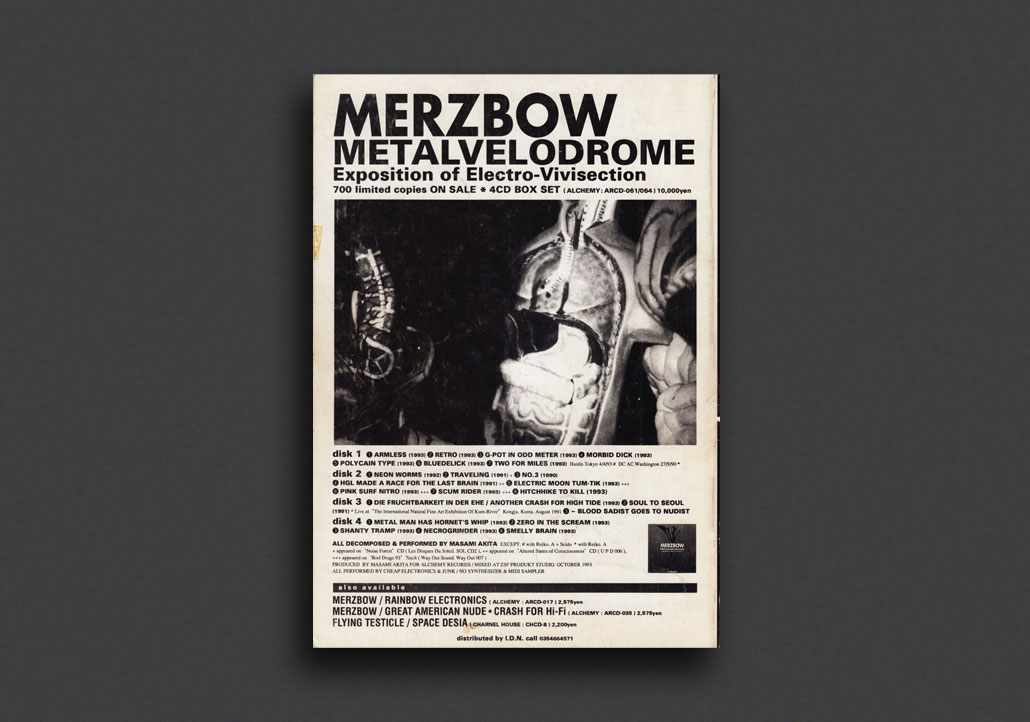
Emerging in mid-1970s Britain from the post-punk underground before expanding globally throughout the 1980s, artists like Throbbing Gristle, Cabaret Voltaire, SPK, Test Dept, Laibach, Einstürzende Neubauten, Nurse With Wound, Current 93, Coil, Psychic TV, Boyd Rice, Whitehouse, Merzbow, Hijokaidan, Hunting Lodge, Controlled Bleeding, Hafler Trio, Z'EV, Nocturnal Emissions, 23 Skidoo, Clock DVA, Master/Slave Relationship, and Monte Cazazza developed sophisticated visual strategies that matched their abrasive soundscapes with equally confrontational imagery.
At 640 pages, this award-winning monograph reveals how industrial artists systematically appropriated reprographic techniques—particularly xerox art and photocollage—to create disturbing visual narratives investigating mind control, criminality, occultism, pornography, psychiatry, and totalitarianism. Through détournement strategies borrowed from Situationist theory, they exposed the coercive mechanisms of mass media and technological society, creating a visual vocabulary that challenged viewers to confront uncomfortable truths about modern power structures. What emerges is a movement that perceptively anticipated contemporary concerns about surveillance, media manipulation, and collective psychological control. Industrial artists' exploration of these themes through deliberately provocative imagery served not as mere provocation but as sophisticated critique of the very media systems they inhabited. Their radical aesthetic choices—degraded reproduction quality, found imagery manipulation, shock tactics—created hybrid forms that defied traditional categorization while establishing independent networks that bypassed conventional art world structures.
Shock Factory positions industrial music's visual culture within broader art historical narratives, revealing connections to Dada, Surrealism, and conceptual art while demonstrating the movement's unique contributions to contemporary visual culture. The book arrives at a moment when questions about technology, media manipulation, and social control have never been more urgent, demonstrating how these artists' radical visual strategies continue to offer valuable insights for our digital age.
For scholars of contemporary art, music history, and media studies, this book provides essential documentation of an overlooked movement that significantly influenced subsequent artistic developments. For readers interested in underground culture and avant-garde aesthetics, Shock Factory reveals the sophisticated visual thinking that accompanied one of the most innovative musical movements of the past half-century.
"A history of industrial music needed to be written. Nicolas Ballet has accomplished this. Thoroughly. This is the book's greatest strength. It explores the significance of noise as a reflection of a world in decay and screaming as a need. And doing it so it reveals a significant connection between industrial music and contemporary art. This is also what makes it an essential book: its contribution to dismantling categories and rethinking history from mixed creative territories."—David G. Torres
Nicolas Ballet is an art historian and assistant curator at the Centre Pompidou in the New Media Department. He is the author of books and articles exploring the visual and sonic contributions of countercultures and experimental artistic practices.
2025, English
Hardcover, 304 pages, 29 x 22 cm
Published by
Hatje Cantz / Berlin
$105.00 - In stock -
A spectacular appraisal of one of the most innovative avant-garde artists of the Dada scene
Raoul Hausmann fought convention all his life. Radically resolved to be "unscrupulously honest" in both art and life, the Dadaist was a multimedia activist of the first hour and a sharp-tongued critic of society. Now his visionary output can be enjoyed in all its breadth. With more than 300 illustrations, this catalogue from the Berlinische Galerie traces his path: the early Expressionist works, gems of Dada from the Berlin years, Hausmann's photography, but also fashion, dance and literature, and the artist's lesser-known productivity in exile. Twelve essays by international experts in the history of art and literature, media studies, and psychoanalysis examine the multilayered oeuvre to offer a multifaceted panorama of Hausmann's astonishing significance—even today. Another appealing feature of the catalogue is its attractive, artistic design.
Raoul Hausmann (1886-1971) was an exceptionally innovative avant-garde artist. He co-invented collage, explored body, words, and space in early happenings, merged the visual with the haptic, and translated sound into images. In and beyond art, the provocative "Dadasoph" called out the establishment.
Edited by: Ralf Burmeister, Thomas Köhler
Graphic Design: Gregor Schreiter
Texts by: Hanne Bergius, Peter Bexte, Ralf Burmeister, Amélie Castellanet, Annina Guntli, Nadine Hartmann, Thomas Köhler, Annelie Lütgens, Agatha Mareuge, Nils Philippi, Bernd Stiegler, Hélène Thiérard, Timm Ulrichs, Michael White
2024, English
Softcover, 200 pages, 23 x 17 cm
Published by
Scheidegger und Spiess / Zürich
$90.00 - In stock -
A groundbreaking, richly illustrated book on Hannah Höch’s montages in the context of film and the visual culture of Modernism. Sheds light for the first time on Hannah Höch’s significance as a pioneering artist to confront the industrial age’s flood of images.
Hannah Höch (1889-1978) moved between differing worlds: as an editorial assistant with a major Berlin-based magazine publisher, and as the only woman who could hold her own in the German capital's vibrant Dada scene of the 1920s. Her works dissected a world marked by the catastrophe of the Great War and an intense consumer culture, and reassembled it in revolutionary, poetic, and often ironic ways. Scissors and glue were the weapons of her art of montage, of which she was a coinventor.
Cutting and montage also shaped film, still a new medium in the 1920s, which strongly influenced Höch's art: she understood her assembled pictures as static films. This richly illustrated and expertly annotated book explores comprehensively for the first time Höch's life-long fascination with film and the visual culture of the modern industrial age. Covering her entire career, It demonstrates how montage evolved in a field of tension between artistic experimentation, commercial exploitation, and political appropriation. A text on photomontage by Höch, written in 1948, and a text-collage on the history of montage, in which major protagonists of Modernism and Avant-garde have their say, round out this volume.
Contributors:
Martin Waldmeier is a curator at the Zentrum Paul Klee in Bern.
Nina Zimmer is director of the Kunstmuseum Bern and its affiliate Zentrum Paul Klee.
2016, English
Hardcover, 232 pages, 23.1 x 17.5 cm
Published by
Walther König / Köln
Moderna Museet / Malmö
$75.00 - In stock -
On Being an Angel takes its title from a caption the artist inscribed on two of her photographs—self-portraits with her head thrust back and her chest thrust forward. Typical of Woodman’s work in the way they cast the female body as simultaneously physical and immaterial, these photographs and the evocative title they share are apt choices to encapsulate the work of an artist whose legacy has been unavoidably colored by her tragic personal biography and her death, at age 22, by suicide. In less than a decade, Woodman produced a fascinating body of work—in black and white and in color—exploring gender, representation, sexuality and the body through the photographing of her own body and those of her friends. Since her death, Woodman’s influence continues to grow: her work has been the subject of numerous in-depth studies and exhibitions in recent years, and her photographs have inspired artists all over the world. Published to accompany a travelling exhibition of Woodman’s work, Francesca Woodman: On Being an Angel offers a comprehensive overview of Woodman’s oeuvre, organized chronologically, with texts by Anna Tellgren, Anna-Karin Palm and the artist’s father, George Woodman.
Francesca Woodman (1958–81) was born in Denver, Colorado, to an artistic family and began experimenting with photography as a teenager. In 1975 she attended the Rhode Island School of Design, and in 1979 she moved to New York to attempt to build a career in photography. Woodman’s working career was intense but brief, cut short by her death in 1981.
2023, English
Embossed hardcover (Japanese paper w. tipped-in image), 416 pages, 24.5 x 30 cm
Published by
MACK / London
$169.00 - In stock -
Francesca Woodman made her first mature photographs at the age of thirteen and went on to create a body of work that has been critically acclaimed for its singularity of style and innovative approach to photography. Despite her lifetime accomplishments – which included solo and group exhibitions and the publication of one of her books – and her work being celebrated widely in the years since her untimely death in 1981, very little has been published about her remarkable series of artist’s books until now.
Francesca Woodman: The Artist’s Books collects for the first time every page of all eight of Francesca Woodman’s unique artist’s books in one comprehensive volume, including two newly discovered books which have never been seen before, alongside better-known titles such as Some Disordered Interior Geometries. The basis of these works is in tattered nineteenth- and early-twentieth-century journals and notebooks that Woodman collected from bookshops and flea markets in Rome in the late 1970s. She later transformed these found volumes, attaching her prints, transparencies, and written annotations to their evocative pages. These books demonstrate a sophisticated relationship to narrative and sequence and offer a new understanding of the scope of Woodman’s engagement with the book form.
2026, English
Hardcover, 292 pages, 30.5 x 22.9 cm
Published by
Fulgur Press / UK
$165.00 - In stock -
The images of women in this pioneering volume evolved from alchemical philosophy, in which gendered and sexualised concepts are used to describe physical matter and laboratory processes. When alchemical imagery arose in the late Middle Ages, images of women developed in ways that reflected wider social pressures. This title examines the transformations of alchemical images of women in the early modern period and the increasing masculinisation of earlier feminine imagery. When alchemy returned to the Latin West, metals were thought to be composed of hot, dry, fixed Philosophic Sulphur and cool, moist, volatile Philosophic Mercury. In the laboratory, these lovers fused in a “Chemical Wedding” that produced their child, the “Philosophers’ Stone,” a mysterious catalyst enabling the transformation of base metals into silver and gold. As alchemical imagery developed, women appeared as ancient philosophers, religious figures, royal queens, sexual partners, cosmological personifications, deities, allegorical symbols of Nature and the wives of fools. Herbal alchemy also had ancient roots and it is in this realm that women as alchemical practitioners can be found. Using abundant illustrations, this book examines the alchemical feminine and the thematic diversity of alchemical images of women.
M. E. Warlick, Ph.D., Professor of European Modern Art at the University of Denver, teaches classes on 18th through 20th century European art. She has received DU’s Distinguished Professor Award (1991), and served as University Professor of the Arts and Humanities (1997-2000). Her books include: Max Ernst and Alchemy (University of Texas Press, 2001) and The Philosopher’s Stones (1997), rev. ed. The Alchemy Stones (2002). She has published on surrealist art and the occult, and on alchemical imagery from antiquity through the mid-17th century, analysed through a feminist lens, with articles in the Art Journal, Art Bulletin, Glasgow Emblem Studies, Culture and Cosmos, and in several anthologies published by the Association for the Study of Esotericism. Her essay on “Surrealism and Alchemy,” appeared in the Art and Alchemy exhibition catalogue (Düsseldorf: Museum Kunstpalast, 2014). Her most recent book is entitled The Alchemical Feminine: Women, Gender, and Sexuality in Alchemical Imagery (Fulgur Press, 2025).
2024, English
Softcover, 368 pages, 20.1 x 12.7 cm
Published by
The New York Review of Books / New York
$39.00 - In stock -
Vladimir Sorokin's Blue Lard is the most iconic and iconoclastic Russian novel of the last forty years. Thanks in part to its depiction of Stalin and Khrushchev having sex, which inspired a Putinist youth group to throw shredded copies of the author's books into an enormous toilet erected in front of Moscow's Bolshoi Theater, Blue Lard is the novel that tore Sorokin out of the Moscow Conceptualist underground and into the headlines.
The book begins in a futuristic laboratory where genetic scientists speak in a Joycean dialect of Russian mixed with Chinese-peppered with ample neologisms-and work to clone famous Russian writers, who are then made to produce texts in the style of their forebears. The goal of this "script-process" is not the texts themselves, but the blue lard that collects in the small of their backs as they write.
This substance is to be used to power reactors on the moon-that is, until a sect of devout nationalists breaks in to steal the blue lard, planning to send it back in time to an alternate version of the Soviet Union, one that exists on the margins of a Europe conquered by a long-haired Hitler with the ability to shoot electricity from his hands. What will come of this blue lard? Who will finally make use of its mysterious powers?
Blue Lard is a stylistically acrobatic book, translated by Max Lawton into an English idiom just as bizarre as the Russian original. Evoking both Pulp Fiction and the masterpieces of the Marquis de Sade, Sorokin's novel is a brutal, heady trip that annihilates all of its twentieth- (and twenty-first-) century competition in the Russian canon-and that annihilates Russia itself in a resounding act of heavy-metal dissidence.
Blue Lard is an act of desecration. Blue Lard is what's left after the towering masterpieces of Russian literature have been blown to smithereens, the most graphic, shocking, controversial, and celebrated book to be published in Russia since the end of Communism. Denounced as an abomination on publication in 1999-a crowd of angry Putin supporters gathered in front of Moscow's Bolshoi Theater to toss shredded copies of Sorokin's books into an enormous papier-m che toilet-this ferocious takedown of Russian greatness has since found its way into the canon of Russian literature itself.
The book begins in a futuristic laboratory where genetic scientists speak in a dialect of Russian mixed with Chinese. There they work to clone famous Russian writers, who are then made to produce texts in the style of their forebears. The goal of this "script-process" is not the texts themselves but the blue lard that collects in the small of their backs as they write. This substance is to be used to power reactors on the moon-that is, until a sect of devout nationalists breaks in to steal the blue lard, planning to send it back in time to an alternate version of the Soviet Union, one that exists on the margins of a Europe conquered by a long-haired Hitler with the ability to shoot electricity from his hands. What will come of this blue lard? Who will finally make use of its mysterious powers?
Max Lawton's translation of Blue Lard, the first into English, captures this key work in all its grotesque, havoc-making, horrifying, visceral intensity.
2024, English
Softcover, 320 pages, 20.2 x 12.7 cm
Published by
The New York Review of Books / New York
$39.00 - In stock -
Red Pyramid is a sort of "greatest hits" collection of short stories from across Vladimir Sorokin's career, beginning with juvenilia like "The Pink Tuber," composed with no expectation of either publication or readership; moving on to scatological conceptual texts like "An Obelisk"; then plunging into the more even-tempered, but still quite uncanny, delights of his post-Soviet work.
Stories like "A Month in Dachau" earn Sorokin his moniker as the "Russian De Sade," while others, like "Timka," are shockingly tender-despite their graphic depictions of mass shootings and anal sex.
This collection also contains the infamous "Nastya," a story about a family cannibalizing its daughter on the eve of the twentieth century, for which Sorokin was nearly put on trial; "Horse Soup," which was the first translation from the Russian to win an O'Henry Prize; as well as stories published in Anglophone magazines such as The New Yorker, n+1, Harper's, and The Baffler to great acclaim.
Translated by Max Lawton with equal attention to chewiness and pop flair, Red Pyramid is introduced brilliantly, brutally, and as always, unexpectedly by Will Self. Red Pyramid is perhaps the best place to begin a dive into Sorokin's arch detonation of Russian violence.
Extended comic turns like The Queue and relentless, mind-bending, genre-shredding extravaganzas like Ice Trilogy have established Vladimir Sorokin as a master of the contemporary novel. It is to Sorokin's short fiction, however, that readers must turn to encounter the wildest and most unsettling of his inventions and provocations. Sorokin is a virtuoso of parody and pastiche, as well as a poet of the black sites where the human soul stands exposed to its own incontinent desires, and Red Pyramid spans the whole of his career, from his emergence in the Soviet Union as a member of Moscow's artistic underground to his late preeminence as an observer and interpreter of the Putin era, with its squalid parade of gruesome folly and unhinged violence. Included here are queasy tour-de-forces, like the early "Obelisk," a story as scatological as it is conceptual; the notorious "A Month in Dachau," which earned Sorokin his sobriquet as the Russian Sade; and profoundly unsettling texts like "Tiny Tim," where tenderness is inseparable from horror.
Sorokin's stories have appeared in The New Yorker, n+1, Harper's Magazine, and The Baffler. This is the first time they have been collected in English.
1990 re-print, English
Softcover, 120 pages, 20.3 x 28 cm
Published by
RE/SEARCH / San Francisco
$49.00 - Out of stock
Revised, Expanded, Illustrated, and Annotated Edition of the author’s classic, published by RE/Search in 1990. Original text supplemented with Annotations, Commentary, and Four Additional Stories by J.G. Ballard.
Contains beautifully shocking Illustrations by Phoebe Gloeckner and Ana Barrado; design was conceived by V. Vale and executed at his typesetting shop. J.G. Ballard wrote the explanatory annotations for this RE/Search edition at Vale’s request.
Foreword by William S Burroughs, Introduction by V. Vale. First published in 1970 and widely regarded as a prophetic masterpiece, this is a groundbreaking experimental novel by the acclaimed author of “Crash” and “Super-Cannes”.
The 1970 First American Edition was banned by court order, forcing Doubleday to shred the entire print run. An experimental (rather than a conventional) novel, it has lost none of its awesome power to shock. Atrocity Exhibition is widely regarded as Ballard’s finest, most complex work…
The irrational, all-pervading violence of the modern world is the subject of this extraordinary tour de force. The central character’s dreams are haunted by images of John F. Kennedy and Marilyn Monroe, dead astronauts and car-crash victims as he traverses the screaming wastes of nervous breakdown. Seeking his sanity, he casts himself in a number of roles: H-bomber pilot, presidential assassin, crash victim, psychopath. Finally, through the black, perverse magic of violence he transcends his psychic turmoils to find the key to a bizarre new sexuality.
A “must-have” edition for J. G. Ballard collectors.
2000, Japanese
Hardcover (w. dust jacket), 80 pages, 27 x 19.2 cm
1st Edition, Out of print title / used / very good
Published by
Kadokawa Shoten / Tokyo
$70.00 - In stock -
First 2000 hardcover edition of this lavish photo book, Derrière les paupières (Behind the Eyelids), collecting the delicate ball-jointed bisque doll works of renowned Japanese doll artist Koizukihime (b. 1955). Koizukihime's ethereal gothic dolls exude a quiet, timeless beauty, imbued with the softness of enternal youth. Shot intimately by Japanese photographer Sakichi Kataoka, her nymphish girl creations—whether coffined, stigmatic, in slumber, or in erotic undress—are set in macabre, dreamlike scenarios of ritual, eros and death. Koizukihime began creating ball-jointed dolls in 1980 – the entire body is divided into parts, each connected by a sphere at the joints, allowing the joints to move freely. An artistic method radicalised by Hans Bellmer. By 1996, Koizukihime was creating all-bisque ball-jointed dolls, introducing high-end antique doll methods of late 19th century France, making all of the doll's parts out of fired porcelain and joining them with strong elastic bands.
VG copy in VG dust jacket.
2014, English
Softcover, 112 pages, 28 x 21.59 cm
Published by
Creation Books / London
$48.00 - In stock -
The modern era of underground doll-making in Japan began in the late 1960s, with the experiments of Simon Yotsuya and Nori Doi. Directly inspired by the Surrealist Doll constructed by Hans Bellmer in 1932, Simon Yotsuya created a series of ball-jointed, life-sized dolls which featured in his ground-breaking "Eve In The Past And The Future" exhibition in Tokyo, in 1973.
Simon Yotsuya's work inspired a new wave of avant-garde Japanese doll-making, headed by artists such as Ryo Yoshida and Katan Amano, which has continued to flourish to the present day. SECRET DOLL UNDERGROUND, presented by Yuichi Konno, features dolls by fifteen artists, from Simon Yotsuya onwards, with over 80 full-sized colour photographs never before published outside Japan. It also includes Konno's introductory history of the underground doll in Japan.
Yuichi Konno is the editor of Yaso, an independent arts and culture publication founded in 1979.
1994, Japanese / English
Hardcover (w. corflute envelope slipcase), 196 pages, 32.5 x 23.5 cm
1st Edition, Out of print title / used / very good
Published by
Sequoia / Tokyo
$200.00 - In stock -
"I dedicate this book to all lives"
Very rare, first volume of the highly collectible cult classic two-volume death photo book series, SCENE, published in 1994 in Japan only. A lavish hardcover production filled with high-quality monochrome reproductions of anonymous, uncredited corpse photography, seemingly sociopolitical photo-journalism of human massacre stripped of text/language as a confronting stream of vivid and graphic images in conceptual photo book form. SCENE presents an unwavering, unapologetic exploration of a world usually hidden from view — the dead and death. Not for the faint of heart. Compiled by Kunio Shimizu and Yoichi Shibata for publisher Hirofumi Nagashima, SCENE is housed in an elaborate black button-and-tie-bound corflute envelope. Select plates have been featured in the pages of Kotaro Kobayshi’s underground publications TOO NEGATIVE and ULTRA NEGATIVE from the same period.
Fine copy with only standard storage wear from button-bind pressure to envelopes/wear to button metal.
2024, English
Hardcover (w. dust jacket), 316 pages, 21 x 15 cm
Published by
Infinity Land Press / London
$80.00 - In stock -
Necrophilia has shadowed humanity throughout its existence, from ancient Egypt, to the Moche culture of Peru, the exploits of the renowned Vampire of Montparnasse, the sexual murders of the Weimar Republic, through to serial killers such as Ted Bundy and Jeffrey Dahmer. This new edition of Grave Desire – with artworks by Karolina Urbaniak – delves unflinchingly into the myths, art and practices surrounding this taboo subject. Finding Juliet’s catatonic body and believing she had poisoned herself, it could have crossed Romeo’s mind to act out the unthinkable. Maybe Juliet, seeing Romeo’s corpse, considered a little sexual frottage before she stabbed herself with the phallic dagger. Repulsive yet real, disgusting and disturbing, this is an erotic book of the dead.
“If sex and death are two pivotal obsessions of the human species, Steve Finbow nails both of them simultaneously in his brilliantly incisive cultural and corporeal history of necrophilia. Pathologically and outlandishly good.”—Stephen Barber
“If you only read one book before you die make sure it’s Grave Desire.”—Stewart Home
Illustrated by Karolina Urbaniak
Interview conducted by Martin Bladh
Afterword by Richard Marshall
2026, English
Hardcover, 256 pages, 26 x 18 cm
Published by
Princeton University Press / New York
$69.00 - In stock -
From the author of Gothic, a marvelously illustrated cultural history of graves and graveyards, from the earliest known burial sites to today’s green burials.
Why, how, and where do we inter our dead? How have people throughout history responded to the problem of laying their dead to rest? Roger Luckhurst sets out in search of answers in this arresting book. Taking readers on an unforgettable tour of the rich and unusual visual culture of the grave, he visits locales such as the pyramids of Giza, the catacombs and columbaria of Rome, and the cenotaphs erected to the world’s war dead. Along the way, he examines the diverse role of graveyards in literature, art, film, and television.
In engaging chapters that look at all aspects of the treatment of the dead, Luckhurst covers topics ranging from early burials and the emergence of necropolises and catacombs to grave robbing, garden cemeteries, the perilous overcrowding of the urban dead, and the emergence of modern funerary culture. Exploring the cultural afterlives of burial and memorial sites in the popular imagination, he shows how graves have served as guides to the underworld, poignant dedications to those we have lost, as reminders of our own mortality, and settings in gothic horror.
Blending lively storytelling with a wealth of stunning illustrations, Graveyards is a lyrical, frequently unexpected account of the grave as a signpost to the afterlife, a site of remembrance and self-reflection, and an object of enduring fascination.
1984, Japanese / English
Slipcase, corrugated envelope, 64 looseleaf plates, 29.7 x 21 cm
Stamped and numbered,
1st Edition, Out of print title / used / very good
Published by
B-Sellers / Japan
$350.00 - In stock -
Very rare first stunning printing of Scene of Death, a rare 1984 death photo collection, published by B-Sellers in Japan only, compiled by Noriaki Nakagawa, Hitomi Komukai, and Yoichi Shihata. An elaborate and beautiful print production of the macabre. Housed in an illustrated slipcase within a stamped, button-and-tie-bound corrugated envelope, 64 looseleaf monochrome photographic plates reproduce images from "Atlas der Gerichtsmedizin", an absolutely fascinating collection by Weiman / Prokop, first published in 1963. Atlas der Gerichtsmedizin was originally a serious German scientific reference book for criminal investigators and those in the medical field — a photo scrapbook of thousands of images of graphic human death scenes — suffocation and strangulation, drowning and death by water, death by burning and electrocution, crimes of passion, abuse and neglect, and more. In turn, this visual opus became a bible of reference imagery to a wave of musicians, artists and authors during the industrial avant-garde, from Throbbing Gristle to Paul Buck to Atrax Morgue. This meticulous and unique Japanese offering further influenced many Japanese artists in the 1980s—1990's. Later re-printed in 1994.
Stamped and numbed first printing.
"We believe the scenes of death is, in one sense, the most erotic of human nature. It is at the time of death that man no longer can attempt to control his inner self and therefore the real self appears vividly. Here we have opened the doors to a topic that is usually not only hidden but also shut out of the minds of man. Please share our excitement and take a glance into the world of hidden eroticism"—Scene of Death blurb.
VG—NF copy in VG—NF slipcase, all plates still wrapped in seldom preserved internal obi strip. Some wear/rusting to envelope buttons.
2025, English
Softcover, 130 pages, 20.3 x 17.8 cm
Published by
The New York Review of Books / New York
$34.00 - In stock -
Ancient Mesopotamia, the Zodiac, and the land of the dead feature in this wildly surrealistic adventure story—Leonora Carrington's revolutionary second novel, long out of print.
The Stone Door is an omen, an incantation, and an adventure story rolled into one. Built in layers like a puzzle box, it is the tale of two people, of love and the Zodiac and the Kabbalah, of Transylvania and Mesopotamia converging at the Caucasus, of a mad Hungarian King named Böles Kilary and of a woman's discovery of an initiatory code that leads to a Cyclopean obstacle, to love, self and awareness, to the great stone door of Kescke and beyond.
Written at the end of World War II but not published until 1977 and long unavailable, The Stone Door is at once a celebration of the union of the surrealist painter Leonora Carrington and her husband, the Hungarian-born photographer Chiki Weisz, and an argument for the unification of the male and the female as a means of liberating the human race.
2024, English
Softcover, 208 pages, 20.32 x 13.18 cm
Published by
The New York Review of Books / New York
$36.00 - In stock -
In this delightful, cinema-inspired daydream of a novel, an identity-shifting protagonist uses the everyday inspirations of his life to catapult himself into the realm of imagination, blurring the boundaries between reality and fantasy.
The Skin of Dreams is a novel of waking dreams. Even as he lives his life, Jacques L'Aum ne, its hero, daydreams a hundred other possible lives. A few lines on a page, a chance encounter, a remark overheard in passing, any of these are enough to kick things into gear and send him off outside of himself to become a boxer, a general, a bishop, or a lord. He lives alongside his life with diligence and steadfastness; and the passage from real to dream is so natural for him that he no longer knows precisely which him he is. Eventually he becomes an actor in Hollywood, and the basis of countless dreams for others. This Jacques L'Aum ne, like the characters who surround him, has the same sort of haunting and fluid consistency as someone that we might dream of in our beds at night. And reverie, here, is born through the tale's humor, which is as gentle as it is cruel, as well as by way of a writing technique that is itself drawn from one of Queneau's great loves, the cinema.
Raymond Queneau (1903—1976) was a French novelist, poet, critic, editor and co-founder and president of Oulipo, notable for his wit and cynical humour. Born in the French town of Le Havre and educated at the Sorbonne, he then performed his military service in Morocco. An early association with the Surrealists ended in 1929, and after completing a scholarly study of literary madmen of the nineteenth century for which he was unable to find a publisher, Queneau turned to fiction, writing his first novel, Le Chiendent (Witch Grass), in Greece in the summer of 1932. Influenced by James Joyce and Lewis Carroll, Queneau sought to reinvigorate French literature, grown feeble through formalism, with a strong dose of language as really spoken. He further encouraged innovation by founding, with the mathematician François Le Lionnais, the famous group OULIPO (Ouvroir de Littérature Potentielle), which investigated literary composition based on the application of strict formal or mathematical procedures (members of the group included Italo Calvino, Georges Perec, and Harry Mathews). Queneau’s many books, which typically blur the boundaries between fiction, poetry, and the essay, include Pierrot mon ami, The Sunday of Life, Zazie in the Metro (made into a movie by Louis Malle), and Exercises in Style; under the name of Sally Mara, he published We Always Treat Women Too Well, a brilliant comic spoof on the excesses of smutty popular novels. Queneau was the editor of the Encyclopédie de la Pléiade as well as a fine poet, whose lyric “Si tu t’imagines” was a hit for the celebrated postwar chanteuse Juliette Gréco.
2020, Japanese / English
Softcover (w. dust jacket and obi-strip), 366 pages, 15 x 21 cm
Published by
Treville / Tokyo
$90.00 - In stock -
Wonderful new memorial monograph dedicated to the exceptional work of Namio Harukawa (1947 – 2020), a pseudonymous Japanese fetish artist best known for his masterful pencil works depicting female domination ("femdom"), with erotic asphyxiation through facesitting appearing as a frequent subject of his art. Born 1947 in Osaka, Japan, Harukawa’s distinctive penname combines the name of film actress Harukawa Masumi with an anagram of Naomi, the sadistic heroine in Tanizaki Jun’ichiro’s novel "Chijin no ai / A Fool’s Love". While in high school, Harukawa began contributing work to the readers’ column of leading postwar Japanese SM pulp magazine "Kitan Club". Since then, Harukawa’s drawings of male masochism have lovingly portrayed noble, voluptuously beautiful women and the men who serve them as human furniture. Namio Harukawa passed away on April 2020, he was 72 years old. This book is a requiem dedicated to the memory of an extraordinary artist who remained committed to the regime of “absolute Ganmen Kijo Shugi (facesitting principle)” throughout his artistic life.
The profusely illustrated "Facesittings Are Forever" consists of a fine selection over 300 of Namio Harukawa’s works spanning his entire career, including many unpublished works, rough sketches, late works, and coloured works of his mid-career. It features an illustrated archive of his publications, including a rare Gekiga (hard-boiled style) work “Shokeijima no Oujo” and never before seen photographs of his workshop. There are also written contributions in Japanese from Shigeru Kashima, Jun Miura, Rockin Jelly Bean, and Hitomi Onuma.