World Food Books' programme is largely produced on Kulin Nation land. We acknowledge the Wurundjeri people of the Kulin Nation as the first and continuing custodians of this land, and pay respect to their Elders past, present, and emerging.
World Food Books is an arts and special interests bookshop in Naarm / Melbourne. Founded in 2010, World Food Books is devoted to the presentation of a rotating, hand-selection of international art, design, literary and counterculture publications with an emphasis on the anti-traditional, the experimental, the avant-garde, the heretic, the marginal.
Presenting new titles alongside rare and out-of-print books, catalogues and journals spanning the fields of modern and contemporary art, design, photography, illustration, film, literature, poetry, cultural theory, philosophy, sexuality, popular and underground culture in its many radical forms, World Food Books wishes to encourage adventurous, thoughtful and open-minded reading, looking, writing, and exchange of publishing and ideas, both current and historical.
As well as our bookshop, located in Melbourne's historical Nicholas Building, all of our inventory is available internationally via our online mail-order service.
World Food Books semi-regularly co-ordinates "Occasions", a programme of exhibits and events at the bookshop and in partnership with other hosts (such as museums and art galleries) that develop out of the activities, relationships and content of the bookshop itself.
World Food Books
The Nicholas Building
37 Swanston Street
Room 5, Level 6
Melbourne 3000
Australia
SHOP HOURS:
Thu–Fri 12–6, Sat 12–5
WEB-SHOP OPEN 24/7
World Food Books
Postal Address:
PO Box 435
Flinders Lane
Victoria 8009
Australia
Art
Theory / Essay
Architecture / Interior
Graphic Design / Typography
Photography
Fashion
Eros
LGBTQ+
Fiction / Poetry
Weird / Speculative / Science Fiction / Horror
Transgressive / Visceral / Abject
Symbolism / Decadence / Fin de siècle
Film / Video
Painting
Sculpture / Installation
Performance / Dance / Theater
Drawing
Sound / Music
Curatorial
Group Shows / Collections
Periodicals
Out-of-print / Rare
Posters / Ephemera / Discs
Signed Books
World Food Books Gift Voucher
World Food Book Bag
Australian Art
Australian Fiction
Australian Science Fiction / Speculative Fiction
Australian Poetry
Australian Photography
Japanese Photography
Conceptual Art
Minimal Art
Dada
'Pataphysics / Oulipo
Fluxus
Concrete Poetry
Pop Art
Surrealism
Arte Povera
Arte Informale / Haute Pâte / Tachism
Nouveau Réalisme / Zero / Kinetic
Situationism / Lettrism
Collage / Mail Art / Xerox Art
Art Brut / Folk / Visionary / Fantastic
Illustration / Graphic Art / Bandes Dessinées
Furniture
Italian Radical Design / Postmodernism
Textiles
Ceramics / Glass
Counterculture
Protest / Revolt
Philosophy
Psychoanalysis
Anthropology
Anarchism
Socialism / Anarchism / Communism / Capitalism
Literary Theory / Semiotics / Language
Feminism / Women's Studies
Gender Studies / Sexuality
Anthropology
Fetishism / BDSM
Drugs / Psychedelia
Crime / Violence
Animal Rights / Veganism
Occult / Esoterica
Ecology / Earth / Alternative Living
Whole Earth / Crafts
All prices in AUD (Australian dollars)
Pick-Ups
Pick-up orders can be collected in our bookshop during opening hours after order date. Please collect any Pick-up orders within 2 weeks of ordering as we have limited storage space. Orders will be released back into stock if not collected within this time. No refunds can be made for pick-ups left un-collected. If you cannot make it in to the bookshop in this time-frame, please choose postage option.
Return Policy
All sales are final. We do accept returns (for refund or exchange) for items received in error. All our orders are packed with special care using heavy-duty padding and cardboard book-mailers or bubble mailers (for smaller books), using reinforcement where required. We cannot take responsibility for any lost, stolen or damaged parcels.
Insurance
Should you wish to insure your package, please email us directly after placing your order and we can organise this at a small extra expense. Although all standard/express tracked packages are very safe and dependable, we cannot take responsibility for any lost, stolen or damaged parcels. We recommend insurance on valuable orders.
Interested in selling your old books, catalogues, journals, magazines, comics, fanzines, ephemera? We are always looking for interesting, unusual and out-of-print books to buy. We only buy books in our fields of interest and specialty, and that we feel we can resell.
We base these prices on desirability, market value, in-print prices, condition and our current stock levels. We offer cash, store credit, and can take stock on consignment. All
about 25% of the price we expect to get when we sell them, or 30% in store credit. We base these prices on desirability, market value, in-print prices, condition and our current stock levels.
Sell your books any day of the week. You can drop them off and return later. If you have a lot of books, we can visit your Sydney home.
We buy books that we feel we can resell. We offer about 25 % of the price we expect to get when we sell them, or 30% in store credit. We base these prices on desirability, market value, in-print prices, condition and our current stock levels.
Philadelphia Wireman
03 August - 01 September, 2018
World Food Books is proud to announce our next Occasion, the first presentation of sculptures by Philadelphia Wireman in Australia.
The Philadelphia Wireman sculptures were found abandoned in an alley off Philadelphia’s South Street on trash night in 1982. Their discovery in a rapidly-changing neighbourhood undergoing extensive renovation, compounded with the failure of all attempts to locate the artist, suggests that the works may have been discarded after the maker’s death. Dubbed the "Philadelphia Wireman" during the first exhibition of this work, in 1985, the maker’s name, age, ethnicity, and even gender remain uncertain. The entire collection totals approximately 1200 pieces, all intricately bound together with tightly-wound heavy-gauge wire (along with a few small, abstract marker drawings, reminiscent both of Mark Tobey and J.B. Murry). The dense construction of the work, despite a modest range of scale and materials, is singularly obsessive and disciplined in design: a wire armature or exoskeleton firmly binds a bricolage of found objects including plastic, glass, food packaging, umbrella parts, tape, rubber, batteries, pens, leather, reflectors, nuts and bolts, nails, foil, coins, toys, watches, eyeglasses, tools, and jewellery.
Heavy with associations—anthropomorphic, zoomorphic, and socio-cultural responses to wrapped detritus—the totemic sculptures by Philadelphia Wireman have been discussed in the context of work created to fulfil the shamanistic needs of alternative religions in American culture. Curators, collectors, and critics have variously compared certain pieces to sculpture from Classical antiquity, Native American medicine bundles, African-American memory jugs, and African fetish objects. Reflecting the artist’s prolific and incredibly focused scavenging impulse, and despite—or perhaps enhanced by—their anonymity, these enigmatic objects function as urban artefacts and arbiters of power, though their origin and purpose is unknown. Philadelphia Wireman, whatever their identity, possessed an astonishing ability to isolate and communicate the concepts of power and energy through the selection and transformation of ordinary materials. Over the course of the past two decades, this collection has come to be regarded as an important discovery in the field of self-taught art and vernacular art.
Presented in collaboration with Fleisher-Ollman Gallery, Philadelphia, and Robert Heald, Wellington.
Susan Te Kahurangi King
02 February - 10 March, 2018
Susan Te Kahurangi King (24 February 1951 - ) has been a confident and prolific artist since she was a young child, drawing with readily available materials - pencils, ballpoint pens and felt-tip markers, on whatever paper is at hand. Between the ages of four and six Susan slowly ceased verbal communication. Her grandparents William and Myrtle Murphy had developed a special bond with Susan so they took on caring responsibilities for extended periods. Myrtle began informally archiving her work, carefully collecting and storing the drawings and compiling scrapbooks. No drawing was insignificant; every scrap of paper was kept. The King family are now the custodians of a vast collection containing over 7000 individual works, from tiny scraps of paper through to 5 meter long rolls.
The scrapbooks and diaries reveal Myrtle to be a woman of great patience and compassion, seeking to understand a child who was not always behaving as expected. She encouraged Susan to be observant, to explore her environment and absorb all the sights and sounds. Myrtle would show Susan’s drawings to friends and people in her community that she had dealings with, such as shopkeepers and postal workers, but this was not simply a case of a grandmother’s bias. She recognised that Susan had developed a sophisticated and unique visual language and sincerely believed that her art deserved serious attention.
This was an unorthodox attitude for the time. To provide some context, Jean Dubuffet coined the term Art Brut in 1945 to describe work created by self-taught artists – specifically residents of psychiatric institutions and those he considered to be visionaries or eccentrics. In 1972 Roger Cardinal extended this concept by adopting the term Outsider Art to describe work made by non-academically trained artists operating outside of mainstream art networks through choice or circumstance. Susan was born in Te Aroha, New Zealand in 1951, far from the artistic hubs of Paris and London that Dubuffet and Cardinal operated in. That Myrtle fêted Susan as a self-taught artist who deserved to be taken seriously shows how progressive her attitudes were.
Susan’s parents Doug and Dawn were also progressive. Over the years they had consulted numerous health practitioners about Susan’s condition, as the medical establishment could not provide an explanation as to why she had lapsed into silence. Dawn educated herself in the field of homeopathy and went on to treat all twelve of her children using these principles – basing prescriptions on her observations of their physical, mental and emotional state.
Doug was a linguist with an interest in philosophy who devoted what little spare time he had to studying Maori language and culture. To some extent their willingness to explore the fringes of the mainstream made them outsiders too but it was their commitment to living with integrity and their respect for individuality that ensured Susan’s creativity was always encouraged.
Even though Susan’s family supported her artistic pursuits, some staff in schools and hospitals saw it as an impediment to her assimilation into the community and discouraged it in a variety of ways. Her family was not always aware of this and therefore did not fully understand why Susan stopped drawing in the early 1990s. However, rather than dwell on the challenges that Susan faced in pursuit of her artistic practice, they prefer to highlight her achievements. In 2008 Susan began drawing again in earnest, after an almost 20 year interruption, and her work is now shown in galleries around the world.
Susan grew up without television and has been heavily influenced by the comics she read as a child. She is absolutely fearless in the appropriation of recognizable characters, such as Donald Duck and Mickey Mouse, in her work. She twists their limbs, contorts their faces, compresses them together, blends them into complex patterned backgrounds - always imbuing them with an incredible energy. Although Susan often used pop culture characters in her work they are not naive or childlike. These are drawings by a brilliant self-taught artist who has been creating exceptional work for decades without an audience in mind.
Mladen Stilinović
"Various Works 1986 - 1999"
02 February 16 - September 10, 2016
Various works 1986 - 1999, from two houses, from the collections of John Nixon, Sue Cramer, Kerrie Poliness, Peter Haffenden and Phoebe Haffenden.
Including: Geometry of Cakes (various shelves), 1993; Poor People’s Law (black and white plate), 1993; White Absence (glasses, ruler, set square, silver spoon, silver ladel with skin photograph and wooden cubes), 1990-1996; Exploitation of the Dead (grey and red star painting, wooden painting, black spoon with red table, red plate), 1984-1990; Money and Zeros (zero tie, paintings made for friends in Australia (Sue, John, Kerrie), numbers painting), 1991-1992; Words - Slogans (various t-shirts) - “they talk about the death of art...help! someone is trying to kill me”, “my sweet little lamb”, “work is a disease - Karl Marx”; Various artist books, catalogues, monographs, videos; Poster from exhibition Insulting Anarchy; "Circular" Croatian - Australian edition; Artist book by Vlado Martek (Dostoyevsky); more.
Thanks to Mladen Stilinović and Branka Stipančić.
Jonathan Walker
Always Will Need To Wear Winter Shirt Blue + Ochre Small Check Pattern
21 August - 21 September, 2015
Untitled
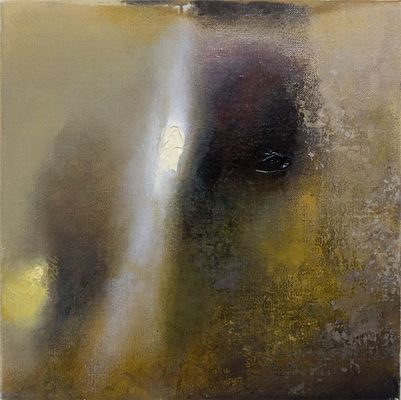
I am not a great reader of poetry but I always return to the work of Melbourne poet, Vincent Buckley (1925- 1988). Perhaps I find his most tantalising piece to be not a finished poem but a fragment left on a scrap of paper discovered on his desk after the poet’s death.
The poetry gathers like oil
In the word-core, and spreads
It has its music meet,
Its music is in movement.
This fragment is more the shell left behind from a volatile thought than a finished poem. I find the last two lines honest but awkward whereas the first two lines work like an arrow. Most likely he could not find a resolution so it was left. Still, in its present form, it remains an eloquent testimony to the ultimate failure of a medium to express mobile thought and sensation, in Buckley’s case, through verbal language. It’s an important matter because this is something all artists have to deal with regardless of the medium.
I have never written a poem, however, I am forever copying fragments from books on paper scraps in a vain effort to fix certain notions in my head. At first, they function as bookmarks that are sometimes returned to when I open the book. But before long, as they accumulate, they fall out littering the table interspersed with A4 photocopies, bills, books and medications.
To return to Buckley’s fragment, the first two lines very much evoke how I paint nowadays. As you age, detail diminishes and patches of light become more luminous and float. I feel the most honest way of dealing with this is by smearing the oil paint on the canvas with the fingers and working close-up, blind. Only if the patches coalesce into an approaching image can the work gain a life.
-
Jonathan Walker was born in Melbourne, Australia and brought up on a dairy farm in Gippsland. In the 1970’s he studied painting at RMIT and won the Harold Wright Scholarship to the British Museum, London. During the 1980’s he exhibited at Pinacotheca Gallery, Richmond and had work shown at the NGV and Heidi City Art Gallery. Over the same period he designed the cover for the “Epigenesi” LP by Giancarlo Toniutti, Italy and conducted a mail exchange work with Achim Wollscheid, Germany. The work with artists through the post resulted in an article published in the bicentenary issue of Art and Australia 1988. He showed in artist run spaces such as WestSpace in the 90’s and 2000’s, and until 2012, taught painting at Victoria University, which is where we (Colleen Ahern and Lisa Radford) as organisers of the exhibition, among many others, had the privilege of being his student.
Walker’s knowledge was imparted to students through the careful selection of music, literature, and artists found in books that he himself had ordered for the library. Walker’s strategy was the generosity of sharing his vast knowledge with references specific to each student and their context.
Walker’s paintings share a similar focus and intimacy.
This exhibition presents a small selection of recent paintings alongside a publication that includes Walker’s writing. Observational and analytical, Walker’s work is a type of material notation — the time of day, colour and how it is blended, the both specific and fleeting location of a reflection on lino or the question of whether a chair leg should be included in a painting.
Please join us on Friday August 21 between 6-8pm to celebrate the opening of the exhibition.
Curated by Colleen Ahern and Lisa Radford.
B. Wurtz
Curated by Nic Tammens
March 26 - April 4, 2015
B.Wurtz works from a basement studio in his home on Manhattan’s Lower East Side.
This local fact is attested to by the plastic shopping bags and newsprint circulars that appear in his work. As formal objects, they don’t make loud claims about their origins but nonetheless transmit street addresses and places of business from the bottom of this long thin island. Like plenty of artists, Wurtz is affected by what is local and what is consumed. His work is underpinned by this ethic. It often speaks from a neighborhood or reads like the contents of a hamper:
“BLACK PLUMS $1.29 lb.”
“Food Bazaar”
“USDA Whole Pork Shoulder Picnic 99c lb.”
“RITE AID Pharmacy, with us it’s personal.”
“H. Brickman & Sons.”
“Sweet Yams 59c lb."
Most of the work in this exhibition was made while the artist was in residence at Dieu Donne, a workshop dedicated to paper craft in Midtown. Here Wurtz fabricated assemblages with paper and objects that are relatively lightweight, with the intention that they would be easily transportable to Australia. This consideration isn’t absolute in Wurtz’s work, but was prescriptive for making the current exhibition light and cheap. Packed in two boxes, these works were sent from a USPS post office on the Lower East Side and delivered to North Melbourne by Australia Post.
Wurtz appears courtesy of Metro Pictures, New York.
Thanks to Rob Halverson, Joshua Petherick, Sari de Mallory, Matt Hinkley, Helen Johnson, Fayen d'Evie, Ask Kilmartin, Lisa Radon, Ellena Savage, Yale Union, and "Elizabeth".
John Nixon
"Archive"
December 15 - January 20, 2014
The presentation of John Nixon's archive offered a rare showcase of this extensive collection of the artist's own publications, catalogues, posters, ephemera, editions and more, from the mid 1980s onwards, alongside a selection of his artworks.
Organized by John Nixon, Joshua Petherick and Matt Hinkley.
<a href=http://wfb.public-office.info/artist/john-nixon>All titles by John Nixon
"Habitat"
at Minerva, Sydney (organised by Joshua Petherick and Matt Hinkley)
November 15 - December 20, 2014
Lupo Borgonovo, Janet Burchill & Jennifer McCamley,
Lewis Fidock, HR Giger, Piero Gilardi, Veit Laurent Kurz,
Cinzia Ruggeri, Michael E. Smith, Lucie Stahl, Daniel Weil, Wols
Press Release:
“...It contained seven objects. The slender fluted bone, surely formed for flight, surely from the wing of some large bird. Three archaic circuitboards, faced with mazes of gold. A smooth white sphere of baked clay. An age-blackened fragment of lace. A fingerlength segment of what she assumed was bone from a human wrist, grayish white, inset smoothly with the silicon shaft of a small instrument that must once have ridden flush with the surface of the skin - but the thing’s face was seared and blackened.”
William Gibson, “Count Zero”, 1986
"Autumn Projects Archive"
Curated by Liza Vasiliou
March 6 - March 15, 2014
World Food Books, in conjunction with the Virgin Australia Melbourne Fashion Festival 2014, presented the Autumn Projects archive, consisting of a selection of early examples in Australian fashion with a particular interest in collecting designers and labels from the period beginning in the 1980’s, who significantly influenced the discourse of Australian Fashion.
Curated by Liza Vasiliou, the exhibition provided a unique opportunity to view pieces by designers Anthea Crawford, Barbara Vandenberg, Geoff Liddell and labels CR Australia, Covers, Jag along with early experimental collage pieces by Prue Acton and Sally Browne’s ‘Fragments’ collection, suspended throughout the functioning World Food Books shop in Melbourne.
H.B. Peace
presented by CENTRE FOR STYLE
November 14, 2013
"Hey Blinky, you say chic, I say same"
Anon 2013
H.B. Peace is a clothing collaboration between great friends Blake Barns and Hugh Egan Westland. Their pieces explore the divergences between 'character’ and ‘personality’ in garments....etc
Special Thanks to Joshua Petherick and Matt Hinkley of WFB and Gillian Mears
and a Very Special Thank you to Audrey Thomas Hayes for her shoe collaboration.
Janet Burchill & Jennifer McCamley
"Aesthetic Suicide"
May 10 - June 8, 2013
The first of our occasional exhibitions in the World Food Books office/shop space in Melbourne, "Aesthetic Suicide" presented a body of new and older works together by artists Janet Burchill & Jennifer McCamley, including videos, prints, a wall work, and publications.
During shop open hours videos played every hour, on the hour.
1994, French
Softcover (French folds), 96 pages, 24 x 32 cm
1st Edition, Out of print title / used / fine
Published by
Bibliotheque de L'Image / Paris
$60.00 - Out of stock
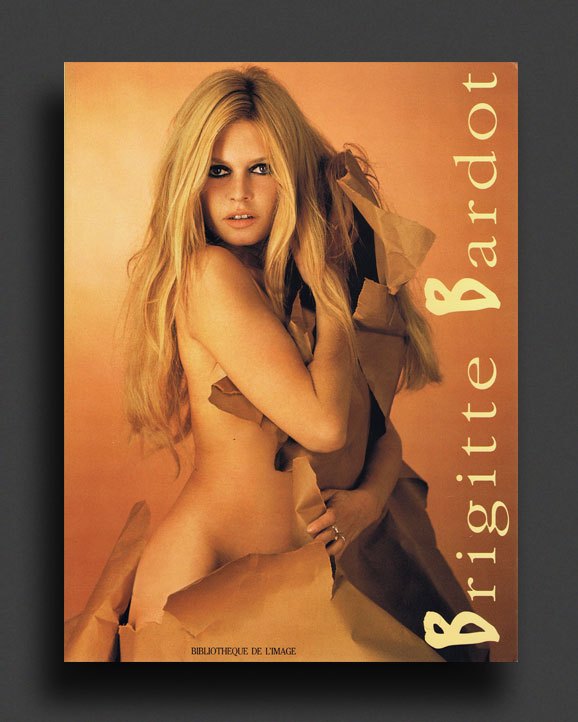
First edition of this oversized photo-book dedicated to French actress, singer, dancer, fashion model, and animal rights activist, Brigitte Bardot. Spanning her entire career, this book features the colour and black and white photography of Don Honeyman, Kicia, Tabard, Philippe Halsman, Sam Levin, Studio Harcourt, E. Quinn, Willy Rizzo, De Sazo, Peter Basch, Roger Corbeau, Gihslain Dussart, Jim Gray, Sueva Gray, Sueva Vigeveno, Jean Claude Sauer, alongside film stills and commentary and text extracts (in French) by Marcel Achard, Roland Barthes, Simone De Beauvoir, Jean Cocteau, Nina Companez, Cournot, Marguerite Duras, Raymond Durgnat, Serge Gainsbourg, Sam Levin, Claude Mauriac, Frédéric Mitterand, Otto Preminger, Olga Hortig Primuz, Françoise Sagan, François Truffaut, and more.
Brigitte Bardot was an aspiring ballerina in her early life. She started her acting career in 1952. She achieved international recognition in 1957 after starring in the controversial film And God Created Woman. Bardot caught the attention of French intellectuals. She was the subject of Simone de Beauvoir's 1959 essay, The Lolita Syndrome, which described Bardot as a "locomotive of women's history" and built upon existentialist themes to declare her the first and most liberated woman of post-war France. She later starred in Jean-Luc Godard's 1963 film Le Mépris. For her role in Louis Malle's 1965 film Viva Maria! Bardot was nominated for a BAFTA Award for Best Foreign Actress. Bardot retired from the entertainment industry in 1973 to dedicate herself to animal rights activism. During her career in show business, she starred in 47 films, performed in several musical shows and recorded over 60 songs. She was awarded the Legion of Honour in 1985 but refused to accept it.
Fine, almost As New copy.
2007, English
Softcover, 224 pages, 20 x 13 cm
Published by
Manchester University Press / Manchester
$36.00 - Out of stock
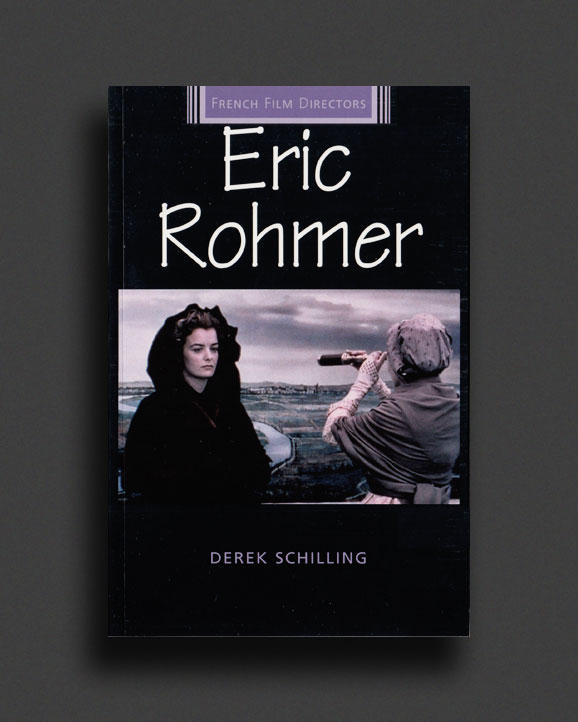
By Derek Schilling
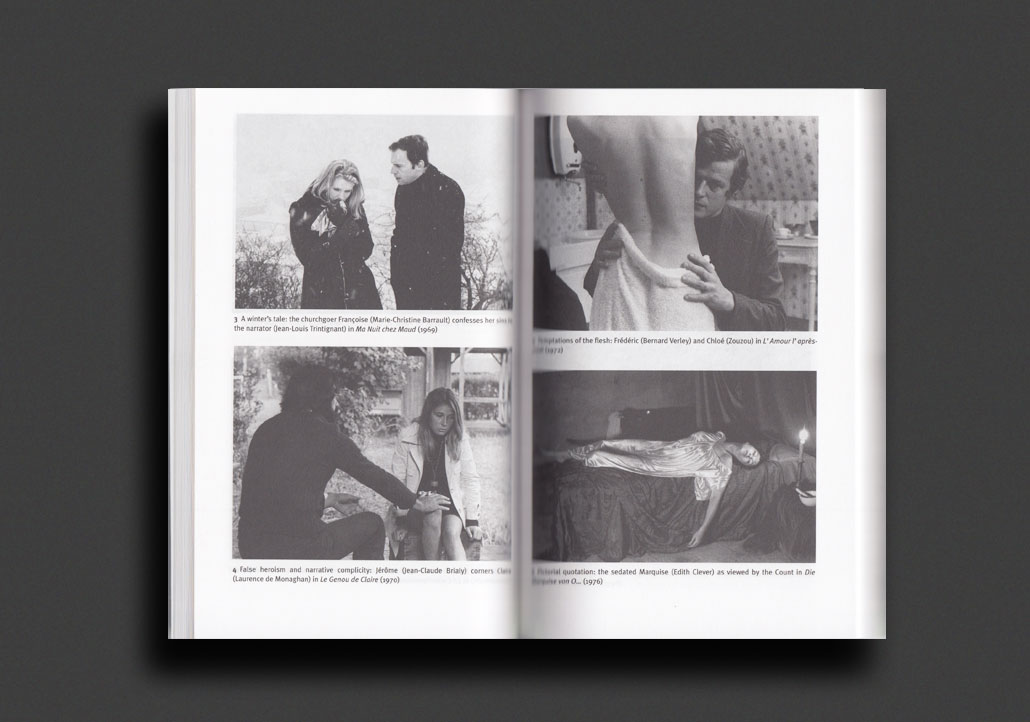
Few filmmakers have taken the principle of the 'talking picture' so far as Eric Rohmer, the internationally reknowned director of the Moral Tales, Comedies and Proverbs, and Tales of the Four Seasons cycles. Occasionally dismissed as precious or overly literary, Rohmer's features may leave the impression that there is more to listen to than to look at. Yet as the secretive director (b. Maurice Schérer in 1920) points out, dialogue is no less engaging than the best gunfights, and if his characters prefer discussing love to making it, they are no less the 'heroes' of the stories they tell.
Charges of political conservatism aside, the author of My Night at Maud's, Summer and such period films as Perceval and the all-digital The Lady and the Duke emerges - like Hitchcock before him - as a singular inventor of cinematic forms. This critical overview, which contains an extensive bibliography and a filmography, will appeal to students of Film Studies, French Studies, and enthusiasts.
From Manchester University Press' French Film Directors series, edited by Diana Holmes and Robert Ingram.
2018, English
Softcover, 240 pages, 22.5 x 28.5 cm
Published by
Walther König / Köln
$45.00 - Out of stock
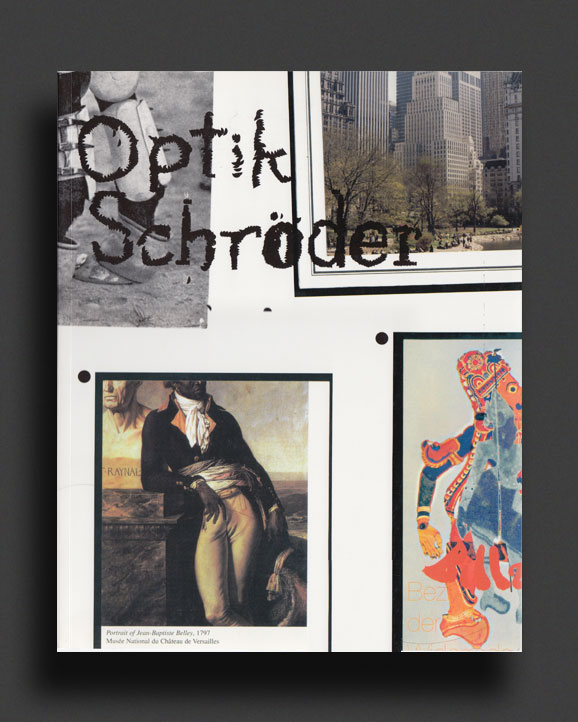
Curated by Karola Kraus, the exhibition Optik Schröder II presents a representative selection from the collection of Alexander Schröder to date. This includes important works by Kai Althoff, Tom Burr, Bernadette Corporation, Claire Fontaine, Gelitin, Isa Genzken, Anne Imhof, Sergej Jensen, Pierre Klossowski, Manfred Pernice, Martha Rosler, and Reena Spaulings, and is one of the most important German private collections of contemporary art.
These works illustrate some of the key conceptual trends and positions in the development of Western art in the past three decades, including references to social issues, queer lifestyles, the critique of institutions and the economy, critical investigation of public spaces and architecture, poetry, and contemporary forms of critical painting. The prominently represented artists’ collectives exemplify endeavors to challenge and transform the traditional roles and systems of the artist, of art production, and of the sale of art.
This comprehensive overview shows a collection built up consistently since the mid-1990s and based on close proximity to the artists and sensitivity for new developments. The collection illustrates an exemplary philosophy of collecting focusing on the nature of the contemporary, on curiosity, expertise, humor, independence, and outstanding aesthetic judgement.
Participating Artists:
Kai Althoff, Lutz Bacher, Cosima von Bonin, KP Brehmer, Tom Burr, Merlin Carpenter, Marc Camille Chaimowicz, Anne Collier, Bernadette Corporation, Lukas Duwenhögger, Jana Euler, Cerith Wyn Evans, Claire Fontaine, Gelitin, Isa Genzken, Ull Hohn, Karl Holmqvist, Alex Hubbard, Peter Hujar, Anne Imhof, Sergej Jensen, Martin Kippenberger, Pierre Klossowski, John Knight, Michael Krebber, Mark Leckey, Klara Lidén, Lucy McKenzie, Christian Philipp Müller, Henrik Olesen, Paulina Olowska, Dietrich Orth, Manfred Pernice, Josephine Pryde, Martha Rosler, Cameron Rowland, Andreas Slominski, Reena Spaulings, Katja Strunz, Philippe Thomas, Danh Vo, Peter Wächtler
Designed by Studio Manuel Raeder.
2006, English / German
Softcover, 240 pages, 220 x 270 mm
Published by
Walther König / Köln
$75.00 - Out of stock
Catalogue from Optik Schröder, Werke aus der Sammlung Schröder, 2006 exhibition at Kunstverein Braunschweig.
Now out-of-print, this comprehensive book surveys the private art collection of gallerist Alexander Schröder, built up since the mid-1990s and featuring important artworks by Andreas Hofer, Andreas Slominski, Cerith Wyn Evans, Christian Flamm, Christian Philipp Müller, Clegg & Guttmann,Cosima von Bonin, Diedrich Orth, Guillaume Bijl, Henrik Olesen, Isa Genzken, Jan Timme, Jochen Klein, Josephine Pryde, Kai Althoff, Katharina Wulff, Katja Strunz, Keith Farquhar, Lucy McKenzie, Lukas Duwenhögger, Manfred Pernice, Mark Handforth, Martha Rosler, Michael Krebber, Paulina Olowska, Reena Spauling, Sergej jensen, Sharon Lockhart, Stephan Dillemuth, Thilo Heinzmann, Tom Burr, Torsten Slama, Ull Hohn, Marc Camille Chaimowicz, Enrico David, Mark Leckey ...
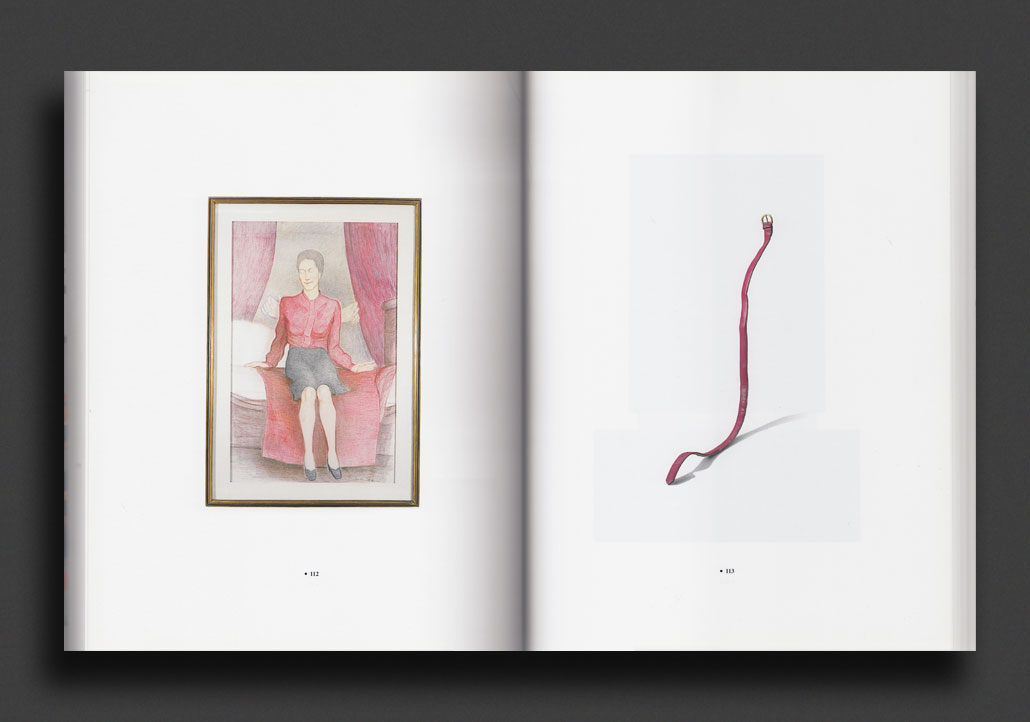
Profusely illustrated throughout with texts by Dominic Eichler, Isabelle Graw, and Karola Grasslin.
Designed by Manuel Raeder.
2018, English
Softcover, 304 pages, 14.8 x 21 cm
Published by
Sternberg Press / Berlin
Bielefelder Kunstverein / Germany
$74.00 $35.00 - Out of stock
With (1770–25k) Cécile B. Evans presents materials from three recent video works included in her solo exhibition “Timeline for a Copy without Origins” (Bielefelder Kunstverein, January 30–April 10, 2016): Agnes (The End Is Near), Hyperlinks or it Didn’t Happen, and What the Heart Wants. The amalgamations of text and image appear in the form of audiovisual transcripts, much of the material scavenged verbatim from popular culture and the user-generated web content of platforms like YouTube, Craigslist, and Reddit. Evans’s explores the themes of digital reproduction and transposition through existential discussions between characters such as Agnes, a bot commissioned for the Serpentine Galleries website, and Phil, a digital simulacrum of the late actor Philip Seymour Hoffman.
This publication was supported by the Alfried Krupp von Bohlen und Halbach-Stiftung under its “Catalogues for Young Artists” prize.
Copublished with Bielefelder Kunstverein
Design by Colophon.info
2018, English
Hardcover, 294 pages, 29.5 x 23.5cm
Ed. of 500,
Published by
MUMA / Victoria
$50.00 - Out of stock
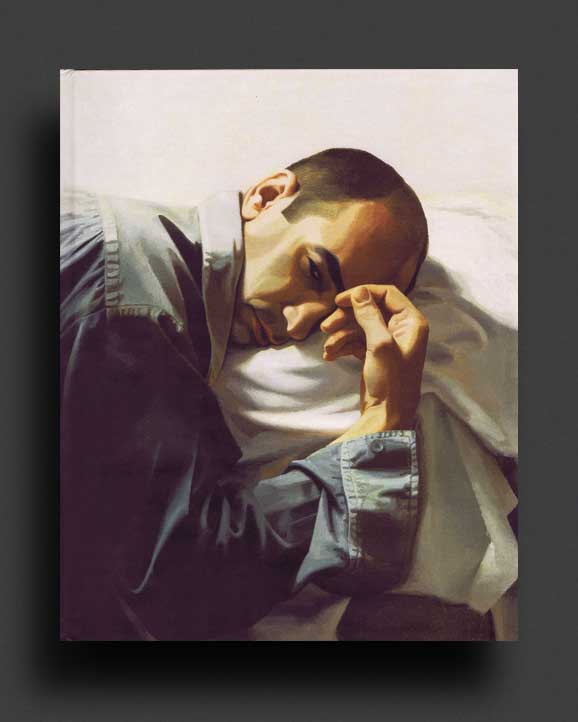
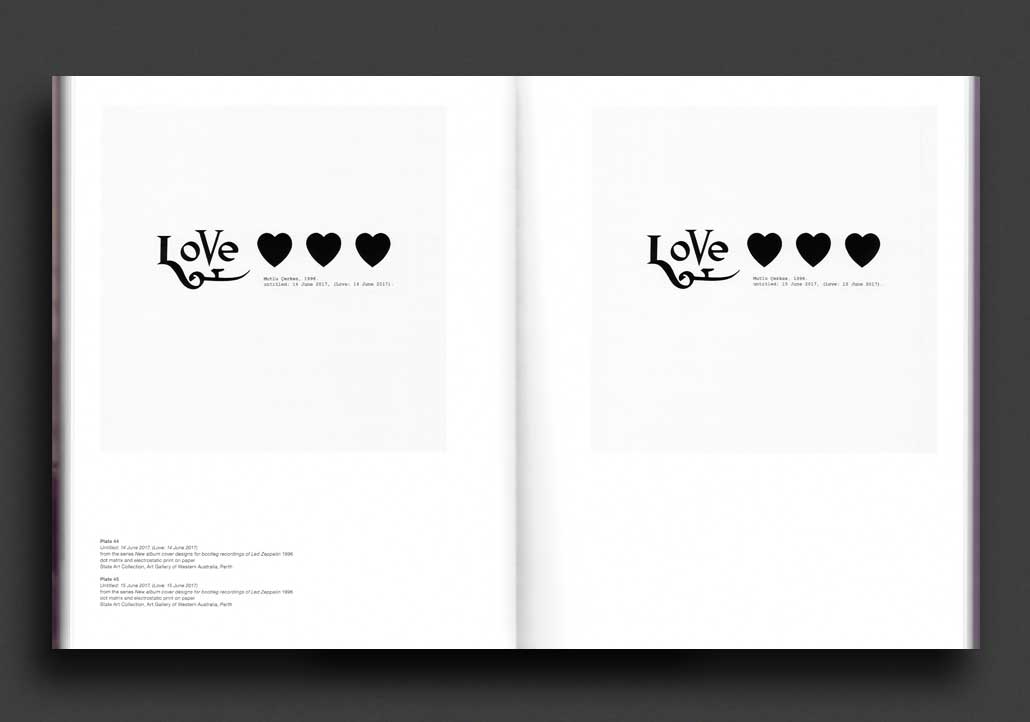
Mutlu Çerkez: 1988–2065 is the first major monograph published on the art and life of Mutlu Çerkez, the Turkish Cypriot Australian artist who lived and worked in Melbourne until his untimely death in 2005. This limited edition, deeply researched volume forms a catalogue raisonné of Çerkez's work and was published by MUMA to accompany their phenomenal 2018 survey exhibition of the artist.
Çerkez was an influential artist who, during his lifetime, had a significant impact on the Australian and international art worlds. His work incorporated traditions of conceptual art, minimalism and monochrome painting but made its own internal logic its primary reference point while strenuously resisting a reduction to any single style. Mutlu Çerkez: 1988–2065 brings together the artist’s key remaining works loaned from public and private collections across Australia as well as from the artist’s family.
This accompanying monograph reproduces all the works exhibited alongside newly commissioned essays by Francis Plagne, Max Delany and the exhibition’s curators, Charlotte Day, Helen Hughes and Hannah Mathews, archival texts and essays, an illustrated catalogue raisonné, chronology, biography, bibliography, exhibition history.
Designed by Yanni Florence and published in an edition of only 500 copies.
2012, English
Softcover, 280 pages, 18.4 x 23.4 cm
Published by
The MIT Press / Massachusetts
$85.00 $45.00 - Out of stock
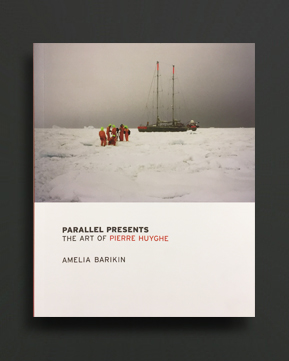
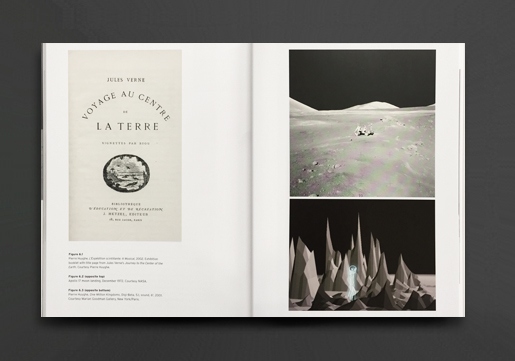
Over the past two decades, French artist Pierre Huyghe has produced an extraordinary body of work in constant dialogue with temporality. Investigating the possibility of a hypothetical mode of timekeeping -- "parallel presents" -- Huyghe has researched the architecture of the incomplete, directed a puppet opera, founded a temporary school, established a pirate television station, staged celebrations, scripted scenarios, and journeyed to Antarctica in search of a mythological penguin. In this first book-length art historical examination of Huyghe and his work, Amelia Barikin traces the artist's continual negotiation with the time codes of contemporary society. Barikin finds in Huyghe's projects an alternate way of thinking about history -- a "topological historicity" that deprograms (or reprograms) temporal formats. Barikin offers pioneering analyses of Huyghe's lesser-known early works as well as sustained readings of later, critically acclaimed projects, including No Ghost Just a Shell (2000), L'Expedition scintillante (2002), and A Journey That Wasn't (2005). She emphasizes Huyghe's concepts of "freed time" and "the open present," in which anything might happen. Bringing together an eclectic array of subjects and characters -- from moon walking to situationist practices, from Snow White to Gilles Deleuze -- Parallel Presents offers a highly original account of the driving forces behind Huyghe's work.
2017, English / German
Softcover, 248 pages, 23 x 16.5 cm
Published by
Texte Zur Kunst / Berlin
$30.00 - In stock -
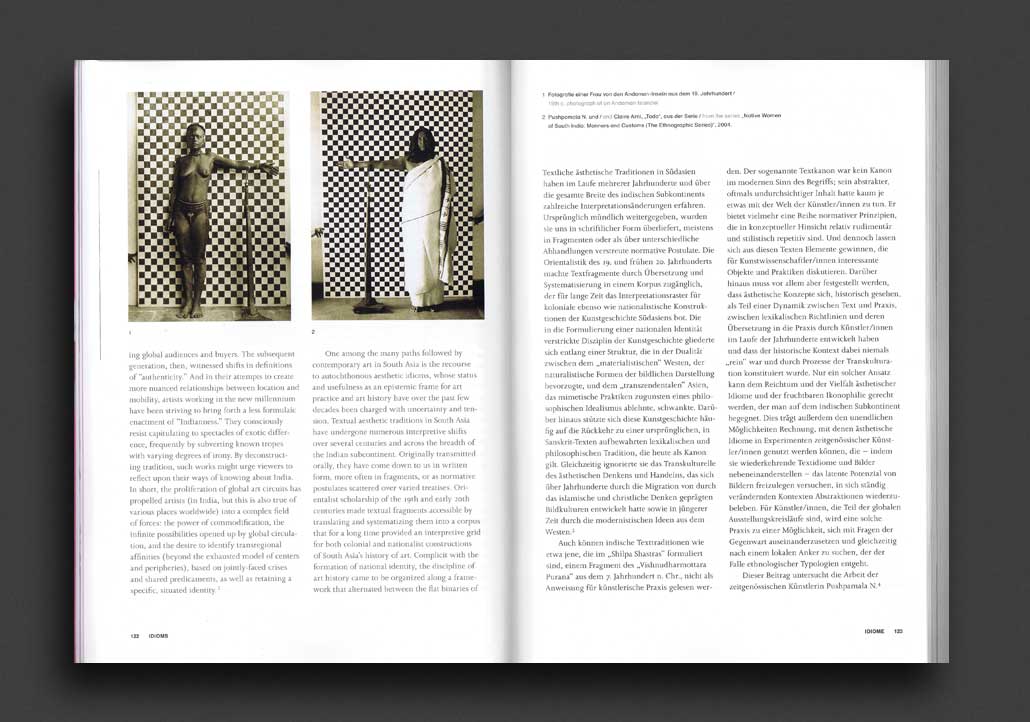
In art historical and art critical texts, the concept of “idiom” – an expression or mode of speaking that cannot be translated – is frequently used, even if it is rarely spoken of as such. TZK issue 108 explores how the idea of “idiom” might allow us to coherently engage with art's disparate materialist and iconographic connections at a time when the vitality of historical Western-centric cannons are fading (see: Documenta 14) and the traditional relations within and among artistic systems are ever less self-evident. The "Idiom" issue of TZK asks: What languages does art speak?
ISSUE NO. 108 / DECEMBER 2017 "IDIOM - LANGUAGES OF ART“
Table Of Contents
Preface
Susanne Leeb - Idioms: The Minor "A"s Of Art
Artist's Choice
Mirjam Thomann - Chapter 3: Women And Space
Anja Kirschner - In A Manner Of Speaking
Michael Dean
Linda Stupart - Didacticore: An Artist's Statement
Bouchra Khalili - Mother Tongue
Lawrence Abu Hamdan - Hear, Hear
Giovanna Zapperi - Body Of Evidence, Gestures Of Dysfunction / Technology As Practice In The Work Of Natascha Sadr Haghighian
Yvonne Volkart - From Trash To Waste / On Art's Media Geology
Monica Juneja - To Enter The Image / The Performative Self As Idiom*
Dieter Lesage - Research And Form / On "Artistic Research" And Its Aesthetic
Sven Lütticken - Modernist Memories / On The Conteporaneity of Günther Frg
Bildstrecke
Philipp Gufler
Maybe Devotion Is The Only Thing I Can Offer You
New Development
Once More With Feeling / Philipp Wüschner Über Das Symposium „Image Testimonies – Witnessing In Times Of Social Media“
Cloudism / Library Stack On Blockchain Archives And Library Futures
Liebe Arbeit Kino
Lauf, Genosse! / Madeleine Bernstorff Über „Cours, Cours, Camarade, Le Vieux Monde Est Derrière Toi. Das Kino Von Med Hondo“ Im Kino Arsenal, Berlin
Glück Auf! / Esther Buss Über Ben Russells „Good Luck“, 70. Locarno Festival
Reviews
Handlungsräume / Sophie Goltz Über „Radical Women“ Im Hammer Museum, Los Angeles
The Downward Spiral / Steven Warwick On “Trigger: Gender As A Tool And A Weapon” At The New Museum, New York
„Überlast“ Und Emanzipation – „Ich Weiss Nicht, Ob Mein Stand Es Erlaubt.“ / Isabel Mehl Über „Klassensprachen“ Im District Berlin
Katie Serva On “The Overworked Body: An Anthology Of 2000s Dress” At Ludlow 38 And Mathew Gallery, New York
Beiläufig Grundsätzlich / Bert Rebhandl Über Harun Farocki Im Neuen Berliner Kunstverein
Rien Ne Va Plus / Nuit Banai On Ericka Beckman At Secession, Vienna
Familienausstellung / Inka Meißner Über Verena Dengler In Der Kunsthalle Bern
Do You Like To Read? / Christian Berger Über „Hanne Darboven. Korrespondenzen“ Im Hamburger Bahnhof – Museum Für Gegenwart, Berlin
After Hours / Andrew Durbin On Thomas Eggerer At Petzel Gallery, New York
Remembering The Future / Bennett Simpson On William Leavitt At Honor Fraser, Los Angeles
Garten, Werkstatt, Oper – Alexander Kluge In Ausstellungen / Rainer Bellenbaum Über Alexander Kluge In Der Fondazione Prada, Venedig, Und Im Württembergischen Kunstverein Stuttgart
Getting Real / Helena Vilalta On Lee Lozano At Museo Reina Sofía, Madrid
Queere Subjektivität Und (Anti-)Koloniale Begehren / Jenny Nachtigall Über „Odarodle – Sittengeschichte Eines Naturmysteriums, 1535–2017“ Im Schwulen Museum, Berlin
Herrschaftszeichen Noch Mal! / Clemens Krümmel Über Michael Dreyer Im Badischen Kunstverein, Karlsruhe
Nachruf
Karl Otto Götz (1914–2017)
Edition
Candida Höfer
Ed Ruscha
2017, English
Hardcover, 408 pages, 23.3 x 27.3 cm
Published by
Hammer / Los Angeles
Prestel / Munich
$96.00 - Out of stock
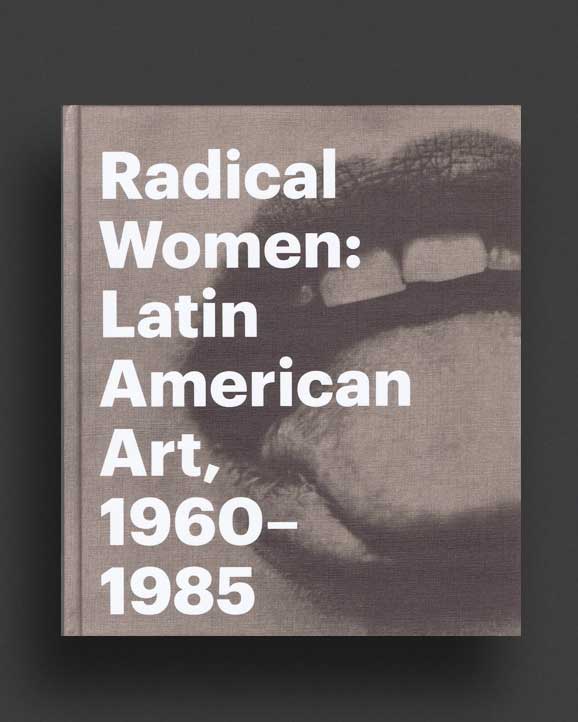
This stunning reappraisal offers long overdue recognition to the enormous contribution to the field of contemporary art of women artists in Latin America and those of Latino and Chicano heritage working during a pivotal time in history. Amidst the tumult and revolution that characterized the latter half of the 20th century in Latin America and the US, women artists were staking their claim in nearly every field. This wide ranging volume examines the work of more than 100 female artists with nearly 300 works in the fields of painting, sculpture, photography, video, performance art, and other experimental media. A series of thematic essays, arranged by country, address the cultural and political contexts in which these radical artists worked, while other essays address key issues such as feminism, art history, and the political body. Drawing its design and feel from the radical underground pamphlets, catalogs, and posters of the era, this is the first examination of a highly influential period in 20th-century art history.
About the editor:
CECILIA FAJARDO-HILL is an independent British-Venezuelan art historian and curator of modern and contemporary art, currently based in Southern California. ANDREA GIUNTA is a Buenos Aires-based writer, curator, Professor of Art History at the University of Buenos Aires, and Principal Researcher at CONICET, Argentina. She is also a visiting scholar at the University of Texas in Austin.
2017, English
Softcover, 144 pages, 11.5 x 18 cm
Published by
Sternberg Press / Berlin
A.P.E (Art Projects Era)
Kestner Gesellschaft / Hannover
$30.00 - Out of stock
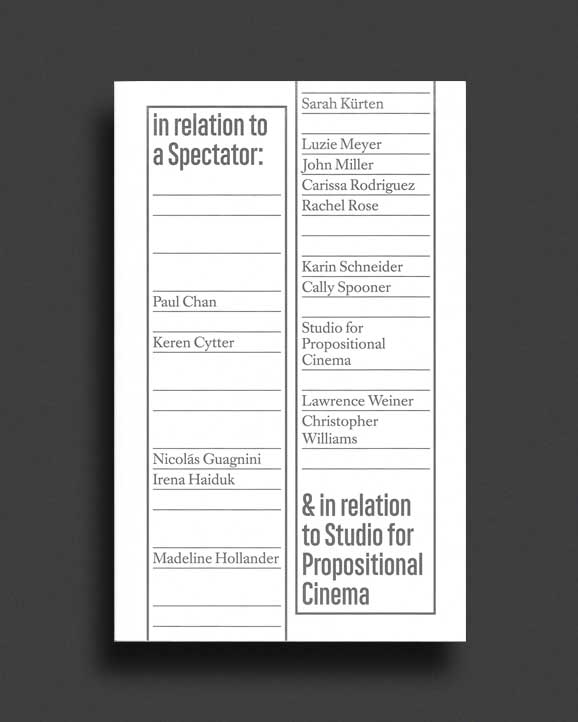
Contributions by Paul Chan, Keren Cytter, Nicolás Gaugnini, Irena Haiduk, Madeline Hollander, Sarah Kürten, Jordan Lord with Carissa Rodriguez, Luzie Meyer, John Miller, Rachel Rose, Karin Schneider, Cally Spooner, Studio for Propositional Cinema, Lawrence Weiner, Christopher Williams
A compendium of essays, scripts, poems, and proposals by various artists, in relation to a Spectator: was compiled by Studio for Propositional Cinema for their eponymous exhibition at the Kestner Gesellschaft in Hannover. In the opening text, Studio for Propositional Cinema—an artist collective founded in Düsseldorf in 2013—sets the context for the book’s investigations into notions of the script, staging, and the conditions of the exhibition itself. Other contributions include Keren Cytter’s rules and declarations for engaging life; Irena Haiduk and John Miller’s ruminations on the nature of the image and of the cinematic, respectively; a series of missives to Kevin Spacey from Cally Spooner; and an “open letter” by Christopher Williams detailing the labor and material conditions that have furnished the walls on which his exhibitions have hung.
This book is part of an ensemble of structures related to the nature of presentation in the Kestner Gesellschaft exhibition. Visually connected in their ultra-gloss white surfaces, they are meant to be seen as intertwined sites for the display of objects, the reproduction of images, the staging of performances, and the transmission language through talks and conversations.
Copublished with Kestner Gesellschaft and A.P.E. (Art Projects Era)
Design by Ronnie Fueglister
2017, English
Hardcover, 236 pages, 23.8 x 28 cm
Published by
Skira / Milan
$70.00 - Out of stock
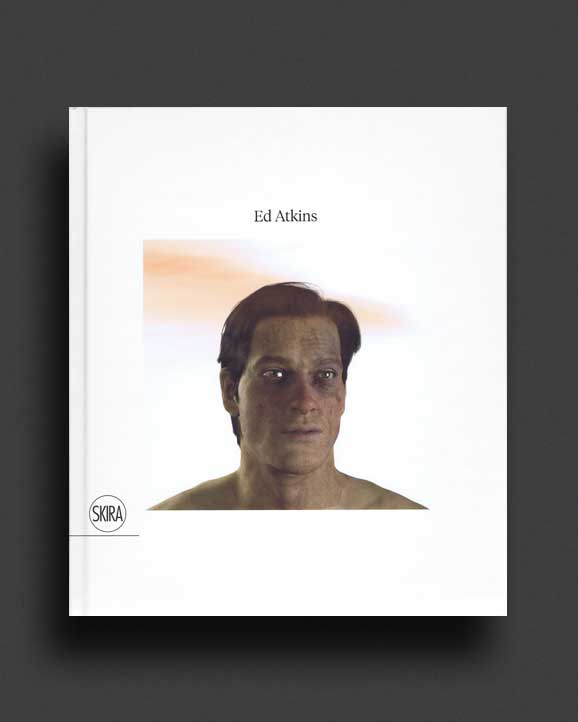
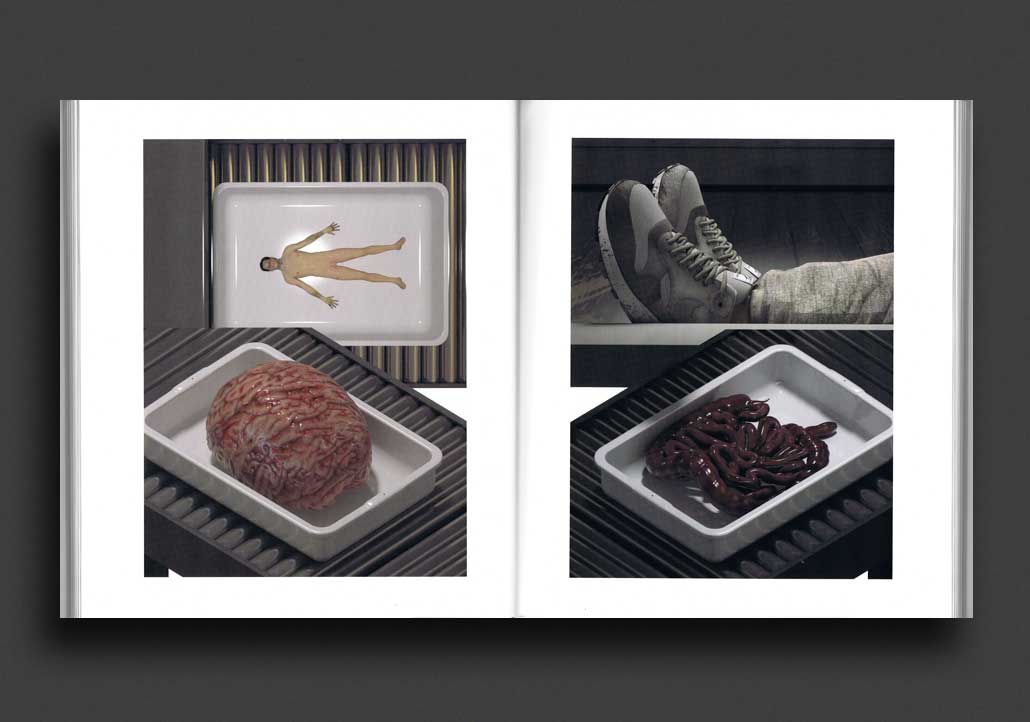
Conceived by Atkins as an artist's book, the main body is a collage of imagery, text, and graphical elements. Ed Atkins makes videos, draws, and writes, reflexively performing the ways in which contemporary modes of representation attempt to do justice to powerfully emotional experience. Atkins' work is at once a disturbing diagnosis of a digitally mediated present day and an absurd prophecy of things to come. It is skeptical of the promises of technology yet suggests that it is possible to salvage subjectivity, suspending a hysterical sentimentality within the desperate lives of the surrogates he creates.
This catalog accompanies the exhibition that is developed as a collaboration between Castello di Rivoli Museo d'Arte Contemporanea and Fondazione Sandretto Re Rebaudengo. With new essays by the editors and by Irene Calderoni and Chiara Vecchiarelli, the book is accompanied by a scholarly timeline and an anthology that includes a selection of the artist's unpublished writings, plus critical writings by Kirsty Bell, Melissa Gronlund, Martin Herbert, Leslie Jamison, Joe Luna, Jeff Nagy, Mike Sperlinger, and Patrick Ward, together with interviews by Katie Guggenheim, Hans Ulrich Obrist, Beatrix Ruf, and Richard Whitby.
2016, English
Softcover, 230 pages, 31.5 x 23.9 cm
Published by
The Artistʼs Institute / New York
Walther König / Köln
$53.00 - Out of stock
PIERREʼS is the first in a biannual publication series of The Artistʼs Institute and a platform for sustained, interdisciplinary conversation with contemporary artists.
Devoted to Pierre Huyghe, PIERREʼS takes the artistʼs recent work and research interests – topics as varied as genetic engineering, object-oriented philosophy, and the science fiction of Philip K. Dick – to draw a complex portrait of his practice through interviews, photographs, fiction and criticism.
The Artistʼs Institute is a research institute and exhibition space for contemporary art in New York City. The Institute dedicates each of its six month seasons to a single artist whose work becomes the occasion for a series of exhibitions, public programs, seminars, and publications with leading contemporary artists and thinkers.
Each season of The Artistʼs Institute considers the connections between an artistʼs work and the fields of thought with which it intersects, including literature, science, and philosophy. To this end, the Instituteʼs intimate gallery invites informal but sustained contact with art and the ideas it generates.
1984, English / Japanese / German
Softcover, 174 pages, 21 x 29.6 cm
1st Edition, Out of print title / used / very good
Published by
Asahi Shimbun / Japan
Seibu / Tokyo
$80.00 - Out of stock
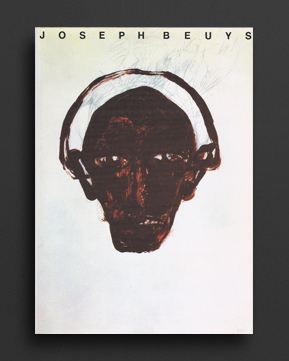
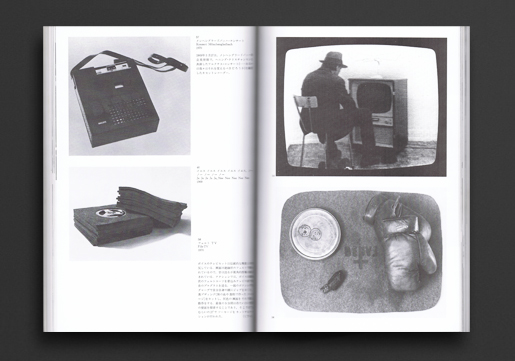
Wonderful, uncommon monographic catalogue on the work of Joseph Beuys, published to accompany a large Japanese exhibition at The Seibu Museum of Art in 1984.
Heavily illustrated throughout with colour and black/white examples of Beuys diverse works, including his many installations, sculptures, performances, editions, drawings, paintings, etc., dating from the mid-1940s to the year the book was published (1984). Includes texts in Japanese, with contributors texts from Nam June Paik and Dr. Gotz Adriani, in English, Japanese and German.
Also features extensive catalogue of works, and biography.
Joseph Beuys (12 May 1921 – 23 January 1986) was a German Fluxus, happening, and performance artist as well as a sculptor, installation artist, graphic artist, art theorist, and pedagogue.
His extensive work is grounded in concepts of humanism, social philosophy and anthroposophy; it culminates in his "extended definition of art" and the idea of social sculpture as a gesamtkunstwerk, for which he claimed a creative, participatory role in shaping society and politics. His career was characterized by passionate and only rarely acrimonious open public debates on a very wide range of subjects including political, environmental, social and long term cultural trends. He is widely regarded as one of the most influential artists of the second half of the 20th century.
2004, English
Softcover, 87 pages, 18.5 x 12.7 cm
1st Edition, Out of print title / as new
Published by
ICA / Pennsylvania
$45.00 - Out of stock
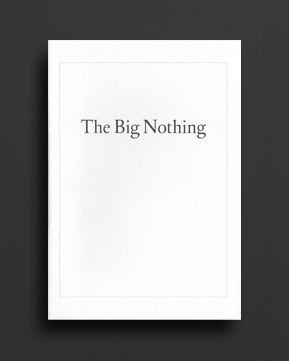
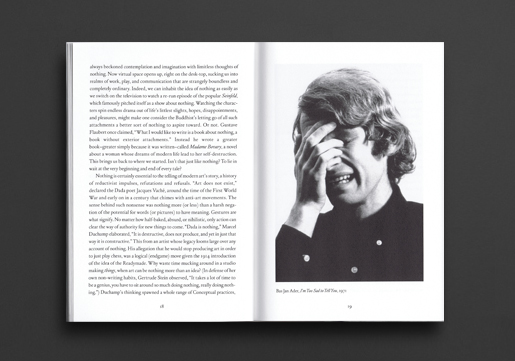
Conceptions of “nothing” are one of the driving themes of twentieth-century art. One thinks of Piet Mondrian's reductivist approach to abstraction, Marcel Duchamp's contention that art resides in ideas, not objects, Mark Rothko's painterly reach for the sublime, Andy Warhol's affirmations of the vacuity of Pop culture. The Big Nothing will focus on themes of nothing, nothingness and negation in contemporary art and culture, surveying the legacy of these and other manifestations of absence made manifest in contemporary art. Artist include Gareth James, Jutta Koether, Louise Lawler, Richard Prince, Yves Klein, Bernadette Corporation, John Miller and James Welling, among others. Given its broad connotations, “nothing” provides general audiences with immediate access to looking at and thinking about the art of today.
Exhibition catalogue published in conjunction with show held May 1 - August 1, 2004. Curated and with essays by Ingrid Schaffner, Bennett Simpson, and Tanya Leighton. Additional essay by Paula Marincola. Artists include: Bas Jan Ader, Richard Artschwager, Michael Asher, Michel Auder, Jo Baer, Robert Barry, Larry Bell, Bernadette Corporation, James Lee Byars, Maurizio Cattelan, Thomas Chimes, Bruce Conner, Day Without Art, Jessica Diamond, Roe Ethridge, Lili Fleury, Rene Gabri, Jack Goldstein, Dominique Gonzalez-Foerster, Nicolas Guagnini, David Hammons, Heavy Industries, Nancy Holt, Richard Hoeck, Roni Horn, Pierre Huyghe, Gareth James, Ray Johnson, Yves Klein, Joachim Koester, Jutta Koether, Yayoi Kusama, Louise Lawler, Gordon Matta-Clark, Allan McCollum, Patrick McMullen, John Miller, Matt Mullican, Eileen Neff, Gabriel Orozco, Raphael Ortiz, Charlemagne Palestine, Philippe Parreno, William Pope.L, Doris Salcedo, Karin Schneider, Allan Sekula, Arlene Shechet, Santiago Sierra, John Smith, Robert Smithson, Paul Swenbeck, Rirkrit Tiravanija, Andy Warhol, James Welling, John Wesley, and Steve Wolfe. Includes checklist of the exhibition.
2017, English
Paperback, 125 pages, 21.6 x 28 cm
Published by
Light Industry / New York
$75.00 - Out of stock
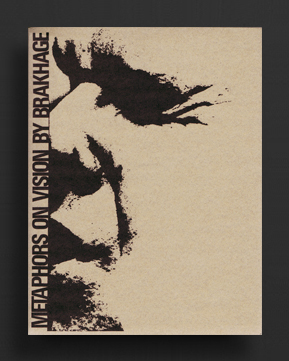
Originally published in 1963 by Jonas Mekas as a special issue of Film Culture, and designed by George Maciunas, Metaphors on Vision stands as the major theoretical statement by one of avant-garde cinema's most influential figures, a treatise on mythopoeia and the nature of visual experience written in a style as idiosyncratic as his art. Long out of print, the volume is now available in this definitive edition. Featuring Brakhage's complete text in its distinctive original layout, as well as annotations by scholar P. Adams Sitney.
2017, English / German
Softcover, 248 pages, 23 x 16.5 cm
Published by
Texte Zur Kunst / Berlin
$32.00 - Out of stock
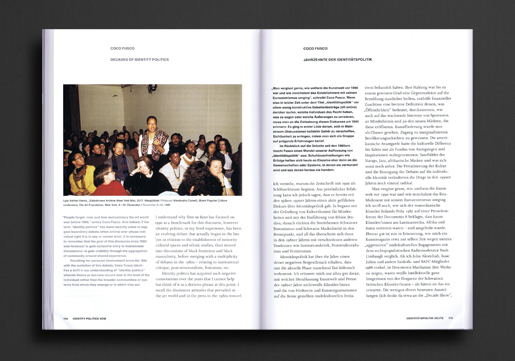
"Identity politics" has always been beleaguered territory. Yet recently the debate around “identity" has intensified and (with Trump) even developed new fronts. This issue examines the present state of identity politics in the West, finding the commodification of identity in mass culture (as in the art market) to be a leading influence. We also recognize a divide between, on the one hand, non-dominant communities cohering around identity so as to become visible together; and on the other hand, individuals aiming to stand out as special or "unique" by dint of membership in various non-dominant groups. Such ambiguity, in the face of current leadership (see issue cover) lends only all the more urgency, we feel, for a serious engagement with “identity” vis-a-vis “politics” now.
ISSUE NO. 107 / SEPTEMBER 2017 "IDENTITY POLITICS NOW"
Table Of Contents
Preface
True And False Victims / Sarah Schulman In Conversation With Caroline Busta and Anke Dyes (Texte Zur Kunst)
People Politics
Gabi Ngcobo & Yvette Mutumba, Klaus Biesenbach, Egija Inzule On "People Politics"
Monique Roelofs / Identity And Its Public Platforms: A String Of Promises Entwined With Threats
Andreas Reckwitz / Performative Authenticity: The Subject In The Late Modern Society Of Singularities
What Would Winning Look Like? / Bini Adamczak In Conversation With Anke Dyes (Texte Zur Kunst)
Coco Fusco / Decades Of Identity Politics
Bildstrecke
Sandra Mujinga
Rotation
Das Falsche Buch Zur Richtigen Zeit / Floris Biskamp Über „Beißreflexe“ Von Patsy L’amour Lalove
Apocalypse, A Lover’s Discourse / Jeff Nagy On “Life” By Hannah Black and Juliana Huxtable
Das Unbewusste Ist Strukturiert Wie Eine Ware / Helmut Draxler Und Kerstin Stakemeier Über „The Capitalist Unconscious“ Von Samo Tomšic
Zwischen Warten Und Wandern / Christiane Voss Über „Siegfried Kracauer. Eine Biografie“ Von Jörg Später
Liebe Arbeit Kino
Ghost In Chanel / Tobias Madison On Olivier Assayas’s Film “Personal Shopper”
Lippenbekenntnisse / Fiona Mcgovern Über Kerstin Honeit Im Videoraum Der Berlinischen Galerie
Grand Tour
Documenta 14 - Skulptur Projekte Münster - 57Th Biennale Di Venezia
Aus Fehlern Lernen / Sabeth Buchmann Und Ilse Lafer Über Die Documenta 14 In Athen
Incorrect History / Tom Mcdonough On Naeem Mohaiemen’s “Two Meetings And A Funeral” At Documenta 14, Kassel
Public Sculpture Pokéstop / Amy Lien And Enzo Camacho On Skulptur Projekte Münster 2017
Aufhören, Wenn’s Am Schönsten Ist / Eva Ehninger Über Die Skulptur Projekte Münster
The Stuck Hourglass / Venus Lau On The 57Th Venice Biennale
Crowd Kontrolle / Judith Rodenbeck On Anne Imhof’s “Faust” For The German Pavilion, 57Th Venice Biennale
Reviews
Negative Chic / Ken Okiishi On Rei Kawakubo/Comme Des Garçons At The Metropolitan Museum Of Art, New York
Zünftig In Die Zukunft / Beate Söntgen Über „Otto Freundlich: Kosmischer Kommunismus“ Im Museum Ludwig, Köln
The Man In The Mirror / Sarah Morris On Merlin Carpenter At Galerie Neu, Berlin
Verdeckte Arbeit / Gertrud Koch Über Sarah Morris Bei Capitain Petzel, Berlin
Marilyn And The Museum With Walls / Kevin Lotery On Rachel Harrison At Greene Naftali, New York
Unterwerfung Durch Architektur / Anna Voswinkel Über Peggy Buth Im Museum Folkwang Essen
Democracy Of Sound / Zoë Alexandra Harris On “Free Music Production/Fmp: The Living Music” At Haus Der Kunst, Munich
Tausend Snapchat-Rimbauds / Hans-Christian Dany Über Seth Price Im Stedelijk Museum, Amsterdam
Trocadero Drift / John Kelsey on Michel Houellebecq At Venus Over Manhattan, New York
Resident Aliens / Ella Plevin On Monira Al Qadiri At Gasworks, London
Blickwechsel-Begehren / Ines Kleesattel Über Birgit Megerle Im Kunsthaus Glarus
Containers Of The Virtual / Lars Bang Larsen On Hans-Christian Lotz At Christian Andersen, Copenhagen
Geschwätzige Zeiten / Tobias Teutenberg Über „After The Fact. Propaganda Im 21. Jahrhundert“ In Der Städtischen Galerie Im Lenbachhausund Kunstbau München
The Interdependence Of Feelings And Debates / Yuki Higashino On Martin Beck At Mumok, Vienna
Nachruf
Werner Hamacher (1948–2017)
Edition
Josh Kline
Juergen Teller
2017, English
Softcover, 48 pages, 20.95 x 13.3 cm
ed. of 750 copies,
Published by
Primary Information / New York
$23.00 - Out of stock
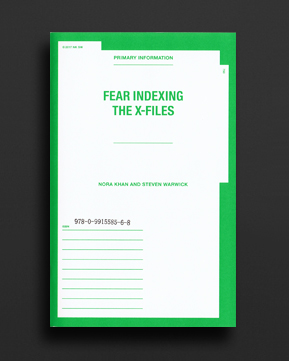
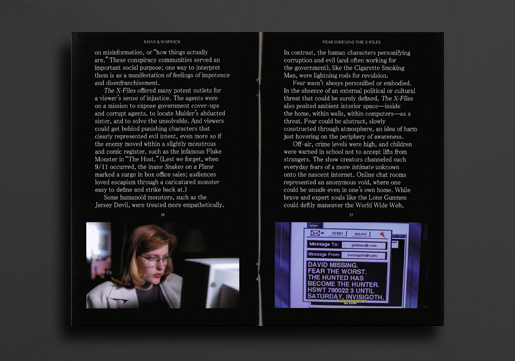
For Fear Indexing The X-Files, Nora Khan and Steven Warwick combed through the first 9 seasons of The X-Files television series—which ran from 1992 to 2002—gathering and indexing the fears that occurred as themes throughout the show. The authors employ a documentary-style commentary to narrate how the show posited fear as an inherent quality of domestic life.
The original run of the series aired in the period nestled between the end of the Cold War and the start of the War on Terror—a time in which enemies of the state shifted, with aliens replacing Communism, and a fear of ghosts and the paranormal prefacing our current climate of Islamophobia. Throughout the show, deregulated neoliberalism continually hovers, like an invisible man in the room.
Khan and Warwick take this index and link it to the rise of the World Wide Web and the global internet, which emerged in the same era. As the show developed, its characters became more adept at using the internet, as did its fans, many of whom visited chat rooms and dedicated forums to discuss episode content, speculate on theories, and come up with urban legends of their own. This behavior provides a through line to the present, as conspiracy theories discussed on those vanguard message boards eerily echo today’s fake news stories perpetuated by the alt-right.
Nora Khan is a New York City-based writer of criticism and fiction. She focuses on issues within digital art, the philosophy of technology, electronic music, and artificial intelligence, and her work has appeared in places like 4Columns, Art in America, Spike Art Magazine, California Sunday, The Village Voice, Rhizome, POSTmatter, and After Us. Khan is a 2016 Thoma Foundation Arts Writing Fellow in Digital Art, a 2017 Eyebeam Research Resident, and a contributing editor at Rhizome. She frequently collaborates with artists, including Katja Novitskova, Yuri Pattison, and Jeremy Shaw, writing essays commissioned by Sternberg Press, Mousse, Chisenhale Gallery, and König Galerie.
Steven Warwick is an artist, musician, and writer based in Berlin. He has exhibited and performed throughout the United States and Europe at venues including Exile Galerie, ICA London, the Modern Institute, MoMA/PS1, MUTEK, the Schinkel Pavillon, the New Theater Berlin, and Unsound Festival. His writings have appeared in Texte zur Kunst, Spike, Urbanomic, Electronic Beats, and The Wire. Warwick records for the label PAN under his name and also as Heatsick.
2017, English
Softcover, 116 pages, 22.8 x 15.2 cm
ed. of 1000,
Published by
Primary Information / New York
$35.00 - Out of stock
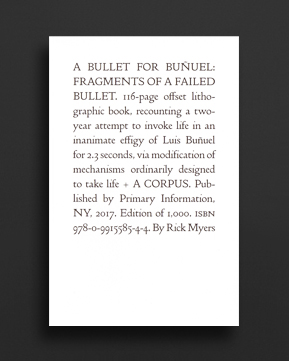
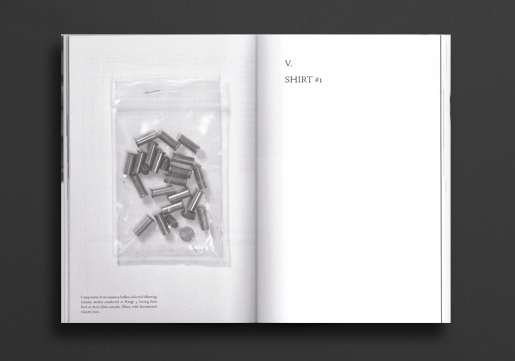
A Bullet for Buñuel: Fragments of a Failed Bullet documents Rick Myers’ attempt to complete a project begun by the late filmmaker Luis Buñuel: to create a bullet possessing such a weak charge that it would simply bounce off the filmmaker’s shirt when fired at him. Consulting with the estate and sources ranging from online forums for bullet makers to a ballistics lab associated with the United States Secret Service, Myers sought to make the bullet and fire it at a shirt that had been worn by Buñuel. While trying to bring this absurdist endeavor to completion, the artist was met with a colorful cast of characters and failures at almost every turn.
A Bullet for Buñuel has taken many forms—a video work, a multiple, and a performative lecture—all of which are represented in this publication. Myers’ writing, research, correspondence, and photographs are also included in the book, which synthesizes years of work into a singular meditation on the poetics of failure.
Rick Myers is a Manchester-born artist and publisher living in Massachusetts. Myers works in a variety of media including video, installation, and drawing in addition to producing artists’ books and editions. He has recently had solo exhibitions at The Poetry Library at Southbank Centre and The Book Library at The Courtauld Institute of Art, London; Printed Matter, New York; and White Columns, New York.
1987, English
Hardcover (w. dustjacket), 456 pages, 22.3 x 17.5 cm
1st Edition, Out of print title / used / very good
Published by
October Books / New York
The MIT Press / Massachusetts
$95.00 - Out of stock
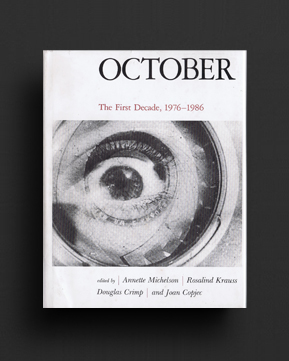
First edition of the heavy "OCTOBER: The First Decade, 1976 - 1986", which brings together a selection of some of the most important and representative texts, many from issues long out of print, that have appeared in one of the foremost journals in art criticism and theory - October.
Contributors include Rosalind Krauss, Sergei Eisenstein, Peter Handke, Georges Didi-Huberman, Mary Ann Doane, and Hans Haacke. Their essays are organized under the categories of "the index, historical materialism, the critique of institutions, psychoanalysis, rhetoric, and the body." -- publisher's statement.
Texts by Annette Michelson, Rosalind Krauss, Douglas Crimp, Joan Copjec, Nadar, Georges Didi-Huberman, Roger Caillois, Benjamin H.D. Buchloh, Sergei Einstein, Maria-Antonietta Macciocchi, Rosalyn Deutsche, Cara Gendel Ryan, Yve-Alain Bois, Daniel Buren, Louise Lawler, Christopher Philips, Homi Bhabha, Mary Ann Doane, Joel Fineman, Babette Mangolte, Peter Handke, Anette Michelson, Georges Bataille, Hollis Frampton, Robert Morris, Hans Haacke, and Trisha Brown.
"October is among the most advanced journals of the 1970s and 1980s in the fields of art theory, criticism, history, and practice. [Its editors] are intimately familiar with the cultural and political avant-garde of Europe and the U.S. and are able to attract its best thinkers.... Few, if any, journals could receive a higher recommendation."—Choice
2017, English / German
Softcover, 144 pages, 21 x 28.2 cm
Published by
Künstlerhaus Graz / Graz
Sternberg Press / Berlin
$38.00 - Out of stock
Edited by Sandro Droschl, Künstlerhaus, Halle für Kunst & Medien, Graz
Texts by Kerstin Stakemeier, Helmut Draxler
This catalogue illustrates Stephan Dillemuth’s elaborate solo show at the Künstlerhaus, Halle für Kunst & Medien, Graz, through installation photographs as well as texts by art historian Kerstin Stakemeier and theorist Helmut Draxler. The exhibition presented newly conceived works alongside works from the 1980s exhibited for the first time. Dillemuth’s paintings, sculptures, video projections, and assemblages are brought together as a theatrical social group. Plaster-cast limbs appear unexpectedly from the ceiling, enmeshed within clock cogs or combined with boars’ heads, cattle ears, and deer feet. Dillemuth’s Bayernbilder (1979) were inspired by sentimental and trivial postcard motifs from Bavarian spa towns. In Schönheitsgalerie (1985), featuring over fifty works, Dillemuth explores questions of representation. His gallery turns against the idea of external beauty and how it is represented in art. The paintings, like the faces, develop a life of their own through the process of painting, which makes it possible to see a new kind of “beauty.” Works that Dillemuth produced in the late 1980s in Chicago, exhibited for the first time, resemble disco decorations, and glitter in the light of a video projection. Is disco a “theater of cruelty”—an ecstatic place where all images, whether ugly or beautiful, mean or seductive, are transcendent?
Addressing the question of the role of the artist in society, Dillemuth challenges the contemporary imperative that artists, as exemplars of individuality, are required to have a distinct authorial identity. Despite a history of working collaboratively and prioritizing artistic research, at the Künstlerhaus Dillemuth exposes himself as a solo artist, reconstructing the history of his work from the margins of group life that has taken shape in the midst of it. Here he reveals the consistency of the farce of his ego, the heroic yet bad-mannered delinquent artist subject. Dillemuth presents his aging body for all to see, playing with the boundaries between inside and outside, institution and alternative, and life and form.
Design by Martin Schmidl
2017, English
Softcover, 280 pages, 17 x 24 cm
Published by
Fundació Antoni Tàpies / Barcelona
Thyssen-Bornemisza Art Contemporary / Vienna
Sternberg Press / Berlin
$49.00 - Out of stock
Edited by Daniela Zyman, Cory Scozzari
Contributions by Nabil Ahmed, Keller Easterling, Carles Guerra Rojas, Celina Jeffery, Laleh Khalili, Rosa Lleó, Gabriele Mackert, Jegan Vincent de Paul, Allan Sekula, Sally Stein, Daniela Zyman
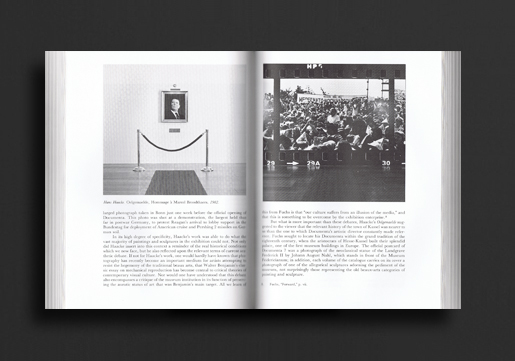
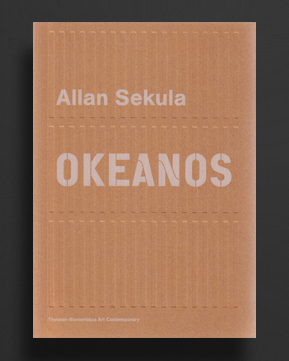
This publication intersperses essays from scholars, historians, and thinkers with a selection of Allan Sekula’s seminal texts and excerpts from his private notebooks. The title is a reference to Okeanos—son of Gaia, the Greek goddess of the earth—who ruled over the oceans and water. Made and written across the decades, Sekula’s sketches and texts focus on maritime space and the material, economic, and ecological implications of globalization. In projects such as his magnum opus Fish Story (1989–95), or films like Lottery of the Sea (2006) and The Forgotten Space (2010), Sekula provided a view from and of the sea. This publication expands on these oceanic themes, seeking to honor the scope and complexity of the late artist-theorist’s work, and situate his ideas in current political, social, and environmental discourses.
The book is divided thematically: the section “Containerization” focuses on the sea as a site of infrastructural complication; Sekula’s work Black Tide / Marea negra (2002–3) is also revisited, which explores environmental violence and contamination as well as their social implications; a selection from Sekula’s personal drawings are accompanied by an essay by photo historian Sally Stein; various essays readdress Sekula’s legacy in the age of the Anthropocene; and a number of case studies by contemporary artists, writers, and thinkers examine ideas that overlap with Sekula’s and expand on his interests.
Design by Kristin Metho
2016, English
Softcover, 280 pages, 21.8 x 27.3 cm
2nd Ed.,
Published by
MACK / London
$79.00 - Out of stock
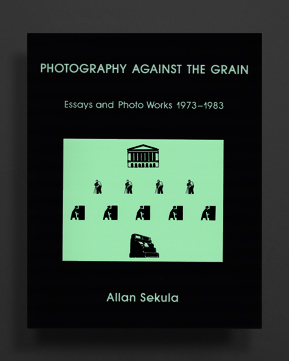
Long out of print, this seminal collection of essays and photographs are by artist, theorist and filmmaker, Allan Sekula. Originally published by the Nova Scotia College of Art and Design in 1984, in these essays and images Sekula sought to portray the inextricable bond between labour and material culture, drawing deeply on Marxist theory to argue passionately for a collective model of progress. Sekula taught at California Institute of Arts (CalArts) from 1985 until his death in 2013, and from that insider's position he critiqued photography and the circumstances of its production and consumption, exposing what the medium failed to represent – women, labourers, minorities and the institutional structures that reinforce cultural biases.
Allan Sekula (1951–2013) was an American artist, whose work spans multiple media: long form photographic series (Aerospace Folktales, 1973; School as a Factory,1980; War Without Bodies, 1991/96), critical texts (The Body and the Archive, 1986 and Debating Occupy, 2012) and film (The Forgotten Space, 2012).
2017, English / Polish
Softcover, 396 pages, 18 x 24.3 cm
Published by
Sternberg Press / Berlin
$44.00 - Out of stock
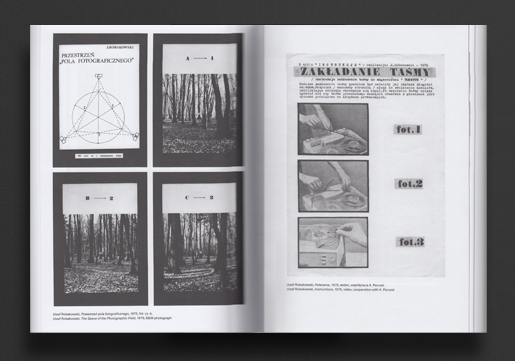
Workshop of the Film Form provides an in-depth overview of the achievements of Warsztat Formy Filmowej (WWF; Workshop of the Film Form), a group of avant-garde artists who were working at the Leon Schiller National Higher School of Film, Television and Theatre in Lodz, Poland, between 1970 and 1977. WWF was founded by the students and graduates of the school, now known as the National Film School, and included: Wojciech Bruszewski, Paweł Kwiek, Andrzej Różycki, Józef Robakowski, Zbigniew Rybczyński, Kazimierz Bendkowski, Antoni Mikołajczyk, Janusz Połom, and Ryszard Waśko. As pioneers of video art in Poland and structural cinema in Central and Eastern Europe, the artists refused classical narrative and traditional film media, working instead somewhere between cinematography and contemporary art.
This publication examines all aspects of WFF’s activity, from their films, photographic experiments, video art, and performative actions to their teaching work, which includes previously unexplored pedagogical contributions to the National Film School. Drawing on the private archives and oral testimonies of the WWF, Workshop of the Film Form attempts to provide a full account of the group’s history as well as a comprehensive survey of each member’s practice. The writers who were invited to respond to the WWF for this book provide insightful new readings of the group’s output and activities, contextualizing their work in the history of the prewar Polish avant-garde and the politics of experimental filmmaking in Poland under the rule of the Polish United Workers’ Party (PZPR).
Copublished with Fundacja Arton
Design by Fontarte Studio
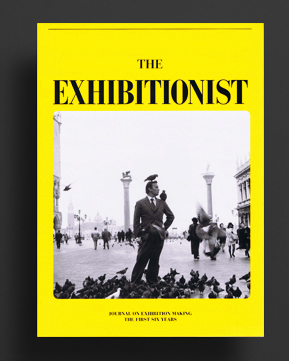
2017, English
Softcover, 975 pages, 19 x 26 cm
Published by
The Exhibitionist / New York
$65.00 - Out of stock
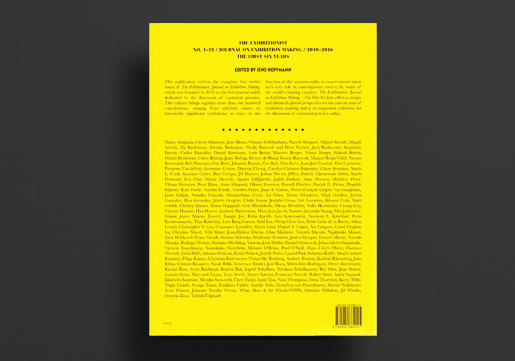
Edited with introduction by Jens Hoffmann.
A journal by curators for curators, The Exhibitionist has asked the most pertinent questions on contemporary exhibition-making since its founding in 2009.
The Exhibitionist: Journal on Exhibition Making is an anthology of the first 12 issues of the journal about contemporary curating that bears the same name. Established in 2009 as a forum for critical reflection on exhibition-making and curatorial practice, The Exhibitionist has always defined itself as “by curators, for curators.” Modelled after the iconic French film journal Cahiers du cinéma, The Exhibitionist has served a critical role in examining current curatorial practices by focusing specifically on the exhibition format as a site of experimentation and inquiry. The Exhibitionist has historicized, analyzed and critiqued a phenomenon it is itself symptomatic of—the rise of the curator since the 1960s, the ensuing explosion of curatorial creativity and the growing fascination with the discipline of curating.
Over the six years of its run, The Exhibitionist has published writings from many of the most prominent curatorial voices in the field, offering a who’s who of curatorial practice; contributors include Okwui Enwezor, Hans Ulrich Obrist, Mary Jane Jacob, Nato Thompson, Jessica Morgan, Maria Lind, Sofía Hernández Chong Cuy and Massimiliano Gioni, to name just a select few.
Collected together in a monumental omnibus edition (clocking in at 975 pages), the complete run of the journal is accompanied by a new introduction by founding editor Jens Hoffmann, and a critical approach to a theory of the exhibition by senior editor Julian Myers-Szupinska. With the publication of this volume, The Exhibitionist closes a chapter of its existence as a print magazine and shifts its activities to the-exhibitionist.com.