World Food Books' programme is largely produced on Kulin Nation land. We acknowledge the Wurundjeri people of the Kulin Nation as the first and continuing custodians of this land, and pay respect to their Elders past, present, and emerging.
World Food Books is an arts and special interests bookshop in Naarm / Melbourne. Founded in 2010, World Food Books is devoted to the presentation of a rotating, hand-selection of international art, design, literary and counterculture publications with an emphasis on the anti-traditional, the experimental, the avant-garde, the heretic, the marginal.
Presenting new titles alongside rare and out-of-print books, catalogues and journals spanning the fields of modern and contemporary art, design, photography, illustration, film, literature, poetry, cultural theory, philosophy, sexuality, popular and underground culture in its many radical forms, World Food Books wishes to encourage adventurous, thoughtful and open-minded reading, looking, writing, and exchange of publishing and ideas, both current and historical.
As well as our bookshop, located in Melbourne's historical Nicholas Building, all of our inventory is available internationally via our online mail-order service.
World Food Books semi-regularly co-ordinates "Occasions", a programme of exhibits and events at the bookshop and in partnership with other hosts (such as museums and art galleries) that develop out of the activities, relationships and content of the bookshop itself.
World Food Books
The Nicholas Building
37 Swanston Street
Room 5, Level 6
Melbourne 3000
Australia
SHOP HOURS:
Thu–Fri 12–6, Sat 12–5
WEB-SHOP OPEN 24/7
World Food Books
Postal Address:
PO Box 435
Flinders Lane
Victoria 8009
Australia
Art
Theory / Essay
Architecture / Interior
Graphic Design / Typography
Photography
Fashion
Eros
LGBTQ+
Fiction / Poetry
Weird / Speculative / Science Fiction / Horror
Transgressive / Visceral / Abject
Symbolism / Decadence / Fin de siècle
Film / Video
Painting
Sculpture / Installation
Performance / Dance / Theater
Drawing
Sound / Music
Curatorial
Group Shows / Collections
Periodicals
Out-of-print / Rare
Posters / Ephemera / Discs
Signed Books
World Food Books Gift Voucher
World Food Book Bag
Australian Art
Australian Fiction
Australian Science Fiction / Speculative Fiction
Australian Poetry
Australian Photography
Japanese Photography
Conceptual Art
Minimal Art
Dada
'Pataphysics / Oulipo
Fluxus
Concrete Poetry
Pop Art
Surrealism
Arte Povera
Arte Informale / Haute Pâte / Tachism
Nouveau Réalisme / Zero / Kinetic
Situationism / Lettrism
Collage / Mail Art / Xerox Art
Art Brut / Folk / Visionary / Fantastic
Illustration / Graphic Art / Bandes Dessinées
Furniture
Italian Radical Design / Postmodernism
Textiles
Ceramics / Glass
Counterculture
Protest / Revolt
Philosophy
Psychoanalysis
Anthropology
Anarchism
Socialism / Anarchism / Communism / Capitalism
Literary Theory / Semiotics / Language
Feminism / Women's Studies
Gender Studies / Sexuality
Anthropology
Fetishism / BDSM
Drugs / Psychedelia
Crime / Violence
Animal Rights / Veganism
Occult / Esoterica
Ecology / Earth / Alternative Living
Whole Earth / Crafts
All prices in AUD (Australian dollars)
Pick-Ups
Pick-up orders can be collected in our bookshop during opening hours after order date. Please collect any Pick-up orders within 2 weeks of ordering as we have limited storage space. Orders will be released back into stock if not collected within this time. No refunds can be made for pick-ups left un-collected. If you cannot make it in to the bookshop in this time-frame, please choose postage option.
Return Policy
All sales are final. We do accept returns (for refund or exchange) for items received in error. All our orders are packed with special care using heavy-duty padding and cardboard book-mailers or bubble mailers (for smaller books), using reinforcement where required. We cannot take responsibility for any lost, stolen or damaged parcels.
Insurance
Should you wish to insure your package, please email us directly after placing your order and we can organise this at a small extra expense. Although all standard/express tracked packages are very safe and dependable, we cannot take responsibility for any lost, stolen or damaged parcels. We recommend insurance on valuable orders.
Interested in selling your old books, catalogues, journals, magazines, comics, fanzines, ephemera? We are always looking for interesting, unusual and out-of-print books to buy. We only buy books in our fields of interest and specialty, and that we feel we can resell.
We base these prices on desirability, market value, in-print prices, condition and our current stock levels. We offer cash, store credit, and can take stock on consignment. All
about 25% of the price we expect to get when we sell them, or 30% in store credit. We base these prices on desirability, market value, in-print prices, condition and our current stock levels.
Sell your books any day of the week. You can drop them off and return later. If you have a lot of books, we can visit your Sydney home.
We buy books that we feel we can resell. We offer about 25 % of the price we expect to get when we sell them, or 30% in store credit. We base these prices on desirability, market value, in-print prices, condition and our current stock levels.
Philadelphia Wireman
03 August - 01 September, 2018
World Food Books is proud to announce our next Occasion, the first presentation of sculptures by Philadelphia Wireman in Australia.
The Philadelphia Wireman sculptures were found abandoned in an alley off Philadelphia’s South Street on trash night in 1982. Their discovery in a rapidly-changing neighbourhood undergoing extensive renovation, compounded with the failure of all attempts to locate the artist, suggests that the works may have been discarded after the maker’s death. Dubbed the "Philadelphia Wireman" during the first exhibition of this work, in 1985, the maker’s name, age, ethnicity, and even gender remain uncertain. The entire collection totals approximately 1200 pieces, all intricately bound together with tightly-wound heavy-gauge wire (along with a few small, abstract marker drawings, reminiscent both of Mark Tobey and J.B. Murry). The dense construction of the work, despite a modest range of scale and materials, is singularly obsessive and disciplined in design: a wire armature or exoskeleton firmly binds a bricolage of found objects including plastic, glass, food packaging, umbrella parts, tape, rubber, batteries, pens, leather, reflectors, nuts and bolts, nails, foil, coins, toys, watches, eyeglasses, tools, and jewellery.
Heavy with associations—anthropomorphic, zoomorphic, and socio-cultural responses to wrapped detritus—the totemic sculptures by Philadelphia Wireman have been discussed in the context of work created to fulfil the shamanistic needs of alternative religions in American culture. Curators, collectors, and critics have variously compared certain pieces to sculpture from Classical antiquity, Native American medicine bundles, African-American memory jugs, and African fetish objects. Reflecting the artist’s prolific and incredibly focused scavenging impulse, and despite—or perhaps enhanced by—their anonymity, these enigmatic objects function as urban artefacts and arbiters of power, though their origin and purpose is unknown. Philadelphia Wireman, whatever their identity, possessed an astonishing ability to isolate and communicate the concepts of power and energy through the selection and transformation of ordinary materials. Over the course of the past two decades, this collection has come to be regarded as an important discovery in the field of self-taught art and vernacular art.
Presented in collaboration with Fleisher-Ollman Gallery, Philadelphia, and Robert Heald, Wellington.
Susan Te Kahurangi King
02 February - 10 March, 2018
Susan Te Kahurangi King (24 February 1951 - ) has been a confident and prolific artist since she was a young child, drawing with readily available materials - pencils, ballpoint pens and felt-tip markers, on whatever paper is at hand. Between the ages of four and six Susan slowly ceased verbal communication. Her grandparents William and Myrtle Murphy had developed a special bond with Susan so they took on caring responsibilities for extended periods. Myrtle began informally archiving her work, carefully collecting and storing the drawings and compiling scrapbooks. No drawing was insignificant; every scrap of paper was kept. The King family are now the custodians of a vast collection containing over 7000 individual works, from tiny scraps of paper through to 5 meter long rolls.
The scrapbooks and diaries reveal Myrtle to be a woman of great patience and compassion, seeking to understand a child who was not always behaving as expected. She encouraged Susan to be observant, to explore her environment and absorb all the sights and sounds. Myrtle would show Susan’s drawings to friends and people in her community that she had dealings with, such as shopkeepers and postal workers, but this was not simply a case of a grandmother’s bias. She recognised that Susan had developed a sophisticated and unique visual language and sincerely believed that her art deserved serious attention.
This was an unorthodox attitude for the time. To provide some context, Jean Dubuffet coined the term Art Brut in 1945 to describe work created by self-taught artists – specifically residents of psychiatric institutions and those he considered to be visionaries or eccentrics. In 1972 Roger Cardinal extended this concept by adopting the term Outsider Art to describe work made by non-academically trained artists operating outside of mainstream art networks through choice or circumstance. Susan was born in Te Aroha, New Zealand in 1951, far from the artistic hubs of Paris and London that Dubuffet and Cardinal operated in. That Myrtle fêted Susan as a self-taught artist who deserved to be taken seriously shows how progressive her attitudes were.
Susan’s parents Doug and Dawn were also progressive. Over the years they had consulted numerous health practitioners about Susan’s condition, as the medical establishment could not provide an explanation as to why she had lapsed into silence. Dawn educated herself in the field of homeopathy and went on to treat all twelve of her children using these principles – basing prescriptions on her observations of their physical, mental and emotional state.
Doug was a linguist with an interest in philosophy who devoted what little spare time he had to studying Maori language and culture. To some extent their willingness to explore the fringes of the mainstream made them outsiders too but it was their commitment to living with integrity and their respect for individuality that ensured Susan’s creativity was always encouraged.
Even though Susan’s family supported her artistic pursuits, some staff in schools and hospitals saw it as an impediment to her assimilation into the community and discouraged it in a variety of ways. Her family was not always aware of this and therefore did not fully understand why Susan stopped drawing in the early 1990s. However, rather than dwell on the challenges that Susan faced in pursuit of her artistic practice, they prefer to highlight her achievements. In 2008 Susan began drawing again in earnest, after an almost 20 year interruption, and her work is now shown in galleries around the world.
Susan grew up without television and has been heavily influenced by the comics she read as a child. She is absolutely fearless in the appropriation of recognizable characters, such as Donald Duck and Mickey Mouse, in her work. She twists their limbs, contorts their faces, compresses them together, blends them into complex patterned backgrounds - always imbuing them with an incredible energy. Although Susan often used pop culture characters in her work they are not naive or childlike. These are drawings by a brilliant self-taught artist who has been creating exceptional work for decades without an audience in mind.
Mladen Stilinović
"Various Works 1986 - 1999"
02 February 16 - September 10, 2016
Various works 1986 - 1999, from two houses, from the collections of John Nixon, Sue Cramer, Kerrie Poliness, Peter Haffenden and Phoebe Haffenden.
Including: Geometry of Cakes (various shelves), 1993; Poor People’s Law (black and white plate), 1993; White Absence (glasses, ruler, set square, silver spoon, silver ladel with skin photograph and wooden cubes), 1990-1996; Exploitation of the Dead (grey and red star painting, wooden painting, black spoon with red table, red plate), 1984-1990; Money and Zeros (zero tie, paintings made for friends in Australia (Sue, John, Kerrie), numbers painting), 1991-1992; Words - Slogans (various t-shirts) - “they talk about the death of art...help! someone is trying to kill me”, “my sweet little lamb”, “work is a disease - Karl Marx”; Various artist books, catalogues, monographs, videos; Poster from exhibition Insulting Anarchy; "Circular" Croatian - Australian edition; Artist book by Vlado Martek (Dostoyevsky); more.
Thanks to Mladen Stilinović and Branka Stipančić.
Jonathan Walker
Always Will Need To Wear Winter Shirt Blue + Ochre Small Check Pattern
21 August - 21 September, 2015
Untitled
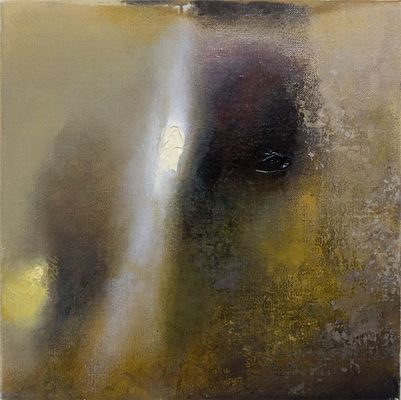
I am not a great reader of poetry but I always return to the work of Melbourne poet, Vincent Buckley (1925- 1988). Perhaps I find his most tantalising piece to be not a finished poem but a fragment left on a scrap of paper discovered on his desk after the poet’s death.
The poetry gathers like oil
In the word-core, and spreads
It has its music meet,
Its music is in movement.
This fragment is more the shell left behind from a volatile thought than a finished poem. I find the last two lines honest but awkward whereas the first two lines work like an arrow. Most likely he could not find a resolution so it was left. Still, in its present form, it remains an eloquent testimony to the ultimate failure of a medium to express mobile thought and sensation, in Buckley’s case, through verbal language. It’s an important matter because this is something all artists have to deal with regardless of the medium.
I have never written a poem, however, I am forever copying fragments from books on paper scraps in a vain effort to fix certain notions in my head. At first, they function as bookmarks that are sometimes returned to when I open the book. But before long, as they accumulate, they fall out littering the table interspersed with A4 photocopies, bills, books and medications.
To return to Buckley’s fragment, the first two lines very much evoke how I paint nowadays. As you age, detail diminishes and patches of light become more luminous and float. I feel the most honest way of dealing with this is by smearing the oil paint on the canvas with the fingers and working close-up, blind. Only if the patches coalesce into an approaching image can the work gain a life.
-
Jonathan Walker was born in Melbourne, Australia and brought up on a dairy farm in Gippsland. In the 1970’s he studied painting at RMIT and won the Harold Wright Scholarship to the British Museum, London. During the 1980’s he exhibited at Pinacotheca Gallery, Richmond and had work shown at the NGV and Heidi City Art Gallery. Over the same period he designed the cover for the “Epigenesi” LP by Giancarlo Toniutti, Italy and conducted a mail exchange work with Achim Wollscheid, Germany. The work with artists through the post resulted in an article published in the bicentenary issue of Art and Australia 1988. He showed in artist run spaces such as WestSpace in the 90’s and 2000’s, and until 2012, taught painting at Victoria University, which is where we (Colleen Ahern and Lisa Radford) as organisers of the exhibition, among many others, had the privilege of being his student.
Walker’s knowledge was imparted to students through the careful selection of music, literature, and artists found in books that he himself had ordered for the library. Walker’s strategy was the generosity of sharing his vast knowledge with references specific to each student and their context.
Walker’s paintings share a similar focus and intimacy.
This exhibition presents a small selection of recent paintings alongside a publication that includes Walker’s writing. Observational and analytical, Walker’s work is a type of material notation — the time of day, colour and how it is blended, the both specific and fleeting location of a reflection on lino or the question of whether a chair leg should be included in a painting.
Please join us on Friday August 21 between 6-8pm to celebrate the opening of the exhibition.
Curated by Colleen Ahern and Lisa Radford.
B. Wurtz
Curated by Nic Tammens
March 26 - April 4, 2015
B.Wurtz works from a basement studio in his home on Manhattan’s Lower East Side.
This local fact is attested to by the plastic shopping bags and newsprint circulars that appear in his work. As formal objects, they don’t make loud claims about their origins but nonetheless transmit street addresses and places of business from the bottom of this long thin island. Like plenty of artists, Wurtz is affected by what is local and what is consumed. His work is underpinned by this ethic. It often speaks from a neighborhood or reads like the contents of a hamper:
“BLACK PLUMS $1.29 lb.”
“Food Bazaar”
“USDA Whole Pork Shoulder Picnic 99c lb.”
“RITE AID Pharmacy, with us it’s personal.”
“H. Brickman & Sons.”
“Sweet Yams 59c lb."
Most of the work in this exhibition was made while the artist was in residence at Dieu Donne, a workshop dedicated to paper craft in Midtown. Here Wurtz fabricated assemblages with paper and objects that are relatively lightweight, with the intention that they would be easily transportable to Australia. This consideration isn’t absolute in Wurtz’s work, but was prescriptive for making the current exhibition light and cheap. Packed in two boxes, these works were sent from a USPS post office on the Lower East Side and delivered to North Melbourne by Australia Post.
Wurtz appears courtesy of Metro Pictures, New York.
Thanks to Rob Halverson, Joshua Petherick, Sari de Mallory, Matt Hinkley, Helen Johnson, Fayen d'Evie, Ask Kilmartin, Lisa Radon, Ellena Savage, Yale Union, and "Elizabeth".
John Nixon
"Archive"
December 15 - January 20, 2014
The presentation of John Nixon's archive offered a rare showcase of this extensive collection of the artist's own publications, catalogues, posters, ephemera, editions and more, from the mid 1980s onwards, alongside a selection of his artworks.
Organized by John Nixon, Joshua Petherick and Matt Hinkley.
<a href=http://wfb.public-office.info/artist/john-nixon>All titles by John Nixon
"Habitat"
at Minerva, Sydney (organised by Joshua Petherick and Matt Hinkley)
November 15 - December 20, 2014
Lupo Borgonovo, Janet Burchill & Jennifer McCamley,
Lewis Fidock, HR Giger, Piero Gilardi, Veit Laurent Kurz,
Cinzia Ruggeri, Michael E. Smith, Lucie Stahl, Daniel Weil, Wols
Press Release:
“...It contained seven objects. The slender fluted bone, surely formed for flight, surely from the wing of some large bird. Three archaic circuitboards, faced with mazes of gold. A smooth white sphere of baked clay. An age-blackened fragment of lace. A fingerlength segment of what she assumed was bone from a human wrist, grayish white, inset smoothly with the silicon shaft of a small instrument that must once have ridden flush with the surface of the skin - but the thing’s face was seared and blackened.”
William Gibson, “Count Zero”, 1986
"Autumn Projects Archive"
Curated by Liza Vasiliou
March 6 - March 15, 2014
World Food Books, in conjunction with the Virgin Australia Melbourne Fashion Festival 2014, presented the Autumn Projects archive, consisting of a selection of early examples in Australian fashion with a particular interest in collecting designers and labels from the period beginning in the 1980’s, who significantly influenced the discourse of Australian Fashion.
Curated by Liza Vasiliou, the exhibition provided a unique opportunity to view pieces by designers Anthea Crawford, Barbara Vandenberg, Geoff Liddell and labels CR Australia, Covers, Jag along with early experimental collage pieces by Prue Acton and Sally Browne’s ‘Fragments’ collection, suspended throughout the functioning World Food Books shop in Melbourne.
H.B. Peace
presented by CENTRE FOR STYLE
November 14, 2013
"Hey Blinky, you say chic, I say same"
Anon 2013
H.B. Peace is a clothing collaboration between great friends Blake Barns and Hugh Egan Westland. Their pieces explore the divergences between 'character’ and ‘personality’ in garments....etc
Special Thanks to Joshua Petherick and Matt Hinkley of WFB and Gillian Mears
and a Very Special Thank you to Audrey Thomas Hayes for her shoe collaboration.
Janet Burchill & Jennifer McCamley
"Aesthetic Suicide"
May 10 - June 8, 2013
The first of our occasional exhibitions in the World Food Books office/shop space in Melbourne, "Aesthetic Suicide" presented a body of new and older works together by artists Janet Burchill & Jennifer McCamley, including videos, prints, a wall work, and publications.
During shop open hours videos played every hour, on the hour.
2017, English
Softcover, 480 pages, 12.5 x 20.6 cm
Published by
Spector Books / Leipzig
$50.00 - Out of stock
"Jonas Mekas' diaries have an aching honesty, puckish humor and quiet nobility of character. Many readers curious about the early years of this seminal avant-garde filmmaker will discover here a much more universal story: that of the emigrant who can never go back, and whose solitariness in the New World is emblematic of the human condition." - Phillip Lopate
"I was enormously moved by it." - Allen Ginsberg
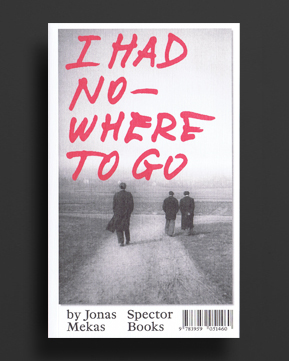
Legendary filmmaker Jonas Mekas actually came to filmmaking relatively late in life, and his path to New York was a difficult one. In 1944, Mekas and his younger brother Adolfas had to flee Lithuania. They were interned for eight months in a labor camp in Elmshorn. Even after the war ended, Mekas was prevented from returning to his native Lithuania by the Soviet occupation. Classed as a "displaced person," he lived in DP camps in Wiesbaden and Kassel for years. It was only at the end of 1949 that Jonas and Aldolfas Mekas finally found their way to New York City.
A new edition of Mekas' acclaimed memoir, first published by Black Thistle Press in 1991, I Had Nowhere to Go tells the story of the artist's survival in the camps and his first years as a young Lithuanian immigrant in New York City. Mekas' memoir--the inspiration for a 2016 biopic by Douglas Gordon--tells the story of how an individual life can move through the larger 20th-century narratives of war and exile and tentatively put down new roots. In the words of Phillip Lopate, "This is a lyrical, essential spiritual anthropology."
Jonas Mekas (born 1922) lives and works in New York. Filmmaker, writer and poet, he is a cofounder of Anthology Film Archives, one of the world's largest and most important repositories of avant-garde film. An influential figure in New American Cinema and New York underground culture, he worked with Andy Warhol, George Maciunas, John Lennon and many others. Mekas' work has been exhibited in museums and festivals worldwide.
2016, English
Softcover, 456 pages, 16 x 21.5 cm
Published by
Spector Books / Leipzig
$59.00 - Out of stock
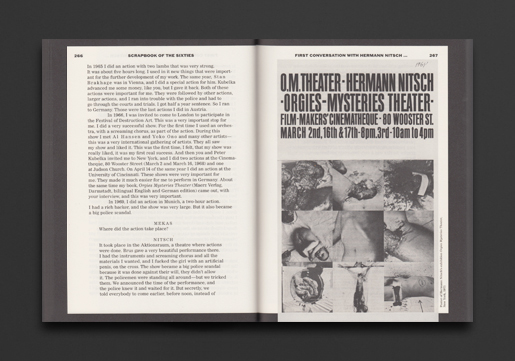
Scrapbook of the Sixties is a collection of published and unpublished texts by Jonas Mekas, filmmaker, writer, poet, and cofounder of the Anthology Film Archives in New York. Born in Lithuania, he came to Brooklyn via Germany in 1949 and began shooting his first films there. Mekas developed a form of film diary in which he recorded moments of his daily life. He became the barometer of the New York art scene and a pioneer of American avant-garde cinema. Every week, starting in 1958, he published his legendary “Movie Journal” column in The Village Voice, writing on a range of subjects that were by no means restricted to the world of film. He conducted numerous interviews with artists like Andy Warhol, Susan Sontag, John Lennon & Yoko Ono, Erick Hawkins, and Nam June Paik. Some of these will now appear for the first time in his Scrapbook of the Sixties. Mekas’s writings reveal him as a thoughtful diarist and an unparalleled chronicler of the times—a practice that he has continued now for over fifty years.
Jonas Mekas (*1922, Semeniškiai / Lithuania), lives and works in New York. Film-maker, writer, poet and co-founder of the Anthology Film Archives one of the world’s largest and most important repositories of avant-garde film. Mekas’s work has been exhibited in museums and festivals worldwide.
2017, English
Softcover, 248 pages, 21 x 24 cm
Published by
The MIT Press / Massachusetts
$59.00 - Out of stock
It may be time to forget the art world--or at least to recognize that a certain historical notion of the art world is in eclipse. Today, the art world spins on its axis so quickly that its maps can no longer be read; its borders blur. In Forgetting the Art World, Pamela Lee connects the current state of this world to globalization and its attendant controversies. Contemporary art has responded to globalization with images of movement and migration, borders and multitudes, but Lee looks beyond iconography to view globalization as a world process. Rather than think about the “global art world” as a socioeconomic phenomenon, or in terms of the imagery it stages and sponsors, Lee considers “the work of art’s world” as a medium through which globalization takes place. She argues that the work of art is itself both object and agent of globalization.
Lee explores the ways that art actualizes, iterates, or enables the processes of globalization, offering close readings of works by artists who have come to prominence in the last two decades. She examines the “just in time” managerial ethos of Takahashi Murakami; the production of ethereal spaces in Andreas Gursky’s images of contemporary markets and manufacture; the logic of immanent cause dramatized in Thomas Hirschhorn’s mixed-media displays; and the “pseudo-collectivism” in the contemporary practice of the Atlas Group, the Raqs Media Collective, and others.
To speak of “the work of art’s world,” Lee says, is to point to both the work of art’s mattering and its materialization, to understand the activity performed by the object as utterly continuous with the world it at once inhabits and creates.
About the Author
Pamela M. Lee is Professor of Art History at Stanford University and the author of Object to Be Destroyed: The Work of Gordon Matta-Clark and Chronophobia: On Time in the Art of the 1960s, both published by the MIT Press.
Endorsements
“Pamela Lee makes a major contribution to our understanding of art’s globalization through her brilliant exploration of ‘worlds’ as a medium and ‘worlding’ as a process by which unruly networks of financial, political, and spectacular forces are crystallized as works of art.”
—David Joselit, Carnegie Professor, History of Art, Yale University
“For those who want to chart the difference between the world and world markets, for those nostalgic for genuinely intellectual depth in art criticism, and for those wanting to understand the outer, digital limits of art, this book will be your guide. Forgetting the Art World sets a new stage—a picture theory for art practice.”
—Molly Nesbit, Professor of Art History, Vassar College
“Pamela Lee presents an exciting, highly original discussion of what constitutes an art world at the beginning of the twenty-first century. Forgetting the Art World examines not only the processes sustaining the reciprocal relationship between globalization and contemporary art, but also what the art world needs to forget in order to assume its current condition. The analysis is timely and provocative, and will be essential reading for anyone concerned with contemporary art.”
—Alexander Alberro, author of Conceptual Art and the Politics of Publicity
2017, English / French
Softcover, 220 pages, 240 x 175 mm
Published by
May Revue / Paris
$29.00 $10.00 - In stock -
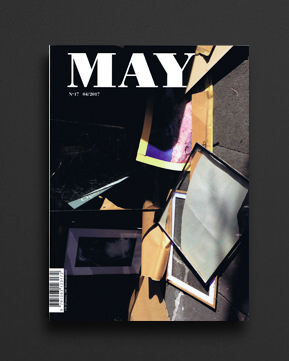
This issue seeks to reflect the post-Trump, post-Brexit and French pre-election climates at a time of reconfiguration of habitual political representations and polarizations. We decided to favour reports, a more reactive writing format on issues of concerns in art schools, universities, institutions: Angela Davis and Gina Dent’s talk in Paris, the exhibition Soulèvements at the Musée du Jeu de Paume, The Color Line at the Musée du Quai Branly on African-American artists and segregation…
American Goodness - Elise Duryee-Browner
If our Lives are Black. On Angela Davis and Gina Dent’s conference at La Maison de l’Amérique Latine, Paris - Claire Fontaine
αντιanti
Interview with Ilaria Bussoni. On the symposium “Sensible Commons” at GNAM, Rome - May
Dynamis, 2016–2017 Athens and Kassel simultaneously and in continuum - Georgia Sagri
On Soulèvements by Georges Didi-Huberman at Jeu de Paume, Paris - Giovanna Zapperi
On the film Two A.M. by Loretta Fahrenholz at Museum Fridericianum, Kassel - Tobias Madison
On Amelie von Wulffen at Barbara Weiss, Berlin - Jay Chung
On Yuki Kimura at CCA Wattis, San Francisco - J. Gordon Faylor
Behind Enemy Lines: Black Power & Taboo. On The Color Line: African-American Artists and Segregation at Musée du Quai Branly, Paris - Kari Rittenbach
On Morag Keil at Eden Eden, Berlin - Nicholas Tammens
On Greg Parma Smith at MAMCO, Geneva - Enzo Shalom
Francis Picabia seen from Switzerland and America. On Francis Picabia’s retrospectives at Kunsthaus Zurich and at MoMA, New York - Carole Boulbès
Villa Noailles - Jeanne Graff
Weather report
Limited Editions by Jean-Luc Moulène and Bernadette Corporation with Benjamin Alexander Huseby
Reprint booklet: LGG$B
About MAY Revue:
Conceived as a collective space in which to develop thoughts and confront positions on artistic production, May magazine examines, quaterly, contemporary art practice and theory in direct engagement with the issues, contexts and strategies that construct these two fields. An approach that could be summed up as critique at work – or as critique actively performed in text and art forms alike.
Featuring essays, interviews, art works and reviews by artists, writers and diverse practitioners of the arts, the magazine also intends to address the economy of the production of knowledge – the starting point of this reflection being the space of indistinction between information and advertisement typical of our time. This implies a dialogue with forms of critique produced in other fields.
1998, German
Hardcover, 366 pages, 22.5 x 31 cm
1st German edition, Out of print title / used / very good,
Published by
Hatje Cantz / Berlin
$70.00 - Out of stock
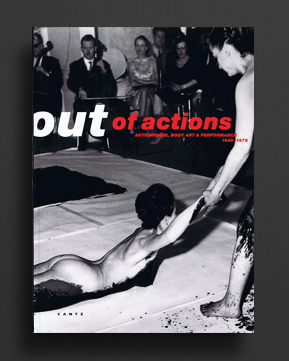
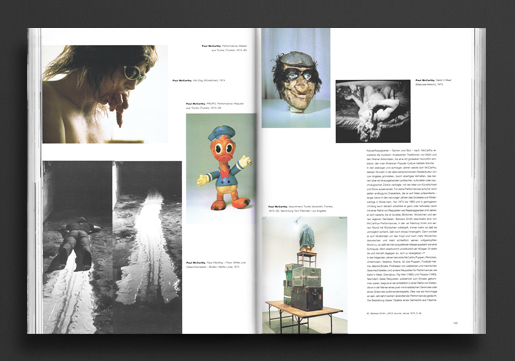
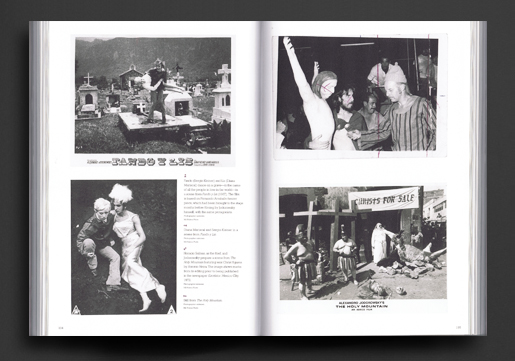
The long out-of-print heavyweight "Out of Actions" book (First German hardcover edition) that was published to accompany the spectacular 1998 Paul Schimmel-curated travelling exhibition. "Out of Actions" surveyed the broad international history and influence of post-war Performance Art, and the objects that exist today as its documentation. It features significant texts by Schimmel, Kristine Stiles, Guy Brett, Hubert Klocker, Shinichiro Osaki, Leslie King-Hammond and Lowery Stokes Sims, and Keiko Okamura.
This important and heavily researched document is lavishly illustrated throughout in colour and black and white, capturing the work and actions of the artists featured in the exhibition and essays: Marina Abramovic, Marina Abramovic and Ulay, Vito Acconci, Genpei Akasegawa, Laurie Anderson, Eleanor Antin, Rasheed Arseen, Mowry Baden, Artur Barrio, Joseph Beuys, Mark Boyle and Joan Hills, George Brecht, Stuart Brisley, Robert Delford Brown, Gunter Brus, Chris Burden, James Lee Byars, John Cage, Marc Camille Chaimowicz, Lygia Clark, Pinchas Cohen Gan, Collective Action Group, Houston Conwill, Paul Cotton, COUM Transmissions, Guy de Cointet, Jim Dine, John Duncan, Felipe Ehrenberg, Roberto Evangelista, Valie Export, Robert Filliou, Rose Finn-Kelcey, Sherman Fleming, Lucio Fontana, Terry Fox, Howard Fried, Gideon Gechtman, Gilbert & George, Alberto Greco, Ion Grigorescu, Victor Grippo, Red Grooms, Guerrilla Art Action Group, David Hammons, Al Hansen, Maren Hassinger, Lynn Hershman, Dick Higgins, Tatsumi Hijikata, Susan Hiller, Rebecca Horn, Tehching Hsieh, Joan Jonas, Kim Jones, Michel Journiac, Akira Kanayama, Tadeusz Kantor, Allan Kaprow, Mike Kelley, Juergen Klauke, Yves Klein, Milan Knizak, Alison Knowles, Komar & Melamid, Jannis Kounellis, Shigeko Kubota, Tetsumi Kudo, Yayoi Kusama, Leslie Labowitz, Suzanne Lacy, John Latham, Jean-Jacques Lebel, Lea Lublin, George Maciunas, Leopoldo Maier, Piero Manzoni, Tom Marioni, Georges Mathieu, Gordon Matta-Clark, Paul McCarthy, Bruce McLean, David Medalla, Cildo Meireles, Ana Mendieta, Gustav Metzger, Marta Minujin, Jan Micoch, Linda Montano, Robert Morris, Otto Muehl, Saburo Murakami, Natsuyuki Nakanishi, Bruce Nauman, Paul Neagu, Senga Nengudi, Joshua Neustein, Hermann Nitsch, Helio Oiticica, Claes Oldenburg, Yoko Ono, Orlan, Raphael Montanez Ortiz, Lorenzo Pace, Nam June Paik, Gina Pane, Lygia Pape, Giuseppe Pinot Gallizio, Adrian Piper, Michelangelo Pistoletto, Jackson Pollock, William Pope L., Robert Rauschenberg, Carlyle Reedy, Klaus Rinke, Ulrike Rosenbach, Dieter Roth, Zorka Saglova, Niki de Saint Phalle, Alfons Schilling, Tomas Schmit, Carolee Schneemann, Rudolf Schwarzkogler, Bonnie Sherk, Shozo Shimamoto, Ushio Shinohara, Kazuo Shiraga, Barbara T. Smith, Daniel Spoerri, Petr Stembera, Wolfgang Stoerchle, Jiro Takamatsu, Atsuko Tanaka, Mark Thompson, Jean Tinguely, Rasa Todosijevic, Kerry Trengove, Ulay, Ben Vautier, Wolf Vostell, Franz Erhard Walther, Peter Weibel, Franz West, Hannah Wilke, Emmett Williams, and Zaj.
Scarce first German edition, published by Hatje Cantz.
2008, English
Softcover, 1st printing, 43 pages, 11 x 8.5"
Edition of 500,
Published by
2nd Cannons / Los Angeles
$30.00 $20.00 - Out of stock
Selections from The Anatomy of Melancholy by Robert Burton telescopes 350 years, the period from the 1620s to the 1970s. It is what artist William E. Jones imagined Robert Burton’s The Anatomy of Melancholy would have looked like had it appeared in the pages of Drummer magazine. In preparing the book, Jones condensed Burton’s vast 450,000-word masterpiece of 17th Century English literature to a small fraction of its length, and paired the excerpts with vintage images of leather men at work and play. Robert Burton was fascinated by the variations of human sexuality, albeit more as an observer than as a participant. He wrote about sex in covert Latin passages that are newly translated in Jones’s book. Selections from The Anatomy of Melancholy by Robert Burton is a delightfully perverse condensation of Burton’s speculations on the sexual proclivities that subsequent generations of gay men put into exuberant practice.
2009, English
Softcover, 43 pages, 21.5 x 28 cm
Edition of 500,
Published by
2nd Cannons / Los Angeles
$30.00 $20.00 - Out of stock
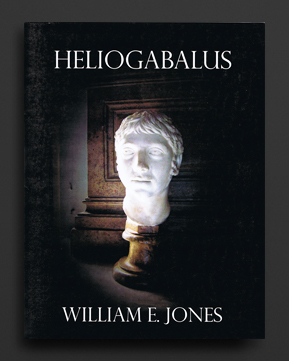
The third release in a series of books by William E. Jones, Heliogabalus pays tribute to the most decadent Roman Emperor. Who was this creature who called himself Elagabalus, after El Gabal, god of the sun? What to make of his addiction to luxury, his overbearing mother, his controversial genitals? Enlightening texts can be found in the latest 2nd Cannons publication. The book features accounts of Heliogabalus by Edward Gibbon, Herodian, Cassius Dio, and the spurious Aelius Lampridius. It also contains a contemporary text, “This Necrophilic Strategy Entails Some Risk,” a collaboration by Bruce Hainley and William E. Jones, previously published only in expurgated form, and now presented with all lurid details intact.
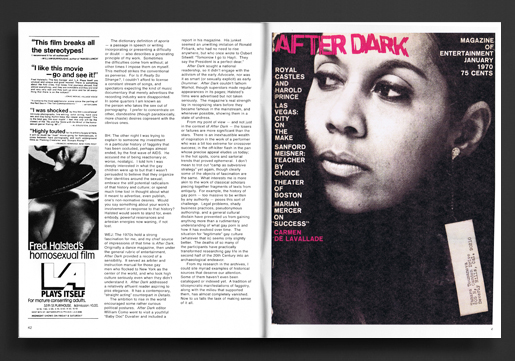
Varius Avitus Bassanius, later known in his infamy as Heliogabalus, ruled Rome from 218 to 222 of the Common Era. After he was murdered by the soldiers who had formerly supported him, his successor, Alexander Severus, ordered that all sculptures of Heliogabalus be desecrated. The iconoclasm directed against Heliogabalus was so nearly complete that very few portraits of him still exist. William E. Jones has somewhat opportunistically dealt with the paucity of images of this imperial person by inserting advertisements from a bygone era at intervals in Heliogabalus. These advertisements, and the book’s design in general, derive from the pages of that avatar of 1970s urban culture, After Dark.
2017, English / German
Softcover, 248 pages, 23 x 16.5 cm
Published by
Texte Zur Kunst / Berlin
$30.00 - Out of stock
The theme of this issue - The New New Left - is not entirely “new new,” as indeed it relates to the old anti-capitalist Left in its insistence on a theoretical analysis of capitalism and the price paid by many in such a system. But as the discourses and strategies long associated with the Left (workerism, identity politics, or the mode of the avant-gardist troll) have been adopted by anti-progressive outlets, it has become increasingly complex to locate a Left stance from which to effectively speak and act. This issue explores the affective mechanisms and media strategies – from the rise of viral content (memes) to the harvesting and right-wing politicization of emotions – that are producing our post-millennial, post-financial crisis, post-Brexit/Trump present.
Issue No. 106 / June 2017 "The New New Left“
Table Of Contents
Preface
Cultural Resources / Sabine Hark And Sighard Neckel In Conversation On Feelings Of Resentment And Revenge
Verena Dengler
Fake Left, Punch Right
Jaleh Mansoor
Unveiling And/Or Re-Masking / Notes On The Political Dialectics Of The Opacity Of The Sign
Seth Price
Wrong Seeing, Odd Thinking, Strange Action
Matt Goerzen
Notes Toward The Memes Of Production
Diedrich Diederichsen
The Tough Stuff / “Populism," "Political Correctness," And The Like
Simon Denny
Face The Market On Your Own
Klaus Walter
Liberté, Egalité, Beyoncé?
Dan Bodan
Europe, 2016-17 / Selected Status Updates Of Recent Months
Bildstrecke
Kayode Ojo
Become What You Fear
New Development
Ana Teixeira Pinto
Artwashing / Nrx And The Alt-Right
Rotation
Obsessive, Compulsive, Disorder / Johanna Burton On Douglas Crimp’s “Before Pictures”
Probing Attitudes / Philipp Ekardt On “Putting Rehearsals To The Test” (Buchmann, Lafer, Ruhm, Eds.)
In Experimenten Seine Vernunft Aufs Spiel Setzen / Stefan Römer Über Hans-Jörg Rheinberger, „Der Kupferstecher Und Der Philosoph. Albert Flocon Trifft Gaston Bachelard“
Reviews
Nachrichten Aus Der Ideologischen Antike / Georg Imdahl Über Wade Guyton Im Museum Brandhorst
Schwere Verspannungen Lösen / Eva Scharrer Über Nairy Baghramian Im S.M.A.K. In Gent
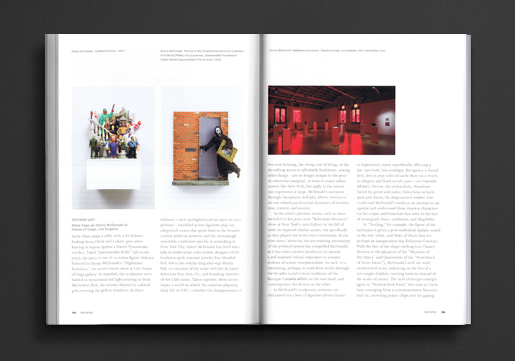
Deviant Art / Dena Yago On Danny Mcdonald At House Of Gaga, Los Angeles
Put Your Money Where Your Mouth Is / Tina Schulz Über Nora Schultz Bei Isabella Bortolozzi, Berlin
Reverse Cubism Als Betrachtungsirrtum / Gunter Reski Über Pieter Schoolwerth Bei Capitain Petzel, Berlin
Mad World / Steven Warwick On Liz Craft & Pentti Monkkonen At Liszt, Berlin
Public Viewing / Moritz Scheper Über Sadie Benning In Der Kunsthalle Basel
Eye In The Sky / Ilya Lipkin On Ned Vena At Societé, Berlin
Kritische Stoffe, Shoppinglust Und Andere Ambivalenzen / Ines Kleesattel Über Ines Doujak (Und John Barker) Im Württembergischen Kunstverein
In Einem Anderem Land / Christian Kravagna Über „The Color Line“ Im Musée Du Quai Branly, Paris
Mehr Epistemischer Ungehorsam! / Susanne Witzgall Über „Postwar: Kunst Zwischen Pazifik Und Atlantik 1945–1965“ Im Haus Der Kunst, München
With Or Without / Christian Philipp Müller On Yuji Agematsu At Miguel Abreu Gallery, Nyc
Kommunikation Ist Kein Objekt / Fiona Geuß Über Ian Wilson In Den Kw Institute For Contemporary Art, Berlin
Nachruf
Gustav Metzger (1926–2017): Ein Nachruf Von Sabine Breitwieser
Edition
Anne Imhof
Sean Landers
1979, English
Softcover, 76 pages, 29.7 x 29.7 cm
2nd 1994 print, out of print title / used*,
Published by
Morpheus International / US
$65.00 - Out of stock
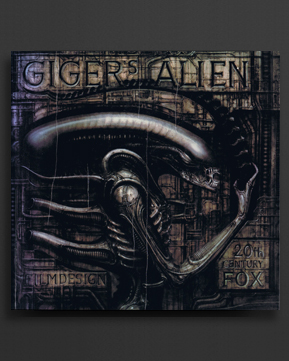
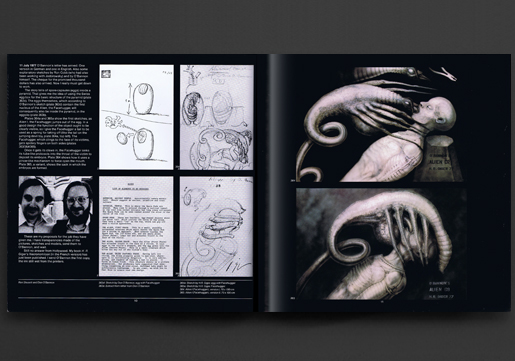
"Giger's Alien provides a complete record of the months and months of painstaking work that resulted in two hours of terrifying celluloid. Sketches, original paintings, photographs of scenery and the Alien under construction and scenes from the film are linked by Giger's detailed diary of his thoughts and actions at the time".
First published in 1979, here the Morpheus International second printing, "Giger's Alien" is a visually stunning and wonderfully insightful book for any fan of the art of H.R. Giger or in the production of science-fiction.
2017, English
Softcover, 240 pages, 12 x 19 cm
Published by
KW Institute for Contemporary Art / Berlin
Uh Books / Amsterdam
$20.00 - Out of stock
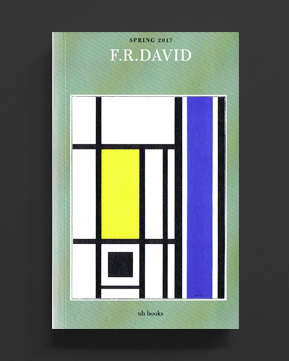
F.R.DAVID is a typographical journal, edited by Will Holder, dealing with the organisation of reading and writing in contemporary art practises. This 13th issue of F.R.DAVID is edited with Riet Wijnen, and has its origins in her Registry of Pseudonyms, an online database which accounts for who is who and why who is who. ‘Inverted Commas’ follows ‘pseudonym’ through names, naming, bodies, brains, self, author, other, reader, labour.
Includes: Michael Asher, Joan Didion, Harun Farocki, Sven Lütticken, Lucy Lippard, Barbara Guest, A.H. Nijhoff, Will Holder, Pauline Oliveros, and many more.
2005, English
Softcover, 335 pages, 22.5 x 16 cm
2005 edition, Out of print title / used*,
Published by
D.A.P. / New York
$95.00 - Out of stock
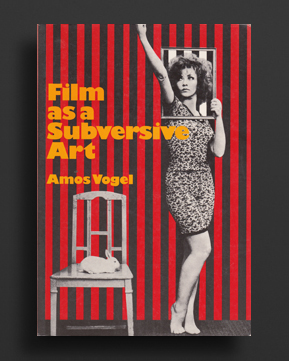
The now scarce 2005 reprint edition of one of the greatest books on film. A classic returns! The original edition of Amos Vogel's seminal book, Film as a Subversive Art was first published in 1974, and has been out of print since 1987. According to Vogel--founder of Cinema 16, North America's legendary film society--the book details the "accelerating worldwide trend toward a more liberated cinema, in which subjects and forms hitherto considered unthinkable or forbidden are boldly explored."
So ahead of his time was Vogel that the ideas that he penned some 30 years ago are still relevant today, and readily accessible in this classic volume. Accompanied by over 300 rare film stills, Film as a Subversive Art analyzes how aesthetic, sexual and ideological subversives use one of the most powerful art forms of our day to exchange or manipulate our conscious and unconscious, demystify visual taboos, destroy dated cinematic forms, and undermine existing value systems and institutions. This subversion of form, as well as of content, is placed within the context of the contemporary world view of science, philosophy, and modern art, and is illuminated by a detailed examination of over 500 films, including many banned, rarely seen, or never released works.
This 2005 edition, published by D.A.P./C.T. Editions, also quickly went out of print and it has not been available since.
Includes Luis Buñuel, Dusan Makavejev, Luis Buñuel, Stan Brakhage, Bruce Connor, Roman Polanski, Vera Chytilova, Alfred Hitchcock, Carolee Schneemann, Peter Watkins, Tony Conrad, Jonas Mekas, Andrei Tarkovsky, Marcel Duchamp, Robert Bresson, Luchino Visconti, Chris Marker, Federico Fellini, Rainer Werner Fassbinder, Kate Millett, John Cassavettes, Shuji Terayama, William Klein, Russ Meyers, Louis Malle, Woody Allen, Yoko Ono, Michelangelo Antonioni, Agnes Varda, Walerian Borowczyk, Andy Warhol, Ingmar Bergman, Jacques Rivette, Sergei M. Eisenstein, Ingmar Bergman, Lindsay Anderson, Roberto Rossellini, Marguerite Duras, Charlie Chaplin, Paul Morrissey, Joseph Losey, Otto Muehl, Hans Richter, Fritz Lang, Jean Genet, Kenneth Anger, Maya Deren, Jean-Luc Godard, Frans Zwartjes, Arrabal, Jack Smith, Stan Vanderbeek, Werner Herzog, Morgan Fisher, Jean Renior, Michael Snow, Robert Frank, Jan Svankmajer, Sam Peckinpah, Paul Sharits, Akira Kurosawa, Yoko Ono, Orson Welles, Frederick Wiseman, Ken Jacobs, Martin Scorcese, Jean Cocteau, Manuel Octavio Gomez, Stanley Kubrick, Norman McLaren, Albert Maysles and David Maysles, to name only a few of the hundreds of film-makers whose works are featured in this essential film book.
2017, English
Softcover, 32 pages, 20 x 27
Published by
Ludwig Museum / Cologne
Walther König / Köln
$18.00 - Out of stock
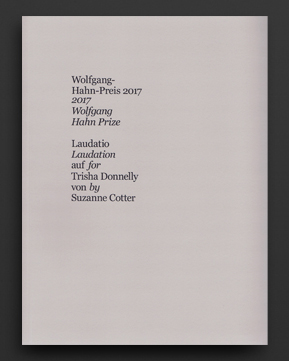
Catalogue published on the occasion of Trisha Donnelly's 2017 solo exhibition at Cologne's Ludwig Museum (organised by Suzanne Cotter) and her award of the Wolfgang-Hahn-Preis.
Trisha Donnelly was born in 1974 in San Francisco, California. She completed the Bachelor of Fine Arts at the University of California in 1995 and the Master of Fine Arts at the Yale University School of Art in 2000. Since 1999, she has participated in exhibitions, having held several institutional exhibitions at Villa Serralves in Porto (2016), the Serpentine Gallery in London (2014), the San Francisco Museum of Modern Art (2013), Portico, Frankfurt (2010), the Museo d'Arte Moderna di Bologna (2009), the Renaissance Society of the University of Chicago and the Institute of Contemporary Art in Philadelphia (both in 2008), the Modern Art Oxford (2007) 2005). In the last ten years, she has appeared in numerous group exhibitions, including at the 54th and 55th Venice Biennale (2011 and 2013), at dOCUMENTA (13) (2012), in The Quick and the Dead at the Walker Art Center (2009) and Il Tempo del Postino (2007 in Manchester, 2009 in Basel). In Germany, Donnelly had her first institutional solo exhibition in 2005 at the Kölnischer Kunstverein within the framework of the Central Art Prize awarded to her in 2004. In 2015 the Julia Stoschek Collection showed Trisha Donnelly's work as an exhibition number ten. Early exhibitions took place, among others, at her Galerie Air de Paris in Paris, Galerie Eva Presenhuber, Zurich, and Casey Kaplan in New York. There she caught the eye in 2002 with her performance, When she dressed as a messenger of Napoleon on a horse, she rode before Casey Kaplan's gallery and read a mysterious message. An action that was repeated in the Cologne Kunstverein in 2005, in that a black horse was supposed to have been guided through the exhibition hall - an event whose facticity the artist likes to leave open.
This play with the unknown and the production of situations in which the viewer is completely thrown back to his own individual perception without a reference frame may be one of the most important features of Trisha Donnelly's work. An approach to their partly also immaterial work can ultimately only happen if one encounters them. Donnelly's avoidance of the public, explanatory texts, or title-bearing titles points to a strategy that is not oriented towards events and spectacles. It is rather the inexplicable, rumorous experiences or experiences that Donnelly tries to make experience in her works. In an interview with Cathrin Lorch in 2005 (Kunstbulletin, September, 2005), Donnelly once mentioned that they are trying to condense things. Each piece of work was created in an attempt to search for patterns that created a "mental sculpture". In addition to the already mentioned Central Art Prize, Donnelly received the Rob Pruitt's Art Award, the Prix de la Fondation Luma in Arles in 2010, the 10th Prize of the Sharjah Biennial in 2011 and the International Faber-Castell Prize for Drawing in 2012. In 2011 she was among the finalists for the Hugo Boss Prize 2012, awarded by the Solomon R. Guggenheim Foundation. In addition to the already mentioned Central Art Prize, Donnelly received the Rob Pruitt's Art Award, the Prix de la Fondation Luma in Arles in 2010, the 10th Prize of the Sharjah Biennial in 2011 and the International Faber-Castell Prize for Drawing in 2012. In 2011 she was among the finalists for the Hugo Boss Prize 2012, awarded by the Solomon R. Guggenheim Foundation. In addition to the already mentioned Central Art Prize, Donnelly received the Rob Pruitt's Art Award, the Prix de la Fondation Luma in Arles in 2010, the 10th Prize of the Sharjah Biennial in 2011 and the International Faber-Castell Prize for Drawing in 2012. In 2011 she was among the finalists for the Hugo Boss Prize 2012, awarded by the Solomon R. Guggenheim Foundation.
2016, English
Hardcover (w. dust jacket), 352 pages, 28.7 x 20 cm
Published by
Fundación Alumnos47Cosentino / Mexico City
$50.00 - Out of stock
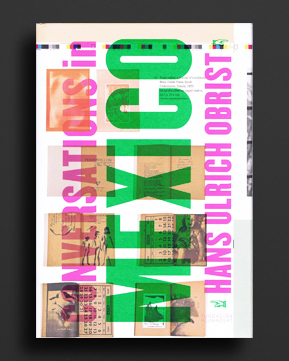
Edited by Karen Marta. Text by Patrick Charpenel, Hans Ulrich Obrist, Pedro Ramírez Vázquez, Teodoro González de León, Graciela Iturbide, Esquivel!, Santiago Genovés, Carlos Fuentes, Margo Glantz, Elena Poniatowska, Alejandro Jodorowsky, Leonora Carrington, Felipe Ehrenberg, Pedro Friedeberg, Juan Soriano and Eduardo Terrazas
In 2002 Hans Ulrich Obrist began his conversation with a diverse and influential group of Mexican pioneers during an exhibition at Luis Barragán's house in Mexico City. Over a decade in the making, Conversations in Mexico beautifully captures how the Mexican cultural scene has pivoted several times--perhaps most importantly around the student protests at the 1968 Olympic Games--to cultivate a wholly radical and innovative aesthetic, one that is illuminated in the iconic buildings of Pedro Ramírez Vázquez and Teodoro González de León; the people and landscapes photographed by Graciela Iturbide; the music of Esquivel!; the incredible voyages of Santiago Genovés; the utopian politics and literature of Carlos Fuentes, Margo Glantz and Elena Poniatowska; the singular vision of Alejandro Jodorowsky; and the uncompromising art of Leonora Carrington, Felipe Ehrenberg, Pedro Friedeberg, Juan Soriano and Eduardo Terrazas.
Published by Fundación Alumnos47Cosentino, Mexico City
2017, English / German
Softcover, 180 pages, 21.7 x 28 cm
Published by
Spike / Berlin
$20.00 - Out of stock
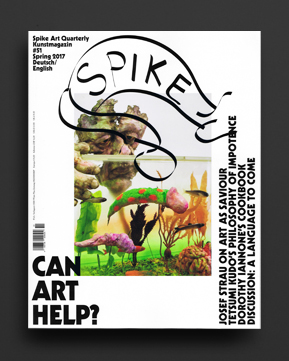
Spike #51 raises the question of the social role of art, and many more, with: Grzegorz Kowalski; Bob Flanagan's Visiting Hours; Angela Bulloch on Damien Hirst; Cyprien Gaillard's Desniansky Raion; a roundtable with Chus Martínez, Michaela Meise and Dieter Lesage; Dorothea Von Hantelmann; Kenny Schachter; Daniel Baumann; the portraits of Dorothy Iannone, Tetsumi Kudo, and Marie Angeletti; an interview with Josef Strau; an essay by Jan Verwoert; the TV series The Crown; Andrew Berardini on Jimmie Durham's retrospective in LA…
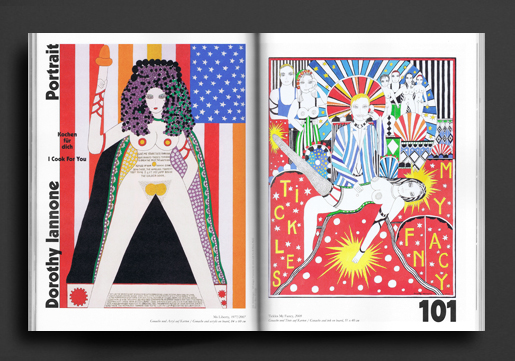
The power of art and its social role are the subjects of a roundtable discussion with curator Chus Martínez, artist Michaela Meise and philosopher Dieter Lesage at Spike Berlin. Josef Strau talks about how art saved him, while Kenny Schachter finds it both a remedy and a defence. Daniel Baumann delves into the promise of form, and for the critic Jan Verwoert a key function of art is that it teaches forms of conduct. Profiles on the painter Dorothy Iannone and her connections to Fluxus, and the Japanese artist Tetsumi Kudo and his “philosophy of impotence”, are joined by pieces taking on the decline of the supermodel, the Netflix series The Crown, Jimmie Durham's retrospective at the Hammer Museum, and much more.
Founded by the artist Rita Vitorelli in 2004, Spike Art Quarterly is a quarterly magazine on contemporary art published in English and German which aims at sustaining a vigorous, independent, and meaningful art criticism. At the heart of each issue are feature essays by leading critics and curators on artists making work that plays a significant role in current debates. Situated between art theory and practice and ranging far beyond its editorial base in Vienna and Berlin, Spike is both rigorously academic and stylishly essayistic. Spike's renowned pool of contributing writers, artists, collectors and gallerists observe and reflect on contemporary art and analyse international developments in contemporary culture, offering its readers both intimacy and immediacy through an unusually open editorial approach that is not afraid of controversy and provocation.
2017, English / Italian
Softcover, 296 pages, 24 x 35 cm
Published by
Mousse Publishing / Milan
$18.00 - Out of stock
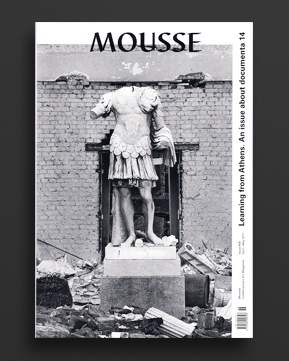
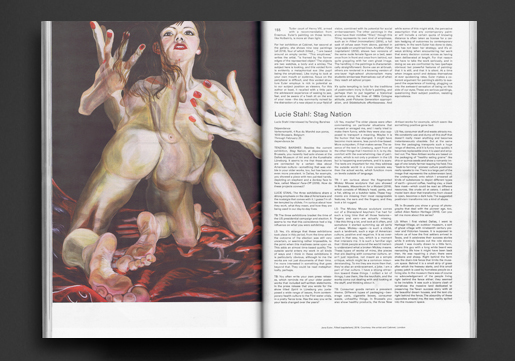
This issue dedicated to documenta 14 addresses themes, artists, and projects spanning between Athens and Kassel. Including: Moyra Davey by Quinn Latimer; Vivian Suter & Elisabeth Sussman; Roee Rosen; “Preliminary notes for a Black manifesto” by Rasheed Araeen; Khvay Samnang “; The Globalised Museum?” by Bonaventure Soh Bejeng Ndikung; articles by Kirsty Bell, Irena Haiduk, Pierre Bal-Blanc, Neni Panourgiá, Dieter Roelstraete, and more.
Mousse is a bimonthly magazine published in Italian and English. Established in 2006, Mousse contains interviews, conversations, and essays by some of the most important figures in international criticism, visual arts, and curating today, alternated with a series of distinctive articles in a unique tabloid format. Mousse keeps tabs on international trends in contemporary culture thanks to its city editors in major art capitals such as Berlin, New York, London, Paris, and Los Angeles.
Mousse (Mousse Publishing) is also publisher of catalogues, essays and curatorial projects, artist books and editions.
2017, English / Italian
Softcover, 296 pages, 24 x 35 cm
Published by
Mousse Publishing / Milan
$18.00 - Out of stock
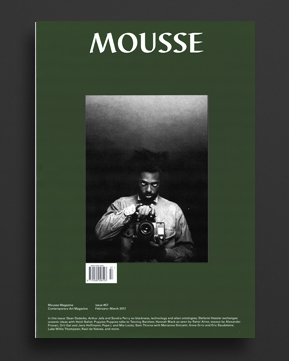
Dean Daderko, Arthur Jafa and Sondra Perry on blackness, technology and Alien ontologies; Stefanie Hessler exchanges oceanic ideas with Heidi Ballet; Puppies Puppies talk to Tenzing Barshee; Hannah Black as seen by Rahel Aima; essays by Alexander Provan, Orit Gat and Jens Hoffmann; William Pope.L and Mia Locks; Sam Thorne with Marianna Simnett; Anna Gritz and Eric Baudelaire; Luke Willis Thompson; Basel Abbas & Ruanne Abou-Rahme; Raúl de Nieves, and more.
Mousse is a bimonthly magazine published in Italian and English. Established in 2006, Mousse contains interviews, conversations, and essays by some of the most important figures in international criticism, visual arts, and curating today, alternated with a series of distinctive articles in a unique tabloid format. Mousse keeps tabs on international trends in contemporary culture thanks to its city editors in major art capitals such as Berlin, New York, London, Paris, and Los Angeles.
Mousse (Mousse Publishing) is also publisher of catalogues, essays and curatorial projects, artist books and editions.
2017, English / Italian
Softcover, 440 pages, 18.5 x 26.5 cm
Published by
Mousse Publishing / Milan
$18.00 - Out of stock
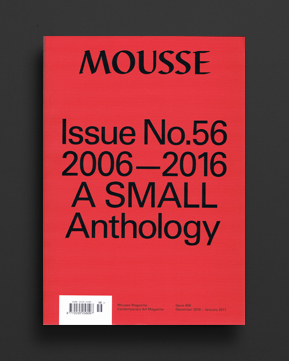
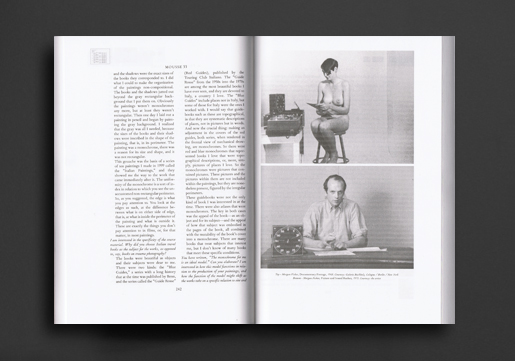
10-year anniversary special issue: a selection of essays, interviews, conversations, and projects appeared in the first ten years of Mousse.
Featuring: Chantal Akerman, Cecilia Alemani, Jennifer Allen, Kai Althoff, Bruce Altshuler, Ed Atkins, Lutz Bacher, Darren Bader, Alex Bag, John Baldessari, Phyllida Barlow, Kirsty Bell, Andrew Berardini, Jonathan Berger, Michael Bracewell, Tom Burr, Maurizio Cattelan, Marc Camille Chaimowicz, Sofía Hernández Chong Cuy, Carolyn Christov-Bakargiev, Stuart Comer, Lauren Cornell, Nicholas Cullinan, Roberto Cuoghi, Nick Currie, Massimo De Carlo, Gino De Dominicis, Gigiotto Del Vecchio, Simon Denny, Brian Dillon, Jimmie Durham, Dominic Eichler, Peter Eleey, Matias Faldbakken, Luigi Fassi, Elena Filipovic, Morgan Fisher, Isa Genzken, Yervant Gianikian & Angela Ricci Lucchi, Liam Gillick, Massimiliano Gioni, Isabelle Graw, Ed Halter, Jens Hoffmann, Judith Hopf, William E. Jones, Omar Kholeif, Alexander Kluge, Jiří Kovanda, William Leavitt, Elisabeth Lebovici, Andrea Lissoni, Helen Marten, Chus Martínez, Nick Mauss, Lucy McKenzie, Fionn Meade, Simone Menegoi, John Menick, Ute Meta Bauer, Massimo Minini, Hans Ulrich Obrist, Trevor Paglen, Stefania Palumbo, Francesco Pedraglio, Otto Piene, Laura Poitras, Elizabeth Price, Seth Price, Laure Prouvost, Alessandro Rabottini, Carol Rama, Filipa Ramos, Jason Rhoades, Dieter Roelstraete, Esperanza Rosales, Nicolaus Schafhausen, Fender Schrade, Stuart Sherman, Frances Stark, Jamie Stevens, Hito Steyerl, Sturtevant, Sabrina Tarasoff, Ana Teixeira Pinto, Oscar Tuazon, Giorgio Verzotti, Jan Verwoert, Francesco Vezzoli, Adrián Villar Rojas, Peter Wächtler, Ian Wallace, Klaus Weber, Cathy Wilkes, Christopher Williams, Jordan Wolfson.
Mousse is a bimonthly magazine published in Italian and English. Established in 2006, Mousse contains interviews, conversations, and essays by some of the most important figures in international criticism, visual arts, and curating today, alternated with a series of distinctive articles in a unique tabloid format. Mousse keeps tabs on international trends in contemporary culture thanks to its city editors in major art capitals such as Berlin, New York, London, Paris, and Los Angeles.
Mousse (Mousse Publishing) is also publisher of catalogues, essays and curatorial projects, artist books and editions.
2017, English
Softcover, 224 pages, 15.2 x 22.9 cm
Published by
Semiotext(e) / Los Angeles
The MIT Press / Massachusetts
$38.00 - Out of stock
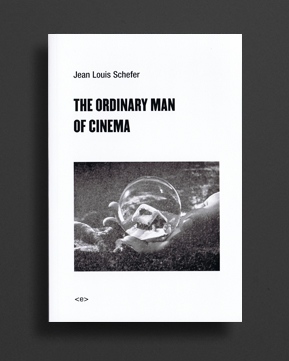
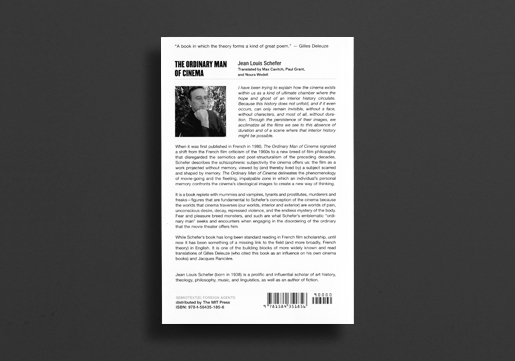
When it was first published in French in 1980, The Ordinary Man of Cinema signaled a shift from the French film criticism of the 1960s to a new breed of film philosophy that disregarded the semiotics and post-structuralism of the preceding decades. Schefer describes the schizophrenic subjectivity the cinema offers us: the film as a work projected without memory, viewed by (and thereby lived by) a subject scarred and shaped by memory. The Ordinary Man of Cinema delineates the phenomenology of movie-going and the fleeting, impalpable zone in which an individual’s personal memory confronts the cinema’s ideological images to create a new way of thinking.
It is also a book replete with mummies and vampires, tyrants and prostitutes, murderers and freaks—figures that are fundamental to Schefer’s conception of the cinema, because the worlds that cinema traverses (our worlds, interior and exterior) are worlds of pain, unconscious desire, decay, repressed violence, and the endless mystery of the body. Fear and pleasure breed monsters, and such are what Schefer’s emblematic “ordinary man” seeks and encounters when engaging in the disordering of the ordinary that the movie theater offers him. Among other things, Schefer considers “The Gods” in 31 brief essays on film stills and “The Criminal Life” with reflections on spectatorship and autobiography.
While Schefer’s book has long been standard reading in French film scholarship, until now it has been something of a missing link to the field (and more broadly, French theory) in English. It is one of the building blocks of more widely known and read translations of Gilles Deleuze (who cited this book as an influence on his own cinema books) and Jacques Rancière.
Translated by Max Cavitch, Noura Wedell and Paul Grant
About the Author
Jean Louis Schefer (born in 1938) is a prolific and influential scholar of art history, theology, philosophy, music, and linguistics, as well as an author of fiction.
2016, English
Softcover, 80 pages, 24 x 33 cm
Published by
KW Institute for Contemporary Art / Berlin
Sternberg Press / Berlin
$59.00 $25.00 - In stock -
Edited by Ellen Blumenstein, Heike Catherina Mertens
Texts by Hannah Black, Ellen Blumenstein, Christina Weiss, Catherine Wood
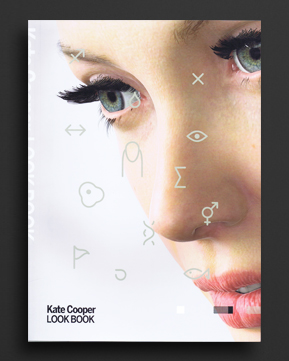
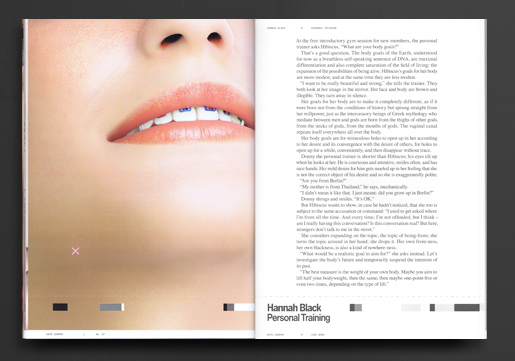
This publication accompanies the first institutional solo show by Kate Cooper, winner of the 2014 Schering Stiftung Art Award. Exploring the format and presentation inherent to image production, Cooper returns to the CGI female models used in her exhibition at KW Institute for Contemporary Art, Berlin, to create a new series of works situated within the fictional space of the lookbook.
Through her videos, exhibitions, and photographic works, Cooper explores the role of gender and what agency images might possess in and of themselves. Producing images becomes akin to building infrastructure; her computer-generated bodies are imbued with power and put to work. The imagery of advertising is hacked. The female labor inherent in these modes of production becomes refocused in an economy of withdrawal, enacting a refusal of representation.
Along with Cooper’s new series of images, LOOK BOOK includes a new short story by Hannah Black titled “Personal Trainer,” appendices by KW curator Ellen Blumenstein, an introduction by Christina Weiss, and subtitles and slogans (“Is seeing everything? Are you all-unseeing?”) by Catherine Wood.
Copublished with KW Institute for Contemporary Art, Berlin
Design by Michael Oswell
2016, English
Hardcover, 312 pages, 22 x 29 cm
Published by
Center for Curatorial Studies Bard College / New York
$67.00 - Out of stock
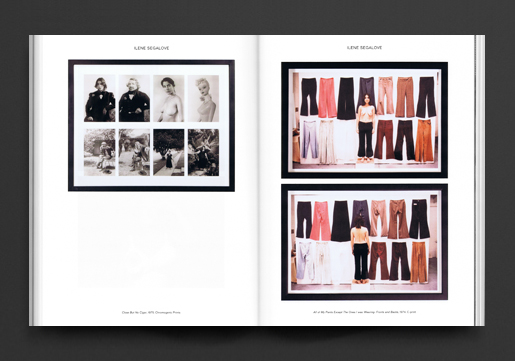
'Invisible Adversaries' was a major exhibition curated by Lauren Cornell and Tom Eccles inspired by the 1976 feature film by the radical Austrian artist Valie Export. The film presents a woman’s struggle to retain her sense of self against hostile alien forces that appear increasingly ubiquitous, colonizing the minds of all those around her. Motifs from the film – among them, architecture’s influence on identity; feminist critique; and the power of political fantasy – operate as filters through which to consider significant pieces from the Marieluise Hessel Collection.
With works by over 50 artists including Eija-Liisa Ahtila, Chantal Akerman, Kai Althoff, Janine Antoni, Ida Applebroog, Phyllida Barlow, Lynda Benglis, Barbara Bloom, Paul Chan, Patty Chang, Anne Collier, Rineke Dijkstra, Trisha Donnelly, VALIE EXPORT, Hans-Peter Feldmann, Isa Genzken, Liam Gillick, K8 Hardy, Rachel Harrison, Mona Hatoum, Roni Horn, Emily Jacir, Annette Kelm, Leigh Ledare, Nikki S. Lee, Sarah Lucas, Tala Madani, Christian Marclay, Helen Marten, Ulrike Müller, Bruce Nauman, Tony Oursler, Philippe Parreno, William Pope.L, Seth Price, Magali Reus, Rachel Rose, Thomas Ruff, Ilene Segalove, Cindy Sherman, Stephen Shore, Diane Simpson, Lorna Simpson, Jo Spence, Hito Steyerl, Tunga, Gillian Wearing, Martha Wilson, and Krzysztof Wodiczko, amongst others.
This 300-page publication designed by Zak Group with original essays by nine influential writers, scholars and artists: Zach Blas, Johanna Fateman, Nav Haq, Vít Havránek, J. Hoberman, Alex Kitnick, Tavia Nyong’O, Lauren O’Neill-Butler, and Julian Rose. The catalogue also includes original interviews with VALIE EXPORT, Trevor Paglen, and Hito Steyerl.
1968, English
Softcover (staple-bound), 42 pages, 14 x 21 cm
1st Edition, Out of print title / Used*,
Published by
Contemporary Films Limited / London
Federation of Film Societies / London
$15.00 - Out of stock
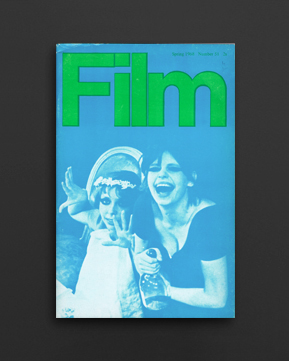
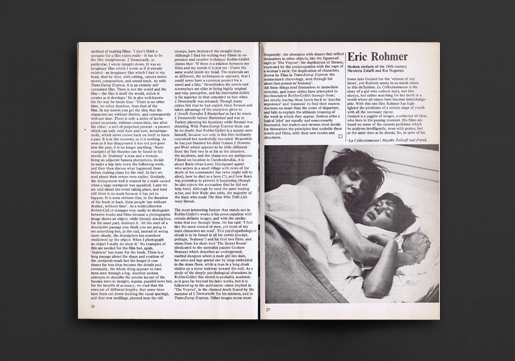
Film was the magazine of the Federation of Film Societies, published in London.
Vol. 51 Spring 1968 features articles on Alain Robbe-Grillet, Eric Rohmer, Kirsten Stenbaek, Jonas Cornell, Vera Chytilova, Dusan Makavejev, Jean Renoir, B. P. Schulberg, and much more.
Cover image: Vera Chytilova's "Daisies"
2016, English / German
Softcover, 540 pages, 22 x 30 cm
Published by
Walther König / Köln
$70.00 - Out of stock
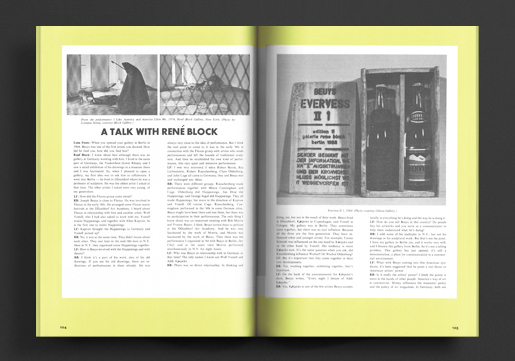
Having represented Beuys, Richter and Polke, German gallery owner , art publisher, art collector and curator René Block (born 1942) ranks among the central figures of the 1960s avant-garde. This publication collects writings by and interviews with Block, scanned from their original publications and organized chronologically, as well as an illustrated published history, artist portraits (taken by Block), performance ephemera, bibliography, and more. An enormous book that, via Block, encompasses the work of so many important movements and figures of 1960s - 1990s art.
Although primarily a German language publication, many of the original articles are in English. Regardless of language, the valuable historical listings translate.
2017, English / German
Softcover, 168 pages, 16 x 23 cm
Published by
Walther König / Köln
$39.00 - Out of stock
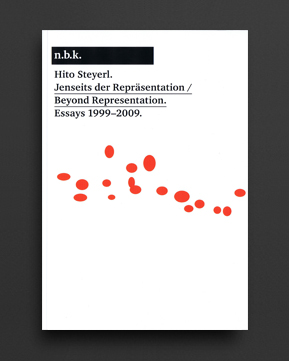
German filmmaker, visual artist and writer Hito Steyerl (born 1966) is a leading voice on media and the global circulation of images. In this new essay collection, she deals with images and sounds that create new relationships to objects, and themselves become and produce other objects.
1984, English
Hardcover (w. dust jacket), 342 pages, 270 x 280 cm
1st Edition, Out of print title / Used*,
Published by
U.M.I. Research Press / Michigan
$150.00 - Out of stock
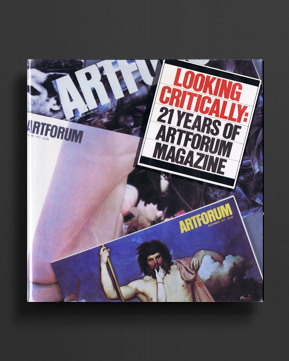
First, hardcover edition of "LOOKING CRITICALLY: 21 YEARS OF ARTFORUM MAGAZINE", the heavy 342 page volume anthology of the first 21 years of the world's most important modern and art journal. An incredibly valuable collection of art theory.
Edited by Amy Baker Sandback, designed by Roger Gorman and Mary Beath and published in 1984 by U.M.I. Research Press, this dense volume, bound in hardcover to the dimensions of a copy of ARTFORUM, begins with an Ed Kienholz review at the Ferus Gallery from ARTFORUM's June 1962 inaugural issue, and ends with Barbara Kruger reviewing the film "TRON" for the November 1982 issue. An amazing compendium of articles and reviews from the magazine's important first 21 years, featuring contributions by the likes of John Cage, Robert Morris, Kate Steinitz, Henry T. Hopkins, Don Factor, Robert Pincus-Witten, Dennis Adrian, John Coplans, Hilton Kramer, Harold Rosenberg, Henry Geldzahler, John Cage, Walter Hopps, Ed Ruscha, Allan Kaprow, Robert Rosenblum, Dan Flavin, Boris Groys, Sam Wagstaff, Billy Kluver, Lucy R. Lippard, Robert Rosenblum, Roger Shattuck, Ad Reinhardt, Mel Bochner, Andy Warhol, Roy Lichtenstein, Claes Oldenburg, Barbara Rose, Manny Farber, Michael Fried, Robert Morris, Philip Leider, Hollis Frampton, Carl Andre, Richard Serra, Lawrence Alloway, Barbara Kruger, Jane Livingston, Lizzie Borden, Kenneth Baker, Laurie Anderson, Agnes Martin, Cindy Nemser, Sidney Tillim, Annette Michelson, Rosalind Krauss, Jeremy Gilbert-Rolfe, Roberta Smith, Peter Plagens, Peter Schjeldahl, J. Hoberman, Hal Foster, Richard Flood, Carter Ratcliff, Stuart Morgan, Max Kozloff, Donald Kuspit, Dan Graham, Walter De Maria, Komar & Melamid, Edit De Ak, Lawrence Weiner, Kathy Acker, Robert Mapplethorpe, Anselm Kiefer, Thomas McEvilley, Louise Bourgeois, Ingrid Sischy, and too many more to list. Artists featured include: Josef Albers, Richard Tuttle, Jo Baer, Carl Andre, Ant Farm, Hans Arp, Max Bill, Mel Bochner, Alighiero Boetti, Lee Bontecou, Constantin Brancusi, Bertholt Brecht, Richard Avedon, Francis Bacon, Diane Arbus, Michaelangelo Antonioni, Lynda Beglis, Larry Bell, Terry Fox, James Byers, Rober Barry, Marcel Breuer, AA Bronson, Luis Buñel, Daniel Buren, Chris Burden, Joseph Beuys, Anthony Caro, Marcel Broodthaers, John Chamberlain, Paul Cézanne, Marc Chagall, Jean Cocteau, Merce Cunningham, Sonia Delauney, Walter de Maria, Bruce Connor, Jean Dubuffet, Max Ernst, Walker Evans, Dan Flavin, Marcel Duchamp, Albrecht Dürer, Lucio Fontana, Hollis Frampton, Alberto Giacometti, Eva Hesse, Gilbert & George, Philip Glass, John Cage, Nancy Graves, Dan Graham, Robert Grosvenor, Nancy Grossman, Walter Gropius, Hans Haacke, Hairy Who, David Hockney, Douglas Huebler, Jorg Immendorff, Donald Judd, Jasper Johns, Joan Jonas, Allan Kaprow, On Kawara, Ellsworth Kelly, Edward Keinholz, Paul Klee, Alison Knowles, Joseph Kosuth, Brice Marden, Agnes Martin, André Masson, Henri Matisse, Roberto Matta, Sol Lewitt, Roy Lichtenstein, Barbara Kruger, Jannis Kounellis, Markus Lüpertz, El Lissitzky, Rene Magritte, Robert Mapplethorpe, John McCracken, Mario Merz, Robert Morris, Robert Motherwell, Ree Morton, Louise Nevelson, Barnett Newman, Kenneth Noland, Claes Oldenburg, Eduardo Paolozzio, A. R. Penck, Irving Penn, Francis Picabia, Pablo Picasso, Larry Poons, Ken Price, Yvonne Rainer, Robert Rauschenberg, Martial Raysse, Roman Polanski, Jackson Pollock, Steve Reich, Gerrit Rietveld, Alain Robbe-Grillet, Dorothae Rockburne, James Rosenquist, Mark Rothko, Robert Ryman, Lucas Samaras, Kurt Schwitters, Oscar Schlemmer, Richard Serra, Cindy Sherman, David Smith, Robert Smithson, Michael Snow, Robert Venturi, Wolf Vostell, Andy Warhol, Frank Stella, Saul Steinberg, Karlheinz Stockhausen, Bruno Taut, Jean Tinguely, Anne Truitt, Paul Wunderlich, Lawrence Weiner, Louise Bourgeois, Alfred Hitchcock, and so many more.
Very uncommon hardcover edition, with dust jacket.