World Food Books' programme is largely produced on Kulin Nation land. We acknowledge the Wurundjeri people of the Kulin Nation as the first and continuing custodians of this land, and pay respect to their Elders past, present, and emerging.
World Food Books is an arts and special interests bookshop in Naarm / Melbourne. Founded in 2010, World Food Books is devoted to the presentation of a rotating, hand-selection of international art, design, literary and counterculture publications with an emphasis on the anti-traditional, the experimental, the avant-garde, the heretic, the marginal.
Presenting new titles alongside rare and out-of-print books, catalogues and journals spanning the fields of modern and contemporary art, design, photography, illustration, film, literature, poetry, cultural theory, philosophy, sexuality, popular and underground culture in its many radical forms, World Food Books wishes to encourage adventurous, thoughtful and open-minded reading, looking, writing, and exchange of publishing and ideas, both current and historical.
As well as our bookshop, located in Melbourne's historical Nicholas Building, all of our inventory is available internationally via our online mail-order service.
World Food Books semi-regularly co-ordinates "Occasions", a programme of exhibits and events at the bookshop and in partnership with other hosts (such as museums and art galleries) that develop out of the activities, relationships and content of the bookshop itself.
World Food Books
The Nicholas Building
37 Swanston Street
Room 5, Level 6
Melbourne 3000
Australia
SHOP HOURS:
Thu–Fri 12–6, Sat 12–5
WEB-SHOP OPEN 24/7
World Food Books
Postal Address:
PO Box 435
Flinders Lane
Victoria 8009
Australia
Art
Theory / Essay
Architecture / Interior
Graphic Design / Typography
Photography
Fashion
Eros
LGBTQ+
Fiction / Poetry
Weird / Speculative / Science Fiction / Horror
Transgressive / Visceral / Abject
Symbolism / Decadence / Fin de siècle
Film / Video
Painting
Sculpture / Installation
Performance / Dance / Theater
Drawing
Sound / Music
Curatorial
Group Shows / Collections
Periodicals
Out-of-print / Rare
Posters / Ephemera / Discs
Signed Books
World Food Books Gift Voucher
World Food Book Bag
Australian Art
Australian Fiction
Australian Science Fiction / Speculative Fiction
Australian Poetry
Australian Photography
Japanese Photography
Conceptual Art
Minimal Art
Dada
'Pataphysics / Oulipo
Fluxus
Concrete Poetry
Pop Art
Surrealism
Arte Povera
Arte Informale / Haute Pâte / Tachism
Nouveau Réalisme / Zero / Kinetic
Situationism / Lettrism
Collage / Mail Art / Xerox Art
Art Brut / Folk / Visionary / Fantastic
Illustration / Graphic Art / Bandes Dessinées
Furniture
Italian Radical Design / Postmodernism
Textiles
Ceramics / Glass
Counterculture
Protest / Revolt
Philosophy
Psychoanalysis
Anthropology
Anarchism
Socialism / Anarchism / Communism / Capitalism
Literary Theory / Semiotics / Language
Feminism / Women's Studies
Gender Studies / Sexuality
Anthropology
Fetishism / BDSM
Drugs / Psychedelia
Crime / Violence
Animal Rights / Veganism
Occult / Esoterica
Ecology / Earth / Alternative Living
Whole Earth / Crafts
All prices in AUD (Australian dollars)
Pick-Ups
Pick-up orders can be collected in our bookshop during opening hours after order date. Please collect any Pick-up orders within 2 weeks of ordering as we have limited storage space. Orders will be released back into stock if not collected within this time. No refunds can be made for pick-ups left un-collected. If you cannot make it in to the bookshop in this time-frame, please choose postage option.
Return Policy
All sales are final. We do accept returns (for refund or exchange) for items received in error. All our orders are packed with special care using heavy-duty padding and cardboard book-mailers or bubble mailers (for smaller books), using reinforcement where required. We cannot take responsibility for any lost, stolen or damaged parcels.
Insurance
Should you wish to insure your package, please email us directly after placing your order and we can organise this at a small extra expense. Although all standard/express tracked packages are very safe and dependable, we cannot take responsibility for any lost, stolen or damaged parcels. We recommend insurance on valuable orders.
Interested in selling your old books, catalogues, journals, magazines, comics, fanzines, ephemera? We are always looking for interesting, unusual and out-of-print books to buy. We only buy books in our fields of interest and specialty, and that we feel we can resell.
We base these prices on desirability, market value, in-print prices, condition and our current stock levels. We offer cash, store credit, and can take stock on consignment. All
about 25% of the price we expect to get when we sell them, or 30% in store credit. We base these prices on desirability, market value, in-print prices, condition and our current stock levels.
Sell your books any day of the week. You can drop them off and return later. If you have a lot of books, we can visit your Sydney home.
We buy books that we feel we can resell. We offer about 25 % of the price we expect to get when we sell them, or 30% in store credit. We base these prices on desirability, market value, in-print prices, condition and our current stock levels.
Philadelphia Wireman
03 August - 01 September, 2018
World Food Books is proud to announce our next Occasion, the first presentation of sculptures by Philadelphia Wireman in Australia.
The Philadelphia Wireman sculptures were found abandoned in an alley off Philadelphia’s South Street on trash night in 1982. Their discovery in a rapidly-changing neighbourhood undergoing extensive renovation, compounded with the failure of all attempts to locate the artist, suggests that the works may have been discarded after the maker’s death. Dubbed the "Philadelphia Wireman" during the first exhibition of this work, in 1985, the maker’s name, age, ethnicity, and even gender remain uncertain. The entire collection totals approximately 1200 pieces, all intricately bound together with tightly-wound heavy-gauge wire (along with a few small, abstract marker drawings, reminiscent both of Mark Tobey and J.B. Murry). The dense construction of the work, despite a modest range of scale and materials, is singularly obsessive and disciplined in design: a wire armature or exoskeleton firmly binds a bricolage of found objects including plastic, glass, food packaging, umbrella parts, tape, rubber, batteries, pens, leather, reflectors, nuts and bolts, nails, foil, coins, toys, watches, eyeglasses, tools, and jewellery.
Heavy with associations—anthropomorphic, zoomorphic, and socio-cultural responses to wrapped detritus—the totemic sculptures by Philadelphia Wireman have been discussed in the context of work created to fulfil the shamanistic needs of alternative religions in American culture. Curators, collectors, and critics have variously compared certain pieces to sculpture from Classical antiquity, Native American medicine bundles, African-American memory jugs, and African fetish objects. Reflecting the artist’s prolific and incredibly focused scavenging impulse, and despite—or perhaps enhanced by—their anonymity, these enigmatic objects function as urban artefacts and arbiters of power, though their origin and purpose is unknown. Philadelphia Wireman, whatever their identity, possessed an astonishing ability to isolate and communicate the concepts of power and energy through the selection and transformation of ordinary materials. Over the course of the past two decades, this collection has come to be regarded as an important discovery in the field of self-taught art and vernacular art.
Presented in collaboration with Fleisher-Ollman Gallery, Philadelphia, and Robert Heald, Wellington.
Susan Te Kahurangi King
02 February - 10 March, 2018
Susan Te Kahurangi King (24 February 1951 - ) has been a confident and prolific artist since she was a young child, drawing with readily available materials - pencils, ballpoint pens and felt-tip markers, on whatever paper is at hand. Between the ages of four and six Susan slowly ceased verbal communication. Her grandparents William and Myrtle Murphy had developed a special bond with Susan so they took on caring responsibilities for extended periods. Myrtle began informally archiving her work, carefully collecting and storing the drawings and compiling scrapbooks. No drawing was insignificant; every scrap of paper was kept. The King family are now the custodians of a vast collection containing over 7000 individual works, from tiny scraps of paper through to 5 meter long rolls.
The scrapbooks and diaries reveal Myrtle to be a woman of great patience and compassion, seeking to understand a child who was not always behaving as expected. She encouraged Susan to be observant, to explore her environment and absorb all the sights and sounds. Myrtle would show Susan’s drawings to friends and people in her community that she had dealings with, such as shopkeepers and postal workers, but this was not simply a case of a grandmother’s bias. She recognised that Susan had developed a sophisticated and unique visual language and sincerely believed that her art deserved serious attention.
This was an unorthodox attitude for the time. To provide some context, Jean Dubuffet coined the term Art Brut in 1945 to describe work created by self-taught artists – specifically residents of psychiatric institutions and those he considered to be visionaries or eccentrics. In 1972 Roger Cardinal extended this concept by adopting the term Outsider Art to describe work made by non-academically trained artists operating outside of mainstream art networks through choice or circumstance. Susan was born in Te Aroha, New Zealand in 1951, far from the artistic hubs of Paris and London that Dubuffet and Cardinal operated in. That Myrtle fêted Susan as a self-taught artist who deserved to be taken seriously shows how progressive her attitudes were.
Susan’s parents Doug and Dawn were also progressive. Over the years they had consulted numerous health practitioners about Susan’s condition, as the medical establishment could not provide an explanation as to why she had lapsed into silence. Dawn educated herself in the field of homeopathy and went on to treat all twelve of her children using these principles – basing prescriptions on her observations of their physical, mental and emotional state.
Doug was a linguist with an interest in philosophy who devoted what little spare time he had to studying Maori language and culture. To some extent their willingness to explore the fringes of the mainstream made them outsiders too but it was their commitment to living with integrity and their respect for individuality that ensured Susan’s creativity was always encouraged.
Even though Susan’s family supported her artistic pursuits, some staff in schools and hospitals saw it as an impediment to her assimilation into the community and discouraged it in a variety of ways. Her family was not always aware of this and therefore did not fully understand why Susan stopped drawing in the early 1990s. However, rather than dwell on the challenges that Susan faced in pursuit of her artistic practice, they prefer to highlight her achievements. In 2008 Susan began drawing again in earnest, after an almost 20 year interruption, and her work is now shown in galleries around the world.
Susan grew up without television and has been heavily influenced by the comics she read as a child. She is absolutely fearless in the appropriation of recognizable characters, such as Donald Duck and Mickey Mouse, in her work. She twists their limbs, contorts their faces, compresses them together, blends them into complex patterned backgrounds - always imbuing them with an incredible energy. Although Susan often used pop culture characters in her work they are not naive or childlike. These are drawings by a brilliant self-taught artist who has been creating exceptional work for decades without an audience in mind.
Mladen Stilinović
"Various Works 1986 - 1999"
02 February 16 - September 10, 2016
Various works 1986 - 1999, from two houses, from the collections of John Nixon, Sue Cramer, Kerrie Poliness, Peter Haffenden and Phoebe Haffenden.
Including: Geometry of Cakes (various shelves), 1993; Poor People’s Law (black and white plate), 1993; White Absence (glasses, ruler, set square, silver spoon, silver ladel with skin photograph and wooden cubes), 1990-1996; Exploitation of the Dead (grey and red star painting, wooden painting, black spoon with red table, red plate), 1984-1990; Money and Zeros (zero tie, paintings made for friends in Australia (Sue, John, Kerrie), numbers painting), 1991-1992; Words - Slogans (various t-shirts) - “they talk about the death of art...help! someone is trying to kill me”, “my sweet little lamb”, “work is a disease - Karl Marx”; Various artist books, catalogues, monographs, videos; Poster from exhibition Insulting Anarchy; "Circular" Croatian - Australian edition; Artist book by Vlado Martek (Dostoyevsky); more.
Thanks to Mladen Stilinović and Branka Stipančić.
Jonathan Walker
Always Will Need To Wear Winter Shirt Blue + Ochre Small Check Pattern
21 August - 21 September, 2015
Untitled
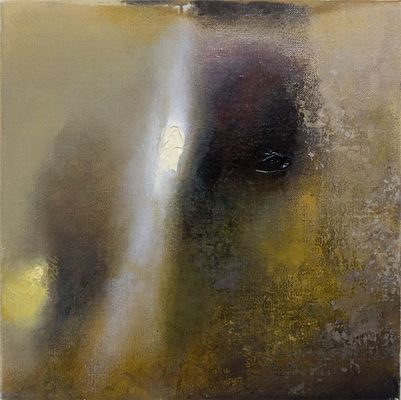
I am not a great reader of poetry but I always return to the work of Melbourne poet, Vincent Buckley (1925- 1988). Perhaps I find his most tantalising piece to be not a finished poem but a fragment left on a scrap of paper discovered on his desk after the poet’s death.
The poetry gathers like oil
In the word-core, and spreads
It has its music meet,
Its music is in movement.
This fragment is more the shell left behind from a volatile thought than a finished poem. I find the last two lines honest but awkward whereas the first two lines work like an arrow. Most likely he could not find a resolution so it was left. Still, in its present form, it remains an eloquent testimony to the ultimate failure of a medium to express mobile thought and sensation, in Buckley’s case, through verbal language. It’s an important matter because this is something all artists have to deal with regardless of the medium.
I have never written a poem, however, I am forever copying fragments from books on paper scraps in a vain effort to fix certain notions in my head. At first, they function as bookmarks that are sometimes returned to when I open the book. But before long, as they accumulate, they fall out littering the table interspersed with A4 photocopies, bills, books and medications.
To return to Buckley’s fragment, the first two lines very much evoke how I paint nowadays. As you age, detail diminishes and patches of light become more luminous and float. I feel the most honest way of dealing with this is by smearing the oil paint on the canvas with the fingers and working close-up, blind. Only if the patches coalesce into an approaching image can the work gain a life.
-
Jonathan Walker was born in Melbourne, Australia and brought up on a dairy farm in Gippsland. In the 1970’s he studied painting at RMIT and won the Harold Wright Scholarship to the British Museum, London. During the 1980’s he exhibited at Pinacotheca Gallery, Richmond and had work shown at the NGV and Heidi City Art Gallery. Over the same period he designed the cover for the “Epigenesi” LP by Giancarlo Toniutti, Italy and conducted a mail exchange work with Achim Wollscheid, Germany. The work with artists through the post resulted in an article published in the bicentenary issue of Art and Australia 1988. He showed in artist run spaces such as WestSpace in the 90’s and 2000’s, and until 2012, taught painting at Victoria University, which is where we (Colleen Ahern and Lisa Radford) as organisers of the exhibition, among many others, had the privilege of being his student.
Walker’s knowledge was imparted to students through the careful selection of music, literature, and artists found in books that he himself had ordered for the library. Walker’s strategy was the generosity of sharing his vast knowledge with references specific to each student and their context.
Walker’s paintings share a similar focus and intimacy.
This exhibition presents a small selection of recent paintings alongside a publication that includes Walker’s writing. Observational and analytical, Walker’s work is a type of material notation — the time of day, colour and how it is blended, the both specific and fleeting location of a reflection on lino or the question of whether a chair leg should be included in a painting.
Please join us on Friday August 21 between 6-8pm to celebrate the opening of the exhibition.
Curated by Colleen Ahern and Lisa Radford.
B. Wurtz
Curated by Nic Tammens
March 26 - April 4, 2015
B.Wurtz works from a basement studio in his home on Manhattan’s Lower East Side.
This local fact is attested to by the plastic shopping bags and newsprint circulars that appear in his work. As formal objects, they don’t make loud claims about their origins but nonetheless transmit street addresses and places of business from the bottom of this long thin island. Like plenty of artists, Wurtz is affected by what is local and what is consumed. His work is underpinned by this ethic. It often speaks from a neighborhood or reads like the contents of a hamper:
“BLACK PLUMS $1.29 lb.”
“Food Bazaar”
“USDA Whole Pork Shoulder Picnic 99c lb.”
“RITE AID Pharmacy, with us it’s personal.”
“H. Brickman & Sons.”
“Sweet Yams 59c lb."
Most of the work in this exhibition was made while the artist was in residence at Dieu Donne, a workshop dedicated to paper craft in Midtown. Here Wurtz fabricated assemblages with paper and objects that are relatively lightweight, with the intention that they would be easily transportable to Australia. This consideration isn’t absolute in Wurtz’s work, but was prescriptive for making the current exhibition light and cheap. Packed in two boxes, these works were sent from a USPS post office on the Lower East Side and delivered to North Melbourne by Australia Post.
Wurtz appears courtesy of Metro Pictures, New York.
Thanks to Rob Halverson, Joshua Petherick, Sari de Mallory, Matt Hinkley, Helen Johnson, Fayen d'Evie, Ask Kilmartin, Lisa Radon, Ellena Savage, Yale Union, and "Elizabeth".
John Nixon
"Archive"
December 15 - January 20, 2014
The presentation of John Nixon's archive offered a rare showcase of this extensive collection of the artist's own publications, catalogues, posters, ephemera, editions and more, from the mid 1980s onwards, alongside a selection of his artworks.
Organized by John Nixon, Joshua Petherick and Matt Hinkley.
<a href=http://wfb.public-office.info/artist/john-nixon>All titles by John Nixon
"Habitat"
at Minerva, Sydney (organised by Joshua Petherick and Matt Hinkley)
November 15 - December 20, 2014
Lupo Borgonovo, Janet Burchill & Jennifer McCamley,
Lewis Fidock, HR Giger, Piero Gilardi, Veit Laurent Kurz,
Cinzia Ruggeri, Michael E. Smith, Lucie Stahl, Daniel Weil, Wols
Press Release:
“...It contained seven objects. The slender fluted bone, surely formed for flight, surely from the wing of some large bird. Three archaic circuitboards, faced with mazes of gold. A smooth white sphere of baked clay. An age-blackened fragment of lace. A fingerlength segment of what she assumed was bone from a human wrist, grayish white, inset smoothly with the silicon shaft of a small instrument that must once have ridden flush with the surface of the skin - but the thing’s face was seared and blackened.”
William Gibson, “Count Zero”, 1986
"Autumn Projects Archive"
Curated by Liza Vasiliou
March 6 - March 15, 2014
World Food Books, in conjunction with the Virgin Australia Melbourne Fashion Festival 2014, presented the Autumn Projects archive, consisting of a selection of early examples in Australian fashion with a particular interest in collecting designers and labels from the period beginning in the 1980’s, who significantly influenced the discourse of Australian Fashion.
Curated by Liza Vasiliou, the exhibition provided a unique opportunity to view pieces by designers Anthea Crawford, Barbara Vandenberg, Geoff Liddell and labels CR Australia, Covers, Jag along with early experimental collage pieces by Prue Acton and Sally Browne’s ‘Fragments’ collection, suspended throughout the functioning World Food Books shop in Melbourne.
H.B. Peace
presented by CENTRE FOR STYLE
November 14, 2013
"Hey Blinky, you say chic, I say same"
Anon 2013
H.B. Peace is a clothing collaboration between great friends Blake Barns and Hugh Egan Westland. Their pieces explore the divergences between 'character’ and ‘personality’ in garments....etc
Special Thanks to Joshua Petherick and Matt Hinkley of WFB and Gillian Mears
and a Very Special Thank you to Audrey Thomas Hayes for her shoe collaboration.
Janet Burchill & Jennifer McCamley
"Aesthetic Suicide"
May 10 - June 8, 2013
The first of our occasional exhibitions in the World Food Books office/shop space in Melbourne, "Aesthetic Suicide" presented a body of new and older works together by artists Janet Burchill & Jennifer McCamley, including videos, prints, a wall work, and publications.
During shop open hours videos played every hour, on the hour.
2001, English / Japanese
Hardcover (w. dust jacket and obi-strip), 27 x 20 cm
Published by
Amus Arts Press / Japan
$120.00 - Out of stock
First hardcover edition of this essential single vibrant monograph capturing the psychedelic graphic work (spanning 1963-1974) by Japanese artist, Keiichi Tanaami. Concert posters, protest posters, comic strips, films, animations, record jackets, pop advertising, and much more, all vividly illustrated throughout, with commentary by the artist in English.
Keiichi Tanaami is one of the leading pop artists of postwar Japan, and has been active as a multi-genre artist since the 1960s as a graphic designer, illustrator, video artist and fine artist.
Very Good copy with Very Good dust jacket and original printer's obi-strip.
1990, English
Softcover, 400 pages, 22.5cm x 15 cm
Out of print title / used / very good
Published by
University of Minnesota Press / Minnesota
$65.00 - Out of stock
1990 English language edition of Gilles Deleuze and Félix Guattari's mighty Anti-Oedipus, published by University of Minnesota Press. With introduction by Michel Foucault.
When it first appeared in France in 1972, Anti-Oedipus was hailed as a masterpiece by some and "a work of heretical madness" by others. Anti-Oedipus was the opening explosion to the post-1968 reaction to the structuralist movement; it remains a primary text of post-structuralism. In his preface, Michel Foucault calls Anti-Oedipus an Introduction to Non-Fascist Living. He refers not just to political fascism but to the fascism that is within us, that causes us to desire our own domination. In the book, philosopher Gilles Deleuze and clinical psychoanalyst Félix Guattari set forth the following theory: Western society's innate herd instinct has allowed the government, the media, and even the principles of economics to take advantage of each person's unwillingness to be cut off from the group. What's more, those who suffer from mental disorders may not be insane, but could be individuals in the purest sense, because they are by nature isolated from society. More than twenty-five years after its original publication, Anti-Oedipus still stands as a controversial contribution to a much-needed dialogue on the nature of free thinking.
Very Good copy of this scarce earlier English edition.
1969, English
Softcover, 226 pages
1st Edition, Out of print title / used / good
Published by
A. S. Barnes / USA
$20.00 - Out of stock
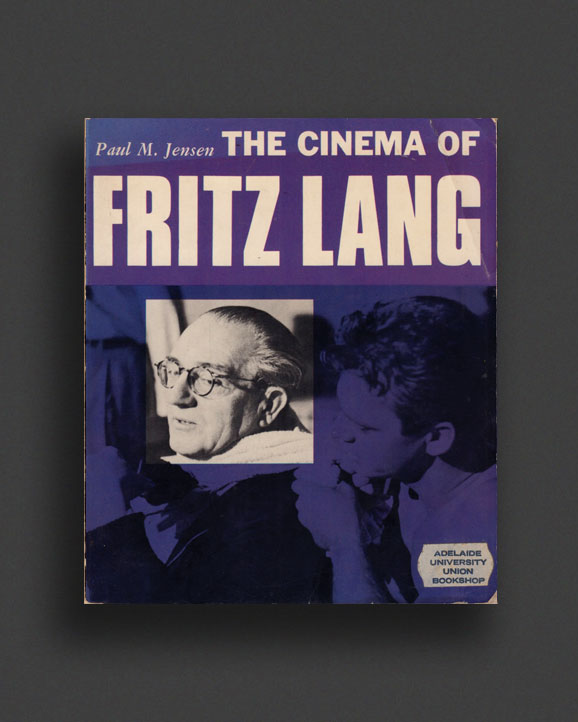
First 1969 edition of The Cinema of Fritz Lang by Paul M. Jensen, written in 1969, whilst Lang was still alive, although no longer making films, this gives a detailed insight into the Director's work and an indication of his influence. Illustrated throughout with black and white photographs and a full chronology of works.
Good copy.
Softcover, 112 pages, Engish
1st Edition, Out of print title / used / good
Published by
Lorrimer / London
$25.00 - Out of stock
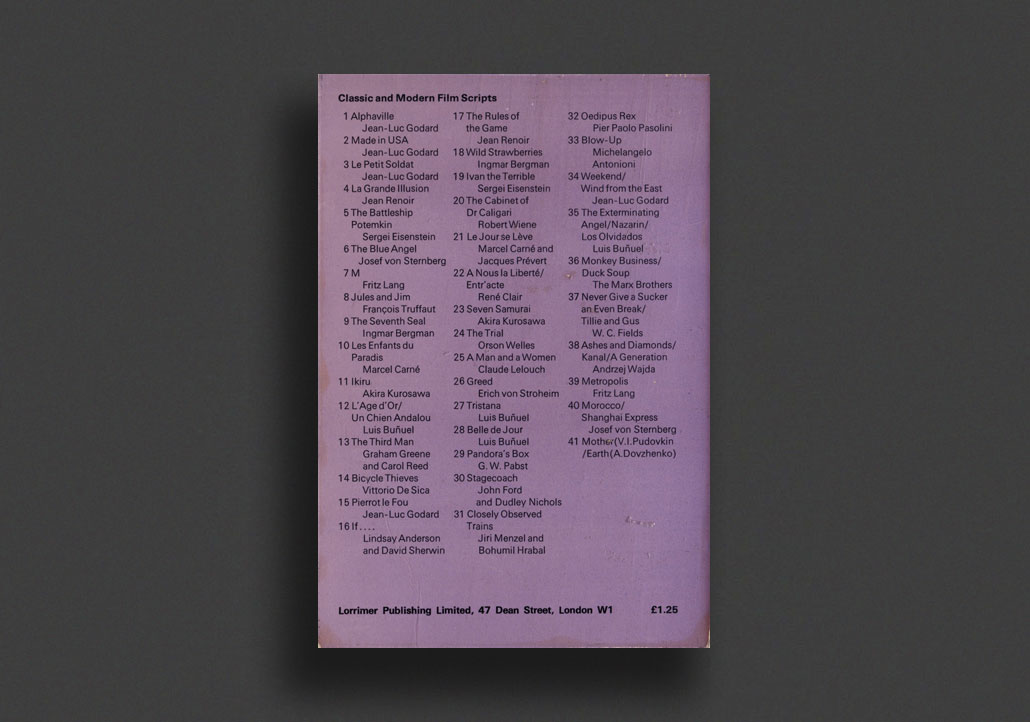
First 1973 edition of M by Fritz Lang, of the now scarce and collectible Lorrimer Classical Film Scripts series. Illustrated throughout with film stills, with complete film script and credits of M, the classic German thriller, in which Hans Beckert (Peter Lorre), a serial killer who preys on children, becomes the focus of a massive Berlin police manhunt. Beckert's heinous crimes are so repellant and disruptive to city life that he is even targeted by others in the seedy underworld network. With both cops and criminals in pursuit, the murderer soon realizes that people are on his trail, sending him into a tense, panicked attempt to escape justice.
Good copy.
1973, English
Softcover, 132 pages
1st Edition, Out of print title / used / good
Published by
Lorrimer / London
$45.00 - Out of stock
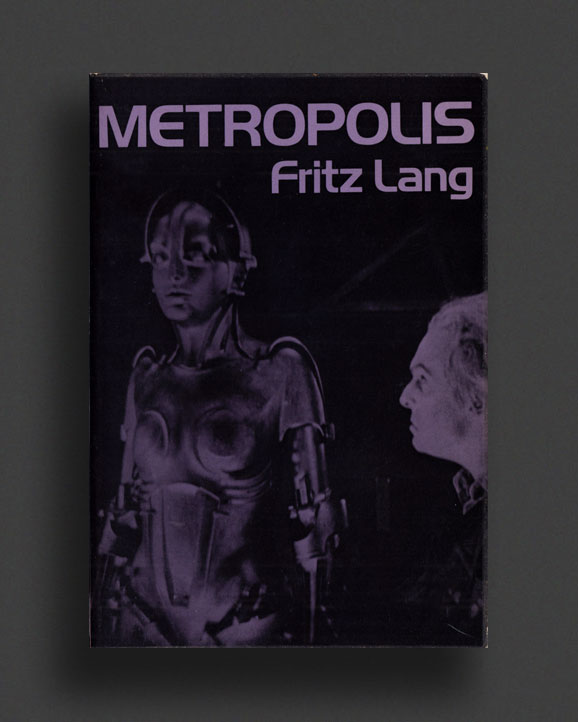
First 1973 edition of Metropolis by Fritz Lang (and Thea von Harbou), of the now scarce and collectible Lorrimer Classical Film Scripts series. Illustrated throughout with film stills, with complete film script and credits of Metropolis, the 1927 German expressionist science-fiction film directed by Fritz Lang and written by Thea von Harbou in collaboration with Lang, adapted from von Harbou's 1925 novel of the same name (which was intentionally written as a treatment). This influential German science-fiction film presents a highly stylized futuristic city where a beautiful and cultured utopia exists above a bleak underworld populated by mistreated workers. When the privileged youth Freder (Gustav Fröhlich) discovers the grim scene under the city, he becomes intent on helping the workers. He befriends the rebellious teacher Maria (Brigitte Helm), but this puts him at odds with his authoritative father, leading to greater conflict.
Good copy.
1984, English
Softcover, 232 pages
1st Edition, Out of print title / used / very good
Published by
Johns Hopkins University Press / Baltimore
$25.00 - In stock -
First published in 1982. Aside from Jacques Derrida's own references to the "possible articulation" between deconstruction and Marxism, the relationship between the two has remained largely unexplored. In Marxism and Deconstruction, Michael Ryan examines that multifaceted relationship but not through a mere comparison of two distinct and inviolable entities. Instead, he looks at both with an eye to identifying their common elements and reweaving them into a new theory of political practice. To accomplish his task, Ryan undertakes a detailed comparison of deconstruction and Marxism, relating deconstruction to the dialectical tradition in philosophy and demonstrating how deconstruction can be used in the critique of ideology. He is a forceful critic of both the politics of deconstruction and the metaphysical aspect of Marxism (as seen from a deconstructionist perspective). Besides offering the first book-length study of Derrida in this context, Ryan makes the first methodic attempt by an American scholar to apply deconstruction to domains beyond literature. He proposes a deconstructive Marxism, one lacking the metaphysical underpinnings of conservative "scientific" Marxist theory and employing deconstructive analysis both for Marxist political criticism and to further current anti-metaphysical developments within Marxism. Marxism and Deconstruction is an innovative and controversial contribution to the fields of literary criticism, philosophy, and political science.
"A powerful riposte, both to Marxists who revile deconstructionism for its supposed liberal-bourgeois quietism, and to those among the current deconstructors who seem to invite that charge."—Christopher Norris, Times Literary Supplement.
G—VG copy.
1972, English
Softcover, 686 pages
1st Edition, Out of print title / used / good
Published by
W W Norton & Co / New York
$40.00 - Out of stock
This first 1972 edition of the leading anthology provides the essential writings of Marx and Engels -- those works necessary for an introduction to Marxist thought and ideology. The volume is arranged to show both the chronological and the thematic development of the two great thinkers. Selections range in coverage from history, society, and economics, to politics, philosophy, and the strategy and tactics of social revolution.
Friedrich Engels was born in 1820, in the German city of Barmen. He died in London in 1895 while editing the fourth volume of Capital.
Karl Marx studied law and philosophy at the universities of Bonn and Berlin, completing his doctorate in 1841. Expelled from Prussia in 1844, he took up residence first in Paris and then in London where, in 1867, he published his magnum opus Capital. A co-founder of the International Workingmen's Association in 1864, Marx died in London in 1883.
Robert C. Tucker is professor of politics emeritus at Princeton University and past president of the American Association for the Advancement of Slavic Studies.
G—VG copy. General wear from age, light creases.
1983, English
Hardcover (w. dust jacket),
1st Edition, Out of print title / used / good
Published by
Columbia University Press / New York
$25.00 - Out of stock
If Catherine Clément took to writing the Lives and Legends of Jacques Lacan, it was not only to reconnect with her lost youth. It was an act of fidelity. She set out to portray her own private Lacan, the figure she kept behind other people's gloss and commentary.
Catherine Clément is a French philosopher, novelist, feminist, and literary critic, born in Boulogne-Billancourt. She received a degree in philosophy from the École Normale Supérieure, and studied under its faculty Claude Lévi-Strauss and Jacques Lacan, working in the fields of anthropology and psychoanalysis.
First hc edition, 1983.
1996, English
Softcover, 400 pages, 22.89 x 15.3 cm
1st Edition, Out of print title / used / very good
Published by
University of California / Berkeley
$25.00 - Out of stock
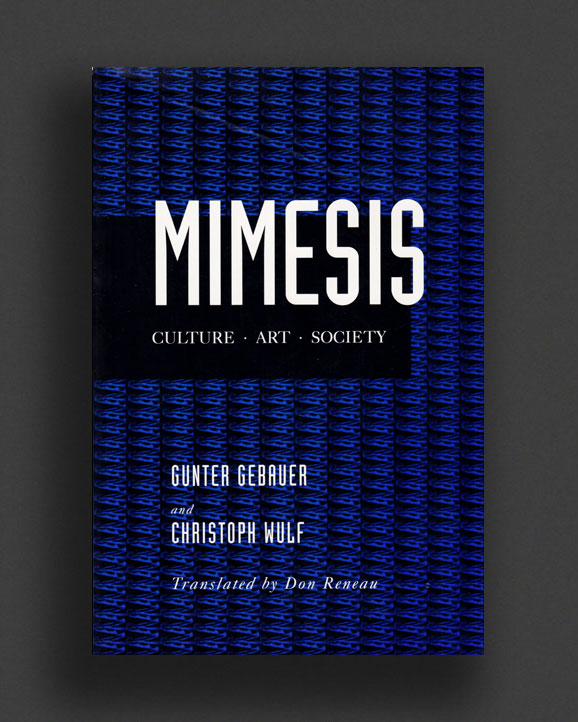
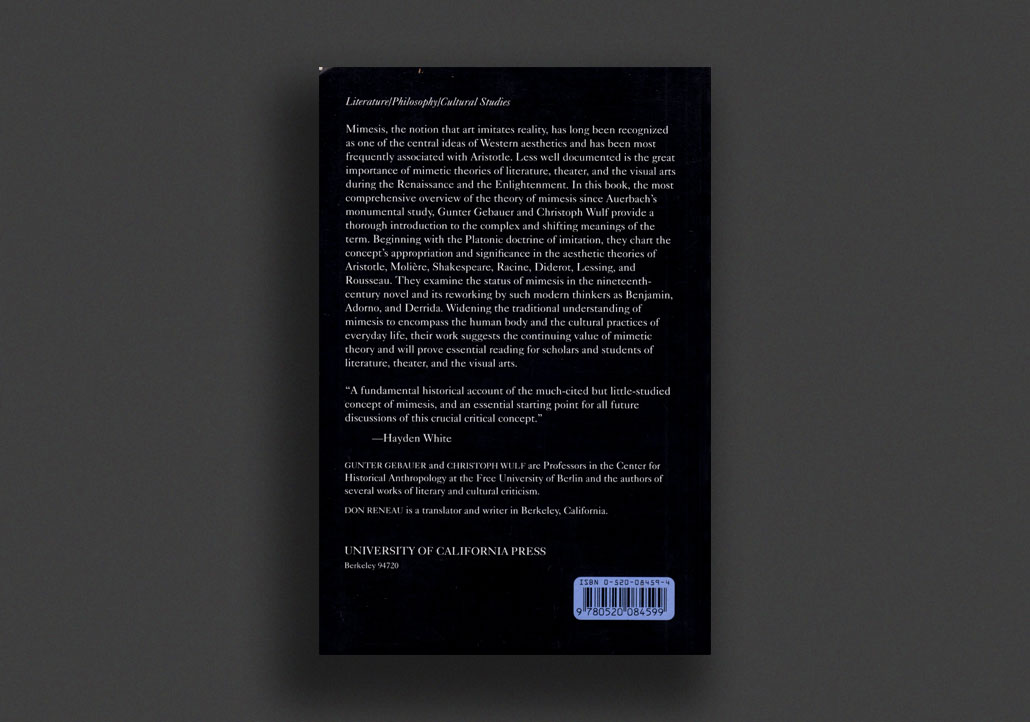
Mimesis, the notion that art imitates reality, has long been recognized as one of the central ideas of Western aesthetics and has been most frequently associated with Aristotle. Less well documented is the great importance of mimetic theories of literature, theater, and the visual arts during the Renaissance and the Enlightenment. In this book, the most comprehensive overview of the theory of mimesis since Auerbach's monumental study, Gunter Gebauer and Christoph Wulf provide a thorough introduction to the complex and shifting meanings of the term. Beginning with the Platonic doctrine of imitation, they chart the concept's appropriation and significance in the aesthetic theories of Aristotle, Molière, Shakespeare, Racine, Diderot, Lessing, and Rousseau. They examine the status of mimesis in the nineteenth-century novel and its reworking by such modern thinkers as Benjamin, Adorno, and Derrida. Widening the traditional understanding of mimesis to encompass the body and cultural practices of everyday life, their work suggests the continuing value of mimetic theory and will prove essential reading for scholars and students of literature, theater, and the visual arts.
Gunter Gebauer and Christoph Wulf are Professors in the Center for Historical Anthropology at the Free University of Berlin and the authors of several works of literary and cultural criticism. Don Reneau is a translator and writer in Berkeley, California.
Very Good copy.
2007, English
Softcover, 576 pages, 12.9 x 19.8 cm
1st Edition, Out of print title / used / fine
Published by
Continuum / London
$65.00 - Out of stock
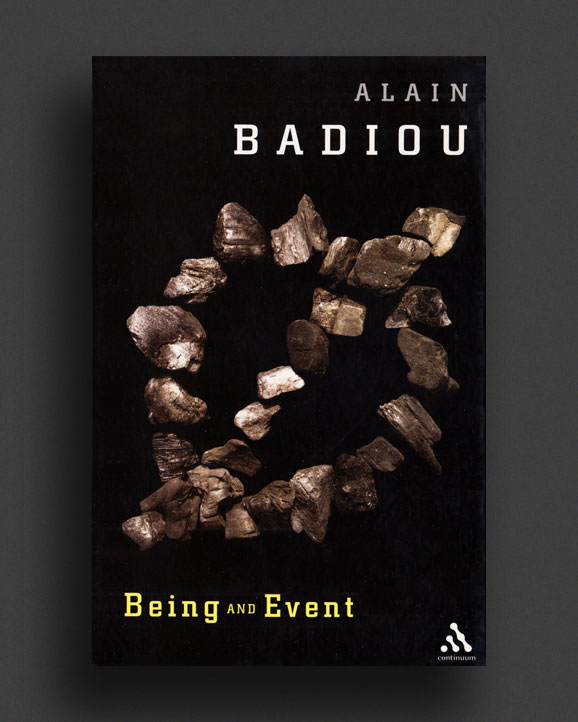
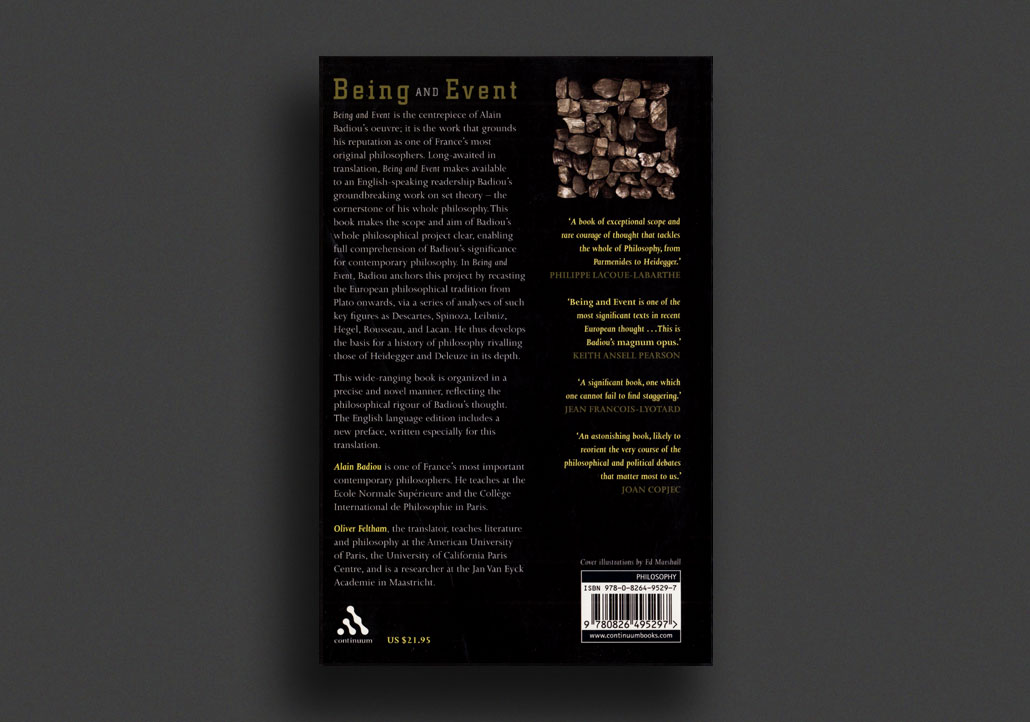
"Being and Event" is the centrepiece of Alain Badiou's oeuvre; it is the work that grounds his reputation as one of France's most original philosophers. Long-awaited in translation, "Being and Event" makes available to an English-speaking readership Badiou's groundbreaking work on set theory - the cornerstone of his whole philosophy. This book makes the scope and aim of Badiou's whole philosophical project clear, enabling full comprehension of Badiou's significance for contemporary philosophy. In "Being and Event", Badiou anchors this project by recasting the European philosophical tradition from Plato onwards, via a series of analyses of such key figures as Descartes, Spinoza, Leibniz, Hegel, Rousseau, and Lacan. He thus develops the basis for a history of philosophy rivalling those of Heidegger and Deleuze in its depth. This wide-ranging book is organised in a precise and novel manner, reflecting the philosophical rigour of Badiou's thought. Unlike many contemporary Continental philosophers, Badiou - who is also a novelist and dramatist - writes lucidly and cogently, making his work accessible and engaging.
This English language edition includes a new preface, written especially for this translation. "Being and Event" is essential reading for Badiou's considerable following and anyone interested in contemporary Continental philosophy.
Fine copy.
1994, English / Dutch
Hardcover (w. dust jacket), 134 pages, 27 × 22 cm
1st Edition, Out of print title / used / very good
Published by
Museum Boymans-van Beuningen / Rotterdam
$850.00 - Out of stock
First hardcover edition of the the highly sought after Donald Judd Furniture Retrospective catalogue, published on the occasion of the exhibition at Museum Boymans-van Beuningen, Rotterdam, in 1993.
The only published overview of Judd's furniture works, this clothbound (wrapped in kraft paper printed jacket), is profusely illustrated throughout and accompanied by Judd's essays "It’s Hard to Find a Good Lamp", “Eichholteren, Switzerland” and “Marfa, Texas: Concrete Building”. "It’s Hard to Find a Good Lamp" is partly an account of his first forays into chair and table making, having found it hard to buy the right furnishings for his own home in Marfa, Texas. It is also a meditation on the problems of designer, antique and mass-produced furniture in which Judd rails against the price and availability of decent furniture, while also examining what constitutes good and bad design.
Lovely copy of the original hardcover volume, much scarcer than the softcover.
Very Good copy with light tanning to edges in Very Good jacket with light tanning to spine.
1990, English / German
Softcover, 84 pages, 24 x 19 cm
1st Edition, Out of print title / used / very good
Published by
Museum für Moderne Kunst / Frankfurt am Main
$65.00 - Out of stock
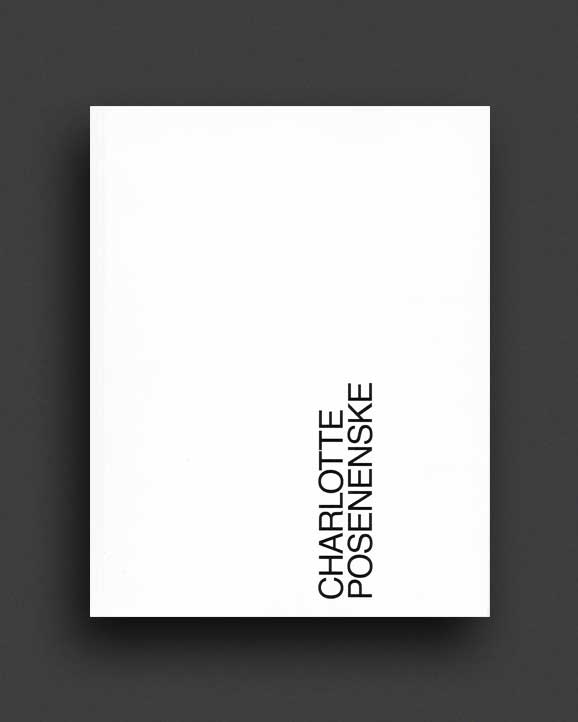
Wonderful publication on the work of German artist Charlotte Posenenske, published in 1990 by the Museum für Moderne Kunst in Frankfurt am Main, Germany and edited by museum founder/director Jean-Christophe Ammann. Heavily illustrated throughout in colour and black and white with examples of her sculptural work, drawings, and paintings, this generous little book also includes her writings alongside texts by Burkhard Brunn, Friedrich Meschede and Hans Ulrich Reck, in English and German.
Charlotte Posenenske (1930–1985) was a German artist associated with the minimalist movement who predominately worked in sculpture, but also produced paintings and works on paper.
Posenenske worked in a variety of mediums, her practice becoming more abstract through the course of the 1960s. While other artists of the period worked in multiples, where a finite edition of a work could be produced, Posenenske worked in series, meaning that there was no limit to the editions. Posenenske rejected the commercial art market, offering her work for sale at its material cost. Reconstructions authorised by the artist’s estate are not replicas, and they are outwardly identical to the original prototype. Only the certificate differentiates the unsigned work from other commodities.
In 1968 Posenenske published a statement in the journal Art International referencing the reproducibility of her works, and her desire for the concept and ownership of the piece to be accessible:
I make series
because I do not want to make individual pieces for individuals,
in order to have elements combinable within a system,
in order to make something that is repeatable, objective,
and because it is economical.
The series can be prototypes for mass-production.
[...]
They are less and less recognisable as "works of art."
The objects are intended to represent anything other than what they are.
Poseneske stopped working as an artist in 1968, no longer believing that art could influence social interaction or draw attention to social inequalities. She retrained as a sociologist and became a specialist in employment and industrial working practices until her death in 1985. During this period of self-imposed exile Posenenske refused to visit any exhibitions, and did not show her work.
1990, Japanese / French / English
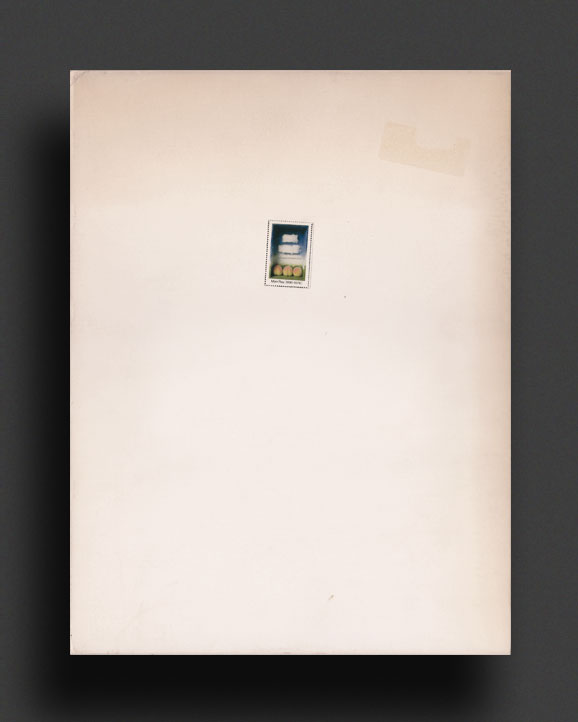
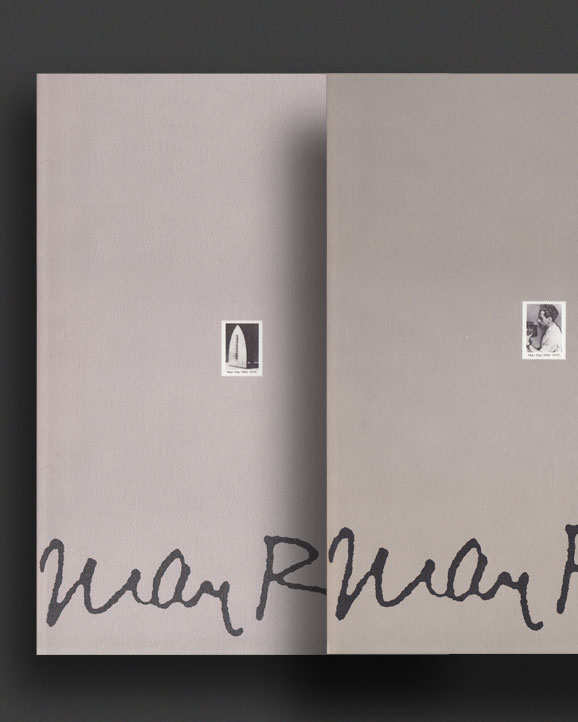
2 volumes in cardboard slipcase (w. adhered Man Ray "stamp"); volume 1 68 pages (colour ill.) volume 2 196 pages (b/w ill.), 22.5 x 29.5 cm
1st Edition, Out of print title / used / very good
Published by
Sezon Museum of Art / Tokyo
$120.00 - Out of stock
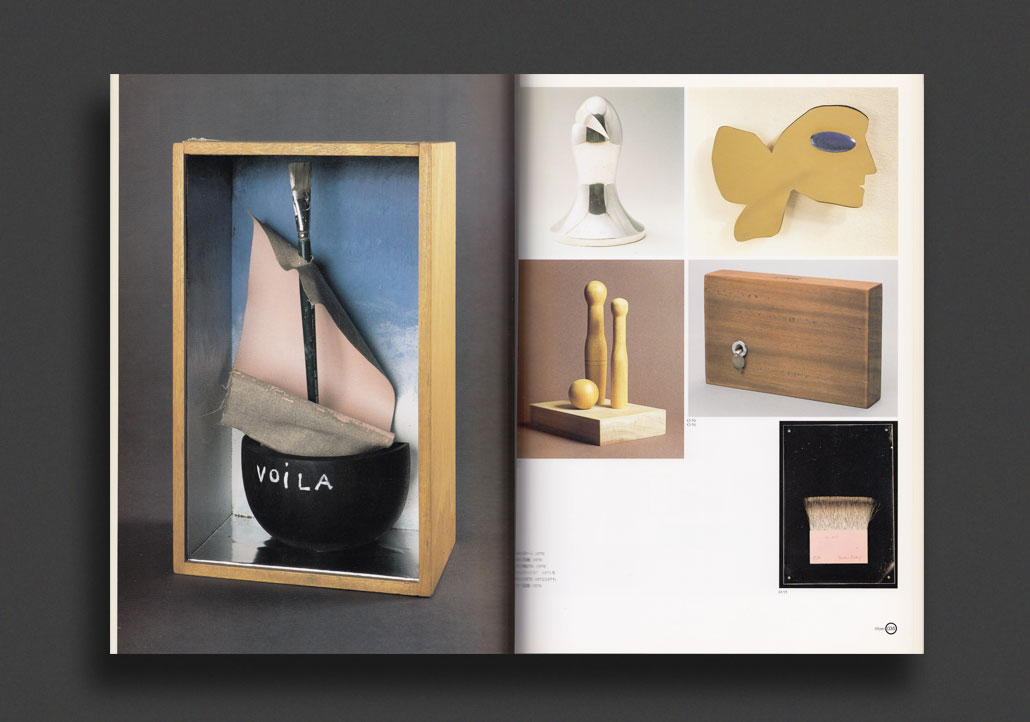
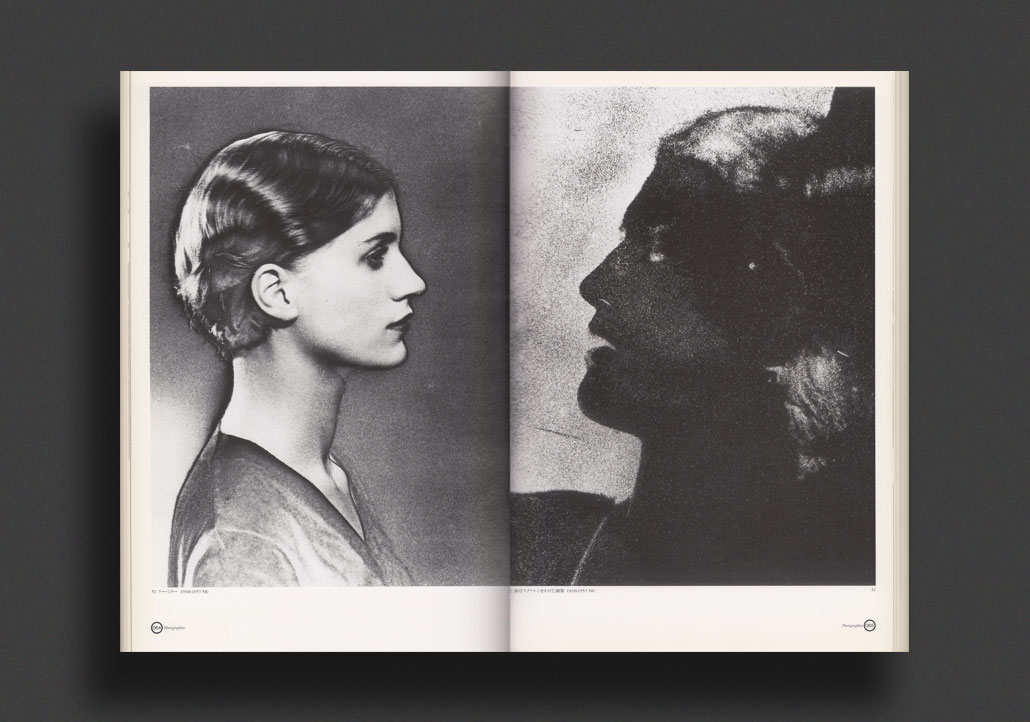
Wonderful, visually exhaustive two-volume boxset catalogue for the traveling exhibition held on the centenary of Man Ray's birth in Japan in 1990-1991.
Each volume of this Japanese publication on the American artist Man Ray serves as a wonderful index of his incredible lifetime of work. Born Emmanuel Radnitzky in 1890 in Philadelphia, Pennsylvania, Man Ray was a renowned representative of avant-garde photography in the 20th century and is considered as the pioneer of Surrealist photography. A major contributor to the Dada and Surrealist movements, although his ties to each were informal, Man Ray produced major works in a variety of media including drawings, objects and films, but considered himself a painter above all. Volume One compiles many examples of his diverse non-photographic works, reproducing his many paintings, drawings, objects, prints and book editions in full colour. Volume Two (the heavier of the two volumes) focuses on his prolific photographic work, copiously illustrated with a huge catalogue of beautifully reproduced monochromatic works throughout his entire career -- Paris, America, Dada, Surrealism and beyond -- showcasing his significant contribution to the evaluation of photography as a form of modern art.
Accompanying texts by Merry Foresta, Lucien Treillard, Toshiharu Ito in Japanese, French and English. Primarily in Japanese language. Includes full biography, bibliography and catalogue of all works.
Good-Very Good copy. Tanning to slipcase, light wear to cover otherwise Very Good in general.
1995, English
Softcover (staple-bound), 24 pages, 21.5 x 28 cm
1st Edition, Out of print title / used / very good
Published by
Tom of Finland Foundation / Los Angeles
$90.00 - Out of stock
It was a good year, 1995, and with each month one of Tom of Finland's iconic and impeccable erotic graphite drawings of macho leathermen, bikers, cops, lumberjacks, soldiers, punks, all in all their glory, courtesy of his self-published wall-calendar. A scarce, unused copy, ready for the wall, with no inscriptions.
Touko Valio Laaksonen (8 May 1920 – 7 November 1991), best known by his pseudonym Tom of Finland, was a Finnish artist known for his stylized highly masculine homoerotic fetish art, and his influence on late twentieth century gay culture. He has been called the "most influential creator of gay pornographic images" by cultural historian Joseph W. Slade. Over the course of four decades, he produced some 3500 illustrations.
Very Good copy with only notable damage being light wrinkling to one corner from moisture.
1989, English
Softcover,
1st Edition, Out of print title / used / good
Published by
Penguin Books / London
$28.00 - Out of stock
1988 print of Ingmar Bergman's memoir of a turbulent and incendiary career. Bearing all the narrative trademarks of a Bergman film, his story unfolds not in strict chronology but as a series of flashbacks to his childhood of bitter unhappiness.
Good copy.
1976, English
Softcover, 120 pages, 22 x 14 cm
1st Edition, Out of print title / used / very good
Published by
Marion Boyars / London
$30.00 - Out of stock
Issued the year of the film's release, first 1976 edition of Face to Face: a Film by Ingmar Bergman, the illustrated script book to the great Swedish psychological drama film written and directed by Ingmar Bergman. The film tells the story of a psychiatrist who is suffering from a mental illness and stars Liv Ullmann and Erland Josephson. It is also the film debut of Lena Olin.
Very Good copy. Small previous-owner's inscription.
1989, Japanese
Softcover, 176 pages, 13 x 18 cm
1st Edition, Out of print title / used / very good
Published by
Fiction Inc. / Tokyo
$70.00 - In stock -
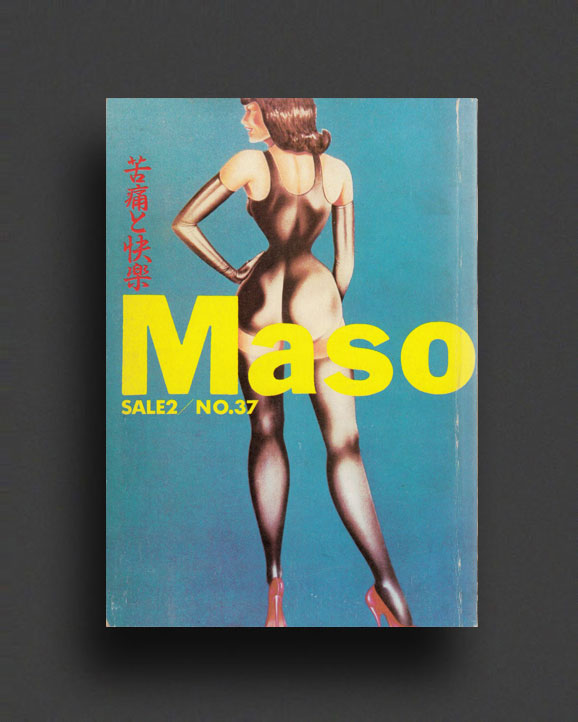
Issue No.37 of the great SALE2 periodical from Tokyo Japan, founded in 1984 by Makoto Orui, who later became art director for Purple magazine in France and Rockin’on magazine in Japan. SALE2 was active for about 14 years during the 1980s—1990s, published regularly as a sort-of fanzine/journal/catalogue/pocket-book by Fiction, Inc., a specialty shop and publisher of fetish and erotica in Tokyo in the 1980-90s. With Orui's distinct design SALE2 developed an exclusive curated editorial set on ‘erotisism and its spiritual philosophy’, with each issue exploring different themes and features, heavy on fetishism and erotic art.
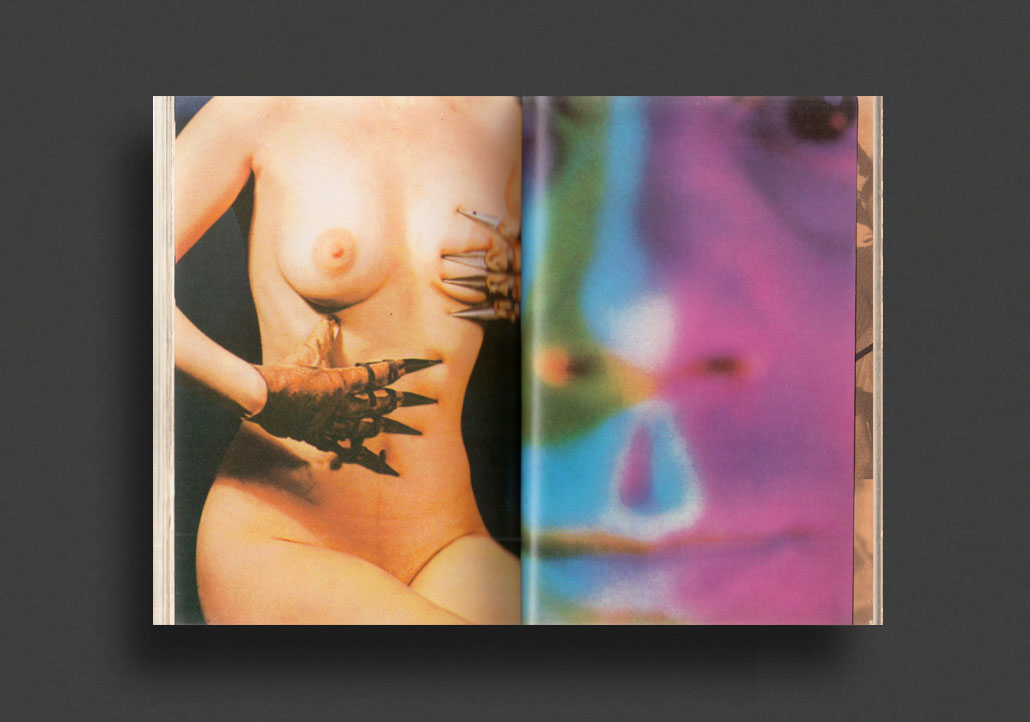
Issue No.37, the Masochism issue features erotic writings and artwork throughout by Loic Dubigeon, Guido Crepax, David Bailey, Man Ray, Lucas Samaras, Annie Sprinkle's Bosom Ballet, Hans Bellmer, Paul Outerbridge, Leopold von Sacher-Masoch, Shinichi Kusamori on the paintings of Seiu Ito "the father of modern kinbaku", Yamaguchi Tsubaki, E. J. Bellocq, René Girard, Noriyuki Eda on Saint Sebastian, Edogawa Ranpo, Serge Nazarieff, Rieko Matsuura, Tetsuo Amano, Freud, Nietzsche, de Sade, interspersed with lots of mysterious vintage erotic imagery, bondage illustration, and catalogue/advertisments/clippings of Richard Cerf, Araki, Eric Stanton, Irving Klaw, Jim, John Willie, Bizarre Comix, and much more...
Very heavily illustrated throughout with erotic photography and artwork, all texts in Japanese.
Very Good copy, tanning with age.
1979, English
Softcover, 300 pages, 15.24 x 22.86 cm
1st Edition, Out of print title / used / good
Published by
Harper and Row / New York
$30.00 - Out of stock
First edition of Symbolism, published by Routledge in 1979, the last major study by Robert Goldwater who passed away suddenly prior to its completion. Goldwater (1907—1973) was an art historian, African arts scholar and the first director of the Museum of Primitive Art, New York, from 1957 to 1973. He was married to the French-born American artist and sculptor Louise Bourgeois.
Of all the European artistic movements of the nineteenth century, Symbolism is perhaps the one with most resonance today. A major but short-lived style, it set the foundations of modern art in the first decade of the twentieth century. Art Nouveau, in France and Britain, and Jugendstil in Germany are two major movements associated with Symbolism that together can be seen as the foundation of Cubism, Expressionism, Futurism, and Abstract Art. Beginning in the 1880s, it can be described as a reaction against Naturalism and Impressionism. In broader terms, Symbolism could be defined as a philosophical idealism in revolt against a positivist and materialistic attitude that affected not only painting and literature, but life altogether. For the Symbolists the importance of art lay precisely in its ability to reach beyond realism. Their search for the mysterious reality behind appearances resulted in an art that aimed at representing inner states through generalized figures and congruent, "emotionalized" settings. The viewer was asked to re-experience the emotions that the artist had felt in front of his motif. In this way the artists hoped their subjectivity would become meaningful for humanity at large. These aesthetics anticipate certain ideas at the base of Abstract Art, which is one of the reasons for the appeal of Symbolism today. Another is the Symbolists' concern with refined, even morbid sensibility, with subli-mated sexuality, with the reality of evil, and with love and death as the two poles of human experience.
With singular erudition and insight, Robert Goldwater traces the history and evolution of the movement beginning with Gauguin's revolutionary paintings of the 1880s and ending with the last outposts in Vienna, Holland, and Scotland. Among the artists discussed are Gauguin, Redon, Van Gogh, Munch, Rodin, Klimt, Seurat, Klinger, and Ensor. Profusely illustrated throughout.
Good copy with light wear and marginalia in pen.
1994, Japanese / English
Hardcover, 92 pages, 19.3 x 13.4 cm
1st Edition, Out of print title / used / very good
Published by
Nippon Geijutsu Shuppan (NGS) / Japan
$380.00 - Out of stock
Very rare 1994 hardcover volume of nude photography by French photographer Jacques Bourboulon from Japanese imprint Nippon Geijutsu Shuppan (NGS). Cover to cover glossy collection of Bourboulon's colour-saturated photography spanning many years, capturing the beauty of his young amateur models in nature. Printed in Japan. First edition, never re-printed.
Jacques Bourboulon (b. 1946) is a French photographer, specializing in nude photography. In 1967 he started as a fashion photographer, publishing in Vogue and working for the fashion designers Dior, Féraud, and Carven. In the mid-1970s he sought the freedom and innocence of a natural landscape and switched to nude photography, never again to work with professional models or studios. His most famed pictures portray girls and women on the Spanish island of Ibiza, where he lived through the 1970s—1980s, a refuge for hippies, artists and other free spirits from all over the world, his photographs are a testament to the freedom and experimentation of this time, and to the beauty, and natural simplicity of the island environment itself. Bourboulon's pictures were shot with a Pentax camera and focus on bright light and sharp contrasts, playing on the sun-kissed colours of his natural environment. His images become iconic through the pages of PHOTO magazine, Club, High Society, and calendars for Pentax and BASF. Bourboulon's photography books sold over 400,000 copies.
Very Good copy.
1984, French
Hardcover (w. dust jacket), 86 pages, 31 x 25 cm
1st Edition, Out of print title / used / very good
Published by
Carrere / Paris
$500.00 - Out of stock
The very collectable cult photo book "Attitudes" by French photographer Jacques Bourboulon, first published in 1984 by Carrere, Paris. An iconic colour-saturated collection of Bourboulon's photographs capturing the beauty of his young amateur models in nature. Photographed on Bourboulon's island home of Ibiza in the 1970s-80s, a refuge for hippies, artists and other free spirits from all over the world, his photographs are a testament to the freedom and experimentation of this time, and to the beauty, and natural simplicity of the island environment itself.
Jacques Bourboulon (born 8 December 1946) is a French photographer, specializing in nude photography. In 1967 he started as a fashion photographer, publishing in Vogue and working for the fashion designers Dior, Féraud, and Carven. In the mid-1970s he sought the freedom and innocence of a natural landscape and switched to nude photography, never again to work with professional models or studios. His most famed pictures portray girls and women on the Spanish island of Ibiza, where he lived from 1976-1986, playing on the juxtaposition of blue sky, white walls, and sun-tanned skin. Bourboulon's pictures were shot with a Pentax camera and focus on bright light and sharp contrasts. His images become iconic through the pages of PHOTO magazine, Club, High Society, and calendars for Pentax and BASF. Bourboulon's photography books sold over 400,000 copies.
Very Good copy with good dustjacket.
1982, French
Hardcover (w. dust jacket), 86 pages, 31 x 25 cm
1st Edition, Out of print title / used / good
Published by
Contrejour / Paris
Kactus / Paris
$650.00 - Out of stock
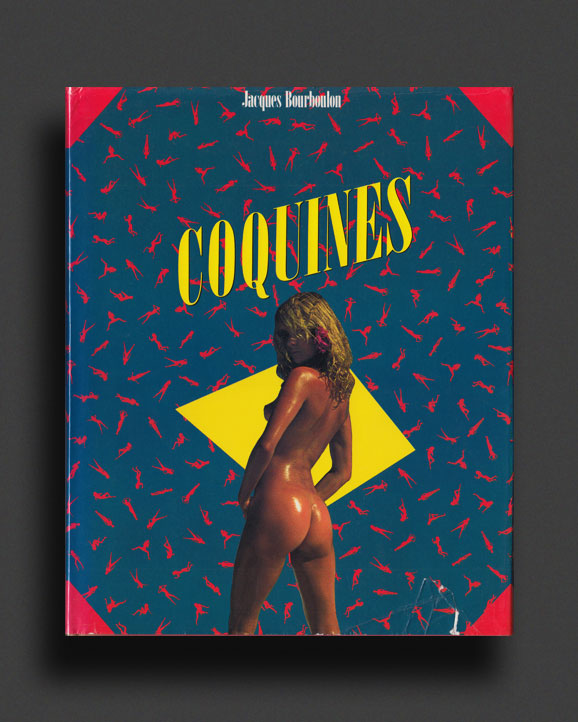
The very rare and collectable cult photo book "Coquines" by French photographer Jacques Bourboulon, this first edition published in 1982 by Contrejour and Kactus, Paris. An iconic colour-saturated collection of Bourboulon's photographs capturing the beauty of his young amateur models in nature. Photographed on Bourboulon's island home of Ibiza in the 1970s-80s, a refuge for hippies, artists and other free spirits from all over the world, his photographs are a testament to the freedom and experimentation of this time, and to the beauty, and natural simplicity of the island environment itself.
Jacques Bourboulon (b. 1946) is a French photographer, specializing in nude photography. In 1967 he started as a fashion photographer, publishing in Vogue and working for the fashion designers Dior, Féraud, and Carven. In the mid-1970s he sought the freedom and innocence of a natural landscape and switched to nude photography, never again to work with professional models or studios. His most famed pictures portray girls and women on the Spanish island of Ibiza, where he lived through the 1970s—1980s, a refuge for hippies, artists and other free spirits from all over the world, his photographs are a testament to the freedom and experimentation of this time, and to the beauty, and natural simplicity of the island environment itself. Bourboulon's pictures were shot with a Pentax camera and focus on bright light and sharp contrasts, playing on the sun-kissed colours of his natural environment. His images become iconic through the pages of PHOTO magazine, Club, High Society, and calendars for Pentax and BASF. Bourboulon's photography books sold over 400,000 copies.
Good-Very Good copy in Good dust jacket with closed tears. Some small tape residue on some pages throughout.
Shelf knock to top cloth hardboard margins, not affecting pages.
1999, English
Softcover, 154 pages, 24 x 18 cm
1st Edition, Out of print title / used / fine
Published by
Soundworld Publishers / Chelmsford
$140.00 - Out of stock
First 1999 English edition of Les Sculptures Sonores: The Sound Sculptures of Bernard and François Baschet. This book is a classic in the history of art. Francois' book is many things, not only a fascinating account of his life and travels, with amusing anecdotes detailing meetings, working relationships and friendships in Paris and New York in 40s and 60s with major forces in the art and music world, such as Jean Cocteau, Yehudi Menhuin, Edgard Varese, Pierre Schaeffer, Henri Lazarof, Ravi Shankar, John Cage, David Tudor and Toru Takemitsu, but a complete description and technical analysis, research and chronological development of his Sound Sculptures, with which he began a pioneering career combining art and science, sculpture and music. The willingness to share his findings inspired another breakthrough: participatory exhibitions, spaces where everyone could explore and play with sound. François Baschets conception of acousticsa method of understanding the functional relations between form, matter, action and sound, led to the invention of hundreds of Sound Sculptures of all sizes and sonority, which can be found all over the world. Bernard and François Baschet had great success in the early sixties, when after meeting and forming their performance group with Jaques and Yvonne Lasry, their sculptures were featured in major periodicals such as 'Time', 'Life' and 'The New Scientist' magazine, in many films (most famously in William Klein's "Who Are You, Polly Maggoo?"), and highly prestigious tours and exhibitions all over the world, such as The 1970 Osaka World Fair and the MOMA, (Museum of Modern Art in New York), and even three appearances on the Ed Sullivan show.
Fine copy with accompanying CD of music featuring the baschets creations, documenting recordings by composers and performers of the instruments such as Daniel Ouzounoff, Jacques Lasry, Malcolm Ball and Michel Deneuve.
2012, English
Softcover, 96 pages, 21.8 x 28.7 cm
Published by
Walther König / Köln
$115.00 - Out of stock
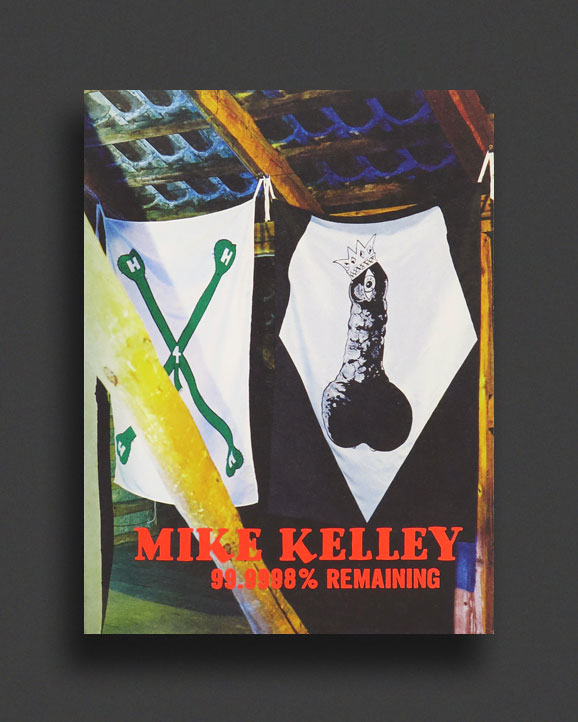
Rare English edition of this 1992 monograph on American artist Mike Kelley.
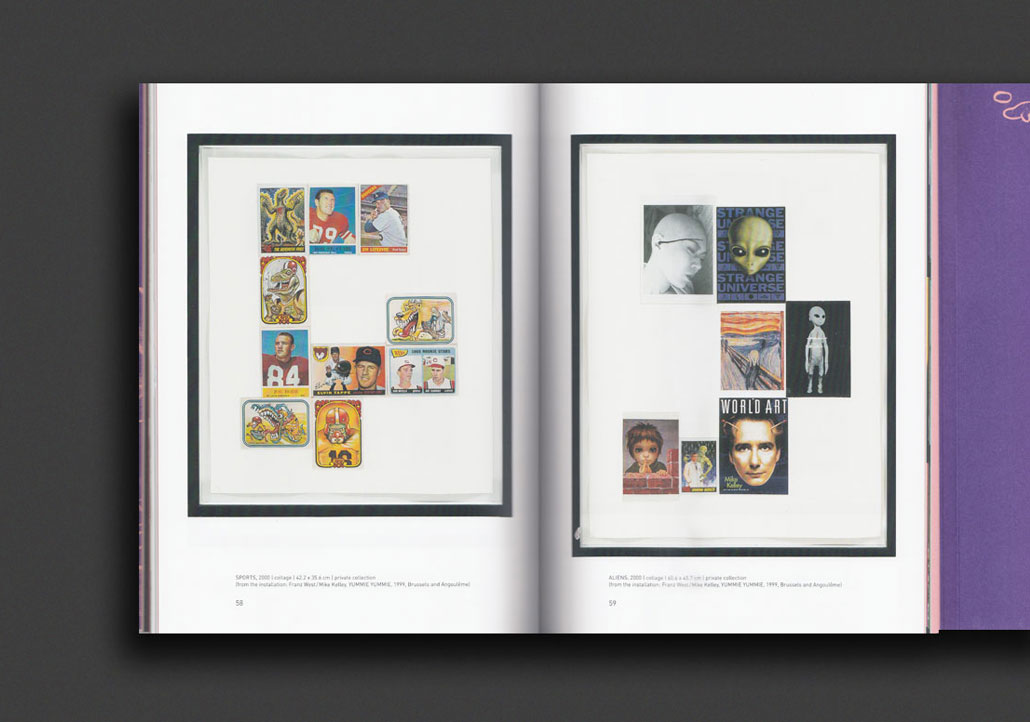
Harald Falckenberg, one of the most important collectors of Mike Kelley's works, gives in his essay a detailed overview over the various periods in the development of this artist. In detail Falckenberg investigates the influences of the art-market on Kelley's production and the reasons for the suicide of the artist in January, 2012. Beside documentary photographs of important exhibitions of Mike Kelley between 1982 and 2011, and reproductions of seminal works from various periods the book offers numerous stills from the legendary videos by and/or with Mike Kelley, like Banana Man (1983), Heidi (1992) in collaboration with Paul McCarthy, EVOL (1984) by Tony Oursler, Sir Drone (1989) by Raymond Pettibon.
1992, English
Softcover, leporello fold-out double-sided card, 15.5 x 11.5 cm (15.5 x 34.5 cm unfolded)
1st Edition, Out of print title / used / fine
Published by
Feature Inc. / New York
$90.00 - Out of stock
Very rare show card/fold-out catalogue published on the occasion of the duel exhibition of drawings by Tom of Finland (1920—1991) and G.B. Jones (b. 1965) at Feature, New York, July 10 — August 9, 1991. Titled "Tom of Finland — Drawings and Sketches" and "G.B. Jones — Tom-Girl Drawings", the exhibition, in commemoration of Touko Valio Laaksonen (Tom of Finland) who passed away the same year, is previewed in this lovely little double-sided leporello fold-out catalogue, with three works from each artist, and cover work by Tom of Finland, along with work and exhibition information.
Touko Valio Laaksonen (8 May 1920 – 7 November 1991), best known by his pseudonym Tom of Finland, was a Finnish artist known for his stylized highly masculine homoerotic fetish art, and his influence on late twentieth century gay culture. He has been called the "most influential creator of gay pornographic images" by cultural historian Joseph W. Slade. Over the course of four decades, he produced some 3500 illustrations.
G.B. Jones (b. 1965) is a Canadian artist, filmmaker, and founding member of Canadian queer punk band Fifth Column (K Records/Outpunk/Kill Rock Stars/et al). She published legendary queercore fanzine J.D.s (Juvenile Delinquents) with fellow queer filmmaker Bruce LaBruce, which regularly featured her iconic Tom Girl drawings. According to novelist Dodie Bellamy, G.B. Jones' drawing "co-opts the male-on-male objectifying gaze of gay erotica and converts it to a female-on-female gaze." Depicting autonomous women through fantasies of bikers, punks and degenerates in the style of and situations similar to those drawn by Tom of Finland, her Tom Girls are "unapologetic, thrillingly anti-assimilationist."
Fine copy, beautifully preserved.