World Food Books' programme is largely produced on Kulin Nation land. We acknowledge the Wurundjeri people of the Kulin Nation as the first and continuing custodians of this land, and pay respect to their Elders past, present, and emerging.
World Food Books is an arts and special interests bookshop in Naarm / Melbourne. Founded in 2010, World Food Books is devoted to the presentation of a rotating, hand-selection of international art, design, literary and counterculture publications with an emphasis on the anti-traditional, the experimental, the avant-garde, the heretic, the marginal.
Presenting new titles alongside rare and out-of-print books, catalogues and journals spanning the fields of modern and contemporary art, design, photography, illustration, film, literature, poetry, cultural theory, philosophy, sexuality, popular and underground culture in its many radical forms, World Food Books wishes to encourage adventurous, thoughtful and open-minded reading, looking, writing, and exchange of publishing and ideas, both current and historical.
As well as our bookshop, located in Melbourne's historical Nicholas Building, all of our inventory is available internationally via our online mail-order service.
World Food Books semi-regularly co-ordinates "Occasions", a programme of exhibits and events at the bookshop and in partnership with other hosts (such as museums and art galleries) that develop out of the activities, relationships and content of the bookshop itself.
World Food Books
The Nicholas Building
37 Swanston Street
Room 5, Level 6
Melbourne 3000
Australia
SHOP HOURS:
Thu–Sat 11–5
WEB-SHOP OPEN 24/7
World Food Books
Postal Address:
PO Box 435
Flinders Lane
Victoria 8009
Australia
Art
Theory / Essay
Architecture / Interior
Graphic Design / Typography
Photography
Fashion
Eros
LGBTQ+
Fiction / Poetry
Weird / Speculative / Science Fiction / Horror
Transgressive / Visceral / Abject
Symbolism / Decadence / Fin de siècle
Film / Video
Painting
Sculpture / Installation
Performance / Dance / Theater
Drawing
Sound / Music
Curatorial
Group Shows / Collections
Periodicals
Out-of-print / Rare
Posters / Ephemera / Discs
Signed Books
World Food Books Gift Voucher
World Food Book Bag
Australian Art
Australian Fiction
Australian Science Fiction / Speculative Fiction
Australian Poetry
Australian Photography
Japanese Photography
Conceptual Art
Minimal Art
Dada
'Pataphysics / Oulipo
Fluxus
Concrete Poetry
Pop Art
Surrealism
Arte Povera
Arte Informale / Haute Pâte / Tachism
Nouveau Réalisme / Zero / Kinetic
Situationism / Lettrism
Collage / Mail Art / Xerox Art
Art Brut / Folk / Visionary / Fantastic
Illustration / Graphic Art / Bandes Dessinées
Furniture
Italian Radical Design / Postmodernism
Textiles
Ceramics / Glass
Counterculture
Protest / Revolt
Philosophy
Psychoanalysis
Anthropology
Anarchism
Socialism / Anarchism / Communism / Capitalism
Literary Theory / Semiotics / Language
Feminism / Women's Studies
Gender Studies / Sexuality
Anthropology
Fetishism / BDSM
Drugs / Psychedelia
Crime / Violence
Animal Rights / Veganism
Occult / Esoterica
Ecology / Earth / Alternative Living
Whole Earth / Crafts
All prices in AUD (Australian dollars)
Pick-Ups
Pick-up orders can be collected in our bookshop during opening hours after order date. Please collect any Pick-up orders within 2 weeks of ordering as we have limited storage space. Orders will be released back into stock if not collected within this time. No refunds can be made for pick-ups left un-collected. If you cannot make it in to the bookshop in this time-frame, please choose postage option.
Return Policy
All sales are final. We do accept returns (for refund or exchange) for items received in error. All our orders are packed with special care using heavy-duty padding and cardboard book-mailers or bubble mailers (for smaller books), using reinforcement where required. We cannot take responsibility for any lost, stolen or damaged parcels.
Insurance
Should you wish to insure your package, please email us directly after placing your order and we can organise this at a small extra expense. Although all standard/express tracked packages are very safe and dependable, we cannot take responsibility for any lost, stolen or damaged parcels. We recommend insurance on valuable orders.
Interested in selling your old books, catalogues, journals, magazines, comics, fanzines, ephemera? We are always looking for interesting, unusual and out-of-print books to buy. We only buy books in our fields of interest and specialty, and that we feel we can resell.
We base these prices on desirability, market value, in-print prices, condition and our current stock levels. We offer cash, store credit, and can take stock on consignment. All
about 25% of the price we expect to get when we sell them, or 30% in store credit. We base these prices on desirability, market value, in-print prices, condition and our current stock levels.
Sell your books any day of the week. You can drop them off and return later. If you have a lot of books, we can visit your Sydney home.
We buy books that we feel we can resell. We offer about 25 % of the price we expect to get when we sell them, or 30% in store credit. We base these prices on desirability, market value, in-print prices, condition and our current stock levels.
Philadelphia Wireman
03 August - 01 September, 2018
World Food Books is proud to announce our next Occasion, the first presentation of sculptures by Philadelphia Wireman in Australia.
The Philadelphia Wireman sculptures were found abandoned in an alley off Philadelphia’s South Street on trash night in 1982. Their discovery in a rapidly-changing neighbourhood undergoing extensive renovation, compounded with the failure of all attempts to locate the artist, suggests that the works may have been discarded after the maker’s death. Dubbed the "Philadelphia Wireman" during the first exhibition of this work, in 1985, the maker’s name, age, ethnicity, and even gender remain uncertain. The entire collection totals approximately 1200 pieces, all intricately bound together with tightly-wound heavy-gauge wire (along with a few small, abstract marker drawings, reminiscent both of Mark Tobey and J.B. Murry). The dense construction of the work, despite a modest range of scale and materials, is singularly obsessive and disciplined in design: a wire armature or exoskeleton firmly binds a bricolage of found objects including plastic, glass, food packaging, umbrella parts, tape, rubber, batteries, pens, leather, reflectors, nuts and bolts, nails, foil, coins, toys, watches, eyeglasses, tools, and jewellery.
Heavy with associations—anthropomorphic, zoomorphic, and socio-cultural responses to wrapped detritus—the totemic sculptures by Philadelphia Wireman have been discussed in the context of work created to fulfil the shamanistic needs of alternative religions in American culture. Curators, collectors, and critics have variously compared certain pieces to sculpture from Classical antiquity, Native American medicine bundles, African-American memory jugs, and African fetish objects. Reflecting the artist’s prolific and incredibly focused scavenging impulse, and despite—or perhaps enhanced by—their anonymity, these enigmatic objects function as urban artefacts and arbiters of power, though their origin and purpose is unknown. Philadelphia Wireman, whatever their identity, possessed an astonishing ability to isolate and communicate the concepts of power and energy through the selection and transformation of ordinary materials. Over the course of the past two decades, this collection has come to be regarded as an important discovery in the field of self-taught art and vernacular art.
Presented in collaboration with Fleisher-Ollman Gallery, Philadelphia, and Robert Heald, Wellington.
Susan Te Kahurangi King
02 February - 10 March, 2018
Susan Te Kahurangi King (24 February 1951 - ) has been a confident and prolific artist since she was a young child, drawing with readily available materials - pencils, ballpoint pens and felt-tip markers, on whatever paper is at hand. Between the ages of four and six Susan slowly ceased verbal communication. Her grandparents William and Myrtle Murphy had developed a special bond with Susan so they took on caring responsibilities for extended periods. Myrtle began informally archiving her work, carefully collecting and storing the drawings and compiling scrapbooks. No drawing was insignificant; every scrap of paper was kept. The King family are now the custodians of a vast collection containing over 7000 individual works, from tiny scraps of paper through to 5 meter long rolls.
The scrapbooks and diaries reveal Myrtle to be a woman of great patience and compassion, seeking to understand a child who was not always behaving as expected. She encouraged Susan to be observant, to explore her environment and absorb all the sights and sounds. Myrtle would show Susan’s drawings to friends and people in her community that she had dealings with, such as shopkeepers and postal workers, but this was not simply a case of a grandmother’s bias. She recognised that Susan had developed a sophisticated and unique visual language and sincerely believed that her art deserved serious attention.
This was an unorthodox attitude for the time. To provide some context, Jean Dubuffet coined the term Art Brut in 1945 to describe work created by self-taught artists – specifically residents of psychiatric institutions and those he considered to be visionaries or eccentrics. In 1972 Roger Cardinal extended this concept by adopting the term Outsider Art to describe work made by non-academically trained artists operating outside of mainstream art networks through choice or circumstance. Susan was born in Te Aroha, New Zealand in 1951, far from the artistic hubs of Paris and London that Dubuffet and Cardinal operated in. That Myrtle fêted Susan as a self-taught artist who deserved to be taken seriously shows how progressive her attitudes were.
Susan’s parents Doug and Dawn were also progressive. Over the years they had consulted numerous health practitioners about Susan’s condition, as the medical establishment could not provide an explanation as to why she had lapsed into silence. Dawn educated herself in the field of homeopathy and went on to treat all twelve of her children using these principles – basing prescriptions on her observations of their physical, mental and emotional state.
Doug was a linguist with an interest in philosophy who devoted what little spare time he had to studying Maori language and culture. To some extent their willingness to explore the fringes of the mainstream made them outsiders too but it was their commitment to living with integrity and their respect for individuality that ensured Susan’s creativity was always encouraged.
Even though Susan’s family supported her artistic pursuits, some staff in schools and hospitals saw it as an impediment to her assimilation into the community and discouraged it in a variety of ways. Her family was not always aware of this and therefore did not fully understand why Susan stopped drawing in the early 1990s. However, rather than dwell on the challenges that Susan faced in pursuit of her artistic practice, they prefer to highlight her achievements. In 2008 Susan began drawing again in earnest, after an almost 20 year interruption, and her work is now shown in galleries around the world.
Susan grew up without television and has been heavily influenced by the comics she read as a child. She is absolutely fearless in the appropriation of recognizable characters, such as Donald Duck and Mickey Mouse, in her work. She twists their limbs, contorts their faces, compresses them together, blends them into complex patterned backgrounds - always imbuing them with an incredible energy. Although Susan often used pop culture characters in her work they are not naive or childlike. These are drawings by a brilliant self-taught artist who has been creating exceptional work for decades without an audience in mind.
Mladen Stilinović
"Various Works 1986 - 1999"
02 February 16 - September 10, 2016
Various works 1986 - 1999, from two houses, from the collections of John Nixon, Sue Cramer, Kerrie Poliness, Peter Haffenden and Phoebe Haffenden.
Including: Geometry of Cakes (various shelves), 1993; Poor People’s Law (black and white plate), 1993; White Absence (glasses, ruler, set square, silver spoon, silver ladel with skin photograph and wooden cubes), 1990-1996; Exploitation of the Dead (grey and red star painting, wooden painting, black spoon with red table, red plate), 1984-1990; Money and Zeros (zero tie, paintings made for friends in Australia (Sue, John, Kerrie), numbers painting), 1991-1992; Words - Slogans (various t-shirts) - “they talk about the death of art...help! someone is trying to kill me”, “my sweet little lamb”, “work is a disease - Karl Marx”; Various artist books, catalogues, monographs, videos; Poster from exhibition Insulting Anarchy; "Circular" Croatian - Australian edition; Artist book by Vlado Martek (Dostoyevsky); more.
Thanks to Mladen Stilinović and Branka Stipančić.
Jonathan Walker
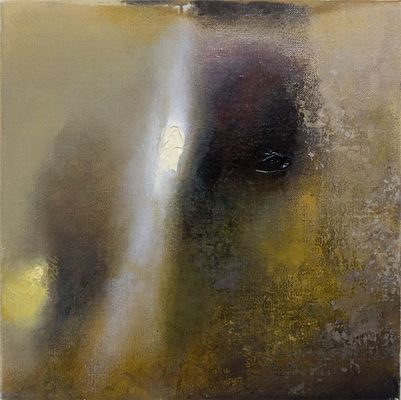
Always Will Need To Wear Winter Shirt Blue + Ochre Small Check Pattern
21 August - 21 September, 2015
Untitled
I am not a great reader of poetry but I always return to the work of Melbourne poet, Vincent Buckley (1925- 1988). Perhaps I find his most tantalising piece to be not a finished poem but a fragment left on a scrap of paper discovered on his desk after the poet’s death.
The poetry gathers like oil
In the word-core, and spreads
It has its music meet,
Its music is in movement.
This fragment is more the shell left behind from a volatile thought than a finished poem. I find the last two lines honest but awkward whereas the first two lines work like an arrow. Most likely he could not find a resolution so it was left. Still, in its present form, it remains an eloquent testimony to the ultimate failure of a medium to express mobile thought and sensation, in Buckley’s case, through verbal language. It’s an important matter because this is something all artists have to deal with regardless of the medium.
I have never written a poem, however, I am forever copying fragments from books on paper scraps in a vain effort to fix certain notions in my head. At first, they function as bookmarks that are sometimes returned to when I open the book. But before long, as they accumulate, they fall out littering the table interspersed with A4 photocopies, bills, books and medications.
To return to Buckley’s fragment, the first two lines very much evoke how I paint nowadays. As you age, detail diminishes and patches of light become more luminous and float. I feel the most honest way of dealing with this is by smearing the oil paint on the canvas with the fingers and working close-up, blind. Only if the patches coalesce into an approaching image can the work gain a life.
-
Jonathan Walker was born in Melbourne, Australia and brought up on a dairy farm in Gippsland. In the 1970’s he studied painting at RMIT and won the Harold Wright Scholarship to the British Museum, London. During the 1980’s he exhibited at Pinacotheca Gallery, Richmond and had work shown at the NGV and Heidi City Art Gallery. Over the same period he designed the cover for the “Epigenesi” LP by Giancarlo Toniutti, Italy and conducted a mail exchange work with Achim Wollscheid, Germany. The work with artists through the post resulted in an article published in the bicentenary issue of Art and Australia 1988. He showed in artist run spaces such as WestSpace in the 90’s and 2000’s, and until 2012, taught painting at Victoria University, which is where we (Colleen Ahern and Lisa Radford) as organisers of the exhibition, among many others, had the privilege of being his student.
Walker’s knowledge was imparted to students through the careful selection of music, literature, and artists found in books that he himself had ordered for the library. Walker’s strategy was the generosity of sharing his vast knowledge with references specific to each student and their context.
Walker’s paintings share a similar focus and intimacy.
This exhibition presents a small selection of recent paintings alongside a publication that includes Walker’s writing. Observational and analytical, Walker’s work is a type of material notation — the time of day, colour and how it is blended, the both specific and fleeting location of a reflection on lino or the question of whether a chair leg should be included in a painting.
Please join us on Friday August 21 between 6-8pm to celebrate the opening of the exhibition.
Curated by Colleen Ahern and Lisa Radford.
B. Wurtz
Curated by Nic Tammens
March 26 - April 4, 2015
B.Wurtz works from a basement studio in his home on Manhattan’s Lower East Side.
This local fact is attested to by the plastic shopping bags and newsprint circulars that appear in his work. As formal objects, they don’t make loud claims about their origins but nonetheless transmit street addresses and places of business from the bottom of this long thin island. Like plenty of artists, Wurtz is affected by what is local and what is consumed. His work is underpinned by this ethic. It often speaks from a neighborhood or reads like the contents of a hamper:
“BLACK PLUMS $1.29 lb.”
“Food Bazaar”
“USDA Whole Pork Shoulder Picnic 99c lb.”
“RITE AID Pharmacy, with us it’s personal.”
“H. Brickman & Sons.”
“Sweet Yams 59c lb."
Most of the work in this exhibition was made while the artist was in residence at Dieu Donne, a workshop dedicated to paper craft in Midtown. Here Wurtz fabricated assemblages with paper and objects that are relatively lightweight, with the intention that they would be easily transportable to Australia. This consideration isn’t absolute in Wurtz’s work, but was prescriptive for making the current exhibition light and cheap. Packed in two boxes, these works were sent from a USPS post office on the Lower East Side and delivered to North Melbourne by Australia Post.
Wurtz appears courtesy of Metro Pictures, New York.
Thanks to Rob Halverson, Joshua Petherick, Sari de Mallory, Matt Hinkley, Helen Johnson, Fayen d'Evie, Ask Kilmartin, Lisa Radon, Ellena Savage, Yale Union, and "Elizabeth".
John Nixon
"Archive"
December 15 - January 20, 2014
The presentation of John Nixon's archive offered a rare showcase of this extensive collection of the artist's own publications, catalogues, posters, ephemera, editions and more, from the mid 1980s onwards, alongside a selection of his artworks.
Organized by John Nixon, Joshua Petherick and Matt Hinkley.
<a href=http://wfb.public-office.info/artist/john-nixon>All titles by John Nixon
"Habitat"
at Minerva, Sydney (organised by Joshua Petherick and Matt Hinkley)
November 15 - December 20, 2014
Lupo Borgonovo, Janet Burchill & Jennifer McCamley,
Lewis Fidock, HR Giger, Piero Gilardi, Veit Laurent Kurz,
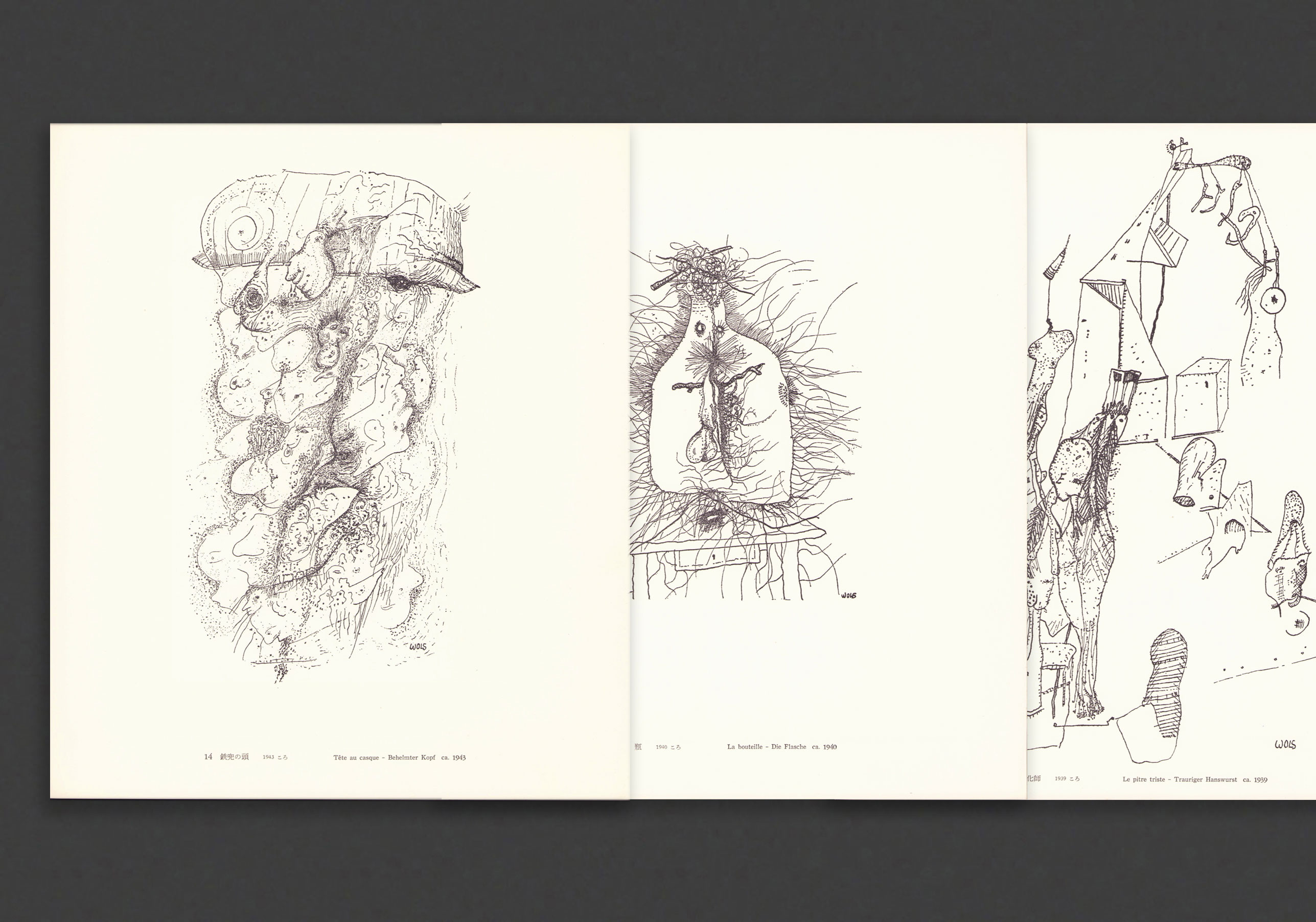
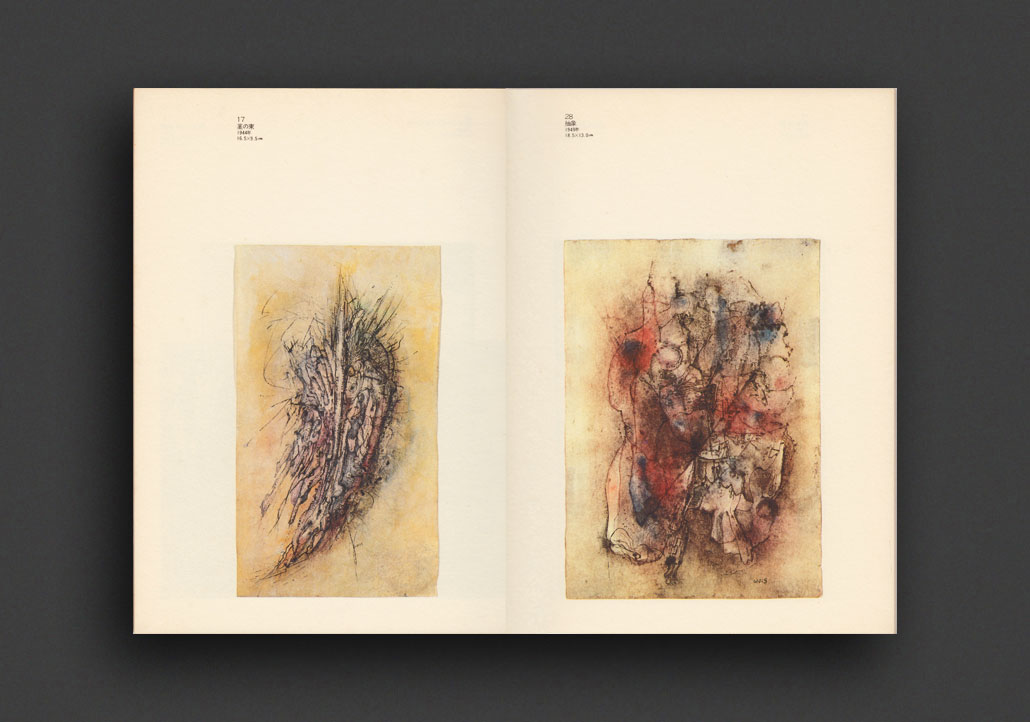
Cinzia Ruggeri, Michael E. Smith, Lucie Stahl, Daniel Weil, Wols
Press Release:
“...It contained seven objects. The slender fluted bone, surely formed for flight, surely from the wing of some large bird. Three archaic circuitboards, faced with mazes of gold. A smooth white sphere of baked clay. An age-blackened fragment of lace. A fingerlength segment of what she assumed was bone from a human wrist, grayish white, inset smoothly with the silicon shaft of a small instrument that must once have ridden flush with the surface of the skin - but the thing’s face was seared and blackened.”
William Gibson, “Count Zero”, 1986
"Autumn Projects Archive"
Curated by Liza Vasiliou
March 6 - March 15, 2014
World Food Books, in conjunction with the Virgin Australia Melbourne Fashion Festival 2014, presented the Autumn Projects archive, consisting of a selection of early examples in Australian fashion with a particular interest in collecting designers and labels from the period beginning in the 1980’s, who significantly influenced the discourse of Australian Fashion.
Curated by Liza Vasiliou, the exhibition provided a unique opportunity to view pieces by designers Anthea Crawford, Barbara Vandenberg, Geoff Liddell and labels CR Australia, Covers, Jag along with early experimental collage pieces by Prue Acton and Sally Browne’s ‘Fragments’ collection, suspended throughout the functioning World Food Books shop in Melbourne.
H.B. Peace
presented by CENTRE FOR STYLE
November 14, 2013
"Hey Blinky, you say chic, I say same"
Anon 2013
H.B. Peace is a clothing collaboration between great friends Blake Barns and Hugh Egan Westland. Their pieces explore the divergences between 'character’ and ‘personality’ in garments....etc
Special Thanks to Joshua Petherick and Matt Hinkley of WFB and Gillian Mears
and a Very Special Thank you to Audrey Thomas Hayes for her shoe collaboration.
Janet Burchill & Jennifer McCamley
"Aesthetic Suicide"
May 10 - June 8, 2013
The first of our occasional exhibitions in the World Food Books office/shop space in Melbourne, "Aesthetic Suicide" presented a body of new and older works together by artists Janet Burchill & Jennifer McCamley, including videos, prints, a wall work, and publications.
During shop open hours videos played every hour, on the hour.
1973, French
Softcover, c.40 pages, 24 x 21 cm
1st Edition, Out of print title / used / very good
Published by
Belgisches Haus Köln / Köln
$120.00 - In stock -
Rare catalogue published to accompany an exhibition of self-taught Belgian surrealist Armand Simon (1906–1981) in 1973 at the Belgisches Haus Köln. Profusely illustrated throughout with b/w reproductions of his wonderful artworks, many inspired by Lautréamont's Maldoror and the poems by Rimbaud, accompanied by texts from Belgian poet and member of the Oulipo group, André Blavier (1922—2001) and Belgian poet and member of the Hainaut Surrealist group, Achille Chavée (1906—1969), along with excerpts of correspondences and texts by Simon. The beautiful catalogue on this elusive artist, little known outside Belgium.
Armand Simon (1906–1981) was a self-taught Belgian Surrealist artist, cartoonist and poet known for his dreamlike and thought-provoking works. Born in Mons, Belgium, in 1923 Simon discovered the 'Chants de Maldoror' by Comte de Lautréamont, a text that fascinated him and to which he devoted thousands of drawings. An extremely prolific draftsman, he developed a noir universe nourished by literary sources, of which he proposed "graphic equivalents". Dense and precise, his drawings are based on an automatism to which he remained faithful throughout his life. His ink drawings often featured enigmatic and fantastical elements, exploring themes of the subconscious, dreams, and the absurd. In the mid 1930s Simon joined the Belgian Surrealist group Rupture, established in Hainaut, and alongside Chavée, Dumont and Lefrancq, took part in L'Invention Collective, founded and published by Raoul Ubac (1910-1985) and Rene Magritte (1898-1967) in 1940. He illustrated texts by Monique Watteau and Marcel Brion, as well as Achille Chavée's 'Seven Poems of High Negligence'. Throughout his life, he remained a relatively obscure figure outside of surrealist circles, but his work continues to be appreciated for its unique and devoted contribution to the movement. Simon's legacy is preserved through his art, which remains on display in various collections and museums dedicated to Surrealist art. Simon died in Frameries in 1981.
Xavier Canonne holds a doctorate in art history from the Sorbonne (Paris) and directs the Musée de la Photographie de la Communauté française in Charleroi. Since the 1970s, he has known and frequented the Belgian surrealists, some of whom were his close friends. He has devoted various books or articles to Armand Simon, Marcel Marién, Louis Scutenaire, Max Servais, Tom Gutt, Irène Hamoir and Robert Willems.
Very Good copy, light age/tanning.
1987, French
Hardcover, 120 pages, 27.5 x 21 cm
1st Edition, Out of print title / used / very good
Published by
Les Editeurs d'Art associés / Brussels
$140.00 - In stock -
First 1987 hardcover edition of this monographic survey of self-taught Belgian surrealist Armand Simon (1906–1981). Profusely illustrated throughout with colour and b/w reproductions of his wonderful artworks, many inspired by Lautréamont's Maldoror and the poems by Rimbaud., accompanied by text from Belgian art historian and curator, Xavier Canonne. Also includes selections of Simon's poetic works and an illustrated biography with rare photographs. The most comprehensive book on this elusive artist, little known outside Belgium.
Armand Simon (1906–1981) was a self-taught Belgian Surrealist artist, cartoonist and poet known for his dreamlike and thought-provoking works. Born in Mons, Belgium, in 1923 Simon discovered the 'Chants de Maldoror' by Comte de Lautréamont, a text that fascinated him and to which he devoted thousands of drawings. An extremely prolific draftsman, he developed a noir universe nourished by literary sources, of which he proposed "graphic equivalents". Dense and precise, his drawings are based on an automatism to which he remained faithful throughout his life. His ink drawings often featured enigmatic and fantastical elements, exploring themes of the subconscious, dreams, and the absurd. In the mid 1930s Simon joined the Belgian Surrealist group Rupture, established in Hainaut, and alongside Chavée, Dumont and Lefrancq, took part in L'Invention Collective, founded and published by Raoul Ubac (1910-1985) and Rene Magritte (1898-1967) in 1940. He illustrated texts by Monique Watteau and Marcel Brion, as well as Achille Chavée's 'Seven Poems of High Negligence'. Throughout his life, he remained a relatively obscure figure outside of surrealist circles, but his work continues to be appreciated for its unique and devoted contribution to the movement. Simon's legacy is preserved through his art, which remains on display in various collections and museums dedicated to Surrealist art. Simon died in Frameries in 1981.
Xavier Canonne holds a doctorate in art history from the Sorbonne (Paris) and directs the Musée de la Photographie de la Communauté française in Charleroi. Since the 1970s, he has known and frequented the Belgian surrealists, some of whom were his close friends. He has devoted various books or articles to Armand Simon, Marcel Marién, Louis Scutenaire, Max Servais, Tom Gutt, Irène Hamoir and Robert Willems.
Very Good copy, light age/tanning.
2024, English / German / French
Hardcover, 192 pages, 27 x 21 cm
Published by
Scheidegger und Spiess / Zürich
$90.00 - In stock -
HR Giger (1940—2014) is one of the outstanding figures in Swiss art and design history, celebrated around the world for his design of the fantastic creatures and eerie environments that terrified moviegoers in Ridley Scott’s 1979 science fiction film Alien. Yet very little is known about his childhood and youth in Giger’s native town of Chur. A trove of photographs, drawings by the young boy Hansruedi, and early artworks that already reveal the future of HR Giger’s artistic force, recently unearthed in the Giger family’s former holiday home in the Grisons, now offer intimate insights into his early years until the early 1960s.
Richly illustrated with more than 230 images from that collection, HR Giger: The Early Years tells the story of those two decades until Giger decided to move to Zurich and train as an architect and designer in 1962, for the first time. Supplemented by brief texts as well as by statements from his schoolmates, friends, and others, these images form a lively picture of that period: family episodes; the Mickey Mouse adaptations Giger created at the age of ten; his growing love of jazz music, photography, and weapons; the trips around Europe he took together with his friends; and the youth culture of Chur of the 1950s and 1960s that shaped him. The volume will appeal to any fan of the extraordinary art and the fascinating personality of HR Giger.
1992 / 1996, English
Softcover, 94 pages, 30 x 23 cm
1st Edition, Out of print title / used / very good
Published by
Taschen / Cologne
$45.00 - In stock -
"The more famous I get, the more I am tolerated, albeit with some head-shaking."H.R. Giger
1992 ed, 1996 print of A Rh+ in the English edition, collecting Giger's multi-faceted career in one place: From surrealistic dream landscapes, experimental film, grotesque cartoons, album cover designs, sculptures, through to his famous Alien creatures, encompassing a world like no other. Lavishly illustrated with over 100 images with detailed captions, this monograph forms a detailed chronological summary of the life and oeuvre of the foremost modern fantasy artist and ALIEN master, H.R. Giger, covering his cultural and historical importance and a concise biography.
Very Good copy with some light wear.
1969, Japanese
Softcover, 128 pages, 21 x 15 cm
1st Edition, Out of print title / used / very good
Published by
Tenjō Sajiki / Tokyo
$290.00 - In stock -
Very rare copy of the first issue of Angura (Underground Theatre), the "Dramatic Theory Magazine", published in 1969 in Tokyo by Shūji Terayama's radical avant-garde theatre company Tenjō Sajiki. Strikingly designed by the great Japanese art director Ryōichi Enomoto, this issue's special feature is ‘Anti-Theater’, with contributions by Shūji Terayama, photographer Yoshihiro Tatsuki, artist Jiro Takamatsu, poet Tadaaki Mori, director and cinematographer Sakumi Hagiwara, critic Masaaki Hiraoka, critic Koichi Isoda, actor Shigeomi Satô, and many others. A very unique periodical that not only discusses in-depth the works of Angura theatre, but also the international avant-garde, inviting diverse critical perspectives on performance and anti- and living-theatre, sharing ground with Gutai and Fluxus. Illustrated throughout with drawings, diagrams and photographs, mixing themes of pop, protest, surrealism, and eros, plus texts and scripts in Japanese. A rare printed embodiment of Tenjō Sajiki, Terayama, Tadanori Yokoo and the Japanese underground.
Tenjō Sajiki was a Japanese independent theater troupe co-founded by Shūji Terayama, Kujō Kyōko, Yutaka Higashi, Tadanori Yokoo, and Fumiko Takagi. Led by Japanese avant-garde poet, dramatist, writer, film director, and photographer Shūji Terayama, the prolific group was active between 1967 and 1983 (until Terayama's death). A major phenomenon on the Japanese Angura ("underground") theater scene, the group has produced a number of stage works marked by experimentalism, folklore influences, social provocation, grotesque eroticism and the flamboyant fantasy characteristic of Terayama's oeuvre. Tenjō Sajiki benefitted greatly from collaborations with a number of prominent artists, including musicians J. A. Seazer and Kan Mikami, and graphic designers Aquirax Uno and Tadanori Yokoo.
Shūji Terayama (1935 — 1983) was a Japanese avant-garde poet, dramatist, writer, film director, and photographer. His works range from radio drama, experimental television, underground (Angura) theatre, countercultural essays, to Japanese New Wave and "expanded" cinema. Terayama is considered one of the most productive and provocative creative artists to come out of Japan, with a wide-reaching influence on many artists from the 1970s onward.
Very Good copy.
2001, English
Softcover, 158 pages, 21.5 x 13.5 cm
Out of print title / used / very good
Published by
Marion Boyars / London
$25.00 - In stock -
2001 English language edition of Bataille's L'ABBÉ C, translated by Philip A. Facey and published by Marion Boyars.
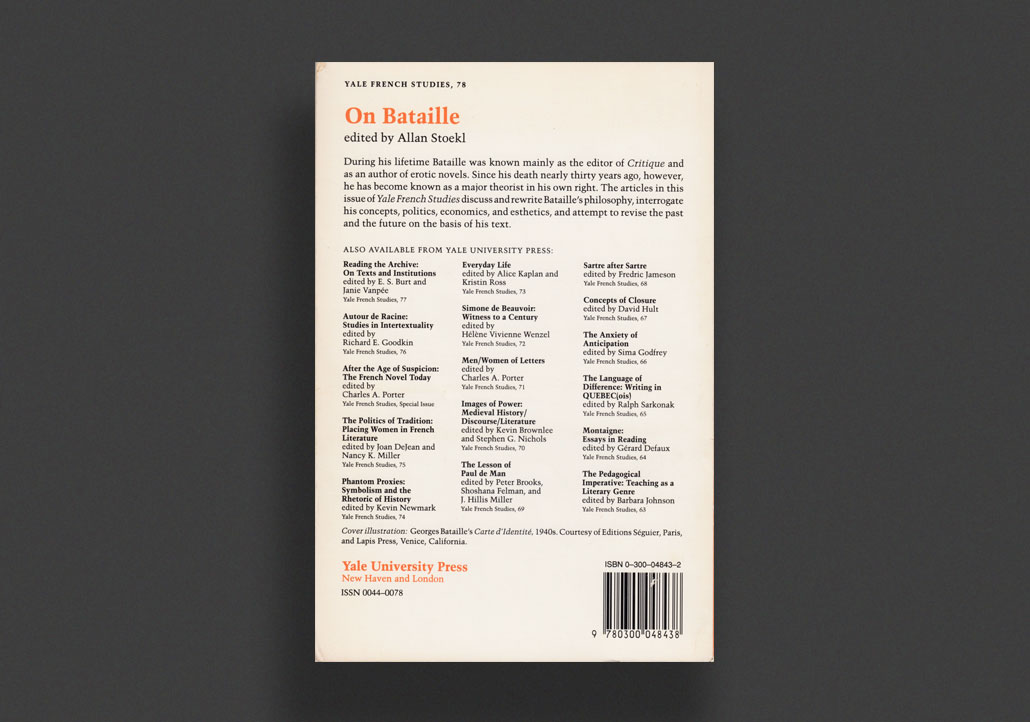
Told in a series of first person accounts, L'ABBÉ C is a startling narrative of the intense and terrifying relationship between twin brothers, Charles and Robert. Charles is a modern libertine dedicated to vice and depravity; Robert is a priest so devout that he is nicknamed 'L'Abbé'. As the story progresses, the suffocating atmosphere becomes increasingly permeated with illness, breakdown and eventual death. As in Blue of Noon and Story of the Eye, Bataille has succeeded in portraying the darkest and most profound aspects of human experience with amazing strength and dispassionate objectivity.
"Bataille speaks about man's condition, not his nature. Bataille has survived the death of God. In him, reality is conflict."—Jean-Paul Sartre
"Bataille is now recognized in France as one of the most challenging and original writers of our century. English translations of his work are long overdue, and one can only welcome the opportunity for English speaking readers to discover this major modern thinker."—Leo Bersani
"Essentially a psychological novel in which the emotions of the characters determine the movement of the story from beginning to end; explicit sex is absent. The style is crisp and this translation is quite remarkable... always faithful to the spirit."—New York Times Book Review
"The psychological intricacies display a graceful crisscrossing intensity."—Chicago Tribune
Georges Bataille was born in 1897 and died in 1962. He was a philosopher, novelist and critic whose startling and original ideas have influenced much modern literature and thought.
VG copy with previous owner sticker to inside front cover.
2002, English
Softcover, 310 pages, 23 x 18 cm
1st Edition, Out of print title / used / very good
Published by
The MIT Press / Massachusetts
$100.00 - In stock -
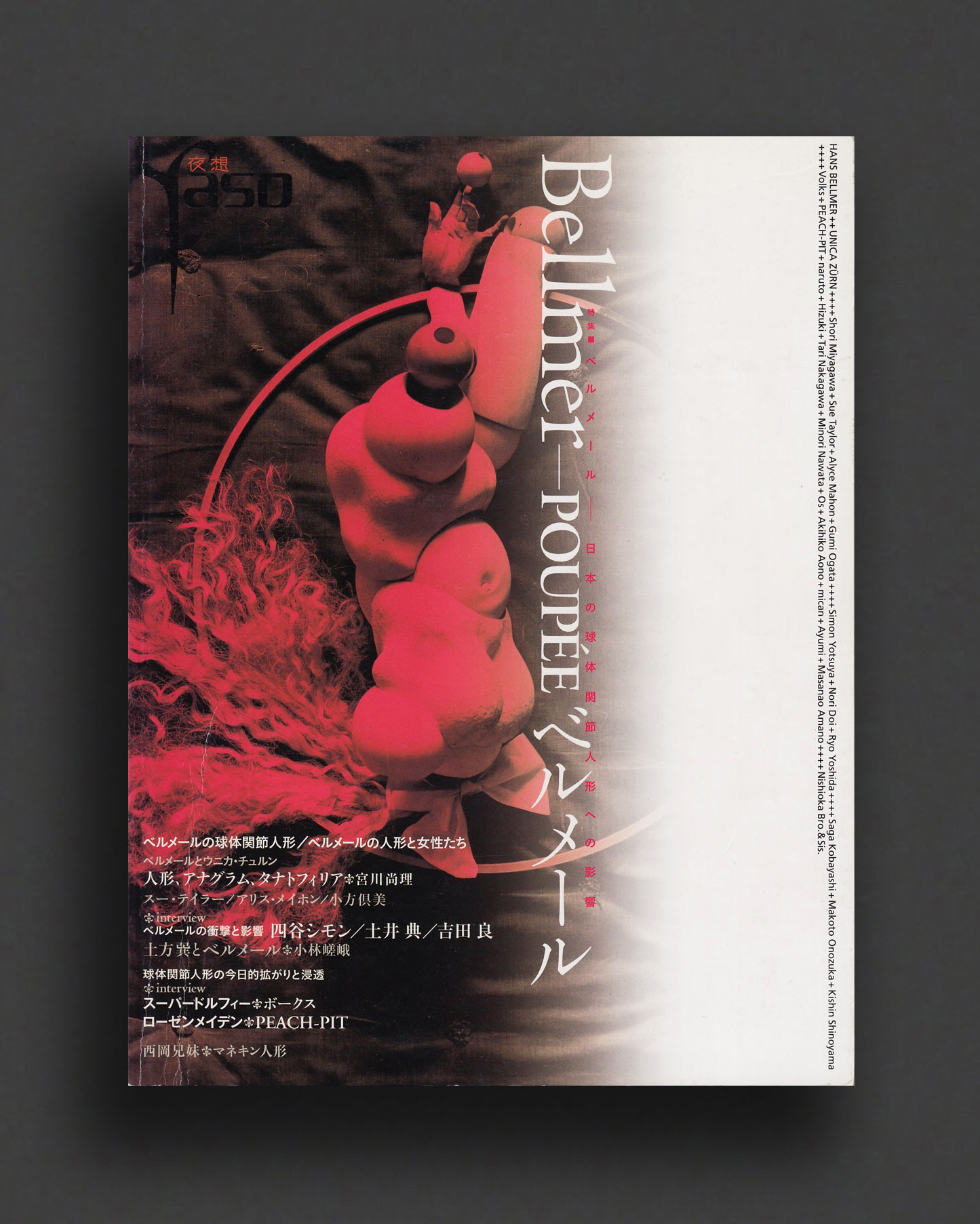
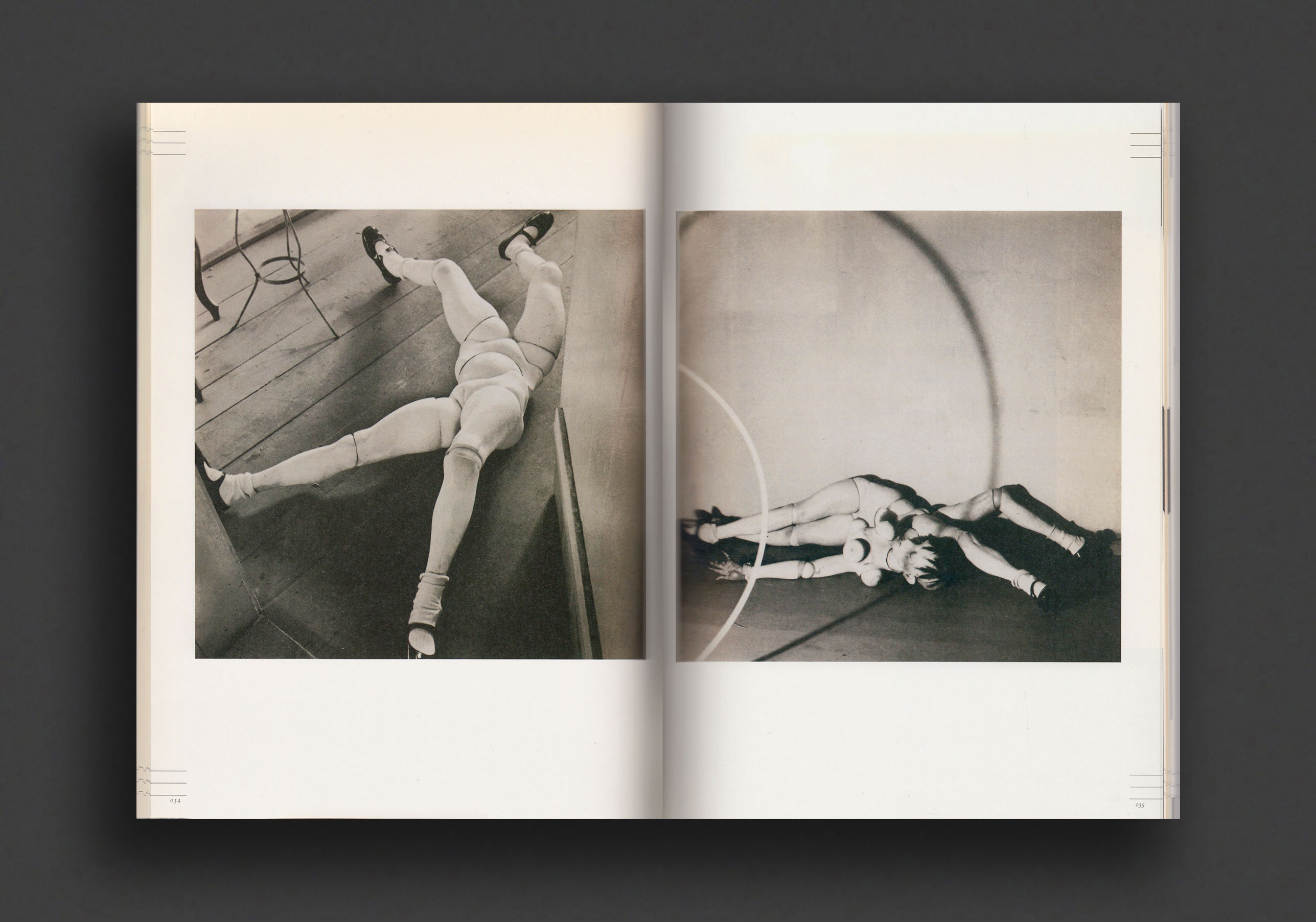
First 2002 paperback edition of this out-of-print study on Bellmer.
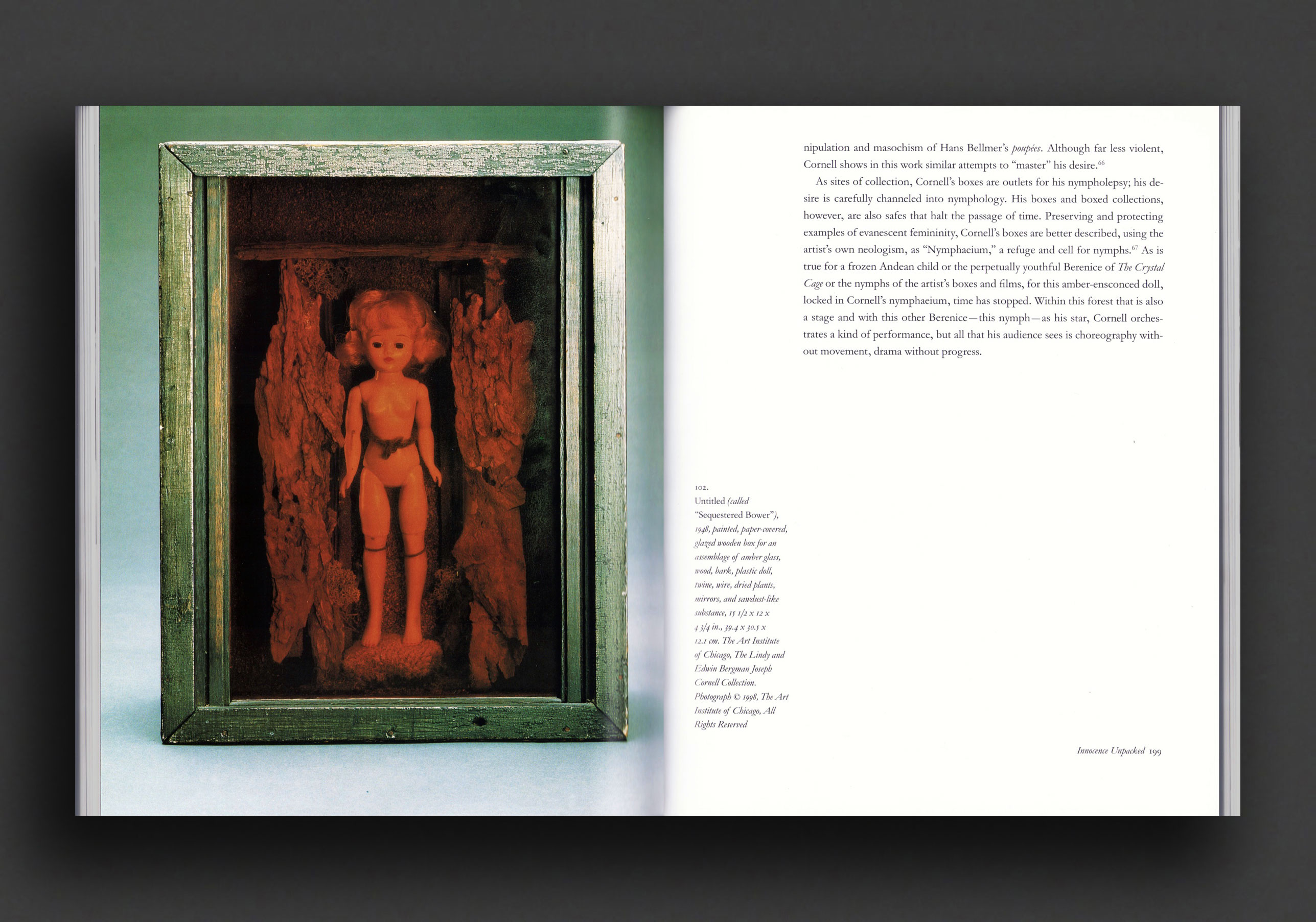
"The German-born surrealist Hans Bellmer (1902-1975), best known for his life-size pubescent dolls, devoted an artistic lifetime to creating sexualized images of the female body-distorted, dismembered, or menaced in sinister scenarios. In this book Sue Taylor draws on psychoanalytic theory to suggest why Bellmer was so driven by erotomania as well as a desire for revenge, suffering, and the safety of the womb. Tracing a repressed homoerotic attachment to his father, castration anxiety, and an unconscious sense of guilt, Taylor proposes that a feminine identification informs all the disquieting aspects of Bellmer's art.
Most scholarship to date has focused on Bellmer's work of the 1930s, especially the infamous dolls and the photographs he made of them. Taylor extends her discussion to the sexually explicit prints, drawings, paintings, and photographs he produced throughout the ensuing three decades. The book includes a color frontispiece and 121 black-and-white images (eight published here for the first time), as well as appendixes containing several significant texts by Bellmer previously unavailable in English.
Sue Taylor is Assistant Professor of Art History at Portland State University, Oregon.
"While ultimately subscribing to the conventional wisdom that the misogynist implications of Bellmer's many sinister images can never be altogether dismissed, [Taylor] insists that we look beyond their manifest content towards their latent meanings. Her tone and method is thus a long way from the punitive... literalism and crudity of much Bellmer criticism."—R. S. Short, Times Literary Supplement
"An impressive book by any standards. Every page displays intelligence, erudition and visual acuity."—Metapsychology
VG copy, light edge wear, faint edge tanning.
1986, English
Hardcover (dust jacket), 384 pages, 24 x 15.5 cm
1st Edition, Out of print title / used / very good
Published by
Picador / USA
$40.00 - Out of stock
First 1986 hardcover edition.
Dreams are traditionally seen as the key to our unconscious, where the unspoken speaks and the unthinkable is thought. But once we wake up, there is no such thing as a dream; what remains is like the summary of a novel from memory. Those who speak arrogantly of the meaning and interpretation of dreams are like critics who would extrapolate an aesthetic judgement on one of the Pictures From an Exhibition from Mussorgsky's musical commentary. In a sense, dreams do not exist because the only witness, the dreamer, cannot speak when he is isolated in the privacy of his dream. Literature adds yet another distorting mirror to the warped reproduction of the mute private world of the dreamer in the common language of the waking.
Almost every writer since the beginning of recorded history has invented or transcribed dreams. Thus Guido Almansi and Claude Béguin were confronted with an embarras de richesses. In the end they confined themselves to Western Europe and North America, with a few excursions towards Russia and more exotic places, choosing a wide range of texts- from the Bible to Kurt Vonnegut - for their representativeness, their psychological interest, their aesthetic value, their stylistic exuberance - but most of all for their capacity to titillate our curiosity and stimulate our reflections in this area.
The provocative introduction explores the nature of literary dreams and sets the background to this anthology. The material is divided into four categories: instinctive dreams, which seem to emerge from deep sources within us; real dreams, which are in close relation with the day world; symbolic dreams, where reality is transformed into what might be the metaphor for something else; and fantastic dreams, with a prevalence of the unreal element.
Bringing together a wide selection of dreams drawn from the literature of all ages and many cultures, some of which are translated into English for the first time, with every piece put in its literary and historical context, this is a hugely entertaining work of some of the most bizarre, imaginative and perplexing passages ever written.
GUIDO ALMANSI, Italian, is Professor of English and Comparative Literature at the University of East Anglia. He is interested in the dishonesty of literature, in the subterfuges used by language and its wily accomplice, the writer, in order not to say what they mean and not to mean. what they say. His favourite author is Shakespeare.
CLAUDE BÉGUIN, Swiss, teaches French at the University of Siena, Italy. She likes squarers of circles, writers who, though conscious of the devious nature of language, attempt to be straight. Her favourite author is Diderot.
When the wind changes, the descriptions of their interests can be reversed. Literary dreams were an area of possible collaboration since at night there is not enough light to distinguish between honesty and dishonesty.
Guido Almansi and Claude Béguin are husband and wife.
Very Good copy in NF dust jacket preserved under mylar wrap. Sticker to back cover. Tanning to paper stock.
1999, English
Softcover, 280 pages, 23.2 x 16.6 cm
1st Edition, Out of print title / used / very good
Published by
University of California Press / Berkley
$35.00 - In stock -
Tyrus Miller breaks new ground in this study of early twentieth-century literary and artistic culture. Whereas modernism studies have generally concentrated on the vital early phases of the modernist revolt, Miller focuses on the turbulent later years of the 1920s and 1930s, tracking the dissolution of modernism in the interwar years.
In the post-World War I reconstruction and the worldwide crisis that followed, Miller argues, new technological media and the social forces of mass politics opened fault lines in individual and collective experience, undermining the cultural bases of the modernist movement. He shows how late modernists attempted to discover ways of occupying this new and often dangerous cultural space. In doing so they laid bare the ruin of the modernist aesthetic at the same time as they transcended its limits.
In his wide-ranging theoretical and historical discussion, Miller relates developments in literary culture to tendencies in the visual arts, cultural and political criticism, mass culture, and social history. He excavates Wyndham Lewis's hidden borrowings from Al Jolson's The Jazz Singer; situates Djuna Barnes between the imagery of haute couture and the intellectualism of Duchamp; uncovers Beckett's affinities with Giacometti's surrealist sculptures and the Bolshevik clowns Bim-Bom; and considers Mina Loy as both visionary writer and designer of decorative lampshades. Miller's lively and engaging readings of culture in this turbulent period reveal its surprising anticipation of our own postmodernity.
VG copy, first ed.
1990, English
Hardcover (w. dust jacket), 250 pages, 23.5 x 16 cm
1st Edition, Out of print title / used / very good
Published by
Columbia University Press / New York
$65.00 - In stock -
First 1990 hardcover edition.
In this highly original and provocative investigation of modernism and the cinema, P. Adams Sitney argues that both the act of vision and the centrality of visual experience are problematized in literary modernism. Sitney explores this idea through readings of sometimes neglected texts by Maurice Blanchot, Charles Olson, and Gertrude Stein. Following the principles that emerge from these readings as well as discussions of those authors' theories of vision, Sitney traces a history of modernism in cinema, providing compelling readings of a range of classic films made between 1925 and 1980 by such hilmmakers as Carl Dreyer, Robert Bresson, Ingmar Bergman, and Stan Brakhage.
Modernist Montage: The Obscurity of Vision in Cinema and Literature is unusual in its range of filmic reference, in its bold handling of the interrelationship of film and literature, and in Sitney's unconventional idea of literary modernism which he uses to define filmic modernism. This book confirms P. Adams Sitney as one of the most important, controversial and unique voices in film criticism today.
"P. Adams Sitney's Modernist Montage: The Obscurity of Vision in Cinema and Literature is one of the most provocative and challenging texts I have read about cinema in some time. It is unique in many respects. The range of his survey of filmmakers is extraordinary, quite unlike any book on cinema that comes to mind.
To his readings of many difficult but superb films, films central to the tradition of cinematic modernism, he brings an erudition and scope of reference unmatched by any other writer about cinema I know."—Stuart Liebman, Queens College and the Graduate Center, City University of New York
"A rich and complex text... at once an exacting scrutiny of a very select body of work and a very ambitious attempt to characterize the artistic practices of the varied creators of that work in a singularly provocative manner.... Mr. Sitney's interdisciplinary approach is not only in step with many new attempts to examine film within larger cultural and artistic contexts, it also argues most convincingly for the inter-relatedness of film and literature, and of the continuities of aesthetic and rhetorical expression."—Tony Pipolo, the Graduate Center, City University of New York
VG/VG in mylar wrap.
1993 / 1998, English
Softcover, 176 pages, 23 x 21.6 cm
1st Edition, Out of print title / used / very good
Published by
Atlas Press / London
$50.00 - In stock -
First 1993 English edition from the legendary Atlas Press, London, 1998 printing.
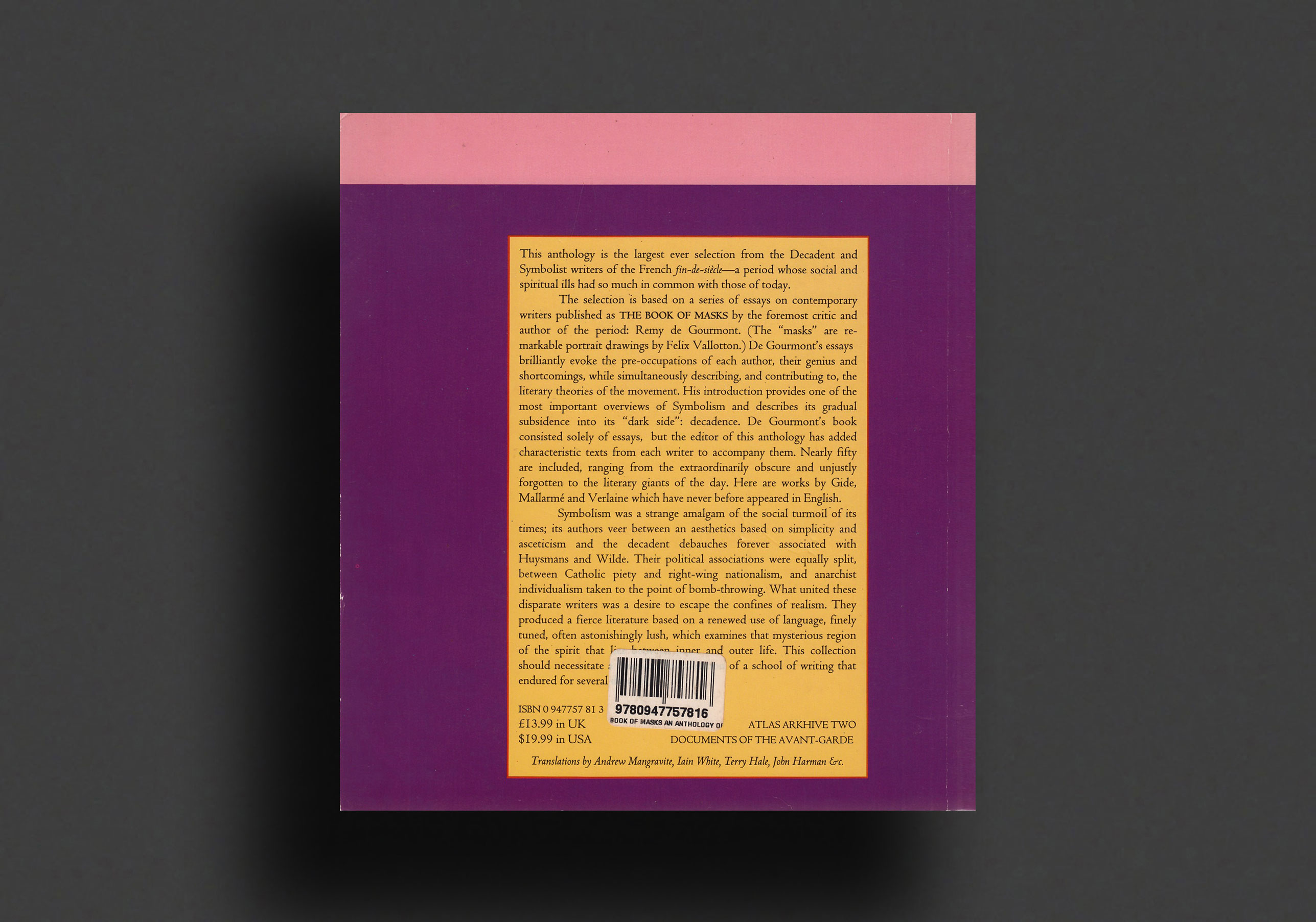
"DADA MEANS NOTHING!" So proclaimed Tristan Tzara, the movement's tireless publicist. Yet this did not prevent the most fanatical and talented artists and writers across Europe from rushing to join its ranks. Anti-war, anti-art, anti-dada, from its beginnings in Zurich during the first World War the dadas swept aside the cultural, philosophical and political norms of their time. Utter disgust with a society that had created the war (and then expected to survive the peace) spurred them to ever greater demonstrations of revulsion and derision. Yet it was not all nihilism: many factions worked within the Dada Movement and it was Huelsenbeck's intention to embody most of them in the Dada Almanac. The largest collection of Dadaist texts ever assembled by the movement, it was originally published in 1920 in a mixture of French and German.
The Dada Almanac was truly international in scope, with substantial sections from the Swiss and French sections of the movement, it embodies Dada's failings as well as its successes, its excesses, its seriousness, its idiocy, but above all the anarchic vitality which made it such a vital precondition for so much that followed in the fields of art, literature and general cultural terrorism.
The editors of this first English translation have added dozens of other relevant texts, documents, portraits etc, as well as explaining contemporary references and events and providing biographies of the numerous personalities involved.
Very Good copy, only light wear/age but with some marginalia/underlining.
1965, English
Softcover, 252 pages, 20 x 13.5 cm
1st Edition, Out of print title / used / average
Published by
City Lights Books / San Francisco
$55.00 - Out of stock
First 1965 edition of the first anthology of writings by Artaud in English, published by City Lights Books, edited and translated by Jack Hirschman.
"I am the man," wrote Artaud, "who has best charted his inmost self." Antonin Artaud was a great poet who, like Poe, Holderlin, and Nerval, wanted to live in the infinite and asked that the human spirit burn in absolute freedom.
To society, he was a madman. Artaud, however, was not insane, but in luciferian pursuit of what society keeps hidden. The man who wrote Van Gogh the Man Suicided by Society raged against the insanity of social institutions with insight that proves more prescient with every passing year. Today, as Artaud's vatic thunder still crashes above the "larval confusion" he despised, what is most striking in his writings is an extravagant lucidity.
This collection gives us quintessential Artaud on the occult, magic, the theater, mind and body, the cosmos, rebellion, and revolution in its deepest sense.
Antoine Marie Joseph Artaud, better known as Antonin Artaud (1896 – 1948), was a French dramatist, poet, essayist, actor, and theatre director, widely recognized as one of the major figures of twentieth-century theatre and the European avant-garde.
Jack Hirschman (b. December 13, 1933, in New York, NY) is a poet and social activist who has written more than 50 volumes of poetry. Dismissed from teaching at UCLA for anti-war activities in 1966, he moved to San Francisco in 1973, and was the city's present poet laureate. Hirschman translates nine languages and edited The Artaud Anthology.
Average—Good copy of fragile first edition. Some old water staining to the bottom edge towards the back of the book, some marking/tanning to block edges, covers, crease to spine.
2024, English
Softcover (w. dust jacket), 256 pages, 22 x 17 cm
Published by
Thin Man Press / London
$74.00 - Out of stock
Cancelled Confessions reveals Claude Cahun to be a major surrealist writer and pioneering queer theorist almost a century ahead of her time.
"The re-appearance of this glittering and dissenting semi-lost epic is a gift… Cahun’s writing is stylish, playful and prescient, peopled with angel slang, flowering disavowals, God’s lipstick and an infinite layering of masks."—Daisy Lafarge, author.
In 1930, Claude Cahun (born Lucy Schwob) and her partner, artist Marcel Moore (born Suzanne Malherbe) published their surrealist masterpiece, Aveux non Avenus, translated here as Cancelled Confessions and available in English for the first time in twenty years. Susan de Muth’s revised translation of Cancelled Confessions has a new introduction by art historian Amelia Groom which contextualizes it within contemporary queer discourse.
"It’s a surrealist, trans, queer, autofiction, (anti)memoir, and also none of those things. It’s a text, and a life, felt as connection and at the same time completely singular."—McKenzie Wark, author.
'The kaleidoscopic text is pieced together from diverse fragments… there are philosophical and subversive theological musings, aphorisms and fables, letters and dialogues, dreams and hymns, nightmares and jokes,' writes Groom. The book’s nine sections are prefaced by dreamlike photomontages (reproduced in high definition here) which reflect, illuminate and converse with the verbal content. Upon publication, Aveux non Avenus simply baffled all but a few of Cahun’s friends and admirers, leading Cahun to describe herself as, ‘An unwanted Cassandra’. Now, however, is the time of the remarkably prescient Cahun and Moore.
"Cahun was a pioneer of gender-bending role-playing…eerily ahead of her time she has attracted an almost cult-like following."—The late David Bowie
Cahun and Moore’s appeal is wide and universal. They were adventurers in life as in art. Cahun famously terrified Andre Breton in the 1920s when she appeared in a Paris café with her head shaved and painted gold. Having moved to Jersey in 1938, Cahun and Moore waged a mischievous two-person resistance campaign against the occupying Nazi forces from 1940. Finally caught and imprisoned in 1944, they were sentenced to death in 1945, saved at the very last moment by the armistice.
2018, English
Hardcover, 480 pages, 17.4 x 23.2 cm
Published by
Atlas Press / London
$74.00 - In stock -
Georges Bataille's secret society, long the stuff of legend, is now revealed in its texts, meditations, rules and prohibitions.
This book recounts what must be one of the most unusual intellectual journeys of modern times, in which the influential philosopher, cultural theorist and occasional pornographer Georges Bataille (1897-1962), having spent the early 1930s in far-left groups opposing the rise of fascism, abandoned that approach in order to transfer the struggle onto "the mythological plane."
In 1937, Bataille founded two groups in order to explore the combinations of power and the "sacred" at work in society. The first group, the College of Sociology, gave lectures that were intended to reveal the hidden undercurrents within a society on the verge of catastrophe. The second group was Acéphale, a genuine secret society and anti-religion whose emblem was a headless figure that, in part, represented the death of God. Until the discovery a few years ago of the group's internal papers (which include theoretical texts, meditations, minutes of meetings, rules and prohibitions and even a membership list), almost nothing was known of its activities.
This book is the first to collect a representative selection of the writings of Bataille, and of those close to him, in the years leading up to World War II. The texts published here comprise lectures given to the College of Sociology by Bataille, Roger Caillois and Michel Leiris, essays from the Acéphale journal and a large cache of the internal papers from the secret society. A desperate narrative unfolds, wherein Bataille risked all in a wholly unreasonable quest--with a few fellow travelers, he undertook what he later described as a "journey out of this world."
Additional texts by Roger Caillois, Pierre Klossowski, Michel Leiris, and by Georges Ambrosino, Pierre Andler, Michel Carrouges, Jacques Chavy, Jean Dautry, Henri Dobier, Henri Dussat, Imre Kelemen, Jean Rollin, Patrick Waldberg.
And with drawings by André Masson
Highest recommendation!
2004, French
Hardcover, 230 pages, 29 x 25 cm
1st Edition, Out of print title / used / very good
Published by
Les Musées de Strasbourg / France
$100.00 - Out of stock
"If horror is absurd, then it is laughable. [Topor] makes it his condiment, a sulphurous one."—Tomi Ungerer
One of the most comprehensive books ever published on the work of Roland Topor ever produced, Dessins Paniques was published to accompany a major retrospective exhibition held at Musee d'art moderne et contemporain de Strasbourg, June 18- Sept. 5, 2004. Opening with fellow-illustrator Tomi Ungerer's hommage to the "essential mind" of Topor, this hardcover book is profusely illustrated in colour and b/w with around 300 works by Topor, an extensive biography, bibliography, photographs, and texts (in French) by Fabienne Keller, Robert Grossmann, Fabrice Hergott, Christian Derouet, Ad Petersen, Hervé Joubert-Laurencin, Thérèse Willer, Roland Topor, Christophe Hubert. Highly recommended!
Roland Topor (1938—1997) was one of the most unique and versatile French artists of the second half of the 20th century, working prolifically as a provocative and spirited illustrator, author, humorist, satirist, poet, painter, performer, sculptor, playwright, film and TV writer, filmmaker and actor, and much more. A founder of the Panic Movement, an art collective formed by Fernando Arrabal, Alejandro Jodorowsky, and Roland Topor in Paris in 1962, Topor was known for the surreal and absurdist nature of his work.
Very Good copy, only light wear to extremities.
2004, English / Polish
Hardcover, 216 pages, 30 x 24 cm
1st Edition, Out of print title / used / very good
Published by
Muza / Warsaw
$160.00 - In stock -
The most comprehensive monograph ever published on Polish painter Maria Anto (1936–2007), renowned for her metaphysical, dreamlike vision that merges figuration with elements of naïve art and poetic symbolism. Edited by Elżbieta Olszewska, this 2004 hardcover volume, long out-of-print, is profusely illustrated in colour with reproductions of over 220 of her paintings, criminally little seen outside Poland, alongside a full autobiography by Anto giving intimate insight into her artwork, exhibition reviews, a timeline of her life and work, lists of exhibitions and awards, and a lengthy interview with Małgorzata Bocheńska. Texts are in bi-lingual Polish / English. Includes her Tarot paintings.
Anto's paintings are characterized by simplified yet fantastic forms, flattened perspectives, magical creatures, and luminous, often unreal colour palettes, creating an atmosphere suspended between reality and imagination. Inspired by Italian trecento painting, surrealism, the works of Marc Chagall and Henri Rousseau, and drawing on mythology, folklore, and inner landscapes, Anto’s work evokes a quiet, contemplative dimension in which solitary figures, animals, and fantastical architectures appear timeless and introspective. Balancing innocence with metaphysical depth, her art occupies a unique place in Polish postwar painting, distinguished by its emotional subtlety, symbolic resonance, and enduring sense of mystery. Contrary to the prevailing currents, Maria Anto managed (quite quickly) to appear in the world of art, although she always remained somewhat independent - on the sidelines of groups and painting trends. The artist graduated from the Academy of Fine Arts in Warsaw in 1960, and already in 1963 represented Poland at the São Paulo Biennale. She repeatedly took part in plein-air painting workshops in Białowieża, where she created her most significant works. "The spirits of Białowieża make me see more. I discover places of power, primeval enchanted spots there." During martial law she actively participated in the independent culture movement. She worked and exhibited prolifically from behind The Iron Curtain. Nevertheless, she remained forgotten for some time after her death, and is still hardly known outside Poland or Italy, where she exhibited most. From today’s perspective, Maria Anto’s art forms an exceptionally original and poetic language that distinguished her from the Warsaw avant-garde. Anto remained faithful to her aesthetic choices throughout her lifetime, creating an astounding collection of works, achieving an undisputed individualism as a painter.
Very Good copy, light wear/age.
1972, Japanese
Hardcover (in slipcase with dust jacket + obi), 80 pages, 32 x 25 cm
1st Edition, Out of print title / used / good
Published by
Seven Sha / Tokyo
$90.00 - In stock -
Wonderful 1972 slip-cased hardcover monograph on seldom documented, elusive French artist Clovis Trouille. Bound in pink cloth and wrapped in illustrated original dust-jacket, this heavily illustrated book surveys Trouille's vibrant and controversial paintings through beautiful colour and monochrome gravure reproductions, alongside various texts, biography, bibliography and portrait of the artist — a most complete copy including all insert booklets. Published as volume 4 of the deluxe La Septième Face du Dé series by Kawade Shobo Shinsha in Japan in the 1970s after the Editions Filipacchi series. All editions now out-of-print.
Clovis Trouille (1889-1975)—Trouille in colloquial French means fear—was a French artist known for paintings of erotic and anti-clerical subjects. Trouille was born in La Fère, France, and was trained at the École des Beaux-Arts of Amiens from 1905 to 1910. He was drafted on 2 August, 1914. His service in World War I made him an anarchist and his painting followed suit. His hatred of the military, paired with his contempt for the Church as a corrupt institution, provided Trouille with the inspiration for decades of work. Trouille always paddled upstream in a river of Christian morality, military patriotism and bourgeois ostentation with lightness, irony and obstinacy. His erotic and gaudy work delivered a slap in the face to both religion and war. Trouille has often been classed as a "Sunday painter." He's also been referred to as an "Angel of Bad Taste," and a purveyor of "horrotica", with Trouille's other common subjects being sex, perversion and all manner of depravity (ala de Sade). After his work was seen by Louis Aragon and Salvador Dalí, Trouille was declared a Surrealist by André Breton, though Trouille was rather ambivalent, accepting the designation to have his work reach an audience rather than embracing the movement. He was always his own painter. He worked primarily for himself, did not like to sell his paintings, had no interest in self-promotion or the art world, and made his living as a restorer and decorator of department store mannequins. Nonetheless, he maintained contact with the surrealists, including Breton and Marcel Jean. Trouille died on 24 September 1975 in Neuilly-sur-Marne.
Most complete copy of this 1972
2025, English
Softcover, 130 pages, 20.3 x 17.8 cm
Published by
The New York Review of Books / New York
$34.00 - Out of stock
Ancient Mesopotamia, the Zodiac, and the land of the dead feature in this wildly surrealistic adventure story—Leonora Carrington's revolutionary second novel, long out of print.
The Stone Door is an omen, an incantation, and an adventure story rolled into one. Built in layers like a puzzle box, it is the tale of two people, of love and the Zodiac and the Kabbalah, of Transylvania and Mesopotamia converging at the Caucasus, of a mad Hungarian King named Böles Kilary and of a woman's discovery of an initiatory code that leads to a Cyclopean obstacle, to love, self and awareness, to the great stone door of Kescke and beyond.
Written at the end of World War II but not published until 1977 and long unavailable, The Stone Door is at once a celebration of the union of the surrealist painter Leonora Carrington and her husband, the Hungarian-born photographer Chiki Weisz, and an argument for the unification of the male and the female as a means of liberating the human race.
1966, French
Hardcover (clothbound w. dustjacket), 110 pages, 20.5 x 30 cm
1st Edition, Out of print title / used / very good
Published by
Éditions Denoël / Paris
$150.00 - In stock -
Beautifully produced, scarce French hardcover monographic volume dedicated entirely to reproductions of Surrealist visionary Hans Bellmer's incredible drawings. This is the very first edition, published by Éditions Denoël, Paris, in 1966. With an introduction by Constantin Jelenski. A stunning book, and a key title in the artist's oeuvre.
German artist Hans Bellmer (13 March 1902 – 23 February 1975), was best known for the life-sized pubescent female dolls he produced in the mid-1930s. "Bellmer was born in the city of Kattowitz, then part of the German Empire (now Katowice, Poland). Up until 1926, he'd been working as a draftsman for his own advertising company. He initiated his doll project to oppose the fascism of the Nazi Party by declaring that he would make no work that would support the new German state. Represented by mutated forms and unconventional poses, his dolls were directed specifically at the cult of the perfect body then prominent in Germany. Bellmer was influenced in his choice of art form by reading the published letters of Oskar Kokoschka (Der Fetisch, 1925)."
Very Good – (in original dust jacket and protected under plastic wrap)
2021, English
Hardcover, 120 pages, 30 x 24cm
1st Edition, Out of print title / as new
Published by
Fulgur Press / UK
$600.00 - In stock -
The immediately out-of-print Tarot of Leonora Carrington. As New sealed copy of the first edition.
The British-born artist Leonora Carrington (1917–2011) is one of the more fascinating figures to emerge from the Surrealist movement. As both a writer and painter, she was championed early by André Breton and joined the exiled Surrealists in New York, before settling in Mexico in 1943. The magical themes of Carrington’s otherworldly paintings are well-known, but the recent discovery of a suite of tarot designs she created for the Major Arcana was a revelation for scholars and fans of Carrington alike. Drawing inspiration from the Tarot of Marseille and the popular Waite-Smith deck, Carrington brings her own approach and style to this timeless subject, creating a series of iconic images. Executed on thick board, brightly coloured and squarish in format, Carrington’s Major Arcana shines with gold and silver leaf, exploring tarot themes through what Gabriel Weisz Carrington describes as a ‘surrealist object’. This tantalising discovery, made by the curator Tere Arcq and scholar Susan Aberth, has placed greater emphasis upon the role of the tarot in Carrington’s creative life and has led to fresh research in this area.
The Tarot of Leonora Carrington is the first book dedicated to this important aspect of the artist’s work. It includes a full-size facsimile of her newly discovered Major Arcana; an introduction from her son, Gabriel Weisz Carrington; and a richly illustrated essay from Tere Arcq and Susan Aberth that offers new insights — exploring the significance of tarot imagery within Carrington’s wider work, her many inspirations and mysterious occult sources.
1995, English
Softcover (staplebound), 28 pages, 34 x 30 cm
1st Edition, Out of print title / used / very good
Published by
Morpheus International / US
$55.00 - Out of stock
It was a good year, 1995, and with each month a new full-colour depiction of H.R. Giger's universe of the grotesque fantastic. 15 large-format reproductions, including never before published works, his hommage to Gustave Moreau, his Biomechanoids and Biomechanical Landscapes, designs for the unreleased films "The Tourist" and Jodorowsky's "Dune". Unused copy ready for the wall. Live in the past, who cares.
Very Good copy with light wear.
1977, French
Softcover, 352 pages, 28 x 22 cm
1st Edition, Out of print title / used / very good
Published by
Obliques / Paris
$160.00 - Out of stock
The landmark, over-sized Obliques special double issue, "La Femme Surréaliste", published in Paris in 1977. The French literary journal Obliques (who published special issues on Artaud, Bellmer, Kafka, Klossowski, Vian, Sartre, Robbe-Grillet, Strindberg, Genet...) was the first publisher to present a comprehensive list of the literary and plastic production of Surrealist women with this gorgeous volume, long before the works of surrealist women, as a corpus, began to be more widely studied in the 1980s. Featuring well known names, but also many female artists neglected and seldom mentioned in the recent (strangely narrow-minded) re-evaluation of this period, this beautifully printed issue of Obliques is an incredibly valuable reference on a movement that was decidedly ‘feminine’. Edited by Roger Borderie with Michel Camus, it features profiles on the work and writing of Belen, Maya Bell, Bona, Leonora Carrington, Lise Deharme, Jacqueline Duprey, Aube Elléouët, Josette Exandier, Leonor Fini, Aline Gagnaire, Giovanna, Jane Graverol, Marianne Van Hirtum, Rozeta Hum, Valentine Hugo, Karskaya, Greta Knutson, Laure, Gina Pane, Annie Lebrun, Georgette Magritte, Manina, Joyce Mansour, Nora Mitrani, Meret Oppenheim, Mimi Parent, Valentine Penrose, Gisele Prassinos, Karina Raeck, Remedios Varo, Sibylle Ruppert, Colette Thomas, Toyen, Isabelle Waldberg, Unica Zurn, Cécile Reims, Dorothea Tanning, Greta Knutson, and more. Additional texts and works by Beatrice Didier, Cécile Reims, Michel Butor, Michel Sicard, Andre Pieyre De Mandiargues, Jean Roudaut, Rene Micha, Gerard Legrand, Jean Pfeiffer, Jacques Laurans, Michel Carassou, Annie Lebrun, Charles Bachat, Olivier Milliard, Robert Brechon, Jules Michelet, Jerome Prieur, Xaviere Gauthier, Elsa Thoresen Gouveia, plus a gallery by Titi Parant and Henri Maccheroni's Portraits Corrigés. Profusely illustrated with artworks, mostly in b/w with some colour sections.
Very Good copy of the lovely softcover edition with textured boards. Sunning to spine edge, light general wear.
2011, English / French
Softcover, 558 pages, 23 x 15 cm
Published by
Black Widow Press / Boston
$52.00 - In stock -
René Char (1907-1988) was one of France's most respected 20th century poets. Part of the Surrealist group in the late 1920's-1930's, he gradually drifted away from the group. During WWII he joined the resistance and wrote his forceful prose poems describing what he saw and experienced. This large, bilingual anthology, includes all of his well known books Feuillets d'Hypnos and Fureur et Mystere as well as a sampling of other poems and prose poems. Insightful essays are provided by Sandra Bermann, Mary Ann Caws, and Nancy Kline.
2006, English
Softcover, 160 pages, 15.24 x 1.91 x 16.51 cm
Published by
Archipelago Books / New York
$40.00 - In stock -
Stroke by Stroke is a pairing of two of Henri Michaux's most suggestive texts, Stroke by Stroke (Par des traits, 1984) and Grasp (Saisir, 1979), written towards the end of his life. Michaux's ideogrammic ink drawings accompany his poetic explorations of animals, humans, and the origins of language. This series of verbal and pictorial gestures is at once explosive and contemplative. Michaux emerges at his most Zen.
"I first encountered Michaux's astonishing work in Stroke By Stroke, a physically and conceptually beautiful little book . . . Reading Stroke By Stroke, I felt invited to travel "toward greater ungraspability"—and in our uncertain times, Michaux's ease with that is deeply reassuring."—Martha Cooley, The Common
Henri Michaux (1899-1994) was born in Namur, Belgium. His travels throughout the Americas, Asia, and Africa inspired his first two books, Ecuador and A Barbarian in Asia. In 1948, after the death of his wife, he devoted himself increasingly to his distinctive calligraphic ink drawings. Averse to publicity of any sort, in 1965 he refused the French Grand Prix National des Lettres. Michaux's other works in English translation include Emergences-Resurgences (Skira, 2001), Darkness Moves: An Henri Michaux Anthology (California, 1997), Tent Posts (Sun and Moon, 1997), and A Barbarian in Asia (New Directions, 1986).
Richard Sieburth's translations include Georg Büchner's Lenz, Friedrich Holderlin's Hymns and Fragments, Walter Benjamin's Moscow Diary, Gérard de Nerval's Selected Writings, Henri Michaux's Emergences/Resurgences, Michel Leiris' Nights as Day, Days as Night, and Gershom Scholem's The Fullness of Time. His English edition of the Nerval won the 2000 PEN/ Book-of-the-Month-Club Translation Prize. His recent translation of Maurice Sceve's Délie was a finalist for the PENTranslation Prize and the Weidenfeld Prize.